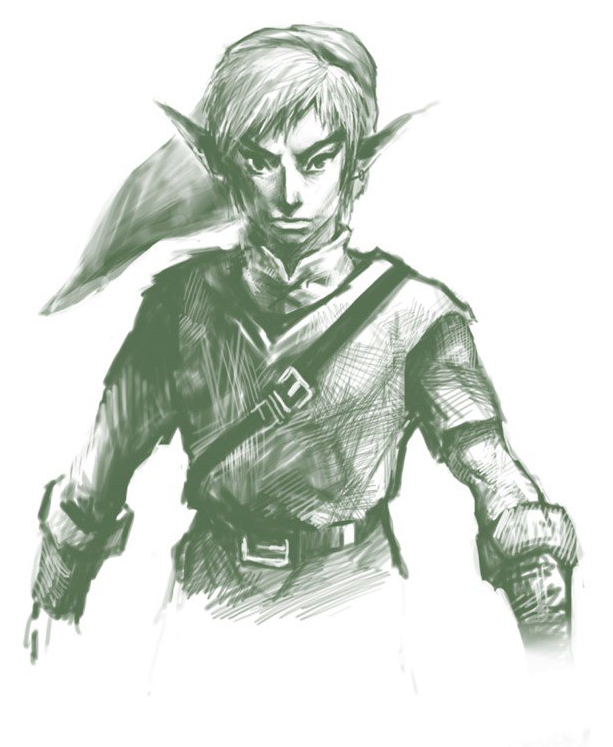
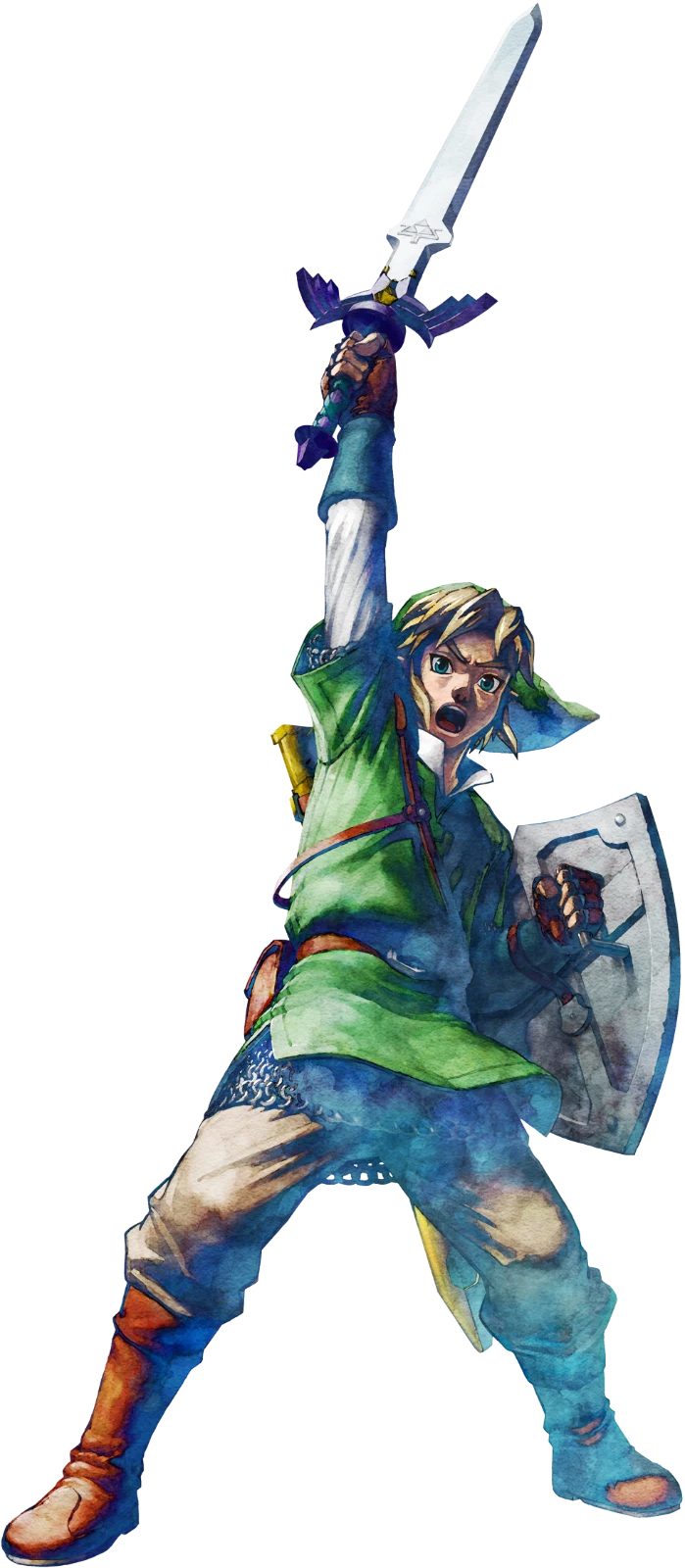
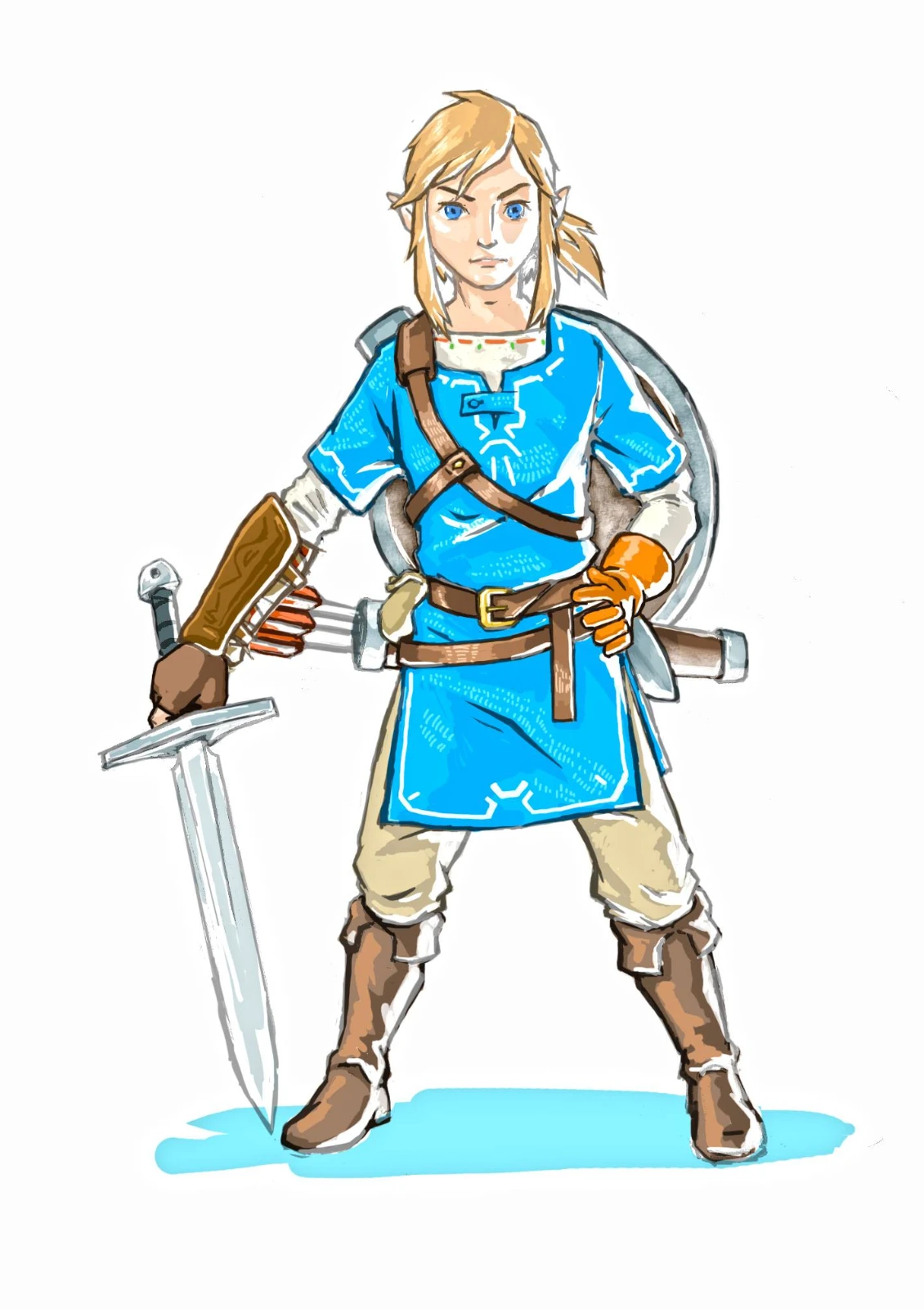
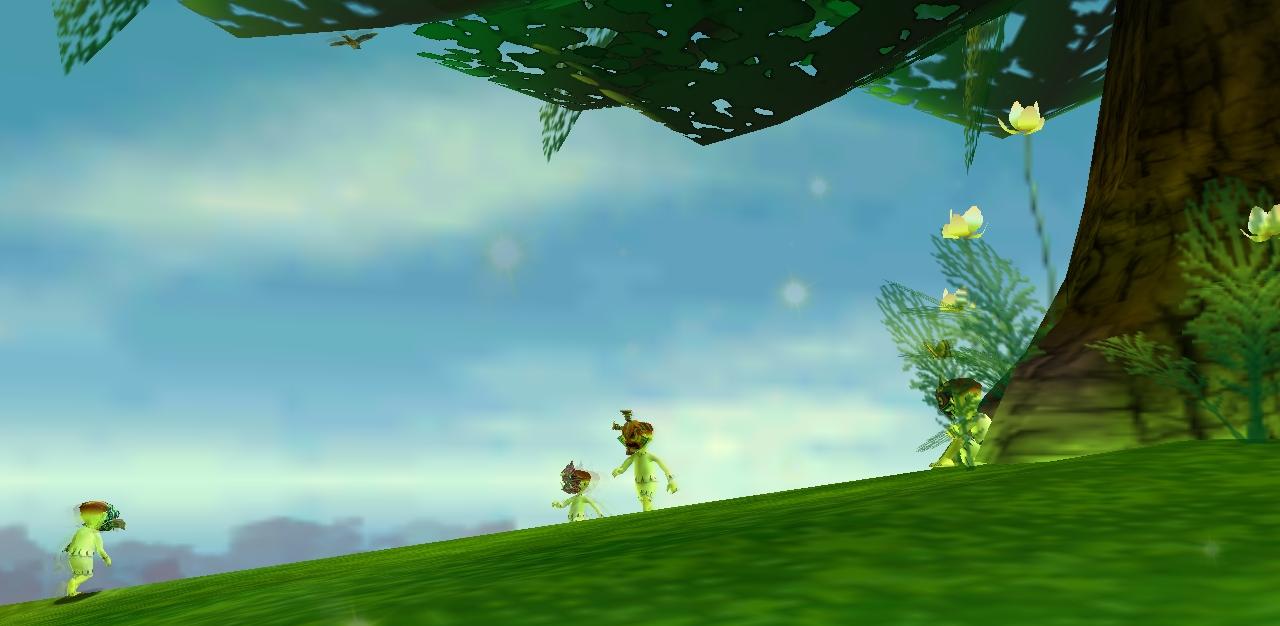
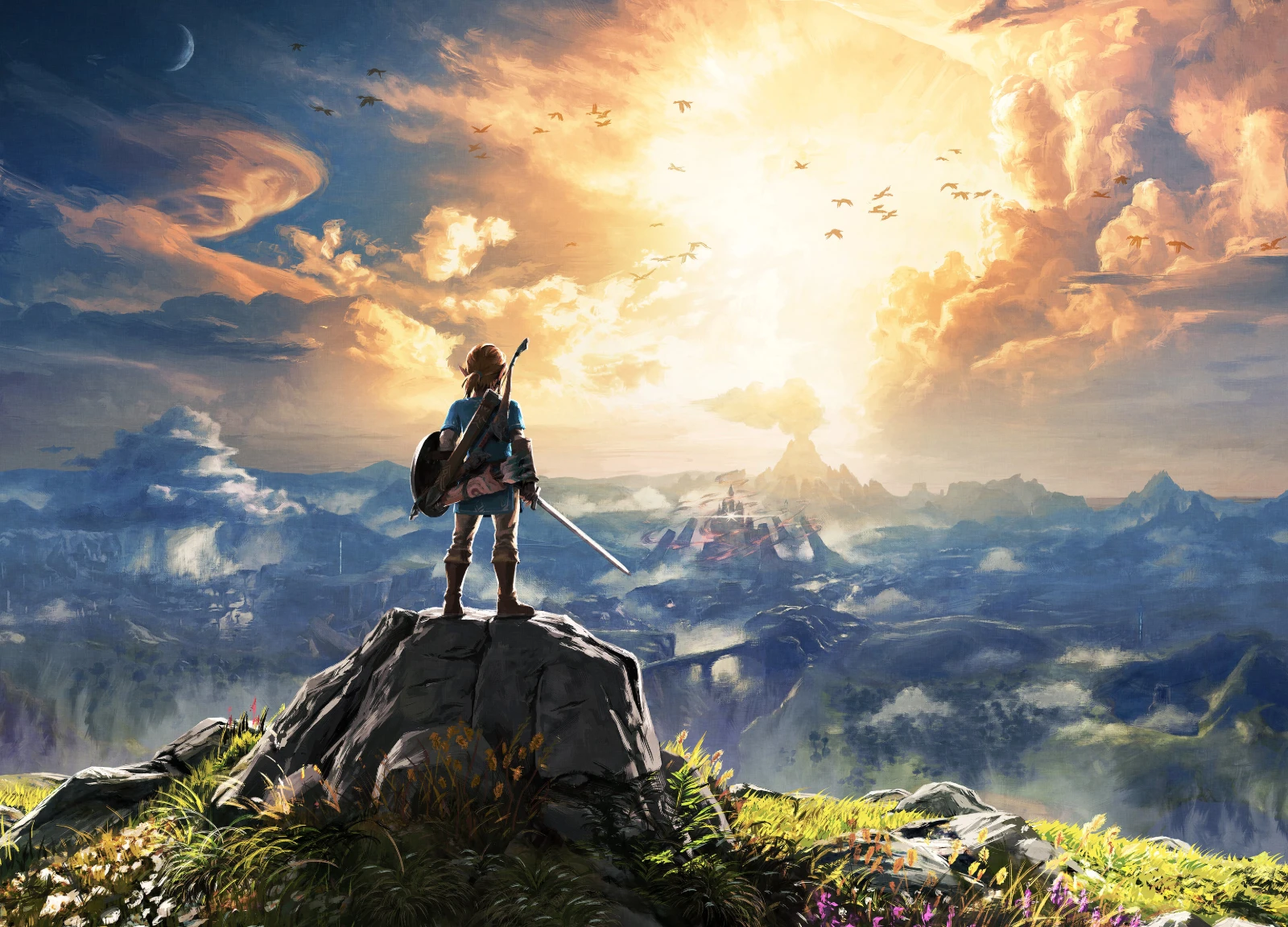
Hero of Time (Ocarina of Time, Majora’s Mask), Hero of Winds (The Wind Waker, Phantom Hourglass), Royal Engineer (Spirit Tracks), Champion (Breath of the Wild). Most Links have no title at all
Triforce
Courage, from Zelda II (1987) onwards
Signature weapon
The Master Sword, first drawn in A Link to the Past (1991)
Created by
Shigeru Miyamoto; Takashi Tezuka drew the original sprite
Voiced by (English)
No English voice in the main games. Jonathan Potts (1989 cartoon and Captain N), Jeffrey Rath (CD-i games), Caitlyn Bairstow (Cadence of Hyrule)
Voiced by (Japanese)
Fujiko Takimoto, Nobuyuki Hiyama, Sachi Matsumoto, Akira Sasanuma, Yūki Kodaira, Takashi Ōhara, Yūki Kaji, Mitsuki Saiga and Kengo Takanashi, among others; their yells are heard in every region
Played by
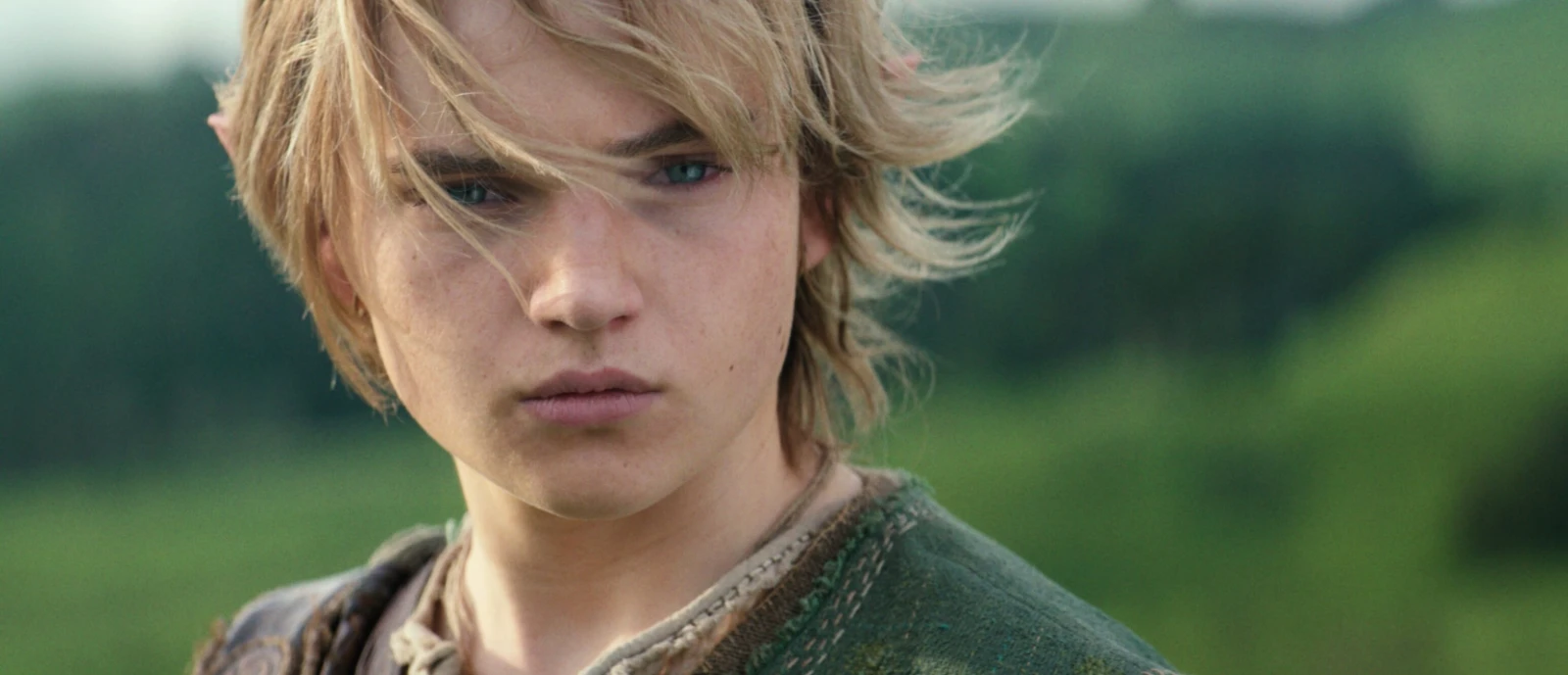
Benjamin Evan Ainsworth in The Legend of Zelda (Sony Pictures and Nintendo, 2027)
Overview
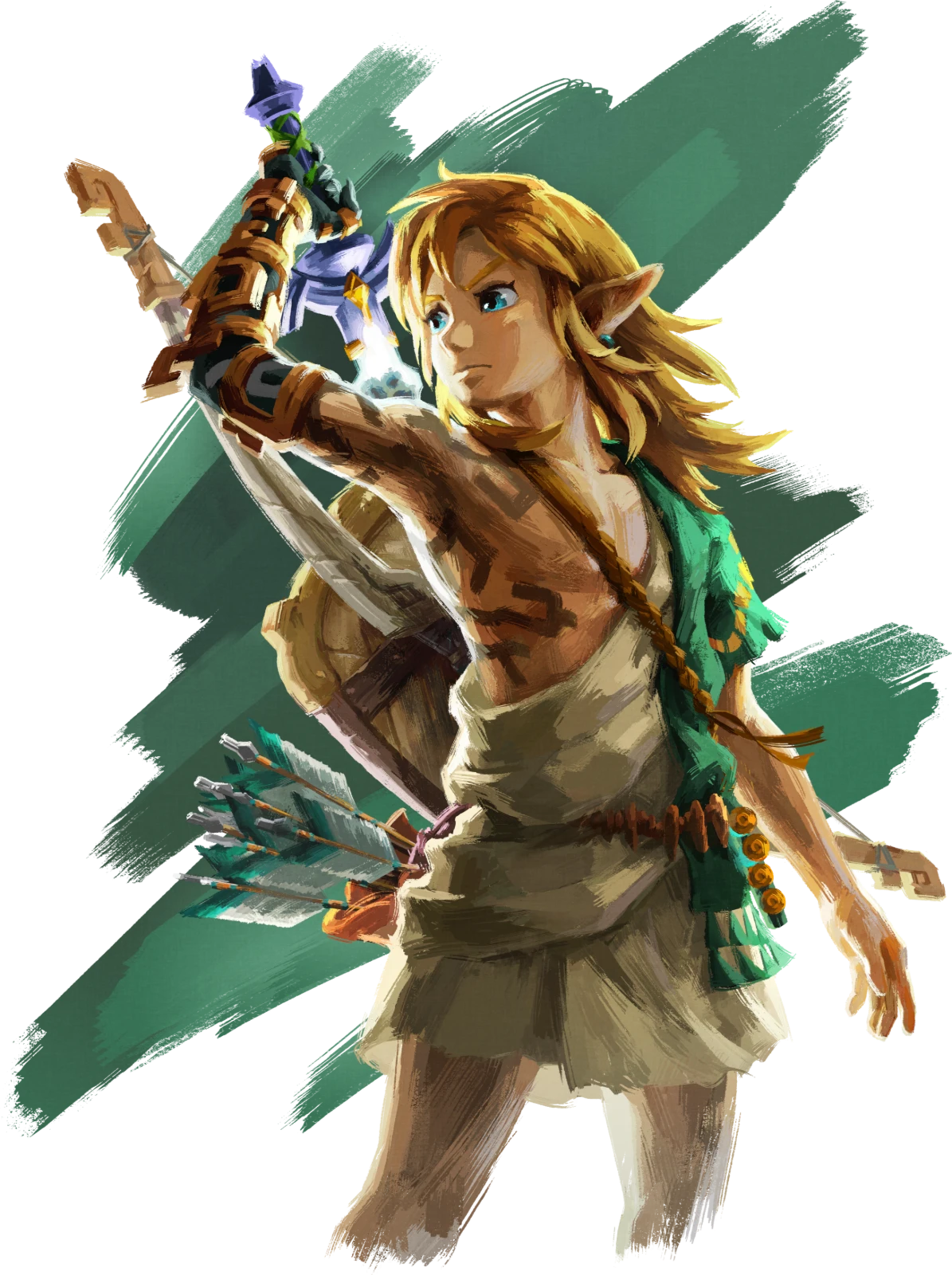
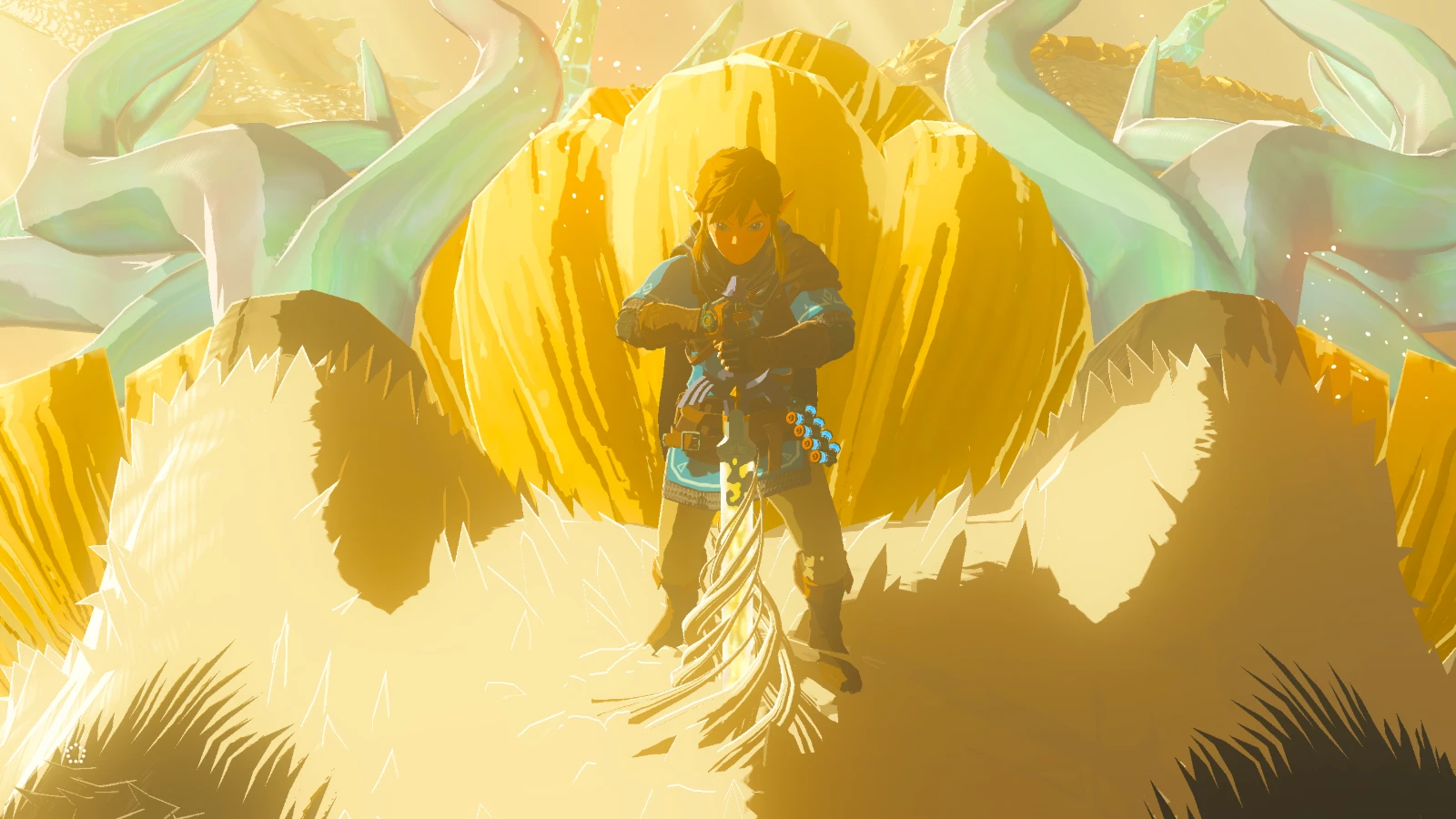
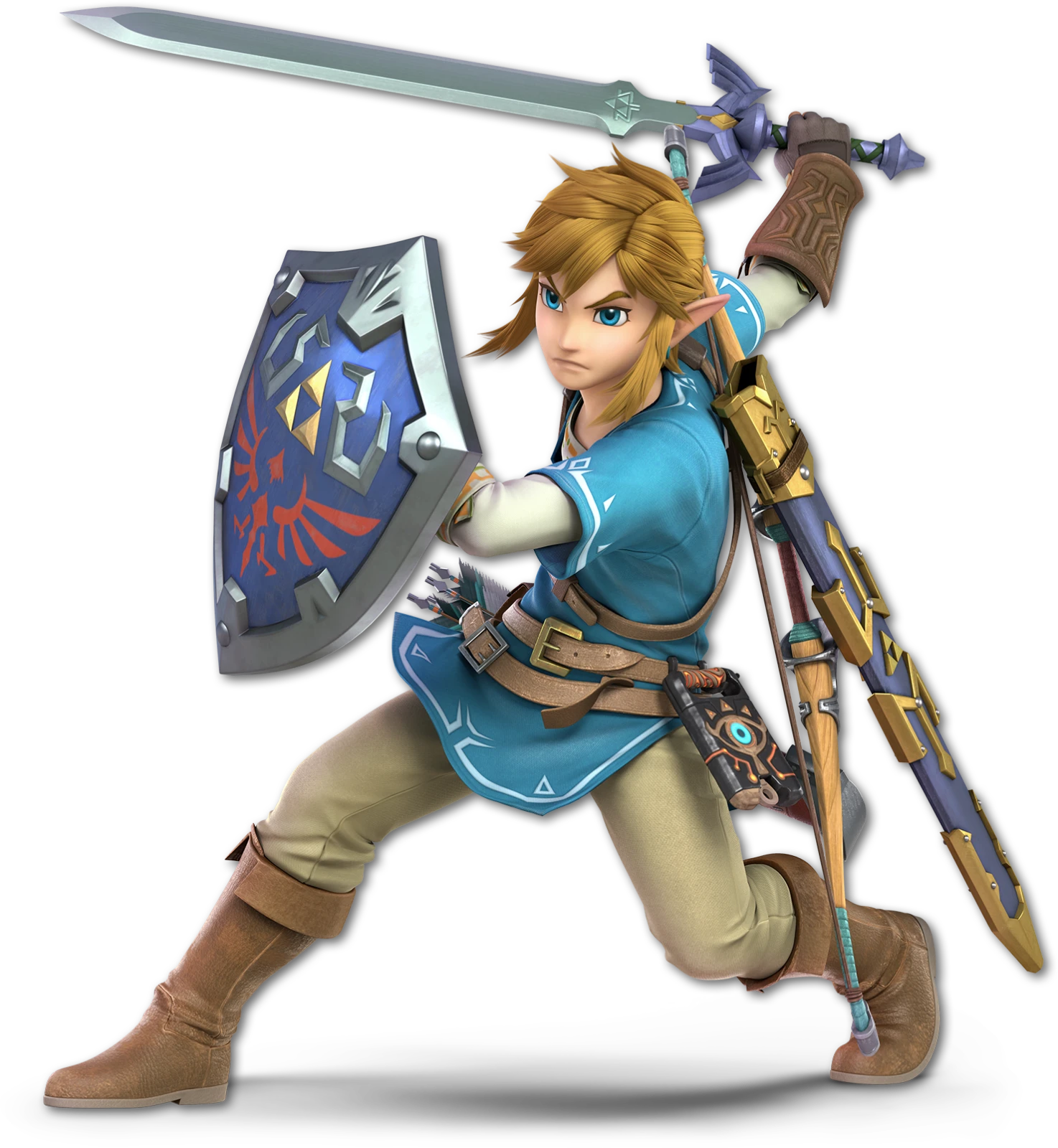
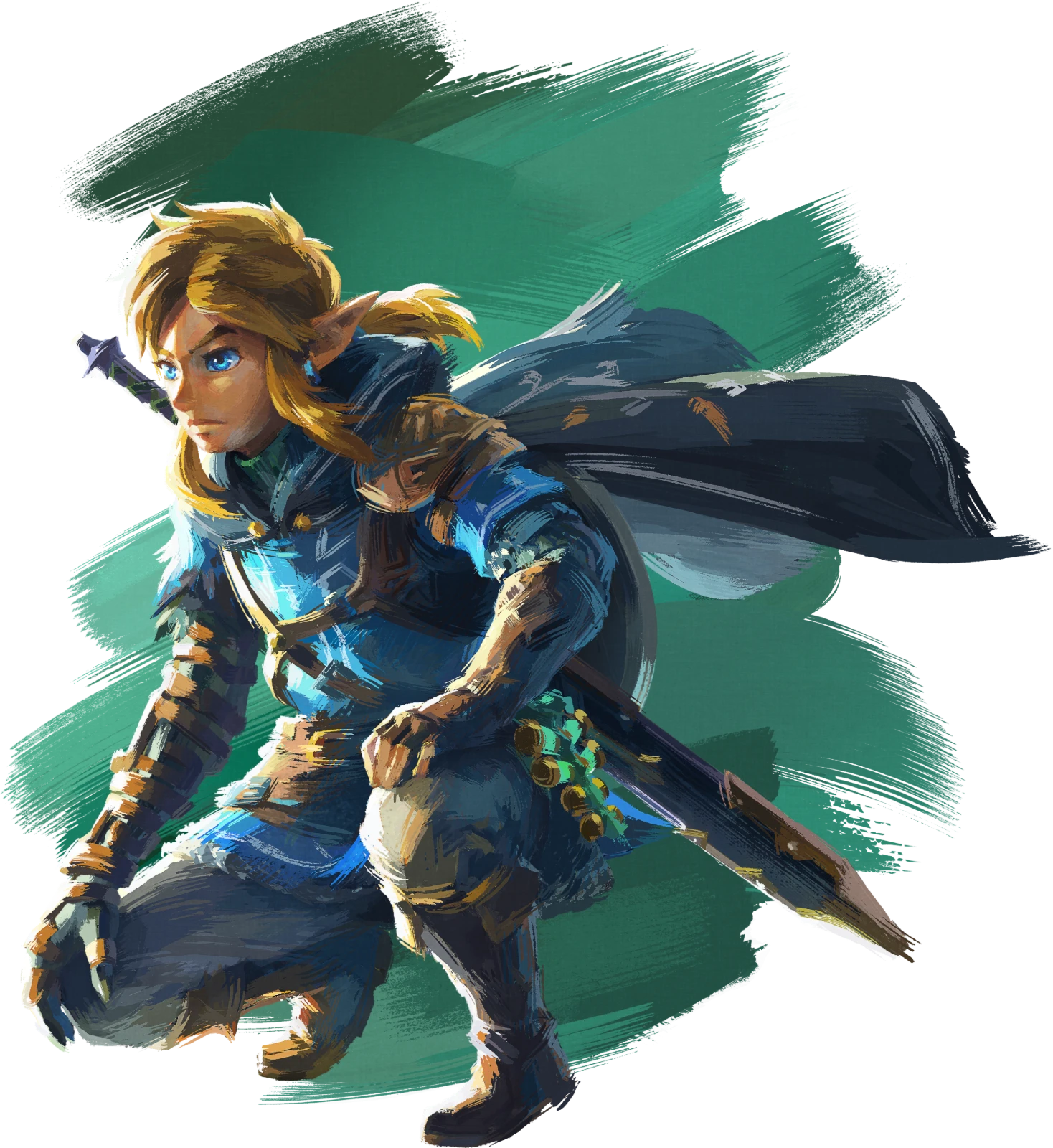
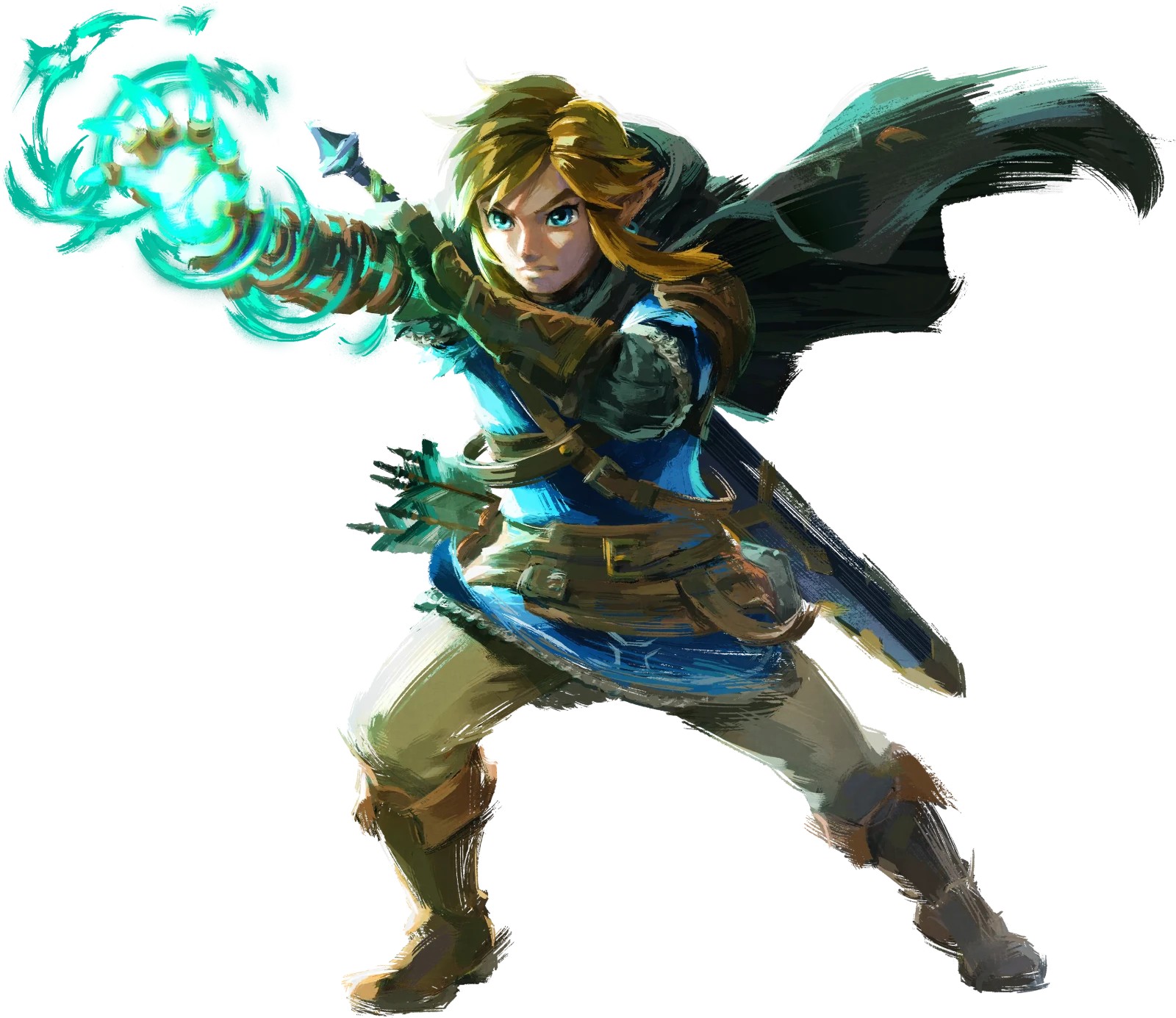
Link in Tears of the Kingdom (official artwork).
He has been saving Hyrule since February 1986, he has hardly said a word in all that time, and half the world still thinks his name is Zelda. Link is the hero of every main game in the series except Echoes of Wisdom, and he is almost never the same person twice. One Link is a forest boy who turns out not to be a Kokiri at all; others are a ranch hand, a blacksmith’s apprentice, a trainee train driver, or a knight who sleeps for a hundred years. What ties them together is a hero’s spirit that comes back whenever darkness does, a sword that seals evil, the Triforce of Courage and a stubborn refusal to stay down.
This page follows all of them. Start with who Link is and why he keeps returning, then take the game-by-game guide through every main-series adventure from 1986 to the Ocarina of Time remake of November 2026. After that come his guest roles, his transformations, the friends and enemies who define him, forty years of redesigns, the actors who supply his yells, and his life outside the games, from the 1989 cartoon to the live-action film due in April 2027.
It’s dangerous to go alone! Take this.
The old man in the first cave The Legend of Zelda (1986), handing Link his first sword
Excuse me, Princess!
Link (Jonathan Potts) His catchphrase in the 1989 cartoon The Legend of Zelda
Open your eyes.
Princess Zelda’s voice Breath of the Wild (2017), waking Link in the Shrine of Resurrection
Link’s name comes from a version of the first game that never shipped. Shigeru Miyamoto’s early plan had the story jumping between past and future, with the pieces of the Triforce as electronic chips, and the hero was to be the link between the two eras. The time travel was dropped and the name stayed. Hyrule Historia later gave it a warmer meaning as well: Link is the character who connects people.
In the first game he barely needed a name at all. Players typed their own on the save screen, and many later games let you rename him too, which is the whole idea: Link is meant to be you. The Japanese name, Rinku, is just the English word in katakana.
One spirit, many heroes
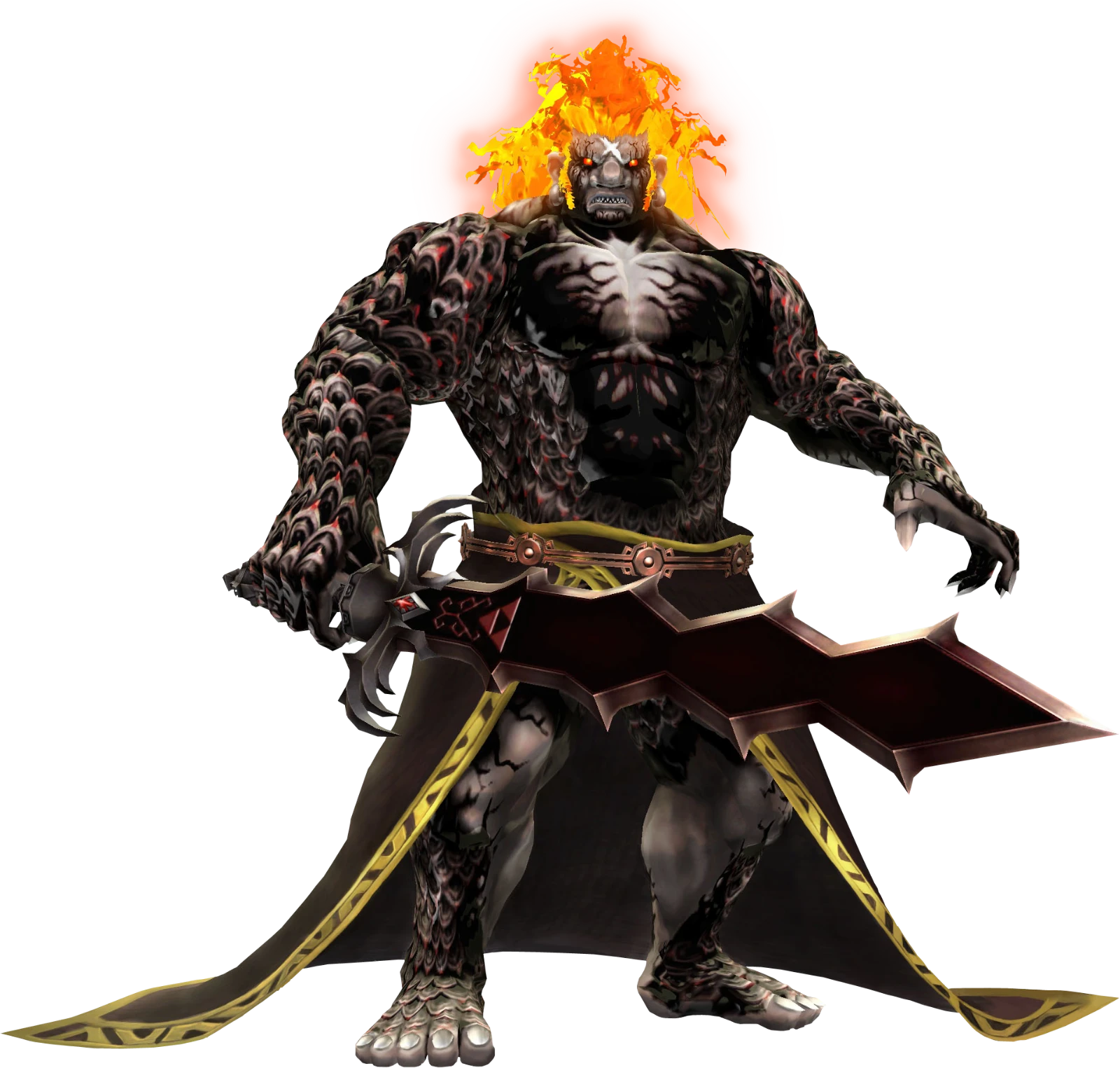
Demise, whose dying curse in Skyward Sword binds the hero, the goddess’s bloodline and evil into an endless cycle (render).
The games never claim there is only one Link. Nintendo’s official histories describe a heroic spirit reborn in a new young Hylian whenever darkness returns, and Skyward Sword gives that cycle its reason. At the end of that game the Demon King Demise, beaten by the first Link, curses the hero and the goddess’s bloodline: an incarnation of his hatred will rise again and again to hound them. That is why, in the series’ own logic, a Link, a Zelda and a great evil keep turning up across the ages.
So each Link is a new person, with his own home, family and job, carrying the same spirit. A handful of games star the same Link twice, and one, the Hero of Time, even returns after death to teach a descendant.
Which Links are the same person?
Most games bring a brand-new Link. These are the exceptions, according to Nintendo’s official books and the games themselves:
The hero of A Link to the Past goes on to Link’s Awakening. The timeline as revised in 2017 puts Koholint after the Hyrule adventure and before the Oracle games.
The Four Sword copies: in both Four Swords games the green, red, blue and purple Links are one hero split by the sword, and they merge again at the end.
The Master Sword
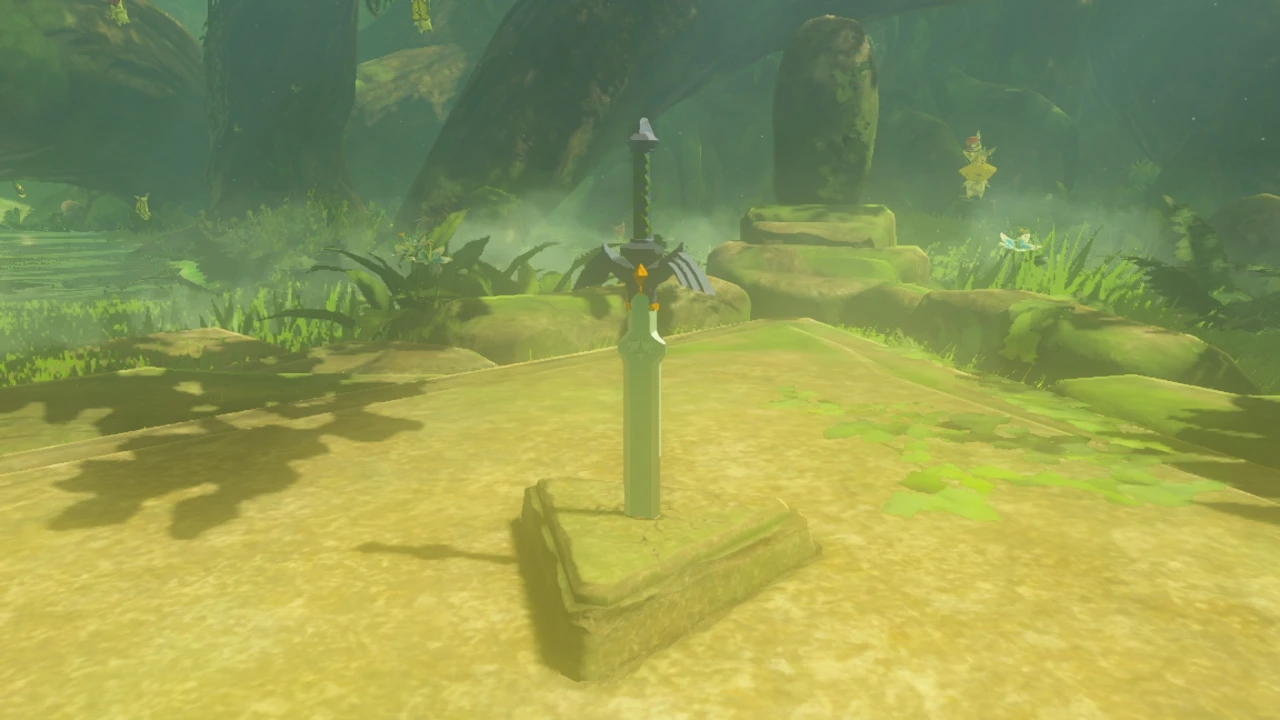
The Master Sword in its resting place in Korok Forest, Breath of the Wild.
Known as the blade of evil’s bane, the Master Sword first appeared in A Link to the Past, where Link earns it with the three Pendants of Virtue and draws it in the Lost Woods. It has been the hero’s weapon ever since:
Its origin: in Skyward Sword it begins as the Goddess Sword, tempered in three Sacred Flames and blessed by Hylia; its spirit, Fi, sleeps inside it.
Ocarina of Time: drawing it from the Pedestal of Time seals the boy away for seven years, until he is old enough to wield it.
The Wind Waker: found in the drowned Hyrule Castle with its power faded, restored by the Sages of Earth and Wind, and finally driven into Ganondorf’s head.
The Oracle games and A Link Between Worlds: in the Oracles the final sword upgrade of a linked game; in A Link Between Worlds the key to the barrier around Hyrule Castle.
Breath of the Wild: needs at least thirteen permanent hearts to pull; it never breaks, but it must recharge.
Tears of the Kingdom: ruined by Ganondorf’s gloom, then healed over the ages inside the Light Dragon.
The Triforce of Courage
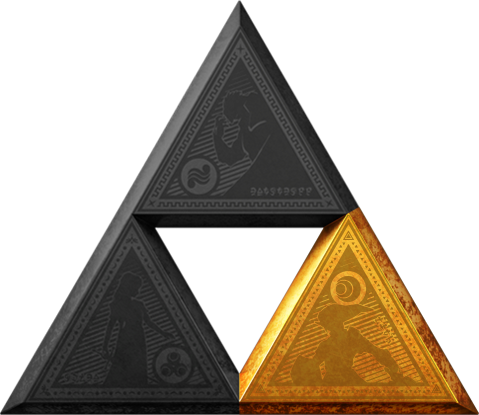
The Triforce of Courage (official artwork).
The Triforce of Courage is the youngest piece of the sacred triangle. The first game’s Triforce had only Wisdom and Power; the third piece arrived in Zelda II, where winning it is the whole point of Link’s quest. From then on Courage is the hero’s piece:
In Ocarina of Time, Ganondorf touches the Triforce without balance and it splits: Power to him, Wisdom to Zelda, Courage to Link.
In The Wind Waker, it lies in eight shards across the sea.
In Twilight Princess, its mark on his hand is why the Twilight turns him into a wolf instead of a spirit.
In Skyward Sword, the first Link uses the whole Triforce to destroy the Imprisoned.
Birthday clothes: the Outset Island Link gets his green outfit in The Wind Waker.
The green outfit. A practical choice in 1986, when the hardware allowed few colours per sprite and much of the game was forest. It became the uniform of heroism, and The Minish Cap even explains where the cap came from.
Left-handed, mostly. The exceptions come from controllers, not lore: the Wii Twilight Princess was mirrored after Miyamoto saw E3 players swing the Wii Remote right-handed, and Skyward Sword and Breath of the Wild put his sword in his right hand to match their controls.
The silent hero. He yells and grunts but never holds a conversation in the main games (see Why doesn’t he talk?).
Music. Ocarinas, a baton, a harp, a pan flute and even a wolf’s howl: Link solves problems with songs.
Never alone for long. From Navi to Fi, a chatty companion usually does the talking for him (see Link’s companions).
Why does everyone call him Zelda?
Because the series is named after the princess, not the hero. Miyamoto has said the name Zelda was inspired by the writer Zelda Fitzgerald, and generations of players have looked at a box with a boy in green on it and assumed he must be Zelda. He is not, and Zelda Temple will defend that hill for ever. The princess has her own page: Princess Zelda.
Game by game
One card for every main-series game, in release order. Remakes and HD versions sit inside the original’s card, because the Link in them is the same hero. Titles in the meta lines are Nintendo’s own, from the games or its official books; where Nintendo gives none, we say plainly who he is.
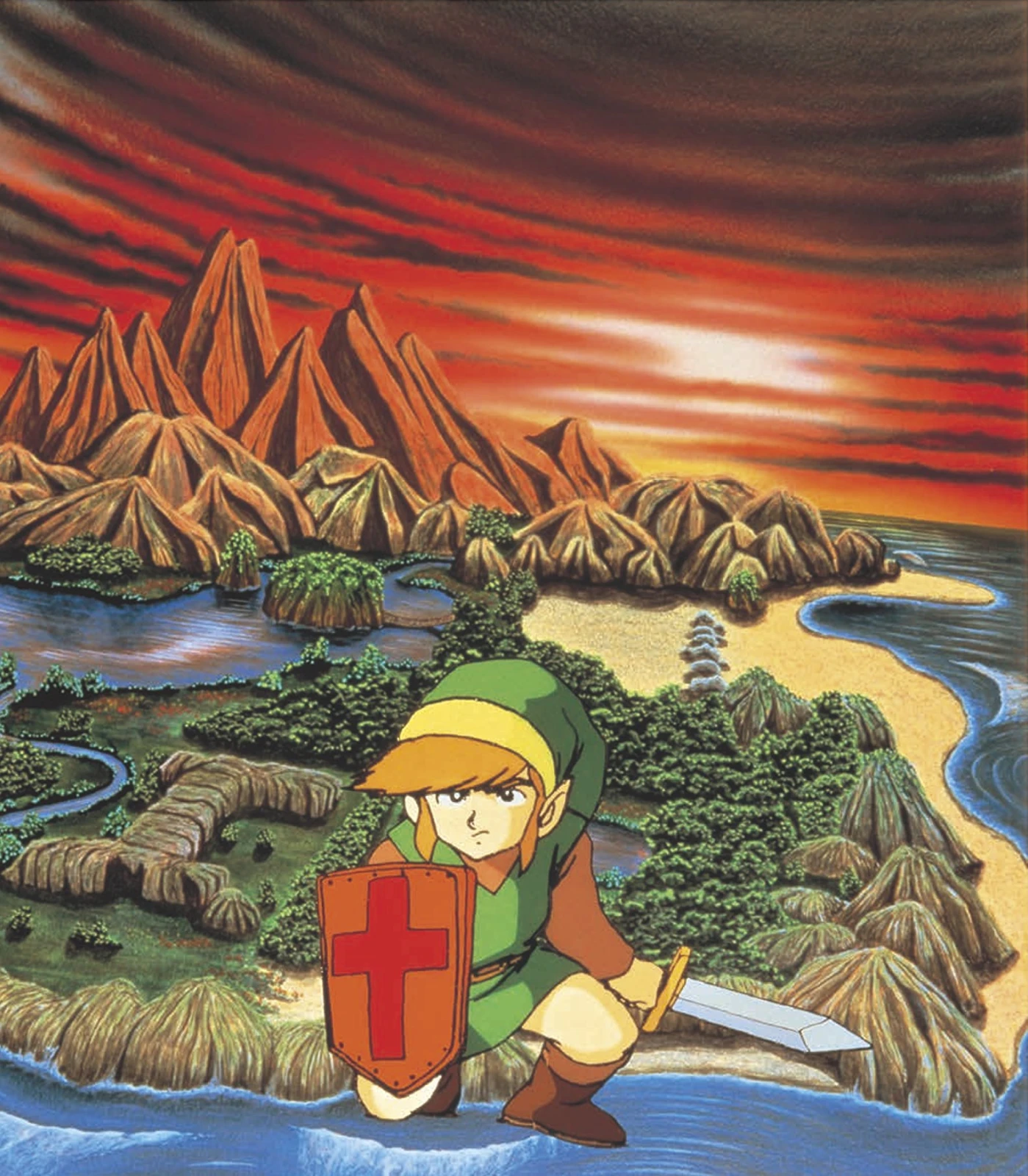
Famicom Disk System / NES · “A young lad” (English manual)
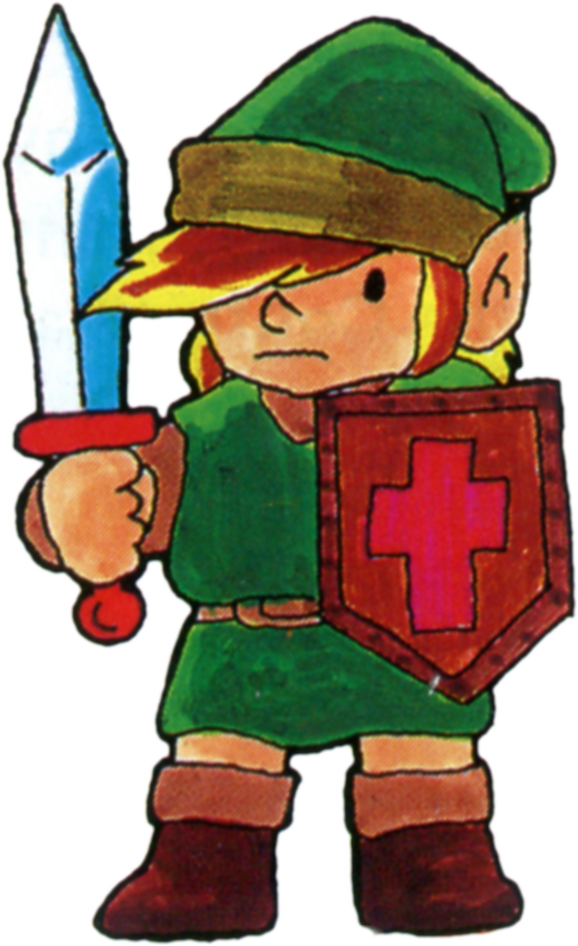
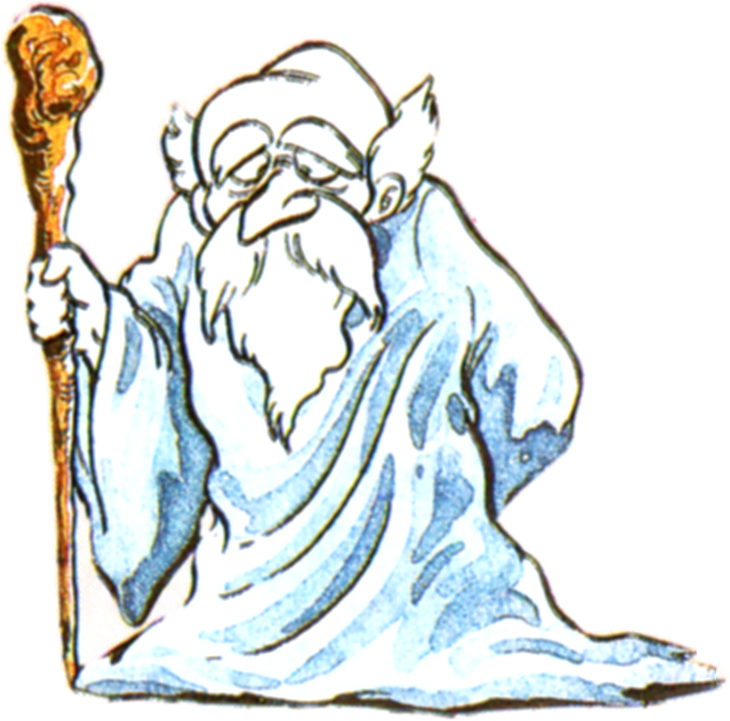
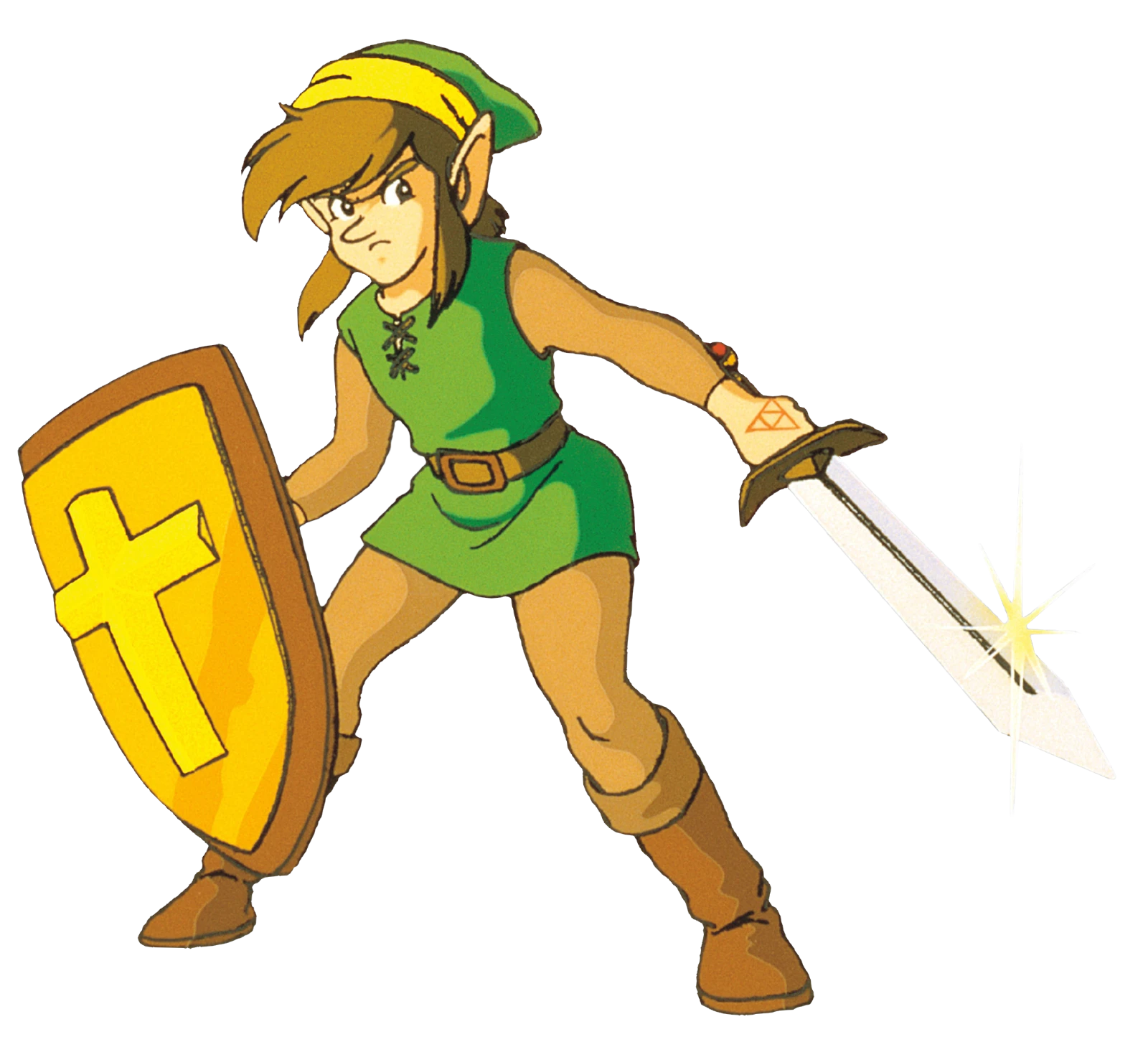
The first Link has no back story at all. The English manual simply calls him a young lad who happens to be passing when Impa, Princess Zelda’s nursemaid, is cornered by Ganon’s monsters. Before her capture Zelda broke the Triforce of Wisdom into eight pieces and hid them, so Link has to find all eight in the dungeons, climb Death Mountain and bring Ganon down with the Silver Arrow. Everything about him serves the player. He has no lines, the save screen asks for your name rather than his, and the game drops him in an open field with nothing until an old man in a cave hands over a wooden sword. Takashi Tezuka drew the sprite from Shigeru Miyamoto’s idea, with Peter Pan as an influence: pointed cap, tunic, sword in one hand and shield in the other. Almost everything that later Links share is already in place.
What’s new
The first Link: a silent, nameable everyman.
No Triforce of Courage yet; this Triforce has only Wisdom and Power.
Takes the Triforce of Power from the defeated Ganon and rescues Zelda.
A few years on, the hero of the first game is approaching his sixteenth birthday when a mark matching the royal crest of Hyrule appears on the back of his left hand. Impa takes him to the North Castle, where an earlier Princess Zelda has lain in an enchanted sleep for generations. Only the third piece of the Triforce, Courage, can wake her, and it is sealed in the Great Palace behind six crystals that Link must return to six palaces. So the first Zelda hero with his destiny written on his skin becomes a side-scrolling swordsman with experience levels in Attack, Magic and Life, a book of spells from Shield to Thunder, and lives to lose. He learns the Downward and Upward Thrusts from townsfolk, gets past a stubborn River Man with a hermit’s note, and at the very end of the Great Palace faces the strangest boss in the series: his own shadow.
What’s new
The Triforce of Courage makes its debut, and winning it is the point of the quest.
Experience levels and lives, neither of which a Link has had since.
The first fight with Link’s dark double, the Shadow of Link.
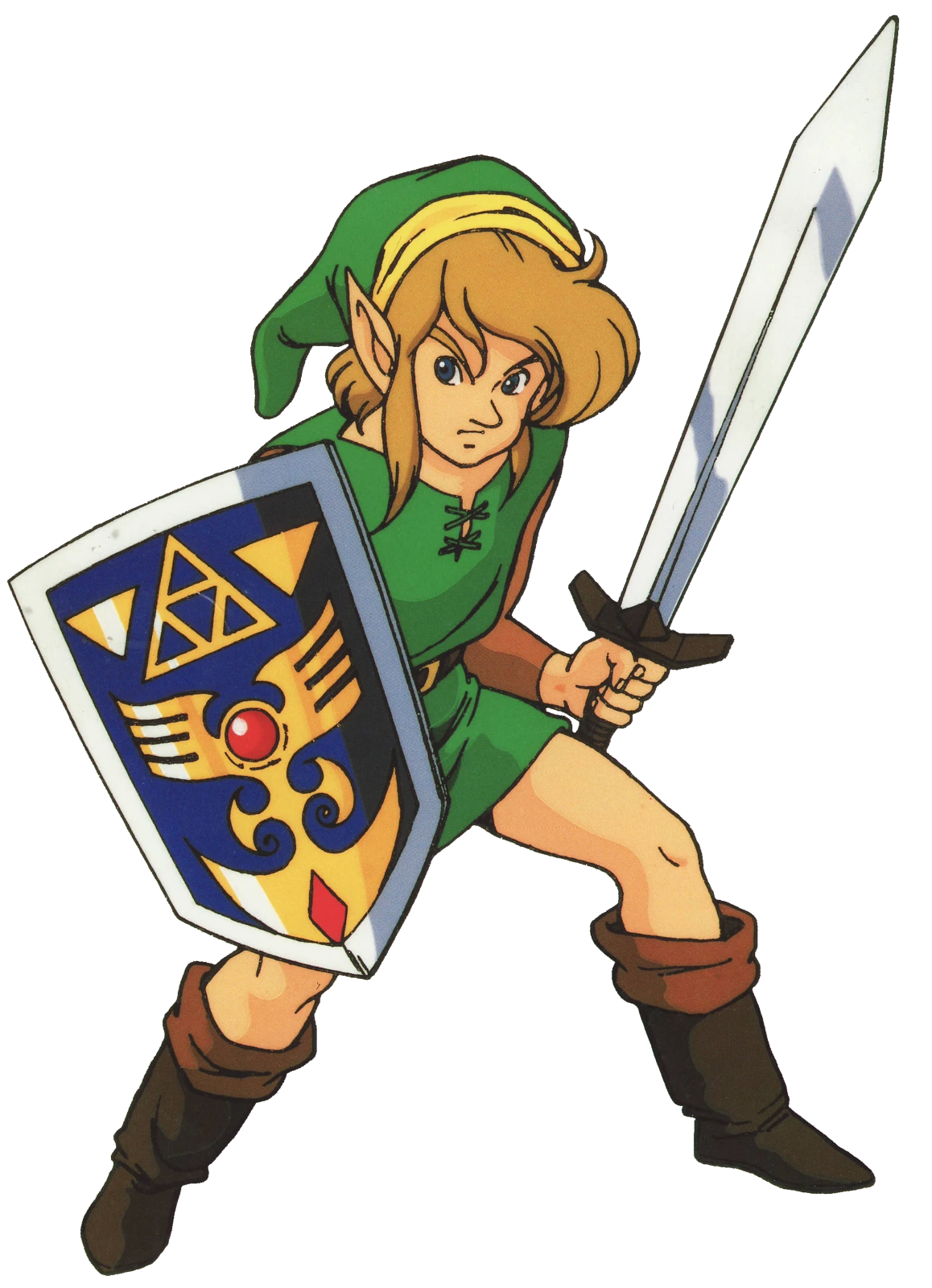
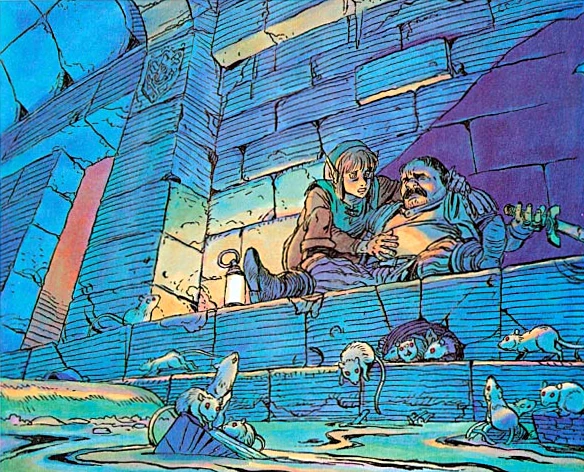
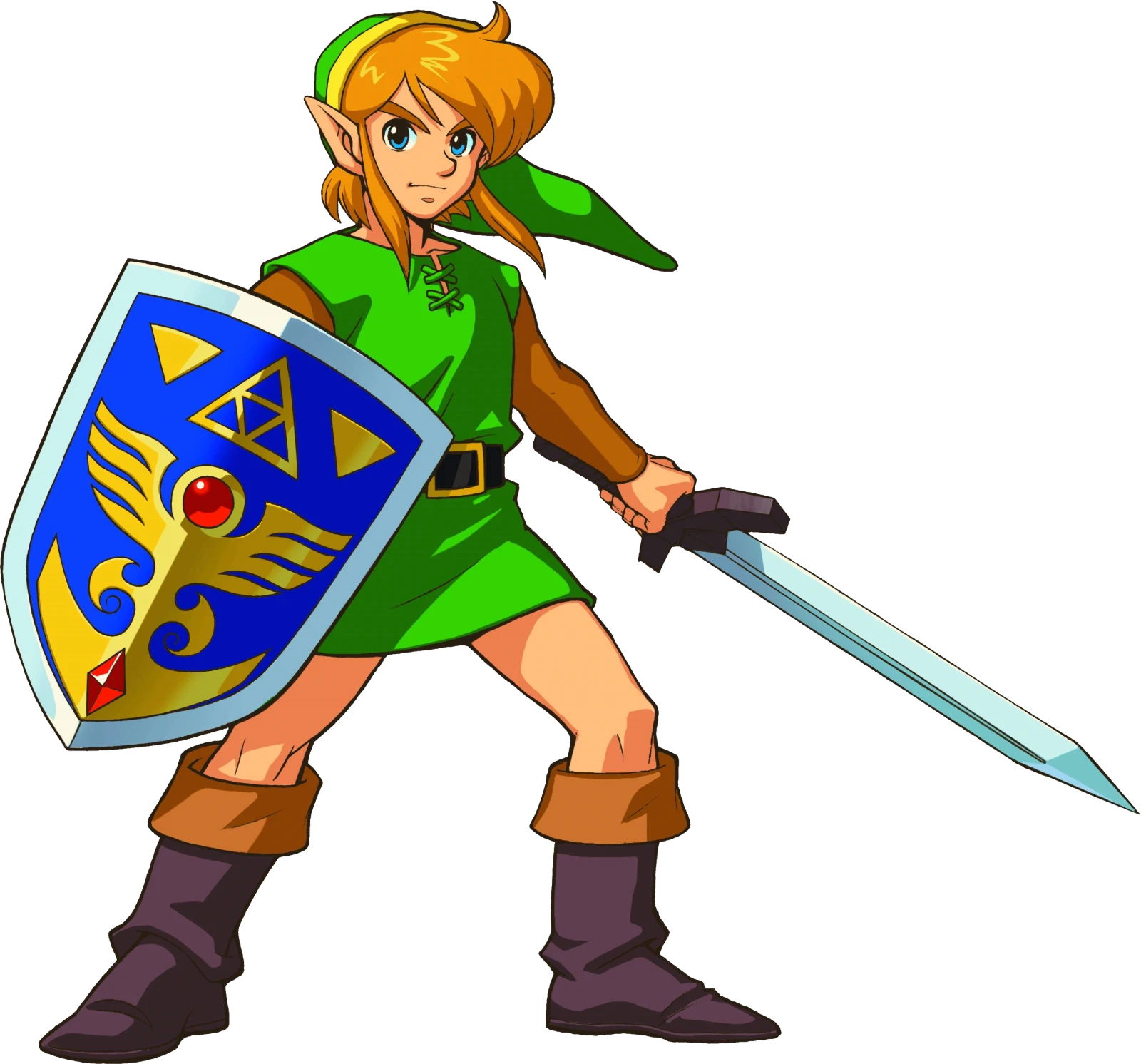
A stormy night, a telepathic plea from a princess in a dungeon cell and an uncle who tells the boy to stay in bed: A Link to the Past sets up a pattern many later Links follow. This one lives with his uncle (Japanese sources call the family descendants of the Knights of Hyrule), and when he slips into Hyrule Castle he finds him dying in a secret passage and takes up his sword and shield. Link rescues Zelda from the wizard Agahnim, wins the three Pendants of Virtue and draws the Master Sword in the Lost Woods, its first appearance anywhere. Agahnim still sends Zelda into the Dark World and, once beaten, banishes Link there too, where only the Moon Pearl, found earlier in the Tower of Hera, stops him turning into a pink rabbit. He frees seven maidens from their crystals, beats Agahnim a second time and then Ganon, and wishes on the Triforce to put Hyrule right. The 2002 Game Boy Advance version gave him a voice by borrowing young Link’s yells from Ocarina of Time.
What’s new
The Master Sword and the spin attack both make their debut.
Diagonal movement, the Pegasus Boots dash and Pieces of Heart.
The first two-world adventure, and the first time Link is transformed.
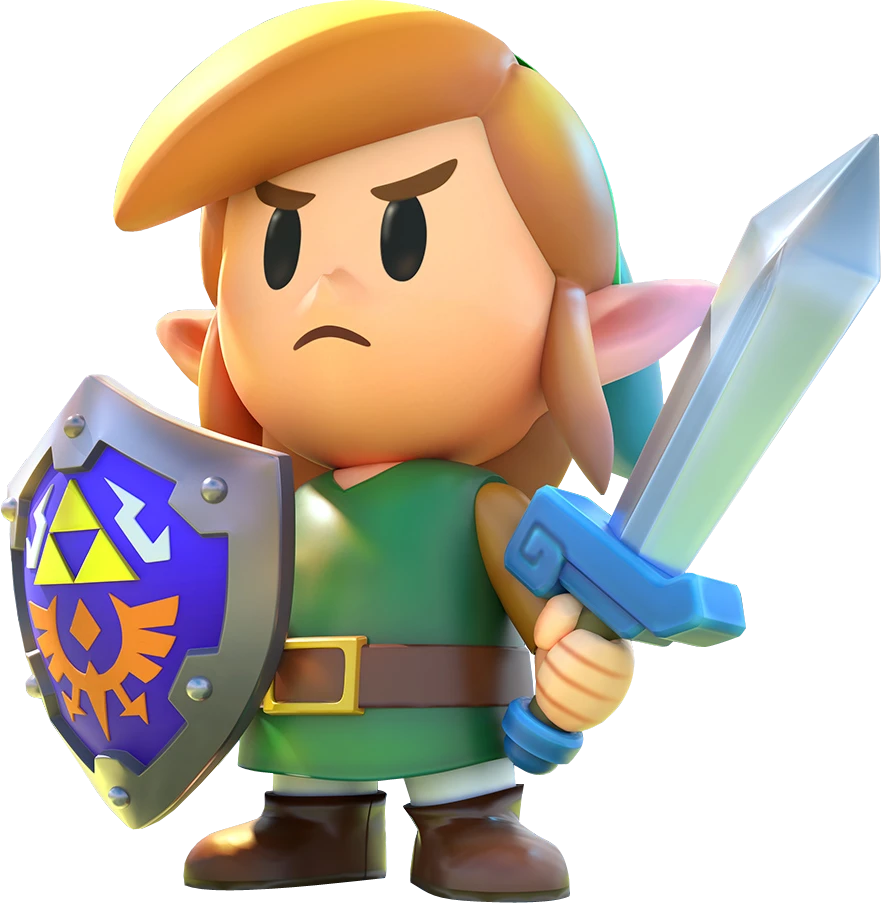
With Hyrule safe, the hero of A Link to the Past sets out to train and see the world, and Nintendo’s timeline, revised in 2017, places this adventure between that game and the Oracle pair. A storm wrecks his boat and he wakes on Koholint Island in the house of Marin, a girl so like Princess Zelda that he mistakes her for the princess (“No, my name’s Marin!”). To leave, he must wake the Wind Fish, asleep in a giant egg on the mountain, by collecting the eight Instruments of the Sirens. The catch, revealed slowly, is that Koholint is the Wind Fish’s dream, and waking it will erase the island and everyone on it. He does it anyway. Along the way this Link gets his first proper jump, a fishing pond, a long trading sequence and visits from Mario’s world. The 1998 DX version added colour, and the 2019 remake on Switch rebuilt him as a glossy, toy-like figure.
What’s new
Roc’s Feather gives a top-down Link his first jump.
Any item can go on either button, sword included.
A quest that ends with Link losing the world he has saved.
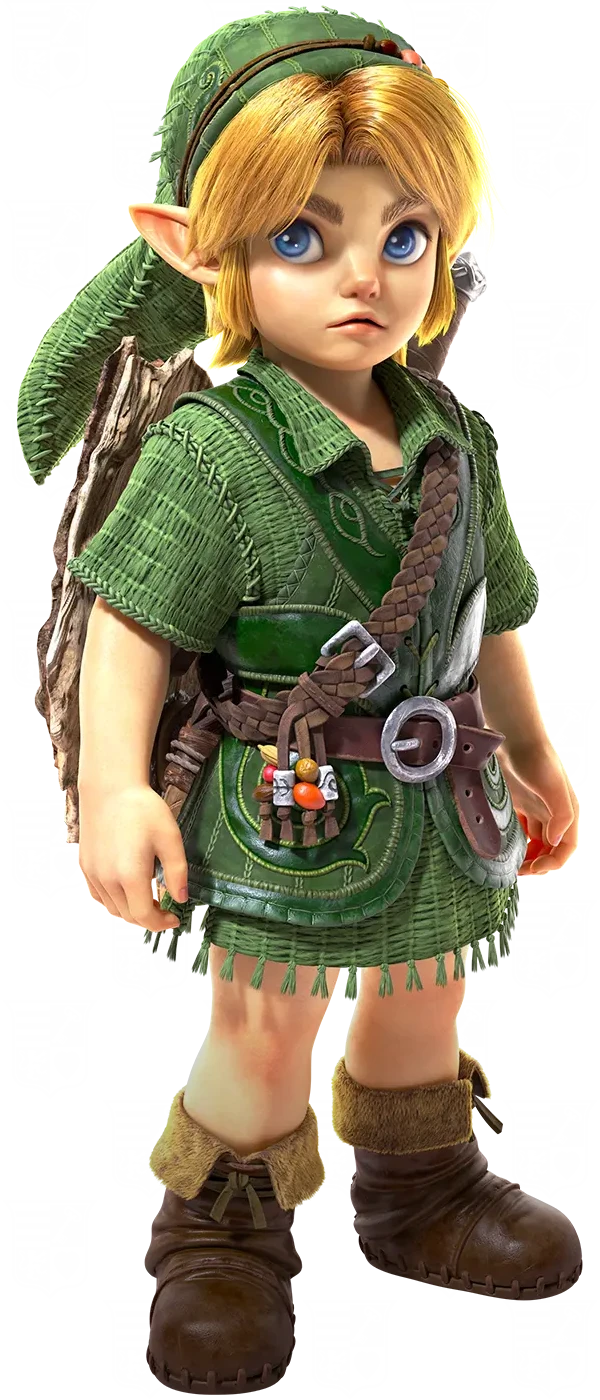
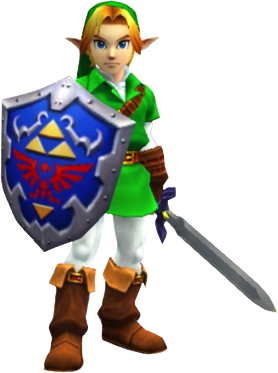
The Link most players picture first. He grows up in Kokiri Forest believing he is a Kokiri, the only child there without a fairy, until the Great Deku Tree sends him Navi and the truth begins to emerge: he is a Hylian, brought to the forest as a baby. He gathers the three Spiritual Stones, opens the Door of Time and draws the Master Sword, only to be sealed away for seven years because he is too young to wield it, while Ganondorf strides into the Sacred Realm behind him. He wakes as an adult in a ruined Hyrule, frees the Sages from five temples with help from the mysterious Sheik, and defeats Ganon with Zelda at his side. Then Zelda sends him back to his childhood, and the timeline splits. Fujiko Takimoto voiced the boy and Nobuyuki Hiyama the man. Ocarina of Time 3D (2011) retold the story on 3DS, and the Switch 2 remake of 5 November 2026 gives him a handmade-looking tunic, a jump button and fully voiced cutscenes, though no actor is credited for Link himself.
Signature kit (5)
Kokiri Sword, Master Sword, Biggoron’s Sword
Deku, Hylian and Mirror Shields
Fairy Slingshot and Fairy Bow, Hookshot and Longshot, Megaton Hammer
Din’s Fire, Farore’s Wind and Nayru’s Love
The Ocarina of Time
What’s new
The first 3D Link: Z-targeting, context-sensitive moves and an automatic jump.
Two ages in one game, swapped by returning the Master Sword to its pedestal.
The 2026 remake finally lets him jump whenever you press a button.
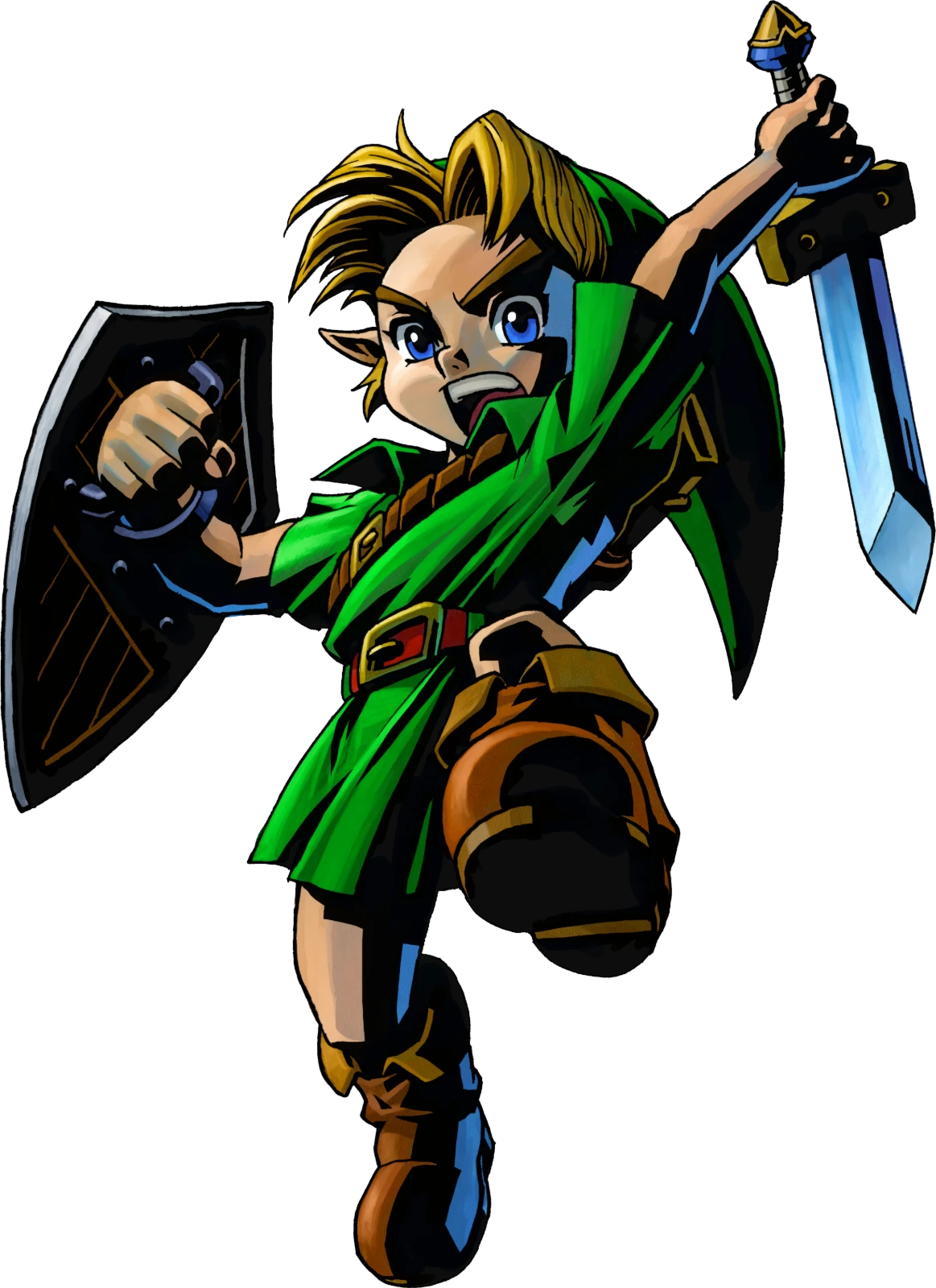
Sent back to his childhood at the end of Ocarina of Time, the Hero of Time rides off alone to look for Navi, the friend who left him. In a forest the Skull Kid, wearing the stolen Majora’s Mask, takes his ocarina and Epona and curses him into a Deku Scrub, and Link tumbles into Termina, where the moon will crash into the land in three days. Nobody here has heard of the Hero of Time. He gets his own body back with the Song of Healing, but he can never fix everything at once: each time he plays the Song of Time he returns to the dawn of the first day, keeping his songs and masks and losing almost everything else. That makes him a listener, learning the town’s timetables and its people’s troubles, while the masks lend him new bodies. Hyrule Historia says nobody knows what became of him afterwards; his next appearance is as a ghost. Majora’s Mask 3D (2015) brought the same story to 3DS.
What’s new
Deku, Goron and Zora masks turn him into those races’ heroes; the Fierce Deity’s Mask into something else entirely.
Twenty-four masks in all, many earned by solving one person’s problem.
No Master Sword: he fights with the Kokiri Sword, which a smithy can improve.
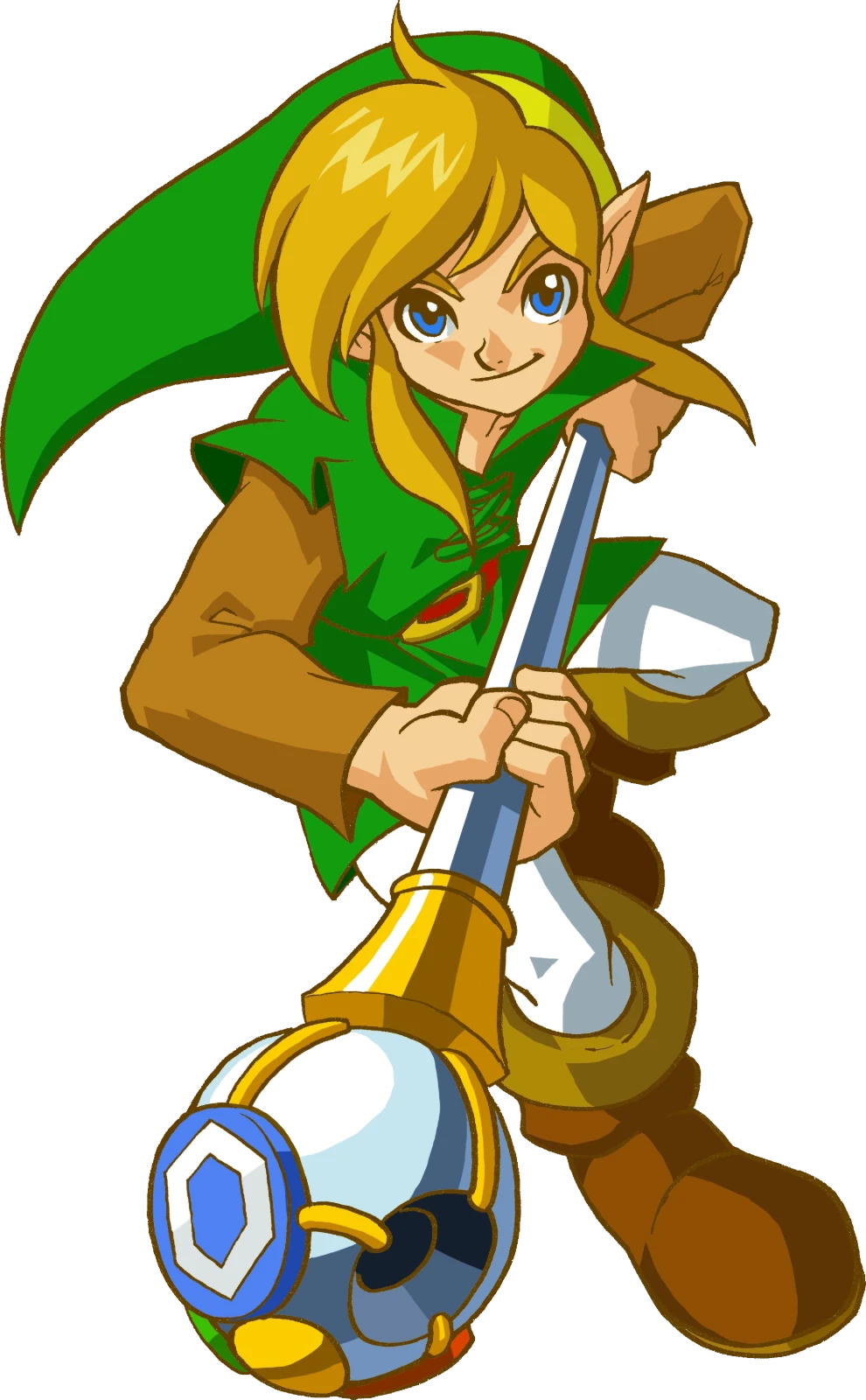
Capcom’s Flagship studio made the two Oracle games for Nintendo, and each begins with the Triforce itself choosing Link. In Oracle of Seasons it whisks him from Hyrule Castle to Holodrum, where Onox, the General of Darkness, has kidnapped Din, the Oracle of Seasons, and thrown the seasons into chaos. He arrives with nothing and has to find a sword in a cave before the adventure can begin. Then he masters the Rod of Seasons, which changes the season whenever he stands on a tree stump: winter freezes water to walk on, summer dries up rivers, and the right season opens the way to the next dungeon. He collects the eight Essences of Nature, defeats Onox and frees Din. Played as a linked game with Oracle of Ages, the story carries on to a final showdown in which Link rescues Zelda and destroys Ganon. Each sword and shield can be upgraded twice, and the game has dozens of magic rings to find.
What’s new
The Rod of Seasons: four seasons, one stump at a time.
Seasons-only tools such as the Slingshot and the Magnetic Gloves.
Saves Zelda and defeats Ganon only in a linked game.
Oracle of Ages starts the same way, with the Triforce calling Link, but this time it drops him in Labrynna, where he meets Impa in the woods and receives a wooden sword. Impa is not quite herself: the sorceress Veran is hiding inside her, and as soon as they find Nayru, the Oracle of Ages, Veran leaps into Nayru and uses her power to bend history. Link’s answer is the Harp of Ages, which carries him between present-day Labrynna and the same land four hundred years earlier, so that fixing something in the past can open a path in the present. He gathers the eight Essences of Time, untangles the timeline and drives Veran out. The game leans more on puzzles than on fights, and Link’s kit (the Seed Shooter, the Switch Hook that trades places with whatever it hits) reflects that. A password from either Oracle game unlocks the linked version of the other, where the Master Sword waits as the final sword.
What’s new
The Harp of Ages: time travel by tune.
The Switch Hook: swap places with whatever it hits.
Seeds as ammunition: Ember, Scent, Pegasus, Gale and Mystery.
The first multiplayer Zelda came bundled with A Link to the Past on one Game Boy Advance cartridge. This Link is a friend of Princess Zelda who goes with her to the sanctuary of the Four Sword, where the wind sorcerer Vaati is sealed. Vaati breaks out and carries Zelda off, and when Link draws the sword it splits him into four, green, red, blue and purple, one for each player. The four Links cooperate and compete for Rupees in the same breath, win keys from the Great Fairies, cross the Sea of Trees, Death Mountain and Talus Cave, and reseal Vaati in his palace, after which the copies become one boy again. There is one item slot each, swapped at pedestals, and the Gnat Hat shrinks a Link to a fraction of his size. The 2011 Four Swords Anniversary Edition finally added a single-player mode in which one player leads two Links, plus new stages.
What’s new
The first Link who is four people at once.
Two to four players, each with a Game Boy Advance.
Introduces the Four Sword and Vaati, who both return.
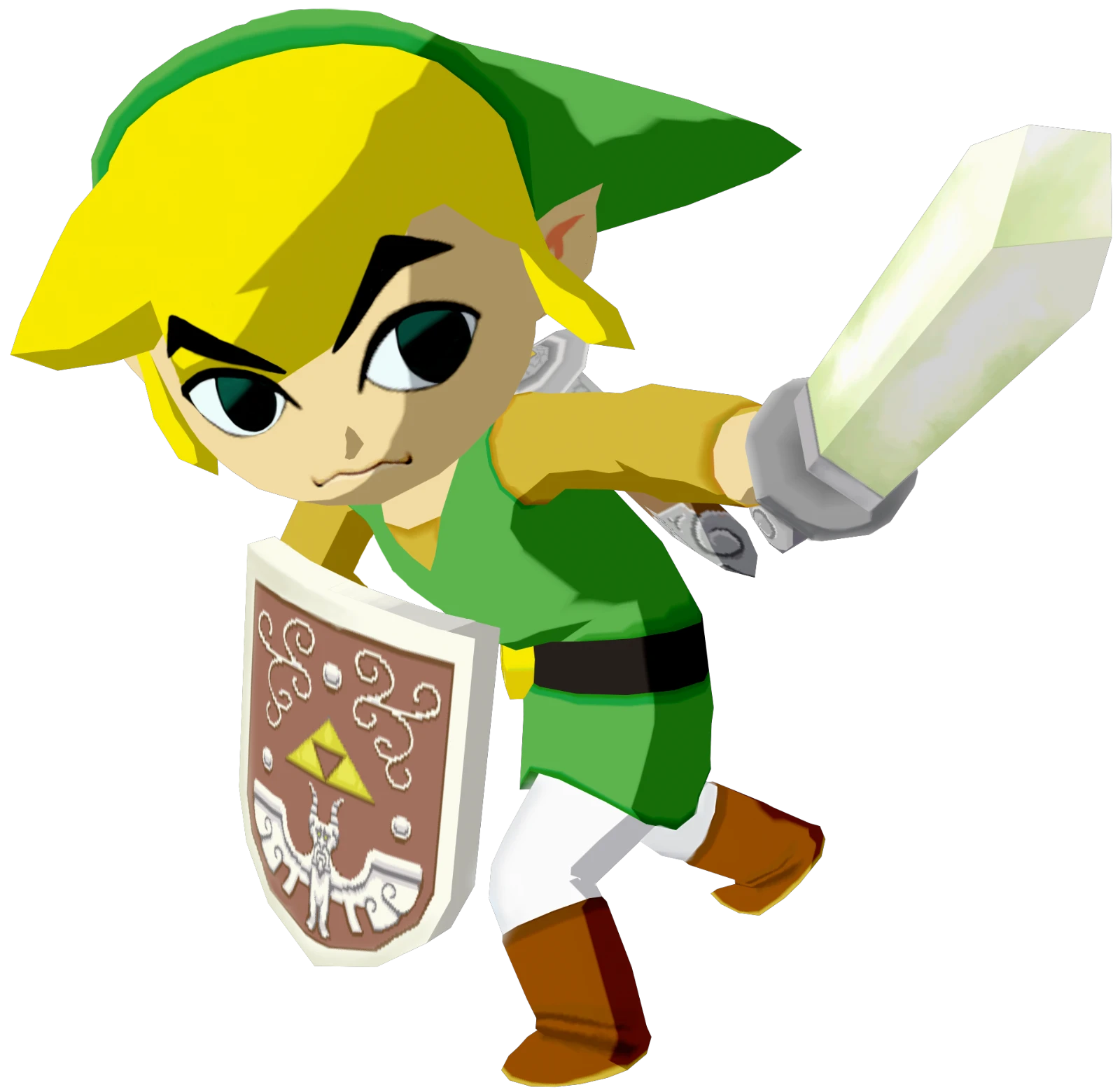
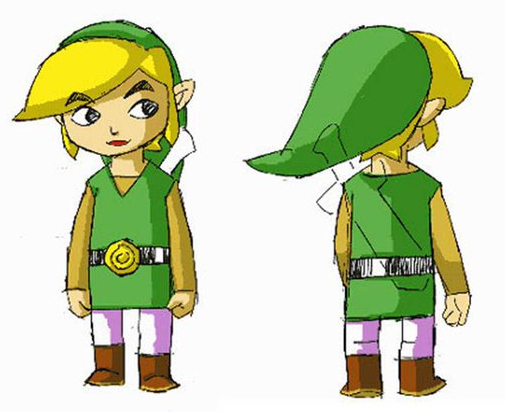
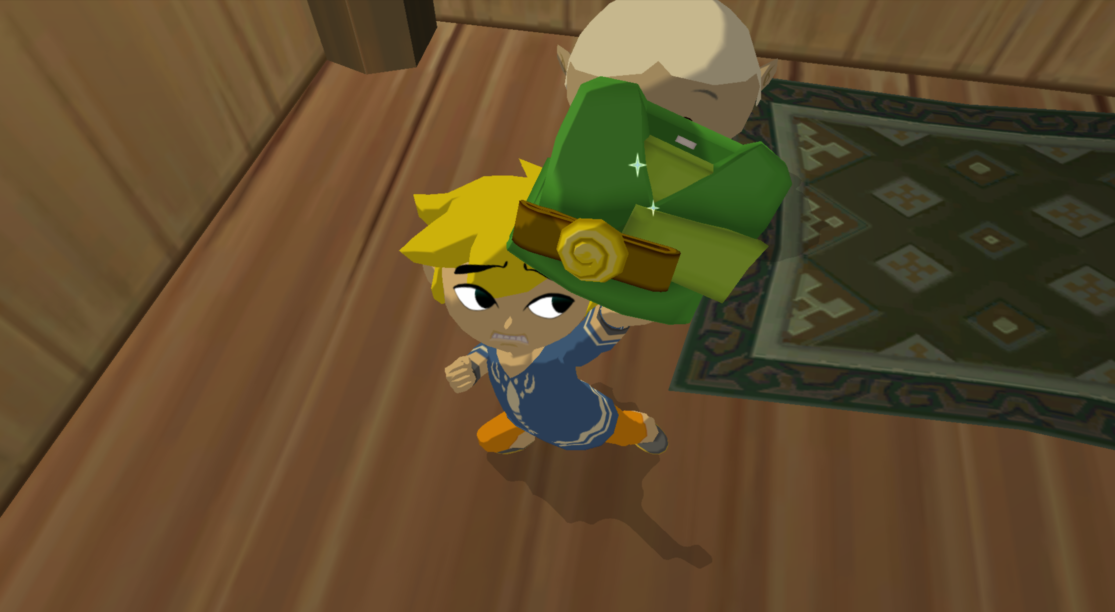
On Outset Island boys are dressed in green when they reach the age of the legendary hero, and this Link is wearing the outfit for the first time when a giant bird drops a pirate girl in the island’s forest and snatches his little sister Aryll instead. He is not chosen and not destined: he is a kid who wants his sister back. Sailing first with Tetra’s pirates and then in a talking boat, the King of Red Lions, he crosses the Great Sea and learns that Hyrule lies drowned beneath the waves. There he draws the Master Sword, storms the Forsaken Fortress to rescue Aryll, restores the sword’s power with the help of two new Sages, hunts down the eight shards of the Triforce of Courage and, in the last battle, drives the sword into Ganondorf’s forehead and turns him to stone. Nintendo’s books call him the Hero of Winds. His big-eyed, cel-shaded look, sketched by Yoshiki Haruhana, became known as Toon Link, and The Wind Waker HD (2013) kept it intact.
What’s new
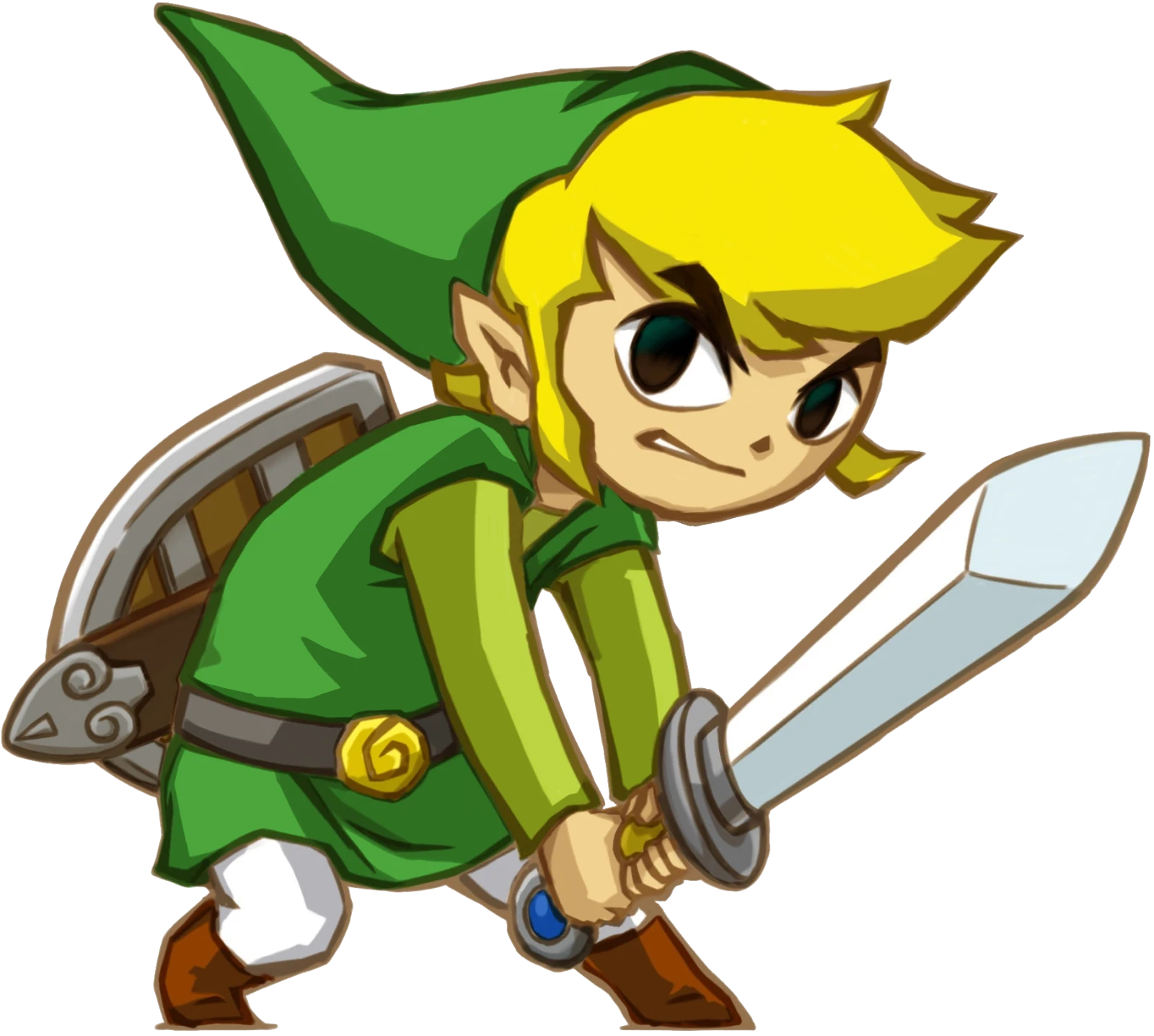
Toon Link: cel-shaded, wide-eyed, and the template for five more games.
His eyes turn towards enemies and secrets when he stands still.
Four Swords Adventures brings back the four Links on GameCube, using Game Boy Advance consoles as controllers, and adds a story mode in which one player commands all four. Its Link is a young Hylian whom Princess Zelda summons to stand guard while she and the six Shrine Maidens open a portal to check on Vaati’s seal. A dark copy of Link, Shadow Link, ambushes them, Zelda and the maidens are snatched, and Link draws the Four Sword to give chase, splitting once more into green, red, blue and purple. The four move in formations, charge the sword with Force Gems and fight through eight levels to the Palace of Winds, where they reseal Vaati. Then the real villain appears: a new incarnation of Ganondorf, who has stolen a trident of dark power and becomes Ganon, and who ends up sealed inside the Four Sword. As before, players cannot rename this Link.
What’s new
Formations: the four Links line up, spread out or surround enemies.
Force Gems power up the Four Sword.
Items stay in each stage instead of building up an inventory.
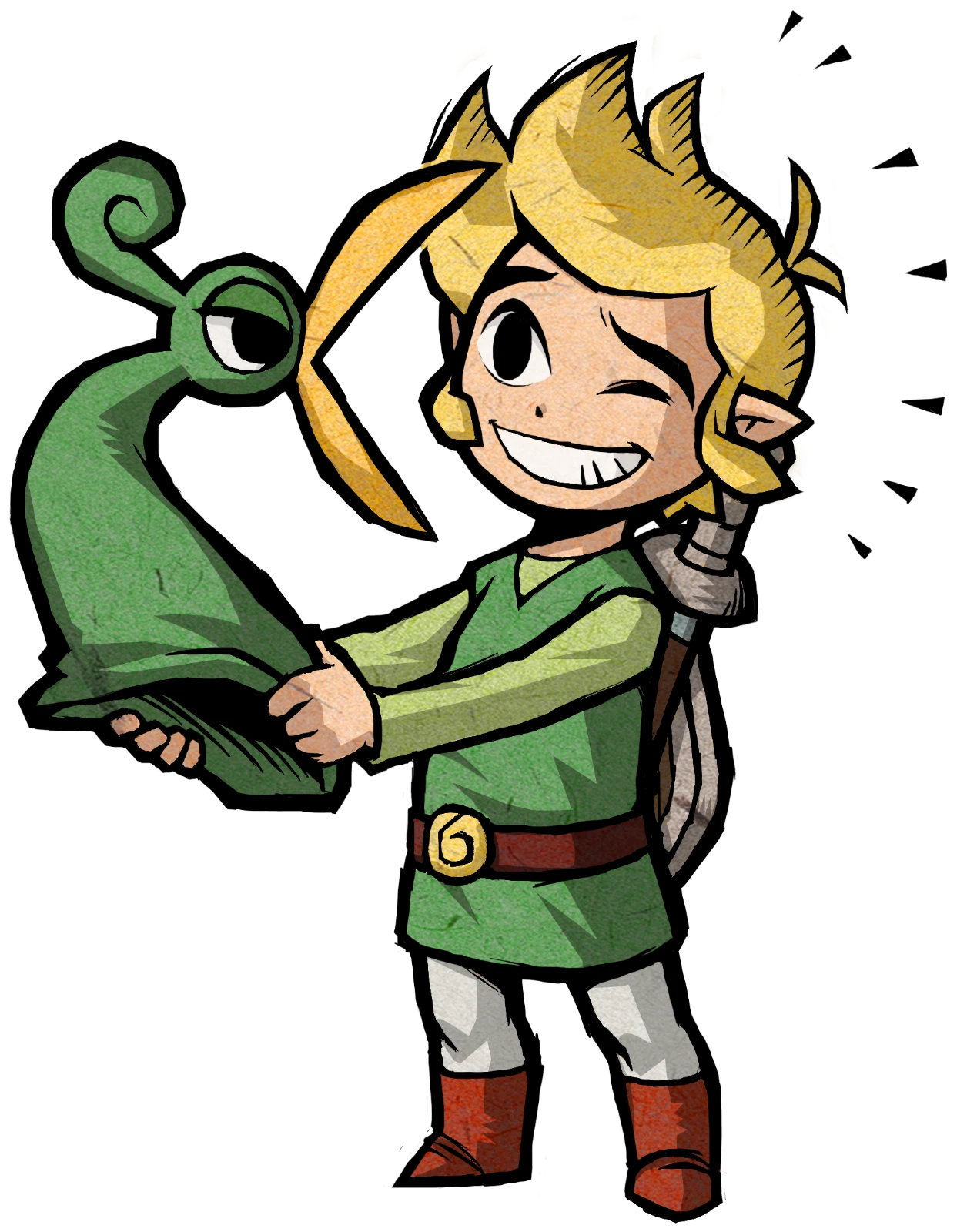
Here is a Link with a family: he lives with his grandfather Smith, the royal blacksmith, and is Princess Zelda’s childhood friend. At the Picori Festival the sorcerer Vaati shatters the Picori Blade and turns Zelda to stone, and since only children can see the tiny Picori, or Minish, the king sends Link to find them. On the way he picks up Ezlo, a grumpy talking cap who rides on his head and can shrink him to Minish size at special portals, so that a puddle becomes a lake and a mouse a monster. Link gathers the four Elements, reforges the blade as the Four Sword, which can split him into copies, and defeats Vaati. At the end Ezlo, restored to his true form, leaves him a green cap as a parting gift, and so the series finally explains the famous hat. Capcom’s Flagship drew this Link in the style of The Wind Waker, rendered in pixels.
What’s new
Shrinks to the size of a Minish.
The origin story of the Four Sword and of the green cap.
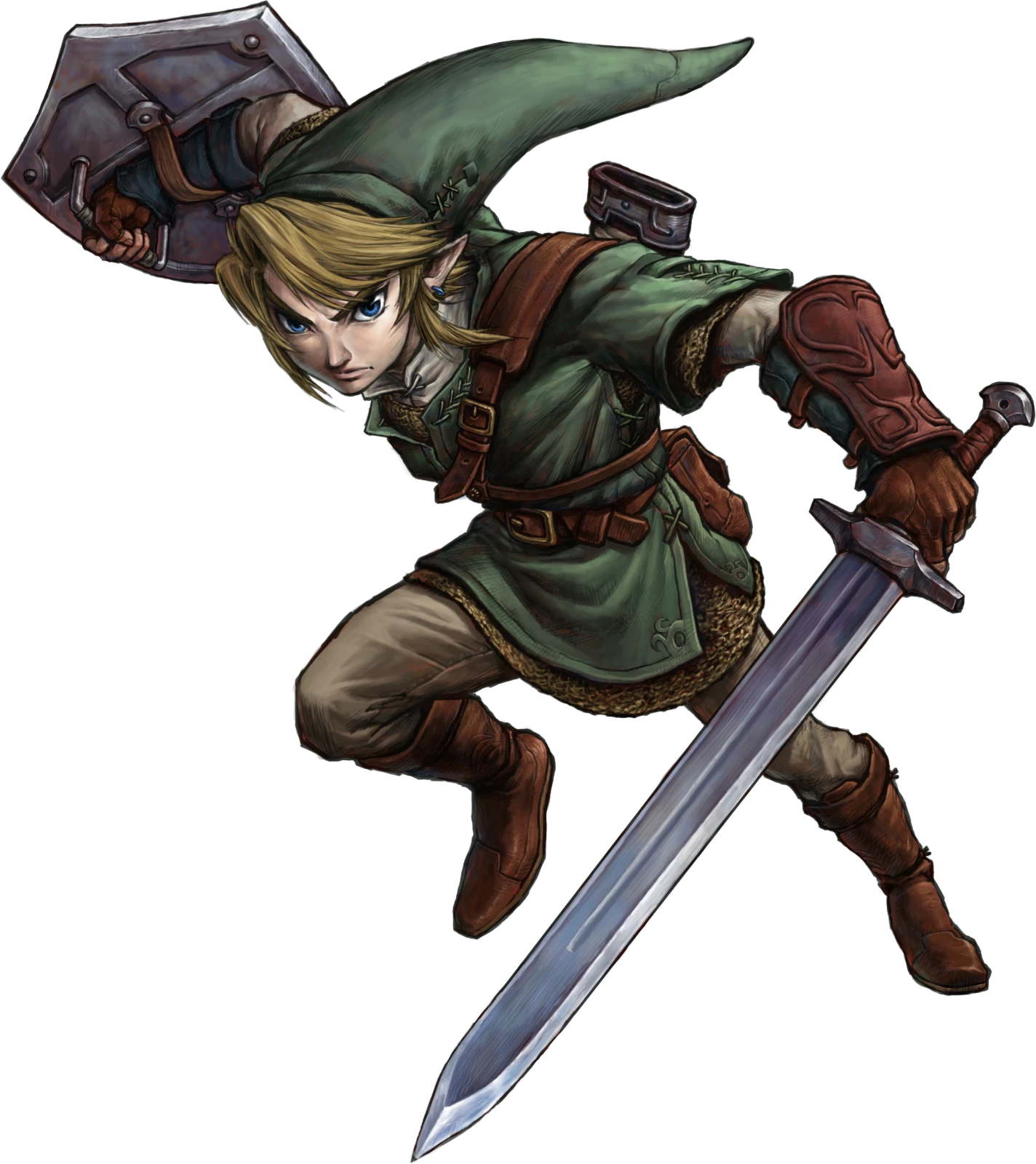
A little older than most Links, this one is a quiet, capable young man who herds goats in Ordon Village and rides a horse called Epona. He is chosen to deliver the village’s gift to Hyrule Castle, but before he can set off, monsters raid Ordon and carry away the children, and when he chases them into a wall of Twilight he turns into a wolf. The imp Midna springs him from a cell beneath Hyrule Castle and, riding on his back, makes him the instrument of a mission of her own. Link restores the Light Spirits of Faron, Eldin and Lanayru, recovers the Fused Shadow and the shards of the Mirror of Twilight, and finally kills Ganondorf with the Master Sword. Along the way the Hero’s Shade, revealed by Hyrule Historia to be the Hero of Time, teaches him seven hidden skills. He swings left-handed on GameCube and right-handed in the mirrored Wii version; Twilight Princess HD (2016) follows the GameCube layout, keeping the mirrored world for its Hero Mode.
What’s new
Spends much of the game as a wolf, with Midna on his back.
Fights from the saddle with his sword, and jousts on Epona.
Learns the hidden skills from his own ancestor’s ghost.
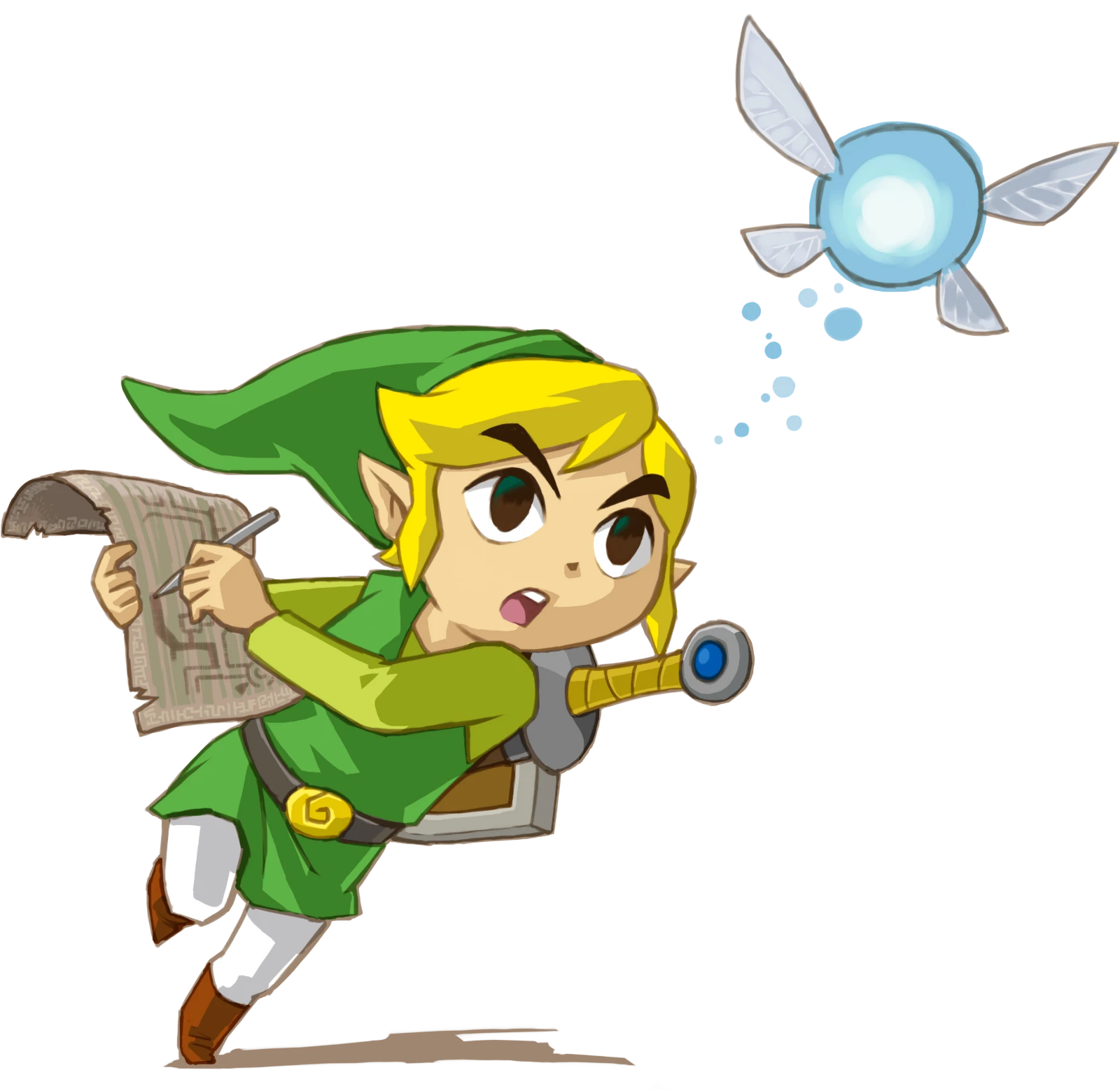
Not long after The Wind Waker, the Hero of Winds is sailing with Tetra’s pirates when they come across the Ghost Ship. Tetra climbs aboard and vanishes, Link falls overboard trying to follow, and he wakes on Mercay Island in the World of the Ocean King with a cross little fairy called Ciela fussing over him. Teaming up with Linebeck, a cowardly captain with a steamship, he explores the islands and keeps returning to the Temple of the Ocean King, where the Phantom Hourglass lets him survive the cursed floors for a limited time. He frees three spirits, has the Phantom Sword forged from three pure metals and defeats Bellum, the creature that has been draining the Ocean King’s life. Then he wakes on Tetra’s ship to find that only about ten minutes have passed. Everything is done with the stylus: tap to move, slash or roll, and draw a circle round Link to make him spin.
What’s new
Fully stylus-controlled, from sword swings to boomerang flight paths.
About a century after the Hero of Winds, in the New Hyrule founded by Tetra, this Link is an apprentice train driver from Aboda Village, taught by the engineer Alfonzo. In the opening scene he travels to Hyrule Castle to be made a fully qualified Royal Engineer, and Princess Zelda secretly asks for his help. The Spirit Tracks are vanishing, Chancellor Cole and the warrior Byrne want to free the Demon King Malladus, and soon Zelda’s body is stolen to be his vessel. Her spirit stays with Link, and together they restore the Tower of Spirits floor by floor, Zelda possessing its armoured Phantoms to fight beside him. Link drives the Spirit Train across five realms, plays the Spirit Flute by blowing into the microphone, and finishes Malladus with the Lokomo Sword and Zelda at his side. For once the princess is a partner for the whole journey rather than the prize at the end of it.
What’s new
A Link with a job title: Royal Engineer.
Zelda’s spirit fights alongside him inside the Phantoms.
Drives his own train, with a speed lever, a whistle and a cannon.
The first Link in Nintendo’s timeline lives on Skyloft, an island above the clouds, where he is a student at the Knight Academy, wears its green uniform and is partnered with a rare Crimson Loftwing. Zelda is his childhood friend, and their bond drives the story: a dark tornado drags her down to the surface, and Link follows with the Goddess Sword and its spirit, Fi. He tempers the blade in three Sacred Flames until it becomes the Master Sword, chases Zelda through the forests, volcanoes and deserts below, and learns that she is the mortal reincarnation of the goddess Hylia, who chose him. He finds the complete Triforce, uses it to destroy the Imprisoned, and kills Demise in single combat. The curse Demise lays with his last breath is why every later Link has an enemy waiting for him. Eiji Aonuma wanted players to feel Zelda was someone they needed to find, and Skyward Sword HD (2021) added a button-only control option for the sword.
What’s new
The sword follows the Wii Remote, swing by swing.
A stamina gauge for sprinting and running up walls.
Set in the Hyrule of A Link to the Past, generations later, A Link Between Worlds stars a blacksmith’s apprentice rather than a soldier or a chosen one. Delivering a sword to the captain of the guard, he walks in on the sorcerer Yuga turning a sage’s descendant into a painting. Yuga does the same to Link, but the spell backfires: thanks to a bracelet from Ravio, the rabbit-hooded merchant who has moved into his house, Link can now merge flat into any wall and walk along it like a living mural. He gathers three pendants, draws the Master Sword, crosses through cracks into the ruined twin kingdom of Lorule, frees the Seven Sages and defeats Yuga Ganon. Then Lorule’s Princess Hilda reveals plans of her own, and Link and Zelda finish by wishing Lorule’s Triforce back into being. Ravio, it turns out, is Lorule’s own Link. The same hero, according to Nintendo’s encyclopedia, stars in Tri Force Heroes.
What’s new
Merges into walls as a moving painting.
Rents or buys his tools from Ravio, so dungeons can be tackled in almost any order.
An energy gauge powers items in place of ammunition.
Nintendo 3DS · The hero of A Link Between Worlds, again
The Legend of Zelda Encyclopedia identifies the star of Tri Force Heroes as the same Link who saved Hyrule and Lorule. On his travels he wanders into Hytopia, a kingdom where fashion is everything and where a witch called the Lady has cursed Princess Styla into a frumpy bodysuit she cannot take off. King Tuft is recruiting would-be heroes to break the spell, Link fits the bill, and he joins the Witch-Hunting Brigade to cross the Drablands to the Lady’s lair. Three heroes tackle every stage together, stacking into totem poles to reach high places, passing items around and sharing one heart meter, while the outfits stitched by Madame Couture give them new powers. The developers first drew Link in the A Link Between Worlds style, then switched to the toon design because it was easier to make out on the 3DS screen. Unusually, he carries no shield.
What’s new
Three Links working as one, online or locally.
Outfits grant abilities, from faster swimming to stronger bombs.
Wii U and Switch · Zelda’s appointed knight and a Champion
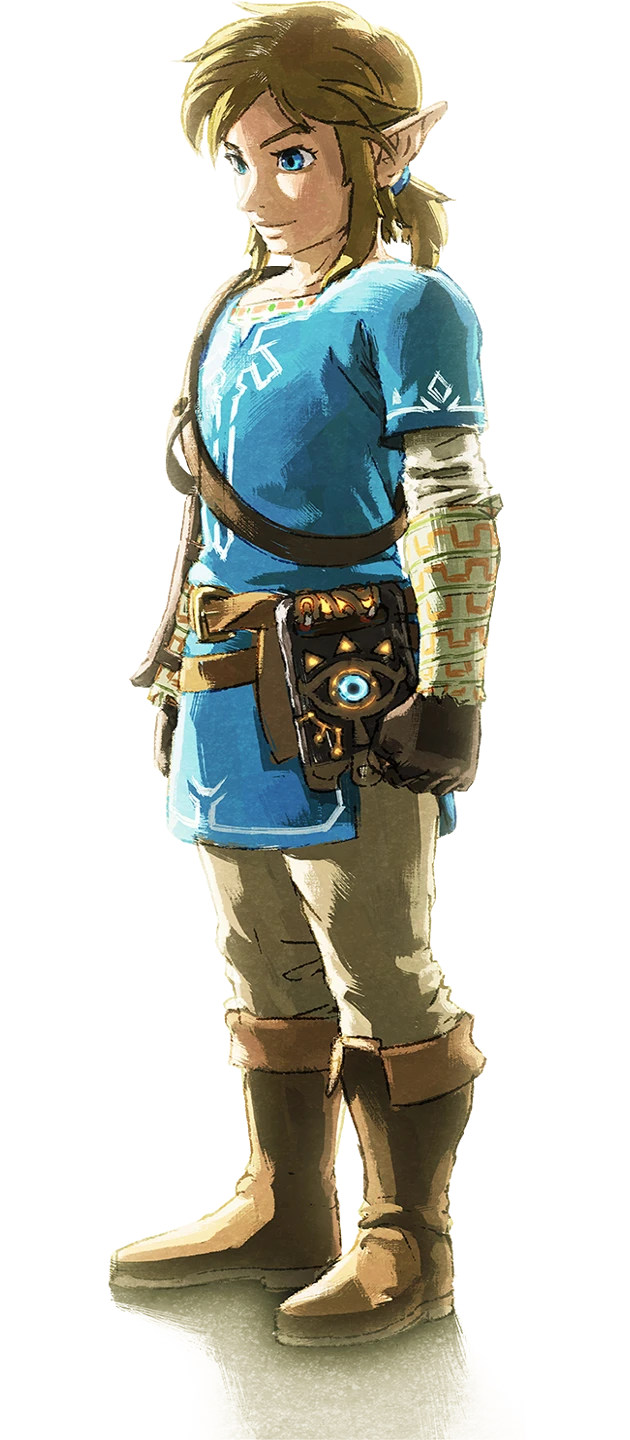
A century before the game begins, this Link was a gifted young swordsman from a family of knights, chosen by the Master Sword, appointed Princess Zelda’s knight and named one of the Champions who would face Calamity Ganon. They lost. Mortally wounded, he was laid in the Shrine of Resurrection, and he wakes there at the start with no memories, a voice urging him to open his eyes and a Sheikah Slate in reach. Everything after that is up to the player. He can free the four Divine Beasts and the spirits of their Champions, track down the places in his lost memories, pull the Master Sword once he has thirteen permanent hearts, or march straight to Hyrule Castle. He climbs nearly anything, glides on a paraglider and fights right-handed. Zelda’s diary gives a rare reason for his silence: he believes he must stay strong and shoulder every burden without complaint. The 2025 Nintendo Switch 2 Edition runs at a higher resolution and frame rate.
What’s new
The blue Champion’s Tunic replaces the classic green, which is still unlockable.
Climbs, swims, sprints and glides on a stamina wheel.
Weapons break; the Master Sword only runs out of energy and recharges.
Some time after Breath of the Wild, Link and Zelda explore the depths beneath Hyrule Castle and find a mummified figure held down by a glowing hand. It wakes: Ganondorf. His gloom shatters the Master Sword and withers Link’s right arm, the castle lifts into the sky and Zelda vanishes. Link comes round on a sky island to find the arm replaced by that of Rauru, Hyrule’s first king, with new powers: Ultrahand, Fuse, Ascend, Recall and Autobuild. He explores the sky, the surface and the vast Depths below, gathers a new circle of sages and learns that Zelda was thrown into the distant past, where she swallowed her secret stone and became the Light Dragon so that the broken sword could heal over the ages. He reaches up and draws it from the dragon’s head, then defeats Ganondorf. Nintendo wanted the arm to be iconic, so this Link is recognisable at a glance. The 2025 Nintendo Switch 2 Edition added smoother performance and the ZELDA NOTES app.
What’s new
Rauru’s arm: build and fuse instead of the old Sheikah Slate runes.
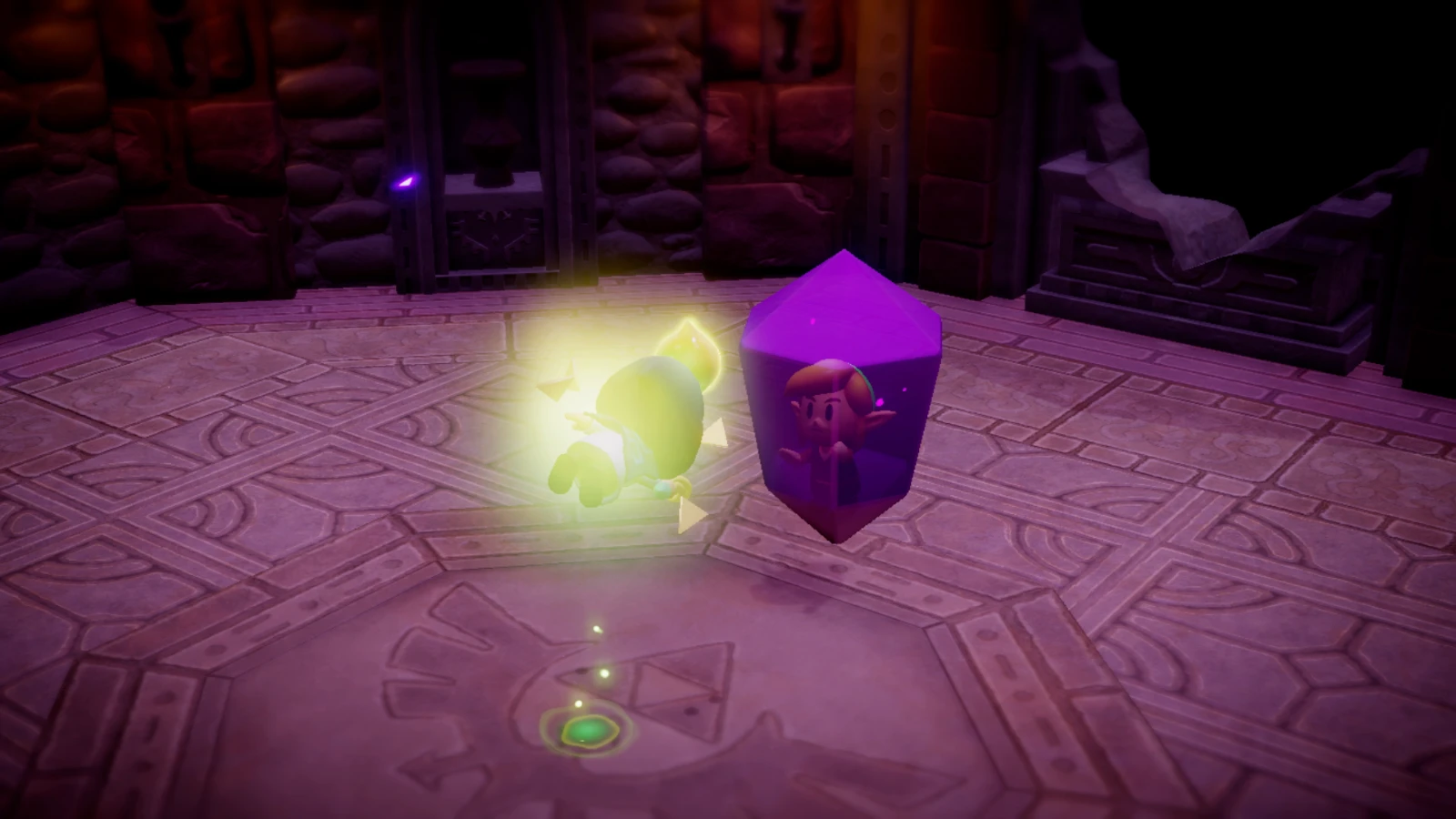
Echoes of Wisdom lets you play as Link for a few minutes and then takes him away. In the prologue he fights his way through Ganon’s lair and frees Princess Zelda from a crystal, only for a rift to swallow him while Zelda escapes. From then on Zelda is the star, wielding the Tri Rod and its echoes, while dark copies of Link conjured by the rifts prowl the Still World. The real Link is a prisoner of Null, sealed in a crystal, and the Triforce of Courage finds him there. Once Zelda sets him free, he fights alongside her through the final dungeon and the last battle. His new hooded outfit was designed first, and Zelda’s hood followed from it. The team also experimented with giving him a few words of dialogue and dropped the idea, building part of the story around his inability to speak instead.
What’s new
Playable only in the prologue.
Rescued by Zelda instead of the other way round.
A hooded outfit designed before Zelda’s.
Spin-offs and guest roles
Link is one of Nintendo’s most-travelled guest stars. As well as his own spin-offs, he has fought in every Super Smash Bros., crossed swords in Namco’s Soulcalibur II (GameCube only, 2003), raced karts and starred in the first two Hyrule Warriors games. One of the earliest was a pocket one: the 1989 Zelda Game & Watch, in which he climbs labyrinths and slays eight dragons to rescue Zelda.
Super Smash Bros. (1999–)Every game in the seriesOne of the eight starters of the Nintendo 64 original, in his Ocarina of Time look. Brawl and the 3DS / Wii U games used his Twilight Princess design; Ultimate dresses him in the Champion’s Tunic, with an Ancient Bow Final Smash. Young Link joined in Melee (2001) and Toon Link in Brawl (2008), so Ultimate has three Links.
Link’s Crossbow Training (2007)Wii · Bundled with the Wii ZapperThe Twilight Princess Link stars in 27 shooting tests. Miyamoto gave him a crossbow because Link does not use guns.
Mario Kart 8 (2014)Downloadable racerLink joined the grid in downloadable content, with his own Master Cycle bike and a Hyrule Circuit to race round. Takashi Ōhara reprised his Skyward Sword yells.
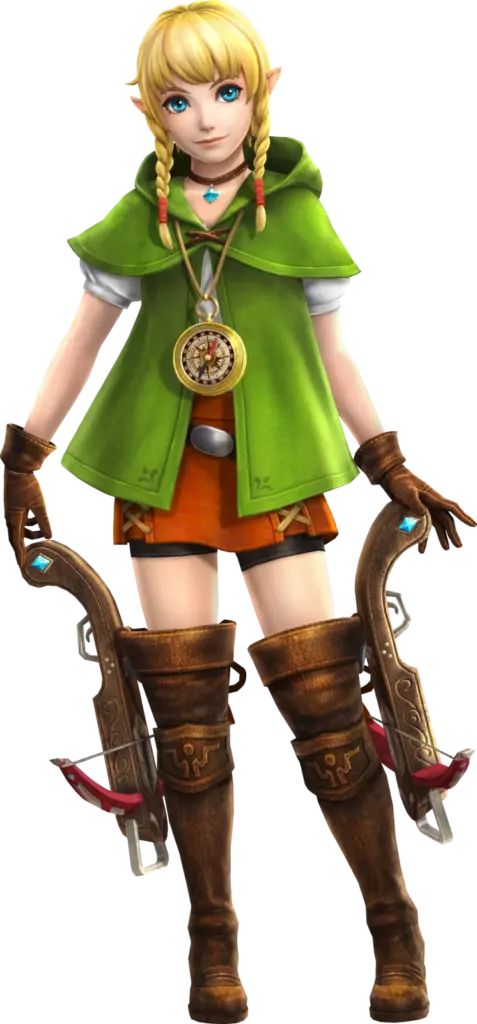
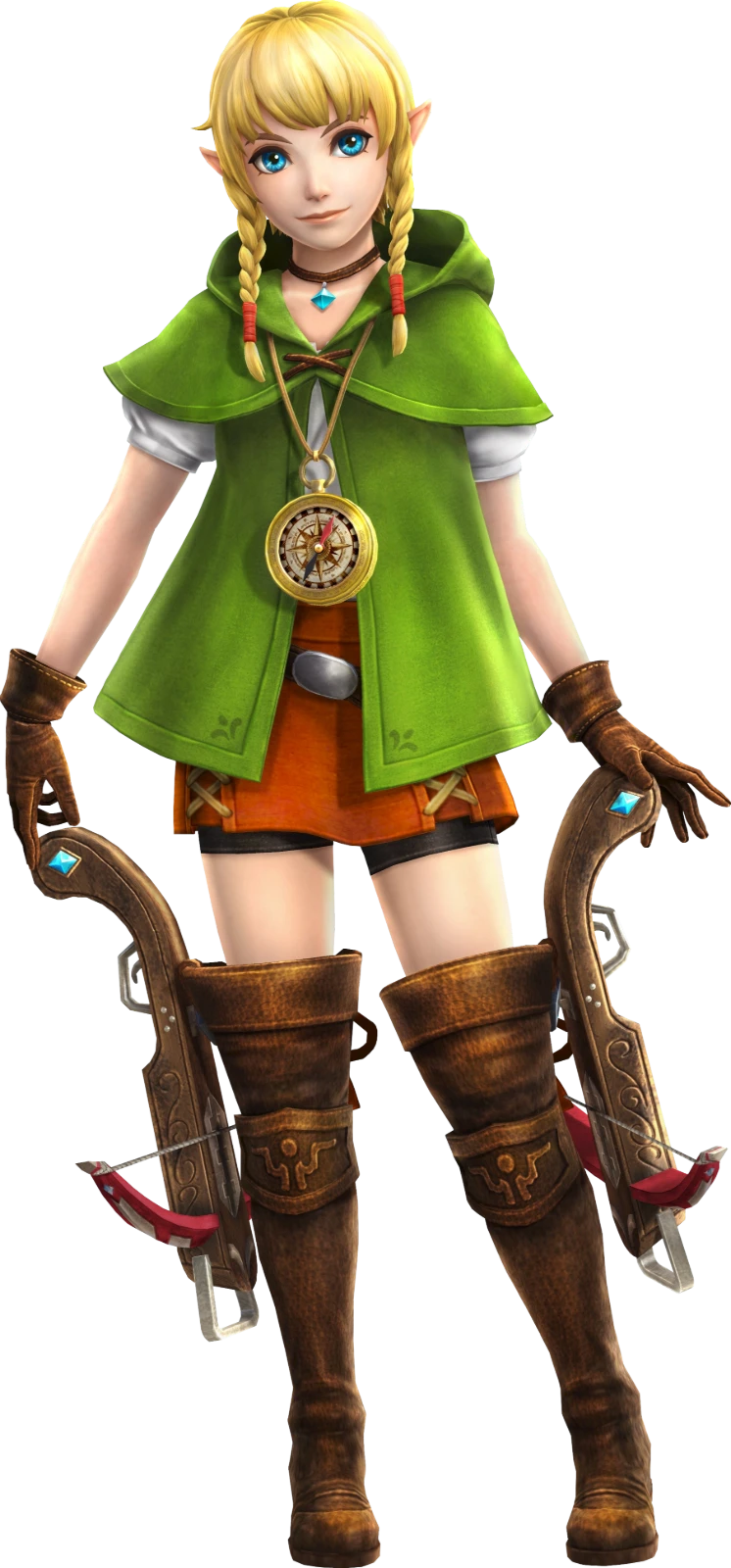
Hyrule Warriors (2014)Wii U, then 3DS (Legends, 2016)A trainee in the Hyrulean army discovers in his first battle that he bears the Triforce of Courage. Young Link arrived in a 2015 download pack and Toon Link with Legends, which also introduced Linkle, a Cucco farmer sure she is the hero reborn.Cadence of Hyrule (2019)Switch · Brace Yourself GamesOne of two sleeping heroes Cadence can wake, Link fights to the beat with moves picked from across the series. Caitlyn Bairstow voices him.Age of Calamity (2020)Switch · Definitive Edition for Switch 2 due 25 February 2027The Breath of the Wild Link a century earlier: a soldier at the Battle of Hyrule Field who escorts Zelda, draws the Master Sword and strikes the final blow against Calamity Ganon.Age of Imprisonment (2025)Switch 2 · Link sits this one outSet in the Imprisoning War, long before Link was born. Its silent, sword-and-shield Forbidden Construct, powered by a shard of the Master Sword, looks so like him that Zelda names it the Knight Construct.
The CD-i games (1993–1996)Philips CD-i · not made by NintendoLink: The Faces of Evil made Link a chatty, kiss-hungry hero voiced by Jeffrey Rath. In The Wand of Gamelon he goes missing, and in Zelda’s Adventure Ganon has captured him before the game begins.
Forms and alter egos
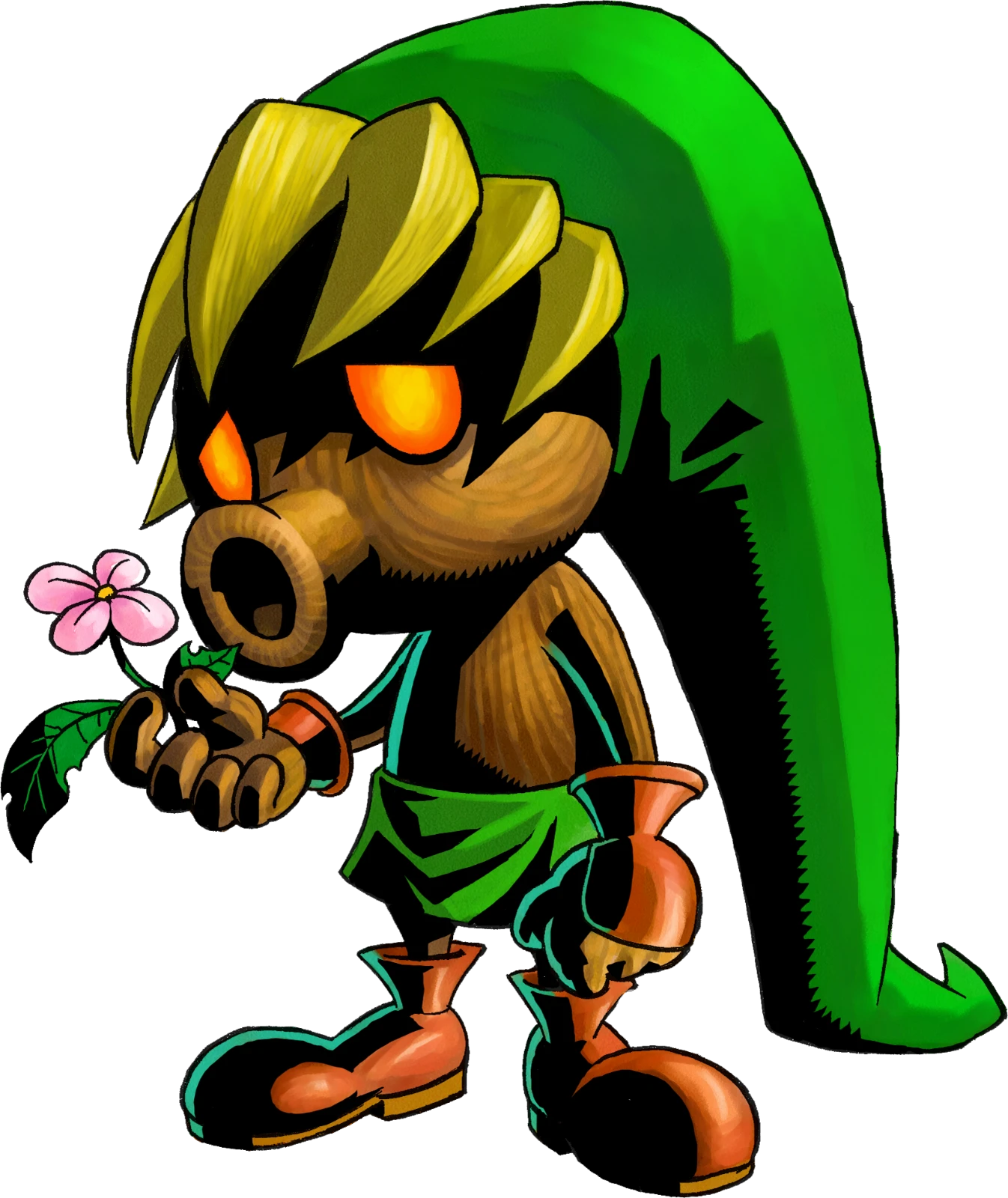
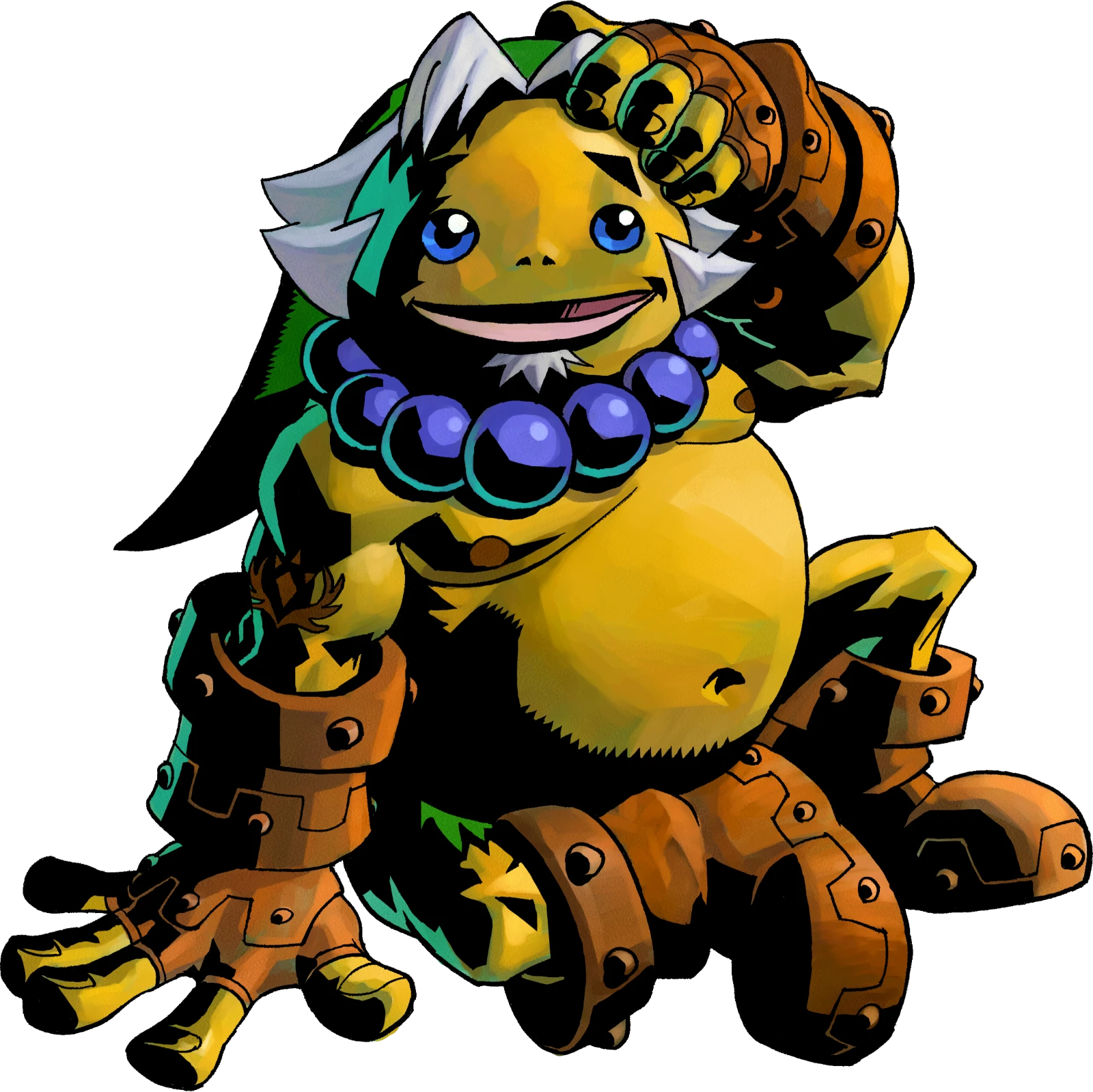
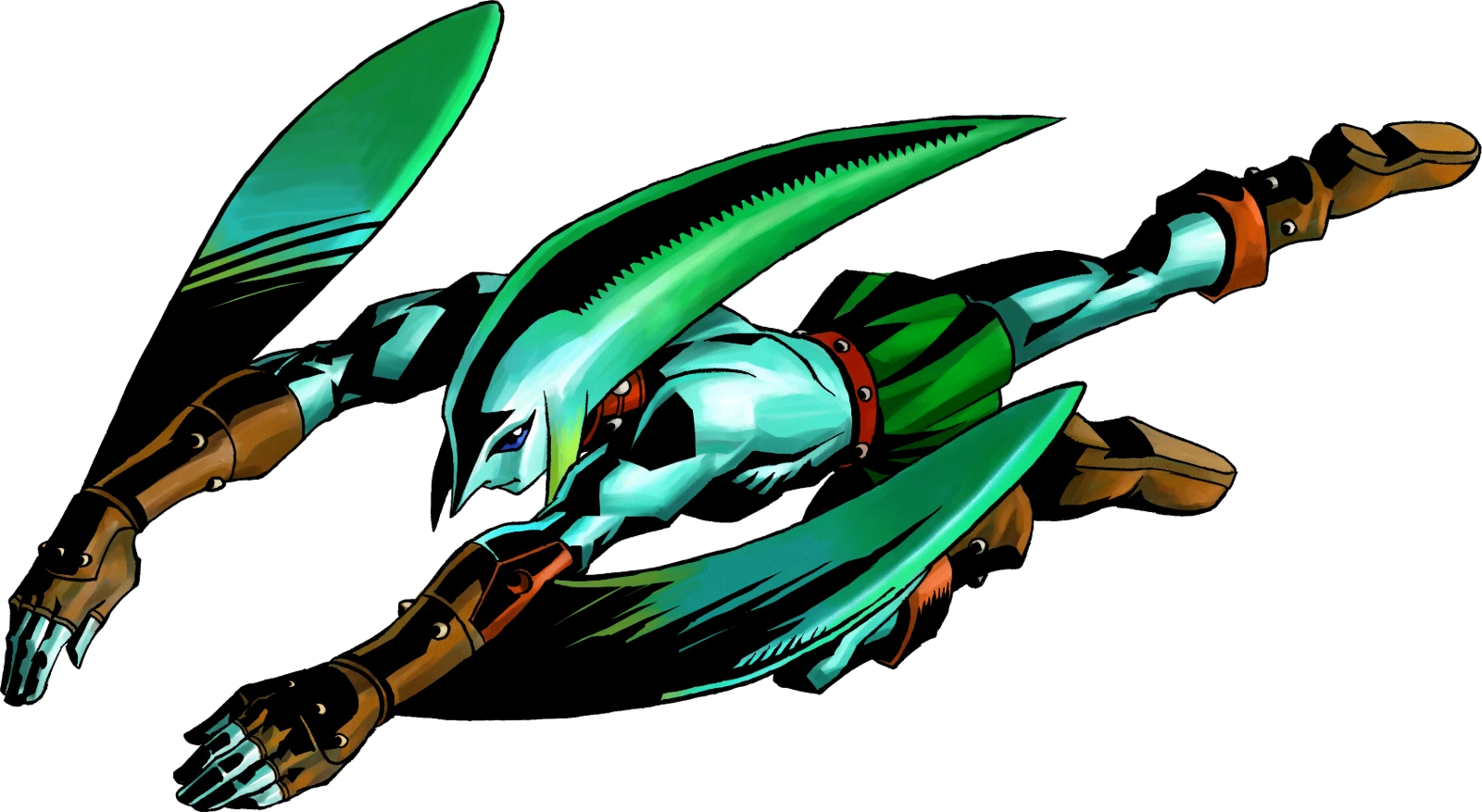
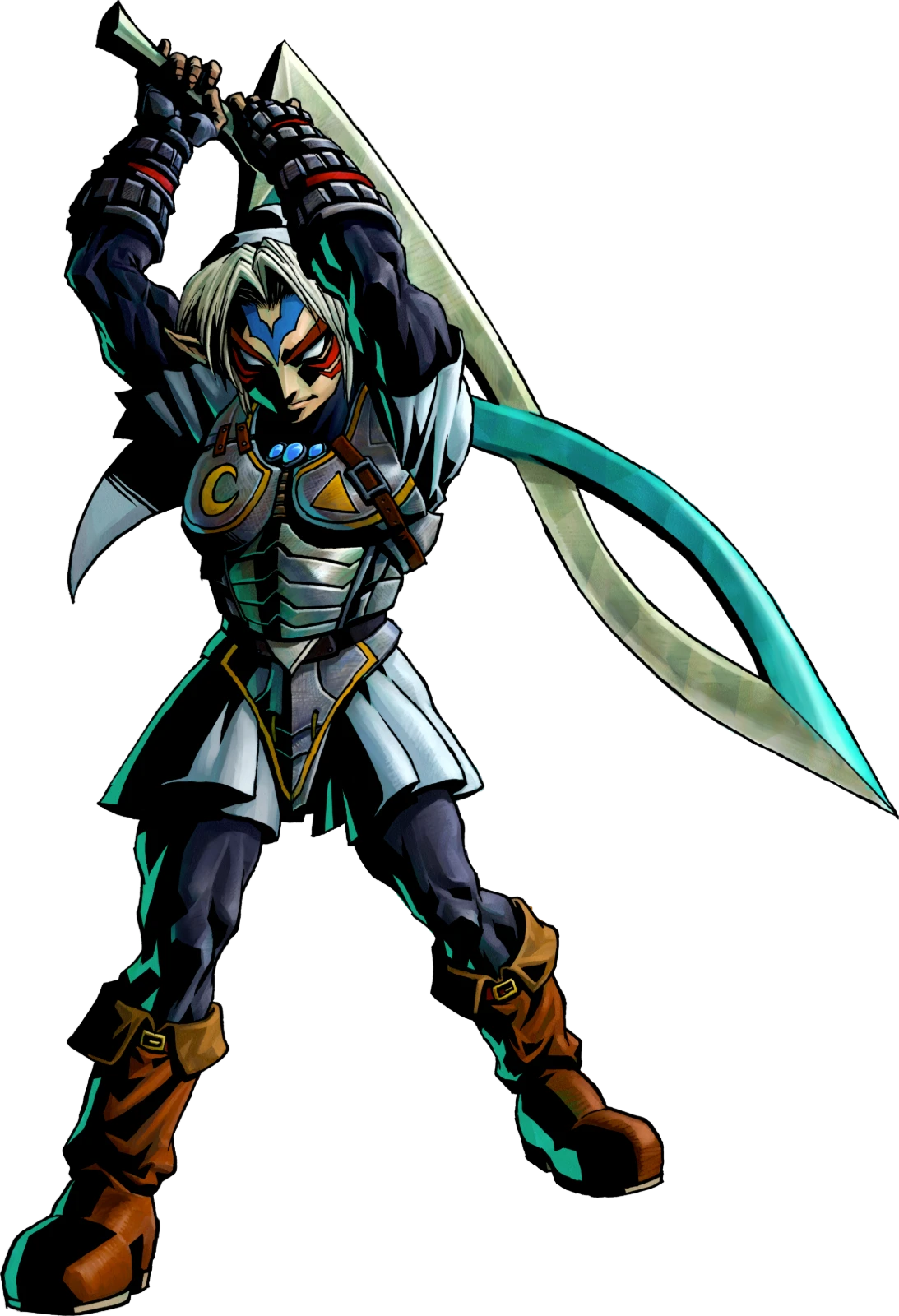
For a hero defined by one outfit, Link spends a remarkable amount of time as something else. In Majora’s Mask the masks hold the souls of the dead, according to Hyrule Historia, and let him borrow their bodies: a Deku Scrub who skips across water and shoots bubbles, a Goron who rolls at speed and pounds the ground, and a Zora who swims like a torpedo and fights with fins. The fourth, the Fierce Deity, is a towering warrior with a double helix sword, usable only in boss rooms and never explained.
Deku Link (official artwork)Goron Link (official artwork)Zora Link (official artwork)Fierce Deity Link (official artwork)
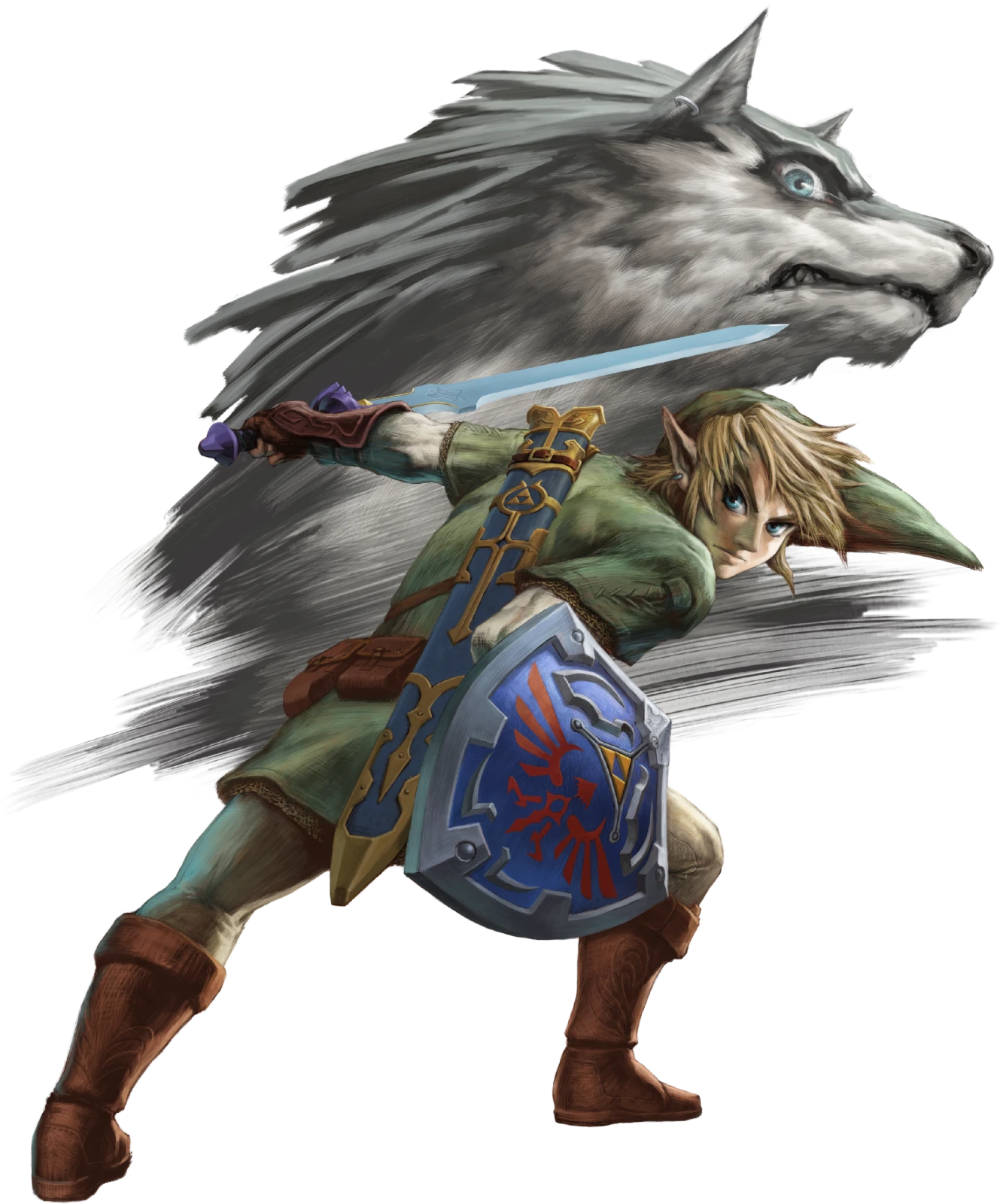
Link and his wolf form, artwork for Twilight Princess HD.
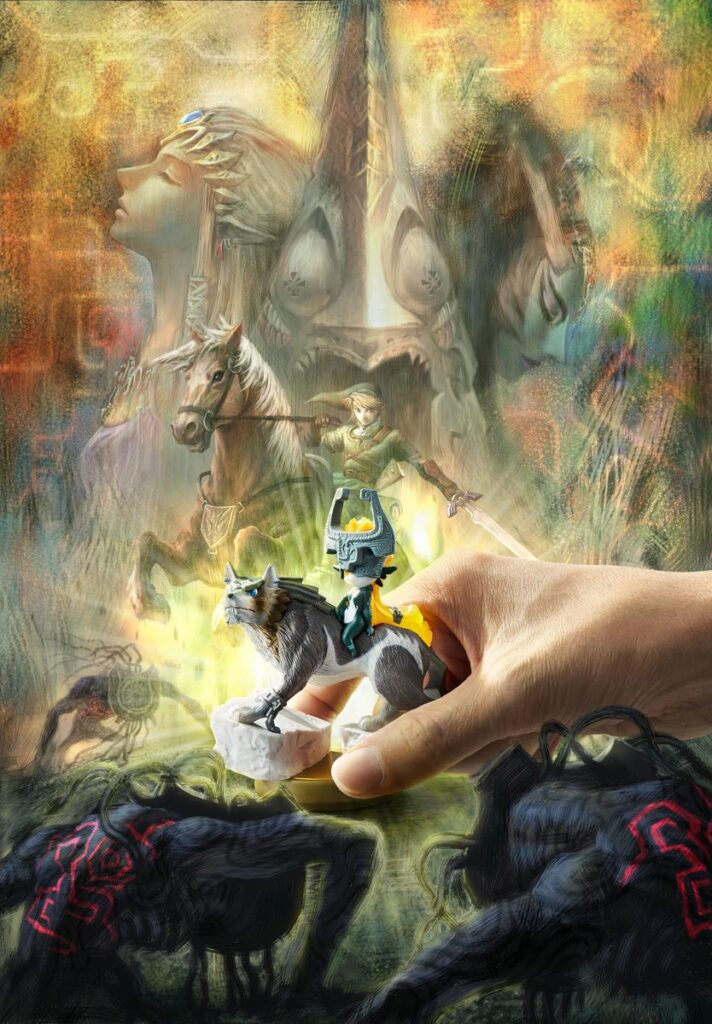
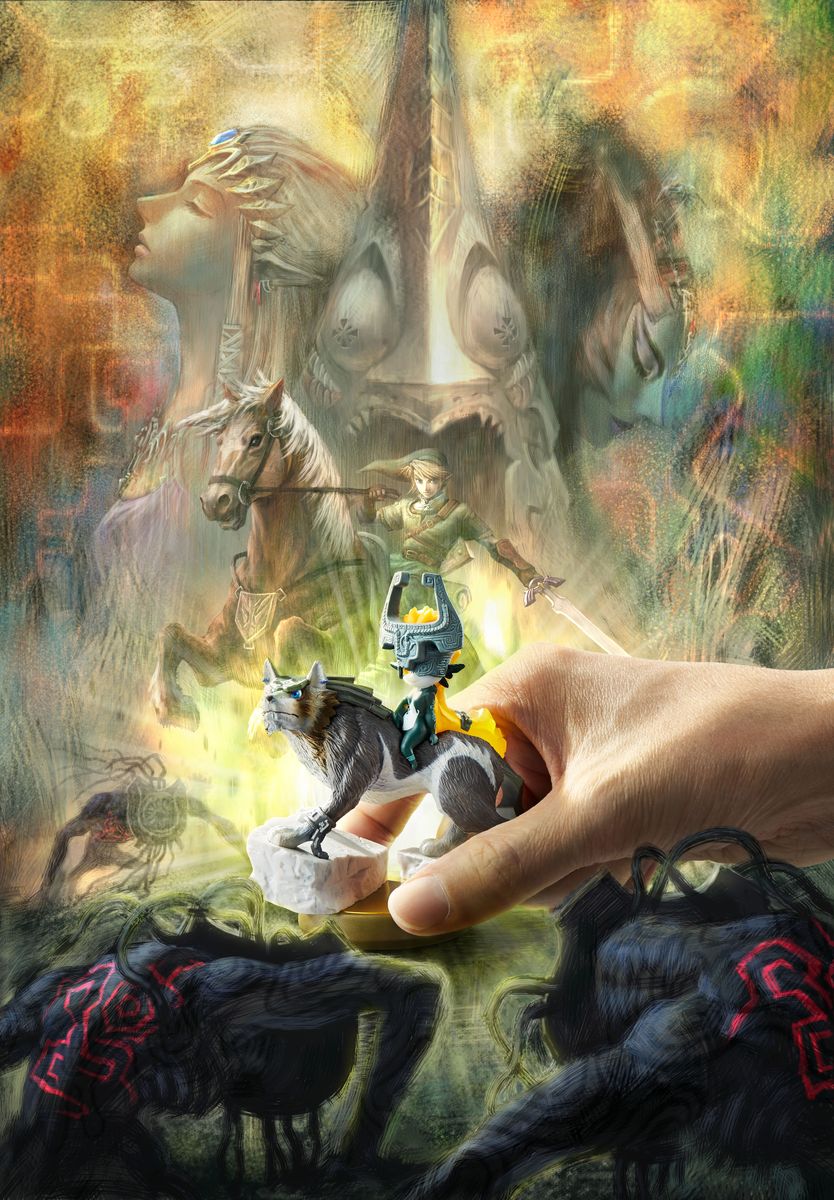
Wolf Link is Link’s shape inside the Twilight in Twilight Princess, with Midna riding on his back. He tracks scents, digs, senses spirits and howls tunes at stones. The Wolf Link amiibo that came with Twilight Princess HD later summoned him as a hunting companion in Breath of the Wild.
Young and adult Link in Ocarina of Time are one hero at two ages, swapped by the Master Sword. Toon Link is the cel-shaded Link of The Wind Waker and its DS sequels, treated as a fighter of his own in Smash. Four Links in green, red, blue and purple appear whenever he draws the Four Sword. In The Minish Cap he shrinks to Minish size, and in A Link Between Worlds he becomes a painting that slides along walls. In A Link to the Past the Dark World turns him into a rabbit until he finds the Moon Pearl.
Hyrule’s princess, reborn alongside him in age after age; sometimes Sheik, Tetra or a spirit.
Sometimes royalty he barely knows, sometimes his oldest friend. Skyward Sword makes them childhood sweethearts, Spirit Tracks partners and Echoes of Wisdom swaps their roles.
The ghost of the Hero of Time, in the form of a skeletal warrior and a golden wolf.
Teaches the Twilight Princess Link the hidden skills of the hero’s line, regretting that he was never remembered as a hero.
Twilight Princess
FamilyAryll, Grandma, Smith, an uncle
His sister Aryll and Grandma (The Wind Waker), his grandfather Smith (The Minish Cap) and his uncle (A Link to the Past).
Most Links are alone in the world; the few with families tend to set off because of them.
Various
Design evolution
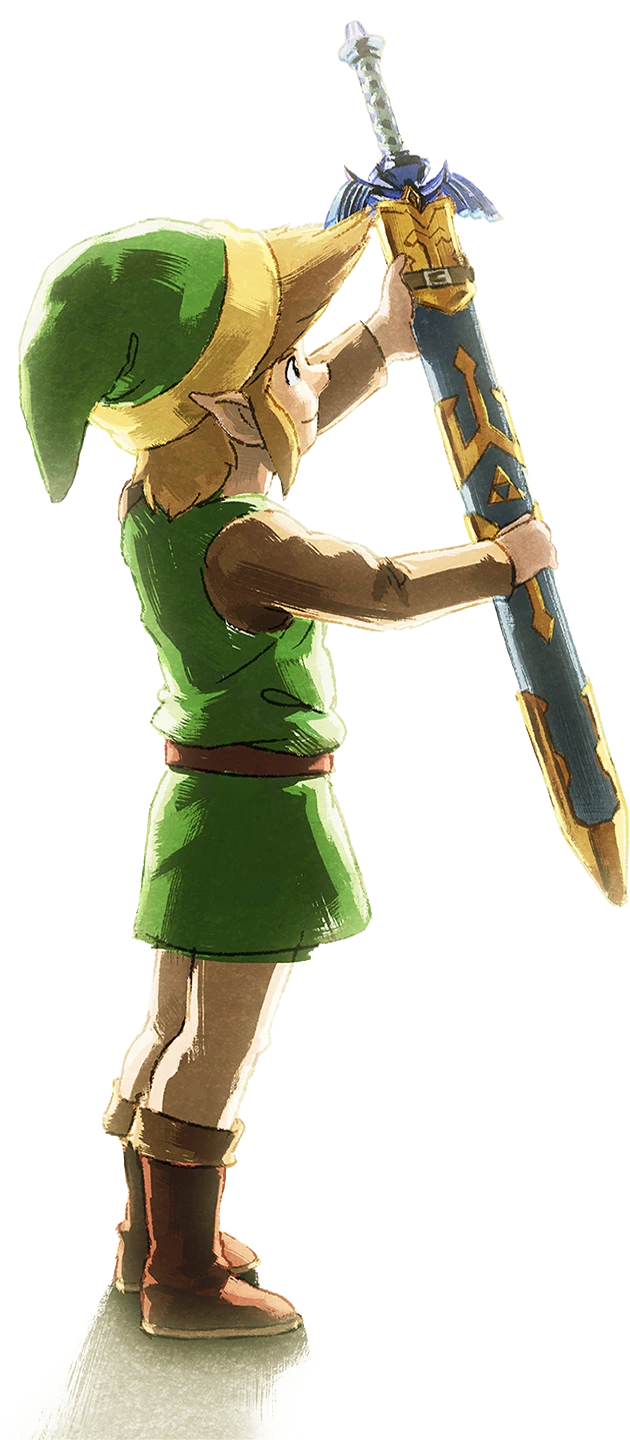
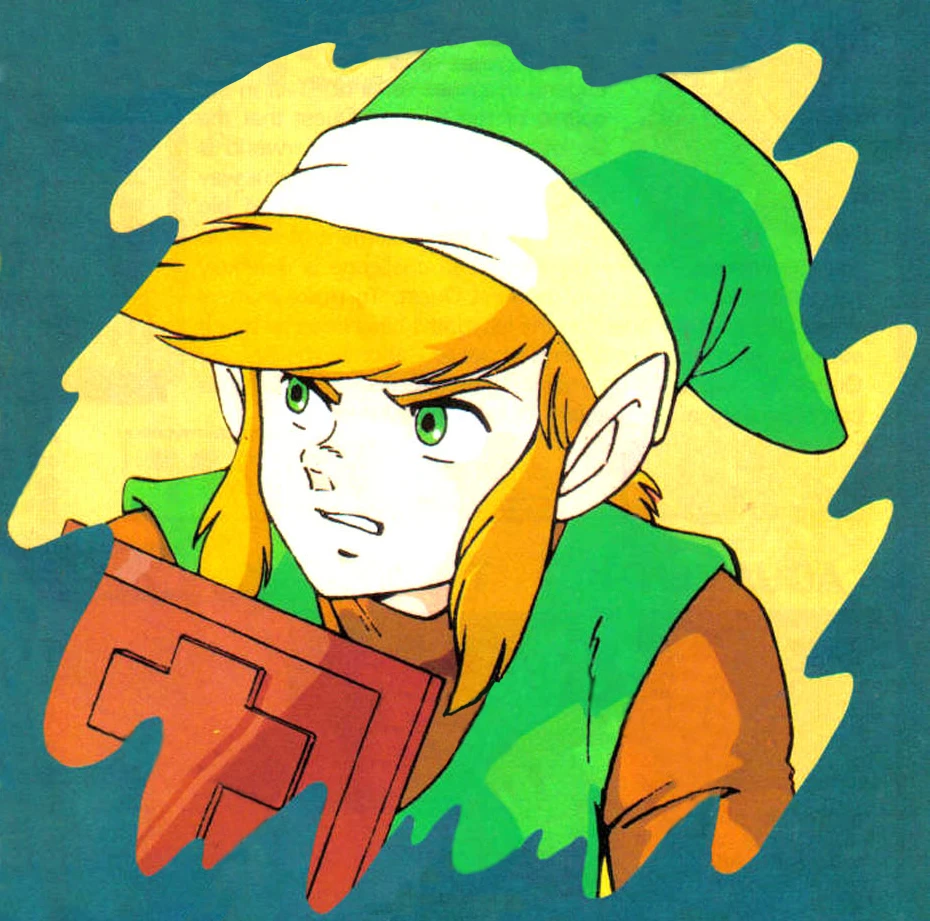
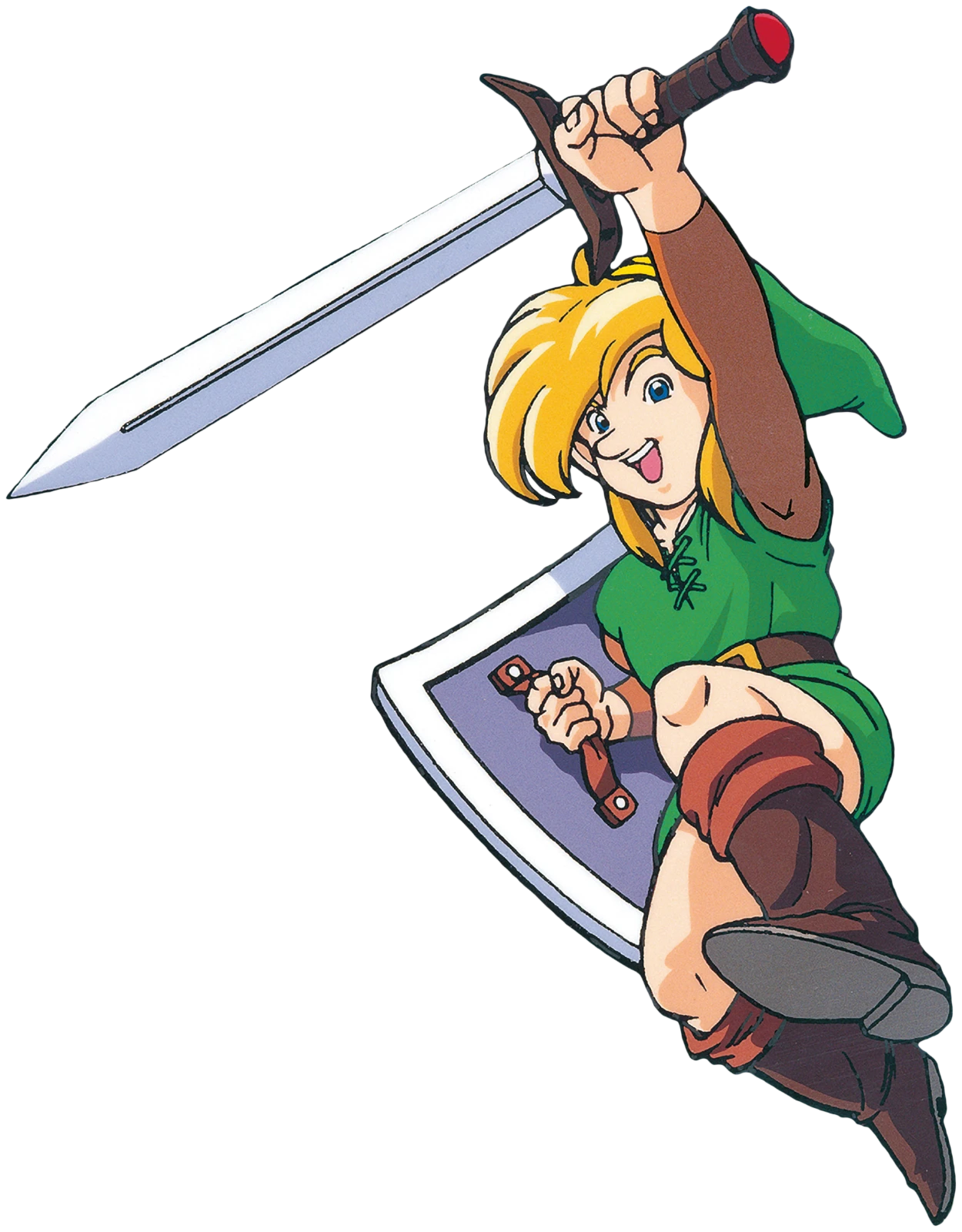
1986–1993. Tezuka’s sprite of Miyamoto’s Peter Pan-inspired hero set the essentials: cap, tunic, sword and shield. A Link to the Past refined the look for 16 bits and handed him the Master Sword.
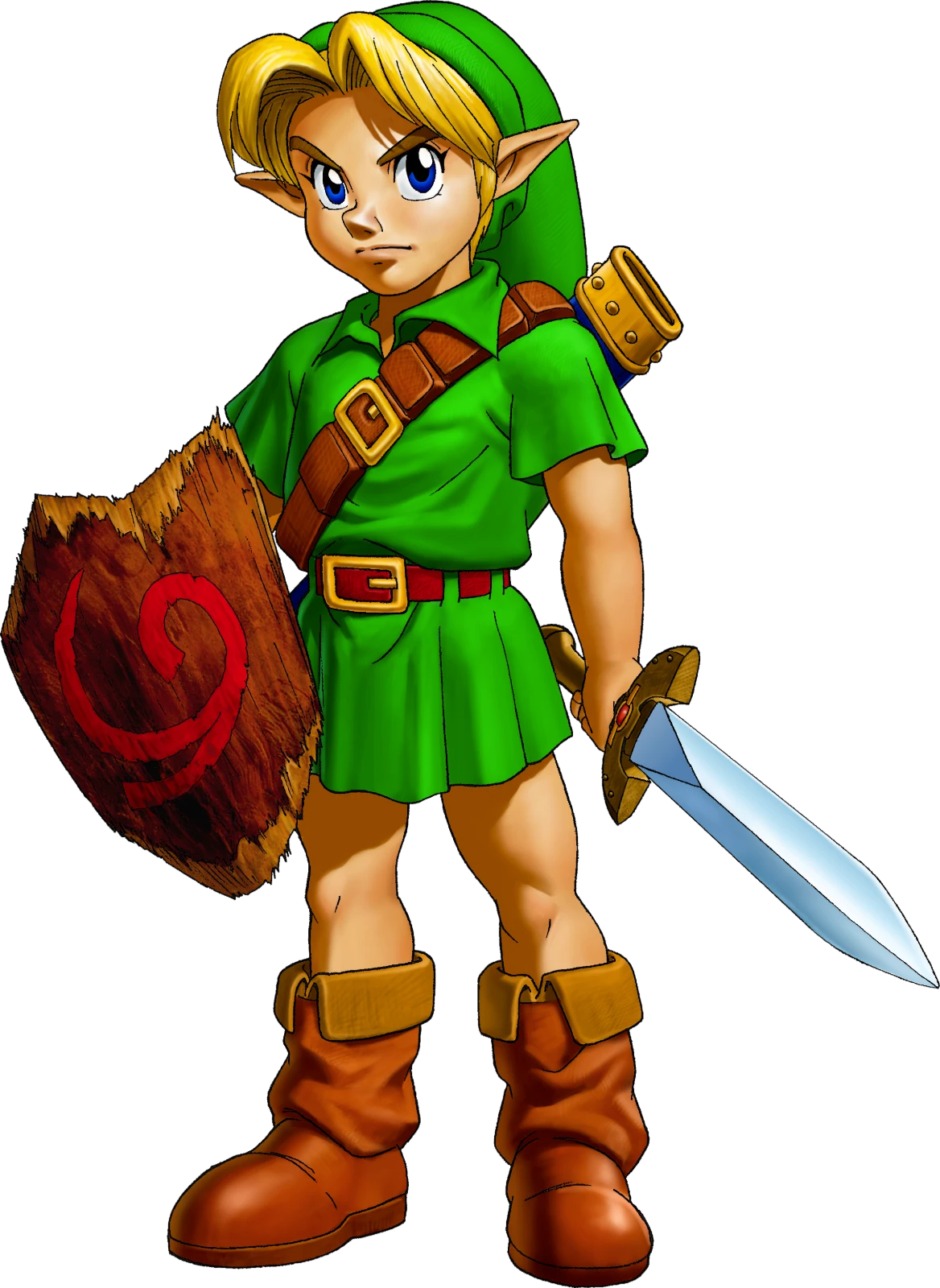
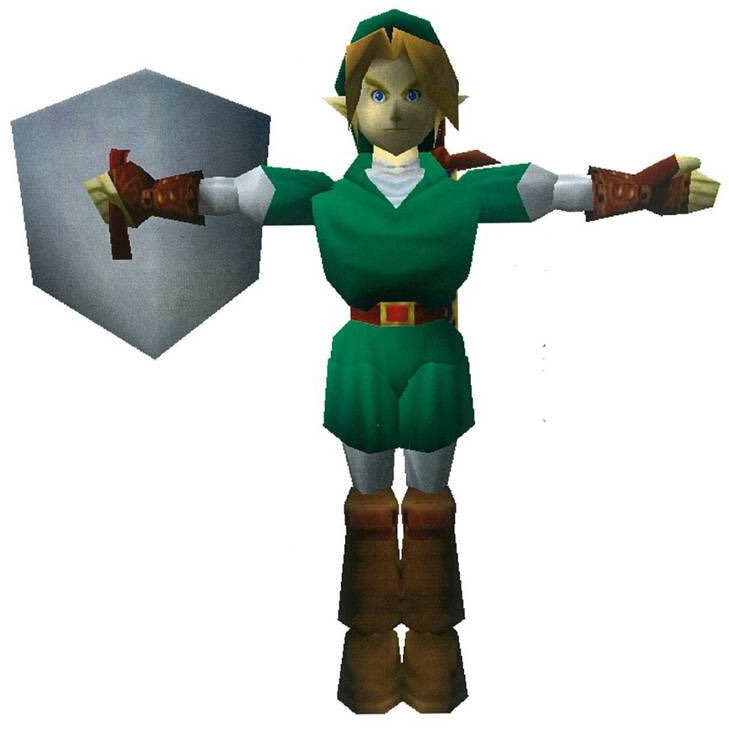
1998. For the Nintendo 64, Yoshiaki Koizumi reworked him with a sharper nose, trimmed sideburns, pierced ears and long underwear beneath the tunic, and young and adult versions to match.
2002. The cel-shaded Toon Link of The Wind Waker began with one sketch by Yoshiki Haruhana, after the team had tried a more detailed take on the Ocarina of Time style. Fans were split, but the look returned in five more games.
2006–2026.Twilight Princess swung back to a lean, older, realistic hero and Skyward Sword to a painterly one. Breath of the Wild tried close to a hundred designs and ended up in blue; the 2019 Link’s Awakening made him a glossy figurine; and the 2026 Ocarina of Time remake dressed young Link in a tunic meant to look woven by forest children.
1986: The Legend of Zelda1991: A Link to the Past1998: young Link, Ocarina of Time2002: The Wind Waker (concept render)2006: Twilight Princess (concept art)2011: Skyward Sword2017: Breath of the Wild (concept art)2023: Tears of the Kingdom2026: young Link, Ocarina of Time for Switch 2 (render)
Voices of Link
Adult Link in Ocarina of Time 3D (render).
Link’s actors spend their careers on yells, grunts, gasps and battle cries rather than lines. The games use the Japanese recordings in every region, so these are the voices players everywhere have heard. Only outside Nintendo’s own games, in cartoons and on the CD-i, has he spoken whole sentences in English.
Link
Voice
Games
Young Link
Fujiko Takimoto
Ocarina of Time, Majora’s Mask, A Link to the Past & Four Swords, Melee, Hyrule Warriors, Ultimate
Adult Link (Hero of Time)
Nobuyuki Hiyama
Ocarina of Time, Super Smash Bros., Majora’s Mask (Fierce Deity), Melee, Soulcalibur II
Toon Link
Sachi Matsumoto
The Wind Waker, Four Swords Adventures, Phantom Hourglass, Brawl, Smash 4, Ultimate
A Link Between Worlds, Link’s Awakening (2019), Echoes of Wisdom
The Champion
Kengo Takanashi
Breath of the Wild, Ultimate, Age of Calamity, Tears of the Kingdom
Cartoon Link
Jonathan Potts
The 1989 TV series and Captain N: The Game Master
CD-i Link
Jeffrey Rath
The Faces of Evil, The Wand of Gamelon
Cadence Link
Caitlyn Bairstow
Cadence of Hyrule
Why doesn’t he talk?
Eiji Aonuma has thought about this more than anyone. Fans have asked to hear Link speak, he told GamesMaster in 2016, but he worried about losing the proud independence that comes from his silence, which he called a precious part of the character. The Echoes of Wisdom team actually tried a few lines for him and gave up: co-director Satoshi Terada told Famitsu that nothing he wrote felt right, and Aonuma agreed it was strange. Even the November 2026 Ocarina of Time remake, which voices every cutscene, credits nobody for Link in its English cast.
That air of proud independence he has because he doesn’t speak is a precious part of the individuality of his character.
Eiji Aonuma GamesMaster, via Nintendo Life, February 2016
No matter what I made him say, it just didn’t feel right.
Satoshi Terada, co-director of Echoes of WisdomFamitsu, via Zelda Dungeon, November 2024
Memorable moments
1986: an old man in a cave, a wooden sword and the most quoted line in the series1991: finding his uncle dying in the castle passage and taking up his sword2000: the first time the clock runs out and the moon comes down
2017: “Open your eyes”, and the first look out over Hyrule2023: reaching for the Master Sword on the Light Dragon’s head2024: the hero swallowed by a rift, handing the lead to Zelda
Link’s Awakening: waking the Wind Fish, knowing that Koholint and Marin will vanish with the dream.
Ocarina of Time: returning the Master Sword to its pedestal to travel back seven years, and Saria’s farewell on the bridge out of Kokiri Forest.
The Wind Waker: the final blow beneath the sea, which turns Ganondorf to stone.
Twilight Princess: waking as a wolf in a cell beneath Hyrule Castle.
Skyward Sword: leaping off Skyloft with only a sailcloth, and the bittersweet goodbye to Fi.
Everywhere: every first time Link holds a new item above his head while that jingle plays.
Beyond the games
The 1989 cartoon and Captain N
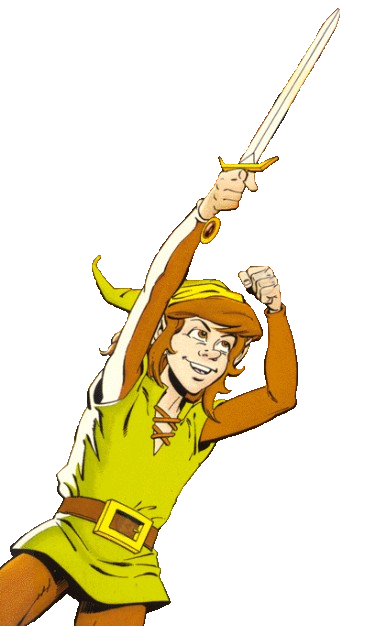
Link as drawn for the 1989 cartoon.
In 1989 Link finally talked. The Legend of Zelda cartoon, thirteen episodes shown as part of The Super Mario Bros. Super Show!, cast Jonathan Potts as a cocky, chore-dodging teenager who guards the Triforce of Wisdom at North Castle and spends most episodes angling for a kiss from Princess Zelda. Whenever she puts him down he snaps back with “Excuse me, Princess!” The writers modelled the bickering on Moonlighting, and in “The Missing Link” Link becomes a ghost only Zelda can see.
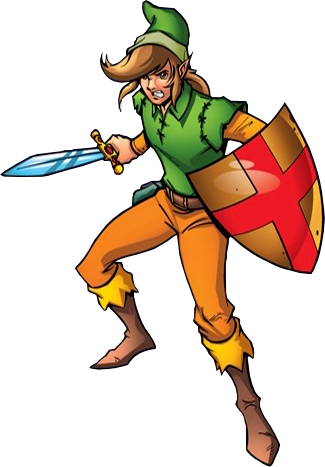
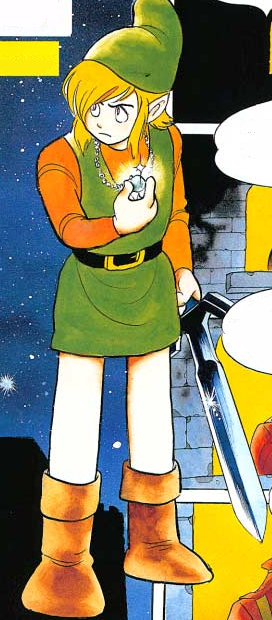
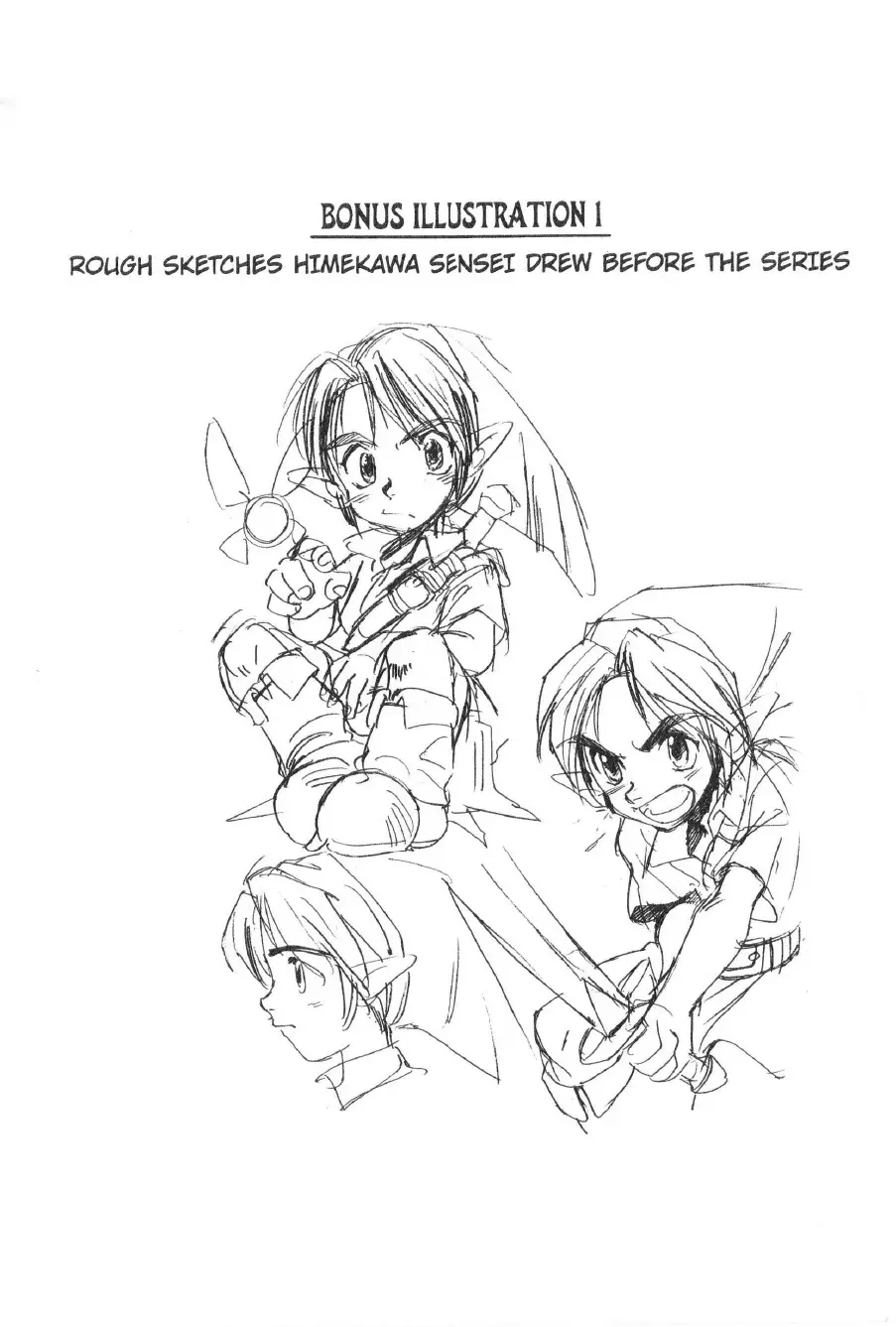
The red-haired Link of the Valiant comics (1990)Shotaro Ishinomori’s Link (1992)Young Link by Akira Himekawa
Comics gave Link the voice and the inner life the games withhold. Valiant’s American comic book of 1990–91 made him red-haired and gave him a family and a homeland. Shotaro Ishinomori’s A Link to the Past, serialised in Nintendo Power through 1992, added a family history and a fairy guide. Akira Himekawa’s manga, starting with Ocarina of Time, turned each game’s hero into a talkative lead, and their eleven-volume Twilight Princess (2016–2022) made him a guilt-ridden outsider. Our Comics & Books hub has the rest.
The CD-i games
Two Philips CD-i games made outside Nintendo, Link: The Faces of Evil and Zelda: The Wand of Gamelon (both 1993), gave Link animated cutscenes and a wisecracking voice from Jeffrey Rath. In the first he is flown to the island of Koridai to defeat Ganon; in the second he vanishes and Zelda has to rescue him. Today they are best known for those cutscenes.
The live-action film
Benjamin Evan Ainsworth as Link in the first look at The Legend of Zelda (Sony Pictures / Nintendo).
Benjamin Evan Ainsworth plays Link, opposite Bo Bragason’s Zelda, in The Legend of Zelda, directed by Wes Ball for Sony Pictures and Nintendo. The pair were announced in July 2025 and the first images, showing them together in a field, followed on 17 November 2025. Filming took place in New Zealand between November 2025 and April 2026. First dated for 26 March 2027, the film was pushed back to 7 May and then brought forward a week; it is now due in cinemas worldwide on 30 April 2027. As of November 2026 no trailer has been released.
Toys and amiibo
Link has had a long run of amiibo figures, from the Smash Link of 2014, Toon Link, Young Link and Wolf Link to a Zelda series covering his archer and rider looks from Breath of the Wild and his incarnations from Ocarina of Time, Majora’s Mask, Link’s Awakening, Skyward Sword and Tears of the Kingdom.
Behind the scenes
Concept art of Link for The Wind Waker.
An ordinary boy. Miyamoto drew on his own childhood explorations and on stories he and Tezuka loved, and pictured Link as an everyday boy with a destiny to fight evil, so that the player could be the hero. Aonuma has gone further, saying he wanted players to wonder whether Link was a boy or a girl.
Toon Link nearly did not happen. The GameCube team first worked on a more detailed version of the Ocarina of Time style and found it too predictable. Then Haruhana’s sketch landed. Satoru Takizawa told Iwata Asks it brought his designer’s spirit to life; according to Wikipedia’s account, Miyamoto was unsure at first, but the team argued there was no time to build a realistic Link anyway.
The hat problem. Takizawa lengthened the Twilight Princess cap so it would flap, shortened the Skyward Sword one, and admitted the hat gets harder to make look cool as graphics improve.
Link’s name comes from the fact that originally, the fragments of the Triforce were supposed to be electronic chips.
Shigeru Miyamoto Quoted in Wikipedia’s article on Link
Then one day, out of the blue, Haruhana-san hit us with that new Link.
Satoru Takizawa Iwata Asks: The Wind Waker HD
We thought that the iconic green tunic and hat had become expected, so we wanted to mix things up and update his look.
Eiji Aonuma On Breath of the Wild, quoted by Wikipedia
With the GamePad, the buttons you’ll be using to swing the sword are on the right side, and thus he’s right-handed.
Eiji Aonuma On Breath of the Wild, via GameSpot, June 2016
Reception
Link in Super Smash Bros. Ultimate (render).
Link is one of the most celebrated characters in games. In a 2011 readers’ poll for the Guinness World Records Gamer’s Edition he came second only to Mario among all video game characters, and Guinness itself lists him as the most ubiquitous action-adventure character. On 3 June 2025 it added a second record, most critically acclaimed playable character, citing nine of his games in GameRankings’ top 100.
Time counted him among the most influential game characters in 2017, and a 2024 BAFTA poll ranked him the seventh most iconic. Not every change has been welcome at first. Toon Link split fans in 2002, yet he went on to star in five more games and to fight in three Smash games; the blue tunic of 2017 was the default look of Ultimate a year later.
Trivia
A concept render of Link for Ocarina of Time.Adult Link got a sharper nose on the Nintendo 64 because Yoshiaki Koizumi’s wife asked him why all of Nintendo’s characters had funny noses, and whether he had any handsome ones.
Linkle (render).Linkle, the crossbow-wielding Cucco keeper of Hyrule Warriors Legends, was designed as something like a little sister to Link. She is convinced she is the hero reborn.
The Wolf Link amiibo (promotional art).The Wolf Link amiibo sold with Twilight Princess HD opens the Cave of Shadows, a 40-floor gauntlet fought entirely on four legs, and the hearts you keep there carry over to Wolf Link’s companion role in Breath of the Wild.
Spryte, Link’s tiny fairy sidekick in the 1989 cartoon, beat Navi to the job by almost a decade.
The cartoon Link says “Excuse me, Princess!” a reported 29 times in thirteen episodes, and in “Doppelganger” he whistles the Super Mario Bros. theme.
A UK video release and Hulu’s 2009 listing both give the cartoon’s Link and Zelda the same age: fifteen.
Valiant’s 1990 comic was titled “Link: The Legend of Zelda” in its small print. Its Link has red hair.
To get young Link’s tunic right for the 2026 Ocarina of Time remake, the artists studied museum pieces and tried weaving thread themselves.
Link does say the odd word in the games: listen closely to The Wind Waker and you can hear him shout “Come on!”
Trivia:Wikipedia: Link (The Legend of Zelda); Zelda Temple game pages (character rows and stories; sources listed on each page); Zelda Temple: Ocarina of Time (Nintendo Switch 2) page (Ask the Developer Vol. 24, Nintendo releases, reviews); Zelda Temple research dossier on the 1989 cartoon and Captain N (sources listed inside); Zelda Temple comics pages: Valiant, Ishinomori and Akira Himekawa (sources listed on each page)
Further reading: Zelda Temple game pages (character rows and stories; sources listed on each page)
Manage Consent
To provide the best experiences, we use technologies like cookies to store and/or access device information. Consenting to these technologies will allow us to process data such as browsing behavior or unique IDs on this site. Not consenting or withdrawing consent, may adversely affect certain features and functions.
Functional
Always active
The technical storage or access is strictly necessary for the legitimate purpose of enabling the use of a specific service explicitly requested by the subscriber or user, or for the sole purpose of carrying out the transmission of a communication over an electronic communications network.
Preferences
The technical storage or access is necessary for the legitimate purpose of storing preferences that are not requested by the subscriber or user.
Statistics
The technical storage or access that is used exclusively for statistical purposes.The technical storage or access that is used exclusively for anonymous statistical purposes. Without a subpoena, voluntary compliance on the part of your Internet Service Provider, or additional records from a third party, information stored or retrieved for this purpose alone cannot usually be used to identify you.
Marketing
The technical storage or access is required to create user profiles to send advertising, or to track the user on a website or across several websites for similar marketing purposes.

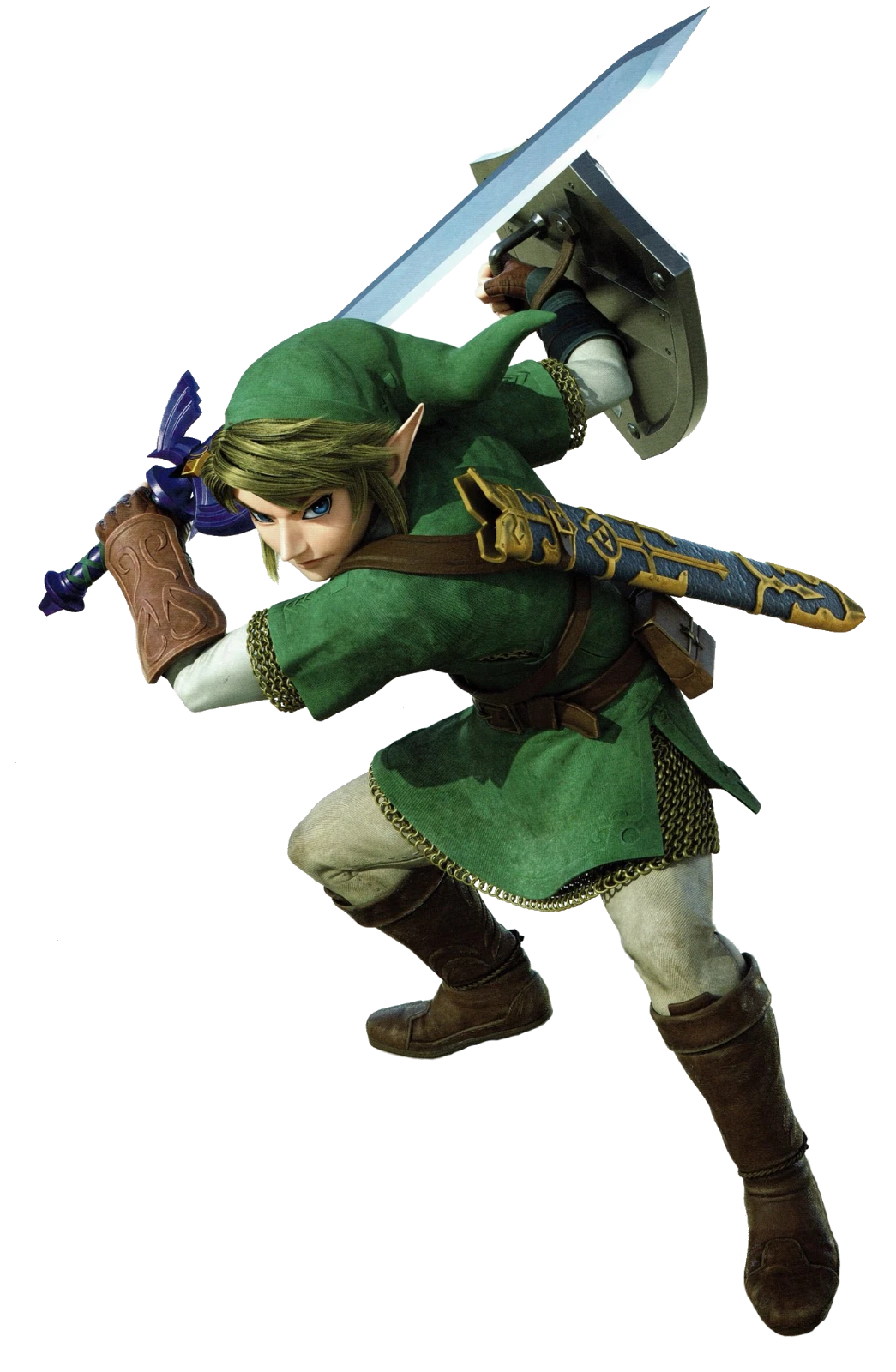
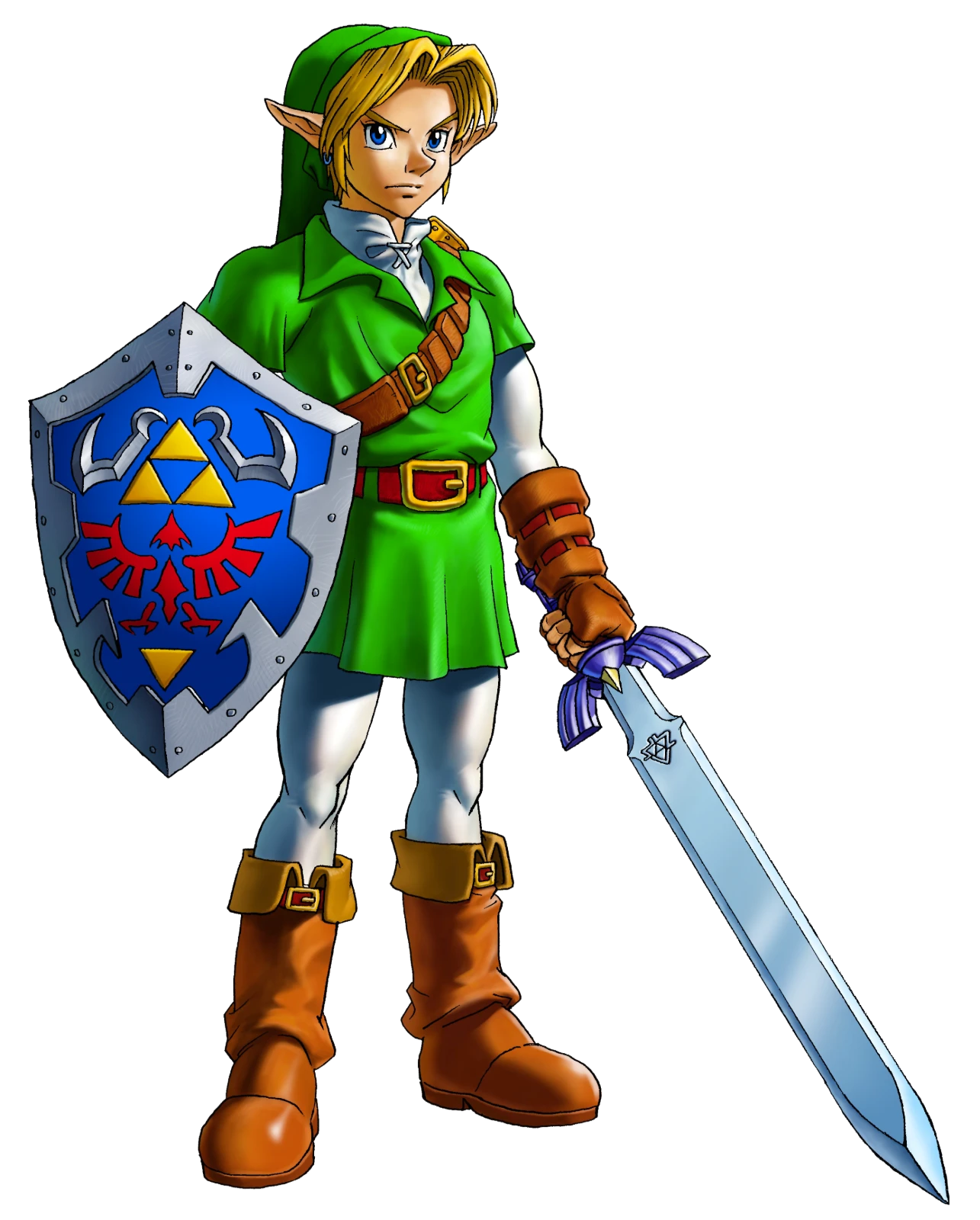
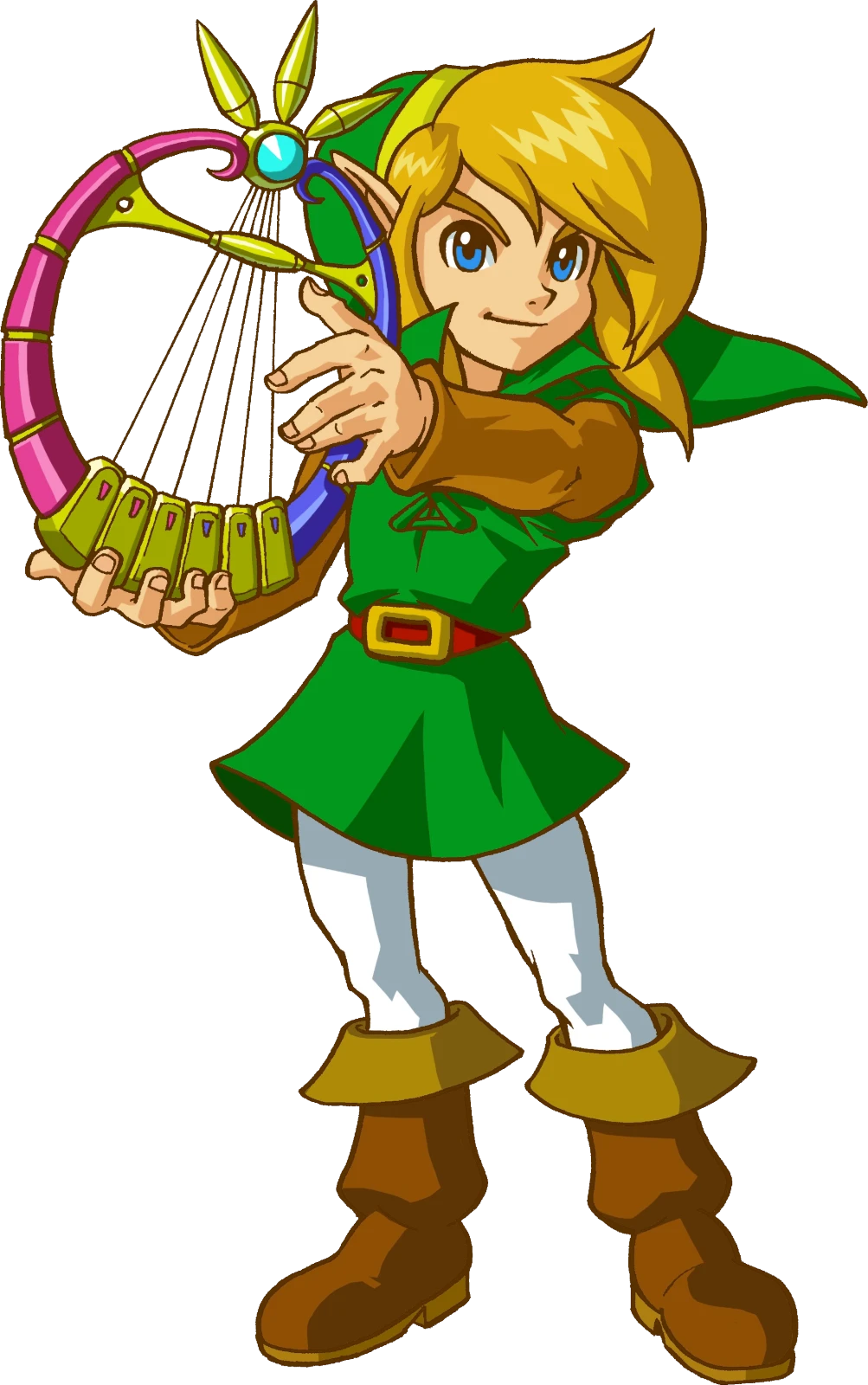
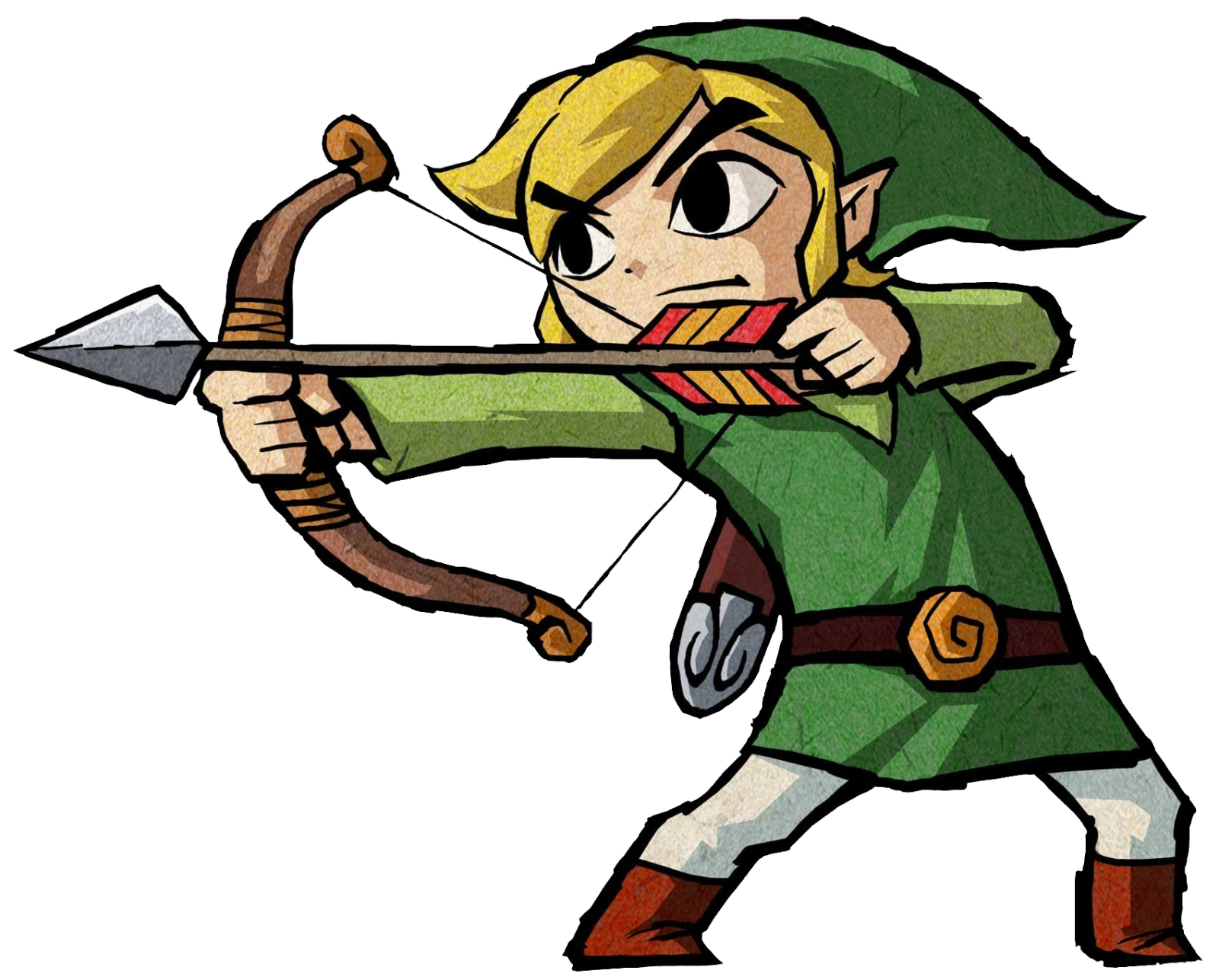
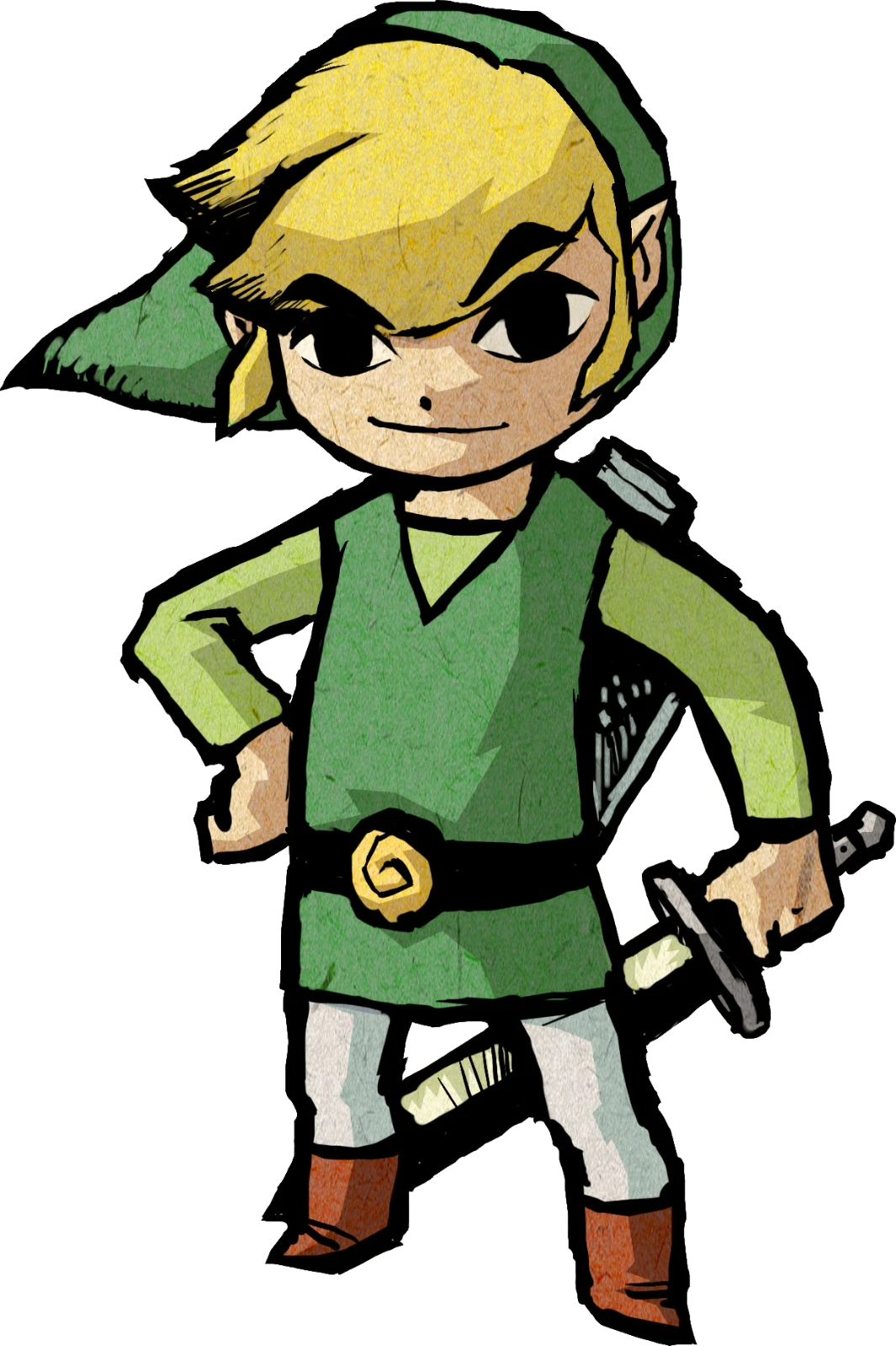
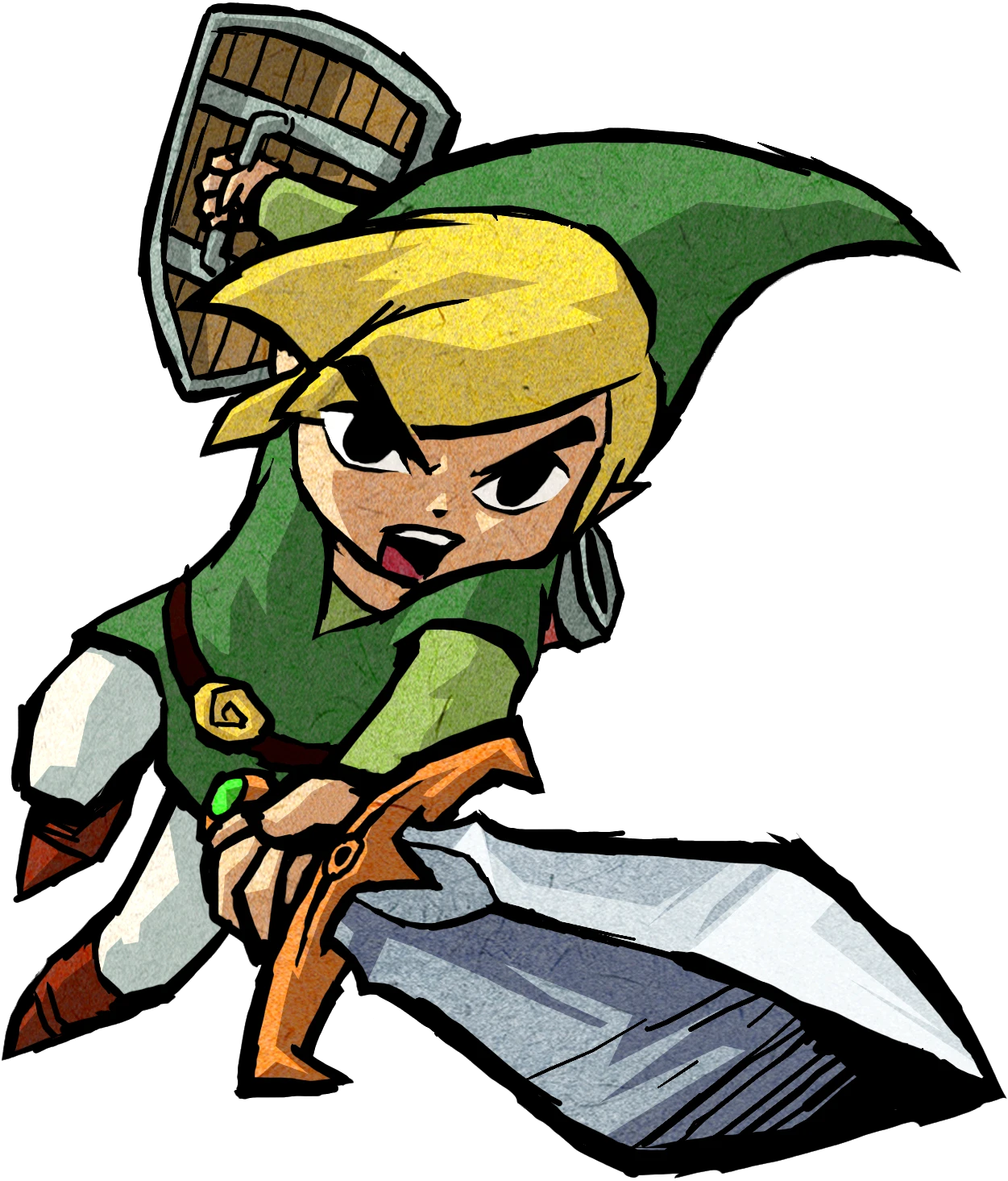
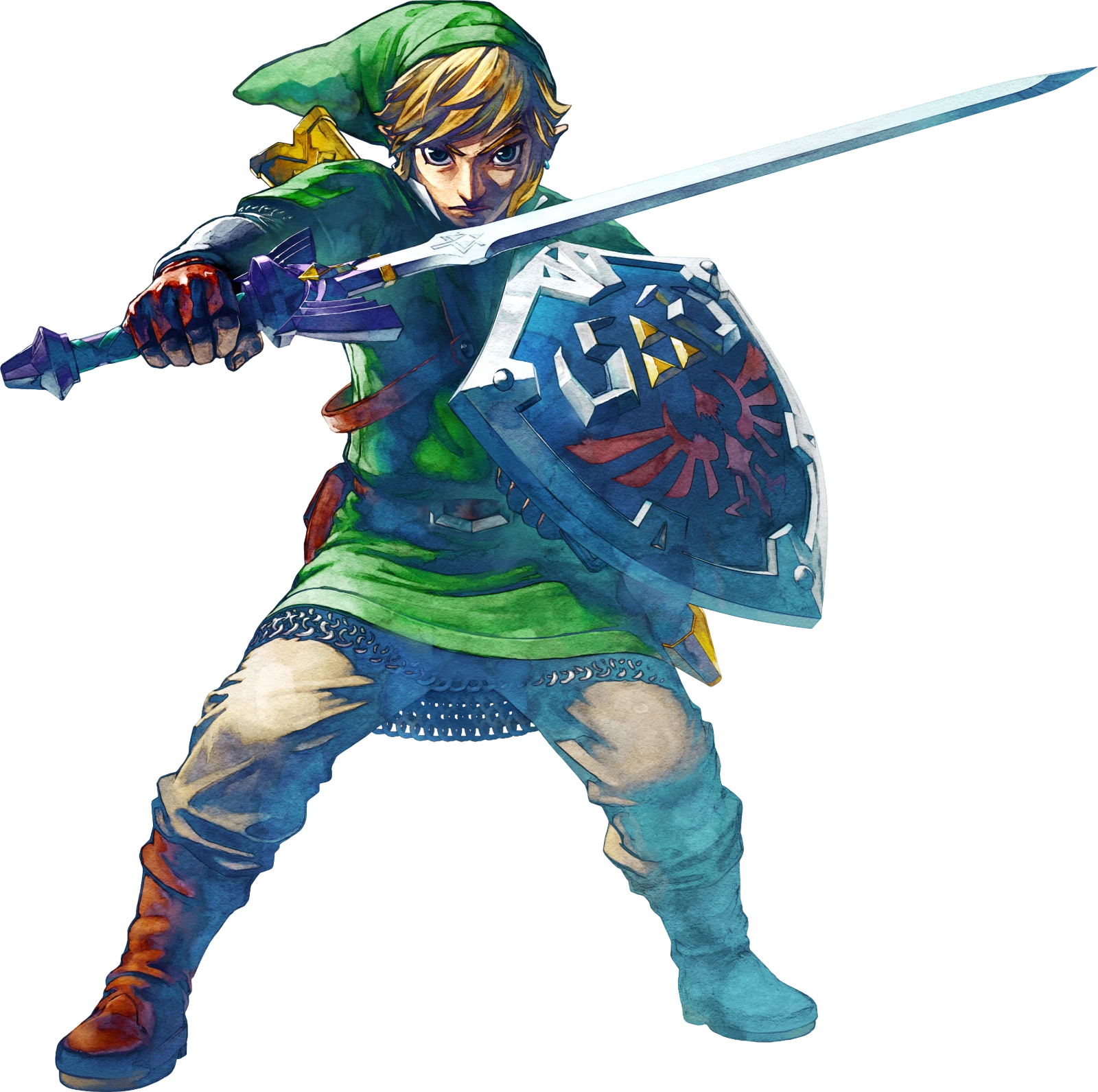
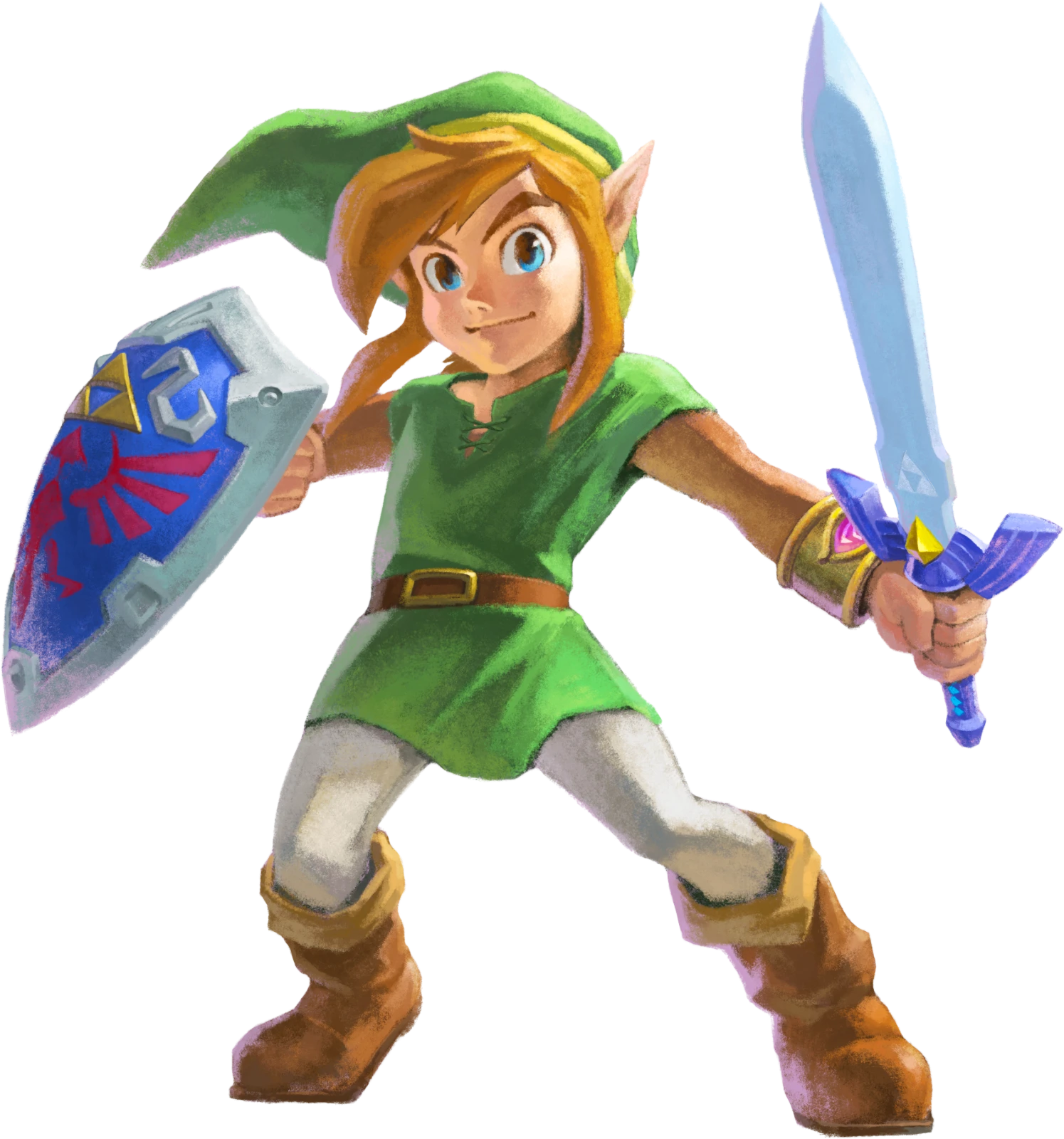
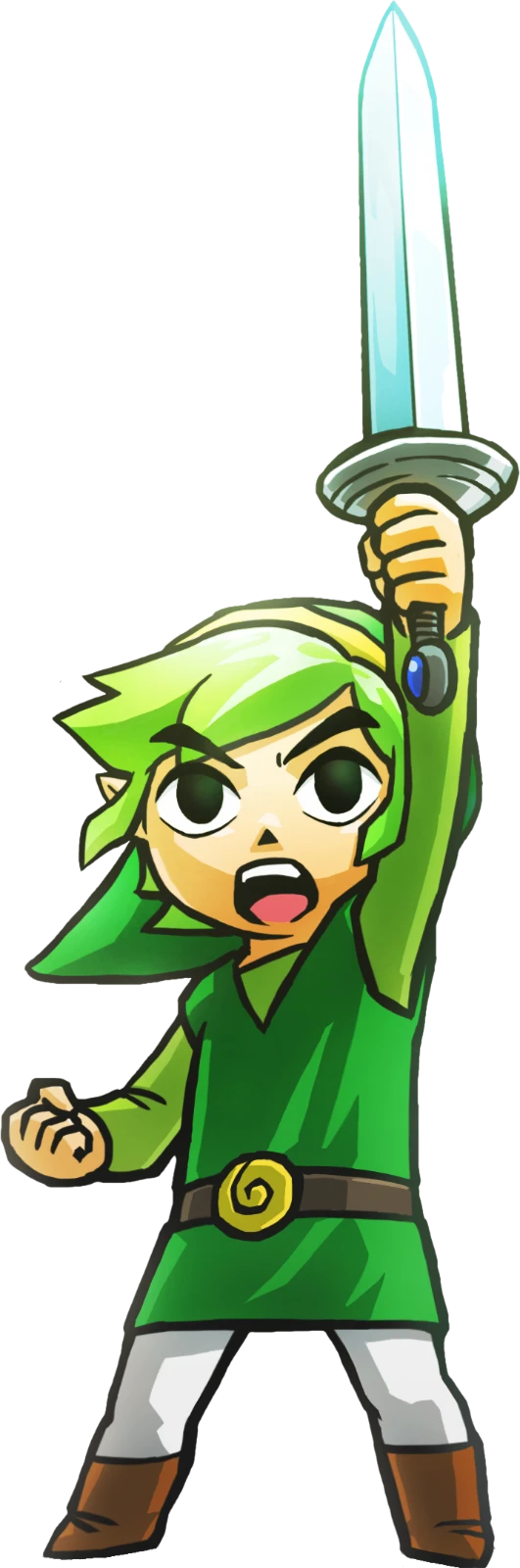
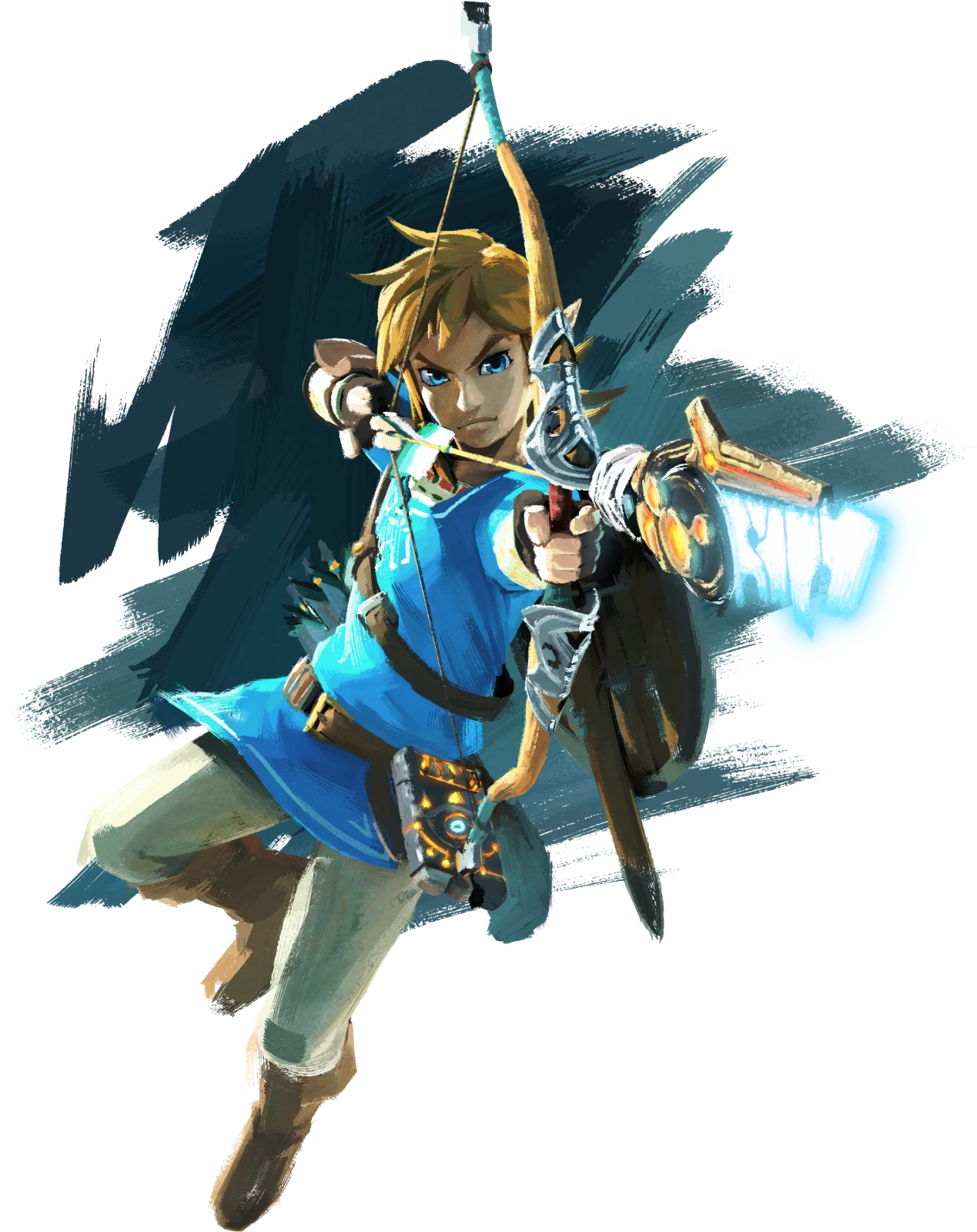
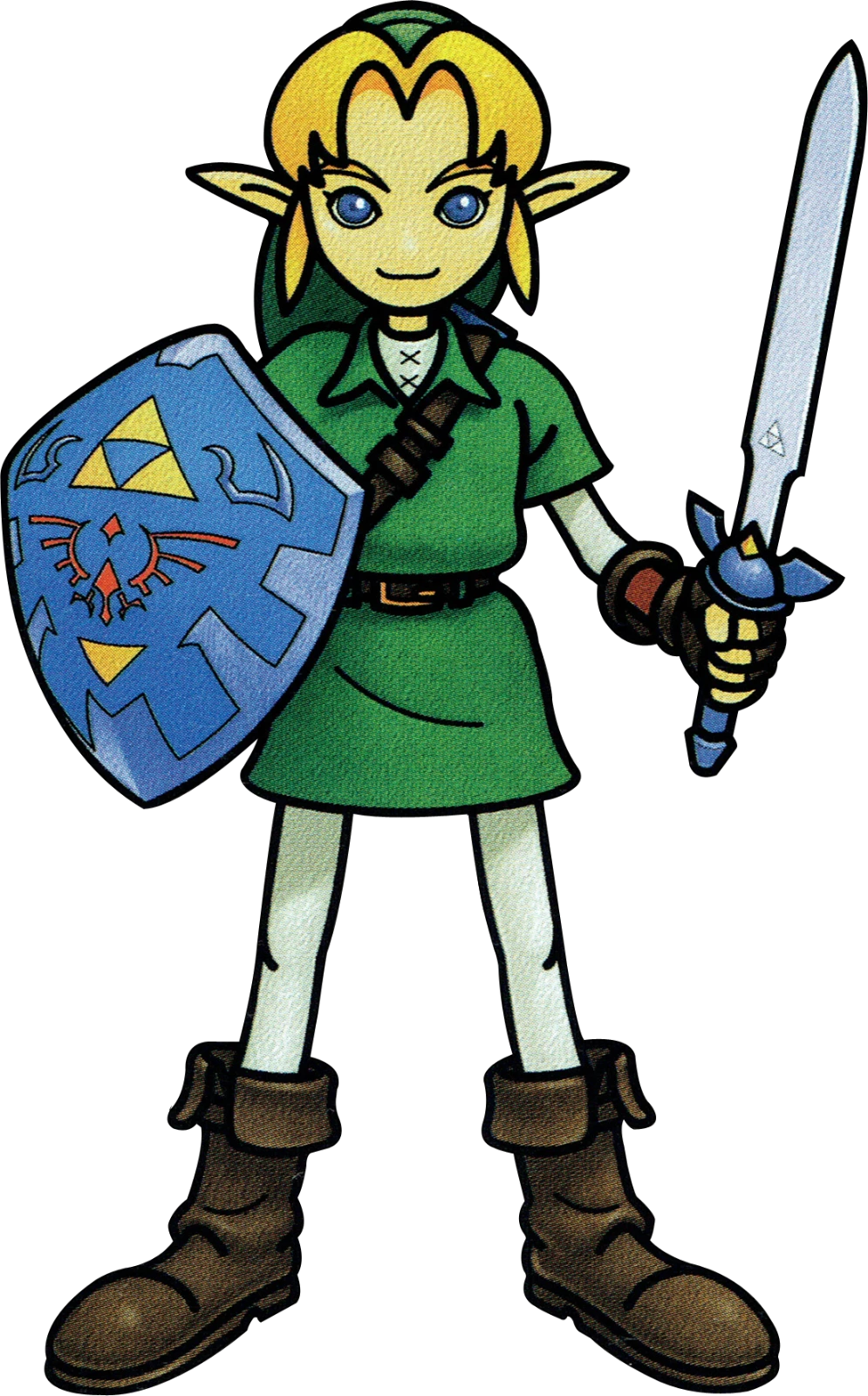 Super Smash Bros. (1999–)Every game in the seriesOne of the eight starters of the Nintendo 64 original, in his Ocarina of Time look. Brawl and the 3DS / Wii U games used his Twilight Princess design; Ultimate dresses him in the Champion’s Tunic, with an Ancient Bow Final Smash. Young Link joined in Melee (2001) and Toon Link in Brawl (2008), so Ultimate has three Links.
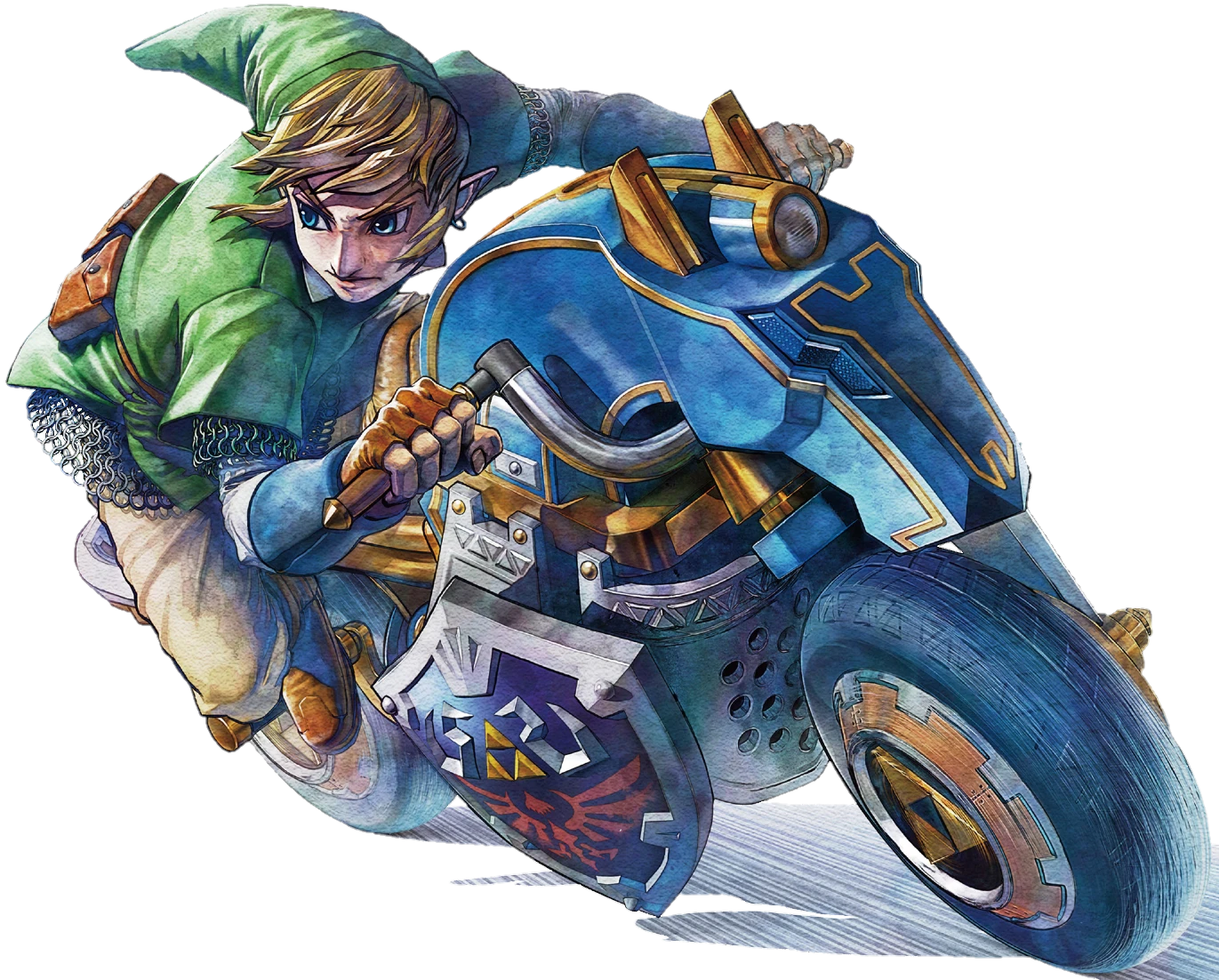 Mario Kart 8 (2014)Downloadable racerLink joined the grid in downloadable content, with his own Master Cycle bike and a Hyrule Circuit to race round. Takashi Ōhara reprised his Skyward Sword yells.
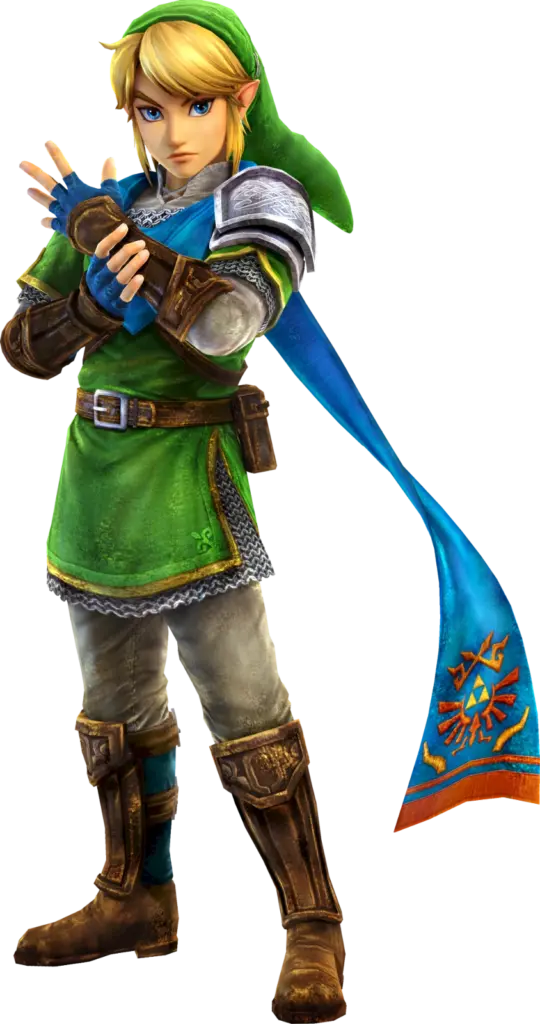 Hyrule Warriors (2014)Wii U, then 3DS (Legends, 2016)A trainee in the Hyrulean army discovers in his first battle that he bears the Triforce of Courage. Young Link arrived in a 2015 download pack and Toon Link with Legends, which also introduced Linkle, a Cucco farmer sure she is the hero reborn.
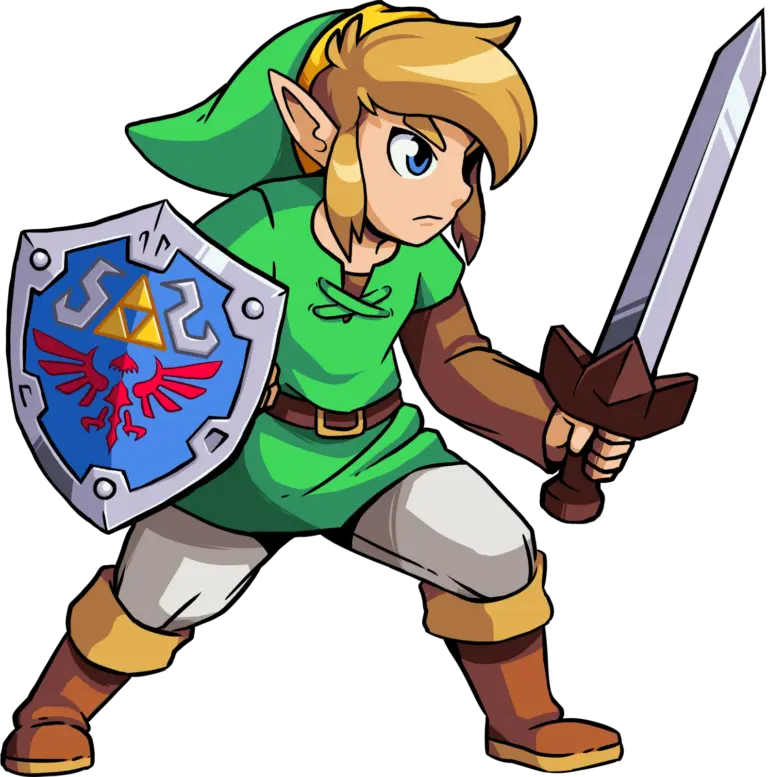 Cadence of Hyrule (2019)Switch · Brace Yourself GamesOne of two sleeping heroes Cadence can wake, Link fights to the beat with moves picked from across the series. Caitlyn Bairstow voices him.
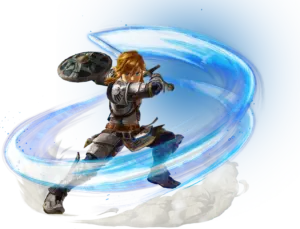 Age of Calamity (2020)Switch · Definitive Edition for Switch 2 due 25 February 2027The Breath of the Wild Link a century earlier: a soldier at the Battle of Hyrule Field who escorts Zelda, draws the Master Sword and strikes the final blow against Calamity Ganon.
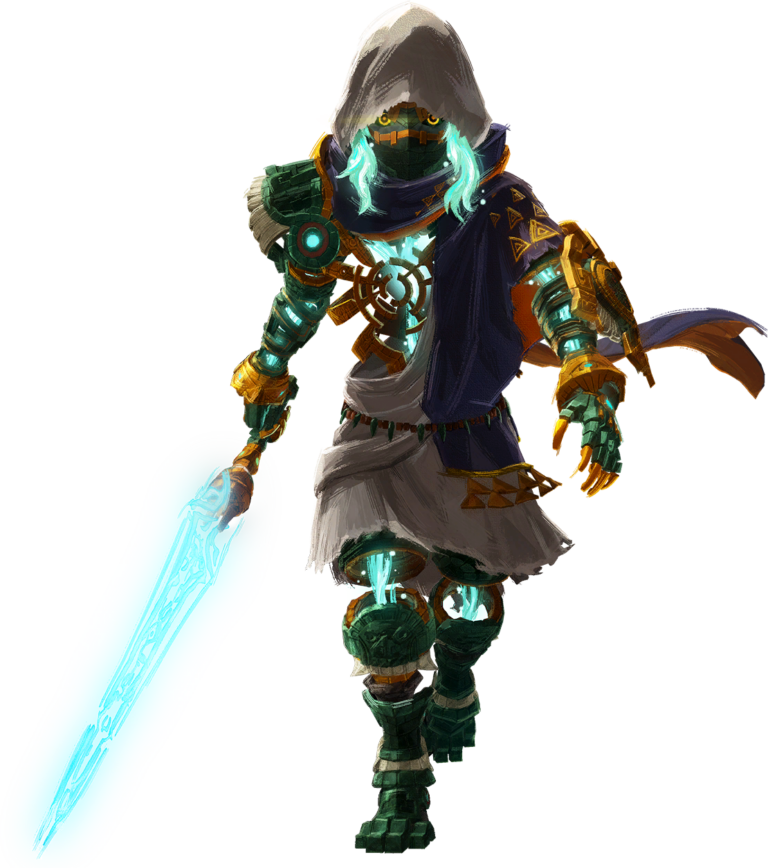 Age of Imprisonment (2025)Switch 2 · Link sits this one outSet in the Imprisoning War, long before Link was born. Its silent, sword-and-shield Forbidden Construct, powered by a shard of the Master Sword, looks so like him that Zelda names it the Knight Construct.
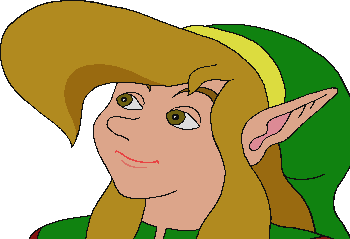 The CD-i games (1993–1996)Philips CD-i · not made by NintendoLink: The Faces of Evil made Link a chatty, kiss-hungry hero voiced by Jeffrey Rath. In The Wand of Gamelon he goes missing, and in Zelda’s Adventure Ganon has captured him before the game begins.
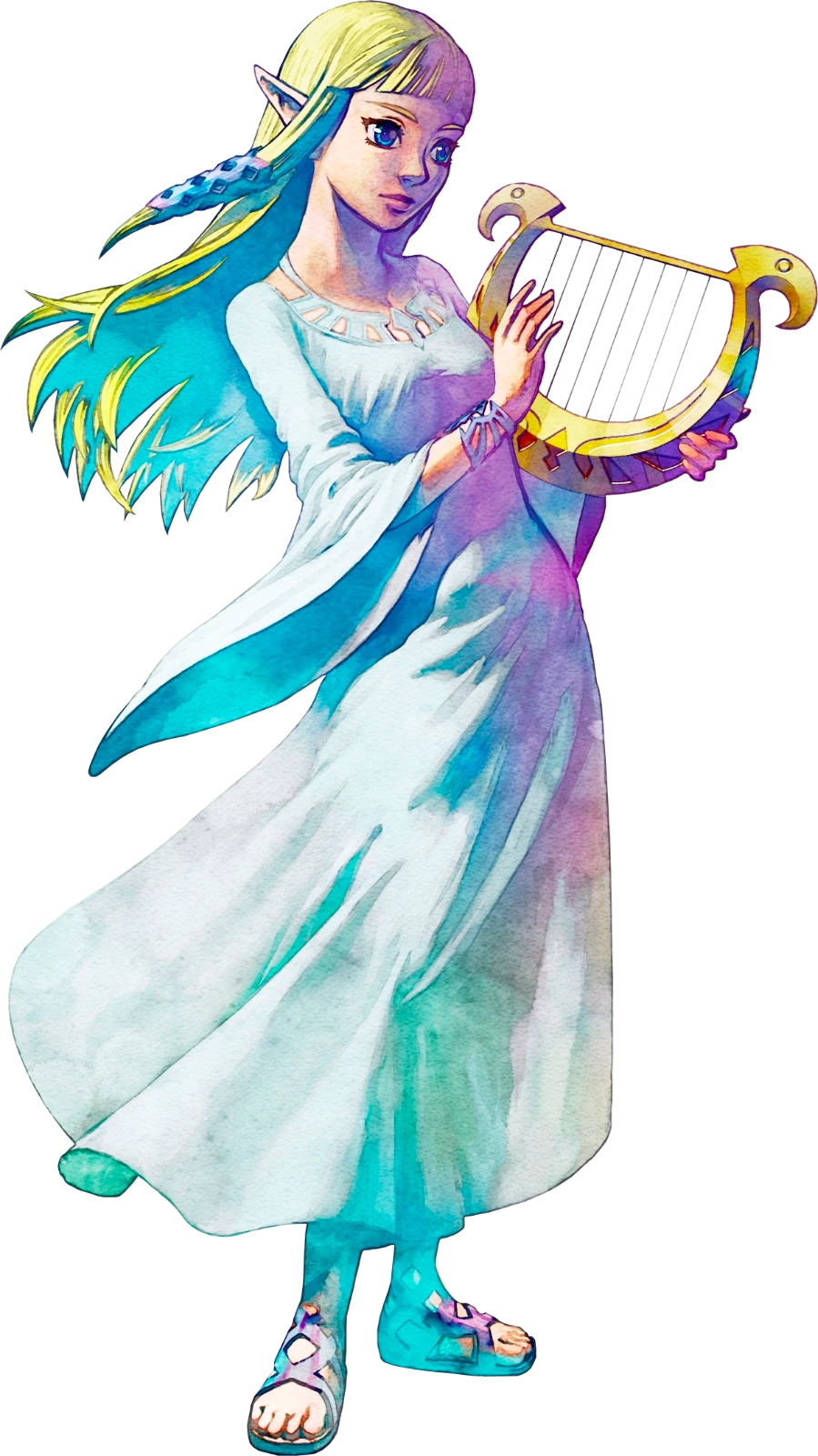 Princess ZeldaWisdom to his Courage
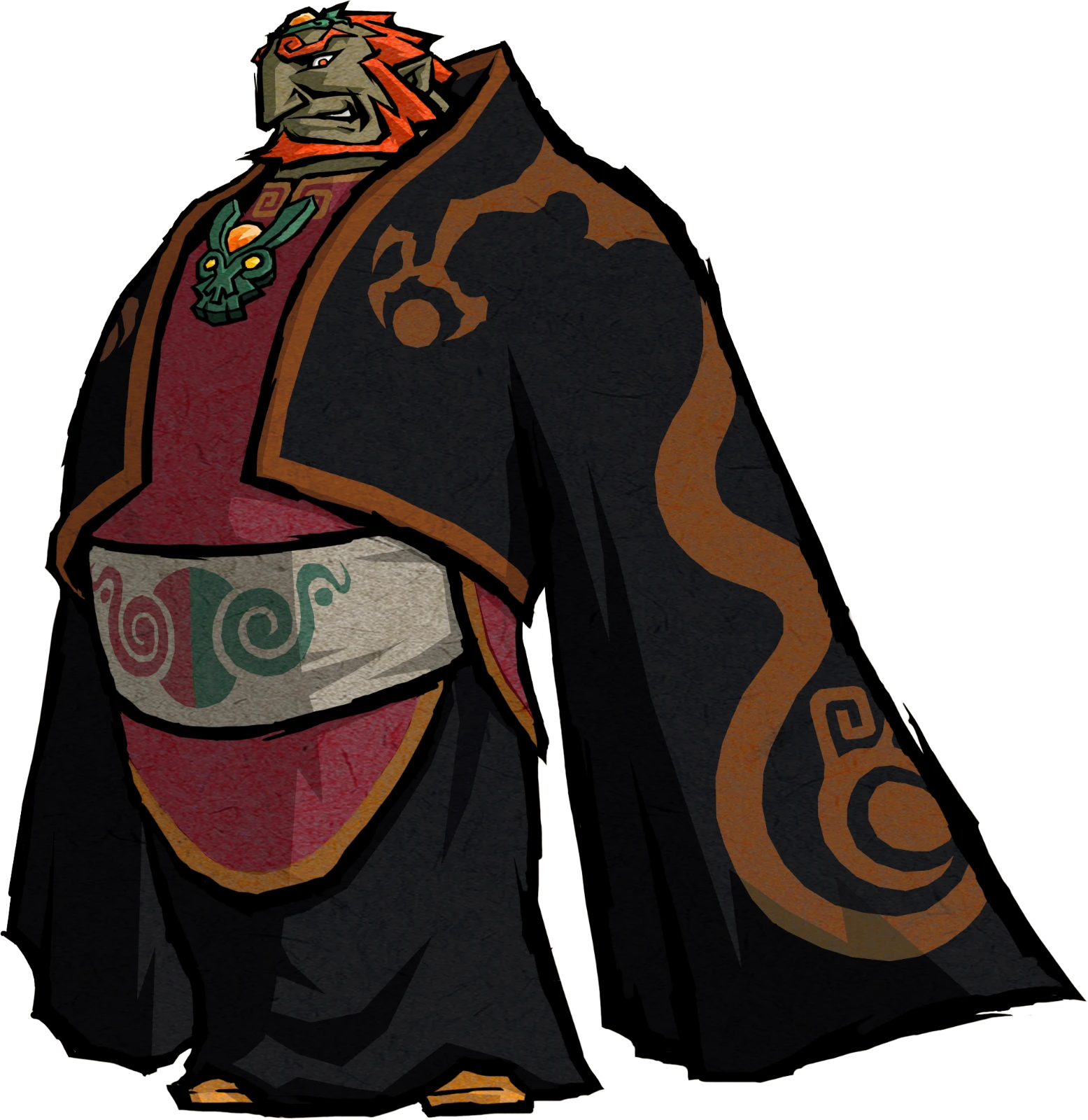 Ganon and GanondorfThe eternal enemy
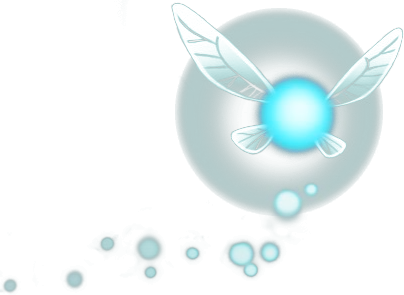 Navi and the companionsThe voices he lacks
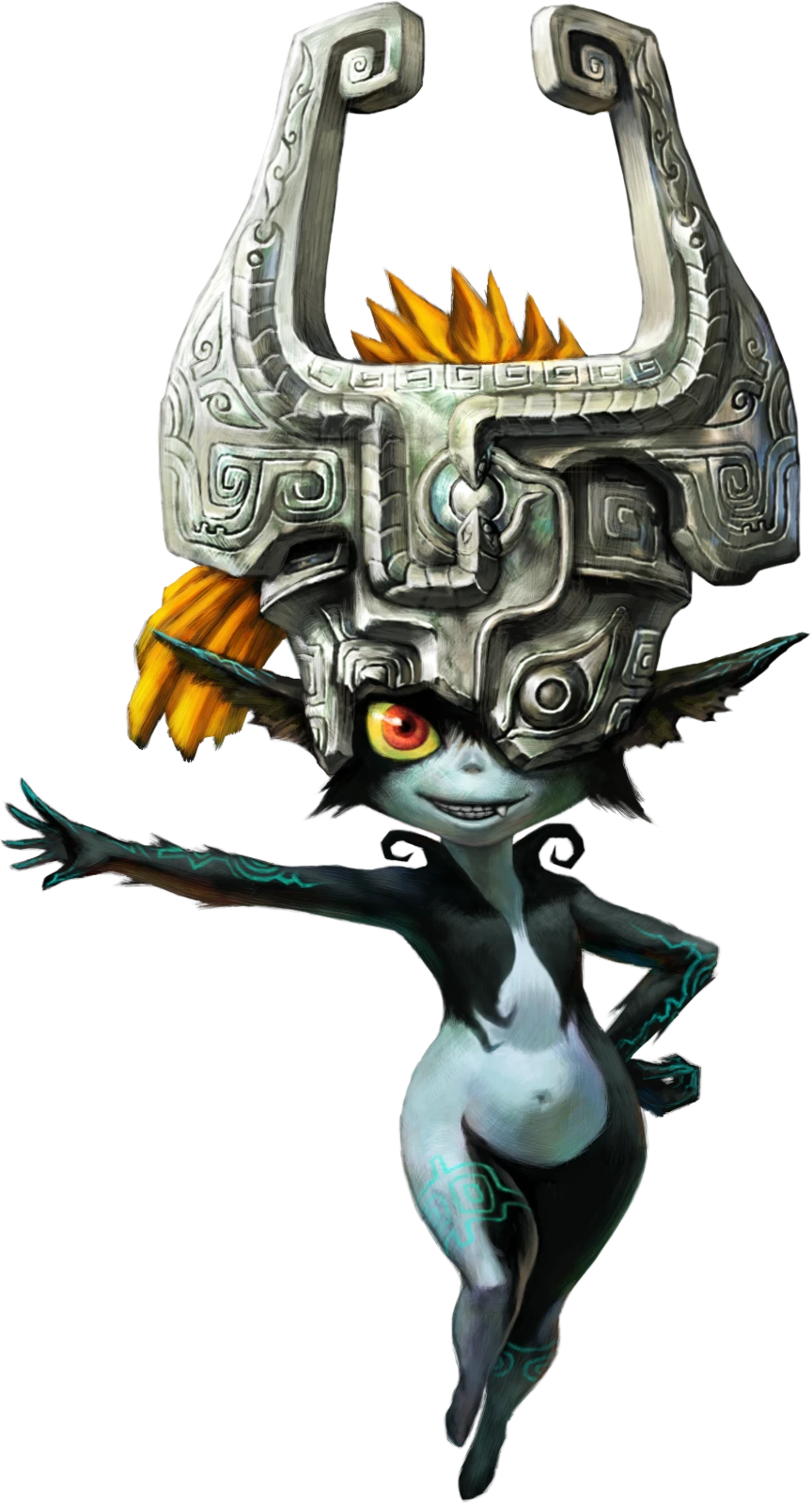 MidnaTwilight Princess
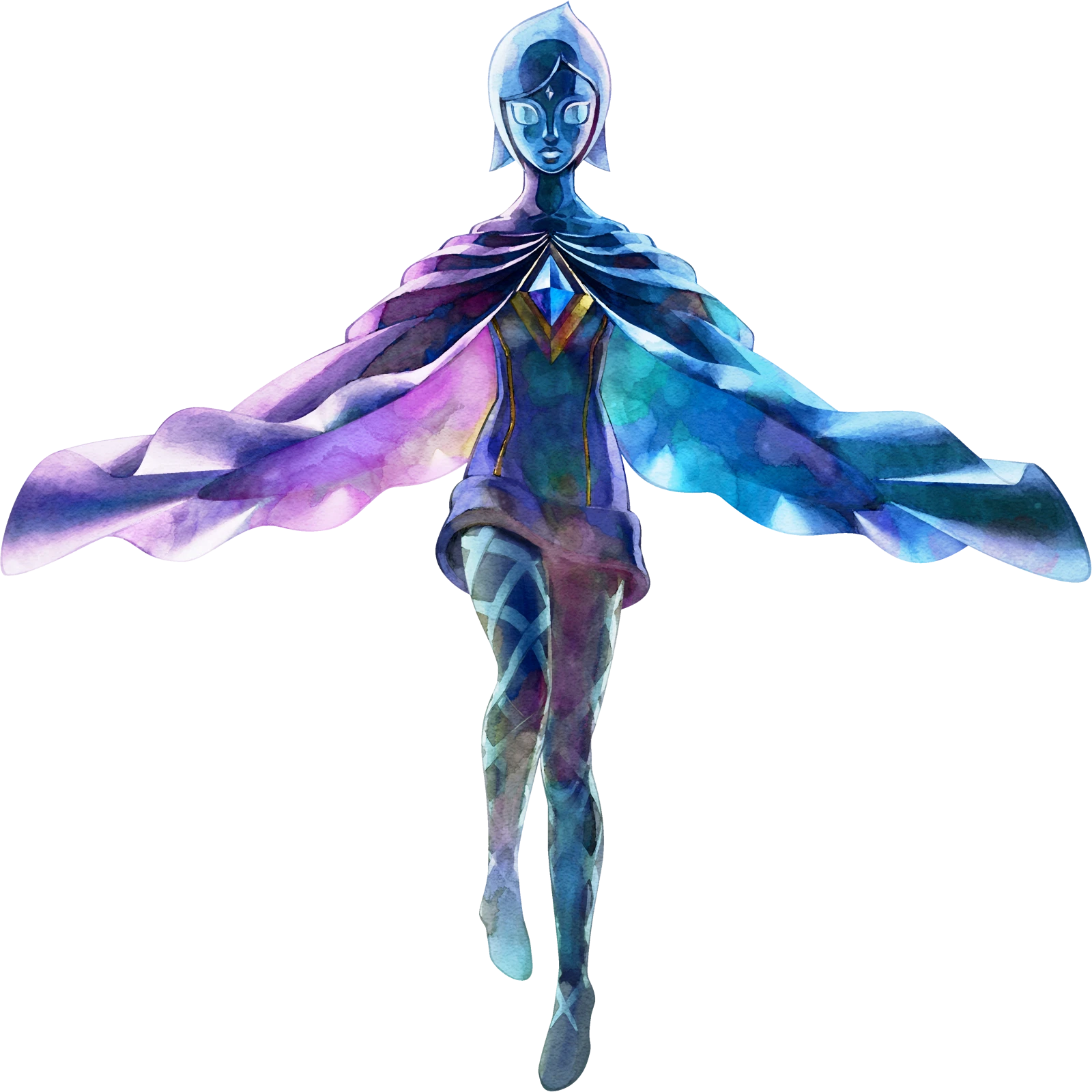 FiSpirit of the sword
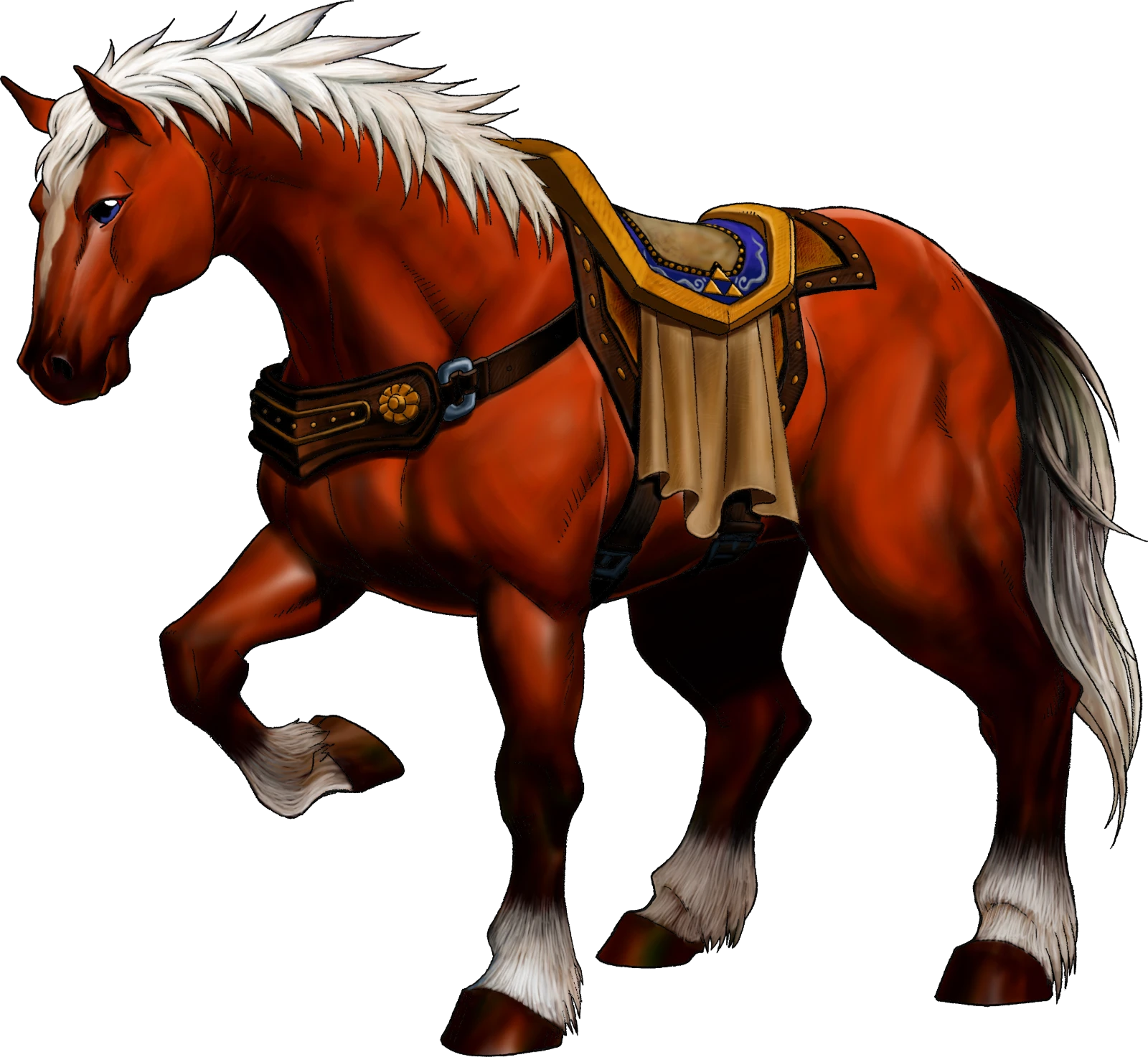 EponaHis horse
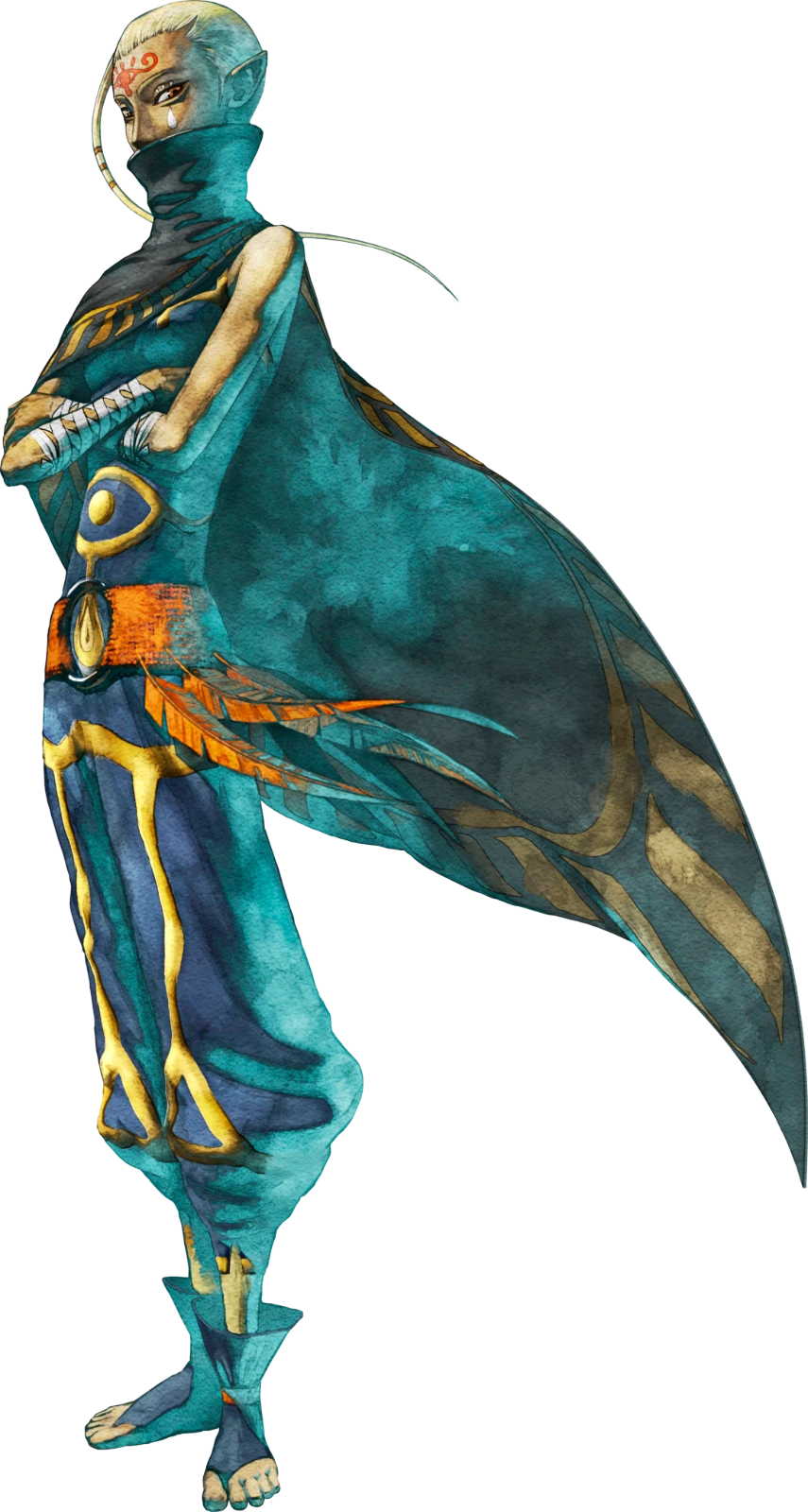 ImpaThe guardian
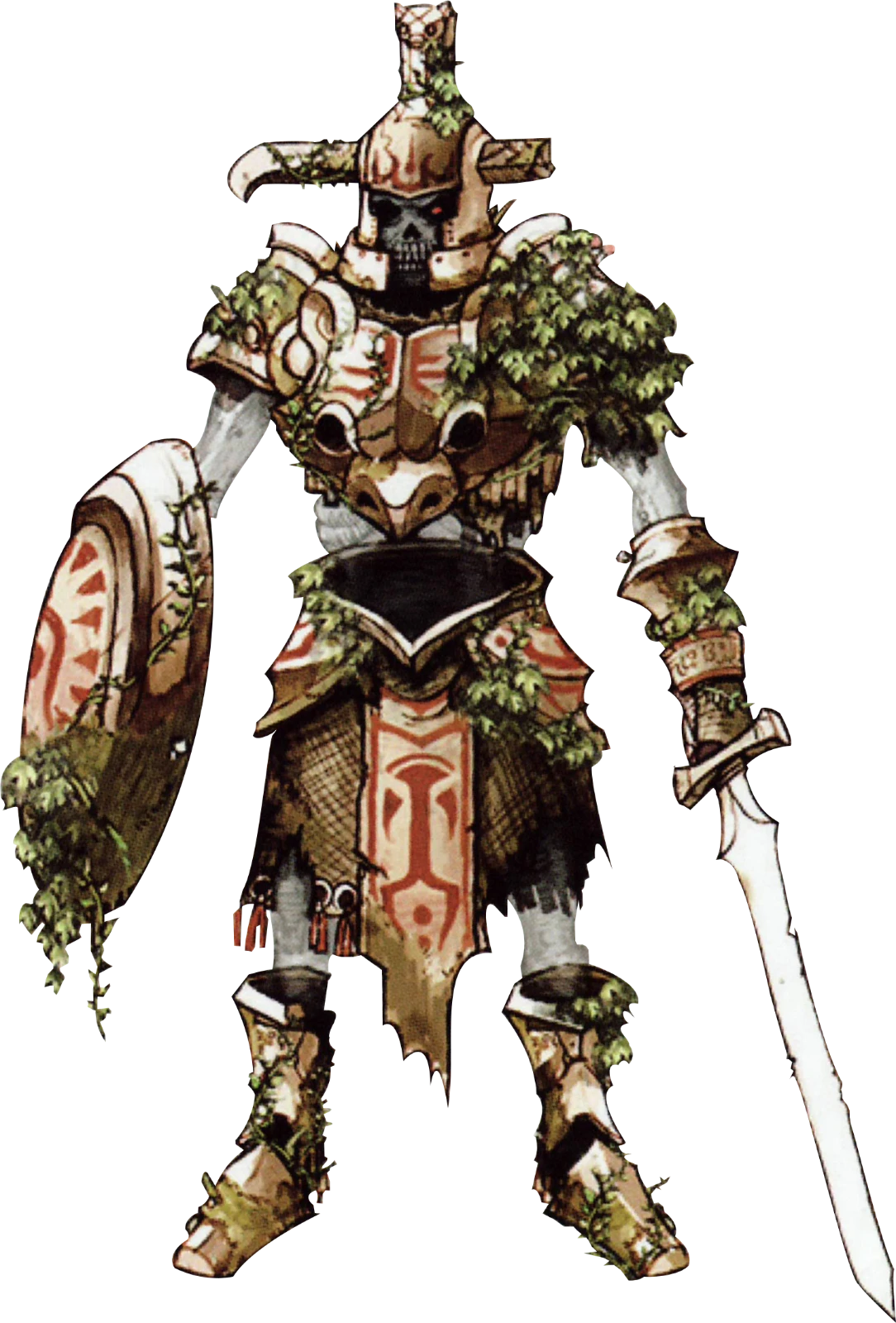 The Hero’s ShadeHis own ancestor
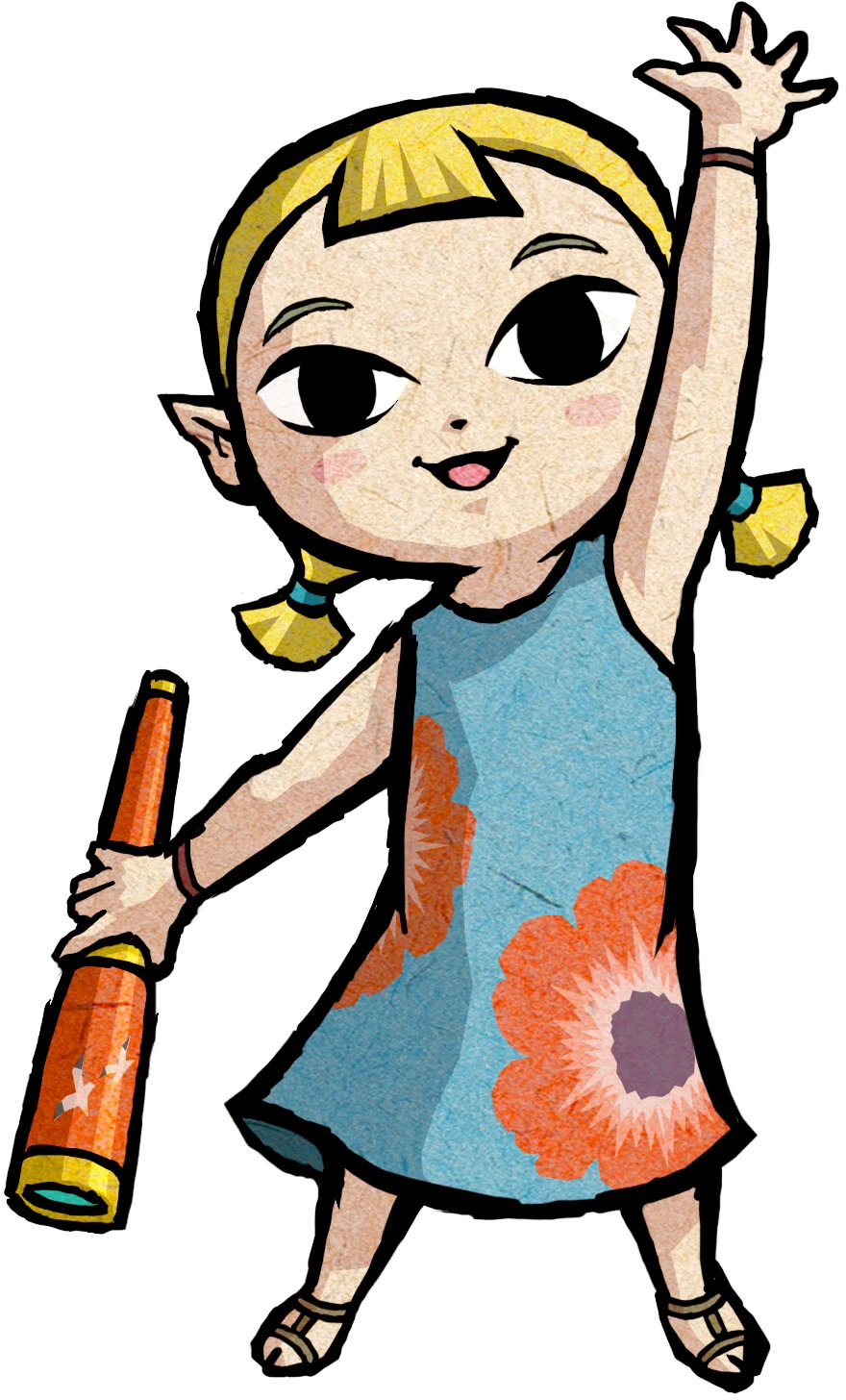 FamilyAryll, Grandma, Smith, an uncle