The black sheep of the family, and proud of it. Zelda II swapped the overhead dungeons for side-on sword fights, added experience levels and magic, and asked a teenage Link to wake a princess who had been asleep for generations.
Released14 January 1987 (JP) · 26 September 1988 (EU) · 1 December 1988 (NA)
DeveloperNintendo
DirectorsTadashi Sugiyama, Yasuhisa Yamamura
ProducerShigeru Miyamoto
MusicAkito Nakatsuka
Players1
Sales4.38 million
Title
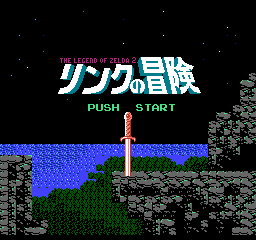
Zelda II: The Adventure of Link リンクの冒険 (Rinku no Bōken, with the English subtitle “The Legend of Zelda 2”)
Platform
Famicom Disk System (Japan); NES (worldwide)
Developer
Nintendo (Research & Development 4)
Publisher
Nintendo
Producer
Shigeru Miyamoto (credited as “Miyahon”)
Directors
Tadashi Sugiyama (“Sugiyan”) and Yasuhisa Yamamura (“Yamahen”)
GameCube Collector’s Edition (2003); Game Boy Advance (2004); Wii, 3DS and Wii U Virtual Console; NES Classic Edition (2016); Nintendo Switch Online (16 January 2019); Game & Watch (2021)
Sales
4.38 million
GameRankings
78.14% (NES)
Overview
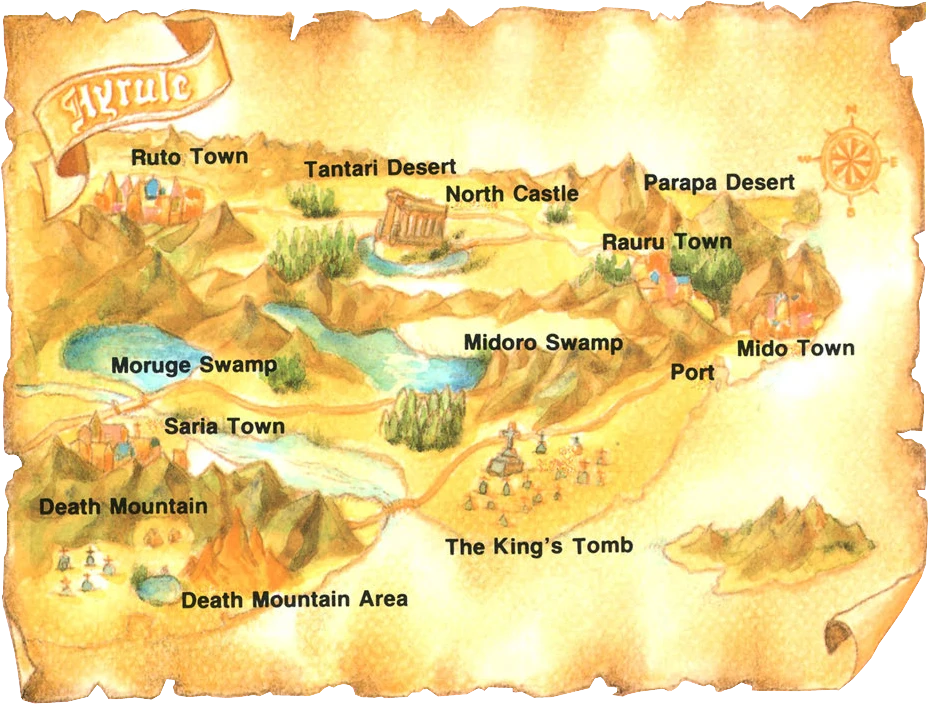
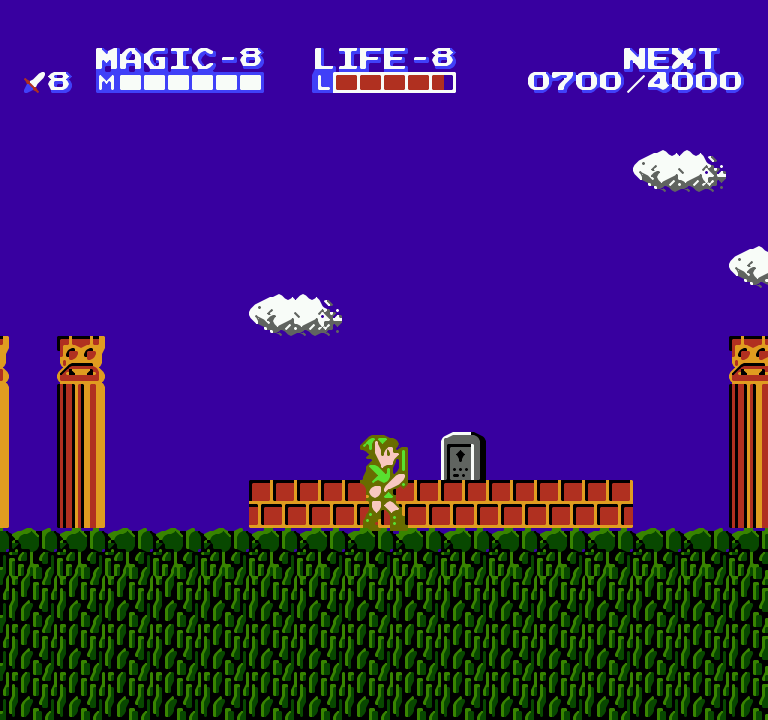
Nintendo could have made The Legend of Zelda again with new dungeons. Instead, less than a year after the original reached Japan, it released a sequel that broke almost every rule the first game had set. Hyrule is now a map you cross from above; step into a town, a cave or a palace, or bump into a wandering monster, and the view drops to the side, Super Mario-style, for duels where every block and crouch matters.
Link levels up, too. Beating enemies earns experience you spend on attack, magic or life, and wise men in the towns teach him spells. There are townsfolk to talk to, side quests to finish, and a magic meter, a shadowy double and the Triforce of Courage, all of which the series kept long after it dropped the rest.
It is also famously tough, which is why it divides fans to this day. Shigeru Miyamoto, who produced it, later called it a side story rather than a true sequel. But it sold 4.38 million copies, scored highly in Japan, and gave Ocarina of Time the names of its sages.
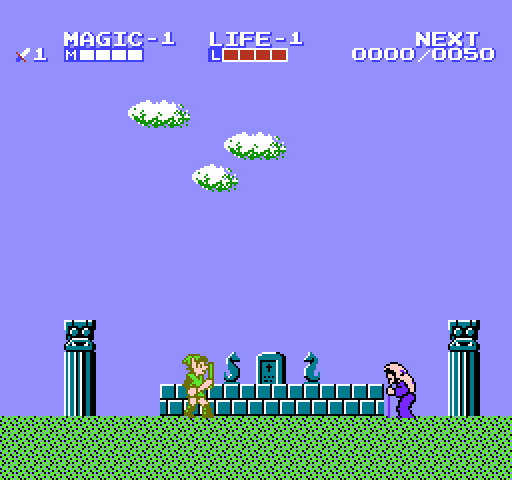
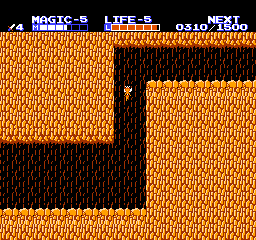
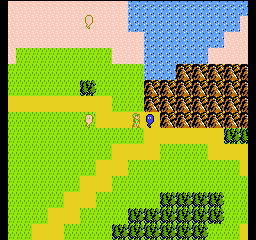
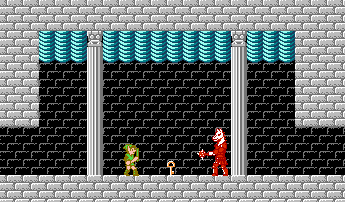
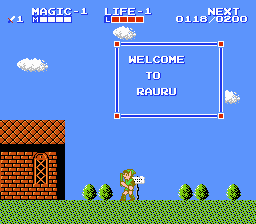
The overhead map of Hyrule, where monsters roam as shadows.Side-on sword fighting: block high, block low, strike.One of Hyrule’s towns, full of people to talk to.
A teenage Link embarks on a journey to awaken the sleeping maiden, Zelda, and learn the origin of the Triforce.
Nintendo’s own one-line summary, from the official Zelda history timeline on its Australian website, which lists the game’s Australian release as 26 September 1988.
— Official description: Nintendo Australia, “The Legend of Zelda history” (nintendo.com/au/zelda/history). One line quoted.
Quick Answers
The things people most often want to know about Zelda II, answered briefly here and in more depth below.
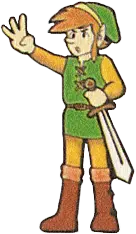
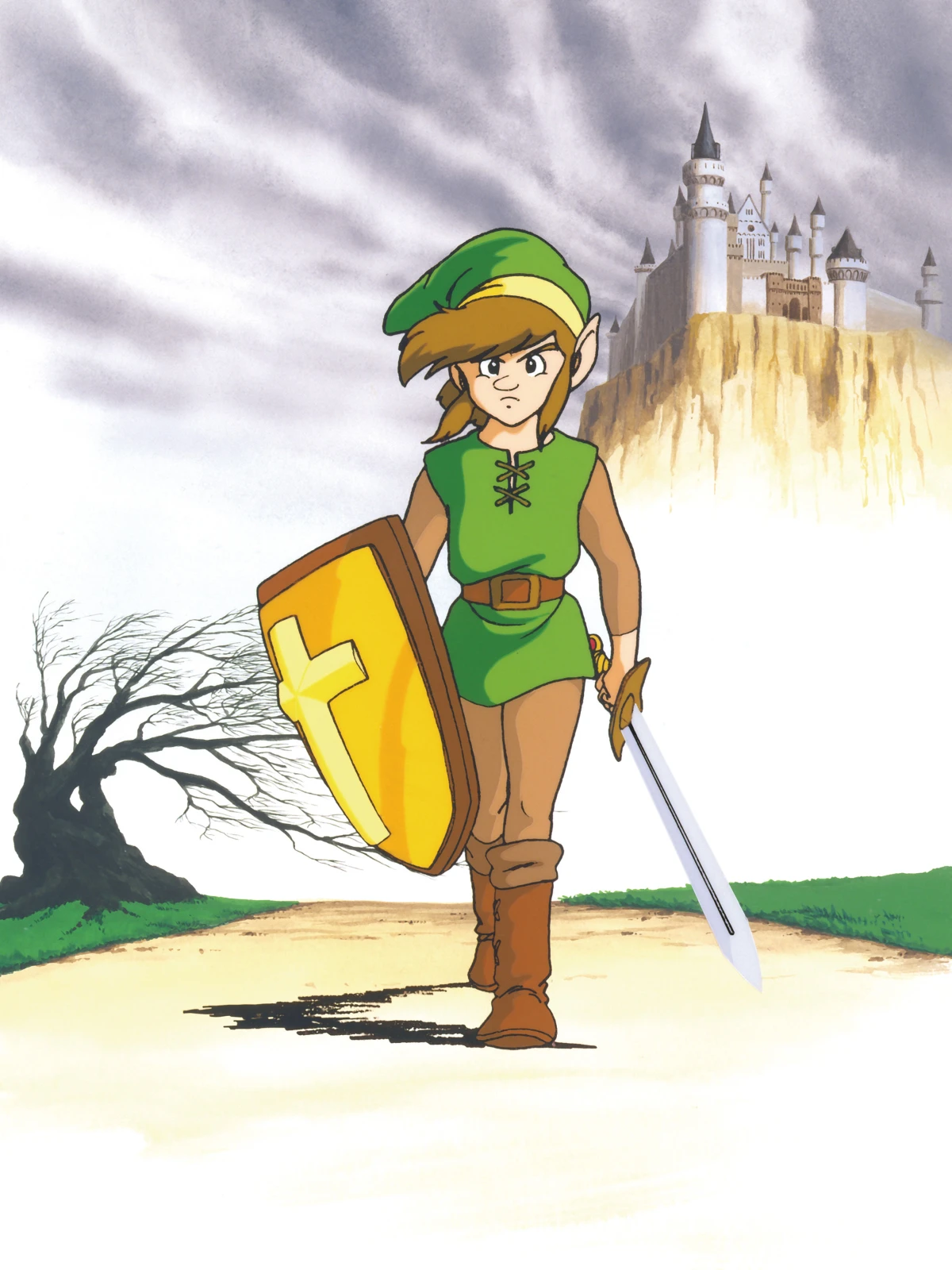
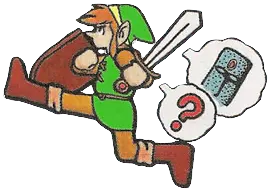
Official art of Link in Hyrule.
When did Zelda II come out?
14 January 1987 in Japan, on the Famicom Disk System. The NES version followed on 26 September 1988 in Europe and Australia and on 1 December 1988 in North America. More →
Is it a direct sequel to the first Legend of Zelda?
Yes. It is set several years after the first game, with the same Link, now 16. Miyamoto has described it as more of a side story about what happened to Link afterwards. More →
Why is it so different from other Zelda games?
Miyamoto wanted the sequel to be fundamentally different, and a new team made it. Its side-on combat drew on Kung-Fu Master and its levelling system on Dragon Quest. More →
How many palaces are there?
Seven. Six palaces each need a crystal placed in their statue, which opens the seventh, the Great Palace, home of the Triforce of Courage. More →
What are the spells?
Eight: Shield, Jump, Life, Fairy, Fire, Reflect, Spell and Thunder, taught by a wise man in each of eight towns. More →
Who is Error?
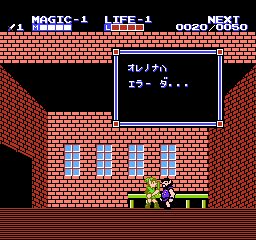
A man in the town of Ruto who introduces himself with “I AM ERROR.” His lookalike is called Bagu: in Japanese the pair are thought to be a joke on “error” and “bug”. More →
Who is the final boss?
Link’s own shadow, fought straight after the Great Palace’s guardian, Thunderbird. It is the first appearance of the character later known as Dark Link. More →
On Nintendo Switch through Nintendo Switch Online’s NES library, where it arrived on 16 January 2019. A Special Edition that starts Link at level 8 followed in March 2019. More →
Plot / Story
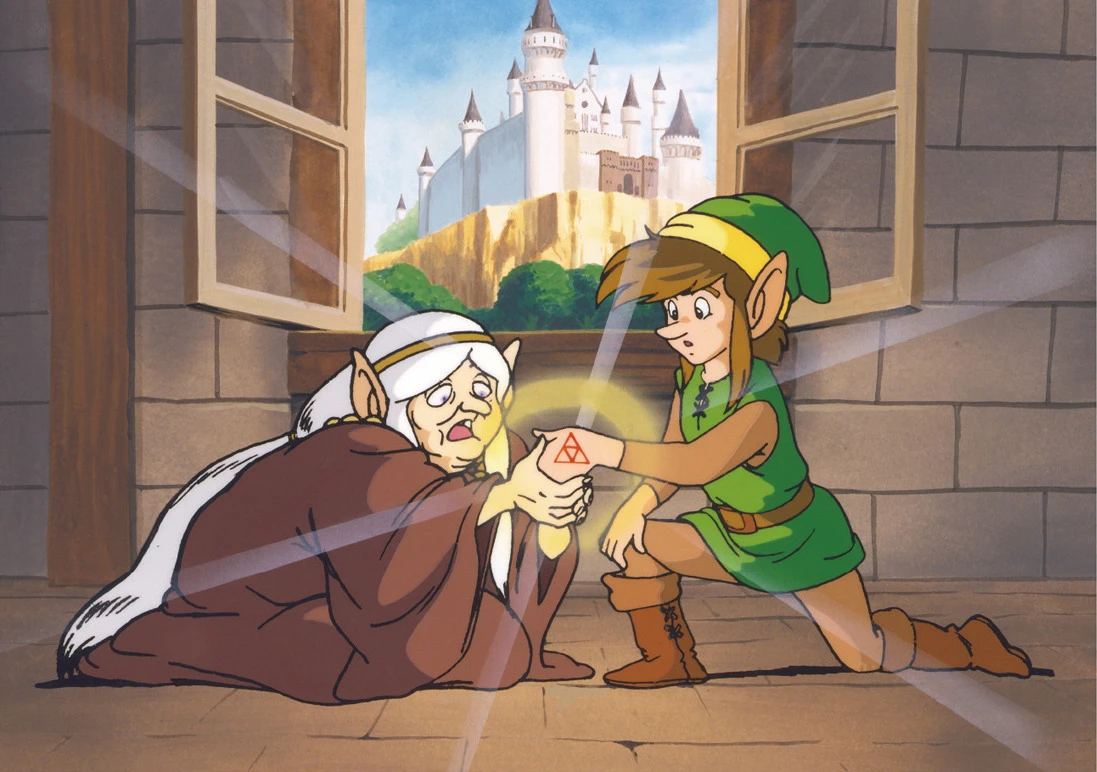
Official art of Link and Impa.
Several years have passed since Link beat Ganon and saved Princess Zelda. Hyrule is at peace, but Link is not: as his sixteenth birthday approaches, a mark appears on the back of his left hand, matching the crest of Hyrule.
Impa, the old nursemaid of the royal house, sees it and takes him to the North Castle. There a sealed door swings open at the touch of his hand, and behind it lies a young woman in an enchanted sleep. She is Princess Zelda, but not the one Link rescued. She is the first Zelda, and she has been sleeping for a very long time.
The legend of the sleeping princess
Impa tells the story. Long ago, when a king of Hyrule died, his son became ruler, but inherited only part of the Triforce. The prince pressed his sister, Zelda, to tell him where the rest was hidden. When she refused, a magician friend of the prince flew into a rage and cast a spell of sleep on her. The magic went out of control and killed him.
The remorseful prince had his sister laid in a tower and decreed that every princess born into the royal family from then on would be called Zelda, in her memory. That, the game tells us, is why there is always a Princess Zelda.
Impa believes the mark makes Link the chosen hero. She gives him six crystals and an ancient text, which he finds he can read although its script is new to him. Each crystal must be set into a statue in one of six palaces across Hyrule. Once all six are in place, the barrier around the Great Palace will lift, and the Triforce of Courage within can wake Zelda.
Hunted for his blood
Link is not the only one with a quest. Ganon is dead, but his followers are still at large, and they have learned that sprinkling the blood of the hero who slew him on Ganon’s ashes will bring their master back. Every monster on the map wants Link dead.
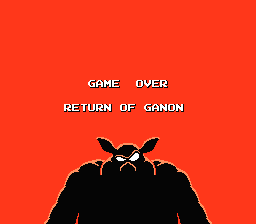
Lose your last life and the game makes the threat plain: the screen shows Ganon’s silhouette and the words “Return of Ganon”.
The NES Game Over screen: Ganon returns.
Towns, wise men and spells
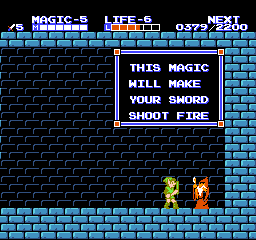
Hyrule is full of people this time, and most of them want something. Each of eight towns has a wise man who will teach Link a spell, usually once he has done a favour for someone in town: finding a lost mirror, bringing water to a thirsty girl, rescuing a kidnapped child, or recovering a trophy stolen by a Goriya. Two knights, hidden away in Mido and Darunia, teach him the Downward Thrust and the Jump Thrust.
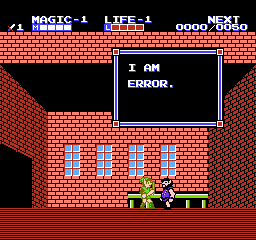
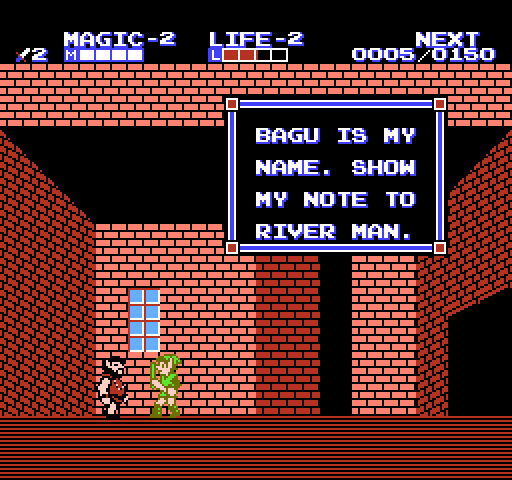
Some towns hold hidden people, too. A man in Ruto introduces himself only as “I AM ERROR”, and later tells Link about a secret tunnel to the Island Palace. A hermit named Bagu, living in the woods north of the river, gives Link a note that persuades the stubborn River Man in Saria to open the bridge to Death Mountain.
A wise man teaches Link a spell.“I AM ERROR.”
Six palaces, six crystals
The palaces are side-scrolling dungeons full of Iron Knuckles, Stalfos and hidden pits, each with a guardian at the end and a treasure that opens up more of the map. The Candle lights caves, the Handy Glove breaks blocks, the Raft carries Link across the sea to Eastern Hyrule, the Boots let him walk on certain water, the Flute deals with a River Devil that, the townsfolk say, hates noise, and the Cross reveals enemies that are otherwise invisible.
Eastern Hyrule is harder still. Its towns include Kasuto, abandoned and haunted by invisible Moa, and a hidden town where a wise man teaches the Spell spell, which turns many monsters into harmless Bots.
Inside Parapa Palace, the first of the six.Setting a crystal in a palace statue.
The Great Palace and Link’s shadow
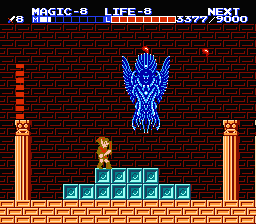
With all six crystals placed, the Binding Force that the old king put around the Great Palace in the Valley of Death breaks. Inside waits the Thunderbird, a winged monster that can only be harmed after Link casts Thunder, the most powerful spell in the game.
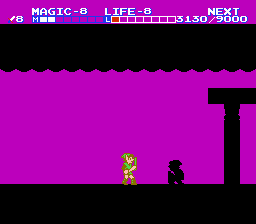
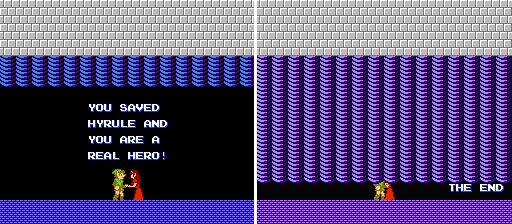
Beating it is not the end. A sage summons Link’s own shadow, a dark copy of the hero, and Link must defeat it to prove his heart. Then the Triforce of Courage is his, the three pieces of the Triforce are united, and his wish wakes the sleeping princess.
Thunderbird, guardian of the Great Palace.Link fights his own shadow.Zelda awakes.
Palaces of Zelda II
Seven palaces in all: six to place the crystals in, and the Great Palace at the end. They are listed in the order the game expects you to tackle them. Towns, and the spell each teaches, follow below.
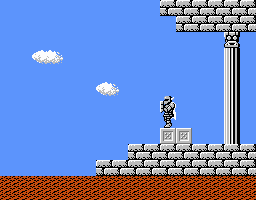
North CastleStartWhere the first Zelda sleeps, and where Link begins.
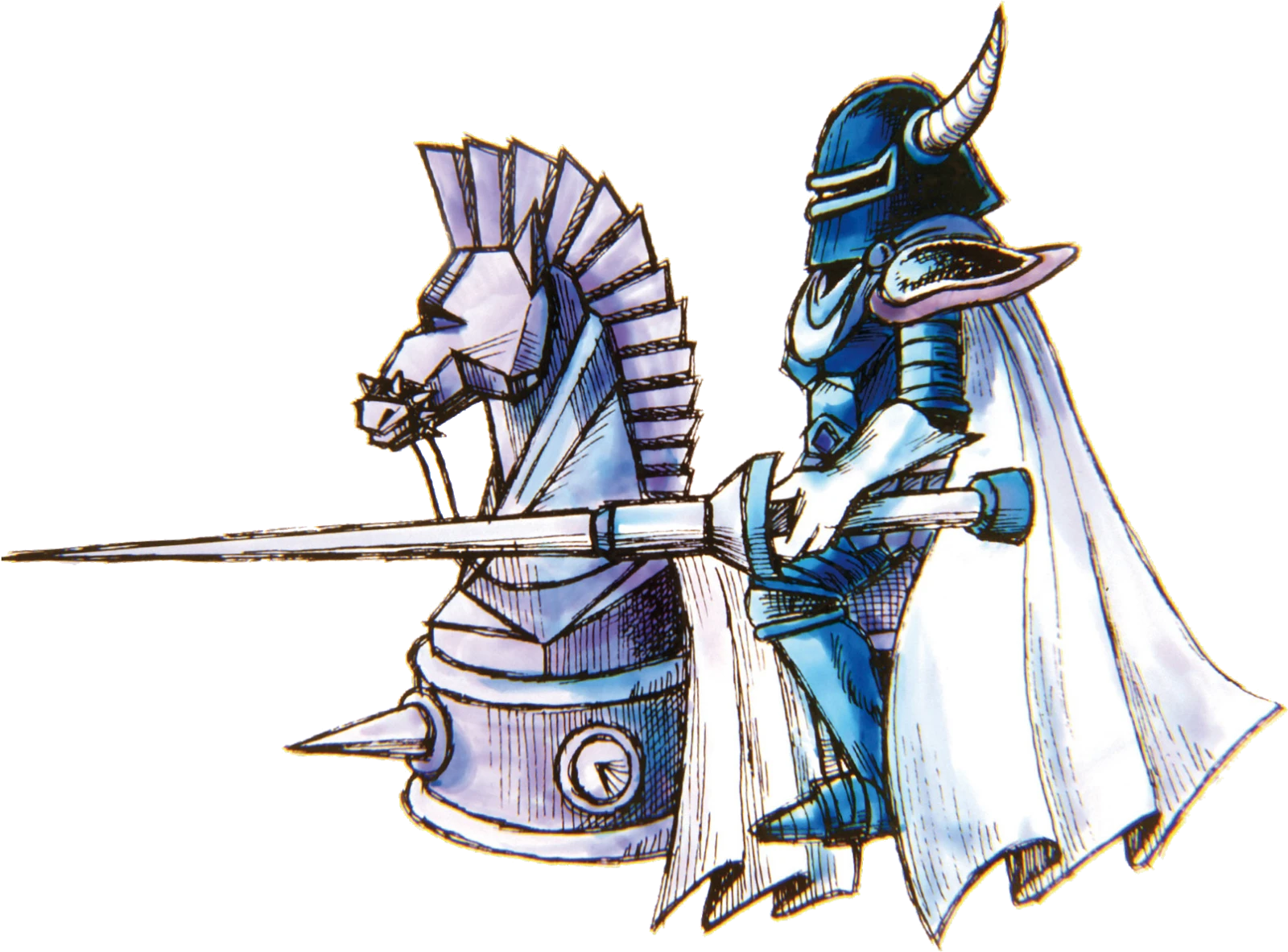
Island PalacePalace 3 · south of MidoReached through a secret passage south of King’s Tomb. Treasure: Raft. Guardian: Rebonack, an Iron Knuckle on horseback.
Maze Island PalacePalace 4 · Eastern HyruleIn the far north-east. Treasure: Boots. Guardian: Carock, a giant wizard.
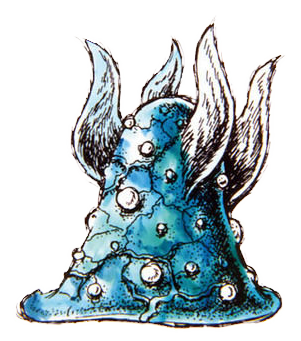
Palace on the SeaPalace 5 · east of NabooruTreasure: Flute. Guardian: Gooma (Helmethead again in the Japanese version).
Three-Eye Rock PalacePalace 6 · the Hidden PalaceTreasure: Cross. Guardian: Barba, called Volvagia in Japan.
Great PalaceFinal palace · Valley of DeathGuardians: Thunderbird and Link’s shadow. Prize: the Triforce of Courage.
Towns and spells: Rauru – Shield; Ruto – Jump (recover the Trophy); Saria – Life (return the Mirror); Mido – Fairy (fetch the Water of Life), plus the Downward Thrust; Nabooru – Fire (bring water, and have an extra Magic Container); Darunia – Reflect (rescue the kidnapped child), plus the Jump Thrust; the hidden town of Kasuto – Spell (seven Magic Containers); Kasuto – Thunder (all eight Magic Containers).
In comics, TV & other media
Zelda II has never had a cartoon of its own, but its names and music have echoed through the series and beyond, and one line of its dialogue became the title of an academic book.
Ocarina of Time’s sagesGame · Nintendo 64 · 1998Five of Ocarina’s sages – Rauru, Ruto, Saria, Nabooru and Darunia – share their names with Zelda II towns, and Mido became a Kokiri boy. Eiji Aonuma has said the team chose the names so that the towns would seem to have been named after the sages.
Dark Link and Shadow LinkGames · 1998 onwardsThe final boss returns as Dark Link in Ocarina of Time’s Water Temple, as Shadow Link in Four Swords Adventures and A Link Between Worlds, and as another dark double in Spirit Tracks.
I Am ErrorBook · MIT Press · 2015Nathan Altice’s technical history of the Famicom and NES takes its title from Error’s famous line.
Super Smash Bros.Games · 2001 and 2008The palace music, “Temple”, plays in Super Smash Bros. Melee, and the Great Palace theme was remixed for Brawl.
The Minish Cap and A Link Between WorldsGames · 2004 and 2013The Famicom Disk System battle theme became The Minish Cap’s mini-boss music, and A Link Between Worlds’ StreetPass duels against Shadow Link were inspired by Zelda II’s final fight.
Tears of the KingdomGame · 2023The first King of Hyrule in Tears of the Kingdom is named Rauru, sharing the name of Zelda II’s first town.
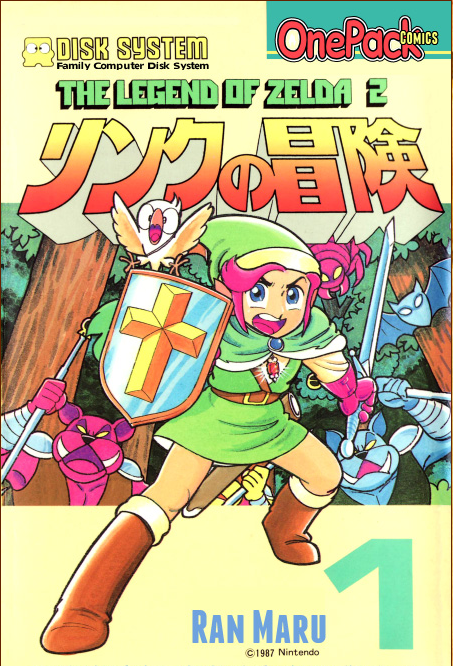
Link no Bōken mangaManga · Japan · August 1991A Japanese manga titled Adventure of Link appeared in August 1991.
Characters
The cast is bigger than the first game’s, and much of it is mysterious: a princess from Hyrule’s distant past, wise men tucked away in basements, two men with suspiciously technical names, and a villain who is dead but very much in the picture.
Character
Who they are
In this game
Stats & abilities
LinkThe hero, now 16
The hero of the first Legend of Zelda, a few years older. A mark matching the royal crest has appeared on the back of his left hand, singling him out as the chosen hero.
He sets out from the North Castle to place six crystals in six palaces, survive Ganon’s followers, and win the Triforce of Courage to wake the sleeping Zelda.
Levels in Attack, Magic and Life, up to 8 each
Eight spells, from Shield to Thunder
Downward Thrust and Jump Thrust
Starts with four Heart and four Magic Containers; up to eight of each
Lives and 1-Up dolls, unique in the series
Princess ZeldaThe first Zelda
Not the Zelda of the first game, but the original princess of that name, from Hyrule’s distant past. Her brother’s decree that every princess should bear her name explains why the series always has a Princess Zelda.
She has slept in the North Castle since a magician’s spell went wrong. Link’s quest is to wake her.
Knew where the missing Triforce piece was
Woken by Link’s wish on the Triforce
ImpaZelda’s nursemaid
The royal nursemaid who sent Link after the pieces of the Triforce of Wisdom in the first game. She later became the Sage of Shadow in Ocarina of Time and the elder of Kakariko in Breath of the Wild.
She recognises the mark on Link’s hand, takes him to the sleeping Zelda, tells him the legend and gives him the six crystals and the ancient text.
Starts Link’s quest
GanonDead, but not gone
The villain Link defeated in the first game, where he appeared as a monstrous blue pig-like beast.
He never appears in person. His followers hunt Link because the hero’s blood, sprinkled on Ganon’s ashes, would revive him, and his silhouette fills the screen when you lose your last life.
Game Over: “Return of Ganon”
The Prince and the MagicianThe legend’s villains
Figures from Hyrule’s past. The prince took the throne after his father, the king, but received only part of the Triforce. The magician served the prince.
When Zelda would not reveal the hidden piece of the Triforce, the magician cast the spell that put her to sleep and died as it ran wild. The remorseful prince made the decree about her name.
Seen only in the backstory
The King of HyruleKeeper of the Triforce of Courage
The king in the legend, whose son inherited the throne and only part of the Triforce.
He sealed the Great Palace, where the Triforce of Courage lies, behind a magical barrier called the Binding Force, which only the six crystals can break.
Creator of the Binding Force
The Wise MenTeachers of magic
Eight old men, one in each town, often tucked away in a back room or basement.
Each teaches Link a spell once he has earned it, from Shield in Rauru to Thunder in Kasuto. Their towns’ names went on to become the names of Ocarina of Time’s sages.
A resident of Ruto. His line, “I AM ERROR.”, is a faithful translation of the Japanese, “My name is Error”, but the joke was lost in English because his lookalike, Bagu, was left untranslated: the pair are thought to be a developer’s gag on “error” and “bug”.
At first he gives nothing away. Later he tells Link about the secret tunnel south of King’s Tomb that leads to the Island Palace.
Gave his name to a 2015 MIT Press book about the NES
BaguThe hermit in the woods
Error’s lookalike, who lives alone in a house in the woods north of the river, north of Saria. His name is the Japanese pronunciation of “bug”.
He gives Link a note, which the River Man in Saria accepts as a pass, letting Link cross towards Death Mountain and the Hammer.
“Show my note to River Man”
The old knightsSword masters
Two knights, hidden away in Mido and Darunia.
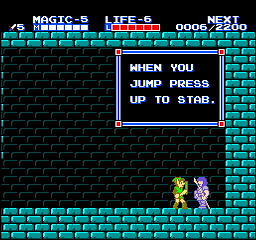
The knight in Mido’s church tower teaches the Downward Thrust; the one in Darunia, reached by jumping across the rooftops and down a chimney, teaches the Jump Thrust.
Downward Thrust (Mido)
Jump Thrust (Darunia)
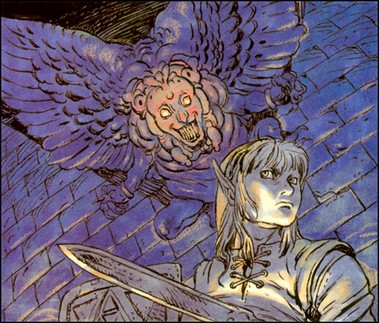
ThunderbirdGuardian of the Great Palace
A winged, fire-breathing monster that guards the Triforce of Courage.
The penultimate boss. It is invulnerable until Link casts Thunder, and shrugs off his thrusting attacks; beaten, it gives 1,000 experience points and the key to the Triforce chamber.
Needs the Thunder spell
Immune to Downward and Jump Thrust
Link’s ShadowThe final boss
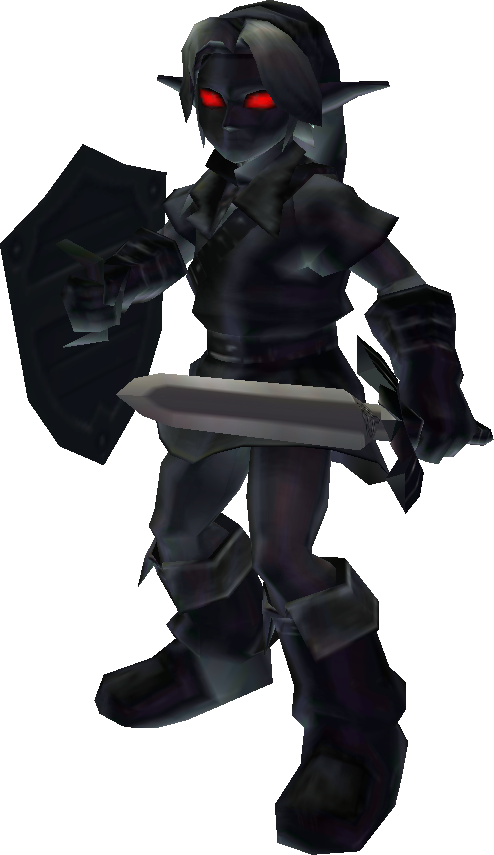
A dark double of Link himself, the first appearance of the character fans call Dark Link.
Summoned by a sage at the very end, straight after Thunderbird. Beating it wins the Triforce of Courage.
Returns as Dark Link in Ocarina of Time
As Shadow Link in later games
Palace guardians and notable enemies
Zelda II’s bosses guard the palace crystals, while its ordinary enemies are some of the toughest in the series.
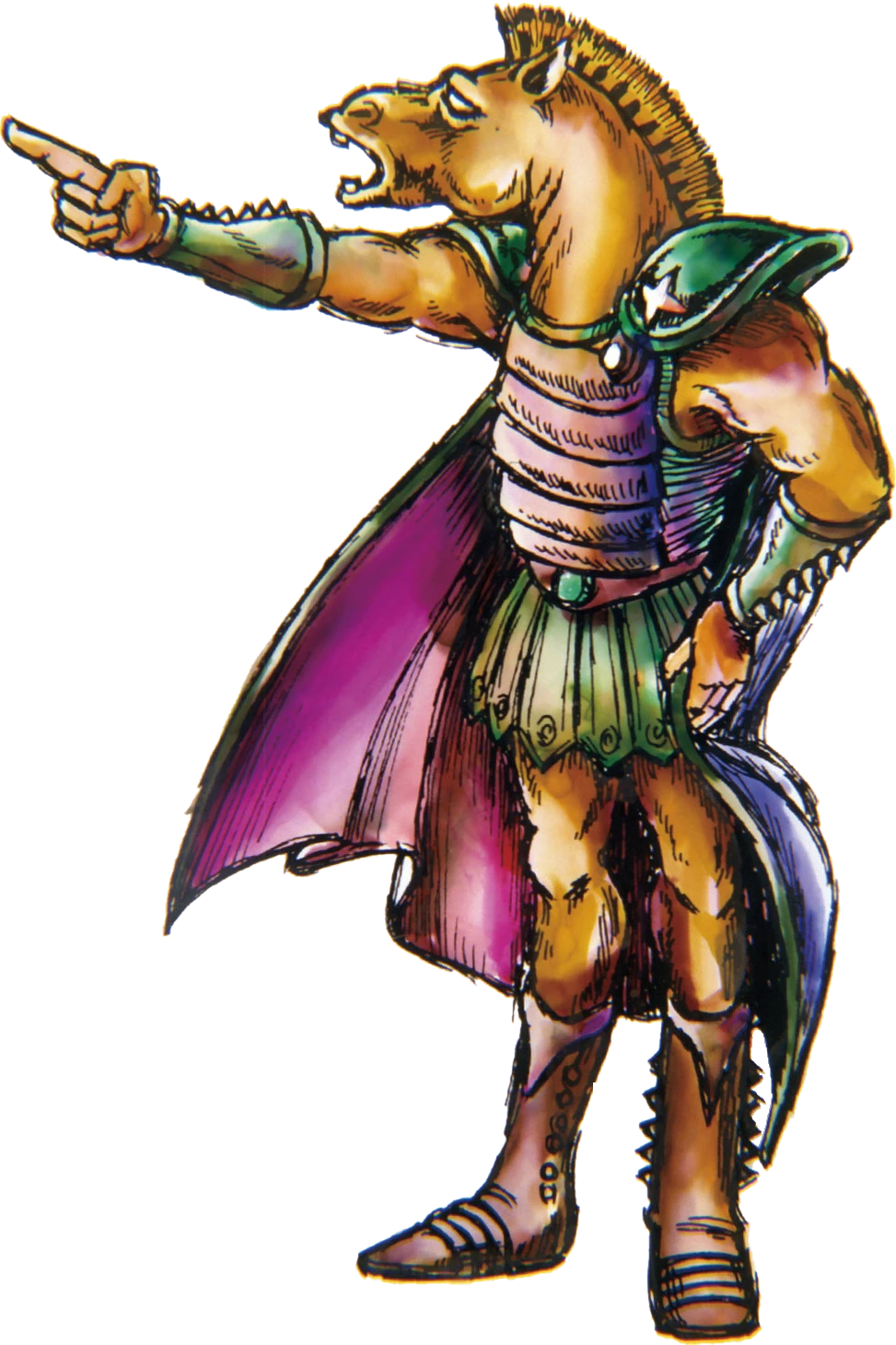
Horsehead (Mazura)Parapa PalaceA mace-swinging warrior with a horse’s head; jump and strike its head.
Helmethead (Jermafenser)Midoro PalaceGuardian of the second palace, and of the fifth in the Japanese version.
RebonackIsland PalaceA blue Iron Knuckle riding a horse.
CarockMaze Island PalaceA giant wizard; his sprite differs between the Disk System and NES versions.
GoomaPalace on the SeaGuardian of the fifth palace on NES.
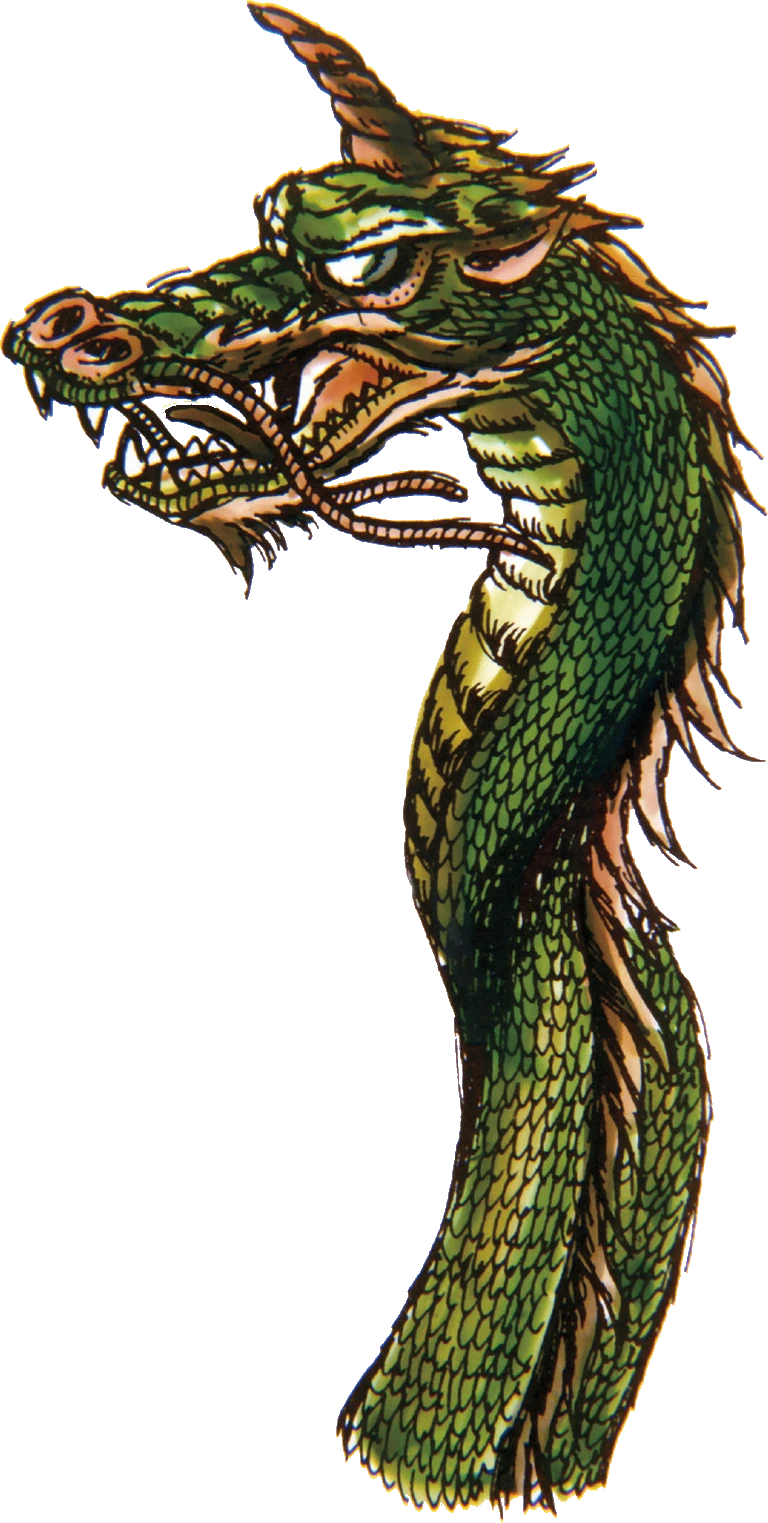
BarbaThree-Eye Rock PalaceThe dragon guardian of the sixth palace, called Volvagia in the Japanese version and redrawn for the NES.
ThunderbirdGreat PalaceOnly the Thunder spell can make it vulnerable.
Link’s ShadowGreat PalaceThe final duel.
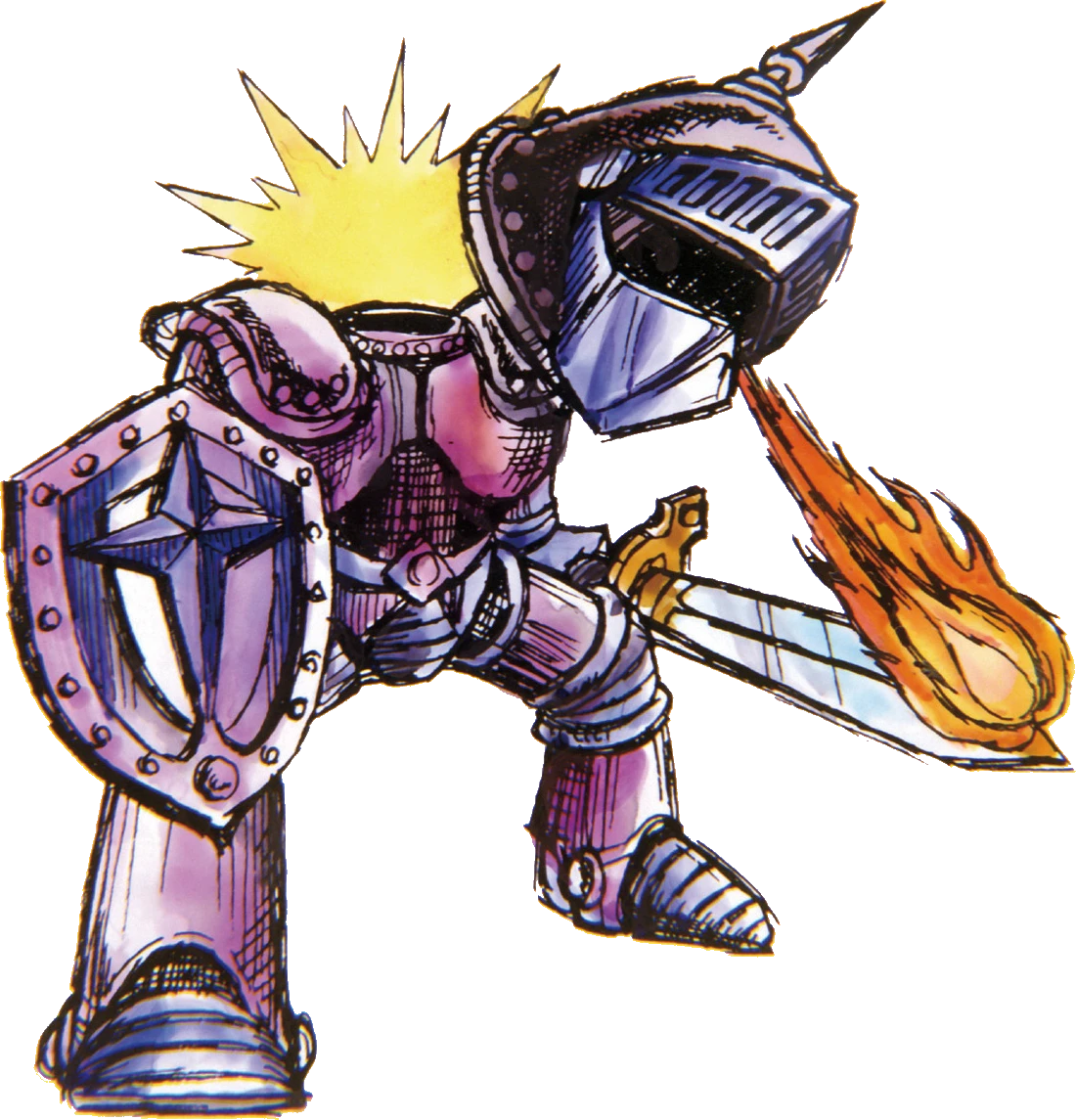
Iron KnucklePalacesArmoured knights that shift their shields high and low to block Link’s sword.
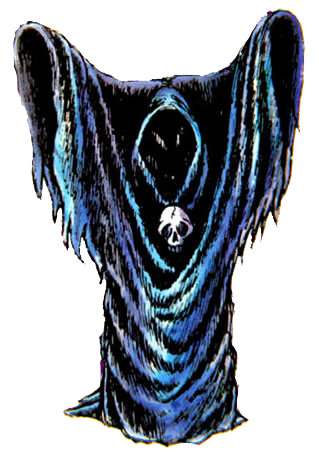
MoaKasuto and elsewhereGhostly enemies; the ones haunting Kasuto stay invisible until Link has the Cross.
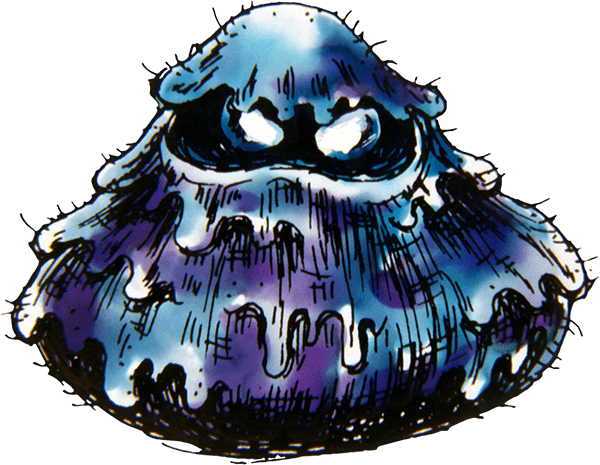
BotEverywhereBlob-like small fry, and what the Spell spell turns most enemies into.
The people who made it
A new team built Zelda II, with Shigeru Miyamoto producing. The credits use nicknames.
Shigeru MiyamotoProducer · “Miyahon”Wanted a sequel that was fundamentally different from the first game; later said the idea was his, but a different team made it.
Tadashi SugiyamaDirector · “Sugiyan”His first major Nintendo project.
Yasuhisa YamamuraDirector · “Yamahen”Co-director.
Takashi TezukaStory and scriptCo-director of the first Legend of Zelda, who wrote the sequel’s story.
Akito NakatsukaMusic · “Tsukasan”Composed the score, including the palace theme later heard in Smash Bros.
Kazunobu ShimizuArtThe game’s artist.
Toshihiko Nakago and teamProgrammingWith Kazuaki Morita, Tatsuo Nishiyama, Shigehiro Kasamatsu and Yasunari Nishida.
How it was made
Nintendo has said little about Zelda II over the years, so the story of its making is short. What we know comes from the credits, from Miyamoto’s 2003 interview with the Swedish magazine Super Play, and from the history gathered in Wikipedia’s article.
Something different
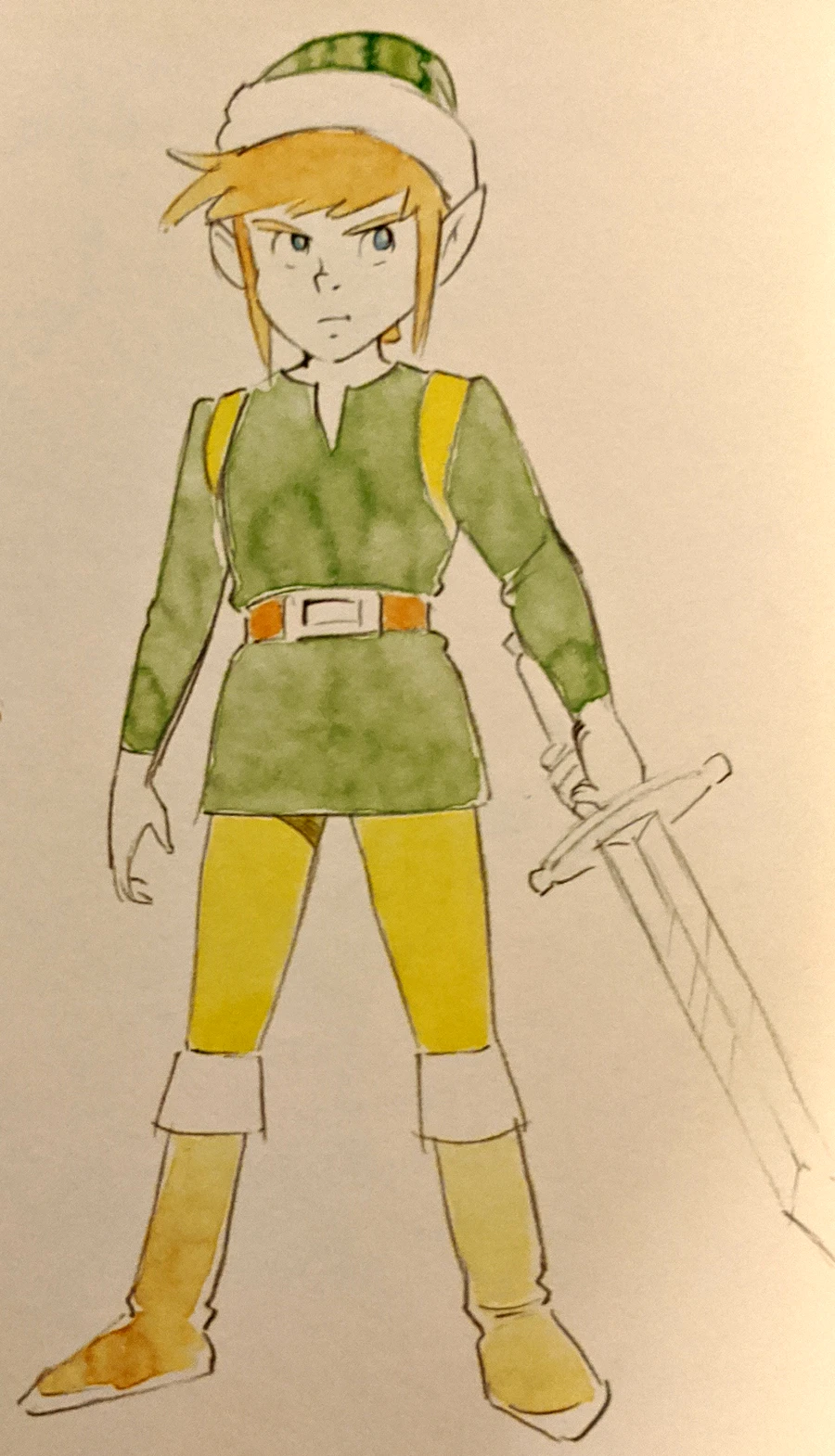
Concept art of Link for Zelda II.
Shigeru Miyamoto, credited as “Miyahon”, produced the sequel and wanted it to be fundamentally different from the original. A new team was put together, led by first-time director Tadashi Sugiyama and co-director Yasuhisa Yamamura, while Takashi Tezuka, Miyamoto’s co-director on the first game, wrote the story and script.
Two other games shaped it. The side-on sword fighting drew on Irem’s arcade game Kung-Fu Master, which Miyamoto’s team had converted for the NES in 1985, and the experience levels came from Chunsoft’s Dragon Quest, the role-playing hit of 1986.
Looking back in 2003, Miyamoto told Super Play that Zelda II had been his idea but was built by different people from those who made the first game. He was candid about the result, calling it “sort of a failure”, and said Nintendo saw it as a side story about Link after the first adventure, with A Link to the Past as the real sequel.
Disk to cartridge
King’s Tomb in the Famicom Disk System version.
The game came out first on the Famicom Disk System in Japan on 14 January 1987, less than a year after the original. Its Western NES release had to wait until 1988, held up in North America by a shortage of ROM chips that year; Europe and Australia got it on 26 September, North America on 1 December.
The cartridge version is not identical. Every palace has its own colour scheme on NES, where the Disk System used grey or green; Carock and the dragon Volvagia, renamed Barba, were redrawn; the monster icons on the map changed; and the title music was simplified because the NES lacks the Disk System’s extra sound chip. The Game Over screen gained Ganon’s silhouette, where the Disk System showed a black screen reading “Return of Ganon” and “The End”.
The rules changed, too. In the Japanese version every skill costs the same amount of experience and the costs are lower, but losing all your lives drops every level back to the lowest of the three. The Western version prices Life cheapest and Attack dearest, and your levels are permanent.
Firsts: what this game introduced
Plenty of Zelda II’s ideas were never seen again, but a surprising number became series staples.
1The magic meterLink’s first spells, and a meter to power them, which the series has kept in many forms since.
2Dark LinkLink’s shadow is the final boss, the first of many evil twins.
3The Triforce of CourageThe third piece of the Triforce, and its association with Link, starts here.
4Towns and talkative townsfolkVillages full of people with problems to solve and hints to give, far more prominent than in the first game.
5Side-on sword fightingBlocking high and low, crouching and stabbing up and down, as the heart of the game.
6Experience levelsSpend experience on Attack, Magic and Life. Zelda Dungeon notes it is the only game in the series where life and magic work like a role-playing game’s hit points and magic points.
7Lives and 1-Up dollsThe only game in the series with a stock of lives and dolls that add to it.
8The names of Ocarina’s sagesRauru, Ruto, Saria, Nabooru and Darunia all start out as towns here.
Cheats & secrets
Zelda II has no famous cheat codes, but knowing where to go and what each town wants will save you hours of wandering. These secrets and systems are worth knowing.
Second quest
Finish the game and save, and you can start again keeping your experience levels, sword techniques and spells. Items, containers and extra lives do not carry over.
Experience into lives
Official art for Link’s extra lives.
Once Attack, Magic and Life are all at level 8, further experience turns into extra lives instead.
Saving does not keep experience
The cartridge has three save files and records your levels, but any experience you had saved up towards the next level is reset to zero. Spend it before you save.
Who to help in each town
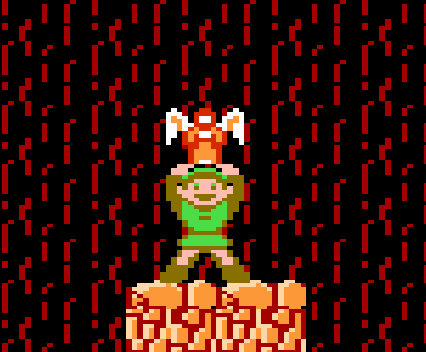
Link recovers the Trophy.
Ruto’s wise man wants the Trophy back from the Goriya in the Tantari Desert cave; Saria’s needs the lost Mirror found; Mido’s needs the Water of Life from the cave in Moruge Swamp (break the boulder with the Hammer); Nabooru’s gatekeeper wants water from the fountain in town; Darunia’s wants the kidnapped child brought back from Maze Island.
Sword techniques
Link using the Downward Thrust.
In Mido, use Jump to reach the church tower’s upper door and learn the Downward Thrust. In Darunia, jump across the rooftops and drop down the chimney of the locked house to learn the Jump Thrust.
Getting to Death Mountain
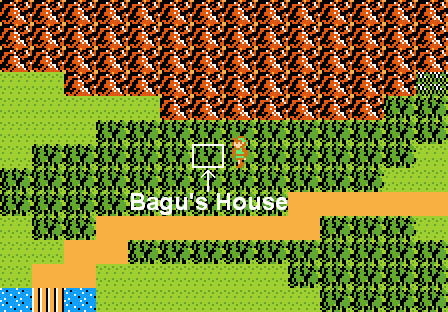
Bagu’s house on the overworld map.
Find Bagu in the woods north of the river, north of Saria, and show his note to the River Man to cross the bridge.
The Island Palace
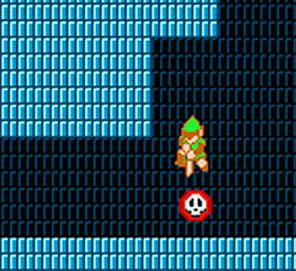
King’s Tomb, the landmark for the hidden tunnel.
Ask Error in Ruto after a hint in Mido: the palace is reached through a secret passage directly south of King’s Tomb.
The last spells
Official art for the Spell spell.
In the hidden town of Kasuto, step into the fireplace of a house with no basement to meet the wise man; he teaches Spell if you have at least seven Magic Containers, and it reveals a building holding the Magic Key. The wise man of ruined Kasuto teaches Thunder once you have all eight.
Special Edition
Nintendo Switch Online added a Special Edition on 12 March 2019 that starts Link at level 8 in Attack, Life and Magic.
Checked against Wikipedia and Zelda Dungeon’s town, palace and spell pages.
Glitches, exploits and oddities
Zelda II’s cartridge holds a few unfinished corners and some well-known oddities, documented by The Cutting Room Floor.
The Fairy spell glitch
Link using the Fairy spell.
A glitch with the Fairy spell can load Parapa Palace’s layout using another palace’s graphics. It is a way to see the window graphics made for the Maze Island and Three-Eye Rock palaces, which normal play never uses.
A graveyard nobody visits
An unused side-on graveyard area can be reached with a walk-through-walls code by starting a battle on a mountain tile. West Hyrule also contains two areas the game never points to: a plain grotto and a pit that would trap a player without the Handy Glove.
Spikes that never appear
Every palace has spike tiles in its graphics, but the game has no spike hazards.
Hidden Leevers
Official art of a Leever.
Some desert Leevers are placed too low to rise above the sand, so they can only be hit with spells or the Downward Thrust. In the Game Boy Advance version they peek slightly above the surface.
A flash that had to go
Official art of a defeated Link.
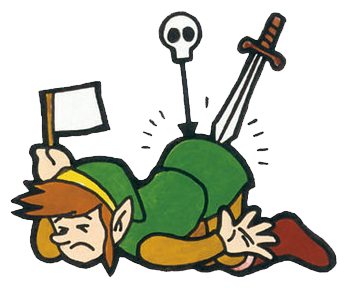
On Famicom Disk System and NES, losing a life flashes the screen in rainbow colours, which can trigger seizures. Later versions flash between shades of red instead.
NO.3 TRIFORCE
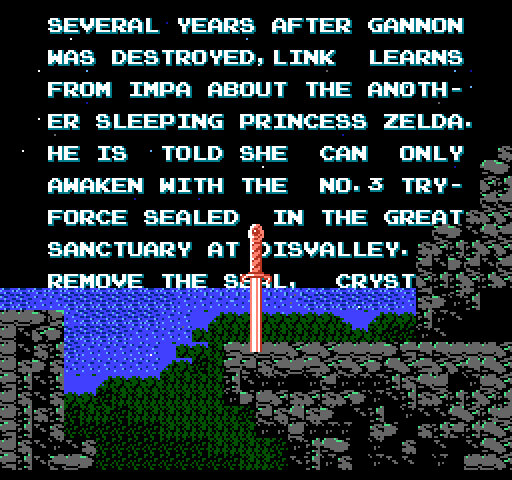
The introduction story screen.
The NES intro speaks of the “NO.3 TRIFORCE”. The 2003 and Game Boy Advance versions tidy this to “THE THIRD TRIFORCE”, fix other grammar and add a black PAUSE box, though the Wii release in the West went back to the NES text.
Videos & media
Nintendo’s trailer for the 2021 Game & Watch, which brings Zelda II back in pocket form and uses its battles for a clock timer.
Nintendo of America’s announcement trailer (15 June 2021) for the handheld that includes Zelda II, the original Legend of Zelda and Link’s Awakening.
Nintendo of America’s official trailer for the January 2019 Switch Online update that added Zelda II.
Trivia & facts
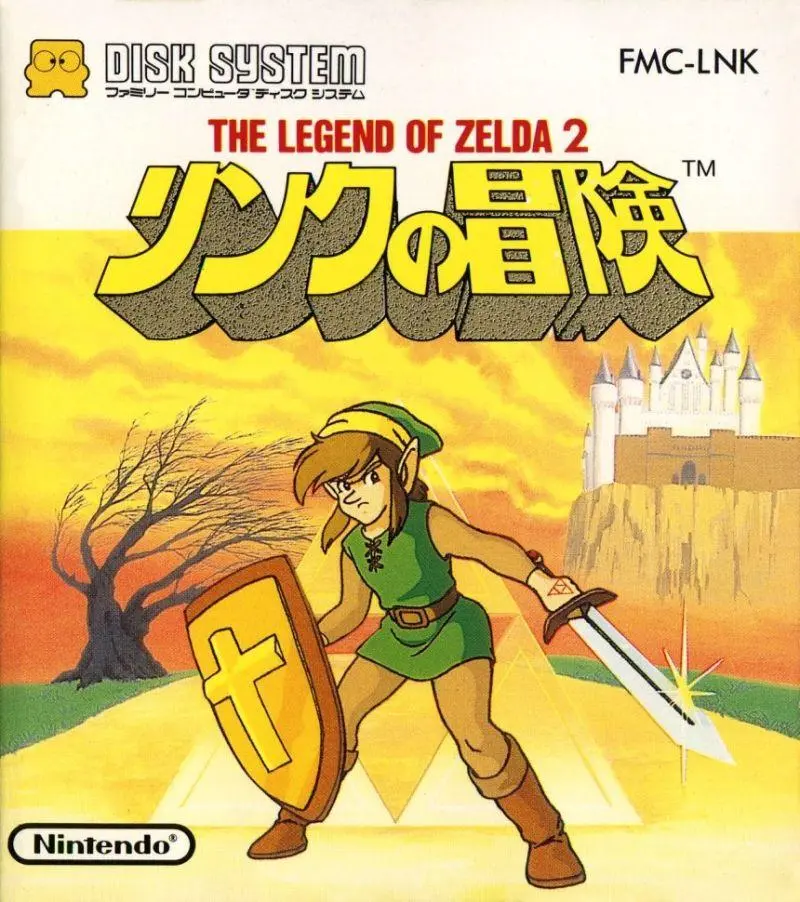
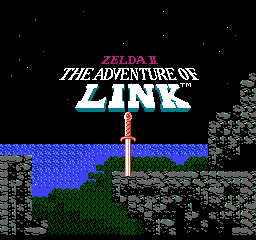
The Japanese title screen of Link no Bōken.In Japan the game is simply Link no Bōken (“The Adventure of Link”), with “The Legend of Zelda 2” as an English subtitle on the box and title screen.
It is the only main-series Zelda released in English without “The Legend of Zelda” in its title.
The legend of the sleeping princess explains, in the game’s own lore, why every princess of Hyrule is named Zelda.
Five of Ocarina of Time’s sages are named after Zelda II towns. Aonuma has said the idea was to make it seem as if the towns had been named after the sages.
Error and Bagu are thought to be a programmers’ joke: error and bug. Only Error’s name was translated, so English-speaking players missed it.
Error’s line gave its name to Nathan Altice’s 2015 MIT Press book, I Am Error.
A gravestone in Saria referred to Loto, the legendary hero of Dragon Quest, in the Japanese version; the American localisation removed it.
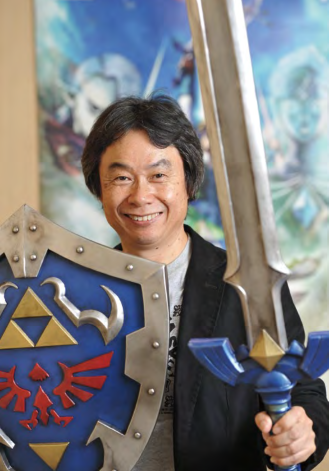
Shigeru Miyamoto, as pictured in Hyrule Historia.Miyamoto told Super Play in 2003 that Nintendo regarded A Link to the Past, not Zelda II, as the real sequel to the first game.
Famicom Tsushin’s reviewers gave it 36 out of 40, the second-best cross-review score of 1987 after Dragon Quest II.
The North American release was delayed by the 1988 ROM chip shortage.
Its North American release on 4 June 2007 was the 100th game on the Wii Virtual Console in that region.
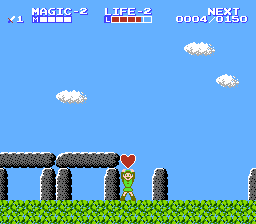
Link finds a Heart Container.Each heart container is worth 16 hit points, for a maximum of 128.
The Game & Watch released in 2021 uses Zelda II’s battle scenes for its timer.
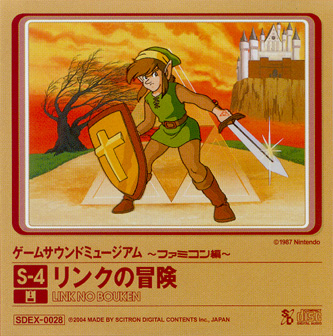
The Game Sound Museum soundtrack CD of Zelda II.Nintendo added both the NES and Famicom Disk System soundtracks to its Nintendo Music app on 22 September 2025; the NES version has one extra three-second track, “Secret Entrance”.
Japanese illustrator Katsuya Terada drew an illustration of Link facing the Thunderbird.
The name “ICHILINK” is stored in the code and overwritten by the player’s file name.
Media & artwork
Box art, artwork and screenshots from Zelda II. Select any image to view it larger.
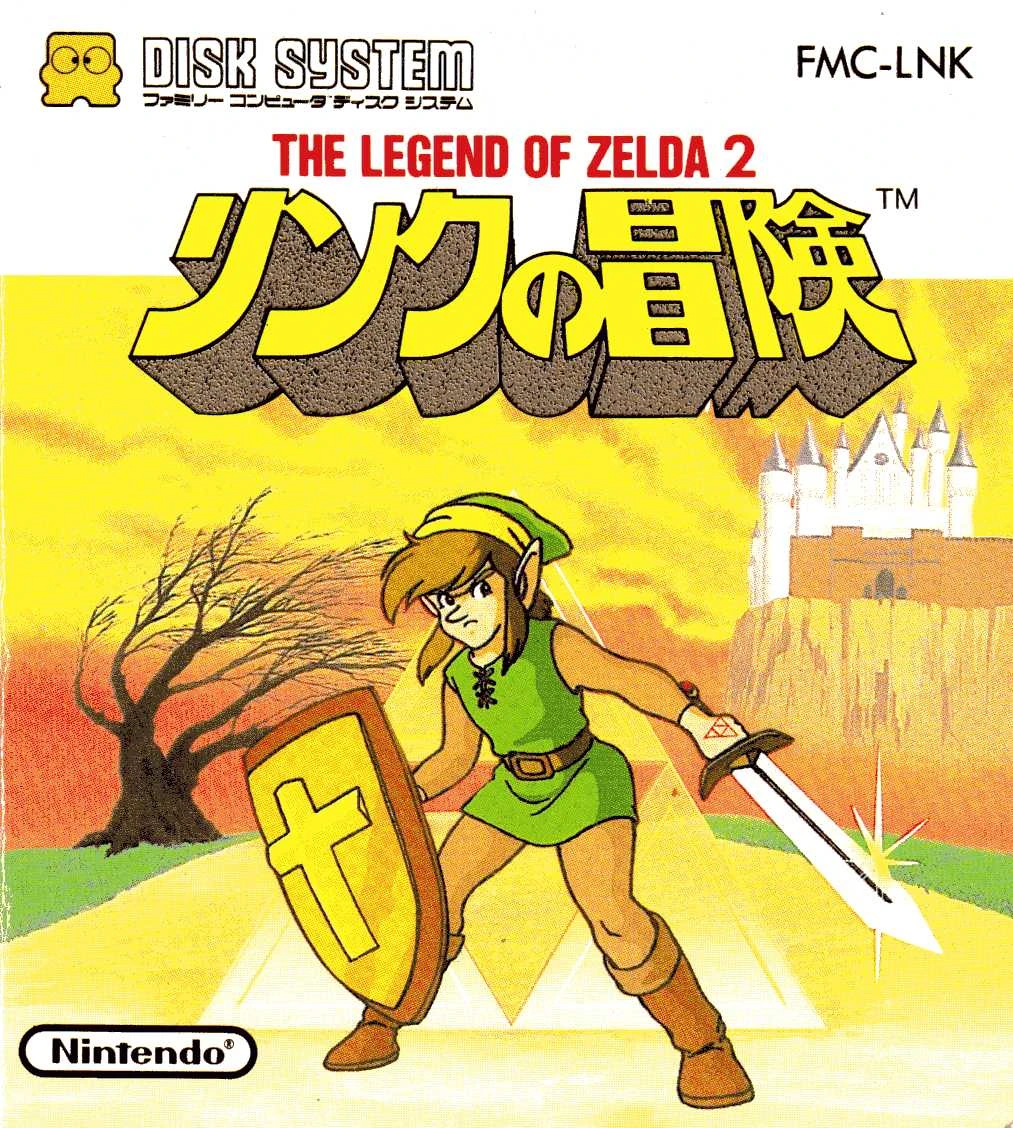
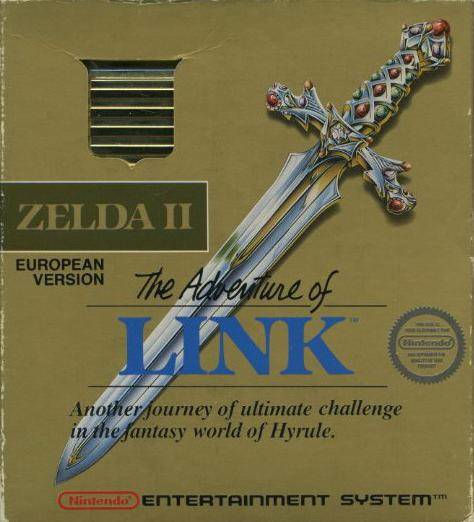
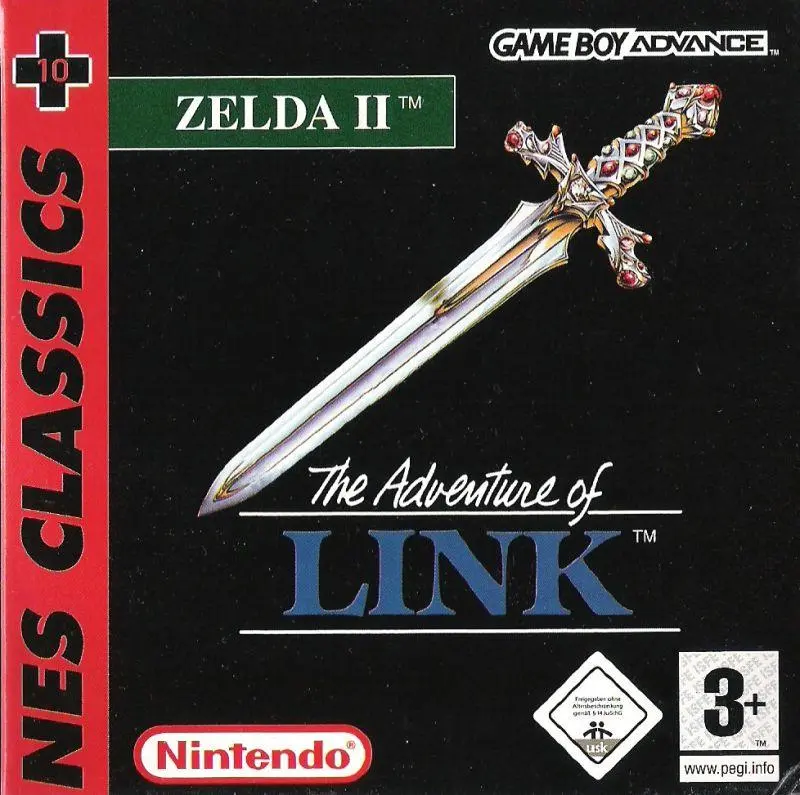
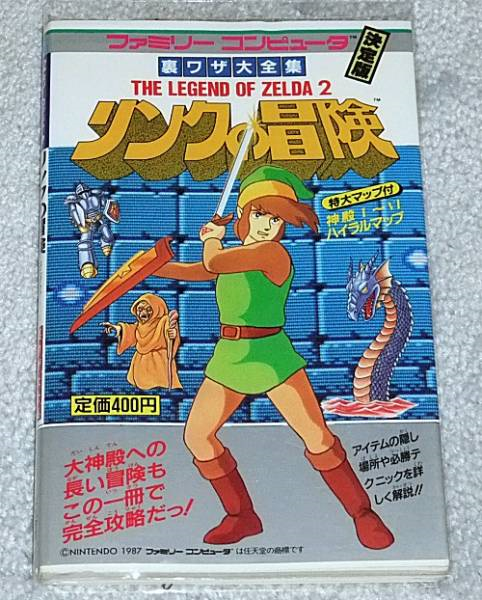
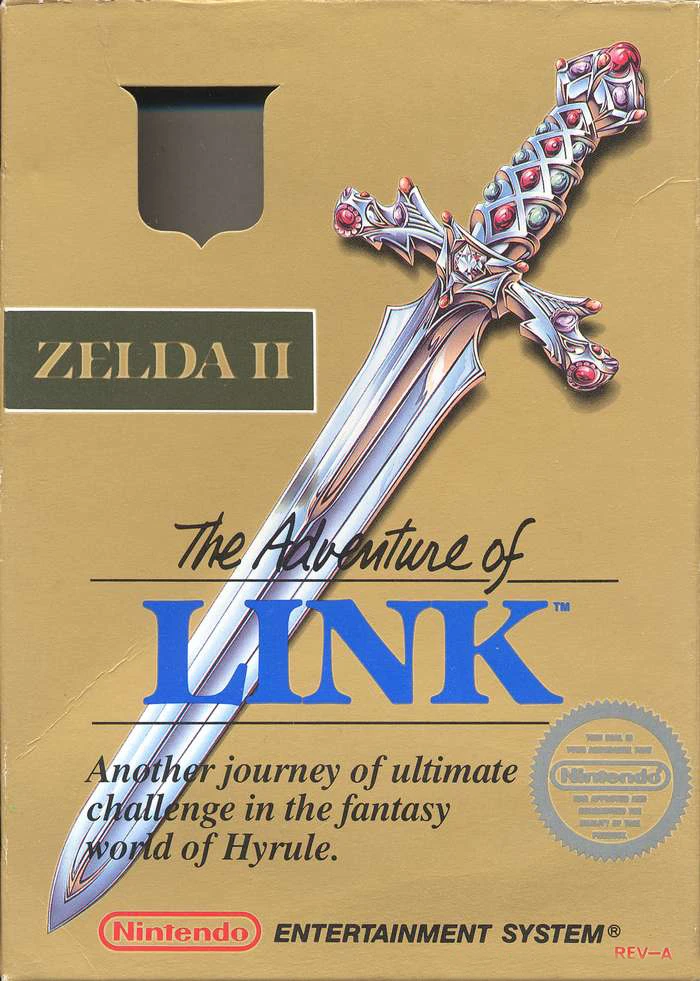
NES box, front cover.NES box, back cover.The NES cartridge.Japanese Famicom Disk System box (1987).European NES box (1988).Classic NES Series box for Game Boy Advance (2004), front cover.The Japanese logo, Link no Bōken.Official map artwork of Hyrule.The Futami strategy guide for the game.Volume 1 of Ran Maru’s Link no Bōken manga.
Nintendo returned to the overhead view for A Link to the Past, but Zelda II has hardly been out of print, and its fingerprints are all over the series.
From Disk System to Switch
Famicom Disk System14 January 1987 – Japan.
NES (Europe and Australia)26 September 1988 – Cartridge with battery save.
NES (North America)1 December 1988 – Delayed by the ROM chip shortage.
Collector’s EditionNovember 2003 – GameCube compilation: Europe 14 November, North America 17 November; Japan 18 March 2004.
Classic NES Series2004–2005 – Game Boy Advance: Japan 10 August 2004, North America 25 October 2004, Europe 7 January 2005.
Wii Virtual Console2007 – Japan 23 January, Europe and Australia 9 February, North America 4 June (the 100th Wii VC title in that region).
Nintendo 3DS2011–2012 – Ambassador Programme in 2011; Virtual Console in Japan 6 June, Europe 13 September and North America 22 November 2012.
Wii U Virtual ConsoleSeptember 2013 – Japan 11 September, North America 12 September, Europe 26 September.
NES Classic EditionNovember 2016 – Built in to the mini console.
Nintendo Switch Online16 January 2019 – Added to the NES library, with a Special Edition on 12 March 2019.
Game & Watch: The Legend of Zelda12 November 2021 – Dedicated handheld, US$49.99.
Nintendo Music22 September 2025 – NES and Disk System soundtracks added.
Influence
Dark Link in Ocarina of Time 3D, a descendant of Zelda II’s final boss.
Zelda II’s blend of side-on action and exploration shows up in games from Faxanadu and The Battle of Olympus in the late 1980s to modern tributes such as Elliot Quest and Phoenotopia: Awakening. Within the series, its magic meter, its shadow Link and its sage names all lived on.
Where to play it today
The Wii Virtual Console edition, which can no longer be bought.
On Nintendo Switch with a Nintendo Switch Online membership, in both the standard and Special Edition versions, and on the 2021 Game & Watch. The Wii, 3DS and Wii U Virtual Console releases can no longer be bought.
Sales & reviews
Sales figures
Zelda II sold about 4.38 million copies worldwide, according to figures reported by RPGamer in 2004. It was one of the most popular NES games of 1988, with retailers reporting sell-outs.
4.38mcopies worldwide
36/40Famicom Tsushin
#2Famitsu’s 1987 cross-reviews
Reception and review scores
Japan’s magazines loved it, and the Western press of the late 1980s was warm, but later reviewers have been cooler, mostly because of its difficulty. These are the scores we could confirm.
Famicom TsushinJapan · 1987 (8, 10, 9, 9)
36/40
Famicom HisshoubonJapan · 1987 (two reviewers)
5/5 & 4.5/5
Total!UK · 1992
82%
DragonUS · 1993, Sandy Petersen
3/5
Nintendo LifeUK · Virtual Console, 13 September 2013
8/10
IGNUS · Game Boy Advance version
7/10
GameSpotUS · Game Boy Advance version
6.9/10
Famicom Hisshoubon’s reviewers liked the blend of puzzles and action, though one grumbled about scarce items and losing experience on death. Computer Entertainer called it a worthy successor with plenty to play, and Power Play praised the graphics and music. Retrospective scores are lower: GameRankings averages 78.14% for the NES version and 68.88% for the Game Boy Advance release, and the GBA version holds 73 on Metacritic. Electronic Gaming Monthly still placed it 72nd in its 1997 list of the 100 best games, and Nintendo Power ranked it 110th in its 2006 Top 200 and 12th among NES games in 2008.
Honours
Famitsu · 1987Second-highest cross-review of the yearBehind only Dragon Quest II.
Electronic Gaming Monthly · 1997100 Best Games of All Time: number 72Ten years after its Japanese release.
Nintendo Power · 2006 and 2008Top 200: number 110; NES list: number 12In the magazine’s all-time and NES-only rankings.
Reader reviews
No reader reviews yet. Played it? Give it a score out of 10 and tell other fans what you think.
Every fact on this page was checked against the sources below in November 2026. Period magazine scores are as reported in Wikipedia’s reception section, which cites the original issues; scans could not be opened tonight.
To provide the best experiences, we use technologies like cookies to store and/or access device information. Consenting to these technologies will allow us to process data such as browsing behavior or unique IDs on this site. Not consenting or withdrawing consent, may adversely affect certain features and functions.
Functional
Always active
The technical storage or access is strictly necessary for the legitimate purpose of enabling the use of a specific service explicitly requested by the subscriber or user, or for the sole purpose of carrying out the transmission of a communication over an electronic communications network.
Preferences
The technical storage or access is necessary for the legitimate purpose of storing preferences that are not requested by the subscriber or user.
Statistics
The technical storage or access that is used exclusively for statistical purposes.The technical storage or access that is used exclusively for anonymous statistical purposes. Without a subpoena, voluntary compliance on the part of your Internet Service Provider, or additional records from a third party, information stored or retrieved for this purpose alone cannot usually be used to identify you.
Marketing
The technical storage or access is required to create user profiles to send advertising, or to track the user on a website or across several websites for similar marketing purposes.


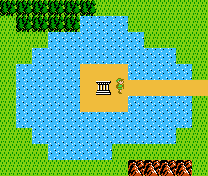 North CastleStartWhere the first Zelda sleeps, and where Link begins.
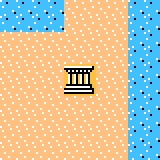 Parapa PalacePalace 1 · Parapa DesertTreasure: Candle. Guardian: Horsehead (Mazura).
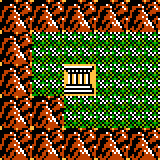 Midoro PalacePalace 2 · Midoro SwampTreasure: Handy Glove. Guardian: Helmethead (Jermafenser).
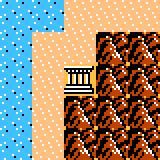 Island PalacePalace 3 · south of MidoReached through a secret passage south of King’s Tomb. Treasure: Raft. Guardian: Rebonack, an Iron Knuckle on horseback.
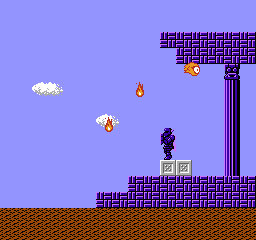 Maze Island PalacePalace 4 · Eastern HyruleIn the far north-east. Treasure: Boots. Guardian: Carock, a giant wizard.
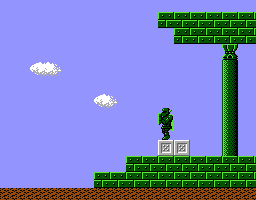 Palace on the SeaPalace 5 · east of NabooruTreasure: Flute. Guardian: Gooma (Helmethead again in the Japanese version).
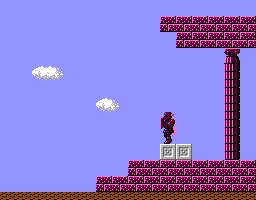 Three-Eye Rock PalacePalace 6 · the Hidden PalaceTreasure: Cross. Guardian: Barba, called Volvagia in Japan.
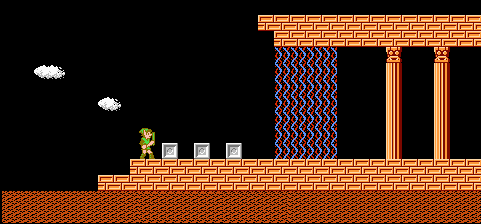 Great PalaceFinal palace · Valley of DeathGuardians: Thunderbird and Link’s shadow. Prize: the Triforce of Courage.
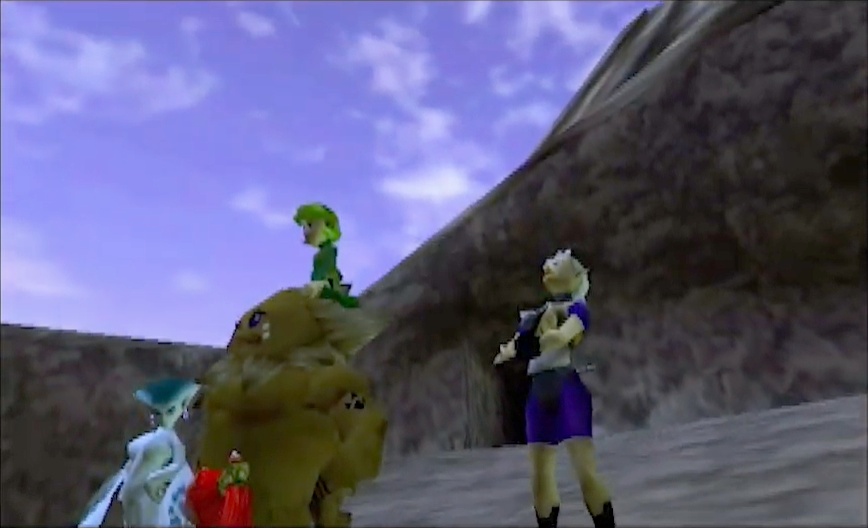 Ocarina of Time’s sagesGame · Nintendo 64 · 1998Five of Ocarina’s sages – Rauru, Ruto, Saria, Nabooru and Darunia – share their names with Zelda II towns, and Mido became a Kokiri boy. Eiji Aonuma has said the team chose the names so that the towns would seem to have been named after the sages.
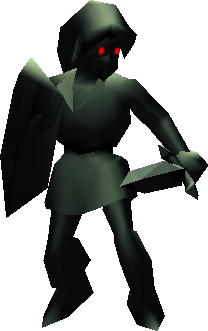 Dark Link and Shadow LinkGames · 1998 onwardsThe final boss returns as Dark Link in Ocarina of Time’s Water Temple, as Shadow Link in Four Swords Adventures and A Link Between Worlds, and as another dark double in Spirit Tracks.
 Super Smash Bros.Games · 2001 and 2008The palace music, “Temple”, plays in Super Smash Bros. Melee, and the Great Palace theme was remixed for Brawl.
 The Minish Cap and A Link Between WorldsGames · 2004 and 2013The Famicom Disk System battle theme became The Minish Cap’s mini-boss music, and A Link Between Worlds’ StreetPass duels against Shadow Link were inspired by Zelda II’s final fight.
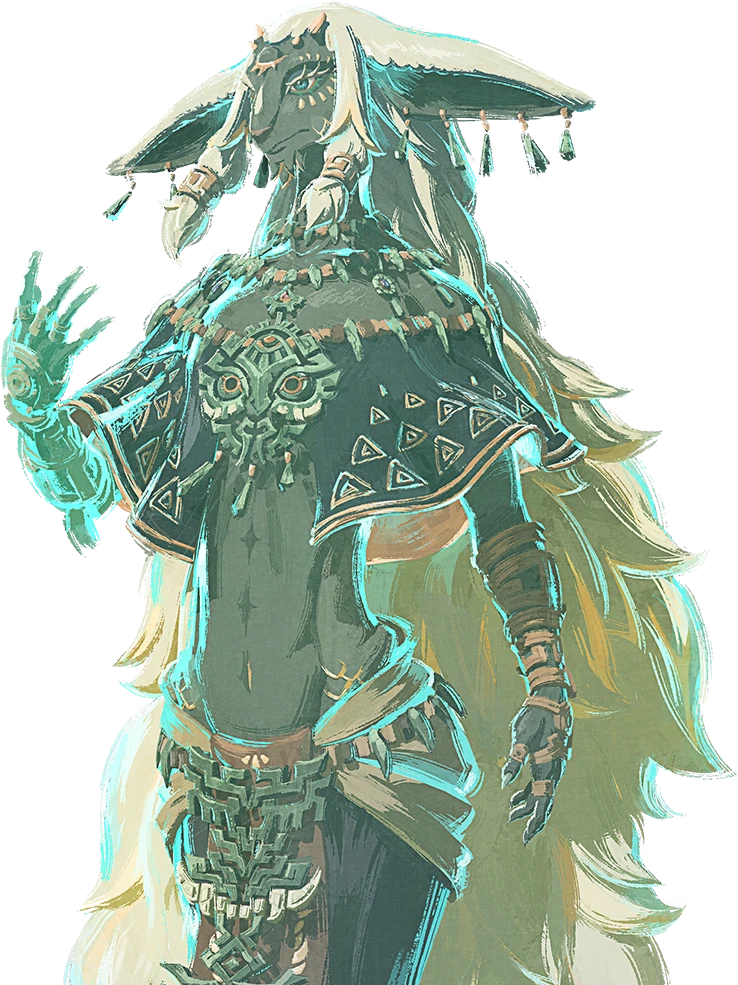 Tears of the KingdomGame · 2023The first King of Hyrule in Tears of the Kingdom is named Rauru, sharing the name of Zelda II’s first town.
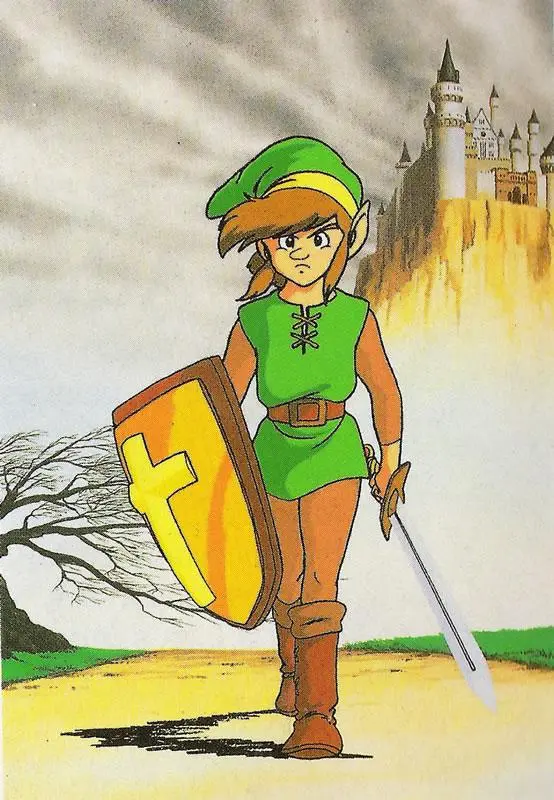 LinkThe hero, now 16
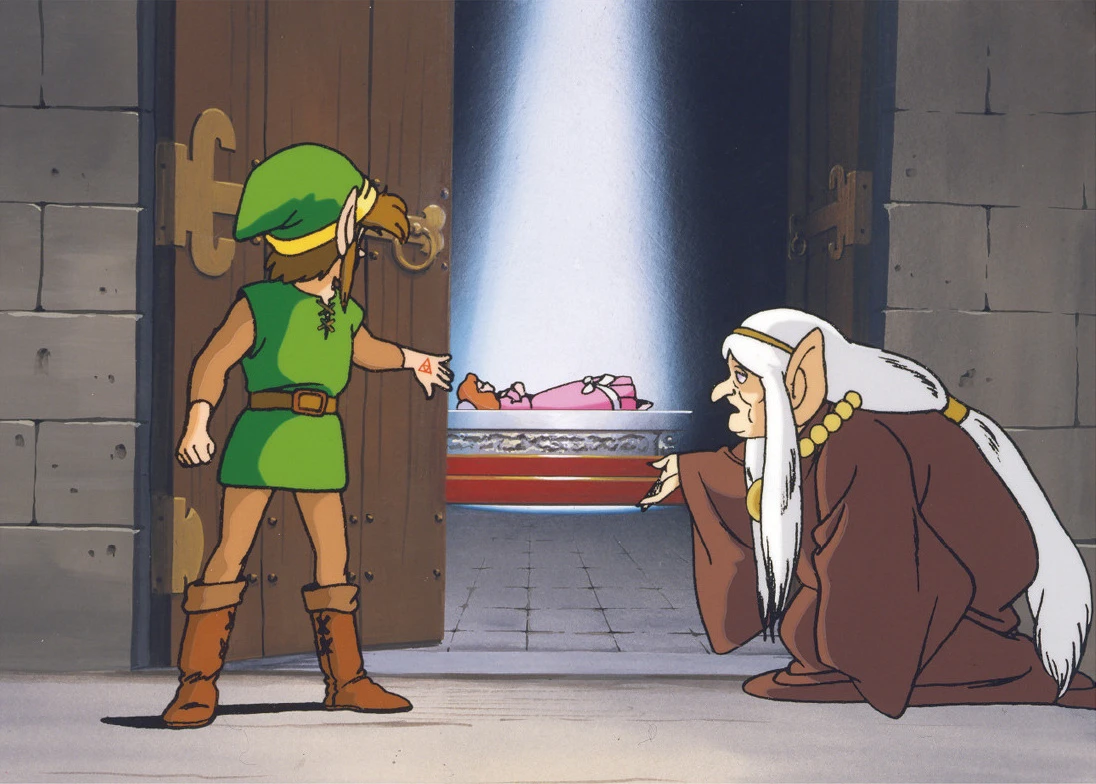 Princess ZeldaThe first Zelda
 ImpaZelda’s nursemaid
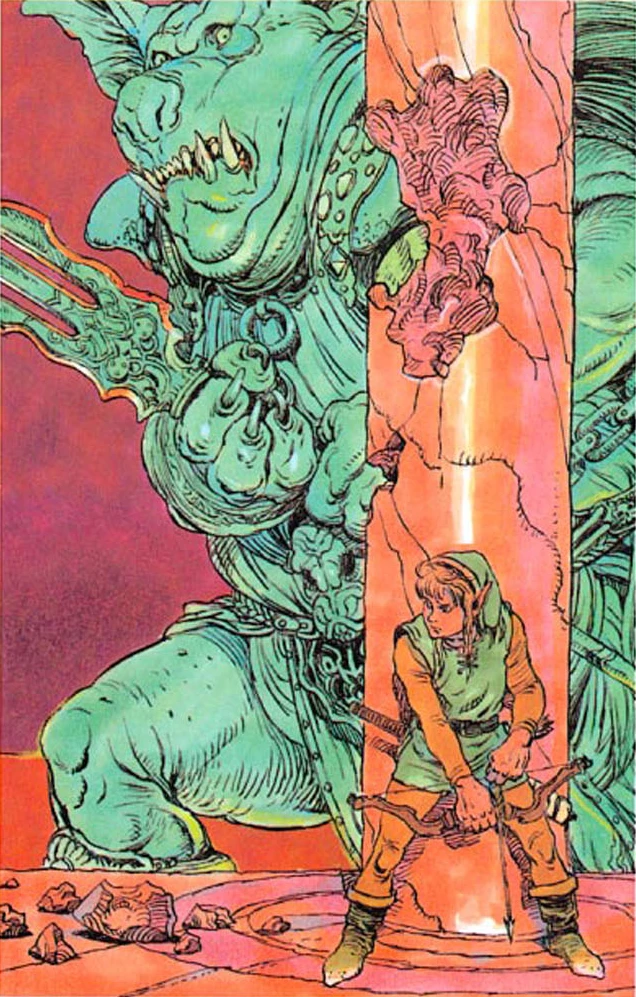 GanonDead, but not gone
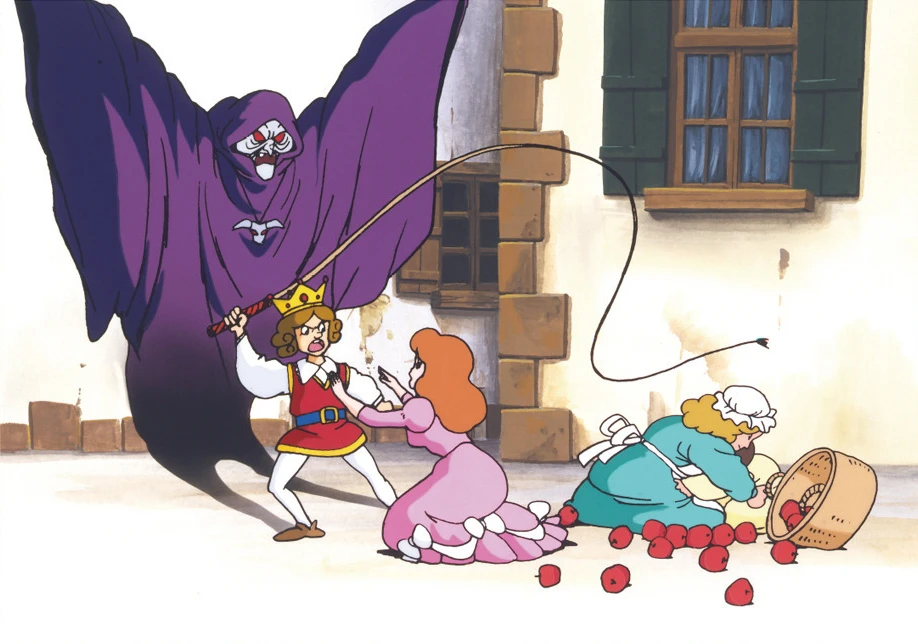 The Prince and the MagicianThe legend’s villains
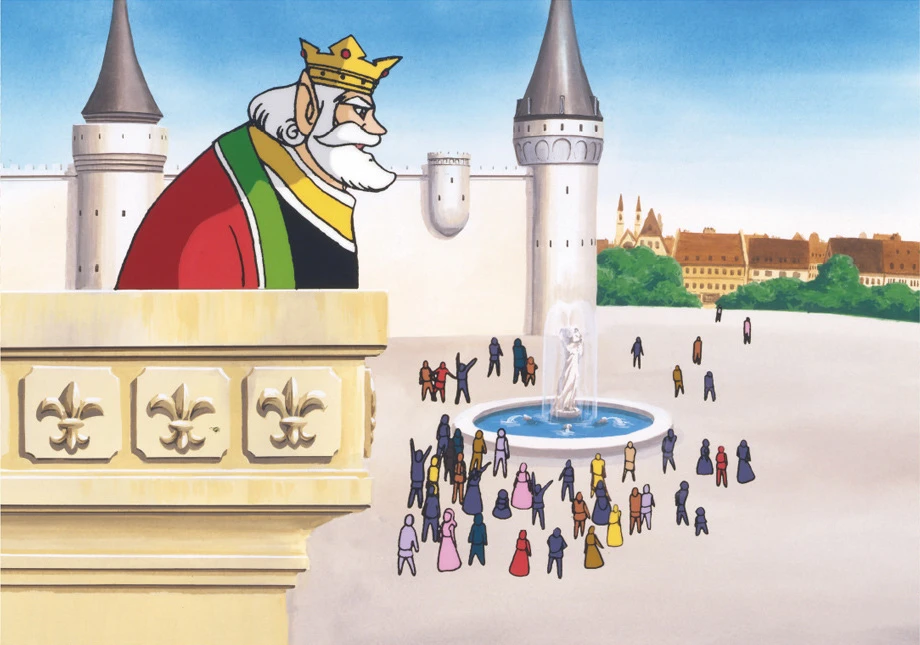 The King of HyruleKeeper of the Triforce of Courage
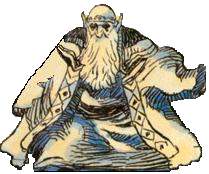 The Wise MenTeachers of magic
 ErrorMan of few words
 BaguThe hermit in the woods
 The old knightsSword masters
 ThunderbirdGuardian of the Great Palace
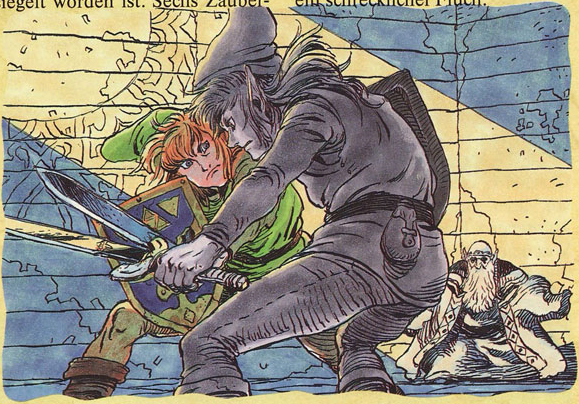 Link’s ShadowThe final boss
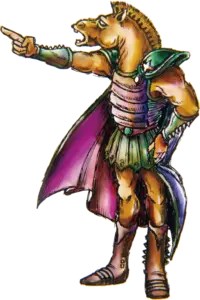 Horsehead (Mazura)Parapa PalaceA mace-swinging warrior with a horse’s head; jump and strike its head.
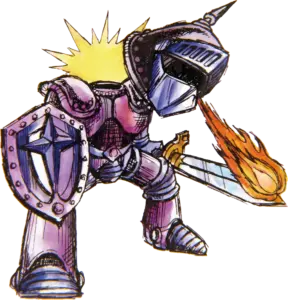 Helmethead (Jermafenser)Midoro PalaceGuardian of the second palace, and of the fifth in the Japanese version.
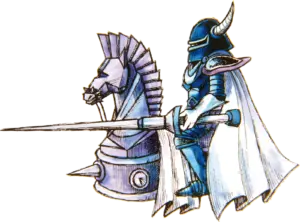 RebonackIsland PalaceA blue Iron Knuckle riding a horse.
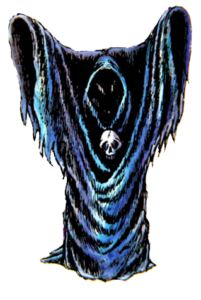 CarockMaze Island PalaceA giant wizard; his sprite differs between the Disk System and NES versions.
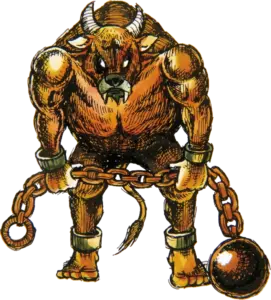 GoomaPalace on the SeaGuardian of the fifth palace on NES.
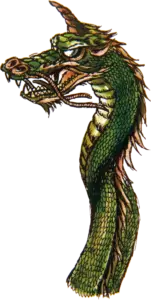 BarbaThree-Eye Rock PalaceThe dragon guardian of the sixth palace, called Volvagia in the Japanese version and redrawn for the NES.
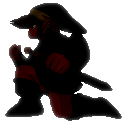 Link’s ShadowGreat PalaceThe final duel.
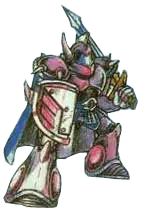 Iron KnucklePalacesArmoured knights that shift their shields high and low to block Link’s sword.
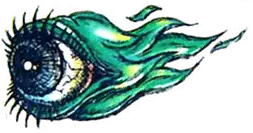 MoaKasuto and elsewhereGhostly enemies; the ones haunting Kasuto stay invisible until Link has the Cross.
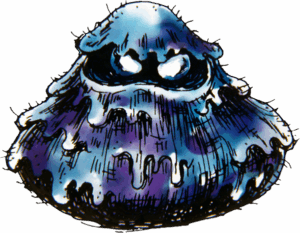 BotEverywhereBlob-like small fry, and what the Spell spell turns most enemies into.
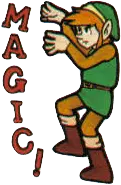 The magic meterLink’s first spells, and a meter to power them, which the series has kept in many forms since.
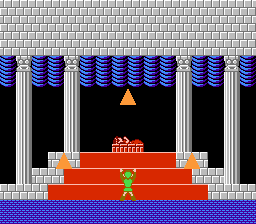 The Triforce of CourageThe third piece of the Triforce, and its association with Link, starts here.
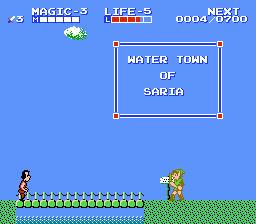 Towns and talkative townsfolkVillages full of people with problems to solve and hints to give, far more prominent than in the first game.
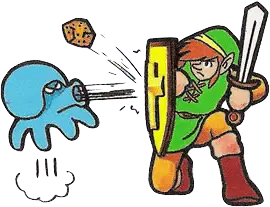 Side-on sword fightingBlocking high and low, crouching and stabbing up and down, as the heart of the game.
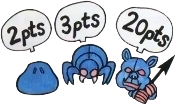 Experience levelsSpend experience on Attack, Magic and Life. Zelda Dungeon notes it is the only game in the series where life and magic work like a role-playing game’s hit points and magic points.
 Lives and 1-Up dollsThe only game in the series with a stock of lives and dolls that add to it.
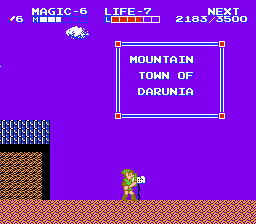 The names of Ocarina’s sagesRauru, Ruto, Saria, Nabooru and Darunia all start out as towns here.