The Wind Waker’s sequel puts the whole adventure under your stylus: a ghost ship, a cowardly captain, a fairy with no memory and a cursed temple you have to beat against the clock.
Released23 June 2007 (JP) · 1 October 2007 (NA) · 19 October 2007 (EU)
DeveloperNintendo EAD
DirectorDaiki Iwamoto
ProducerEiji Aonuma
Players1 (2 in Battle mode)
Sales4.13 million by March 2008
Title
The Legend of Zelda: Phantom Hourglass ゼルダの伝説 夢幻の砂時計 (Zeruda no Densetsu: Mugen no Sunadokei)
Platform
Nintendo DS
Developer
Nintendo Entertainment Analysis & Development (EAD)
Publisher
Nintendo
Director
Daiki Iwamoto
Producer
Eiji Aonuma
Story
Hidemaro Fujibayashi
Design
Hajime Takahashi, Yutaka Hiramuki
Programming
Shiro Mouri
Art
Michiho Hayashi
Music
Kenta Nagata, Toru Minegishi
Players
1; 2 in Battle mode (local, Download Play or Nintendo Wi-Fi Connection)
Wii U Virtual Console (Europe 13 November 2015; North America 12 May 2016; Japan 3 August 2016)
Sales
4.13 million worldwide by 31 March 2008, 910,000 of them in Japan
Honours
Handheld Game of the Year, 2008 Interactive Achievement Awards; Handheld Game of the Year, Golden Joystick Awards 2008
Overview
Phantom Hourglass was the first Zelda on the Nintendo DS, and it threw away the control pad. You steer Link by pointing the stylus where you want him to go, tap enemies to attack, draw the path of your boomerang, sketch your ship’s course across the sea chart and scribble your own notes on the map. It sounded like a gimmick in 2006. In practice it felt natural, and the controls became one of the most praised parts of the game.
It is also a direct sequel to The Wind Waker, keeping that game’s cel-shaded look and its cartoon Link. Link and Tetra are sailing in search of a new land when a ghost ship snatches Tetra away, and Link wakes up alone on an island in a strange ocean ruled by an unseen Ocean King. To get her back he needs a fairy, a boat and, unfortunately, the boat’s captain: the greedy, cowardly and secretly lovable Linebeck.
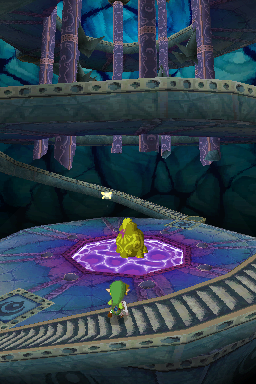
The heart of the game is the Temple of the Ocean King, a cursed dungeon you return to again and again, diving a little deeper each time against the sand of the Phantom Hourglass while armoured Phantoms patrol the corridors. Some players loved it and some found the repetition a chore, but nobody forgets it.
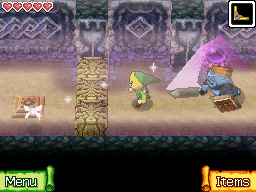
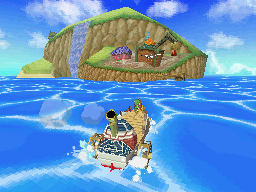
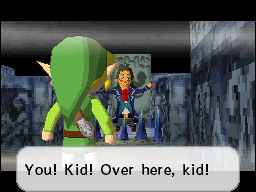
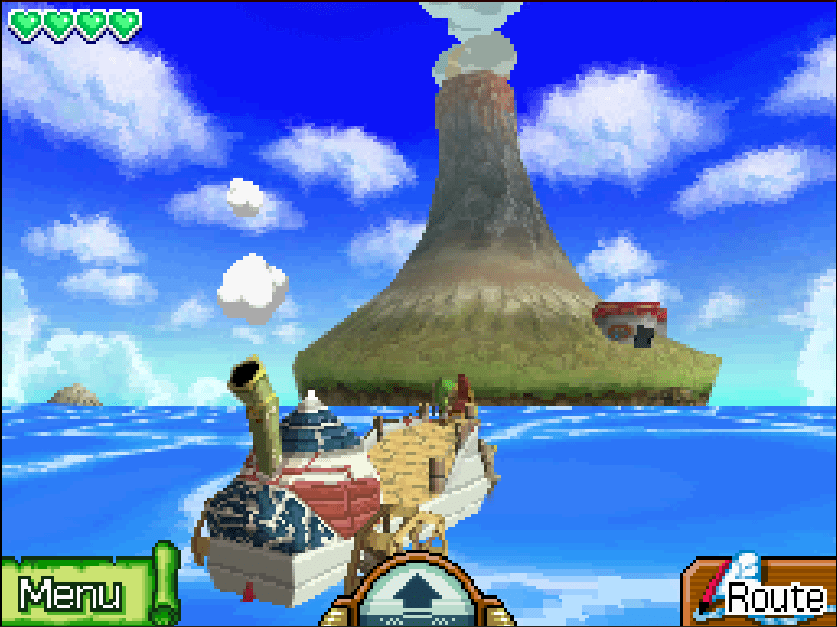
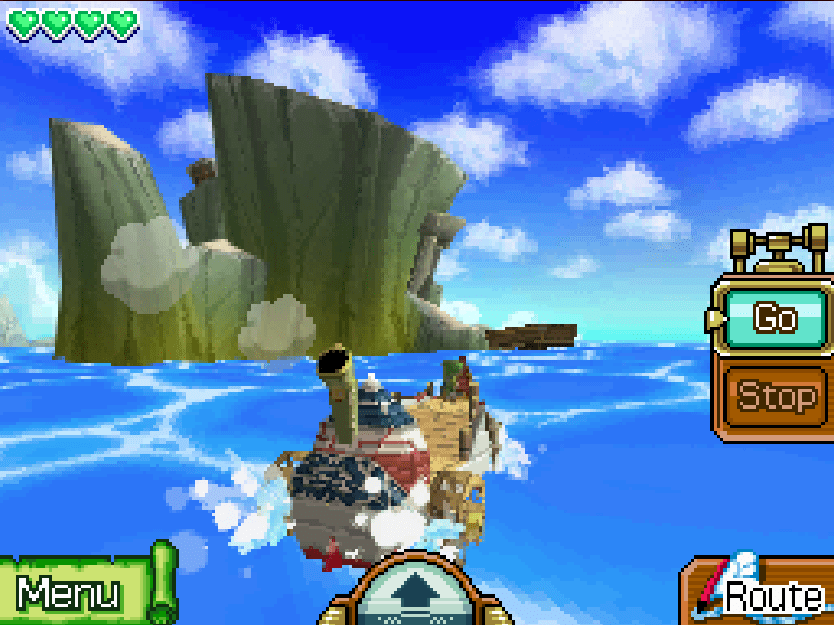
Link goes wherever the stylus points.Plotting a course on the sea chart.Inside the Temple of the Ocean King.
走る・剣を振る・謎を解く・・・タッチペンでできる新しい冒険 (“Run, swing your sword, solve puzzles: a new adventure you can play with the touch pen”)
That was Nintendo’s own pitch in Japan, and it says everything about how the game was sold. The official site introduces Tetra, the girl who leads a band of pirates, and Link, the boy in green who sails with them; when a ghost ship carries Tetra off, Link leaps after her, falls into the sea and washes up on an island where he meets a fairy called Ciela and a kindly old man, before he sets out with a ship’s captain called Linebeck to hunt the ghost ship down.
— Official description: Nintendo Co., Ltd., Japanese official site for Zeruda no Densetsu: Mugen no Sunadokei (nintendo.co.jp). Catchphrase quoted and translated by Zelda Temple; the story summary is paraphrased.
Quick Answers
The questions people most often ask about Phantom Hourglass, answered quickly and explained further down the page.
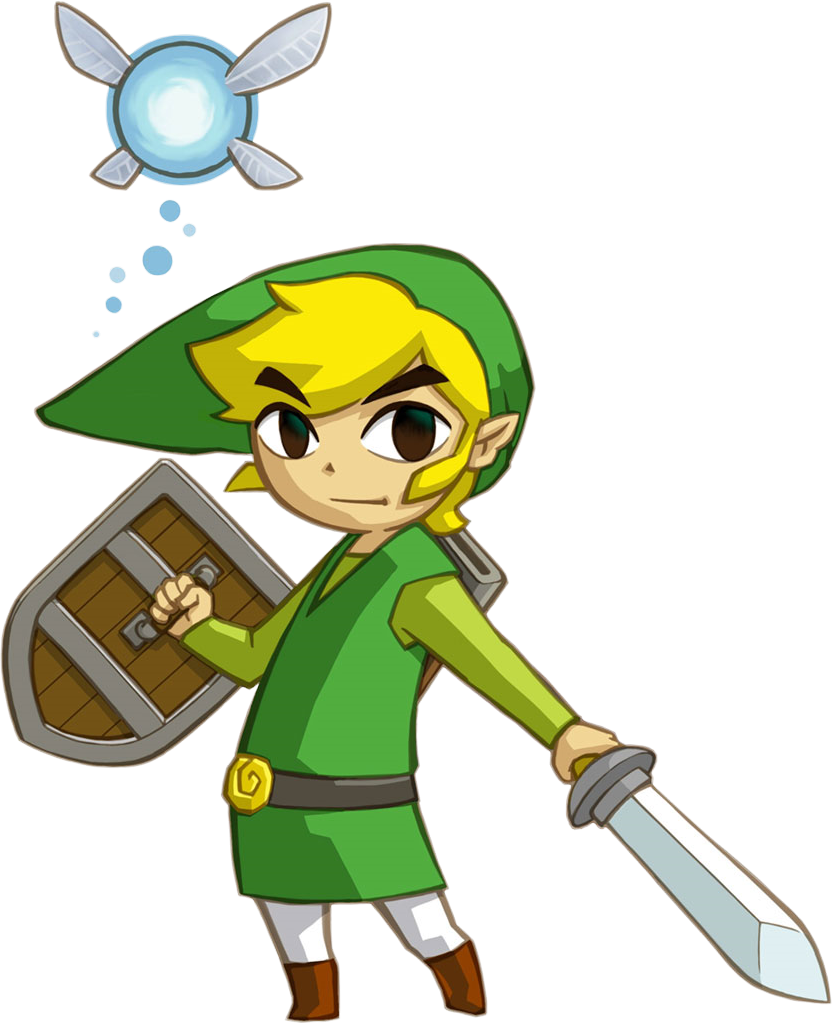
Official art of Link and Ciela.
When did Phantom Hourglass come out?
On 23 June 2007 in Japan, 1 October 2007 in North America, 11 October 2007 in Australia and 19 October 2007 in Europe, on Nintendo DS. More →
Who made Phantom Hourglass?
Nintendo EAD, directed by Daiki Iwamoto and produced by Eiji Aonuma, with a story by Hidemaro Fujibayashi and music by Kenta Nagata and Toru Minegishi. Much of the team had just made Four Swords Adventures. More →
Is Phantom Hourglass a sequel to The Wind Waker?
Yes. It follows straight on from The Wind Waker, with the same Link and Tetra, and sits on the adult branch of the Zelda timeline. Spirit Tracks (2009) continues the story generations later. More →
How do you control Link?
Almost entirely with the stylus: point to move, tap to attack or talk, draw circles for a spin attack, and draw lines to aim the boomerang or plot your ship’s route. Buttons only open menus and items. A few puzzles use the microphone, and one asks you to close the DS to press a mark from the top screen onto your map. More →
What is the Temple of the Ocean King?
The central dungeon on Mercay Island. Its curse drains Link’s life unless he carries the Phantom Hourglass, which only protects him for as long as its sand lasts. You return several times, going deeper as you collect new items and sea charts, while invincible Phantoms hunt you. More →
How many dungeons are there?
Seven, not counting the Temple of the Ocean King: the Temples of Fire, Wind and Courage, the Ghost Ship, the Goron Temple, the Temple of Ice and Mutoh’s Temple. More →
Who are Ciela and Oshus really?
Spoiler: Ciela is half of the Spirit of Courage, who split her soul to escape the monster Bellum, and the old man Oshus is the Ocean King himself, in disguise. More →
Does Phantom Hourglass have multiplayer?
Yes, a two-player Battle mode: one player sneaks Link around carrying Force Gems while the other draws routes for three Phantom Guardians. It worked locally, by Download Play and online until Nintendo Wi-Fi Connection closed on 20 May 2014. More →
How many copies did Phantom Hourglass sell?
4.13 million worldwide by 31 March 2008, including 910,000 in Japan, according to Nintendo’s own figures. That is close to The Wind Waker’s lifetime total of 4.6 million. More →
Where can I play it today?
On the original DS cartridge, which also runs on DS-compatible 3DS systems. The Wii U Virtual Console release of 2015–2016 can no longer be bought, because the Wii U eShop stopped selling games in March 2023; anyone who already owns it can still download it again. More →
Plot / Story
The Ghost Ship.
Some time after The Wind Waker, the old kingdom of Hyrule lies at the bottom of the Great Sea. Tetra, the pirate captain who turned out to be Princess Zelda, and Link, the boy from Outset Island who became the Hero of Winds, have set sail with her crew to find a new land to call home.
Out on the open water the pirates hear rumours of a ghost ship that sails in thick fog and swallows anyone who goes aboard. Tetra being Tetra, she wants a look. What none of them know is that the ghost ship belongs to Bellum, a monster that feeds on the life force of living things and has already sunk its tentacles into a strange ocean called the World of the Ocean King.
Lost at sea
The fog rolls in, the Ghost Ship looms out of it, and Tetra jumps aboard to investigate. When she screams, Link leaps after her, misses, and plunges into the waves as the ship vanishes.
He wakes on a beach on Mercay Island, with a cross little fairy called Ciela fussing over him. Ciela has lost her memory and lives with Oshus, a grumpy old man with a fish-shaped cane, who lends Link a sword. A ship’s captain called Linebeck has gone treasure hunting in the island’s cursed Temple of the Ocean King. Link has to go in and rescue him. Later, once the first spirit is free, he returns to the temple and claims the Phantom Hourglass, whose magic sand lets its holder survive the temple’s life-draining curse for a little while.
Washed up on Mercay Island.Meeting Captain Linebeck.
The three spirits
Linebeck agrees to help, mainly because he thinks the Ghost Ship must be full of treasure. Oshus explains that finding the Ghost Ship will take the help of three spirits, of Power, Wisdom and Courage, who have been sealed away by Bellum’s monsters in temples across the sea.
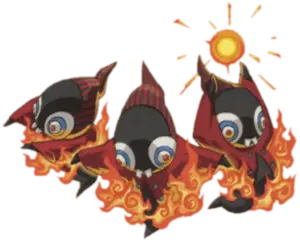
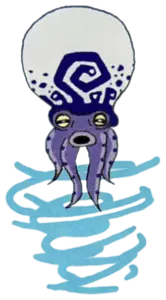
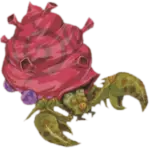
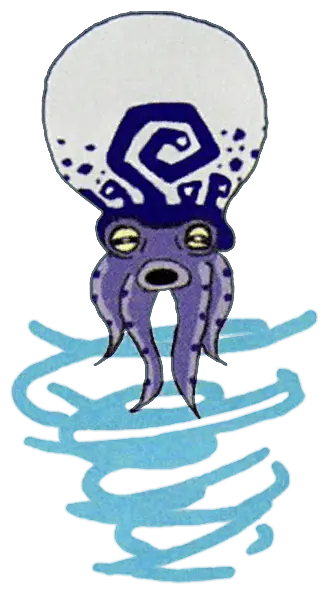
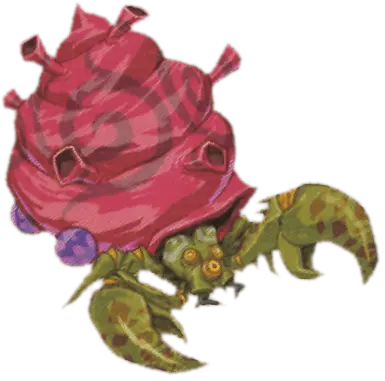
On the Isle of Ember, Link frees Astrid, a fortune teller trapped in her own basement, then beats the fire monster Blaaz to free Leaf, the Spirit of Power. On the Isle of Gust, the wind-churning Cyclok gives up Neri, the Spirit of Wisdom. The third, on Molida Island, is a surprise: when Link defeats the crab-like Crayk, the fairy it held turns out to be the missing half of Ciela. Oshus finally explains that Ciela is the Spirit of Courage, who split her soul in two to escape Bellum.
The Isle of Ember.The Spirits of Power, Wisdom and Courage.
Aboard the Ghost Ship
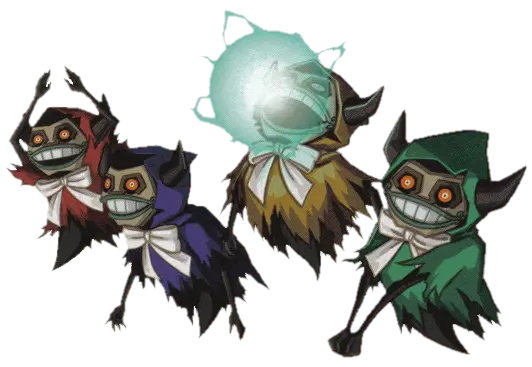
With the fog lifted, Linebeck finally corners the Ghost Ship. Inside, Link fights the ghostly Cubus Sisters and at last reaches Tetra, only to find her turned to stone. Bellum has drained her life force.
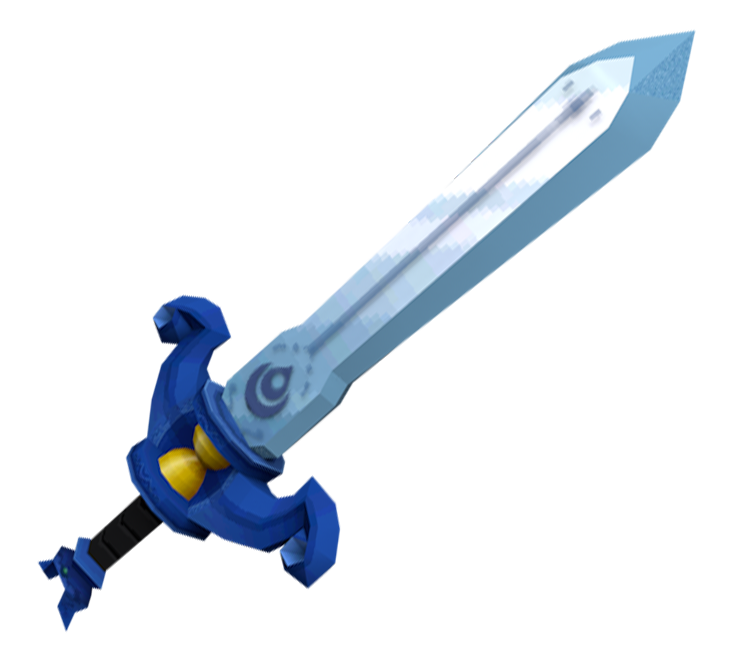
Linebeck wants out; there is no treasure, and there is a monster. Then Oshus drops the act. He is the Ocean King, ruler of these waters, and Bellum attacked him, stole much of his life force and turned it into the sand of the Phantom Hourglass. To beat Bellum, Link needs the Phantom Sword, forged from three pure metals hidden around the ocean. Linebeck signs up again when the Ocean King promises to grant him a wish.
Exploring the Ghost Ship.Tetra, turned to stone by Bellum.
Three pure metals
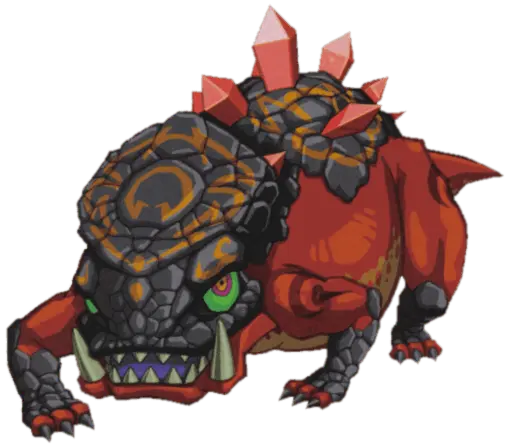
Each metal belongs to a people with problems of their own. On Goron Island, the chief Biggoron’s son Gongoron wants nothing to do with Link until Link rescues him, and the two take turns at the controls in the Goron Temple to beat Dongorongo for the red Crimsonine. On the frozen Isle of Frost, the gentle Anouki have a Yook impostor hiding among them in disguise; unmasking him opens the way to the Temple of Ice, its two-headed Gleeok and the blue Azurine.
The last metal lies on the Isle of Ruins, home of the long-lost Cobble Kingdom, where Link braves Mutoh’s Temple and the stone giant Eox for the Aquanine. Astrid, it turns out, is a Cobble too. Along the way the pirate Jolene, who has a score to settle with Linebeck, keeps ambushing the ship and challenging Link to duels while the captain hides in a box. Finally the Cobble blacksmith Zauz forges the three metals into the blade of the Phantom Sword, and Oshus adds the hilt that completes it.
Gongoron and the Gorons of Goron Island.The Isle of Frost.Zauz forges the Phantom Sword.
Bellum
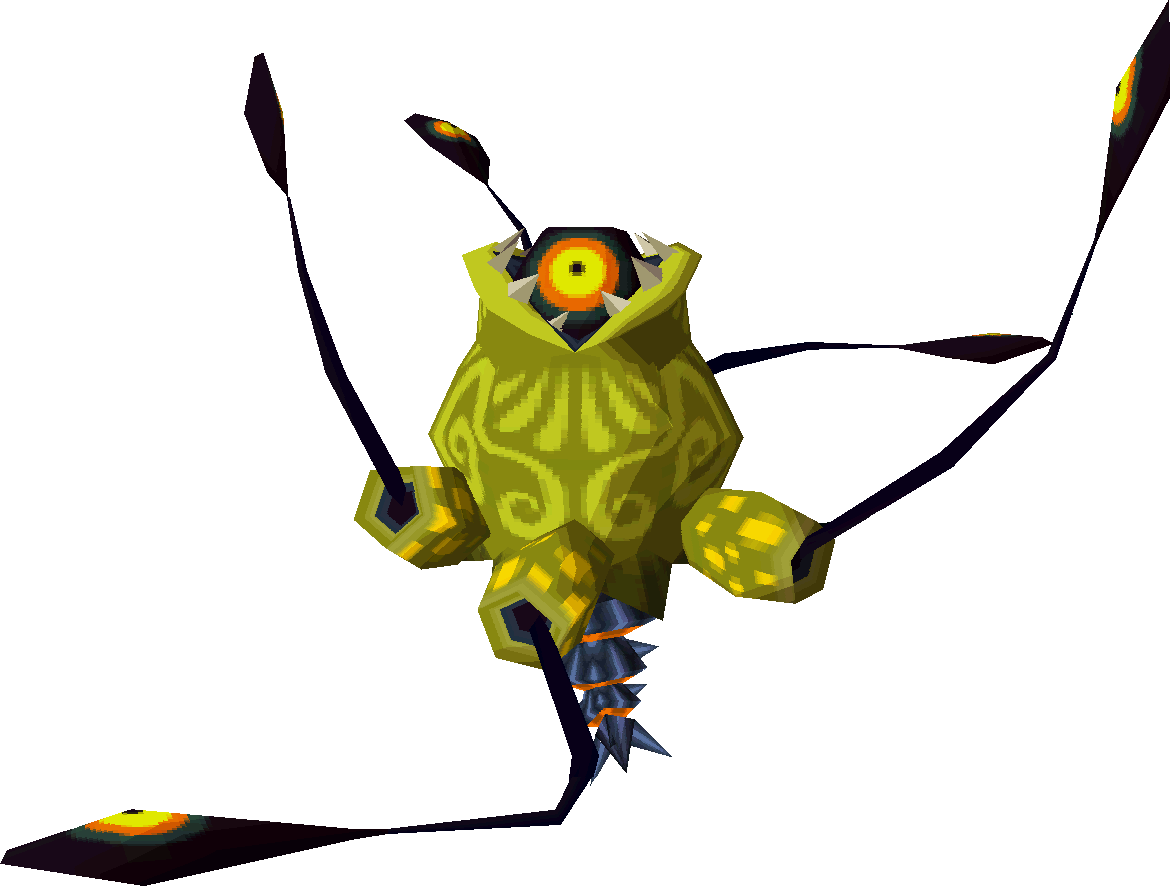
With a sword that can finally hurt Phantoms, Link fights his way to the bottom of the Temple of the Ocean King, where Bellum lurks: a jellyfish-like horror with a single eye and eye-tipped tentacles. Ciela recovers her power over time, letting Link freeze the monster for long enough to strike, and Bellum seems beaten.
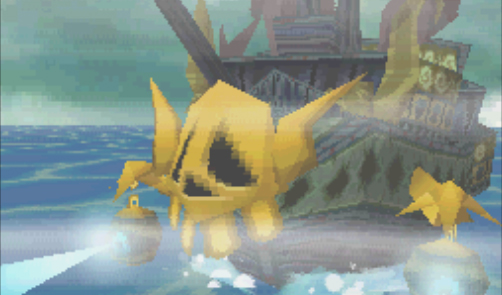
It is not. Bellum snatches Tetra again and takes over the Ghost Ship, and Link has to fight it at sea with the S.S. Linebeck’s cannon. Even that is not the end: the monster wrecks Linebeck’s ship and captures Link and Tetra, and Linebeck finally finds his courage and frees them, only for Bellum to possess him. Link must defeat the monster without killing his friend.
Bellum at the bottom of the temple.The final battle.
Just a dream?
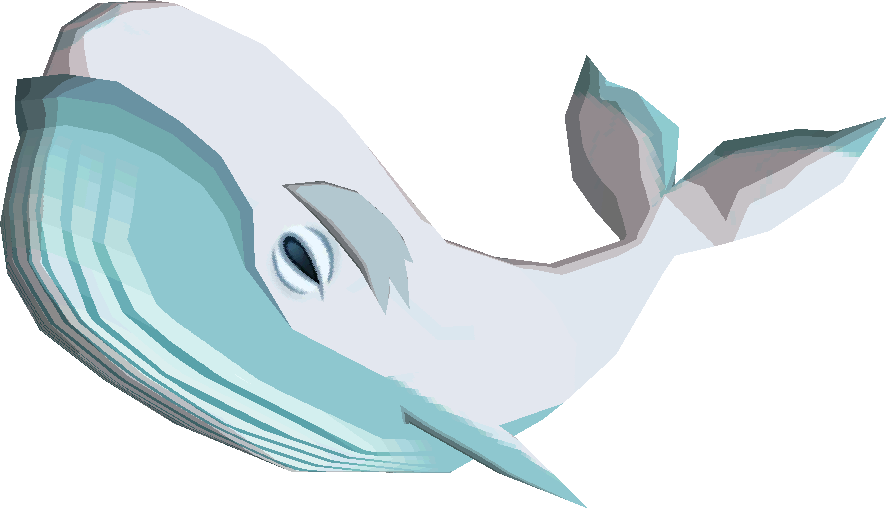
With Bellum gone, Oshus takes his true form, a great white whale, and offers Linebeck his wish. The captain who wanted treasure all along asks for his ship back. Link and Tetra wake up on the pirate ship to find that only about ten minutes have passed, and the crew laughs the whole thing off as a dream. Then Link looks down at the empty hourglass in his hand and spots Linebeck’s steamboat on the horizon.
Hyrule Historia places Phantom Hourglass on the adult branch of the timeline, after The Wind Waker. Its sequel, Spirit Tracks, picks up generations later in the kingdom Tetra went on to found, where Linebeck’s grandson runs a business of his own.
The Ocean King returns to his true form.
Dungeons in Phantom Hourglass
Phantom Hourglass has seven dungeons spread across four quadrants of sea, plus the Temple of the Ocean King, which you visit between them. Each dungeon gives Link a new tool and ends with a boss; the later three each hold one of the pure metals for the Phantom Sword.
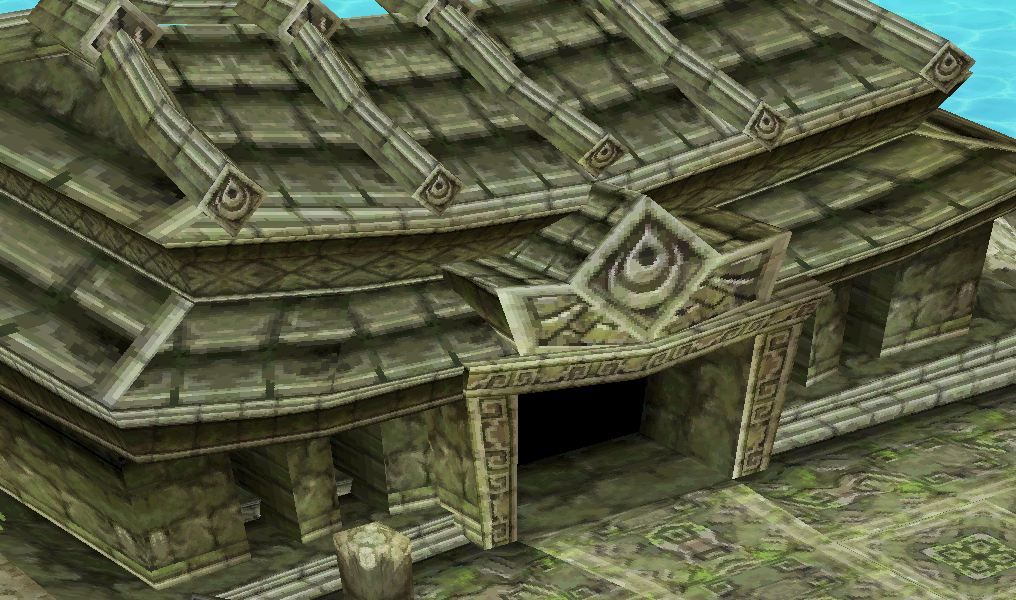
Temple of the Ocean KingMercay Island · revisited throughoutThirteen cursed floors. Safe zones and the Phantom Hourglass protect you from the curse; the Phantoms must be avoided until you have the Phantom Sword. Holds the Phantom Hourglass and four sea charts. Boss: Bellum.
Temple of FireIsle of EmberItem: Boomerang. Boss: Blaaz, Master of Fire. Frees Leaf, Spirit of Power.
Temple of WindIsle of GustItem: Bomb Bag. Boss: Cyclok, Stirrer of Winds. Frees Neri, Spirit of Wisdom.
Temple of CourageMolida IslandItem: Bow. Boss: Crayk, Bane of Courage. Restores Ciela, Spirit of Courage.
Ghost ShipSails in the fogBoss: the Cubus Sisters. Tetra is found here, turned to stone.
Goron TempleGoron IslandPlayed with Gongoron as a partner. Item: Bombchus. Boss: Dongorongo, Armored Lizard. Pure metal: Crimsonine.
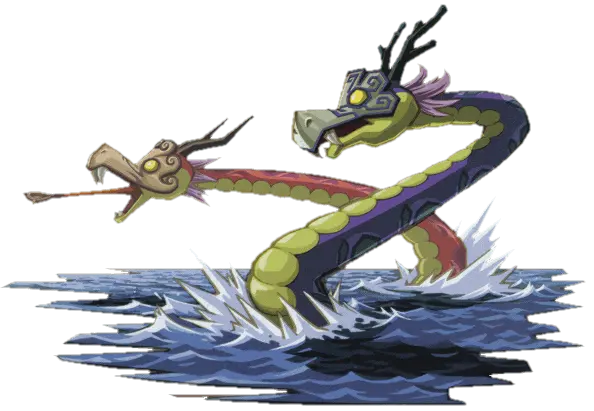
Temple of IceIsle of FrostSlippery floors and ice monsters. Item: Grappling Hook. Boss: Gleeok, a two-headed dragon. Pure metal: Azurine.
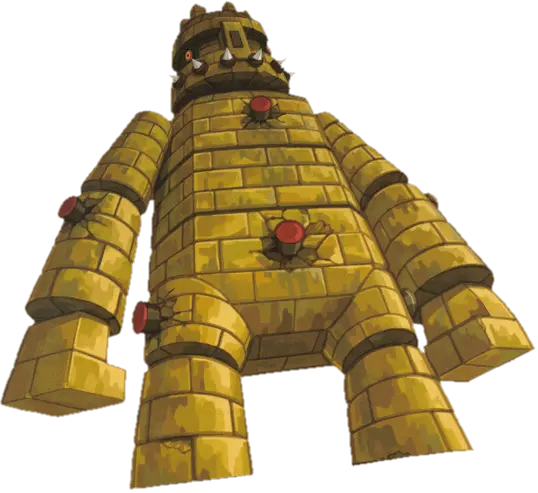
Mutoh’s TempleIsle of RuinsThe undead heart of the Cobble Kingdom. Item: Hammer. Boss: Eox, Ancient Stone Soldier. Pure metal: Aquanine.
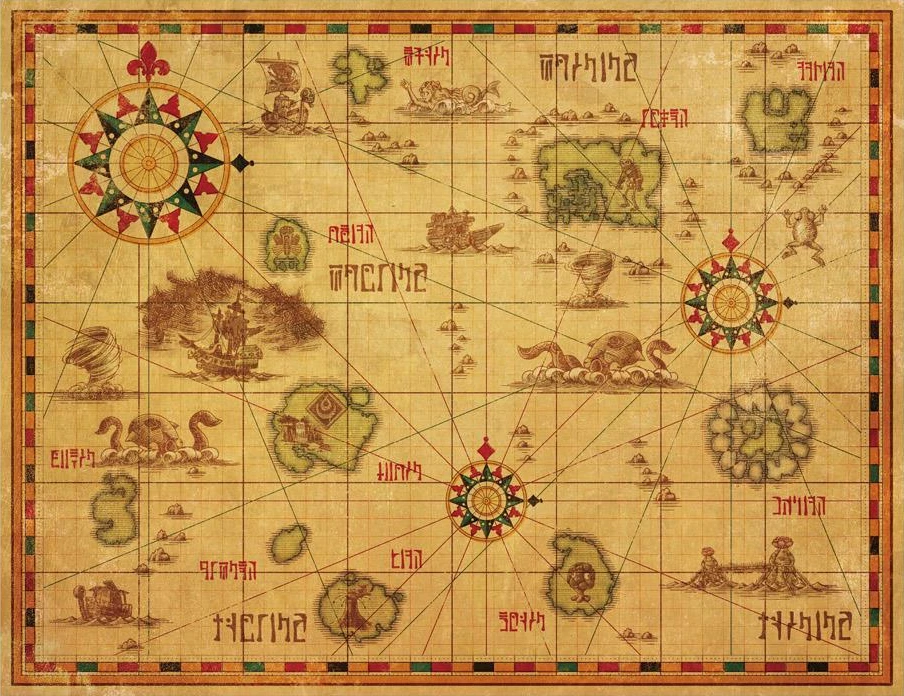
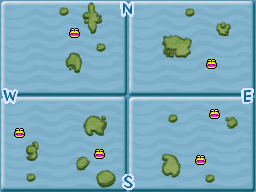
The sea is split into four charts. The Southwestern Sea is the busiest, with shops, fishing and ship repairs; in the Northwestern Sea only two islands are inhabited at all, and a mysterious fog covers its western waters; the Southeastern Sea is home to the Gorons and the Anouki; and the Northeastern Sea holds the ruins of the Cobble Kingdom.
In comics, TV & other media
Phantom Hourglass got its own manga and sent a few of its stars into later games.
The Legend of Zelda: Phantom Hourglass (manga)Akira Himekawa · Shogakukan, 2009 · VIZ Media, 2010A one-volume adaptation by Akira Himekawa, published in Japan in early 2009 and in English by VIZ on 7 September 2010 as the tenth book in its Zelda series. It changes some characters’ personalities and events, which divided fans.
Spirit TracksNintendo DS · 2009The direct follow-up, set around a century later in New Hyrule. Tetra appears in a stained-glass window as the kingdom’s founder, and Linebeck’s grandson, Linebeck III, has a part to play.
Super Smash Bros. for Nintendo 3DSNintendo 3DS · 2014Ciela and Linebeck are both collectable trophies.
Hyrule Warriors LegendsNintendo 3DS · 2016Tetra became a playable fighter for the first time.
Characters
Phantom Hourglass keeps its cast small and gives most of the best lines to two newcomers, Linebeck and Ciela. Here is who everyone is, where they fit in Zelda lore and what they do in this adventure.
Character
Who they are
In this game
Stats & abilities
LinkThe Hero of Winds
The same Link who starred in The Wind Waker: a boy from Outset Island, where a boy is given green clothes like the legendary Hero of Time’s once he reaches the hero’s age. He set out to rescue his little sister Aryll, ended up defeating Ganondorf, and sailed away with Tetra at the end. This cartoon-style Link, known as Toon Link, became a Super Smash Bros. fighter.
Falls overboard chasing Tetra and spends the game crossing the World of the Ocean King to save her, freeing three spirits, gathering three pure metals and defeating Bellum.
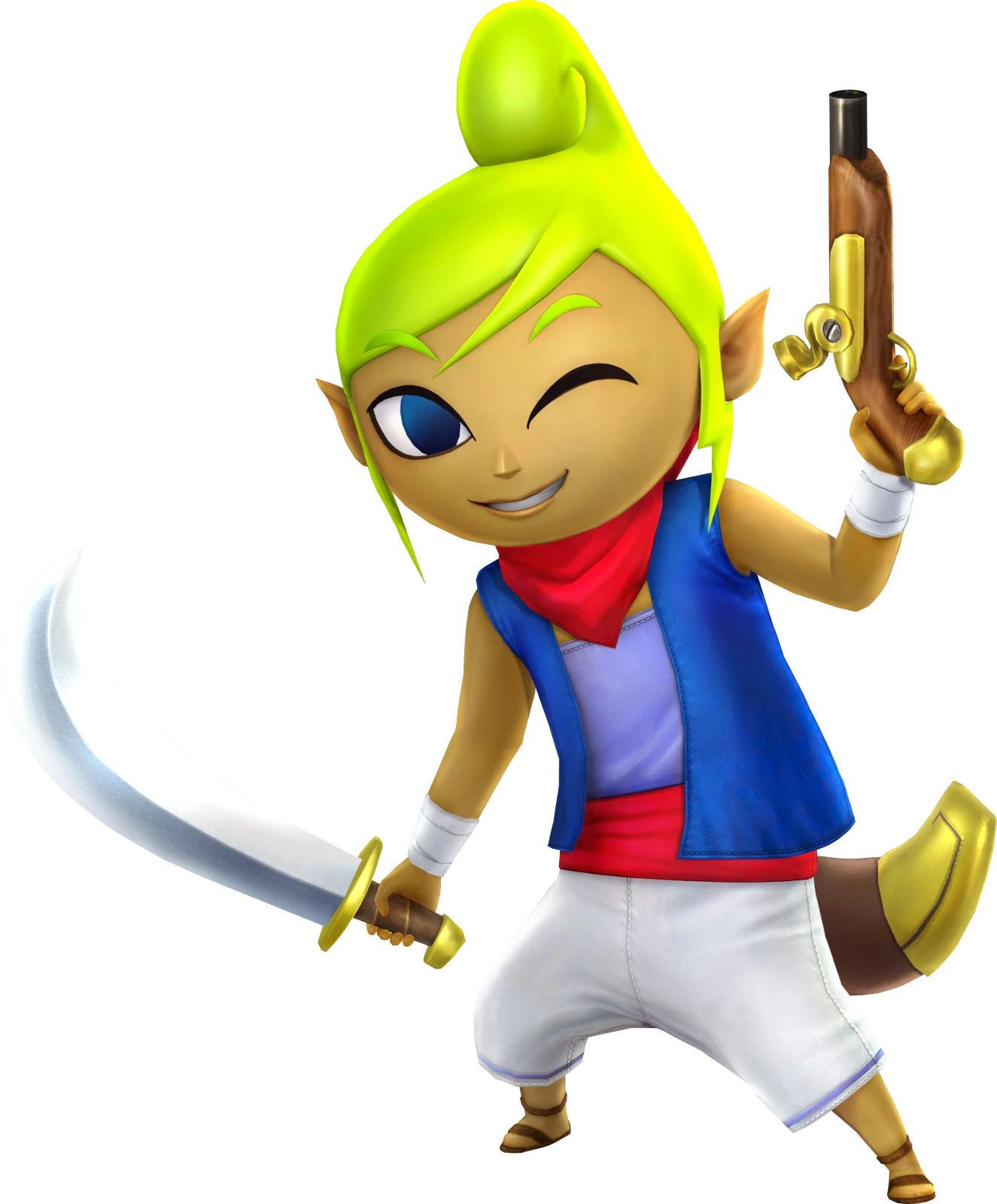
A tough, bossy pirate captain from The Wind Waker who discovered she was the heir to the royal family of Hyrule, Princess Zelda. According to Spirit Tracks, she later founded a new kingdom of Hyrule. Hyrule Warriors Legends made her playable for the first time.
Boards the Ghost Ship out of curiosity, is captured and turned to stone by Bellum, and is restored once Link defeats it. She spends much of the game as a statue, which does not suit her at all.
Not playable. The reason the adventure happens.
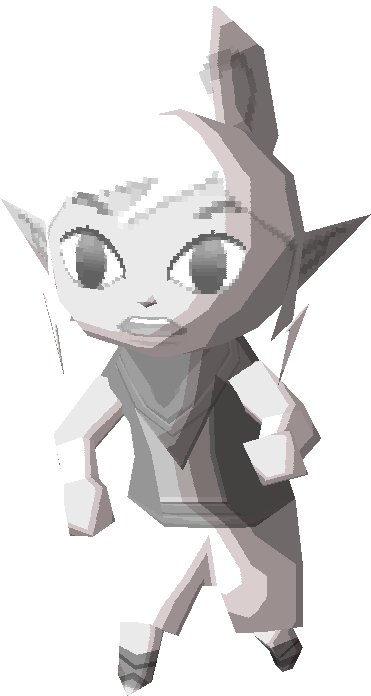
CielaFairy companion
A fiery little fairy with no memory, raised by Oshus, whom she calls Grandpa. She is a nod to Ocarina of Time’s Navi, down to a yell that Zelda Dungeon says is the same as Navi’s. She is also, it turns out, half of the Spirit of Courage. According to Zelda Dungeon, she is the only fairy partner Link has on the adult branch of the timeline.
Finds Link on the beach and travels with him, bickering with Linebeck. After the Temple of Courage her two halves reunite, and in the final battle she regains her power over time.
Spirit of Courage; Courage Gems unlock sword beams
Opens sealed doors in the Temple of the Ocean King
Freezes time in the final battle
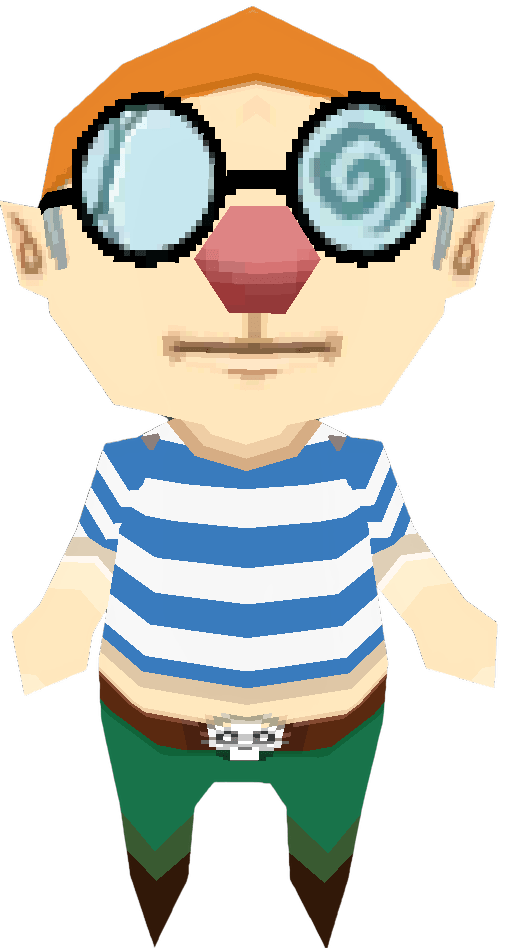
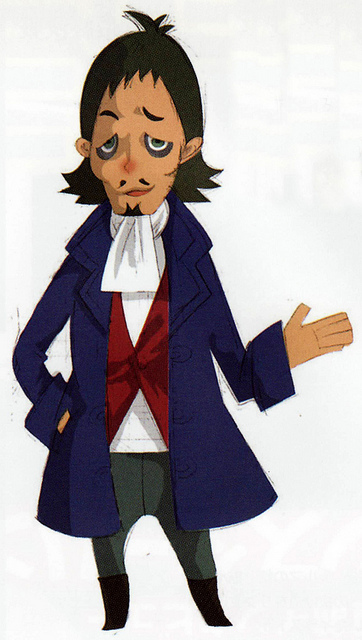
LinebeckCaptain of the S.S. Linebeck
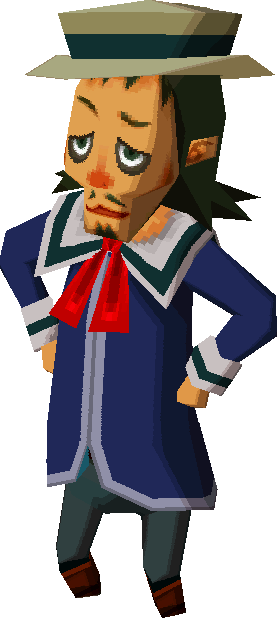
A vain, greedy, sarcastic treasure hunter, and the game’s scene-stealer precisely because he is so honestly awful. He hides behind Link at the first sign of danger. His grandson, Linebeck III, appears in Spirit Tracks, and Linebeck is a trophy in Super Smash Bros. for Nintendo 3DS.
Owns the steamboat Link sails in. Rescued from the Temple of the Ocean King, he tags along for the treasure, quits when there is none, and comes back for the promise of a wish. At the end he risks himself to free Link and Tetra, is possessed by Bellum, and spends his wish on getting his ship back.
The S.S. Linebeck: cannon, salvage arm, fishing rod
Customisable with ship parts
Not a fighter
OshusThe Ocean King
An old man of Mercay Island with a temper and a fish-shaped cane. In Japan he is called Shiwan. He is the Ocean King in disguise, robbed of much of his life force by Bellum.
Gives Link his first sword, explains the spirits and the Phantom Sword, reveals the truth about Ciela, and resumes his true form as a great white whale at the end, granting Linebeck’s wish.
Gives Oshus’s Sword and the Phantom Sword
True form: a white whale
BellumThe villain
A huge jellyfish-like monster with a toothed mouth around a single eye and five eye-tipped tentacles. It feeds on life force. It turned the Ocean King’s stolen life into the Sands of Hours, made monsters to seal away the three spirits, and spread the legend of a treasure-laden Ghost Ship to lure in victims.
The final boss, fought in three phases: at the bottom of the Temple of the Ocean King, at sea aboard the Ghost Ship, and finally after possessing Linebeck.
Drains life force
Its main eye can only be struck while time is frozen
Leaf & NeriSpirits of Power and Wisdom
Two of the three Servant Spirits of the Ocean King, sealed away by Bellum’s monsters.
Leaf, the Spirit of Power, is freed after Blaaz in the Temple of Fire; Neri, the Spirit of Wisdom, after Cyclok in the Temple of Wind. Both open sealed doors in the Temple of the Ocean King and can replace Ciela as Link’s companion.
Leaf, powered up with Power Gems, sets Link’s sword alight and can stun Phantoms.
JolenePirate
A pirate with a long memory: Linebeck once left her behind and made off with some of her belongings. Zelda Dungeon lists a sister, Joanne.
Chases the S.S. Linebeck, torpedoes it and boards to fight Link while Linebeck hides in a box. After the pure metals are found she challenges Link one last time.
Fought with the sword in one-on-one duels.
GongoronGoron partner
The son of Biggoron, chief of the Gorons on Goron Island. Gorons have been Zelda regulars since Ocarina of Time.
Hides from Link until Link saves him from monsters, then joins him in the Goron Temple, where you switch control between the two to roll, pound and puzzle your way to Dongorongo.
Playable partner in the Goron Temple: rolling and ground-pounding.
AstridFortune teller
A fortune teller on the Isle of Ember, grieving her friend Kayo. She later reveals she is one of the Cobbles, the people of the drowned Isle of Ruins.
Link frees her from her basement on the Isle of Ember; she rewards him with hints about where to go next.
Hint-giver.
ZauzCobble blacksmith
A Cobble smith who lives on his own island.
Forges the blade of the Phantom Sword from Crimsonine, Azurine and Aquanine, and tells Link to draw the Triforce on a door in the Temple of the Ocean King.
Makes the Phantom Sword.
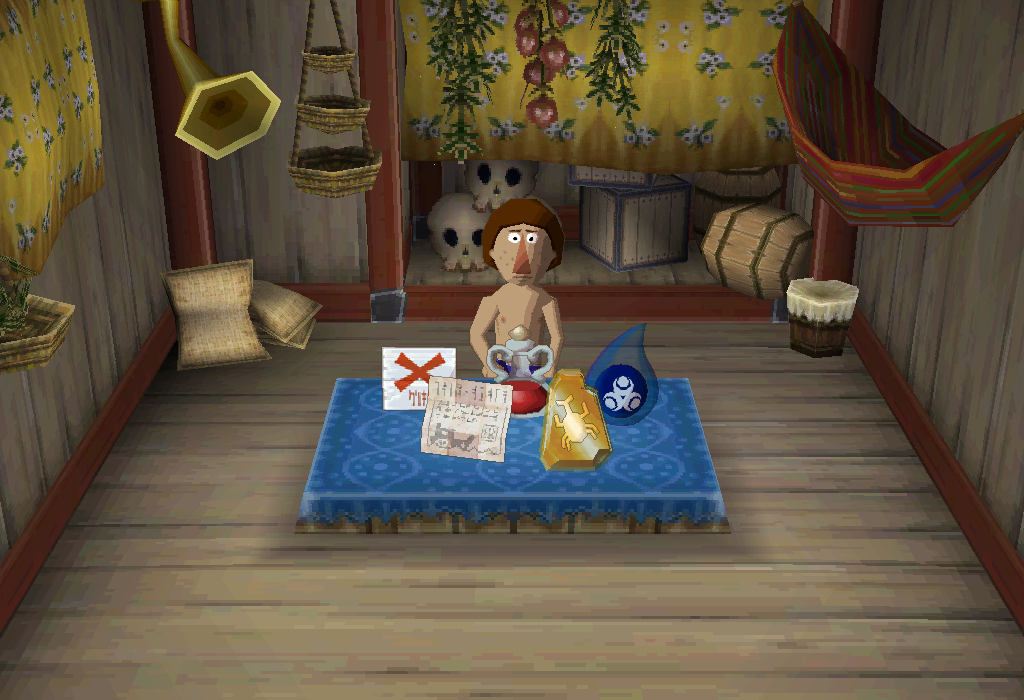
BeedleTravelling merchant
The series’ favourite shopkeeper first sold from a ship in The Wind Waker and has since turned up in The Minish Cap, Spirit Tracks, Skyward Sword, Breath of the Wild and Tears of the Kingdom.
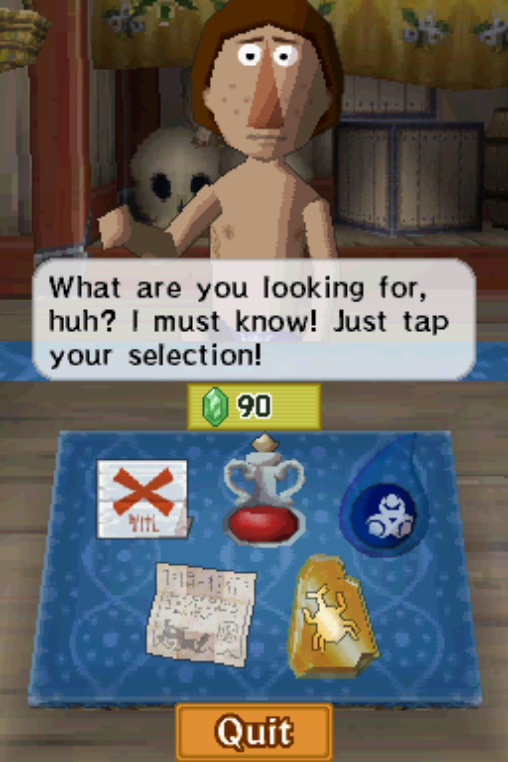
Sails the sea in his shop ship, offering five items at a time, including ship parts, potions and treasure, and rewarding regular customers with points.
Shop. Some items cost over 900 Rupees.
Bosses and notable enemies
Every dungeon boss in Phantom Hourglass, plus the Phantoms that haunt the Temple of the Ocean King.
BlaazTemple of FireMaster of Fire, holding the Spirit of Power.
CyclokTemple of WindStirrer of Winds, guardian of the Spirit of Wisdom.
CraykTemple of CourageBane of Courage, a giant crab that holds Ciela’s missing half.
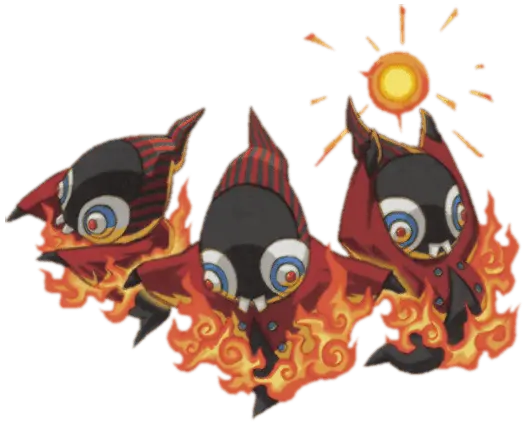
Cubus SistersGhost ShipThe ghostly sisters who haunt the Ghost Ship.
DongorongoGoron TempleArmored Lizard, beaten by Link and Gongoron together.
GleeokTemple of IceA two-headed dragon in the depths of the Temple of Ice.
EoxMutoh’s TempleAncient Stone Soldier, a towering stone warrior of the Cobble Kingdom’s ruins.
BellumTemple of the Ocean King · Ghost ShipThe final boss, fought in three phases.
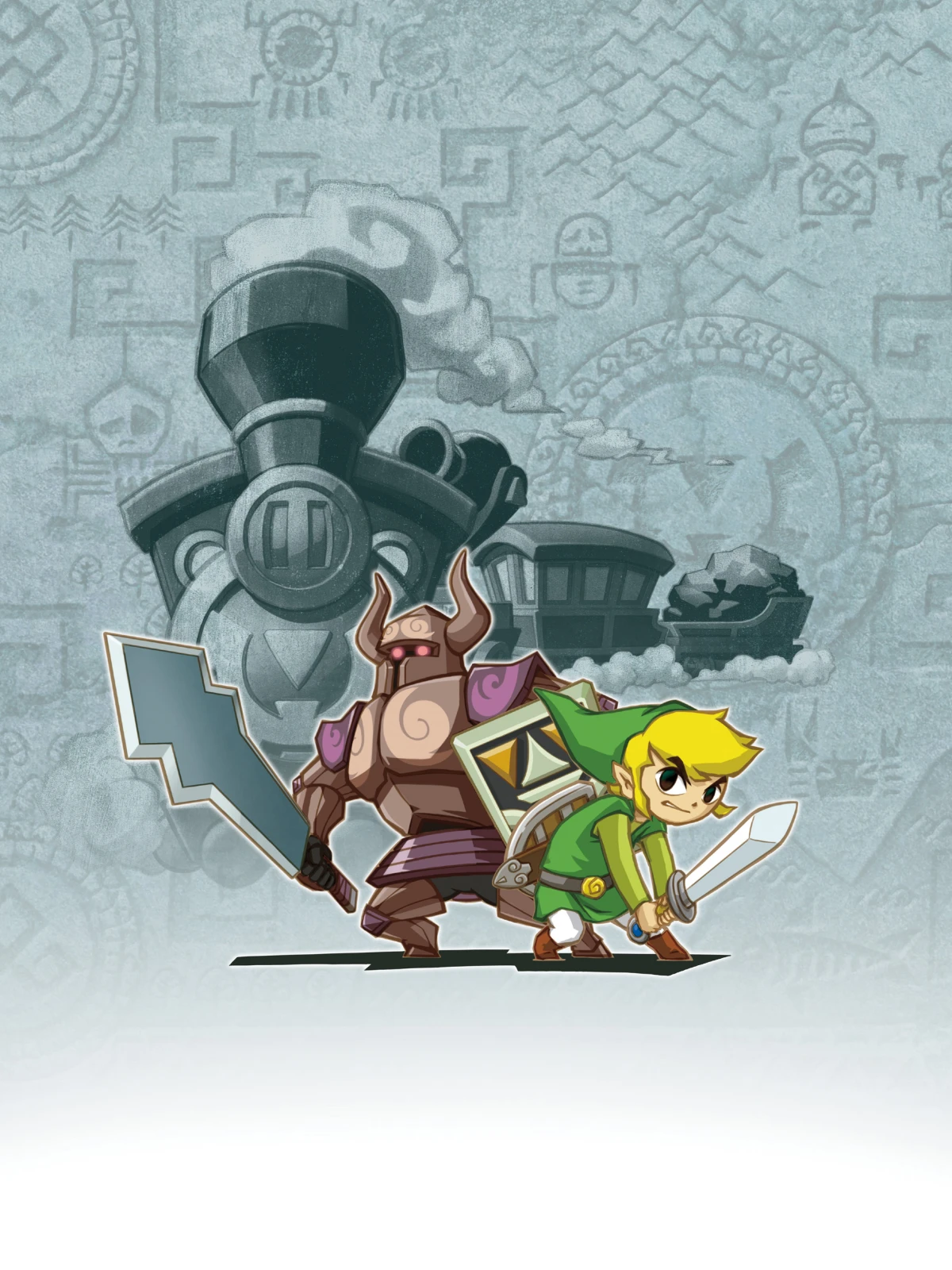
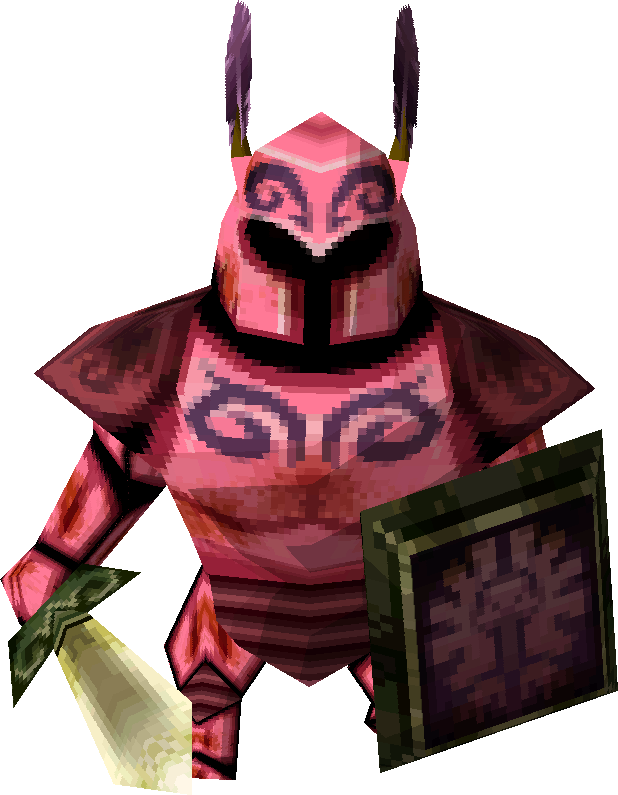
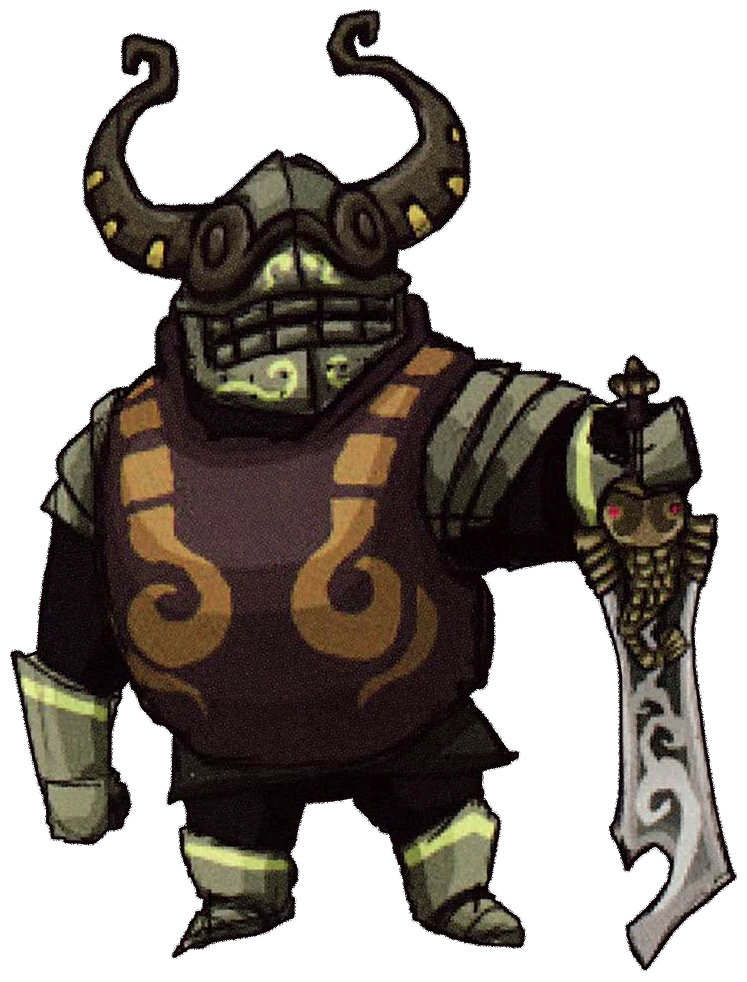
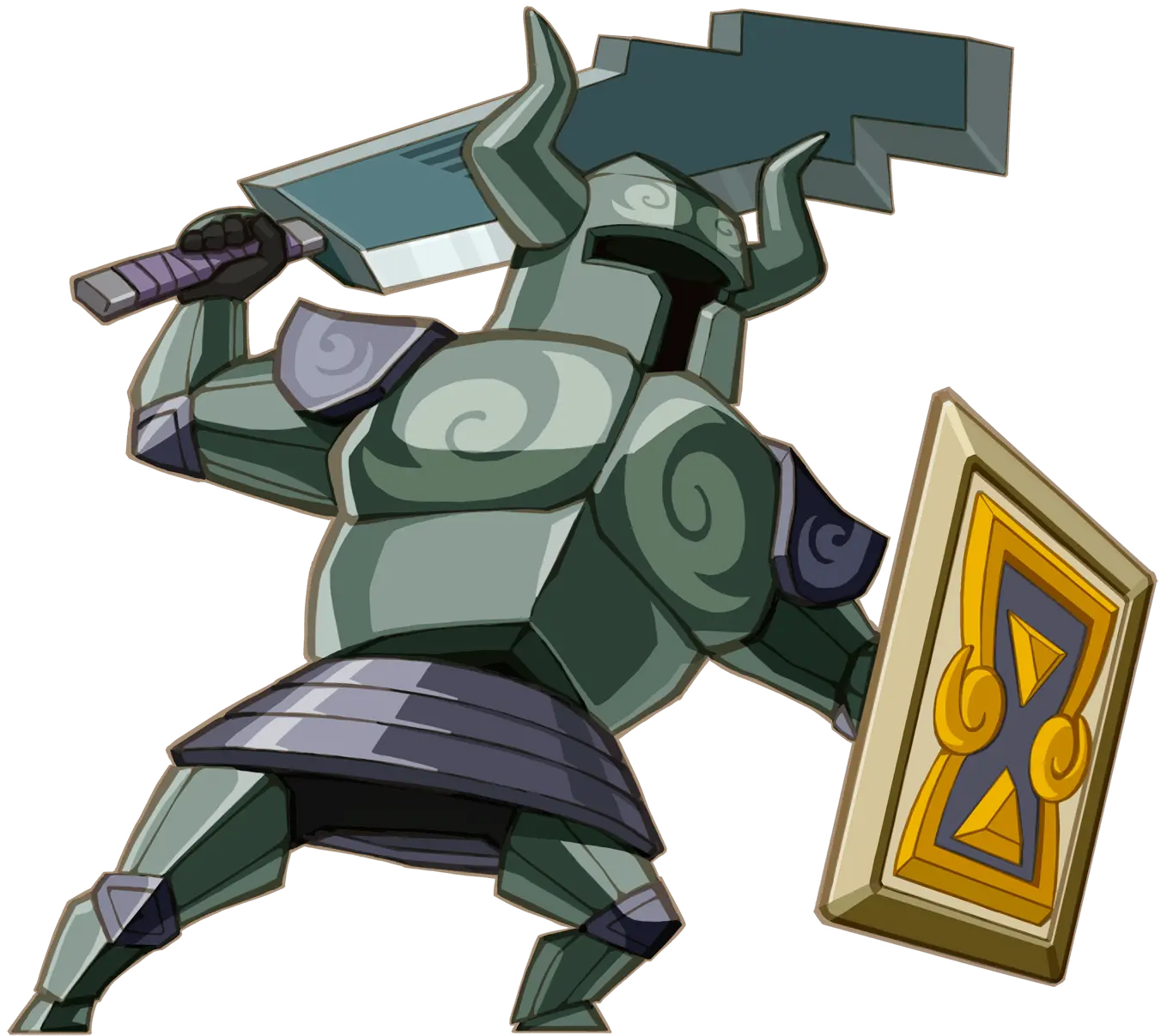
PhantomsTemple of the Ocean KingArmoured guards: slow Blue Phantoms, faster red Swift Phantoms and axe-wielding Gold Phantoms that warp to where Link was seen. Only the Phantom Sword can beat them head-on.
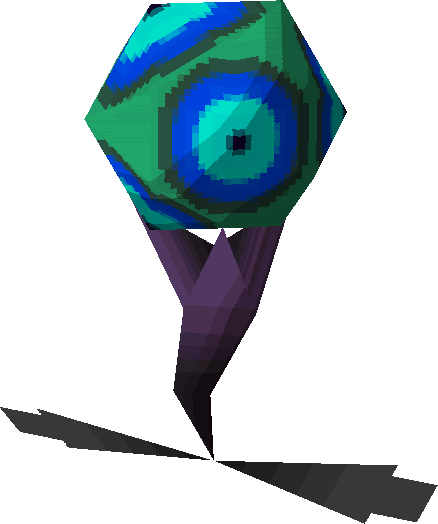
Phantom EyeTemple of the Ocean KingFloating eyes that do not attack but slow Link down and call the Phantoms.
The people who made it
Phantom Hourglass came from the team that had just made Four Swords Adventures. These are the key credited names.
Daiki IwamotoDirectorLed the project from its start in May 2004, and went on to direct Spirit Tracks.
Eiji AonumaProducerBusy with Twilight Princess for much of development, he returned for the final stretch and asked for about three more months to polish it.
Hidemaro FujibayashiStoryCredited as the game’s writer.
Hajime Takahashi & Yutaka HiramukiDesignCredited game designers.
Shiro MouriProgrammingCredited lead programmer.
Michiho HayashiArtCredited artist, carrying The Wind Waker’s cel-shaded look onto the DS.
Kenta Nagata & Toru MinegishiMusicComposed the score.
How it was made
Phantom Hourglass began as a handheld Four Swords and ended up as the first Zelda built around a touch screen. This is how it got there.
From Four Swords to the DS
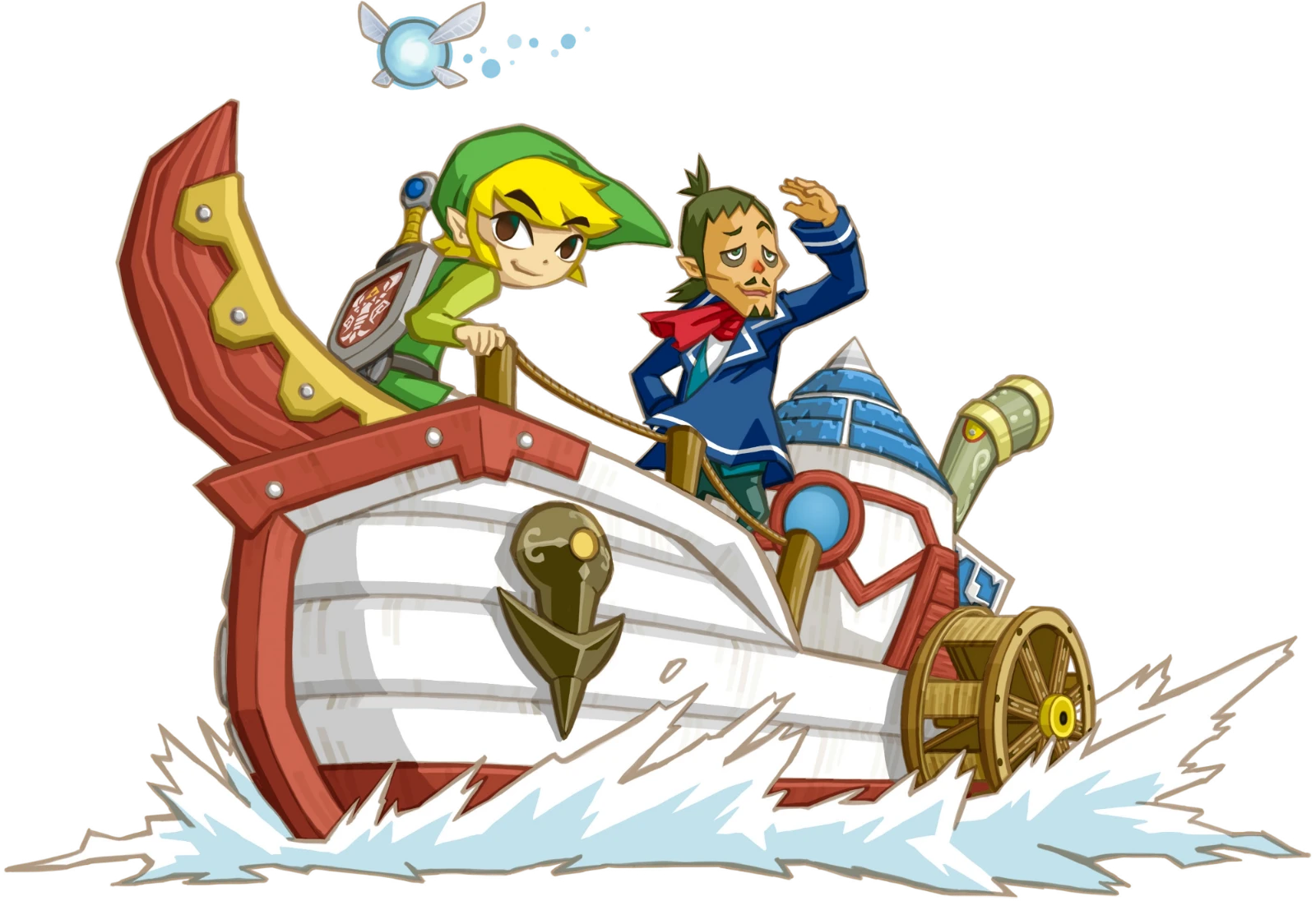
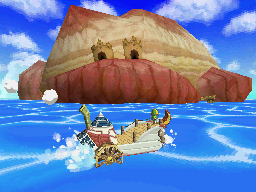
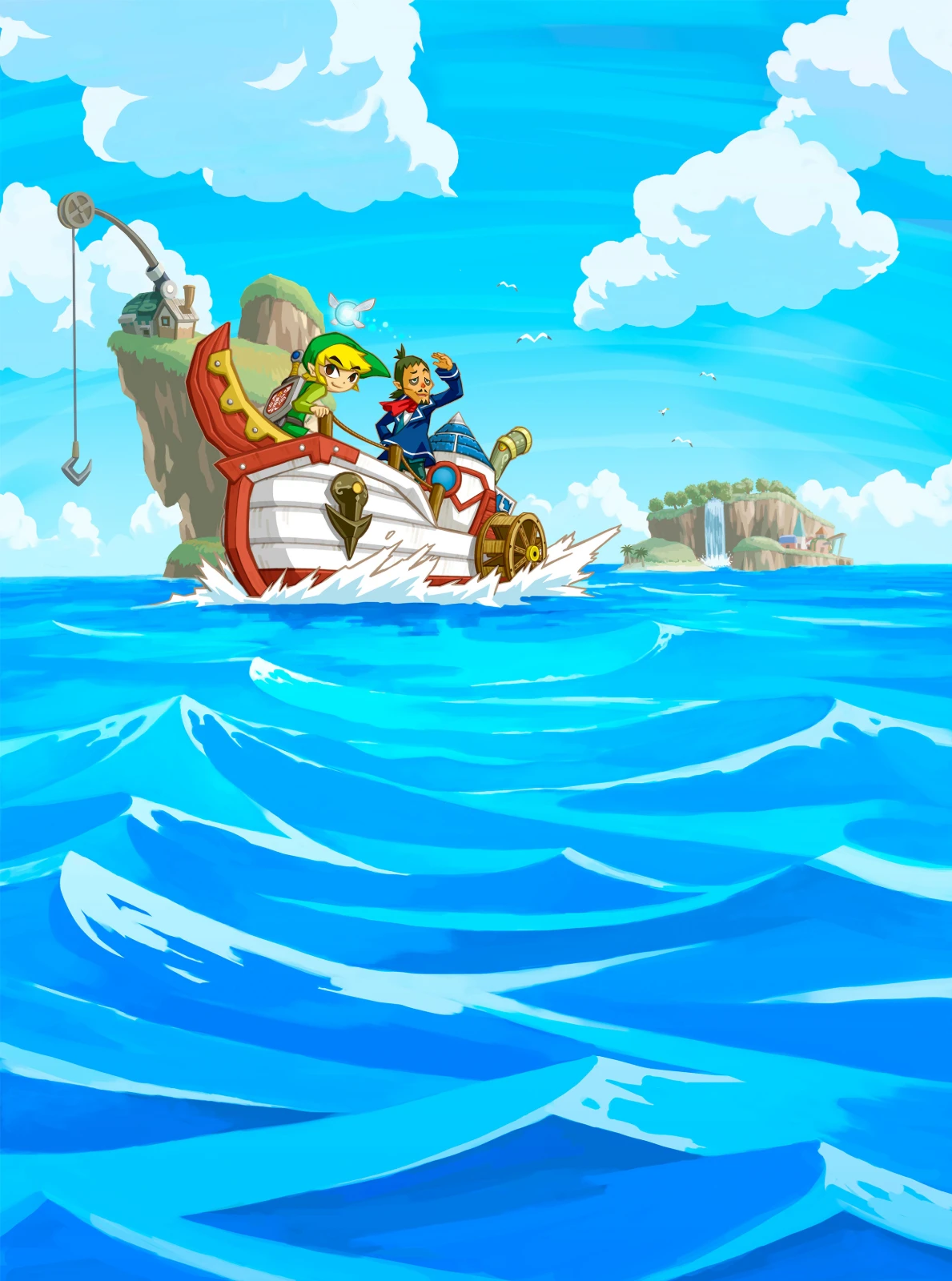
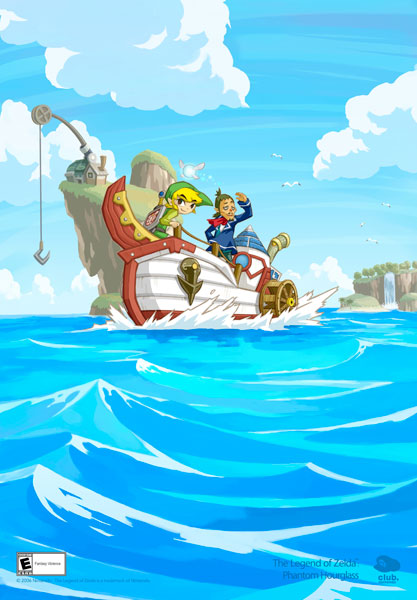
Official art of sailing, an idea carried over from The Wind Waker.
Work started in May 2004, as soon as the team behind Four Swords Adventures on GameCube had finished, according to director Daiki Iwamoto. That October, Shigeru Miyamoto mentioned that Nintendo was thinking about bringing Four Swords to the new DS, and Eiji Aonuma confirmed the plan at E3 in 2005.
The team’s starting point was The Wind Waker. “We had The Legend of Zelda: The Wind Waker to start from,” Iwamoto said later, and the cel-shaded look, the cartoon Link and even the sailing came across. Aonuma has said that The Wind Waker’s disappointing sales stung him personally, and that wanting to carry its style on was part of what drove the new game.
Swapping the screens
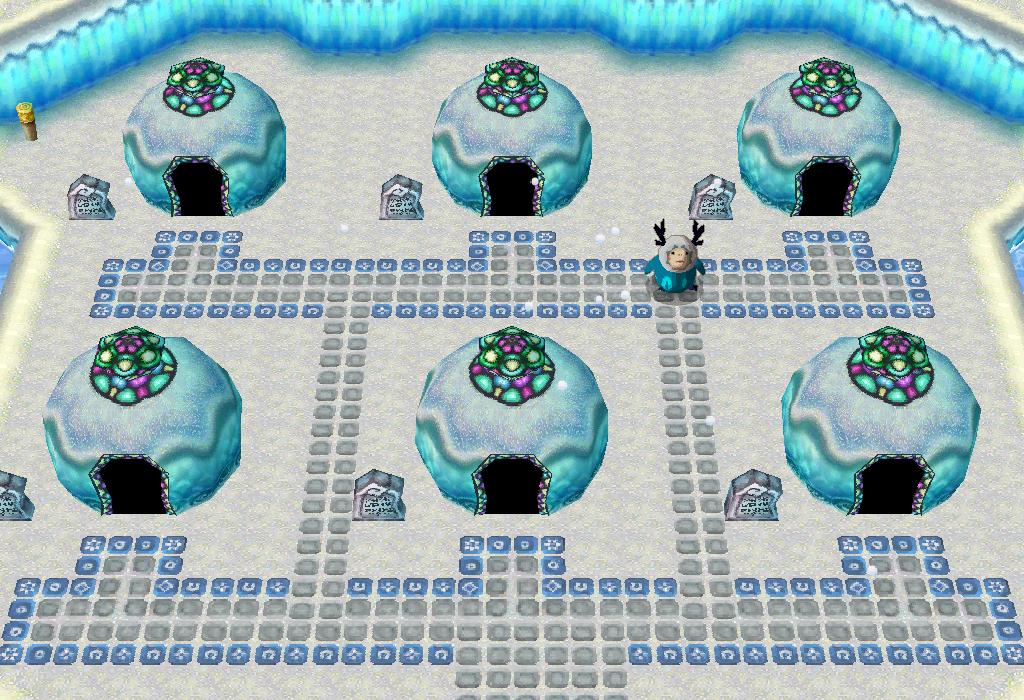
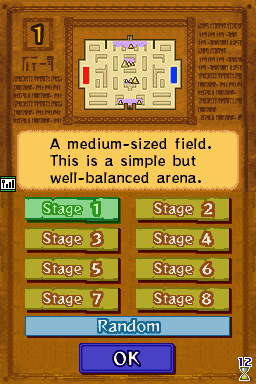
The stage selection screen of Battle mode.
The first prototype put the action on the top screen and a flat map on the touch screen below. It felt disconnected, so the developers swapped them, putting Link right under the stylus, and leaned towards a simple interface that they felt Japanese players preferred. A Wi-Fi battle mode was added with American players in mind.
Aonuma described the result as giving the series “a fresh, new control scheme”, and said the aim was to make controlling Link and solving puzzles appealing to casual players who might never have touched a Zelda.
Revealed at GDC 2006
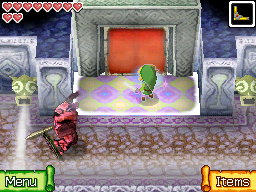
A crested door in the Temple of the Ocean King.
Nintendo unveiled the game at its keynote at the Game Developers Conference in San Jose in March 2006. The demo showed off what the stylus could do: sketching an hourglass on a door to open it, plotting a ship’s course on a chart and tracing the path of a boomerang. At that point it was due later that year. At E3 2006 it won GameSpot’s Best Nintendo DS Game and the Game Critics Awards’ Best Handheld Game, but it slipped into 2007.
Aonuma’s three extra months
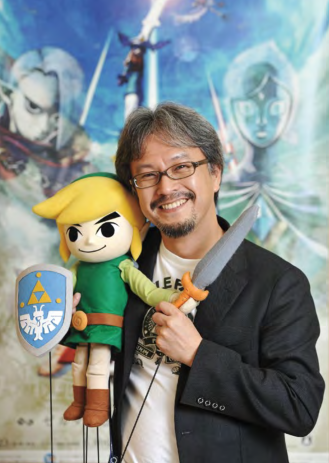
Eiji Aonuma, the game’s producer.
For most of development Aonuma was tied up with Twilight Princess, so Iwamoto ran the project. When Aonuma came back for the final stages he felt there was more to do and asked for the schedule to be extended by about three months, which he spent refining the game with the team. Looking back in Nintendo’s Iwata Asks interview for Spirit Tracks, he admitted he had felt bad about asking: “I asked that development be extended three more months”.
Launch
A Club Nintendo poster for the game.
The game came out in Japan on 23 June 2007 at ¥4,571 before tax, and was that month’s best-selling game there, with 302,887 copies. North America followed on 1 October, Australia on 11 October and Europe on 19 October. In North America, Nintendo released a gold Nintendo DS Lite bundle with a Triforce logo on 23 November 2007.
Firsts: what this game introduced
Phantom Hourglass changed how a Zelda game is played, even if its ideas mostly stayed on the DS.
1The first DS ZeldaThe series’ first game on Nintendo DS, followed by Spirit Tracks in 2009.
2Stylus controlsThe first Zelda controlled with a touch screen: Link moves, fights and aims entirely by stylus.
3Zelda onlineBattle mode could be played over Nintendo Wi-Fi Connection; the two earlier multiplayer Zeldas, Four Swords and Four Swords Adventures, were local only. The service closed in May 2014.
Cheats & secrets
There are no cheat codes in Phantom Hourglass, but there are plenty of extras to chase once the main quest is under way.
Spirit gems
A Power Gem.
Power, Wisdom and Courage Gems are hidden all over the sea. Take them to the spring on Spirit Island to power up the matching spirit. Leaf’s upgrades set Link’s sword alight and let him stun Phantoms; enough Courage Gems give Ciela the power to fire sword beams. Equip the spirit you want on the Collection screen.
Ship parts and salvage
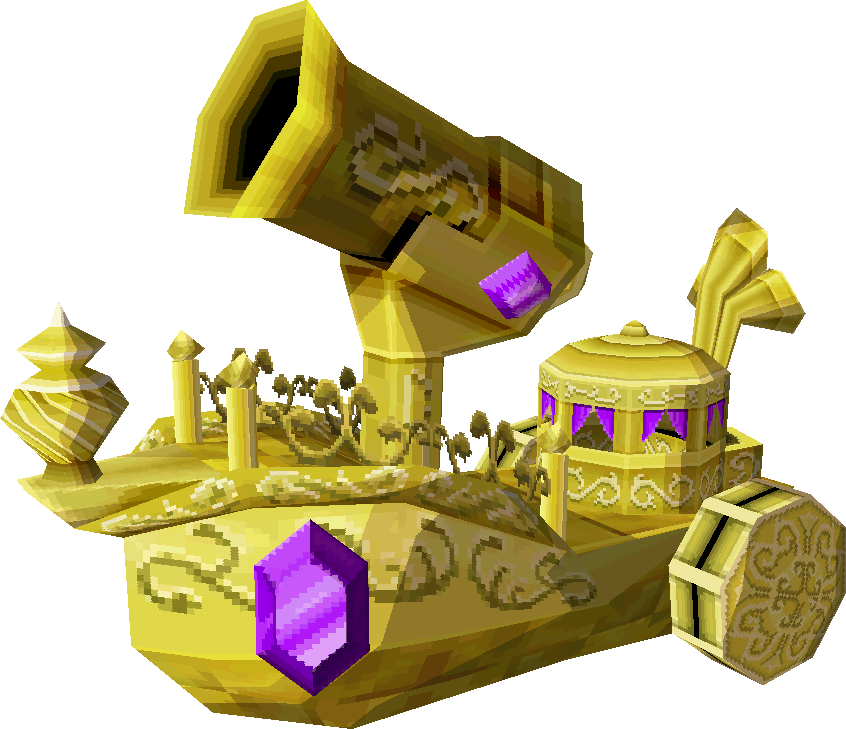
The Golden Ship, one of the ship designs to collect.
The S.S. Linebeck can be rebuilt with collectable ship parts, which Beedle is among those selling, and Nintendo’s Japanese site made ship customisation one of its headline features. The salvage arm hauls sunken treasure up from the sea bed.
Fishing
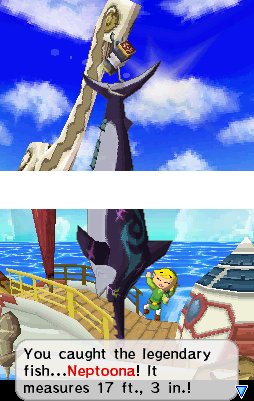
Link catching Neptoona.
Once you have the Fishing Rod (and later the Big Catch Lure), you can fish from the deck of your ship.
Battle mode
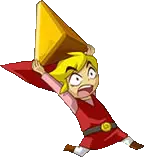
Official art of Red Link with a Force Gem.
Two players, one game card each or Download Play: one player guides Link to carry Force Gems back to base while the other steers three Phantom Guardians to catch him. Each match has three rounds and lasts up to twelve minutes if Link is never caught. Online play ended when Nintendo Wi-Fi Connection closed on 20 May 2014.
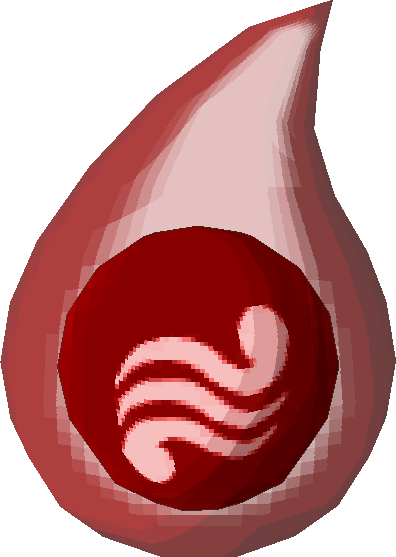
Heart Containers only
A Heart Container.
Unlike most Zelda games since A Link to the Past, Phantom Hourglass has no Pieces of Heart. Extra hearts come as whole Heart Containers.
Beedle points
Beedle’s Shop Ship.
Buying from Beedle’s shop ship earns membership points, just as in The Wind Waker. Some of his stock costs more than 900 Rupees, so save up.
Checked against Zelda Dungeon, Wikipedia and Nintendo’s Japanese official site, November 2026.
Glitches, exploits and oddities
Phantom Hourglass is a tidy game with few famous bugs, but its data holds some interesting leftovers. These come from The Cutting Room Floor’s documentation.
A cut exchange in the opening
Mako, one of Tetra’s pirates.
A short conversation between Tetra and her pirate Mako, about her pirate name versus her royal title, was dropped from the opening but is still in the game’s text.
Doors for six dungeons, only three used
The Door of Power.
There are six unused fairy door models, one matching each dungeon, though the finished game uses only three doors. Unused models of a windmill, a boat and a crystal-like switch are also left in the files.
An early dungeon in the European version
The European release contains two extra maps holding an early version of a cut dungeon, along with some rewritten script and Wi-Fi text.
Japanese extras
The Cyclone Slate.
In the Japanese version text is centred, and tapping words with the stylus shows furigana reading aids. The opening cutscene takes longer to skip, and there is no ending animation for the Cyclone Slate.
Linebeck’s secret line
Concept art of Linebeck.
Use a moon-jump cheat device to reach Linebeck earlier than intended and he says a line you never hear otherwise: “How did you get this far, anyway?”
Videos & media
Two trailers from the Nintendo DS era: the Game Developers Conference showing and the pre-launch trailer.
The Game Developers Conference trailer, uploaded by Nintendo Life.
A pre-launch trailer, uploaded by IGN.
Trivia & facts
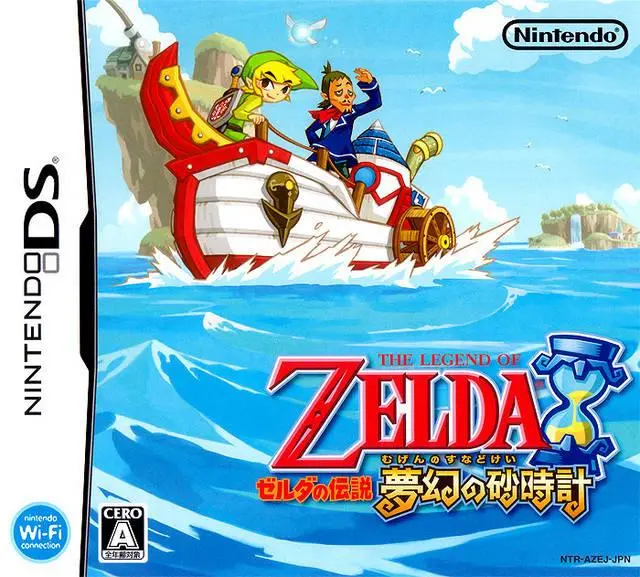
The Japanese logo.The Japanese title, Mugen no Sunadokei, means something like “Hourglass of Dreams”, a hint at the ending.
Oshus is called Shiwan in Japanese.
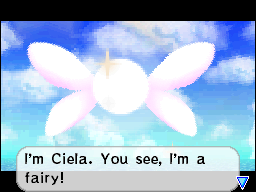
Ciela introduces herself.According to Zelda Dungeon, Ciela’s yell is the same one Navi uses in Ocarina of Time.
Famitsu’s four reviewers gave it 10, 10, 10 and 9, a total of 39 out of 40.
Link’s health only ever grows a whole heart at a time: the game has Heart Containers but no Pieces of Heart.
According to Zelda Dungeon, it is the only game on the adult branch of the timeline in which Link has a fairy companion.
An early version of the English logo.When it was unveiled at GDC in March 2006, the game was due out later that year. It arrived in Japan in June 2007.
North America got a gold Nintendo DS Lite bundle with the Triforce logo on 23 November 2007.
It sold 4.13 million copies in its first nine months, not far short of The Wind Waker’s lifetime 4.6 million.
Astrid and the blacksmith Zauz both belong to the Cobbles, the people of the drowned Isle of Ruins.
Linebeck III in Spirit Tracks.Linebeck’s grandson, Linebeck III, turns up in Spirit Tracks, the sequel.
Spirit Tracks shows Tetra in a stained-glass window in Hyrule Castle as the founder of the new kingdom.
Online Battle mode ran on Nintendo Wi-Fi Connection, which closed on 20 May 2014.
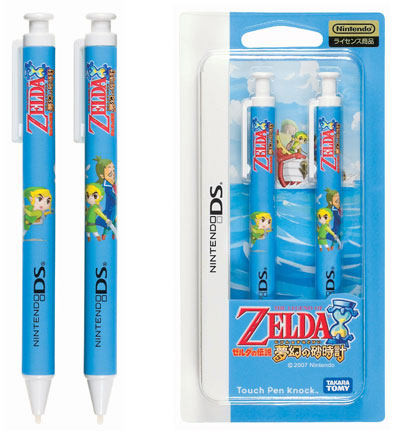
A set of Phantom Hourglass styluses made by Takara Tomy.The Japanese release cost ¥4,571 before tax, and Nintendo’s Japanese site called the game a “pen action adventure”.
Aonuma was directing Twilight Princess at the same time, and only rejoined Phantom Hourglass for its final months.
Media & artwork
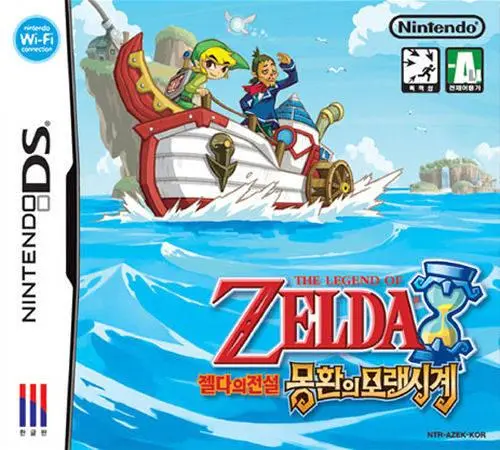
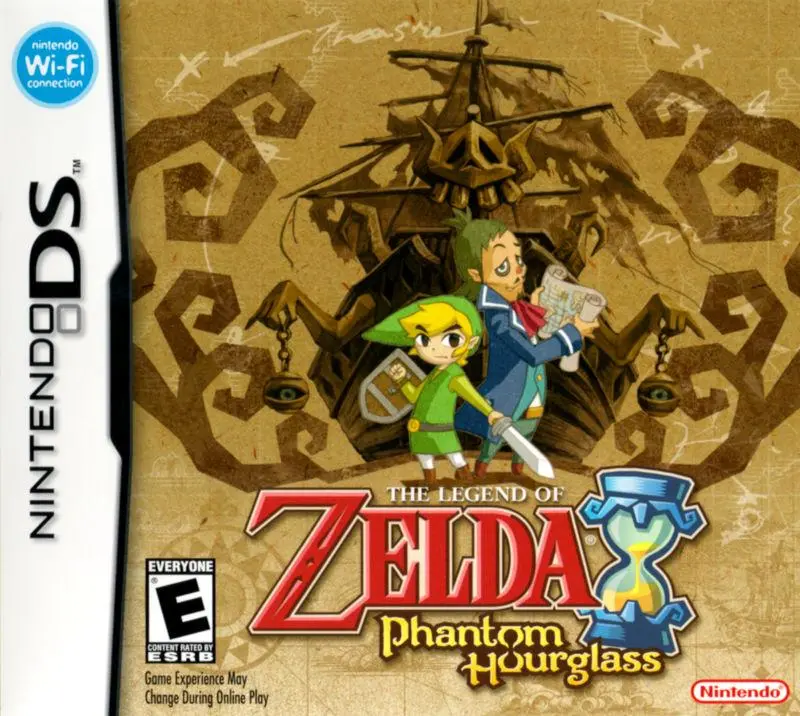
Box art from around the world, official artwork, screenshots and the Phantom Hourglass DS Lite. Select any image to view it larger.
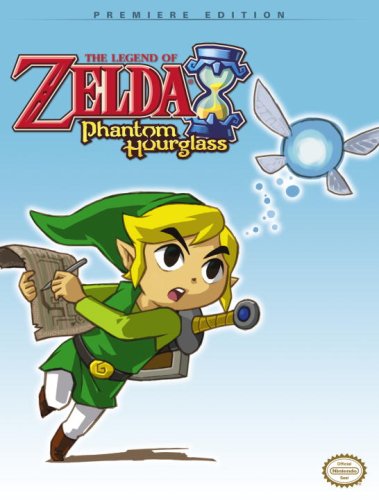
Japanese DS box, front (2007)UK DS box, front (2007)Australian and New Zealand DS box, front (2007)South Korean DS box, front (2008)North American DS box, back (2007)North American DS game card (2007)Official map of the World of the Ocean KingOfficial art of the S.S. LinebeckPrima’s strategy guideUK advertisement for the game
Phantom Hourglass sold strongly, picked up awards and set the template for its sequel, but its touch-only design stayed on the DS.
Release history
Nintendo DS (Japan)23 June 2007 – The best-selling game in Japan that month.
Nintendo DS (West)October 2007 – North America 1 October, Australia 11 October, Europe 19 October.
Gold DS Lite bundle23 November 2007 – North America, with a Triforce logo.
South Korea3 April 2008 – Korean release.
Spirit TracksDecember 2009 – The DS sequel, with the same style of touch controls.
Manga2009–2010 – Akira Himekawa’s adaptation; English edition from VIZ, 7 September 2010.
Online play ends20 May 2014 – Nintendo Wi-Fi Connection closes.
Wii U Virtual Console2015–2016 – Europe and Australia 13 November 2015, North America 12 May 2016, Japan 3 August 2016.
Hyrule Warriors Legends2016 – Tetra joins the roster as a playable fighter.
Spirit Tracks
Official art of Link and Phantom Zelda in Spirit Tracks.
The same director and producer followed up with Spirit Tracks in December 2009, swapping the boat for a train and the Temple of the Ocean King for the Tower of Spirits, with Princess Zelda possessing Phantoms. Set generations later, it closes Tetra’s story: the pirate princess founded the kingdom it takes place in.
Reputation
A Swift Phantom, one of the guards of the Temple of the Ocean King.
Phantom Hourglass was a hit with critics and buyers alike in 2007. The stylus controls are still the first thing people mention, while the repeated trips through the Temple of the Ocean King remain the most divisive part of the game, just as they were in the original reviews. It returned on the Wii U Virtual Console in 2015 and 2016, playable on the Wii U GamePad’s touch screen.
Sales & reviews
Sales figures
Phantom Hourglass topped the Japanese charts in its launch month, selling 302,887 copies in June 2007. In the United States it sold 262,800 copies in October 2007, the fifth-best-selling game of the month. Nintendo’s results for the year to 31 March 2008 put it at 4.13 million copies worldwide, 910,000 of them in Japan and 3.22 million overseas.
4.13msold worldwide by March 2008
910,000sold in Japan
302,887Japan, June 2007
262,800US, October 2007
Reception and review scores
Reviewers loved the controls and the presentation. These are the main scores, as collected by Wikipedia from each outlet; scores not out of 100 are converted.
Computer and Video GamesUK
10/10
GameProUS
5/5
GameSpyUS
5/5
FamitsuJapan · 10, 10, 10, 9
39/40
Game InformerUS
9.5/10
Nintendo PowerUS
9.5/10
Official Nintendo MagazineUK
95%
EdgeUK
9/10
EurogamerUK
9/10
GameSpotUS
9/10
IGNUS
9/10
Nintendo LifeUK
9/10
GameTrailersUS
8.9/10
X-PlayUS
4/5
Nintendo World ReportUS
7.5/10
It averages 90 on Metacritic. Praise centred on the touch controls, the world and dungeon design and the way the game used every part of the DS; the complaints were that it felt easier and more hand-holding than earlier Zeldas, with short dungeons, a basic online mode and too much time spent repeating the Temple of the Ocean King. The New York Times found the dungeons fun to play through once, and Nintendo World Report missed having any alternative control scheme.
Honours
Academy of Interactive Arts & Sciences · 2008Handheld Game of the YearAlso nominated for Outstanding Achievement in Gameplay Engineering.
Golden Joystick Awards · 2008Handheld Game of the YearThe category’s full name was Handheld Game of the Year.
E3 2006Best Handheld GameGame Critics Awards; also GameSpot’s Best Nintendo DS Game of the show.
IGN and GameSpy · 2007DS Game of the YearPlus Editor’s Choice awards from IGN and GameSpot, and 1UP’s Best Adventure Game.
Official Nintendo Magazine100 Greatest Nintendo GamesRanked 38th.
Reader reviews
No reader reviews yet. Played it? Give it a score out of 10 and tell other fans what you think.
Every fact on this page was checked against the sources below in November 2026. Zelda Wiki (zeldawiki.wiki) blocks automated reading and archived pages could not be reached, so period interviews were taken from their citations in Wikipedia where the original was not available. Review scores are as collected in Wikipedia’s review table and should be checked against the magazines when scans are sourced.
To provide the best experiences, we use technologies like cookies to store and/or access device information. Consenting to these technologies will allow us to process data such as browsing behavior or unique IDs on this site. Not consenting or withdrawing consent, may adversely affect certain features and functions.
Functional
Always active
The technical storage or access is strictly necessary for the legitimate purpose of enabling the use of a specific service explicitly requested by the subscriber or user, or for the sole purpose of carrying out the transmission of a communication over an electronic communications network.
Preferences
The technical storage or access is necessary for the legitimate purpose of storing preferences that are not requested by the subscriber or user.
Statistics
The technical storage or access that is used exclusively for statistical purposes.The technical storage or access that is used exclusively for anonymous statistical purposes. Without a subpoena, voluntary compliance on the part of your Internet Service Provider, or additional records from a third party, information stored or retrieved for this purpose alone cannot usually be used to identify you.
Marketing
The technical storage or access is required to create user profiles to send advertising, or to track the user on a website or across several websites for similar marketing purposes.

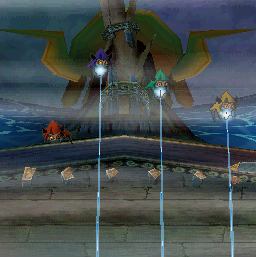
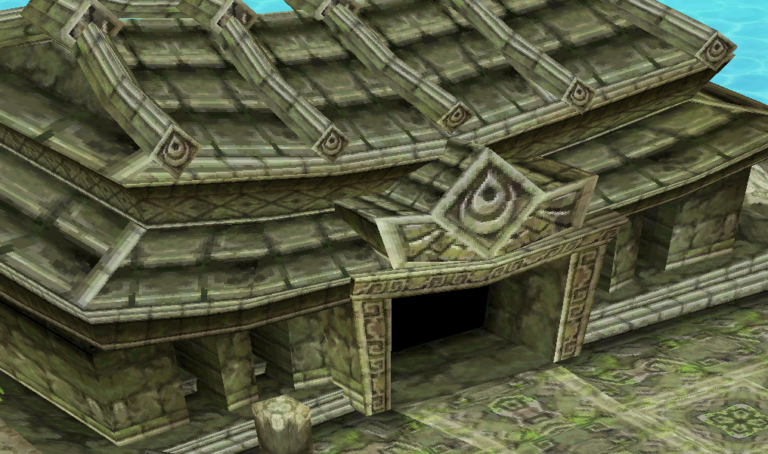 Temple of the Ocean KingMercay Island · revisited throughoutThirteen cursed floors. Safe zones and the Phantom Hourglass protect you from the curse; the Phantoms must be avoided until you have the Phantom Sword. Holds the Phantom Hourglass and four sea charts. Boss: Bellum.
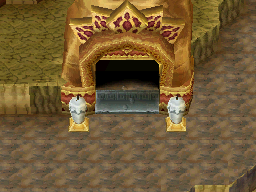 Temple of FireIsle of EmberItem: Boomerang. Boss: Blaaz, Master of Fire. Frees Leaf, Spirit of Power.
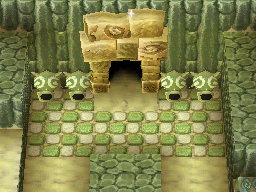 Temple of WindIsle of GustItem: Bomb Bag. Boss: Cyclok, Stirrer of Winds. Frees Neri, Spirit of Wisdom.
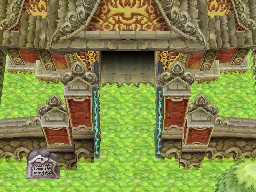 Temple of CourageMolida IslandItem: Bow. Boss: Crayk, Bane of Courage. Restores Ciela, Spirit of Courage.
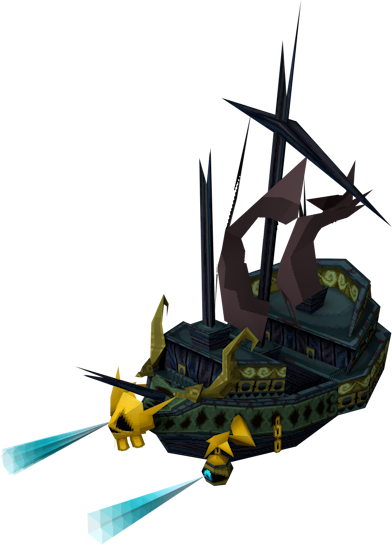 Ghost ShipSails in the fogBoss: the Cubus Sisters. Tetra is found here, turned to stone.
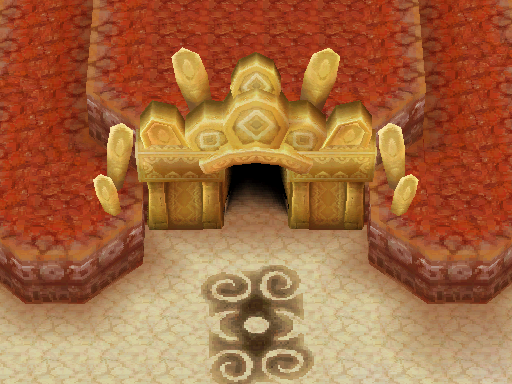 Goron TempleGoron IslandPlayed with Gongoron as a partner. Item: Bombchus. Boss: Dongorongo, Armored Lizard. Pure metal: Crimsonine.
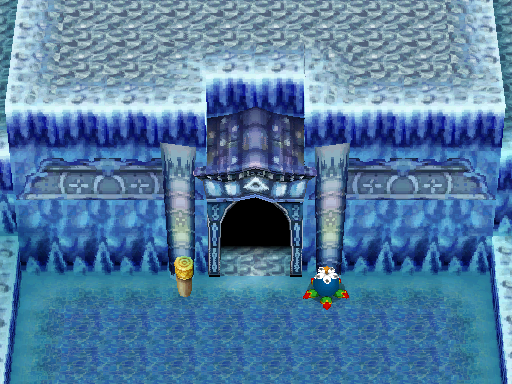 Temple of IceIsle of FrostSlippery floors and ice monsters. Item: Grappling Hook. Boss: Gleeok, a two-headed dragon. Pure metal: Azurine.
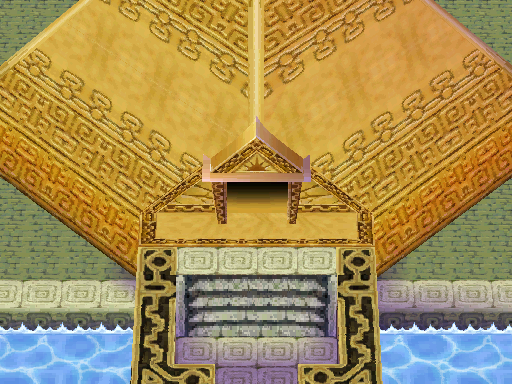 Mutoh’s TempleIsle of RuinsThe undead heart of the Cobble Kingdom. Item: Hammer. Boss: Eox, Ancient Stone Soldier. Pure metal: Aquanine.
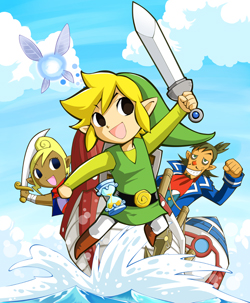 The Legend of Zelda: Phantom Hourglass (manga)Akira Himekawa · Shogakukan, 2009 · VIZ Media, 2010A one-volume adaptation by Akira Himekawa, published in Japan in early 2009 and in English by VIZ on 7 September 2010 as the tenth book in its Zelda series. It changes some characters’ personalities and events, which divided fans.
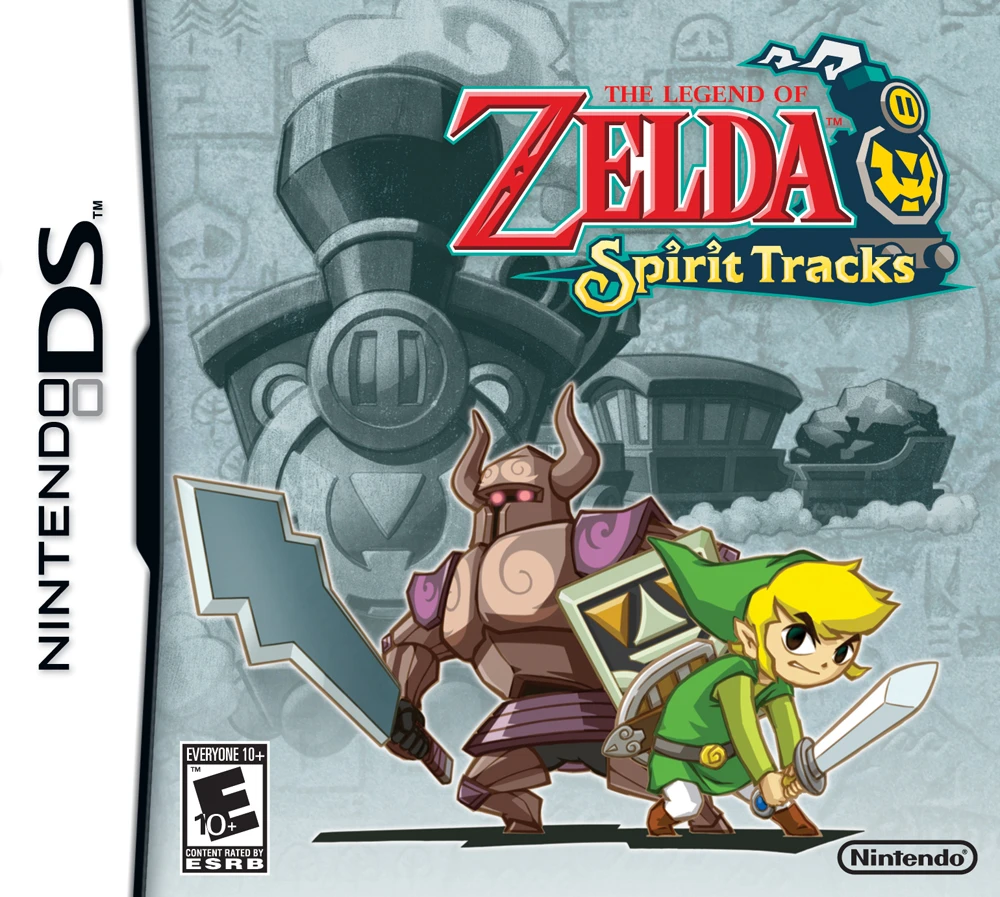 Spirit TracksNintendo DS · 2009The direct follow-up, set around a century later in New Hyrule. Tetra appears in a stained-glass window as the kingdom’s founder, and Linebeck’s grandson, Linebeck III, has a part to play.
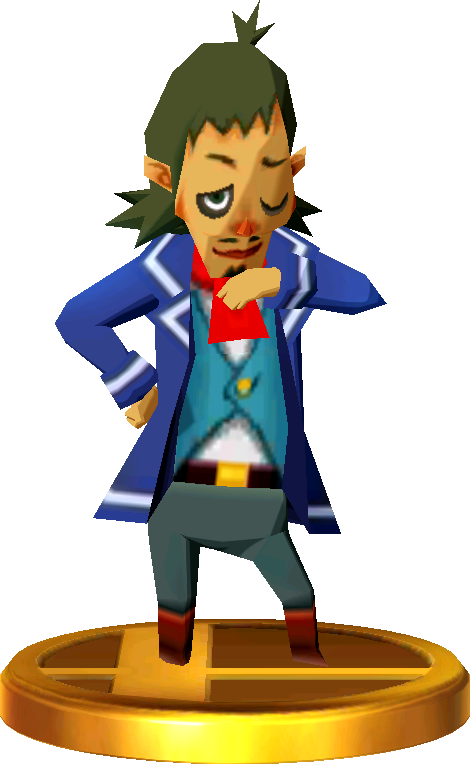 Super Smash Bros. for Nintendo 3DSNintendo 3DS · 2014Ciela and Linebeck are both collectable trophies.
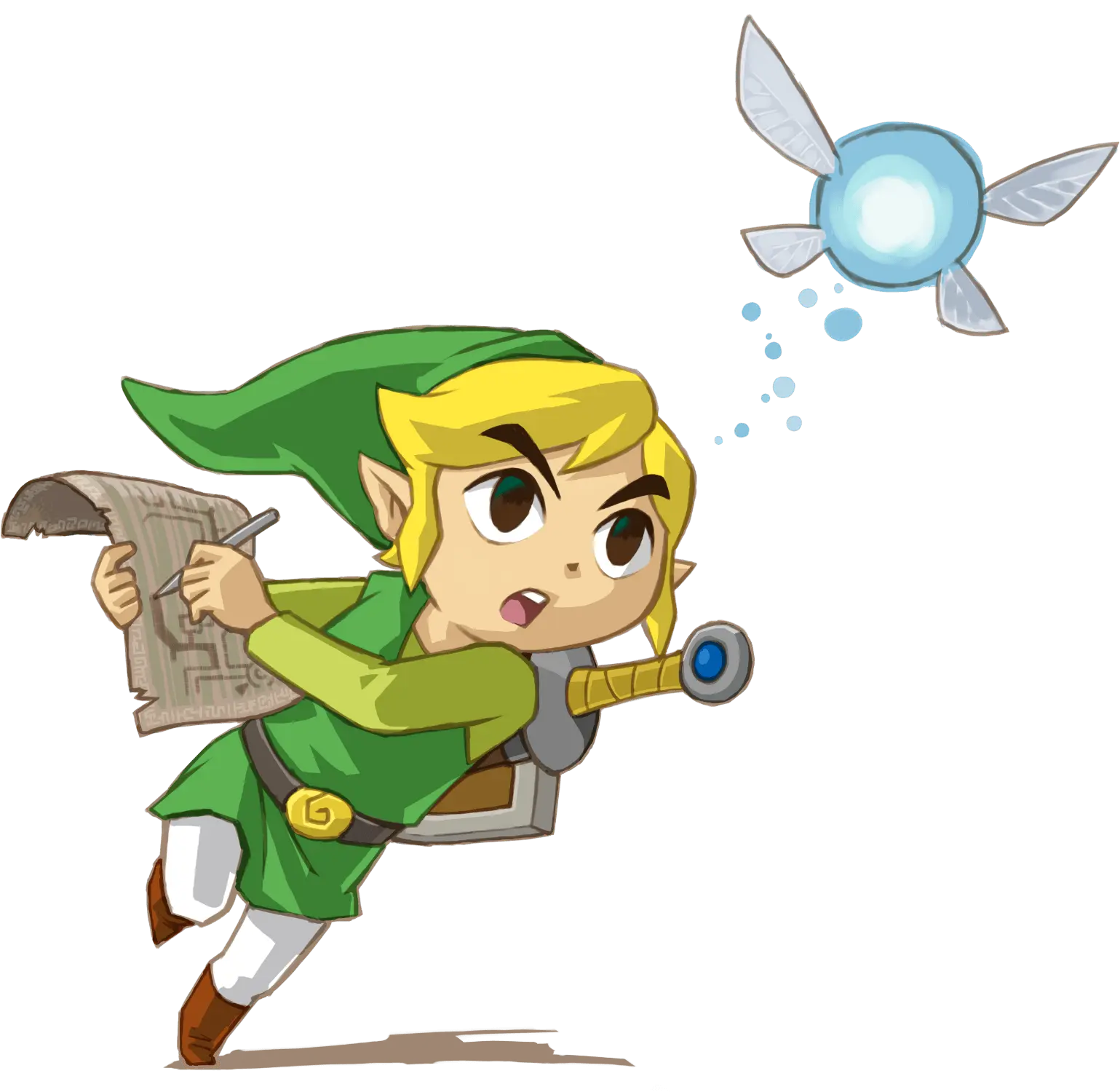 LinkThe Hero of Winds
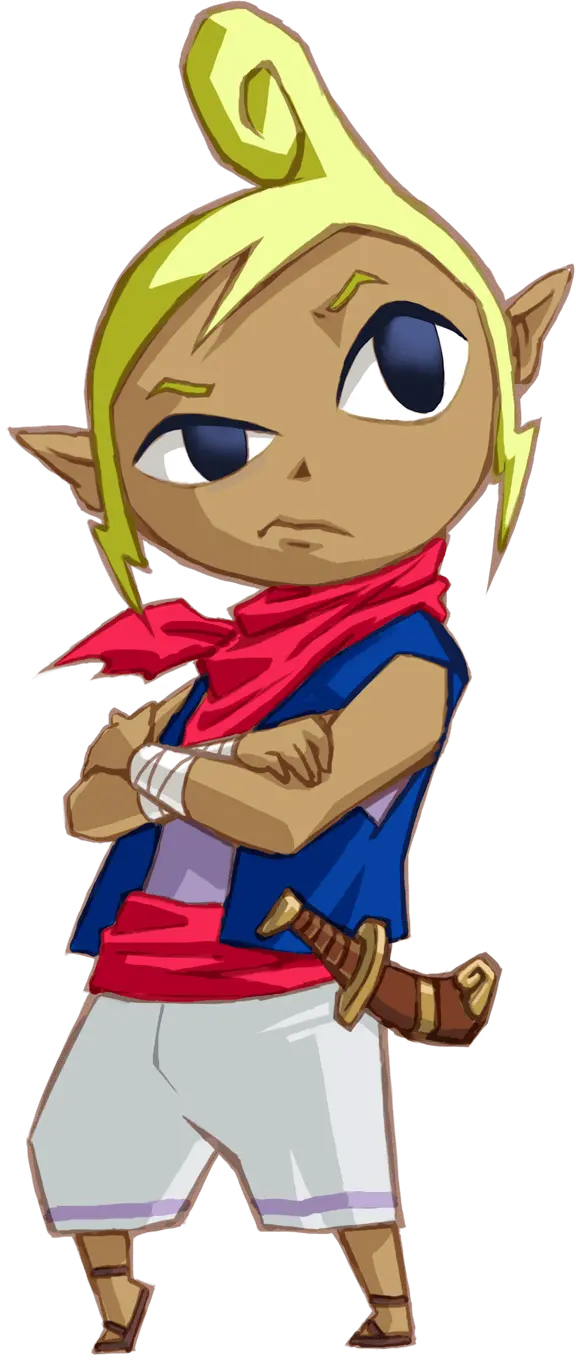 TetraPirate captain (and Princess Zelda)
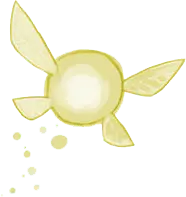 CielaFairy companion
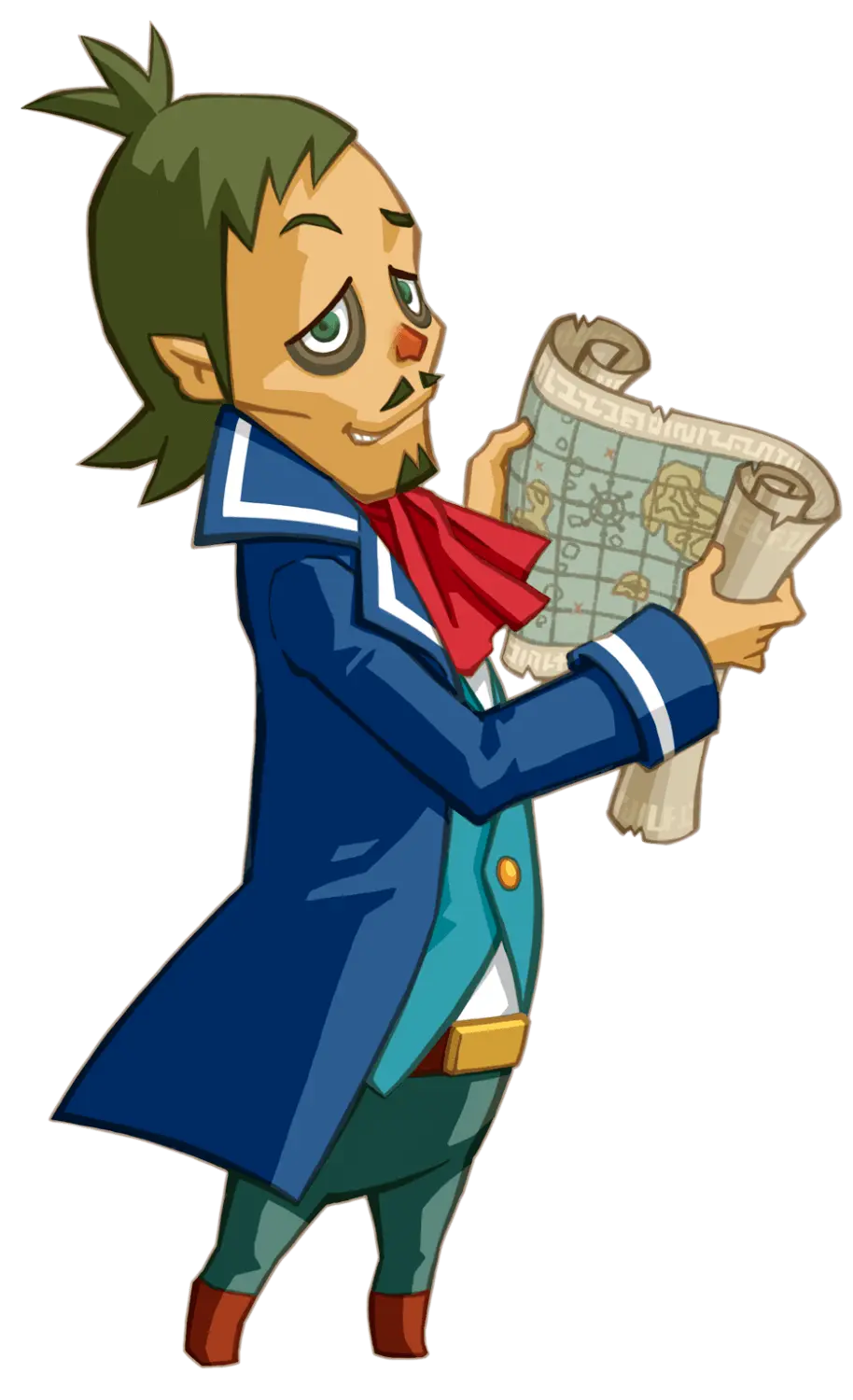 LinebeckCaptain of the S.S. Linebeck
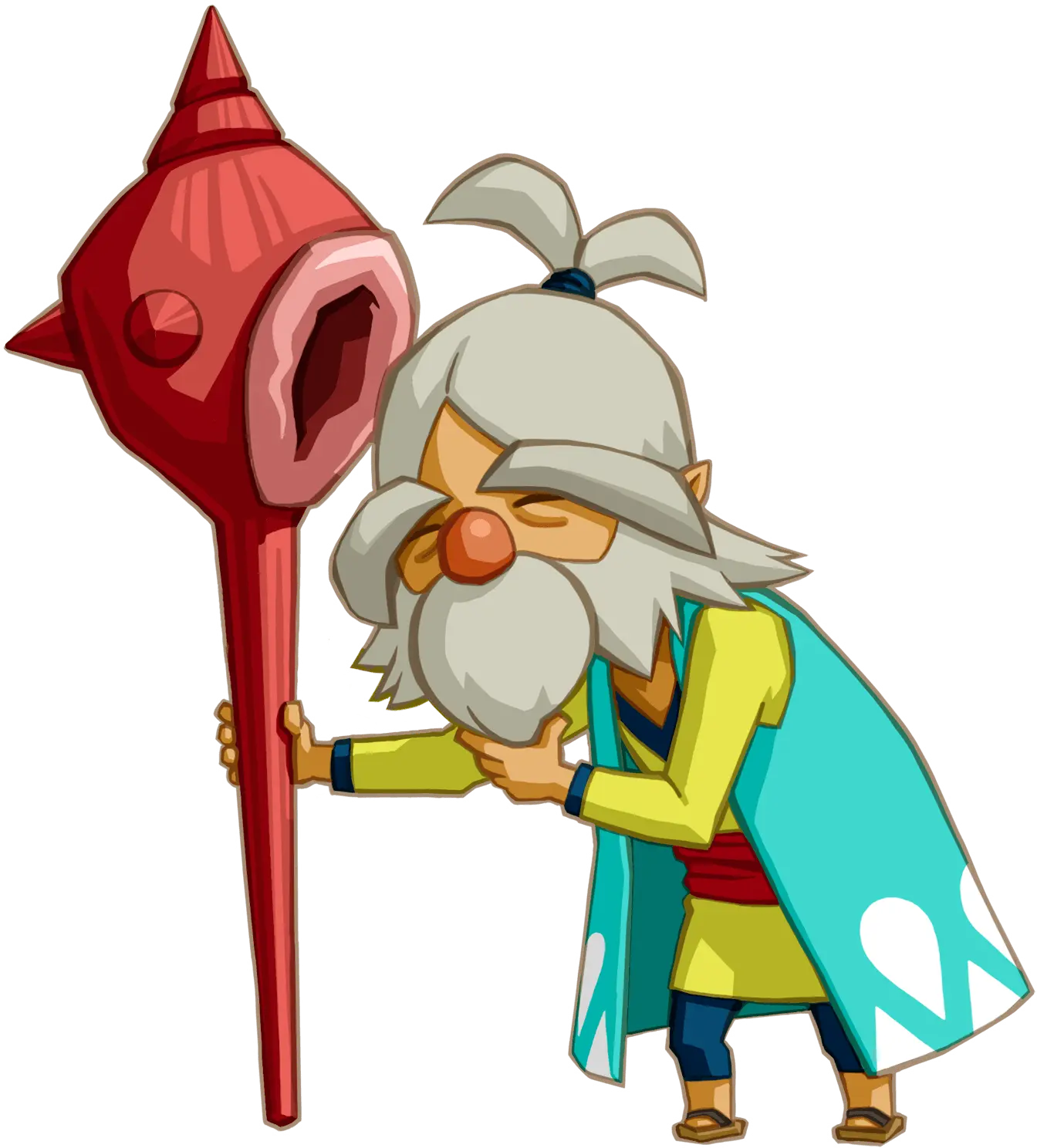 OshusThe Ocean King
 BellumThe villain
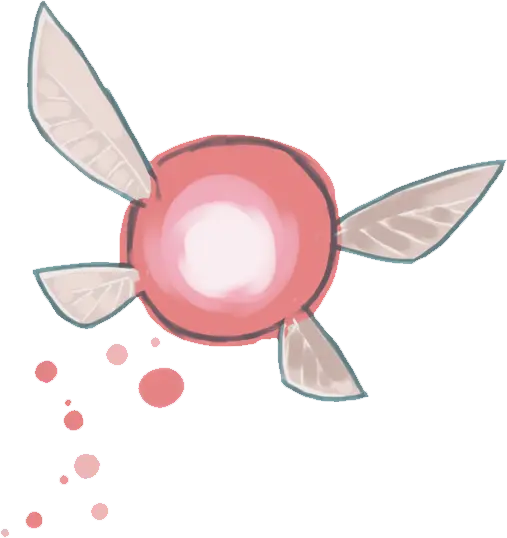 Leaf & NeriSpirits of Power and Wisdom
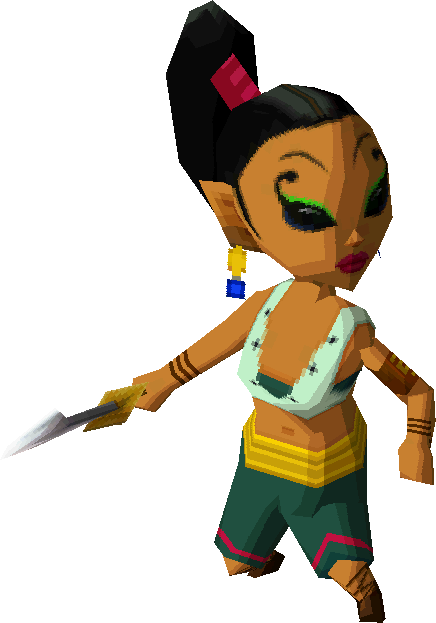 JolenePirate
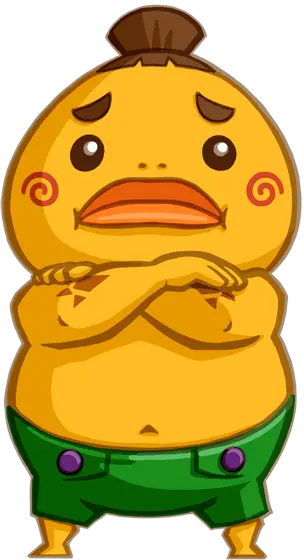 GongoronGoron partner
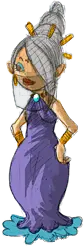 AstridFortune teller
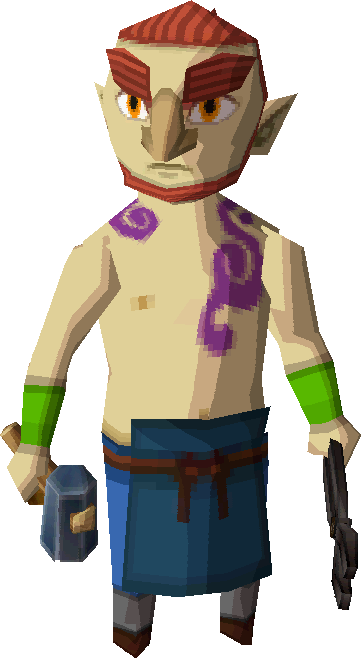 ZauzCobble blacksmith
 BeedleTravelling merchant
 BlaazTemple of FireMaster of Fire, holding the Spirit of Power.
 CyclokTemple of WindStirrer of Winds, guardian of the Spirit of Wisdom.
 CraykTemple of CourageBane of Courage, a giant crab that holds Ciela’s missing half.
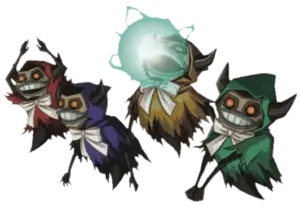 Cubus SistersGhost ShipThe ghostly sisters who haunt the Ghost Ship.
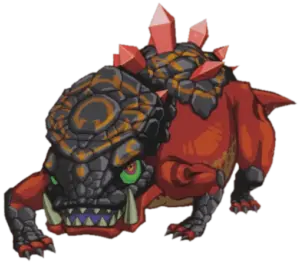 DongorongoGoron TempleArmored Lizard, beaten by Link and Gongoron together.
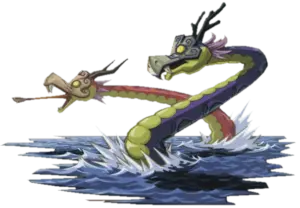 GleeokTemple of IceA two-headed dragon in the depths of the Temple of Ice.
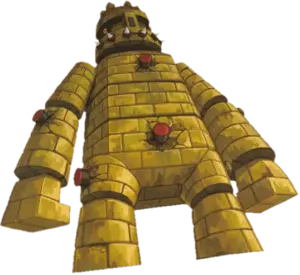 EoxMutoh’s TempleAncient Stone Soldier, a towering stone warrior of the Cobble Kingdom’s ruins.
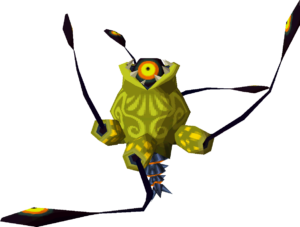 BellumTemple of the Ocean King · Ghost ShipThe final boss, fought in three phases.
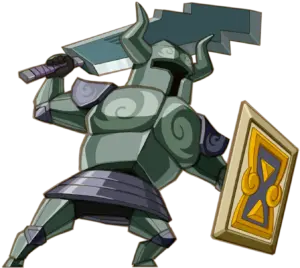 PhantomsTemple of the Ocean KingArmoured guards: slow Blue Phantoms, faster red Swift Phantoms and axe-wielding Gold Phantoms that warp to where Link was seen. Only the Phantom Sword can beat them head-on.
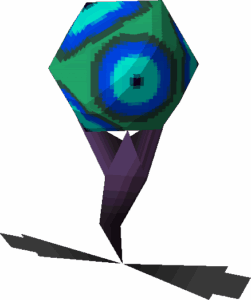 Phantom EyeTemple of the Ocean KingFloating eyes that do not attack but slow Link down and call the Phantoms.
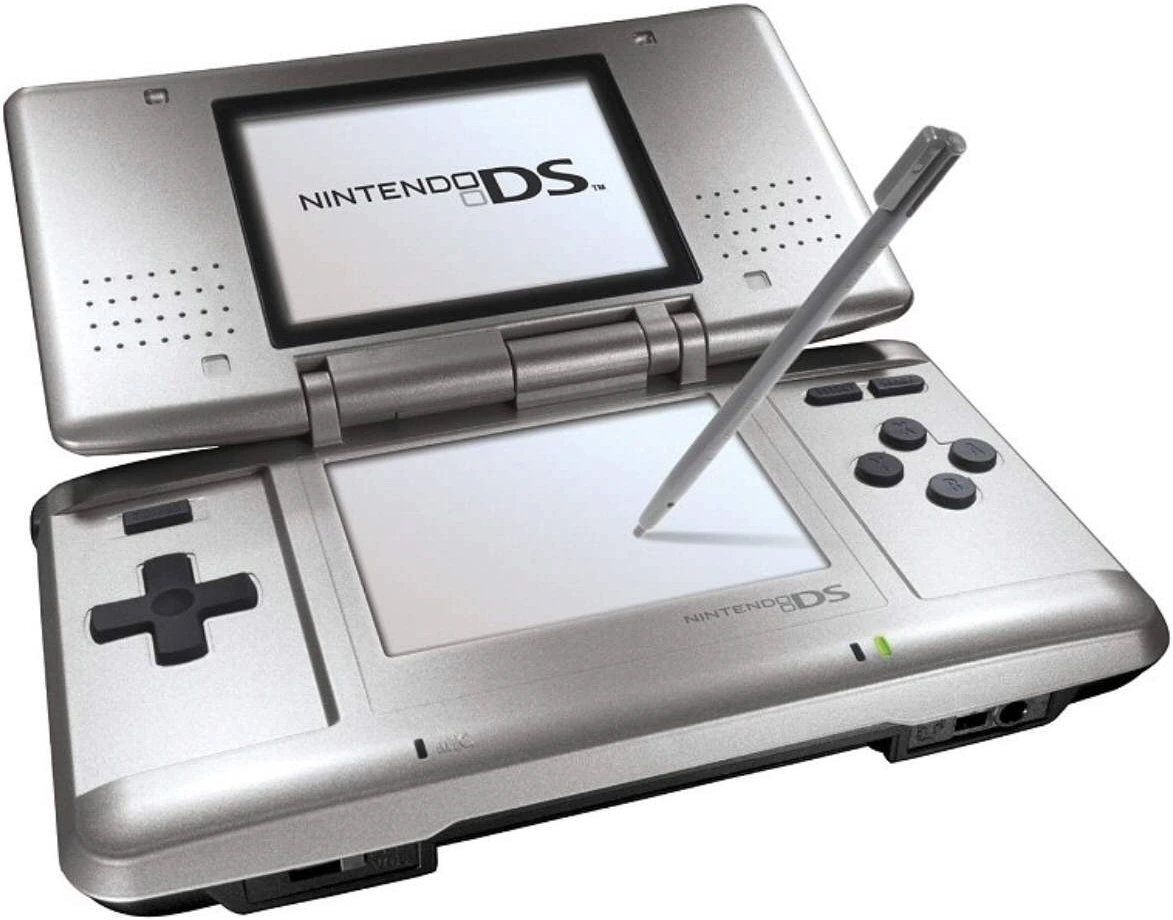 The first DS ZeldaThe series’ first game on Nintendo DS, followed by Spirit Tracks in 2009.
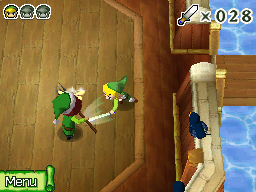 Stylus controlsThe first Zelda controlled with a touch screen: Link moves, fights and aims entirely by stylus.