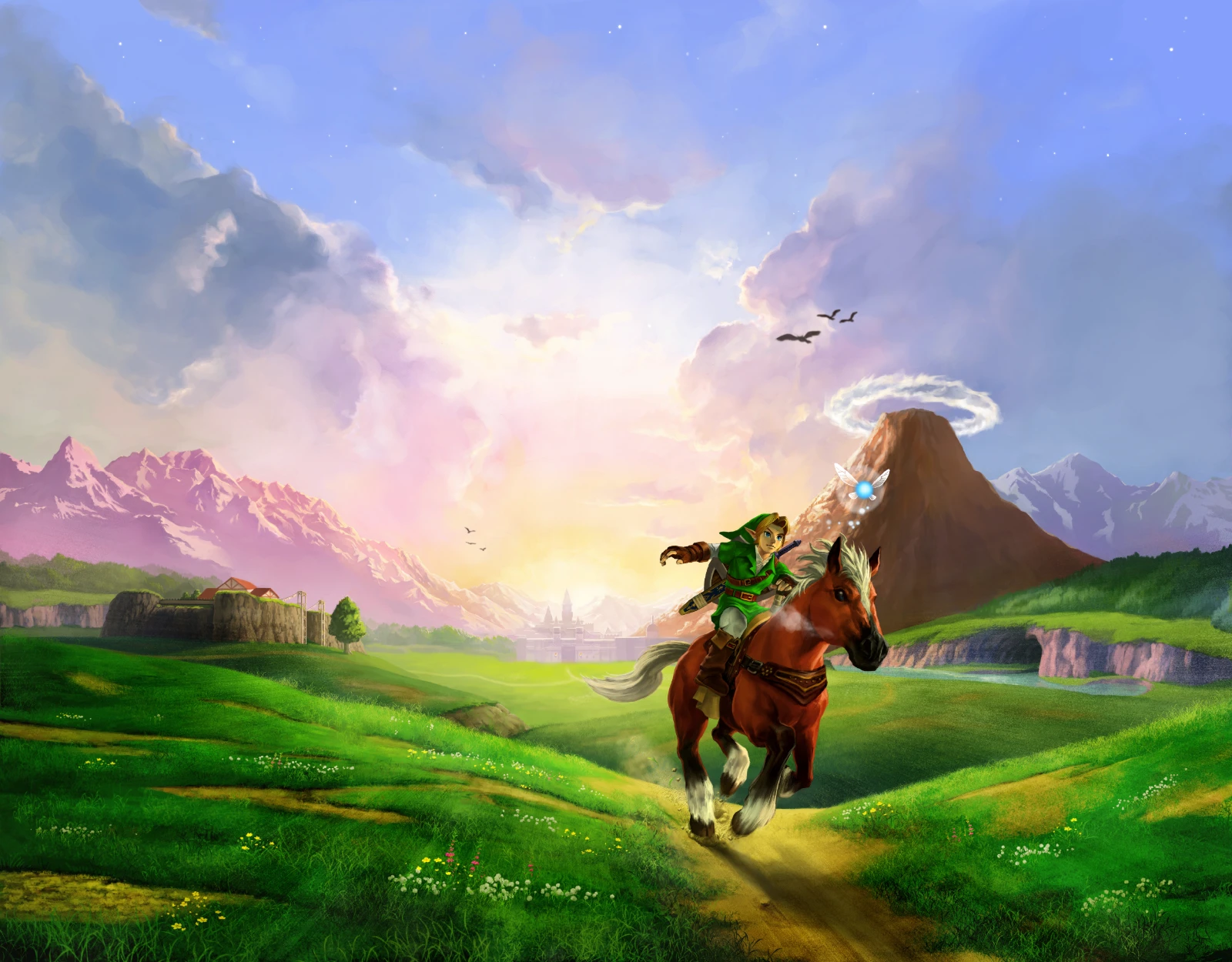
The Nintendo 64 legend rebuilt for a handheld: a sharper Hyrule in glasses-free 3D, a pack you manage with your thumbs, a Water Temple that finally plays fair and a mirrored Master Quest for anyone who thinks they know it by heart.
Released16 June 2011 (JP) · 17 June 2011 (EU) · 19 June 2011 (NA) · 30 June 2011 (AU)
The Legend of Zelda: Ocarina of Time 3D ゼルダの伝説 時のオカリナ 3D (Zeruda no Densetsu: Toki no Okarina 3D)
Platform
Nintendo 3DS (Game Card; download version from 2012)
Developer
Grezzo, with support from Nintendo EAD Tokyo
Publisher
Nintendo
Producers
Koichi Ishii (Grezzo), Eiji Aonuma and Takao Shimizu (Nintendo); Takashi Tezuka and Shinya Takahashi are credited as senior producers and Shigeru Miyamoto as general producer
Lead staff at Grezzo
Shun Moriya (programming director), Hiroyuki Kuwata (planning director, the game design), Mikiharu Ooiwa (design director, the art), Takaaki Tonooka (project manager). There was no overall director
Music
Koji Kondo (original score, supervisor); adapted by Mahito Yokota and Takeshi Hama
Players
1 (three save files)
Released (Japan)
16 June 2011
Released (Europe)
17 June 2011
Released (North America)
19 June 2011
Released (Australia)
30 June 2011
Released (South Korea)
27 September 2012
Download version
4 October 2012 (Europe) · 18 October 2012 (North America, US$39.99) · 1 November 2012 (Japan)
Nintendo Selects
March 2016 (North America) · 24 June 2016 (Europe)
6.44 million worldwide by December 2022, the best-selling Zelda on Nintendo 3DS
Metacritic
94 out of 100, from 85 reviews
Overview
Ocarina of Time 3D is the 1998 Nintendo 64 classic rebuilt for Nintendo 3DS. The story, the dungeons and the map are the ones you remember; almost everything you look at and touch is new. Tokyo studio Grezzo redrew every model and texture, lifted the frame rate from about 20 frames a second to 30, put Hyrule in glasses-free 3D and moved the menus down to the touch screen, where Link’s gear is always a thumb-tap away.
It arrived in June 2011, less than four months after the 3DS itself went on sale in Japan, in the year of Zelda’s 25th anniversary. The new handheld needed it. Nintendo’s own report on that quarter said the game “was launched and favorably received” but that the system “had few other hit titles”, and a steep price cut for the console was announced the following month.
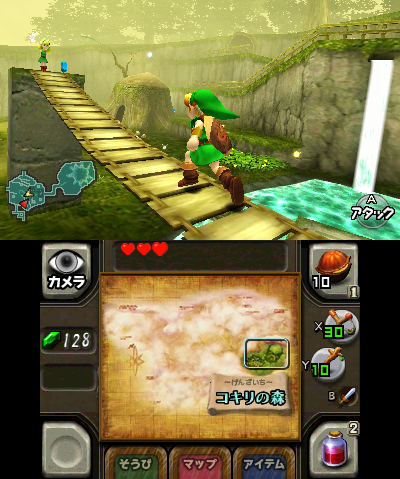
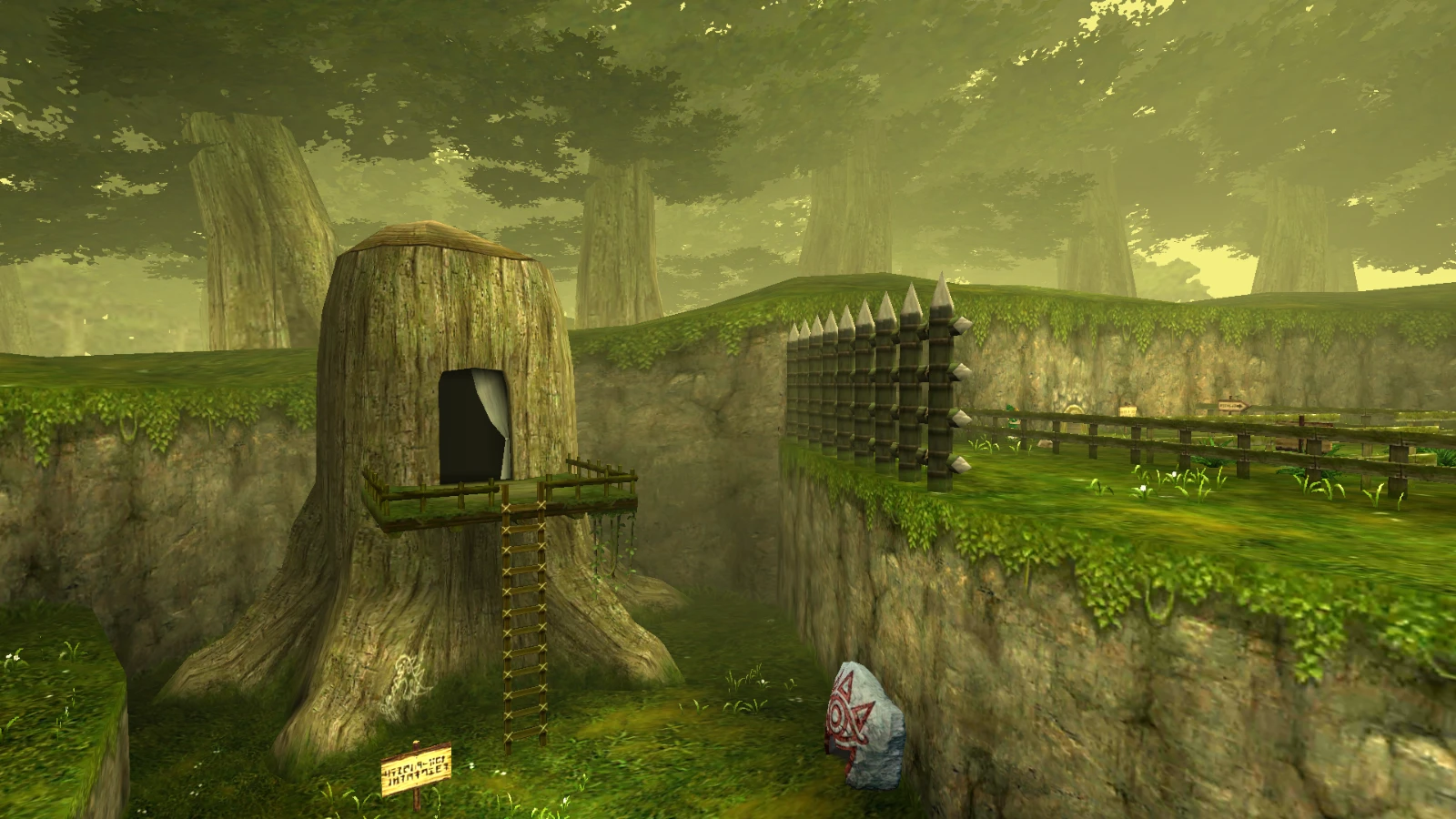
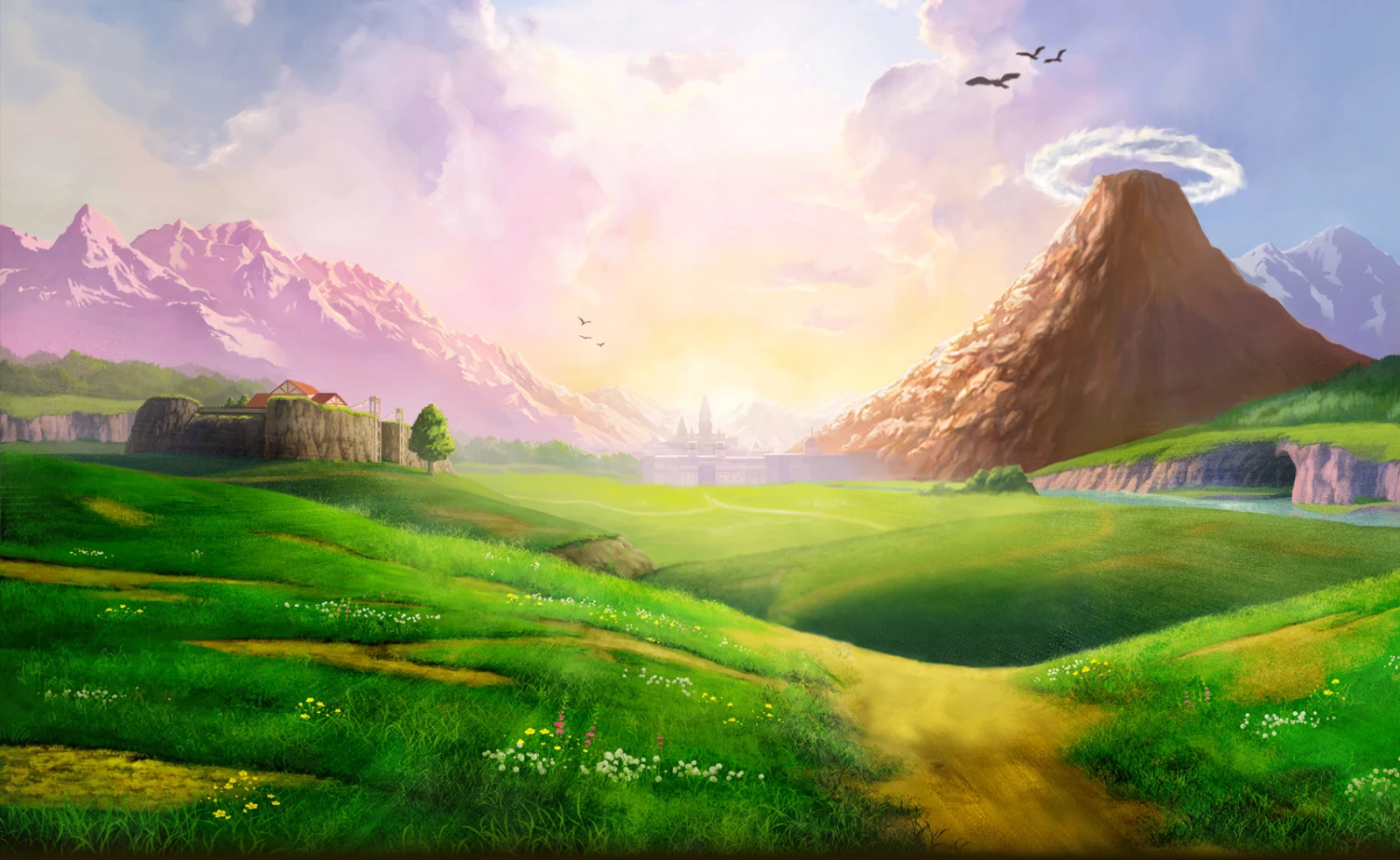
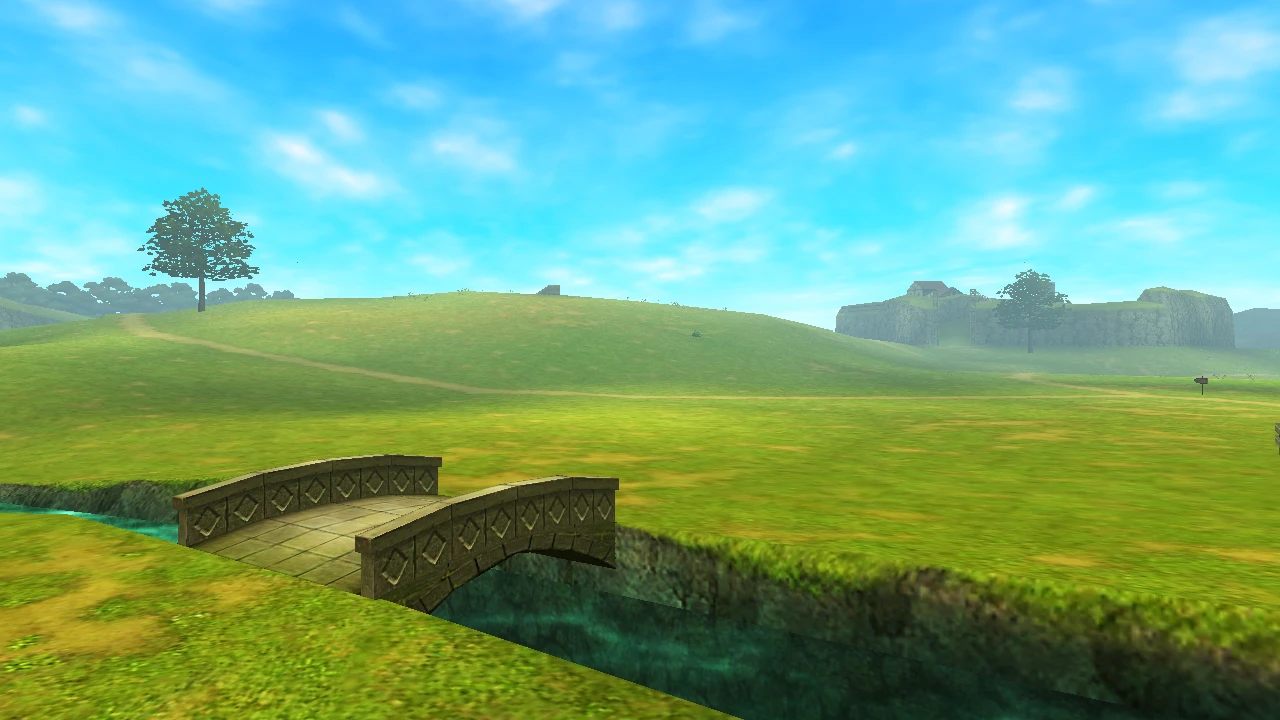
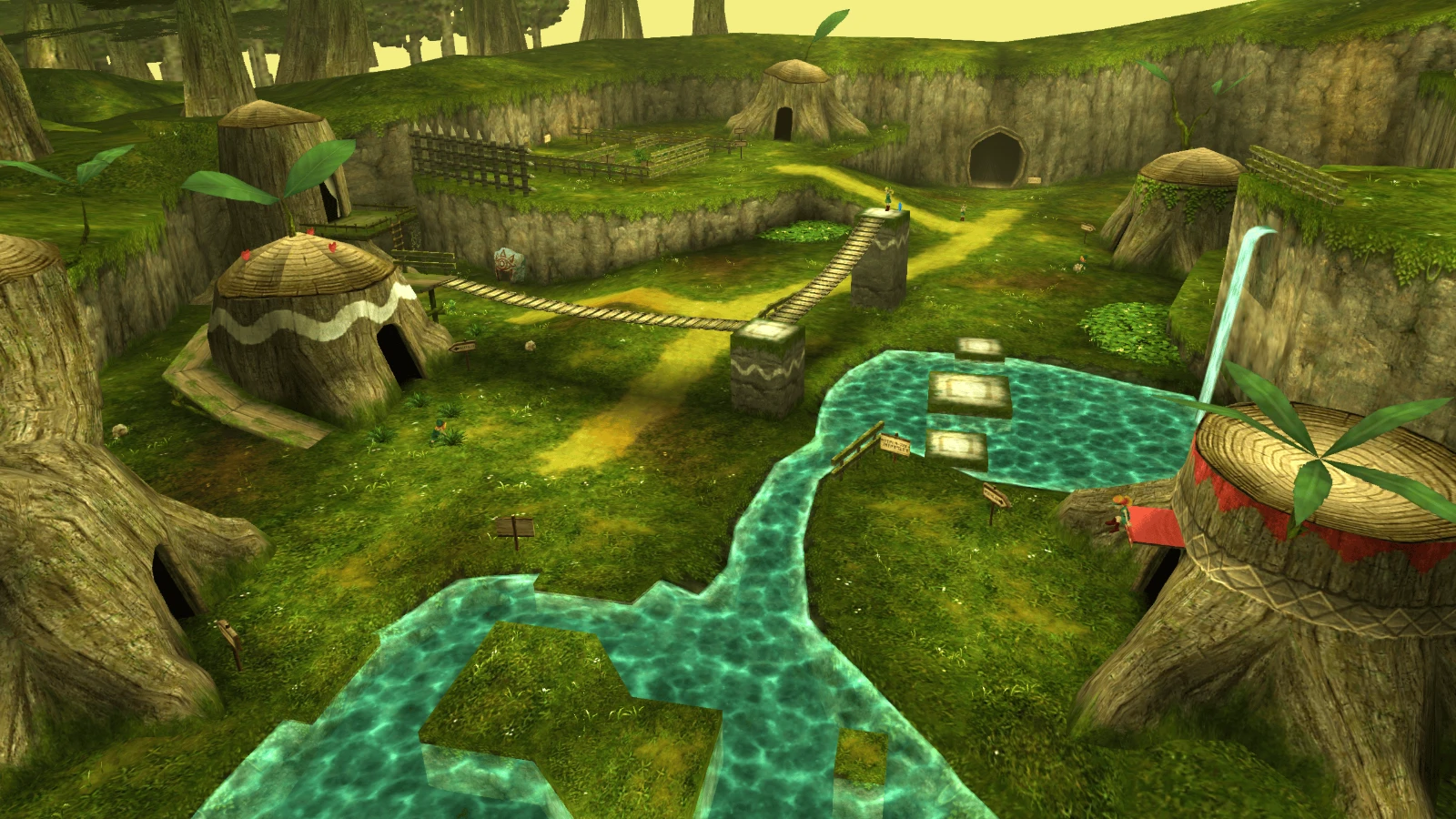
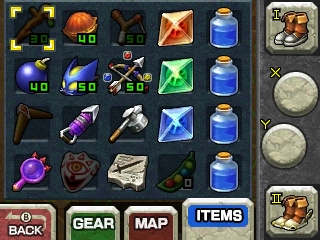
Hyrule Field, redrawn for Nintendo 3DS.Kokiri Forest, where both versions begin.Items, gear and map now live on the lower screen.
Nintendo president Satoru Iwata had asked Grezzo’s boss, Koichi Ishii, to take the job in person, and the team’s rule of thumb came from programmer Shun Moriya: “A mere port would reduce the product’s appeal by half.” So newcomers get Sheikah Stones that play short hint videos, veterans get a Master Quest that flips the whole world left to right and doubles the damage Link takes, and everybody gets a Boss Challenge mode and a kinder Water Temple.
Played today it is still a lovely way to see Hyrule: smoother than the cartridge, faithful to it, and small enough for a coat pocket. This page is about what changed and how the remake was made. For the full story, the characters and the making of the original, see our Ocarina of Time page; the 2026 remake has a page of its own.
“Whether you’re a first-time player or a regular visitor to Hyrule, The Legend of Zelda: Ocarina of Time 3D is a new adventure for everyone.”
That is how Nintendo’s UK page for the game sums it up. The same page promises a complete graphical overhaul in 3D without glasses, the analogue control of the original on the Circle Pad, a touch-based inventory and first-person aiming with the gyro sensor. Nintendo’s Japanese site puts it in a single line, 美しいハイラルの地を、3Dで駆け巡る。 (“Race across the beautiful land of Hyrule in 3D”), and calls it a new Ocarina of Time for beginners and old hands alike.
— Official description: Nintendo UK, game page for The Legend of Zelda: Ocarina of Time 3D (nintendo.com/en-gb). Japanese catchphrase from Nintendo Co., Ltd. (nintendo.co.jp), translated by Zelda Temple; the rest summarised.
Quick Answers
The questions people most often ask about the 3DS version, answered quickly and explained further down the page.
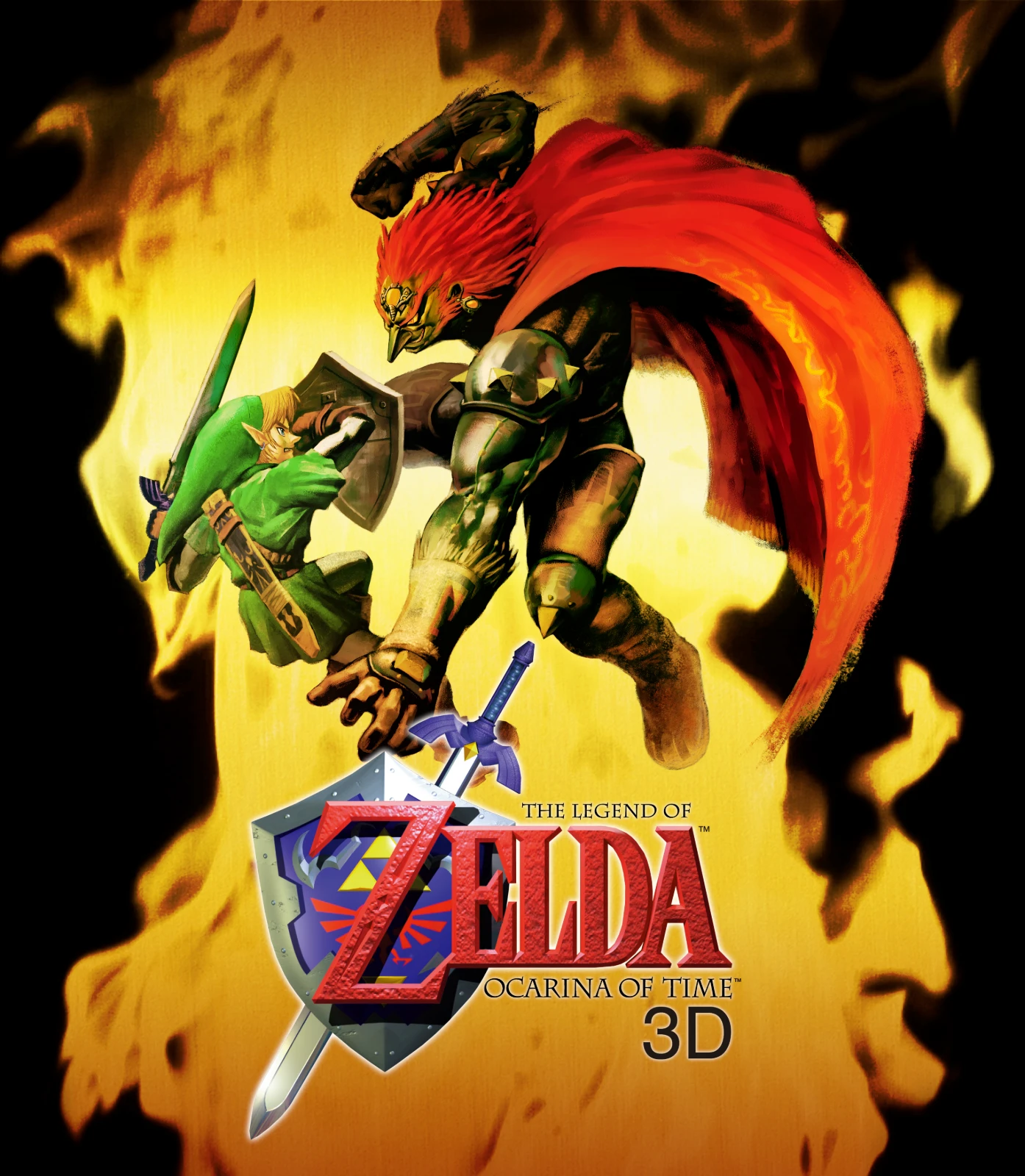
Link and Ganondorf in artwork for Ocarina of Time 3D.
Is Ocarina of Time 3D the same game as the Nintendo 64 original?
Yes in everything that matters: the same story, world, dungeons and puzzles. What changed is how it looks, runs and controls, plus some extra help for new players and extra challenge for old ones. More →
What is new in Ocarina of Time 3D?
Rebuilt graphics in stereoscopic 3D at 30 frames a second, touch-screen menus, gyro aiming, Sheikah Stones with hint videos, a Boss Challenge mode, a clearer Water Temple and a mirrored Master Quest. More →
Does it include Master Quest?
Yes. Finish the main game and you can start Master Quest, with its remixed dungeons. The 3DS version also mirrors the whole world and makes every enemy hit twice as hard. More →
Did they fix the Water Temple?
They made it fairer. The Iron Boots are now an item you switch on and off at the press of a button, and coloured markings lead you to the places where the water level changes. Producer Eiji Aonuma had wanted to put it right for 13 years. More →
Who made it, and when did it come out?
Grezzo, a Tokyo studio led by Koichi Ishii, made it with Nintendo; Eiji Aonuma produced. It came out on 16 June 2011 in Japan, 17 June in Europe, 19 June in North America and 30 June in Australia. More →
Can I still buy it?
Only second-hand. The Nintendo 3DS eShop stopped selling games on 27 March 2023, so you need a Game Card, either the 2011 release or the cheaper Nintendo Selects reissue of 2016. It plays on any system in the 3DS family. More →
Which version of Ocarina of Time should I play?
For the game exactly as it was, the Nintendo 64 original is on Nintendo Switch Online + Expansion Pack. For the newest and grandest, there is the 2026 Nintendo Switch 2 remake. The 3DS version sits in between: faithful, smoother, portable and the only one of the three with Master Quest. More →
How many copies did it sell?
About 6.44 million worldwide by December 2022, according to Japan’s CESA games white paper. That makes it the best-selling Zelda game on Nintendo 3DS. More →
What’s different from the original
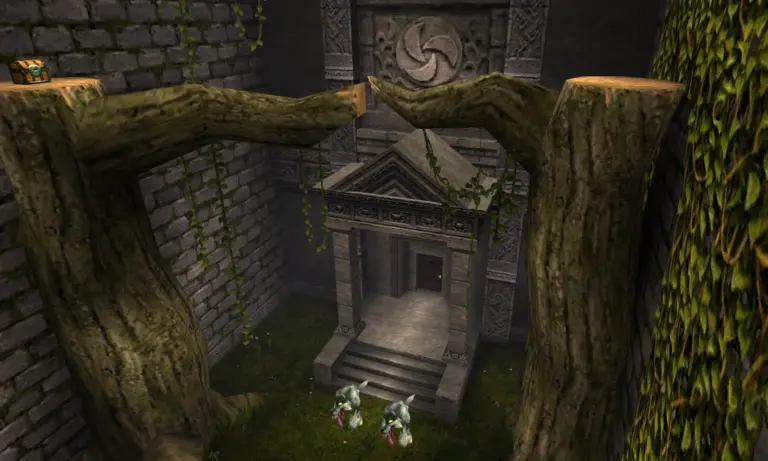
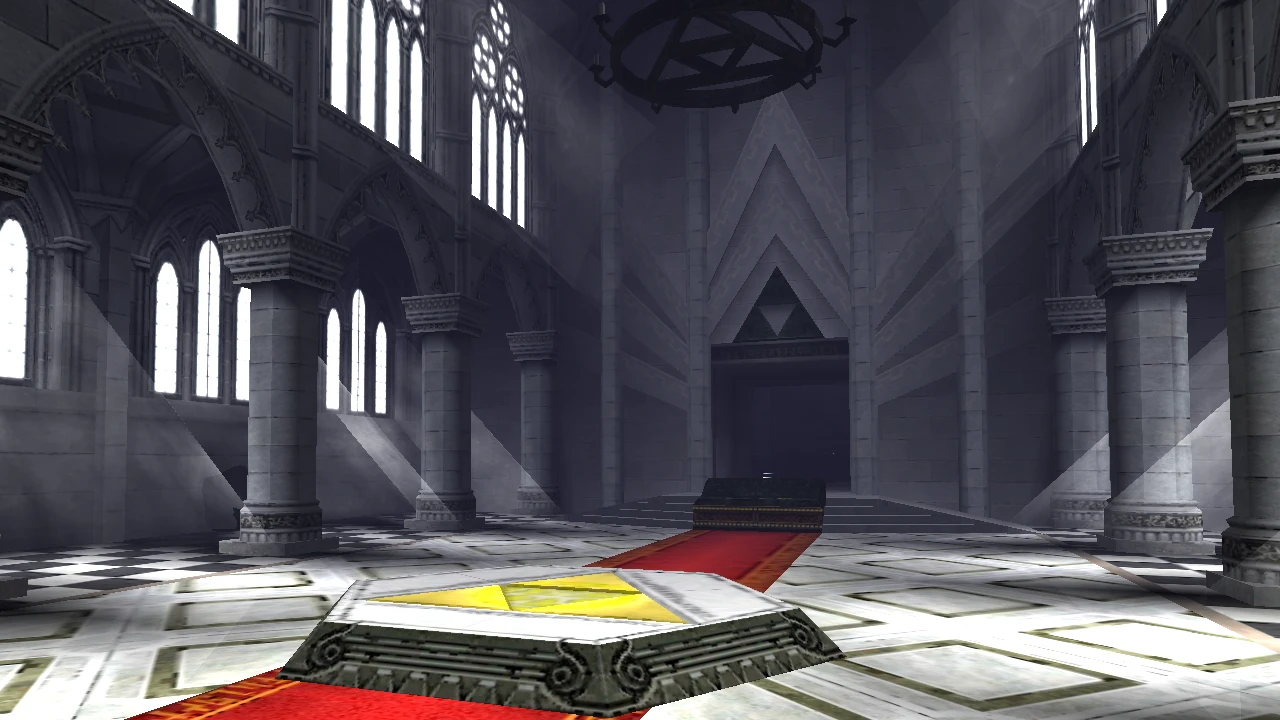
The Temple of Time, rebuilt for Nintendo 3DS.
Grezzo’s remake keeps the design of the 1998 game and replaces nearly everything around it. Earlier re-releases on GameCube and Wii simply ran the Nintendo 64 game again; this was the first version to rebuild the graphics. The table gives the short version, and the sections below go through the big differences one at a time.
One thing to know before you start: nothing here makes the adventure easier unless you ask for help. Aonuma told Iwata that the game keeps its original difficulty and offers hint videos for anyone who wants guidance.
Feature
Nintendo 64 original (1998)
Ocarina of Time 3D (2011)
Graphics
The 1998 models and textures, with flat pre-rendered pictures standing in for Castle Town Market, the Temple of Time forecourt and the insides of houses
Every model and texture redone; the pre-rendered places are now real 3D scenery; optional stereoscopic 3D
Frame rate
About 20 frames per second
30 frames per second
Screen layout
One screen, with the item and gear menus on pause screens
Most of the display moves to the touch screen, leaving the top screen almost clear
Item buttons
Three C buttons
X and Y, plus two extra slots (I and II) on the touch screen; the ocarina gets a permanent button of its own
Iron and Hover Boots
Equipment, changed on the pause screen
Ordinary items you can set to a button
Aiming
Control stick
Tilt the console (gyro sensor) or use the Circle Pad
Lock-on
Z-targeting, on the Z trigger
L-targeting, on the L Button
Hints
Navi and the Gossip Stones
Adds two Sheikah Stones that play short hint videos called Visions
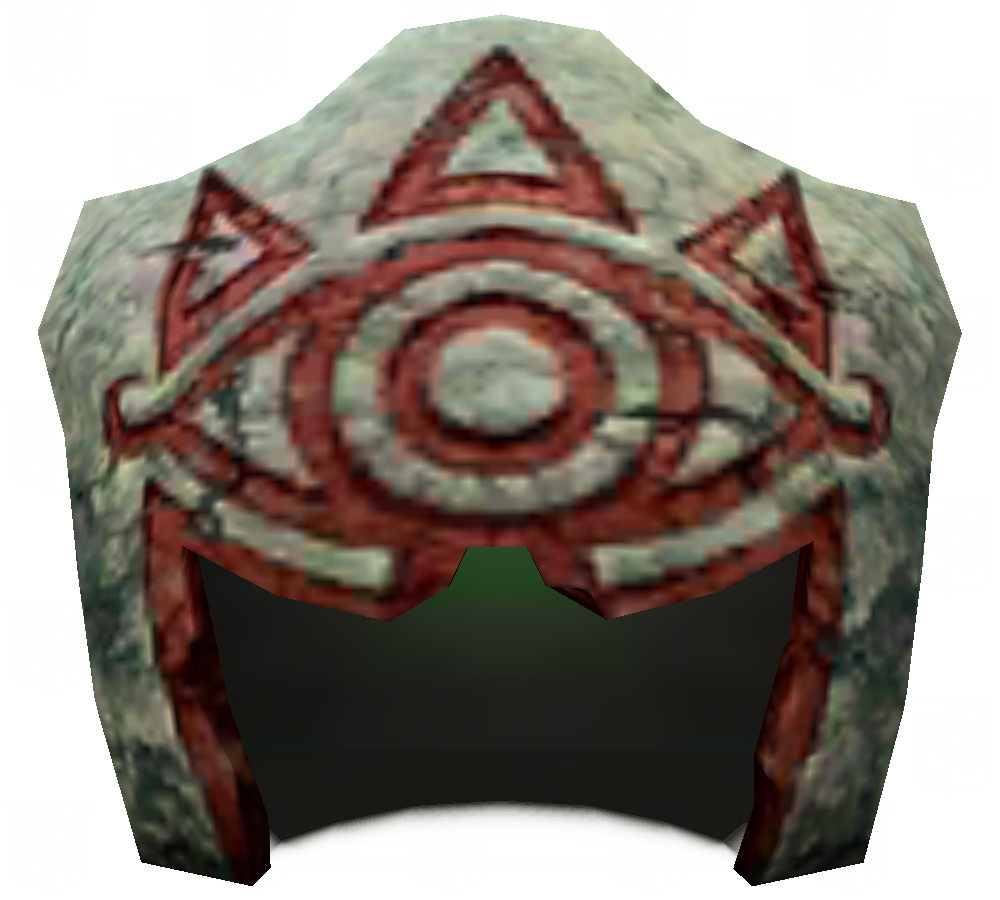
Stone of Agony
Shakes the Rumble Pak near a hidden grotto
Renamed the Shard of Agony: a chime and an on-screen signal, because the 3DS cannot rumble
Water Temple
Boots changed in the pause menu; no signposting
Boots on a button; colour-coded markings lead to the water-level points
Master Quest
Not on the cartridge (it reached GameCube on a bonus disc in 2002 and 2003)
Unlocked by finishing the game: remixed dungeons, the whole world mirrored, double damage
Boss Challenge
None
Refight beaten bosses against the clock from Link’s bed, then all of them in a row in the Boss Gauntlet
Music
Built on the fly by the Nintendo 64
The same score, carefully matched to the N64 sound, plus one new orchestral recording
A Hyrule redrawn
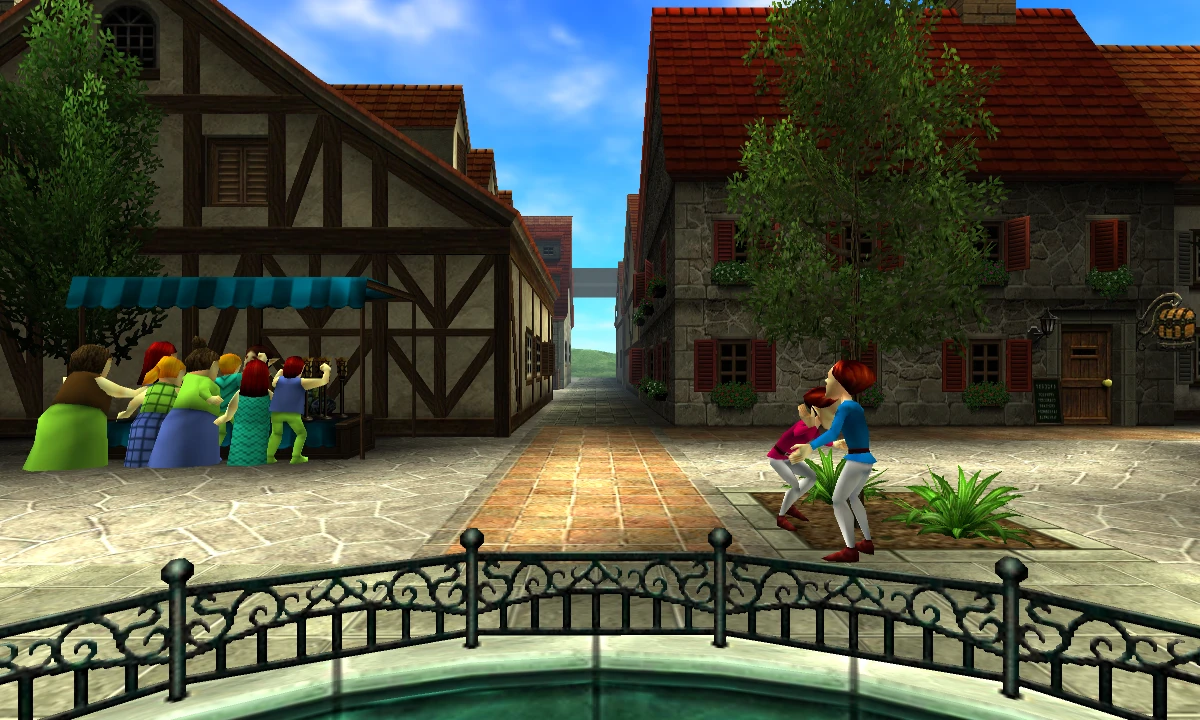
Castle Town Market, a flat picture on Nintendo 64, is real 3D scenery on 3DS.
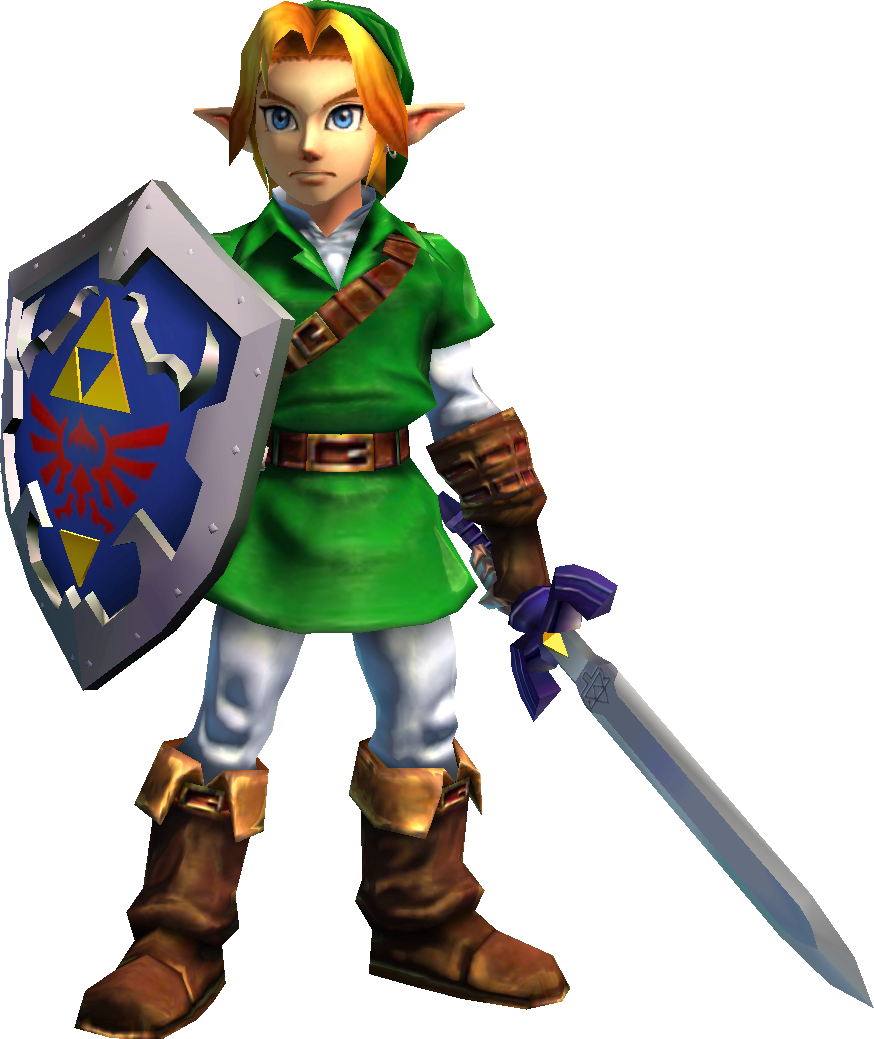
Every character, monster and wall in the game was modelled and textured again. Many characters now look much closer to their official illustrations, and Link himself gained an extra strap across his chest for his scabbard. The detail goes all the way down to the furniture: houses are now full of decorations that the Nintendo 64 could never have drawn.
The original cheated in a few busy places by showing a single pre-rendered picture and walking Link across it. Castle Town Market, the Back Alley, the square outside the Temple of Time and the house interiors are all proper 3D spaces now, mostly seen from the same fixed camera angles as before, although in the Back Alley the camera now follows Link a little. Elsewhere Grezzo added things the old hardware had no room for: a carpet running to the altar and Triforce-shaped chandeliers in the Temple of Time, paintings in the corridor before Phantom Ganon, and a completely new front for the Happy Mask Shop.
It all runs at 30 frames a second where the original managed about 20, and the Forest Temple, the Bottom of the Well and the Shadow Temple are brighter than they were. Then there is the 3D itself. Mahito Yokota, who rebuilt the music for 3DS, recommended the view from the top of the ladder in Kakariko Village as the one to try with the effect on.
A pack on the touch screen, and aiming by gyro
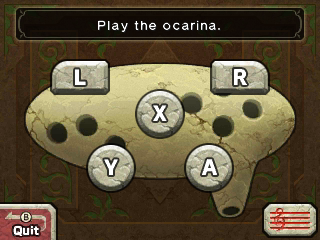
The ocarina on the lower screen, played on the buttons or by touch.
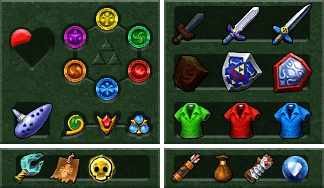
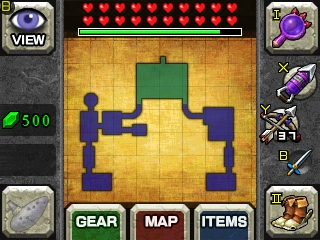
On Nintendo 64 you paused constantly, to swap an item on to one of the three C buttons or to change tunic and boots. On 3DS the lower screen does that work while the game carries on. Two items sit on X and Y, two more on touch buttons labelled I and II, and the ocarina has a permanent place in the bottom-left corner. Tapping the tabs flips the lower screen between Items, Gear and Map, and you can arrange the item grid in whatever order suits you. The top screen is left almost empty, with only a small prompt for the A Button over the action.
The change with the biggest consequences is a small one. The Iron Boots and Hover Boots used to be equipment; now they are items, so they go on a button like the bow or the Hookshot. The Hookshot itself gains a red laser sight that shows when a target is in reach, and the ocarina shows the notes of each song on the lower screen while you play, on the buttons or by touch.
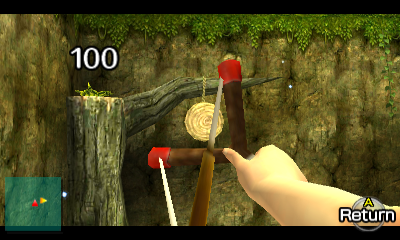
Aiming is the other big difference. In first-person view, with the slingshot, bow, boomerang or Hookshot, you can aim by physically turning the 3DS, which reads the movement with its gyro sensor. If you are on a bus, or simply prefer it, the Circle Pad works alongside it, and the gyro can be switched off altogether. Lock-on moves from the Z trigger to the L Button, so Z-targeting is officially L-targeting.
Sheikah Stones and Visions
A Sheikah Stone. Link crawls inside to watch Visions.
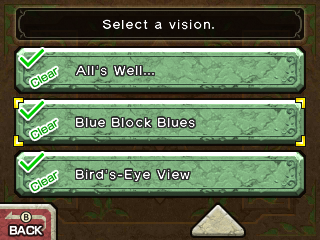
Two large stones that were not in the 1998 game now stand outside Link’s house in Kokiri Forest and inside the Temple of Time. They are Sheikah Stones, bigger and livelier cousins of the Gossip Stones, and Link can crawl into them. Inside is a menu of Visions: short clips, sorted into categories, that show the next thing to do at a sticking point or a way to hurt a boss. They stop just short of spelling out the whole answer.
Visions unlock as you go, so the stones never spoil what you have not reached. A new one is marked “New”, one you have watched gets a tick, and “Clear” appears once you have done the thing it shows. The Great Deku Tree tells you about the stones after the first dungeon, and Navi will suggest a visit if you seem to be stuck. Having to walk to a stone is deliberate: help is there, but never one button away. Master Quest has no Sheikah Stones at all.
Navi has one more new line. Once an hour she asks whether you would like to take a break.
The Water Temple, made fair
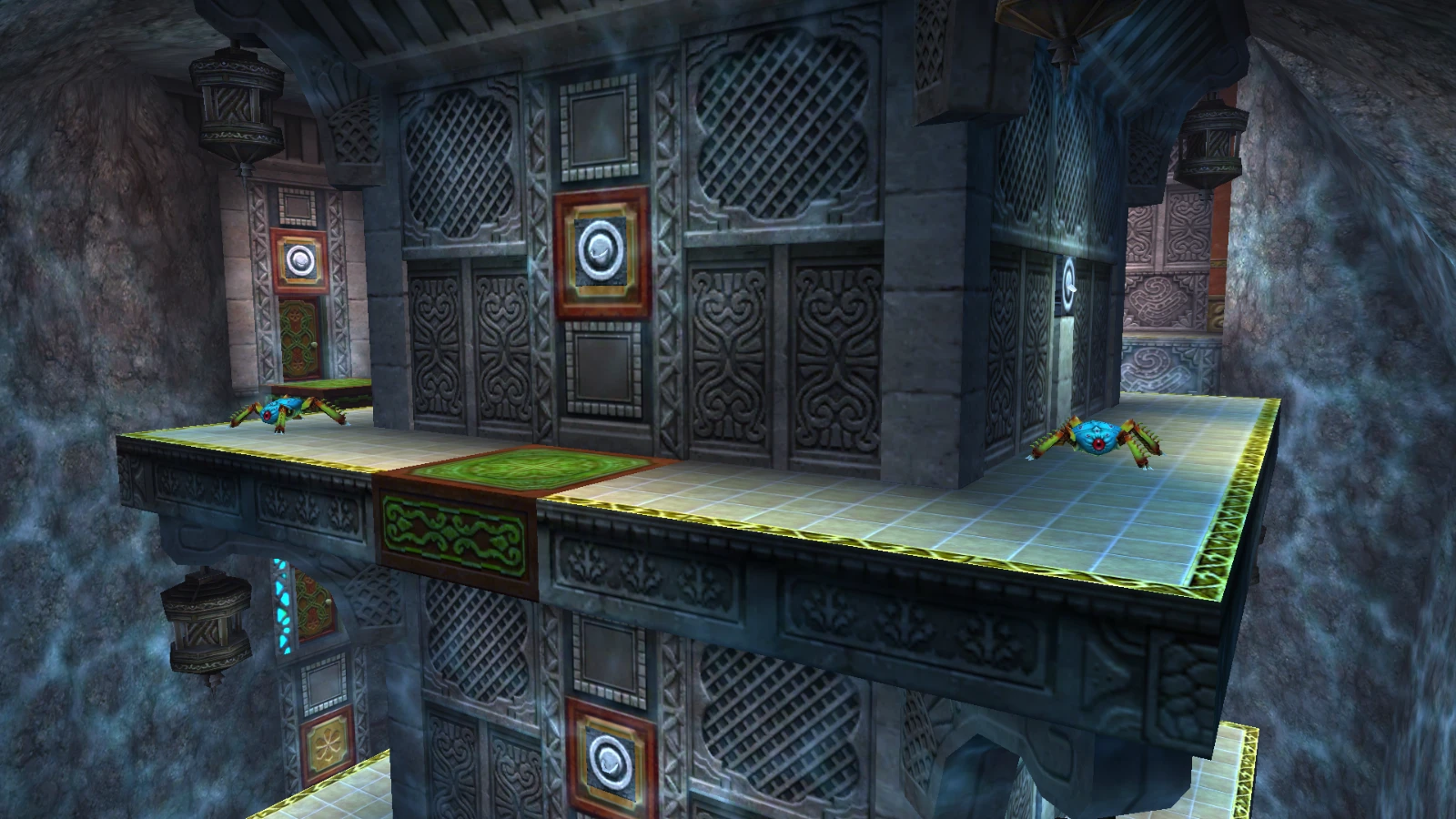
The Water Temple on Nintendo 3DS.
No part of Ocarina of Time has a reputation like the Water Temple, and nobody felt it more than Eiji Aonuma, one of the original’s directors, who designed dungeons for it and came back to produce the remake. He told Iwata that the worst of it was wondering how many players had given up there, and Iwata compared the temple to a bone that had been stuck in Aonuma’s throat for 13 years. He gave the credit for the cure to the touch screen: “Modern amenities granted my longstanding wish!”
Two things changed. The first is the boots. In 1998 every trip to the bottom of a flooded room meant pausing, putting on the Iron Boots, unpausing, and then doing it all again to float back up. With the boots on a button, Link changes in an instant. The second is signposting. Coloured markings now lead to each place where the water level can be changed, the Triforce plaques there show a gauge of how high the water will stand once you play Zelda’s Lullaby, and the scene in the central tower shows its hidden passage more clearly. The layout is the one players remember; it is simply easier to read.
Other dungeons were tidied in smaller ways. Crystal switches that used to sit behind bars in the Water and Spirit Temples were moved, a short new scene on entering the Forest Temple shows the treasure chest sitting in a tree, Wallmasters now cast a shadow shaped like a hand, and Navi warns you to keep clear of Shaboms.
Master Quest through the looking glass, and Boss Challenge
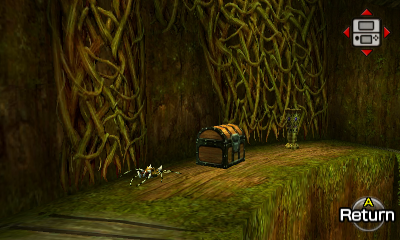
Inside the Deku Tree in the 3DS Master Quest, where the whole world is mirrored.
Master Quest began life as Ura Zelda, an expansion planned for the 64DD, and had only ever been released on GameCube. Here it is on the same card as the main game. Finish the adventure once and you can choose Master Quest when you start, and Nintendo’s Japanese site still calls it 裏ゼルダ, Ura Zelda.
The dungeons are the remixed ones from the GameCube disc, new puzzles and all, but the 3DS version adds two twists of its own. The entire world is flipped left to right, overworld and dungeons alike, so that players who know Hyrule by heart keep turning the wrong way, and Link becomes right-handed. And every enemy and boss does double damage. Aonuma did not think Master Quest would be much of a challenge if it were left as it was. Nagako Ikuta, the Nintendo coordinator who played it during development, admitted to dying more than ten times inside the Great Deku Tree, the very first dungeon, and summed the mode up: “In the Master Quest, one mistake is too many!”
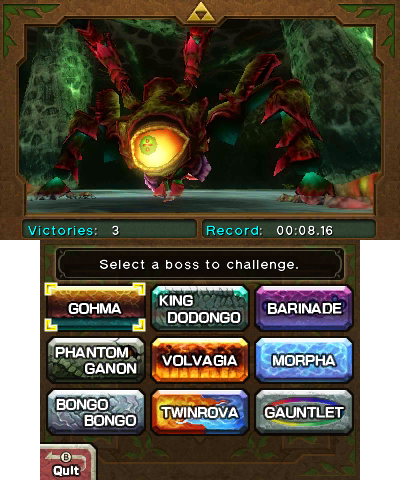
Boss Challenge is the other new mode. Once adult Link has cleared the Forest Temple, sleeping in the bed in his house in Kokiri Forest lets him fight again any boss he has already beaten. The fights are timed, and the game keeps your best time and number of wins for each. Beat every boss again and the Boss Gauntlet opens: all of them, one after another, with a treasure chest between fights and nothing to heal with but what you are carrying in bottles. Master Quest has its own Boss Challenge, with the arenas mirrored and the damage doubled.
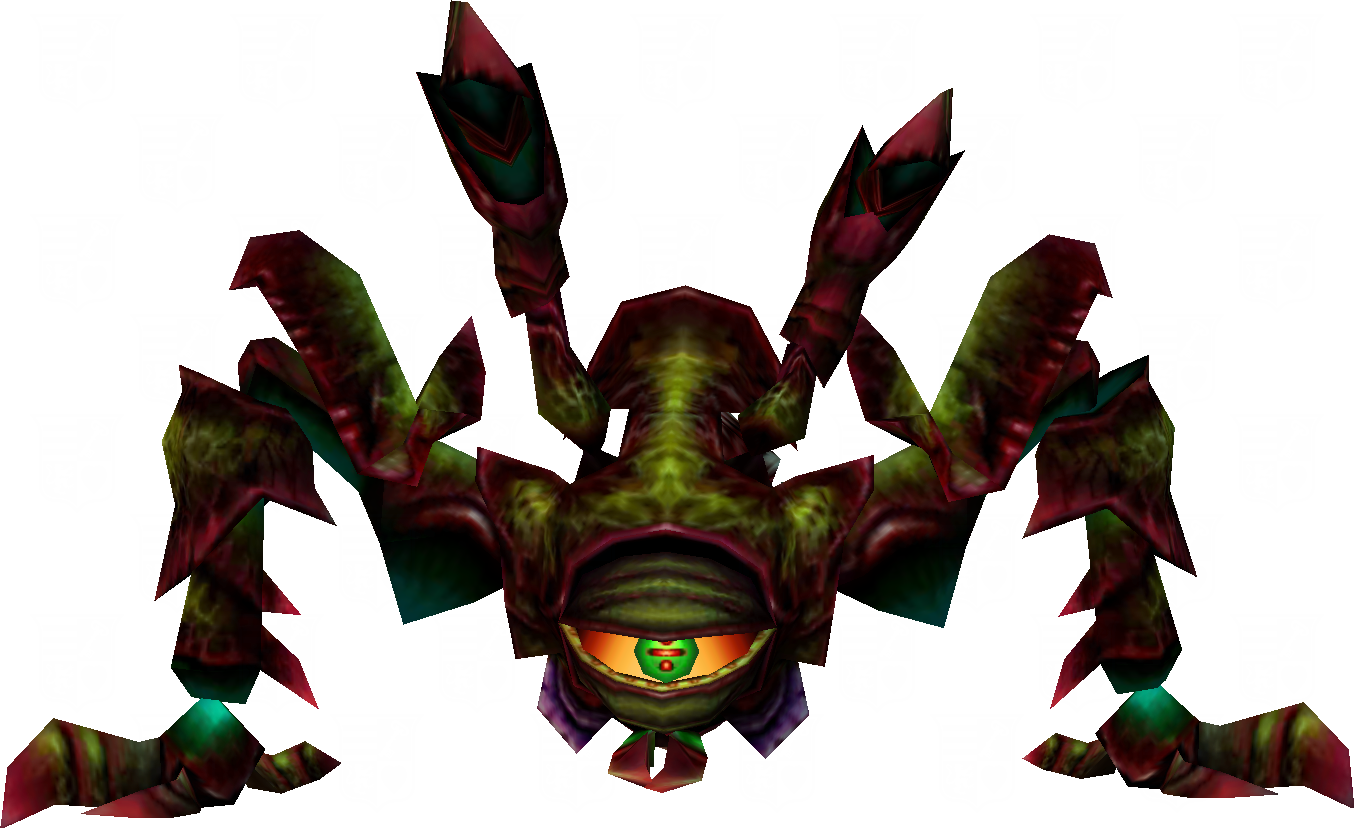
Boss Challenge: timed rematches, reached from Link’s bed.Queen Gohma, first in line for a rematch.
Small changes, and what was left alone
The Shard of Agony, which replaces the Stone of Agony.
The 3DS has no Rumble Pak, so the Stone of Agony, which shook the controller near hidden grottoes, became the Shard of Agony: it chimes and flashes a signal on screen. The Odd Potion of the trading sequence is now the Odd Poultice, and the Gerudo’s Membership Card is the Gerudo Token. Link can sleep in his own bed to get his hearts back. Text scrolls faster, the items in the trading sequence now say where to take them next, fairies in a fountain are used up one at a time, and the count of your deaths has gone from the file-select screen. The European and Australian release uses British English.
A few moments were softened or restaged. The fan wikis’ lists of changes note that the final blow against Ganon was reworked so that the Master Sword goes into his forehead instead of his mouth, and that the bird-shaped figurehead on the Shadow Temple’s boat became a Death-like figure in a red hood. In the United States the game was rated E10+, where the original had been rated E.
What Grezzo did not touch matters just as much. The map, the dungeons, the items and the order of events are the 1998 game’s. Koji Kondo insisted that the music sound the way it did on Nintendo 64. Even the slowness of the last battle was treated as part of the game: Iwata observed that its slightly heavy feeling made Ganon seem large, and Aonuma agreed that quick, sharp movement would have looked wrong. And some of the original’s best-loved bugs were left in on purpose, as the Glitches section explains.
Plot / Story
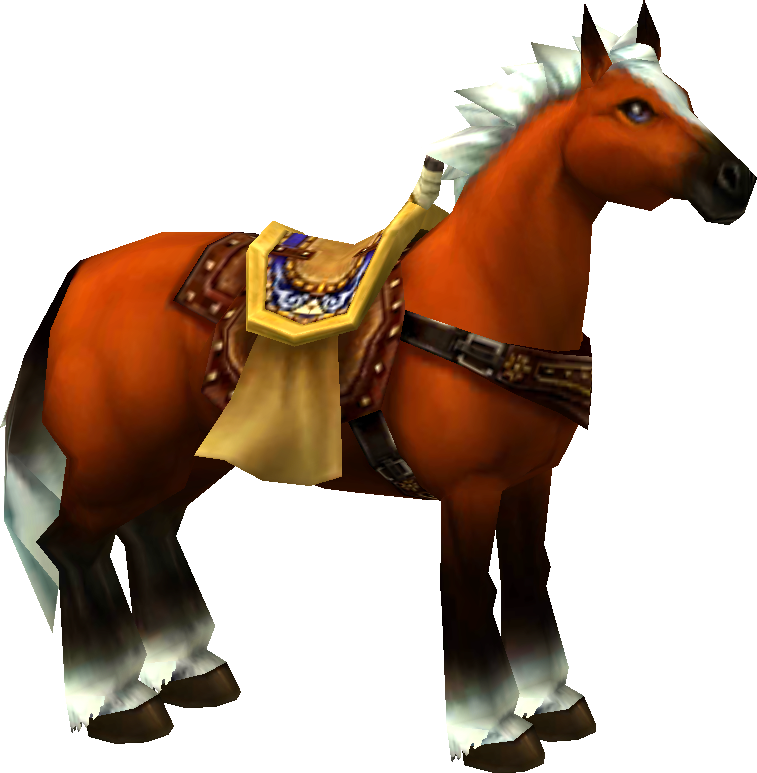
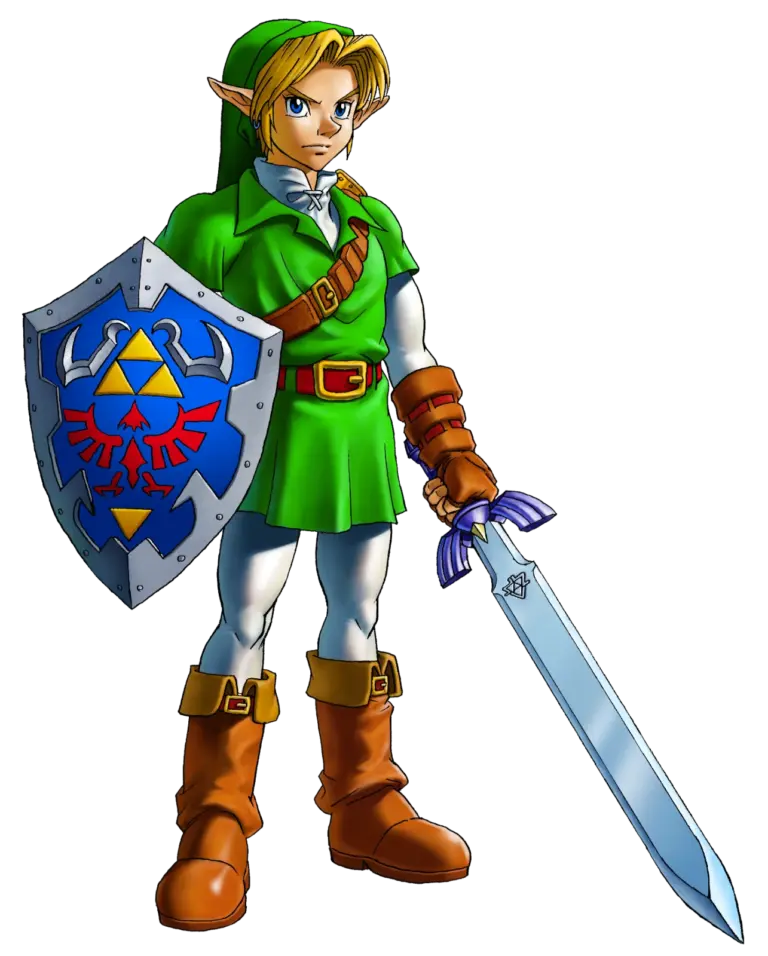
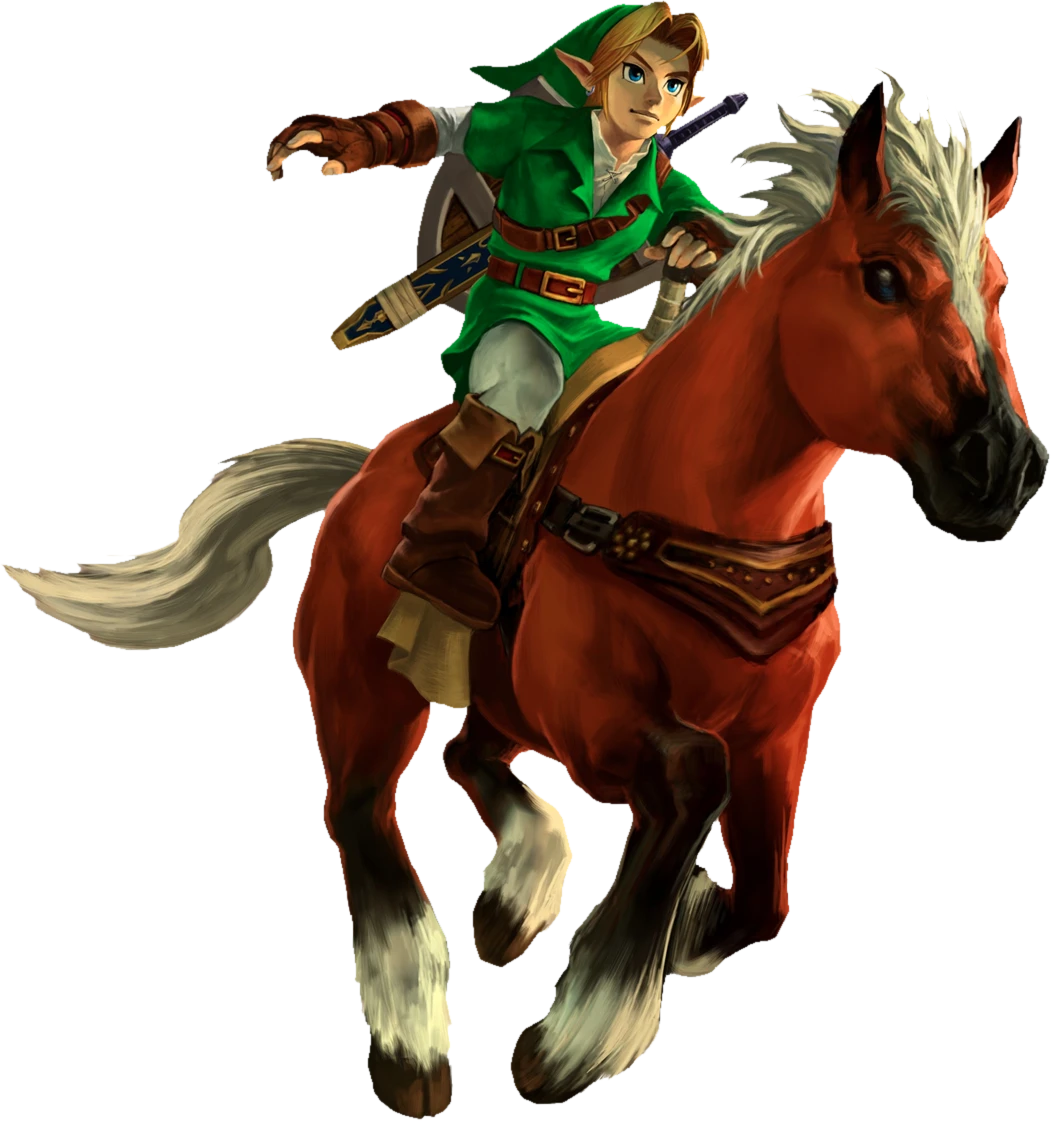
Adult Link and Epona, in artwork made for the 3DS version.
The 3DS version tells the same story as the Nintendo 64 original. Link is a boy growing up among the Kokiri, the forest children who never age, and the only one of them without a fairy. One morning a fairy called Navi finally turns up, sent by the dying Great Deku Tree, and Link is pushed out into Hyrule to find Princess Zelda. She has dreamt of what is coming: Ganondorf, king of the desert Gerudo, means to take the Triforce, the relic left behind by the three goddesses. The two children decide to get there first by gathering three Spiritual Stones.
It goes wrong in spectacular fashion. Link opens the Door of Time and draws the Master Sword, and is sealed away for seven years until he is old enough to be the Hero of Time, while Ganondorf strolls in behind him and takes the prize. The grown-up Link wakes to a ruined kingdom and a mysterious guide called Sheik, and has to wake the Sages hidden in the Forest, Fire, Water, Shadow and Spirit temples, slipping back to his childhood whenever he needs to by returning the sword to its pedestal.
Sheik turns out to be Zelda herself, Ganondorf snatches her away, and the last act runs from the top of Ganon’s Castle to a duel in the rubble with Ganon, the beast he becomes. Zelda then sends Link home to live the childhood he missed, an ending on which Nintendo later hung the whole Zelda timeline. Our Ocarina of Time page tells the story in full, with every dungeon and every character.
What Grezzo changed is the staging. Most of the character animation was redone, the camera moves in closer during conversations, a few short scenes were added to point the way, and the dialogue was adjusted for the new controls. When the original 1998 credits have rolled, a second set follows for the 3DS team, set to a newly recorded orchestral medley.
Special editions, bundles & soundtrack
Ocarina of Time 3D came out in the middle of Zelda’s 25th anniversary, and Nintendo made the most of it with a soundtrack offer, a gold-trimmed console and some unusually generous pre-order boxes.
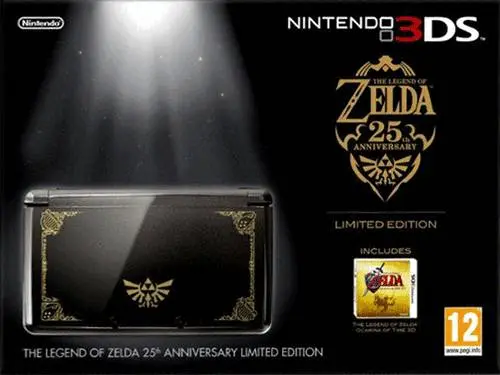
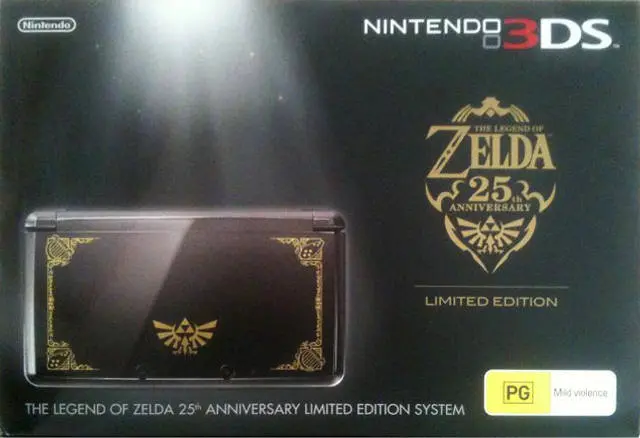
Zelda 25th Anniversary Nintendo 3DS bundleNorth America 24 November 2011 · Europe 25 November 2011A limited-edition Cosmo Black 3DS marked with the Hyrule emblem and gold-coloured decoration, sold with a copy of the game. Nintendo of America priced it at $199.99 and released it on Thanksgiving Day beside a Flame Red Super Mario 3D Land bundle. The European pack came with a double-sided sleeve for the game case, gold on the reverse.
Ocarina of Time 3D Official SoundtrackClub Nintendo · 2011A free CD for anyone who registered the game with Club Nintendo in time, announced at E3 2011 as part of the anniversary. It has 51 tracks: 50 from the game, some never released on the American soundtrack of 1998, and “End Credits 2”, an orchestral medley recorded for the remake. The North American deadline was extended to midnight on 20 June 2011; in Japan the offer ran until 31 July. The booklet carries messages from Shigeru Miyamoto and Koji Kondo.
Ocarina EditionAustralia · EB Games · 2011An Australian exclusive that packed the game with a plastic ocarina you could really play and sheet music for tunes from the game.
Pre-order extras in EuropeGreece and the UK · 2011Nintendo’s online store in Greece offered the pre-order to beat: an ocarina, a cap, a keychain, a 3DS pouch and a can of Deku Tree seeds. UK pre-orders came with a spare game case carrying a collectors’ cover and a double-sided poster, and the retailer Play.com added a 3DS slip case.
Nintendo Selects reissueNorth America March 2016 · Europe 24 June 2016Reports in January 2015 said the American Game Card had gone out of production, just before Majora’s Mask 3D arrived. It came back in Nintendo’s budget range the following year. In Europe it joined Nintendo Selects on 24 June 2016 with four other 3DS games, at €19.99 or £15.99 on the eShop.
Four Japanese guidebooksJapan · July and August 2011Nintendo’s Japanese site lists four guidebooks, from a 160-page book by the Nintendo Dream editors (1 July 2011) to Enterbrain’s 416-page Perfect Guide (20 August 2011), with Shogakukan’s Nintendo Official Guidebook (4 August) in between.
The soundtrack on Nintendo MusicNintendo Music app · 8 July 2025The 3DS soundtrack joined the Nintendo 64 one on Nintendo’s music app for Nintendo Switch Online members: 51 tracks, an hour and 14 minutes, ending with “End Credits 2”.
How it was made
Nintendo did not remake Ocarina of Time in-house. It gave one of its most celebrated games to Grezzo, a Tokyo studio whose only original release so far was a Japan-only WiiWare game, to rebuild on hardware that was not yet in the shops. Most of what follows comes from Satoru Iwata’s Iwata Asks interviews of 2011, one recorded at Grezzo’s office in Shibuya and one with the sound team.
The people who made it
Grezzo did the work, with Nintendo’s Zelda and EAD Tokyo staff alongside throughout. There was no overall director, as Aonuma later said; the credits name separate directors for programming, planning, design and sound.
Koichi IshiiDevelopment producer · CEO of GrezzoCreator of Square’s Mana series. Iwata asked him personally, and he insisted on working closely with the people who made the original.
Eiji AonumaProducer · NintendoOne of the five directors of the 1998 game, and the man who most wanted the Water Temple put right.
Takao ShimizuProducer · Nintendo EAD TokyoPassed on what he learned at weekly meetings about the unreleased 3DS, and pushed for the Hint Movies and for “Save” as the default.
Takaaki TonookaManager and programmer · GrezzoStarted the touch-screen experiments on a Nintendo DS and re-tuned the combat after the move to 30 frames a second.
Shun MoriyaProgrammer · GrezzoWrestled the frame rate and the gyro controls into shape. The credits name him programming director.
Hiroyuki Kuwata and Mikiharu OoiwaDesign and art · GrezzoThe credits name Kuwata planning director and Ooiwa design director, in charge of the art. Ooiwa went on to direct Majora’s Mask 3D.
Nagako IkutaSoftware Planning & Development · NintendoA devoted fan who volunteered for the project and became the go-between for Nintendo, Grezzo and the Mario Club testers. Her memory of the original was the yardstick.
Mahito YokotaMusic · Nintendo EAD TokyoRecreated the score for 3DS while working on Skyward Sword at the same time. Takeshi Hama adapted the music with him.
Koji KondoOriginal composer · sound supervisorRuled that the music must sound as it did on Nintendo 64, and helped design the 3DS’s speakers.
Shigeru MiyamotoProducer of the originalAsked for gyro look-around two weeks before the game was finished. The remake’s credits list him as general producer.
A call from Kyoto
Kokiri Forest in a pre-release screenshot from Nintendo World 2011.
Grezzo was founded in December 2006 and is run by Koichi Ishii, the designer who created Square’s Mana series and had worked on the first Final Fantasy games. Its first original game, Line Attack Heroes, came out on WiiWare in Japan in 2010. Iwata said it was “like fate how all the conditions pointed toward Grezzo”, so he went to Ishii himself. He invited him to Kyoto to see the Nintendo 3DS, which was still in development, and put the Zelda idea to him in the same meeting. Ishii remembered being thrilled and worried at once: one wrong step could damage one of Nintendo’s biggest names.
Ishii compared developers to cooks (“If game developers are like cooks, then the games they make are like food”) and argued that unless the people who made the original were involved, the remake might look right and still taste wrong. So they were. Aonuma produced; Takao Shimizu of EAD Tokyo sat in on weekly meetings about the new console in Tokyo and Kyoto and passed on what he learned; and Nagako Ikuta of Nintendo’s Software Planning & Development Department, a fan Iwata called “a walking dictionary of Zelda lore”, became the link between Nintendo, Grezzo and the testers at Mario Club.
The world first heard of the project at E3 on 15 June 2010, the show where the 3DS was first shown. Miyamoto at first spoke of it as a technical demonstration that might become a full game, Nintendo of America confirmed it on Twitter, and only a couple of screenshots were released. As for why this game, Wikipedia’s summary of a 2011 Iwata Asks about the 3DS has Miyamoto giving two reasons: the children who played the original were now in their mid-twenties, and he wanted people to see Hyrule in stereoscopic 3D.
“A mere port would reduce the product’s appeal by half”
Link as remodelled for 3DS. His new proportions broke at least one old puzzle.
Thirteen years separated the two versions, and the team argued about how to bridge them. Moriya’s answer became the project’s motto: “A mere port would reduce the product’s appeal by half.” But changing a game that so many people remember is dangerous too. Ishii said that what he wanted above all was “a shared sense of values with the original staff”, Tonooka talked about filling in players’ memories instead of contradicting them, and Moriya described a colleague who carried an “idealized borderline” in his head, below which no remake would do. To settle arguments they showed their work early and asked Ikuta and others how it differed from the game they remembered.
The hardest technical job, Moriya said, was the frame rate. The 1998 code was full of hand-tuned numbers that quietly assumed 20 frames a second, and he found what he called the “remains of frantic calculations” in it, sums like “10 + 1 + 2 – 5”. The original team had also worked hard to hide slowdown from players, and some of it had become part of the feel. The battle with Ganon had always been sluggish, and Iwata pointed out that the slight heaviness was what made Ganon seem so big. When Tonooka had the game check for collisions between Link and monsters 30 times a second instead of 20, movement became smoother, but Ikuta “just felt like something was different”, so he adjusted it until the difficulty was close to the original’s.
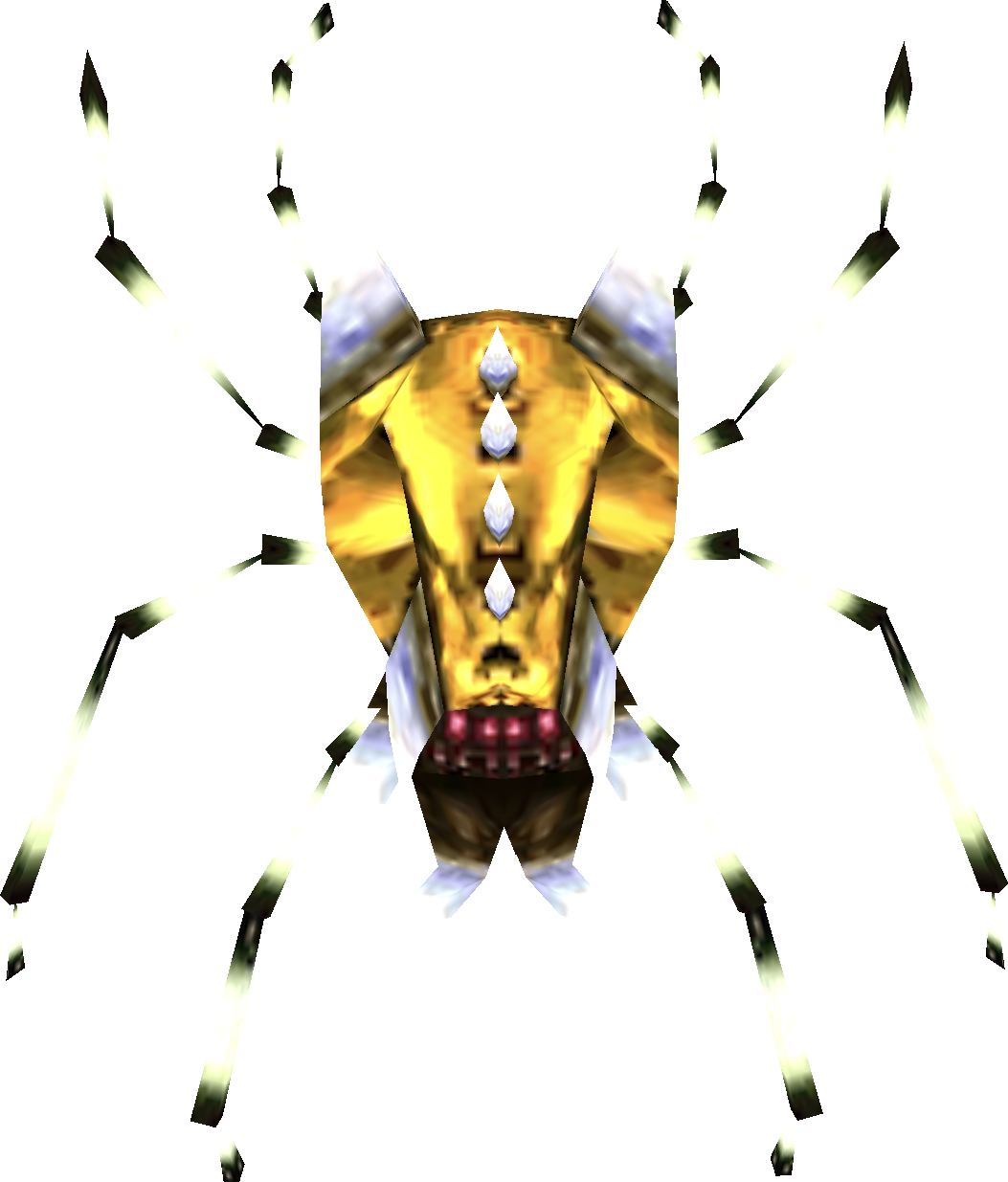
New art broke old puzzles. In a room where a spider’s web has to be burned away, the torch suddenly refused to light, and Moriya traced the fault to Link’s remodelled body: longer arms and legs and a higher waist had changed the angle at which he held things, so the tip no longer reached the flame. Stereoscopic 3D caused trouble of its own. The Z-targeting marker, drawn flat in 1998, looked wrong hanging in a scene with real depth, and was made semi-transparent to keep the sense of distance.
Working inside the old code brought the two teams closer than anyone expected. Tonooka found a comment left by one of the original programmers, something like “We got an extension. I’m worried about my bonus.” Moriya found about seven separate programs for a single boss, and an unfinished section signed off with “I’m relying on…whoever’s next.” Tonooka joked that “whoever’s next” had turned out to be Grezzo, and Aonuma had the last word: “It wasn’t a curse, but a prophecy!”
Six buttons into four
Adult Link’s Gear screen on the 3DS touch screen.
Shimizu spelled out the basic problem: “The Nintendo 64 system had six buttons, whereas the Nintendo 3DS system only has four.” Soon after work began, and before the console’s specifications were final, Grezzo set up what it called a DS Touchscreen Testing Team. Tonooka had started thinking about the difference between an upper and a lower screen on the bullet train back from hearing about the project, and thought of a way to try his ideas out on an ordinary Nintendo DS. The layout they arrived at puts touch buttons in the four corners of the lower screen, where they are easy to press with a finger, an idea Tonooka credits to Shimizu and the staff. Shimizu’s verdict was that it “had a direct effect on gameplay”.
For Aonuma the second screen settled an old score, because now “Link can put on and take off his Iron Boots in a flash!” (see the Water Temple). Nintendo and Grezzo decided together, case by case, whether something should change or stay. Ikuta recalled one request that Grezzo first said the schedule made impossible, and that they then kept improving things to the very end. “They always pull through,” said Aonuma.
Gyro controls, decided twice
Slingshot target practice. In first-person view the 3DS can be aimed by moving the console.
Looking around by moving the console was not in the original plan. According to Tonooka and Shimizu, Aonuma asked for it about a week before Nintendo Conference 2010, the trade show held at Makuhari Messe on 29 September 2010. He did not want players to have to steer their view with the stick. The gyro did not suit every situation, so Circle Pad aiming stayed in as well, and Moriya made the two work together.
At first the gyro only worked in first-person view. Then, as Aonuma tells it, “two weeks before making the final ROM, right at the last minute”, Miyamoto asked whether it could also turn the view while Link was simply walking around. Iwata’s reaction: “But that affects every single scene!” Moriya’s team made the effect very loose, then reined it in, and by his account “had to reach a conclusion in a mere three days”. Aonuma admitted the team had wanted it too but thought it was too late, and suspected that “Miyamoto-san was testing us”. He was glad they did it: with the gyro, he said, it is “like the world of Hyrule is spread out in 360 degrees”.
Hint Movies, a kinder save screen and a crueller Master Quest
Navi, who gained a new line on 3DS.
Shimizu wondered aloud how many people had ever finished the Nintendo 64 game, and suspected that plenty had stalled at the Water Temple. (Aonuma: “Gah! Stop talking about it!”) He wanted a help feature like the ones in New Super Mario Bros. Wii and Super Mario Galaxy 2, and that became the Hint Movies, which the English game calls Visions. Most of the testers at Mario Club had never played the original, and they got stuck in places nobody had predicted. The clips were recut again and again to find the right moment to stop, sometimes a fraction of a second before the answer. As Ikuta put it, “Hints have to be just enough to point you in the right direction.”
Saving changed too. Older Zelda games nudged you away from saving, and Aonuma recalled the cursor starting on “Don’t save”. On a portable machine played in short bursts, losing progress seemed the worse risk, so Shimizu suggested making “Save” the default, with a guard against saving by accident while hammering the buttons. Ishii agreed with the caution: “A game’s save data is the player’s time and memories.”
For players who needed no help at all there was Master Quest. Aonuma noted that recent Zelda games had become easier, and that Miyamoto felt a game without a challenge does not stay in the memory; hence the doubled damage. Shimizu’s summary of hints for the main game and a punishing second quest: “Quite a good balance for a product to have”. Aonuma: “Being able to brag is important.”
Koji Kondo upends the tea table
The Ocarina of Time, modelled for 3DS. The music was remade to match the Nintendo 64 sound.
Mahito Yokota of EAD Tokyo was asked in about March 2010 to oversee the younger staff handling the 3DS music, and ended up spending a year on nothing but Zelda, working on this and Skyward Sword at the same time. He began by bringing the arrangements a little more up to date. He was about half-way through when Koji Kondo told him: “Make sure you stay faithful to the Nintendo 64 sound.” Yokota gathered the team and they remade everything. That page of the interview is headed “Koji Kondo Upends the Tea Table”; Kondo’s defence is that with a different sound it would not have been Ocarina of Time.
Faithful turned out to be hard. The Nintendo 64 had built its music as it went: Hyrule Field is assembled from about 20 eight-bar pieces that play in random order and slide into battle music when an enemy comes near. The plan on 3DS was at first simply to stream recordings, but Kondo was firm about that seamless change (“You absolutely must recreate that!”), and in the end sound was given more of the processor than in any other 3DS game of the time. Each sound effect was adjusted one by one for 30 frames a second. The odd “hooit” noise in the Forest Temple music was retuned over and over for the 3DS speakers, and when Kondo heard the title music he spotted at once what was missing: “Ah, there’s no reverb.” The ocarina was supposed to sound as if it were drifting out of a forest.
One piece was recorded with an orchestra. “Only one, though,” said Yokota, who would not name it: “You’ll have to play the game to find out which song it is.” The answer is at the very end. After the original credits comes a second set for the 3DS staff, accompanied by an orchestral medley that appears on the soundtrack CD as “End Credits 2”. Kondo, who had been involved in designing the 3DS’s speakers and amplifiers, said the system had been adjusted so that orchestral music would sound good on it.
June 2011: the game the 3DS was waiting for
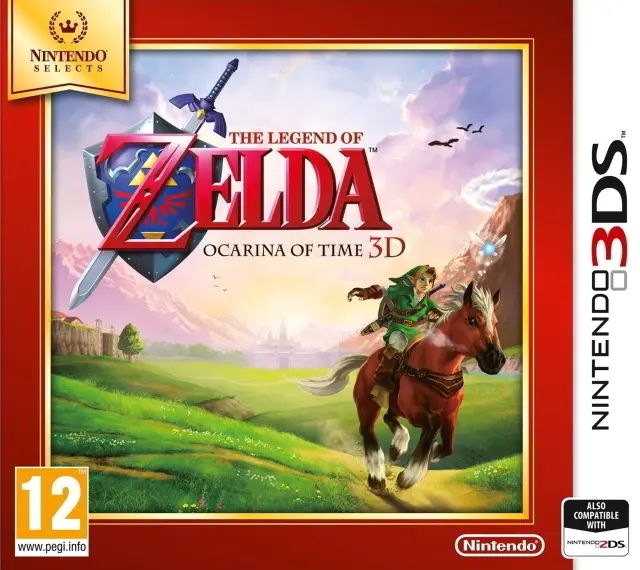
The European box. Europe got the game on 17 June 2011.
The remake was playable at Nintendo World 2011, held at Makuhari Messe for three days from 8 January 2011, where Yokota played Zelda music on the piano and, according to Wikipedia, the game had longer queues than anything else on show. On 12 April 2011 Nintendo of America announced the dates, 19 June for North America and 17 June for Europe, and confirmed that Master Quest would be on the card. Japan got it first, on 16 June, and Australia on 30 June.
The timing mattered. The 3DS had launched in Japan on 26 February 2011 and in Europe and North America a month later, at ¥25,000 or US$249.99, without a game from one of Nintendo’s flagship series, and it sold more slowly than expected. In the three months to the end of June, Nintendo sold 0.71 million 3DS consoles worldwide. Its results statement named Ocarina of Time 3D as the one well-received release of the quarter, and on 28 July 2011 the company announced that the price would drop to ¥15,000 and US$169.99.
Nintendo sold the game as part of Zelda’s 25th anniversary. In the United States, Robin Williams appeared in a television advert with his daughter Zelda, whom he had named after the princess. In Japan the adverts featured Kazunari Ninomiya and Jun Matsumoto of the boy band Arashi, and Shoko Nakagawa. And players who registered their copy with Club Nintendo in time were sent a soundtrack CD.
Secrets & extras
There are still no cheat codes, but the 3DS card hides more than the cartridge ever did. The original’s own secrets, from the Biggoron’s Sword trade to the Scarecrow’s Song, are covered on our Ocarina of Time page.
Unlocking Master Quest
The Master Quest logo.
Finish the main adventure and Master Quest becomes available: from then on you choose between the Main Quest and Master Quest when you start. There are no Sheikah Stones to bail you out.
Boss Challenge and the Boss Gauntlet
Link’s house. Sleeping in the bed starts Boss Challenge.
Clear the Forest Temple as adult Link, then sleep in the bed in his house in Kokiri Forest; Sheik mentions it when teaching the Prelude of Light. Beat every boss a second time to open the Boss Gauntlet. A night in the bed also refills Link’s hearts.
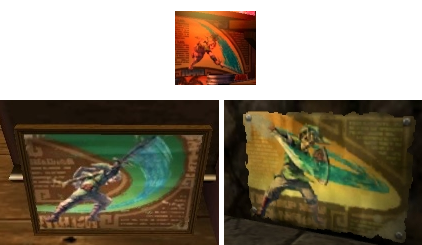
Skyward Sword posters
Artwork for Skyward Sword, hidden in the 3DS version’s Hyrule.
Skyward Sword was due later in 2011, and Grezzo hid artwork for it around Hyrule. The Zelda Wiki on Fandom lists three places: the room in the Gerudo’s fortress where soup is cooking, Malon’s house at Lon Lon Ranch and the Bombchu Shop in Castle Town.
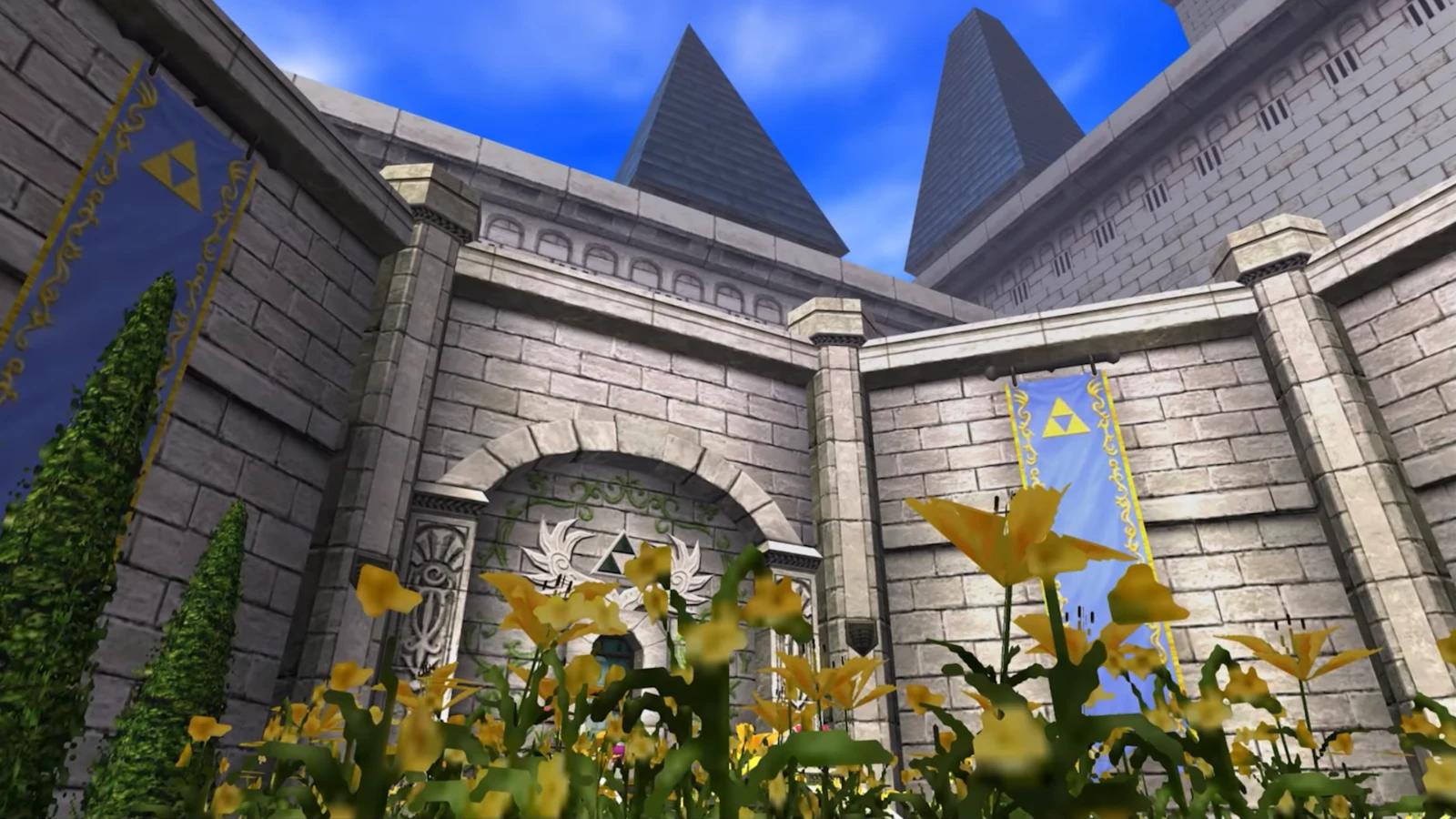
A new view in the castle courtyard
The castle courtyard, where the Mario Easter egg was updated.
The courtyard where Link meets Princess Zelda hid a Super Mario 64 Easter egg on Nintendo 64. On 3DS the joke was brought up to date, and the pictures were replaced with a scene from New Super Mario Bros.
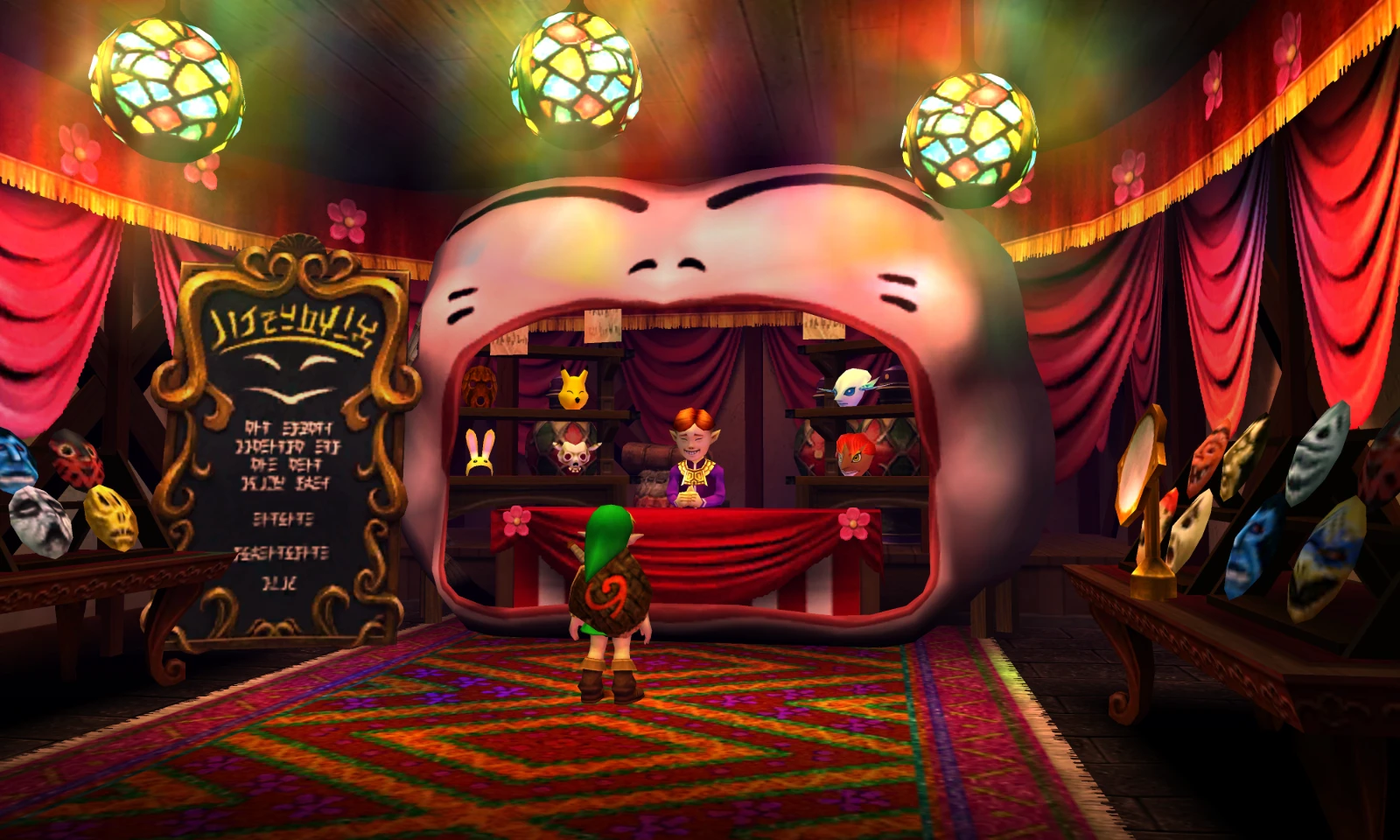
The Happy Mask Shop looks ahead
The rebuilt Happy Mask Shop in the 3DS version.
The rebuilt Happy Mask Shop has the salesman’s backpack and masks from Majora’s Mask on show inside, a nod to a sequel that did not exist when the original was made.
Take notes
Takao Shimizu’s own tip for players was the 3DS’s Game Memo: press HOME in the middle of play and write things down. He hoped people would explore the game’s many side events and not simply follow the Hint Movies to the end.
Checked against Zelda Dungeon, the Zelda Wiki on Fandom, Wikipedia, Screen Rant and Nintendo’s Iwata Asks interviews, November 2026.
Glitches, exploits and oddities
Grezzo fixed a good many of the Nintendo 64 game’s loopholes, kept some on purpose, and let a few new ones in.
Kept because they were fun
A wall-clipping glitch in the 3DS version.
Grezzo’s programmers wanted the old bugs gone. The staff who had played the original did not. “As programmers, we wanted to get rid of bugs,” Moriya told Iwata, but “the staff members who had played the old game said the bugs were fun!” The compromise was to fix anything that caused real trouble and leave in as many of the harmless, entertaining ones as they could because, in Moriya’s words, “It wouldn’t be fun if your friends couldn’t say, ‘Do you know about this?’”
Slash the sign, leave the forest
A signpost, as modelled for 3DS. Cutting the one by the forest exit lets Link slip past the Kokiri.
A brand-new bug let young Link leave Kokiri Forest before he was meant to. Cut the signpost beside the Kokiri who blocks the exit and Link can clip straight through him. The Cutting Room Floor counts it among the better-known bugs that arrived with the 3DS version.
Dampé’s endless Heart Pieces
The endless Heart Pieces glitch in the 3DS version.
Another 3DS newcomer: Dampé could be made to hand over Heart Pieces without limit. This one, the sign trick and a third known as the “Restricted Items” glitch were all fixed in the Korean and Chinese versions, which came out about a year after the rest.
The well that is only blocked by day
The Bottom of the Well in the 3DS version.
On Nintendo 64 there was a way into the Bottom of the Well without draining it: attack a Cucco until the scene of it being carried to the well plays, do a jump attack during the scene, and Link drops in. Grezzo tried to stop it by putting a rock at the bottom of the well that Link cannot swim past. The rock is only there in the daytime, so at night the trick works just as it always did.
A sword with two sizes
The Kokiri Sword, as modelled for 3DS.
Grezzo corrected the area the Kokiri Sword can hit so that it matches the blade you see, but the longer original was left in the code beside it. The Cutting Room Floor found that a glitch can bring the old reach back for as long as the sword is hidden in Link’s hand. Early screenshots show the old version, so the fix was made late.
Old favourites that no longer work
A Gold Skulltula. The endless one near Hyrule Castle is gone.
Several famous Nintendo 64 tricks were closed off. The endless Gold Skulltula does not work on 3DS. A jump attack with a Deku Stick no longer does the outsized damage it did in 1998, and the crouching stab no longer copies the power of your previous attack. The wall of the Kakariko graveyard was raised to block an early way into the Shadow Temple, a crystal switch in the Forest Temple became a floor switch to stop players doing things out of order, and a bug that could shut you out of a Deku Nut upgrade once you had the Poacher’s Saw was fixed.
Speedruns
The 3DS version has its own speedrunning categories, with separate records for the main game and Master Quest. When we checked in November 2026, the Zelda Wiki on Fandom listed an Any% record of 27 minutes 37 seconds by pal62 (July 2022) and a glitchless record of 3 hours 41 minutes 27 seconds by gymnast86 (April 2022), with the Master Quest Any% record at 29 minutes 4 seconds by Audiokillers (November 2021). Records move, so treat those as a snapshot.
Videos & media
Two pieces of Nintendo’s 2011 marketing, both as uploaded by IGN: the trailer for the 3DS version, and the American television advert with Robin Williams and his daughter Zelda.
Nintendo’s official trailer for Ocarina of Time 3D, from IGN’s YouTube channel.
The advert starring Robin Williams and Zelda Williams, from IGN’s YouTube channel.
Trivia & facts
Inside its files the project is called “Queen”, and Grezzo’s Majora’s Mask 3D was “Joker”. The string “ShUnqueen” turns up all over the data, possibly after the main programmer, Shun Moriya.
Grezzo takes its name from the Italian diamante grezzo, a diamond in the rough.
The Visions menu inside a Sheikah Stone.In Japanese the Shard of Agony is the ひびき石 (roughly “echo stone”), replacing the original’s もだえ石; the Visions are plain ヒント映像, “hint videos”; and Master Quest is 裏ゼルダ, Ura Zelda, the name of the 64DD project it grew out of.
Epona. An unused whistle for calling her is still in the files.Two old models of Link are still on the card, in files tagged “ultra” after Ultra 64, the Nintendo 64’s development name. So is an unused reed whistle once meant for calling Epona, an idea that resurfaced in Twilight Princess.
The files also hold titles for Visions that were never used, among them “Passing the Torch” for the Deku Tree, “Down the Hatch” for Jabu-Jabu’s Belly and “Floor, Meet Hammer” for the Fire Temple, and an unused category for the Bottom of the Well.
A Cucco.Yokota’s advice was to play with the volume up. His example was the Cuccos at Lon Lon Ranch, whose clucking seems to come from all around you even though the speakers do not move.
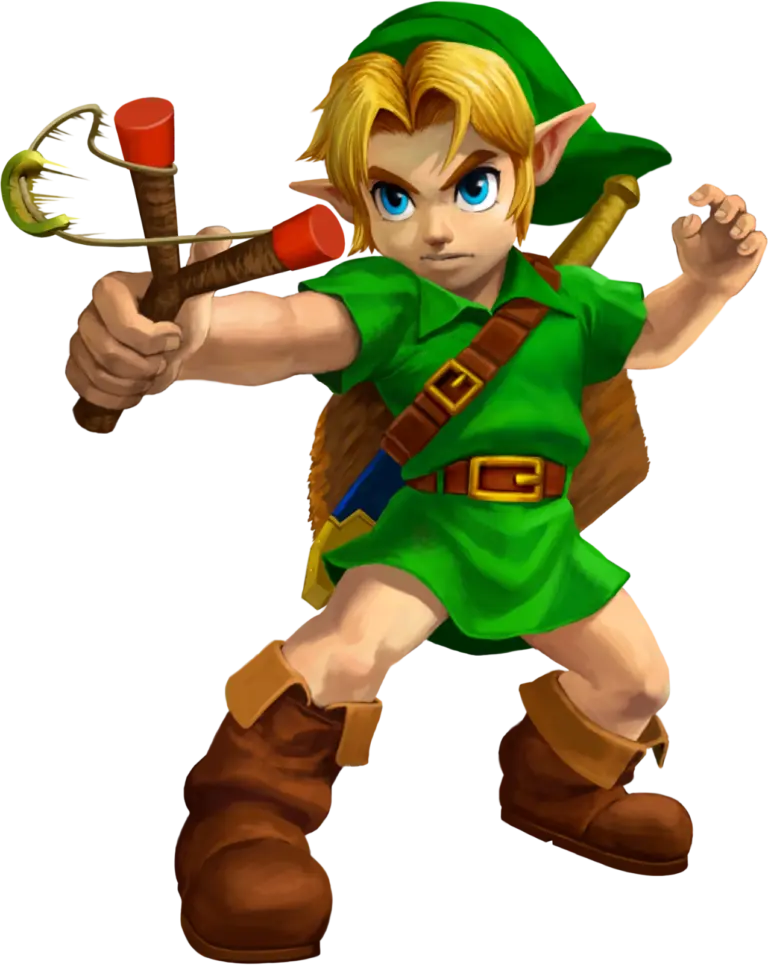
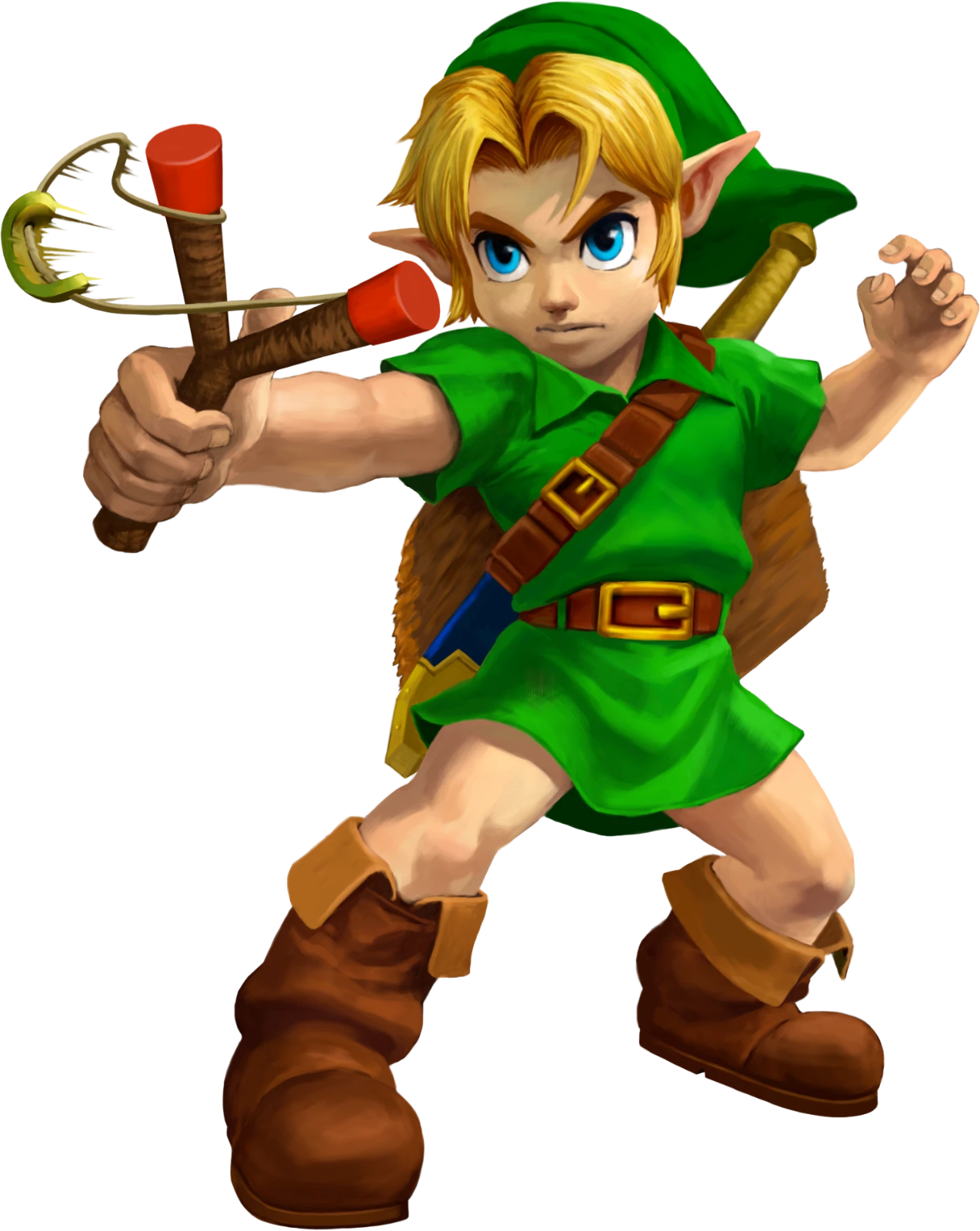
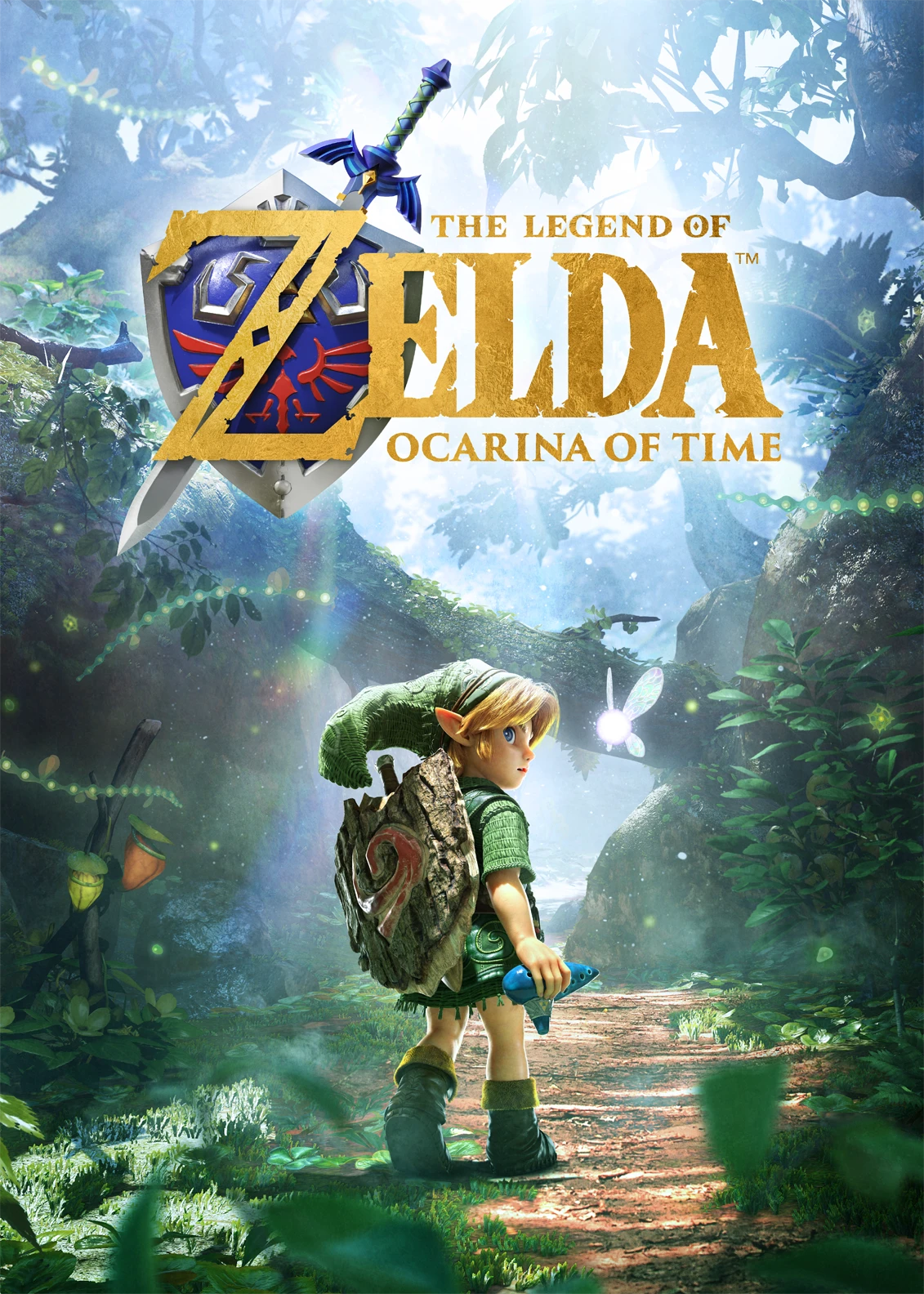
Young Link, in artwork made for the 3DS version.Mahito Yokota admitted that in 1998 he was “sorely disappointed” to hear that Zelda was going 3D. He bought the game anyway, and his prejudice “was wiped out in about the first five minutes” in Kokiri Forest.
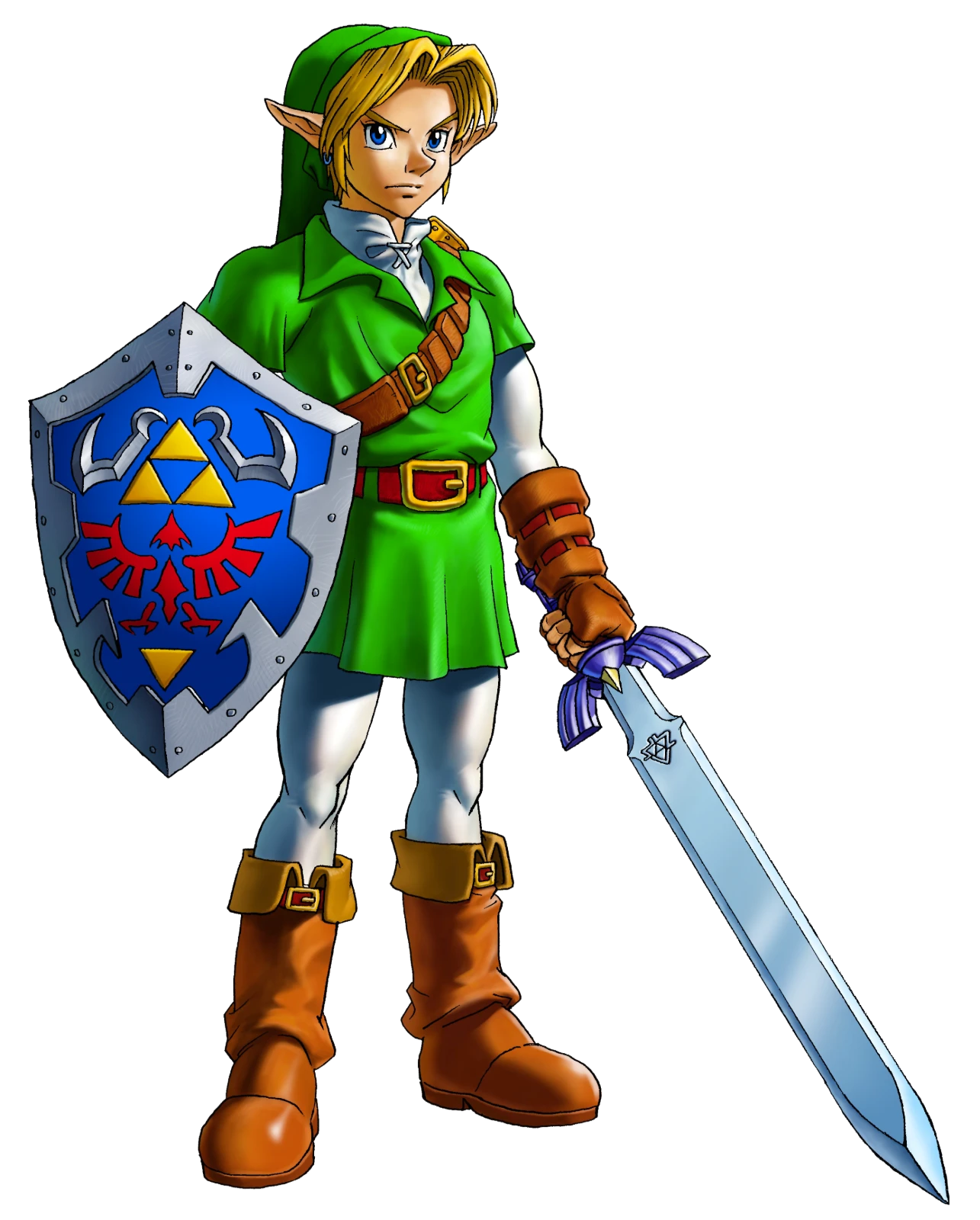
Link in official art for the original game. Outside the mirrored Master Quest he is left-handed.In the mirrored Master Quest Link is right-handed, as he is in the Wii version of Twilight Princess, which was flipped in the same way.
The American age rating went up. The Nintendo 64 game was rated E; the 3DS version is E10+, a rating that did not exist in 1998. In Europe it is PEGI 12.
The Forest Temple, one of the six spots in the developers’ walkthrough videos.Nintendo’s Japanese site ran six walkthrough videos presented by the developers themselves, covering the spots players said they found hardest in a Club Nintendo survey. The Water Temple made the list, along with the Forest Temple, the Gerudo’s fortress and rounding up the Cuccos in Kakariko Village.
Takao Shimizu called Ocarina of Time “one of my favorite three games”. Shun Moriya had not played it when it was new; his reaction while working on it was “This game is an adventure!”
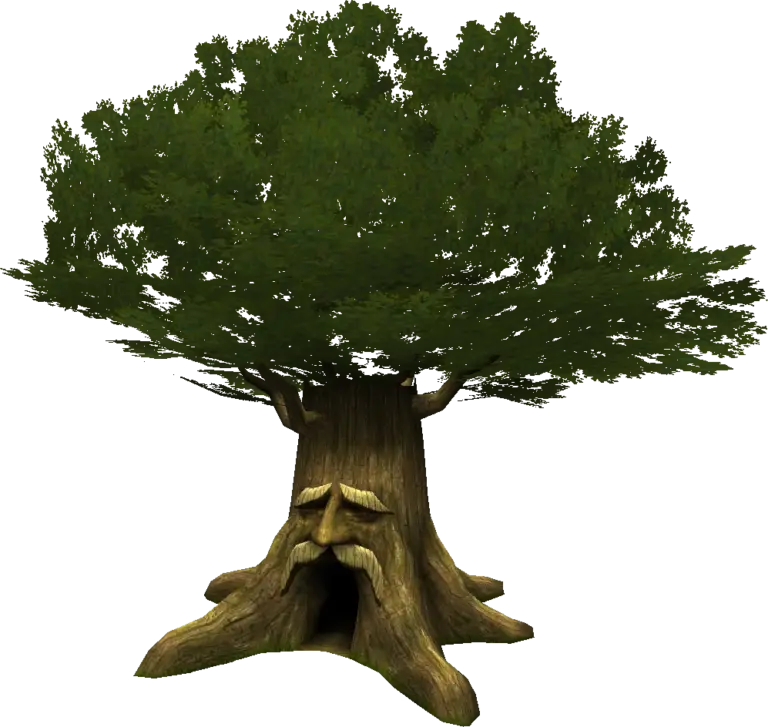
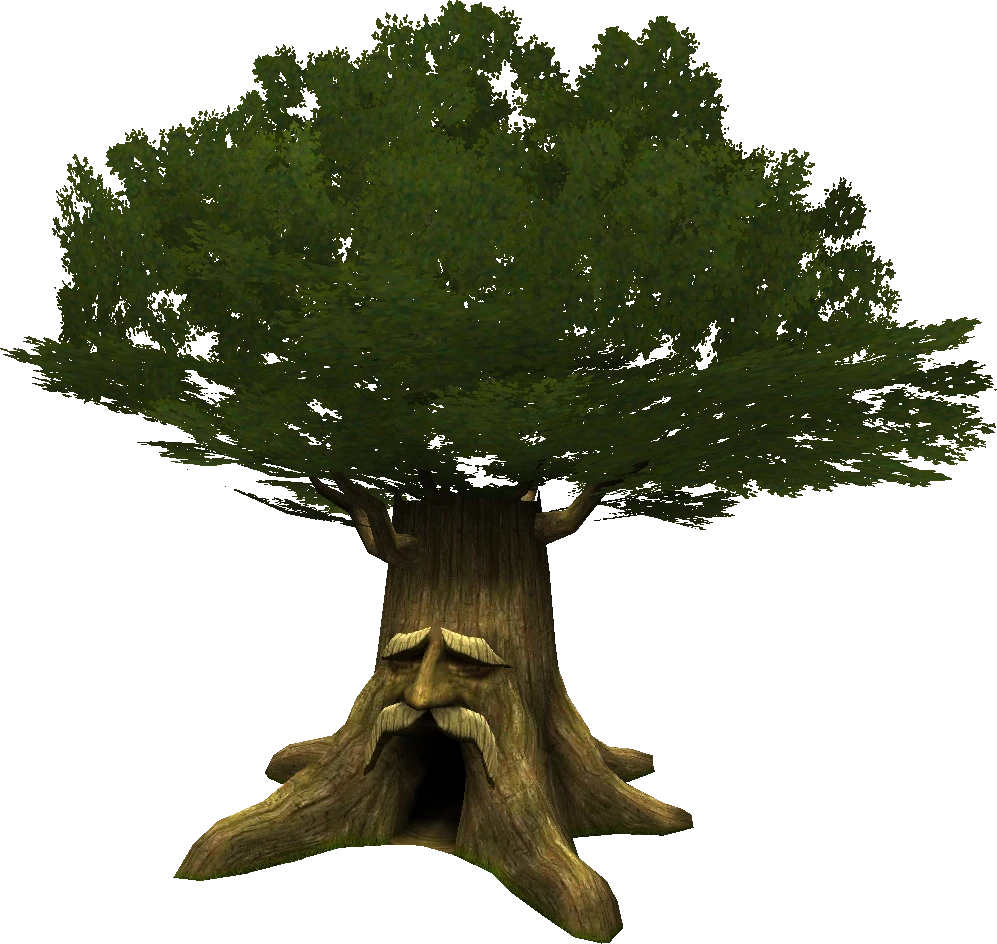
The Great Deku Tree.The Great Deku Tree’s old-fashioned English was tidied up for the remake. According to the Zelda Wiki on Fandom, “I entreat ye” became “I entreat thee”.
Media & artwork
Box art from each region, official artwork made for the 3DS version, the anniversary console and screenshots of the remade Hyrule. Select any image to view it larger.
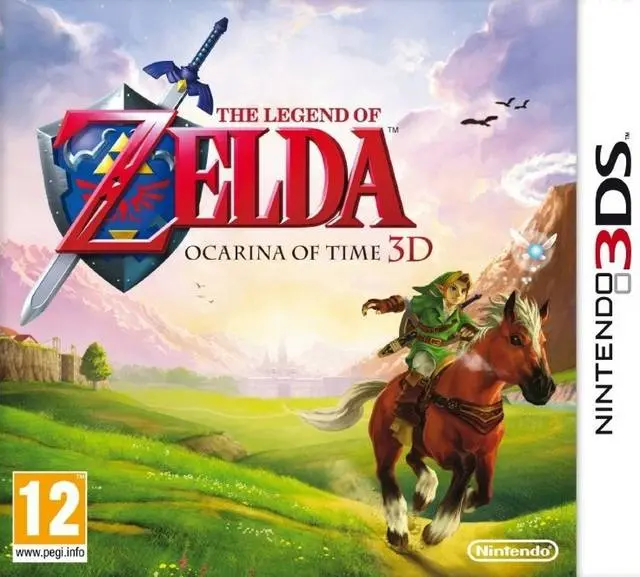
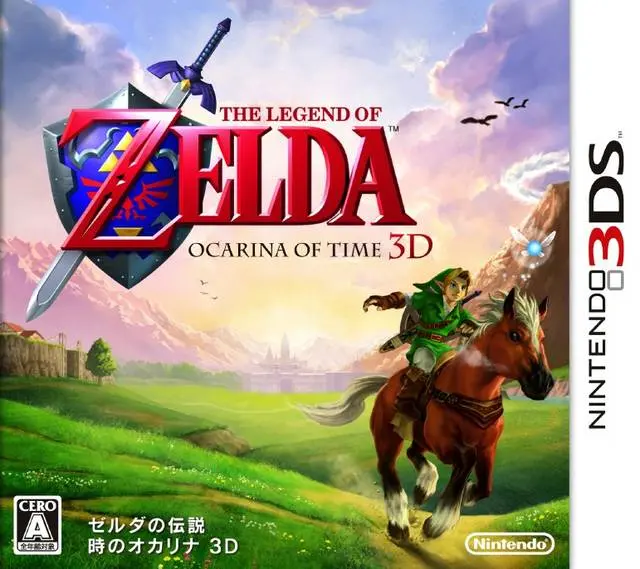
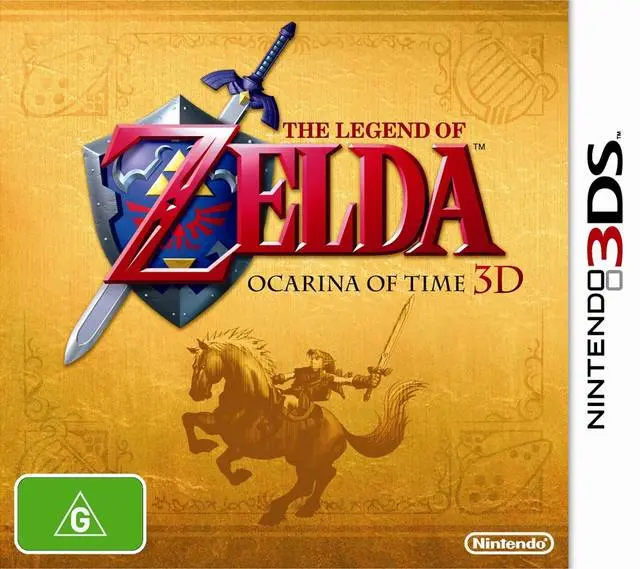
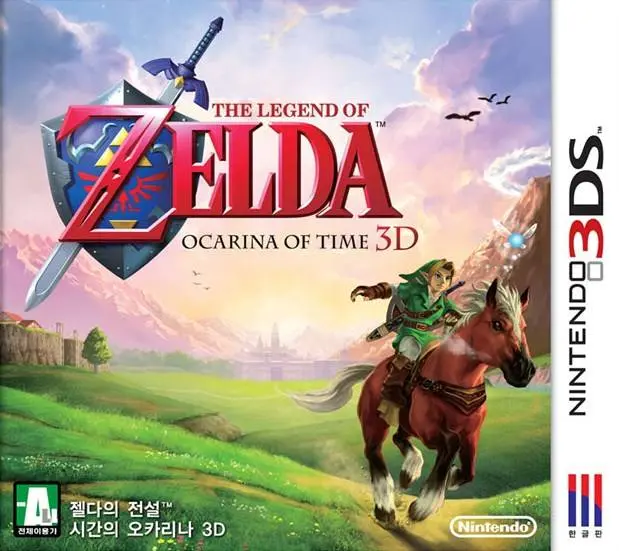
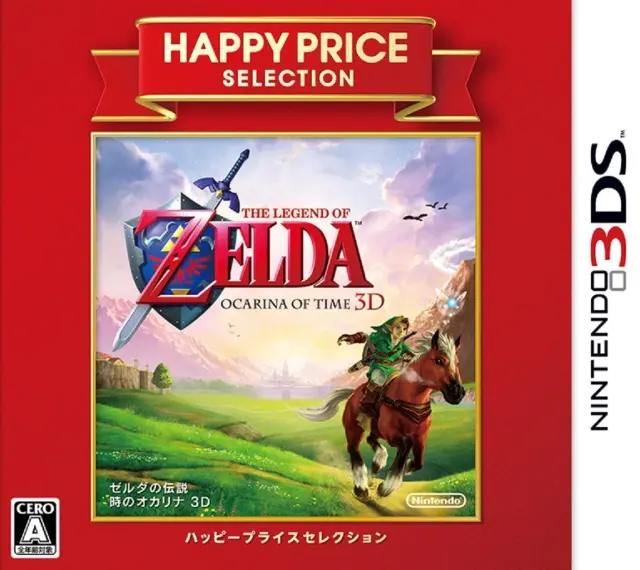
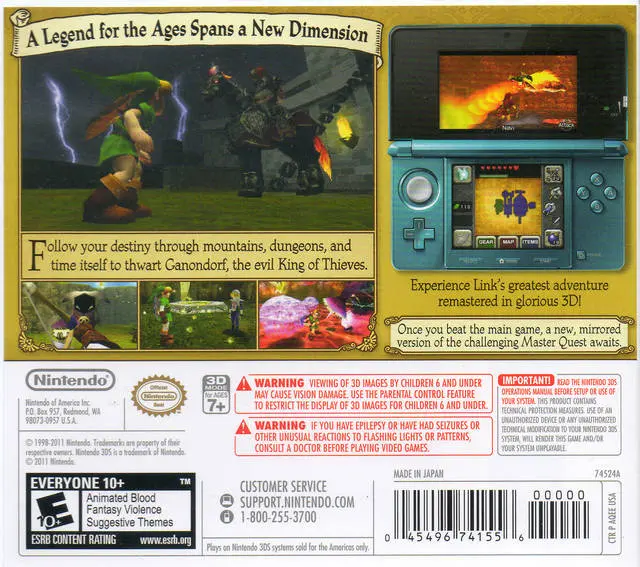
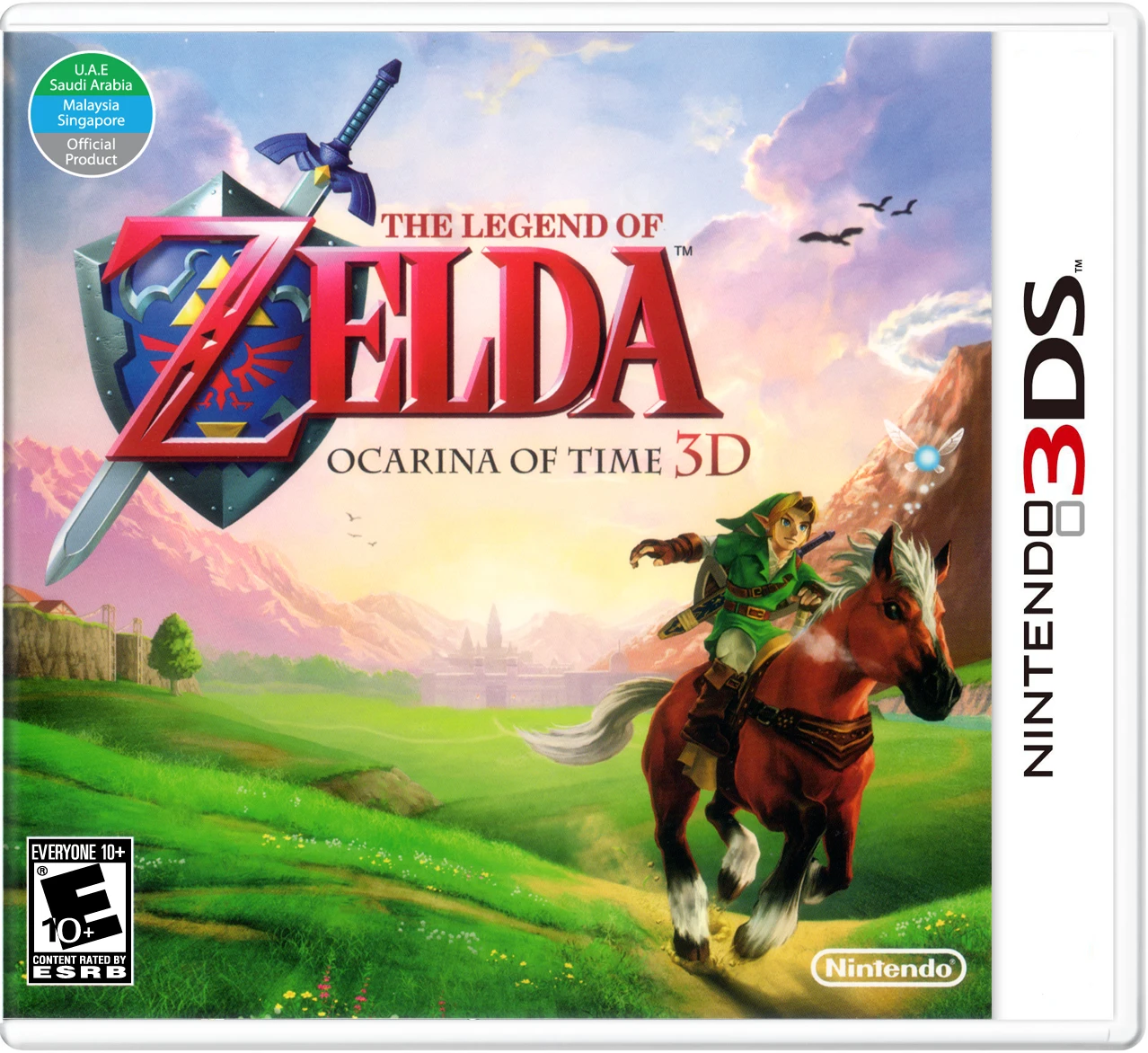
Japanese box (2011)Australian and New Zealand box (2011)South Korean box (2012)European Zelda 25th Anniversary edition box (2011)Australian Zelda 25th Anniversary edition box (2011)Japanese budget reissue box (Happy Price Selection)North American box, back (2011)Box for the Middle East and South-East AsiaHyrule Field in official art for the 3DS version
Ocarina of Time 3D became the best-selling Zelda on Nintendo 3DS, began a partnership between Nintendo and Grezzo that is still going, and stayed the newest version of the game for fifteen years.
Release history
Revealed15 June 2010 – At E3 2010, the show where the Nintendo 3DS was first shown.
Playable in public8–10 January 2011 – Nintendo World 2011 at Makuhari Messe, Japan.
Dates announced12 April 2011 – Nintendo of America names June and confirms Master Quest.
Nintendo 3DSJune 2011 – Japan 16 June, Europe 17 June, North America 19 June, Australia 30 June.
25th Anniversary 3DS bundleNovember 2011 – A limited-edition console with the game: North America 24 November, Europe 25 November.
South Korea27 September 2012 – The Korean release, with several bugs fixed. A Chinese version came out about the same time.
Download versionOctober–November 2012 – Europe 4 October, North America 18 October, Japan 1 November.
Out of productionJanuary 2015 – The North American Game Card is reported discontinued.
Nintendo Selects2016 – A budget reissue: North America in March, Europe on 24 June.
eShop closes27 March 2023 – The download version can no longer be bought.
Nintendo Music8 July 2025 – The 51-track 3DS soundtrack joins Nintendo’s music app.
Nintendo Switch 2 remake5 November 2026 – Nintendo’s new remake of the same game.
Grezzo and Zelda after 2011
Majora’s Mask 3D (2015), Grezzo’s follow-up.
Nintendo kept coming back to Grezzo. Later in 2011 the studio made Four Swords Anniversary Edition for DSiWare, another release for the 25th anniversary. In 2015 came Majora’s Mask 3D, begun as soon as this project was finished, at Miyamoto’s suggestion, with Mikiharu Ooiwa directing, Ishii producing again and a Sheikah Stone of its own in the Clock Tower. The same year Grezzo co-developed Tri Force Heroes. The studio went on to remake Link’s Awakening for Nintendo Switch in 2019 and to co-develop a brand-new Zelda, Echoes of Wisdom, in 2024.
Where to play it today
The European Nintendo Selects box of 2016.
Ocarina of Time 3D has never been released on anything but the Nintendo 3DS, and since the eShop stopped selling games on 27 March 2023 the only way to buy it is a second-hand Game Card, either the 2011 release or the Nintendo Selects reissue. If you want Ocarina of Time on a current console, the Nintendo 64 original is part of Nintendo Switch Online + Expansion Pack, and the Nintendo Switch 2 remake came out on 5 November 2026.
Fifteen years on: the Nintendo Switch 2 remake
The 2026 Nintendo Switch 2 remake.
Nintendo’s 2026 remake goes much further than Grezzo’s did: overhauled visuals, voiced cutscenes, expanded dialogue, orchestral music and reworked camera and movement controls. Some of its ideas will look familiar to 3DS players all the same. Its Hall of Fallen Foes lets you replay boss fights, one at a time or several in succession, much as Boss Challenge did, and its Echo Gem takes over from the Stone and Shard of Agony. What it does not have is Master Quest. Nintendo Life’s review of 4 November 2026 called that “a glaring omission”, which leaves the 3DS card as the only place besides GameCube to play it.
The sales tell their own story. Nintendo announced on 11 November 2026 that the Switch 2 remake had sold more than 5.2 million copies in its first four days. Ocarina of Time 3D needed years to reach its 6.44 million, and the Nintendo 64 original sold 7.6 million.
Reputation
Hyrule Field in official art for the 3DS version.
Critics in 2011 mostly agreed that this was the version to play, and it still scores 94 on Metacritic. Iwata’s own summing-up was aimed at anyone who had written it off: “If anyone thinks of this as a simple port, I would like to ask that they take a second look.” Its ideas outlived it, too. The Sheikah Stone and its hint videos returned in Majora’s Mask 3D, and boss rematches came back in the 2026 remake.
Sales & reviews
Sales figures
In Japan the game sold 164,110 copies in its first week, according to Media Create figures quoted by Wikipedia, about nine-tenths of the copies in the shops. It entered the Japanese chart at number two and helped lift the 3DS to the top of the weekly hardware chart, and it was number two in its first week in the UK as well.
Nintendo’s results for the year to 31 March 2012 put it at 2.61 million: 0.60 million in Japan and 2.01 million overseas. It then kept selling for the rest of the console’s life. American sales had reached 1.39 million by August 2014, and the 2023 edition of Japan’s CESA Games White Paper gives a worldwide total of 6.44 million by December 2022. That makes it the 13th best-selling Nintendo 3DS game and the best-selling Zelda on the system.
6.44msold worldwide by December 2022
2.61msold by 31 March 2012
1.39msold in the US by August 2014
164,110first-week sales in Japan
Reception and review scores
Reviews were close to unanimous. These are the scores as collected in Wikipedia’s review table, with the review date where Metacritic gives one. Scores not out of 100 are converted.
EurogamerUK · 15 June 2011
10/10
Nintendo LifeUK · 14 June 2011
10/10
Pocket GamerUK · 6 June 2011
10/10
Official Nintendo MagazineUK · 16 June 2011
98%
IGNUS · 2011
9.5/10
Nintendo PowerUS · 2011
9.5/10
Electronic Gaming MonthlyUS · 2011
9.5/10
Nintendo World ReportUS · 17 June 2011
9.5/10
FamitsuJapan · 2011
37/40
Game InformerUS · 2011
9.25/10
GameTrailersUS · 2011
9.2/10
GamesRadar+2011
9/10
JoystiqUS · 17 June 2011
4.5/5
GameSpotUS · 2011
8.5/10
On Metacritic the game averages 94 from 85 reviews, 84 of them positive and one mixed. Game Informer wrote that “one of the greatest games of all time looks and plays better than ever”, GameSpot called it “the definitive version of this classic game”, and the Official Nintendo Magazine went as far as “a life-changing game”.
The few reservations were about what lay under the new paint. GameSpot’s 8.5 was the lowest numerical score in Wikipedia’s table, and 1UP, which gave it a B+, wrote: “I just wish as much attention had been paid to the nuts-and-bolts of the game”.
Reader reviews
No reader reviews yet. Played it? Give it a score out of 10 and tell other fans what you think.
Every fact on this page was checked against the sources below in November 2026. The developers’ accounts come from Nintendo’s own Iwata Asks interviews; the lists of changes come from Zelda Dungeon, the Zelda Wiki on Fandom, Wikipedia and The Cutting Room Floor. IGN, Eurogamer, GameSpot and The Guardian could not be read directly, so their reviews are given as Wikipedia and Metacritic report them. Zelda Wiki (zeldawiki.wiki) blocks automated reading, so it was not used.
To provide the best experiences, we use technologies like cookies to store and/or access device information. Consenting to these technologies will allow us to process data such as browsing behavior or unique IDs on this site. Not consenting or withdrawing consent, may adversely affect certain features and functions.
Functional
Always active
The technical storage or access is strictly necessary for the legitimate purpose of enabling the use of a specific service explicitly requested by the subscriber or user, or for the sole purpose of carrying out the transmission of a communication over an electronic communications network.
Preferences
The technical storage or access is necessary for the legitimate purpose of storing preferences that are not requested by the subscriber or user.
Statistics
The technical storage or access that is used exclusively for statistical purposes.The technical storage or access that is used exclusively for anonymous statistical purposes. Without a subpoena, voluntary compliance on the part of your Internet Service Provider, or additional records from a third party, information stored or retrieved for this purpose alone cannot usually be used to identify you.
Marketing
The technical storage or access is required to create user profiles to send advertising, or to track the user on a website or across several websites for similar marketing purposes.

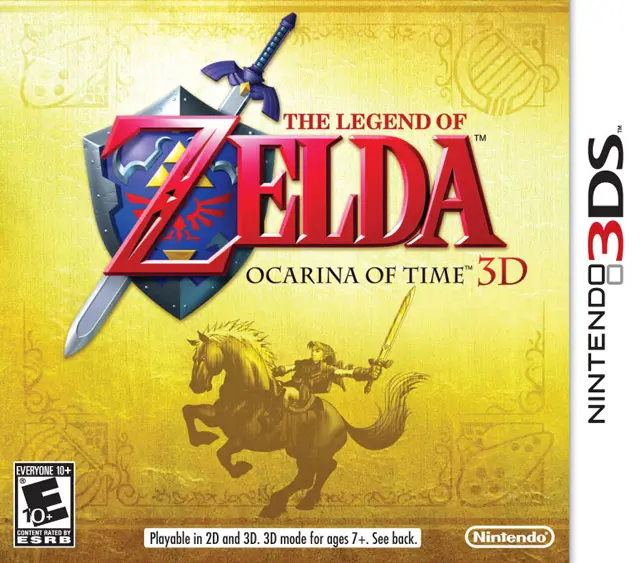
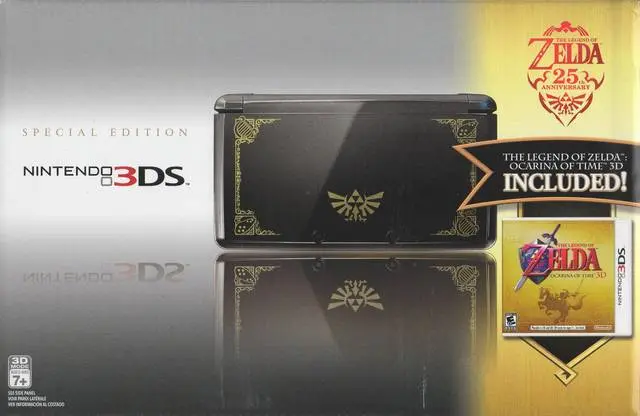 Zelda 25th Anniversary Nintendo 3DS bundleNorth America 24 November 2011 · Europe 25 November 2011A limited-edition Cosmo Black 3DS marked with the Hyrule emblem and gold-coloured decoration, sold with a copy of the game. Nintendo of America priced it at $199.99 and released it on Thanksgiving Day beside a Flame Red Super Mario 3D Land bundle. The European pack came with a double-sided sleeve for the game case, gold on the reverse.
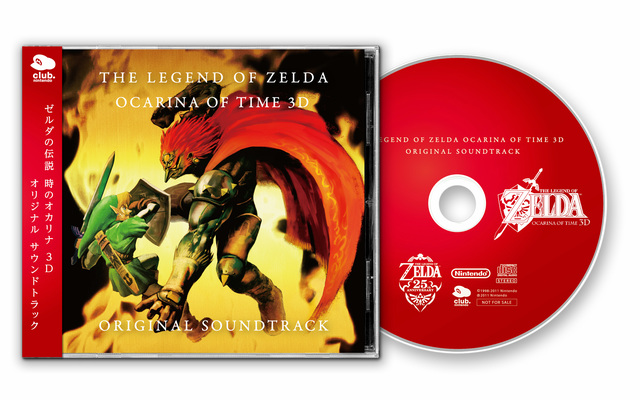 Ocarina of Time 3D Official SoundtrackClub Nintendo · 2011A free CD for anyone who registered the game with Club Nintendo in time, announced at E3 2011 as part of the anniversary. It has 51 tracks: 50 from the game, some never released on the American soundtrack of 1998, and “End Credits 2”, an orchestral medley recorded for the remake. The North American deadline was extended to midnight on 20 June 2011; in Japan the offer ran until 31 July. The booklet carries messages from Shigeru Miyamoto and Koji Kondo.
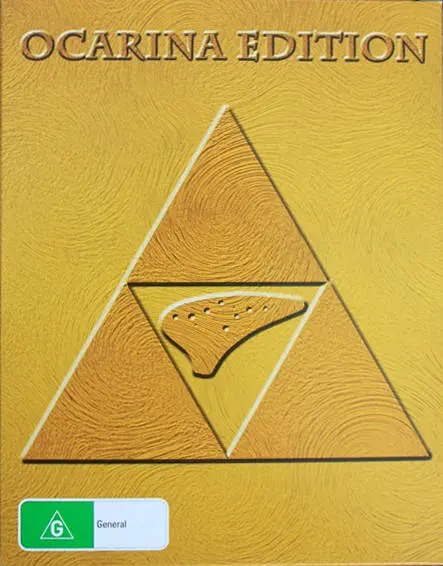 Ocarina EditionAustralia · EB Games · 2011An Australian exclusive that packed the game with a plastic ocarina you could really play and sheet music for tunes from the game.
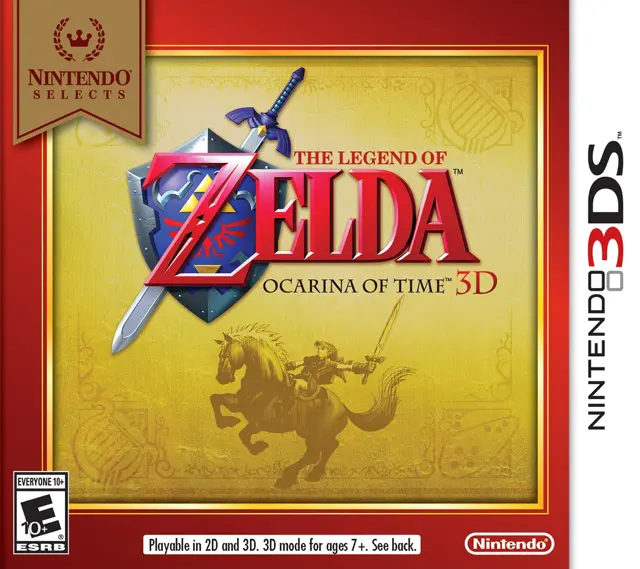 Nintendo Selects reissueNorth America March 2016 · Europe 24 June 2016Reports in January 2015 said the American Game Card had gone out of production, just before Majora’s Mask 3D arrived. It came back in Nintendo’s budget range the following year. In Europe it joined Nintendo Selects on 24 June 2016 with four other 3DS games, at €19.99 or £15.99 on the eShop.