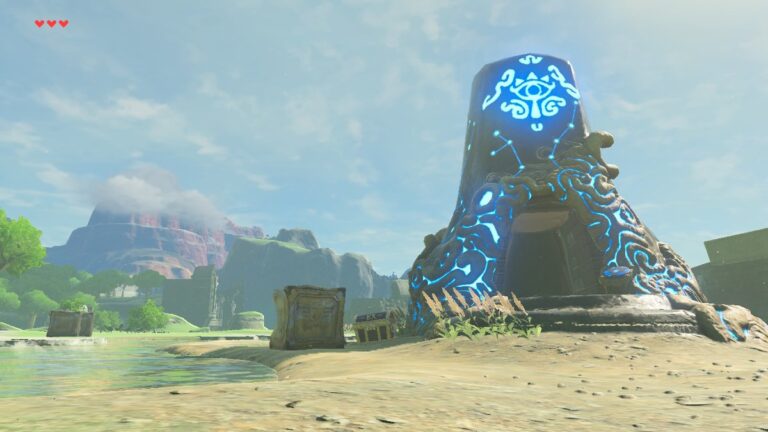
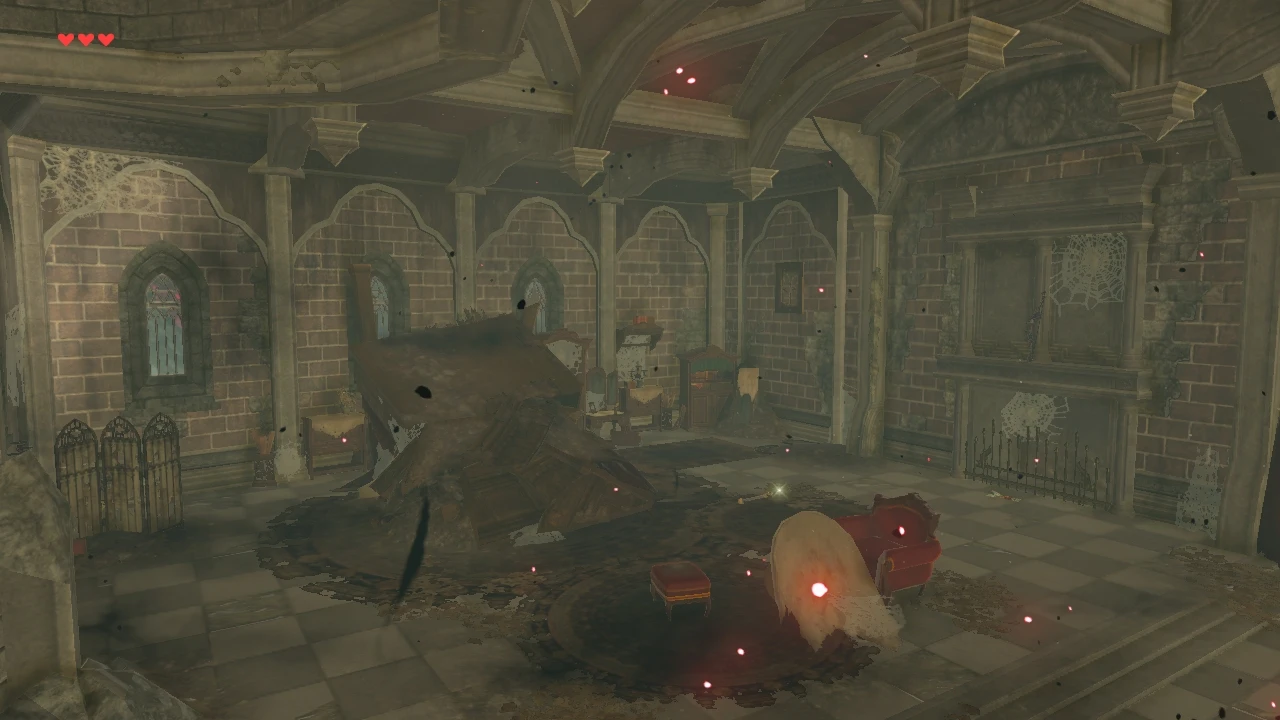
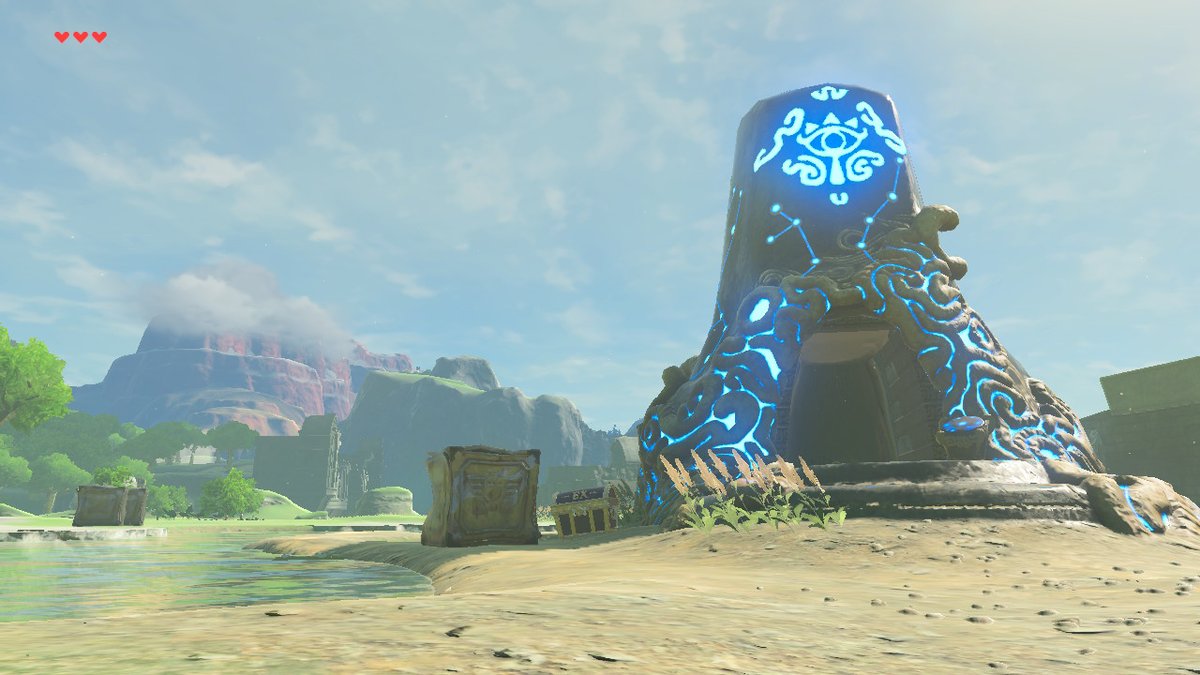
A hundred years after the kingdom fell, Link wakes with no memory in a Hyrule that has gone wild. Go anywhere, climb anything, and decide for yourself when you are ready to face Calamity Ganon.
Released3 March 2017 (worldwide)
DeveloperNintendo EPD
DirectorHidemaro Fujibayashi
PlatformsWii U, Switch, Switch 2 Edition
Shrines120 (plus 16 in the DLC)
Sales34.28 million on Switch (Sept 2026)
Title
The Legend of Zelda: Breath of the Wild ゼルダの伝説 ブレス オブ ザ ワイルド (Zeruda no Densetsu: Buresu obu za Wairudo)
Platforms
Wii U, Nintendo Switch; Nintendo Switch 2 Edition (2025)
Developer
Nintendo Entertainment Planning & Development (EPD); Monolith Soft helped build the landscape
Publisher
Nintendo
Director
Hidemaro Fujibayashi
Producer
Eiji Aonuma
Technical director
Takuhiro Dohta
Art director
Satoru Takizawa
Writers
Akihito Toda, Naoki Mori
Music
Manaka Kataoka, Yasuaki Iwata, Hajime Wakai
Players
1
Released
3 March 2017 worldwide on Wii U and Switch (a Switch launch game); South Korea and Taiwan 1 February 2018
Downloadable content
Expansion Pass: The Master Trials (30 June 2017) and The Champions’ Ballad (7 December 2017 in North America, 8 December in Europe, straight after The Game Awards)
Nintendo Switch 2 Edition
5 June 2025 (sold on its own, as an upgrade pack, or free with Nintendo Switch Online + Expansion Pack)
34.28 million on Switch (Nintendo, 30 September 2026), plus the Wii U version
Honours
Game of the Year at The Game Awards 2017, the D.I.C.E. Awards and the Game Developers Choice Awards
Overview
Every Zelda before it had, in one way or another, told you where to go next. Breath of the Wild hands you a paraglider, points at a kingdom the size of a small country and lets you get on with it. You can walk out of the opening area and straight to Hyrule Castle to fight the final boss in your underwear, if you fancy your chances. Most people do not, and that is where the magic starts.
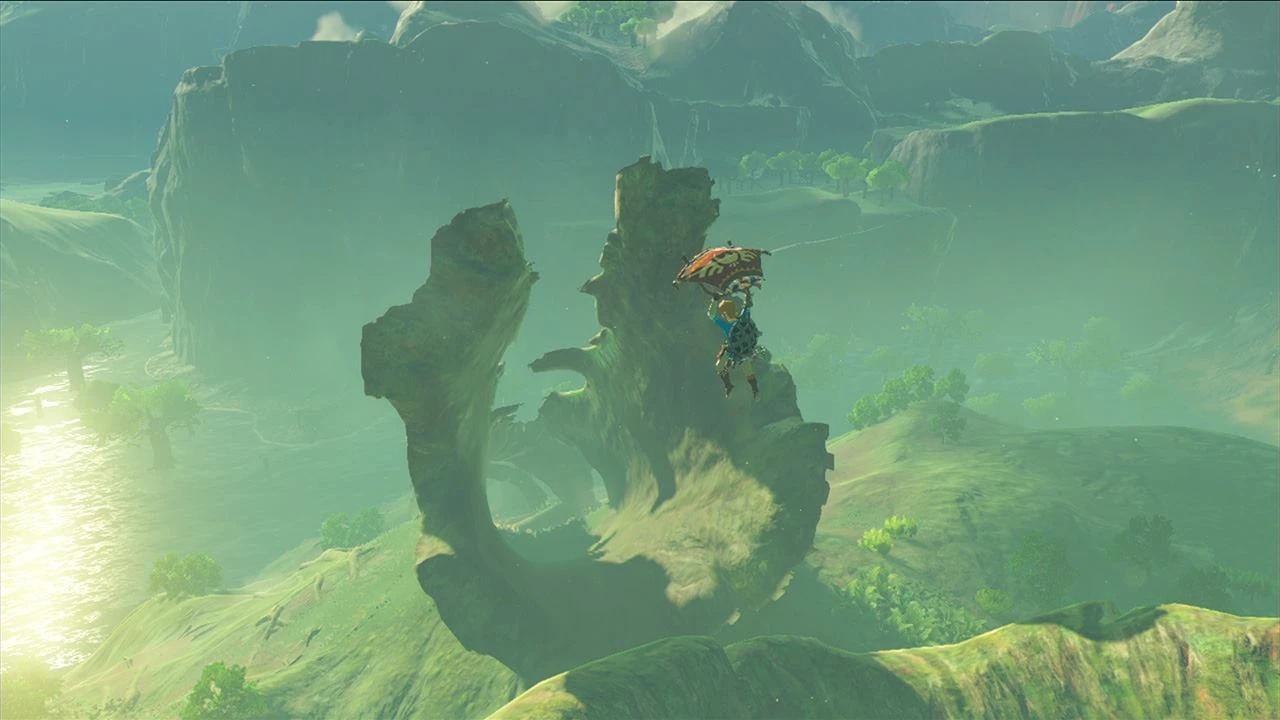
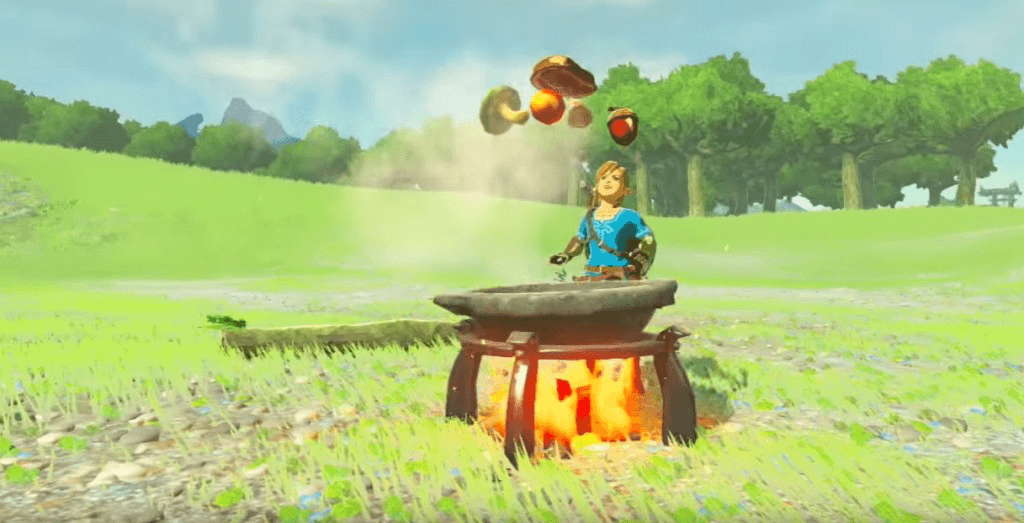
Nintendo called its approach “open-air”. Link can climb almost any surface, ride, swim, surf on his shield and glide off any high point, all limited by a stamina wheel. Weapons wear out and shatter, so every fight is a scramble through whatever you are carrying. Fire spreads through grass, metal draws lightning, and ice and wind behave the way you would expect, because a physics engine and a “chemistry engine” run the whole world. Instead of a handful of big dungeons there are 120 bite-sized Shrines of Trials and four colossal Divine Beasts.
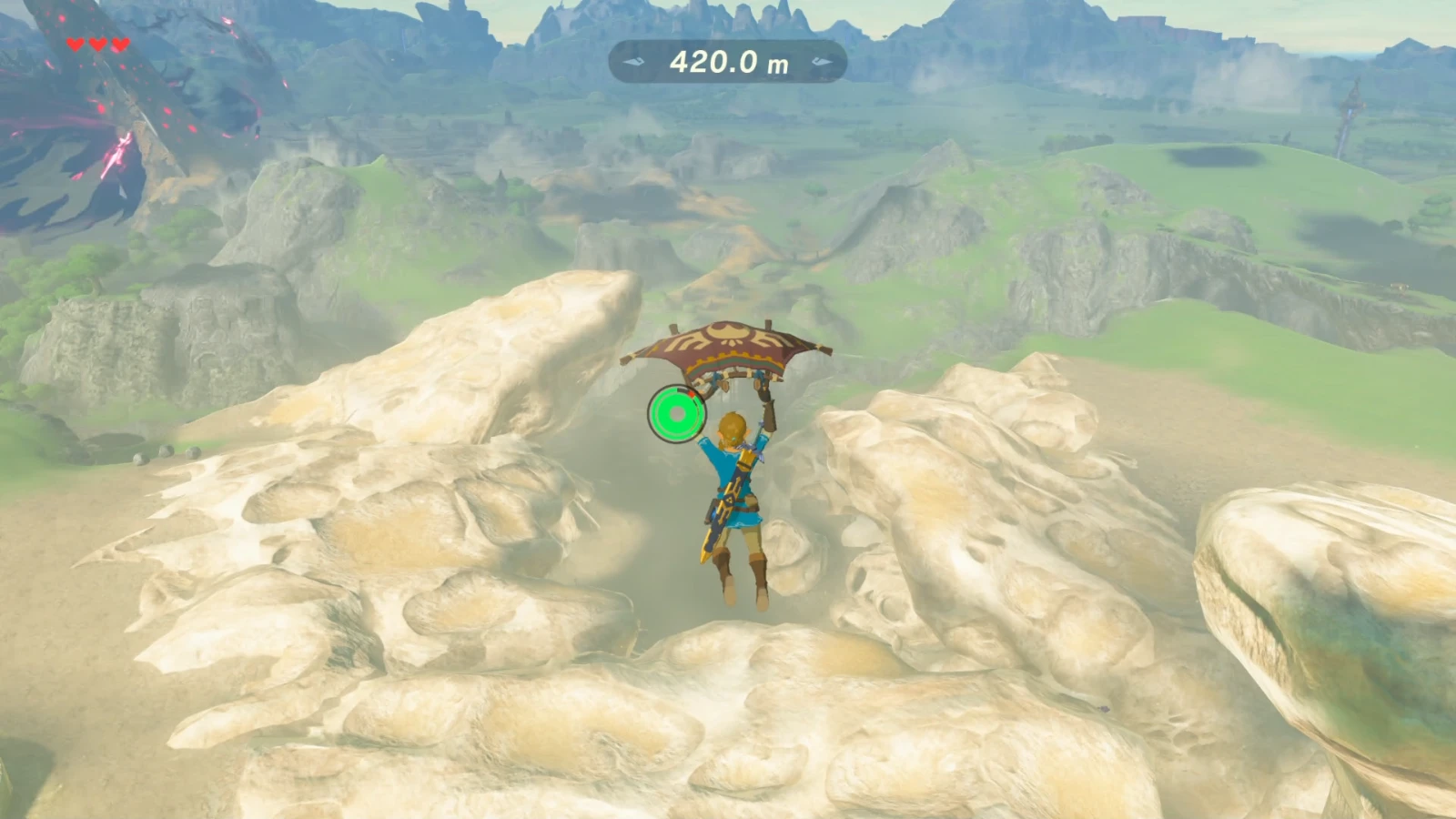
The first view from the Great Plateau: the whole of Hyrule, and you can go to any of it.The paraglider turns every cliff into a shortcut.Cooking at a pot: throw in up to five ingredients and see what happens.
Under all that freedom is the series’ most melancholy story. Hyrule fell a century ago. Link failed. Princess Zelda has spent a hundred years alone inside the castle holding back Calamity Ganon, and the four Champions who fought beside her are ghosts trapped in their own machines. Link pieces the tragedy together one memory at a time, in whatever order he stumbles on it.
It launched on 3 March 2017 on both the Wii U and the brand-new Nintendo Switch, was named Game of the Year at The Game Awards, the D.I.C.E. Awards and the Game Developers Choice Awards, and has sold more than 34 million copies on Switch alone, comfortably the most of any Zelda. Two DLC packs followed in 2017, a direct sequel, Tears of the Kingdom, in 2023, and a Nintendo Switch 2 Edition in 2025. Zelda Temple also has a complete 14-part walkthrough of the game; this page is about its story, characters, making and legacy.
No kingdom. No memories. After a 100-year slumber, Link wakes up alone in a world he no longer remembers.
That is how Nintendo’s own product text opens. It goes on to promise a Hyrule you can explore any way you like, more than 100 Shrines of Trials, towers to climb for a view of the land, villages and stables, horses and rafts, shield-surfing and a paraglider, cooking for health and stat boosts, clothing for the elements, and over 180 weapons that wear out as you fight.
— Official description: Nintendo’s product page for The Legend of Zelda: Breath of the Wild (Nintendo of America store; the same opening line heads Nintendo UK’s Switch 2 Edition page). One line quoted; the rest summarised.
Quick Answers
The things people most often want to know about Breath of the Wild, answered briefly here and in more depth further down.
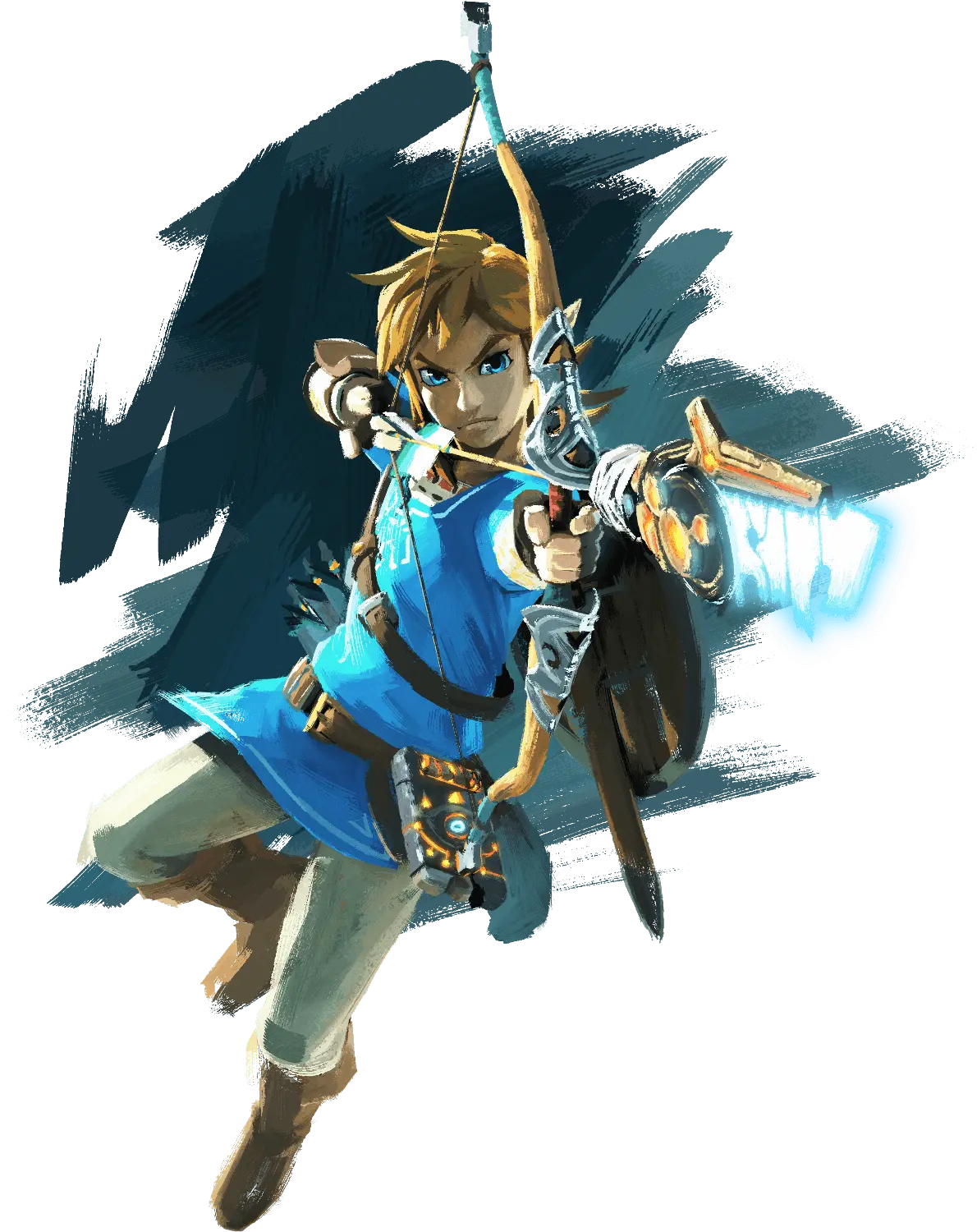
Official art of Link shooting.
When did Breath of the Wild come out?
3 March 2017, on the same day worldwide, for both Wii U and Nintendo Switch. It was a launch game for the Switch. The Nintendo Switch 2 Edition followed on 5 June 2025, the day the Switch 2 launched. More →
Who made Breath of the Wild?
Nintendo EPD, directed by Hidemaro Fujibayashi and produced by Eiji Aonuma, with Takuhiro Dohta as technical director and Satoru Takizawa as art director. Monolith Soft, the Xenoblade studio, helped shape the terrain. More →
How many shrines are there?
120 in the main game, and finishing them all is part of 100% completion. The Champions’ Ballad DLC adds 16 more: four on the Great Plateau and three for each Champion. More →
How many Korok seeds are there?
900. You only need 441 of them to give Hestu enough to max out every weapon, bow and shield slot; the rest are for completionists. More →
How many memories are there, and what do they unlock?
Eighteen in the main game: twelve from the photos on Zelda’s Sheikah Slate, four tied to the Champions’ homelands, one from a painting in Impa’s house, and one at the Master Sword. Recover every one and the ending gains an extra scene. The Champions’ Ballad adds five more. More →
Do you have to free the Divine Beasts before fighting Ganon?
No. After the Great Plateau you can head straight for Hyrule Castle. Each Divine Beast you free, though, fires on Calamity Ganon before the fight, so skipping them makes him much tougher. More →
How do you get the Master Sword?
It rests in the Korok Forest, guarded by the Great Deku Tree. Link needs at least 13 heart containers to draw it. It never breaks, but runs out of power after heavy use and needs about ten minutes to recharge. More →
Where does Breath of the Wild fit on the Zelda timeline?
At the very end of the Zelda timeline, so far in the future that the heroes of earlier games survive only as legends. More →
What is in the DLC?
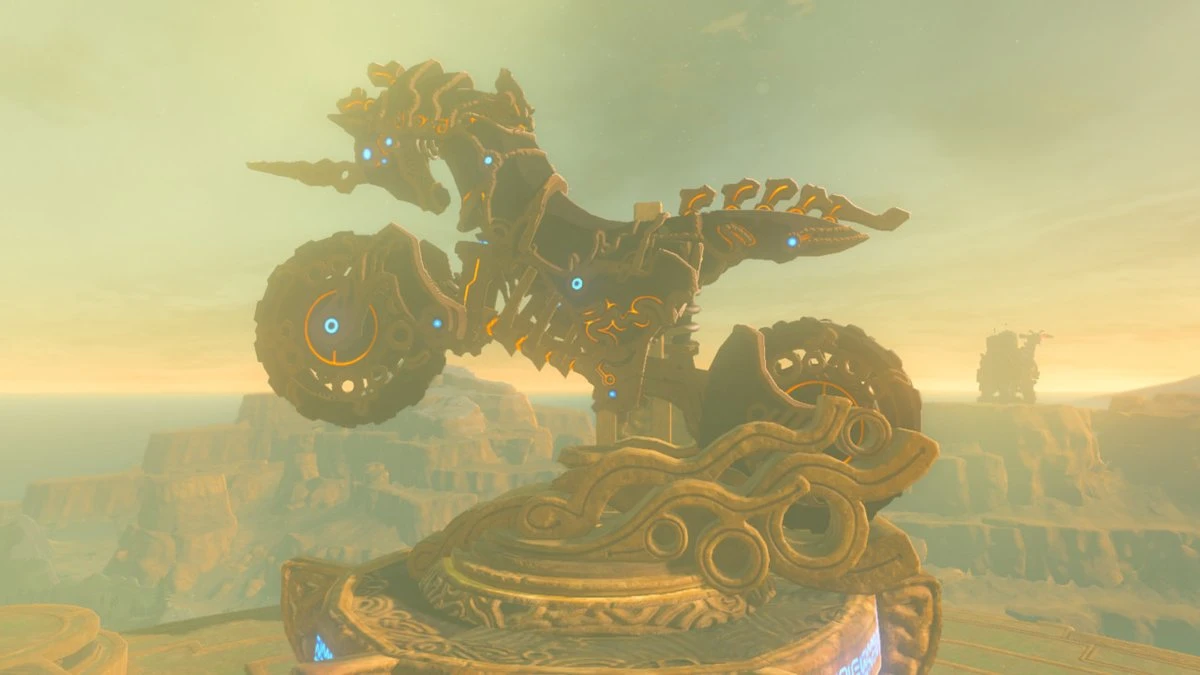
The Master Trials (June 2017) adds the Trial of the Sword, the harder Master Mode, the Hero’s Path map, the Travel Medallion, the Korok Mask and some classic costumes. The Champions’ Ballad (December 2017) adds new shrines, a new dungeon, a new boss, more memories of the Champions and the Master Cycle Zero motorbike. More →
How well did it sell?
34.28 million copies on Switch by 30 September 2026, by Nintendo’s figures, plus the Wii U version. That makes it the best-selling Zelda game by a long way. More →
Plot / Story
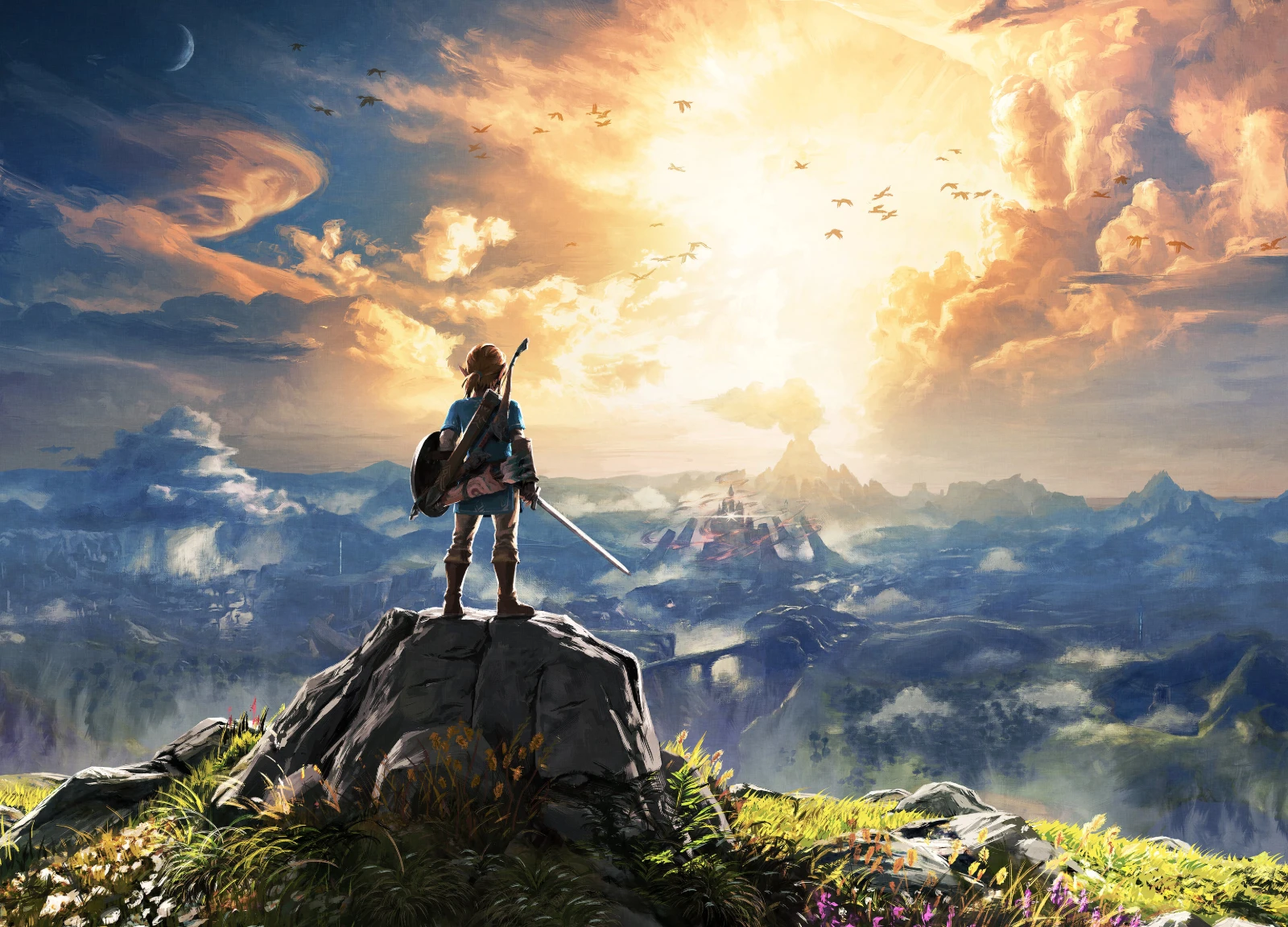
Link looks out over a ruined Hyrule in Nintendo’s key art for the game.
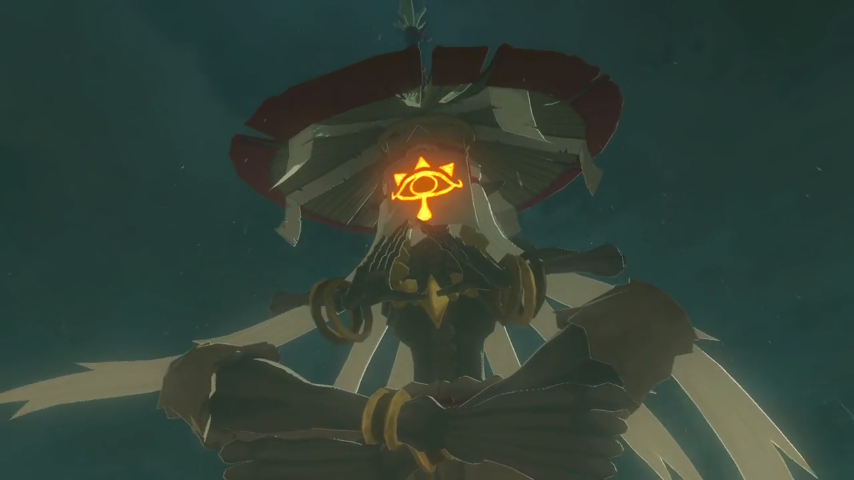
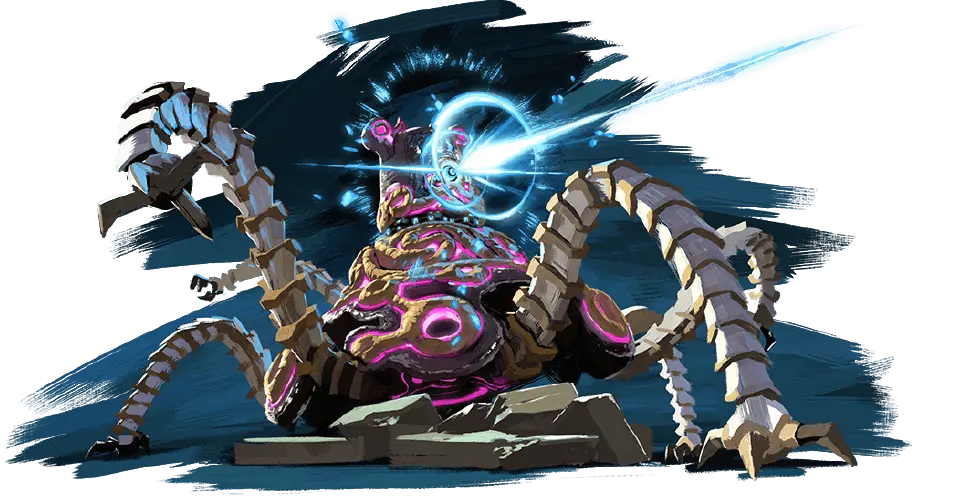
Ten thousand years ago, Hyrule was home to a civilisation far more advanced than anything its people can build today. When the ancient evil known as Calamity Ganon rose, the Sheikah tribe answered it with machines: four colossal animal-shaped Divine Beasts and an army of spider-legged Guardians. A princess with the blood of the goddess Hylia and a knight carrying the sword that seals the darkness led the fight, the machines wore the Calamity down, and the princess sealed it away. Afterwards the Sheikah’s technology was banned and buried, and a bitter splinter group of Sheikah never forgave the kingdom for it.
Ten millennia later, Hyrule had slipped back into an age of swords and horses, but the old prophecies came back into fashion and the kingdom dug the Divine Beasts and Guardians out of the ground. The plan was to replay the legend. Four Champions, one from each of Hyrule’s peoples, would pilot the Beasts, and Princess Zelda, trained to awaken her sealing power, would face Ganon with her appointed knight, a young swordsman named Link who had drawn the Master Sword.
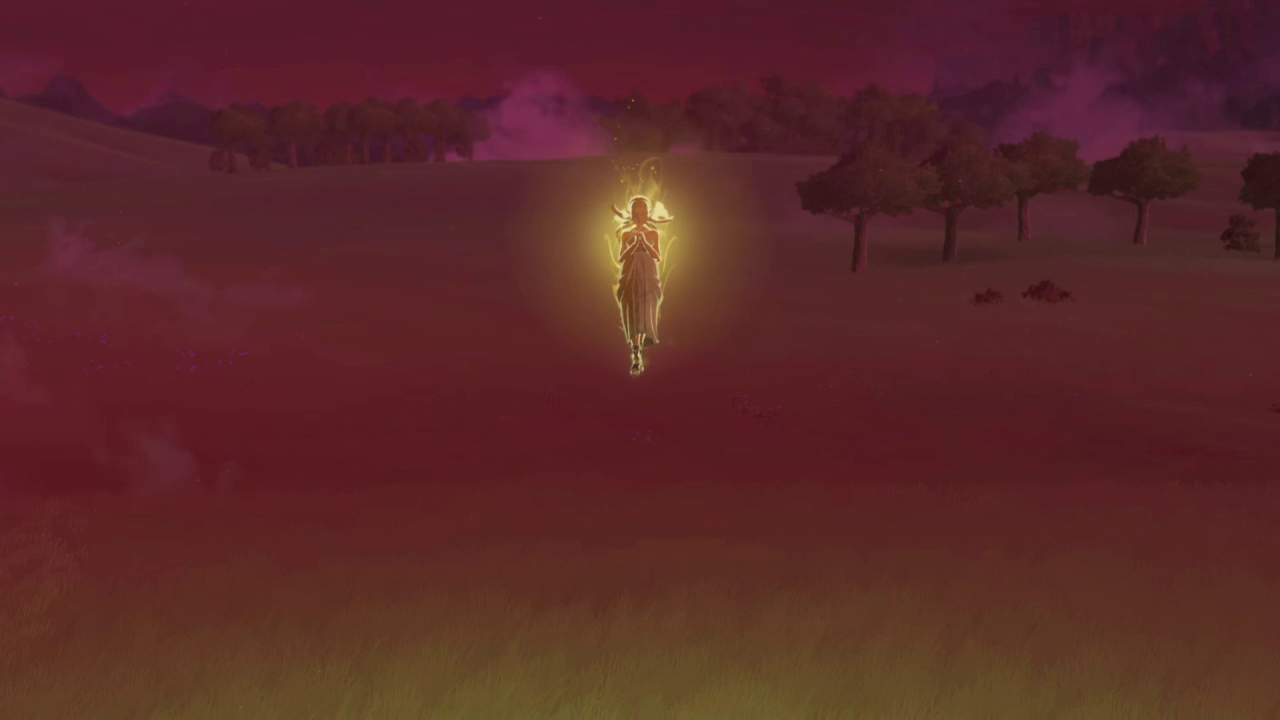
It went horribly wrong. On Zelda’s seventeenth birthday, Calamity Ganon burst out from beneath Hyrule Castle and turned the ancient machines against their owners. The Guardians laid waste to the kingdom, the Champions died inside their own Divine Beasts, and King Rhoam fell with his castle. Link was cut down shielding Zelda. In that moment her power finally awoke. She had Link carried to the Shrine of Resurrection to heal, took the Master Sword to the Great Deku Tree in the Korok Forest, and went alone into the castle to hold Ganon back with her own strength. That was a hundred years ago. This is where the game begins.
Open your eyes: the Great Plateau
Link wakes in a pool of water in a dark chamber, coaxed awake by a woman’s voice he does not recognise. He has no memories at all. A pedestal gives him a strange tablet, the Sheikah Slate, and the door opens on to one of the great moments in video games: a ledge, the wind, and the whole of Hyrule spread out beneath him, with a sinister cloud coiled around the distant castle.
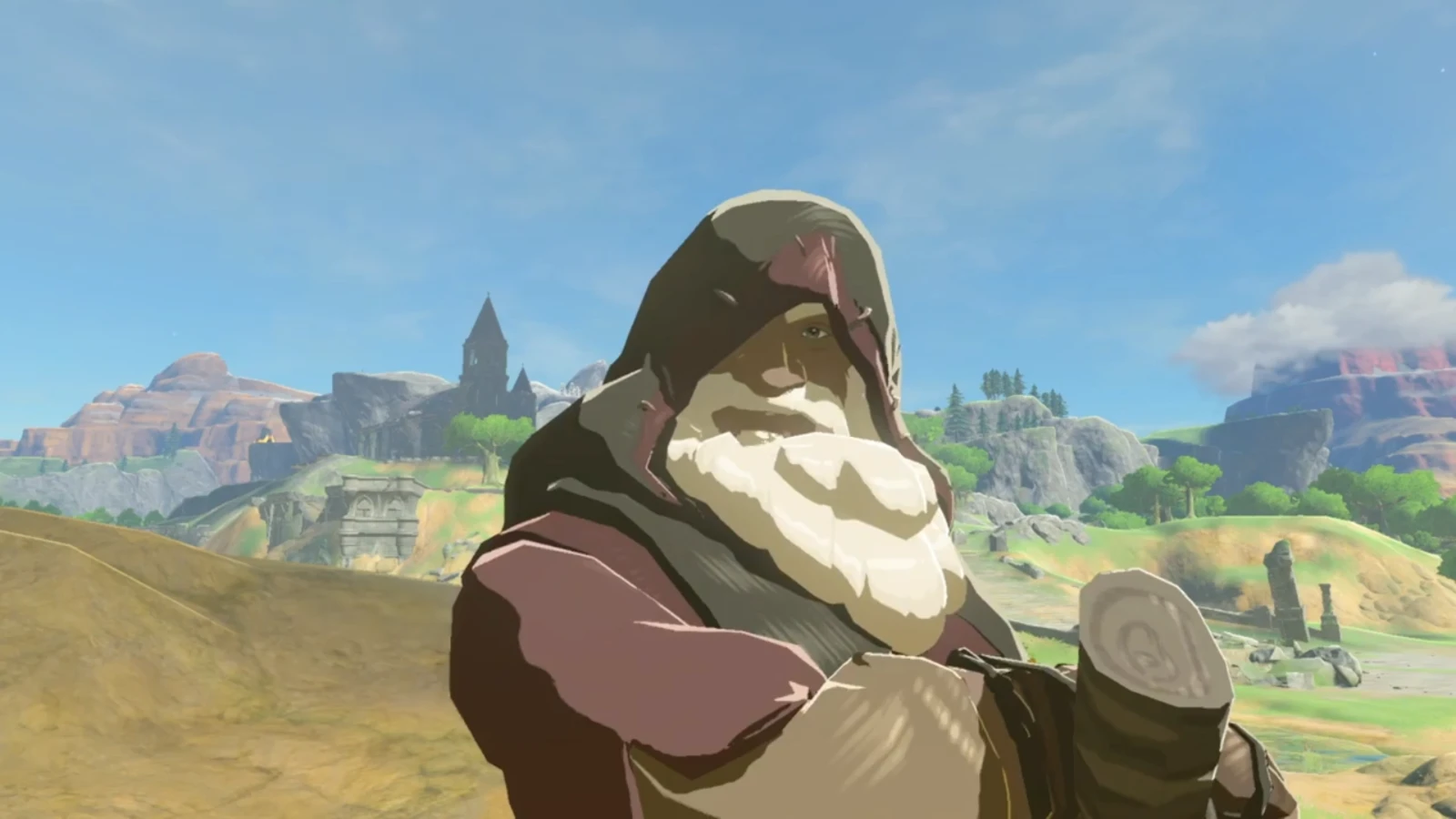
He is on the Great Plateau, a walled-off highland that serves as the tutorial. An old man by a campfire seems to know more than he should. When Link activates a Sheikah Tower, towers rise all over the kingdom, and the old man offers a deal: clear the four shrines on the plateau and he will hand over his paraglider, the only safe way down. Oman Au, Ja Baij, Owa Daim and Keh Namut give the Slate its four core powers, called runes: Magnesis, Remote Bombs, Stasis and Cryonis.
With the shrines done, the old man drops the act. He is the spirit of King Rhoam, Zelda’s father and Hyrule’s last king. He tells Link who he is, what happened a century ago, and that Zelda is still in the castle, her strength waning. He asks Link to save his daughter, hands over the glider, and the world is yours.
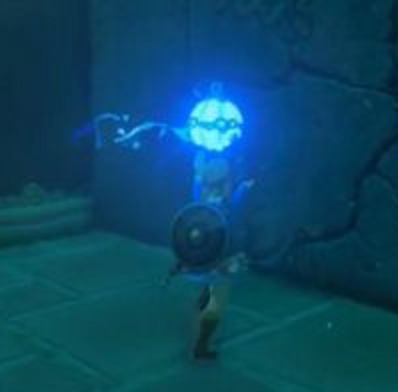
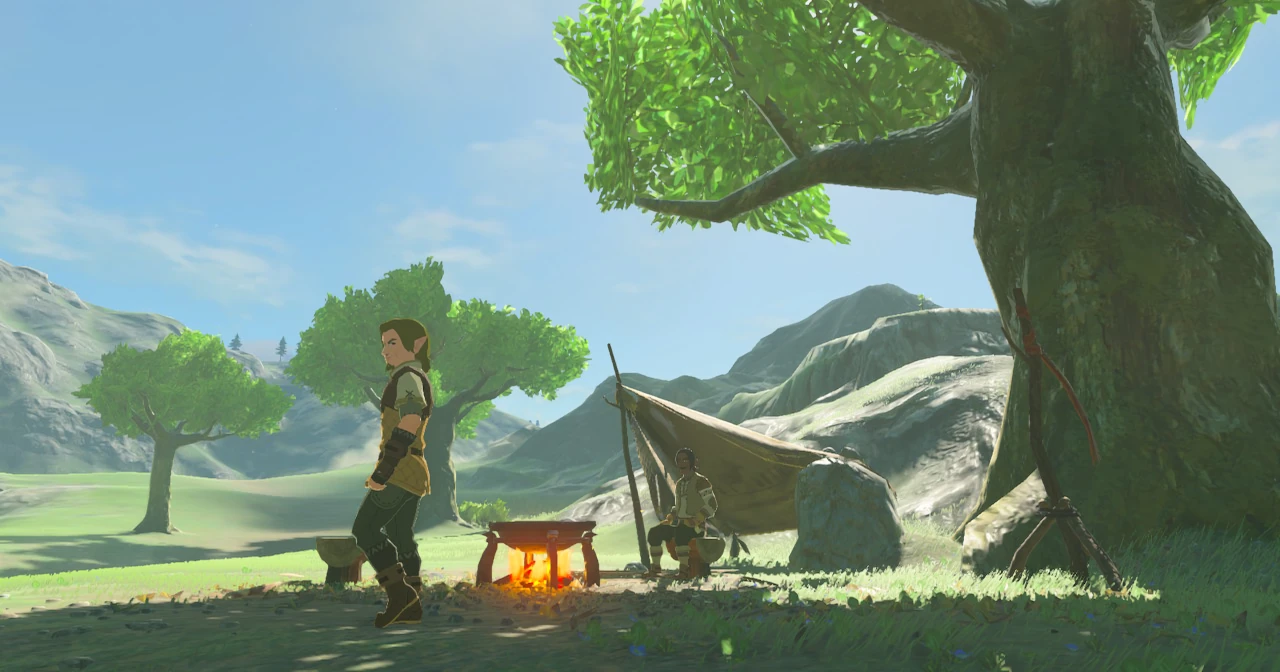
Link wakes in the Shrine of Resurrection.The mysterious old man of the Great Plateau.Sheikah Towers rise across Hyrule.
Kakariko, Hateno and the lost photographs
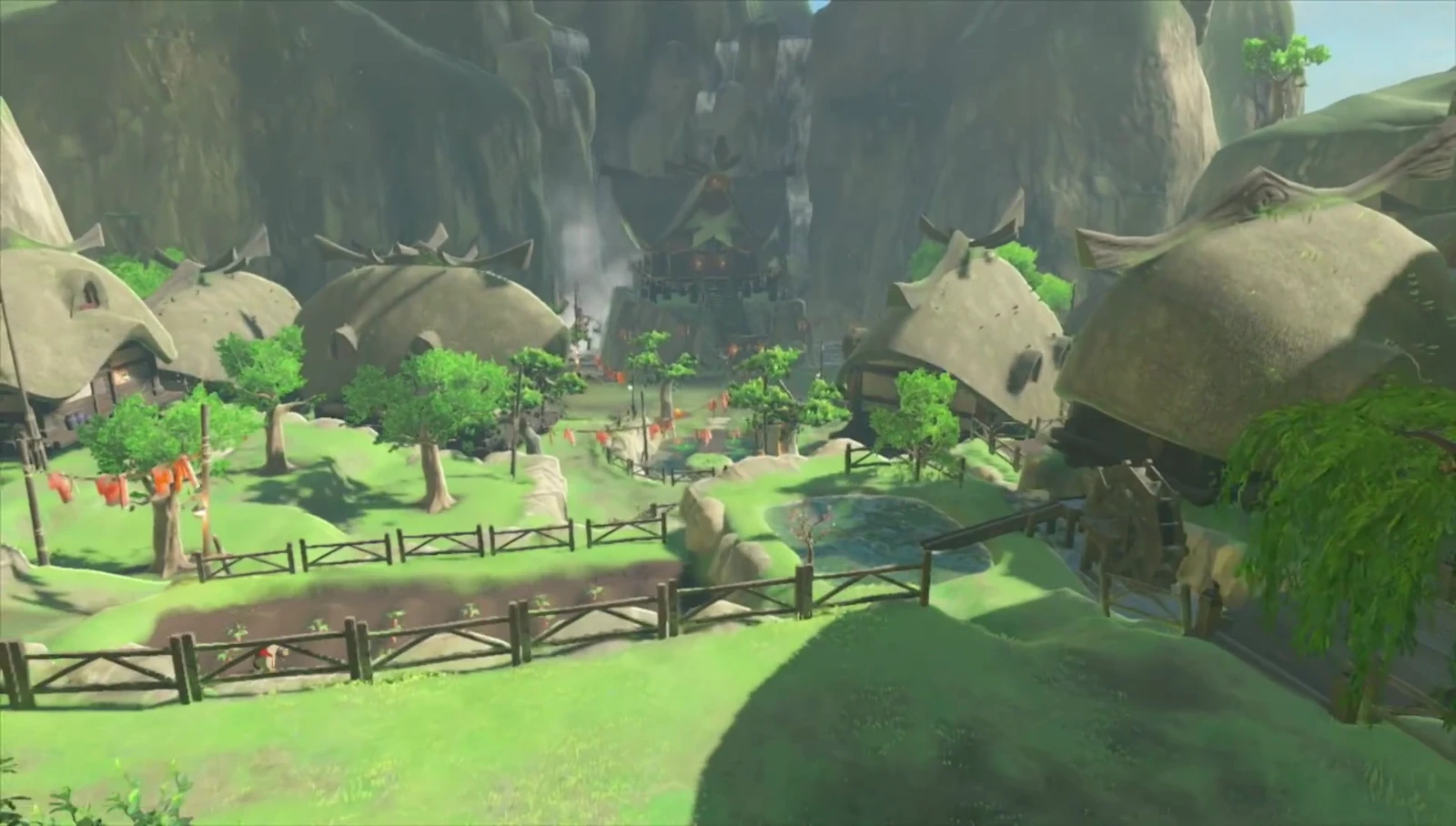
Rhoam sends Link to Kakariko Village to see Impa, the Sheikah elder who served the royal family a century ago and is now very old indeed. She sets the main quest: free the four Divine Beasts. She also spots something about the Slate. Its camera once belonged to Zelda, who used it to photograph places that mattered to her, and those pictures are the key to Link’s missing past.
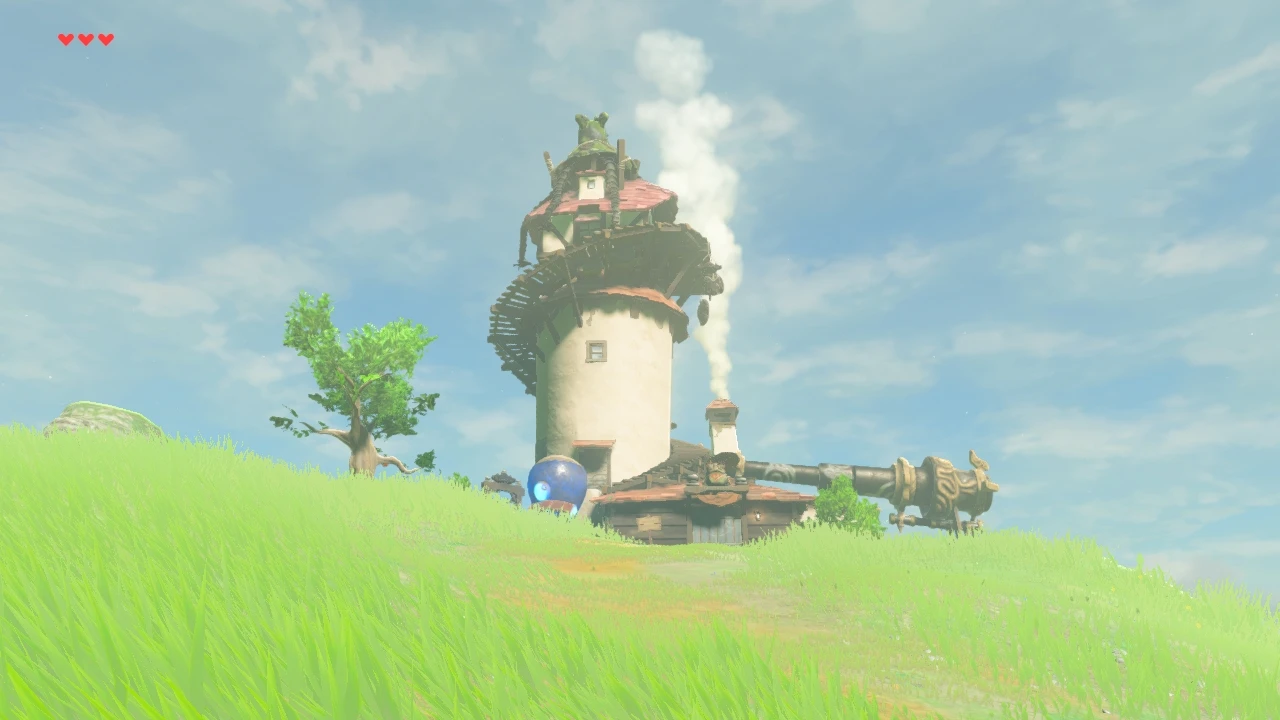
The Slate’s files are damaged, so Link travels to Hateno Village and its Ancient Tech Lab, home to Impa’s older sister Purah, a brilliant Sheikah researcher who now looks like a small child after an anti-ageing experiment went too well. Once Link carries a blue flame across town to relight the lab’s furnace, she restores the camera and the album. Each of its twelve images marks a spot somewhere in Hyrule; stand there and a memory floods back. A thirteenth location hides in a painting on Impa’s wall.
Found in any order, the memories slowly rebuild the year before the Calamity: the subdued ceremony that made Link a Champion; Zelda’s failed pilgrimages to sacred springs; her frustration that the power she is meant to inherit simply will not come; her resentment of the silent knight who reminds her of her failure, and the moment, after he saves her from Yiga assassins, when that turns to trust. The last memories show the day it all ended.
Impa, now Kakariko’s elder, sets Link on his path.The Hateno Ancient Tech Lab.A recovered memory: the subdued ceremony that made Link a Champion.
Four Divine Beasts
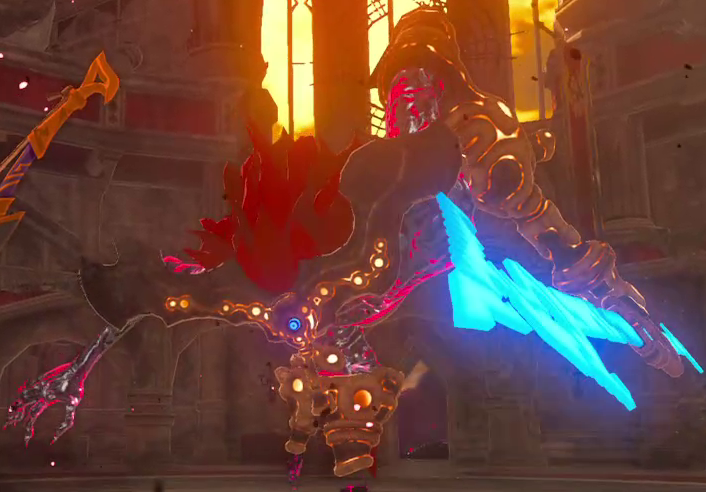
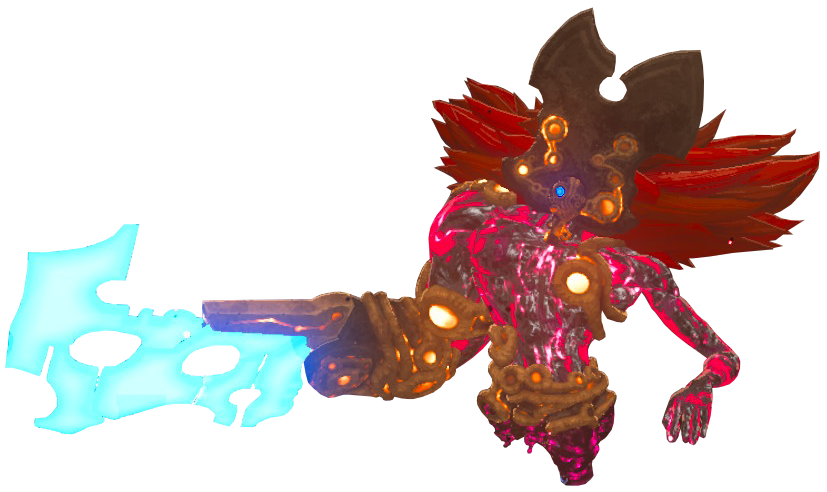
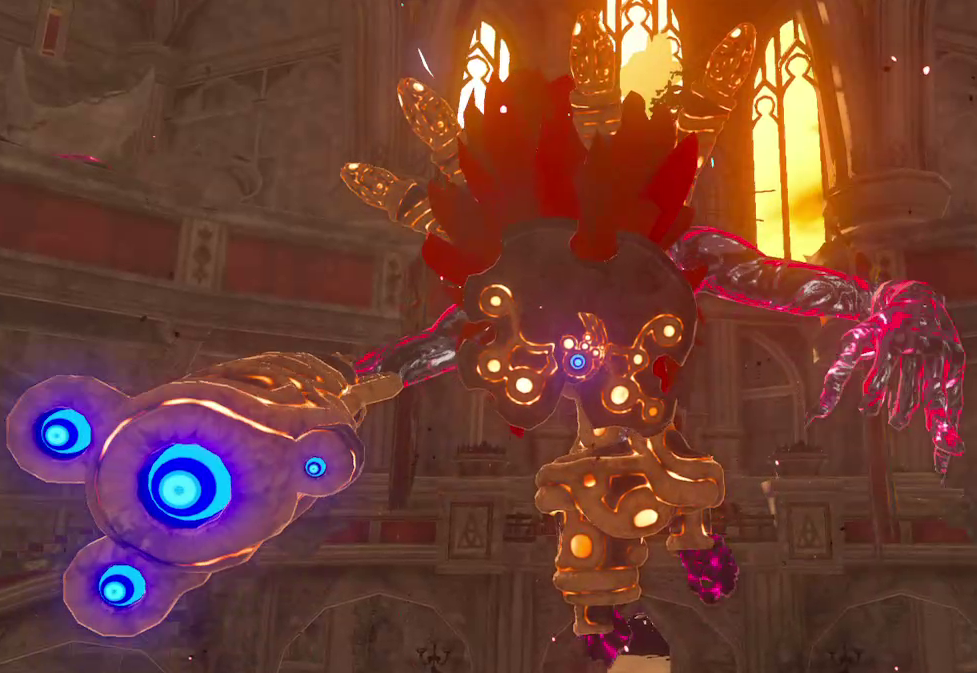
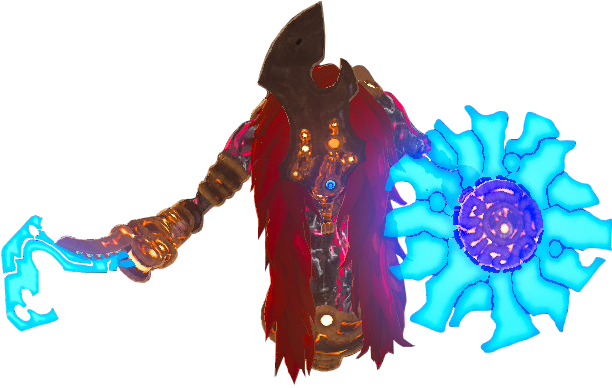
Each Divine Beast is still occupied, by a Blight, a piece of Ganon shaped in his image that killed its Champion a century ago, and each is making life miserable for the people living beneath it. Freeing them works the same way every time: win over the locals, get aboard with their help, take control of the Beast from its terminals, and defeat the Blight.
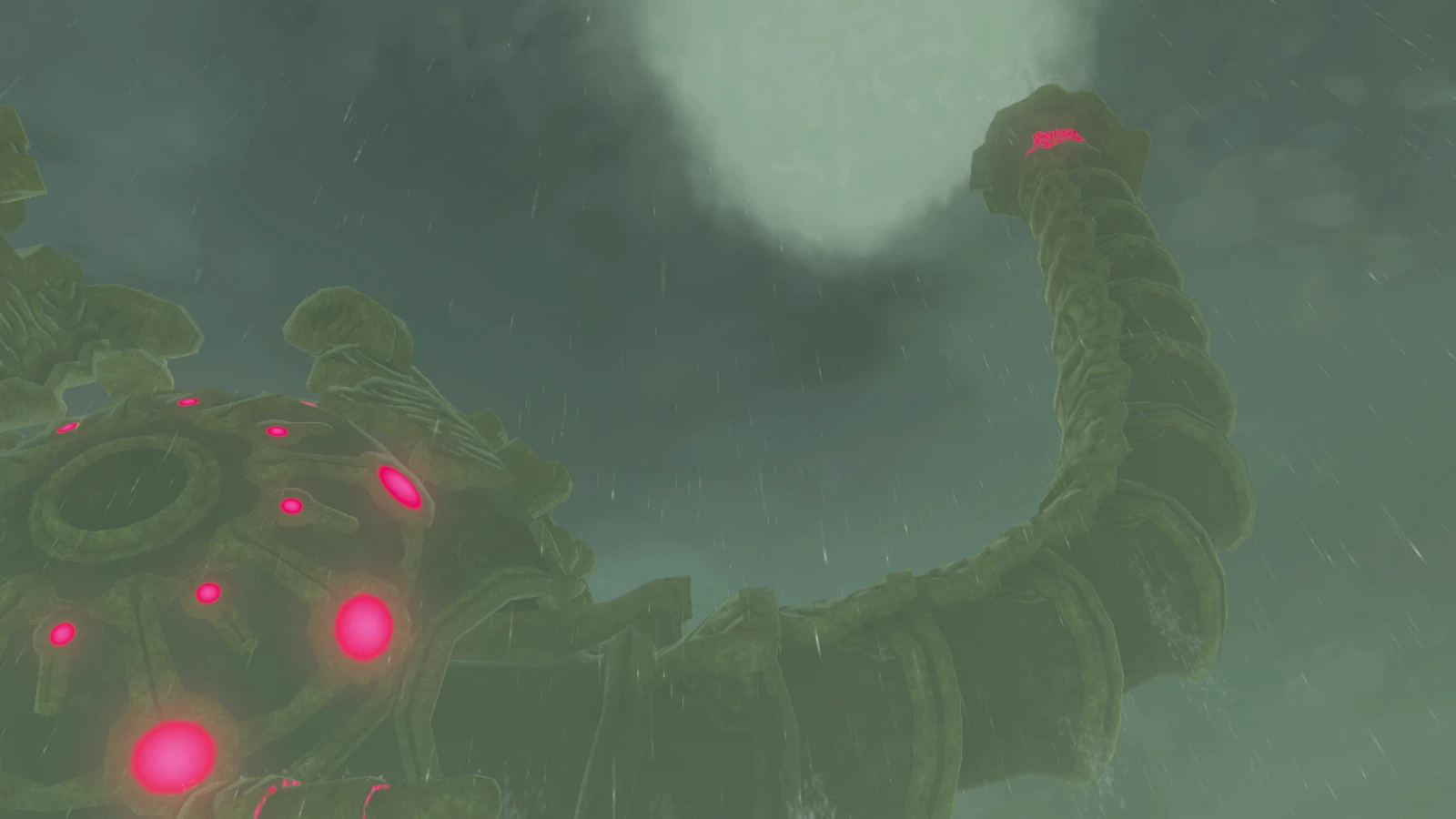
In Zora’s Domain, the elephant Vah Ruta is drowning the region in endless rain. Prince Sidon, the late Mipha’s exuberant younger brother, meets Link on the road and talks the suspicious Zora elders round, and Link learns that the Zora Armor that fits him perfectly was made by Mipha for the man she hoped to marry. With shock arrows gathered on Ploymus Mountain, a Lynel’s territory, Link rides on Sidon’s back to the waterfalls pouring from the Beast, swims up them to strike, and gets aboard.
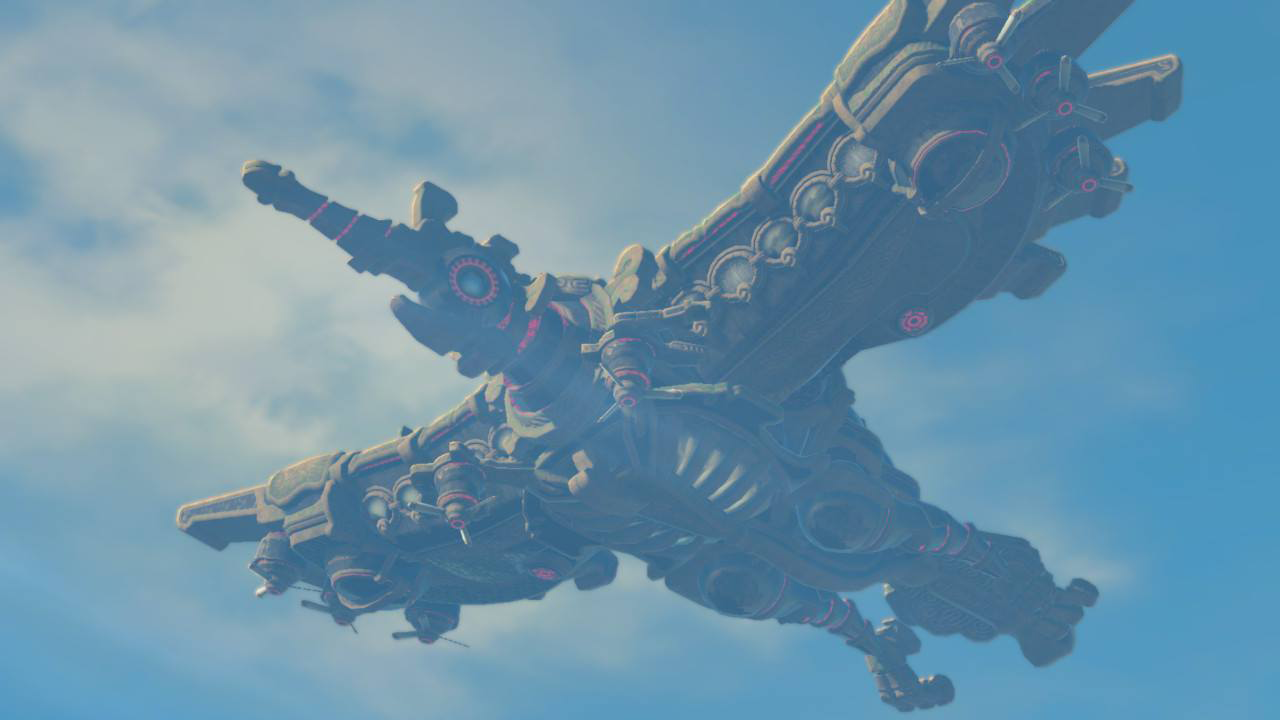
On Death Mountain, the salamander Vah Rudania prowls the volcano. Link teams up with Yunobo, a nervous young Goron who has inherited Champion Daruk’s protective power, and fires him from cannons at the Beast. In Tabantha, the bird Vah Medoh circles Rito Village shooting at anyone who flies too close; the proud warrior Teba tests Link at the Flight Range and then carries him into battle against the Beast’s cannons. In the desert, the camel Vah Naboris is throwing lightning around. The young Gerudo chief Riju can hold it back with the ancestral Thunder Helm, but the Yiga Clan has stolen it, so Link must raid the Yiga hideout and beat their leader, Master Kohga, before riding sand seals into the storm with her.
With each Blight destroyed, the Champion’s spirit is freed. Mipha, Daruk, Revali and Urbosa each thank Link with a power of their own, then turn their Beasts to aim at Hyrule Castle, waiting for him.
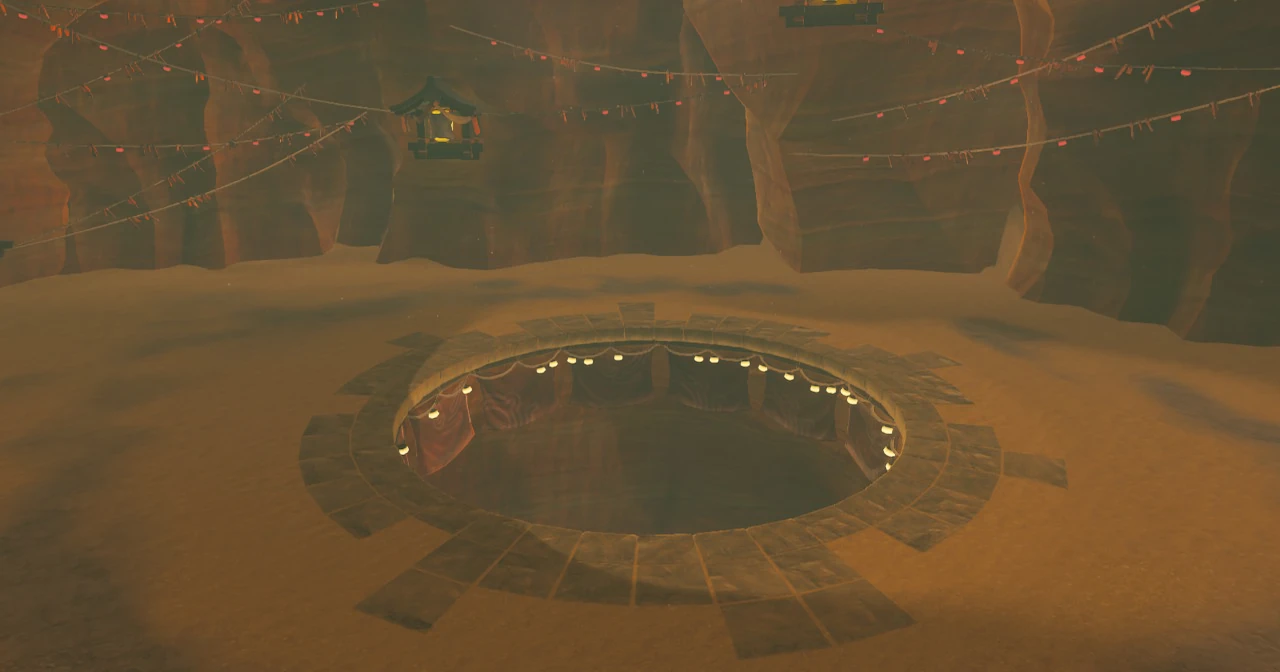
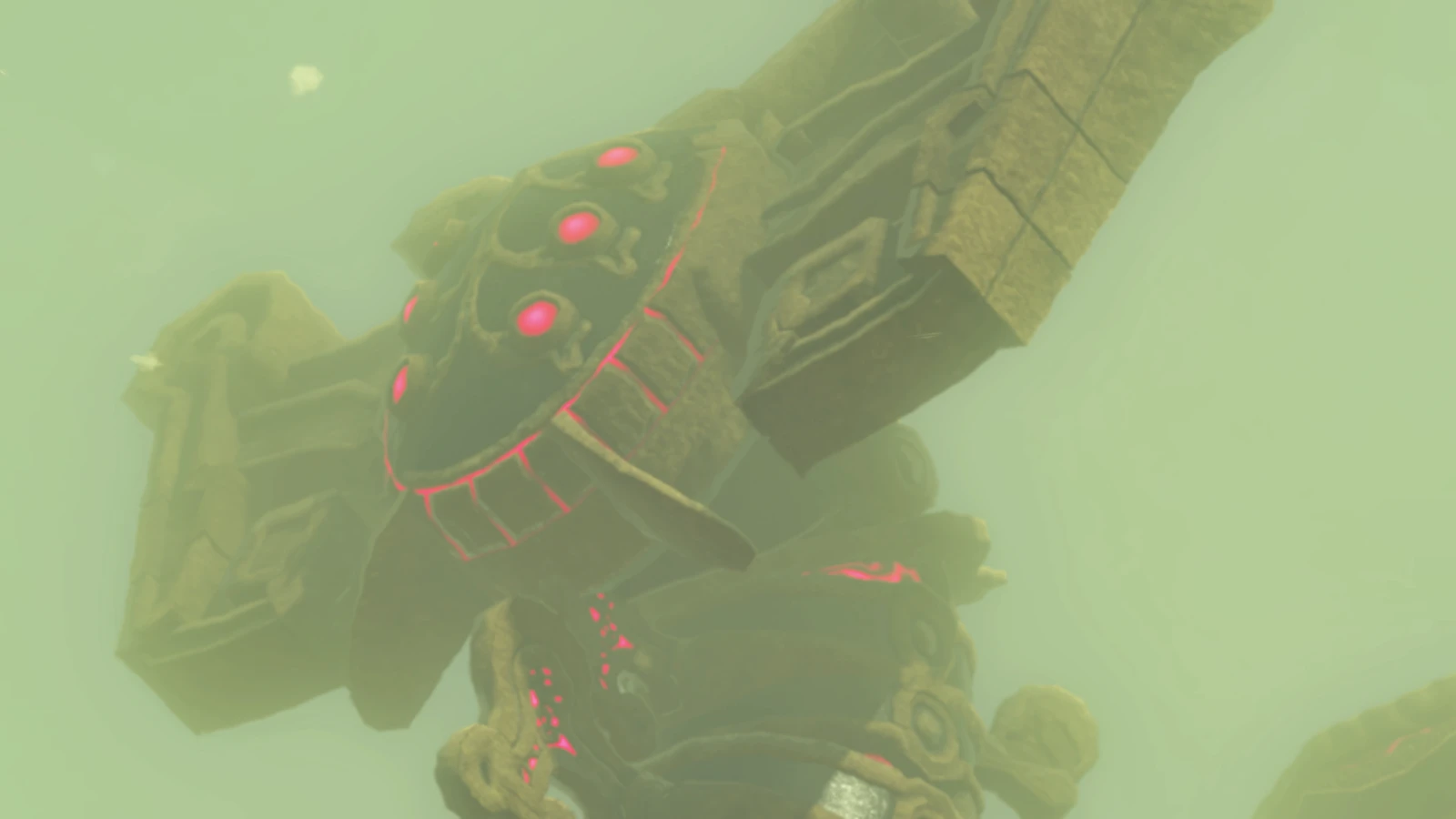
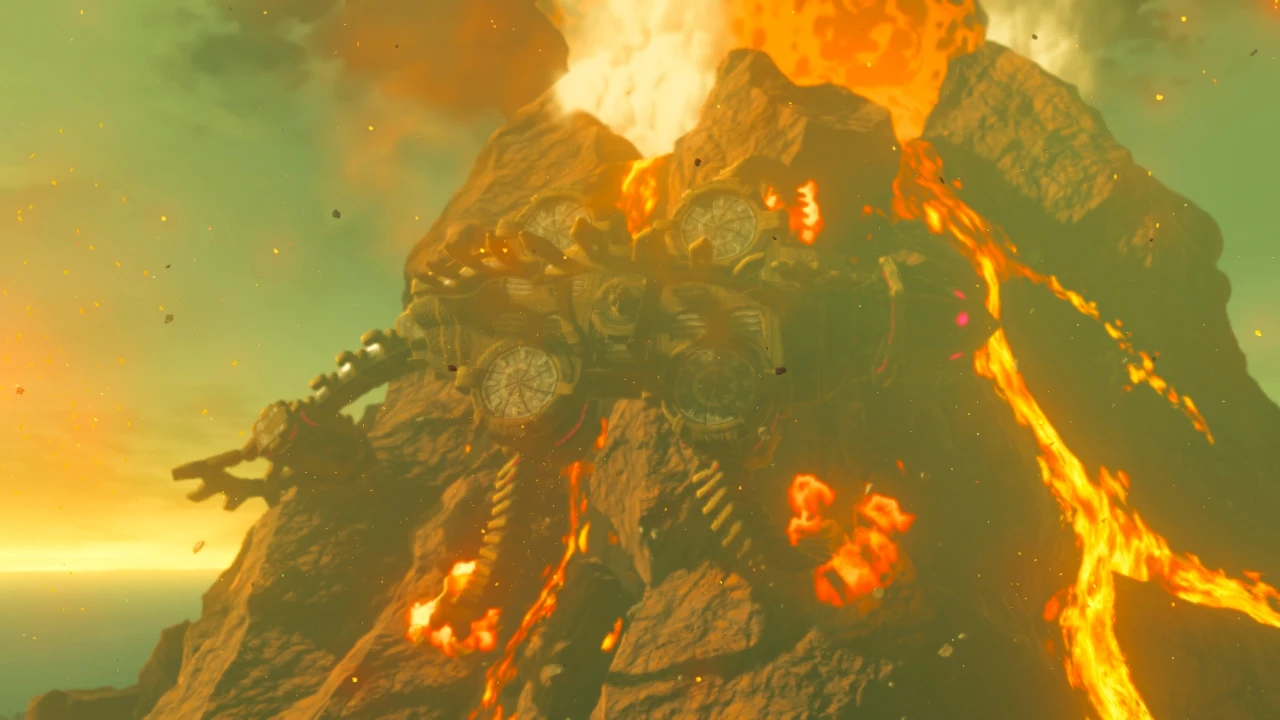
Vah Ruta in the reservoir above Zora’s Domain.Vah Medoh, the bird, over Rito Village.Vah Naboris in a desert storm.Vah Rudania clinging to Death Mountain.
The sword in the forest
Deep in the Lost Woods, through a fog that turns back the unworthy, lies the Korok Forest, where the Great Deku Tree has guarded the Master Sword for a century. Link can draw it once he has at least 13 heart containers; try it any weaker and the blade drains him. Drawing it unlocks a memory of Zelda entrusting the sword to the Deku Tree’s care. It is the only weapon in the game that never breaks, though it does tire after heavy use.
Into the castle
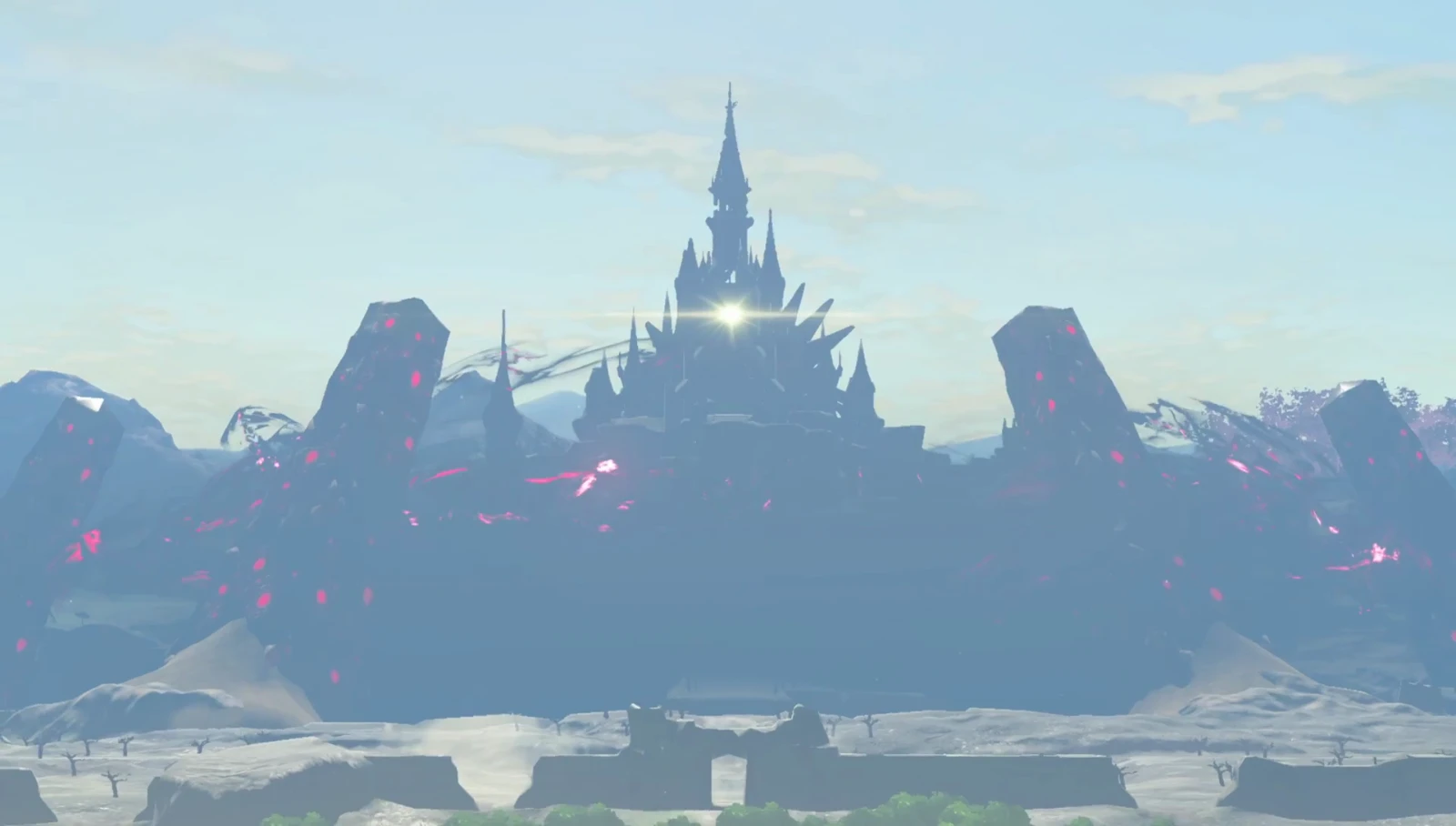
Hyrule Castle is a fortress crawling with Guardians and Lynels, with Ganon’s malice oozing through its halls. When Link reaches the sanctum, the Champions strike: every freed Divine Beast fires a beam into the Calamity before it can finish forming. Each Blight Link skipped is waiting inside to be fought first.
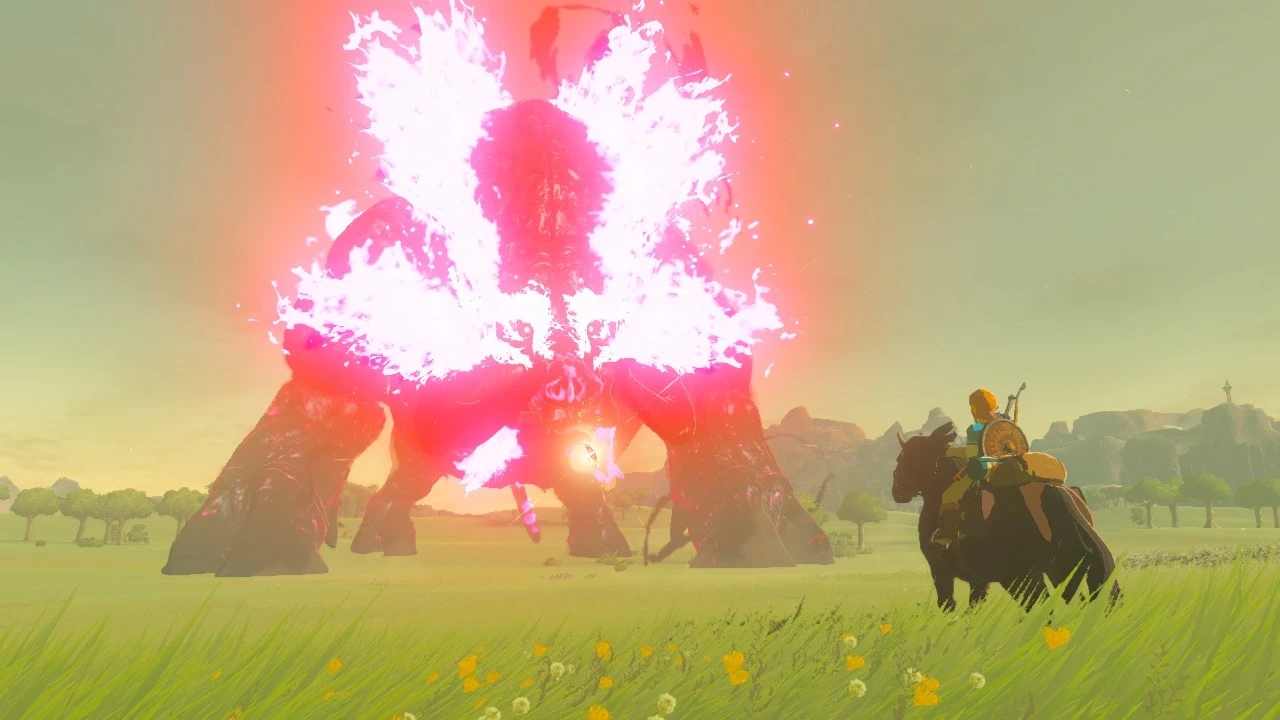
What climbs out is a grotesque, half-built machine of a monster, spider-limbed and fused with Guardian weaponry. Beaten, it abandons its body and erupts on to Hyrule Field as Dark Beast Ganon, a vast boar of pure hatred. Zelda gives Link the Bow of Light, he breaks open the beast’s weak points from horseback, and with the last of her strength the princess seals it away. Above the castle, King Rhoam and the four Champions say their farewells and fade.
Hyrule Castle, wrapped in Ganon’s malice.Dark Beast Ganon on Hyrule Field.
Two endings
The standard ending closes with Zelda and Link together again on Hyrule Field. Recover every memory first and there is an extra scene: Zelda tells Link that Hyrule must be rebuilt and that they will start the work themselves. She also admits that her sacred power has faded over the long years, and that she has made her peace with that. It is a quiet, hopeful note on which to end, and it is exactly where Tears of the Kingdom picks up.
Zelda and Link after the battle.
The Champions’ Ballad
The second DLC pack is the closest thing the game has to a sequel chapter. Once all four Divine Beasts are free, Zelda’s voice calls Link back to the Shrine of Resurrection, where the One-Hit Obliterator appears: a weapon that kills anything in a single blow, but leaves Link dead in one hit too. With it he must clear the monsters and four new shrines on a permanently dark Great Plateau.
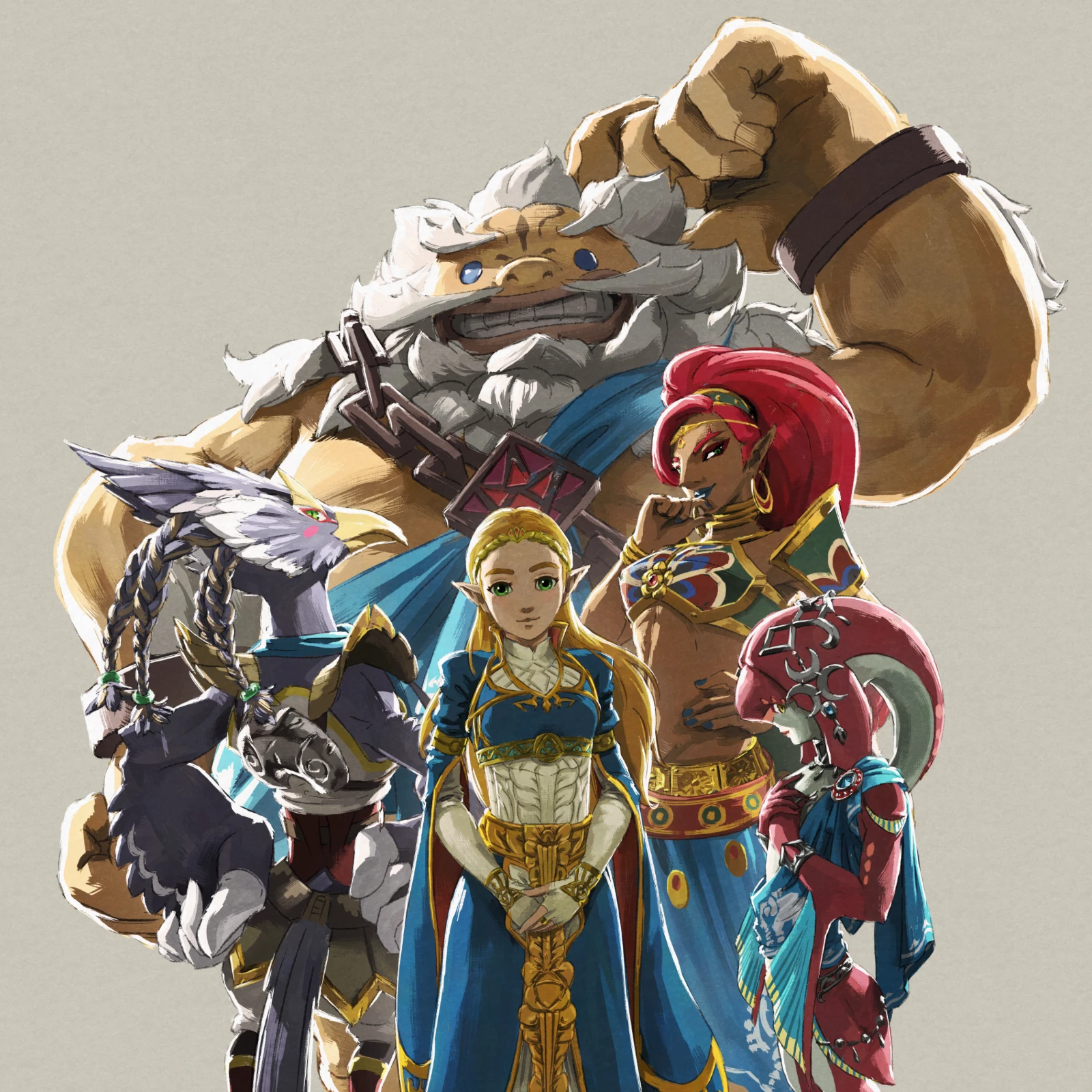
Then the Obliterator splits into four orbs and Link follows each Champion’s trail across Hyrule, clearing three new shrines per Champion, guided by Kass and his accordion. Each set ends in an illusory rematch with that Champion’s Blight, and each victory restores a new memory: a hidden side of Revali, an unexpected weakness of Daruk’s, Mipha and her royal duty with a young Sidon, and a night walk between Zelda and Urbosa.
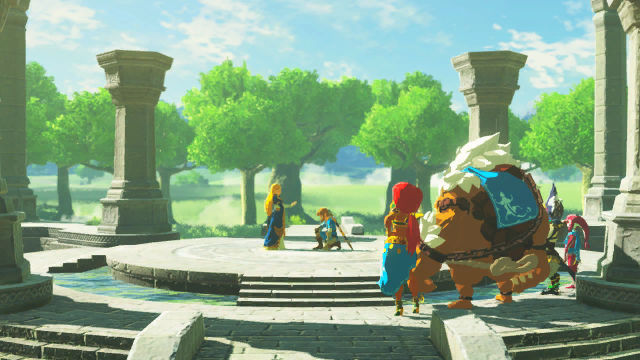
Finally the Shrine of Resurrection sinks into a hidden fifth Divine Beast, the Final Trial, combining the gimmicks of the other four. At its heart the monk Maz Koshia tests Link in battle. Victory earns the Master Cycle Zero motorbike and one last memory, played as Kass sings the full ballad on the Great Plateau: the day the king formally appointed the Champions and they gathered for a picture taken with the Sheikah Slate.
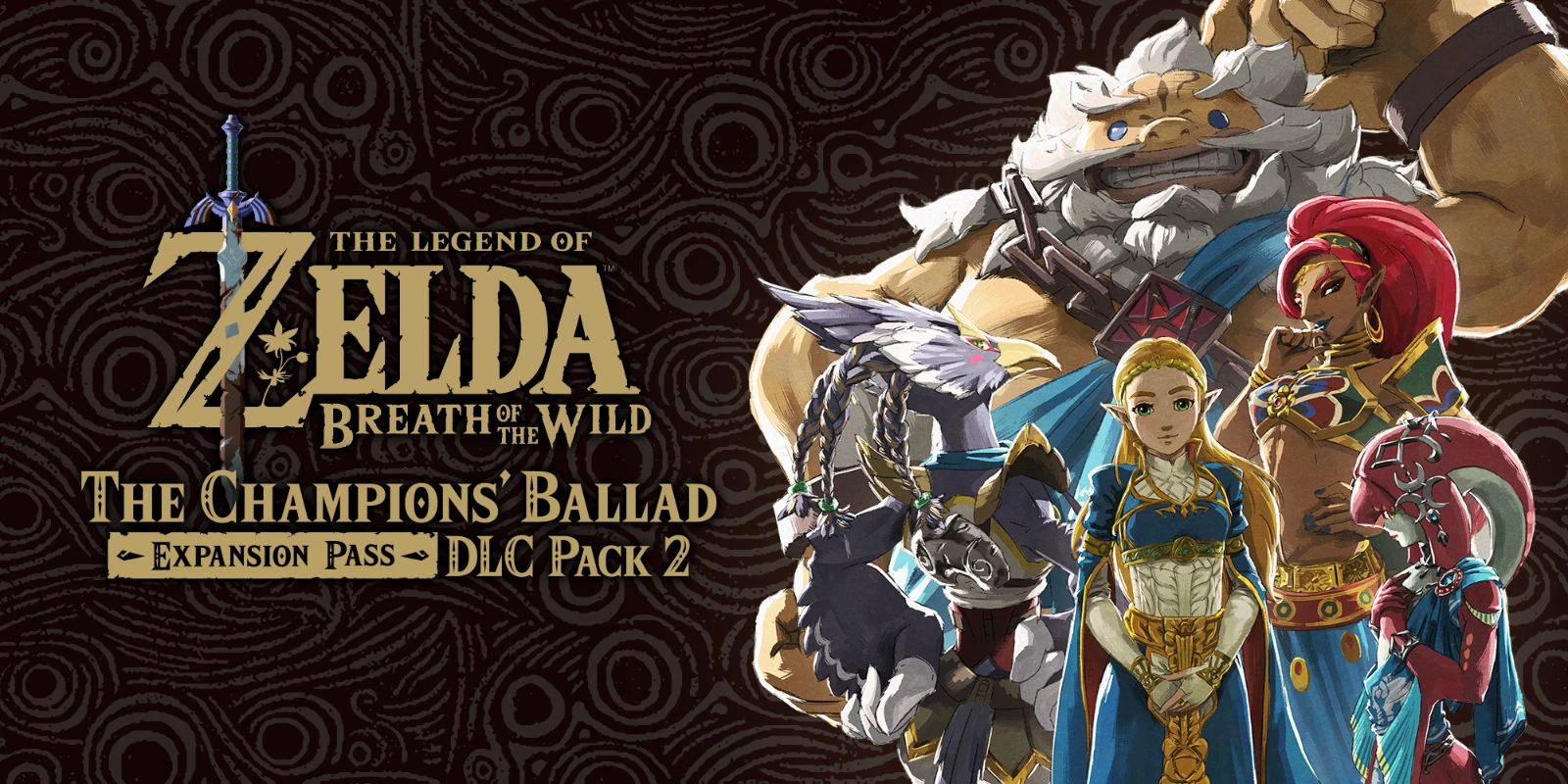
Nintendo’s key art for The Champions’ Ballad.The Master Cycle Zero, a Divine Beast on two wheels.
Regions, Divine Beasts and the places that matter
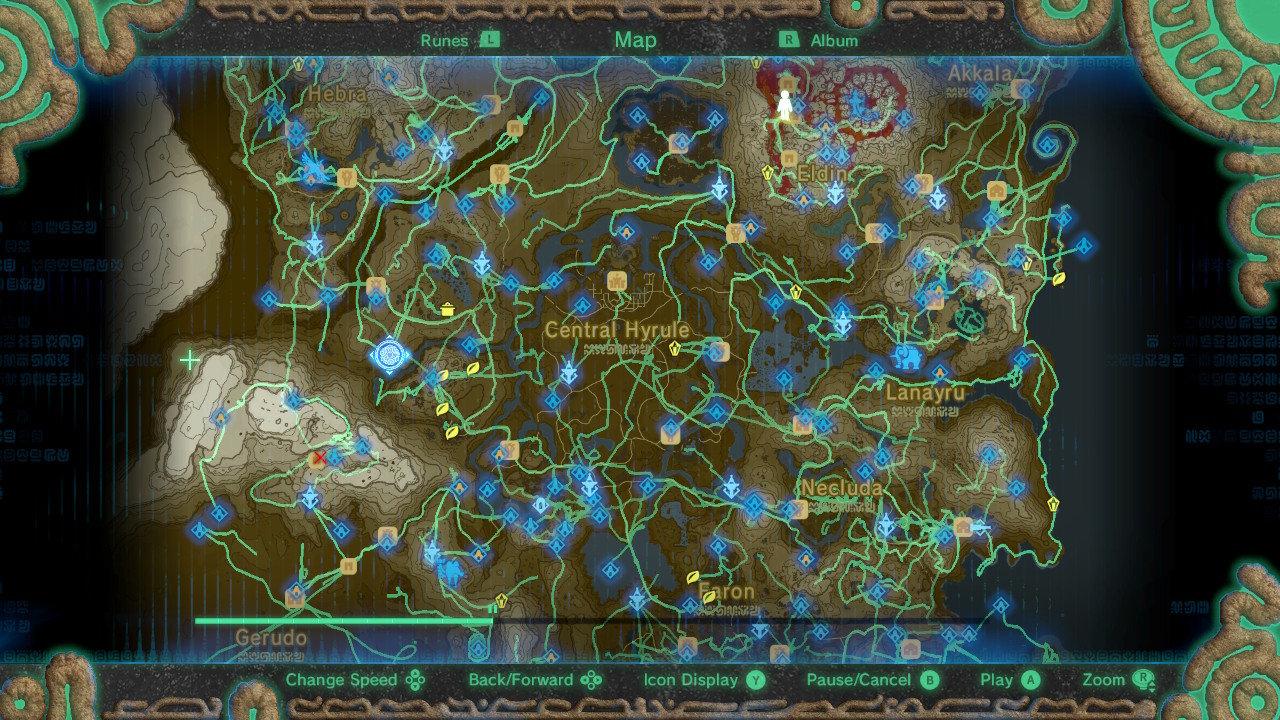
Hyrule is split into regions, each mapped by climbing its Sheikah Tower (there are fifteen). There are no conventional dungeons beyond the Divine Beasts and the castle; 120 Shrines of Trials are scattered between them. These are the places the story runs through.
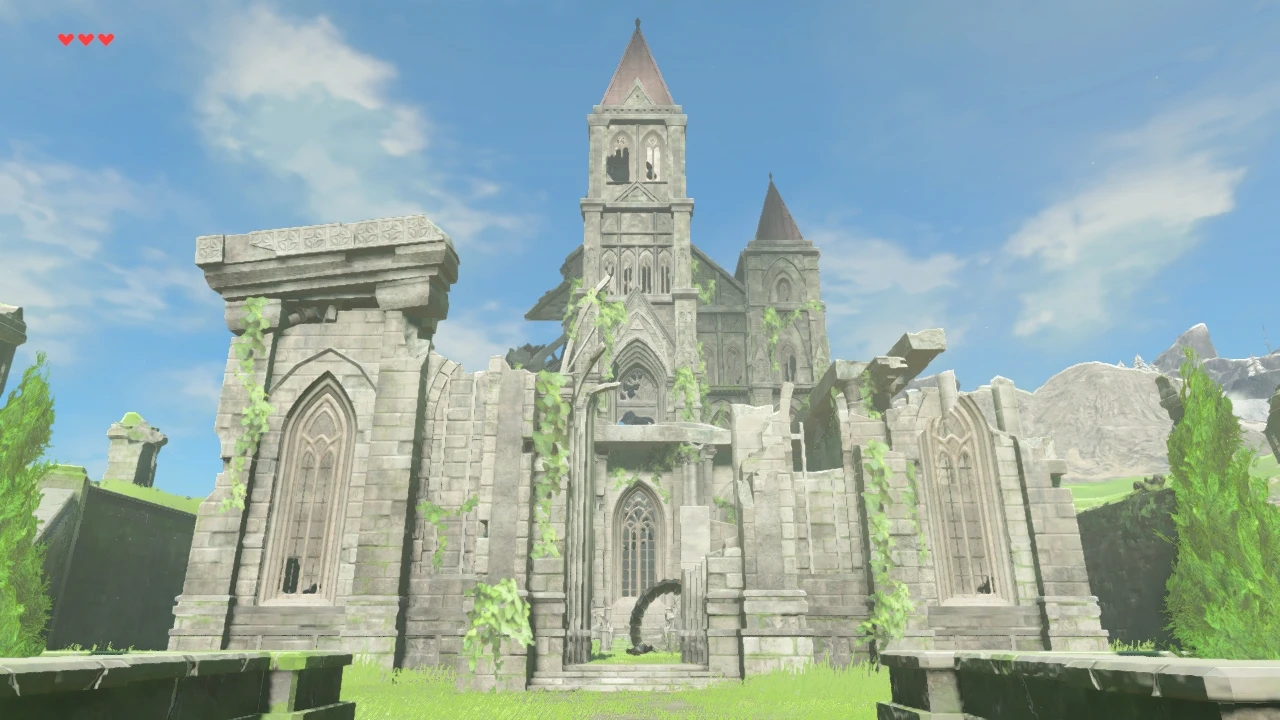
Great PlateauTutorialThe walled highland around the Shrine of Resurrection and the ruined Temple of Time. Four shrines, four runes, one paraglider.
Kakariko VillageNecludaThe Sheikah village where Impa and her granddaughter Paya live.
Hateno VillageNecludaPurah’s Ancient Tech Lab sits above the village, which is also where Link can make a home.
Zora’s Domain · Vah RutaLanayruThe elephant Divine Beast, piloted by Mipha, held by Waterblight Ganon.
Goron City · Vah RudaniaEldinThe salamander on Death Mountain, piloted by Daruk, held by Fireblight Ganon.
Rito Village · Vah MedohTabanthaThe bird Divine Beast, piloted by Revali, held by Windblight Ganon.
Gerudo Town · Vah NaborisGerudo DesertThe camel, piloted by Urbosa, held by Thunderblight Ganon. The Yiga Clan Hideout is in the nearby canyons.
Korok ForestLost WoodsHome of the Koroks, the Great Deku Tree and the Master Sword.
Hyrule CastleCentral HyruleThe final stretch: a fortress of Guardians, Lynels and malice, with Calamity Ganon in its sanctum.
The Final TrialDLCA hidden fifth Divine Beast beneath the Shrine of Resurrection, added by The Champions’ Ballad.
Zelda Temple’s 14-part walkthrough covers every region, shrine and Divine Beast in detail.
In comics, TV & other media
Breath of the Wild has no manga or cartoon of its own, but its Hyrule has spread into books, music, spin-offs and Nintendo’s other series.
Creating a ChampionArt book · Nintendo / Dark Horse Books · English edition November 2018The official art and lore book: concept art, character profiles and history, and the source of much of what fans know about the Champions and the Sheikah.
Hyrule Warriors: Age of CalamityGame · Switch · 20 November 2020A musou-style action spin-off set a hundred years before Breath of the Wild, letting you play the Champions, Zelda, Impa and more during the Great Calamity.
Tears of the KingdomGame · Switch · 12 May 2023The direct sequel, set in the same Hyrule a few years later, with Zelda, Purah, Robbie, Sidon, Riju, Teba, Yunobo and the Yiga all returning.
Super Smash Bros. UltimateGame · Switch · December 2018Link fights in his Breath of the Wild look, Champion’s Tunic and all, throwing Remote Bombs and finishing with the Ancient Bow; his Hero of the Wild outfit is an alternate costume. He was revealed at E3 on 12 June 2018.
Mario Kart 8 DeluxeGame update · Switch · July 2018Version 1.6 added Link in his Champion’s Tunic and the Master Cycle Zero as free content.
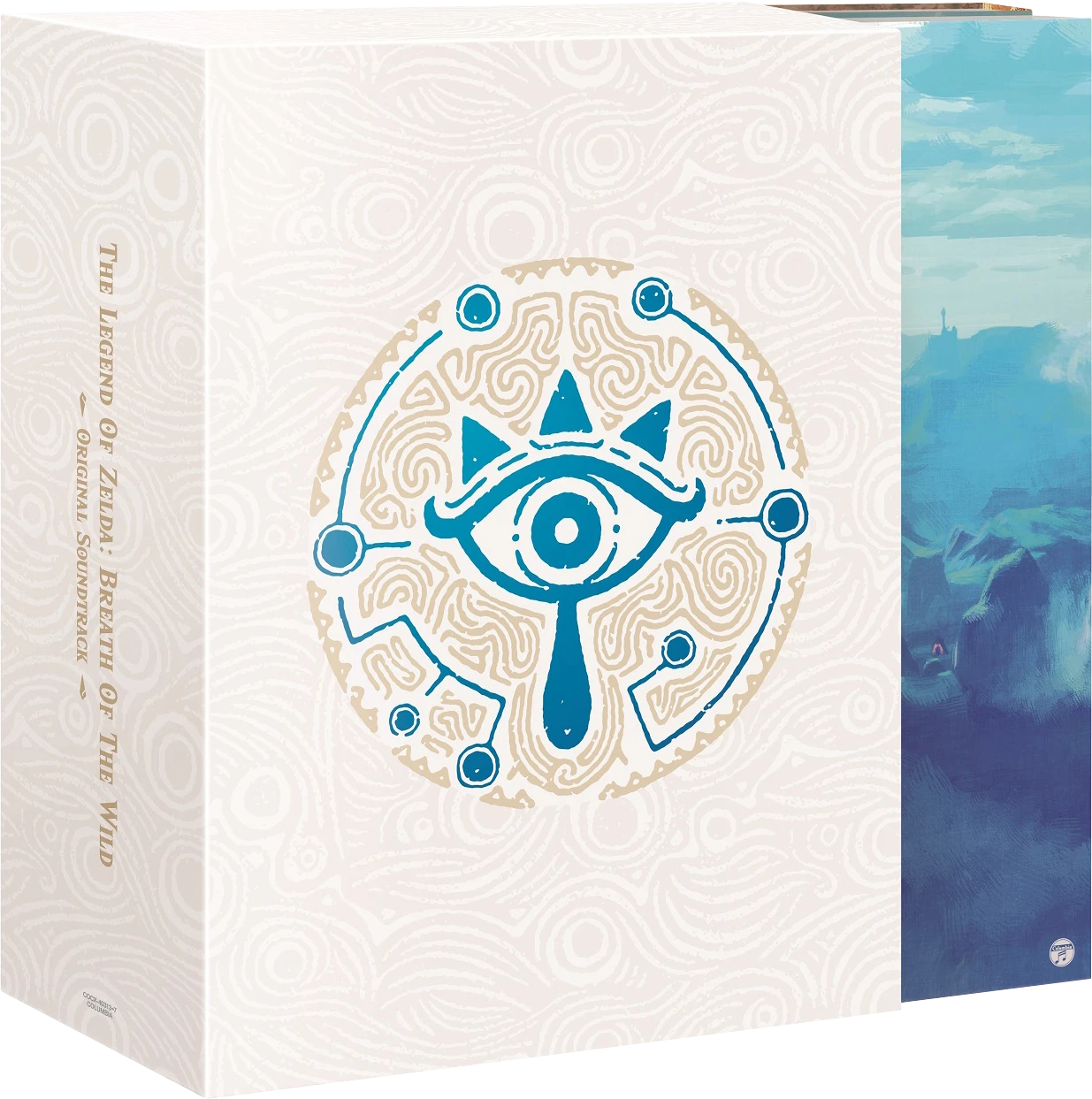
Original SoundtrackMusic · Japan · 25 April 2018A five-disc, 211-track album of the score. A 16-side vinyl box set from Nintendo and Laced Records was announced in October 2025 for 19 June 2026 and later put back to 4 September 2026.
Characters
Breath of the Wild has a large cast, and for the first time in a main Zelda game many of them have voices. Here are the people who matter, who they are across the series, and what they do in this game.
Character
Who they are
In this game
Stats & abilities
LinkThe Hylian Champion
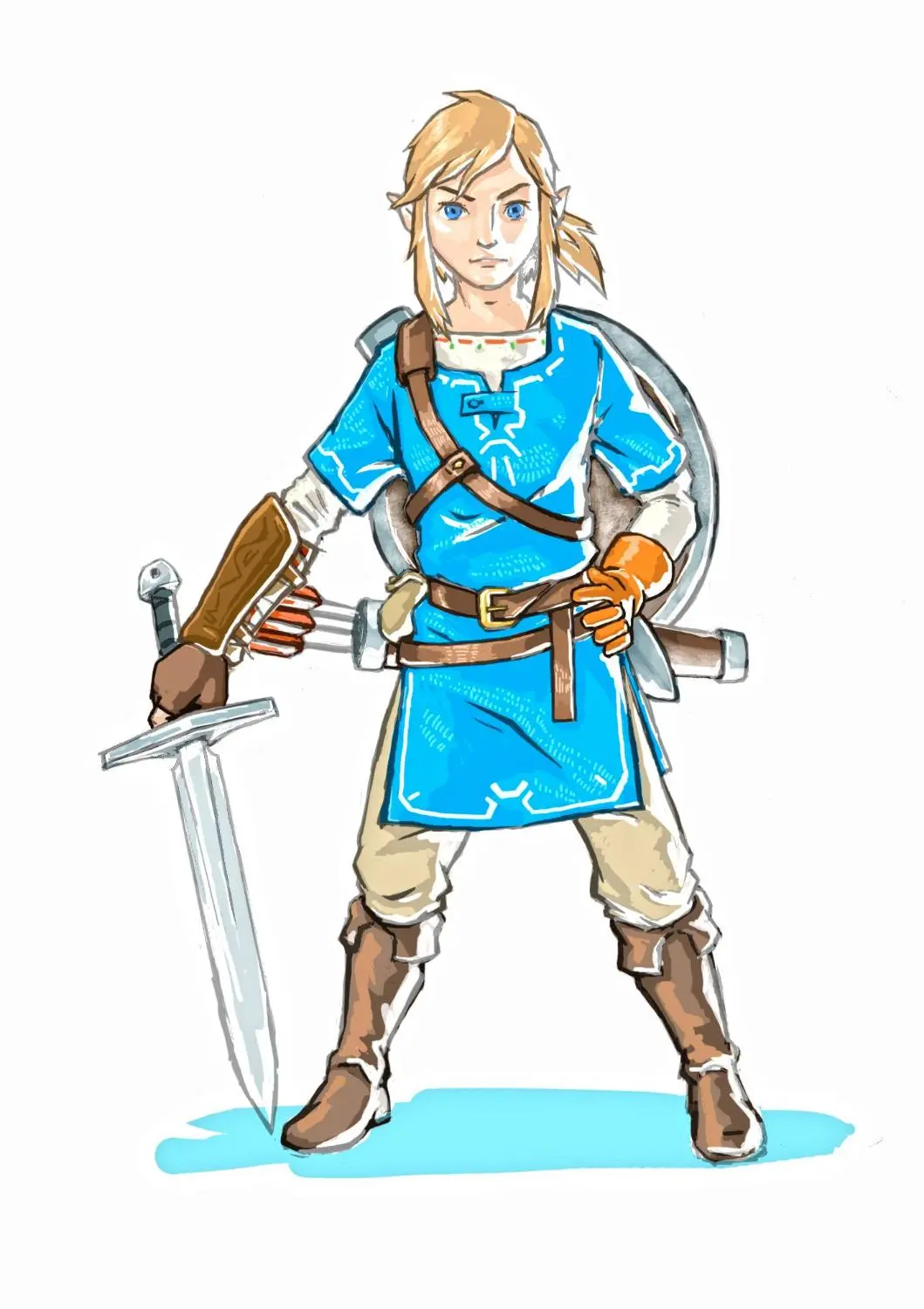
The Legend of Zelda’s hero is not one person but a soul reborn across the ages, always a courageous young Hylian, almost always silent. This Link was a gifted young swordsman, appointed Zelda’s knight and made a Champion because the Master Sword answered him. He swaps the traditional green for the blue Champion’s Tunic and, unusually, fights right-handed. Zelda’s diary gives a rare reason for his silence: he believes he must stay strong and carry every burden without a word.
Fell protecting Zelda a century ago, slept in the Shrine of Resurrection, and wakes with no memories. Everything after that is up to you: free the Divine Beasts, find the memories, draw the Master Sword, or march straight to Ganon.
Climbs, swims, sprints and glides on a stamina wheel
Sheikah Slate runes: Remote Bombs, Magnesis, Stasis, Cryonis, camera
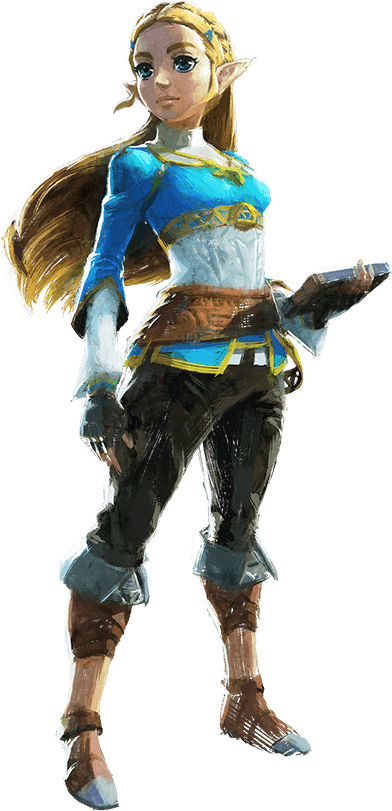
The princess who gives the series its name has been a captive (the 1986 original), a ninja in disguise (Sheik in Ocarina of Time), a pirate captain (Tetra in The Wind Waker) and the mortal form of the goddess Hylia (Skyward Sword). This Zelda is a scientist at heart. She lost her mother at six, and however hard she prays, the sealing power her bloodline is supposed to carry will not wake, so she buries herself in research into Sheikah technology instead, to her father’s exasperation.
The heart of the story. The memories trace her from a frustrated, prickly 16-year-old who resents her silent bodyguard, to the young woman who finally awakens her power on the battlefield to save him. She has held Calamity Ganon inside Hyrule Castle for a hundred years. Voiced by Patricia Summersett in English and Yū Shimamura in Japanese.
Awakens her sealing power at the Calamity
Researched the Sheikah Slate, Guardians and Divine Beasts
Gives Link the Bow of Light in the final battle
Her diary is in her room at Hyrule Castle
Calamity GanonThe ancient evil
Ganon has been the series’ big bad since the 1986 original, sometimes as the Gerudo king Ganondorf, sometimes as a pig-like beast. In Breath of the Wild he has no human face at all: he is a primal force of malice and hatred that has risen again and again through Hyrule’s history. Ten thousand years ago the Sheikah’s machines helped seal him; a century ago he learned from that defeat and seized the machines first.
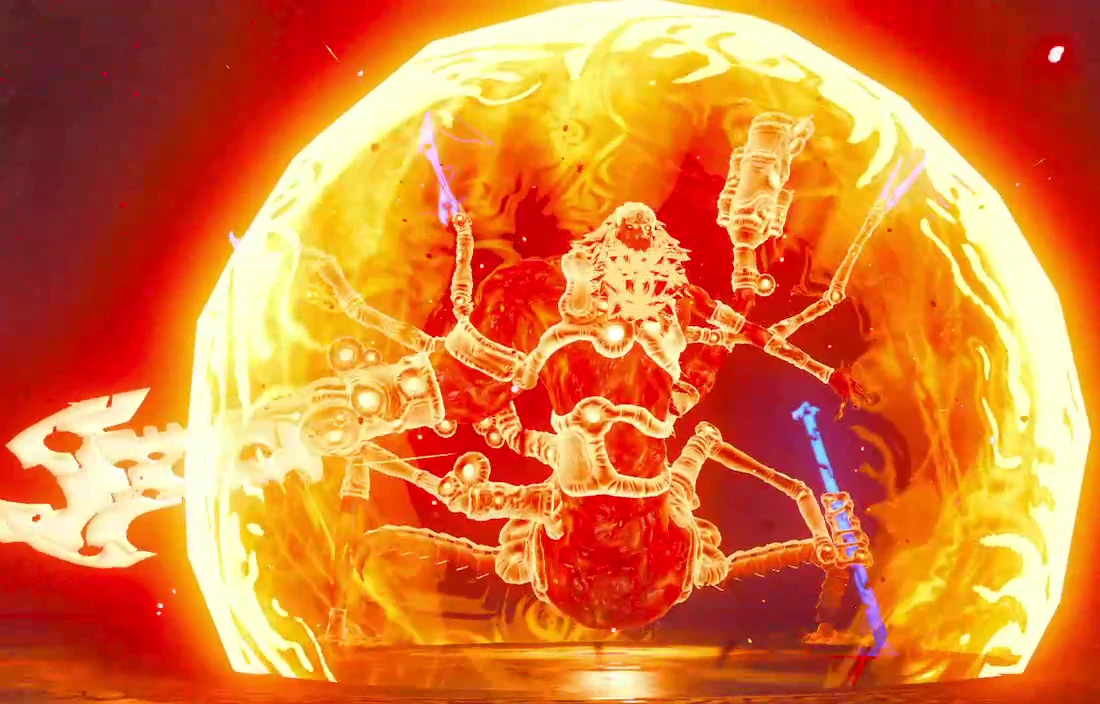
He corrupted the Guardians and Divine Beasts, spawned four Blights to kill the Champions, and has been held in Hyrule Castle by Zelda ever since, growing stronger. Faced at the end as a monstrous Guardian-like body and then as Dark Beast Ganon.
Malice: the glowing, eyeball-studded ooze around the castle
Spawns the four Blights
Blood Moons revive defeated monsters
Final form: Dark Beast Ganon
King Rhoam Bosphoramus HyruleThe old man / the last king
Zelda’s father and the last king of Hyrule. A stern ruler who pushed his daughter hard to awaken her power, and scolded her for spending her time on research instead. One memory shows the strain between them.
He died in the Calamity, but his spirit lingers on the Great Plateau as the old man who guides Link through the tutorial, trading his paraglider for four shrines before revealing who he is. Voiced in English by Bill Rogers.
Gives Link the paraglider
Appears among the spirits after Ganon falls
MiphaZora Champion · Vah Ruta
Princess of the Zora: King Dorephan’s daughter and Sidon’s older sister. Gentle and quietly strong, she was a gifted healer and a skilled spearfighter. She knew Link since childhood, loved him, and made the Zora Armor for him as a token of that love.
Killed by Waterblight Ganon inside Vah Ruta. Freed, she gives Link Mipha’s Grace, which revives him when he falls. Voiced in English by Amelia Gotham.
Weapon: Lightscale Trident
Power: Mipha’s Grace (revival)
Memory: Mipha’s Touch
DarukGoron Champion · Vah Rudania
A huge, jovial Goron warrior from Goron City, famous for his strength and his good humour. In his memory he stops a landslide in its tracks with his protective power.
Killed by Fireblight Ganon inside Vah Rudania on Death Mountain. Freed, he gives Link Daruk’s Protection, a barrier that blocks attacks. His descendant Yunobo inherited the same power. Voiced in English by Joe Hernandez.
Weapon: Boulder Breaker
Power: Daruk’s Protection (shield)
Memory: Daruk’s Mettle
RevaliRito Champion · Vah Medoh
The finest archer of the Rito, and he knows it. Boastful and prickly, Revali resented being made a mere supporter of the princess’s chosen knight and makes his feelings plain in his memory. He mastered an updraft technique of his own, and had the Flight Range built to train warriors, where Teba trains a century later.
Killed by Windblight Ganon inside Vah Medoh. Freed, he grudgingly gives Link Revali’s Gale, an instant updraft. Voiced in English by Sean Chiplock.
Weapon: Great Eagle Bow
Power: Revali’s Gale (updraft)
Memory: Revali’s Flap
UrbosaGerudo Champion · Vah Naboris
Chief of the Gerudo, a tall, regal warrior who commands lightning with a snap of her fingers. She was a close friend of Zelda’s late mother and became something like an aunt to the princess, the one Champion Zelda could relax with.
Killed by Thunderblight Ganon inside Vah Naboris. Freed, she gives Link Urbosa’s Fury and asks him to tell Zelda that no one need carry the blame. Voiced in English by Elizabeth Maxwell.
Weapons: Scimitar of the Seven, Daybreaker shield
Power: Urbosa’s Fury (lightning)
Memory: Urbosa’s Hand
ImpaElder of Kakariko
A Sheikah name with deep roots: Impa sent Link on his quest in the 1986 original, was Zelda’s nursemaid in Ocarina of Time (where she becomes the Sage of Shadow), the royal nurse in the Oracle games, and Zelda’s fierce guardian in Skyward Sword. This Impa served the royal family a century ago and survived the Calamity.
Now ancient and tiny, she is Kakariko Village’s elder. She sets the main quest, recognises Zelda’s camera, hands Link the Champion’s Tunic, and keeps a painting that points to the final memory. Voiced in English by Andi Gibson.
Granddaughter: Paya
Older sister: Purah
PurahHateno Ancient Tech Lab
Impa’s older sister and one of the Sheikah’s greatest researchers, who was already studying the Sheikah Slate a century ago. An experiment in reversing her age overshot, and the elderly scientist now looks like a little girl.
Restores the Slate’s photo album, which starts the memory hunt, and upgrades the runes. By her own count, one of only three Sheikah still alive who lived through the Great Calamity, with Impa and Robbie.
Lab: Hateno Village, with assistant Symin
Upgrades the Sheikah Slate’s runes
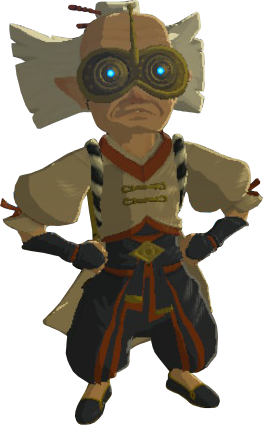
RobbieAkkala Ancient Tech Lab
An excitable, goggle-wearing Sheikah scientist and Hyrule’s leading Guardian expert, Purah’s old colleague. He has spent a century studying ancient arms in the hope of beating the Calamity. He lives with his wife Jerrin; their son is Grané.
Once Link brings blue flame to his lab’s furnace, his machine Cherry turns Guardian parts into ancient arrows, weapons and the Ancient armour set.
Lab: northeastern Akkala
Sells ancient gear via Cherry
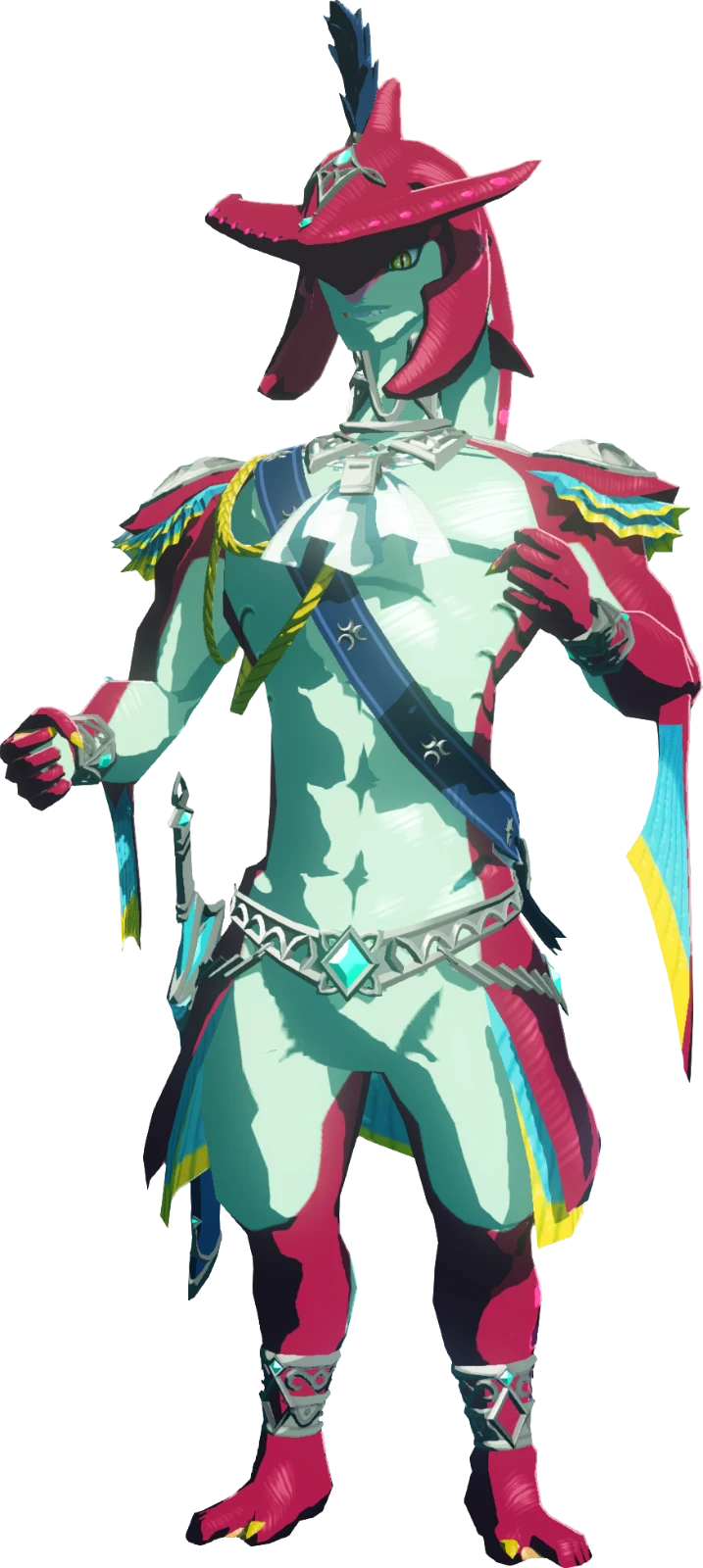
Prince SidonPrince of the Zora
Mipha’s younger brother, a towering, relentlessly upbeat shark of a prince who treats everyone with respect, Hylian or not.
Seeks out Link to save Zora’s Domain, stands up to the Hylian-hating elder Muzu, and carries Link on his back to Vah Ruta’s waterfalls, which Link swims up to attack it.
Lives in Zora’s Domain
Helps Link aboard Vah Ruta
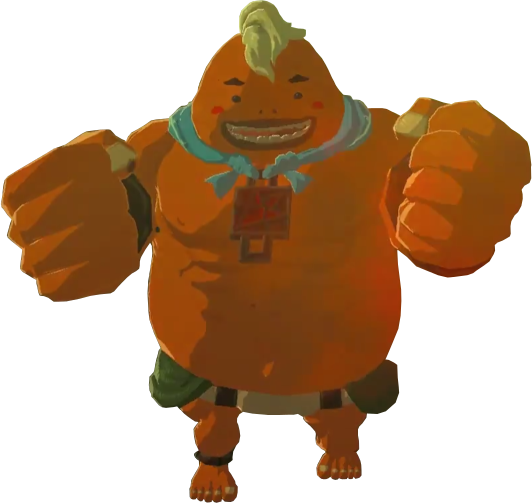
YunoboDaruk’s descendant
A young, nervous Goron whose catchphrase is a hopeful “I’ll try!”. He has inherited Daruk’s protective barrier.
Link rescues him from the Abandoned North Mine, where he was gathering a painkiller for the Goron boss Bludo’s bad back. He then becomes Link’s human cannonball against Vah Rudania. Voiced in English by Joe Hernandez.
Power: Daruk’s Protection
Fired from cannons at Rudania
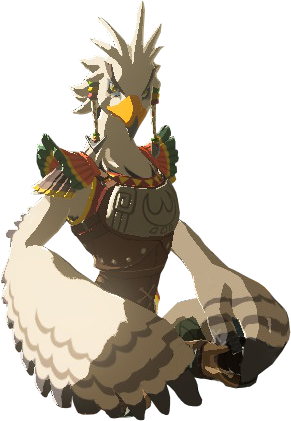
TebaRito warrior
A fiercely proud Rito warrior with a wife, Saki, and a young son, Tulin. He and his friend Harth flew at Vah Medoh against orders, and Harth was shot down.
Tests Link with five targets at the Flight Range, then carries him up so Link can bomb Medoh’s cannons, wounding his leg in the fight. Voiced in English by Sean Chiplock.
Trains at Revali’s Flight Range
Helps Link board Vah Medoh
RijuChief of the Gerudo
Twelve years old and already chief after her mother’s death, Riju is Urbosa’s descendant and works hard to seem older than she is. Her favourite sand seal is called Patricia.
Needs the stolen Thunder Helm to shield against Vah Naboris. Once Link recovers it from the Yiga, she leads the assault on sand seals and later gives him Urbosa’s weapons. Voiced in English by Elizabeth Maxwell.
Wears the Thunder Helm
Gives Link the Scimitar of the Seven and Daybreaker
KassThe travelling bard
A tall Rito who wanders Hyrule with an accordion, singing songs he learned from his late mentor, a Sheikah poet at the royal court. He has a wife, Amali, and five daughters back in Rito Village.
His riddles point Link to hidden shrines, and at stables he sings the legend of the Calamity ten thousand years ago. In The Champions’ Ballad he guides Link to each Champion’s trial and sings the complete ballad at the end.
Shrine-quest hints
Gives Link a photo of Zelda and the Champions (DLC)
PayaImpa’s granddaughter
A shy, bookish young Sheikah who stammers and hides her face when Link talks to her. Her diary makes it clear she has a soft spot for him. She was named for a birthmark shaped like a papaya seed.
Guards the Sheikah Heirloom, an ancient orb kept in Impa’s house, against the Yiga Clan.
Lives in Kakariko Village
HestuThe maraca-shaking Korok
An unusually large Korok, one of the leafy forest spirits who first appeared in The Wind Waker. He calls the Great Deku Tree “grandpa”.
Bokoblins stole his maracas, and other Koroks made off with the seeds that were inside them. Every Korok seed Link brings him adds weapon, bow or shield slots: 441 seeds max everything out, out of 900 in the game, and finding all 900 earns Hestu’s Gift.
Has guarded the Master Sword in the Korok Forest since Zelda brought it there, and judges whether Link is ready to draw it. Voiced in English by Sean Chiplock.
Keeps the Master Sword
Master KohgaLeader of the Yiga Clan
The Yiga are Sheikah renegades who split from their tribe when Sheikah technology was banned ten thousand years ago, and who now worship Calamity Ganon. Their leader is a short-tempered, easily distracted showman whose followers are inexplicably in awe of him.
His clan stole the Thunder Helm. Link confronts him at the Yiga Clan Hideout, where he summons an iron ball too heavy to control and is dragged down a bottomless pit. His followers swear vengeance; he turns out to have survived in Tears of the Kingdom.
Yiga disguise themselves as travellers
Yiga Footsoldiers and Blademasters hunt Link
Blights, bosses and monsters
The main bosses, and the monsters you will meet most across Hyrule.
Waterblight GanonVah RutaKilled Mipha. A spear-wielding Blight that also hurls blocks of ice.
Fireblight GanonVah RudaniaKilled Daruk. A flaming swordsman who hurls fireballs.
Windblight GanonVah MedohKilled Revali. Floats out of reach and fires blasts of wind.
Thunderblight GanonVah NaborisKilled Urbosa. Fast, armed with sword and shield, and crackling with lightning.
Master KohgaYiga Clan HideoutThe Yiga leader, defeated mostly by his own iron ball.
Calamity GanonHyrule CastleThe final boss, weaker for every Divine Beast you freed.
Dark Beast GanonHyrule FieldA colossal boar beaten with the Bow of Light.
Monk Maz KoshiaThe Final Trial (DLC)The monk waiting at the end of The Champions’ Ballad.
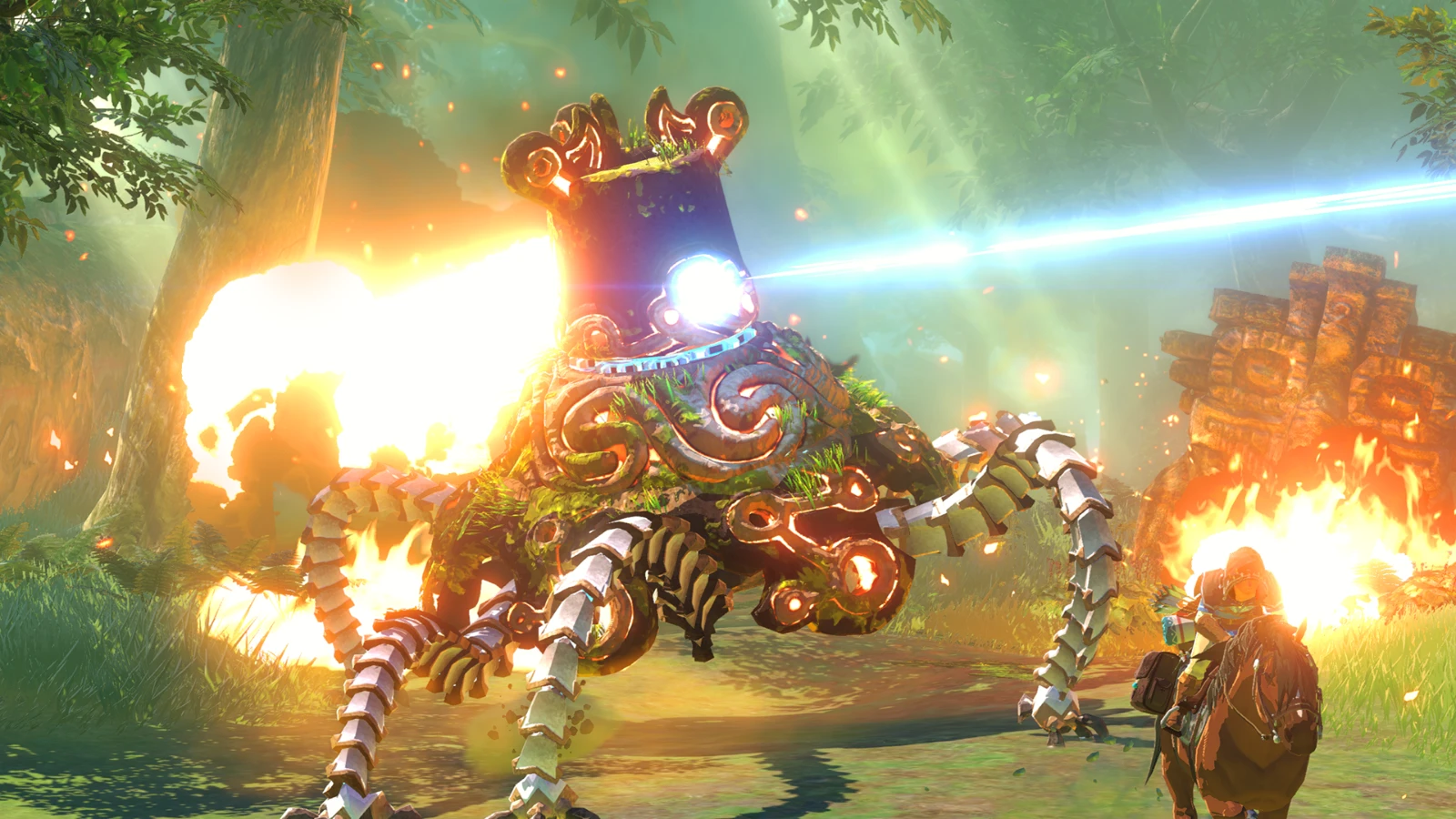
GuardiansEverywhereThe Sheikah’s war machines, turned by Ganon. Stalkers walk, Skywatchers fly, Turrets stand guard, and their lasers are the game’s first real terror.
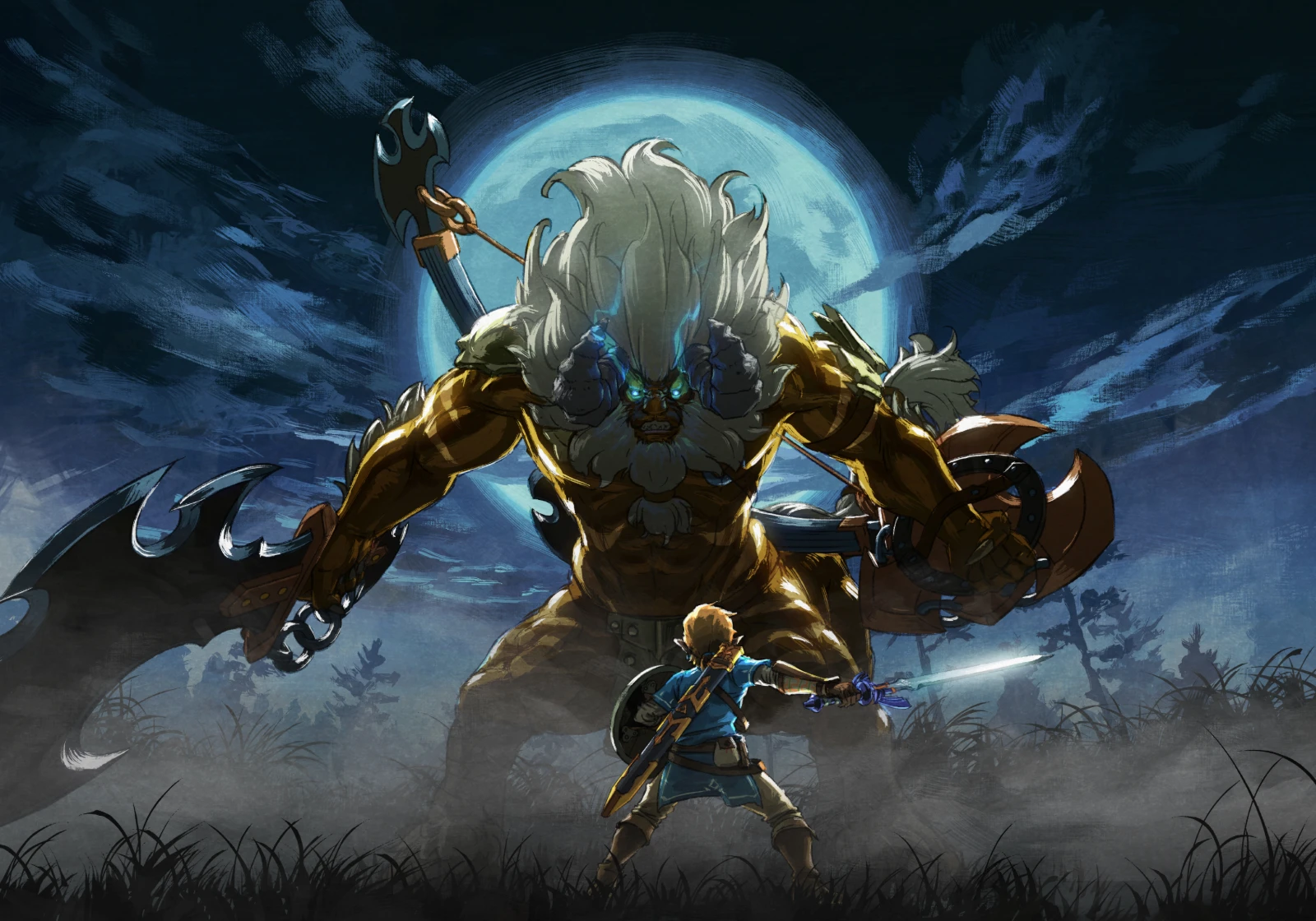
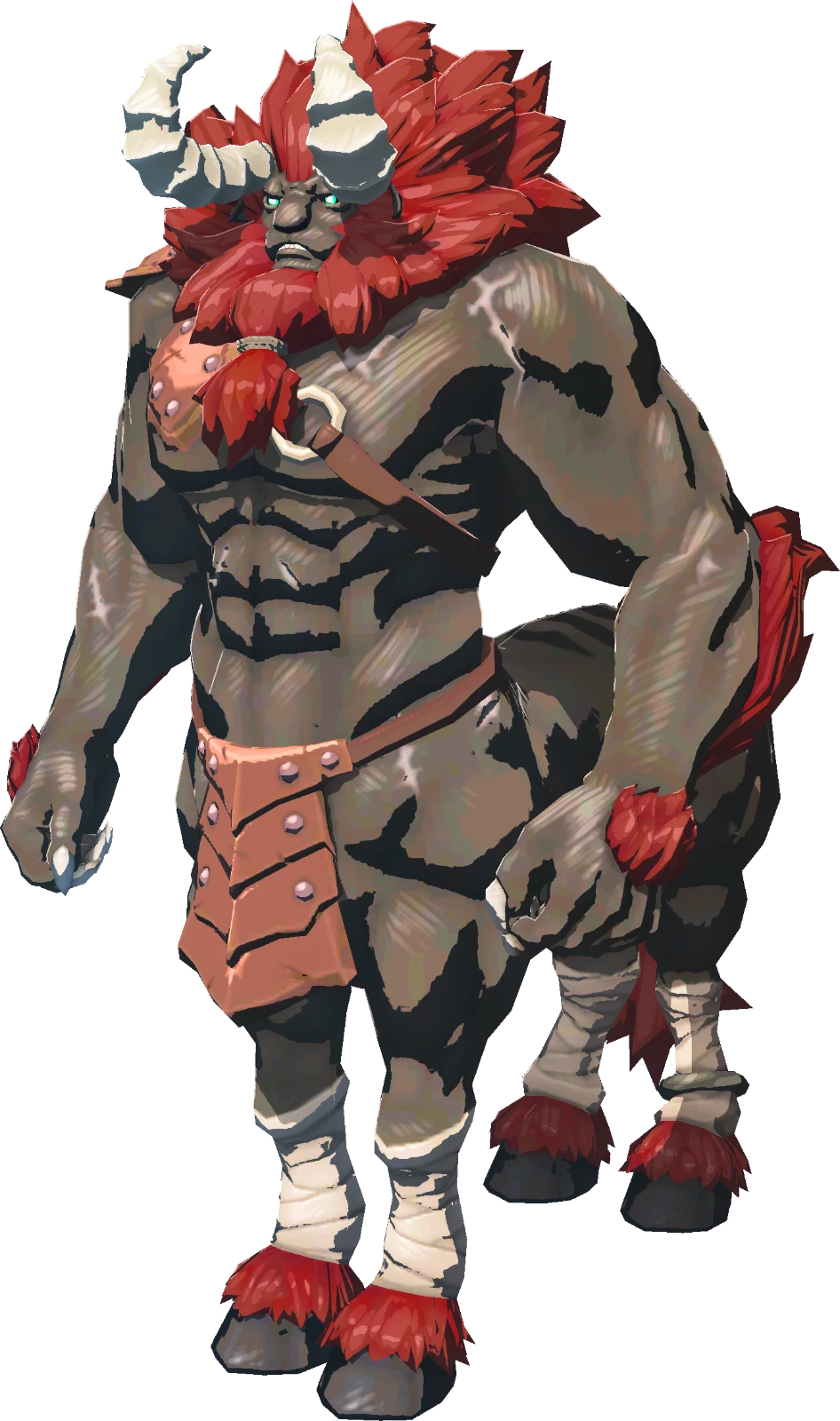
LynelWild areas, Hyrule CastleThe centaur-like monsters, around since the very first Zelda, here the toughest regular enemy in the game.
HinoxWild areasA sleeping one-eyed giant. Shoot the eye.
Stone TalusWild areasA living rock pile that rises from the ground; climb on and smash its ore weak point.
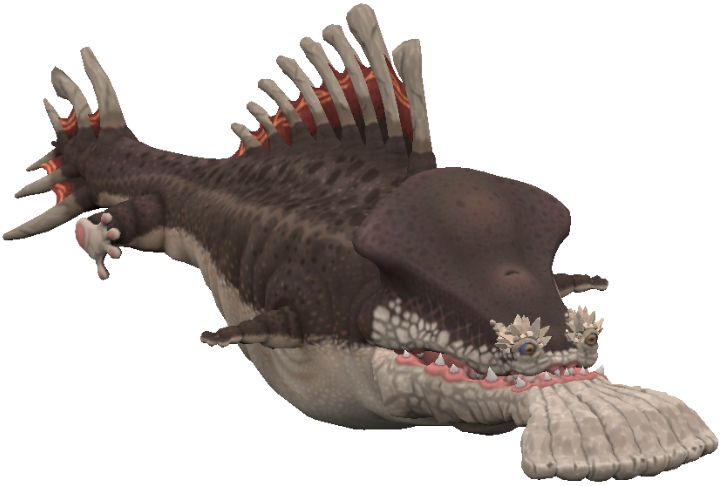
MoldugaGerudo DesertA huge sand-swimming beast that lunges up from below.
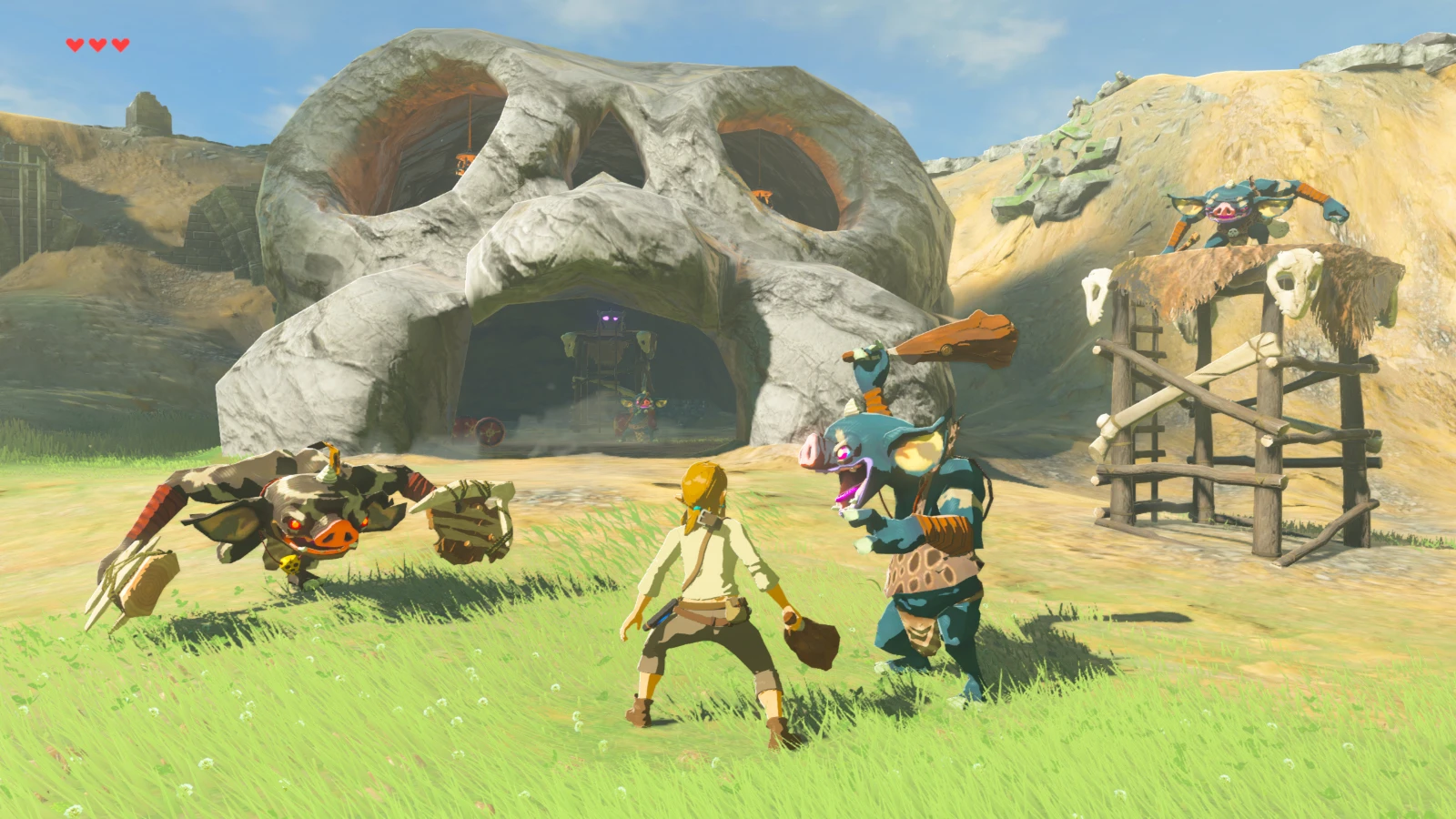
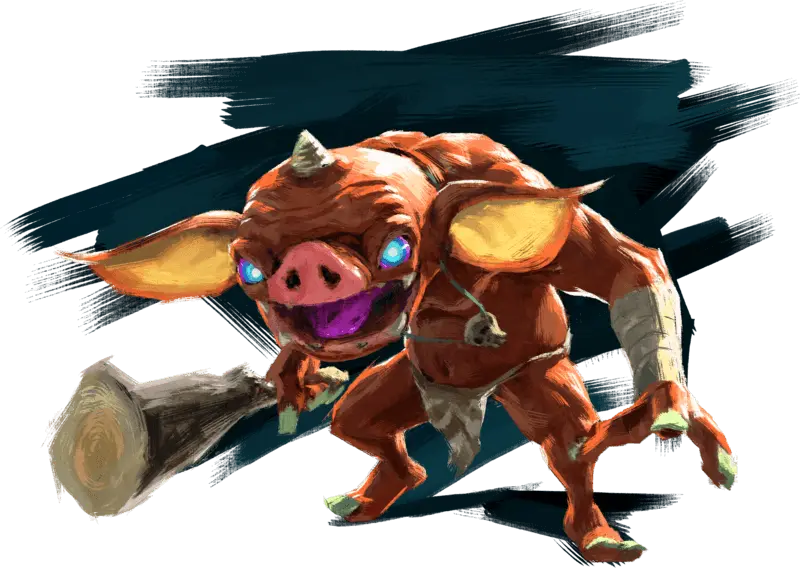
Bokoblins, Moblins and LizalfosEverywhereThe rank and file, in colour-coded strengths; Master Mode bumps every one up a tier.
The people who made it
Key staff, as credited and as described in interviews.
Hidemaro FujibayashiDirectorPreviously directed the Oracle games and The Minish Cap at Capcom, and Skyward Sword at Nintendo. Led the team that built the 2D prototype that proved the idea, and went on to direct Tears of the Kingdom.
Eiji AonumaProducerSeries producer, who set the goal of rethinking Zelda’s conventions and fronted the game’s reveals from 2013 onwards.
Takuhiro DohtaTechnical directorOversaw the physics and “chemistry” systems that tie every object and element together.
Satoru TakizawaArt directorCited Japan’s prehistoric Jōmon period as an inspiration for Sheikah technology and architecture.
Takumi WadaArtistCredited as one of the game’s lead artists.
Akihito Toda & Naoki MoriWritersWrote the scenario.
Manaka Kataoka, Yasuaki Iwata & Hajime WakaiMusicComposed a mainly piano-led, ambient score. Kataoka had worked on Spirit Tracks and Wakai on The Wind Waker.
Monolith SoftSupport studioThe Xenoblade developer, a Nintendo subsidiary, helped design the landscape and topography.
How it was made
Breath of the Wild took about five years from first ideas to release (Eiji Aonuma counted four years of development), a team of about 300, two delays and a change of console. These are the stories its makers have told.
Rethinking the conventions
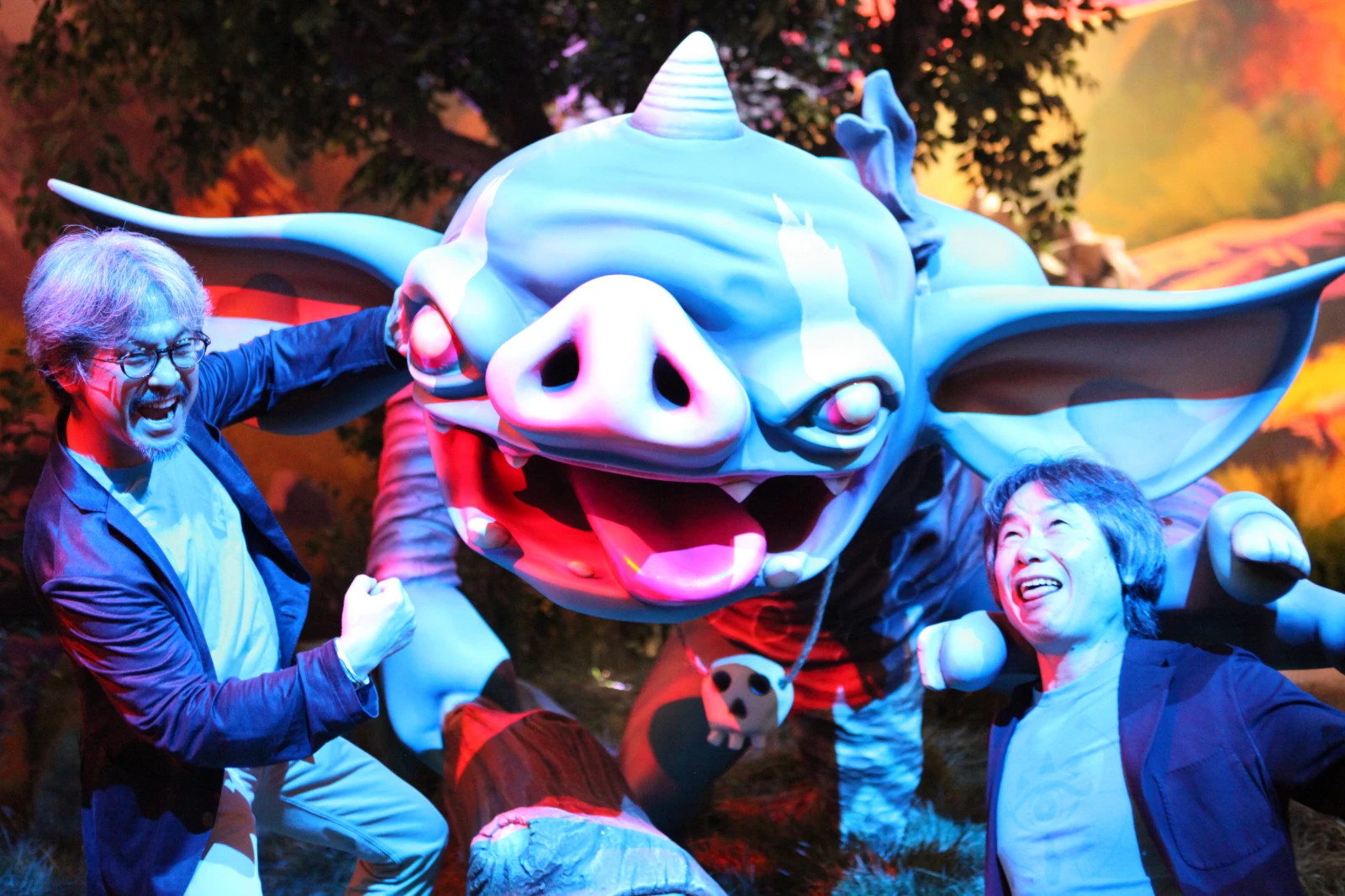
Eiji Aonuma and Shigeru Miyamoto at E3 2016.
Work began straight after Skyward Sword shipped in 2011. Eiji Aonuma wanted to question everything players took for granted about Zelda, and fans had been asking for a world whose areas joined up properly. A Link Between Worlds had already tried letting players tackle dungeons in any order in 2013. At E3 2014 Aonuma said the new game would rethink dungeons and puzzles and would let players reach the ending without following the story at all.
In a 2017 interview with Le Monde, Aonuma put the team at around 300 people and the development time at about four years.
An 8-bit dress rehearsal
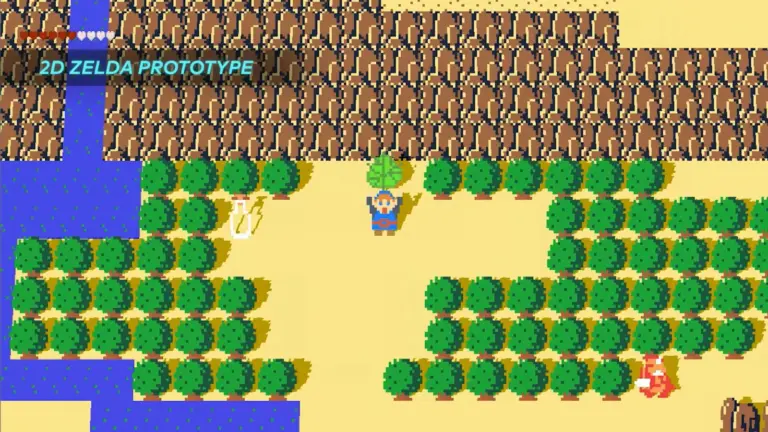
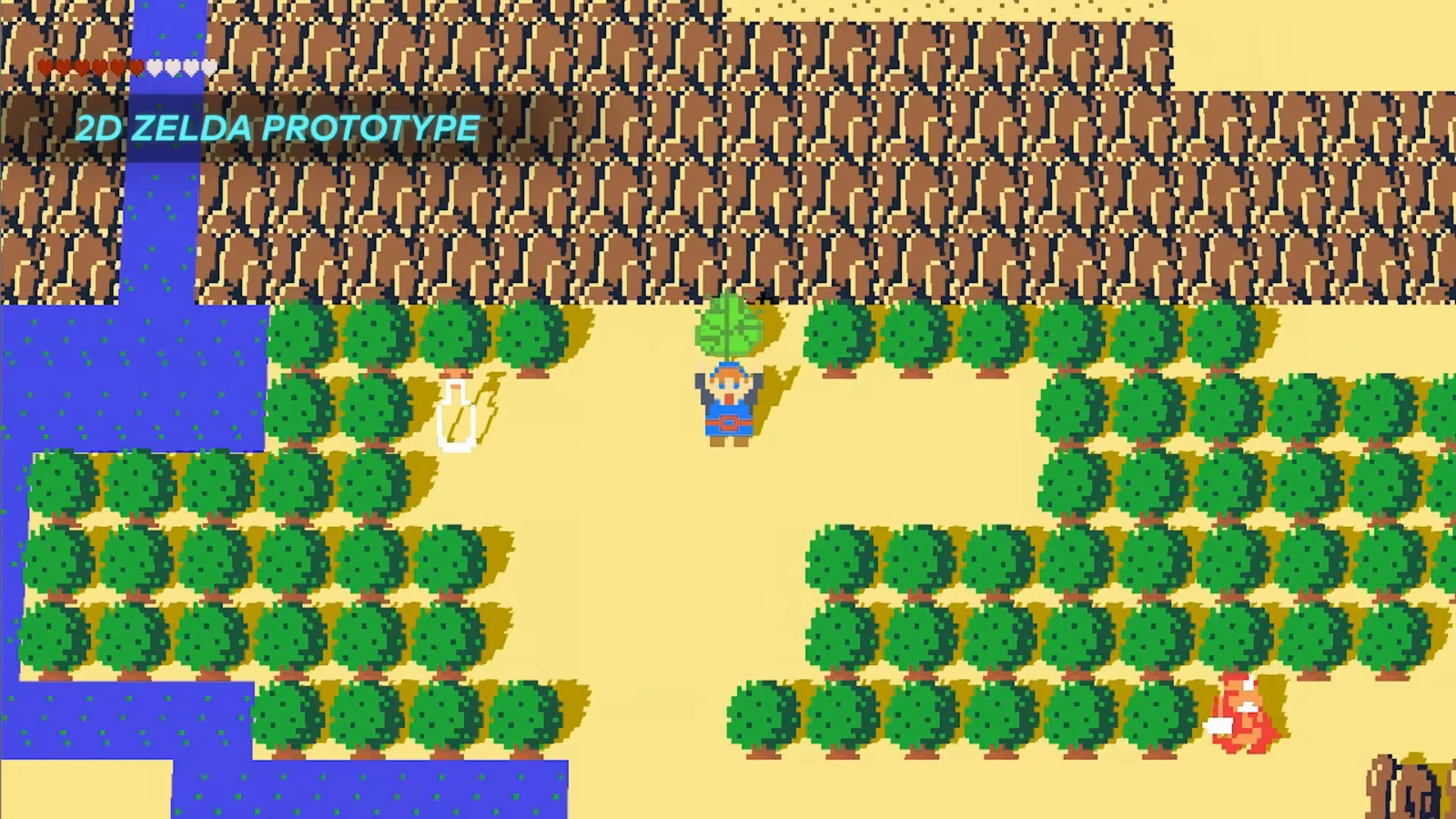
The 2D prototype built from the original game’s graphics, shown at GDC 2017.
The most famous detail of the game’s making came out at the Game Developers Conference in March 2017. Before building anything in 3D, the team tested its ideas in a top-down prototype that borrowed the look of the 1986 Legend of Zelda. It had no set puzzles, just a goal and a set of tools. Players chopped down trees, floated logs down rivers and set forests alight by shooting arrows through bonfires.
Fujibayashi said that watching people improvise like that convinced him it was the kind of game he wanted to make. “I wanted to build a game where the user can decide where they want to go and what they want to do,” he told the GDC audience. The team called the result “multiplicative gameplay”: simple, consistent rules that multiply into solutions nobody planned.
Physics, chemistry and a cut hookshot
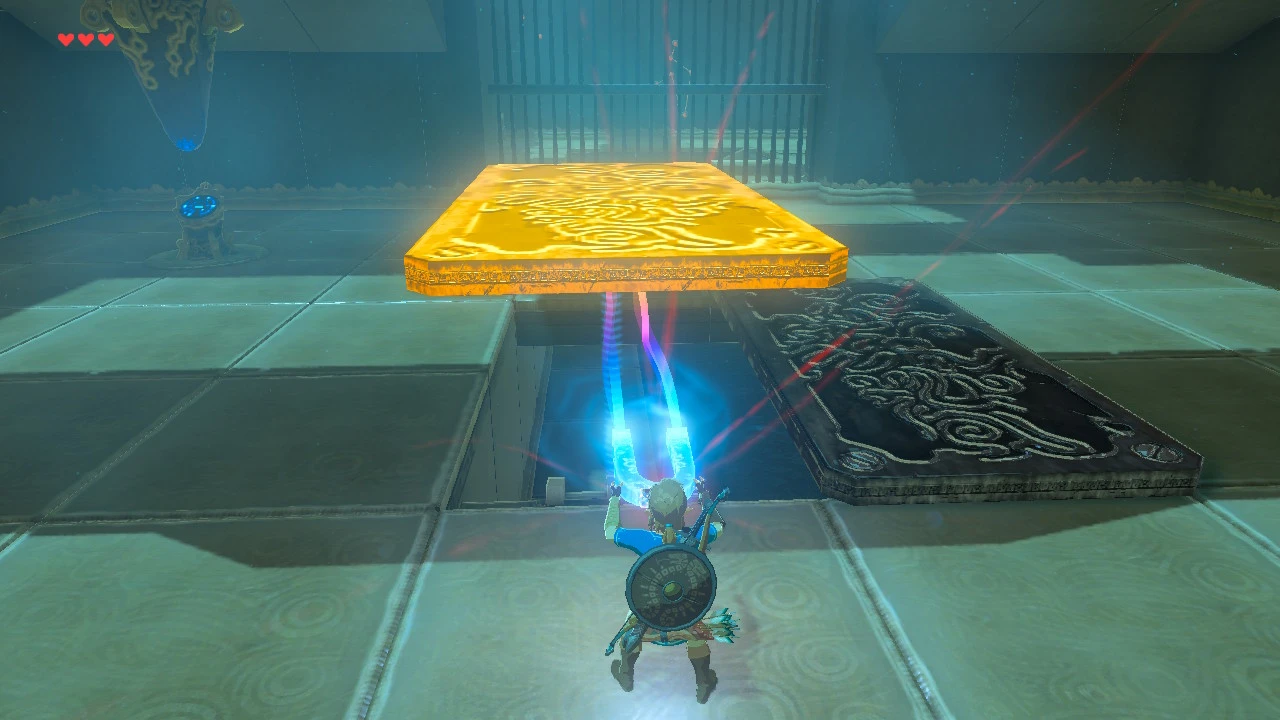
The Magnesis rune in use.
Two engines run the world. A modified version of the Havok physics engine handles how things move and fall; a separate “chemistry engine” decides how elements and materials affect one another, so fire burns wood, metal conducts electricity and wind pushes anything light. “In the end every object and element in the game is somehow joined by the physics and chemistry engines,” technical director Takuhiro Dohta said at GDC.
Making it all behave was hard. Aonuma recalled finding one area where wind had blown every object away. Some ideas went entirely: a double hookshot that let Link swing around like Spider-Man gave so much freedom that climbing became pointless, so it was cut. Rather than give Link more moves and more buttons, the team gave the world more things to interact with.
Painting Hyrule
Concept art of Link.
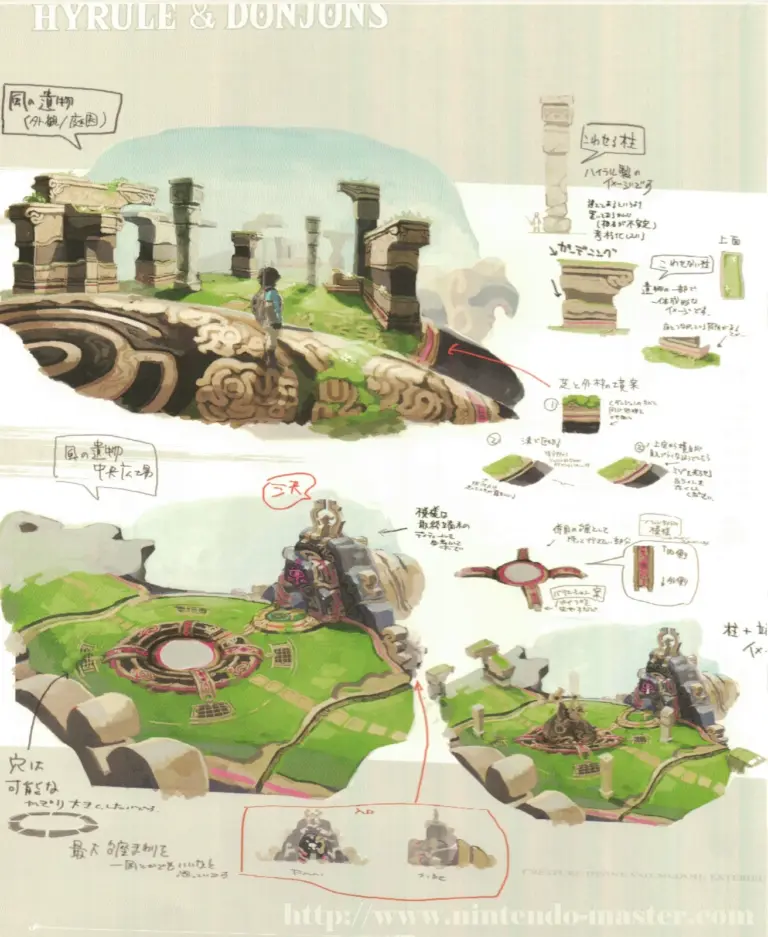
The soft, painterly look came from the team’s own influences. Aonuma cited gouache and plein-air painting as ways to make the world feel vast, and the artists drew on the Japanese animation they had grown up with. Art director Satoru Takizawa cited Japan’s prehistoric Jōmon period as an inspiration for the Sheikah’s glowing technology and architecture. Much of the landscape is modelled on places in and around Kyoto, Fujibayashi’s home city, and Monolith Soft, the Xenoblade studio, helped shape its terrain.
Link himself was redesigned. Nintendo’s making-of videos show him moving from green to blue, alongside some more outlandish ideas, and note an abandoned idea for a race of tiny people in the spirit of The Minish Cap. He also became right-handed, to suit the button layout of the Wii U GamePad.
Finding voices
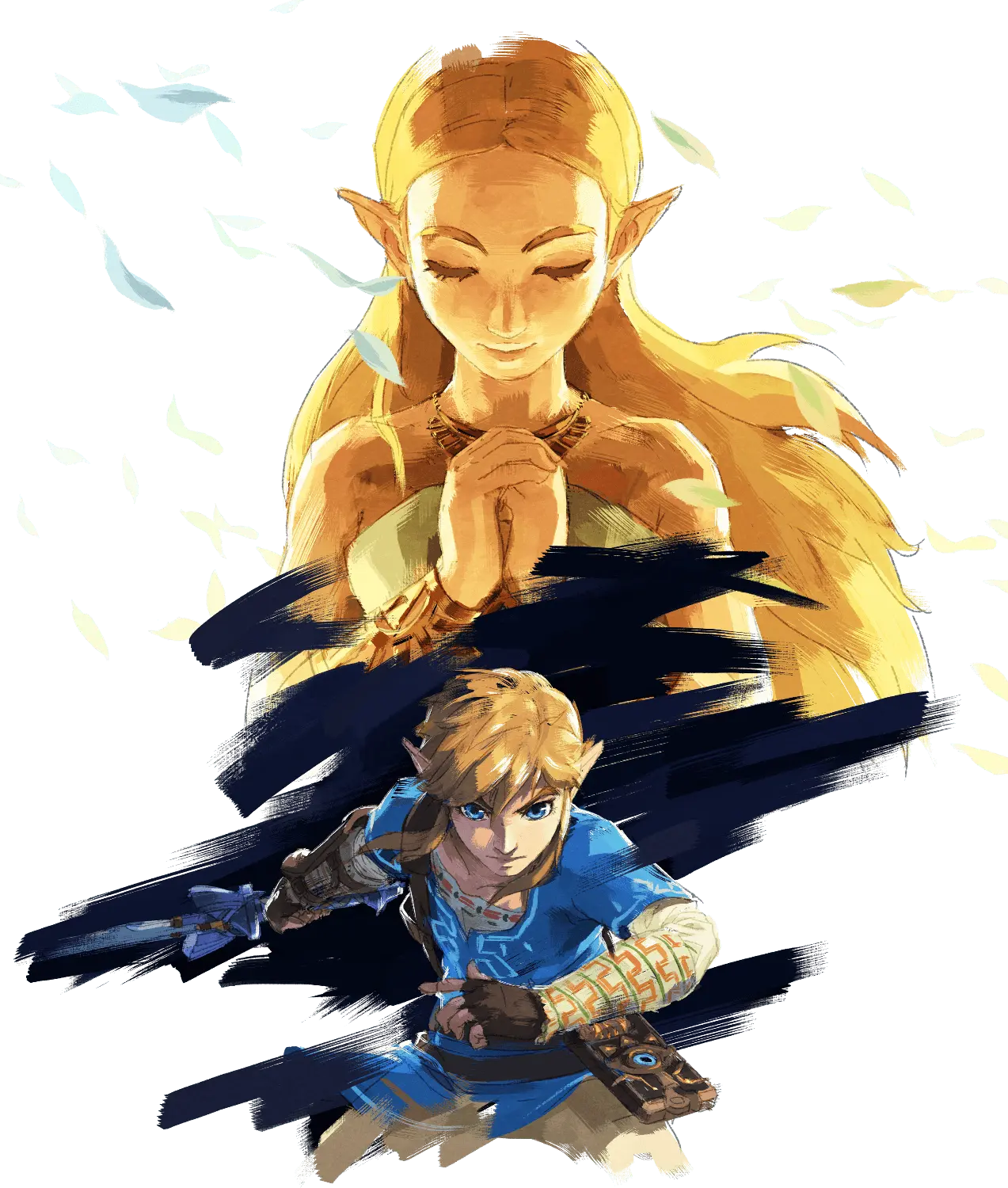
Official art of Princess Zelda, one of the voiced characters.
This was the first main-series Zelda with voiced cutscenes. “It’s really difficult to leave an impression on players with just text,” Aonuma told Polygon in June 2016. The plan was to voice only the key moments, but in the end every cutscene was recorded, with nine voice tracks: Japanese, English, German, Italian, Russian and two versions each of French and Spanish. A May 2017 update let players mix voice and subtitle languages.
Link stayed silent. Aonuma explained that if Link said something a player disagreed with, the bond between player and hero would be lost.
A quieter score
The limited edition of the original soundtrack.
Manaka Kataoka, Yasuaki Iwata and Hajime Wakai wrote a soundtrack built mostly on piano, quiet and ambient rather than the hummable, upbeat overworld themes of earlier games. Wakai said the restraint gave the environments a sense of authenticity. Kataoka had previously worked on Spirit Tracks and Wakai on The Wind Waker.
From Wii U to Switch
A Guardian opens fire in a promotional screenshot.
Aonuma first announced a new Zelda for Wii U in a Nintendo Direct in January 2013. The first footage, a horseback chase with a Guardian, was shown at E3 2014. It was meant for 2015, but in March 2015 Nintendo said it would miss that year and skip E3. In April 2016 it slipped again, to 2017, with a version for Nintendo’s next console, then codenamed NX, coming at the same time.
At E3 2016 the subtitle Breath of the Wild was revealed and the Wii U version was playable on the show floor; it swept the Game Critics Awards, including Best of Show. The Wii U build had used the GamePad’s touchscreen, but the team found that glancing down at a second screen broke the spell, so those features went when work moved to both machines. On Switch the game ran better when docked and had higher-quality environmental sound; in handheld mode it matched the Wii U’s resolution. It launched alongside the Switch on 3 March 2017.
More to explore
Official art for the Expansion Pass.
On 14 February 2017, a little over two weeks before launch, Nintendo announced the Expansion Pass: the first downloadable content ever made for a mainline Zelda game. Aonuma said the team had made a Hyrule so large and vibrant that it wanted to give players more to experience in it. Ideas left over from planning that DLC grew into Tears of the Kingdom.
The Nintendo Switch 2 Edition
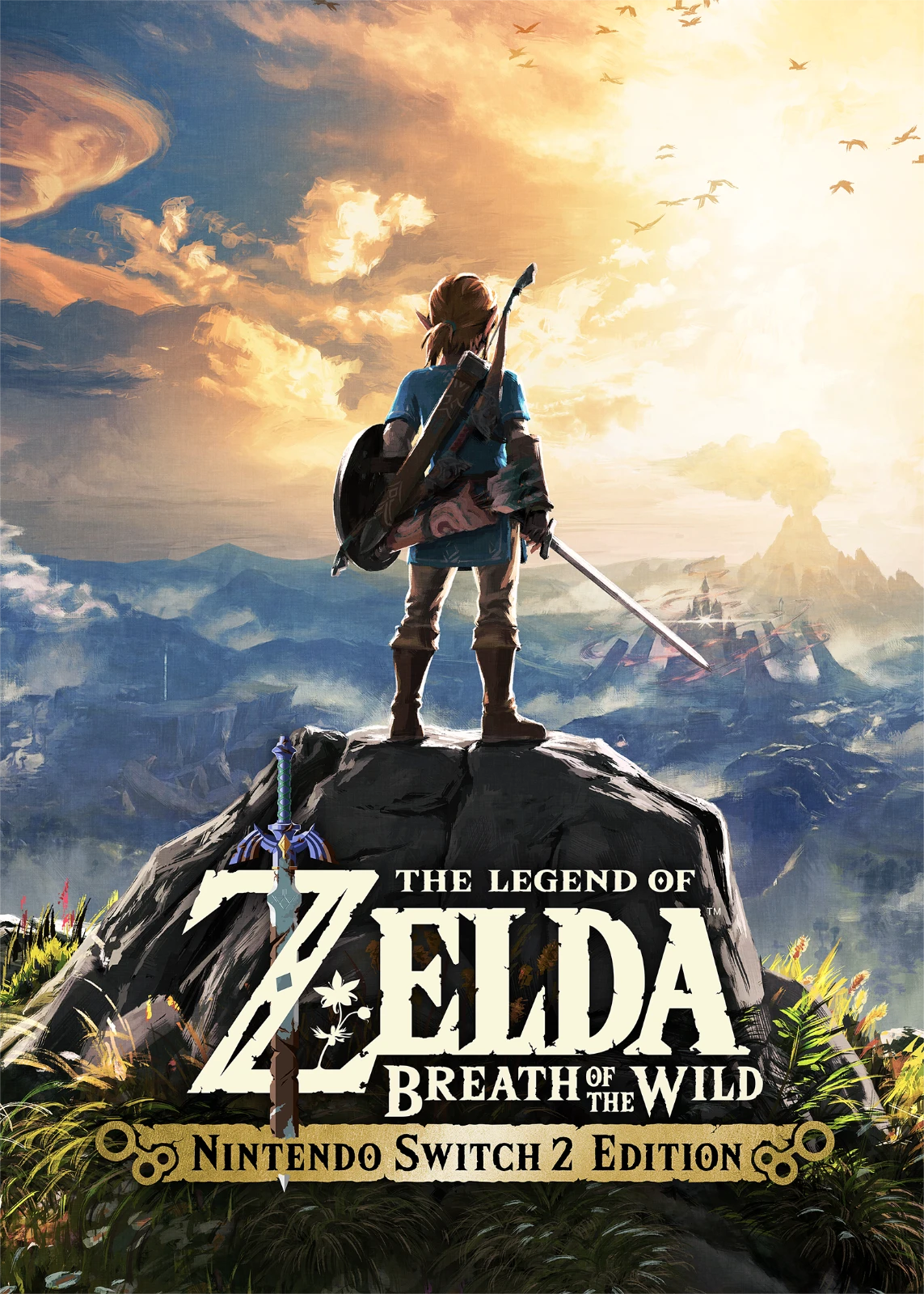
Key art for the Nintendo Switch 2 Edition.
On 5 June 2025 the game was one of the Switch 2’s launch titles in a new edition with a higher resolution and frame rate, HDR, quicker loading and a second save file. It also works with ZELDA NOTES in the Nintendo Switch app on a phone, which adds voiced navigation and commentary from Zelda and other characters. It was sold on its own, as a paid upgrade for Switch owners, and as a free upgrade for Nintendo Switch Online + Expansion Pack members.
Firsts: what this game introduced
Breath of the Wild broke with a lot of Zelda tradition. These are the things it introduced, checked against the series.
1First DLC for a mainline ZeldaNintendo’s own announcement called the Expansion Pass the first-ever downloadable content for the mainline series.
2Voiced cutscenesThe first main-series Zelda with voice acting in its story scenes, with nine voice tracks to choose from. Link still does not speak.
3Zelda on SwitchThe first Zelda on Nintendo Switch, available on the console’s launch day.
4Calamity Ganon and the BlightsGanon as a wordless force of malice, and his four Blights, debut here.
5The ChampionsMipha, Daruk, Revali and Urbosa, Zelda’s four allies, all make their first appearance.
6The Sheikah SlateLink’s tablet of runes, maps and camera, succeeded by the Purah Pad in Tears of the Kingdom.
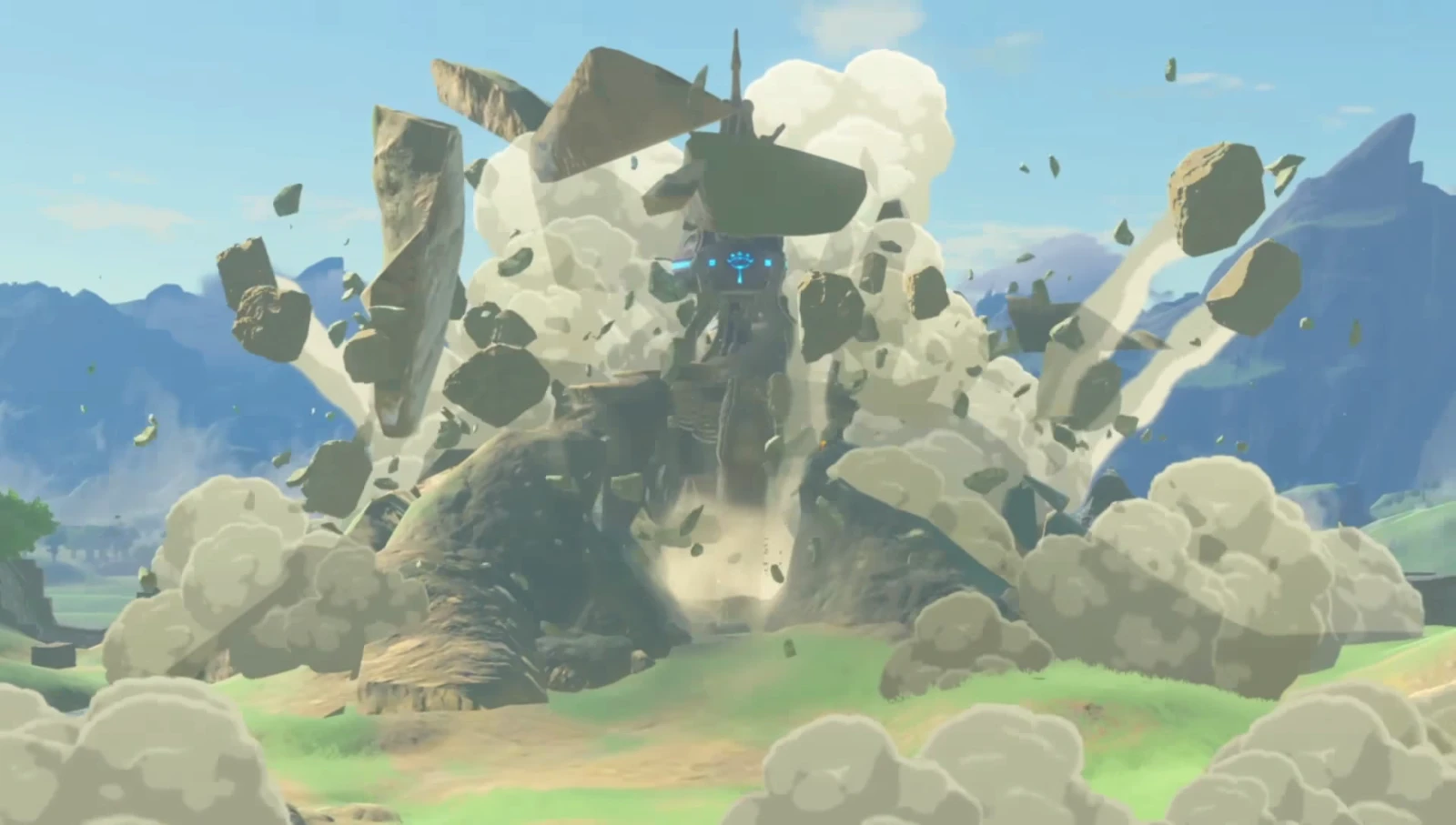
7Divine Beasts and GuardiansThe Sheikah’s ancient war machines are new to the series here.
8The Yiga ClanThe Ganon-worshipping Sheikah renegades first appear here, and have been back since.
9A new supporting castPurah, Robbie, Sidon, Riju, Teba, Yunobo, Kass, Paya and Hestu all debut in this game.
Cheats & secrets
Breath of the Wild has no cheat codes, but it is packed with secrets, unlockables and optional extras. These are the big ones.
Go straight to Ganon
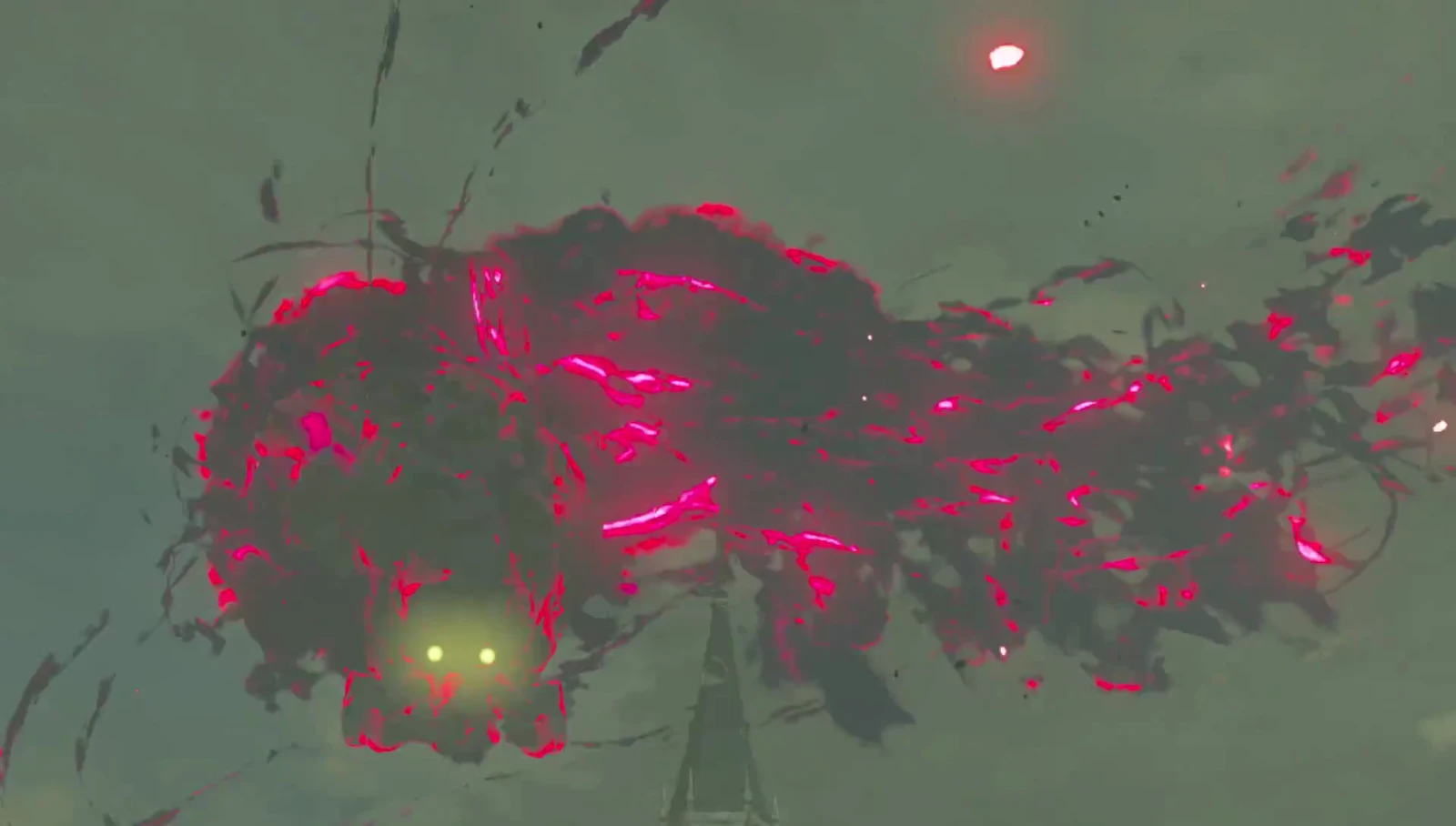
Calamity Ganon, the final boss.
Once you leave the Great Plateau, nothing stops you heading straight for Hyrule Castle. Each Divine Beast you free blasts Ganon before the fight, and each one you skip leaves its Blight waiting inside the castle, so a direct run is a serious challenge.
The extra ending
Recover every memory before beating Ganon to see an extra scene after the credits.
The Master Sword
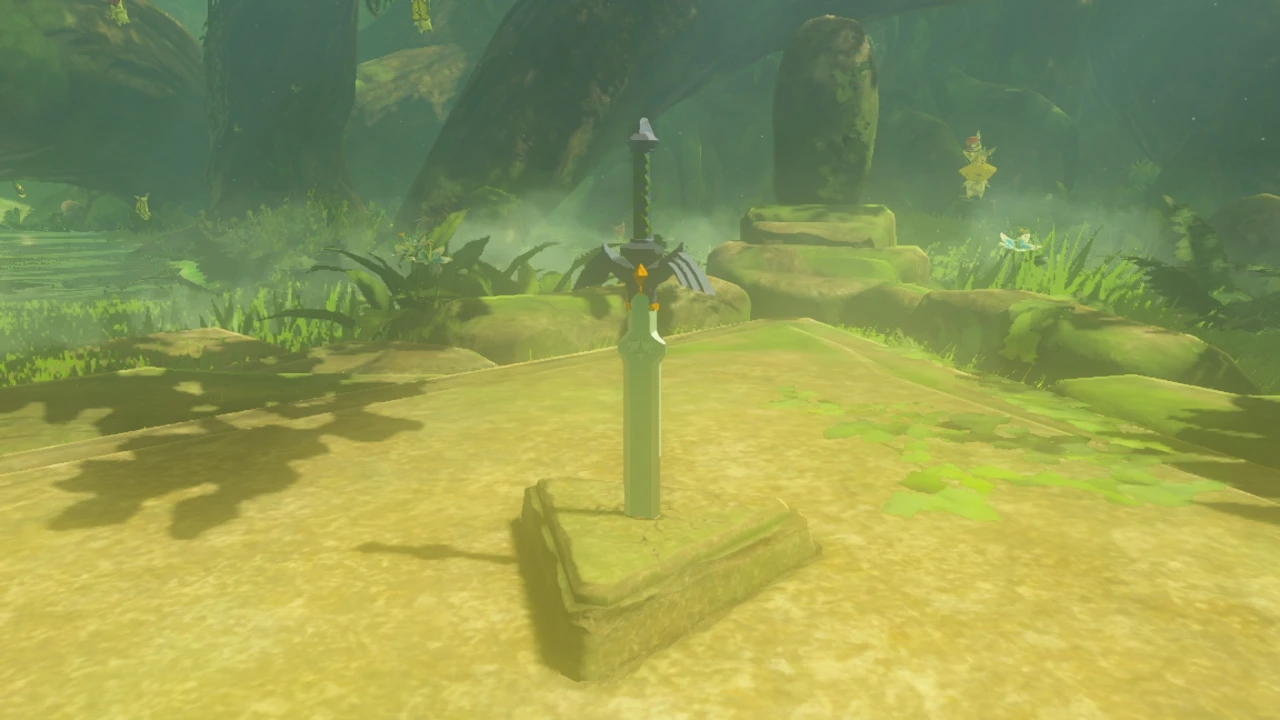
The Master Sword’s resting place.
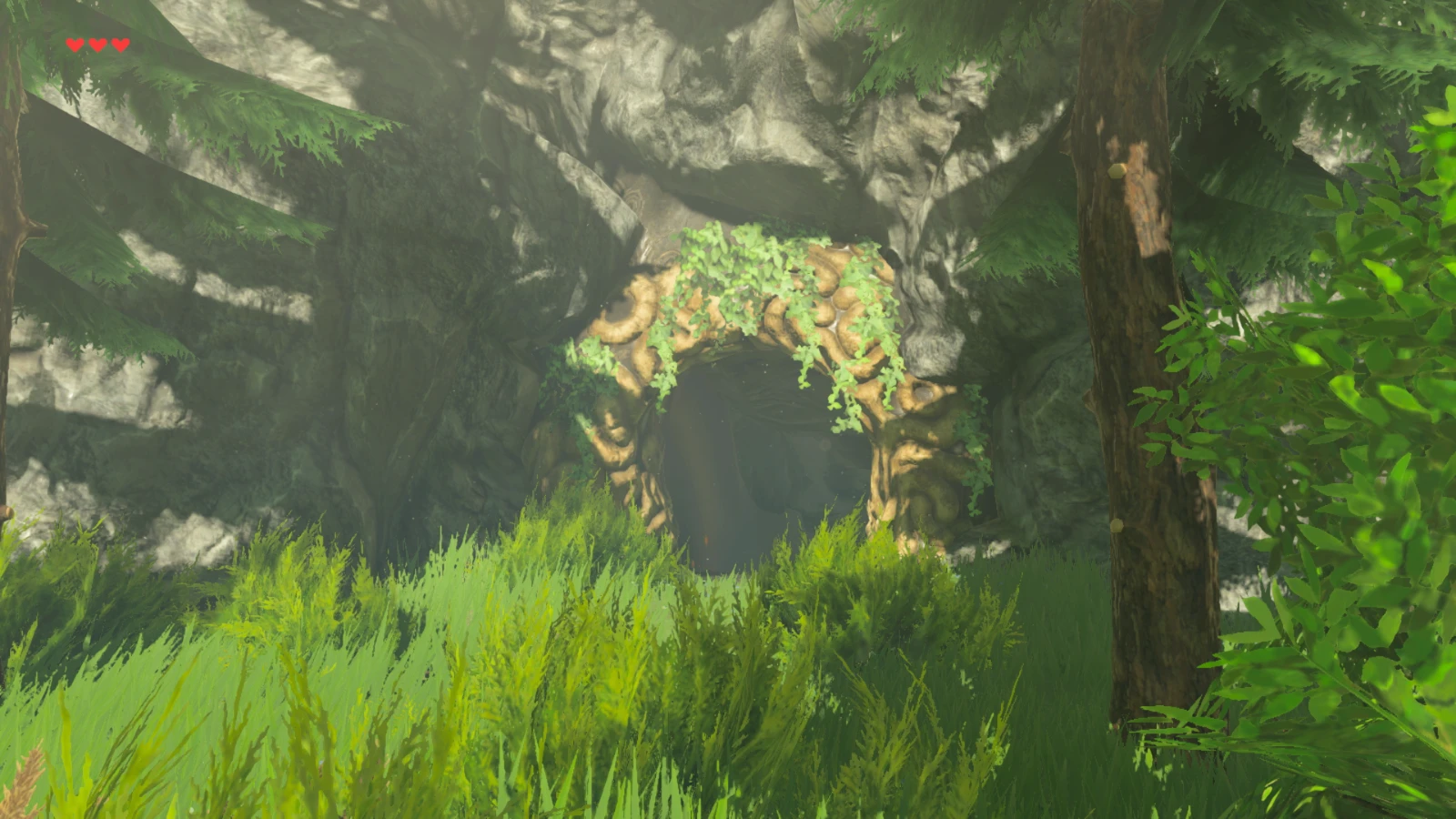
Head into the Lost Woods and follow the wind and the torches to the Korok Forest. You need at least 13 full heart containers to pull the blade from its pedestal.
Hero of the Wild set
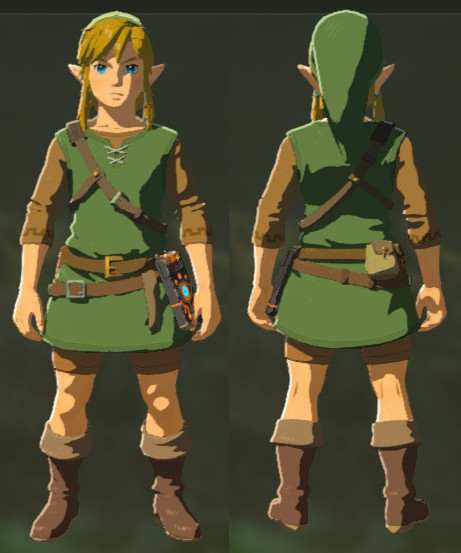
Link wearing the Hero of the Wild set.
Clear all 120 shrines and three chests appear in the Forgotten Temple with a final gift: the Cap, Tunic and Trousers of the Wild, the classic green outfit (the quest is called “A Gift from the Monks”).
Hestu’s Gift
Find all 900 Korok seeds and visit Hestu in the Korok Forest to receive Hestu’s Gift. We will not spoil what it is.
Master Mode
A promotional screenshot of Master Mode.
Added by The Master Trials: every enemy is promoted a rank (red Bokoblins become blue, and so on), monsters slowly heal and spot you more easily, and new enemies and treasure float on platforms in the sky. It uses its own save file.
Trial of the Sword
The entrance to the Trial of the Sword.
Also from The Master Trials: in the Korok Forest, Link is stripped of all gear and must survive 45 rooms of enemies, split into three trials, using only what he finds. Finishing each trial powers up the Master Sword, until it is permanently at full strength.
Hero’s Path, Travel Medallion and Korok Mask
Hero’s Path Mode.
The Hero’s Path map replays every step you have taken (about 200 hours’ worth), which is handy for spotting areas you have missed. The Travel Medallion lets you place one warp point of your own, and the Korok Mask shakes when a Korok is near. All come with The Master Trials; the medallion and mask are in hidden chests.
Classic costumes
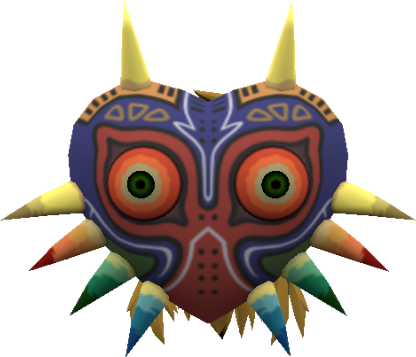
Majora’s Mask as it appears in the game.
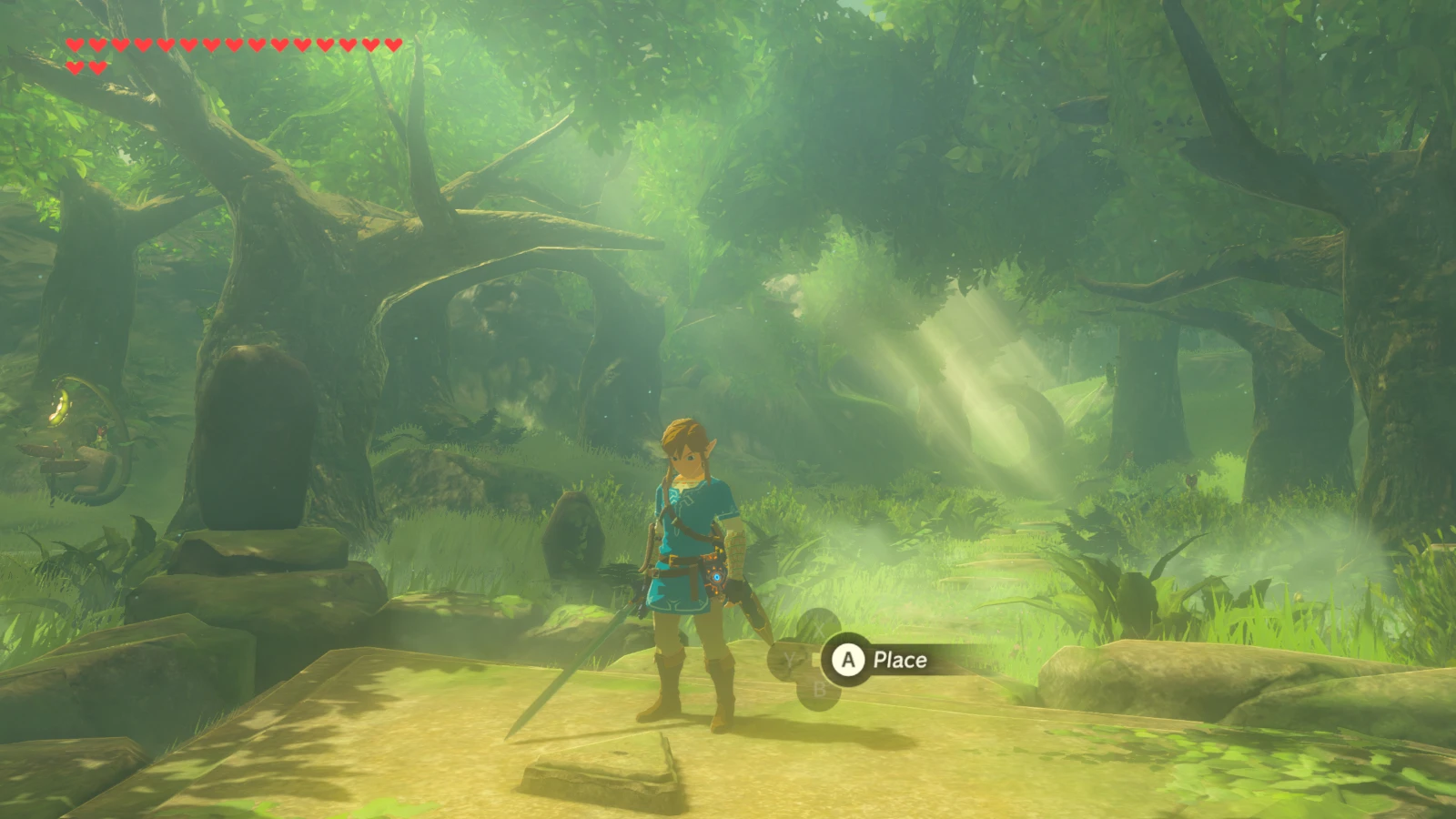
The Master Trials also hides Majora’s Mask, Midna’s Helmet, Tingle’s outfit and the Phantom armour from Spirit Tracks in chests around Hyrule. The Expansion Pass itself adds three chests on the Great Plateau, one holding a Nintendo Switch shirt.
amiibo
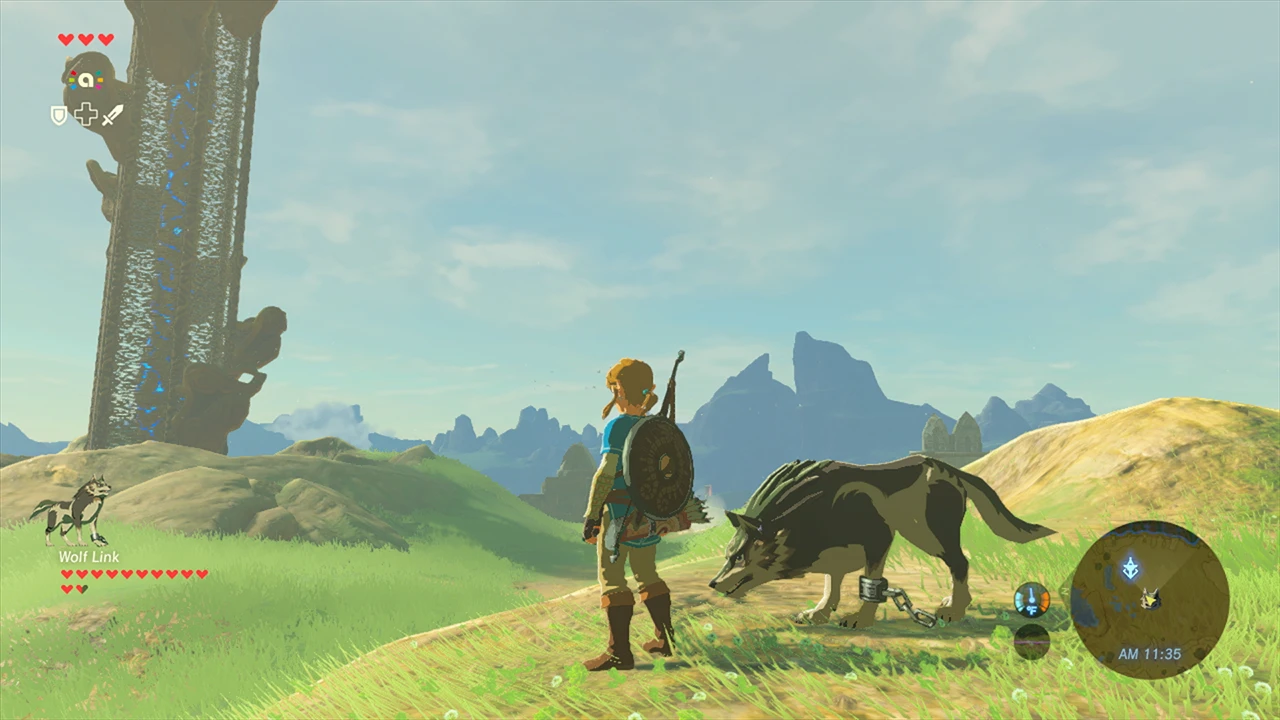
Link with Wolf Link.
Scan a Super Smash Bros. or Twilight Princess Link to get Epona. The Wolf Link amiibo summons Wolf Link as a companion, with more hearts if you built them up in Twilight Princess HD. The 30th-anniversary figures give retro outfits (8-bit Link the Hero set, Ocarina of Time Link the Time set), and the four Champions amiibo give tribal weapons and rare Divine Beast helms.
Unlock details checked against Nintendo’s own DLC pages, Nintendo Life’s amiibo guide and Zelda Dungeon.
Glitches, exploits and oddities
A physics sandbox this big was always going to break in entertaining ways, and speedrunners have been finding new ones for years.
Bullet time bounce
Popularised in October 2018: jump from a ledge, turn so your back faces a weakened enemy, and land on it shield-first as it ragdolls. Link is fired almost flat across the map, sometimes faster than the game can load the scenery ahead.
Bomb impact launch
A Remote Bomb.
A 2019 discovery, credited to the player Satogashi020: with careful timing, two Remote Bombs can catapult Link through the sky at high speed, and the trick can be chained in mid-air for as long as his health holds out.
Wind bombs and shield clips
Wind bombing gives a similar high-speed glide, and shield clipping slips Link through walls and floors, letting runners into shrines before the Great Plateau Tower has even been switched on.
Moon jump
The Mounted Archery Camp.
A well-known trick at the Mounted Archery Camp lets Link jump again and again in mid-air by repeatedly pressing the jump button.
Item and arrow duplication
Several methods let players duplicate weapons, bows and shields, and Nintendo’s early patches closed off some related exploits, including an arrow restock trick fixed in version 1.3.1.
Patched in the first months
The Bird-Man Research Study.
Version 1.1.2 fixed a bug that could leave Master Kohga stuck in his pit, which made the Vah Naboris quest impossible to finish, and 1.2.0 patched the “Bird-Man” glitch, along with adding dual-language audio.
Left in the game
The chasm at the Yiga Clan Hideout.
Dataminers found the internal project name “U-King”, an equippable broken Master Sword, a fallback “Ice Cream” meal for corrupted elixirs, three chests the Sheikah Sensor detects but nobody can reach, and a modelled bottom to Kohga’s bottomless pit.
Videos & media
Two films from Nintendo: the E3 2016 trailer that named the game, and the making-of episode about its story and characters.
Nintendo of America’s official E3 2016 trailer, the reveal of the Breath of the Wild name.
Part of Nintendo’s three-part 2017 making-of series: the developers on reshaping Link, Zelda and Ganon.
Trivia & facts
The game’s internal project name was “U-King”.
The 8-bit prototype shown at GDC 2017.Before a single 3D model was built, the team tested its ideas in a 2D prototype made to look like the 1986 original.
Link is right-handed here, a break from the series’ usual left-handed hero, so that his sword arm matched the Wii U GamePad’s buttons.
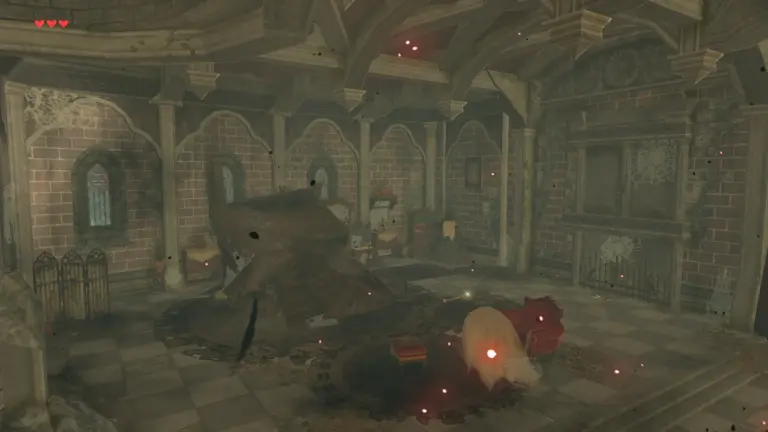
Princess Zelda’s room, where her diary is kept.Zelda’s diary explains why Link barely speaks: he feels he must stay strong and silently bear any burden.
Zelda lost her mother when she was six years old.
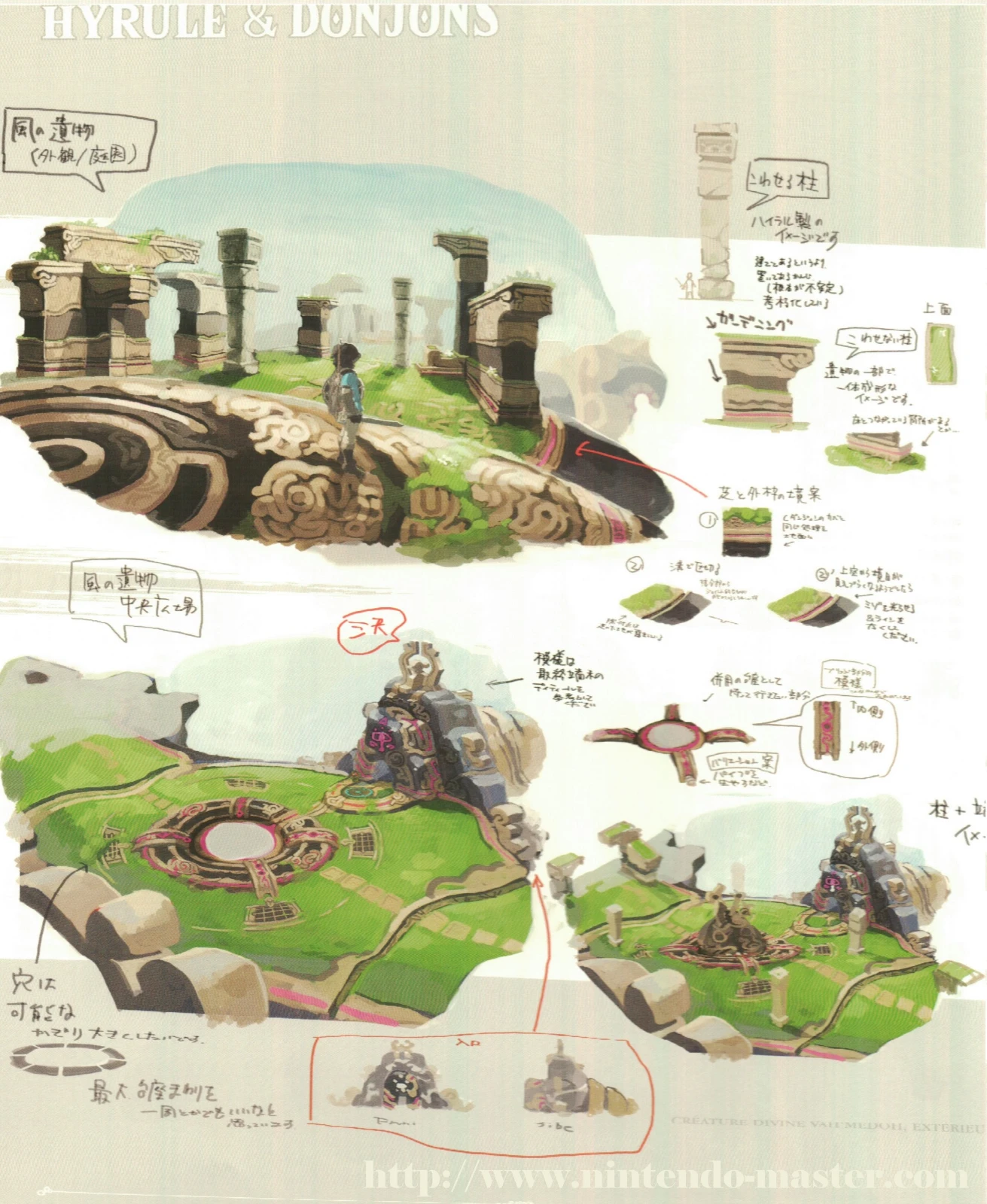
Concept art of Divine Beast Vah Medoh.The four Divine Beasts’ names, Ruta, Rudania, Medoh and Naboris, echo the sages Ruto, Darunia, Medli and Nabooru from earlier games.
A double hookshot that let Link swing like Spider-Man was cut for making climbing redundant.
An idea for a race of tiny people, inspired by The Minish Cap, was dropped.
Much of Hyrule’s terrain was modelled on the countryside around Kyoto.
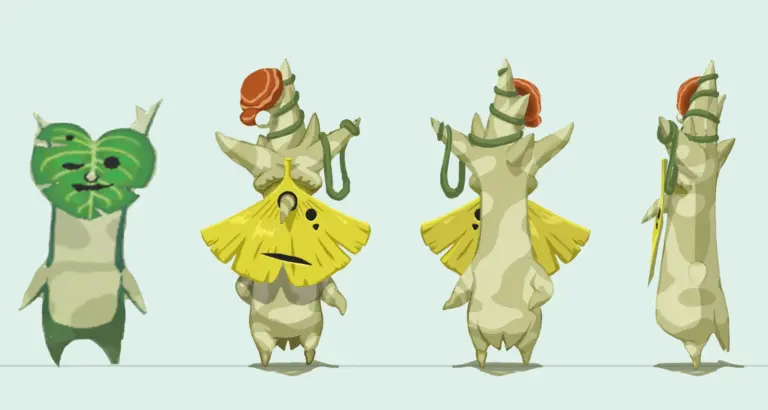
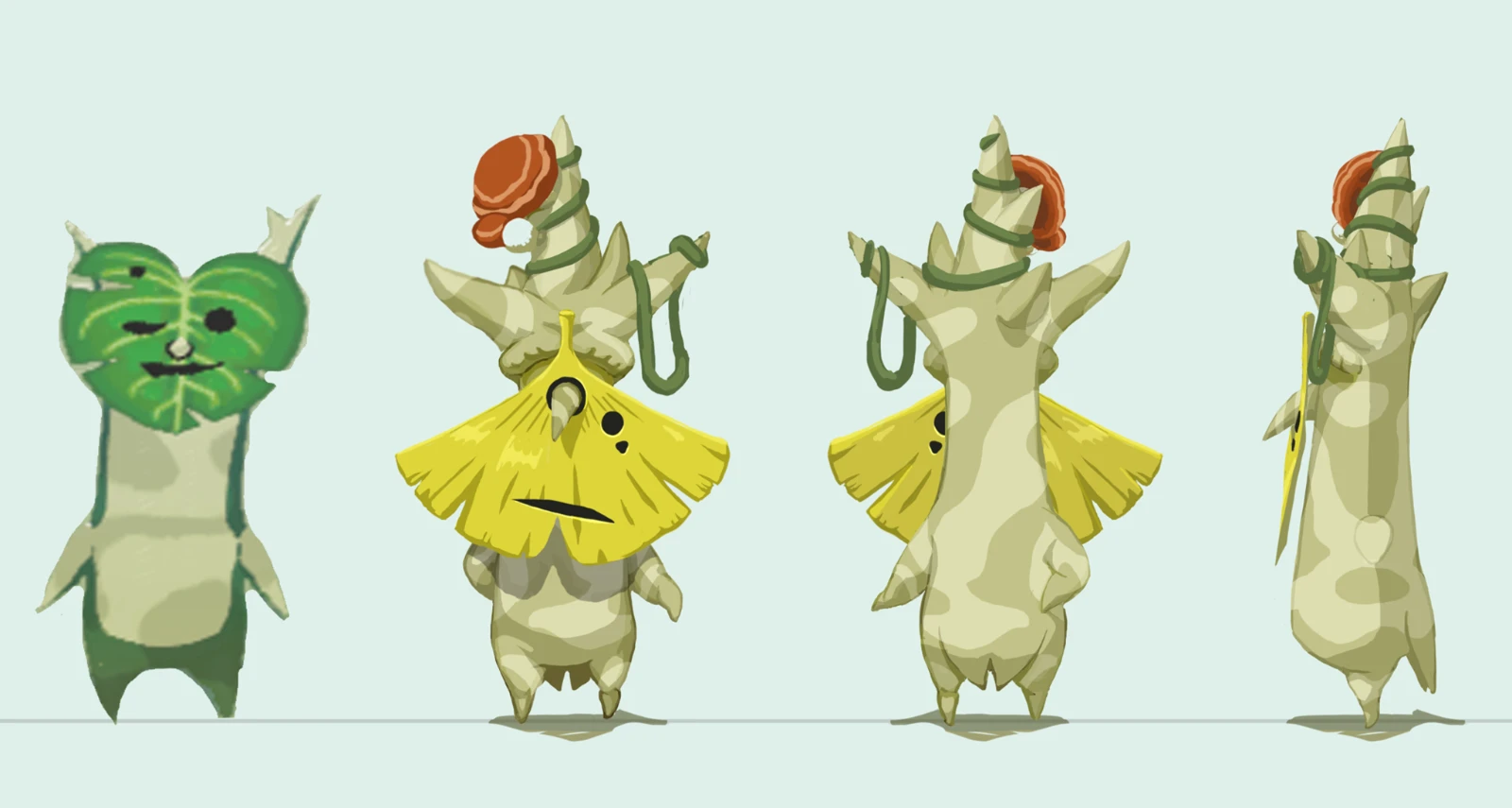
Concept art of the Koroks.You need 441 Korok seeds to max out your inventory, but there are 900 to find.
North American copies show temperatures in Fahrenheit and the time on a 12-hour clock; European copies use Celsius and a 24-hour clock.
An Expansion Pass chest by Oman Au Shrine.The Expansion Pass bonus includes a Nintendo Switch logo shirt for Link, found in a chest on the Great Plateau.
The Champions’ Ballad went live straight after The Game Awards 2017, the same night the game won Game of the Year.
Korean and Chinese text arrived in a 2018 update for Switch copies worldwide, timed with the game’s launch in South Korea and Taiwan on 1 February 2018.
An April 2019 update (version 1.6.0) let the whole game be played in Nintendo Labo’s cardboard VR goggles.
Sean Chiplock voices three characters in English: Revali, Teba and the Great Deku Tree.
Smash Bros. Ultimate’s Link is the Breath of the Wild version, right down to his Remote Bombs and Ancient Bow Final Smash.
Media & artwork
Box art, key art, character art and screenshots from Breath of the Wild. Select any image to view it larger.
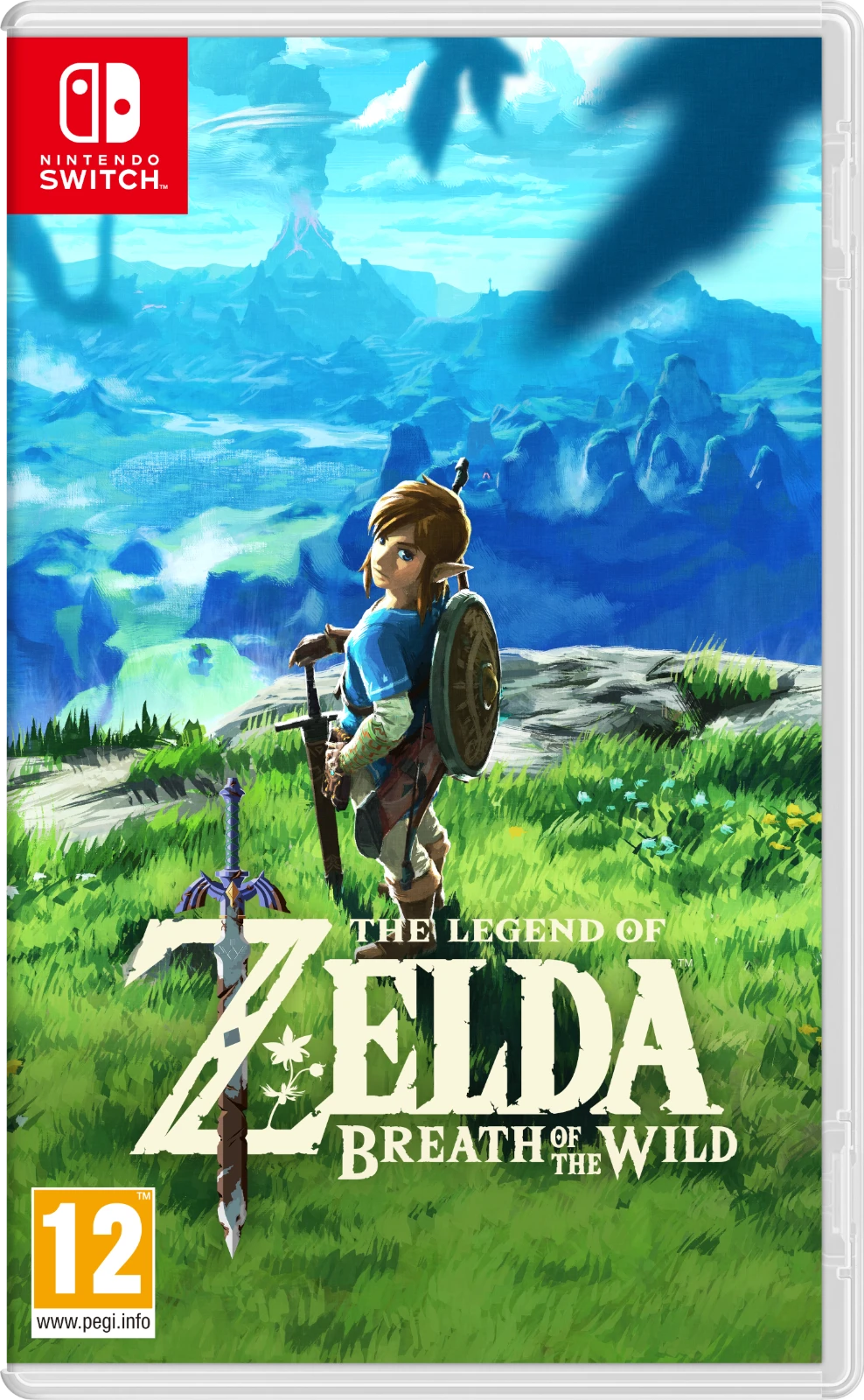
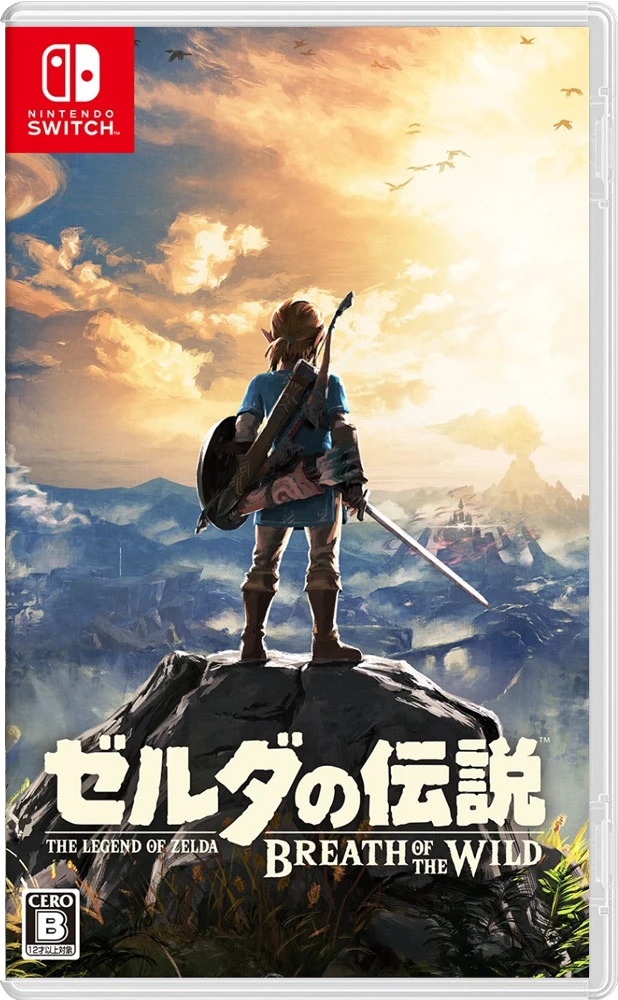
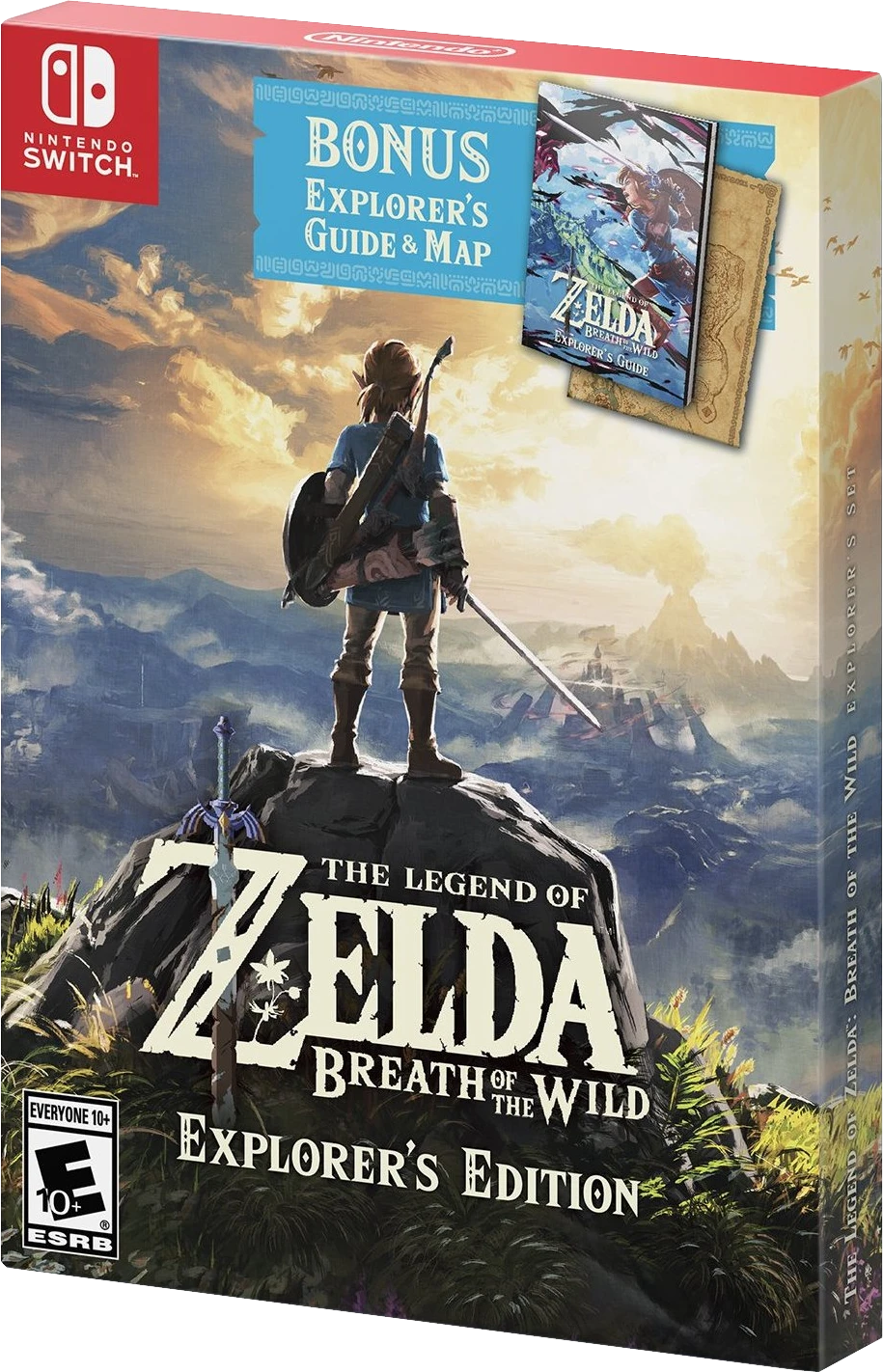
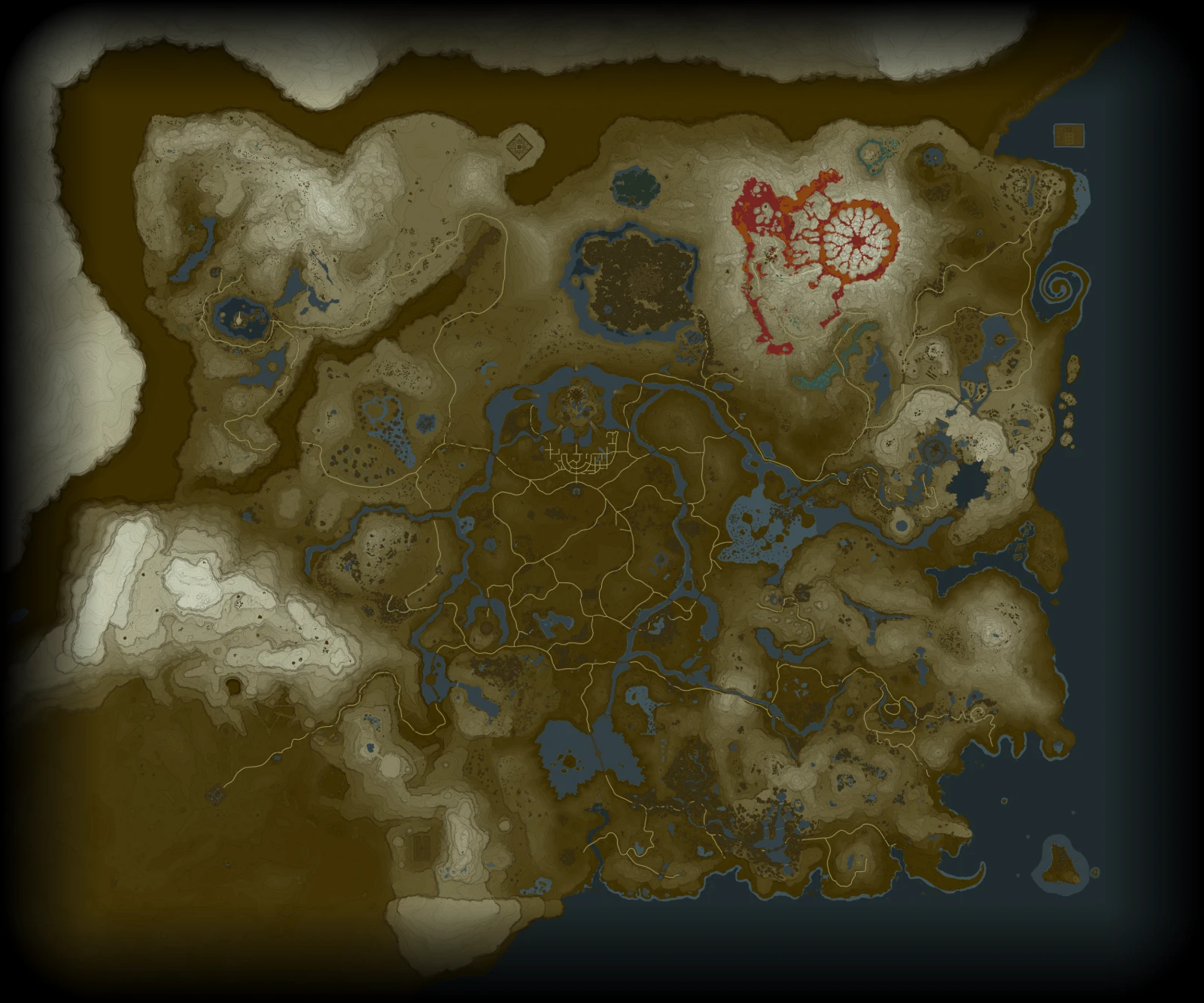
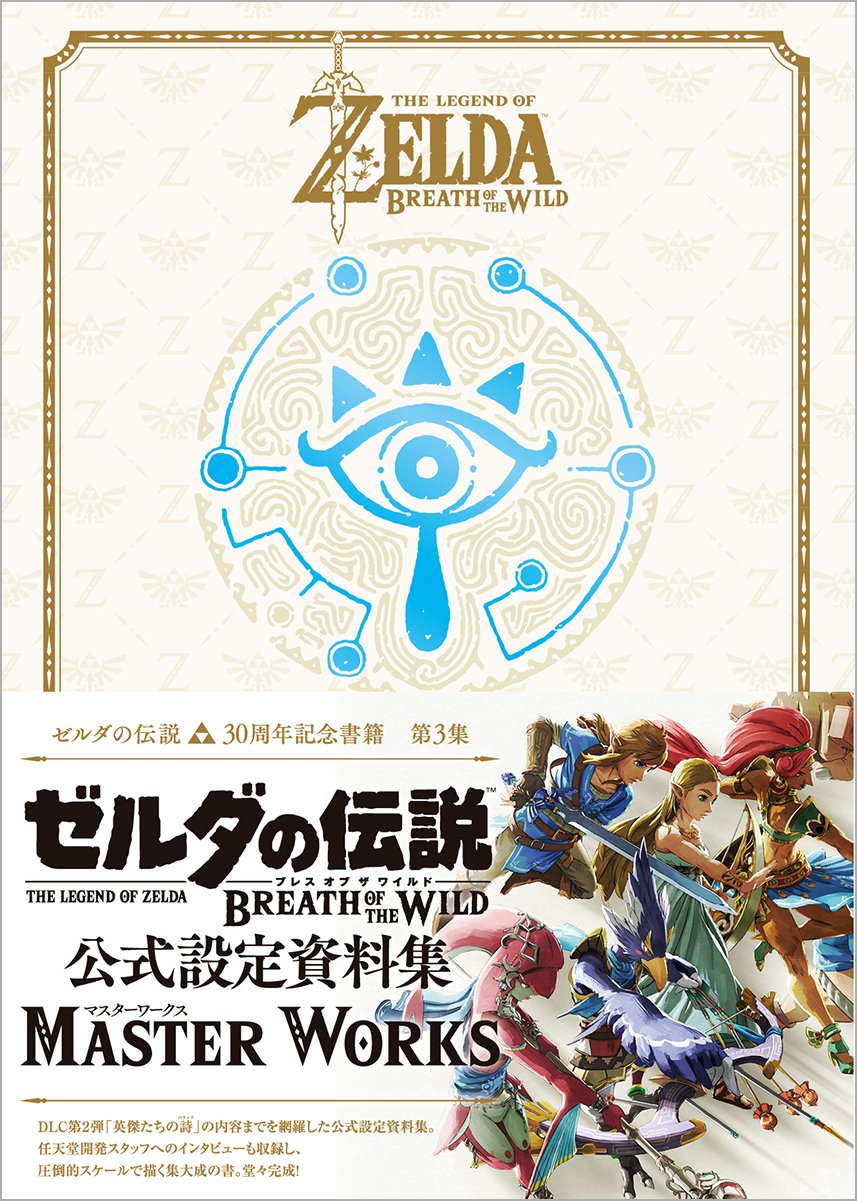
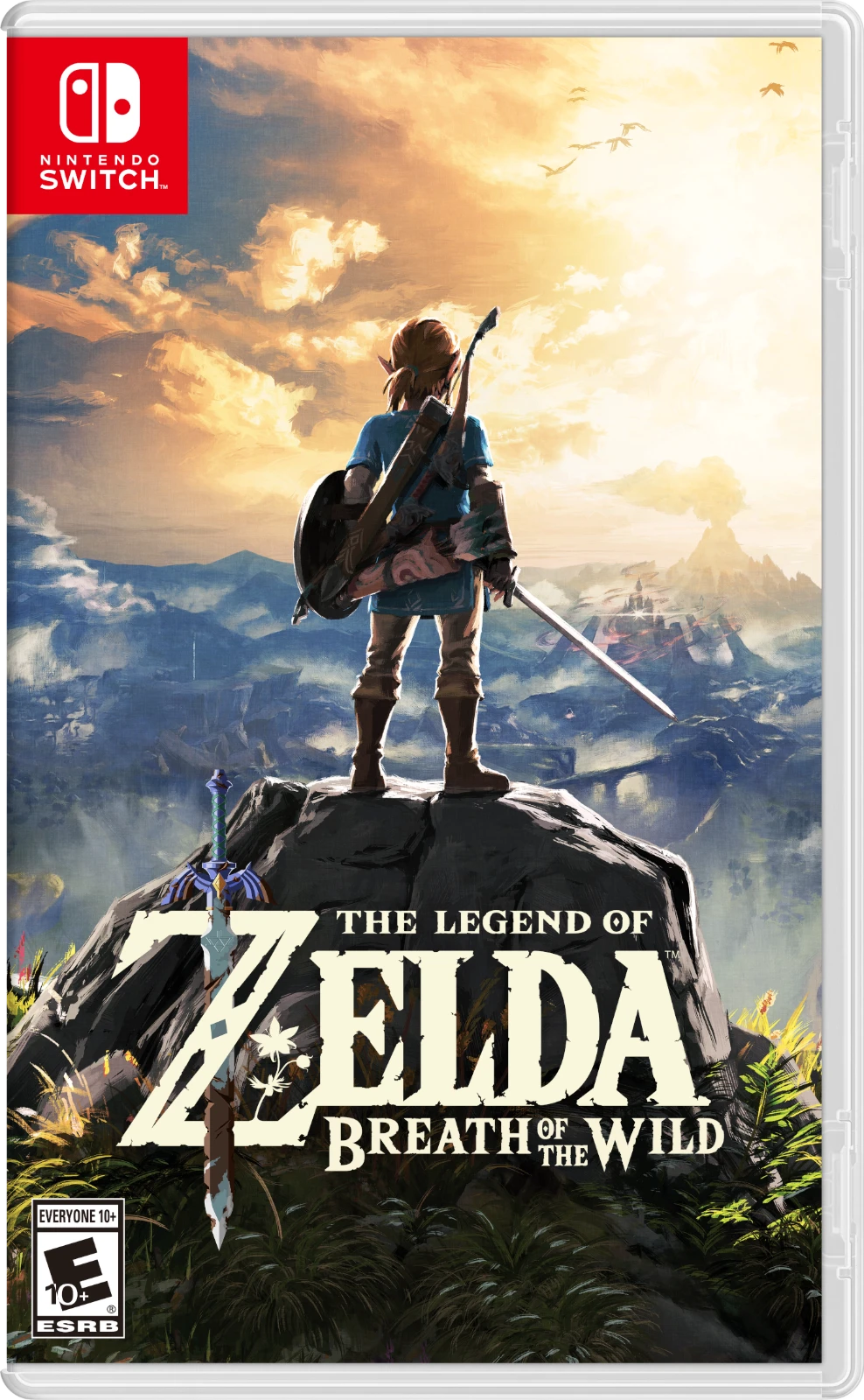
European Nintendo Switch box (2017)Japanese Nintendo Switch box (2017)Wii U box, front cover (2017)Wii U box, back cover (2017)North American Explorer’s Edition box (2017)Japanese logoMap of greater HyruleOfficial art for The Master Trials (DLC Pack 1)Promotional art for The Champions’ Ballad (DLC Pack 2)Cover of the art book Master Works
Breath of the Wild did not just reinvent Zelda; it became the template for the series’ next era, and its version of Hyrule has kept growing.
From launch to Switch 2
Wii U and Nintendo Switch3 March 2017 – Worldwide, on the Switch’s launch day.
The Master Trials30 June 2017 – DLC Pack 1: Trial of the Sword, Master Mode, Hero’s Path.
The Champions’ Ballad7 December 2017 – DLC Pack 2, released straight after The Game Awards (8 December in Europe).
South Korea and Taiwan1 February 2018 – Korean and Chinese text added to the Switch version worldwide.
Original Soundtrack25 April 2018 – Five CDs and 211 tracks, in Japan.
Mario Kart 8 DeluxeJuly 2018 – Champion’s Tunic Link and the Master Cycle Zero join.
Super Smash Bros. UltimateDecember 2018 – Link fights in his Breath of the Wild design.
Nintendo Labo VRApril 2019 – Version 1.6.0 adds VR goggles support.
Hyrule Warriors: Age of Calamity20 November 2020 – The prequel spin-off, set during the Great Calamity.
Expansion Pass edition8 October 2021 – Japan only: the game and both DLC packs on one card.
Tears of the Kingdom12 May 2023 – The direct sequel.
Nintendo Switch 2 Edition5 June 2025 – Higher resolution and frame rate, HDR, ZELDA NOTES.
A sequel and a prequel
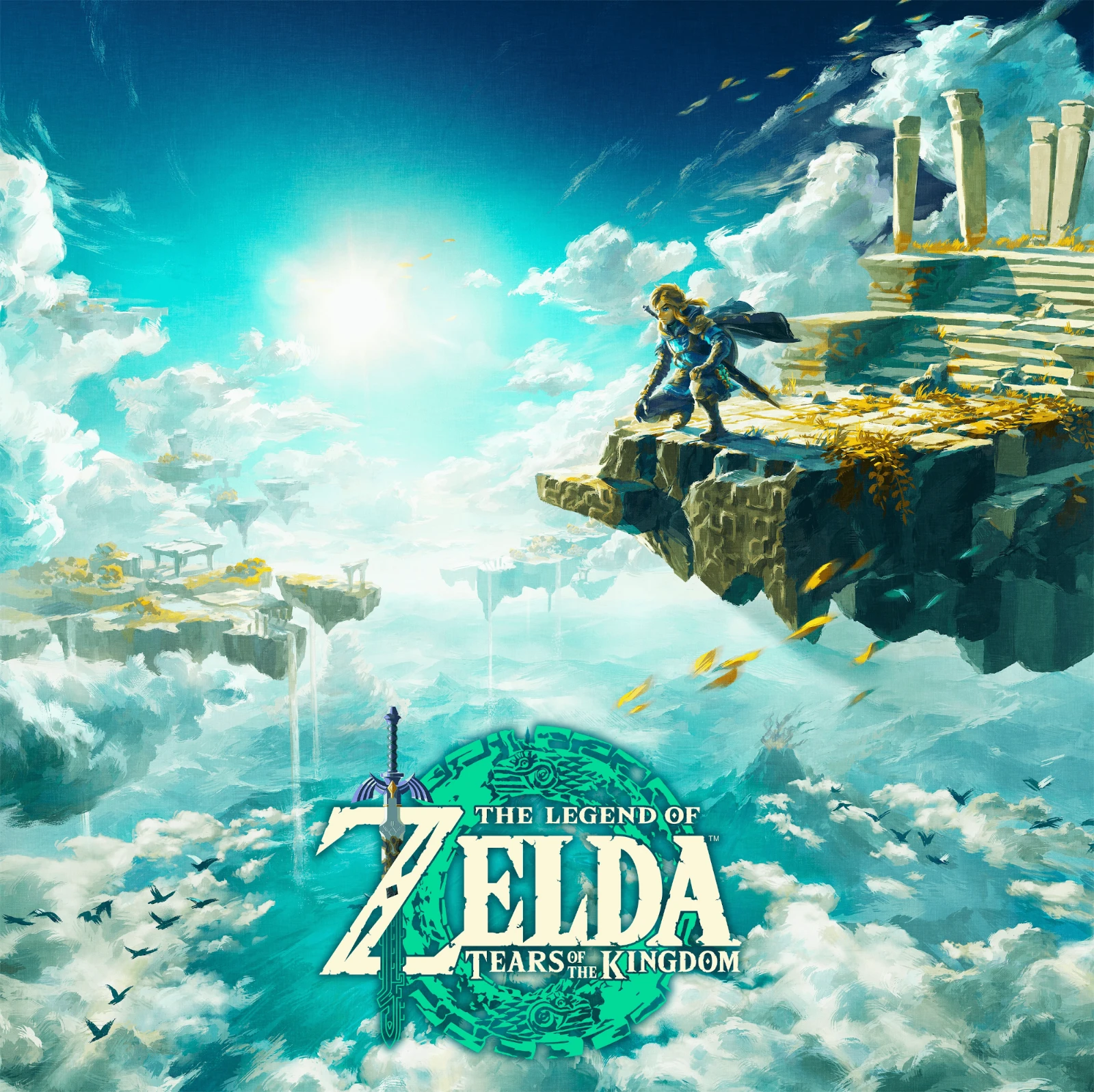
Key art for Tears of the Kingdom, the 2023 sequel.
Tears of the Kingdom (2023), directed again by Fujibayashi, returns to the same Hyrule a few years later and adds sky islands and a vast underground. Hyrule Warriors: Age of Calamity (2020), made with Koei Tecmo, plays out the war of a century earlier with the Champions as playable heroes. With Hyrule Warriors: Age of Imprisonment (2025), a Switch 2 prequel to Tears of the Kingdom, this version of Hyrule now spans four games.
The open-air template
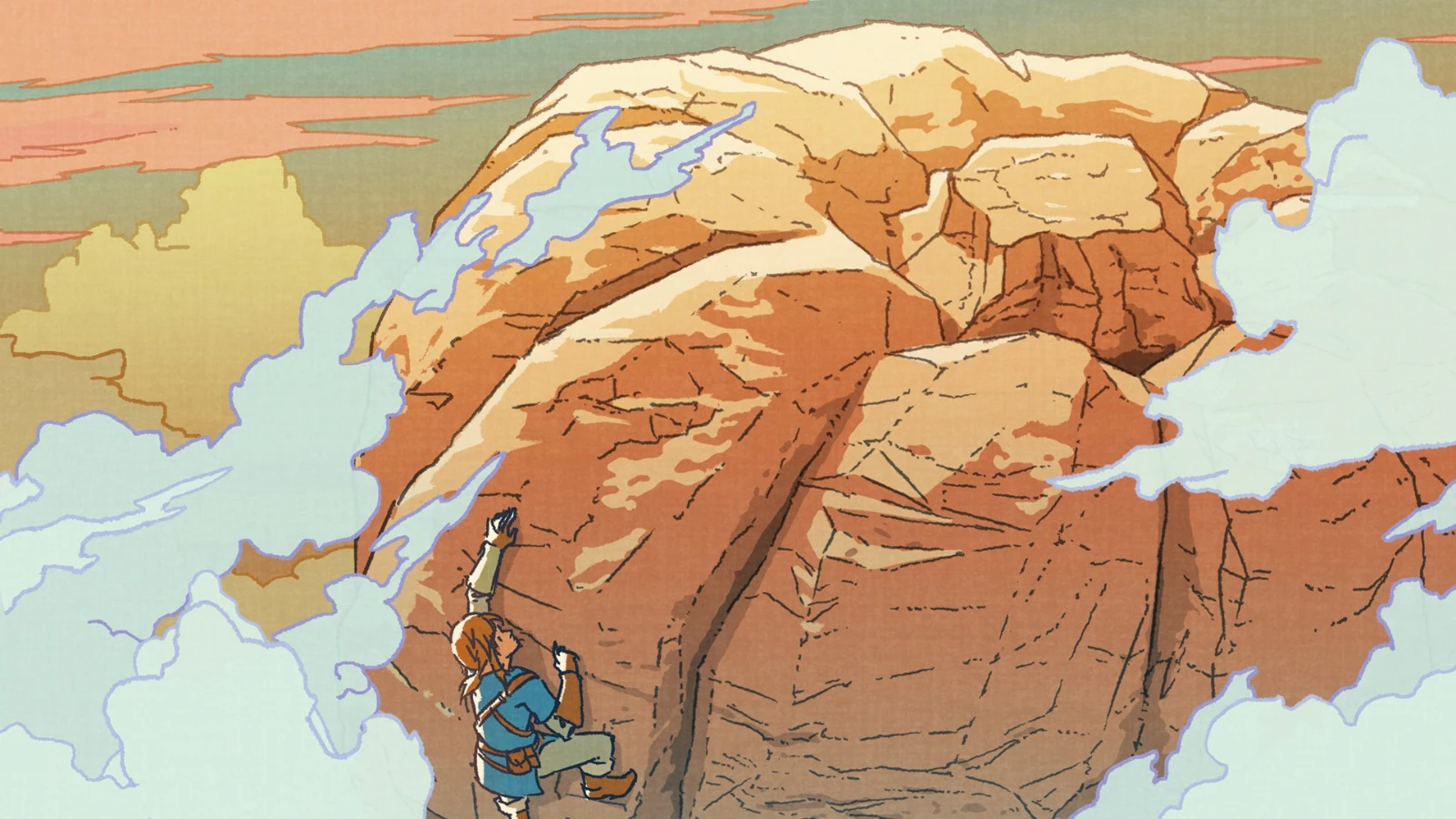
Official art of Link climbing.
Breath of the Wild’s climb-anything, glide-anywhere design and its systems-driven physics have been widely discussed by other developers and critics, and many later open-world games have been measured against it. Within the series, its stamina wheel, cooking, weapon durability and shrine structure carried straight into Tears of the Kingdom.
Where to play it today
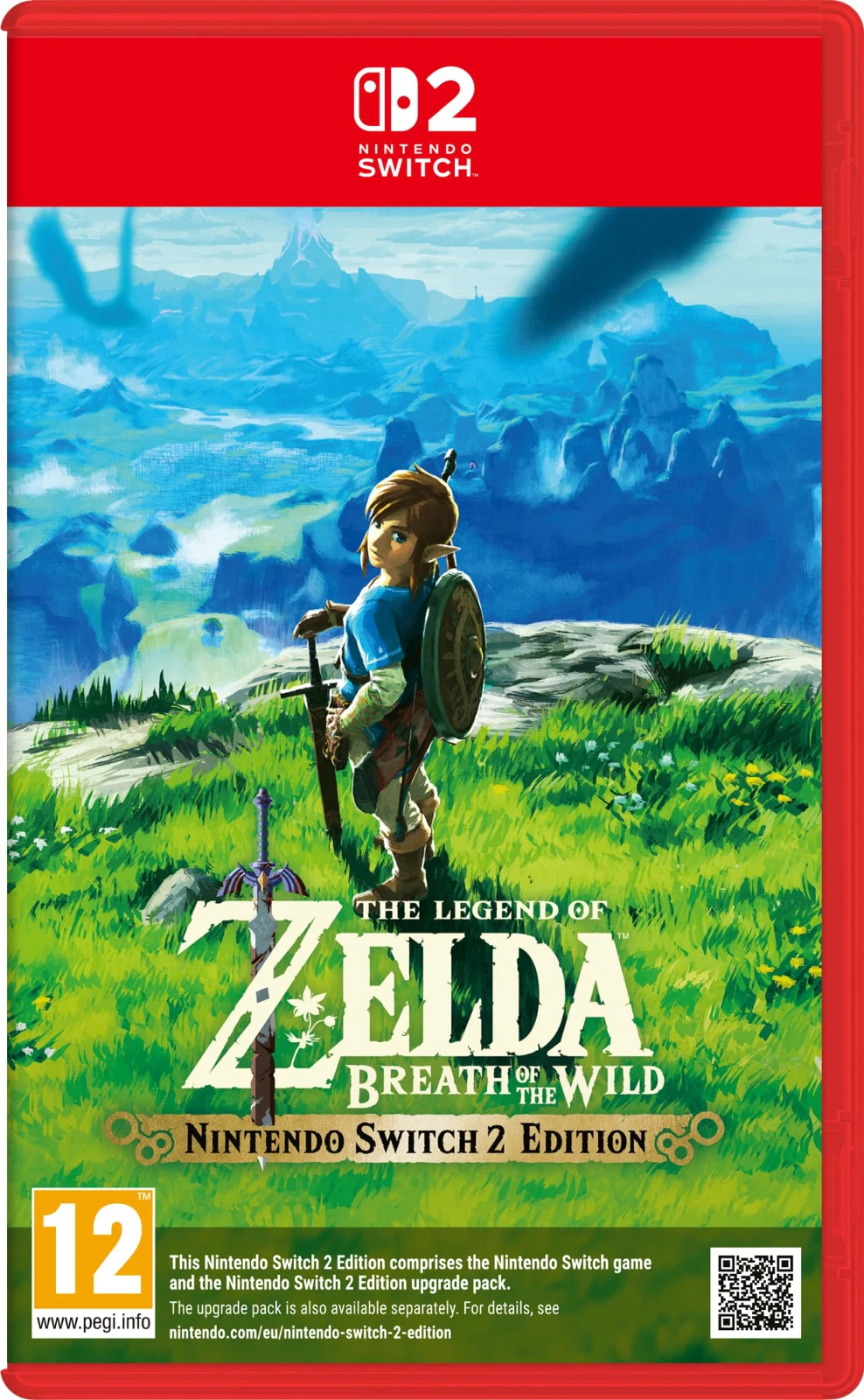
European box of the Nintendo Switch 2 Edition (2025).
The Nintendo Switch version and its Nintendo Switch 2 Edition are both still on sale, and the DLC is available as the Expansion Pass.
Sales & reviews
Sales figures
By the end of March 2017, after less than a month on sale, Nintendo had sold 3.84 million copies: 2.76 million on Switch and 1.08 million on Wii U. In the United States more copies of the Switch version were sold in March 2017 than Switch consoles. In Japan, Media Create’s figures showed it passing a million in February 2018 and, by September 2018, more than 1.25 million, overtaking Ocarina of Time as the best-selling Zelda in the country.
As of 30 September 2026, Nintendo lists the Switch version at 34.28 million copies, far ahead of every other Zelda, including Tears of the Kingdom at 22.90 million.
3.84msold by 31 March 2017
1.25m+in Japan by Sept 2018
34.28mon Switch by 30 Sept 2026
#1best-selling Zelda game
Reception and review scores
Reviews began appearing on 2 March 2017, and a large share of them were perfect scores. Metacritic gives the Switch version 97 from 109 critics, the Wii U version 96 from 13, and the Switch 2 Edition 94. A selection of launch reviews:
FamitsuJapan · 2017 (four 10s)
40/40
EdgeUK · 2017
10/10
IGNJose Otero · 2 March 2017
10/10
GameSpotMarch 2017
10/10
Game InformerMarch 2017
10/10
PolygonMarch 2017
10/10
Nintendo LifeMarch 2017
10/10
DestructoidMarch 2017
10/10
Giant BombMarch 2017
5/5
GamesRadar+March 2017
5/5
Electronic Gaming MonthlyMarch 2017
9.5/10
Nintendo World ReportMarch 2017
9.5/10
VideoGamer.comMarch 2017
9/10
Eurogamer gave it its top “Essential” badge, and IGN called it “a masterclass in open-world design”. The complaints were few: an unsteady frame rate in busy areas (later improved by patches), and, from a minority of critics such as James Stephanie Sterling, who scored it 7/10, frustration with weapon durability and difficulty.
Honours
The Game Awards · December 2017Game of the YearPlus Best Game Direction and Best Action/Adventure Game.
D.I.C.E. Awards · February 2018Game of the YearPlus Adventure Game of the Year and the awards for game direction and game design.
Game Developers Choice Awards · March 2018Game of the YearPlus Best Design and Best Audio.
BAFTA Games Awards · April 2018Game InnovationNominated in four more categories, including Best Game.
Japan Game Awards · September 2017Grand AwardJapan’s top industry honour for the year.
Golden Joystick Awards · November 2017Ultimate Game of the YearPlus Critics’ Choice, Nintendo Game of the Year and Best Audio.
Game Critics Awards · E3 2016Best of ShowPlus Best Console Game and Best Action/Adventure Game, nine months before release.
Reader reviews
No reader reviews yet. Played it? Give it a score out of 10 and tell other fans what you think.
Every fact on this page was checked against the sources below in November 2026. Character details come mainly from Zelda Dungeon’s wiki and Nintendo’s own pages; sales come from Nintendo’s investor relations figures.
To provide the best experiences, we use technologies like cookies to store and/or access device information. Consenting to these technologies will allow us to process data such as browsing behavior or unique IDs on this site. Not consenting or withdrawing consent, may adversely affect certain features and functions.
Functional
Always active
The technical storage or access is strictly necessary for the legitimate purpose of enabling the use of a specific service explicitly requested by the subscriber or user, or for the sole purpose of carrying out the transmission of a communication over an electronic communications network.
Preferences
The technical storage or access is necessary for the legitimate purpose of storing preferences that are not requested by the subscriber or user.
Statistics
The technical storage or access that is used exclusively for statistical purposes.The technical storage or access that is used exclusively for anonymous statistical purposes. Without a subpoena, voluntary compliance on the part of your Internet Service Provider, or additional records from a third party, information stored or retrieved for this purpose alone cannot usually be used to identify you.
Marketing
The technical storage or access is required to create user profiles to send advertising, or to track the user on a website or across several websites for similar marketing purposes.

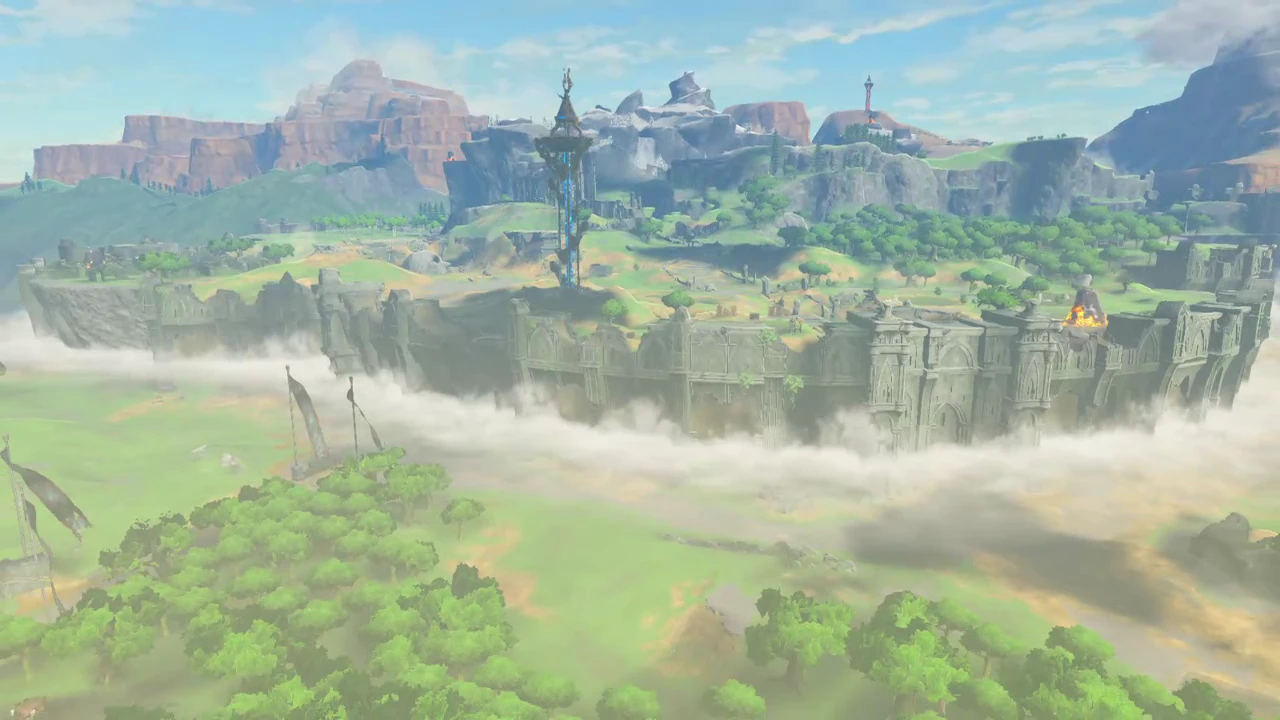
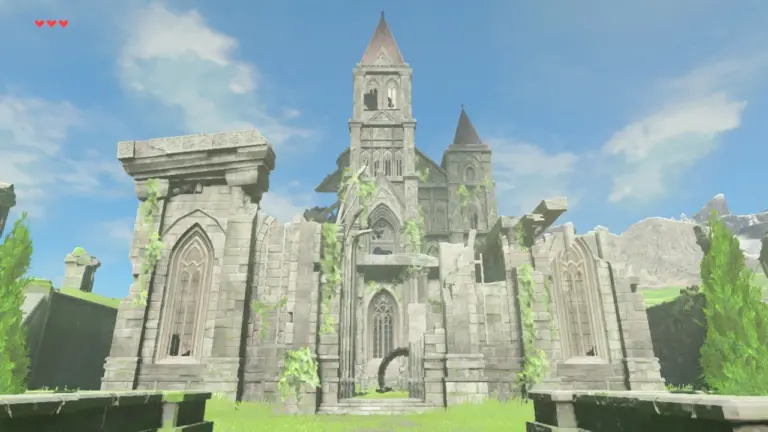 Great PlateauTutorialThe walled highland around the Shrine of Resurrection and the ruined Temple of Time. Four shrines, four runes, one paraglider.
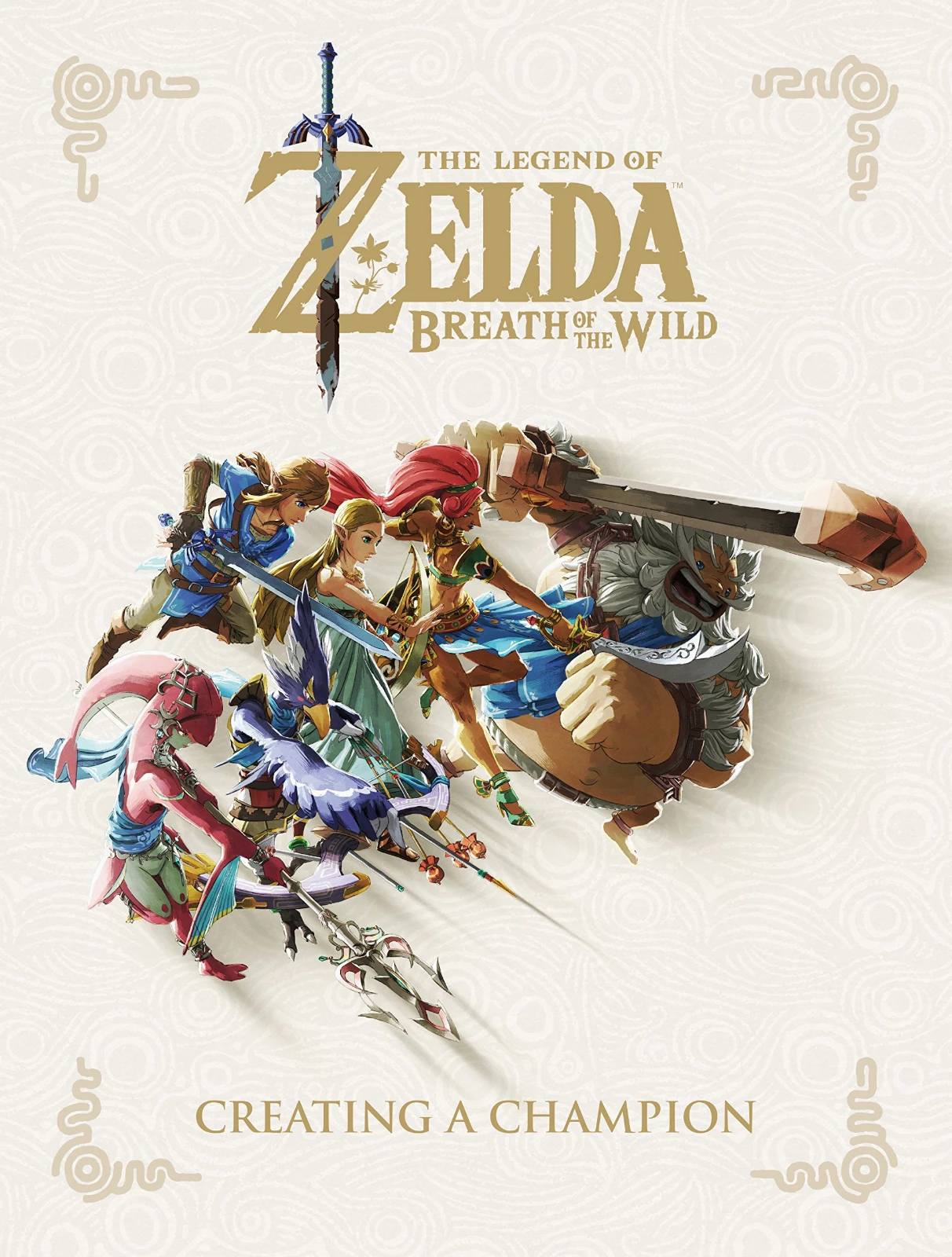 Creating a ChampionArt book · Nintendo / Dark Horse Books · English edition November 2018The official art and lore book: concept art, character profiles and history, and the source of much of what fans know about the Champions and the Sheikah.
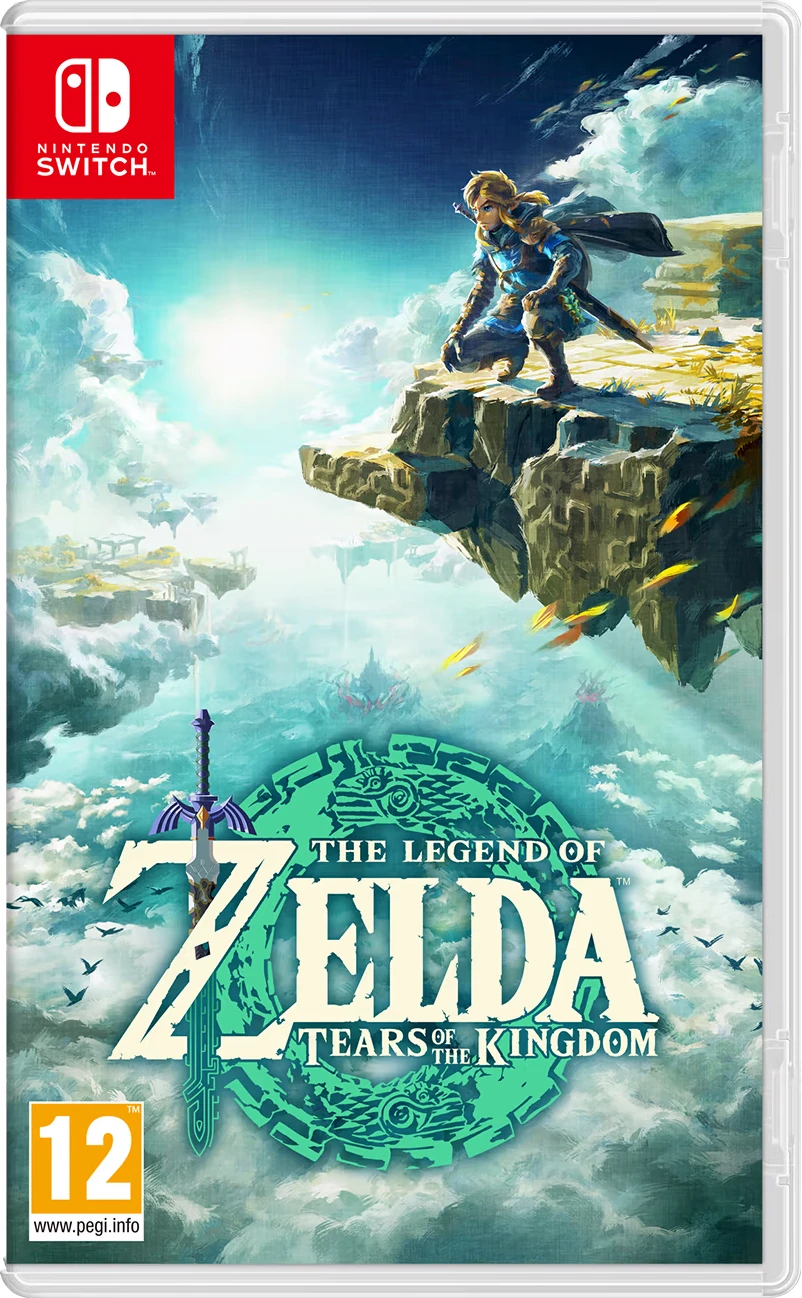 Tears of the KingdomGame · Switch · 12 May 2023The direct sequel, set in the same Hyrule a few years later, with Zelda, Purah, Robbie, Sidon, Riju, Teba, Yunobo and the Yiga all returning.
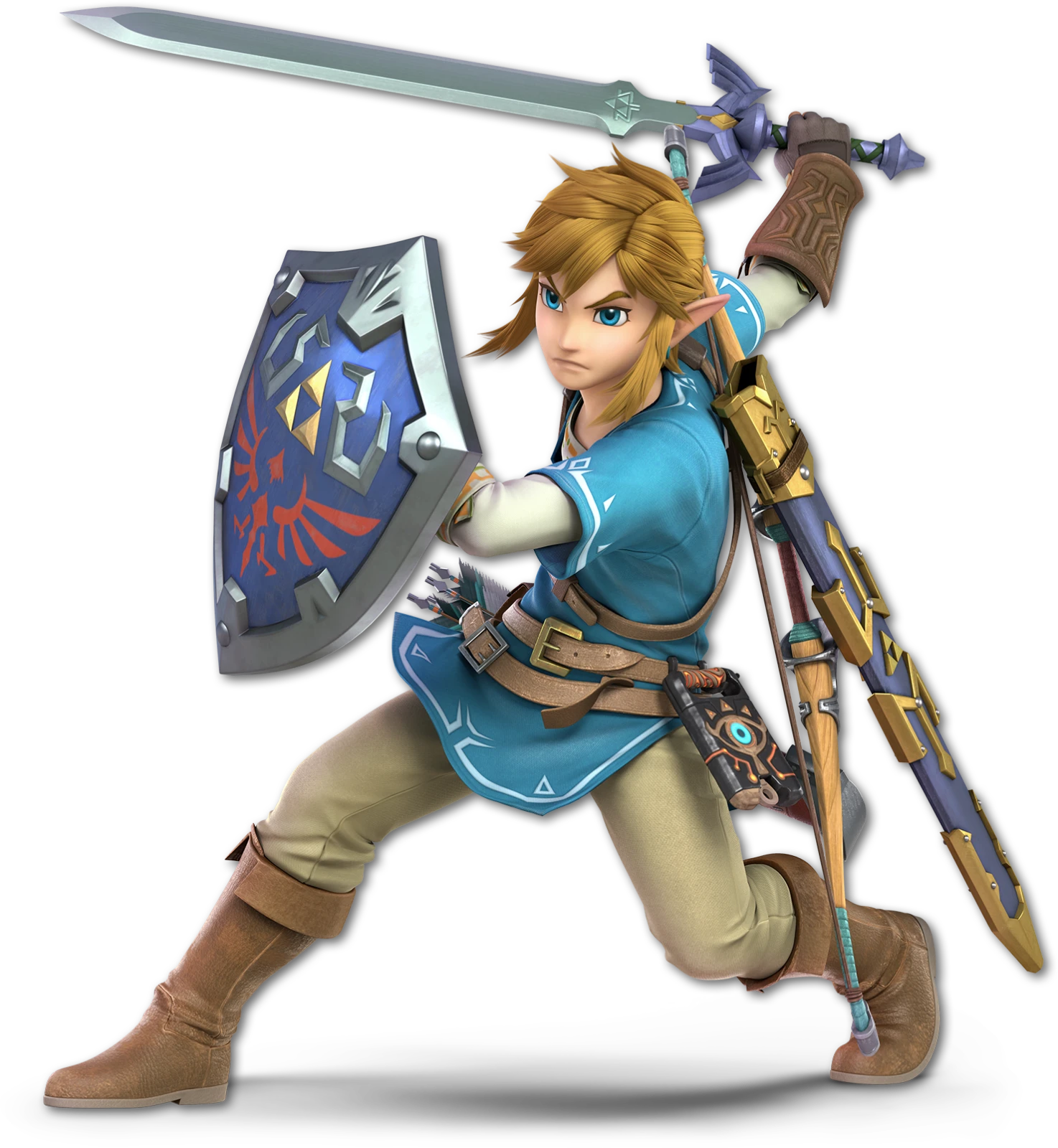 Super Smash Bros. UltimateGame · Switch · December 2018Link fights in his Breath of the Wild look, Champion’s Tunic and all, throwing Remote Bombs and finishing with the Ancient Bow; his Hero of the Wild outfit is an alternate costume. He was revealed at E3 on 12 June 2018.
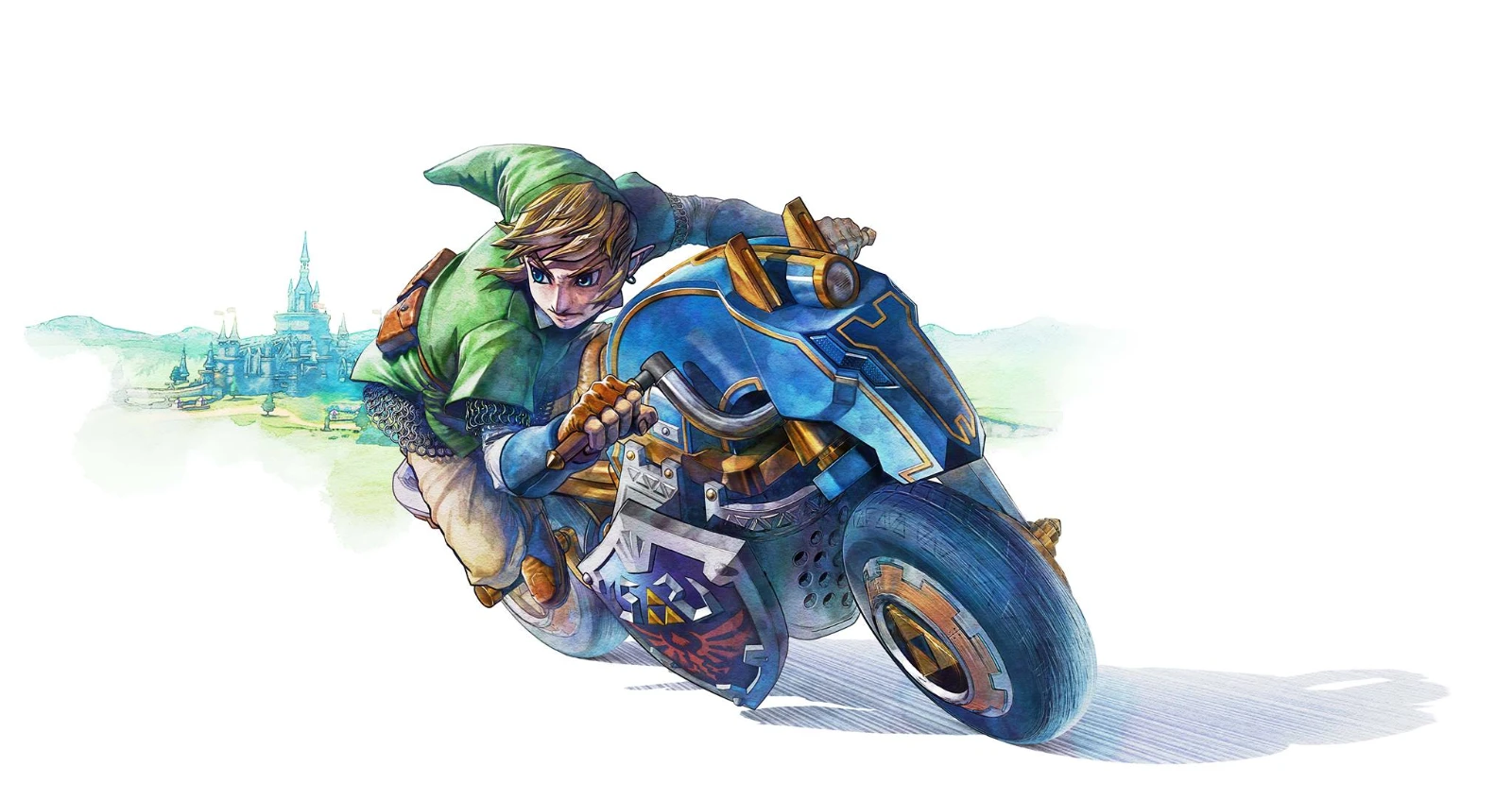 Mario Kart 8 DeluxeGame update · Switch · July 2018Version 1.6 added Link in his Champion’s Tunic and the Master Cycle Zero as free content.
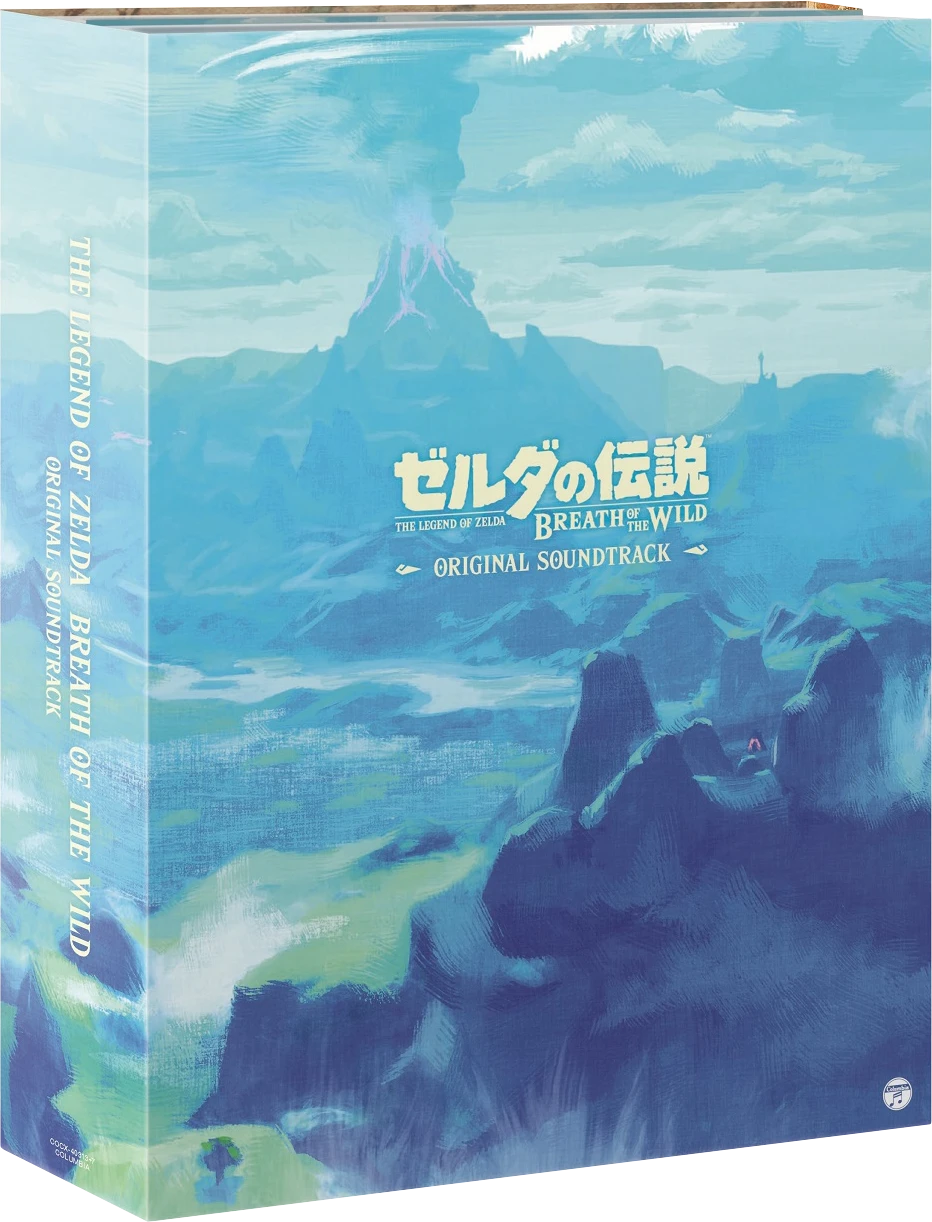 Original SoundtrackMusic · Japan · 25 April 2018A five-disc, 211-track album of the score. A 16-side vinyl box set from Nintendo and Laced Records was announced in October 2025 for 19 June 2026 and later put back to 4 September 2026.
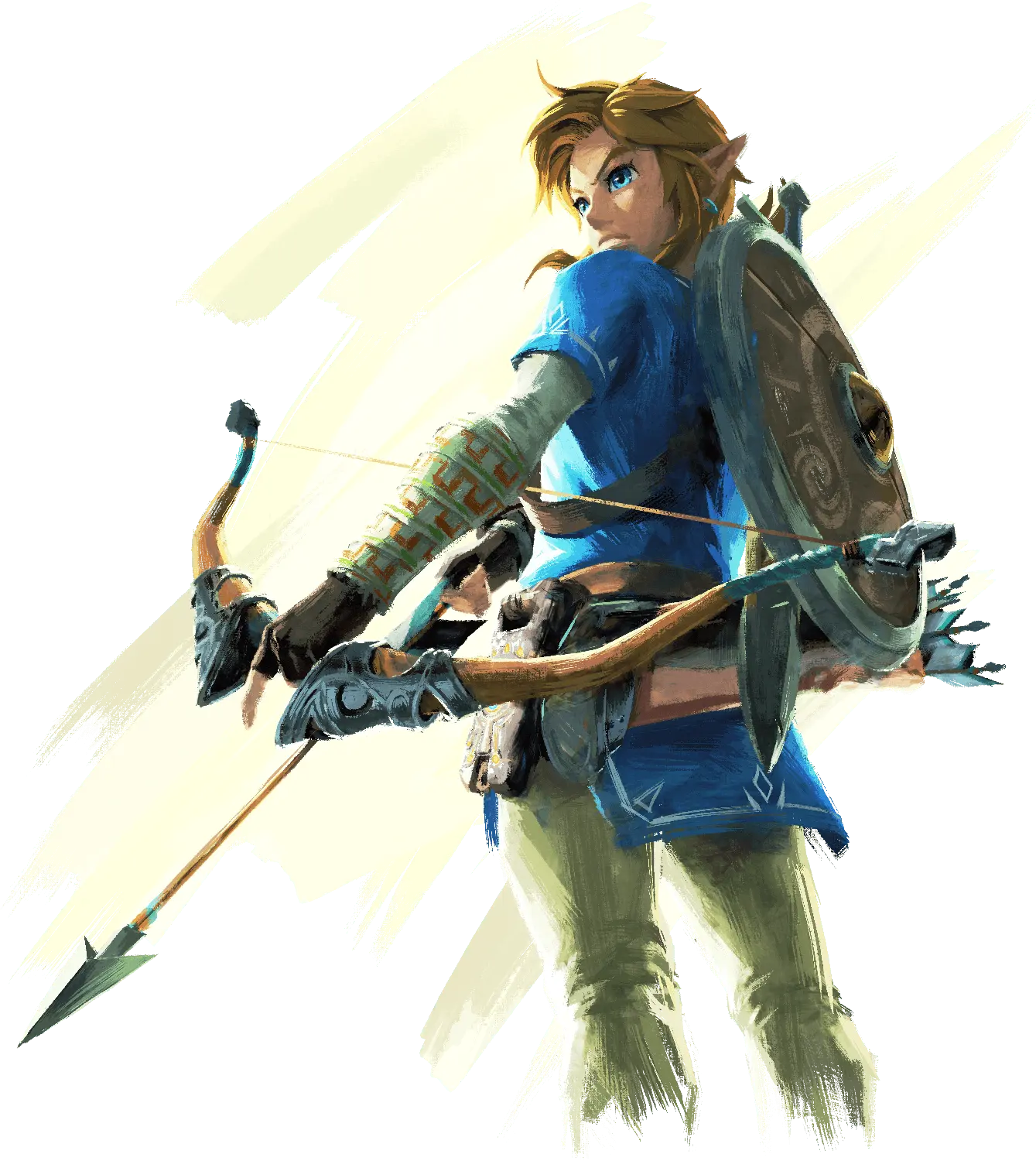 LinkThe Hylian Champion
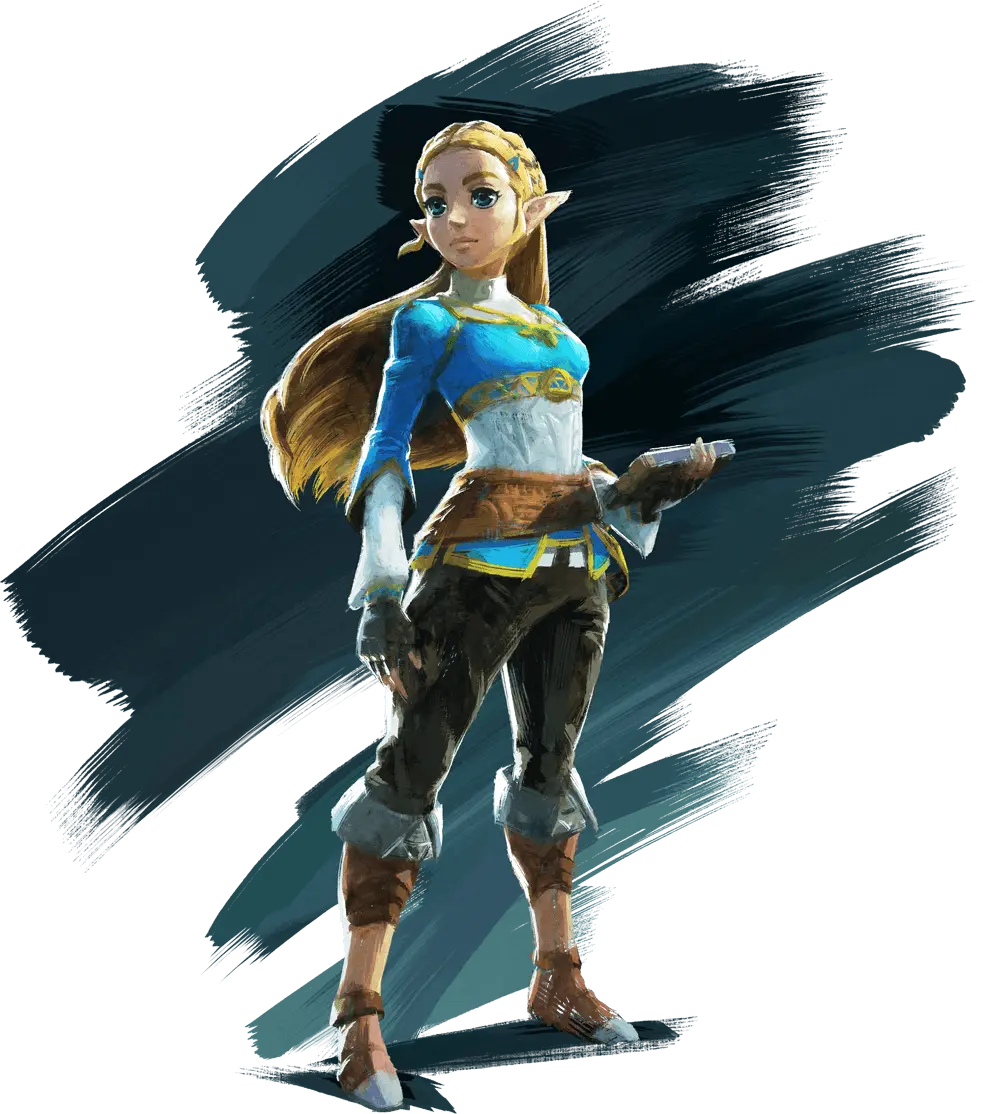 Princess ZeldaPrincess of Hyrule
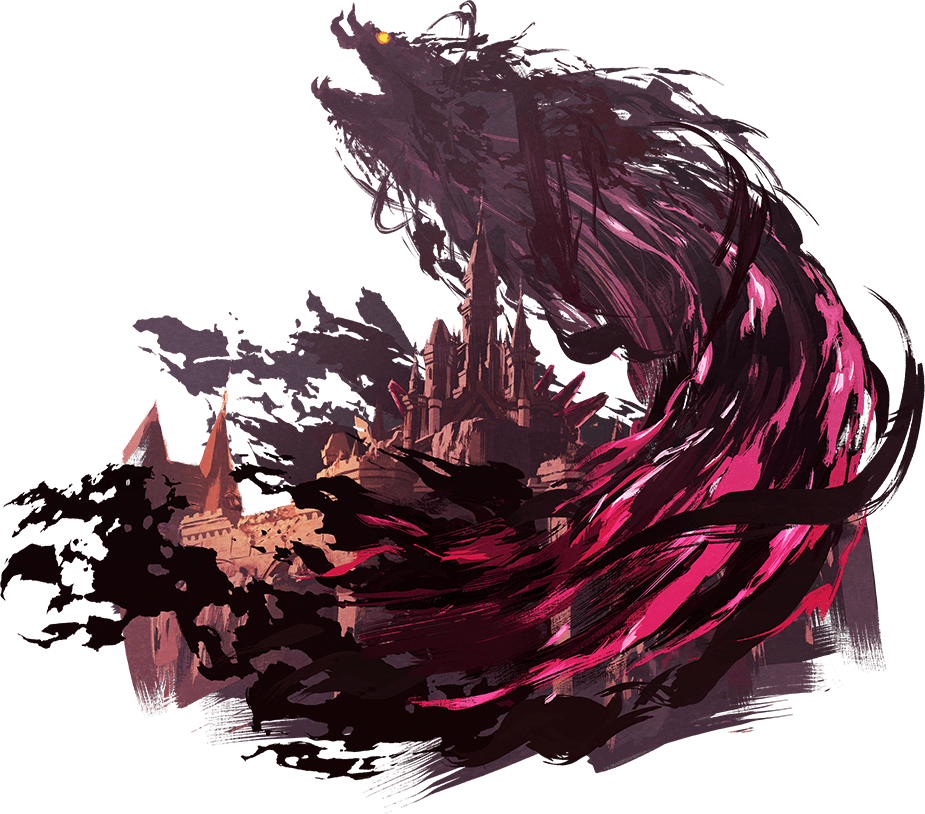 Calamity GanonThe ancient evil
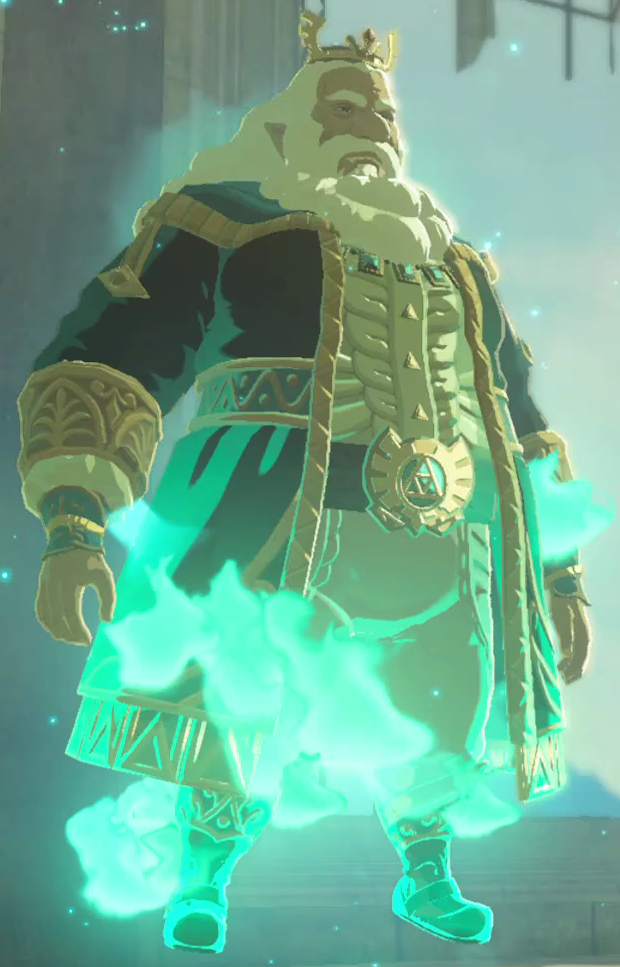 King Rhoam Bosphoramus HyruleThe old man / the last king
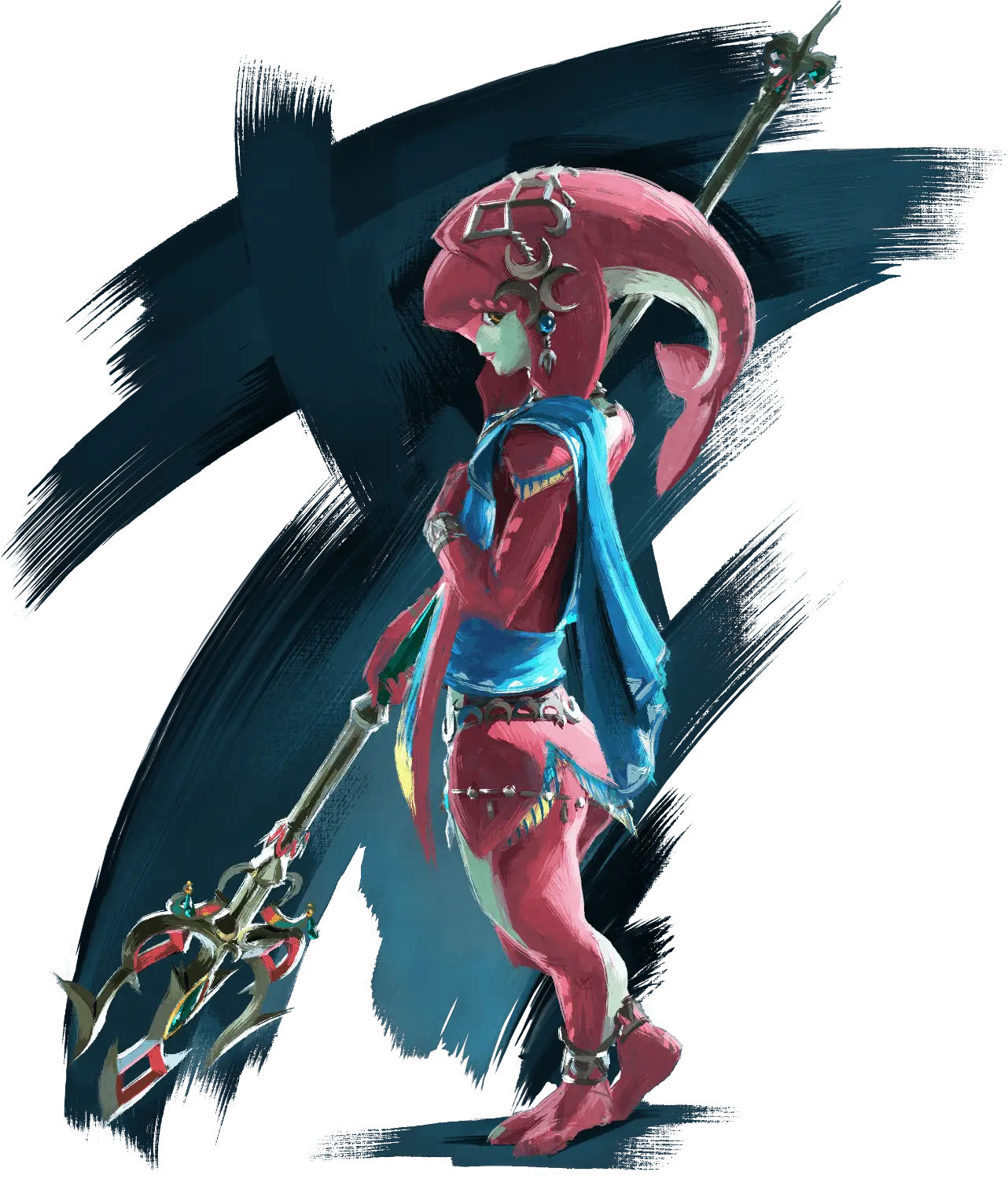 MiphaZora Champion · Vah Ruta
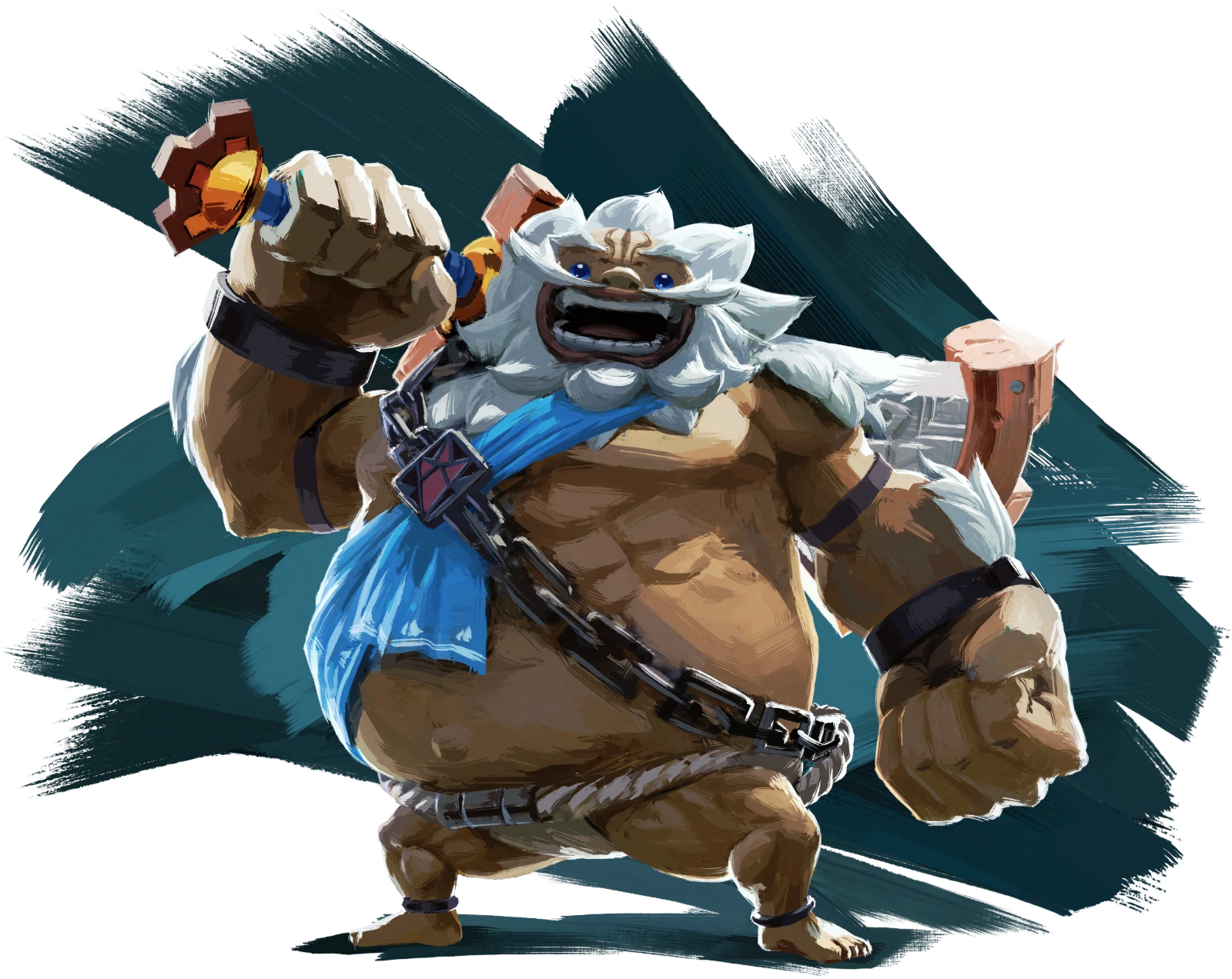 DarukGoron Champion · Vah Rudania
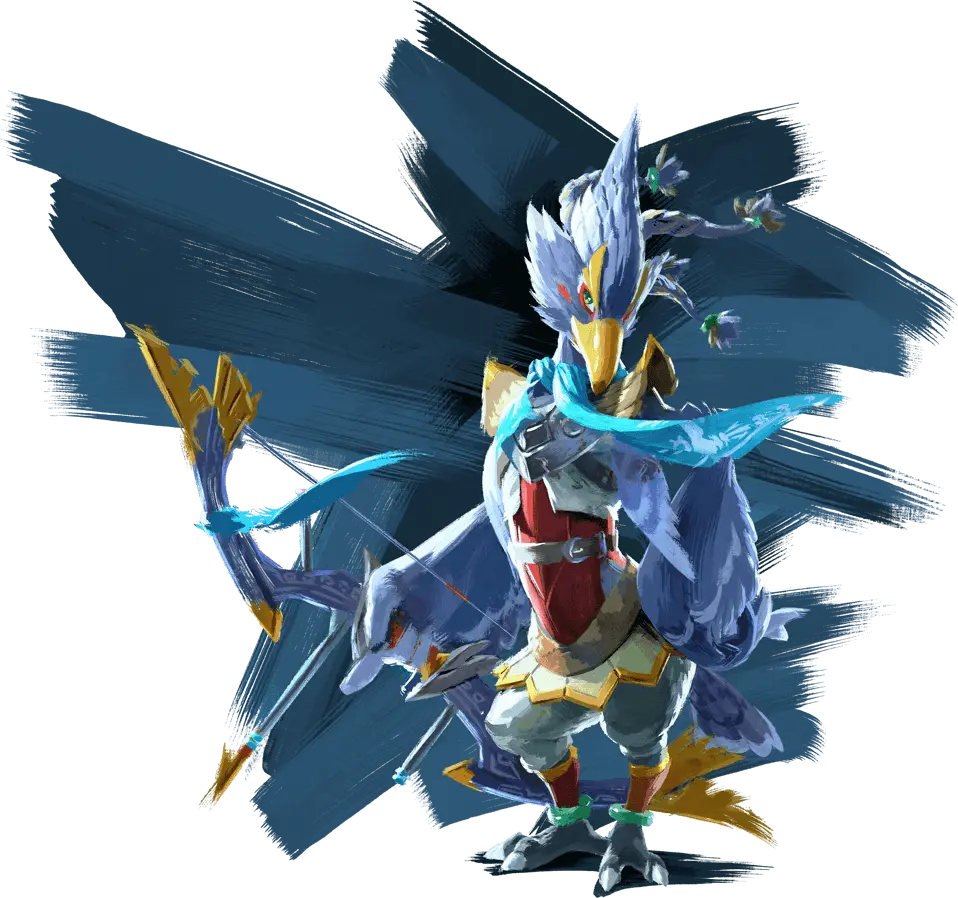 RevaliRito Champion · Vah Medoh
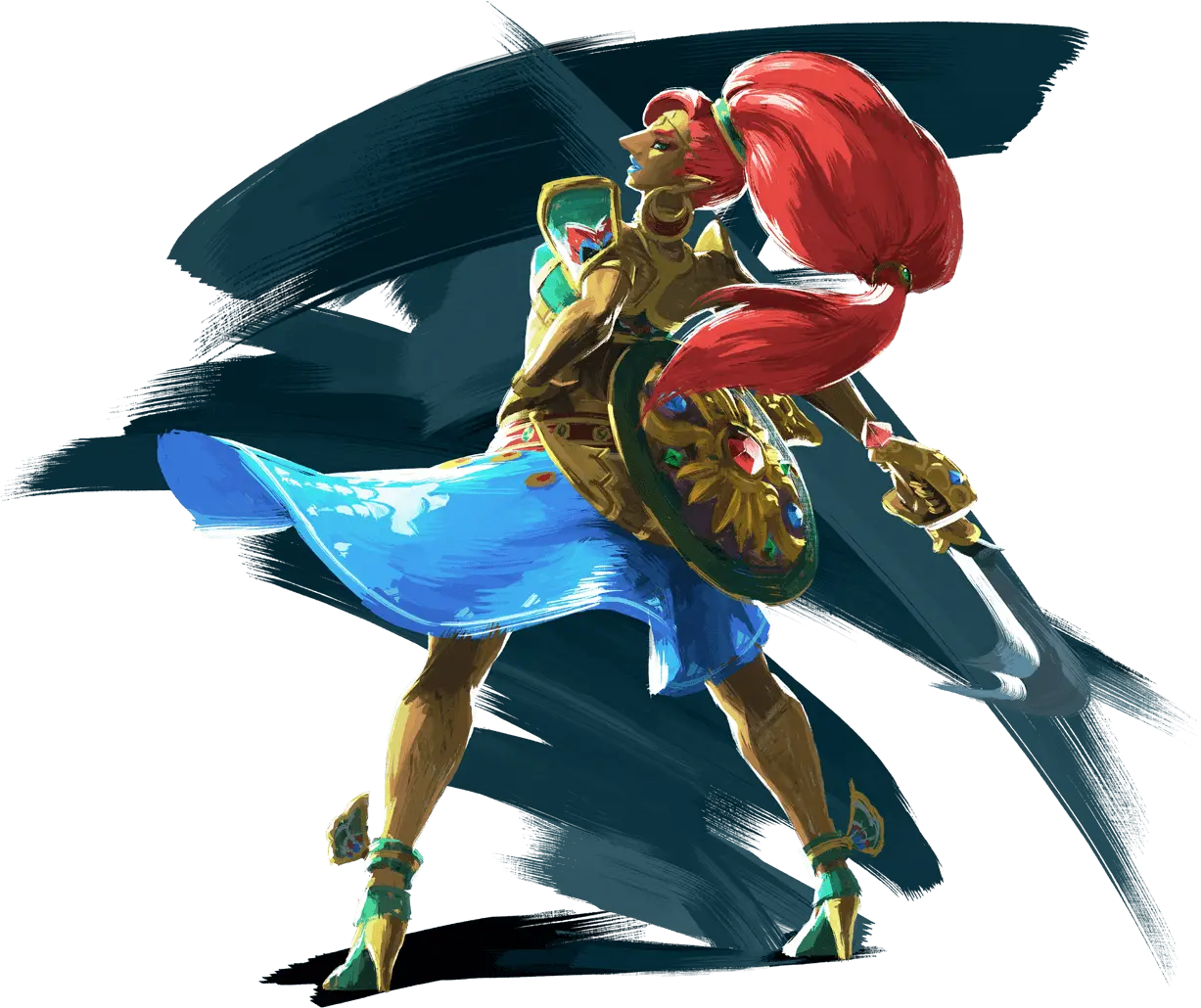 UrbosaGerudo Champion · Vah Naboris
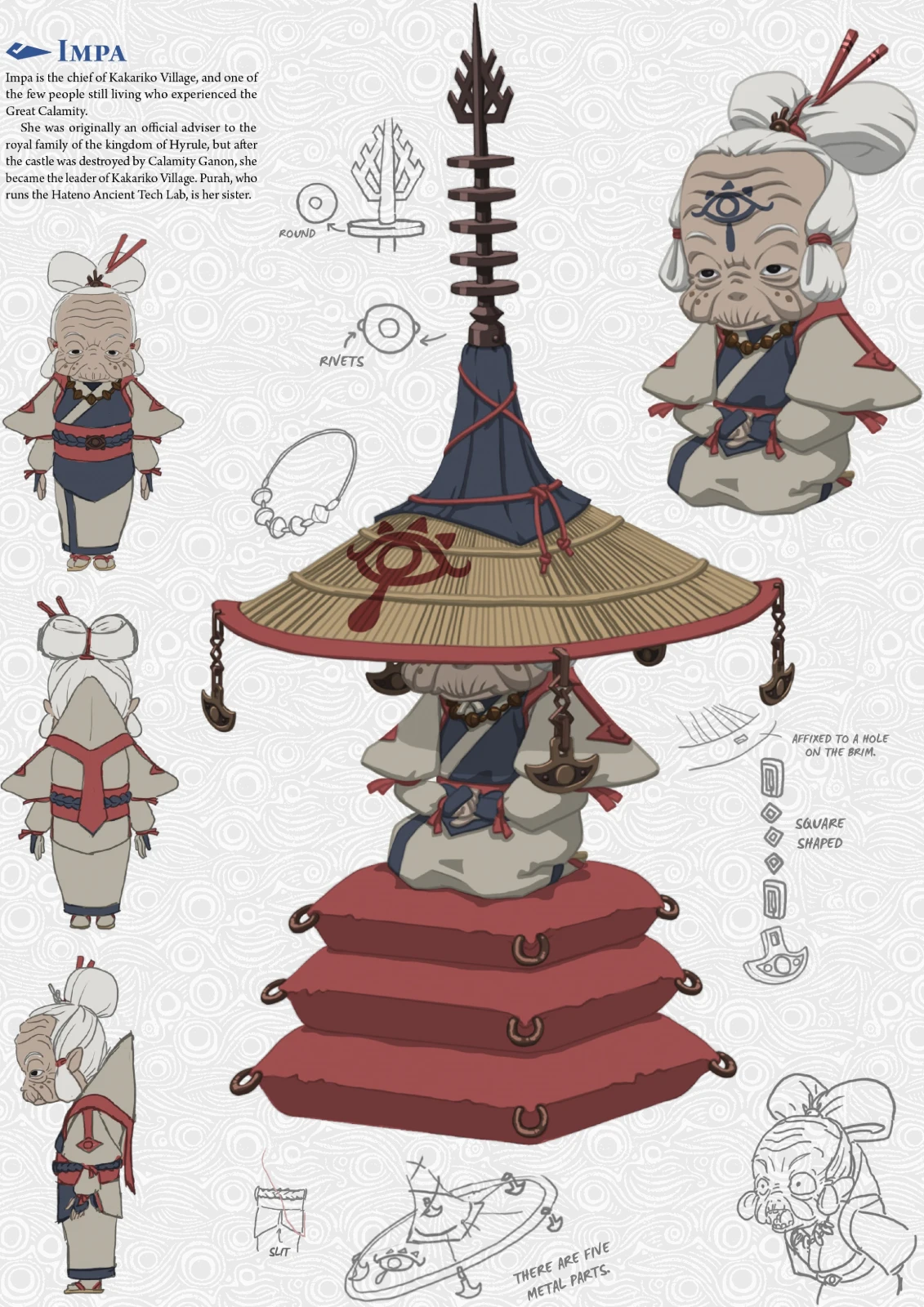 ImpaElder of Kakariko
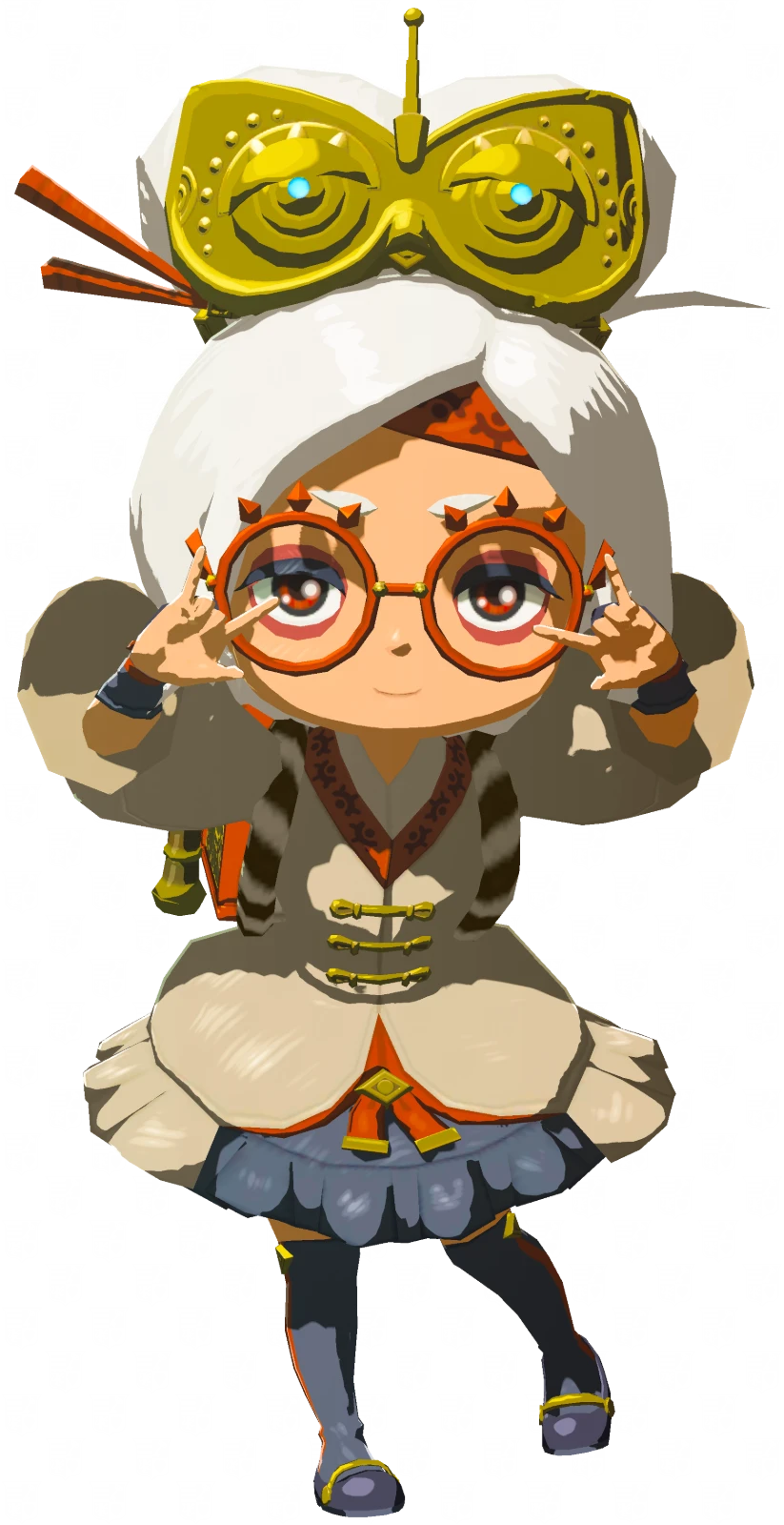 PurahHateno Ancient Tech Lab
 RobbieAkkala Ancient Tech Lab
 Prince SidonPrince of the Zora
 YunoboDaruk’s descendant
 TebaRito warrior
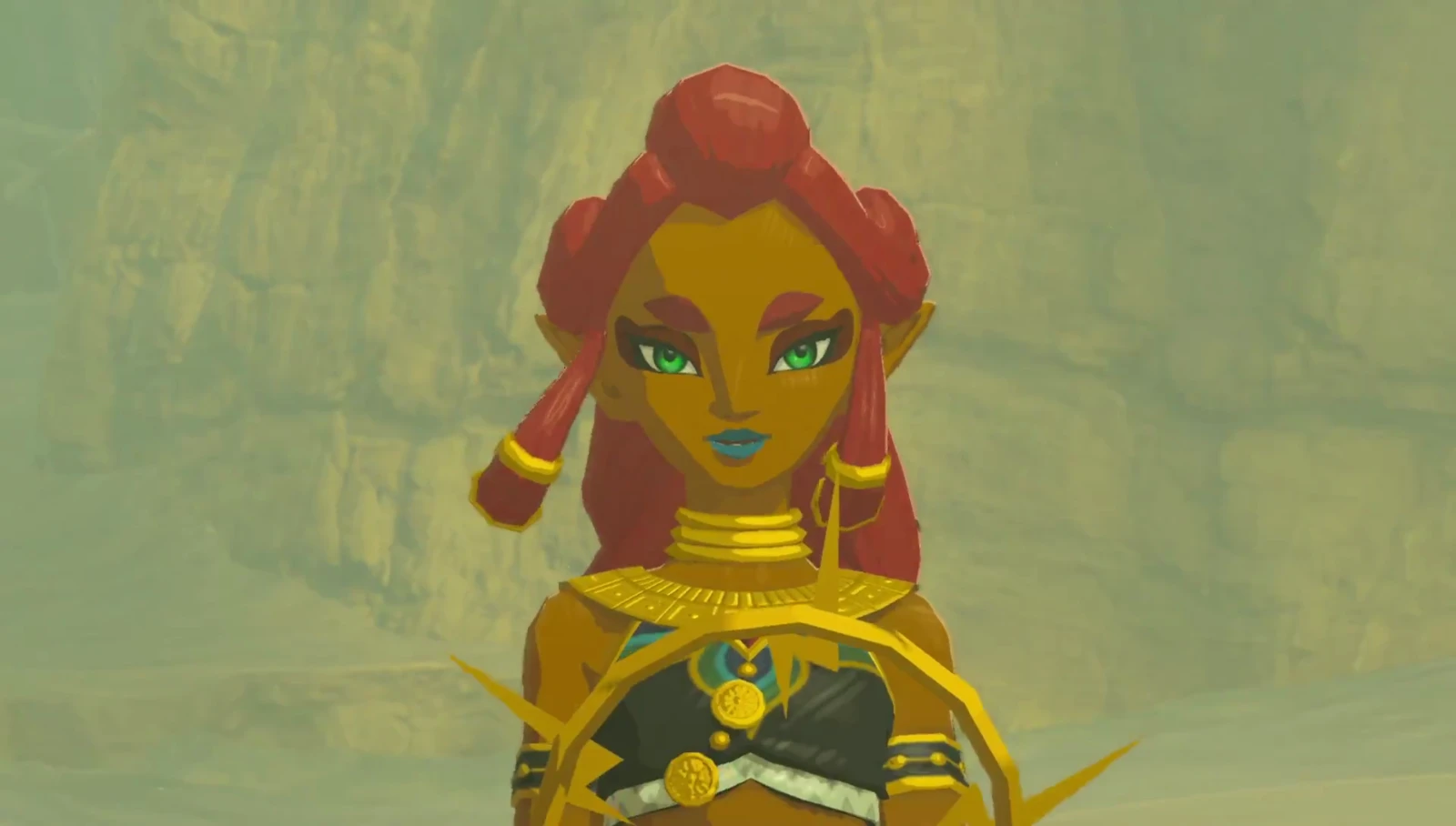 RijuChief of the Gerudo
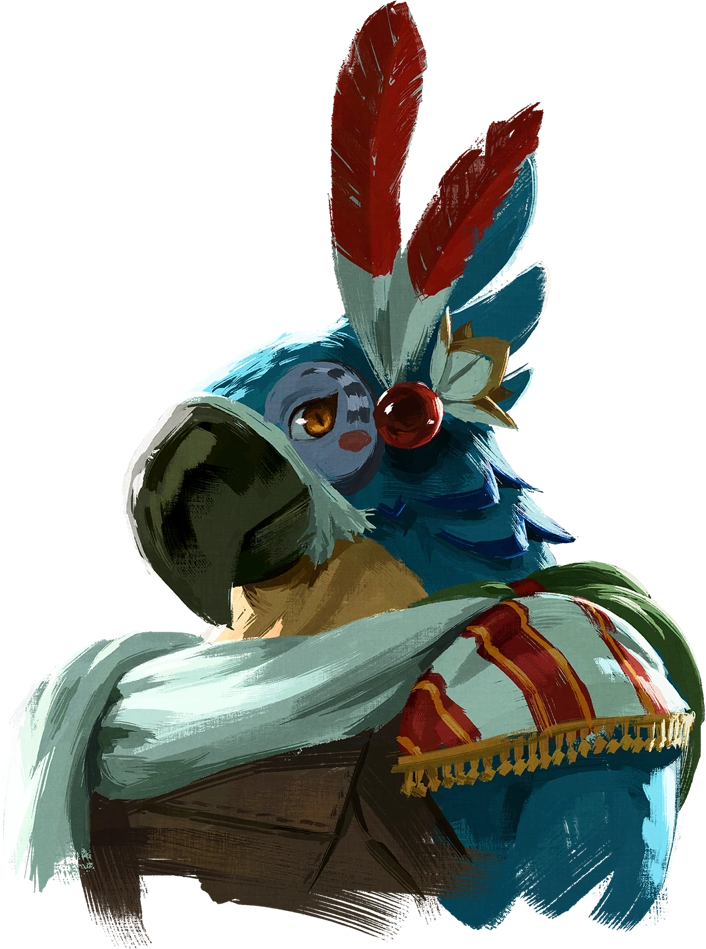 KassThe travelling bard
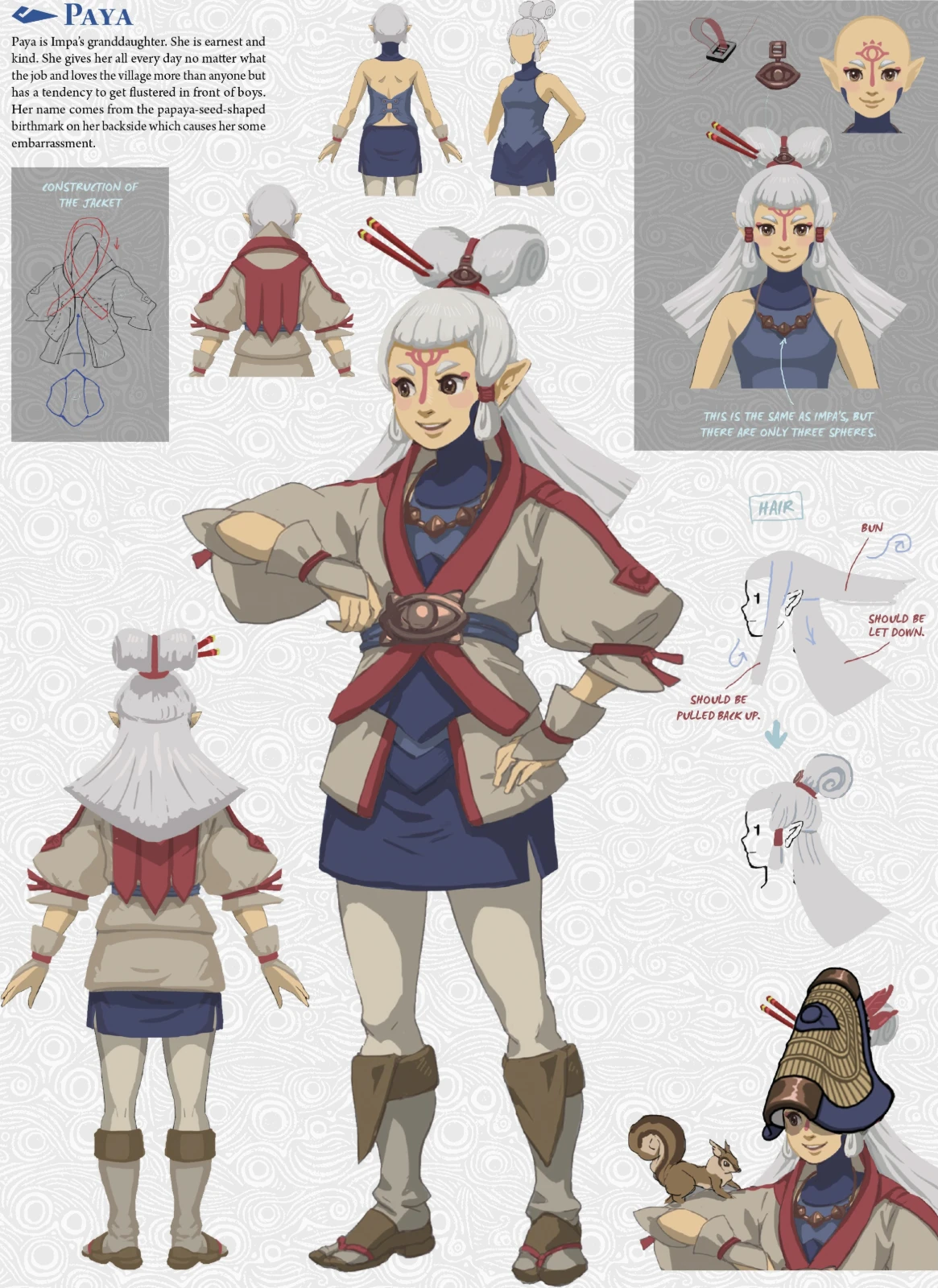 PayaImpa’s granddaughter
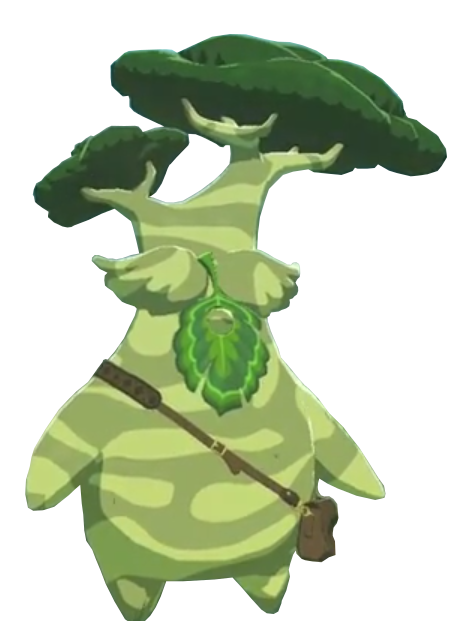 HestuThe maraca-shaking Korok
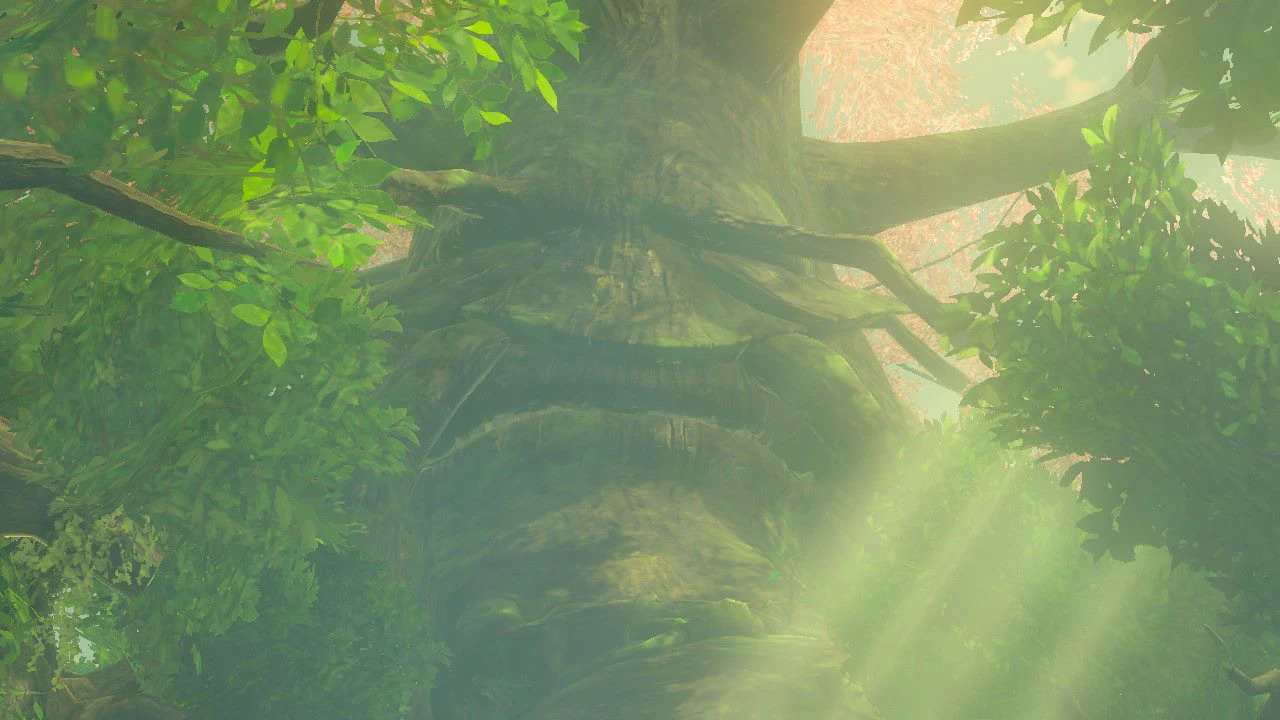 The Great Deku TreeGuardian of the forest
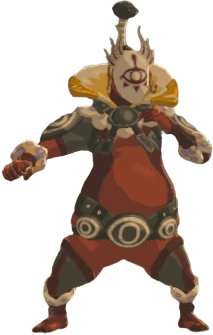 Master KohgaLeader of the Yiga Clan
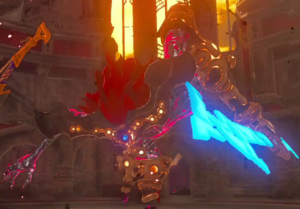 Waterblight GanonVah RutaKilled Mipha. A spear-wielding Blight that also hurls blocks of ice.
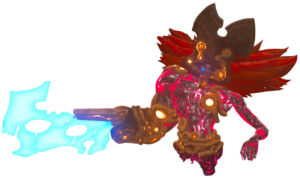 Fireblight GanonVah RudaniaKilled Daruk. A flaming swordsman who hurls fireballs.
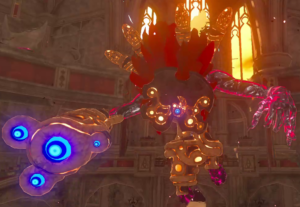 Windblight GanonVah MedohKilled Revali. Floats out of reach and fires blasts of wind.
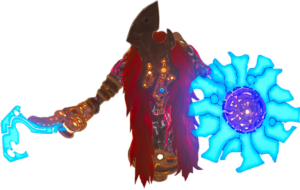 Thunderblight GanonVah NaborisKilled Urbosa. Fast, armed with sword and shield, and crackling with lightning.
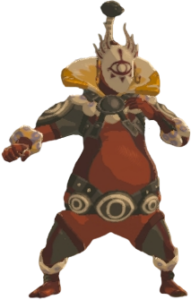 Master KohgaYiga Clan HideoutThe Yiga leader, defeated mostly by his own iron ball.
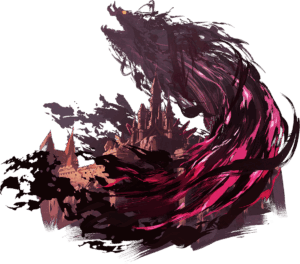 Calamity GanonHyrule CastleThe final boss, weaker for every Divine Beast you freed.
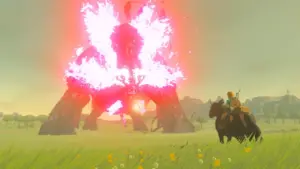 Dark Beast GanonHyrule FieldA colossal boar beaten with the Bow of Light.
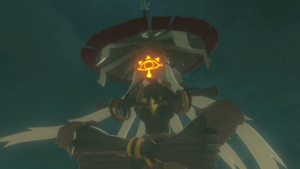 Monk Maz KoshiaThe Final Trial (DLC)The monk waiting at the end of The Champions’ Ballad.
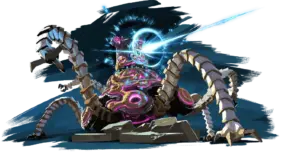 GuardiansEverywhereThe Sheikah’s war machines, turned by Ganon. Stalkers walk, Skywatchers fly, Turrets stand guard, and their lasers are the game’s first real terror.
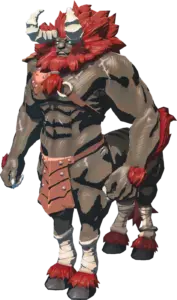 LynelWild areas, Hyrule CastleThe centaur-like monsters, around since the very first Zelda, here the toughest regular enemy in the game.
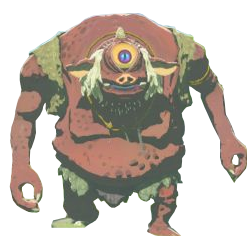 HinoxWild areasA sleeping one-eyed giant. Shoot the eye.
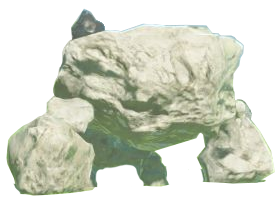 Stone TalusWild areasA living rock pile that rises from the ground; climb on and smash its ore weak point.
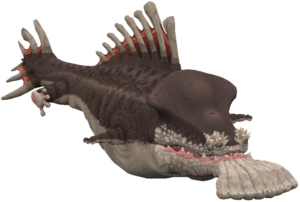 MoldugaGerudo DesertA huge sand-swimming beast that lunges up from below.
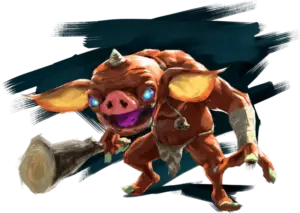 Bokoblins, Moblins and LizalfosEverywhereThe rank and file, in colour-coded strengths; Master Mode bumps every one up a tier.
 First DLC for a mainline ZeldaNintendo’s own announcement called the Expansion Pass the first-ever downloadable content for the mainline series.
 Calamity Ganon and the BlightsGanon as a wordless force of malice, and his four Blights, debut here.
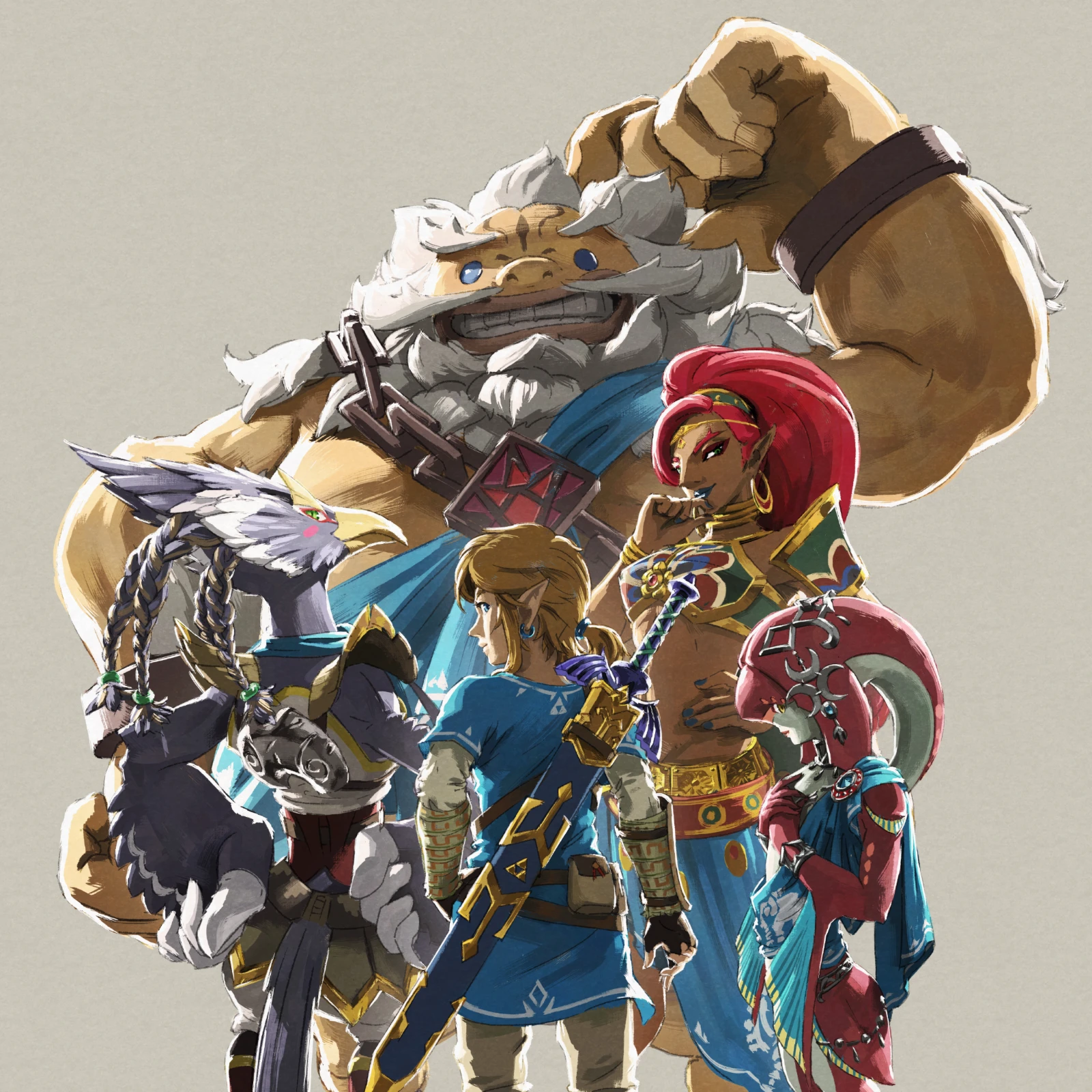 The ChampionsMipha, Daruk, Revali and Urbosa, Zelda’s four allies, all make their first appearance.
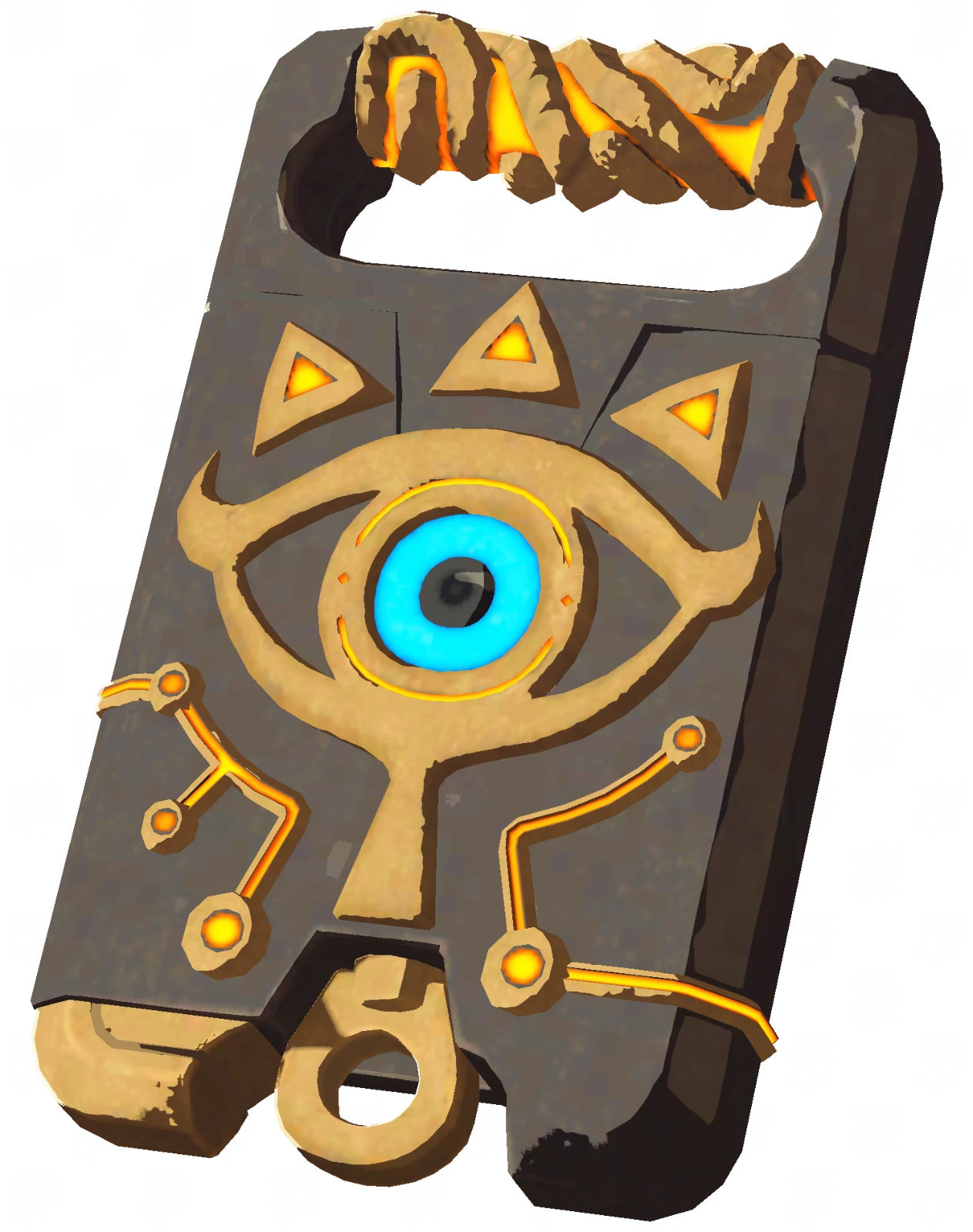 The Sheikah SlateLink’s tablet of runes, maps and camera, succeeded by the Purah Pad in Tears of the Kingdom.
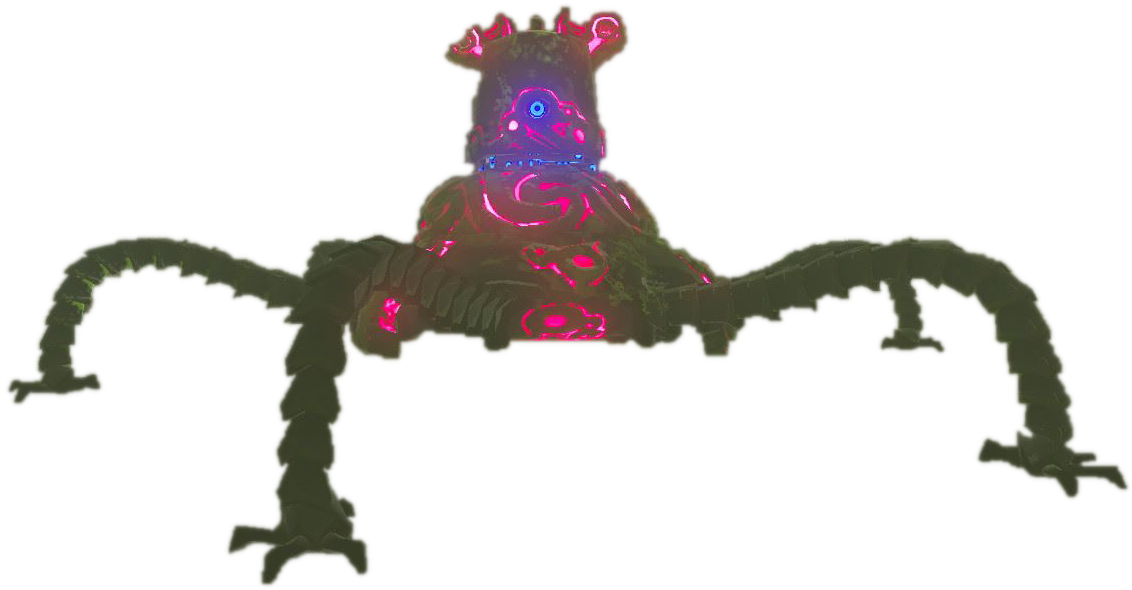 Divine Beasts and GuardiansThe Sheikah’s ancient war machines are new to the series here.
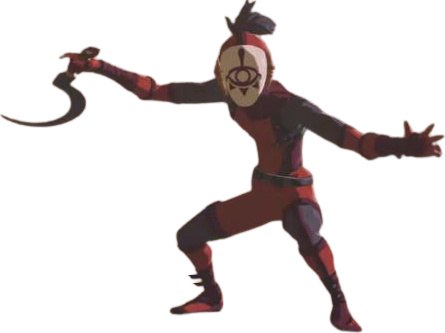 The Yiga ClanThe Ganon-worshipping Sheikah renegades first appear here, and have been back since.