Wii2011Nintendo EADAction-adventureTimeline: first
The Legend of Zelda: Skyward Sword
Before Hyrule, before Ganon, before the Master Sword: a knight-in-training falls from an island in the sky to save his best friend, and finds out who she really is.
Released18 November 2011 (EU) · 20 November (NA) · 23 November (JP)
PlatformWii (Wii MotionPlus required)
DeveloperNintendo EAD, with Monolith Soft
DirectorHidemaro Fujibayashi
ProducerEiji Aonuma
DungeonsSeven, plus four Silent Realm trials
RemasterSkyward Sword HD, Nintendo Switch, 16 July 2021
Title
The Legend of Zelda: Skyward Sword ゼルダの伝説 スカイウォードソード (Zeruda no Densetsu: Sukaiwōdo Sōdo)
Platform
Wii, with Wii MotionPlus (a Wii Remote Plus or the MotionPlus add-on) and Nunchuk
Developer
Nintendo EAD, assisted by the Kyoto branch of Monolith Soft
Publisher
Nintendo
Director
Hidemaro Fujibayashi
Producer
Eiji Aonuma
Writers
Hidemaro Fujibayashi (synopsis), Naoki Mori (cinematic scripts)
Cinematic director
Shigeki Yoshida
Programming
Toshio Iwawaki, Kazuaki Morita
Art
Ryuji Kobayashi, Takumi Wada
Music
Hajime Wakai (sound director), Shiho Fujii, Mahito Yokota, Takeshi Hama; Koji Kondo supervised and wrote the prologue music
Players
1
Released (Europe)
18 November 2011
Released (North America)
20 November 2011 (US$49.99; US$69.99 with a gold Wii Remote Plus)
Released (Japan)
23 November 2011
Released (Australia)
24 November 2011
Age rating
PEGI 12
Pack-in
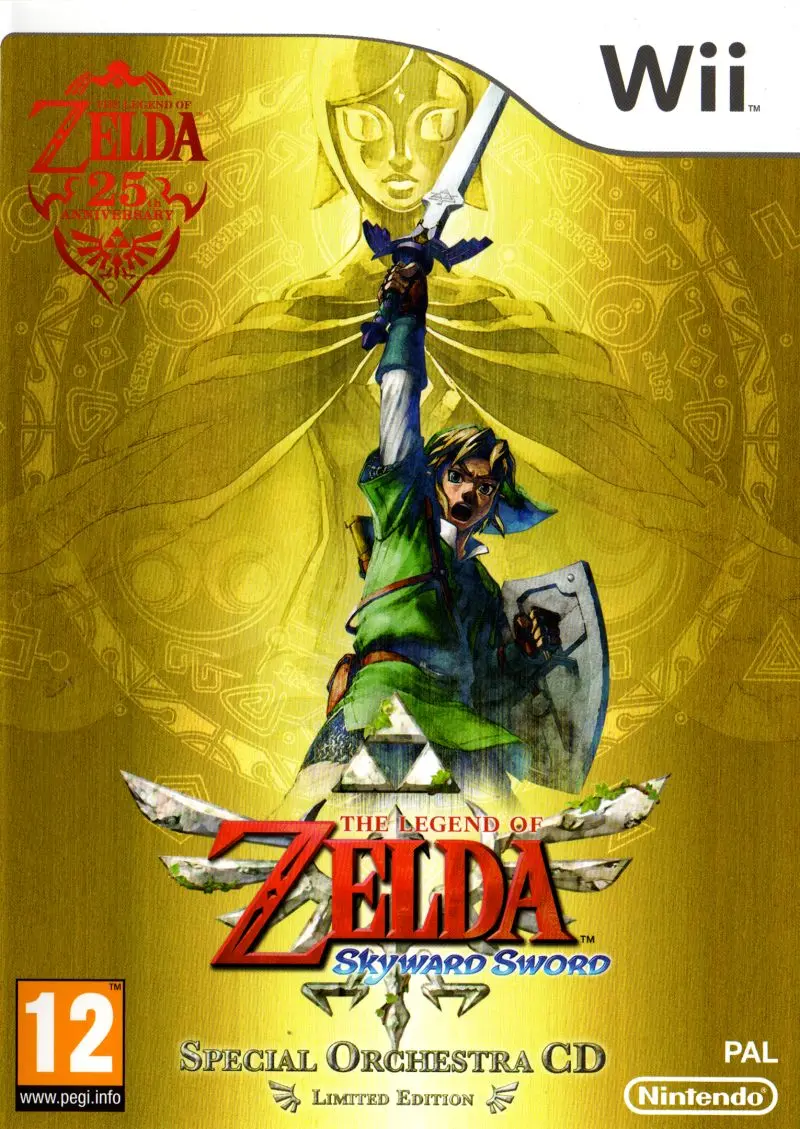
A CD of eight orchestral arrangements from the programme of the 25th anniversary concerts, with first-print copies in North America and the gold Wii Remote Plus bundles sold in most regions
Re-releases
Wii U eShop (1 September 2016); Skyward Sword HD for Nintendo Switch (16 July 2021)
Timeline
The earliest story in the official Zelda chronology
3.52 million by 31 March 2012 (Wii); Skyward Sword HD 3.91 million by 31 March 2022
Famitsu
40/40, only the third Zelda to get a perfect score
Overview
Every Zelda story has to start somewhere, and this is where Nintendo decided the whole saga begins. Skyward Sword came out on Wii in November 2011, the series’ 25th anniversary, and it answers questions fans had been arguing over for years: where the Master Sword came from, why a hero in green keeps turning up whenever a girl called Zelda is in danger, and why the same evil keeps coming back.
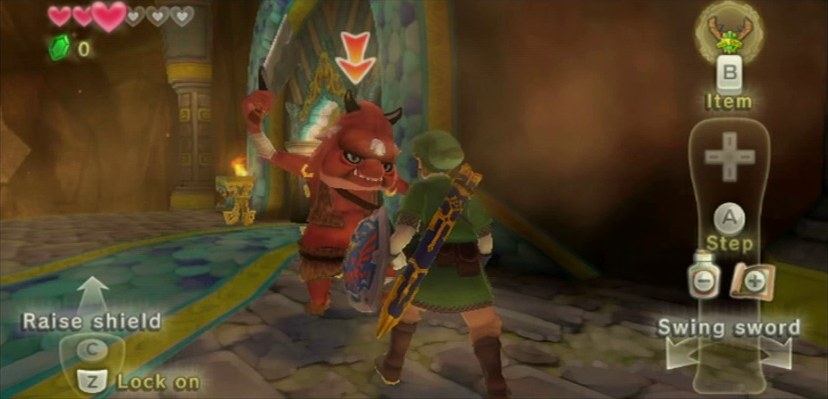
It also asks you to swing the sword yourself. Built around Wii MotionPlus, it reads the angle of every slash, so a Bokoblin holding its blade to the left has to be cut from the right, and a ChuChu splits along whatever line you slice it. Raise the Wii Remote to the sky and the blade fills with light for a Skyward Strike. Shields break, Link can sprint and scramble up walls until his stamina runs out, and the Beetle, bombs and the bow all use motion too.
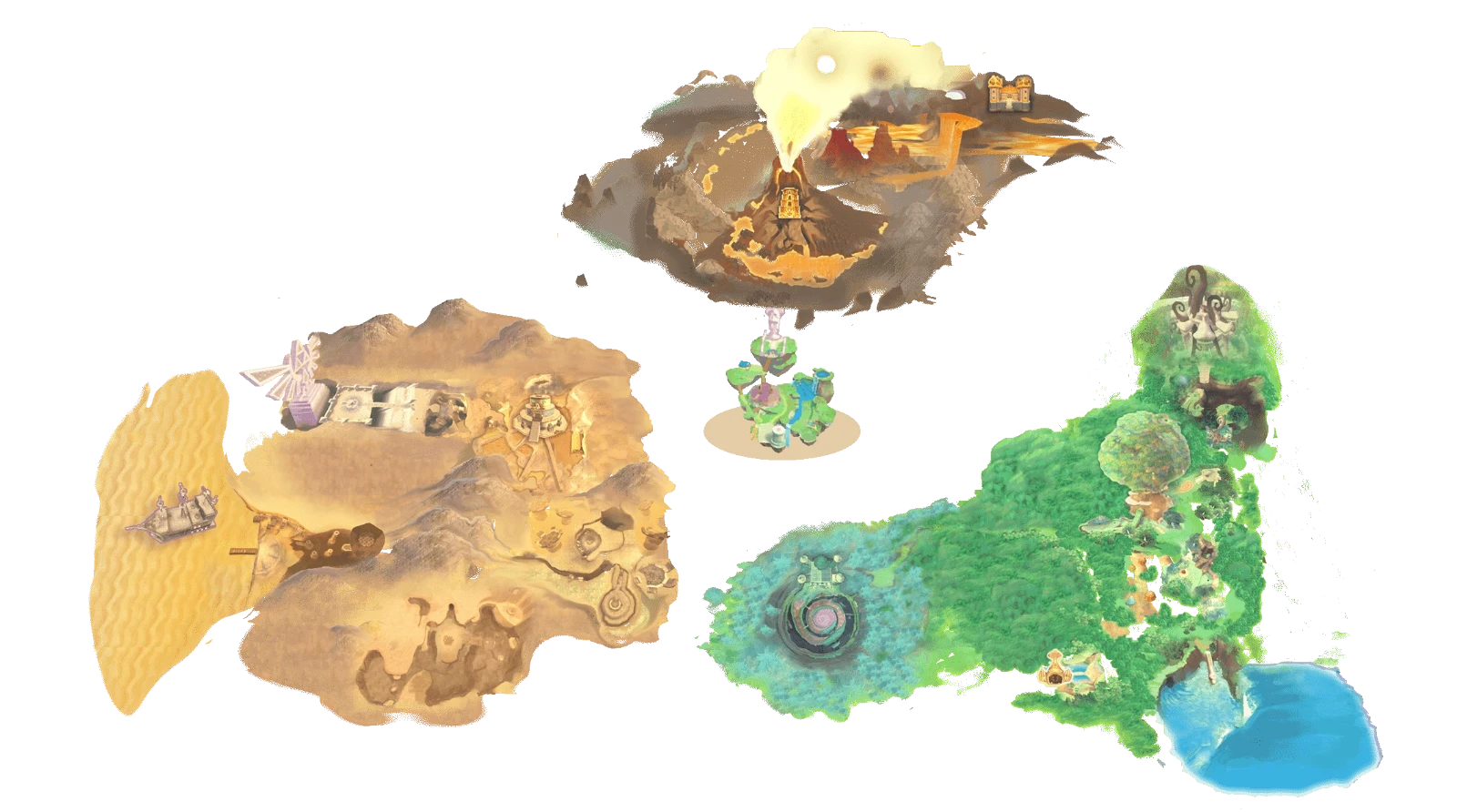
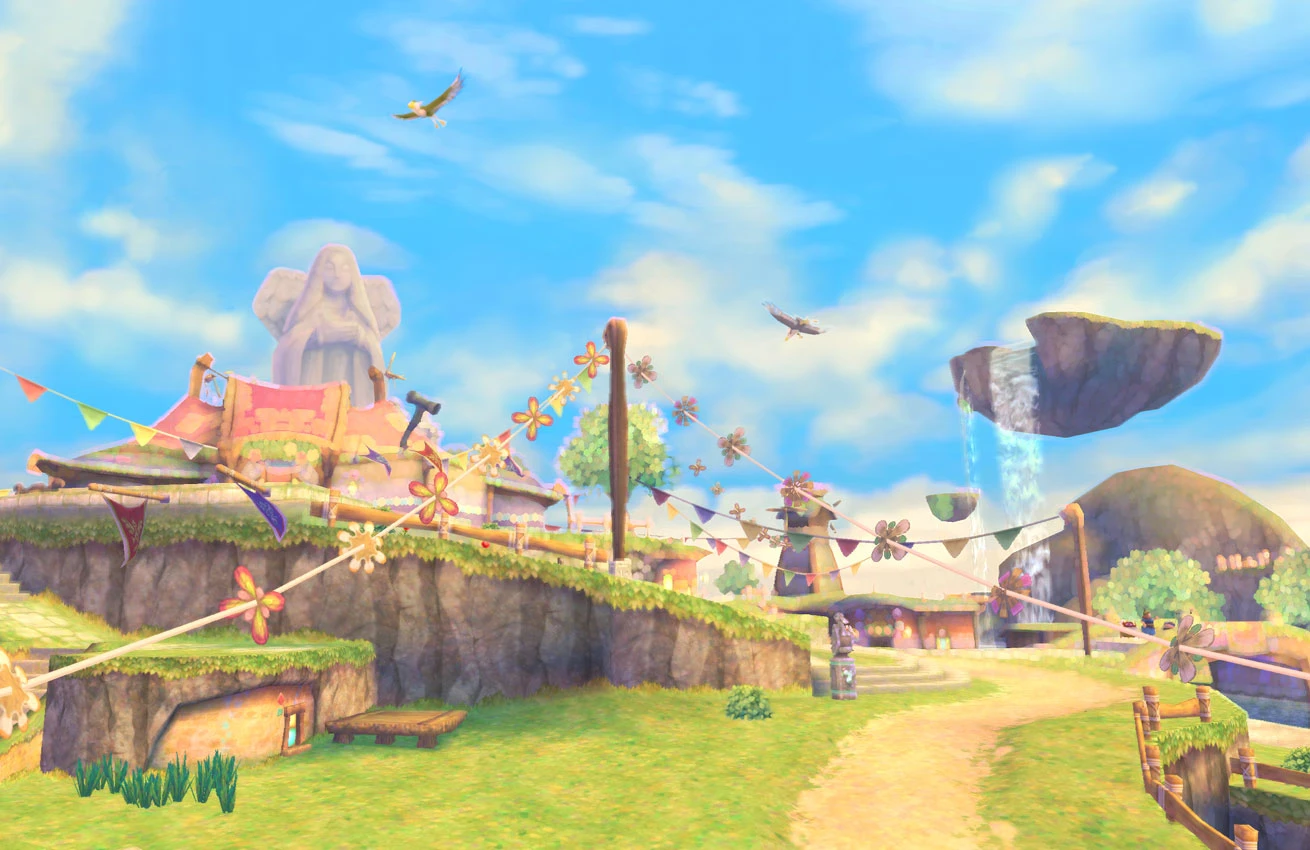
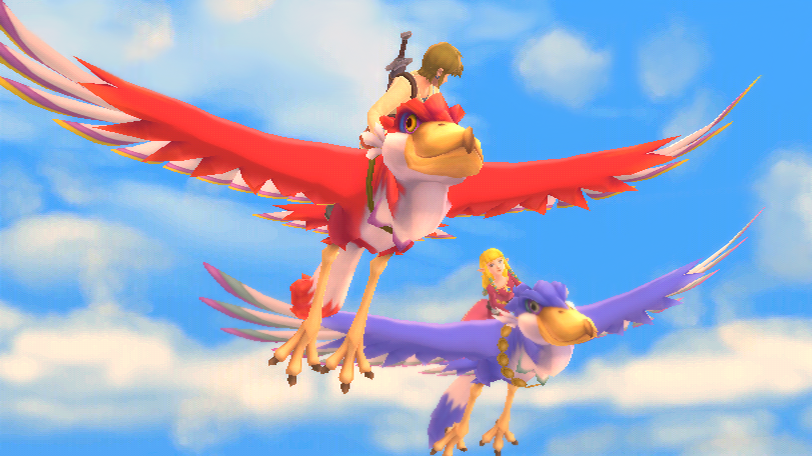
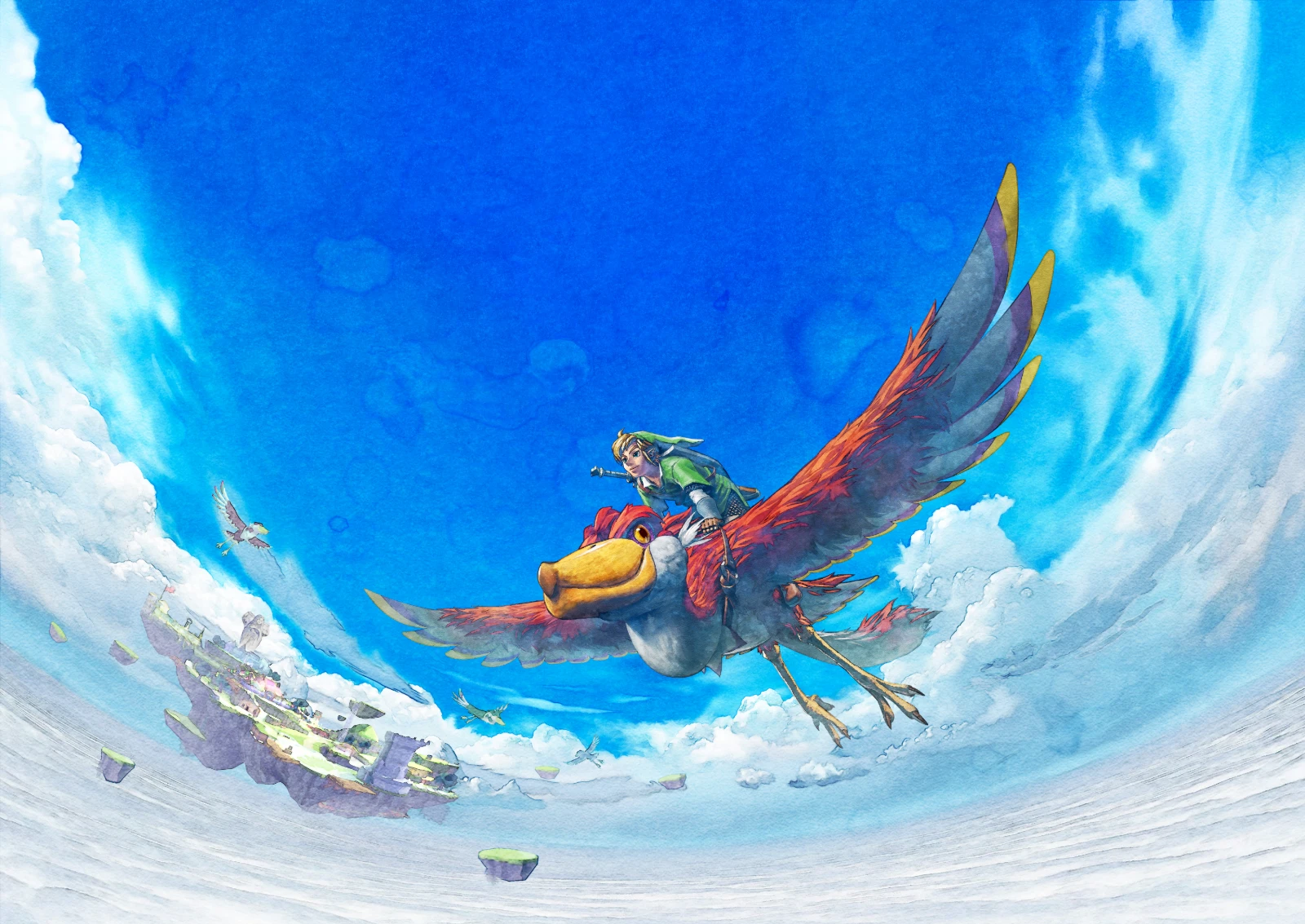
The world is built differently, as well. Instead of one big field, Link lives on Skyloft, a town floating above a sea of clouds, flies his giant Loftwing between sky islands, and dives through the clouds to three regions on the surface: Faron Woods, Eldin Volcano and Lanayru Desert. Each is packed with puzzles and gets revisited and reshaped as the story goes on. Critics loved it (Famitsu gave it 40 out of 40, and Edge, IGN and Game Informer all gave it ten out of ten), and a decade later Nintendo brought it to Switch as Skyward Sword HD, with an option to play with buttons alone.
Skyloft, the floating town where Link grows up.Riding a Loftwing over the sea of clouds.MotionPlus swordplay: read the enemy’s guard, then cut where it is open.
One of the most storied franchises in history soars to new heights.
That is the opening line of Nintendo’s own description of the Wii game. It goes on to sell the MotionPlus sword fighting as a shake-up of the adventure formula, promises a ride on a bird through a sea of clouds, forests, volcanoes and deserts below, and a big set of upgradeable equipment, and tells fans that the story lays the groundwork for Ocarina of Time.
— Official description: Nintendo, The Legend of Zelda: Skyward Sword (Wii) product page, Nintendo UK; the same text ran in launch coverage in December 2011. One line quoted; the rest summarised.
Quick Answers
The questions people ask most about Skyward Sword, answered first and explained further down the page.
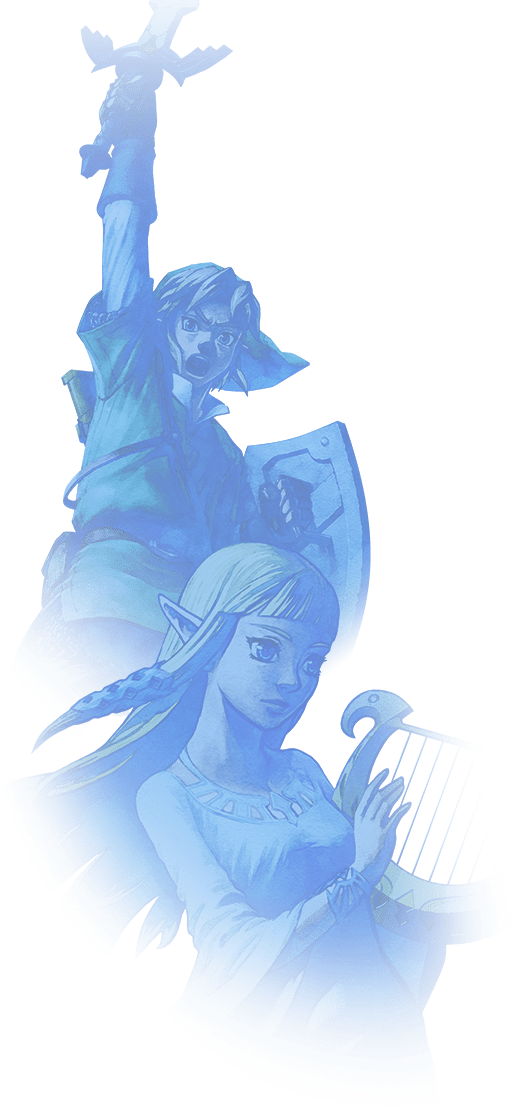
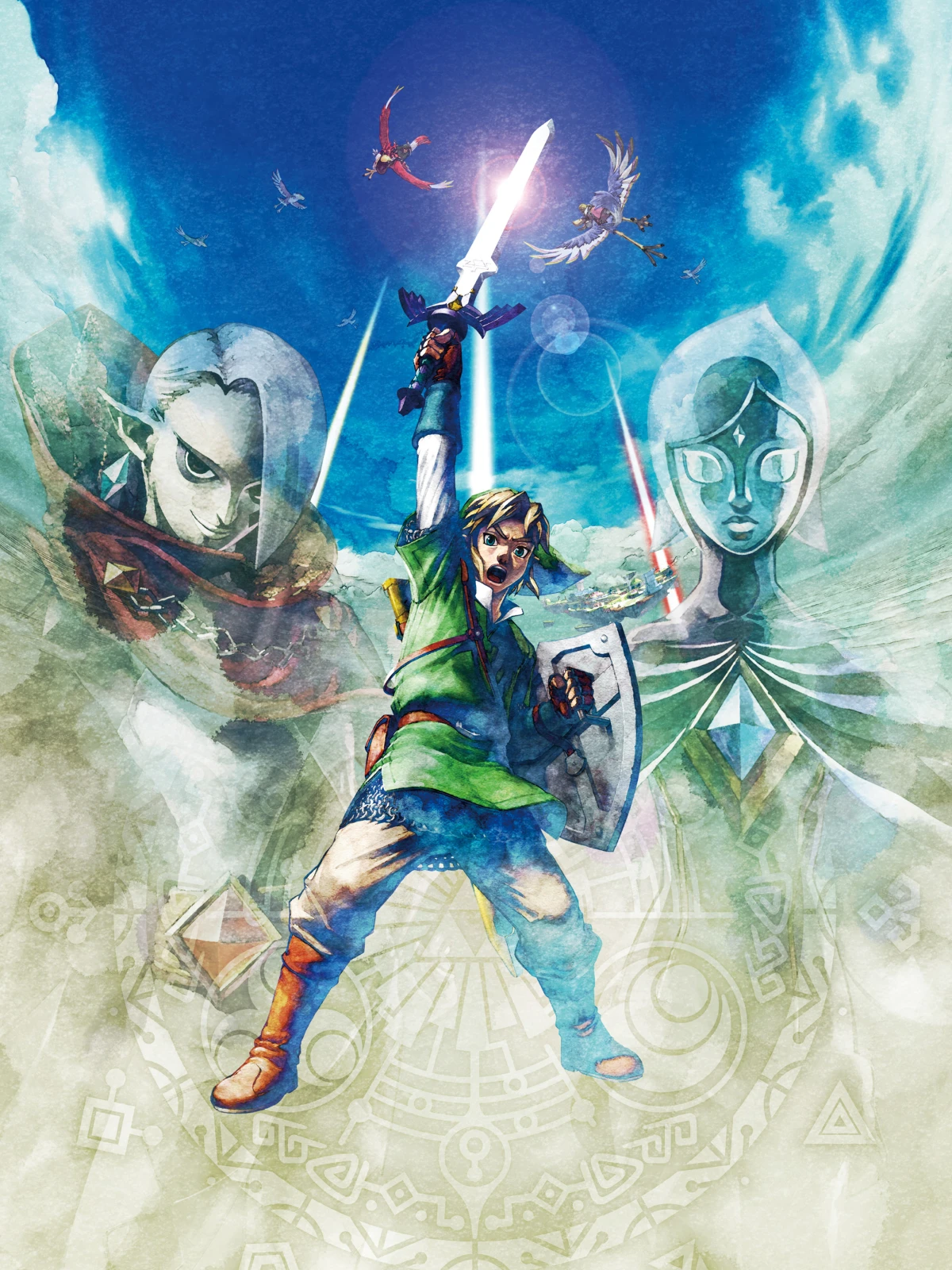
Official artwork for Skyward Sword.
When did Skyward Sword come out?
On Wii in November 2011: 18 November in Europe, 20 November in North America, 23 November in Japan and 24 November in Australia. Skyward Sword HD followed on Nintendo Switch on 16 July 2021. More →
Where does Skyward Sword fit in the Zelda timeline?
At the very start. Nintendo calls it the earliest tale in the Zelda timeline, and its producer Eiji Aonuma says the team chose early on to tell the origin of the Master Sword, which made it the first story in the series. More →
Do you need Wii MotionPlus to play it?
On Wii, yes: you need a Wii Remote Plus or a Wii Remote with the MotionPlus add-on, plus a Nunchuk. On Switch, Skyward Sword HD can be played with Joy-Con motion controls or with buttons only, swinging the sword with the right stick. More →
How many dungeons are there?
Seven: Skyview Temple, the Earth Temple, the Lanayru Mining Facility, the Ancient Cistern, the Sandship, the Fire Sanctuary and Sky Keep. On top of those are four Silent Realm trials and the Sealed Grounds, where Link fights the Imprisoned. More →
Who is Fi?
The spirit who lives in Link’s sword, made by the goddess Hylia to guide her chosen hero. She analyses enemies, dowses for hidden things and talks in percentages, and at the end she goes to sleep forever inside the Master Sword. More →
Who is Demise, and is he Ganon?
Demise is the Demon King who waged war on Hylia before the game begins, and the Imprisoned is his sealed, monstrous form. When Link finally beats him, Demise swears that his hatred will haunt the bloodlines of Link and Zelda for ever. The game never names Ganon, but that curse is its explanation for why evil keeps returning in later games. More →
Is Zelda a princess in Skyward Sword?
No. She is Link’s childhood friend and the daughter of Headmaster Gaepora of the Knight Academy, and she turns out to be the goddess Hylia reborn as a mortal. More →
Who made Skyward Sword, and how long did it take?
Nintendo EAD, directed by Hidemaro Fujibayashi and produced by Eiji Aonuma, with help from Monolith Soft. Work began after Twilight Princess and took almost five years. More →
How many copies did it sell?
Nintendo had sold 3.52 million copies on Wii by 31 March 2012. Skyward Sword HD reached 3.6 million within three months of release and reached 3.91 million by 31 March 2022. More →
What changed in Skyward Sword HD?
It runs at 60 frames per second, adds the button-only control option, makes many of Fi’s hints optional, lets you skip dialogue and cutscenes, and gives Hero Mode its own save slot. A Zelda & Loftwing amiibo lets you hop between the sky and the surface at any time. More →
Plot / Story
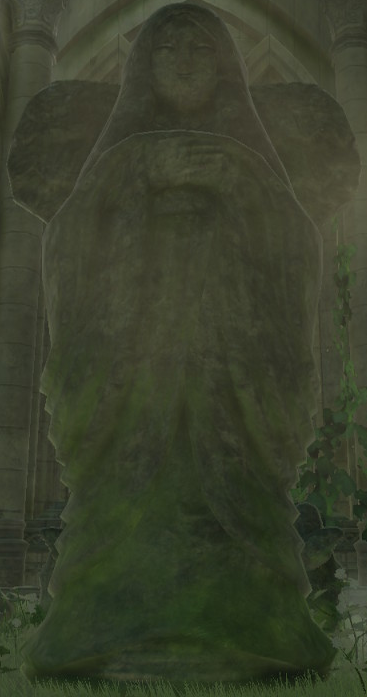
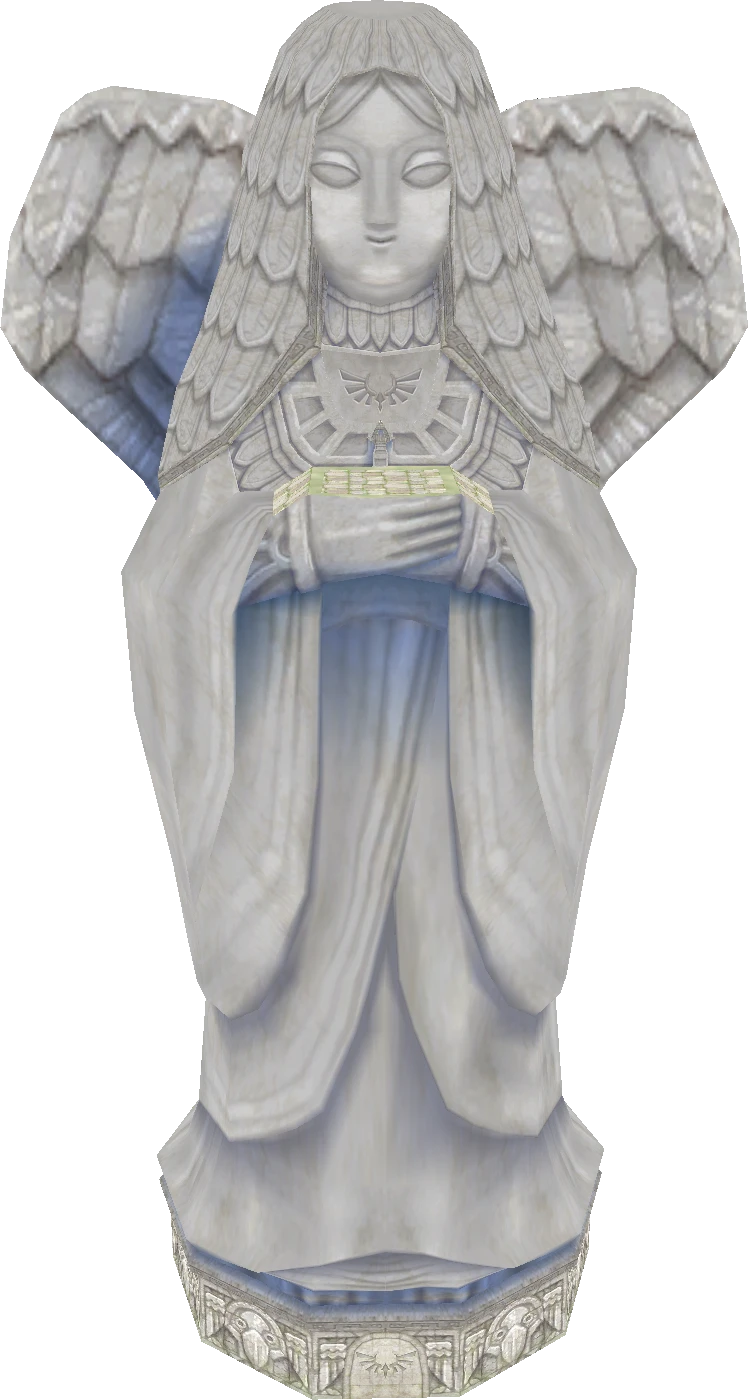
The Statue of the Goddess watches over Skyloft, and hides more than anyone in town suspects.
Long before there was a Hyrule, the land was ripped apart by war. Demise, the Demon King, came with an army of monsters, hungry for the Triforce, the sacred power left behind by the three Golden Goddesses. Standing between him and the prize was a younger goddess, Hylia. She gathered up the surviving people, raised a great slab of earth into the sky with the Triforce aboard, hid it all above a barrier of cloud, and then went back down to fight. Demise was sealed away, but the surface was left scarred and the goddess was left weakened.
Ages pass. The people of the sky build a town called Skyloft and forget there was ever anything below the clouds; the surface becomes a bedtime story. They have the Knight Academy, the giant birds called Loftwings that each of them is partnered with, and a towering Statue of the Goddess, but no idea that their whole way of life is part of a plan.
Skyloft and the Wing Ceremony
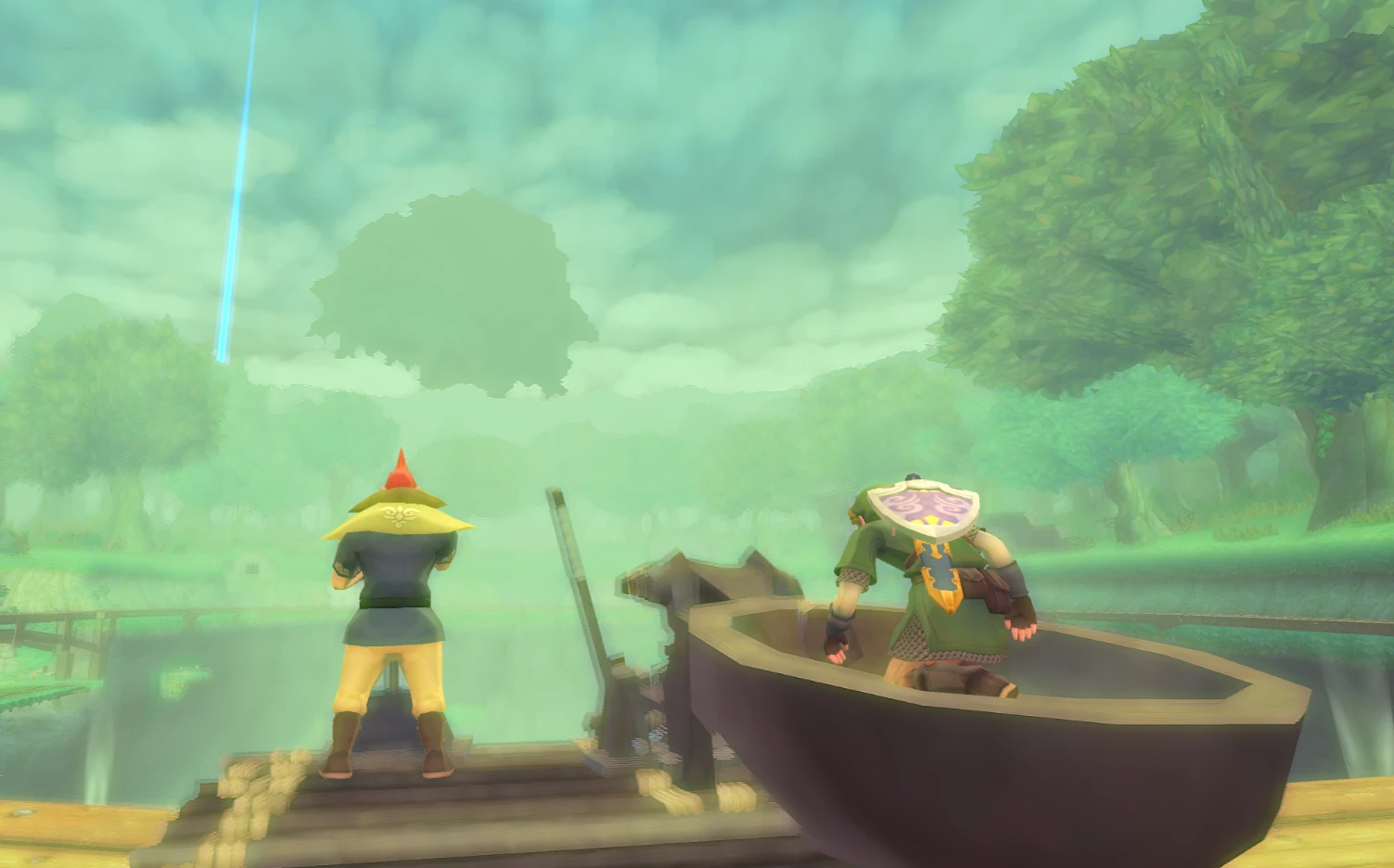
Link is a student at the Knight Academy, partnered with a rare Crimson Loftwing. His closest friend is Zelda, daughter of Headmaster Gaepora, and she has been chosen to play the goddess at this year’s Wing Ceremony, a race on Loftwings whose winner receives a prize from “the goddess” herself. Link has a problem, though: his bird has vanished on the morning of the race, and Gaepora has to hold the start while he searches.
The class bully, Groose, wants that prize too, mostly because he wants Zelda, and with his sidekicks Cawlin and Strich he pelts Link with eggs mid-race, even though Instructor Owlan warned the class against that sort of thing and Gaepora had all but named Groose as the likely rule-breaker. Link wins anyway. On top of the statue Zelda hands him the Sailcloth, a parachute from Skyloft legend, and then, with a grin, pushes him off the edge to test it.
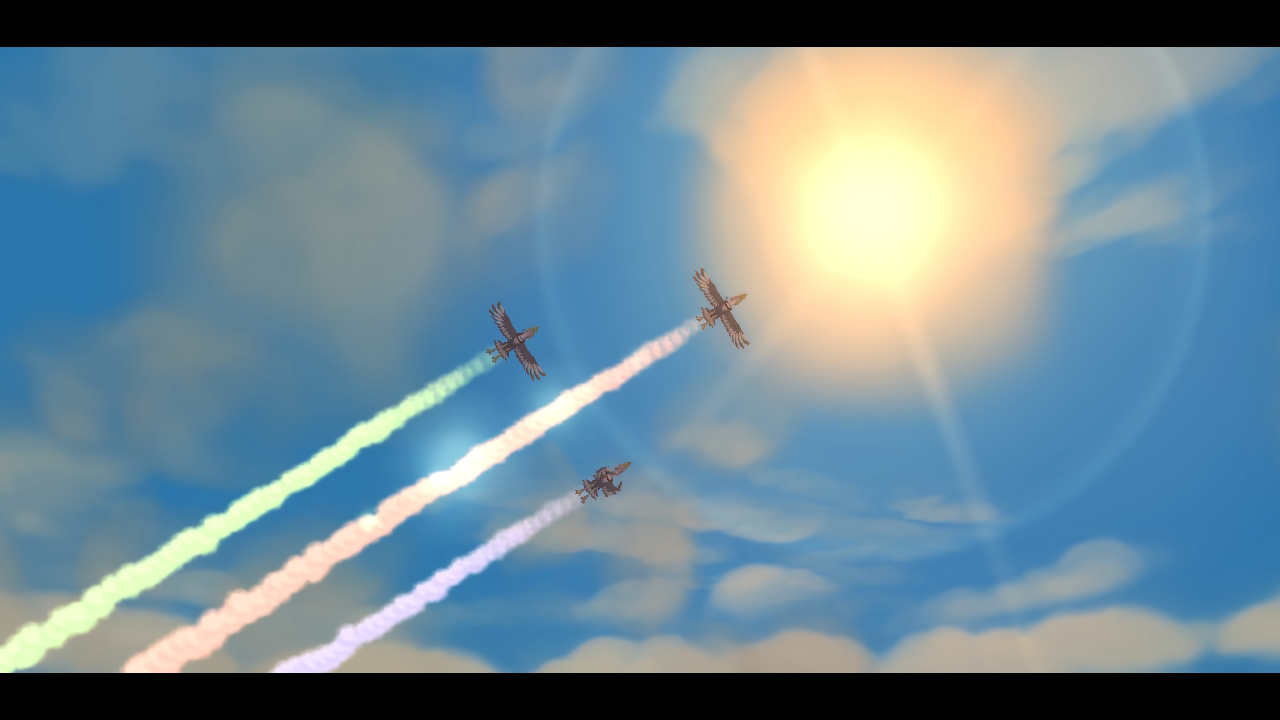
The Wing Ceremony race, with Groose’s gang on Link’s tail.Zelda, as the goddess, presents the Sailcloth.
The sword in the statue
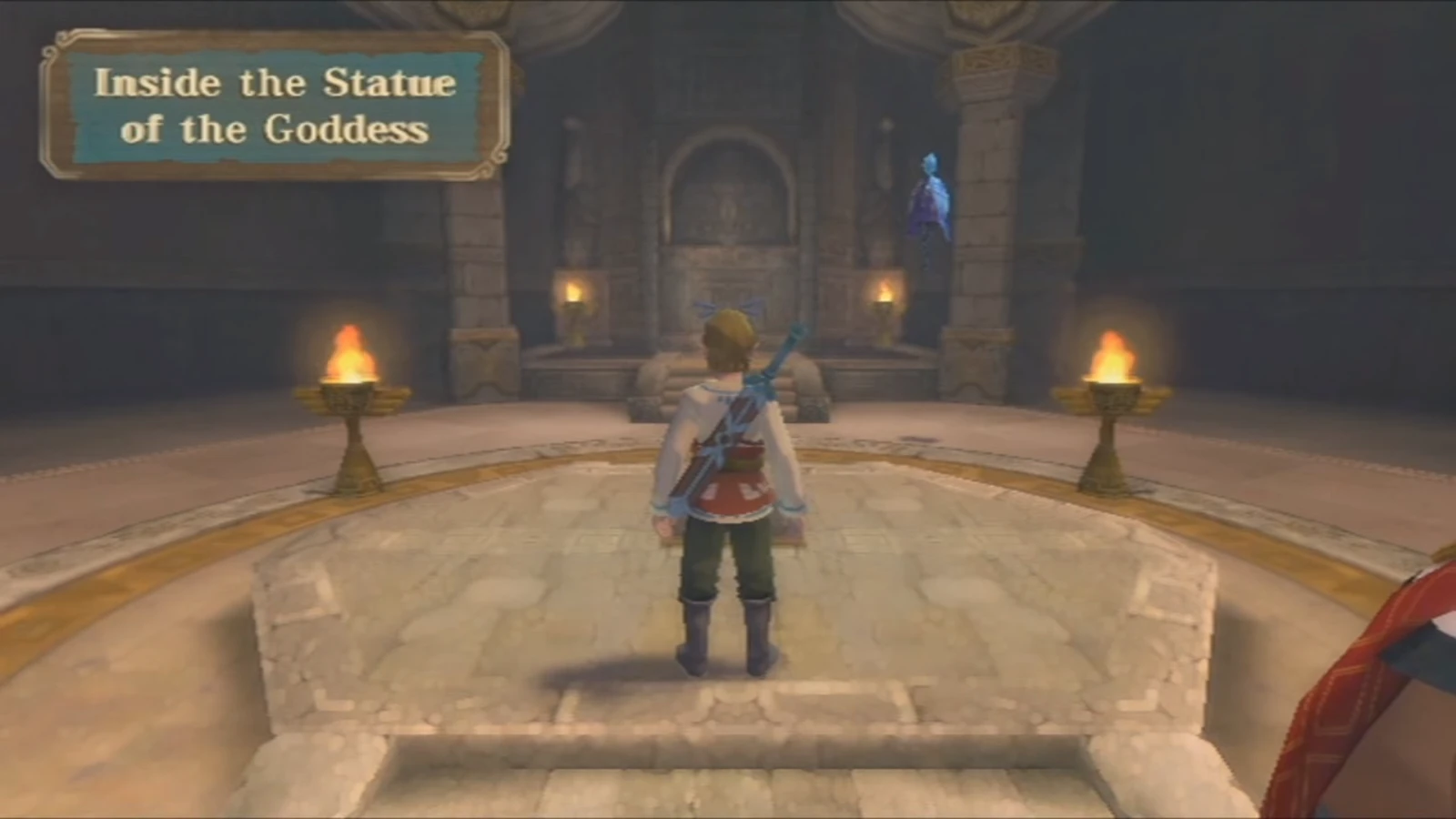
To celebrate, the two go flying together, and Zelda is just about to tell Link something important when a black tornado rips out of the clouds, swallows her and throws Link from his bird. Back at the Academy a strange blue figure appears to him and leads him through Skyloft to a hidden chamber inside the Statue of the Goddess, where a sword is waiting. This is Fi, the spirit of the Goddess Sword. Link draws the blade, and with Gaepora’s help Fi explains what that means: he is the hero of an old prophecy, Zelda is alive on the surface, and a stone called the Emerald Tablet will open a path through the clouds to the land below.
Link dives through the cloud barrier for the first time and lands in a world nobody in Skyloft believes exists. In a temple on the rim of a great crater, the Sealed Grounds, an old woman is waiting for him as if she always knew he would come. Zelda was here, she says, and has gone on into the forest.
Link draws the Goddess Sword, and Fi bursts from the blade.The old woman at the Sealed Temple.
Forest, volcano, desert
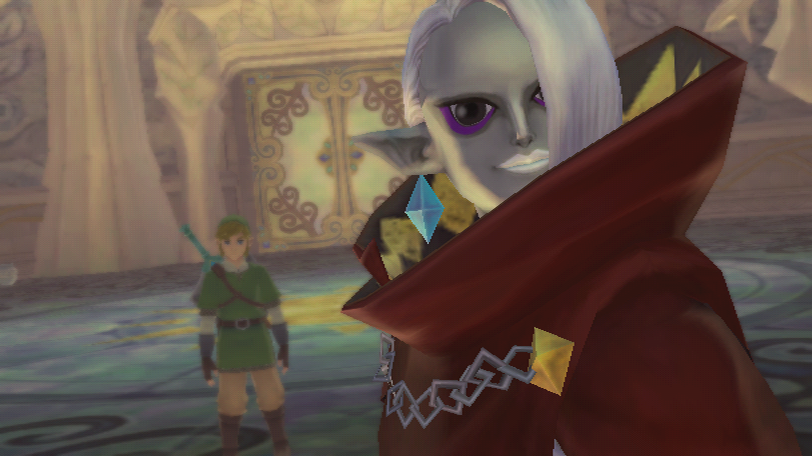
What follows is a chase that keeps arriving a little too late. In Faron Woods Link meets the Kikwi, shy little plant-backed creatures who hide from him until he proves he is no threat, and fights through Skyview Temple to the spring where Zelda was meant to be purifying herself. She has already gone, and a flamboyant, white-haired swordsman is in her place instead. Ghirahim, who calls himself the Demon Lord and likes to be addressed as Lord Ghirahim, is also hunting Zelda, and he toys with Link for a while before vanishing in a shower of diamonds.
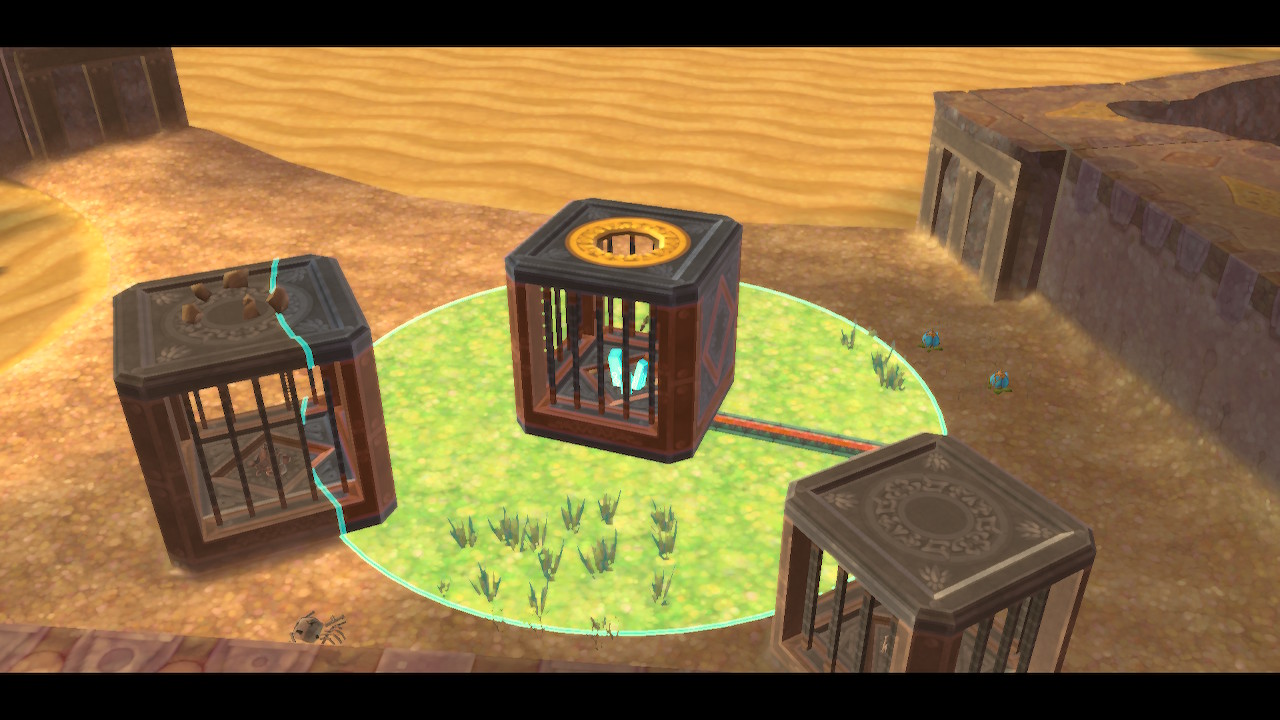
The trail leads to Eldin Volcano, where Zelda, cornered by Bokoblins, has been rescued by a stern warrior of the Sheikah called Impa, and on through the Earth Temple and its molten boss, Scaldera. Then comes Lanayru Desert, a dead land of sand and rusted machines that bursts back into life wherever Link strikes a Timeshift Stone: inside a widening circle the present becomes the past, and the ancient robots and machines spring back to life. Beyond the Lanayru Mining Facility lies the Temple of Time.
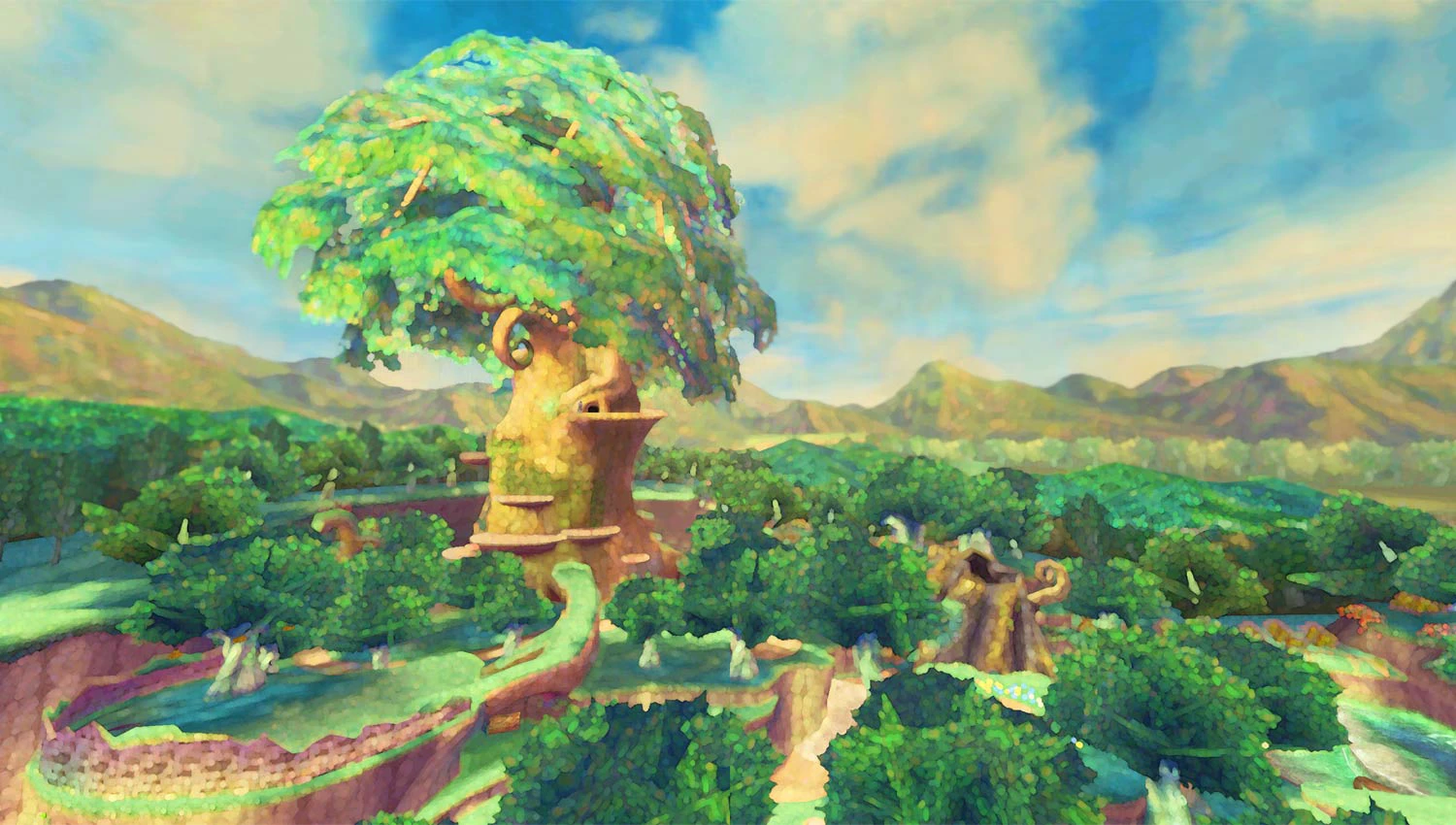
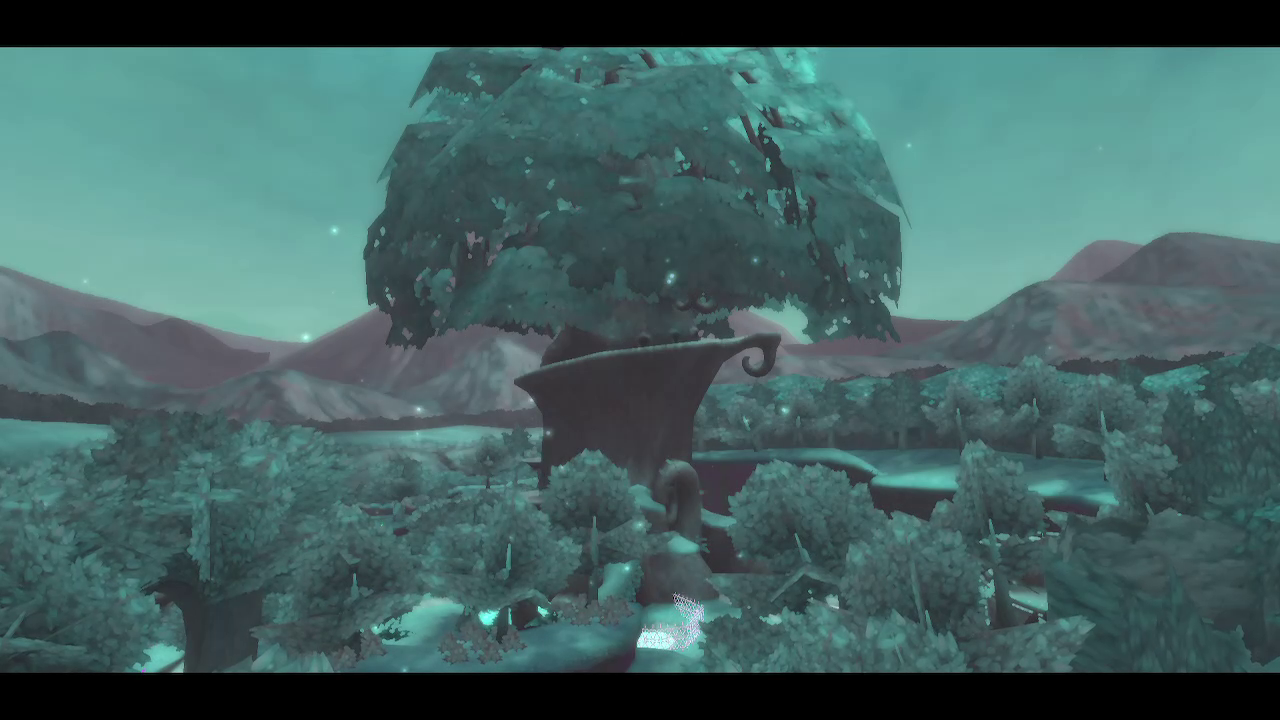
Faron Woods, the first region below the clouds.Ghirahim introduces himself at Skyview Spring.A Timeshift Stone brings Lanayru’s past back to life.
The Temple of Time
At last Link catches up. Zelda and Impa are at the far end of the temple, Impa holding the door against Ghirahim’s monsters while Zelda plays her harp to wake a Gate of Time. Ghirahim cuts Link off with a wall of fire, but before she steps through the gate Zelda sends her Goddess’s Harp across to him. Then she and Impa are gone into another age, and Impa destroys the gate behind them.
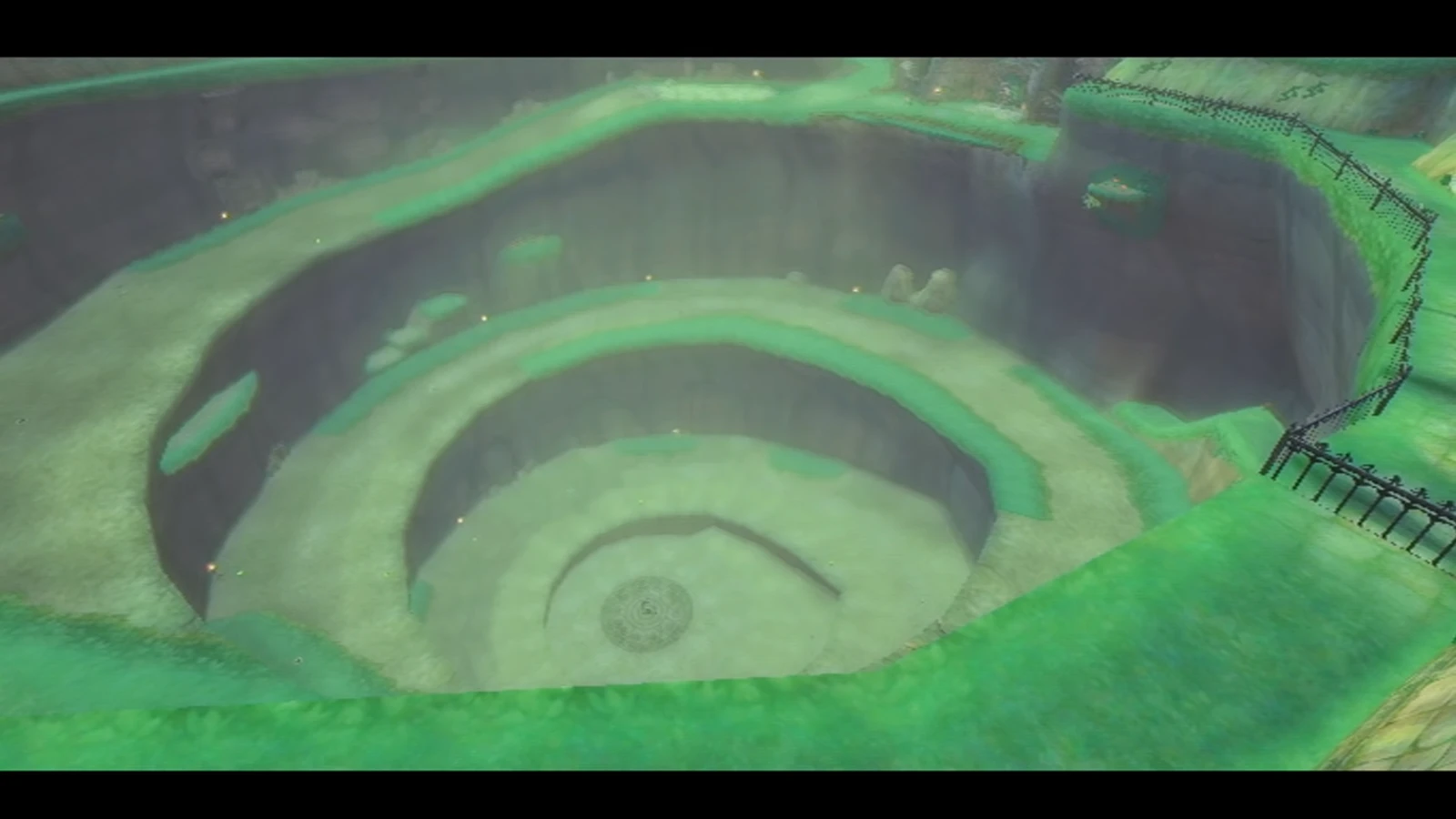
Back at the Sealed Grounds, two surprises are waiting. One is Groose, who followed Link down out of jealousy and has just discovered that the surface is real. The other is the thing that lives at the bottom of the crater: the Imprisoned, a huge, toothy, sealed fragment of Demise that keeps trying to claw its way to the temple. Link drives it back, and the old woman reveals that the temple itself holds a second, dormant Gate of Time. Before Link can use it, though, the goddesses have more tests in store.
Zelda and Impa escape through the Gate of Time.The Imprisoned crawls up the spiral of the Sealed Grounds.
Three flames and the Master Sword
To temper the Goddess Sword, Link has to prove himself to the goddesses. On a sky island he learns three sacred songs, and each one opens a Trial Gate on the surface leading to a Silent Realm, an eerie spirit version of the region where he has no weapons and has to gather fifteen Sacred Tears while lantern-carrying Watchers search for him and the Guardians wake to hunt him down. Each trial grants a gift that opens the way to a new dungeon: the Ancient Cistern, sunk in Faron’s Lake Floria; the Sandship, a vessel that drifts about the Lanayru Sand Sea and has to be hunted down with dowsing; and the Fire Sanctuary high on Eldin Volcano. Each guards a sacred flame.
With all three flames the Goddess Sword becomes the Master Sword. Groose, meanwhile, has stopped sulking. Having watched Link carry the weight of the whole business, he builds a rail-mounted catapult he calls the Groosenator to stun the Imprisoned, and grows fond of the old woman, whom he calls Grannie. With his help the Imprisoned is sealed once more, and the way through the second Gate of Time lies open.
A Silent Realm: no sword, no shield, and the Guardians never sleep.The Goddess Sword reborn as the Master Sword.Groose and his Groosenator.
Zelda’s secret
On the other side of the gate, in the distant past, Zelda tells Link everything. She is Hylia reborn. The goddess knew she could not beat Demise a second time, and she knew that the Triforce, the one power that could finish him, can only be used by mortals. So she made the Goddess Sword, gave up her place among the gods to be born as a mortal girl, and trusted a mortal hero to find the Triforce when the seal finally weakened. Link’s whole life, and Zelda’s, has been part of that plan.
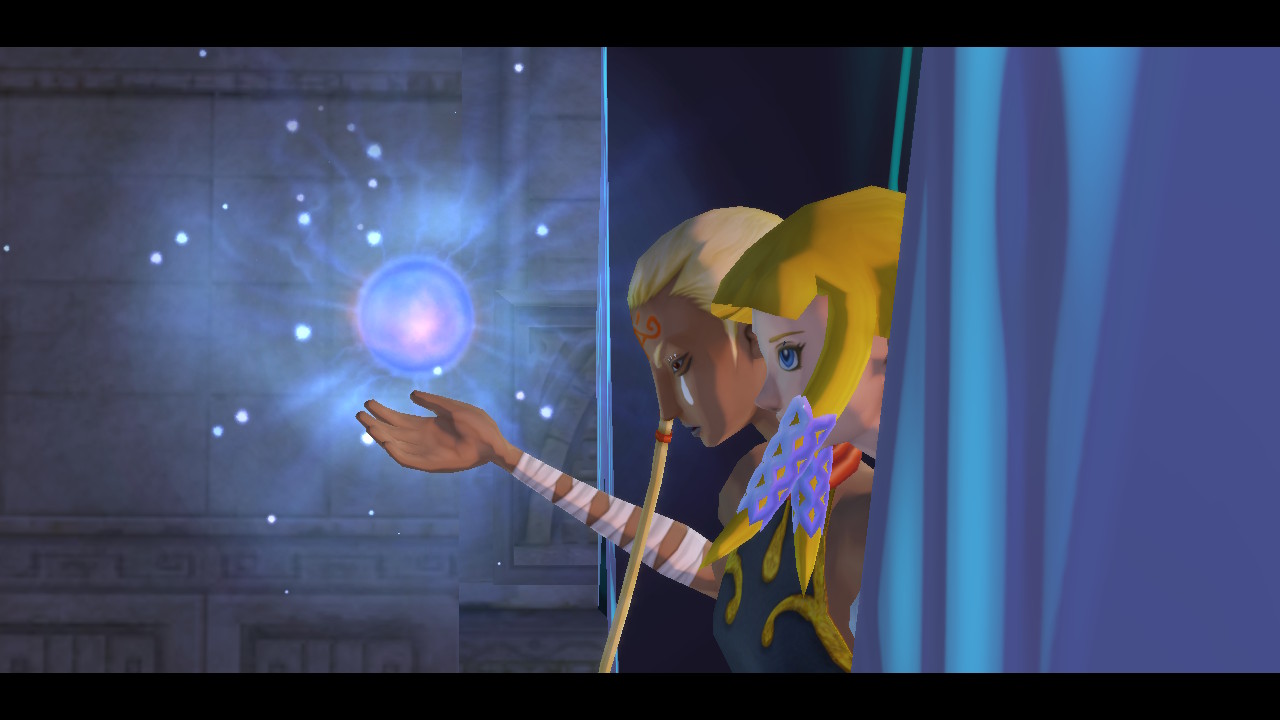
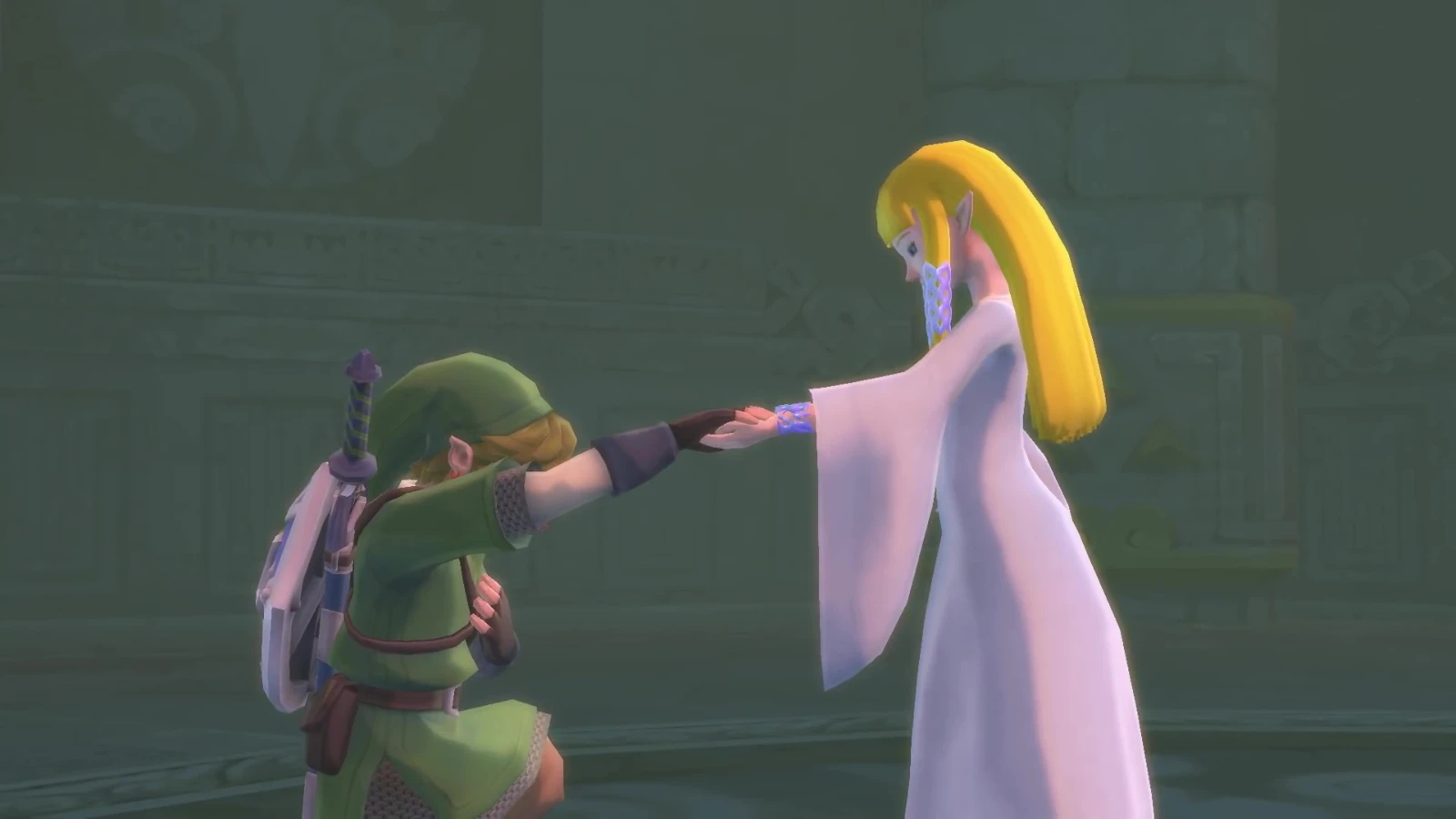
Then Zelda does something brave and heartbreaking. To keep Demise sealed until Link can end things for good, she locks herself inside a crystal and falls into a sleep that will last all the way to Link’s own time. Impa stays behind in the past to watch over her.
Zelda seals herself in crystal to hold Demise back.
The Song of the Hero and the Triforce
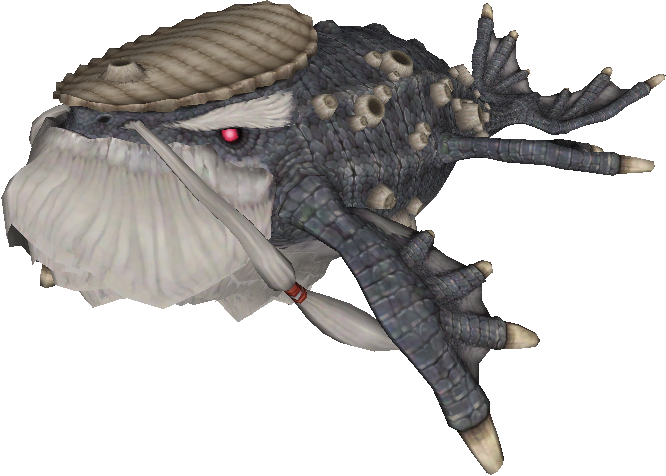
The Triforce, it turns out, has been in Skyloft all along, hidden in Sky Keep beneath the Statue of the Goddess. Finding the way in means learning the Song of the Hero, which has been split between the three dragons who guard the surface for Hylia: Faron the Water Dragon, Eldin the Fire Dragon and Lanayru the Thunder Dragon, who has died in the present and has to be met in the past. Levias, the great whale-like spirit of the sky, first has to be freed from a parasite called Bilocyte.
With the Triforce in hand, Link wishes the Imprisoned out of existence. Zelda wakes from her crystal in the present, and for one happy moment it seems to be over.
Levias, the great spirit of the sky.The Triforce, hidden in Sky Keep.
Ghirahim and Demise
It is not. Ghirahim snatches Zelda and drags her back through the Gate of Time to the past, where Demise is still only sealed, and uses her spirit to revive his master. Groose follows to stand guard over Zelda’s body while Link fights his way through Ghirahim’s army and then Ghirahim himself, who drops the act and reveals what he really is: not a demon in his own right but the spirit of Demise’s sword, a dark mirror of Fi.
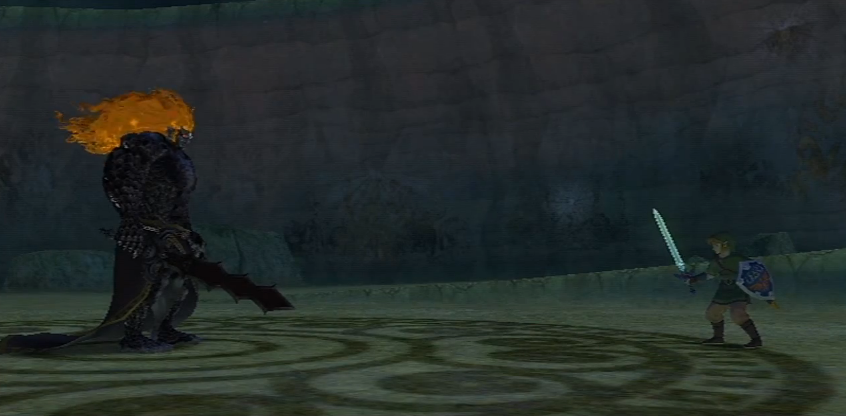
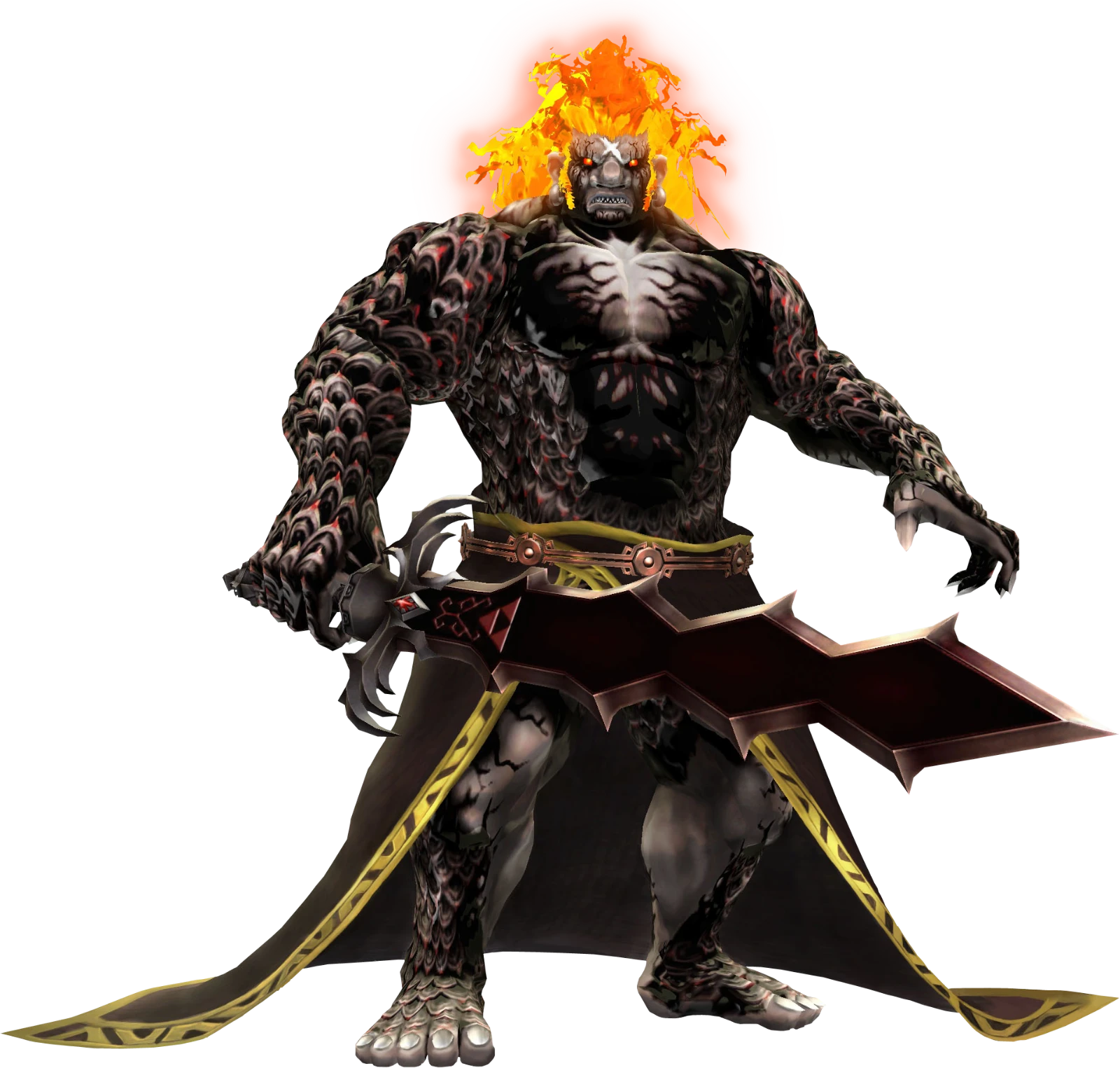
Demise rises anyway, a giant with hair of flame, and challenges Link to a duel in a storm-filled void, calling down lightning into his blade. Link wins. As Demise fades into the Master Sword he makes a promise: his hatred will be reborn, again and again, to hunt those who share the blood of the hero and the goddess, for as long as the land endures.
Demise, the Demon King, in the final battle.
The legend begins
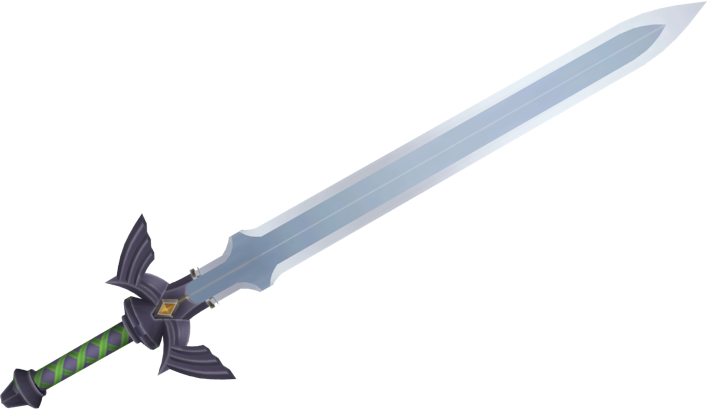
Link plants the Master Sword in a pedestal in the Sealed Temple to finish the seal, and Fi, her work done, says goodbye and goes into an endless sleep inside the blade. Impa chooses to stay in the past to guard it, and destroys the last Gate of Time. Back in the present, the old woman greets Link, Zelda and Groose one final time and fades away, and Zelda spots on her wrist the bracelet she gave Impa a moment, and an age, ago. The old woman was Impa all along, waiting for them.
The surface is open to the people of the sky at last. Zelda decides to stay and live there, to watch over the Triforce, and the land they settle will one day be called Hyrule.
Regions and dungeons
Skyward Sword has one home base in the sky and three regions on the surface. Every region is visited more than once and changes between visits, and each holds two of the seven dungeons, except Skyloft, whose dungeon is hidden inside the statue.
Skyloft and the SkyHome baseThe floating town, its Bazaar and Knight Academy, plus scattered sky islands and the storm of the Thunderhead. Bird statues, here and below, save your game.
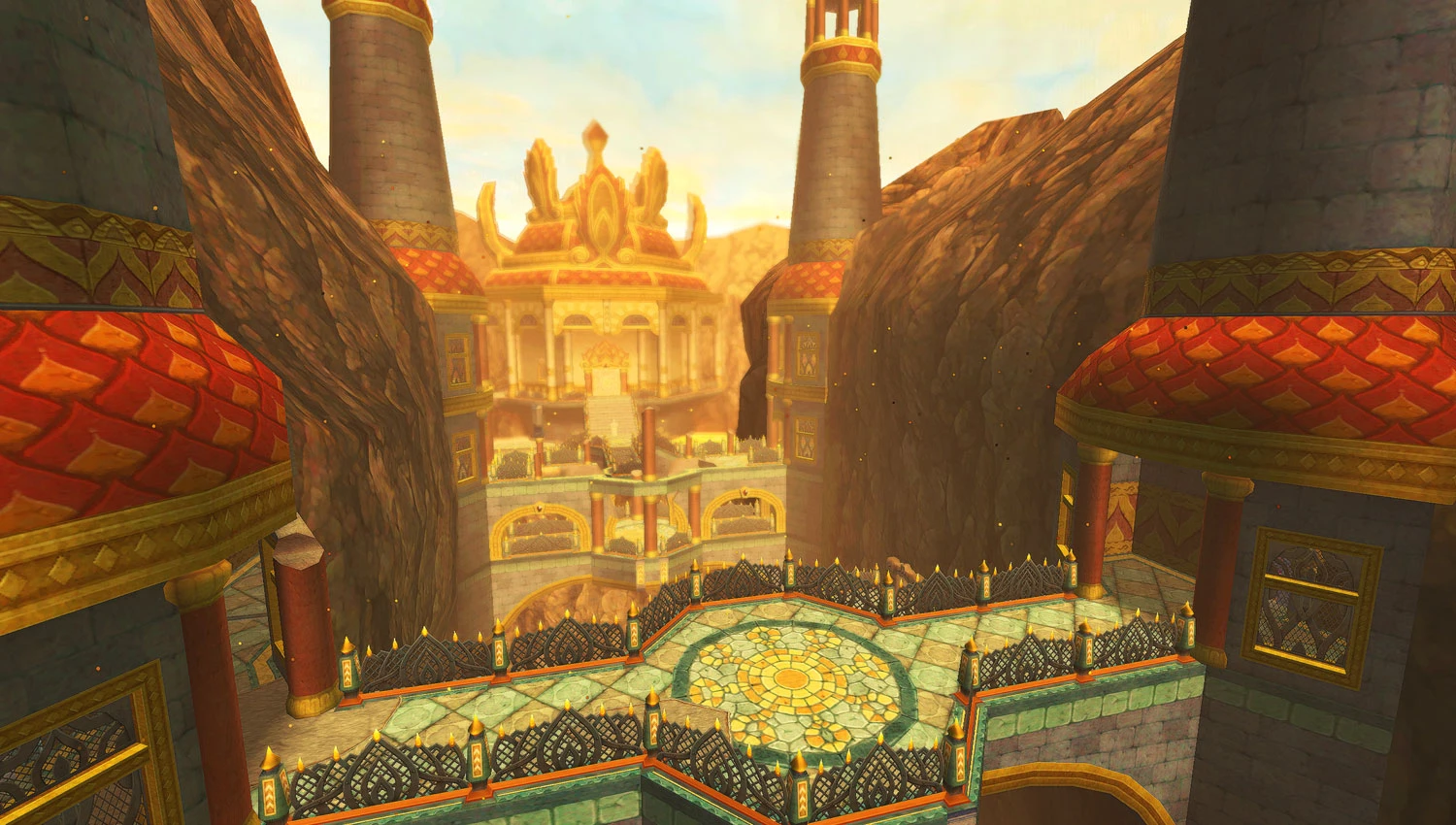
Sealed GroundsStory hubA spiral crater with the Sealed Temple at its edge, home of the old woman and the battleground for three fights with the Imprisoned.
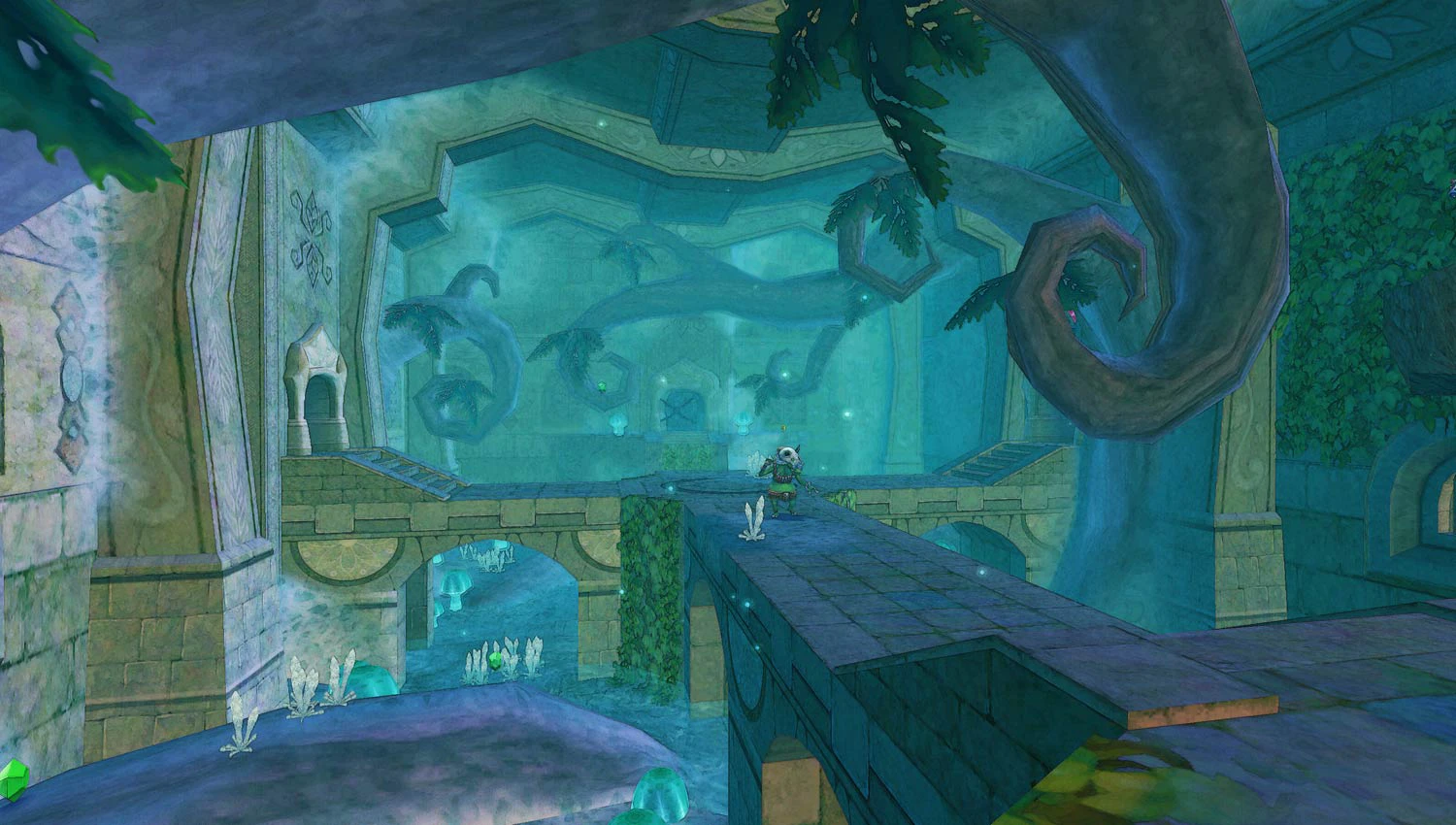
Skyview TempleFaron Woods · dungeon 1A vine-choked forest temple, with Ghirahim waiting at its heart.
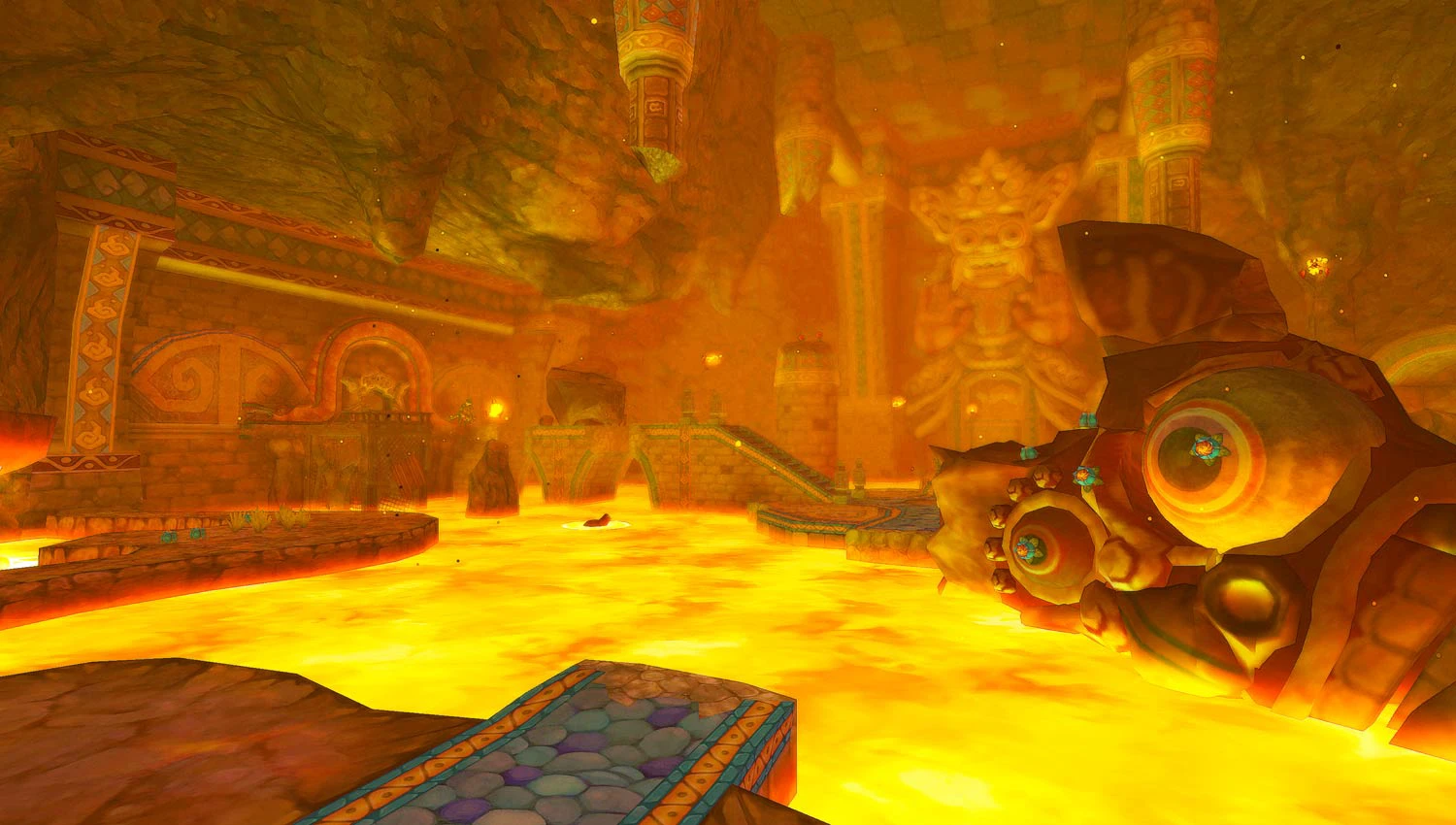
Earth TempleEldin Volcano · dungeon 2Lava flows and bomb puzzles; boss Scaldera, the Pyroclastic Fiend.
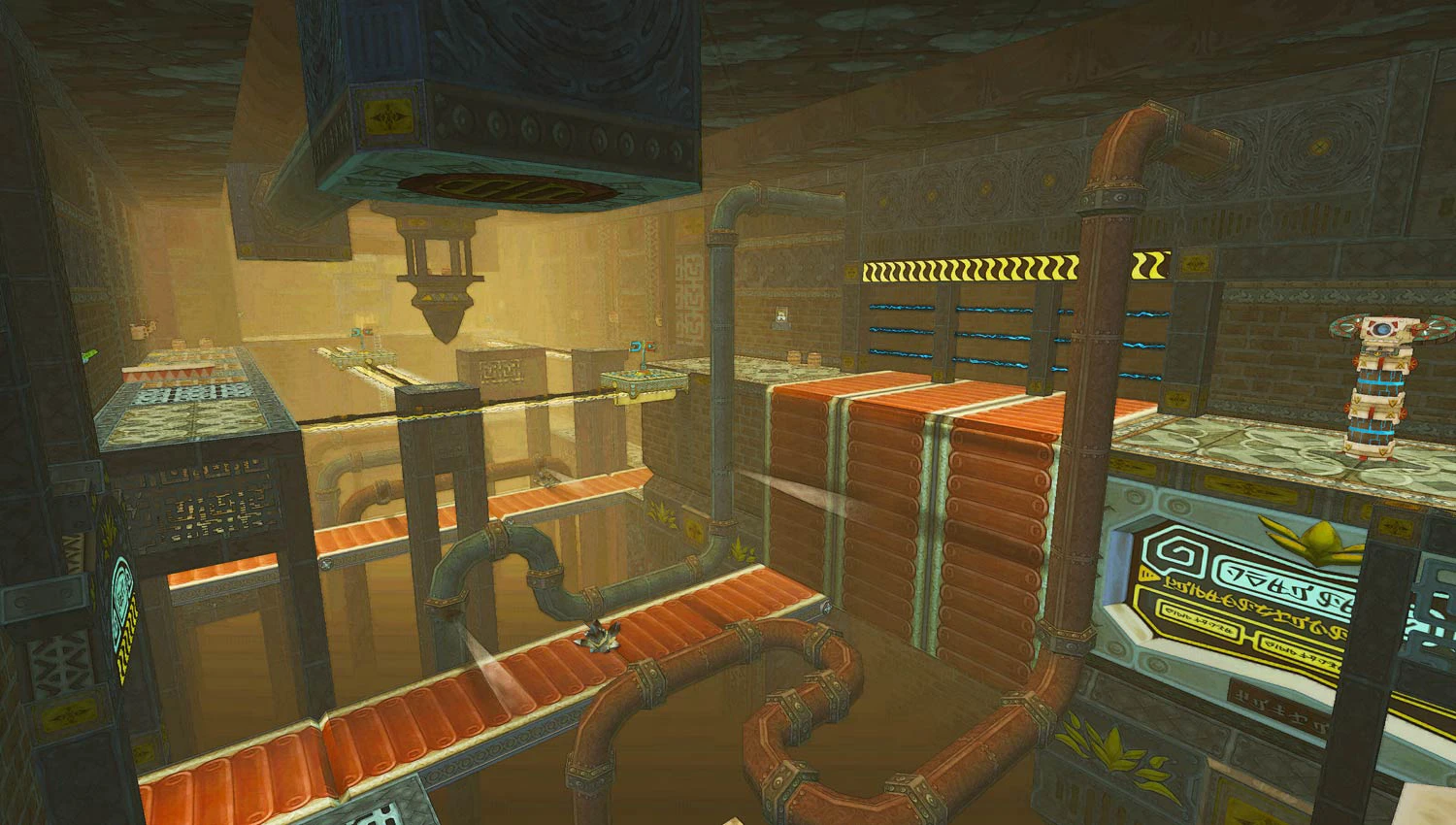
Lanayru Mining FacilityLanayru Desert · dungeon 3An abandoned mine that flickers between past and present; boss Moldarach, the Thousand-Year Arachnid. It leads to the Temple of Time.
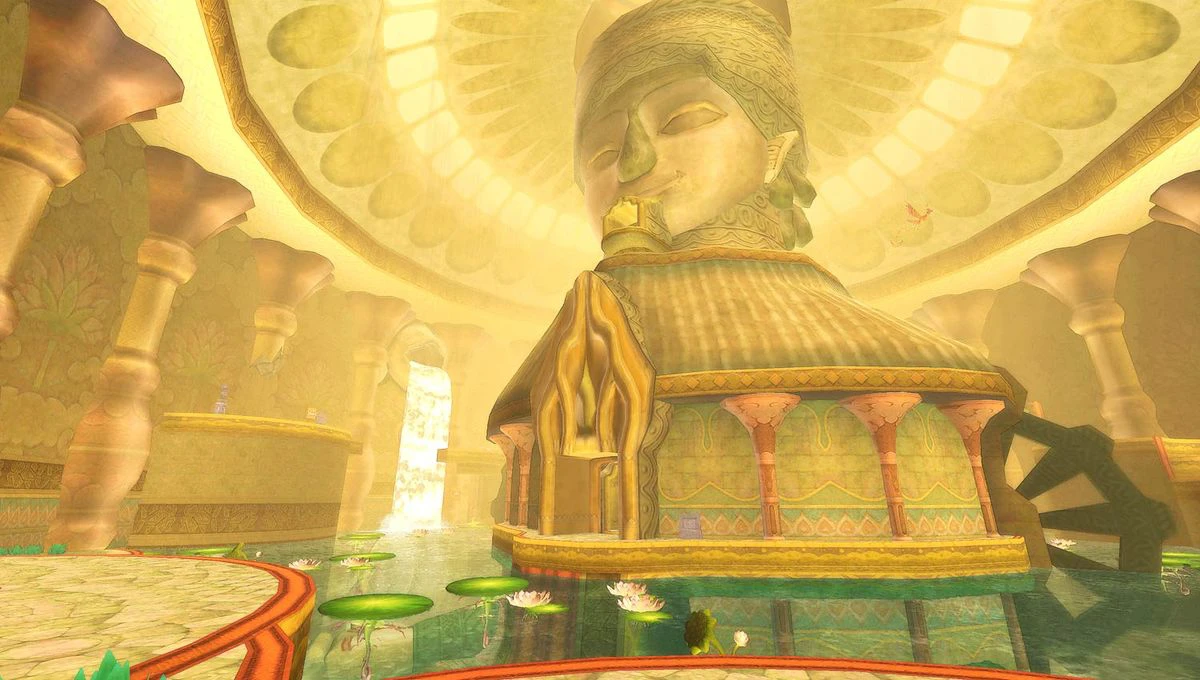
Ancient CisternFaron Woods · dungeon 4A golden temple in the waters beyond Lake Floria, with Cursed Bokoblins below; boss Koloktos, the Ancient Automaton.
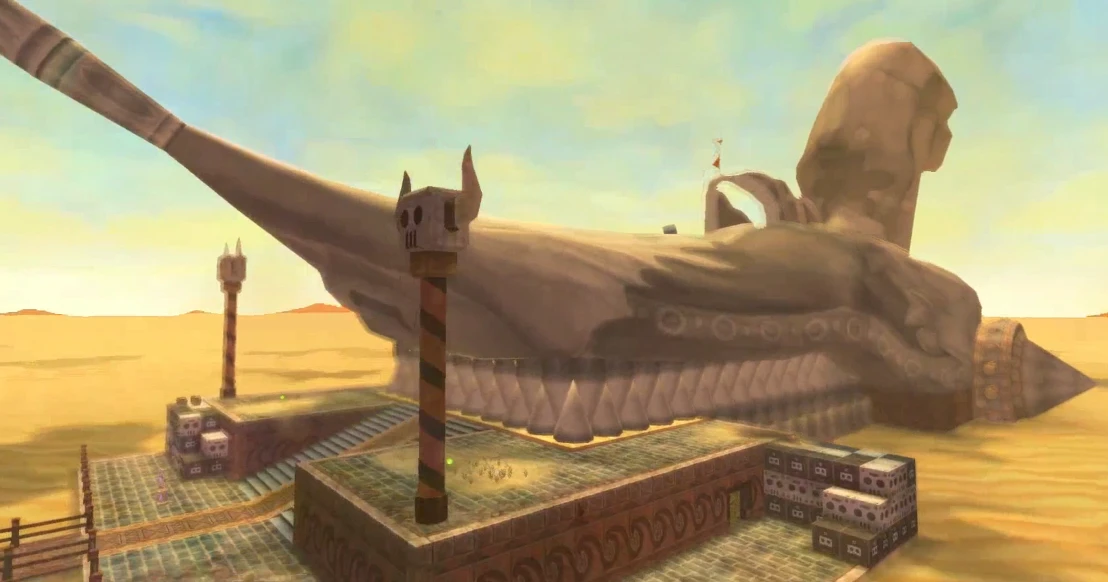
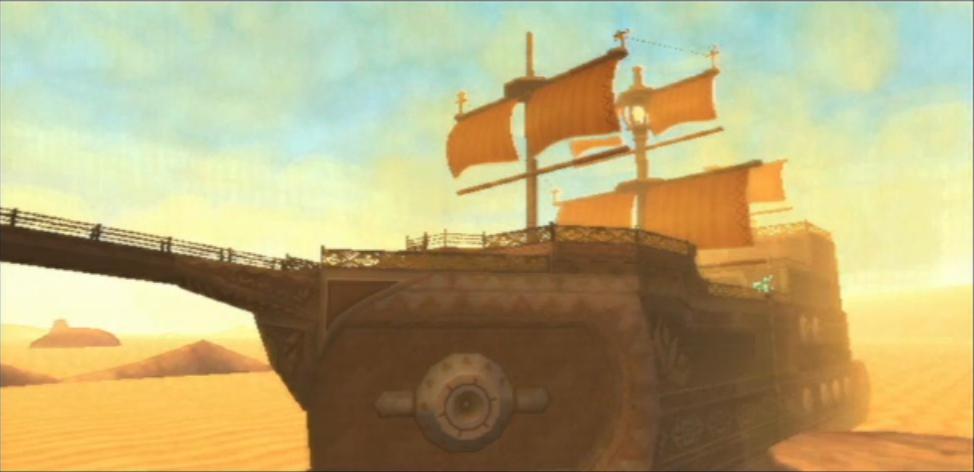
SandshipLanayru Sand Sea · dungeon 5A ship drifting on the sea of sand, found by dowsing; robot pirate Scervo duels Link on its gangplank, and boss Tentalus, the Abysmal Leviathan, attacks the deck.
Fire SanctuaryEldin Volcano · dungeon 6A fortress near the volcano’s summit, ending in a rematch with a far tougher Ghirahim.
Sky KeepSkyloft · dungeon 7The last dungeon, hidden beneath the Statue of the Goddess, guarding the Triforce. There is no boss at the end.
Silent RealmsFour trialsSpirit-world versions of Skyloft, Faron, Eldin and Lanayru: collect fifteen Sacred Tears without being caught. Rewards: Water Dragon’s Scale, Clawshots, Fireshield Earrings and the Stone of Trials.
Return trips change the regions: beyond the desert lies a sea of sand, and the second climb of Eldin Volcano swaps bombs for the bow as the key item.
In comics, TV & other media
Skyward Sword arrived with a book, a web comic and a concert CD in tow, and its cast has been turning up in other Nintendo games ever since.
The Legend of Zelda: Hyrule HistoriaShogakukan · 21 December 2011 (Japan) · Dark Horse, 29 January 2013 (English)Nintendo’s 25th-anniversary book opens with “The Legend Begins: The World of Skyward Sword”, packed with character designs, unused concept art and notes from the team, before laying out the official timeline that puts this game first. It closes with a special comic by Akira Himekawa set before the events of Skyward Sword. The English edition topped Amazon’s bestseller chart and the New York Times list for its category.
Penny Arcade Presents The Legend of Zelda: Skyward SwordWeb comic · Nintendo and Penny Arcade · 15 November–13 December 2011Nintendo asked Mike Krahulik and Jerry Holkins to draw a five-part comic for the launch, posted weekly on the official Zelda site. Headmaster Gaepora narrates.
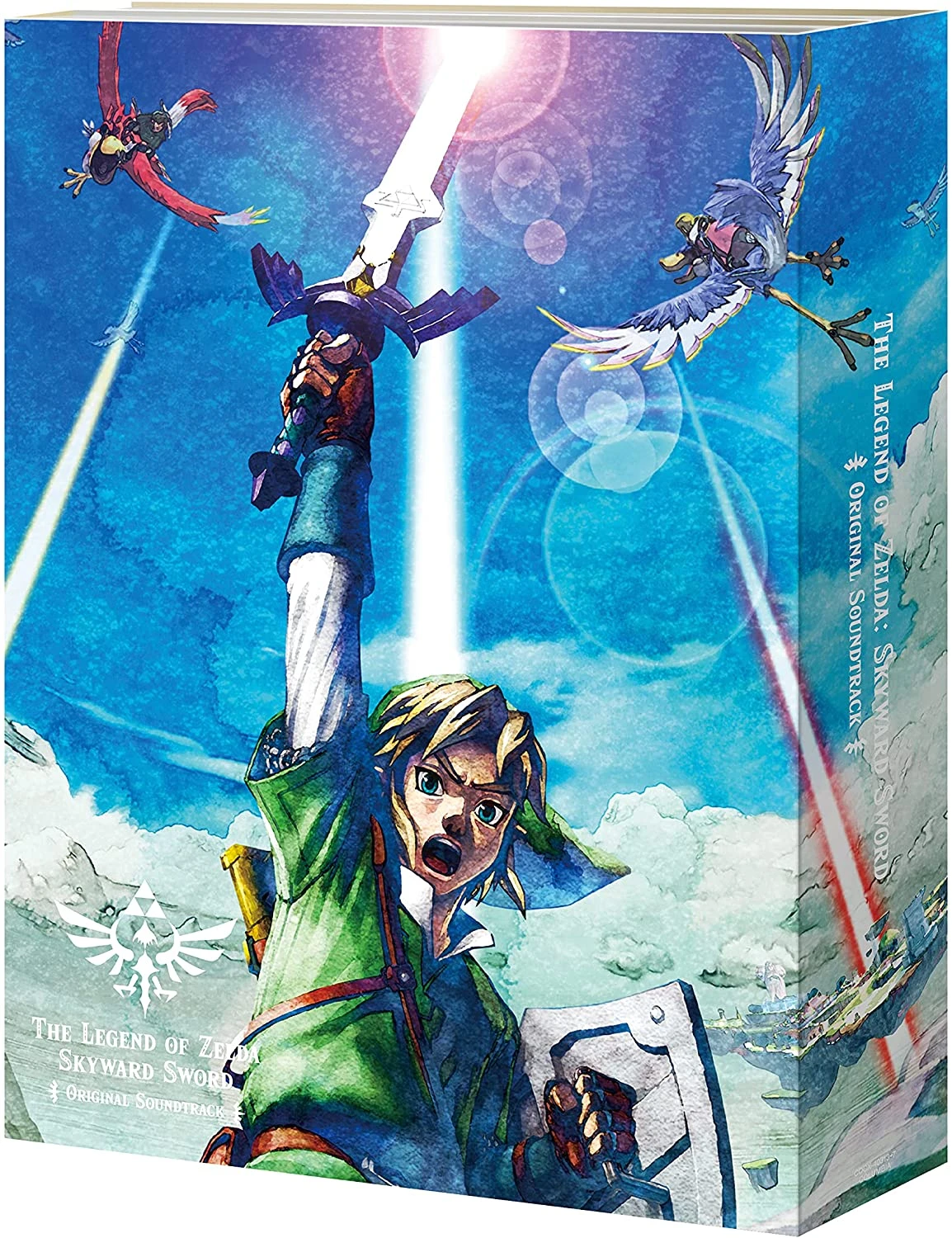
25th Anniversary Special Orchestra CDNintendo · 2011Packed with the first print run of the game, with or without the gold Wii Remote Plus: orchestral arrangements of music played at the series’ 25th anniversary symphony concerts, which Nintendo staged in Japan, America and Europe that year.
Super Smash Bros. for Wii U and UltimateNintendo · 2014 and 2018Skyloft is a stage in both, its platforms touring the Statue of the Goddess and the Knight Academy while Beedle’s Air Shop drifts past, and its main music is the “Ballad of the Goddess”. Ghirahim is an Assist Trophy in both games and a spirit in Ultimate, and Fi and Gaepora are trophies in the Wii U game.
Hyrule WarriorsKoei Tecmo and Nintendo · 2014Fi and Ghirahim are both playable. Fi’s chapter starts in Skyloft, and Levias floats in to help in a scenario where Link lures him with pumpkin soup, just as he does in the original.
Tears of the Kingdom amiiboNintendo · 2023Scan the Link (Skyward Sword) amiibo in Tears of the Kingdom for the Cap, Tunic and Trousers of the Sky, the White Sword of the Sky and a Sword Spirit paraglider fabric; the Zelda & Loftwing amiibo gives the Goddess Fabric.
Characters
Skyward Sword’s cast is one of the strongest in the series, and the most important for Zelda lore: this is where the hero, the goddess’s bloodline, the Master Sword’s spirit, Impa’s devotion and the curse that keeps evil coming back all begin. Here is who everyone is, where they fit in the wider saga and what they do in this game.
Character
Who they are
In this game
Stats & abilities
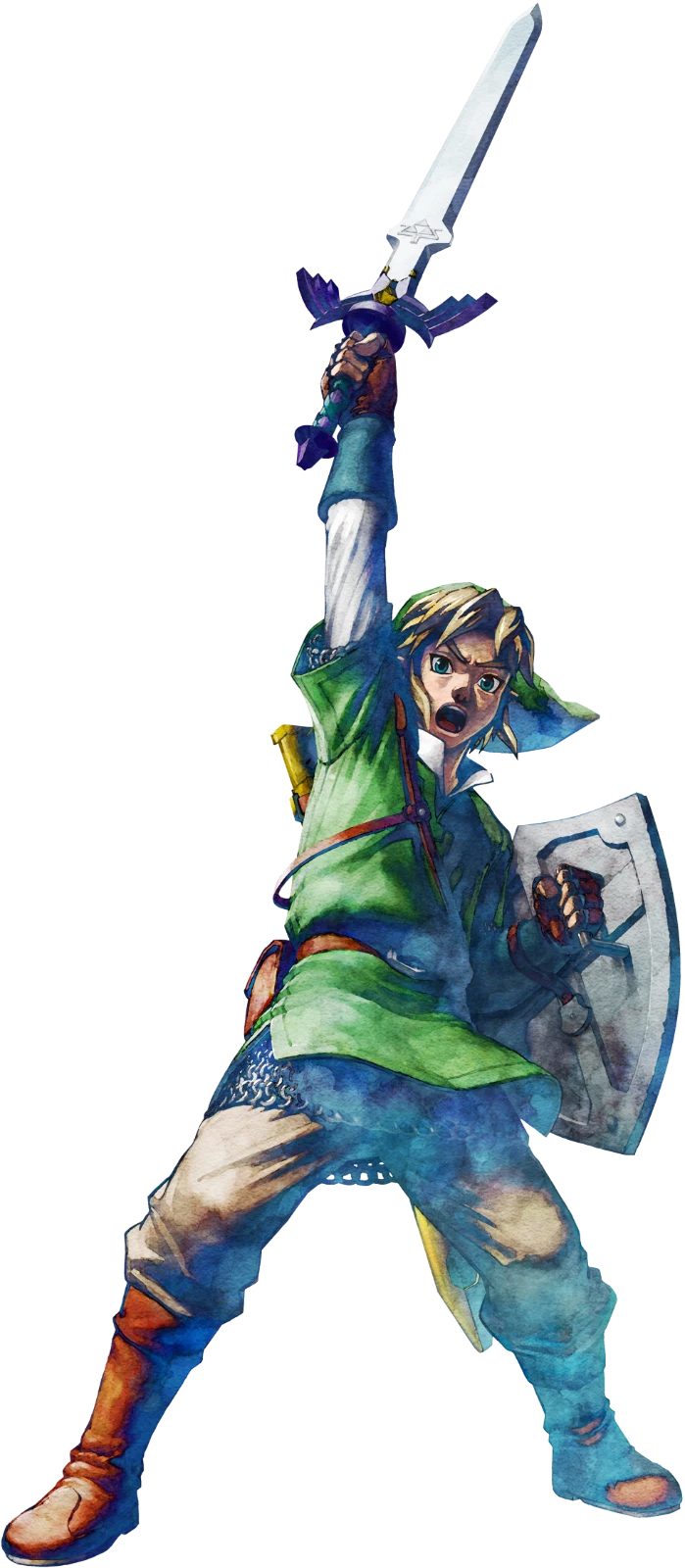
LinkKnight-in-training, the goddess’s chosen hero
The Link of Skyward Sword is the first hero in the timeline, so every green-clad Link that comes after him walks in his footsteps. Here he is a student at Skyloft’s Knight Academy, wearing the green uniform the Academy gives him, and he is paired with a rare Crimson Loftwing. As in every Zelda he never speaks, which is one reason the team gave him Fi to talk to.
Wins the Wing Ceremony, follows Zelda below the clouds, draws the Goddess Sword and turns it into the Master Sword, finds the Triforce and defeats Ghirahim and Demise. The curse Demise lays on him and Zelda at the end is the reason, in story terms, that heroes and evil keep returning.
Sword follows the Wii Remote: horizontal, vertical, diagonal and thrust
Skyward Strike: raise the sword to charge a beam
Shield bash; wooden and metal shields break, the Hylian Shield never does
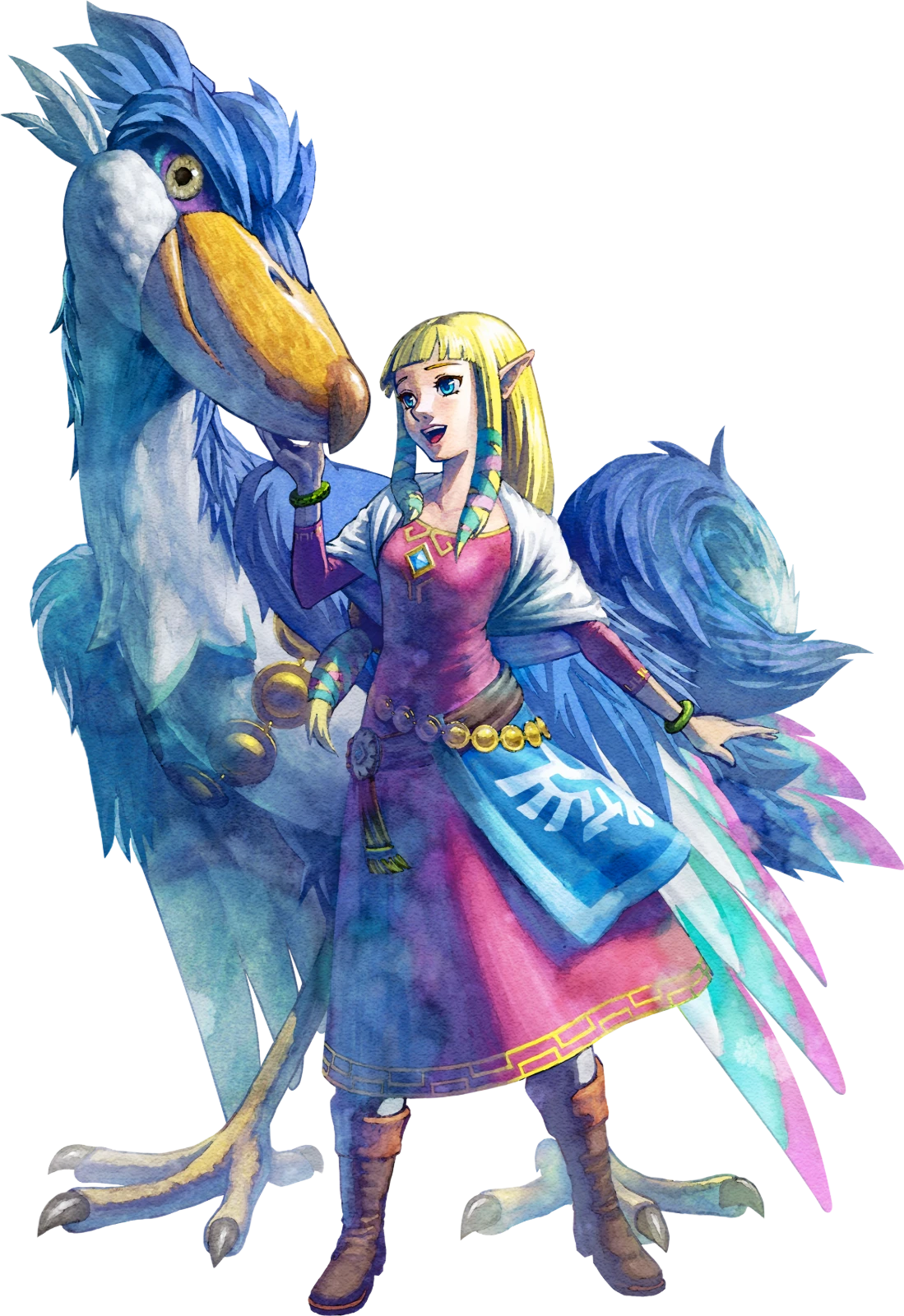
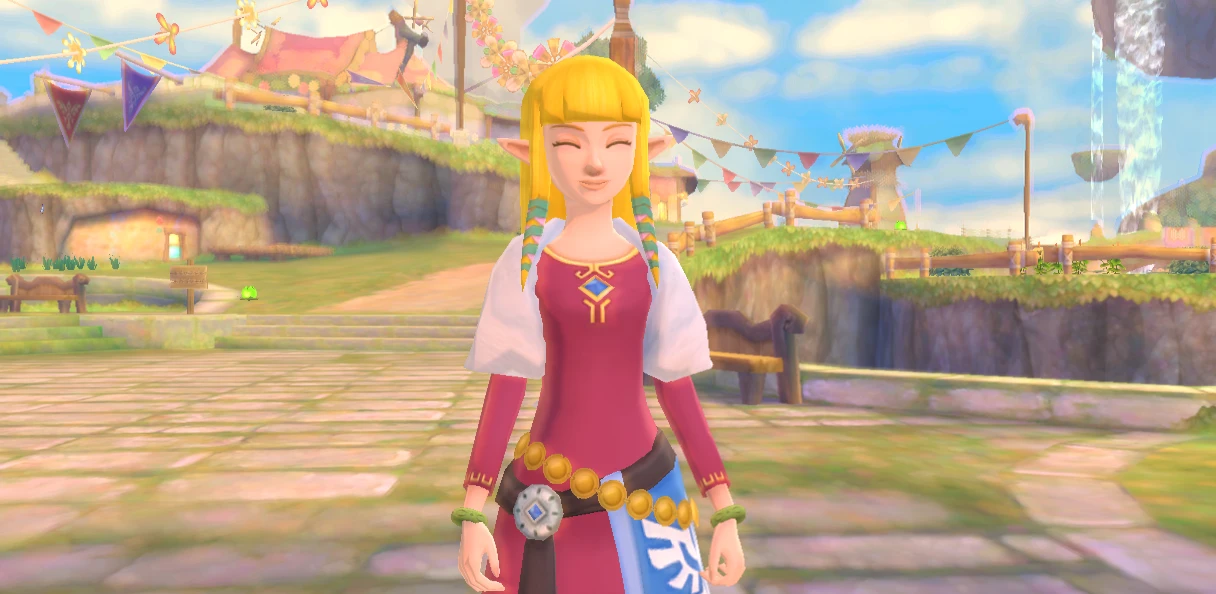
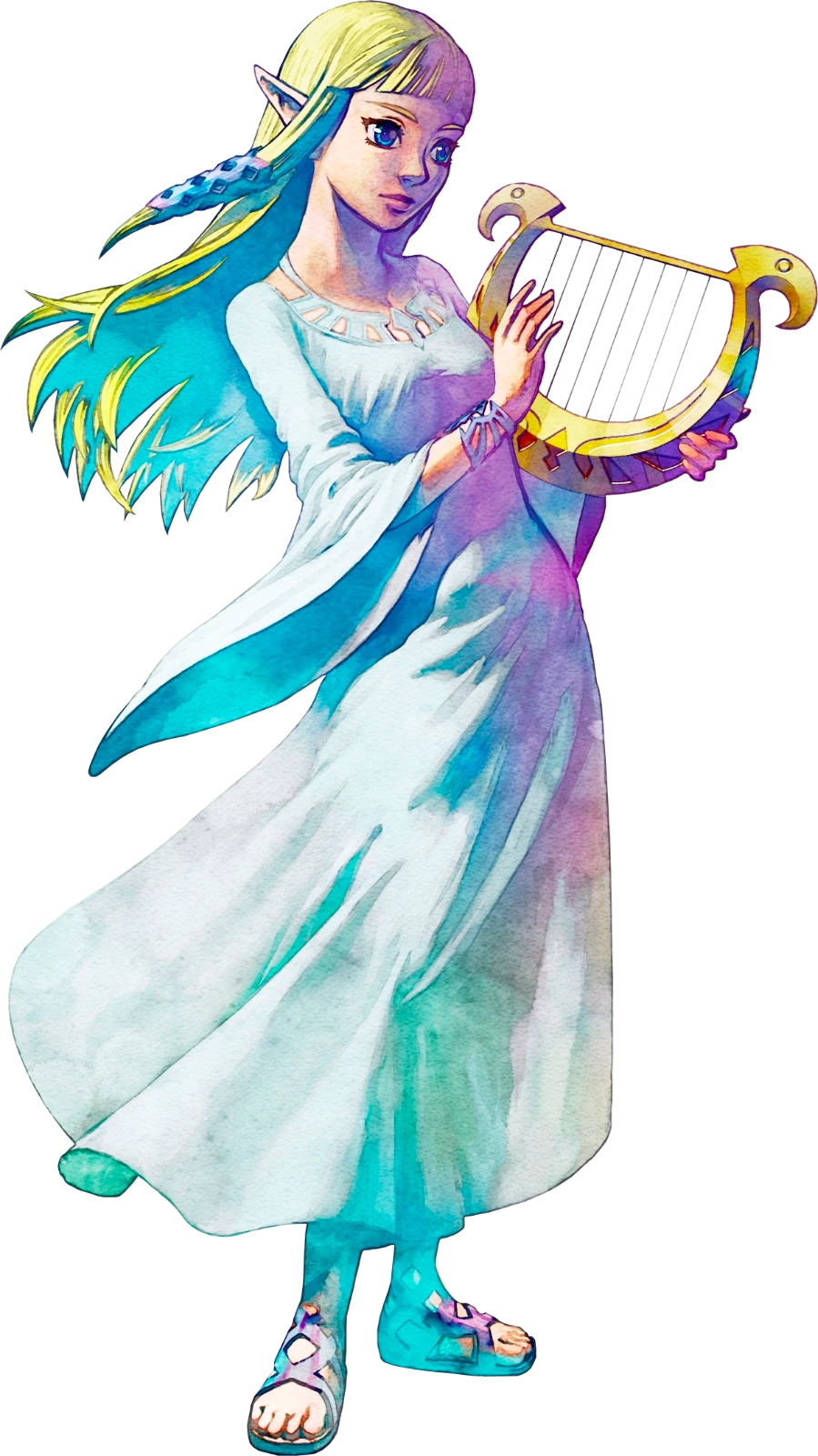
The later Zeldas carry the goddess’s blood, which is exactly the bloodline Demise curses, and this is where it starts. This Zelda is not a princess at all: she is the cheerful, curious daughter of Headmaster Gaepora, Link’s childhood friend, who has always wondered what lies below the clouds. Her character designer dressed her in red because it stands out against the blue sky.
Plays the goddess at the Wing Ceremony and gives Link the Sailcloth (then pushes him off the statue). After the tornado she journeys with Impa to purify herself at the springs, escapes through the Gate of Time, and reveals in the past that she is Hylia reborn. She seals herself in crystal for thousands of years to hold Demise back, wakes in the present, is kidnapped by Ghirahim, and finally chooses to stay on the surface.
Plays the Goddess’s Harp, which she gives to Link
Rides a blue Loftwing
Carries Hylia’s memories once awakened
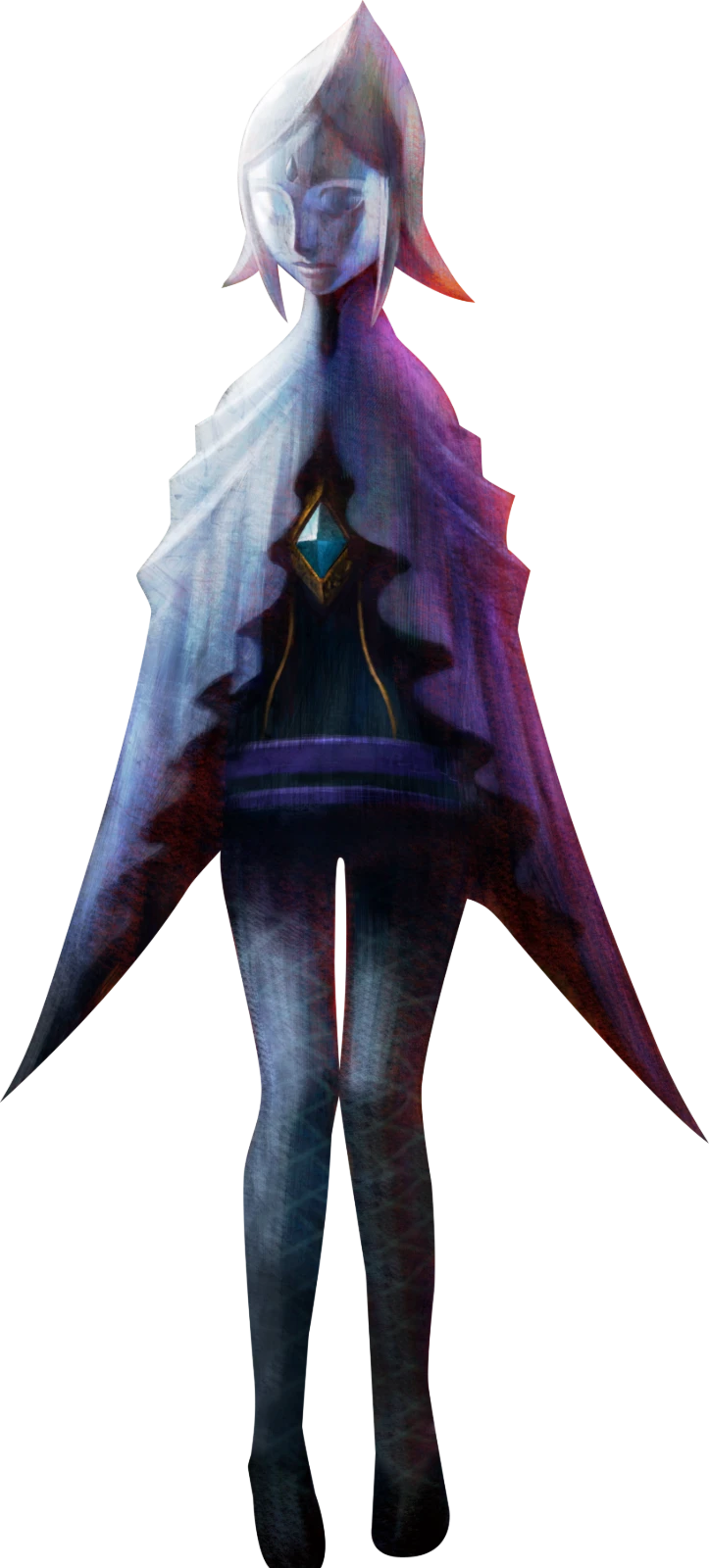
FiSpirit of the Goddess Sword
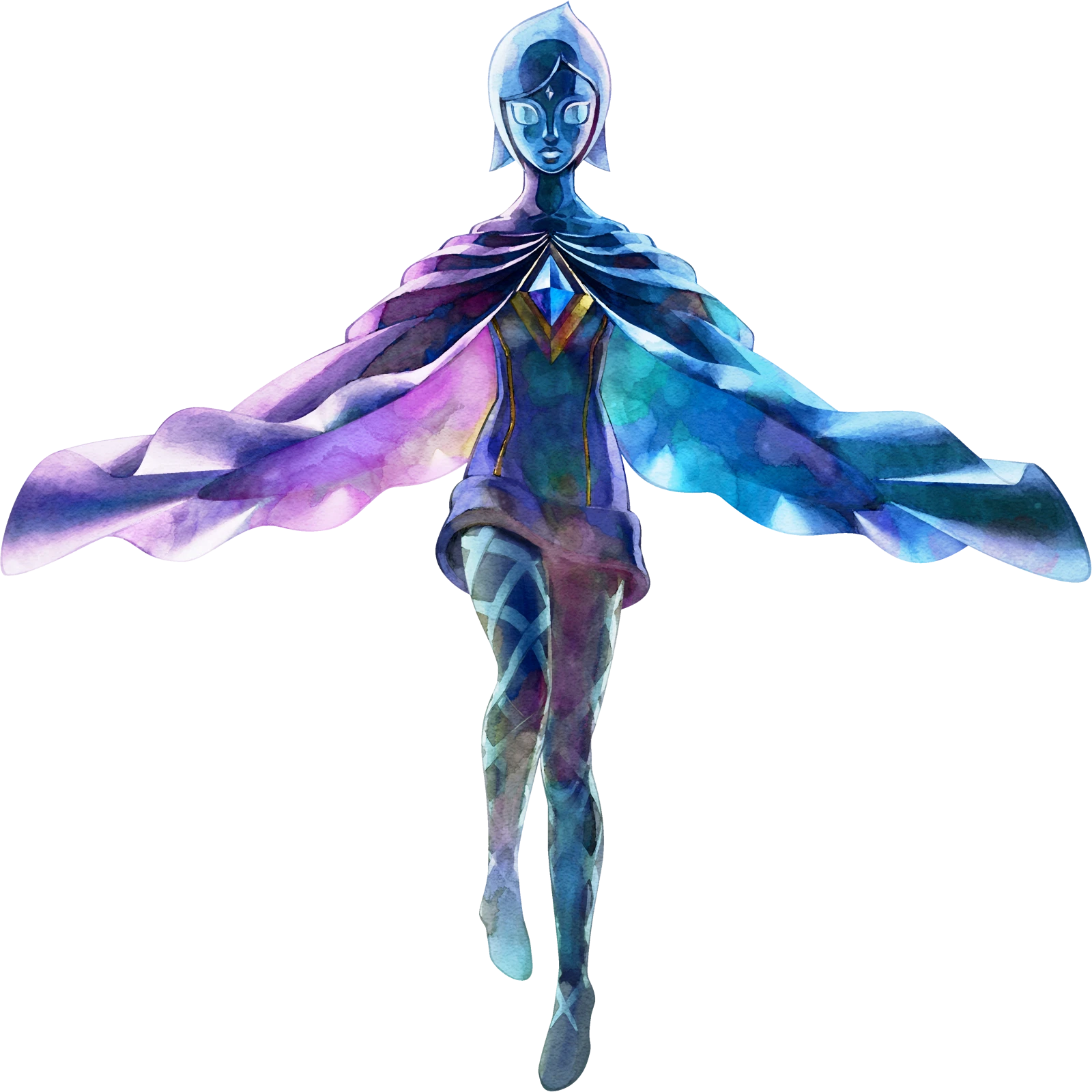
Hylia made Fi to serve the hero who would wield her sword. She is a blue, metallic, dancing figure who cannot feel emotion, so she speaks in cold calculations and probabilities. Skyward Sword is her only appearance in the main series, though she later fought as a playable character in Hyrule Warriors. Director Hidemaro Fujibayashi reworked her lines himself so that they all sounded coldly logical, and called her informative and cold.
Wakes Link, leads him to the sword, and from then on analyses enemies and areas, dowses for people and objects, translates messages from the goddess and sings with the harp to open the Trial Gates. She grows fond of Link, and at the end asks him to plant the Master Sword so she can sleep inside it for ever.
Dowsing: point the Wii Remote to track a target
Analysis in percentages when you target things
Teaches the Skyward Strike
Many of her hints became optional in Skyward Sword HD
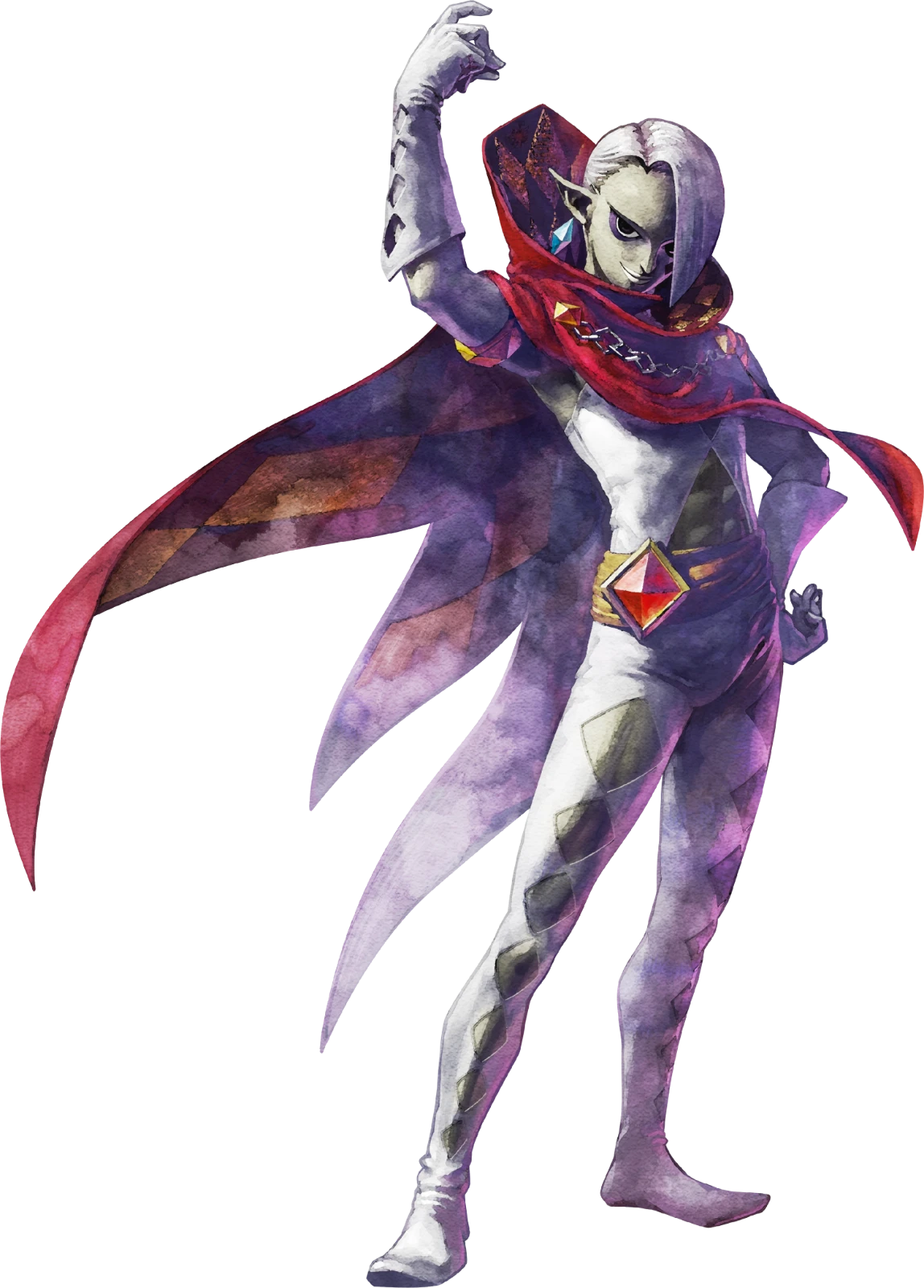
GhirahimThe Demon Lord
A theatrical, vain and fiercely cruel swordsman who insists on being called Lord Ghirahim. His designers were given a brief for a slightly affected, vain demon lord who would duel Link, and built his look out of diamonds, tights and a tongue that slithers out (which had to be built into his skeleton). Fujibayashi likened his personality to a snake’s.
Hunts Zelda to use her spirit to revive his master, wakes Koloktos to punish Link, and is fought three times: at Skyview Temple, at the Fire Sanctuary and, at the end, in the past. Beaten, he is revealed as the spirit of Demise’s sword, the dark counterpart to Fi, and Demise turns him back into a blade.
Reads your swings and catches your sword
Teleports and throws knives
Third fight: three phases, ending with a giant sword
Later: playable in Hyrule Warriors, Assist Trophy in Smash
DemiseThe Demon King; the Imprisoned
The original evil of the Zelda timeline: a demon king who rose from the earth to seize the Triforce, was sealed by Hylia, and whose hatred, by his own promise, will return to plague the descendants of Link and Zelda for ever. Ganon is never named, but this curse is the game’s explanation for why evil keeps coming back.
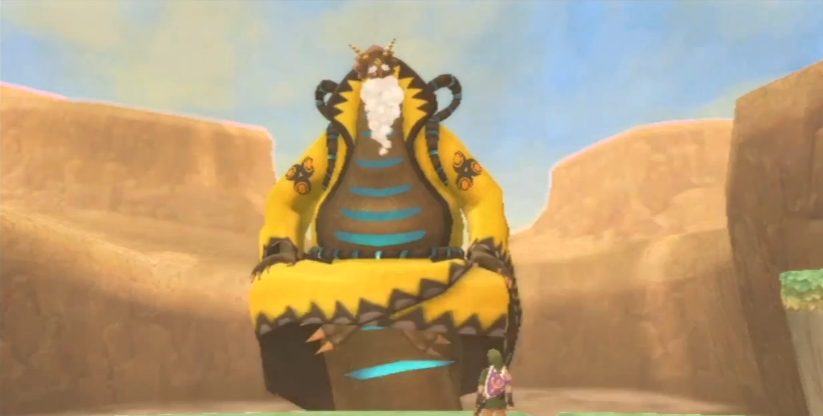
While sealed, a fragment of him, the Imprisoned, keeps clawing its way up the Sealed Grounds and has to be beaten back three times. Ghirahim revives him in the past, where he duels Link in a storm, channelling lightning through his sword.
The Imprisoned: three battles at the Sealed Grounds
Demise: blocks most strikes, then charges his sword with lightning
A Skyward Strike, or lightning bounced back with the Bug Net, stuns him
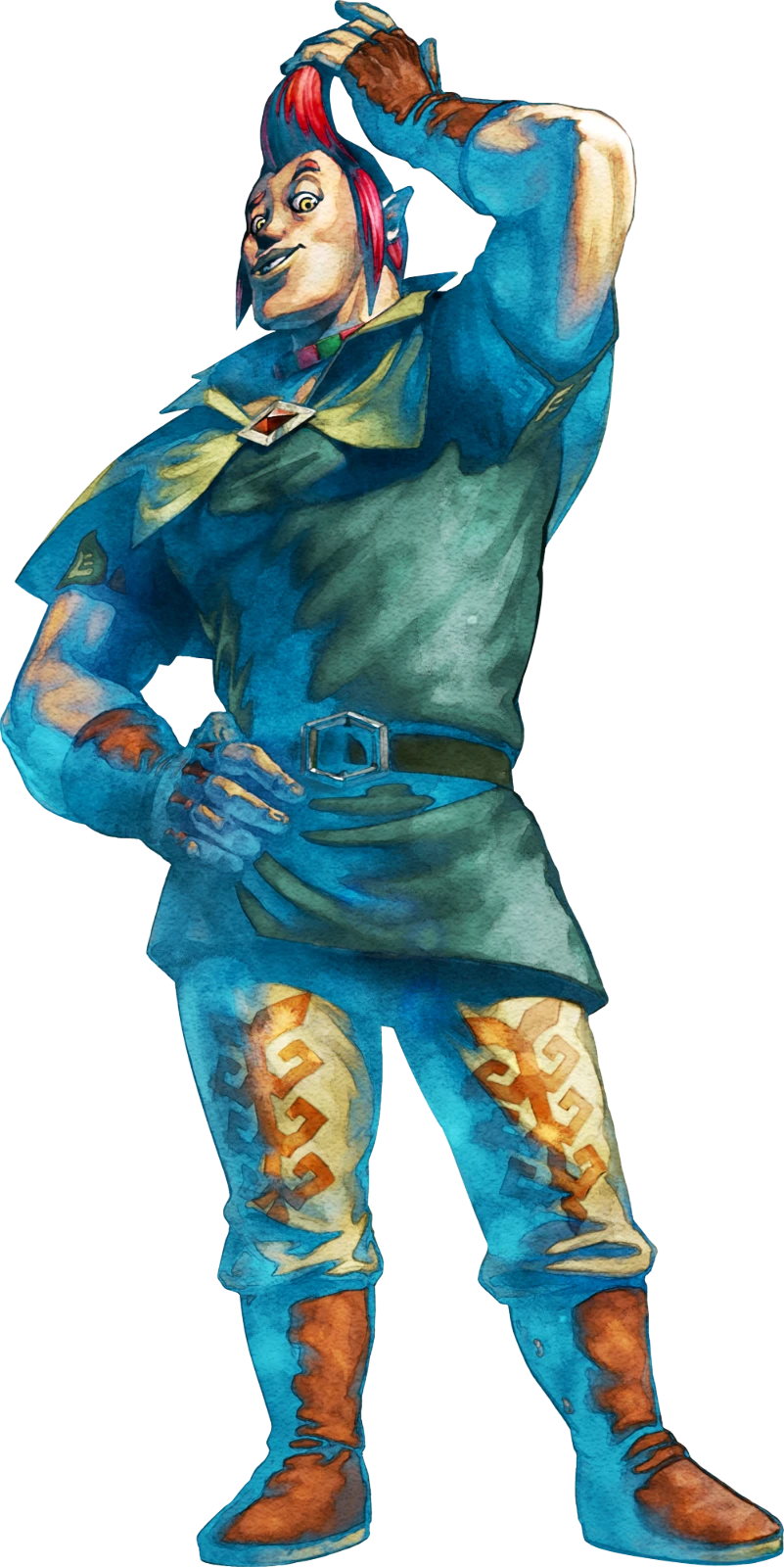
GrooseThe Academy bully turned hero
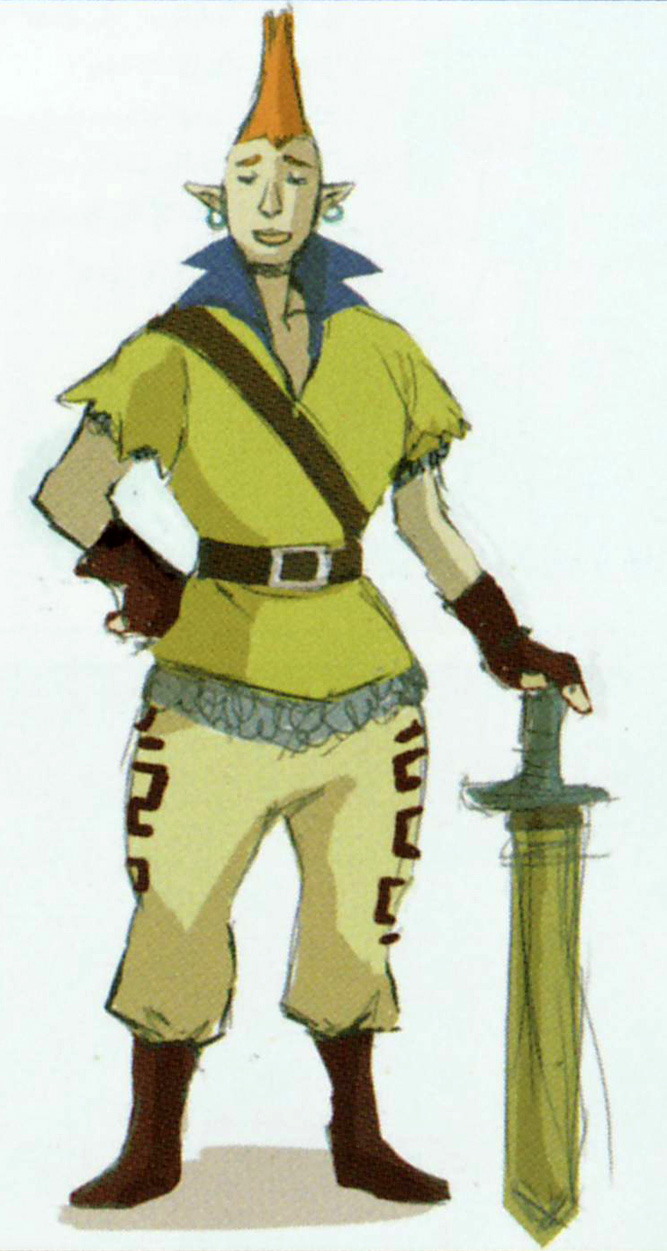
A big, proud Knight Academy student with a towering red quiff (inspired, says his designer, by a rooster’s comb) and two hangers-on, Cawlin and Strich. He is vain and loud and jealous of Link, but the game is clear that he is pure of heart, and his change of heart is one of the best character arcs in the series.
Tries to beat Link in the Wing Ceremony by fair means and foul, then sneaks after him to the surface, where he names the place Grooseland before realising he is out of his depth. Watching Link carry the burden changes him: he builds the Groosenator to fight the Imprisoned, adopts the old woman as Grannie, and guards Zelda while Link battles Demise.
Built the Groosenator catapult
Not playable
Constantly fiddles with his hair
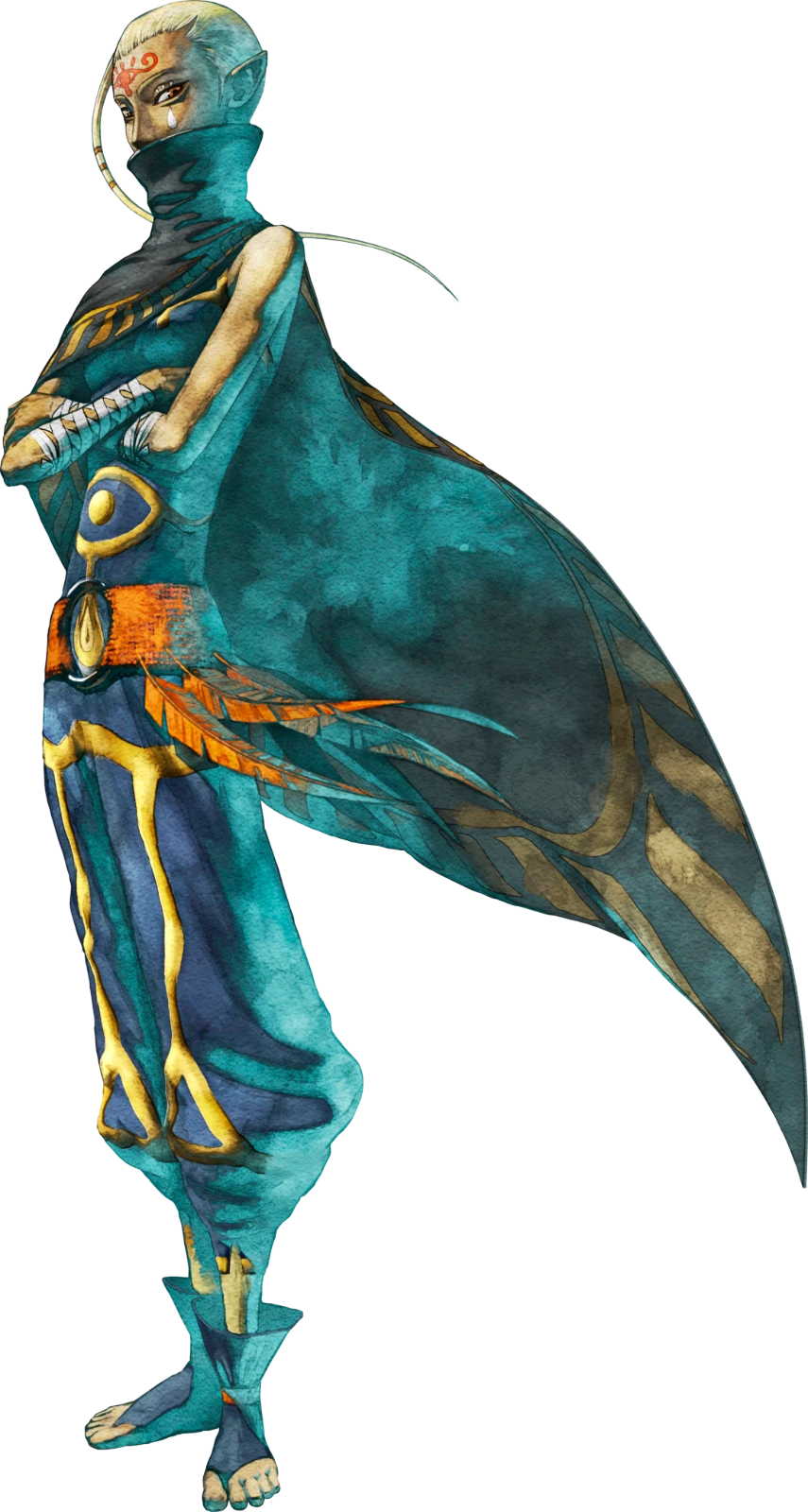
ImpaZelda’s Sheikah guardian; the old woman
Across the series Impa is Zelda’s protector: the woman who sends Link on his quest in the original game’s story, the Sheikah Sage of Shadow in Ocarina of Time, and the elder of Kakariko in Breath of the Wild. Skyward Sword is her earliest appearance in the timeline, and shows how far back that loyalty goes.
A servant of Hylia, she rescues Zelda from Ghirahim and guards her across the surface, shielding her with magic barriers, then stays in the past to watch over the sleeping Zelda and the Master Sword. The old woman at the Sealed Temple who guides Link is the same Impa, thousands of years later, and she fades away once her charge is safe.
Sheikah magic: barriers and swift escapes
Destroys both Gates of Time
Wears the bracelet Zelda gives her
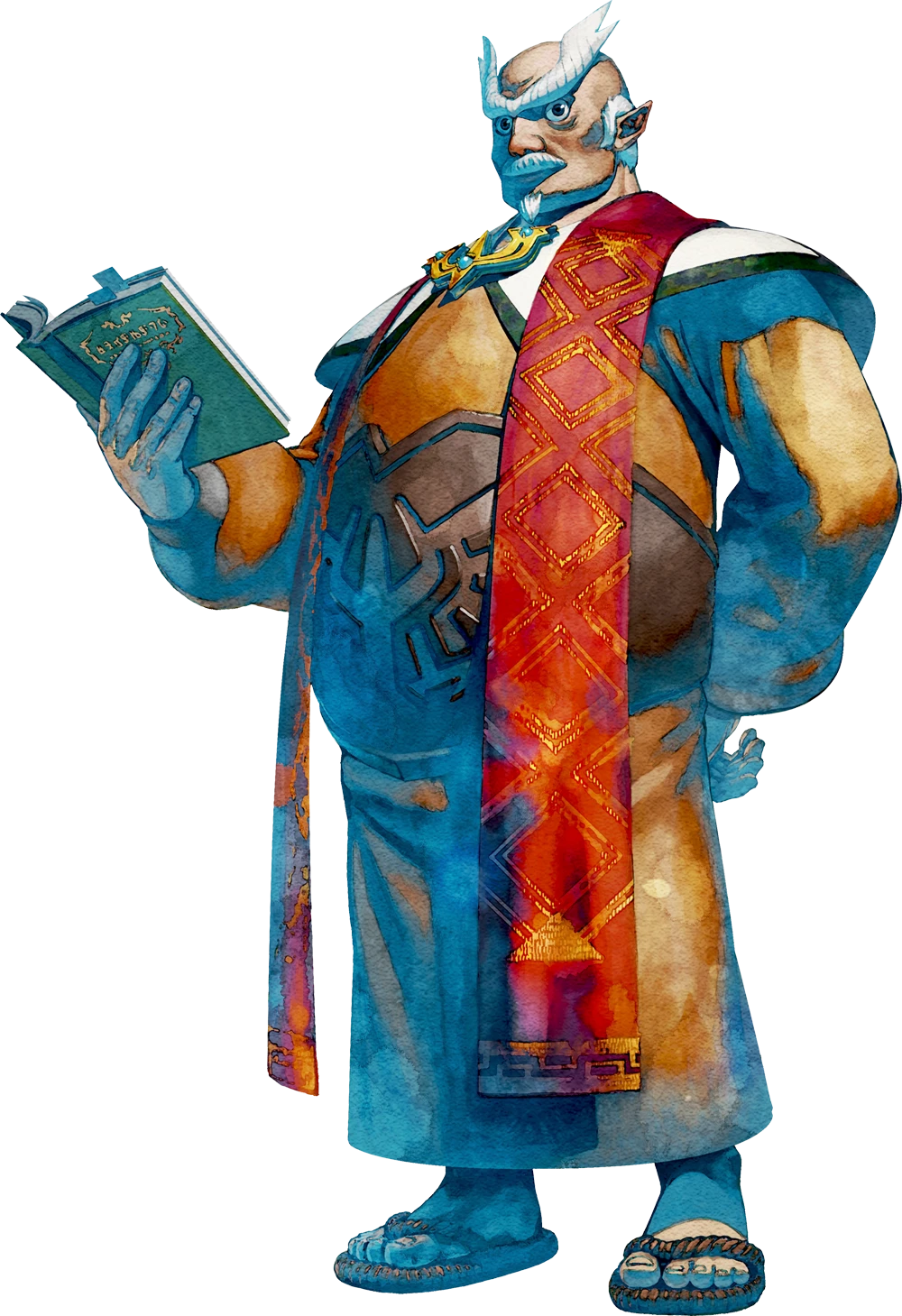
GaeporaHeadmaster of the Knight Academy
Zelda’s kindly, bushy-browed father, keeper of Skyloft’s legends and guardian of the Chamber of the Sword. His name, his owlish “hoo hoo hoo” laugh and his beard all recall Kaepora Gaebora, the owl from Ocarina of Time and Majora’s Mask.
Delays the Wing Ceremony while Link looks for his bird, explains the prophecy in the Chamber of the Sword, gives Link his knight’s uniform and sends him below the clouds, and fills in legends such as the Ballad of the Goddess and the sky spirit Levias.
Not a fighter. Narrates the Penny Arcade comic.
HyliaThe goddess
A goddess who made her debut in Skyward Sword, younger than the three Golden Goddesses Din, Nayru and Farore, and the one simply called “the Goddess” in Skyloft. Statues of her are where Link trades Spirit Orbs for hearts and stamina in Breath of the Wild.
Before the game she saved the people by lifting them into the sky with the Triforce, and sealed Demise. Knowing only a mortal can use the Triforce, she created the Goddess Sword and was reborn as Zelda, leaving a plan for Link to follow.
Appears in the prologue and in Zelda’s memories; her statue holds Sky Keep.
Faron, Eldin & LanayruThe three dragons
Great dragons who guard the surface for Hylia, each named after the region it watches: Faron the Water Dragon, Eldin the Fire Dragon and Lanayru the Thunder Dragon. The same three names belong to the Light Spirits of Twilight Princess, and the dragons Farosh, Dinraal and Naydra guard the same regions in Breath of the Wild.
Each holds a part of the Song of the Hero. Faron lives in Lake Floria; Eldin guards the volcano; Lanayru has died in the present, so Link has to use a Timeshift Stone to meet him alive in the past. Lanayru also hosts the Lightning Round boss rush.
Lightning Round: eight wins in a row earn the Hylian Shield.
LeviasGreat spirit of the sky
An enormous whale-like spirit whom Hylia appointed warden of the skies, keeping surface monsters away from the people of the clouds.
Possessed by the parasite Bilocyte inside the storm of the Thunderhead. Link lures him out with a pot of hot pumpkin soup, which Scrapper carries up into the storm, frees him, and learns how the Song of the Hero was split between the dragons.
Bilocyte is fought on Levias’s back.
BatreauxThe demon who wants to be human
A big, winged demon living in an odd, attic-like house in Skyloft. He looks terrifying and is in fact gentle and shy, which is exactly the gap his designers were going for; Fujibayashi admitted he did not seem to belong in a Zelda game at all.
Link first meets him while investigating the disappearance of a little girl, Kukiel, who turns out to be his friend. He wants to become human, and Link can help by collecting all 80 Gratitude Crystals, earned by doing good deeds for Skyloft’s people. Bring him crystals and he hands out rewards, including bigger wallets.
All 80 crystals turn him human; he then moves into the Bazaar.
ScrapperAncient robot porter
An ancient robot, model LD-301S, who served the family of Gondo in Skyloft for generations until his power ran out. Unlike most of his kind, he works in the present without a Timeshift Stone.
Gondo revives him with oil Link brings back from the surface, and from then on he carries heavy loads between sky and surface: water to the Fire Sanctuary, soup to Levias and several side-quest deliveries. He adores Fi and calls Link “Master Shortpants”.
Not a fighter. Hauls anything too big for Link.
The KikwiFaron Woods’ plant people
A shy, round, plant-eating race new to the series, who hide by tucking in and letting the bush on their tails do the rest. Each has its own face, like the Koroks of The Wind Waker.
Machi runs from Link until he has been found three times, then points the way to the elder Bucha, who asks Link to rescue three lost Kikwi (Lopsa, Erla and Oolo) and rewards him with the Slingshot. The old hermit Yerbal explains how to reach Lake Floria.
Not fighters. Bucha is twice Link’s size.
BeedleTravelling salesman
The series’ bald, cheery travelling merchant, a regular since The Wind Waker.
Here he runs Beedle’s Air Shop, a flying shop that drifts around the skies over Skyloft.
His Air Shop also flies through the background of the Skyloft stage in Smash.
Bosses and notable enemies
Skyward Sword’s enemies are designed around the sword: most of them guard, dodge or open up in a particular direction, so the trick is to watch first and swing second.
GhirahimSkyview Temple · Fire Sanctuary · the pastThree duels with the Demon Lord, each tougher than the last.
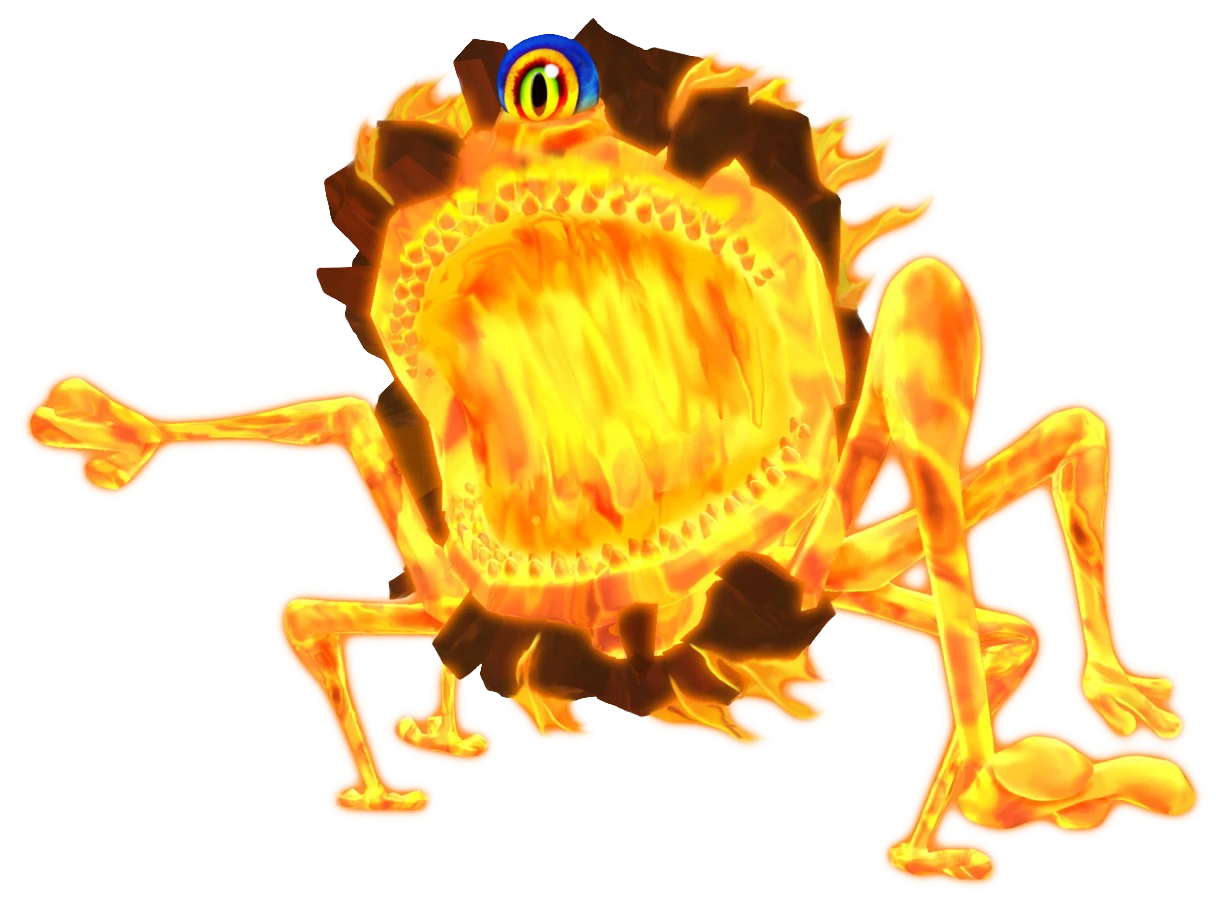
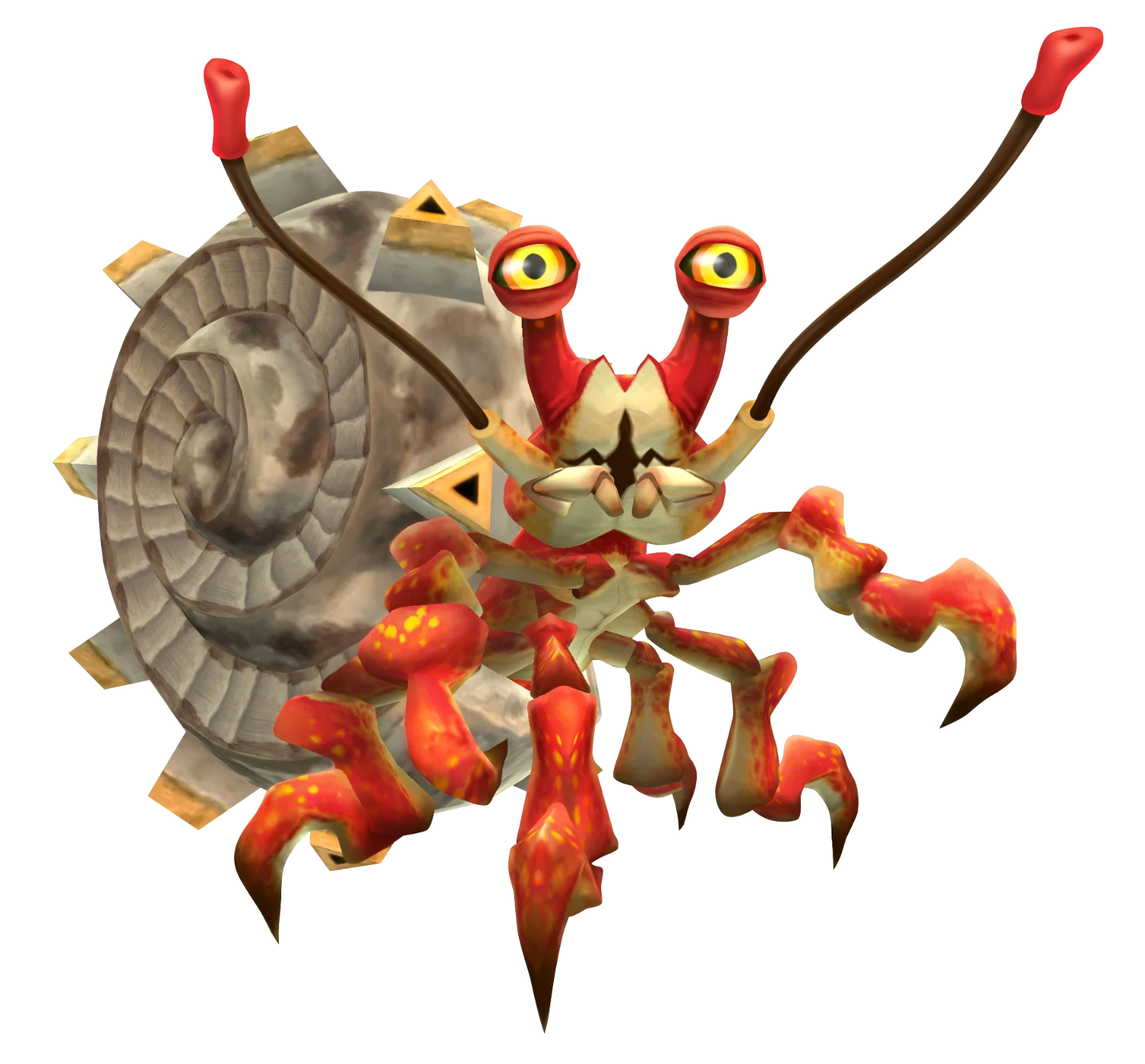
Scaldera, the Pyroclastic FiendEarth TempleA blazing rock monster rolling down a slope. Feed a bomb into its mouth to crack the shell, then slash the eye.
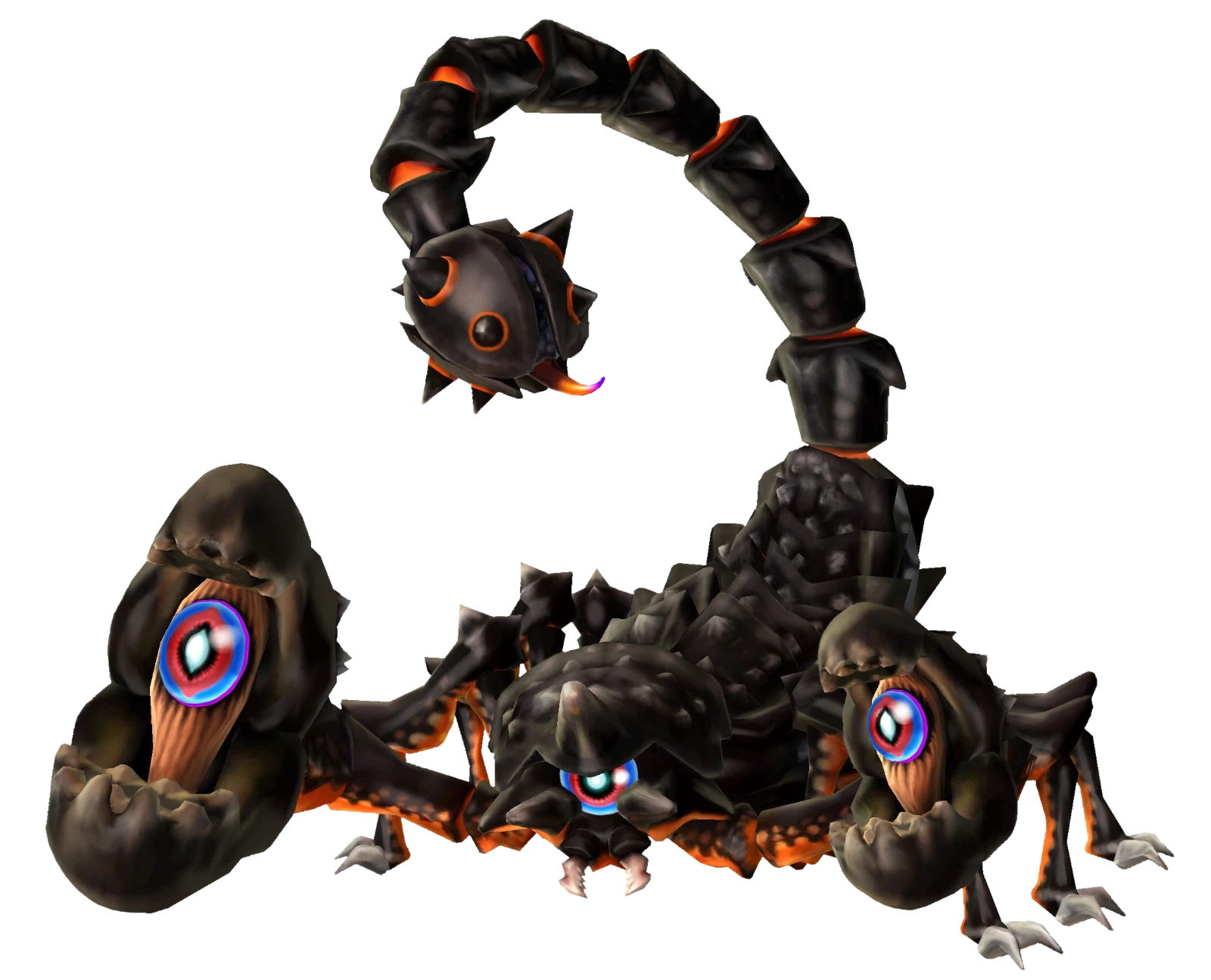
Moldarach, the Thousand-Year ArachnidLanayru Mining FacilityA giant scorpion with eyes in its claws. Cut the claw-eyes from the right angle, then blast the sand away to expose the eye on its face. A second one lurks in the Sand Sea’s Shipyard.
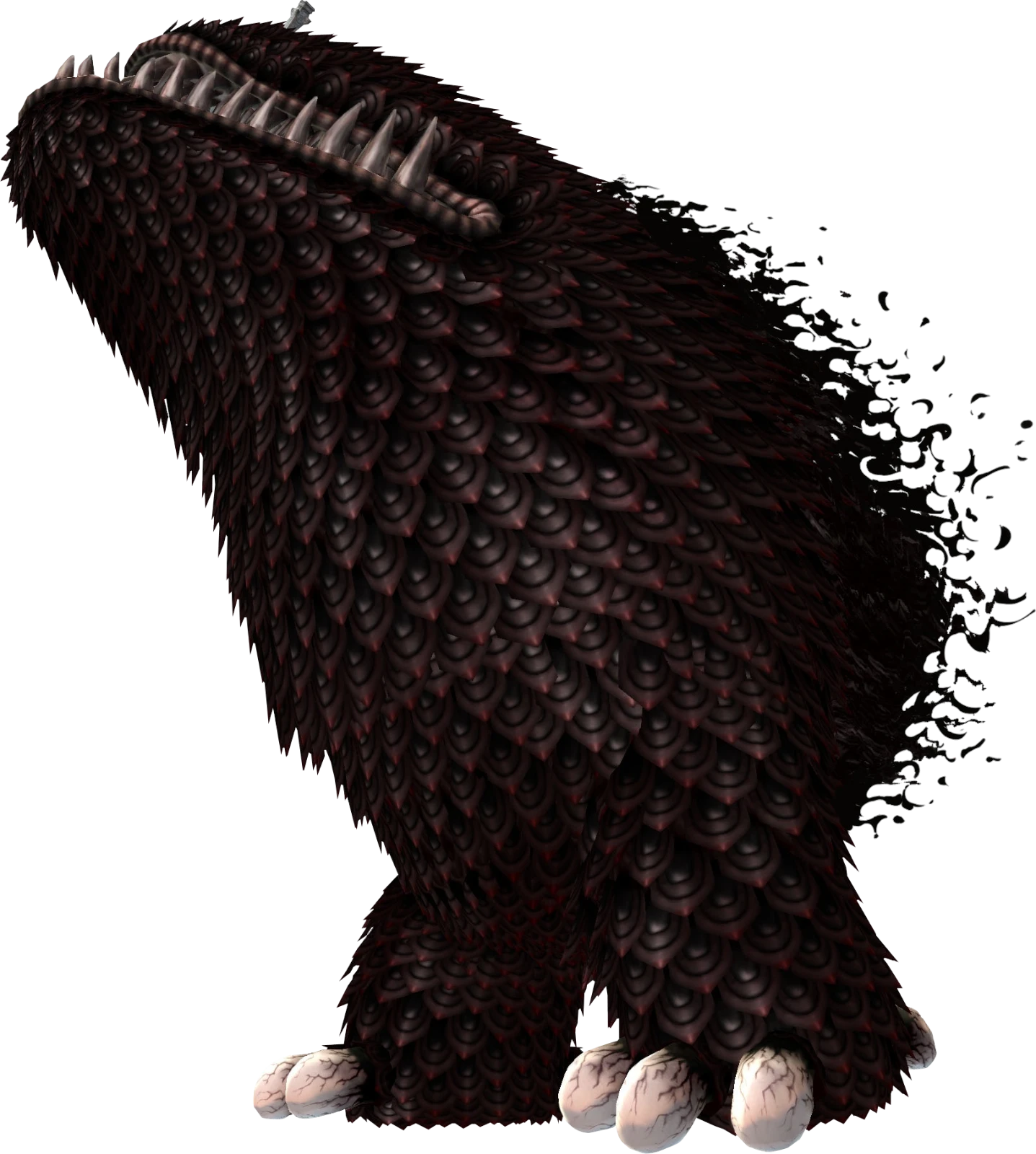
The ImprisonedSealed GroundsDemise’s sealed form, fought three times as it climbs toward the temple; it grows arms by the later bouts.
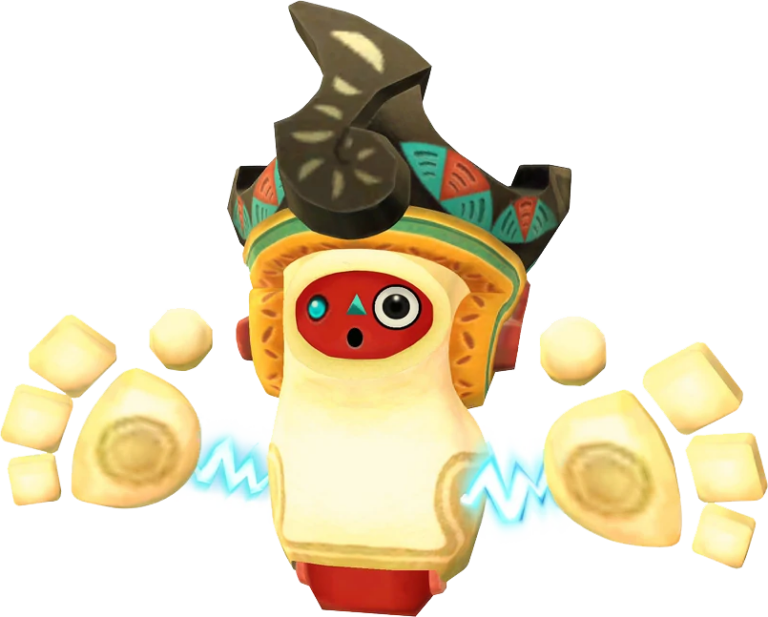
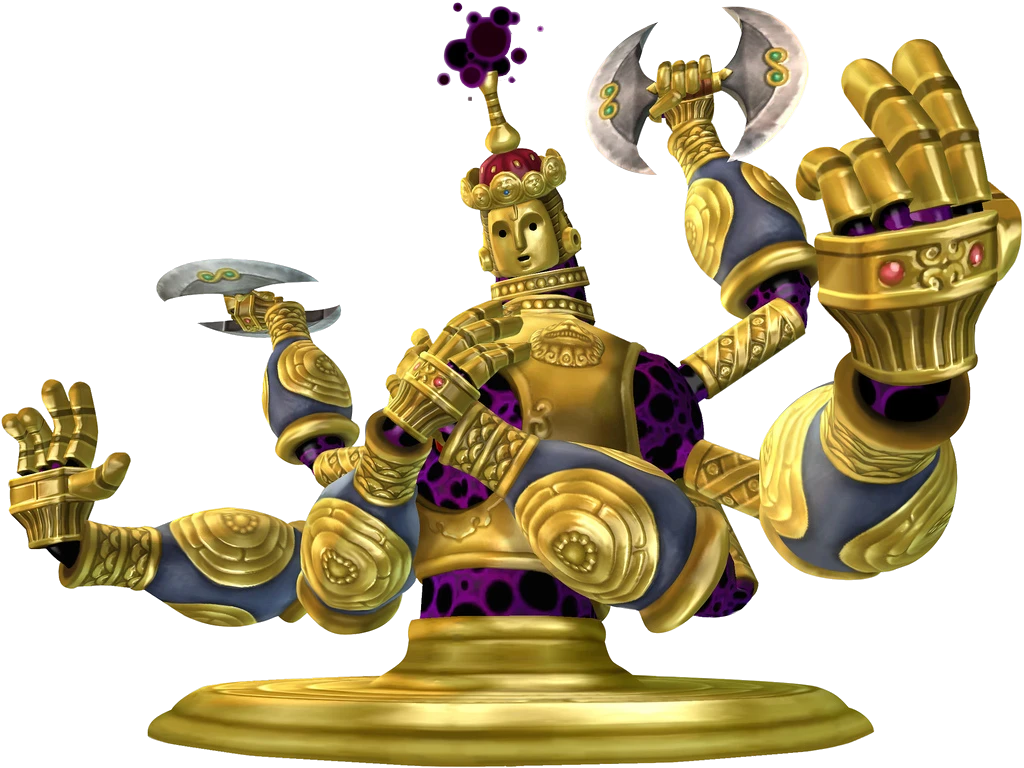
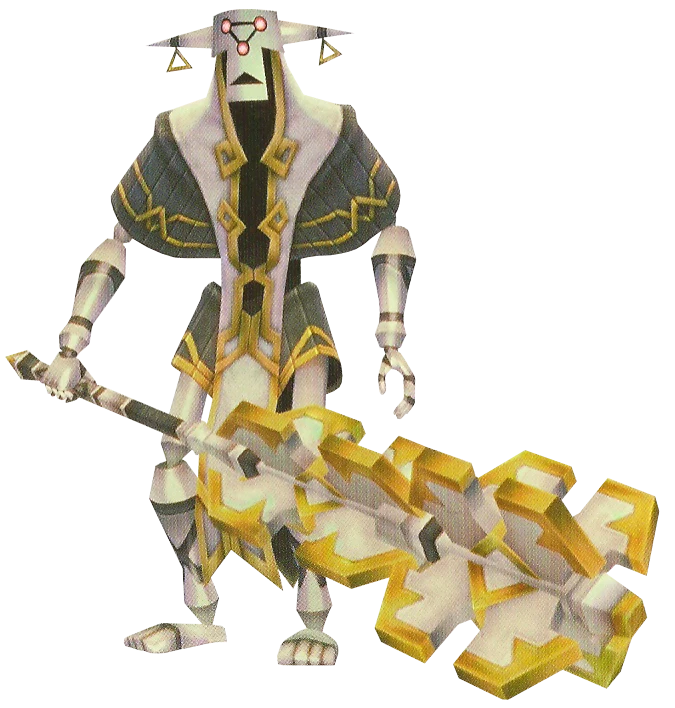
Koloktos, the Ancient AutomatonAncient CisternA six-armed golden statue. Whip its arms loose, then steal one of its own swords to chop it down.
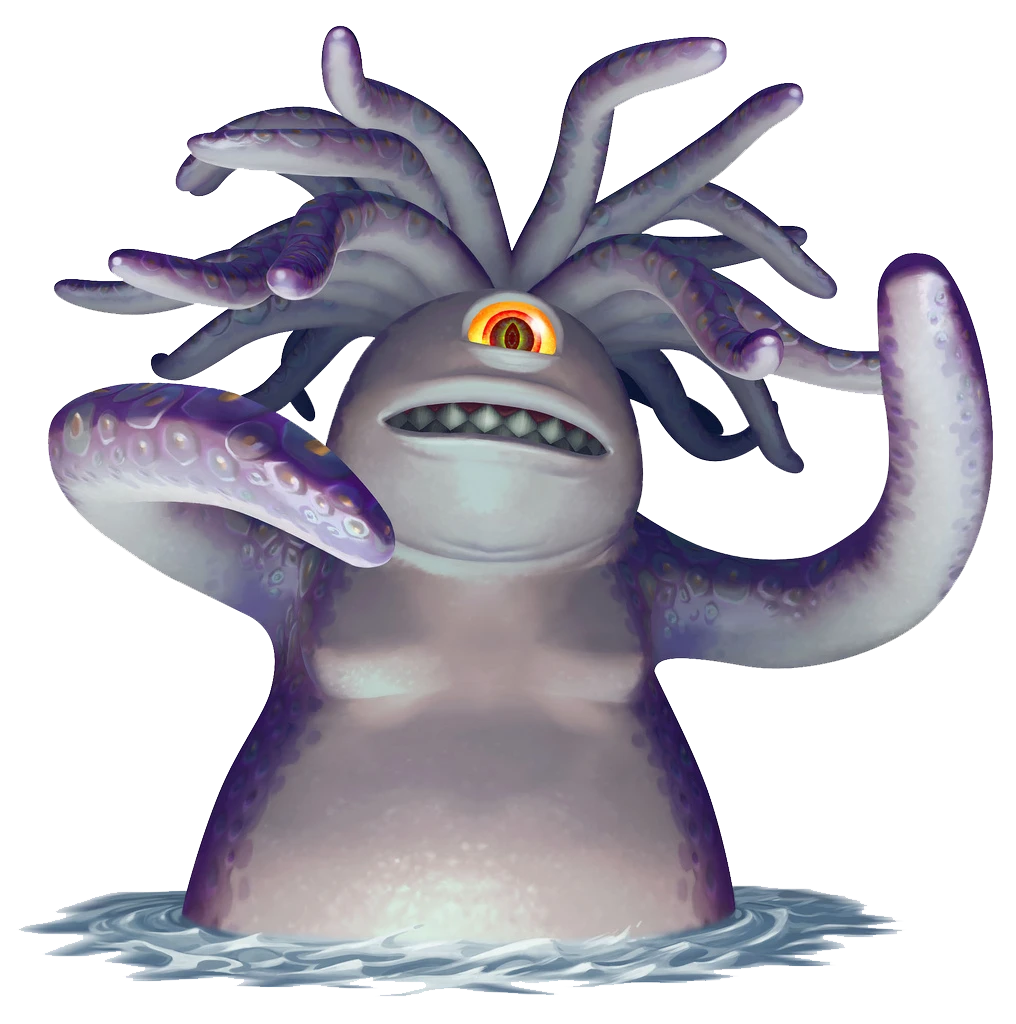
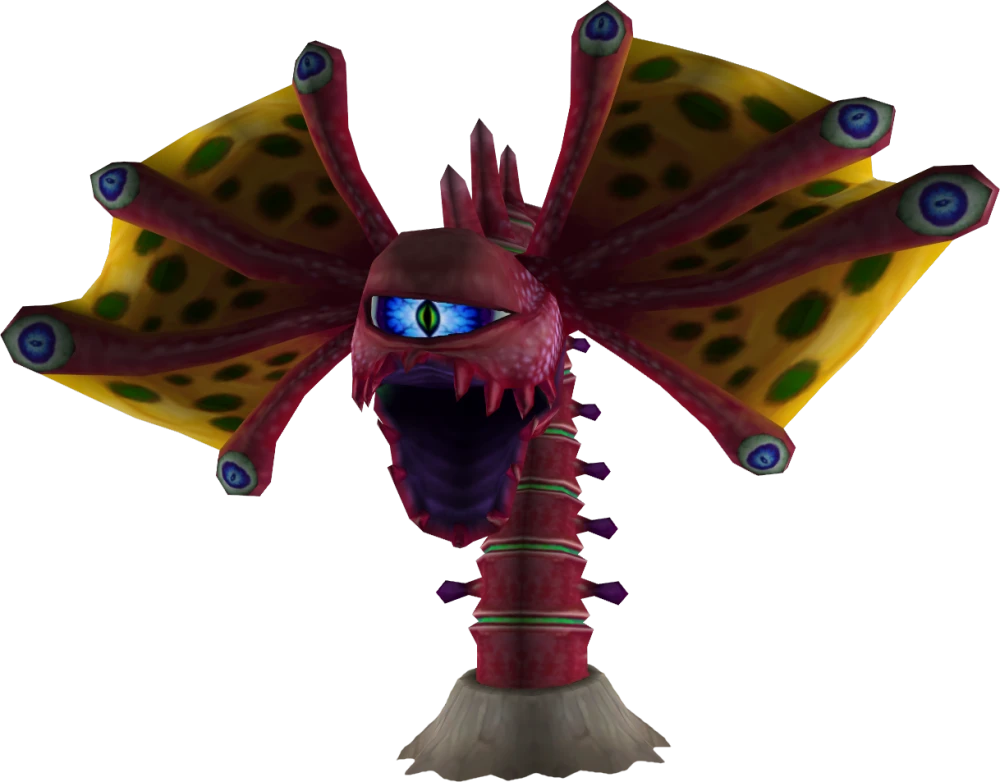
Tentalus, the Abysmal LeviathanSandshipA one-eyed kraken that attacks the ship. Arrows to the eye on deck, then the sword.
BilocyteThe ThunderheadThe parasite clinging to Levias.
DemiseThe past (final battle)The Demon King himself, in a sword duel with lightning.
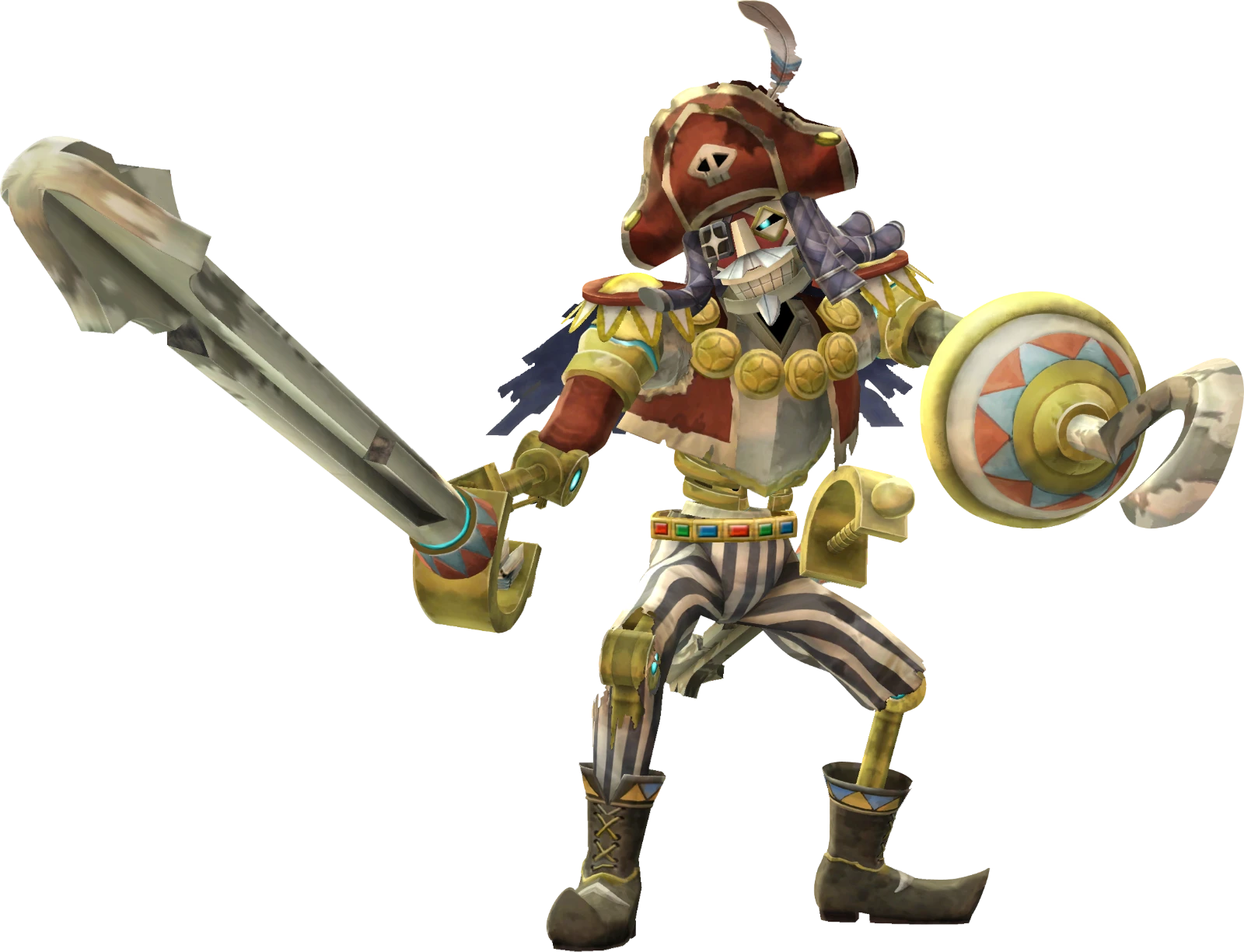
ScervoSandshipA robot pirate duelled on a gangplank: thrust and shield-bash him over the edge into the sinksand.
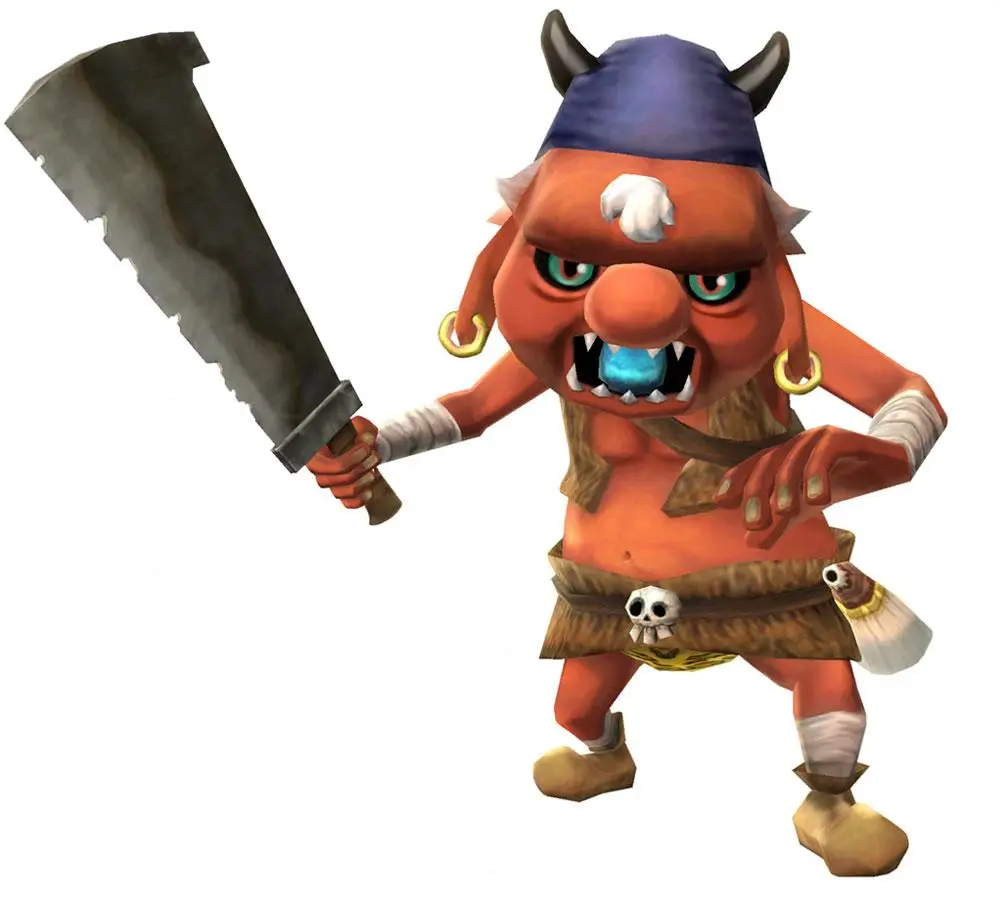
BokoblinsEverywhereThe common foot soldiers, in regional versions: primitive in the forest, kitted out with modern-looking gear in the desert, some carrying lanterns or electrified blades. Beaten ones roll away down slopes.
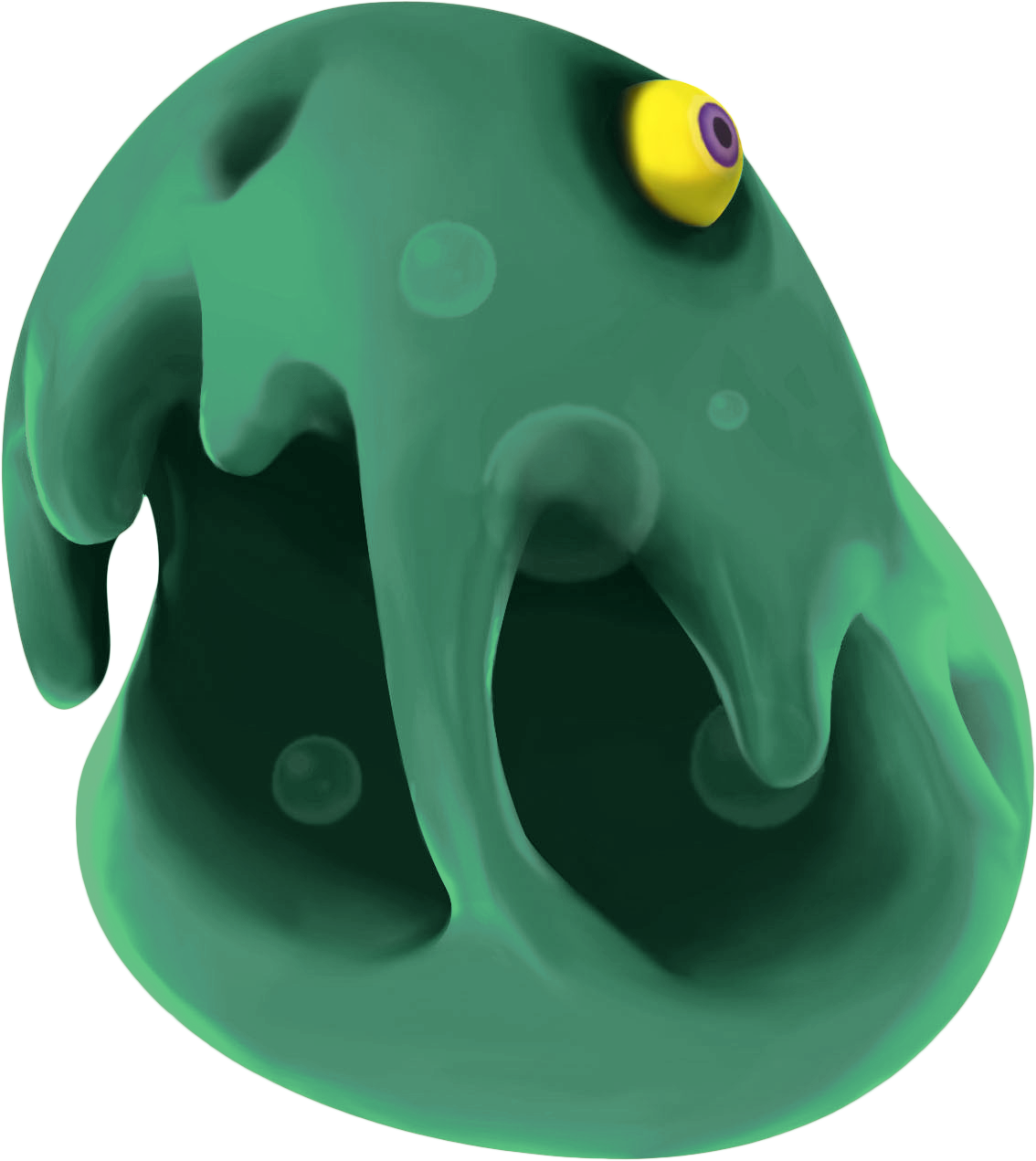
ChuChusSeveral regionsJelly blobs that split along the line of your cut, then try to join back together.
AmpilusLanayruA desert creature that the team described as half squilla, half ammonite, and whose own designers asked whether it was a living creature or a machine.
Guardians and WatchersSilent RealmsUnbeatable spirit sentries. Watchers spot you with their lanterns; Guardians chase you down.
The people who made it
Key staff, as named in Nintendo’s Iwata Asks interviews and the game’s credits.
Eiji AonumaProducerThe Zelda series producer. Decided early on to tell the origin of the Master Sword, briefly tried to drop MotionPlus, and volunteered as a planner for the sky.
Hidemaro FujibayashiDirectorPitched the game after assisting on Phantom Hourglass; his first home-console Zelda. Wrote the story synopsis in a single day and reworked Fi’s lines to make them all sound coldly logical.
Naoki MoriCinematic scriptsWrote the cutscene scripts and worked on direction and storyboards over about a year and three months.
Shigeki YoshidaCinematic directorDirected the 79 numbered cutscenes, more than two hours in all.
Hajime WakaiSound director, composerLed the ten-strong sound team and wrote some of the music over roughly three years.
Koji KondoSound supervisorThe series’ original composer supervised, wrote the prologue music and helped arrange other pieces.
Shiho Fujii, Mahito Yokota, Takeshi HamaComposersFujii scored environments, dungeons and Skyloft; Yokota helped orchestrate; Hama also composed.
Ryuji KobayashiDesign directorOversaw the look of the enemies and Skyloft’s residents.
Shigeru MiyamotoNintendo veteranPlayed as a first-timer, suggested stopping the sword in mid-air (which led to the Skyward Strike and the title) and insisted on recording with an orchestra.
Skyward Sword took almost five years, a false start with its controls and a team that grew to include 22 landform designers, the most any Zelda had used. Most of what we know comes from Nintendo’s own Iwata Asks interviews, eight volumes in which Satoru Iwata quizzed the people behind each part of the game.
Starting after Twilight Princess
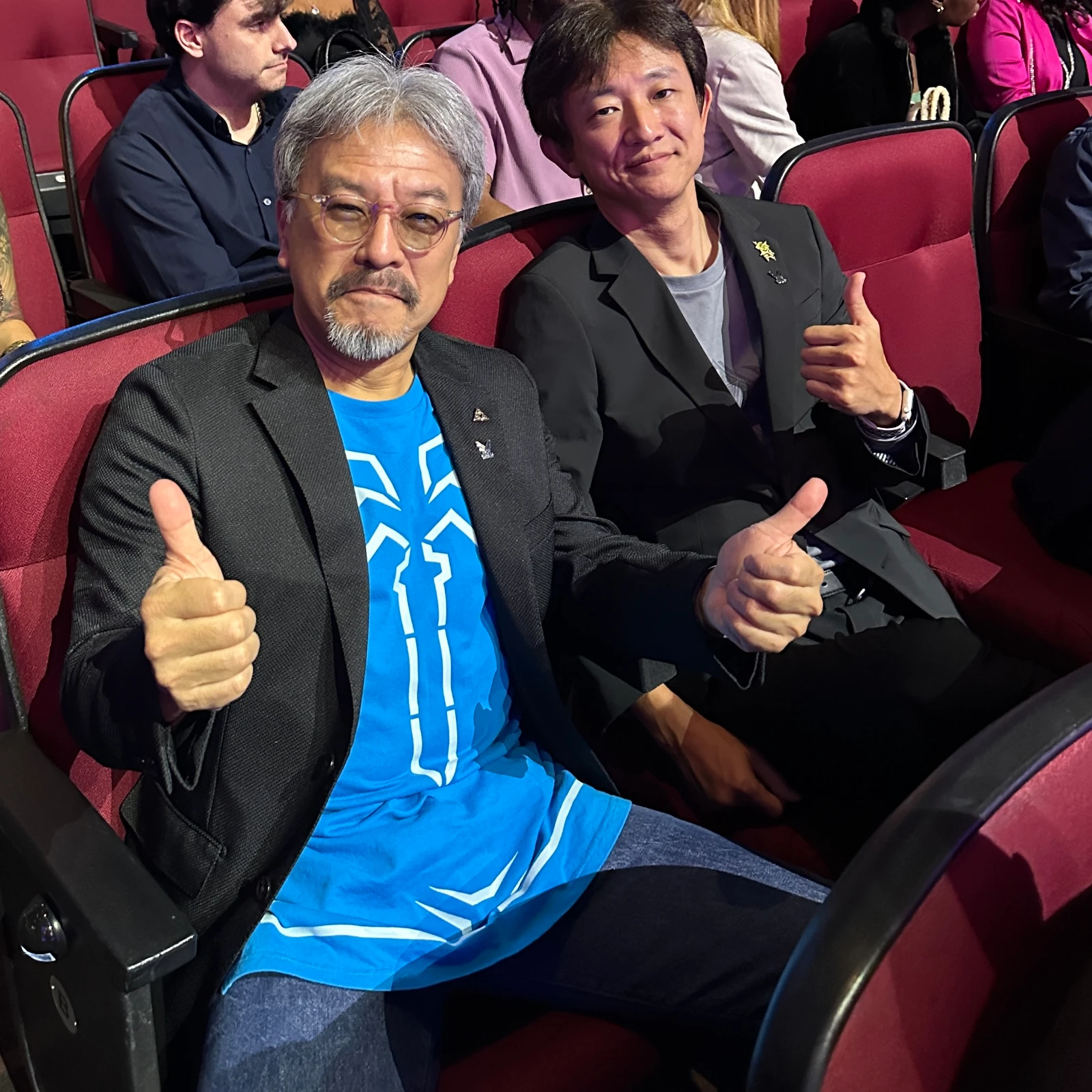
Producer Eiji Aonuma and director Hidemaro Fujibayashi at The Game Awards in 2023.
Work began once Twilight Princess was out of the door. Hidemaro Fujibayashi, who had been assistant director on Phantom Hourglass, pitched the project, and Eiji Aonuma made him director: his first home-console Zelda. Fujibayashi also had Spirit Tracks on his plate, and the new game only really built up speed once that DS adventure was finished. In the end the whole thing took close to five years, longer than first planned, and Shigeru Miyamoto later said the first two of them went on experiments.
Aonuma’s other instruction was to keep it “compact”. The team took that to mean dense rather than small: fields with height and depth instead of long empty stretches, regions you return to and find changed, and a blurrier line between overworld and dungeon, so that a new item could open puzzles out in the open.
Taming Wii MotionPlus
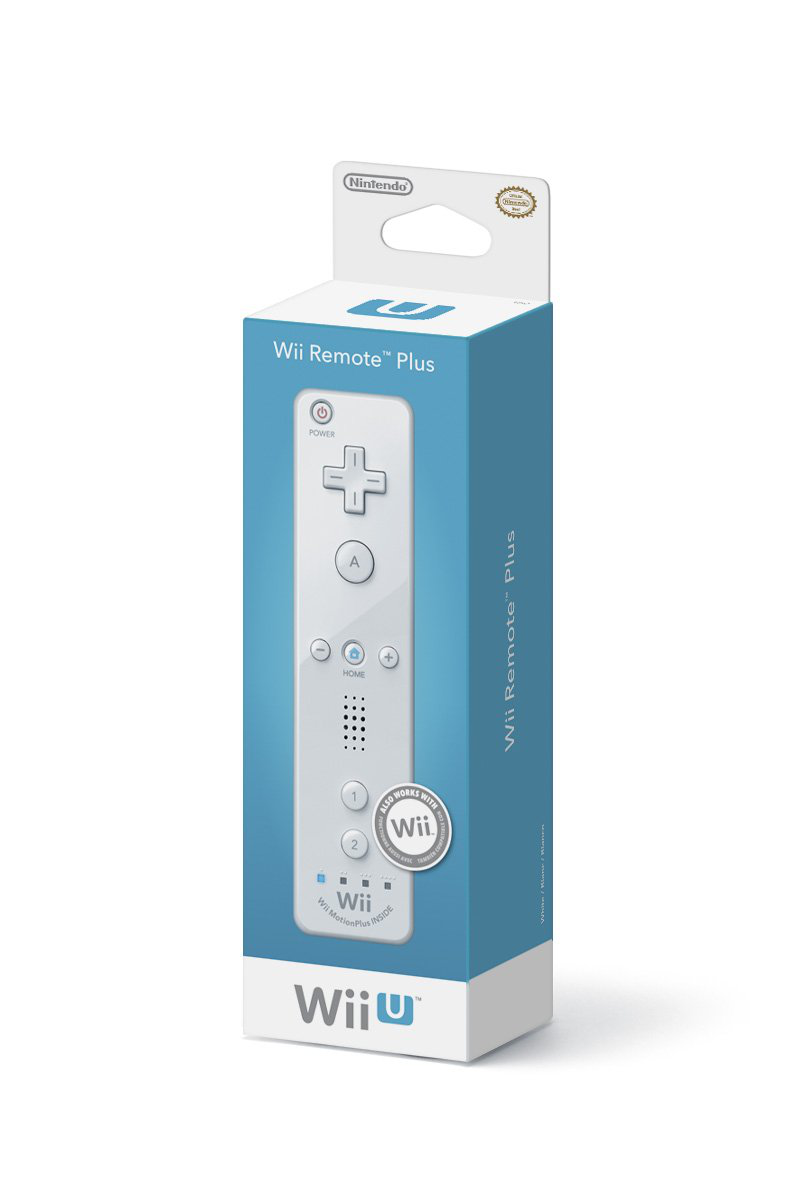
A Wii Remote Plus, the controller with MotionPlus built in.
The sword is the game’s heart, and it nearly did not happen. Early experiments with Wii MotionPlus went badly, and Aonuma admitted that the team simply could not tame the device. He went as far as building a button-based combat system and proposing they drop the add-on, until other producers pushed back and the team had to start again. Design director Ryuji Kobayashi put it bluntly: “We weren’t even at the starting point because we had to learn how it worked!”
What changed things was Wii Sports Resort, Nintendo’s own showcase for MotionPlus, whose Swordplay showed what the device could do. Link, though, is not a Mii with a stick, so the team faked parts of his movement to make his swings look cool rather than strictly realistic. Enemies had to be rebuilt too, so they could react to where your blade was pointing. One idea came from Miyamoto, who suggested that the sword should stop in mid-air when you hold it up. That pose, sword raised to the heavens to charge a beam, became the Skyward Strike, and gave the game its name.
Forest, volcano, desert and sky
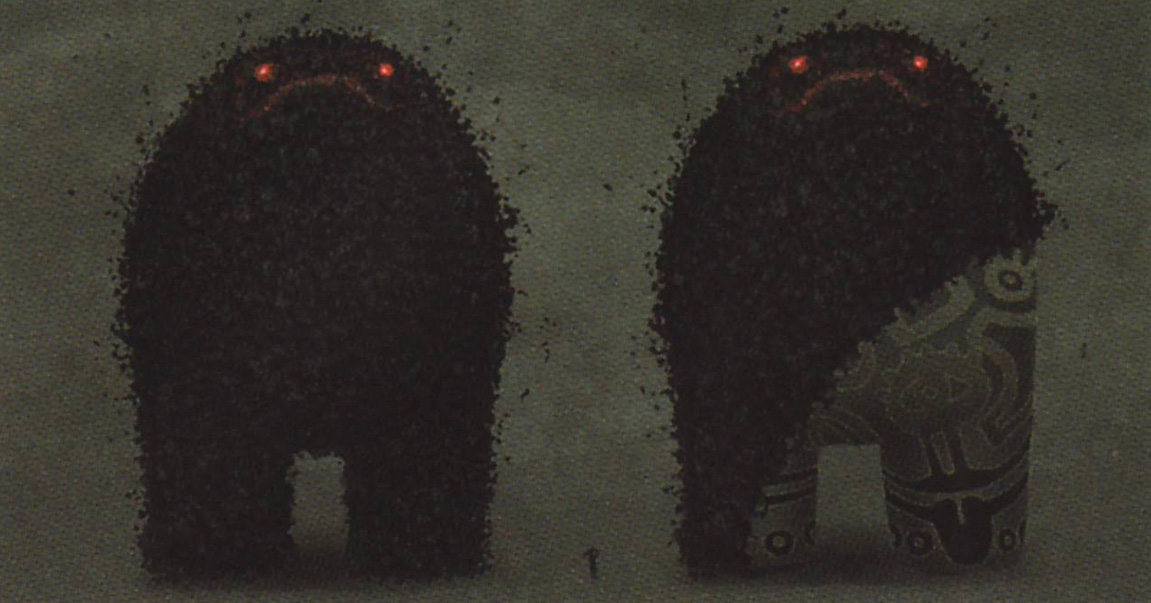
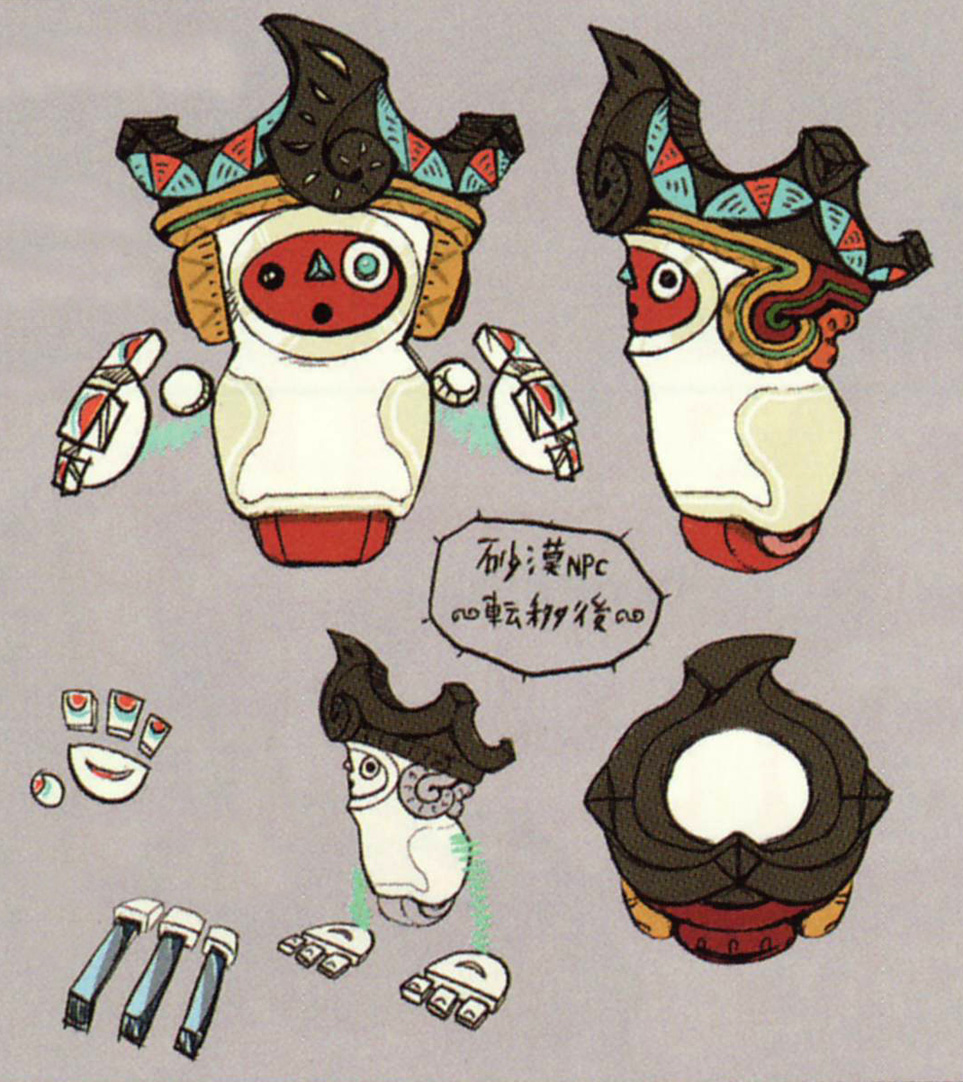
Concept art of the ancient robots of Lanayru Desert.
Each region had its own team, and each was given a theme. Faron Woods was meant to be a bright, friendly first step, with giant mushrooms, animals and bugs to chase with the net; its designers called it the “Not” Lost Woods. Dowsing, inspired by old-fashioned L-shaped dowsing rods, replaced the need for landmarks, and the Silent Realms began as a game of tag built around the new dash, set in places players already knew.
The volcano was chosen because its slopes suited the new stamina dash, and its key item, bombs, could be bowled along the ground with a flick of the wrist. In Lanayru, Fujibayashi built everything around contrast: strike a Timeshift Stone and the present turns back into the past in a widening circle, which meant, as one designer groaned, making two of everything. To soften the look of the desert’s robots, the artists drew on Jomon-period clay figures. Fujibayashi’s request for the second desert area was just “Sea and ship”, and the Sandship followed.
The sky came from a wish to avoid building roads between areas. Aonuma volunteered as a planner for it, Skyloft became a home base to return to between adventures, and the Bazaar put every shop under one roof.
A painted world
Official artwork of Skyloft.
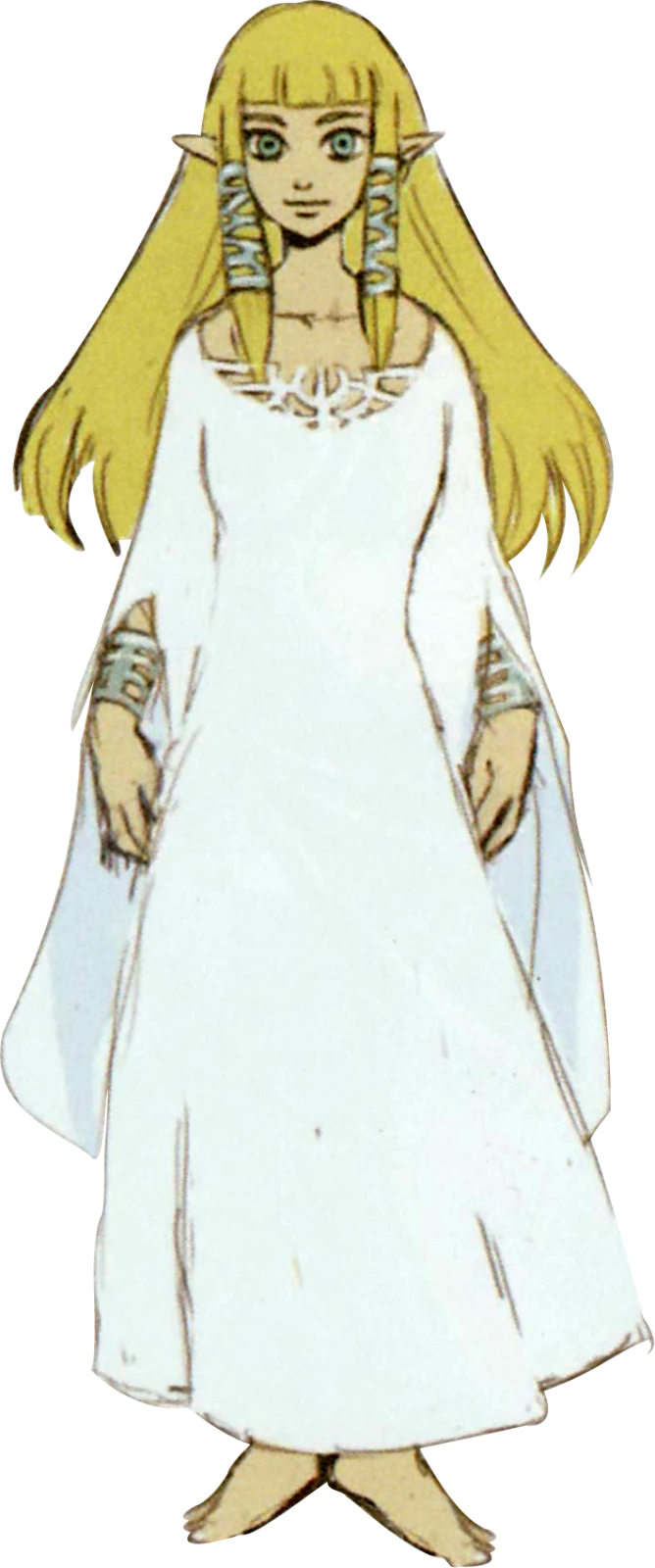
The team wanted something between the cel-shading of The Wind Waker and the realism of Twilight Princess. They landed on a soft, painterly look, with watercolour-like backgrounds that let characters stand out against them. Impressionist painting, Claude Monet among others, was a touchstone, and Miyamoto pointed to Paul Cézanne when talking about the sky. Characters were designed for their setting: flowing cloaks for bird-riders in a cold, windy town, and a red outfit for Zelda against the blue.
Writing the first story
Concept art of Zelda in her white dress.
Aonuma says the team settled early on telling the origin of the Master Sword, and soon realised that would make this the first story in the series. Fujibayashi wrote the synopsis in one go: he told colleagues he was not feeling well, shut himself away at home and wrote from morning to evening. Naoki Mori then wrote the cutscene scripts, and Shigeki Yoshida directed the cutscenes, 79 numbered scenes running past two hours.
Making Zelda a childhood friend rather than a distant princess was deliberate, so that players would care about rescuing her. Fujibayashi wanted her to be mischievous; she originally pushed Link off a ledge three times, until Miyamoto’s feedback cut it to two. Ghirahim began as a one-line brief for a vain, slightly affected demon lord who would duel Link, and Fujibayashi pictured him as a narcissist who slithered out his tongue.
An orchestra at last
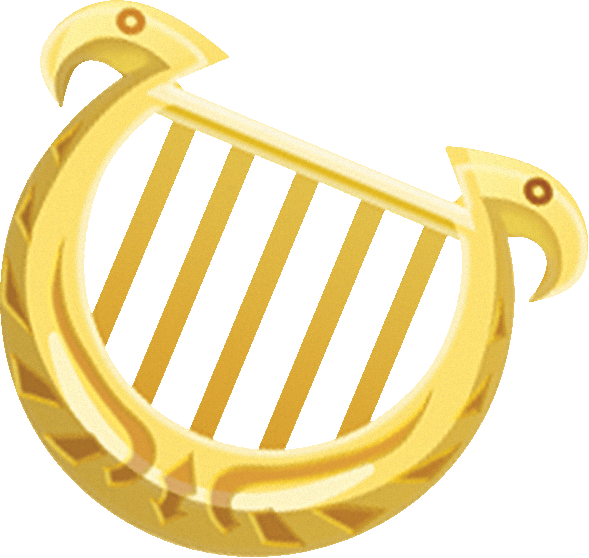
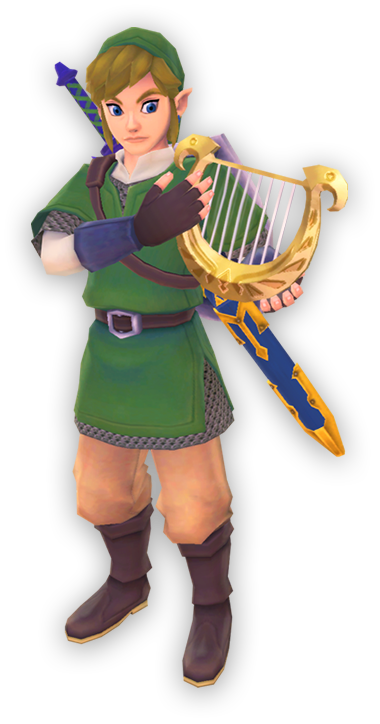
Official art of the Goddess’s Harp.
Aonuma had not planned on live music. After a round-table at E3 2010, Miyamoto told him to record it with an orchestra, and he got his way: Skyward Sword became the first Zelda with most of its score played by a live orchestra. The ten-person sound team, led by Hajime Wakai, split the work between Kyoto, which wrote the game music, and Tokyo, which handled the cutscene music and the orchestral recording.
Koji Kondo supervised and wrote just one piece himself, the music for the prologue that tells of Demise and Hylia. The main theme, the “Ballad of the Goddess”, is Zelda’s Lullaby played backwards, characters sing for the first time in the series, and Link can strum the harp whenever he likes. Wakai said Kondo was close to tears at a rehearsal for the 25th anniversary concerts.
From E3 to the shops
The Beetle in the E3 2010 demo.
Nintendo first showed the game at E3 2009 as a single piece of concept art, with a 2010 target. At E3 2010 it had a name and a playable demo, and then it slipped into 2011; Miyamoto said putting out an unfinished game for the company’s convenience would have been wrong. Testing was intense: Aonuma said playtimes of 600 to 700 hours were common among the testers, some reaching 1,000, and one tester in South Korea logged 880.
It launched in Europe on 18 November 2011 and in North America two days later, with a launch event at the Nintendo World store in New York the day before. Early copies came with an orchestral CD, and a bundle added a gold Wii Remote Plus.
Firsts: what this game introduced
As the first chapter of the timeline, Skyward Sword set up a lot of the series’ lore, and it tried several things no Zelda had done before.
1The start of the timelineThe earliest story in the official chronology, and the origin of the Master Sword, the Triforce’s place in Hyrule and the land itself.
2Demise’s curseThe game’s explanation for why the hero, the goddess’s descendant and a great evil keep meeting again across the series.
3One-to-one swordplayThe first Zelda built for Wii MotionPlus: the sword follows the angle of your swing, and enemies guard against it.
4A live orchestraMost of the soundtrack was recorded with an orchestra, a first for the series, and characters sing for the first time too.
5Stamina gaugeA new meter limits sprinting and scrambling up walls; Breath of the Wild later built its whole climbing system around a stamina wheel.
6Dowsing and beaconsPoint the Wii Remote to track things down, and drop a pillar of light on the map to steer by.
7Silent RealmsStealth trials in a spirit world where Link cannot fight back.
8Hylia, Fi, Ghirahim, Demise and GrooseAll make their debuts, along with the Loftwings, the Kikwi and the Mogma.
Cheats & secrets
There are no cheat codes in Skyward Sword, but there is plenty to dig out once the main quest is under way.
Hero Mode
Finish the game and a harder Hero Mode opens up for a second run. In Skyward Sword HD it gets its own save slot, so it no longer has to overwrite one of your files.
The Lightning Round
The Thunder Dragon’s Lightning Round.
After Link earns Lanayru’s part of the Song of the Hero, the Thunder Dragon sets up a boss rush in Lanayru Gorge, with rematches against bosses and Silent Realm trials you have already beaten. Prizes climb with each win in a row: a Piece of Heart for four, the indestructible Hylian Shield for eight (first time only), and a full wallet for twelve.
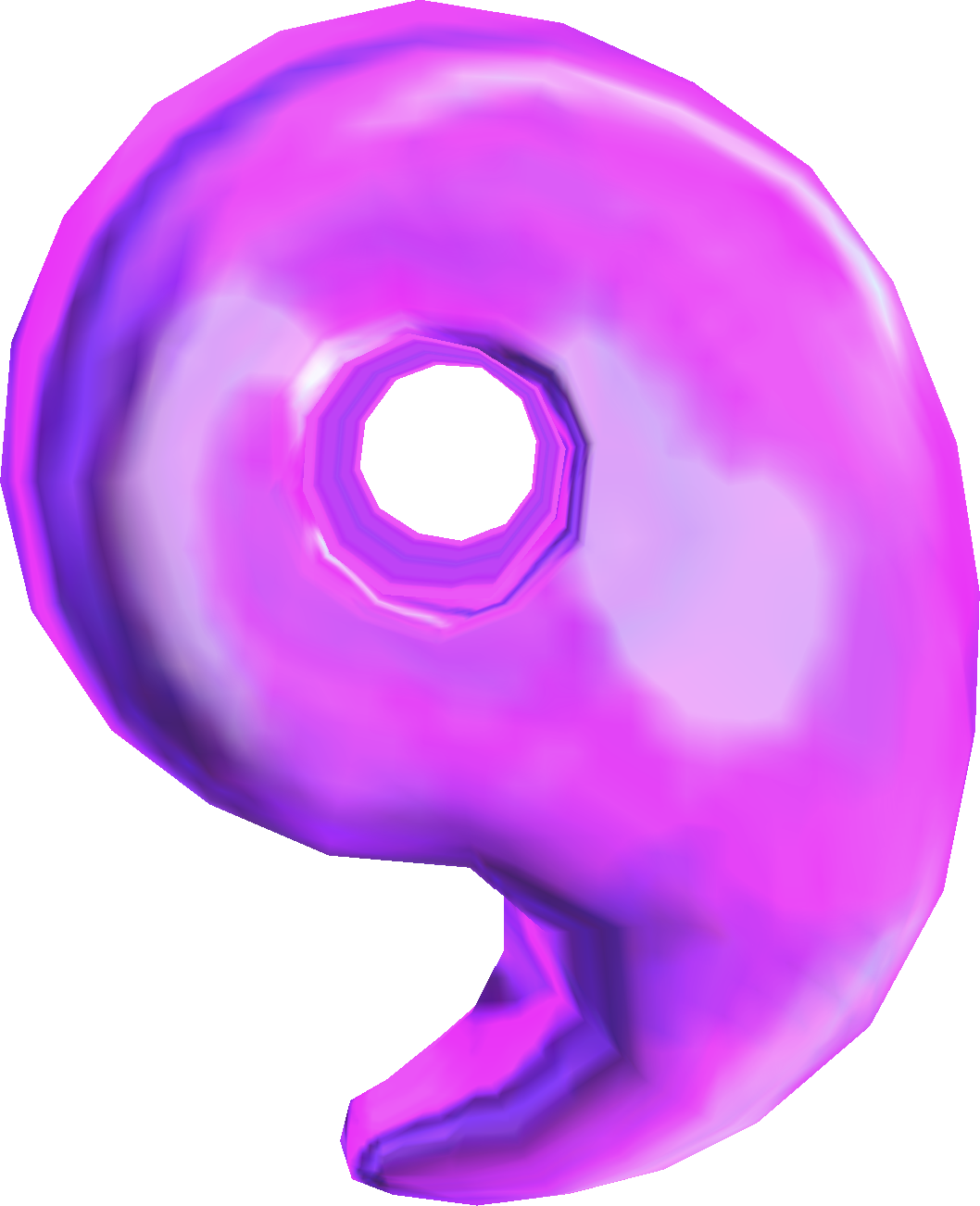
Gratitude Crystals
A Gratitude Crystal (in-game model).
Help Skyloft’s residents and they give you Gratitude Crystals. Take them to Batreaux, the demon at the edge of town; there are 80 in all, he hands out rewards along the way, including most of the bigger wallets, and the full set turns him human.
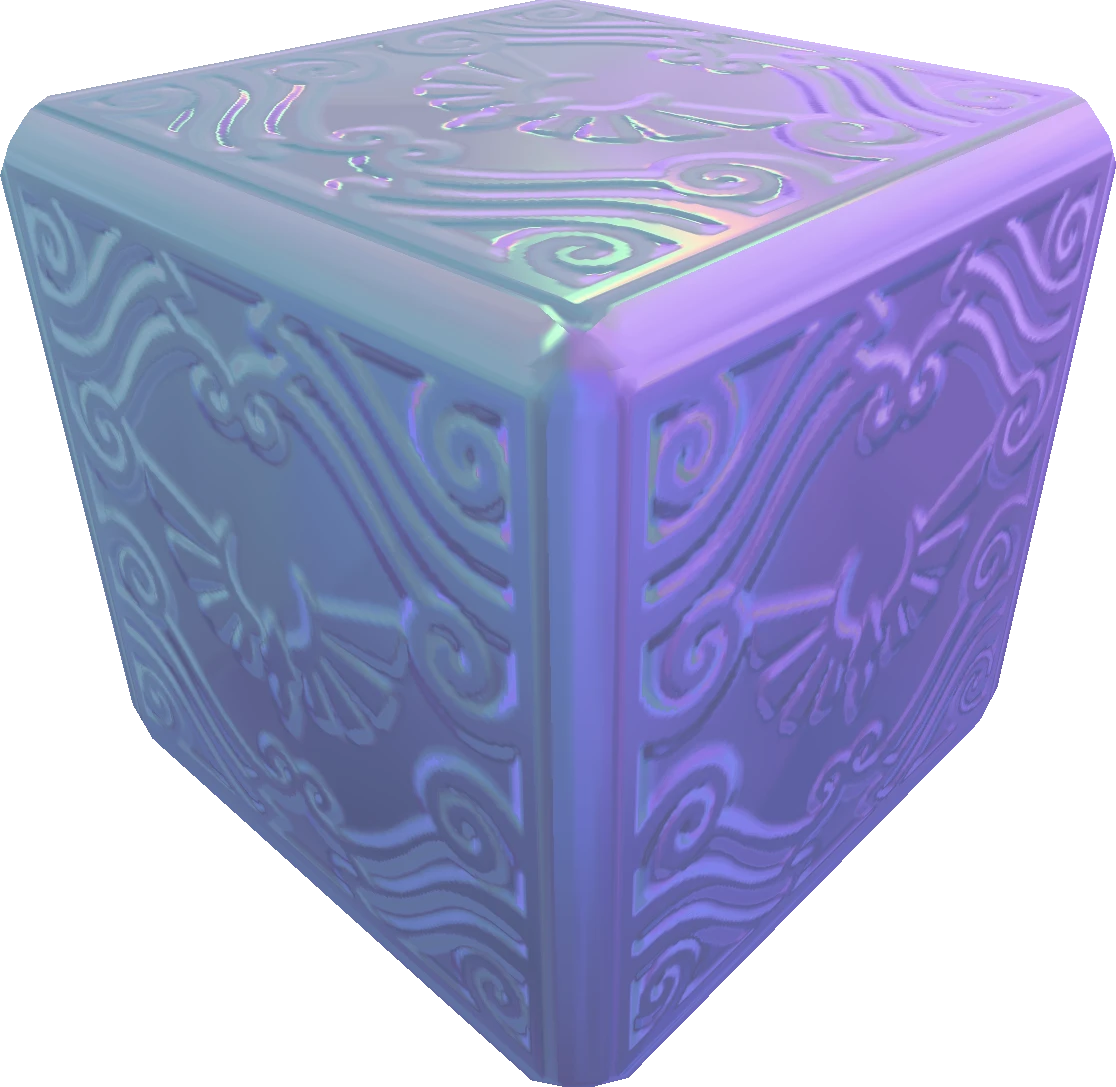
Goddess Cubes
A Goddess Cube (in-game model).
Small glowing cubes are hidden around the surface. Hit one with a Skyward Strike and it shoots up into the sky, unlocking a goddess chest on Skyloft or a nearby sky island.
Dusk Relics and treasure
A Dusk Relic (in-game model).
Treasures from monsters, the surface and even the Silent Realms (look for Dusk Relics) feed the upgrade system at the Scrap Shop in Skyloft’s Bazaar, so it pays to pick up everything.
amiibo shortcut (HD only)
Official art of Zelda and her Loftwing.
In Skyward Sword HD, tapping the Zelda & Loftwing amiibo lets you leave the surface or a dungeon for the sky at any time, and tap again to return to the same spot.
Zelda Temple’s original Skyward Sword secrets will be merged here once Luke’s old article has been checked.
Glitches, exploits and oddities
Skyward Sword is a tidy game, but one bug was serious enough for Nintendo to set up a repair service.
The Golo bug (game-ending)
Golo the Goron (in-game model).
Late in the game Link collects the three parts of the Song of the Hero from Faron, Eldin and Lanayru. If he gets Lanayru’s part first and then speaks to Golo, the Goron by the Lanayru Mine, before collecting the other two, the scenes that start the remaining quests never play and the game cannot be finished. Nintendo of America told players to do Faron or Eldin first and offered to repair affected save data that players sent in; Nintendo in Japan announced an online fix for connected Wiis and a mail-in option for the rest.
The stranded Timeshift Orb
The Pirate Stronghold in the Lanayru Sand Sea.
In the Pirate Stronghold, throw the Timeshift Orb onto the central pillar and jump down, and it is out of reach. Leaving and coming back resets the room.
Through the cobwebs
Link with the Bug Net (official render).
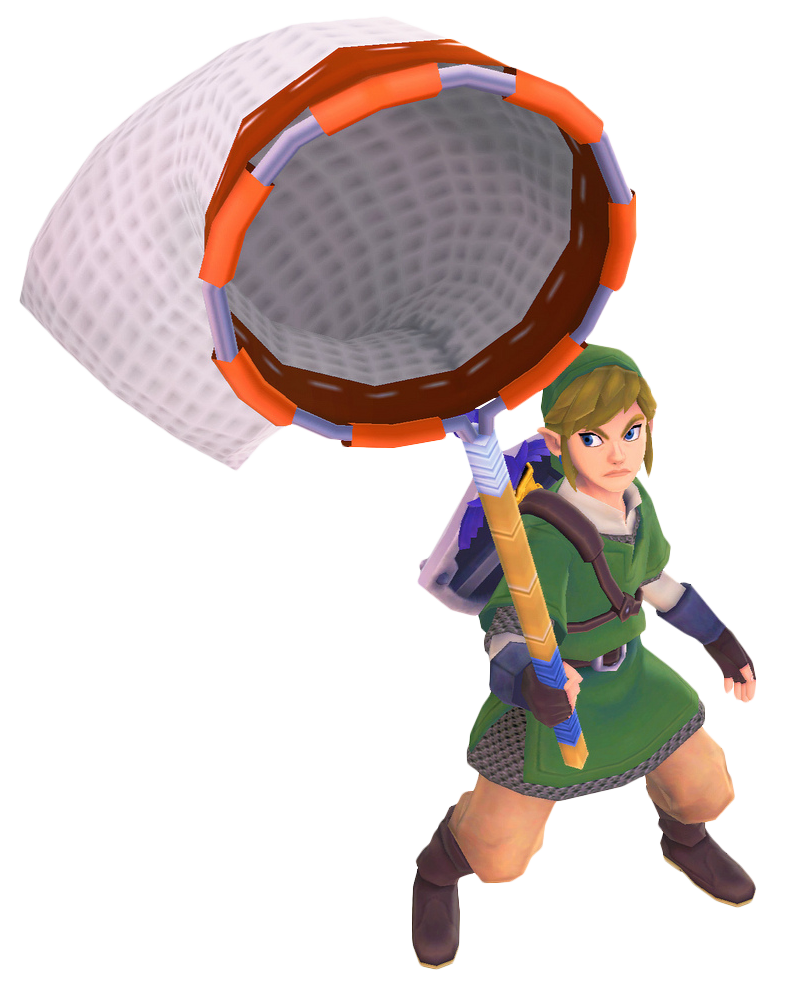
Swing the Bug Net just before touching a spider web and Link can walk straight through it without cutting it down.
Videos & media
Nintendo’s trailer for the Switch remaster, and VGC’s video review of it.
Nintendo of America’s official announcement trailer for Skyward Sword HD, from the Nintendo Direct of 17 February 2021.
Video Games Chronicle’s video review of Skyward Sword HD (2021).
Trivia & facts
The name comes from a single pose. Miyamoto suggested the sword should stop when you hold it up; holding it skyward to charge a beam became the Skyward Strike, and the title followed.
Fujibayashi wrote the story synopsis in a single day at home, after telling colleagues he did not feel well. He described crumpling up page after page like an old novelist.
Zelda was meant to push Link off a ledge three times. Miyamoto thought that was one too many.
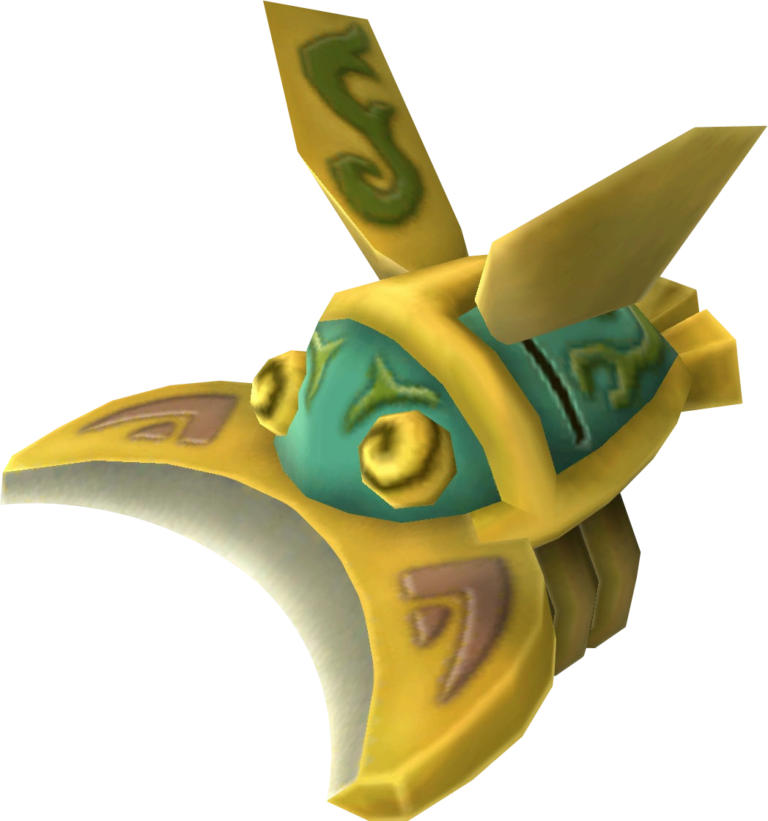
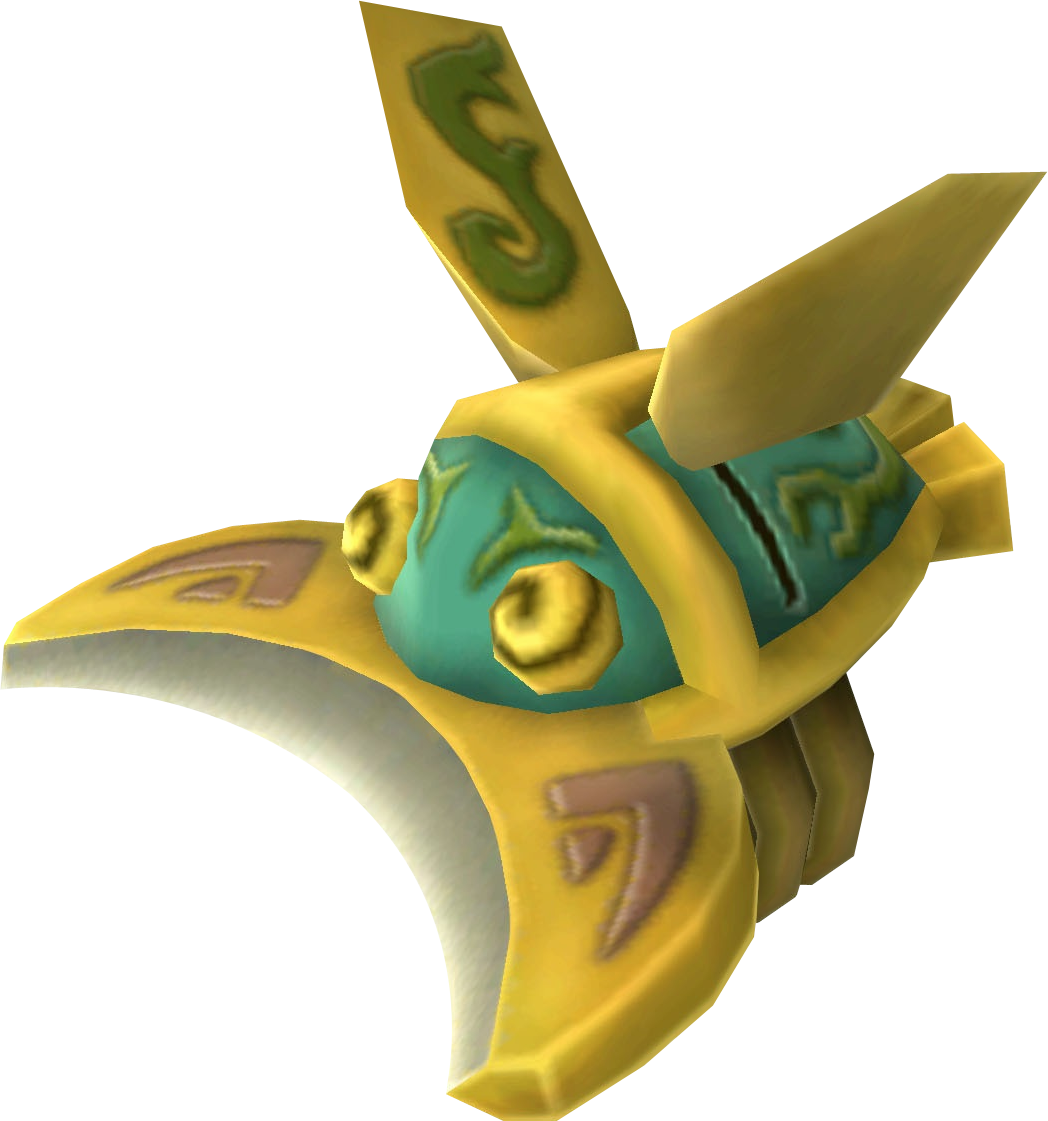
The Beetle, a flying gadget you steer with the Wii Remote.The Beetle started life as a boomerang, and the Whip owes its place to Iwata praising it at E3 2010.
Dowsing was inspired by the L-shaped metal rods that real dowsers use to hunt for water.
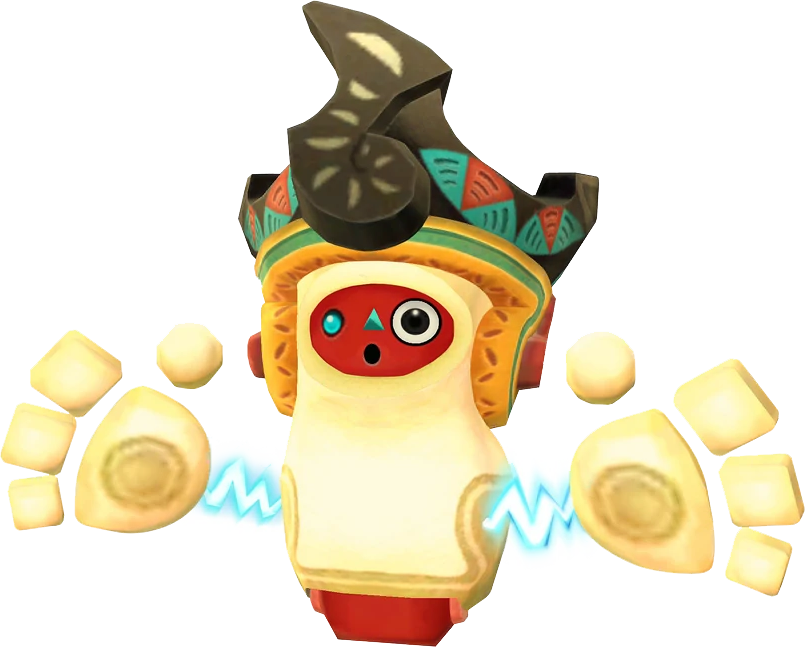
An ancient robot (official render).The desert’s ancient robots were softened with the look of Japanese Jomon-period clay figures.
Ghirahim’s slithering tongue had to be built into his skeleton.
Rupees were made bigger than in earlier games so players would notice them, and the new Heart Flowers were inspired by Bomb Flowers.
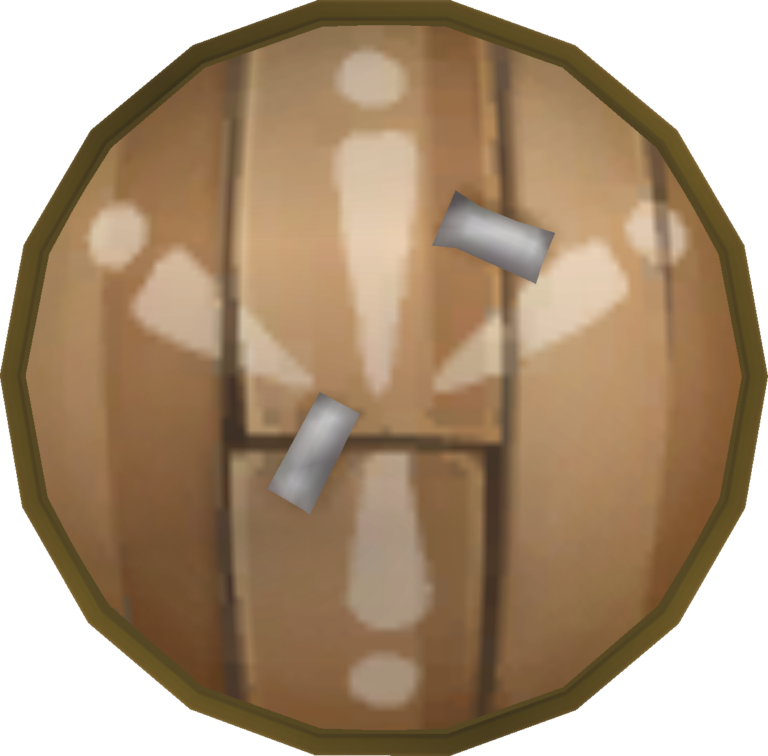
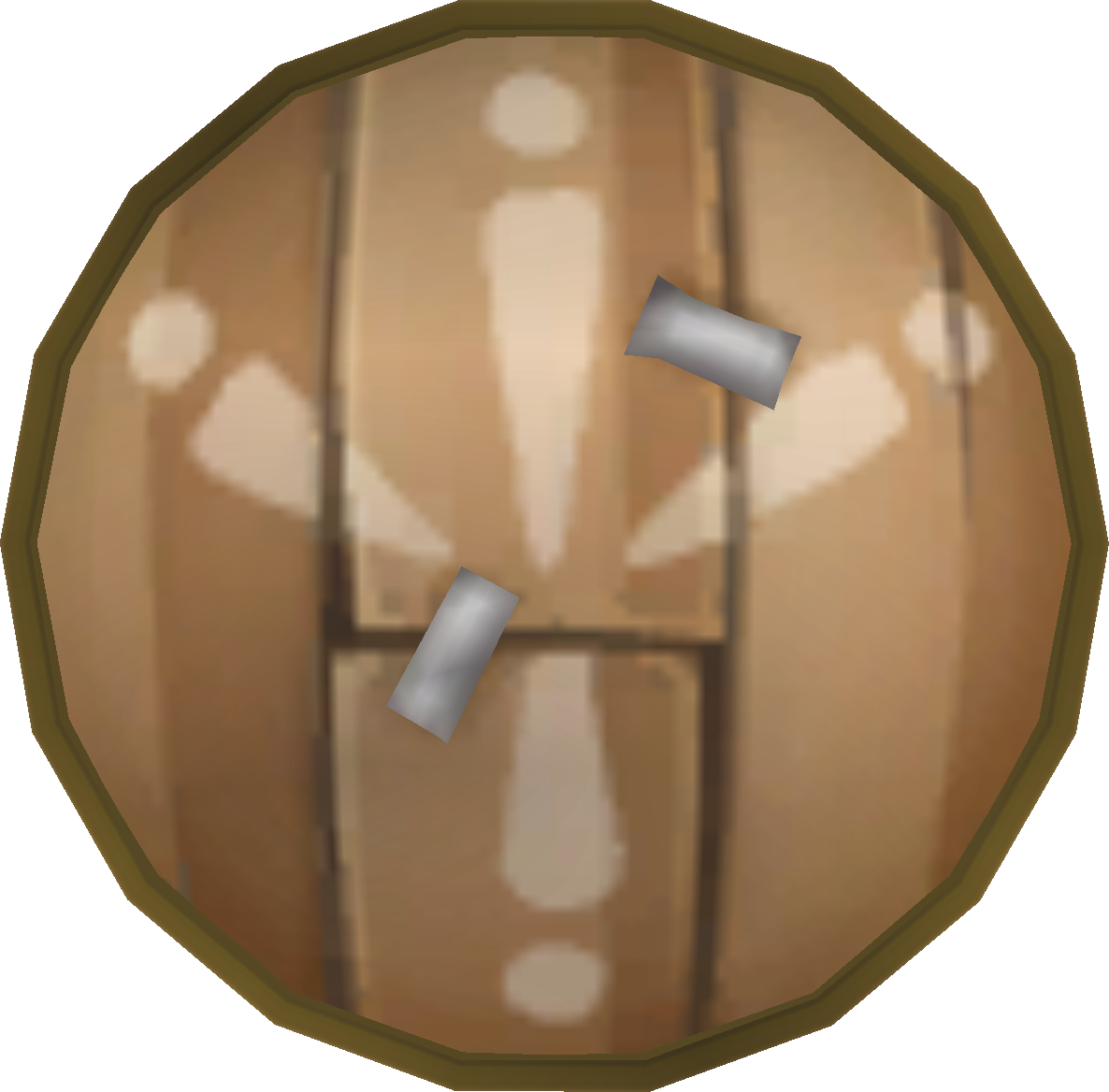
The Wooden Shield (in-game model).During testing Miyamoto’s shield broke, prompting a sad “My shield…” from the boss.
The game’s testers routinely played for 600 to 700 hours; some reached 1,000, and one in South Korea clocked 880.
The Sealed Grounds, the arena for the Imprisoned fights, were designed by the director of New Super Mario Bros. Wii, who was given a brief to find a way of holding back a giant boss forcing its way to a goal.
Fujibayashi wanted to recreate the sound of entering a dungeon from the original Famicom Disk System game.
The “Ballad of the Goddess” is Zelda’s Lullaby played in reverse.
Koji Kondo, the series’ original composer, wrote just one piece for the game: the prologue music.
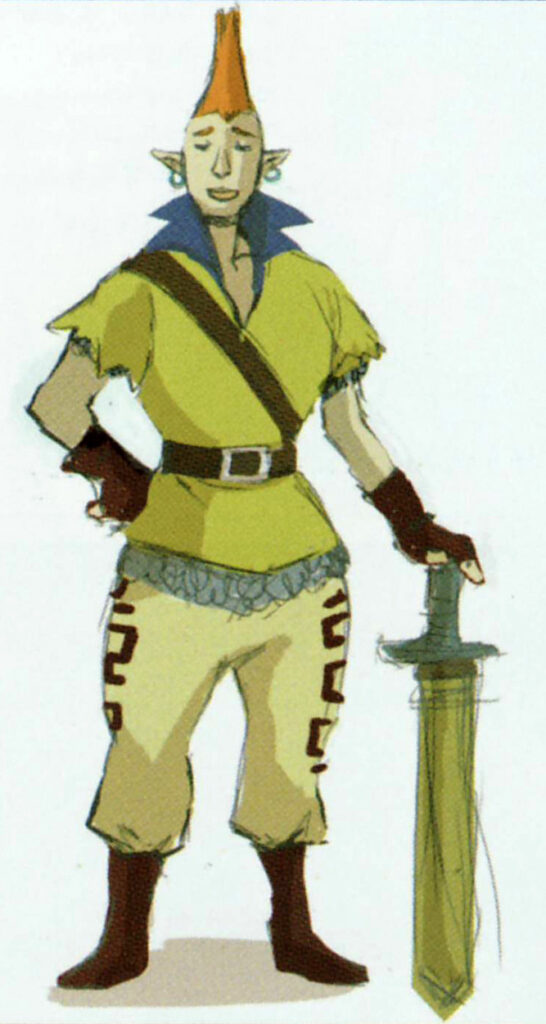
Concept art of Groose.Groose’s quiff was based on a rooster’s comb.
Koloktos and the Ancient Cistern draw on Indian and Buddhist imagery; Koloktos’s throwing axes are named “Cakram” in the game’s files.
In the E3 2010 demo, Moldarach turned up as a boss in Faron Woods.
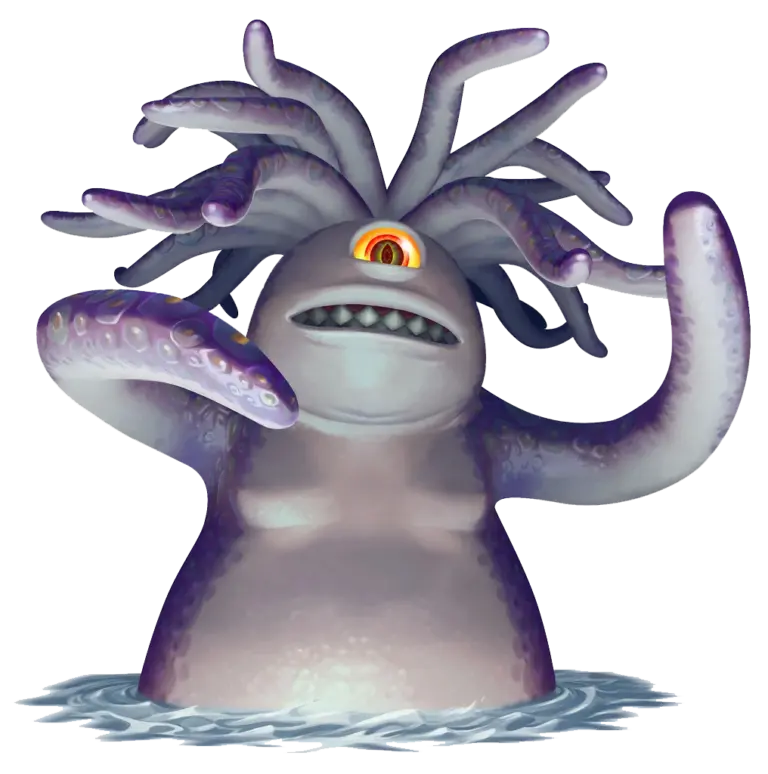
Tentalus, now with a fossil named after him.In 2025 palaeontologists named a 500-million-year-old fossil from Utah Tentalus spencensis, after the Sandship boss, because of its crown of tentacles.
Famitsu’s 40/40 was its sixteenth perfect score ever, and only the third for a Zelda, after Ocarina of Time and The Wind Waker.
Edge’s ten was the magazine’s fourteenth, and its first since Rock Band 3 the year before.
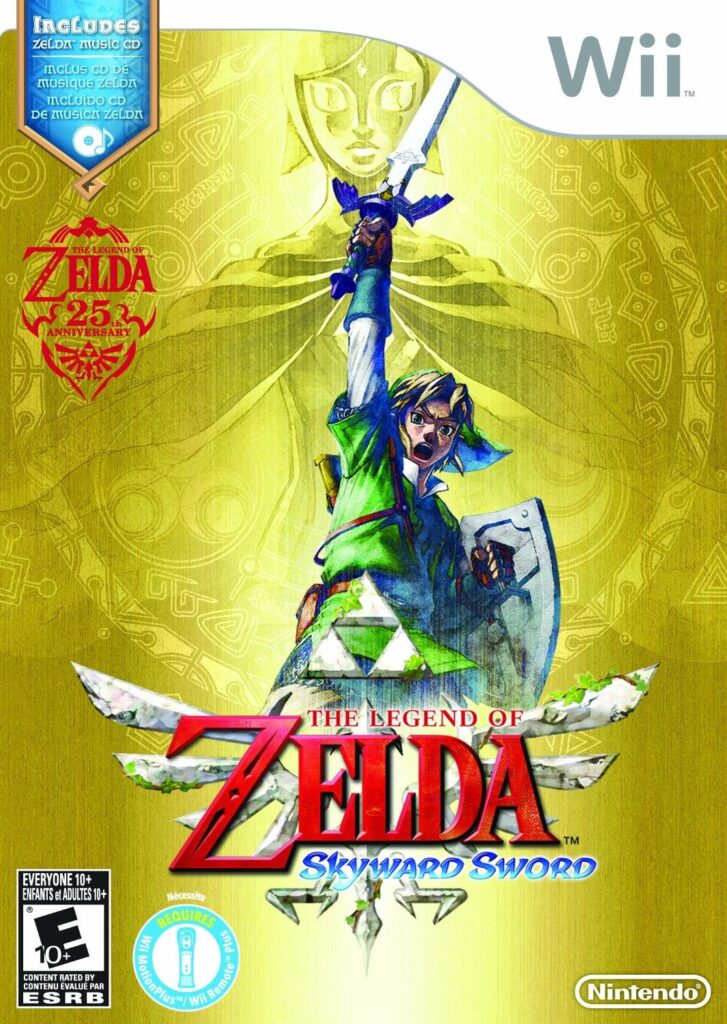
Box art of the North American bundle with the gold Wii Remote Plus.The gold Wii Remote Plus in the North American bundle was, Nintendo was careful to point out, gold in colour only.
Media & artwork
Box art, official artwork and screenshots from Skyward Sword and Skyward Sword HD. Select any image to view it larger.
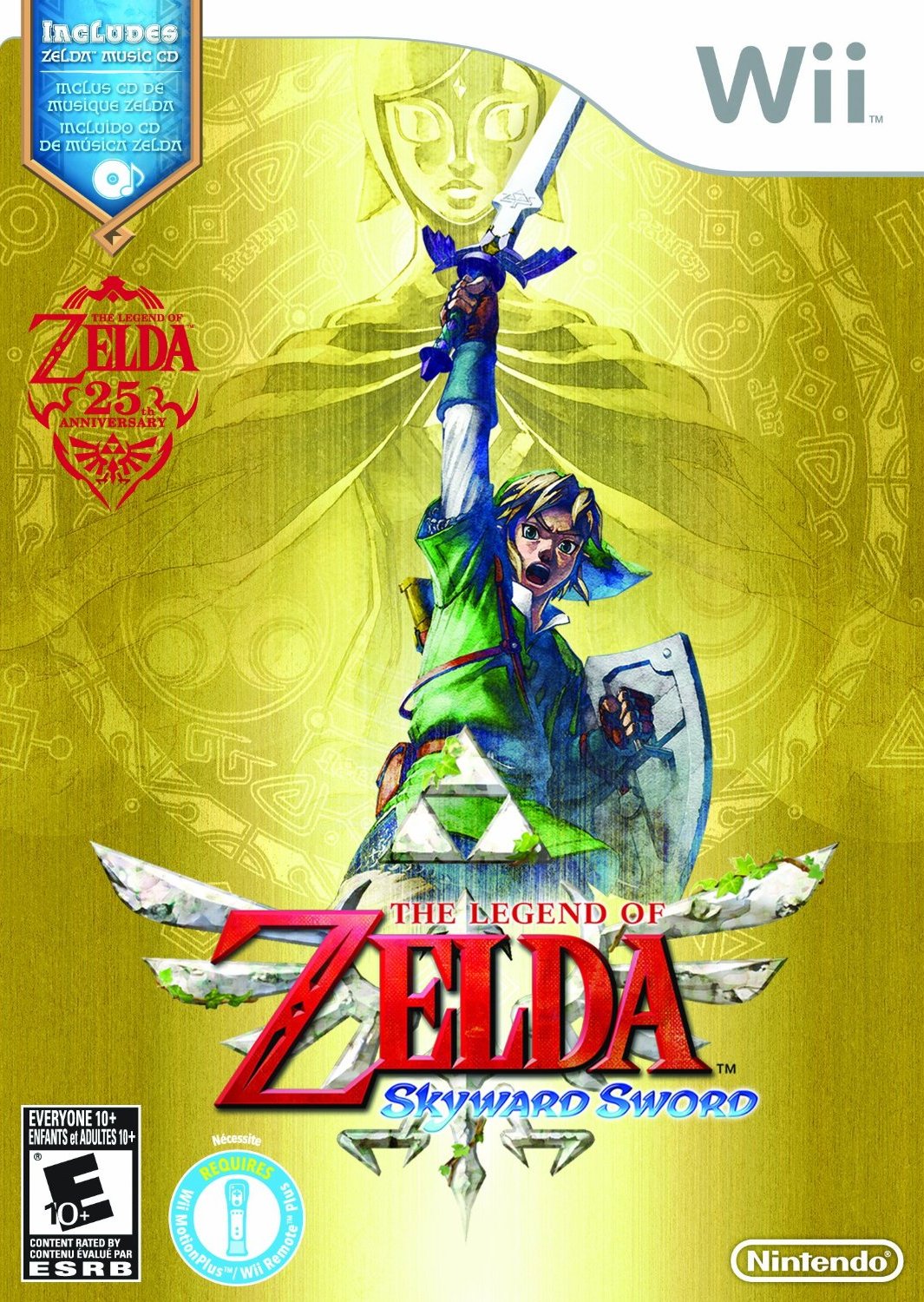
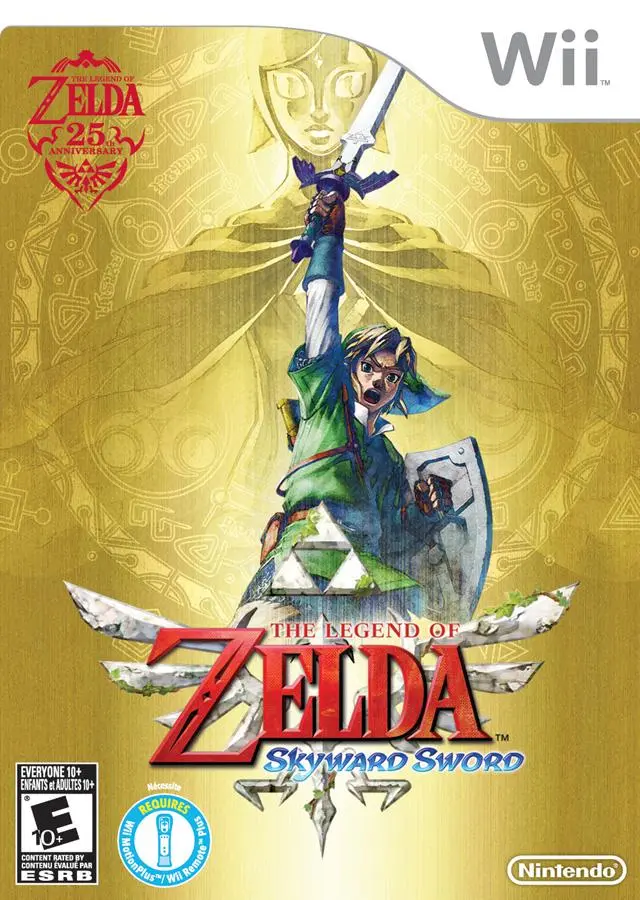
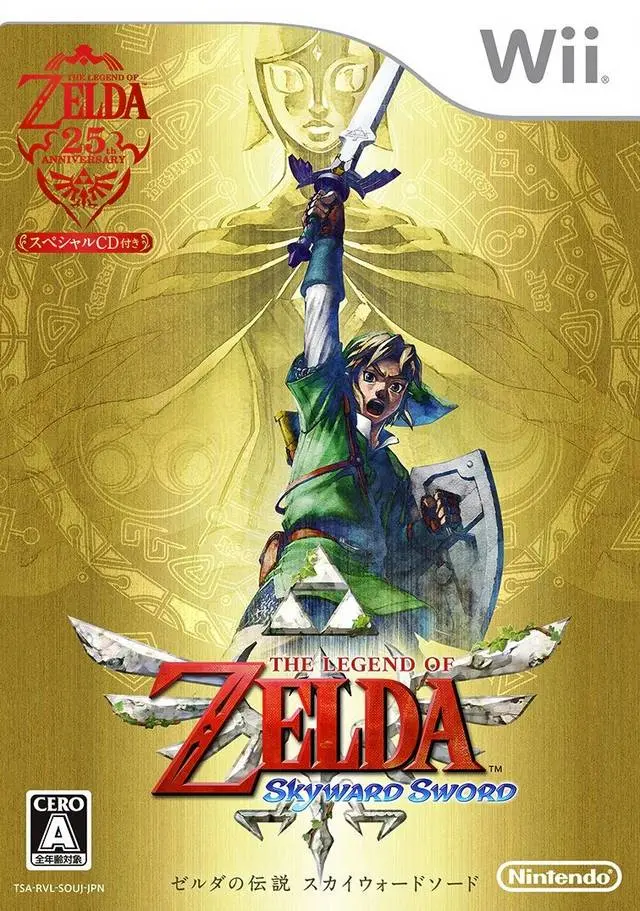
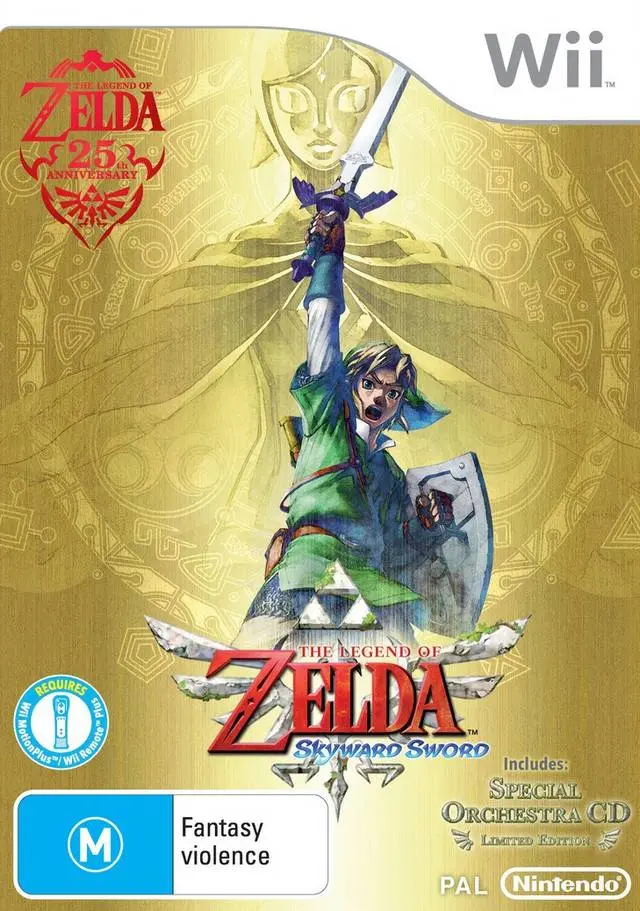
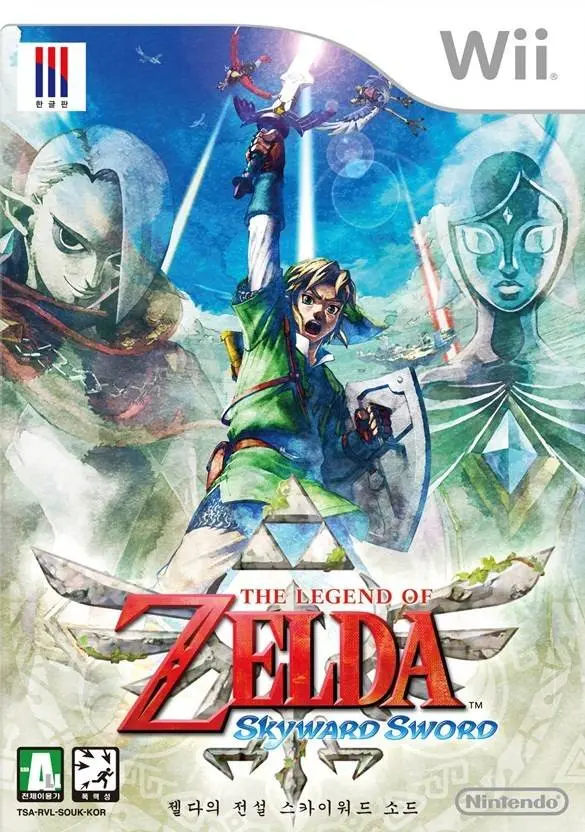
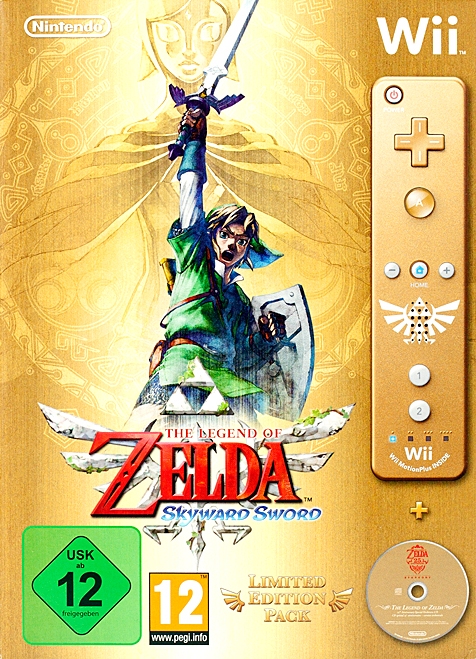
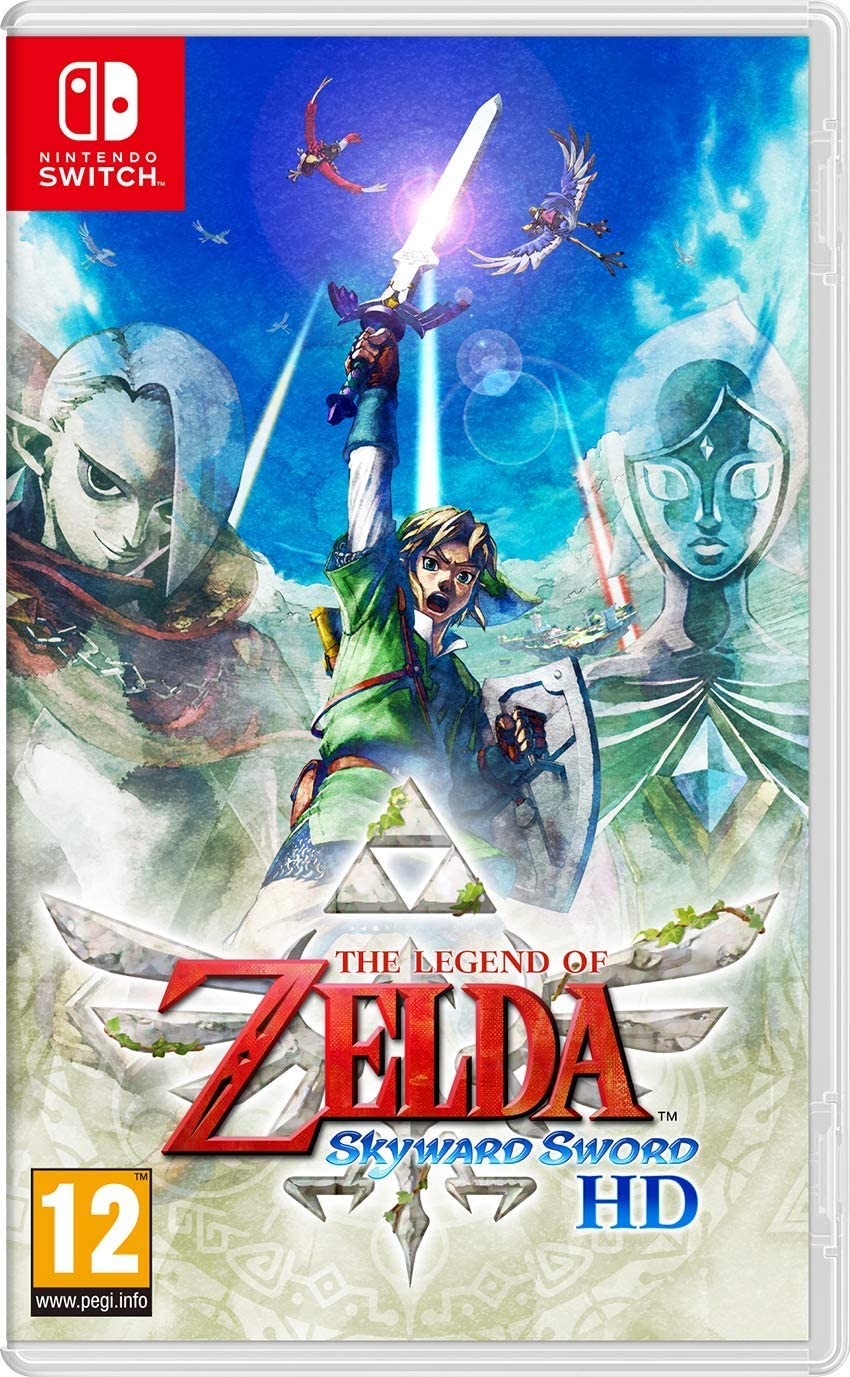
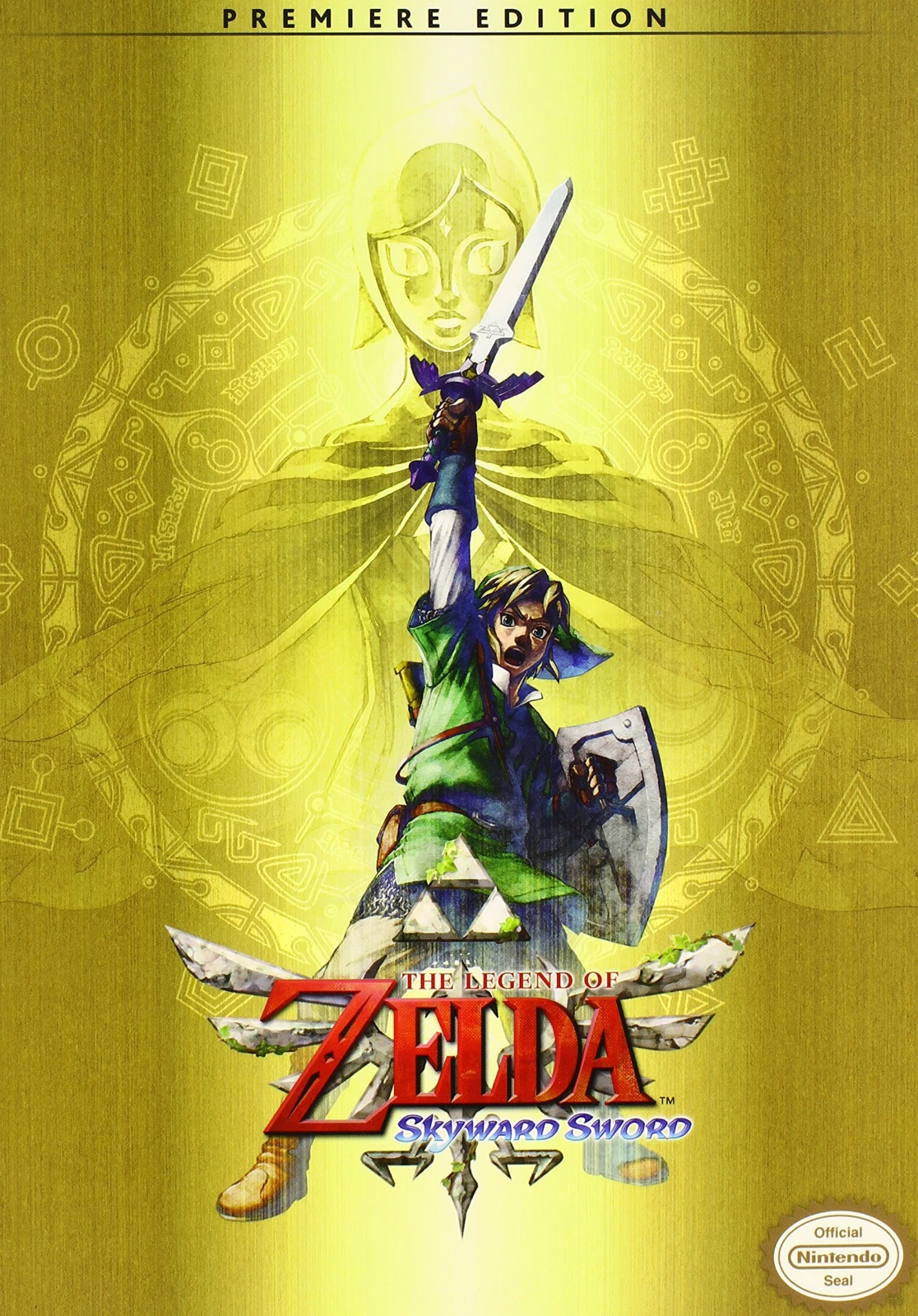
North American Wii box (2011).Japanese Wii box (2011).Australian and New Zealand Wii box (2011).South Korean Wii box.European bundle box (2011).The Skyward Sword logo.European Nintendo Switch box for Skyward Sword HD (2021).World map (Skyward Sword HD).Original soundtrack box art.Cover of the Prima strategy guide.
Skyward Sword has had a second life. Fans have argued about its linearity and its motion controls ever since 2011, but the HD remaster outsold the original within months, and its ideas run right through the Zelda games that followed.
From Wii to Switch
Wii18–24 November 2011 – Europe 18 November, North America 20 November, Japan 23 November, Australia 24 November.
Gold Wii Remote Plus bundleNovember 2011 – Game plus a gold controller; early copies of every edition include the 25th anniversary orchestral CD.
Penny Arcade comic15 November–13 December 2011 – Five weekly parts on the official site.
Hyrule Historia21 December 2011 – The 25th anniversary book, opening with the world of Skyward Sword; in English from January 2013.
Super Smash Bros. for Wii U2014 – Skyloft stage; Ghirahim Assist Trophy.
Hyrule Warriors2014 – Fi and Ghirahim playable.
Wii U eShop1 September 2016 – Released as a download for the series’ 30th anniversary.
Super Smash Bros. Ultimate2018 – Skyloft returns; Ghirahim Assist Trophy and spirit.
Skyward Sword HD16 July 2021 – Nintendo Switch, with button controls and 60 fps; Skyward Sword Joy-Con and the Zelda & Loftwing amiibo on the same day.
Tears of the Kingdom amiibo2023 – Skyward Sword amiibo unlock Sky gear and paraglider fabrics.
Skyward Sword HD (2021)
Key art for Skyward Sword HD.
Nintendo announced the remaster in a Nintendo Direct on 17 February 2021 and released it worldwide on 16 July 2021. The work was done with Tantalus, the Australian studio behind Twilight Princess HD. The biggest change is choice: you can still swing two Joy-Con to fight, but you can also play entirely with buttons, flicking the right stick to swing the sword, which means handheld play on Switch Lite and Pro Controller support. It runs at 60 frames per second, Fi is far less chatty because many of her hints are now optional, dialogue and cutscenes can be skipped, and Hero Mode gets its own slot.
Alongside it came a pair of Joy-Con styled after the Master Sword and Hylian Shield and a Zelda & Loftwing amiibo that works as a portable checkpoint, letting you fly up to the sky and drop back to the same spot. The remaster sold 3.6 million by the end of September 2021, roughly what the Wii version had managed in its whole life, and 3.91 million by March 2022. Reviews were warm, averaging 81 on Metacritic: Nintendo Life gave it 9/10, Game Informer 8/10 and GameSpot 7/10, and Video Games Chronicle gave it five stars out of five.
Where it all began
A Goddess Statue from Breath of the Wild (in-game model).
Nintendo describes Skyward Sword as the earliest tale in the Zelda timeline, and Hyrule Historia, published a month after the game in Japan, laid out the full chronology that grows from it. Much of what later games take for granted starts here: the Master Sword and its spirit, the Sheikah’s devotion to Zelda, the goddess Hylia whose statues fill Breath of the Wild, the three dragons whose counterparts guard the same regions in that game, and Demise’s curse, which explains why the struggle between hero, princess and evil never really ends.
Echoes in later games
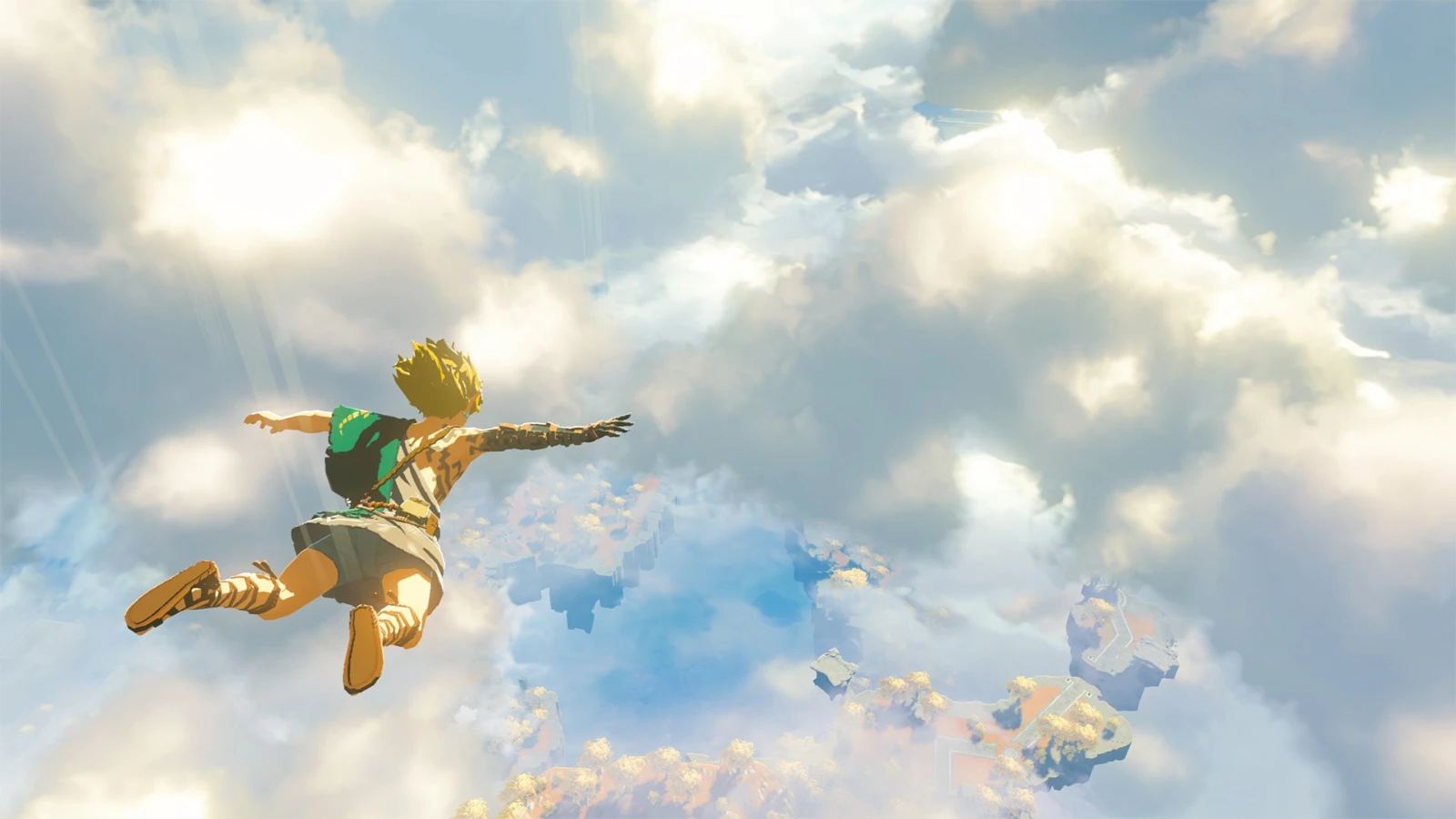
Link skydiving in Tears of the Kingdom (promotional screenshot).
When Tears of the Kingdom put islands in the sky above Hyrule, the comparisons with Skyloft were instant, and its developers drew the contrast themselves: in Skyward Sword you picked a landing spot from a map, while the new game lets you dive straight from sky to ground, something Fujibayashi said he had wanted to do ever since Skyward Sword. Skyloft is a stage in two Smash Bros. games, Fi and Ghirahim fight in Hyrule Warriors, and the Skyward Sword amiibo still unlock themed gear in Tears of the Kingdom.
Sales & reviews
Sales figures
Skyward Sword topped the Japanese chart in its first week with 194,978 copies (Media Create). In the US, Nintendo of America’s Reggie Fils-Aime said it had sold 535,000 copies since its launch on 20 November and called it the fastest-selling Zelda yet. Nintendo reported 3.42 million worldwide by the end of 2011 and 3.52 million by 31 March 2012, close to Twilight Princess’s first months. Its lifetime total on Wii is put at about 3.67 million by analyst Daniel Ahmad.
The Switch remaster did even better: 3.6 million by 30 September 2021 and 3.91 million by 31 March 2022.
194,978first week in Japan
3.52mWii, by March 2012
3.6mHD in its first quarter
3.91mHD by March 2022
Reception and review scores
Reviews were rapturous. Metacritic averages 81 reviews at 93 out of 100. These are period scores we found with the outlet named:
FamitsuJapan · 40/40 (November 2011)
40/40
EdgeUK · reviewed October 2011
10/10
IGNUS · November 2011
10/10
Game InformerUS · December 2011 issue
10/10
EurogamerUK · November 2011
10/10
Nintendo LifeUK · November 2011
10/10
The GuardianUK · November 2011
5/5
Official Nintendo MagazineUK · reviewed October 2011
98%
Computer and Video GamesUK · November 2011
9.8/10
NGamerUK · November 2011
9.8/10
GamesTMUK · November 2011
9/10
GamesRadarUK/US · November 2011
9/10
JoystiqUS · November 2011
4.5/5
1UP.comUS · November 2011
B+
Electronic Gaming MonthlyUS · November 2011
8.5/10
GameSpotUS · November 2011
7.5/10
Edge and the UK’s Official Nintendo Magazine published the first reviews in October, with ten out of ten and 98%. Edge’s teaser called it an ultimate tale of hero-making that made the Wii the console it was always meant to be; IGN said it “sets a new, important benchmark for Nintendo.” GameSpot was the outlier: its reviewer liked the dungeons, the upgrades and a story in which Zelda is Link’s equal, but found the motion controls inconsistent and the structure predictable, and gave it 7.5.
The complaints that stuck were the repeat visits to the same areas, a linear structure that later divided fans, and Fi’s constant interruptions, which turned her into an internet joke and which the HD version toned down.
Honours
Spike Video Game Awards · 2011Best Wii Game and Best Motion GameWon both; also nominated for Game of the Year and Best Action Adventure Game.
Edge Awards · 2011Top of Edge’s yearPicked ahead of Dark Souls and Skyrim in Edge’s 2011 awards.
BAFTA Games Awards · March 2012Three nominationsBest Game, Game Innovation and the GAME Award of 2011.
Famitsu · November 2011Perfect 40/40The sixteenth game ever to score full marks, and the third Zelda.
Reader reviews
No reader reviews yet. Played it? Give it a score out of 10 and tell other fans what you think.
Every fact on this page was checked against the sources below in November 2026. Iwata Asks interviews were read in Zelda Dungeon’s transcripts and, where available, on Nintendo’s own Iwata Asks site.
To provide the best experiences, we use technologies like cookies to store and/or access device information. Consenting to these technologies will allow us to process data such as browsing behavior or unique IDs on this site. Not consenting or withdrawing consent, may adversely affect certain features and functions.
Functional
Always active
The technical storage or access is strictly necessary for the legitimate purpose of enabling the use of a specific service explicitly requested by the subscriber or user, or for the sole purpose of carrying out the transmission of a communication over an electronic communications network.
Preferences
The technical storage or access is necessary for the legitimate purpose of storing preferences that are not requested by the subscriber or user.
Statistics
The technical storage or access that is used exclusively for statistical purposes.The technical storage or access that is used exclusively for anonymous statistical purposes. Without a subpoena, voluntary compliance on the part of your Internet Service Provider, or additional records from a third party, information stored or retrieved for this purpose alone cannot usually be used to identify you.
Marketing
The technical storage or access is required to create user profiles to send advertising, or to track the user on a website or across several websites for similar marketing purposes.

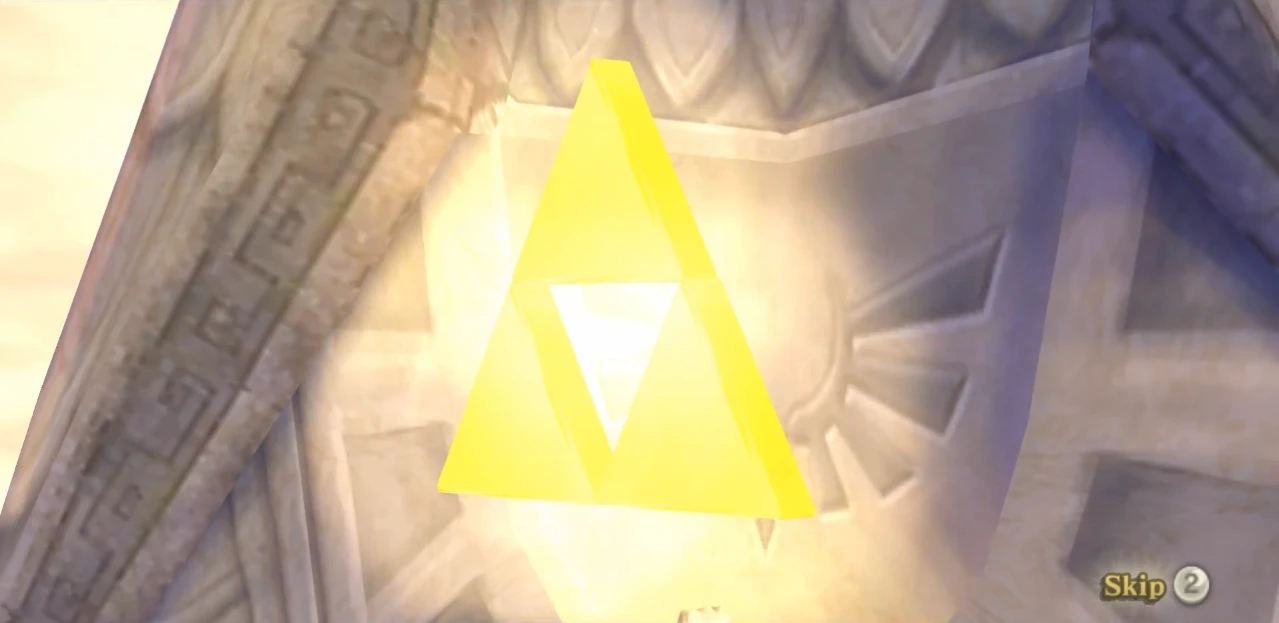
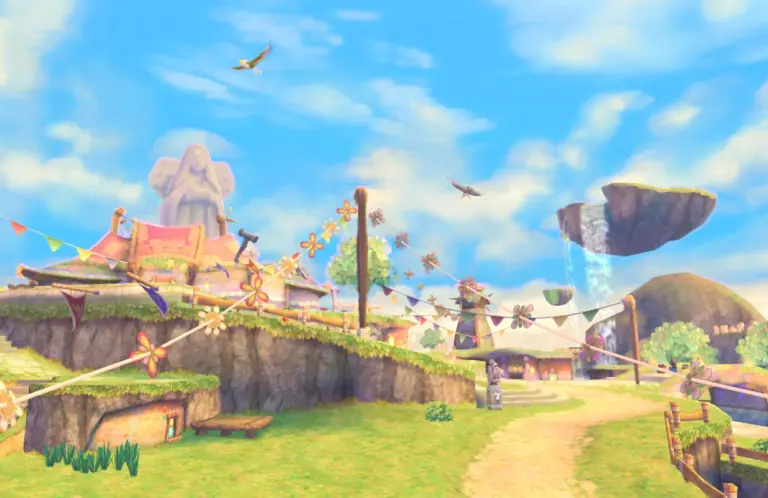 Skyloft and the SkyHome baseThe floating town, its Bazaar and Knight Academy, plus scattered sky islands and the storm of the Thunderhead. Bird statues, here and below, save your game.
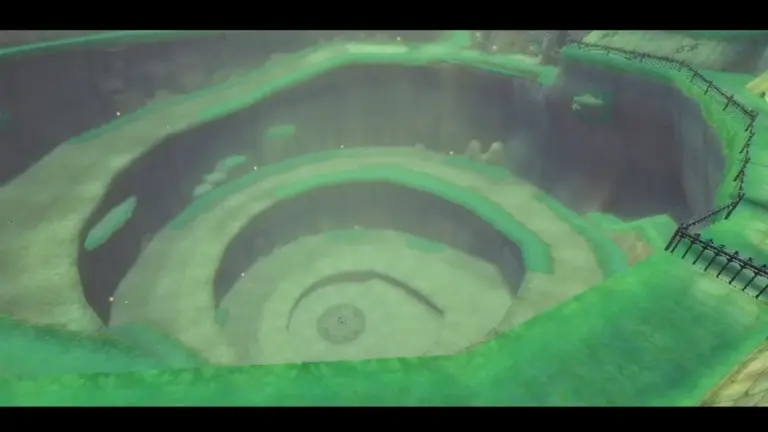 Sealed GroundsStory hubA spiral crater with the Sealed Temple at its edge, home of the old woman and the battleground for three fights with the Imprisoned.
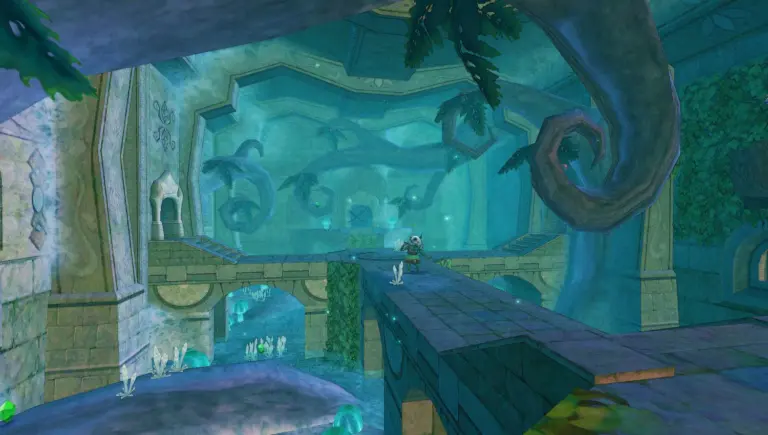 Skyview TempleFaron Woods · dungeon 1A vine-choked forest temple, with Ghirahim waiting at its heart.
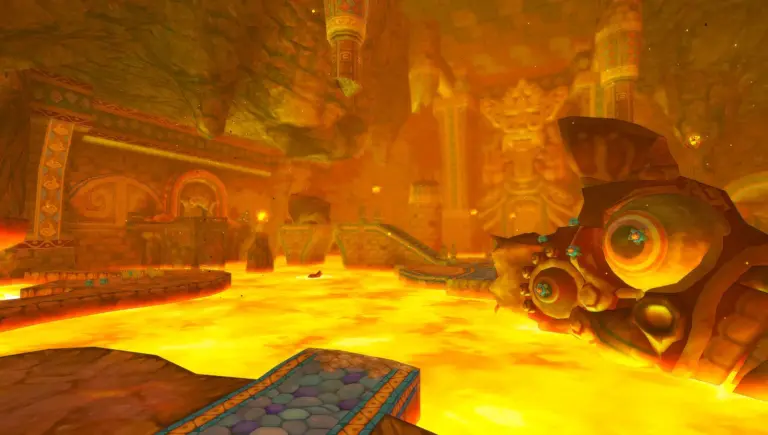 Earth TempleEldin Volcano · dungeon 2Lava flows and bomb puzzles; boss Scaldera, the Pyroclastic Fiend.
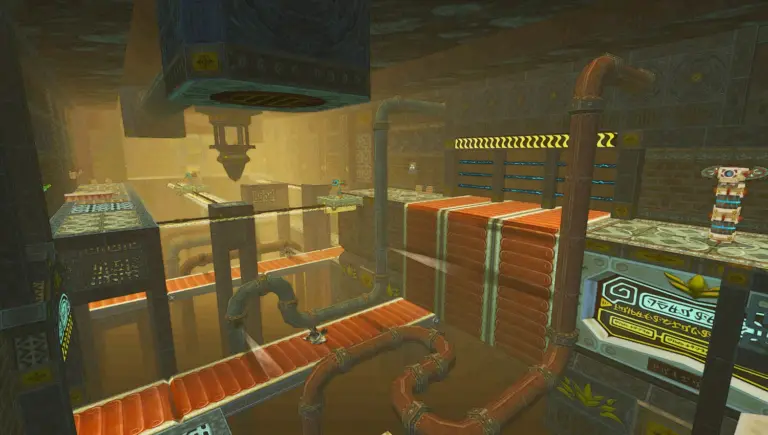 Lanayru Mining FacilityLanayru Desert · dungeon 3An abandoned mine that flickers between past and present; boss Moldarach, the Thousand-Year Arachnid. It leads to the Temple of Time.
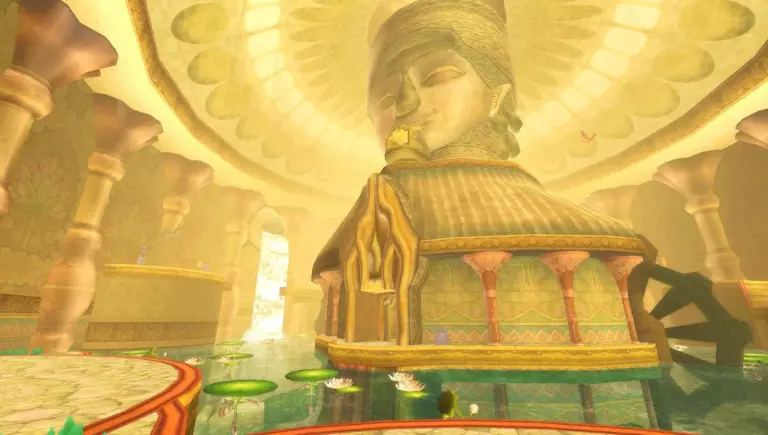 Ancient CisternFaron Woods · dungeon 4A golden temple in the waters beyond Lake Floria, with Cursed Bokoblins below; boss Koloktos, the Ancient Automaton.
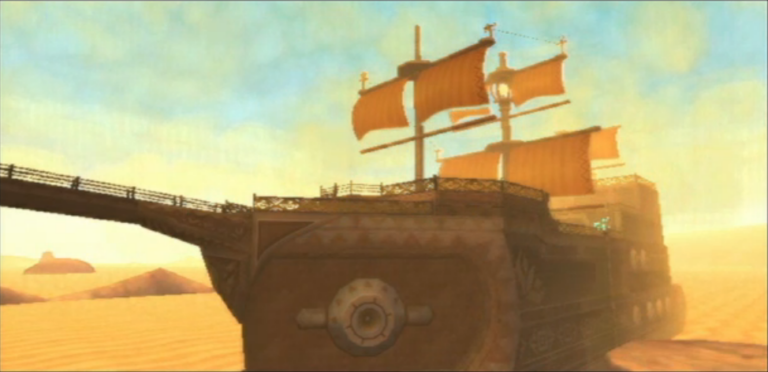 SandshipLanayru Sand Sea · dungeon 5A ship drifting on the sea of sand, found by dowsing; robot pirate Scervo duels Link on its gangplank, and boss Tentalus, the Abysmal Leviathan, attacks the deck.
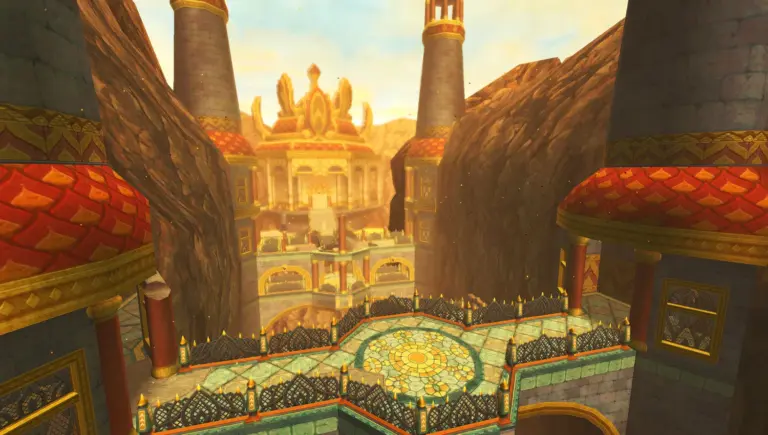 Fire SanctuaryEldin Volcano · dungeon 6A fortress near the volcano’s summit, ending in a rematch with a far tougher Ghirahim.
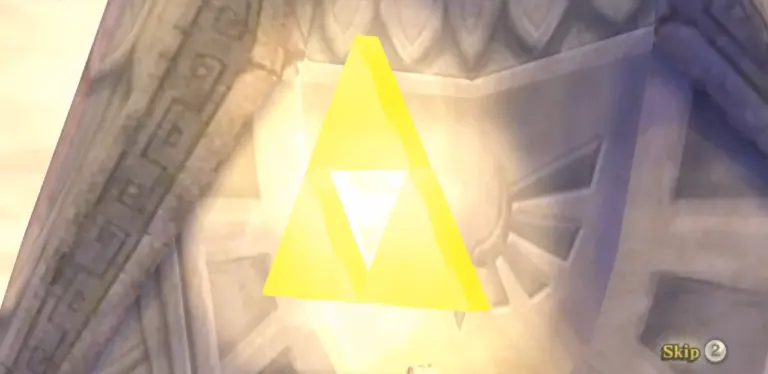 Sky KeepSkyloft · dungeon 7The last dungeon, hidden beneath the Statue of the Goddess, guarding the Triforce. There is no boss at the end.
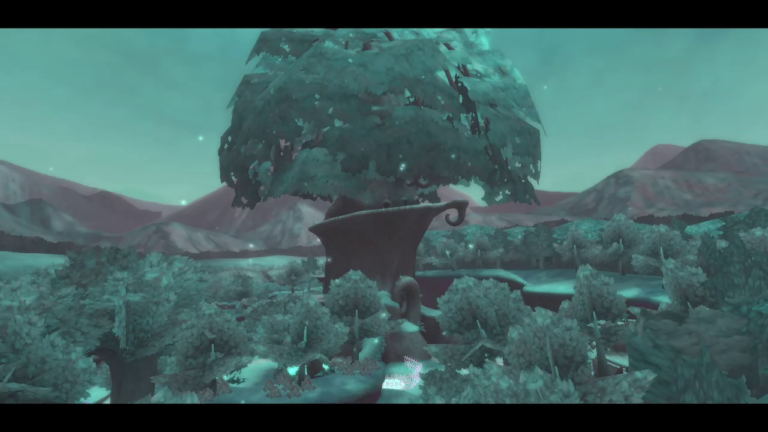 Silent RealmsFour trialsSpirit-world versions of Skyloft, Faron, Eldin and Lanayru: collect fifteen Sacred Tears without being caught. Rewards: Water Dragon’s Scale, Clawshots, Fireshield Earrings and the Stone of Trials.
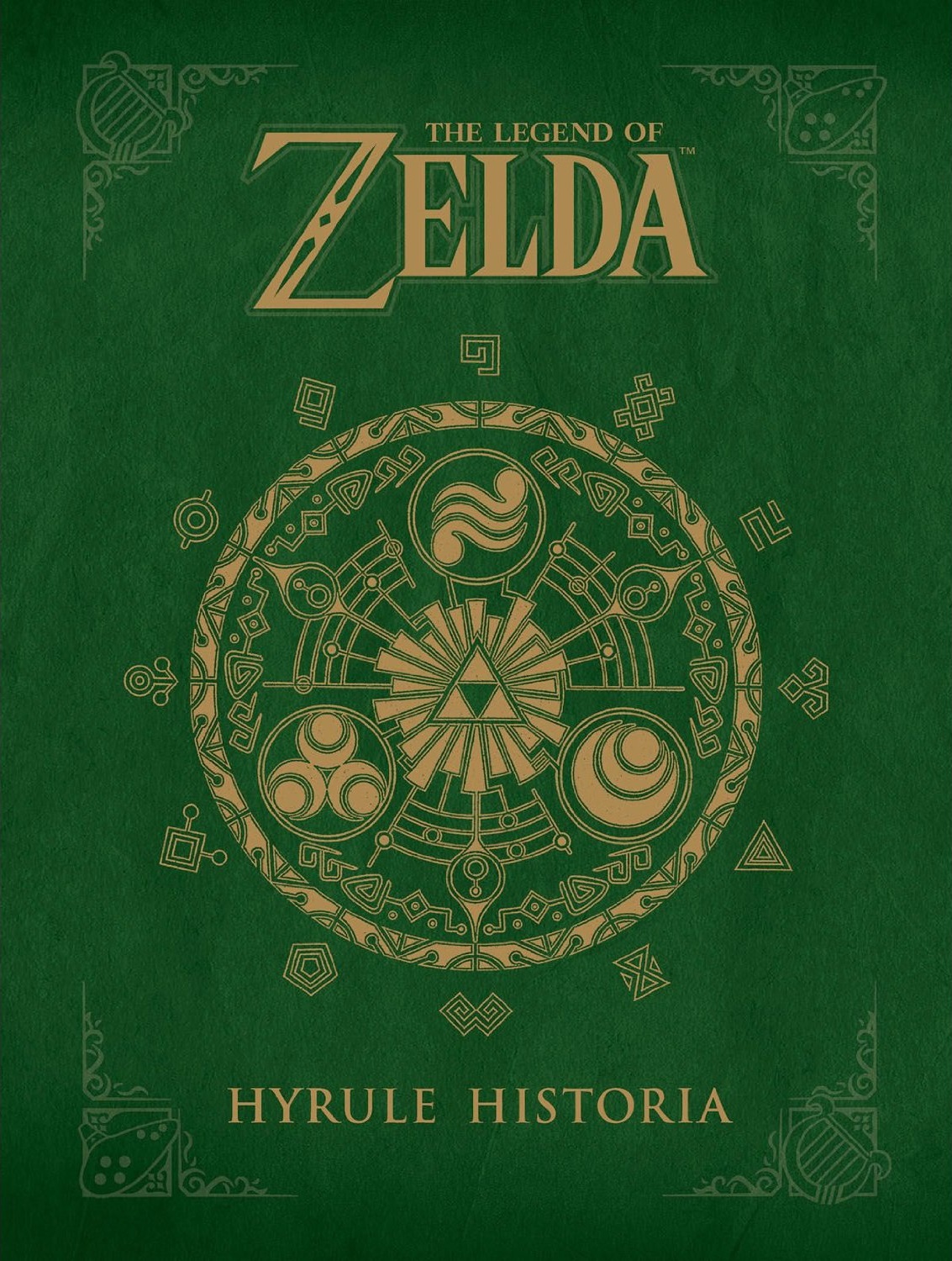 The Legend of Zelda: Hyrule HistoriaShogakukan · 21 December 2011 (Japan) · Dark Horse, 29 January 2013 (English)Nintendo’s 25th-anniversary book opens with “The Legend Begins: The World of Skyward Sword”, packed with character designs, unused concept art and notes from the team, before laying out the official timeline that puts this game first. It closes with a special comic by Akira Himekawa set before the events of Skyward Sword. The English edition topped Amazon’s bestseller chart and the New York Times list for its category.
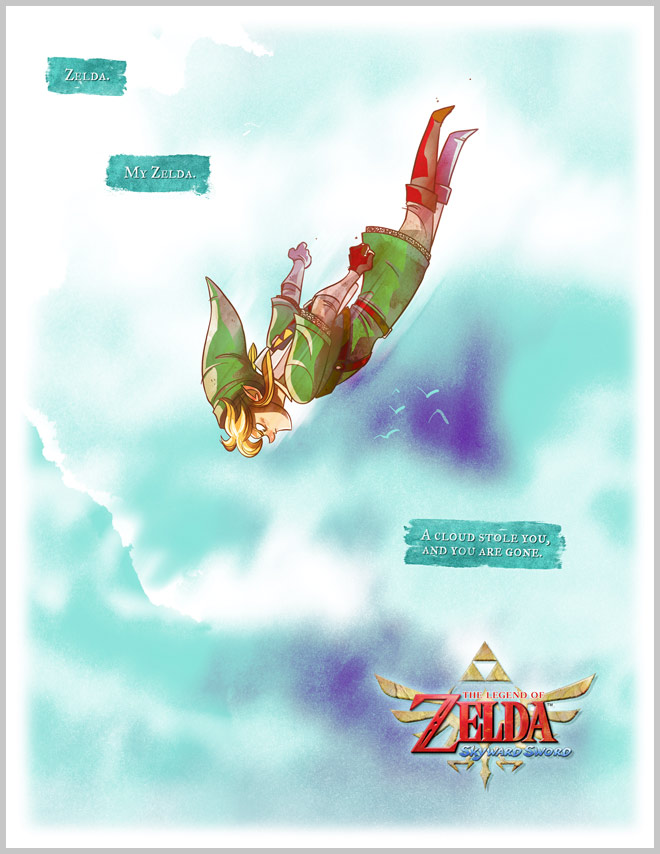 Penny Arcade Presents The Legend of Zelda: Skyward SwordWeb comic · Nintendo and Penny Arcade · 15 November–13 December 2011Nintendo asked Mike Krahulik and Jerry Holkins to draw a five-part comic for the launch, posted weekly on the official Zelda site. Headmaster Gaepora narrates.
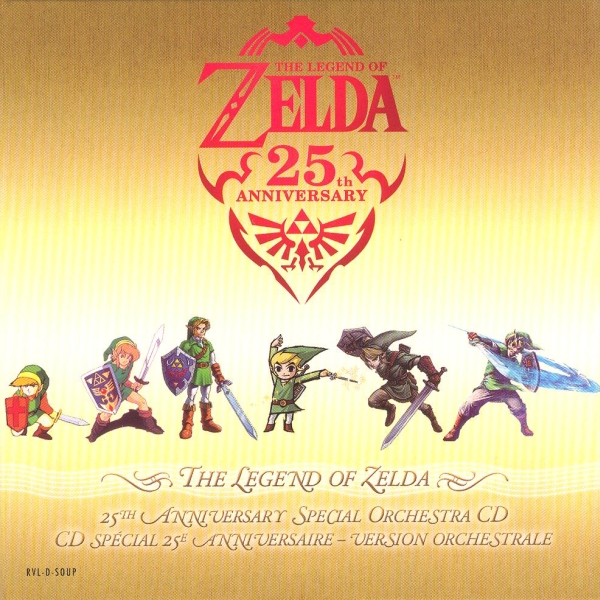 25th Anniversary Special Orchestra CDNintendo · 2011Packed with the first print run of the game, with or without the gold Wii Remote Plus: orchestral arrangements of music played at the series’ 25th anniversary symphony concerts, which Nintendo staged in Japan, America and Europe that year.
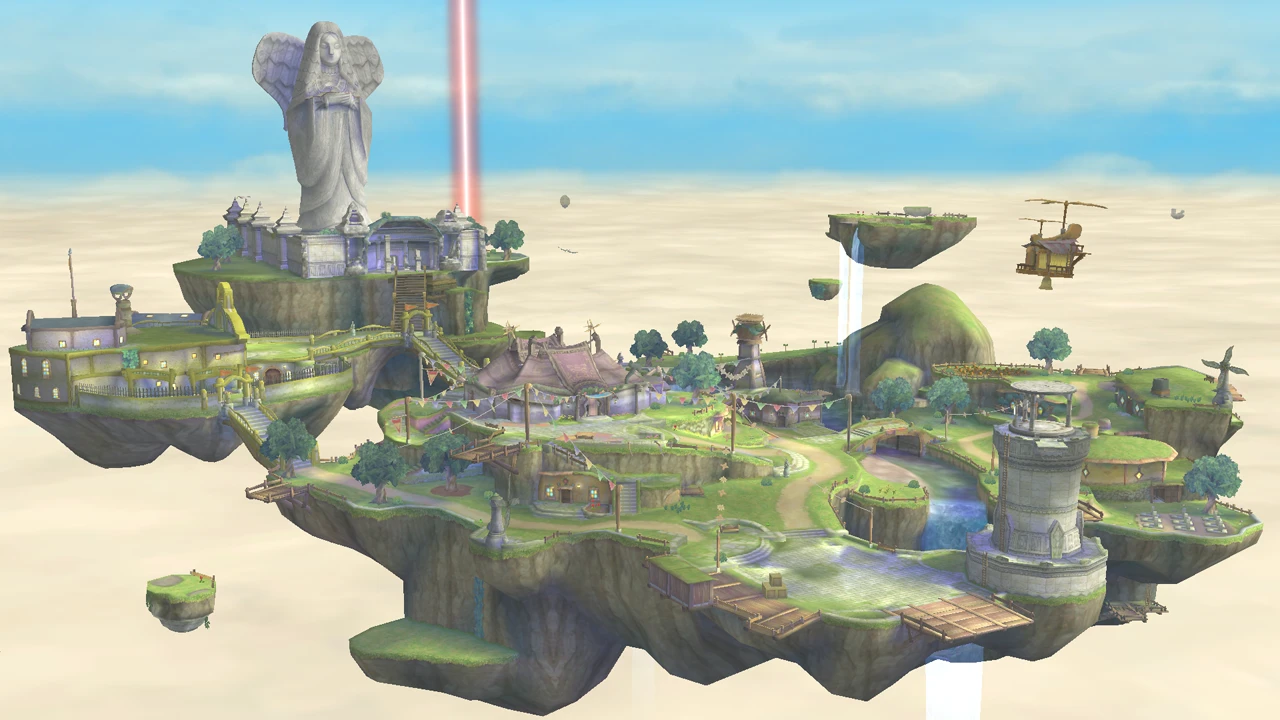 Super Smash Bros. for Wii U and UltimateNintendo · 2014 and 2018Skyloft is a stage in both, its platforms touring the Statue of the Goddess and the Knight Academy while Beedle’s Air Shop drifts past, and its main music is the “Ballad of the Goddess”. Ghirahim is an Assist Trophy in both games and a spirit in Ultimate, and Fi and Gaepora are trophies in the Wii U game.
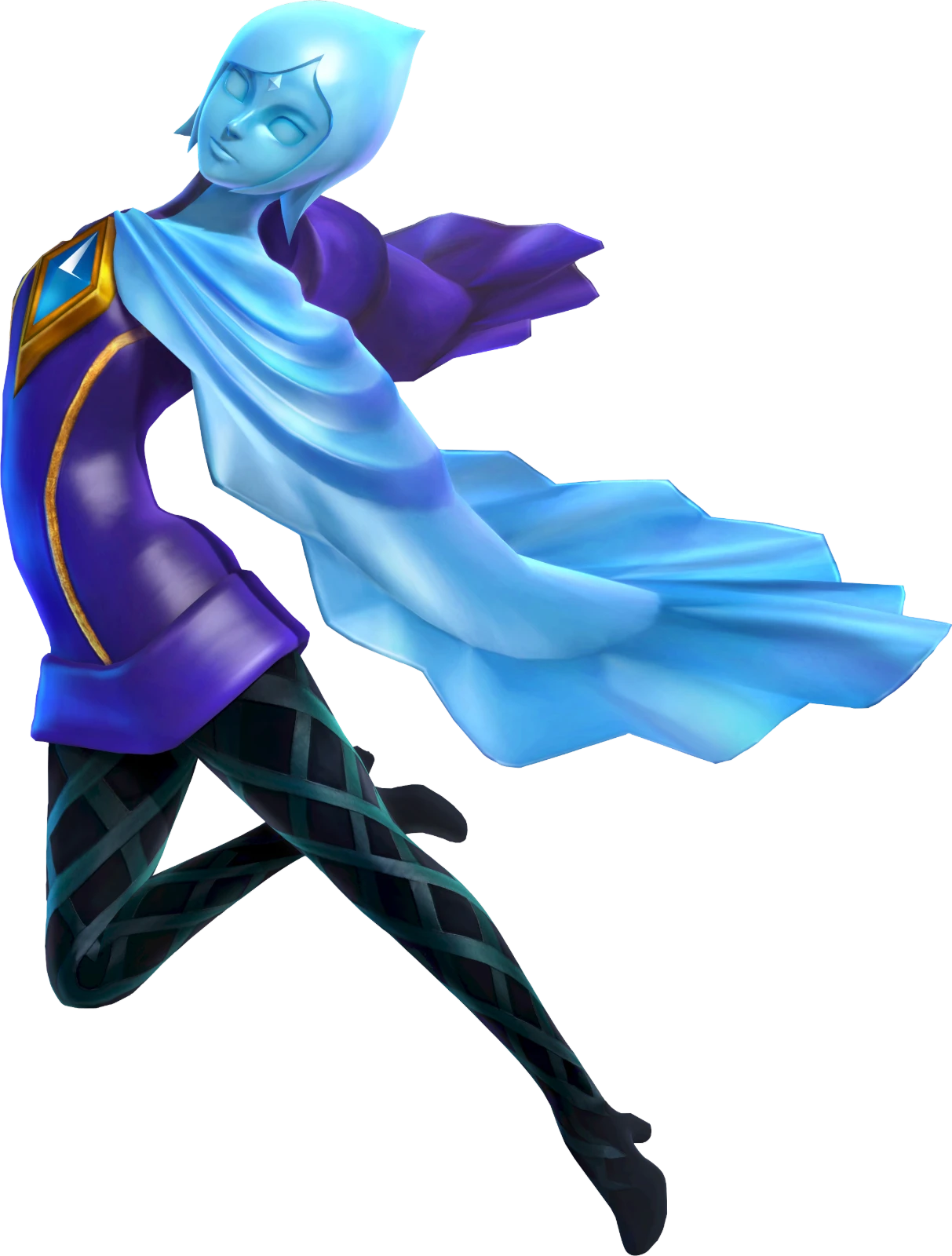 Hyrule WarriorsKoei Tecmo and Nintendo · 2014Fi and Ghirahim are both playable. Fi’s chapter starts in Skyloft, and Levias floats in to help in a scenario where Link lures him with pumpkin soup, just as he does in the original.
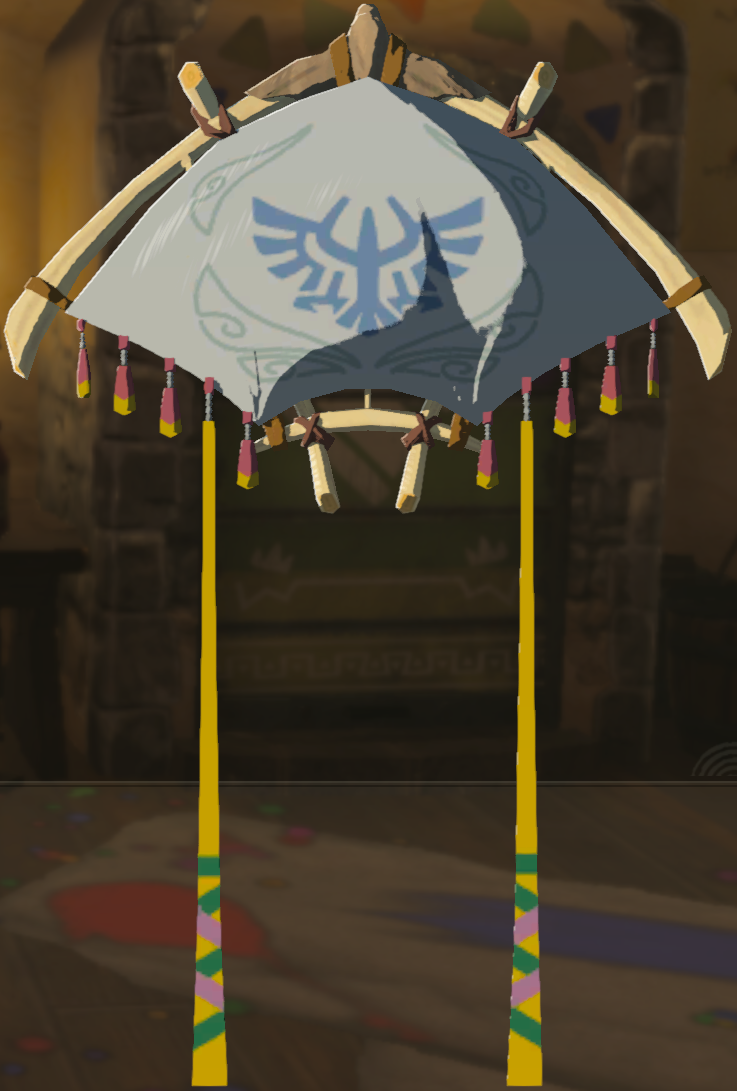 Tears of the Kingdom amiiboNintendo · 2023Scan the Link (Skyward Sword) amiibo in Tears of the Kingdom for the Cap, Tunic and Trousers of the Sky, the White Sword of the Sky and a Sword Spirit paraglider fabric; the Zelda & Loftwing amiibo gives the Goddess Fabric.
 LinkKnight-in-training, the goddess’s chosen hero
 ZeldaLink’s best friend, the goddess Hylia reborn
 FiSpirit of the Goddess Sword
 GhirahimThe Demon Lord
 DemiseThe Demon King; the Imprisoned
 GrooseThe Academy bully turned hero
 ImpaZelda’s Sheikah guardian; the old woman
 GaeporaHeadmaster of the Knight Academy
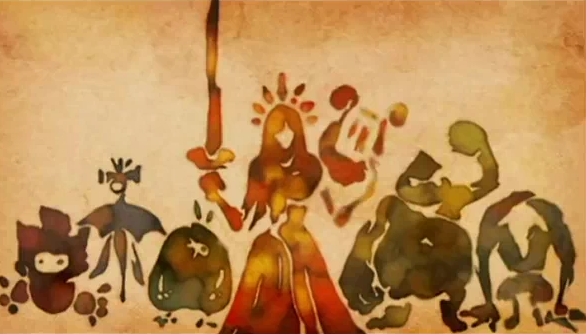 HyliaThe goddess
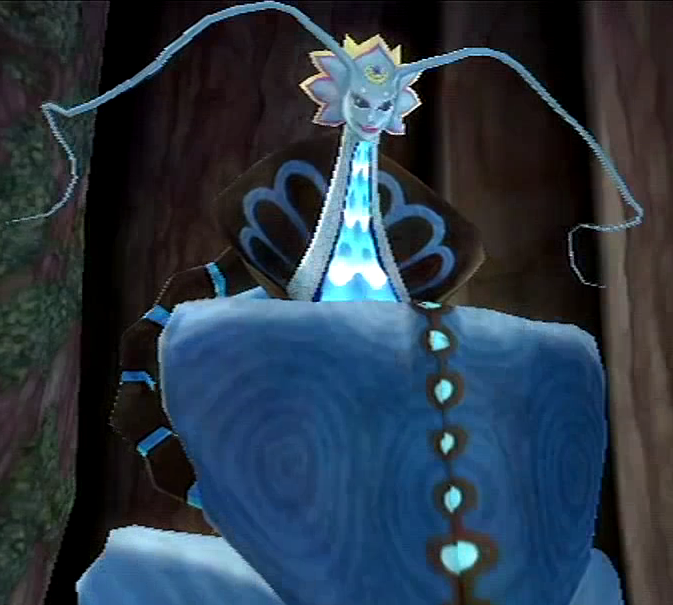 Faron, Eldin & LanayruThe three dragons
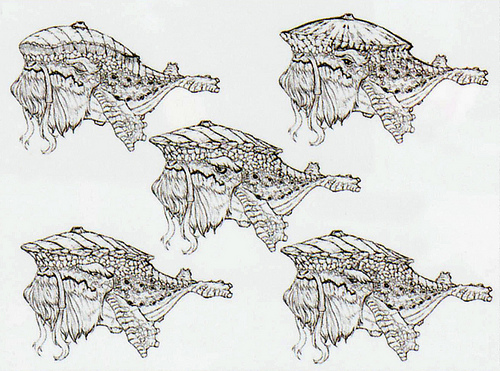 LeviasGreat spirit of the sky
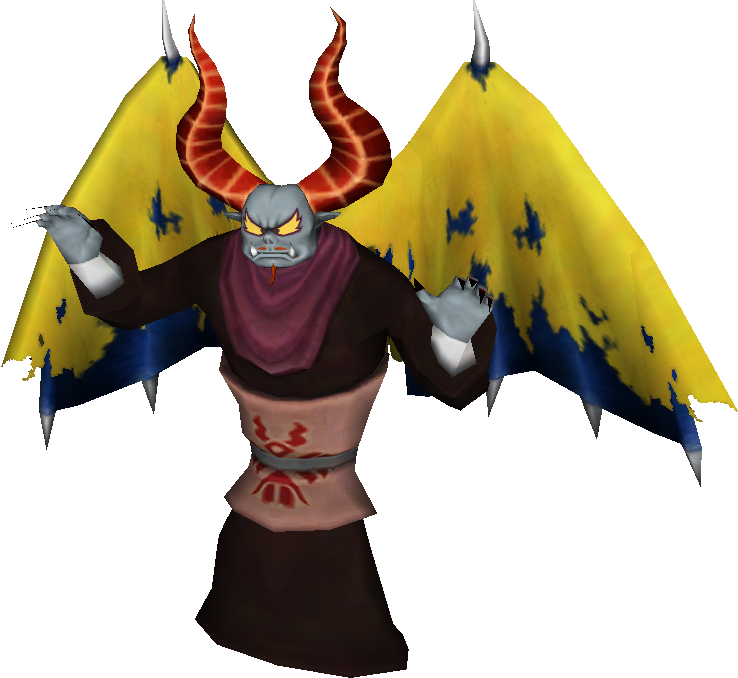 BatreauxThe demon who wants to be human
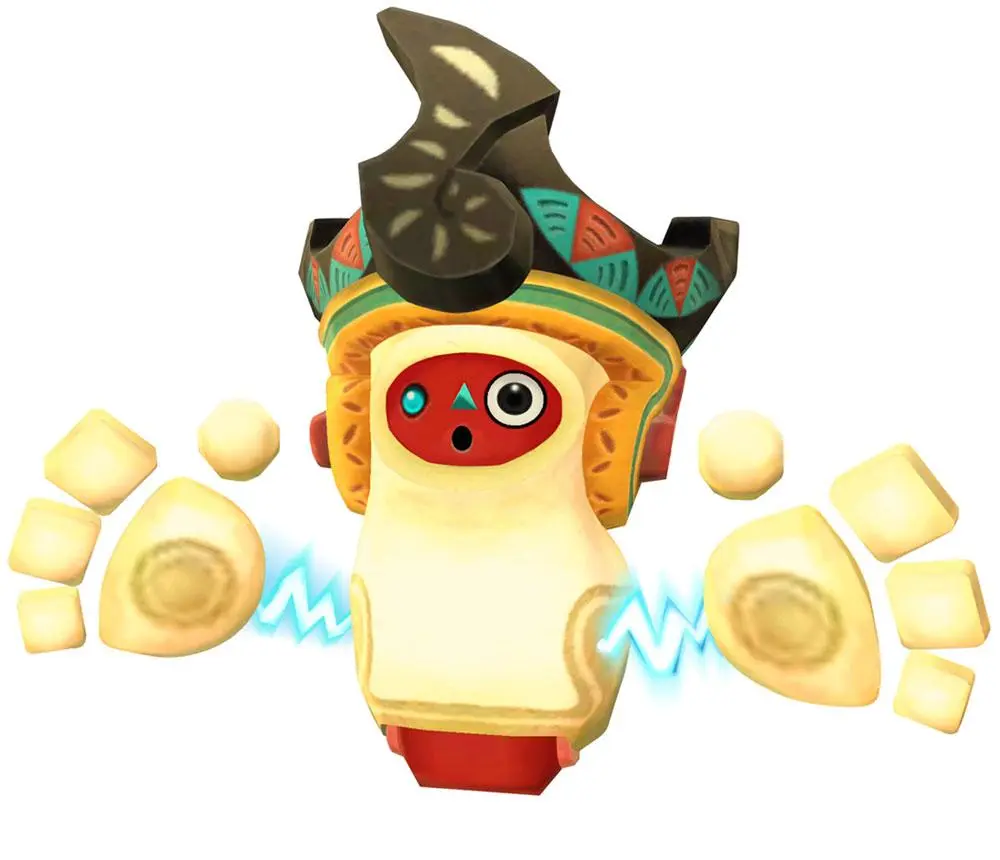 ScrapperAncient robot porter
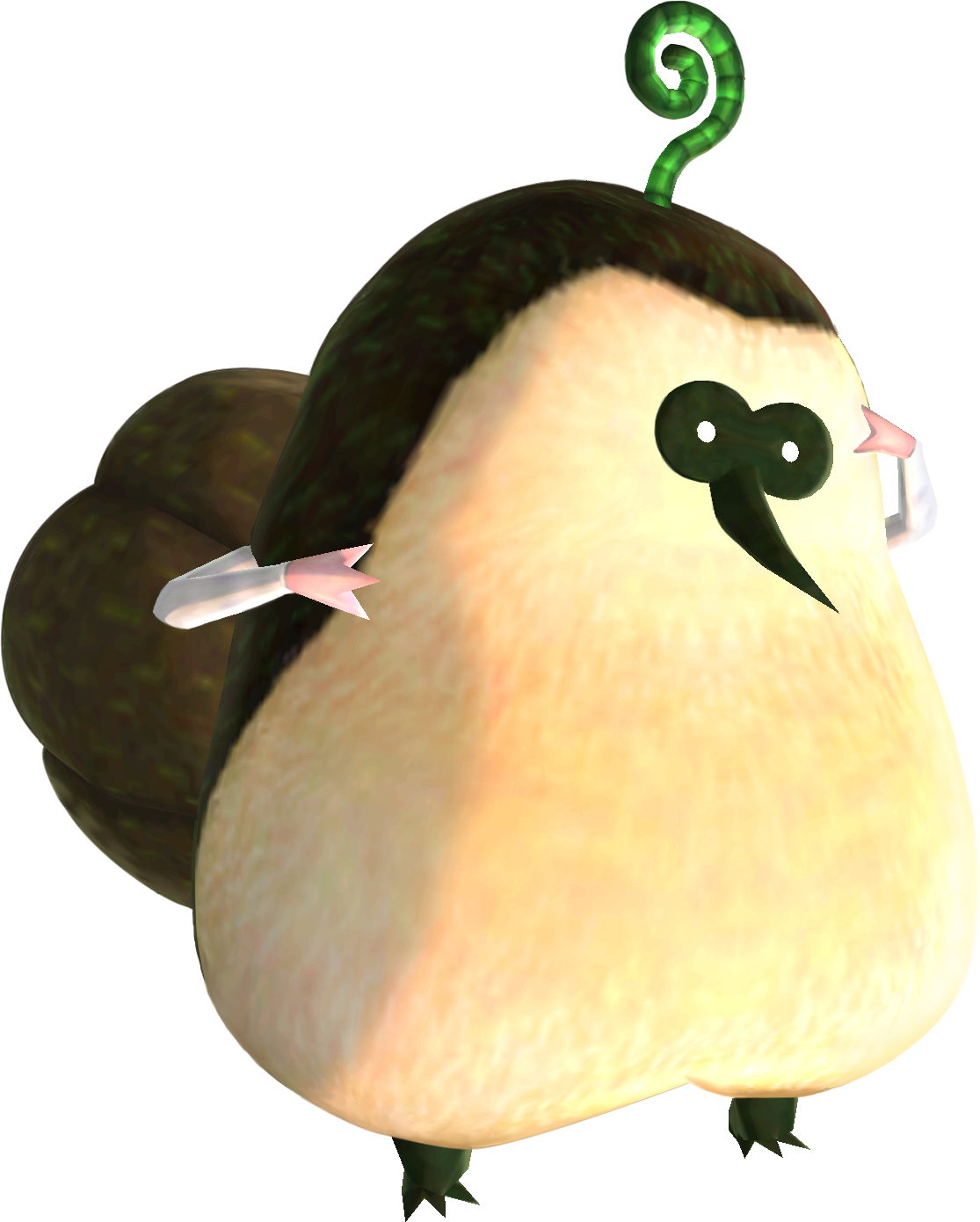 The KikwiFaron Woods’ plant people
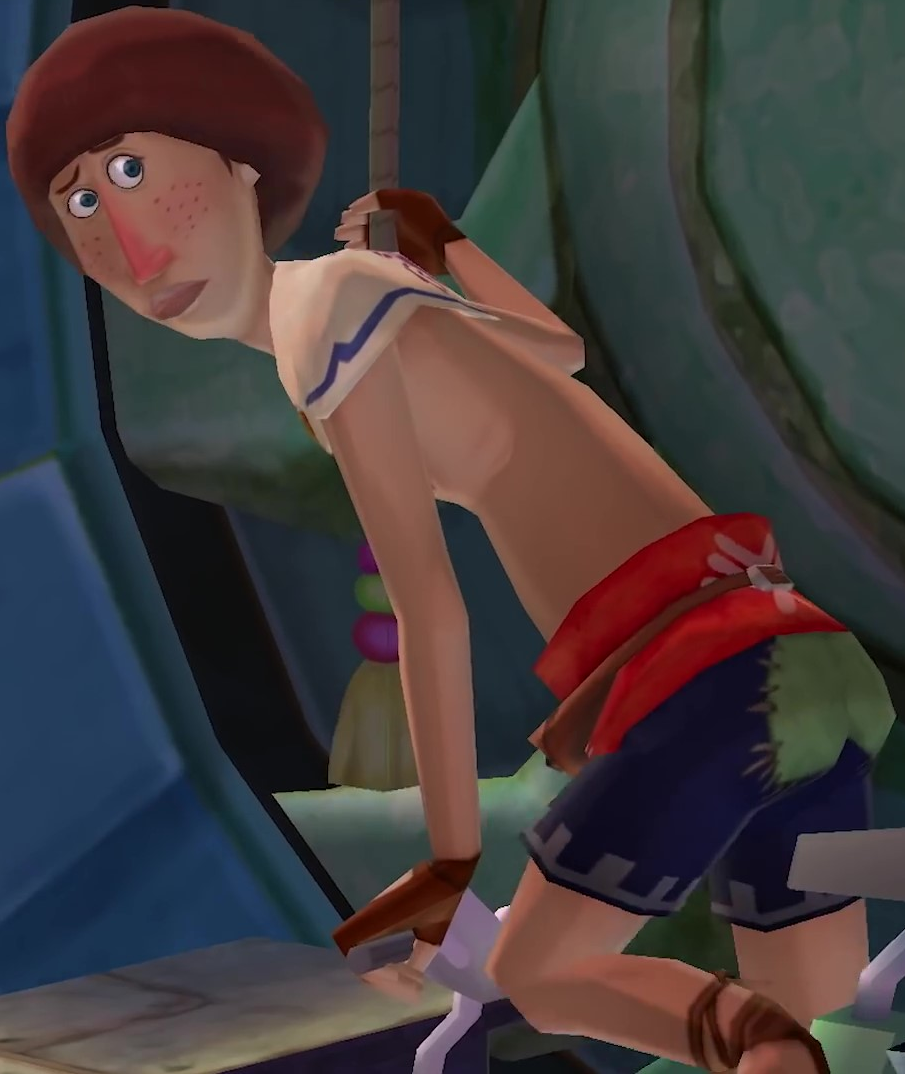 BeedleTravelling salesman
 GhirahimSkyview Temple · Fire Sanctuary · the pastThree duels with the Demon Lord, each tougher than the last.
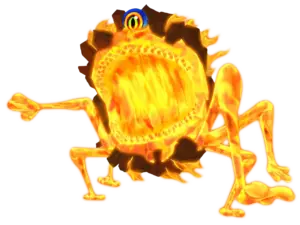 Scaldera, the Pyroclastic FiendEarth TempleA blazing rock monster rolling down a slope. Feed a bomb into its mouth to crack the shell, then slash the eye.
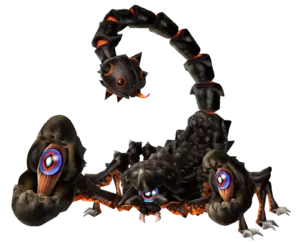 Moldarach, the Thousand-Year ArachnidLanayru Mining FacilityA giant scorpion with eyes in its claws. Cut the claw-eyes from the right angle, then blast the sand away to expose the eye on its face. A second one lurks in the Sand Sea’s Shipyard.
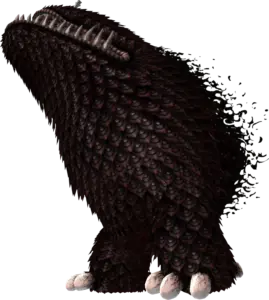 The ImprisonedSealed GroundsDemise’s sealed form, fought three times as it climbs toward the temple; it grows arms by the later bouts.
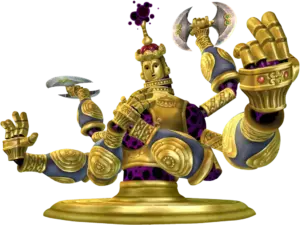 Koloktos, the Ancient AutomatonAncient CisternA six-armed golden statue. Whip its arms loose, then steal one of its own swords to chop it down.
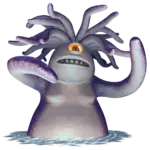 Tentalus, the Abysmal LeviathanSandshipA one-eyed kraken that attacks the ship. Arrows to the eye on deck, then the sword.
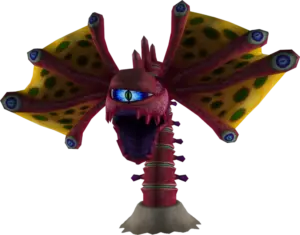 BilocyteThe ThunderheadThe parasite clinging to Levias.
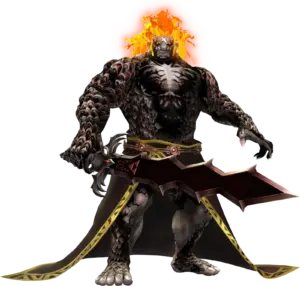 DemiseThe past (final battle)The Demon King himself, in a sword duel with lightning.
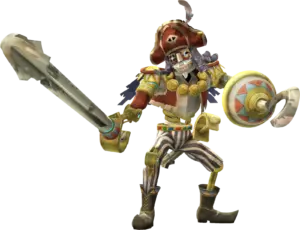 ScervoSandshipA robot pirate duelled on a gangplank: thrust and shield-bash him over the edge into the sinksand.
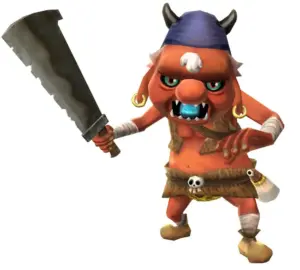 BokoblinsEverywhereThe common foot soldiers, in regional versions: primitive in the forest, kitted out with modern-looking gear in the desert, some carrying lanterns or electrified blades. Beaten ones roll away down slopes.
 ChuChusSeveral regionsJelly blobs that split along the line of your cut, then try to join back together.
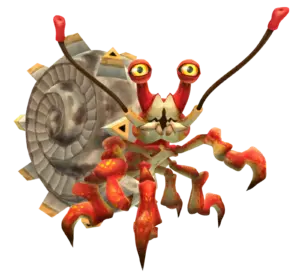 AmpilusLanayruA desert creature that the team described as half squilla, half ammonite, and whose own designers asked whether it was a living creature or a machine.
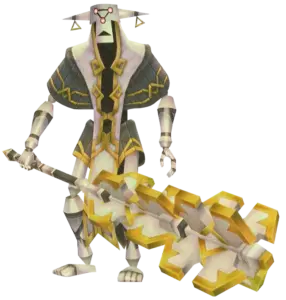 Guardians and WatchersSilent RealmsUnbeatable spirit sentries. Watchers spot you with their lanterns; Guardians chase you down.
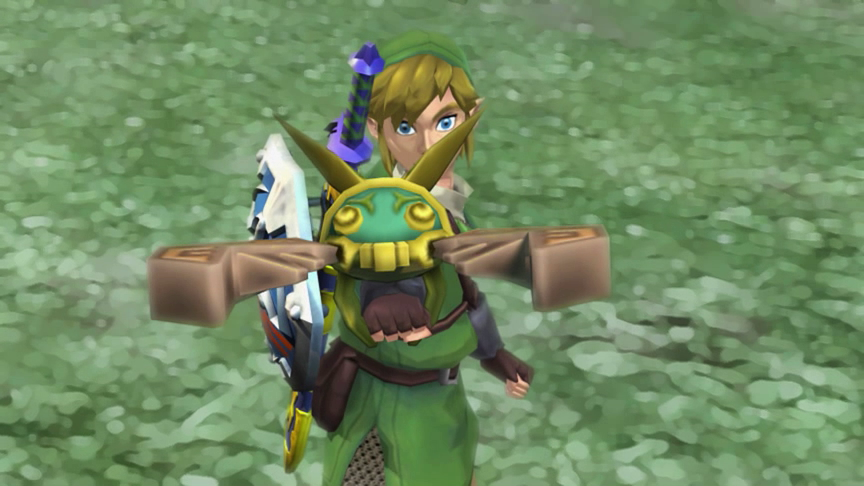
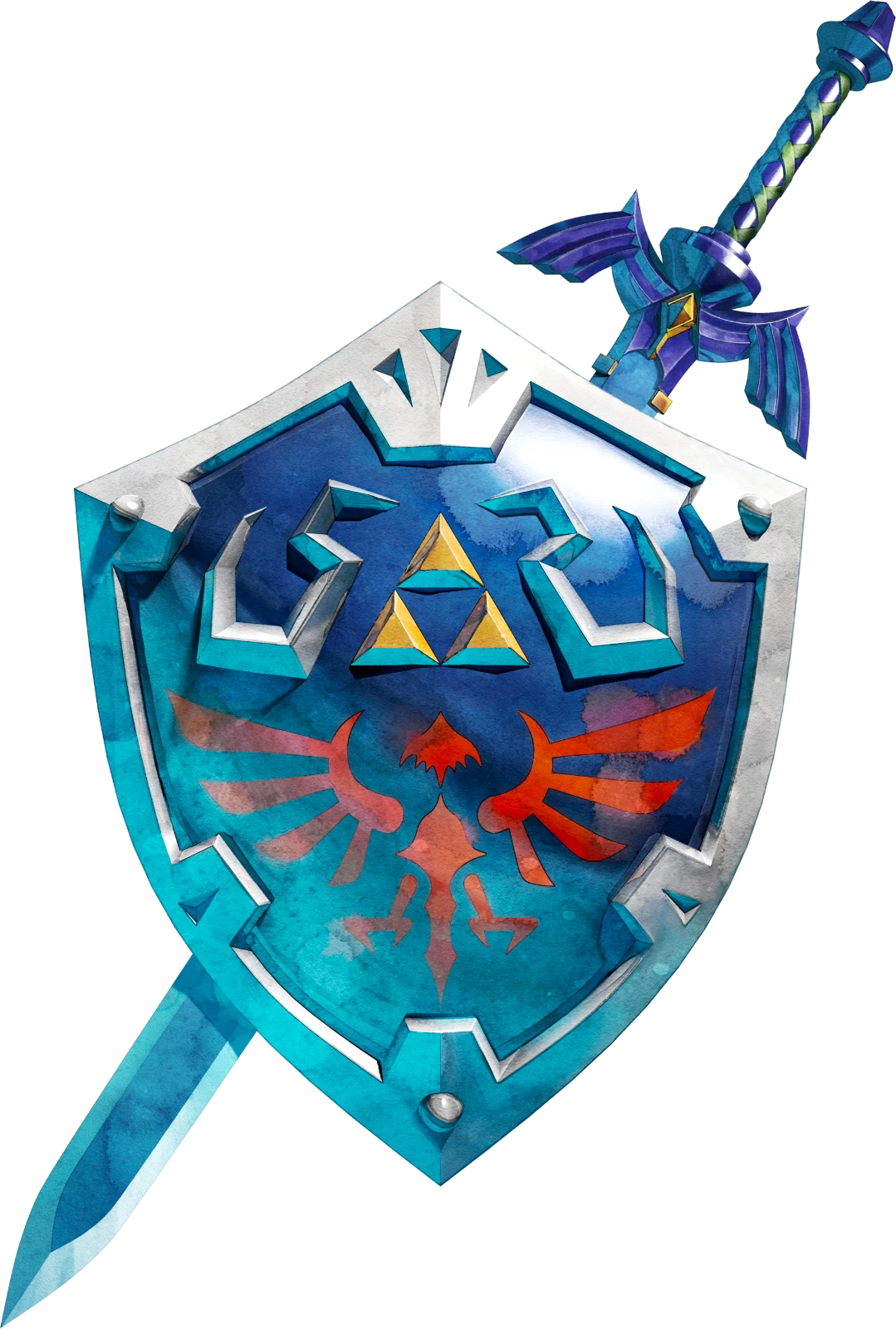 The start of the timelineThe earliest story in the official chronology, and the origin of the Master Sword, the Triforce’s place in Hyrule and the land itself.
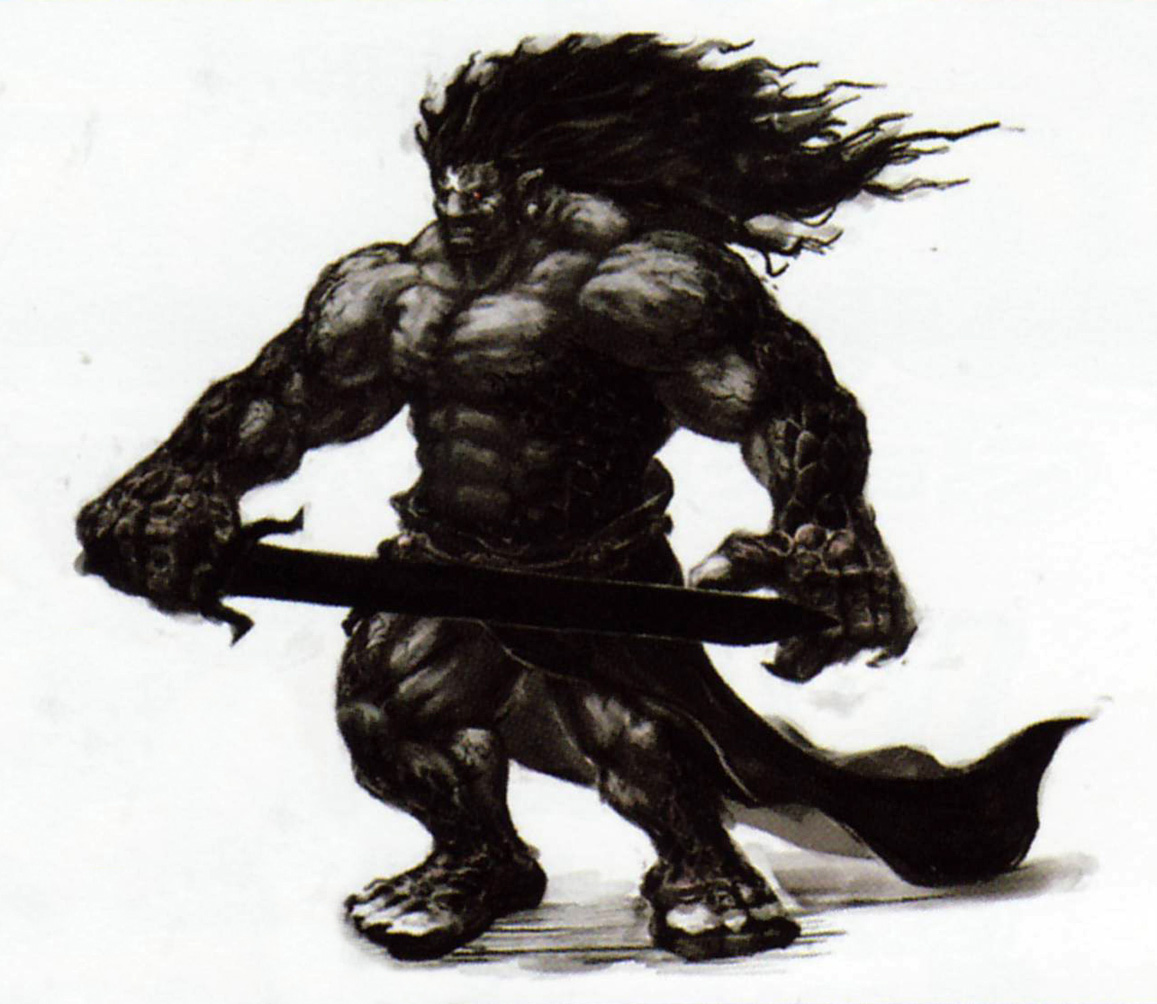 Demise’s curseThe game’s explanation for why the hero, the goddess’s descendant and a great evil keep meeting again across the series.
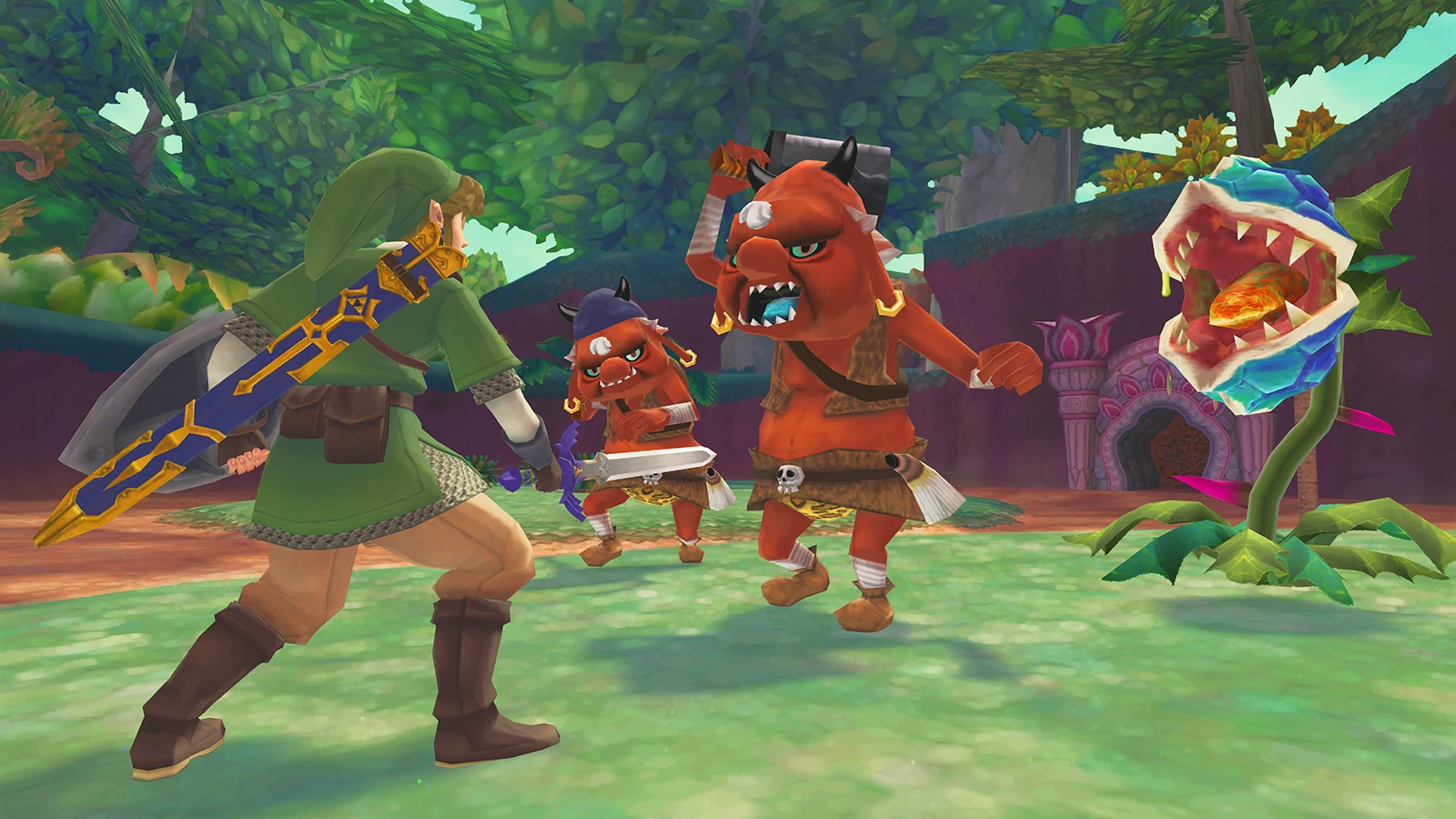 One-to-one swordplayThe first Zelda built for Wii MotionPlus: the sword follows the angle of your swing, and enemies guard against it.
 A live orchestraMost of the soundtrack was recorded with an orchestra, a first for the series, and characters sing for the first time too.
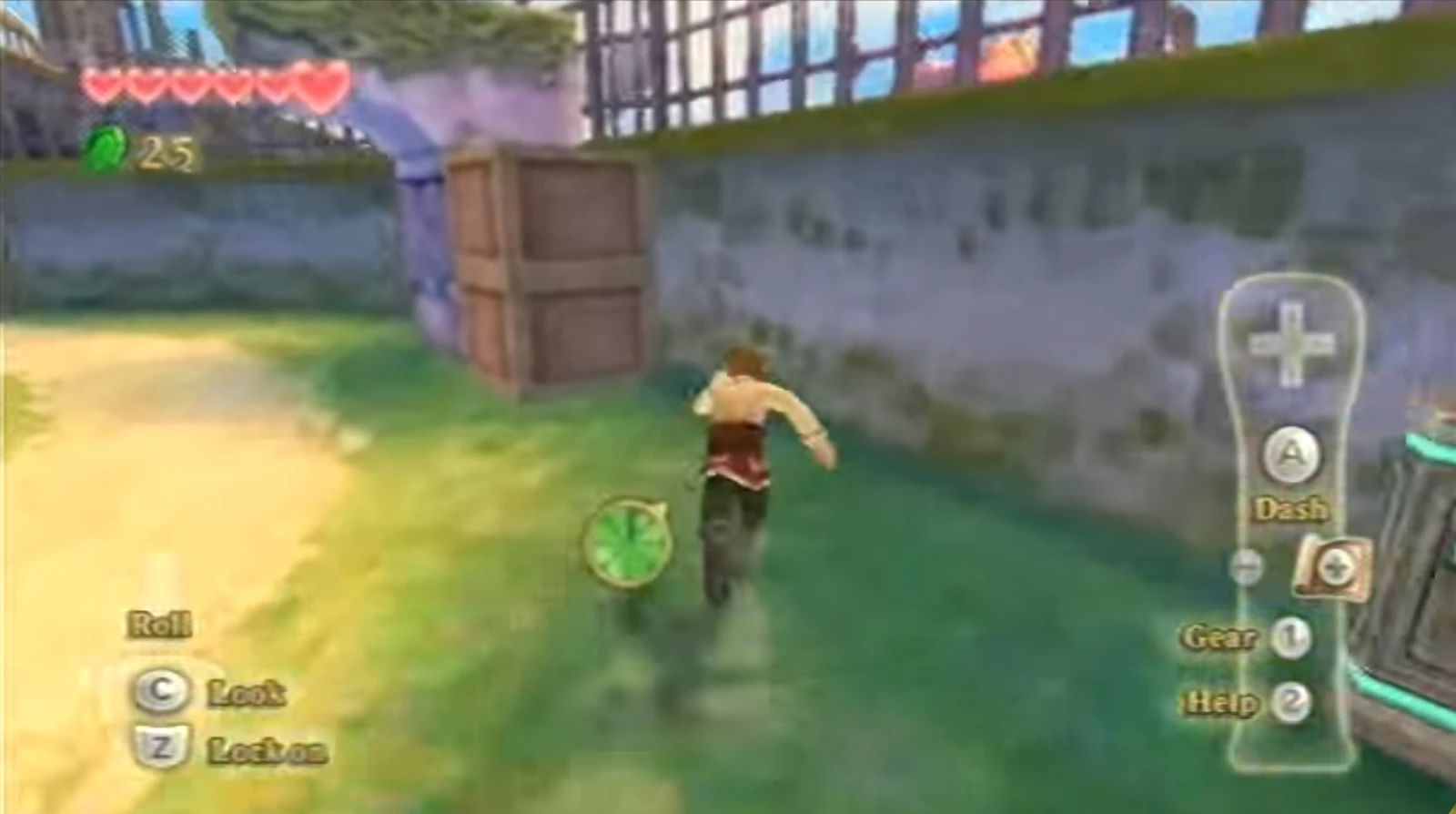 Stamina gaugeA new meter limits sprinting and scrambling up walls; Breath of the Wild later built its whole climbing system around a stamina wheel.
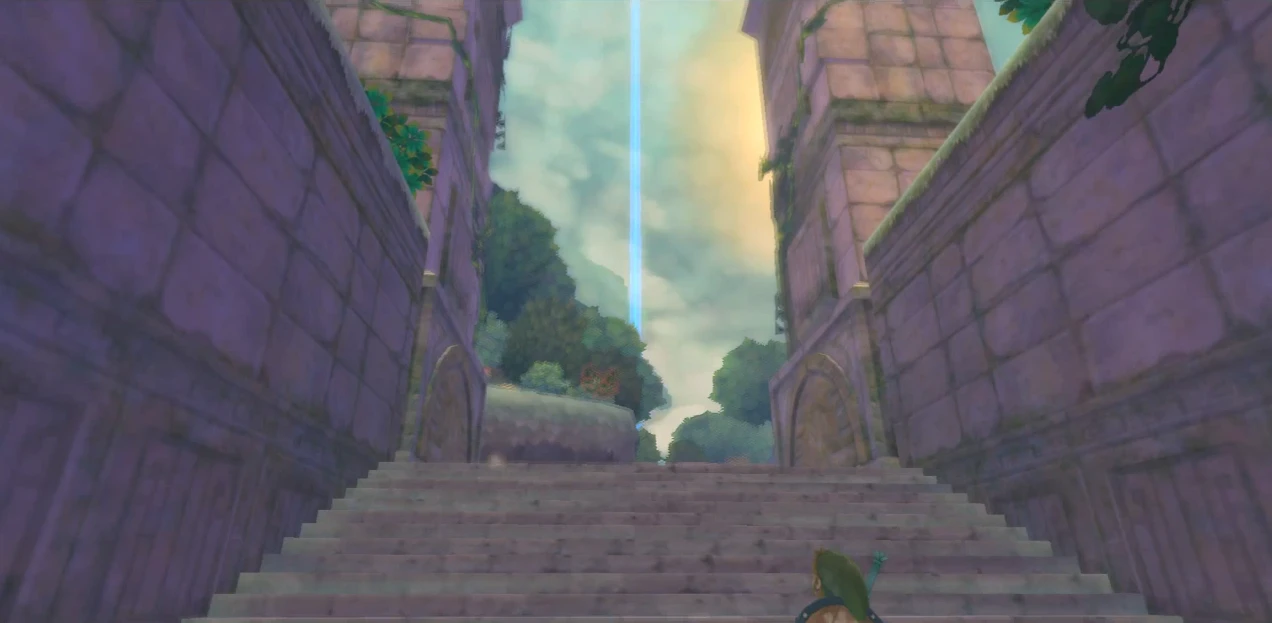 Dowsing and beaconsPoint the Wii Remote to track things down, and drop a pillar of light on the map to steer by.
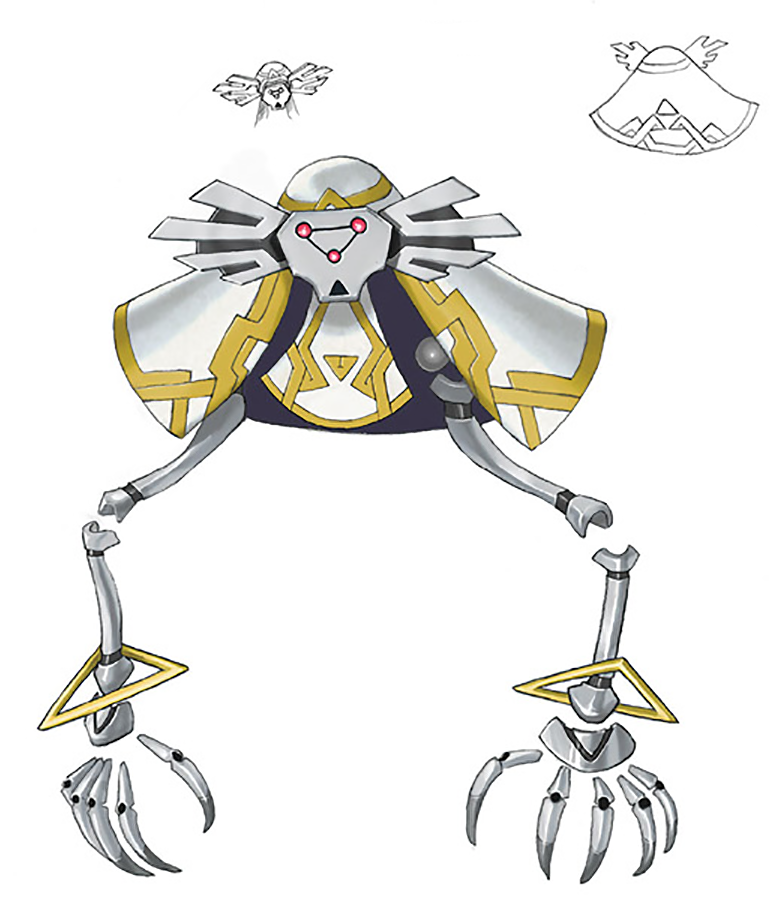 Silent RealmsStealth trials in a spirit world where Link cannot fight back.
 Hylia, Fi, Ghirahim, Demise and GrooseAll make their debuts, along with the Loftwings, the Kikwi and the Mogma.