Races and Peoples of Hyrule Nineteen peoples · 1986–today
Rock-eating mountain folk, fish people who live for centuries, desert warriors, shadow guardians and leaf-faced forest spirits: meet the peoples who share Hyrule with the Hylians.
Peoples on this page19
EarliestHylians and River Zoras (1986)
NewestThe Zonai, met in person in 2023
Latest outingOcarina of Time for Nintendo Switch 2 (2026)
Peoples on this page
19, from the Hylians to the yetis
Earliest
Hylians and River Zoras, The Legend of Zelda (1986)
Newest
The Zonai: ruins in Breath of the Wild (2017), in person in Tears of the Kingdom (2023)
Latest appearance
Ocarina of Time for Nintendo Switch 2 (5 November 2026)
Champions’ peoples
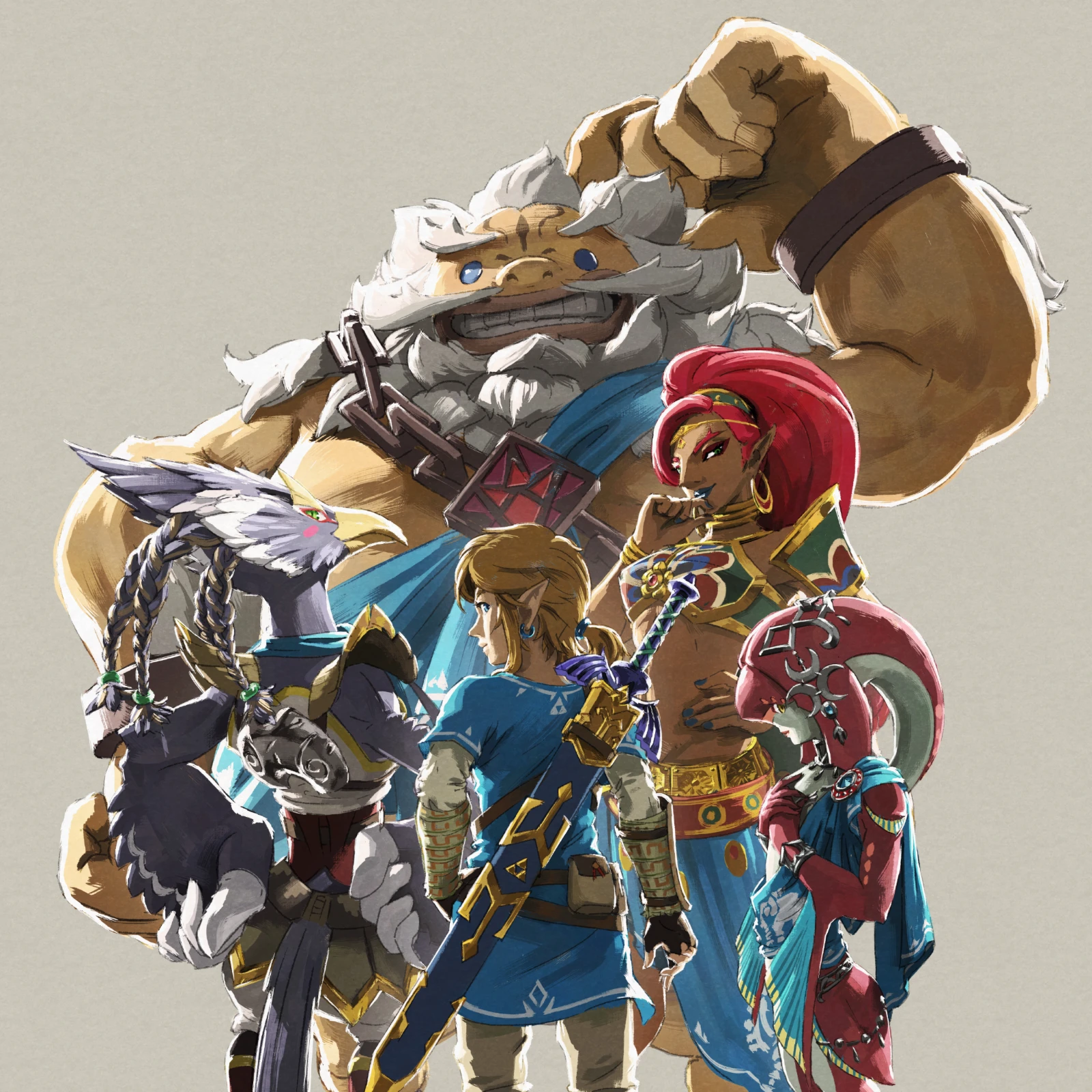
Zora, Goron, Rito, Gerudo (Breath of the Wild)
Peoples that changed
Zoras to Rito; Kokiri to Koroks; Interlopers to Twili
Official lore
Hyrule Historia, the Hyrule Encyclopedia, Creating a Champion
Overview
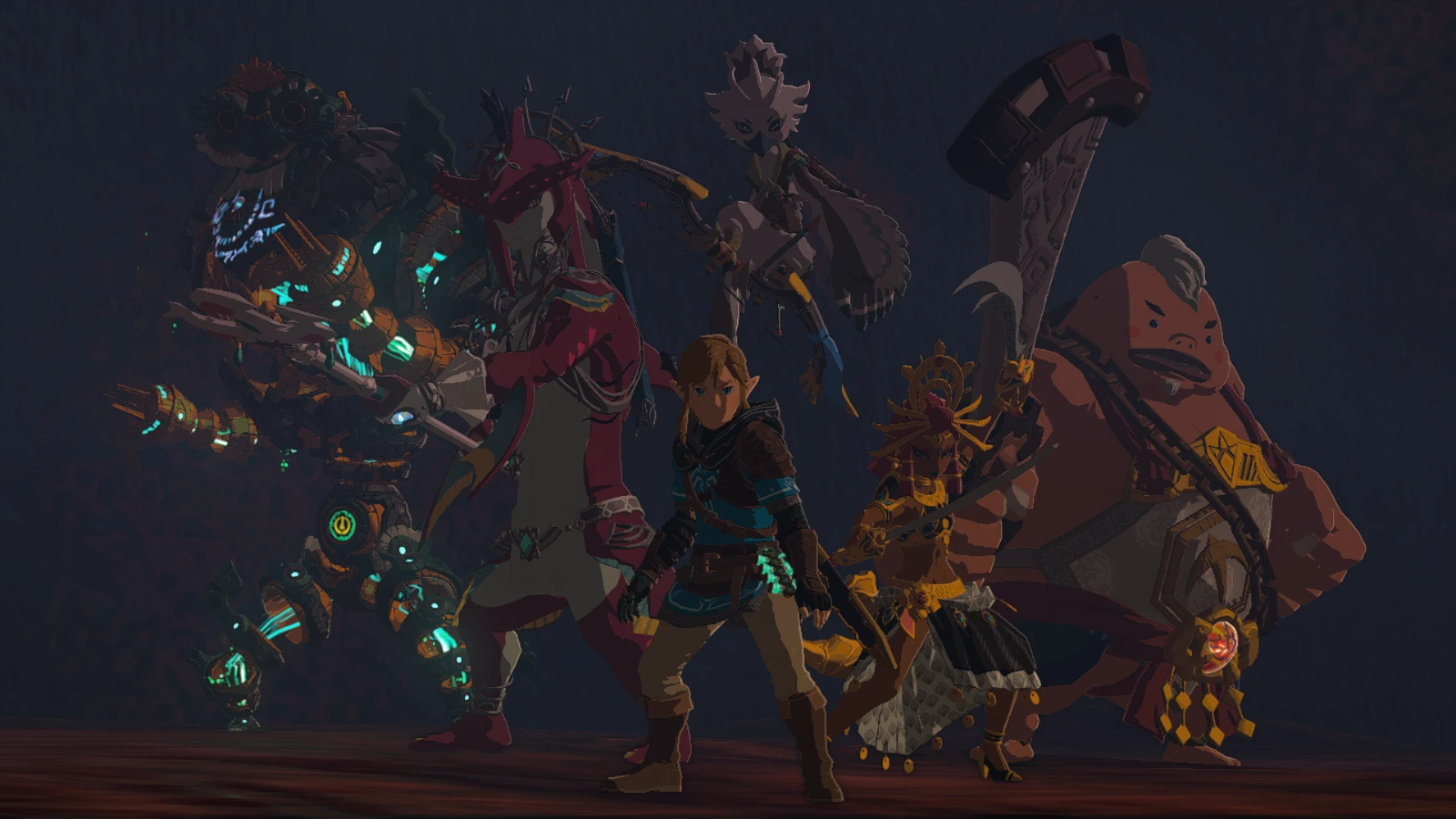
The Six Sages in Hyrule Warriors: Age of Imprisonment (screenshot).
Hyrule has never belonged to the Hylians alone. In forty years the series has filled its world with rock-eating mountain folk, graceful fish people, feathered archers, a tribe of desert warriors, shadowy bodyguards, leaf-faced forest spirits and people small enough to live under a mushroom. Many of them have histories running across a dozen games, and thanks to Nintendo’s official timeline some have even turned into other peoples: in the world of The Wind Waker, the Zoras became the Rito and the Kokiri became the Koroks.
This page gathers nineteen of them, from the Hylians to the yetis of the snowy north. Each card says where a people lives, what it is like, how its story has grown and who its best-known members are; on the bigger cards, open “Game by game” for the full run of appearances. Where Nintendo’s lore books (Hyrule Historia, the Hyrule Encyclopedia, Creating a Champion) or the developers say something, we say so; where an idea is only a fan theory, we label it.
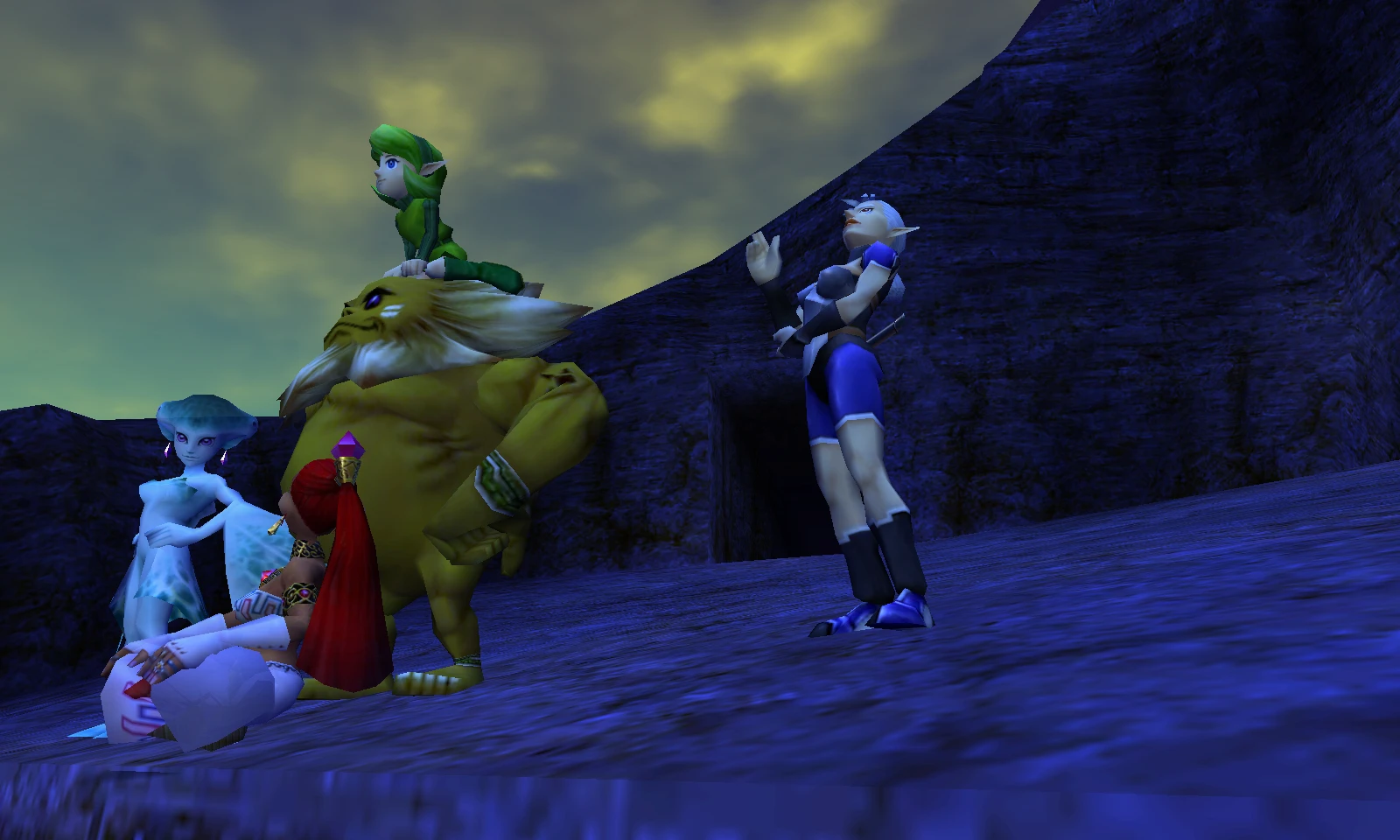
The peoples are busier than ever. Hyrule Warriors: Age of Imprisonment (November 2025) went back to the founding of Hyrule, with Rito, Zora, Goron and Gerudo leaders fighting beside the Zonai king Rauru, and the rebuilt Ocarina of Time for Nintendo Switch 2 (5 November 2026) gave Darunia, Ruto, Nabooru, Saria and Impa fully voiced scenes.
Three peoples stand at the heart of the kingdom’s own story: the Hylians who give Hyrule its name, the Sheikah who have guarded its royal family from the shadows, and the Zonai, the sky-born people whose last king founded it.
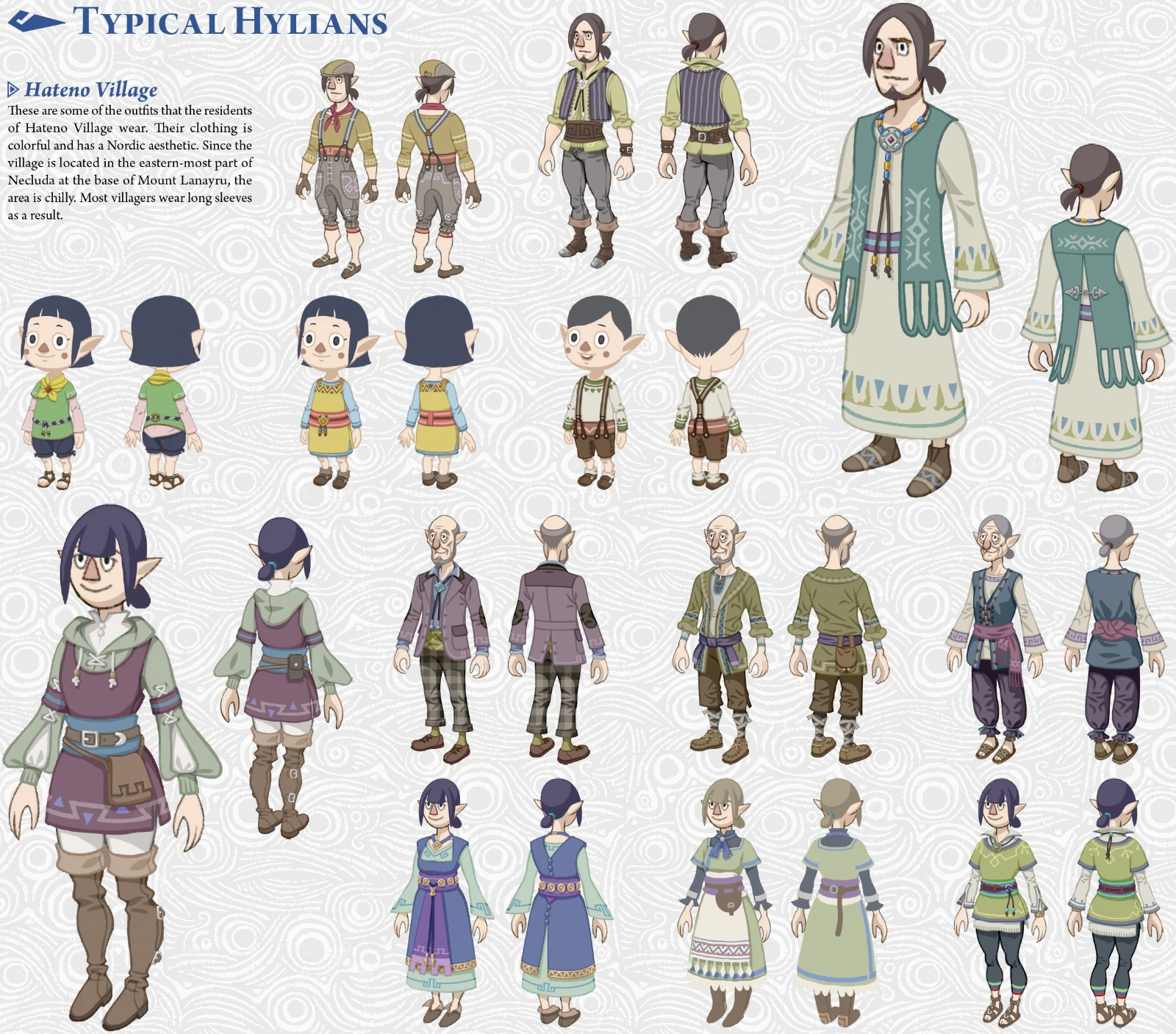
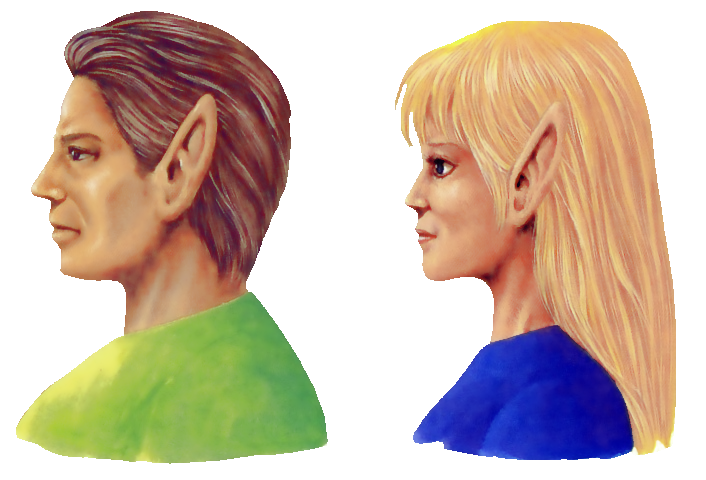
Hylians are the kingdom’s main people, and the folk Link and Zelda nearly always come from. They look human apart from their long, pointed ears, which are said to let them hear messages sent by the gods. Series lore makes them the first people of Hyrule, created by the goddess Hylia, with a trace of divine magic in their blood. The royal family carries rather more than a trace: Princess Zelda is Hylia reborn, and her bloodline inherits the goddess’s sacred power.
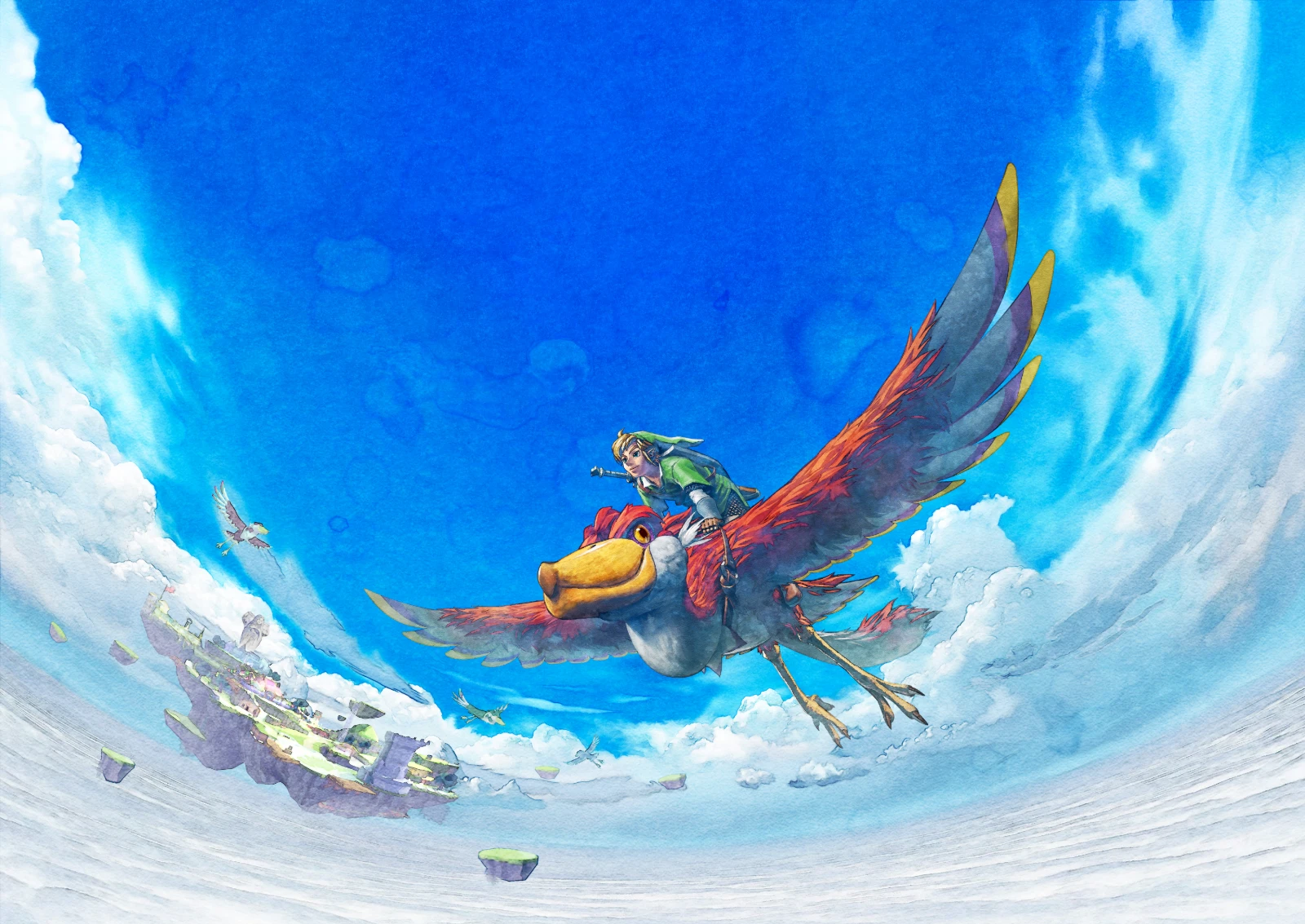
Skyward Sword tells their earliest chapter. To save the survivors of the war with the demon Demise, Hylia lifted them into the sky on the island that became Skyloft, where generations lived above the clouds with their giant Loftwing birds before going back down to settle the land below. Later games tangle the family tree in interesting ways. In Tears of the Kingdom the royal line begins when the Hylian priestess Sonia marries the Zonai Rauru, and Zelda Dungeon notes that in-game text in that game calls the Sheikah a type of Hylian.
Key facts
Homeland: Hyrule; Skyloft, above the clouds, in Skyward Sword
Sign of the people: pointed ears, said to catch the voices of the gods
Royal line: the bloodline of the goddess Hylia, founded by Sonia and Rauru
The Sheikah are the royal family’s shadow guardians and, in the later games, Hyrule’s great engineers. Most have white hair and red eyes, and they wear the Sheikah eye: an eye with three triangles above it and a single tear below. Zelda Dungeon sums up their gifts as magic tied to time, shadow and sealing. Series lore credits them with founding Kakariko Village, their clothes borrow from historical Japanese dress, and the look of their ancient machines was inspired by Japan’s Jōmon period.
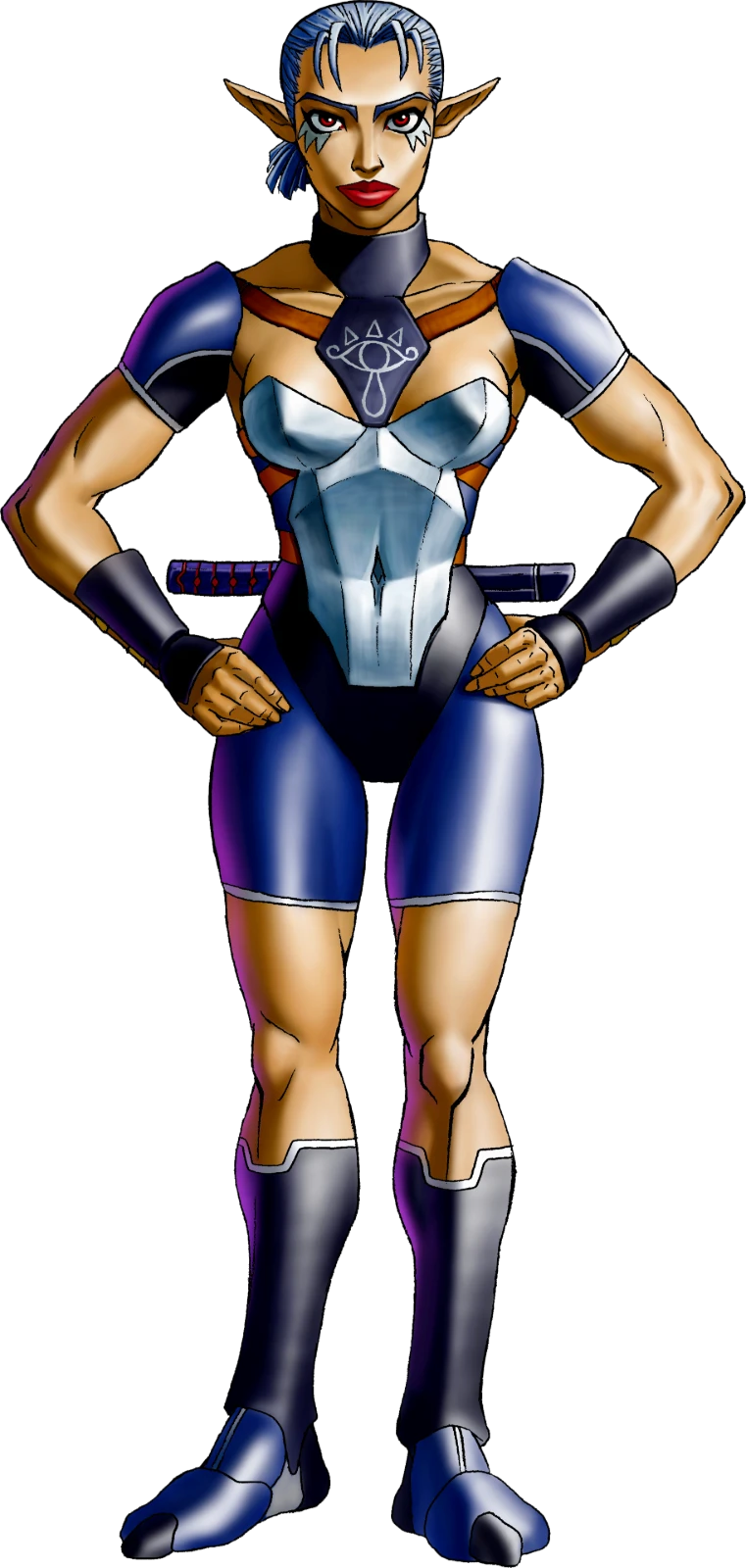
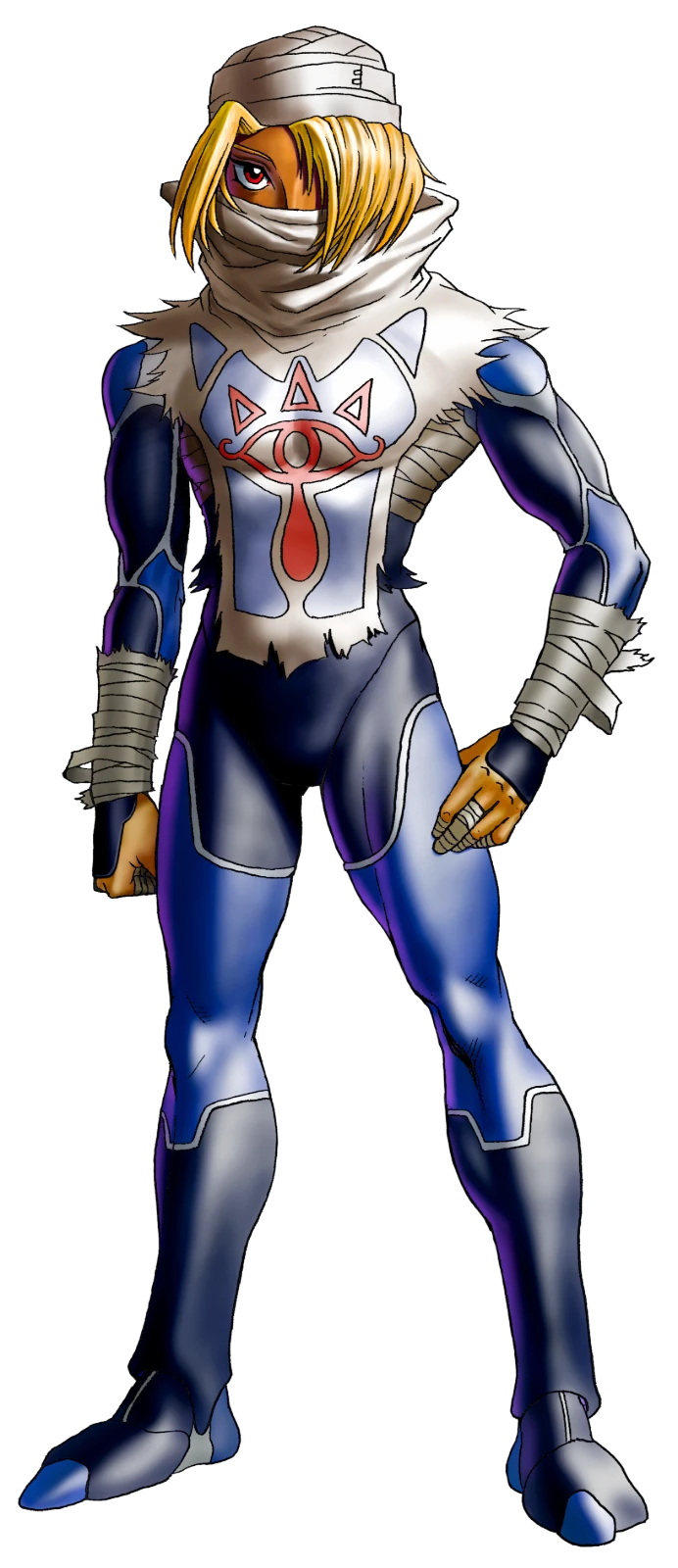
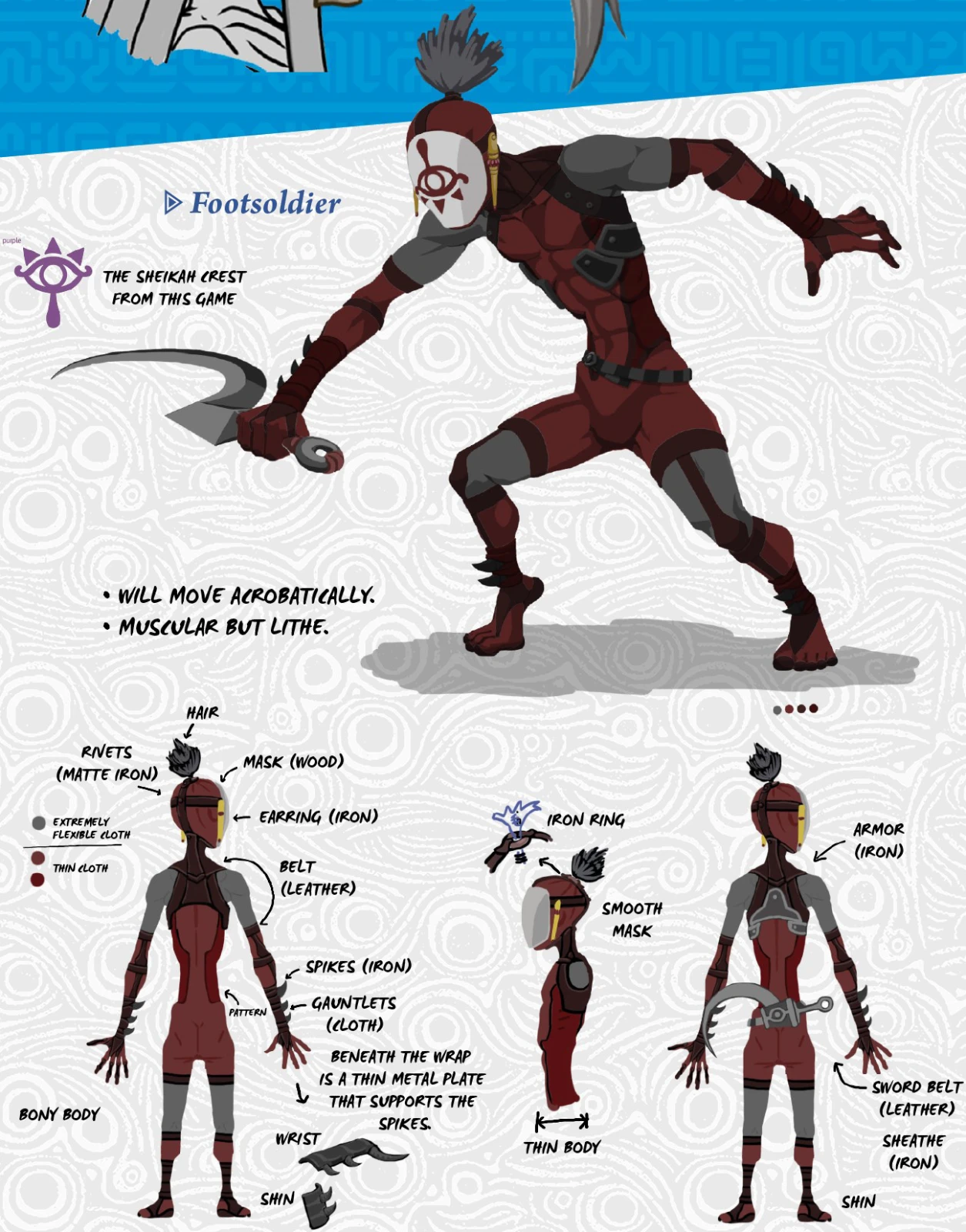
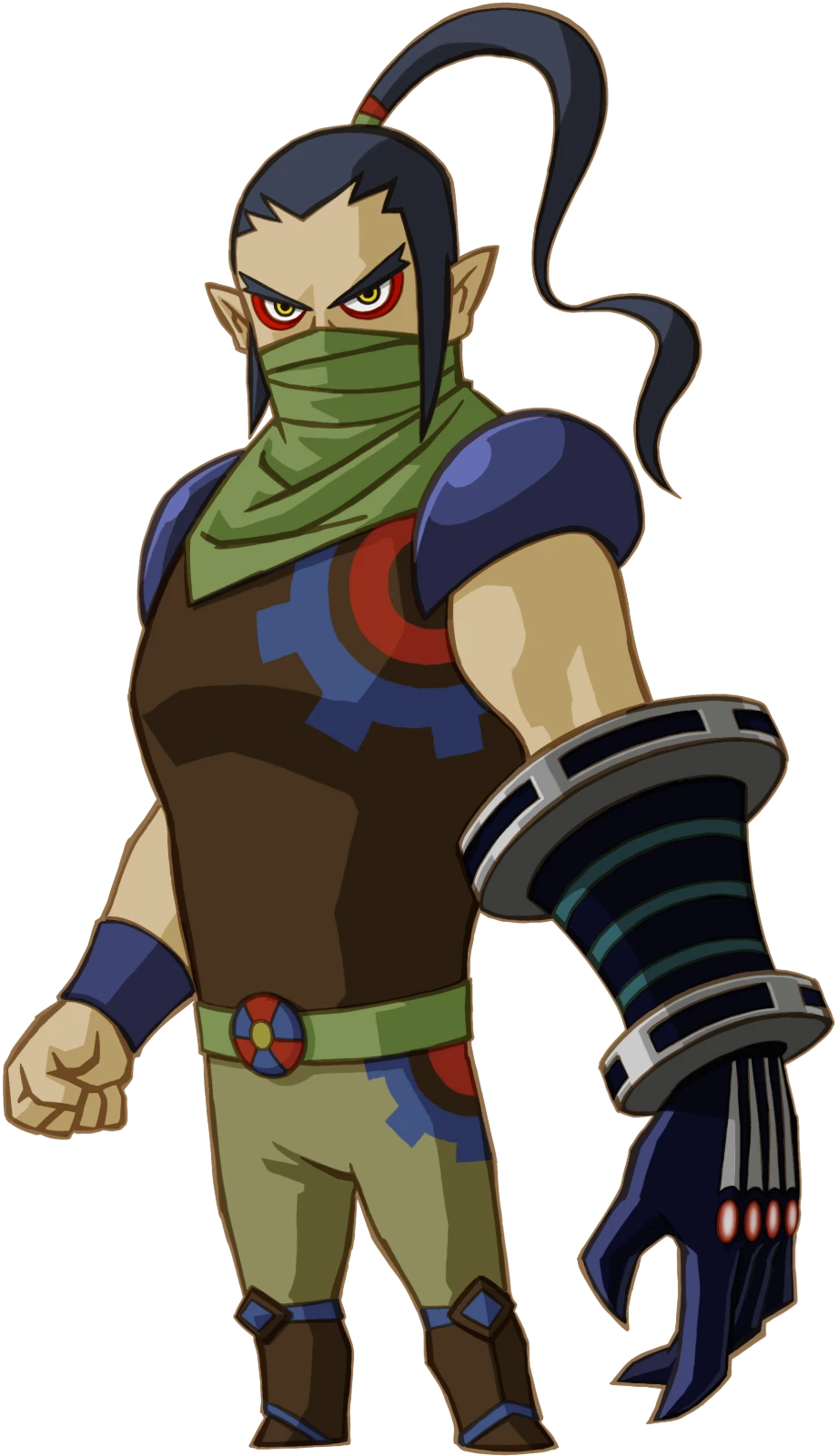
Impa has been Zelda’s guardian since the very first game, but it was Ocarina of Time that made the Sheikah a people, and gave the princess a Sheikah disguise, Sheik. Breath of the Wild transformed them. Ten thousand years before that game they built the Divine Beasts and the Guardians to fight Calamity Ganon, and afterwards their technology was banned and buried; a bitter splinter group, the Yiga Clan, broke away and turned to Ganon. A century before Link wakes, the kingdom dug the machines up again, with disastrous results. Since the Upheaval of Tears of the Kingdom the Sheikah mix far more freely with Hyrule’s other peoples.
Game by game (9)
The Legend of Zelda (1986): Impa is the princess’s nursemaid; the Sheikah are not yet named.
Ocarina of Time (1998): Impa protects young Zelda, teaches Link Zelda’s Lullaby and becomes the Sage of Shadow. During the seven-year gap Zelda hides as Sheik and teaches Link the warp songs.
Twilight Princess (2006): the Sheikah have all but vanished. Impaz, a descendant of Impa, lives in the Hidden Village and the fortune teller Fanadi in Castle Town; long ago the Sheikah carried messages between the royal family and the Oocca.
Skyward Sword (2011): Impa is the only Sheikah, a stern warrior who serves the goddess and guards Zelda.
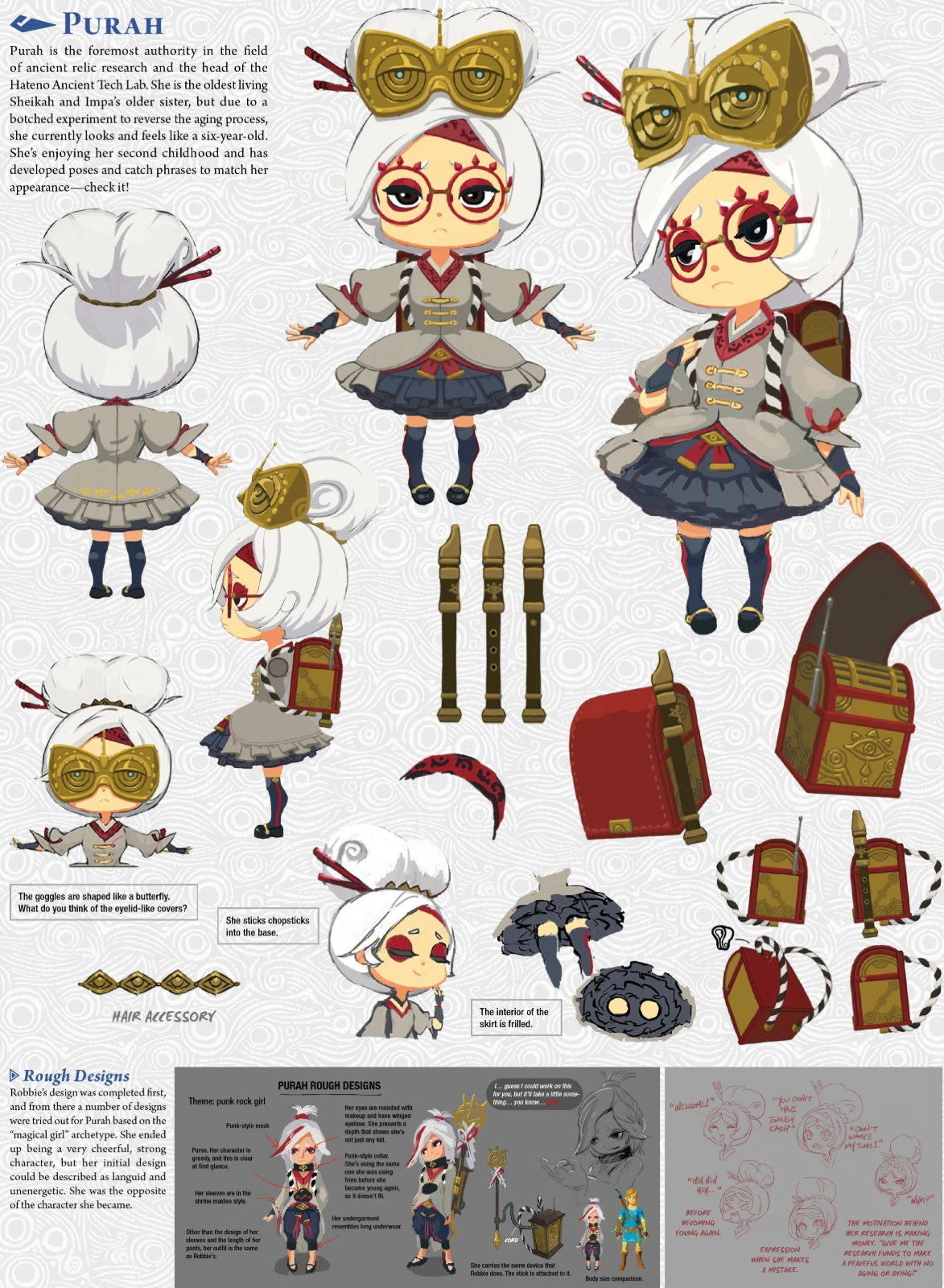
Breath of the Wild (2017): Kakariko under the ancient Impa and her shy granddaughter Paya; Impa’s older sister Purah and the engineer Robbie, survivors of the Great Calamity; the Yiga Clan; Sheikah shrines and towers across the land.
Tears of the Kingdom (2023): Impa has handed the chief’s role to Paya; Purah runs Lookout Landing, Robbie builds the Purah Pad and the young prodigy Josha leads the research into the Depths, while the Yiga return under Master Kohga.
Echoes of Wisdom (2024): an elderly Impa helps Zelda escape Hyrule Castle, and her older brother, the grumpy inventor Lueburry, lets her use his house as a base.
Sheik, Zelda’s Sheikah disguise, in Ocarina of Time (official artwork).Purah, concept art for Breath of the Wild.A Yiga Clan footsoldier, concept art for Breath of the Wild.
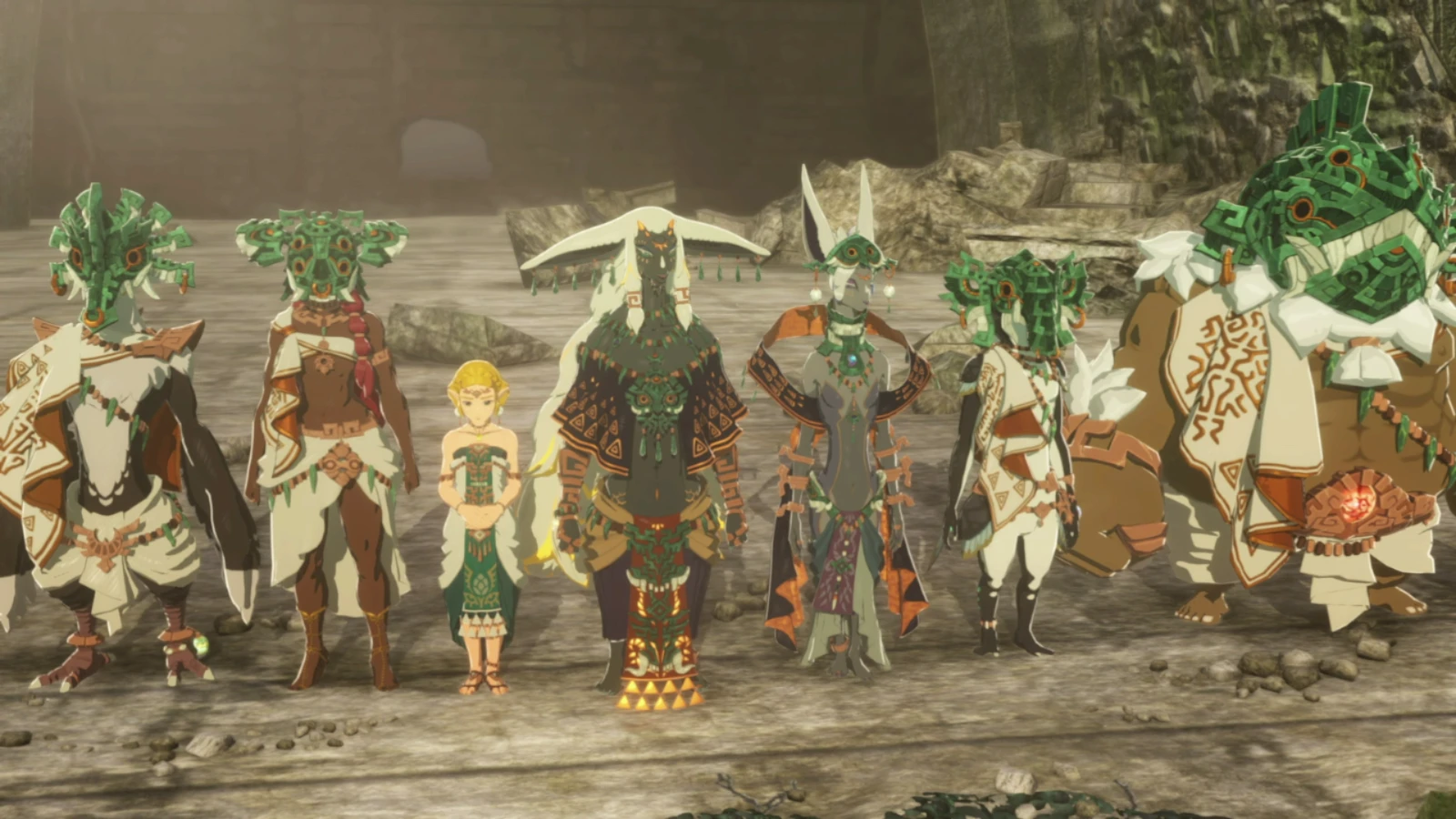
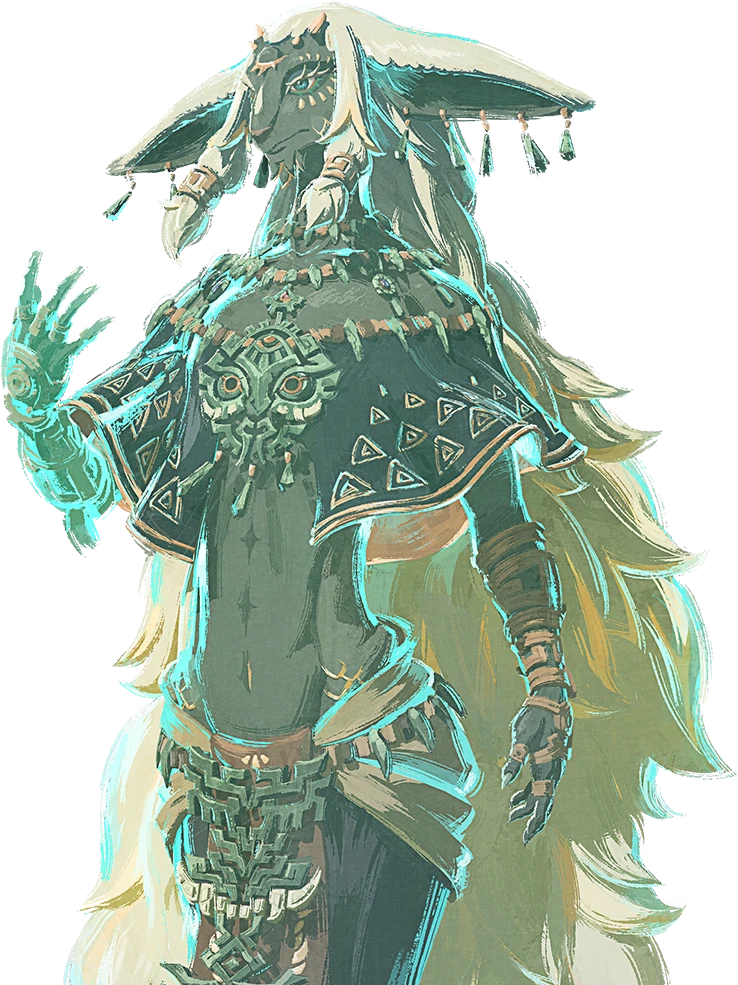
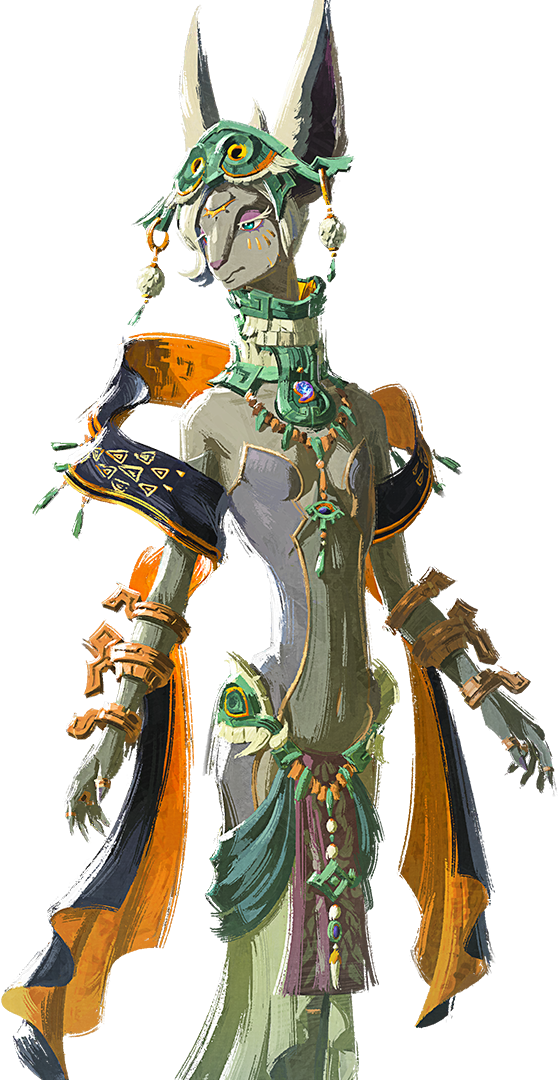
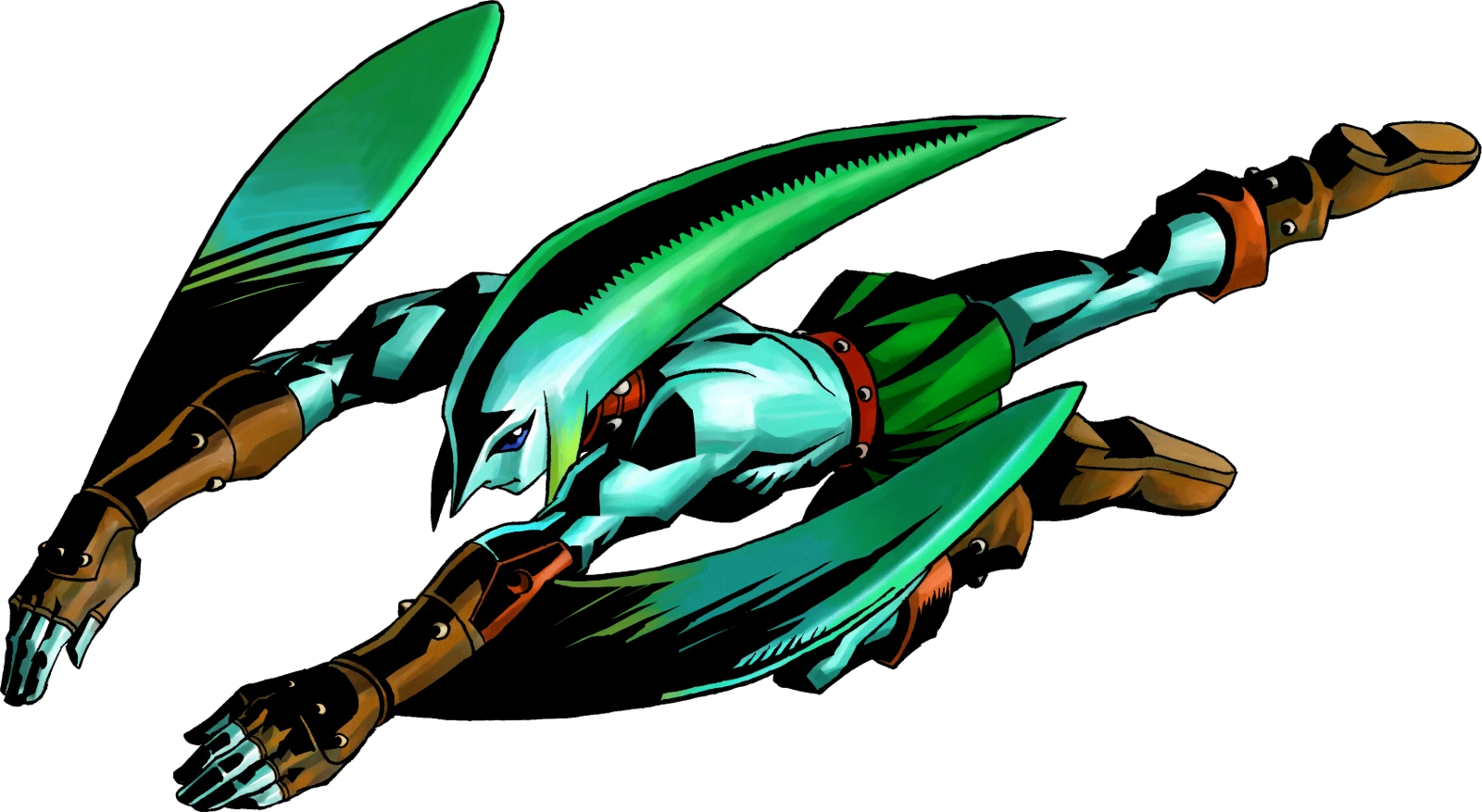
For years the Zonai were only a name carved on ruins. Breath of the Wild has no living Zonai at all, just their strange stone ruins in Faron and in the permanently dark Thyphlo Ruins of the Great Hyrule Forest. Tears of the Kingdom finally told their story. Picture a tall figure with grey skin and an ordinary human body, then add a nose more animal than human, huge pointed ears and, in the middle of the forehead, a third eye that is normally kept closed. Beings like these, close to gods, arrived from the sky in the distant past, and the Secret Stones they brought made their powers greater still.
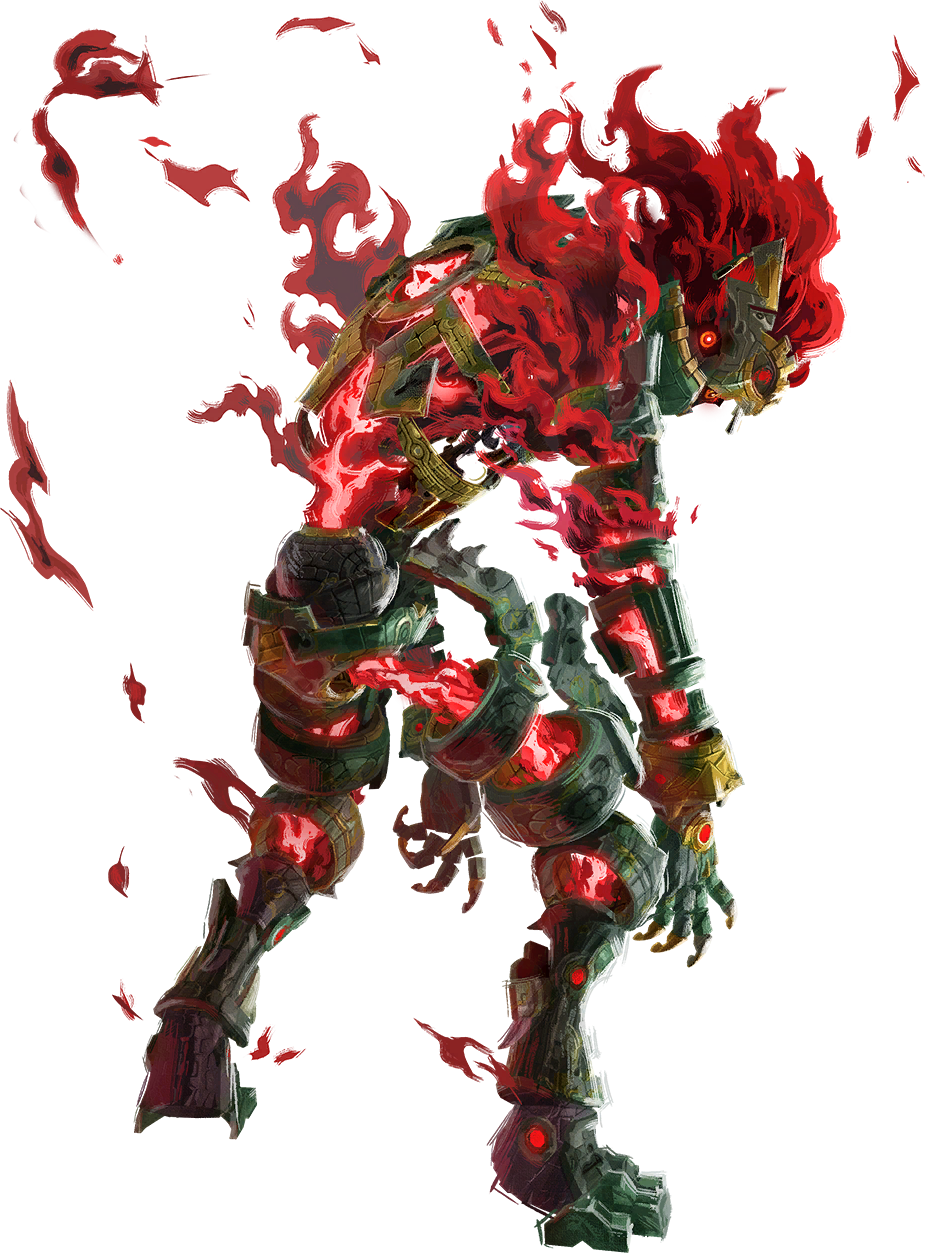
By the time Hyrule was founded only two were left: Rauru, who married the Hylian priestess Sonia and became the first king, and his elder sister Mineru. After Ganondorf murdered Sonia, Rauru gave his life to seal him away, and Mineru died not long after. In Link’s day they survive as spirits; Rauru guides Link on the Great Sky Island, and Mineru’s spirit moves into a construct body to fight beside him as the Sage of Spirit. Age of Imprisonment adds a dark chapter: the Forbidden Constructs, thinking humanoid weapons, rebelled against their makers and wiped out most of the Zonai.
Key facts
Homeland: the sky; the Sky Islands of Tears of the Kingdom are their work
Legacy: Zonai devices, roving constructs and the shrines whose Lights of Blessing come from Rauru and Sonia
Notable Zonai: Rauru, Mineru
A family trace: Zelda Dungeon notes that Zelda’s and Sonia’s tiaras echo the Zonai third eye
Mineru, Rauru’s sister and the Sage of Spirit, in Tears of the Kingdom (official artwork).A Forbidden Construct, the weapons that turned on the Zonai, in Hyrule Warriors: Age of Imprisonment (artwork).
Desert, mountain, water and sky
Four peoples have grown, game by game, into nations of their own: the Gerudo, the Gorons, the Zoras and the Rito. Breath of the Wild made them the homes of its four Champions, Tears of the Kingdom drew its sages from them, and Hyrule Warriors: Age of Imprisonment went back to show their leaders standing beside Hyrule’s first king.
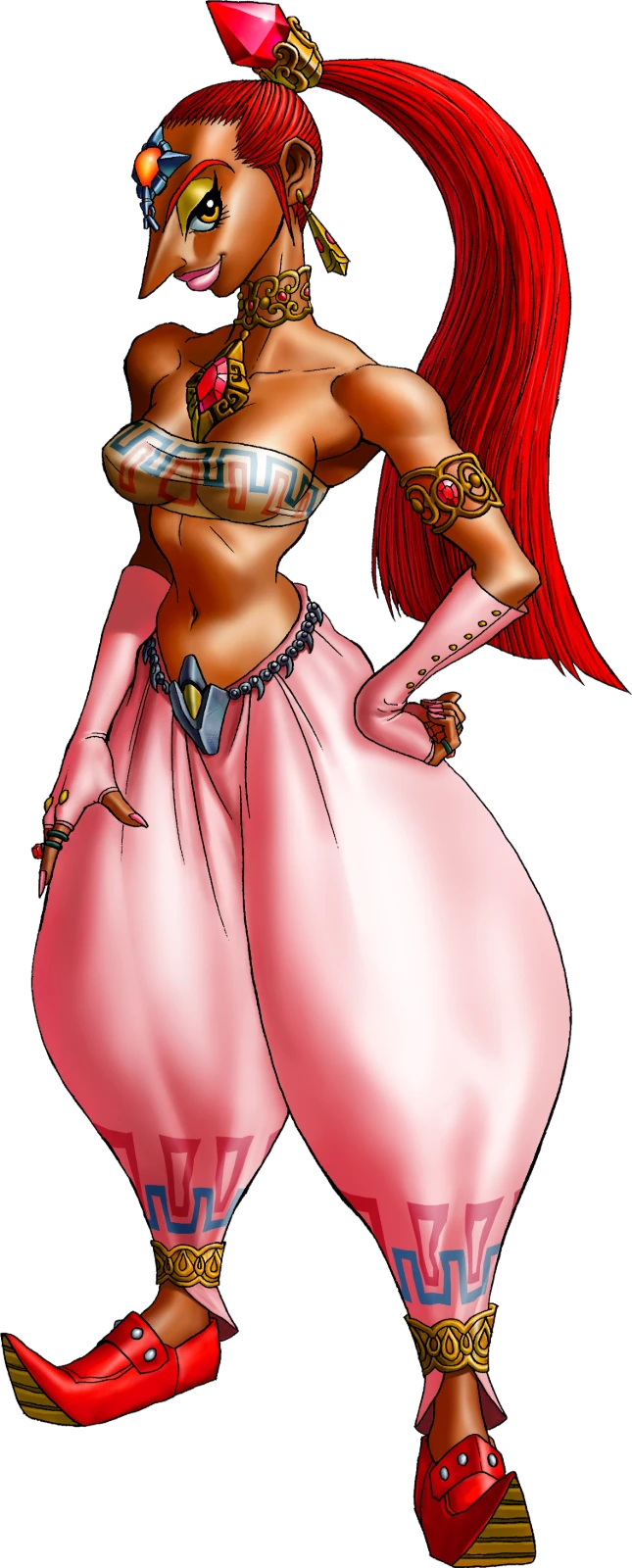
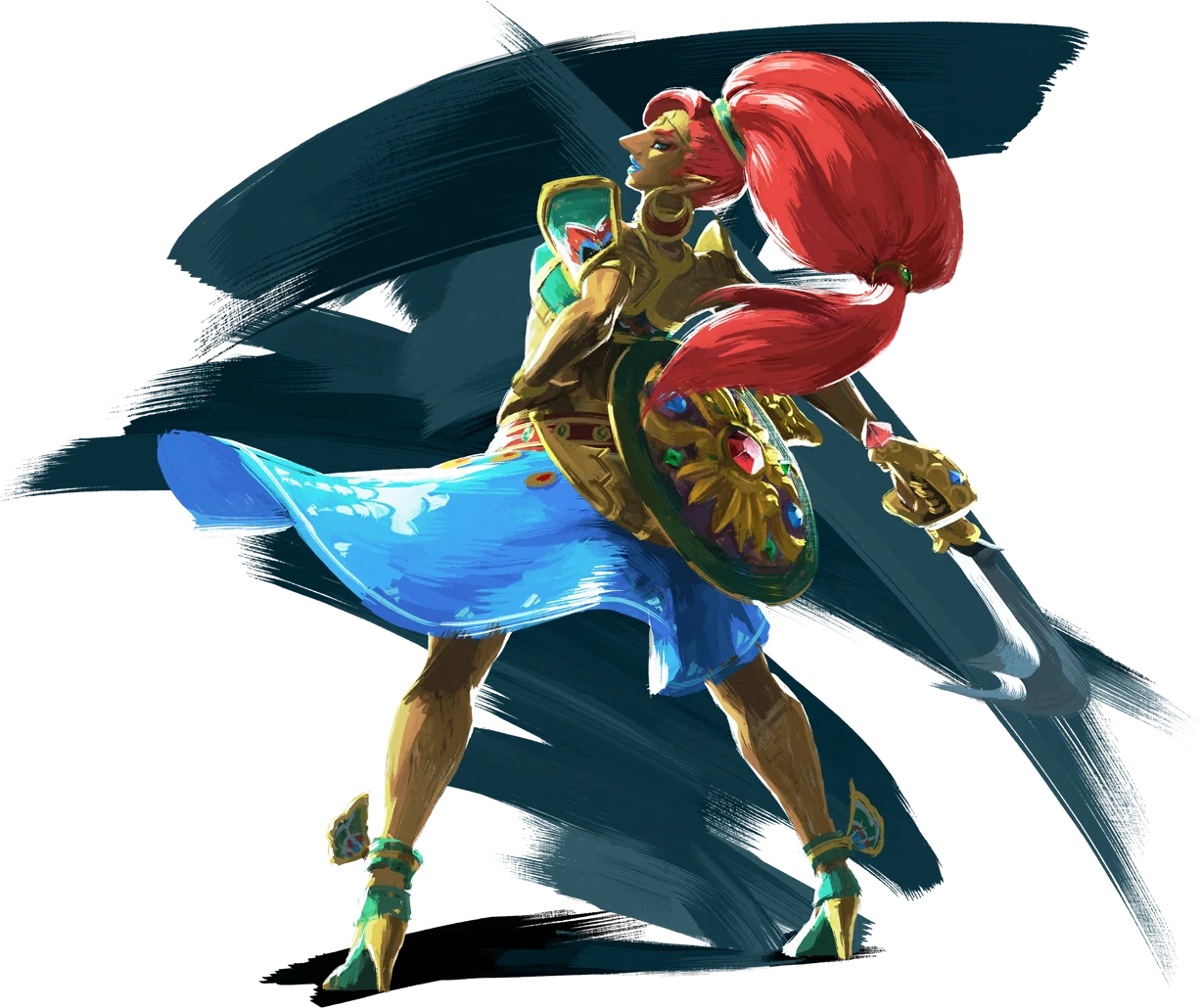
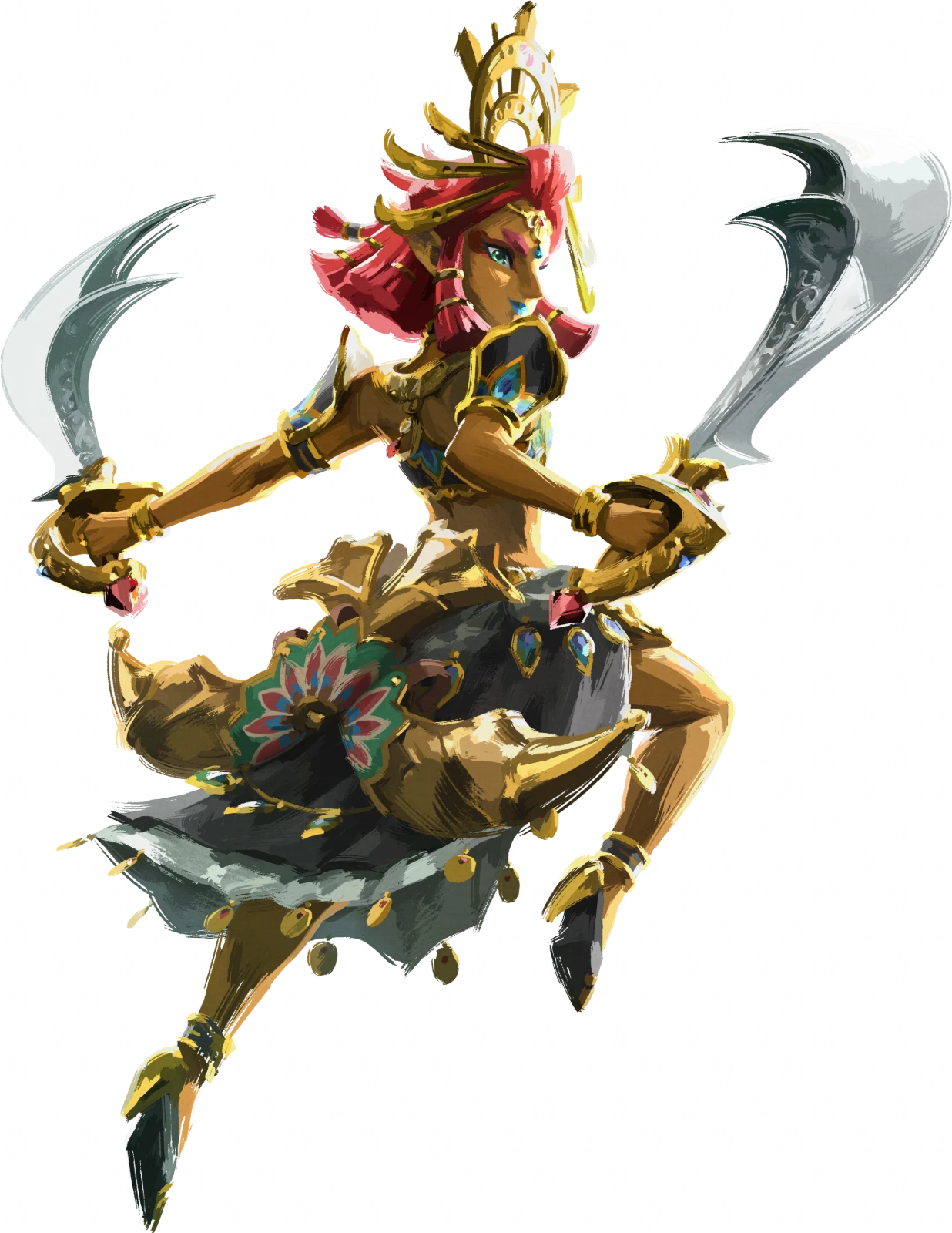
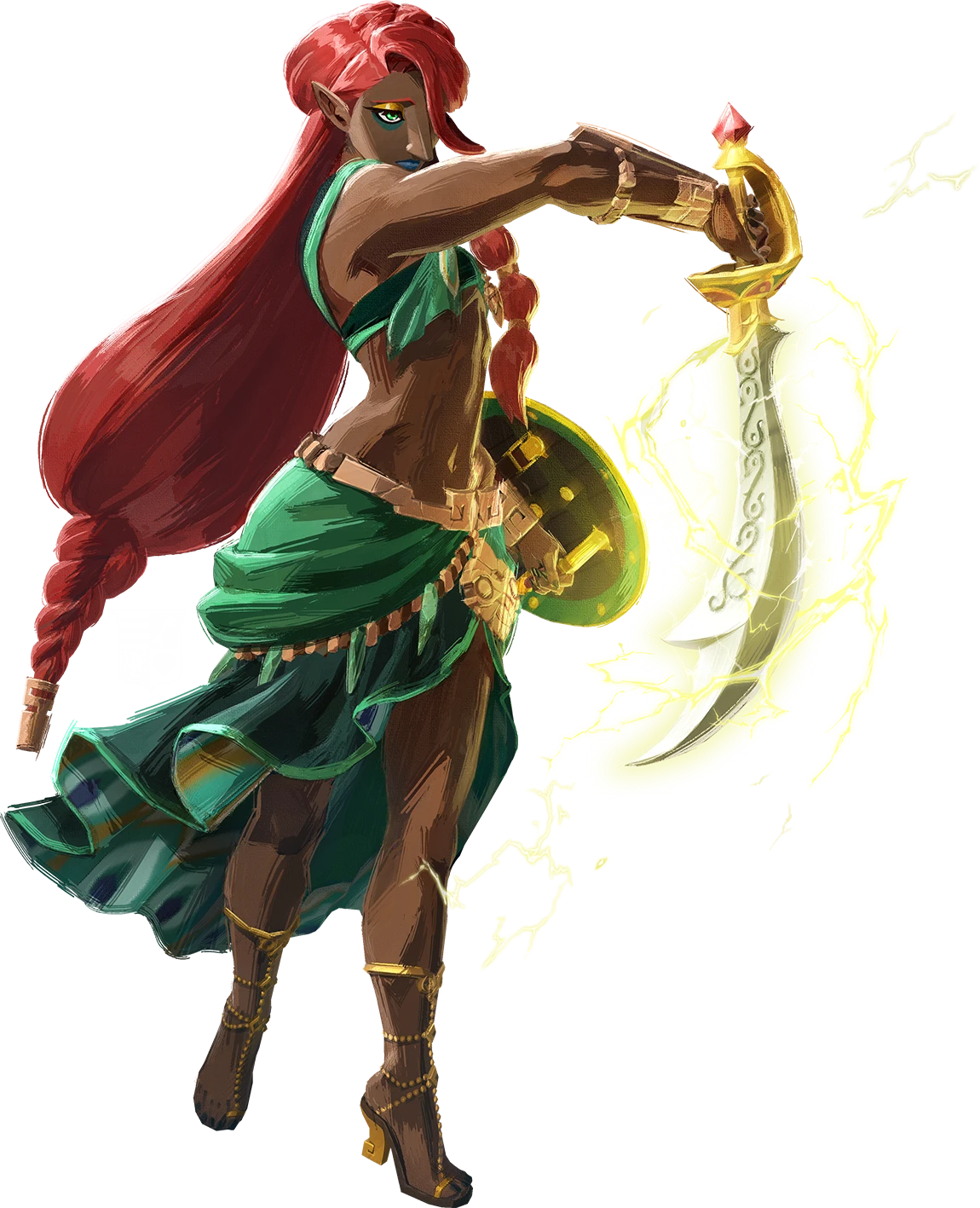
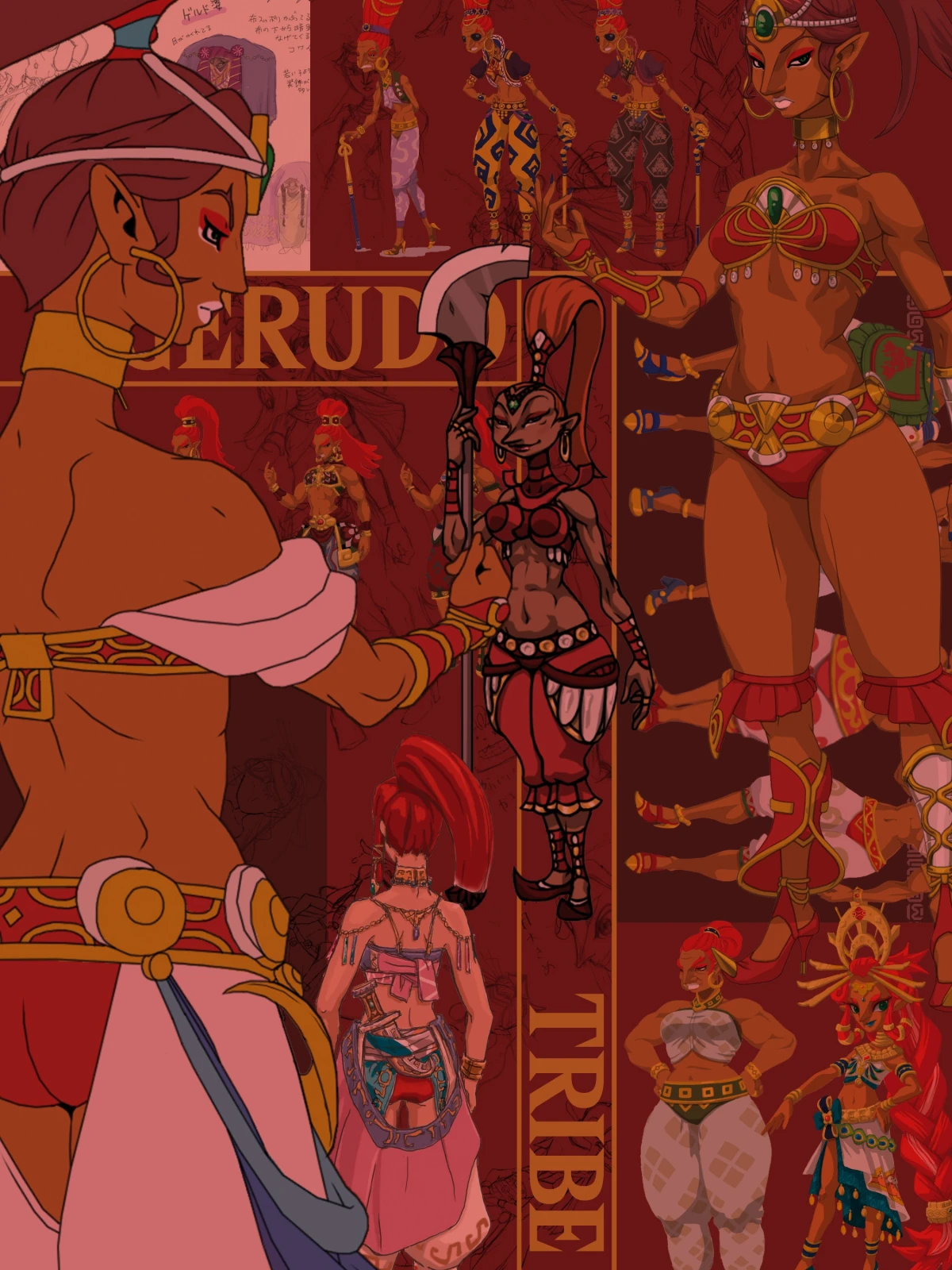
The Gerudo are a proud desert people of tall, athletic warriors, usually dark-skinned and red-haired, and almost all of them women: by tradition a single boy is born to the tribe once a century, and he is destined to be its king. Creating a Champion explains that they keep contact with men to a minimum, believing it brings disaster, and travel abroad mainly to find partners. Their language calls women vai and men voe, and their script has 26 letters, just like the Latin alphabet.
Ocarina of Time introduced them as a band of thieves in a fortress in the western desert, worshipping a Goddess of the Sand rather than the three goddesses. Their once-a-century king is Ganondorf, while Nabooru, their second-in-command, turns against him and becomes the Sage of Spirit. Later games have worked hard to separate the people from their most notorious son. They renounce him in Four Swords Adventures, have nothing to do with him in Echoes of Wisdom, and in Age of Imprisonment the warrior Ardi, framed by Ganondorf for his own attack on Hyrule Castle, ends up leading her people against him.
Game by game (10)
Ocarina of Time (1998): Gerudo’s Fortress, Nabooru, Ganondorf and the witches Koume and Kotake.
Majora’s Mask (2000): Termina’s Gerudo are pirates with no prophecy of a male king, and they have stolen the eggs of the Zora singer Lulu.
Four Swords Adventures (2004): exiled because of a new Ganondorf’s crimes, they renounce him and seek friendship with Hyrule.
Twilight Princess (2006): no Gerudo appear, but the desert’s Arbiter’s Grounds is where the sages once tried to execute Ganondorf.
Breath of the Wild (2017): Gerudo Town, closed to men, so Link must dress as a vai; the 12-year-old chief Riju, descendant of the Champion Urbosa, who died fighting Calamity Ganon a century before. The Gerudo now honour the Seven Heroines above Hylia, and trade more than they steal.
Cadence of Hyrule (2019): with Ganondorf too young to rule, the Gerudo are led by Barriara.
Age of Calamity (2020): Urbosa and Riju are playable.
Tears of the Kingdom (2023): sandstorms and Gibdo drive the Gerudo underground until Link and Riju defeat Queen Gibdo; Riju becomes the Sage of Lightning, and Link is granted a special exception to cross the town as a man.
Echoes of Wisdom (2024): Captain Dohna and her mother, Chief Seera, defend the desert from the rifts, and Zelda unmasks the deputy chief as an impostor.
Age of Imprisonment (2025): Ganondorf, the only boy born to the Gerudo in a century, rules under their laws; Ardi, whom he frames, becomes the Sage of Lightning.
Key facts
Homeland: the Gerudo Desert; Gerudo’s Fortress, later Gerudo Town
Urbosa, the Gerudo Champion, in Breath of the Wild (official artwork).Riju, chief of the Gerudo and Sage of Lightning, in Tears of the Kingdom (official artwork).Ardi, the Gerudo warrior Ganondorf frames, in Hyrule Warriors: Age of Imprisonment (artwork).
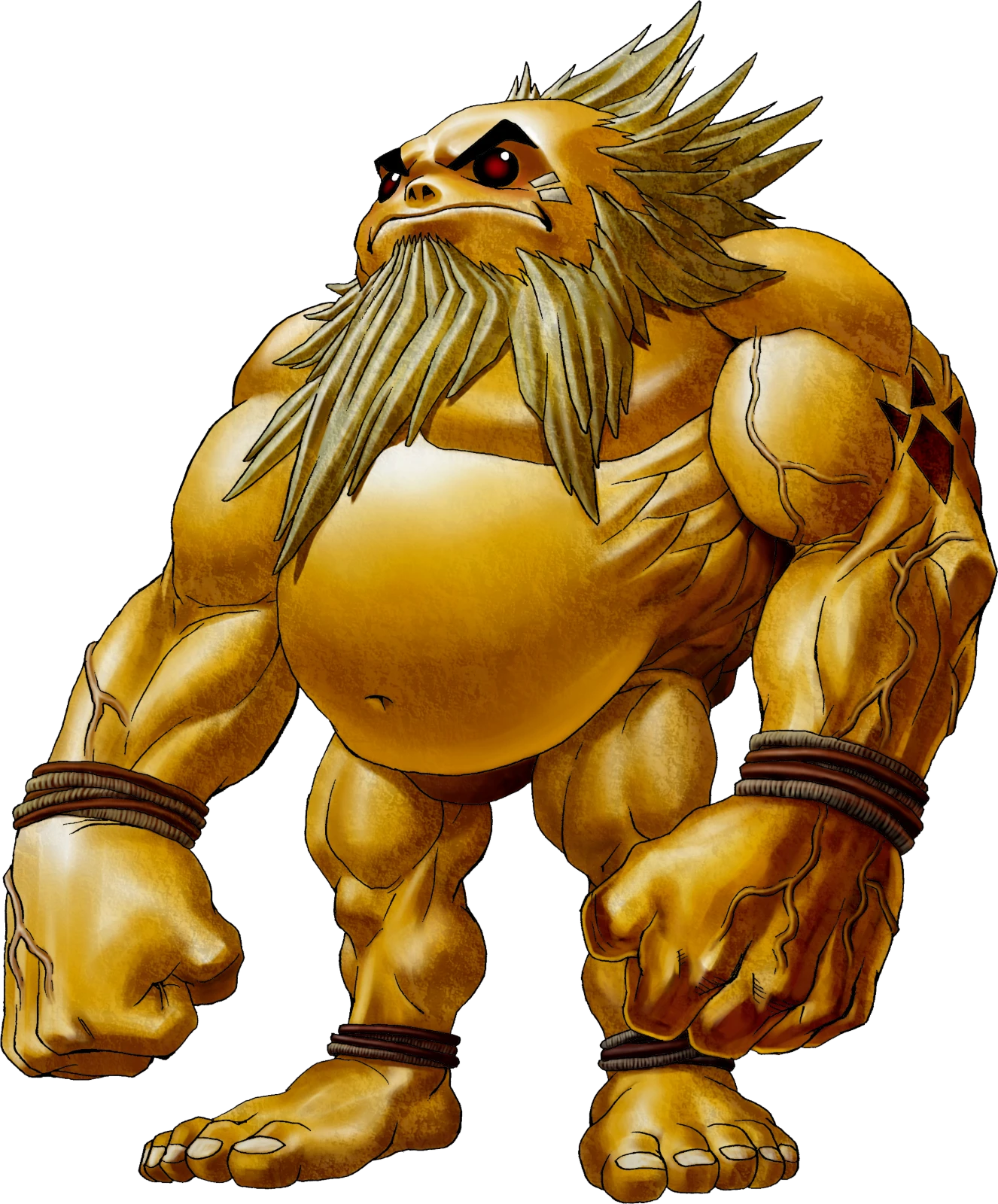
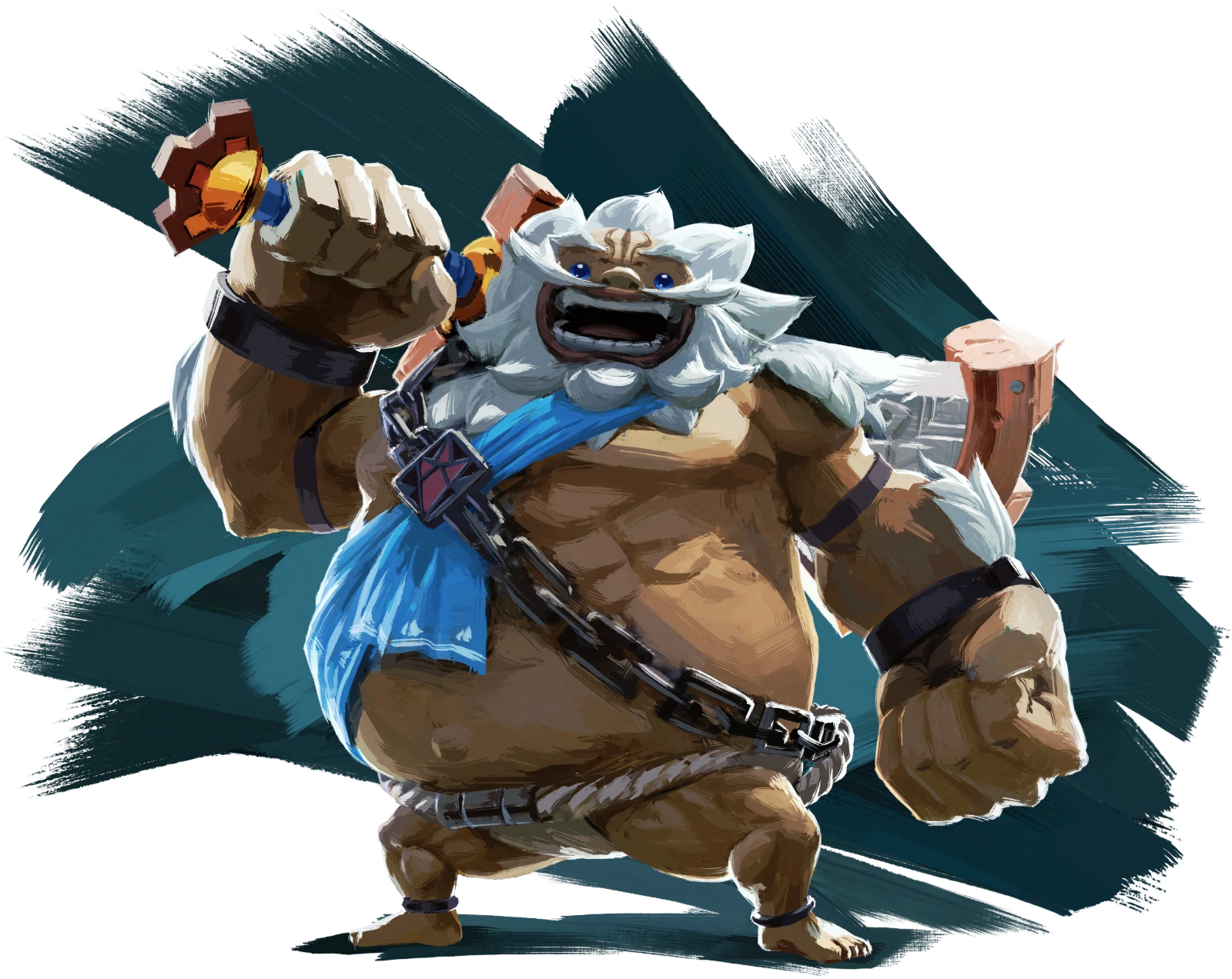
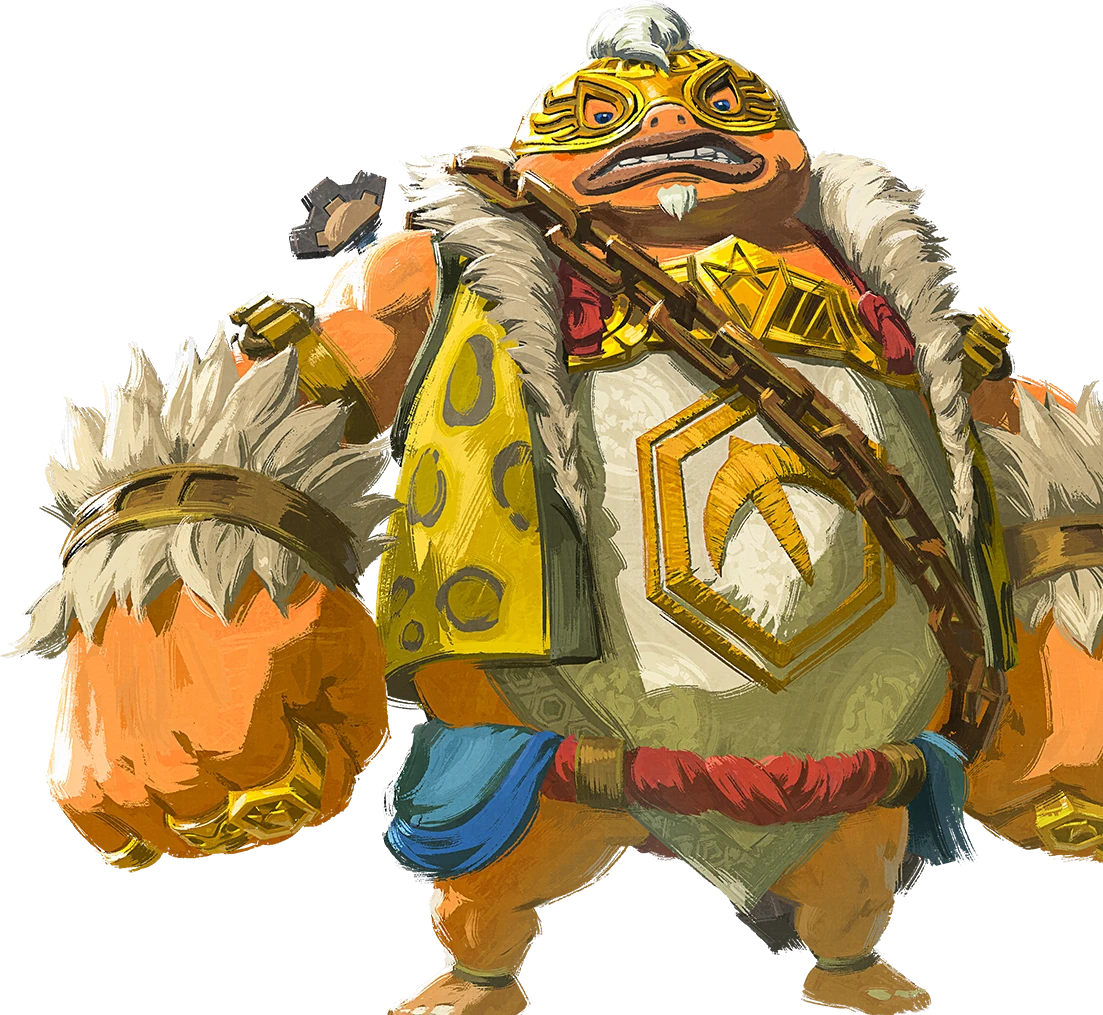
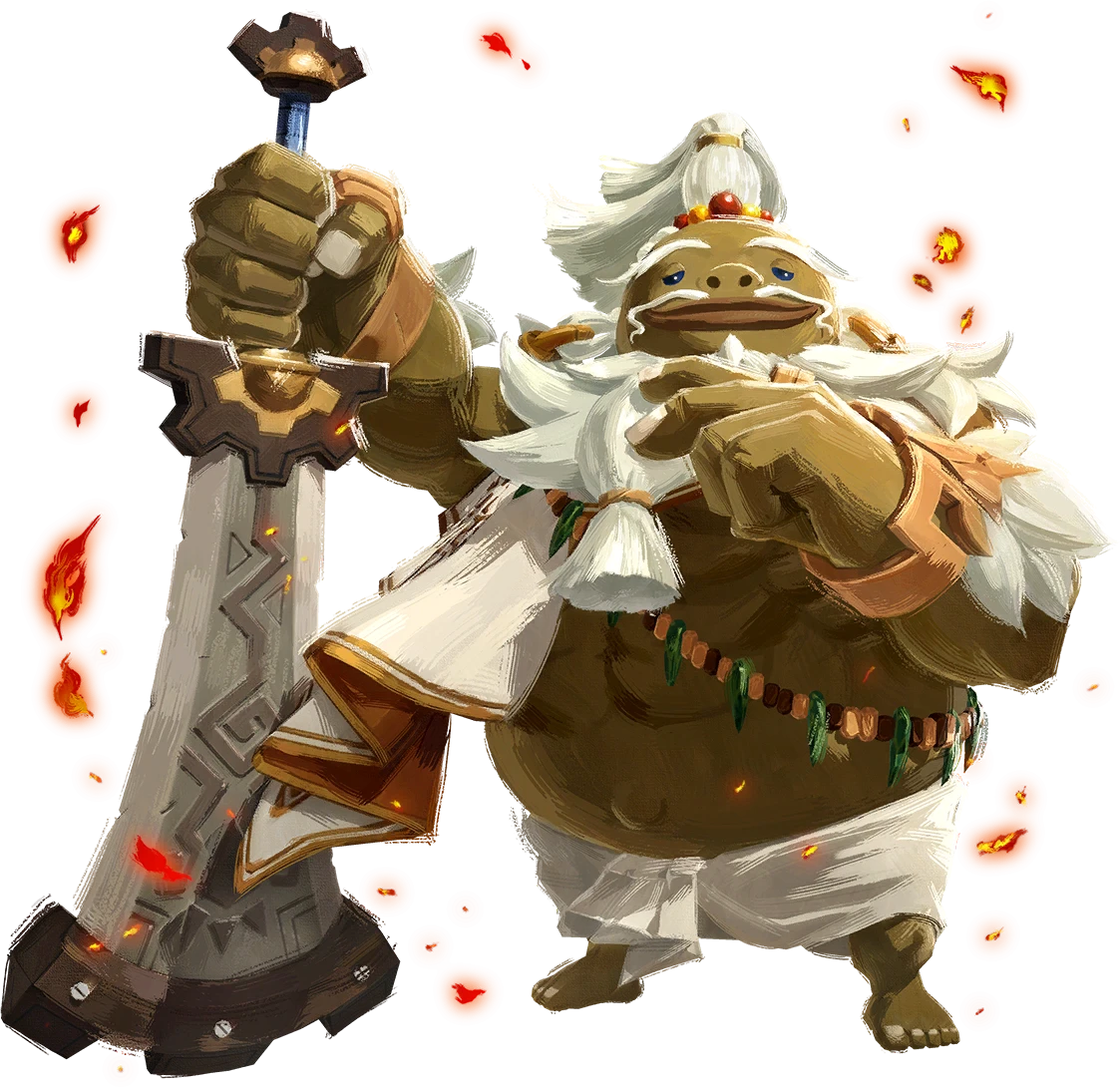
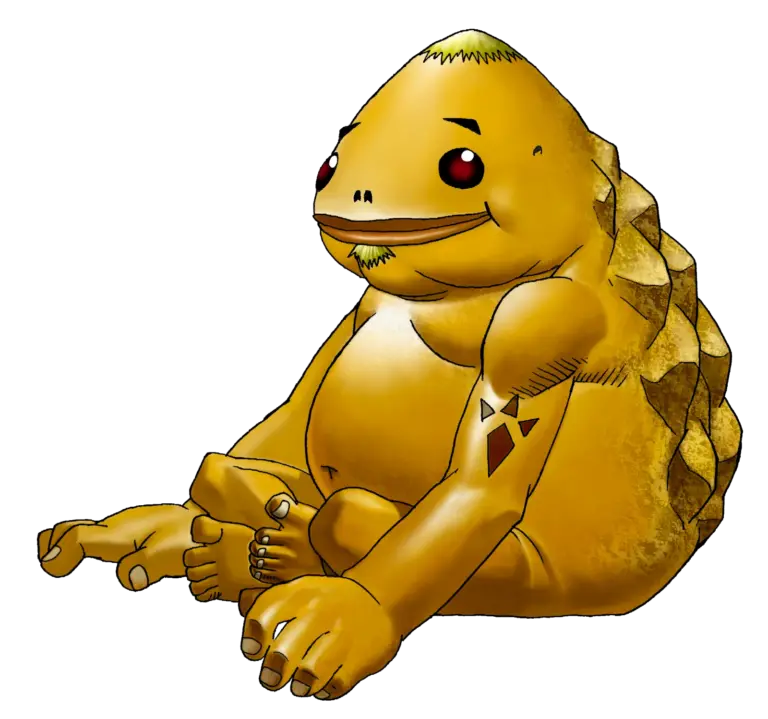
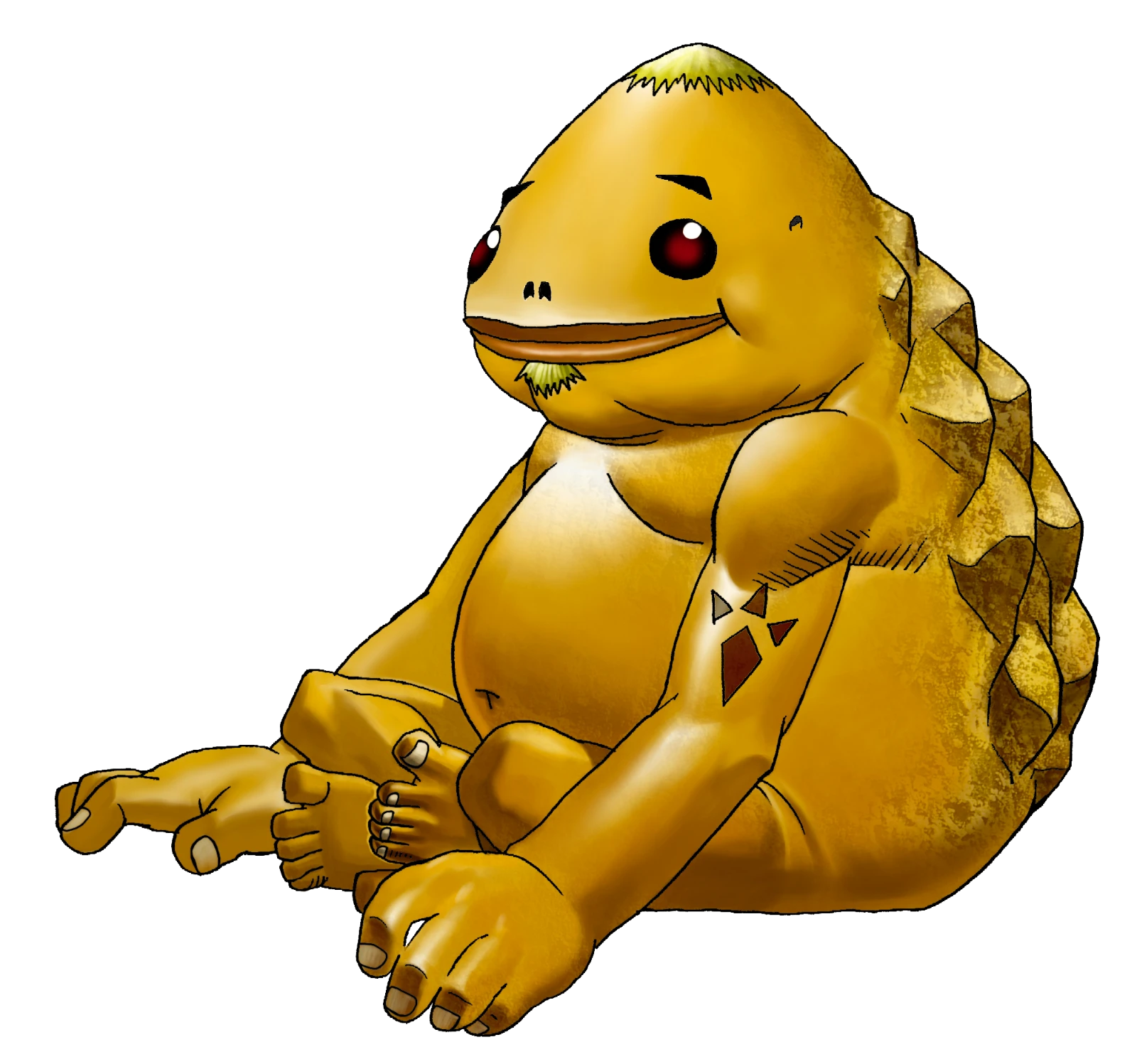
Gorons are big, round, tough-skinned mountain people, usually brown or golden, who eat rocks and curl up into balls to roll at speed. Lava and heat barely bother them. Their culture prizes strength and loyalty: they love sumo and racing, and call close friends “brother”. Zelda Dungeon notes that Gorons are always spoken of as male, with fathers, brothers and sons but never mothers or sisters. Even the name is a noise: goron is a Japanese sound effect for something rolling.
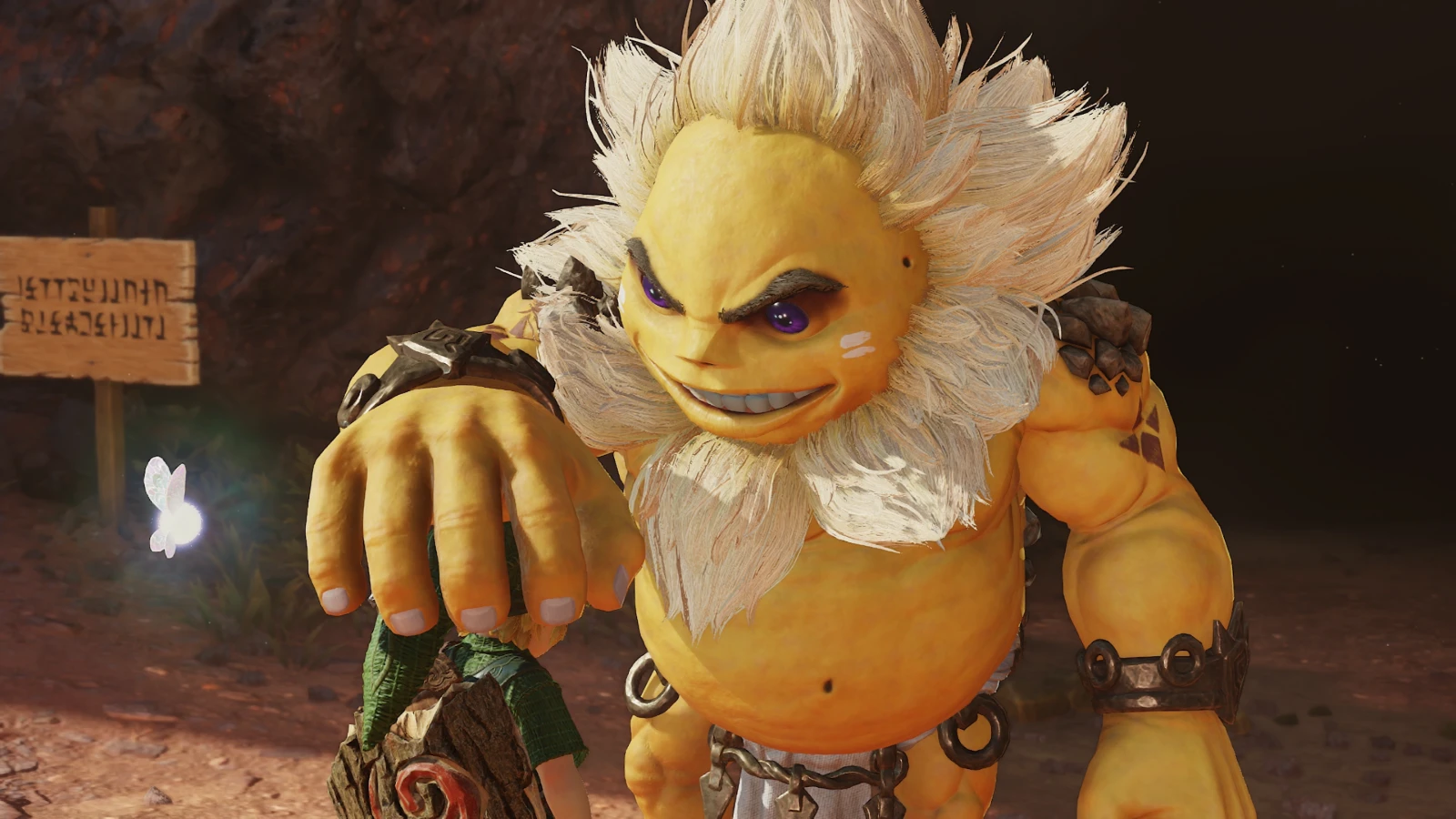
They arrived on Death Mountain in Ocarina of Time, starving because Ganondorf had sealed Dodongo’s Cavern, their best supply of rocks. Darunia, their leader, only cheers up when Link plays him Saria’s Song; once Link clears the cavern, Darunia names him his Sworn Brother, hands over the Goron’s Ruby and later becomes the Sage of Fire, while the giant Biggoron forges the mighty Biggoron’s Sword. Since then Gorons have turned up in most games, from the frozen village of Majora’s Mask to Goron City in Breath of the Wild, where the Champion Daruk’s descendant Yunobo inherits his protective power and, in Tears of the Kingdom, becomes the Sage of Fire in his turn.
Game by game (14)
Ocarina of Time (1998): Goron City, Darunia and Biggoron; Ganondorf later rounds up the Gorons to feed them to the dragon Volvagia.
Majora’s Mask (2000): the Goron Mask, which holds the spirit of the Goron hero Darmani, lets Link become a Goron and roll at speed; he brings spring back to the frozen Goron Village.
Breath of the Wild (2017): Goron City, the Champion Daruk and the nervous Yunobo.
Tears of the Kingdom (2023): Yunobo, now president of YunoboCo, falls for the Marbled Rock Roast craze before becoming the Sage of Fire.
Echoes of Wisdom (2024): Darston, the young chief of Goron City, newly in charge after his father’s death.
Age of Imprisonment (2025): Agraston, the worldly Goron chief and Rauru’s friend, becomes the Sage of Fire; 4Gamer’s interview with the developers remarked on how much his face resembles Yunobo’s.
Daruk, the Goron Champion, in Breath of the Wild (official artwork).Yunobo, Sage of Fire, in Tears of the Kingdom (official artwork).Agraston, chief of the Gorons, in Hyrule Warriors: Age of Imprisonment (artwork).
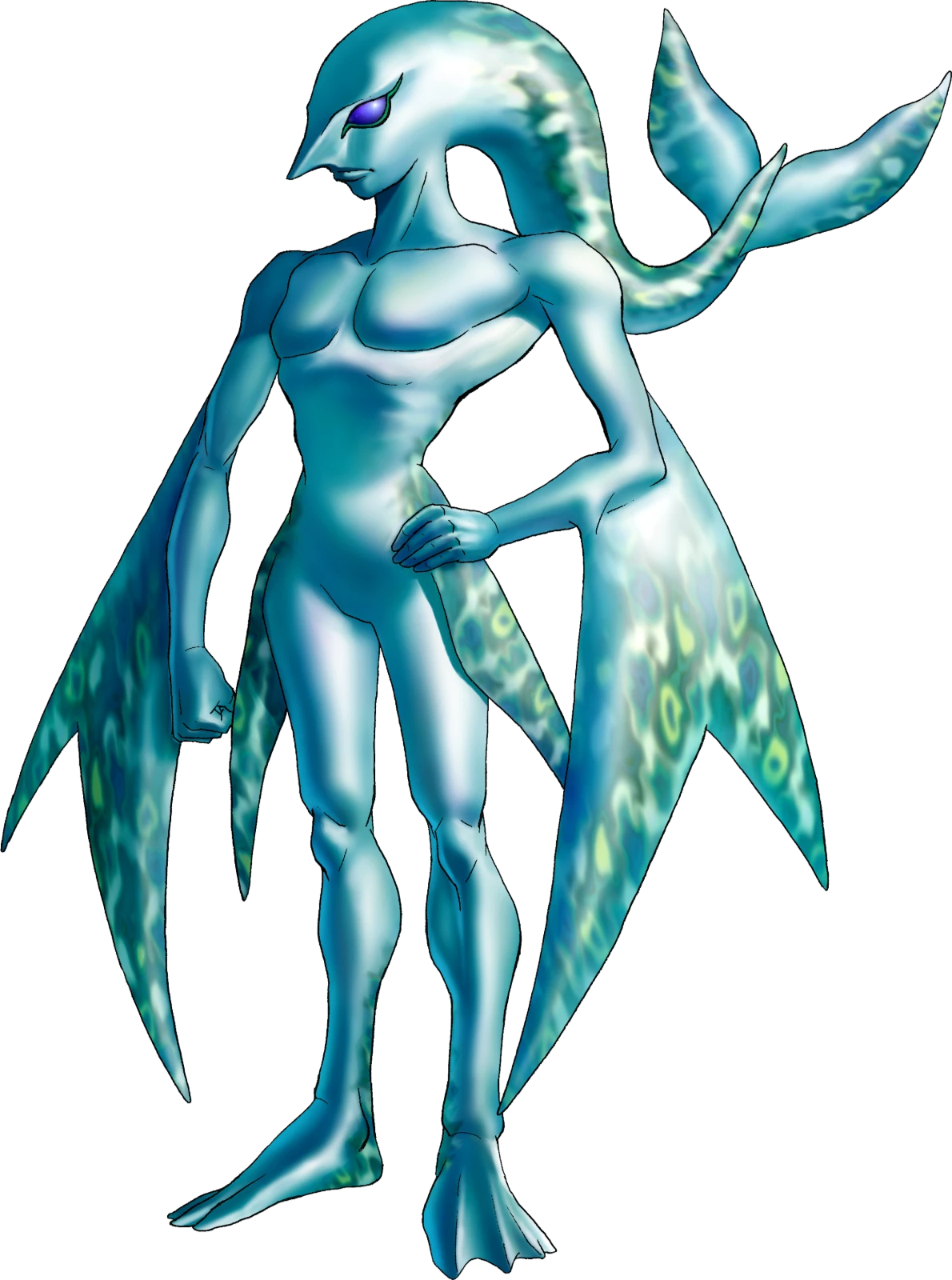
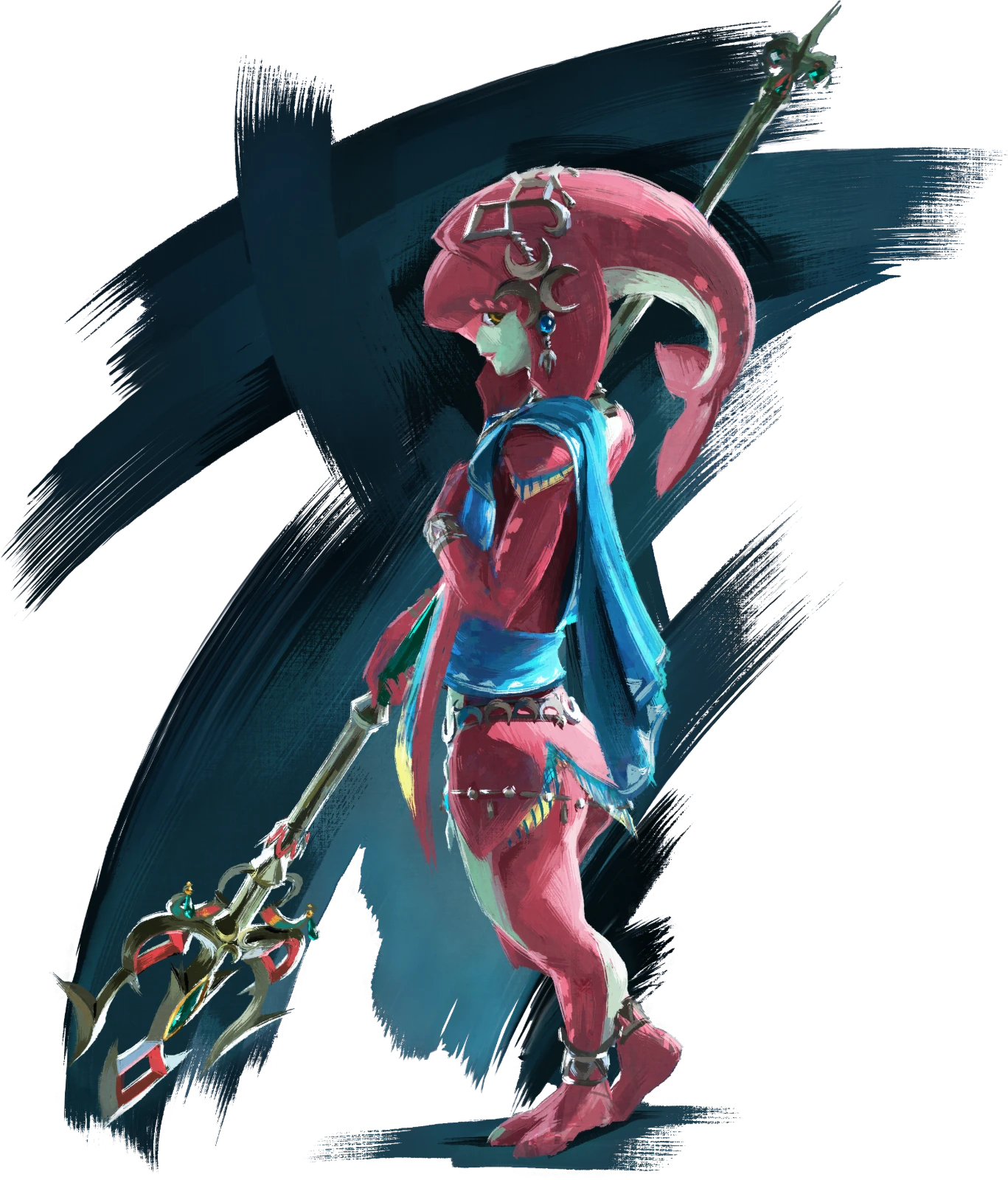
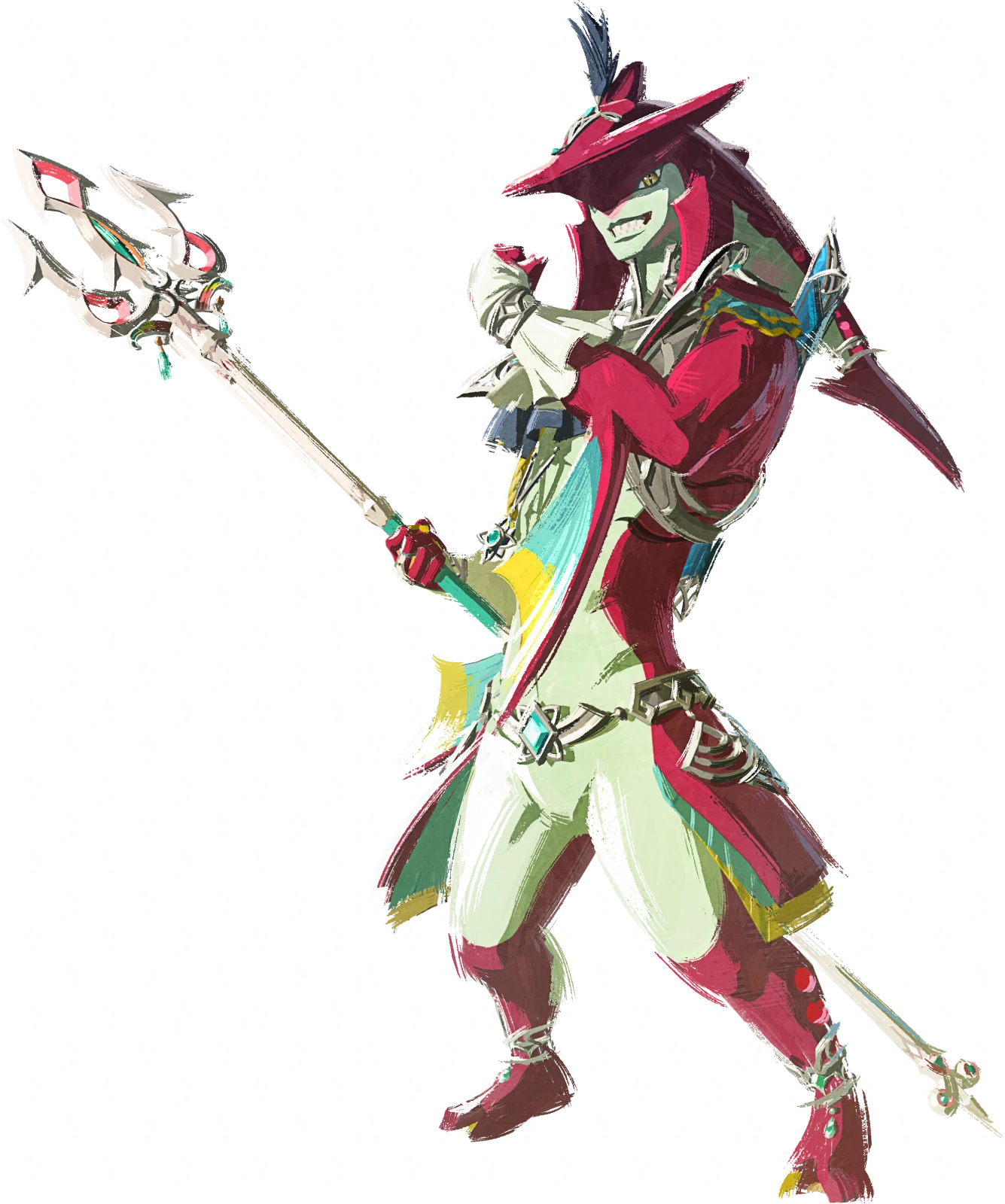
The Zoras live in Hyrule’s rivers, lakes and seas, and swim well enough to climb waterfalls. They come in two kinds. River Zoras are green, finned and usually hostile, popping out of the water to spit fireballs at Link. Sea Zoras are sleek, pale and dolphin-tailed, and generally friendly. In Majora’s Mask their eggs must be kept in cold, clean water, and magical Zoras can raise electric shields; Breath of the Wild reveals that they age slowly and live for so long that plenty of them still remember the Great Calamity.
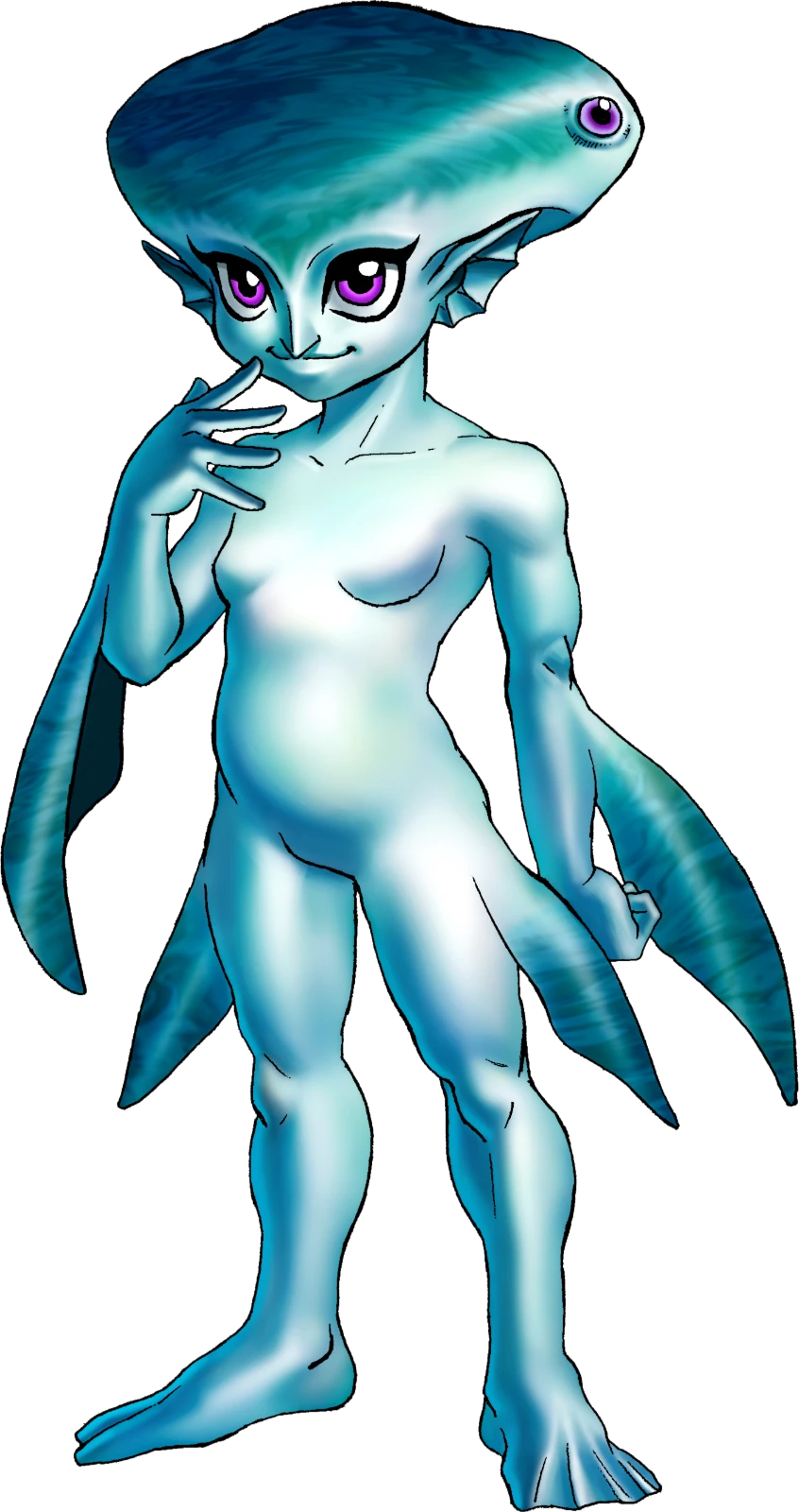
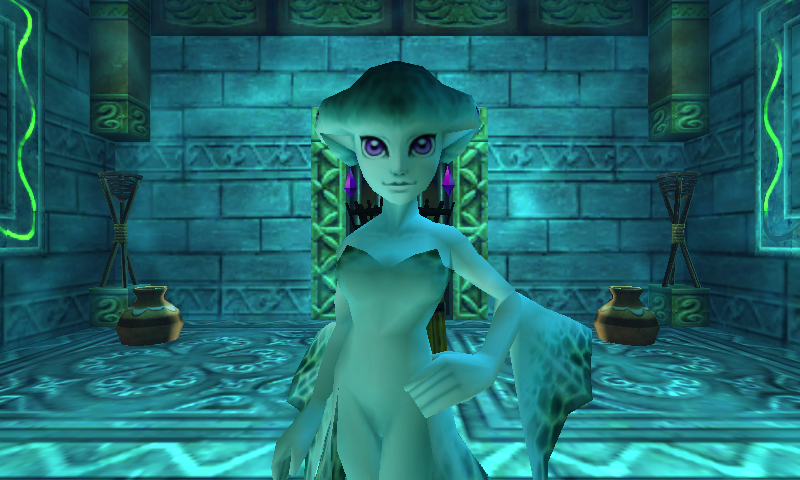
The River Zoras came first, as enemies in the original game, and their king sells Link the Zora’s Flippers in A Link to the Past. Ocarina of Time brought in the Sea Zoras and their shimmering domain. Link carries Princess Ruto through the belly of the great fish Lord Jabu-Jabu, she presses the Zora’s Sapphire on him as if it were an engagement ring, and seven years later he finds her people frozen under the ice; Ruto becomes the Sage of Water. In the flooded world of The Wind Waker the Zoras are gone, apart from the ghost of their sage Laruto, and Eiji Aonuma has said the Rito are what they became.
Game by game (13)
The Legend of Zelda (1986): River Zora enemies.
A Link to the Past (1991): King Zora, a River Zora, sells Link the Zora’s Flippers.
Link’s Awakening (1993): River Zora enemies, and one friendly Zora.
Majora’s Mask (2000): Great Bay’s Zoras include the rock band the Indigo-Go’s; the Zora Mask turns Link into their guitarist, Mikau, and he recovers the stolen eggs of their singer, Lulu.
Oracle of Ages (2001): Zora Village, King Zora and Lord Jabu-Jabu.
The Wind Waker (2002): only the ghost of Laruto, the murdered Sage of Earth.
Twilight Princess (2006): Zora’s Domain is frozen and Queen Rutela has been murdered; her ghost asks Link to save her son, Prince Ralis.
Young Princess Ruto in Ocarina of Time (official artwork).Mipha, the Zora Champion, in Breath of the Wild (official artwork).Sidon, prince of the Zoras and Sage of Water, in Tears of the Kingdom (official artwork).
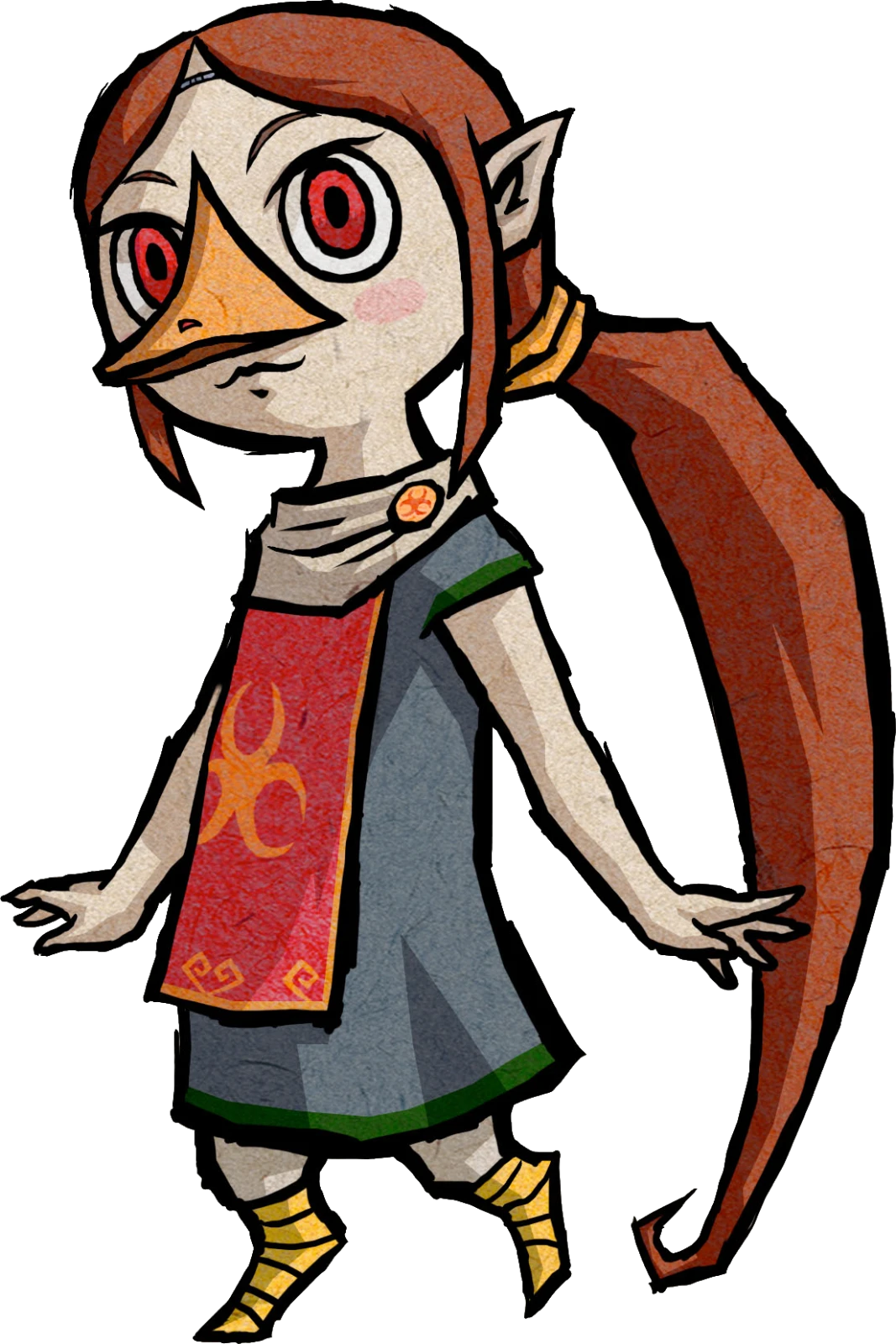
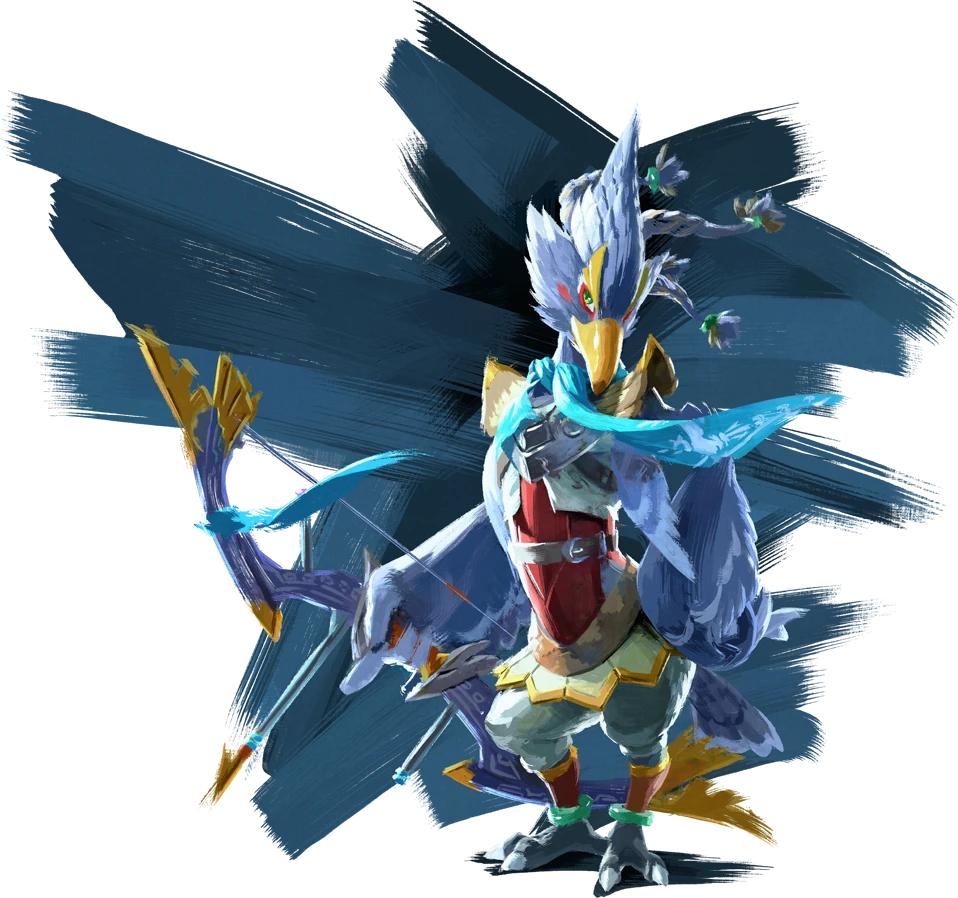
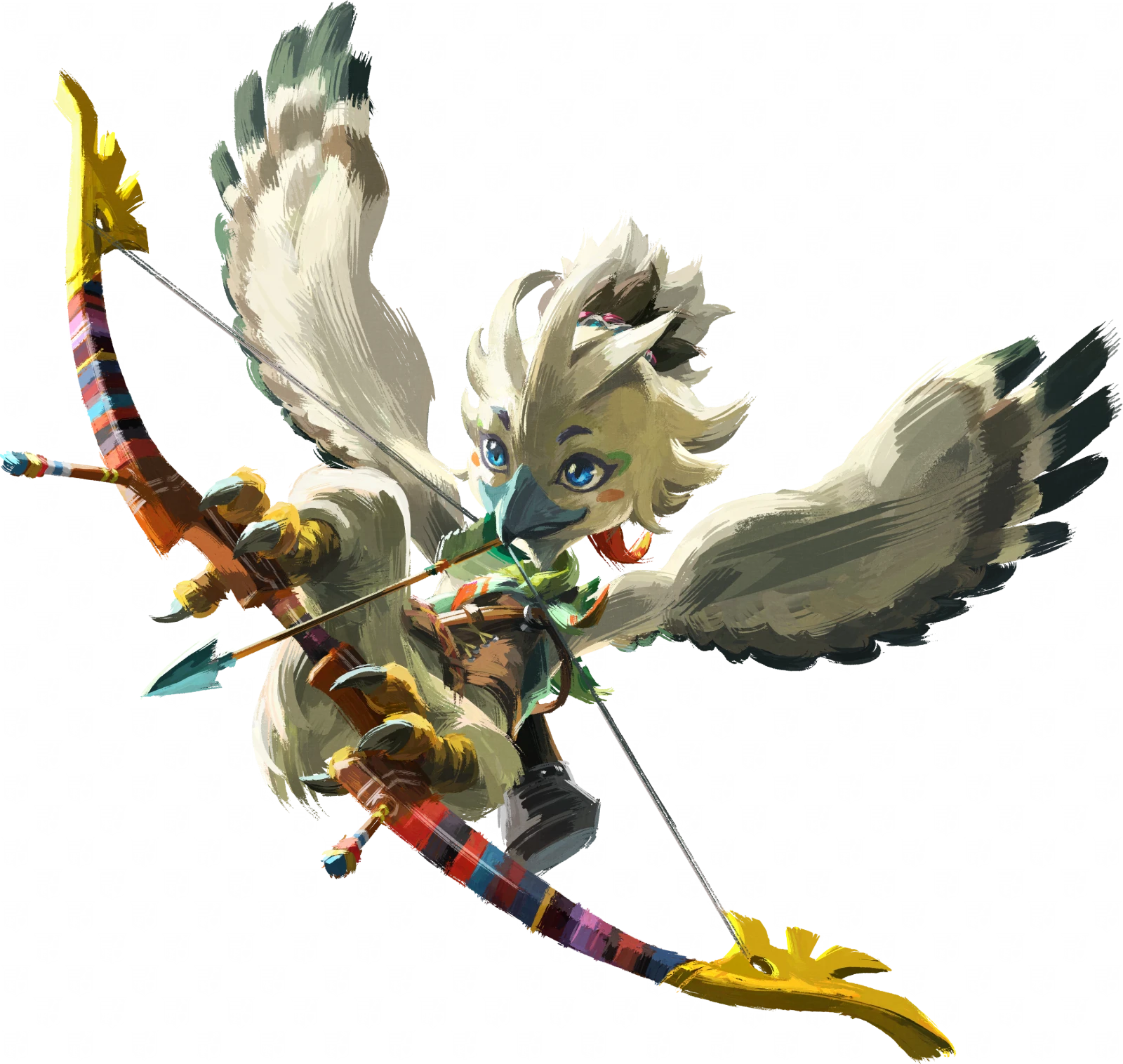
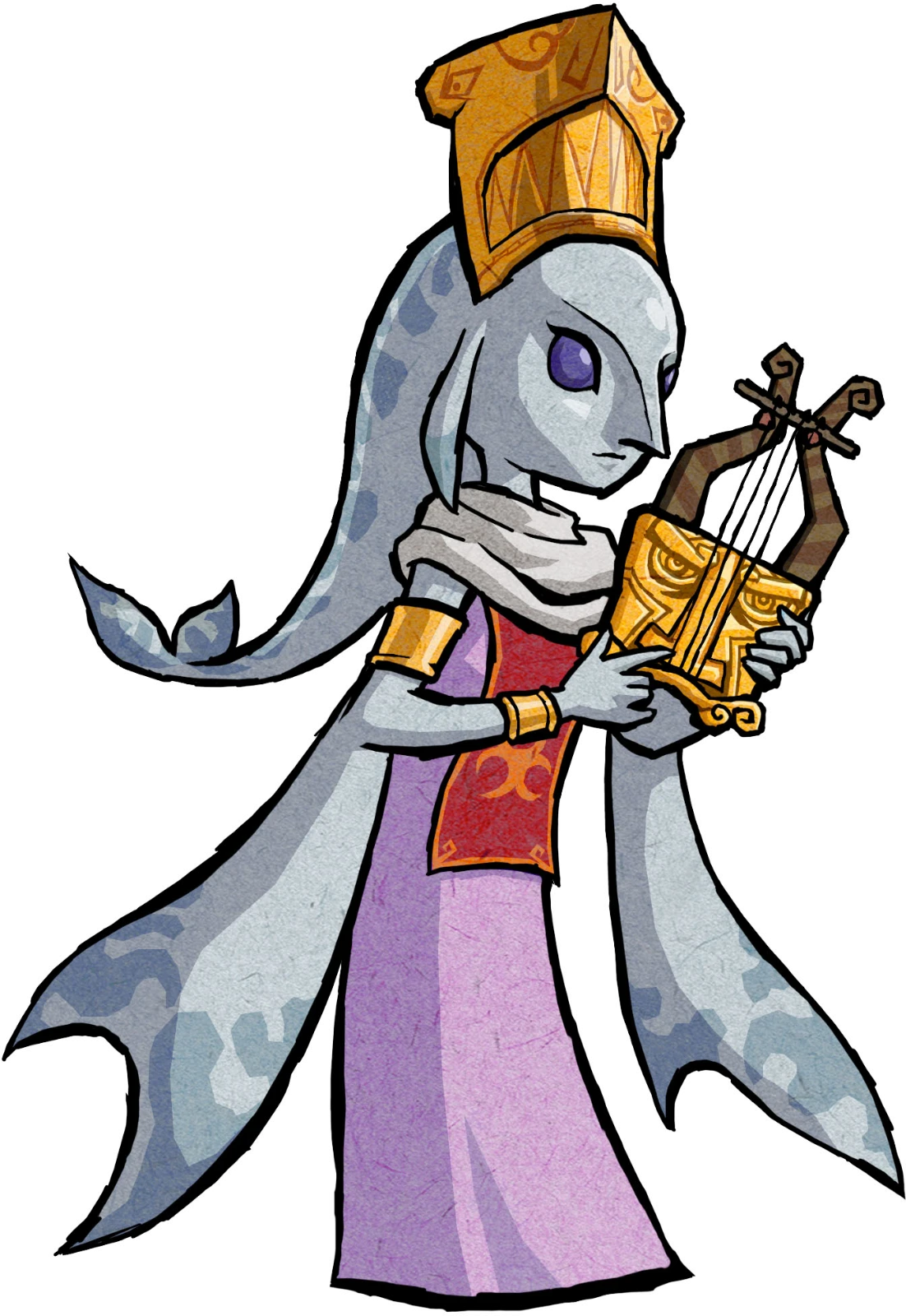
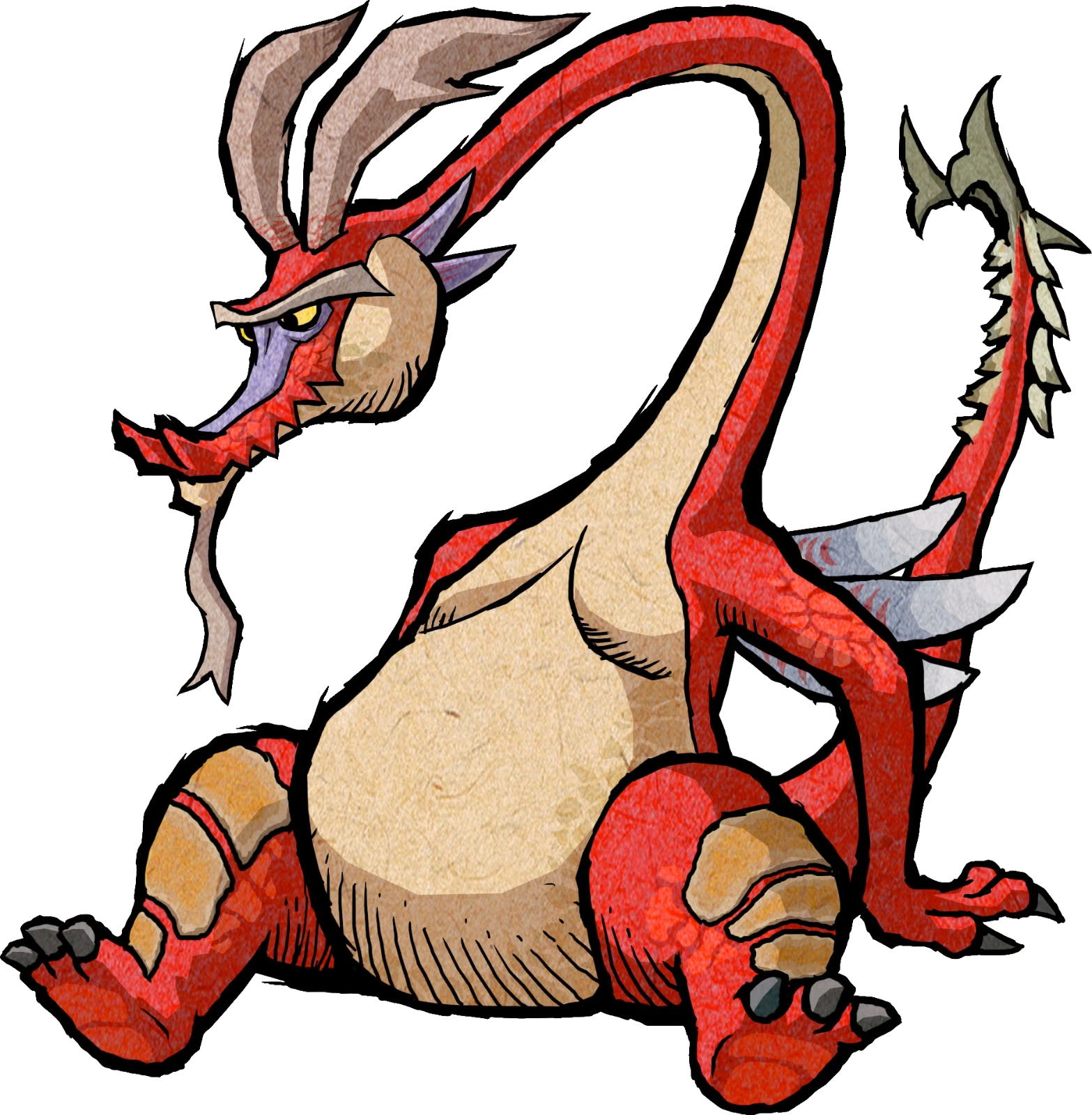
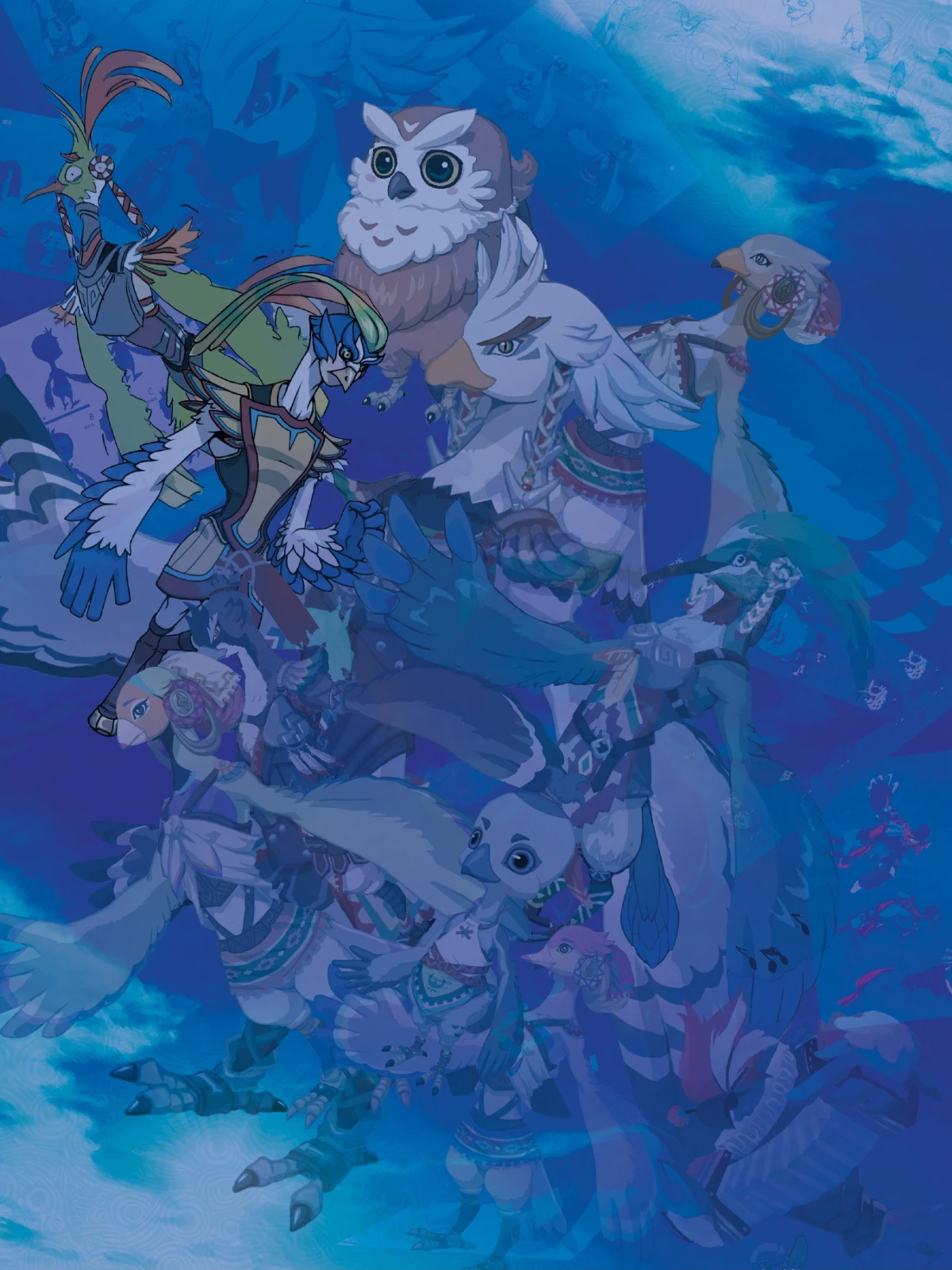
The Rito are a proud bird people who fly, fight from the air and live high above the ground. In The Wind Waker they make their home on Dragon Roost Island and run the Great Sea’s postal service. They are born without wings: on coming of age, each young Rito climbs the mountain to receive a scale from Valoo, the sky spirit and their patron dragon, and only then do the wings grow. Their origin is one of the series’ neatest bits of lore. In the timeline where Hyrule was drowned, the Zoras adapted to a world of sea and sky, trading swimming for flight; Aonuma has said so, and the game hints at it when the Zora sage Laruto’s role passes to the Rito girl Medli.
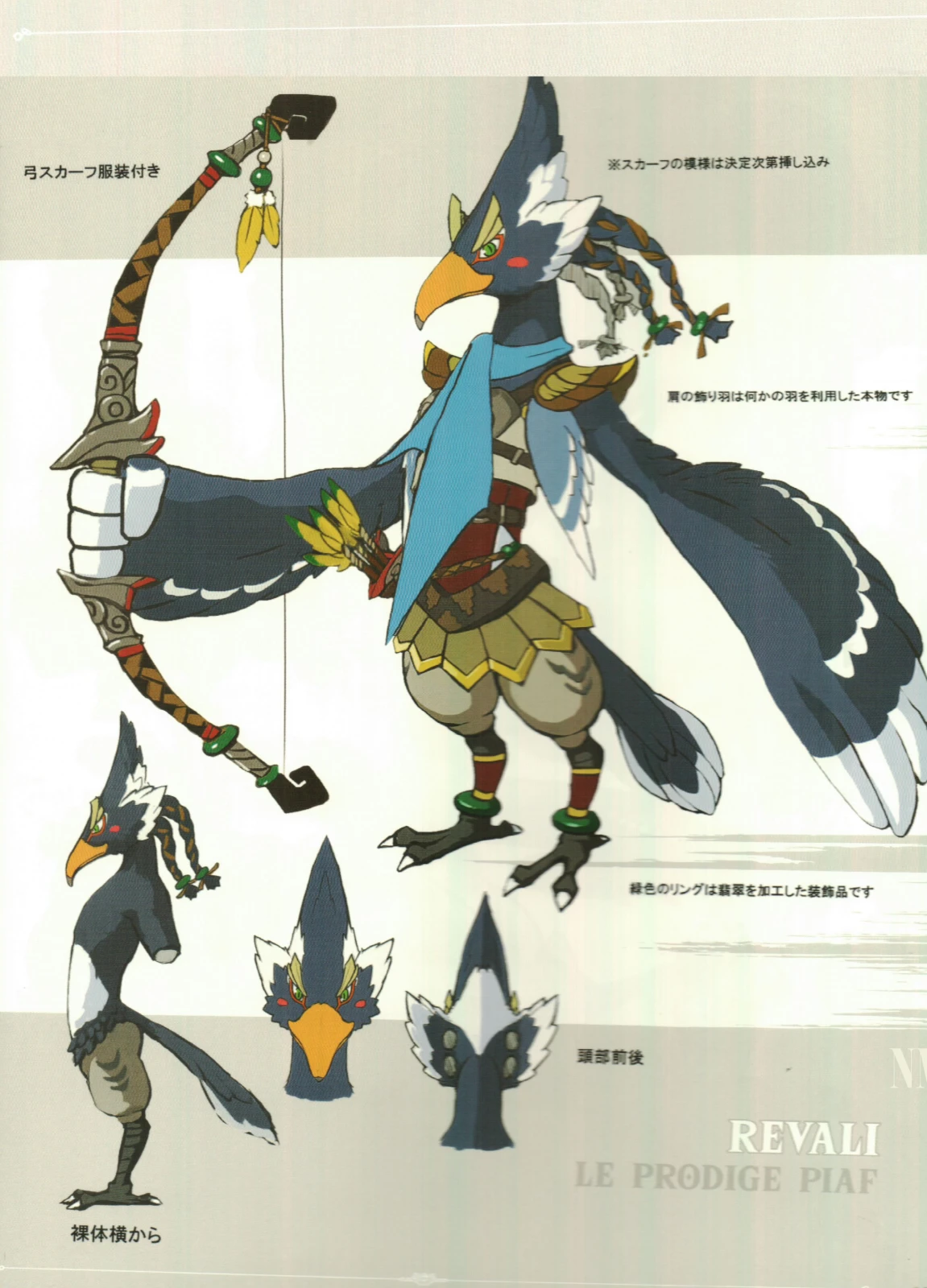
Breath of the Wild reinvented them. Its Rito are born with wings, look like eagles, hawks and parrots, live in Rito Village in Tabantha and are skilled archers, favouring light, quick weapons. According to Zelda Dungeon, the designers drew the boastful Champion Revali first, choosing a bird of prey to suit his rivalry with Link, and built the rest of the people around him.
Game by game (5)
The Wind Waker (2002): Prince Komali, the sage Medli, the postman Quill and the dragon Valoo.
Breath of the Wild (2017): Rito Village, the Champion Revali, the warrior Teba, his young son Tulin and the wandering bard Kass.
Age of Calamity (2020): Revali and Teba are playable.
Tears of the Kingdom (2023): Tulin, now old enough to fly into the storm over Rito Village, becomes the Sage of Wind.
Age of Imprisonment (2025): Raphica, the quick-witted leader of the Rito, is the first of the four leaders to join Rauru, and becomes the Sage of Wind.
Key facts
Homeland: Dragon Roost Island (The Wind Waker); Rito Village in Tabantha (Breath of the Wild, Tears of the Kingdom)
Prince Komali in The Wind Waker (official artwork).Revali, the Rito Champion, in Breath of the Wild (official artwork).Tulin, Sage of Wind, in Tears of the Kingdom (official artwork).
Children of the forest
The woods have peoples of their own, most of them watched over by the Great Deku Tree: the ageless Kokiri, the leafy Koroks they became, the prickly Deku Scrubs and the shy Kikwi of Skyward Sword.
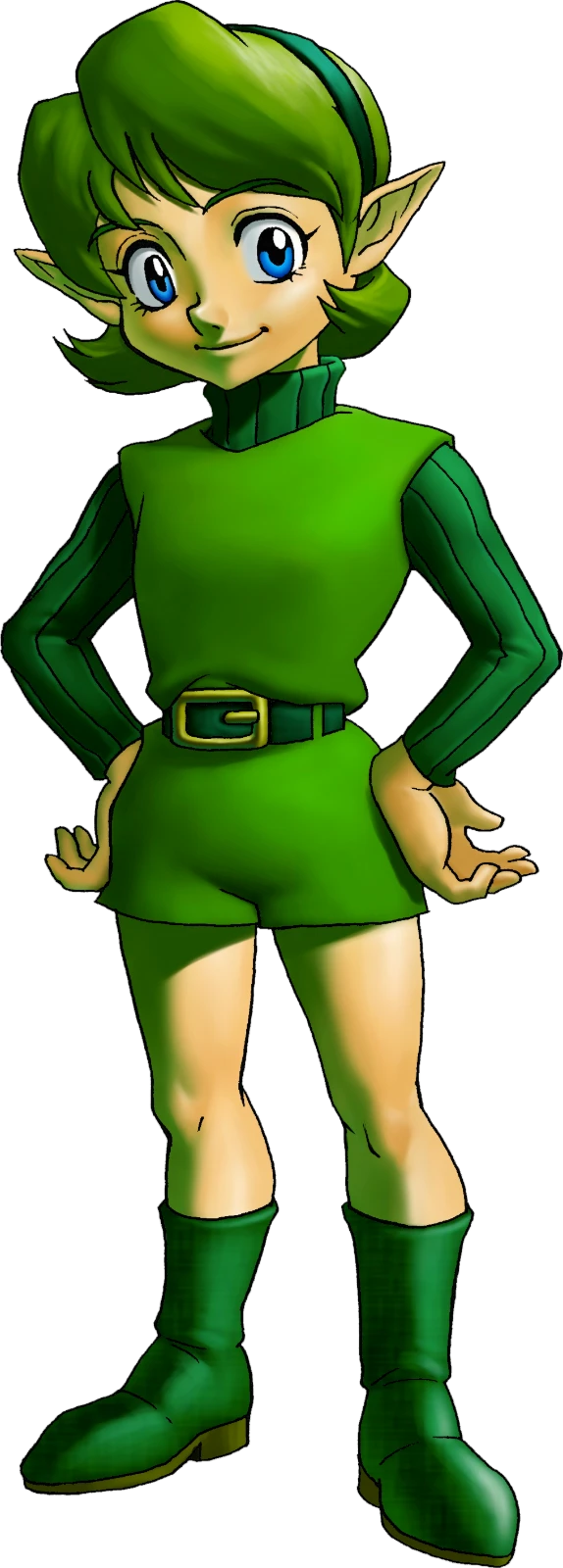
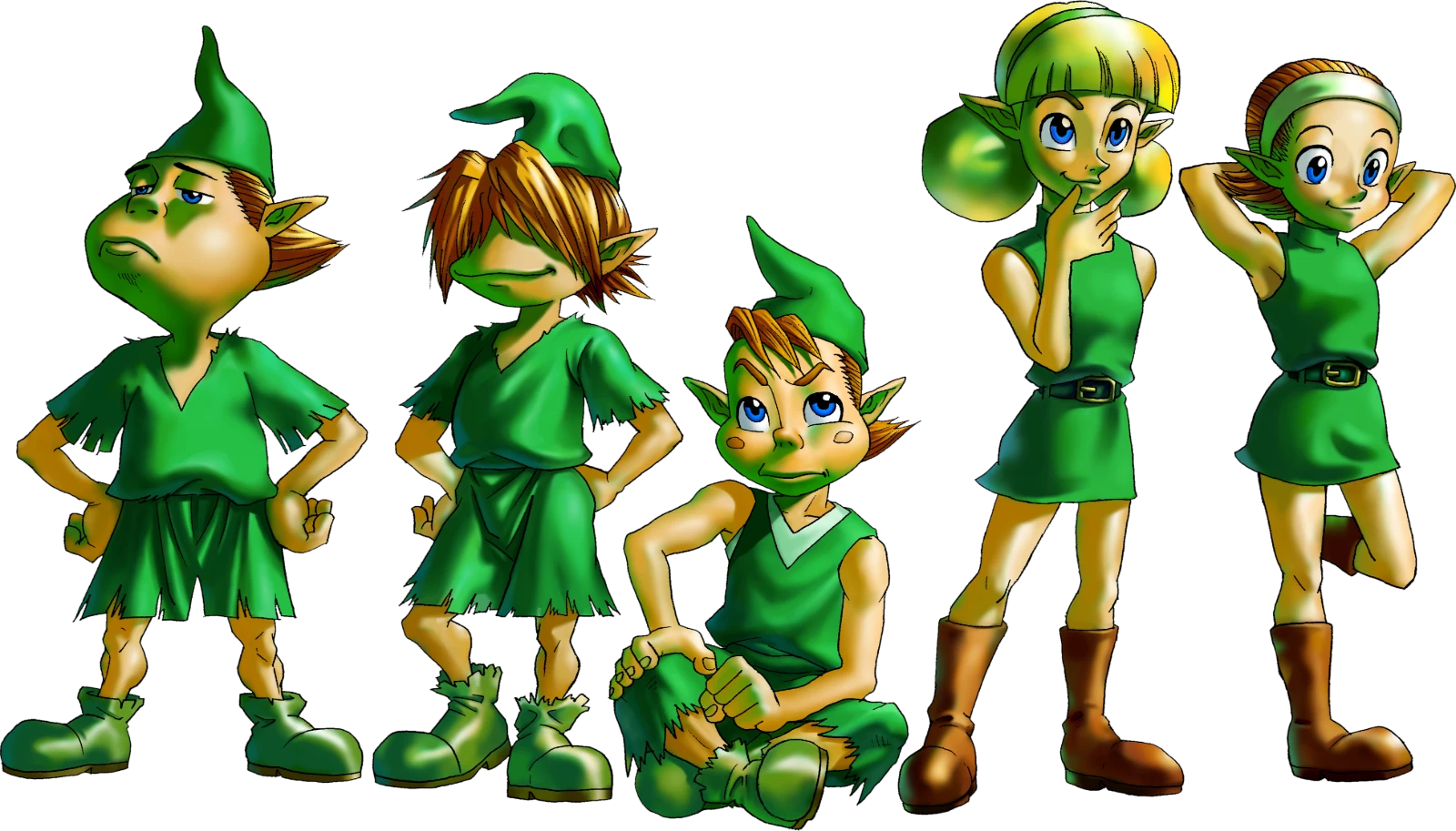
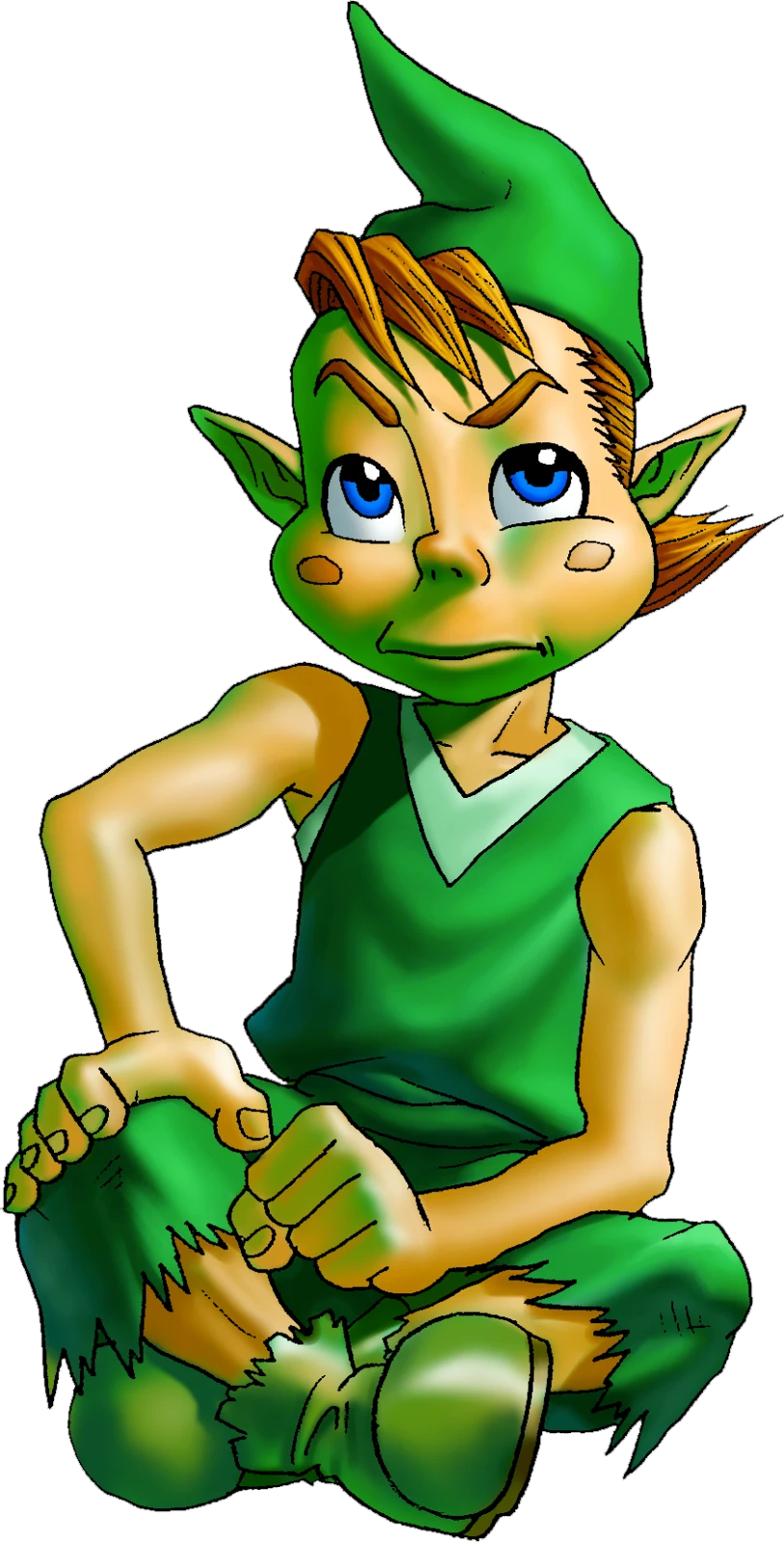
The Kokiri are forest children who never grow up. They live in Kokiri Forest under the protection of the Great Deku Tree, who keeps them young and gives each of them a guardian fairy. They believe that leaving the forest would kill them; Zelda Dungeon points out that the truth is subtler, since the Deku Tree’s magic simply does not reach beyond the woods.
Link grows up among them in Ocarina of Time as the one child without a fairy, and only years later does the Deku Tree Sprout tell him why: he is not a Kokiri at all. During a great war his dying Hylian mother carried him into the forest as a baby and left him in the Deku Tree’s care. Saria, his best friend, becomes the Sage of Forest, while Mido, the self-appointed boss, cannot stand him. Seven years on, monsters overrun the forest until Link cleanses the Forest Temple. Then the Kokiri leave the series, at least in this form: The Wind Waker reveals that they became the Koroks.
Game by game (3)
Ocarina of Time (1998): Kokiri Forest, Saria and Mido; the Kokiri’s Emerald.
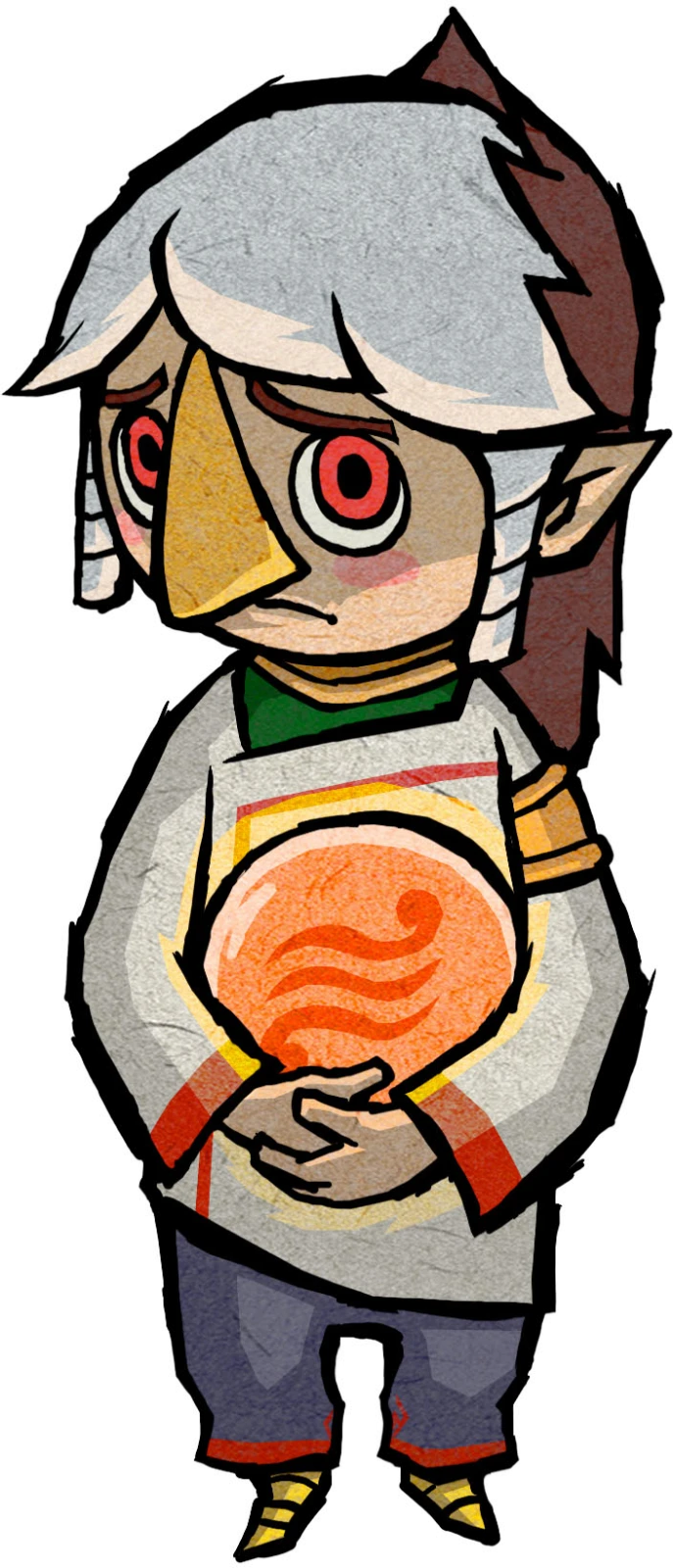
The Wind Waker (2002): Fado, the former Sage of Wind, whose spirit Link meets in the Wind Temple, still has the form of a Kokiri child.
Ocarina of Time for Nintendo Switch 2 (2026): Saria is voiced in English by Suzie Yeung, and Mido shows more feeling about the Deku Tree’s fate.
Key facts
Homeland: Kokiri Forest
Gifts of the Deku Tree: eternal youth and a guardian fairy each
What became of them: the Koroks (see below)
Notable Kokiri: Saria, Mido, Fado
The Kokiri children in Ocarina of Time (official artwork).Mido, the self-appointed boss of the Kokiri (official artwork).
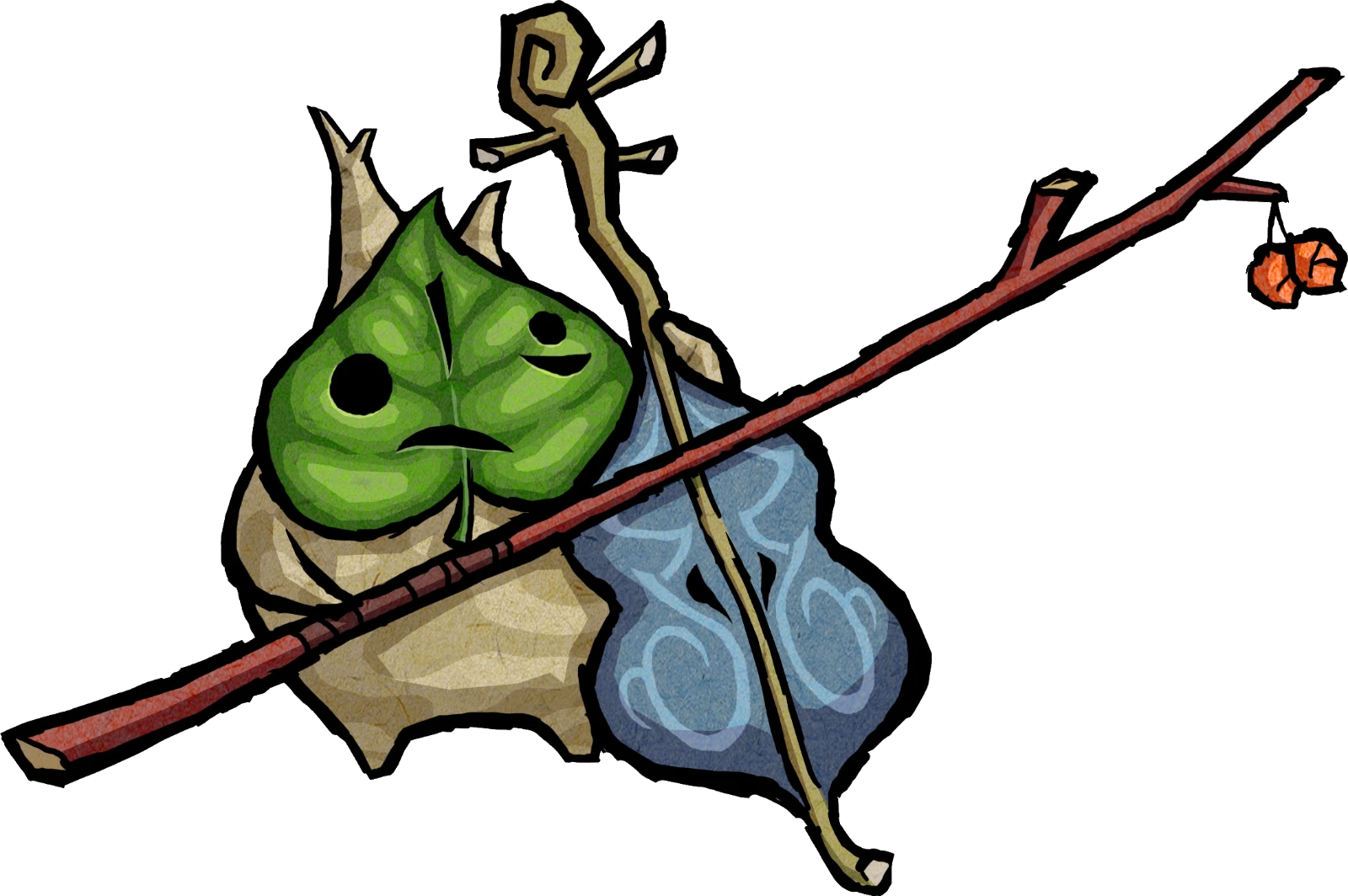
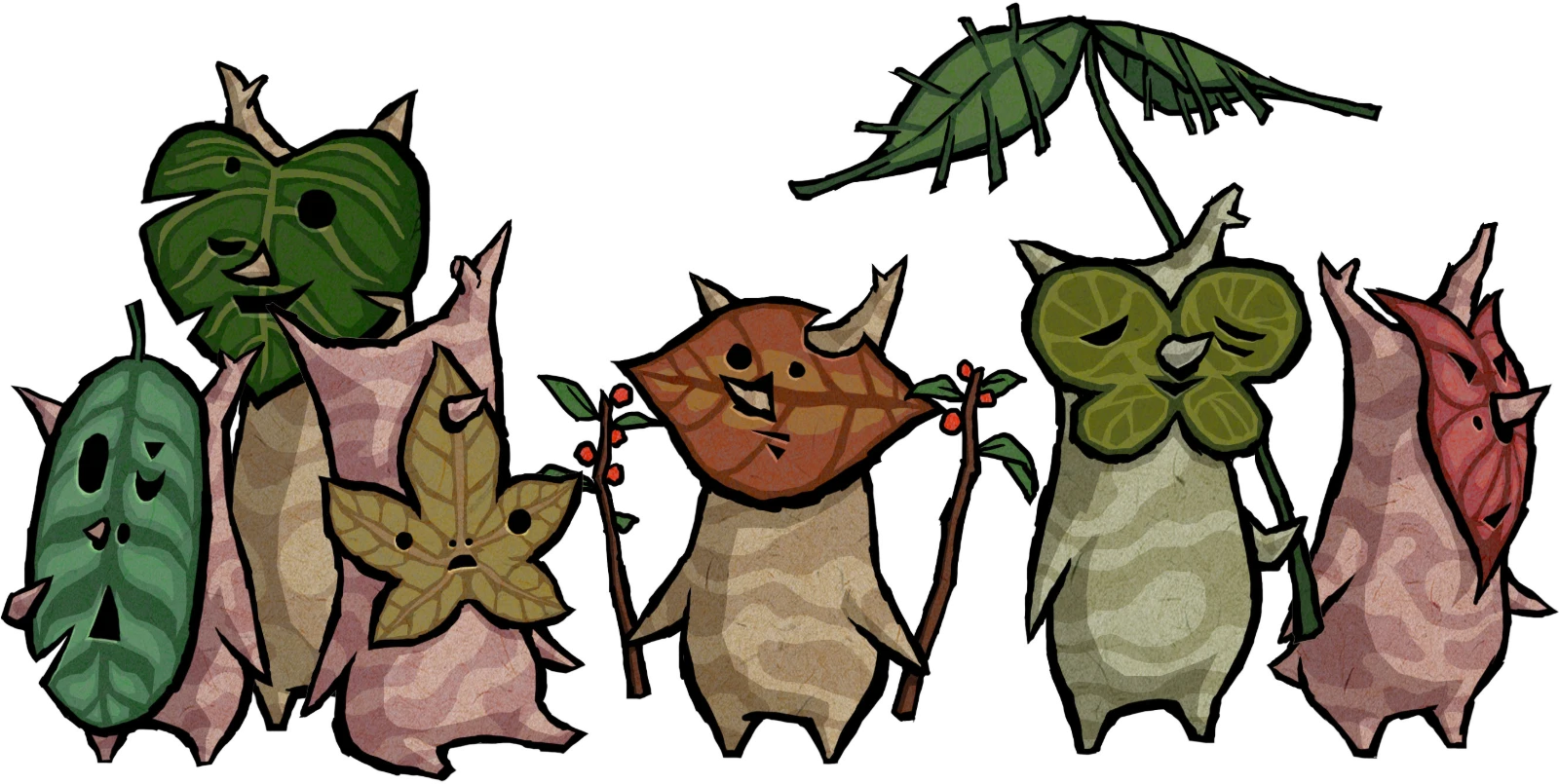
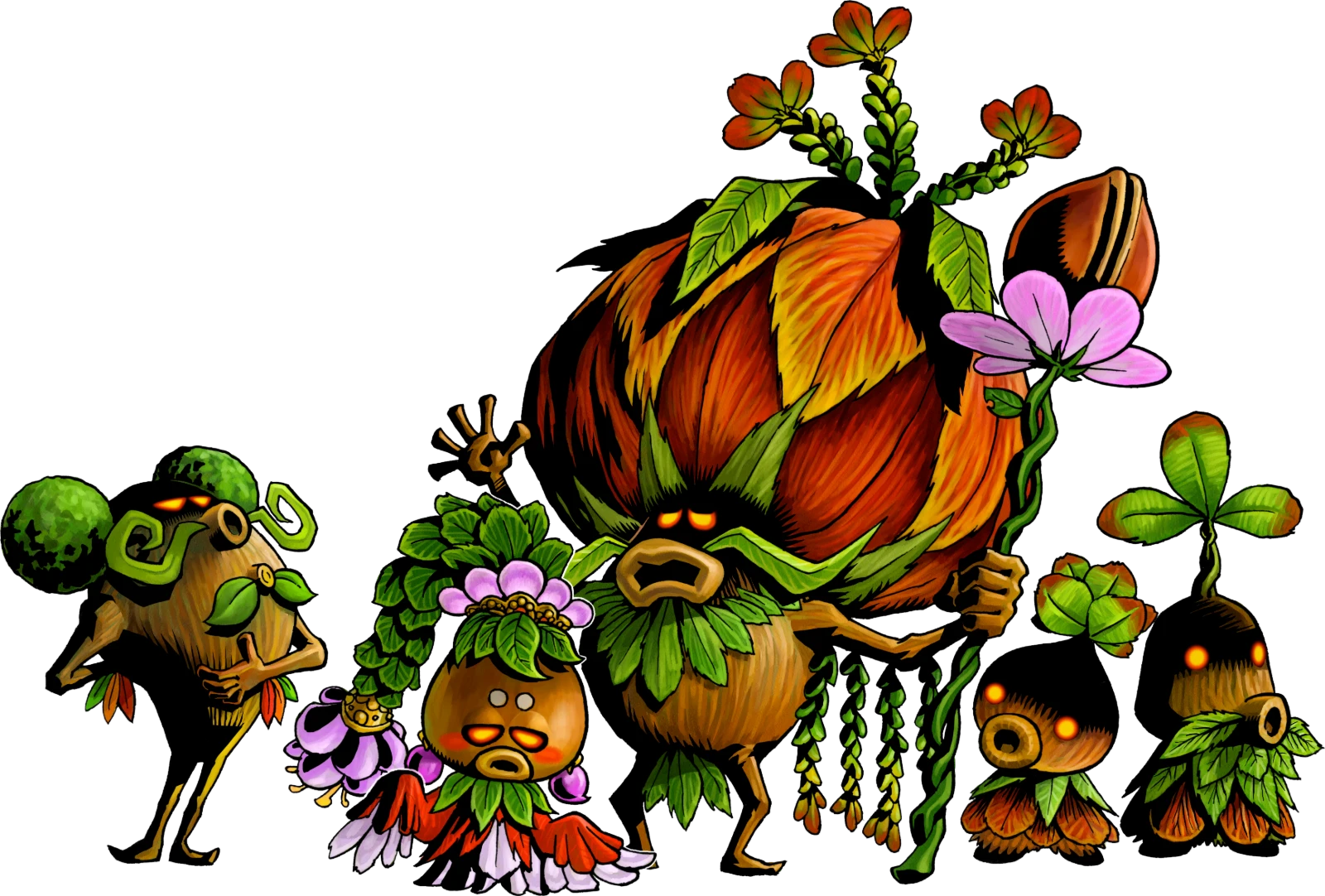
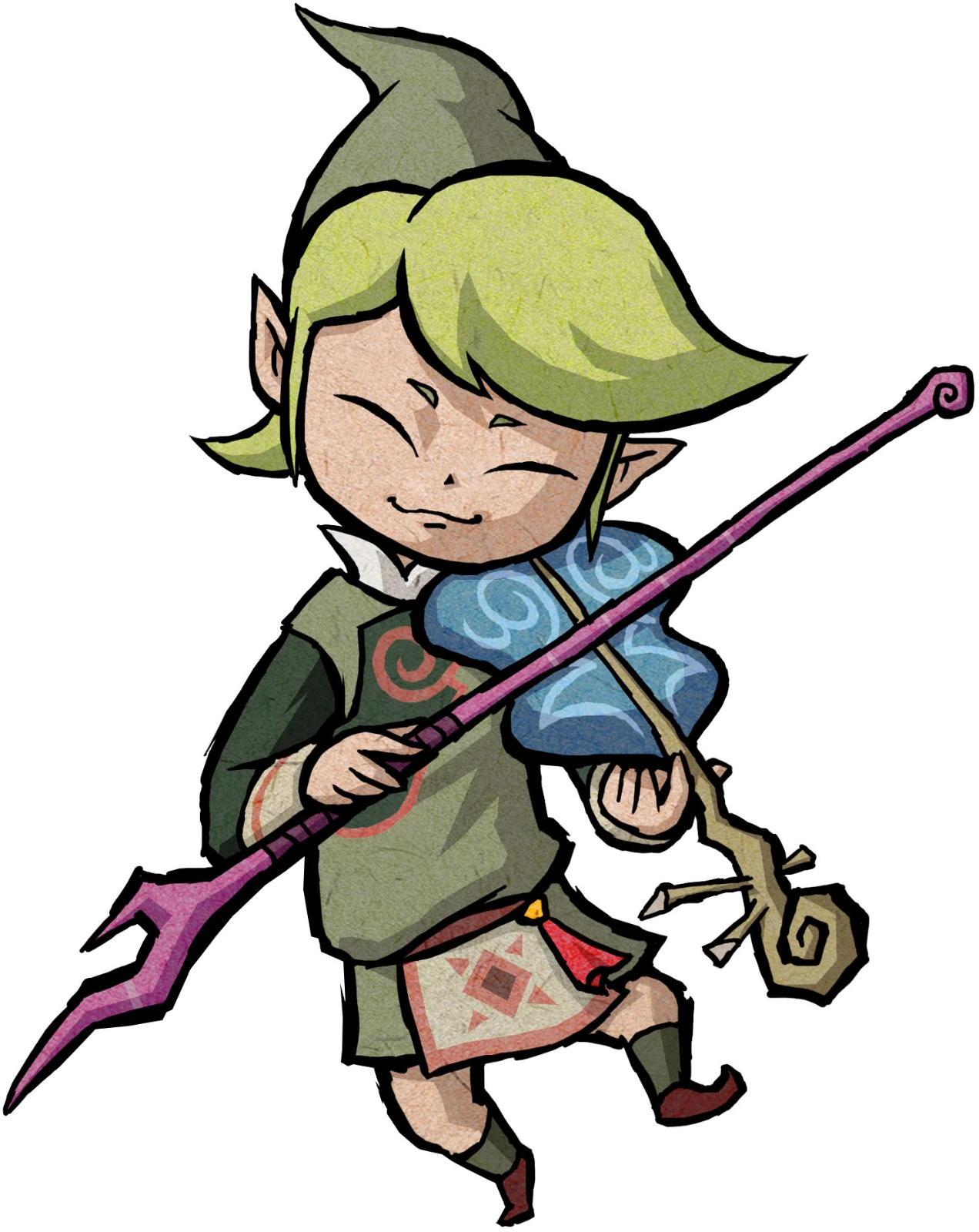
Koroks are tiny plant spirits with wooden bodies and leaf masks over their faces, so light that they float on leaves and propeller sprouts. They tend the forests for the Great Deku Tree, who calls them his children. In The Wind Waker they live in the Forest Haven. Once a year they gather for a ceremony, dancing to the fiddle of their musician Makar, before carrying the Deku Tree’s seeds across the Great Sea to plant on barren islands; Makar turns out to be the Sage of Wind. That game’s Deku Tree explains that the Koroks once had human form and changed when they came to live on the sea, and the Hyrule Encyclopedia states that the Kokiri changed into them after old Hyrule was flooded.
Breath of the Wild turned them into a collectable on a grand scale. Nine hundred Koroks hide across Hyrule, invisible to most people, each behind a little puzzle; find one (“Yahaha!”) and it hands over a Korok seed, which the giant Korok Hestu trades for extra inventory space. Tears of the Kingdom raises the count to a thousand seeds.
Game by game (5)
The Wind Waker (2002): the Forest Haven, the annual seed ceremony and Makar.
Breath of the Wild (2017): 900 hidden Koroks, Hestu and the Korok Forest, where the Great Deku Tree guards the Master Sword.
Age of Calamity (2020): 134 Koroks hide in crates, balloons and disguises, and Hestu is playable.
Tears of the Kingdom (2023): 1,000 seeds. Some Koroks have been separated from their friends, and reuniting a pair earns two seeds at once; 200 seeds come that way.
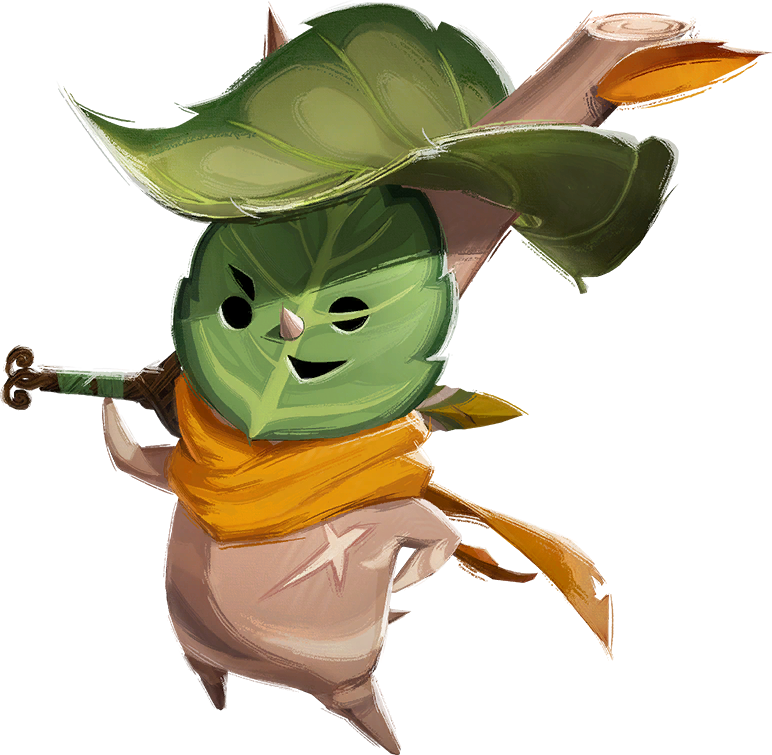
Age of Imprisonment (2025): Calamo, a boisterous wandering Korok and Eiji Aonuma’s favourite character in the game, travels with the Mysterious Construct. When his friend falls, he puts down roots beside it and grows into a tree.
Key facts
Homeland: the Forest Haven (The Wind Waker); Korok Forest, where the Master Sword rests (Breath of the Wild, Tears of the Kingdom)
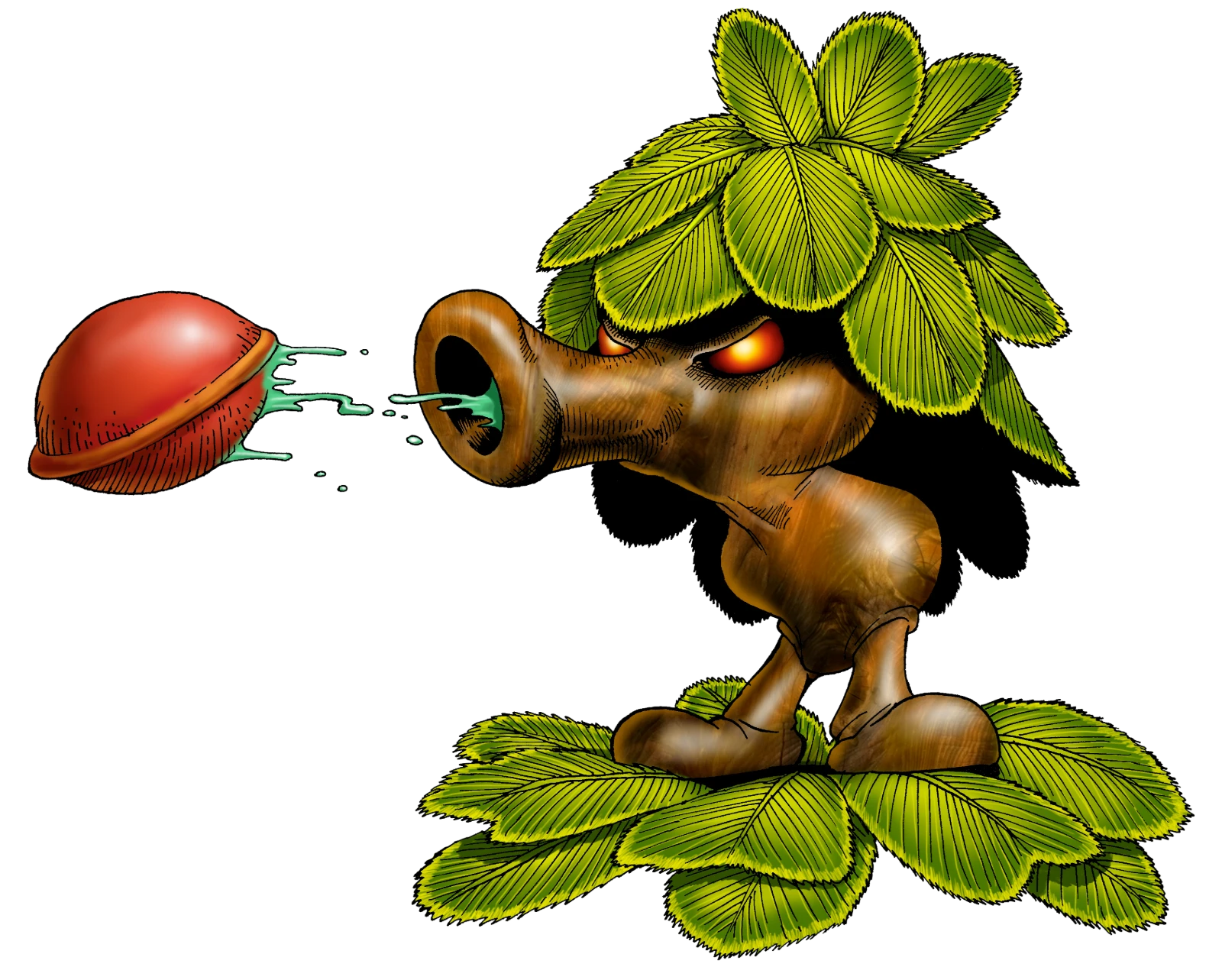
Deku Scrubs are small, wary plant creatures with bodies made of nuts and seeds, glowing eyes and a snout for spitting seeds and nuts. They hide in leafy flowers and pop up to attack or, just as often, to do business. In Ocarina of Time they are enemies inside the Great Deku Tree and Business Scrubs who sell shields, upgrades and Pieces of Heart; the hot-tempered Mad Scrubs have flame-coloured leaves. Their part in that game was first meant for a character called Hobbit, a nod to Tolkien (see Behind the scenes).
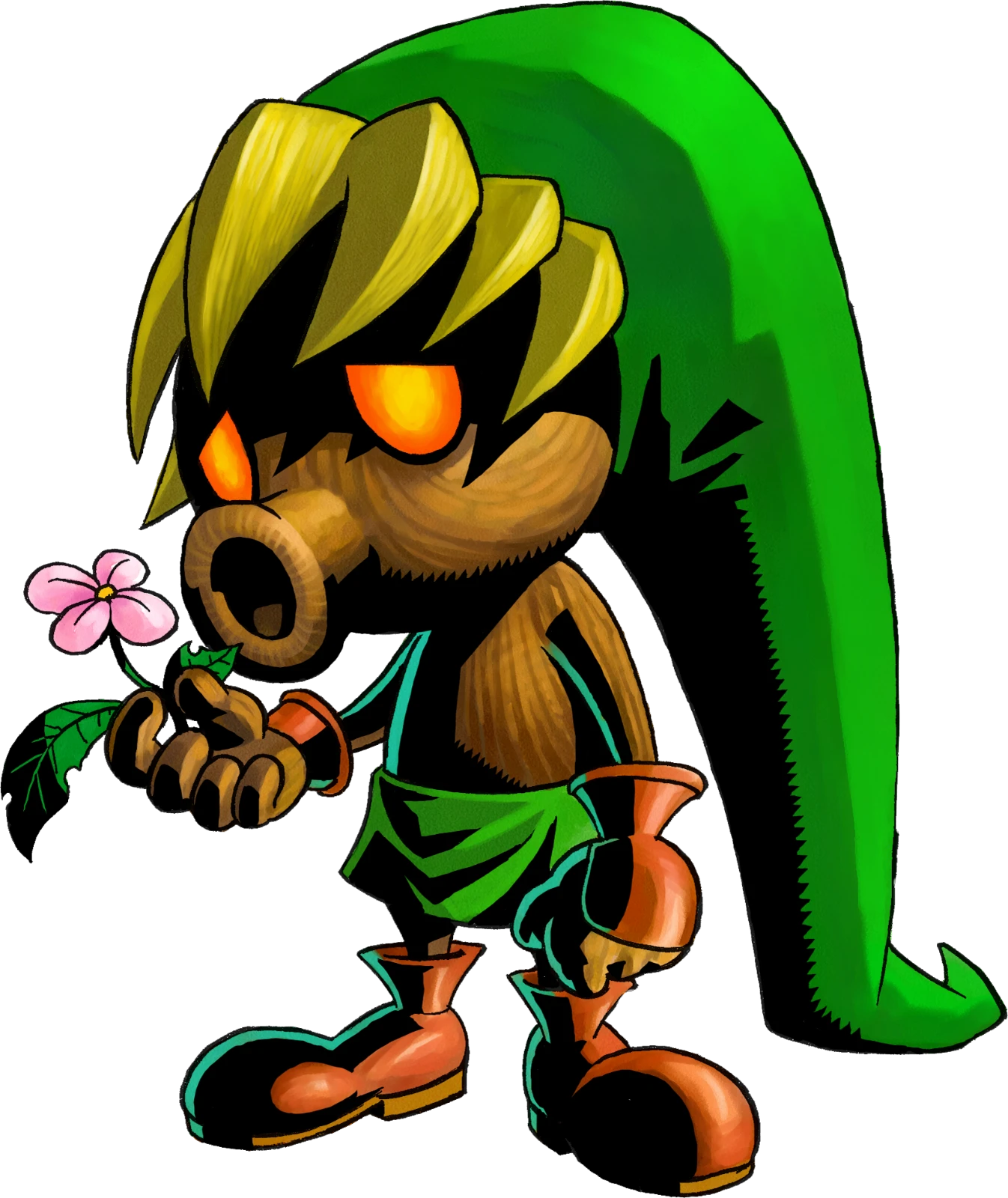
Majora’s Mask gave them a kingdom. The Deku Palace in the Southern Swamp is ruled by the Deku King, who is about to punish an innocent monkey for kidnapping his daughter, the Deku Princess, and the game opens with Link himself cursed into a Deku Scrub; the Deku Mask holds the spirit of the Deku Butler’s son. In Echoes of Wisdom the Scrubs live in Scrubton in the Faron Wetlands, where Zelda saves the home of a Scrub called Blossu and is promptly arrested for her trouble.
Game by game (4)
Ocarina of Time (1998): enemies, Business Scrubs and Mad Scrubs.
Majora’s Mask (2000): the Deku Palace and its royal family; Link’s Deku form.
Four Swords Adventures (2004): Deku Scrubs in the Lost Woods worship Ganon.
Echoes of Wisdom (2024): Scrubton, Blossu and a Deku lock-up for Zelda.
Key facts
Homeland: forests and swamps; the Deku Palace (Majora’s Mask); Scrubton (Echoes of Wisdom)
Trade: Business Scrubs sell upgrades and Pieces of Heart
Notable Deku: the Deku King, the Deku Princess, the Deku Butler, Blossu
The Deku royal family in Majora’s Mask (official artwork).Link in Deku Scrub form in Majora’s Mask (official artwork).
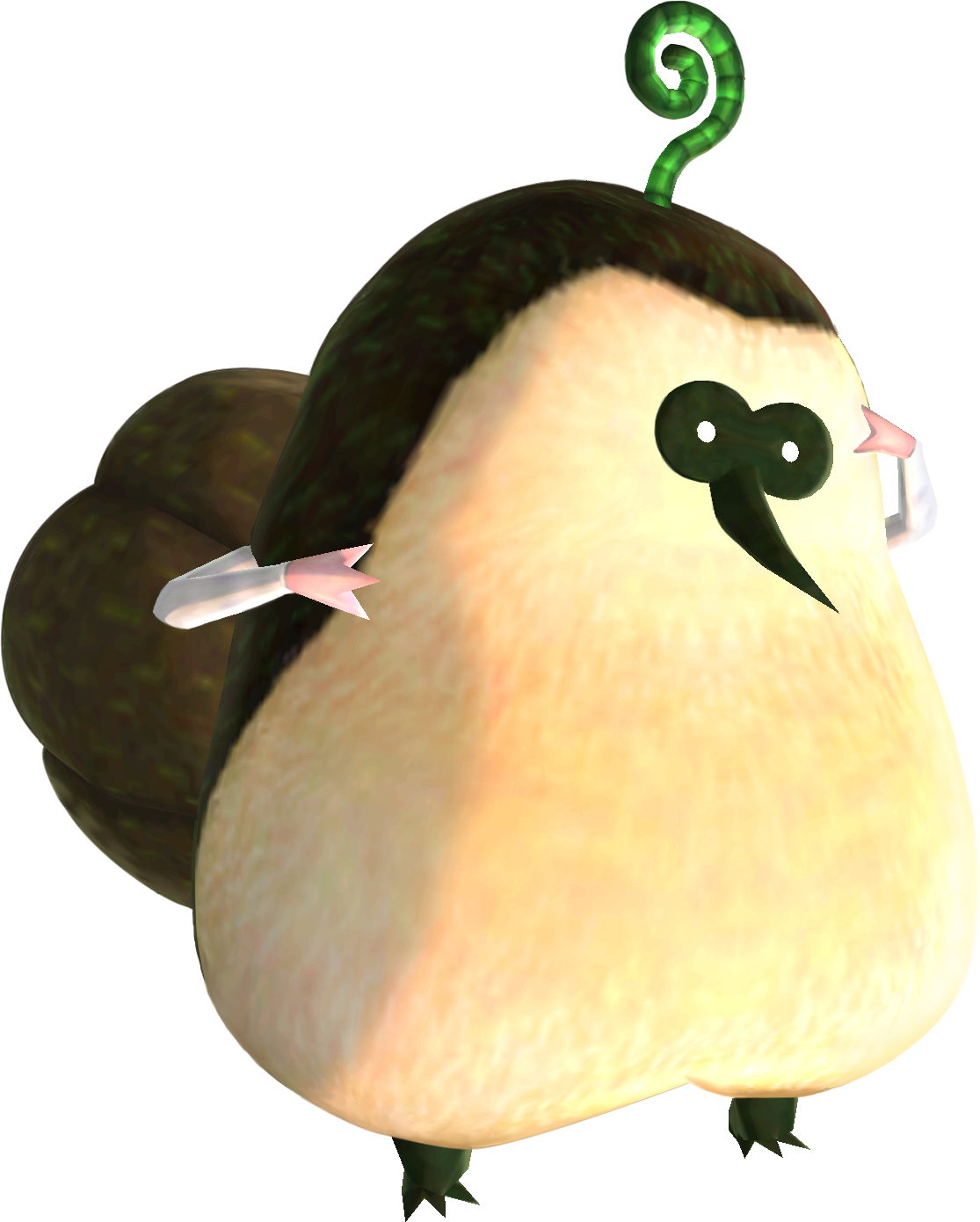
The Kikwi are timid, plant-eating little creatures from Faron Woods. Their round tails open into a bush, so when they are frightened, which is often, they tuck themselves in and pass for a shrub. Zelda Dungeon compares them to tanuki, penguins and squirrels. The first Kikwi Link meets, Machi, runs away three times before he trusts him enough to mention a girl who passed through: Zelda. The elder, Bucha, twice Link’s size, asks him to find three lost Kikwi, Oolo, Erla and Lopsa, and rewards him with the Slingshot. An old hermit, Yerbal, sleeps on top of the Great Tree and shows Link the way to Lake Floria, which earns him a threat from the Water Dragon Faron to eat him for giving away where she lives.
Each Kikwi has its own leafy face, and that has led some fans to wonder whether they are related to the Koroks. No game or lore book says so: it is a fan theory.
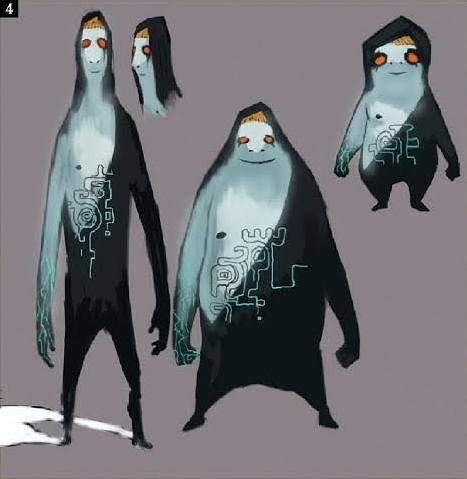
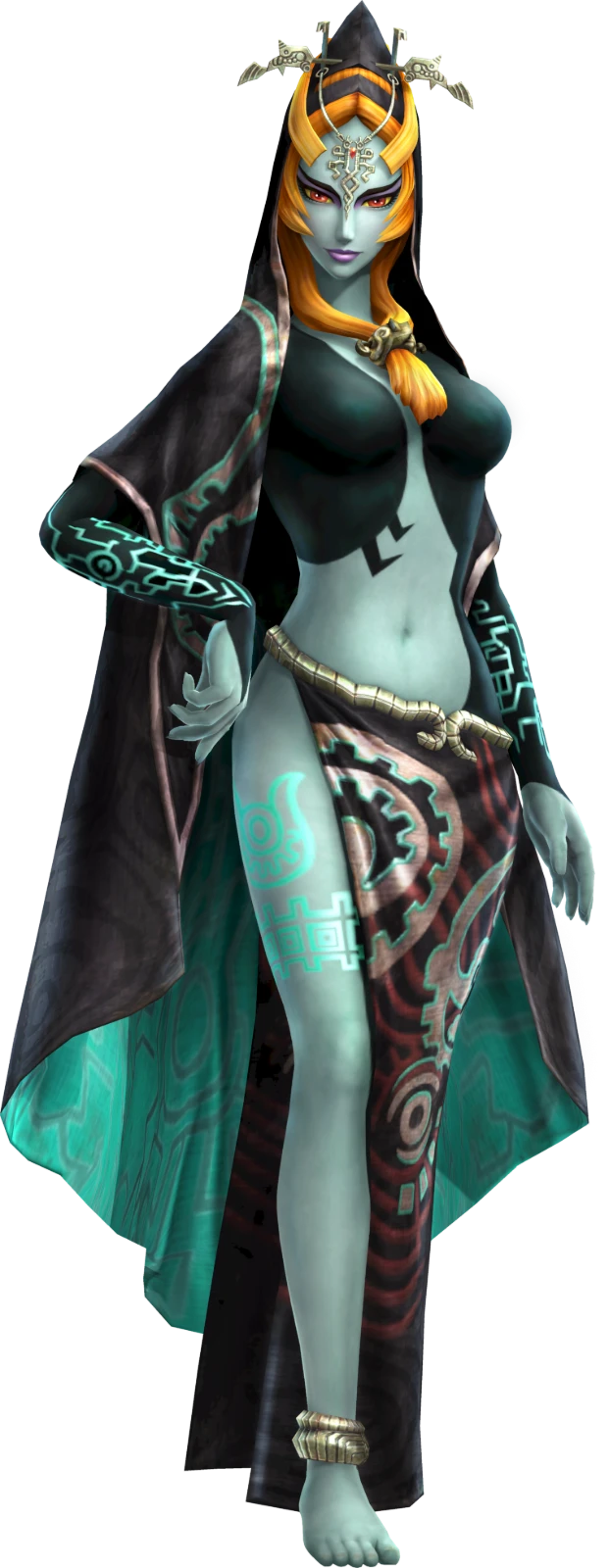
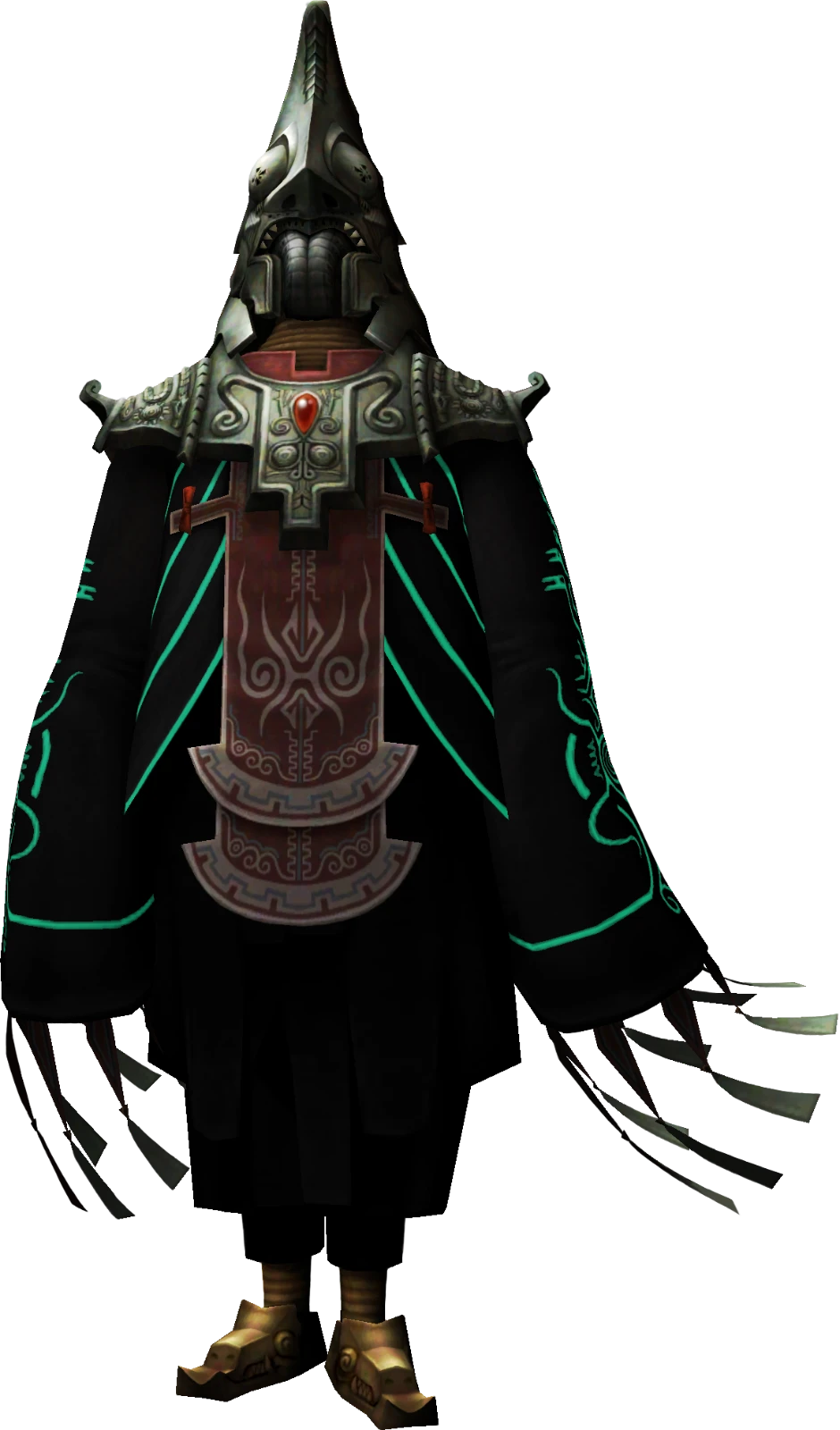
The Twili live in the Twilight Realm, a world of dusk and drifting black particles. They descend from the Interlopers, a tribe of sorcerers who long ago tried to seize the Sacred Realm. The Light Spirits broke their great magic, the Fused Shadow, into pieces, and the tribe was banished through the Mirror of Twilight; in their isolation they became the Twili, whom Hyrule Historia describes as gentle, pure-hearted people living peacefully in their realm’s soft light. They look humanoid, wrapped from head to foot with only their faces showing, and a royal family that chooses its own leader rules over them.
When the usurper Zant seized the throne he cursed the Twili into monstrous Shadow Beasts and their princess, Midna, into an imp. Link and Midna restore them by recovering the Sols, and at the end Midna, herself again, goes home and shatters the Mirror of Twilight behind her, closing the way between the two worlds. Midna and Zant are both playable in Hyrule Warriors, which also added Midna’s true form as downloadable content. Her full story is on our Midna page.
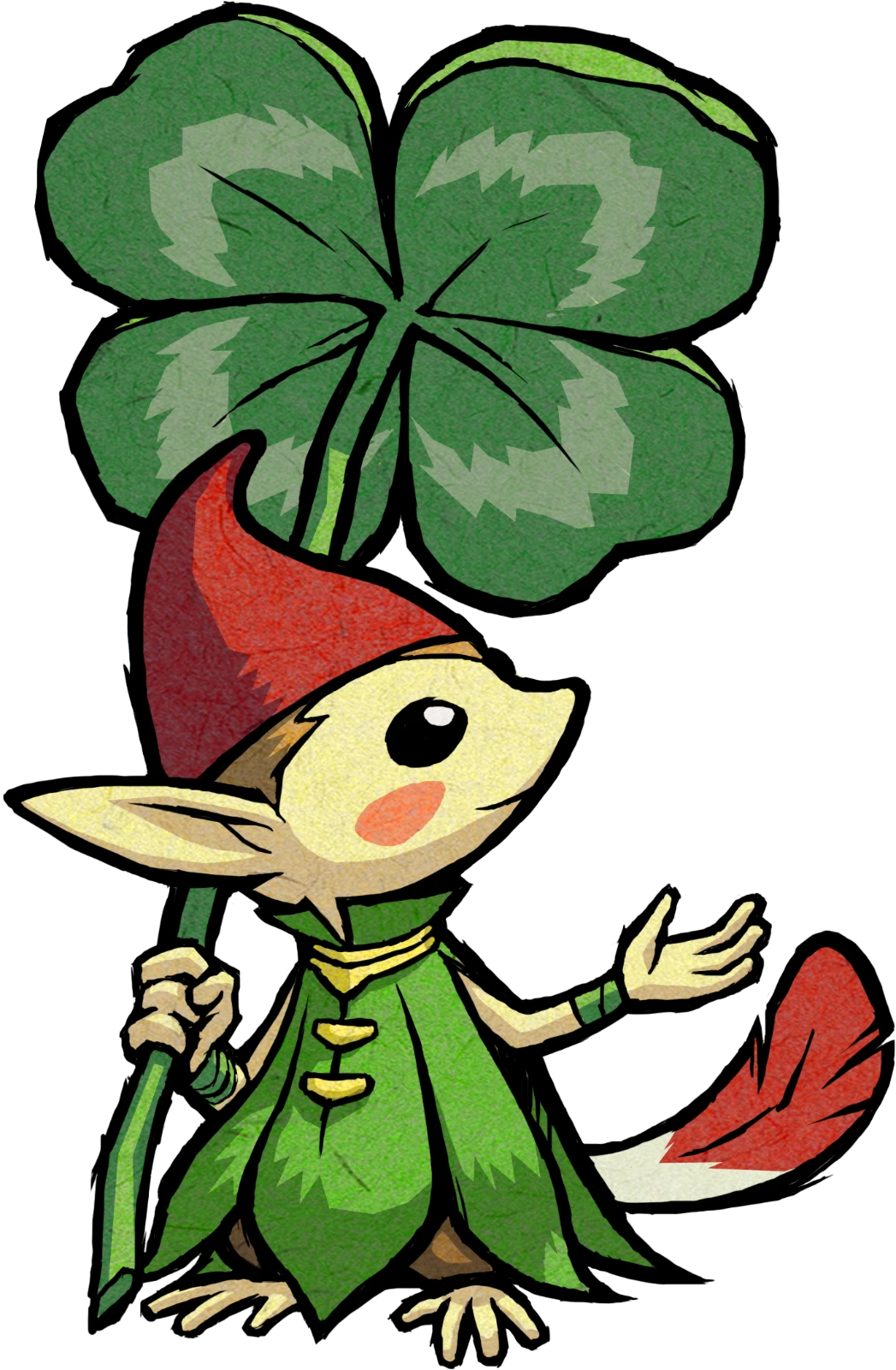
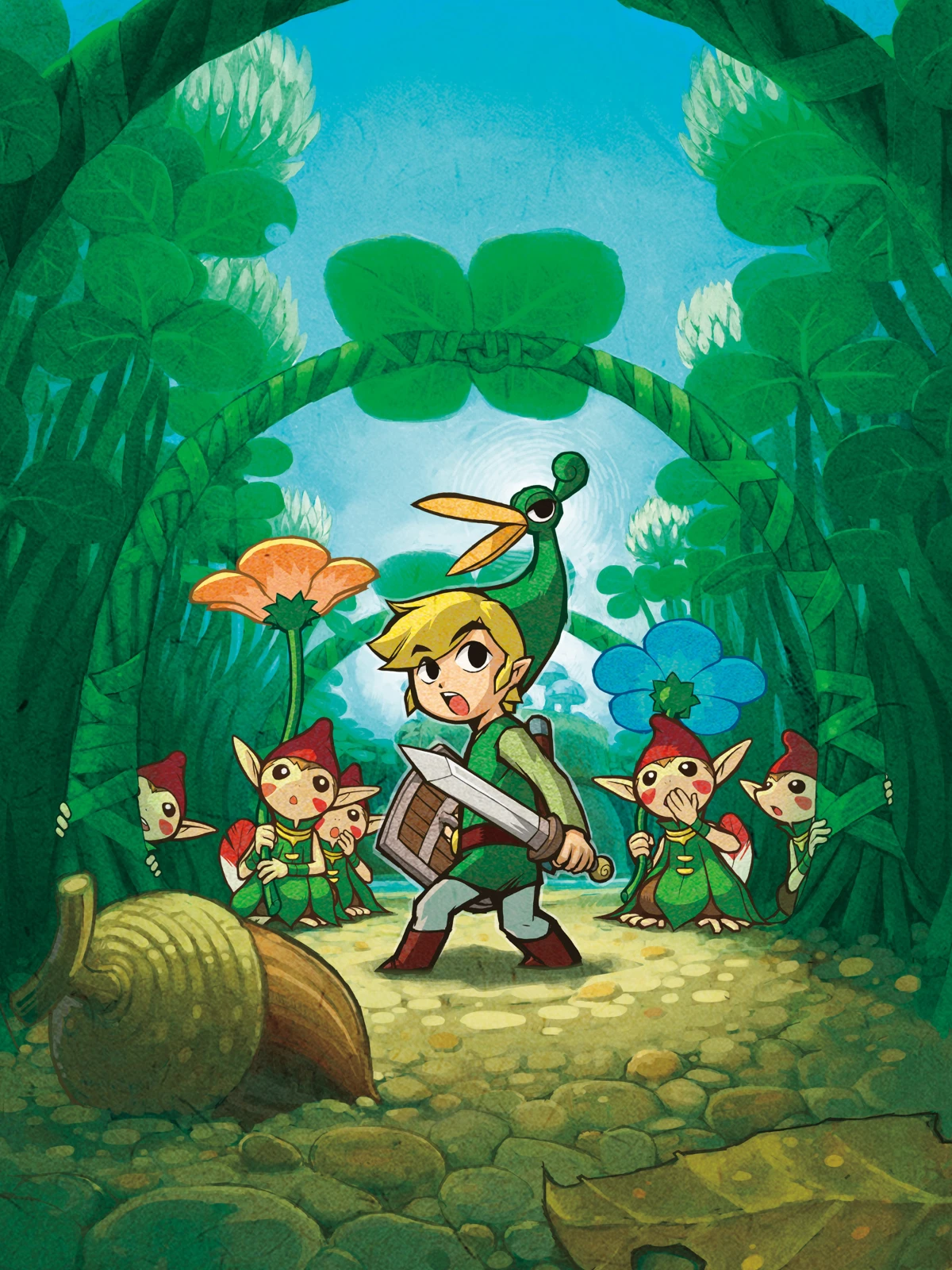
The Minish, whom Hylians call the Picori, are thumb-sized people who live hidden in Hyrule’s woods and houses, and only children can see them. Hylian legend tells how, when darkness once covered the land, the Picori gave a young hero a blade and a golden light, the Light Force, with which he sealed the monsters away in a chest. Hyrule has held the Picori Festival in their honour ever since, and every hundred years the door to their world is said to open.
The Minish Cap is their game. With the talking cap Ezlo on his head Link can shrink to their size, and a Jabber Nut lets him understand their language; as a child he can see them anyway, which is why the king sends him. There are Forest Minish, who hide Rupees and items under grass and rocks; Town Minish, who moved into Hyrule Town to help the humans (not always successfully); and Mountain Minish, the swordsmith Melari and his apprentices on Mount Crenel. The villain Vaati was a Minish too, Ezlo’s apprentice, until he stole his master’s wish-granting cap.
Key facts
Homeland: the Minish Woods and Minish Village; hidden corners of Hyrule Town; Mount Crenel
Gift to Hyrule: the Picori Blade and the Light Force
Treasure is what the Mogma live for. These burrowing folk of Eldin Volcano are vaguely mole-like (Zelda Dungeon sees something of the prairie dog and the ape in them), no two share a hairstyle, and when one wants a word with Link it bursts out of the earth up to the waist, then drops out of sight again. The hunt for loot takes them deep into dungeons, which is why Link keeps bumping into them there.
They give Link the Digging Mitts, warn him about suspicious figures in red and point him towards the five scattered pieces of the Earth Temple’s key; later, in the Fire Sanctuary, Link frees several captured Mogma. Like the Kikwi, they have so far appeared only in Skyward Sword and its HD version.
Key facts
Homeland: Eldin Volcano
Passion: treasure hunting
Gift to Link: the Digging Mitts
Other peoples
Five more peoples, each tied closely to one or two games.
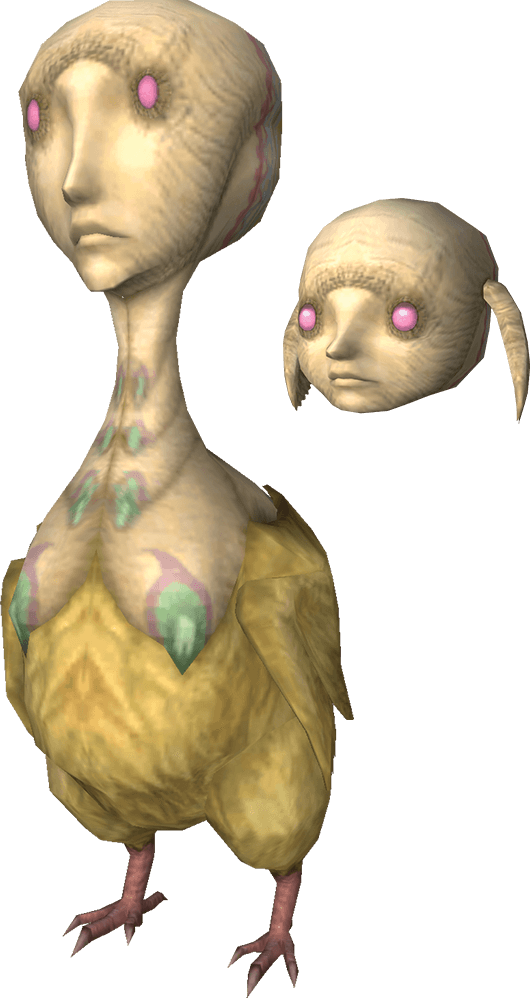
The Oocca are the people of the City in the Sky: bird-bodied, with long necks and strangely human faces. Zelda Dungeon likens their shape to a bowling pin, with bird feet and a duck’s tail, while the young look like floating heads. Their Japanese name, Tenkūjin, means sky people. Inside their city they let Link carry them across gaps as he would a Cucco, and they chatter in a gobbling language of their own.
Most players know them through Ooccoo, who hides in a pot in most dungeons with her son, Ooccoo Jr.: she warps Link back to the entrance, and the son brings him straight back again. She is trying to get home to the sky. Long ago the Sheikah carried messages between the Oocca and the royal family. The English script has the scholar Shad say that the Oocca created the Hylians, but that is a mistranslation: in the Japanese version he says they created Hyrule.
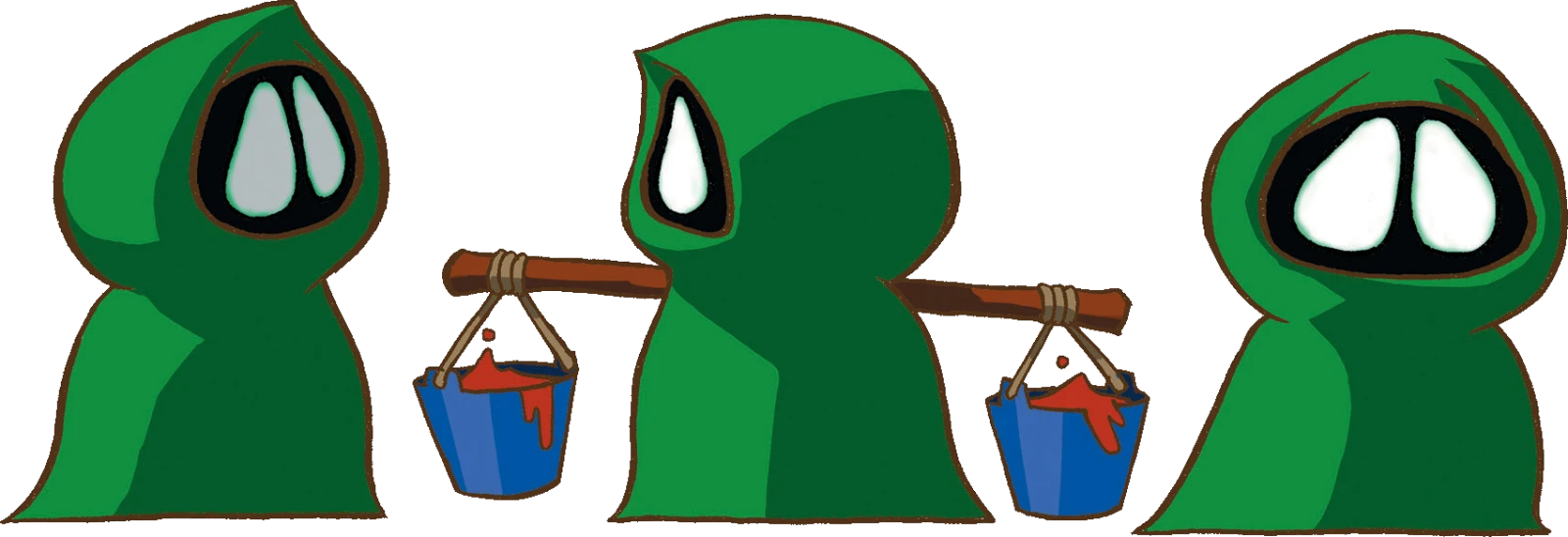
Deep beneath Holodrum lies Subrosia, a land of lava and volcanoes, and the hooded Subrosians who live there do not mind the heat in the slightest: they relax in the lava the way other people take a bath. They love to dance, pay for everything in Ore Chunks and run a market, a smithy and a Dance Hall where Link can win prizes. A Subrosian girl, Rosa, will even go on a date with him if he buys her a ribbon. Their world matters to the plot too, since General Onox has buried the Temple of Seasons there, and the Dance Hall is where Link can win the Strange Flute that calls Dimitri, a friendly Dodongo.
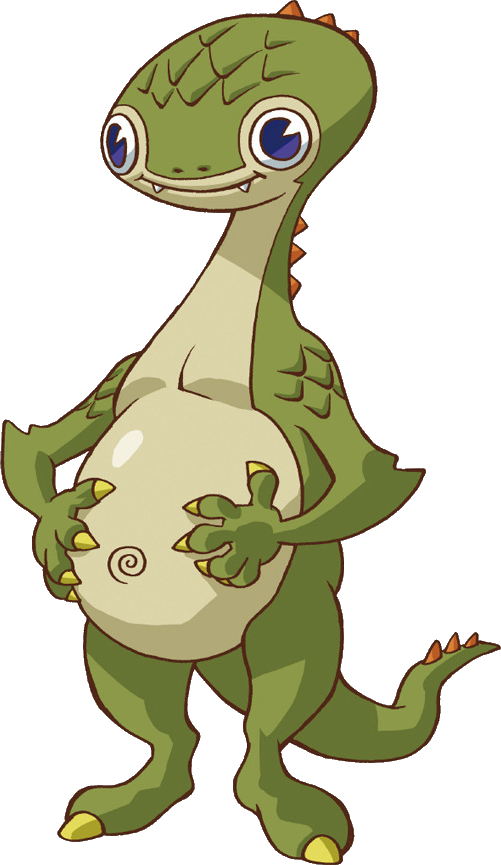
The Tokay are lizard-like islanders from Crescent Island, off the coast of Labrynna. They have never left their island and know nothing of the world beyond it, so when Link is shipwrecked there in the past they take him for a strange Tokay without a tail and help themselves to his things, from the Seed Satchel and the Shovel to the Harp of Ages itself. Getting them back means hopping between past and present. Untrustworthy they may be, but Zelda Dungeon calls them expert gardeners. In the past they play a meat-throwing game called Wild Tokay; by the present day, all that is left of it is a museum.
Key facts
Homeland: Crescent Island
What they took: the Seed Satchel, Shovel, Power Bracelet, Harp of Ages and Flippers
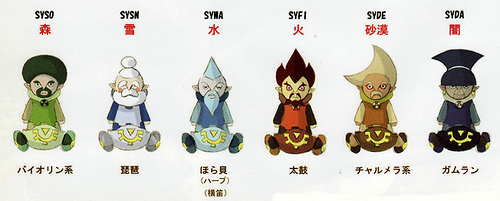
The Lokomo lived in the land before it became New Hyrule, and seven of them remain in Spirit Tracks, serving the spirits of good by guarding the land, its Spirit Tracks and its temples. The wise old Anjean watches over the Tower of Spirits, while Gage, Steem, Carben, Embrose and Rael each guard a realm’s sanctuary. Each plays an instrument, and Link and Zelda restore the tracks by playing a duet with each sage on the Spirit Flute. The seventh, Byrne, trained under Anjean but wanted more strength than the spirits would give him, and sided with the demon Malladus; betrayed in the end, he gives his life so that Zelda can return to her body. When Malladus falls, the Lokomo leave for the heavens.
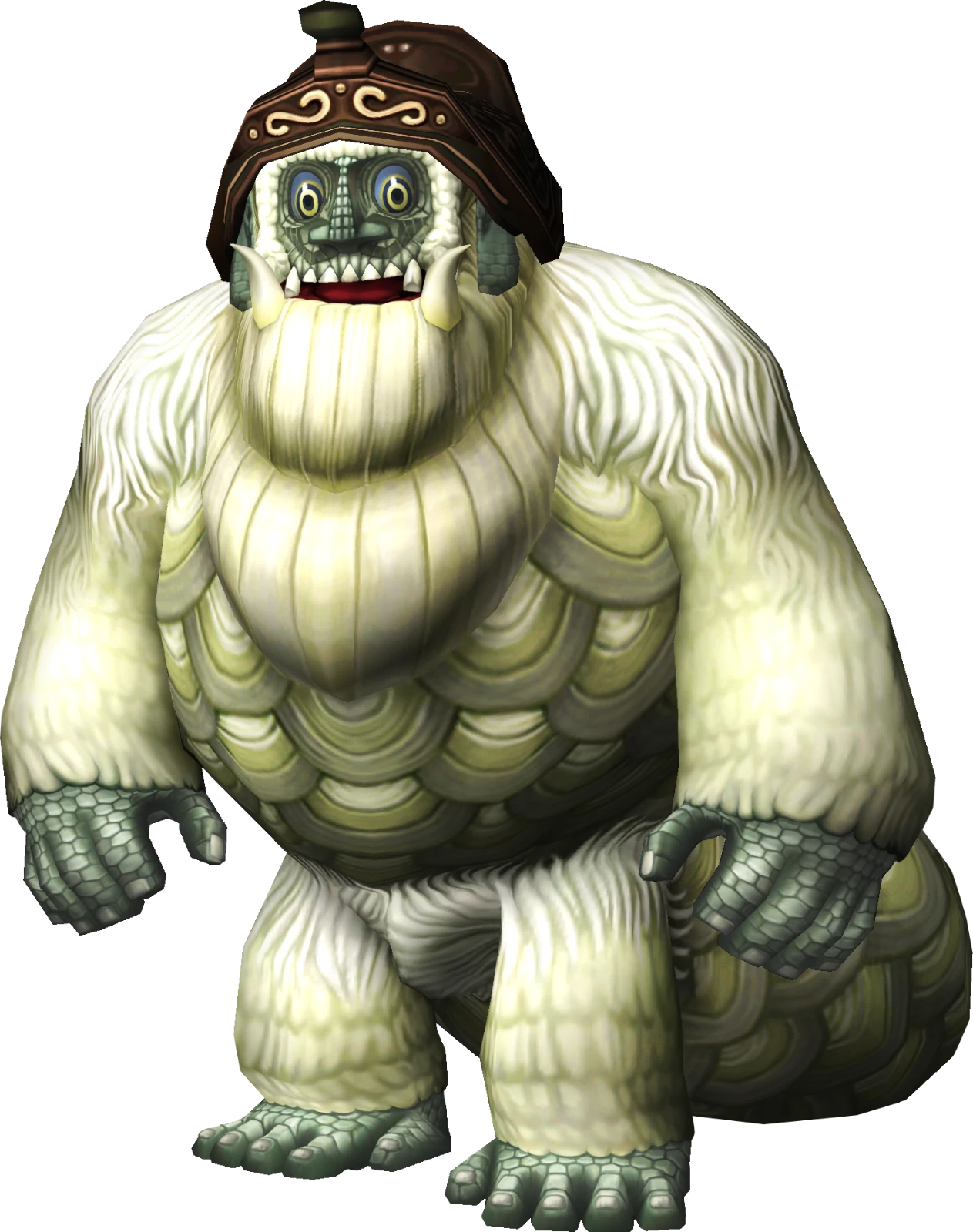
Two games have taken our heroes into yeti country. In Twilight Princess the devoted couple Yeto and Yeta live in a ruined mansion at the top of Snowpeak. Yeto gave his wife a shard of the Mirror of Twilight as a present and she fell ill; his soup, improved with Ordon pumpkin and goat cheese, gets her back on her feet, but the shard turns her into the ice monster Blizzeta when Link reaches her bedroom. Cured, the couple embrace, and they will race Link down the mountain for a Piece of Heart. Echoes of Wisdom brings in Condé, a solitary yeti on Hebra Mountain who shelters Zelda from a blizzard, is one of the few people able to see Tri, and worries about the older brother who set off for Holy Mount Lanayru.
Key facts
Homeland: Snowpeak (Twilight Princess); Hebra Mountain (Echoes of Wisdom)
Notable yetis: Yeto, Yeta, Condé
Condé, the yeti of Hebra Mountain, in Echoes of Wisdom (render).Byrne, the rogue Lokomo, in Spirit Tracks (official artwork).
Memorable moments
A brother on Death Mountain. In Ocarina of Time, the Goron leader Darunia is in a foul mood until Link plays him Saria’s Song. Clear Dodongo’s Cavern, and the big fellow names Link his Sworn Brother; seven years later he names his own son Link.
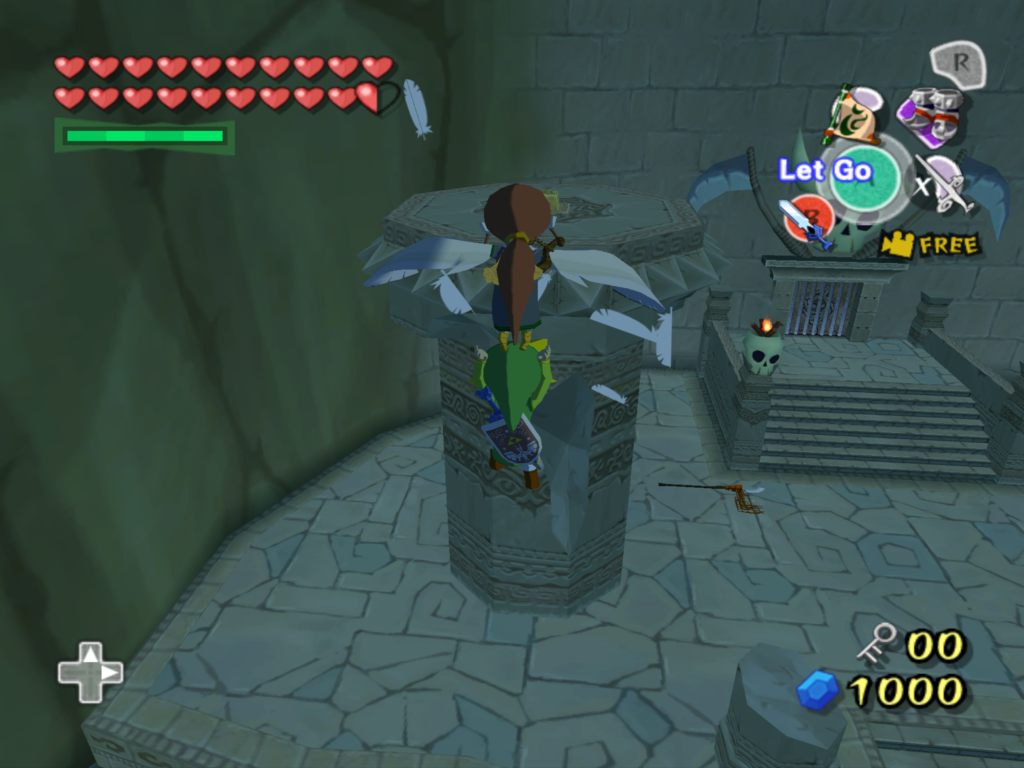
The princess in the fish. Inside Lord Jabu-Jabu, Princess Ruto refuses Link’s help, falls down a hole, then insists on being carried. Her reward for the rescue is the Zora’s Sapphire, which her mother told her to give to the man she would marry.
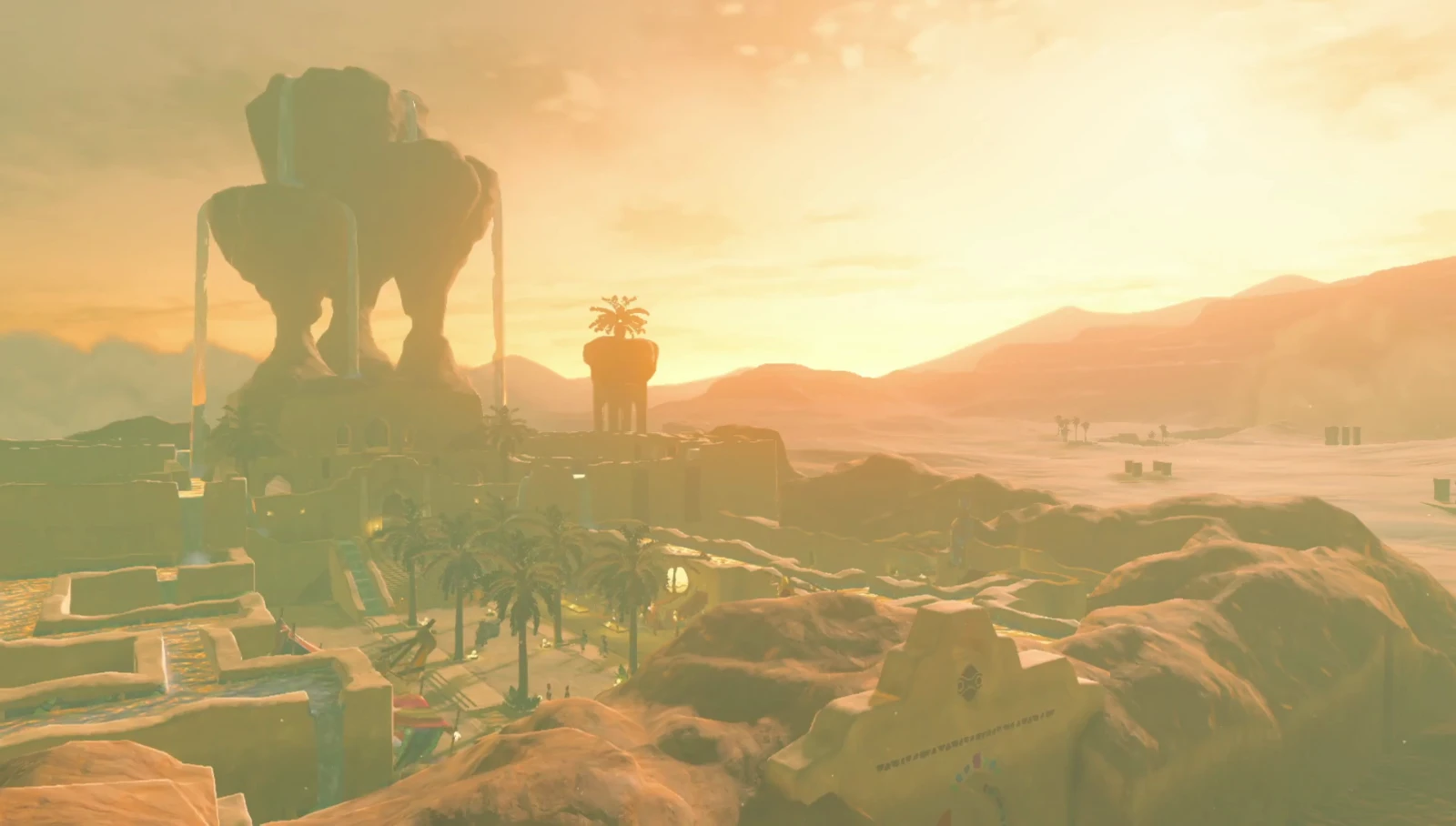
A vai in Gerudo Town.Breath of the Wild’s Gerudo Town is closed to men, so Link puts on a veil and a desert outfit and walks straight past the guards.
Medli takes up the harp. In The Wind Waker, the young Rito attendant of Valoo discovers that she is the Sage of Earth, inheriting the role the Zora Laruto once held: one people becoming another, played out on screen.
Darunia in the 2026 Ocarina of Time (screenshot).Princess Ruto in the Water Temple, Ocarina of Time 3D (screenshot).Gerudo Town in Breath of the Wild (screenshot).Medli in flight in The Wind Waker (screenshot).
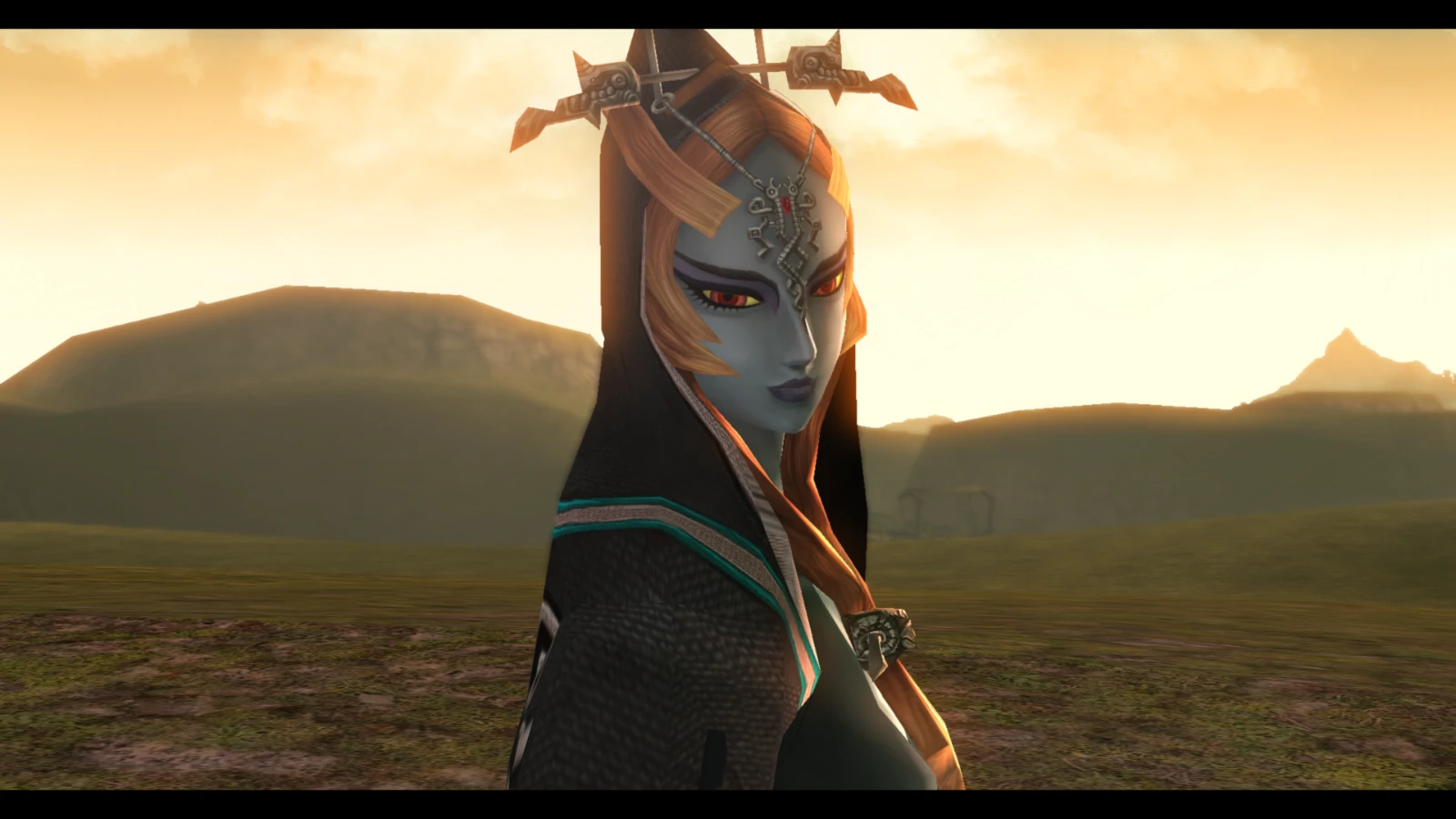
Midna goes home. At the end of Twilight Princess, Midna stands before Link in her true form for the first time, says goodbye and shatters the Mirror of Twilight, sealing her people off from Hyrule for good.
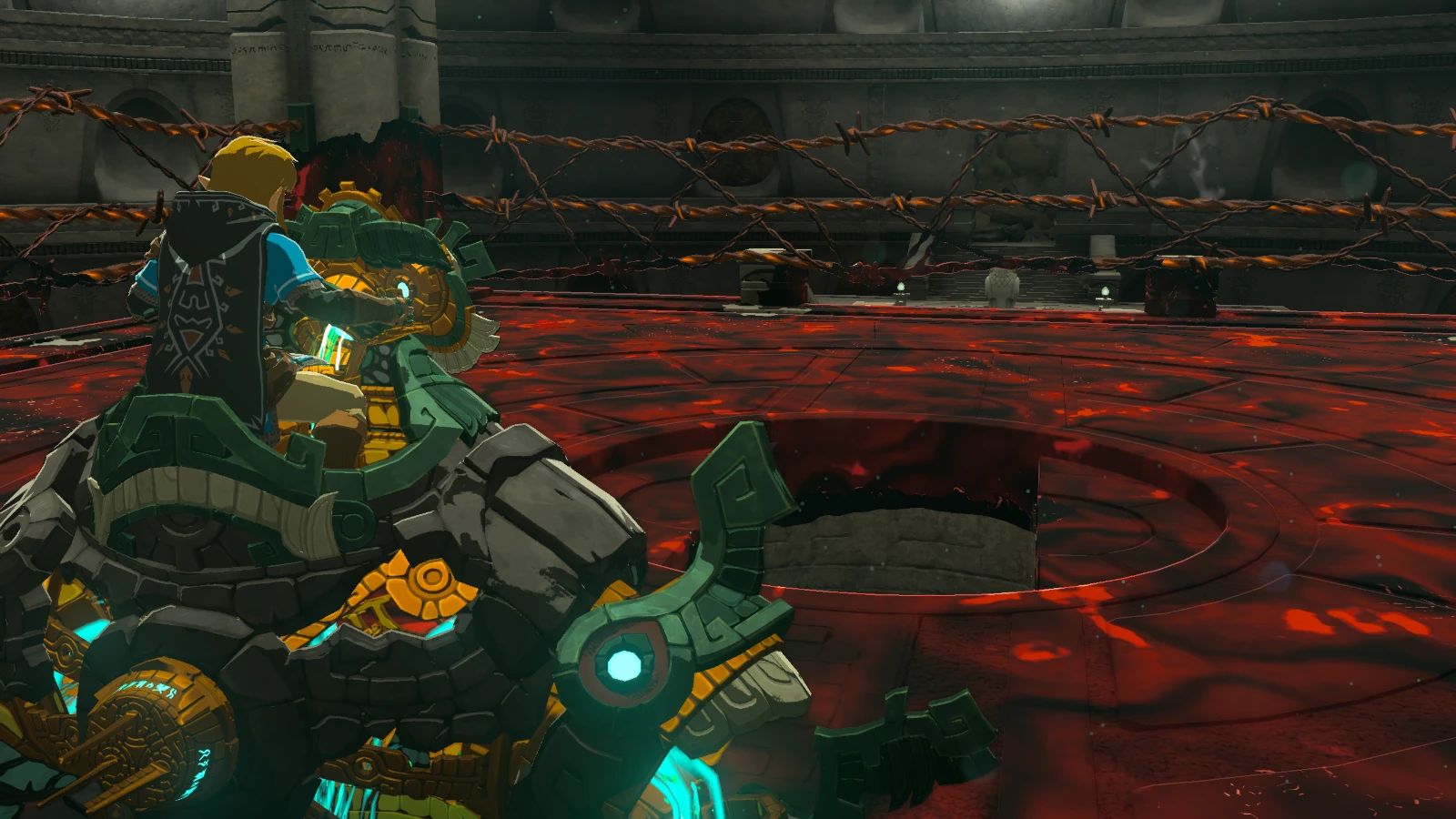
The fifth sage. In Tears of the Kingdom, the last Zonai, Mineru, has waited thousands of years as a spirit. Link builds her a construct body in the Depths, and she strides out to fight beside him as the Sage of Spirit.
Midna’s true form in Twilight Princess HD (screenshot).Link riding Mineru’s construct in Tears of the Kingdom (screenshot).
How the peoples connect
Laruto, the Zora sage whose role passes to the Rito Medli, in The Wind Waker (official artwork).
Zelda’s peoples are not fixed. In the official timeline some have turned into others, some have split in two and some have married into each other’s families. These are the links Nintendo itself has drawn.
Zoras into Rito. In the flooded timeline the Zoras became the Rito, giving up the water for the air (Eiji Aonuma; The Wind Waker).
Kokiri into Koroks. In the same timeline the Kokiri became the Koroks (The Wind Waker’s Great Deku Tree; the Hyrule Encyclopedia).
Interlopers into Twili. Banished sorcerers became the gentle people of the Twilight Realm (Twilight Princess; Hyrule Historia).
Sheikah and Yiga. The Yiga Clan split from the Sheikah when Sheikah technology was banned (Breath of the Wild).
Zonai and Hylians. Hyrule’s royal line begins with the Zonai Rauru and the Hylian Sonia (Tears of the Kingdom).
Sheikah and Oocca. The Sheikah once carried messages between the royal family and the sky-dwelling Oocca (Twilight Princess).
The Gerudo and Ganondorf. The once-a-century Gerudo king is the series’ great villain, but later Gerudo reject him, and in Hyrule Warriors: Age of Imprisonment Ardi leads them against him.
Fans have gone further. Some see the Kikwi as cousins of the Koroks, and some have wondered whether the Oocca were the Hylians’ ancestors; neither idea is backed by any game or lore book, and the second rests partly on a mistranslation (see the Oocca).
Fado, the former Sage of Wind, still in Kokiri form in The Wind Waker (official artwork).Valoo, the sky spirit and patron dragon of the Rito (official artwork).
Behind the scenes
Rough concept art of the Gerudo for Breath of the Wild.
Designing a people starts with a silhouette. For Breath of the Wild, lead NPC artist Hirohito Shinoda wanted the Gerudo to look striking simply standing still, so he shortened their torsos and lengthened their legs, and he took ideas from Buddhist statues, which gave the designs Indian and Chinese influences (Creating a Champion). The Rito were built around a single character: according to Zelda Dungeon, the team designed the boastful Champion Revali first, chose a bird of prey to suit his rivalry with Link, and modelled the rest of his people on him.
The Sheikah have Japanese roots: their costumes borrow from historical Japanese dress, and the look of their ancient technology came from the Jōmon period. The Gorons’ name is a joke in itself, since goron is the Japanese sound of something rolling, and the Zoras’ fate on the Great Sea comes from the top: Eiji Aonuma has said the Rito evolved from them.
The Deku Scrubs began as someone else. Early in the making of Ocarina of Time their part belonged to a character called Hobbit, a nod to J. R. R. Tolkien. In an old interview unearthed by Did You Know Gaming, Shigeru Miyamoto explained that the character was meant to tell stories and sell Link items, and that when the team ran out of time the job went to the Scrubs instead; Nintendo Life reports that he called them his favourite characters in the game.
Rough concept art of the Rito for Breath of the Wild.Revali concept art: the Rito were designed around him.
Reception
Goron City in Ocarina of Time (screenshot).
The peoples were part of the magic of Ocarina of Time. Looking back on the game for GamesRadar+ in 2017, Chris Hoffman counted among his reasons to love it the way it widened the range of characters Link could meet, naming the Gorons, Zoras, Gerudo and Sheikah. Two decades on, Breath of the Wild built its whole cast of Champions from four of Hyrule’s peoples.
The Gerudo have been the subject of real debate. Writers including Ryan Khosravi (Mic) and Hussain Almahr (Waypoint), and authors such as Byron J. Kimball, Laurence Herfs and Johnathan Sanders, have argued that their image as desert thieves draws on Orientalist stereotypes of Middle Eastern and South Asian peoples; Kimball called the depiction deeply problematic. Others, such as Jessica Ramos at Yahoo!, felt the Gerudo gave players room to celebrate those cultures, and Autumn Wright at Polygon wrote about the tribe’s mixed fascination with and scorn for men. Later games have moved them on: they trade rather than steal in Breath of the Wild, and in Echoes of Wisdom they have nothing to do with Ganon at all.
Trivia
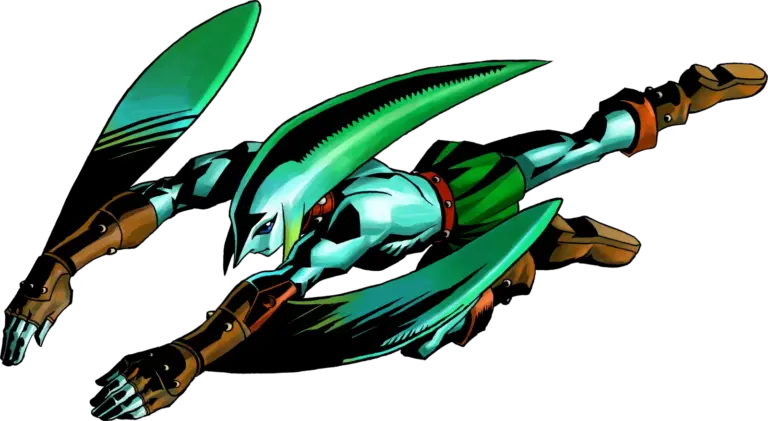
Link in Zora form (official artwork).Majora’s Mask lets Link become three peoples in turn: masks turn him into a Deku Scrub, a Goron and a Zora, each with its own way of getting about.
A Goron of Ocarina of Time (official artwork).Darunia’s son in Ocarina of Time is called Link, named after the hero by his father during the seven years Link sleeps.
The Gerudo script has 26 letters, matching the Latin alphabet one for one, which is how fans have been able to read the signs in Gerudo Town.
Riju, the young Gerudo chief of Breath of the Wild, has a favourite sand seal called Patricia.
Paya, Impa’s granddaughter in Breath of the Wild, was named for a birthmark shaped like a papaya seed.
Purah is Impa’s older sister. In Breath of the Wild an experiment in reversing her age went too far and left her looking like a little girl; by Tears of the Kingdom she looks like a young woman again.
Lokomo concept art for Spirit Tracks.Hyrule Historia includes sketches of a Lokomo who never made it into Spirit Tracks: a Sage of Shadow who was going to play the gamelan.
Kass, the Rito bard of Breath of the Wild, learned his songs from his late mentor, a Sheikah poet at the royal court.
Many of the Rito names in The Wind Waker end in -li, Komali and Medli among them.
Calamo, the wandering Korok of Age of Imprisonment, is Eiji Aonuma’s favourite character in the game.
Several peoples have only ever appeared in one game (and its remake): the Kikwi and Mogma in Skyward Sword, the Minish in The Minish Cap (Vaati aside), the Subrosians in Oracle of Seasons, the Tokay in Oracle of Ages and the Lokomo in Spirit Tracks.
Further reading: Zelda Temple game guides (verified character, story and cast data for each game, sources listed on each page)
Manage Consent
To provide the best experiences, we use technologies like cookies to store and/or access device information. Consenting to these technologies will allow us to process data such as browsing behavior or unique IDs on this site. Not consenting or withdrawing consent, may adversely affect certain features and functions.
Functional
Always active
The technical storage or access is strictly necessary for the legitimate purpose of enabling the use of a specific service explicitly requested by the subscriber or user, or for the sole purpose of carrying out the transmission of a communication over an electronic communications network.
Preferences
The technical storage or access is necessary for the legitimate purpose of storing preferences that are not requested by the subscriber or user.
Statistics
The technical storage or access that is used exclusively for statistical purposes.The technical storage or access that is used exclusively for anonymous statistical purposes. Without a subpoena, voluntary compliance on the part of your Internet Service Provider, or additional records from a third party, information stored or retrieved for this purpose alone cannot usually be used to identify you.
Marketing
The technical storage or access is required to create user profiles to send advertising, or to track the user on a website or across several websites for similar marketing purposes.