Villains of The Legend of Zelda Hyrule’s rogues’ gallery · 1987–today
Ganon may own the title of Demon King, but Hyrule’s rogues’ gallery runs far deeper: wizards and witches, usurpers and sword spirits, a cursed mask, a monster from the deep and a void older than the world.
On this page23 villains and villainous pairs, 1987–2025
FirstLink’s Shadow, Zelda II (1987)
NewestThe archfiends of Age of Imprisonment (2025)
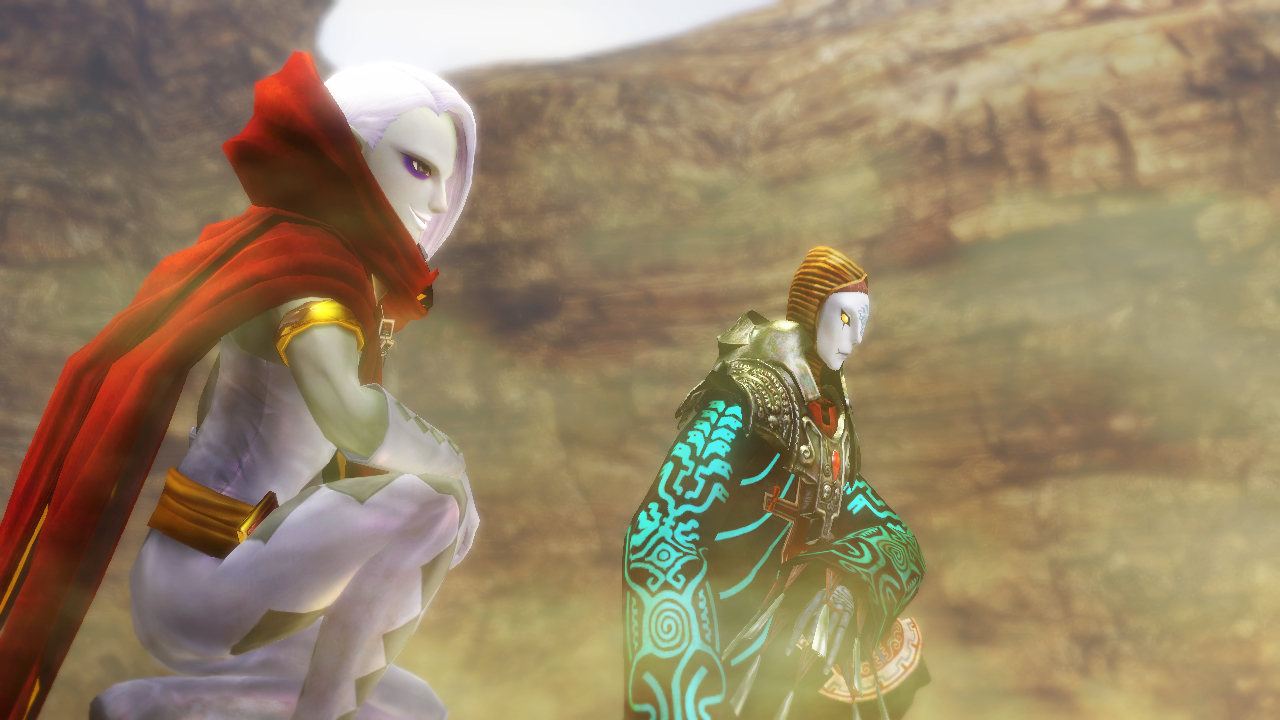
Demise and his sword spirit Ghirahim in Skyward Sword.
Ganon gets the posters, the boss music and the title of Demon King, but he is far from the only nasty piece of work in Hyrule’s history. Some villains are his servants or stand-ins, like the wizard Agahnim and the usurper Zant, and half the fun of those games is the moment you realise who has been pulling the strings. Others have nothing to do with him at all: a cursed mask that wants to drop the moon on a town, a jellyfish that drinks the life out of a sea god, a demon sealed under a railway and a void that existed before the world did.
This page gathers the series’ other major villains in the order they first appeared, in three eras of the main series, followed by the new foes that Koei Tecmo’s Hyrule Warriors games have added since 2014. Each card says who they are, what they want, how Link beats them and where else they have turned up. Ganon has his own page, and so does the Skull Kid, Majora’s unhappy puppet.
Read them together and patterns appear. Zelda villains rarely work alone, they love a disguise, and an astonishing number turn out to be someone else’s pawn. A few even change sides. Our Connections section untangles who answers to whom.
My hate… never perishes. It is born anew in a cycle with no end!
Demise Skyward Sword, the curse that follows Link and Zelda through the ages
I don’t mind if you call me Lord Ghirahim.
Ghirahim Skyward Sword, as quoted by designer Hirono in Iwata Asks
I’ll come back to haunt you!!
Koume and Kotake Ocarina of Time, floating away after their defeat
At a glance
Zant and Ghirahim bowing in Hyrule Warriors, where both serve Ganondorf.
Click a name to jump to its card. “Answers to” is who they are working for when the story starts; several of them have a surprise in store.
From the NES to the Game Boy Color, the series learned what a Zelda villain could be: a double, a wizard, a nightmare, a pair of witches, a mask. Every card links to our page for the game.
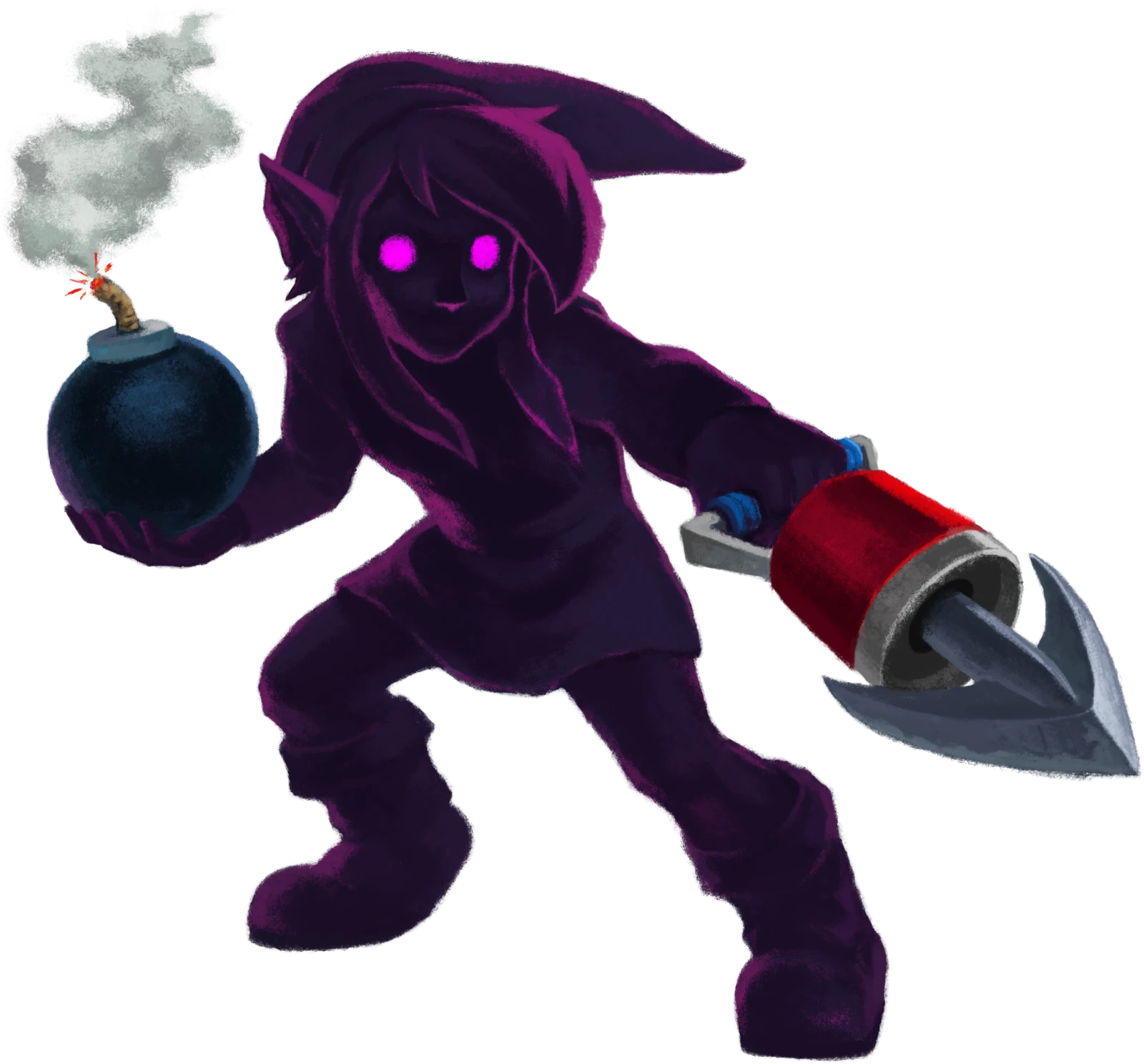
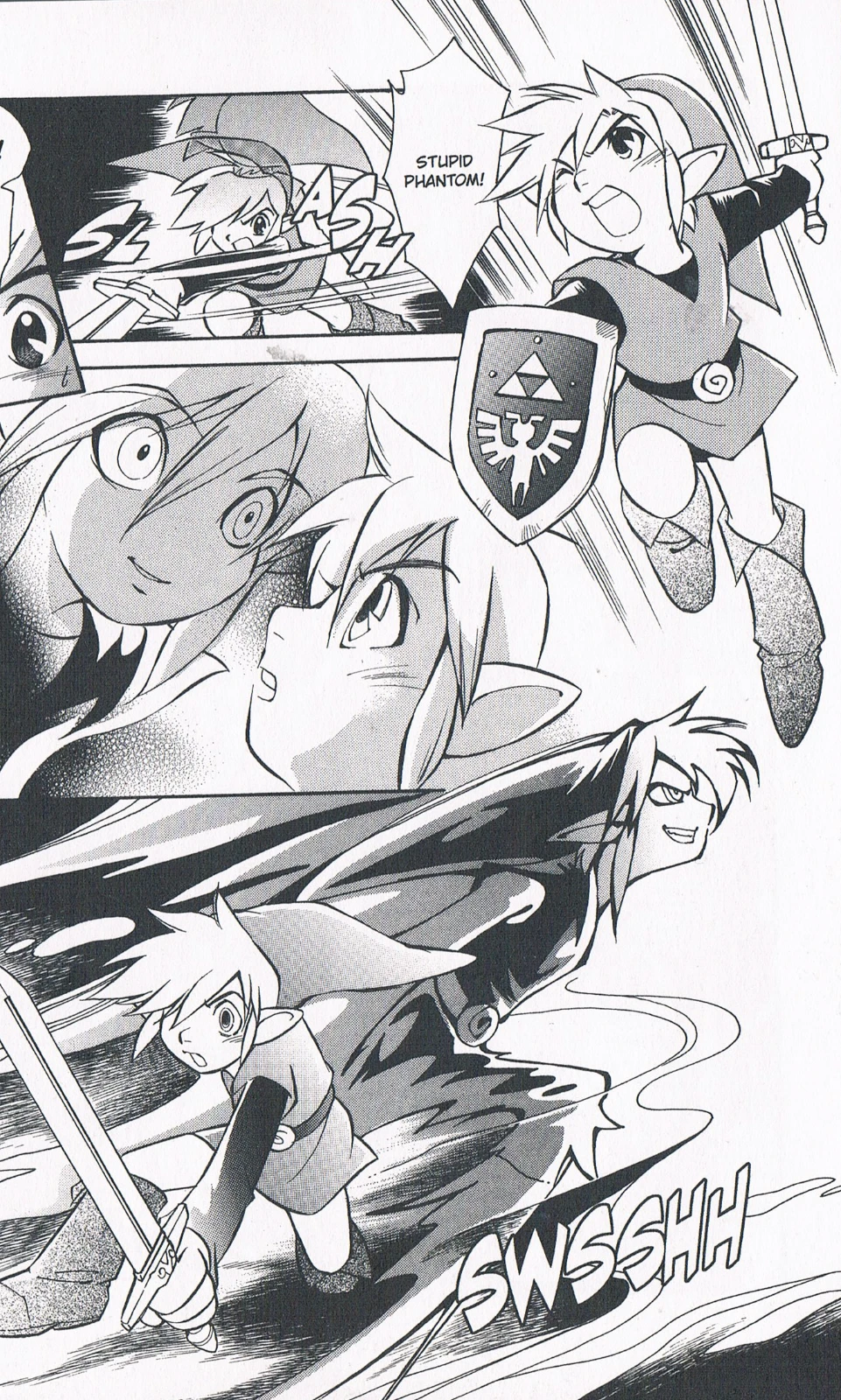
Dark Link and Shadow Link
First appears: Zelda II: The Adventure of Link (1987) · Also in: Ocarina of Time, A Link to the Past & Four Swords, Four Swords Adventures, A Link Between Worlds, Link’s Awakening (2019)
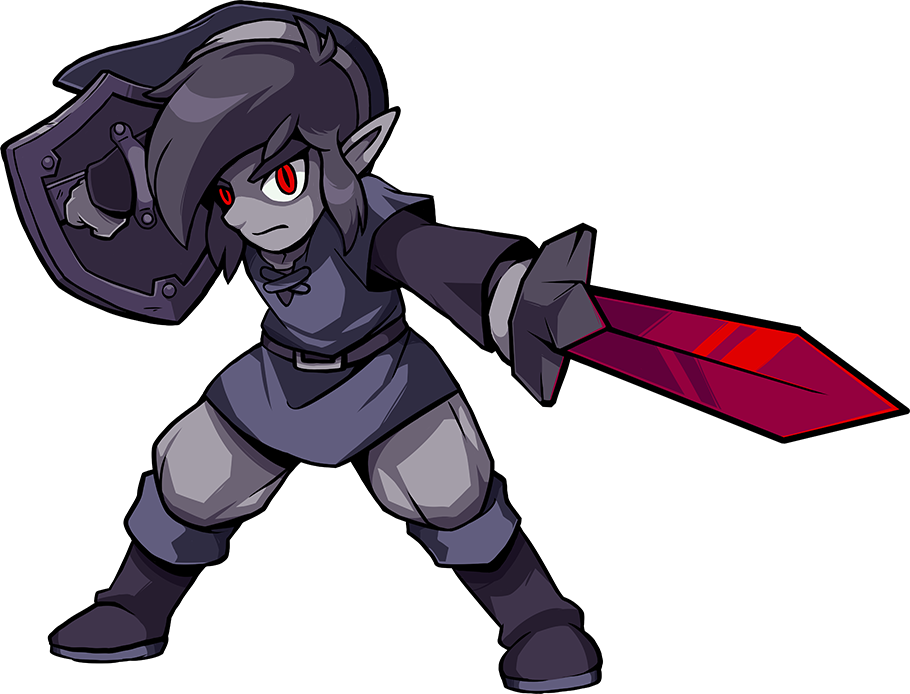
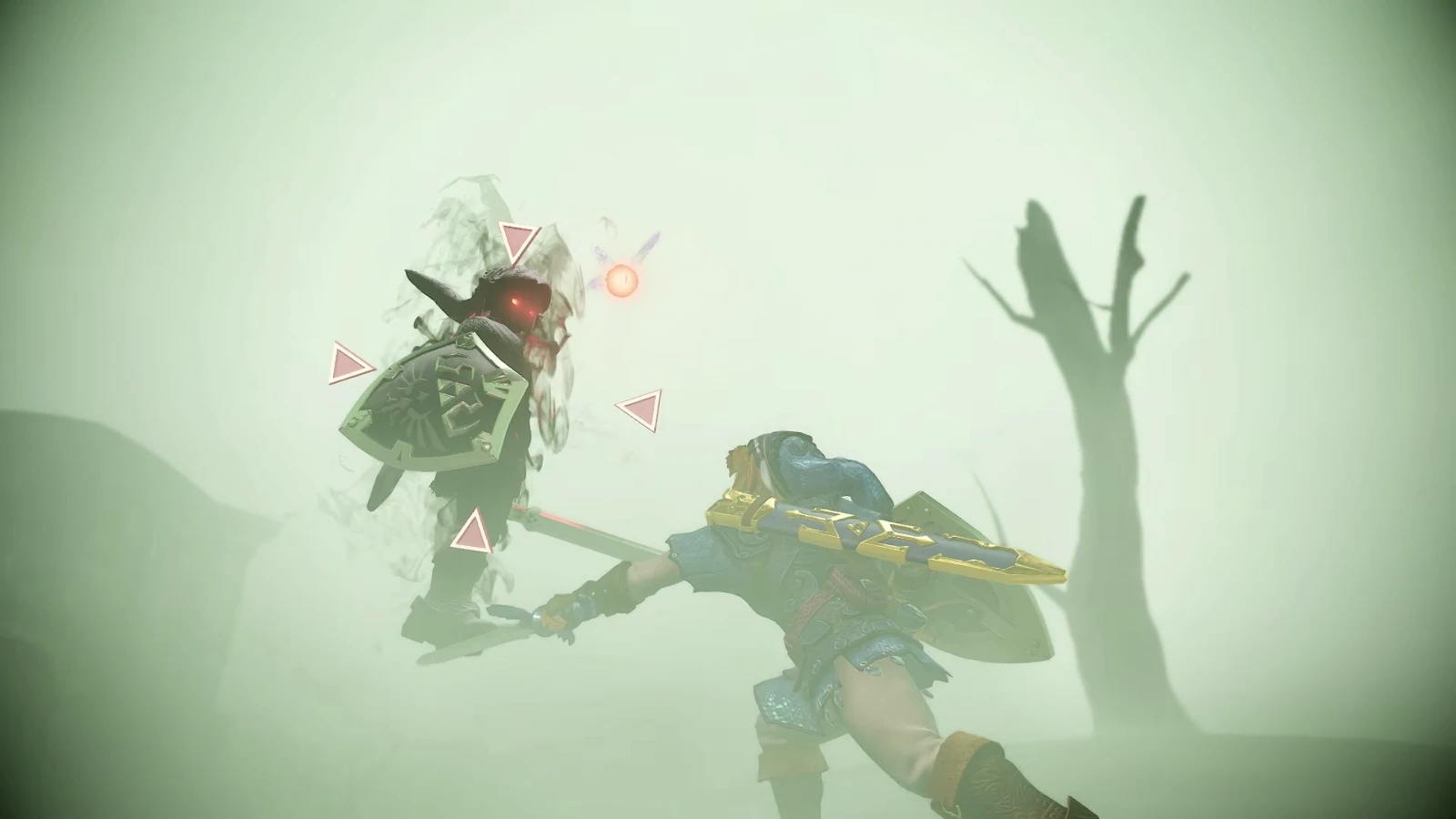
Fighting yourself is one of the oldest ideas in the series. The very last enemy of Zelda II is Link’s Shadow, a pitch-black copy of the hero summoned in the Great Palace straight after the Thunderbird falls; beat it and the Triforce of Courage is yours. Fans called it Dark Link, and the name stuck when the double returned in Ocarina of Time (1998) as the Water Temple’s most famous mini-boss, waiting in a misty, mirror-still room and copying every move you make. He is back, rebuilt, in the 2026 Ocarina of Time for Nintendo Switch 2.
Four Swords Adventures (2004) renamed the double Shadow Link and gave it a past: according to Hyrule Historia, Shadow Links are demons the Dark Mirror made from the evil thoughts of Ganondorf. One kidnaps the shrine maidens and tricks Link into drawing the Four Sword, which frees Vaati, and the copies multiply as the game goes on. The Game Boy Advance A Link to the Past & Four Swords ends its bonus Palace of the Four Sword with four Dark Links, A Link Between Worlds turns passing players into StreetPass Shadow Links, and the 2019 Link’s Awakening sets one chasing Link through Dampé’s chambers when you scan the Link amiibo.
Key facts
The final boss of Zelda II: beating Link’s Shadow wins the Triforce of Courage.
In Hyrule Warriors, Cia summons Dark Links in battle, and a Dark Link costume for Link came with the Hero of Hyrule Pack.
Shadow Link is playable in Cadence of Hyrule with its Character Pack, alongside a Shadow Zelda.
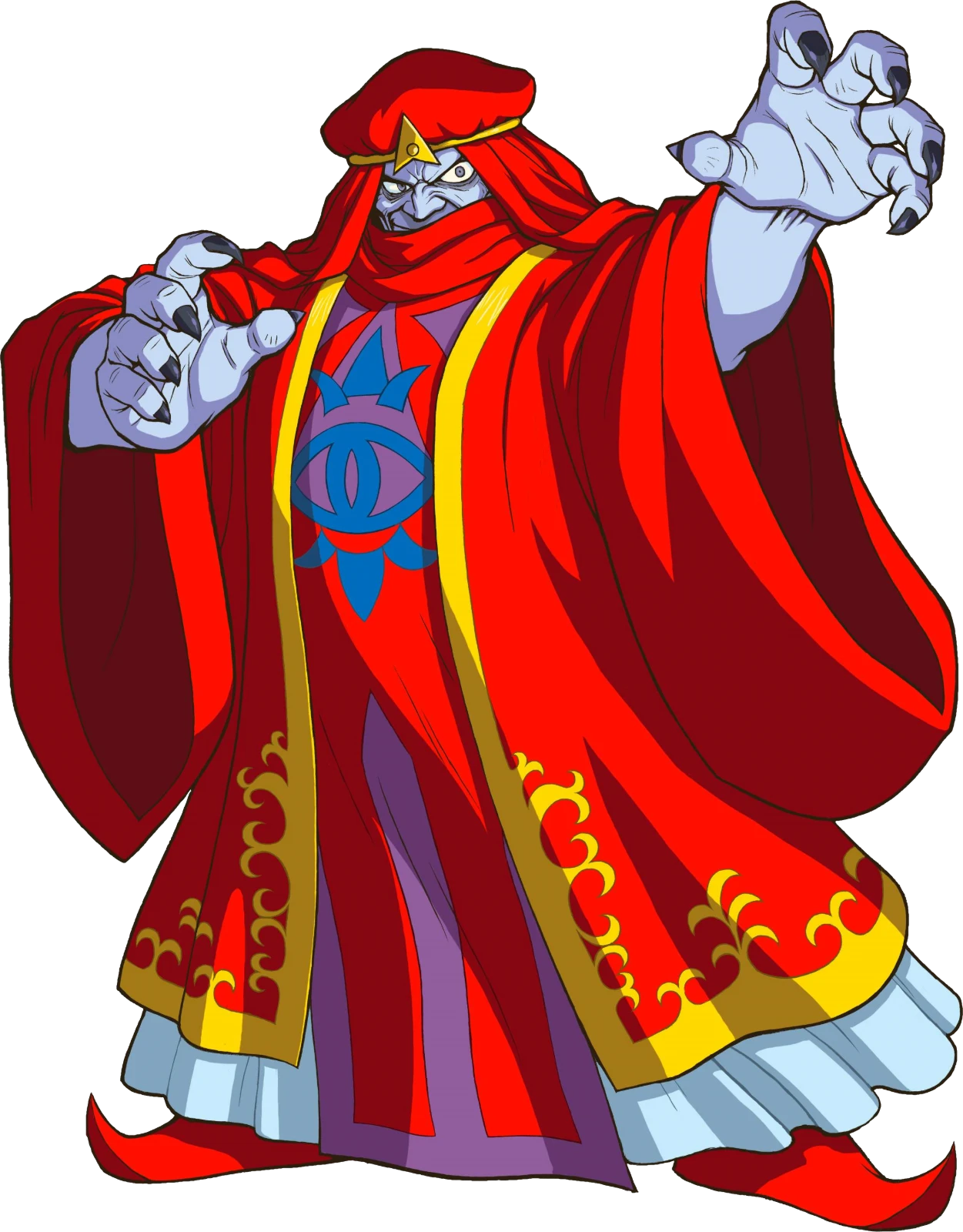
Agahnim
First appears: A Link to the Past (1991) · Also in: Link’s Awakening (as a shadow) · Super Smash Bros. Ultimate (spirit)
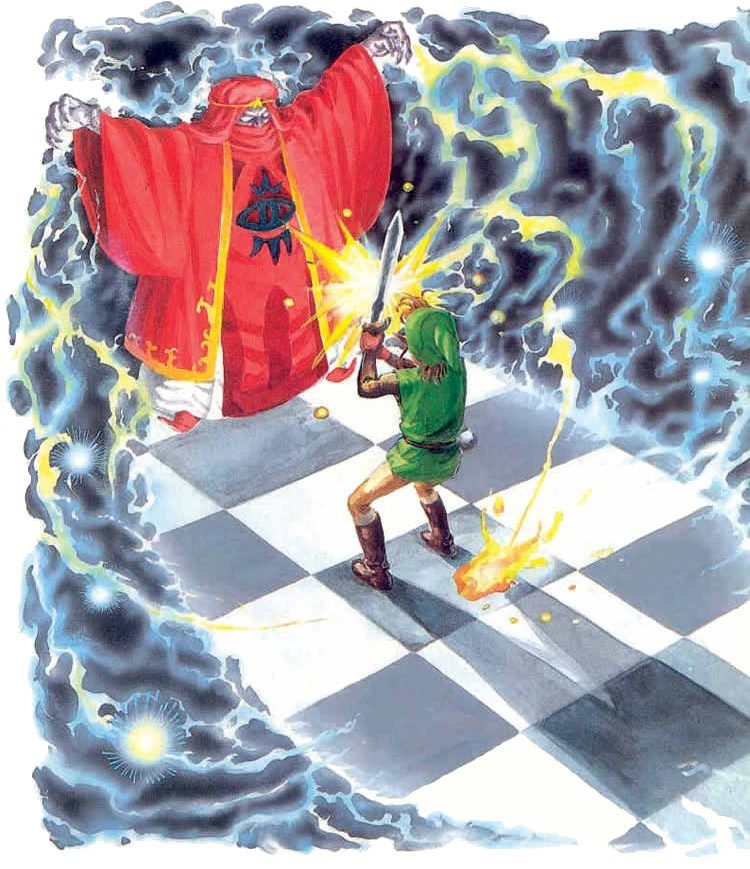
Agahnim arrives in Hyrule at its lowest ebb. Plague and drought have struck, and when this mysterious stranger ends them with his magic, the grateful king takes him into the royal household, believing him to be descended from the sages. It is the worst decision the king ever makes. Agahnim murders him, takes command of the castle guard and begins sending the seven maidens, descendants of the Seven Wise Men, into the Dark World, because their sacrifice will break the seal on Ganon’s prison. Zelda is the last: she is carried off from the Sanctuary, where Link later finds the Loyal Sage dying, and he reaches the top of Hyrule Castle just in time to watch her vanish.
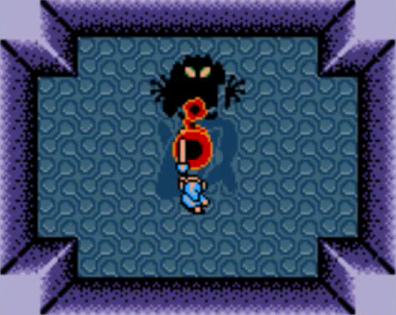
You cannot hurt him with an honest swing. Instead you bat his balls of energy back at him with the sword (the Bug-Catching Net works too), a game of magical tennis that fans call Dead Man’s Volley. In the rematch at the top of Ganon’s Tower he splits into three, and only the one casting the darkest shadow is real. Beat him there and the twist arrives: a great bat bursts out of the body and flaps off to the Pyramid of Power. Ganon’s spirit had been living inside him all along.
Key facts
In the Japanese original he is a priest, his title translating as Priest of Darkness; the English version made him a wizard.
The final boss of Link’s Awakening borrows his shape as Agahnim’s Shadow.
A two-star primary spirit (No. 185) in Super Smash Bros. Ultimate.
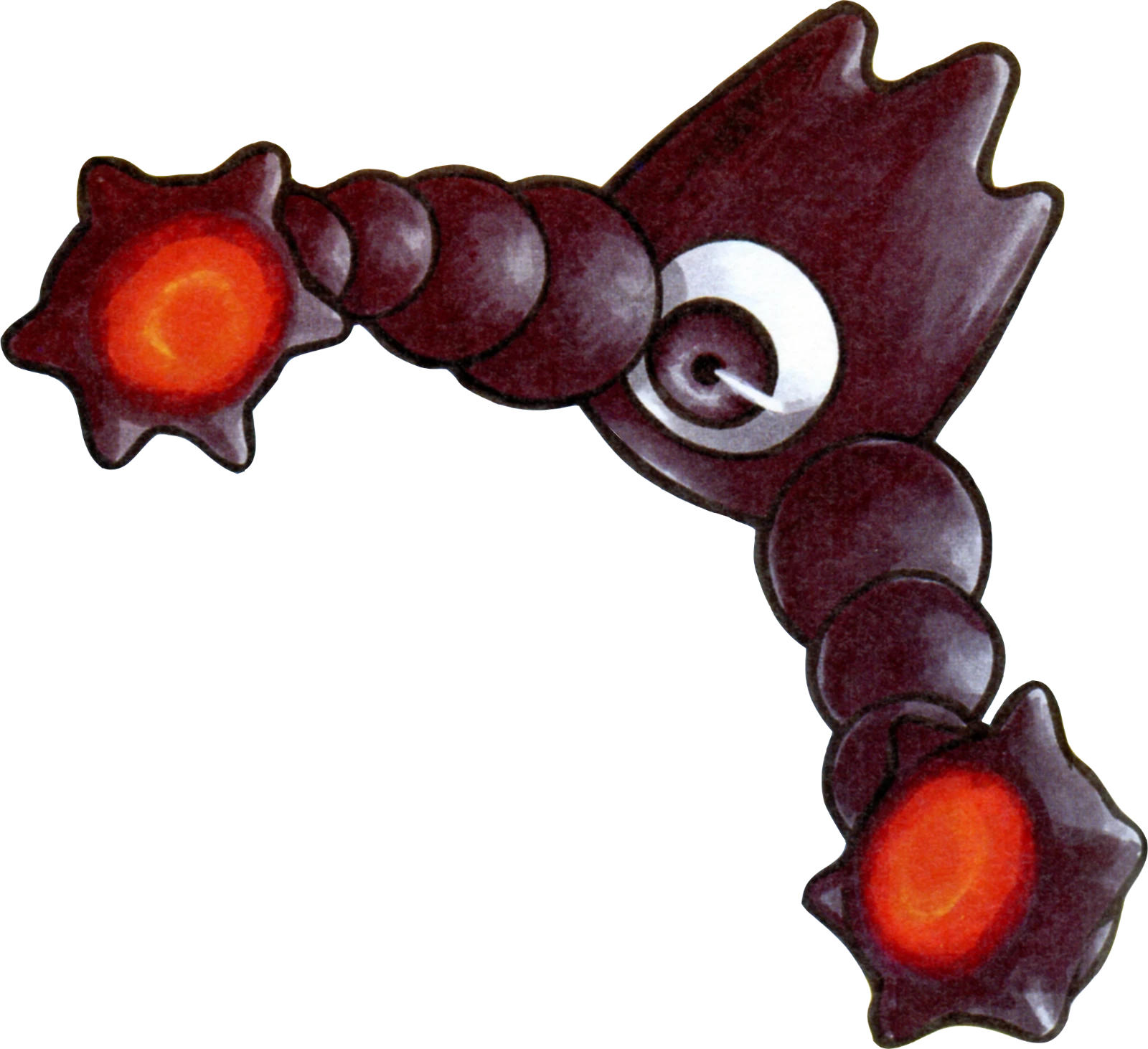
The Shadow Nightmares
First appears: Link’s Awakening (1993) · Also in: Link’s Awakening DX (1998), Link’s Awakening (2019)
Koholint Island is the dream of the Wind Fish, and the Nightmares want it to go on dreaming for ever so that they can rule its world. Each of the eight dungeons holding the Instruments of the Sirens is guarded by one of them, and the last waits inside the Wind Fish’s egg on top of Mt. Tamaranch. It is a shape-shifter that throws Link’s past back at him: a giant Gel, then the shadows of Agahnim, Moldorm, Ganon and Lanmola, before it shows its true face as DethI, a huge eye flanked by two spinning arms that can be hit only when the eye opens.
Few final bosses leave such a strange taste. Beating the Nightmares is the only way to wake the Wind Fish, and the Wind Fish itself confirms that when it wakes, Koholint and everyone Link has met there will fade along with the dream.
Key facts
DethI, their final form, is unique to Link’s Awakening.
Each dungeon boss is a Nightmare guarding one of the eight instruments needed to wake the Wind Fish.
The 2019 Switch remake rebuilt the whole battle in 3D.
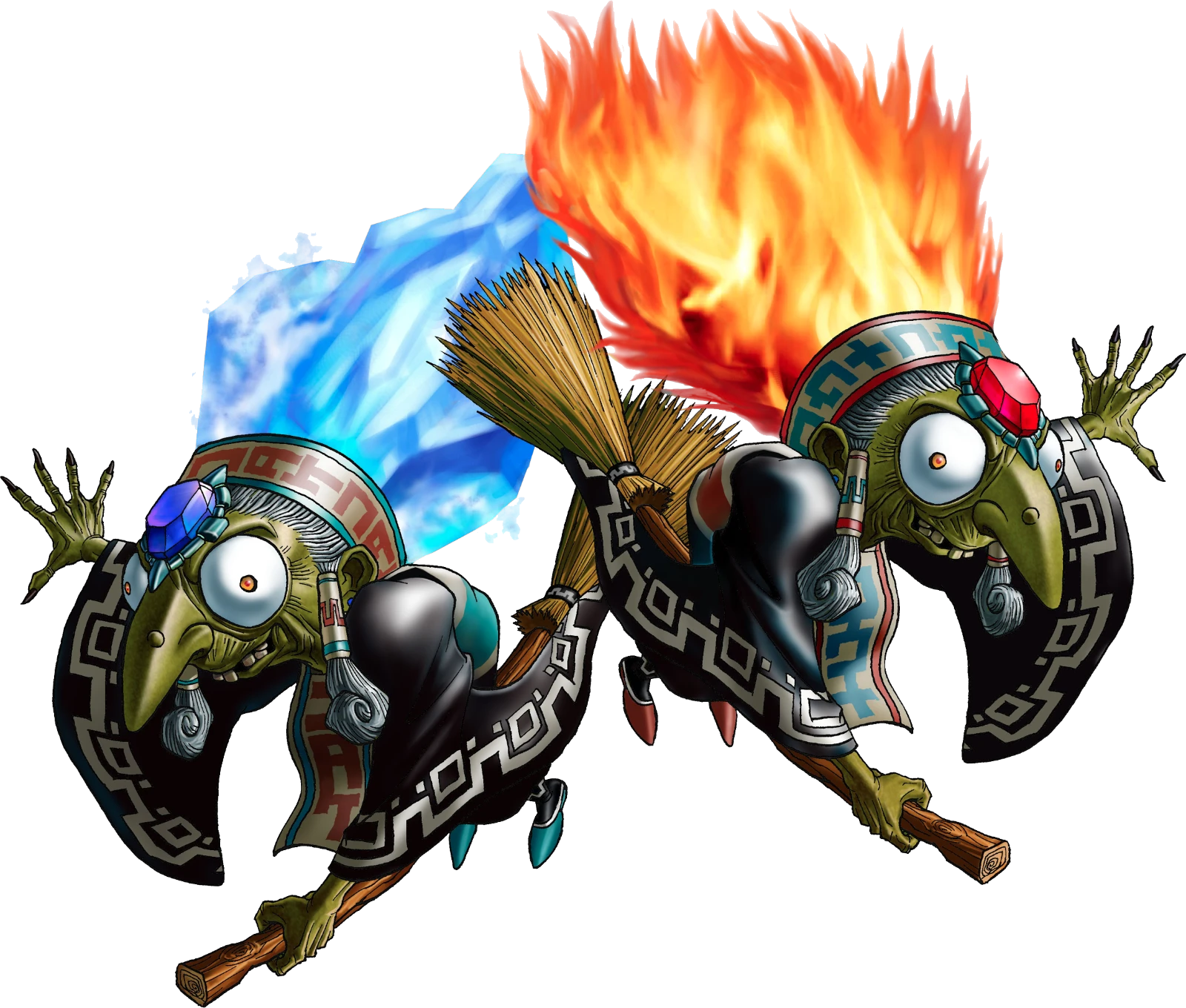
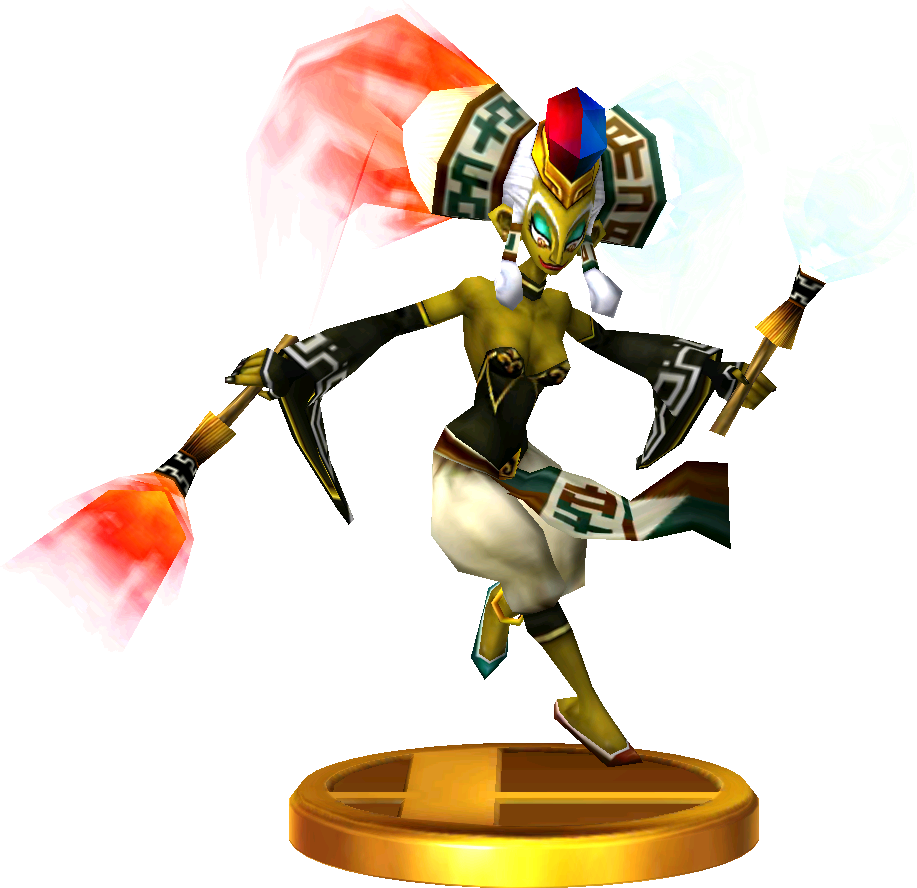
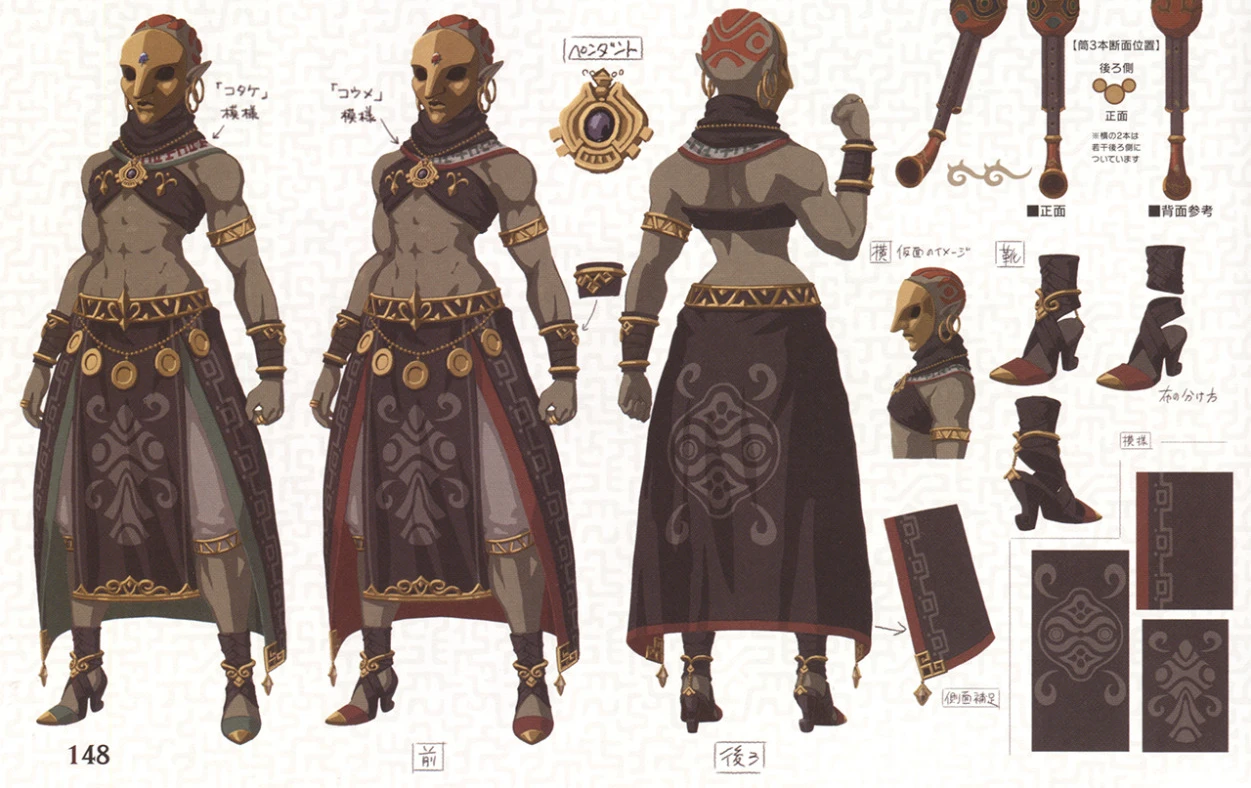
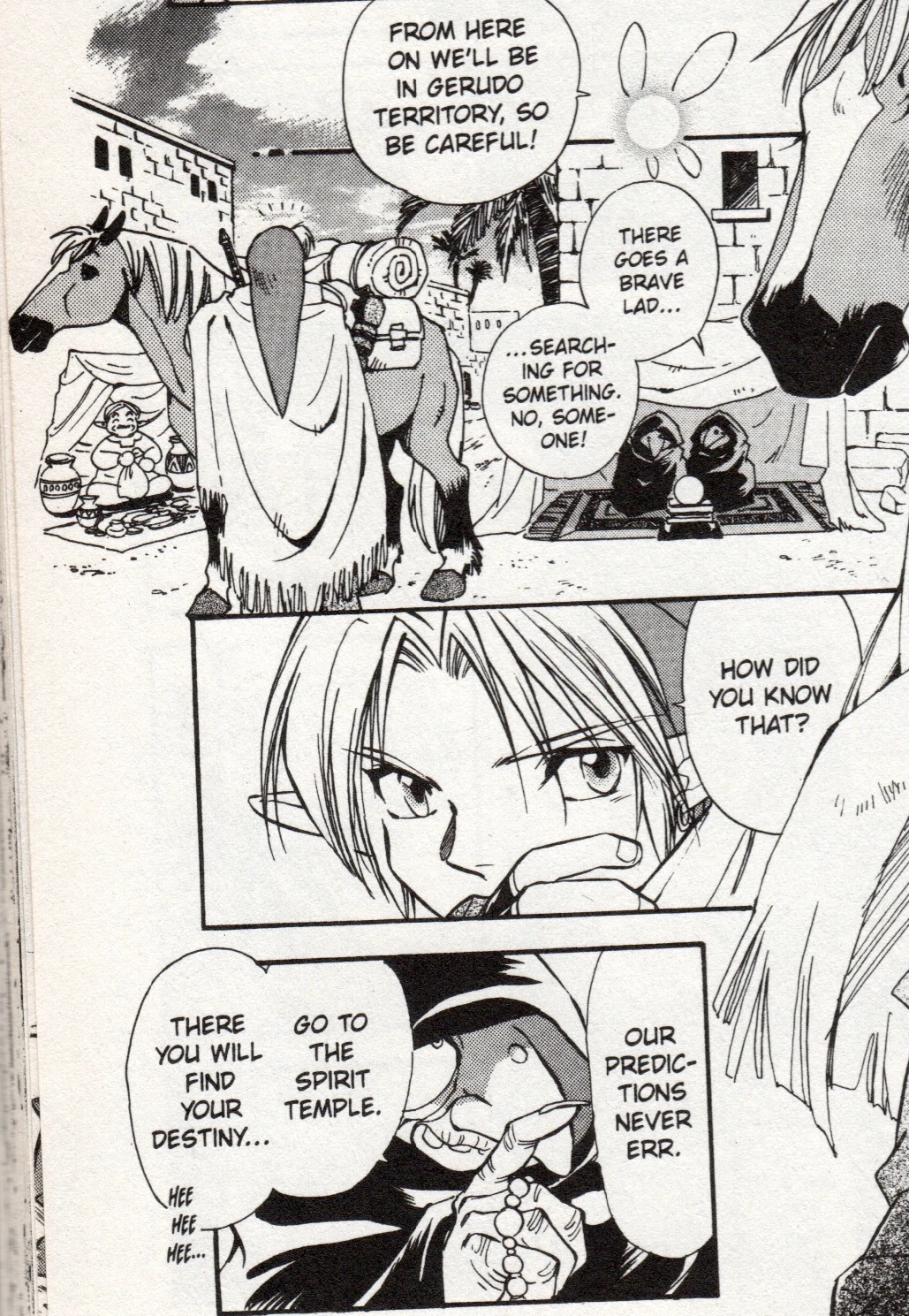
The Gerudo’s twin witches are said to be Ganondorf’s surrogate mothers, and they bicker like an old married couple. Koume commands fire and Kotake ice. In Ocarina of Time they guard the Spirit Temple, snatch Nabooru in front of young Link and brainwash her into fighting the adult hero as an Iron Knuckle. Their boss fight is built on one simple, brilliant idea: each sister fires her own element until the two fuse into Twinrova, and Link wins by soaking up a spell in the Mirror Shield and flinging it back. Beaten, they float off to the heavens, still arguing about their ages.
They are the true masterminds of the two Oracle games (2001), using General Onox and Veran to light the Flames of Destruction and Sorrow. In a linked game they kidnap Zelda to light the Flame of Despair, and when Link beats them they sacrifice themselves to bring Ganon back; because Zelda was never sacrificed, he returns as a mindless beast. Termina’s versions in Majora’s Mask are harmless: Kotake runs the potion shop and Koume the boat cruise. In Age of Imprisonment (2025) they stand at Ganondorf’s side again, though the game never names them. More on the pair is on our recurring characters page.
Key facts
The 2026 Switch 2 Ocarina of Time gives them a voice: Reba Buhr plays both sisters in English.
Tears of the Kingdom’s art book Master Works includes concept art of the pair.
The 3DS Ocarina of Time calls them Koume and Kotake, dropping the Twinrova prefix of the original.
Smash Ultimate has spirits for both Koume & Kotake (No. 202) and Twinrova (No. 203).
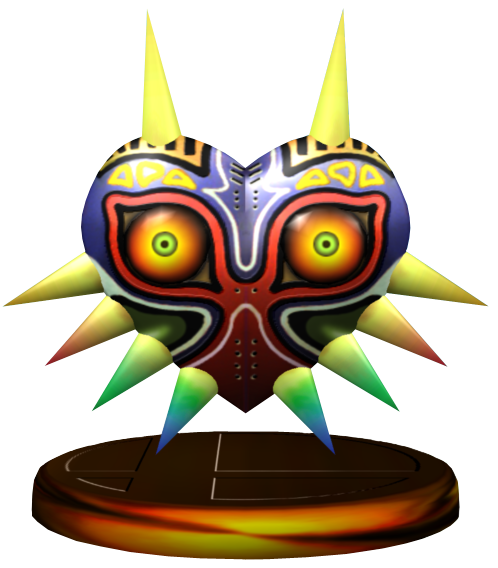
Majora’s Mask and the Skull Kid
First appears: Majora’s Mask (2000) · Also in: Majora’s Mask 3D (2015), the Super Smash Bros. series
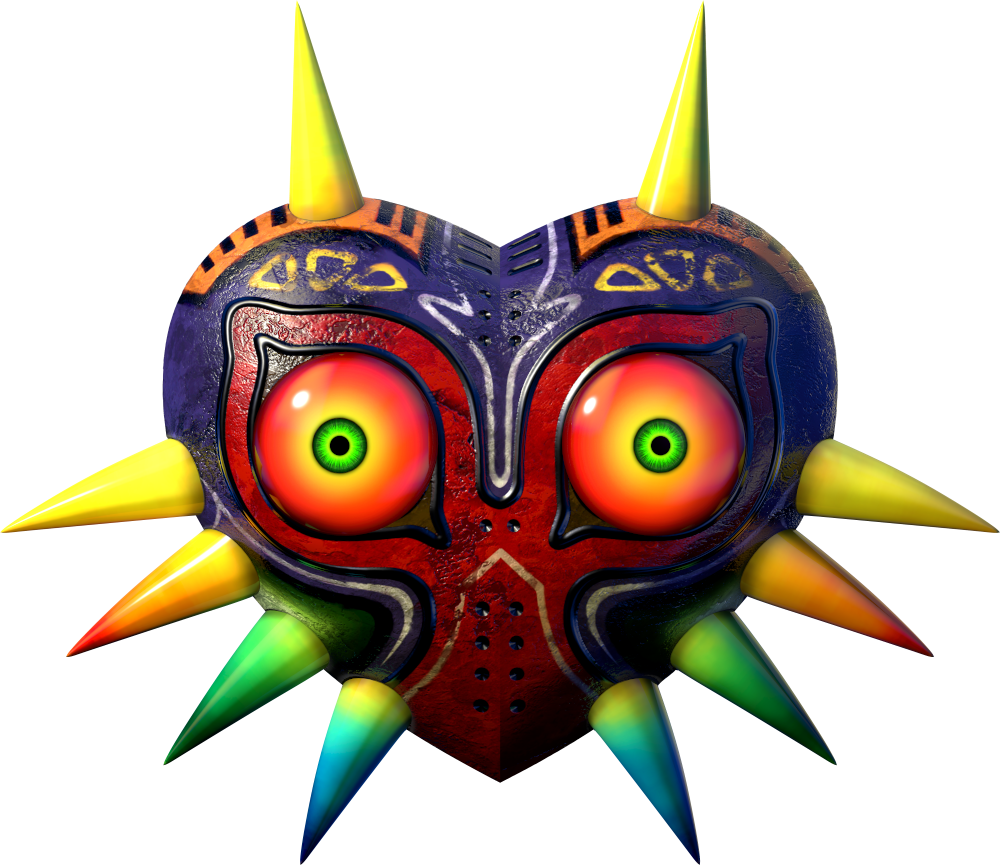
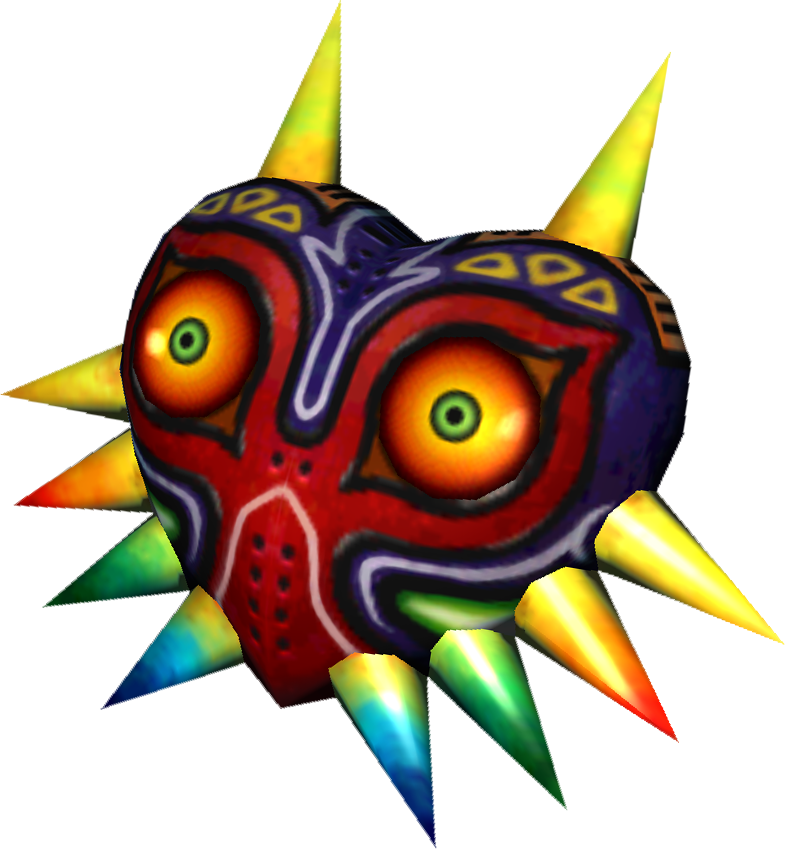
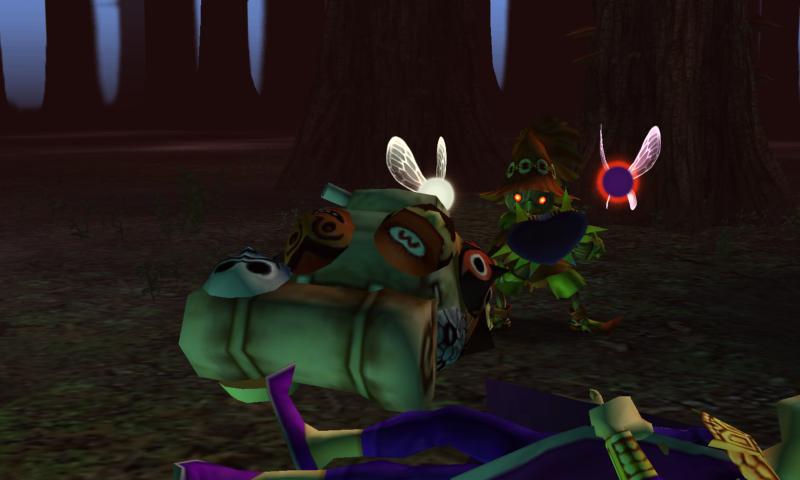
A heart-shaped mask ringed with spikes, with two huge staring eyes. The Happy Mask Salesman explains that an ancient tribe used it in hexing rituals and then sealed it away, afraid of its power; he tracked it down, and a Skull Kid stole it from him. The mask found the perfect host. Hyrule Historia explains that the imp had been friends with the Four Giants, Termina’s guardian deities, and felt abandoned when they left. With Majora’s power he curses Link into a Deku Scrub and drags the moon down towards Clock Town.
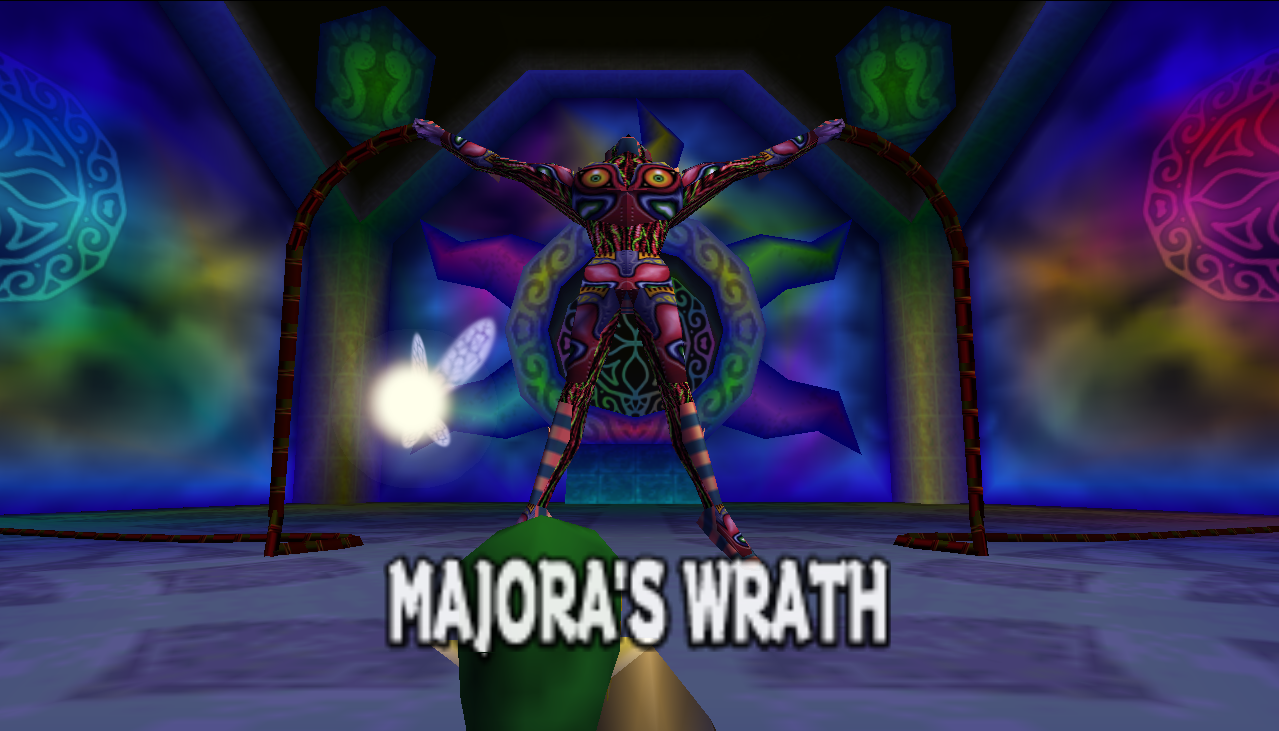
But the mask is the real villain. When the Giants catch the moon, Majora drops its puppet, flies into the moon and fights Link in three forms: Majora’s Mask, Majora’s Incarnation and Majora’s Wrath. Afterwards the Giants ask Link to forgive their old friend, and the mask, drained of its evil, goes back to the salesman. The full story of the imp, from the Lost Woods to his redemption, is on our Skull Kid page.
Key facts
Art director Takaya Imamura designed both the mask and the moon; the Japanese name, Mujura, was his idea too (see Behind the scenes).
Smash Ultimate has spirits for Majora’s Mask (No. 209) and for Skull Kid & Majora’s Mask (No. 206).
General Onox
First appears: Oracle of Seasons (2001)
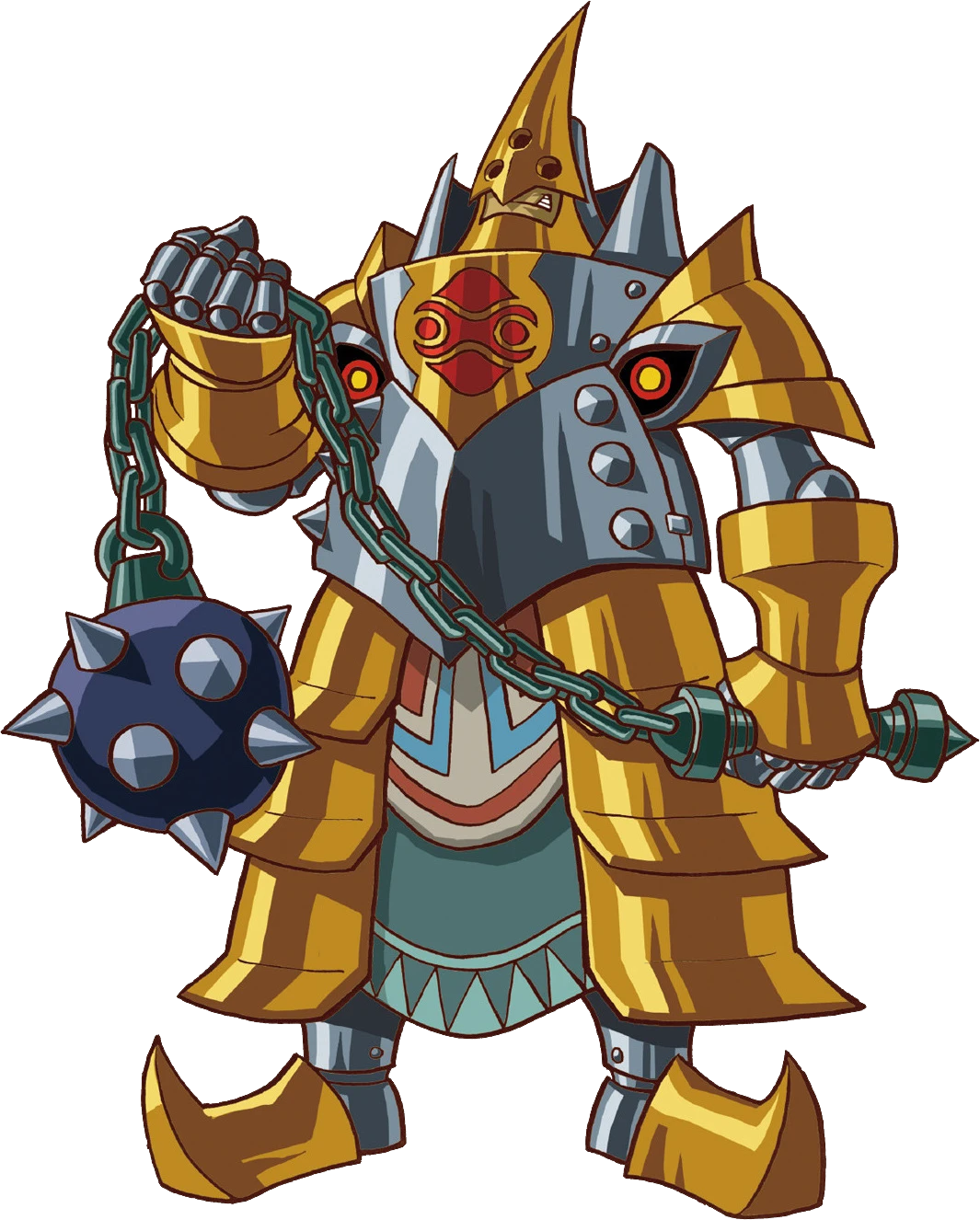
A towering figure in black armour, Onox calls himself the General of Darkness and says only that Twinrova summoned him from the Dark Realm. He kidnaps Din, the dancing Oracle of Seasons, which throws Holodrum’s seasons into chaos, and sinks the Temple of Seasons into the underground land of Subrosia. His castle on the Northern Peak hides behind a shadow barrier that falls only once Link has gathered all eight Essences of Nature.
When Link finally gets in, Onox shields himself with Din, trapped inside a crystal, so every swing has to be chosen with care. Then comes the reveal: the armour was only ever a disguise, and his true form is a dark dragon. The misery he spreads across Holodrum lights the Flame of Destruction, the first of the three flames Twinrova need. Like his opposite number in Oracle of Ages, Onox is a heavy, not a mastermind.
Key facts
Final form: a dark dragon.
The Seasons counterpart to Veran; both serve Twinrova.
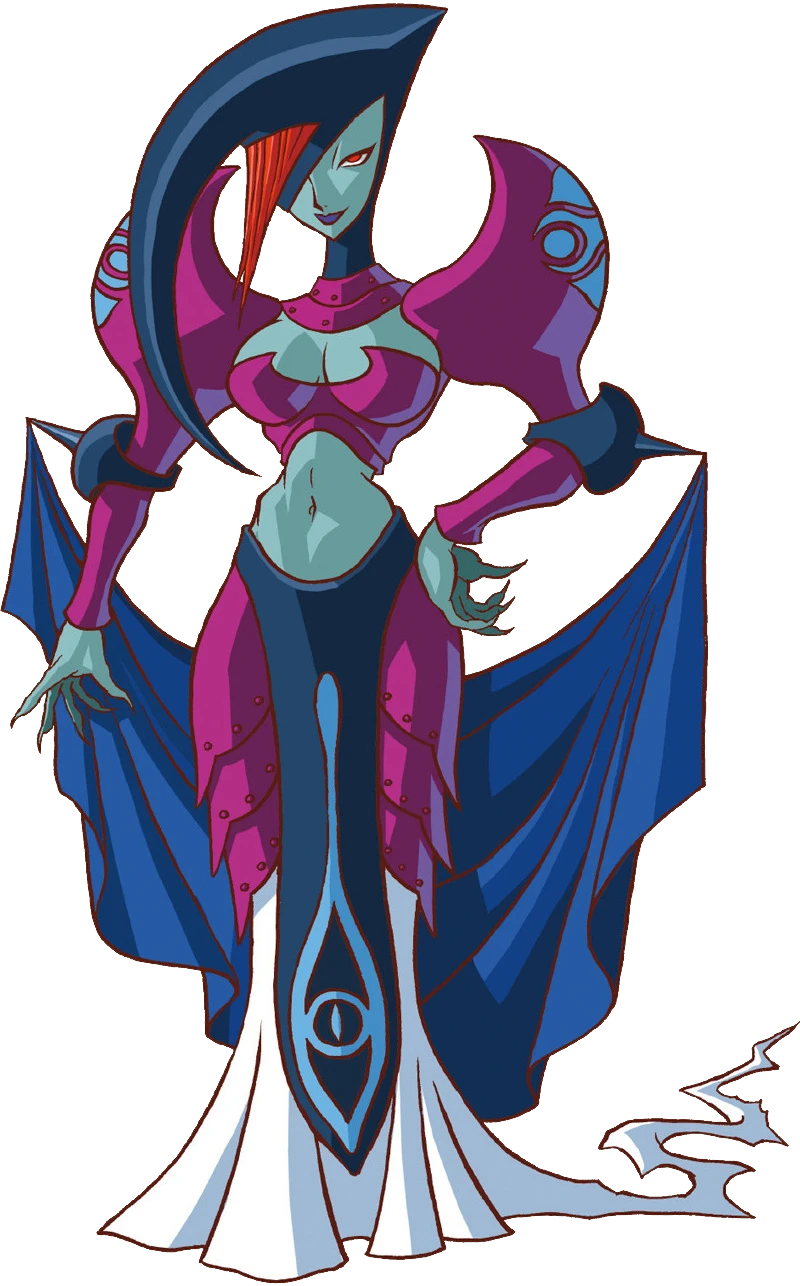
Vain, spiteful and almost impossible to hit, the Sorceress of Shadows can slip inside other people and wear them like a costume, and anything Link does to her while she is inside someone hurts the host instead. She uses Impa to reach Nayru, the Oracle of Ages, then possesses Nayru herself and uses the oracle’s power over time to travel into Labrynna’s past. There, still wearing Nayru, she wins Queen Ambi’s trust and persuades her to work her people on the Black Tower without rest, and the sorrow she spreads lights the Flame of Sorrow for her mistresses, Twinrova. Only when Link frees Nayru does she jump into Ambi herself.
Mystery Seeds are the answer: they drive her out of whoever she is wearing. At the top of the Black Tower she fights first inside Ambi, then as a winged demon, and finally in her true form, cycling between a turtle, a bee and a spider. Himekawa’s manga goes further and sends her into the past to wipe out Link’s family line.
Key facts
Japanese name: Beran.
Her possession trick means Nayru, the game’s key ally, spends much of the adventure as the enemy’s puppet.
Weak to Mystery Seeds, which force her out of a host.
Sorcerers, usurpers and demons (2002–2011)
The Game Boy Advance, GameCube, DS and Wii years brought villains with real backstories: an apprentice gone bad, a prince passed over for the throne, a demon hiding in a top hat, and the demon king behind them all.
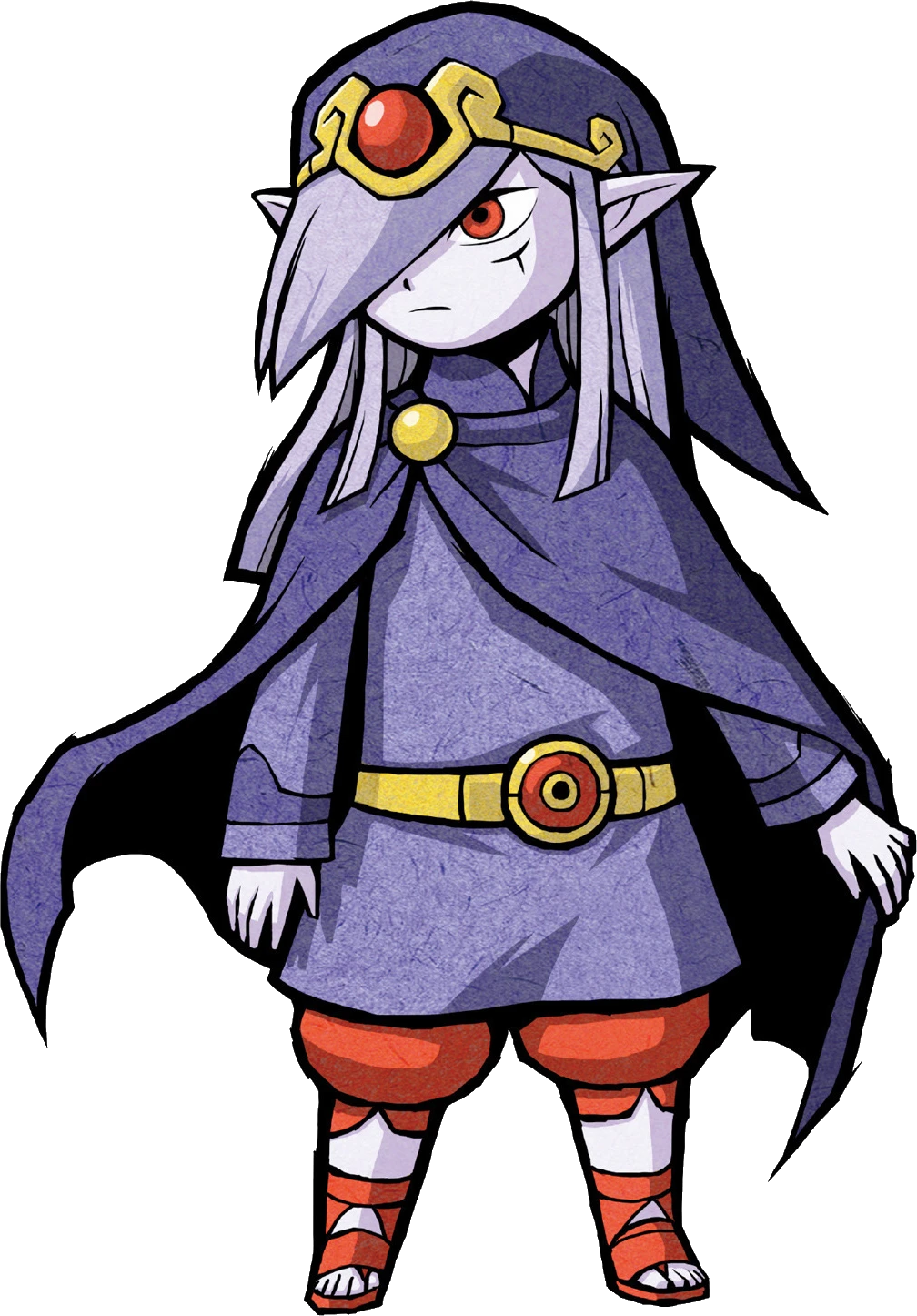
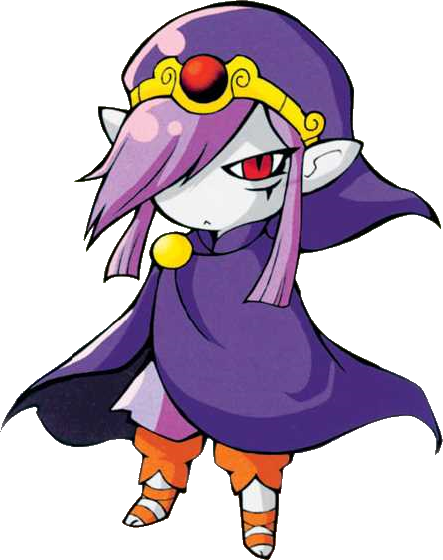
Vaati’s story runs backwards. Players met him first in Four Swords, the multiplayer adventure bundled with A Link to the Past on the Game Boy Advance in 2002: a pale sorcerer with lilac hair who kidnaps Zelda to make her his bride and is sealed inside the Four Sword. Two years later The Minish Cap (2004) told his origin. He began as a Minish, or Picori, the apprentice of the sage Ezlo, and he was always drawn to the darkness in people’s hearts. He stole his master’s invention, the wish-granting Mage’s Cap, became a mighty sorcerer and cursed Ezlo into the shape of a talking hat.
In The Minish Cap he wins the Picori Festival’s sword tournament to reach a chest he believes holds the Light Force. It holds monsters instead, and when Zelda tries to stop him he turns her to stone. He disguises himself as King Daltus, turns Hyrule Castle into a dark fortress and almost drains Zelda’s Light Force before Link and Ezlo stop him. Four Swords Adventures (2004) then reveals that, for all his power, he is a pawn: Ganon used Shadow Link to trick the hero into releasing him, and the four Links seal him again in his Palace of Winds.
Key facts
Japanese name: Gufū, meaning a gust of wind or tornado.
Final forms in The Minish Cap: Vaati Reborn, Vaati Transfigured and the one-eyed, winged Vaati’s Wrath, the shape he keeps in the Four Swords games.
A three-star primary spirit (No. 255) in Smash Ultimate.
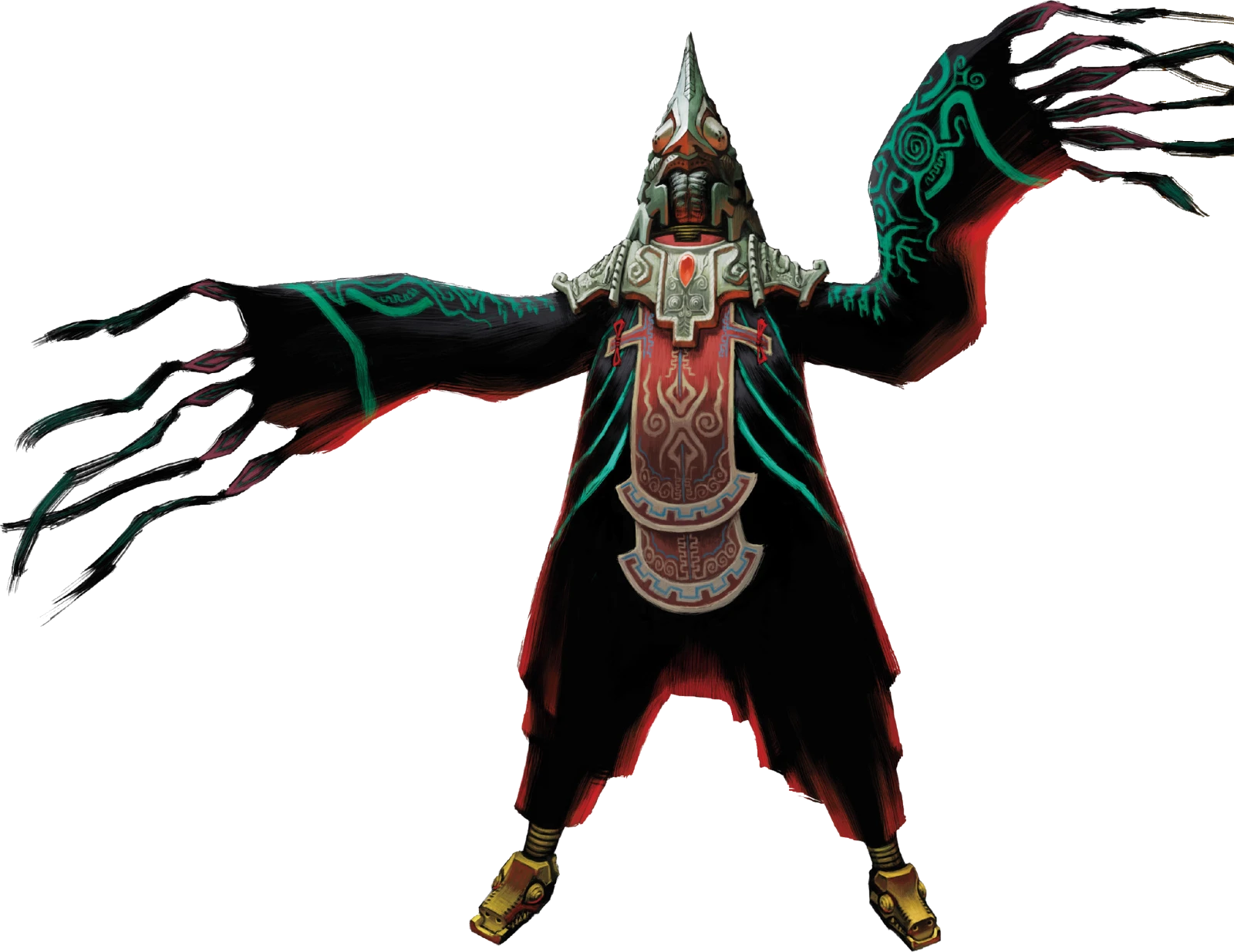
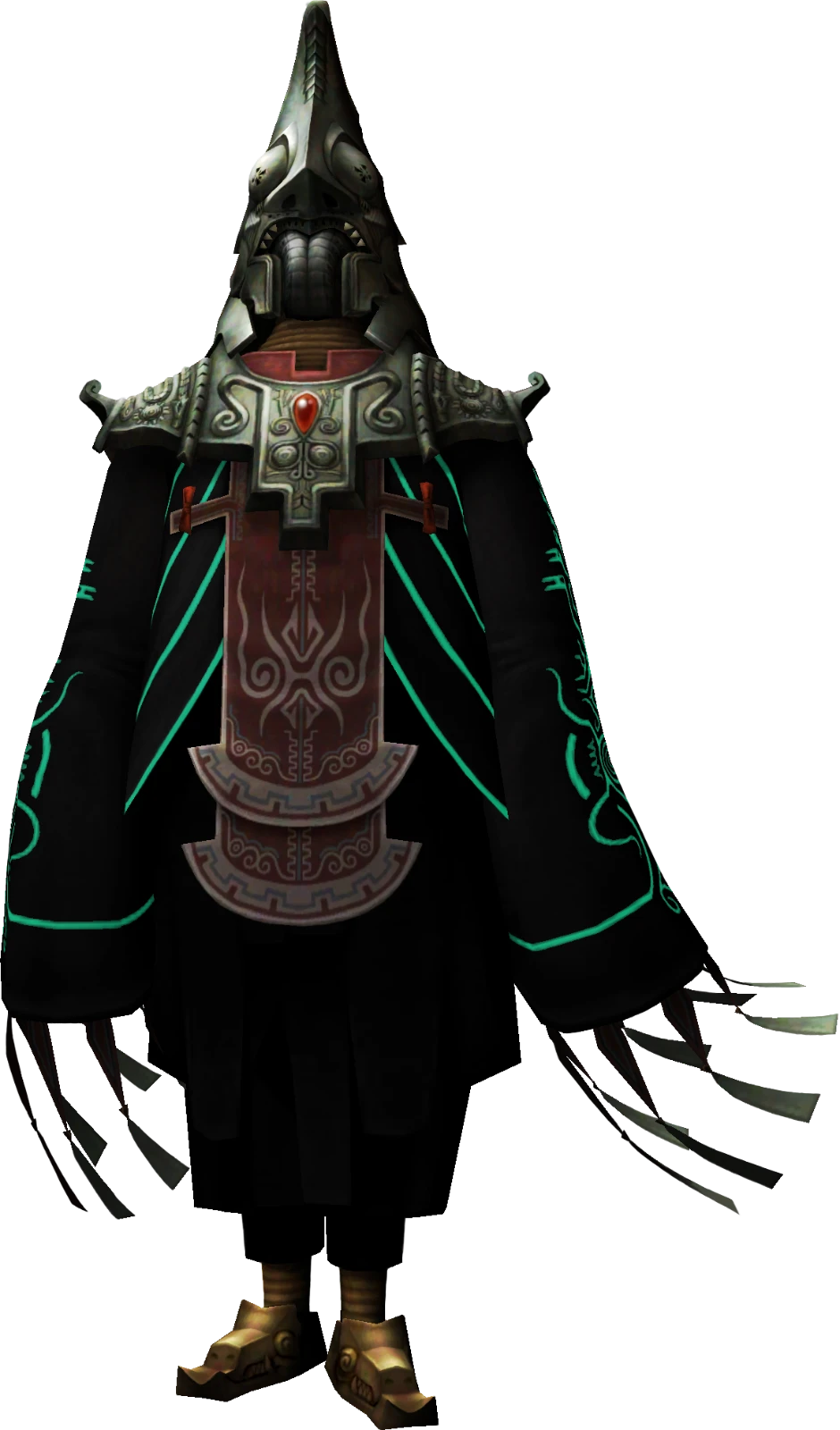
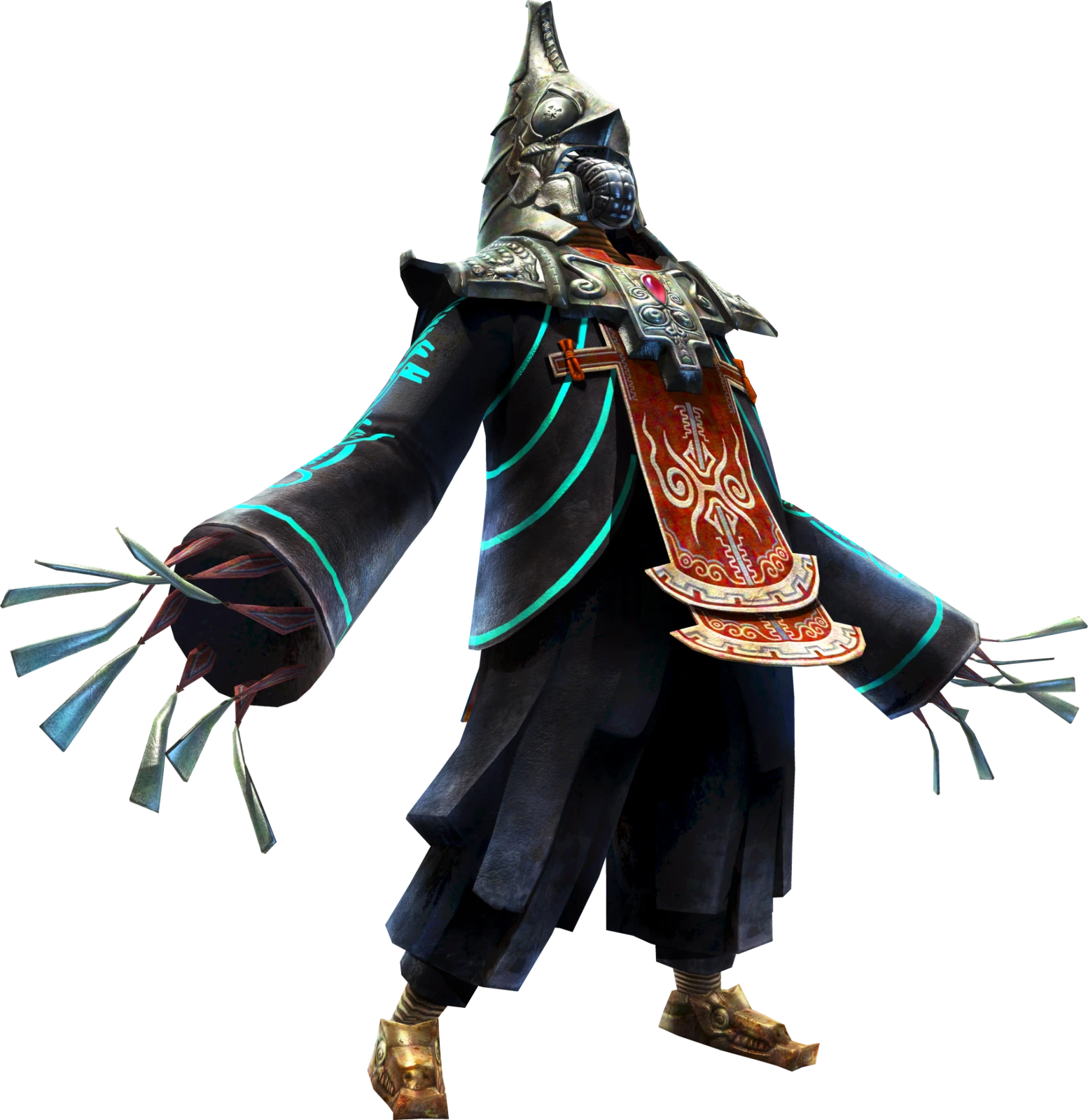
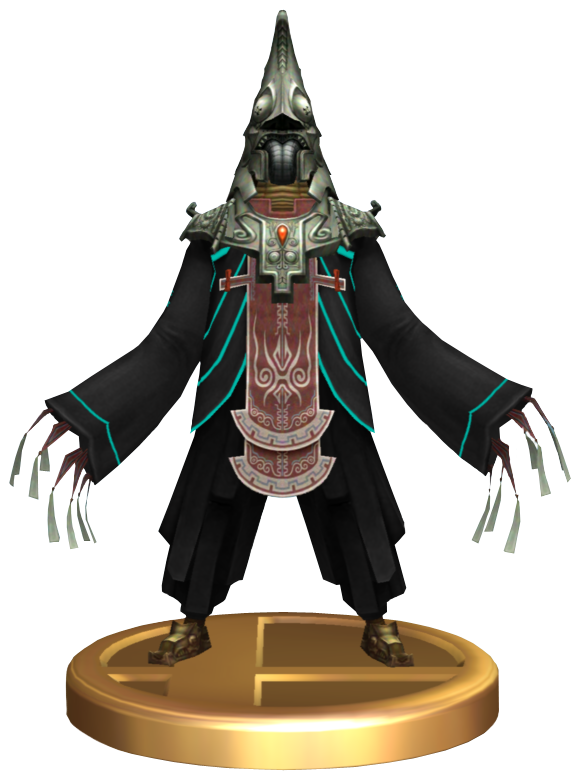
Zant is a Twili, descended like all his people from the Interlopers, sorcerers who once tried to seize the Sacred Realm and were banished to the Twilight Realm. He served its royal family and expected to inherit the throne; when it went to Midna instead, he nursed his grudge until a “god” offered him power in exchange for loyalty. That god was Ganondorf. With his new strength Zant seized the throne, turned his people into Shadow Beasts, cursed Midna into an imp, forced Princess Zelda to surrender and smothered Hyrule in twilight. He turns Link into a wolf, too, and for most of the game he looks like the final villain.
At first he is cold and regal, his face hidden behind a helmet. Then the helmet slides back and the act collapses into a ranting, flailing tantrum, one of the most unhinged turns in the series. His last stand in the Palace of Twilight hops through the arenas of earlier bosses, borrowing their tricks. Beaten, he gloats that Midna’s curse cannot be lifted while his god lives, and Midna kills him. Even then he is tied to Ganondorf: as the Gerudo king dies at the very end of the game, a vision of Zant appears.
Key facts
Playable in Hyrule Warriors, fighting with twin scimitars and growing to giant size to stomp enemies; there he is one of Ganondorf’s two generals.
A trophy and sticker in Super Smash Bros. Brawl, a trophy again in Smash for Wii U and a spirit (No. 224) in Ultimate.
Himekawa’s Twilight Princess manga makes him a paranoid, envious usurper with a long-hidden fixation on Midna.
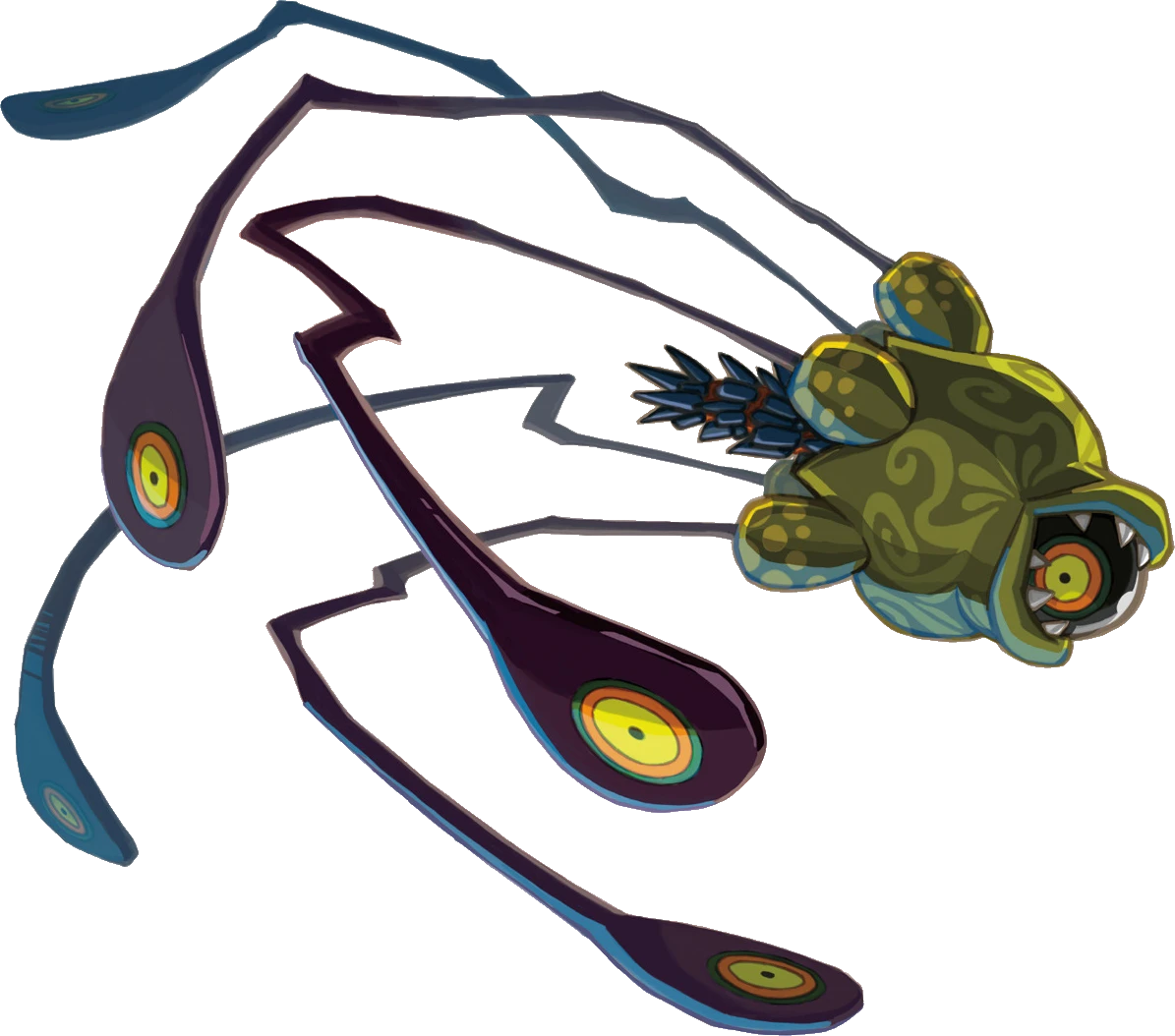
Bellum lives on stolen life force, and where it came from is never explained. It looks like a giant jellyfish, with one great toothed eye at its centre and five tentacles tipped with smaller eyes. Its chief victim is Oshus, the Ocean King, pinned beneath his own temple while his strength is drained away and turned into the Sand of Hours. From that stolen power Bellum made the monsters that imprisoned the spirits of Power, Wisdom and Courage, and rumours of treasure aboard its Ghost Ship keep fresh prey sailing in. Tetra, rich in life force, is one of its catches, and is left as a stone statue.
The finale comes in three acts. First Link fights it at the bottom of the Temple of the Ocean King, freezing time with the Phantom Hourglass to reach its eye; then comes a battle at sea against the Ghost Ship, which Bellum has possessed; and finally Bellum seizes the cowardly Captain Linebeck for a last duel. With the monster gone, Oshus is freed and revealed as a great white whale. Armoured Phantoms, like the guards Bellum made for the temple, return as the sentinels of the Tower of Spirits in Spirit Tracks.
Key facts
Fought in three phases: in the temple, aboard the Ghost Ship and inside Linebeck.
Its great eye can be struck only while time is frozen.
Malladus and Chancellor Cole
First appears: Spirit Tracks (2009) · Also in: Super Smash Bros. for Nintendo 3DS (Malladus trophy)
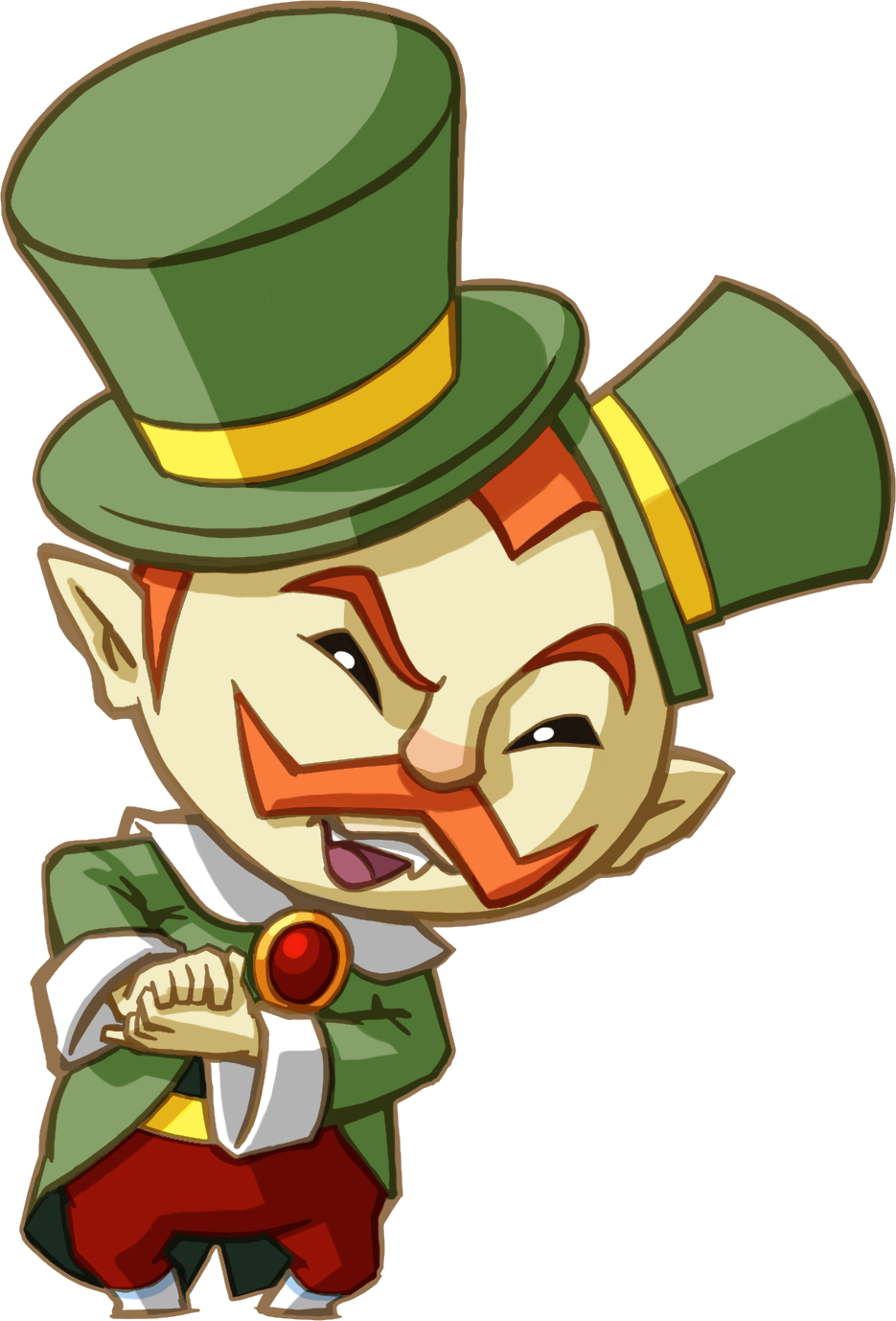
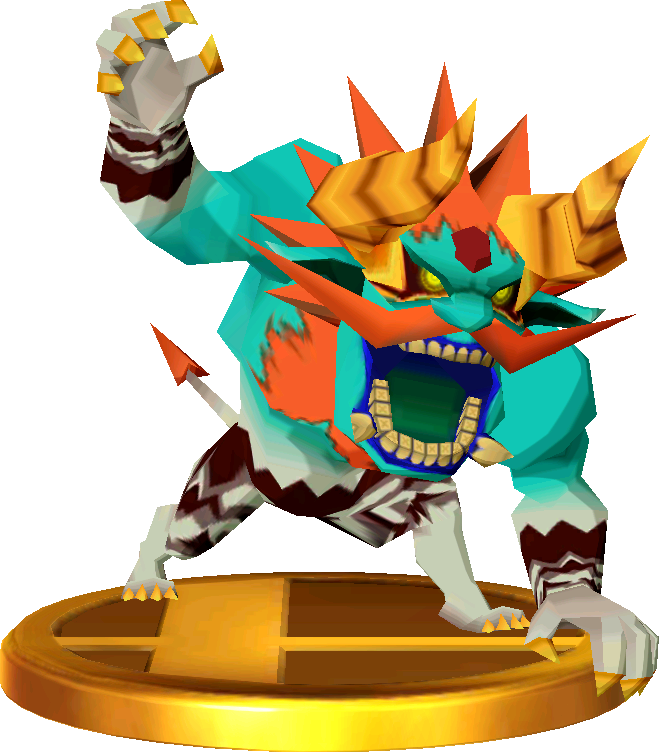
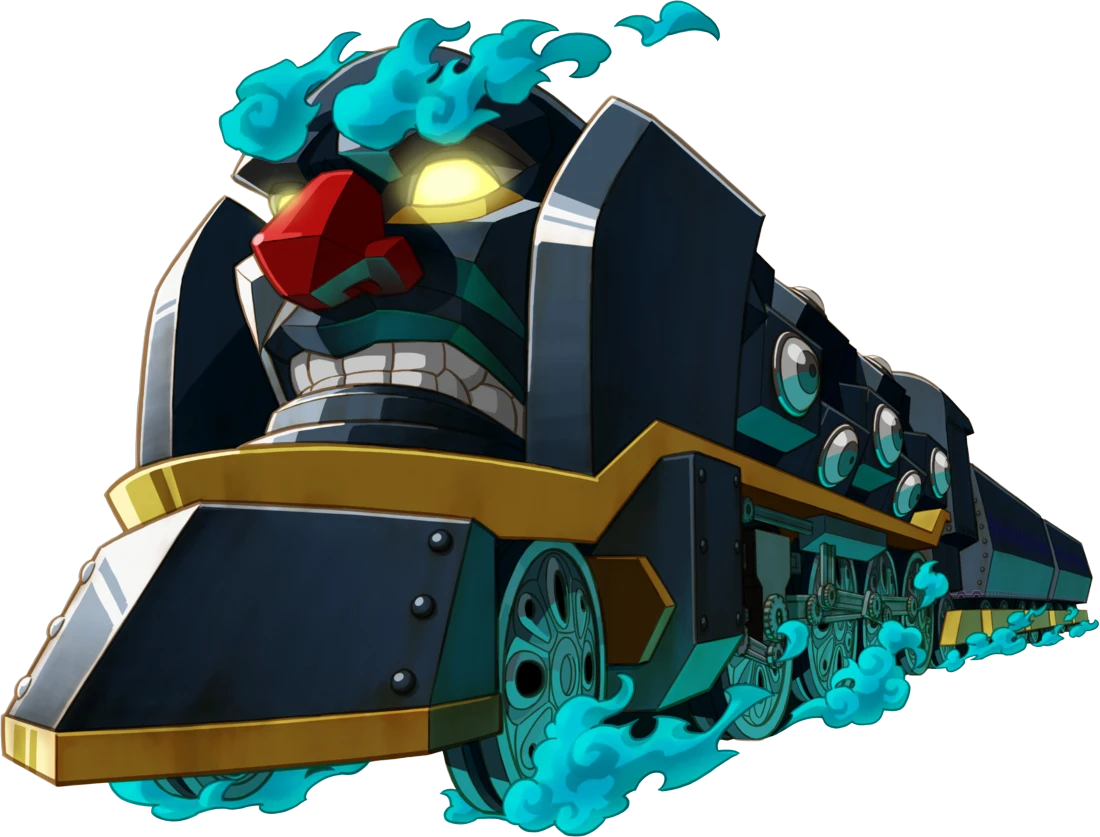
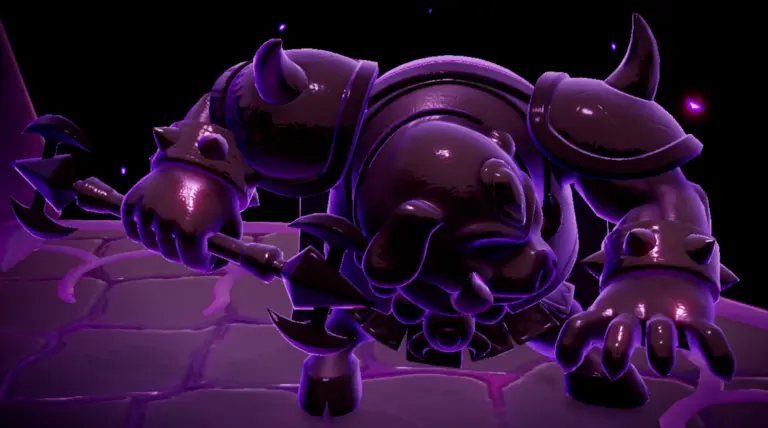
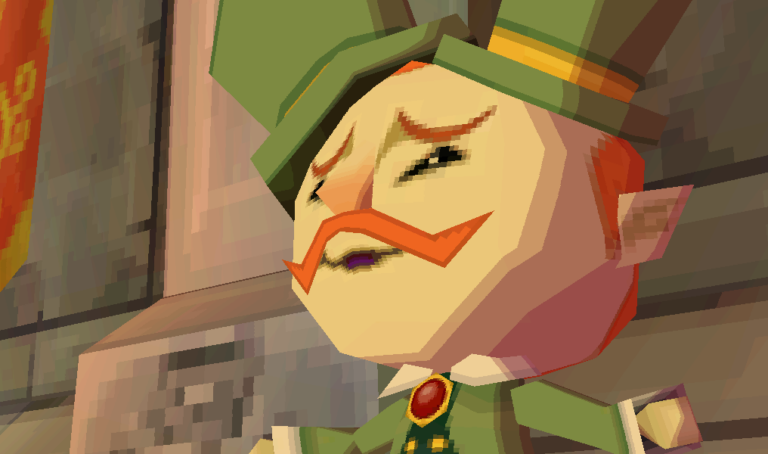
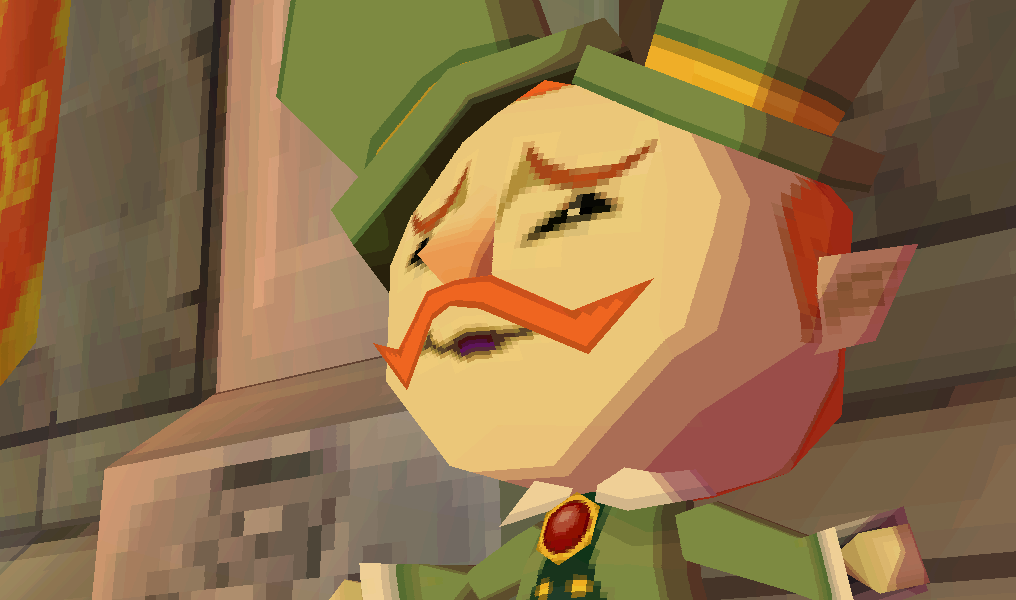
Long ago the spirits of good could not destroy the Demon King Malladus, so they buried his spirit and bound it. The shackles became the Spirit Tracks that criss-cross the land, and the lock became the Tower of Spirits; when the tracks start to vanish, the seal weakens. That is the work of Chancellor Cole, Princess Zelda’s chancellor, who looks like a small, fussy official in a top hat but is a demon who has been scheming to free his master all along. Malladus needs a body from the royal line, so Cole steals Zelda’s, leaving her a ghost who has to team up with Link. Cole grumbles that pretending to be human is exhausting.
On top of the Demon Train, Link and the spirit Zelda take on the possessed princess and Cole together, and the Bow of Light drives Malladus out of her body. He leaps into Cole instead, against the chancellor’s will, and swells into a hulking, horned beast. The last battle needs Link and Zelda working as one, and ends with the Lokomo Sword driven into the demon’s head. Cole is destroyed with his master.
Key facts
Named after Mallard, the LNER steam locomotive that holds the world speed record for steam; Zelda Wiki on Fandom notes that some European versions simply call him Mallard. Japanese name: Maradō.
Concept art in Hyrule Historia shows an early, humanoid Malladus.
Byrne
First appears: Spirit Tracks (2009) · Also in: Smash for 3DS (trophy), Smash Ultimate (spirit)
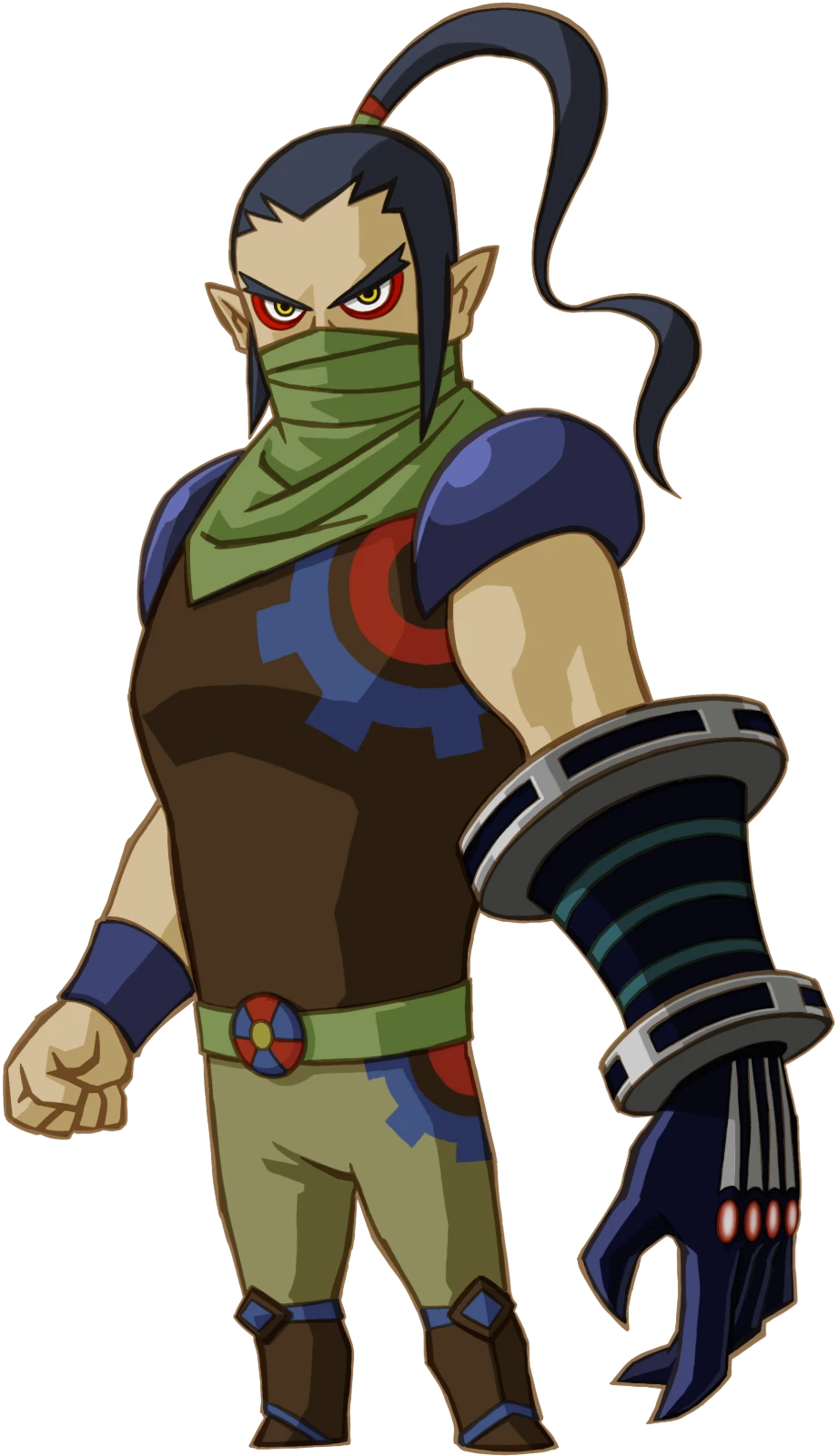
If Cole is the brains, Byrne is the muscle. A Lokomo who once trained under Anjean in the Tower of Spirits, he stands and fights on his own two feet, unlike his wheeled elders, and wears a clawed metal gauntlet on his left arm. When the spirits never granted him the strength he craved, he set out to become stronger than the spirits themselves, and threw in his lot with Malladus. He and Cole ambush Link, Zelda and Alfonzo on the way to the Tower of Spirits and part the princess’s spirit from her body; later he faces his old teacher Anjean, and at the top of the tower Link and Zelda, inside her Phantom armour, have to beat him together.
Then the Demon King he served turns on him and nearly kills him. Nursed by Anjean, Byrne comes over to Link’s side, reveals where the Compass of Light can be found, and in the Dark Realm holds Malladus back long enough for Zelda to return to her own body, at the cost of his life. Anjean hopes he will one day be reborn, free of his memories.
Key facts
One of the few Zelda villains to change sides and die a hero.
In the tower fight, if he grabs Zelda, strike his hand to make him let go.
A one-star primary spirit (No. 261) in Smash Ultimate.
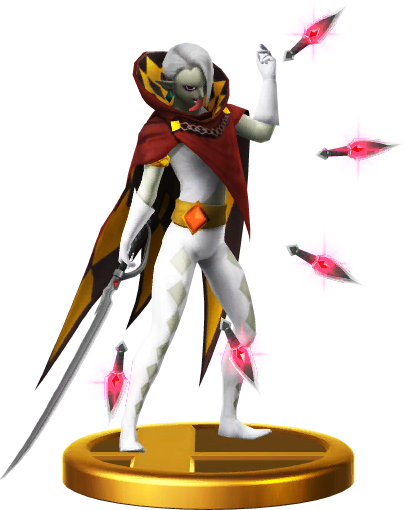
Ghirahim
First appears: Skyward Sword (2011) · Also in: Skyward Sword HD (2021), Hyrule Warriors, the Super Smash Bros. series
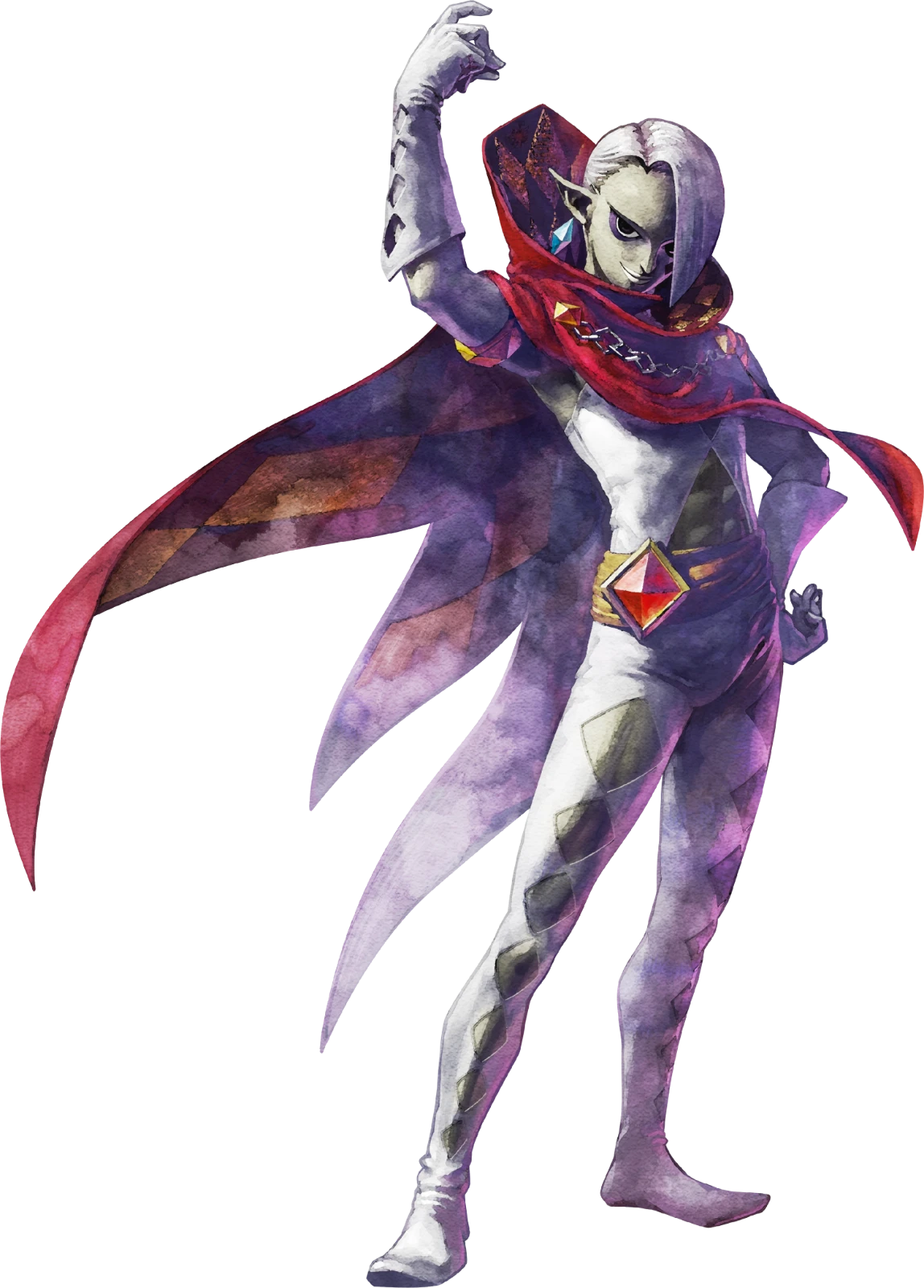
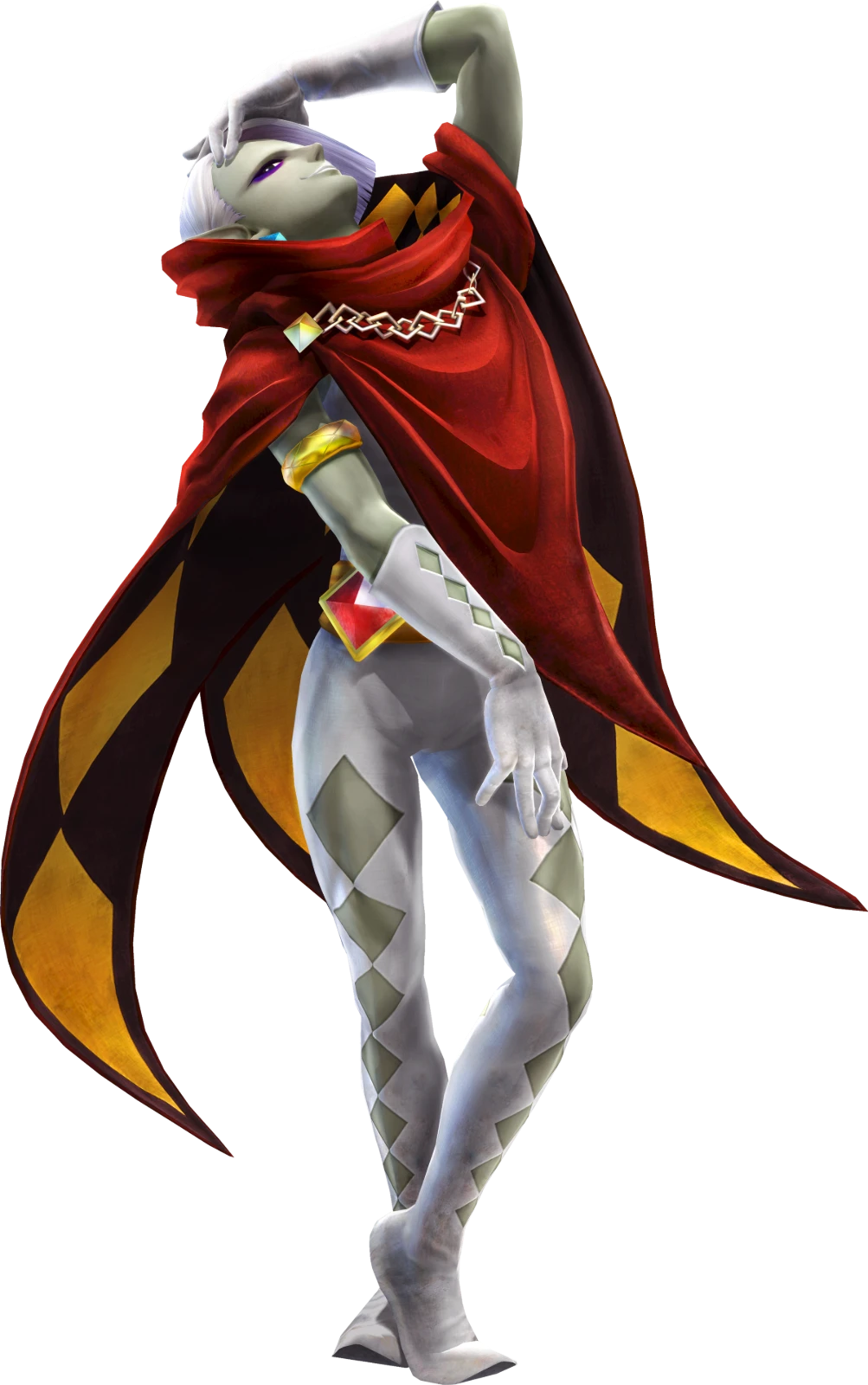
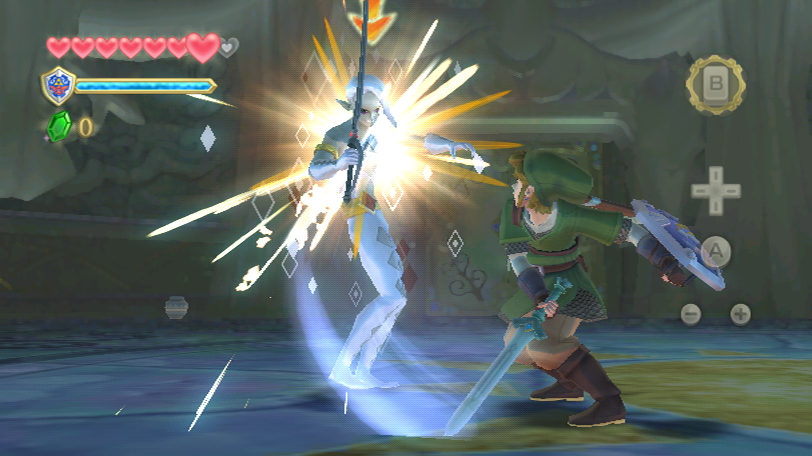
Tall, pale and theatrical, with white hair, a flowing cape and diamond shapes all over his costume, Ghirahim introduces himself to Link at Skyview Spring and lets him know that Lord Ghirahim would do nicely. He is vain, sarcastic and sing-song, and frighteningly cruel when he is crossed. His goal is to take the spirit of Zelda, the reborn goddess Hylia, and use it to bring back his master, the Demon King Demise.
Link fights him three times: at Skyview Temple, at the Fire Sanctuary and, at the very end, in the distant past. He was built around the Wii MotionPlus sword controls: he reads the angle of your blade, catches it between his fingers if you swing carelessly, and the way to beat him is to trick him into guarding the wrong side. In the final duel he drops the act and reveals what he truly is: not a demon lord in his own right but the spirit of Demise’s sword, the dark counterpart to Link’s companion Fi. When Demise rises, he turns Ghirahim back into a blade.
Key facts
Playable in Hyrule Warriors, where he returns as Ganondorf’s other general.
An Assist Trophy in Smash for 3DS and Wii U and again in Ultimate, slashing with his rapier, throwing knives and reflecting projectiles; also a spirit (No. 228).
The design brief, the diamonds and his jointed tongue are covered in Behind the scenes.
Demise
First appears: Skyward Sword (2011) · Also in: Skyward Sword HD (2021), the Super Smash Bros. series
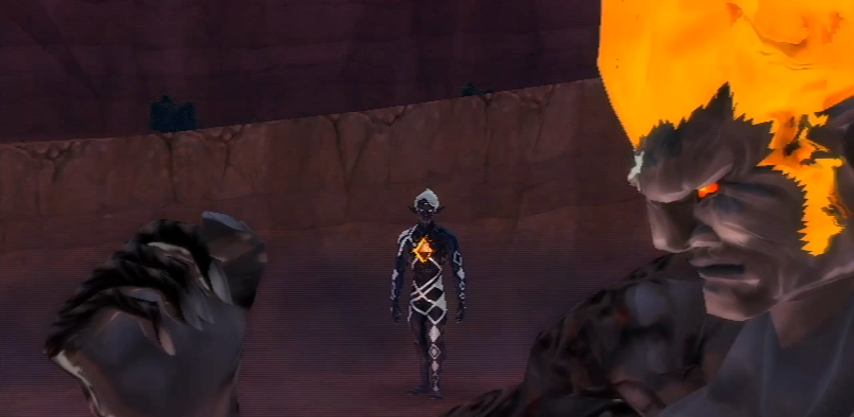
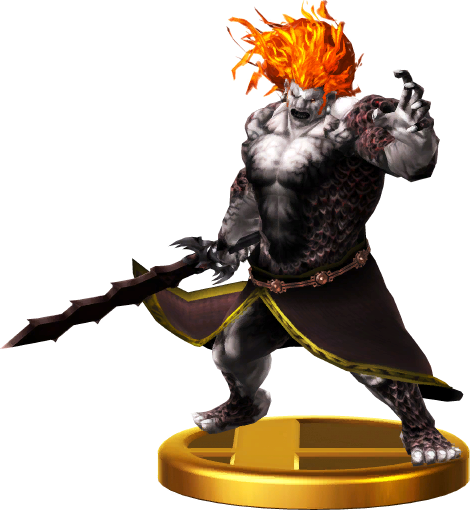
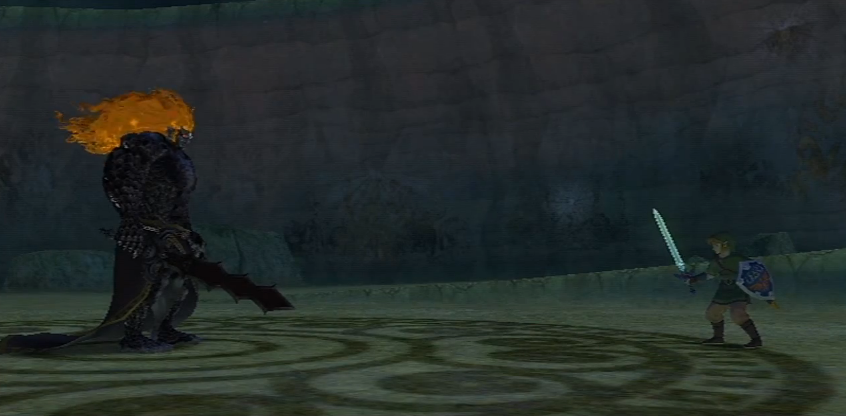
Before there was a Hyrule, Demise tore his way out of the earth at the head of an army of monsters, hungry for the Triforce. The goddess Hylia stood against him: she lifted the surviving people into the sky on the land that would become Skyloft, sealed him away and was gravely weakened. Even sealed, he is a menace. A monstrous fragment of him, the Imprisoned, keeps clawing its way up the spiral walls of the Sealed Grounds, and Link has to beat it back three times.
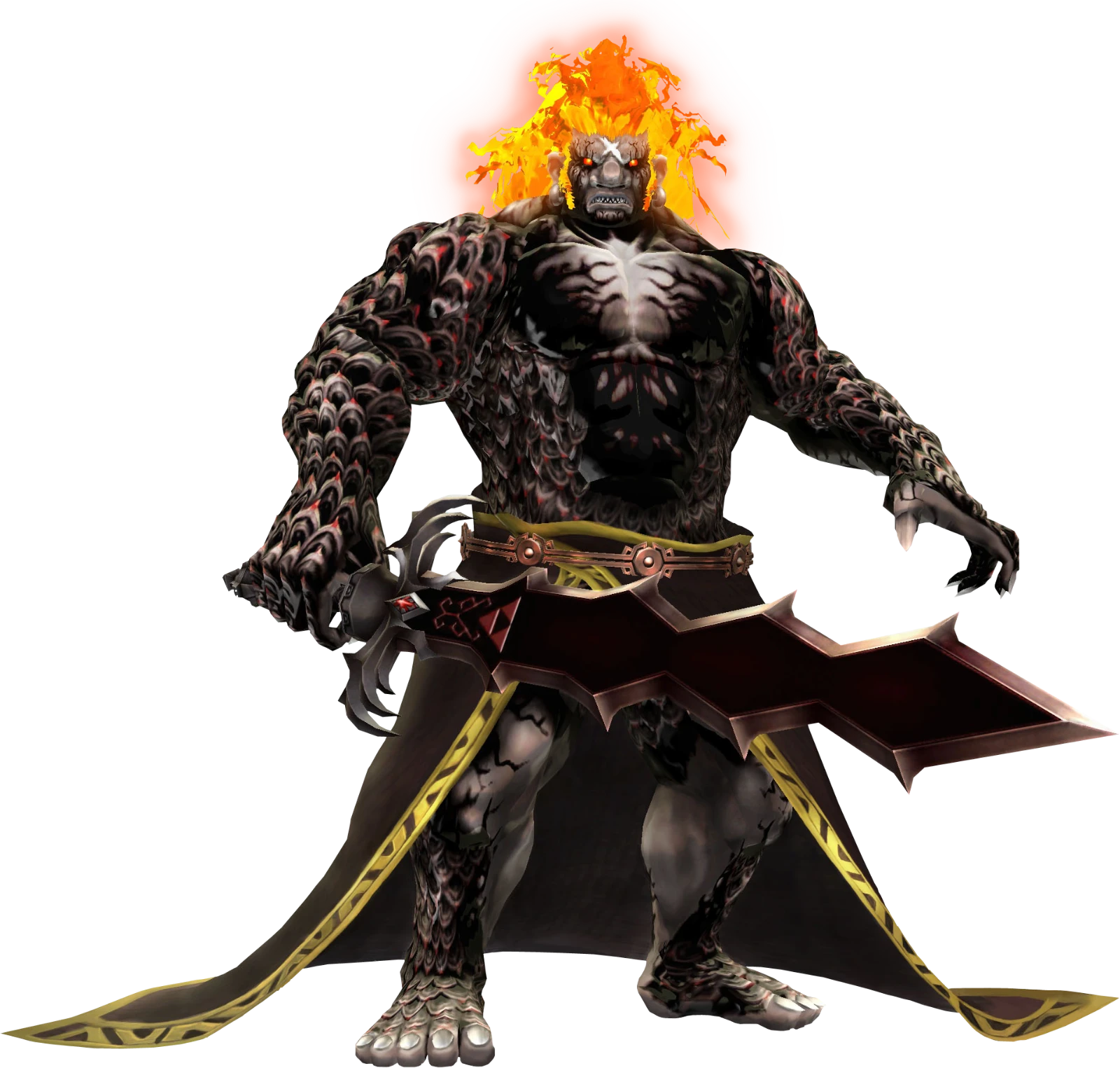
Ghirahim finally revives him in the past: a towering giant with hair like flame, who challenges Link to a duel in a storm-swept void and calls lightning down into his sword. He blocks most attacks, so the trick is a Skyward Strike, or catching his lightning and hurling it back, to stun him for a finishing blow. As he is absorbed into the Master Sword he makes the most important threat in the series: his hatred will be reborn, again and again, to pursue all who share the blood of the goddess and the spirit of the hero. Skyward Sword implies, without naming him, that Ganon is that hatred reborn; see our Ganondorf page.
Key facts
The Imprisoned is fought three times at the Sealed Grounds, and grows arms for the later bouts.
Not playable in Hyrule Warriors, though Ghirahim compares Ganondorf to his old master at the end of one scenario.
Smash Ultimate has spirits for both Demise (No. 230) and the Imprisoned (No. 229); Smash for Wii U made them trophies.
The modern era (2013–today)
Since 2013 the villains have grown stranger and, often, funnier: a painter, a princess with a good excuse, a fashion witch, a cult leader who keeps coming back and a nothingness that wants everything gone.
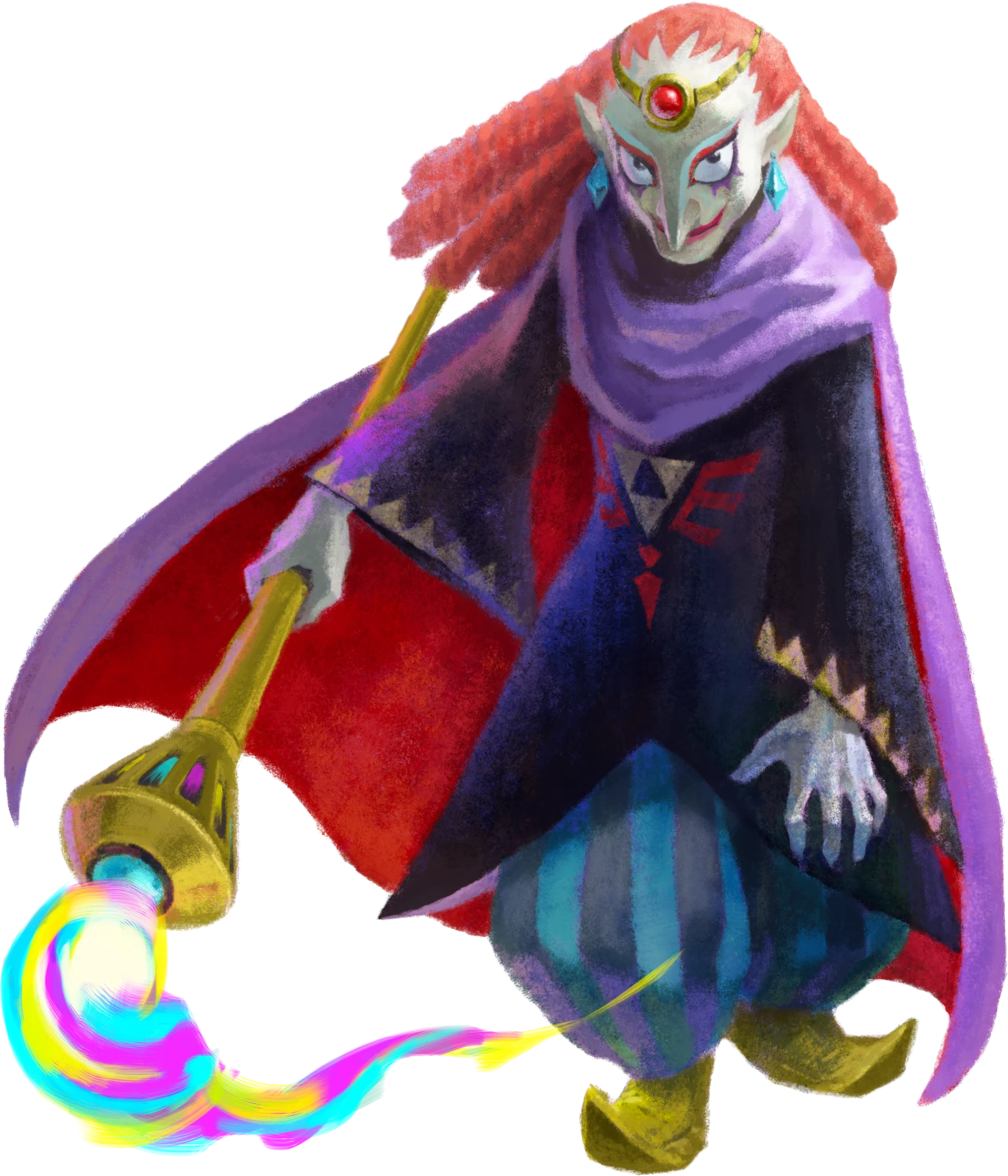
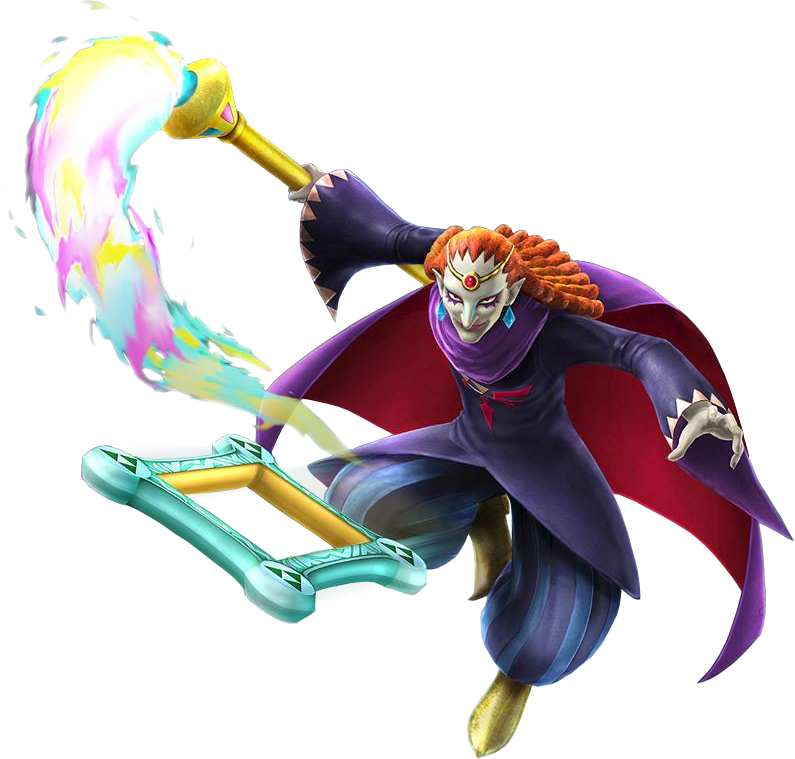
Yuga is a preening, beauty-obsessed sorcerer from Lorule who turns anything he admires into a painting, the Seven Sages and Princess Zelda included. His name comes from the Japanese word for an oil painting, and plenty of fans have noticed that his skin and hair colours match Ganondorf’s in Ocarina of Time. He can melt into walls as a painting himself, the same trick Link learns to use on his own journey, and he flits in and out of them during his boss fights at the Eastern Palace and Hyrule Castle.
He uses the paintings of the Sages to resurrect Ganon and merges with him to become Yuga Ganon, whose look recalls Ganon in A Link to the Past. Then the twist: Yuga has been working for Princess Hilda, ruler of Lorule, who wants Hyrule’s Triforce to replace her kingdom’s lost one. No sooner has Hilda claimed the Triforce of Wisdom than Yuga betrays her as well, trapping her in a painting so he can remake Lorule in his own image. Link beats him for good at Lorule Castle.
Key facts
Fought at the Eastern Palace, at Hyrule Castle and, as Yuga Ganon, at Lorule Castle.
The 29th and last warrior added to Hyrule Warriors, in the A Link Between Worlds Pack of 31 October 2016; he fights from inside a picture frame.
A three-star spirit (No. 237) in Smash Ultimate.
Princess Hilda
First appears: A Link Between Worlds (2013) · Also in: Smash Ultimate (spirit)
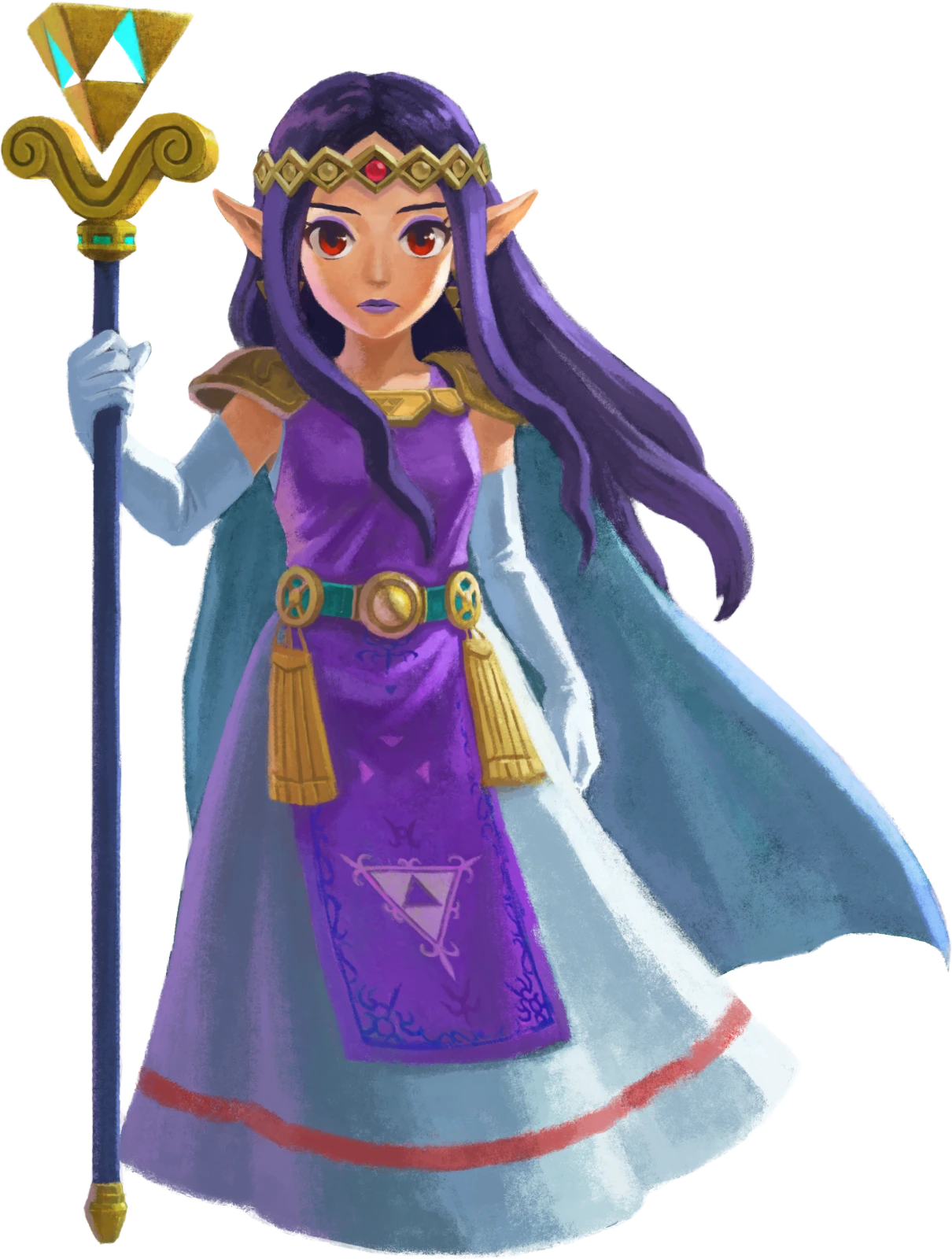
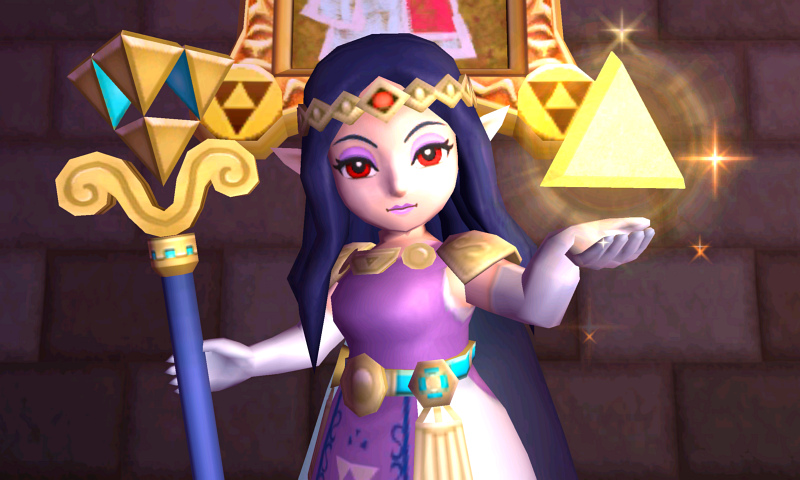
Hilda is Zelda’s mirror image: the princess of Lorule, almost identical but for her darker hair, eyes, clothes and make-up, carrying a staff topped with Lorule’s upside-down Triforce. Long ago Lorule fought such bitter wars over its own Triforce that the royal family destroyed it to end the fighting, and without it the kingdom has been falling apart ever since. Hilda’s answer is to take Hyrule’s.
For most of the game she seems an ally. She saves Link from Yuga Ganon, guides him across Lorule by telepathy and asks him to rescue the Sages. Only at Lorule Castle does she reveal that Yuga was her tool: she takes Zelda’s Triforce of Wisdom and demands Link’s Triforce of Courage. Then Yuga double-crosses her, and once Link has beaten him it is Ravio, Lorule’s counterpart to Link, who talks her round. She apologises and sends Link and Zelda home, where their wish on the Triforce restores Lorule’s own.
Key facts
Everything she does is for her dying kingdom, which makes her the series’ most sympathetic schemer.
Her binding magic is strong enough to hold Yuga Ganon at bay.
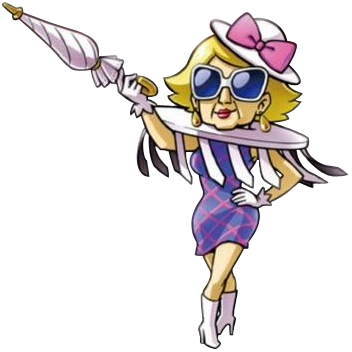
Hytopia is a kingdom obsessed with fashion, and its most stylish resident is Princess Styla, the daughter of King Tuft. The Lady, a flamboyant sorceress from the Drablands with a parasol always to hand, cannot bear the competition. She sends the princess a disguised gift that curses her into a hideous jumpsuit she cannot take off, and Styla shuts herself away in shame, mistaken around town for a ghost. The Lady turns out to be the older sister of Madame Couture, Hytopia’s own dressmaker.
Three Links confront her first in her lair in the Fortress, where she sets her pets on them: monsters resembling the old bosses Margoma, Arrghus and Moldorm. The real showdown comes in the Sky Temple, a four-stage fight full of costume changes, force fields, parasol charges and electric orbs. With her beaten, Madame Couture turns her sister’s glasses, collar and parasol into the Lady’s Ensemble, and the outfit is what finally breaks Styla’s curse.
Key facts
Japanese name: Sister Lady. Fan wikis call her Lady Maud; we have not found the official source of that name.
Her pets are fought in the Fortress; she is fought in the Sky Temple.
Her sister Madame Couture is a support spirit in Smash Ultimate; the Lady has none.
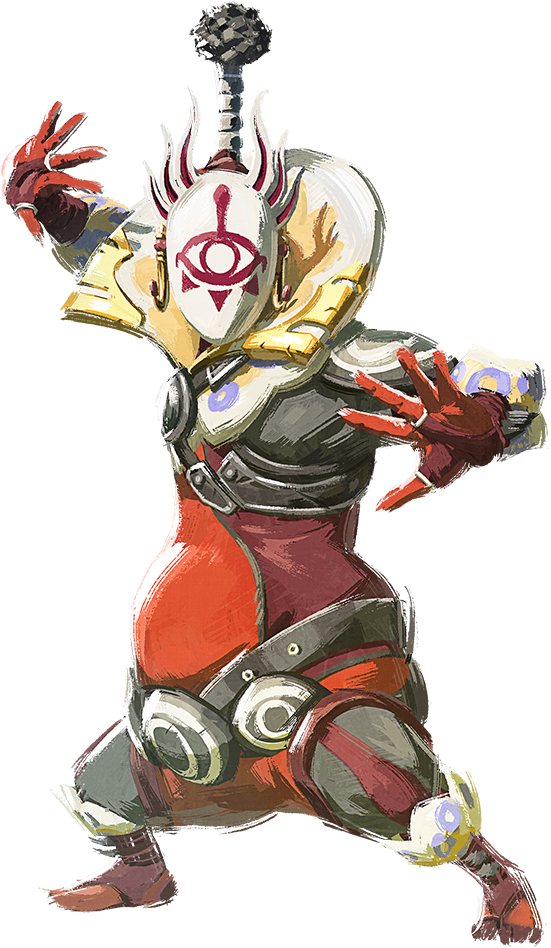
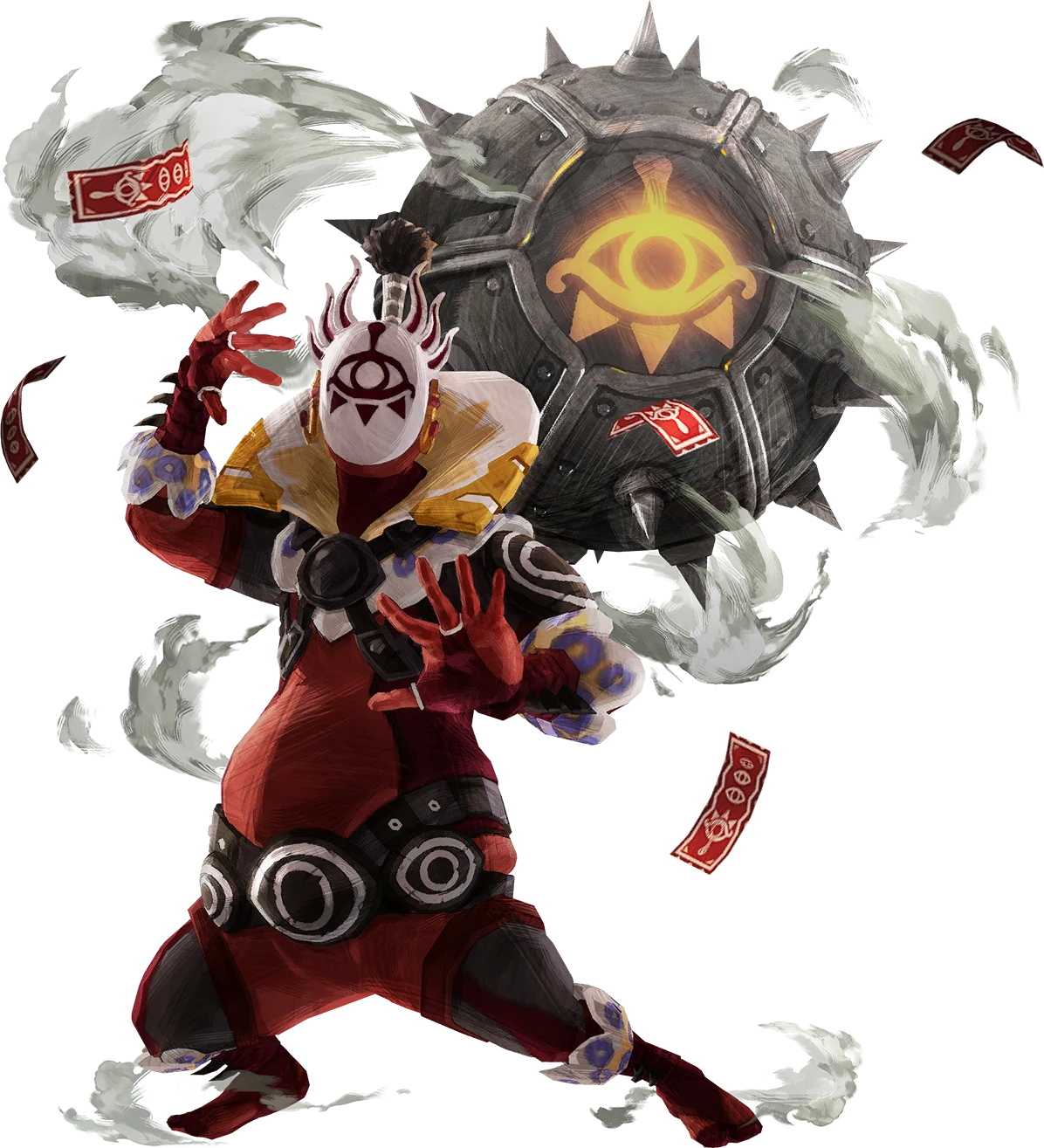
The Yiga are Sheikah renegades who split from their tribe ten thousand years ago, when Sheikah technology was banned, and who now serve Calamity Ganon. They pose as harmless travellers until Link gets close, then attack. Their leader, Master Kohga, is a short-tempered, easily distracted showman with a fondness for bananas, and his followers are inexplicably devoted to him. In Breath of the Wild the clan steals the Gerudo’s Thunder Helm; when Link reaches their desert hideout, Kohga summons a spiked iron ball he cannot control and is dragged into a bottomless pit.
Tears of the Kingdom (2023) reveals that he survived the fall into the Depths, where he collects Zonai construct blueprints in the hope of helping the Demon King end the world. Link fights him four times in four abandoned mines, and each time he arrives in a new contraption: a spiked car, a little plane, a boat and finally a giant mech. In the 2025 Switch 2 Edition his voice joins Zelda’s and Rauru’s in the Voice Memories of the ZELDA NOTES app.
Key facts
Playable in Age of Calamity: a villain for most of the story, he changes sides after the seer Astor sacrifices his followers.
His right-hand man Sooga, a deadly Yiga Blademaster, became playable in Age of Calamity’s Guardian of Remembrance wave.
A two-star spirit (No. 1455) in Smash Ultimate, using his Age of Calamity artwork.
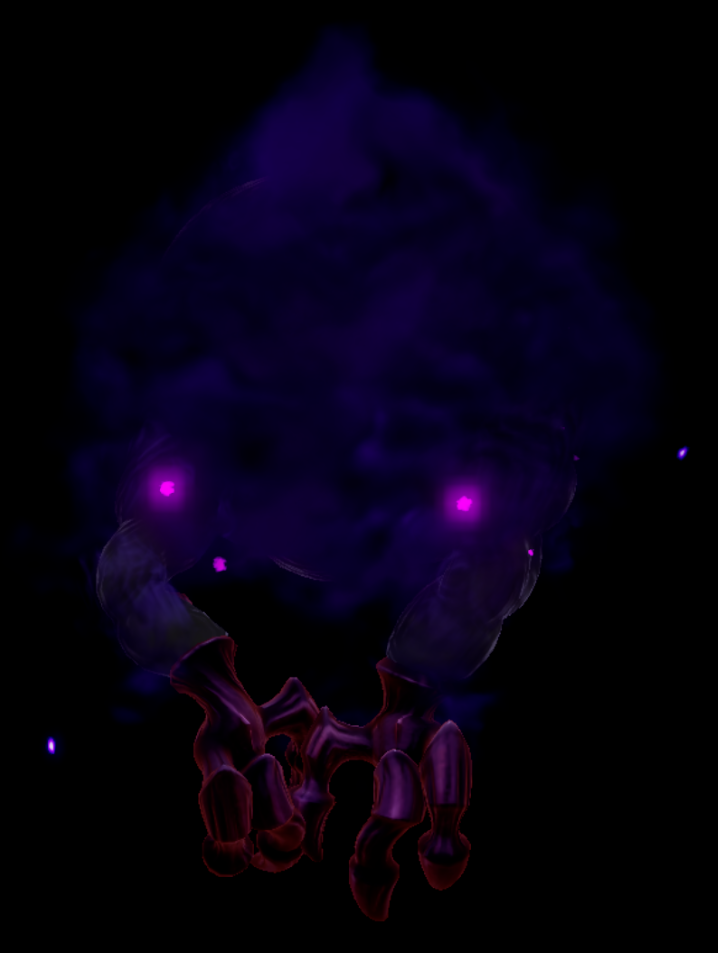
In lore terms Null is the oldest evil in the series, older than the world itself. It lived in the primordial void and devoured anything that tried to take shape there, so the Golden Goddesses created the world to contain it. Null fought back by opening rifts to swallow the world, and the goddesses made the Tri, small beings of light, to mend them.
In Echoes of Wisdom Null captures all but one of the Tri and uses their power to make echoes of its own. Its copies impersonate the King of Hyrule, Minister Lefte and General Wright to have Zelda thrown into prison; it makes a false Ganon and even a perfect echo of Zelda herself. When the Triforce appears, the echo-Zelda receives the Triforce of Power, while Wisdom goes to the real Zelda and Courage to the captive Link. The final battle is fought in Null’s Body in the Still World, where its last form is a vast, dark Tri wielding the stolen powers of its prisoners. Zelda, Link and Tri pull the Triforce of Power out of it and wish Null out of existence.
Key facts
A final boss in three phases.
The only villain on this page that existed before creation itself.
We found no link between Null and Ganon: the Ganon of Echoes of Wisdom is one of its fakes.
Spin-off villains and guest roles
The Hyrule Warriors games need a lot of enemies, and Koei Tecmo, working under Nintendo’s supervision, has given the series a whole new set of villains. They have also made old ones playable: Zant, Ghirahim and Yuga in Hyrule Warriors, Master Kohga and Sooga in Hyrule Warriors: Age of Calamity.
Zant in Hyrule Warriors (render)Ghirahim in Hyrule Warriors (render)Yuga’s picture frame, Hyrule Warriors (render)Master Kohga in Age of Calamity (official artwork)
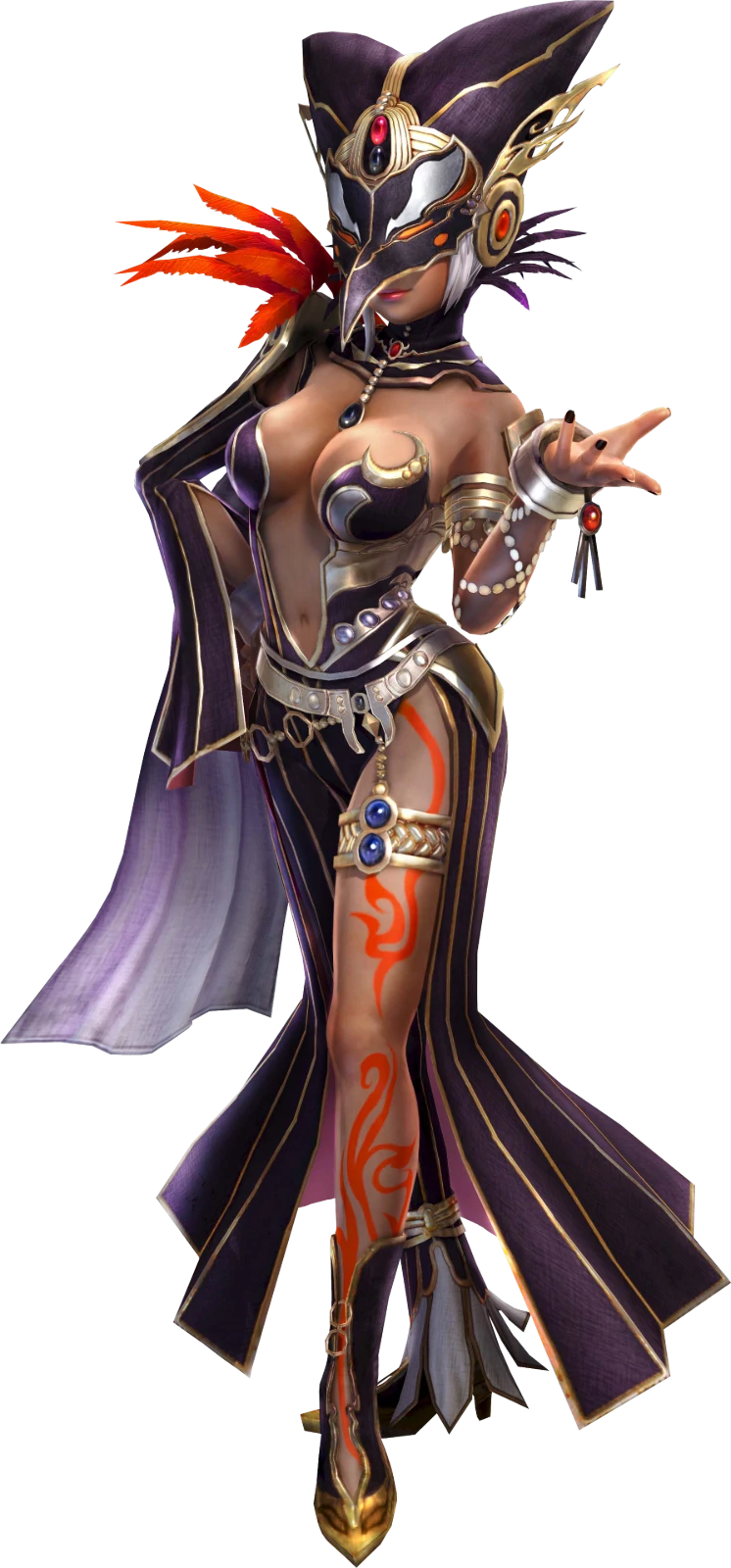
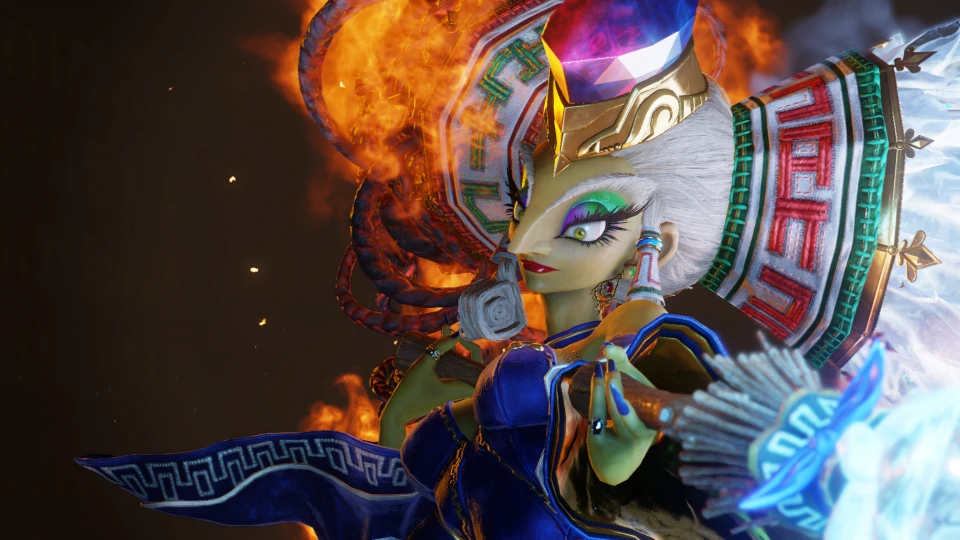
Created for Hyrule Warriors, Cia was meant to watch over the Triforce. Watching the hero across the ages, she fell for him, and that longing let darkness in. Corrupted, she tears open a Gate of Souls that pulls three eras of Hyrule into the present and sends an army against the kingdom. Her opposite number is Lana, a bright white sorceress who sides with Link and turns out to be the half of Cia that stayed good. The real winner of Cia’s war is Ganondorf, who has manipulated her into setting him free.
A free update in October 2014 made Cia playable, cracking her scepter like a whip and summoning Dark Links, and the Master Quest Pack added Cia’s Tale, five scenarios that tell the war from her side.
Key facts
A brand-new character, created for the game along with Lana, Volga and Wizzro.
The Master Quest Pack also brought Guardian of Time costumes for Lana and Cia.
Volga and Wizzro
First appear: Hyrule Warriors (2014)
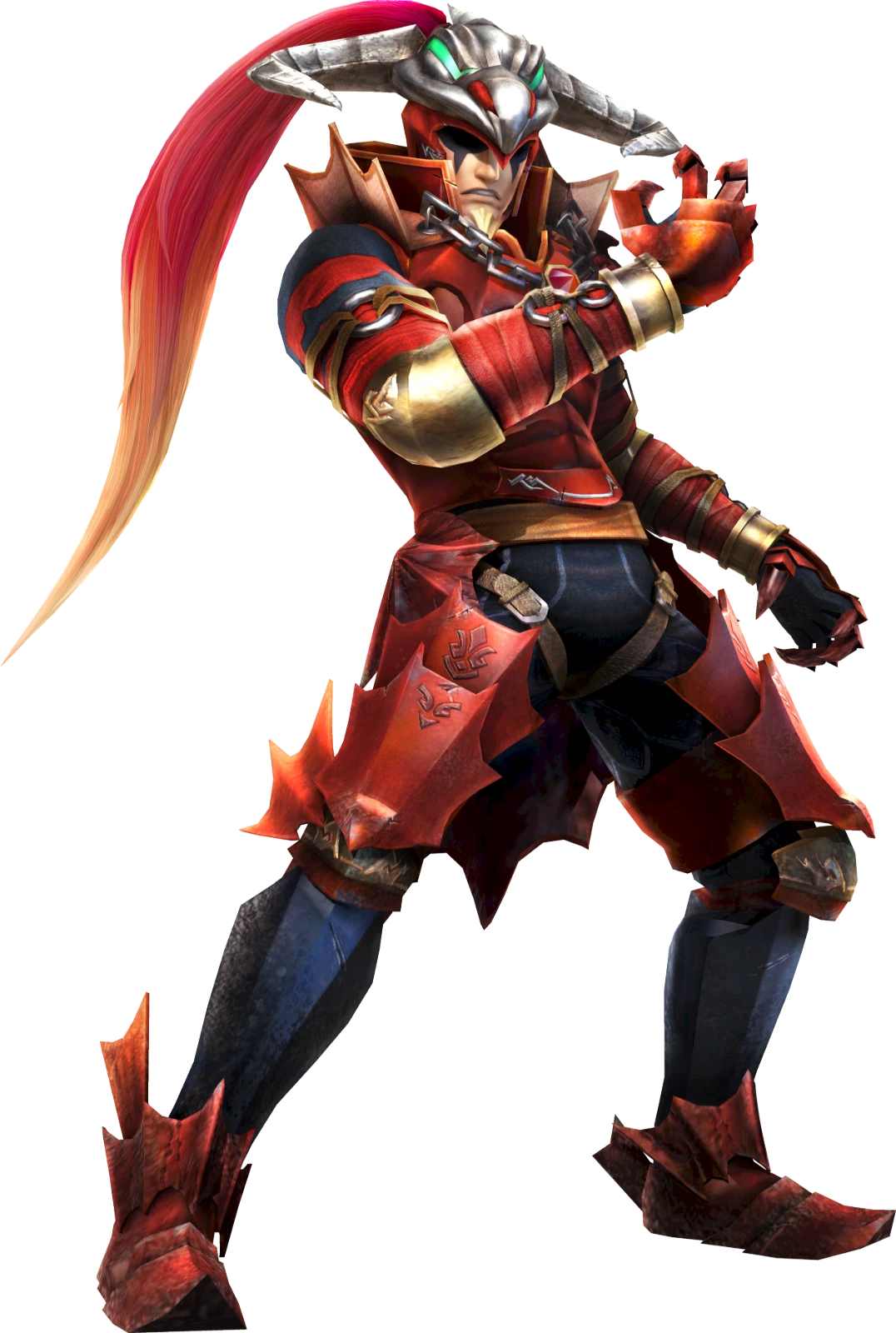
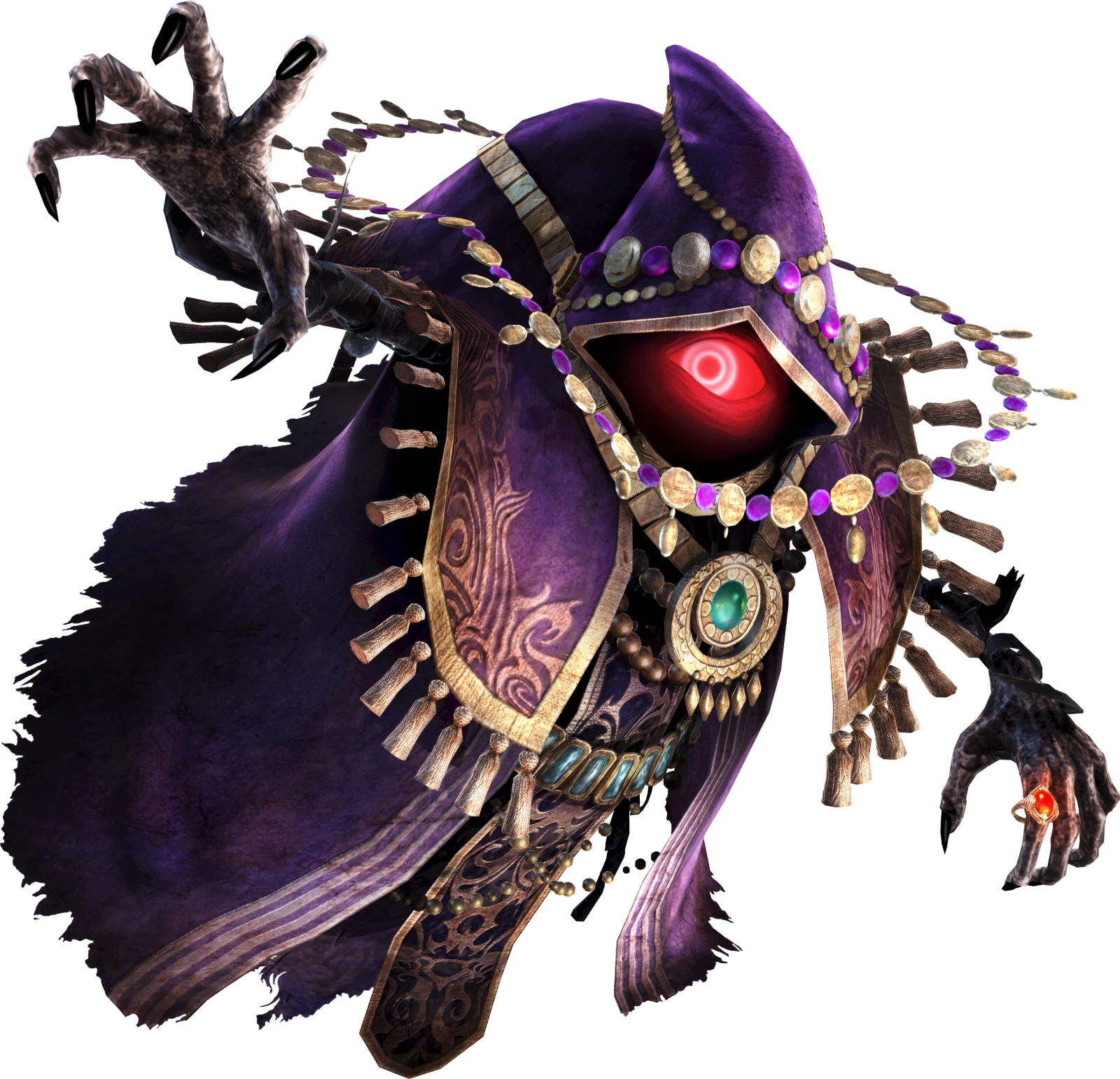
Cia’s two lieutenants. Volga, the Dragon Knight, was designed so that players would think of Volvagia, the fire dragon of Ocarina of Time’s Fire Temple: in the designers’ words, a dragon in human form. He fights with a spear, shifts between knight and dragon, and serves as Cia’s field commander, bound to her by magic; he dies free, in a duel with Link.
Wizzro, the Twisted Wizard, is a ring that spent centuries feeding on its wearers until Cia’s magic gave it a body. A coward and a shape-shifter, it impersonates Zelda and Lana and serves whoever happens to be winning. Both became playable in the same free update as their mistress.
Key facts
Volga’s helmet hides his eyes on purpose, to make him more mysterious, according to the designers’ notes in Prima’s official guide.
Wizzro’s name recalls the series’ robed Wizzrobes.
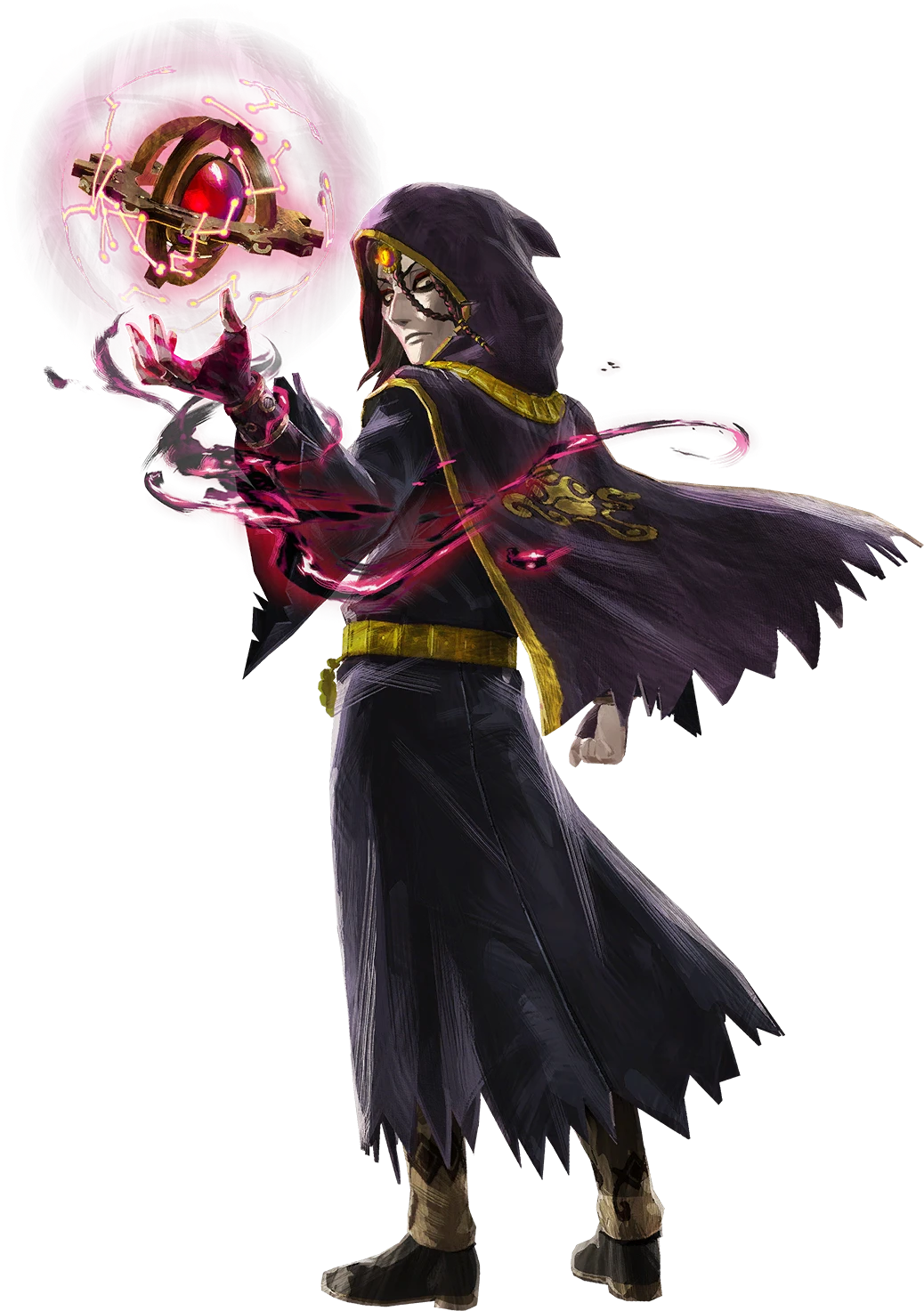
A fortune teller from Deya Village, styled the Prophet of Doom, Astor has learned of the future from a sinister machine called Harbinger Ganon. Rather than prevent the Calamity, he means to bring it about and rule through it. He stands behind the Yiga, fills Korok Forest with Hollows (shadowy copies of Link and the four Champions) and later sacrifices his own Yiga allies to bring the four Blight Ganons back and throw them at Link.
It ends the way bargains with Ganon always do. In the last battle inside Hyrule Castle Astor is beaten, and Harbinger Ganon turns on its prophet, swallows him whole and becomes Calamity Ganon in the flesh. His betrayal of the Yiga also pushes Master Kohga over to Hyrule’s side, with what is left of the clan behind him.
Key facts
Fought at Korok Forest and in the final battle at Hyrule Castle.
Nintendo lists Age of Calamity – Definitive Edition, with both Expansion Pass waves, for Switch 2 on 25 February 2027.
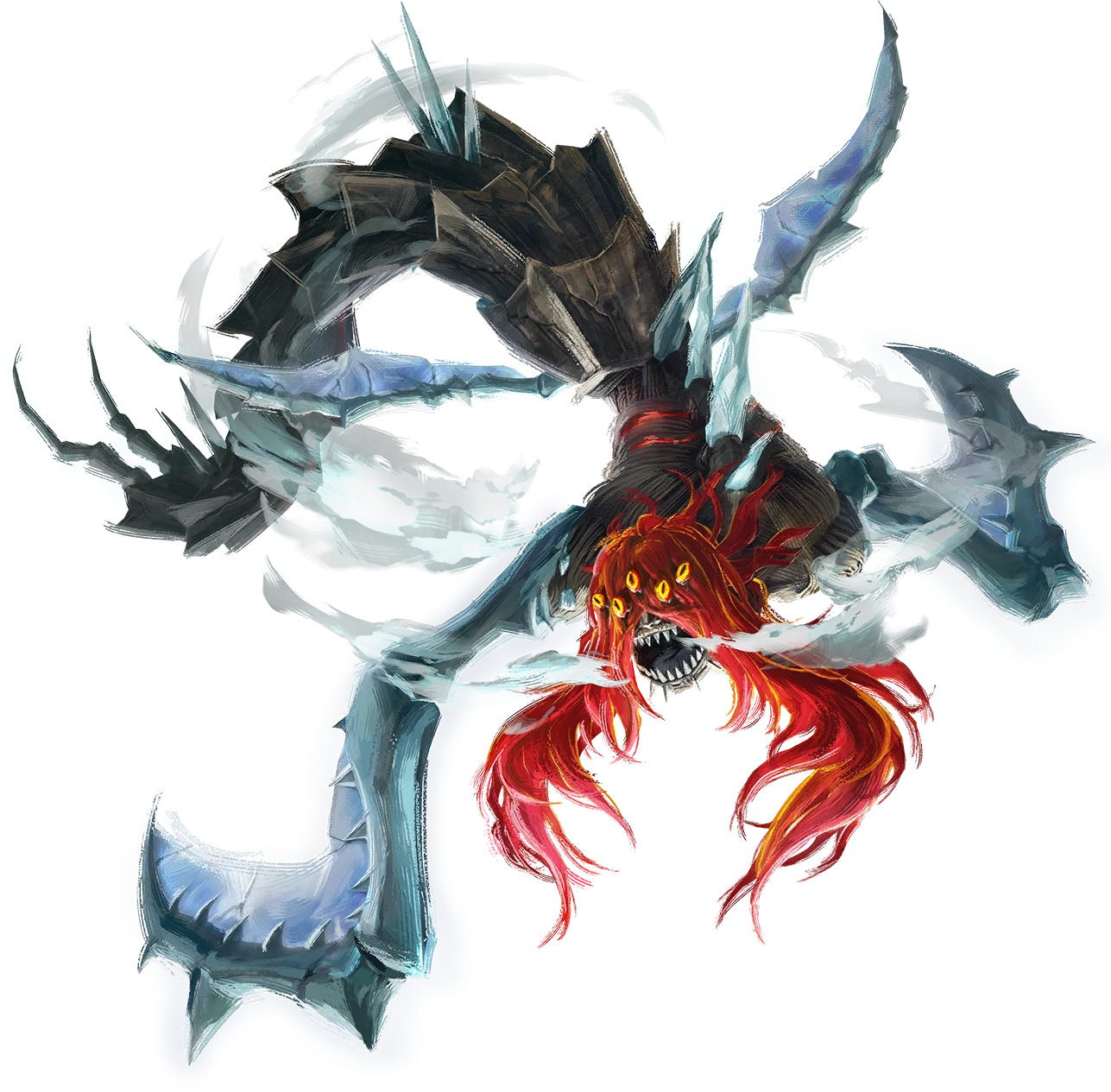
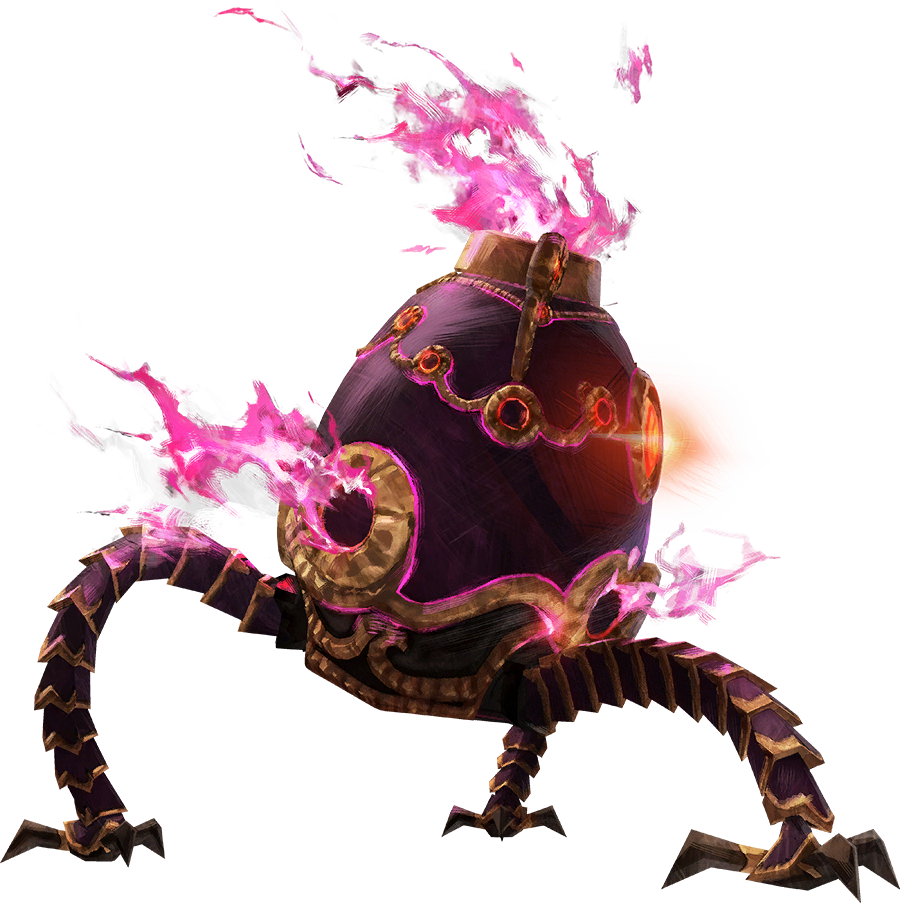
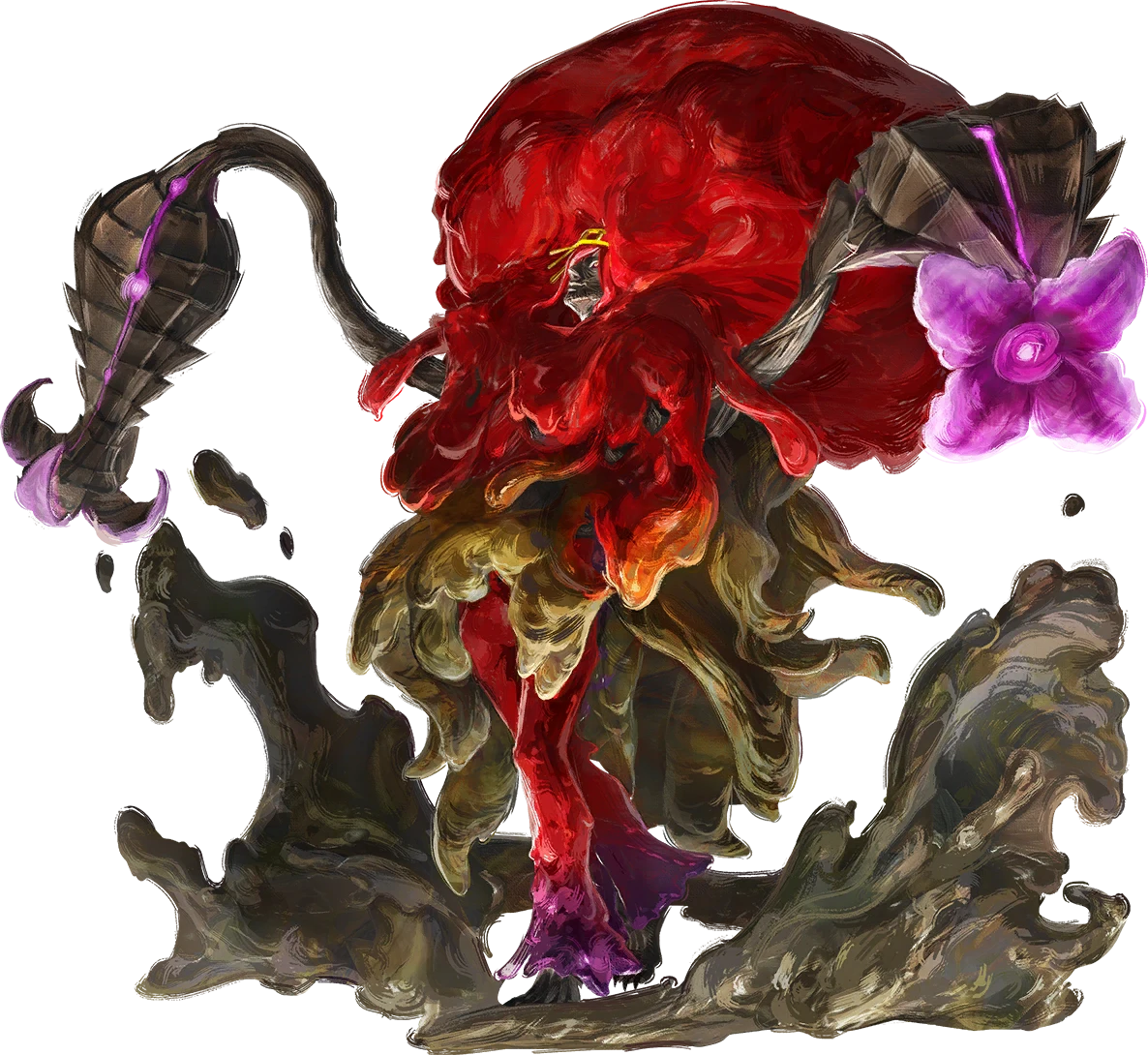
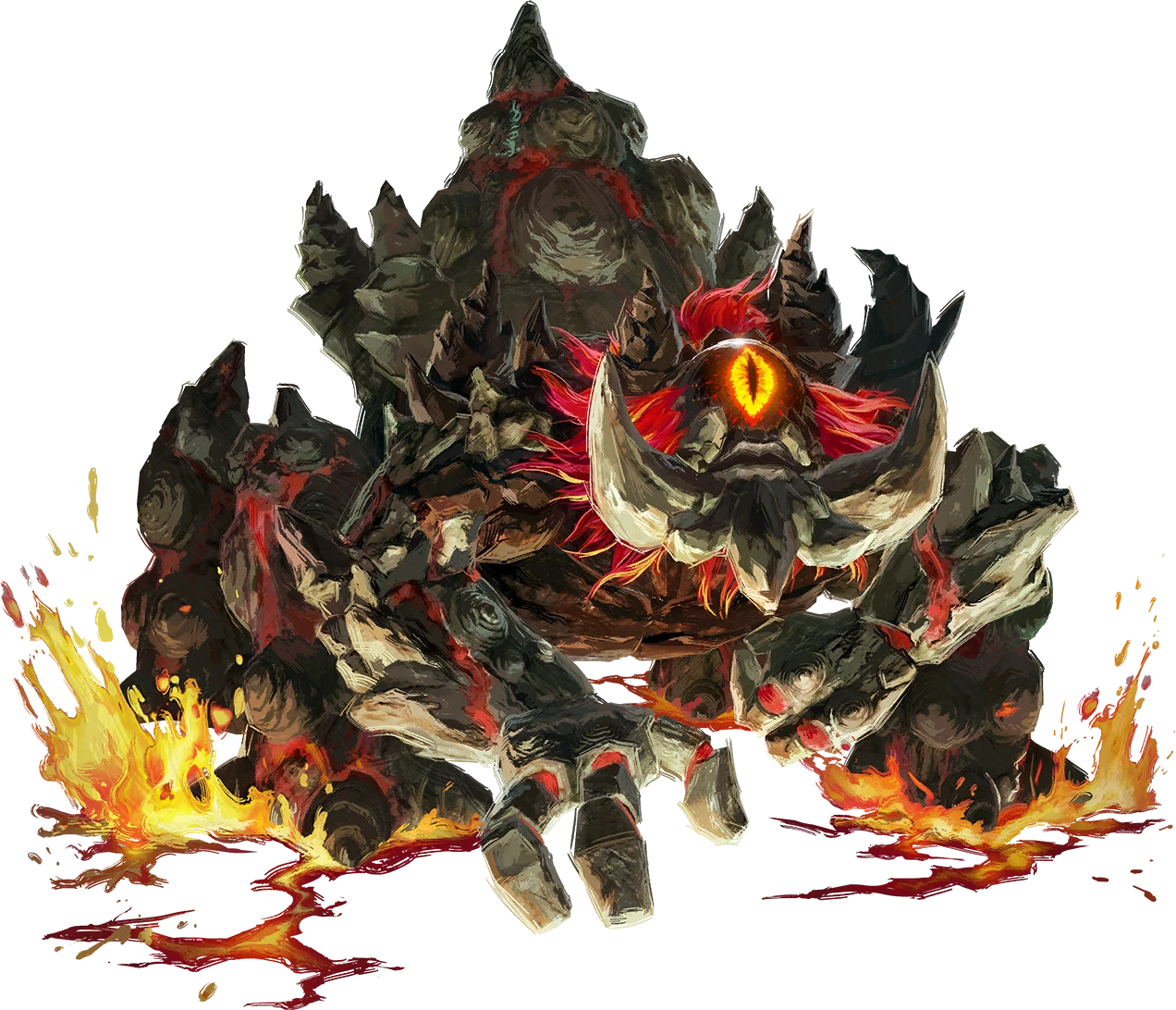
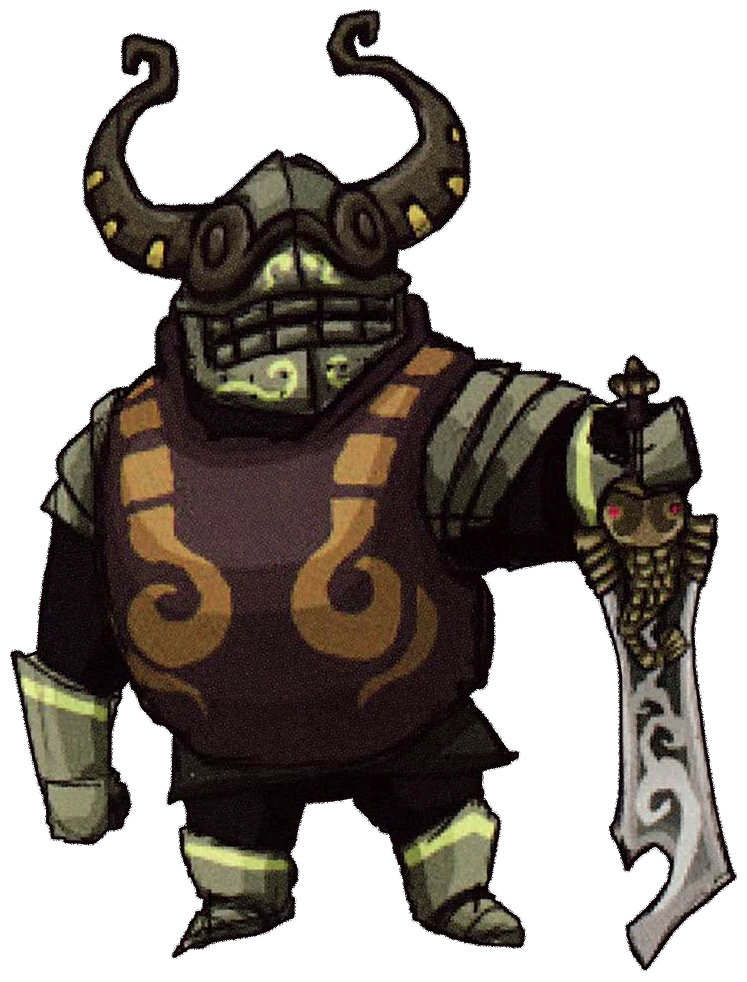
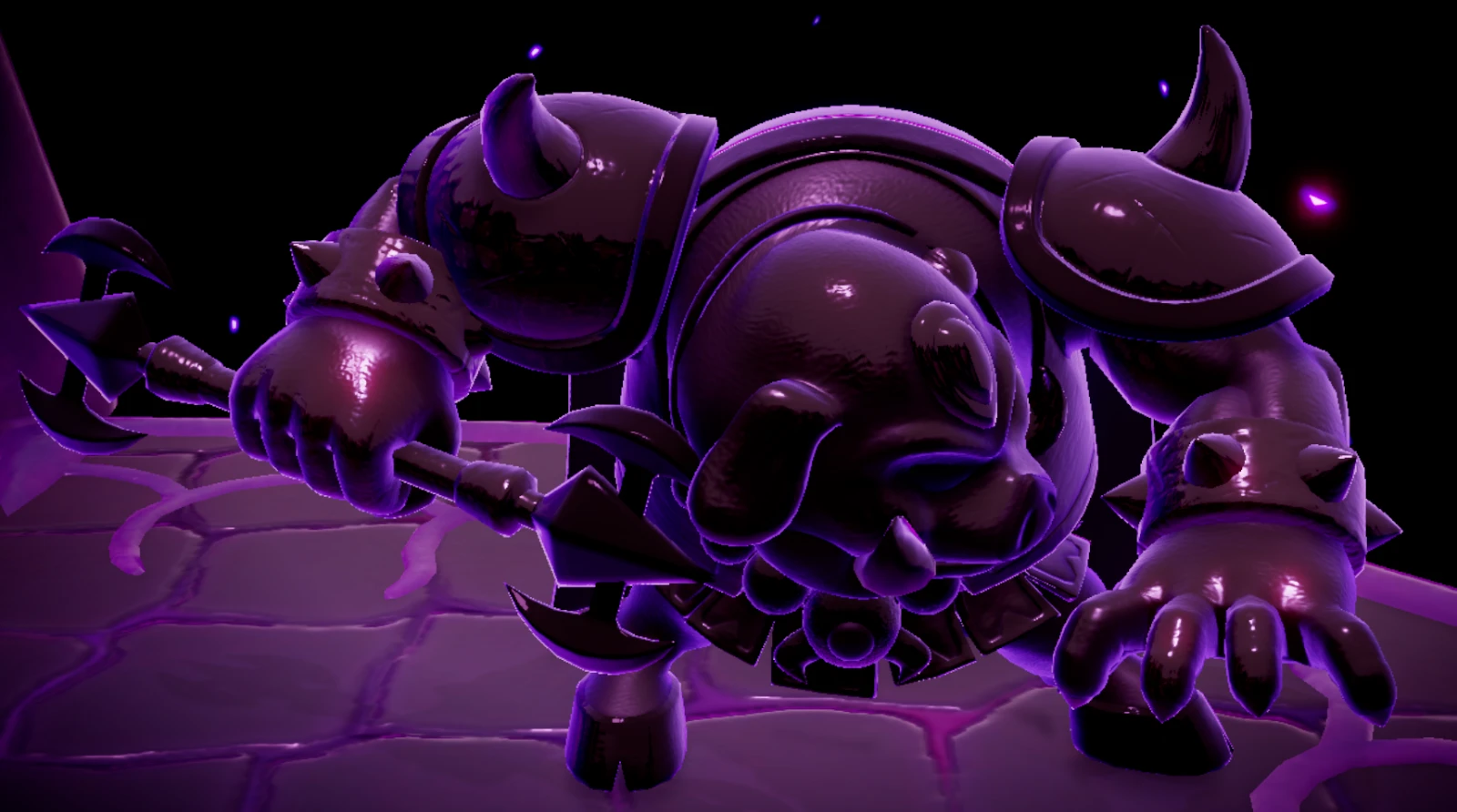
Age of Imprisonment tells the story of the Imprisoning War, and its villain is Ganondorf himself (see our Ganondorf page). But he does not fight alone. He sends a phantom in Zelda’s shape to wake a Forbidden Construct, one of the thinking war machines that once all but wiped out the Zonai. It absorbs the phantom, destroys the other constructs and goes on the rampage, keeping King Rauru busy while Ganondorf murders Queen Sonia, takes her Secret Stone and becomes the Demon King.
He then floods Hyrule with monsters led by four archfiends: Grimgera, Grimtorok, Grimgohma and Grimgibdo. Each alliance Rauru forges with the Rito, Zora, Gorons and Gerudo is paid for with a battle, usually against one of them, while the corrupted Forbidden Construct is hunted across Hyrule by Calamo’s silent Knight Construct, which destroys it in the final battle at the cost of its own power source. Koume and Kotake are at Ganondorf’s side too, unnamed.
Key facts
Grimgera is driven off by the construct as Hyrule Castle falls; Grimtorok waits in Lanayru for Queen Qia’s battle.
Released on 6 November 2025 for Nintendo Switch 2.
Wizzro in Hyrule Warriors (render)Harbinger Ganon in Age of Calamity (official artwork)Grimtorok in Age of Imprisonment (official artwork)Grimgohma in Age of Imprisonment (official artwork)
Villains in Super Smash Bros.
None of these villains is a playable fighter in Super Smash Bros., but plenty have made guest appearances as trophies, an Assist Trophy and, in Ultimate, spirits. Shadow Link also turns up as a playable character in Cadence of Hyrule’s Character Pack.
Twinrova’s trophy, Smash for 3DSZant’s trophy, Smash BrawlDemon King Malladus’s trophy, Smash for 3DSDemise’s trophy, Smash for Wii U
Villain
In Smash Ultimate (spirit no.)
Earlier Smash games
Agahnim
Spirit (185)
–
Koume & Kotake, Twinrova
Spirits (202, 203)
Twinrova trophy (3DS)
Majora’s Mask
Spirits (206 with the Skull Kid, 209)
Trophies (Melee, Wii U)
Zant
Spirit (224)
Trophy and sticker (Brawl), trophy (Wii U)
Ghirahim
Assist Trophy, spirit (228)
Assist Trophy and trophy (3DS, Wii U)
The Imprisoned, Demise
Spirits (229, 230)
Trophies (Wii U)
Hilda, Yuga
Spirits (236, 237)
–
Vaati
Spirit (255)
–
Byrne
Spirit (261)
Trophy (3DS)
Malladus
–
Trophy (3DS)
Master Kohga
Spirit (1455)
–
Shadow Link in Cadence of Hyrule (official artwork)
Memorable villain moments
Dark Link in the 2026 Ocarina of TimeThe Nightmare as Agahnim’s Shadow, Link’s Awakening DXThe Skull Kid steals the mask, Majora’s Mask 3DMajora’s Wrath makes its entrance
A Link to the Past: the bat bursting out of the defeated Agahnim and flapping away to the Pyramid of Power.
Ocarina of Time: the misty, mirror-still room in the Water Temple, where Link’s own shadow comes for him.
Majora’s Mask: the Skull Kid on top of the Clock Tower at midnight on the third night, with the moon about to land; and the mask abandoning its puppet to fly into the moon.
The sisters become Twinrova, 2026 Ocarina of TimeZant meets his god, Twilight Princess HDBellum takes over Linebeck (official artwork)The Demon Train (official artwork)
Ocarina of Time: Koume and Kotake merging into Twinrova, and bickering about their ages as they float off.
Twilight Princess: Zant’s helmet sliding back to reveal the rage underneath.
Phantom Hourglass: Bellum seizing Linebeck for the final duel, which gives the cowardly captain his finest hour once he is free.
Spirit Tracks: Cole and the possessed Zelda waiting on top of the Demon Train; Byrne’s last stand against Malladus.
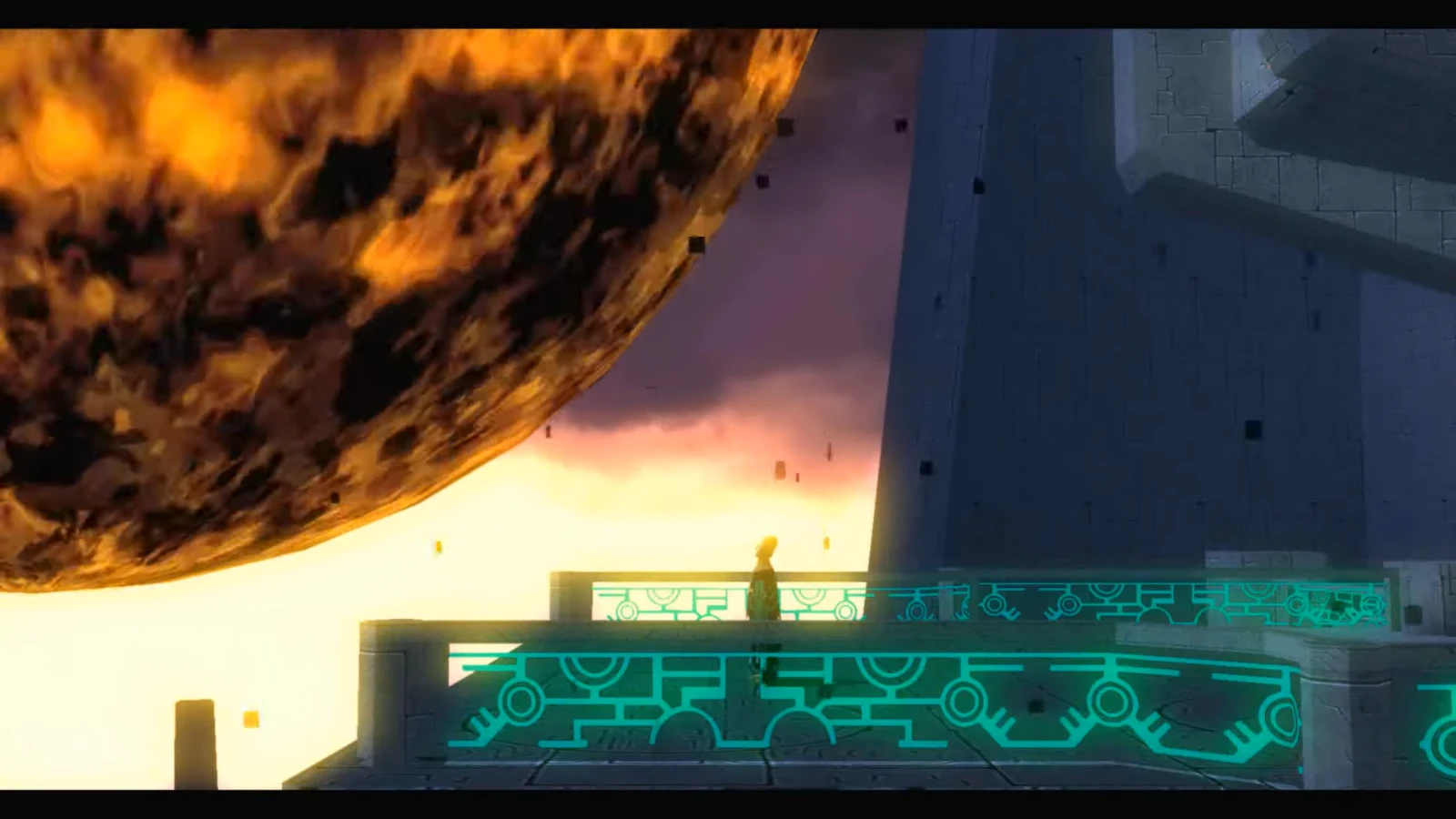
Ghirahim on the attack, Skyward SwordLink faces DemiseHilda claims the Triforce of WisdomNull’s Body in the Still World
Skyward Sword: Ghirahim revealed as a living sword, and Demise’s curse.
A Link Between Worlds: Hilda’s betrayal, and Yuga’s betrayal of Hilda straight afterwards.
Tears of the Kingdom: Master Kohga turning up in the Depths, alive and as useless as ever.
Echoes of Wisdom: the discovery that the royal court has been replaced by echoes.
Puppets, masters and Demon Kings
Yuga Ganon, the sorcerer merged with the beast, in A Link Between Worlds (model).
Puppet-masters everywhere. Zelda villains rarely act alone. Agahnim is a shell for Ganon’s spirit; Zant owes everything to the god who chose him; Vaati, for all his power, is Ganon’s pawn in Four Swords Adventures; Onox and Veran answer to Twinrova, who answer to Ganondorf; Cole serves Malladus; Yuga serves Hilda until he serves himself; and the Skull Kid is Majora’s puppet. Even the spin-offs keep the habit, with Cia manipulated by Ganondorf and Astor swallowed by the Calamity he thought he could command.
Demon Kings. Ganon, Demise and Malladus all carry the title. Demise’s dying curse in Skyward Sword is the series’ explanation for why evil keeps coming back, and Skyward Sword implies that Ganon is his hatred reborn. Malladus is the odd one out: a separate demon from a different age, sealed by the spirits rather than by a hero.
Mirror images. Dark Link is Link’s shadow, Ghirahim the dark counterpart of Fi, Hilda the mirror of Zelda and Lorule the mirror of Hyrule, and Null’s final form is a giant, dark Tri.
Yuga brings Ganon back to life in A Link Between Worlds.
Dead Man’s Volley. Batting a villain’s magic back at him began with Agahnim in A Link to the Past and became a tradition, returning against Phantom Ganon and Ganondorf in Ocarina of Time and against the possessed Zelda in Twilight Princess.
Light beats dark. Light-based weapons are the classic finisher: the Silver Arrows for Ganon in A Link to the Past, the Light Arrows in Ocarina of Time and the Bow of Light, which drives Malladus out of Zelda’s body in Spirit Tracks.
Changing sides. A handful of villains end up on Hyrule’s side: Byrne, who dies saving Zelda; Hilda, talked round by Ravio; and, in Hyrule Warriors: Age of Calamity, Master Kohga, after Astor betrays his clan.
Behind the scenes
Building Ghirahim
Concept art of the Imprisoned, Demise’s sealed form, for Skyward Sword.
The best-documented villain design in the series is Skyward Sword’s. In Iwata Asks, designer Hirono recalled how thin the brief was, and how the rest of the team piled in. The designers settled on the diamond as his symbol and used it for his effects as well as his outfit; an enemy designer wanted his tongue to slither out to make him creepier, so it had to be built into his skeleton with joints of its own; the sound staff pushed for a particular voice, and somewhere along the way he ended up in tights. Hisada called him “really popular”.
He was hard to beat from the start. Iwata recalled that Ghirahim read Link’s movements so well that Shigeru Miyamoto, testing the game, asked whether it was even possible to win; Fujibayashi added that an unbalanced Ghirahim combo once shattered Miyamoto’s shield.
He is an opponent for sword battle, and a Demon Lord who has some sort of objective
we put a lot of effort into him in order to realize new gameplay using Wii MotionPlus
Tominaga, on Ghirahim Iwata Asks: Skyward Sword, Volume 3
A strange artist, a mask and a train
Concept art of Malladus for Spirit Tracks.
Yuga grew out of A Link Between Worlds’s central idea. Director Hiromasa Shikata told Iwata Asks that the team decided to have “a strange artist enemy appear who draws incomprehensible pictures to satisfy himself”, and that becoming a mural on the wall was kept purely as a way for Link to move around. Series producer Eiji Aonuma later compared Yuga to the Skyward Sword villain: “He might be close to Ghirahim from Skyward Sword in terms of having an over inflated self-importance.”
Art director Takaya Imamura designed both Majora’s Mask and the moon for Majora’s Mask, and told Edge in 2025 that “personally I didn’t think of them as scary at all”, though the team’s reaction suggested otherwise. The Japanese name, Mujura, was his too: he told VGC that he built it from his own surname and his love of Jurassic Park.
Malladus takes his name from the record-breaking steam locomotive Mallard, and concept art in Hyrule Historia shows a far more human early version of him.
Zant, Volga and the witches
Concept art of Zant for Twilight Princess.
In Nintendo’s 2016 retrospective series on Twilight Princess, enemy designer Yoshiyuki Oyama explained on video why Zant turned out to be such a goofy enemy; the video has no transcript, so we report only that he did. For Hyrule Warriors, Prima’s official guide records that Volga was designed to make players think of Volvagia, and that his helmet hides his eyes to make him more mysterious.
Concept art of Kotake and Koume for Tears of the Kingdom
Beyond the games
Ganon is the villain of the 1989 cartoon and of Captain N, so the rest of this rogues’ gallery has lived on in comics and manga instead. Akira Himekawa’s adaptations in particular gave several of them more to do than the games ever did.
Majora as a dragon, in Himekawa’s Majora’s MaskLink and Shadow Link in Himekawa’s Four SwordsKoume and Kotake as fortune tellers, Ocarina of Time mangaVaati as drawn by Himekawa
The boss fights have aged best. When Zelda Universe ranked the 20 greatest Zelda bosses in 2020, five of this page’s villains made the list: Twinrova third, praised for a fight that uses fire and ice and turns the Mirror Shield into a weapon; Majora fifth, for three forms its writer found eerie and bizarre; Demise seventh, for a thunderstorm sword duel at the root of the whole saga; Zant twelfth, for an arena that keeps changing into old boss rooms; and Ghirahim’s third battle thirteenth, as a showcase for motion control.
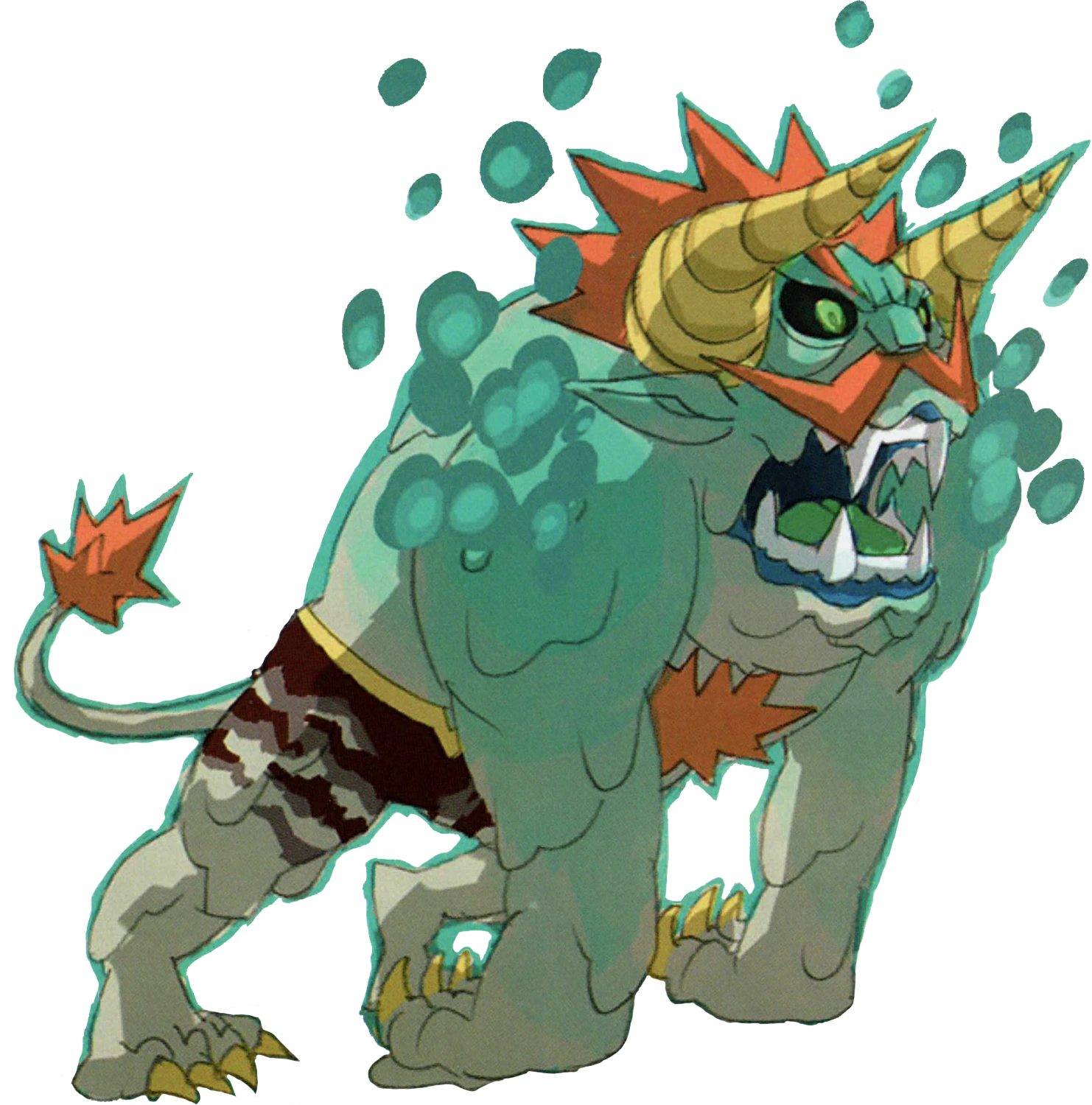
Ghirahim was a hit before the game was even out. In Iwata Asks, the Skyward Sword staff called him really popular and Iwata concluded that their collaborative design had made him an enemy girls adore. At the other end of the scale, Source Gaming’s review of Hyrule Warriors: Age of Imprisonment was annoyed that Koume and Kotake never get named and drop out of the story once Ganondorf becomes the Demon King.
Recognition from Nintendo itself is patchy. Super Smash Bros. Ultimate finds room for spirits of Agahnim, Twinrova, Majora, Zant, Vaati, Ghirahim, Demise, Byrne, Yuga, Hilda and Master Kohga, but not for Onox, Veran, Bellum, Malladus or the Lady.
Trivia
Majora’s Mask as a Melee trophy.Majora’s Mask was already a trophy in Super Smash Bros. Melee, and it turns up in a chest in Breath of the Wild’s Master Trials DLC, so Link can wear it.
Princess Styla, cursed, in Tri Force Heroes.Until the Lady is beaten, Princess Styla hides away in the Cursed Tights, and the townsfolk of Hytopia take the hidden princess for a ghost.
Null’s Ganon echo in Echoes of Wisdom.Ganon makes cameos all over this page: the Nightmares borrow his shadow, Yuga merges with him, and Null makes an echo of him.
Chancellor Cole scoffing in Spirit Tracks.Chancellor Cole thinks of his job at court as being a royal babysitter.
Zelda Wiki on Fandom notes that Malladus was the first character called Demon King in an English Zelda game, although Ganon had carried the title in Japan for years.
In the 2026 Ocarina of Time, the Hall of Fallen Foes keeps statues of every enemy Link has beaten, and the boss statues offer rematches, Twinrova included.
Zelda Universe spotted that the Gloom weapons used by Ganondorf and Phantom Ganon in Tears of the Kingdom have Twinrova’s names engraved on the blade in Hylian.
Bellum has no spirit in Smash Ultimate, but the captain it possesses does: Linebeck is a Master spirit.
Memorable villain moments: Zelda Temple’s fact-checked game pages: character, boss and story data for every game named on this page (each with its own sources); Zelda Temple research dossier, 8 November 2026 (sources listed inside)
Further reading: Zelda Temple research dossier, 8 November 2026 (sources listed inside)
Manage Consent
To provide the best experiences, we use technologies like cookies to store and/or access device information. Consenting to these technologies will allow us to process data such as browsing behavior or unique IDs on this site. Not consenting or withdrawing consent, may adversely affect certain features and functions.
Functional
Always active
The technical storage or access is strictly necessary for the legitimate purpose of enabling the use of a specific service explicitly requested by the subscriber or user, or for the sole purpose of carrying out the transmission of a communication over an electronic communications network.
Preferences
The technical storage or access is necessary for the legitimate purpose of storing preferences that are not requested by the subscriber or user.
Statistics
The technical storage or access that is used exclusively for statistical purposes.The technical storage or access that is used exclusively for anonymous statistical purposes. Without a subpoena, voluntary compliance on the part of your Internet Service Provider, or additional records from a third party, information stored or retrieved for this purpose alone cannot usually be used to identify you.
Marketing
The technical storage or access is required to create user profiles to send advertising, or to track the user on a website or across several websites for similar marketing purposes.