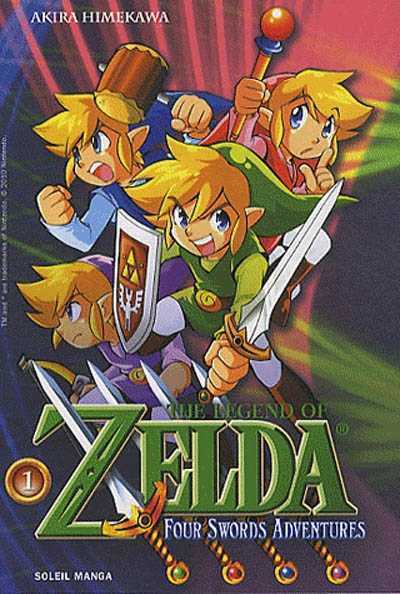
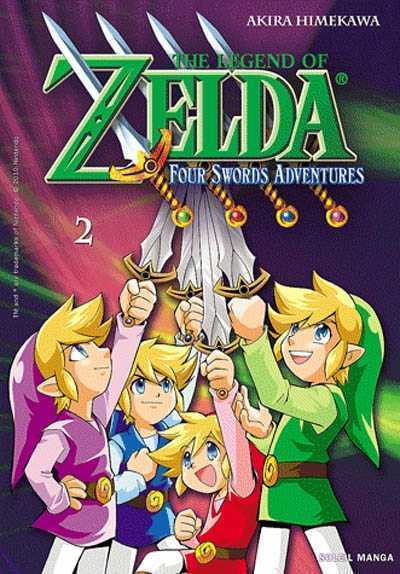
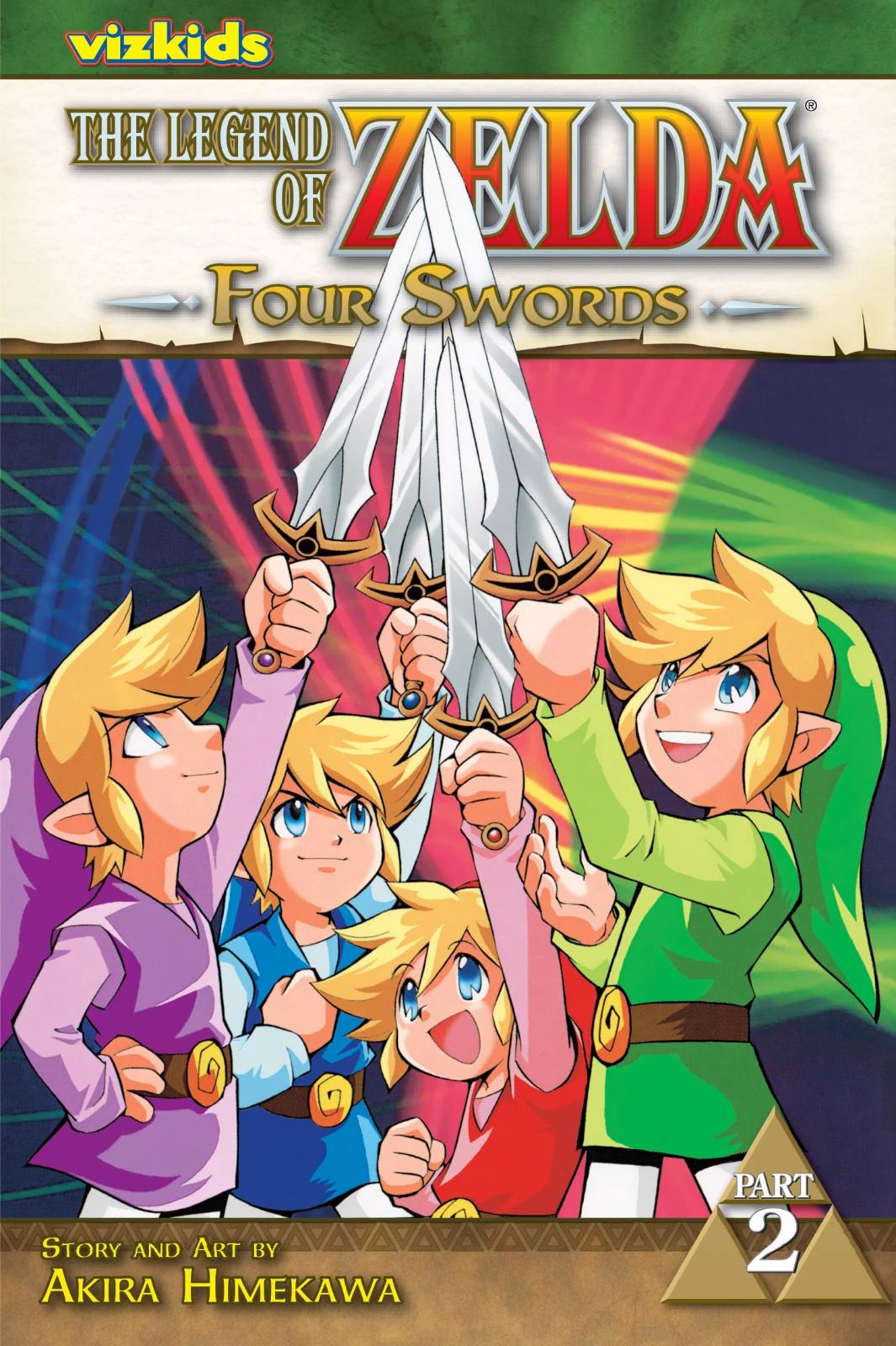
A loner of a knight draws the Four Sword and becomes four very different boys, who must learn to fight as one while a lonely Shadow Link tries to win one of them over: a fan favourite, and a story its game never really had.
Story & artAkira Himekawa
Volumes2 (12 chapters)
JapanShogakukan, September 2004 and May 2005
EnglishVIZ Media, August and October 2009
OmnibusLegendary Edition, 11 July 2017
AdaptsFour Swords Adventures (2004)
Original title
ゼルダの伝説 4つの剣+ (Zelda no Densetsu: Yottsu no Tsurugi Purasu), 上・下
Story and art
Akira Himekawa (A. Honda and S. Nagano)
Publisher (Japan)
Shogakukan, Tentōmushi Comics Special: 28 September 2004 and 27 May 2005
Publisher (English)
VIZ Media, as The Legend of Zelda vols. 6 and 7: 4 August and 6 October 2009
Volumes
2 (12 chapters, plus a bonus omake in volume 2)
Pages (English)
200 and 176
ISBNs
Japan 4-09-149606-7, 4-09-149607-5; English 978-1-4215-2332-3, 978-1-4215-2333-0
Omnibus
Japan: Kanzenban, 28 November 2016; English: Legendary Edition, 11 July 2017
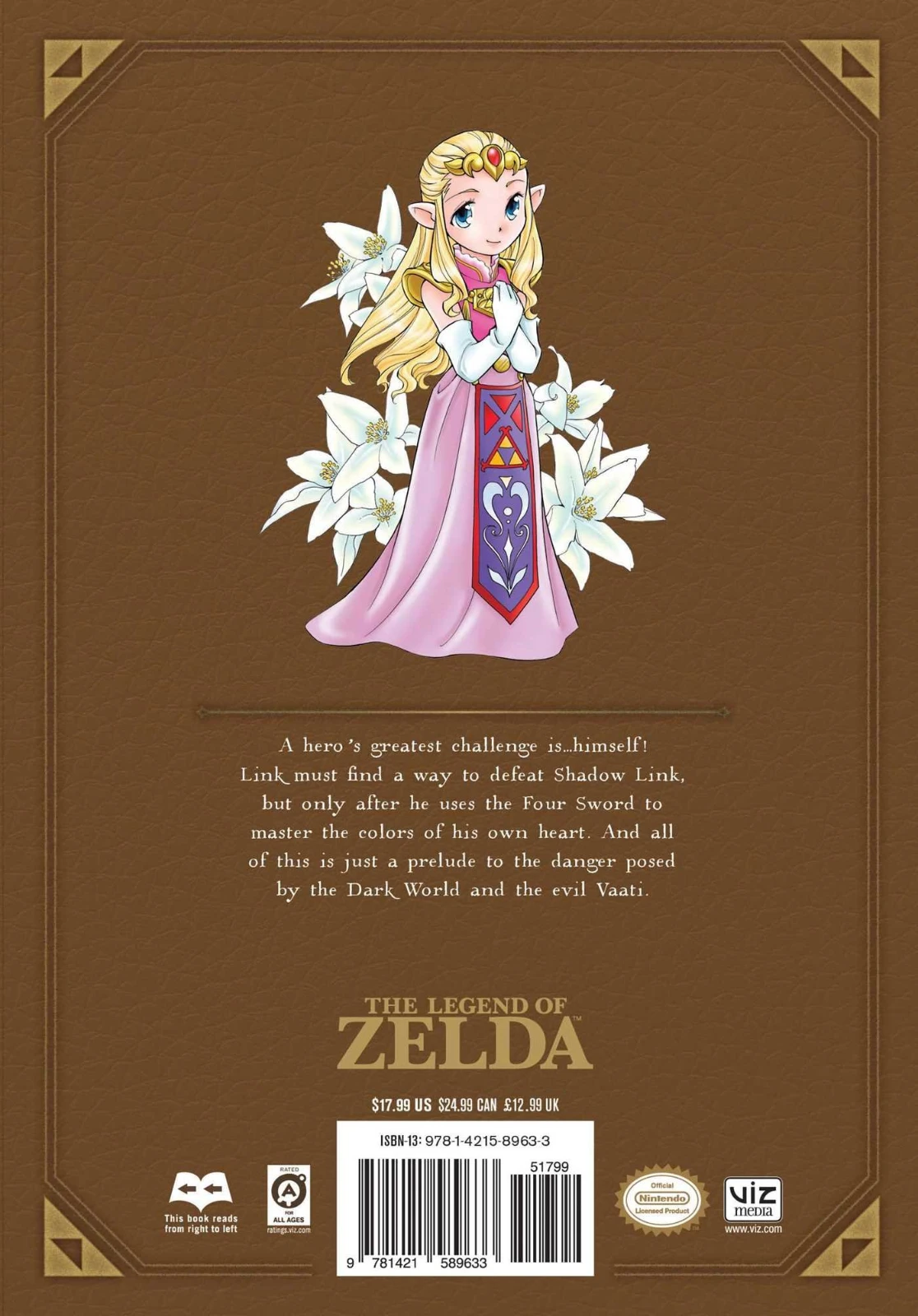
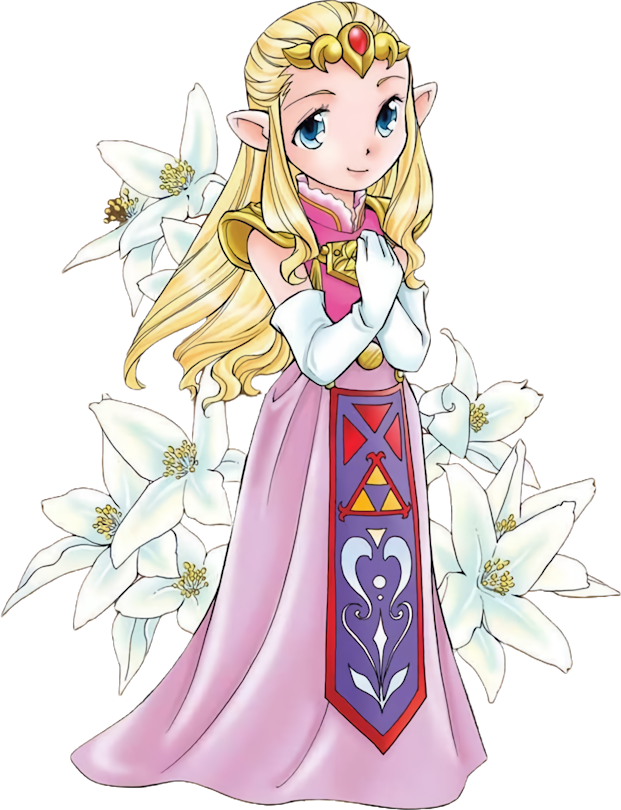
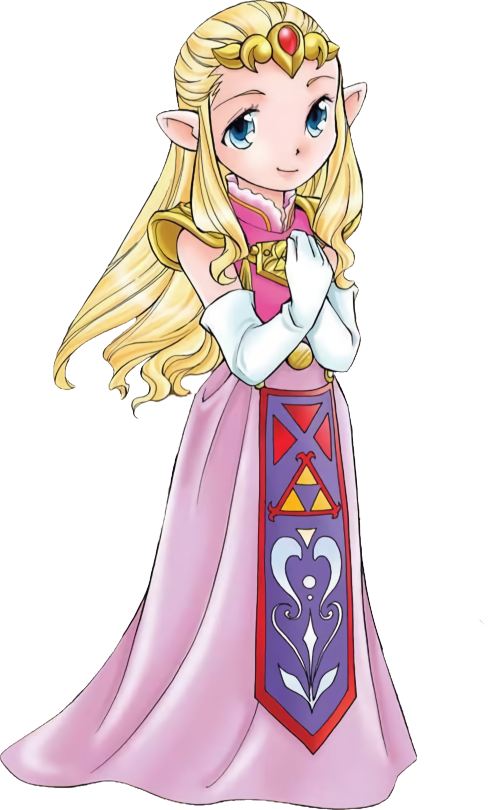
Princess Zelda, drawn by Himekawa for the Four Swords manga.
Four Swords Adventures was a GameCube party game for up to four players, each with a Game Boy Advance plugged in as a controller, and its story was little more than a reason to get the gang together. In Japan it was called Yottsu no Tsurugi+ (Four Swords Plus), and that is the title Akira Himekawa’s adaptation kept when Shogakukan published it in two volumes, in September 2004 and May 2005.
Himekawa turned the party game into a story about personality. Link begins as a gifted young knight who will not work with anyone; when Shadow Link snatches Princess Zelda, he pulls the Four Sword from its pedestal to save her alone, frees the sorcerer Vaati and is split into four Links who cannot stand one another: stubborn Green, hot-headed Blue, gentle Red and cool, bookish Vio. The adventure that follows, through Erune’s haunted village, a desert pyramid, Death Mountain and the Palace of Winds, keeps tearing them apart until they learn to fight as one.
The heart of it is a character the game barely bothers with. Here Shadow Link is lonely, clever and jealous of the real Links, and fan writers at Zelda Universe and Zelda Dungeon have singled out his uneasy alliance with Vio. VIZ Media published the two books in English in August and October 2009 as volumes 6 and 7 of The Legend of Zelda, and in July 2017 the fifth and final Legendary Edition gave the story an omnibus of its own.
Link, now a Hylian Knight, serves Princess Zelda at Hyrule Castle.
— VIZ Media’s description of Volume 6 (first sentence)
The same blurb warns that “these new Links aren’t team players!”
Volume guide
Twelve chapters, six in each book. Chapter titles are as Zelda Dungeon lists them; other translations word them differently. Dates are Shogakukan’s Japanese on-sale dates and VIZ’s English release dates. The later chapters are summarised from fan sources (Zelda Universe, Zelda Dungeon and, where noted, TV Tropes) as well as VIZ’s blurbs.
Volume 1 (VIZ Volume 6)
Japan: Shogakukan, 28 Sep 2004 · English: VIZ Media, 4 Aug 2009 · 200 pages · ISBN 978-1-4215-2332-3
Link is a young knight at Hyrule Castle, son of the commander of the castle’s knights (according to AIPT’s review) and a friend of Princess Zelda, and far too sure of himself: he stops a gang of thieves in Castle Town single-handed, then gets a lecture for not working with the others. When Zelda and the maidens go to check the seal on the wind sorcerer Vaati, Shadow Link snatches the princess. Link draws the Four Sword to save her, and the sword splits him into four, while Vaati breaks free.
The four take their names from their tunics (Green, Red, Blue and Vio), lose a battle with Shadow Link at the castle, and are rescued by the Blue Maiden, who sends them east to recharge the sword. In a village where children keep disappearing they meet a girl called Erune; Green is pulled into the Dark World, finds the lost children turned into toys, and with the others beats Stone Arrghus. A boat crash then scatters the four across desert, blizzard, burning forest and thicket. Shadow Link finds Vio alone and, rather than killing him, flatters him and asks him to change sides, while Green fights his way through a pyramid. The book ends in the Temple of Darkness.
Chapters (6)
The Four Links
Hyrule Castle Falls
Erune and Rosie
The Separated Links
The Pyramid Struggle
The Temple of Darkness
From game to page
Each Link has a personality of his own; in the game, as Eiji Aonuma pointed out in a 2004 interview, all four share the same expressions and reactions.
Link has a father among Hyrule’s knights, and his flaw, refusing to work with others, sets the plot moving.
The four Links are split up, twice over the two books, which never happens in the game.
Shadow Link is a scheming, talkative rival rather than a nuisance who pops up and runs off.
Volume 2 (VIZ Volume 7)
Japan: Shogakukan, 27 May 2005 · English: VIZ Media, 6 Oct 2009 · 176 pages · ISBN 978-1-4215-2333-0
Green, Red and Blue reach the top of Death Mountain to find Vio standing beside Shadow Link. Green challenges him to a duel over the lava and seems to die, but Vio has only been pretending, to win Shadow’s trust. In the Fire Temple Shadow shows his new friend the Dark Mirror, the source of his power, and proposes that the two of them overthrow Vaati; behind them both lies Ganon. Vio tries to smash the mirror, is exposed, and is about to be executed by Shadow’s Hinox when the others save him and drive Shadow off with the Four Sword’s light. Shadow, who had trusted Vio completely, is left heartbroken.
Reunited and a little humbler, the four head for the Palace of Winds. Then comes the cruellest twist: Vaati, disguised as Zelda, has forced a cursed helmet on Link’s father, and Link must fight him. In the final chapters Shadow Link changes sides, the Links take on Vaati and then Ganon at the top of the Tower of Winds, and Shadow’s last act helps them win. The four become one Link again, and the book closes with a short bonus omake.
Chapters (6)
Climb Death Mountain
Sad Shadow Link
Next Stop, the Wind Palace
Duel with Father
The Invincible Vaati
The Four Sword Lives Forever
From game to page
Vio’s undercover alliance with Shadow Link, and Shadow’s feelings about it, are the manga’s invention.
Link’s father is turned against him by Vaati, who disguises himself as Zelda.
Shadow Link ends up on the heroes’ side against Ganon.
The order of the finale changes: the Dark Cloud comes after the Palace of Winds, and Ganon is fought on top of the Tower of Winds instead of in its basement, according to Zelda Dungeon.
Four Links, one Shadow
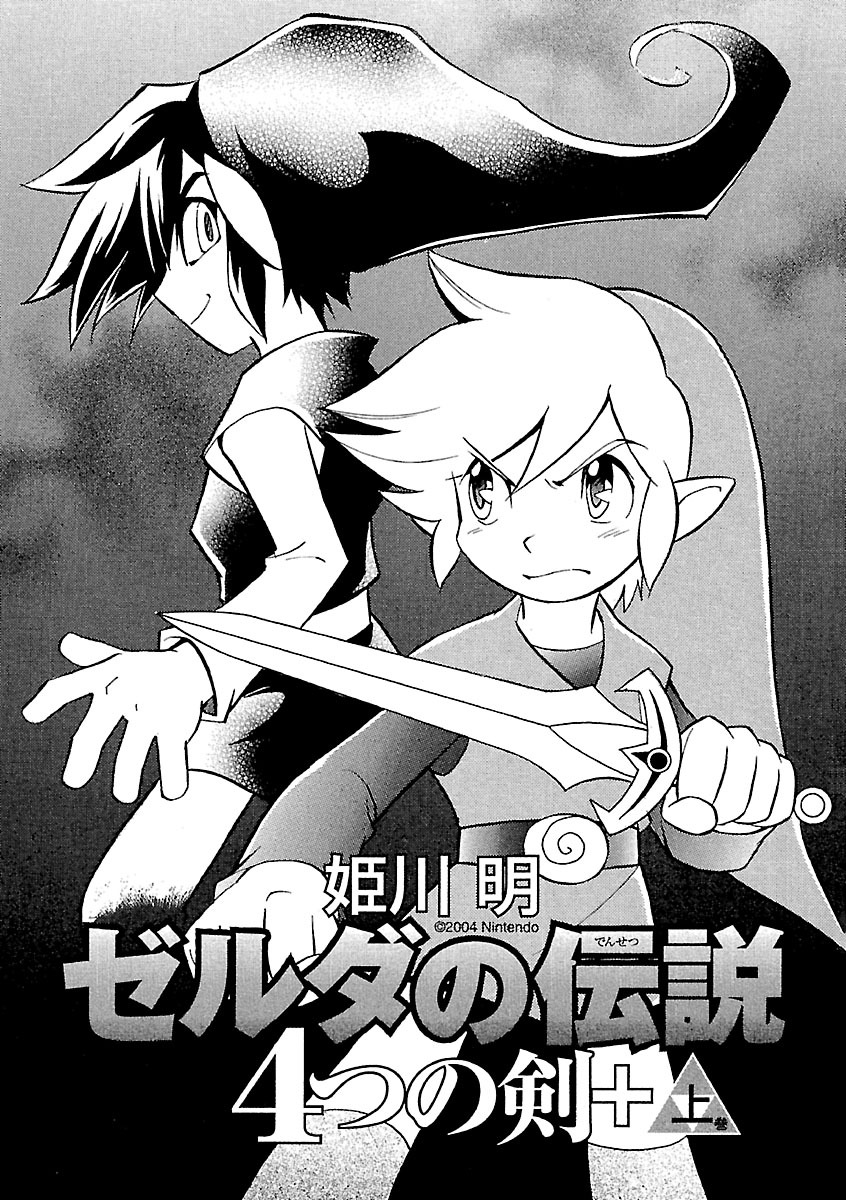
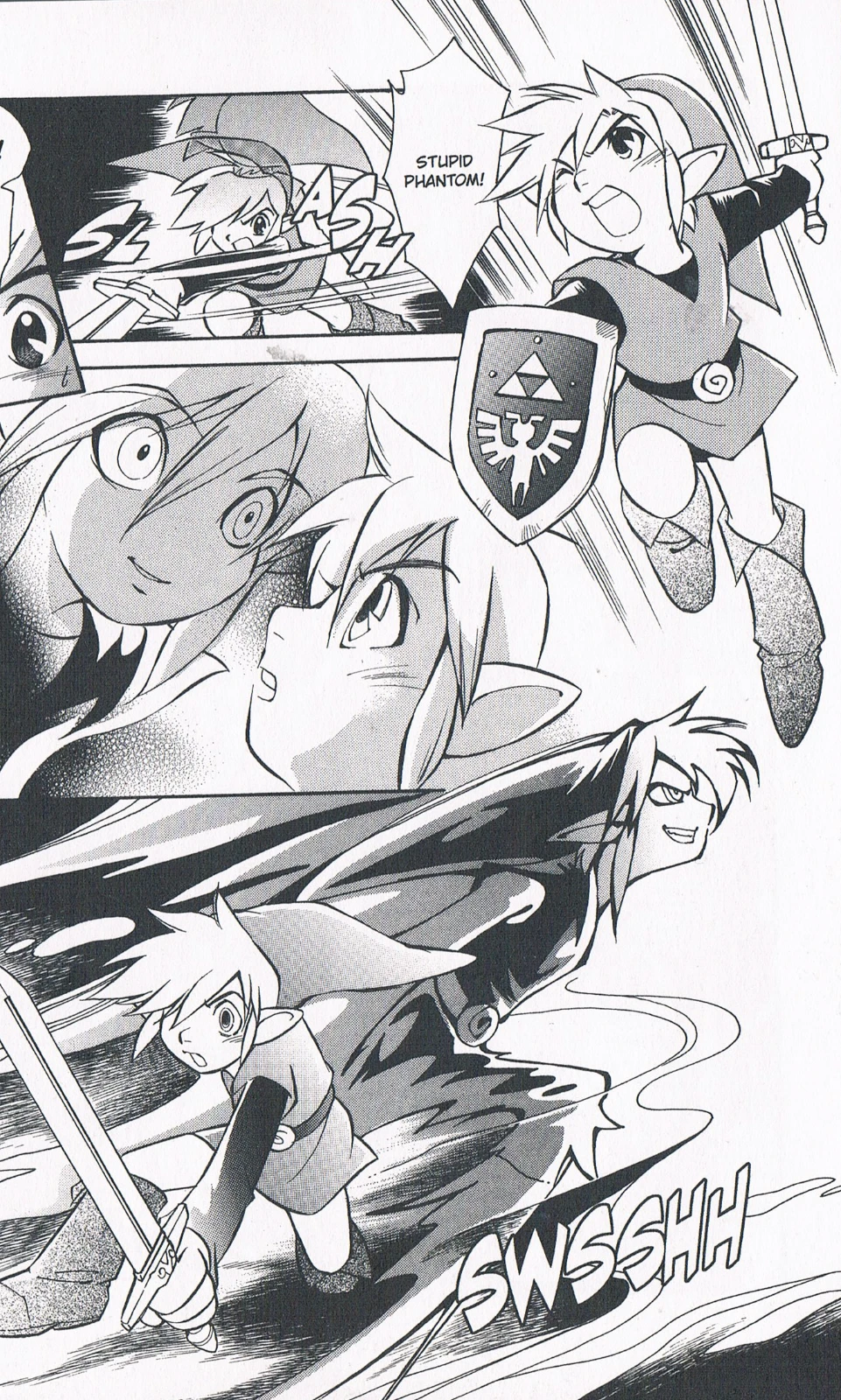
Link and Shadow Link in the Four Swords manga.
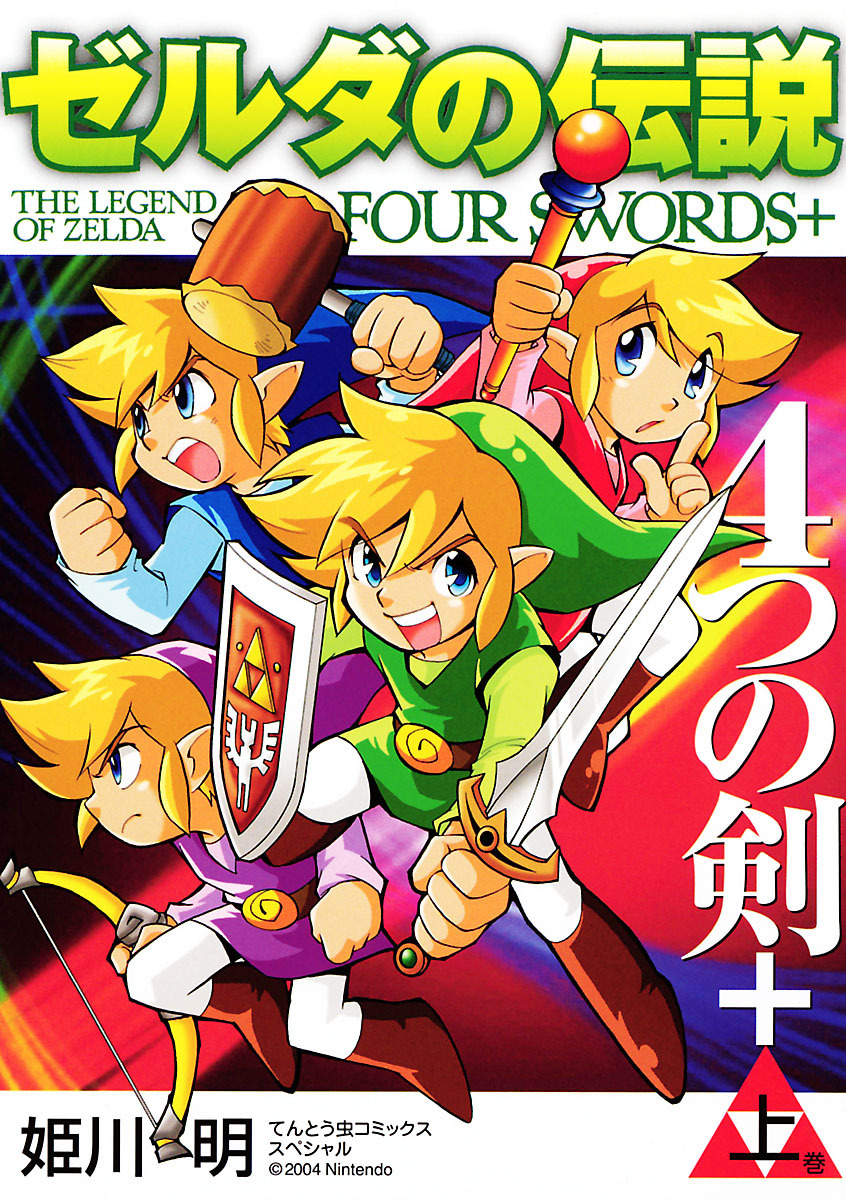
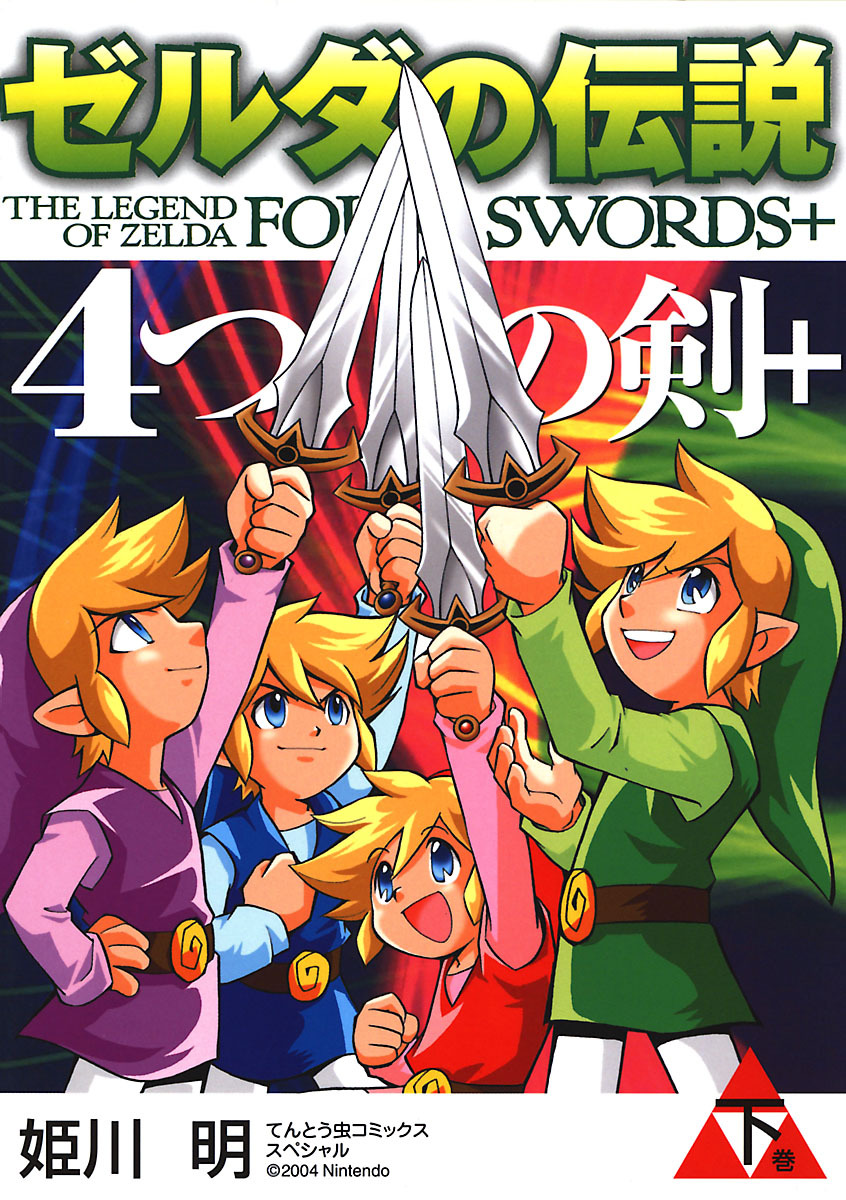
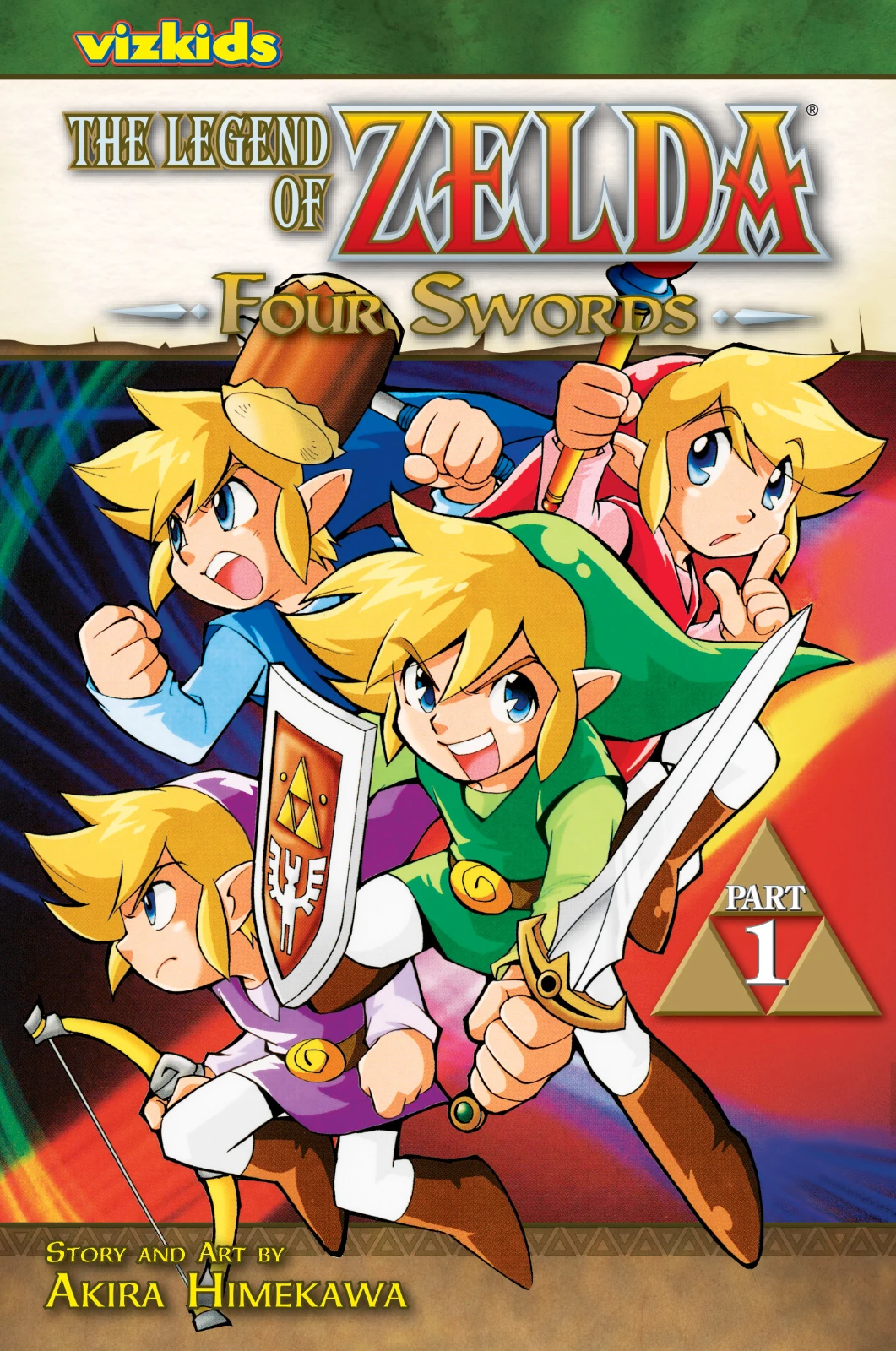
The game gives you four identical Links in four colours; the manga gives you four sides of one boy. Green, the original, is stubborn and proud. Blue is quick-tempered and always spoiling for a fight. Red is sweet, innocent and the first to cry. Vio, short for violet, is the calm, superior strategist who prefers a book and a bow and thinks the others are idiots. Most of the comedy, and much of the drama, comes from watching them argue.
Then the story splits them up and hands the spotlight to Vio and Shadow Link. Zelda Universe’s Clair Belle, writing about her favourite Link in 2022, traced how Shadow corners Vio, flatters his intelligence instead of killing him, and comes to treat him as his one real friend, while Vio plays along in order to find a way to beat Vaati and Ganon. When the deception is uncovered Shadow is genuinely hurt, and Vio is left wondering whether Shadow is as bad as everyone thinks. Fan writers have argued that this turns a throwaway villain into a tragic figure.
What it is really about
The theme is teamwork, and Himekawa make sure the lesson costs something. Link’s refusal to cooperate is what frees Vaati, the Links’ quarrels are what scatter them, and the reunion only comes once Vio admits that going it alone was a mistake. A Zelda Dungeon debate piece credited the manga with giving Link a degree of self-awareness rare in the series; Eric Snell, reviewing the omnibus for ComicAttack, recommended it to readers of any age for its lessons in teamwork, humility and empathy.
Characters
The principal cast. The last column notes how each differs from Four Swords Adventures or whether they are new.
Character
Who they are
In the cartoon
Voice
Green LinkThe original
The knight who drew the Four Sword, in the green tunic.
Stubborn and proud; he leads, quarrels, duels Vio over the lava and seems to die, and finally learns to rely on the others.
The game’s four Links have no personalities; Aonuma praised Himekawa for giving each one his own.
Blue LinkThe hothead
The blue-clad Link.
Easily provoked and battle-hungry, he takes Vio’s insults hardest, yet is glad to see him when the four are reunited.
New characterisation.
Red LinkThe innocent
The red-clad Link.
Naive and kind-hearted; the first to rush to Green when he seems to be dead.
New characterisation.
VioThe strategist
The violet-clad Link, rarely seen without a book.
Clever and aloof, he pretends to join Shadow Link to learn his secrets, tries to destroy the Dark Mirror and is nearly executed. A fan favourite.
His whole storyline is new to the manga.
Princess ZeldaPrincess of Hyrule
Link’s friend, kidnapped while checking Vaati’s seal with the maidens.
Held captive for most of the story; Vaati takes her form to deceive Link’s father. TV Tropes notes that she is shown as strong-minded.
Close to the game.
Shadow LinkThe rival
A dark double of Link born of the Dark Mirror.
Kidnaps Zelda, attacks the castle, tries to win Vio over and is crushed when Vio betrays him. In the end he turns against his masters.
In the game a hit-and-run nuisance; here a lonely, tragic figure.
VaatiThe wind sorcerer
The sorcerer sealed by the Four Sword.
Freed when Link draws the sword; disguises himself as Zelda to curse Link’s father. ComicAttack found his final battle an anticlimax after Shadow Link.
As in the game, a front for Ganon.
GanonThe power behind it all
The Dark Lord working through Vaati and Shadow Link.
Revealed as the true enemy in the Fire Temple and fought at the very end.
Appears only briefly, as ComicAttack noted.
Link’s fatherManga original
A knight of Hyrule Castle.
Scolds Link for not working with the other knights; later Vaati forces a cursed helmet on him and makes him fight his son.
Not in the game.
EruneManga original
A girl in the Village of the Blue Maiden, where children are vanishing.
Taken by a sinister toy; the Links protect her, and Shadow Link turns out to be the kidnapper.
Invented for the manga; ninth on Zelda Universe’s 2022 list of Himekawa originals.
ValensuelaManga original
A Knight of Hyrule guarding one of the gems the Links need.
Freed from a curse by Green, he hands over his gem.
Invented for the manga; fifth on Zelda Universe’s list.
The MaidensGuardians of the seal
The six maidens who guard Vaati’s seal with Zelda.
The Blue Maiden rescues the Links and sends them to recharge the sword; the Yellow Maiden gives Green a Moon Pearl.
TV Tropes notes that their subplot is much reduced.
From game to comic
Four Swords Adventures is built around co-operative play, and its plot exists mainly to move four players from one stage to the next. Himekawa kept the outline (the Four Sword, the maidens, Shadow Link, Vaati, Ganon behind them all) and rebuilt everything inside it. A Zelda Dungeon writer put it neatly: the game spent its budget on gameplay, and the manga supplied the plot and characters.
The key change is that the four Links are different people. In a 2004 interview that Zelda Dungeon hosts in rough English, Eiji Aonuma praised the artists for this, noting that in the game all four Links have the same expressions and reactions; A. Honda explained that they drew the Links alike but with slightly different features, and S. Nagano added that black-and-white pages force the characters to be more expressive. Shadow Link is changed just as much, from a pest who drops a bomb and runs into a rival with feelings of his own.
In the game
In the manga
The four Links
Identical, controlled by up to four players
Four personalities: Green, Blue, Red and Vio
Splitting up
The Links never separate
They are separated twice
Shadow Link
A recurring nuisance
A full character who befriends Vio and finally turns
Link’s family
Not mentioned
His father, a knight, is cursed into fighting him
Vaati
Freed when Link draws the Four Sword
Freed the same way, but because Link insists on acting alone; later disguises himself as Zelda
The finale
Ganon is the last boss
Ganon is fought on top of the Tower of Winds, with Shadow Link’s help
Tone
Light, with no blood
Still all-ages, but with some blood, according to TV Tropes
Creators
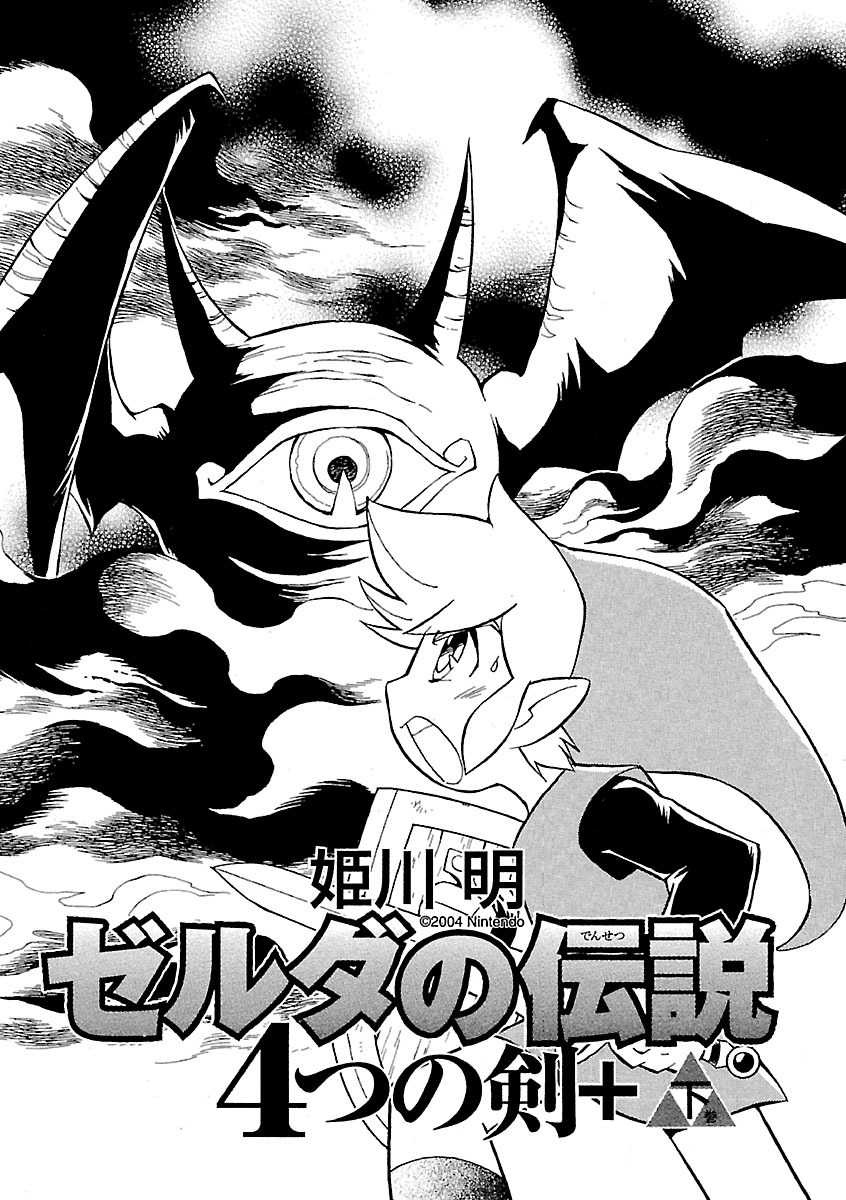
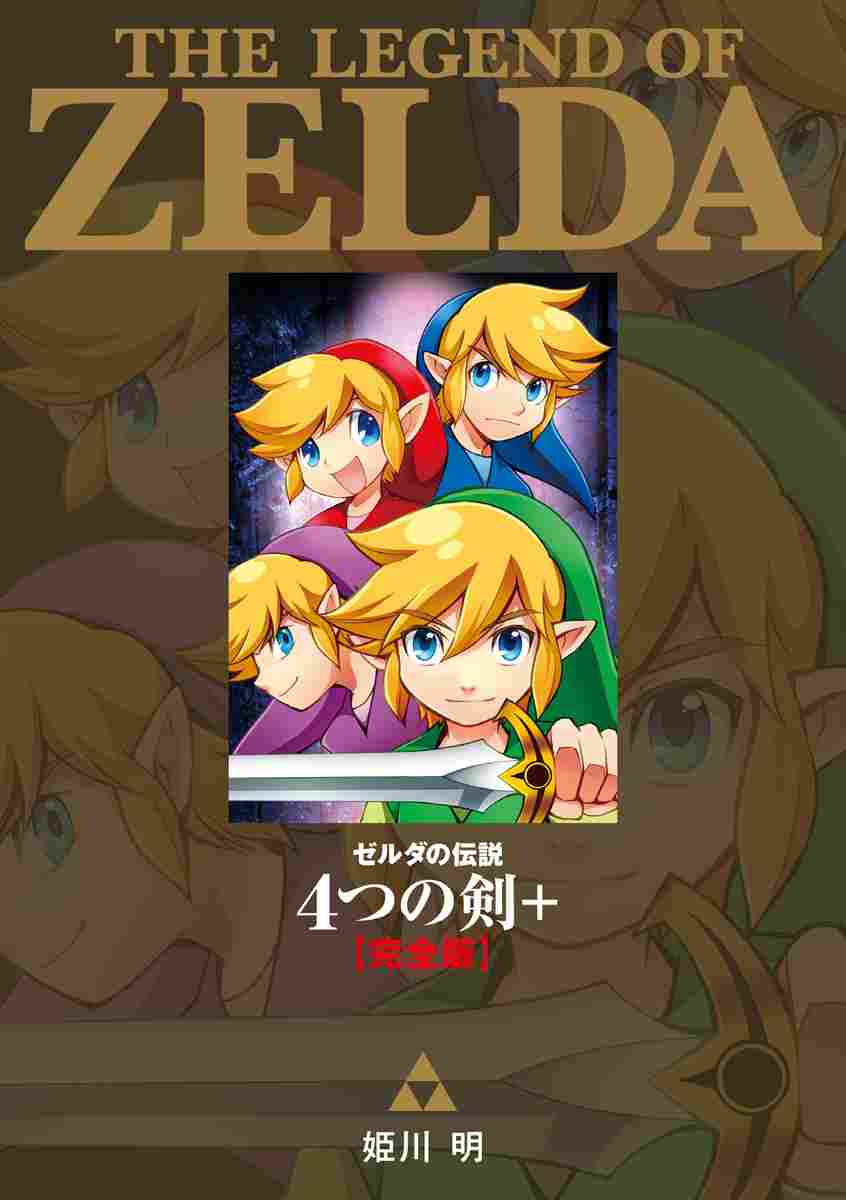
Title page of the Japanese Volume 1Title page of the Japanese Volume 2
Akira Himekawa, the duo A. Honda and S. Nagano, partners since 1991, came to Four Swords after a gap: their Oracle books had come out at the end of 2001, and the first Four Swords volume followed in September 2004, six months after the game reached Japanese shops. The two volumes appeared eight months apart, and in Japan the next Himekawa book was A Link to the Past, in July 2005.
The 2004 interview with Eiji Aonuma, which Zelda Dungeon hosts in rough English without being certain which magazine it came from, is one of the few times the duo discussed their methods at that point. Besides the four Links, they talked about their Ocarina of Time book, where they chose not to reproduce the game’s battles blow by blow and concentrated on the story and the characters’ feelings, and about the challenge of their next project, A Link to the Past, a game that leaves much to the reader’s imagination. In 2017 they told Anime News Network that Honda shapes the concept and images and Nagano writes the script and details.
Editions
In Japan the story came out as two Tentōmushi Comics Special paperbacks, jō and ge, on 28 September 2004 and 27 May 2005. VIZ Media’s English edition followed in 2009: volume 6 at 200 pages and volume 7, which includes the omake, at 176. Both were later boxed with the rest of the series (see the hub for the box sets).
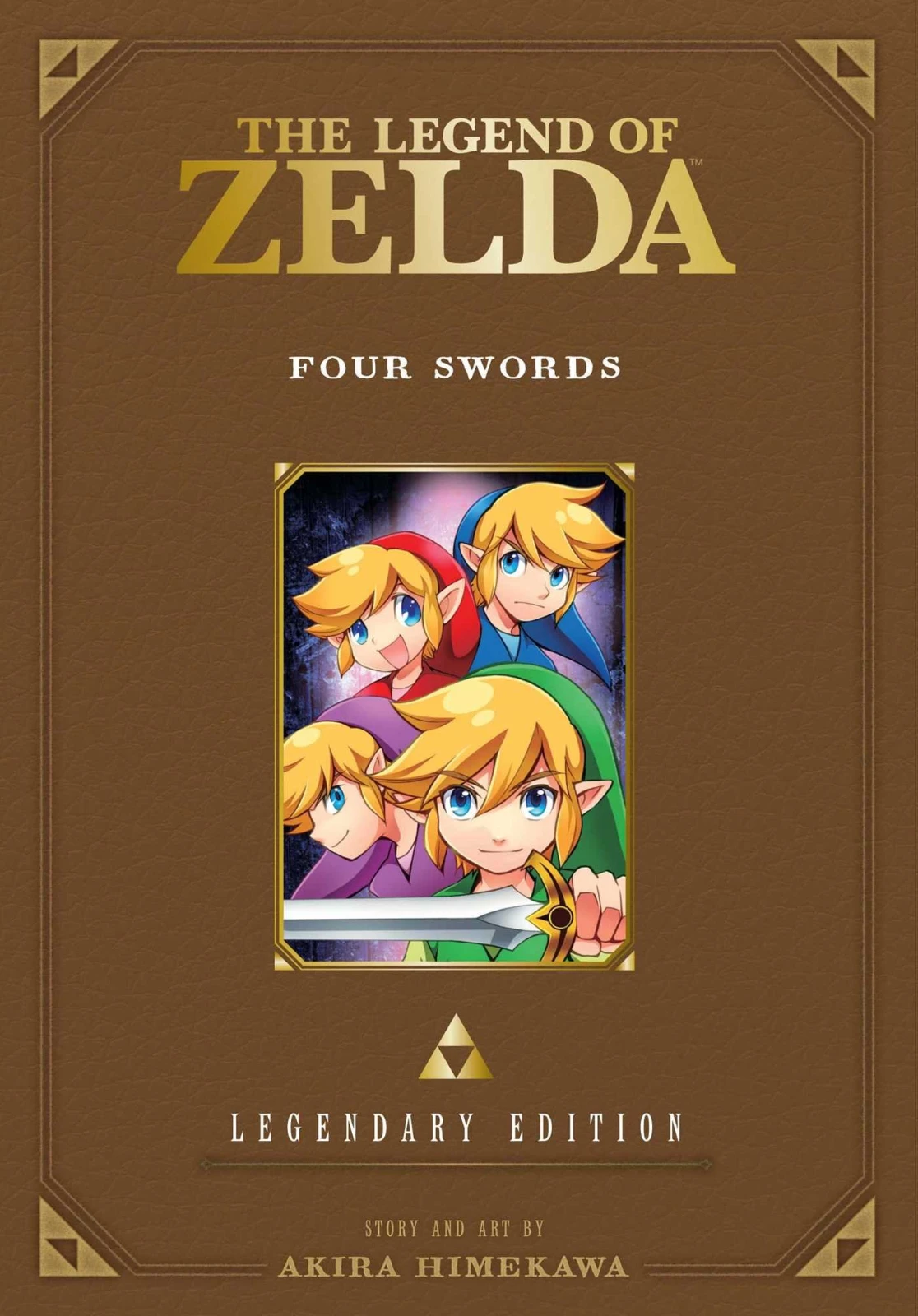
Like Ocarina of Time, Four Swords ran to two books, so it filled an omnibus on its own. Shogakukan’s Kanzenban (28 November 2016) was the fifth and last of its series, and VIZ’s Legendary Edition (11 July 2017, 370 pages) the fifth and last of its own, announced with new cover art and colour illustrations. AIPT’s reviewer also found a behind-the-scenes look at the creators and producers and bonus comic strips at the back.
Edition
Released
Details
Japan, first volume
28 Sep 2004
Shogakukan; ISBN 4-09-149606-7
Japan, second volume
27 May 2005
ISBN 4-09-149607-5
VIZ Media, Vol. 6
4 Aug 2009
200 pp; ISBN 978-1-4215-2332-3
VIZ Media, Vol. 7
6 Oct 2009
176 pp; ISBN 978-1-4215-2333-0
Japan, Kanzenban
28 Nov 2016
370 pp; ISBN 978-4-09-142150-0
VIZ Legendary Edition 5
11 Jul 2017
370 pp; ISBN 978-1-4215-8963-3
Other languages
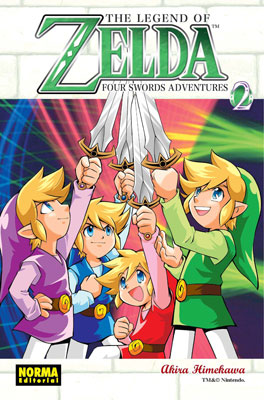
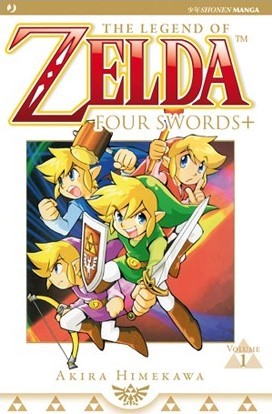
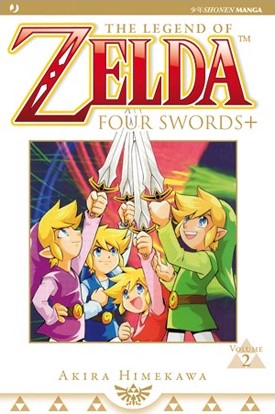
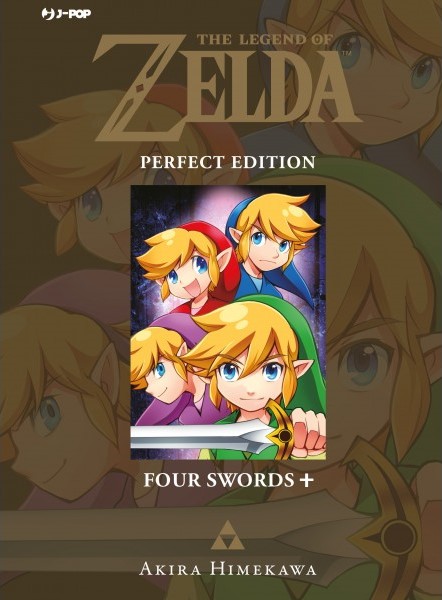
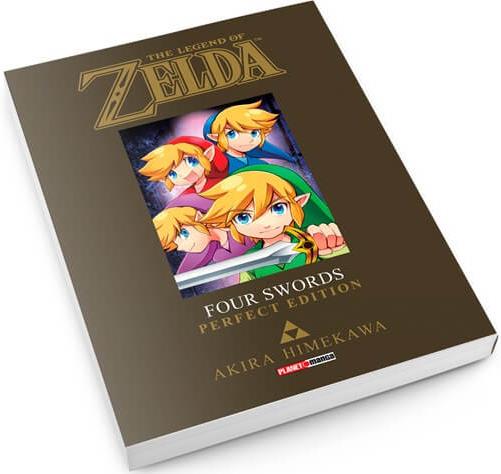
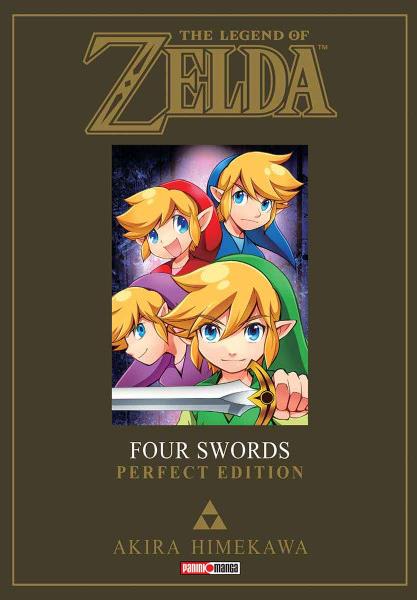
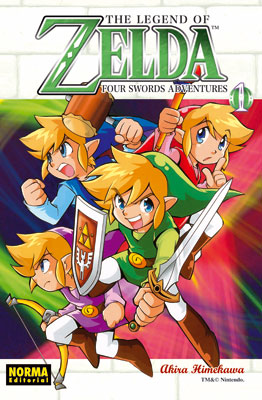
Spain’s Norma Editorial published the two books as volumes 8 and 9 of its own series. The omnibus appeared in Italian, German and French (as a hardcover) and in a Mexican Spanish edition in 2017, in Portuguese and in Spain in 2018, and in Argentina in 2021, according to the Video Game Library; covers survive for the Italian, Brazilian and Mexican Perfect Editions.
Among fans this is the Himekawa book people argue for. Zelda Universe ran a whole column on Vio in 2022, Zelda Dungeon asked its readers whether a future Four Swords game should borrow the manga’s story, and essays praising the manga above the game still turn up.
Critics reviewing the 2017 omnibus were warm, with reservations. Eric Snell of ComicAttack rated the character-driven storytelling among the best in any Zelda manga and loved the art, drawn in a cuter style than other Zelda manga, though he admitted that the four Links can be hard to tell apart in black and white and that Vaati’s final battle falls flat after Shadow Link. AIPT’s reviewer called the art the best part, found the story a little long for its plot and the jokes only kid-funny, but concluded that the book does its job for younger readers.
“I’d definitely recommend Four Swords to a reader of any age.”
Eric Snell, ComicAttack Review of the Legendary Edition, July 2017
“pushes the right buttons”
AIPT Review of the Legendary Edition, July 2017
Trivia
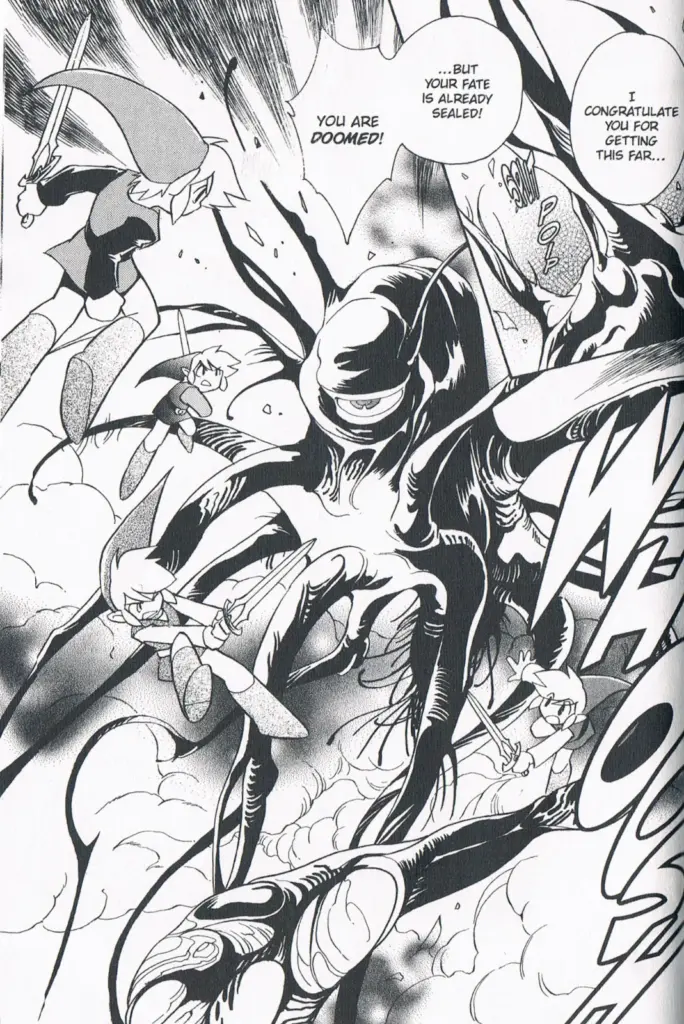
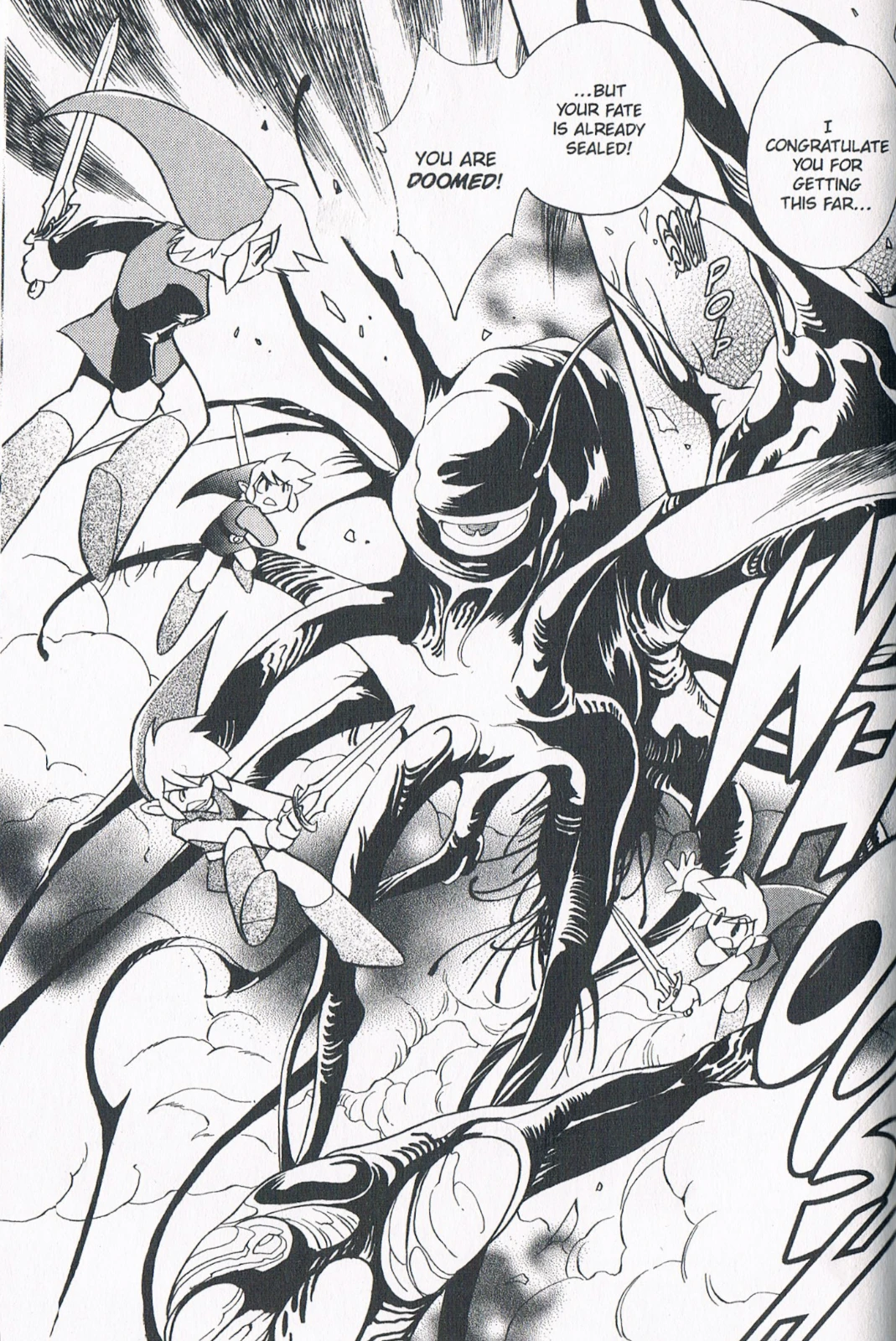
The final battle with Vaati in the Four Swords manga.Vaati’s defeat is not the climax many readers expect: ComicAttack thought his battle an anticlimax after the Shadow Link story, and the real last enemy is Ganon.
Spanish Volume 1 cover.The Legendary Edition’s extras include a behind-the-scenes section on the creators and producers and bonus strips at the back, according to AIPT’s review.
The Japanese title, Yottsu no Tsurugi+ (Four Swords Plus), is the name Four Swords Adventures was sold under in Japan.
Vio’s name is short for violet. Zelda Universe’s Clair Belle points out that purple is a traditional villain’s colour, so readers who knew that, she suggests, may have seen his apparent betrayal coming.
The bonus omake reveals, according to TV Tropes, that Blue cannot sleep unless his clothes are neatly folded.
Tingle makes a cameo at the worst possible moment, interrupting Vio as he tries to smash the Dark Mirror.
Erune and Valensuela, both invented for this book, made Zelda Universe’s 2022 list of the ten most memorable characters found only in Himekawa’s manga.
Like Ocarina of Time, it fills a Legendary Edition by itself; the other three omnibuses each pair two games.
In 2004 Eiji Aonuma, discussing the book with Himekawa, praised the artists for developing the story in a truly original way.
Wikipedia’s list of Zelda manga gives the wrong ISBNs for this series (a single Japanese number and the English number of The Minish Cap); the publishers’ numbers are in our table above.
Further reading: Zelda Temple Comics & Books research dossier (VIZ series, Legendary Editions and box sets)
Manage Consent
To provide the best experiences, we use technologies like cookies to store and/or access device information. Consenting to these technologies will allow us to process data such as browsing behavior or unique IDs on this site. Not consenting or withdrawing consent, may adversely affect certain features and functions.
Functional
Always active
The technical storage or access is strictly necessary for the legitimate purpose of enabling the use of a specific service explicitly requested by the subscriber or user, or for the sole purpose of carrying out the transmission of a communication over an electronic communications network.
Preferences
The technical storage or access is necessary for the legitimate purpose of storing preferences that are not requested by the subscriber or user.
Statistics
The technical storage or access that is used exclusively for statistical purposes.The technical storage or access that is used exclusively for anonymous statistical purposes. Without a subpoena, voluntary compliance on the part of your Internet Service Provider, or additional records from a third party, information stored or retrieved for this purpose alone cannot usually be used to identify you.
Marketing
The technical storage or access is required to create user profiles to send advertising, or to track the user on a website or across several websites for similar marketing purposes.

 Princess ZeldaPrincess of Hyrule