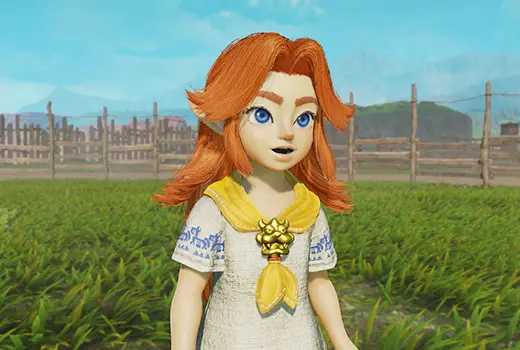
Malon, rebuilt for the 2026 Ocarina of Time on Nintendo Switch 2 (promotional screenshot).
Every new Zelda brings a new Link and, more often than not, a new Zelda. The people around them are another matter. A bald merchant follows Link from boat to balloon to stable; towering fairies in hidden fountains hand out magic and armour upgrades; a red-haired ranch girl sings to her horses; and a grinning mask dealer seems to know a great deal more than he lets on. Some come back as the same person, some as descendants or lookalikes in a later age, and some, like the people of Termina in Majora’s Mask, as mirror images of faces Link first met in Hyrule.
This page rounds up the best-loved of that supporting cast, grouped by what they do for Link: the fairies, sages and scientists who make him stronger; the merchants and messengers who keep him supplied; and the families, rivals and witches whose stories run alongside his own. Every one gets a card with their games, their story and what changed along the way. Several regulars have whole pages to themselves: Beedle, Tingle, Skull Kid, Impa, Epona and Kaepora Gaebora, while the big bad guys live on our villains page.
The cast is still growing, and still coming back. In 2024 a Great Fairy sold Princess Zelda her extra accessory slots in Echoes of Wisdom, and on 5 November 2026 the rebuilt Ocarina of Time for Nintendo Switch 2 brought back Malon, Talon, the Happy Mask Salesman, Koume and Kotake and Kaepora Gaebora, the witches and the owl now speaking their lines aloud.
You’ve met with a terrible fate, haven’t you?
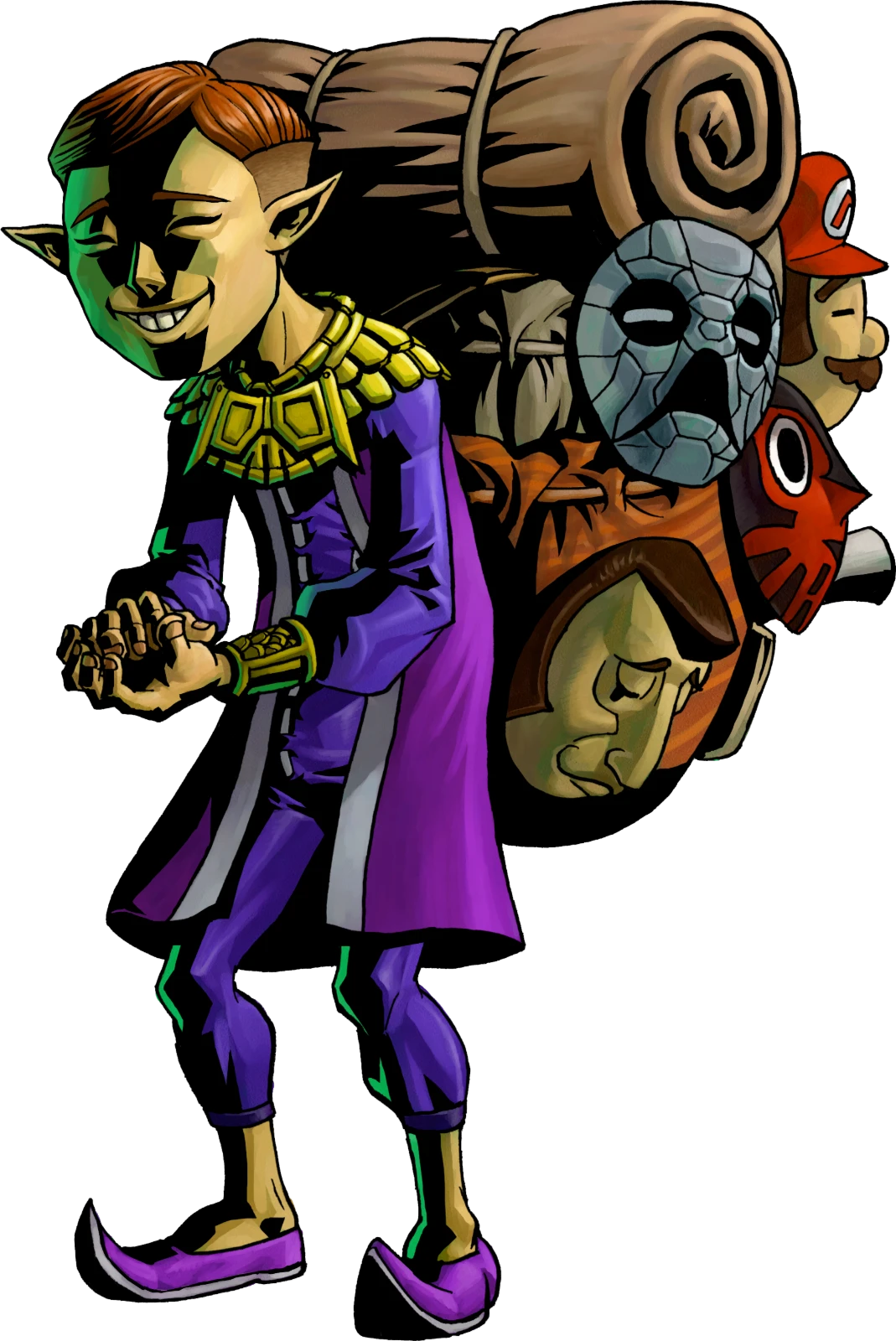
The Happy Mask Salesman Majora’s Mask, inside the Clock Tower
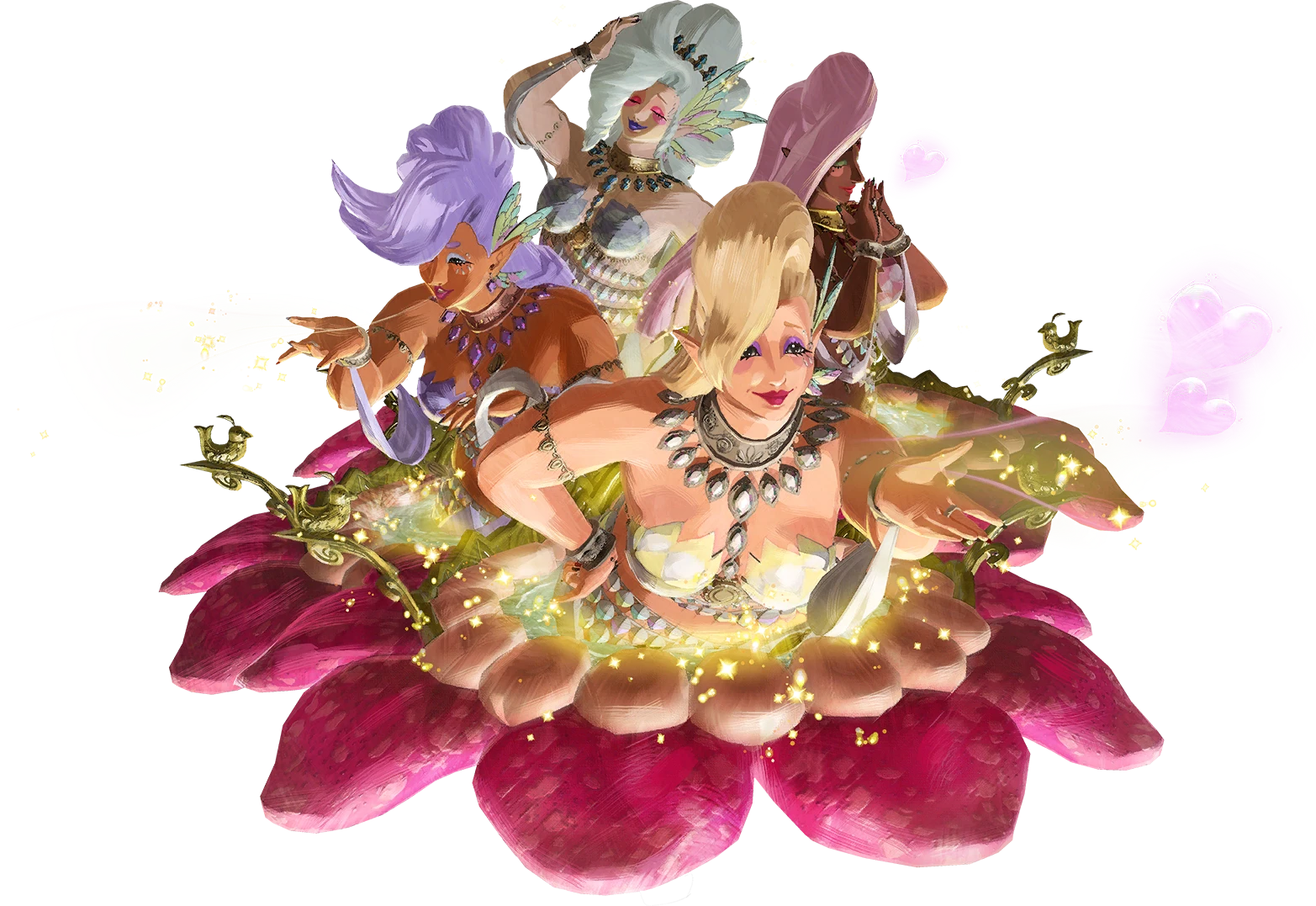
The four Great Fairy sisters of Breath of the Wild, squeezed into one bud for Age of Calamity (official artwork).
Link rarely saves the world on his own strength alone. These are the characters who make him stronger: fairies who heal him and enchant his gear, wise elders and owls who tell him where to go next, two Sheikah scientists who keep his gadgets running and a dancing Korok who makes room in his pockets.
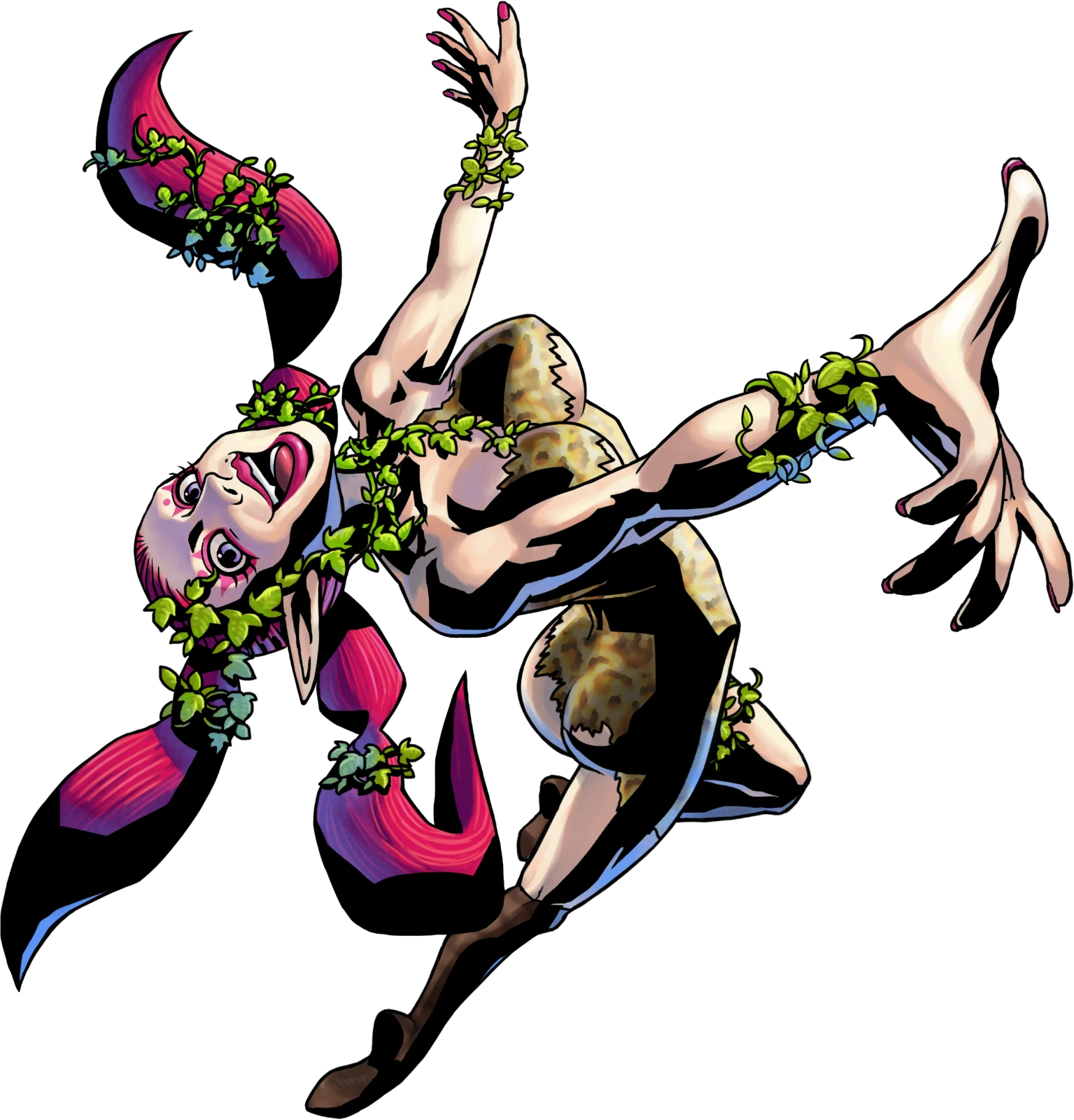
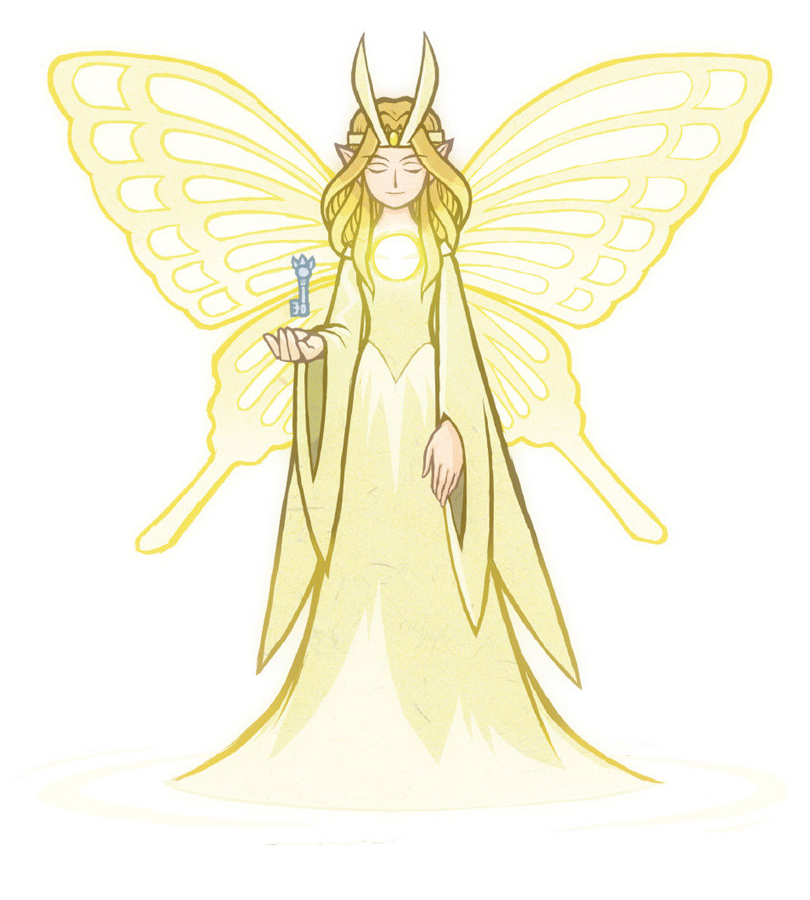
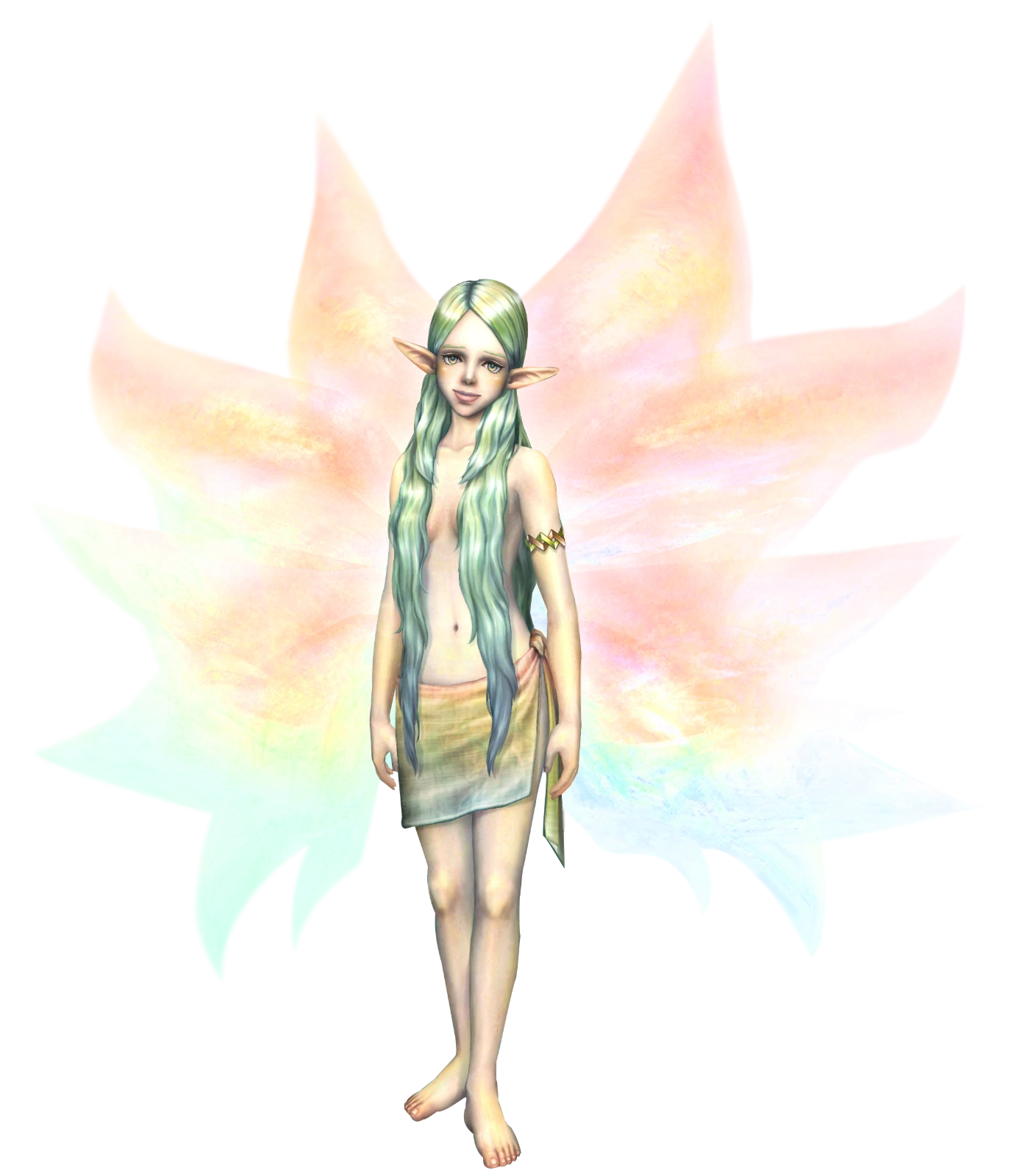
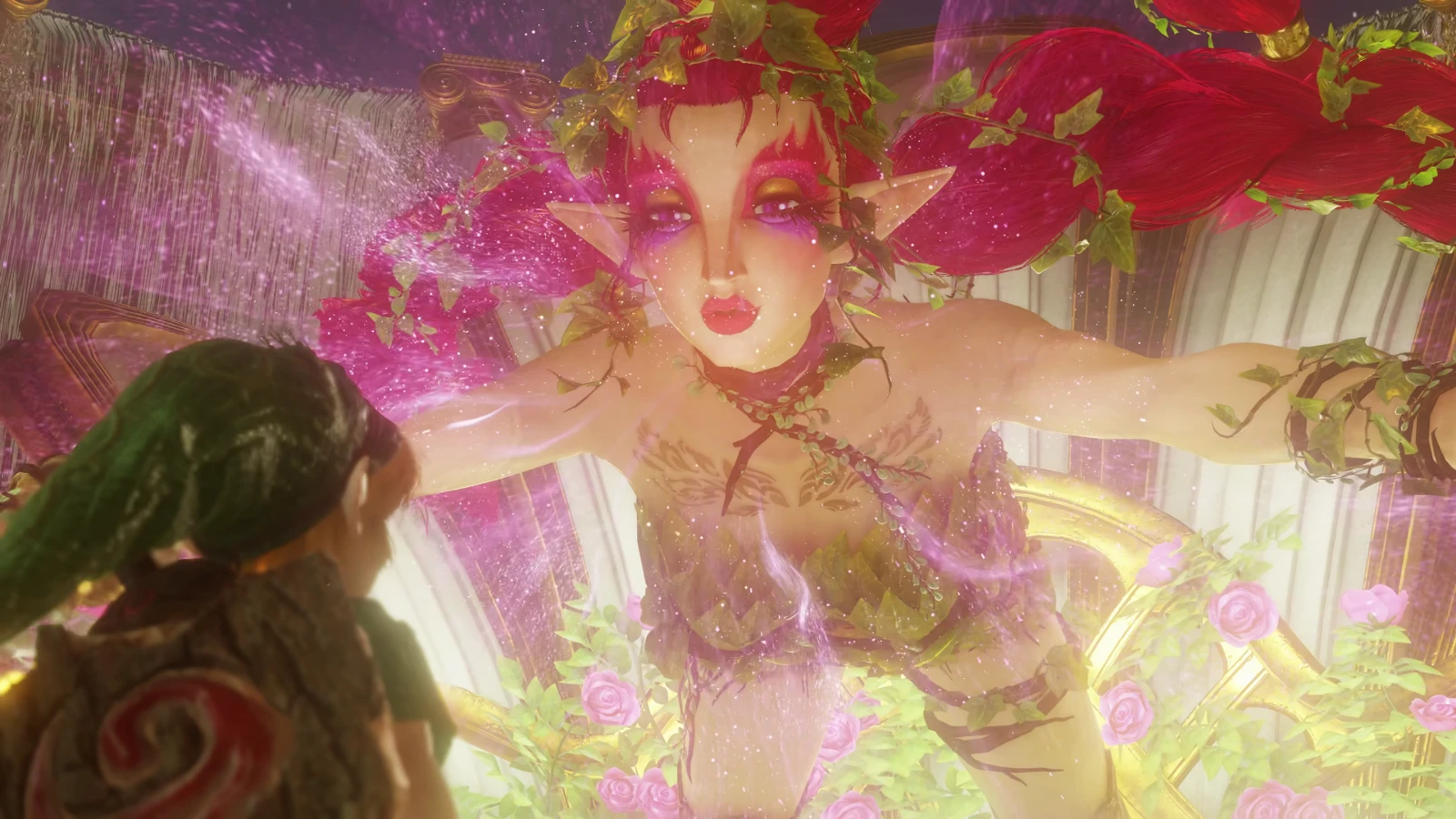
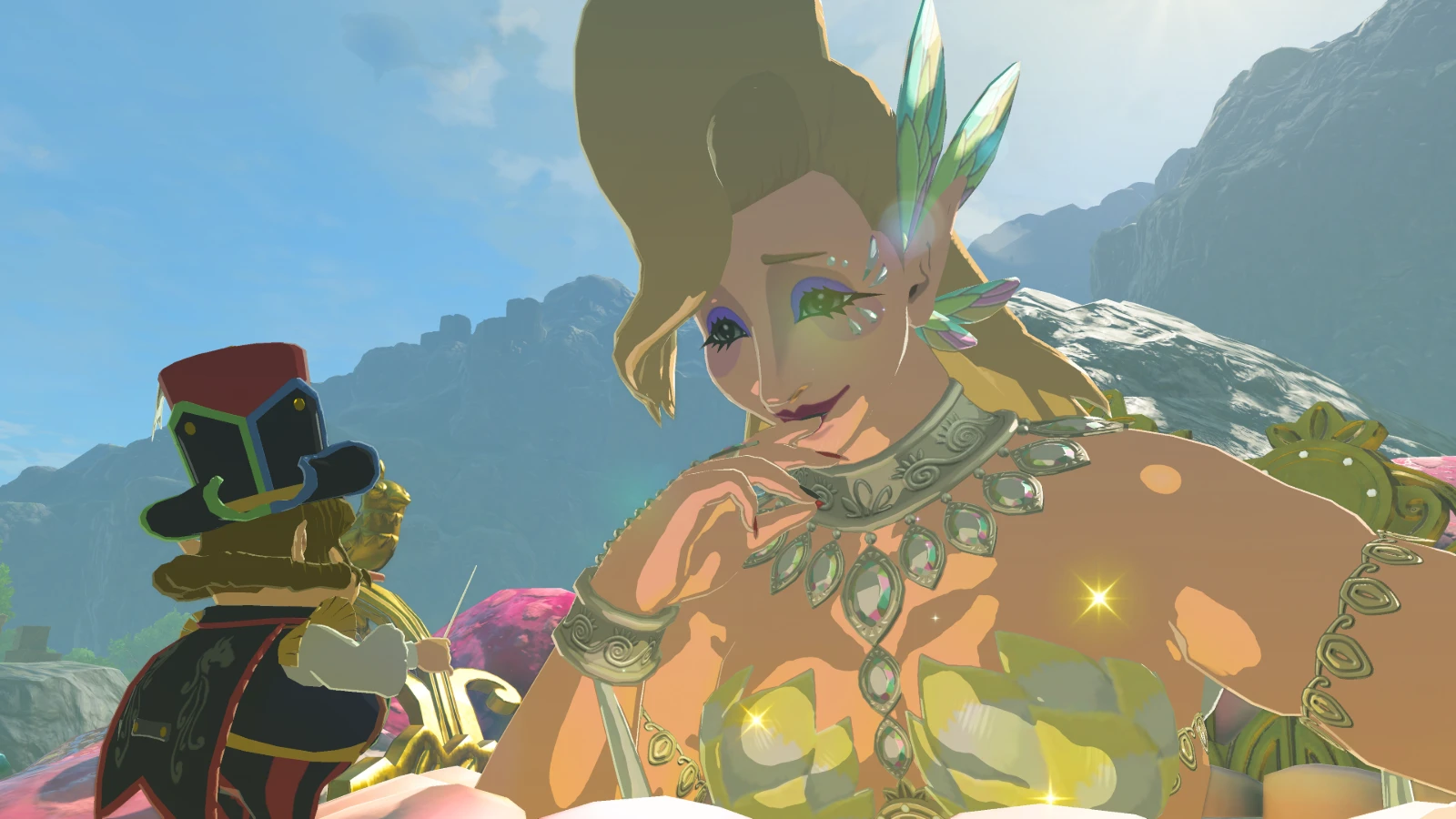
Fairies have patched Link up since the very first game, where fountains around Hyrule refill his hearts. Their towering big sisters, the Great Fairies, have become an institution: usually tucked away in a hidden spring, usually announced by a booming laugh, and always bearing gifts. Ocarina of Time set the modern look. It was the first game to show them as giant women without wings, with long red hair in three pigtails and outfits of ivy, and its six fairies teach Link new magic and toughen him up.
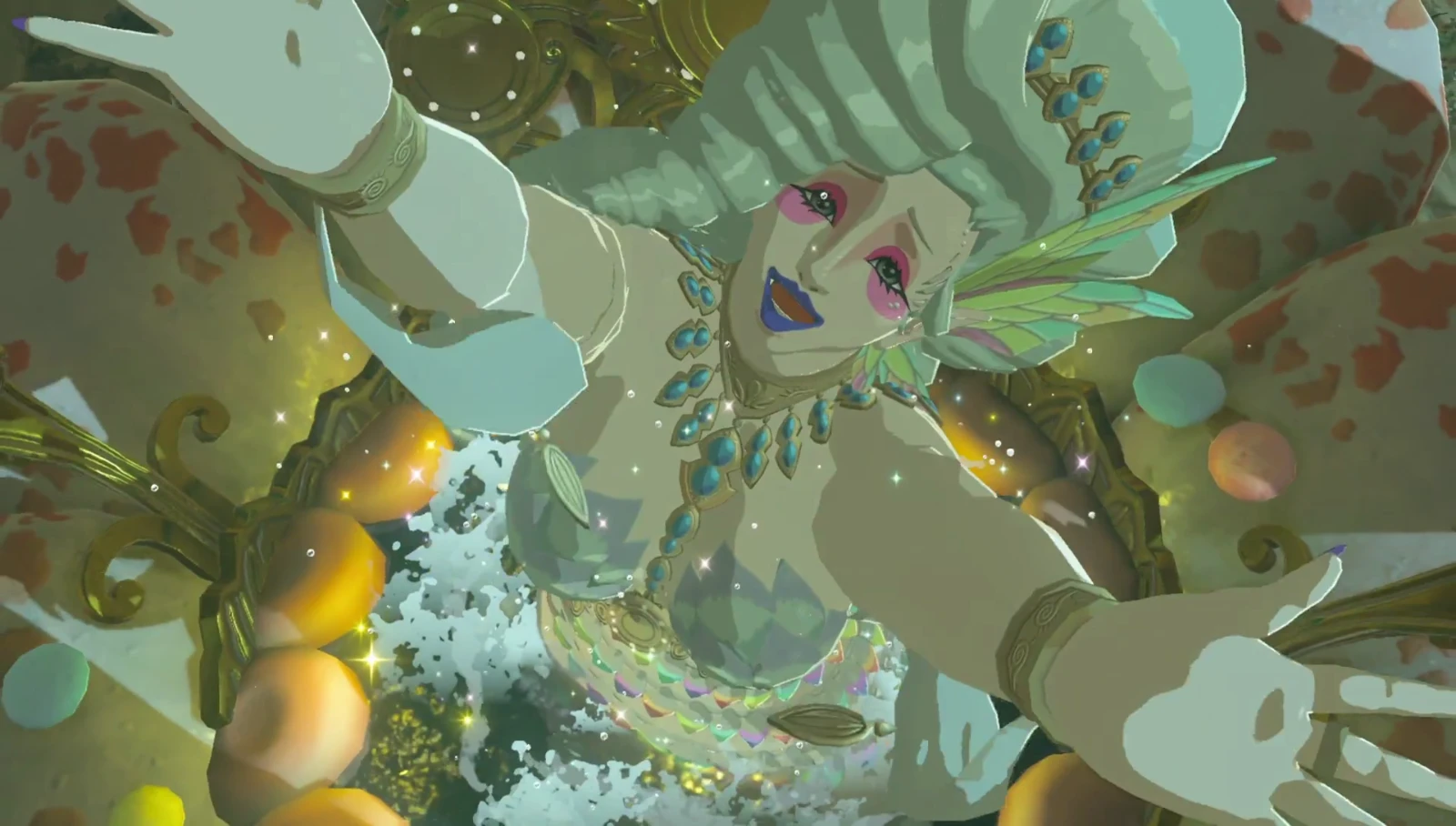
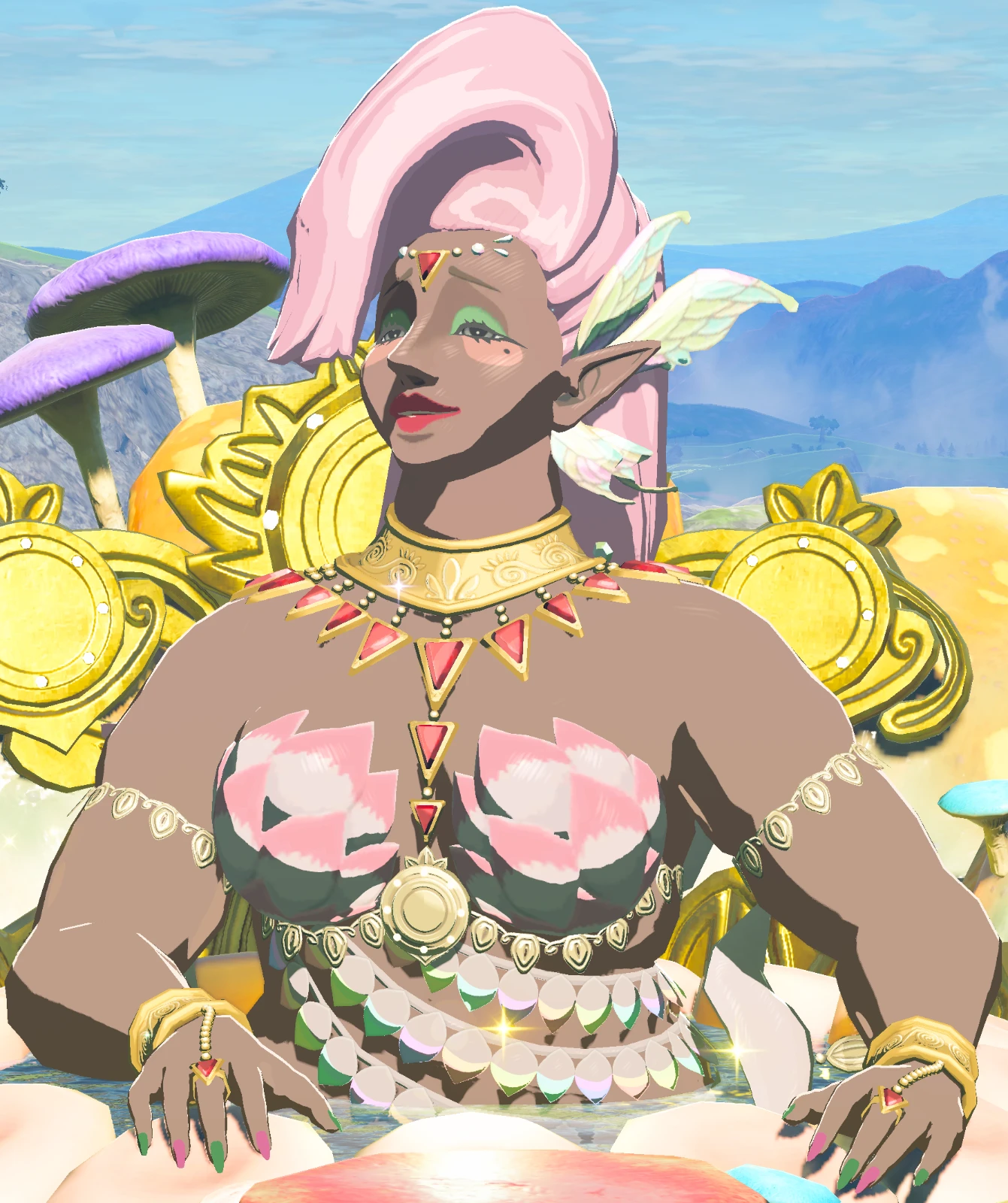
In Majora’s Mask the Skull Kid has shattered Termina’s five fairies into Stray Fairies, and Link must collect the pieces, one in Clock Town and the rest inside the four temples, to put them back together. In Breath of the Wild four sisters, Cotera, Kaysa, Mija and Tera, sleep inside giant flower buds until Link pays to wake them, then enhance his armour; Tears of the Kingdom gives them a sad back story, after a band they adored broke up. Most recently, in Echoes of Wisdom, a Great Fairy on an island shrine in Lake Hylia sells Princess Zelda the extra slots she needs to wear more accessories.
What they do, game by game (13)
A Link to the Past: throw an item into a fairy pond and it may come back improved. Venus, the Fairy Queen at the Pond of Happiness, raises bomb and arrow capacity for Rupees, and a cursed Great Fairy inside the Pyramid of Power hands over the Silver Arrows and the Golden Sword.
Link’s Awakening DX: in the Color Dungeon, the Fairy Queen offers a red tunic (more attack) or a blue one (more defence).
Ocarina of Time: six fairies, woken with Zelda’s Lullaby: the magic Spin Attack, a double magic meter, half damage, and the spells Din’s Fire, Farore’s Wind and Nayru’s Love.
Majora’s Mask: five fairies, each shattered into Stray Fairies. Restored, they give magic power and the Great Fairy’s Mask, a stronger Spin Attack, double magic, double defence and, from the Fairy of Kindness, the Great Fairy’s Sword.
Four Swords: the Great Fairies of Forest, Flame and Ice weigh up the team’s Rupee haul at the end of each stage and award a key to match.
The Wind Waker: fairies on the Fairy Islands raise Link’s wallet, bomb and quiver limits; the one rescued from a Big Octo doubles his magic; the Queen of Fairies gives him the Fire and Ice Arrows.
Four Swords Adventures: throw an item into a Great Fairy’s pond and it comes back as a level 2 item.
The Minish Cap: the Butterfly, Mayfly and Dragonfly fairies set Link tests and raise his Rupee, bomb and arrow capacity.
Twilight Princess: a Great Fairy waits on every tenth floor of the Cave of Ordeals and, at the very bottom, gives Link the Great Fairy’s Tears.
A Link Between Worlds: Great Fairies heal Link all over Hyrule, and a Great Rupee Fairy lives in Lorule.
Breath of the Wild: Cotera, Kaysa, Mija and Tera enhance armour; the more sisters Link wakes, the higher the upgrades go.
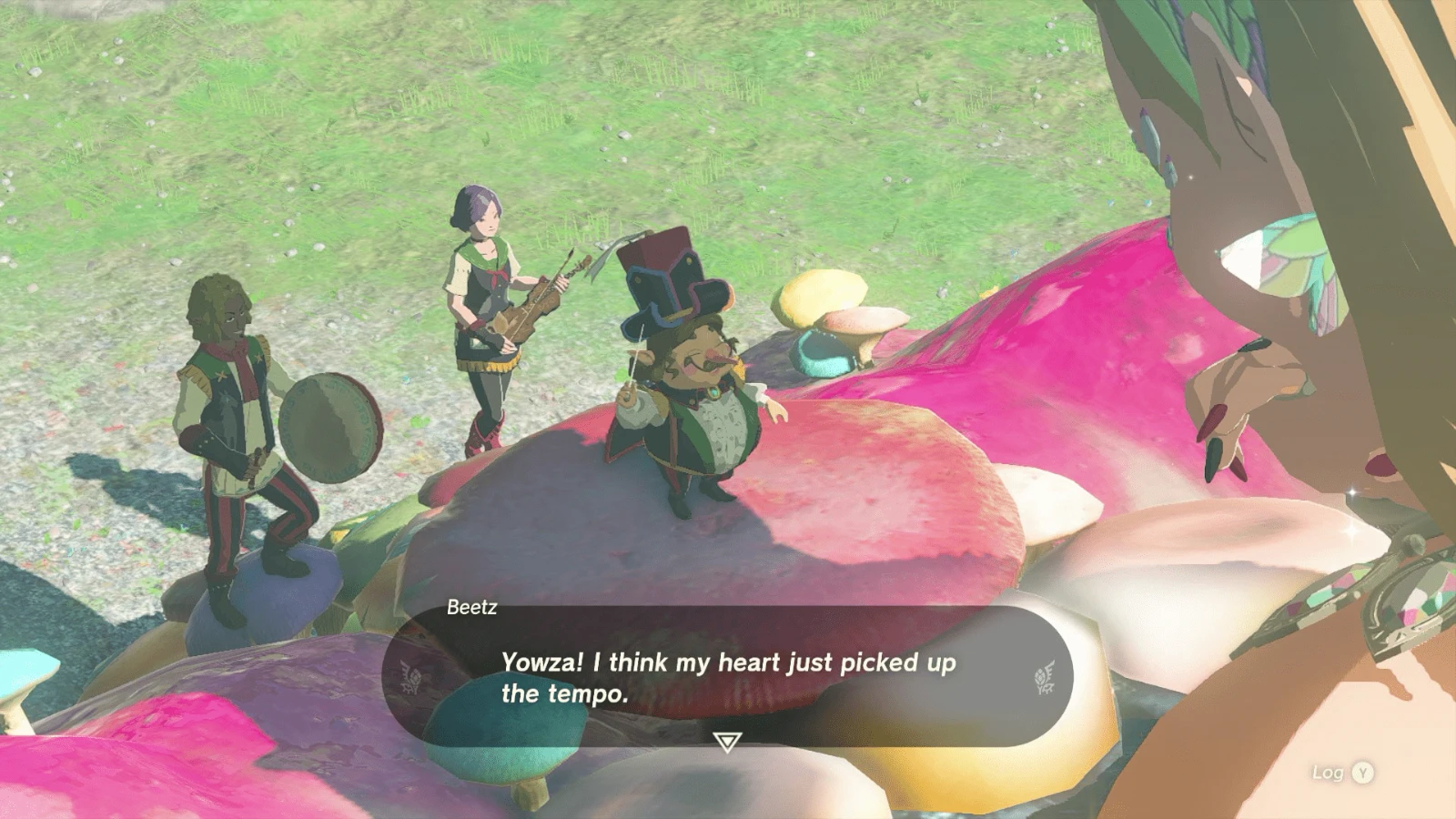
Tears of the Kingdom: hiding since the Upheaval, the sisters come out only when the Stable Trotters play for them.
Echoes of Wisdom: accessory slots two to five for 100, 200, 500 and 1,000 Rupees; a later request for a Lovely Pendant earns Zelda the Might Bell.
Key facts
Japanese name: Dai-yōsei, ‘great fairy’.
In Tears of the Kingdom they moved their flowers near the stables to hear the Stable Trotters play, and hid after the Upheaval believing every visitor was a monster. Tera, the eldest, says a blonde-haired woman lied to them about terrible events.
Spin-offs: a weapon for Link in Hyrule Warriors, fighting from inside a giant bottle; a playable fighter in Age of Calamity, all four sisters in one bud; a trophy in Super Smash Bros. Brawl.
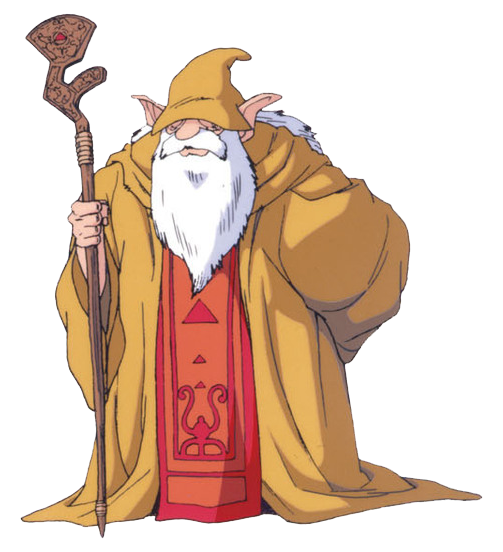
The elder of Kakariko Village is one of the series’ first proper mentors, a descendant of the Seven Wise Men who has gone into hiding. When Link calls at his cottage he finds only Sahasrahla’s wife, and it is the old man’s grandson who points the way to a hideout near the Eastern Palace. From then on Sahasrahla speaks to Link telepathically through special floor tiles, out in the Light World and deep inside dungeons.
He explains that the Master Sword will only answer a hero who holds the three Pendants of Virtue, sends Link into the Eastern Palace for the Pendant of Courage and rewards him with the Pegasus Boots, an heirloom handed down through the wise men’s families. Later he warns that Agahnim can only be beaten with his own magic, and once Link reaches the Dark World he explains how the Golden Land became a realm of darkness.
Twenty-two years later A Link Between Worlds has another elder called Sahasrahla, generally taken to be a descendant, who sends Link after his reckless apprentice Osfala, a Sage in the making.
Key facts
Gives Link the Pegasus Boots.
Zelda Universe’s Aren Taylan has suggested that the name may come from Sahasrara, the ‘crown chakra’ of some Hindu traditions, a neat fit for a telepath. It is an educated guess, not a confirmed origin.
First appears: Ocarina of Time (1998) · Also in: Majora’s Mask, Four Swords Adventures
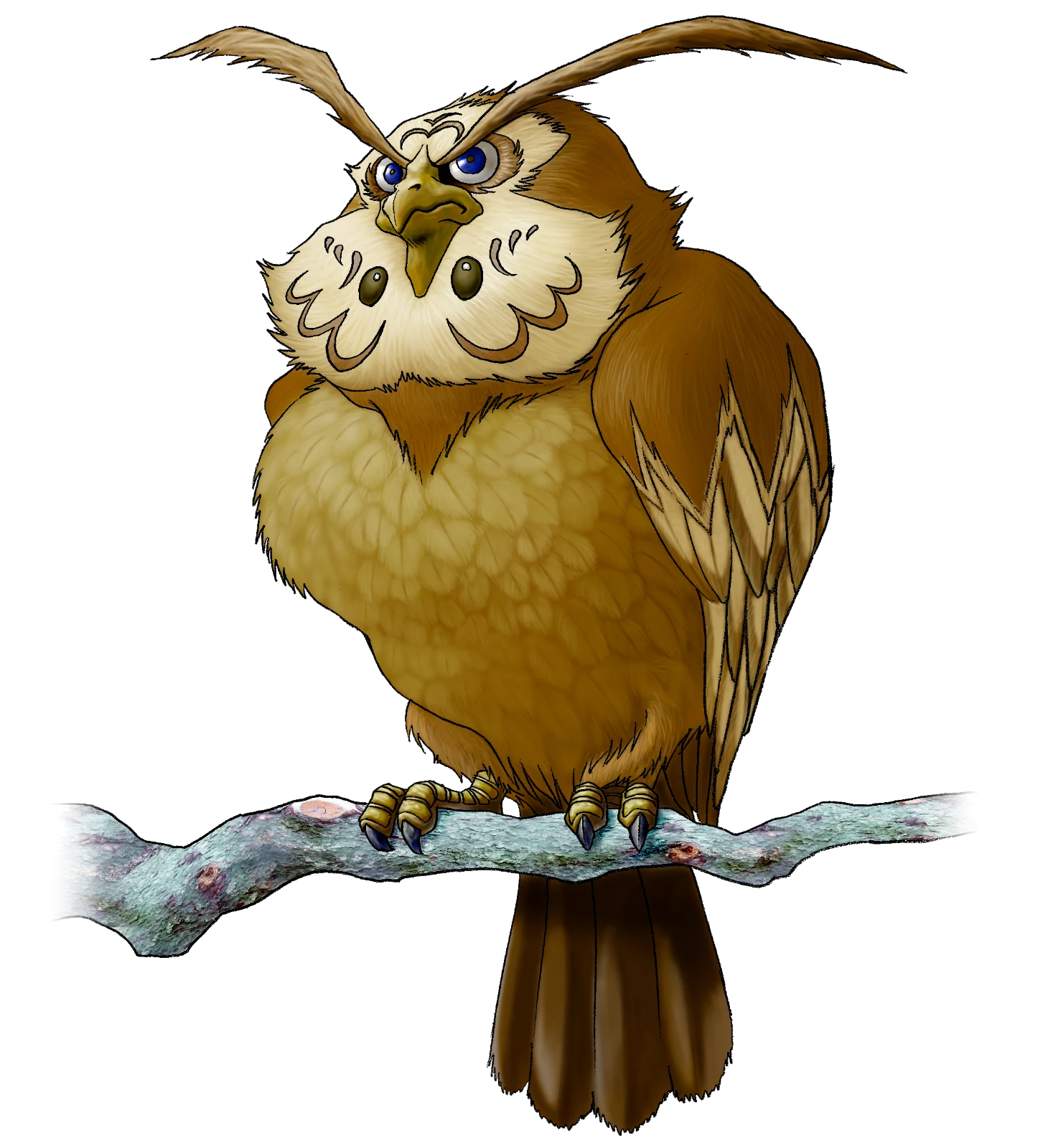
The enormous owl of Ocarina of Time swoops down with long-winded advice and then asks whether you would like to hear it all again; the cursor sits on yes, so plenty of players did. Hyrule Historia confirms that he is the Sage Rauru in another form. He returns as the Great Owl of Majora’s Mask, teaching the Song of Soaring, and in Four Swords Adventures he is the one who names Shadow Link. In the 2026 Ocarina of Time for Nintendo Switch 2 he finally has a voice, Frank Todaro’s in English; Todaro plays Rauru too. The full story is on our Great Deku Tree and Kaepora Gaebora page.
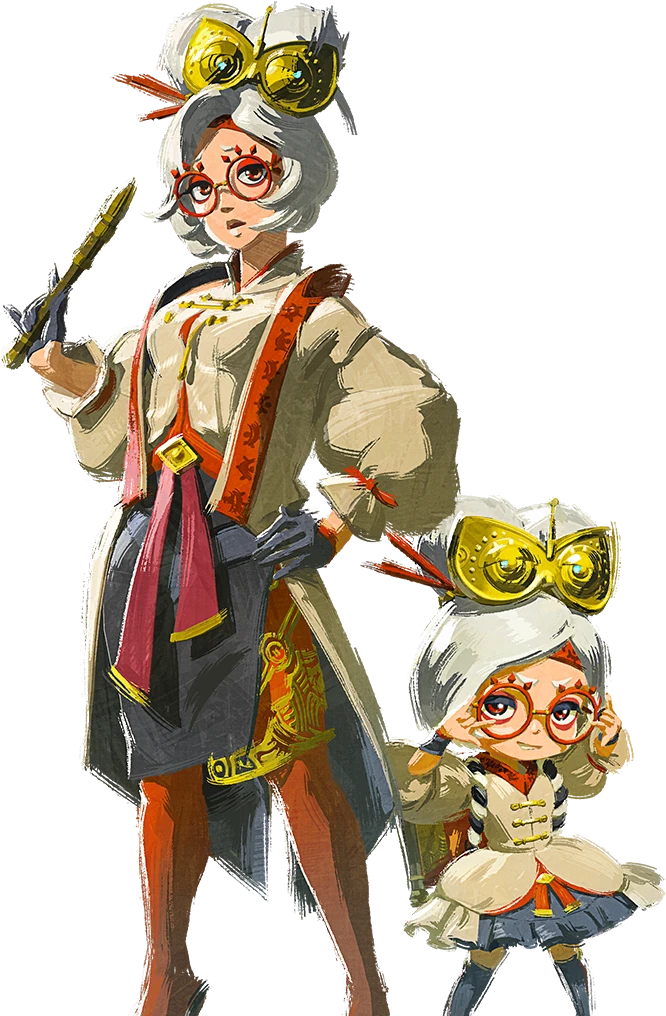
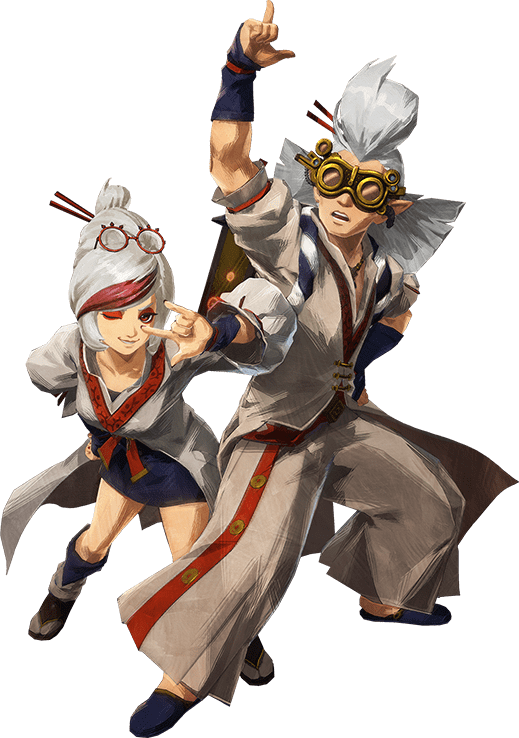
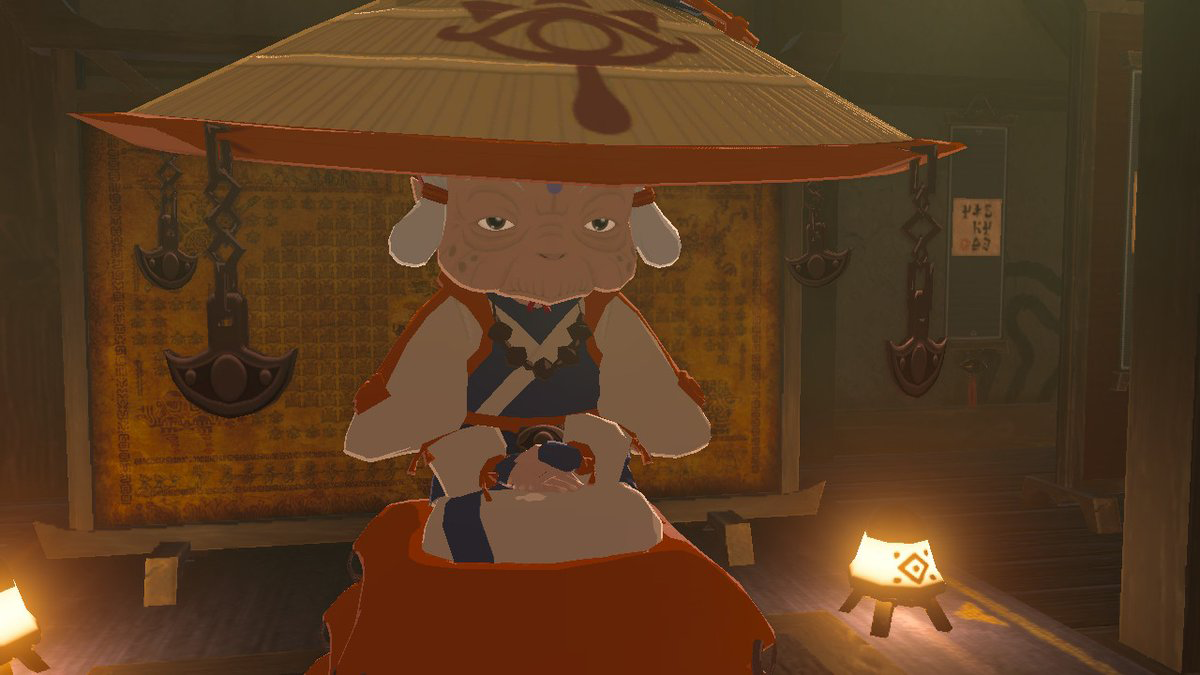
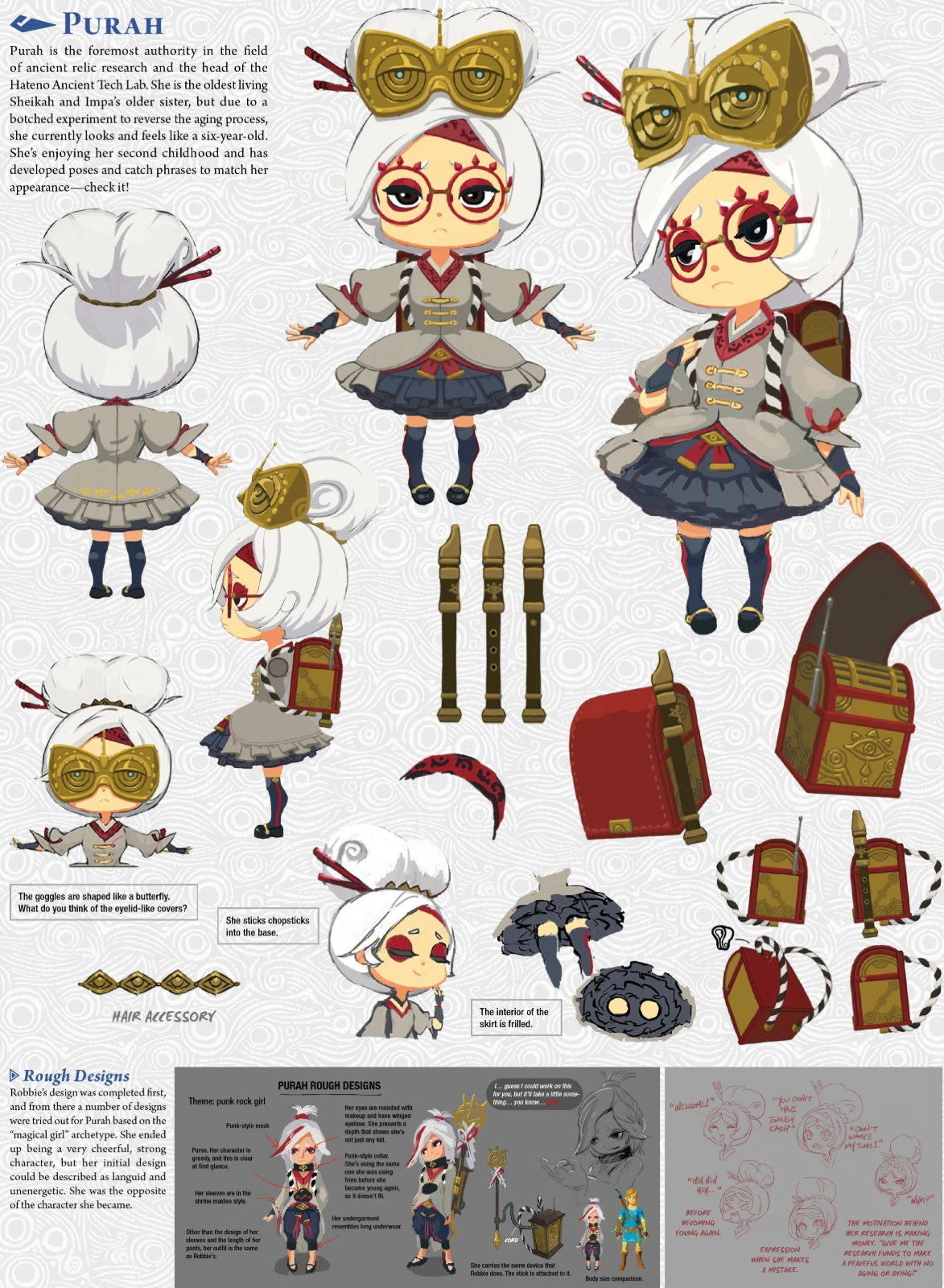
Purah is Impa’s older sister and the Sheikah’s most brilliant researcher, already studying the Sheikah Slate a hundred years before Breath of the Wild. When Link reaches her Hateno Ancient Tech Lab, which she runs with her assistant Symin, she looks like a little girl: an experiment in turning back her age worked rather too well, as her diary admits. She restores the Slate’s photo album, which sets off the hunt for Link’s lost memories, and upgrades his runes. In Tears of the Kingdom she is a young woman again, running the research outpost at Lookout Landing beneath the floating castle and sending Link on his missions. The Purah Pad is named after her.
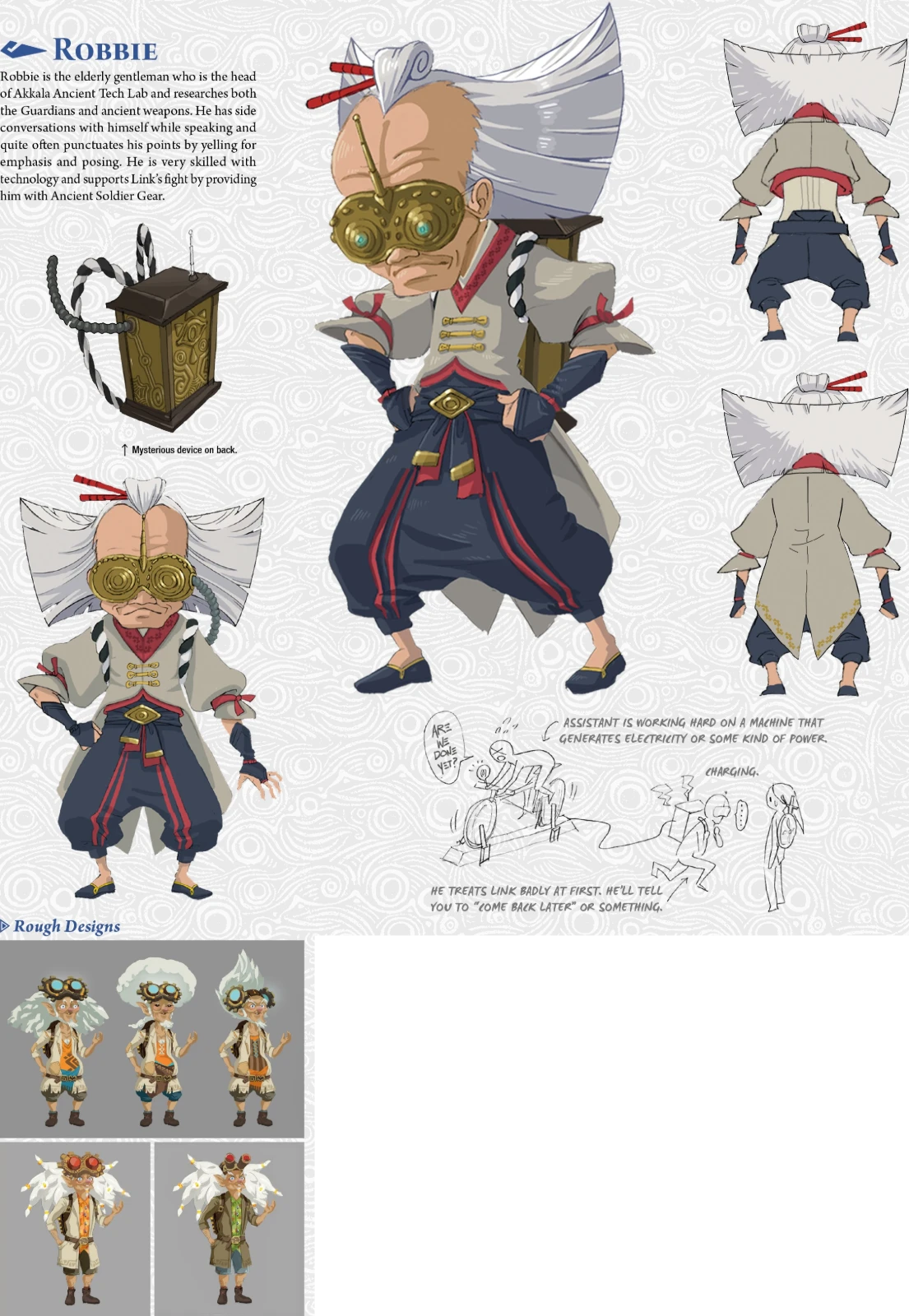
Robbie, goggles on and catchphrases ready (“Okeydoke”, “Ta-ta!”), is Hyrule’s leading expert on Guardians. He has spent most of the century since the Calamity researching at the Akkala Ancient Tech Lab, where he lives with his wife Jerrin, and has turned the lab’s guidance stone into a robot called Cherry, who forges ancient arrows, weapons and armour from Guardian parts once Link brings blue flame for the furnace. He only believes Link is the hero when he sees his old scars. In Tears of the Kingdom he heads development of the Purah Pad, grumbling that it is not named after him, and goes down into the Depths with Link and the young researcher Josha.
Key facts
Purah counts herself, Robbie and Impa as the only Sheikah still alive who lived through the Great Calamity.
Robbie and Jerrin’s son is Granté.
Playable together, as one fighter, in Age of Calamity, added by the second Expansion Pass wave, Guardian of Remembrance, on 29 October 2021.
Voices: Kate Higgins (English) and Ayano Shibuya (Japanese) are reported to play Purah in Tears of the Kingdom, though the English credits give no roles; Jacob Craner voices Robbie in English in Age of Calamity.
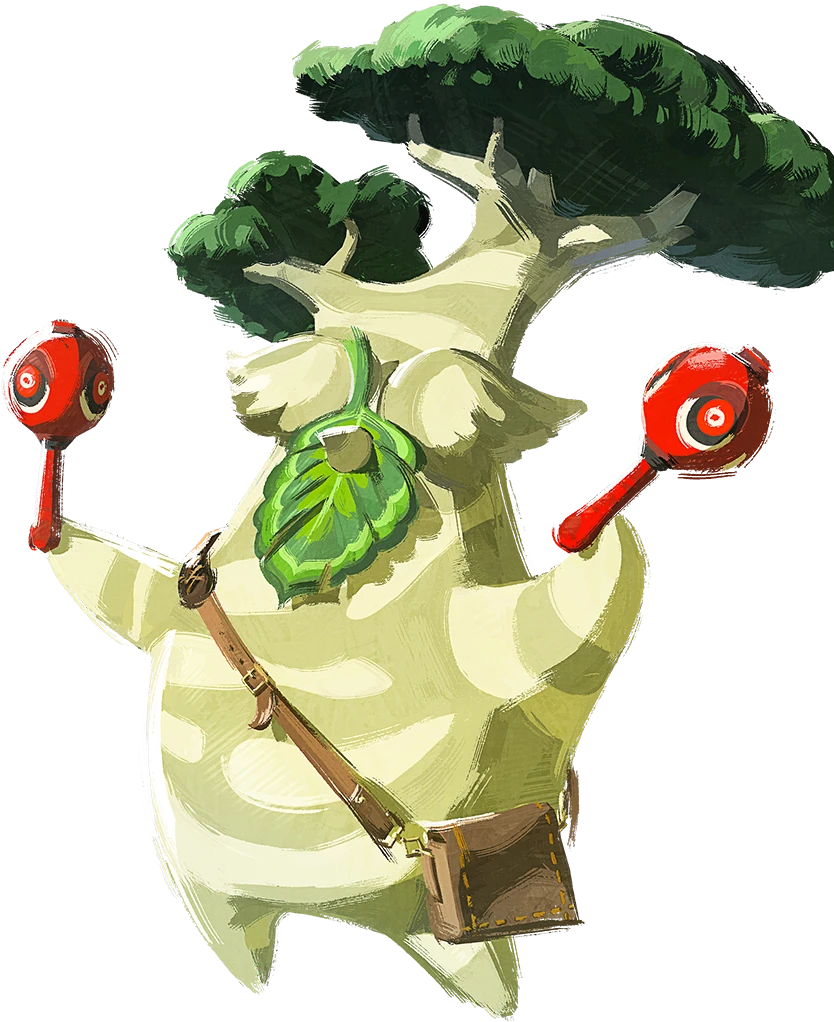
Hestu
First appears: Breath of the Wild (2017) · Also in: Hyrule Warriors: Age of Calamity, Tears of the Kingdom
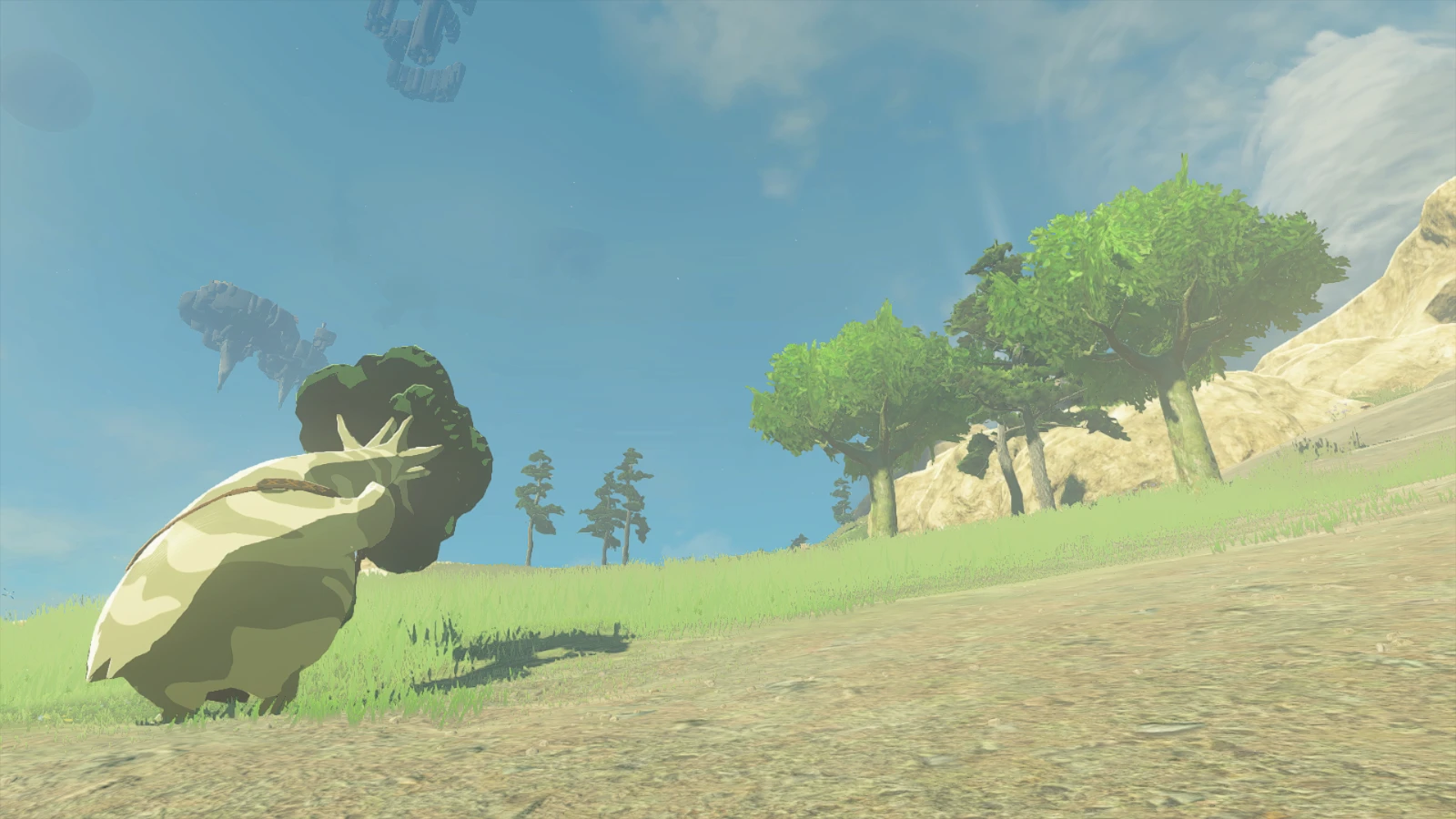
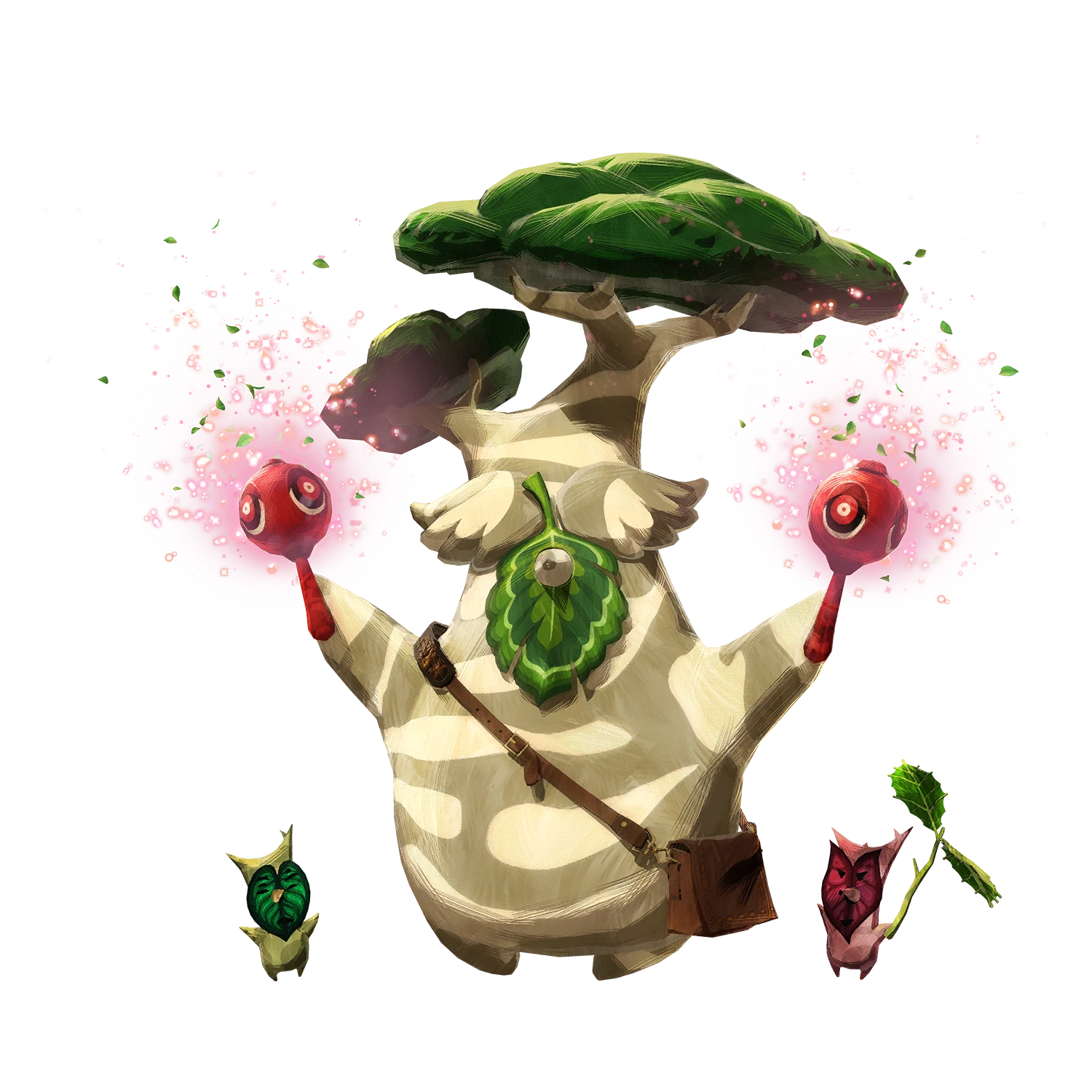
Hestu is a Korok, but an unusually big one, and only certain people can see him; he calls the Great Deku Tree “grandpa”. Link meets him on the road to Kakariko Village in Breath of the Wild, distraught because Bokoblins have pinched his magical maracas. Link wins them back from three Blue Bokoblins, to a delighted “SHALA-KALA!”, but the Korok seeds that used to rattle inside have gone.
From then on the seeds Link finds and hands over buy extra weapon, bow and shield slots, each upgrade a little dearer than the last, and Hestu shakes and dances his way through every one, his speech peppered with “Shoko…”. It takes 441 seeds to max out all three pouches, out of 900 hidden around Hyrule; find every last one and he hands over Hestu’s Gift.
In Tears of the Kingdom he is found on the mountain path to Lindor’s Brow Skyview Tower, beyond New Serenne Stable, frightened of some nearby Evermeans. Once Link helps, he moves to Lookout Landing and carries on trading pouch space for seeds.
Key facts
Playable in Age of Calamity, where his special move calls up a little army of Korok friends.
Voiced in English by Cristina Vee in Age of Calamity.
His quest in Tears of the Kingdom is called Hestu’s Concerns.
Great Fairies through the years
The Wind Waker (official artwork)The Queen of Fairies, The Wind Waker (official artwork)The Great Fairy of Flame, Four Swords (official artwork)Twilight Princess (render)Tera, Breath of the Wild (model)Kaysa, Tears of the Kingdom (model)Echoes of Wisdom (render)Ocarina of Time for Nintendo Switch 2 (model)
Merchants and messengers
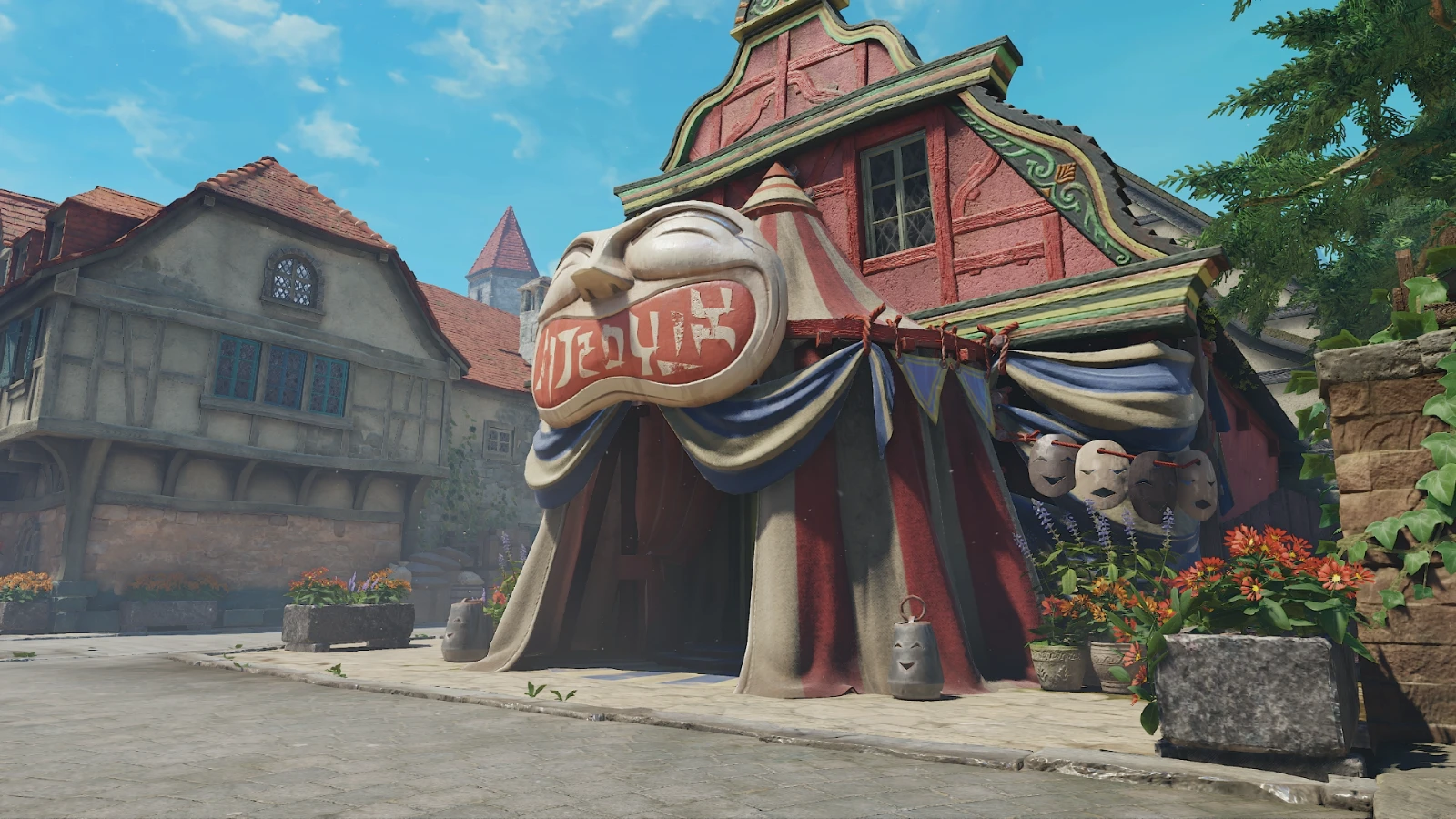
The Happy Mask Shop, rebuilt for Ocarina of Time on Nintendo Switch 2.
Hyrule runs on Rupees and the post. The series’ shopkeepers range from the irrepressibly cheerful to the frankly unnerving, and its postmen are some of the most dedicated workers in any fantasy kingdom, whatever the weather, the wolf or the falling moon.
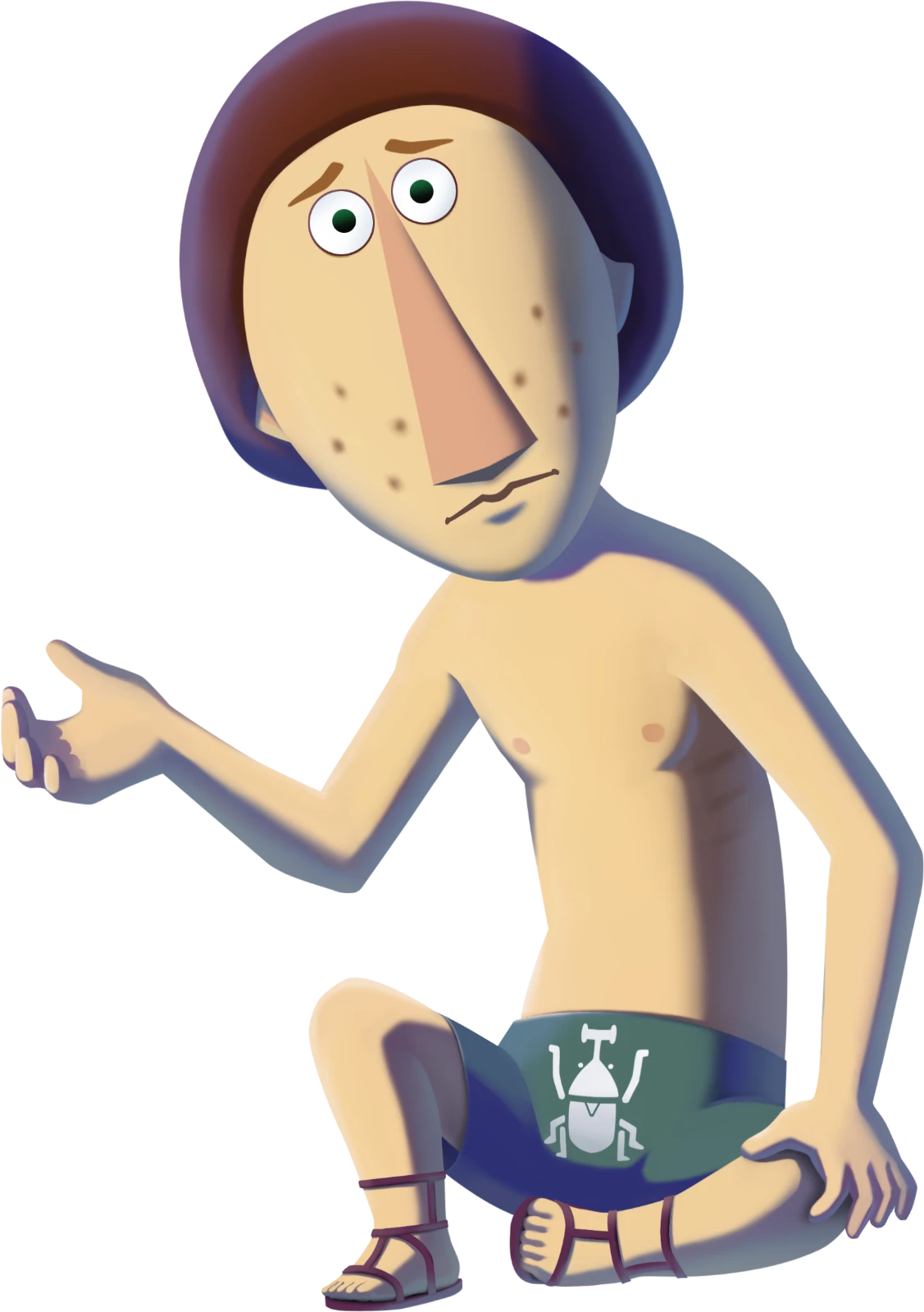
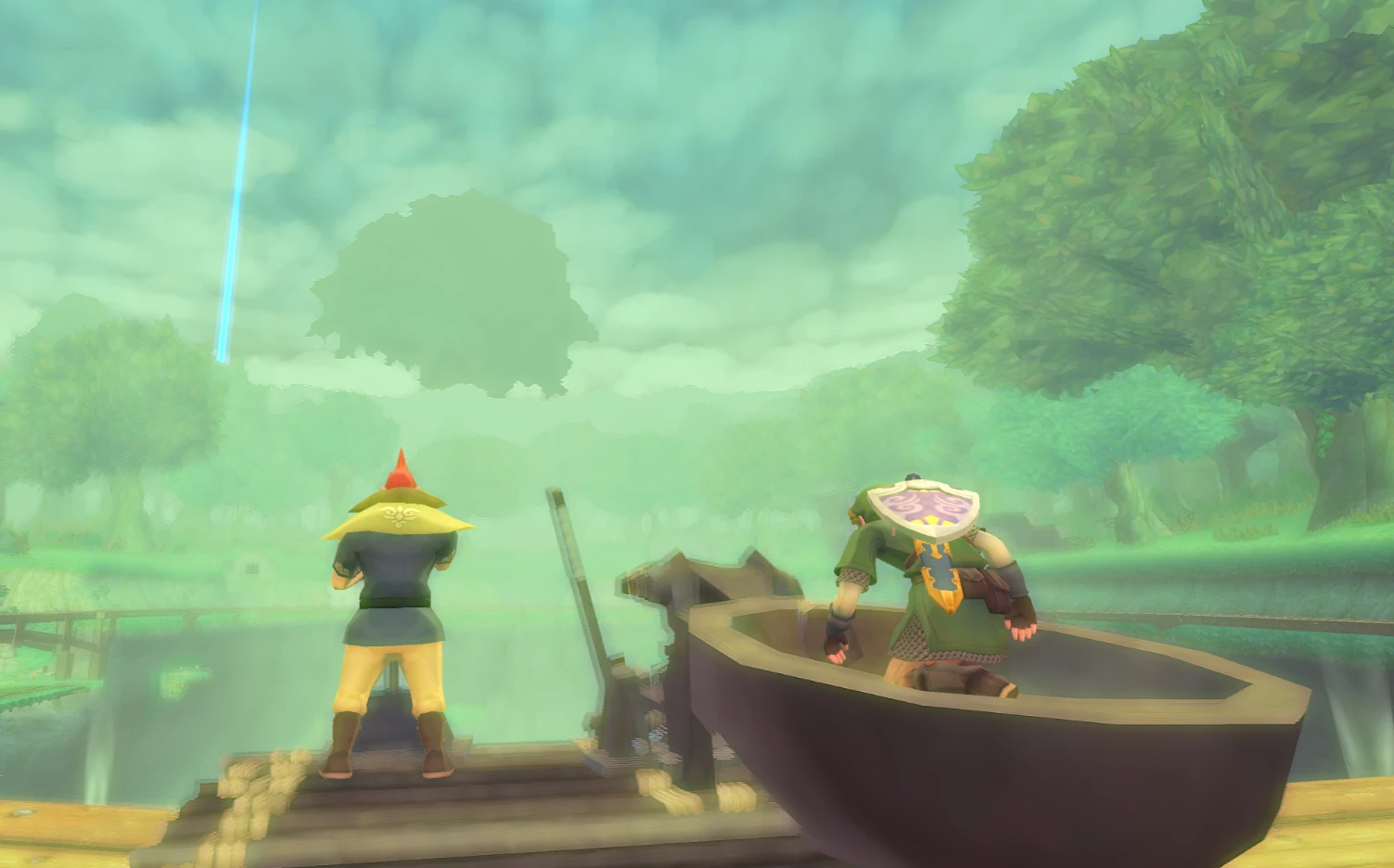
Bald, beaming and permanently on the move, Beedle has kept Link stocked in seven main-series games: from the Shop Ships of The Wind Waker and a Picolyte stall in The Minish Cap to a hot-air balloon in Spirit Tracks, a flying shop in Skyward Sword that drops browsers who buy nothing through a trapdoor, and a beetle-shaped backpack at the stables of Breath of the Wild and Tears of the Kingdom. He runs loyalty schemes with silver, gold and platinum cards, adores beetles and greets every customer with an excited “OH!”. In Japan he is called Terry. The full story, shop by shop, is on our Beedle page.
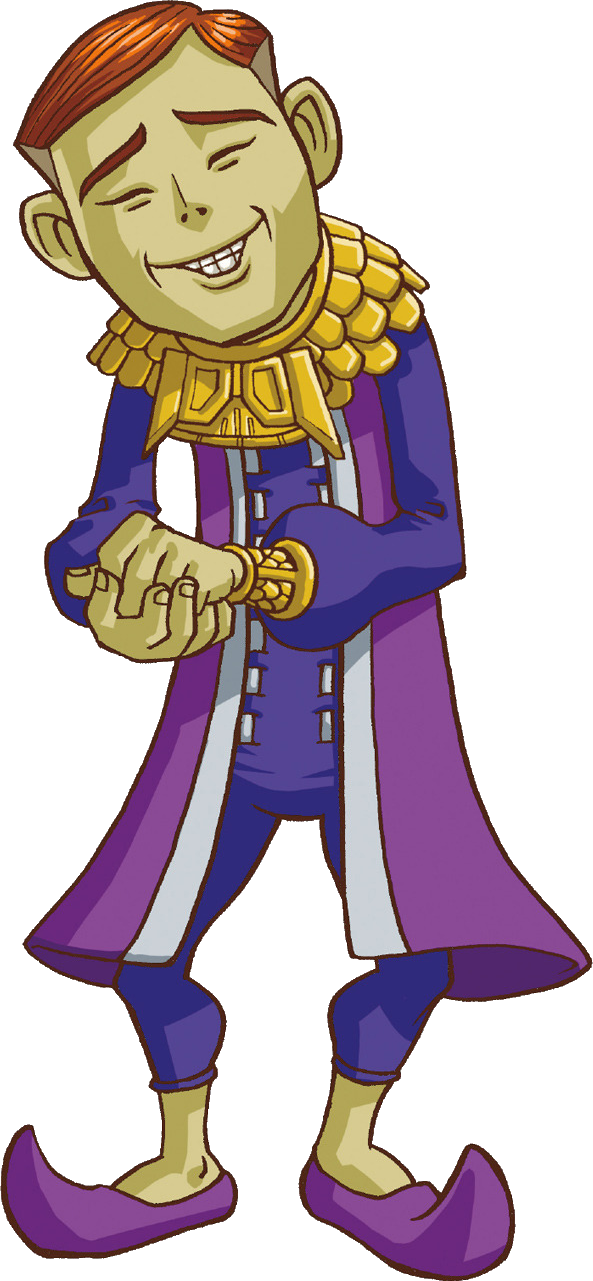
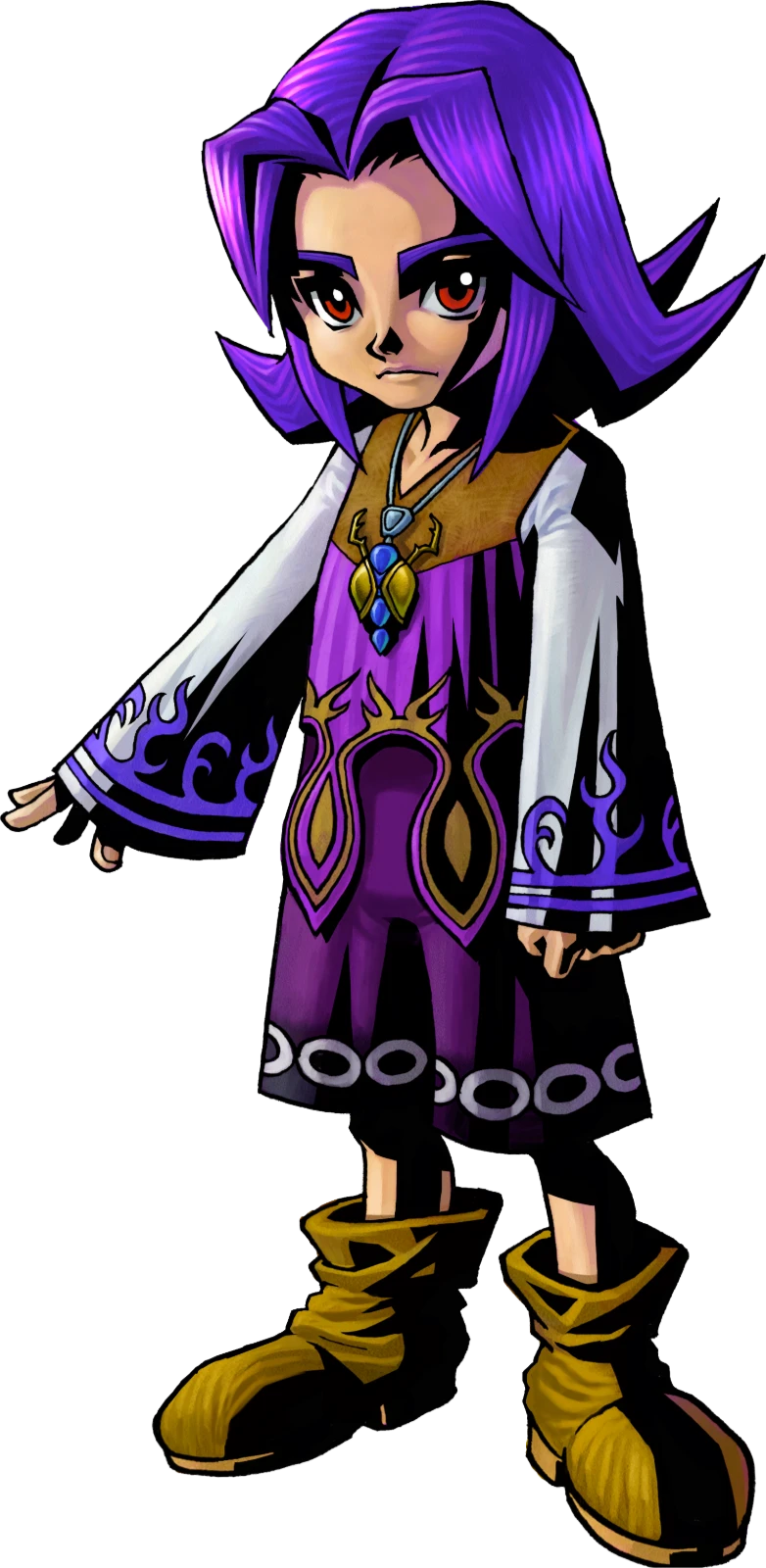
In Ocarina of Time he is merely an odd shopkeeper. His Happy Mask Shop in Hyrule Castle Town lends young Link masks to sell on to customers around Hyrule, a chain of deals that ends with the Mask of Truth, and he is one of the guests at the Lon Lon Ranch party in the ending.
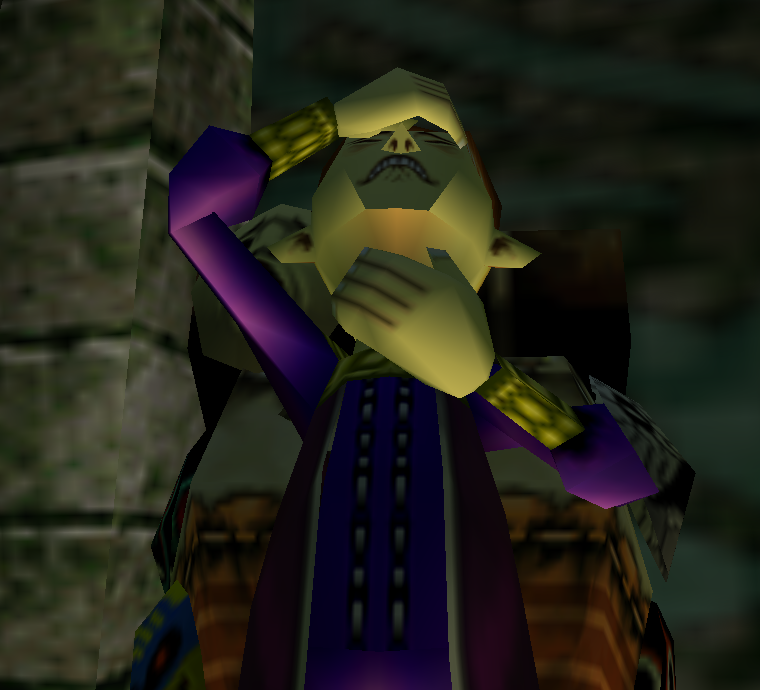
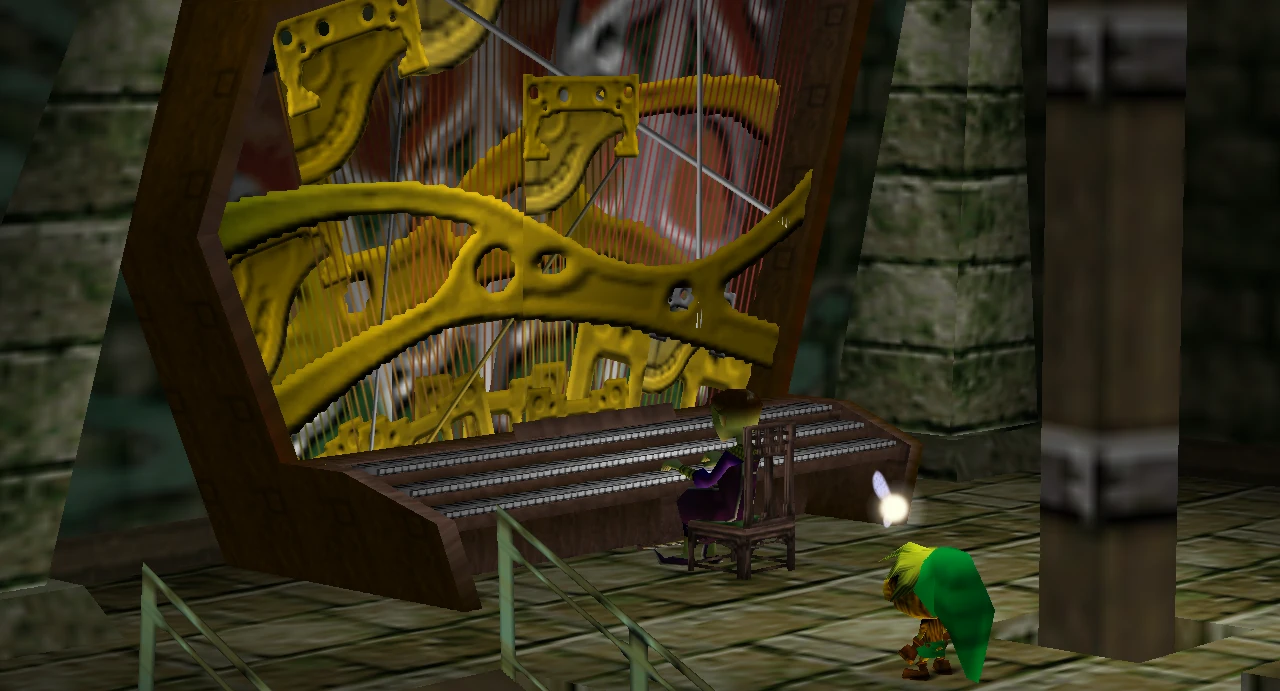
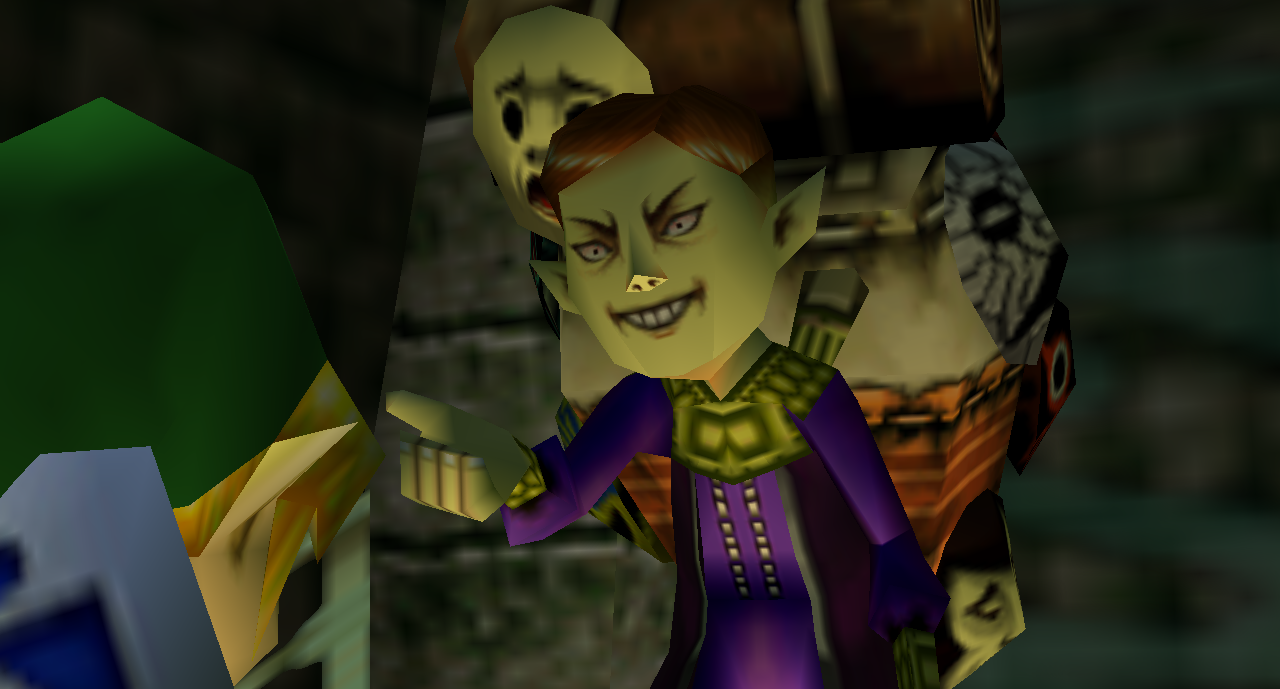
Majora’s Mask turns him into one of the most unsettling figures in the series. He had tracked down Majora’s Mask on his travels, only for the Skull Kid and his fairies to ambush him and steal it. When the cursed Deku Scrub Link stumbles into the Clock Tower, the salesman greets him with the game’s most famous line and offers to lift the curse if Link brings back his own stolen ocarina and the mask within three days. The ocarina alone is enough for the Song of Healing, which the salesman plays on an organ that seems to appear from nowhere. His smile never moves, but his mood can flip in an instant: when Link fails him, he seizes the boy and shakes him violently. He also has a knack of turning up somewhere new without ever seeming to walk there, and at the end he takes back the now-harmless mask and leaves.
His last appearance is a slightly sad cameo in Oracle of Ages: too hungry to do business, he swaps Link the Doggie Mask for some Tasty Meat.
Mysteries
Nobody knows his real name, where he comes from or what he was doing during Ganondorf’s seven-year rule.
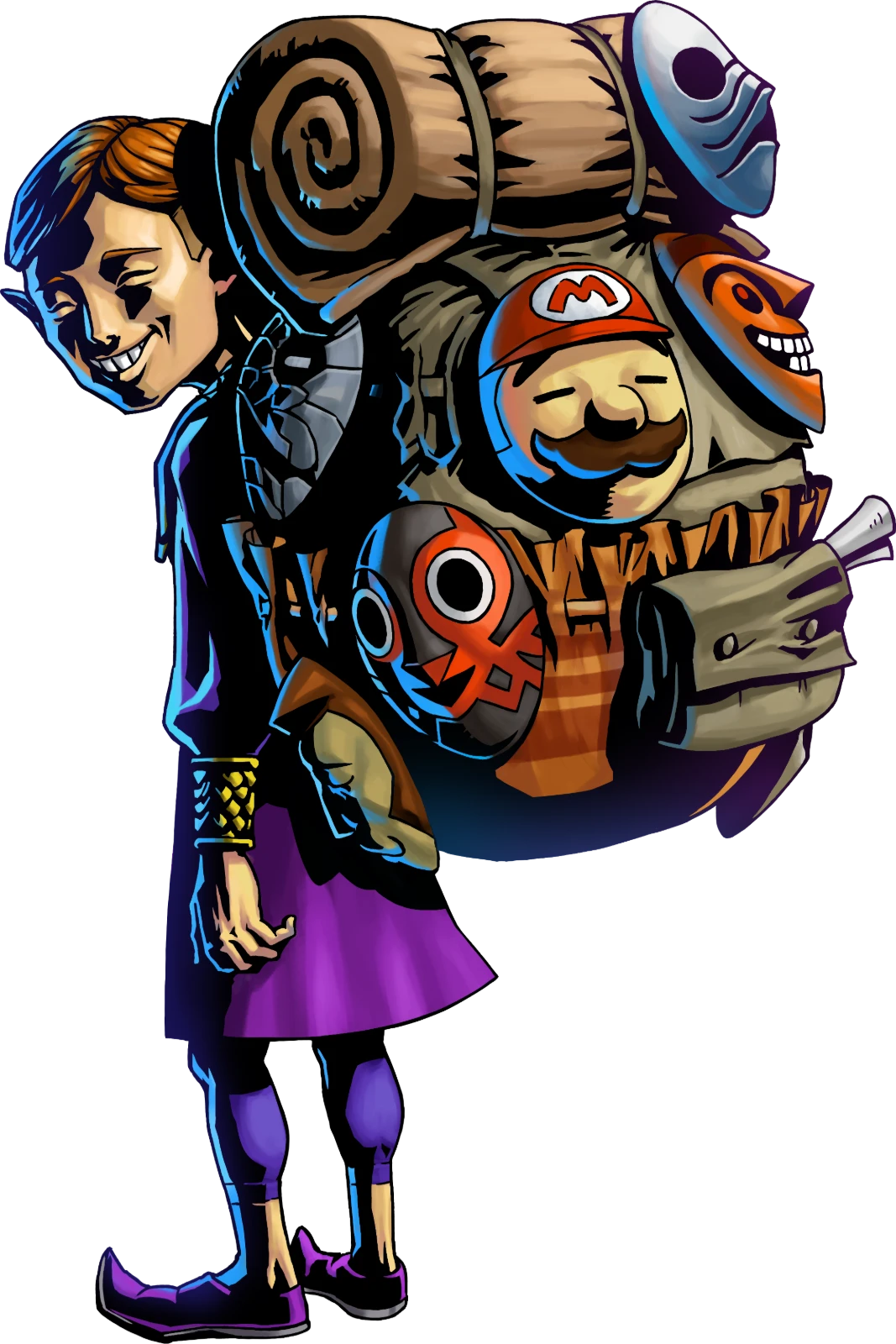
One of the masks on his towering backpack in Majora’s Mask is Mario’s face.
The masked children Link meets on the moon look rather like him.
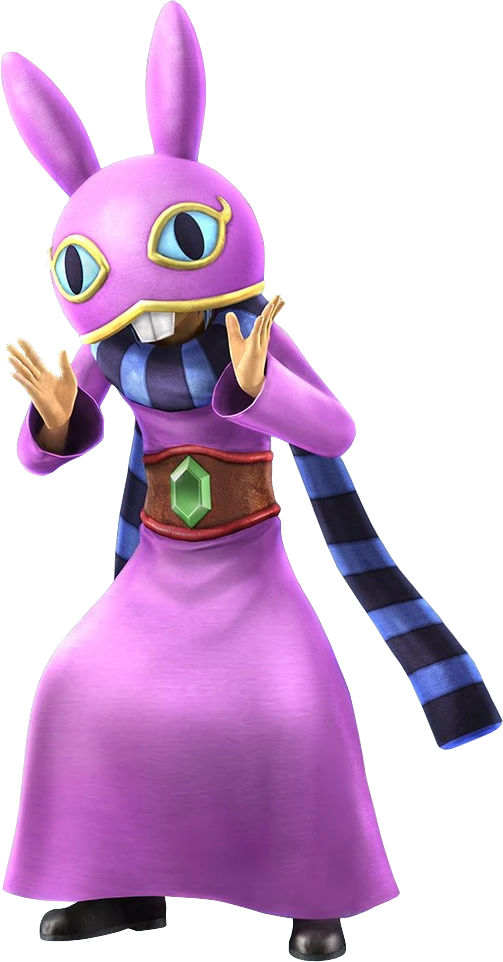
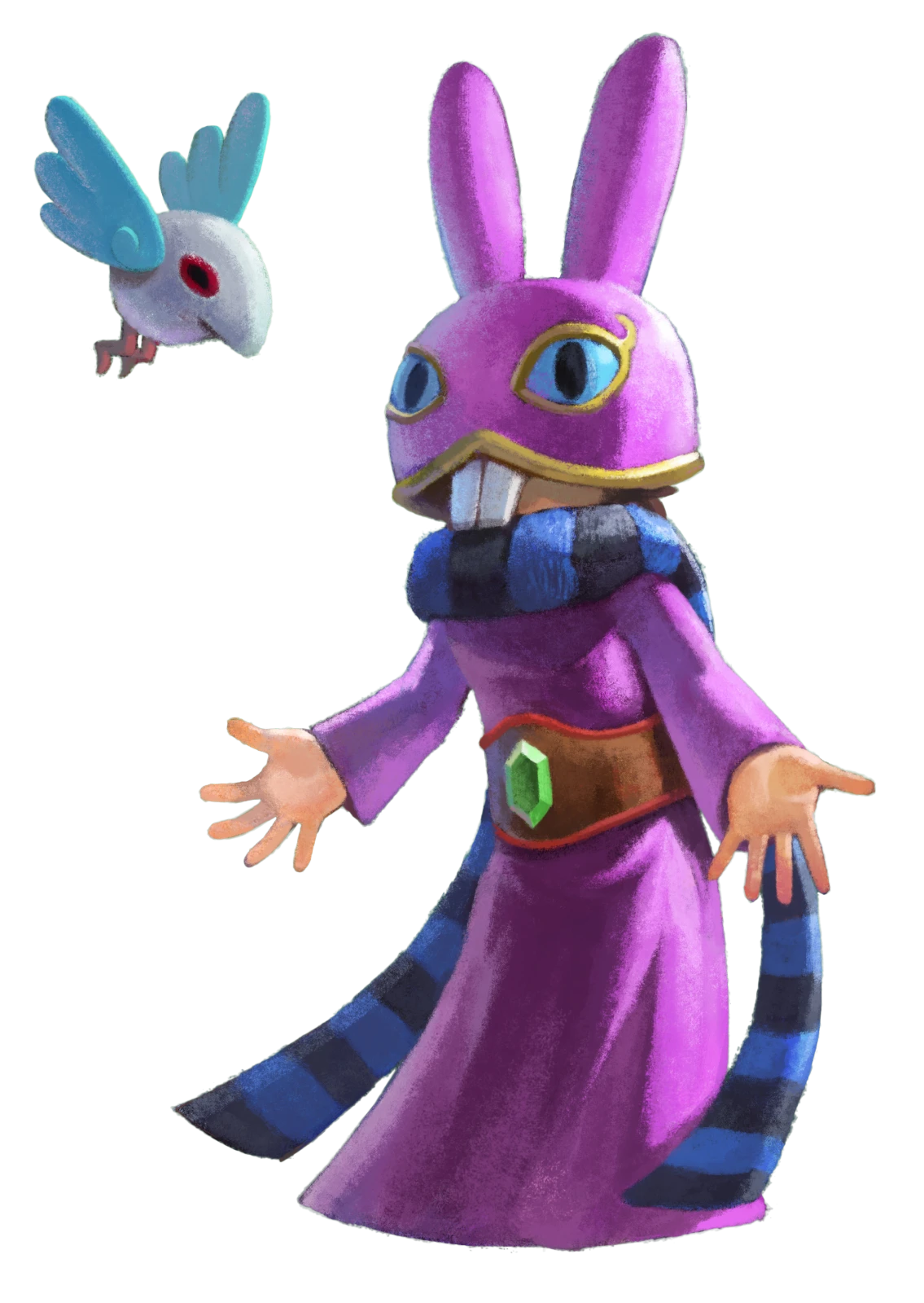
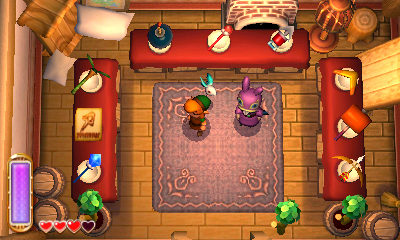
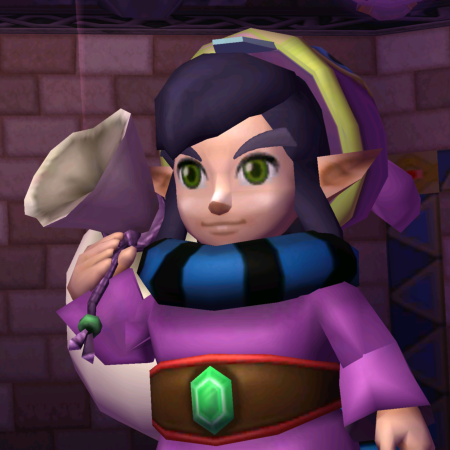
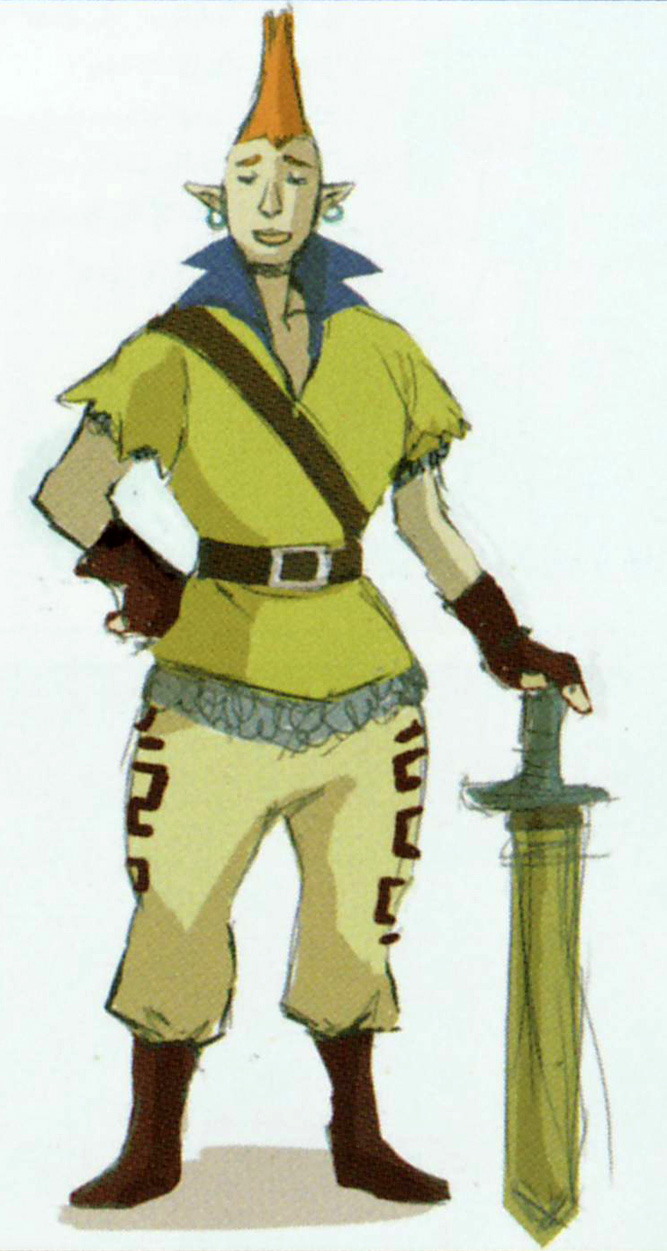
Ravio turns up just after Link’s first brush with the painter-sorcerer Yuga, claiming he found the hero out cold in the Sanctuary. He asks whether he can stay for a while, gives Link a bracelet (which soon lets him merge into walls) and promptly turns Link’s house into a shop. Ravio’s Shop rents or sells almost every key item in the game, which is why A Link Between Worlds lets you take its dungeons in nearly any order. Fall in battle and his bird-like companion Sheerow flies off with the rentals.
He calls himself a travelling merchant and, by his own admission, he is a coward. Under the purple robe and rabbit hood he is the image of Link, only paler, with black hair and green eyes: he is Lorule’s counterpart of the hero. When he learned that Princess Hilda and Yuga meant to steal Hyrule’s Triforce, he fled into Hyrule hoping to find someone braver to stop them, and at the very end it is Ravio who talks Hilda out of her plan.
Key facts
Playable in Hyrule Warriors and Hyrule Warriors Legends from the A Link Between Worlds Pack (31 October 2016), swinging a Rental Hammer, and in the Definitive Edition. He keeps his hood up throughout.
His rabbit hood is a wearable piece of armour in Breath of the Wild.
The Postman
First appears: Majora’s Mask (2000) · Also in: Oracle of Ages, The Minish Cap, Twilight Princess, Phantom Hourglass, Spirit Tracks
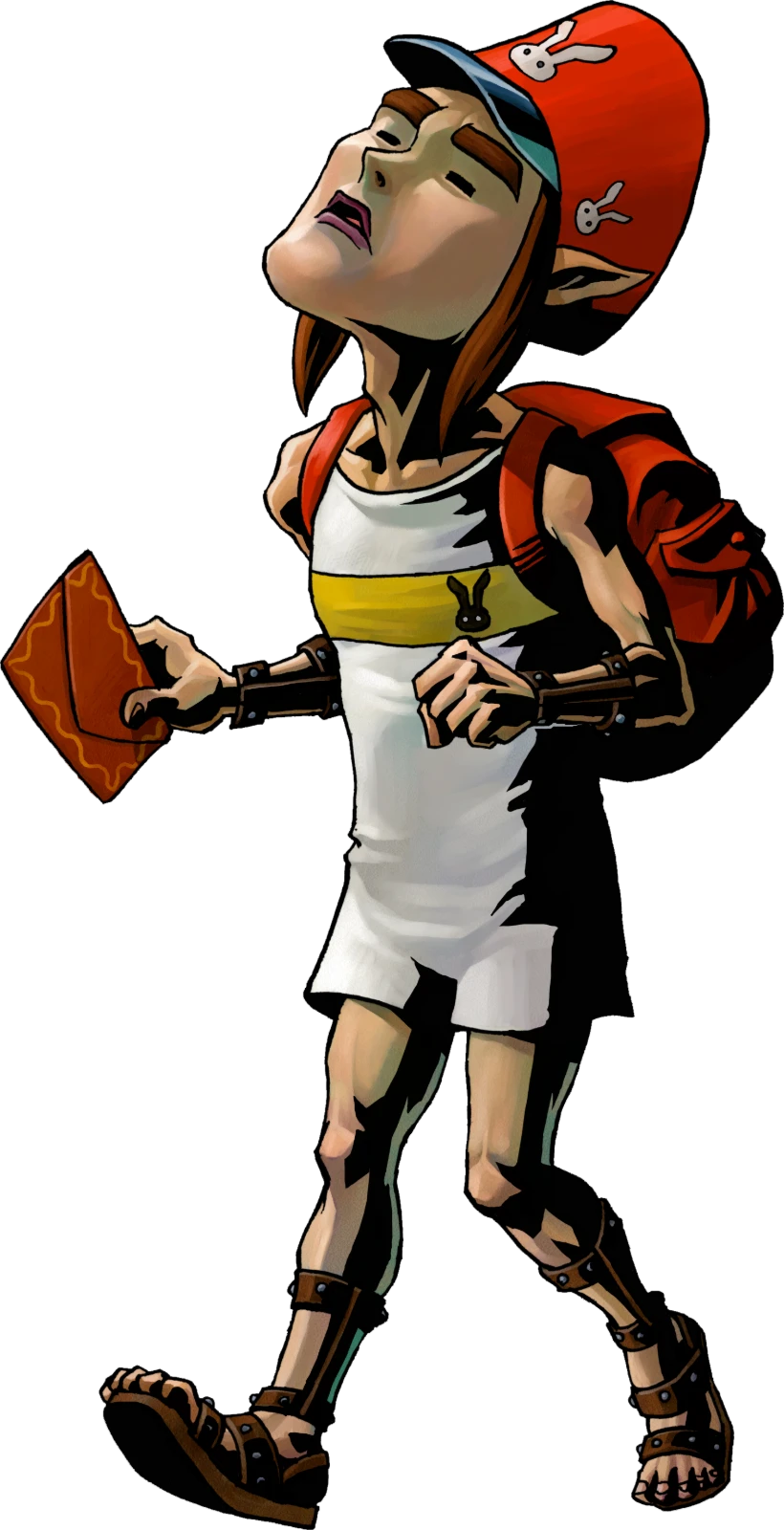
Clock Town’s postman, who shares his look with the Running Man of Ocarina of Time, lives for his timetable of collecting, delivering and training, and refuses to break it even with the moon about to land. He admits that he would love to flee, but running away is not on the schedule. He carries the letters between Anju and Kafei, and by the last day he has even written himself a letter begging himself to leave. Once Link hands him a priority letter for Madame Aroma, his duty is done and he is free at last, and he gives Link his Postman’s Hat, which lets Link peek inside postboxes.
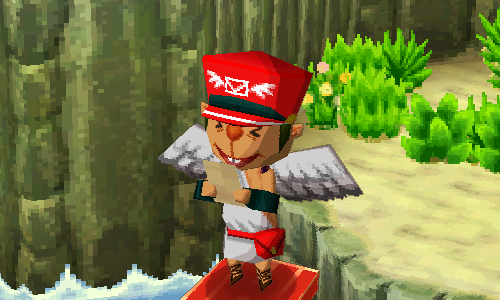
Postmen have been part of the furniture ever since. In Oracle of Ages the postman of Lynna Village in the past cannot keep to his rounds without a clock, so Link’s Poe Clock joins the trading sequence; in The Minish Cap he does the rounds of Hyrule Town; and in Twilight Princess he leaps out at set spots to hand Link his letters, even when Link is a wolf, which nobody ever explains. Phantom Hourglass has a winged, Rito-like postman who reads every letter aloud, and his wingless successor in Spirit Tracks hands them over unread.
Key facts
The Spirit Tracks postman explains the change of policy: “some folks thought our reading their letters out loud was rude.”
In Clock Town he also runs a timing game: stop the count on exactly ten seconds.
The Wind Waker has no character called the Postman, but its Rito postal service, Quill among them, carries mail across the Great Sea.
Ravio’s Shop, set up in Link’s house (promotional screenshot)The Happy Mask Salesman in Oracle of Ages (official artwork)The Phantom Hourglass postman reading a letter
Not everyone in Hyrule is there to sell Link something. Some of the series’ best-loved characters simply have lives of their own: a ranch to run, a wedding to save, a rival to beat or, in the case of two cackling witches, a demon king to raise.
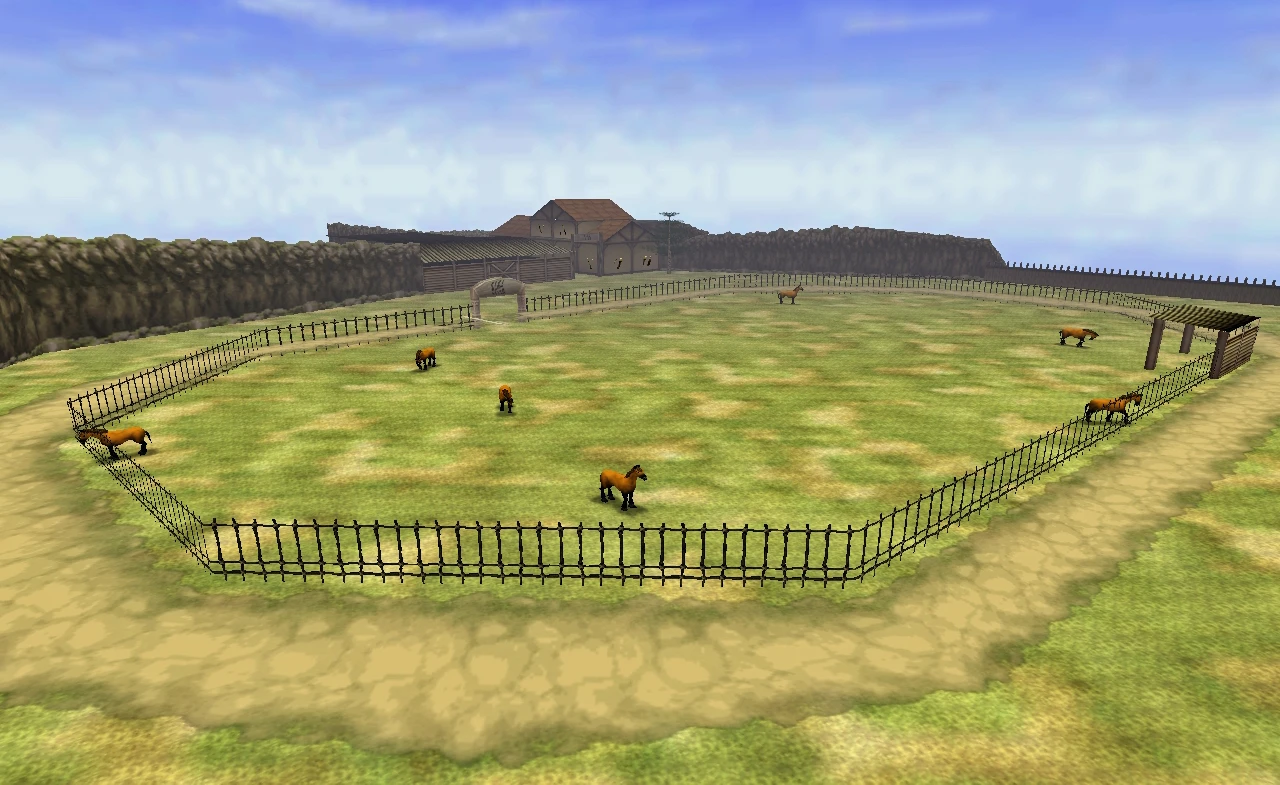
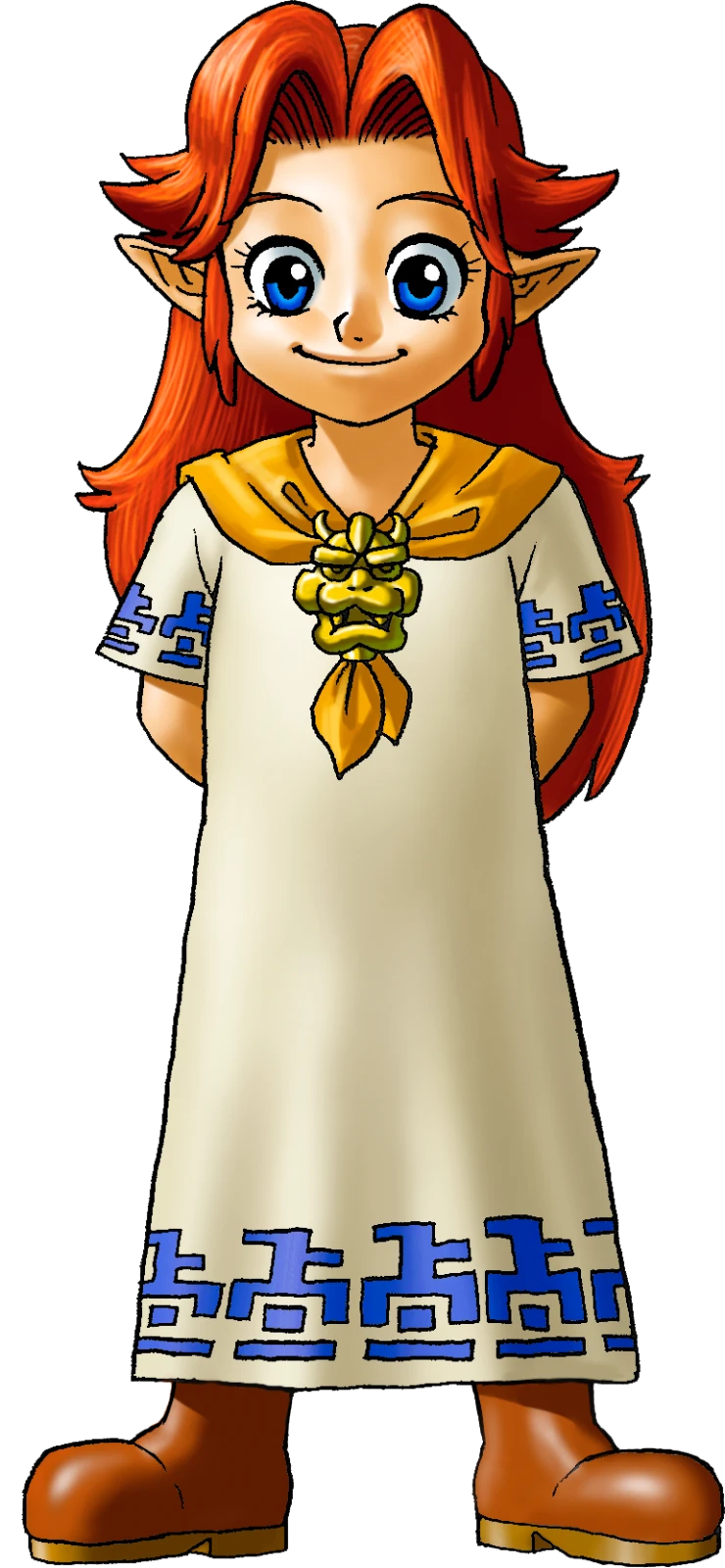
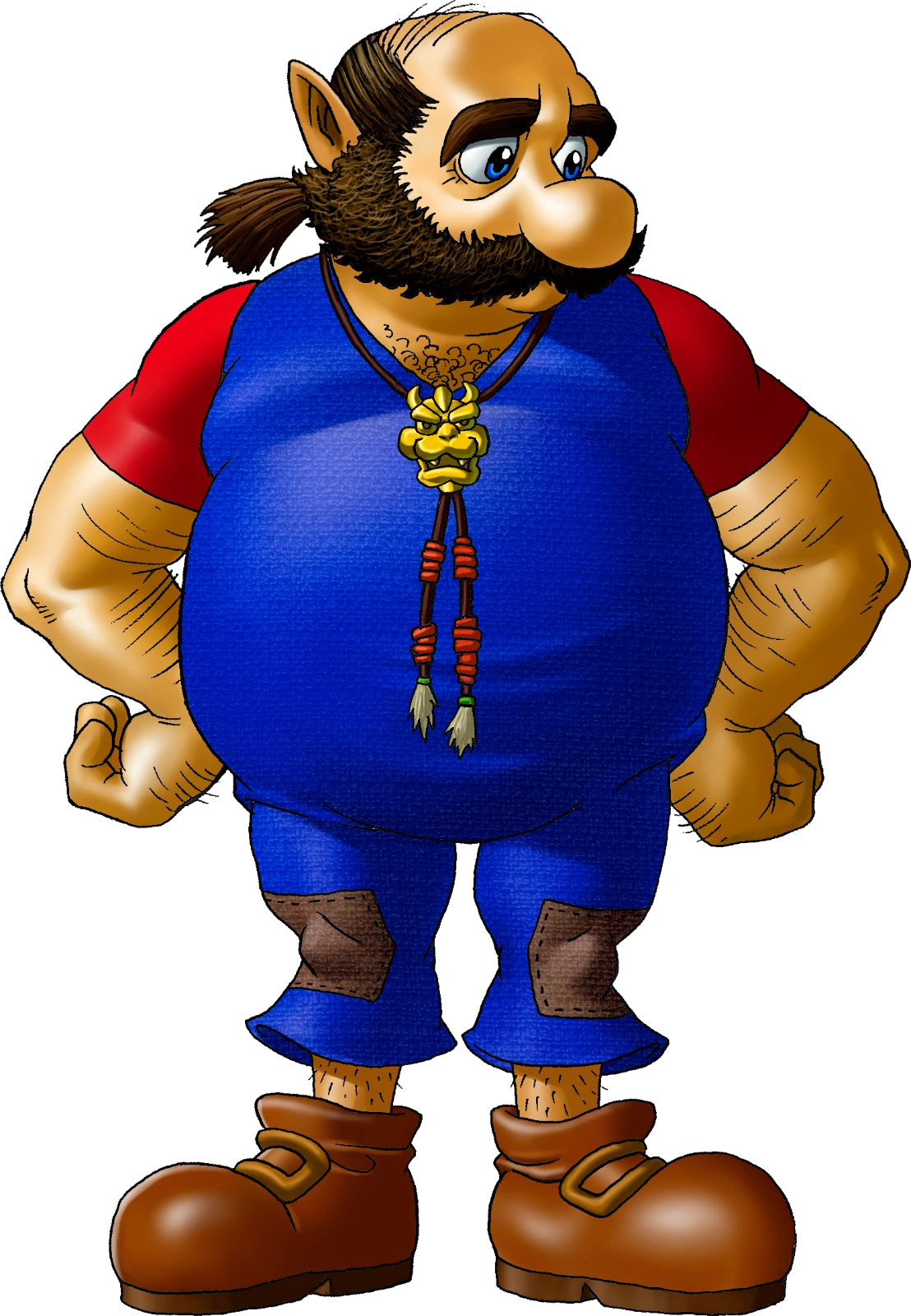
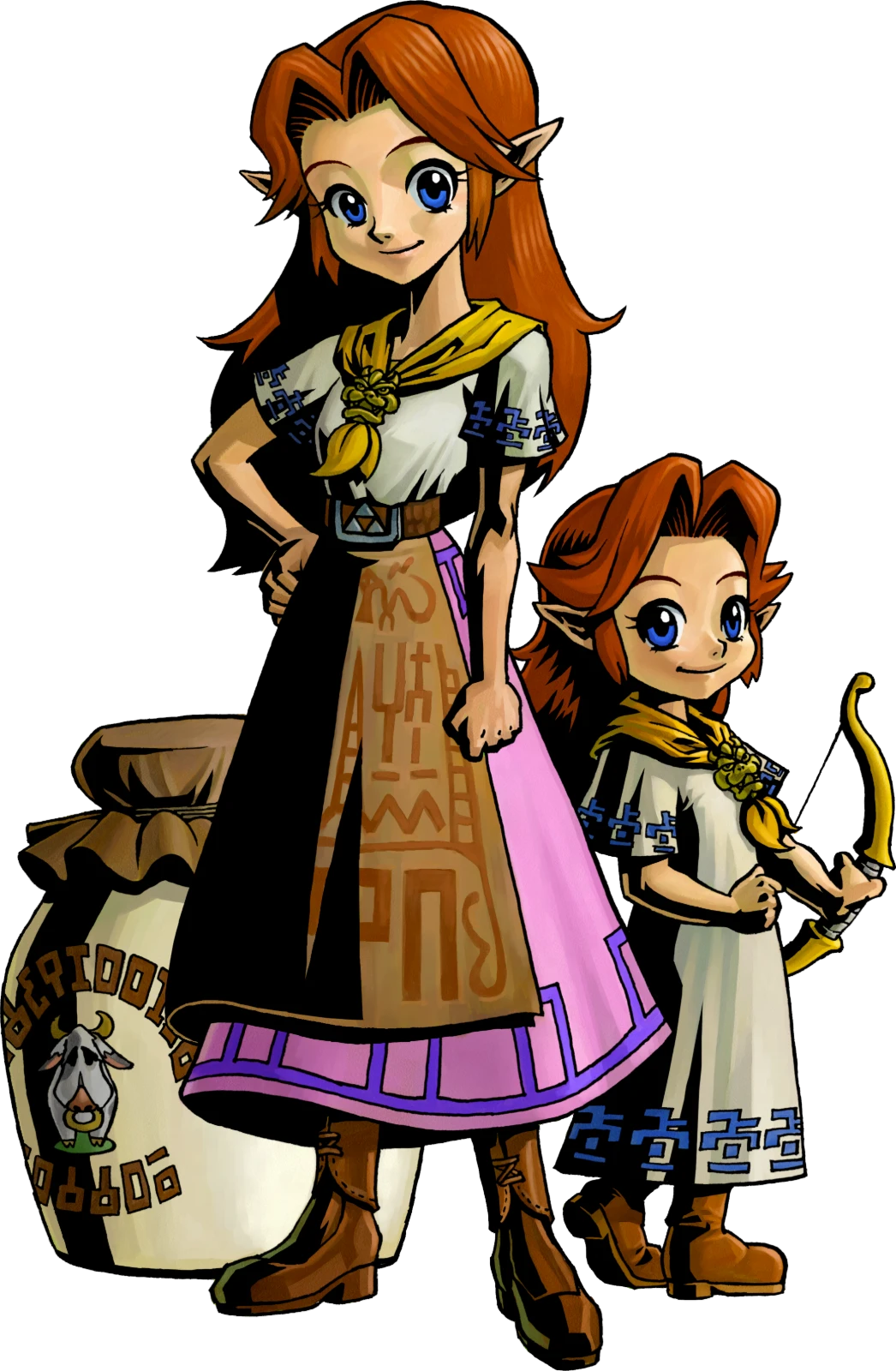
Malon is the bright, red-haired daughter of Lon Lon Ranch, forever singing to her horses; Talon is her big, sleepy father. The pair are modelled on Marin and Tarin from Link’s Awakening. Young Link first finds Malon outside Hyrule Castle, waiting for Talon, who has nodded off by the castle’s back door, and she gives Link an egg that hatches into a Cucco to wake him. At the ranch she teaches him Epona’s Song, which her mother composed, and introduces him to the foal Epona.
Seven years later the farmhand Ingo has taken over the ranch to curry favour with Ganondorf, and Malon stays only to protect the animals. Link wins Epona from Ingo in a race, Talon comes home and Malon entrusts the horse to Link; beat her 50-second record on the obstacle course and a cow moves into Link’s house.
The family turn up again in Oracle of Seasons, where Malon tends Cuccos in Holodrum while Talon is off climbing Mt. Cucco, and trades Link a Lon Lon Egg for his Cuccodex; in Four Swords Adventures, where the four Links escort Malon home through a storm and a grateful Talon lets them ride his horses; and in The Minish Cap, where Talon has locked them out of the ranch house and Link shrinks to Minish size to find the key, after which they sell Lon Lon Milk in Hyrule Town.
Key facts
Japanese name: Maron.
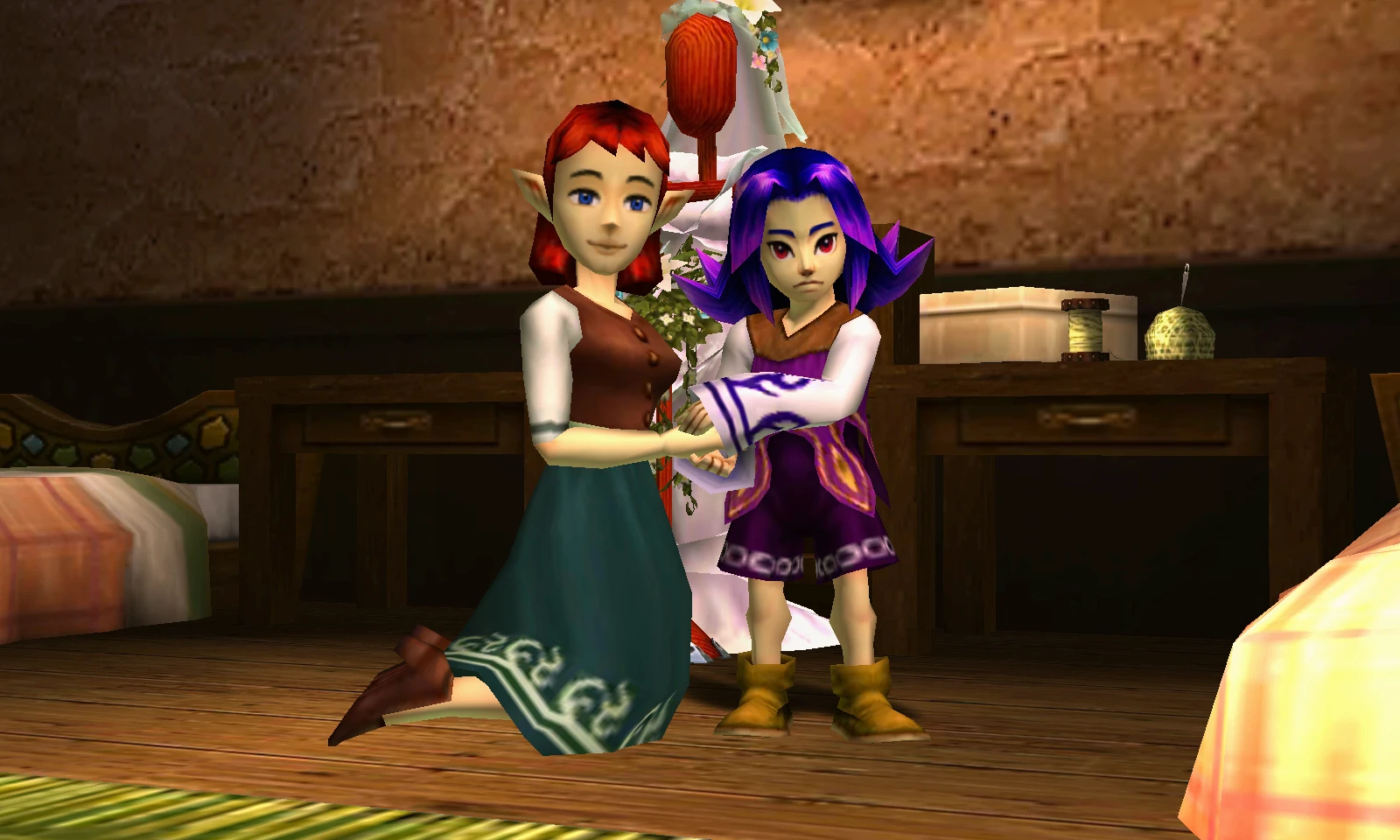
In Majora’s Mask, Termina’s version of Malon becomes two sisters, Romani and Cremia of Romani Ranch.
In Four Swords Adventures Malon has a single heart, and if she falls, the four Links fall with her.
First appear: Majora’s Mask (2000) · Also in: Majora’s Mask 3D (2015); an Anju also runs a Cucco pen in The Minish Cap
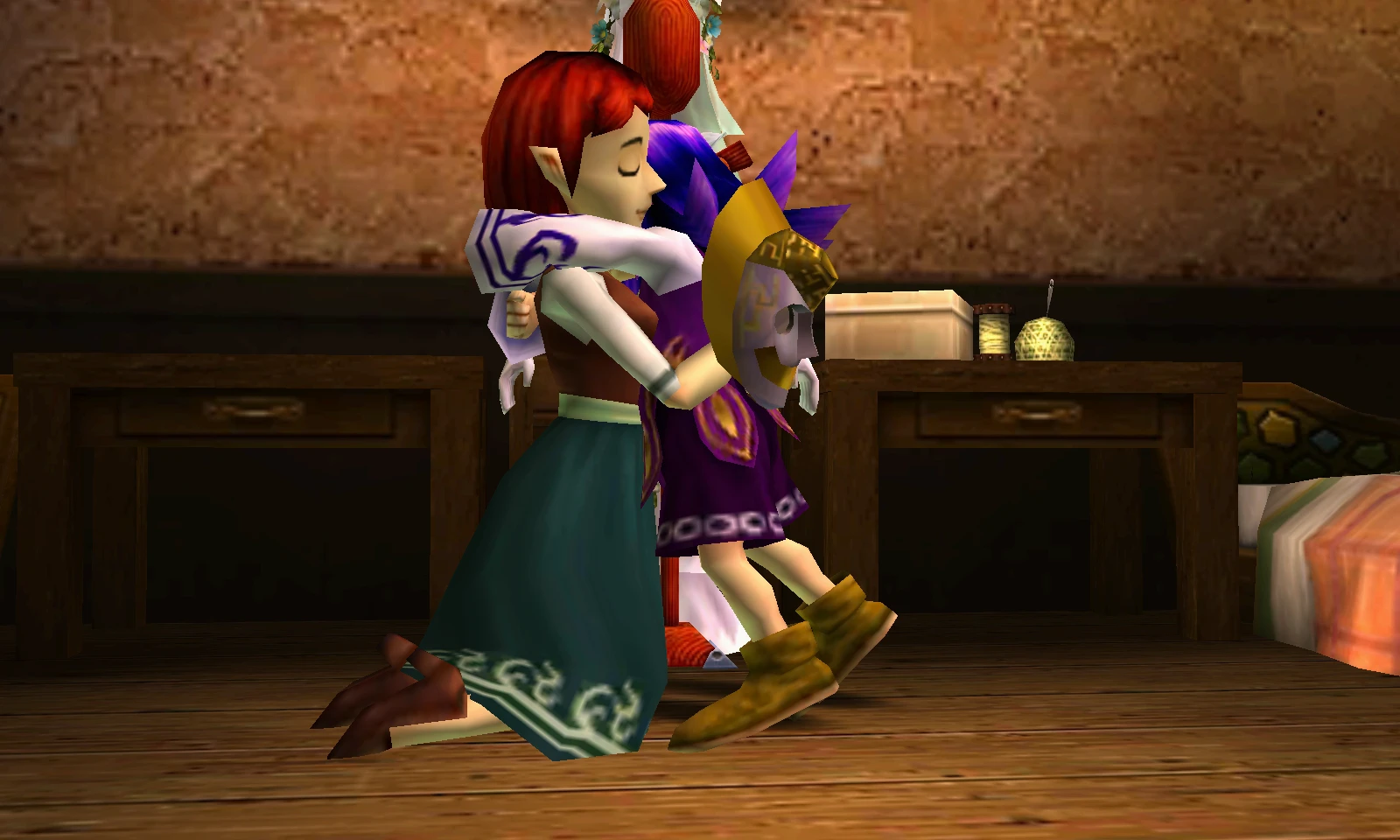
Majora’s Mask has one of the richest side stories in any Zelda, and it belongs to these two. Anju is the kind, flustered young woman who runs Clock Town’s Stock Pot Inn with her mother and grandmother; it was a cafeteria until her father died. She apologises constantly, cooks terribly and leaves everything to the last minute. She is engaged to Kafei, the mayor’s son, and the wedding is set for the Carnival of Time. But Kafei vanished a month ago. The Skull Kid turned him into a child, the thief Sakon stole the wedding mask he was meant to exchange with Anju, and he is too ashamed to face her, hiding in the back of the Curiosity Shop and sending letters through the Postman.
Over the three days Link can piece it all together: taking a missing-person job from Kafei’s mother, Madame Aroma, carrying Kafei’s Pendant of Memories to Anju, persuading her to stay in town and following Kafei to Sakon’s hideout in Ikana Canyon to win back the mask. Get every step right and Kafei walks into the inn in the last hours before the moon falls. Anju knows him at once despite the curse, and they exchange masks and marry there and then, with Link and Tatl as the only witnesses. Link receives the Couple’s Mask, and the credits show the wedding with Kafei grown up again.
Key facts
Anju is the Termina counterpart of the Cucco Lady of Ocarina of Time.
Her best friend is Cremia of Romani Ranch.
The Anju of The Minish Cap pays Link to round up escaped Cuccos, with a Piece of Heart for the dedicated.
In Akira Himekawa’s Majora’s Mask manga the couple get a chapter of their own, and Kafei stands beside Link at the clock tower.
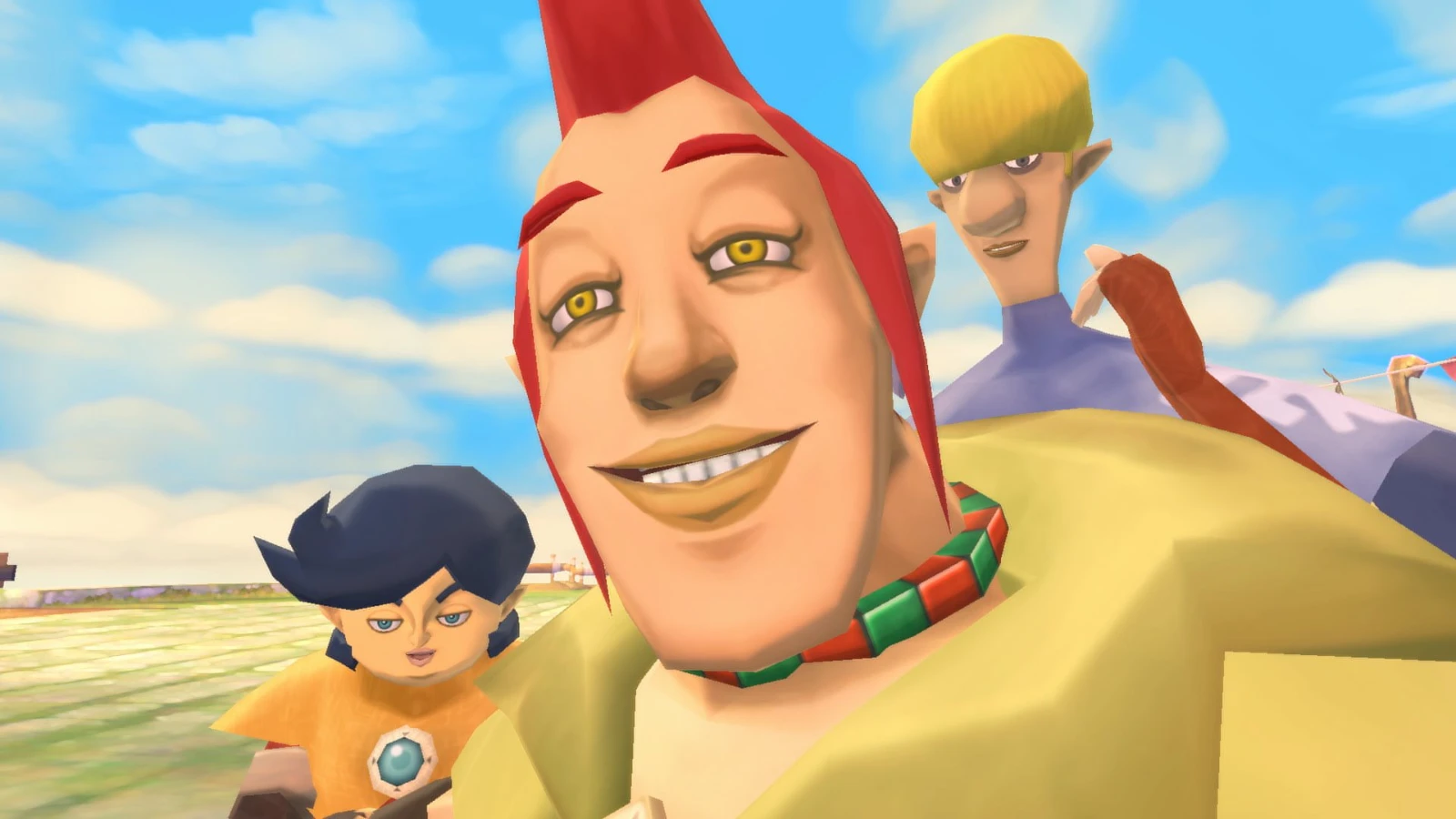
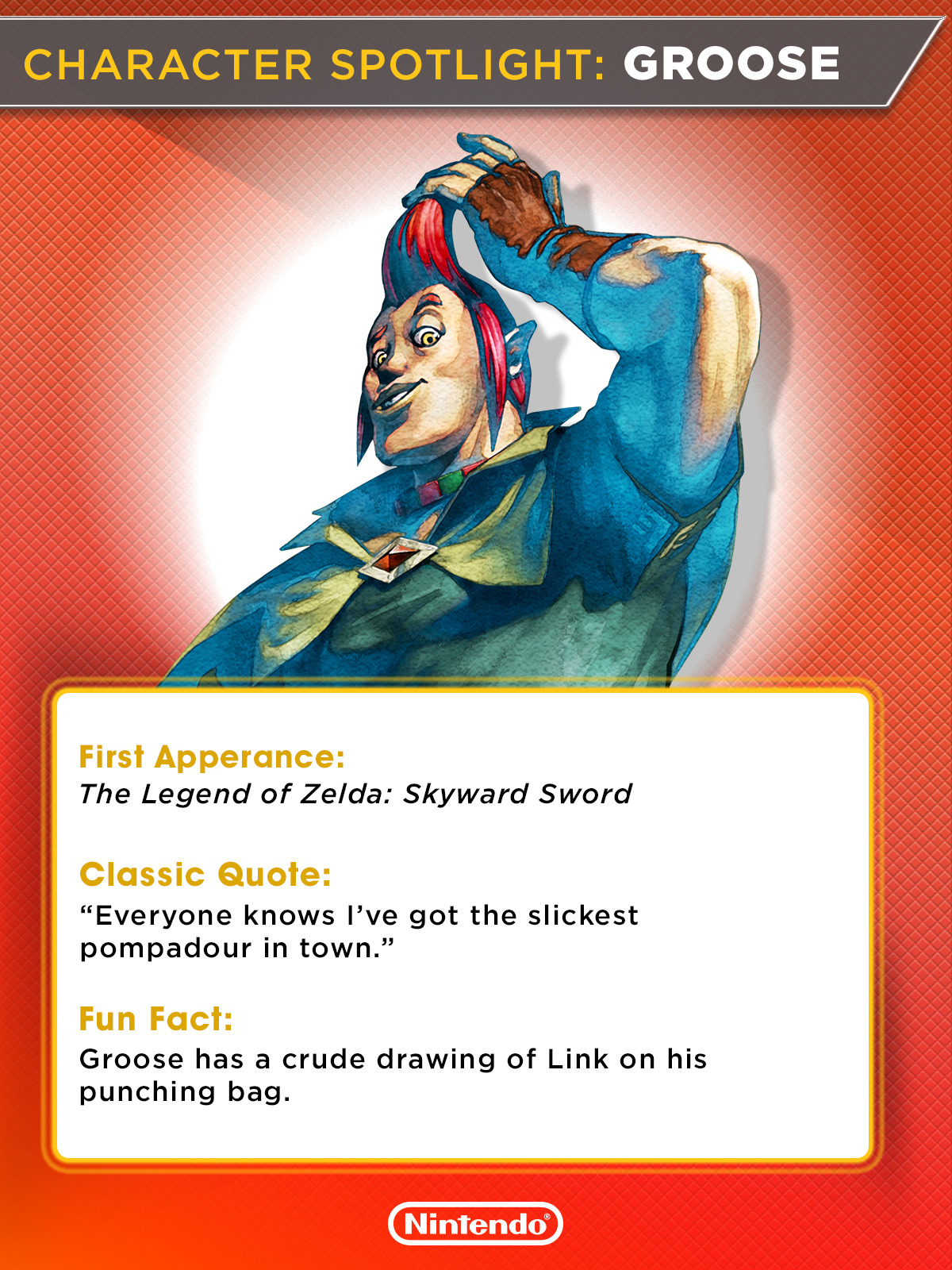
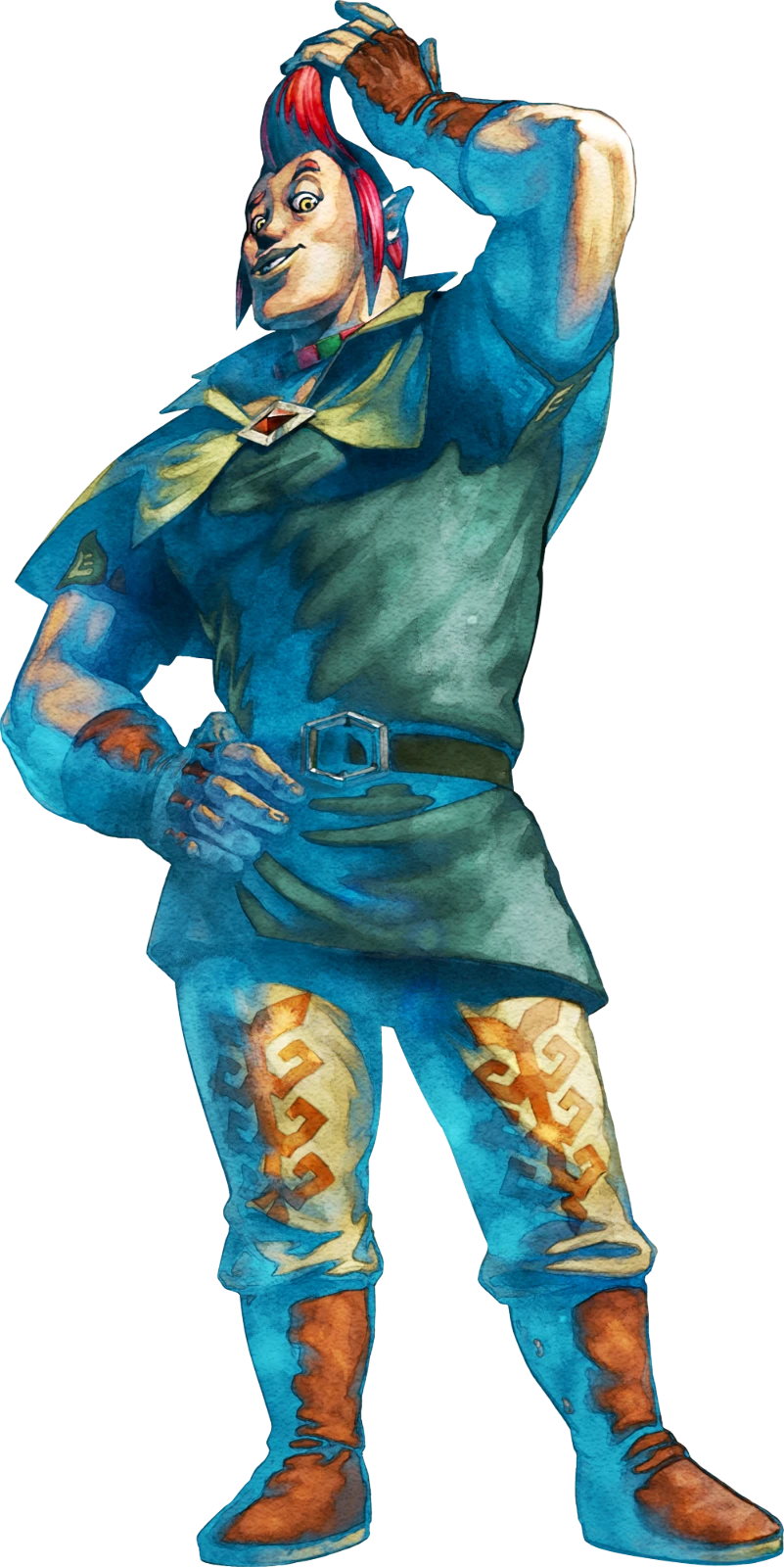
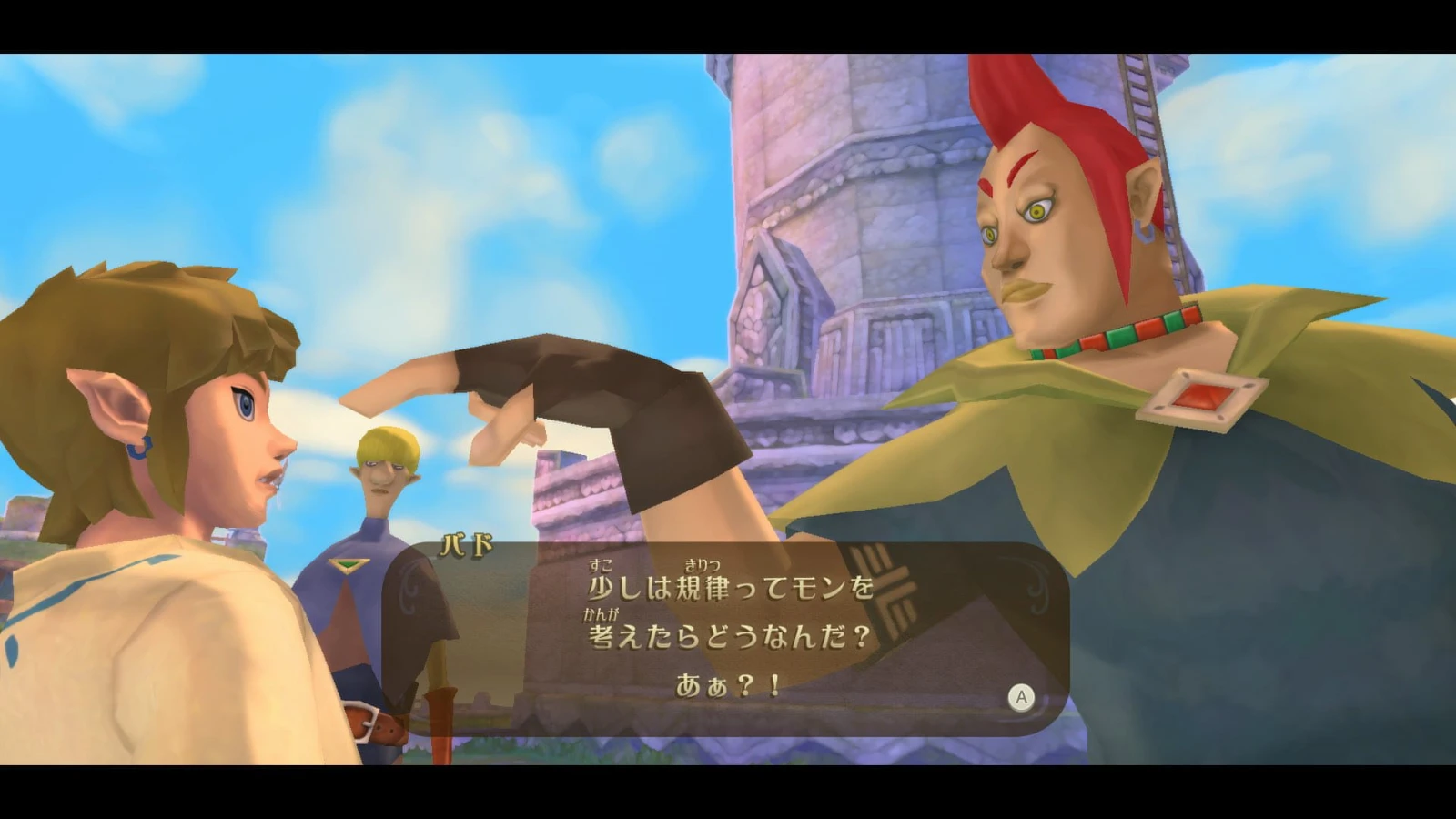
Groose is the loudest student at Skyloft’s Knight Academy: big, swaggering, crowned with a towering red quiff and trailed by two hangers-on, Cawlin and Strich. The game introduces him as vain and stubborn but pure of heart. He fancies Zelda, resents her closeness to her childhood friend Link and, in the Wing Ceremony, he and his cronies pelt Link with eggs to try to win, despite a warning from Instructor Owlan. When Zelda vanishes below the clouds he sneaks after Link to the surface, lands right on top of him, names the place Grooseland and announces that he will rescue her himself.
Then he watches Link reseal the Imprisoned and slowly accepts that the hero’s job belongs to someone else. Instead of sulking he finds a purpose. He builds a rail-mounted catapult, the Groosenator, to knock the monster back when it breaks loose, grows devoted to the old woman of the Sealed Temple (he calls her Grannie, and is heartbroken when she fades away) and stands guard over Zelda while Link faces Demise. It is one of the finest character arcs in the series, and one of the funniest.
Key facts
Designer Hirono writes in Hyrule Historia that the quiff was inspired by a rooster’s comb. Groose is very proud of it, and strokes it constantly.
His name is a play on the grouse, in keeping with Skyloft’s bird-themed names.
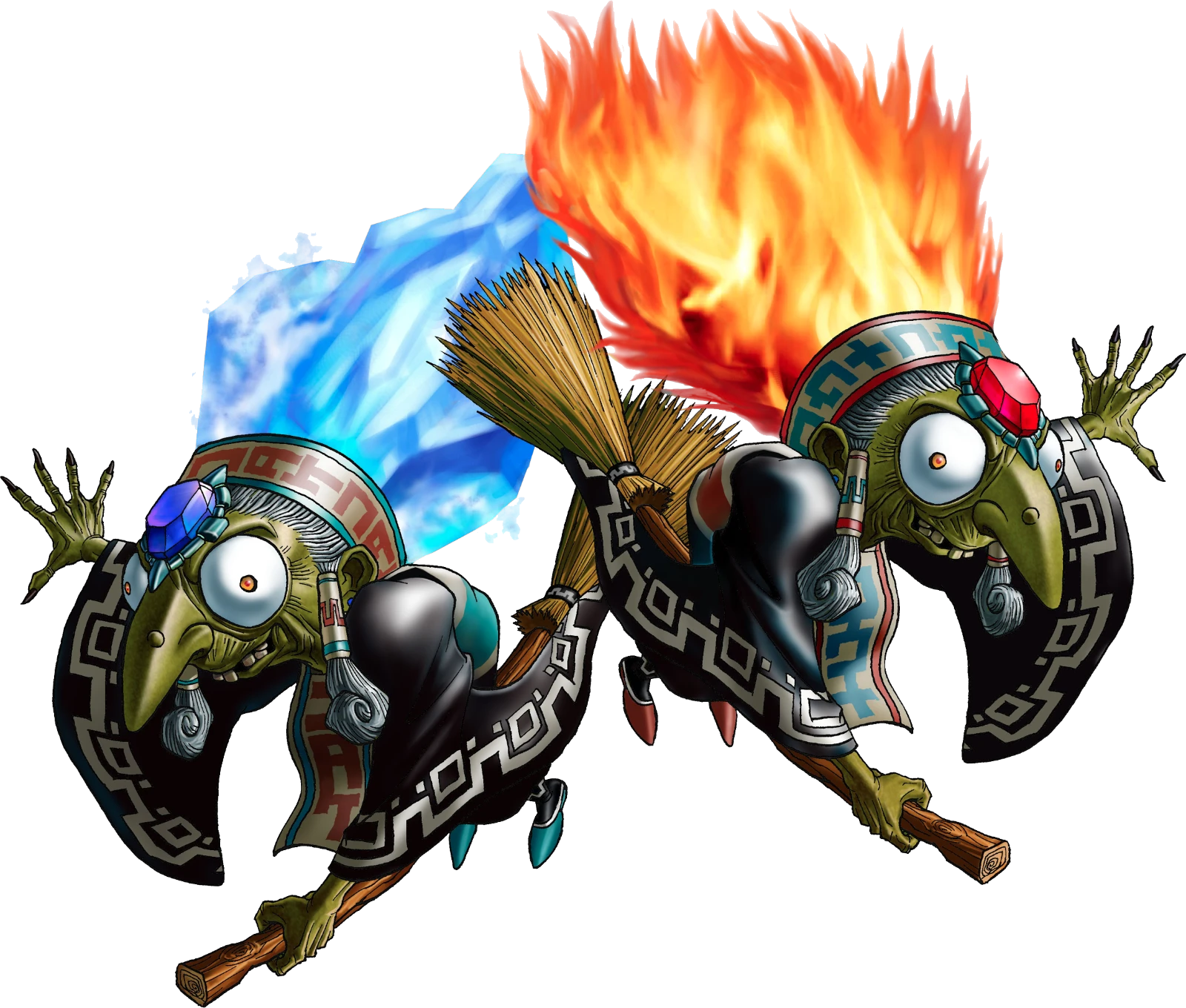
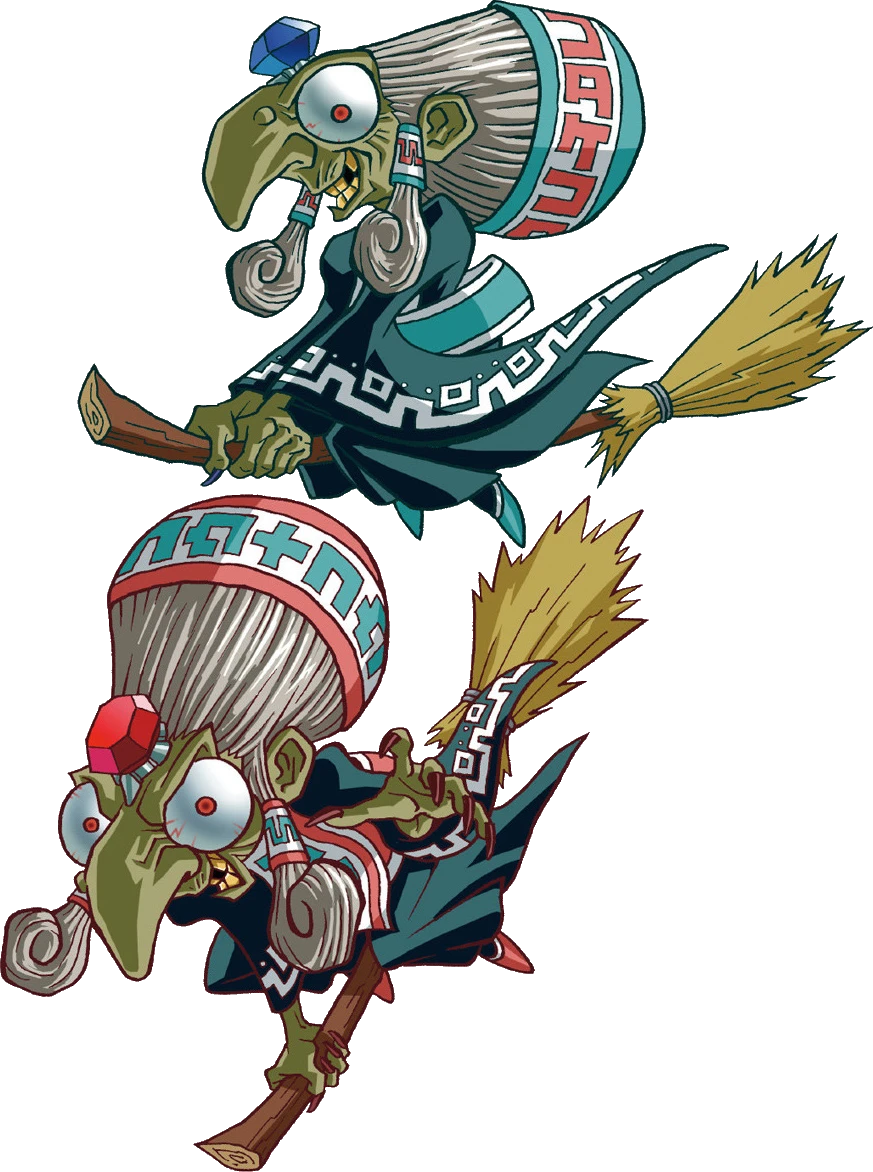
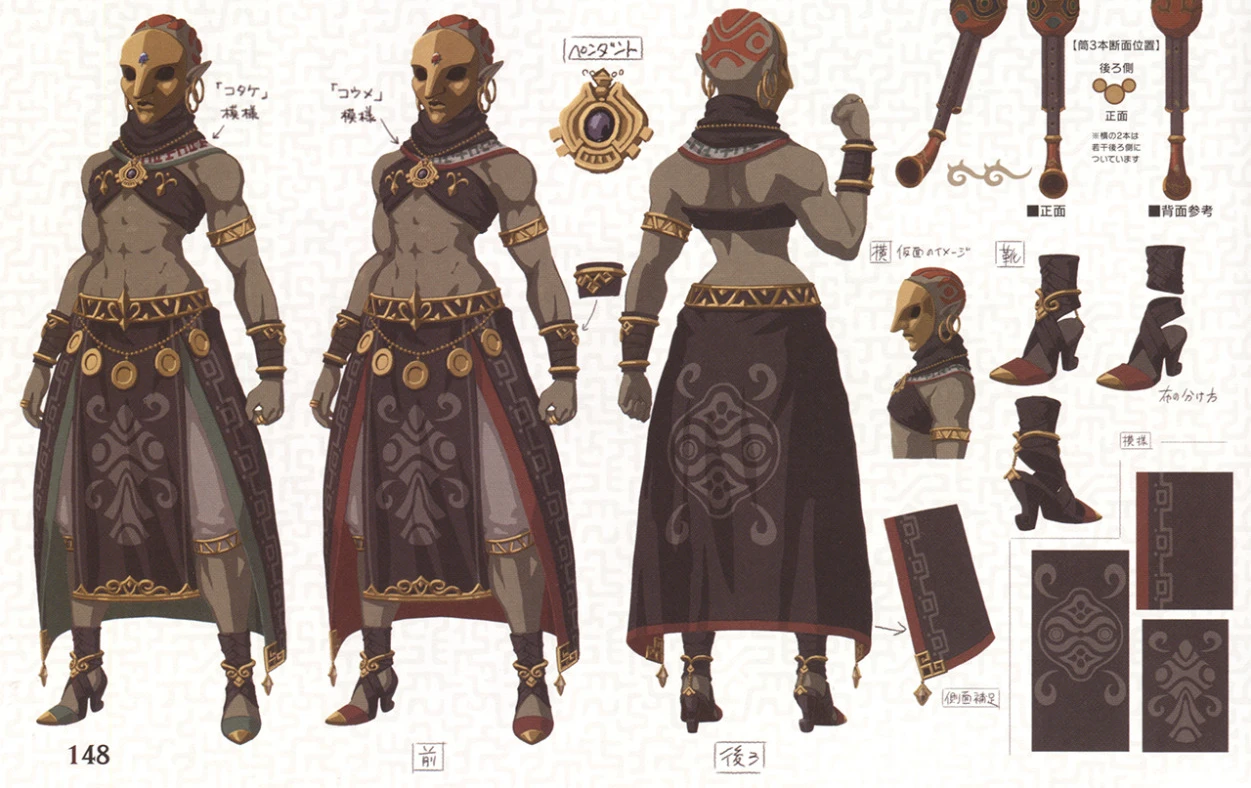
Koume commands fire and Kotake ice, and together they fuse into Twinrova. They are said to be Ganondorf’s surrogate mothers. In Ocarina of Time they kidnap Nabooru and brainwash her into serving Ganondorf as an Iron Knuckle, then guard the Spirit Temple themselves. Link wins by catching one sister’s spell in the Mirror Shield and firing it at the other, then does the same to their fused form; beaten, the pair float off bickering about how old they are.
The Oracle games, Oracle of Seasons and Oracle of Ages, make them the hidden masterminds, using General Onox and the sorceress Veran to light two of the three flames that will bring back Ganon. In a linked game they kidnap Zelda to light the last one and, when that fails, give up their own bodies to the ritual, which raises only a mindless Ganon. Majora’s Mask casts Termina’s twins as friendly old ladies in the Southern Swamp: Kotake runs the potion shop and Koume the boat cruise, once Link has revived her with a Red Potion after the Skull Kid hurts her.
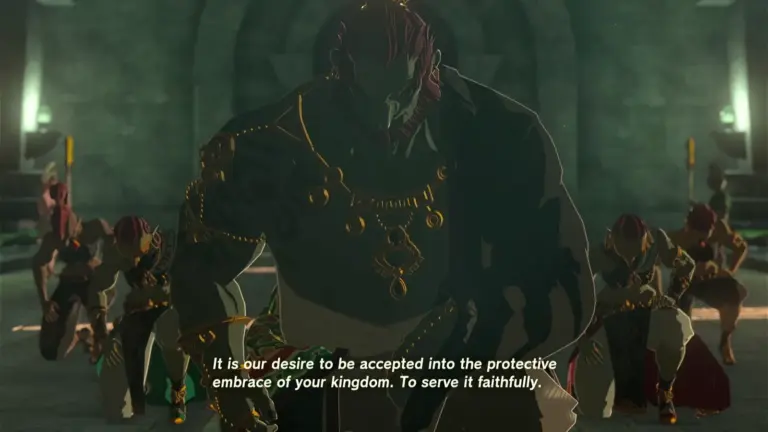
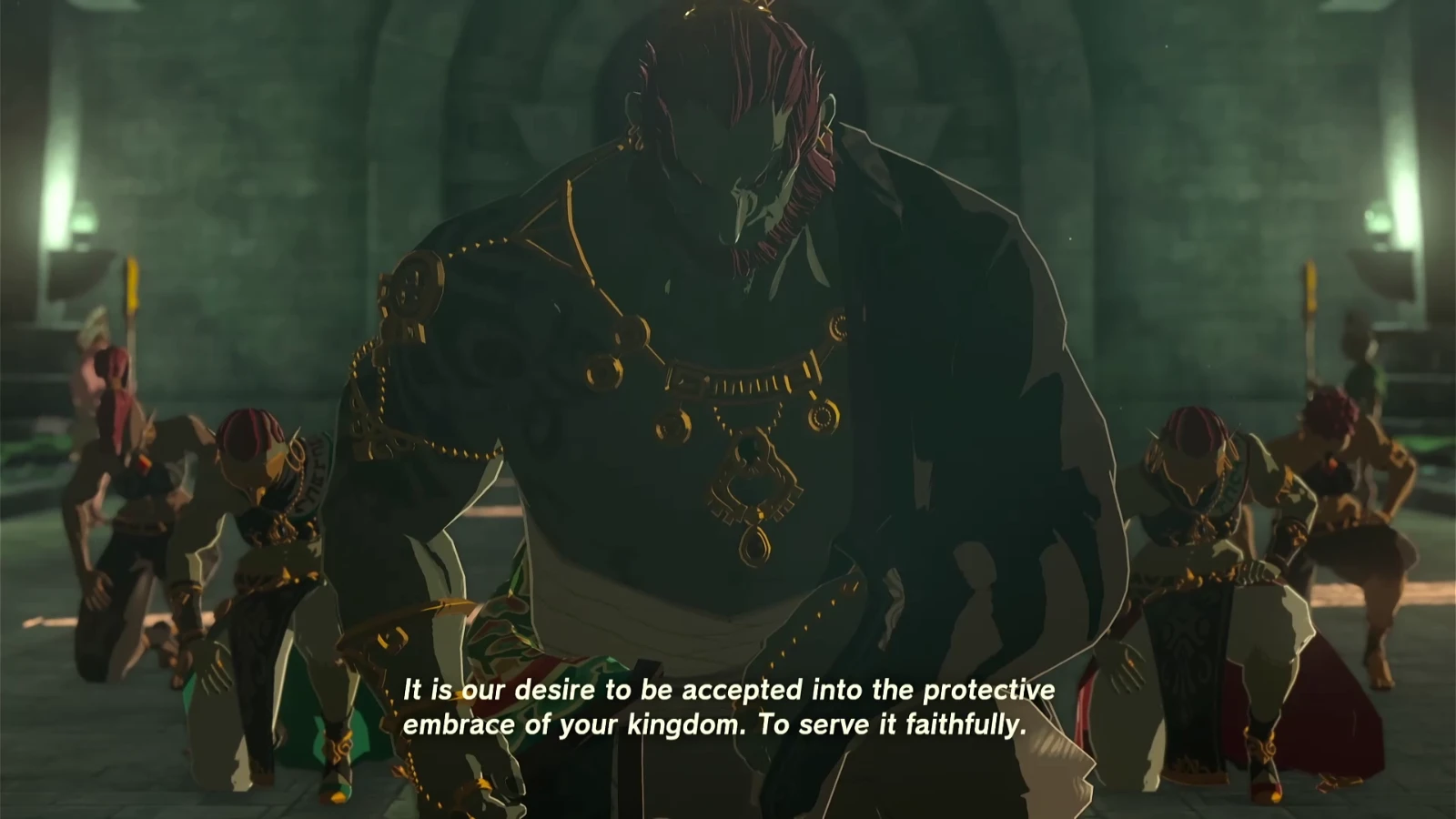
After 22 years away they returned in Tears of the Kingdom, much younger and unnamed in the scene, standing behind Ganondorf in the memory “A Show of Fealty”.
Key facts
In Ocarina of Time 3D they are simply Koume and Kotake, without the Twinrova label.
Reba Buhr voices both sisters in English in the 2026 Ocarina of Time for Nintendo Switch 2.
Their names are engraved in Hylian on the Gloom weapons of Ganondorf and Phantom Ganon in Tears of the Kingdom.
Talon in Ocarina of Time (official artwork)Kafei in Majora’s Mask (official artwork)Twinrova in Oracle of Seasons (official artwork)
Memorable moments
A terrible fate
The first meeting in the Clock Tower is where Majora’s Mask shows its hand. The salesman’s greeting has become the game’s calling card, and when Link comes back empty-handed the grin stays fixed while the man behind it grabs him by the shoulders and shakes.
The salesman at the keyboard in the Clock Tower…and the moment his temper snaps
Dawn of a new day at the Stock Pot Inn
Kafei walks through the door in the last hours before the moon falls, still in a child’s body, and Anju welcomes him home. With nobody left in the inn but Link and Tatl, the couple exchange their masks and marry on the spot. The clock keeps ticking and the moon keeps coming, which is exactly why it hurts.
Few characters turn round like Groose. The bully who pelted Link with eggs in the first hour ends the game cranking his own siege engine at a sealed demon, and most players who rolled their eyes at him early on are cheering him by the end.
Groose squares up to Link in Skyward Sword HD (promotional screenshot)The Groosenator (model)
The Stable Trotters’ comeback tour
Tears of the Kingdom turns the old fairy-fountain errand into a road trip. Link tracks down each member of a band that has split up and drives them round in a wagon to serenade the frightened fairies out of hiding, one instrument at a time.
The Stable Trotters on tour (promotional screenshot)Serenade to Cotera, one of the band’s fountain gigs
Shala-kala!
Getting Hestu’s maracas back earns a dance and a cry of joy, and he does it all again every time Link turns up with another pocketful of seeds. In Tears of the Kingdom he needs rescuing once more before business can resume.
Hestu’s Concerns, his quest in Tears of the KingdomHestu in Age of Calamity (official artwork)
B-but, it’s not written on the schedule.
The Postman Majora’s Mask, admitting he would like to flee
Koume or Kotake Ocarina of Time, floating away after the Spirit Temple fight
How they connect
Zelda’s supporting cast is a web of doubles, descendants and family ties. Majora’s Mask is the richest source: Nintendo built it in about fifteen months on top of Ocarina of Time’s engine and character models, which let the team recast minor Hyrule faces as Termina people with troubles of their own. Other links are spelled out in the games themselves or in official books such as Hyrule Historia.
Character
Connected to
How
Where
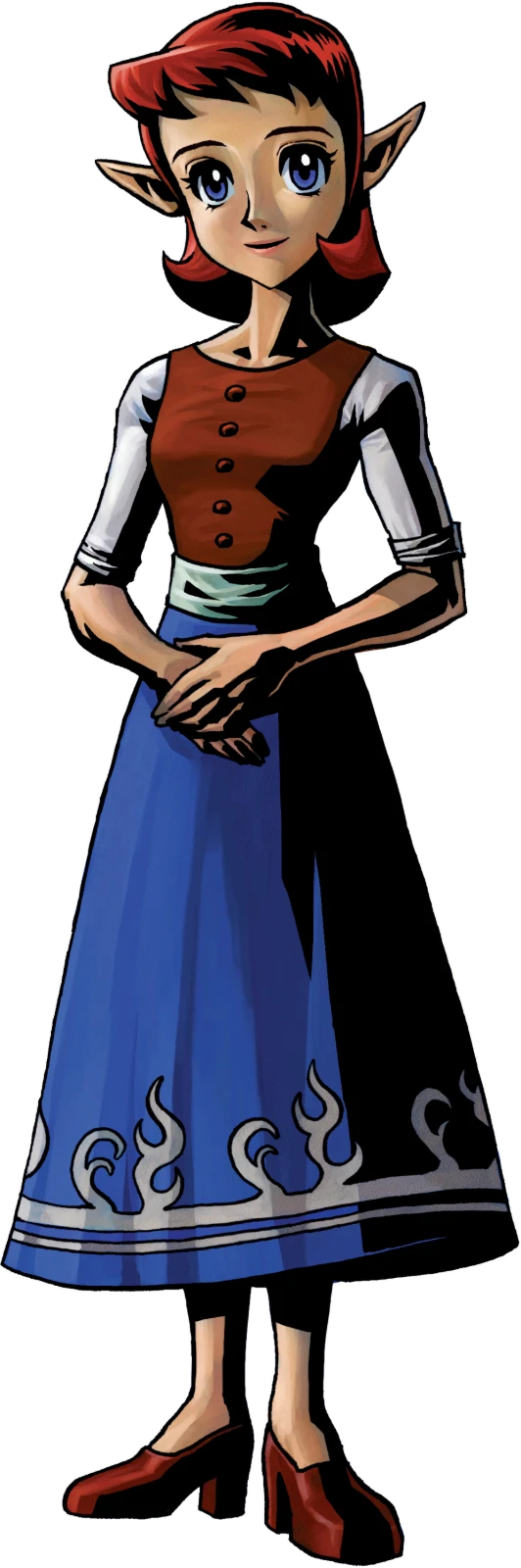
Romani and CremiaRomani Ranch
Malon
Termina’s version of Malon split in two: Cremia runs the ranch and its milk, and little Romani, who talks about herself in the third person, guards the barn and teaches Link Epona’s Song.
Majora’s Mask
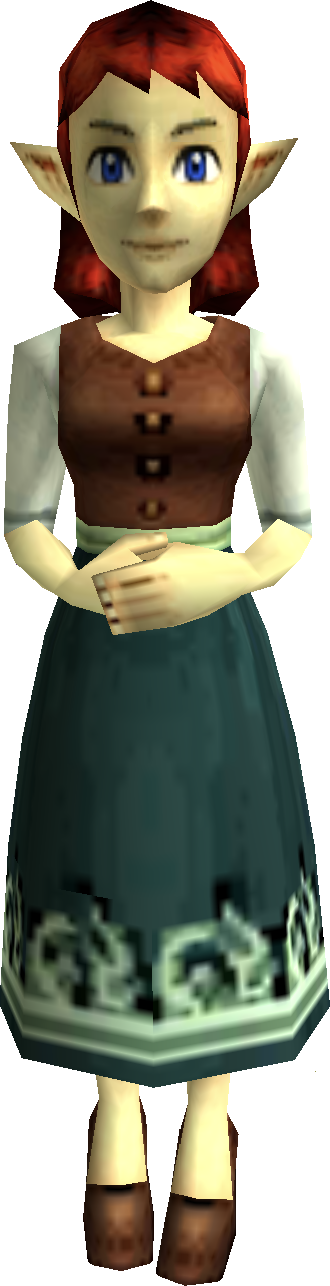
The Cucco LadyKakariko Village
Anju
Anju is her Termina counterpart; an Anju with a Cucco pen turns up again in The Minish Cap.
Ocarina of Time
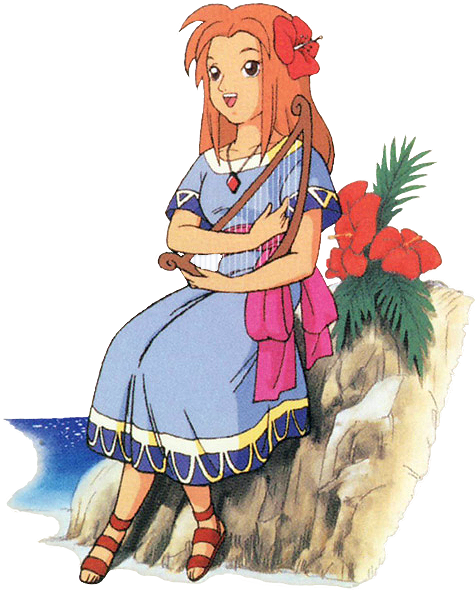
Marin and TarinKoholint Island
Malon and Talon
The models for the Lon Lon Ranch family: a girl who loves to sing and her easy-going father.
Said to be his surrogate mothers; they serve him in Ocarina of Time, try to revive him in the Oracle games and attend him in Tears of the Kingdom. See our Ganondorf page.
Ocarina of Time, Oracle games, Tears of the Kingdom
Old models, new lives.Majora’s Mask began with a dare. Shigeru Miyamoto challenged Eiji Aonuma’s team to make a new game in a year with Ocarina of Time’s engine and graphics, and it was finished in about fifteen months. Reusing the character models saved time and let the designers give familiar faces new stories in a gloomier world, which is how Malon, the Cucco Lady and the Running Man came to have Termina doubles. The Anju and Kafei wedding became the game’s signature side quest, built to set a happy occasion against the coming catastrophe.
Ranch girls and rooster combs. Malon and Talon were based on Marin and Tarin of Link’s Awakening, and Miyamoto has said that girls such as Saria and Malon were written into Ocarina of Time because its hero is a boy. Groose’s quiff, designer Hirono writes in Hyrule Historia, was inspired by a rooster’s comb.
What’s in a name? Beedle’s English name comes from the beetles he loves; in Japan he is Terry. Koume and Kotake mean ‘little plum’ and ‘little bamboo’, and they share those names with the elderly twin sisters of Seishi Yokomizo’s mystery novel The Village of Eight Graves (Yatsuhaka-mura).
Voices at last. For decades most of this cast spoke only in text boxes. The 2026 Ocarina of Time for Nintendo Switch 2 voices its cutscenes, with Reba Buhr playing both witches in English and Frank Todaro playing Kaepora Gaebora.
The Tears of the Kingdom concept art of the witches is one of the pieces fans have shared from the official art book Tears of the Kingdom: Master Works.
Beyond the games
The supporting cast gets around. Several of them fight in Koei Tecmo’s musou spin-offs, a few have turned up in Super Smash Bros., and Akira Himekawa’s manga gave some of them more to do than the games ever did.
Koume and Kotake are the busiest of the bunch: a Twinrova trophy in Super Smash Bros. for Nintendo 3DS, a stage hazard on Gerudo Valley in that game and in Ultimate, where they swoop in and either set the left of the stage alight or raise ice spikes on the right, and a pair of spirits in Ultimate. Beedle’s Air Shop drifts past the Skyloft stage, and Malon, Groose and the Great Fairy all have trophies.
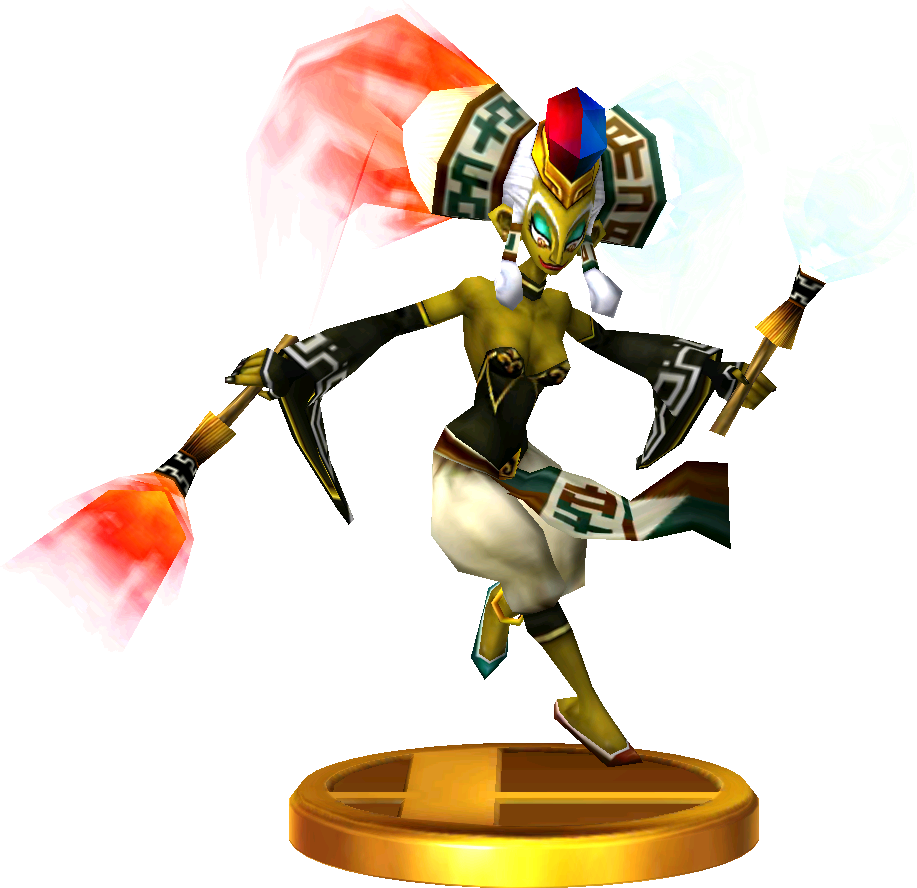
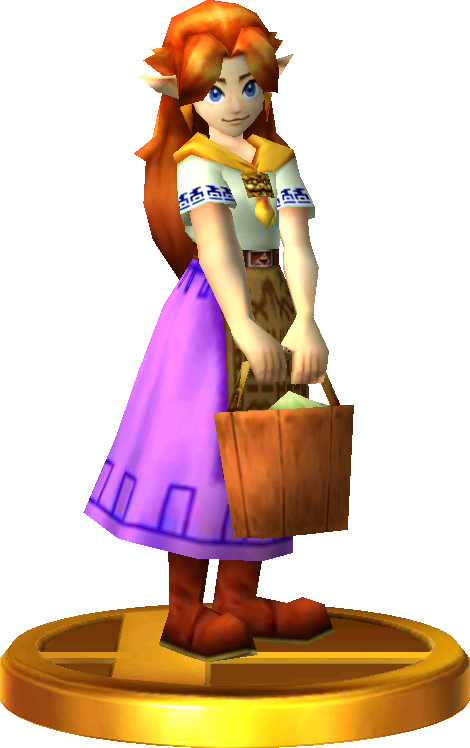
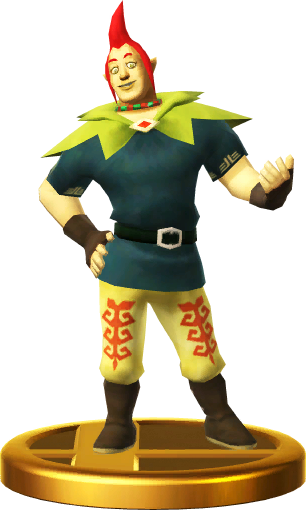
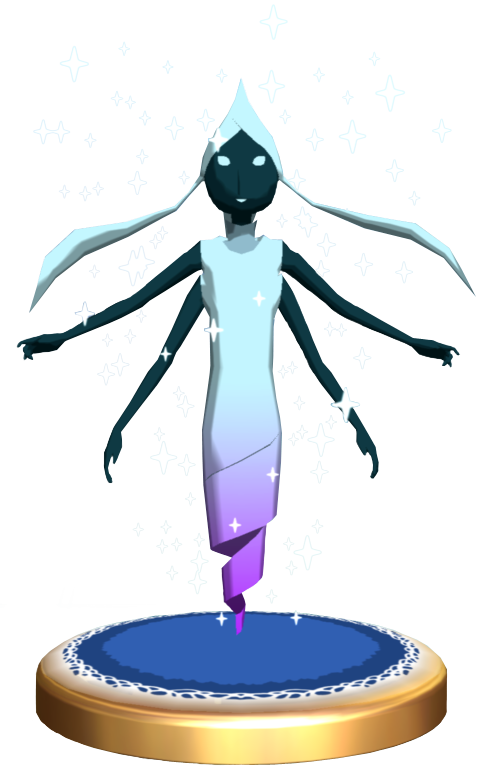
Twinrova’s trophy, Smash for Nintendo 3DSMalon’s trophy, Smash for Nintendo 3DSGroose’s trophy, Smash for Wii UThe Great Fairy’s trophy, Brawl
Reception
Groose with Cawlin and Strich in Skyward Sword HD (promotional screenshot).
The Happy Mask Salesman is the cast’s cult icon. IGN put him fourth on its list of the 20 weirdest Zelda characters, finding his manic grin “downright unsettling”, and The Escapist’s Marty Sliva called his opening line “iconic” for how much it says in so few words.
Koume and Kotake earned their fame in battle. Den of Geek’s Chris Freiburg rated the Spirit Temple fight the best temple boss in Ocarina of Time and one of the best in the series, and Game Informer’s Dan Ryckert went further, ranking it the finest boss battle in all of Zelda.
Groose won people round the slow way. Writing for Zelda Universe in 2021, Percy Mohn held him up as one of Skyward Sword’s best examples of character development: a boastful bully who learns on the surface that the starring role is not his, and finds his purpose in building things instead.
Kaepora Gaebora is loved rather less. Screen Rant called him arguably the most hated character in Ocarina of Time, thanks to long speeches that rarely offer useful advice.
Trivia
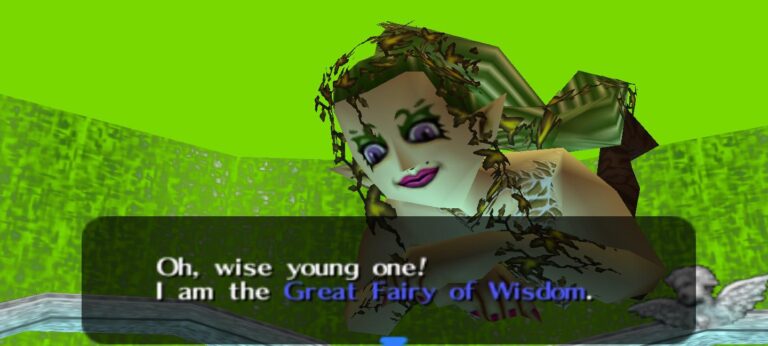
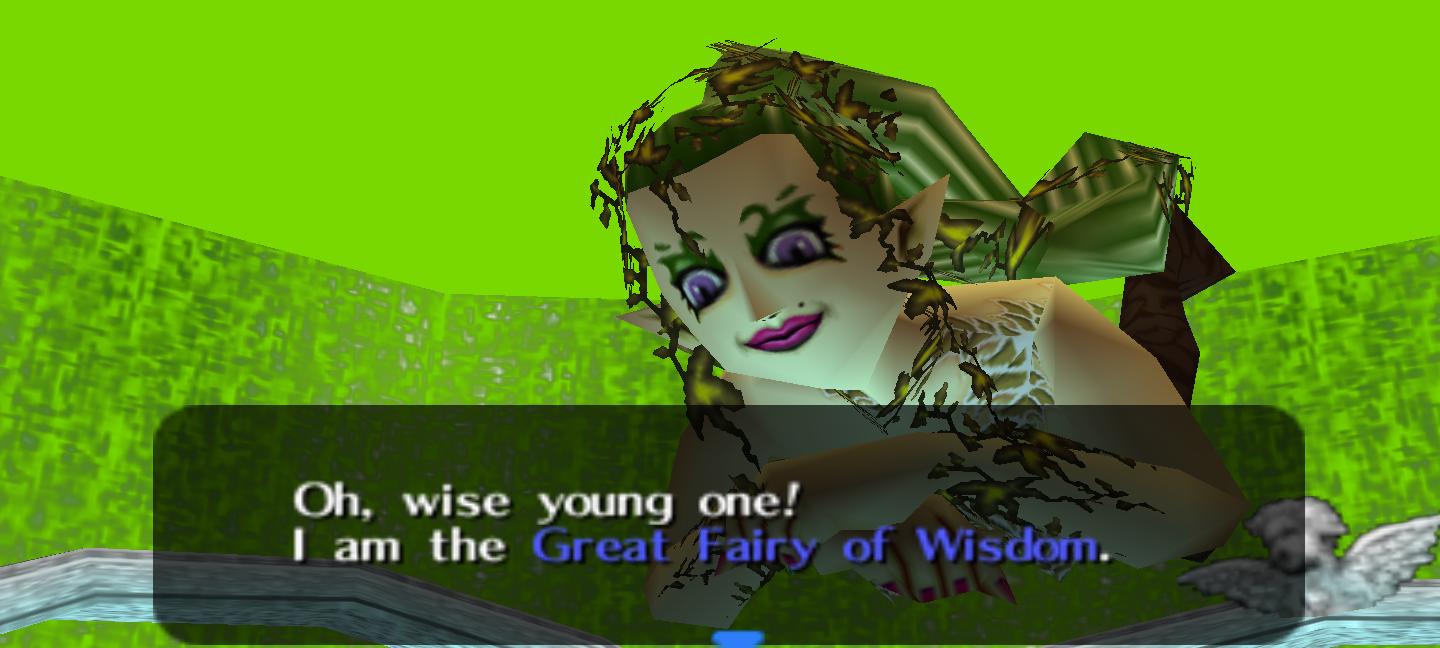
The Great Fairy of Wisdom in Majora’s Mask.The North American release of Majora’s Mask mixes up the titles of the Great Fairies of Wisdom and Courage on repeat visits; the Japanese and European versions get them right.
Malon wears a little Bowser badge, one of the Nintendo cameos tucked into Ocarina of Time.
The Happy Mask Salesman, worried, in Majora’s Mask.The Happy Mask Salesman’s backpack in Majora’s Mask includes a Mario mask, and the children Link meets on the moon look suspiciously like him.
Ravio in Hyrule Warriors (render).Ravio never takes his hood off in Hyrule Warriors, yet his model there has unused textures for eyes, a mouth, teeth and hair, plus a full set of facial bones attached to nothing.
Koume and Kotake in Tears of the Kingdom.In Tears of the Kingdom the twins wear shoulder cloths styled after their old Ocarina of Time hairbands, with their names written on them in Hylian script.
The Purah Pad is named after Purah, which Robbie, who led its development, finds deeply unfair.
Once Princess Zelda has bought every accessory slot in Echoes of Wisdom, opening the chest in front of the Great Fairy’s shrine brings the fairy out to tell her off, and to set up one last request.
The PAL description of the Twinrova trophy in Smash for Nintendo 3DS calls Koume ‘the Sorceress of Flame’ and Kotake ‘the Sorceress of Ice’.
Robbie’s forge assistant Cherry started life as the Akkala lab’s guidance stone.
Malon and Talon are modelled on Marin and Tarin, who were themselves brand-new characters in 1993.
Further reading: Zelda Temple game and comics pages: character rows, stories and manga guides (Ocarina of Time, Majora’s Mask, Skyward Sword, A Link Between Worlds, Breath of the Wild, Tears of the Kingdom, Hyrule Warriors, Age of Calamity, Himekawa manga)
Manage Consent
To provide the best experiences, we use technologies like cookies to store and/or access device information. Consenting to these technologies will allow us to process data such as browsing behavior or unique IDs on this site. Not consenting or withdrawing consent, may adversely affect certain features and functions.
Functional
Always active
The technical storage or access is strictly necessary for the legitimate purpose of enabling the use of a specific service explicitly requested by the subscriber or user, or for the sole purpose of carrying out the transmission of a communication over an electronic communications network.
Preferences
The technical storage or access is necessary for the legitimate purpose of storing preferences that are not requested by the subscriber or user.
Statistics
The technical storage or access that is used exclusively for statistical purposes.The technical storage or access that is used exclusively for anonymous statistical purposes. Without a subpoena, voluntary compliance on the part of your Internet Service Provider, or additional records from a third party, information stored or retrieved for this purpose alone cannot usually be used to identify you.
Marketing
The technical storage or access is required to create user profiles to send advertising, or to track the user on a website or across several websites for similar marketing purposes.

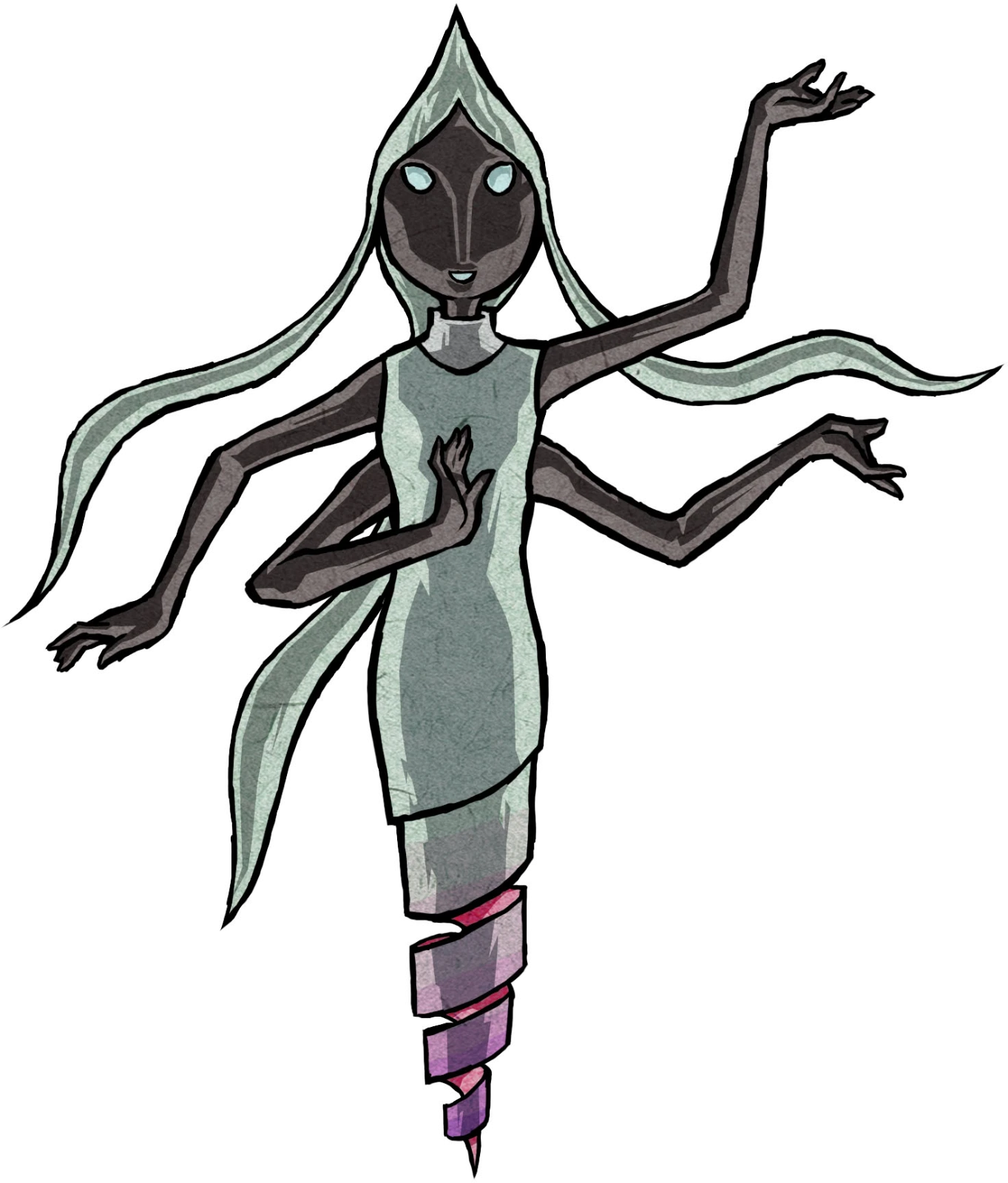
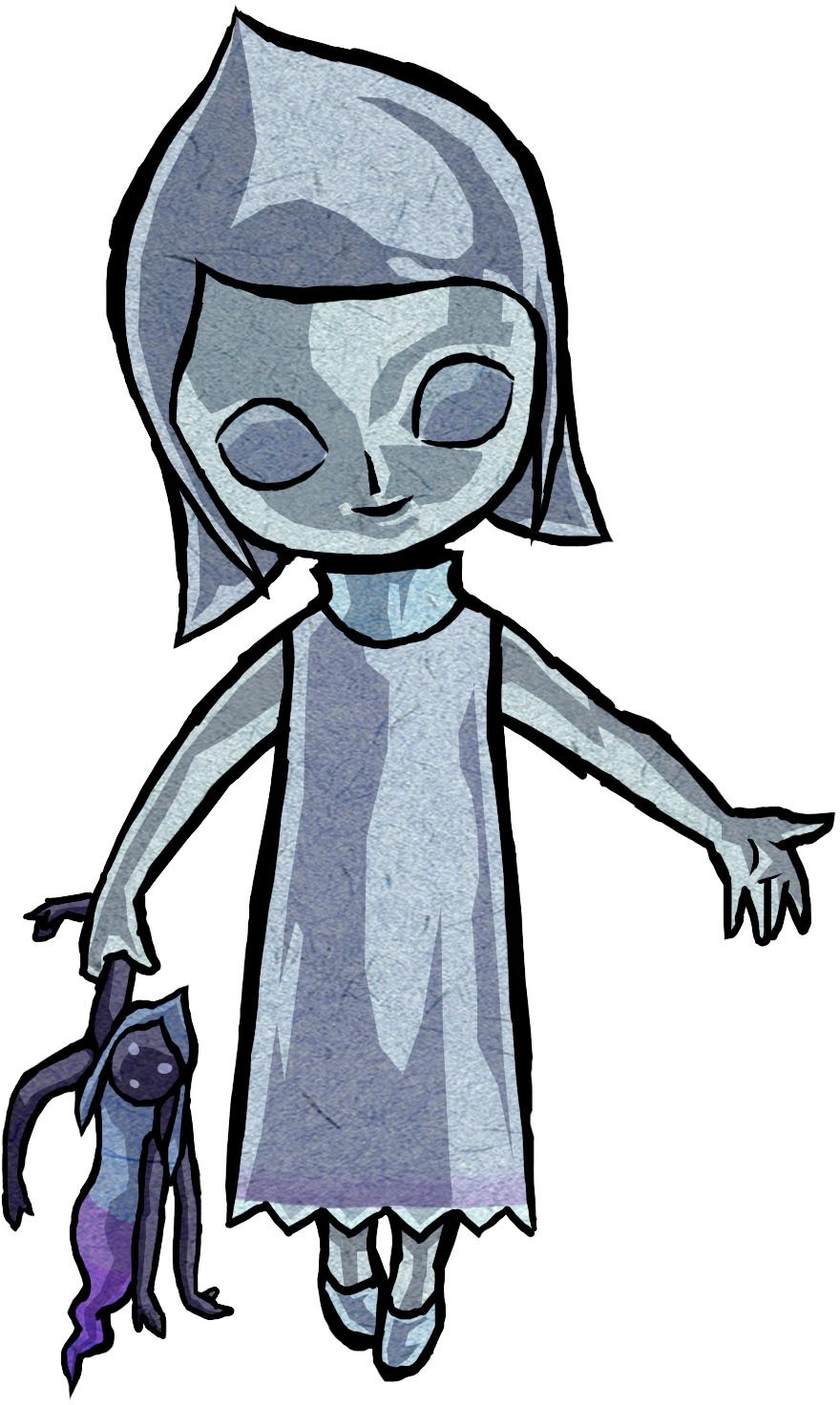
 Romani and CremiaRomani Ranch
 The Cucco LadyKakariko Village
 Marin and TarinKoholint Island
 Ravio, unhoodedLorule
 ImpaKakariko elder
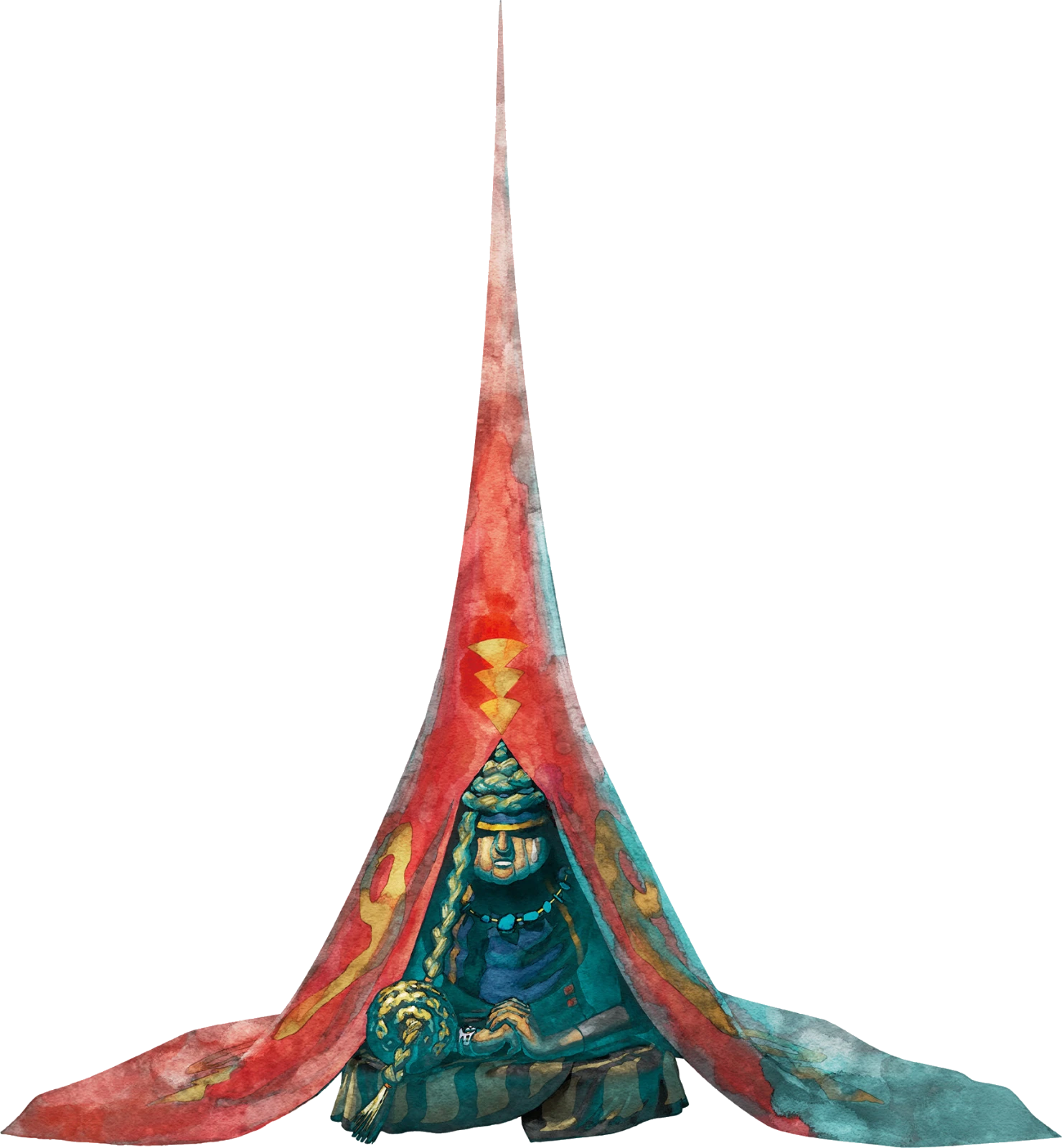 The old womanSealed Temple
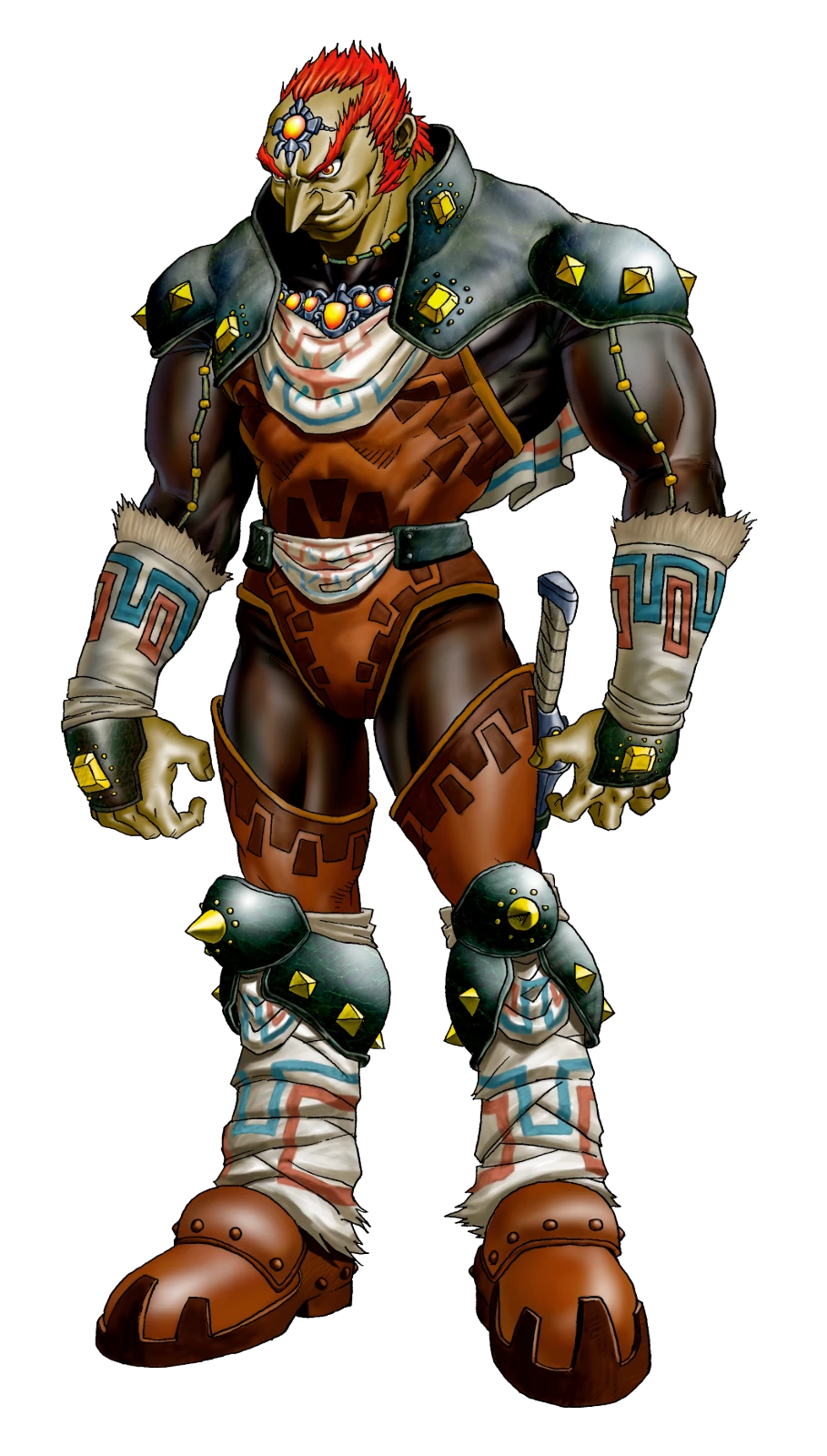 GanondorfKing of the Gerudo
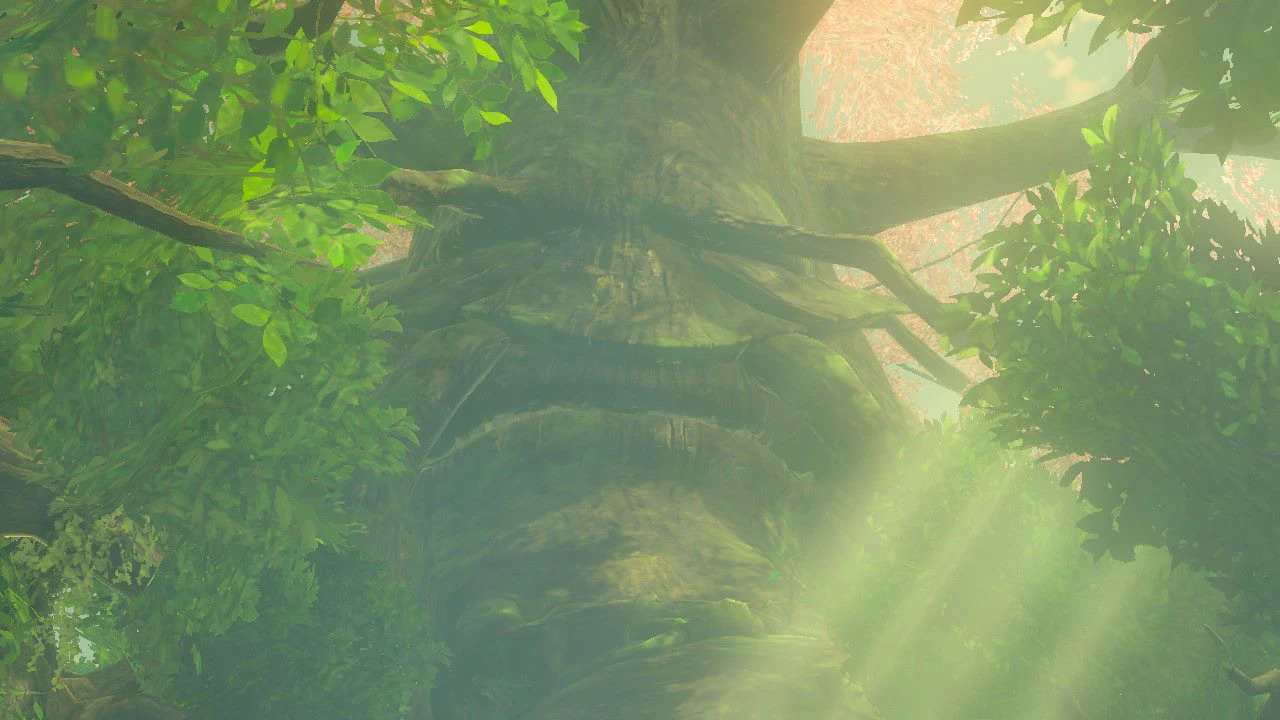 The Great Deku TreeKorok Forest
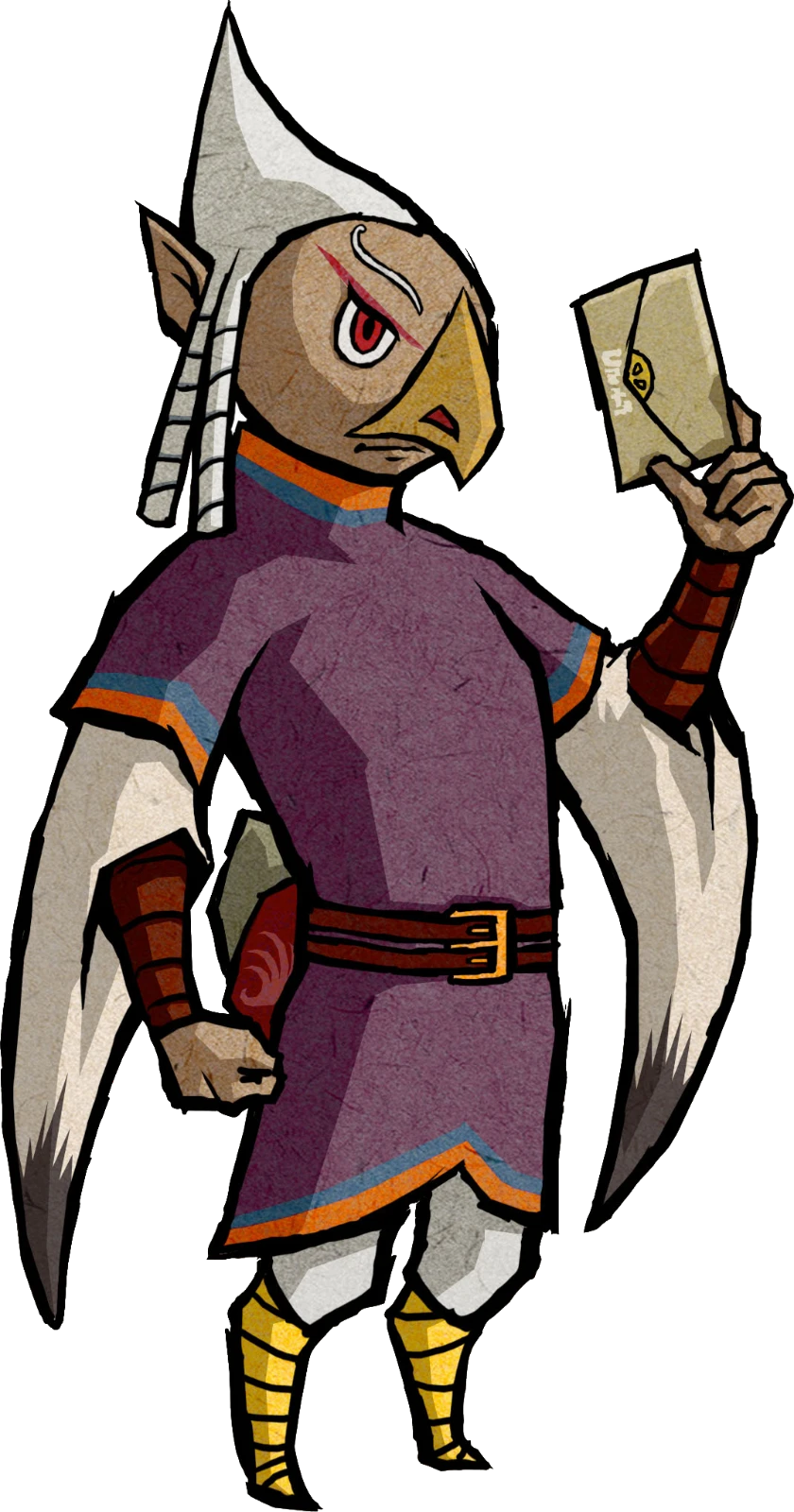 QuillRito postman
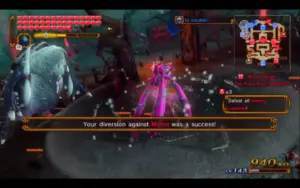 Hyrule Warriors (2014)Great Fairy, RavioThe Great Fairy is one of Link’s weapons, and Ravio joined the roster in the A Link Between Worlds Pack in 2016.
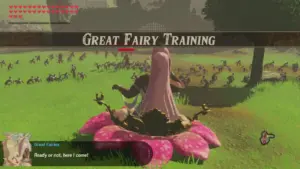 Age of Calamity (2020)Great Fairies, Hestu, Purah and RobbieThe four fairy sisters fight as one secret character, Hestu shakes his maracas on the main roster, and Purah and Robbie arrived together in the 2021 expansion.
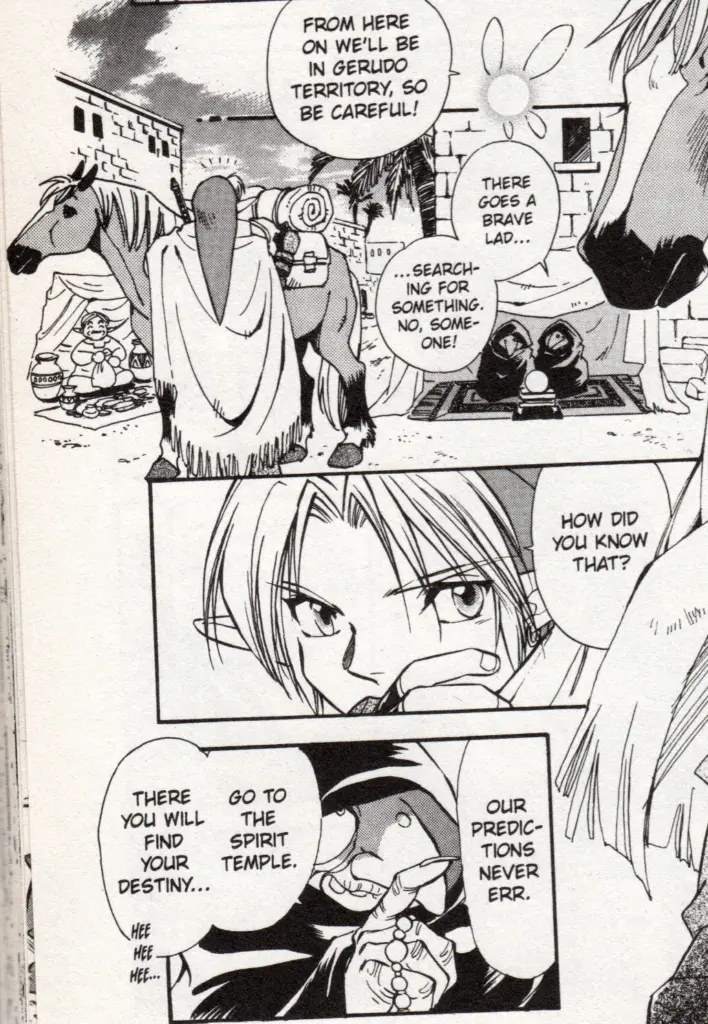 Ocarina of Time mangaAkira Himekawa · Twinrova, Malon, IngoTwinrova work far harder behind the scenes, turning Ingo against Link and holding Malon hostage at Lon Lon Ranch.
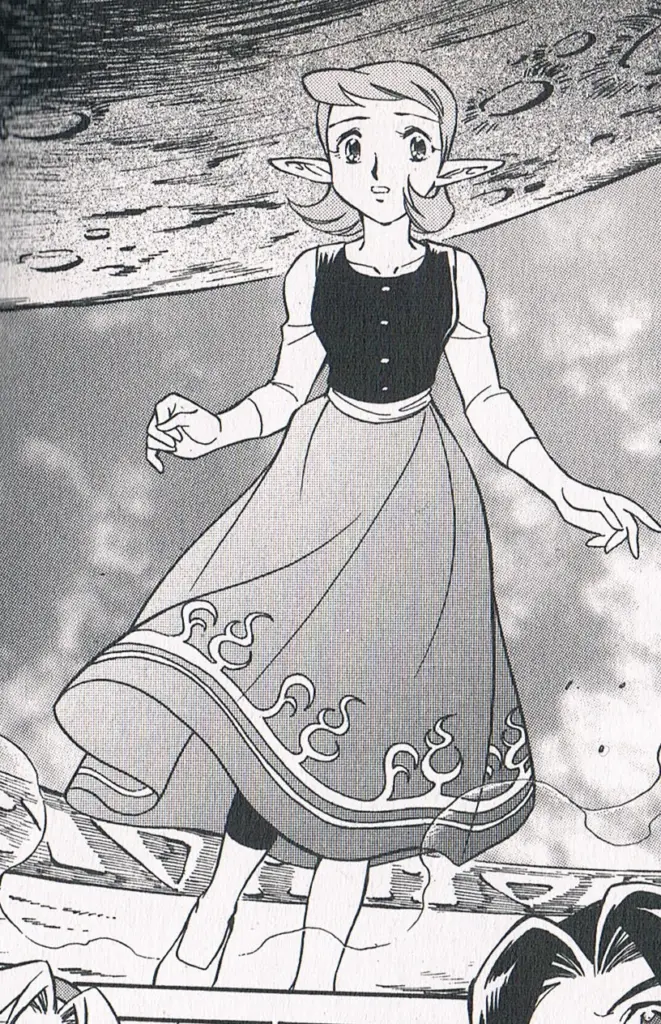 Majora’s Mask mangaAkira Himekawa · Anju and KafeiAnju takes Deku Link in at the start, and the lovers’ side quest becomes a whole chapter folded into the climax.