The Zelda Timeline Nintendo’s official chronology, explained
A goddess, a cursed sword and a boy sent back to his childhood: how Nintendo fits forty years of Zelda into one history that splits three ways after Ocarina of Time and meets again in the age of the Calamity.
First publishedHyrule Historia, Japan, 21 December 2011
Branches3, from the end of Ocarina of Time
Games placed21 main-series games, from Skyward Sword to Tears of the Kingdom
Latest updateNintendo Japan’s 40th-anniversary Chronicle (reported September 2026)
Fork labels (Japanese)
時の勇者が敗北 (Toki no Yūsha ga Haiboku, “the Hero of Time is defeated”) / 時の勇者が勝利 (Toki no Yūsha ga Shōri, “the Hero of Time is victorious”)
Fork labels (English)
“The hero is defeated” / “The hero is triumphant” (Nintendo of America’s timeline page)
Official sources
Hyrule Historia (2011); The Legend of Zelda Encyclopedia (2017); Nintendo’s Japanese Zelda site (history page from 2018, Chronicle in 2026)
First game in the story
Skyward Sword (2011)
The fork
The end of Ocarina of Time (1998)
Branches
The hero is defeated (9 games); the hero is triumphant, child (3); the hero is triumphant, adult (3)
Last games in the story
Breath of the Wild (2017) and Tears of the Kingdom (2023), after all three branches
Latest game added
Echoes of Wisdom, reported on Nintendo’s history page on 26 November 2024
Biggest reshuffle
Link’s Awakening moved before the Oracle games (Encyclopedia, 2017; Nintendo’s site, 2018)
Founding of Hyrule
Listed twice since the 2026 Chronicle: after Skyward Sword, and again in the age of the gods before Breath of the Wild
Not placed
The Hyrule Warriors games, the CD-i games, BS Zelda, the Tingle games
Overview
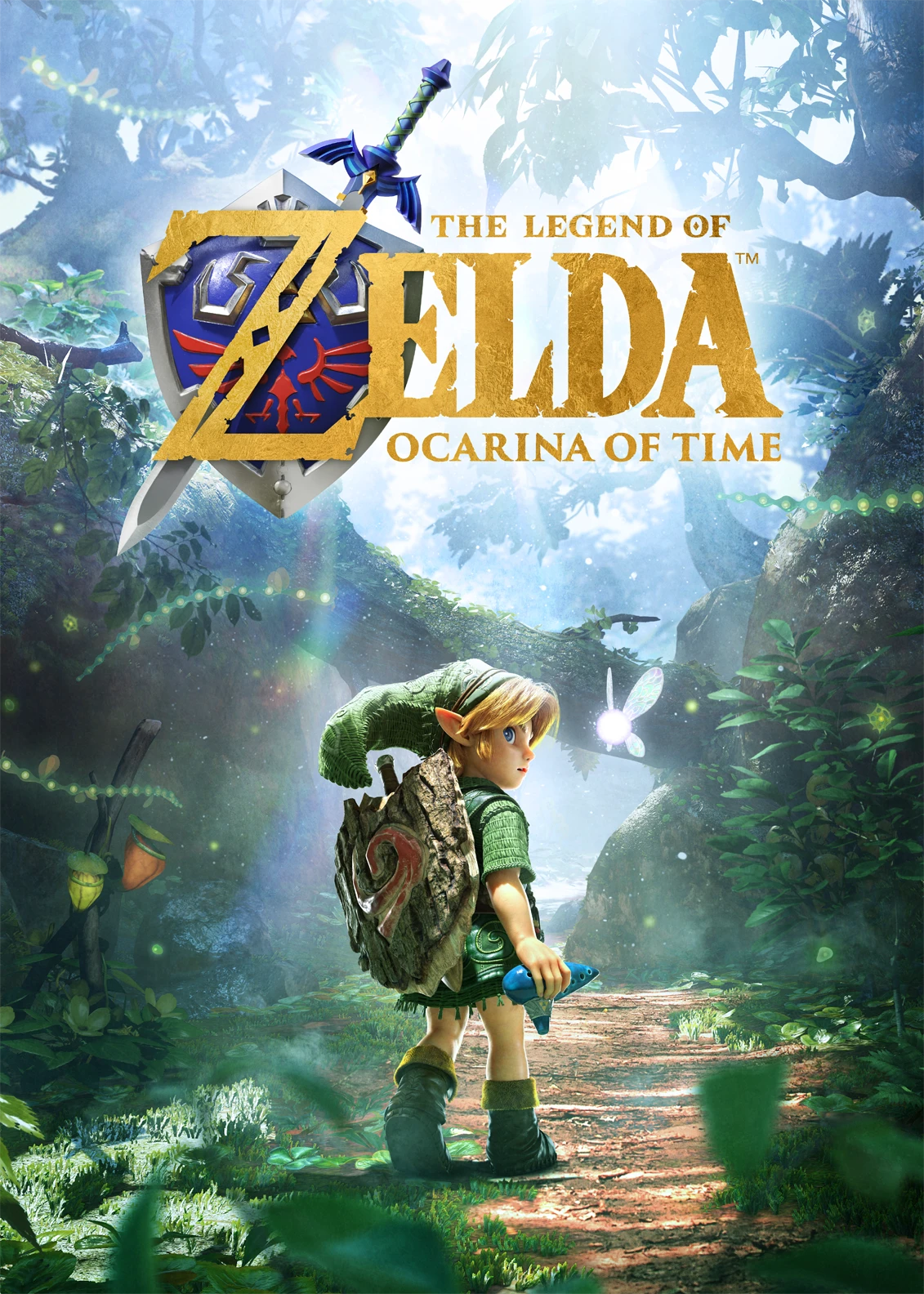
Key art for the 2026 Ocarina of Time on Nintendo Switch 2. The 1998 game it remakes is where Zelda’s history splits in three.
For a quarter of a century, Zelda fans built the series’ history out of crumbs: a ruined temple here, a legend recited by an old man there. Then, in December 2011, Nintendo published one. Hyrule Historia put every game into a single family tree, and Nintendo has kept that tree growing ever since, adjusting it in The Legend of Zelda Encyclopedia (2017) and then on its Japanese Zelda website, where a new “Chronicle” page marks the series’ 40th anniversary in 2026.
The shape is easy to remember. One line of history runs from the creation of the world through Skyward Sword to Ocarina of Time. There it splits three ways: one Hyrule where the Hero of Time lost, and two where he won, because Zelda sent him back to his childhood and left the adult world without him. Far in the future, after all three, come Breath of the Wild and Tears of the Kingdom, and Nintendo has never said which branch leads there.
This page sets out what Nintendo has actually published: the chart, every game in order with what ties it to its neighbours, how the official version has changed since 1998, and the games left off it. Fan theories get their own clearly labelled section near the end.
“…this chronicle merely collects information that is believed to be true at this time…”
Hyrule HistoriaEnglish edition (2013), as quoted by Wikipedia
“So, the timeline was in the back of our mind…”
Eiji Aonuma on the 2026 Ocarina of Time, Game Informer, 4 November 2026
Quick answers
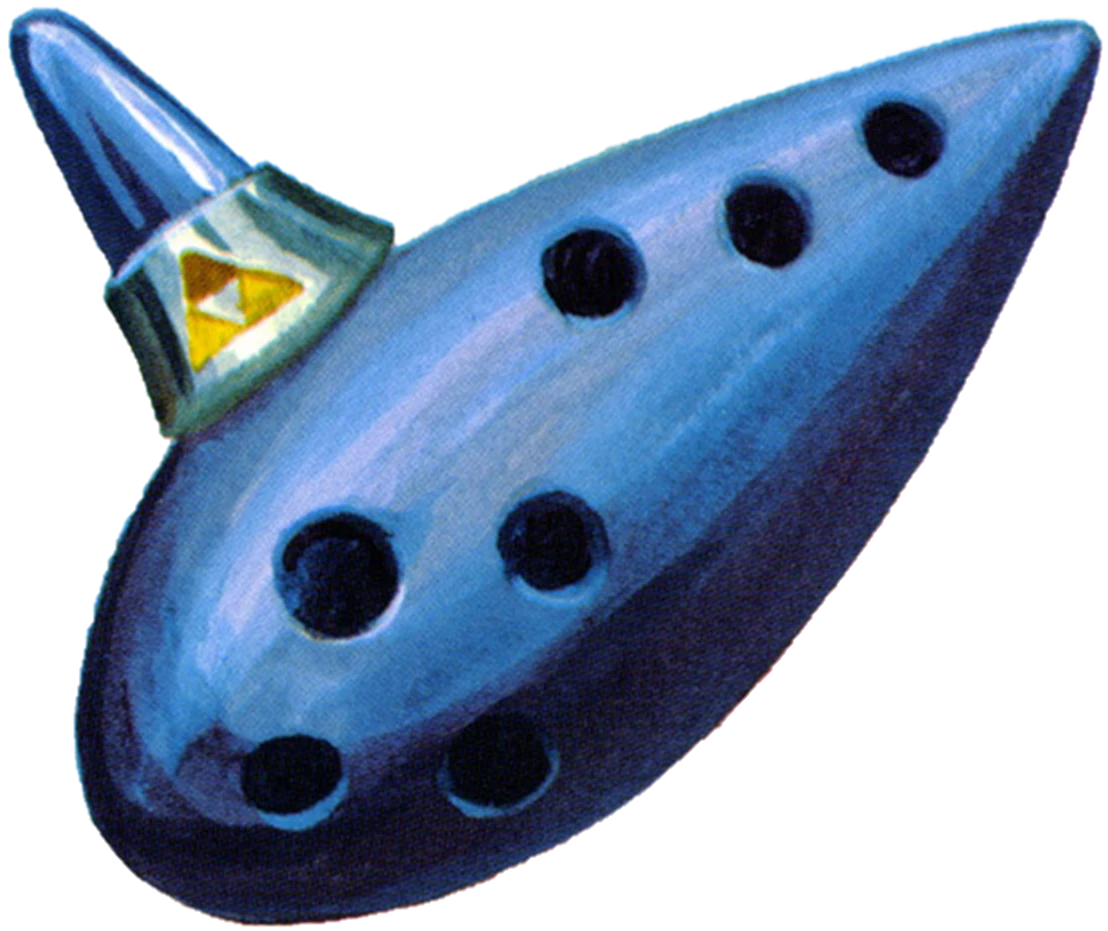
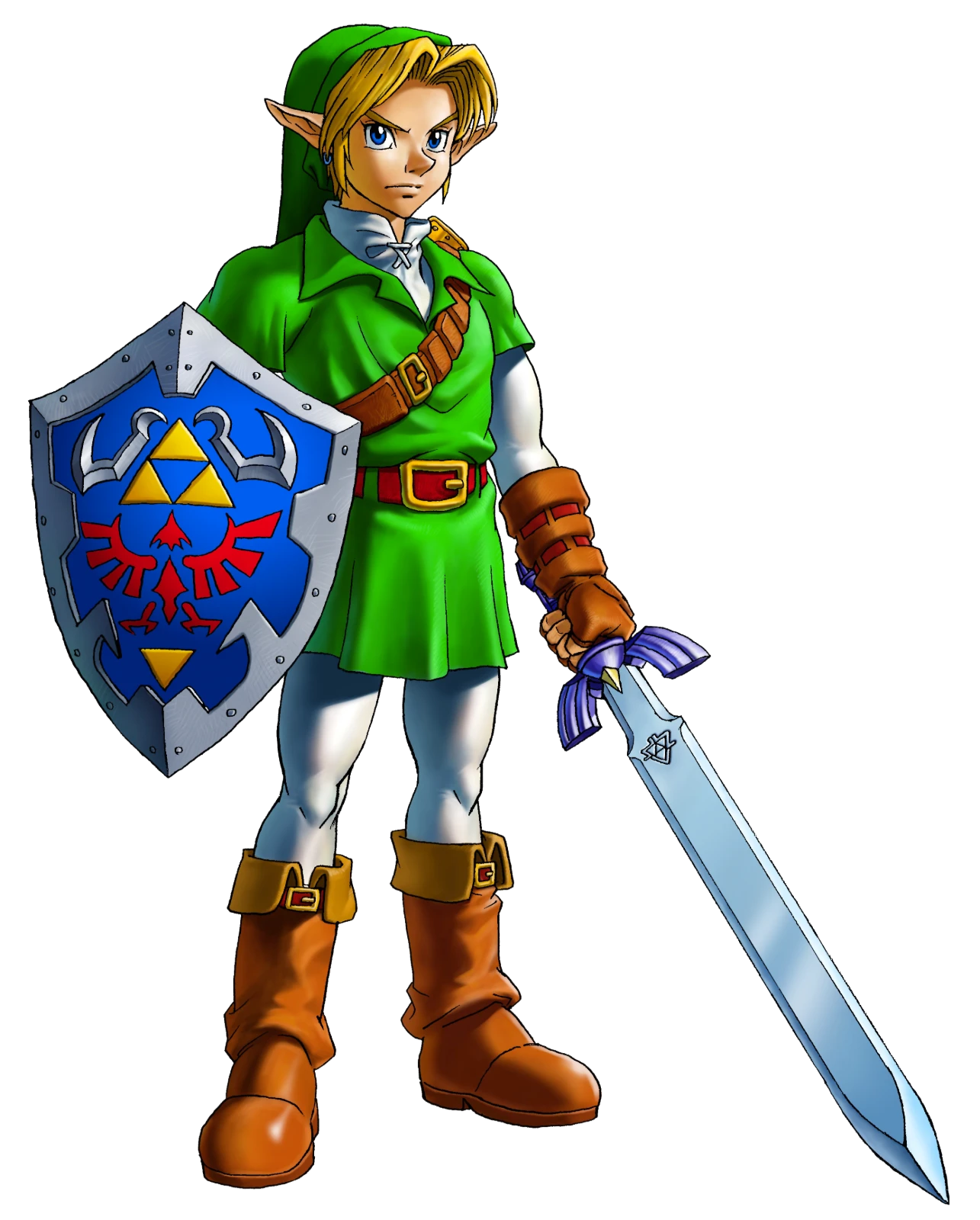
The Ocarina of Time (artwork): the instrument that splits history.
Which game comes first?Skyward Sword (2011). It tells how the Master Sword was made and how the first Link and Zelda came to be.
Why does it split? At the end of Ocarina of Time, Zelda sends Link back seven years. That leaves an adult world without its hero and a child world where he can warn the royal family. Nintendo adds a third path in which Link loses to Ganondorf.
Where do Breath of the Wild and Tears of the Kingdom go? At the very end, after all three branches. Nintendo has never said which branch leads to them.
Where does Echoes of Wisdom go? On the branch where the hero was defeated, after Tri Force Heroes and before the original Legend of Zelda. It appeared on Nintendo’s history page in November 2024.
Has it changed? Several times. The biggest shuffle moved Link’s Awakening from after the Oracle games to before them, and in 2026 Nintendo’s new chart listed the founding of Hyrule twice.
Where does the 2026 Ocarina of Time go? Exactly where the 1998 game does. The Chronicle has no separate entry for it, and Eiji Aonuma says his team chose not to add explicit references to later games.
The timeline chart
Here is the whole history on one page, redrawn by us from Nintendo’s published order. Time runs downwards. Each game links to its own page, and the guide further down gives every game a card explaining where it sits and why. Small italic lines are events Nintendo lists without a game; the bands are Nintendo’s era names.
The history of Hyrule, as Nintendo tells it
Creation
Din, Nayru and Farore shape the world and leave the Triforce behind
The era of the Goddess Hylia
Hylia battles Demise, the root of evil, and is reborn as Zelda
Solid lines show the order Nintendo states; the dashed join is a link Nintendo has not explained. The three columns are not in step: games level with each other are not contemporaries. English era names follow Nintendo of America’s timeline page where it gives them; the rest translate the Japanese Chronicle. Not on the timeline: the Hyrule Warriors games, the CD-i games, BS Zelda and the Tingle games. Chart: Zelda Temple, based on Nintendo’s official chronology (Hyrule Historia, The Legend of Zelda Encyclopedia, Nintendo Japan’s Chronicle, 2026).
Before history: creation, Hylia and Demise
Three goddesses and a golden relic
The creation of the world, retold in the 2026 Ocarina of Time.
Every version of the timeline opens with the creation myth first sketched in the manual of A Link to the Past and told in full in Ocarina of Time. Din shapes the land, Nayru gives it order and law, and Farore fills it with living things. Then the three goddesses depart, leaving behind the Triforce, a golden relic that grants the wish of whoever touches it.
Nintendo’s 2026 Chronicle adds a thoughtful touch to the old story: the goddesses chose not to rule the world they had made. Instead they left its future to the land itself, to its laws and to its creatures. The chart even starts a step earlier than the myth, with a single entry before creation: a world of nothing.
Hylia, Demise and the first age
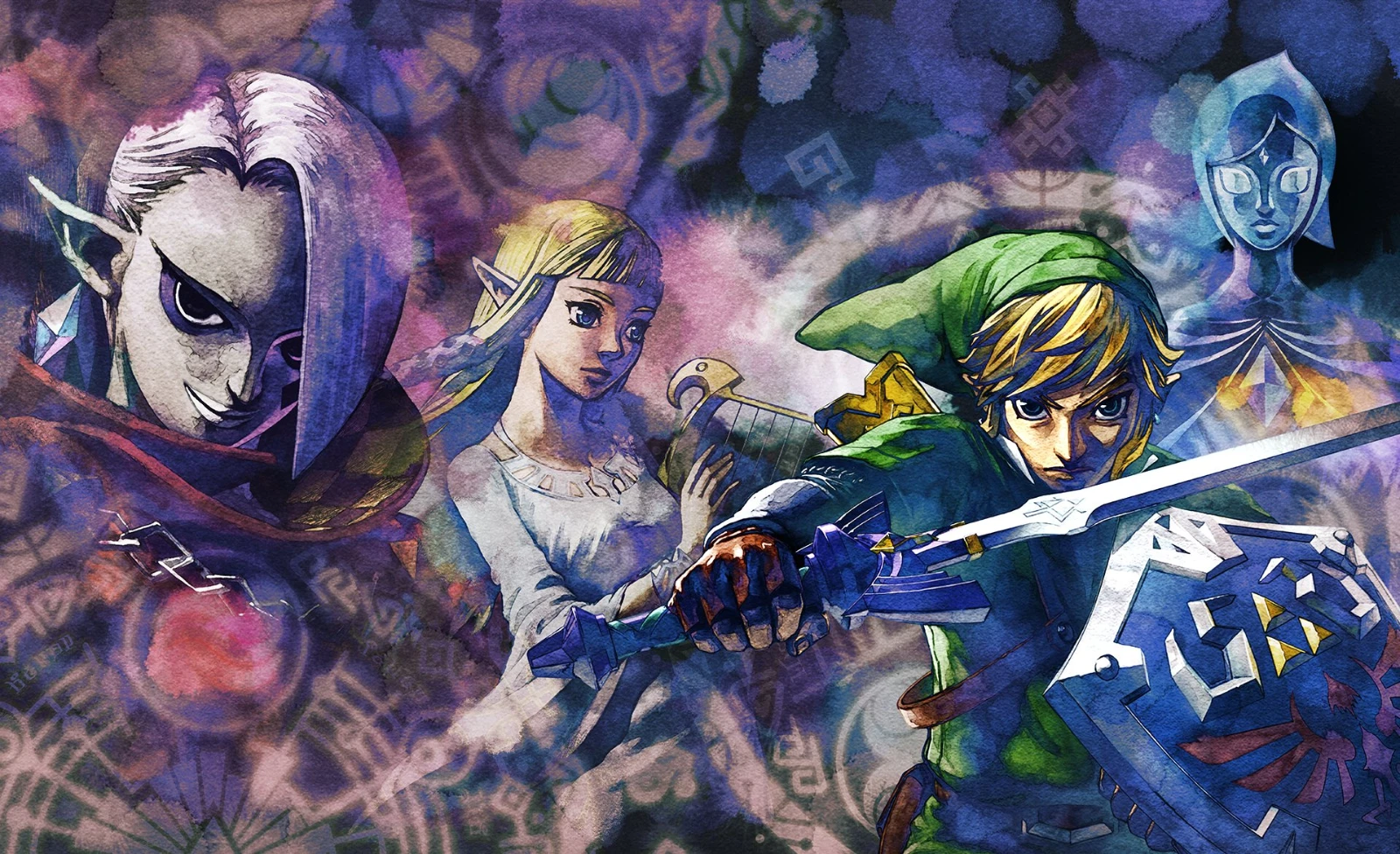
The goddess Hylia with the races of the surface (Skyward Sword).
The lesser goddess Hylia is left to guard the Triforce. Nintendo’s chart calls the next stage a battle against the “root of evil”, and Skyward Sword gives that evil a name: Demise, the Demon King, who rose from the earth with an army of monsters to seize the Triforce. Hylia lifts her surviving people and the Triforce above the clouds, seals Demise away and gives up her divinity so that she can be reborn as a mortal. Nintendo’s English site calls this stretch the era of the Goddess Hylia; the Chronicle’s entry for its ending says simply that Hylia is reborn as Zelda.
Demise, the Demon King whose curse starts the cycle (Skyward Sword render).
Demise matters to the whole timeline because of what he says as he dies. His hatred, he promises, will be reborn, and it will haunt everyone who carries the goddess’s blood and the hero’s spirit, for ever. That curse is the series’ own explanation for why a Link, a Zelda and an evil like Ganon keep meeting, age after age, on every branch of the chart.
The sword, the seal and the first Hyrule
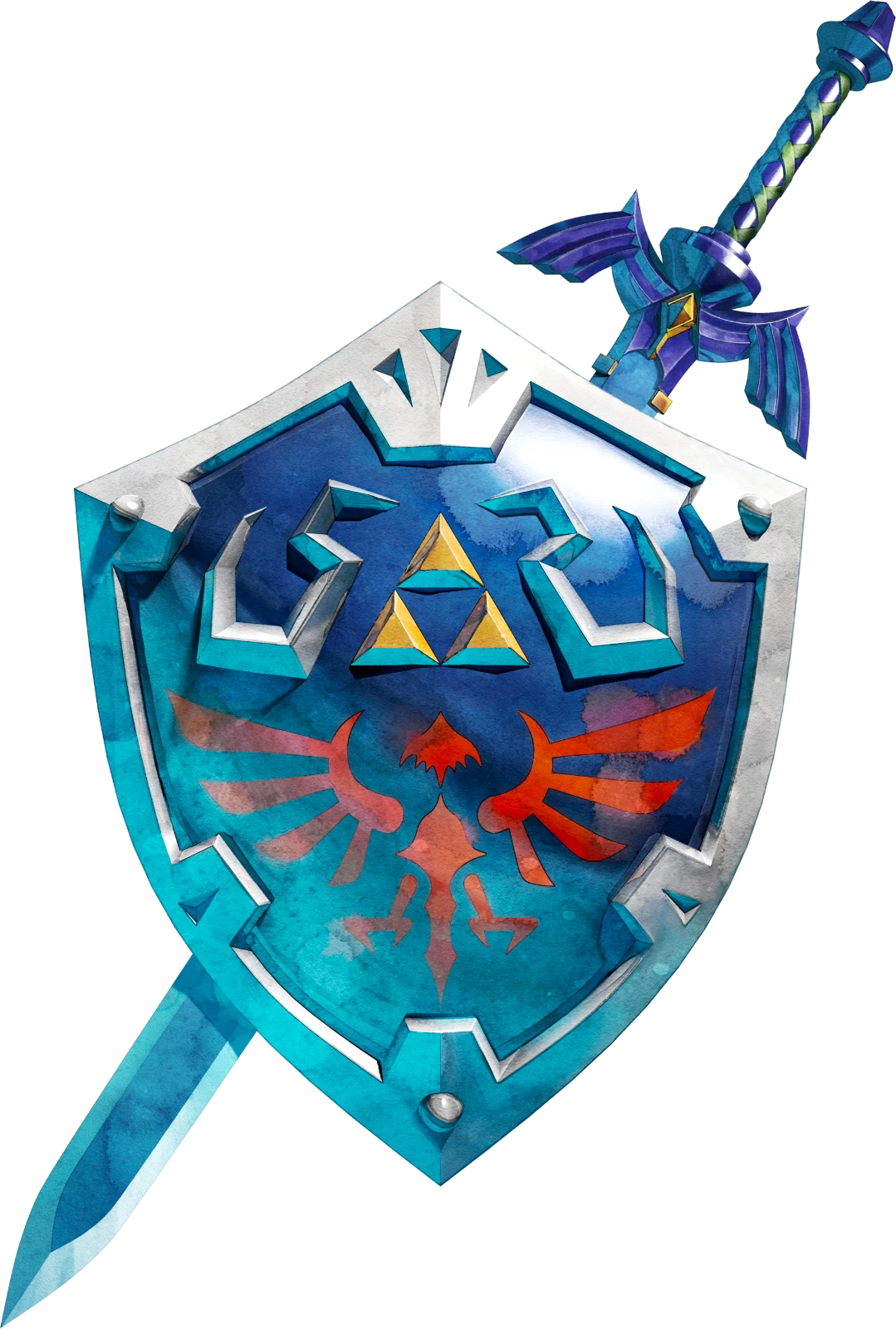
The Master Sword and the Hylian Shield (Skyward Sword artwork).
After Skyward Sword, Nintendo’s chart lists three short entries with no game attached: the Master Sword is born, the Sacred Realm is sealed, and the Kingdom of Hyrule is founded. Nintendo’s English site wraps them in three era names, the Sky era, the Era of chaos and the Era of Prosperity. They are the gap between the first legend and the next game.
Remember that founding. In 2026 Nintendo listed a second one, much later, and the pair have become some of the most argued-over lines on the chart (see the Calamity era).
Before the split: the first four games
Four games share the single line of history before the fork. Two of them, The Minish Cap and Four Swords, make up what Nintendo calls the Force era, the story of the sorcerer Vaati and the sword made to hold him. The last, Ocarina of Time, is the hinge on which everything after it turns.
Wii · Skyward Sword HD on Switch, 2021 · Sky era: the first story
The earliest adventure on the timeline, and a game made to be exactly that. Eiji Aonuma told Nintendo Power in August 2011 that it “does come before Ocarina of Time”, while ducking the label of first game, and Hyrule Historia, published in Japan a month after the game, made it the opening chapter. Nintendo still calls it the earliest tale in the series. Its home is Skyloft, the island Hylia raised above the clouds, where nobody remembers the surface any more.
Link and his friend Zelda are pulled into the goddess’s plan. Zelda turns out to be Hylia reborn; Link earns her sword and tempers it in three sacred flames until it becomes the Master Sword. He finally destroys Demise in the distant past, reached through a Gate of Time, and the dying Demon King lays the curse that binds hero, princess and evil together. With the threat gone, the people of the sky can settle the land below the clouds, and Nintendo’s chart moves on to the Master Sword’s birth and the founding of Hyrule.
Links to other games
Demise’s curse is the series’ explanation for the endless return of evil, Ganon included
The Master Sword forged here returns in A Link to the Past, Ocarina of Time and many later games
Impa, a Gate of Time and an older Temple of Time in the desert foreshadow Ocarina of Time
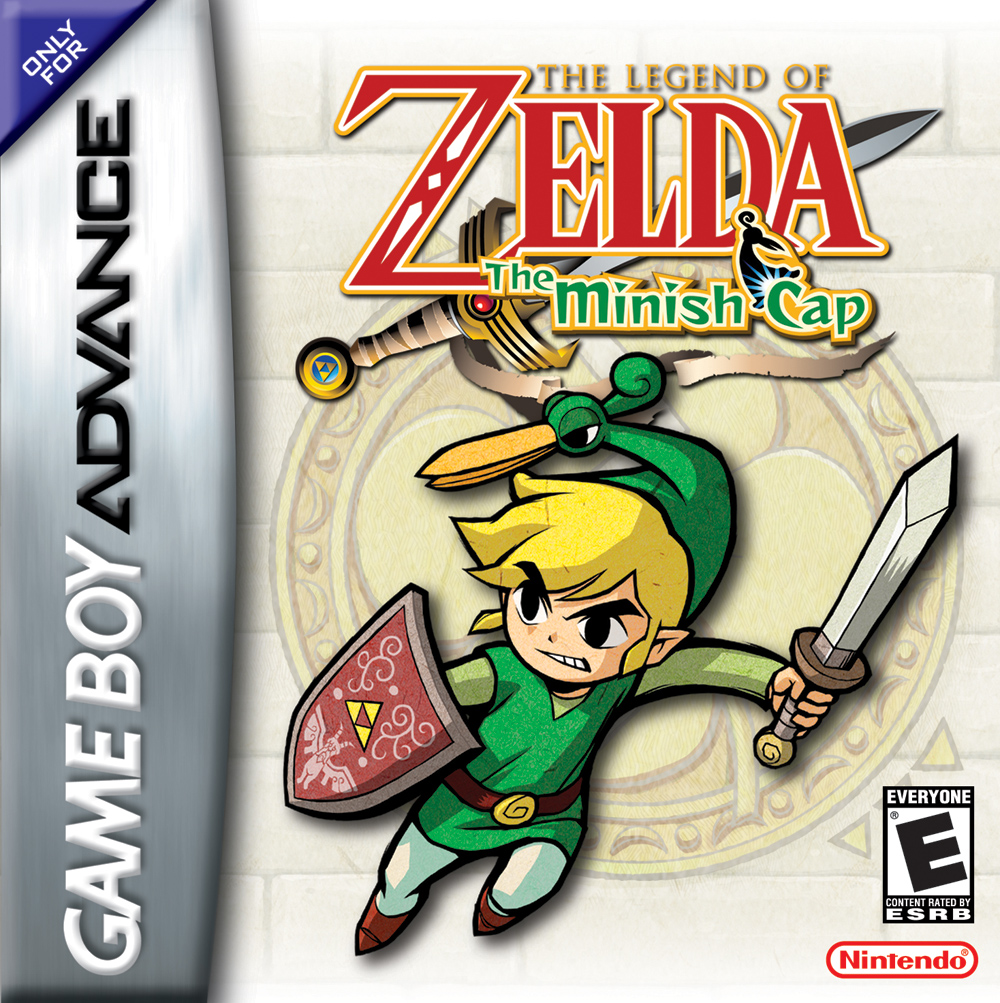
Game Boy Advance · Force era · The Four Sword is forged
Second in the story, though it came out two years after the game it sets up. The Encyclopedia puts it after Skyward Sword and before Four Swords, and Nintendo’s English timeline frames it with two entries, the rise of the evil Vaati before it and the resurrection of Vaati after it. In between is a story about very small people. During the Picori Festival a sorcerer named Vaati smashes the sacred Picori Blade and turns Princess Zelda to stone, and Link is sent to find the thumb-sized Minish, or Picori, whom only children can see.
His guide is Ezlo, a cranky talking cap who rides on his head and turns out to share a past with the villain. Together they gather the four Elements, reforge the broken blade as the Four Sword and defeat Vaati with it. From here on the Four Sword is the blade that keeps him locked away. Nintendo’s Japanese chart records the result in one line: the Four Sword is born from the Picori’s legendary blade.
Game Boy Advance, with A Link to the Past · Force era · Vaati breaks free
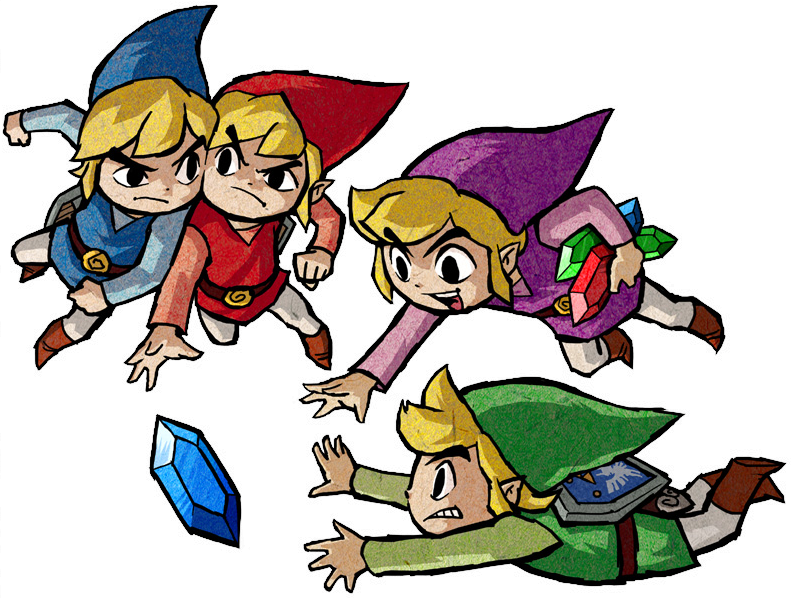
The first multiplayer Zelda shared a cartridge with the Game Boy Advance A Link to the Past, yet it sits far earlier in the story than its partner. Its manual tells of a wind sorcerer who once terrorised Hyrule until a boy split himself into four with a magic sword and sealed him inside the blade. Generations later the seal weakens. Princess Zelda takes Link to the Four Sword’s sanctuary to check on it, Vaati bursts out and carries her off to be his bride, and Link pulls the sword from its pedestal and becomes four Links in green, red, blue and purple.
It needed two to four players, each with a Game Boy Advance and a link cable; the 2011 Anniversary Edition added a way to play alone. On Nintendo’s English timeline its entry follows “The resurrection of Vaati”, and with it the Force era ends. Next on the trunk comes a civil war.
Links to other games
Vaati is freed and the Four Sword drawn once more in Four Swords Adventures, at the end of the child branch
The legendary hero in its manual may be the Minish Cap Link; the game itself never says
Nintendo 64 · remade for Nintendo Switch 2, 2026 · The era of the Hero of Time: the fork
Before the game begins, Hyrule has been torn apart by war: Nintendo’s English site calls it the Hyrulean Civil War, the Japanese chart a war of unification. Out of the peace that follows comes Ganondorf, king of the Gerudo thieves, who wants the Triforce. Young Link gathers the three Spiritual Stones and opens the Door of Time, and Ganondorf strolls straight past him into the Sacred Realm. Nintendo’s chart sums up the disaster in three entries: a world of darkness forms in the Sacred Realm, the Triforce splits, and the thief becomes the Demon King Ganon.
Link wakes seven years later as a young man, rouses the Sages and, with Zelda, seals Ganon away. Then Zelda plays the Ocarina of Time and sends him home to his childhood, and one line of history becomes three. The Nintendo Switch 2 remake of 5 November 2026 retells the same story and so sits in the same spot; Aonuma told Game Informer the team kept the timeline “in the back of our mind” but chose not to add explicit references to later games.
Era markers (5)
The Hyrulean Civil War
A world of darkness forms in the Sacred Realm
The Triforce splits: Power to Ganondorf, Wisdom to Zelda, Courage to Link
Ganondorf becomes the Demon King Ganon
Time splits
Links to other games
Defeated branch: Ganondorf wins, and the Imprisoning War behind A Link to the Past follows
Child branch: the same Link sets off again in Majora’s Mask
Adult branch: Hyrule is left without a hero, which leads to The Wind Waker
The Picori Blade in stained glass (The Minish Cap artwork).Vaati, the wind sorcerer of the Force era (Four Swords artwork).The Hyrulean Civil War, the war before Ocarina of Time.
Why the timeline splits in three
The ending of Ocarina of Time (Nintendo 64).
At the end of Ocarina of Time, adult Link and the Sages seal Ganon away. Zelda then uses the Ocarina to send Link back seven years, to the childhood he lost. From that moment there are two Hyrules: the future Link leaves behind, which no longer has a Hero of Time, and the past he returns to, where he can warn the royal family about Ganondorf.
Aonuma first said as much in a 2007 interview with the Japanese magazine Nintendo Dream. Twilight Princess, he explained, takes place “a hundred and something years” after the peace of the child Link’s time, while The Wind Waker runs “parallel”. At E3 2005 he had put Twilight Princess a few decades after Ocarina and before The Wind Waker, so this was the first official hint that history had forked.
Hyrule Historia then added a third route that nobody saw coming. What if the Hero of Time had simply lost? Nintendo’s English site now describes the fork in exactly those terms, “The hero is defeated” and “The hero is triumphant”, and the triumphant route then divides into the child and adult worlds. In Japanese the labels name him outright: the Hero of Time is defeated, the Hero of Time is victorious.
Link returns the Master Sword to its pedestal (Ocarina of Time).The six Sages (Ocarina of Time 3D).
Branch one: the hero is defeated
Ganon imprisoned (A Link to the Past artwork).
Nintendo sums this branch up in a few grim lines. Link falls to Ganondorf, who takes all three pieces of the Triforce and becomes the Demon King Ganon. Wars over the Triforce keep coming back, the divine blood of the royal family grows thin and the kingdom shrinks. The chart then has six Sages sealing Ganon away, followed by the Imprisoning War: the war in which, as the manual of A Link to the Past tells it, the Knights of Hyrule gave their lives protecting the wise men while they cast their seal.
It is the longest branch, nine games deep, and it holds the oldest games in the series: the 1986 original and Zelda II close it. Nintendo calls its first age the Era of Light and Dark, after the Dark World.
Super NES · Era of Light and Dark · First game of the branch
The first game after the fall. Ganon’s wish has twisted the Sacred Realm, the Golden Land, into the Dark World, and the seal the wise men laid on it is weakening. The wizard Agahnim is breaking it from the inside, sending the descendants of the wise men, seven maidens including Princess Zelda, into the Dark World one by one. A boy woken by Zelda’s call on a stormy night draws the Master Sword, crosses between the Light and Dark Worlds with the Magic Mirror and finally beats Ganon at his pyramid.
The manual’s history of Hyrule tells how a band of thieves broke into the Golden Land and how their leader became Ganon, and that backstory is exactly what the defeated branch needs: a Ganondorf who got the whole Triforce. One small wrinkle remains. The game’s legend speaks of seven wise men, where Nintendo’s chart now says six Sages sealed Ganon.
Era markers (3)
The six Sages seal Ganon
The Imprisoning War
The Era of Light and Dark begins
Links to other games
The same hero goes on to Link’s Awakening, according to the Encyclopedia
Game Boy · DX 1998, Switch 2019 · Era of Light and Dark
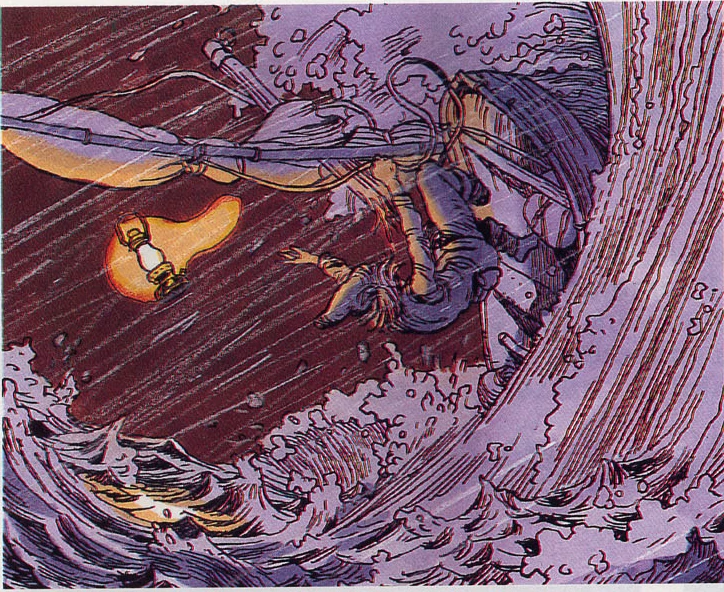
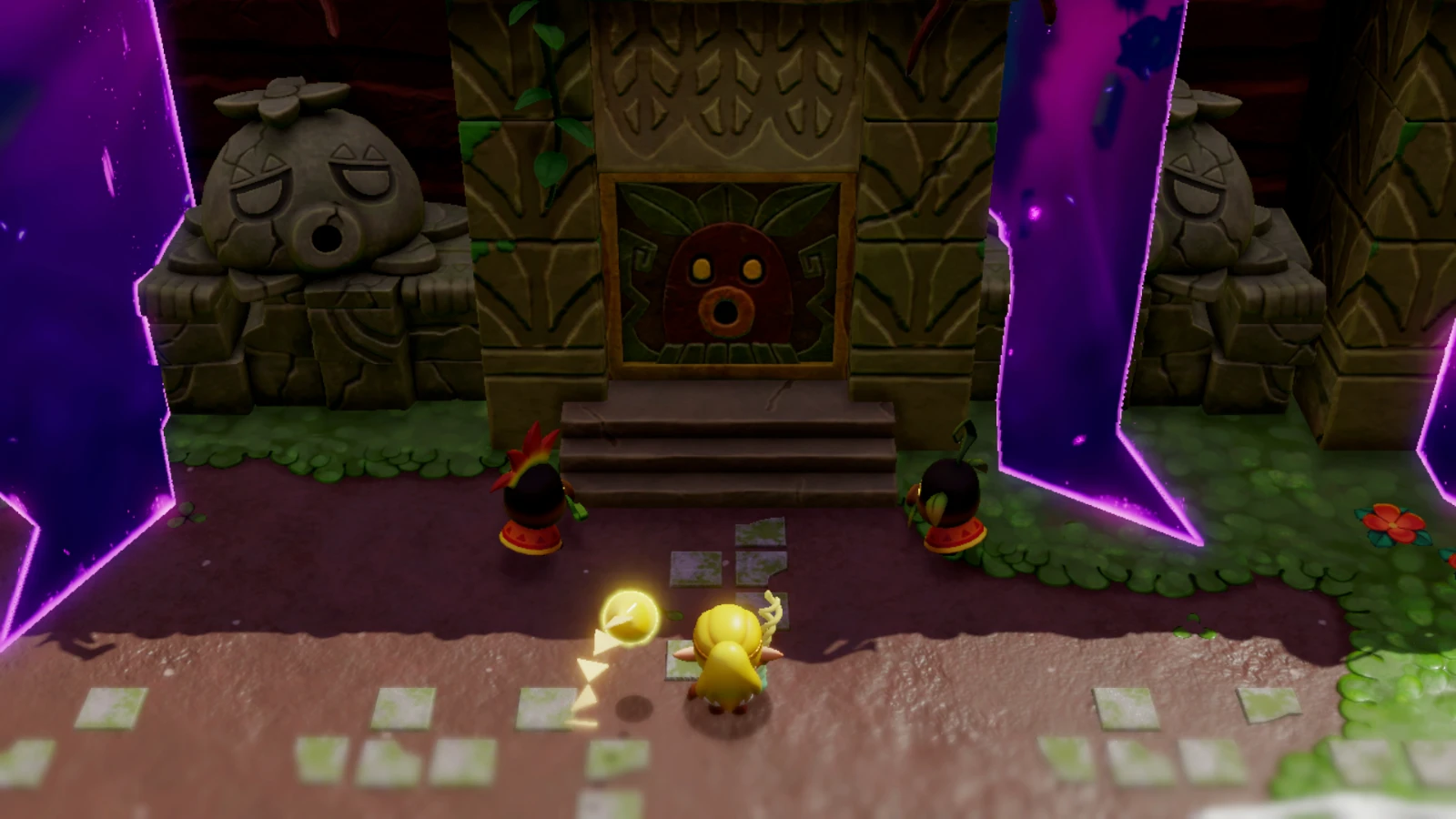
The hero of A Link to the Past takes to the sea, and Nintendo’s chart gives his next adventure a one-line summary: caught in a storm while sailing, Link washes up on Koholint Island. There he meets Marin, a girl who loves to sing, and learns that the only way off the island is to wake the Wind Fish, asleep in a giant egg on the mountain, even though the island itself may be nothing more than the Wind Fish’s dream.
This is the game that moved. Hyrule Historia put it after the two Oracle games; the Encyclopedia, published in Japan in March 2017, moved it to straight after A Link to the Past, and Nintendo’s Japanese site adopted the new order in August 2018. It has stayed there since, which makes the two games one hero’s back-to-back story.
Links to other games
Same Link as A Link to the Past (the Encyclopedia)
Game Boy Color · Era of Light and Dark · Paired with Oracle of Ages
The Triforce itself summons Link to Hyrule Castle, then whisks him off to the land of Holodrum, where General Onox has kidnapped Din, the dancing Oracle of Seasons, and thrown the weather into chaos. With the Rod of Seasons Link can turn summer to winter by standing on a tree stump, and beneath Holodrum lies Subrosia, a lava-lit underworld of hooded traders.
Capcom’s Flagship studio made it as half of a linked pair. Finish one game and you get a password to carry into the other, and only in that linked game does the real plot surface: the witches Twinrova, last seen in Ocarina of Time, kidnap Princess Zelda to bring Ganon back. Nintendo’s chart lists both Oracle games as a single entry with no text of its own.
Links to other games
Twinrova tie it back to Ocarina of Time
The Encyclopedia describes the hero only as a boy travelling on horseback (Zelda Dungeon’s translation), so whether he is the A Link to the Past Link is left open
The oracles Din and Nayru, and Farore, keeper of the passwords, share their names with the goddesses
Game Boy Color · Era of Light and Dark · Paired with Oracle of Seasons
The puzzle-heavy twin. This time the Triforce sends Link to Labrynna, where Veran, the Sorceress of Shadows, has possessed Nayru, the Oracle of Ages, and bent four hundred years of history out of shape. With the Harp of Ages Link hops between the present and the same land four centuries earlier, and what he mends in one era reshapes the other.
In a linked game, whichever of the pair you finish second ends with Twinrova’s attempt to revive Ganon and a fight with the resurrected Demon King. That is about as much as the two games say about their place in history, which is why their position has been argued over: Hyrule Historia slotted them in before Link’s Awakening, the Encyclopedia after it, and Zelda Dungeon notes that the English and Japanese editions of the Encyclopedia seem to disagree about who their hero is.
Links to other games
Veran and Twinrova serve the same end: bringing back Ganon
Nayru the oracle shares her gift for order and time with the goddess of the same name
Nintendo 3DS · Era of Light and Dark · Long after A Link to the Past
A return to the Hyrule of A Link to the Past, with the same map and much of the same music, set long afterwards; its Japanese title, which Nintendo’s chart uses, is simply “Triforce of the Gods 2”. Aonuma settled its place before launch, telling Spike in October 2013 that it belongs to the branch where the hero was defeated, after A Link to the Past and between the Oracle games and the original Legend of Zelda.
The sorcerer Yuga is turning people into paintings, Princess Zelda and the descendants of the Sages among them, and uses them to revive Ganon. Link, who learns to merge into walls as a painting himself, chases Yuga into Lorule, a dark twin of Hyrule whose own Triforce was destroyed, and meets its princess, Hilda. Nintendo’s chart closes the game with the Triforce returned to Hyrule’s Sacred Realm.
Nintendo 3DS · Era of Light and Dark · Sequel to A Link Between Worlds
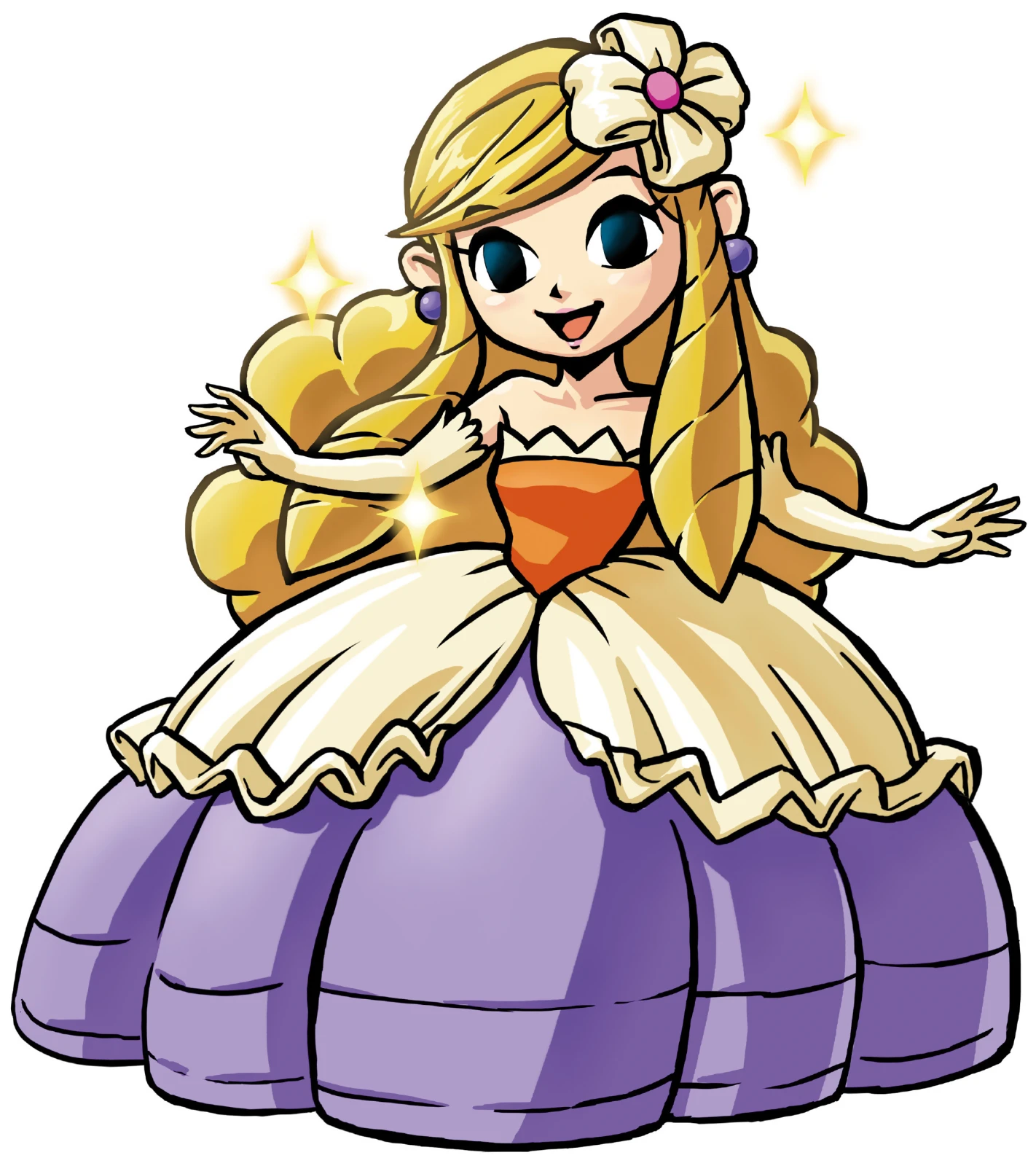
The hero of A Link Between Worlds, the same boy according to the Encyclopedia, wanders into Hytopia, a kingdom obsessed with fashion. Its Princess Styla has been cursed by a witch into an outfit she cannot take off, and the king is recruiting heroes to break the spell. Every trip into the dangerous Drablands is made by three Links at once, who stack into totems to reach high places and wear outfits with special powers.
Nintendo’s Japanese chart records the plot in a single line: Hytopia’s princess is cursed by the witch Lady Maud. The game is a side trip rather than a turning point, but it matters to the chart for what came after: in November 2024 Nintendo slotted Echoes of Wisdom in directly behind it.
Links to other games
Same Link as A Link Between Worlds (the Encyclopedia)
Nintendo Switch · Era of Light and Dark · Placed November 2024
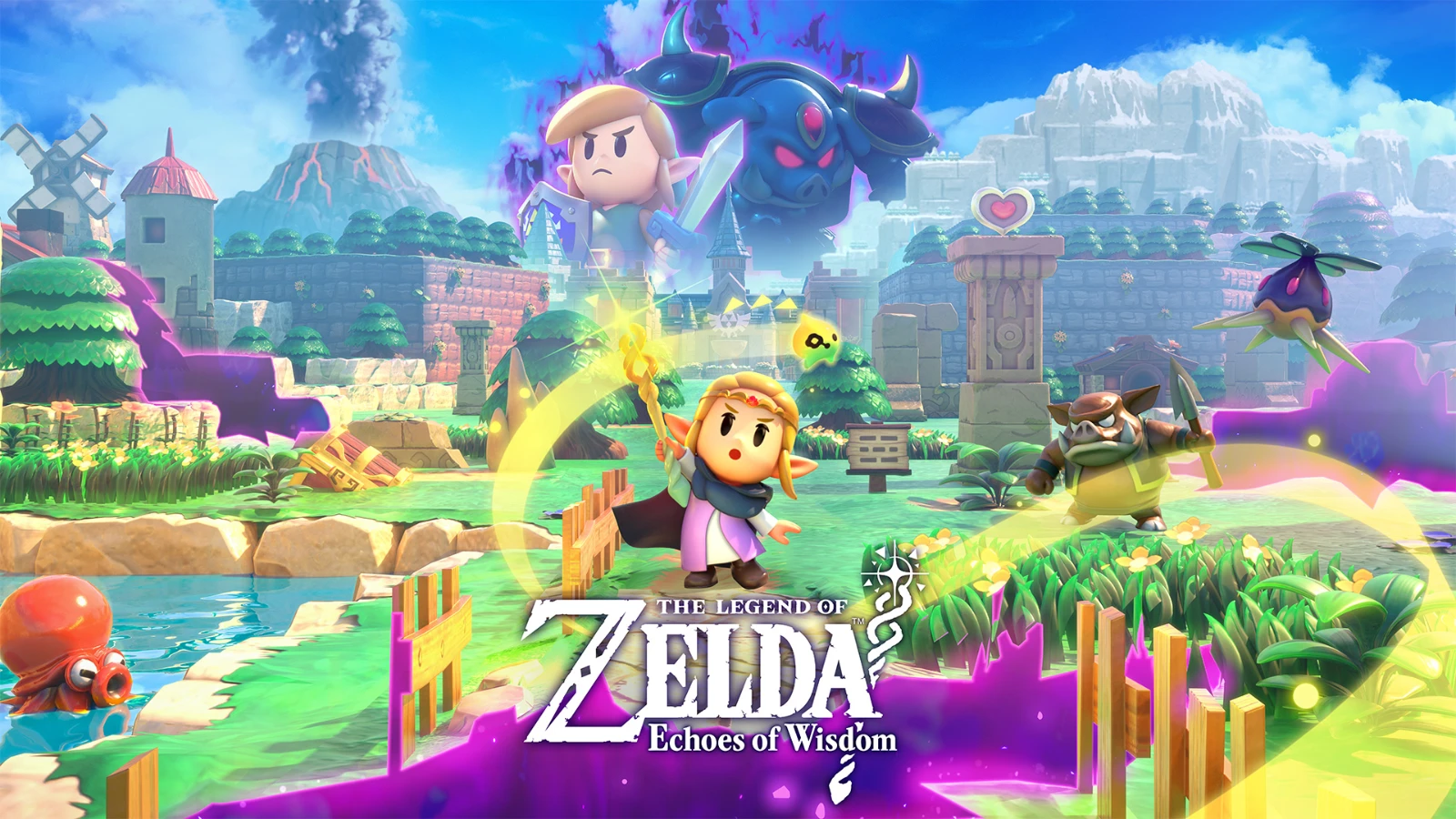
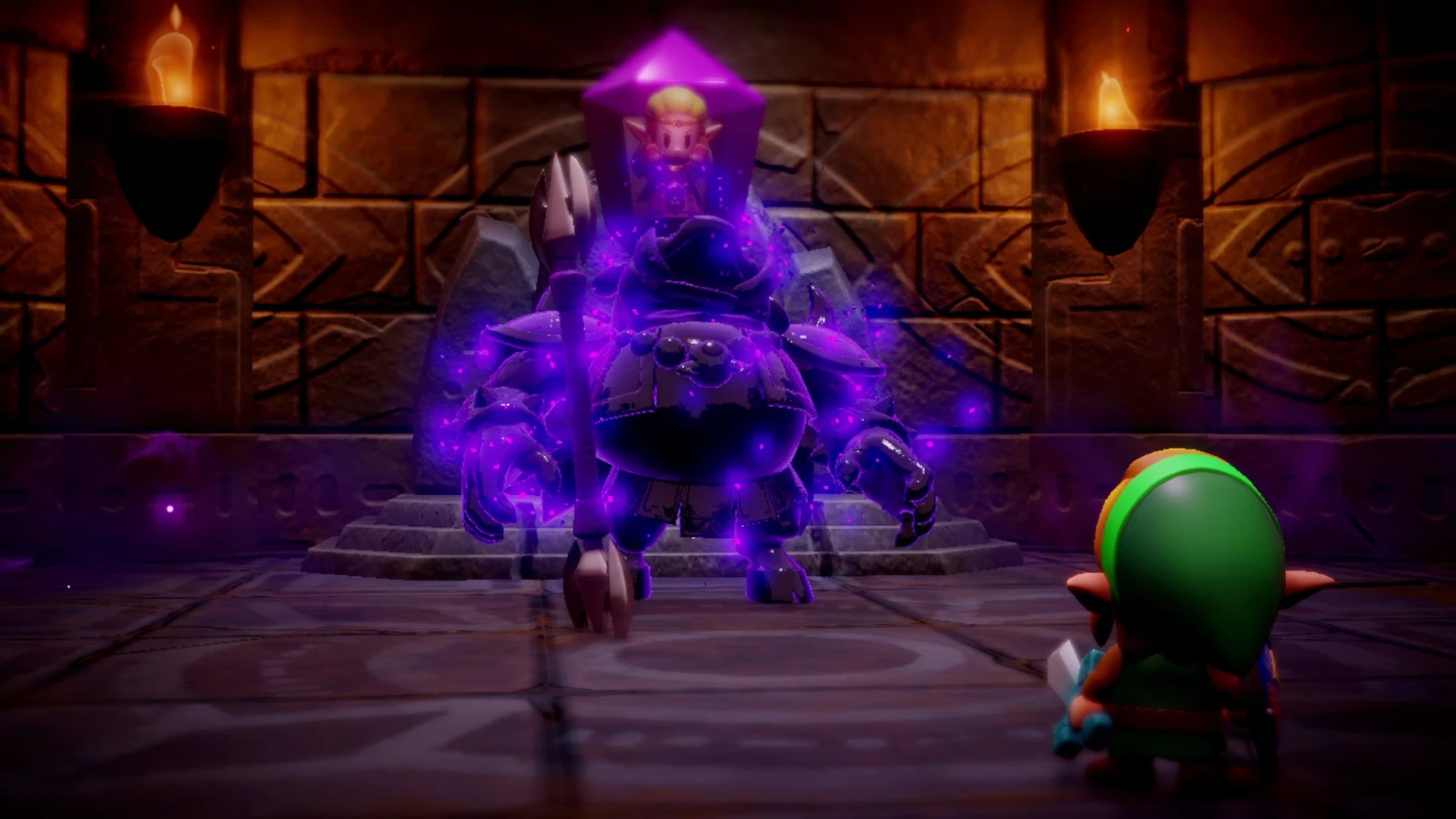
The first main game with Princess Zelda in the lead, and the newest arrival on the chart. It came out on 26 September 2024, and on 26 November Nintendo Life and GamesRadar+ reported that it had appeared on Nintendo’s official history page, on the branch where the hero is defeated, straight after Tri Force Heroes and just before the decline of the Hyrule Kingdom that leads to the 1986 original.
Nintendo’s own summary opens with Link rescuing Zelda from Ganon, only to be “swallowed up by an eerie rift”. With the hero gone, rifts start eating Hyrule, and Zelda sets out with the fairy-like Tri, copying objects and monsters as echoes to fight back. The 2026 Chronicle keeps the game in the same place and follows it with a new entry for the mysterious rifts across Hyrule, the last event before the Golden Era.
Links to other games
Next on the chart: the Golden Era, the Era of Decline and The Legend of Zelda
Japan’s Dengeki Online reported the same placement in November 2024
The storm that wrecks Link’s boat (Link’s Awakening artwork).Princess Styla of Hytopia (Tri Force Heroes artwork).Ganon falls in the opening of Echoes of Wisdom (promotional screenshot).
The Golden Era and the Era of Decline
The first Princess Zelda (Zelda II artwork).
Between Echoes of Wisdom and the 1986 original, Nintendo’s chart crams in long ages without a game. First come the mysterious rifts. Then a Golden Era, in which the kings rule with the Triforce and the country prospers, and after it an Era of Decline. Somewhere in that decline falls the tragedy of the first Princess Zelda, the sleeping princess of Zelda II’s backstory, and by the end Hyrule has shrunk to a small regional kingdom. That is the Hyrule of the NES.
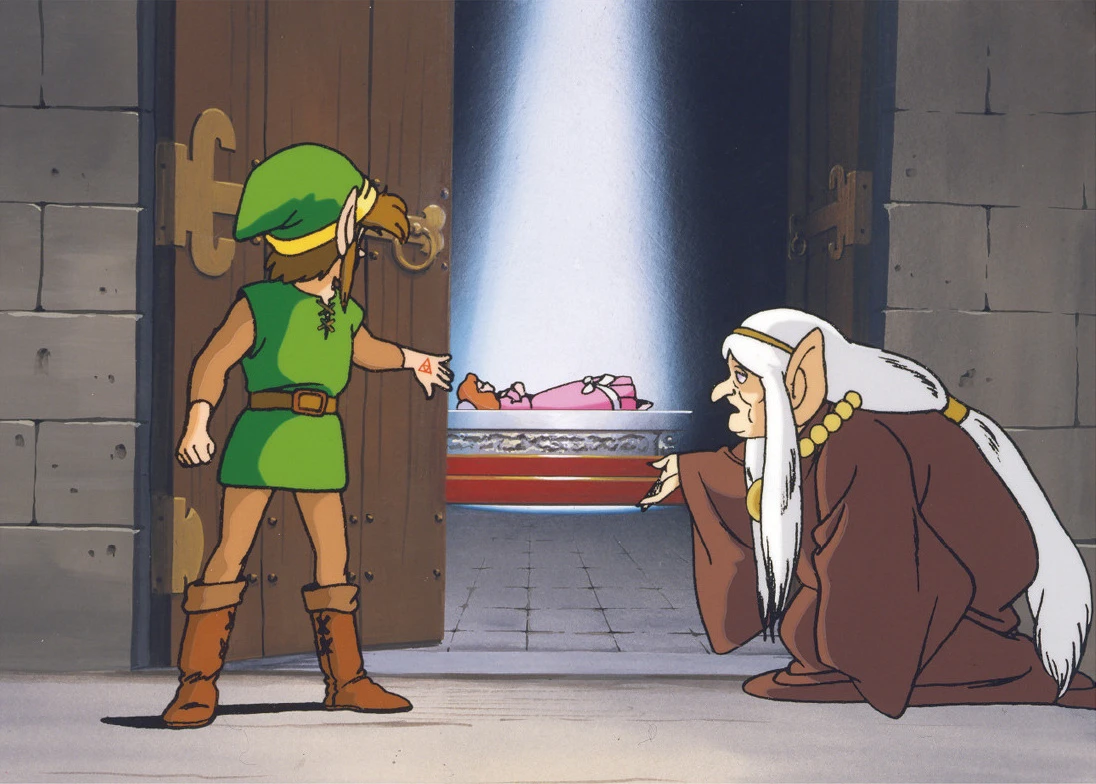
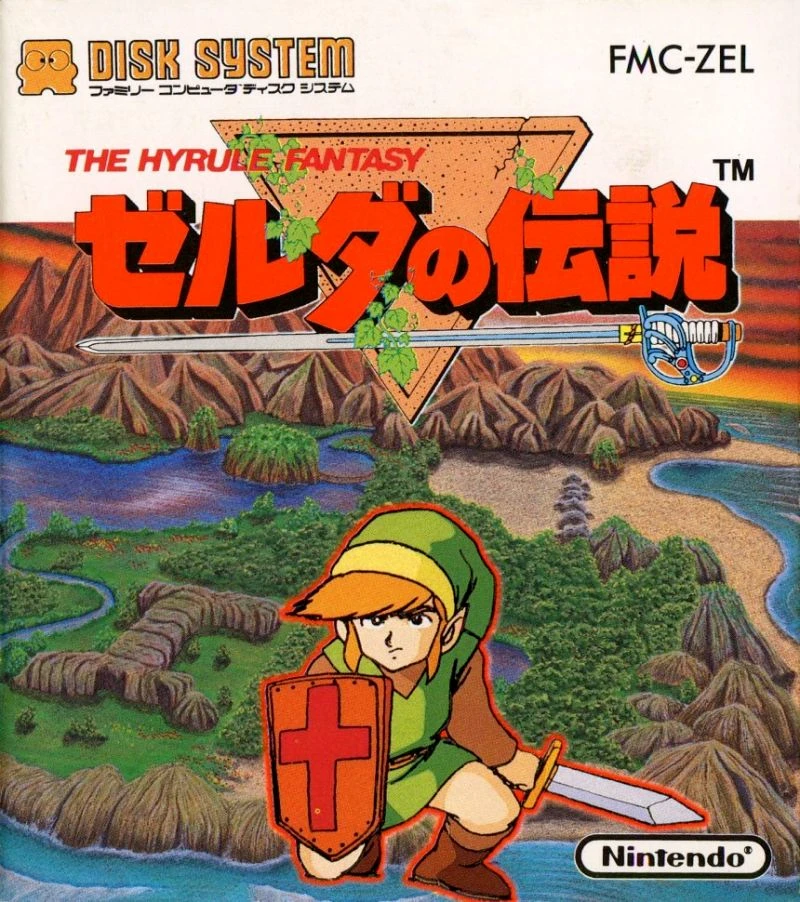
The game that started the series sits near the end of its branch. By now Hyrule has been through its Golden Era and its decline and is, in the Chronicle’s phrase, a small regional kingdom, which squares neatly with the manual, where Hyrule is just a little kingdom. Ganon, Prince of Darkness, has seized the Triforce of Power; Princess Zelda has broken the Triforce of Wisdom into eight pieces and hidden them, and her nursemaid Impa finds a boy called Link to gather them up.
In 1998 Shigeru Miyamoto placed it straight after Ocarina of Time; today seven games sit between them. Nintendo’s chart gives it two events: Ganon returns, and the hidden Triforce of Wisdom is found.
Era markers (5)
The Golden Era: the kings rule with the Triforce
The Era of Decline
The tragedy of the first Princess Zelda
Hyrule shrinks to a small regional kingdom
Ganon returns; the hidden Triforce of Wisdom is found
Links to other games
Its direct sequel, Zelda II, follows a few years later with the same Link
Impa, Ganon and the Triforce of Power all make their debut here
First in release order, twelfth in story order (counting both Oracle games)
Famicom Disk System and NES · Era of Decline · The end of the branch
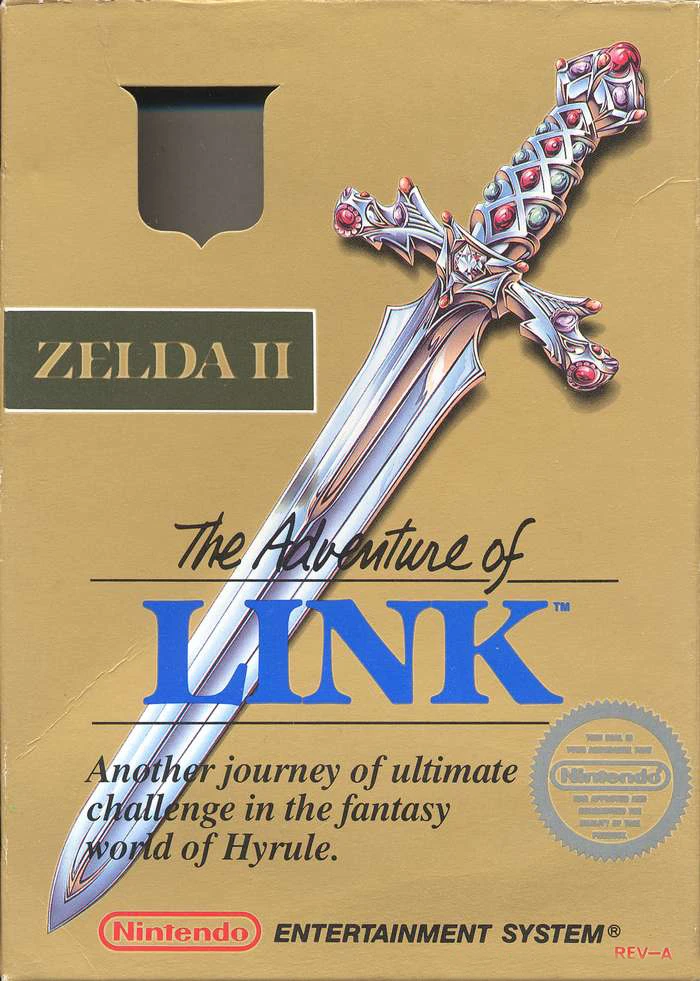
A few years after the first game, as he nears sixteen, Link finds the crest of Hyrule on the back of his hand, and Impa tells him the story of the first Princess Zelda. Long ago her brother, the prince, pressed her for the secret of the Triforce. When she refused, a magician friend of his flew into a rage and cast a spell of sleep on her. The remorseful prince laid her in a tower and decreed that every princess born to the royal family would be named Zelda from then on.
To wake her, Link must set crystals in six palaces and claim the Triforce of Courage from the Great Palace, while Ganon’s followers hunt him, because his blood could bring their master back. Nintendo’s chart ends the whole branch with the game’s two final beats: the ancient Princess Zelda awakens, and the hidden Triforce of Courage is found.
Links to other games
The sleeping princess is the “tragedy of the first Princess Zelda” listed before the first game
Its decree is the series’ own explanation for why every princess is called Zelda
Branch two: the hero is triumphant (child)
The failed execution of Ganondorf (Twilight Princess HD).
Link goes home. Nintendo’s chart has him meet Zelda again and put a stop to Ganondorf’s plotting, and from there, it says, a different history unfolds. Like the adult branch, it is only three games long, and it follows the consequences of one warning: with the Hero of Time back in his own age and the royal family forewarned, Ganondorf ends up sentenced to death.
Its later ages take their names from the games themselves: the Japanese chart calls them the era of twilight and the era of shadow.
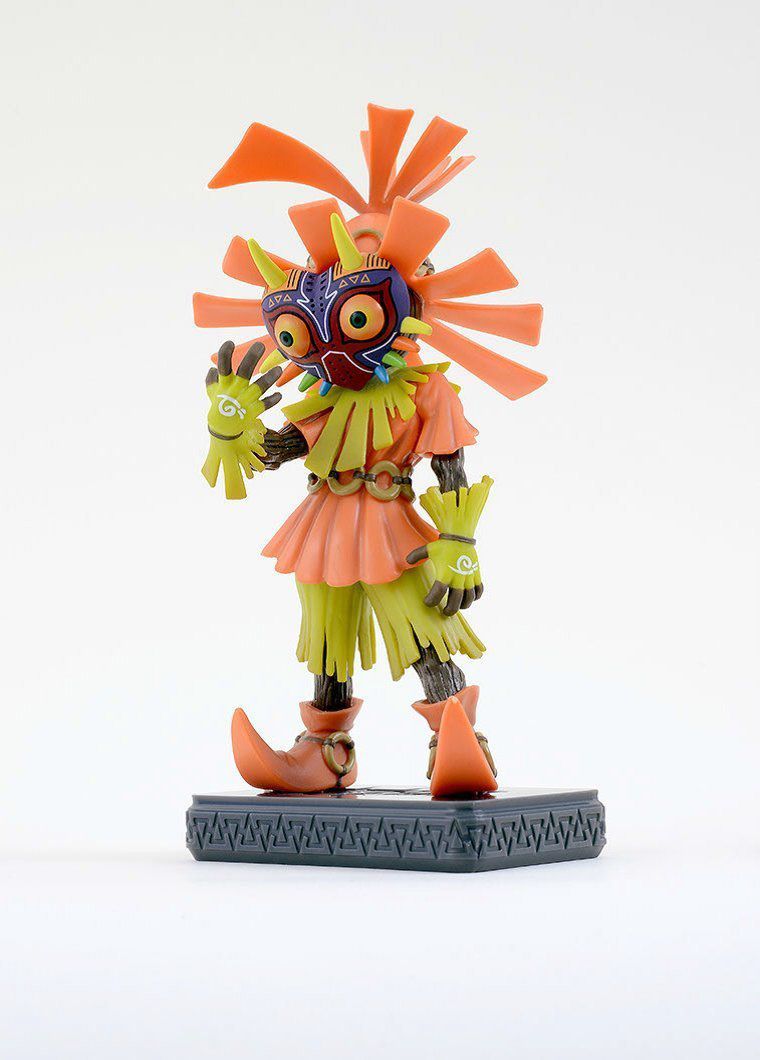
The same boy, a few months on. Sent back to his childhood, the Hero of Time has set off alone, looking for Navi, the fairy who left him. In the woods a Skull Kid wearing a stolen mask ambushes him, and Link tumbles into Termina, a strange mirror of Hyrule where the moon will fall in three days. Nintendo’s chart sums up the setup in exactly those terms: attacked by the Skull Kid, Link strays into Termina.
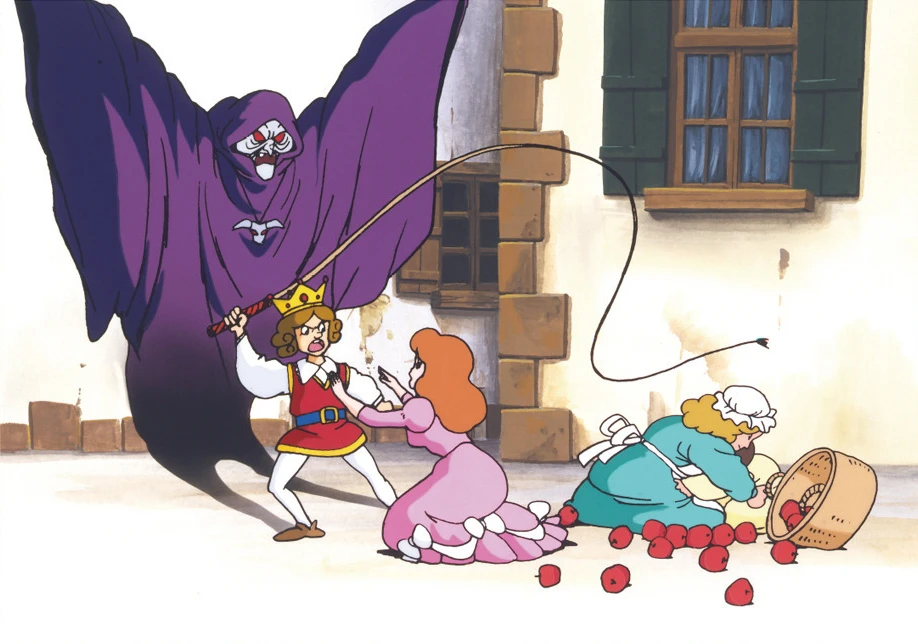
It is the only game set right at the start of the child branch, and it leaves its hero riding off on Epona, still searching. Hyrule Historia does give him an afterlife of sorts: the ghostly swordsman who trains the hero of Twilight Princess is this very Link.
More than a century on, and the game that first revealed the timeline had forked. Aonuma said in 2007 that it is set “a hundred and something years” after the peace of the child Link’s time, and its backstory follows straight from that peace: Ganondorf, condemned to death, survives his execution thanks to the Triforce of Power, so the Sages banish him into the Twilight Realm instead. Nintendo’s chart lists that banishment just before the game.
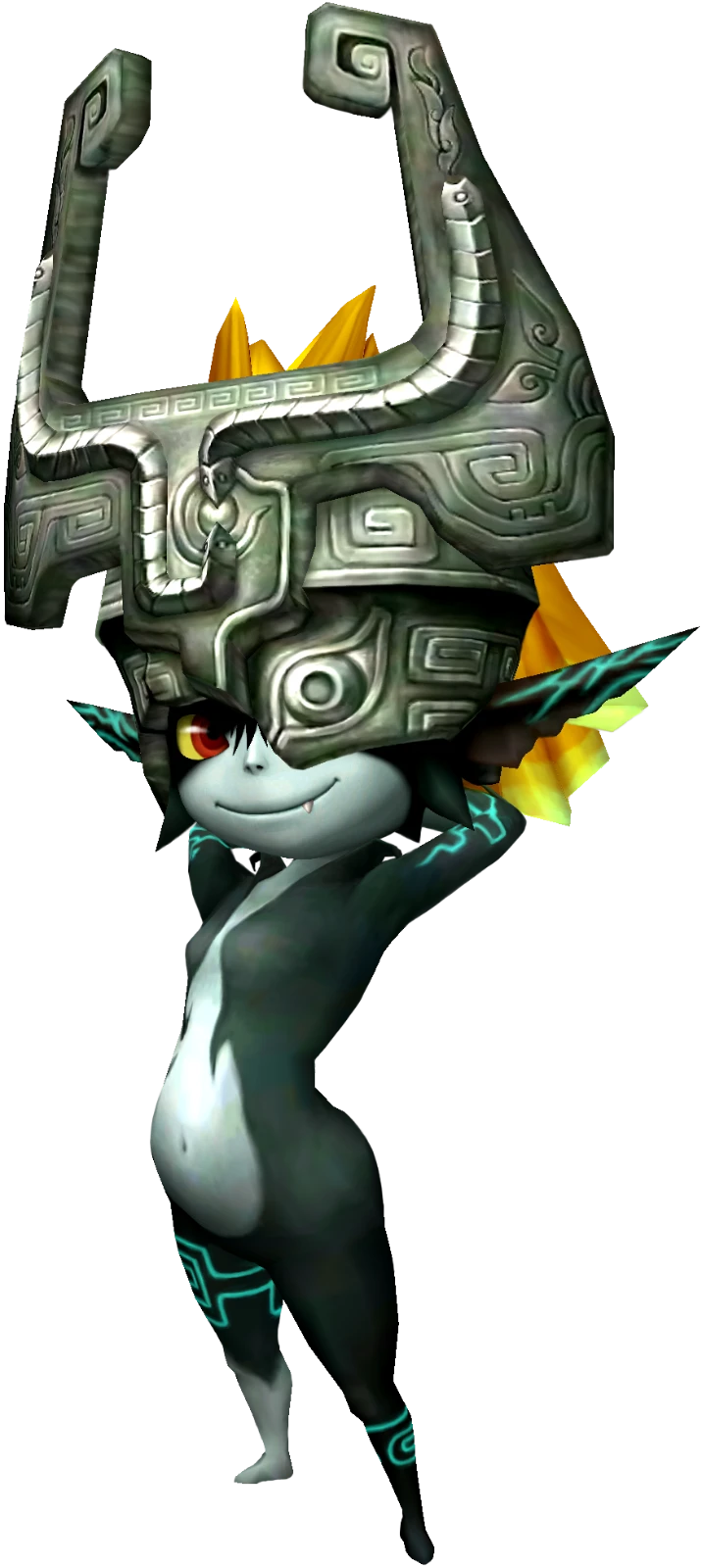
From his exile he works through Zant, the usurper king of the Twili, who invades Hyrule and smothers it in twilight. Link, a ranch hand from Ordon who spends much of the game as a wolf, teams up with Midna, the Twili’s rightful ruler. Along the way a skeletal warrior teaches him forgotten sword skills; Hyrule Historia confirms he is the Hero of Time, the Link of Ocarina of Time and Majora’s Mask. The chart tags the game with the Twili’s invasion and Ganondorf’s return.
Era markers (4)
Ganondorf is banished to the Twilight Realm
The Era of Twilight
The Twili invade Hyrule
Ganondorf returns
Links to other games
Its Ganondorf is the one Link fought in Ocarina of Time
The Hero’s Shade ties it to Majora’s Mask
Aonuma’s 2005 placement, a few decades after Ocarina and before The Wind Waker, was replaced in 2007
The child branch ends with a brand-new villain. This Ganondorf is not the one from Ocarina of Time but a new man born among the Gerudo, and Nintendo’s chart traces his rise in two steps: Ganondorf is reborn, then becomes the beast Ganon. On the way he steals a trident of dark power and sends out Shadow Links, evil copies of the hero, and one of them lures the real Link into drawing the Four Sword, which sets Vaati free again.
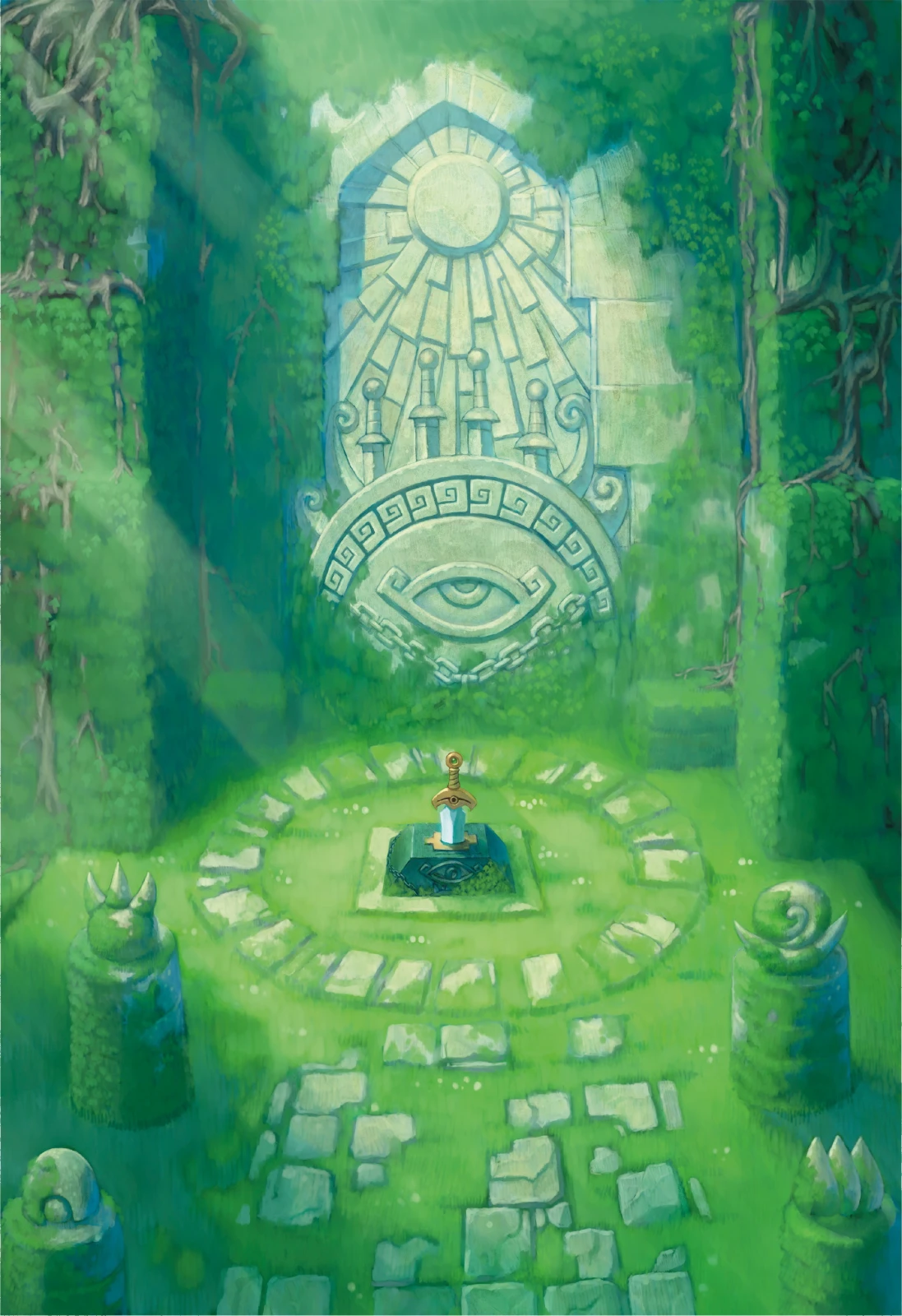
Link splits into four, and the quartet fights back across Hyrule in a scaled-up version of the Four Swords idea, built for a GameCube and up to four Game Boy Advances. The branch closes on its final entry: Ganon is sealed in the Four Sword. No game follows it on this branch.
Era markers (4)
The Era of Shadow
Ganondorf is reborn and becomes the beast Ganon
Vaati returns
Ganon is sealed in the Four Sword
Links to other games
Vaati and the Four Sword tie it back to The Minish Cap and Four Swords
Its Ganondorf is a separate incarnation: Nintendo’s chart says he is reborn
Nintendo’s chart gives no interval between it and Twilight Princess
The Skull Kid (Majora’s Mask 3D).Midna (Twilight Princess render).The Four Sword Sanctuary (Four Swords Adventures).
Branch three: the hero is triumphant (adult)
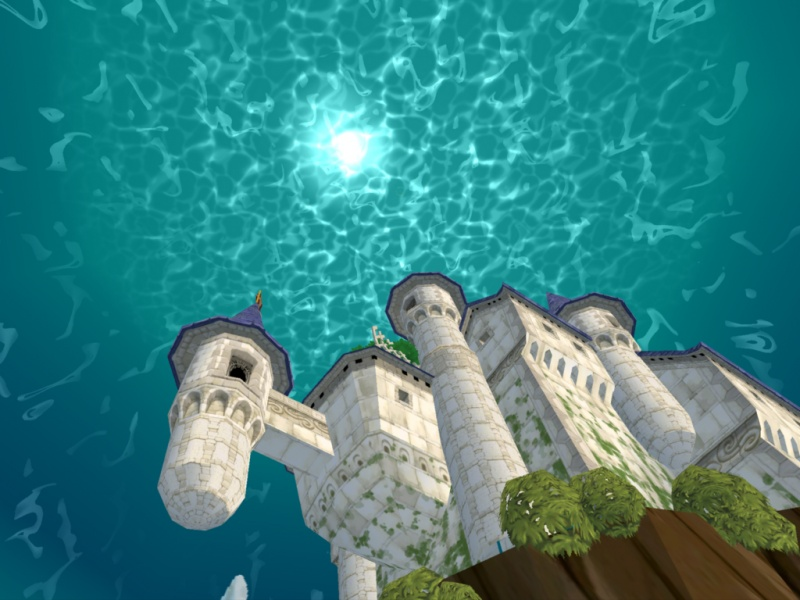
Hyrule Castle beneath the sea (The Wind Waker).
This branch begins with an absence. Nintendo’s chart calls it the Era without a Hero: the Hero of Time has gone back to his own age and the world starts to heal, but Hyrule’s troubles are not over. When Ganondorf returns there is nobody to stop him, so Hyrule is sealed away and drowned beneath the sea.
What follows is the seafaring, cel-shaded corner of the series: an Era of the Great Sea, a Great Voyage in search of land, and finally a New Hyrule on another continent.
Long after the flood, the Hyrule of legend is a story told on scattered islands. Link of Outset Island sets out to rescue his kidnapped sister, falls in with the pirate captain Tetra and a talking boat, the King of Red Lions, and finds the old kingdom preserved under the waves, frozen in time, with the Master Sword waiting in its castle.
The boat is the last King of Hyrule, and Tetra turns out to be Princess Zelda. Ganondorf, free of the seal the Hero of Time left him in, wants the reunited Triforce; the king reaches it first and wishes Hyrule washed away so that its children can find a future of their own, and Link finishes Ganondorf with the Master Sword. Nintendo’s chart marks the game with three entries: Ganondorf returns, the Triforce is made whole, and Hyrule vanishes as its survivors set out for a new land.
Era markers (5)
The Era without a Hero
Hyrule is sealed and flooded
The Era of the Great Sea
Ganondorf returns; the Triforce is made whole
Hyrule vanishes; the search for a new land begins
Links to other games
Followed directly by Phantom Hourglass, with the same Link and Tetra
Straight on from The Wind Waker: Link and Tetra’s pirates are at sea, looking for new land, when a Ghost Ship looms out of the fog and Tetra vanishes aboard it. Link washes up in the World of the Ocean King with a fairy called Ciela, an old man named Oshus and a cowardly captain, Linebeck, whose ship he borrows, and he keeps returning to the Temple of the Ocean King to push back the life-draining Bellum.
Nintendo’s chart calls this era the Great Voyage and gives it two entries: Link searches for the Ghost Ship, and a new continent is discovered. That discovery sets up the next game. It is also, as Zelda Dungeon points out, the only adult-branch game in which Link has a fairy companion.
Links to other games
Same Link and Tetra as The Wind Waker
Tetra’s new land becomes the kingdom of Spirit Tracks
Nintendo DS · The era of New Hyrule · The end of the branch
About a century after Tetra’s crew found their new land and founded New Hyrule, a new Link graduates as a royal engineer on the very day the Spirit Tracks, the magic railway that crosses the kingdom, begin to vanish. The chancellor, Cole, is a demon in disguise, and with the rogue Lokomo Byrne he plans to revive Malladus, a Demon King sealed beneath the Tower of Spirits, using Princess Zelda’s body.
Zelda’s spirit joins Link instead, possessing the Tower’s Phantom guards, and the two drive the Spirit Train to the end of the line. Nintendo’s chart gives this era its own founding entry, New Hyrule is established, and closes the whole adult branch with the Lokomo sage returning to the heavens.
Era markers (4)
The era of New Hyrule
New Hyrule is founded
The Demon King Malladus returns
The Lokomo sage returns to the heavens
Links to other games
Set about a century after Phantom Hourglass, in the kingdom Tetra founded
Niko, once a deckhand on Tetra’s ship, tells the old legend as a white-haired old man
The flooding of Hyrule (The Wind Waker).King Daphnes Nohansen Hyrule and Tetra (The Wind Waker).The Ghost Ship (Phantom Hourglass).
After all three branches: the Calamity era
Nintendo’s placement
Calamity Ganon (Breath of the Wild artwork).
Breath of the Wild arrived in 2017 with no placement at all. In the summer of 2018 Nintendo’s Japanese Zelda site added an interactive history page that put it at the very end, which Zelda Dungeon described as the final entry on all three branches. In a Famitsu interview, translated by Siliconera and reported by Kotaku, the two lead developers kept the door open, and both said the timeline keeps changing as “new information and truths” come to light.
“Well of course it’s at the very end. But, I get what you’re asking, it’s which timeline is it the end of?”
Eiji Aonuma Famitsu, August 2018 (Siliconera’s translation, via Kotaku)
“That’s… up to the player’s imagination, isn’t it?”
Hidemaro Fujibayashi the same interview
Left open on purpose
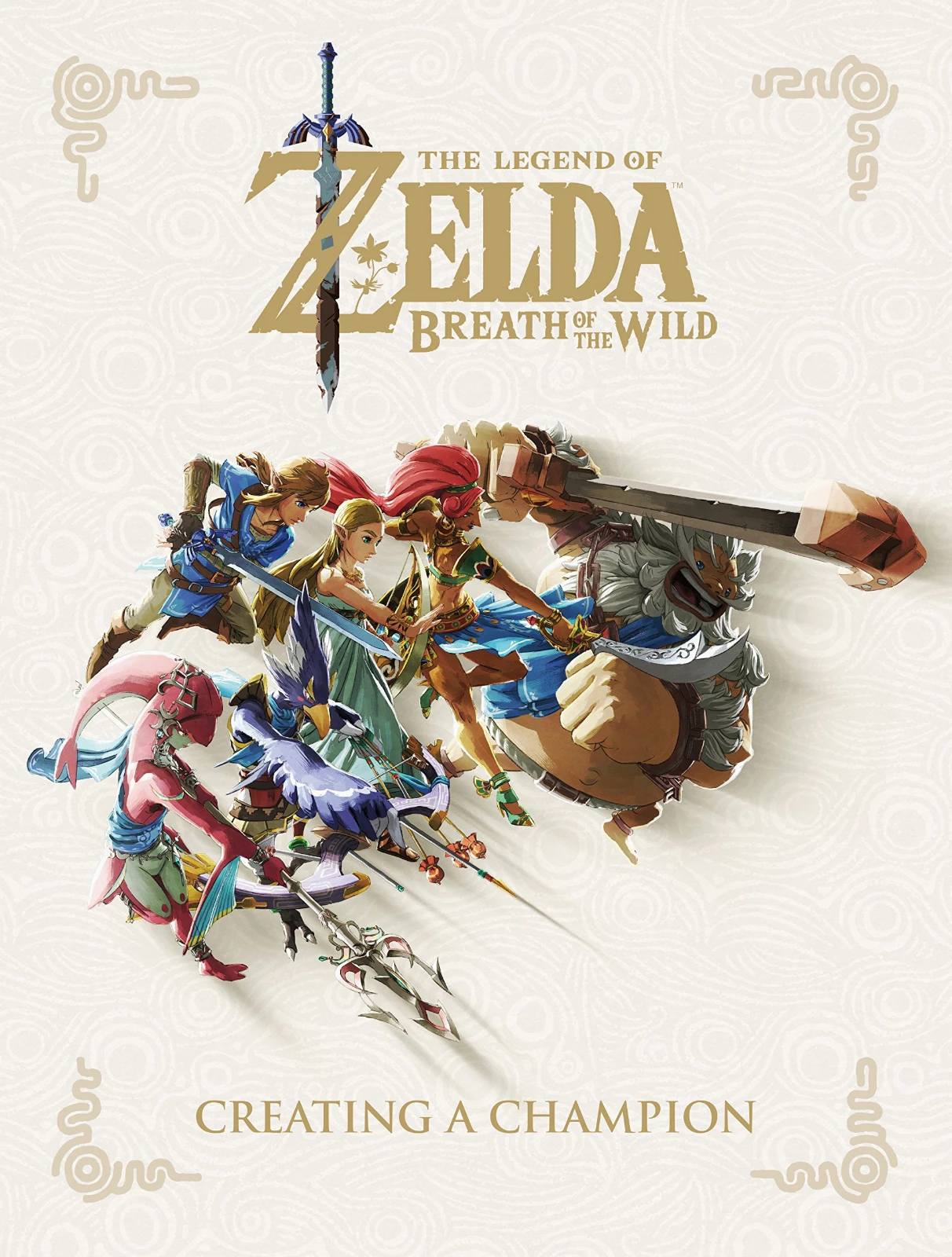
Breath of the Wild Master Works, the Japanese edition of Creating a Champion (cover).
The official art book Breath of the Wild – Creating a Champion, published in English by Dark Horse in November 2018 and in Japan about a year earlier as Master Works, confirmed that the vagueness was deliberate. Aonuma explains there that the team had placed earlier games on the timeline, “but we didn’t do that for Breath of the Wild. There is a reason for that.” The reason: they wanted every player to reach their own answer.
Tears of the Kingdom and the founding of Hyrule
Rauru and Sonia, the founders of Hyrule in Tears of the Kingdom.
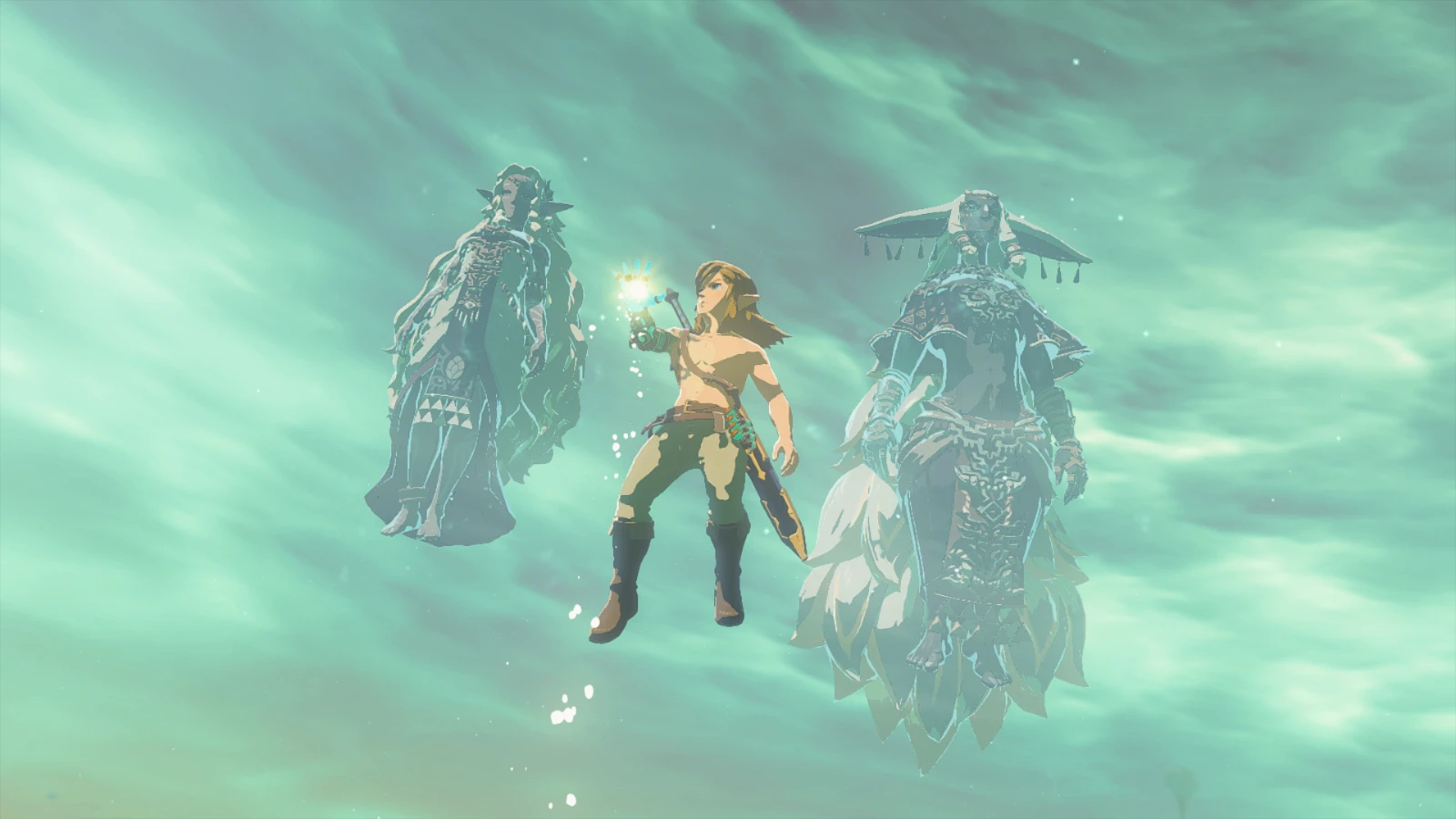
Tears of the Kingdom (2023) follows straight on from Breath of the Wild, and its flashbacks opened a fresh puzzle. Zelda falls into the distant past and meets Rauru, a Zonai who founded the Kingdom of Hyrule with his Hylian queen, Sonia, then fights beside them in the Imprisoning War against Ganondorf. Fans immediately asked how that squares with Skyward Sword, where Hyrule is founded by the people of the sky.
The developers would not pick a side. In a Famitsu interview summarised by Nintendo Life in September 2023, Fujibayashi raised the possibility of “a history of destruction” before the founding seen in the game. That December Game Informer asked whether the flashback Hyrule predates Skyward Sword. Fujibayashi said the team had “something a little bit clearer in our minds”, but “it could be both. Both could be correct.” Aonuma called it “just another sort of puzzle” for players to solve.
The 2024 chart: a section of its own
By 2024 Nintendo’s Japanese history page gave Breath of the Wild and Tears of the Kingdom a section of their own, apart from both the defeated and the triumphant routes. An official timeline graphic at Nintendo Live 2024 in Sydney that August, photographed by the fan site Vooks and reported by Nintendo Life, showed the same layout.
The 2026 Chronicle: Hyrule founded twice
The Imprisoning War (Tears of the Kingdom).
For the 40th anniversary Nintendo Japan launched a new Chronicle page, and in September 2026 GamesRadar+ and Nintendo Life reported its new layout. GamesRadar+ dates the change to after the Switch 2 Ocarina of Time was revealed in June; Nintendo Life says it landed ahead of the remake’s release. All three branches now flow into one shared block, which Nintendo heads with a line that translates roughly as “The Great Calamity and the cataclysm: Link sets out on an endless adventure”. In order, the block reads:
The age of the gods. The Zonai found the Kingdom of Hyrule: a second founding entry, separate from the one after Skyward Sword.
The Imprisoning War. The Demon King Ganondorf is born, and is sealed when the war ends. It is the war of Tears of the Kingdom’s flashbacks, retold in full in Hyrule Warriors: Age of Imprisonment.
More than 10,000 years ago. Calamity Ganon appears.
About 10,000 years ago. In the age of ancient Hyrule, Ganon, who keeps coming back, is sealed.
About 100 years ago. Calamity Ganon returns and the kingdom falls: the Great Calamity.
The present day.Breath of the Wild (Calamity Ganon defeated), then Tears of the Kingdom (the Demon King wakes, the land is thrown into upheaval, and Ganondorf is defeated).
Neither founding entry comes with a description, and Nintendo still does not say how the three branches lead into this era. But because the founding appears twice, both outlets read the update as close to official backing for the long-running refounding theory. GamesRadar+ called it “probably as close as we’re ever going to get to an official confirmation” of that theory.
Wii U and Switch · Switch 2 Edition, 2025 · Present day
The far future. A hundred years before the game, Calamity Ganon returned, turned the Guardians and Divine Beasts built to fight him against Hyrule, killed the four Champions and destroyed the kingdom; Zelda has been holding him inside Hyrule Castle ever since. Link wakes in the Shrine of Resurrection with no memory, in a world that treats the heroes of earlier ages as legend. Ten thousand years earlier, the story goes, a hero and a princess sealed Ganon with the help of Sheikah machines; this time the same plan failed.
Nintendo placed it at the very end in 2018 and has kept it there, but the branch question stays open on purpose. The 2026 Chronicle closes its present day with Calamity Ganon defeated.
Nintendo Switch · Switch 2 Edition, 2025 · Present day, with flashbacks to the founding
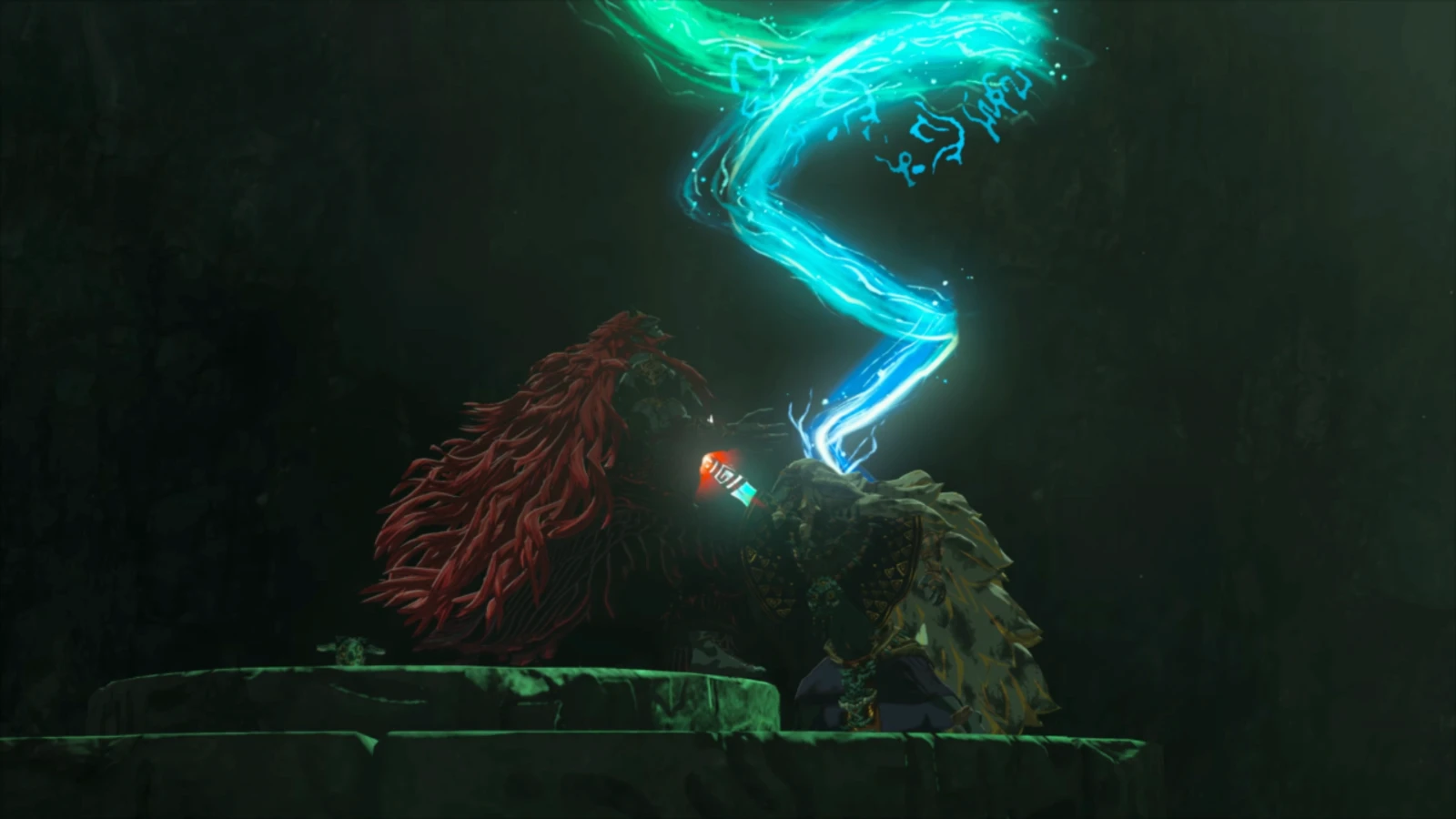
A direct sequel, and the last game on the chart. Exploring beneath Hyrule Castle, Link and Zelda find a mummified Ganondorf pinned in place by a severed arm. He wakes, the Master Sword shatters, Zelda vanishes and the castle rises into the sky as Hyrule is thrown into upheaval. Zelda lands in the distant past, at the court of Rauru and Sonia, and lives through the founding of Hyrule and the Imprisoning War, which ended with Rauru giving his life to seal Ganondorf beneath the castle.
That flashback is the age of the gods on the 2026 Chronicle, and the present-day story supplies the chart’s last two entries, Ganondorf’s awakening and his defeat. After that the history of Hyrule, so far, simply stops.
Era markers (5)
Age of the gods: the Zonai found Hyrule
The Demon King Ganondorf is born
The Imprisoning War: the Demon King is sealed
Present day: Ganondorf wakes, and the land is thrown into upheaval
Ganondorf is defeated
Links to other games
The Imprisoning War is told in full in Age of Imprisonment (2025), which Nintendo calls a “canonical tale”
Its founding of Hyrule sits awkwardly beside Skyward Sword’s; the developers say “both could be correct”
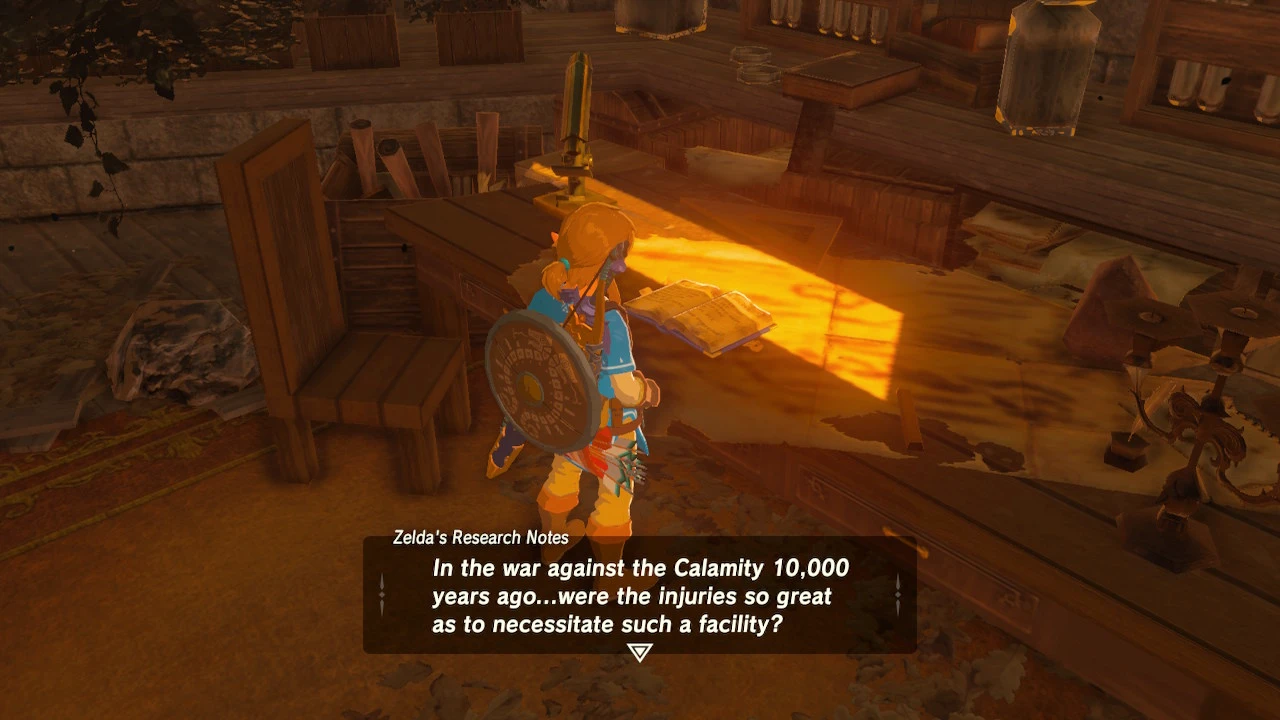
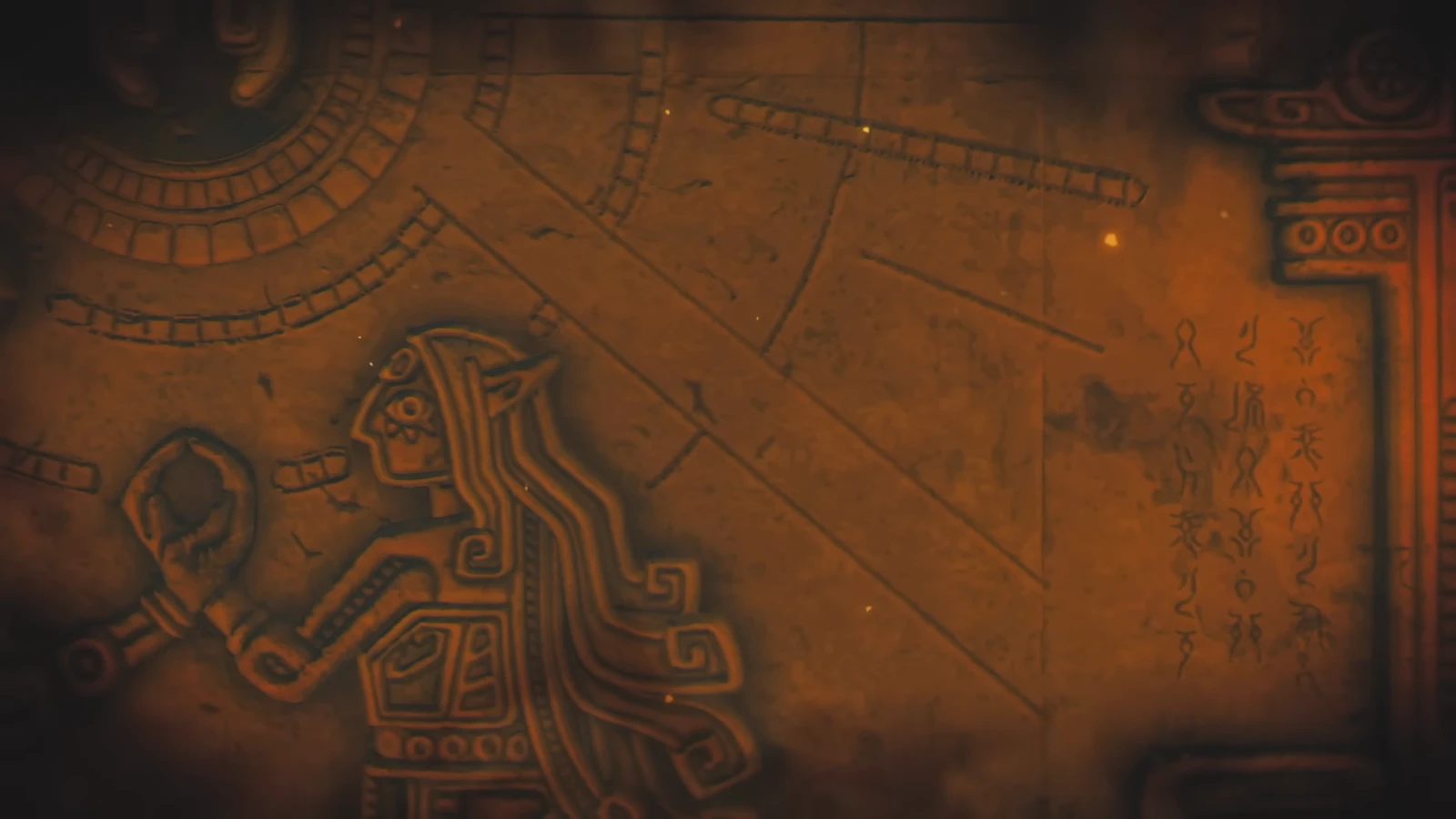
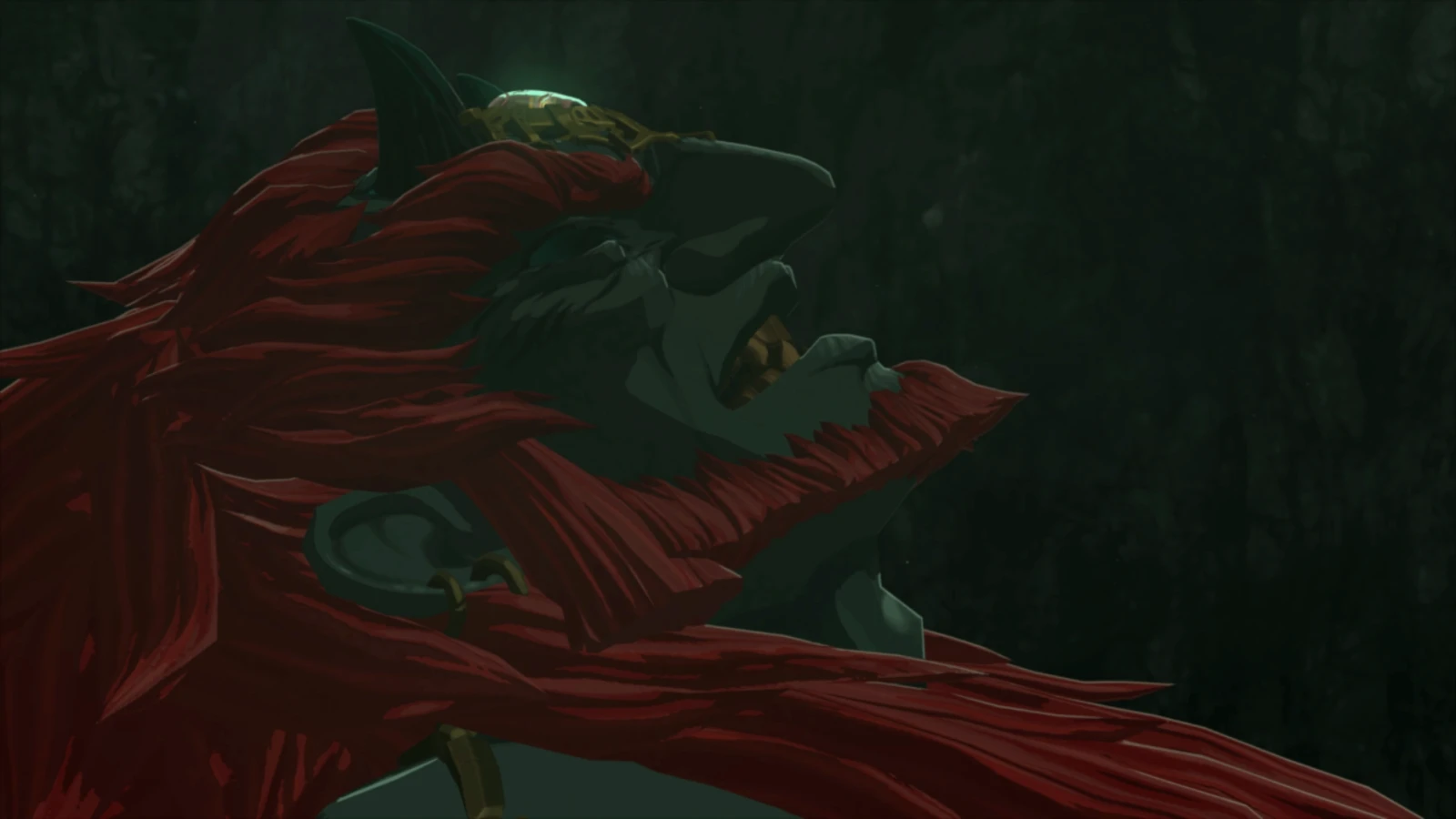
Zelda’s research notes on the events of 10,000 years ago (Breath of the Wild).The Sonia mural in the Forgotten Foundation (Tears of the Kingdom).The Demon King Ganondorf, sealed (Tears of the Kingdom).
How the timeline has changed
The Japanese Hyrule Encyclopedia (2017), the book that first moved Link’s Awakening.
Nintendo has never pretended the chart is carved in stone. Hyrule Historia called itself a collection of what was “believed to be true at this time”, and when things have moved since, Aonuma and Fujibayashi have described the changes as new information coming to light rather than rewrites. Here is how the official picture grew, from a single line in 1998 to the 2026 Chronicle.
1998Nov – Shigeru Miyamoto tells Nintendo Power that “Ocarina of Time is the first story”, followed by the original game, Zelda II and A Link to the Past. Link’s Awakening “could be anytime after Ocarina of Time.”
Early 2000sNoA – Nintendo of America’s website runs one possible single-hero order as an interpretation. Wikipedia reports that the series translator Dan Owsen later said Japan turned down a fuller timeline that NoA had drafted.
2003Apr – Miyamoto tells SuperPlay that Nintendo has “an enormous document” explaining how the games relate.
2007Feb – In Nintendo Dream, Aonuma sets Twilight Princess “a hundred and something years” after the child Link’s peace and calls The Wind Waker “parallel”: the first official hint of a split.
2011Aug – Aonuma tells Nintendo Power that Skyward Sword “does come before Ocarina of Time”, but that calling it the first Zelda “might sort of box me in”.
2011Oct – Aonuma tells Game Informer that the master document on his computer is stamped “Top Secret”.
201121 Dec – Hyrule Historia (Shogakukan; Dark Horse in English, 29 January 2013) publishes the first full chronology: Skyward Sword, The Minish Cap, Four Swords and Ocarina of Time, then three branches. Its fallen-hero order runs A Link to the Past, the Oracles, Link’s Awakening, The Legend of Zelda and Zelda II.
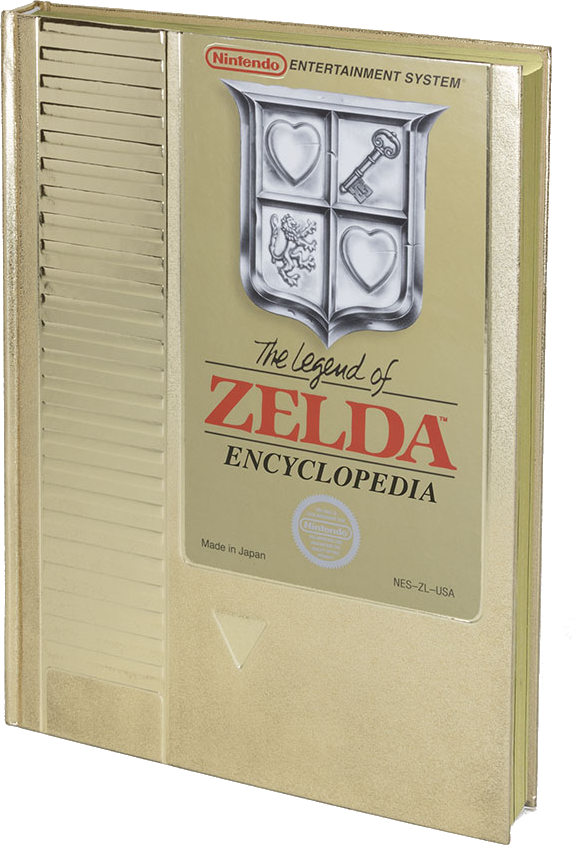
Dark Horse artwork for The Legend of Zelda Encyclopedia.
After Hyrule Historia, most of the changes came from Nintendo’s own publications rather than interviews: a second book, a website and, for the 40th anniversary, a new chart.
2013Oct – Aonuma tells Spike that A Link Between Worlds belongs on the defeated branch, between the Oracle games and the original.
20171 Mar – The Legend of Zelda Encyclopedia (Tokuma Shoten; Dark Horse in English, 19 June 2018) moves Link’s Awakening to straight after A Link to the Past and puts A Link Between Worlds and Tri Force Heroes after the Oracles. The English edition admits that “attentive readers” will spot differences from Hyrule Historia.
2018Aug – Nintendo Japan’s Zelda site adds an interactive history page with Breath of the Wild at the end and Link’s Awakening before the Oracles. In Famitsu, Fujibayashi says which branch leads to it is “up to the player’s imagination”.
2018Nov – Creating a Champion: Aonuma says the team left Breath of the Wild unplaced on purpose.
2023Sep–Dec – On the founding of Hyrule in Tears of the Kingdom, Fujibayashi floats “a history of destruction” in Famitsu, then tells Game Informer that “both could be correct”.
2024Aug – An official graphic at Nintendo Live 2024 in Sydney shows Breath of the Wild and Tears of the Kingdom as a separate section.
202426 Nov – Echoes of Wisdom is reported on Nintendo’s history page, after Tri Force Heroes.
2026Sep – Nintendo Japan’s 40th-anniversary Chronicle: all three branches flow into a shared Calamity era, with a second founding of Hyrule before Breath of the Wild.
20265 Nov – The Switch 2 Ocarina of Time is released. Checked on 15 November, the Chronicle has no separate entry for it.
The Link’s Awakening switch, in detail
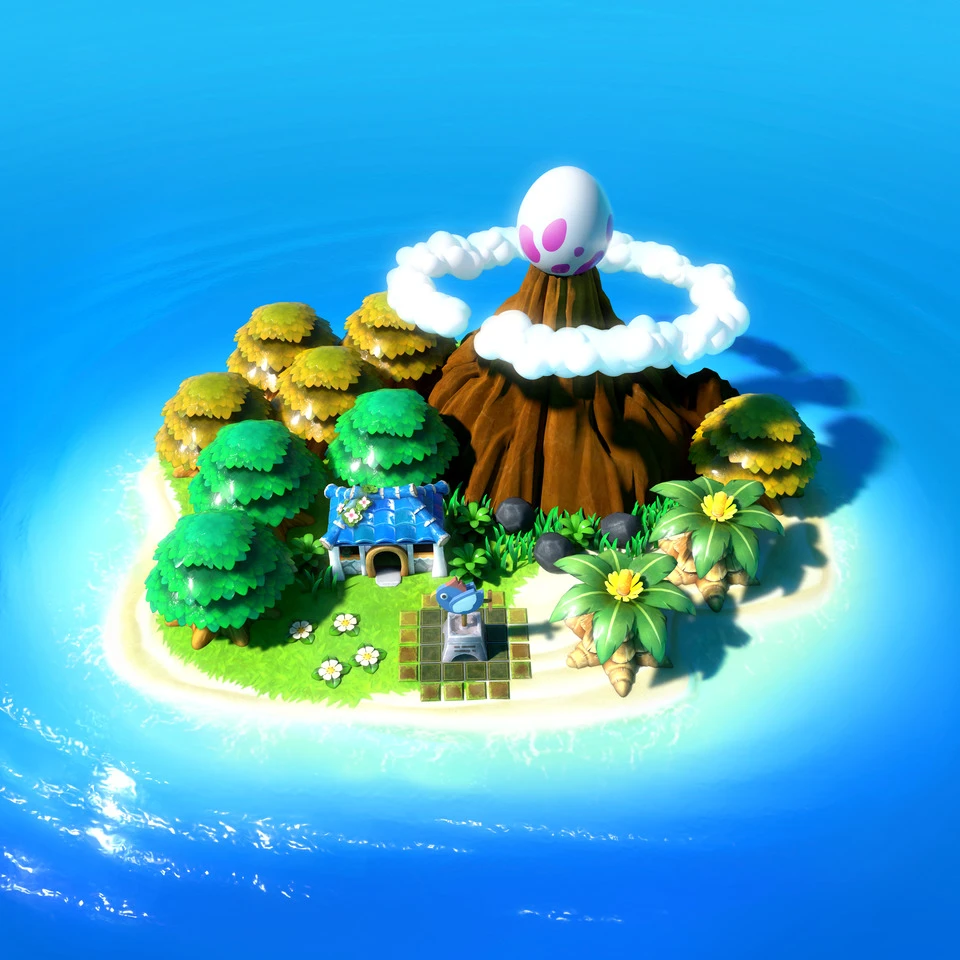
Koholint Island (Link’s Awakening, 2019, render).
The only time Nintendo has reshuffled games that were already on the chart is in the defeated branch. Hyrule Historia (2011) ran A Link to the Past, then the Oracle games, then Link’s Awakening. The Legend of Zelda Encyclopedia, published in Japan by Tokuma Shoten in March 2017 and in English by Dark Horse on 19 June 2018, swapped them, putting Link’s Awakening right after A Link to the Past and the Oracles after that.
The Encyclopedia treats the Link’s Awakening hero as the A Link to the Past hero, but it is vaguer about the Oracle hero: Zelda Dungeon’s translation describes him only as a boy travelling on horseback. Nintendo’s Japanese site adopted the new order in August 2018 and the 2026 Chronicle keeps it, so the switch first appeared in the book and the website followed a year later.
Not on the timeline
Nintendo’s chronology covers the main series only. Everything else is either outside it on purpose or simply not mentioned. Remakes and new editions, from Ocarina of Time 3D to the Switch 2 Editions, take the place of the game they remake.
The live-action film (2027)Nintendo and Sony Pictures · due 30 April 2027Directed by Wes Ball, with Benjamin Evan Ainsworth as Link and Bo Bragason as Zelda. Nintendo has not said where, or whether, its story fits the chronology.
The timeline at a glance
Every era on Nintendo’s chart, with the branch it belongs to and the games inside it, in story order.
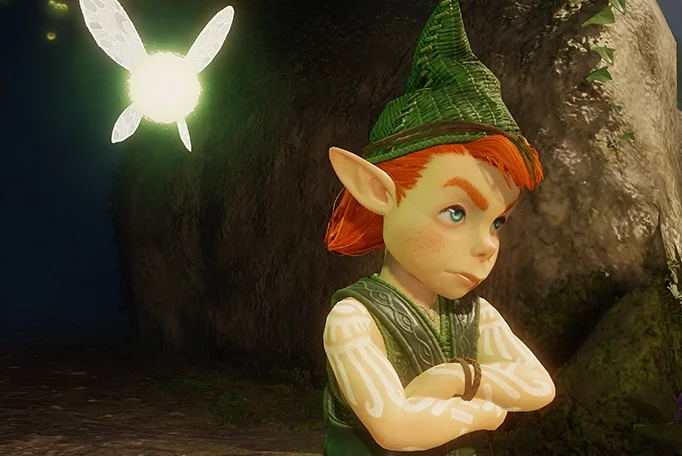
Mido in the 2026 Ocarina of Time. Nintendo Life compared Kokiri markings in the remake with Queen Sonia’s.
Everything in this section is fan argument, not Nintendo’s word. Treat it as talking points.
Which branch leads to Breath of the Wild? Nintendo’s own answer is that it comes after all of them. Fans still argue for one branch, or for a convergence in which all three histories merge into one future. The 2026 Chronicle, which runs all three into a shared block, gives that idea something to point at without saying how it happens.
The refounding theory. Hyrule was destroyed and founded a second time before the Tears of the Kingdom flashbacks. The Chronicle’s second founding entry is the closest Nintendo has come to backing it, but the entry has no text, and Fujibayashi’s “both could be correct” still stands.
Is the Oracle hero the A Link to the Past hero?Hyrule Historia implied he was. Zelda Dungeon notes that the Japanese and English editions of the Encyclopedia seem to disagree, so readers draw their own conclusions.
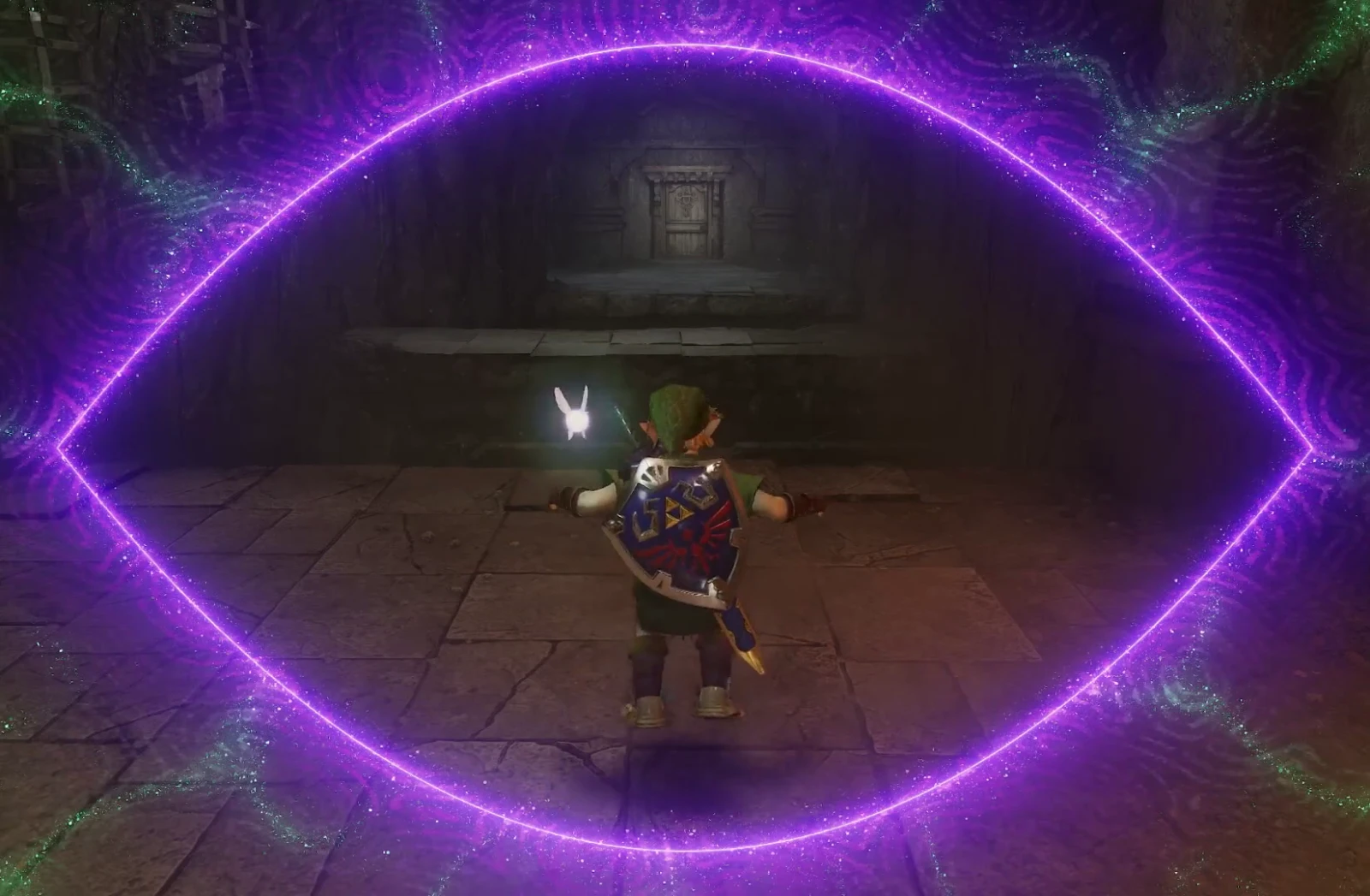
The Lens of Truth in the 2026 Ocarina of Time.
Does the 2026 Ocarina of Time hint at the future? Nintendo Life and GamesRadar+ pointed to Kokiri tattoos that resemble Queen Sonia’s and Sheikah-style patterns like those of the recent games, Nintendo Life spotting one on the Lens of Truth. Aonuma, asked before release about nods to the timeline, said the team kept it in mind but did not explicitly add references to later games.
Should a game over create a timeline? Some fans dislike the defeated branch because it grows from a loss no player ever sees. Others argue it neatly explains A Link to the Past’s backstory.
Trivia
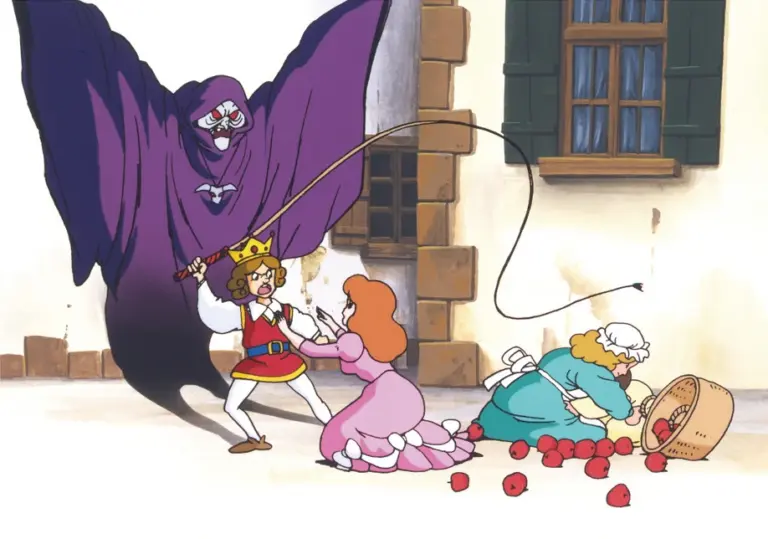
Princess Zelda and the Prince of Hyrule (Zelda II artwork).The first Princess Zelda’s story in Zelda II is the series’ own explanation for its naming habit: her brother decreed that every princess after her would carry her name.
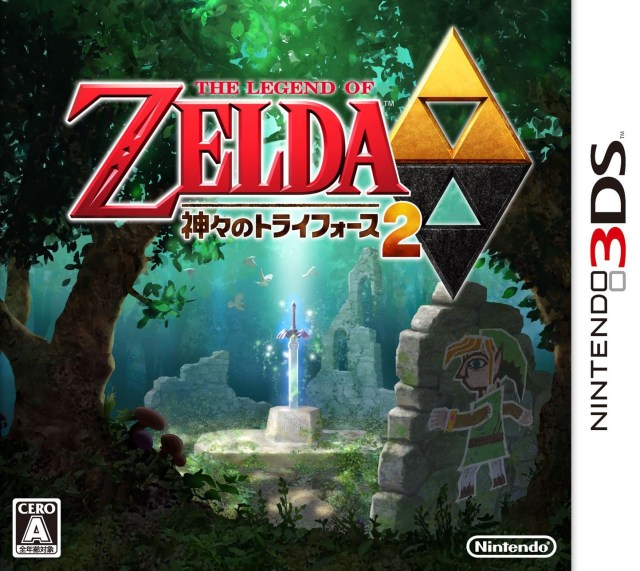
Japanese box art for A Link Between Worlds.A Link Between Worlds is called “Triforce of the Gods 2” in Japan, and Nintendo’s Japanese chart lists it under that name a few rows below the original “Triforce of the Gods”, better known here as A Link to the Past.
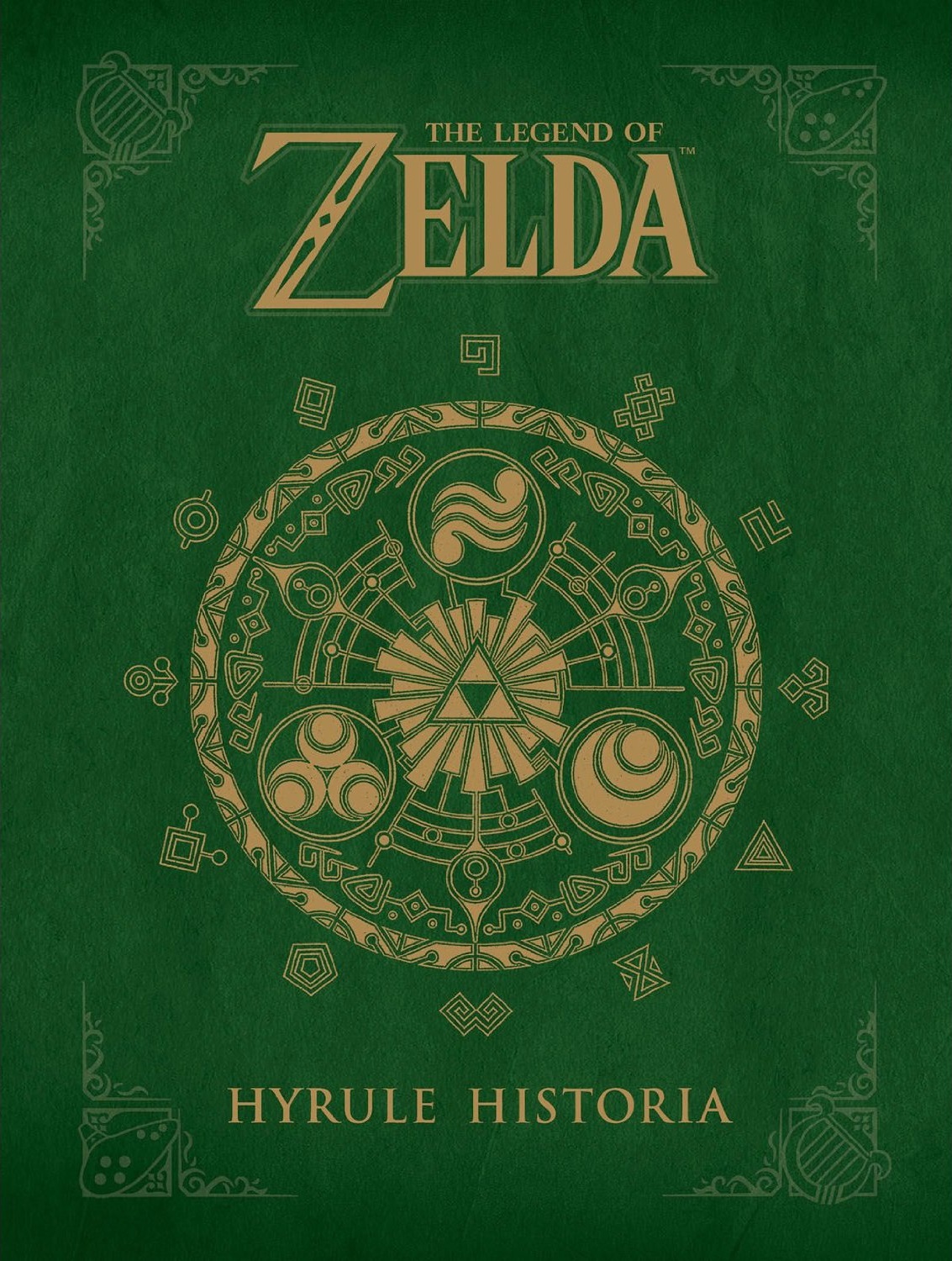
The English Limited Edition of Hyrule Historia (2013).Hyrule Historia was a hit well beyond Japan: Wikipedia reports a print run raised from 250,000 to around 400,000 copies and a number-one place on the New York Times Hardcover Advice & Misc. best-seller list.
Nintendo’s chart says six Sages sealed Ganon in this branch; the manual of A Link to the Past speaks of seven wise men.
The Chronicle starts before creation, with a single entry for a world of nothing, and its very last line is Ganondorf’s defeat in Tears of the Kingdom.
Release order and story order barely overlap. The first game released, The Legend of Zelda, is twelfth in story order; the first in story order, Skyward Sword, was the sixteenth main game released.
To provide the best experiences, we use technologies like cookies to store and/or access device information. Consenting to these technologies will allow us to process data such as browsing behavior or unique IDs on this site. Not consenting or withdrawing consent, may adversely affect certain features and functions.
Functional
Always active
The technical storage or access is strictly necessary for the legitimate purpose of enabling the use of a specific service explicitly requested by the subscriber or user, or for the sole purpose of carrying out the transmission of a communication over an electronic communications network.
Preferences
The technical storage or access is necessary for the legitimate purpose of storing preferences that are not requested by the subscriber or user.
Statistics
The technical storage or access that is used exclusively for statistical purposes.The technical storage or access that is used exclusively for anonymous statistical purposes. Without a subpoena, voluntary compliance on the part of your Internet Service Provider, or additional records from a third party, information stored or retrieved for this purpose alone cannot usually be used to identify you.
Marketing
The technical storage or access is required to create user profiles to send advertising, or to track the user on a website or across several websites for similar marketing purposes.

 Skyward Sword2011 · First story: the Master Sword and Demise’s curse
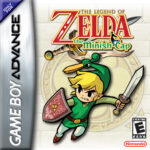 The Minish Cap2004 · Vaati rises; the Four Sword is forged
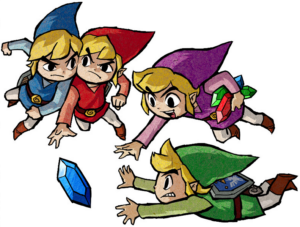 Four Swords2002 · Vaati returns
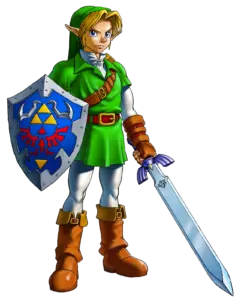 Ocarina of Time1998 · The fork: the Triforce splits, Ganondorf becomes Ganon
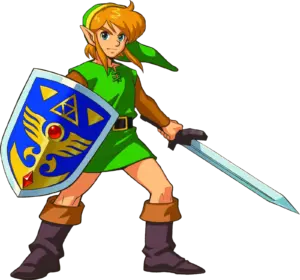 A Link to the Past1991 · A new hero, the Master Sword
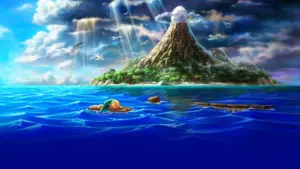 Link’s Awakening1993 · Same hero, shipwrecked
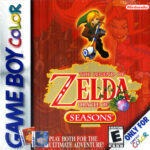 Oracle of Seasons2001 · Played as a pair with Ages
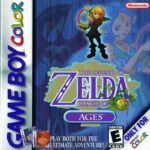 Oracle of Ages2001 · Played as a pair with Seasons
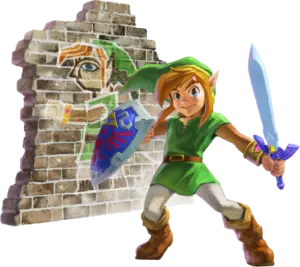 A Link Between Worlds2013 · Same Hyrule, long after
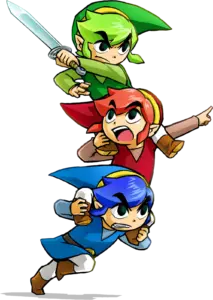 Tri Force Heroes2015 · Same hero as A Link Between Worlds
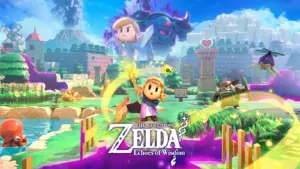 Echoes of Wisdom2024 · Added in 2024
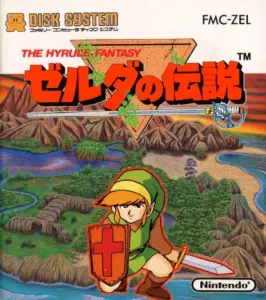 The Legend of Zelda1986 · The Triforce of Wisdom is found
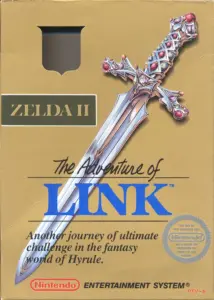 Zelda II1987 · The Triforce of Courage is found
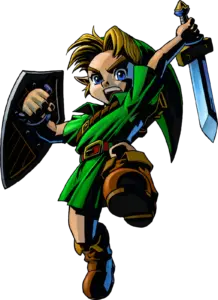 Majora’s Mask2000 · Same Link, lost in Termina
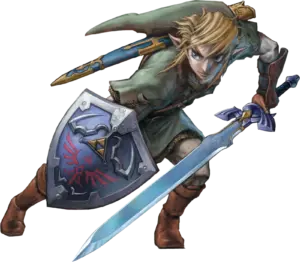 Twilight Princess2006 · More than a century later
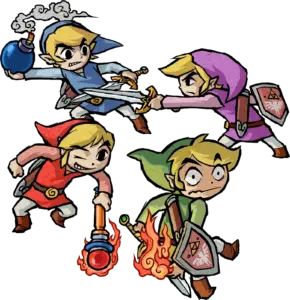 Four Swords Adventures2004 · A new Ganondorf
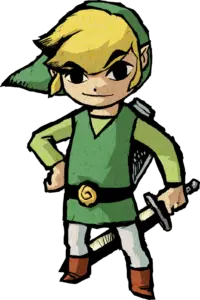 The Wind Waker2002 · Hyrule washed away
 Phantom Hourglass2007 · A new continent found
 Spirit Tracks2009 · About a century on
 Breath of the Wild2017 · Calamity Ganon defeated
 Tears of the Kingdom2023 · Ganondorf wakes and is defeated
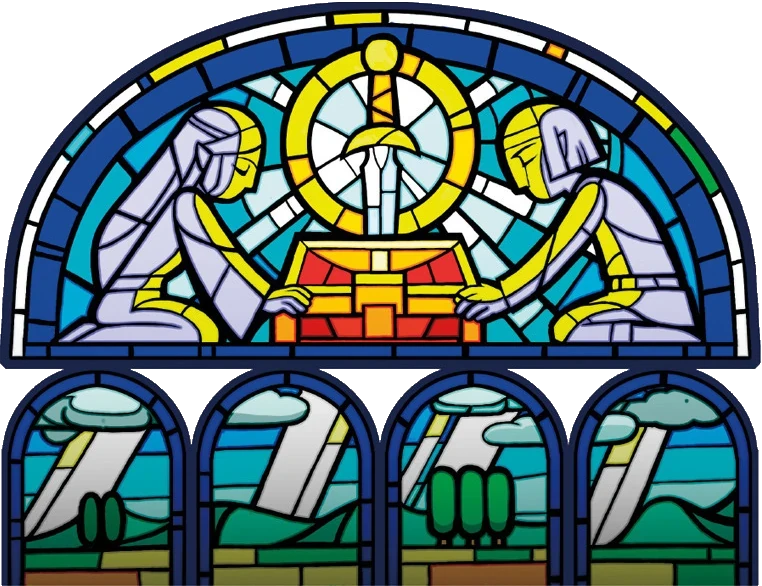
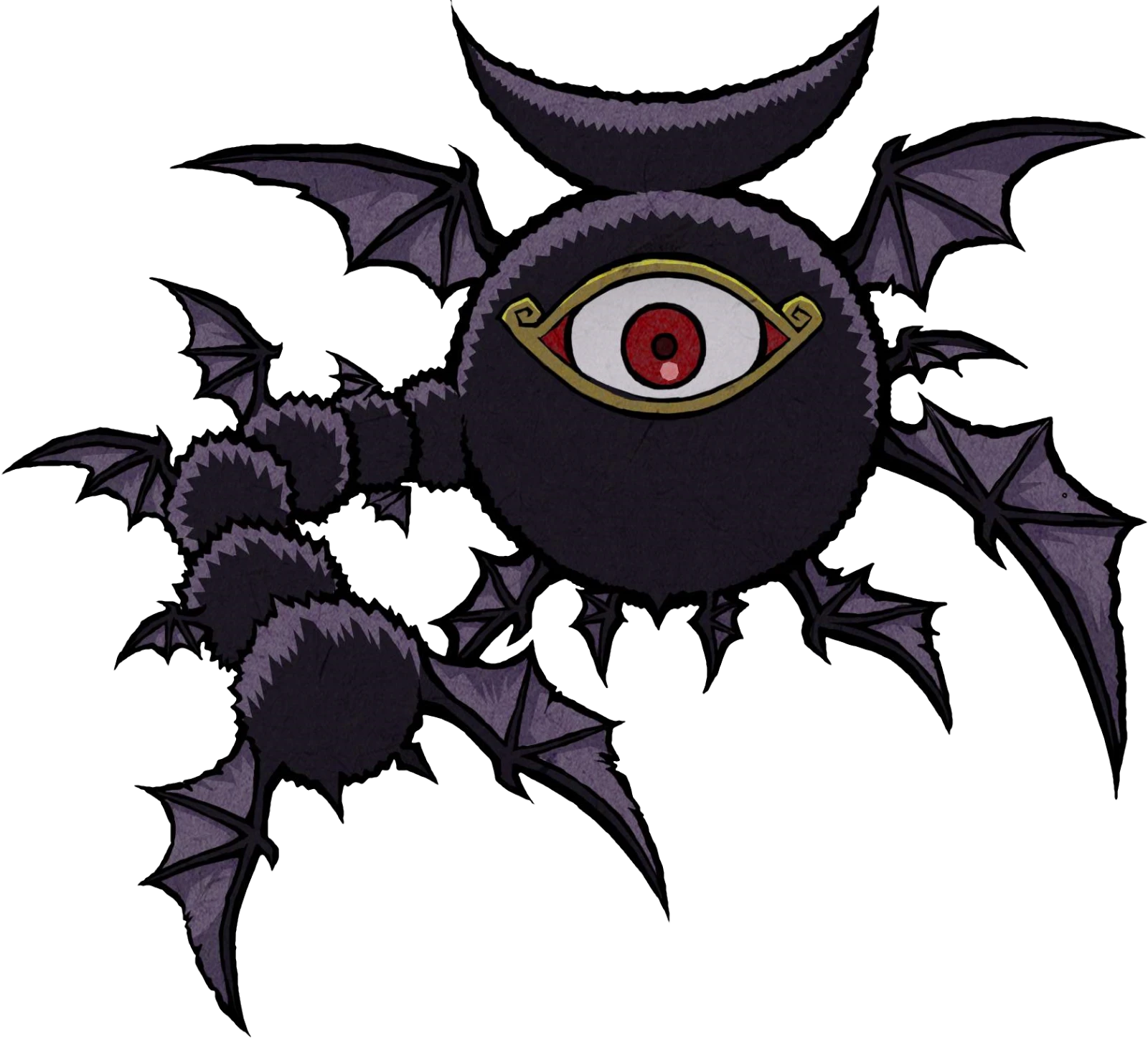

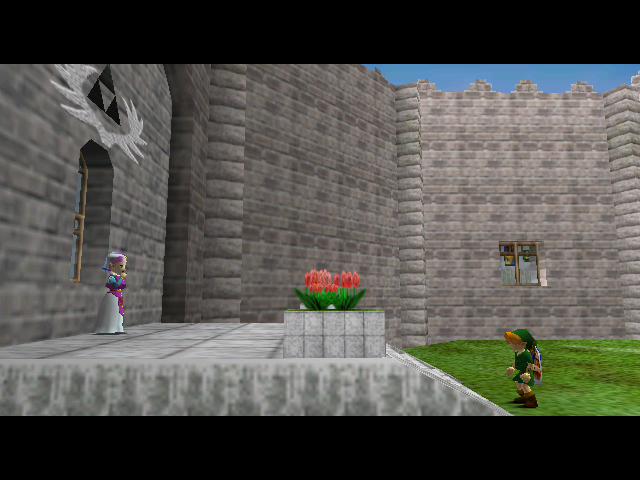
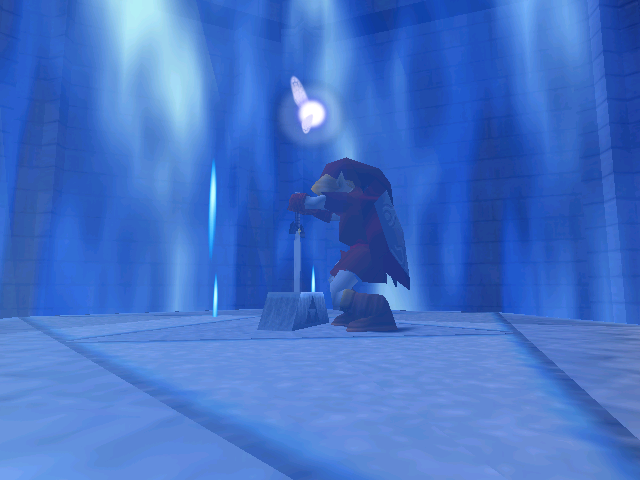
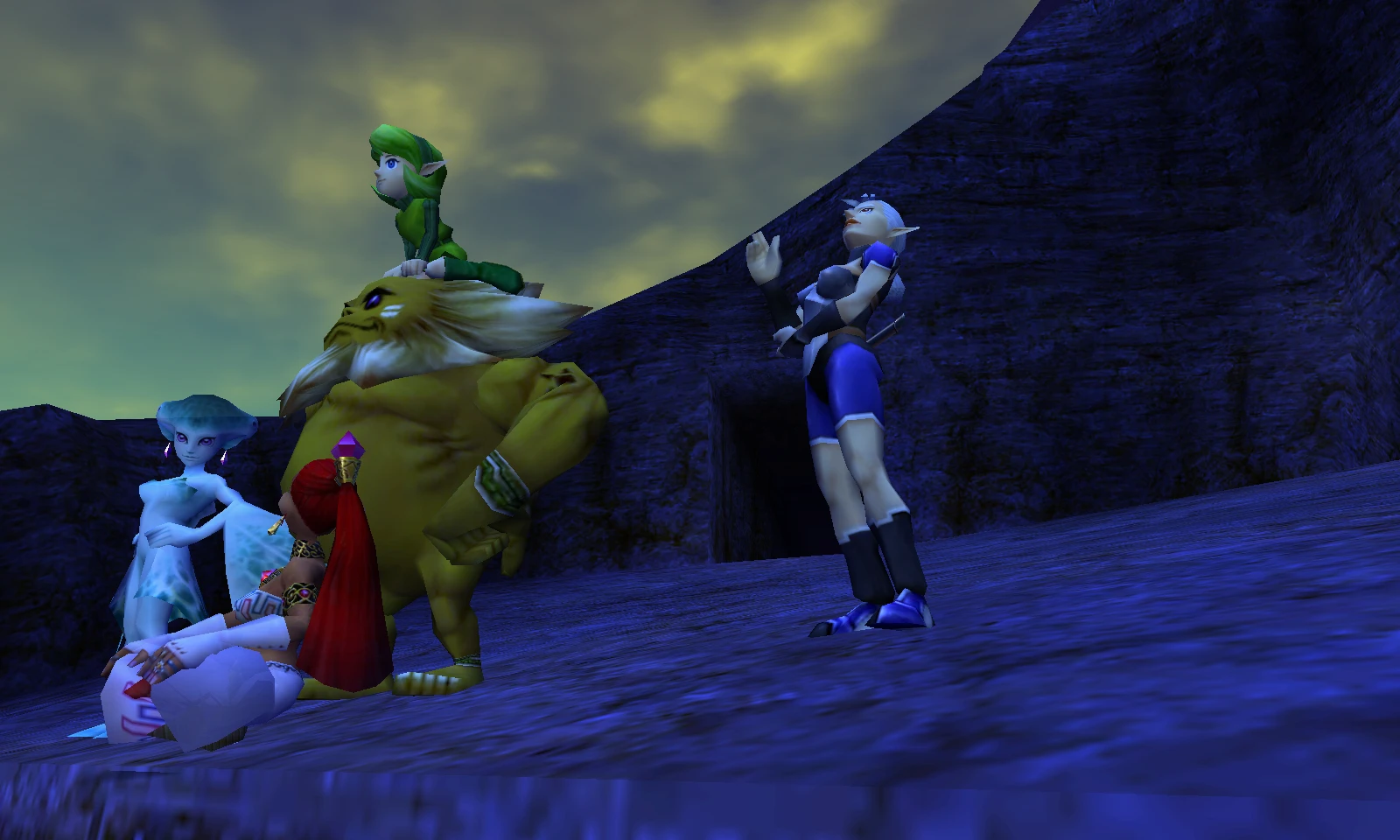
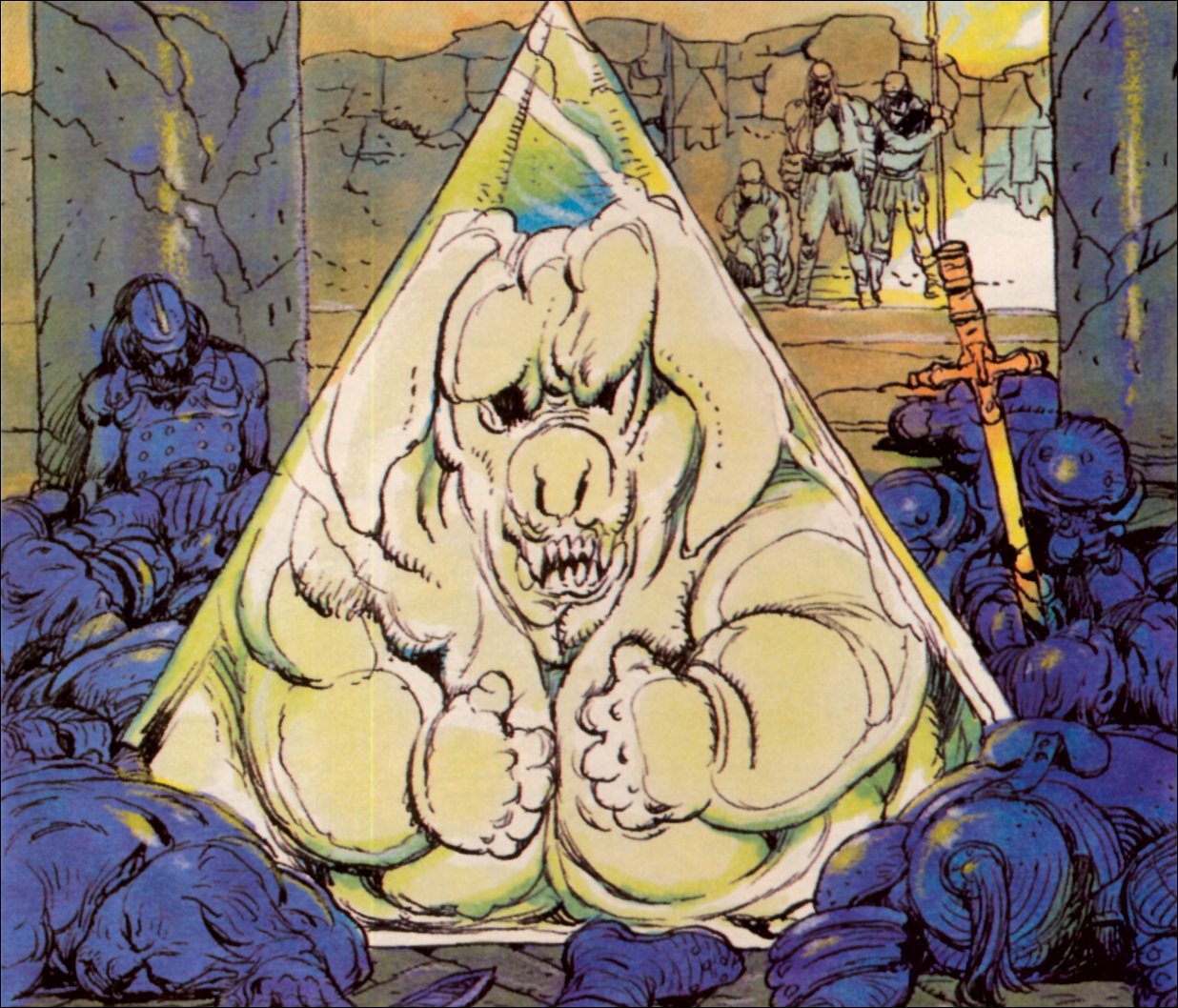
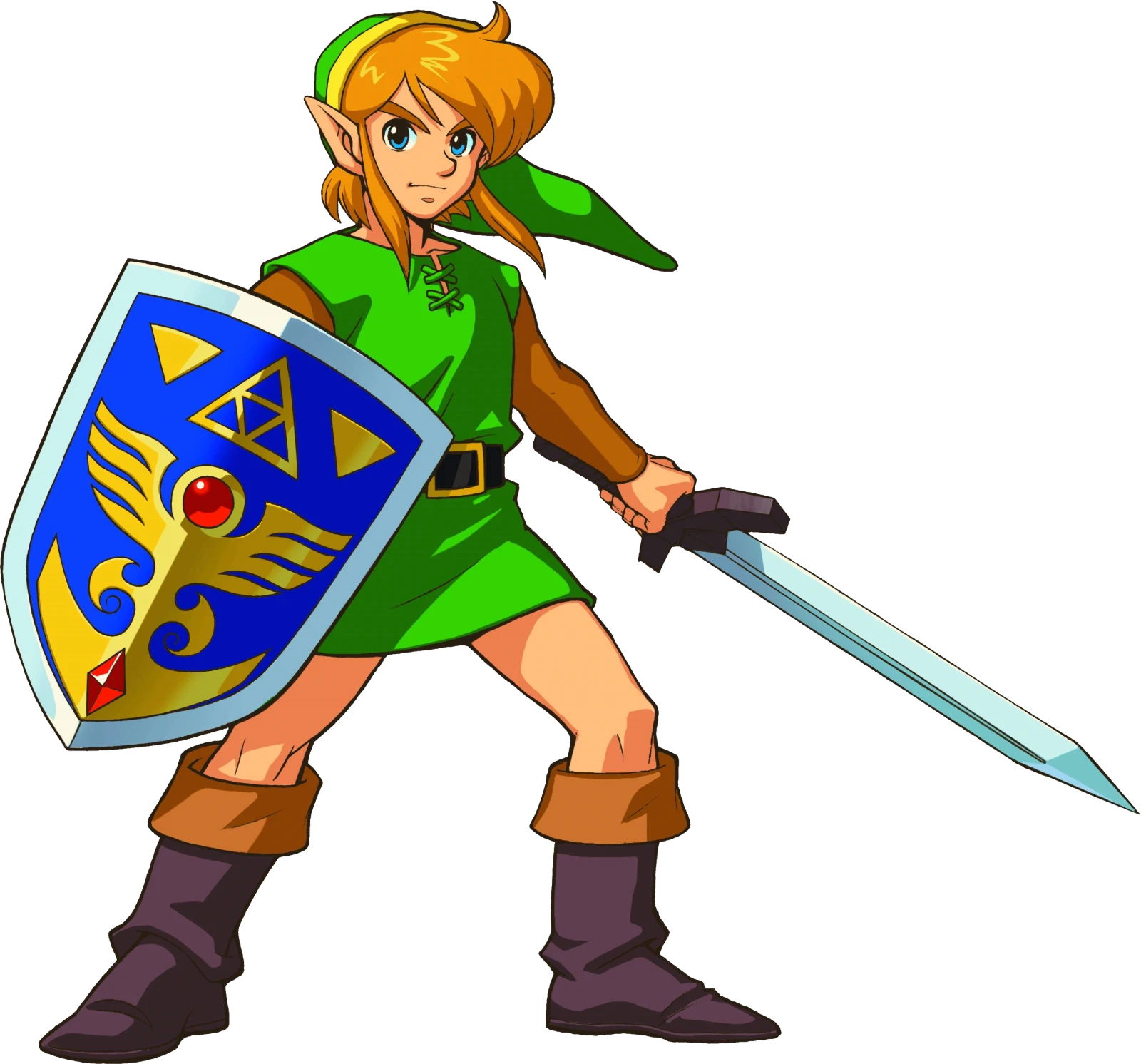
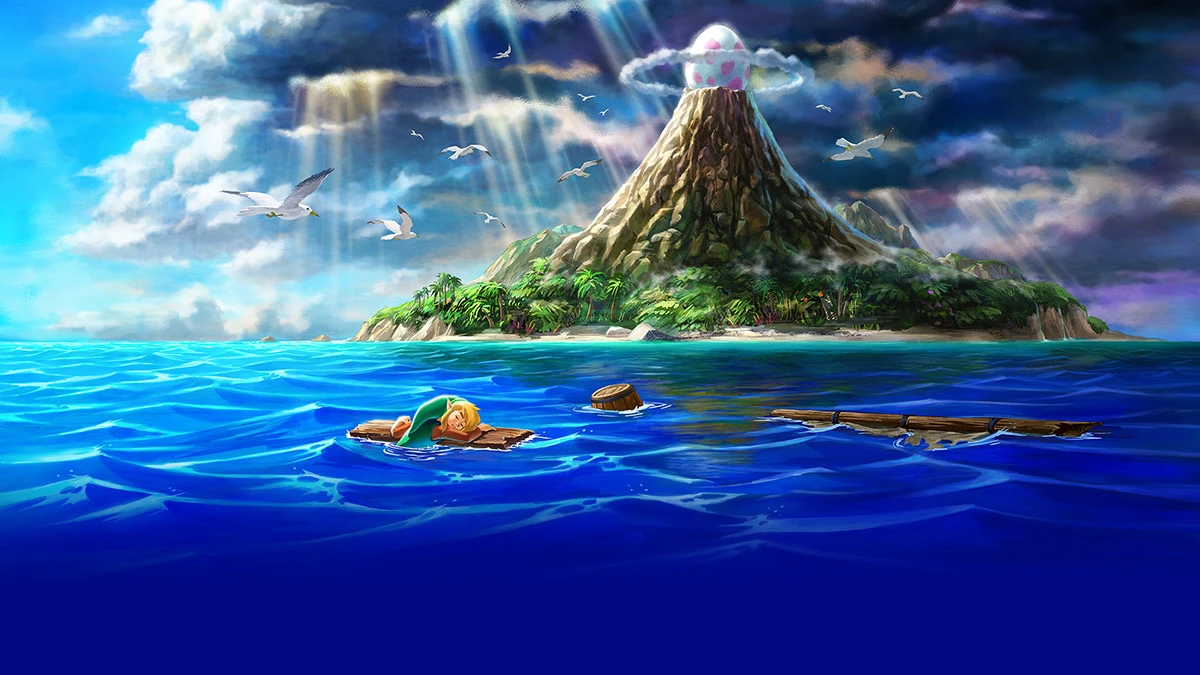
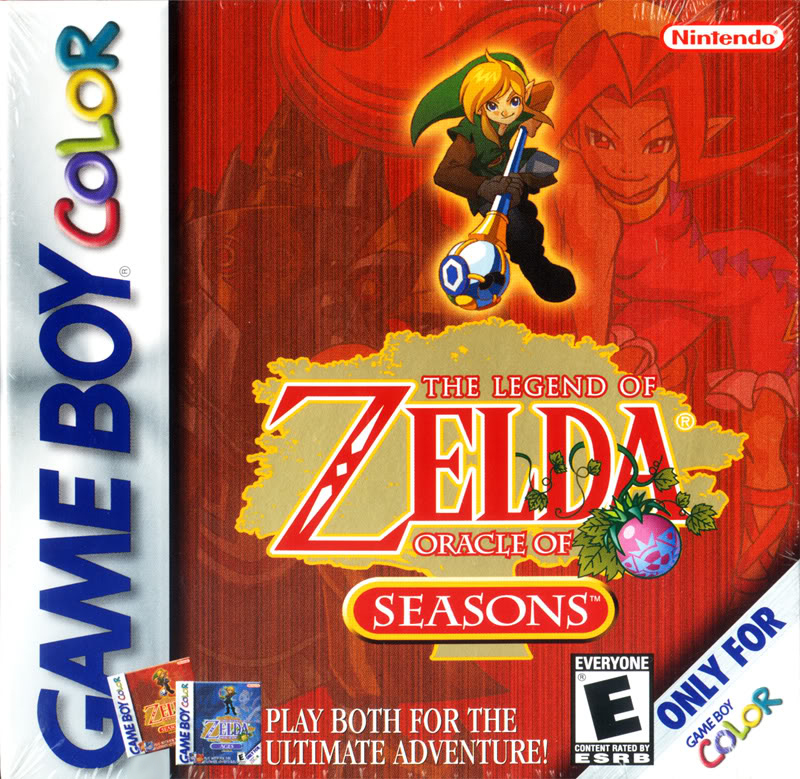
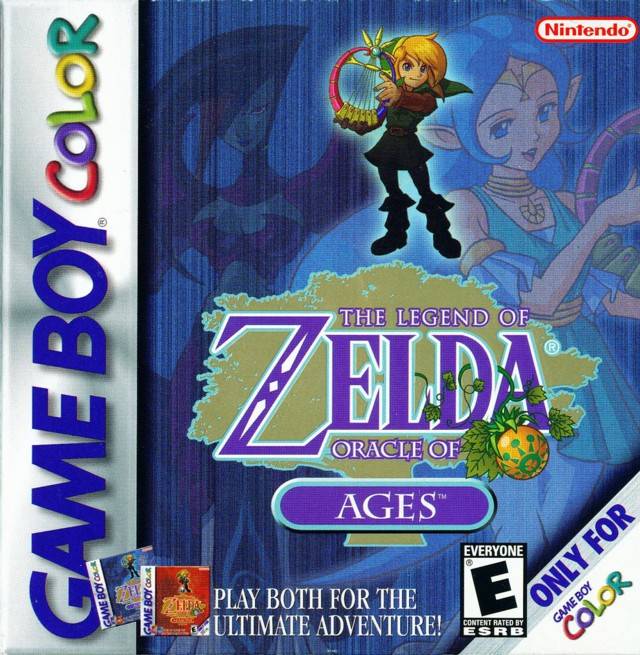
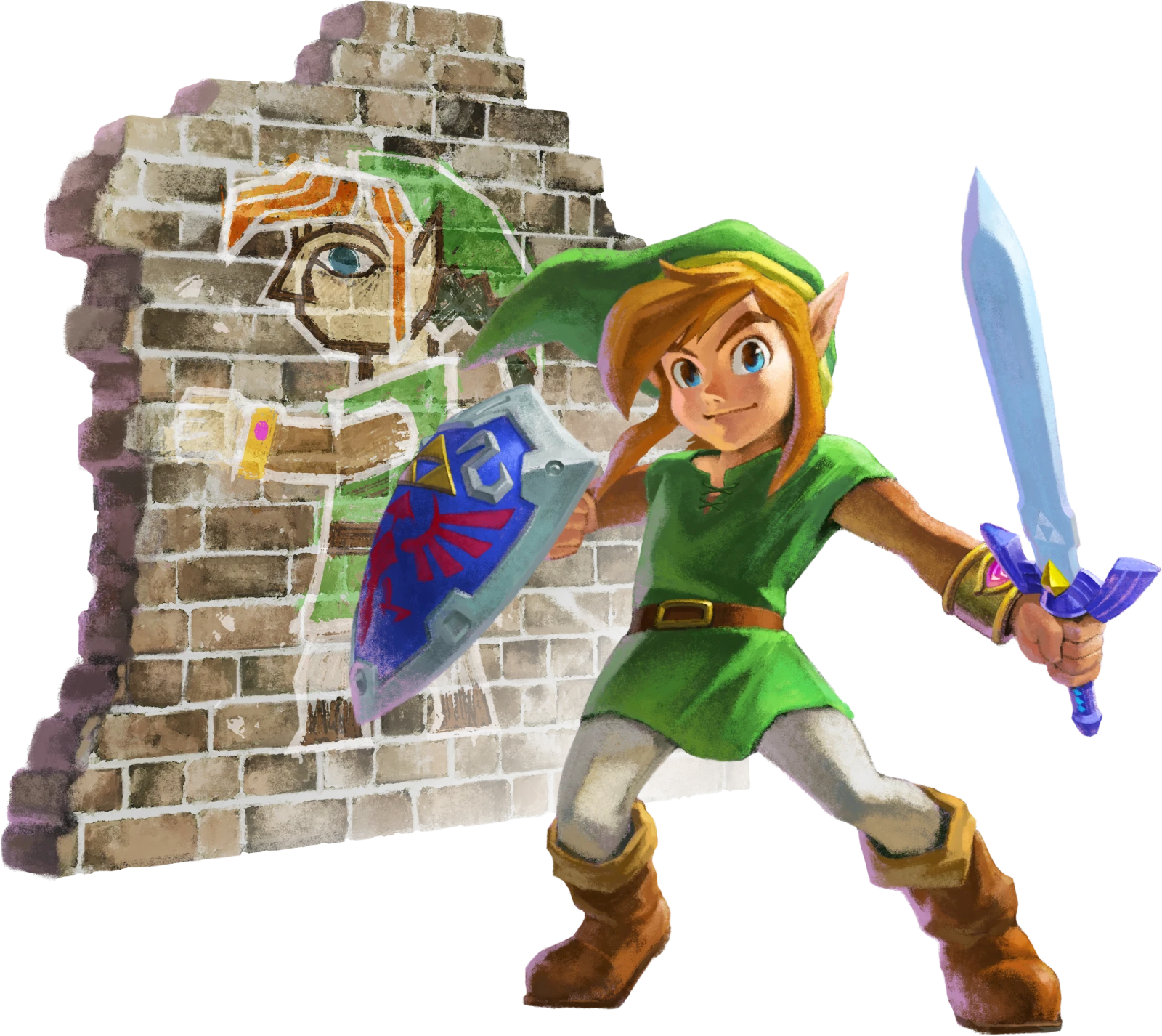
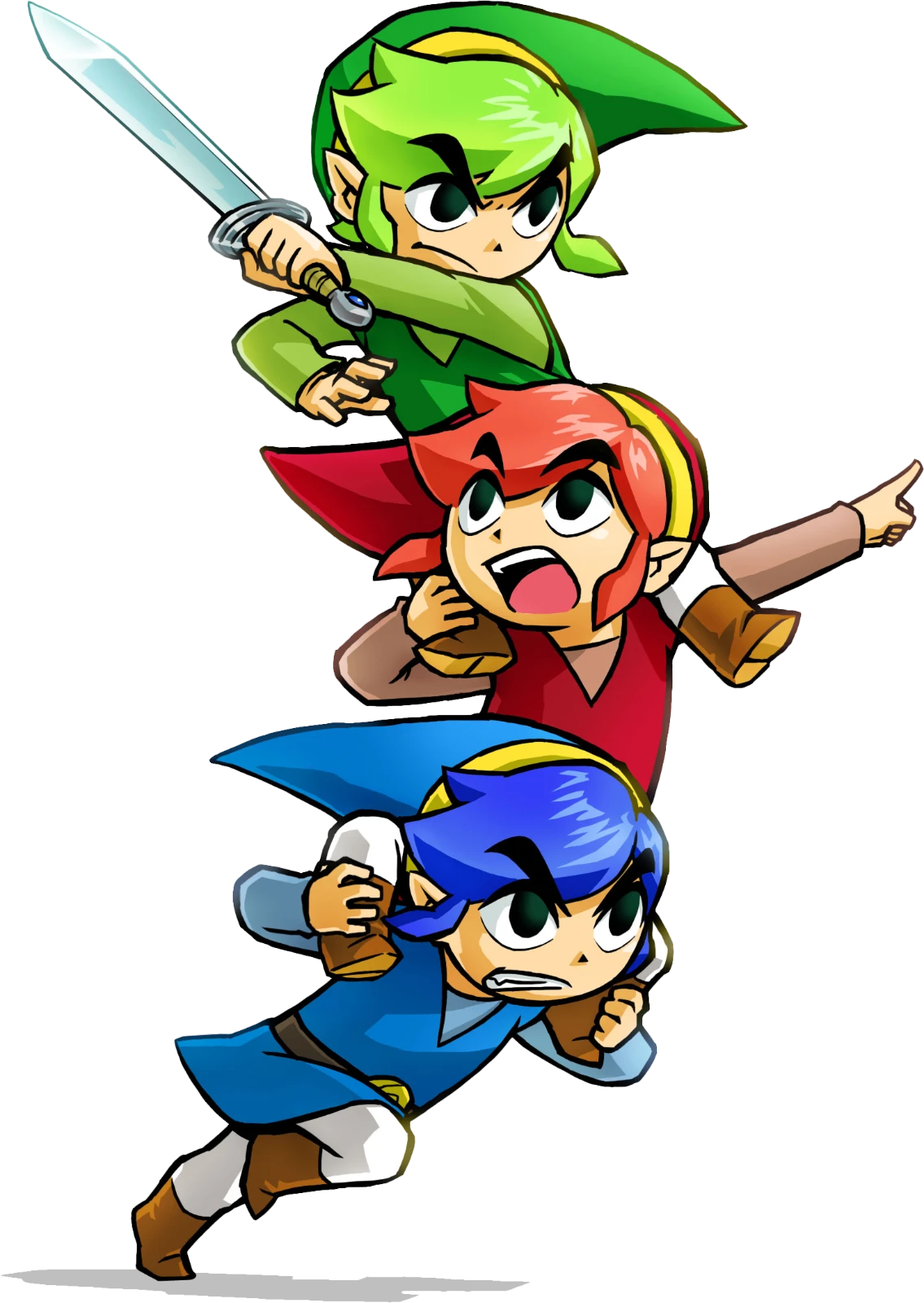
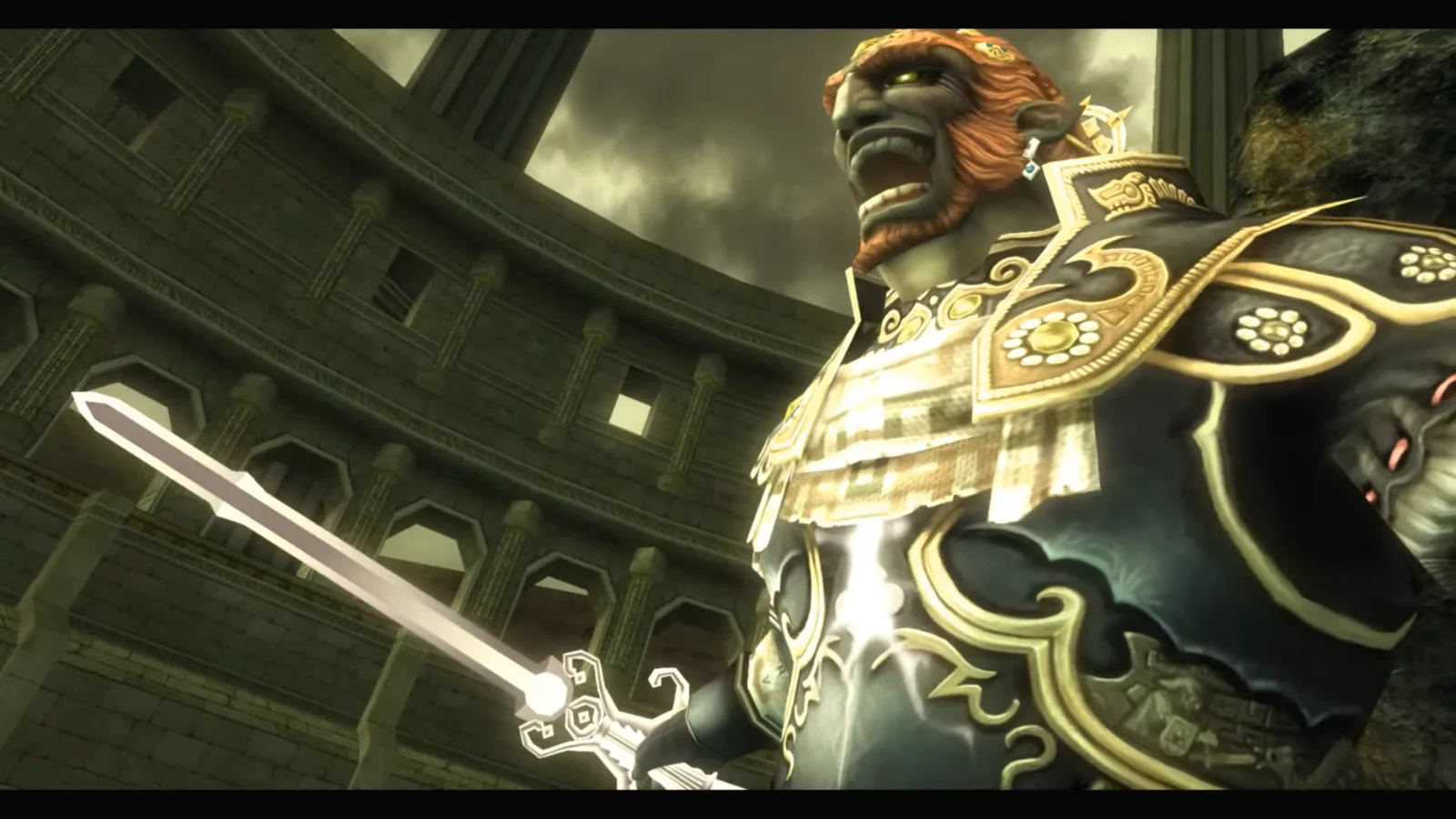
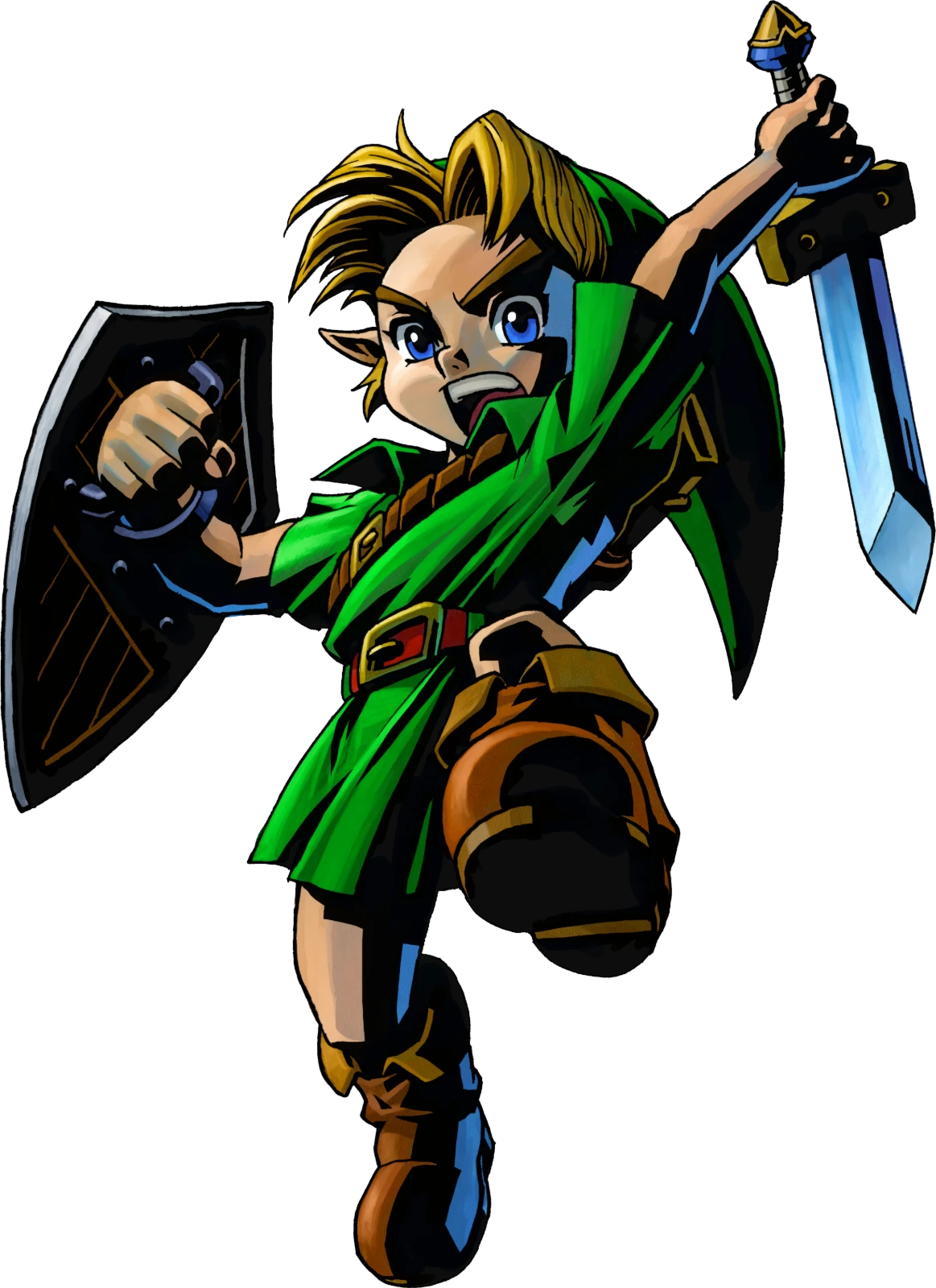
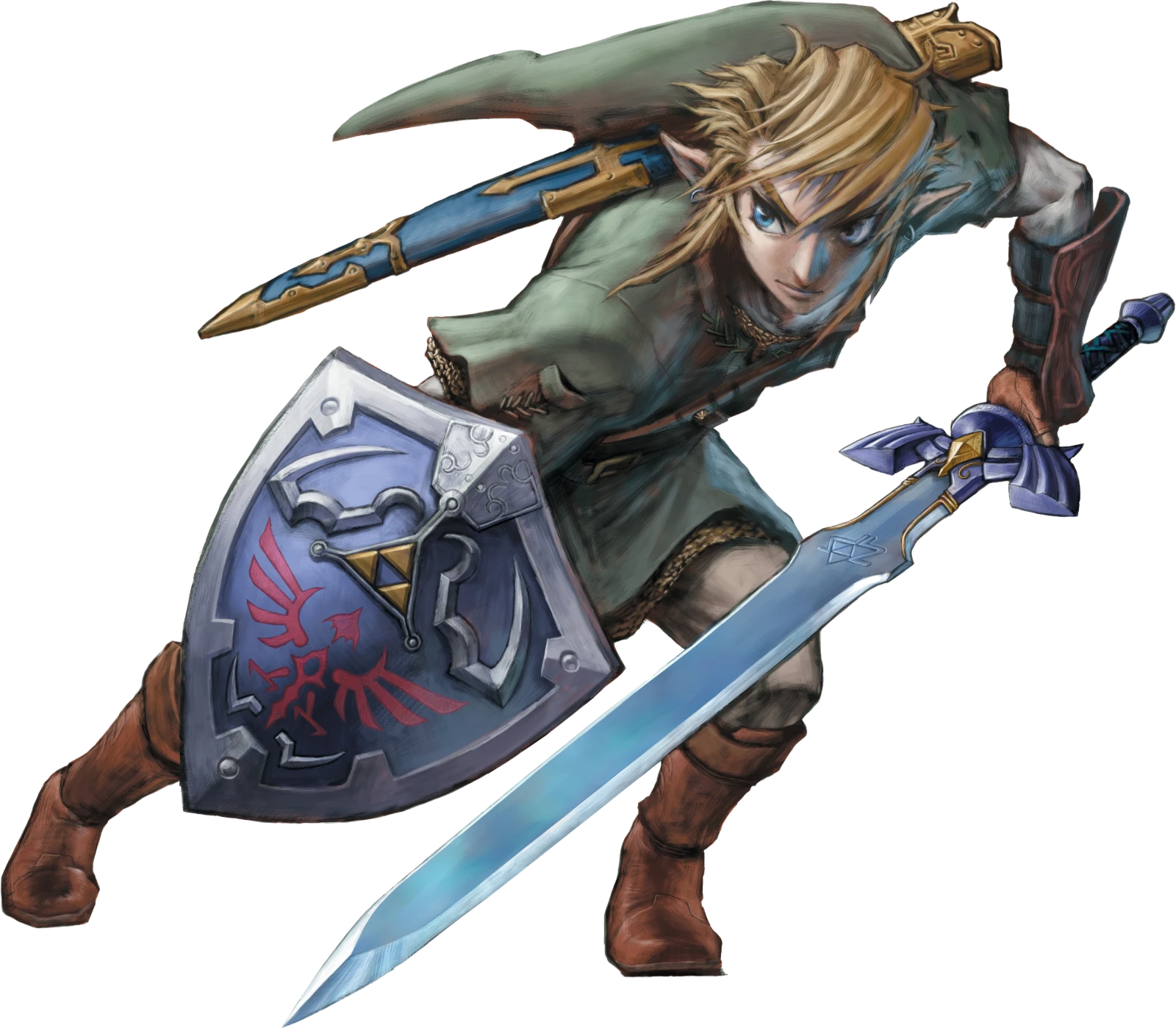
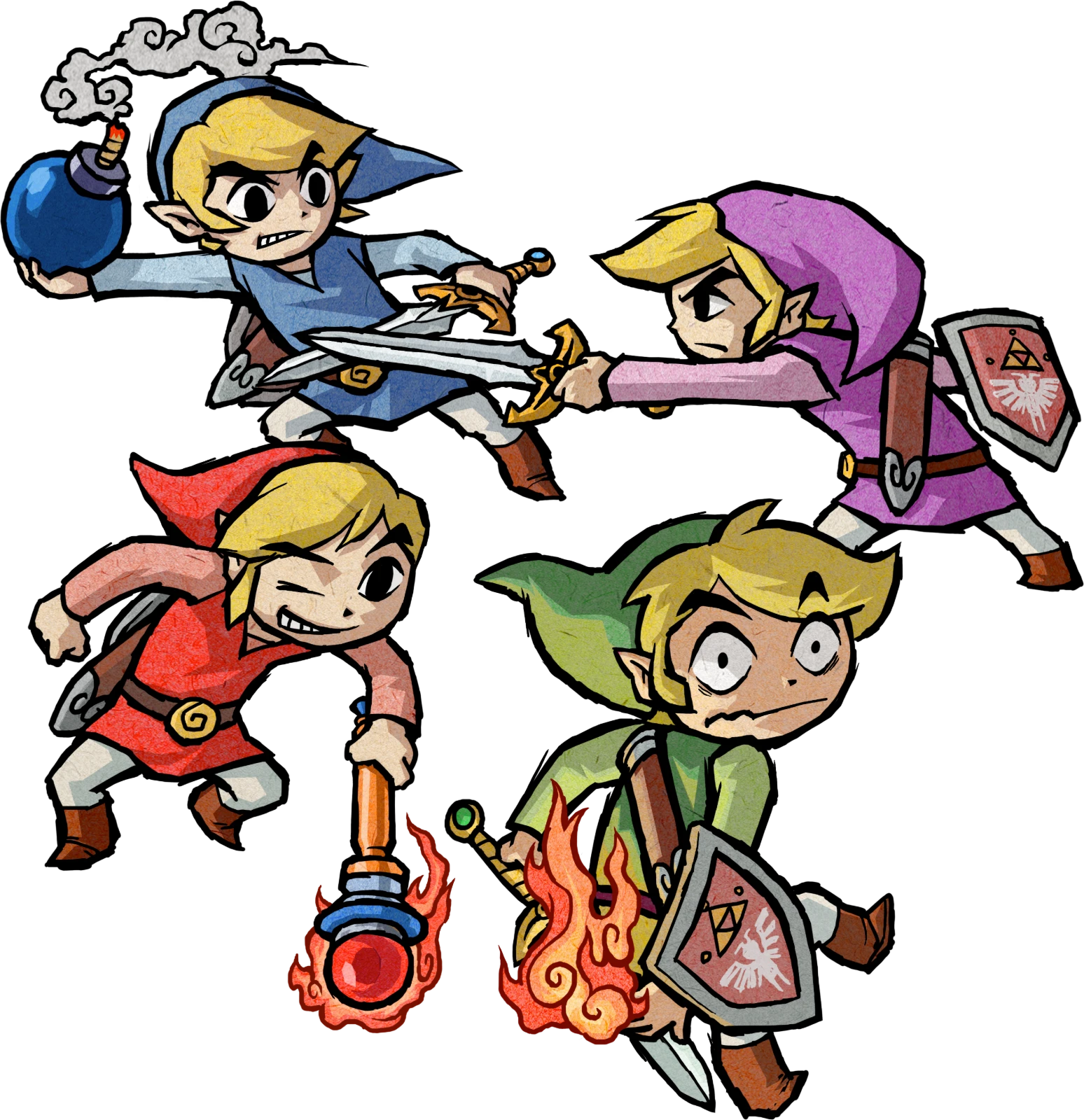
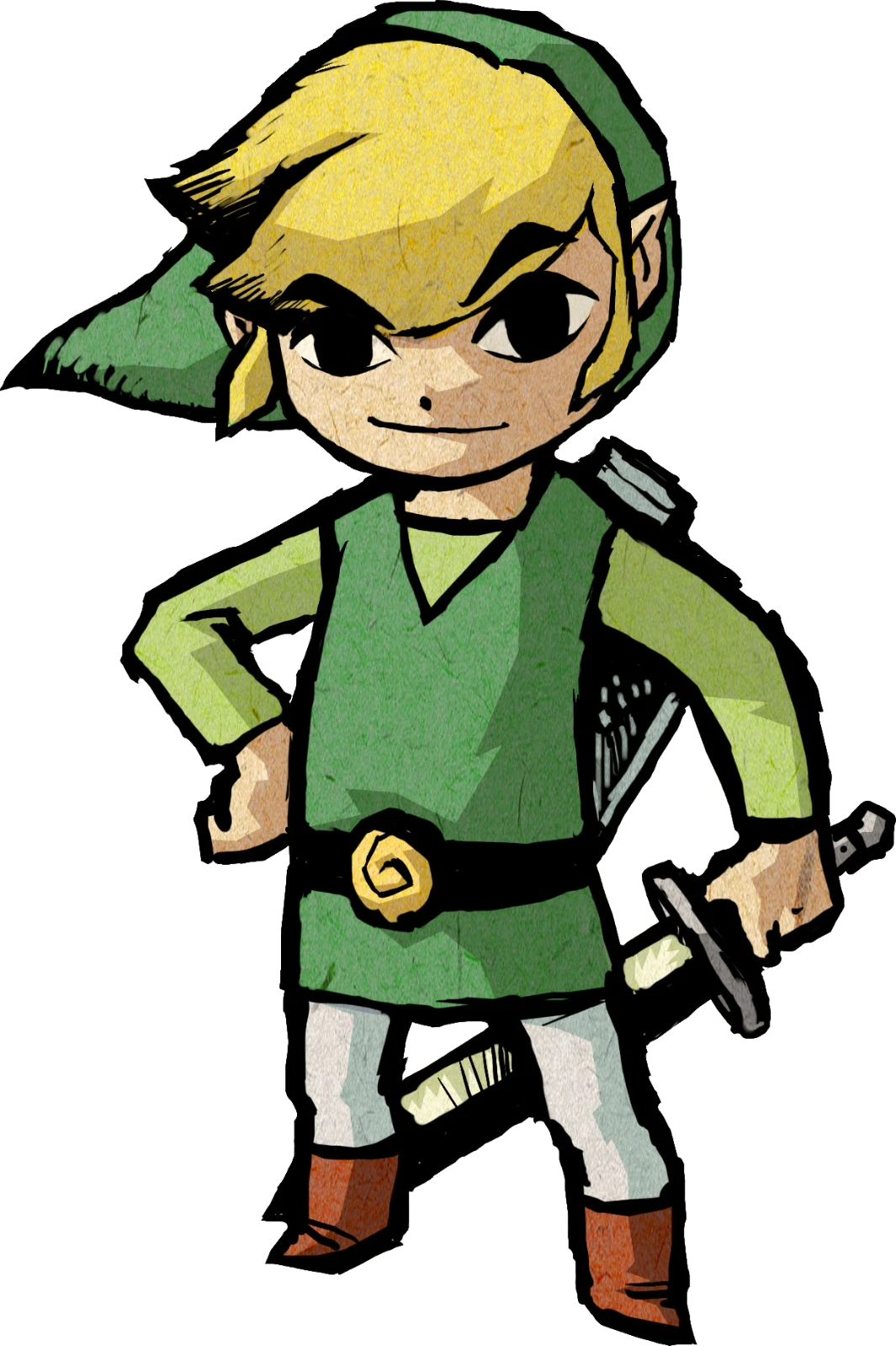
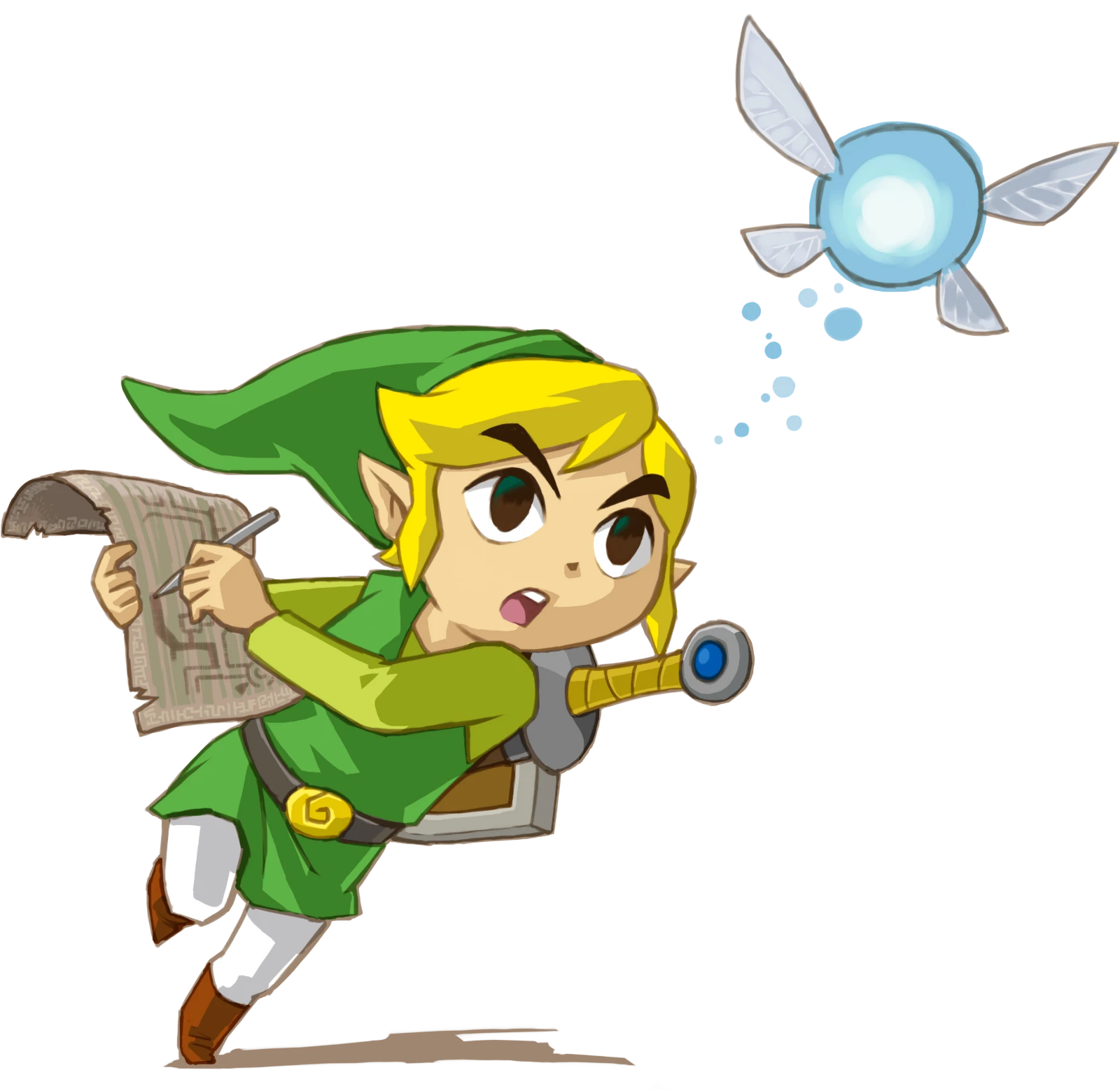
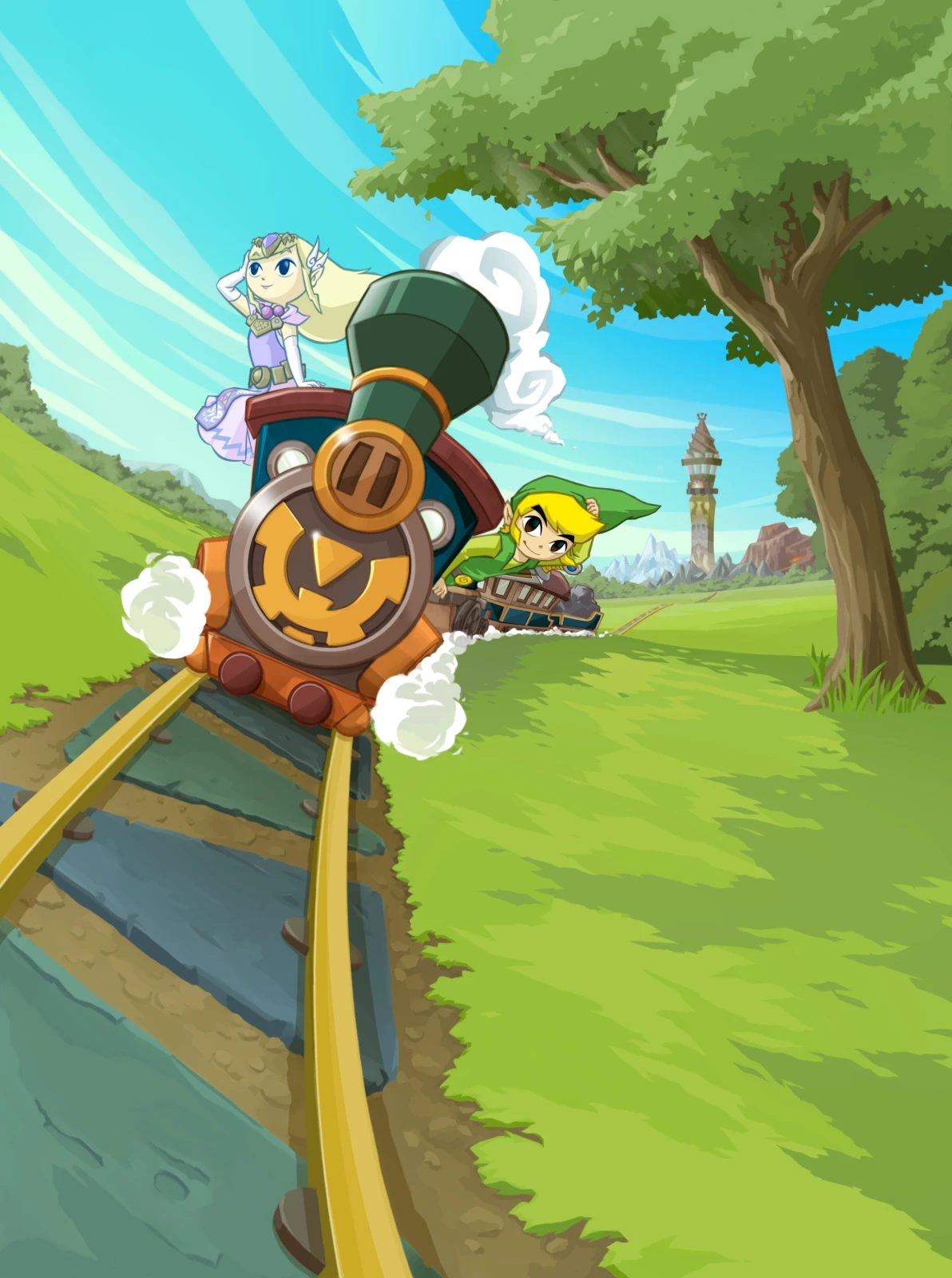
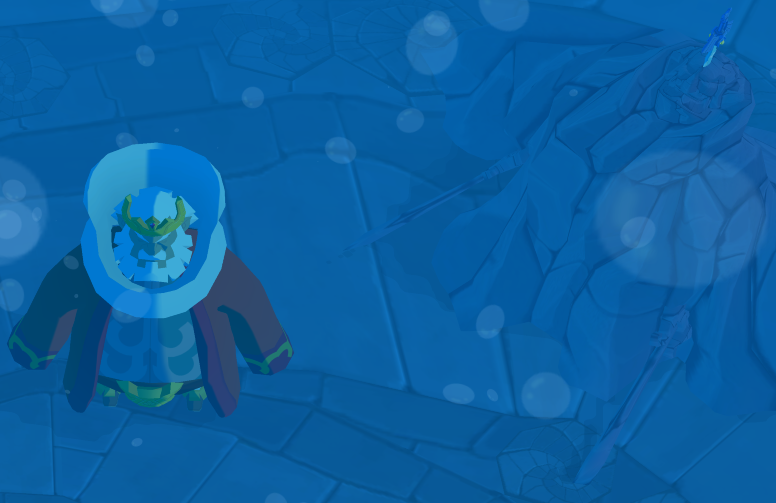
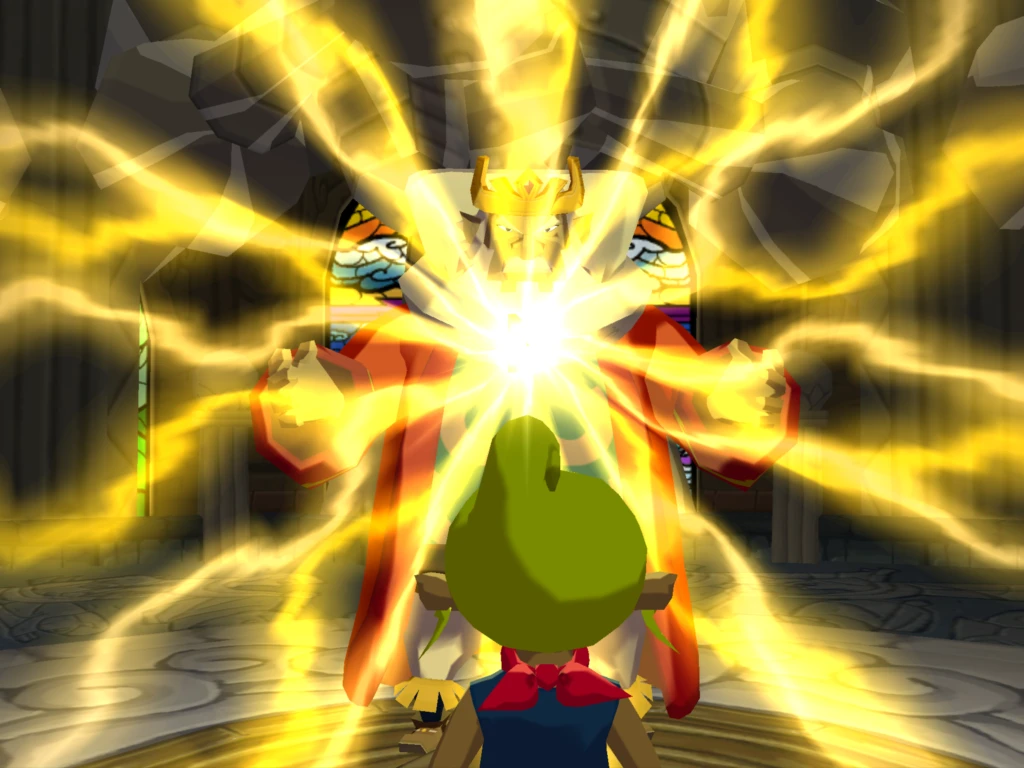
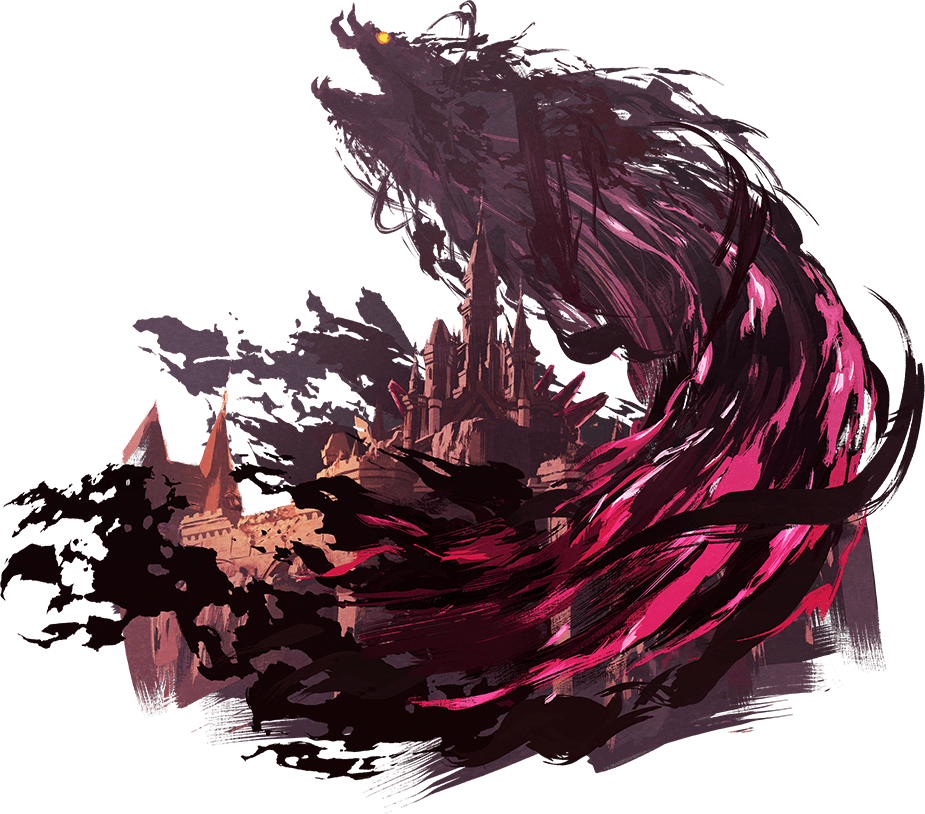
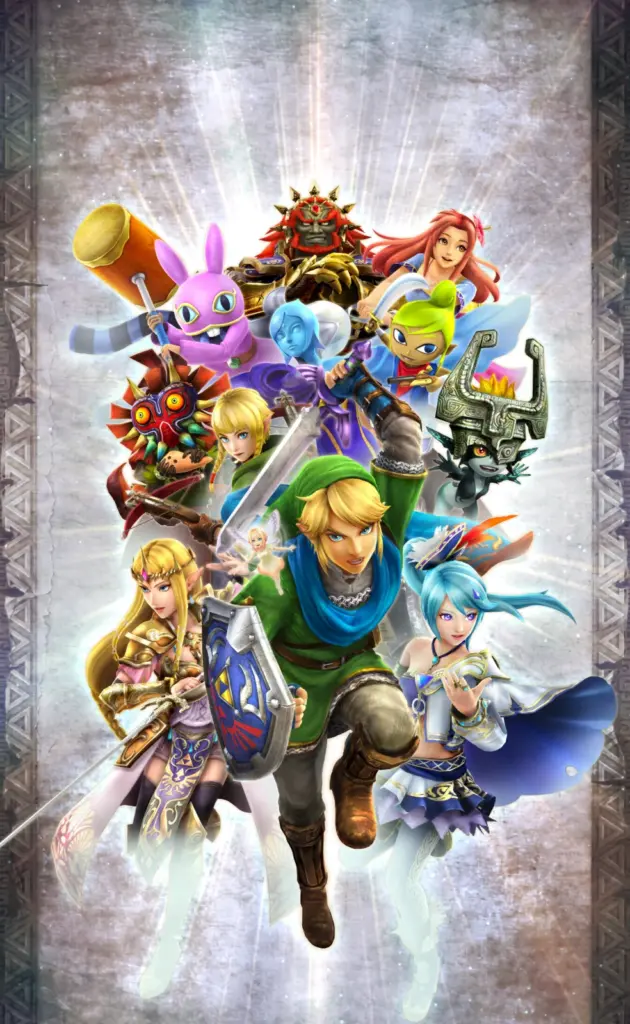 Hyrule Warriors (2014)Wii U; later 3DS and SwitchAonuma said it “exists as a separate dimension”, outside the main canon: a meeting of heroes from several eras that belongs to none of them.
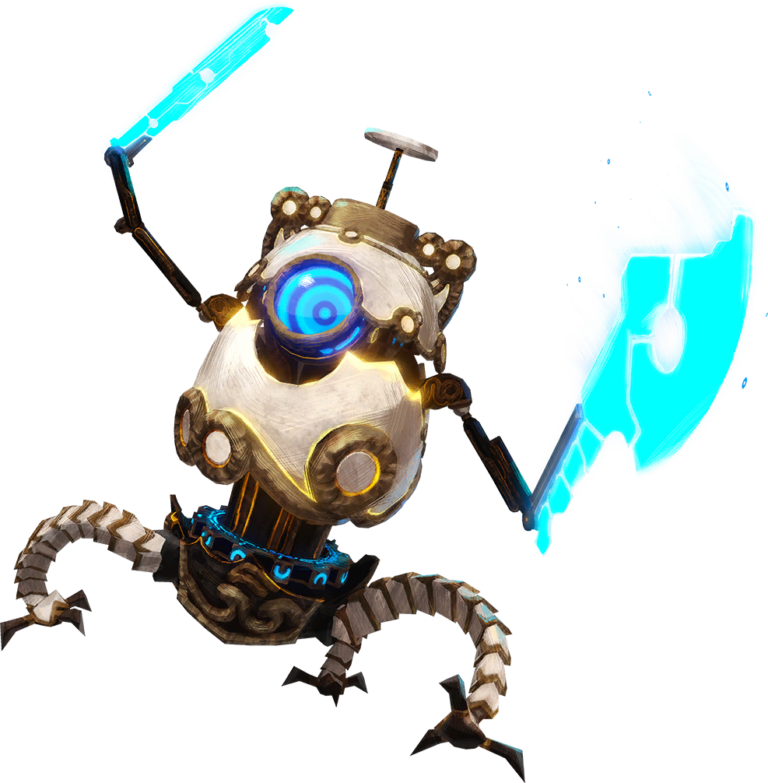 Hyrule Warriors: Age of Calamity (2020)Switch; Definitive Edition for Switch 2 due 25 February 2027Sold as the story of the Great Calamity, but the little Guardian Terrako travels back from the fall of Hyrule and changes events, so its story branches off into an alternate history.
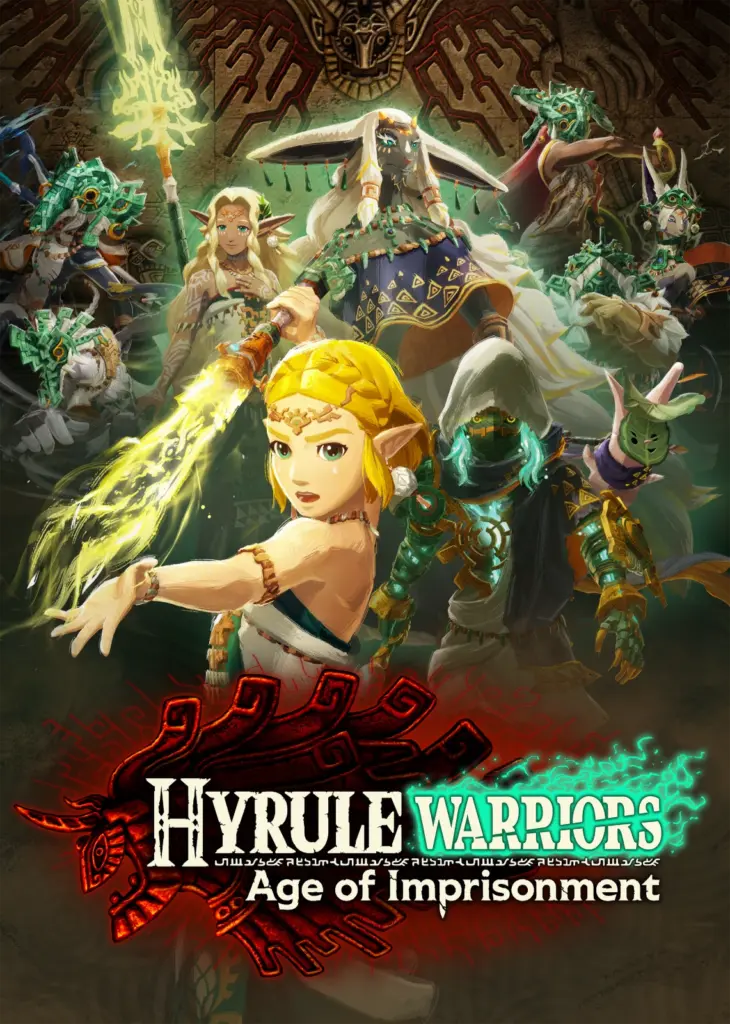 Hyrule Warriors: Age of Imprisonment (2025)Nintendo Switch 2 · 6 November 2025Nintendo’s press release calls it a “canonical tale” telling “the untold story” of the Imprisoning War. The Chronicle lists only the main games, so it has no entry, but the war it shows is on the chart.
 The CD-i games (1993–1996)Link: The Faces of Evil, Zelda: The Wand of Gamelon, Zelda’s AdventureMade under licence for Philips’ CD-i player. None of Nintendo’s published chronologies includes them.BS Zelda and Ancient Stone Tablets (1995–1997)Satellaview broadcasts, Japan onlySatellite-broadcast games for the Super Famicom. No official chronology places them.
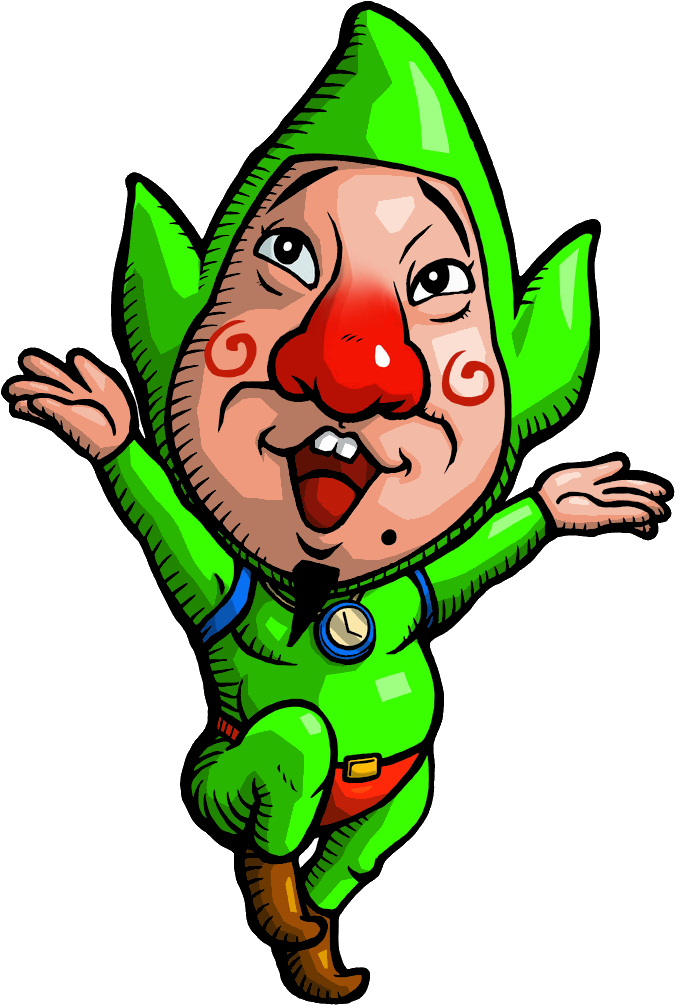 The Tingle games (2006–2009)Freshly-Picked Tingle’s Rosy Rupeeland and othersTingle’s own adventures sit outside the series’ history too.