Places of Hyrule The kingdom and its landmarks · 1986–today
A castle in the middle, a mountain to the north, a forest you can get lost in and a desert in the west: the kingdom Zelda has redrawn in almost every game for forty years.
First appearanceThe Legend of Zelda (1986)
CapitalHyrule Castle and Castle Town
Biggest changeDrowned under the Great Sea in The Wind Waker
Latest visitOcarina of Time on Nintendo Switch 2 (2026)
Japanese name
ハイラル (Hairaru)
First appearance
The Legend of Zelda (1986)
Latest appearance
Ocarina of Time for Nintendo Switch 2 (5 November 2026)
Rulers
The royal family, of the goddess Hylia’s bloodline; in Tears of the Kingdom, the first king is the Zonai Rauru
Capital
Hyrule Castle and Castle Town, usually near the middle of the map
Peoples
Hylians, Sheikah, Gorons, Zoras, Gerudo, Rito, Kokiri, Koroks and more (see Races of Hyrule)
Recurring places
Death Mountain, Kakariko Village, the Lost Woods, Zora’s Domain, Lake Hylia, the Gerudo Desert, the Temple of Time
Games set elsewhere
Link’s Awakening, Majora’s Mask, the Oracle games, Phantom Hourglass, Tri Force Heroes
Official lore
Hyrule Historia, the Hyrule Encyclopedia, Creating a Champion
Overview
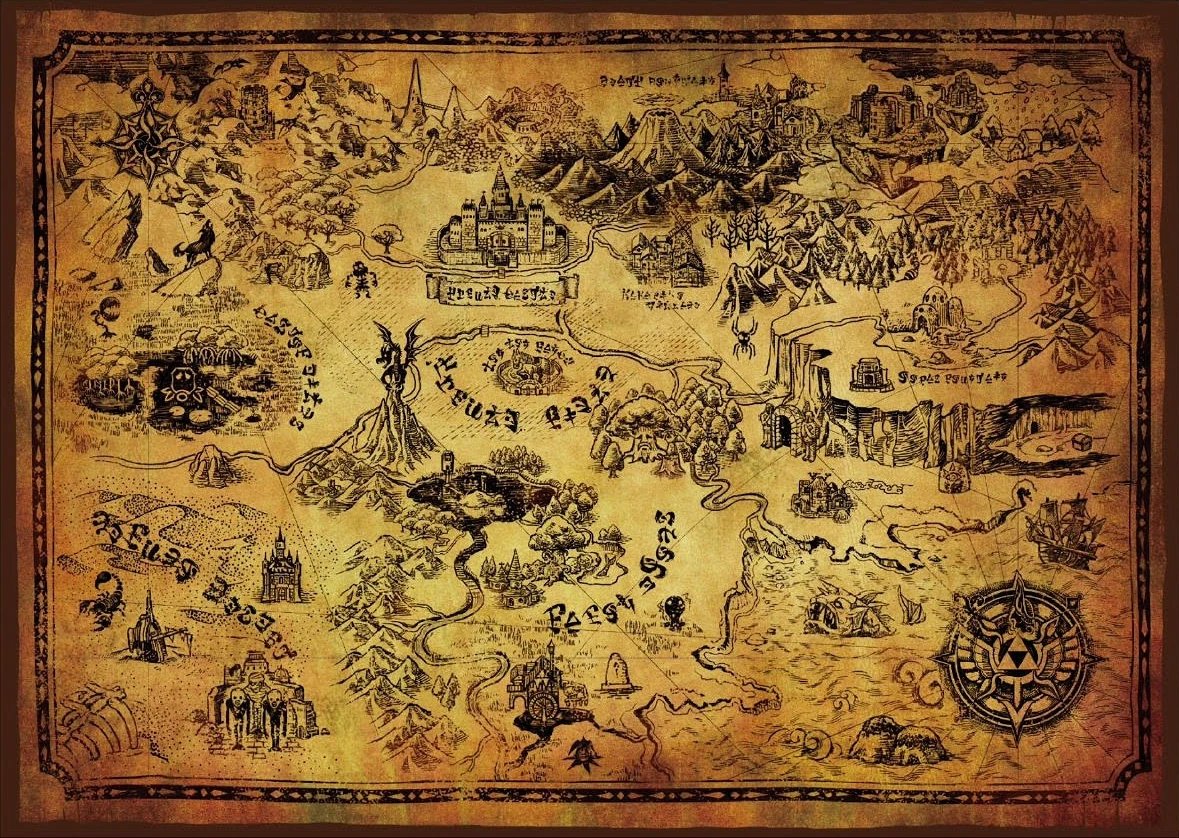
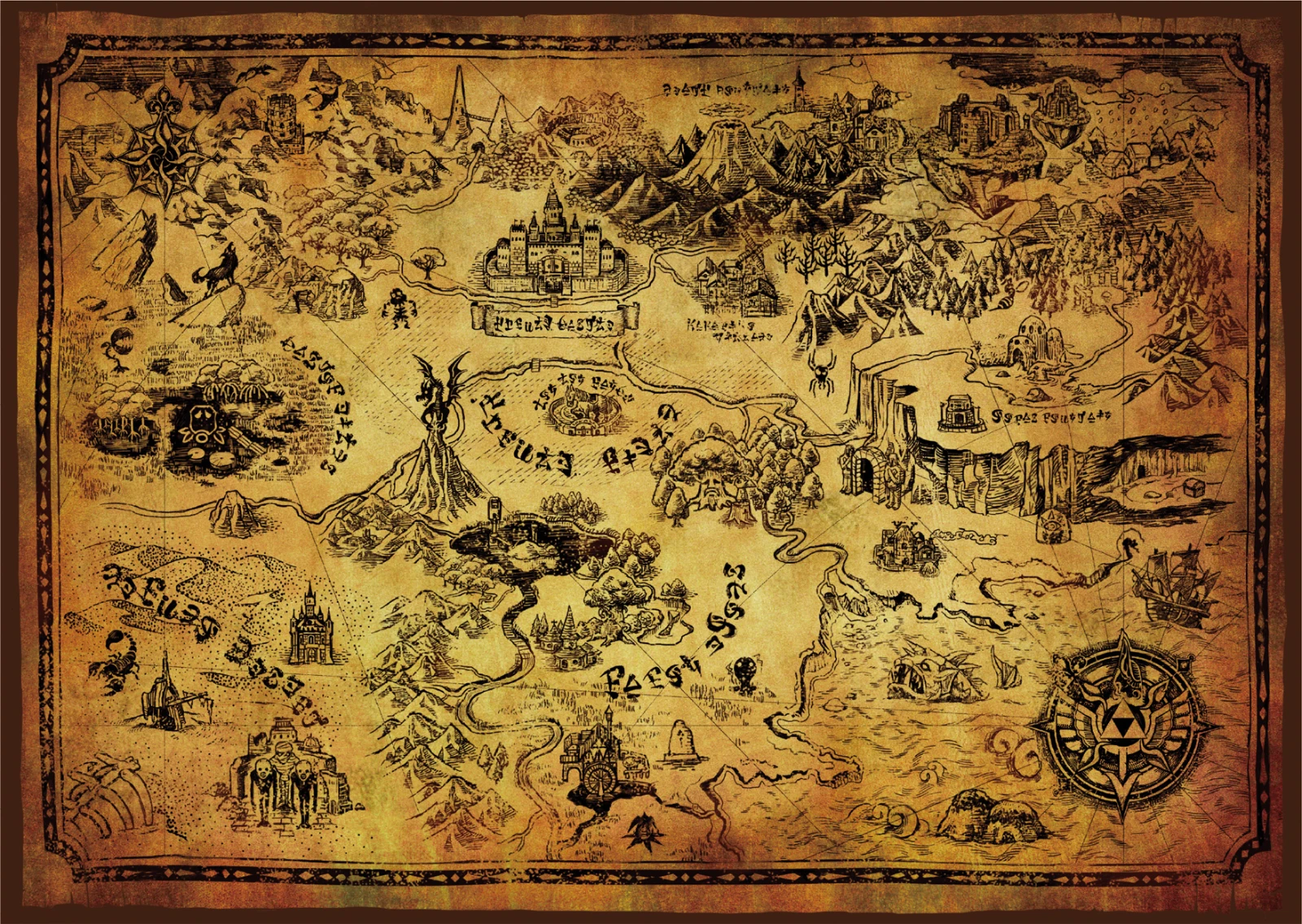
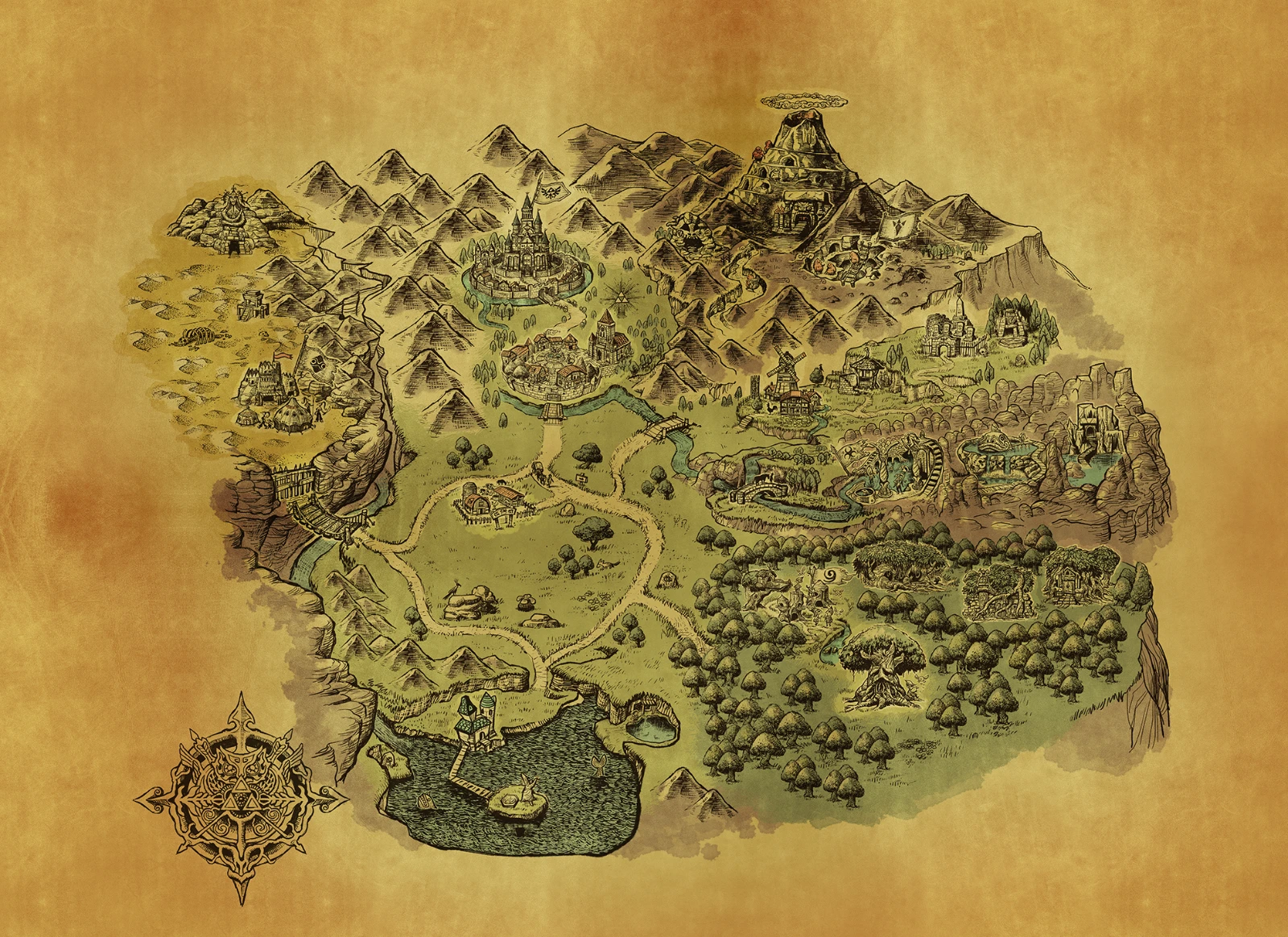
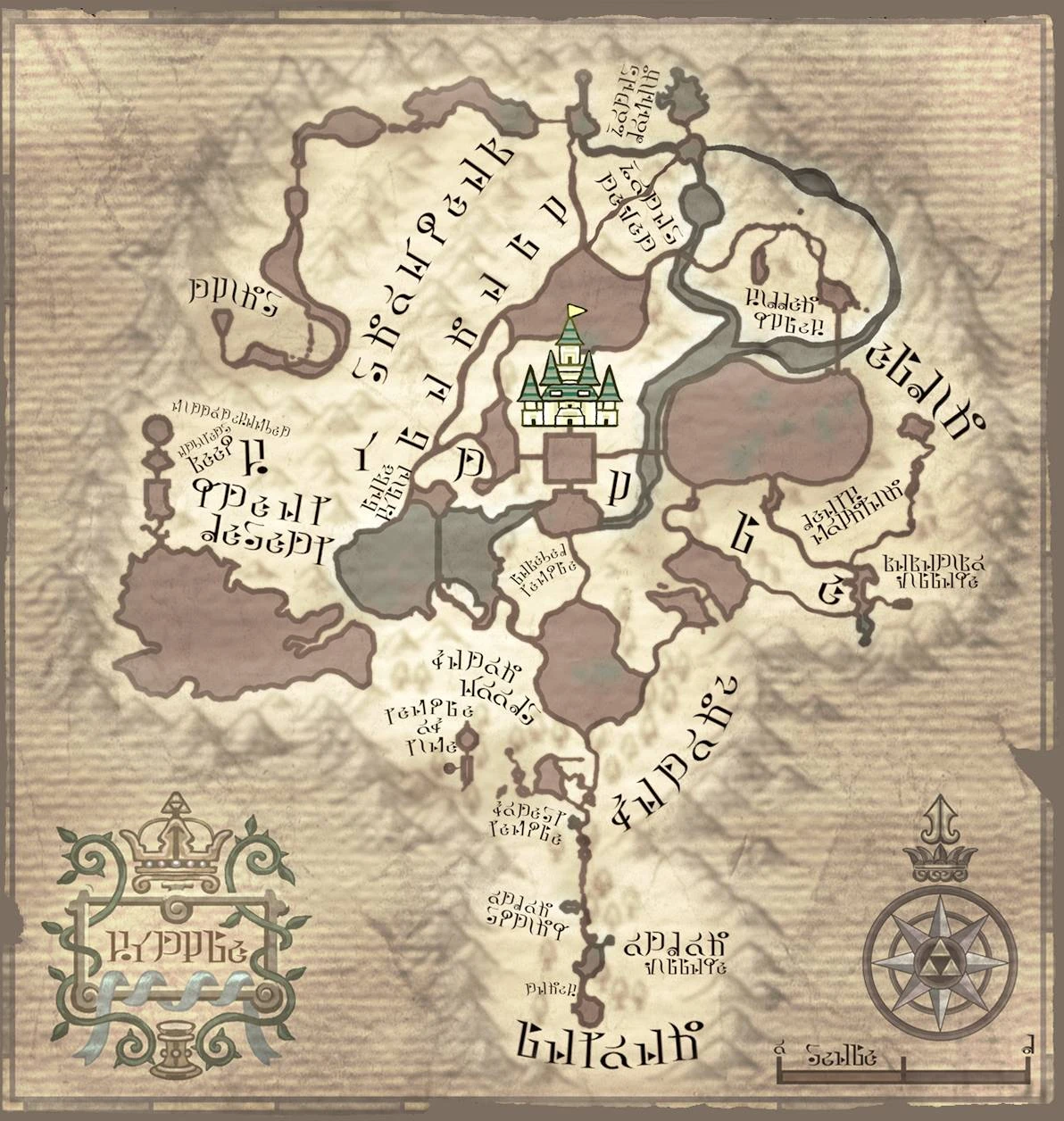
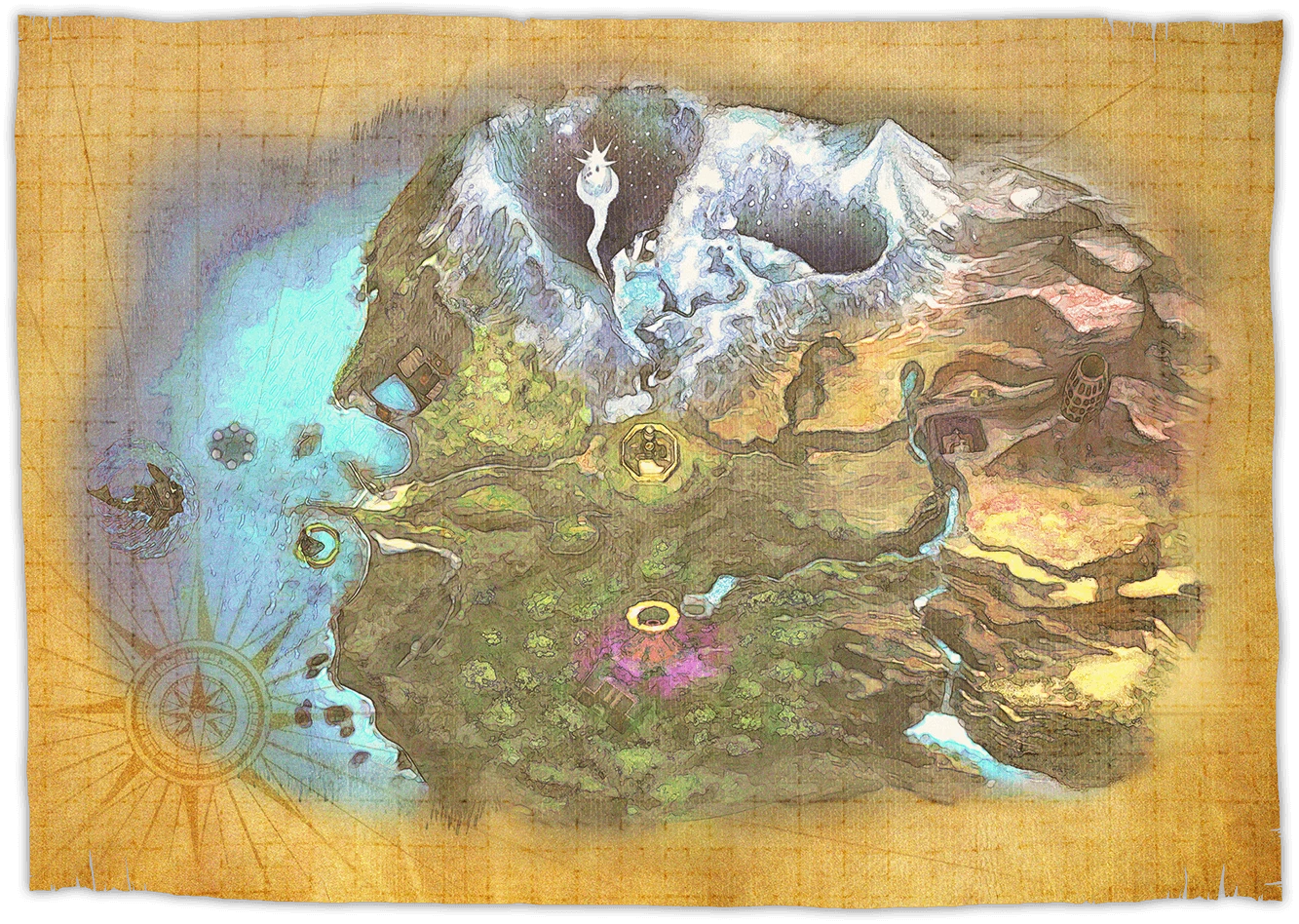
A map of Hyrule drawn for the series (artwork).
Ask ten Zelda fans to sketch a map of Hyrule and you will get ten different maps, every one of them right. The kingdom is the series’ home, yet it has never looked the same twice. Death Mountain wanders from the north to the south and back again, Lake Hylia drifts from one side of the kingdom to the other, and in one game the whole place lies at the bottom of the sea.
And yet you always know where you are. There is a castle at the heart of things, a smoking mountain full of Gorons, a forest that swallows travellers, a village of friendly faces with a graveyard out the back, a domain of Zoras and a desert in the west where the Gerudo live. These are the places of Hyrule: landmarks that come back game after game, rebuilt and rearranged but never unrecognisable.
This page is the map room of Zelda Temple’s Places section. The guide below takes each game’s Hyrule in turn, from the 128 screens of 1986 to the sky, surface and Depths of Tears of the Kingdom, then visits the places that keep coming back. Several have pages of their own; Castle Town, Hyrule Field, Lon Lon Ranch and Rito Village are covered in full here. The newest visit is the rebuilt Ocarina of Time for Nintendo Switch 2 (5 November 2026), which keeps the 1998 layout and redraws every corner of it.
A top-down Hyrule eight times the size of Koholint, torn by rifts
Hyrule game by game
Every Zelda set in Hyrule redraws it. Here is each game’s version in release order: what the map looks like, how you get around and what is new. Remakes sit inside the original’s card, because they keep its map, and the games set in other lands share one card at the end.
Famicom Disk System / NES · 128 screens and nine levels
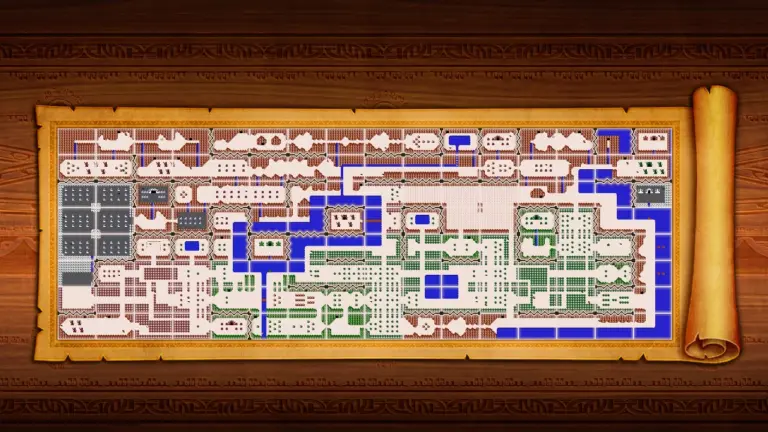
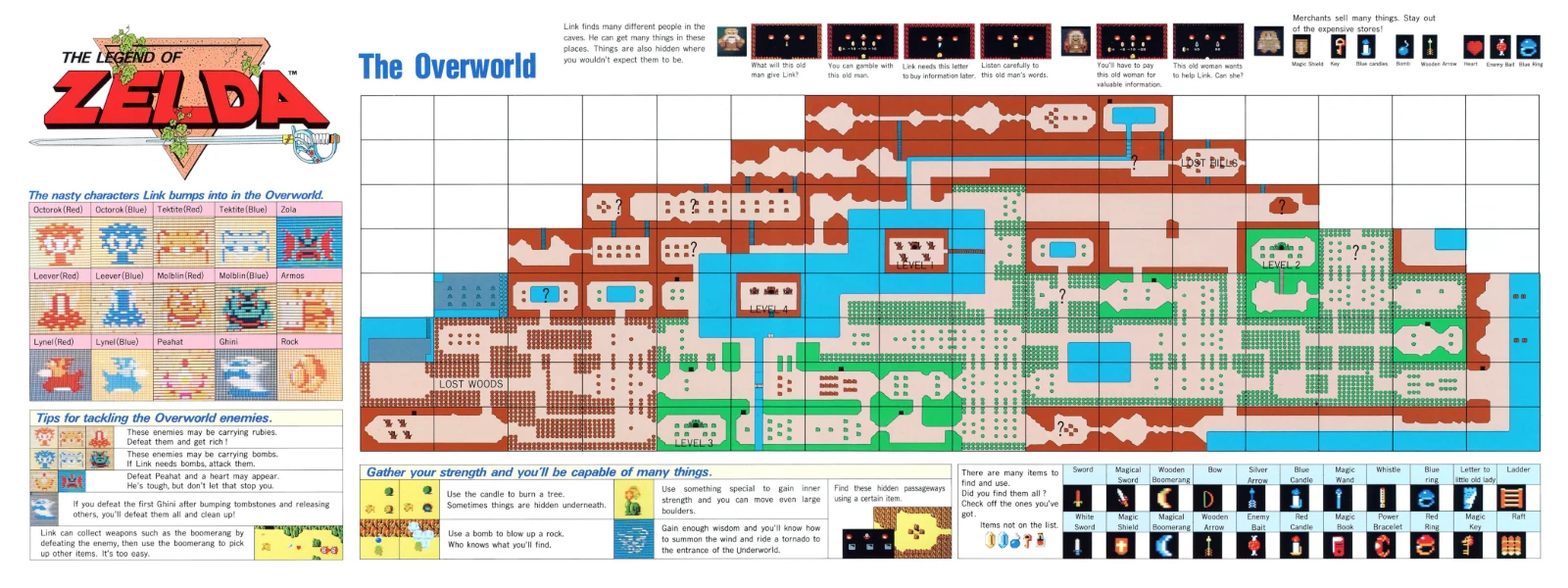
The first Hyrule is a single sheet of land. Wikipedia, drawing on Hyrule Historia, describes the overworld as 16 screens wide and eight high: 128 areas of forest, lake, graveyard, desert and rock that you can roam in any direction from the moment you press Start. Shigeru Miyamoto and Takashi Tezuka built it as the opposite of Super Mario Bros., which ran left to right; here the world spreads out on every side, and its secrets hide in caves behind waterfalls, under bushes and behind walls that crumble when bombed.
There is no castle to visit and no town to shop in. Death Mountain runs along the northern edge, and beneath Spectacle Rock on its slopes lies Level 9, where Ganon holds Zelda. The other eight levels are underground, each guarding a piece of the Triforce of Wisdom, and only six of their entrances are easy to spot. The shape of things to come is already here, though: mountains to the north, a forest maze that loops back on itself unless you take the right path, and a magic recorder that calls up a whirlwind to whisk Link from one part of the map to another.
What’s there
Nine levels, eight hiding pieces of the Triforce of Wisdom
Famicom Disk System / NES · Western and Eastern Hyrule
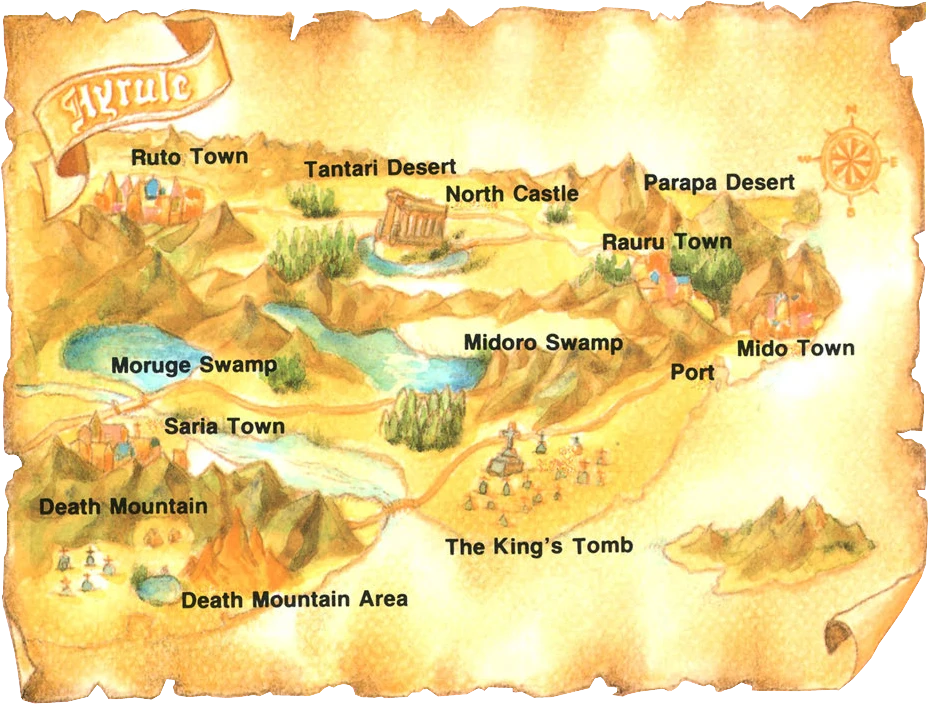
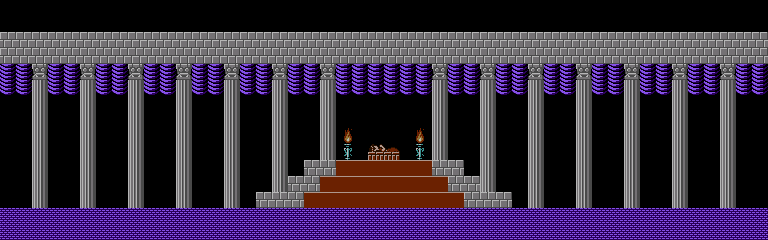
Zelda II pulls the camera back. Hyrule becomes a map you cross from above, a little Link marching over plains, forests, swamps and deserts, and whenever he enters a settlement, cave or palace, or a roaming monster catches him, the view switches to a side-on, Mario-style scene. The world is far bigger than in 1986 and comes in two halves: Western Hyrule, where the adventure starts at the North Castle beside the sleeping Zelda, and Eastern Hyrule across the sea, reached once Link has found a raft.
For the first time Hyrule is full of people. Eight towns each hide a wise man with a spell to teach, and the names will ring bells: Rauru, Ruto, Saria, Mido, Nabooru, Darunia and two towns called Kasuto. Five of them later became sages in Ocarina of Time, and Eiji Aonuma has explained the idea: the towns were meant to look as if they had been named in the sages’ honour. Death Mountain is a warren of caves this time, and it sits in the south. Six palaces each wait for a crystal, and the seventh, the Great Palace, stands in the Valley of Death.
What’s there
Eight towns with spell-teaching wise men
Seven palaces; the last, the Great Palace, lies in the Valley of Death
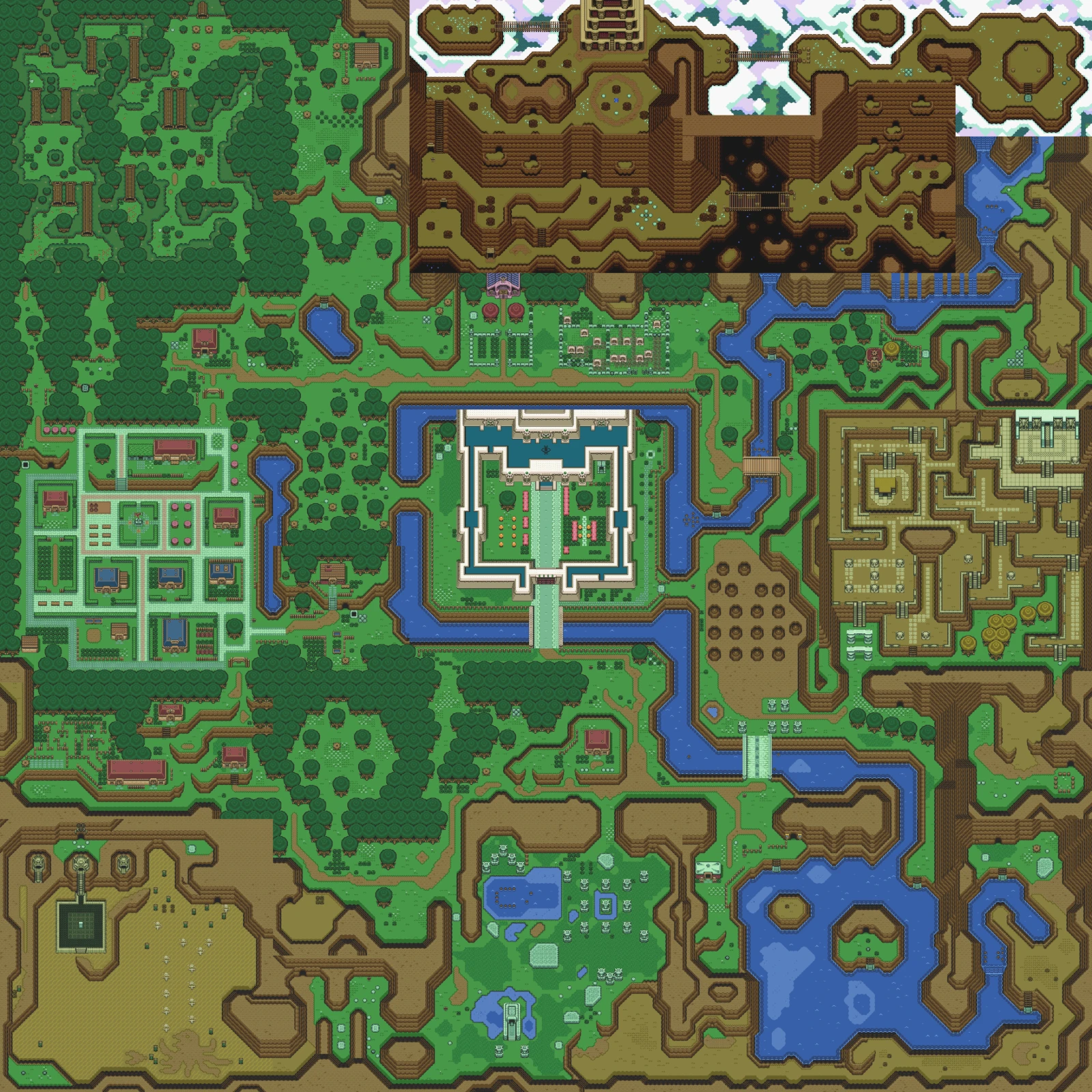
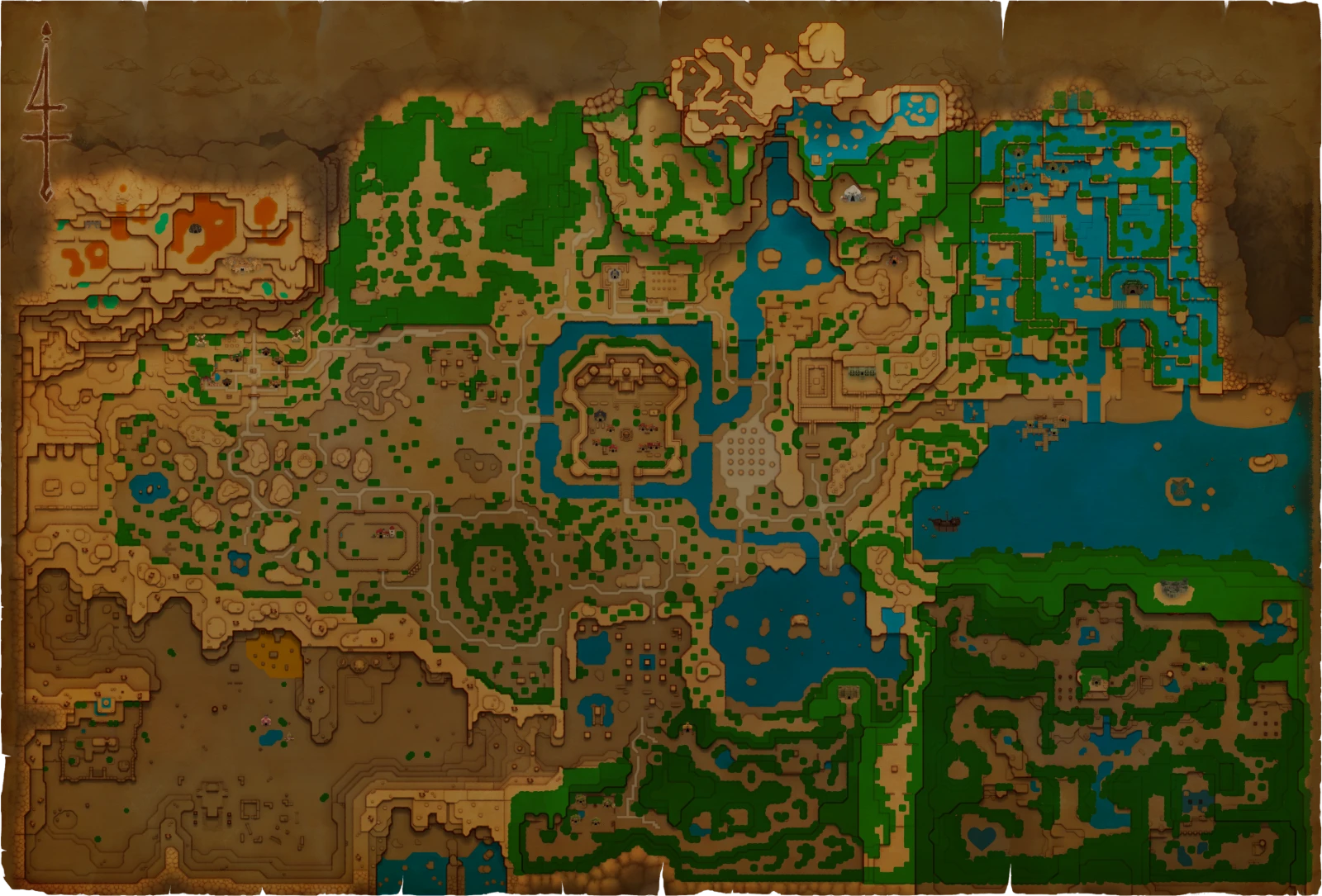
This is the Hyrule that most later games are measured against. Hyrule Castle stands in the middle with a moat around it; Death Mountain rises along the northern edge with the Tower of Hera on its peak; Kakariko Village and the Lost Woods lie to the west, the Eastern Palace to the east, a desert to the south-west and Lake Hylia to the south-east. Between them are fields, rivers, a graveyard and dozens of caves, and almost every screen hides something.
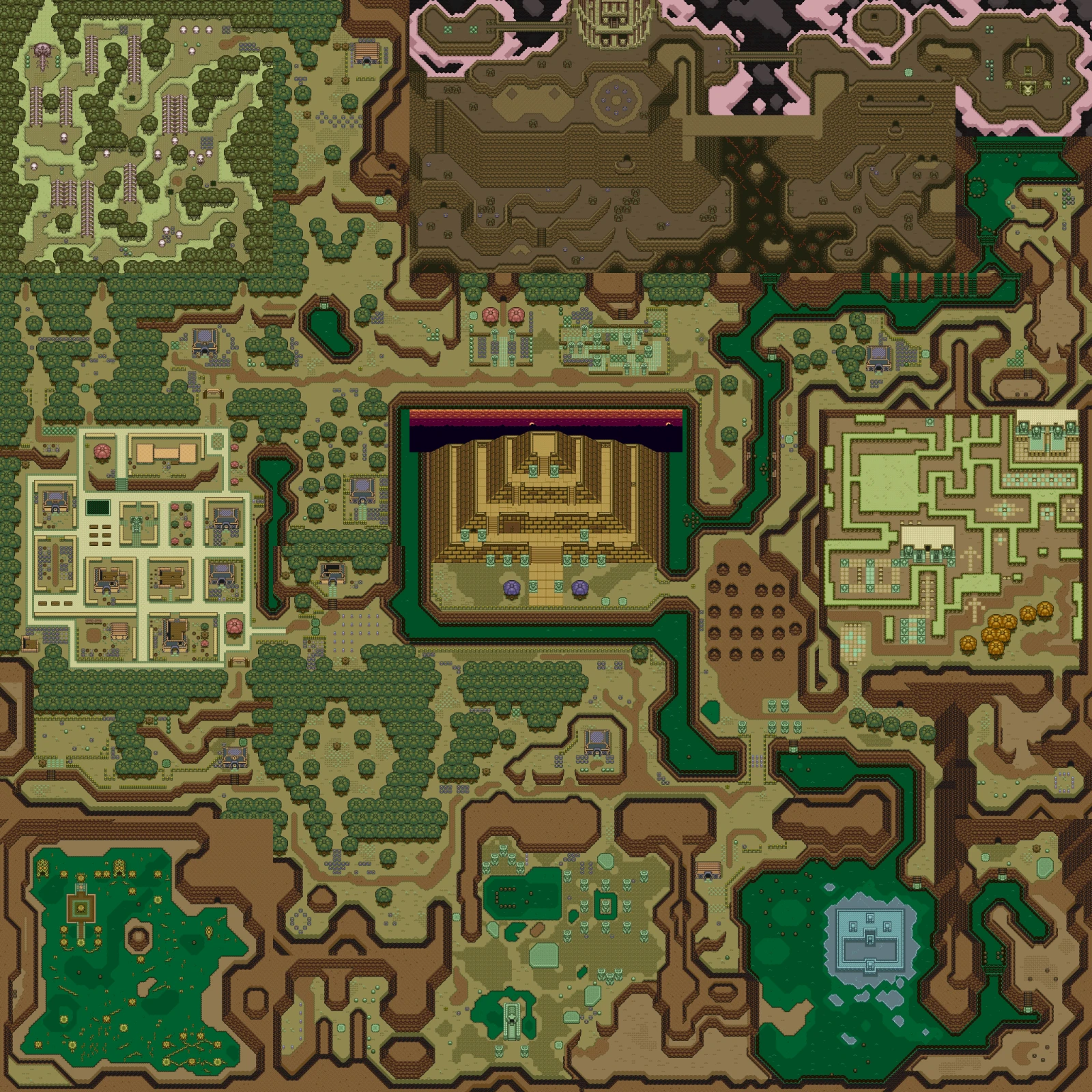
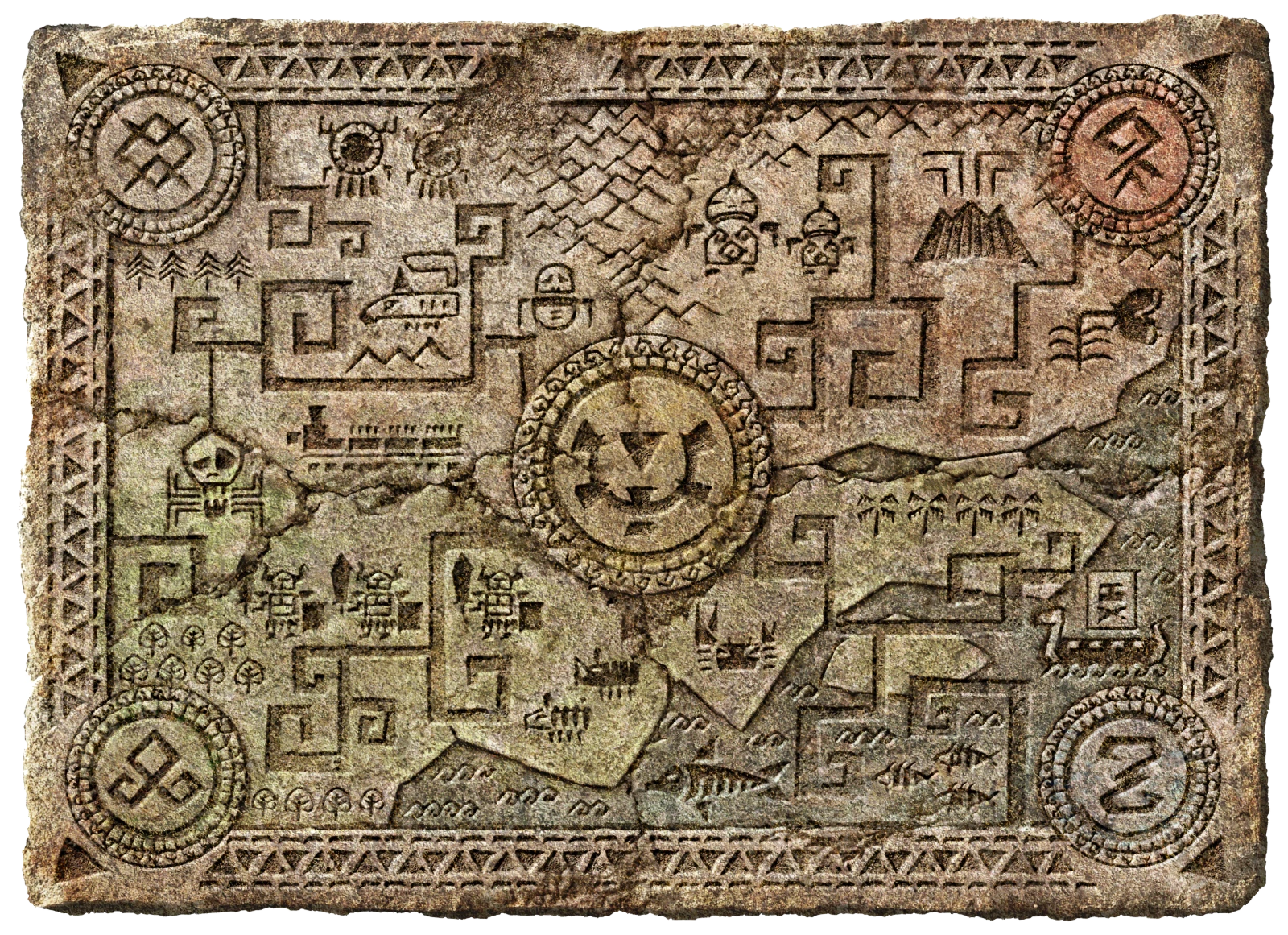
Then the game doubles it. The Dark World is the Golden Land, the realm where the Triforce rested, twisted into a dark mirror of Hyrule by Ganon’s wish. Its map lines up closely with the Light World, so a rock in one is a rock in the other, and the Magic Mirror sends Link from the Dark World back to the same spot in the light. Kakariko becomes the Village of Outcasts and the castle’s place is taken by the Pyramid of Power. The series’ love of parallel maps, from Lorule to the Depths, starts here.
What’s there
Hyrule Castle as the opening dungeon
Three pendant dungeons in the Light World, seven crystal dungeons in the Dark
Kakariko, the Lost Woods, Death Mountain, the desert and Lake Hylia in their classic places
The Pyramid of Power at the heart of the Dark World
The Dark World, the twisted twin of A Link to the Past’s Hyrule (map).The North Castle, where Zelda II begins.
Nintendo 64 · remade for 3DS (2011) and Nintendo Switch 2 (2026)
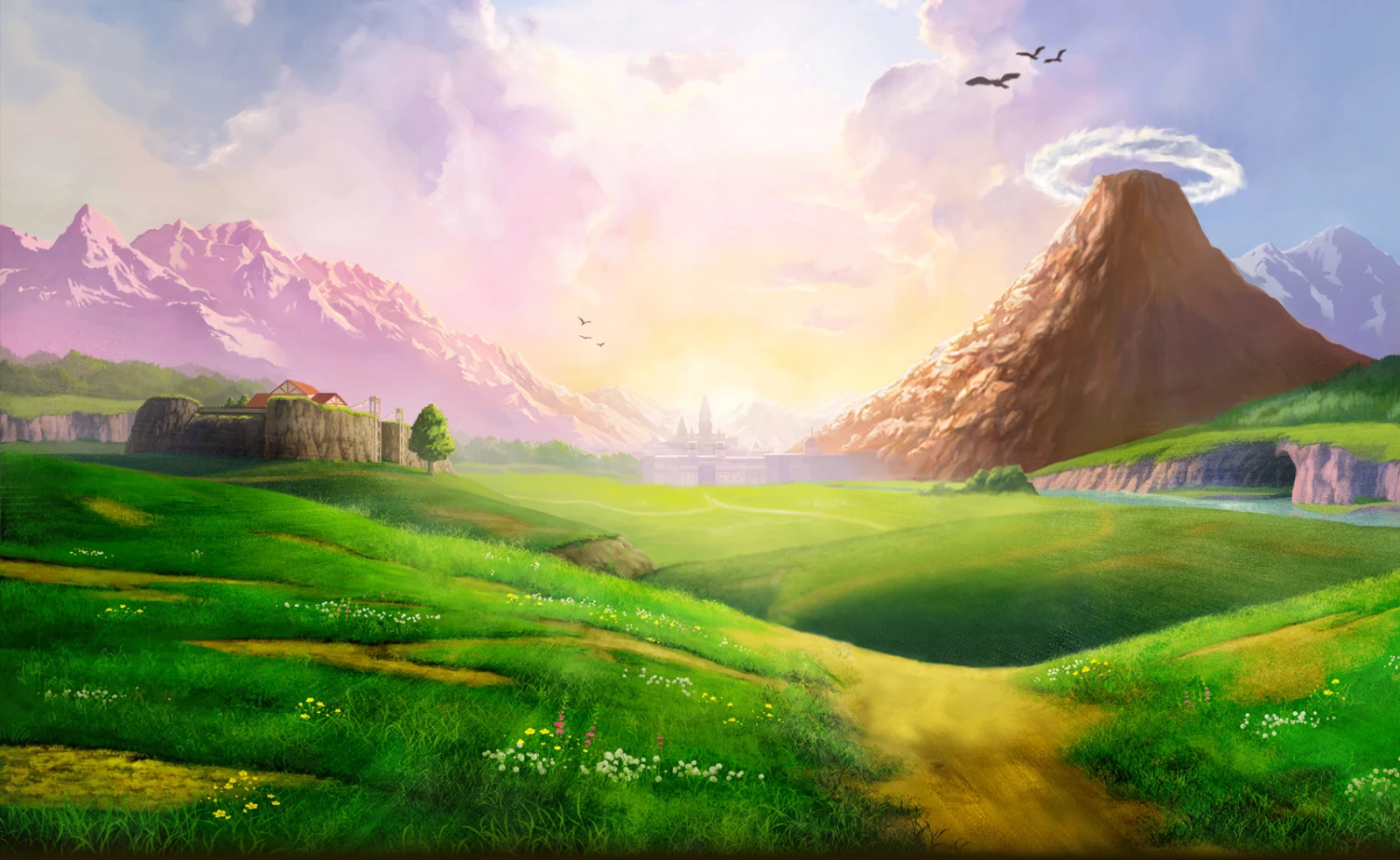
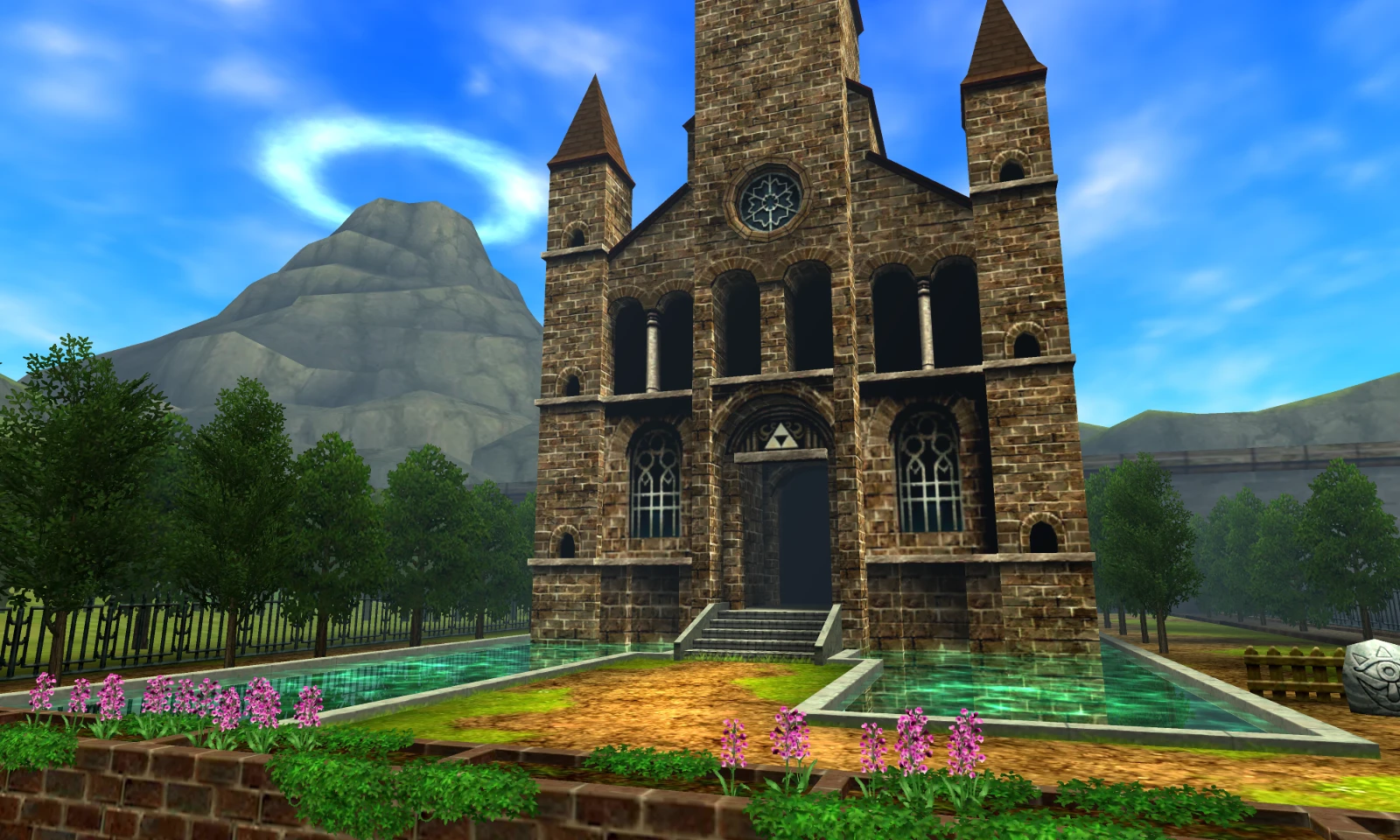
Ocarina of Time takes Hyrule into three dimensions and builds it around one idea: a great green plain in the middle, with everything else at its edges. Hyrule Field has Lon Lon Ranch at its centre. Zelda Dungeon’s wiki maps out the rest: Castle Town and the castle lie to the north of the field and the Gerudo lands to the west; Lake Hylia is in the south-west, Kokiri Forest in the south-east, Zora’s Domain in the east, and Kakariko Village and Death Mountain in the north-east. It was the first time a Zelda let you look out over the whole kingdom and simply ride.
Seven years later the same map is a different country. Ganondorf’s fortress has replaced the castle, Castle Town is a ruin where only ReDeads walk, Zora’s Domain is frozen solid and Kakariko is full of refugees. Ocarina of Time 3D (2011) kept every inch of that map, and so did the 2026 Nintendo Switch 2 version, even though it was rebuilt from scratch. Its director, HokWai Ng, chose separate areas over one seamless world; the castle and Kakariko’s windmill were enlarged to work as landmarks; and Nintendo asked the artist who drew the Nintendo 64 game’s illustrations to draw the new map.
What’s there
Hyrule Field, with Lon Lon Ranch at its centre
Two eras of the same map, seven years apart
Castle Town, Kakariko, Death Mountain, Zora’s Domain, Lake Hylia and Gerudo Valley, all reached from the field
The Wind Waker makes the boldest map change in the series: Hyrule is gone. In its place is the Great Sea, charted as a seven-by-seven grid of 49 squares with at least one island in every square, and you cross it in a talking red boat, steering by a wind you choose yourself. Plenty of those islands are optional, full of secrets, sunken treasure and favours to do, and between them lies a great deal of beautiful, empty water.
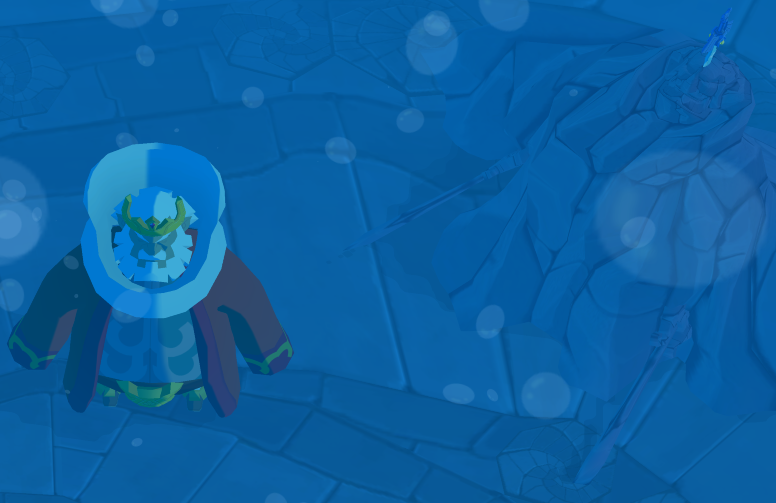
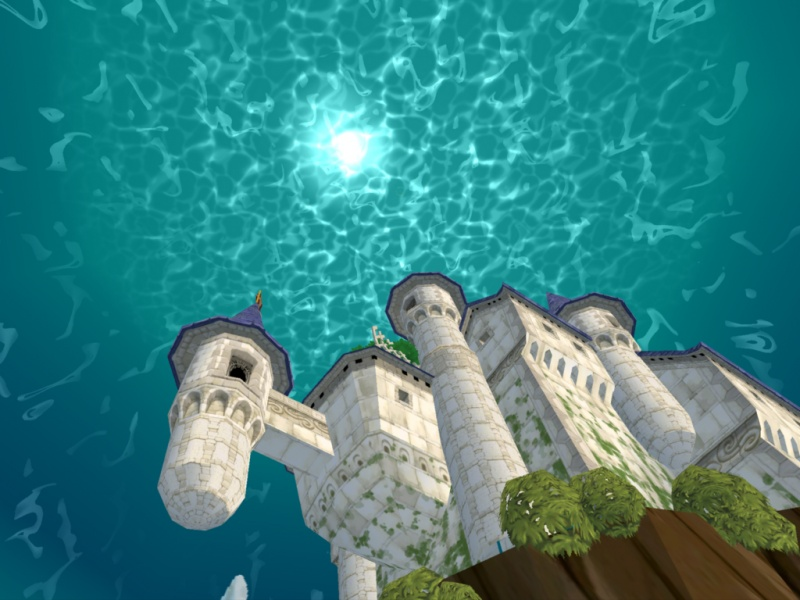
Only late in the story does the King of Red Lions explain. When Ganon returned and no hero came, the gods drowned the kingdom to seal him away, but first they sent a chosen few up into the mountains. Those peaks are the islands Link has been sailing between. Far below, kept dry by a magic barrier, Hyrule Castle stands frozen in time, drained of colour, and it is there, in the basement, that Link draws the Master Sword. By the end the sea has the old kingdom for good, and Link and Tetra sail off to find a new land.
What’s there
49 squares of sea, each with an island or more
Hyrule Castle, preserved beneath the waves in stopped time
Dragon Roost Island, home of the Rito, and the Forest Haven of the Koroks
Outset and Windfall, two of the friendliest islands in Zelda
GameCube · after Four Swords (Game Boy Advance, 2002)
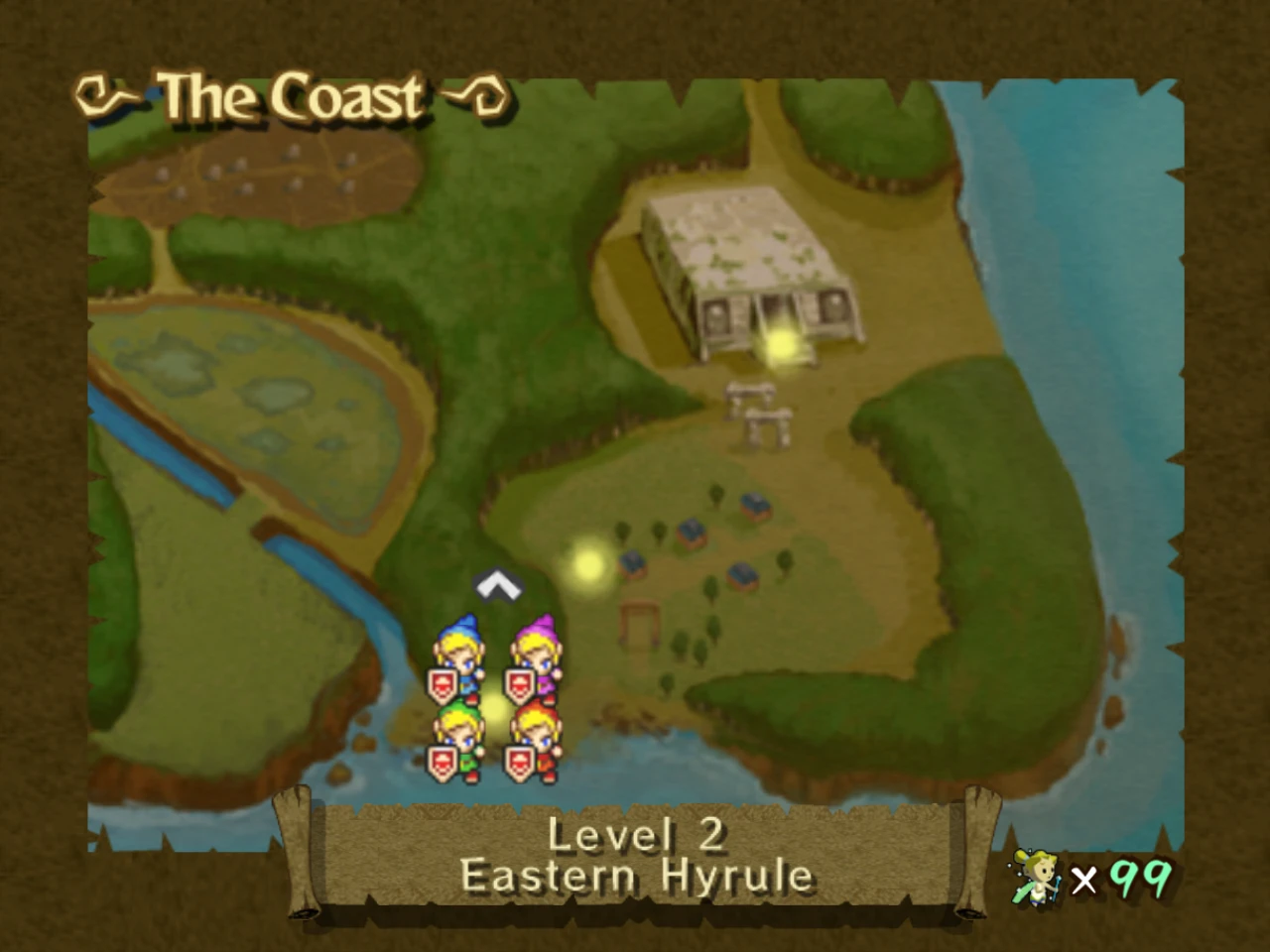
The two Four Swords games carve Hyrule into stages. The original, released with the Game Boy Advance A Link to the Past, sends two to four Links through a handful of short areas on the way to Vaati’s Palace. Four Swords Adventures on GameCube expands that into eight levels of three stages each, and together they tour almost every classic place: Lake Hylia and Hyrule Castle in the first level, then the coast, the Village of the Blue Maiden, Death Mountain, the Lost Woods, Kakariko Village, the Desert of Doubt, a frozen Hyrule and the Realm of the Heavens.
The look is 16-bit Hyrule lit with GameCube effects, and the story borrows from the Super NES classic as well: a Dark World seeps into the kingdom and carries off its people, darkness takes the castle, and the Gerudo eventually confess that the true villain, Ganondorf, is one of their own. Each stage is a self-contained slice of map, so this Hyrule plays like a highlights reel rather than one connected kingdom.
Game Boy Advance · Hyrule Town and the Minish world
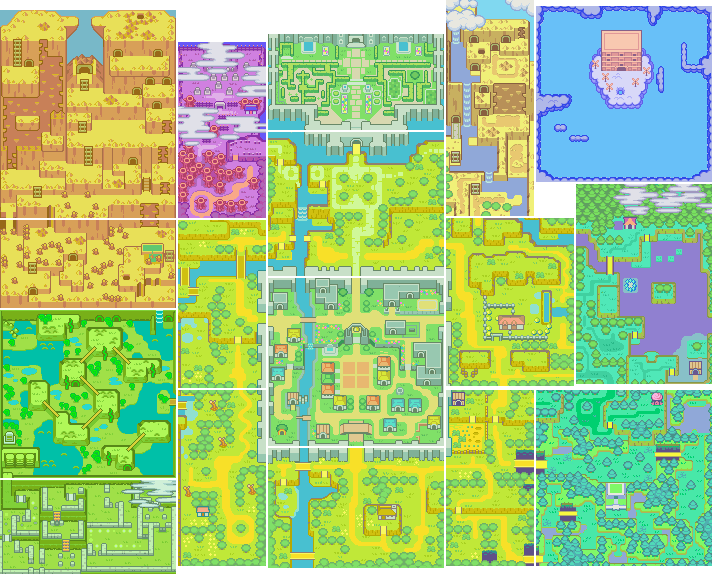
The Minish Cap squeezes a whole kingdom on to the Game Boy Advance and then shrinks Link to explore it all over again. Hyrule Town, a busy market town that hosts the Picori Festival, sits below the castle. Around it you will find Lon Lon Ranch, the Minish Woods, the haunted Royal Valley, Mount Crenel, Veil Falls, Lake Hylia and the marshy Castor Wilds, and above the clouds the Cloud Tops, home of the Wind Tribe. Link’s house is in South Hyrule Field.
The twist is scale. With the talking cap Ezlo on his head, Link can shrink to the size of the Picori and slip through mouse holes, puddles and cracks in walls, so every familiar spot hides a second, miniature layer of paths, homes and dungeons. Nintendo’s timeline places this game early, before Ocarina of Time, which makes it one of the oldest Hylian kingdoms we get to visit, and it already has the castle-and-town heart that later games keep.
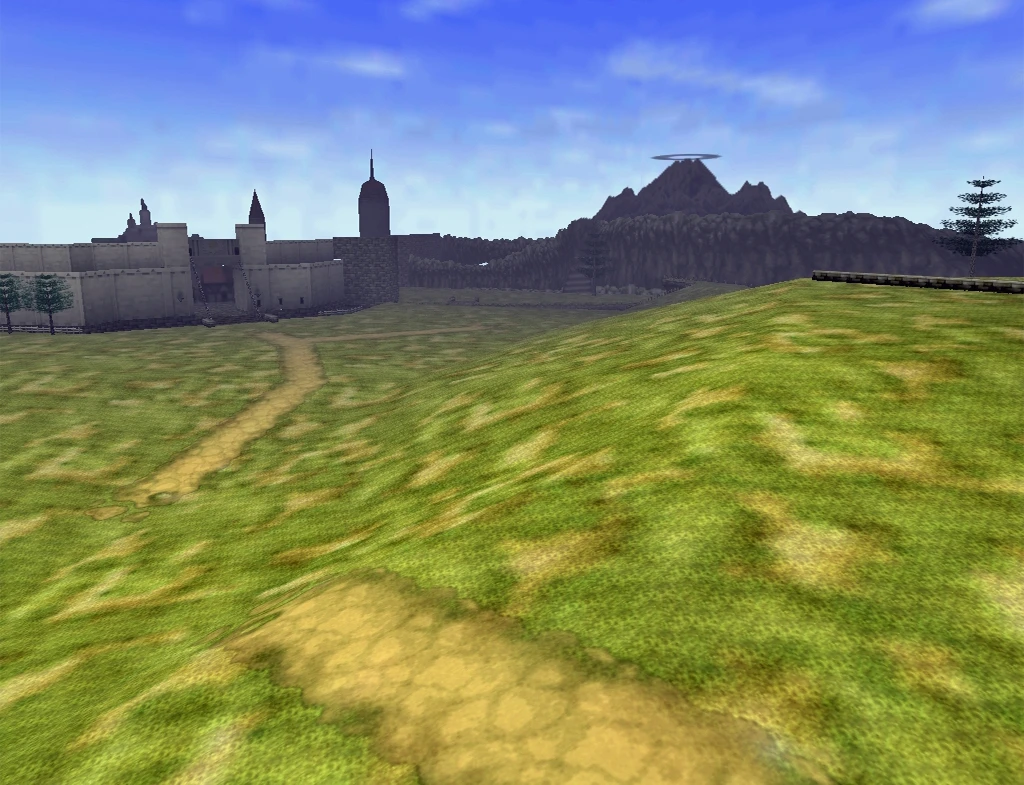
Hyrule Field in the Nintendo 64 Ocarina of Time.Hyrule Castle beneath the Great Sea in The Wind Waker.
Twilight Princess divides its Hyrule into provinces named after the four Light Spirits: Ordona at the southern tip, where Link herds goats in Ordon Village, then Faron, Eldin and Lanayru, plus the Gerudo Desert and the snowy heights of Snowpeak. Castle Town sits at the centre, ringed by stretches of Hyrule Field, and Zelda Wiki puts the field at nearly five times the size of Ocarina of Time’s. It is built for Epona: you gallop between provinces, fight on horseback and finish the game with a chase across the open plain.
Twilight is the other map-maker. Beyond Ordona, each province Link enters first lies under a curtain of Twilight, where its people wander as spirits and Link prowls as a wolf, until he gathers the Tears of Light and the region’s spirit wakes. There is a geographical oddity too. To let Link swing his sword in the player’s right hand, Nintendo flipped the whole Wii version left to right, so anything west of Castle Town on GameCube lies east of it on Wii.
What’s there
Provinces named after the Light Spirits: Ordona, Faron, Eldin and Lanayru
Castle Town at the centre, with Telma’s bar and the Resistance
The Gerudo Desert, Snowpeak, and the City in the Sky above Lake Hylia
Nintendo DS · New Hyrule, a century after the flood
A hundred years after The Wind Waker, Tetra’s descendants rule New Hyrule, the land they found across the sea, and this time Link travels it by train. The Spirit Tracks, a magical railway, criss-cross the kingdom, and you plot your route along them on the touch screen. The land falls into five realms, each with a temple: Forest, Snow, Ocean, Fire and Sand. The Tower of Spirits rises in the middle, and a walled, rectangular Castle Town and a new Hyrule Castle stand in the north of the Forest Realm, where Princess Zelda hands Link his engineer’s certificate.
It is Hyrule in name and spirit rather than geography: none of its places sit where the old ones did, because this is a different country altogether. Its full story belongs with the other lands. Read more on Other Lands.
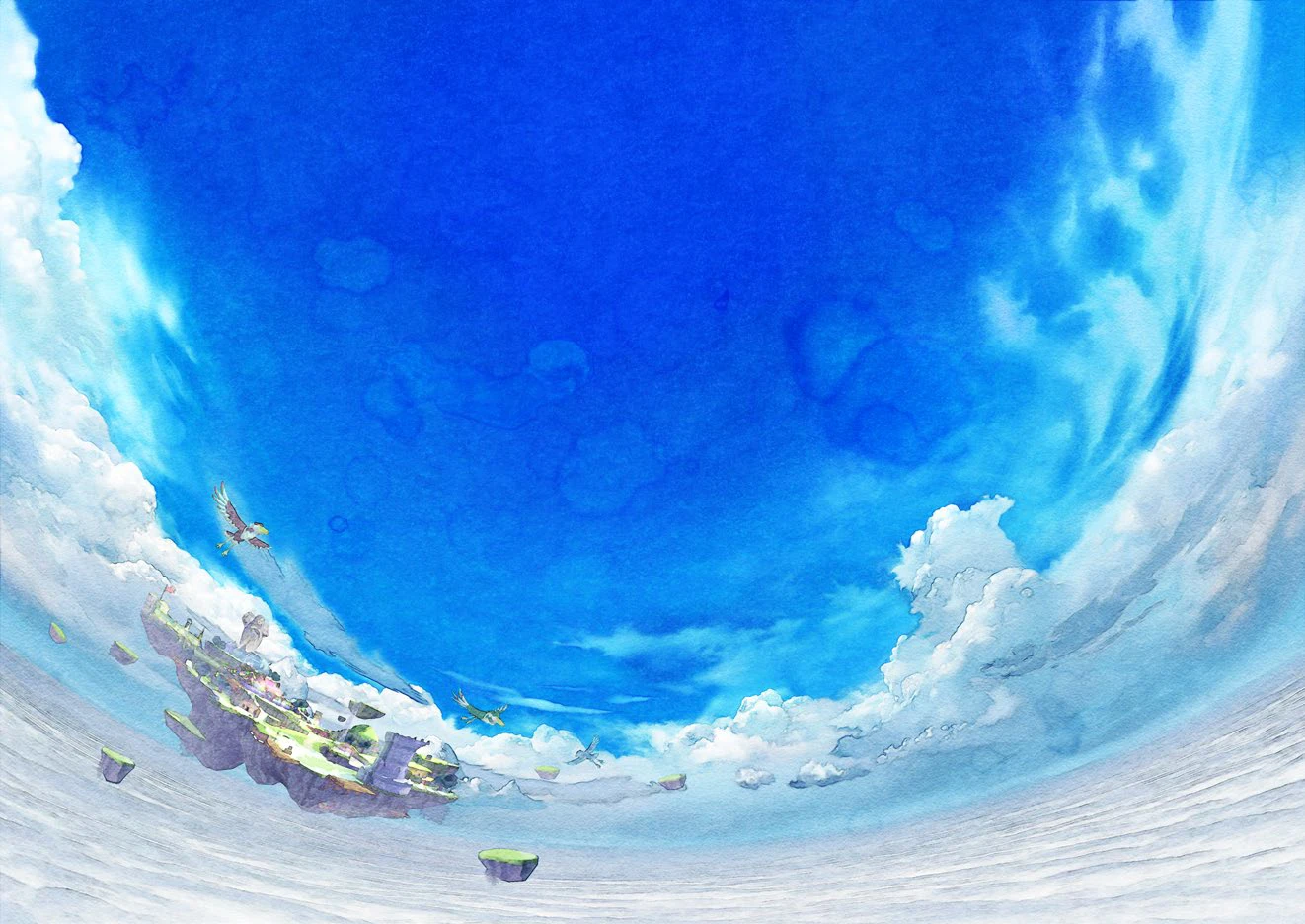
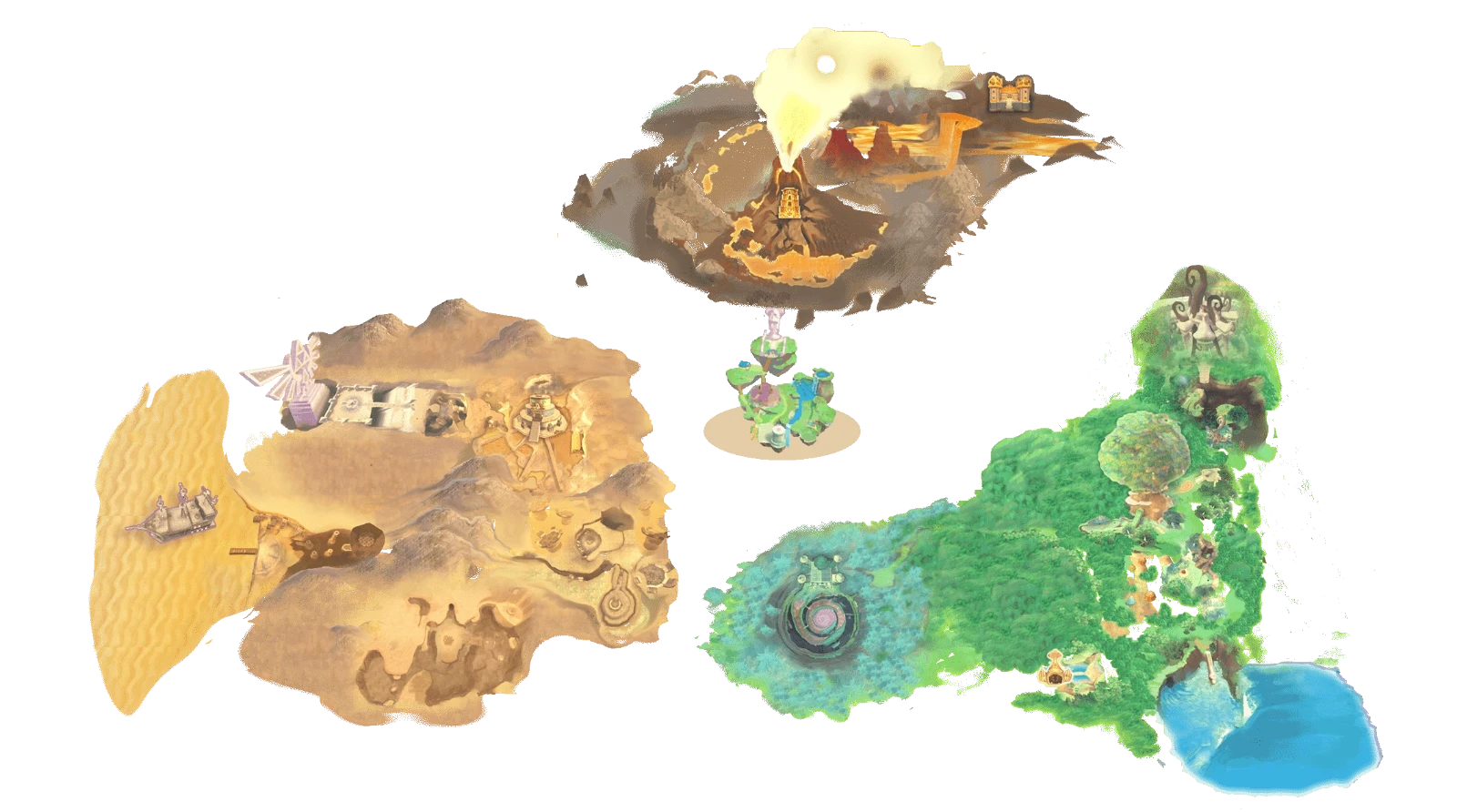
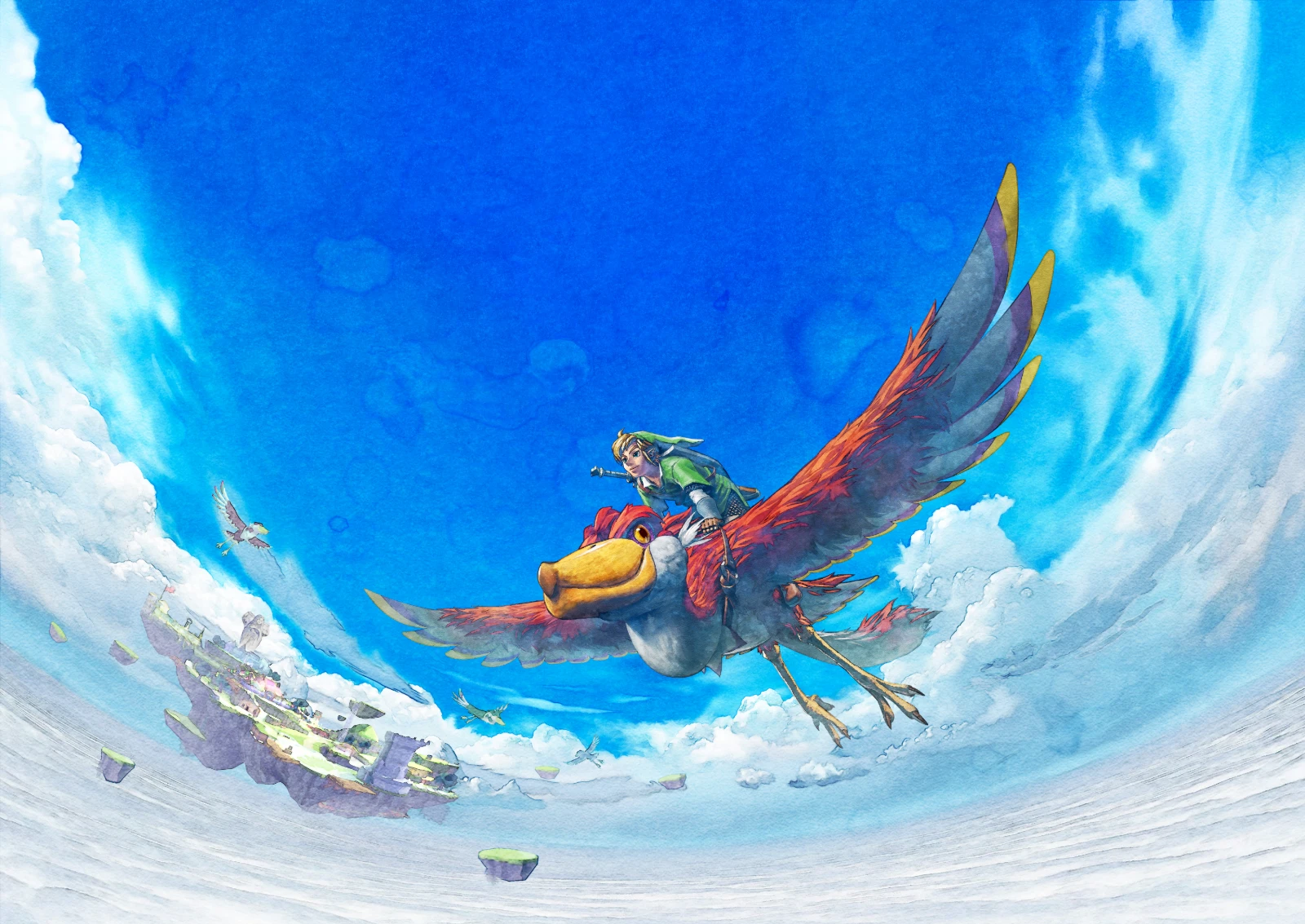
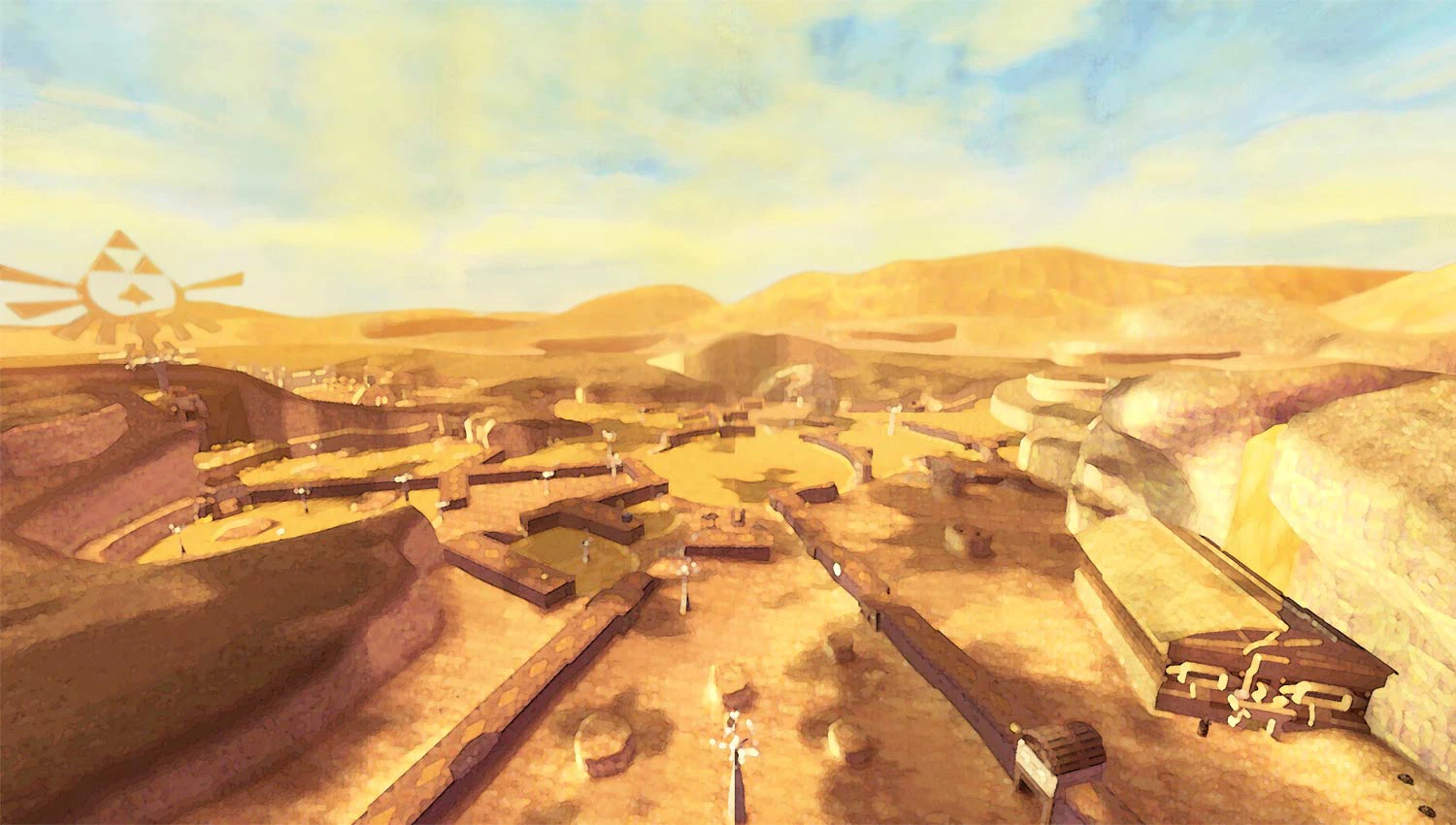
Skyward Sword goes back to before there was a Hyrule at all. Its people live on Skyloft, an island floating above a sea of clouds, and fly between the sky’s smaller islands on giant Loftwings. Below the clouds lies the Surface, a land nobody on Skyloft has ever seen, split into three regions: Faron Woods, Eldin Volcano and the Lanayru Desert, each watched over by a dragon of the same name. Somewhere below, in the Sealed Grounds, the demon Demise lies imprisoned.
The names stuck. Faron, Eldin and Lanayru had been the Light Spirits of Twilight Princess five years earlier, and they return as regions in Breath of the Wild and beyond. Nintendo’s timeline puts this game first, so its forest, volcano and desert are the ground the kingdom will be built on. At the end Zelda chooses to stay below the clouds, and the story of Hyrule can begin.
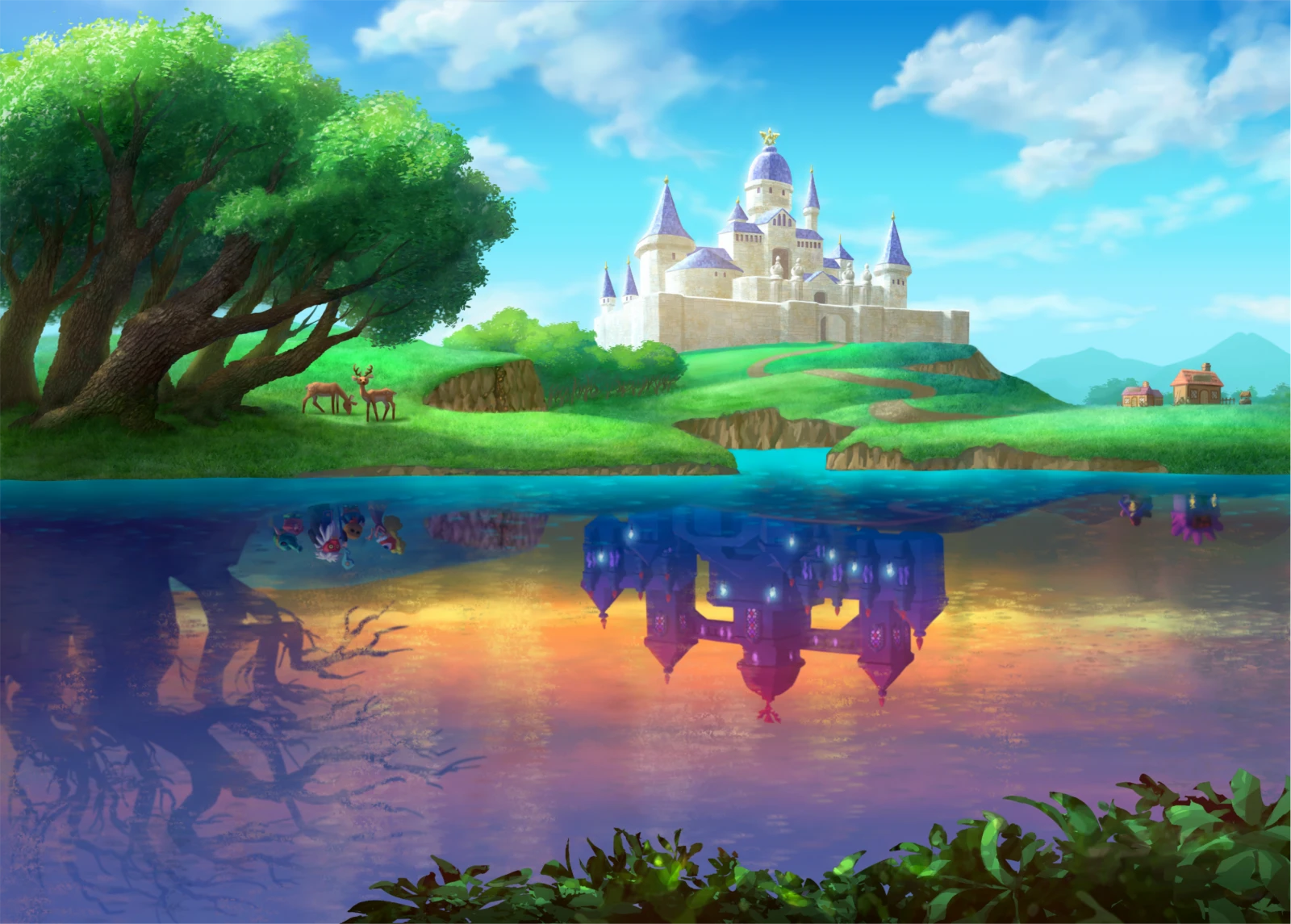
Twenty-two years on, Nintendo went back to A Link to the Past’s map and rebuilt it. Kakariko Village, the Lost Woods, the Eastern Palace and Death Mountain are all where you left them, now with height you can feel on a 3DS screen. Knowing the old map helps, but the game keeps catching veterans out, because Link can now merge into walls and shuffle along them as a living painting, which turns every cliff face and building into a possible path.
The Dark World’s part goes to Lorule, a crooked twin kingdom ruled by Princess Hilda and reached through fissures in Hyrule’s walls. It is visibly falling apart, broken into pieces by chasms. With items rented or bought from the merchant Ravio from early on, Lorule’s seven dungeons can be tackled in almost any order, which makes this one of the most open of the top-down Hyrules and a clear step towards Breath of the Wild.
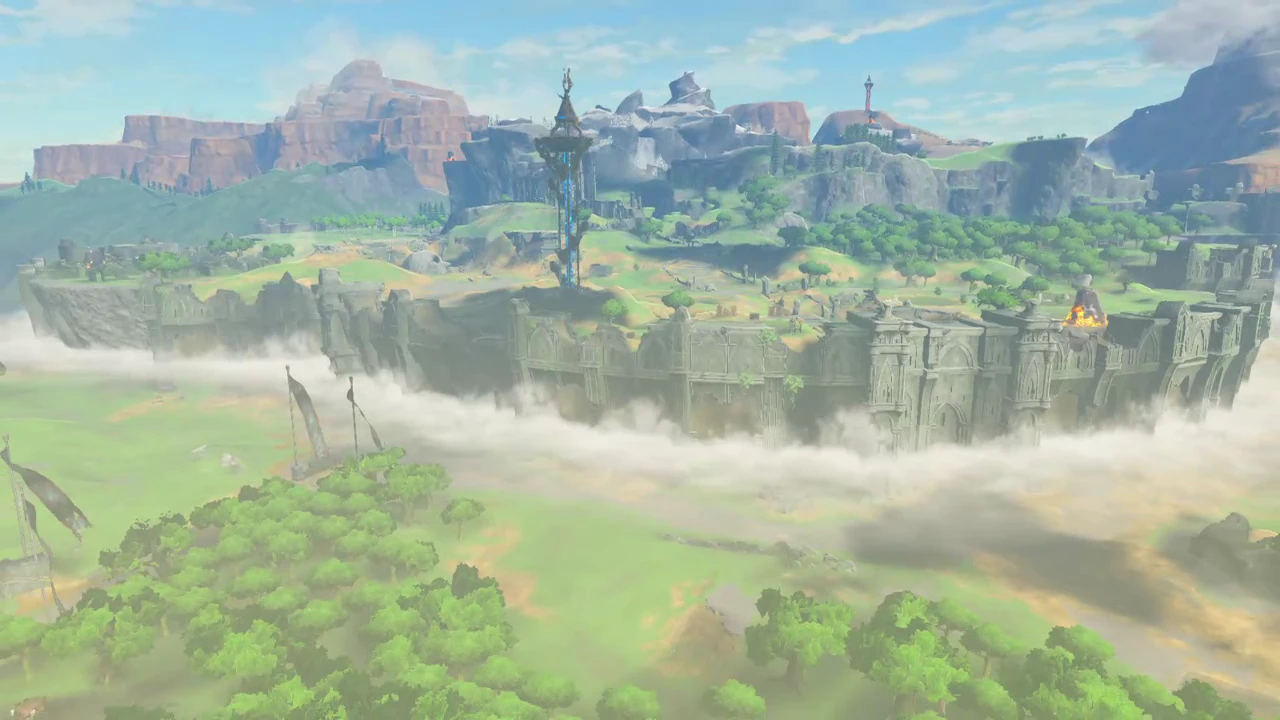
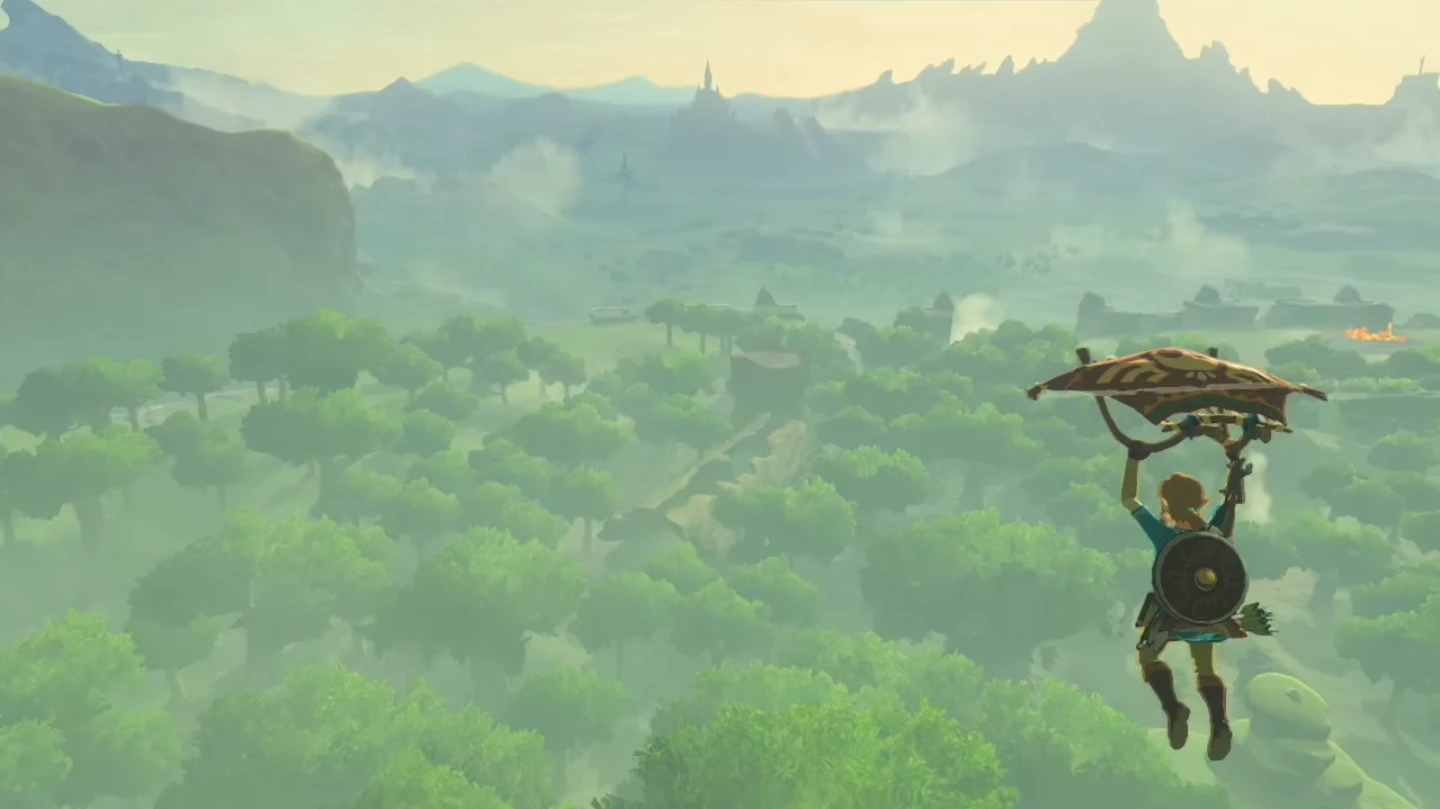
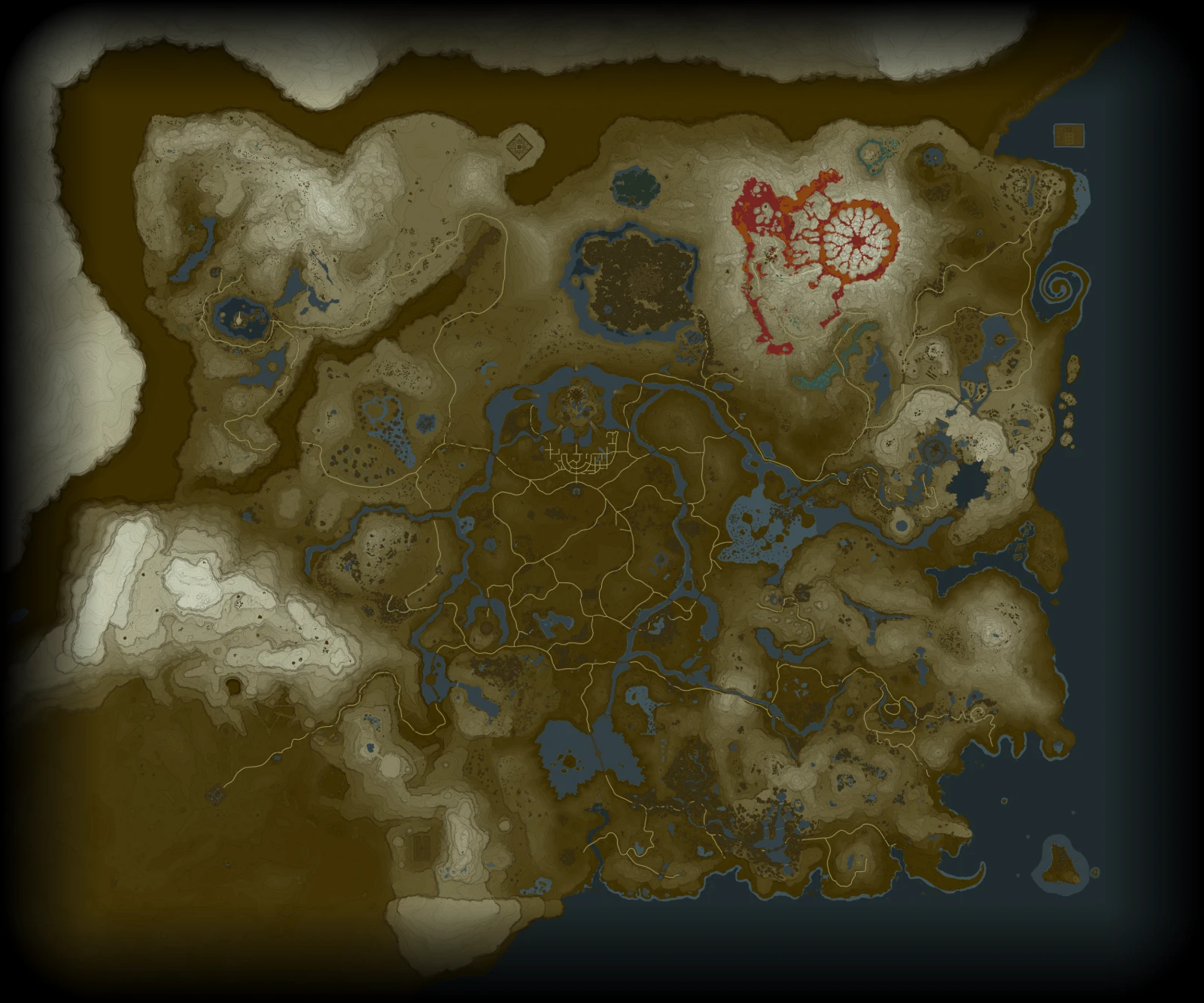
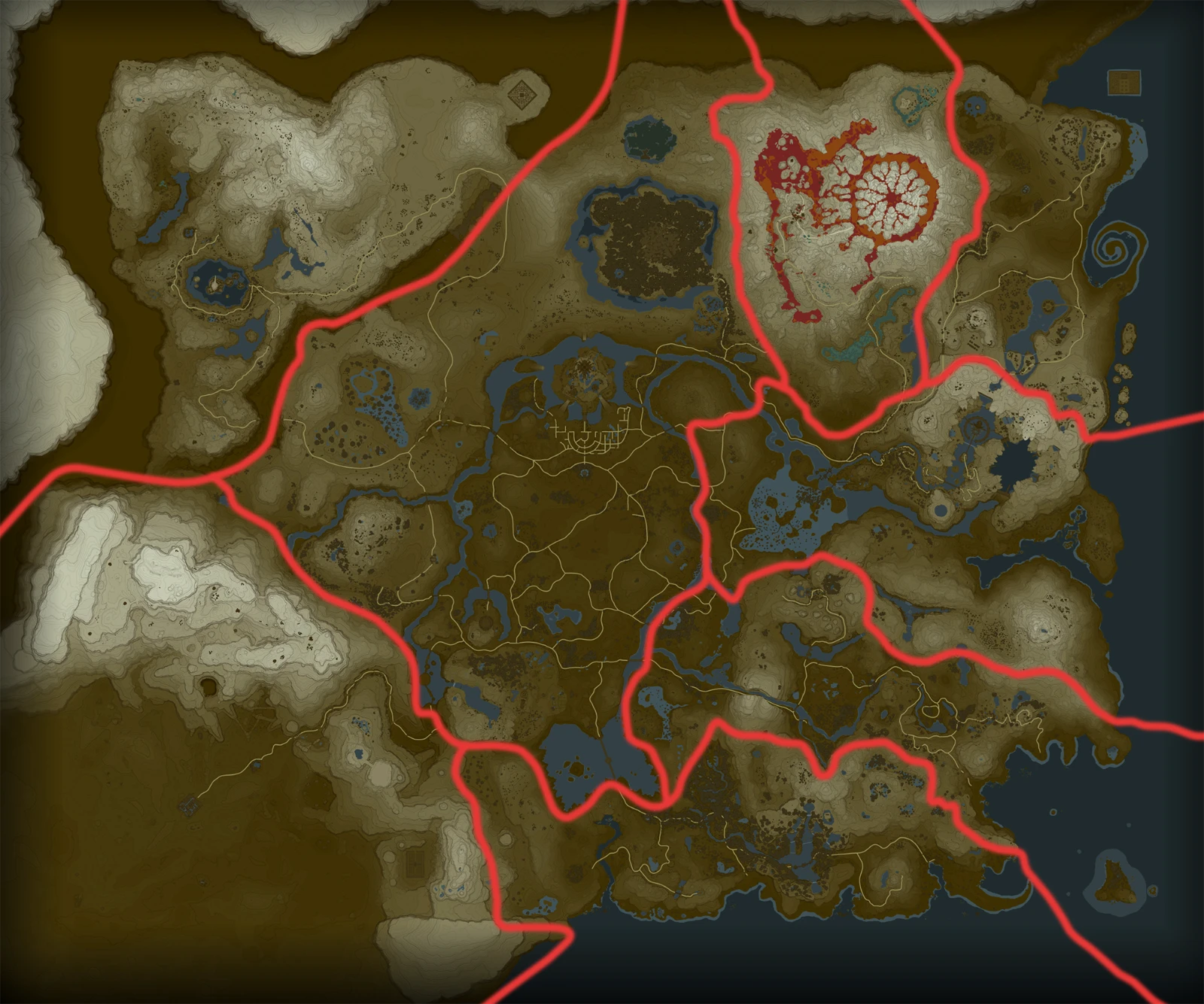
Breath of the Wild turns Hyrule into one enormous open country. Link wakes on the Great Plateau, a high, walled tableland where the game teaches its basics, and once he has a paraglider he can go anywhere he can see and climb almost anything he can reach. Director Hidemaro Fujibayashi said the team judged the world against a real city: “the easiest way for us to get a sense of scale was to think about the size of Kyoto”. GamesRadar reported that the first prototype put a castle at the centre of a Kyoto-sized map.
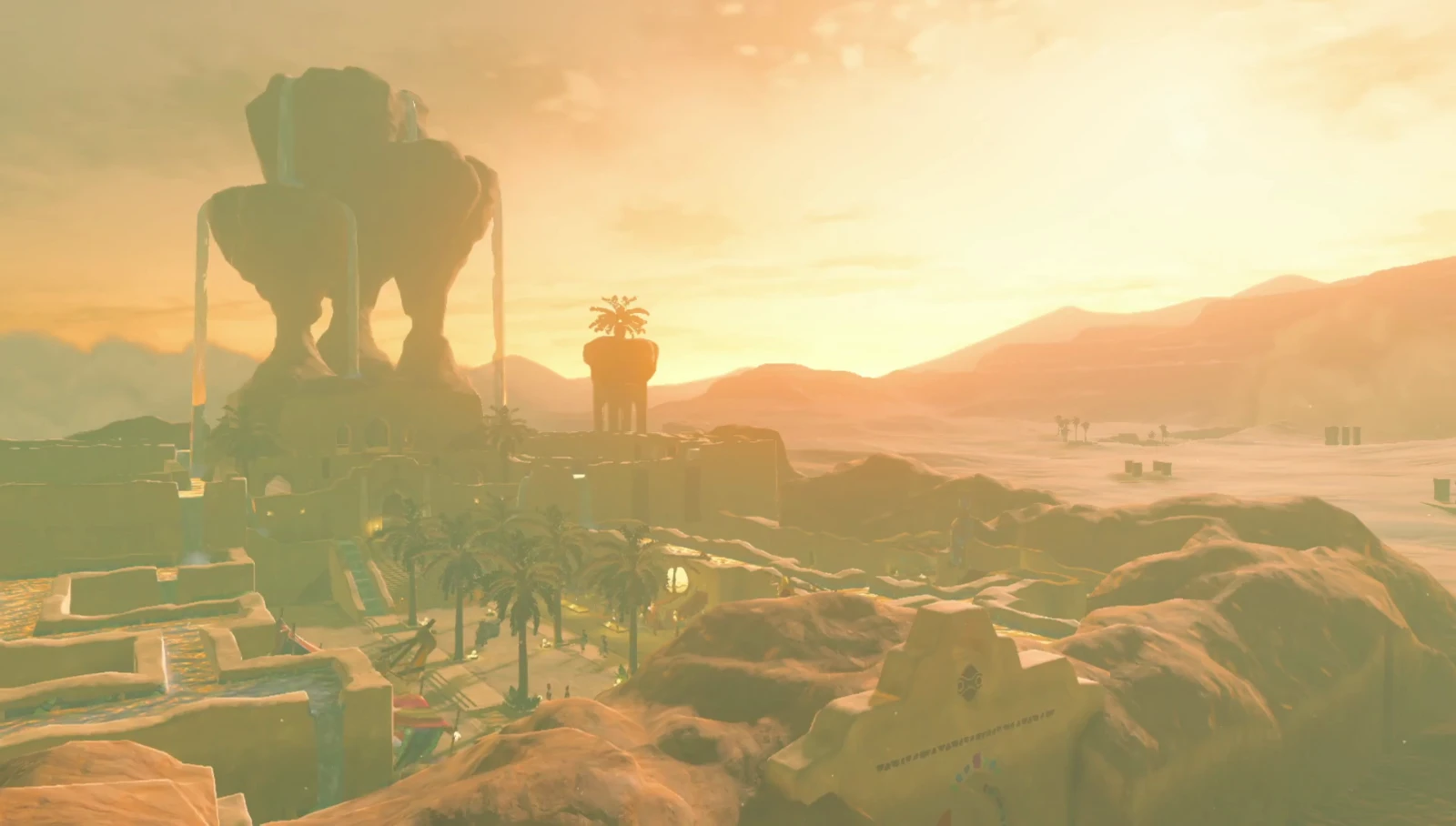
This is Hyrule a hundred years after the Great Calamity, overgrown and full of ruins. Fifteen Sheikah Towers fill in the map region by region, and 120 shrines dot the land between them. Old names turn up in new places: Death Mountain in Eldin, in the north-east; Kakariko Village in a valley in Necluda; Zora’s Domain in Lanayru; the Lost Woods and Korok Forest in the Great Hyrule Forest; Rito Village in Tabantha; and Gerudo Town in the far south-west. Hyrule Castle, wrapped in Calamity Ganon’s Malice, still stands at the centre.
What’s there
15 Sheikah Towers and 120 shrines
Four Divine Beasts, one for each of the great peoples
Hyrule Castle as the final dungeon, approachable from the start
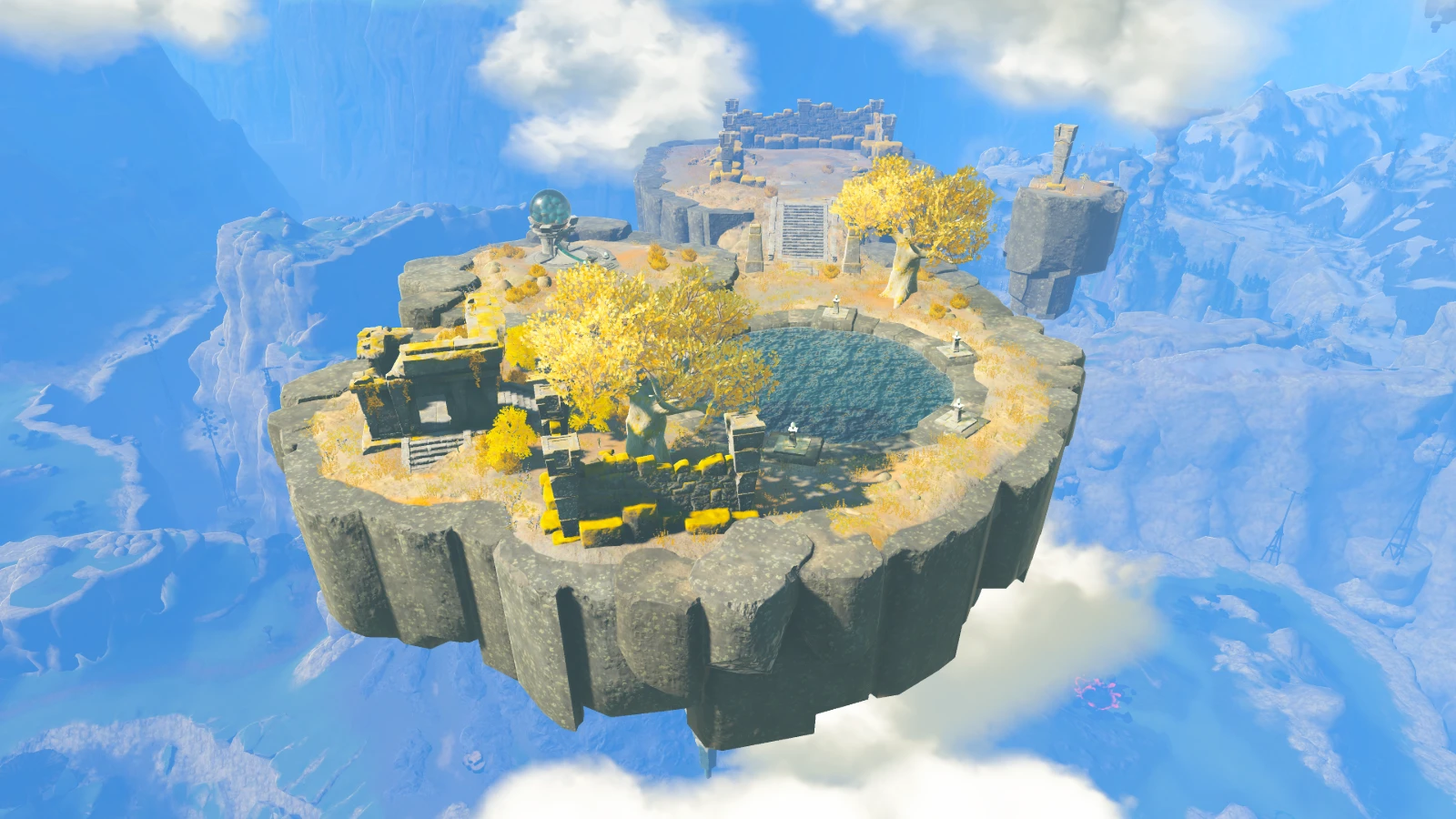
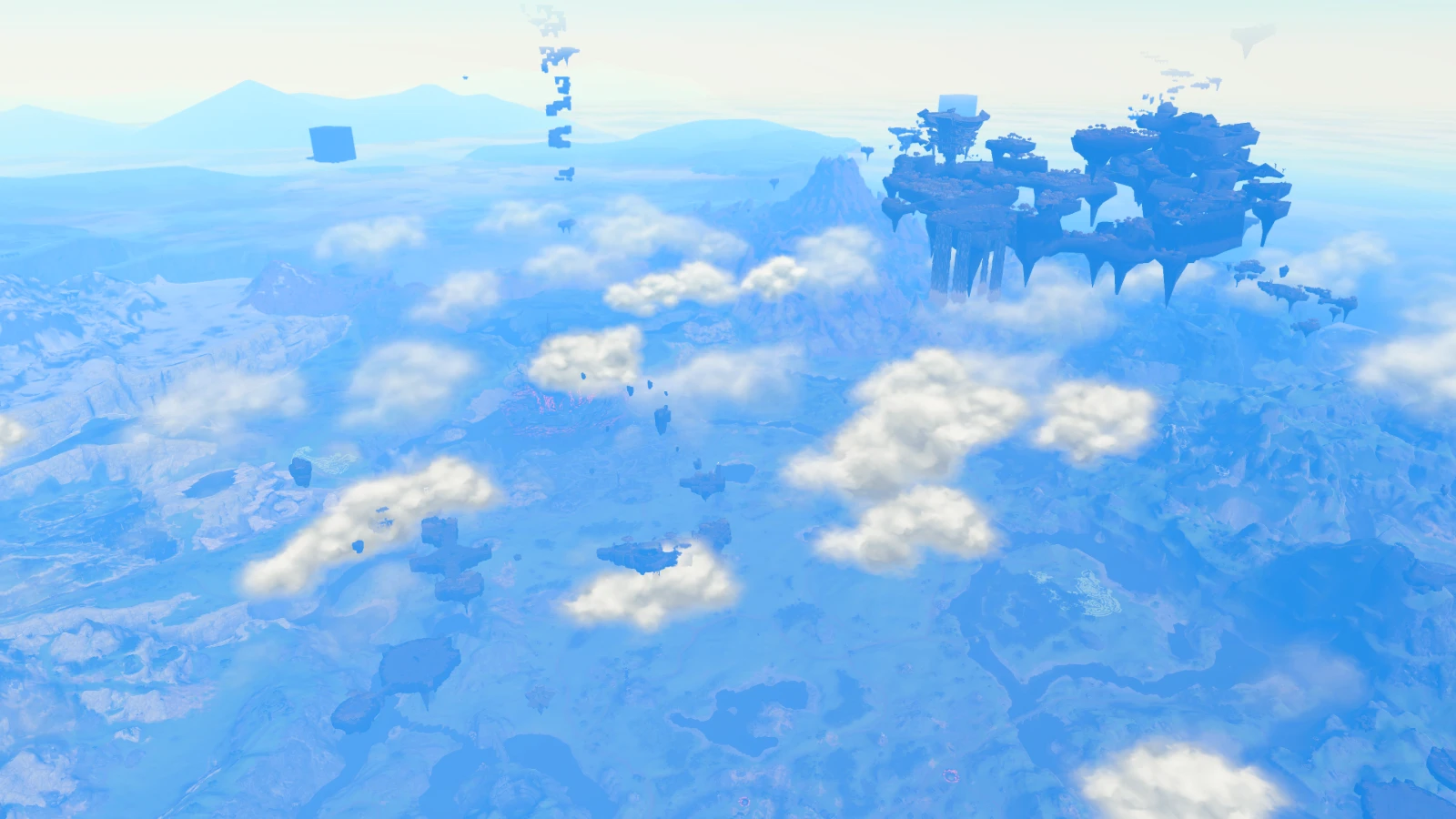
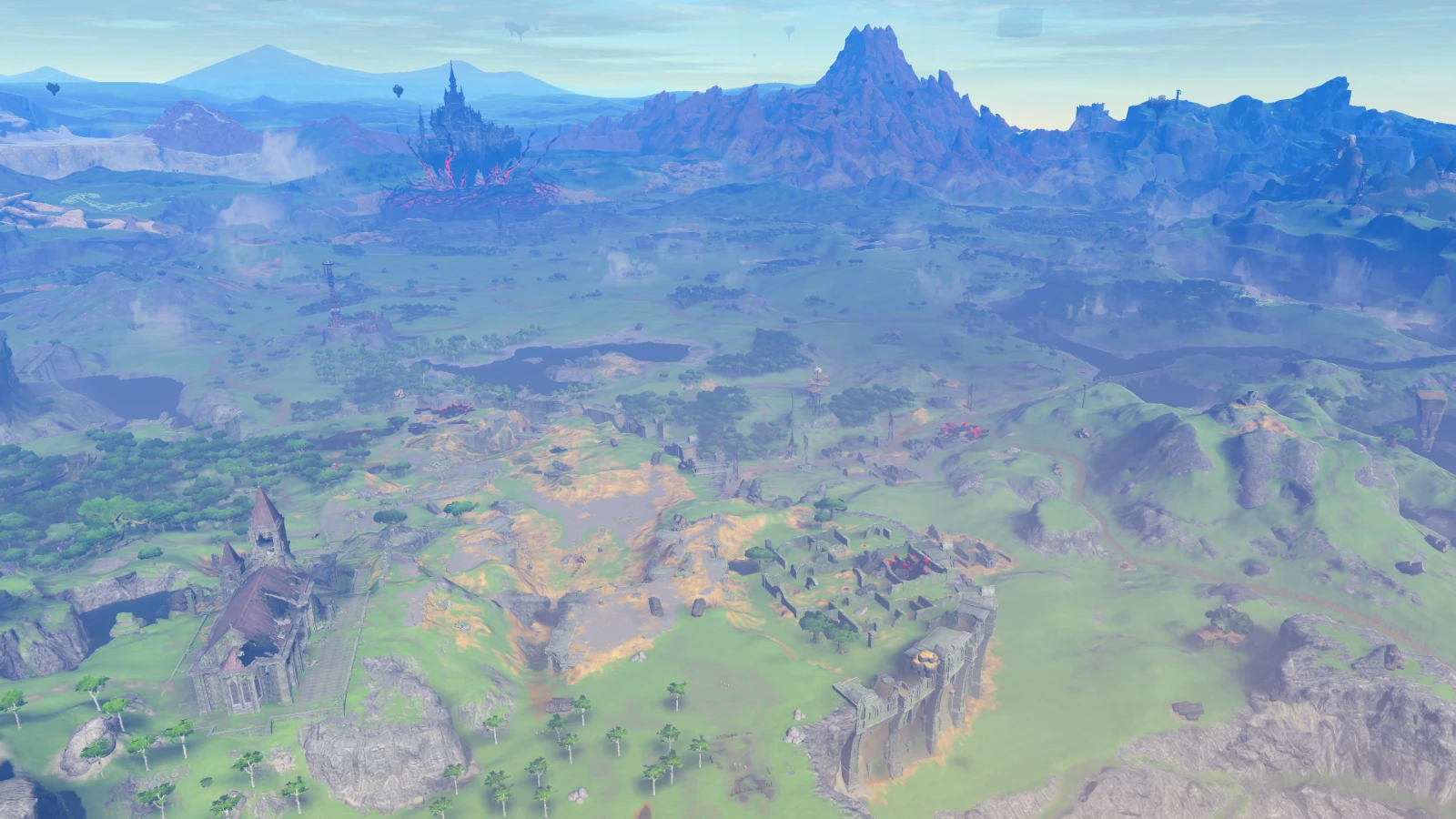
Tears of the Kingdom keeps Breath of the Wild’s Hyrule and stacks it three high. Above are the Sky Islands, drifting fragments of land scattered with ancient Zonai ruins; in the middle is the familiar surface, shaken up by a cataclysm called the Upheaval; and below, through chasms that have opened across the land, are the Depths, a pitch-dark underworld spreading beneath the kingdom. Fujibayashi told Nintendo’s Ask the Developer that the team built the world on the premise that you could travel from the surface to the skies seamlessly.
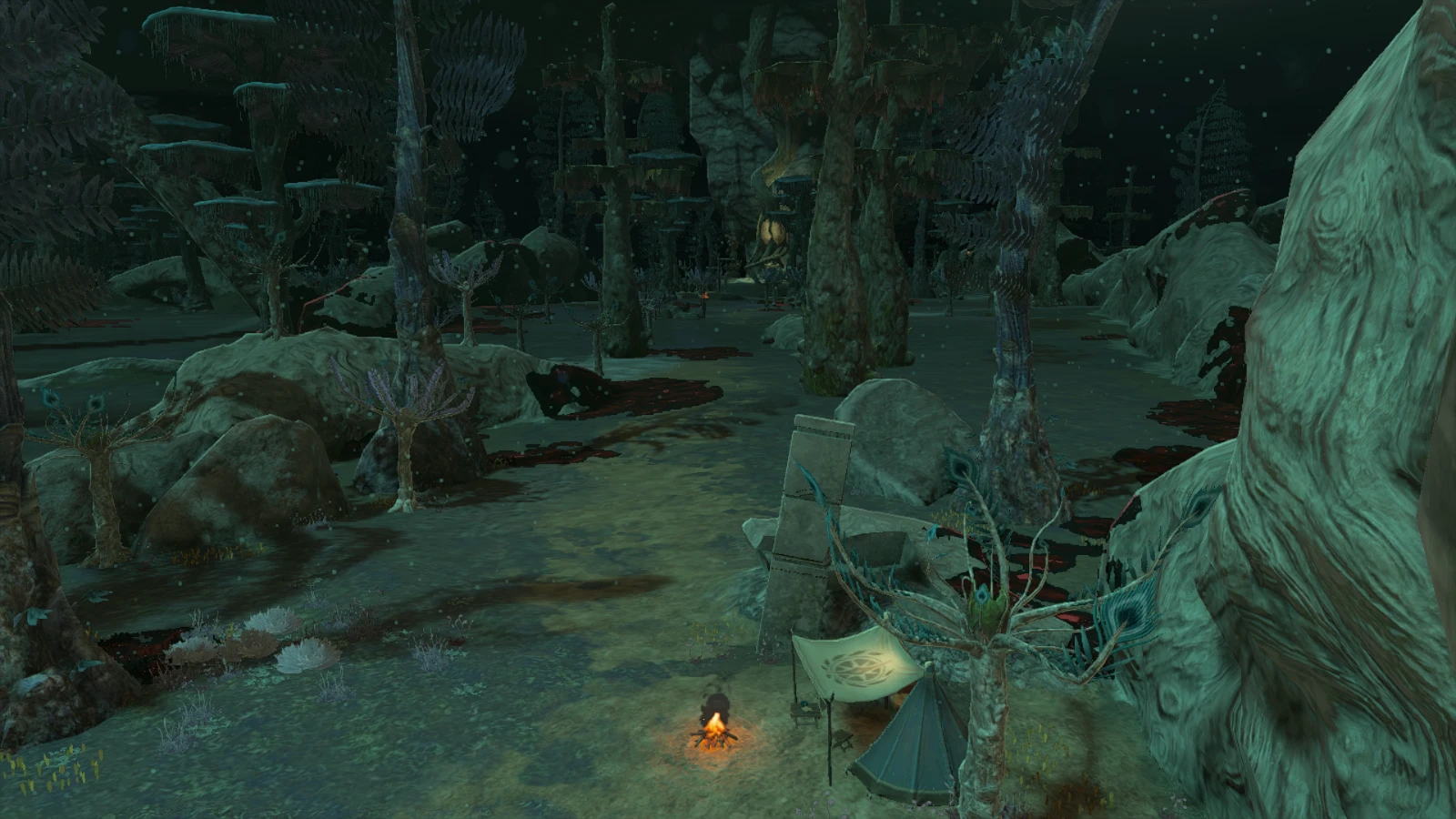
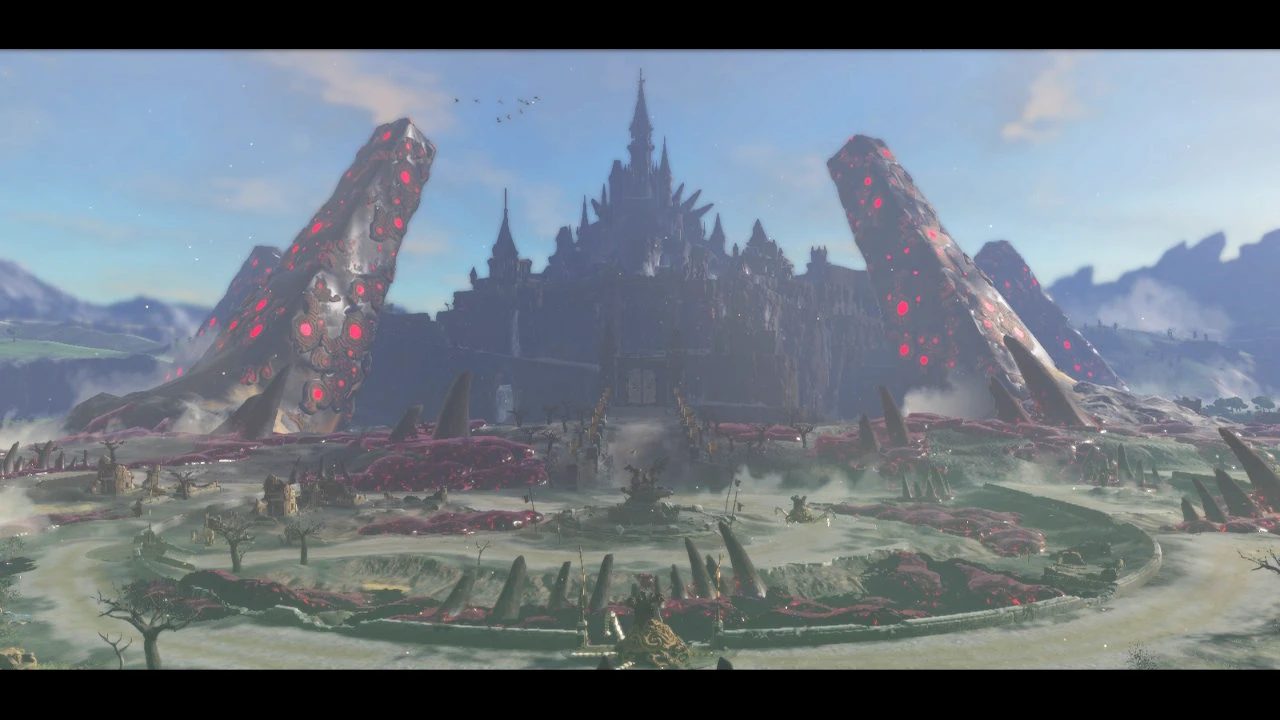
The Upheaval has torn Hyrule Castle off its foundations and left it hanging in the air, and a red substance called Gloom seeps from the chasms. The Depths hide the neatest trick of all: according to the developers, speaking to Famitsu, their landforms are the surface turned upside down, so a mountain above becomes a hollow below. Knowing the surface map, it turns out, is the best way to find your way in the dark.
What’s new
Sky Islands above, the Depths below
Chasms linking the surface to the Depths
Hyrule Castle lifted into the sky by the Upheaval
Lookout Landing, built just south of the castle ruins
Echoes of Wisdom brings back the top-down Hyrule, in the toy-box style of the 2019 Link’s Awakening, and makes it the biggest of its kind. Its makers told Nintendo’s Ask the Developer that the world was meant to be four times as large as Link’s Awakening’s island, and ended up double that. Zelda escapes the castle to Suthorn in the far south and ranges out to the Faron Wetlands, the desert of the Gerudo, Lake Hylia and Jabul Waters, the slopes of Eldin Volcano, the Eternal Forest and the snows of Hebra Mountain and Holy Mount Lanayru, with Hyrule Field and Castle Town in the middle.
Rifts are what make this map unusual. Tears open across the land and swallow pieces of it, people and all, into the Still World, a silent void where scraps of Hyrule hang frozen. Zelda steps through them to mend them, and the greatest of all takes the whole of Hyrule Castle Town. Nintendo has since placed the game on its official timeline, in the branch where the hero falls, after Tri Force Heroes and just before the 1986 original: one of the last Hyrules before the first.
Lands beyond Hyrule
Koholint, Termina, Holodrum, Labrynna, the World of the Ocean King, Hytopia…
Not every Zelda happens at home. Link washes up on Koholint Island in Link’s Awakening, falls into Termina in Majora’s Mask, is whisked from Hyrule Castle to Holodrum and Labrynna in Oracle of Seasons and Oracle of Ages, sails the World of the Ocean King in Phantom Hourglass and dresses up for Hytopia in Tri Force Heroes. Several of these lands are built from Hyrule’s spare parts: Termina has its own Romani Ranch with Malon lookalikes, and Koholint is full of cameos from the Mario games. Their maps, stories and people have a page of their own: Other Lands: Beyond Hyrule.
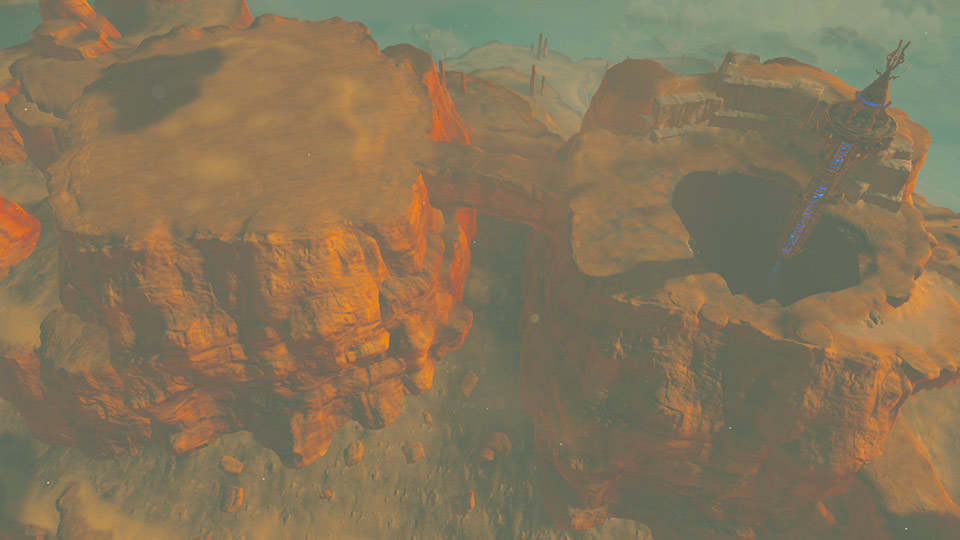
The surface of central Hyrule (Tears of the Kingdom).The Depths beneath central Hyrule (Tears of the Kingdom).
How Hyrule changes
The regions of Breath of the Wild’s Hyrule, from the art book Creating a Champion (map).
Nintendo has never published a single, fixed map of Hyrule, and it has never fully explained why the land keeps changing. The stories offer reasons of their own: most games are set centuries apart, the gods drown the kingdom in The Wind Waker, the Calamity leaves it in ruins in Breath of the Wild and the Upheaval tears it open in Tears of the Kingdom. Beyond that, fans have their theories, but the honest answer is that each game redraws Hyrule to suit itself, and half the fun is spotting what survives.
Some things nearly always do. Watch for these:
The castle is the centre. From A Link to the Past to Breath of the Wild, Hyrule Castle usually stands at or near the middle of the map, with everything else arranged around it.
Death Mountain is the north. Wikipedia notes that it lies in the north in many games but in the south in Zelda II; Breath of the Wild puts it in the north-east.
The desert is the west. The desert lies to the west or south-west in A Link to the Past, Ocarina of Time and Breath of the Wild.
Region names travel. Faron, Eldin and Lanayru began as Twilight Princess’s Light Spirits, became Skyward Sword’s dragons and Surface regions, and are regions again in Breath of the Wild and Tears of the Kingdom. Echoes of Wisdom keeps Eldin Volcano, the Faron Wetlands and Holy Mount Lanayru.
Lake Hylia drifts. It is in the south-east in A Link to the Past, south-west of Hyrule Field in Ocarina of Time and in Lanayru Province in Twilight Princess, and Wikipedia calls it the largest freshwater lake in Hyrule wherever it goes.
Faron, one of the four Light Spirits (Twilight Princess HD artwork).Eldin, the Light Spirit of the mountain province (Twilight Princess HD artwork).Lanayru, whose name lives on in later games’ regions (Twilight Princess HD render).
The recurring places
Eleven places come back again and again. The ones with pages of their own get a short card and a link; Castle Town, Hyrule Field, Lon Lon Ranch and Rito Village are covered in full here.
First explored in Ocarina of Time (1998) · The market at the castle gates
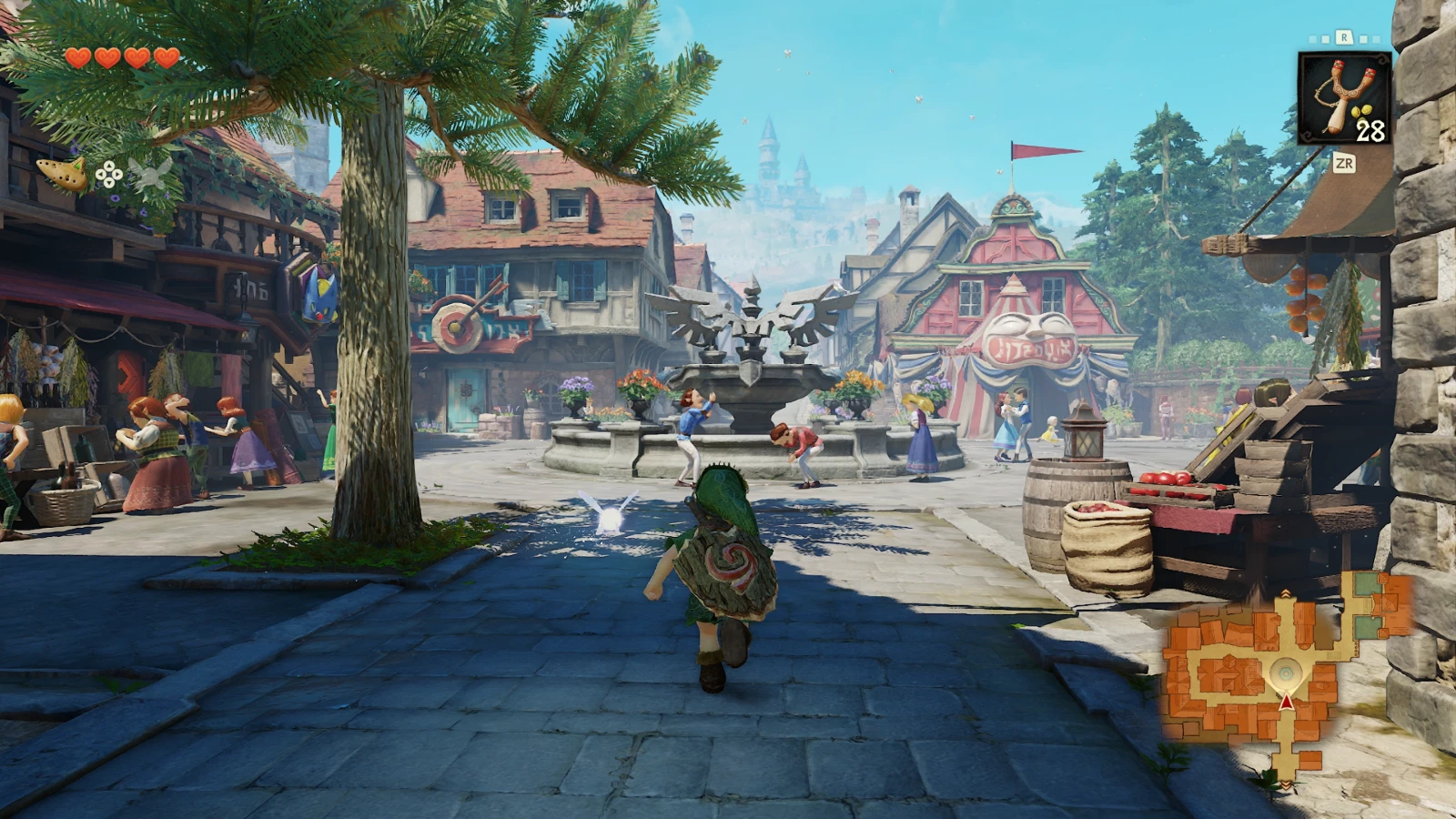
Every capital needs a market, and Hyrule’s sits at the castle gates. Ocarina of Time was the first game to let Link explore it: a walled town reached by drawbridge from Hyrule Field, with a fountain in the main square, shops and mini-games, a Bombchu shop in the back alley and the road to the castle at the far end. Seven years later it is a ruin where only ReDeads walk, and its people have fled to Kakariko. The 2026 Nintendo Switch 2 remake finally lets you walk around it in full 3D, instead of past fixed backdrops.
The Minish Cap has Hyrule Town, a bustling place of shops that hosts the Picori Festival. Twilight Princess builds the biggest version yet, split into South, West and East Roads around a Central Square, with Telma’s bar as the secret meeting place of the Resistance. Spirit Tracks gives New Hyrule a walled, rectangular Castle Town. Breath of the Wild has only the Hyrule Castle Town Ruins below the castle, thick with Malice and Guardians; in Tears of the Kingdom search teams camp among them, with Lookout Landing just to the south. Echoes of Wisdom brings the town back to life, and then a vast rift swallows the lot.
Through the games
Ocarina of Time: the Market, lively in childhood and ruined seven years on
The Minish Cap: Hyrule Town and the Picori Festival
Twilight Princess: Telma’s bar and the Resistance
Echoes of Wisdom: swallowed whole by a rift
Hyrule Field
First named in Ocarina of Time (1998) · The plain that ties the kingdom together
Hyrule Field is the open country between everything else, and in Ocarina of Time it is the hub of the whole game: a rolling plain with Lon Lon Ranch in the middle and every region branching off its edges, built to make a small world feel vast. Once Link has Epona, crossing it becomes a pleasure. Later games treat it as a place in its own right. The Minish Cap has a North and a South Hyrule Field, with Link’s house in the south.
Twilight Princess spreads its field across three provinces, Faron, Eldin and Lanayru, with Castle Town in the middle and the Bridge of Eldin spanning a gorge; Zelda Dungeon describes the Eldin stretch as being as wide as the province itself. The game ends with a horseback chase and a sword duel on its grass. Breath of the Wild opens the plain up completely, scattered with ruins and Guardians around the castle, and ends with Link on horseback against Dark Beast Ganon in the field. Hyrule Warriors: Age of Calamity opens its war with the Battle of Hyrule Field, and Echoes of Wisdom has a Hyrule Field around Castle Town too.
Through the games
Ocarina of Time: the hub, with Lon Lon Ranch at its centre
Twilight Princess: three fields in three provinces
Breath of the Wild: the final battle against Dark Beast Ganon
Age of Calamity: the first battle of the war
The Market in the Nintendo 64 Ocarina of Time.Hyrule Castle Town Ruins in Breath of the Wild.
First appearance: A Link to the Past (1991) · Village of the Sheikah
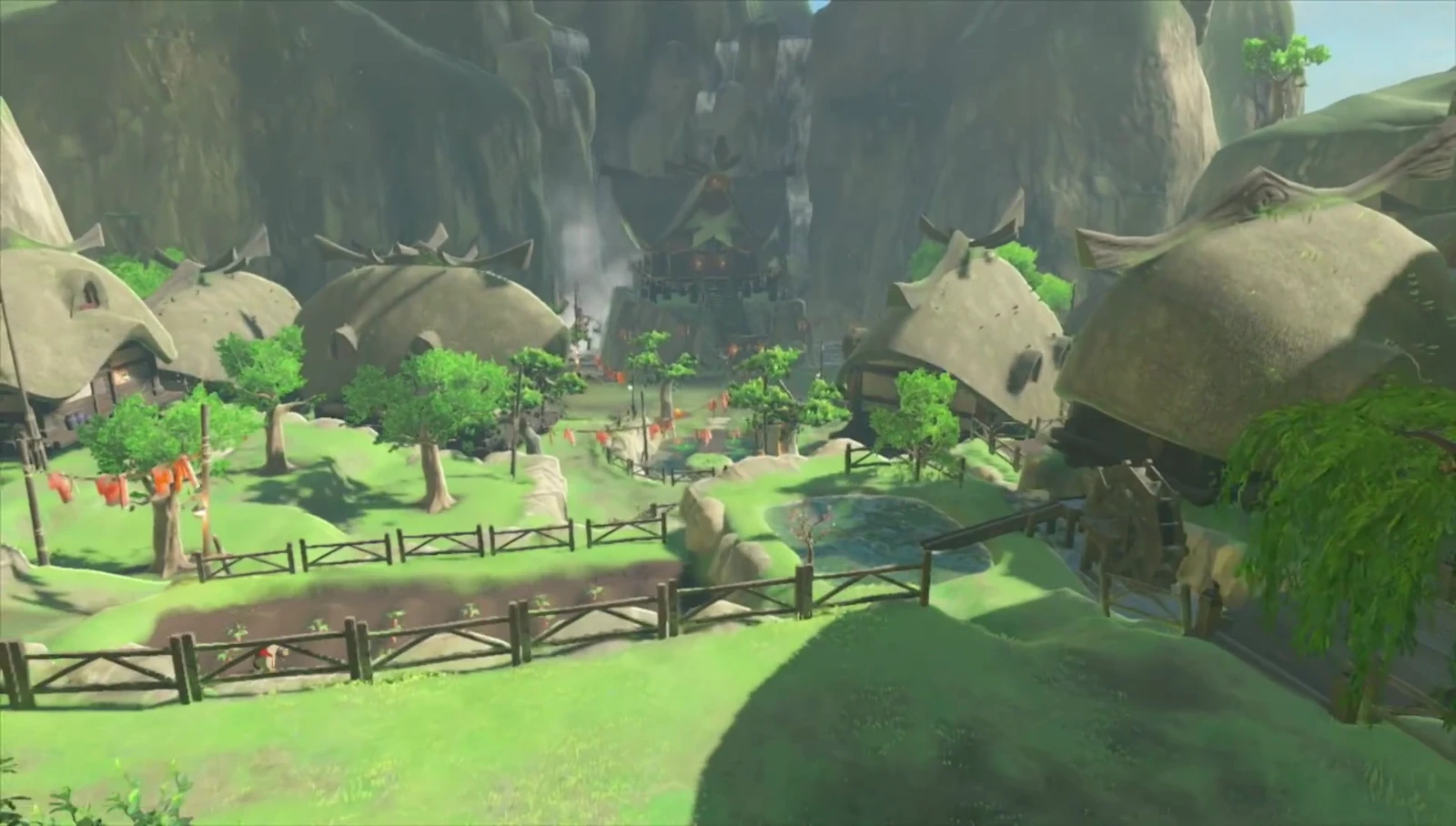
A small village with a big history, traditionally tied to the Sheikah. Ocarina of Time says the Sheikah founded it and Impa opened it to everyone; Breath of the Wild makes it a Sheikah village again, tucked into a valley in Necluda with Impa as its elder, and by Tears of the Kingdom her granddaughter Paya is in charge. Its graveyard and haunted well hide some of the series’ darkest secrets, and its theme has been rearranged in game after game since 1991. Read the full Kakariko Village page.
First appearance: The Legend of Zelda (1986) · Home of the Gorons
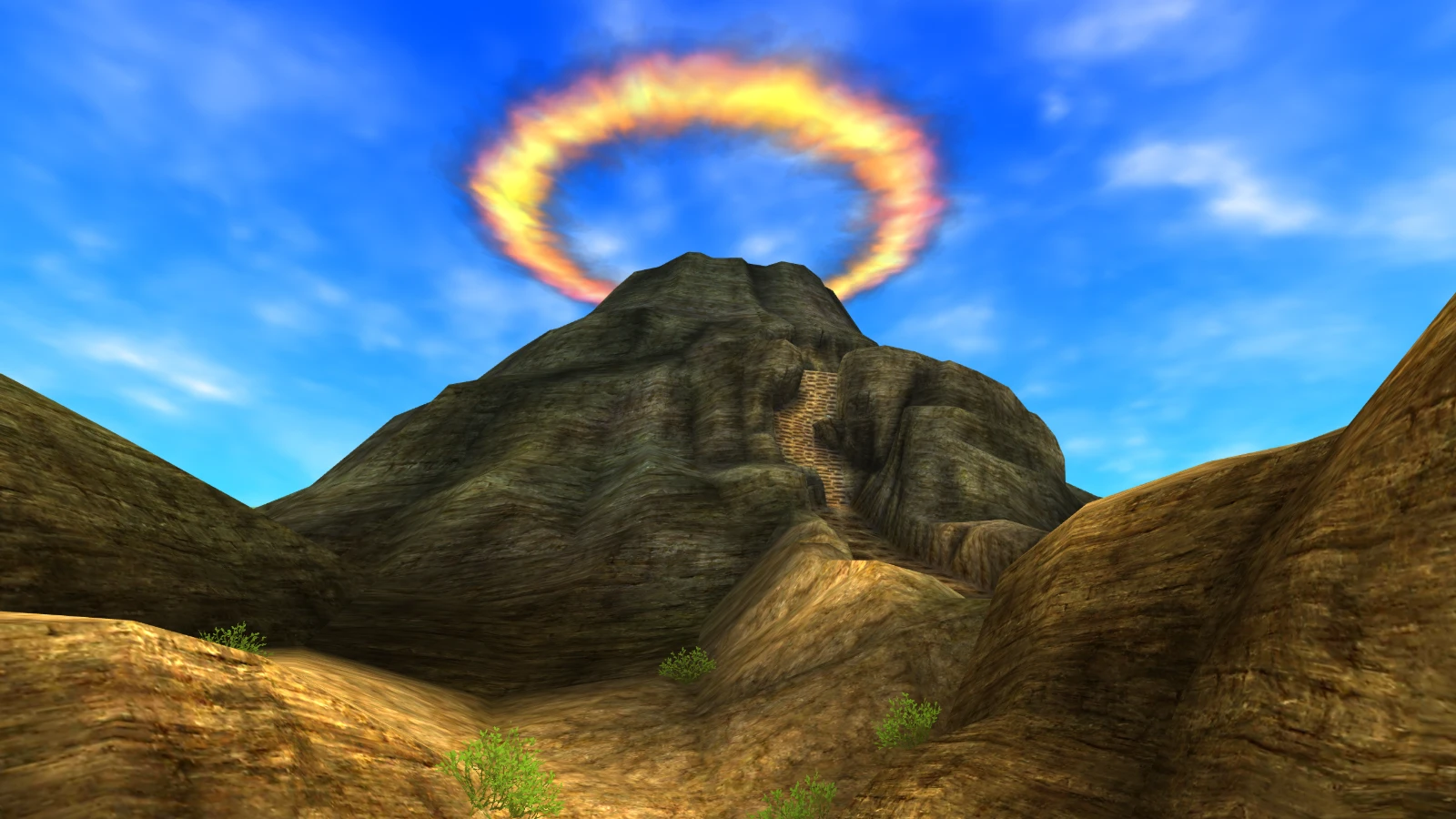
The mountain on Hyrule’s northern edge, first the site of Ganon’s lair and then, from Ocarina of Time onwards, a volcano full of Gorons. Its dungeons run from the Tower of Hera to the Fire Temple and the Divine Beast Vah Rudania, and Goron City, carved into its slopes, is home to Darunia in Ocarina of Time and to Bludo and Yunobo in Breath of the Wild. Spectacle Rock, on its slopes in the 2D games, hid the entrance to the very first final dungeon. Read the full Death Mountain page.
First appearance: The Legend of Zelda (1986) · With Kokiri Forest and Korok Forest
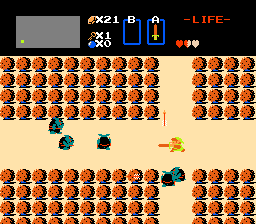
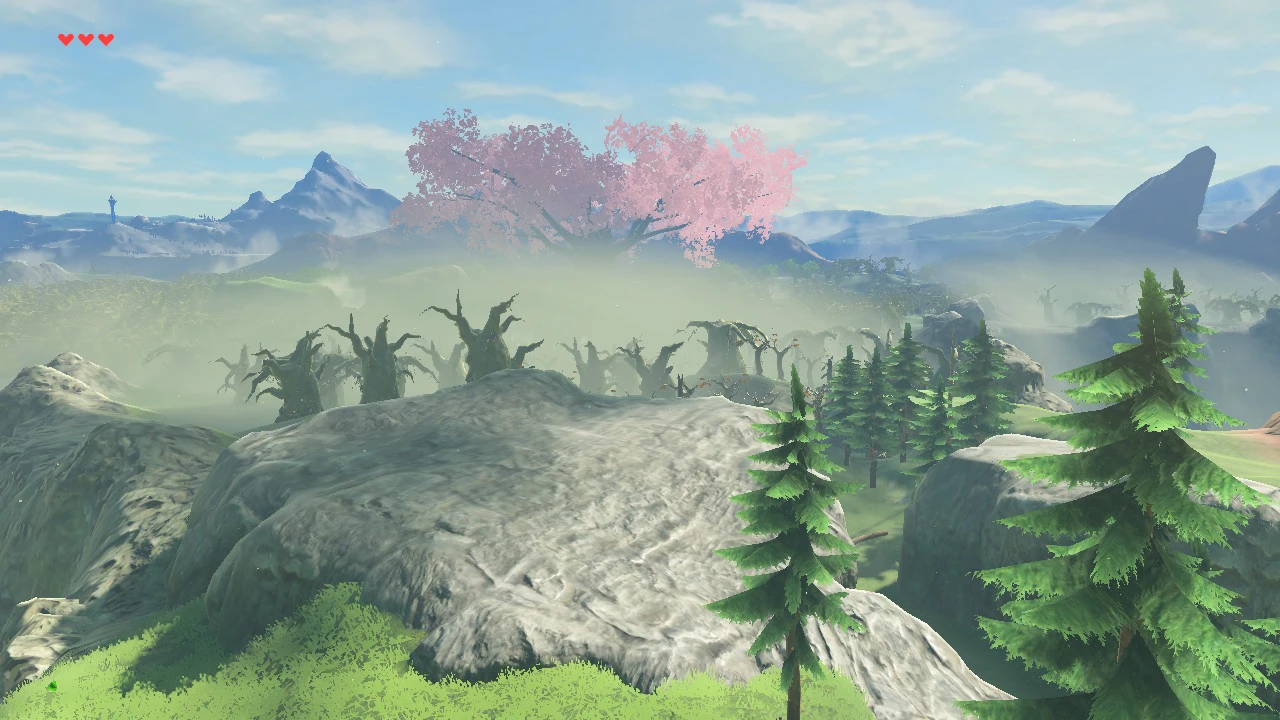
The maze forest where a wrong turn sends you back to the start, and where lost travellers are said to become Stalfos, or Deku Scrubs in Four Swords Adventures. It often guards the Master Sword, and its children, first the Kokiri and later the Koroks, are watched over by the Great Deku Tree. Saria’s Song is its signature tune. Read the full Lost Woods page.
Zora’s Domain since Ocarina of Time (1998) · Lake Hylia since A Link to the Past (1991)
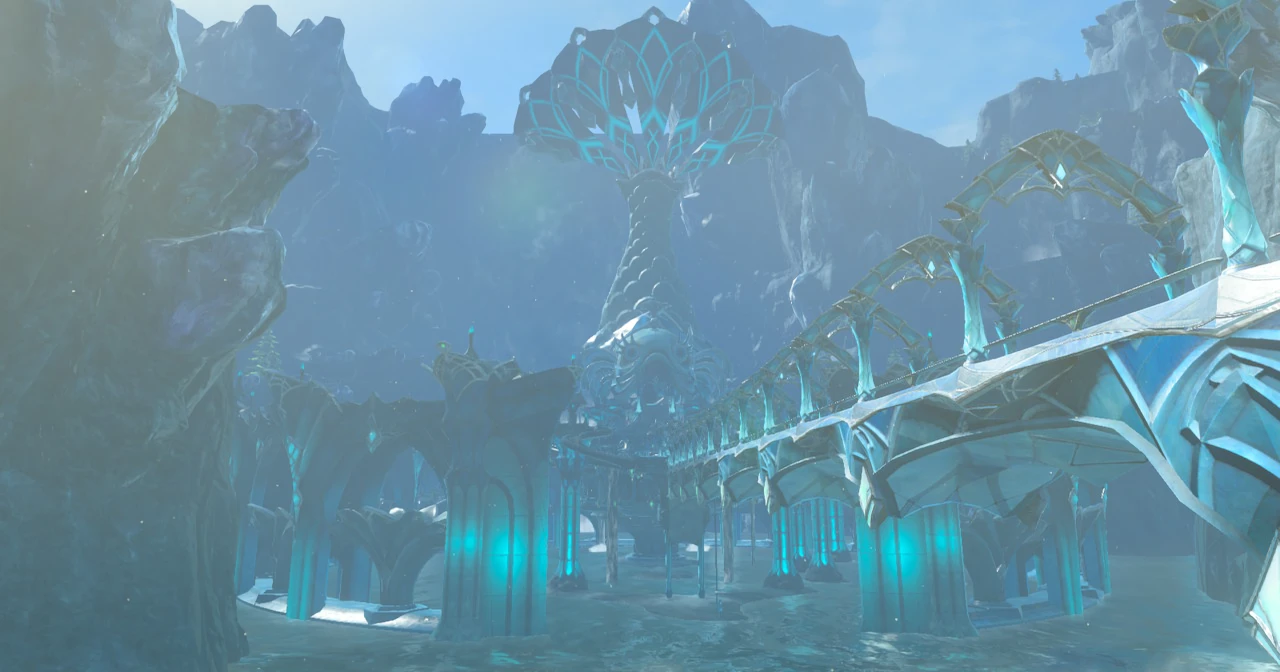
The Zoras’ waterfall kingdom and the great lake its rivers feed. Zora’s Domain arrived in Ocarina of Time and became a gleaming palace of luminous stone in Breath of the Wild. Lake Hylia, named after the goddess according to the Hyrule Encyclopedia, has hidden the Water Temple, the Lakebed Temple and the House of Gales beneath or beside its waters. Between them they have been frozen, drained or fouled by sludge at one time or another. Read the full Zora’s Domain page.
First appearance: Ocarina of Time (1998) · Home of Epona and Lon Lon Milk
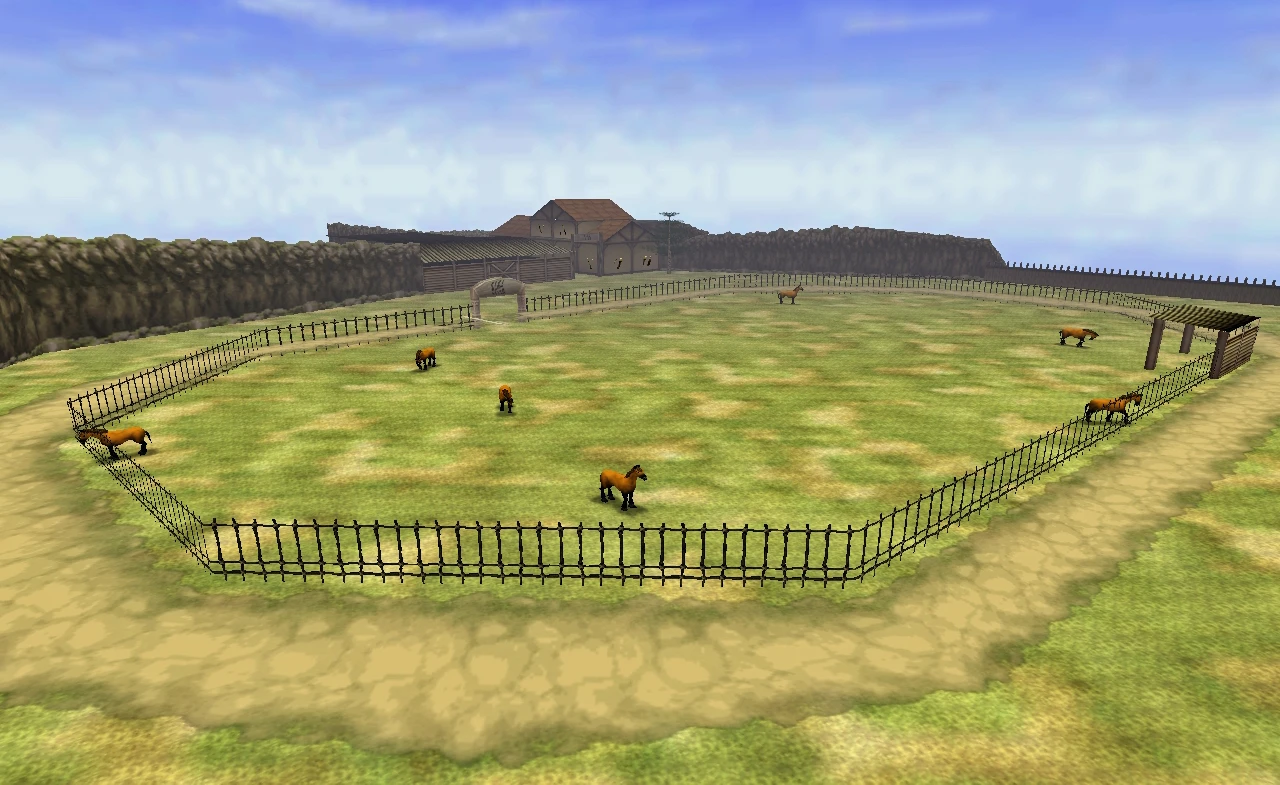
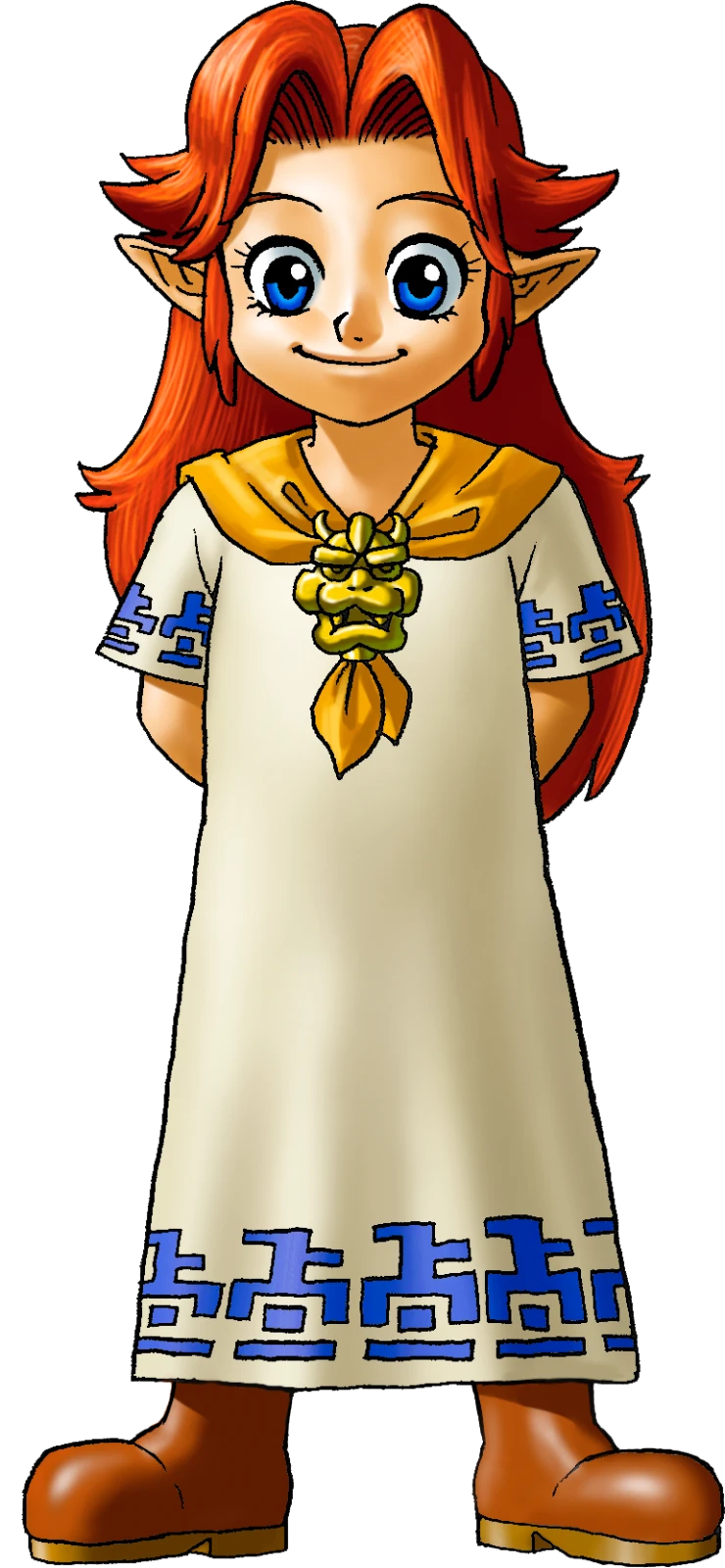
The horse ranch in the middle of Ocarina of Time’s Hyrule Field is where Link meets Epona. It is run by the dozy Talon and his daughter Malon, who sings to the horses and teaches Link Epona’s Song, with the grumpy farmhand Ingo doing most of the work, and its milk is sold in town. Lon Lon Milk refills Link’s hearts by the bottle. Seven years on, Ingo is running the place for Ganondorf, hoping to win the tyrant’s favour, and Link has to beat him in a race to claim Epona, then leap her over the wall to get away.
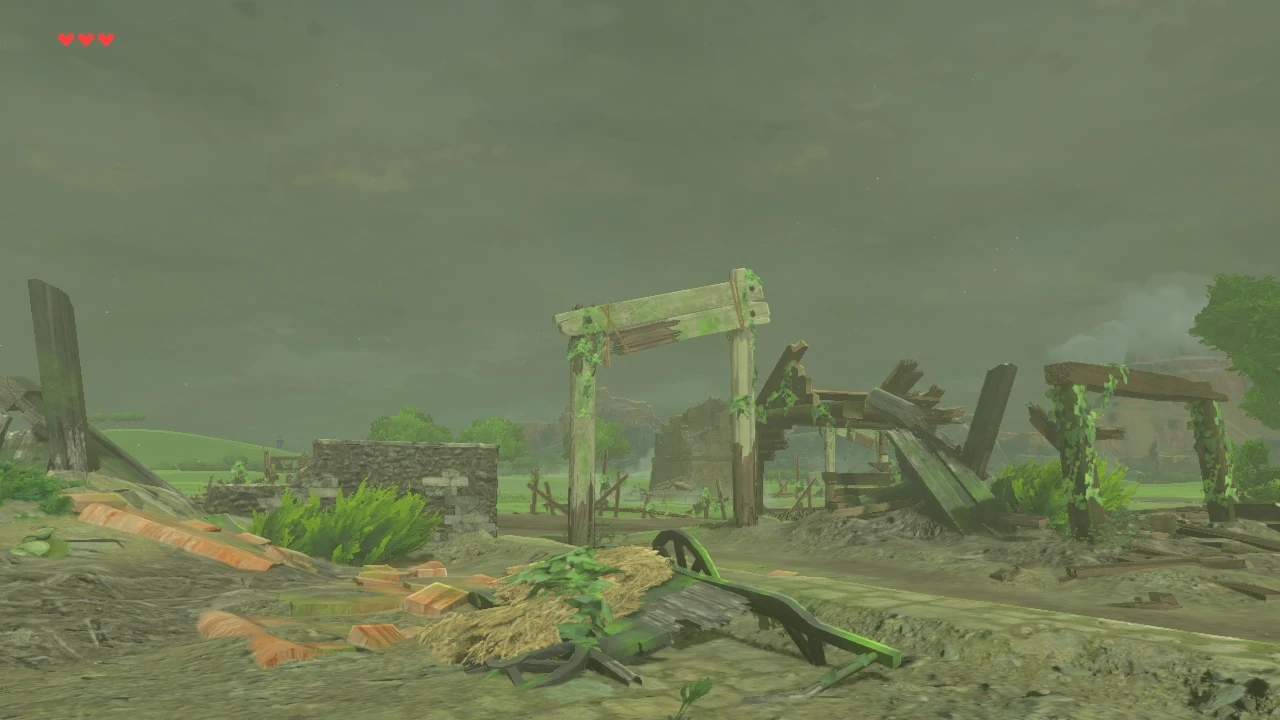
Malon has been back several times since, in Oracle of Seasons, Four Swords Adventures and The Minish Cap, whose Hyrule has its own Lon Lon Ranch on the way to Lake Hylia. Termina’s Romani Ranch in Majora’s Mask borrows the idea, Malon lookalikes and all. Breath of the Wild has a set of Ranch Ruins in Hyrule Field whose overgrown track follows the same shape as Lon Lon’s, but Zelda Dungeon’s wiki identifies them as the remains of Mabe Ranch.
Who’s there
Talon, the sleepy owner
Malon, his daughter, who teaches Link Epona’s Song
Ingo, the farmhand who takes over in the adult era
Epona, a foal in Link’s childhood
Malon (Ocarina of Time artwork).The Ranch Ruins in Breath of the Wild.
Rito Village and Hebra
Rito since The Wind Waker (2002) · Rito Village since 2017
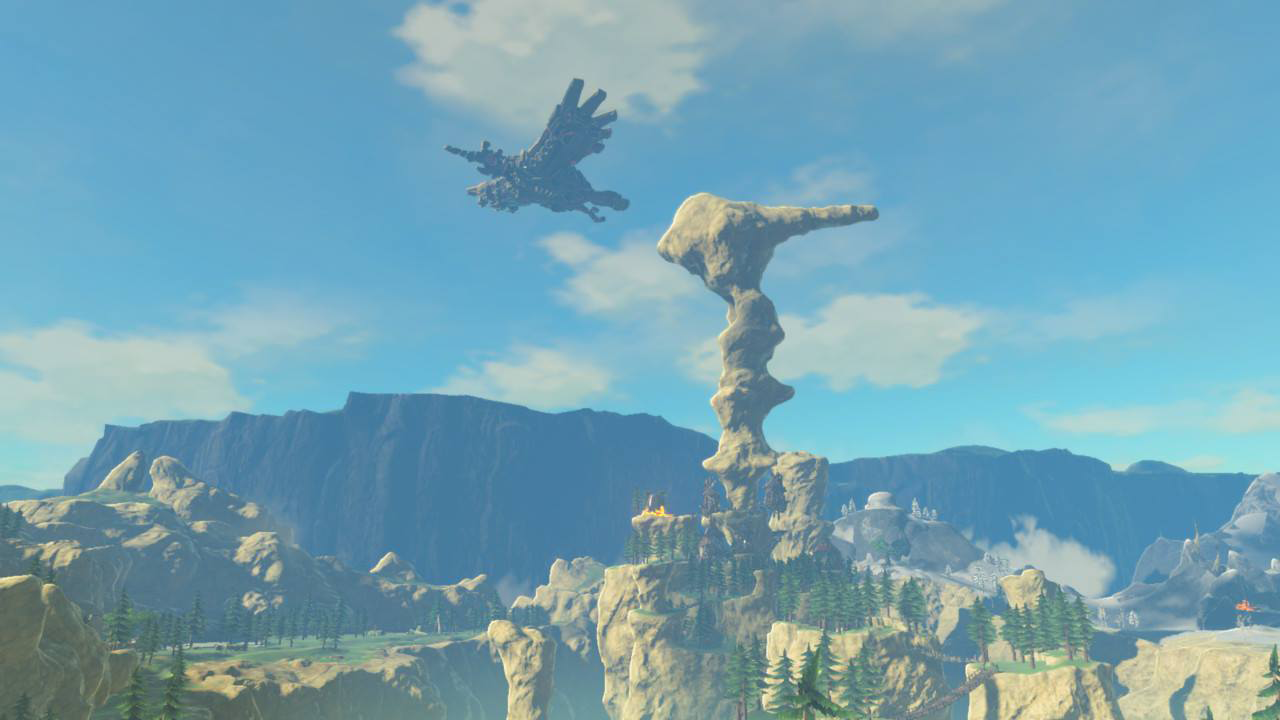
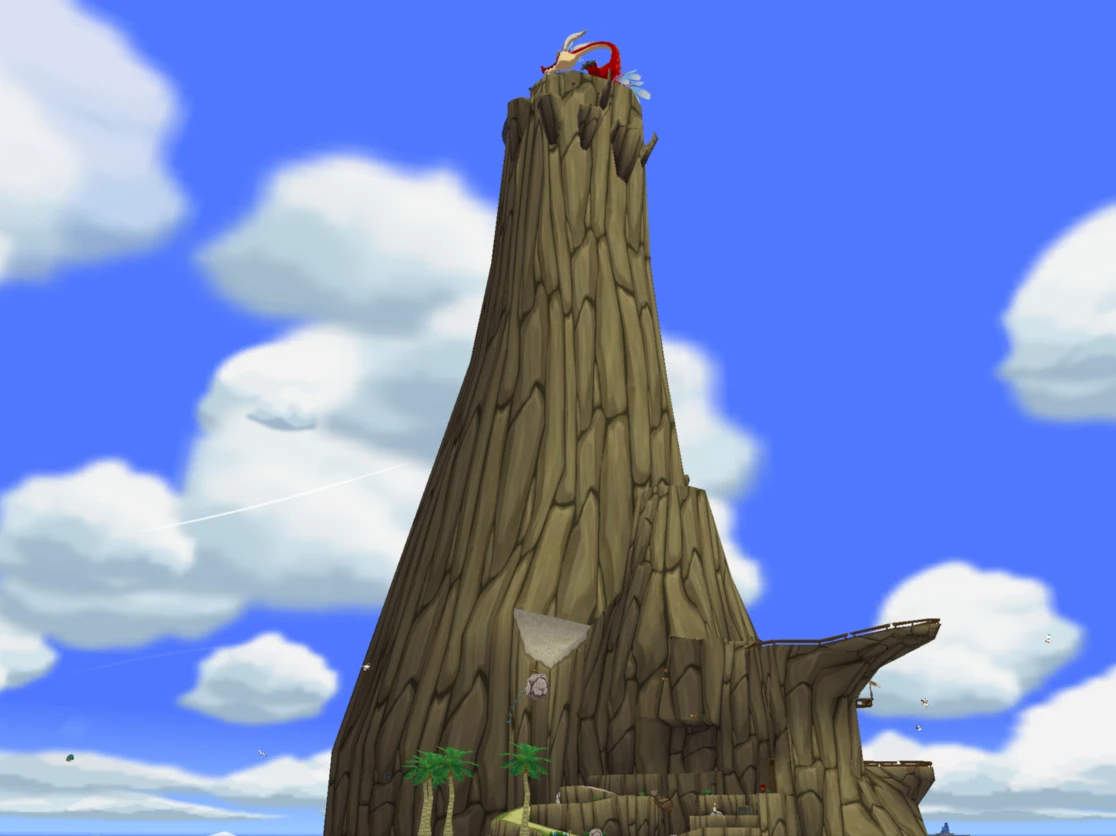
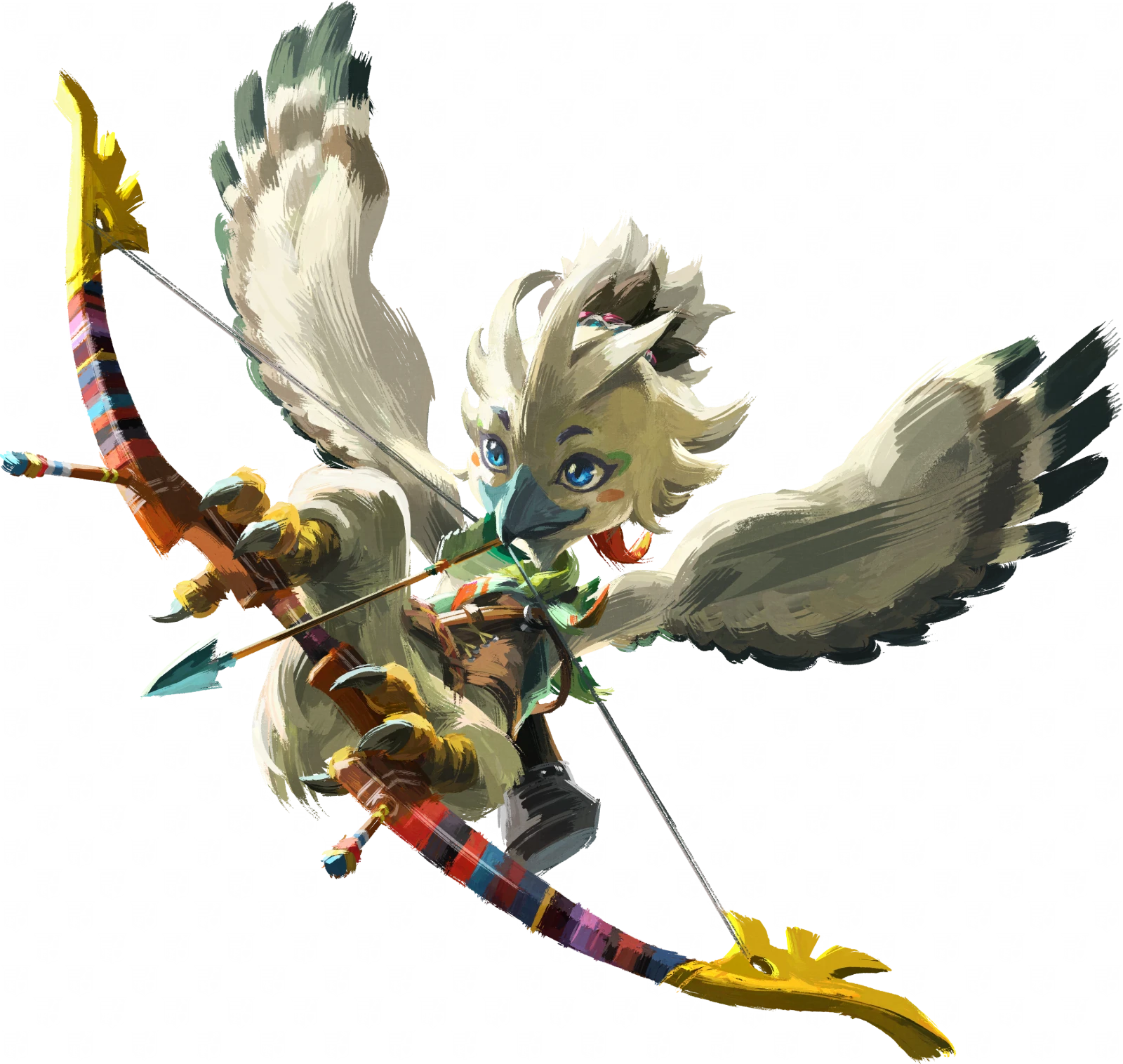
The Rito, a bird people, first nest on Dragon Roost Island in The Wind Waker, where the young need the blessing of the sky spirit Valoo before they can grow their wings; Nintendo’s lore makes them descendants of the Zoras who survived the flood. Breath of the Wild gives them a home in Hyrule proper. Rito Village climbs a tall rock pillar in the middle of Lake Totori, in Tabantha, ringed by wooden platforms and stairs, with the snowbound Hebra range rising to the north. When Link arrives, the Divine Beast Vah Medoh is circling overhead and firing on anyone who flies too high, until the warrior Teba carries him into battle.
In Tears of the Kingdom an unnatural blizzard has buried the village. Teba’s young son Tulin is determined to fly into the storm himself, and takes Link along up through the Sky Islands to the Wind Temple, where the armoured snake Colgera turns out to be the cause, and Tulin becomes the Sage of Wind. Echoes of Wisdom keeps the snowy north as Hebra Mountain, home of the solitary yeti Condé.
Who’s there
Medli and Prince Komali on Dragon Roost Island (The Wind Waker)
Teba, his wife Saki and their son Tulin (Breath of the Wild)
The Flight Range, where Teba trains
Tulin, Sage of Wind (Tears of the Kingdom)
Dragon Roost Island, the first Rito home (The Wind Waker).Tulin, Sage of Wind (Tears of the Kingdom artwork).
Hyrule on the timeline
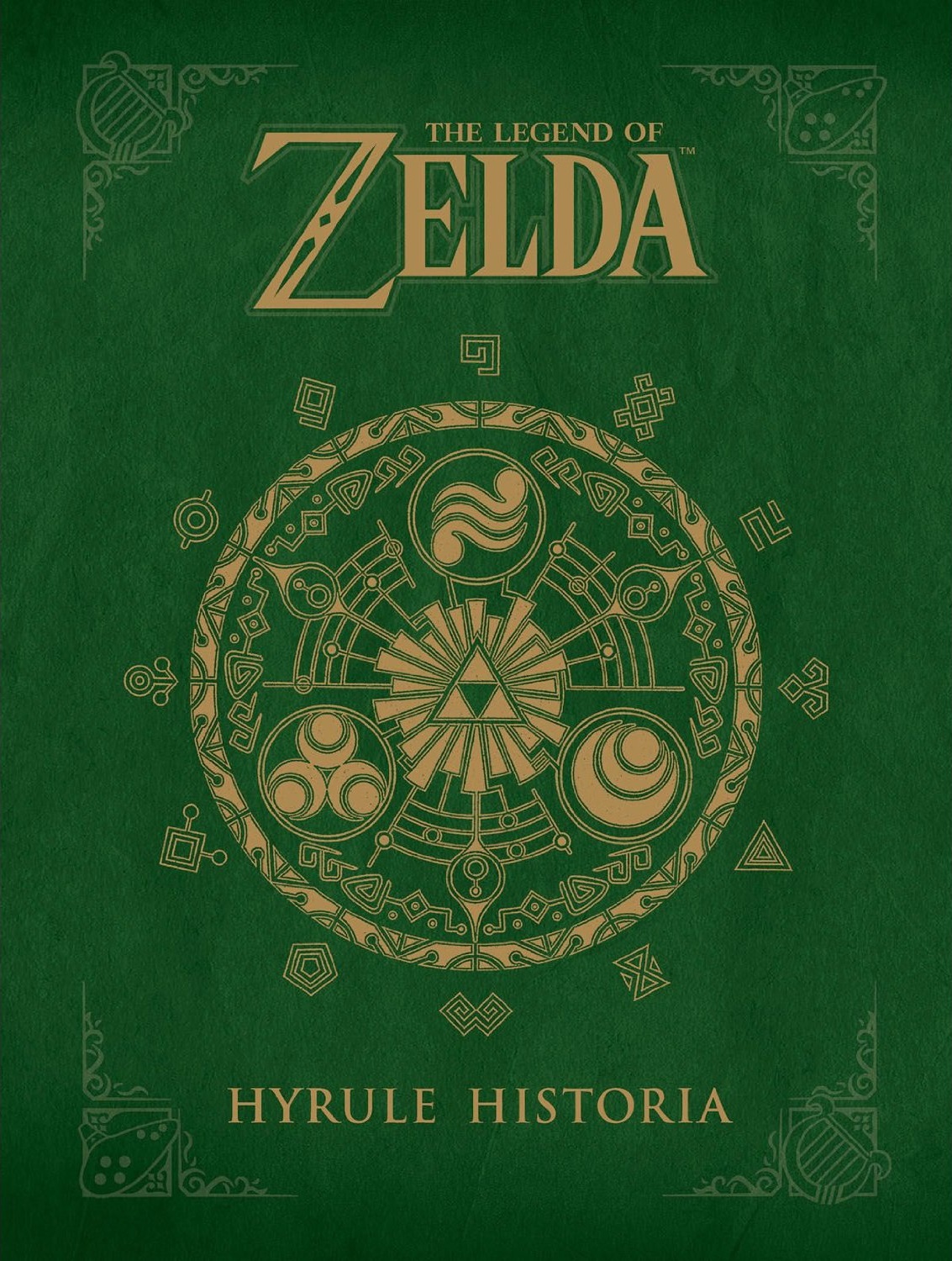
Hyrule Historia, the book that first set out the official timeline (English edition cover).
Nintendo’s official chronology was first set out in Hyrule Historia (Japan 2011, English 2013) and has been added to since, in the Hyrule Encyclopedia and on Nintendo’s own sites. After Ocarina of Time it splits into three branches, and the land changes with the branch. Here is Hyrule’s story in timeline order rather than release order.
Before HyruleSkyward Sword – Hylia’s people live on Skyloft above the clouds, and the Surface below is wild forest, volcano and desert. At the end Zelda and Link stay below, and the kingdom’s story begins.
Early kingdomThe Minish Cap · Four Swords – A young Hyrule with Hyrule Town at its heart, the Picori Festival in full swing and the Minish living underfoot.
The Hero of TimeOcarina of Time – Hyrule Field at the centre and Castle Town at the castle gates. After this, the timeline splits three ways.
Child timelineMajora’s Mask · Twilight Princess · Four Swords Adventures – Link warns Zelda and the kingdom carries on. Generations later it is divided into provinces named after the Light Spirits.
Adult timelineThe Wind Waker · Phantom Hourglass · Spirit Tracks – The hero vanishes, Ganon returns and the gods flood Hyrule. Its survivors live on the islands of the Great Sea until Tetra’s people settle New Hyrule overseas.
Downfall timelineA Link to the Past to Zelda II – The hero falls and Ganon takes the Triforce. This branch holds the Light and Dark Worlds, the Oracle lands, Koholint, Lorule and Hytopia, then Echoes of Wisdom and, last of all, the 1986 and 1987 games.
A founding retoldTears of the Kingdom · Age of Imprisonment – The Zonai king Rauru and the Hylian priestess Sonia rule the first kingdom of Hyrule and, after Ganondorf kills Sonia, Rauru gives his life to seal the Demon King beneath their castle. Nintendo has not said how this founding fits with the older branches.
Era of the WildBreath of the Wild · Tears of the Kingdom – So far in the future that earlier heroes survive only as legends. Hyrule fell to the Great Calamity a century before Link wakes; Nintendo has not tied the era to any one branch.
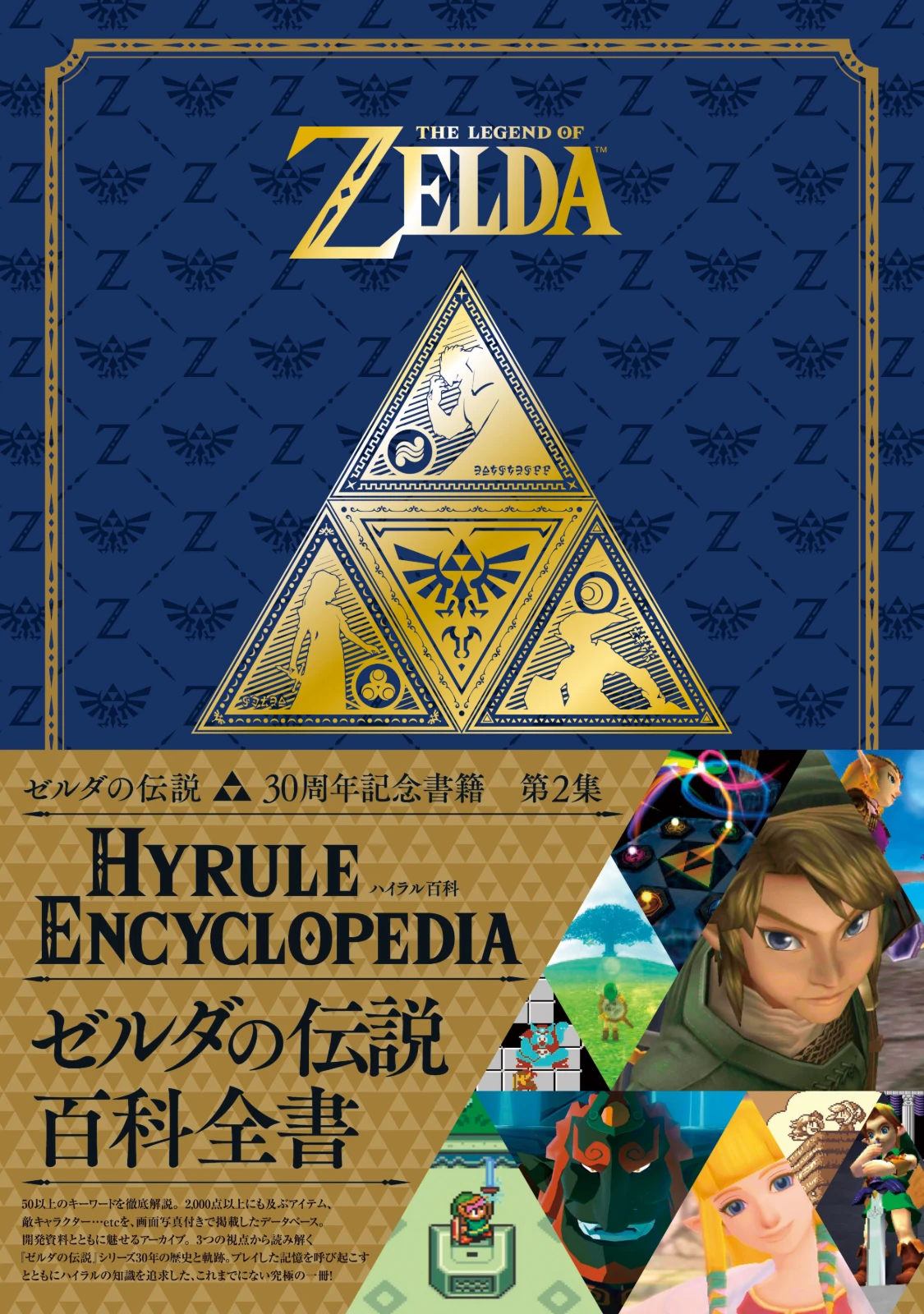
The Hyrule Encyclopedia (cover), which added later games to the timeline.Ancient Hyrule, seen in Tears of the Kingdom’s memories of the founding era.
Beyond the main games
Hyrule has been borrowed and rebuilt well beyond the main series. The Warriors games turn its regions into battlefields, an indie studio shuffled it, Super Smash Bros. made it a stage and two cartoons put it on television. The big screen is next: Nintendo and Sony Pictures’ live-action The Legend of Zelda is due in cinemas on 30 April 2027.
Hyrule WarriorsWii U · 2014 · also 3DS (2016) and Switch (2018)A crossover that stitches together Hyrules from several eras. Its battlefields include Hyrule Field, Faron Woods, Death Mountain, Lake Hylia, the Gerudo Desert, Skyloft and the Palace of Twilight, alongside new places such as the Valley of Seers and the Temple of Souls.
Age of CalamitySwitch · 2020 · Switch 2 Definitive Edition dated for 25 February 2027The Great Calamity’s war, a century ahead of Breath of the Wild, fought across the same regions while their towns and castle still stand. It opens with the Battle of Hyrule Field, and the Definitive Edition promises more enemies on screen.
Age of ImprisonmentNintendo Switch 2 · 6 November 2025Plays out the founding-era war told in Tears of the Kingdom, with Zelda, Rauru, Mineru and the first sages fighting at Hyrule Castle, on Hyrule Field, on the Great Plateau and in the Depths.
Cadence of HyruleSwitch · 2019 · Brace Yourself GamesA rhythm-action Hyrule, built in Vancouver, whose overworld takes in Death Mountain, the Lost Woods, Kakariko, the castle, Lake Hylia and the Gerudo lands, all moving to the beat.
Super Smash Bros. stagesNintendo 64 onwards · 1999 to todayHyrule Castle, modelled on the Ocarina of Time castle with Death Mountain behind it and tornadoes whirling across the roof, was a stage in the 1999 original and came back as downloadable content for the Wii U and 3DS games and again in Ultimate. Melee added the huge Temple, loosely based on Zelda II’s palaces, and Brawl the Bridge of Eldin.
Hyrule on television1989 cartoon · Captain N (1990)DiC’s 1989 cartoon keeps close to home: Link guards Zelda and her Triforce of Wisdom at the North Castle, while Ganon schemes from the Underworld. In Captain N: The Game Master Hyrule is one more realm of Videoland, a warp away from Princess Lana’s Palace of Power.
Through the ages
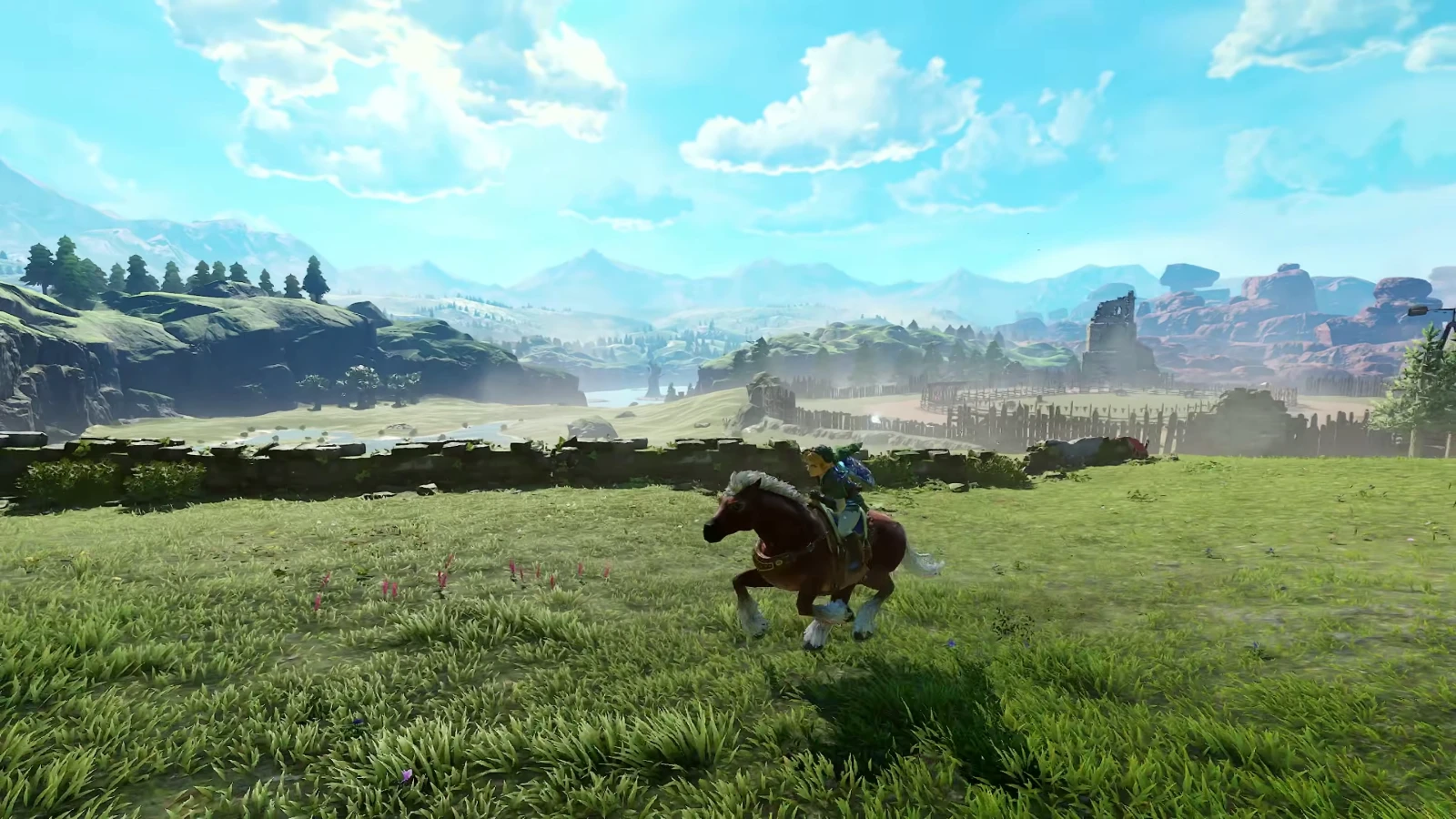
One view of Hyrule from each era, from an 8-bit forest screen to a Nintendo Switch 2 gallop.
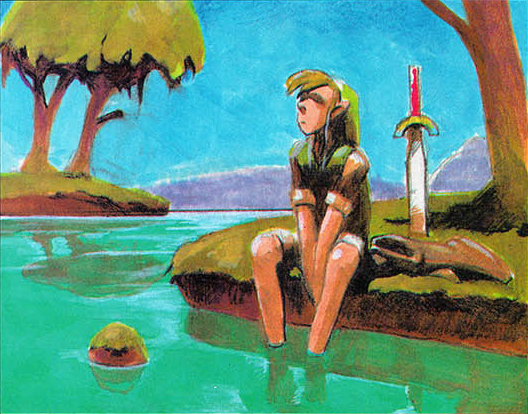
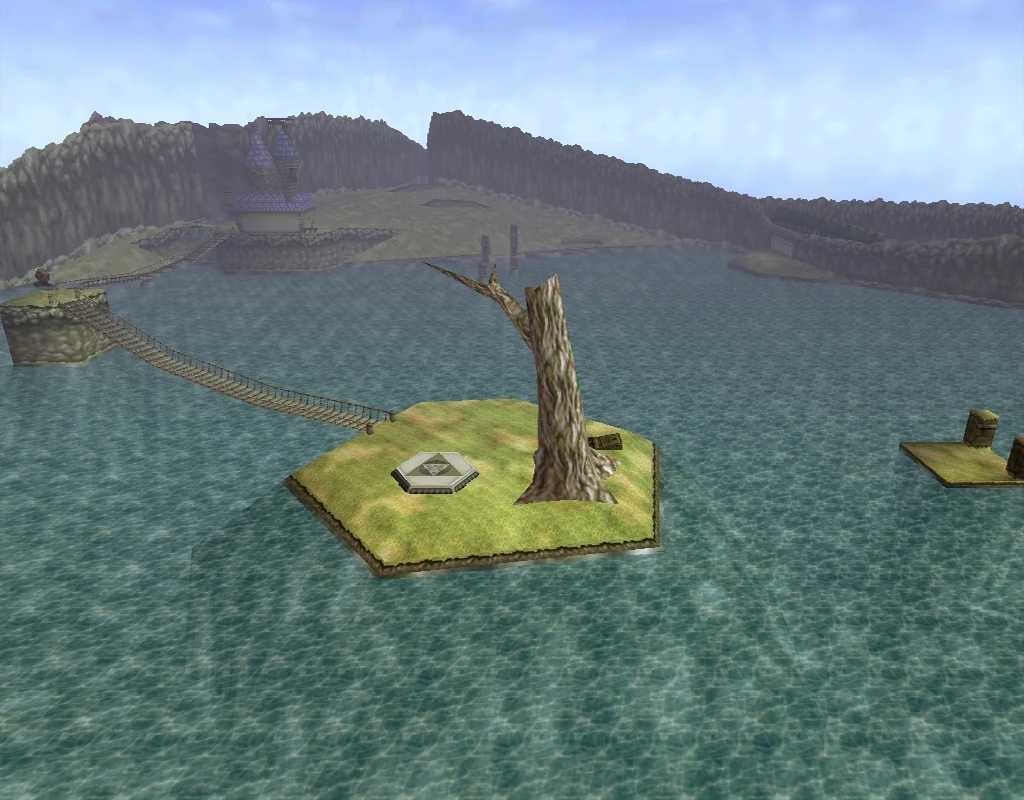
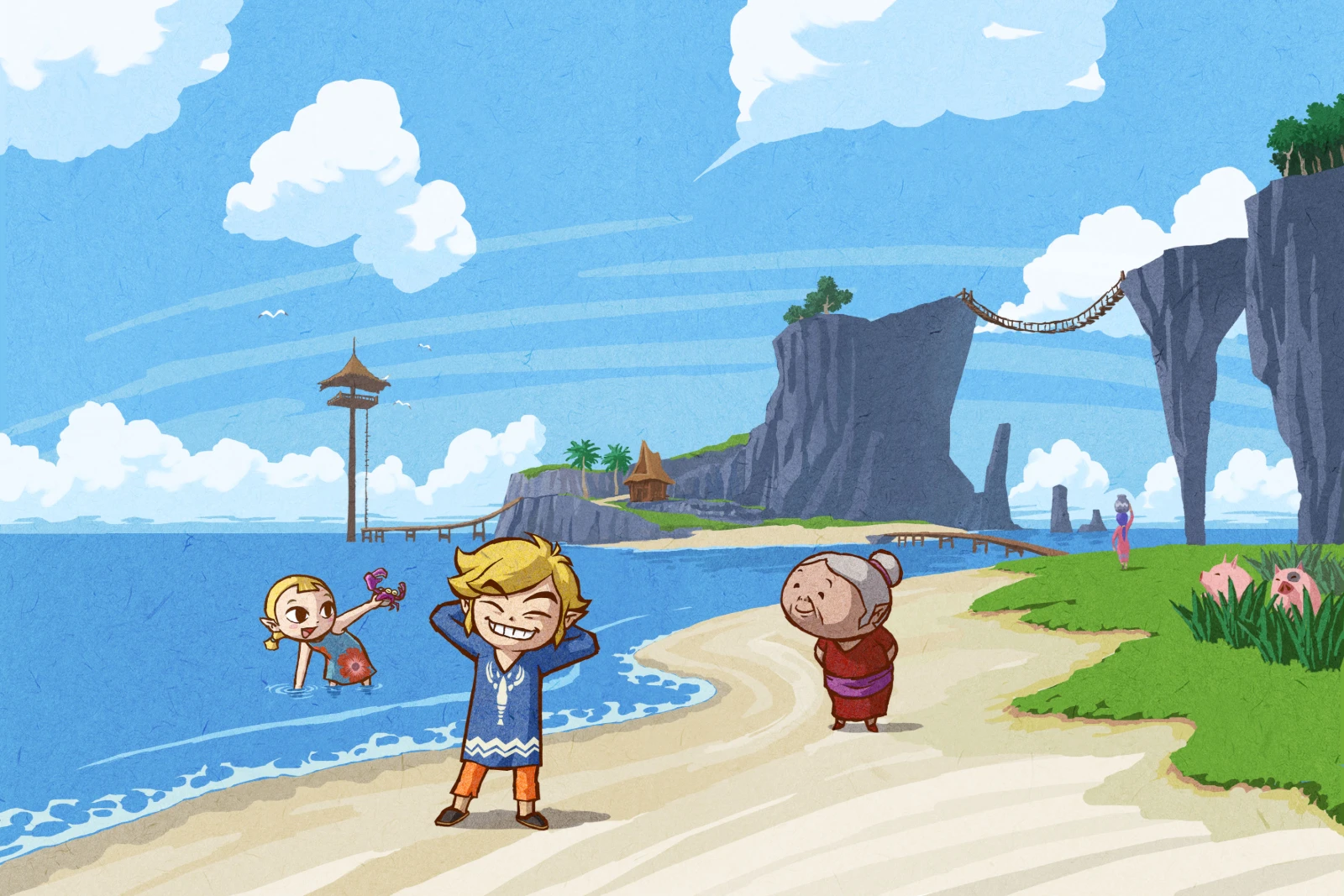
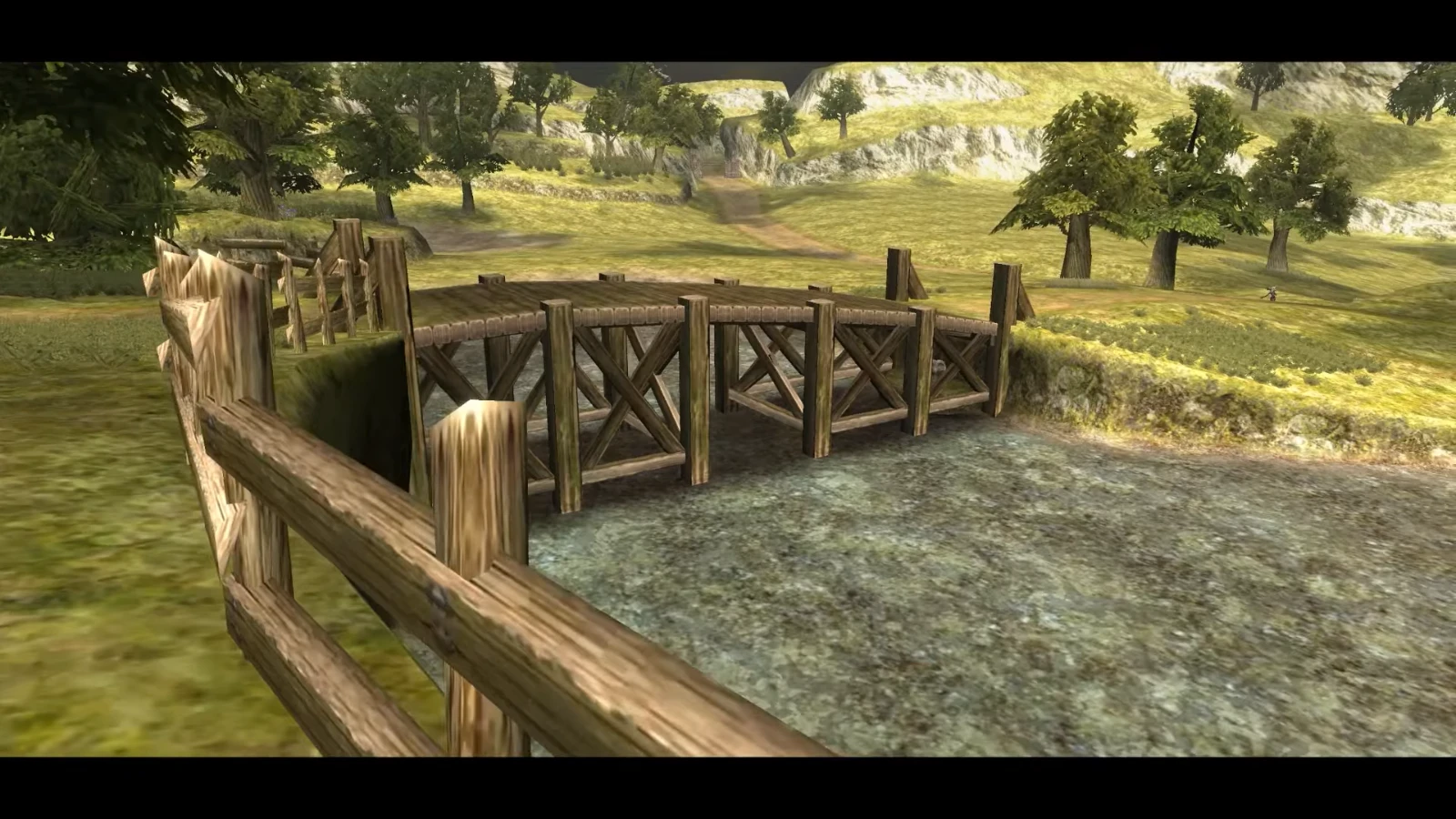
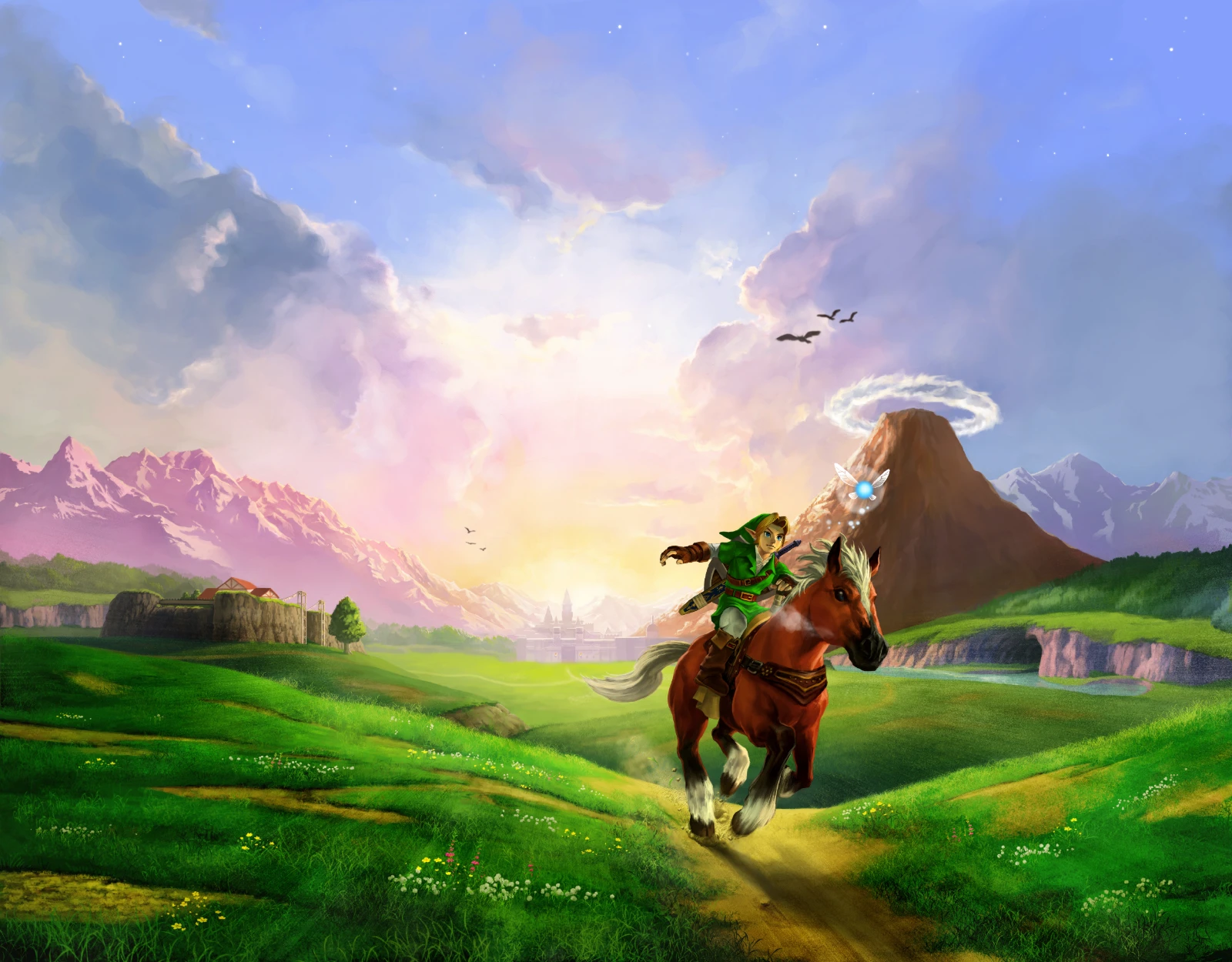
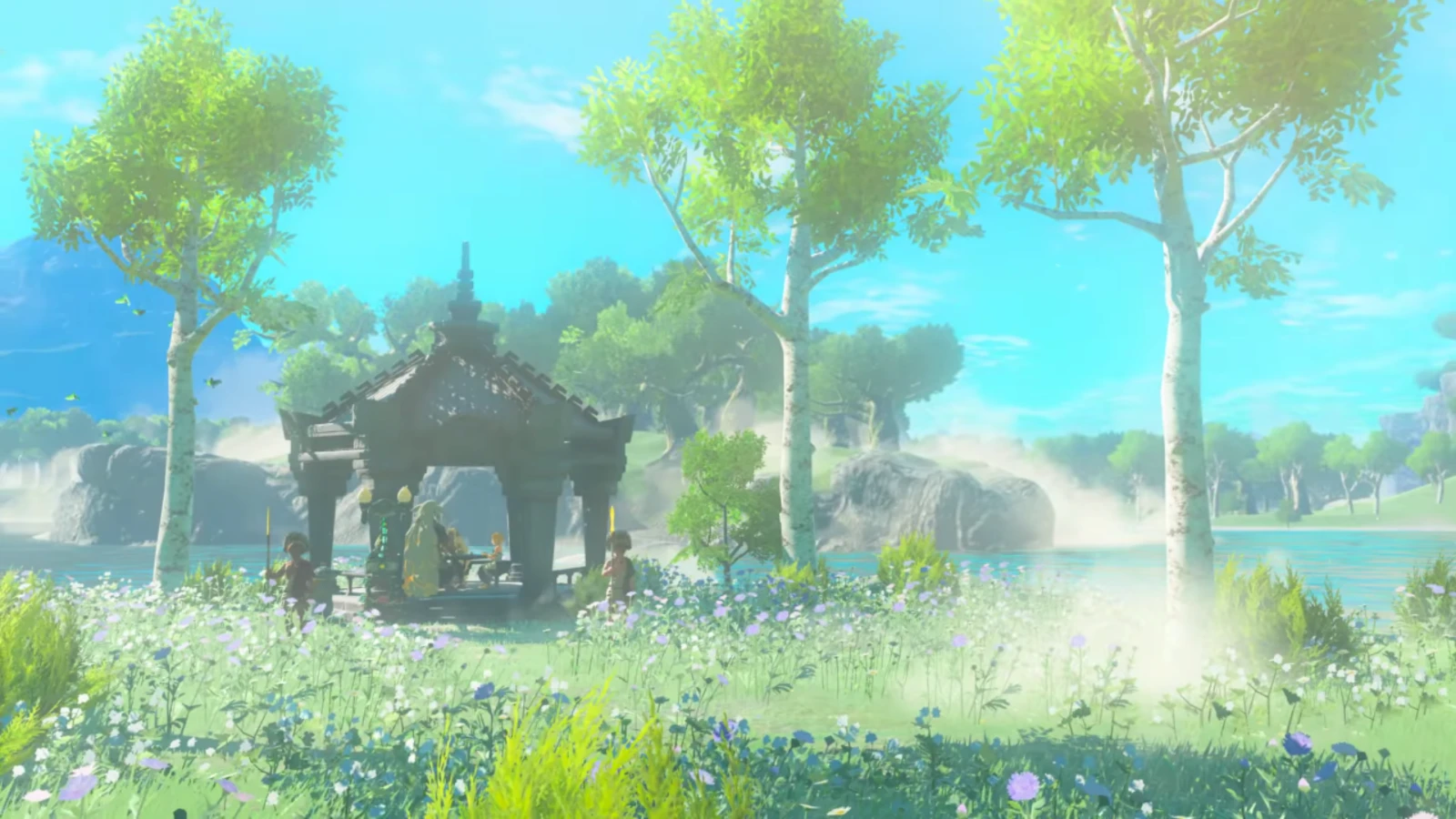
1986: the Lost Woods in The Legend of Zelda.1991: Lake Hylia (A Link to the Past artwork).1998: Lake Hylia in Ocarina of Time.2002: Outset Island (The Wind Waker artwork).2006: Hyrule Field in Faron Province (Twilight Princess).2011: the Sky (Skyward Sword artwork).2017: the Great Plateau (Breath of the Wild).2023: Courage Island, one of the Sky Islands (Tears of the Kingdom).2026: Hyrule Field with Epona in Ocarina of Time for Nintendo Switch 2.
Trivia
Shigeru Miyamoto has said the name Hyrule simply seemed right when the team was discussing what to call a high-fantasy land. In the stories, the kingdom takes its name from its main people, the Hylians.
The map that came with Western copies of The Legend of Zelda came in a sealed envelope, with a note telling players to open it only if they were truly stuck. Miyamoto, who wanted players to work things out for themselves, has laughed that nobody obeyed.
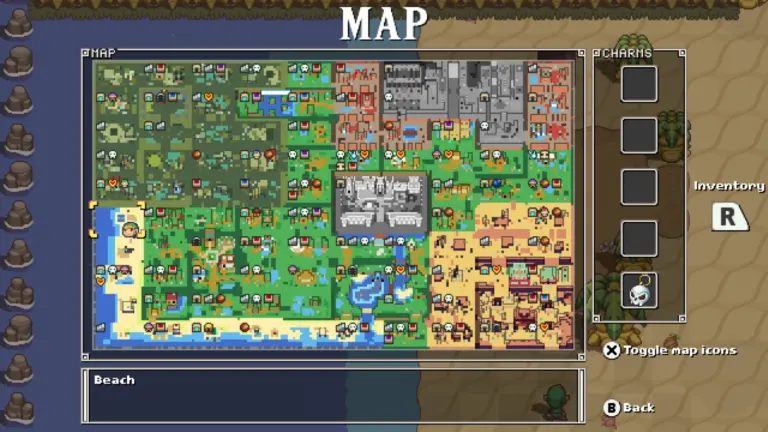
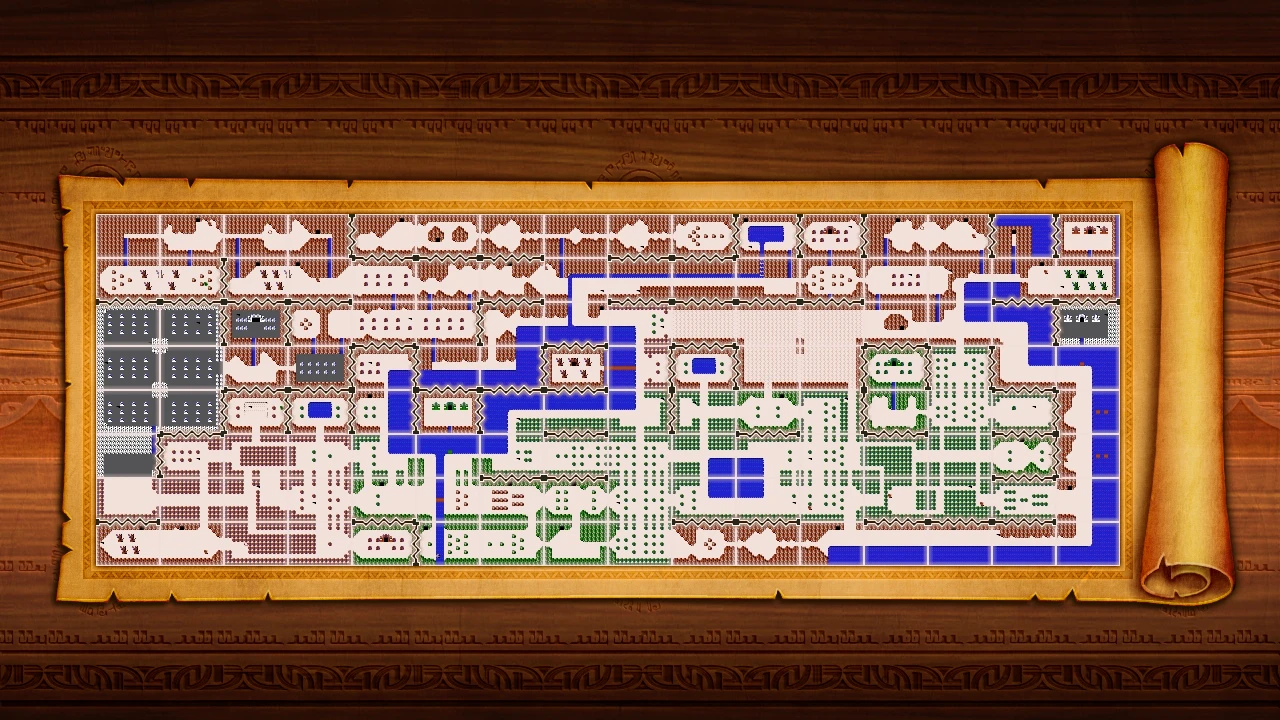
The Adventure Mode map of Hyrule Warriors, drawn like the 1986 overworld.Hyrule Warriors’ Adventure Mode lays its long second campaign out on a grid styled after the 1986 overworld, and every square is a battle.
The first game’s Second Quest is a happy accident. Takashi Tezuka’s dungeon layouts filled only half the available space, so the team used the rest with a harder set of levels beneath the same overworld.
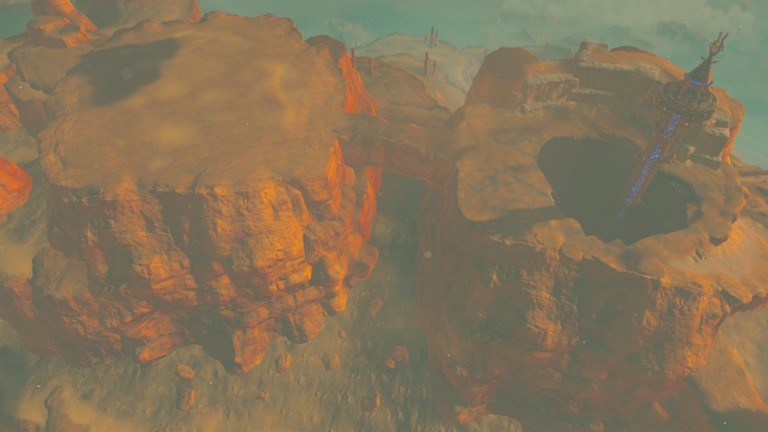
Spectacle Rock in Breath of the Wild.Spectacle Rock hops about. It sits on Death Mountain in the 2D games, where it hid the entrance to the 1986 final level, but in Breath of the Wild and Tears of the Kingdom it stands in the Gerudo Highlands.
In Zelda II Death Mountain is a maze of caves in the south, and Link has to find his way through it to reach the Hammer.
Mido, one of the two Zelda II town names that did not go to a sage, became the bossy Kokiri boy in Ocarina of Time. And Tears of the Kingdom’s first King of Hyrule is called Rauru, like Zelda II’s first town.
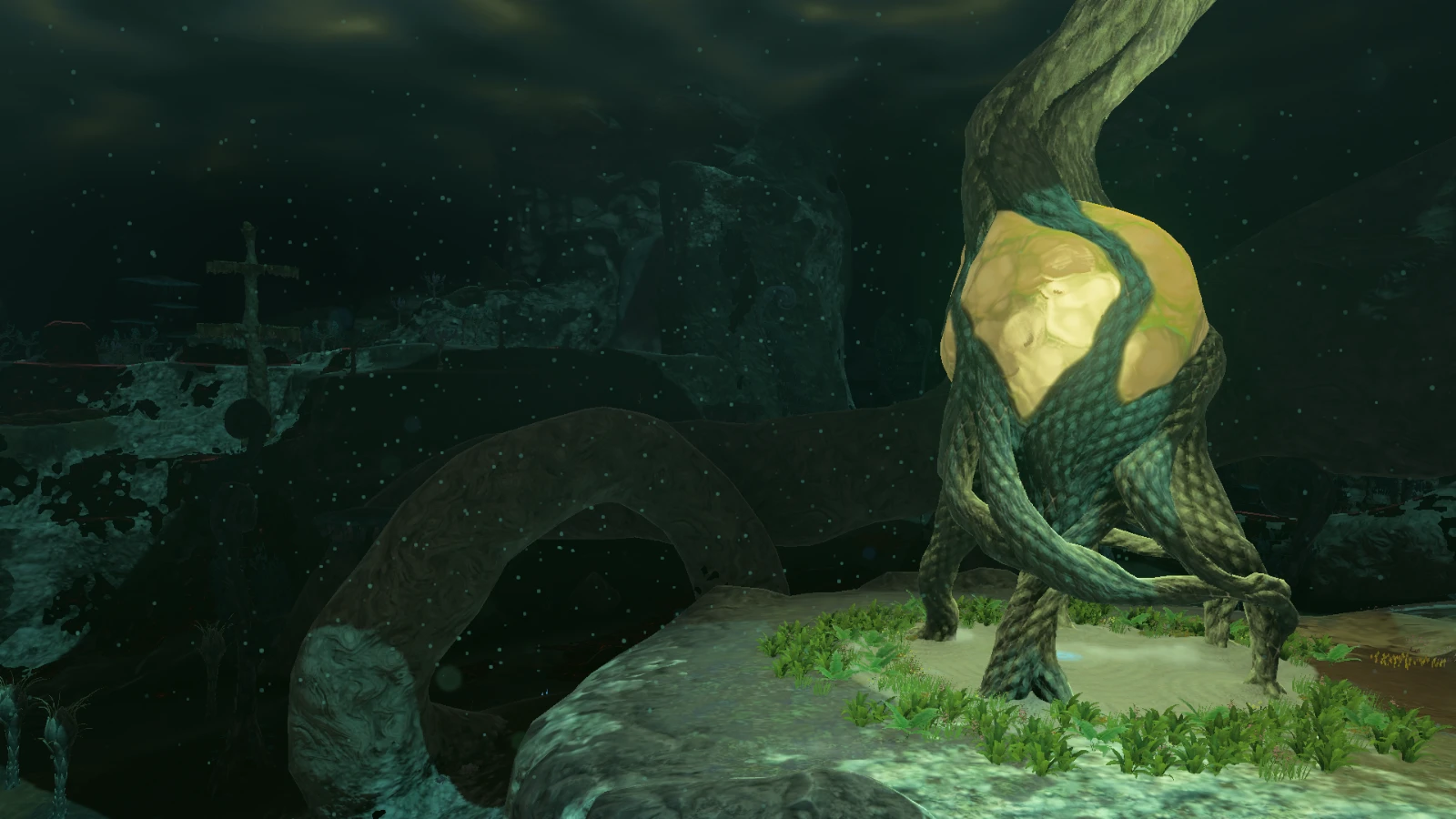
The Depths in Tears of the Kingdom.Each of the 120 Lightroots that light up the Depths in Tears of the Kingdom carries the name of a surface shrine spelled backwards: the Kasari Lightroot goes with the Irasak Shrine.
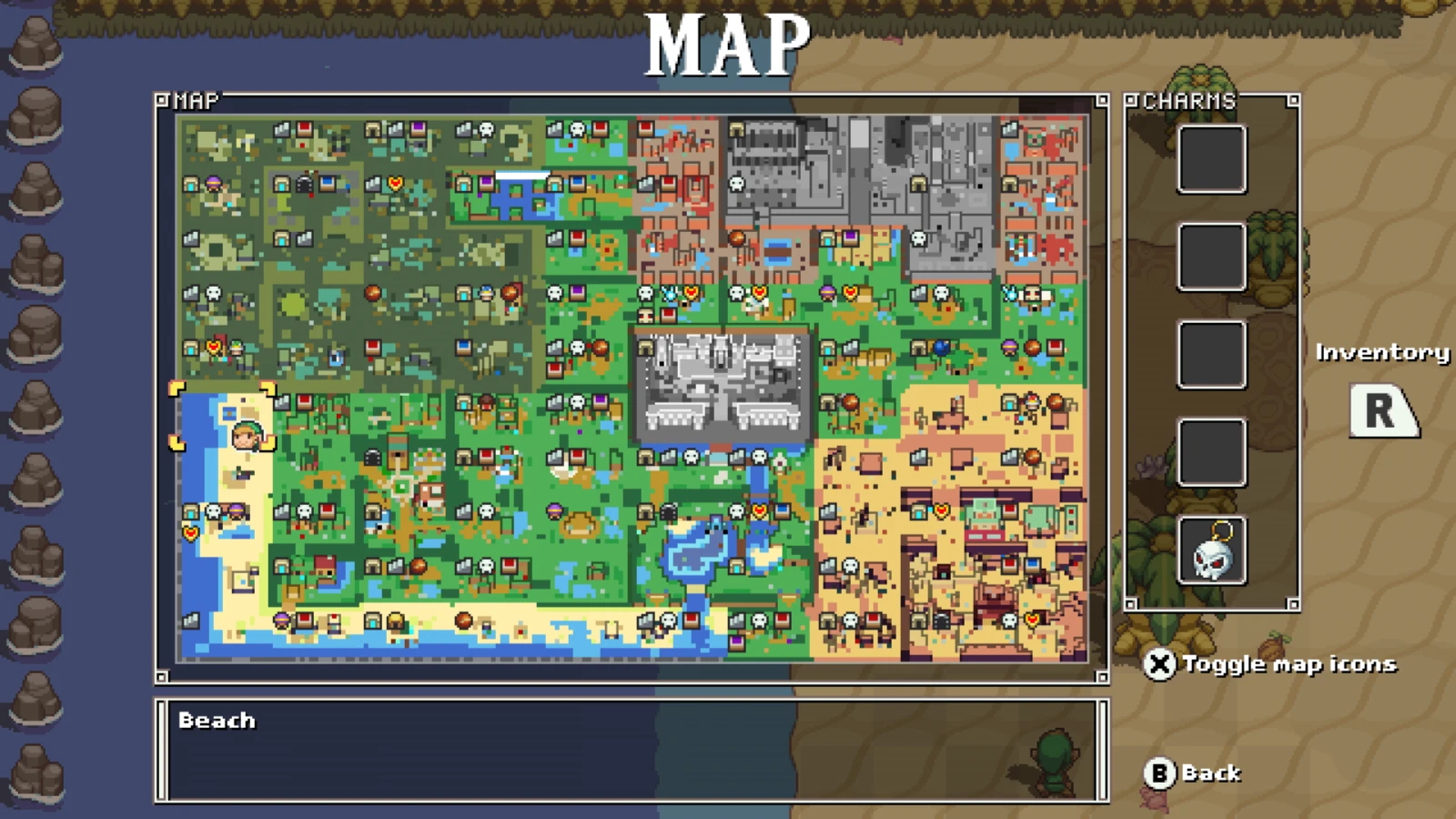
The overworld map of Cadence of Hyrule.In Cadence of Hyrule every region is designed by hand, but the game deals them on to the map in a new arrangement for each save file, so two players rarely share quite the same Hyrule.
Some of the active Guardian Stalkers in Breath of the Wild’s Hyrule Castle Town Ruins are missing legs, which Zelda Dungeon notes is unique to that spot: active Stalkers everywhere else keep all six.
To provide the best experiences, we use technologies like cookies to store and/or access device information. Consenting to these technologies will allow us to process data such as browsing behavior or unique IDs on this site. Not consenting or withdrawing consent, may adversely affect certain features and functions.
Functional
Always active
The technical storage or access is strictly necessary for the legitimate purpose of enabling the use of a specific service explicitly requested by the subscriber or user, or for the sole purpose of carrying out the transmission of a communication over an electronic communications network.
Preferences
The technical storage or access is necessary for the legitimate purpose of storing preferences that are not requested by the subscriber or user.
Statistics
The technical storage or access that is used exclusively for statistical purposes.The technical storage or access that is used exclusively for anonymous statistical purposes. Without a subpoena, voluntary compliance on the part of your Internet Service Provider, or additional records from a third party, information stored or retrieved for this purpose alone cannot usually be used to identify you.
Marketing
The technical storage or access is required to create user profiles to send advertising, or to track the user on a website or across several websites for similar marketing purposes.

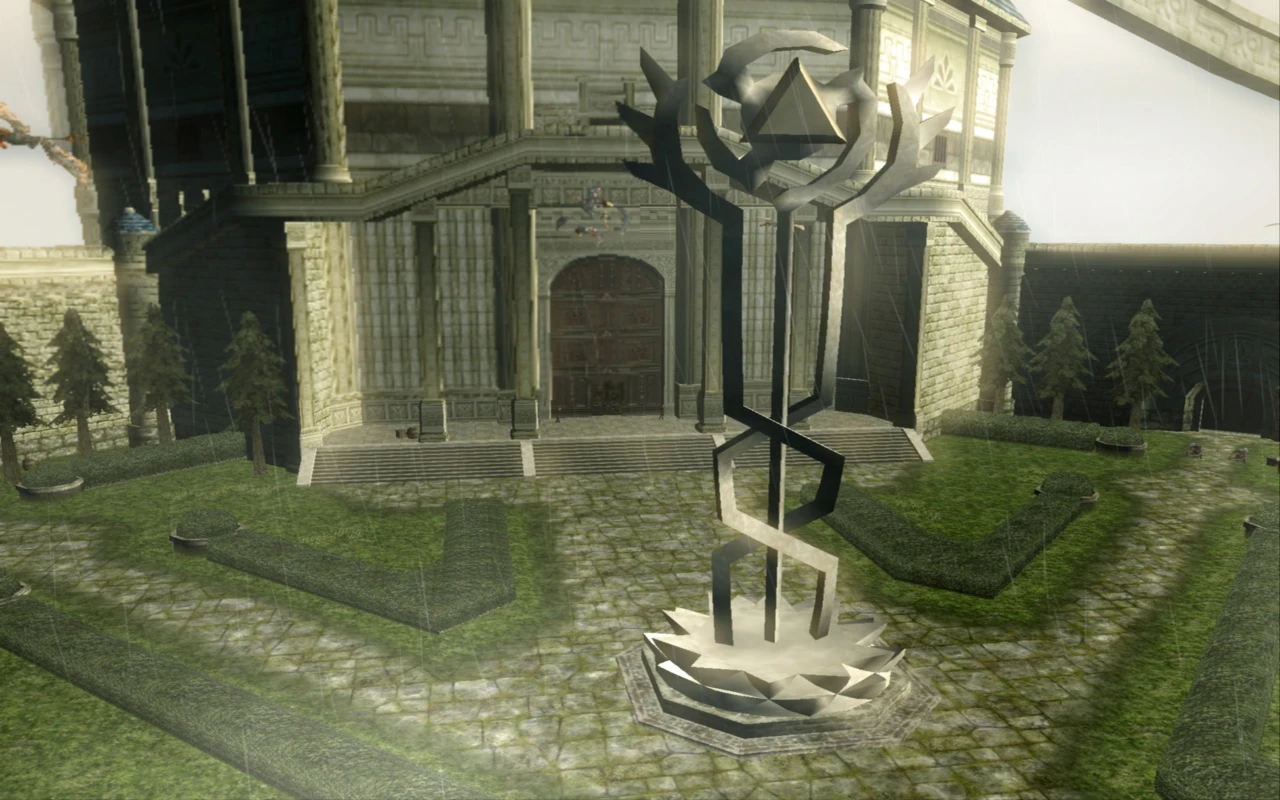
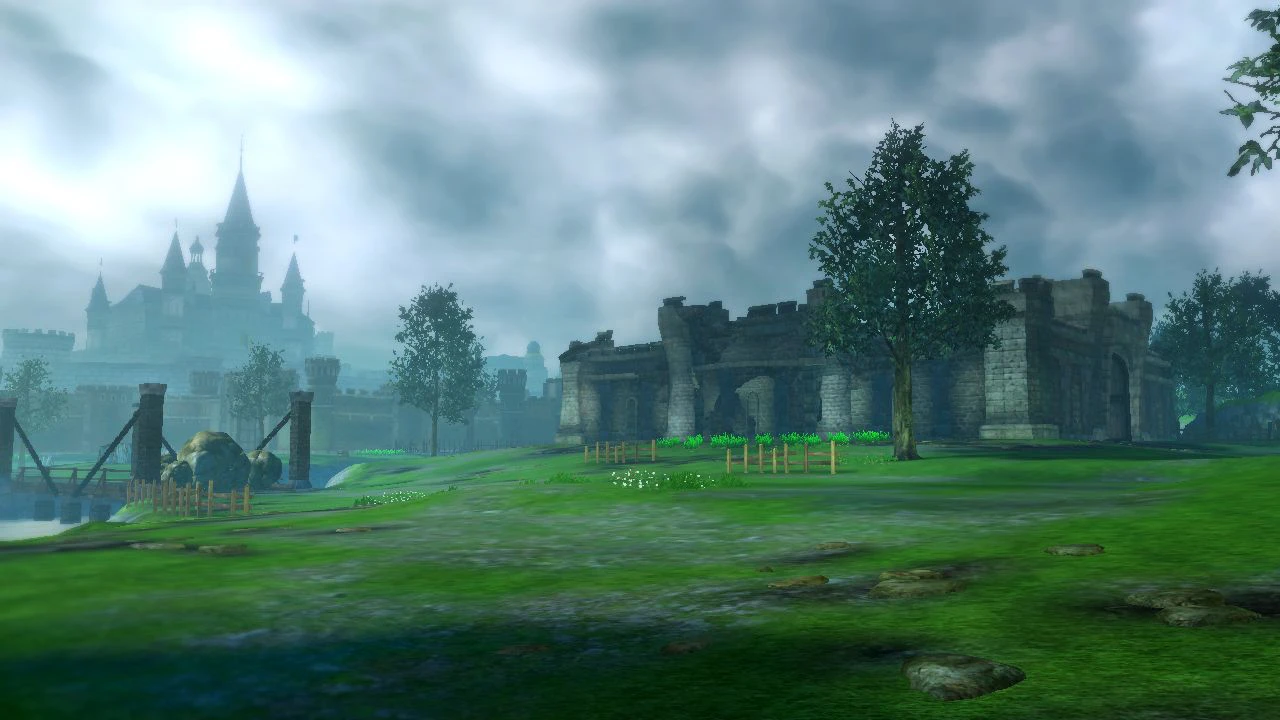 Hyrule WarriorsWii U · 2014 · also 3DS (2016) and Switch (2018)A crossover that stitches together Hyrules from several eras. Its battlefields include Hyrule Field, Faron Woods, Death Mountain, Lake Hylia, the Gerudo Desert, Skyloft and the Palace of Twilight, alongside new places such as the Valley of Seers and the Temple of Souls.
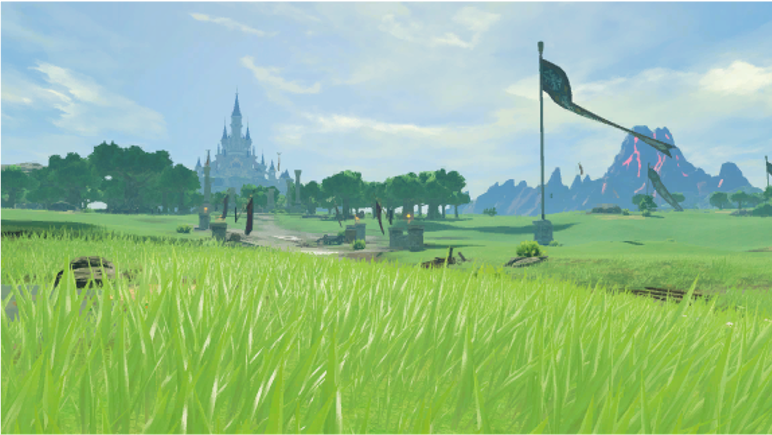 Age of CalamitySwitch · 2020 · Switch 2 Definitive Edition dated for 25 February 2027The Great Calamity’s war, a century ahead of Breath of the Wild, fought across the same regions while their towns and castle still stand. It opens with the Battle of Hyrule Field, and the Definitive Edition promises more enemies on screen.
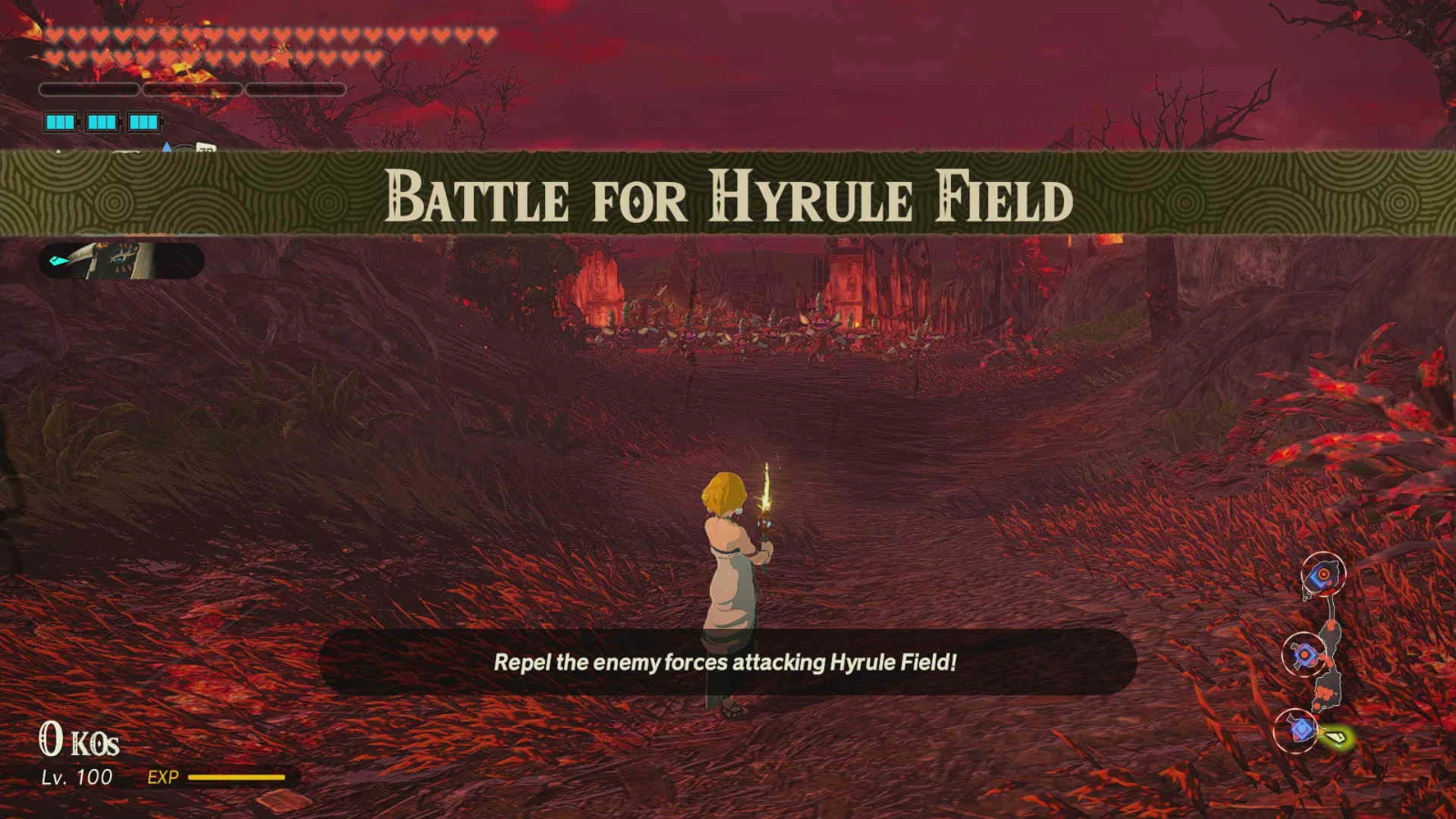 Age of ImprisonmentNintendo Switch 2 · 6 November 2025Plays out the founding-era war told in Tears of the Kingdom, with Zelda, Rauru, Mineru and the first sages fighting at Hyrule Castle, on Hyrule Field, on the Great Plateau and in the Depths.
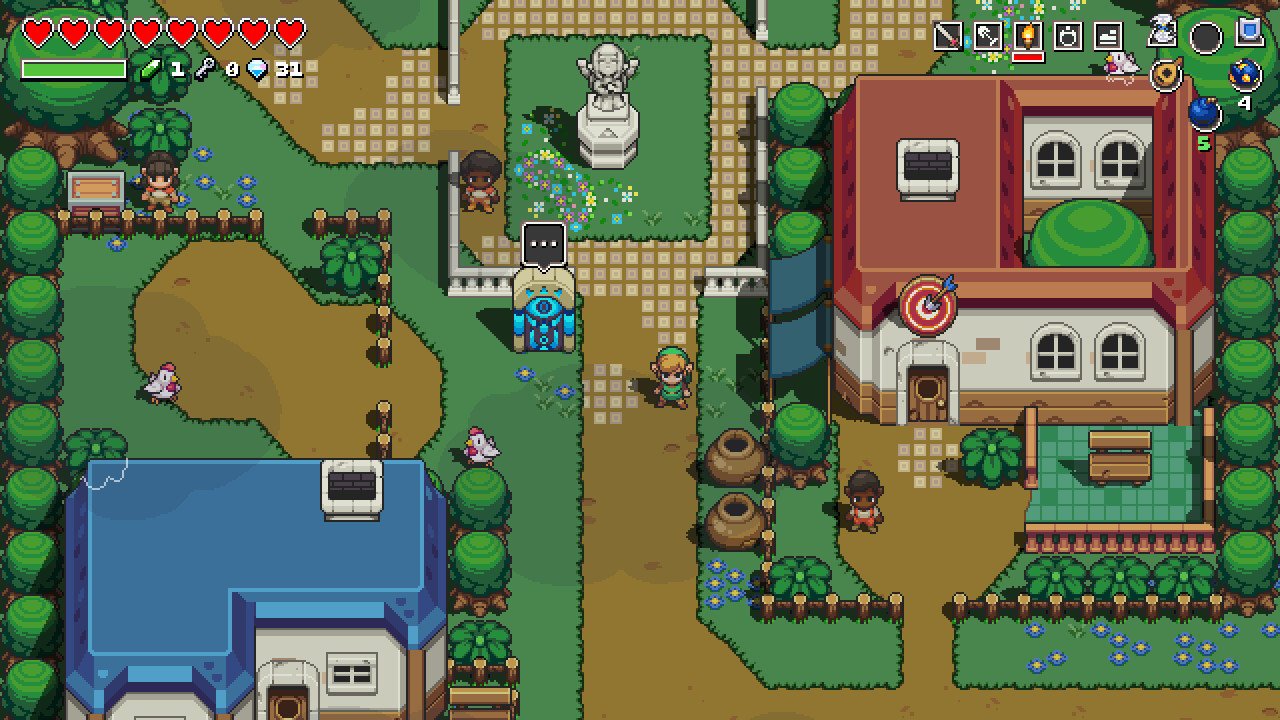 Cadence of HyruleSwitch · 2019 · Brace Yourself GamesA rhythm-action Hyrule, built in Vancouver, whose overworld takes in Death Mountain, the Lost Woods, Kakariko, the castle, Lake Hylia and the Gerudo lands, all moving to the beat.
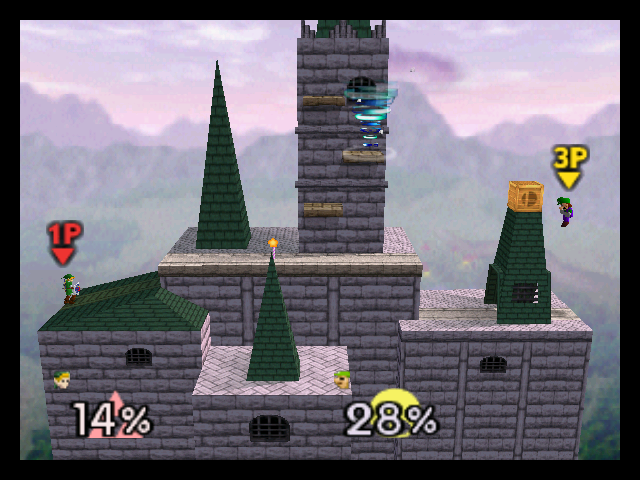 Super Smash Bros. stagesNintendo 64 onwards · 1999 to todayHyrule Castle, modelled on the Ocarina of Time castle with Death Mountain behind it and tornadoes whirling across the roof, was a stage in the 1999 original and came back as downloadable content for the Wii U and 3DS games and again in Ultimate. Melee added the huge Temple, loosely based on Zelda II’s palaces, and Brawl the Bridge of Eldin.
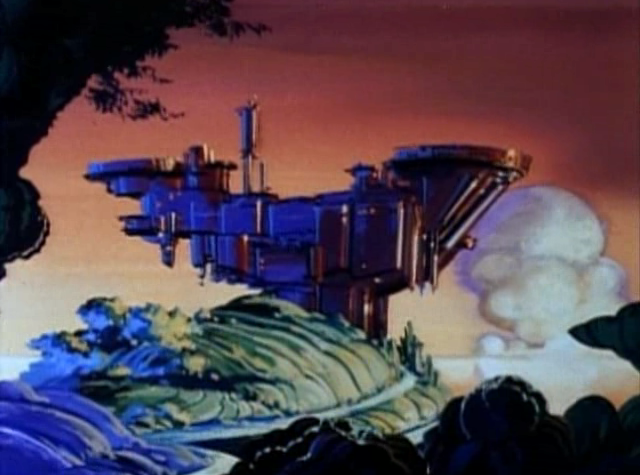 Hyrule on television1989 cartoon · Captain N (1990)DiC’s 1989 cartoon keeps close to home: Link guards Zelda and her Triforce of Wisdom at the North Castle, while Ganon schemes from the Underworld. In Captain N: The Game Master Hyrule is one more realm of Videoland, a warp away from Princess Lana’s Palace of Power.