A boy without a fairy, a princess with a terrible dream and a desert king who wants the power of the gods. The first 3D Zelda, and the one every adventure since has had to measure itself against.
Released21 November 1998 (JP) · 23 November 1998 (NA) · 11 December 1998 (EU)
DeveloperNintendo EAD
ProducerShigeru Miyamoto
MusicKoji Kondo
Players1
Sales7.6 million worldwide (Nintendo, 2004)
Title
The Legend of Zelda: Ocarina of Time ゼルダの伝説 時のオカリナ (Zeruda no Densetsu: Toki no Okarina)
Platform
Nintendo 64 (cartridge, Rumble Pak supported)
Developer
Nintendo Entertainment Analysis & Development (EAD)
7.6 million worldwide by 2004; 1.14 million in Japan
Honours
Japan Media Arts Festival Grand Prize (1998); Game of the Year at the 2nd Interactive Achievement Awards; Famitsu’s first 40/40
Overview
If you only ever play one Zelda, a lot of people will tell you it should be this one. Ocarina of Time took the series off its flat, top-down maps and into a Hyrule you could gallop across, with castles you could look up at and dungeons that wrapped around you. It arrived in the winter of 1998 and it has never really left.
You play Link, a boy raised among the forest-dwelling Kokiri, who becomes the Hero of Time. The story runs across two eras: seven years apart, the same land is first a peaceful kingdom on the edge of disaster and then a ruin ruled by Ganondorf, the Gerudo king who stole the Triforce. Swapping between young and adult Link by drawing and returning the Master Sword is the hook that holds the whole adventure together.
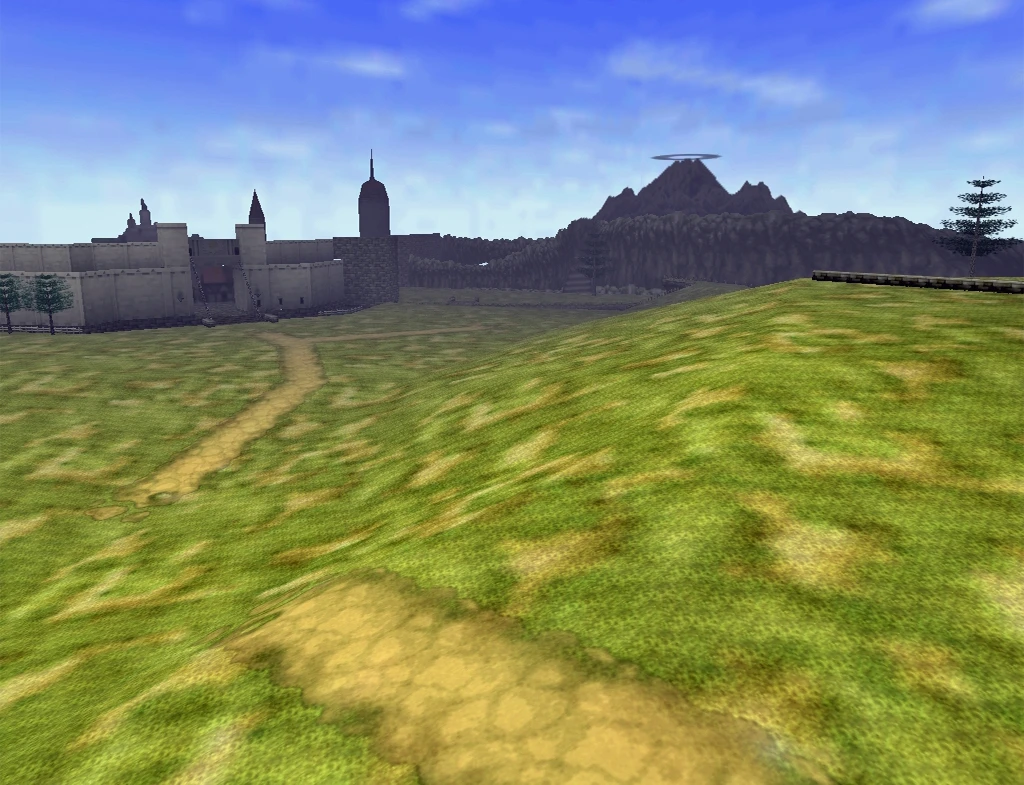
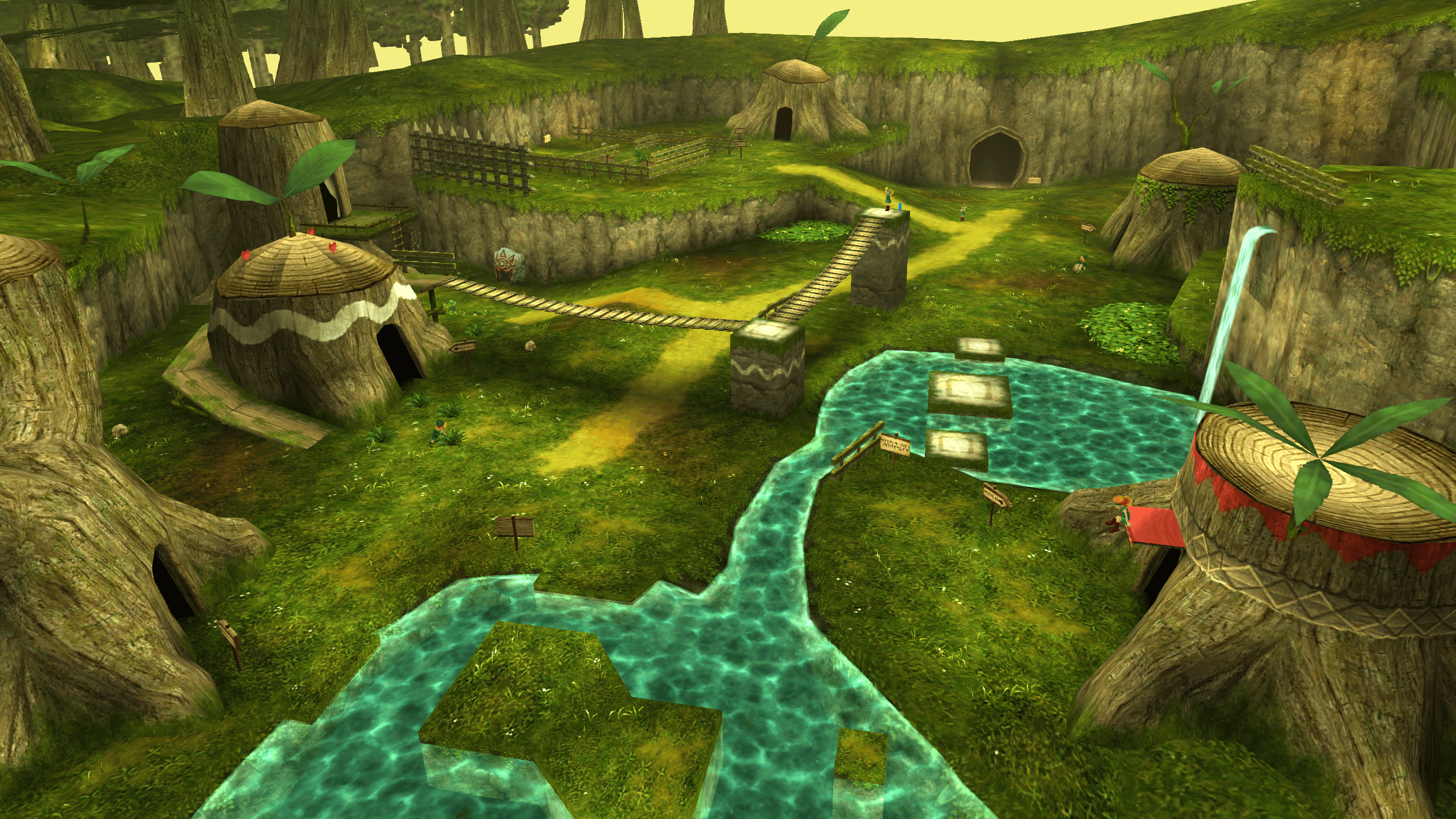
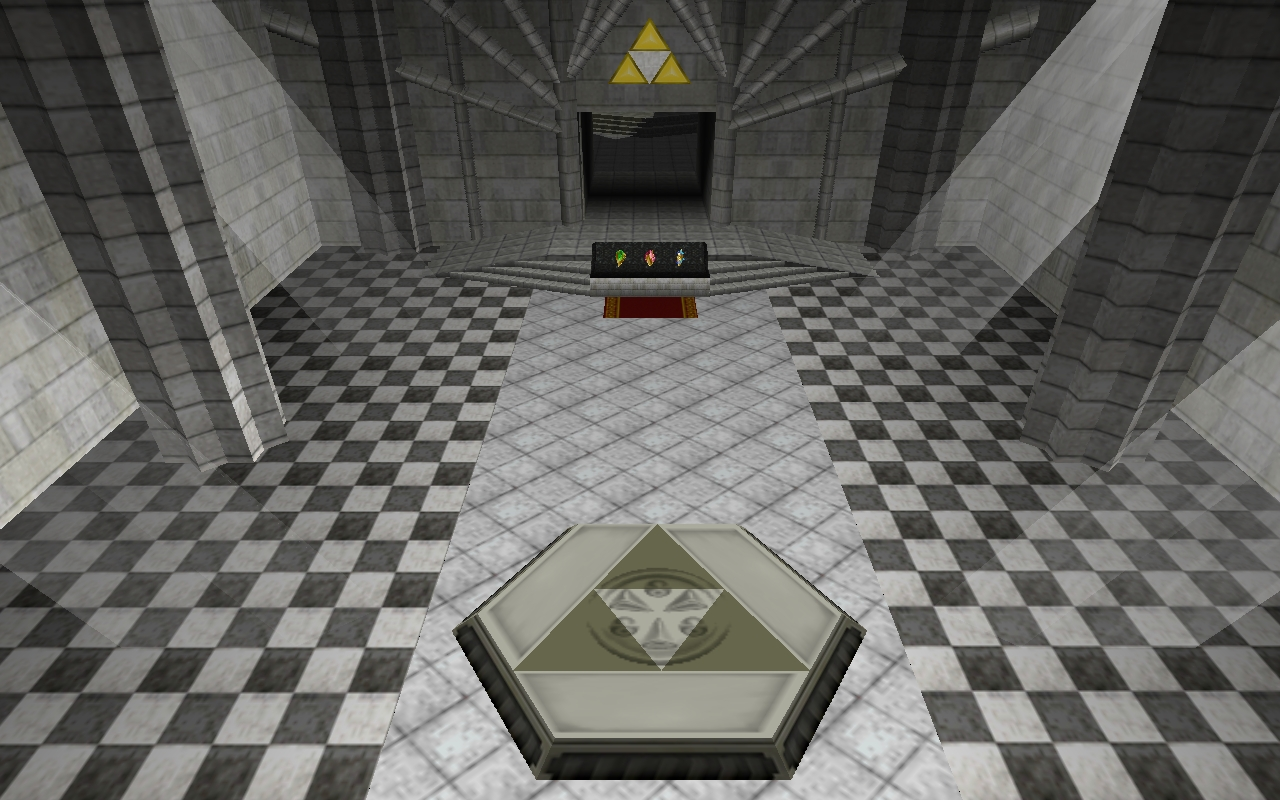
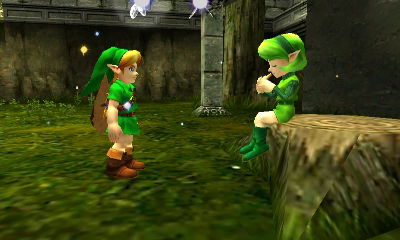
Hyrule Field, built big enough to ride a horse across.Kokiri Forest, where the adventure begins.The Temple of Time and the Master Sword.
It also taught 3D games how to fight. Nintendo’s lock-on system, Z-targeting, let you circle an enemy like a duellist instead of flailing at the air, and a single context-sensitive button handled everything from climbing to talking. Those two ideas became standard kit for 3D action games, and the game’s fairy companion Navi, who began life as the targeting cursor, gave the whole thing a voice (“Hey! Listen!”).
This page covers the original Nintendo 64 game. Master Quest, the 3DS version and the 2026 Nintendo Switch 2 remake are summarised under Legacy.
君はもう伝説を見たか? (“Have you seen the legend yet?”)
That is Nintendo’s own Japanese catchphrase for the game. The page it heads introduces Hyrule as a land said to be home to the descendants of the gods, then tells the opening: a fairy called Navi wakes Link, the only Kokiri without one; the dying Deku Tree warns him that Ganondorf, a thieving sorcerer, must never touch the Triforce; and Link sets off for Hyrule Castle, where Princess Zelda, the same age as him, knows that three Spiritual Stones and the royal family’s ocarina will open the way to the holy land.
— Official description: Nintendo Co., Ltd., Japanese Nintendo 64 software page for Zeruda no Densetsu: Toki no Okarina (nintendo.co.jp). Catchphrase quoted and translated by Zelda Temple; the rest summarised.
Quick Answers
The questions people most often ask about Ocarina of Time, answered quickly and explained further down the page.
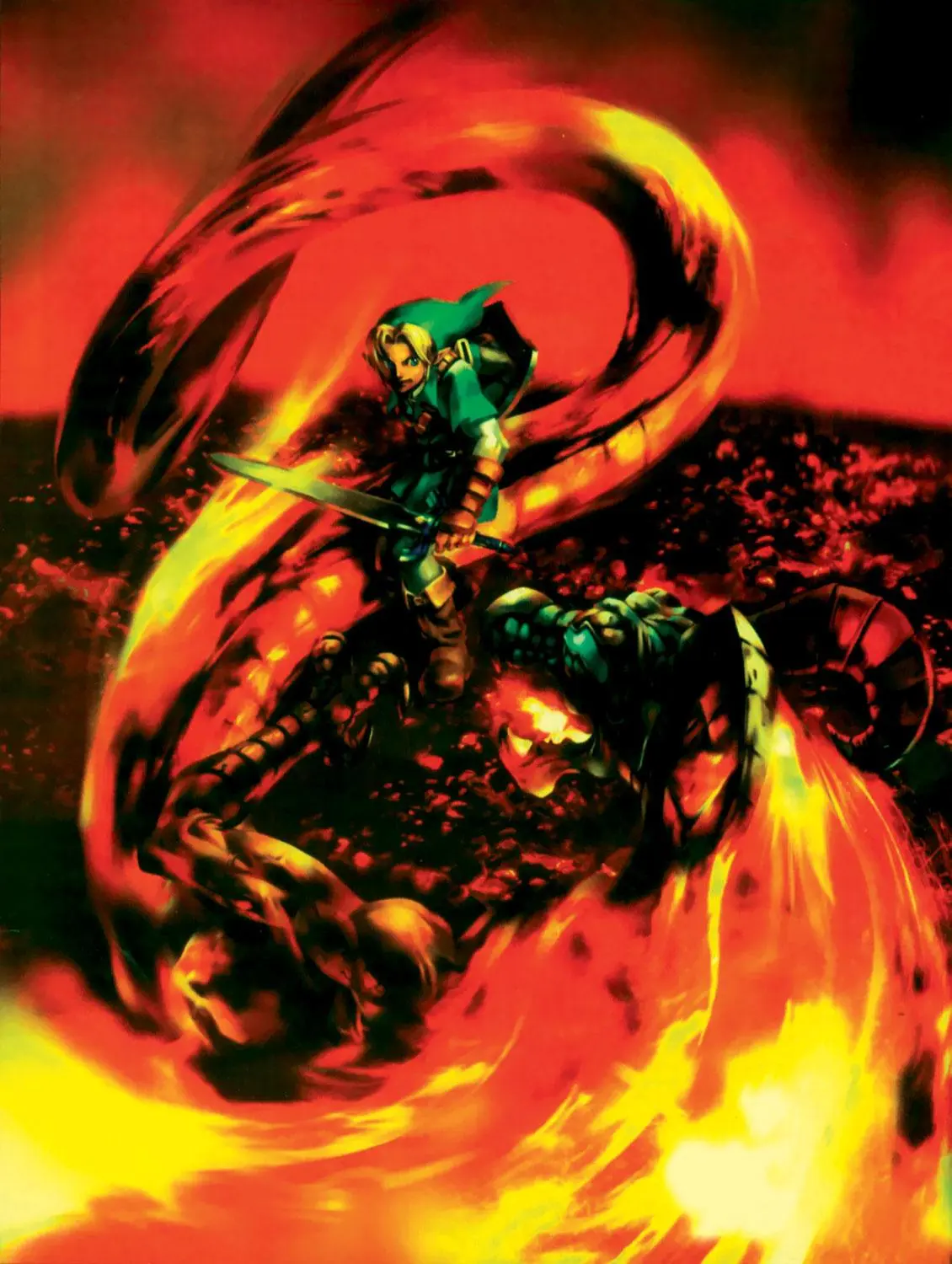
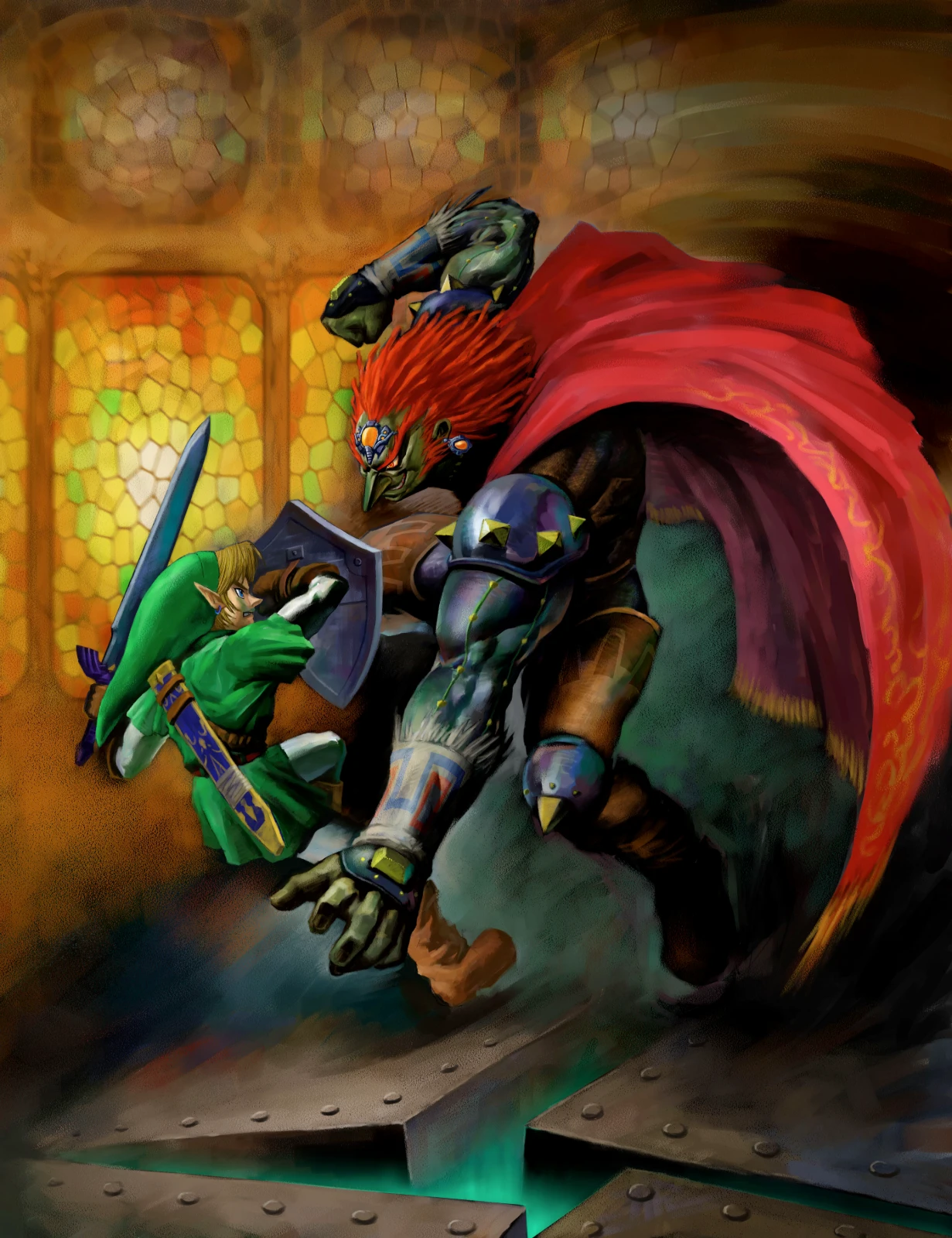
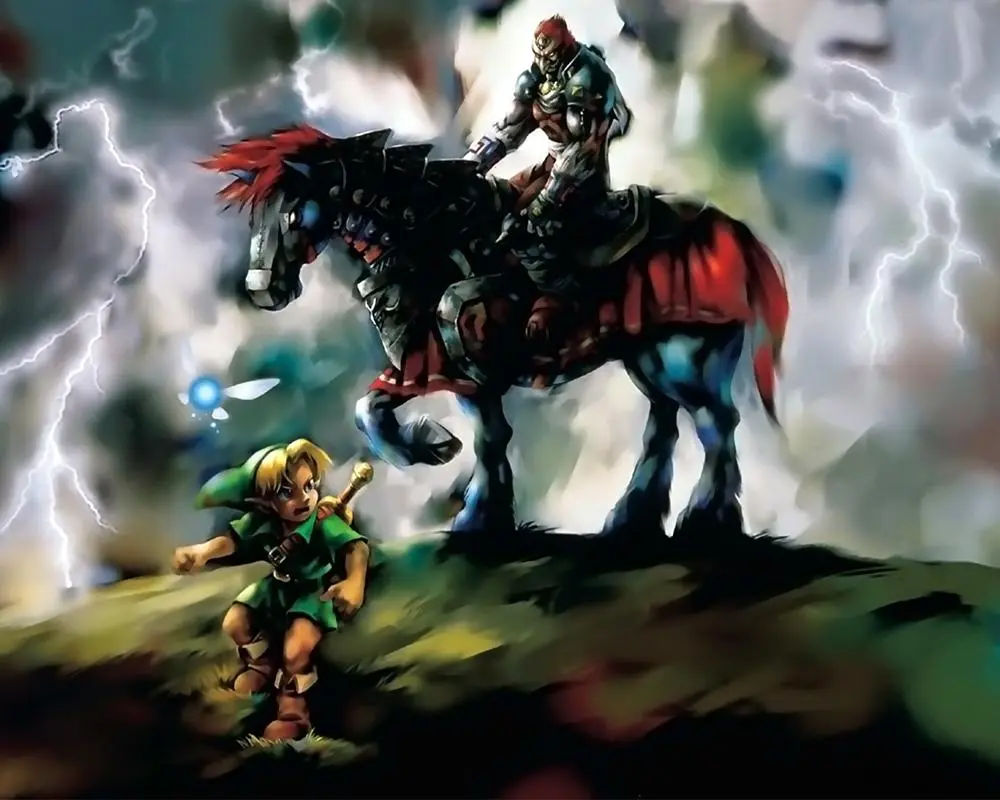
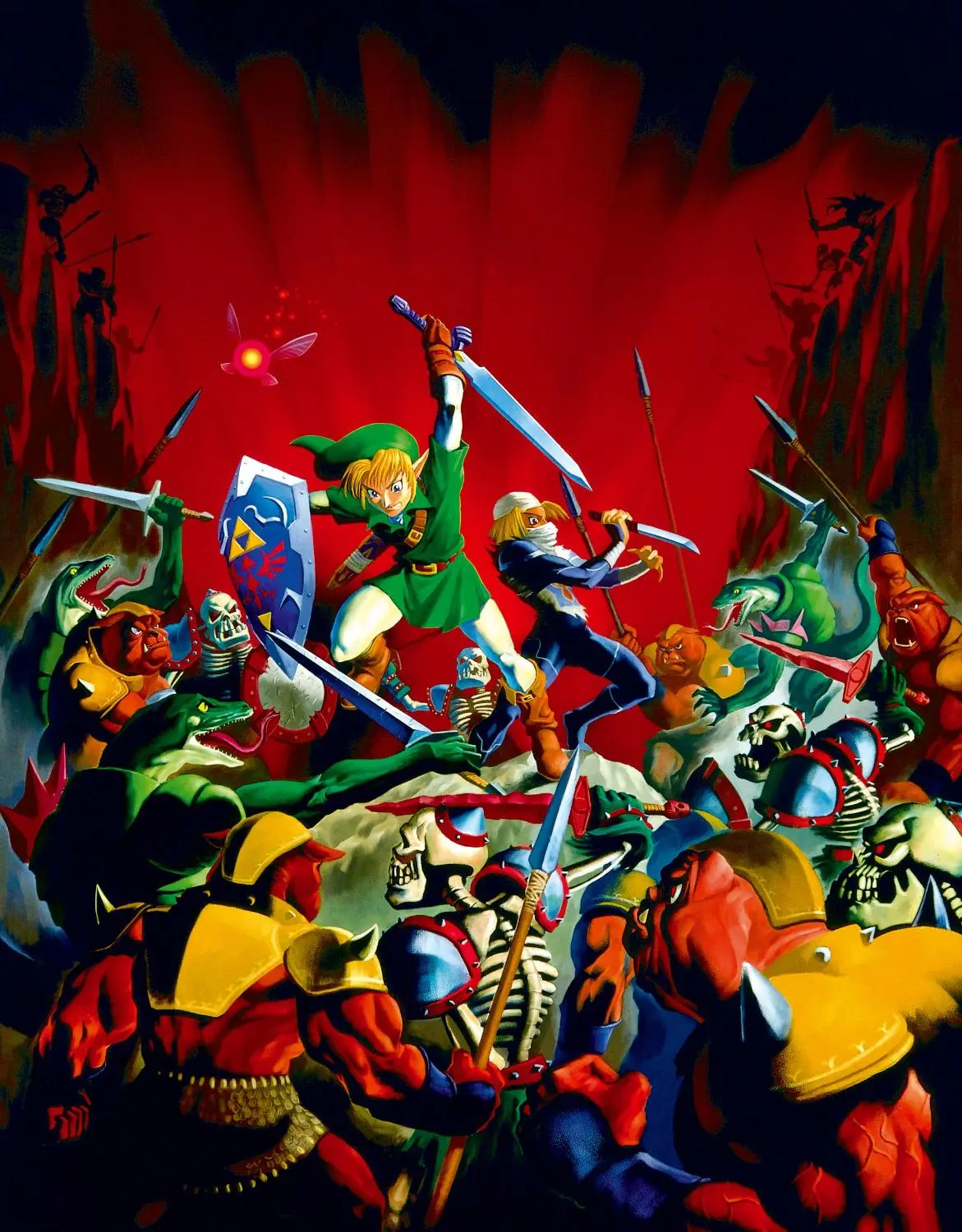
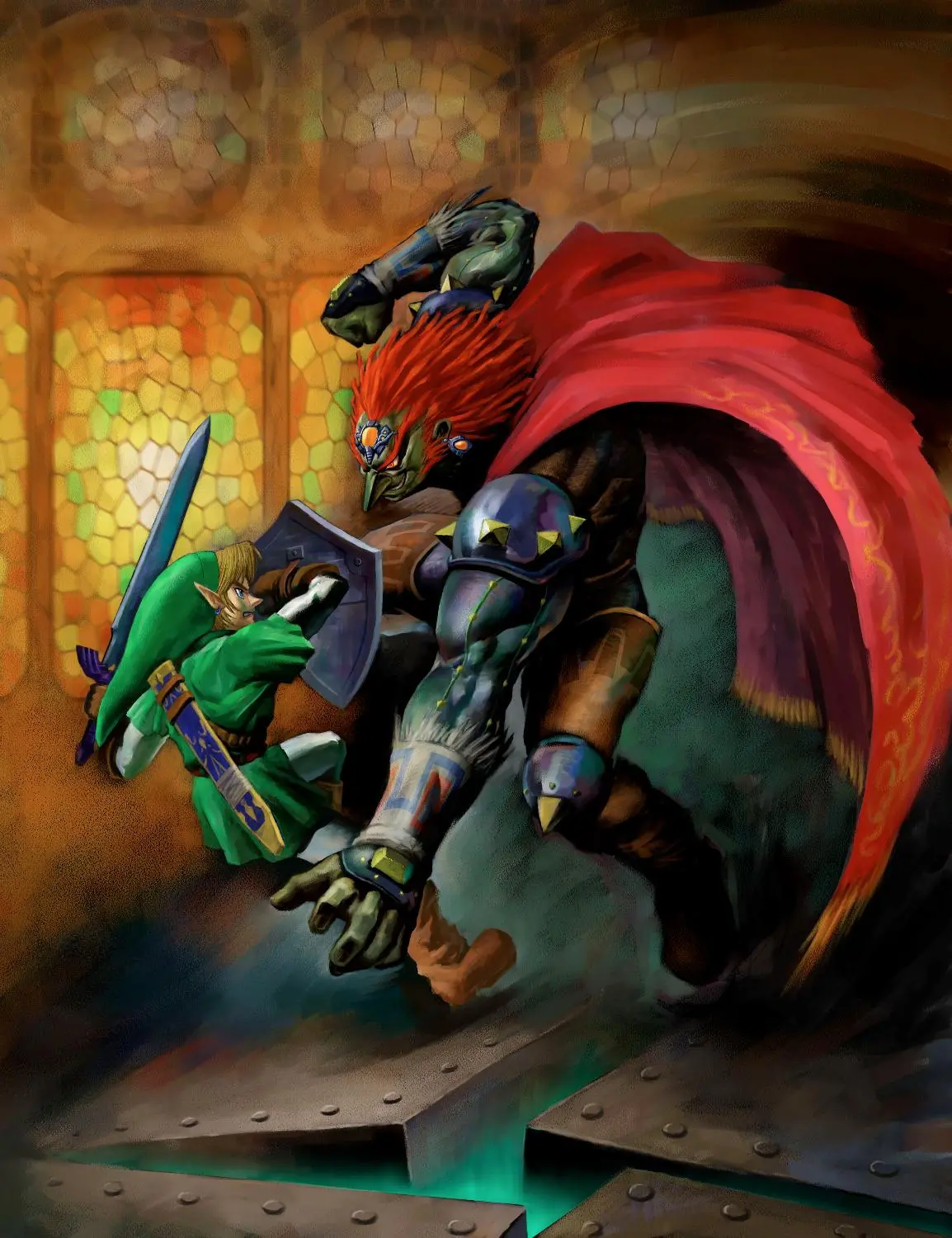
Official art of Link fighting Ganondorf.
When did Ocarina of Time come out?
On 21 November 1998 in Japan, 23 November 1998 in North America, 11 December 1998 in Europe and 18 December 1998 in Australia, all on Nintendo 64. More →
Who made Ocarina of Time?
Nintendo EAD in Kyoto, with Shigeru Miyamoto producing and five directors: Toru Osawa (who also wrote the script), Yoshiaki Koizumi, Eiji Aonuma, Yoichi Yamada and Toshio Iwawaki. Koji Kondo wrote the music. More →
How many dungeons are in Ocarina of Time?
Three as young Link (the Deku Tree, Dodongo’s Cavern and Jabu-Jabu’s Belly), five temples as adult Link (Forest, Fire, Water, Shadow and Spirit, the last played across both ages) and Ganon’s Castle at the end. The Bottom of the Well and the Ice Cavern are smaller dungeons you also need to clear, and the Gerudo Training Ground is optional. More →
Who is Sheik?
Princess Zelda in disguise. She dressed as one of the Sheikah to hide from Ganondorf for seven years, and she reveals herself once Link has woken the five Sages. More →
How many songs can you play on the ocarina?
Twelve: six everyday songs such as Zelda’s Lullaby, Epona’s Song and the Song of Time, and six warp songs taught by Sheik. There is also the Scarecrow’s Song, a tune you make up yourself. More →
What is Master Quest?
A remixed, harder version of the game with rearranged dungeons. It grew out of Ura Zelda, an expansion planned for the Nintendo 64DD disk drive, and was finally released on a GameCube bonus disc in 2002 and 2003. It is also included in Ocarina of Time 3D. More →
Is Ocarina of Time the highest-rated game ever?
It holds Metacritic’s top score, 99, and it was the first game to get a perfect 40 out of 40 from Japan’s Famitsu magazine. More →
How many copies did Ocarina of Time sell?
Eiji Aonuma gave the worldwide figure as 7.6 million in 2004. In Japan it sold 1.14 million. In the US it sold 2.5 million copies in 1998 alone. More →
Where does Ocarina of Time fit in the Zelda timeline?
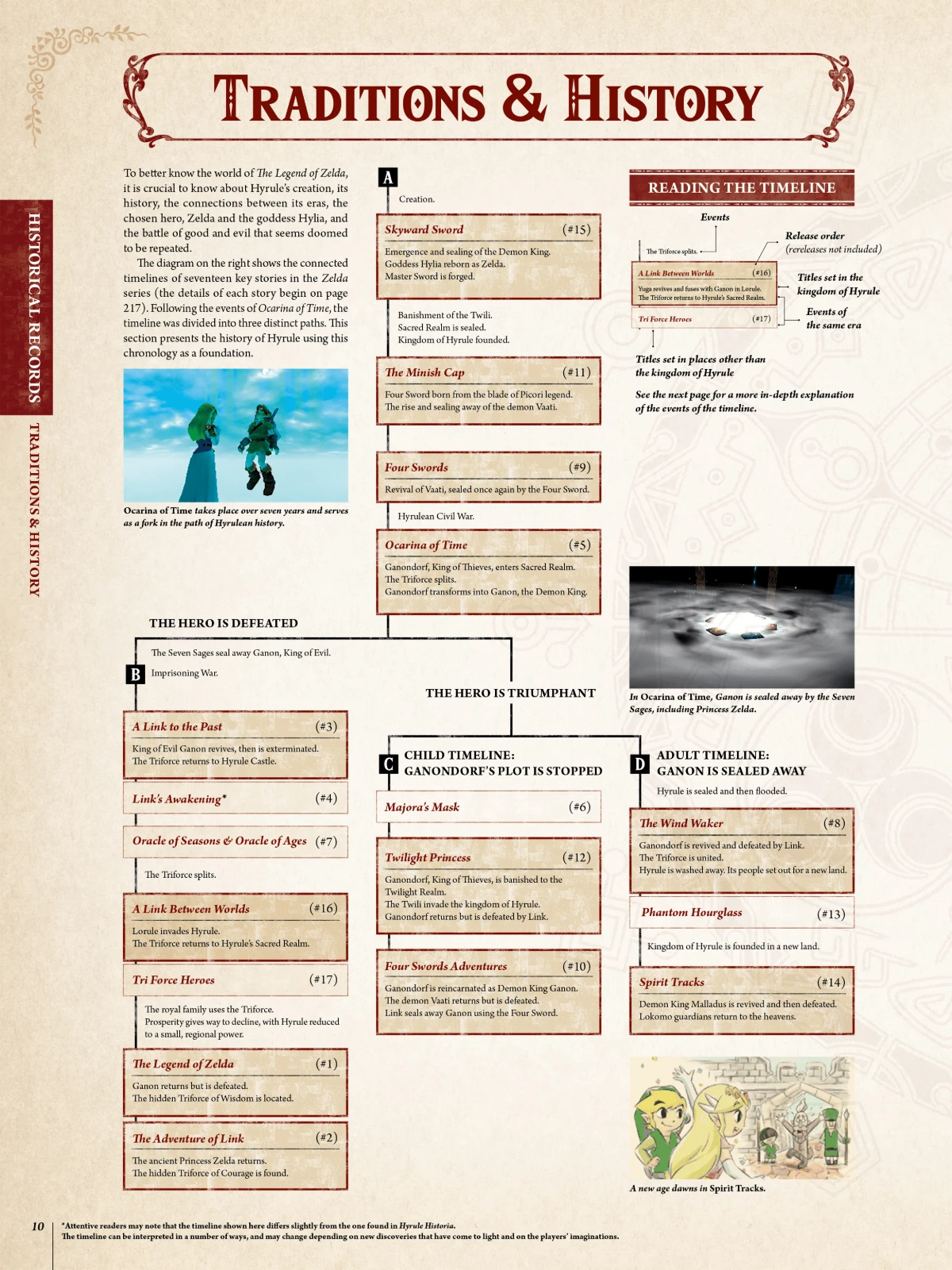
Right at the fork. According to Hyrule Historia (2011), the timeline splits three ways after this game: one where Link is defeated, one following the child Link sent home at the end, and one following the adult world he leaves behind. More →
Where can I play it today?
The Nintendo 64 original is part of Nintendo Switch Online + Expansion Pack (since 25 October 2021). The 3DS remake came out in 2011, and a full Nintendo Switch 2 remake launched on 5 November 2026. More →
Plot / Story
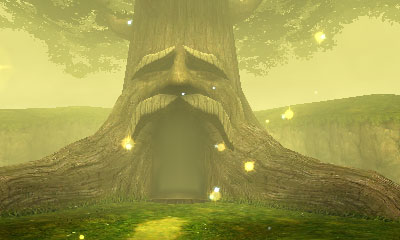
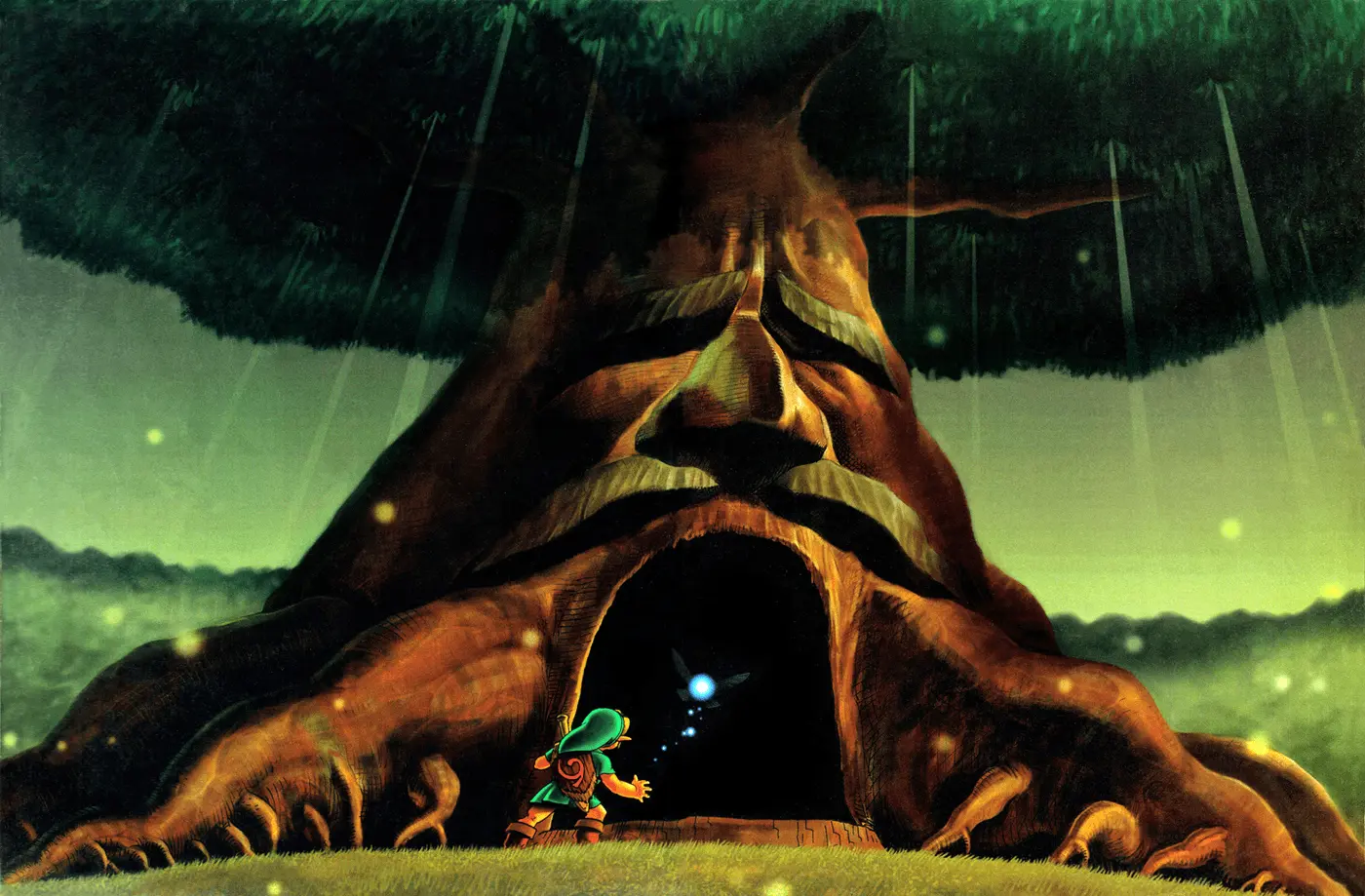
The Great Deku Tree, guardian of the Kokiri (Ocarina of Time 3D).
Before Hyrule had a king, three goddesses came down to a world of chaos. Din, goddess of power, shaped the red earth; Nayru, goddess of wisdom, gave the world its laws; and Farore, goddess of courage, filled it with life. When they left, they left behind the Triforce, a golden triangle that grants the wish of whoever lays hands on it, sealed away in a hidden place called the Sacred Realm. That is the legend the Great Deku Tree tells, and everyone in Hyrule half believes it.
Deep in the forest live the Kokiri, children who never grow up, each one watched over by a fairy and all of them under the care of the Deku Tree. All except one. Link has no fairy, the other children never let him forget it, and lately he has been having the same nightmare every night: a stormy castle gate, a girl fleeing on horseback, and a towering man in black armour turning to look straight at him.
That man is real. He is Ganondorf, king of the Gerudo, a desert people of women warriors who see only one boy born to them in a century. He has sworn loyalty to the King of Hyrule, and he is lying. What he wants is the Triforce, and the way into the Sacred Realm runs through a forest boy who does not yet know who he is.
A fairy at last
The story starts with a knock at Link’s door, or rather a fairy flying into it. Navi has been sent by the Great Deku Tree, and the message is urgent: the old guardian has been cursed by a wicked man of the desert and needs the boy without a fairy. Mido, the self-appointed boss of the Kokiri, will not let Link past without a sword and shield, so the first job is to scrape together the Kokiri Sword and a Deku Shield.
Inside the hollow Deku Tree, Link climbs past giant spiders and fights Queen Gohma, the parasite gnawing at its roots. It is too late. The tree tells him the legend of the goddesses and the Triforce, names Ganondorf as the man who cursed him, hands over the Kokiri’s Emerald and dies. On the bridge out of the forest, Link’s best friend Saria is waiting with a parting gift, her Fairy Ocarina.
Navi arrives to wake Link.Saria says goodbye on the bridge out of Kokiri Forest.
The princess in the garden
Out on Hyrule Field, an owl called Kaepora Gaebora offers advice (at length), and beyond the drawbridge Castle Town is busy and bright. Link befriends Malon from Lon Lon Ranch, wakes her snoozing father Talon, and sneaks past the castle guards to reach a private courtyard where a girl his own age is spying through a window.
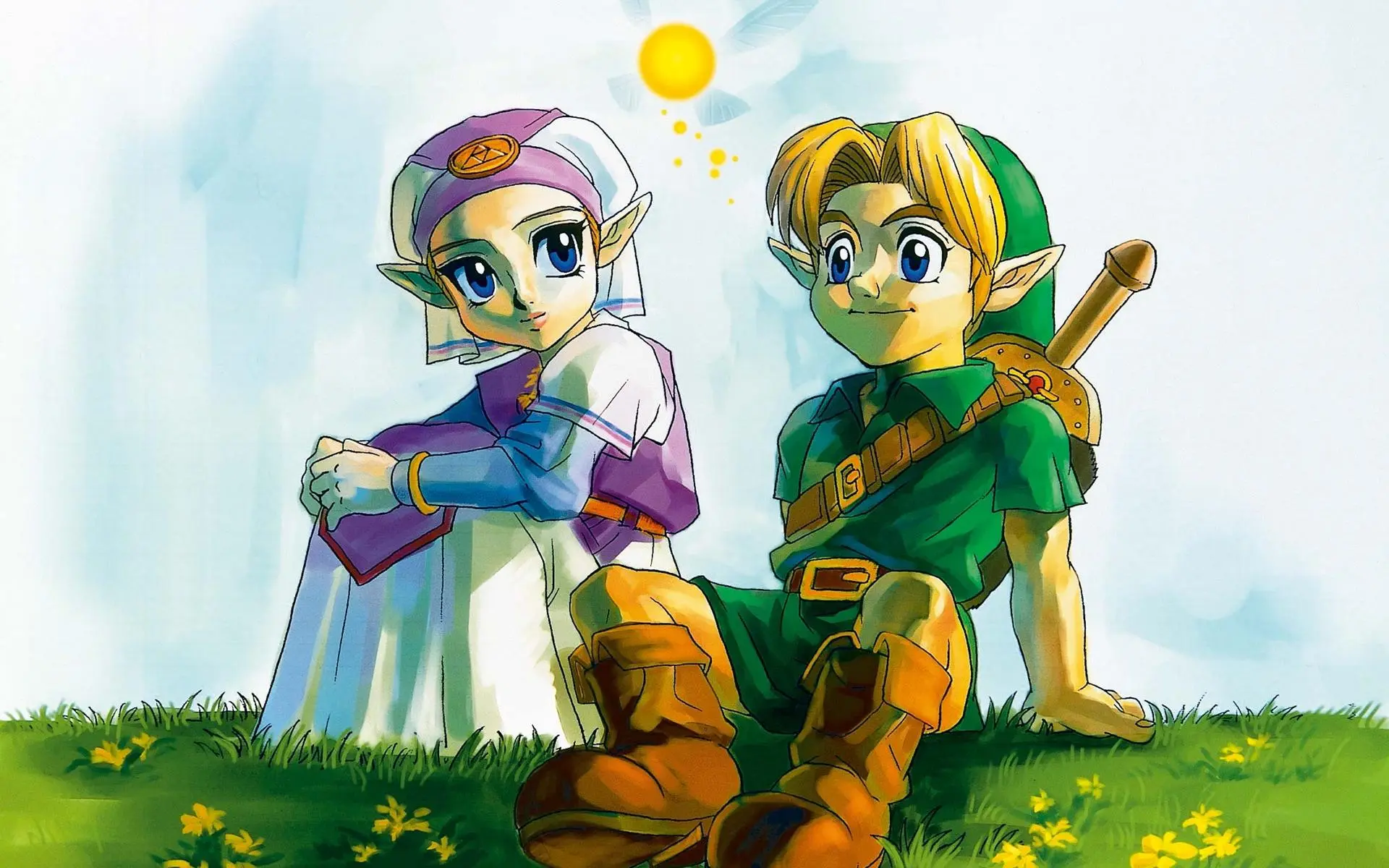
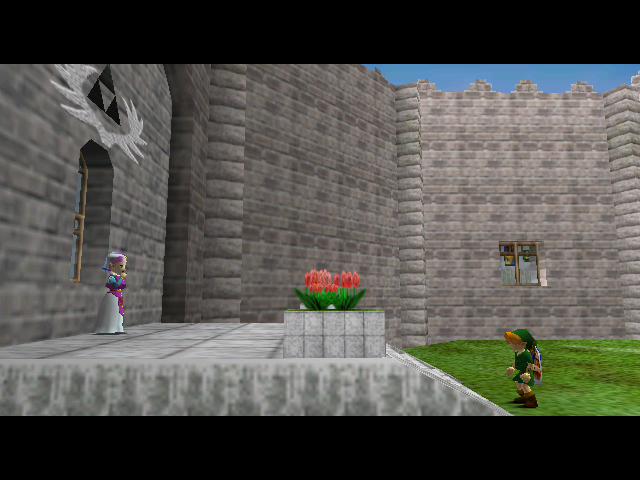
She is Princess Zelda, and she has been dreaming too: dark clouds swallowing Hyrule, then a light from the forest that parts them, carrying a green stone and followed by a fairy. She is sure the clouds are Ganondorf, and she lets Link peek at him through a window as he pledges loyalty to her father. If Link can gather the three Spiritual Stones, Zelda reasons, they can reach the Triforce first. Her guardian Impa teaches him Zelda’s Lullaby as proof of the royal family’s trust and shows him out.
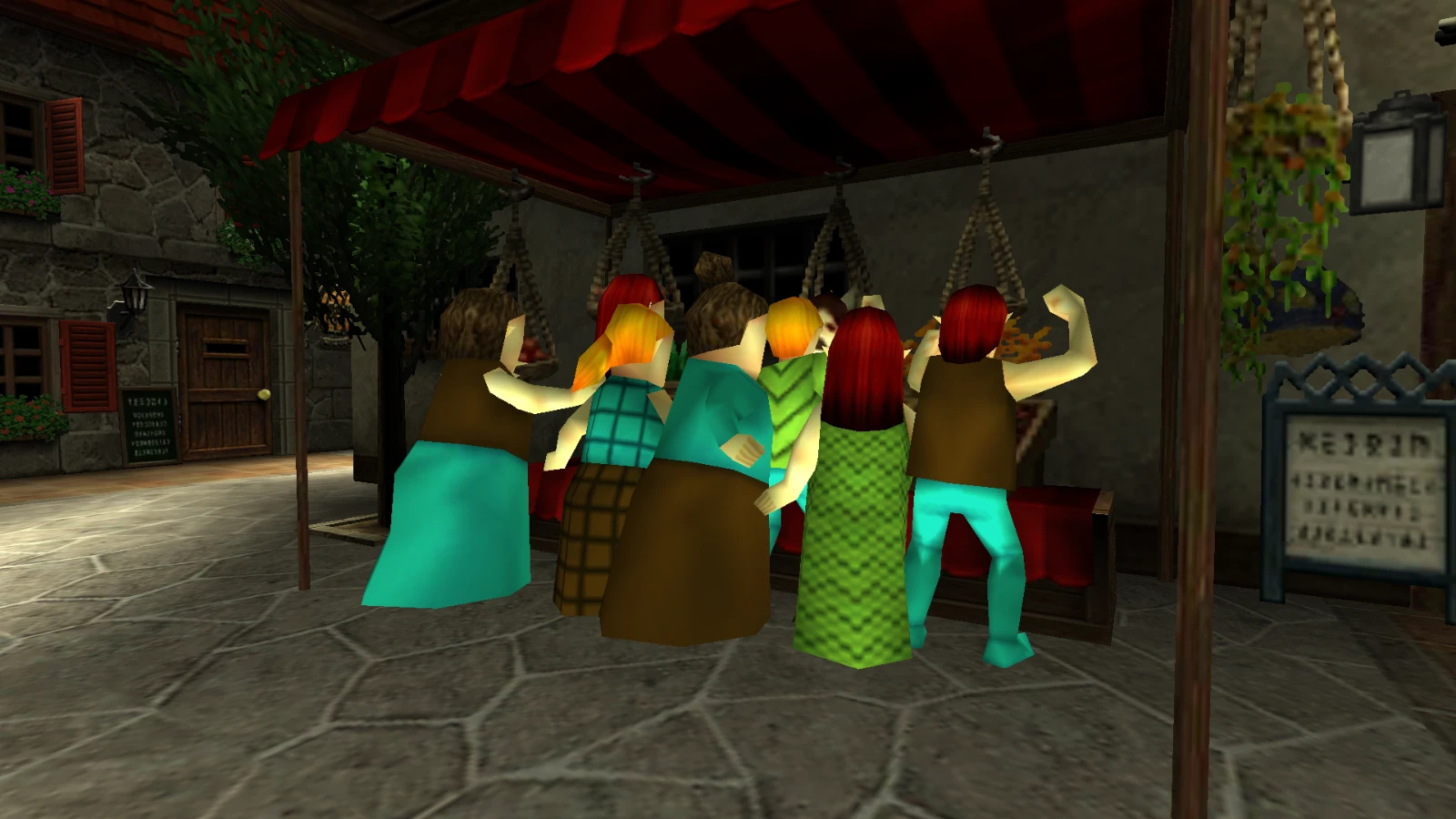
Meeting Princess Zelda in the castle courtyard.Castle Town market before the fall.
Two more Spiritual Stones
Up on Death Mountain the Gorons, rock-eating giants, are starving. Ganondorf demanded their treasure, the Goron’s Ruby, and when their leader Darunia refused he sealed off Dodongo’s Cavern, the Gorons’ larder. Darunia is in a foul mood until Link plays Saria’s Song and the big man dances himself happy. He hands over the Goron Bracelet, Link clears out the cavern and its giant King Dodongo, and Darunia gives him the Ruby and names him his sworn brother.
In the waterfalls of Zora’s Domain, King Zora is fretting about his missing daughter. Princess Ruto has gone missing inside Lord Jabu-Jabu, the huge fish god the Zoras worship, who has turned sick and sullen. Link has to carry the haughty princess through the creature’s insides and defeat the parasite Barinade. Ruto rewards him with the Zora’s Sapphire, and only afterwards mentions that Zora princesses give it to the boy they intend to marry.
Goron City inside Death Mountain.Lord Jabu-Jabu, the Zora fish god.
The Door of Time
Link gets back to the castle just in time to watch his nightmare come true. Ganondorf has turned on the king, and Zelda and Impa gallop out across the drawbridge in the rain. As they pass, Zelda throws something into the moat. Ganondorf thunders after them on a black horse and swats the boy aside.
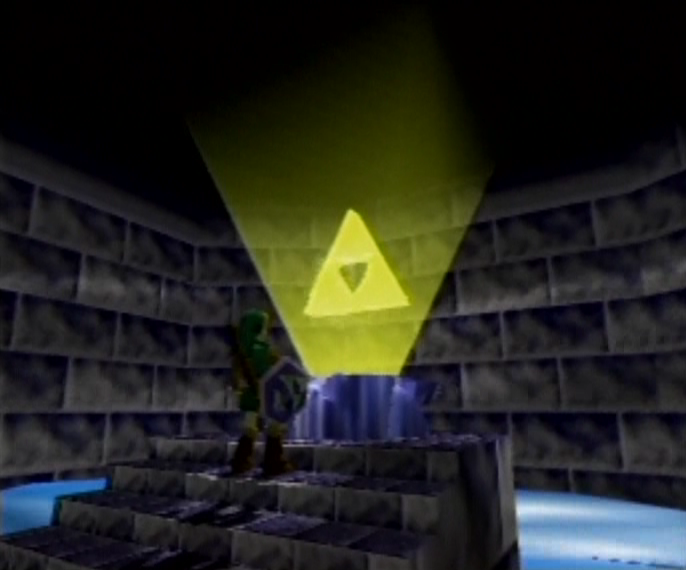
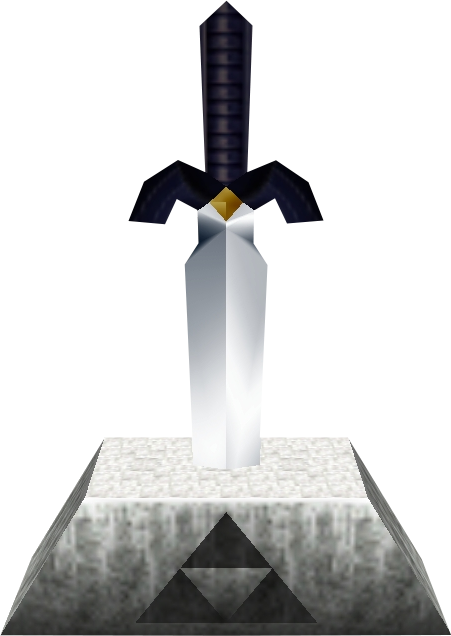
What Zelda threw was the Ocarina of Time, the royal family’s treasure, and with it a message teaching Link the Song of Time. In the Temple of Time he sets the three stones on the altar and plays. The Door of Time slides open, and behind it the Master Sword waits in its pedestal. Link pulls the blade free and the world goes white. Ganondorf, who had followed him all along, strolls past into the Sacred Realm, thanking the boy for opening the door.
Ganondorf chases Zelda and Impa from the castle.Link draws the Master Sword in the Temple of Time.
Seven years later
Link wakes as a young man in the Chamber of Sages, deep in the Sacred Realm. Rauru, the ancient Sage of Light, explains: Link was too young to be the Hero of Time, so his spirit was sealed away for seven years until he was old enough to wield the sword. In that time Ganondorf took the Triforce and made himself King of Evil.
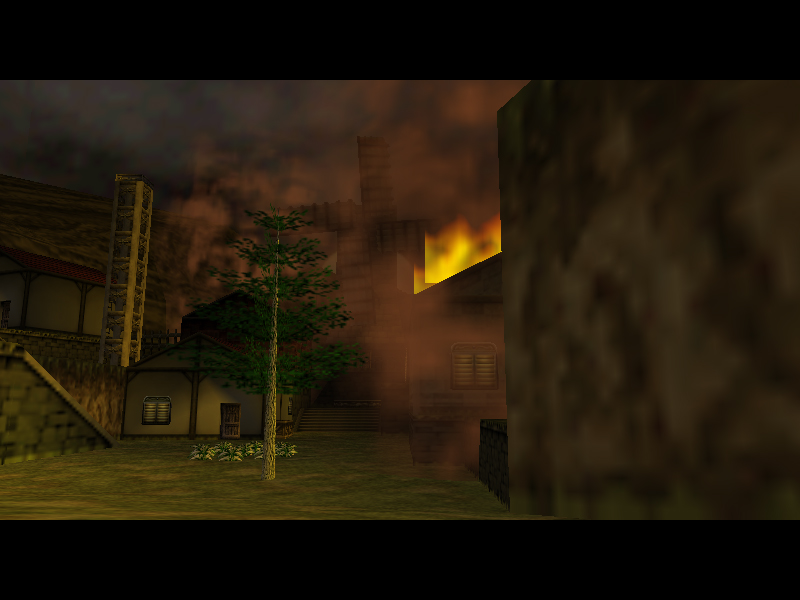
The Hyrule Link returns to is unrecognisable. Castle Town is a ruin crawling with ReDeads, the castle has been replaced by a black fortress, and a mysterious young Sheikah called Sheik is waiting in the temple. Sheik tells Link the legend of five more Sages hidden in five temples, in a deep forest, on a high mountain, under a vast lake, in the house of the dead and inside a goddess of the sand, and starts teaching him the warp songs that lead to each.
Rauru in the Chamber of Sages.Castle Town market, seven years on.
Forest and fire
The Kokiri Forest is overrun with monsters and Saria is missing. Mido, still a child, does not recognise the grown-up Link at all. In the Sacred Forest Meadow, Sheik plays the Minuet of Forest, and inside the haunted Forest Temple Link chases four Poe Sisters through twisted corridors before facing Phantom Ganon, a spectre that rides out of the paintings. Saria wakes as the Sage of Forest. Afterwards the sprout of a new Deku Tree tells Link the truth: he was never a Kokiri, but a Hylian baby carried into the forest by his dying mother during a war.
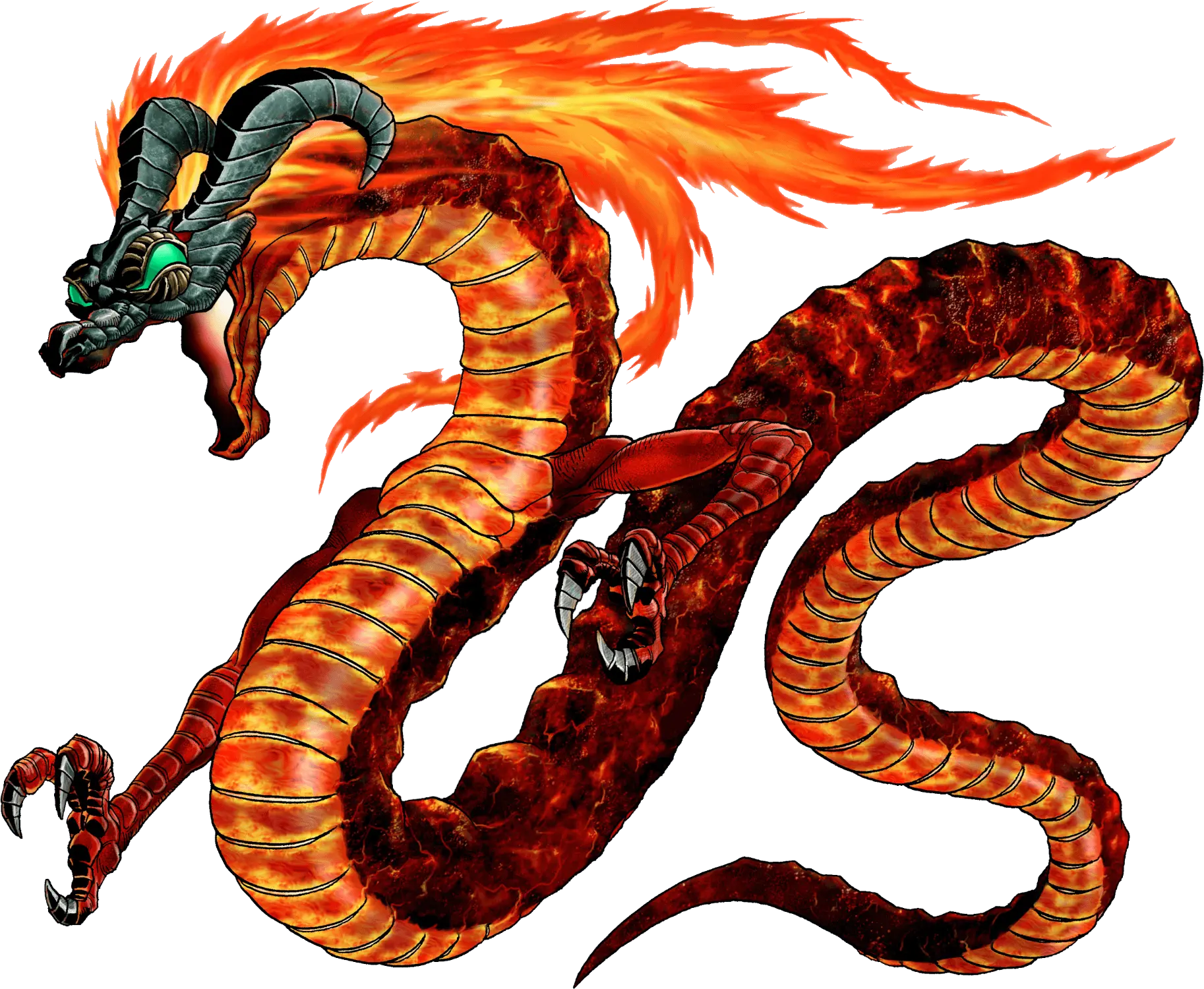
On Death Mountain, Ganondorf has revived Volvagia, a fire dragon that once preyed on the Gorons, and imprisoned the tribe in the Fire Temple to be fed to it. Darunia has gone in alone. Link frees the Gorons, finds the Megaton Hammer and smashes Volvagia into submission, and Darunia is revealed as the Sage of Fire. While Link slept, the chief had a son, and he named him Link.
The Forest Temple.The Fire Temple inside Death Mountain Crater.
Water, shadow and spirit
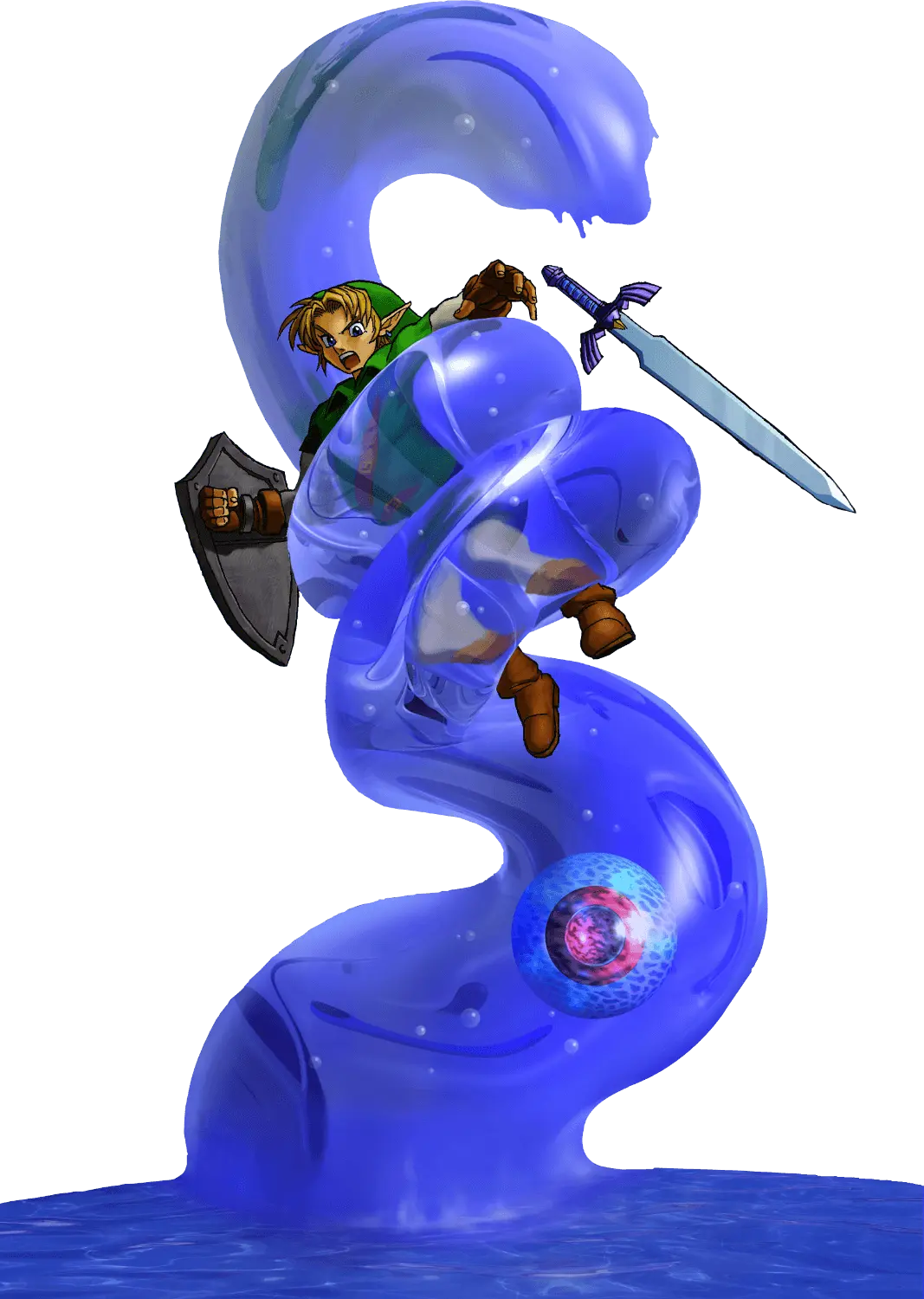
Zora’s Domain has frozen solid and King Zora is trapped in red ice. Ruto has gone to the Water Temple beneath Lake Hylia, and Link follows wearing Iron Boots and a Zora Tunic. The Water Temple is the game’s most notorious maze, all rising and falling water levels, with a shadowy double of Link waiting in a misty room and the watery Morpha at the bottom. Ruto becomes the Sage of Water and the lake fills again.
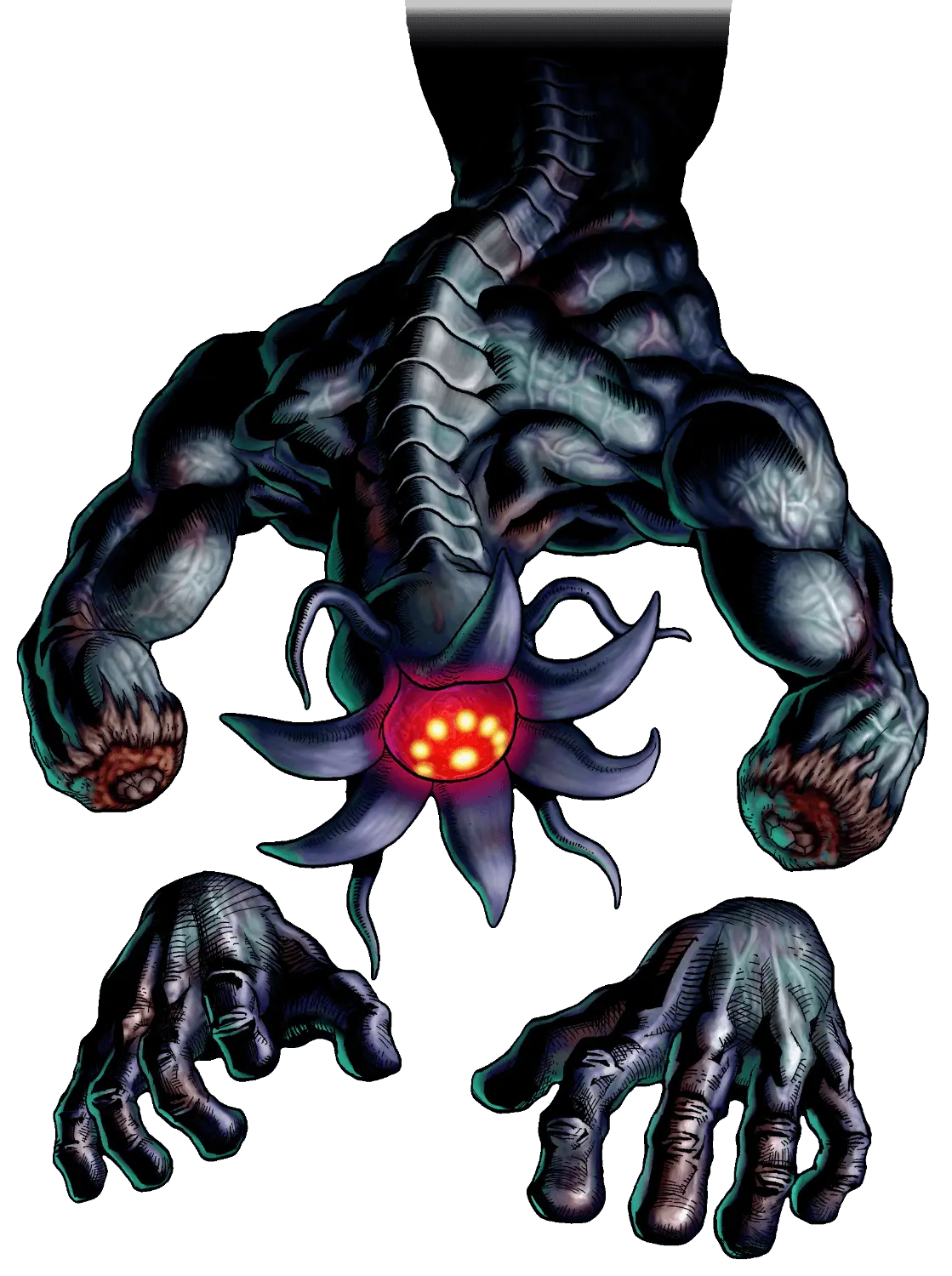
Kakariko Village is next, and it is on fire. Something invisible has broken out of the village well, the evil Impa sealed away years ago, and fled to the Shadow Temple under the graveyard. Link has to return to childhood to find the Lens of Truth in the Bottom of the Well before he can see through the temple’s illusions and beat the monster, Bongo Bongo. Impa is the Sage of Shadow.
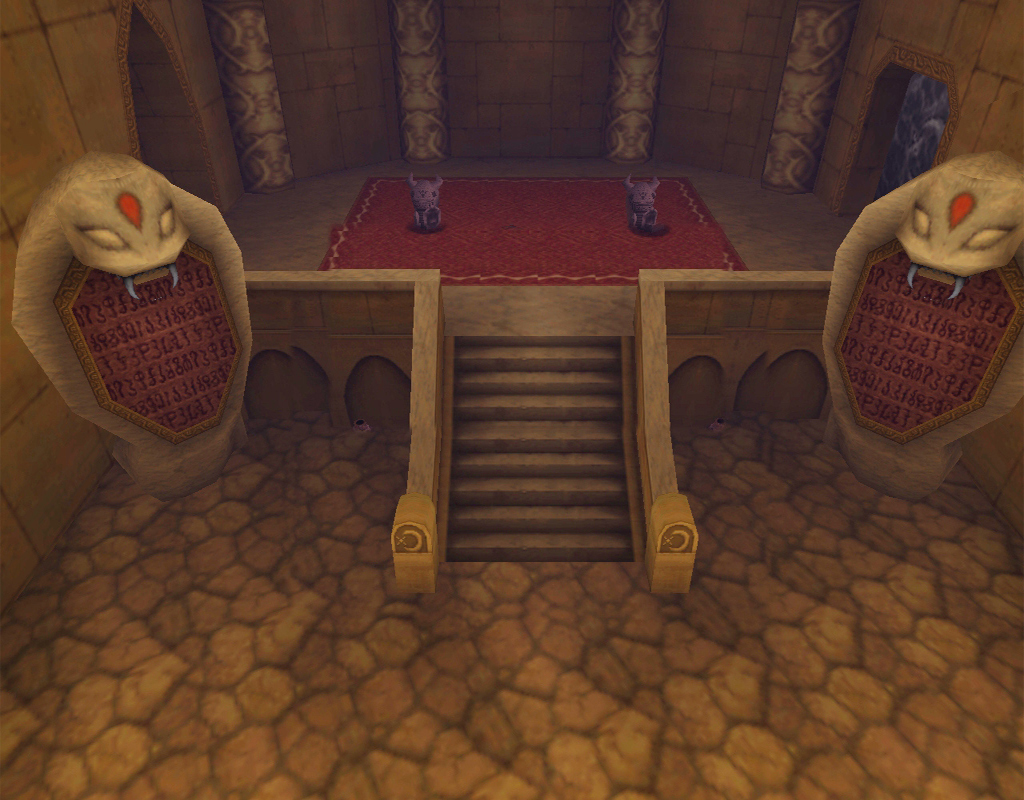
The last temple sits in the desert beyond the Gerudo Fortress and a sandstorm called the Haunted Wasteland, and it needs both Links. As a child, Link meets Nabooru, a Gerudo thief who despises Ganondorf, and agrees to fetch her the Silver Gauntlets, only to watch her snatched away by the witches Koume and Kotake. As an adult he finds her brainwashed inside a suit of armour, then defeats the witches, who merge into the fearsome Twinrova. Nabooru wakes as the Sage of Spirit.
The Water Temple beneath Lake Hylia.Kakariko Village burns.The Spirit Temple, carved into the Desert Colossus.
The seventh Sage
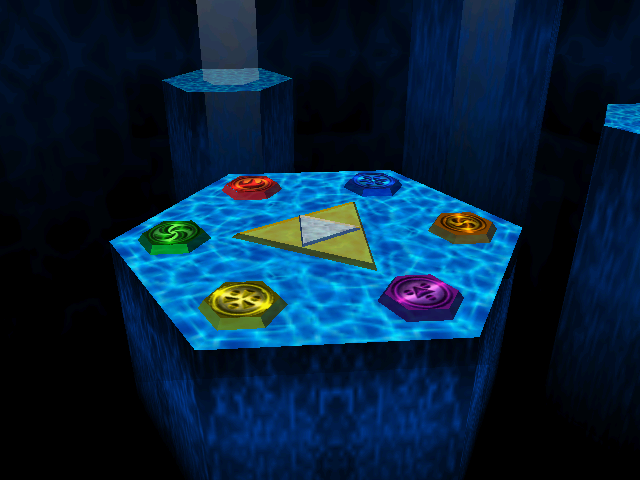
Back at the Temple of Time, Sheik explains what went wrong. The Triforce only stays whole for someone whose heart balances power, wisdom and courage. When Ganondorf touched it, it broke apart: he kept the Triforce of Power, and the other two pieces went to the two people destiny had chosen. Link carries Courage. Wisdom belongs to the seventh Sage, and Sheik unwinds the disguise to reveal Princess Zelda.
She gives Link the Light Arrows, the one weapon that can pierce Ganondorf’s magic, and for about thirty seconds it looks as if things are going to be all right. Then the ground shakes, a crystal closes around Zelda, and Ganondorf’s voice invites Link to come and get her.
Sheik reveals her true identity.
Ganon
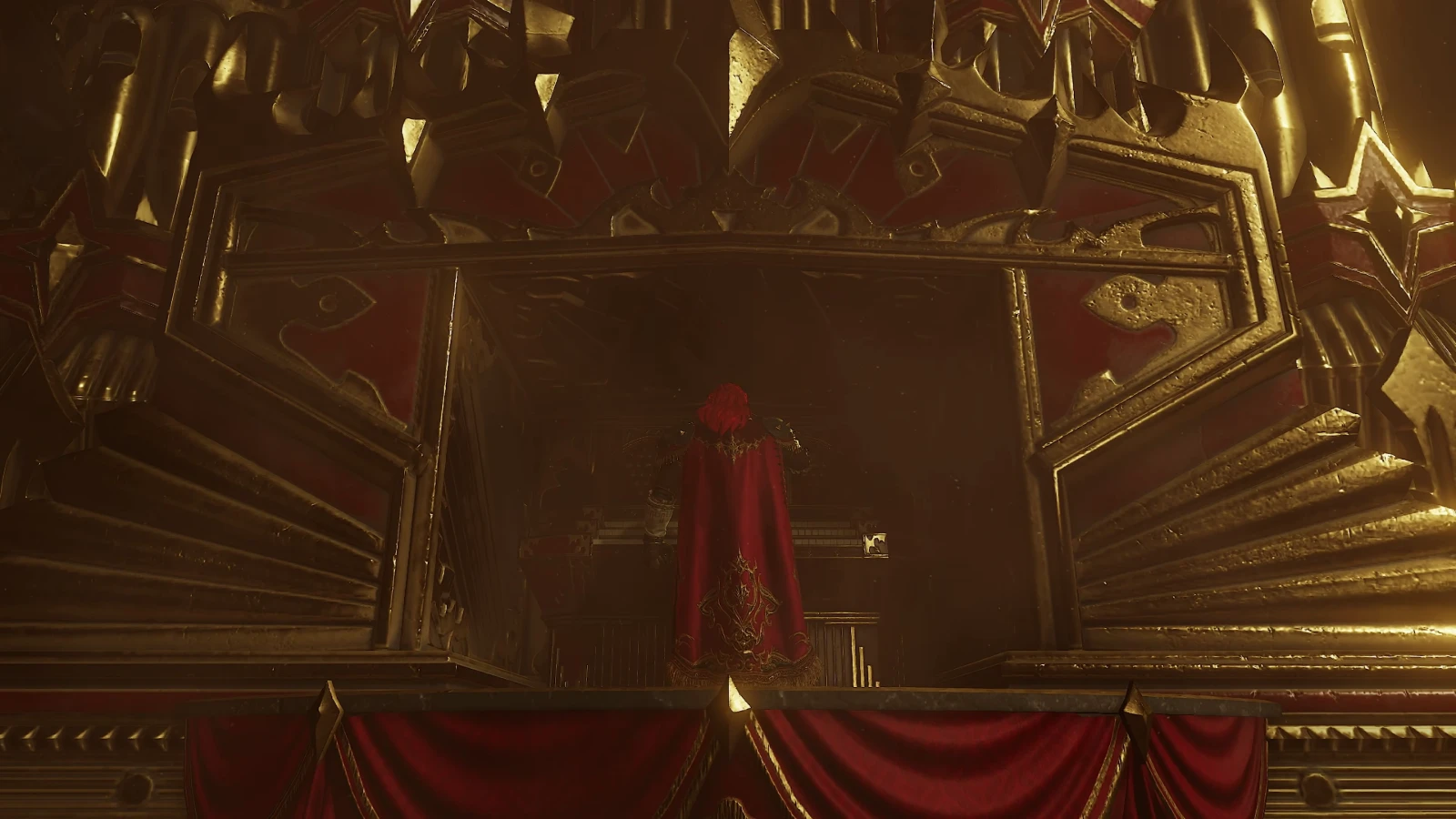
The six Sages raise a rainbow bridge to Ganon’s Castle, and Link fights through six barrier trials before climbing to the top of the tower, where Ganondorf is playing the organ. Their duel is a game of tennis with balls of dark energy, finished with Light Arrows and the Master Sword. As he falls, Ganondorf brings the tower down with him, and Link and Zelda race out of the collapsing castle together.
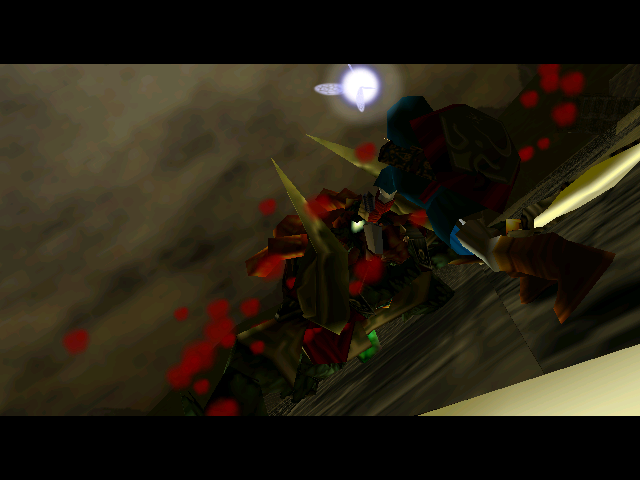
In the rubble, Ganondorf rises again as Ganon, a giant boar-like beast with two swords, and knocks the Master Sword out of Link’s hands. Once Link has it back, Zelda holds the monster still with her own power while Link lands the final blow, and the Sages seal Ganon away. His last words are a curse on Zelda, the Sages and their descendants: one day the seal will break, and he will take his revenge.
Ganondorf at the organ in his tower.The final battle with Ganon.
Back to the beginning
With the King of Evil sealed, Zelda uses the Ocarina of Time to send Link back to his own time, to live the childhood he lost. He returns the Master Sword to its pedestal, and Navi, her work done, quietly flies away. The last scene is the first one again: a small boy in green walking into a castle courtyard, where a princess at a window turns around.
That simple, bittersweet ending has enormous consequences. Because Link goes back to warn Zelda, Hyrule now has two futures: an adult world that lost its hero, and a child’s world where the hero lived on. Nintendo’s official history, Hyrule Historia, later added a third, in which Link is defeated by Ganon. Almost every Zelda since sits on one of those three branches.
The ending: Link and Zelda meet again in the courtyard.
Dungeons in Ocarina of Time
Ocarina of Time splits its dungeons between the two Links. Young Link tackles three, collecting the Spiritual Stones; adult Link clears five temples to wake the Sages, with the Spirit Temple needing both ages. Smaller dungeons fill the gaps, and the adventure ends in Ganon’s Castle. Each main dungeon hides a Map, a Compass, a special item and a boss with a Heart Container.
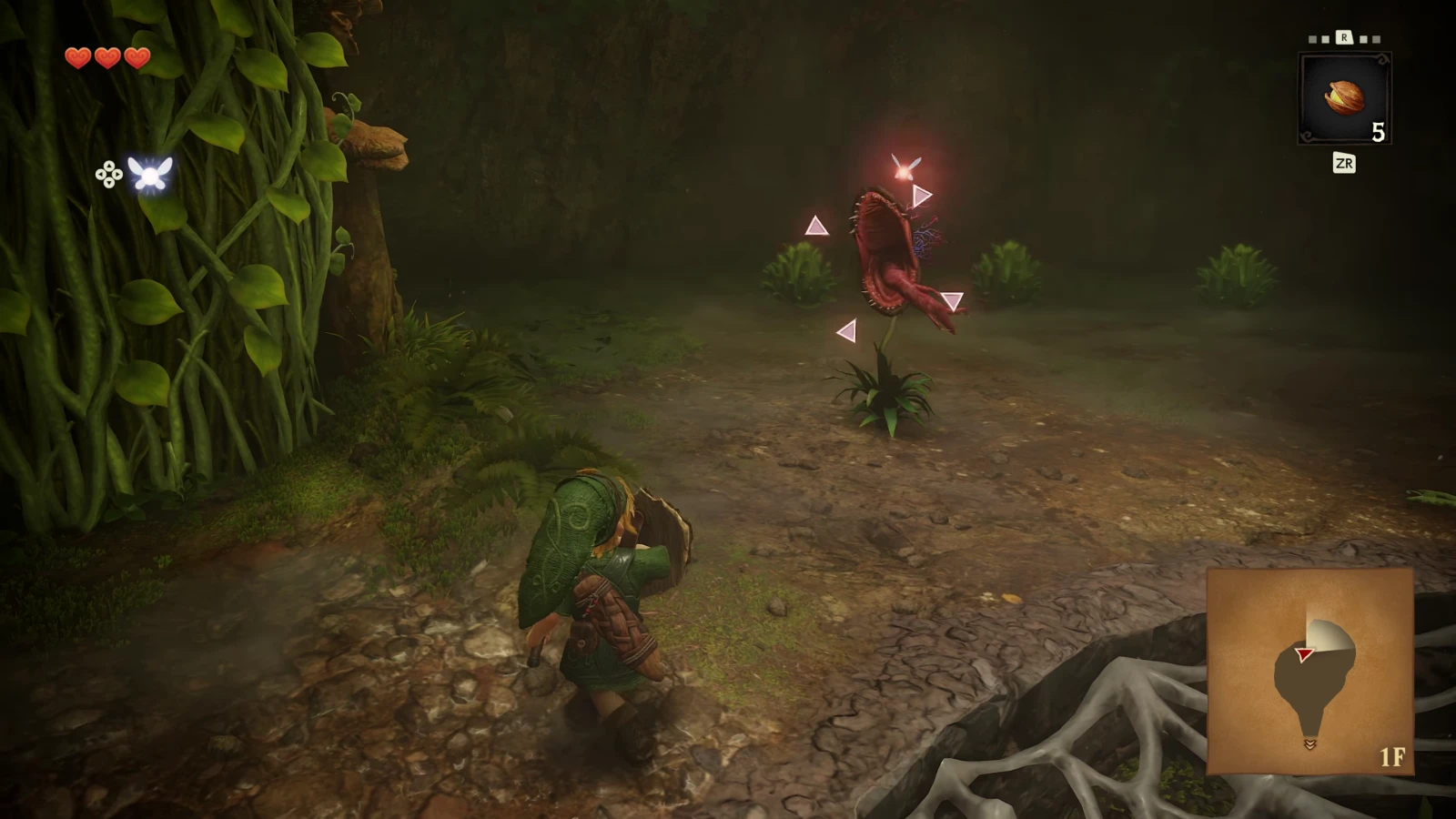
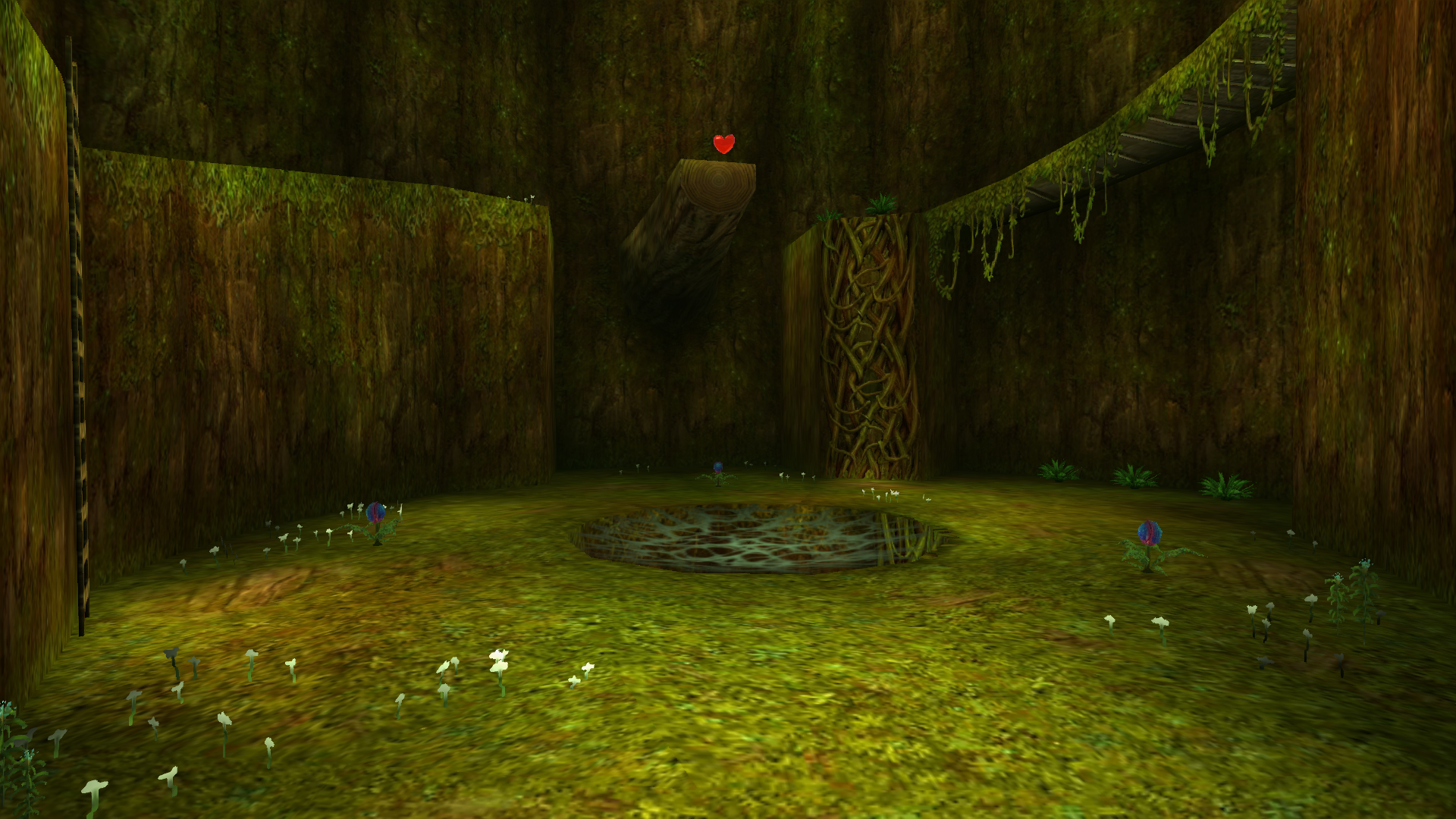
Inside the Deku TreeYoung Link · Kokiri ForestSpider webs and Deku Babas inside the hollow guardian. Item: Fairy Slingshot. Boss: Queen Gohma. Reward: Kokiri’s Emerald.
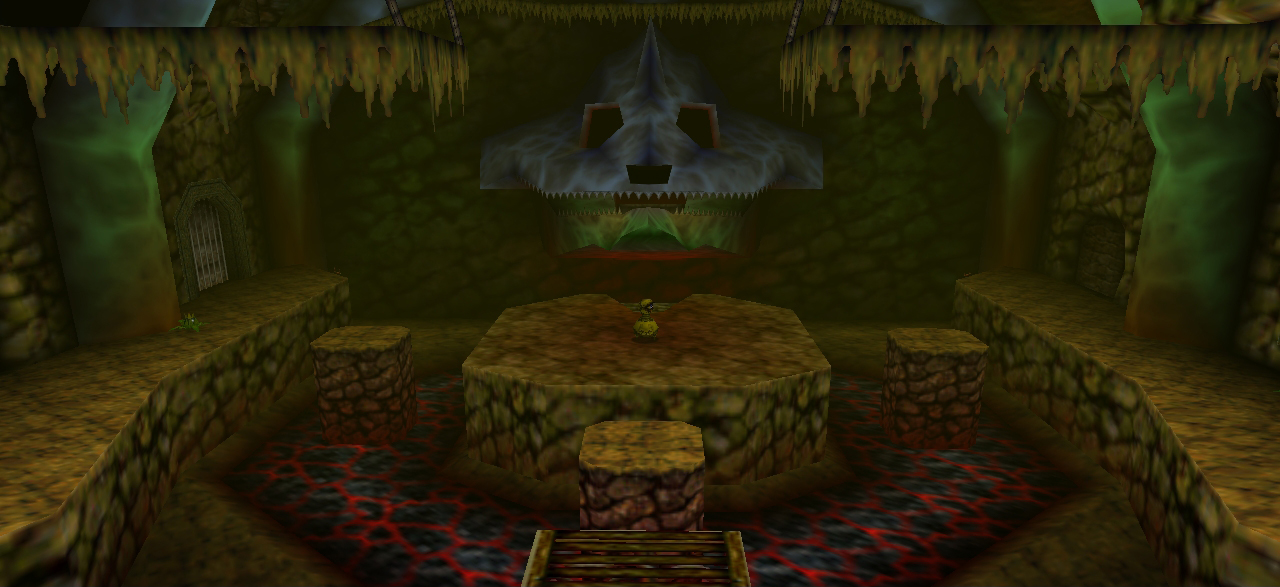
Dodongo’s CavernYoung Link · Death MountainA volcanic cave inside a giant skull. Item: Bomb Bag. Boss: King Dodongo. Reward: Goron’s Ruby.
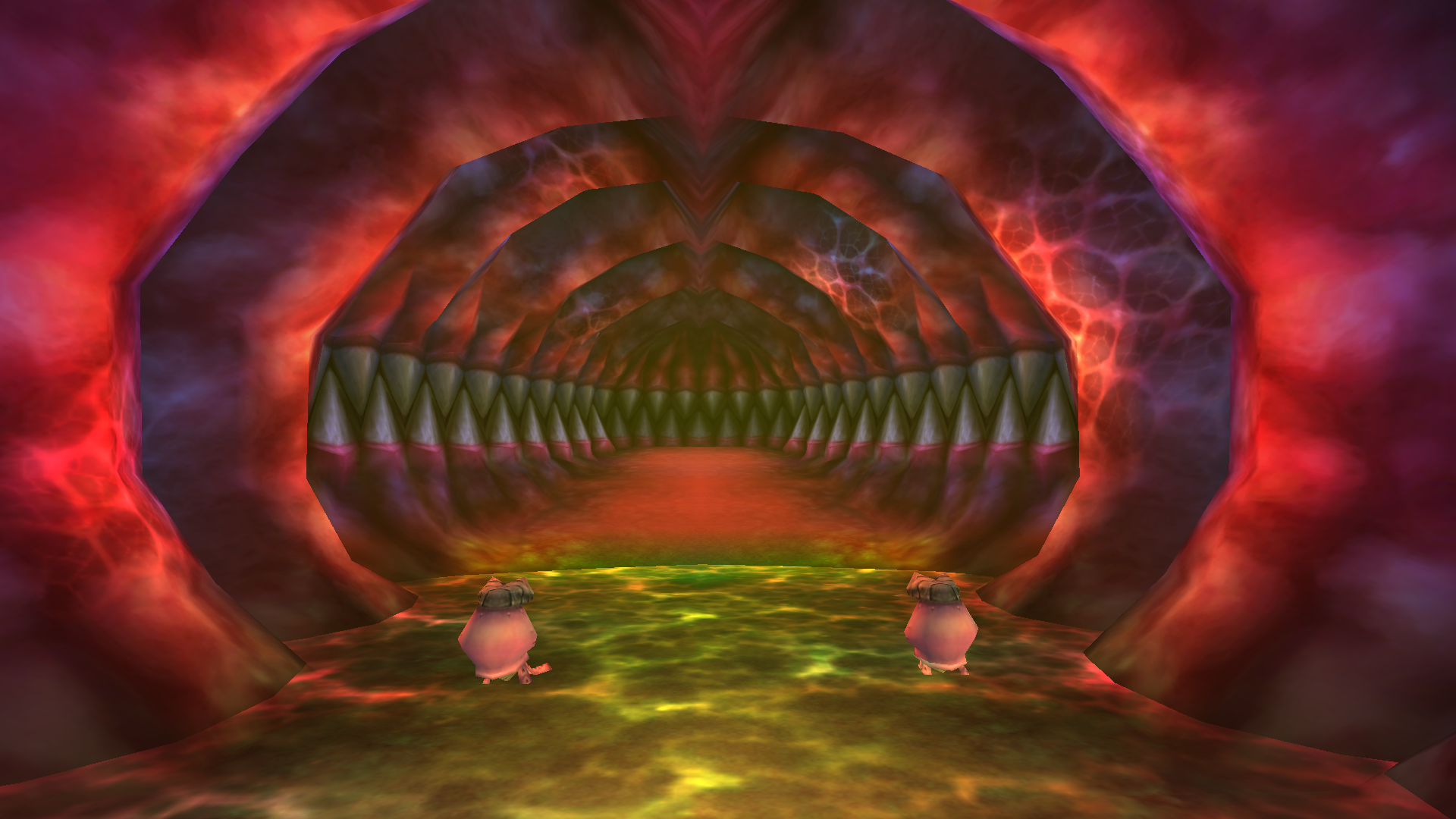
Inside Jabu-Jabu’s BellyYoung Link · Zora’s FountainA squelchy trip through the fish god, carrying Princess Ruto. Item: Boomerang. Boss: Barinade. Reward: Zora’s Sapphire.
Forest TempleAdult Link · Sacred Forest MeadowA haunted manor with twisting corridors and four Poe Sisters. Item: Fairy Bow. Boss: Phantom Ganon. Sage: Saria.
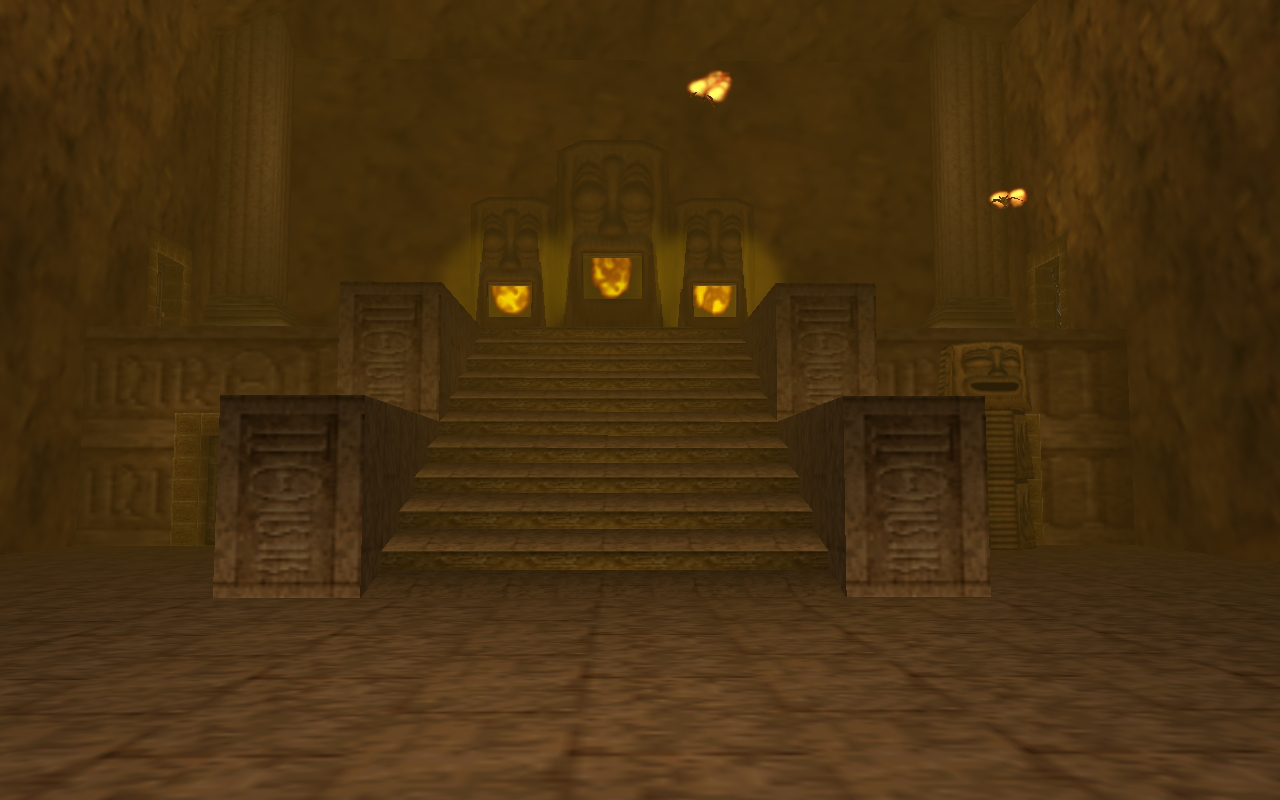
Fire TempleAdult Link · Death Mountain CraterLava, imprisoned Gorons and a Flare Dancer. Item: Megaton Hammer. Boss: Volvagia. Sage: Darunia.
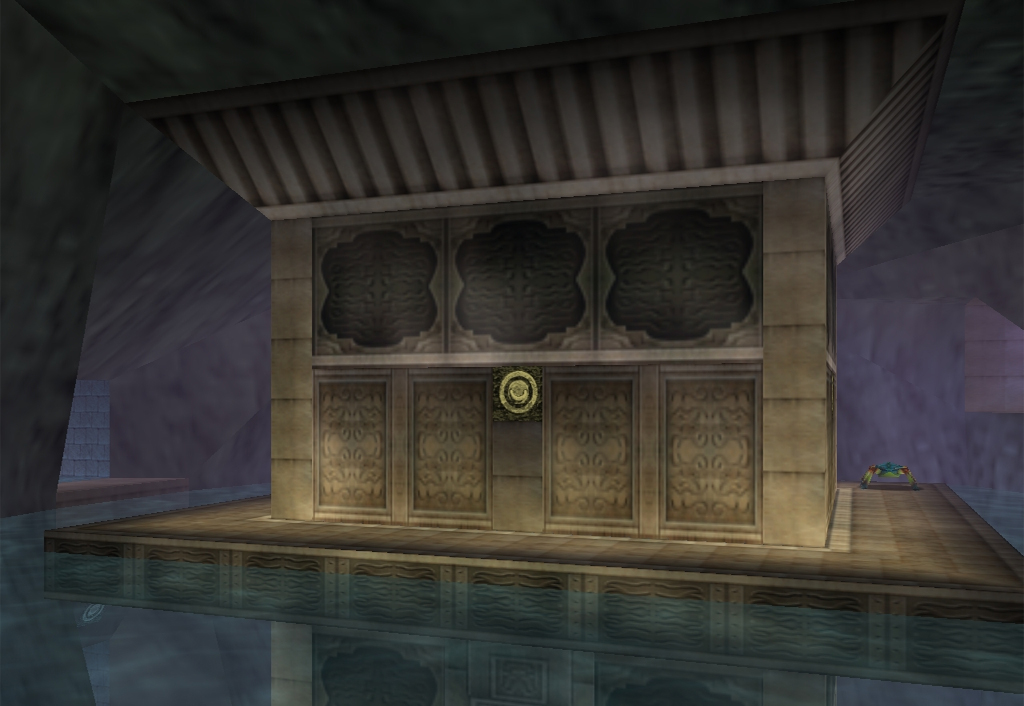
Water TempleAdult Link · Lake HyliaThe infamous rising and falling water levels, plus Dark Link. Item: Longshot. Boss: Morpha. Sage: Ruto.
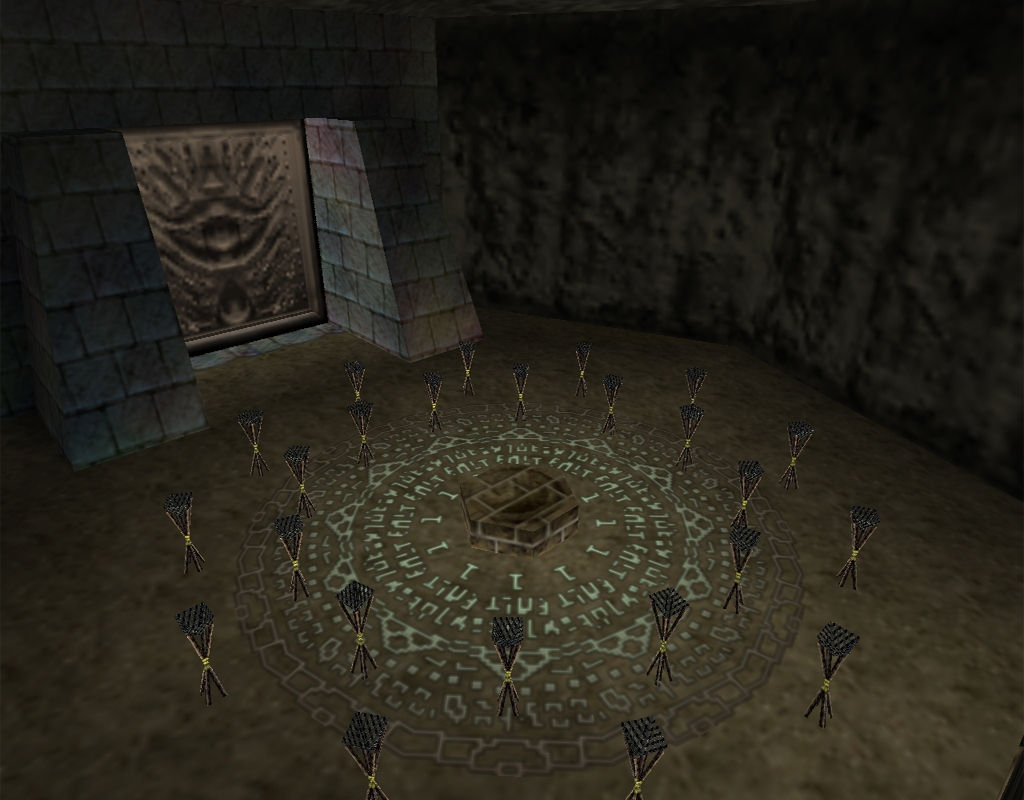
Shadow TempleAdult Link · Kakariko GraveyardInvisible walls and grim machinery; the Lens of Truth is essential. Item: Hover Boots. Boss: Bongo Bongo. Sage: Impa.
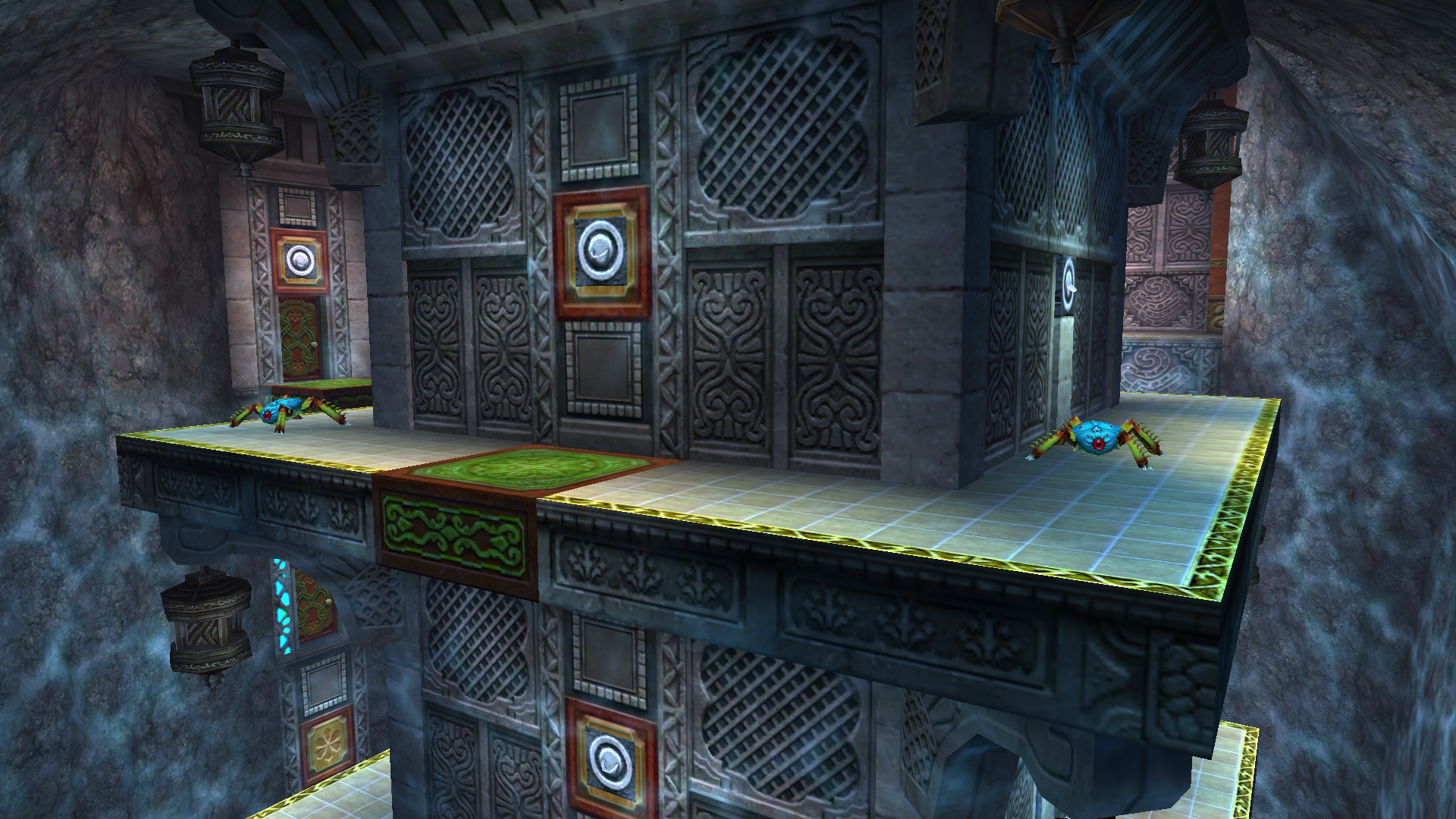
Spirit TempleBoth ages · Desert ColossusPlayed as both Links. Items: Silver Gauntlets (young), Mirror Shield (adult). Mini-boss: Iron Knuckle. Boss: Twinrova. Sage: Nabooru.
Bottom of the WellYoung Link · Kakariko VillageA grim pit under the village well. Item: Lens of Truth. Mini-boss: Dead Hand.
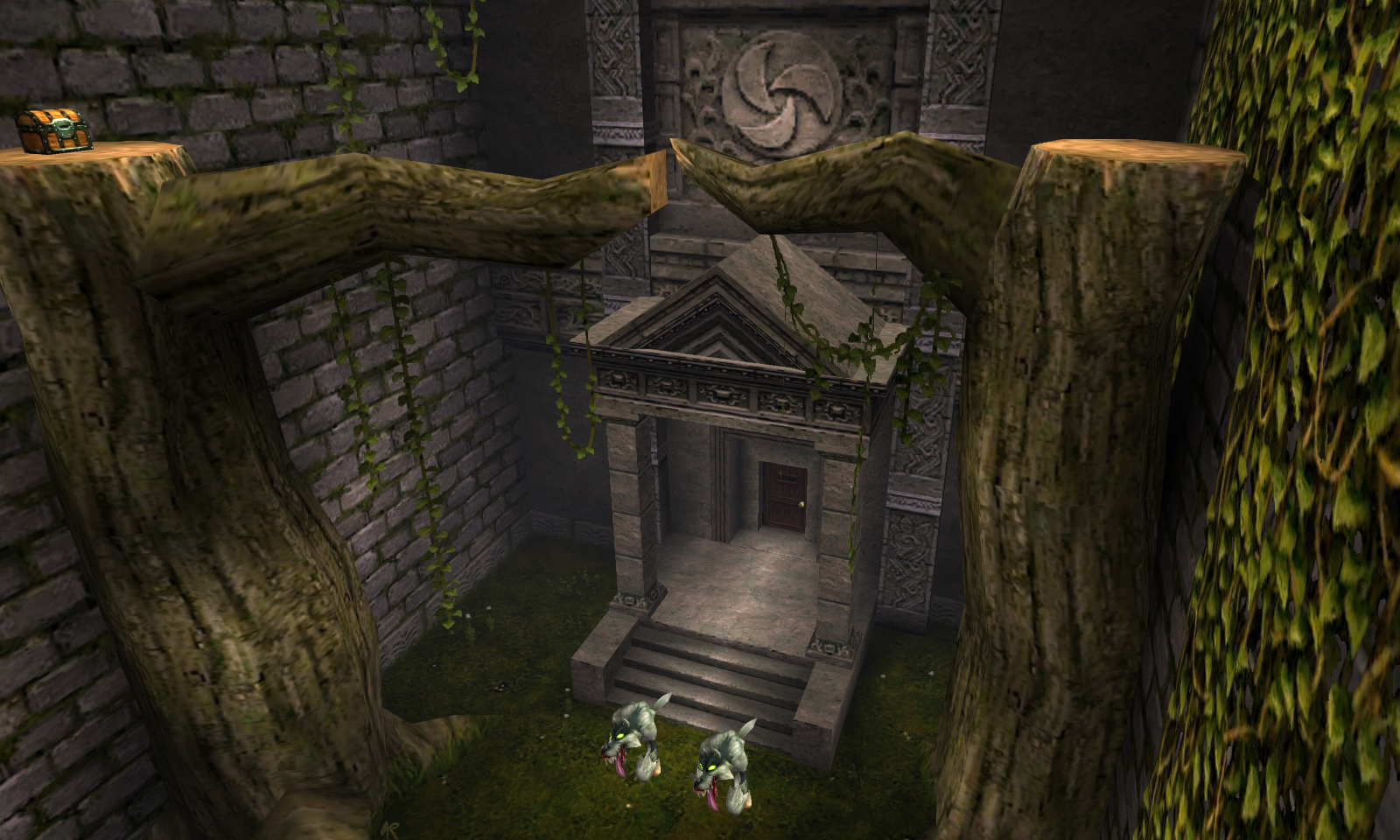
Ice CavernAdult Link · Zora’s FountainA frozen grotto with White Wolfos. Item: Iron Boots; Sheik teaches the Serenade of Water here.
Gerudo Training GroundAdult Link · Gerudo Fortress (optional)A gauntlet of tests for Gerudo Membership Card holders. Item: Ice Arrows.
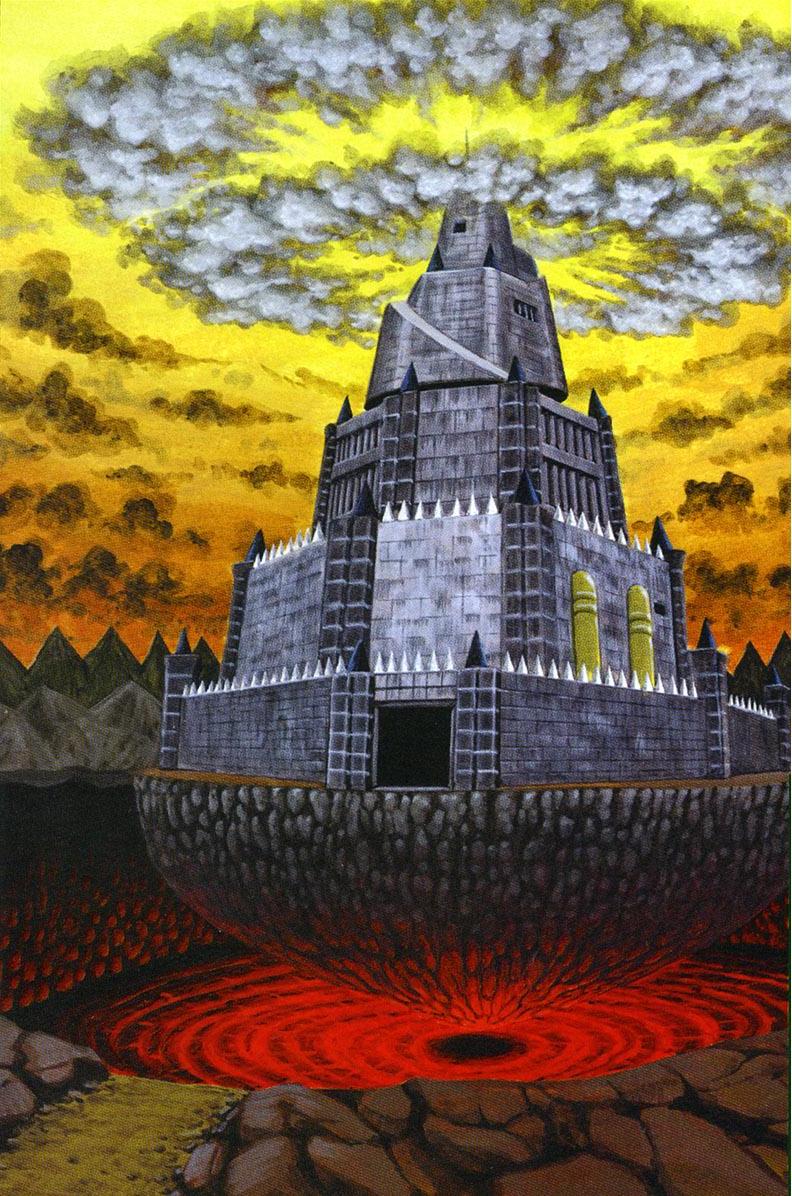
Ganon’s CastleAdult Link · site of Hyrule CastleSix barrier trials, then the tower. Bosses: Ganondorf, then Ganon.
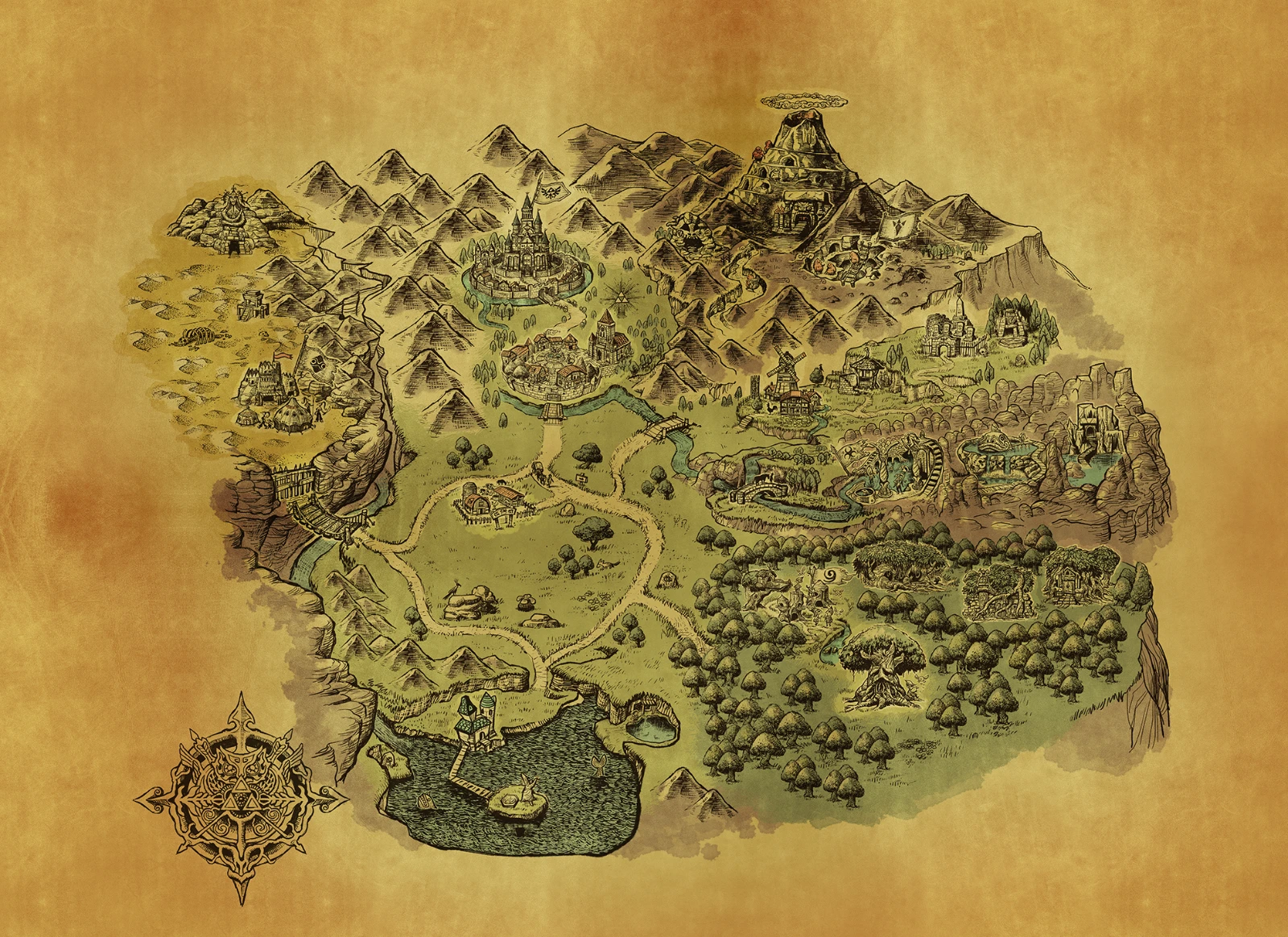
Ocarina of Time’s Hyrule ties it all together: Kokiri Forest and the Lost Woods, Hyrule Field and Lon Lon Ranch, Castle Town, Kakariko Village, Death Mountain, Zora’s River and Domain, Lake Hylia, Gerudo Valley and the Desert Colossus.
In comics, TV & other media
Ocarina of Time has been retold in manga, rebuilt in plastic bricks and borrowed by just about every Nintendo crossover going.
The Legend of Zelda: Ocarina of Time (manga)Akira Himekawa · Shogakukan (Japan) · VIZ Media (2008)A two-volume retelling by Akira Himekawa, the duo behind most official Zelda manga, published in Japan by Shogakukan. It adds its own scenes, notably a fuller role for Sheik and for Link’s Kokiri upbringing. VIZ published it in English in October and December 2008, and again as a single Legendary Edition in November 2016.
Hyrule HistoriaShogakukan, 2011 · Dark Horse, 2013Nintendo’s official history book, which made Ocarina of Time the point where the Zelda timeline splits into three. It also confirmed that the owl Kaepora Gaebora is a form taken by the Sage Rauru.
Super Smash Bros. MeleeGameCube · 2001Smash’s second instalment brought in Ocarina-era designs for Zelda, who can transform into Sheik, and for Young Link. It also gave Ganondorf his fighting debut, with a move set built on Captain Falcon’s.
Hyrule WarriorsWii U · 2014Koei Tecmo’s Zelda action game makes Darunia, Princess Ruto, Sheik and Impa playable fighters.
Super Smash Bros. BrawlWii · 2008Includes a timed “Masterpieces” demo of the Nintendo 64 game, playable for a few minutes.
LEGO The Legend of Zelda: Great Deku Tree 2-in-1LEGO set 77092 · 2024The first LEGO Zelda set, 2,500 pieces, on sale from 1 September 2024. It builds either the Ocarina of Time Deku Tree, with Young Link and adult Link minifigures, or the Breath of the Wild version.
Original soundtrackPony Canyon · 18 December 1998Koji Kondo’s score was released in Japan on an 82-track album; the American release was shorter.
Gravity FallsDisney TV animationNavi’s catchphrase gets a nod when a fairy in the series cries “Hey! Look! Listen!”.
Characters
Ocarina of Time has one of the richest casts in the series, and many of its faces became Zelda fixtures. Here is who everyone is, where they come from in Zelda lore, and what they do in this adventure.
Character
Who they are
In this game
Stats & abilities
LinkThe Hero of Time
Every Zelda hero is called Link, and Shigeru Miyamoto chose the name because the hero was meant to link past and future. This one is raised as a Kokiri but is really a Hylian orphan. Yoshiaki Koizumi reworked the character for the Nintendo 64: a stronger nose in place of a button nose, trimmed sideburns, pierced ears, and long underwear under the green tunic. Fujiko Takimoto voices young Link and Nobuyuki Hiyama the adult. The same Link stars in Majora’s Mask and returns as the ghostly Hero’s Shade in Twilight Princess, training his descendant.
Gathers the Spiritual Stones as a boy, draws the Master Sword and sleeps for seven years, then wakes the Sages as an adult and defeats Ganon. Zelda sends him back to childhood at the end.
Hookshot, Longshot, Fairy Bow, Megaton Hammer, Lens of Truth
Magic: Din’s Fire, Farore’s Wind, Nayru’s Love
Up to 20 hearts
NaviLink’s fairy
Navi started out as a targeting cursor. Koizumi swapped a plain triangle for a winged ball of light, called it the Fairy Navigation System, and script director Toru Osawa turned that into a name and a personality. Her “Hey! Listen!” is one of gaming’s most quoted lines, and not always fondly: GamesRadar once ranked her the most irritating female character in games.
Sent by the Deku Tree to guide Link. She marks targets for Z-targeting, changes colour near enemies and secrets, and chimes in with hints. She leaves when the adventure ends, and the friend Link is looking for at the start of Majora’s Mask is generally taken to be her.
Lock-on marker for Z-targeting
Gives advice on demand
Fairy companion, not a fighter
Princess ZeldaPrincess of Hyrule
Named by Miyamoto after the writer and socialite Zelda Fitzgerald, the princess has appeared in many forms. This one is first a sharp, worried girl with prophetic dreams, then a young woman in hiding. She holds the Triforce of Wisdom and is the seventh Sage. Jun Mizusawa voices her here and in Super Smash Bros. Melee, where her design is based on this game.
Recruits Link to collect the Spiritual Stones, flees the castle and throws him the Ocarina of Time, then spends seven years disguised as Sheik. She gives Link the Light Arrows, helps defeat Ganon and sends Link home.
Triforce of Wisdom
Prophetic dreams
Holds Ganon still in the final battle
Teaches the Song of Time
SheikThe last of the Sheikah?
A masked, turbaned Sheikah warrior who appears out of nowhere and vanishes in a flash of light. Sheik is Zelda in disguise, a twist that sent fans into years of argument about whether Sheik was a man; Nintendo’s Bill Trinen settled it by calling Sheik “simply Zelda in a different outfit”. Sheik became a fighter in her own right in Smash Bros. (separate from Zelda from Smash 4) and is playable in Hyrule Warriors. Miyamoto said in 2016 that a Sheik spin-off had once been considered.
Guides adult Link, appearing before each temple to teach a warp song, then reveals the truth in the Temple of Time.
Teaches Minuet of Forest, Bolero of Fire, Serenade of Water, Nocturne of Shadow, Requiem of Spirit and Prelude of Light
Plays the harp
Deku Nut flash to vanish
GanondorfKing of the Gerudo, King of Evil
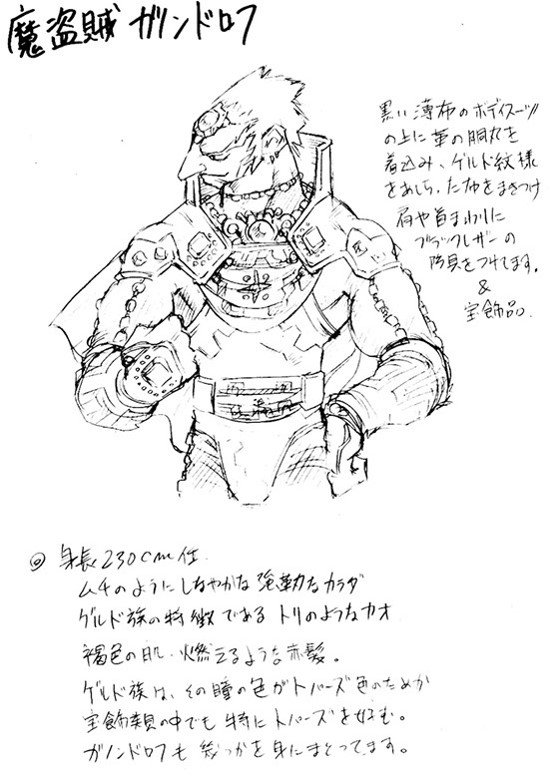
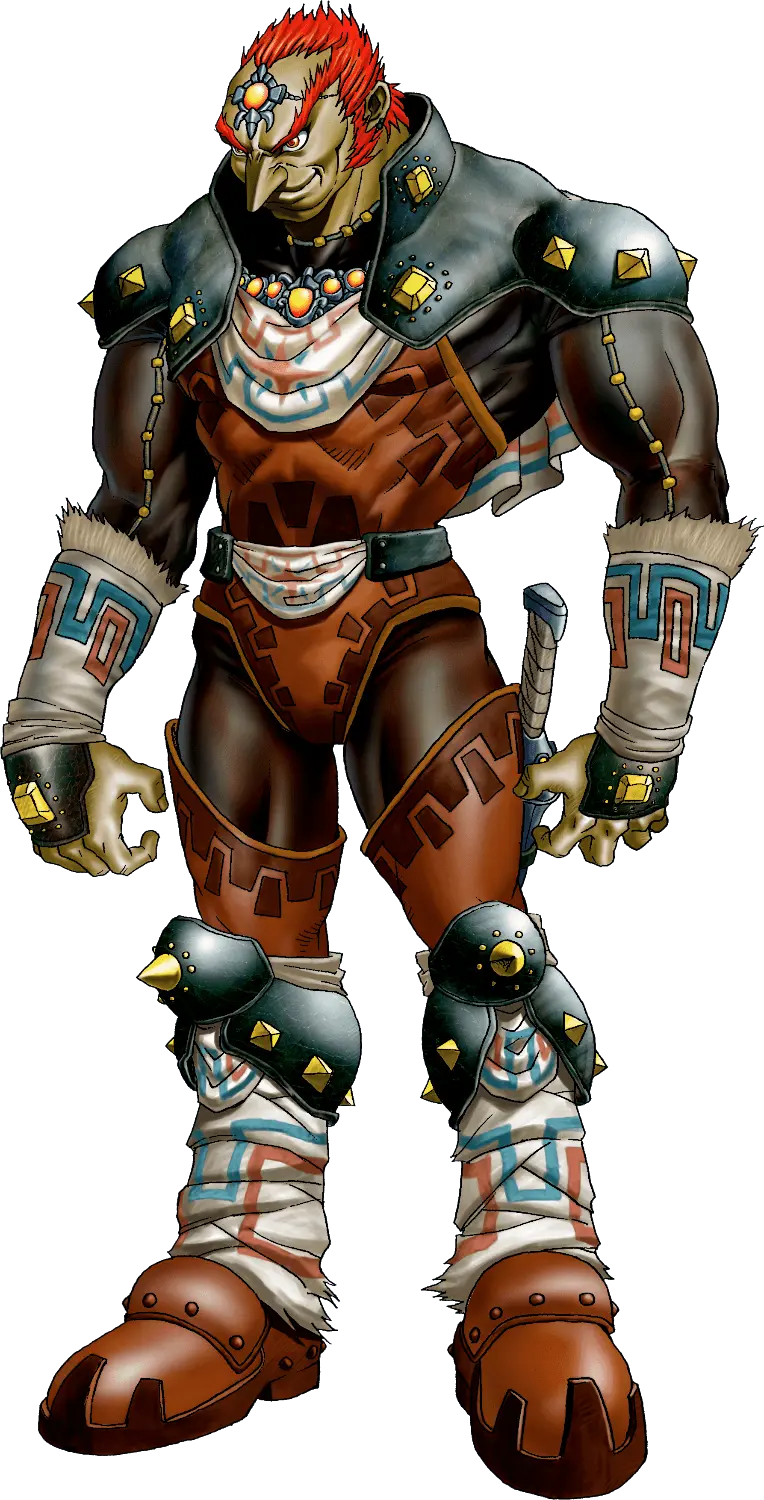
Ganon has been Zelda’s villain since 1986, when he was a blue pig-like monster. The English manual for A Link to the Past first mentioned his human name, Ganondorf Dragmire, but this is the first game to show the man himself: the Gerudo’s one male king, a desert warlord with a mile-high ambition. Satoru Takizawa pictured a crooked, complex thief; Osawa wanted him to have a few good sides, like Raoh in Fist of the North Star. Takashi Nagasako provides his voice.
Curses the Deku Tree, betrays the King, follows Link into the Sacred Realm and takes the Triforce of Power. Seven years later he rules Hyrule from Ganon’s Castle. Defeated, he becomes the beast Ganon and is sealed away by the Sages.
Cursed by Ganondorf, he serves as the first dungeon, then tells Link the legend of the Triforce and dies. Seven years later his sprout reveals Link’s Hylian origins.
The first dungeon: Inside the Deku Tree. Gives the Kokiri’s Emerald.
SariaLink’s best friend
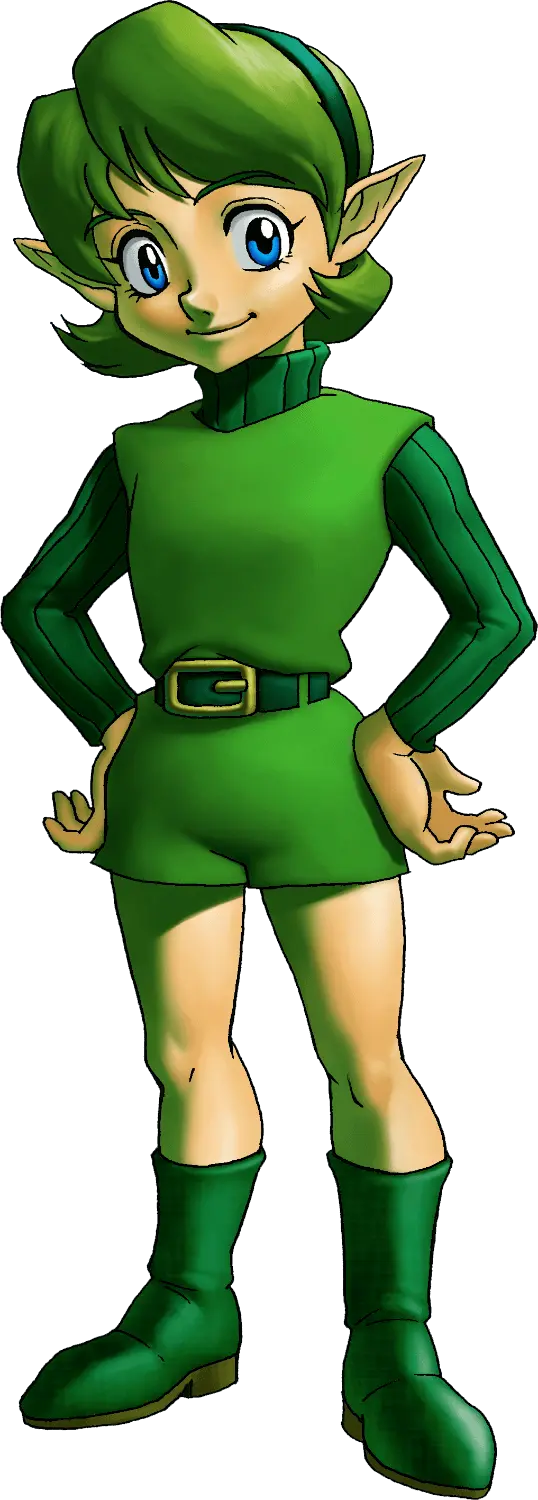
A cheerful green-haired Kokiri girl who loves music and the Lost Woods, and the only Kokiri who was ever kind to Link. Her tune, Saria’s Song, is one of the game’s most famous melodies.
Gives Link the Fairy Ocarina, teaches him Saria’s Song in the Sacred Forest Meadow so he can talk to her through the ocarina, and is trapped in the Forest Temple. Once freed, she awakens as the Sage of Forest.
Sage of Forest
Forest Medallion
Speaks to Link via Saria’s Song
MidoBoss of the Kokiri
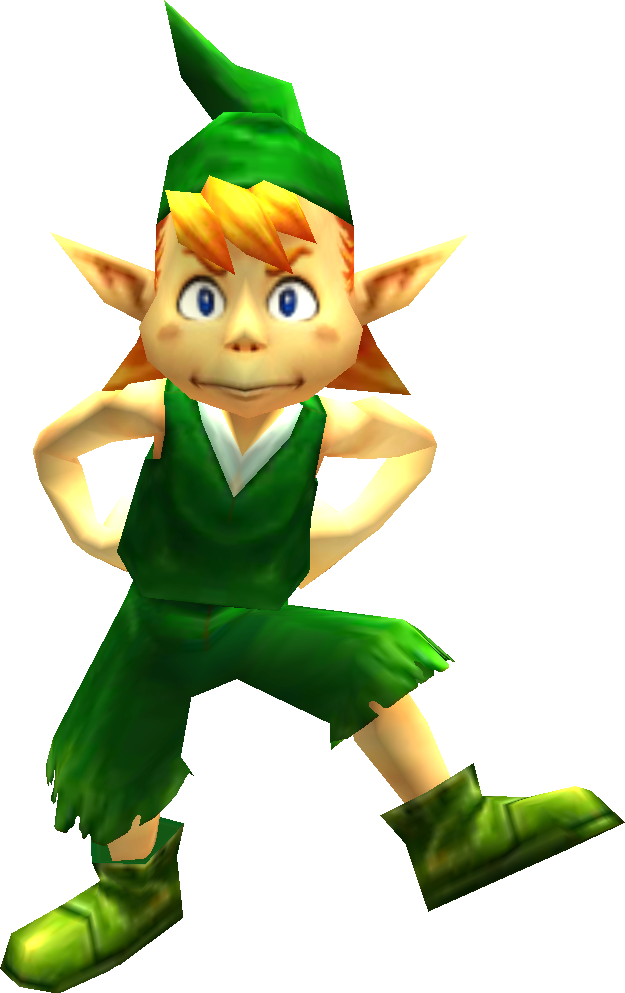
A bossy, freckled Kokiri boy who has decided he is in charge, and who is clearly sweet on Saria.
Blocks the path to the Deku Tree until Link has a sword and shield, and blames Link for the tree’s death. Seven years on, still a child, he stands guard at Saria’s house and fails to recognise the grown-up Link.
Not a fighter; a very good gatekeeper.
ImpaZelda’s Sheikah guardian
Impa is one of the series’ oldest characters: she sets the quest in motion in the original The Legend of Zelda and Zelda II. Ocarina of Time made her a Sheikah warrior and bodyguard, the version that returns in Skyward Sword, Hyrule Warriors and as Kakariko’s elder in Breath of the Wild.
Teaches Link Zelda’s Lullaby and escorts him out of the castle, then flees with Zelda when Ganondorf attacks. She had sealed Bongo Bongo in the Kakariko well long ago, and becomes the Sage of Shadow.
Sage of Shadow
Shadow Medallion
Teaches Zelda’s Lullaby
DaruniaChief of the Gorons
The Gorons, huge rock-eating mountain folk, made their series debut in this game, and Darunia is their big-hearted, quick-tempered leader and the King of Hyrule’s sworn brother. He is playable in Hyrule Warriors and turns up in Super Smash Bros. Ultimate.
Refuses to give Ganondorf the Goron’s Ruby, sulks until Saria’s Song makes him dance, and gives Link the Goron Bracelet and the Ruby. As an adult Link finds him fighting to save his people in the Fire Temple; he becomes the Sage of Fire.
Sage of Fire
Fire Medallion
Names his son after Link
Princess RutoPrincess of the Zoras
The proud, bossy daughter of King Zora. The graceful, fin-headed Zoras of this game are a world away from the river monsters called Zora in the earliest Zelda games. Ruto is playable in Hyrule Warriors.
Gets herself swallowed by Lord Jabu-Jabu and has to be carried out by Link, then gives him the Zora’s Sapphire, which turns out to be an engagement ring. As an adult she guards the Water Temple and becomes the Sage of Water.
Sage of Water
Water Medallion
Still considers Link her fiancé
NabooruGerudo thief
A Gerudo thief with a code of honour, who will rob the rich but draws the line at Ganondorf’s cruelty. Her legend lives on in Breath of the Wild, where Urbosa calls her a legend of the Gerudo and the Divine Beast Vah Naboris is named after her.
Sends young Link into the Spirit Temple for the Silver Gauntlets, is kidnapped and brainwashed by Twinrova into fighting him as an Iron Knuckle, and wakes as the Sage of Spirit.
Sage of Spirit
Spirit Medallion
Leader of the Gerudo rebels
RauruSage of Light
An ancient, bearded Sage and high priest who lives in the Chamber of Sages. According to Hyrule Historia, he also takes the form of the owl Kaepora Gaebora.
Watches over Link during his seven-year sleep, explains what has happened to Hyrule and gives him the Light Medallion. He leads the Sages in sealing Ganon.
Sage of Light
Light Medallion
Kaepora GaeboraThe talkative owl
A huge, wise owl who always seems to know where Link is heading. He also appears in Majora’s Mask and Four Swords Adventures, and Screen Rant has called him arguably the game’s most hated character, mostly for the length of his speeches.
Pops up at key points with advice, and gives Link a lift down from the summit of Death Mountain.
Gives Link the egg that wakes Talon and teaches him Epona’s Song. In the adult era, Ingo has taken over the ranch to curry favour with Ganondorf; Link wins Epona from him in a race.
Teaches Epona’s Song.
EponaLink’s horse
Koizumi named her after Epona, the Celtic goddess of horses; Aonuma remembers the working name was simply Ao. She makes her debut here and returns in Majora’s Mask, The Minish Cap, Twilight Princess, Breath of the Wild and Tears of the Kingdom.
A foal at Lon Lon Ranch in Link’s childhood; as an adult, Link wins her from Ingo and calls her with Epona’s Song.
Jumps fences automatically
Speed boost with carrots
Link can only use the bow while riding
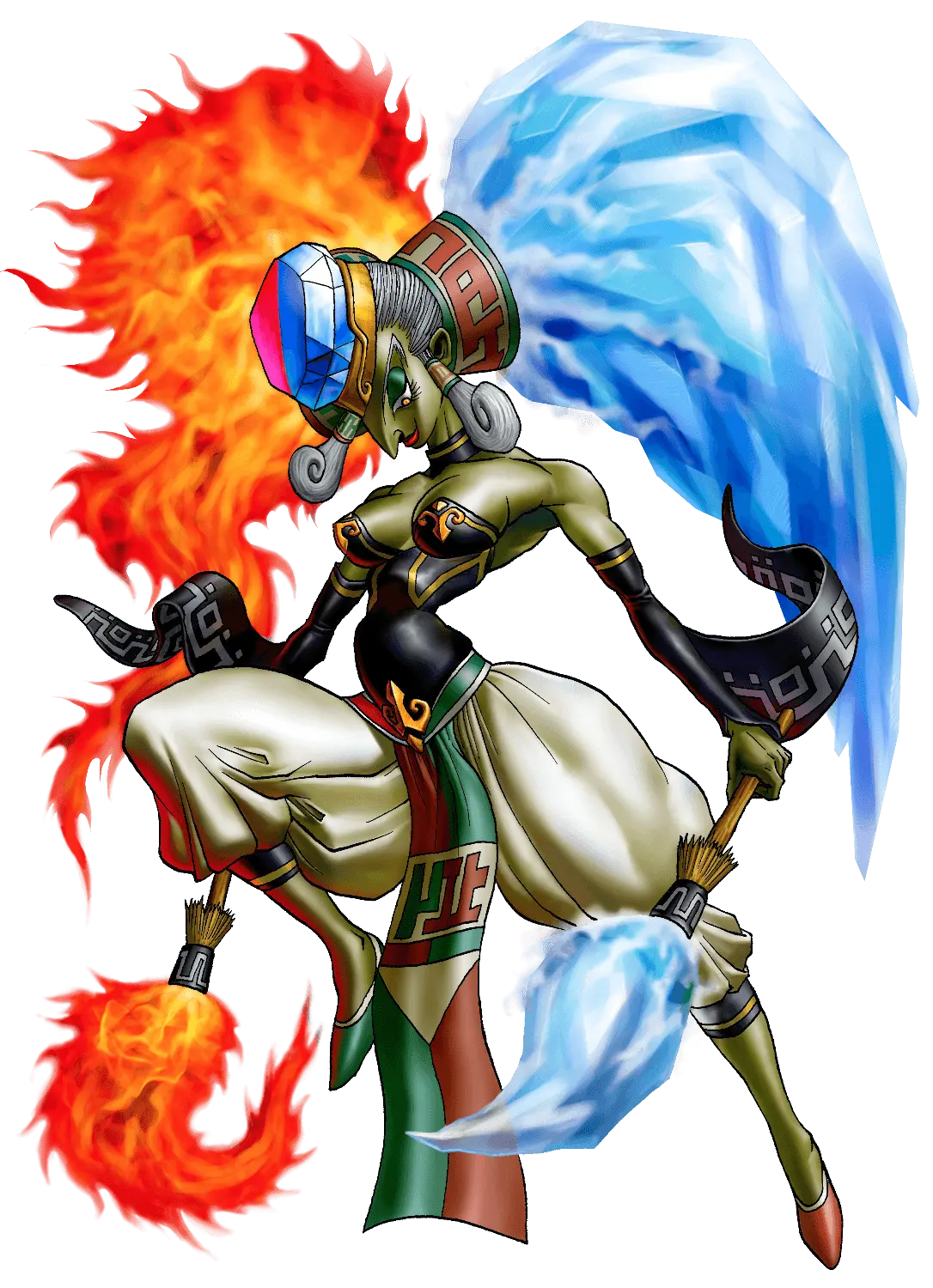
Koume & Kotake (Twinrova)Ganondorf’s witches
Twin Gerudo sorceresses, Koume of fire and Kotake of ice, said to be Ganondorf’s surrogate mothers. They return as shopkeepers in Majora’s Mask and as the schemers trying to revive Ganon in the Oracle games.
Kidnap and brainwash Nabooru, and guard the Spirit Temple. Link reflects their magic with the Mirror Shield until they fuse into Twinrova.
Fire and ice magic
Boss of the Spirit Temple
Happy Mask Salesman & Skull KidMasks and mischief
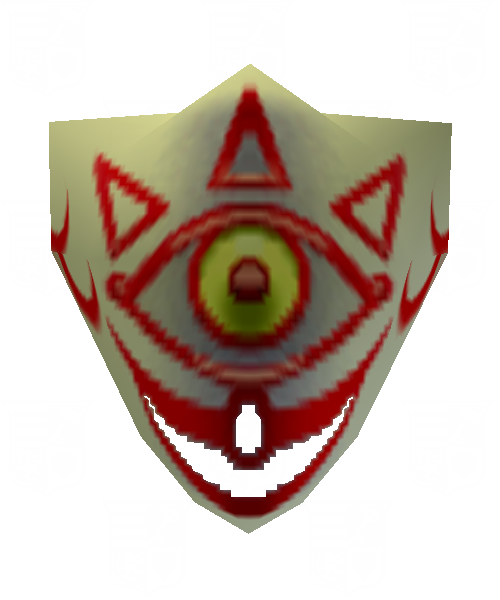
A grinning travelling salesman who sells masks, and a forest imp who loves music. Both become central to Majora’s Mask, where Skull Kid steals Majora’s Mask from the salesman.
Link can run masks for the Happy Mask Shop, selling them on to customers, to earn the Mask of Truth. Skull Kid is a Lost Woods regular who buys the Skull Mask and is delighted by Saria’s Song.
Side quest that rewards the Mask of Truth.
DampéKakariko gravekeeper
A hunched, creepy gravekeeper, introduced in this game and a recurring face since, from Majora’s Mask to Echoes of Wisdom.
Runs a nightly gravedigging tour for young Link. Seven years later he has died, and his ghost challenges adult Link to a race through his tomb, with the Hookshot as the prize.
Gives the Hookshot.
Bosses and notable enemies
Every dungeon boss in Ocarina of Time, plus the mini-bosses and monsters that people remember most. Satoru Takizawa designed most of them and Kazuaki Morita programmed the bosses.
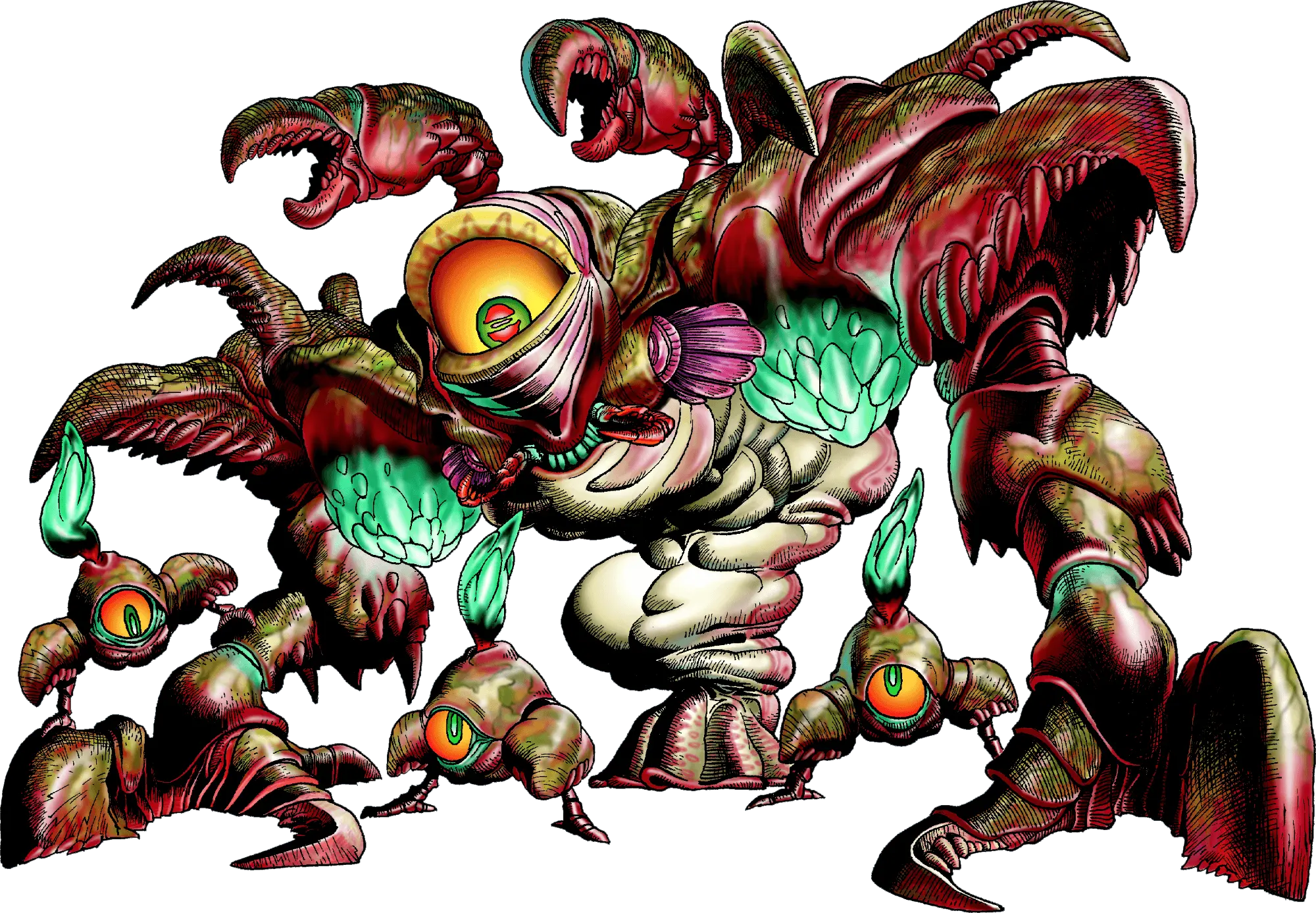
Queen GohmaInside the Deku TreeA giant one-eyed parasite. Stun the eye with the slingshot, then use the sword.
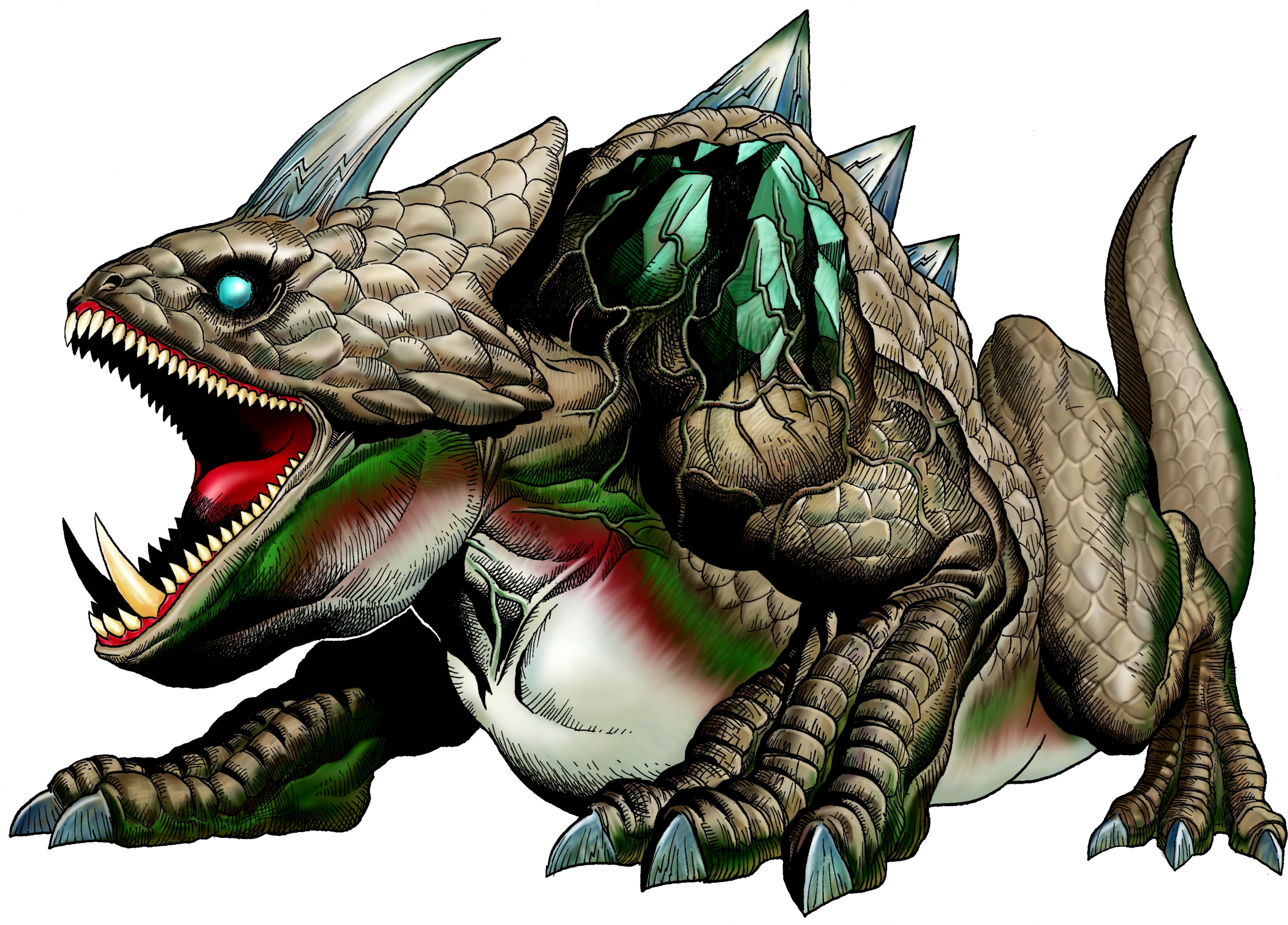
King DodongoDodongo’s CavernA fire-breathing dinosaur. Throw a bomb into his mouth as he inhales.
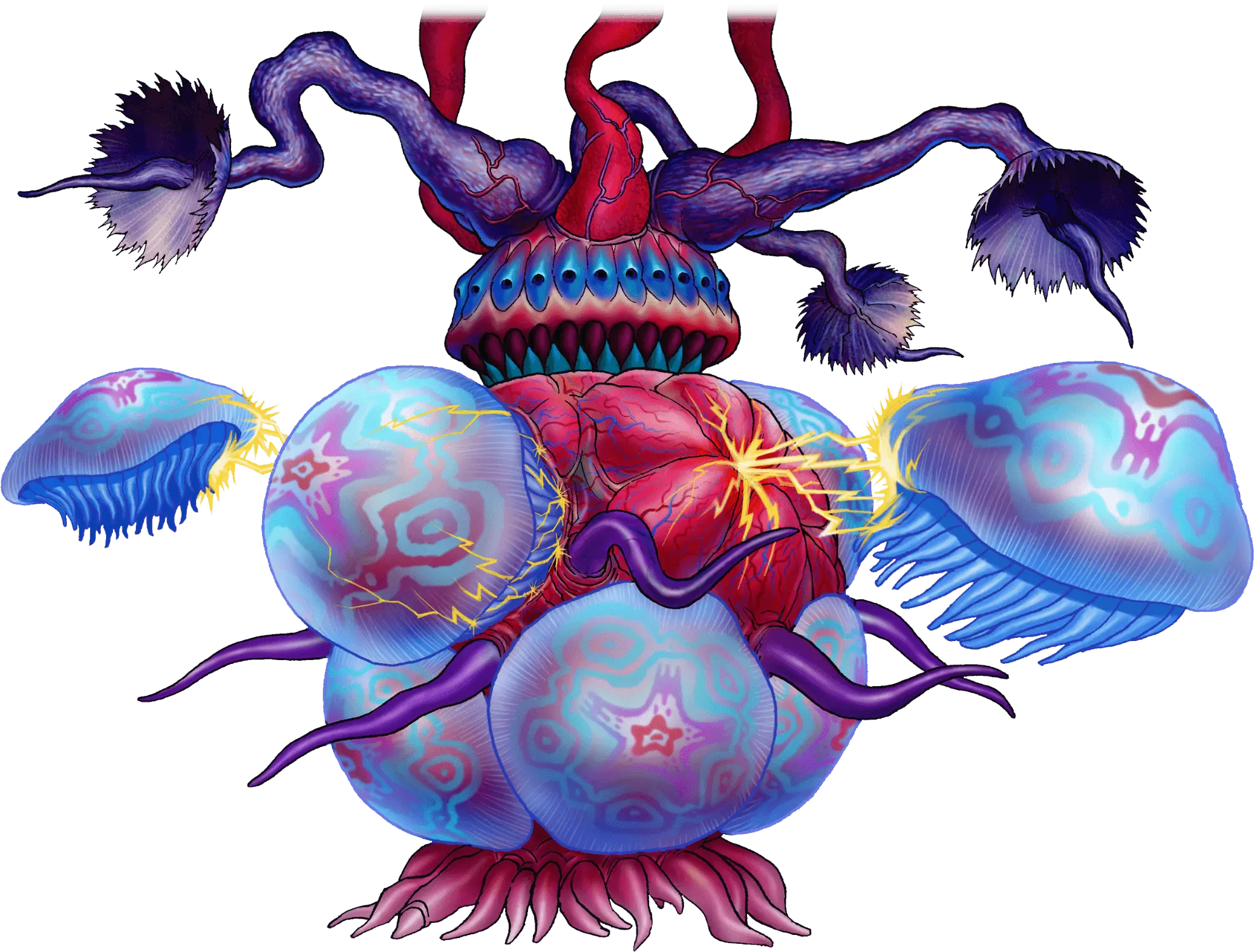
BarinadeJabu-Jabu’s BellyAn electric parasite clinging to the fish god’s insides. The Boomerang does the work.
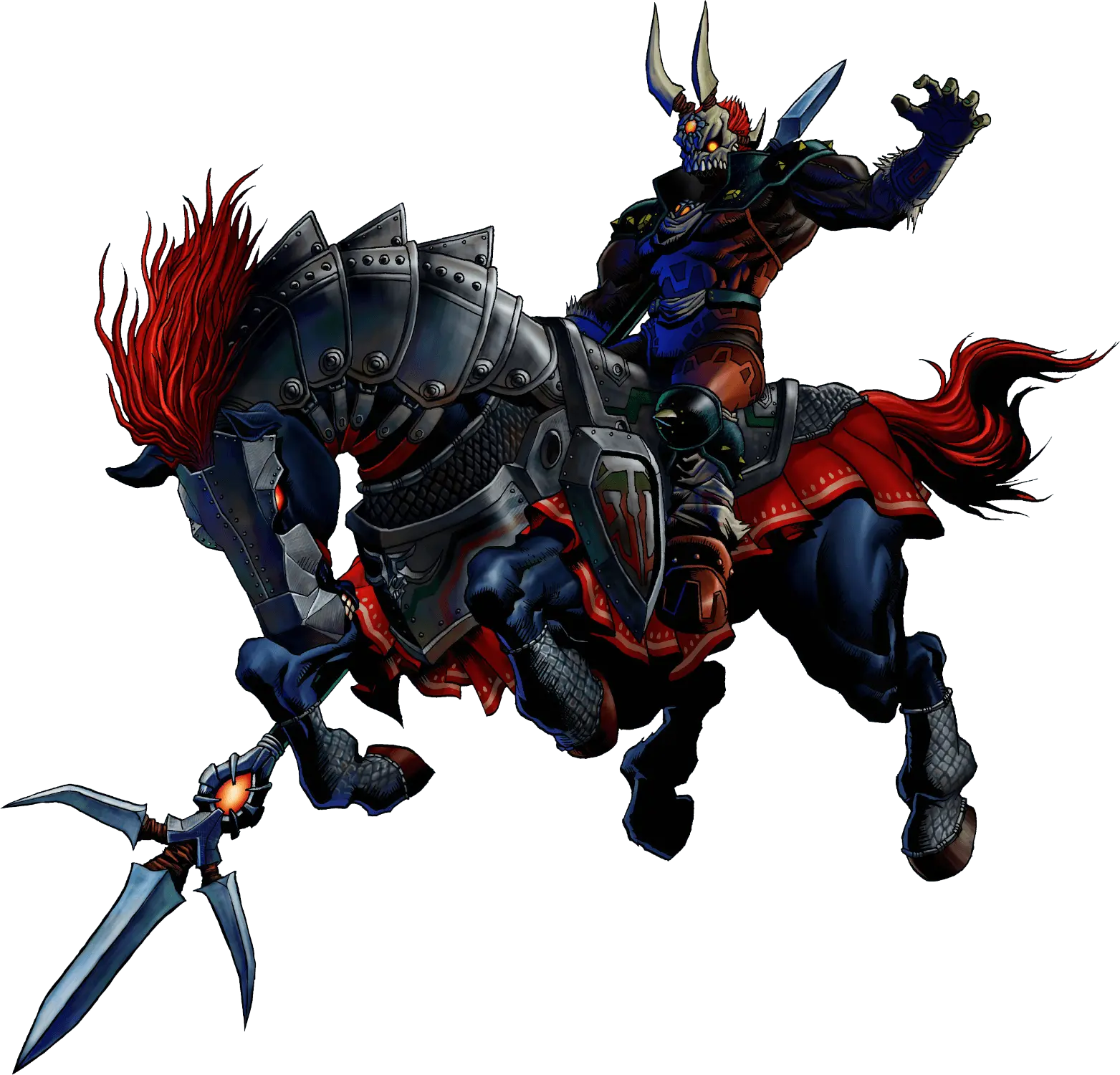
Phantom GanonForest TempleGanondorf’s spectral double, riding out of paintings, then batting energy back and forth.
VolvagiaFire TempleA lava dragon revived by Ganondorf. Whack it with the Megaton Hammer when it surfaces.
MorphaWater TempleA living body of water with a nucleus. Drag the core out with the Longshot.
Bongo BongoShadow TempleAn invisible beast drumming on a giant drum. Stun both hands, find its eye with the Lens of Truth.
TwinrovaSpirit TempleKoume and Kotake, alone and fused. Absorb and reflect their magic with the Mirror Shield.
GanondorfGanon’s CastleReturn his energy balls, stun him with Light Arrows, then strike.
GanonRuins of Ganon’s CastleThe final beast. Hit his tail, recover the Master Sword and deliver the final blow.
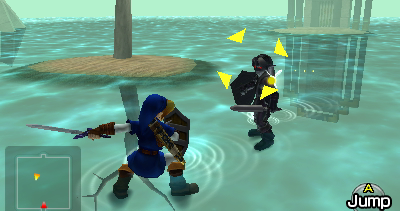
Dark LinkWater TempleLink’s shadow, mirroring every move in a misty, endless room.
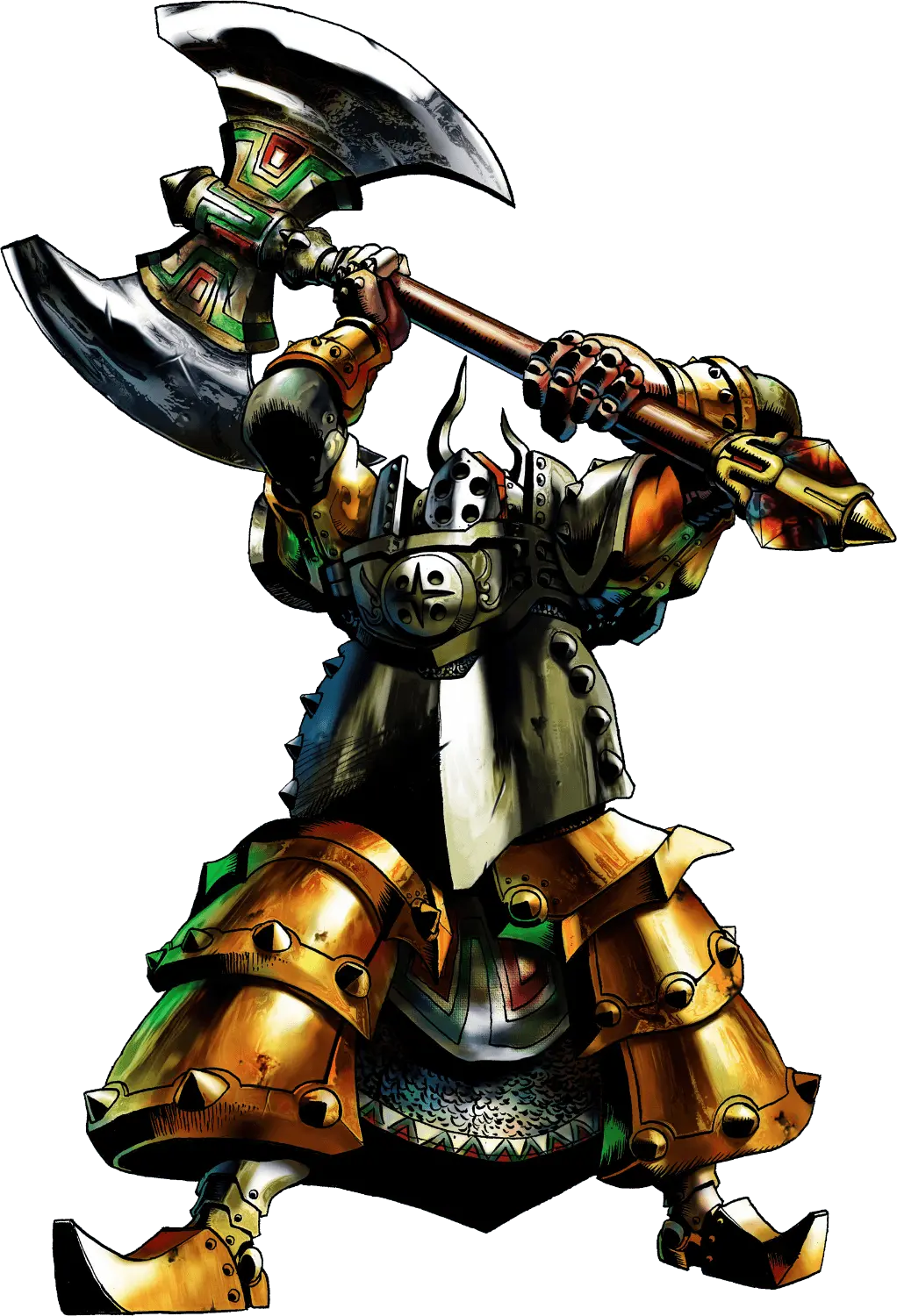
Iron KnuckleSpirit Temple · Ganon’s CastleHuge armoured axe knights; one of them is Nabooru under Twinrova’s spell.
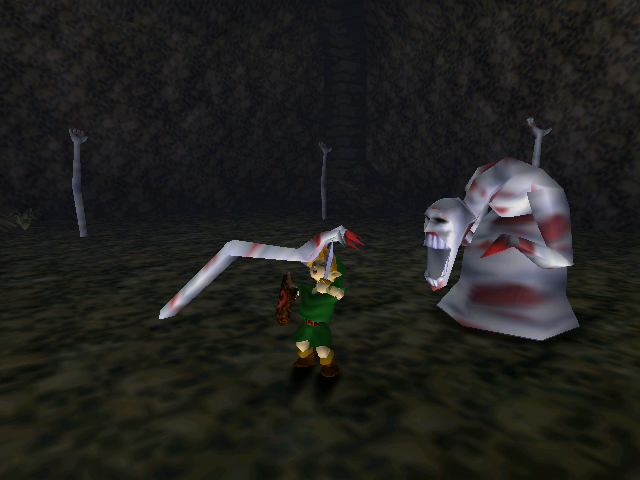
Dead HandBottom of the Well · Shadow TempleA horror surrounded by grasping hands. Let one grab you and it comes to feed.
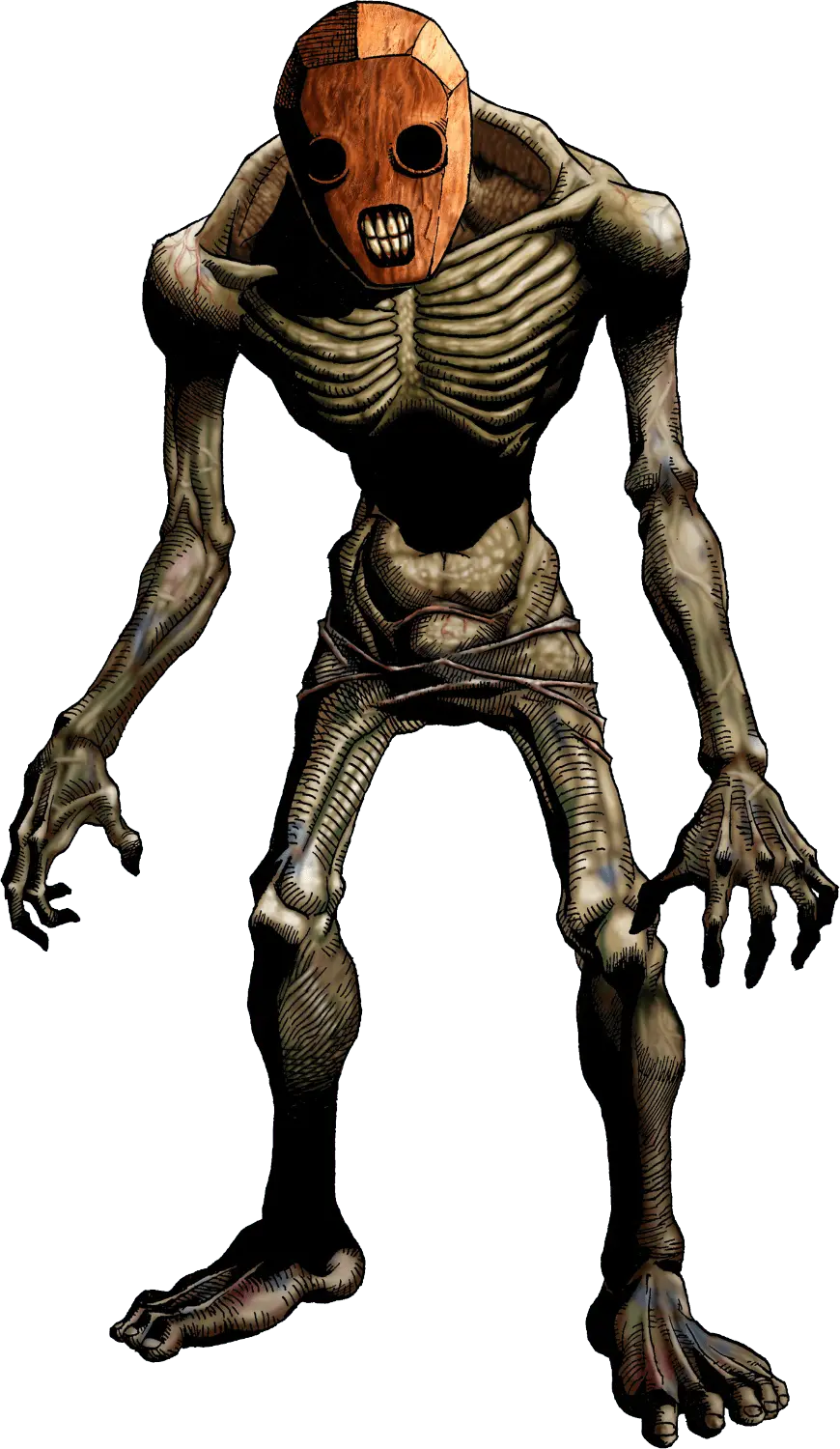
ReDeadCastle Town (adult) · Royal Tomb · Shadow TempleShrieking zombies whose scream freezes Link. The Sun’s Song stuns them.
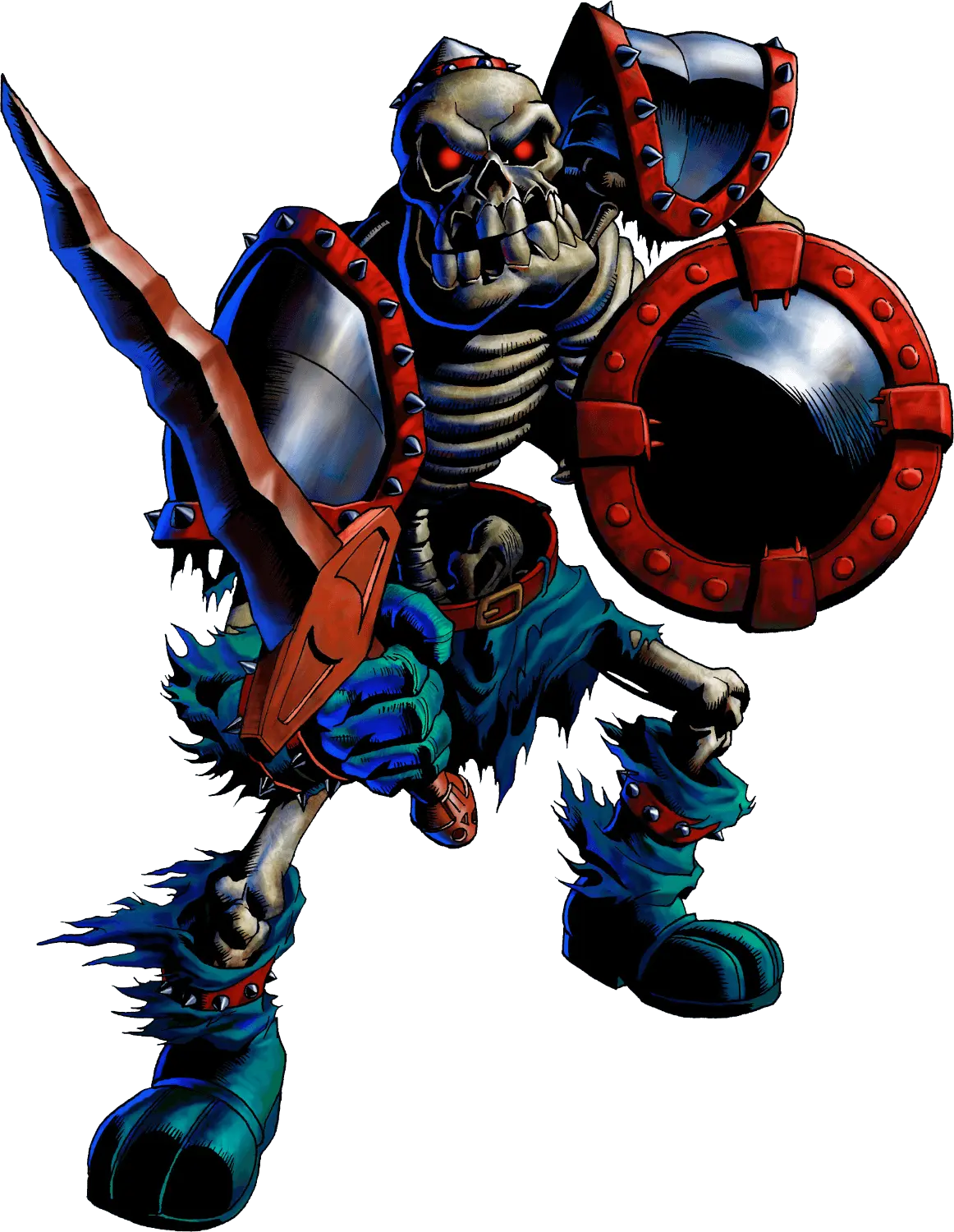
StalfosForest Temple and elsewhereSword-and-shield skeletons. The Forest Temple’s pair grew out of the Toei Kyoto ninja show that inspired Z-targeting.
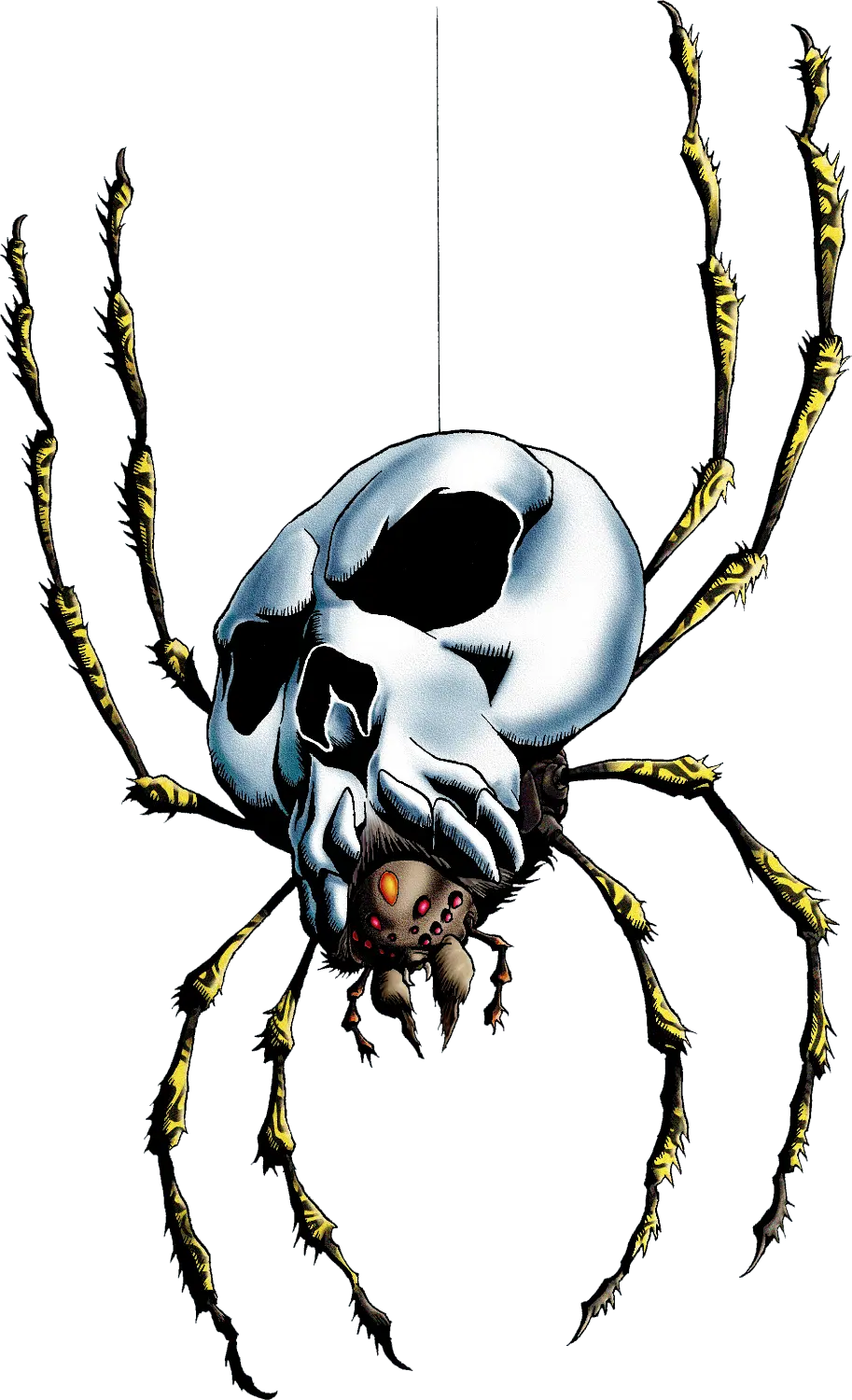
SkulltulaDeku Tree and beyondSpiders that drop from the ceiling, designed by Yoshiki Haruhana; their golden cousins are worth collecting.
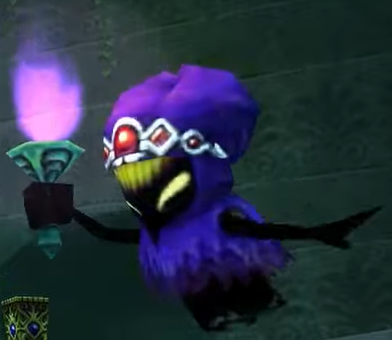
Poe SistersForest TempleFour ghostly sisters, Meg, Joelle, Beth and Amy, who steal the flames of the temple’s torches.
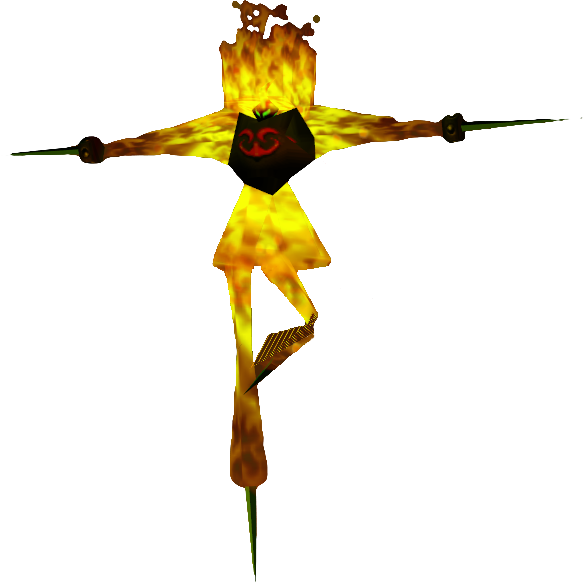
Flare DancerFire TempleA spinning dervish of flame with a small, vulnerable core.
The people who made it
Nintendo EAD built Ocarina of Time with five directors under Shigeru Miyamoto, an unusual arrangement for the time. These are the key names, with what they did according to their own accounts.
Shigeru MiyamotoProducerSupervised the five directors, first pitched a first-person Zelda, asked for the sign-cutting gag and the carrot system for Epona, and wanted cutscenes that could be redone until the day before completion.
Toru OsawaDirector · scriptThe oldest of the directors and their coordinator. Started the project with Jin Ikeda, wrote the script, named Navi and wrote the seven-year time jump into the scenario. Ocarina of Time is his only Zelda.
Yoshiaki KoizumiDirector · Link, camera, itemsJoined from Super Mario 64. Built the 3D world, the camera and Link himself, made items such as the Hookshot, turned the target marker into a fairy and named Epona.
Eiji AonumaDirector · dungeonsJoined last, designed six of the early and mid-game dungeons, and planned most of the enemies and boss battles. He went on to lead the series.
Toshio IwawakiDirector · main programmer (SRD)A Super Mario veteran who programmed the game under constant requests from the design team.
Yoichi YamadaDirectorOne of the five credited directors.
Takumi KawagoeCutscenesSuper Mario 64’s camera programmer. Built the real-time cutscene tool and staged the game’s cinematics, including the opening ride across Hyrule Field.
Koji KondoMusicThe original Zelda composer. Wrote the ocarina songs and the area themes, and built Hyrule Field’s music to shift with the action.
Yoshiki HaruhanaCharactersModelled and animated almost everyone except Link, from the Gorons to the flamboyant Great Fairy.
Satoru TakizawaEnemies and bossesDesigned the monsters and bosses, including Ganondorf’s transformation into Ganon.
Kazuaki MoritaProgramming (SRD)Programmed the bosses, the sliceable signs and, as a private side project, the Fishing Pond.
Kensuke TanabeScriptSupported Osawa on the story.
How it was made
Ocarina of Time was made by a young team inventing 3D adventure games as they went. Most of what follows comes from the developers themselves, in Nintendo’s 2011 Iwata Asks interviews for the 3DS version.
A Zelda with sword fights
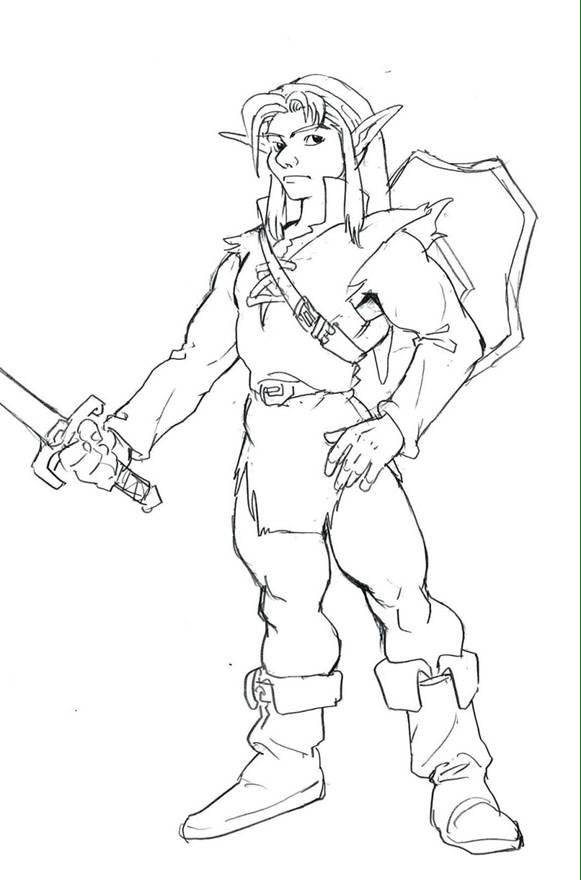
Early concept art of adult Link.
The idea that drove everything was simple: a Zelda game with proper chanbara, the Japanese word for swashbuckling sword fights. Toru Osawa and character designer Jin Ikeda started the project on their own, and Yoshiaki Koizumi joined once Super Mario 64 was finished, bringing memos of Zelda ideas he had jotted down during Mario. Takao Shimizu had already made a sword-fighting demo video before moving on to Star Fox 64, and Aonuma recalls it being shown at E3 in 1996.
Miyamoto’s first suggestion was radical: “How about making it so that Link will not show up?” He pictured a first-person game that switched to a side view for battles. Koizumi, who was building Link’s model, was not having it. “Link is cool, so I wanted to always be able to see him,” he said later, and the team kept the camera behind the hero.
Z-targeting, from a ninja show
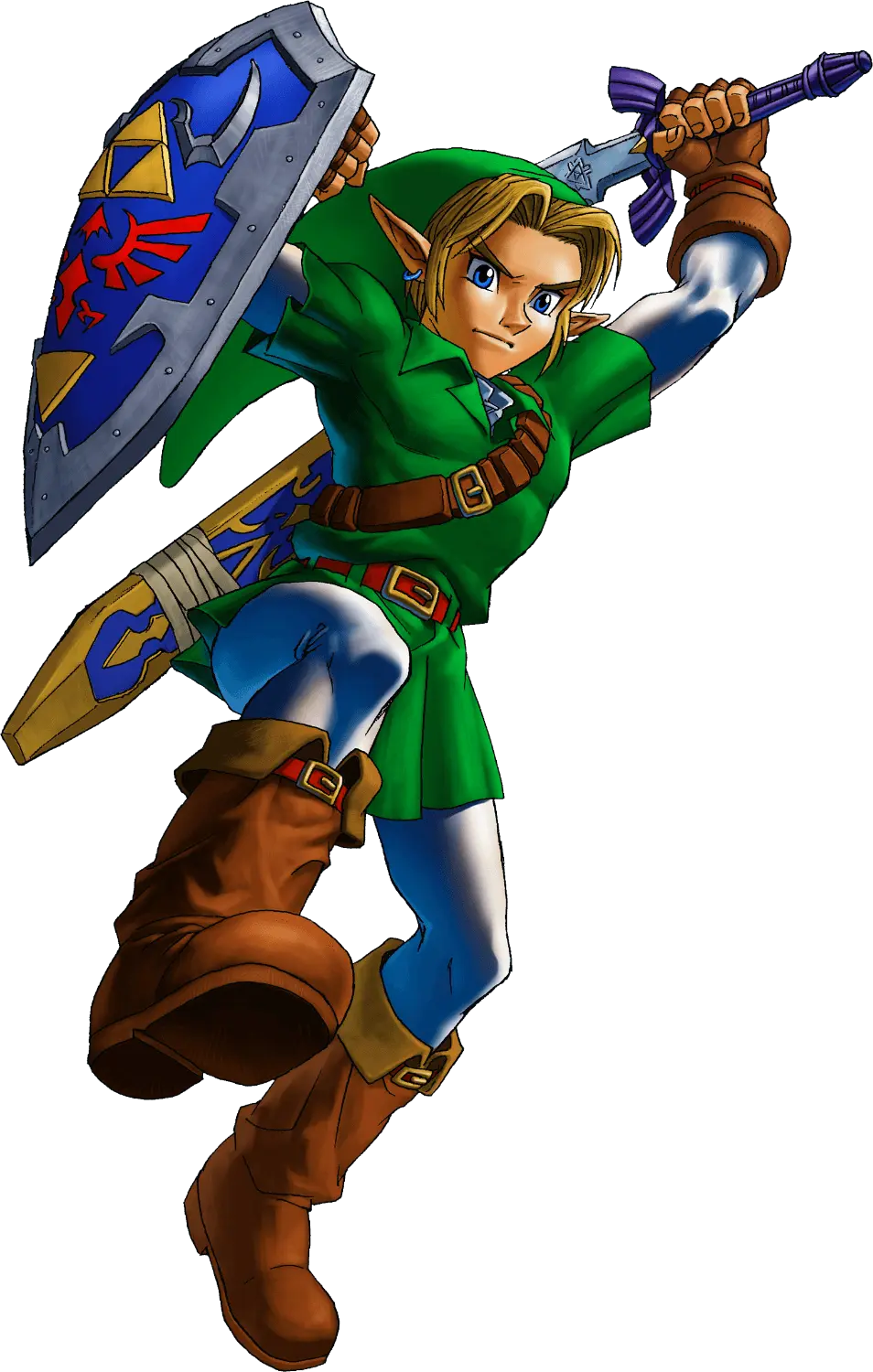
Official art of adult Link in battle.
Keeping Link on screen made fighting much harder: in Super Mario 64 even reading a sign could send the camera spinning. The fix came from a staff outing. Osawa, Koizumi and Ikeda visited Toei Kyoto Studio Park, a film-set theme park, and watched a samurai fend off a ninja circling him with a chain-and-sickle weapon. Osawa saw an invisible chain tying two fighters together, letting one circle the other. Koizumi noticed that in staged fights the attackers politely come at the hero one at a time.
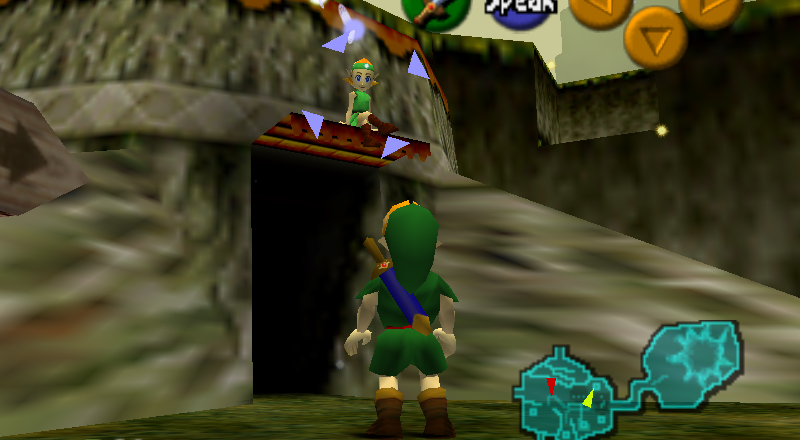
Put together, that became Z-targeting. Press Z and Link locks on to a single foe, strafes around it and keeps his guard up, while the rest of the enemies wait their turn. In Koizumi’s words, “Z-targeting flags one particular opponent, telling the other enemies to wait.” The Forest Temple’s fight with two Stalfos was built straight from that show.
How a cursor became Navi
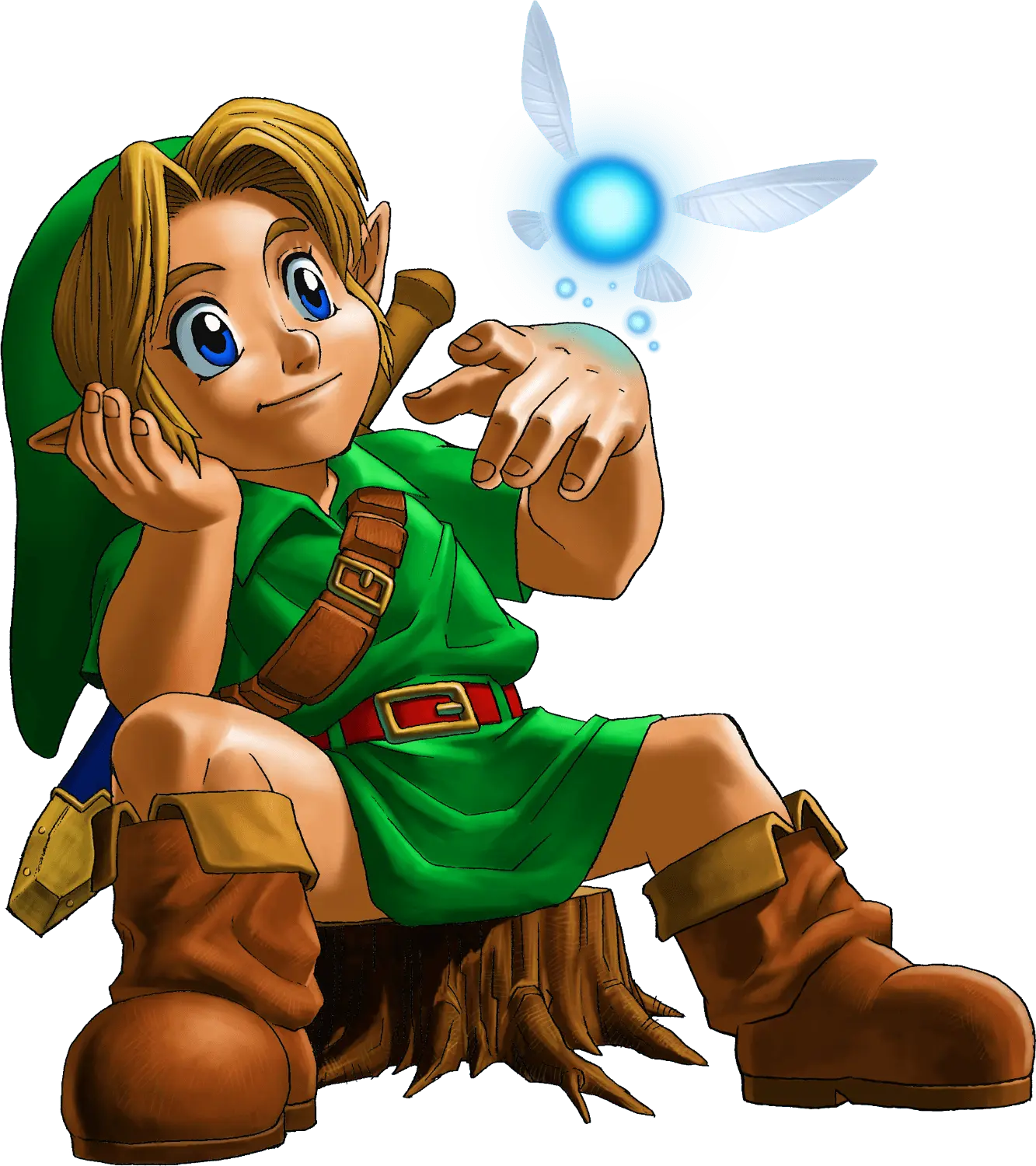
Official art of young Link with Navi.
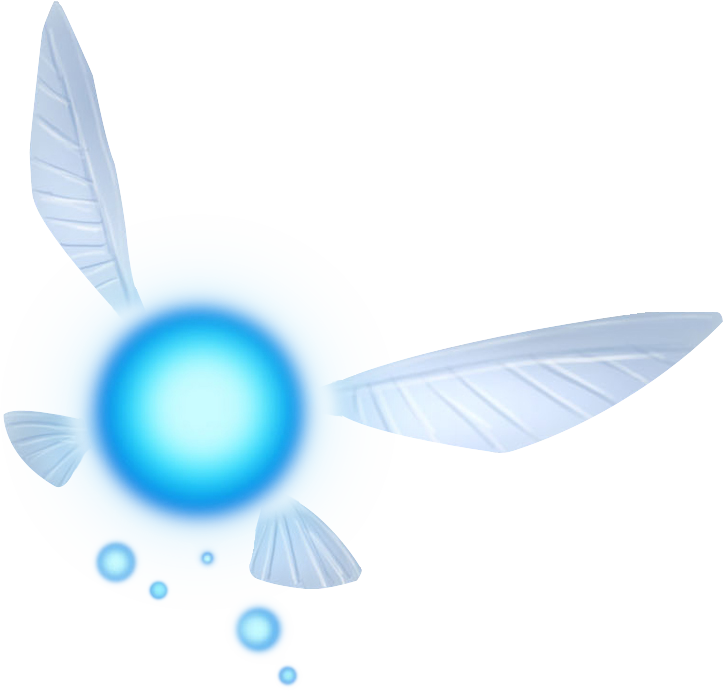
The first lock-on marker was a plain upside-down triangle. Koizumi wanted something more Zelda-like and drew a fairy, a winged ball of light because a detailed girl was beyond the Nintendo 64. He called it the Fairy Navigation System; Osawa trimmed that to Navi, in keeping with the series’ habit of names that say what a character does, and wrote a story around meeting and parting with a fairy. Fairies also solved a technical problem in Kokiri Forest: each Kokiri has one, and the child only appears when Link gets close.
Young Link and the seven-year jump
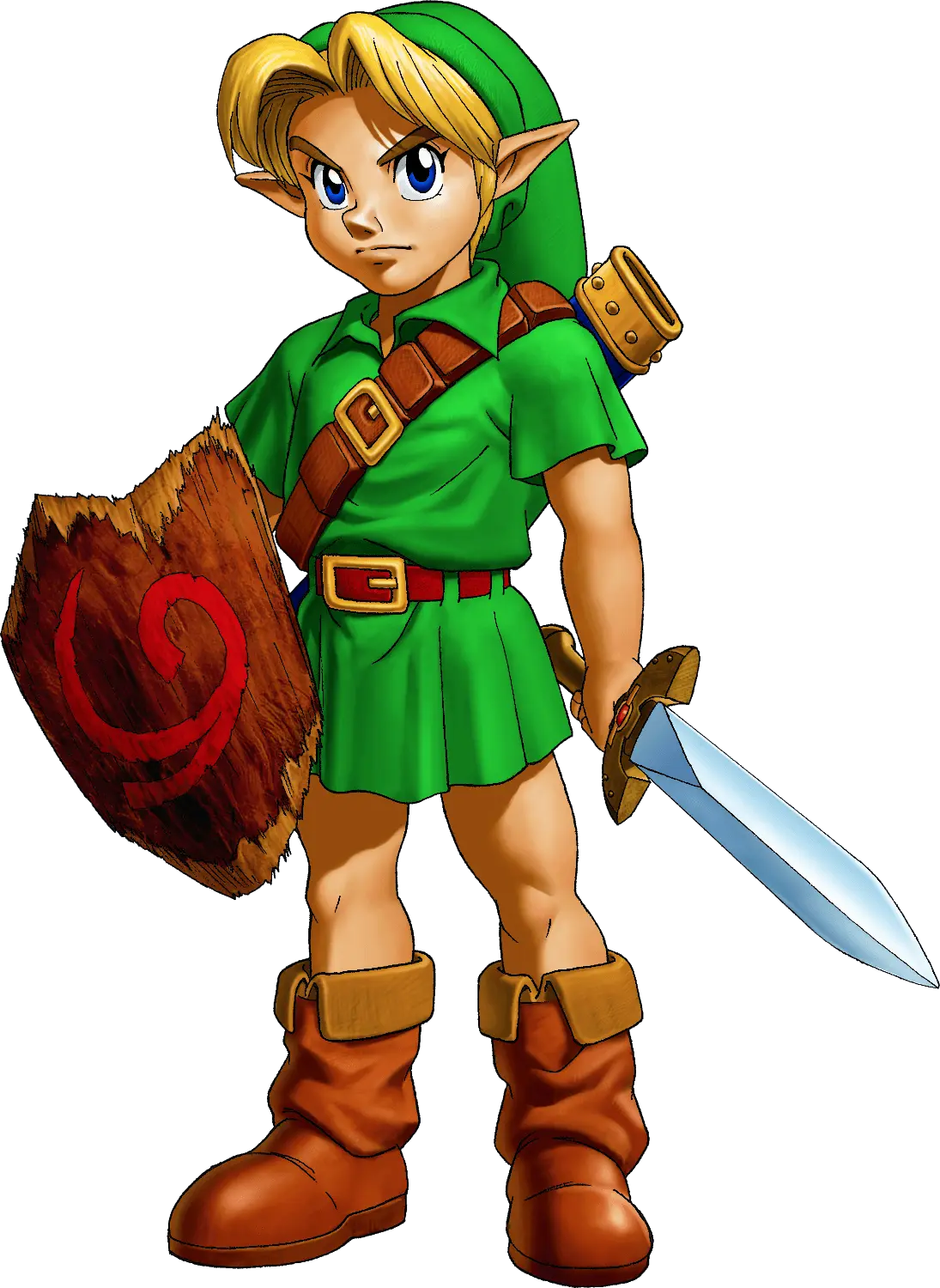
Official art of young Link.
For most of development there was only an adult Link, since a child with a short sword seemed a poor match for big monsters. Then, roughly a year and a half before release, Miyamoto and the team decided they wanted a cute young Link too. Osawa solved the story problem with the seven-year sleep and the Master Sword as the switch between ages. Koizumi solved the animation problem by scaling down the adult model to reuse its motions, though young Link still needed extra work on top of the roughly 500 basic motions the adult already had.
Off the 64DD and onto a cartridge
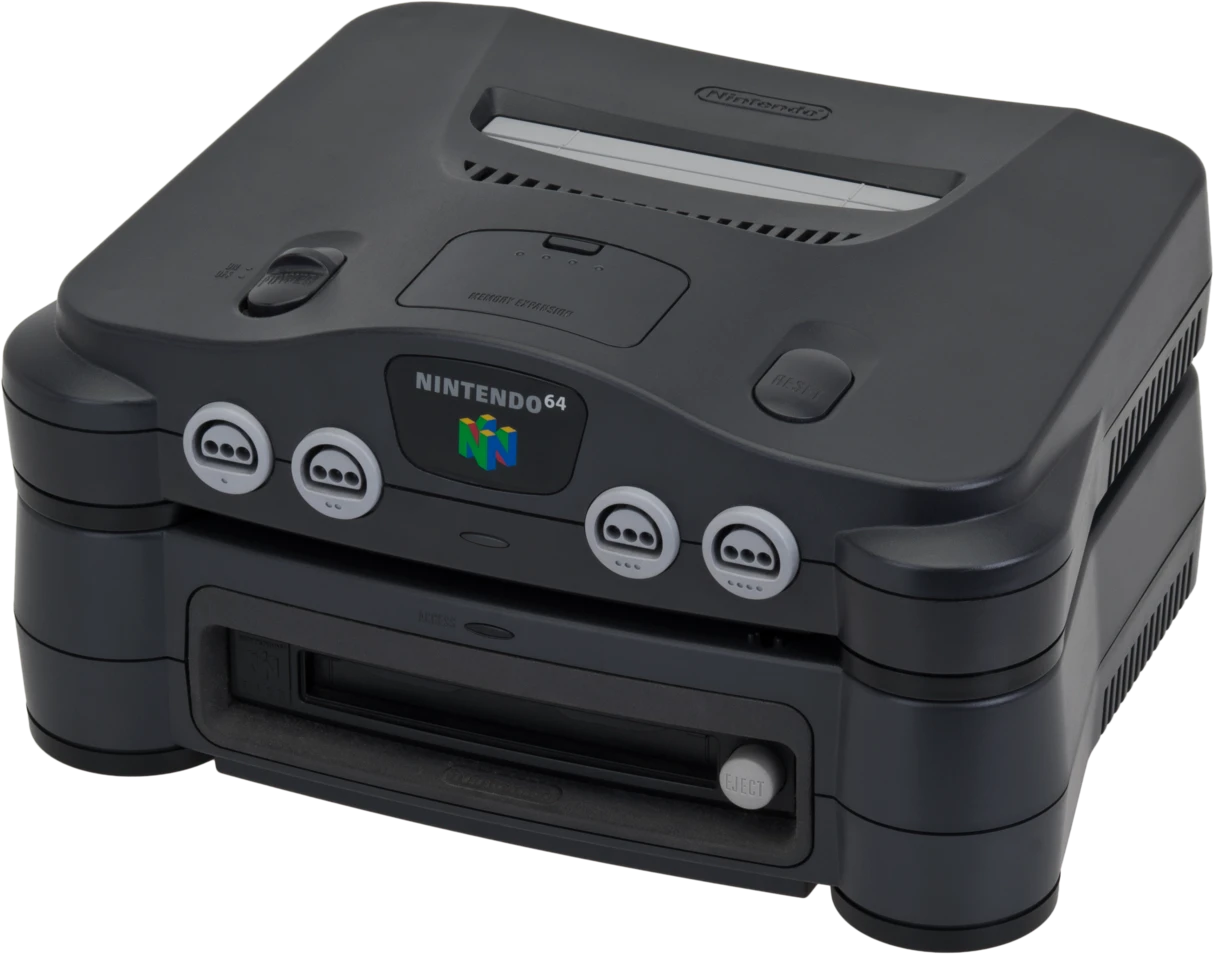
The Nintendo 64DD, the disk drive Zelda 64 was first planned for.
Zelda 64, as it was then known, was first shown to the public at Nintendo’s Shoshinkai show in 1995 and was originally planned for the 64DD, a magnetic disk drive that sat under the Nintendo 64. All those Link animations killed that plan: the disks simply could not stream motion data fast enough. “I can’t move my Link on the Nintendo 64DD,” was how Koizumi put it, and in March 1997 IGN reported that the game had moved to a cartridge. It ended up on a 256-megabit (32 MB) cartridge, Nintendo’s largest yet.
The release date slipped several times, from a hoped-for 1997 into late 1998. The staff remember the delays not with dread but with relief, as extra time to fix things that bothered them. Koizumi was 26 or 27 at the time, and designers such as Yoshiki Haruhana and Satoru Takizawa were in their early twenties; the core of the work took about two and a half years of late nights.
Epona and Hyrule Field
Official art of adult Link riding Epona.
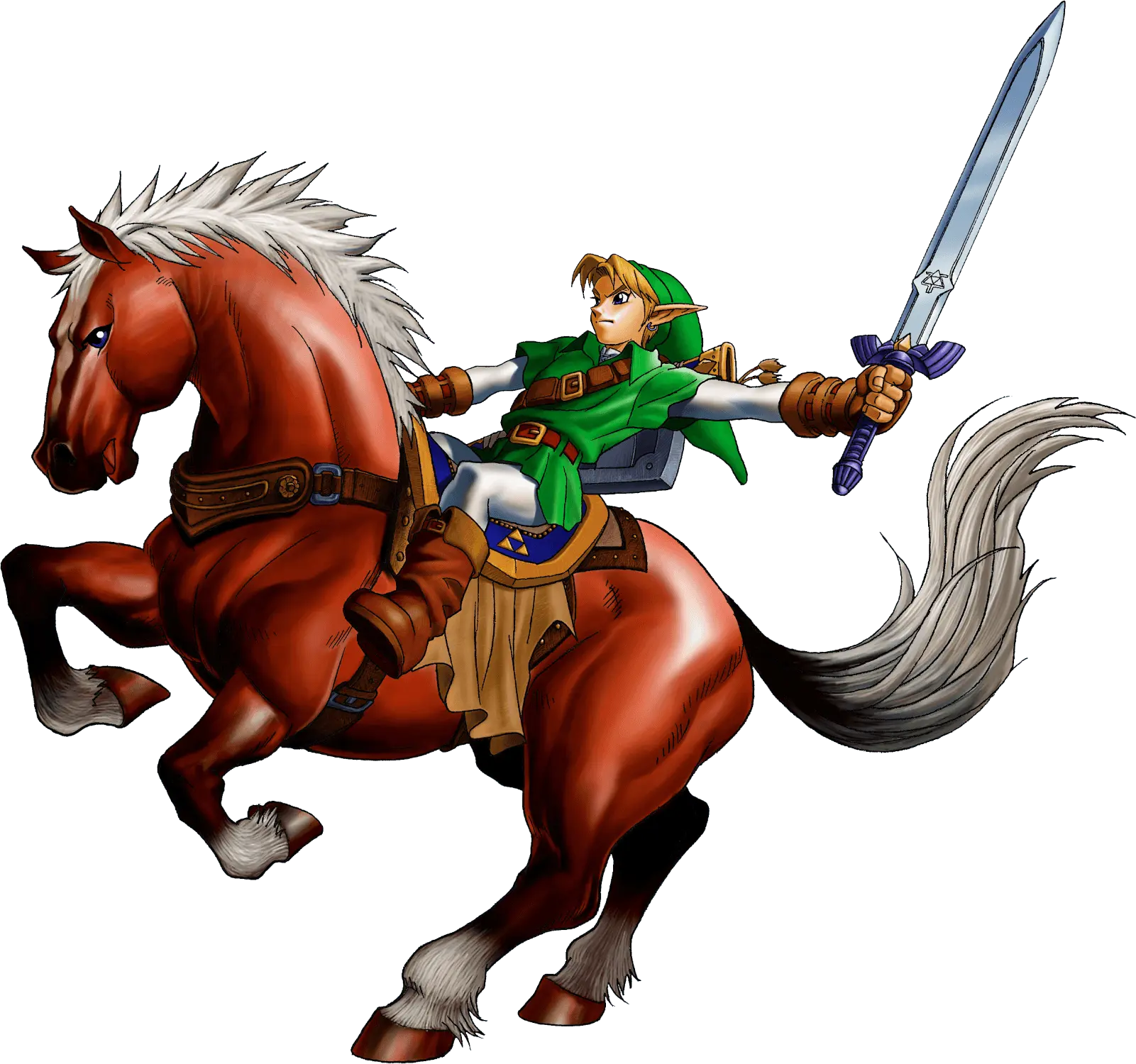
A horse had been discussed as far back as Super Mario 64. Koizumi named her after the Celtic horse goddess; Aonuma says the working name was Ao. Miyamoto shaped the details: he wanted to watch her jumps from below, against the light, he insisted the jumping be automatic because Zelda should not need difficult controls, and he added the carrot system that limits how often you can spur her on. Mounted sword duels did not make it, and turned up years later in Twilight Princess.
Field designer Miyanaga made Hyrule Field big enough to ride across, so big that others complained riding over it got dull. The team added enemies and holes, walking the field to fill every empty spot with something.
Real-time cutscenes and a sliceable sign
One of the game’s wooden signs, which Link can cut in two.
Every cutscene is rendered in real time by the game engine, which meant the story could keep changing until the end. Kawagoe built a tool so that scenes automatically show whatever tunic and gear Link is carrying, and the opening ride across Hyrule Field got its moon when one slid into shot by chance. Aonuma’s verdict on the process: “It was a mess right up to the end.”
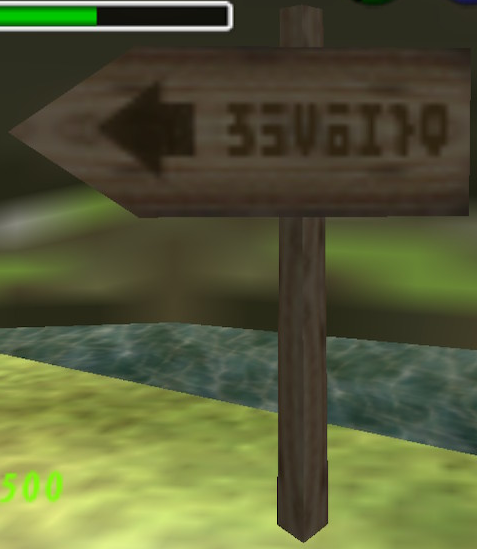
Some of the best touches came from the mess. Miyamoto asked whether Link could cut a signpost in half; programmer Kazuaki Morita made the pieces fall like slices of cheese and float away on water, and Miyamoto laughed and declared, “Now that’s The Legend of Zelda!” Because cut signs could no longer be read, the team added a late fix: play Zelda’s Lullaby and the sign mends itself.
Monsters, a Great Fairy and a secret fishing pond
The Great Fairy’s Fountain, as pictured in the Nintendo Music app.
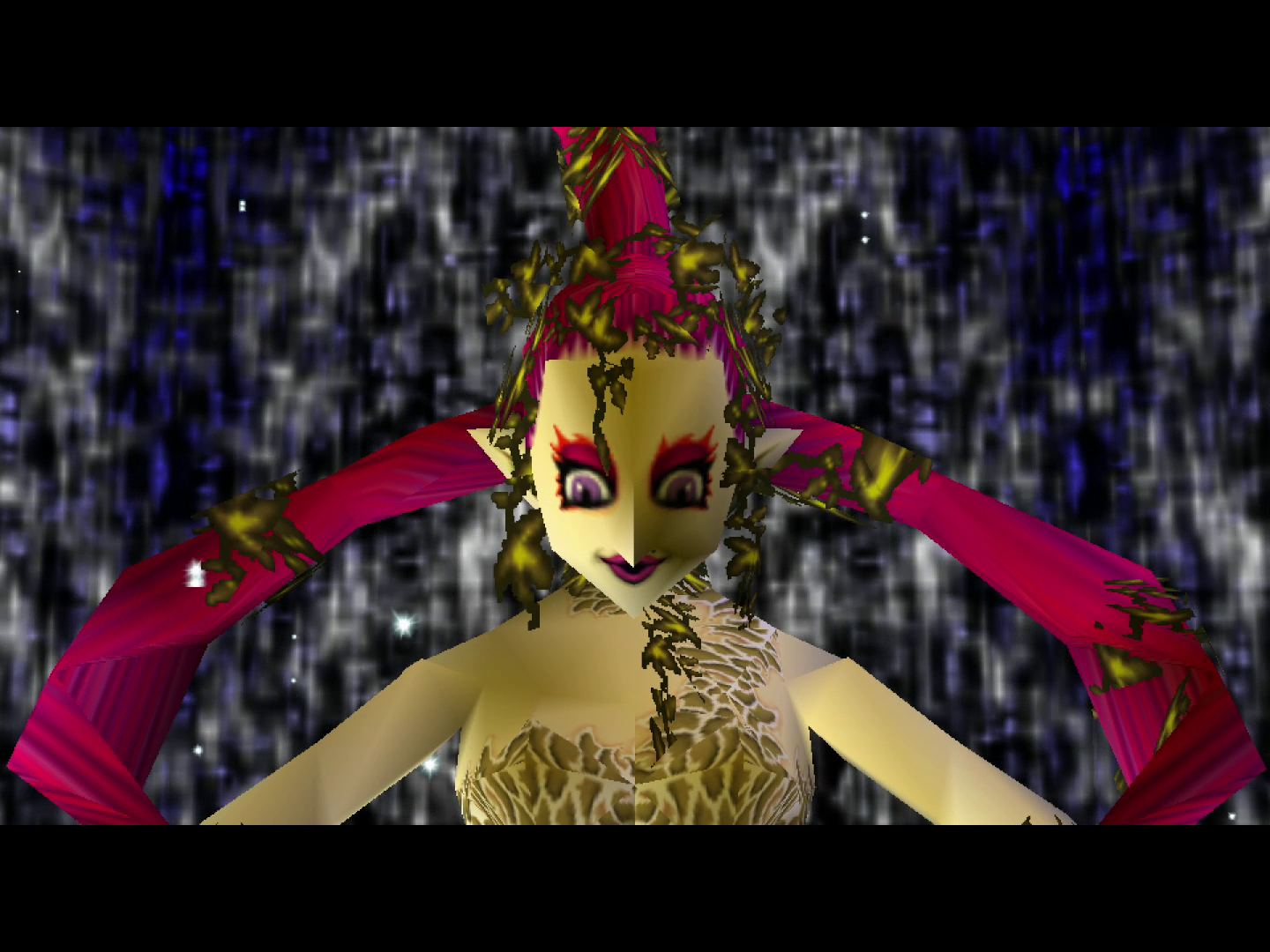
Satoru Takizawa, then in about his third year at Nintendo, designed the bosses and enemies and learned how to bring them to life from veteran programmer Kazuaki Morita. Volvagia was a shortcut: Morita reused his technique for an enemy fighter chasing an Arwing in Star Fox 64, with a dragon swapped in. Yoshiki Haruhana handled most of the other characters, designing the Skulltula and Lizalfos and drawing the Gorons; the startling Great Fairy was his own idea. “If I drew a typical fairy, it would be boring,” he explained.
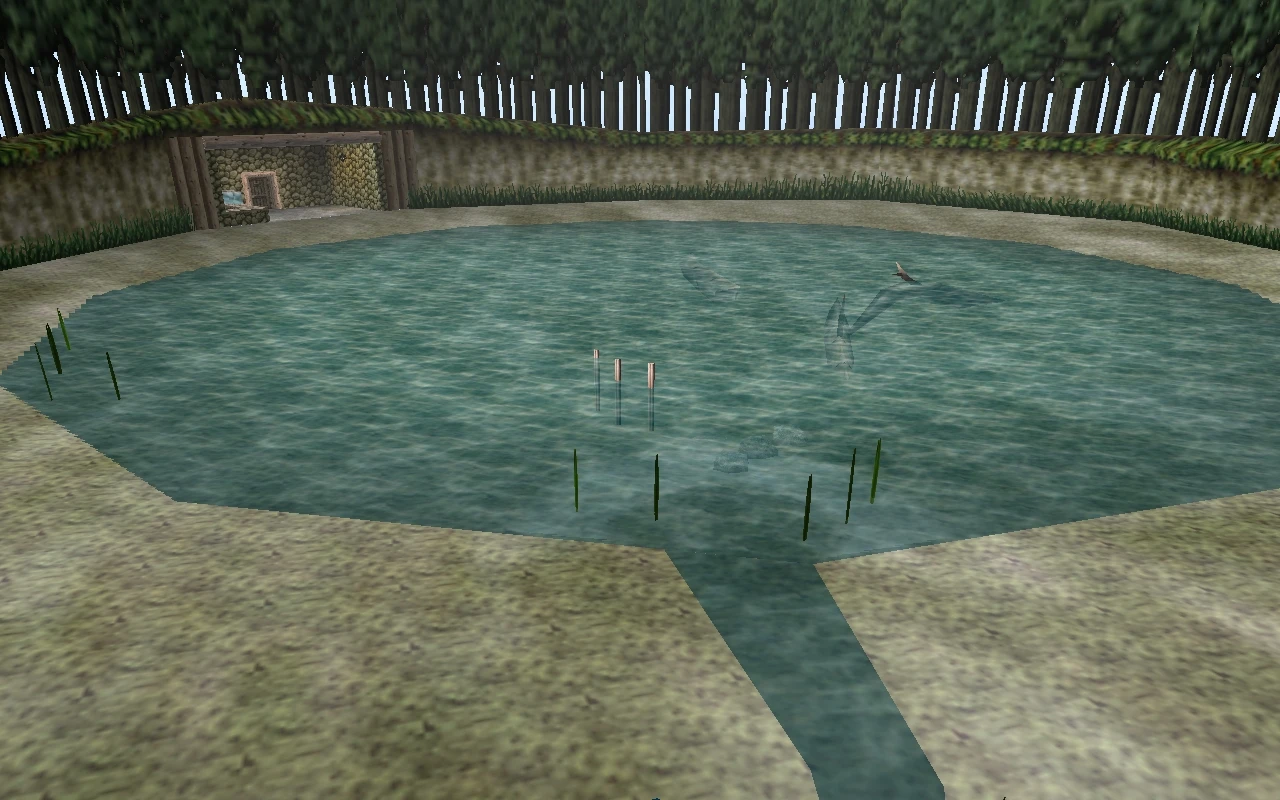
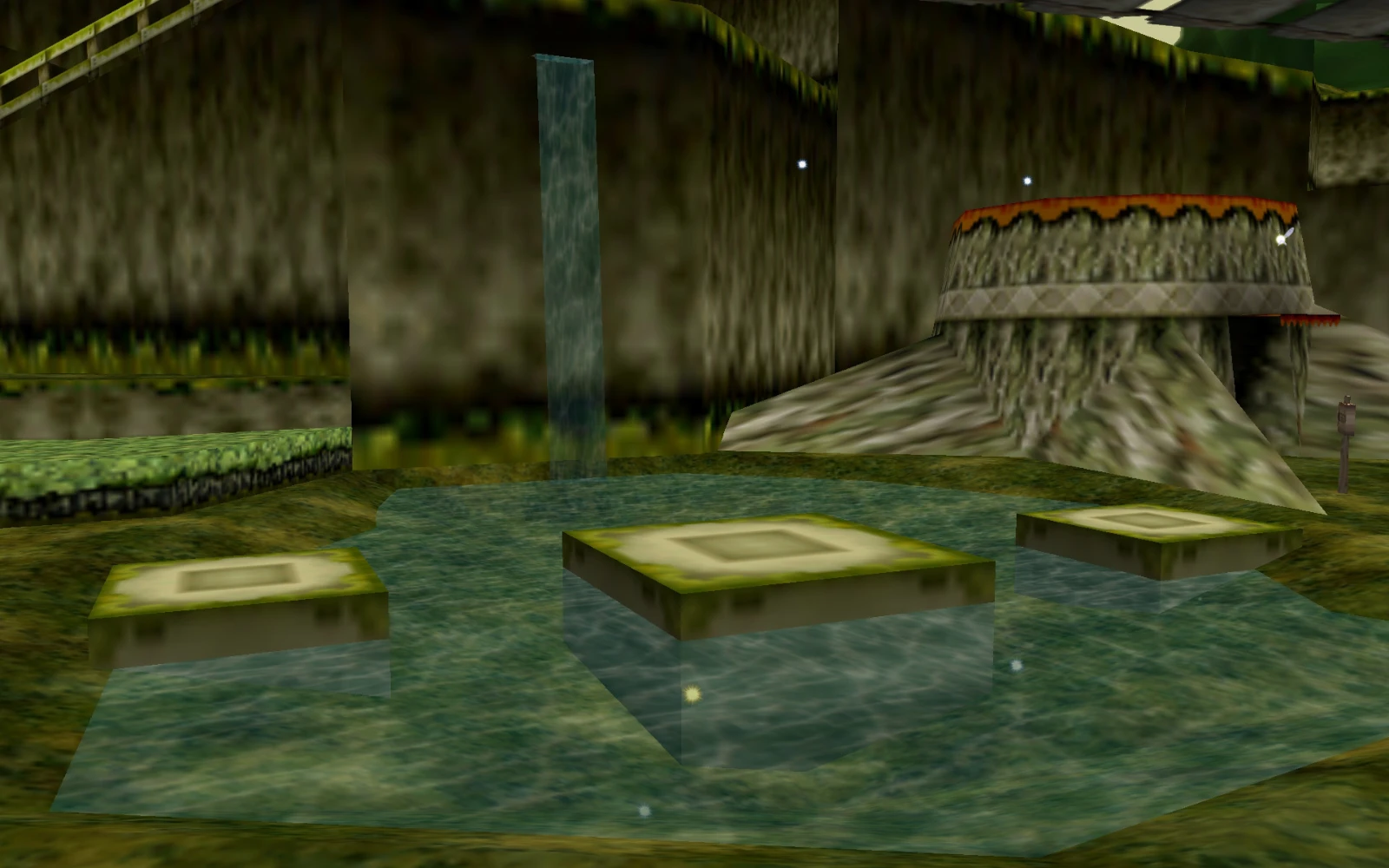
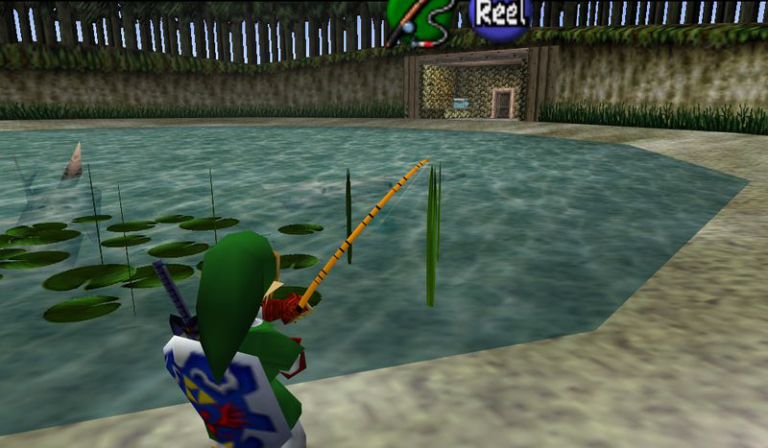
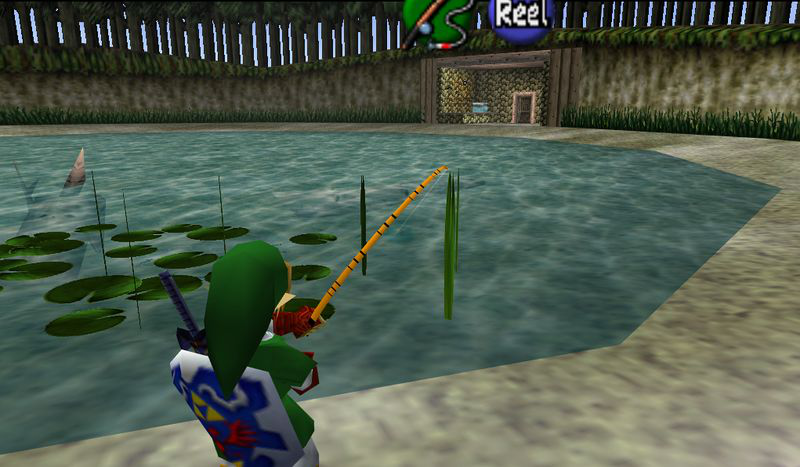
The Fishing Pond started as Morita goofing off. While building Morpha he dropped a bottled fish into the Water Temple’s pool, realised he could go fishing, and built a rod out of a cylinder and Link’s sword swing. Aonuma caught him at it, but the field team wanted a fishing spot anyway, so they stuck some doors on a bare cliff at Lake Hylia. The pond owner, who speaks the Osaka dialect in Japanese, was modelled on the owner of a tackle shop Morita visited near Neyagawa.
Koji Kondo’s music
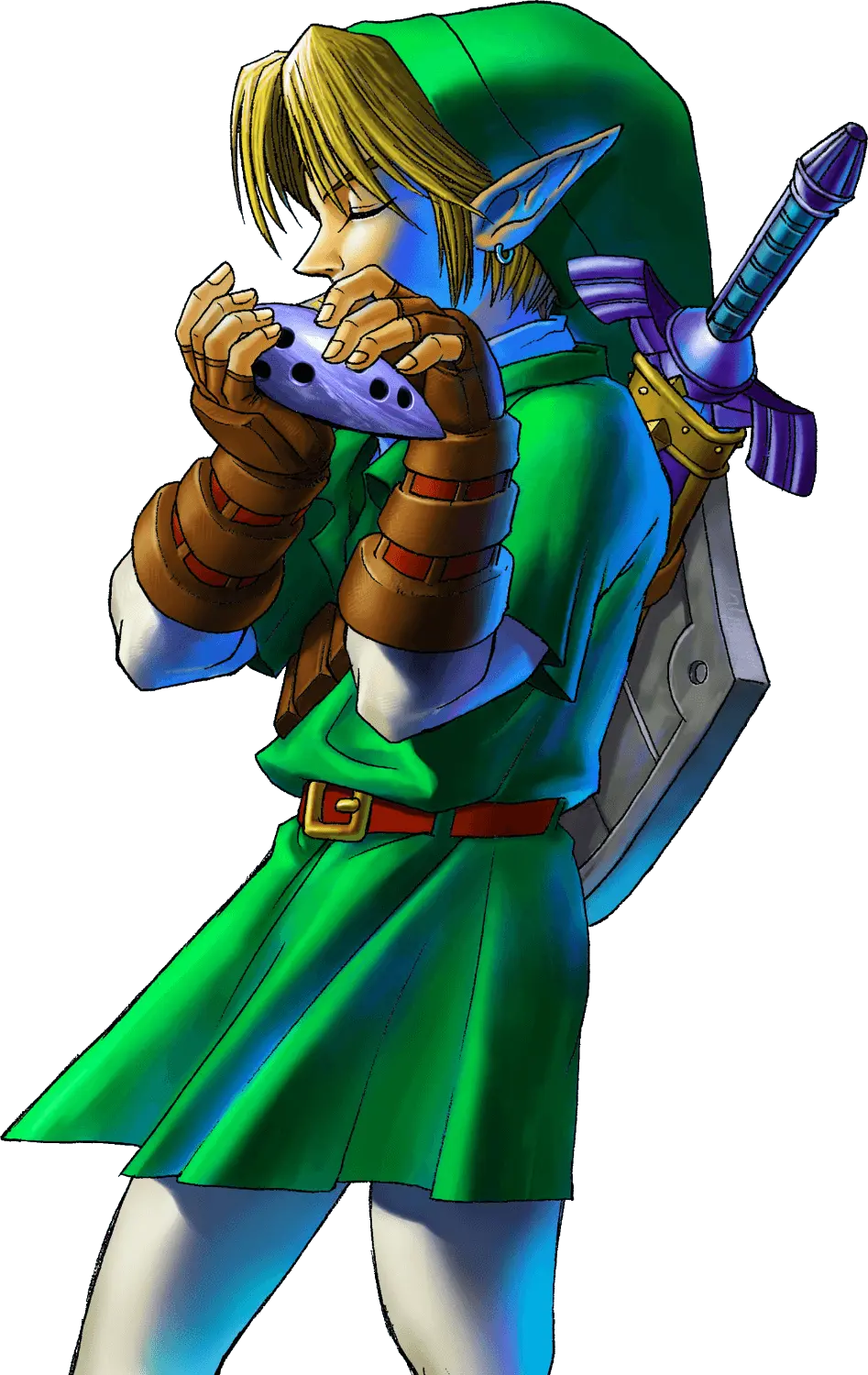
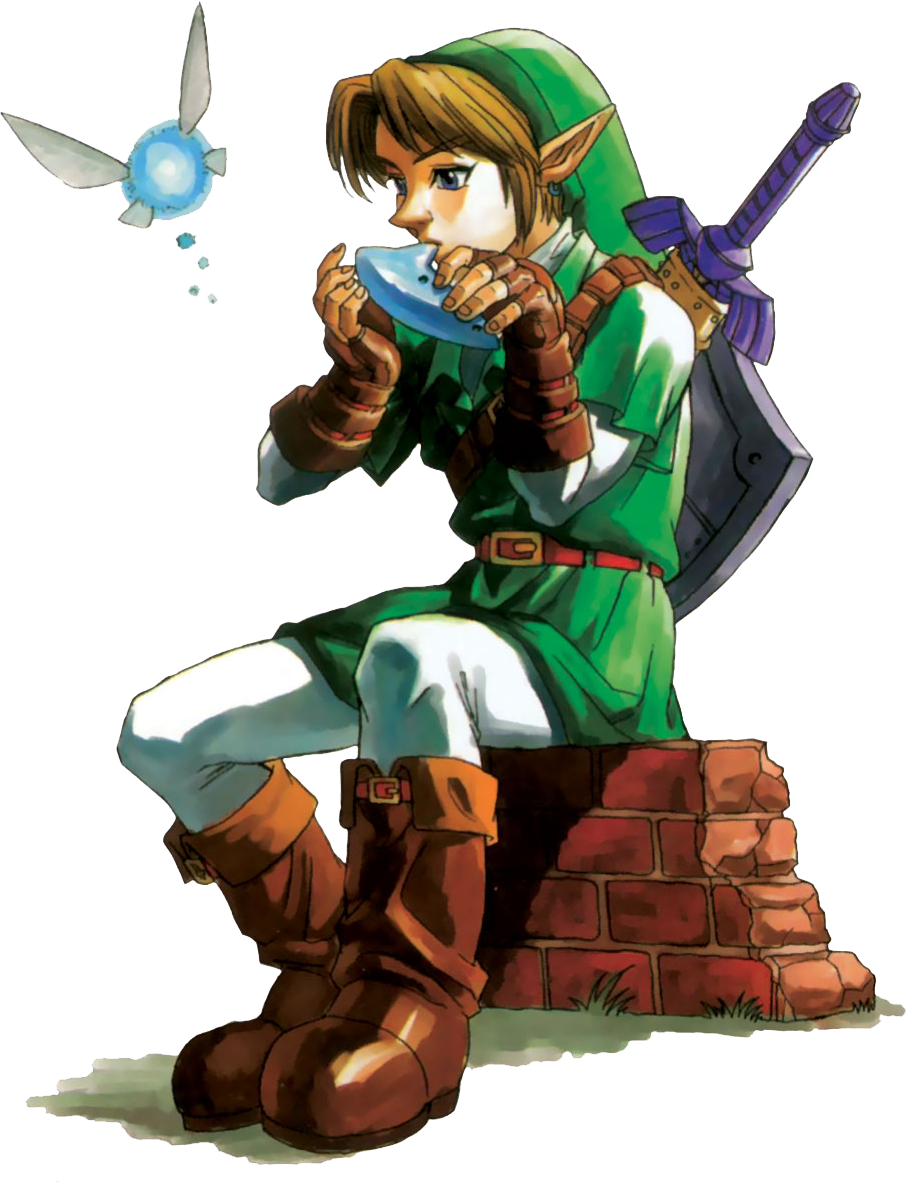
Official art of Link playing the ocarina.
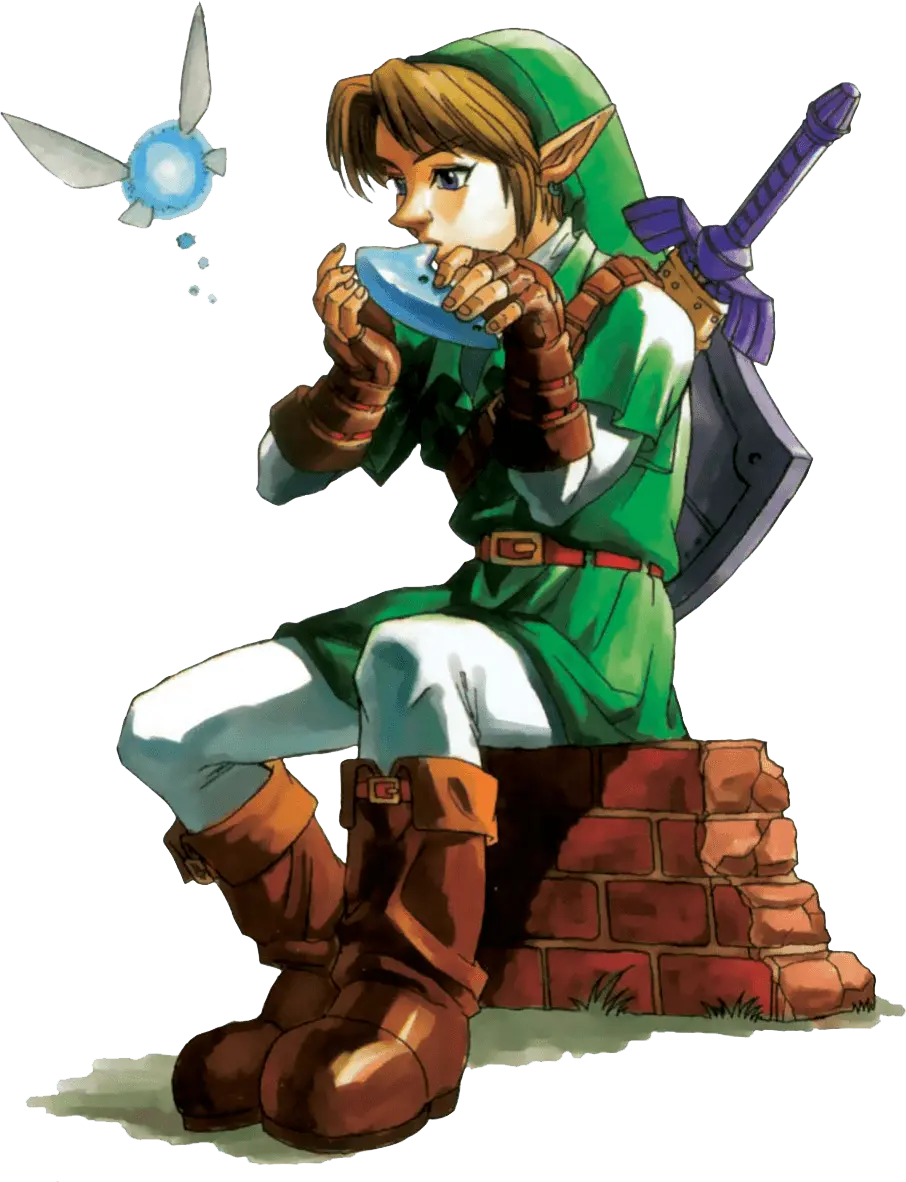
The ocarina gave Koji Kondo a new kind of job: tunes short enough to play on five notes that still stuck in your head. The analogue stick bends notes, and twelve songs carry the story, from Zelda’s Lullaby to the warp songs. The music could also be built from parts on the fly. Hyrule Field’s theme has normal, battle and quiet states, bringing melodies in at different moments and dropping away when Link stands still. As Kondo said of the effect, “Not many people noticed.”
Ura Zelda: the 64DD expansion that became Master Quest
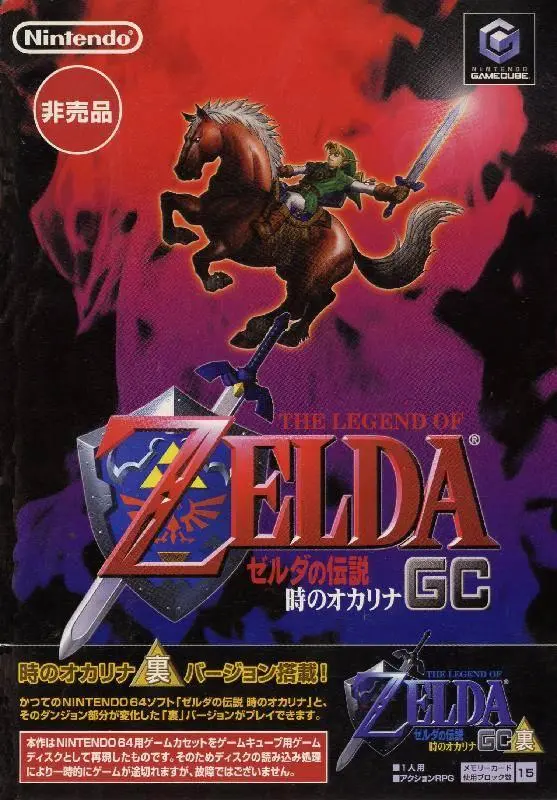
Front cover of the Japanese GameCube Master Quest disc (2002).
Even after the game moved to cartridge, Nintendo planned a 64DD follow-up. Ura Zelda (“ura” means the hidden or reverse side) would plug the 64DD into the original cartridge and add new dungeons, maps and scenarios to the same story. Miyamoto described it in 1999 as “very much a parody game based on Ocarina of Time, but with new dungeons to explore.” In August 1999 he confirmed it was a separate project from Zelda Gaiden, the game that became Majora’s Mask.
Eiji Aonuma did not want to remix dungeons he felt were already as good as the team could make, and quietly started designing new ones instead. He struck a deal with Miyamoto: if he could make a new Zelda in a year, Ura Zelda would not be needed. That game became Majora’s Mask. The 64DD itself flopped, launching only in Japan in 1999 and fading within a year, and Ura Zelda went quiet, although Miyamoto said in August 2000 that it had been finished for some time.
Other staff finished the job. The rearranged dungeons finally came out as Master Quest, on a GameCube disc given away with pre-orders of The Wind Waker in Japan (as Toki no Okarina GC Ura, 28 November 2002) and North America (February 2003), and bundled with it in Europe (May 2003). Master Quest scored 91 on Metacritic, and returned, mirrored, in Ocarina of Time 3D.
Launch: gold cartridges and quiet revisions
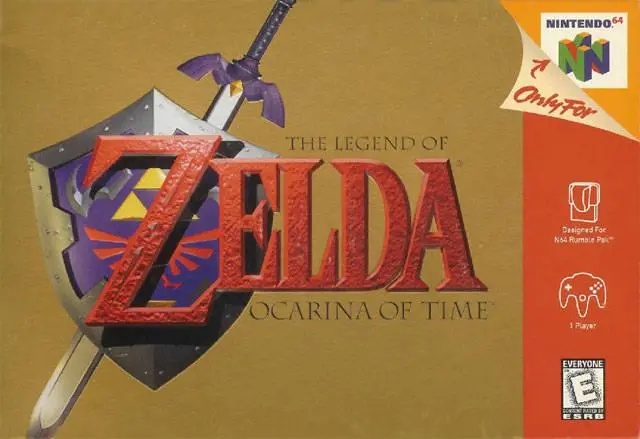
The North American cartridge.
American players placed more than 500,000 pre-orders, over three times the previous record and enough for a Guinness World Record, and Electronics Boutique stopped taking pre-orders on 3 November 1998. Pre-ordered copies came in a Collector’s Edition box with a gold-coloured cartridge and a gold card, and Nintendo put about $10 million into marketing.
Later production runs were quietly changed. Ganondorf’s blood went from red to green, a chant sample was removed from the Fire Temple music after Nintendo found it broke its policy on religious content, and some bugs were fixed. The original Gerudo crest, a crescent moon and star, was also replaced by a new design in later material.
Firsts: what this game introduced
Ocarina of Time added more to the Zelda formula than any game since the original. These are the firsts we could confirm.
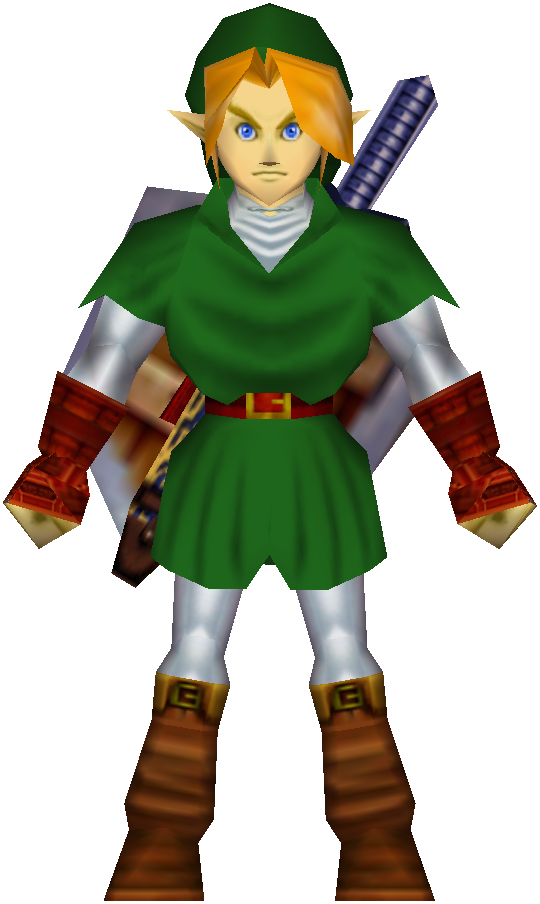
1Zelda in 3DThe first Zelda game set in a fully 3D world, with a camera that follows Link through it.
2Z-targetingLock on to an enemy, circle it and keep your shield up. Inspired by a ninja show at Toei Kyoto Studio Park, and later copied by countless 3D action games.
3NaviNavi debuts here, giving Link a talking partner who rides along with him for the whole adventure.
4EponaLink’s horse makes her first appearance, along with horseback travel across an open field.
5The Gorons and the GerudoBoth peoples debut here: the Gorons in Goron City on Death Mountain, the Gerudo as a desert tribe of warriors.
6Ganondorf in the fleshThe first game to show Ganon’s human form, the Gerudo king Ganondorf.
7The Temple of TimeIts first appearance; it returns in Twilight Princess, Skyward Sword and Breath of the Wild.
8A perfect Famitsu scoreThe first game ever to receive 40 out of 40 from Japan’s Weekly Famitsu (issue 519, November 1998).
Cheats & secrets
Ocarina of Time has no cheat codes, but it is stuffed with secrets, side quests and rewards for exploring. These are the ones worth knowing.
Gold Skulltula rewards
A curse has turned a rich Kakariko family into spiders. Each of the 100 Gold Skulltulas you defeat leaves a token; bring them to the House of Skulltula and the family pays you back:
Finish under
Bonus
10 tokens
Adult’s Wallet (holds 200 Rupees)
20 tokens
Stone of Agony (rumbles near secrets with a Rumble Pak)
30 tokens
Giant’s Wallet (holds 500 Rupees)
40 tokens
Bombchus
50 tokens
Piece of Heart
100 tokens
Unlimited Rupees, by which time you hardly need them
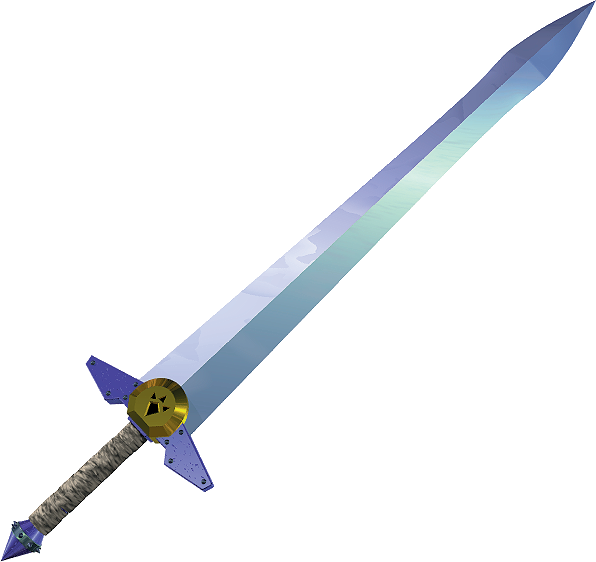
The Biggoron’s Sword trading sequence
Biggoron’s Sword, the prize at the end of the trading sequence.
The strongest sword in the game is the prize at the end of a long chain of swaps that starts with a Pocket Egg and runs through the Pocket Cucco, Cojiro, Odd Mushroom, Odd Potion, Poacher’s Saw, Broken Goron’s Sword, Prescription, Eyeball Frog and World’s Finest Eye Drops to a Claim Check. Biggoron reforges the sword for you. It is two-handed, so no shield, but it hits twice as hard as the Master Sword and never breaks, unlike the Giant’s Knife sold in Goron City.
Great Fairy fountains
Din’s Fire, one of the three spells the Great Fairies hand out.
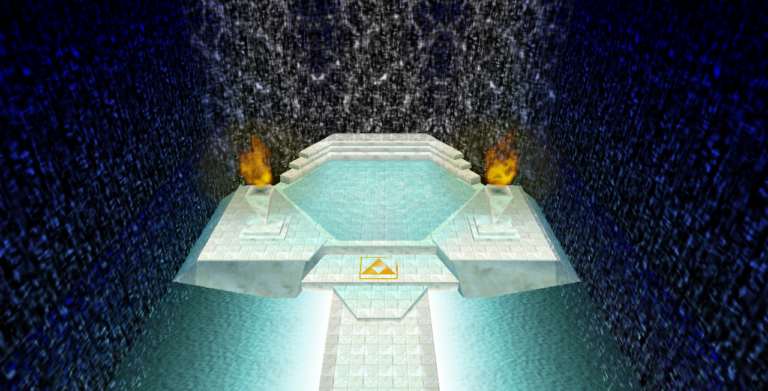
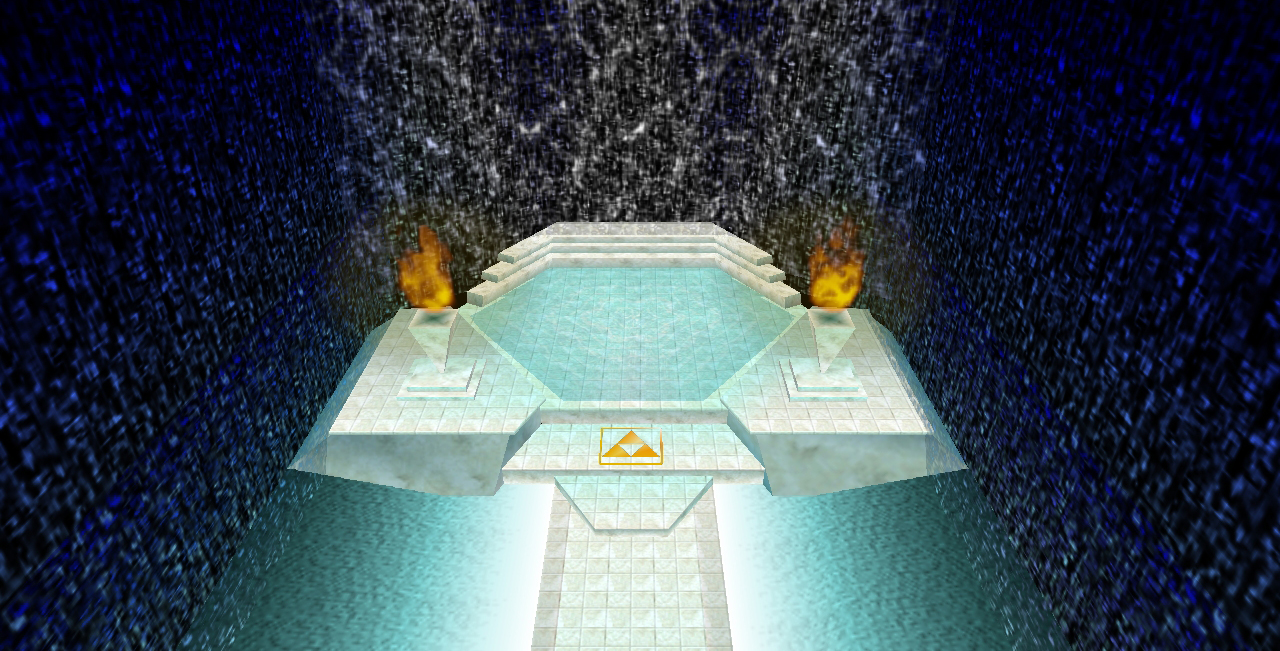
Six hidden fountains, most behind walls you have to bomb. On Death Mountain’s summit you get magic power and the charged Spin Attack; in Death Mountain Crater, double magic; and outside Ganon’s Castle, double defence. The fountains near Hyrule Castle, at Zora’s Fountain and by the Desert Colossus hand out the three spells: Din’s Fire, Farore’s Wind and Nayru’s Love. Play Zelda’s Lullaby on the Triforce symbol to summon each fairy.
Every song and what it does
Official art of Link with the ocarina.
Impa teaches Zelda’s Lullaby (royal Triforce symbols), Malon Epona’s Song (calls your horse), Saria Saria’s Song (talk to Saria, cheer up Darunia) and Zelda the Song of Time (opens the Door of Time, shifts blue blocks). The Sun’s Song, found in the Royal Family’s Tomb, swaps day and night and freezes ReDeads. The Song of Storms opens hidden grottos. Sheik teaches the six warp songs: Minuet of Forest, Bolero of Fire, Serenade of Water, Nocturne of Shadow, Requiem of Spirit and Prelude of Light.
The Song of Storms paradox
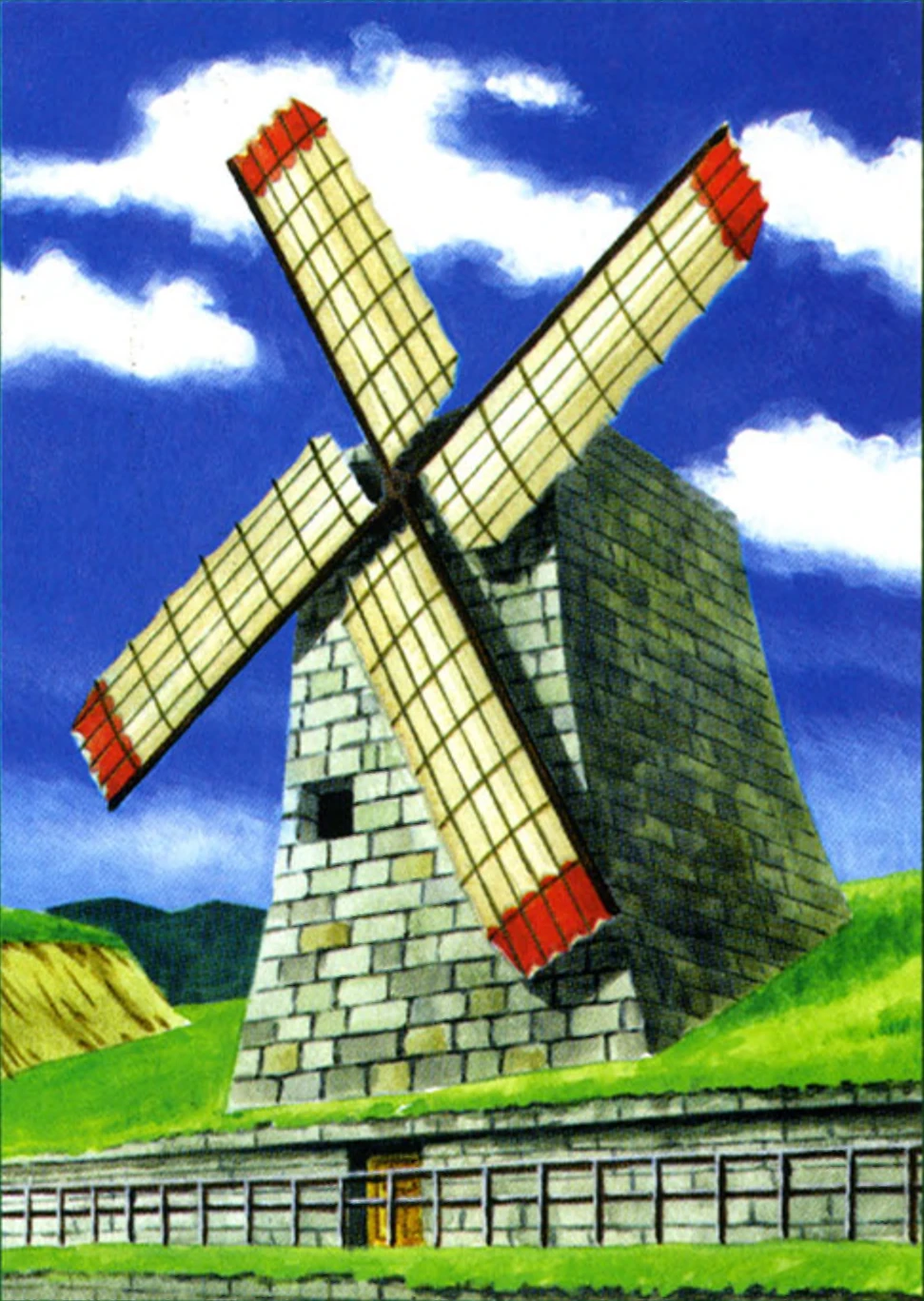
Official art of the Kakariko windmill.
The man in the Kakariko windmill teaches adult Link the Song of Storms, grumbling that a boy played it seven years ago and wrecked his windmill, drying up the well. Go back in time, play it to him as young Link and you become that boy. So who wrote the song? Nobody: it is a closed time loop.
The Scarecrow’s Song
Make up an eight-note tune for the scarecrows at Lake Hylia as a child, and as an adult you can summon a scarecrow called Pierre with it, at hidden spots that the Hookshot can then reach.
Masks and the Mask of Truth
The Mask of Truth.
Borrow masks from the Happy Mask Shop in Castle Town, sell them to the right customers (the Keaton Mask, Skull Mask, Spooky Mask and Bunny Hood), and the salesman eventually lends you the Mask of Truth, which lets you understand what the Gossip Stones are saying.
Fix a broken sign
Slice a signpost with your sword and it falls apart. Play Zelda’s Lullaby next to it and the sign mends itself, a late addition by the development team.
The Fishing Pond
The Fishing Pond at Lake Hylia.
Hidden behind doors on the cliffs of Lake Hylia, the Fishing Pond lets both Links rent a rod and fish for the record. It was built as a private side project by programmer Kazuaki Morita and has nothing to do with the main quest.
Master Quest, the second quest
The Master Quest logo.
Like the original Zelda’s second quest, Master Quest is a harder take on the whole game with rearranged dungeons. It was released on GameCube (2002–2003) and is included, mirrored, in Ocarina of Time 3D.
Collected and checked against Zelda Dungeon’s Ocarina of Time pages and Nintendo’s developer interviews, November 2026.
Glitches, exploits and oddities
A huge 3D world built in a hurry was always going to have holes in it, and speedrunners have spent more than twenty-five years finding them.
Credits warp: finishing in under ten minutes
Kokiri Forest, where the fastest runs end almost as soon as they start.
A trick called Stale Reference Manipulation (SRM) lets runners tamper with values in the game’s memory, and it was extended into arbitrary code execution: controller inputs that make the game run instructions of the player’s choosing. In January 2020 runners worked out a credits warp, first shared by MrCheeze: a precise set of actions in Kokiri Forest, with only the ocarina and slingshot, sends Link straight to the end credits. Lozoots broke the Any% world record with 12 minutes 59 seconds that month, and was under ten minutes (9:56) by early February 2020.
Infinite Sword Glitch
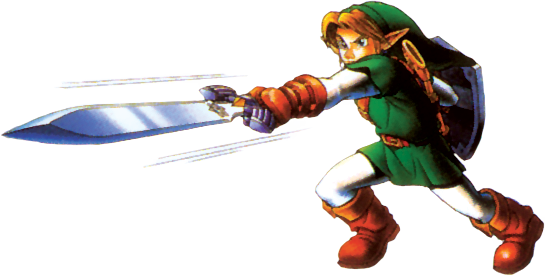
Official art of Link stabbing with his sword.
Interrupt a sword stab at just the right moment (for example by talking to someone, picking up a bomb or starting a cutscene) and Link’s sword keeps “swinging” invisibly, hitting about 100 times a second. While it is active Link does not jump automatically off ledges and is not hurt by falling.
Turning items into bottles
An empty bottle.
Swing an empty bottle, pause in mid-swing and select another item, and that item turns into a bottle. The change is permanent and the new bottle behaves oddly, but it was a famous way to get more bottles than the game offers.
The endless Gold Skulltula
A Gold Skulltula.
At the lone tree near Hyrule Castle, the Song of Storms opens a hole with a Gold Skulltula inside. Kill it, throw the Boomerang at its token and leave before the Boomerang returns, and the spider respawns while your count still goes up. It works in every version except Ocarina of Time 3D.
The unbreakable Deku Stick
A Deku Stick.
Do a jump attack against a wall at an angle while holding a Deku Stick and Link ends up holding a broken stick that never runs out.
Videos & media
Nintendo’s 2026 trailer for the Switch 2 remake, which retells the original’s story with new eyes, and one of the best explanations of why the Nintendo 64 dungeons work so well.
Nintendo of America’s official trailer for the Nintendo Switch 2 remake, from the Zelda 40th Anniversary Direct of 8 September 2026.
Mark Brown’s Boss Keys episode on the Nintendo 64 game’s dungeons (2016), from Game Maker’s Toolkit.
Trivia & facts
Ocarina of Time was the first game ever to get a perfect 40/40 from Weekly Famitsu, in issue 519. The magazine had been running for twelve years without giving one.
It was the third game to score 10/10 in Edge, after Super Mario 64 and Gran Turismo.
Navi, formerly a triangle (Ocarina of Time 3D artwork).Navi is short for the Fairy Navigation System, Koizumi’s name for the targeting cursor before it became a character.
Epona’s working name, according to Eiji Aonuma, was Ao. Koizumi named her after the Celtic goddess of horses before Toru Osawa had even had time to think of a name.
Link goes fishing.The Fishing Pond exists because programmer Kazuaki Morita dropped a bottled fish into Morpha’s pool to see what would happen.
The Fishing Pond owner speaks the Osaka dialect in the Japanese version and was modelled on a real tackle-shop owner near Neyagawa, Osaka.
Volvagia’s swooping flight reuses Kazuaki Morita’s code for an enemy fighter chasing an Arwing in Star Fox 64.
A Great Fairy, as Haruhana imagined her.The Great Fairy’s startling look was not requested by anyone. Designer Yoshiki Haruhana wanted to avoid a typical fairy, and Eiji Aonuma admits his first reaction was to recoil.
Koizumi gave Link pierced ears and long underwear under his tunic for this game, and gave him trimmed sideburns and a stronger nose in place of the old button nose.
Concept art of Ganondorf.Ganondorf’s outfit was styled after a 1980s visual kei rock band, and script director Toru Osawa compared him to Raoh, the warlord of Fist of the North Star.
According to Hyrule Historia, the owl Kaepora Gaebora is the Sage Rauru in another form.
Gerudo tradition, as the series tells it, makes the one boy born to the tribe every hundred years their king. That is how Ganondorf came to rule.
Data for a Wind Medallion and an Earth Medallion exists in the game but neither is used, and dataminers have found a fountain area fans call the Unicorn Fountain.
A concept image of the Triforce from the game’s development.For years players swapped rumours about collecting the whole Triforce. An early preview video seemed to show Link receiving it, but nothing like it is in the finished game.
Hyrule Field’s music changes between normal, battle and quiet versions depending on what Link is doing.
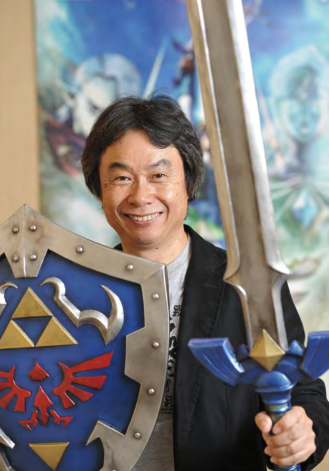
Shigeru Miyamoto, as pictured in Hyrule Historia.Miyamoto wanted Link to raise his sword overhead, which the Nintendo 64 could not manage; it finally happened with Wii MotionPlus in Skyward Sword.
The Japanese release cost ¥6,800 before tax, and Nintendo’s Japanese catchphrase asked, “Have you seen the legend yet?”
Toru Osawa, who wrote the script and coordinated the directors, never worked on another Zelda game.
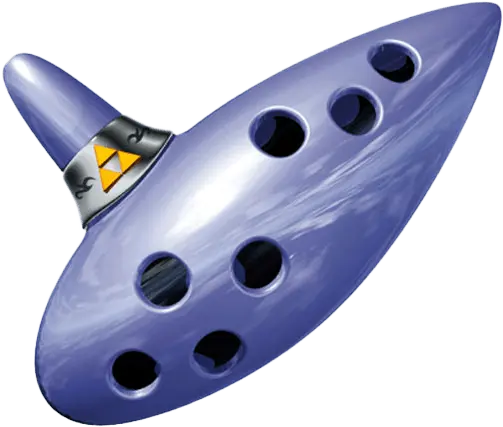
Official art of the Ocarina of Time.The game’s popularity led to an increase in sales of real ocarinas.
Fans fully decompiled the game’s code in November 2021, and in March 2022 a group called Harbour Masters released Ship of Harkinian, an unofficial PC port.
Media & artwork
Box art from around the world, official artwork, screenshots and scans. Select any image to view it larger.
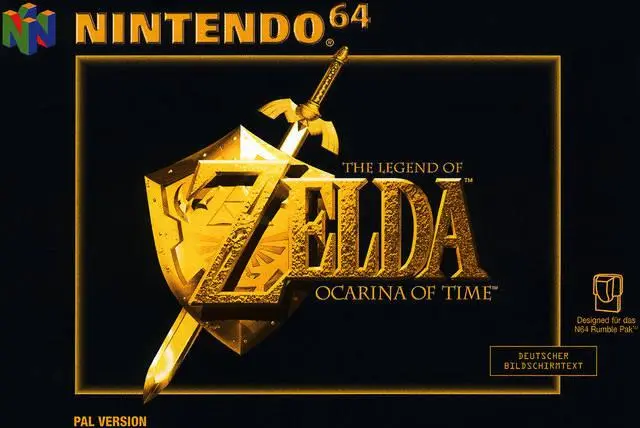
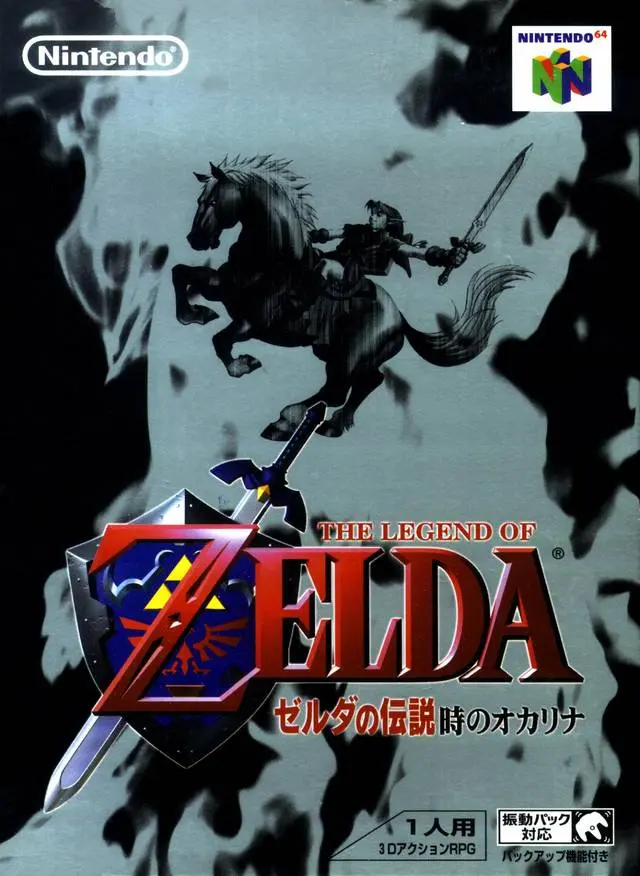
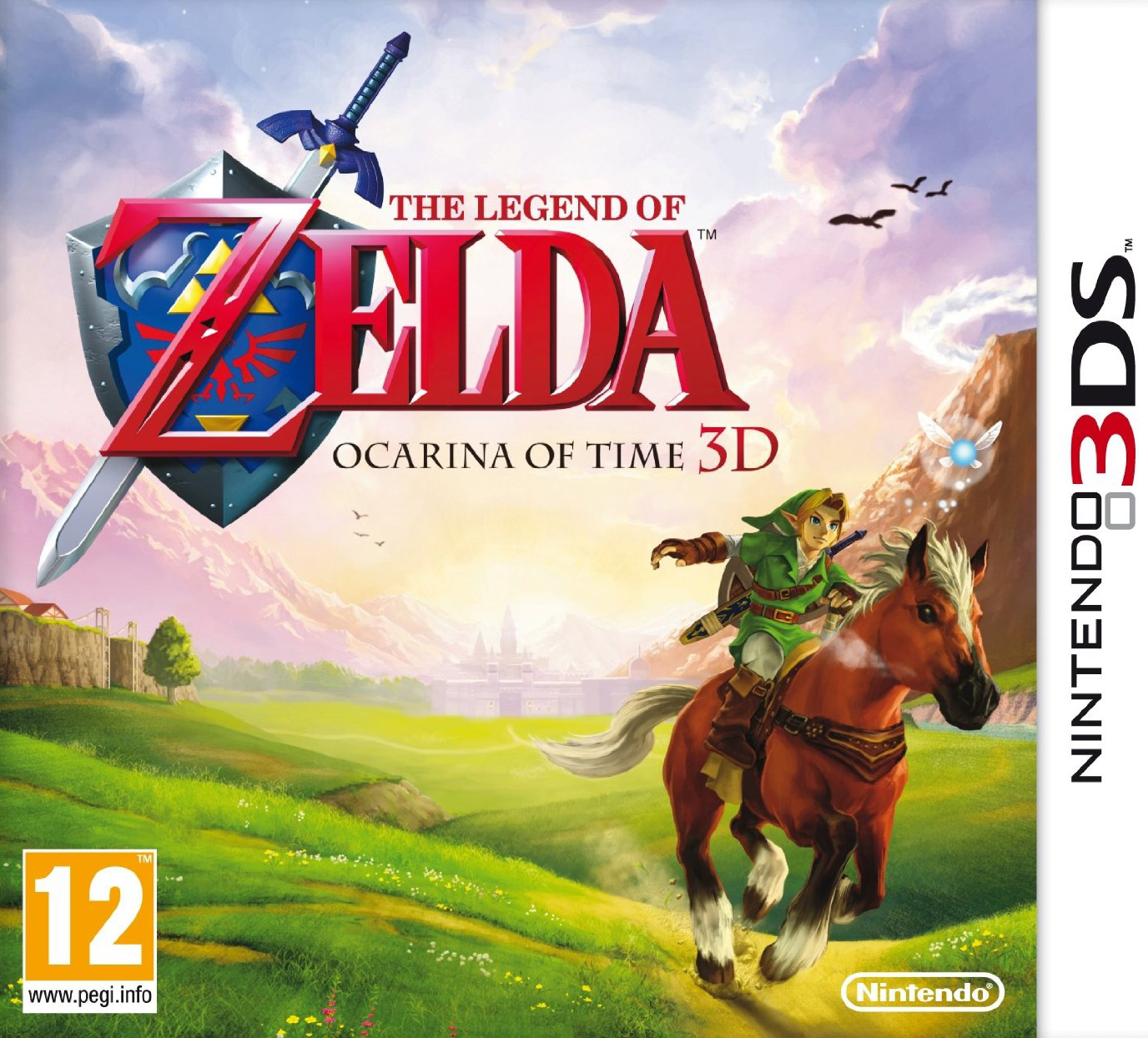
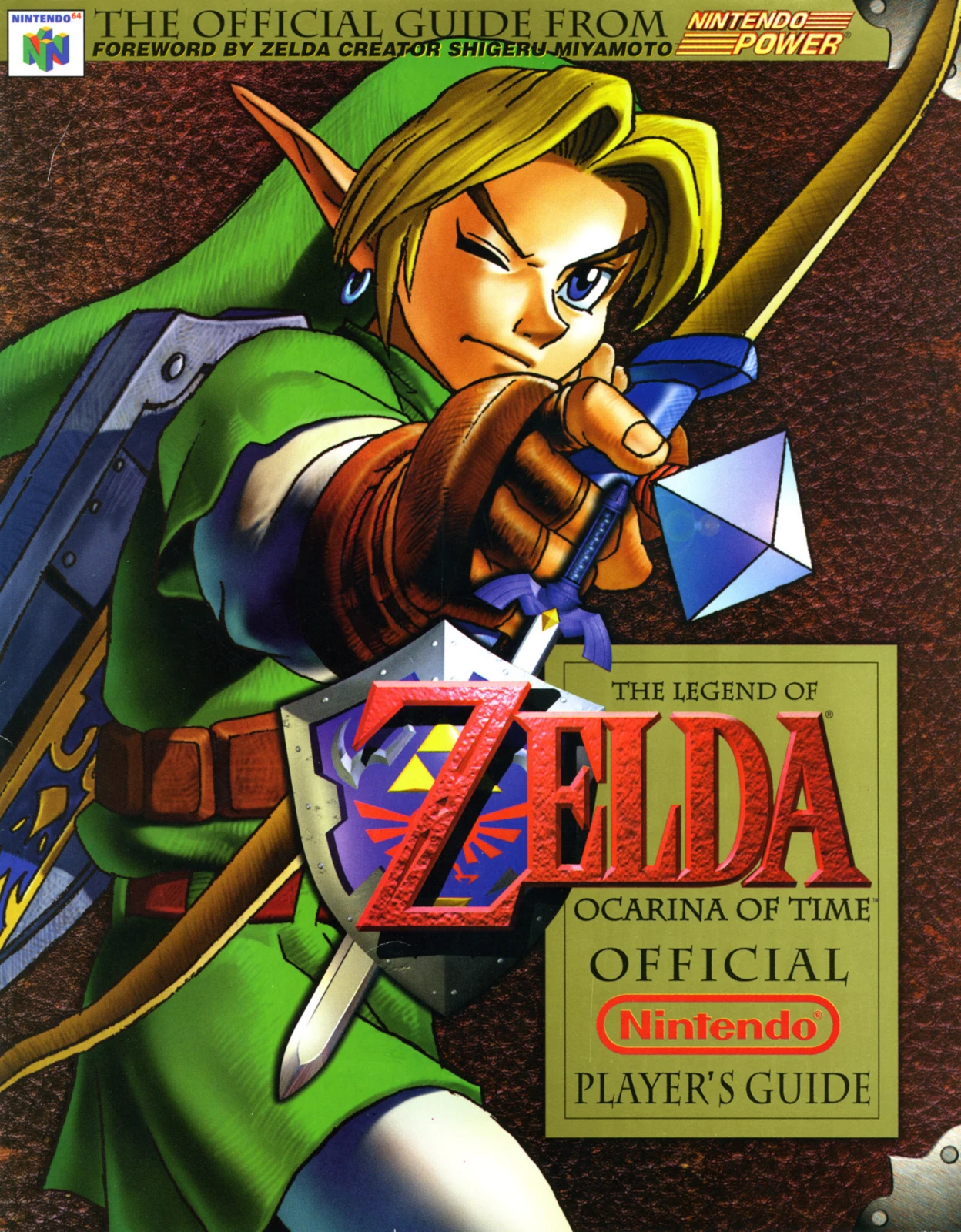
North American Nintendo 64 box (1998)European Nintendo 64 box (1998)Japanese Nintendo 64 box (1998)Canadian GameCube Ocarina of Time / Master Quest bonus disc coverEuropean box for Ocarina of Time 3D (2011)LEGO Great Deku Tree 2-in-1, built as the Ocarina of Time versionMap of Hyrule in the Nintendo Switch 2 remake (2026)Nintendo Power’s guide to Ocarina of Time64 Magazine issue 9: Ocarina of Time feature after Space World 97Official artwork of Link fighting Volvagia
Ocarina of Time has rarely been unavailable for long. Nintendo has re-released it on almost every console since, remade it twice, and built much of the series’ lore on what happens at its end.
From Nintendo 64 to Nintendo Switch 2
Nintendo 64November–December 1998 – Japan 21 November, North America 23 November, Europe 11 December, Australia 18 December.
Master Quest (GameCube)2002–2003 – Bonus disc with the original and Master Quest: Japan 28 November 2002, North America February 2003, Europe May 2003.
Collector’s Edition (GameCube)2003 – A promotional GameCube compilation that included Ocarina of Time.
iQue Player18 November 2003 – A Chinese version for Nintendo’s plug-and-play console, one of five launch games.
Wii Virtual ConsoleFebruary 2007 – 1,000 Wii Points, without rumble.
Super Smash Bros. Brawl2008 – A short “Masterpieces” demo.
Ocarina of Time 3DJune 2011 – Grezzo’s 3DS remake, with Master Quest and a Boss Challenge mode; reissued as a Nintendo Selects title in 2016.
Wii U Virtual Console2 July 2015 – With rumble restored.
Nintendo Switch Online + Expansion Pack25 October 2021 – Part of the Nintendo 64 library from day one.
Nintendo Switch 2 remake5 November 2026 – A full remake built by Nintendo EPD, announced 9 June 2026.
Where the timeline splits
The official series timeline, as printed in the Zelda Encyclopedia.
Hyrule Historia (2011) made Ocarina of Time the hinge of the whole series. If Link falls to Ganon, the timeline leads to A Link to the Past and the original games. If Link wins, Zelda sends him back, and Hyrule continues twice over: the child’s timeline of Majora’s Mask, Twilight Princess and Four Swords Adventures, and the adult timeline of The Wind Waker, Phantom Hourglass and Spirit Tracks.
Two remakes
Link in Grezzo’s Ocarina of Time 3D (2011).
Ocarina of Time 3D (June 2011) was Grezzo’s faithful 3DS remake, with new graphics, touch-screen menus, gyro aiming, hint videos from Sheikah Stones, a Boss Challenge mode and a mirrored Master Quest. It scored 94 on Metacritic and had sold 6.44 million copies by the end of 2022. Grezzo’s programmer Shun Moriya summed up the brief: “A mere port would reduce the product’s appeal by half.”
The Nintendo Switch 2 remake, released on 5 November 2026, goes further. Nintendo EPD Production Group No. 3 rebuilt it from the ground up under director HokWai Ng and producers Eiji Aonuma and Hidemaro Fujibayashi, with Monolith Soft doing contract work on design, programming and graphics. It keeps the original’s world and lock-on combat but adds voiced cutscenes, expanded dialogue, orchestral music, new button commands to jump and run, a Hall of Fallen Foes for boss rematches, and the option to play the ocarina by humming into the console’s microphone. It opened with a Metascore of 96 from 42 critics, the highest of 2026 at the time.
Faces that kept coming back
Princess Ruto, one of the Ocarina cast playable in Hyrule Warriors.
Ocarina of Time’s cast has outlived the game. Its designs defined Zelda, Sheik, Young Link and Ganondorf in Super Smash Bros. Melee, Darunia, Ruto, Sheik and Impa fight in Hyrule Warriors, and Epona has been Link’s horse ever since. Breath of the Wild nods back too: Divine Beast Vah Naboris is named after Nabooru.
Influence
Lock-on targeting as it looks in the 2026 Switch 2 remake.
Lock-on targeting and context-sensitive buttons became standard in 3D action games. Rockstar’s Dan Houser said that anyone making 3D games who claimed not to have borrowed from Mario or Zelda on the Nintendo 64 “is lying”, and FromSoftware’s Hidetaka Miyazaki has called Zelda a textbook for 3D action. Fans have kept it alive in their own way, too: the code was decompiled in 2021, which led to the unofficial PC port Ship of Harkinian.
Sales & reviews
Sales figures
American players ordered more than half a million copies before launch, and the game passed a million sales in the US within a week. By the end of 1998 it had sold 2.5 million copies in the US alone, earning about $150 million, which made it the year’s best-selling game there by revenue (only GoldenEye 007 sold more units). In Japan it sold 386,234 copies in its first week and 920,000 by the end of 1998, eventually reaching 1.14 million. Eiji Aonuma gave the worldwide total as 7.6 million at the Game Developers Conference in 2004.
7.6msold worldwide (2004)
2.5msold in the US in 1998
1.14msold in Japan
500,000+US pre-orders
Reception and review scores
Game Informer’s review of Ocarina of Time.
Critics ran out of superlatives. These are the period reviews we could confirm, with the magazine issue where we found it. Scores not out of 100 are converted.
FamitsuJapan · issue 519 (40/40)
40/40
EdgeUK · issue 66
10/10
Electronic Gaming MonthlyUS · all four reviewers
10/10
GameSpotUS · Jeff Gerstmann, 1998
10/10
IGNUS · 1998
10/10
Next GenerationUS · issue 48
5/5
GameProUS · issue 124
5/5
Computer and Video GamesUK · December 1998
5/5
Consoles +France · issue 84
100%
Game InformerUS · issue 68
9.75/10
N64 MagazineUK · issue 24
98%
GamesMasterUK · issue 77
96%
Nintendo PowerUS · issue 114
9.5/10
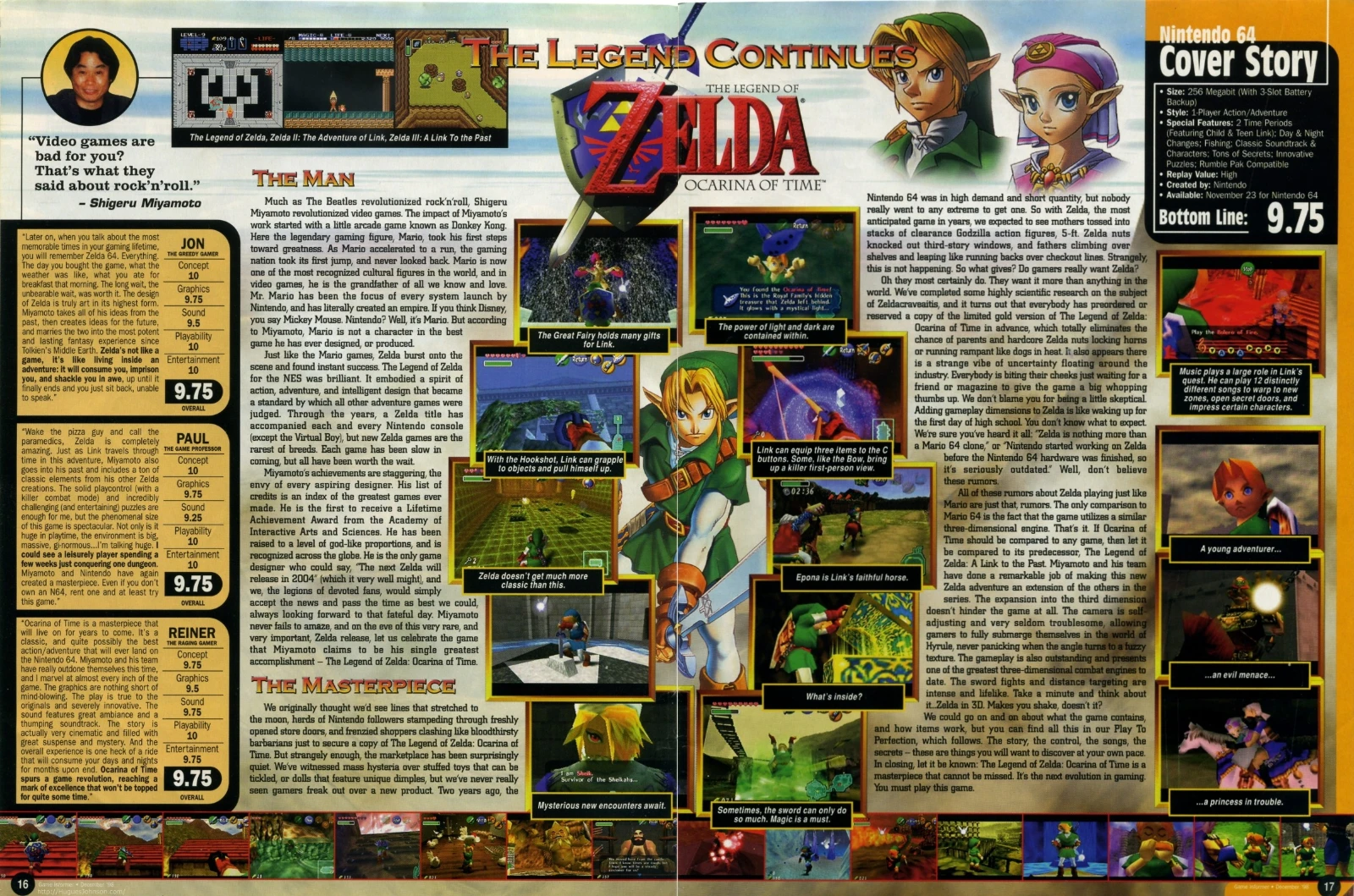
GameSpot’s Jeff Gerstmann called it “a game that can’t be called anything other than flawless”, and IGN hailed a new benchmark for interactive entertainment. The few grumbles were technical: IGN found some textures blurry and the frame rate behind Banjo-Kazooie’s. On Metacritic, which collects reviews retrospectively, it scores 99, the highest score on the site.
Honours
Japan Media Arts Festival · 1998Grand Prize, Interactive ArtJapan’s Agency for Cultural Affairs festival award.
Academy of Interactive Arts & Sciences · 1999Game of the YearOne of six wins at the 2nd Interactive Achievement Awards, including Console Adventure Game of the Year.
BAFTA Interactive Entertainment Awards · 1999Four awardsIncluding the Games Award and Innovative Game.
Electronic Gaming Monthly and Edge · 1998Game of the YearEGM’s Game of the Year for all systems; Edge’s Game of the Year and Gameplay Innovation award.
Guinness World RecordsMost advance ordersMore than 500,000 US pre-orders.
Greatest-ever listsNumber one, again and againTopped greatest-games lists from Game Informer (1999), Edge (2000), Computer and Video Games (2001), IGN (2008) and Nintendo Power, among others.
Reader reviews
No reader reviews yet. Played it? Give it a score out of 10 and tell other fans what you think.
Every fact on this page was checked against the sources below in November 2026. Developer accounts come mainly from Nintendo’s own Iwata Asks interviews; character lore from Zelda Dungeon and Wikipedia, whose references were checked where they carried a claim.
To provide the best experiences, we use technologies like cookies to store and/or access device information. Consenting to these technologies will allow us to process data such as browsing behavior or unique IDs on this site. Not consenting or withdrawing consent, may adversely affect certain features and functions.
Functional
Always active
The technical storage or access is strictly necessary for the legitimate purpose of enabling the use of a specific service explicitly requested by the subscriber or user, or for the sole purpose of carrying out the transmission of a communication over an electronic communications network.
Preferences
The technical storage or access is necessary for the legitimate purpose of storing preferences that are not requested by the subscriber or user.
Statistics
The technical storage or access that is used exclusively for statistical purposes.The technical storage or access that is used exclusively for anonymous statistical purposes. Without a subpoena, voluntary compliance on the part of your Internet Service Provider, or additional records from a third party, information stored or retrieved for this purpose alone cannot usually be used to identify you.
Marketing
The technical storage or access is required to create user profiles to send advertising, or to track the user on a website or across several websites for similar marketing purposes.

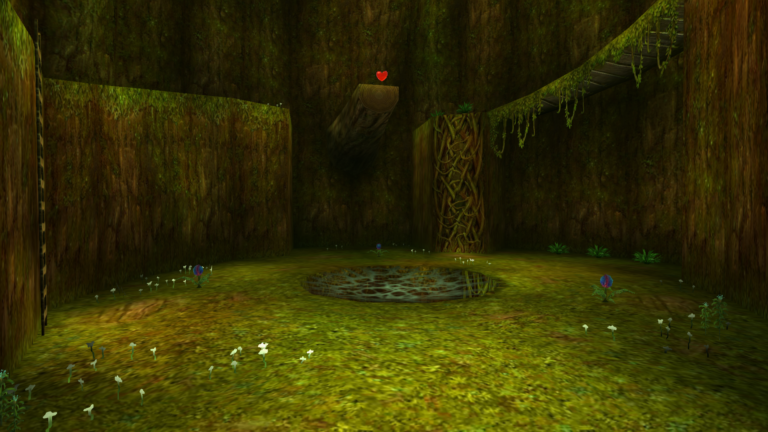 Inside the Deku TreeYoung Link · Kokiri ForestSpider webs and Deku Babas inside the hollow guardian. Item: Fairy Slingshot. Boss: Queen Gohma. Reward: Kokiri’s Emerald.
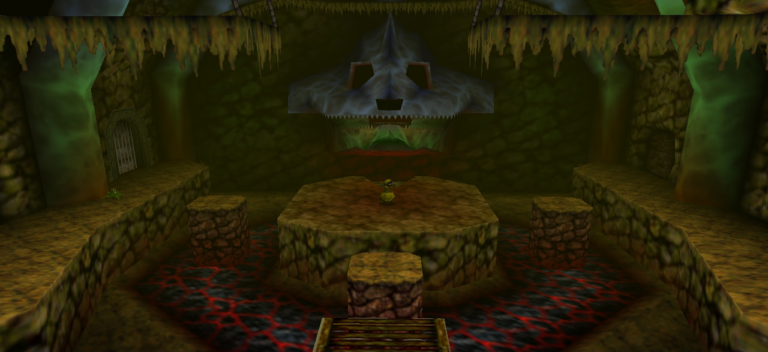 Dodongo’s CavernYoung Link · Death MountainA volcanic cave inside a giant skull. Item: Bomb Bag. Boss: King Dodongo. Reward: Goron’s Ruby.
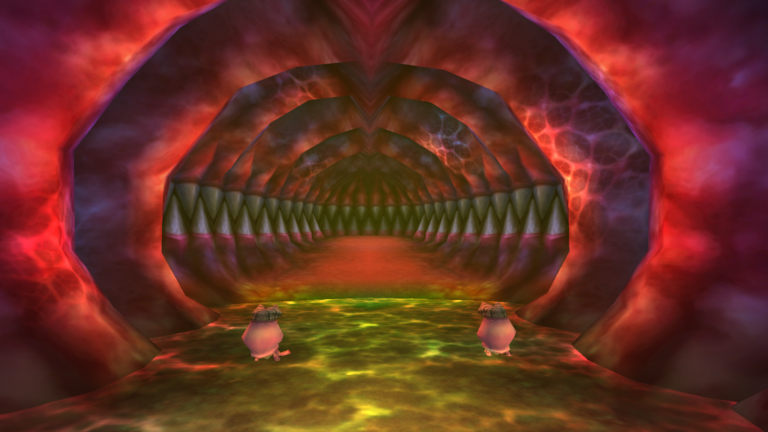 Inside Jabu-Jabu’s BellyYoung Link · Zora’s FountainA squelchy trip through the fish god, carrying Princess Ruto. Item: Boomerang. Boss: Barinade. Reward: Zora’s Sapphire.
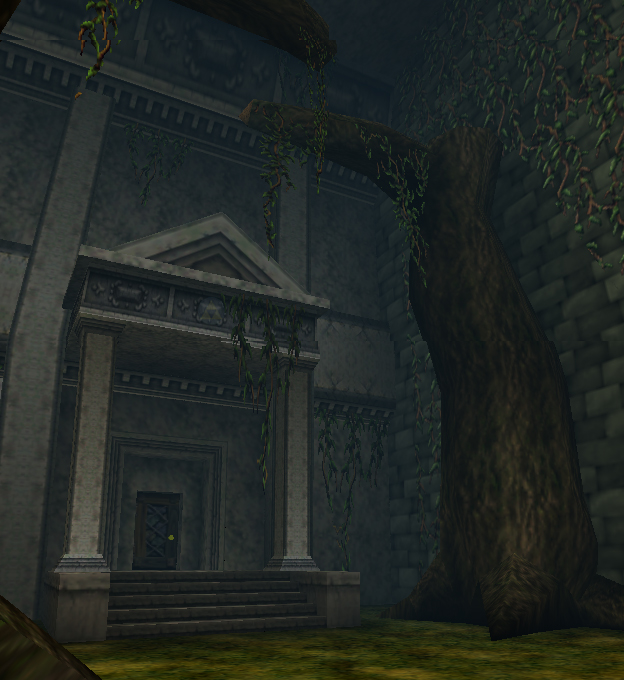 Forest TempleAdult Link · Sacred Forest MeadowA haunted manor with twisting corridors and four Poe Sisters. Item: Fairy Bow. Boss: Phantom Ganon. Sage: Saria.
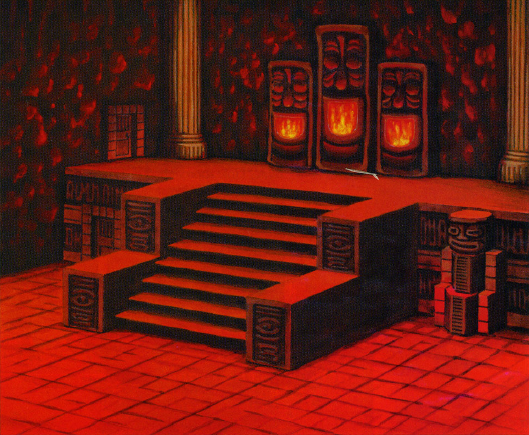 Fire TempleAdult Link · Death Mountain CraterLava, imprisoned Gorons and a Flare Dancer. Item: Megaton Hammer. Boss: Volvagia. Sage: Darunia.
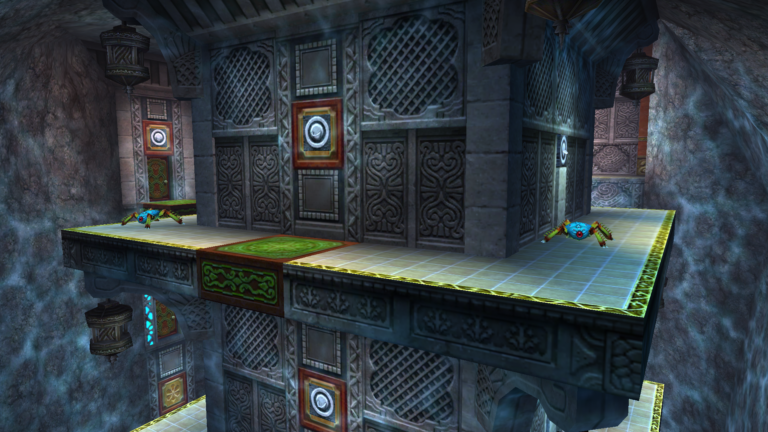 Water TempleAdult Link · Lake HyliaThe infamous rising and falling water levels, plus Dark Link. Item: Longshot. Boss: Morpha. Sage: Ruto.
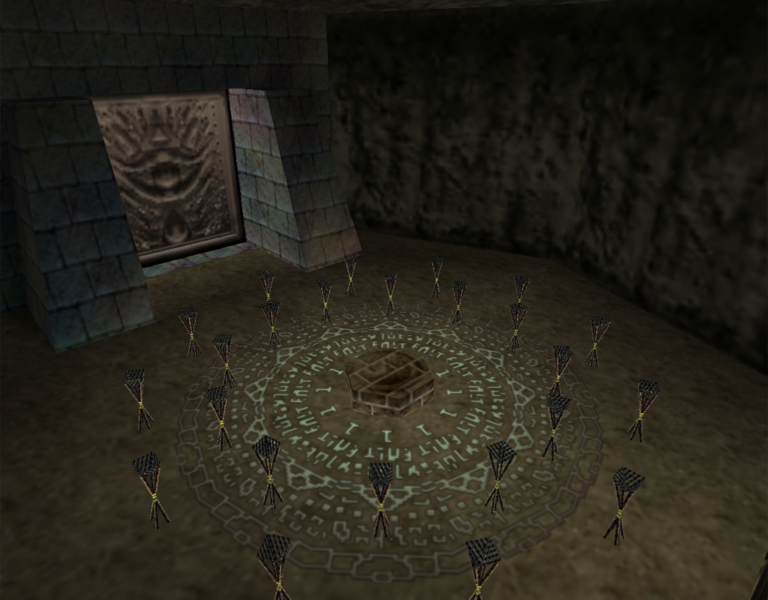 Shadow TempleAdult Link · Kakariko GraveyardInvisible walls and grim machinery; the Lens of Truth is essential. Item: Hover Boots. Boss: Bongo Bongo. Sage: Impa.
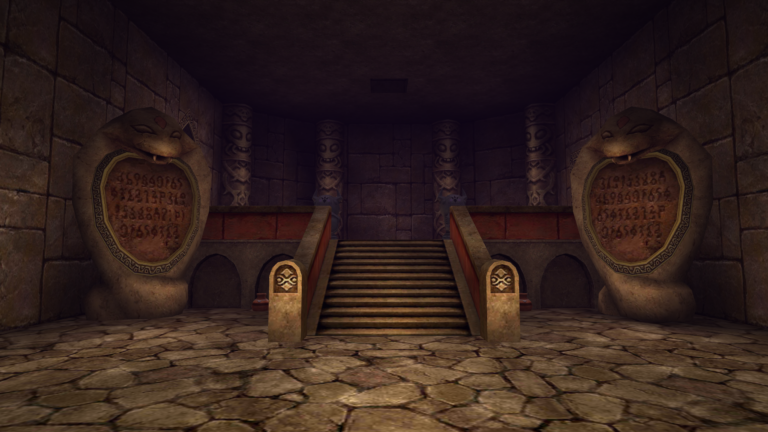 Spirit TempleBoth ages · Desert ColossusPlayed as both Links. Items: Silver Gauntlets (young), Mirror Shield (adult). Mini-boss: Iron Knuckle. Boss: Twinrova. Sage: Nabooru.
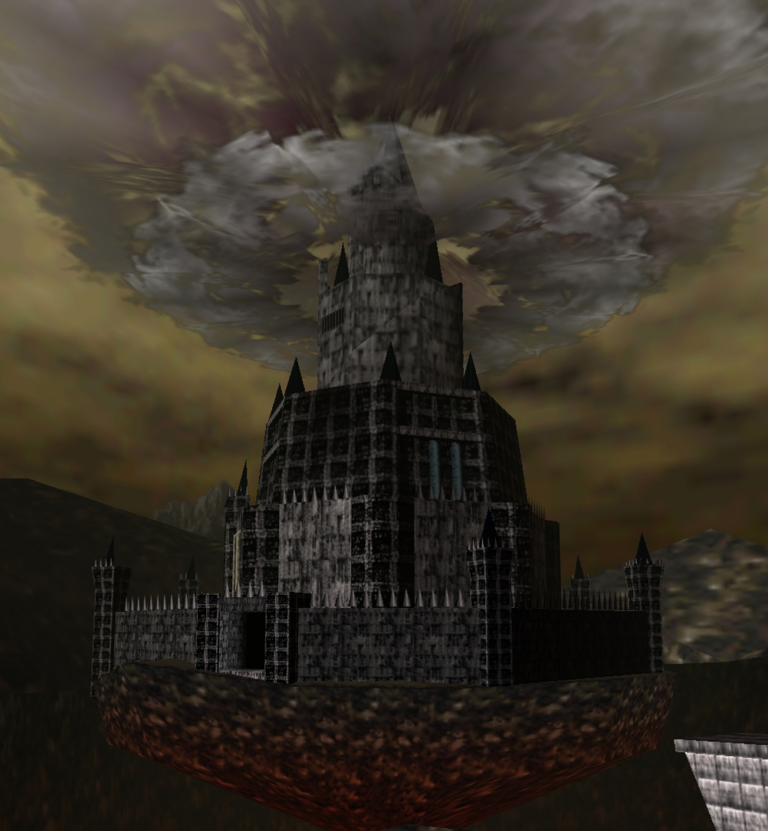 Ganon’s CastleAdult Link · site of Hyrule CastleSix barrier trials, then the tower. Bosses: Ganondorf, then Ganon.
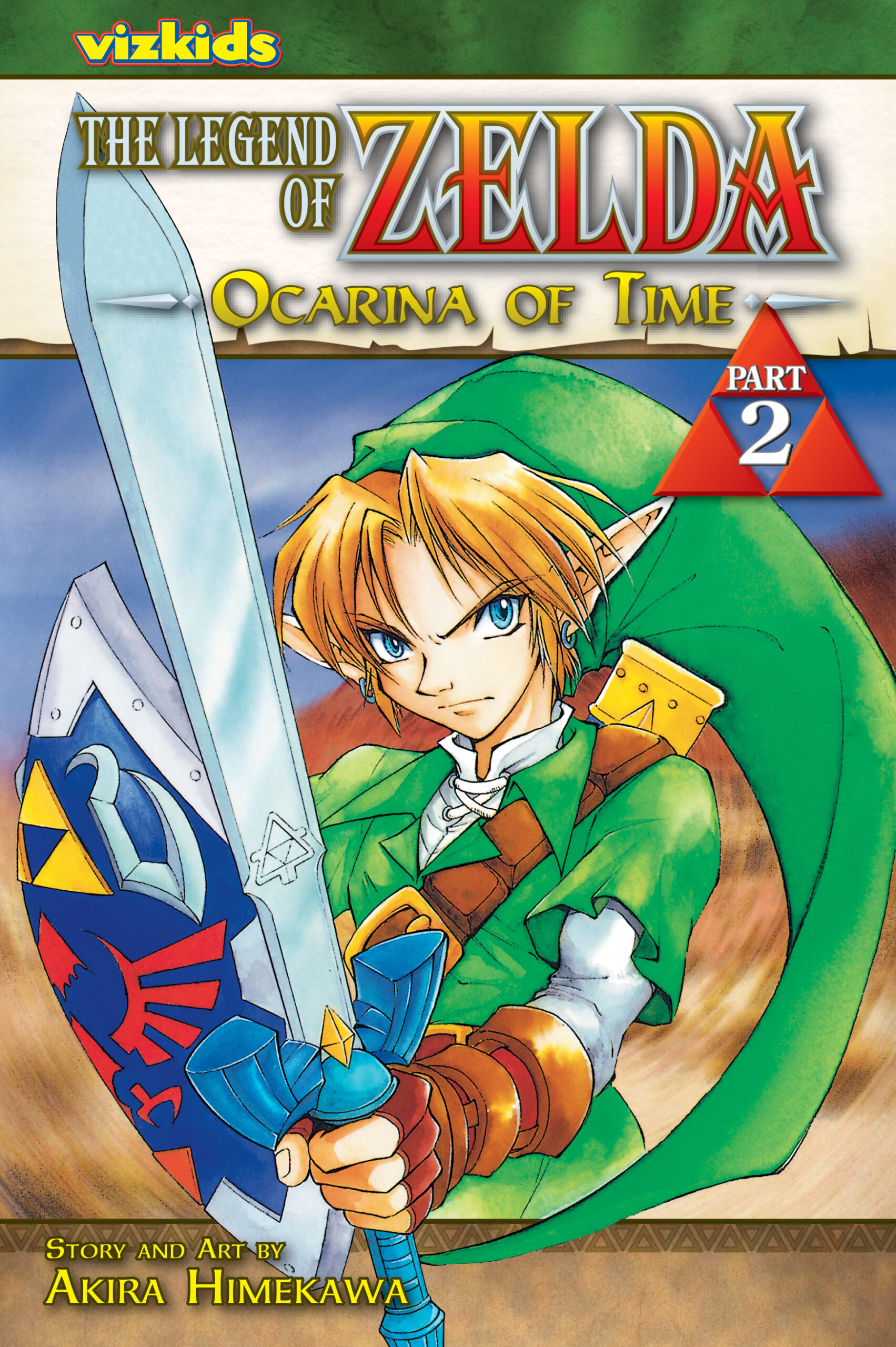 The Legend of Zelda: Ocarina of Time (manga)Akira Himekawa · Shogakukan (Japan) · VIZ Media (2008)A two-volume retelling by Akira Himekawa, the duo behind most official Zelda manga, published in Japan by Shogakukan. It adds its own scenes, notably a fuller role for Sheik and for Link’s Kokiri upbringing. VIZ published it in English in October and December 2008, and again as a single Legendary Edition in November 2016.
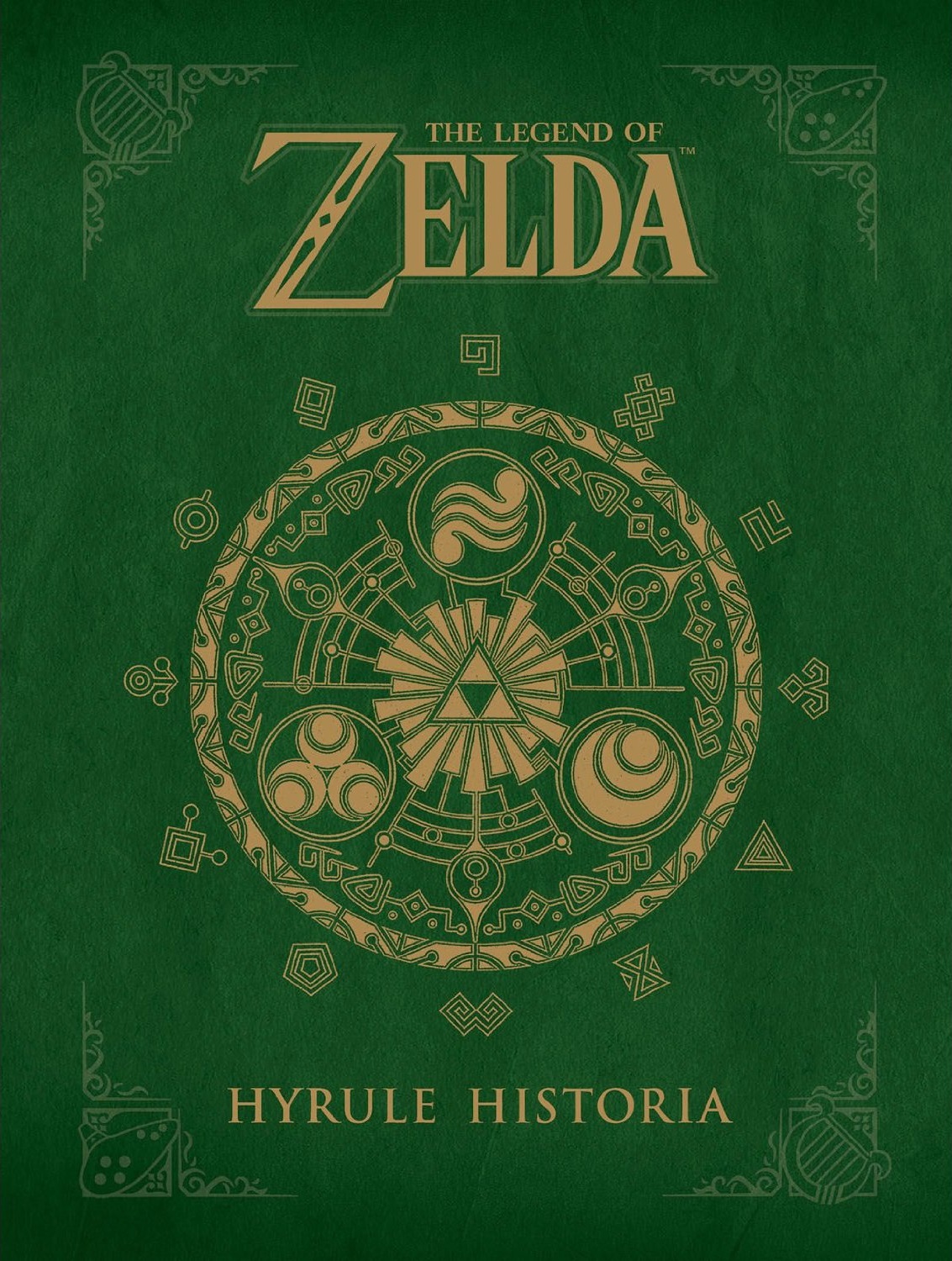 Hyrule HistoriaShogakukan, 2011 · Dark Horse, 2013Nintendo’s official history book, which made Ocarina of Time the point where the Zelda timeline splits into three. It also confirmed that the owl Kaepora Gaebora is a form taken by the Sage Rauru.
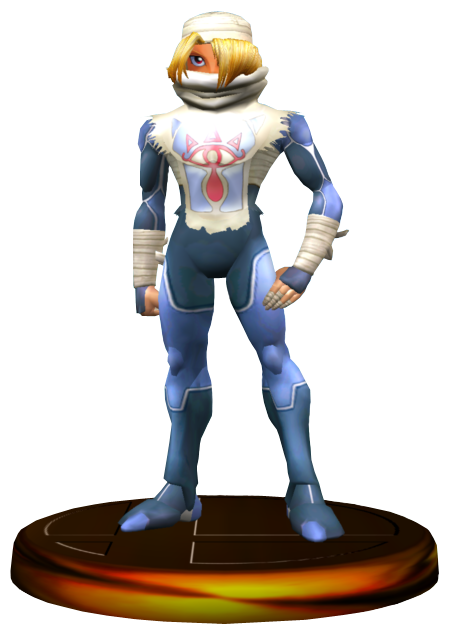 Super Smash Bros. MeleeGameCube · 2001Smash’s second instalment brought in Ocarina-era designs for Zelda, who can transform into Sheik, and for Young Link. It also gave Ganondorf his fighting debut, with a move set built on Captain Falcon’s.
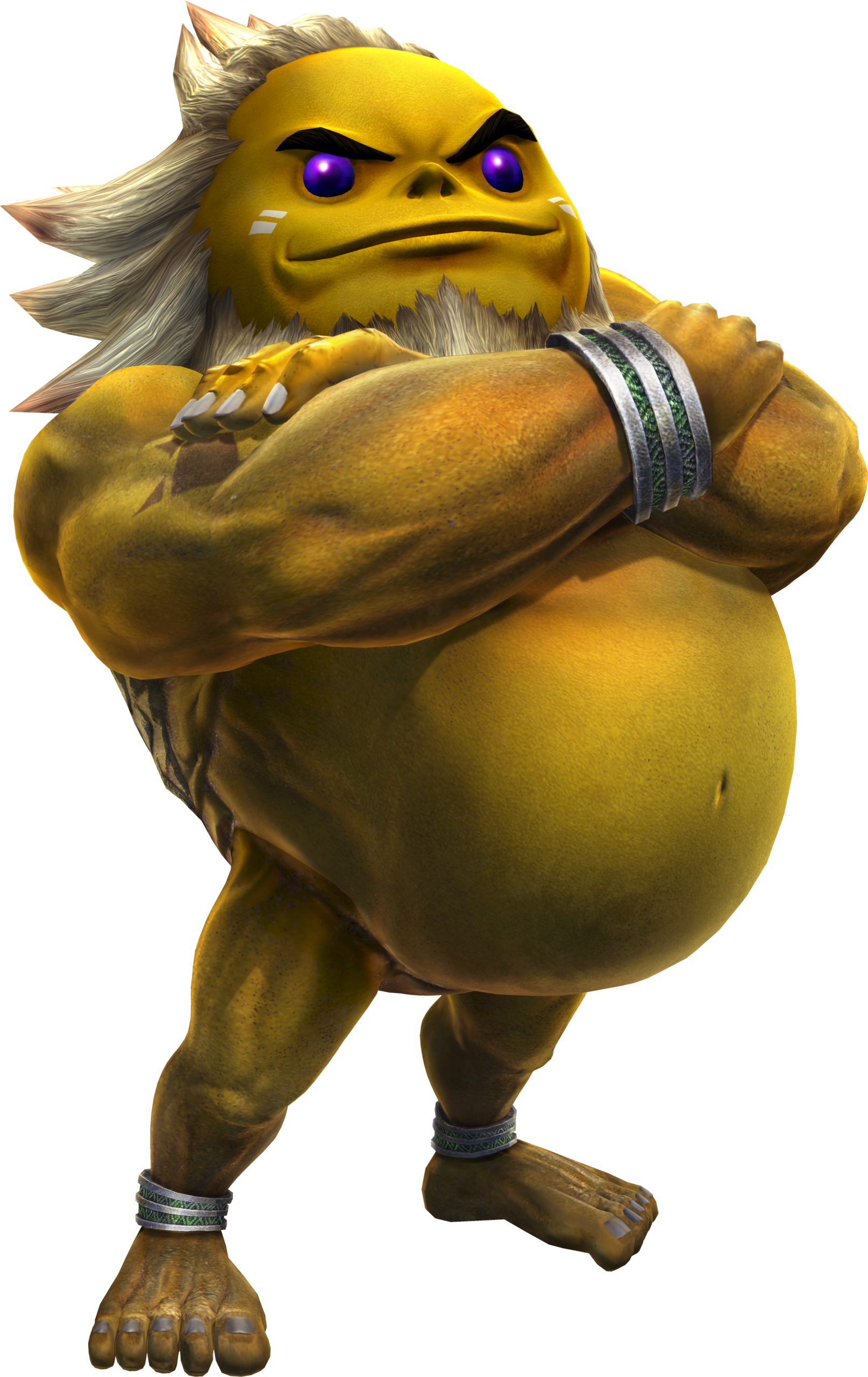 Hyrule WarriorsWii U · 2014Koei Tecmo’s Zelda action game makes Darunia, Princess Ruto, Sheik and Impa playable fighters.
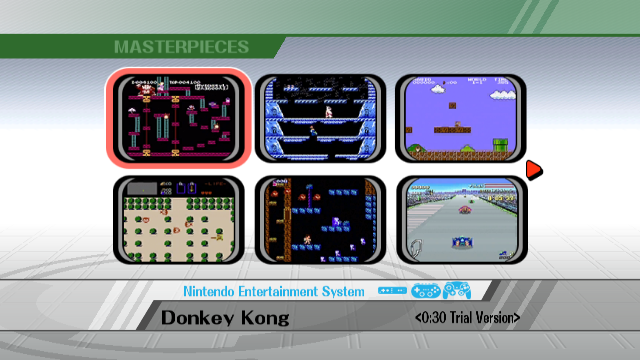 Super Smash Bros. BrawlWii · 2008Includes a timed “Masterpieces” demo of the Nintendo 64 game, playable for a few minutes.
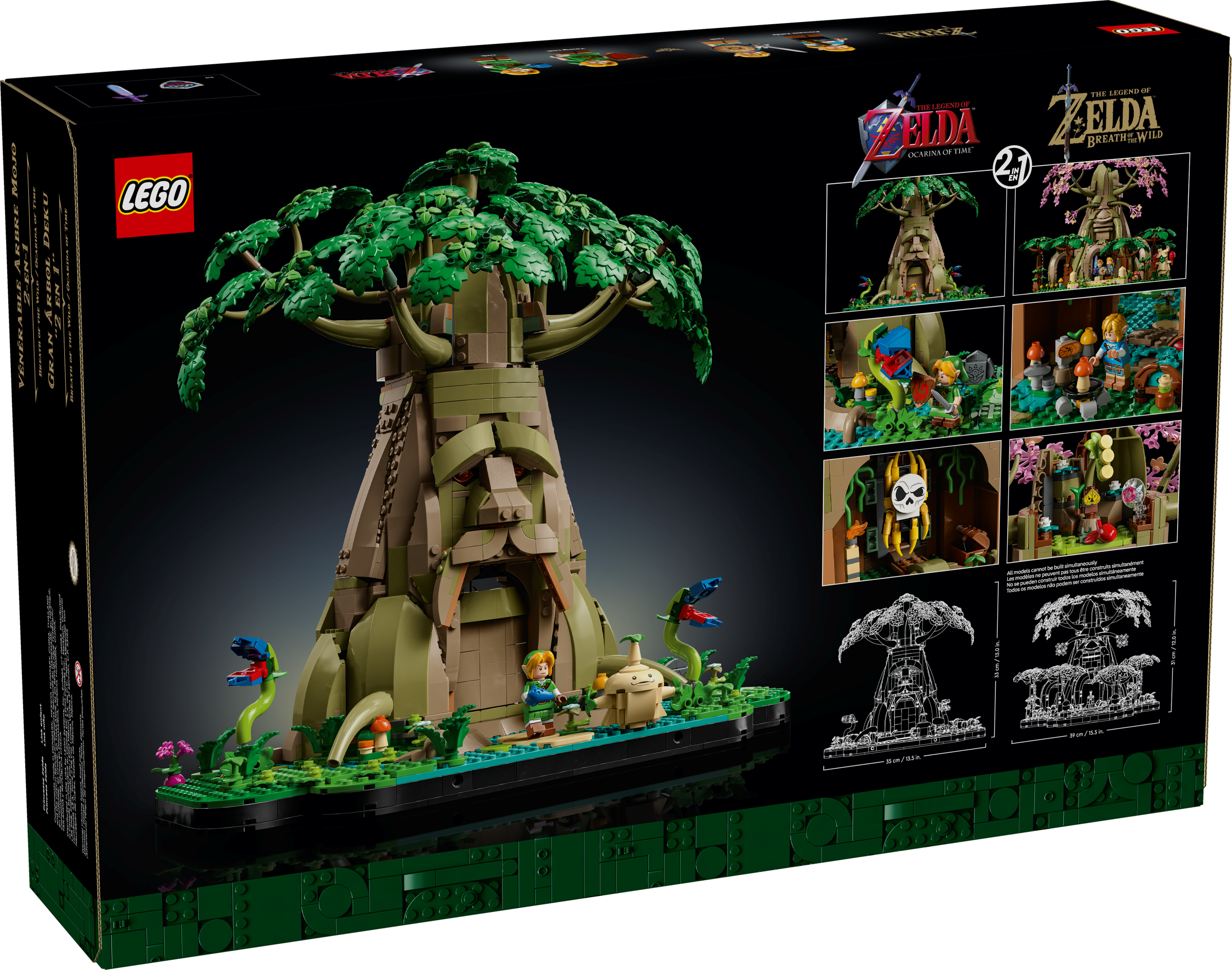 LEGO The Legend of Zelda: Great Deku Tree 2-in-1LEGO set 77092 · 2024The first LEGO Zelda set, 2,500 pieces, on sale from 1 September 2024. It builds either the Ocarina of Time Deku Tree, with Young Link and adult Link minifigures, or the Breath of the Wild version.
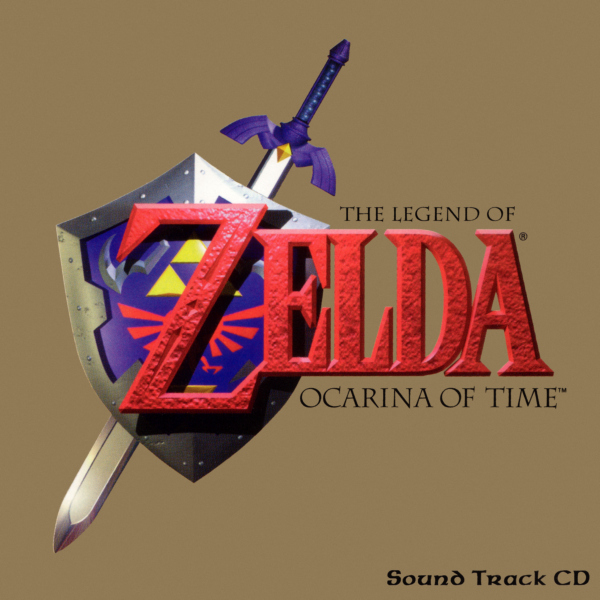 Original soundtrackPony Canyon · 18 December 1998Koji Kondo’s score was released in Japan on an 82-track album; the American release was shorter.
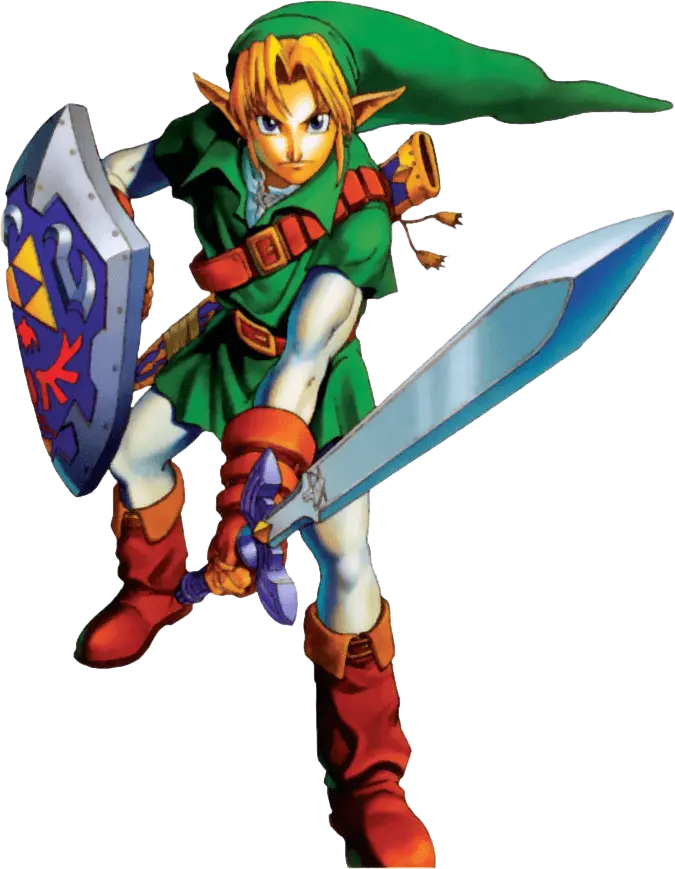 LinkThe Hero of Time
 NaviLink’s fairy
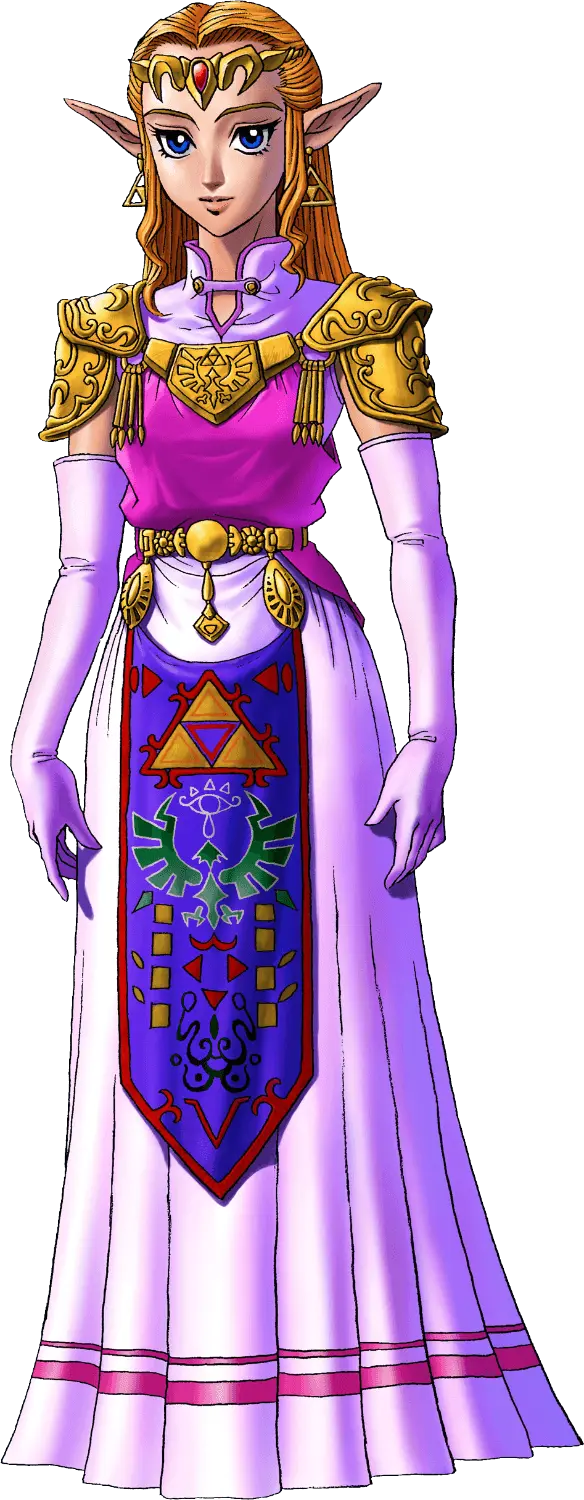 Princess ZeldaPrincess of Hyrule
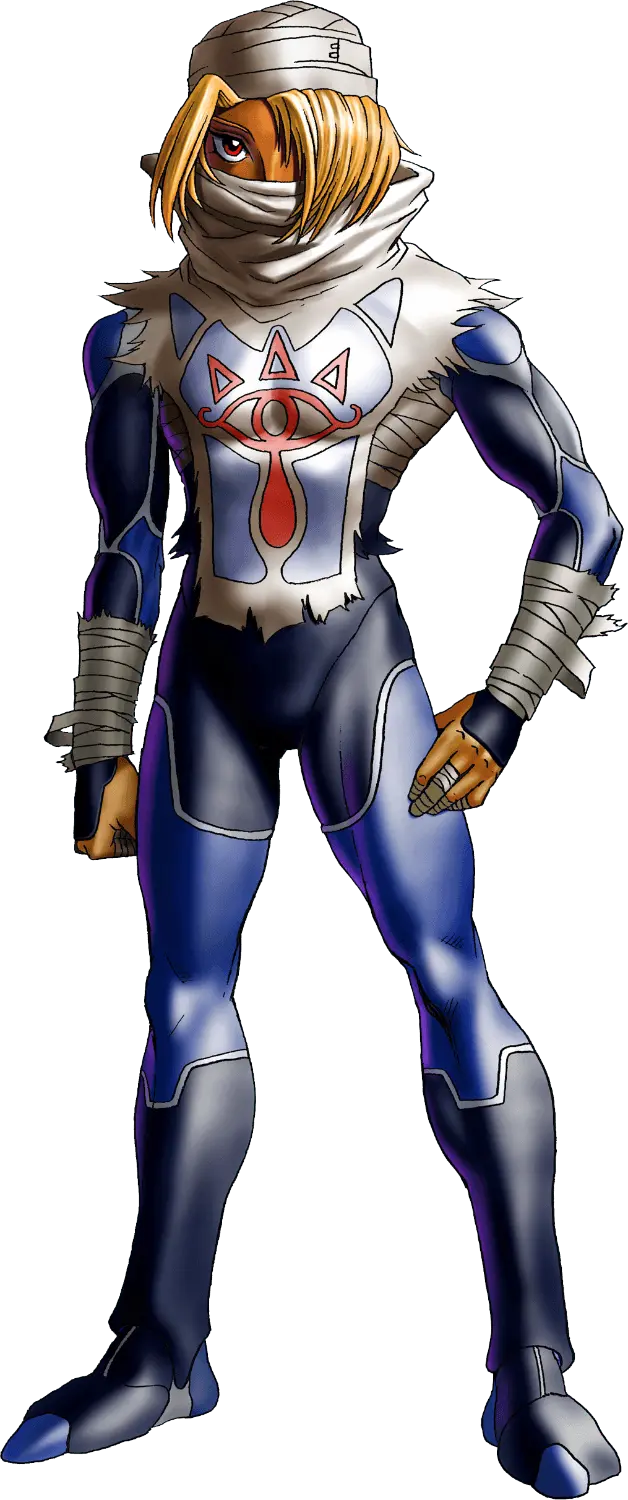 SheikThe last of the Sheikah?
 GanondorfKing of the Gerudo, King of Evil
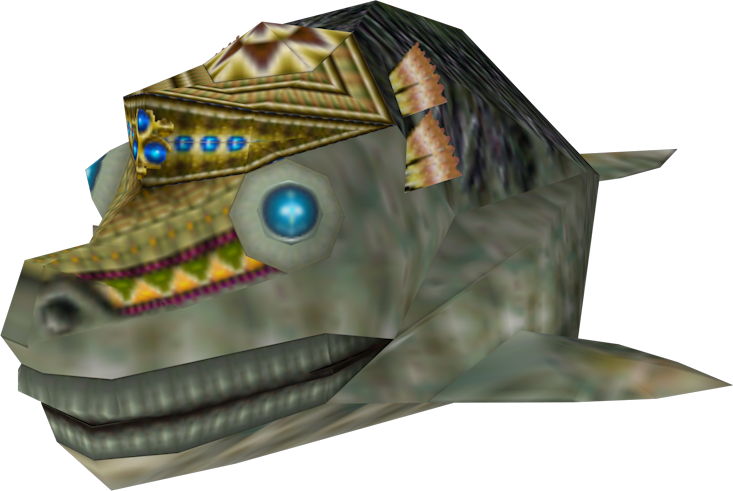
 The Great Deku TreeGuardian of the forest
 SariaLink’s best friend
 MidoBoss of the Kokiri
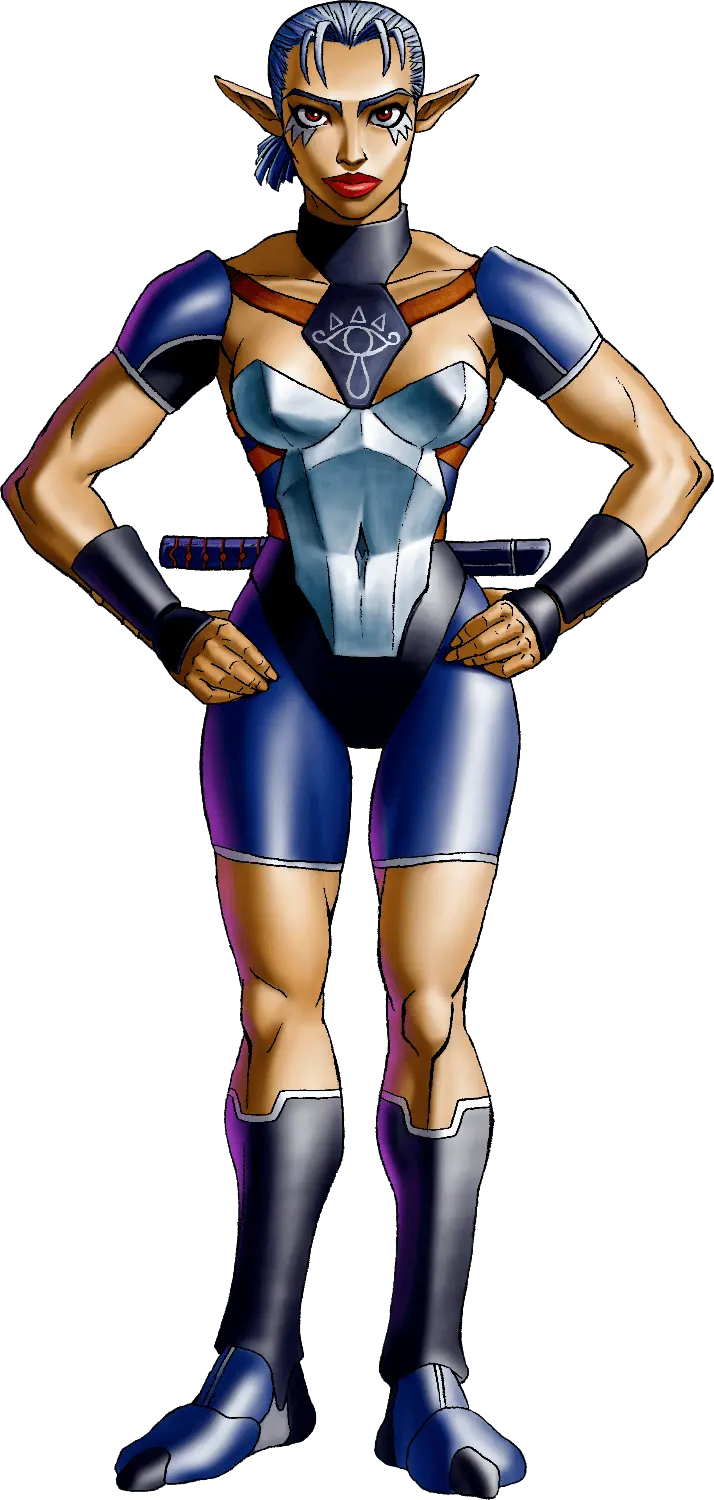 ImpaZelda’s Sheikah guardian
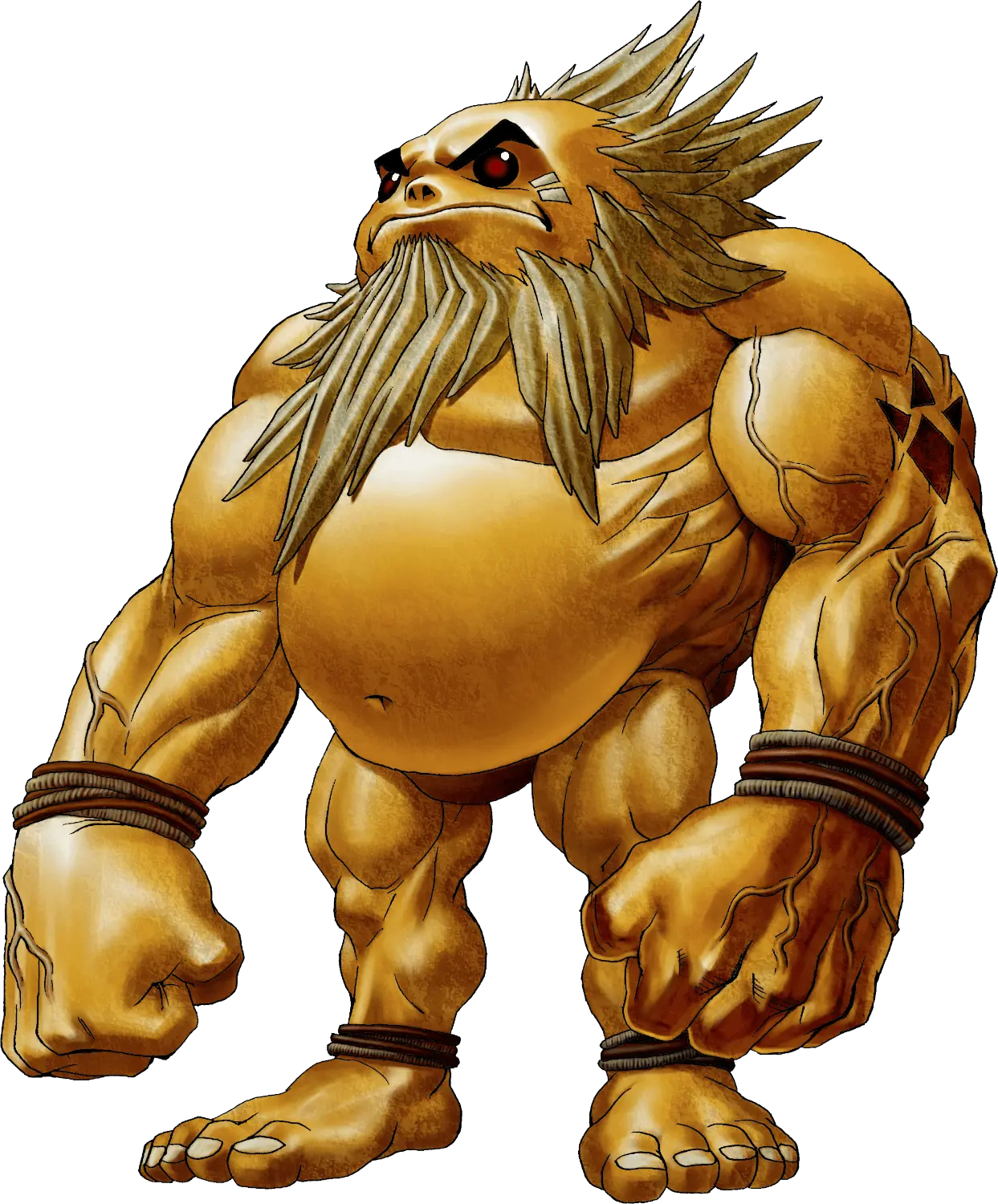 DaruniaChief of the Gorons
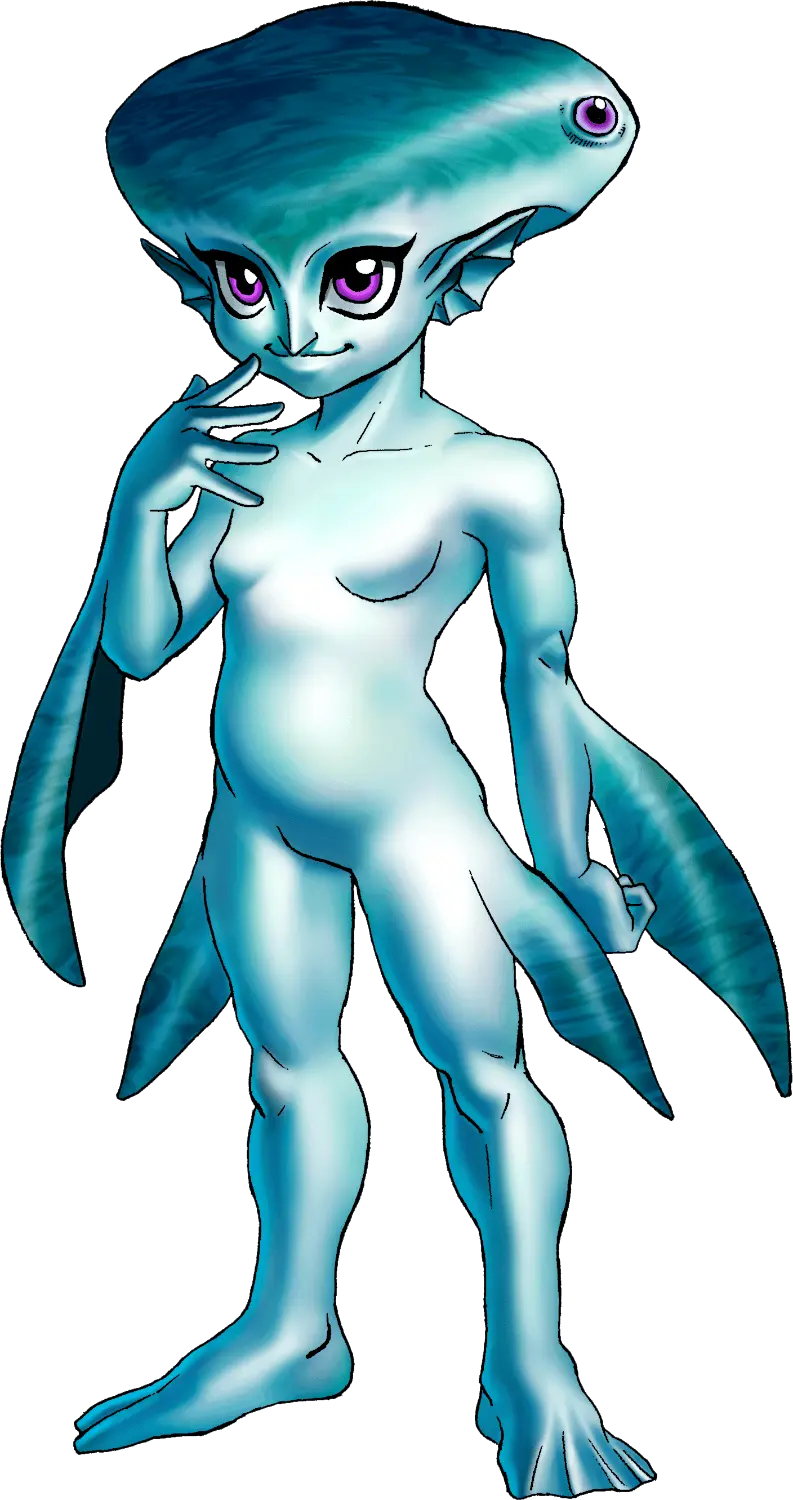 Princess RutoPrincess of the Zoras
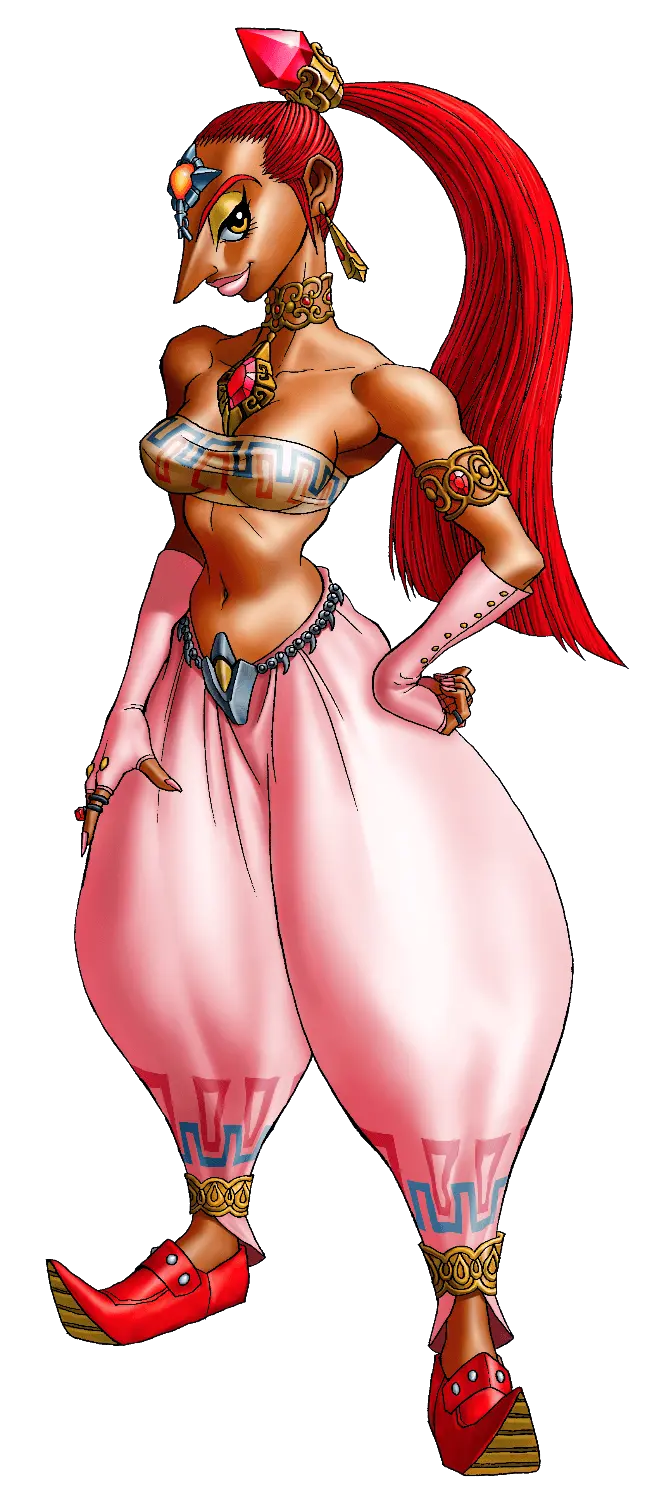 NabooruGerudo thief
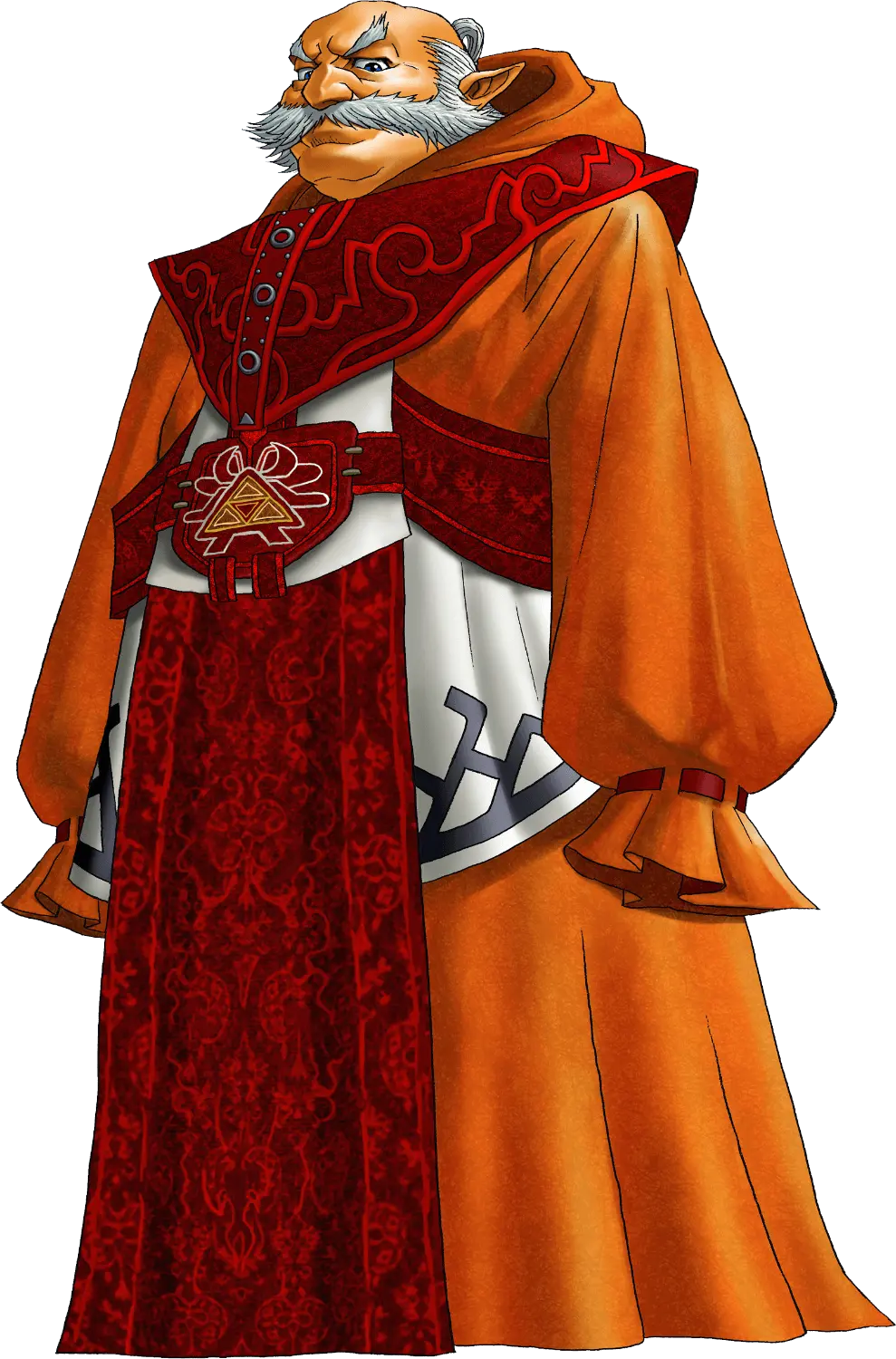 RauruSage of Light
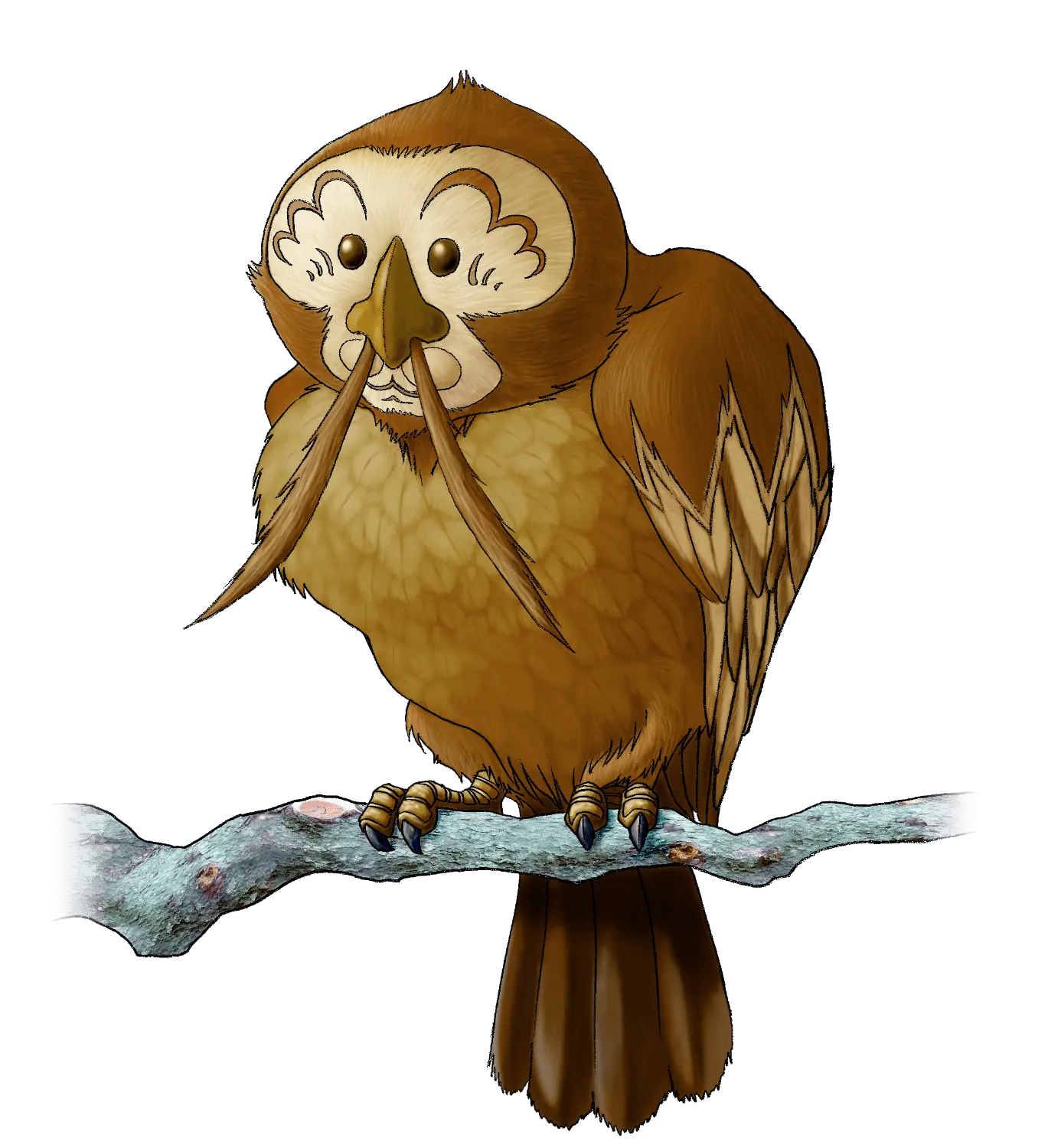 Kaepora GaeboraThe talkative owl
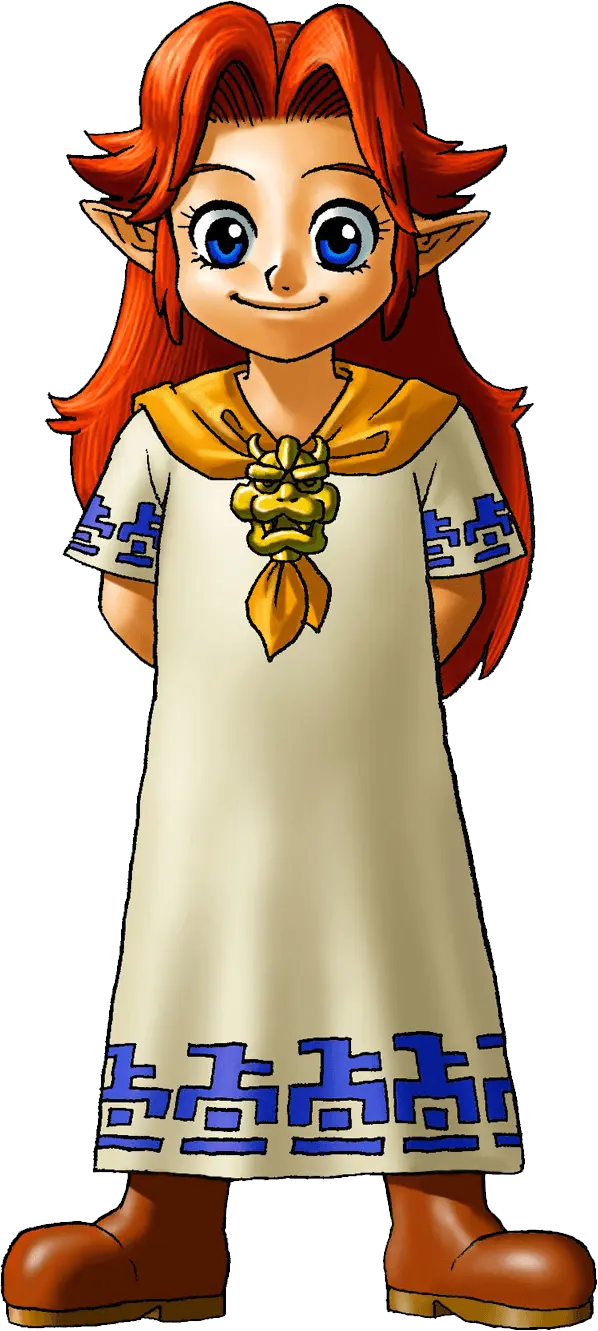 MalonLon Lon Ranch
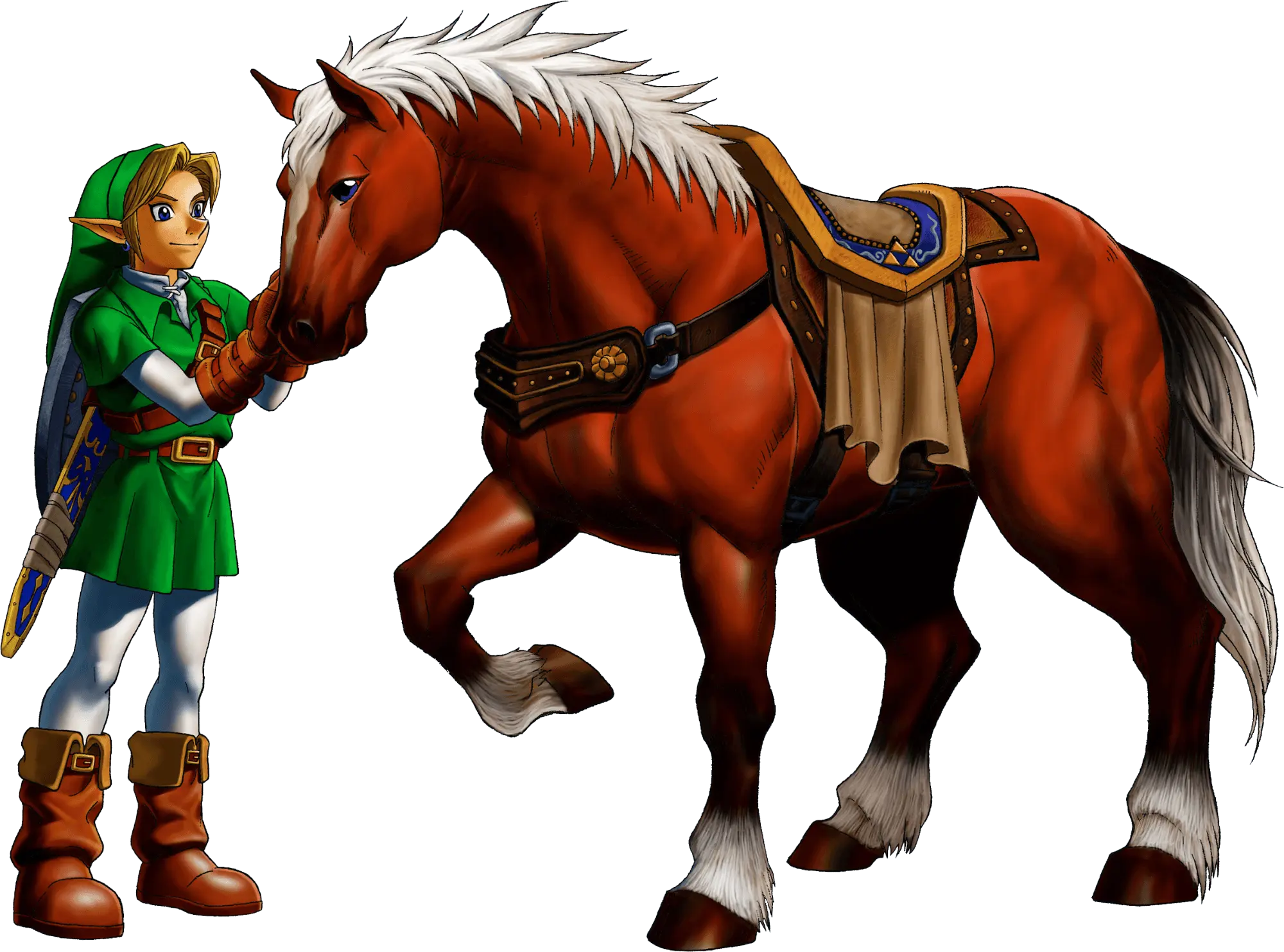 EponaLink’s horse
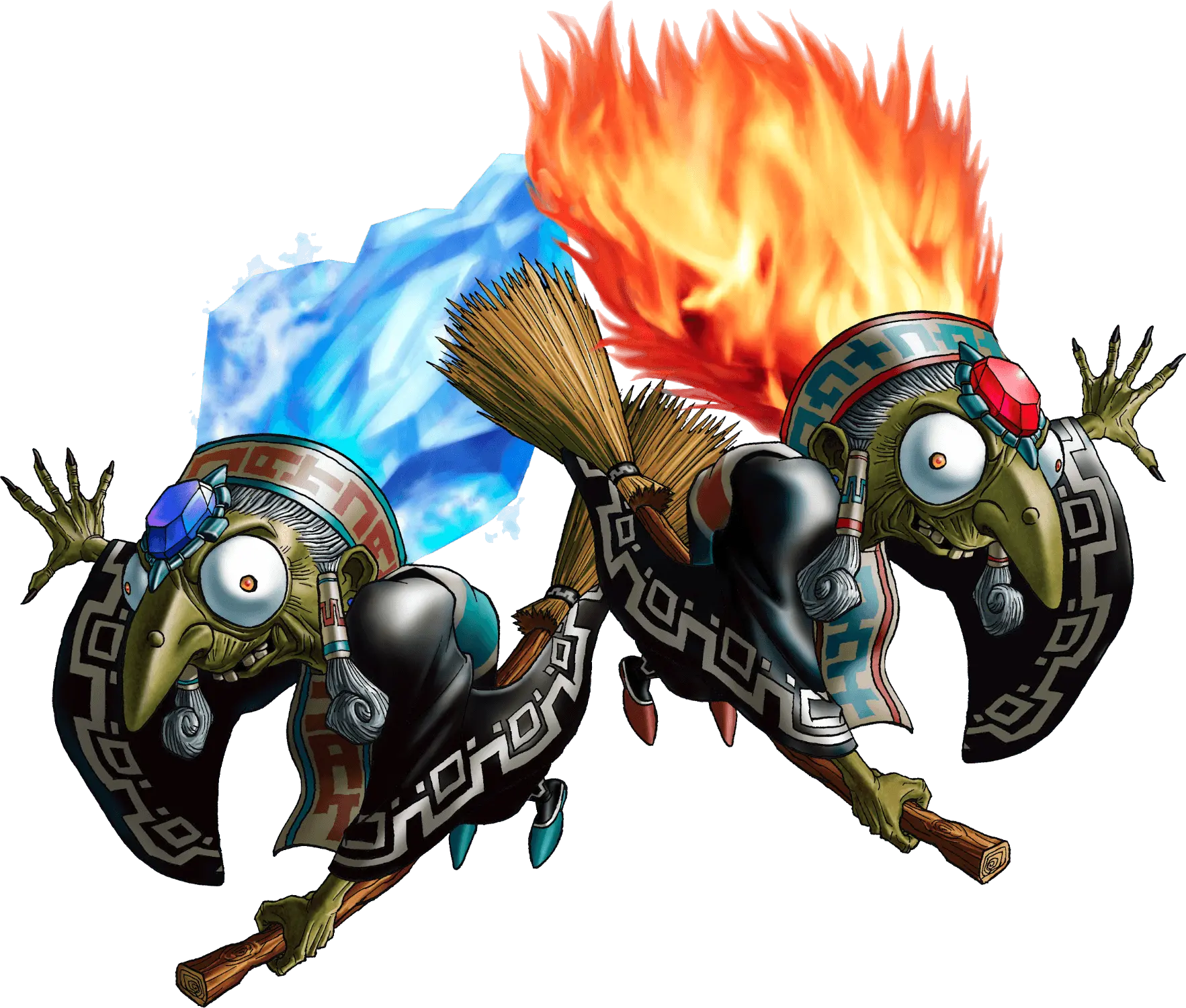 Koume & Kotake (Twinrova)Ganondorf’s witches
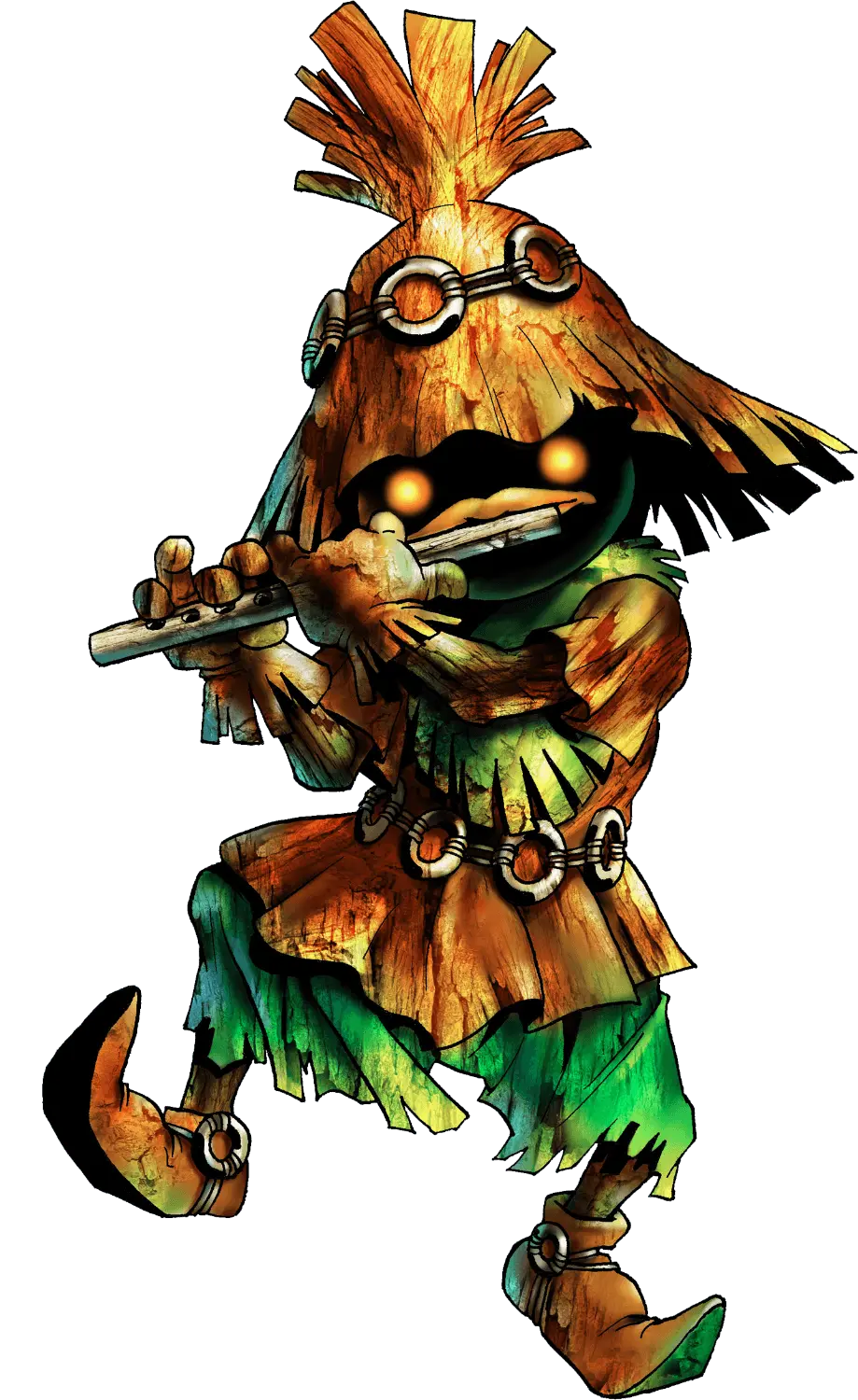 Happy Mask Salesman & Skull KidMasks and mischief
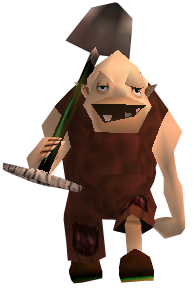 DampéKakariko gravekeeper
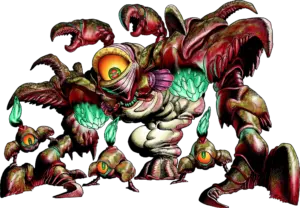 Queen GohmaInside the Deku TreeA giant one-eyed parasite. Stun the eye with the slingshot, then use the sword.
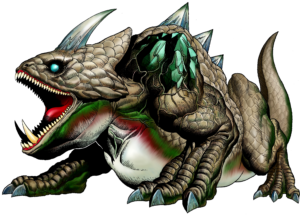 King DodongoDodongo’s CavernA fire-breathing dinosaur. Throw a bomb into his mouth as he inhales.
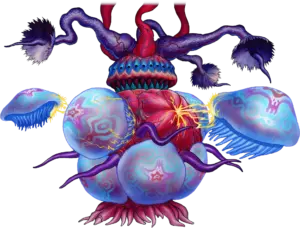 BarinadeJabu-Jabu’s BellyAn electric parasite clinging to the fish god’s insides. The Boomerang does the work.
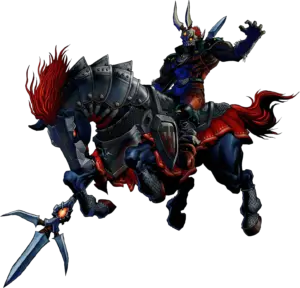 Phantom GanonForest TempleGanondorf’s spectral double, riding out of paintings, then batting energy back and forth.
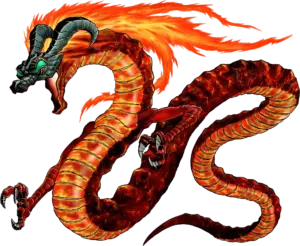 VolvagiaFire TempleA lava dragon revived by Ganondorf. Whack it with the Megaton Hammer when it surfaces.
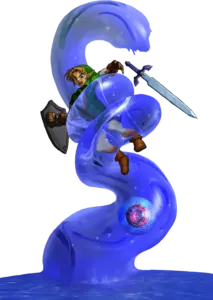 MorphaWater TempleA living body of water with a nucleus. Drag the core out with the Longshot.
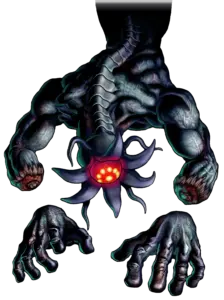 Bongo BongoShadow TempleAn invisible beast drumming on a giant drum. Stun both hands, find its eye with the Lens of Truth.
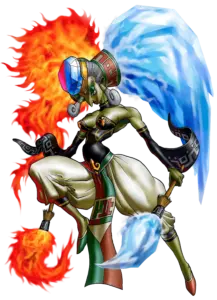 TwinrovaSpirit TempleKoume and Kotake, alone and fused. Absorb and reflect their magic with the Mirror Shield.
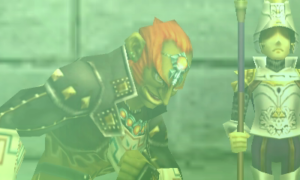 GanondorfGanon’s CastleReturn his energy balls, stun him with Light Arrows, then strike.
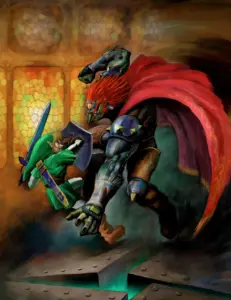 GanonRuins of Ganon’s CastleThe final beast. Hit his tail, recover the Master Sword and deliver the final blow.
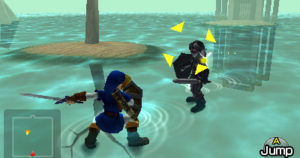 Dark LinkWater TempleLink’s shadow, mirroring every move in a misty, endless room.
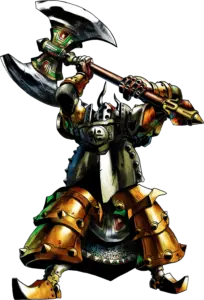 Iron KnuckleSpirit Temple · Ganon’s CastleHuge armoured axe knights; one of them is Nabooru under Twinrova’s spell.
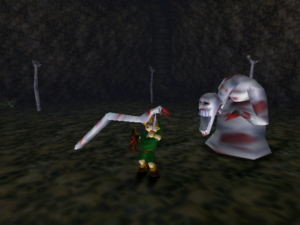 Dead HandBottom of the Well · Shadow TempleA horror surrounded by grasping hands. Let one grab you and it comes to feed.
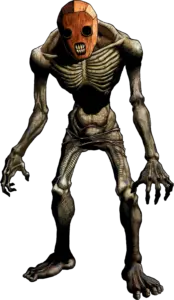 ReDeadCastle Town (adult) · Royal Tomb · Shadow TempleShrieking zombies whose scream freezes Link. The Sun’s Song stuns them.
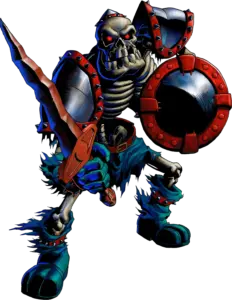 StalfosForest Temple and elsewhereSword-and-shield skeletons. The Forest Temple’s pair grew out of the Toei Kyoto ninja show that inspired Z-targeting.
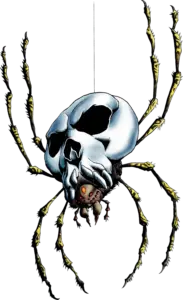 SkulltulaDeku Tree and beyondSpiders that drop from the ceiling, designed by Yoshiki Haruhana; their golden cousins are worth collecting.
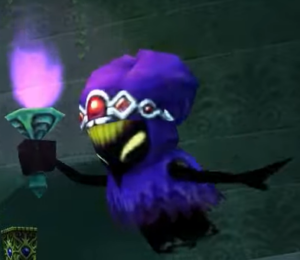 Poe SistersForest TempleFour ghostly sisters, Meg, Joelle, Beth and Amy, who steal the flames of the temple’s torches.
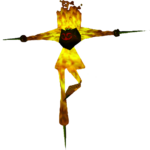 Flare DancerFire TempleA spinning dervish of flame with a small, vulnerable core.

 Zelda in 3DThe first Zelda game set in a fully 3D world, with a camera that follows Link through it.
 Z-targetingLock on to an enemy, circle it and keep your shield up. Inspired by a ninja show at Toei Kyoto Studio Park, and later copied by countless 3D action games.
 NaviNavi debuts here, giving Link a talking partner who rides along with him for the whole adventure.
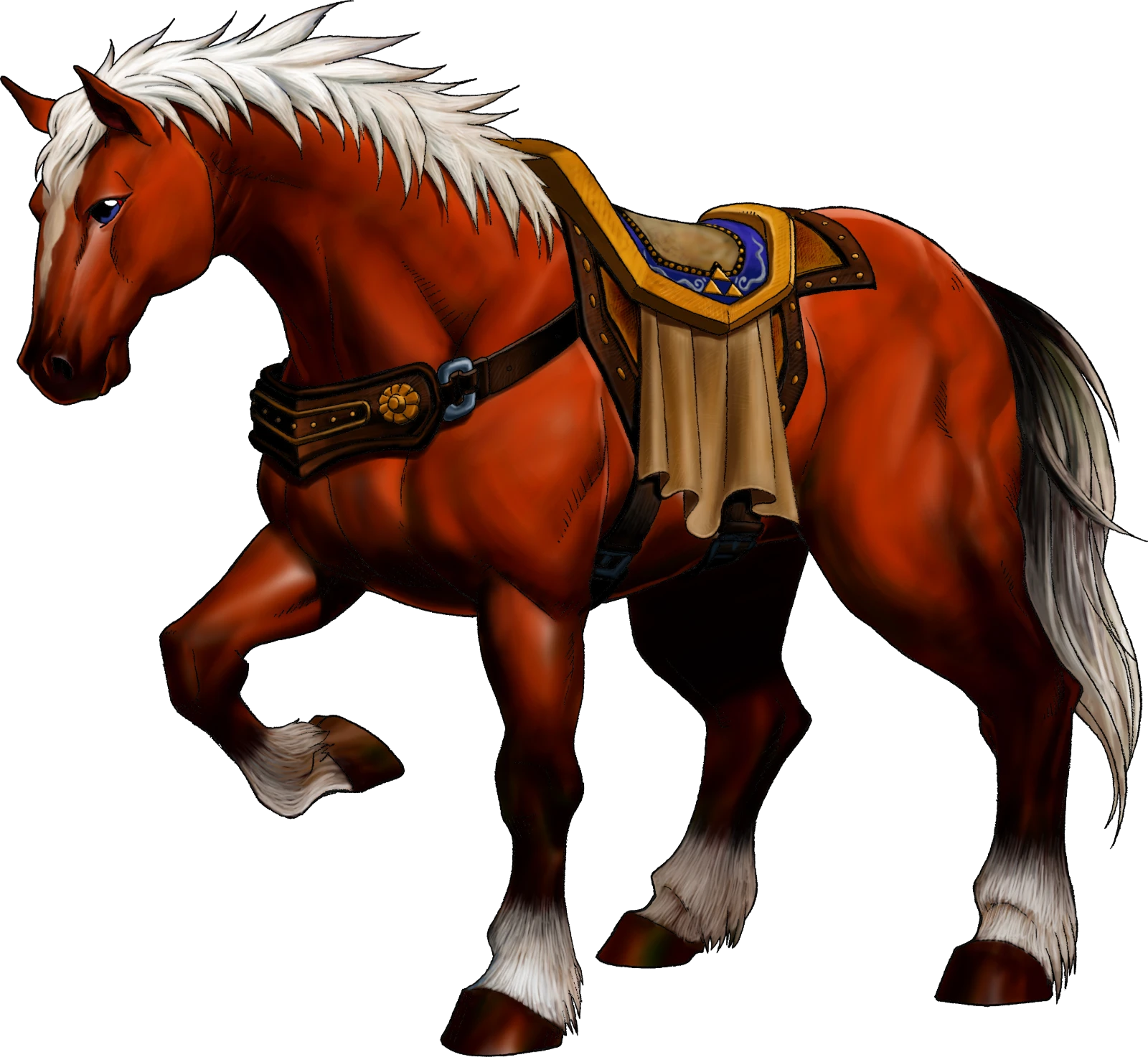 EponaLink’s horse makes her first appearance, along with horseback travel across an open field.
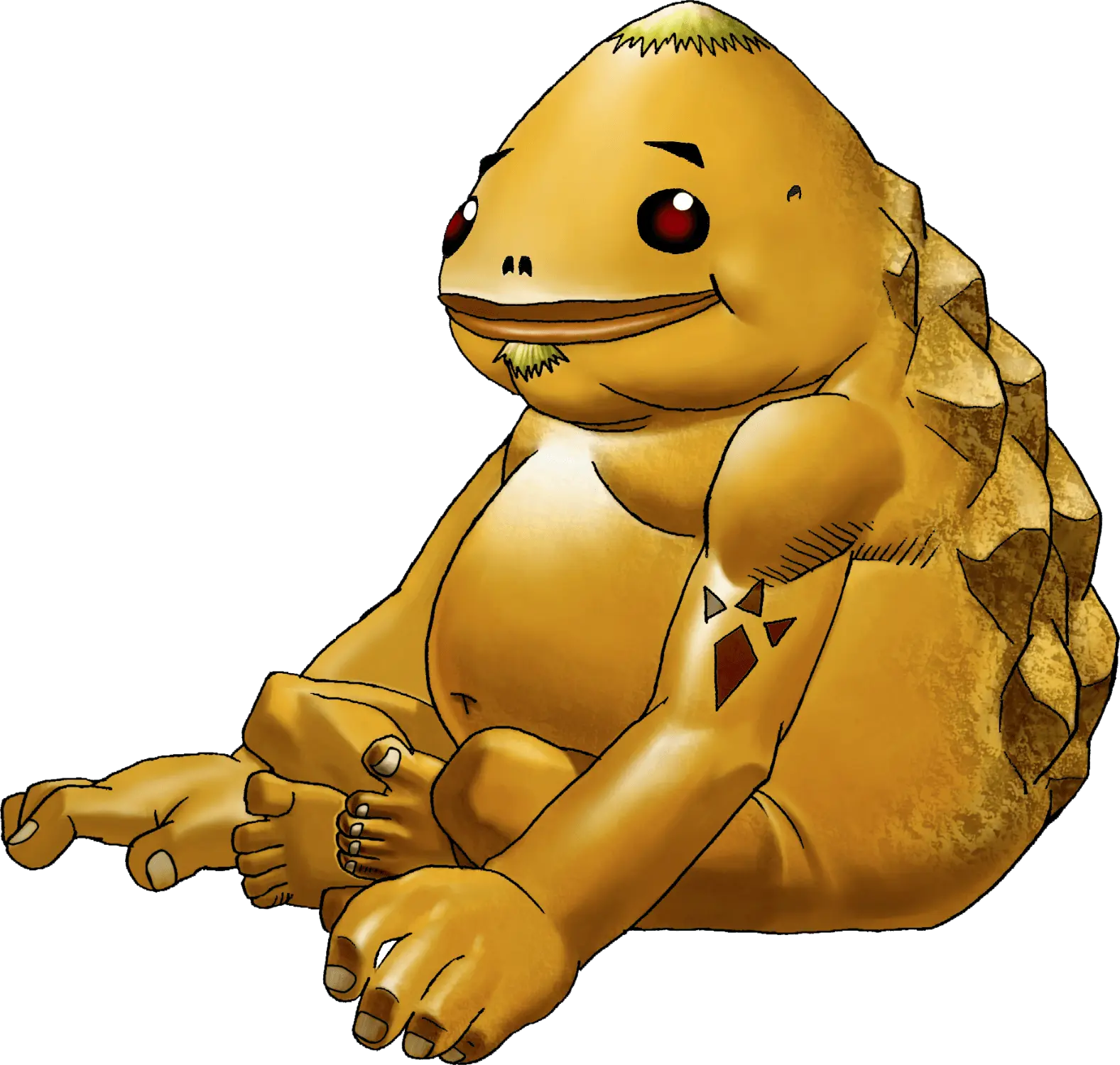 The Gorons and the GerudoBoth peoples debut here: the Gorons in Goron City on Death Mountain, the Gerudo as a desert tribe of warriors.
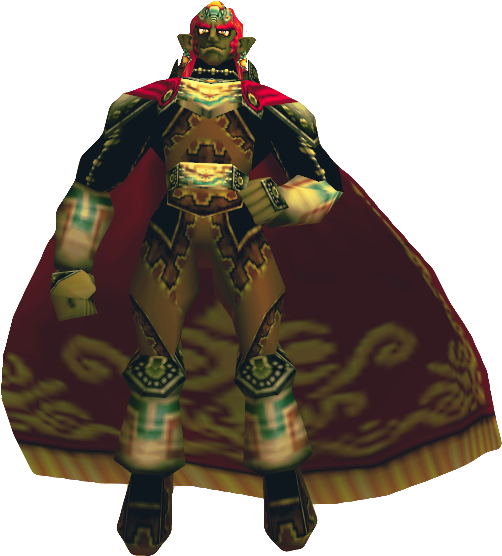 Ganondorf in the fleshThe first game to show Ganon’s human form, the Gerudo king Ganondorf.
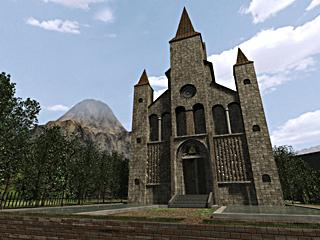 The Temple of TimeIts first appearance; it returns in Twilight Princess, Skyward Sword and Breath of the Wild.