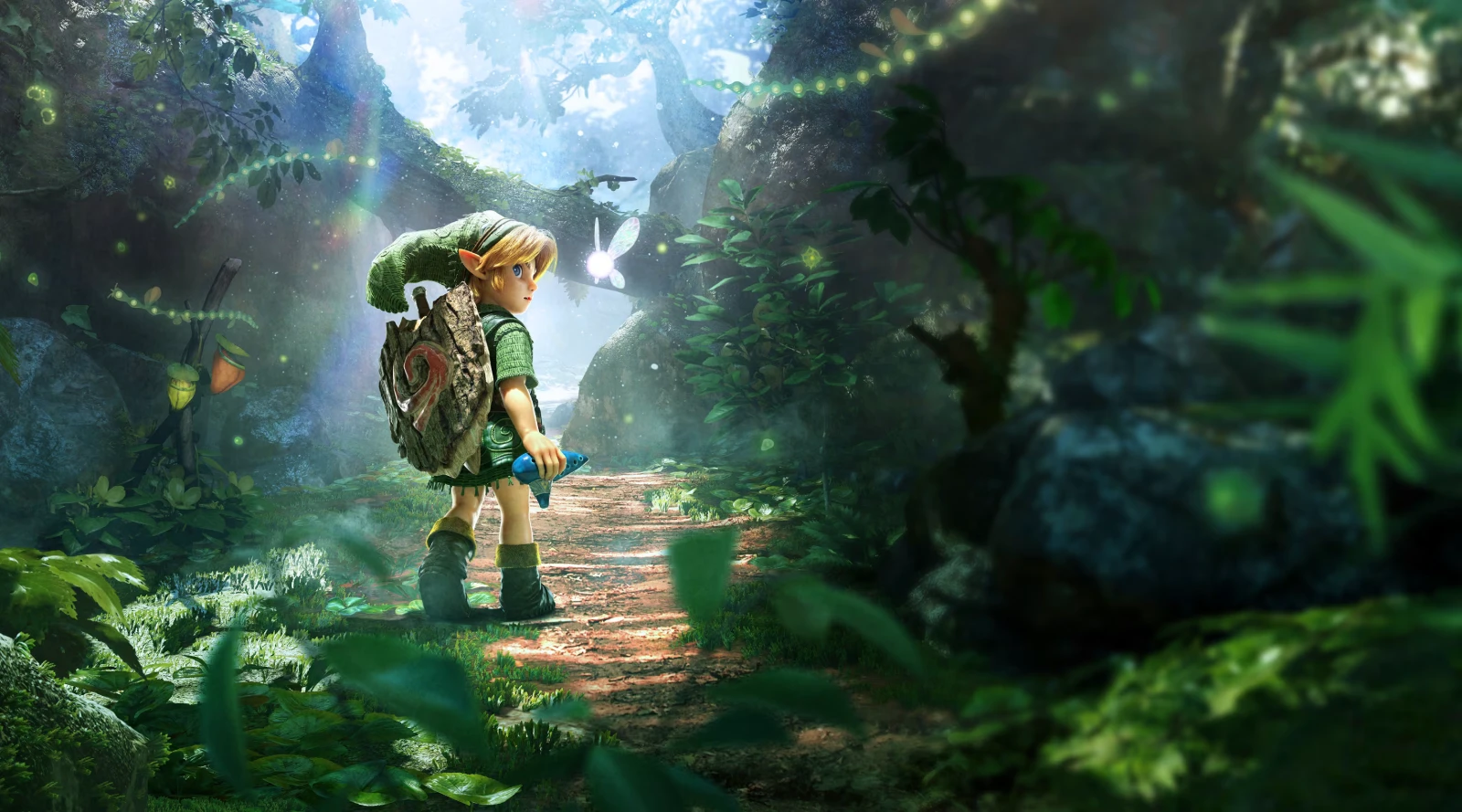
The Legend of Zelda: Ocarina of Time (Nintendo Switch 2)
Twenty-eight years on, Nintendo has rebuilt its most celebrated adventure from scratch: the same Hyrule and the same story, with a jump button, voiced cutscenes, a full orchestra and an ocarina you can play by humming.
Released5 November 2026, worldwide
DeveloperNintendo EPD, with contract work by Monolith Soft
DirectorHokWai Ng
ProducersEiji Aonuma, Hidemaro Fujibayashi
Players1
SalesOver 5.2 million in four days (Nintendo, 11 November 2026)
Title
The Legend of Zelda: Ocarina of Time ゼルダの伝説 時のオカリナ The same name as the 1998 game, with no subtitle; Nintendo’s store adds “Nintendo Switch 2 Exclusive”
Platform
Nintendo Switch 2 (TV, tabletop and handheld modes)
Developer
Nintendo EPD; partial contract development by Monolith Soft (game design, programming, graphics)
Publisher
Nintendo
Producers
Eiji Aonuma, Hidemaro Fujibayashi
Director
HokWai Ng
Art director
Aya Shida
Program director
Hiroki Taguchi
Music lead
Masato Ohashi (also one of the sound directors)
Players
1
Released
5 November 2026, worldwide
Price at launch
US $59.99 download, $69.99 boxed · UK £49.99 download, £58.99 boxed · Japan ¥7,980 download, ¥8,980 boxed
Download size
24.9 GB (Nintendo of America’s store page)
Age rating
ESRB Everyone 10+ (Animated Blood, Fantasy Violence)
Screen text
Japanese, English, French, German, Italian, Spanish, Korean, Dutch, Russian, Portuguese, Polish, Simplified and Traditional Chinese
Also supports
amiibo, HDR and VRR output, 5.1 surround sound, and ZELDA NOTES in the Nintendo Switch App
Over 5.2 million worldwide in its first four days, 810,000 of them in Japan (Nintendo, 11 November 2026)
Reviews
96 on Metacritic from 112 critics (14 November 2026)
Overview
This is the second full remake of Ocarina of Time, and by far the bigger one. Where the 2011 Nintendo 3DS version polished the Nintendo 64 game, the Nintendo Switch 2 version throws nothing away and keeps nothing as it was. Nintendo’s own page calls it “built from the ground up”, and program director Hiroki Taguchi explains why: after 28 years the old code and data could not simply be carried across, so every room, character and sword swing was made again and checked against the original.
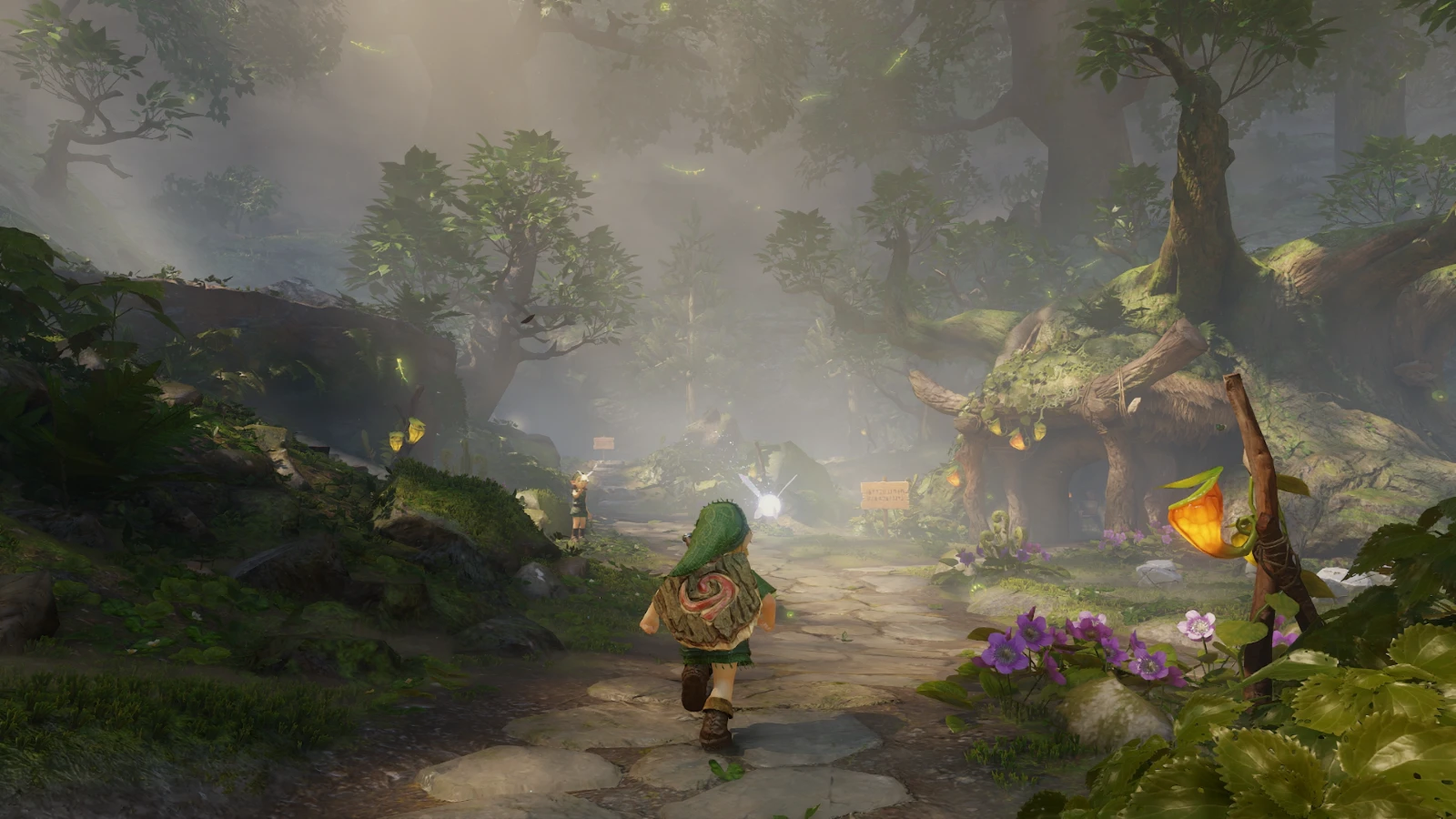
What you play is still the 1998 adventure. Link is still the boy without a fairy, the dungeons come in the same order and the seven-year jump lands exactly where it always did. Around that, almost everything you see and hear is new: remodelled locations, fully voiced cutscenes, more dialogue, a score of more than 150 pieces with a full orchestra on the big themes, a camera you turn yourself and, for the first time in this game, a button that makes Link jump.
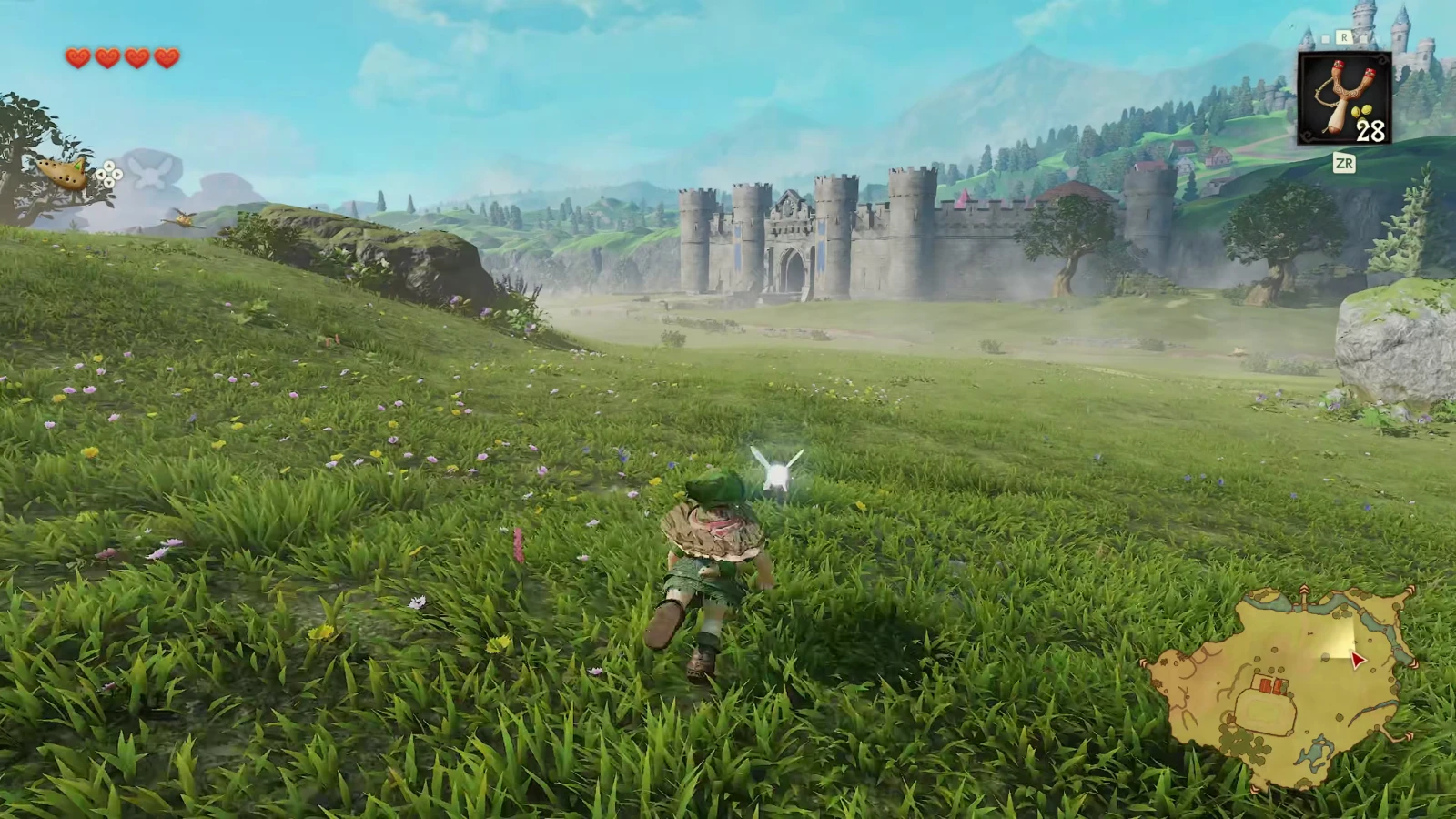
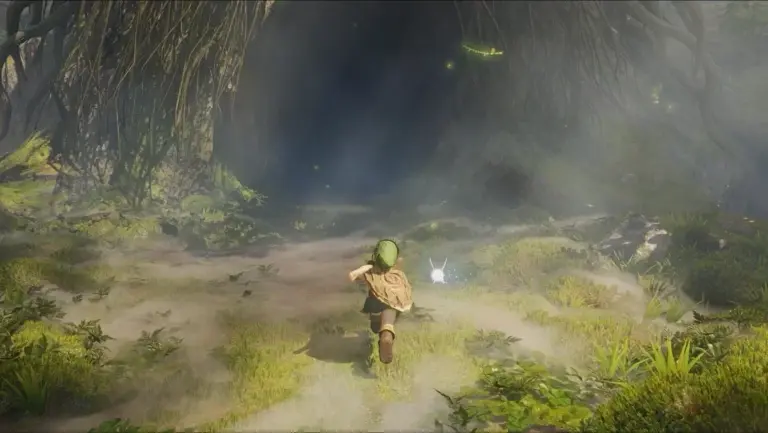
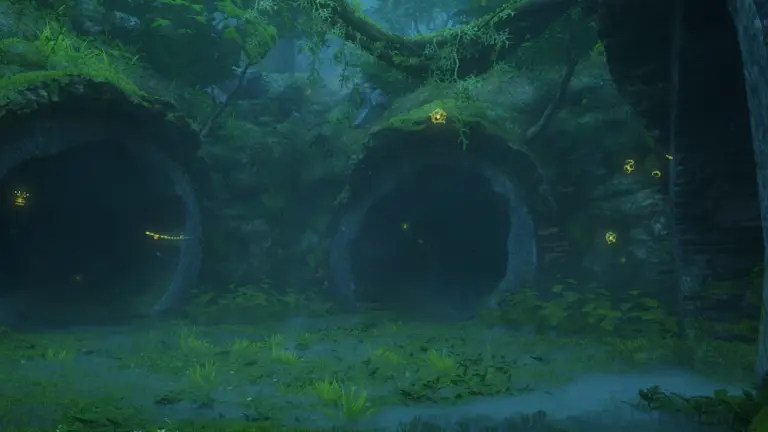
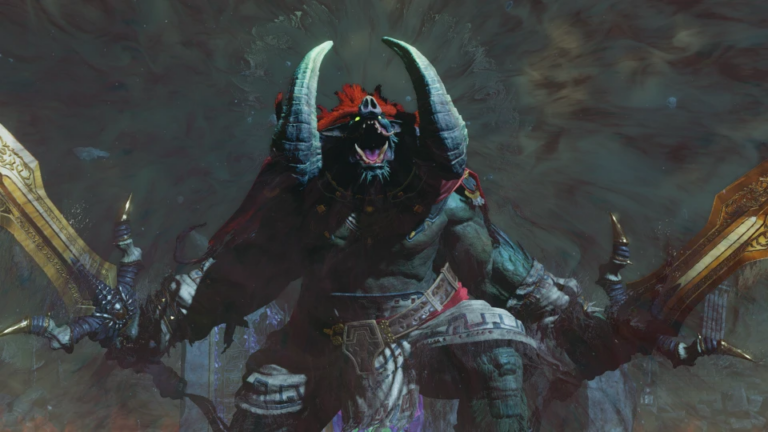
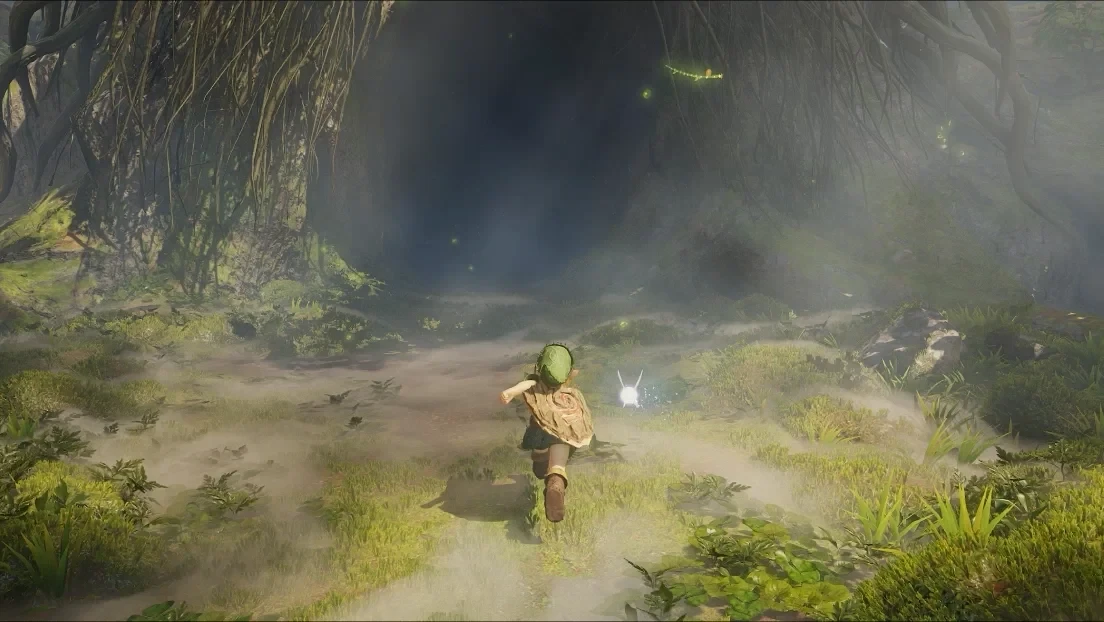
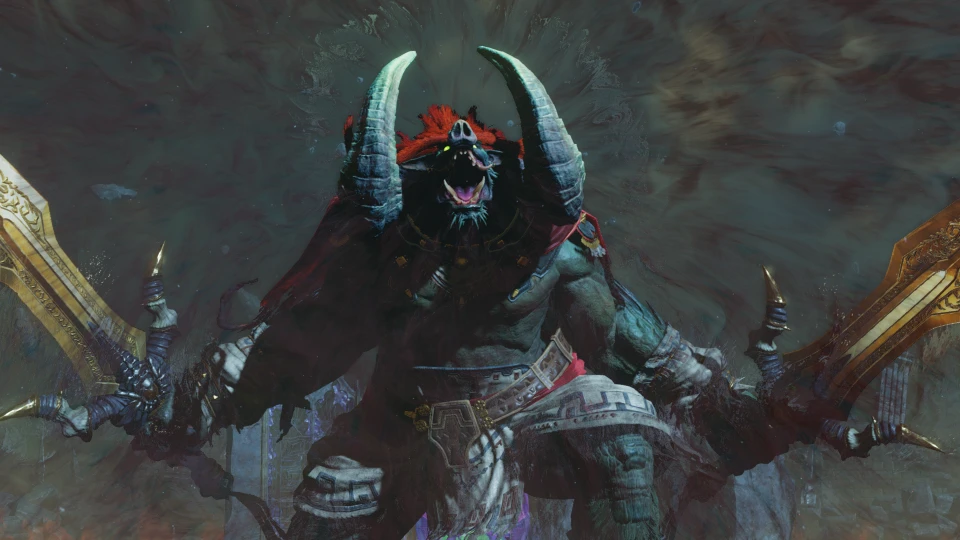
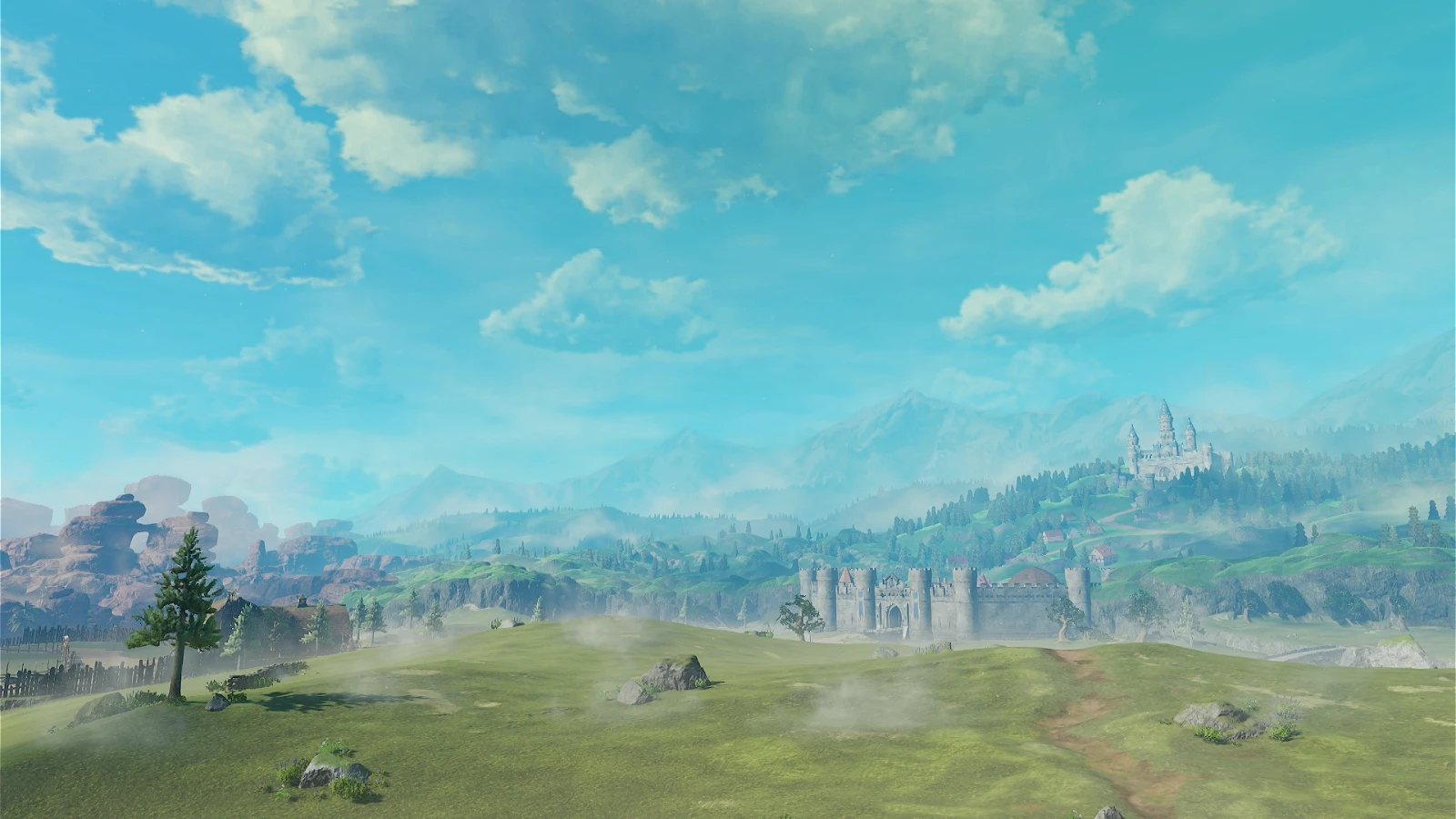
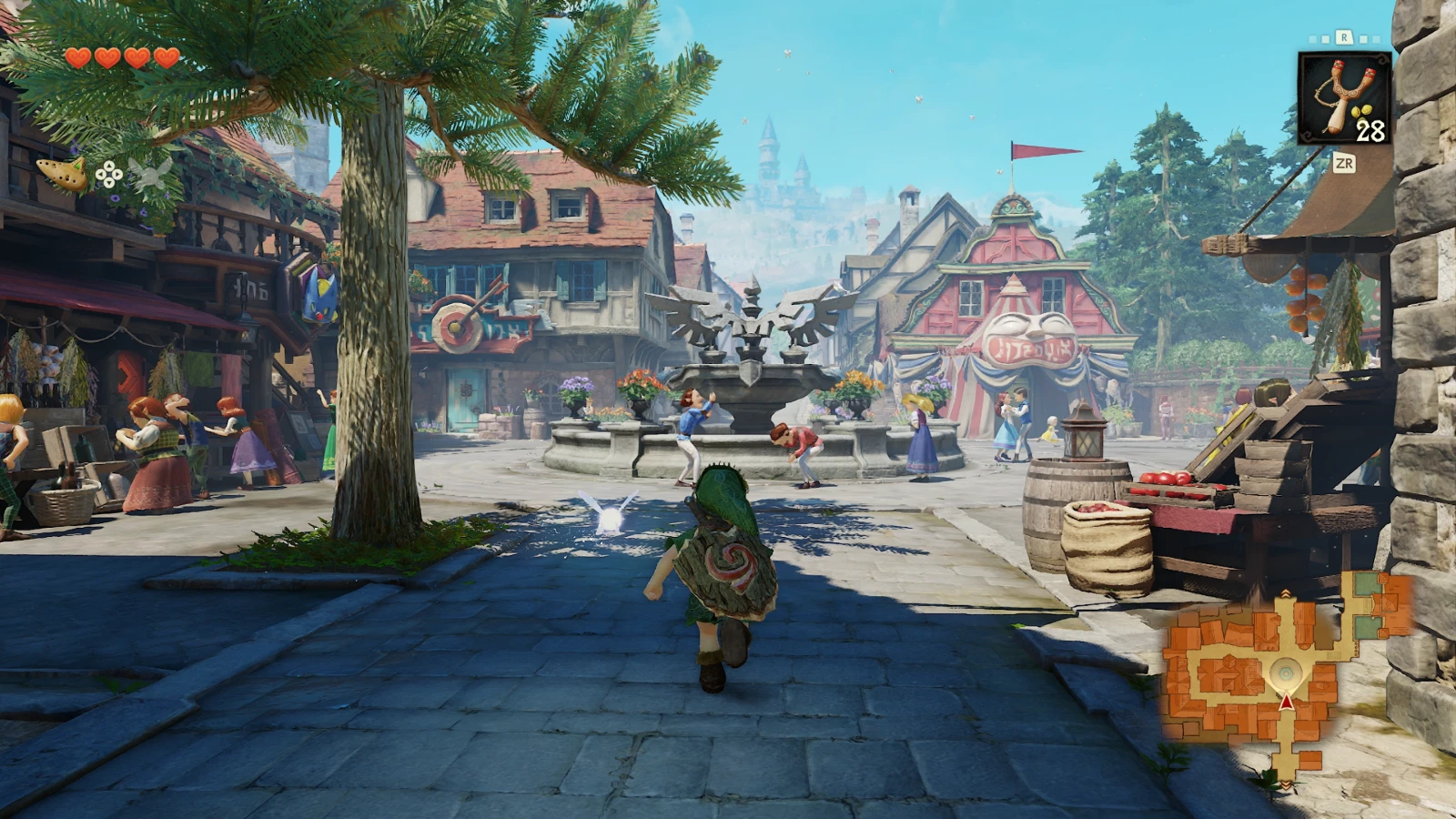
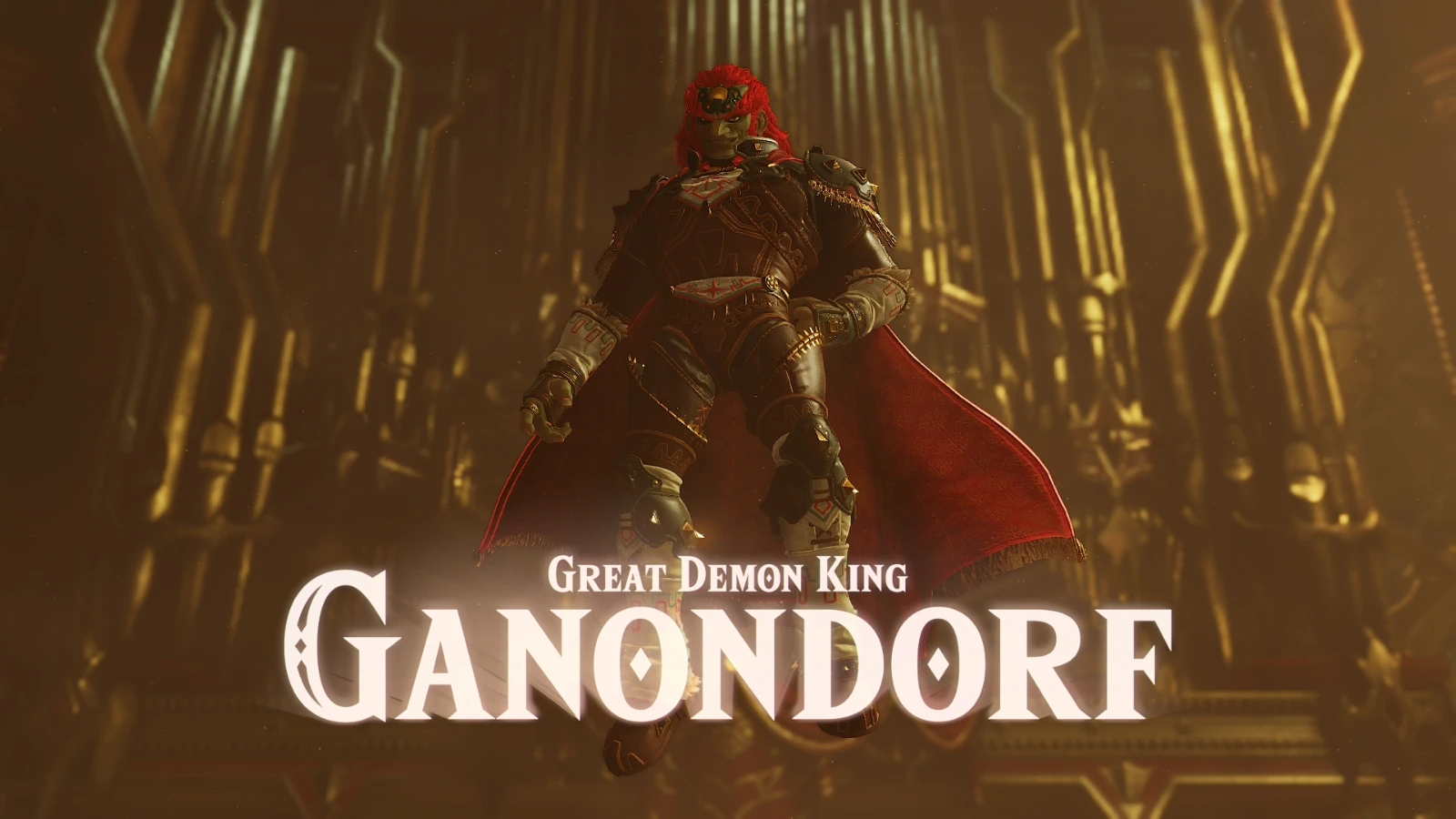
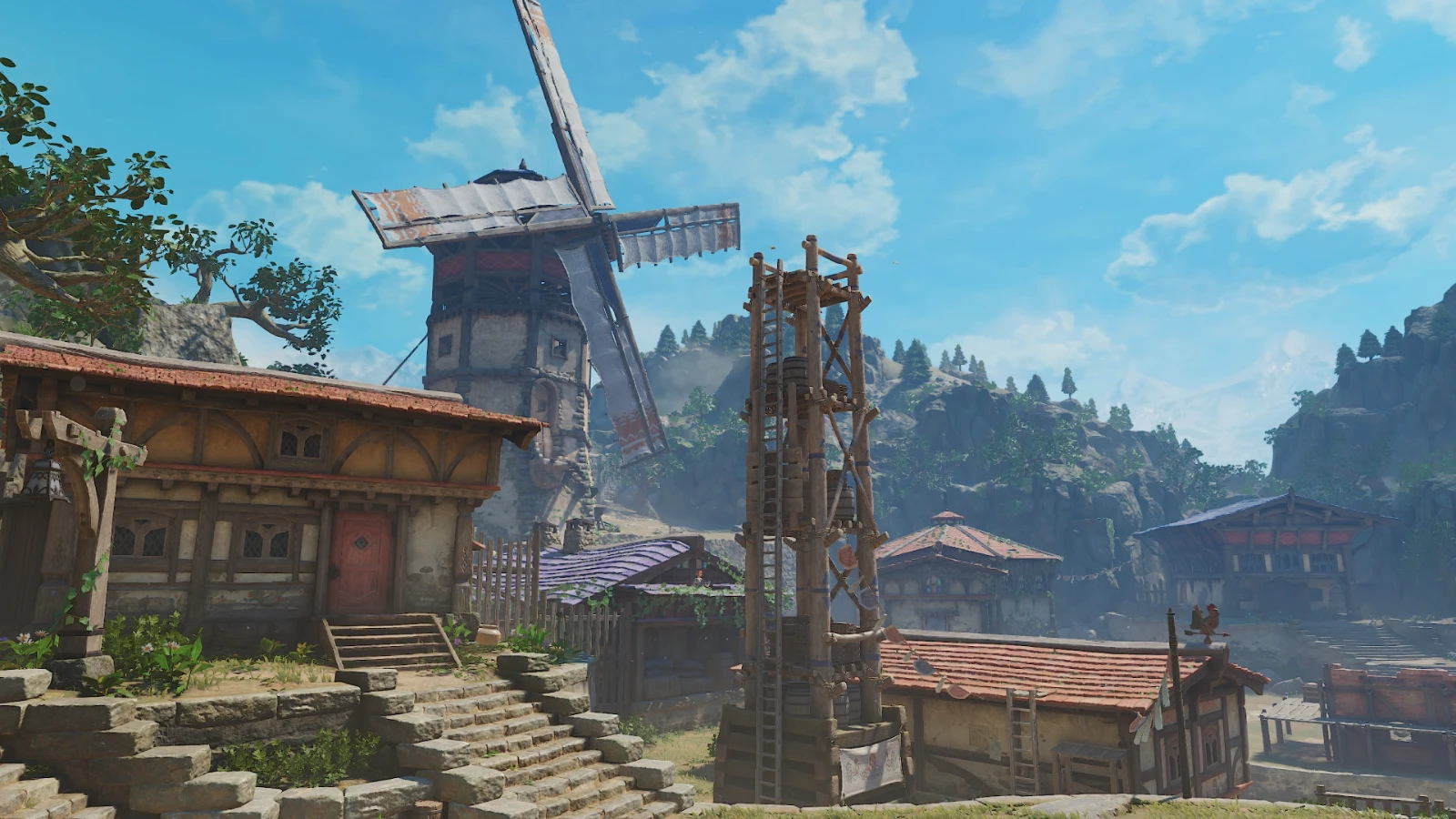
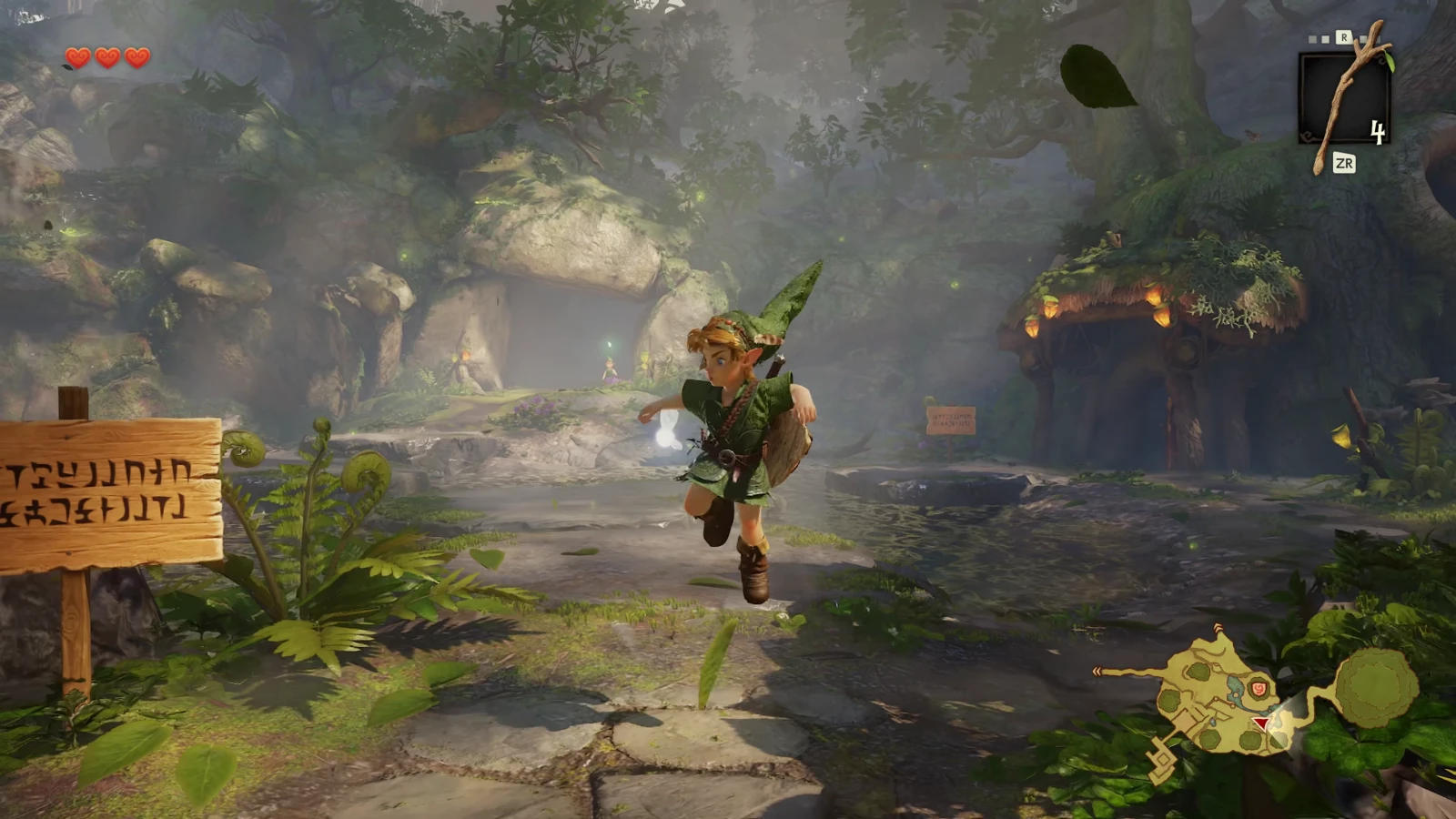
Kokiri Forest, rebuilt: the same layout with far more detail.Hyrule Field, with the castle and windmill enlarged as landmarks.Hyrule Castle Town is now fully 3D, with a free camera.Ganondorf in one of the fully voiced cutscenes.
It was released worldwide on 5 November 2026 as part of the series’ 40th anniversary celebrations. Eiji Aonuma, who designed dungeons for the original, and Hidemaro Fujibayashi, director of Breath of the Wild and Tears of the Kingdom, produced it and handed the direction to HokWai Ng, whose rule for the team was that “the visuals may change, but the experience does not.”
To play, it feels like a modern Zelda wearing a much-loved old map. It runs at 60 frames per second where the Nintendo 64 managed 20, Hyrule Castle Town is a real place you can walk round instead of a row of flat backdrops, and the Water Temple no longer sends you to the pause menu every time you want the Iron Boots. There are new things on the side, too: a tapestry called Threads of Time that records your journey, a Hall of Fallen Foes for boss rematches, and “fairy thoughts” hidden around Hyrule for Navi to read.
Critics loved it and so did the tills. It reached Metacritic with a score of 96, and Nintendo says it sold more than 5.2 million copies in its first four days, the best start yet for one of its own Switch 2 games. The complaints are small ones: no Master Quest, one save slot, an English voice cast that divides opinion. How it sells and settles in over the long run is not yet known as of 14 November 2026.
“The Nintendo 64™ classic returns for a new generation in 2026, reborn exclusively for Nintendo Switch™ 2!”
That is the first line of Nintendo of America’s store page. It goes on to promise overhauled visuals, orchestral music, voice acting and longer cutscenes, and says the new jump, dash and camera controls make this a good place to start with the series.
— Official description: Nintendo of America, store page for The Legend of Zelda: Ocarina of Time (nintendo.com), read on 14 November 2026. First sentence quoted; the rest summarised by Zelda Temple.
Quick Answers
The questions people are asking about the Switch 2 version, answered quickly and explained further down the page.
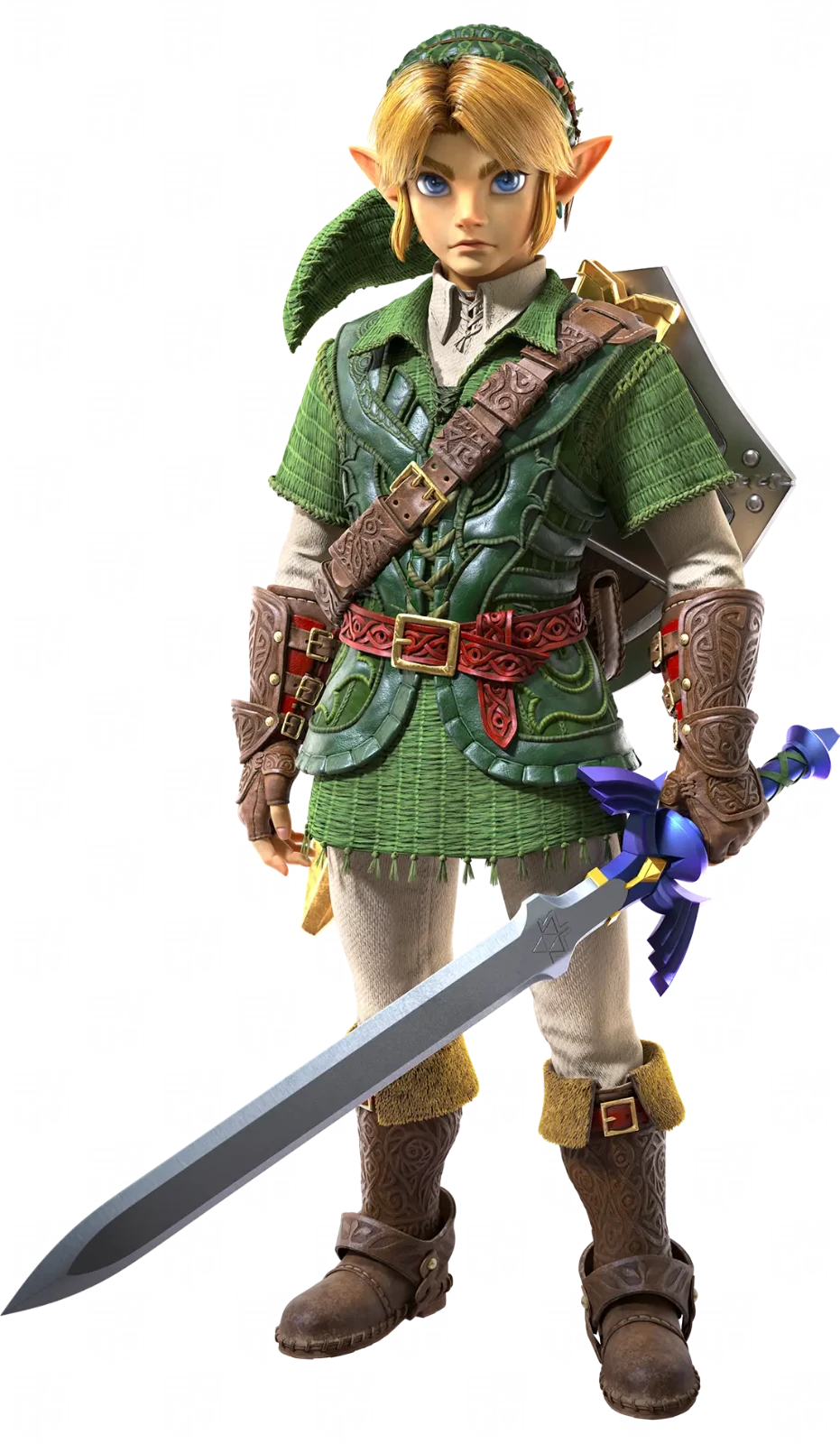
Official render of adult Link in the Switch 2 version.
Is it the same game as the 1998 original?
Yes, in story, world and structure: the same Hyrule, the same dungeons in the same order, the same ending. But nothing was ported. Everything was rebuilt for Nintendo Switch 2, and Nintendo Life’s guide writers estimate that about a tenth of its puzzles and places have been altered along the way. More →
What is new?
New graphics at 60 frames per second, fully voiced cutscenes, extra dialogue and a few new scenes, orchestral music, a free camera on the Right Stick, a jump button, a dash, quicker item switching, time that keeps passing in towns, the Threads of Time tapestry, the Hall of Fallen Foes, fairy thoughts, amiibo support and the option to play the ocarina by humming. More →
When did it come out, and what does it cost?
It was released worldwide on 5 November 2026, only on Nintendo Switch 2. At launch it cost $59.99 as a download or $69.99 boxed in the United States, £49.99 or £58.99 in the United Kingdom, and ¥7,980 or ¥8,980 in Japan. The first print run of the boxed version has a textured foil cover. More →
Does it include Master Quest?
No. There is no Master Quest and no hard mode, which Nintendo Life’s review called “a sore point”. If you want the remixed dungeons, they are still in Ocarina of Time 3D and on the GameCube disc. More →
Is there voice acting? Does Link talk?
The cutscenes are fully voiced; everyday conversations are still text, as Game Informer noticed when Saria’s greeting in Nintendo’s demonstration went unvoiced. Link stays silent, with no actor credited for him. The English credits list Erica Mendez as Zelda, Matt Mercer as Ganondorf and Lisa Reimold as Navi. More →
How does playing the ocarina by humming work?
Hum a song Link has already learned into the console’s built-in microphone and he plays it. You can also play a real instrument at it, and the buttons still work if you would rather not serenade your living room. Aonuma says it does not make the game easier; it is there to bring Hyrule a little closer. More →
Which version of Ocarina of Time should I play?
For most people, this one: Nintendo Life called it “easily the best way to play OoT” and VGC called it the definitive way to discover the game. Play the Nintendo 64 original to see what 1998 saw, and the 3DS version if Master Quest matters to you. More →
How has it sold and reviewed?
Very well on both counts. Nintendo announced more than 5.2 million sales in the first four days, and it holds a Metascore of 96 from 112 critics as of 14 November 2026. Longer-term sales are not yet known. More →
What’s different from the original
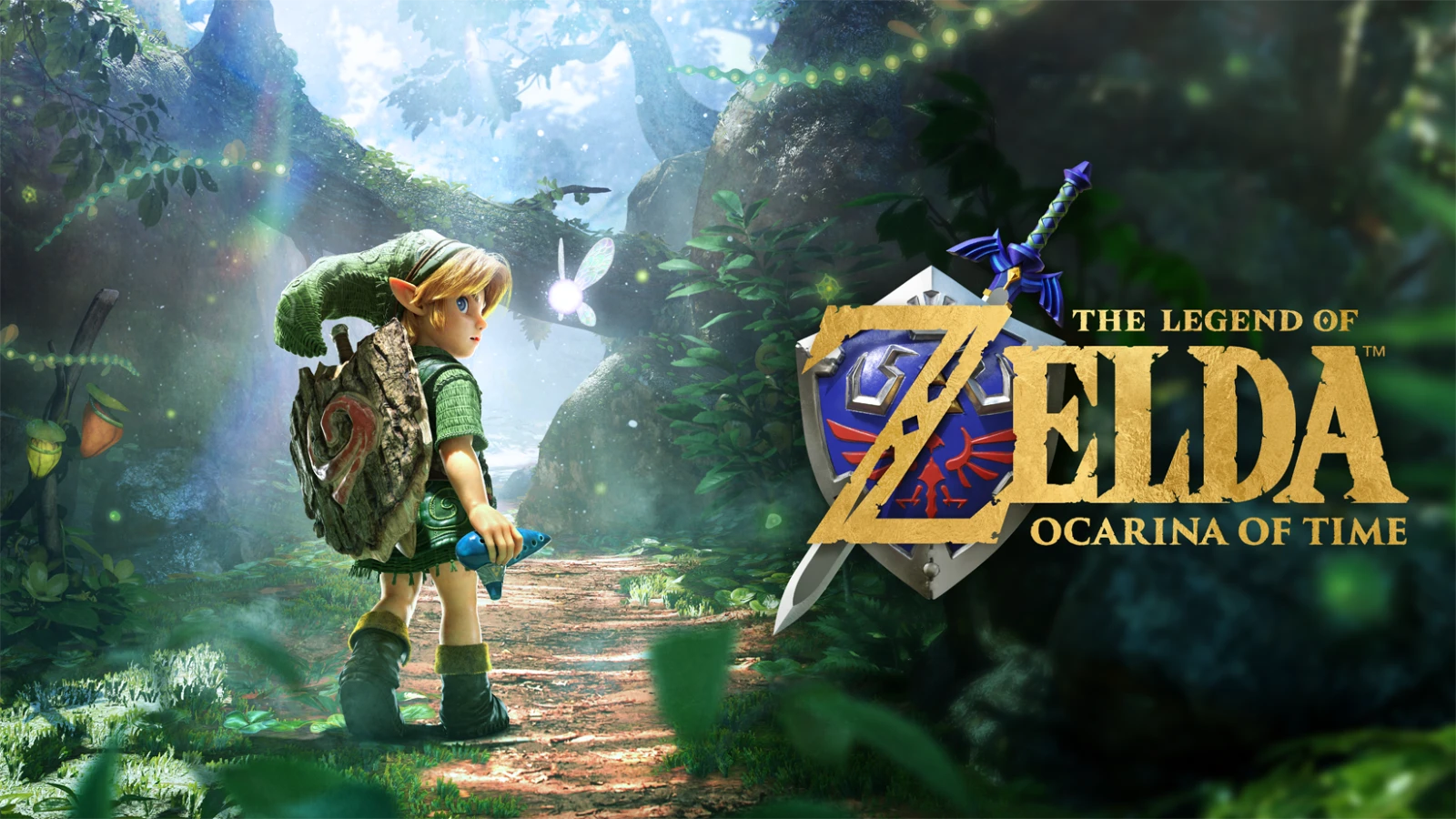
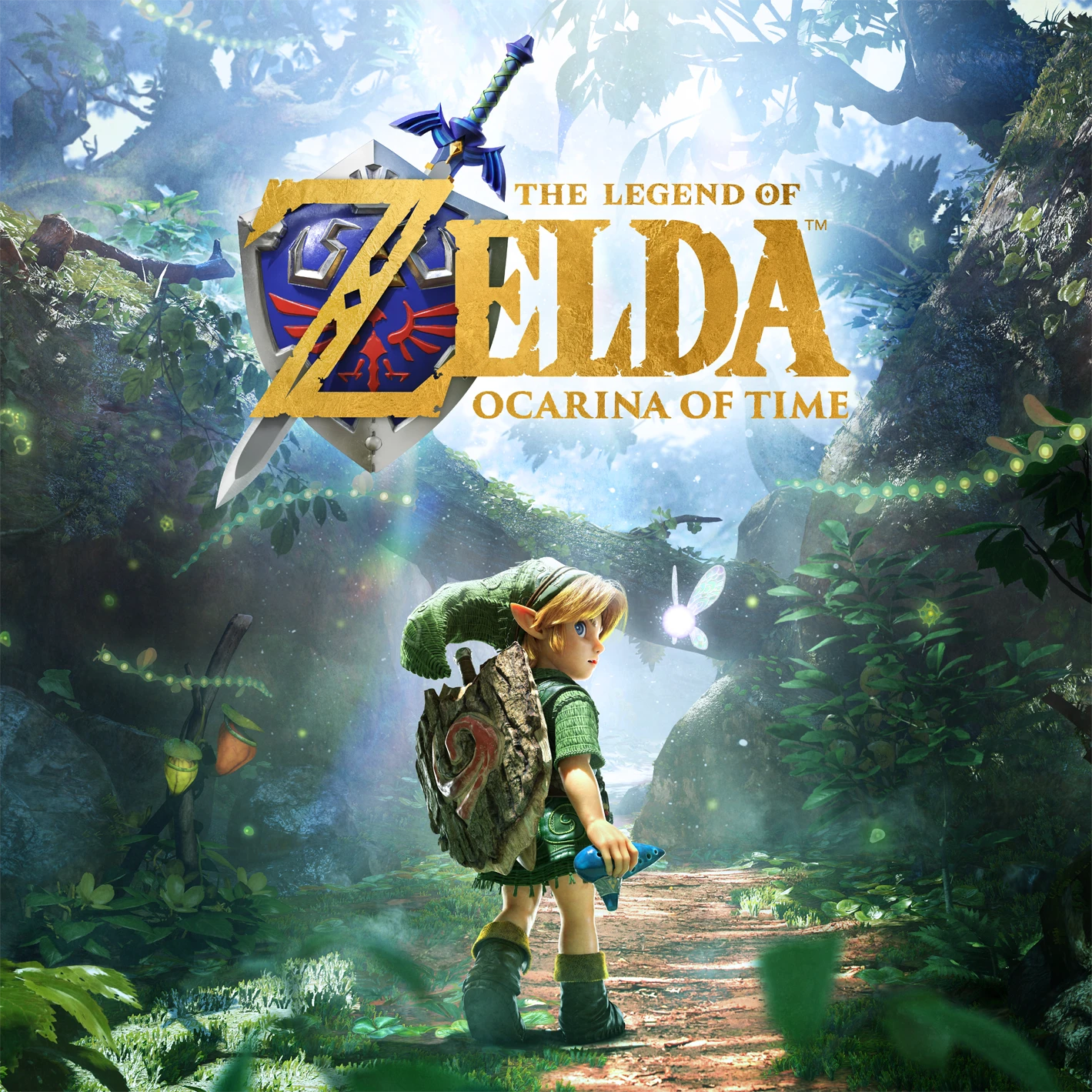
Nintendo’s key art for the 2026 version.
The team’s rule was simple to say and hard to keep: change how the game looks, sounds and handles, and leave what happens alone. Fujibayashi asked them to settle early “what to change and what to leave unchanged”, and the table below is roughly where they landed. The middle column is the 1998 Nintendo 64 game as described on its own page and by the people who made the remake.
The short version: the map, the story, the items and the dungeon order are the 1998 ones. The controls, the camera, the presentation and a handful of extras are new.
Feature
Nintendo 64 (1998)
Nintendo Switch 2 (2026)
Graphics and speed
Nintendo 64 polygons at 20 frames per second
Every location and character remodelled; 60 frames per second, at up to 1440p docked according to Digital Foundry’s measurements; HDR output supported
Camera
No free control: one stick, a camera fixed at certain points, and Z-targeting to lock on to enemies
Turns freely with the Right Stick; lock-on targeting is kept
Jumping
Automatic: Link hops when he runs off a ledge
A jump button that works anywhere, and no auto-jump. The Jump Attack works both as one press and as jump-then-attack
Getting about
Walk, or roll again and again to hurry
Tap to roll, hold the same button to dash; Link also swims faster
Items
Putting the Iron Boots on or off means opening the menu
Iron Boots, Lens of Truth, masks and the ocarina sit on the D-pad; hold R to scroll through items; the old equipment screen is still there
Voices
No spoken dialogue: text, plus character sounds such as Navi’s “Listen!”
Cutscenes fully voiced; ordinary conversations stay as text; Link stays silent
Music
Koji Kondo’s score
More than 150 pieces: the big themes recorded with a full orchestra, some blended with recreated Nintendo 64 sounds, plus new music for new scenes
Hyrule Castle Town
Flat pre-rendered backdrops and a fixed camera
Fully 3D and free to explore
Time of day
Stops while you are in a town
Keeps running everywhere, towns included
Moving between areas
Separate maps with a pause between them
Still separate maps, on purpose; some doorways and field exits are now seamless
Saving
Reloading puts you back at Link’s house or the Temple of Time
One manual save plus autosaves; reloading returns you to where you last saved (Nintendo Life)
Gold Skulltulas
100 to find; 20 tokens earn the Stone of Agony
Still 100, several of them moved; 20 tokens earn the new Echo Gem, and the map counts your finds in each area
Nintendo cameos
Mario, Yoshi and friends in the castle courtyard window
Portraits removed; Malon and Talon keep their Bowser pins
Extras
None of these
Threads of Time, Hall of Fallen Foes, fairy thoughts, ocarina by humming, amiibo, ZELDA NOTES
A new Hyrule to look at
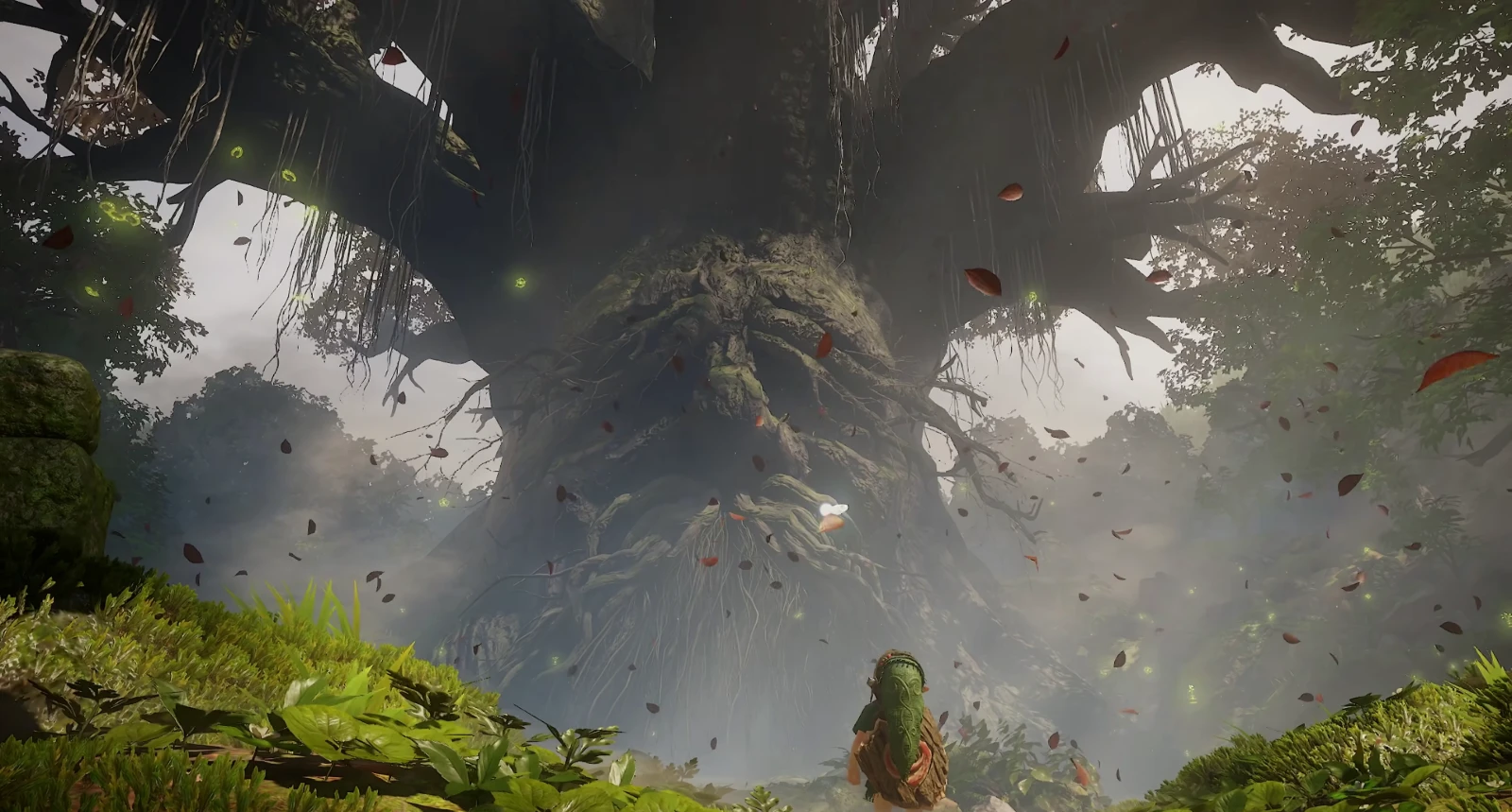
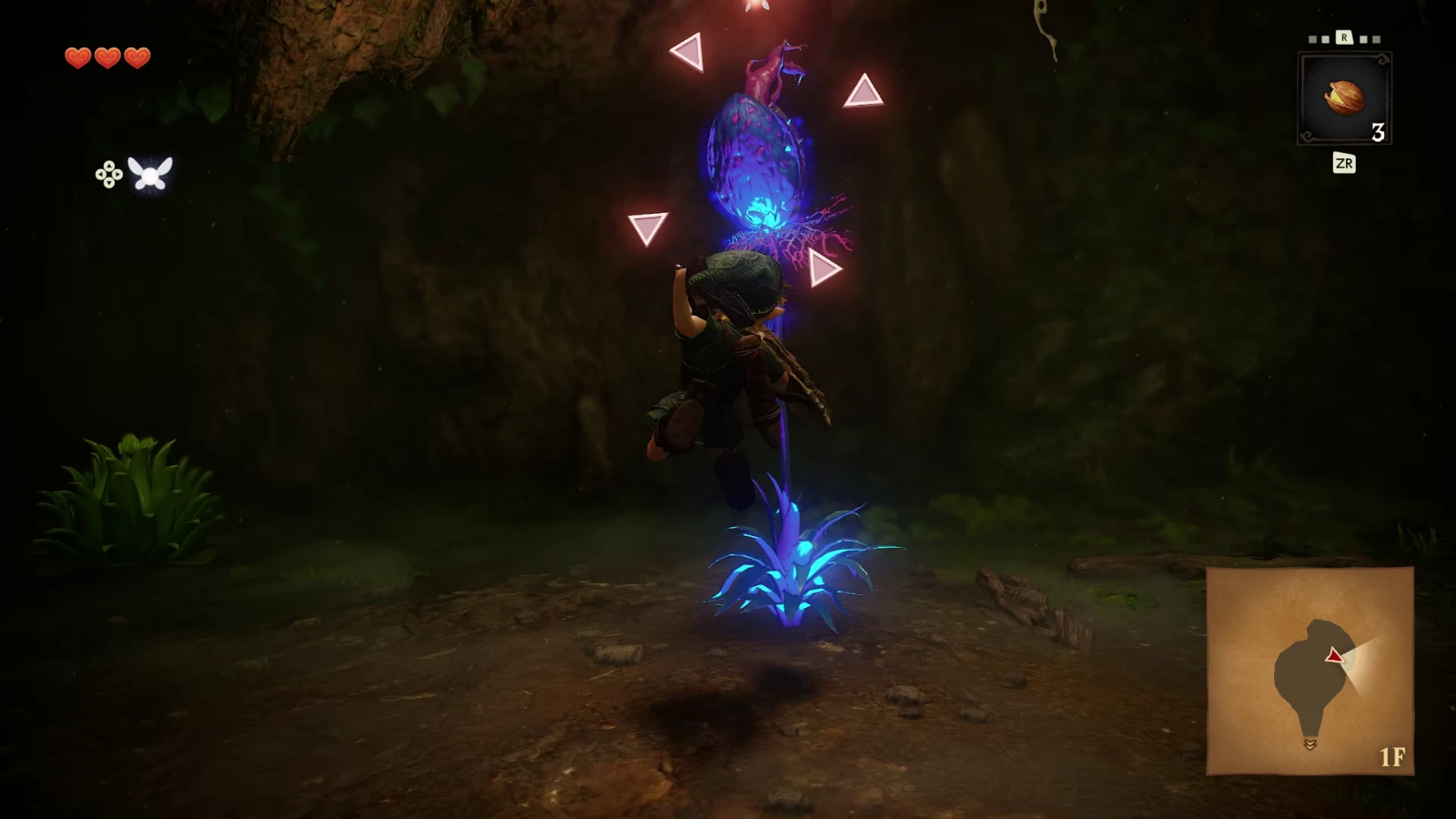
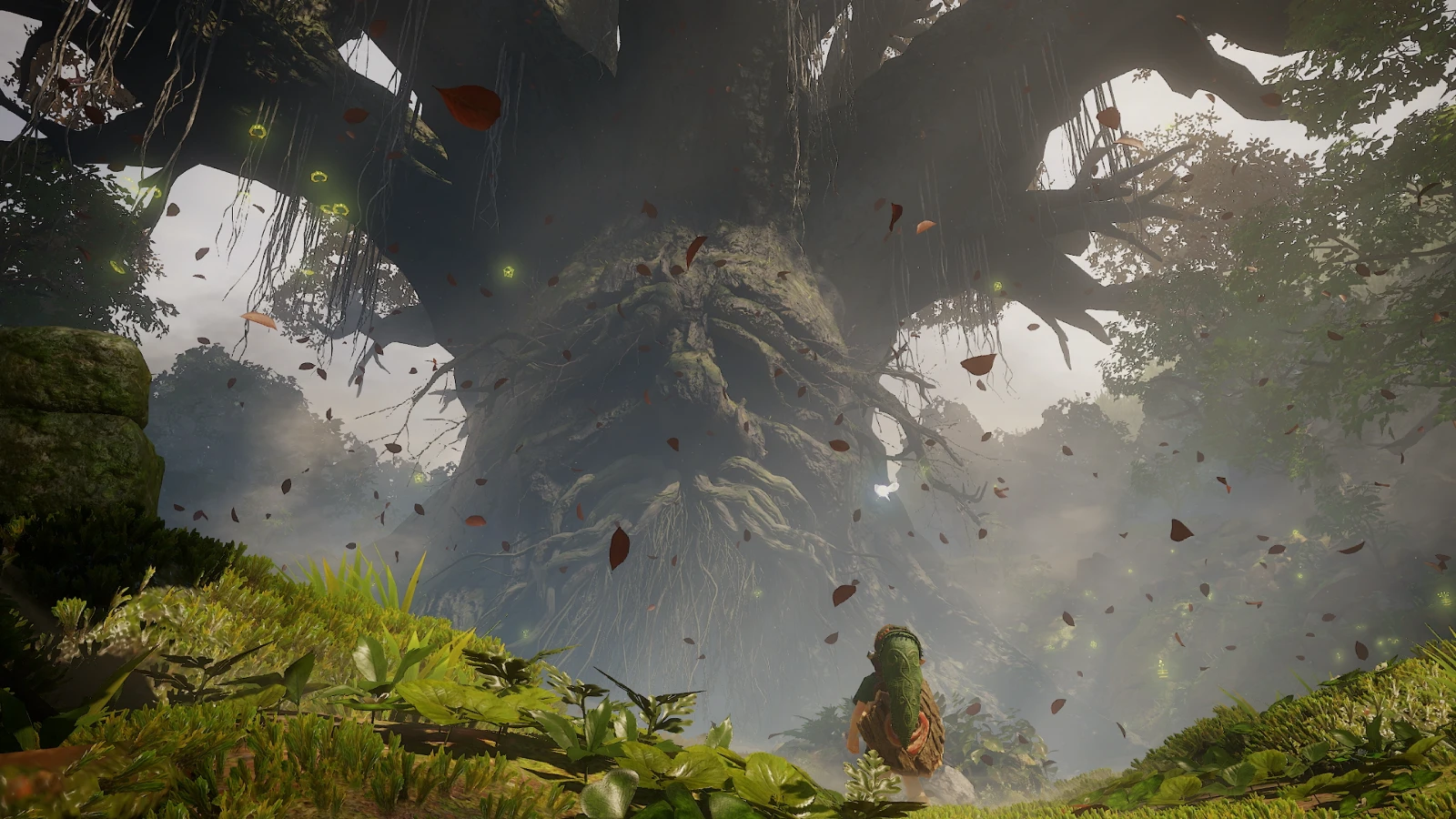
The Great Deku Tree, which the art team modelled early on to test the new look.
Art director Aya Shida did not want plain realism. Her aim was “a rich, dense world that felt as though it could truly exist”, lovely but a little dark, with odd, colourful people living in it. The two keywords were “a puppet-show feel” and “the analog feel of practical effects films”: both, she says, are forms in which characters seem to belong inside their fantasy worlds.
The geography is untouched: places sit where they always sat and join up the way they always did, and Ng chose to keep separate maps for each area in place of one seamless world, because the pause between them gives you a moment to wonder what is next. Inside those maps the detail has multiplied. Hyrule Field puts its effort where you can actually walk, and the castle and Kakariko’s windmill have been made bigger so they work as landmarks.
On the technical side, Digital Foundry’s analysis (as reported by Nintendo Everything and Nintendo Life) found a very steady 60 frames per second, with a picture that scales between about 1080p and 1440p docked and between 720p and 1080p in handheld mode. Nintendo Life’s reviewer noticed the cost in handheld play, where distant scenery can shimmer and look over-smoothed.
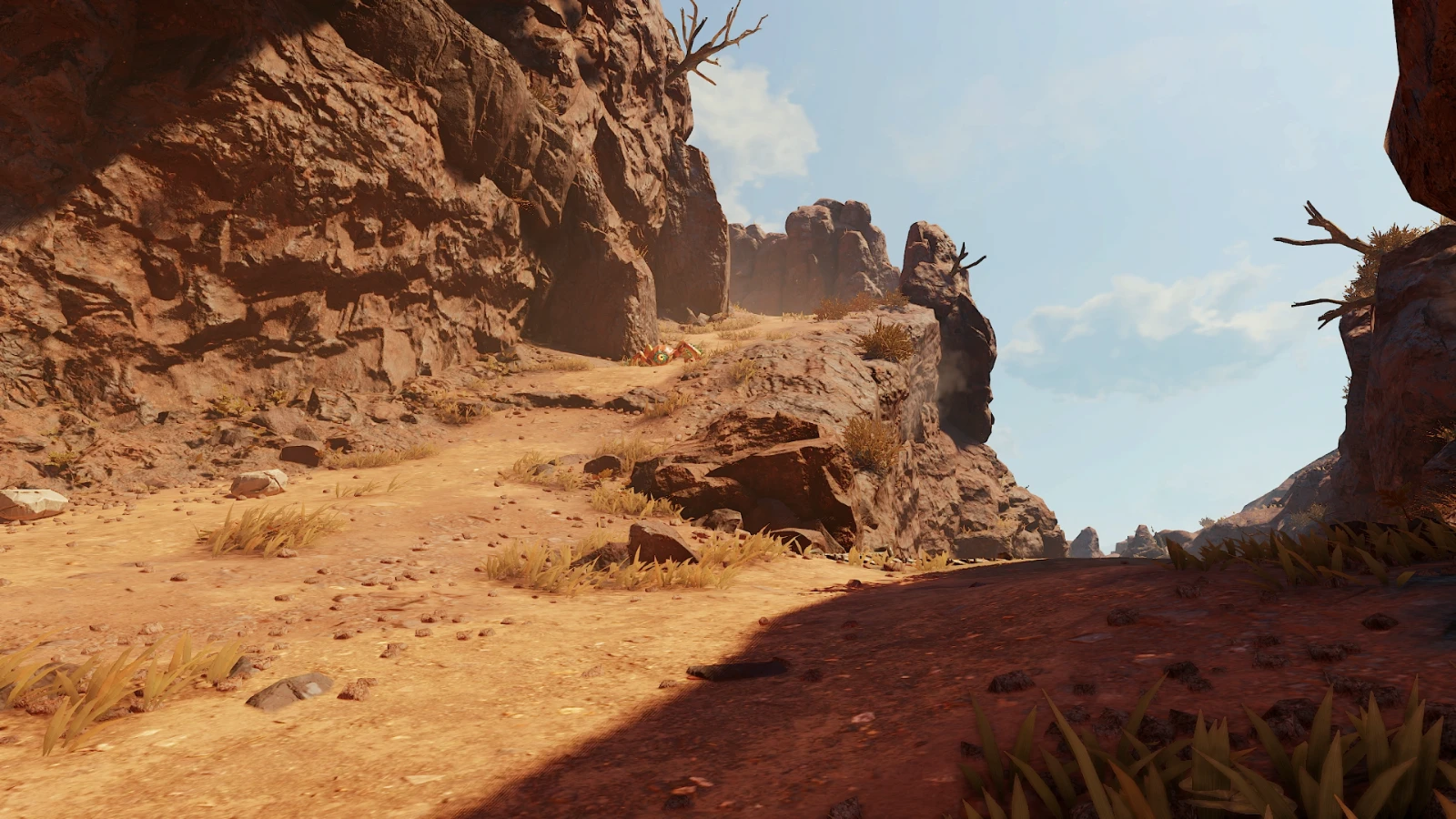
Death Mountain Trail.Kakariko Village, where doors now open without a loading screen.
Jump, dash and a camera of your own
Link can now jump whenever you ask him to.
In 1998 Link jumped by himself when he ran off an edge. Now jumping has its own button and works anywhere, as in the recent games in the series. That sounds small, but it meant rethinking every gap in the game, especially as young Link and adult Link do not jump quite the same distance. Game Informer’s reviewer found one happy side effect: you can hop over Blade Traps.
The famous habit of rolling across Hyrule Field survives. Tap the button to roll, hold it to dash; in Nintendo’s September demonstration there was no stamina gauge in sight. On the standard layout the roll and dash are on A, the jump on X and the sword on Y. Bows, slingshots and the Hookshot can be aimed with ordinary controls or with motion controls, whichever you choose in the options.
The camera is the other big change. The original fixed it at certain points; now that two sticks are the norm, the Right Stick turns it freely. The team worried that players would lose their bearings, for example after walking through a dungeon door, so they placed objects to point the way and nudged a few room layouts to suit.
Voices, new scenes and a rewritten script
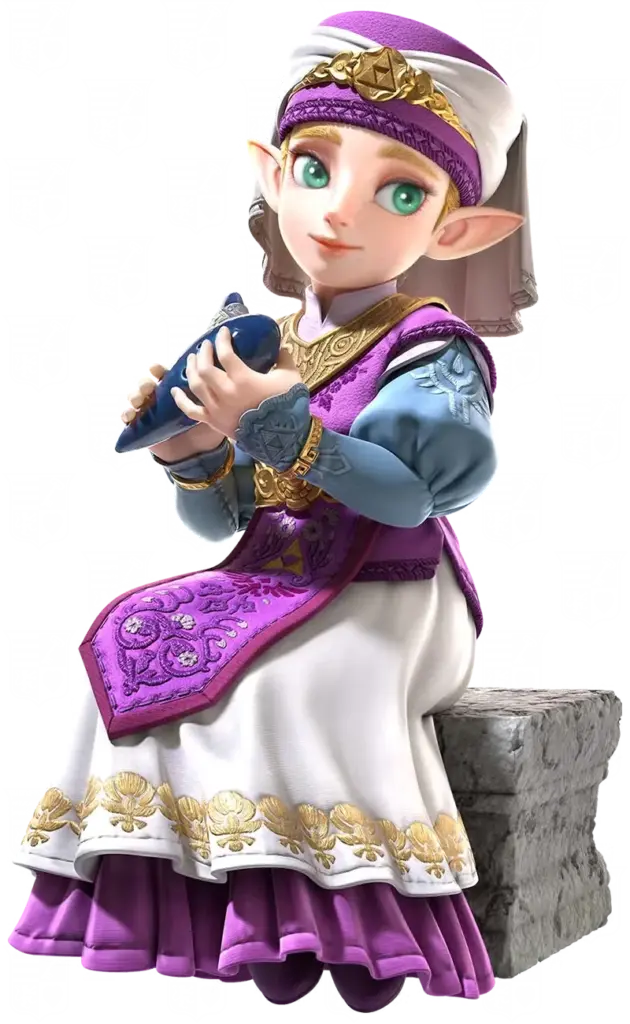
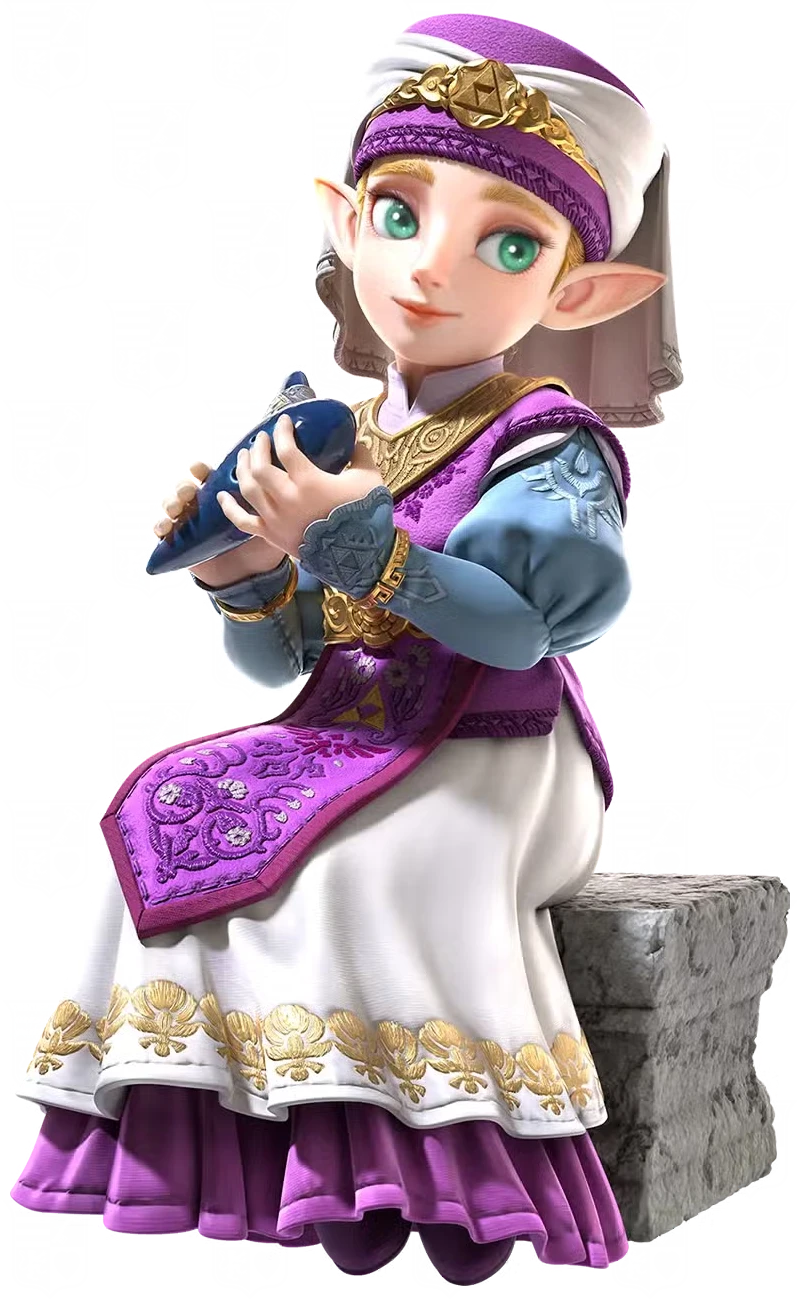
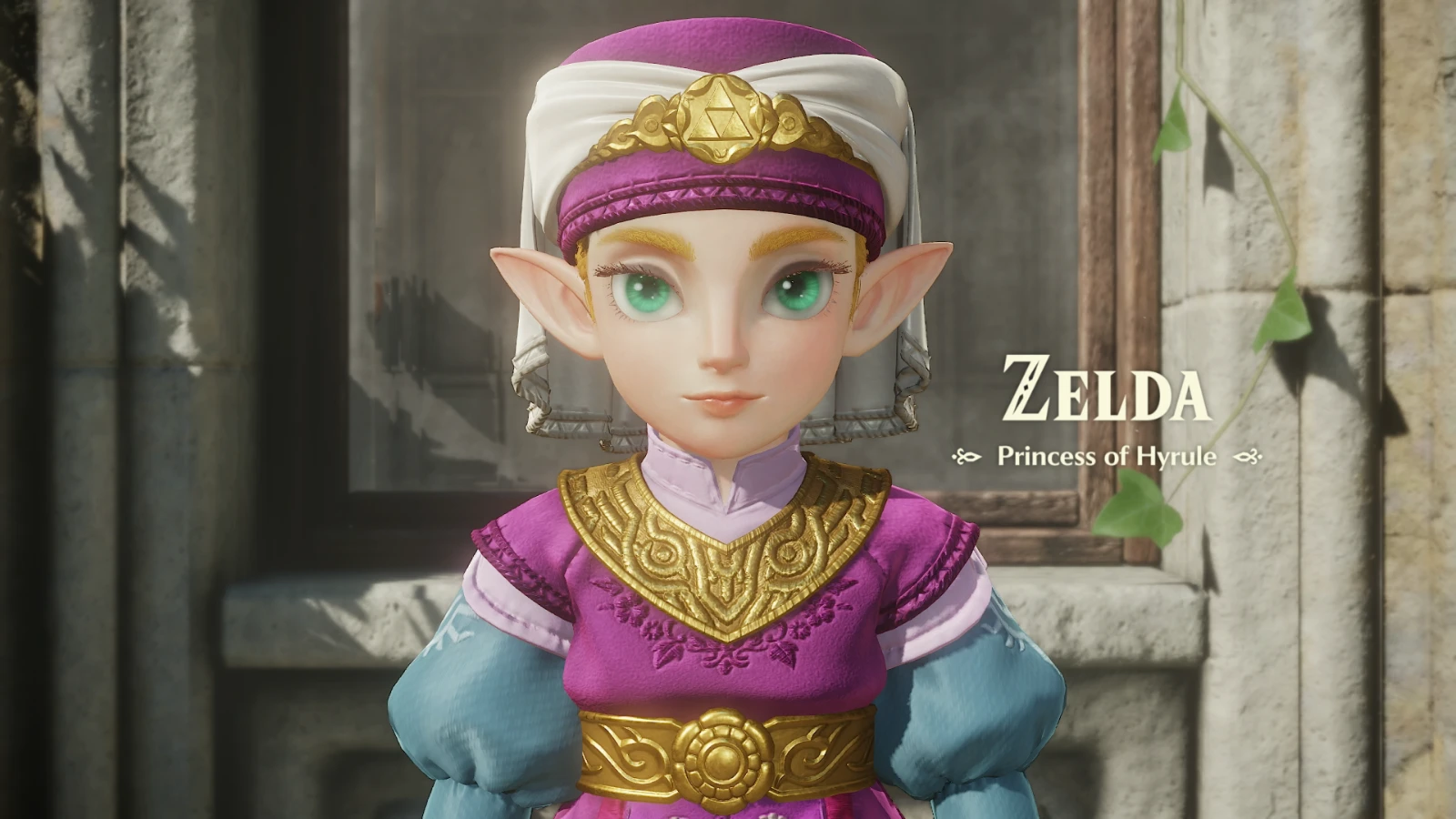
Princess Zelda, now with a voice.
Ng felt that graphics this detailed needed cutscenes that were fully voiced, so they are. The English credits, as listed by Destructoid and Zelda Universe, name Erica Mendez (Zelda), Matt Mercer (Ganondorf, the part he played in Tears of the Kingdom), Lisa Reimold (Navi), Richard Epcar (the Great Deku Tree), Suzie Yeung (Saria), Laura Post (Impa), Josh Petersdorf (Darunia), Anne Yatco (Ruto), Cristina Vee (Nabooru), Frank Todaro (Kaepora Gaebora and Rauru) and Reba Buhr (Koume and Kotake). Familiar noises were kept on purpose, Navi’s “Listen!” among them, though Nintendo Life reports that she interrupts far less often.
The script has been reworked as well. Fujibayashi says much of the text was rewritten because the old phrasing was hard for today’s players to follow, and that better graphics let the team cut descriptions the pictures now cover. A few scenes are new or longer: Saria now leaves heartbroken at Link’s decision and only catches up with him outside the forest to make amends and hand over the Fairy Ocarina, Mido shows more feeling about the Deku Tree’s fate, and the scene that bridges childhood and adulthood has been extended to explain Ganondorf’s part in it.
Music, and an ocarina you can hum
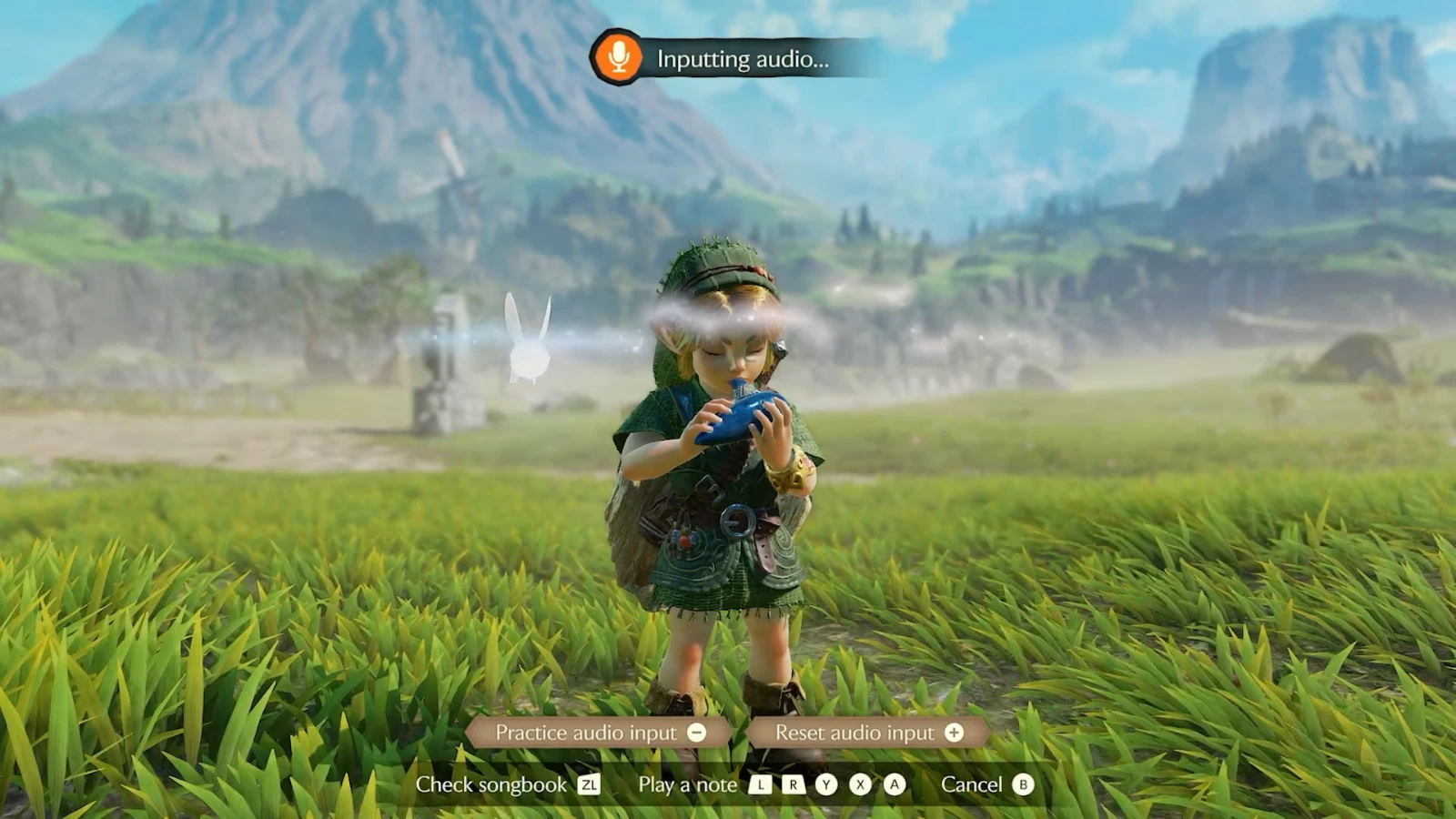
Hum a tune Link knows and he plays it for you.
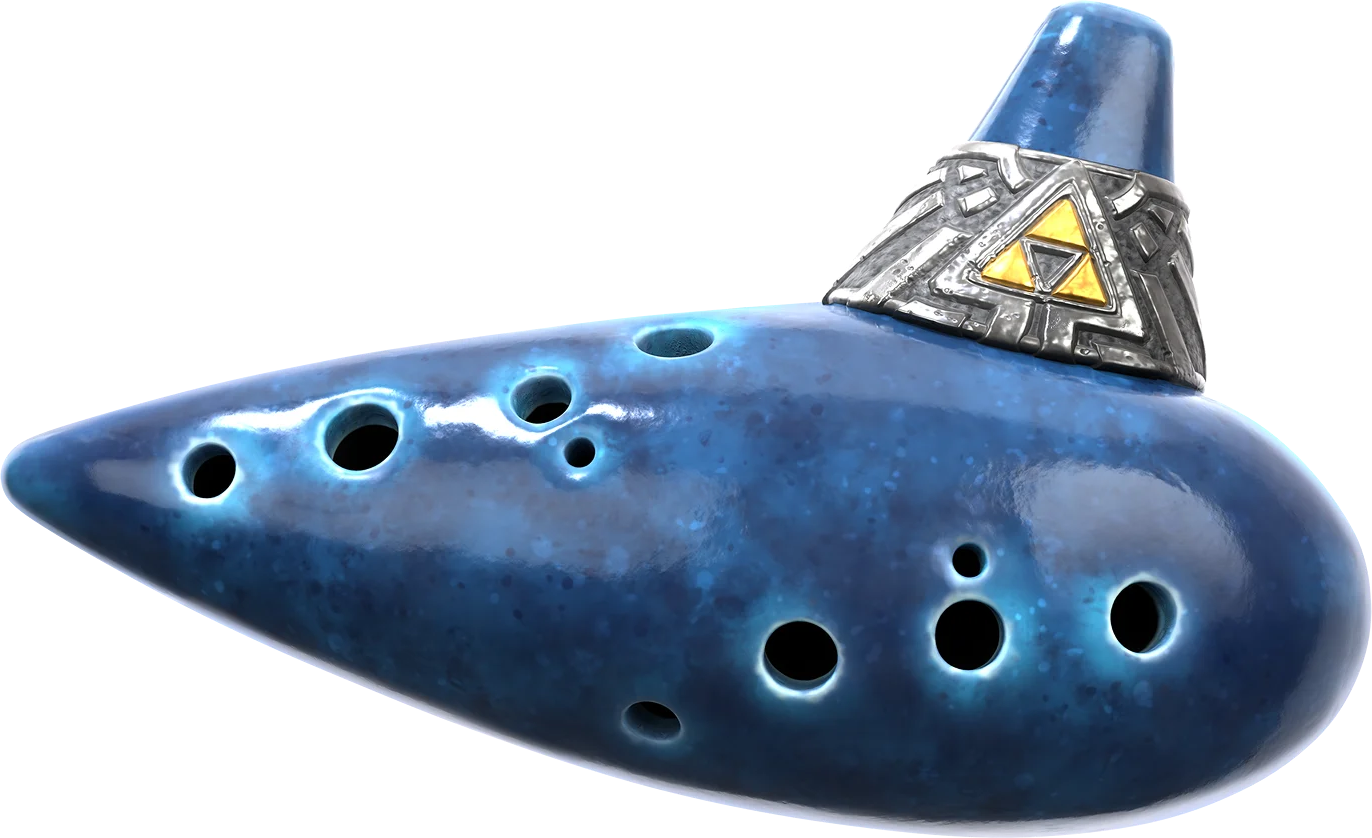
Music lead Masato Ohashi says the finished game has more than 150 pieces of background music. The grand themes were recorded with a full orchestra, but the team noticed that the original made places feel big or small through the writing, not the volume, so modest tunes such as the music inside houses keep a small line-up. Some tracks mix the live players with sounds rebuilt from the Nintendo 64’s sound source. The ocarina itself was recorded from a real instrument, breaths and all, and rings differently depending on where Link stands.
Then there is the microphone. Hum a song Link has learned and he will play it, or play a real ocarina, or, as Nintendo Life’s reviewer found, a guitar. Ng remembers Aonuma suggesting it about a year before the interview; Aonuma admits he was “asking the team the impossible.” The buttons still work, and the game also answers to the two real ocarinas Nintendo announced alongside it.
Dungeons, bosses and that Water Temple
The Water Temple in the Switch 2 version.
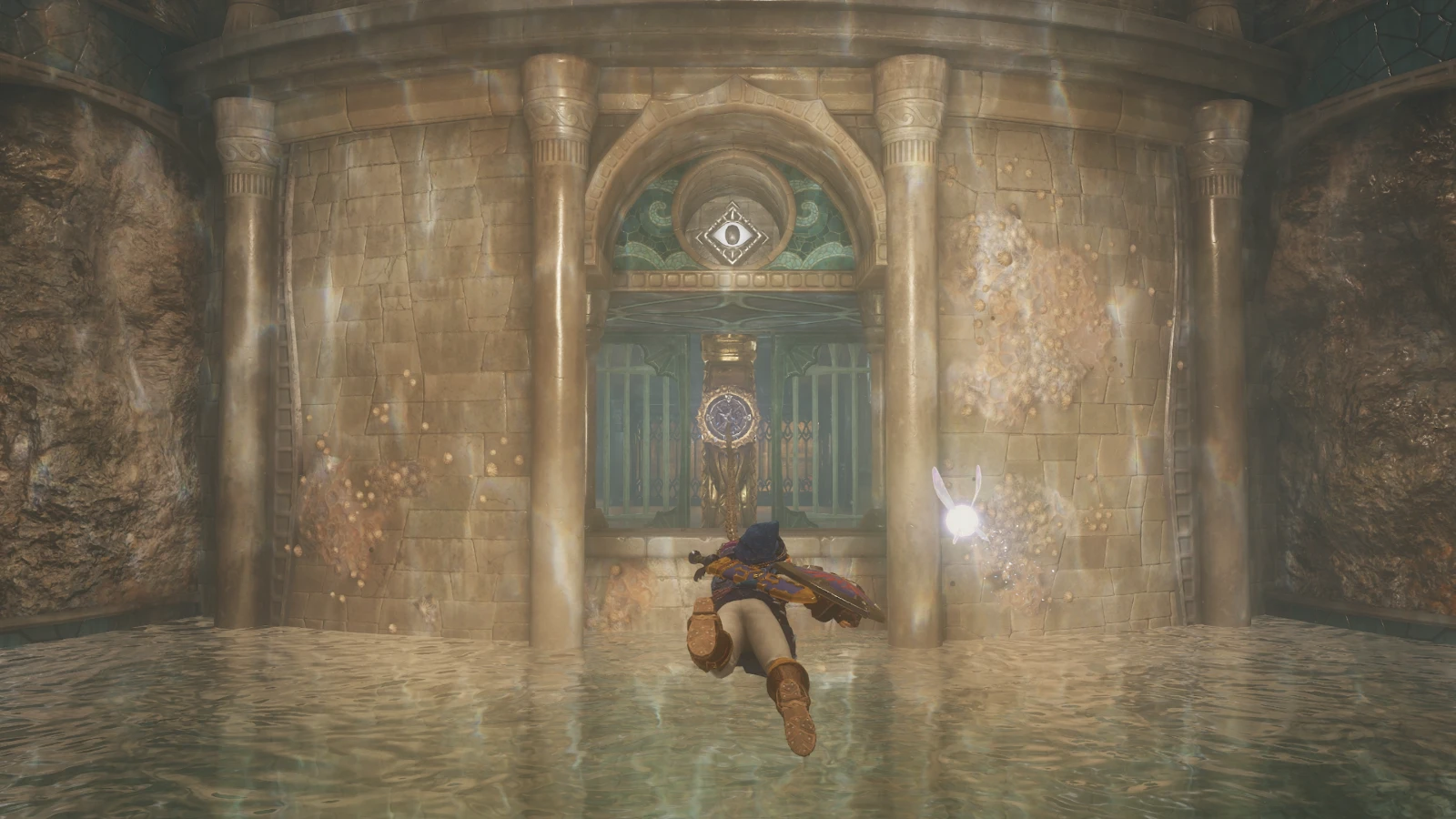
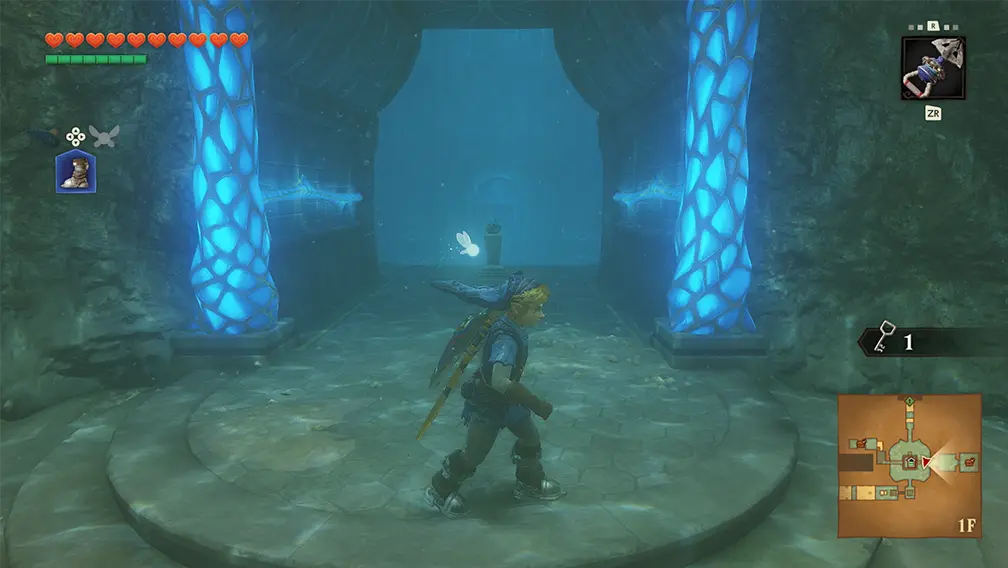
Ng says the dungeon mechanisms are mostly as they were, adjusted where they were awkward. The Water Temple got the most attention, at Aonuma’s request. Its trouble was partly the system: the Iron Boots lived in a menu. Now they are on a button, some walls that used to confuse people have become lattices you can see through, and Game Informer counted fewer keys. Aonuma calls the result the best version of the temple.
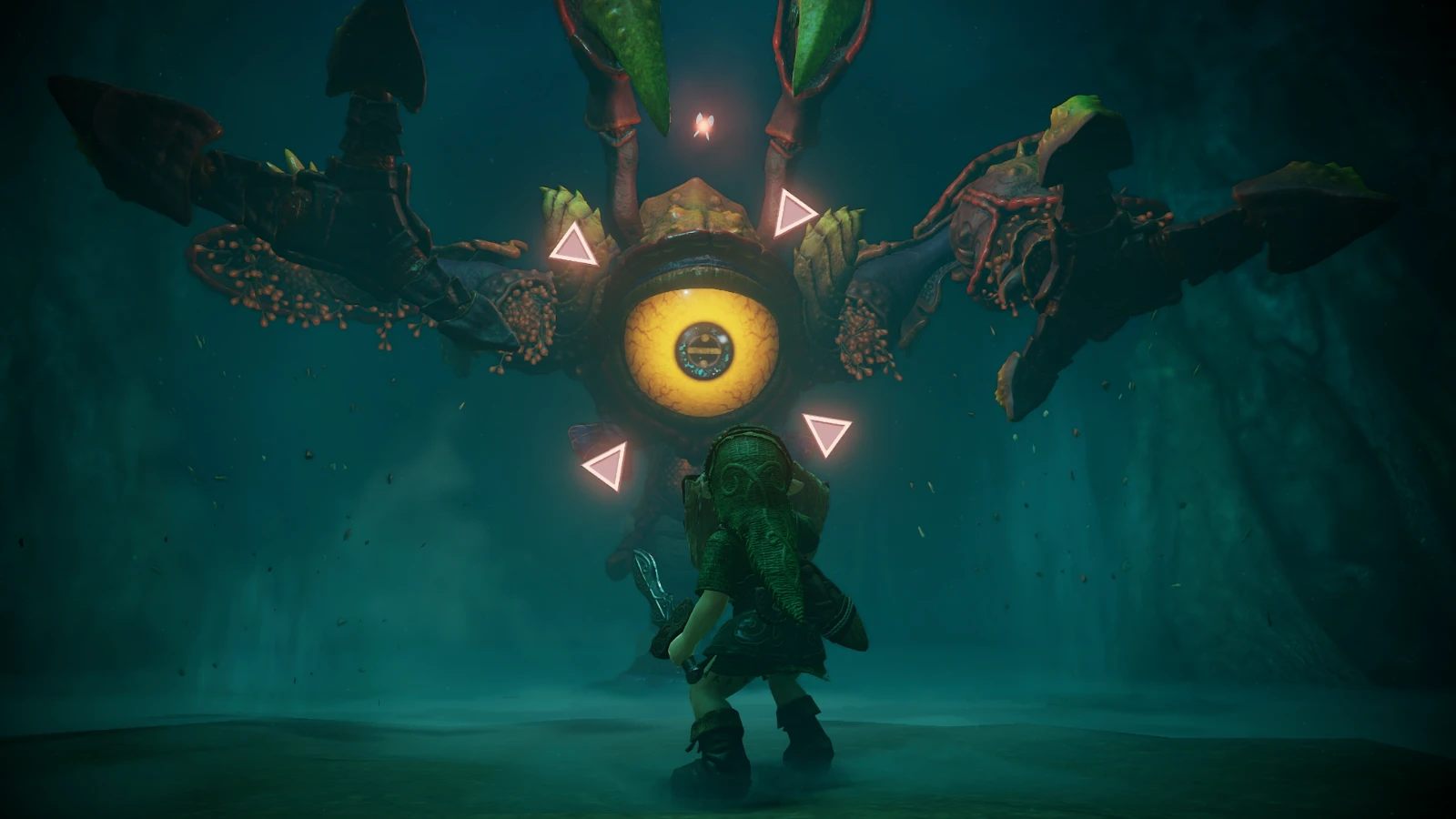
Bosses were tuned in the same spirit. Gohma’s weak point could only be hurt at certain moments, and the original did not make those moments easy to read, so she now shields it with the arms on her head whenever she cannot be harmed. Elsewhere, Nintendo Life found the Kokiri Sword’s chest and Kakariko’s stray Cuccos in new spots, and VGC notes that several Gold Skulltulas have moved, some to different areas altogether.
Gohma, who now covers her weak point with her arms.Iron Boots on the D-pad: no more trips to the menu.
Threads of Time, fairy thoughts and ZELDA NOTES
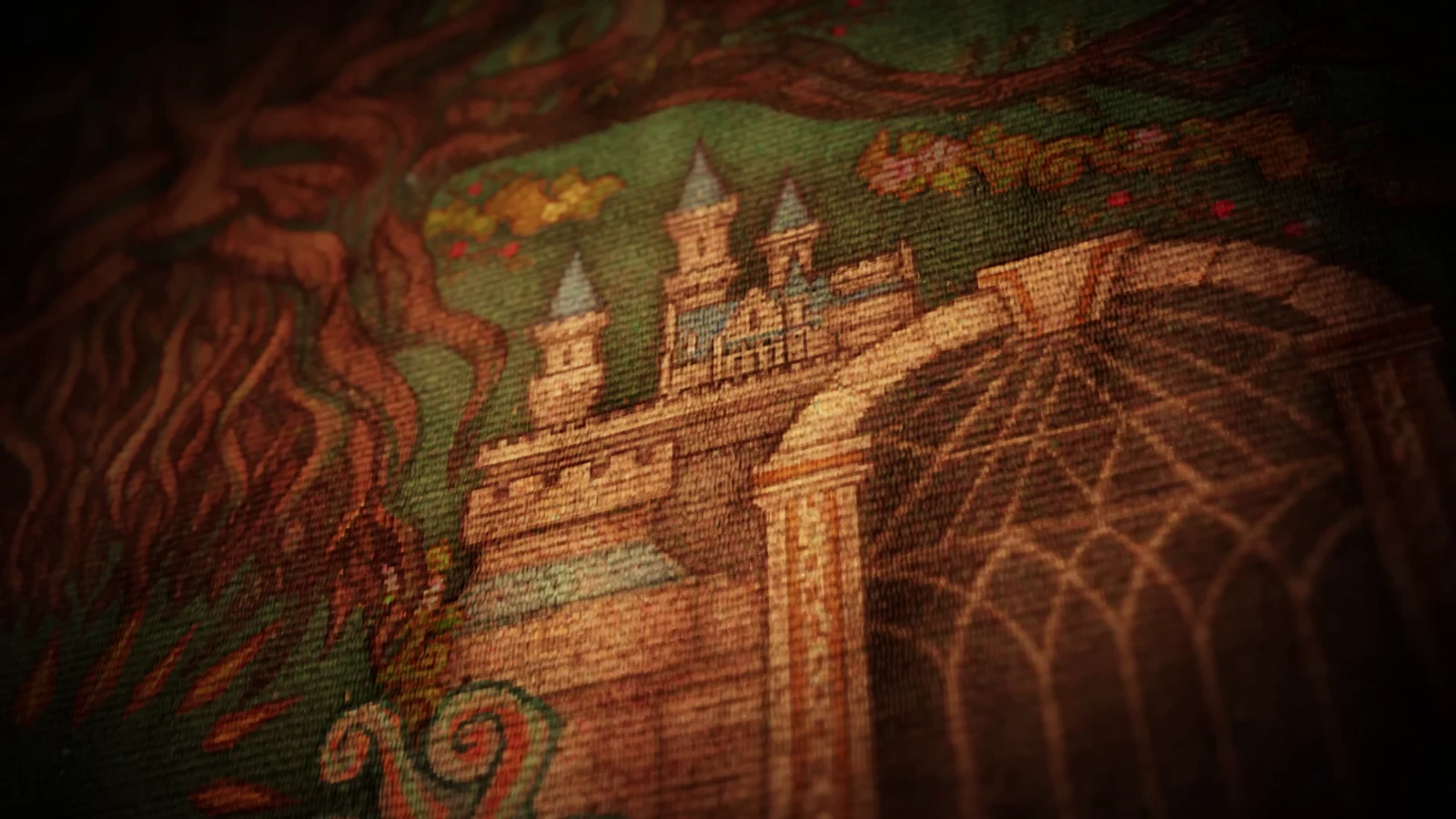
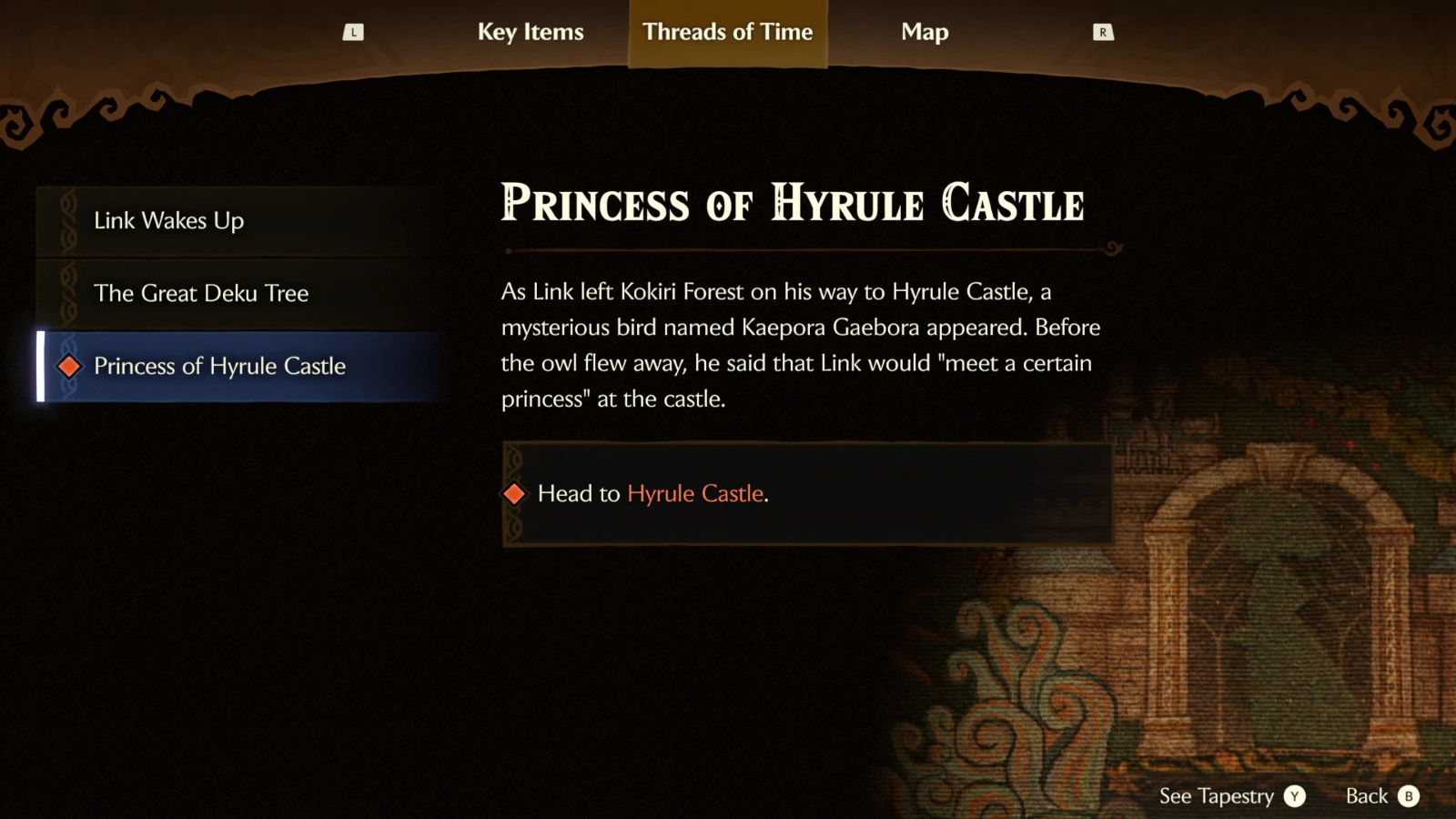
Threads of Time: the story so far, woven into a tapestry.
Threads of Time is the new journal. Open it at any point to read the story so far and check where to go next; each chapter adds an illustration and a few lines of text, and together they weave into one long tapestry. Ng hoped it would get parents and children comparing notes on where they got stuck. Fairy thoughts are scattered around Hyrule and give Navi small pieces of lore to read out, and the Hall of Fallen Foes is covered under Secrets below.
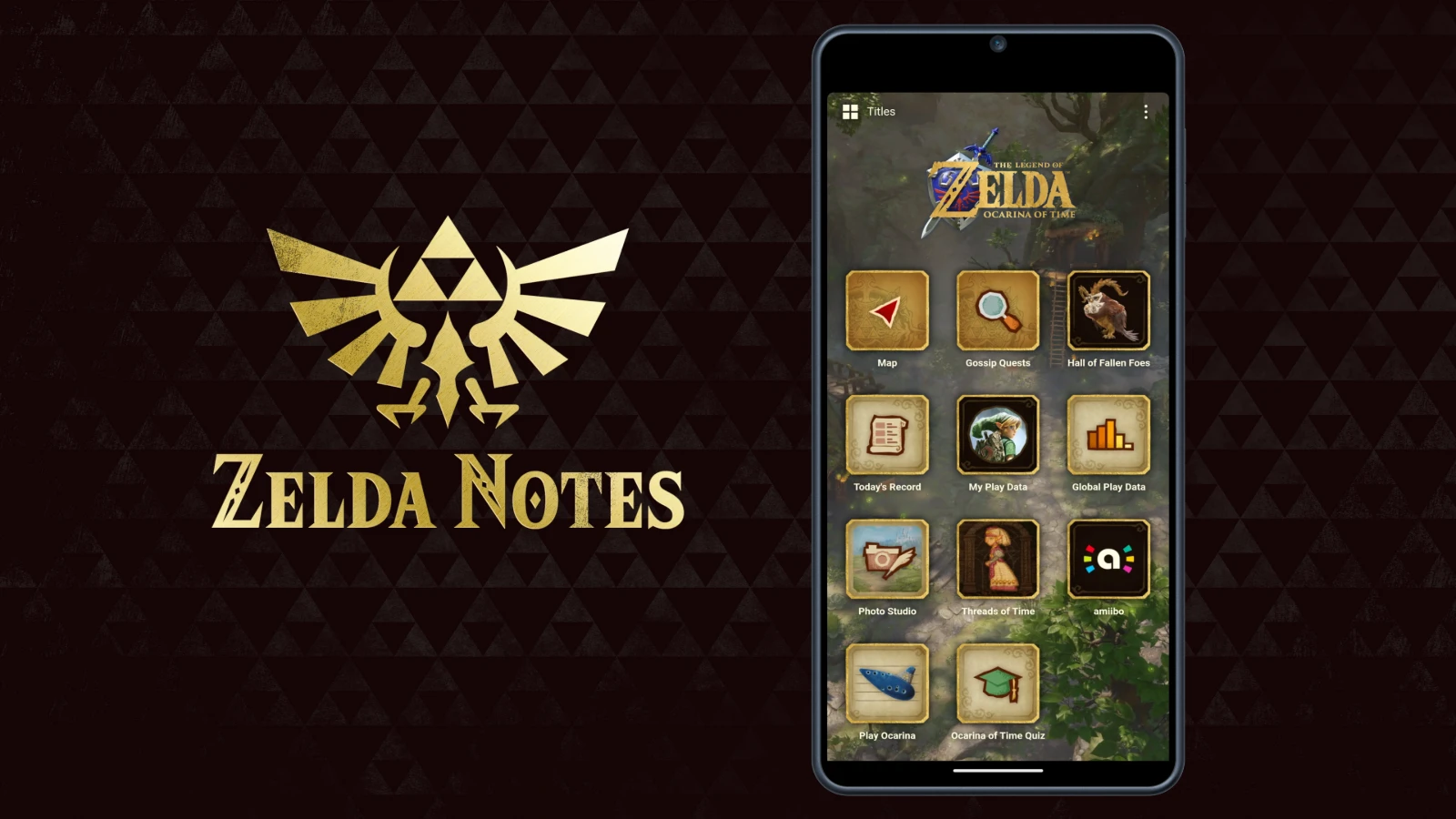
ZELDA NOTES, the free service inside the Nintendo Switch App that already supports the Switch 2 Editions of Breath of the Wild and Tears of the Kingdom, supports this game too. Today’s Record logs what you did each day; Gossip Quest shows you a picture and asks you to find the spot in the game; Play Ocarina is a touch-screen ocarina that can save tunes as QR codes; and the Ocarina of Time Quiz has more than 2,000 questions, one go a day unless you pay for more in in-game rupees.
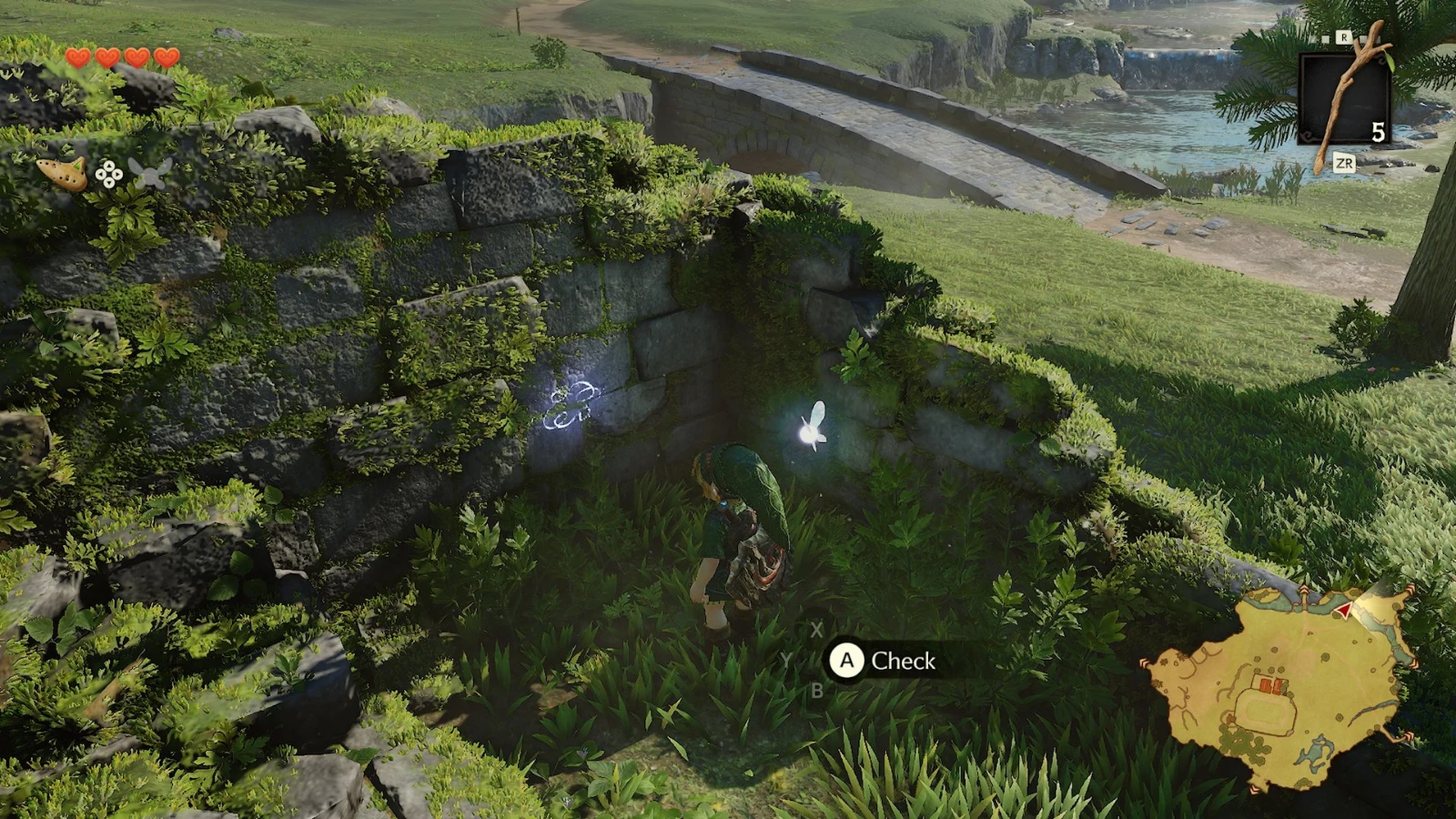
Navi and Link find a fairy thought.ZELDA NOTES in the Nintendo Switch App.
What is missing
A short list. There is no Master Quest, no hard mode and only one manual save slot per user (Nintendo Life suggests turning the on-screen display off if you want more of a challenge). The Nintendo character portraits in the courtyard window are gone, because Aonuma did not want them to pull players out of the world, and so is the Skyward Sword artwork that the 3DS version had hidden about the place. A Hookshot trick with a statue in the Spirit Temple, already removed on 3DS, has not come back.
Plot / Story
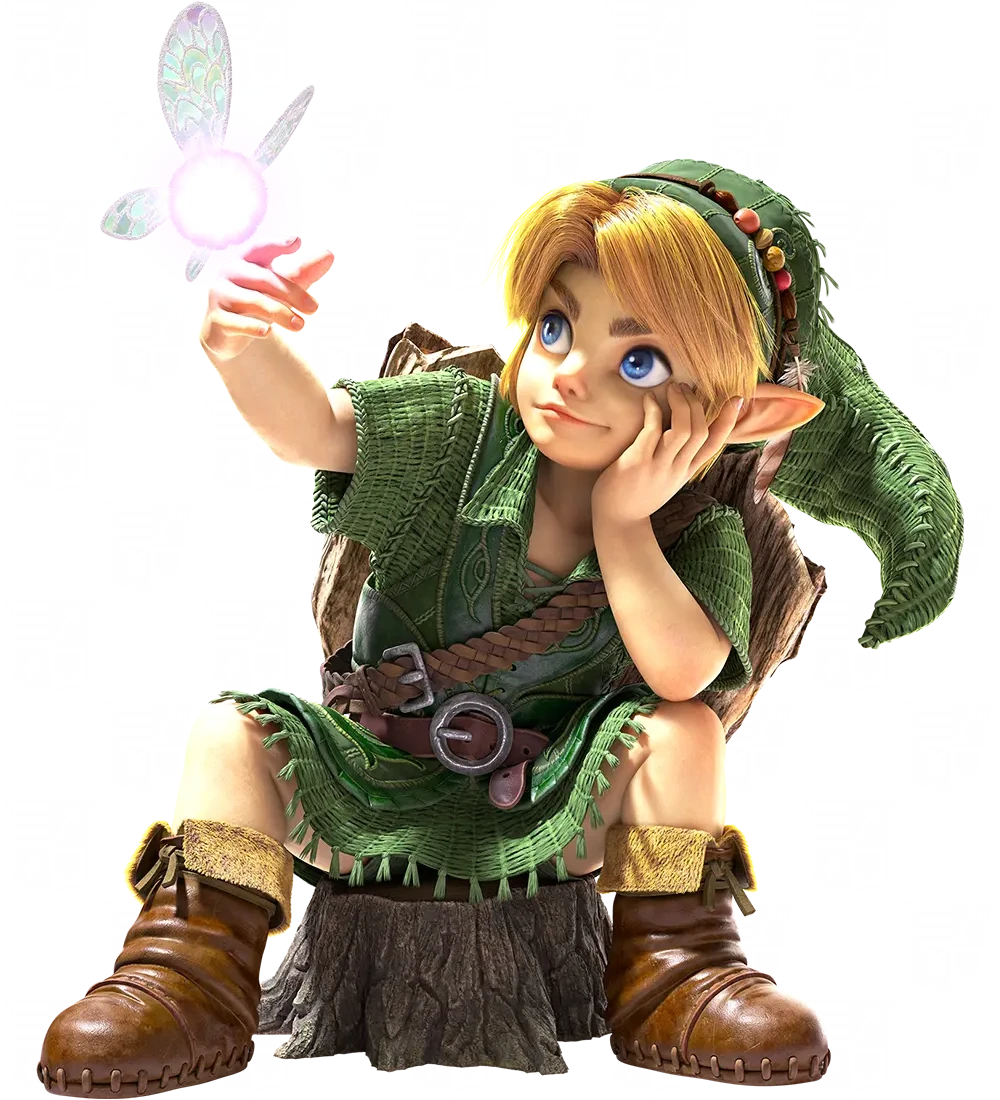
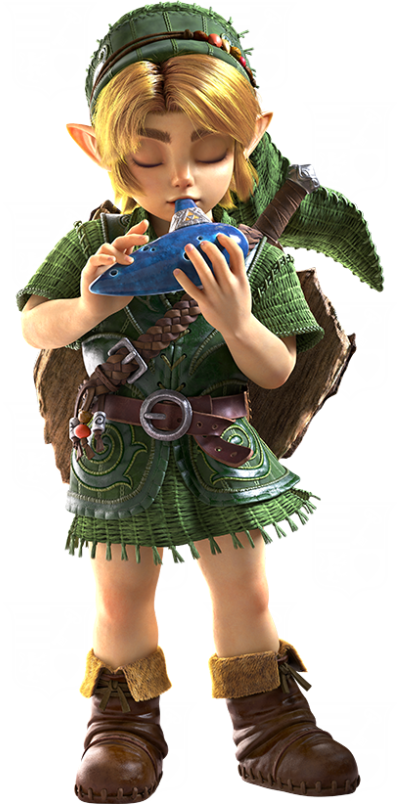
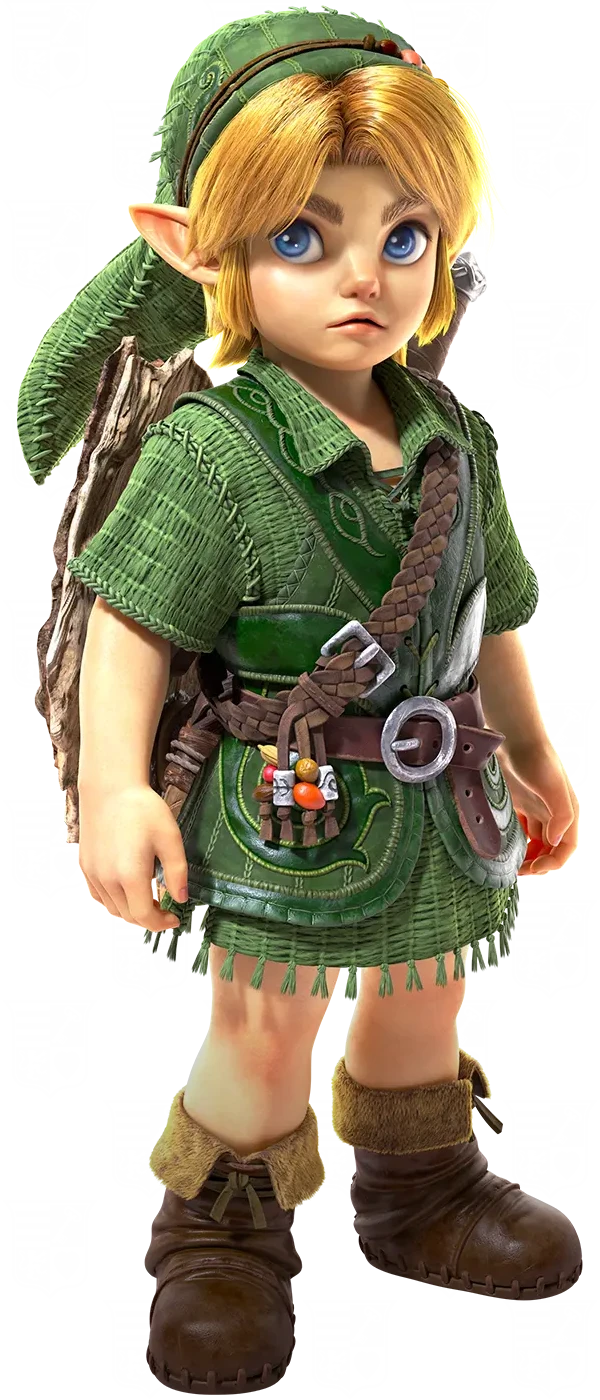
Young Link, the boy without a fairy, in his new handmade-looking tunic.
The story has not been rewritten, and that was the point. Link is the only Kokiri child without a fairy until the Great Deku Tree sends him Navi and a warning: Ganondorf, the Gerudo king, is after the Triforce that lies in the Sacred Realm. Link carries that warning to Princess Zelda, gathers the three Spiritual Stones and opens the Door of Time, only for Ganondorf to walk through behind him.
Seven years later Link wakes as an adult in a ruined Hyrule. Guided by the mysterious Sheik, he travels between his two ages, awakens the Sages in the temples and climbs Ganon’s Castle for the last duel. The full telling, scene by scene and dungeon by dungeon, is on the original game’s page: read the story of Ocarina of Time.
What the Switch 2 version changes is the delivery. The key scenes are acted and voiced, the dialogue has been rewritten to read more clearly, and a few moments have been given room to breathe: Saria’s goodbye at the forest’s edge and the passage from child to adult are both longer than they were. Aonuma told Game Informer that the team chose not to add nods to later games in the timeline; the aim was the best version of this story, not a new one. Threads of Time then gathers it all up as a picture-book tapestry you can read back at any time.
Special editions, hardware & amiibo
Nintendo has not announced a collector’s edition of the game itself, but it built a small shelf of 40th-anniversary hardware around it. Prices are launch prices from Nintendo’s own stores, as listed by Nintendo Life.
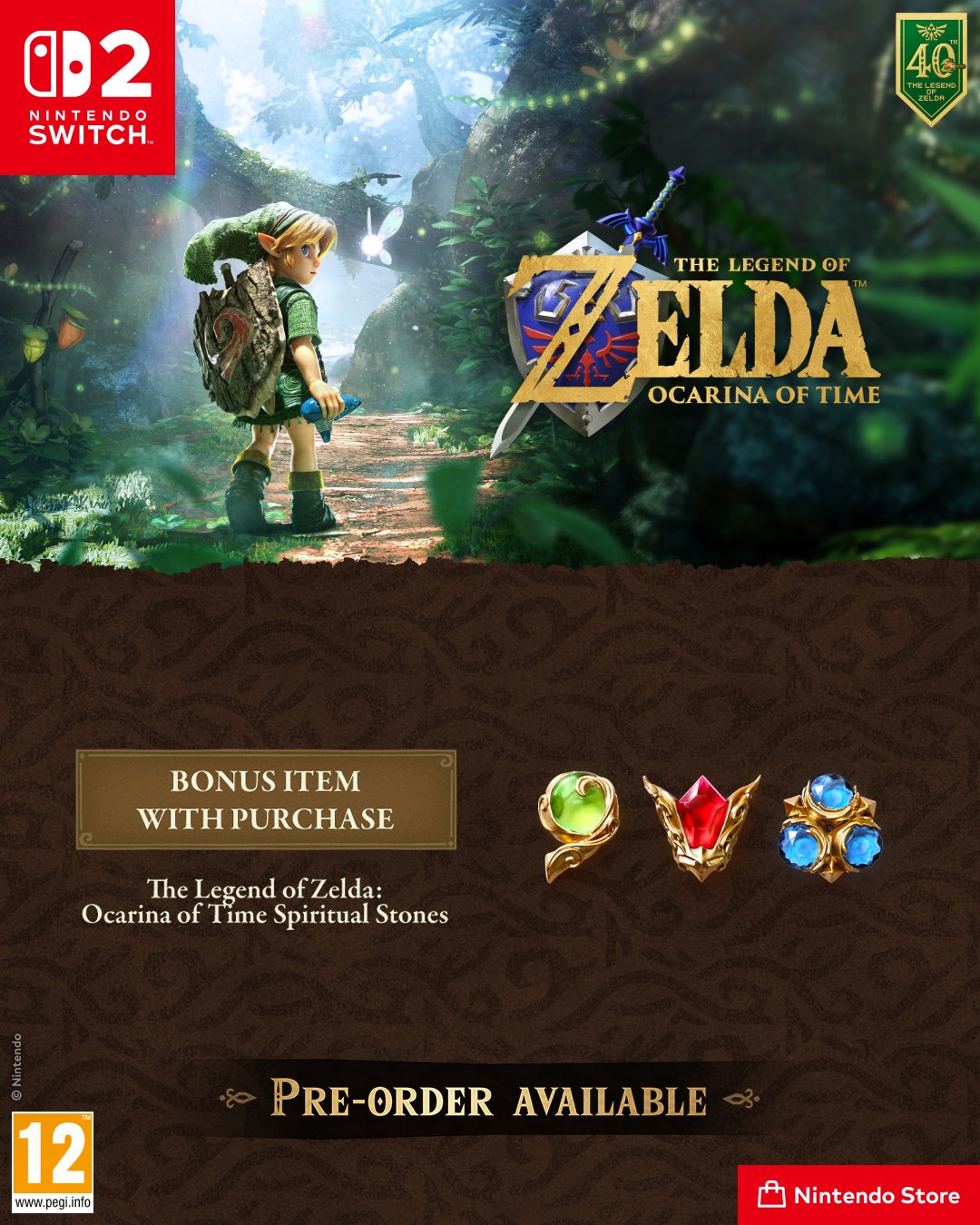
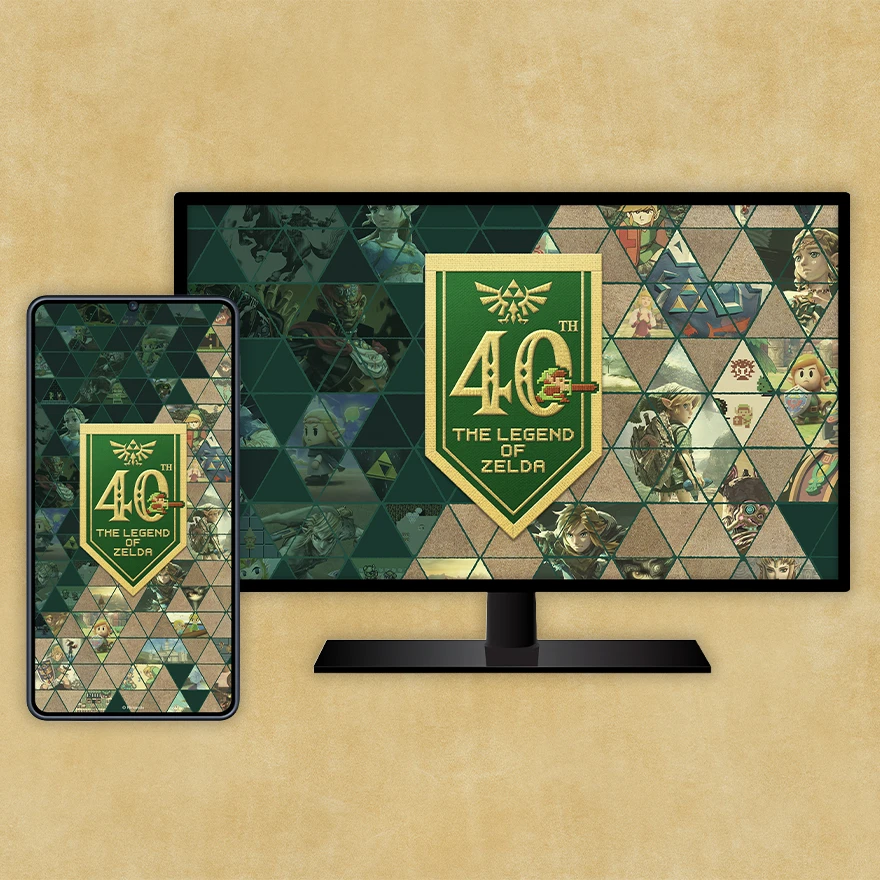
First-print foil coverBoxed game · 5 November 2026The first print run of the boxed version comes in special packaging with textured foil cover art, while supplies last. In the US, buying the download by 23 November 2026 adds a 40th Anniversary digital wallpaper; Nintendo’s UK store offered replicas of the three Spiritual Stones with pre-orders.
Nintendo Switch 2 – The Legend of Zelda 40th Anniversary EditionConsole · 29 October 2026 · $519.99 / £434.99A Zelda-themed console, dock and Joy-Con 2 with a Triforce design, released a week before the game. None of the announcements we checked lists the game as part of the set.
40th Anniversary Pro Controller and carrying caseAccessories · 29 October 2026 · controller $99.99A matching Nintendo Switch 2 Pro Controller, sold with a display stand ($109.99) through Nintendo’s own stores, and a carrying case with a screen protector.
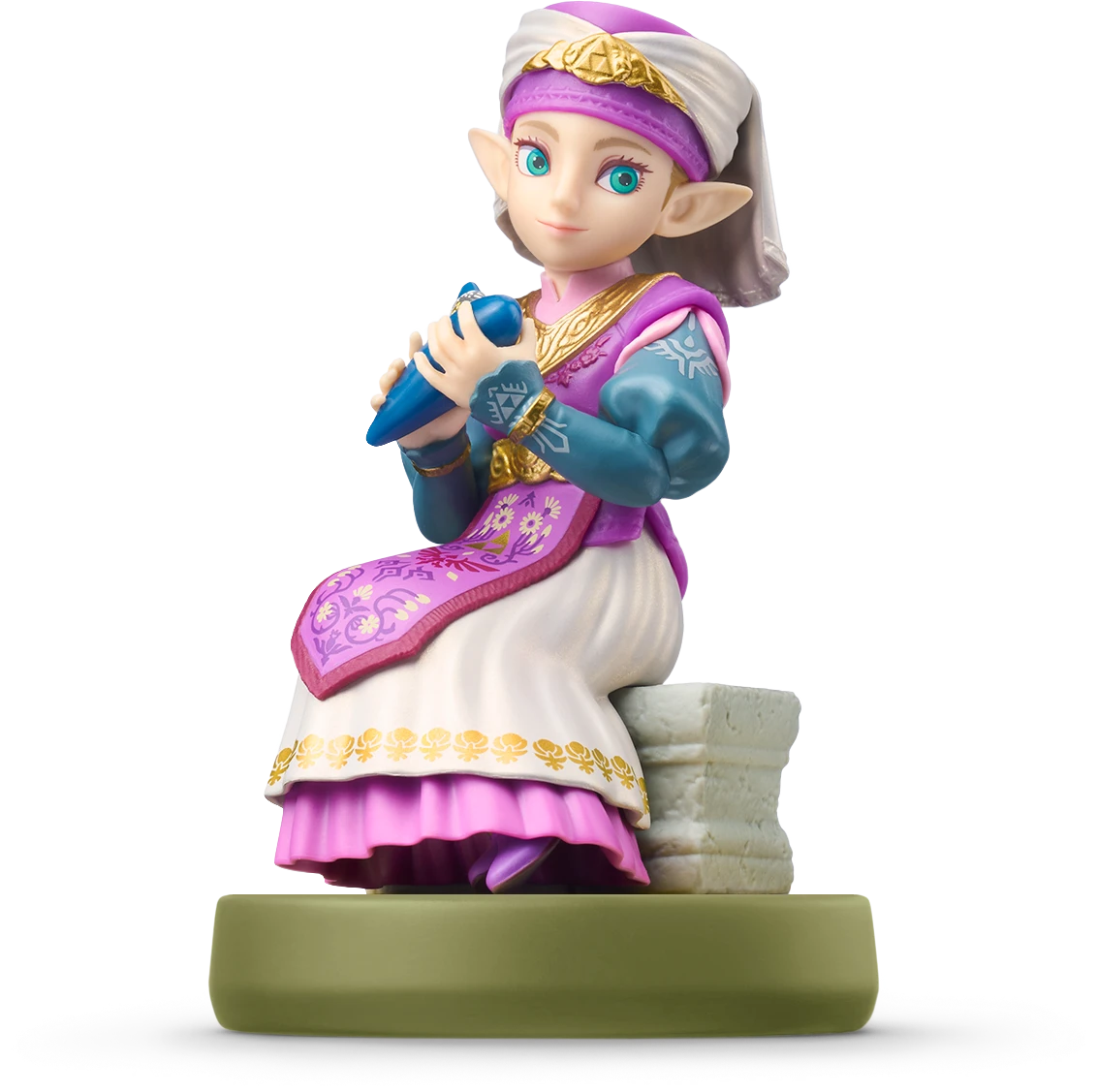
Young Link and Young Zelda amiiboamiibo · due 2027 · $24.99 eachTwo new figures based on the pair as they appear early in the game. Nintendo says tapping them gives Link masks “that evoke a retro graphical style”. What the masks do, if anything, had not been shown by 14 November 2026.
Other Zelda amiiboamiibo · supported from launchAny figure in the Legend of Zelda series can be tapped for in-game extras. Nintendo Life’s guide says they hand out everyday supplies: Bombs, Deku Sticks, Magic Jars.
Two real ocarinasAccessories · announced 8 September 2026Nintendo announced a playable ocarina and an electric one from HORI that sounds notes or whole songs at the press of a button, both for “later this year”. The game recognises either through the microphone. We found no confirmed release date or price for them.
How it was made
Nintendo told the story of the remake itself, in a four-part Ask the Developer interview published from 2 November 2026, and the two producers added more in a Game Informer interview two days later. Almost everything below comes from those two conversations.
Who made it
Six people speak for the team in Nintendo’s interview. Nintendo has not published a full staff list outside the game’s credits.
Eiji AonumaProducerThe series producer. The 1998 game was the first Zelda he worked on, designing dungeons and enemies, and he says it is still his reference point. Here he acted as an adviser and tried hard not to give orders.
Hidemaro FujibayashiProducerJoined the series with the Oracle games and directed Skyward Sword, Breath of the Wild and Tears of the Kingdom. He bought the original on launch day while working at another company.
HokWai NgDirectorCame to the series on Tears of the Kingdom and played the Nintendo 64 game at high school. Nintendo Life notes this is his first job as a director. He was “really surprised” to be offered it.
Aya ShidaArt directorWorked on characters for Breath of the Wild and led them on Tears of the Kingdom. She first played the original after joining this project and was amazed that something so polished was 28 years old.
Hiroki TaguchiProgram directorA programmer on Breath of the Wild’s mechanics and cutscenes. He had not played the original at the time and never expected to remake it.
Masato OhashiMusic lead and a sound directorWorked on Tears of the Kingdom and Echoes of Wisdom. He joined a little later than the others and consulted Koji Kondo on how each piece should be read.
A birthday project
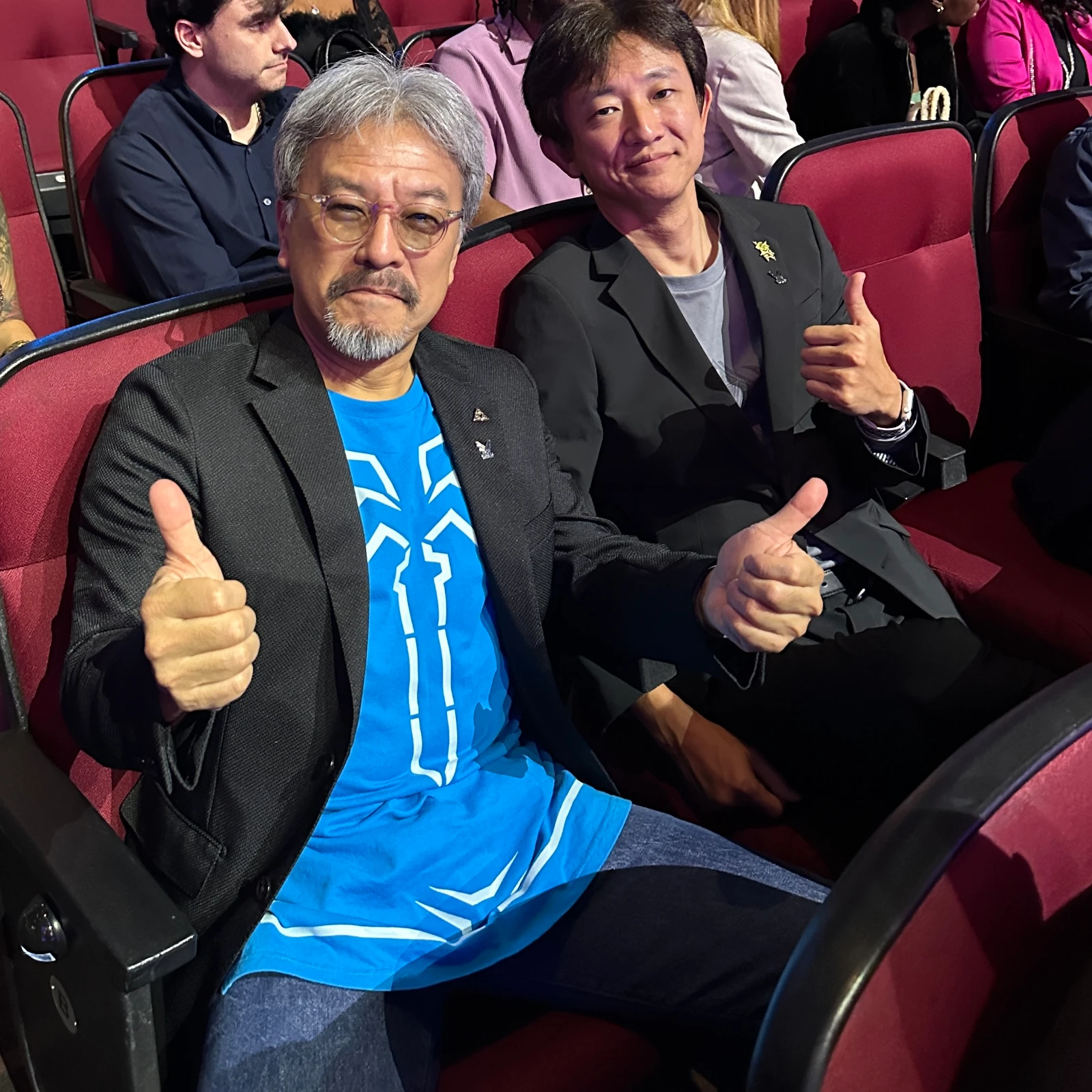
Producers Eiji Aonuma and Hidemaro Fujibayashi at The Game Awards 2023.
Aonuma says it is hard to name the day work began. The conversation started with the 40th anniversary and what Nintendo should make for it; Ocarina of Time was chosen later. Nintendo has not said how long the remake took or how many people worked on it.
His reasons were about people as much as product. Most of today’s Zelda team know the series through its recent games, and he wondered whether they really understood how much the 1998 game mattered. Rebuilding it would teach them how it was put together. And players who arrived with Breath of the Wild, used to going anywhere in any order, could meet a Zelda that tells its story at a set pace.
Producers who kept their hands off
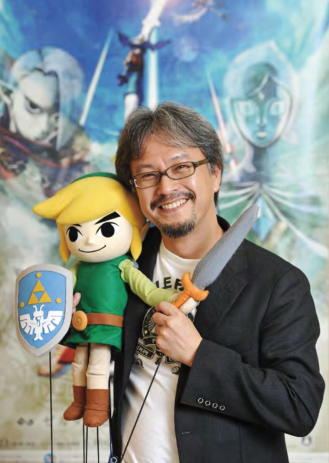
Series producer Eiji Aonuma.
Both producers had strong feelings about the game, which is exactly why they stepped back. “I wanted the team to make The Legend of Zelda: Ocarina of Time their own,” says Aonuma, who knew that anything he declared would be treated as law. Fujibayashi’s request was to decide at the start what would change and what would not.
Ng’s answer became the project’s motto: the look changes, the experience stays. He was wary of trampling on anyone’s memories, since a hundred players remember a hundred slightly different games. Taguchi put the risk more bluntly: the original is so finely balanced that it “might fall apart the moment you removed even a single piece.” Helpfully, many of the staff and testers were too young to have played it, so fresh eyes were never in short supply.
Starting again from nothing
The Great Deku Tree’s model in the Switch 2 version.
Nothing from 1998 could be reused directly. Taguchi’s programmers built each feature fresh, put it beside the Nintendo 64 game, compared the feel and went round again, paying most attention to how quickly Link responds. The aim was a game that would not jar anyone coming from Breath of the Wild, yet never felt like a different game.
The original is crowded with one-off characters, enemies and lines of text, the kind of thing a modern schedule would trim. Ng’s team refused to trim it, and reworked each character separately, asking who they were and how they moved. Aonuma’s comment on the old days: the word “efficiency” was not in his vocabulary back then.
A puppet-show Hyrule, and an argument about it
Official render of young Link in the new style.
Work on the look began with sketches of Link and Zelda and a lifelike model of the Great Deku Tree. Fujibayashi points out a trap: Nintendo 64 characters had exaggerated faces and movements because the hardware demanded it, and copying those exactly with modern detail “might look a little creepy.” The artists went for the feeling of handmade things instead. Young Link’s tunic had to look as if forest children had woven it, so the team studied museum pieces and tried weaving thread themselves. For the new world map they went back to the artist who illustrated the Nintendo 64 version.
When gameplay was first shown on 8 September 2026, the style split opinion. Polygon described it as “a balance between modern realism and fairy tale whimsy”; others compared it unkindly to fan remakes, and GameSpot’s Jade King found the young Link and Zelda “uncanny”. Two days later Takaya Imamura, the former Nintendo artist who was art director of Majora’s Mask, guessed that the characters were inspired by Japanese puppet shows. Shida’s own keywords, published in November, proved him right.
The warp points that came out again
Hyrule Field, which still has no warp points.
Not every idea survived. Aonuma remembered how players used to roll endlessly across Hyrule Field to save time and proposed adding warp points. The team built them, and in testing found something missing: the small discoveries you make when you stop on the way somewhere. “They just weren’t working for me in the end,” he says, “so I got the team to take them all back out again.”
The jump button was argued over too. Auto-jump had been handy for the 1998 designers, because it let them decide exactly where Link could leap, and Aonuma’s first reaction to freeing it was “Are we sure about this?” He then struggled with the Breath of the Wild way of doing a Jump Attack (jump, then swing) after decades of the one-button kind, so the team put both in. Fujibayashi, who was used to the newer method, reports that neither gets in the other’s way.
Kondo’s music, blind auditions and one impossible request
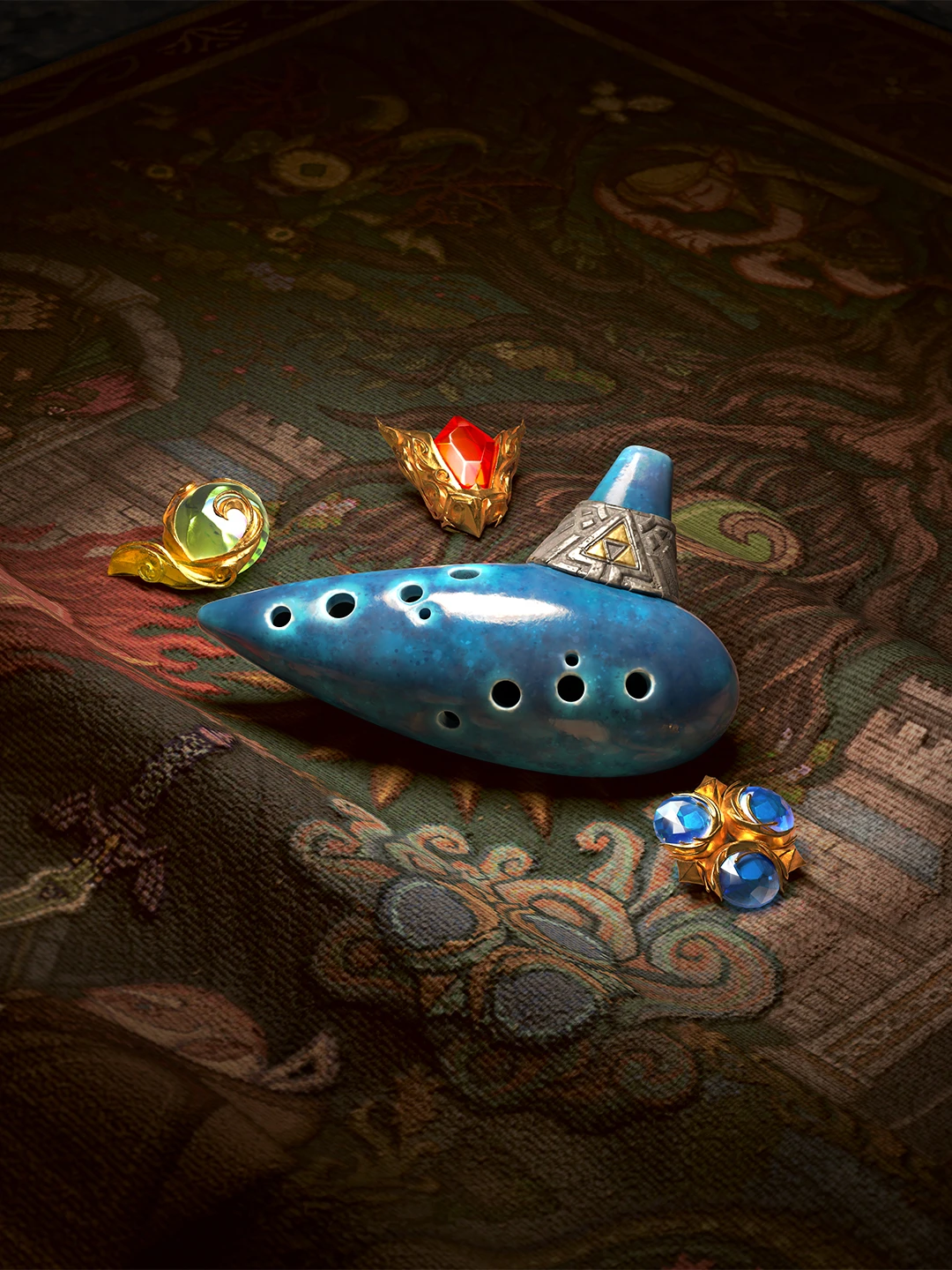
Official render of the Ocarina of Time.
Ohashi felt “equal parts excitement and apprehension” about working on the sound of a game players remember so well, and went to Kondo to ask how each piece should be interpreted. The sound team layered in ambient detail: leaves, running water, insects, a waterfall in Kokiri Forest that fades as you walk away, and 5.1-channel surround sound.
The voices were cast by blind audition, with the priority on matching how the characters had always sounded. In Japan the actors’ names were hidden from the judges, and afterwards the team discovered that one of the people they had chosen had voiced the same character on the Nintendo 64. “None of us saw that coming,” says Aonuma. Nintendo has not said who it was.
Monolith Soft, and the road to release
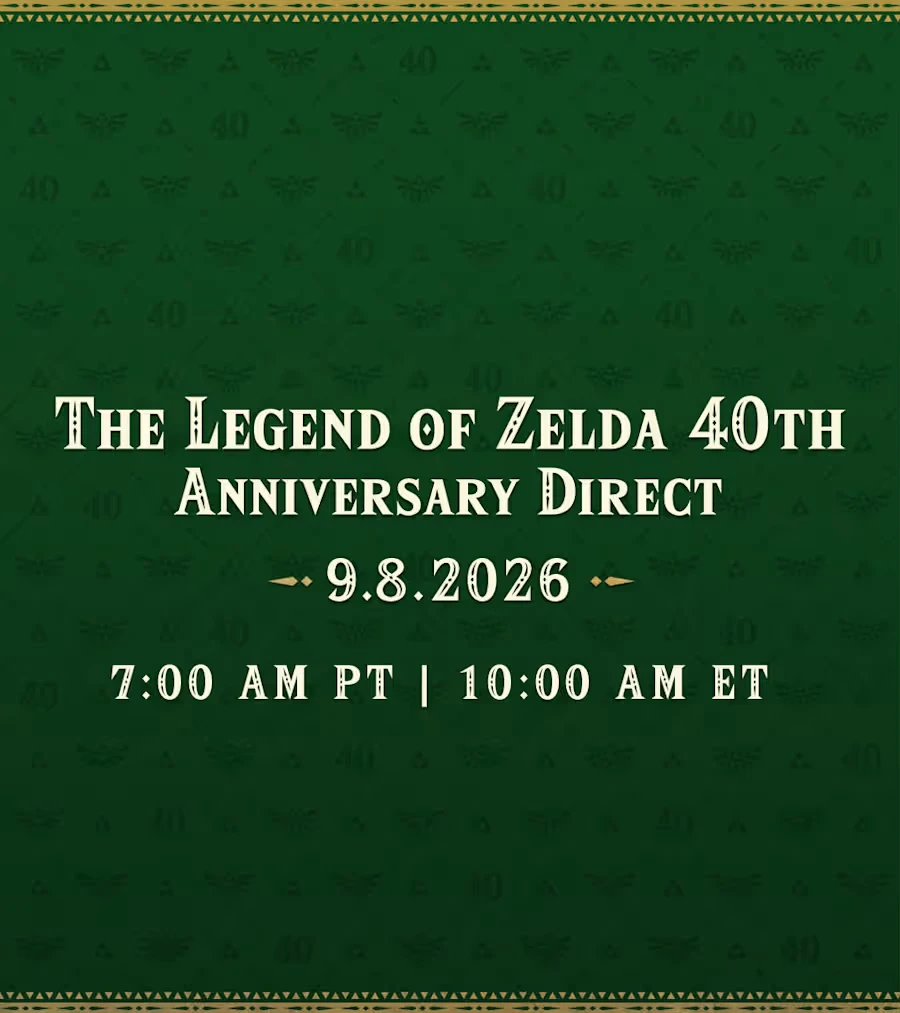
The Legend of Zelda 40th Anniversary Direct of 8 September 2026, which dated the game.
On launch day Monolith Soft, the studio behind Xenoblade, announced that it had done partial contract development on the game’s design, programming and graphics. GamesRadar+ notes that it has helped on Zelda before, including Skyward Sword, Breath of the Wild and Tears of the Kingdom.
The public side was brisk. The remake was revealed in a Nintendo Direct on 9 June 2026 with a short teaser: a narrator introducing the Kokiri, a sleeping boy, a Triforce mark glowing on his hand. The Zelda 40th Anniversary Direct on 8 September gave the date, with Aonuma playing through Kokiri Forest, Hyrule Field and Castle Town and Fujibayashi explaining ZELDA NOTES. Reviews appeared on 4 November and the game followed the next day.
Secrets & extras
No button codes, but plenty tucked away. This is what players and the press had turned up in the first nine days.
The Hall of Fallen Foes
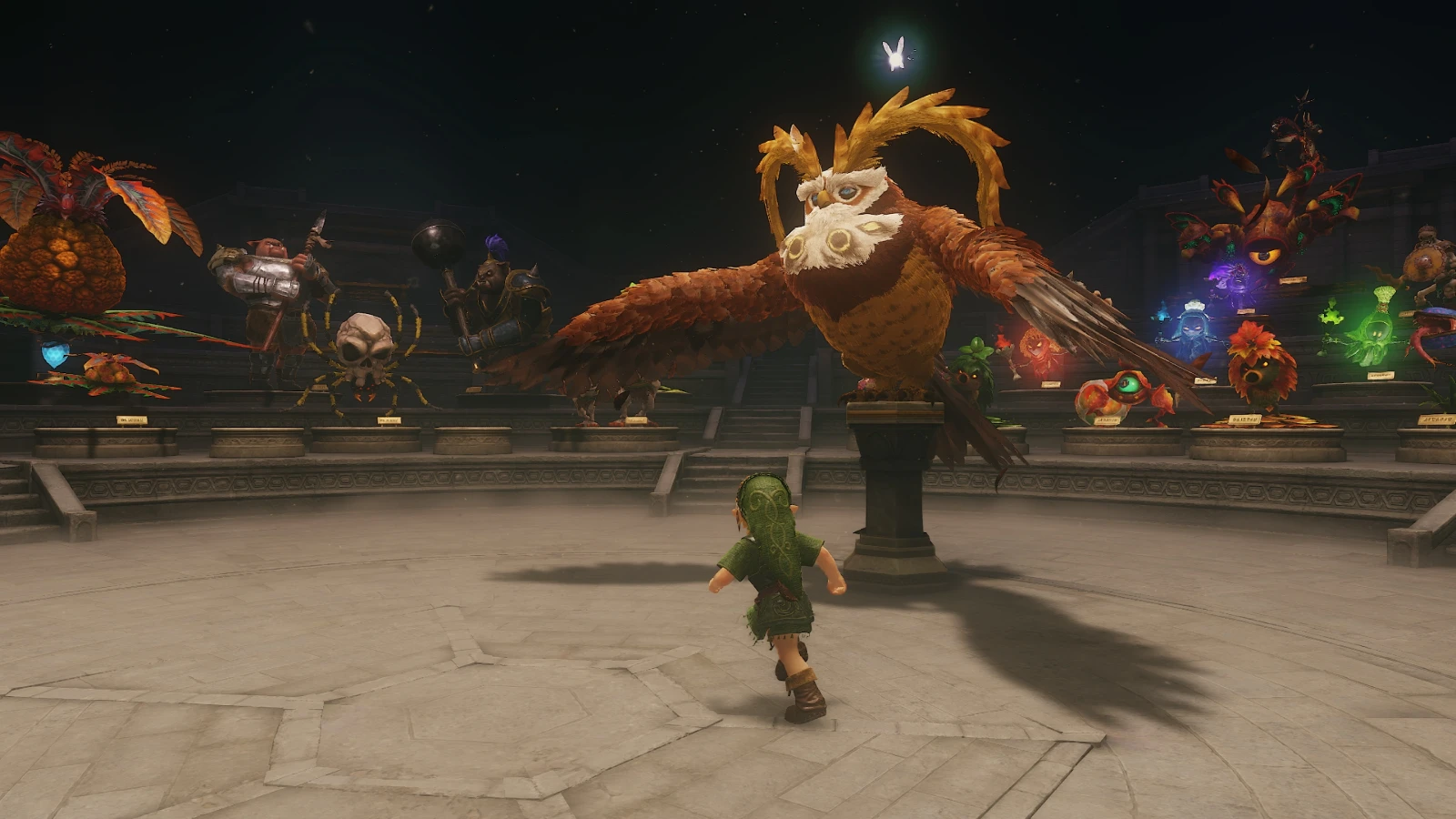
The Hall of Fallen Foes: a statue for every enemy you have beaten.
Nintendo describes it as a place to challenge powerful enemies again and to learn more about the ones you have defeated. According to Nintendo Wire’s guide it opens once adult Link has cleared the Forest Temple: after that, a green glow appears on many of Hyrule’s beds, and a nap in one carries Link to a hall run by the owl Kaepora Gaebora. Inside are statues of every enemy beaten so far, each with notes on where it lives and which items work against it. Boss statues offer rematches and keep your best time, and owl statues start boss rushes, with more unlocking as the story goes on. Damage taken and items used there do not carry back into the adventure. Nintendo Life’s reviewer liked it but called the rewards “useless”.
Fairy thoughts
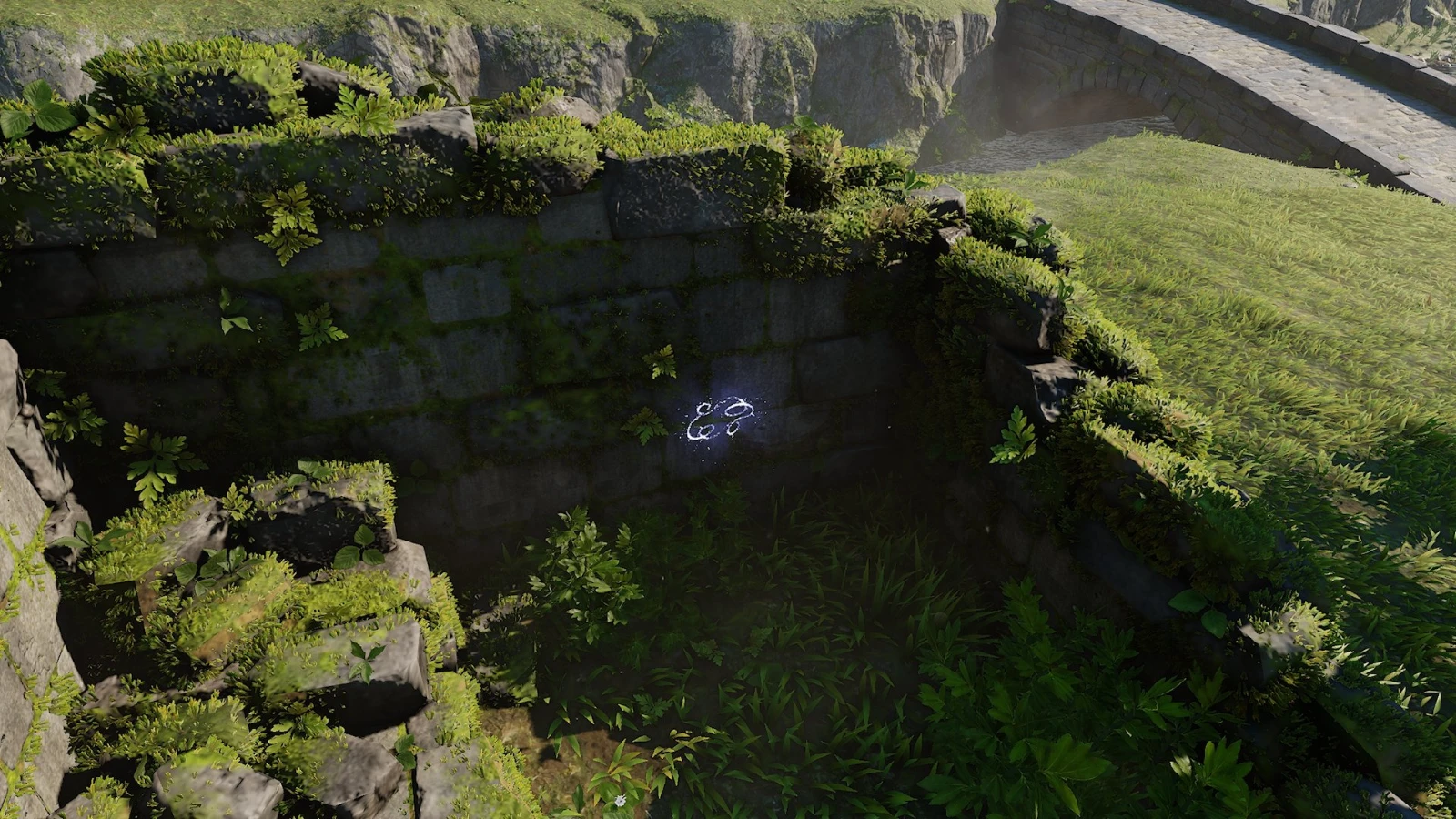
Another of the fairy thoughts, from Nintendo’s screenshots.
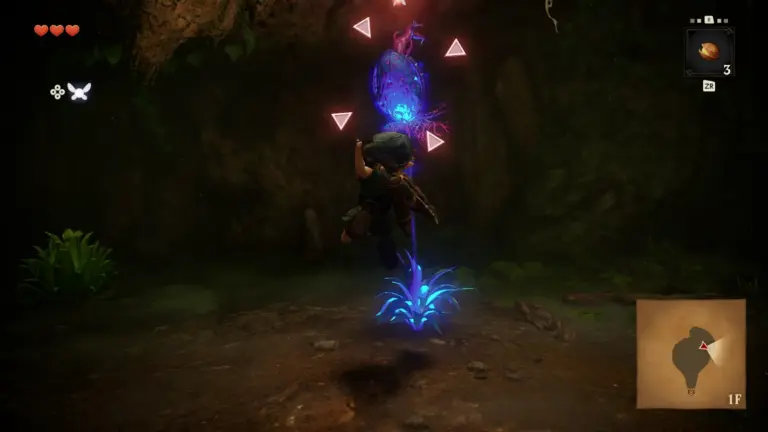
Fairy thoughts are hidden across Hyrule. Find one and Navi shares a little piece of lore. Nintendo has not said how many there are, and we have not seen a reliable count.
The tapestry as a checklist
The tapestry also keeps track of what you have left to find.
Threads of Time is more than a story recap. Nintendo Life points out that the tapestry also shows which collectables and secrets are still waiting, and VGC notes that the map screen now counts the Gold Skulltulas found in every area.
Gold Skulltula rewards
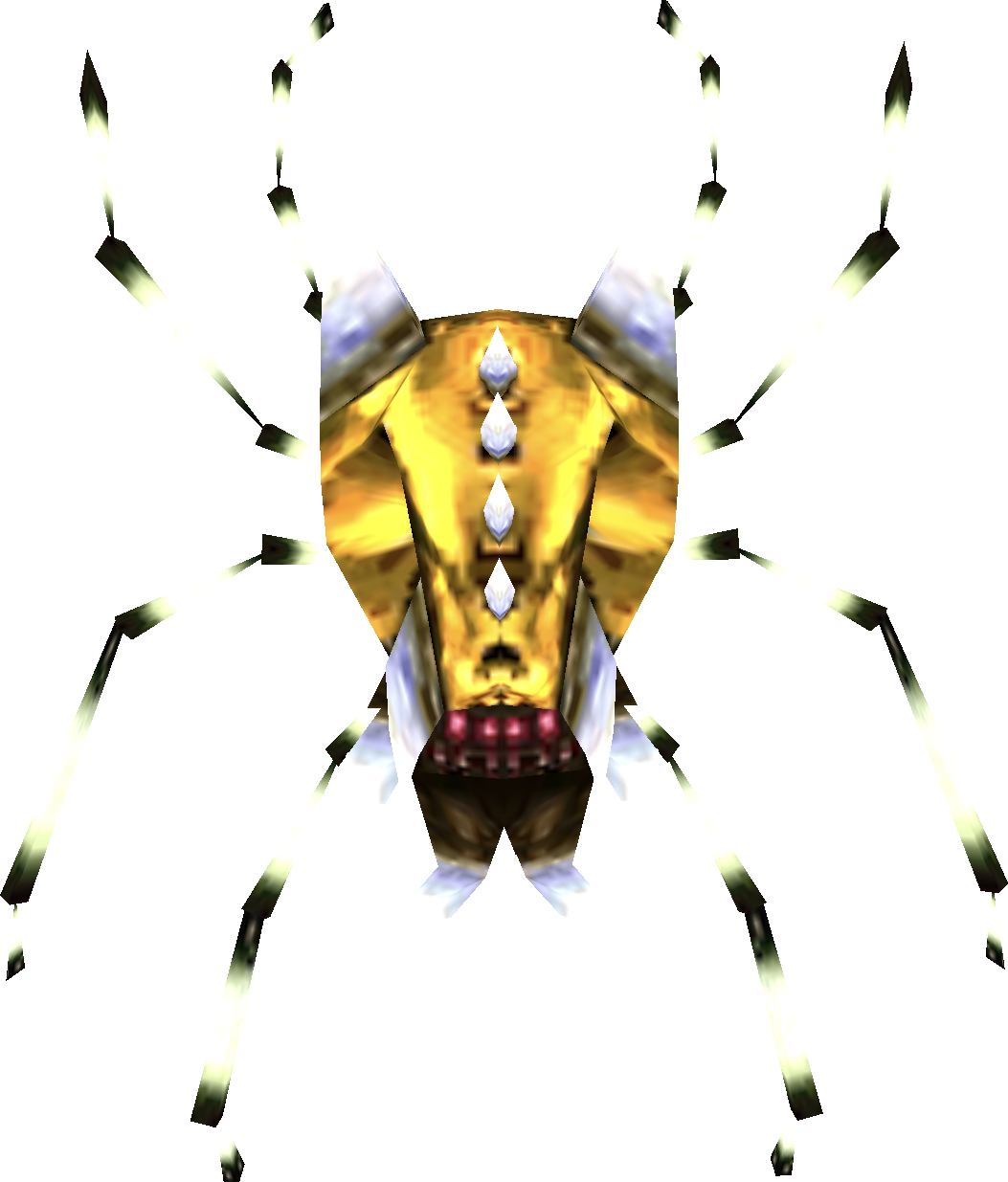
A Gold Skulltula, as modelled for Ocarina of Time 3D.
There are still 100. VGC’s guide lists the rewards as the Adult’s Wallet at 10 tokens, the Echo Gem at 20, the Giant’s Wallet at 30, Bombchus at 40, a Piece of Heart at 50 and unlimited gold rupees at 100. The Echo Gem, which takes the place of the old Stone of Agony, glows and rumbles when a Gold Skulltula is near. Aonuma says the famously underwhelming Bombchu prize was left in on purpose, as part of the original’s charm.
Old secrets that still work
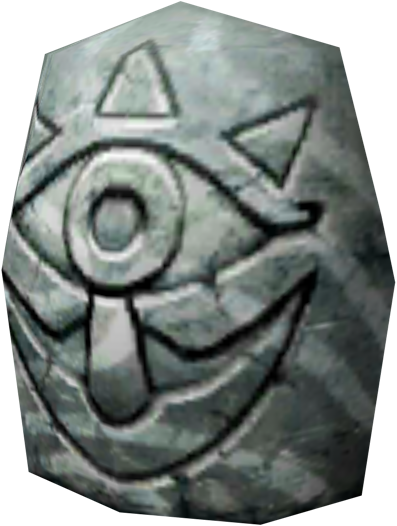
A Gossip Stone, as modelled for Ocarina of Time 3D.
Game Informer went looking. Fire a Deku Seed through the left-hand window of Zelda’s courtyard and a guard still shouts and lobs a bomb at you. Gossip Stones still tell the time when struck, refill magic for Zelda’s Lullaby and misbehave around bombs and the Megaton Hammer. Zelda’s Lullaby still mends a sign you have chopped up. The ghostly composers Flat and Sharp are as they were, and Malon and Talon’s Bowser pins are easier to spot than ever.
A fifth bottle
An empty bottle, as modelled for Ocarina of Time 3D.
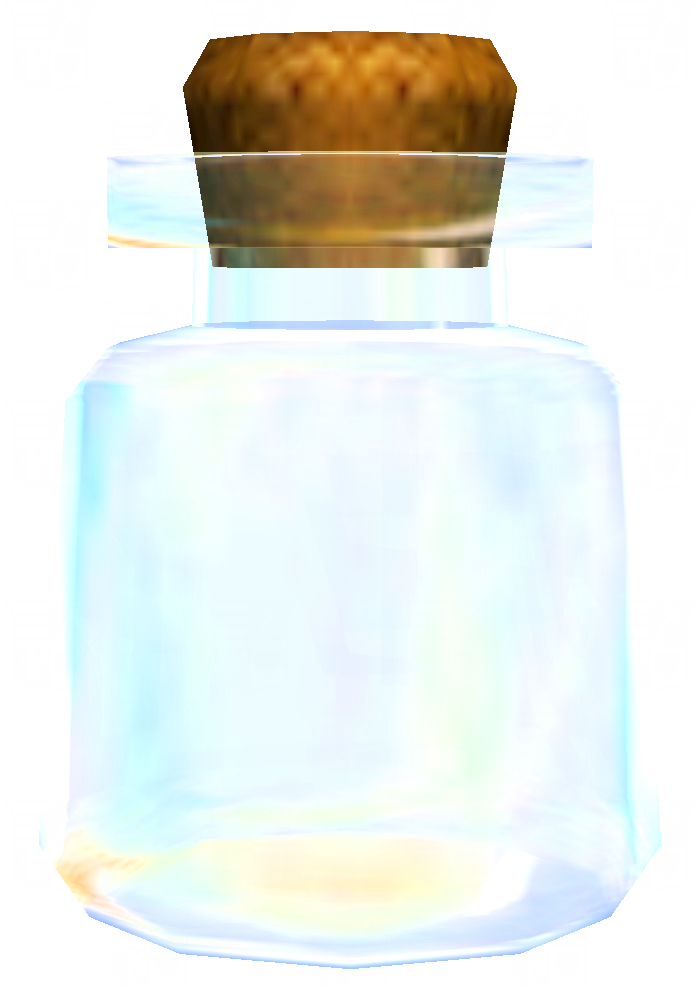
Aonuma wanted one more bottle, so there are now five, and the first has been moved earlier in the game so that newcomers learn sooner how useful they are.
The “Master” display
Among the display options, Nintendo Life found a “Master” setting that strips the screen furniture back to almost nothing, Navi’s text boxes included. It is the nearest thing the game has to a harder mode.
Retro masks
The Young Zelda amiibo, due in 2027.
The Young Link and Young Zelda amiibo due in 2027 will each unlock a mask in a deliberately old-fashioned graphical style. Until the figures are out, nobody outside Nintendo knows whether the masks do anything.
Checked against Nintendo’s own pages, Nintendo Wire, Nintendo Life, VGC and Game Informer on 14 November 2026. With the game nine days old, expect more to be found.
Videos & media
Two official videos: the teaser that confirmed the remake, and Eiji Aonuma playing it for the first time in public.
The reveal teaser from the Nintendo Direct of 9 June 2026, from Nintendo of America’s channel.
Eiji Aonuma’s gameplay demonstration from 8 September 2026, showing the jump, the dash, the free camera and the ocarina. From Nintendo of America’s channel.
Trivia & facts
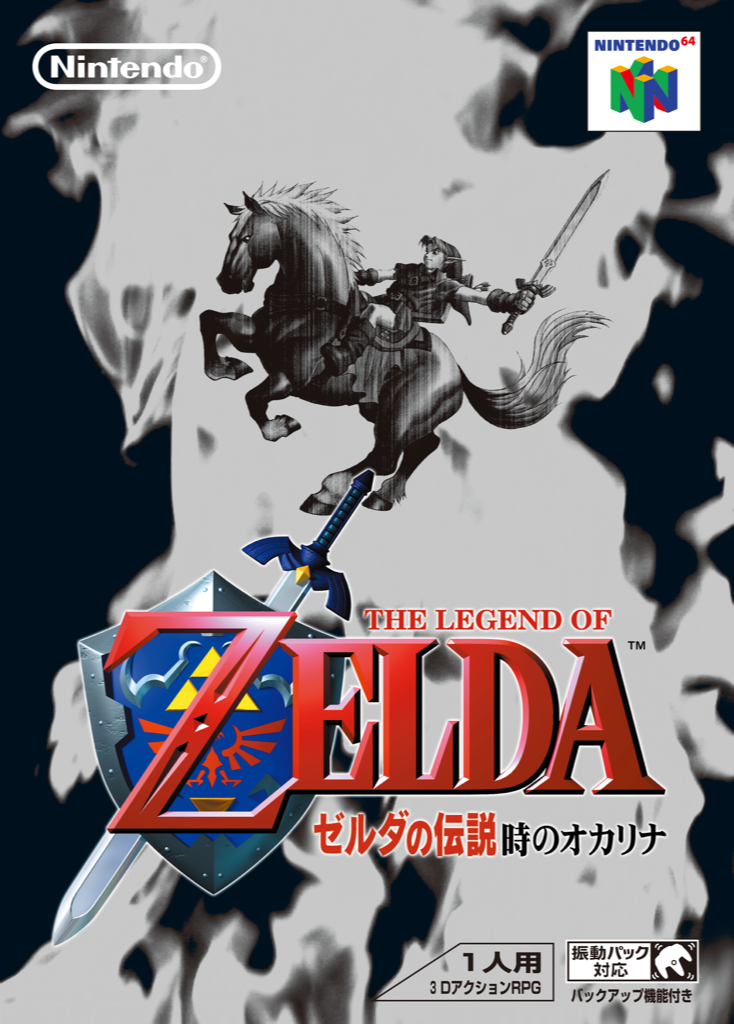
The Japanese Nintendo 64 box of 1998, the version Fujibayashi bought on launch day.Hidemaro Fujibayashi was working for another company when the original came out. He bought it on launch day, admired its black packaging and remembers thinking, of Z-targeting, “So this is how they overcame that challenge.” Twenty-eight years later he produced the remake.
The Jump Attack in the Switch 2 version.Eiji Aonuma, who has made Zelda games since 1998, could not get the hang of the new two-step Jump Attack. “I was so used to the original game’s controls,” he admits. The one-press version is in the game because of him.
Official render of Princess Zelda in the Switch 2 version.The art team’s guiding phrase was “a puppet-show feel”. Former Nintendo artist Takaya Imamura had guessed as much in September, two months before Nintendo said so.
Another official render of young Link in the Switch 2 version.To get young Link’s tunic right, the artists studied museum pieces and experimented with weaving thread, and invented a backstory for every object in the game.
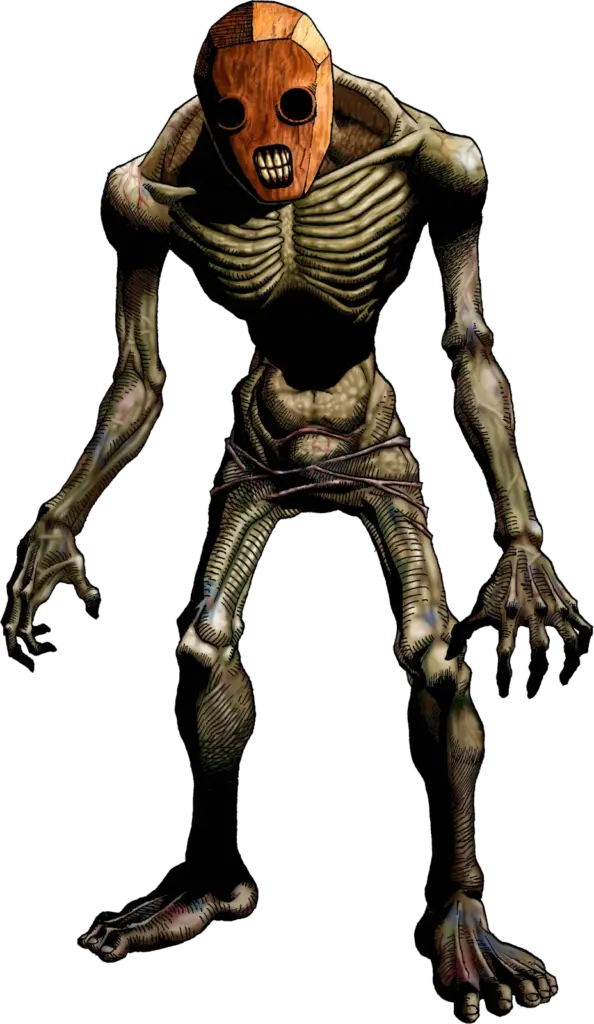
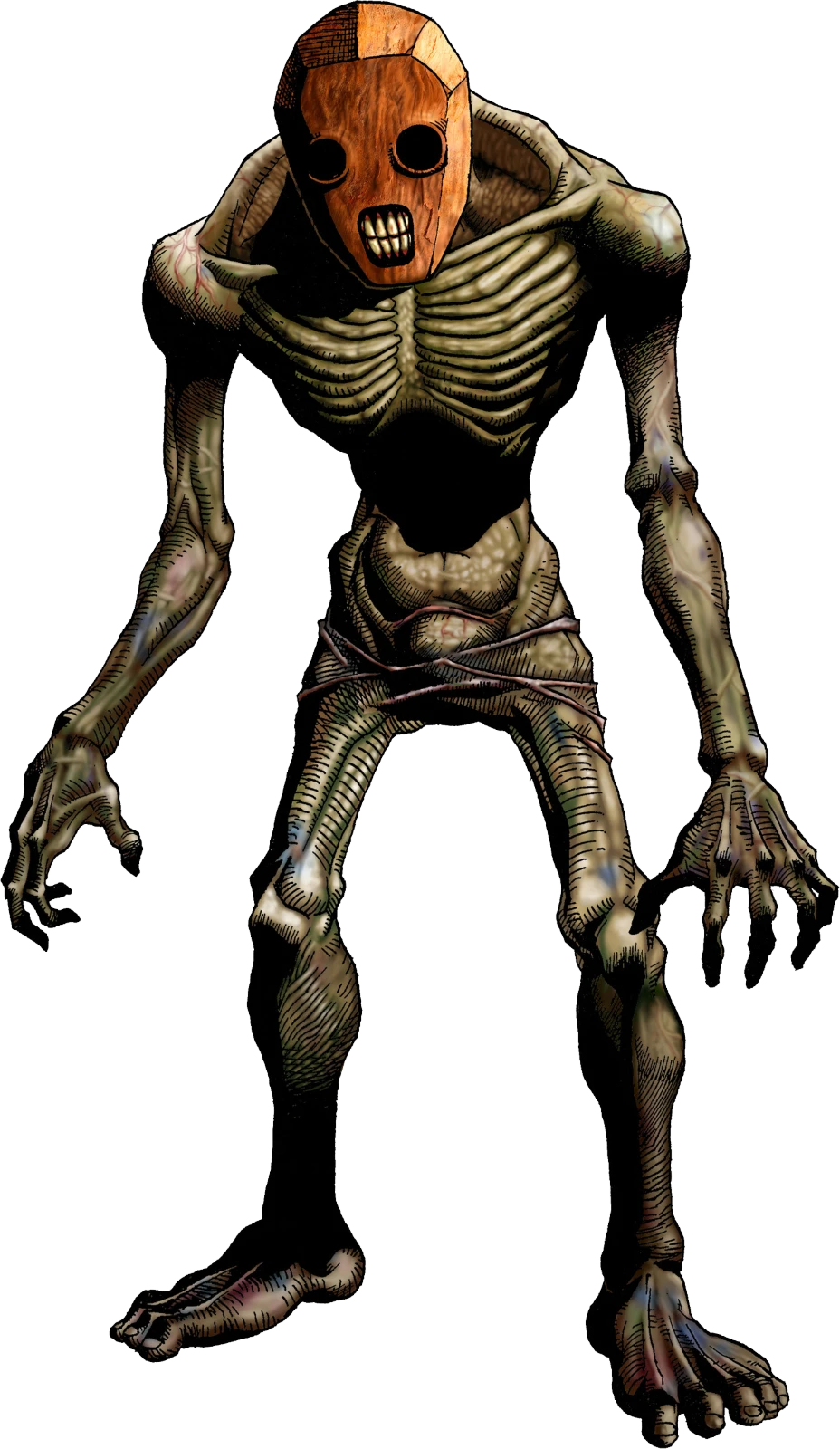
Official art of a ReDead from the 1998 game.ReDeads were deliberately kept from getting too frightening. Aonuma says the team tuned their horror so as not to frighten off younger and newer players. He was asked how the famous scream was recorded in 1998 and could not remember.
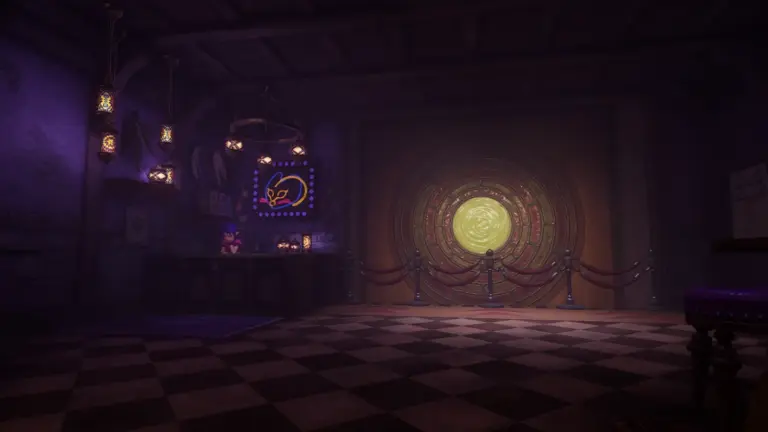
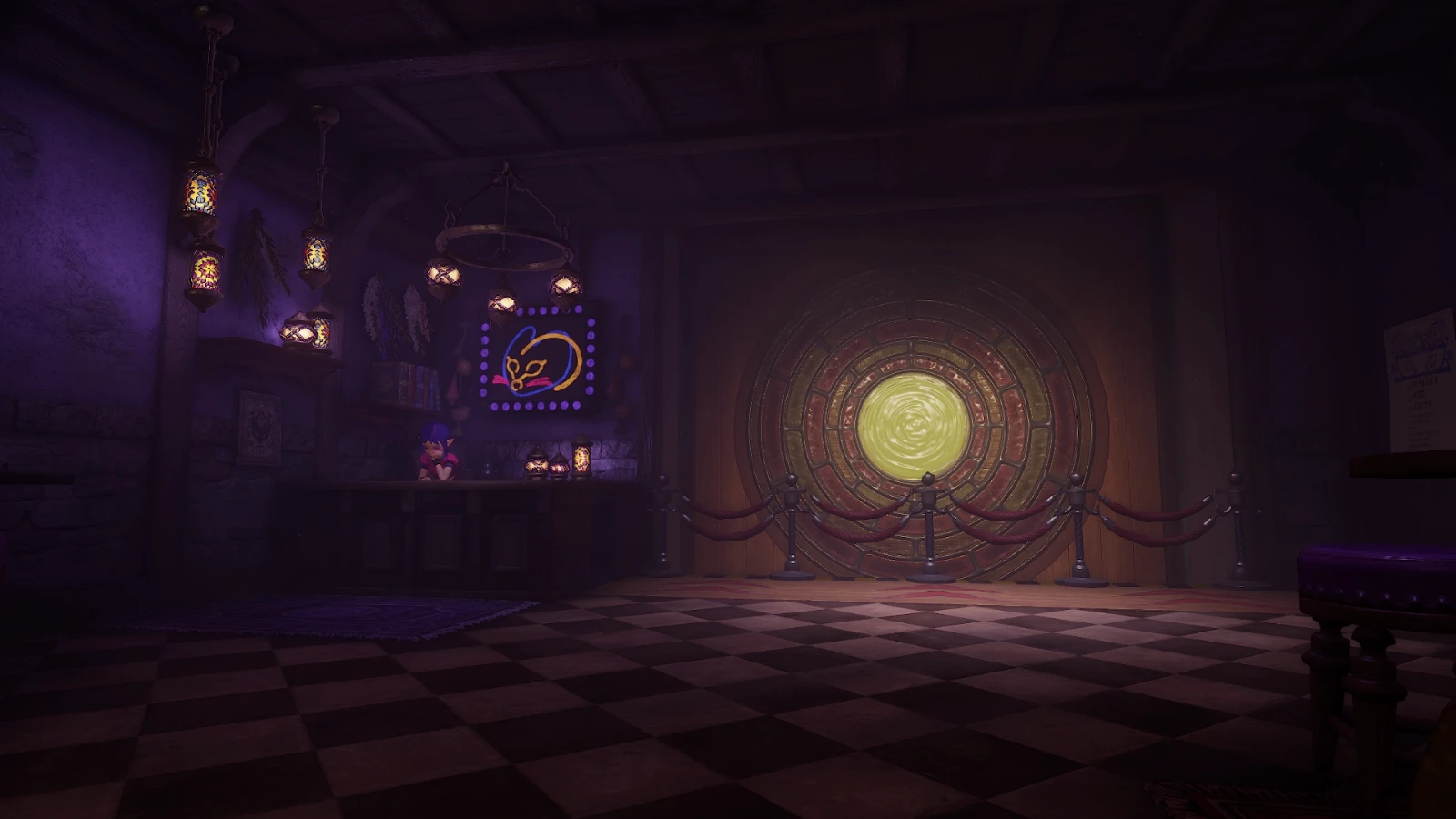
Inside the Bombchu Bowling Alley in the Switch 2 version.Asked by Game Informer what became of the Bombchu Bowling Alley’s operator, Aonuma declined: “I’ll leave it to your imagination.”
Link on the move in the Switch 2 version.Young Link is still quicker rolling than dashing. Players timing both across Hyrule found rolling slightly faster, and the YouTube channel Kethnaldo showed a hop-then-roll technique that beat plain running from Kokiri Forest to Hyrule Castle by about four seconds.
Japan’s Famitsu gave the remake 9, 9, 9 and 10 for a total of 37 out of 40: the same score it gave Ocarina of Time 3D, and three short of the perfect 40 it gave the original.
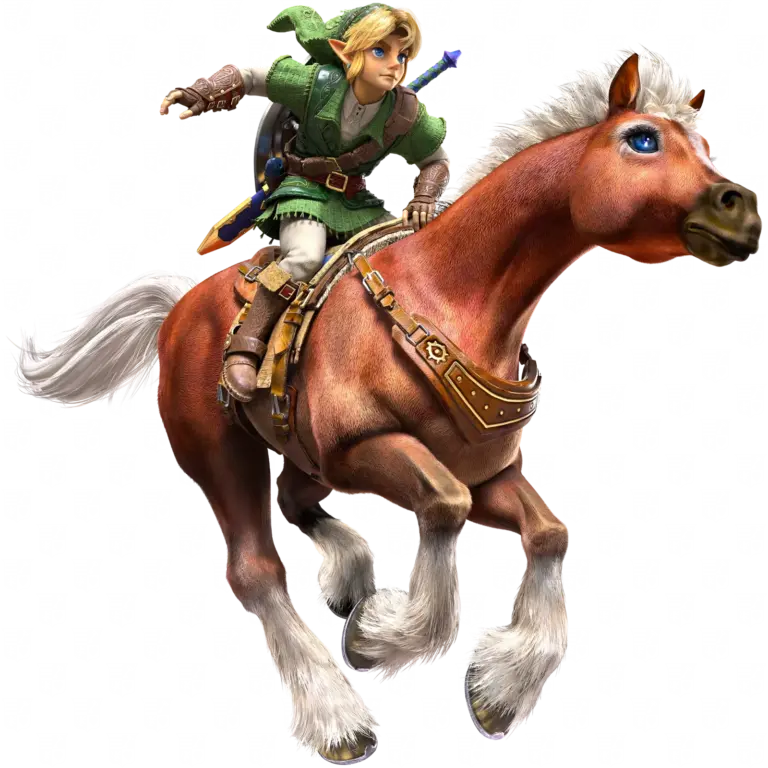
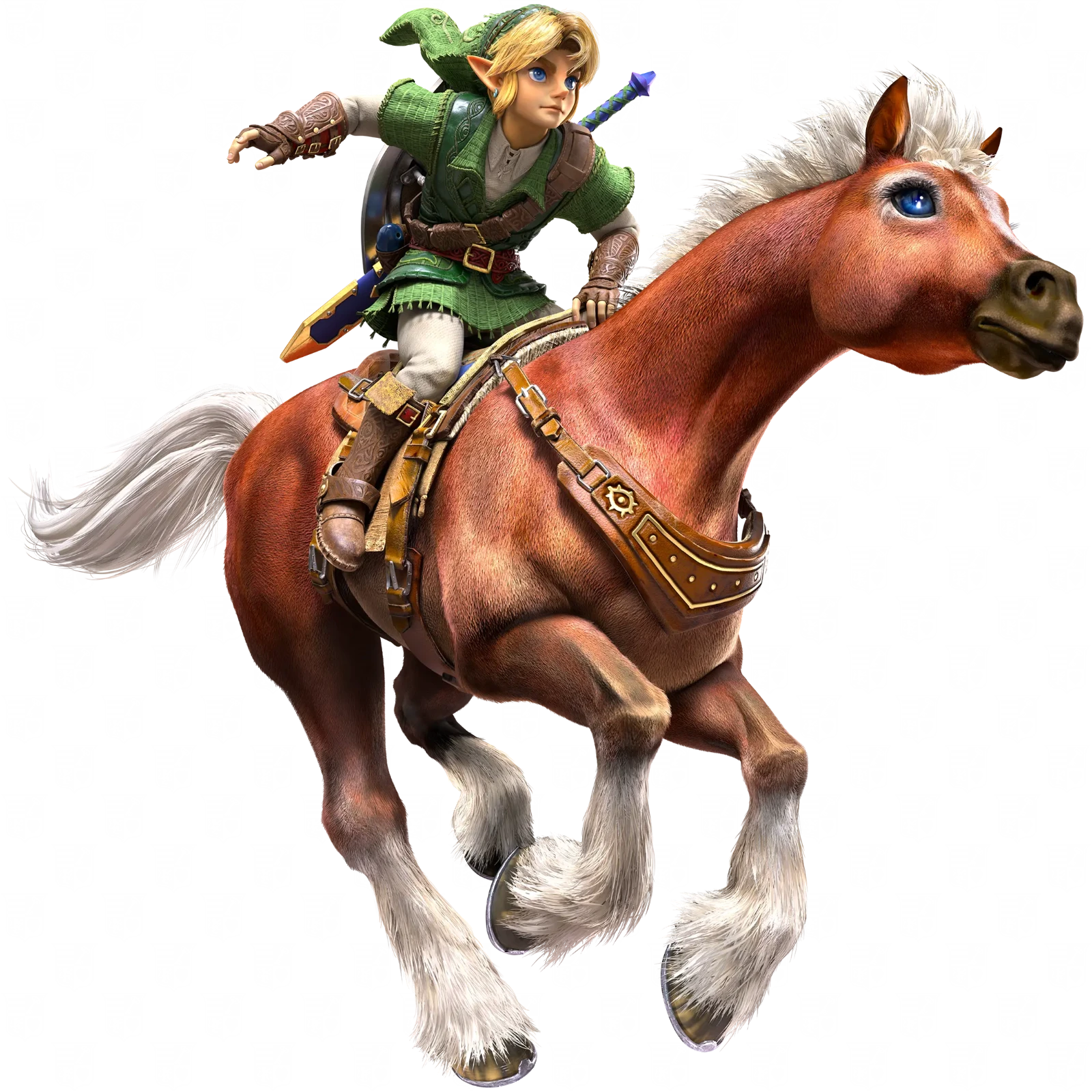
Official render of Link riding Epona.Epona will now carry you right up to the entrance of Kakariko Village, one of the small changes Nintendo Life’s staff were happiest about. In the same list: Link’s body now tumbles realistically when he collapses.
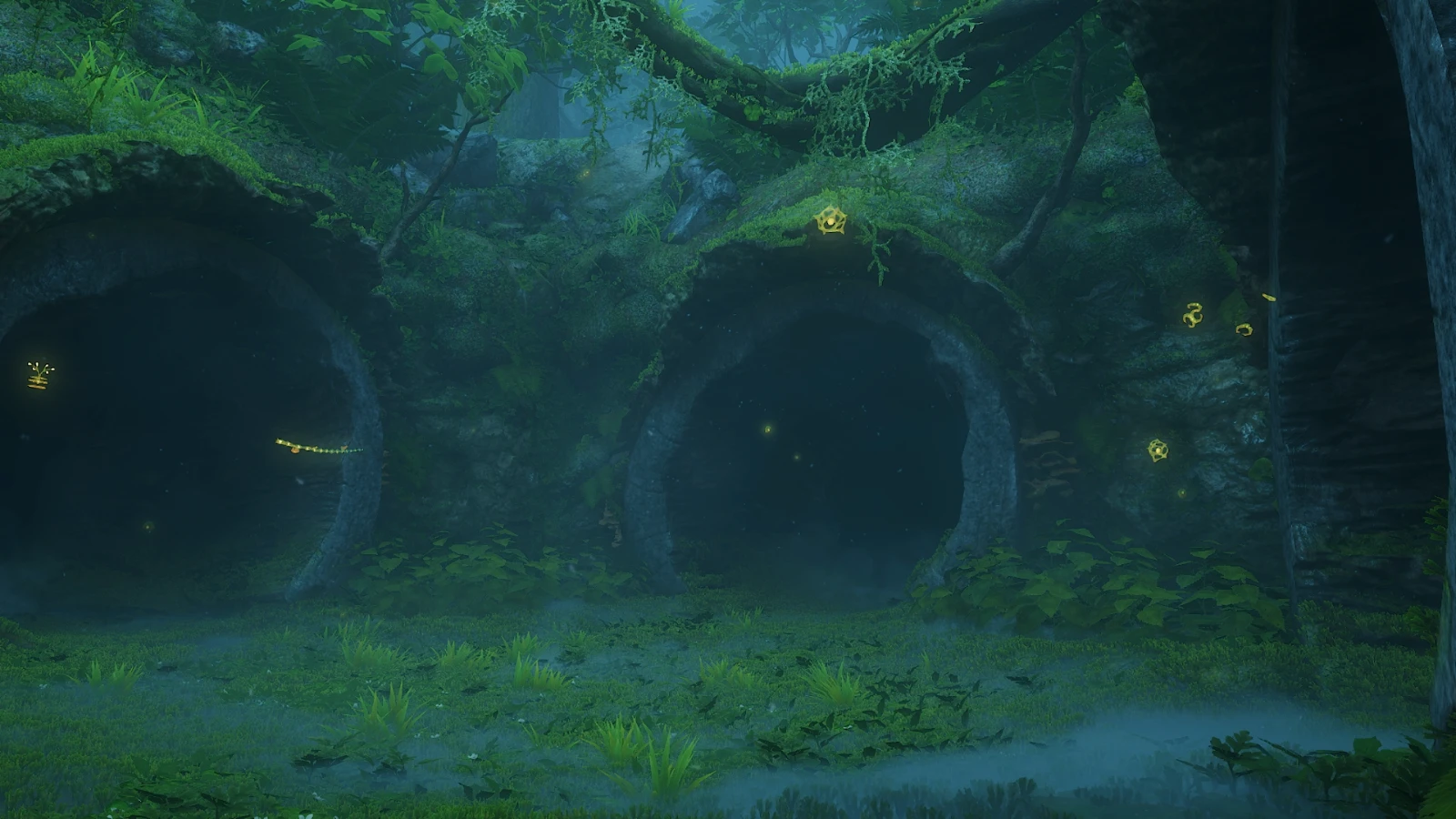
The Lost Woods in the Switch 2 version.Floating bits of forest debris in Kokiri Forest and the Lost Woods often look a lot like Koroks. Game Informer suspects it is the remake’s only wink at the games that came later.
The final battle, with its orchestral score.While telling the remake’s story, Aonuma recalled the original’s: Koji Kondo’s first attempt at the final battle music was too cheerful, Kondo said “Alright, I’ll change it”, and came back the next day with the theme everyone knows.
Strauss Zelnick, the boss of Take-Two, whose Grand Theft Auto VI was launching the same month, called the remake’s review score “terrific” and said Nintendo should be very proud.
The quiz in ZELDA NOTES has more than 2,000 questions about this one game. You get one go a day, and extra tries cost rupees from your save file.
Media & artwork
Box art, key art, character renders and screenshots from the Nintendo Switch 2 version. Select any image to view it larger.
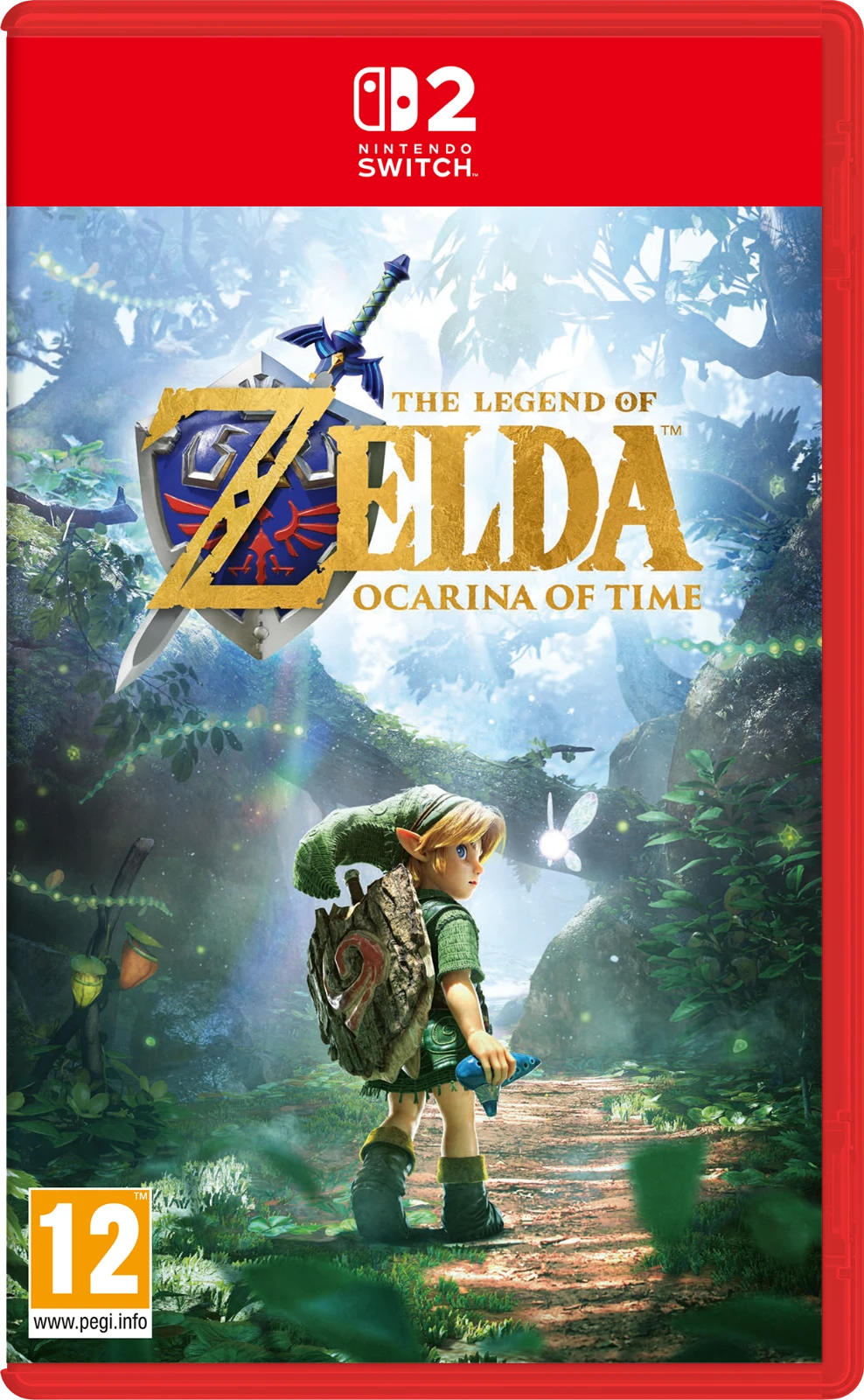
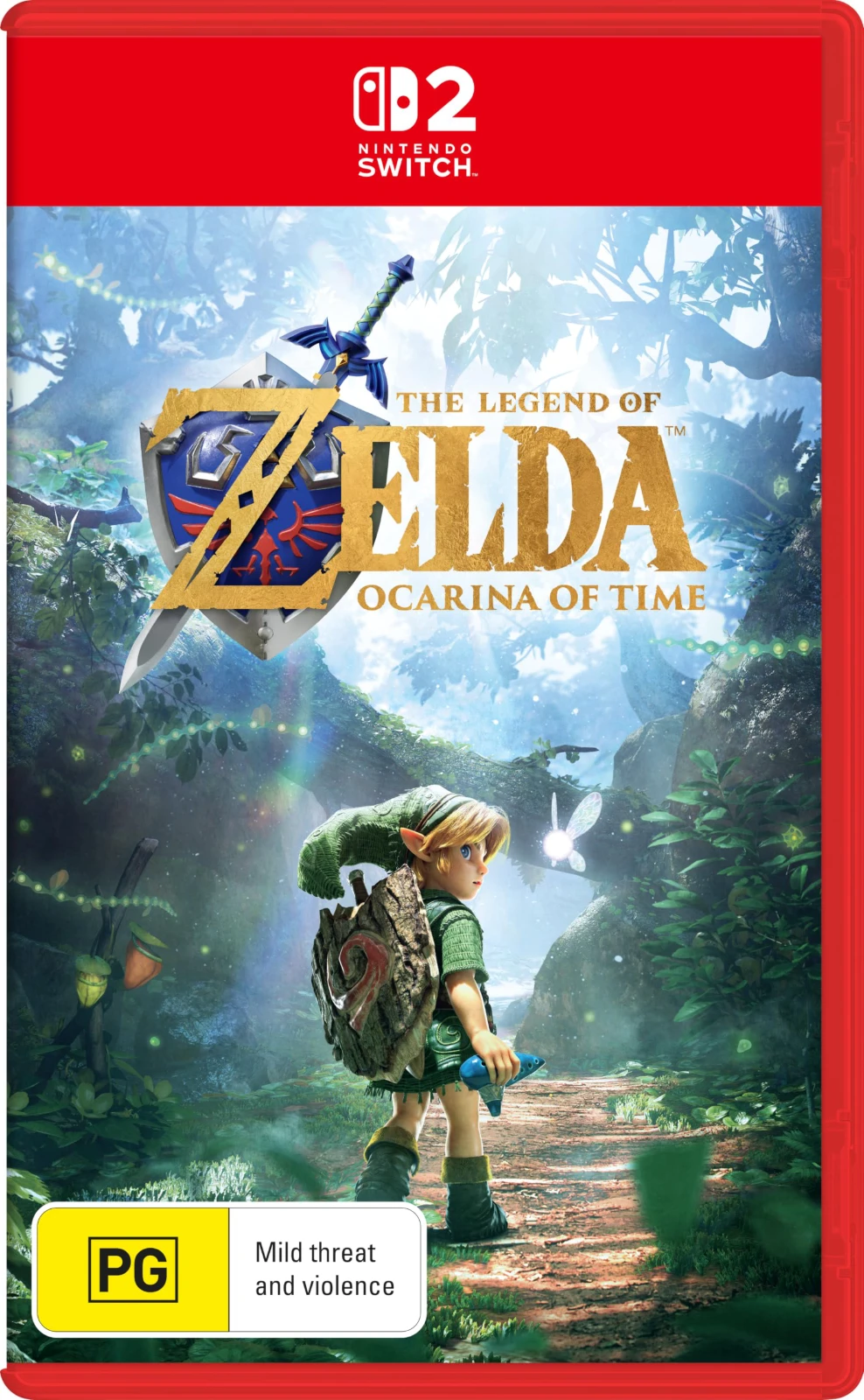
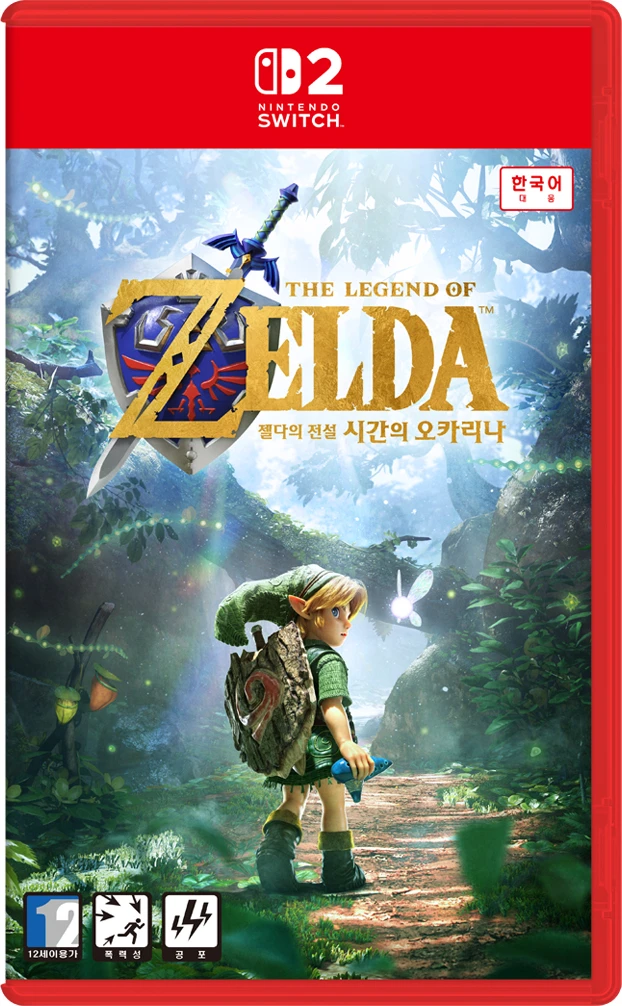
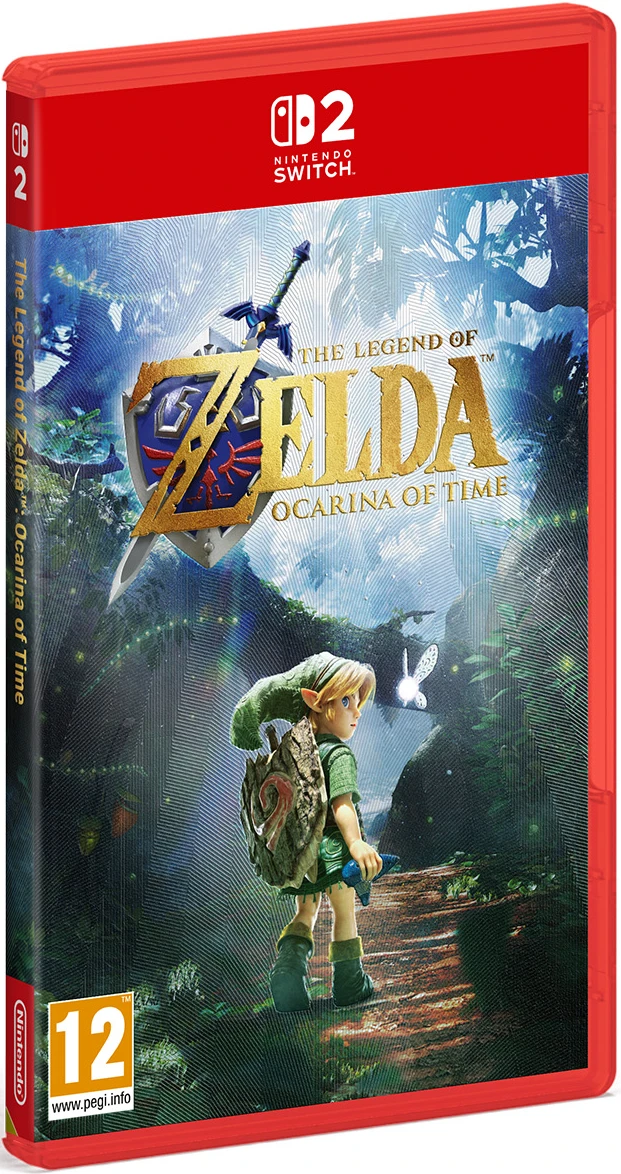
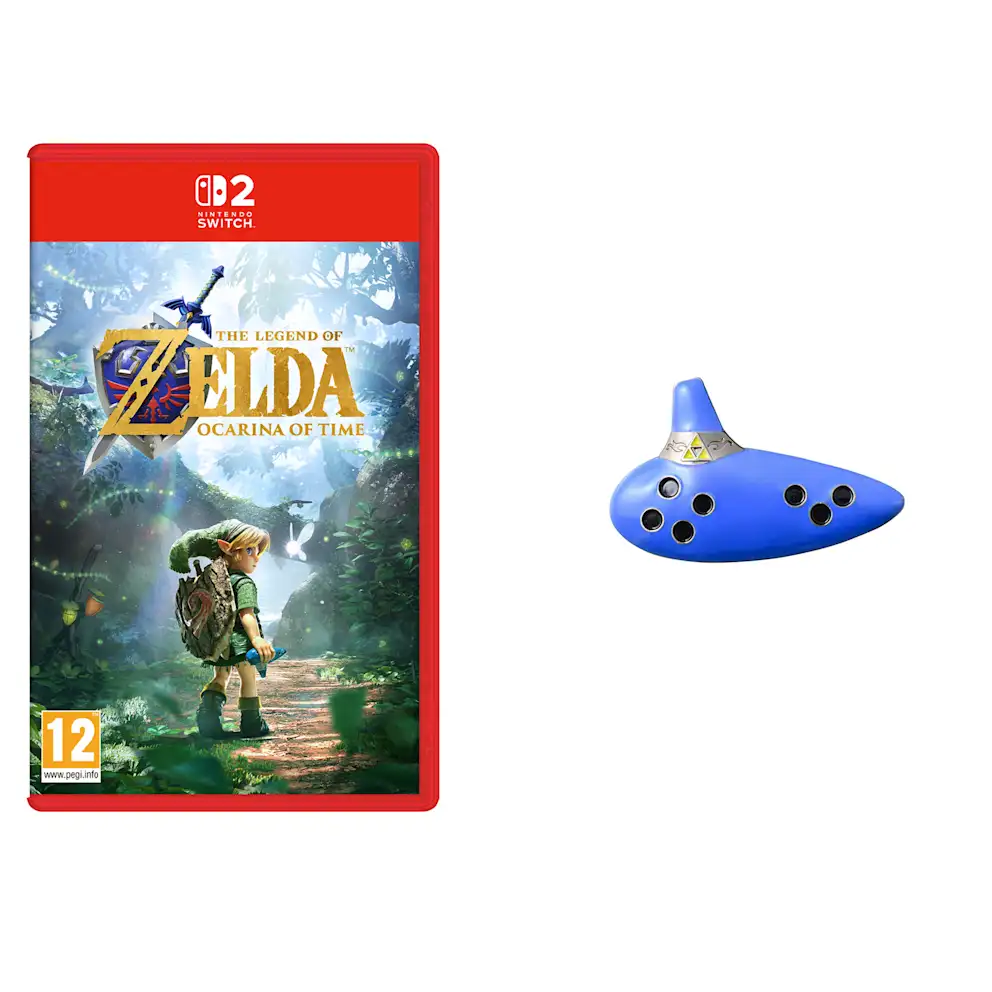
European box (Nintendo Switch 2, 2026)Australian box (Nintendo Switch 2, 2026)Korean box (Nintendo Switch 2, 2026)European first-print box with the textured foil cover (2026)Key art for the Switch 2 versionOfficial render of the Ocarina of Time and the three Spiritual StonesReplicas of the Spiritual Stones, a pre-order bonusDigital wallpaper given for early purchasesThe boxed game bundled with an Ocarina of Time pin badge
Legacy
At nine days old the remake has a short history and no legacy yet. This is the record so far, and what is still to come.
From reveal to release
Revealed9 June 2026 – A teaser in a Nintendo Direct confirms the remake for 2026, after years of rumours.
Dated8 September 2026 – The Zelda 40th Anniversary Direct gives the date and prices, shows gameplay and announces the amiibo, the ocarinas and the anniversary console.
Anniversary hardware29 October 2026 – The 40th Anniversary Edition console, Pro Controller and carrying case go on sale.
Ask the Developer2 November 2026 – Nintendo’s Vol. 24 interview introduces the director and his team.
Reviews4 November 2026 – The first reviews give it a Metascore of 96 from 42 critics, the highest of 2026 at that point.
Released5 November 2026 – On sale worldwide for Nintendo Switch 2. Monolith Soft confirms its part the same day.
First sales figure11 November 2026 – Nintendo announces more than 5.2 million sold in four days.
Still to come2027 – The Young Link and Young Zelda amiibo. The two real ocarinas were promised for late 2026.
Where it sits among the versions
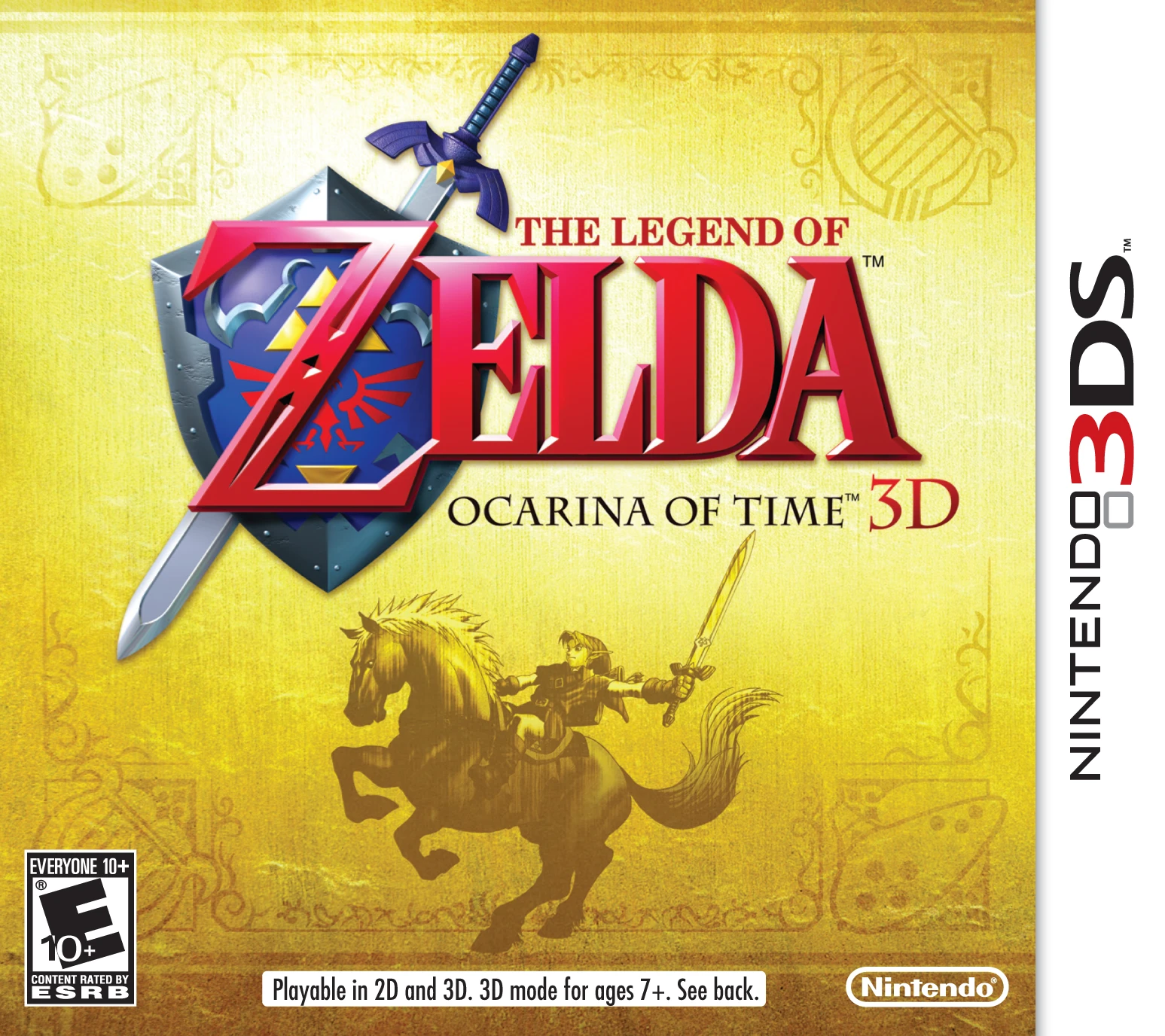
The box of Ocarina of Time 3D (2011), the earlier remake.
The Nintendo 64 original (1998) is the game everything else answers to. Master Quest (2002) remixed its dungeons for GameCube. Ocarina of Time 3D (2011) was Grezzo’s faithful 3DS remake, with Master Quest and a Boss Challenge mode built in. The Switch 2 version rebuilds the whole game with modern controls, voices and an orchestra and, unlike the 3DS version, leaves Master Quest out.
Aonuma is careful not to rank them. “It isn’t a question of whether the original or this game is better,” he says at the end of Nintendo’s interview; he offers the remake as another way to experience the same adventure.
Part of a 40th birthday
The Legend of Zelda 40th Anniversary logo.
The remake is part of the Legend of Zelda 40th Anniversary celebration, which marks four decades since the first game appeared in Japan in 1986. Nintendo’s own announcement lists further games and merchandise, a concert tour of the world from 2027 and the live-action film, due in cinemas on 30 April 2027, as part of the same party.
Where to play it today
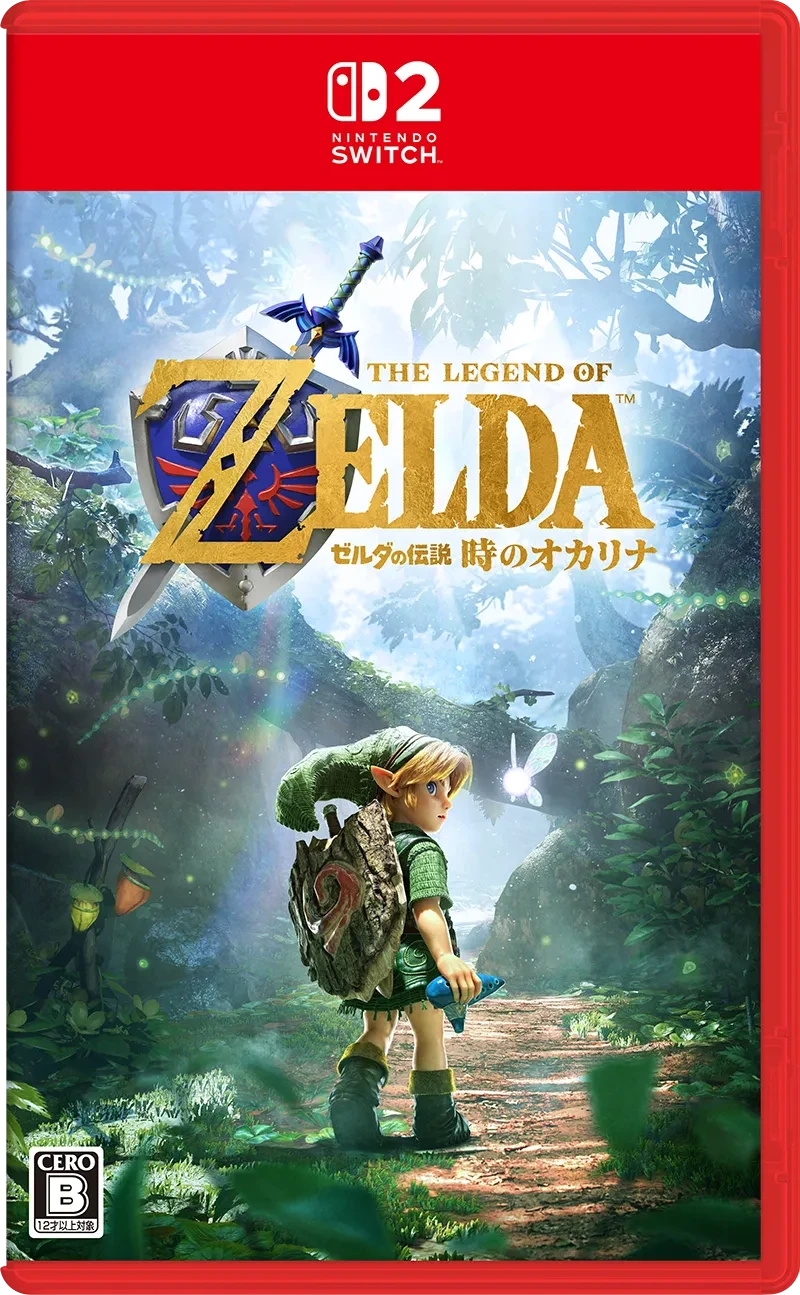
The Japanese box of the Switch 2 version.
Only on Nintendo Switch 2, as a download from the eShop or on a game card. ZELDA NOTES needs a free Nintendo Account and the Nintendo Switch App on a phone or tablet, but not a paid Nintendo Switch Online membership. The game works with any Zelda amiibo you already own.
What is not known yet
Key art for the Switch 2 version.
As of 14 November 2026 Nintendo has given one sales figure and no regional breakdown beyond Japan. The first United States chart that will include the game is due from Circana on 17 December. Nominees for The Game Awards 2026 are to be announced on 17 November, so the game has no awards to its name yet. Nintendo has not announced downloadable content, a Master Quest update or a remake of any other game in the series, and this page will not guess.
Sales & reviews
Sales figures
On 11 November 2026 Nintendo announced that the game had sold over 5.2 million copies worldwide in the first four days after its launch on 5 November, counting boxed and download sales together, with 810,000 of those in Japan. It called that the best four-day start of any game it has published for Nintendo Switch 2; Nintendo of America added that it was the company’s fastest seller on the console in the United States, Canada and Latin America as well.
For scale, VGC pointed out that Echoes of Wisdom had sold 4.09 million after seven months, and Nintendo World Report noted that the remake had already passed Donkey Kong Bananza’s 5.05 million. Among Nintendo’s own Switch 2 games only Mario Kart World, on 16.48 million, has sold more, according to Game Informer. The Nintendo 64 original had sold 7.6 million by 2004 and the 3DS remake 6.44 million by the end of 2022.
In Japan, Famitsu counted 537,041 boxed copies in the week of 2 to 8 November, comfortably at number one. In the United Kingdom, figures reported by Christopher Dring and relayed by Nintendo Everything made it the second-biggest Zelda launch on boxed sales, 35% ahead of Breath of the Wild and about half of Tears of the Kingdom, and the biggest boxed launch of 2026 so far. No later worldwide figure had been published by 14 November 2026.
5.2m+sold worldwide in four days (Nintendo, 11 November 2026)
810,000of those in Japan (Nintendo)
537,041boxed copies in Japan, 2–8 November 2026 (Famitsu)
96Metascore from 112 critics (14 November 2026)
Reception and review scores
Reviews appeared on 4 November 2026, the day before release. Every one of the 112 reviews Metacritic had counted by 14 November was positive.
When the embargo lifted the Metascore stood at 96 from 42 reviews, which GamesRadar+ reported as the best of 2026 to that date, with 25 outlets giving full marks. The score held at 96 as the count passed 100. It sits between the two earlier versions: the Nintendo 64 game’s 99 and the 3DS remake’s 94. Metacritic’s user score was 9.6 from about 13,000 ratings on 14 November.
The praise was for respect. VGC’s Andy Robinson called it “a remake that has been crafted with utter respect for its source material” and the most detailed game Nintendo has made. GamesRadar+’s Anna Koselke called it “a remake for the ages”. Game Informer’s Kyle Hilliard, who admitted the ending made him cry, judged it “a meticulous and incredibly impressive recreation” that nonetheless colours firmly inside the lines.
The criticisms were specific. Nintendo Life’s Ollie Reynolds thought veterans would find little challenge, missed Master Quest and disliked having a single manual save; the review’s headline called it “a stunning remake, but not quite definitive”. Game Informer was not won over by the new young Link and Zelda and found the voice acting stiff, and VGC’s one listed drawback was an English cast that “won’t be to everyone’s taste”. The art style had been argued over since September, but the reviews quoted here all counted the visuals among the game’s strengths.
Reader reviews
No reader reviews yet. Played it? Give it a score out of 10 and tell other fans what you think.
Every fact on this page was checked on 14 November 2026, nine days after the game came out, against the sources below: Nintendo’s own pages, interviews and news releases first, then named outlets. Where something is not yet known, the page says so.
To provide the best experiences, we use technologies like cookies to store and/or access device information. Consenting to these technologies will allow us to process data such as browsing behavior or unique IDs on this site. Not consenting or withdrawing consent, may adversely affect certain features and functions.
Functional
Always active
The technical storage or access is strictly necessary for the legitimate purpose of enabling the use of a specific service explicitly requested by the subscriber or user, or for the sole purpose of carrying out the transmission of a communication over an electronic communications network.
Preferences
The technical storage or access is necessary for the legitimate purpose of storing preferences that are not requested by the subscriber or user.
Statistics
The technical storage or access that is used exclusively for statistical purposes.The technical storage or access that is used exclusively for anonymous statistical purposes. Without a subpoena, voluntary compliance on the part of your Internet Service Provider, or additional records from a third party, information stored or retrieved for this purpose alone cannot usually be used to identify you.
Marketing
The technical storage or access is required to create user profiles to send advertising, or to track the user on a website or across several websites for similar marketing purposes.

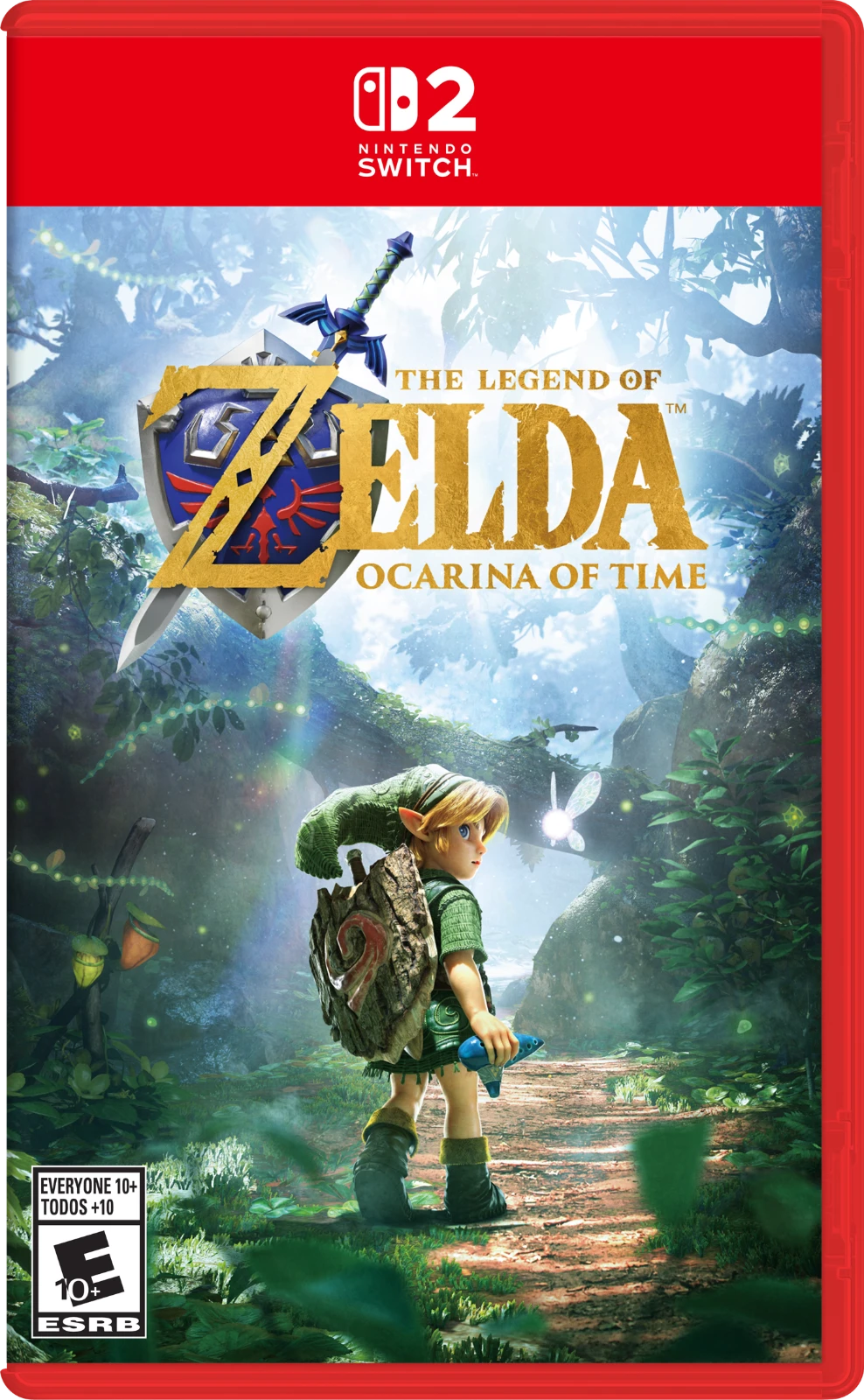
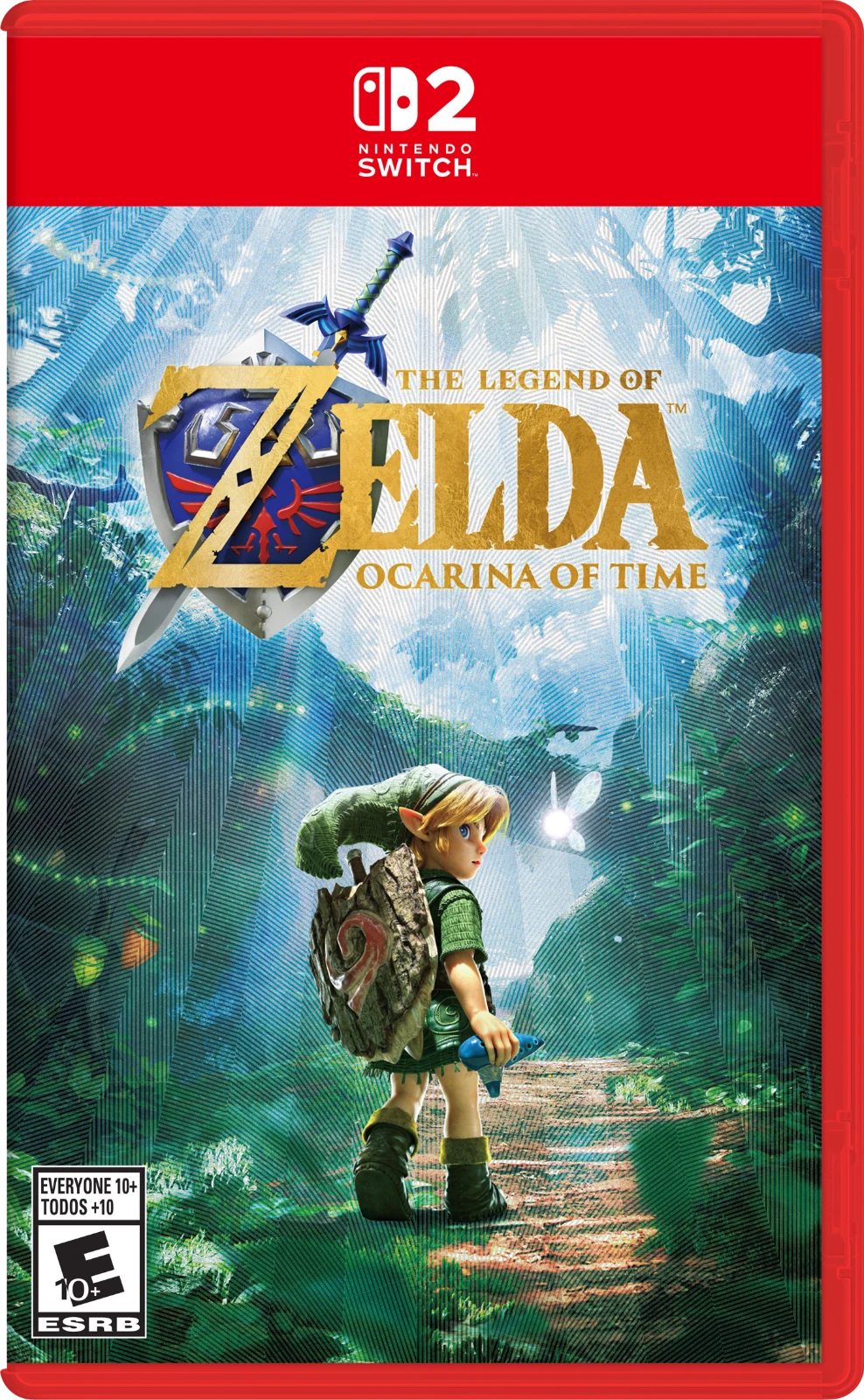 First-print foil coverBoxed game · 5 November 2026The first print run of the boxed version comes in special packaging with textured foil cover art, while supplies last. In the US, buying the download by 23 November 2026 adds a 40th Anniversary digital wallpaper; Nintendo’s UK store offered replicas of the three Spiritual Stones with pre-orders.
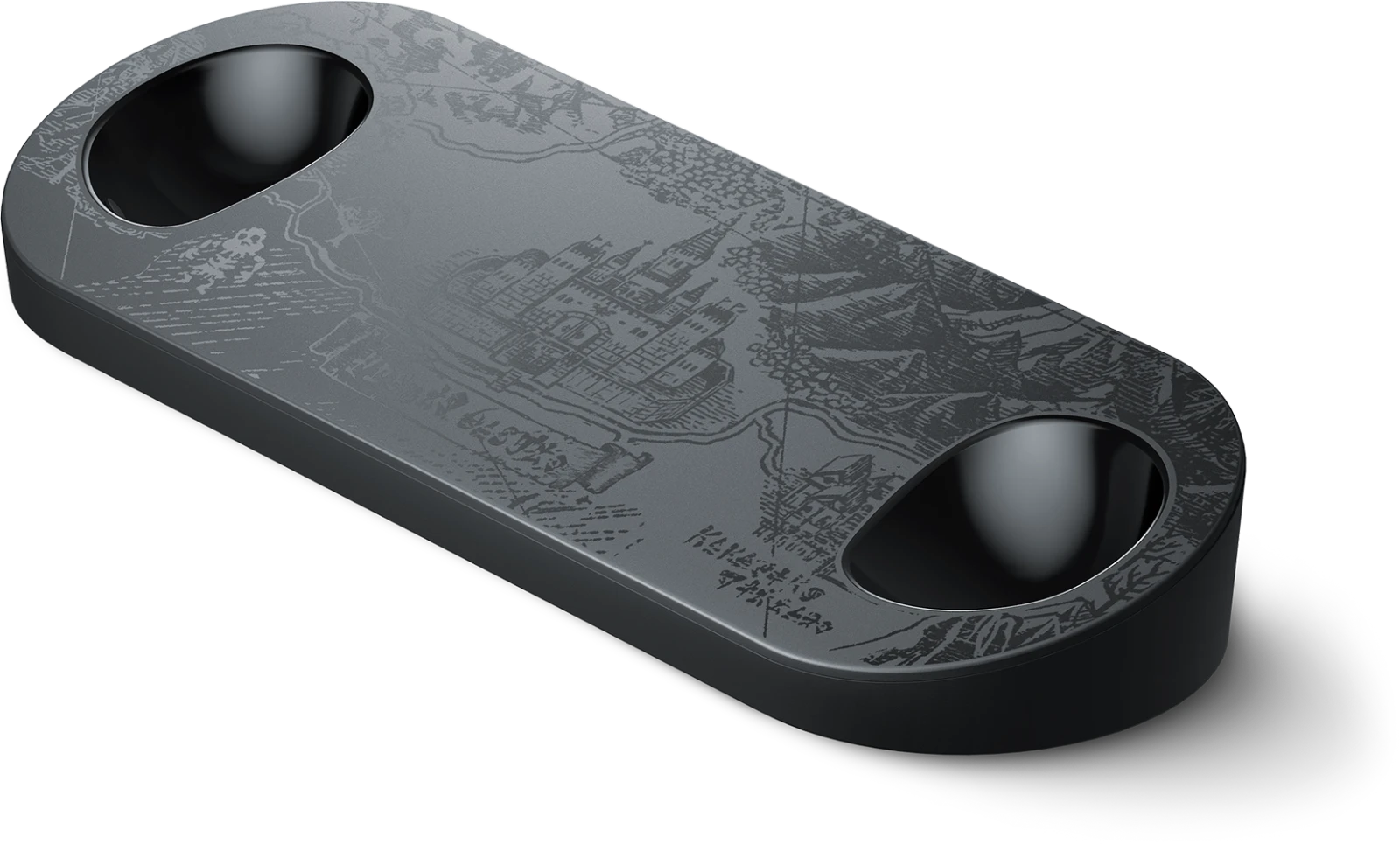 40th Anniversary Pro Controller and carrying caseAccessories · 29 October 2026 · controller $99.99A matching Nintendo Switch 2 Pro Controller, sold with a display stand ($109.99) through Nintendo’s own stores, and a carrying case with a screen protector.
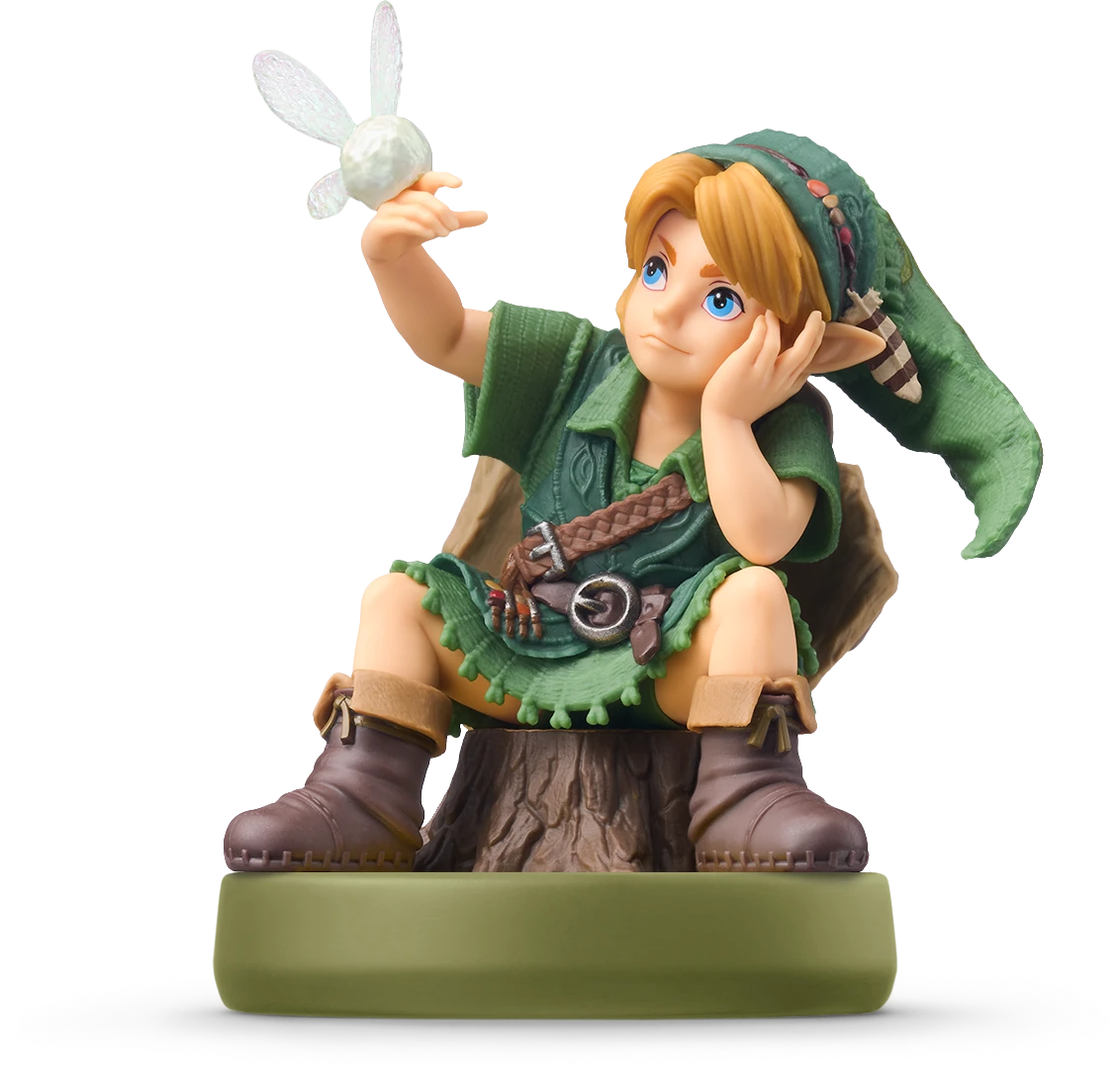 Young Link and Young Zelda amiiboamiibo · due 2027 · $24.99 eachTwo new figures based on the pair as they appear early in the game. Nintendo says tapping them gives Link masks “that evoke a retro graphical style”. What the masks do, if anything, had not been shown by 14 November 2026.
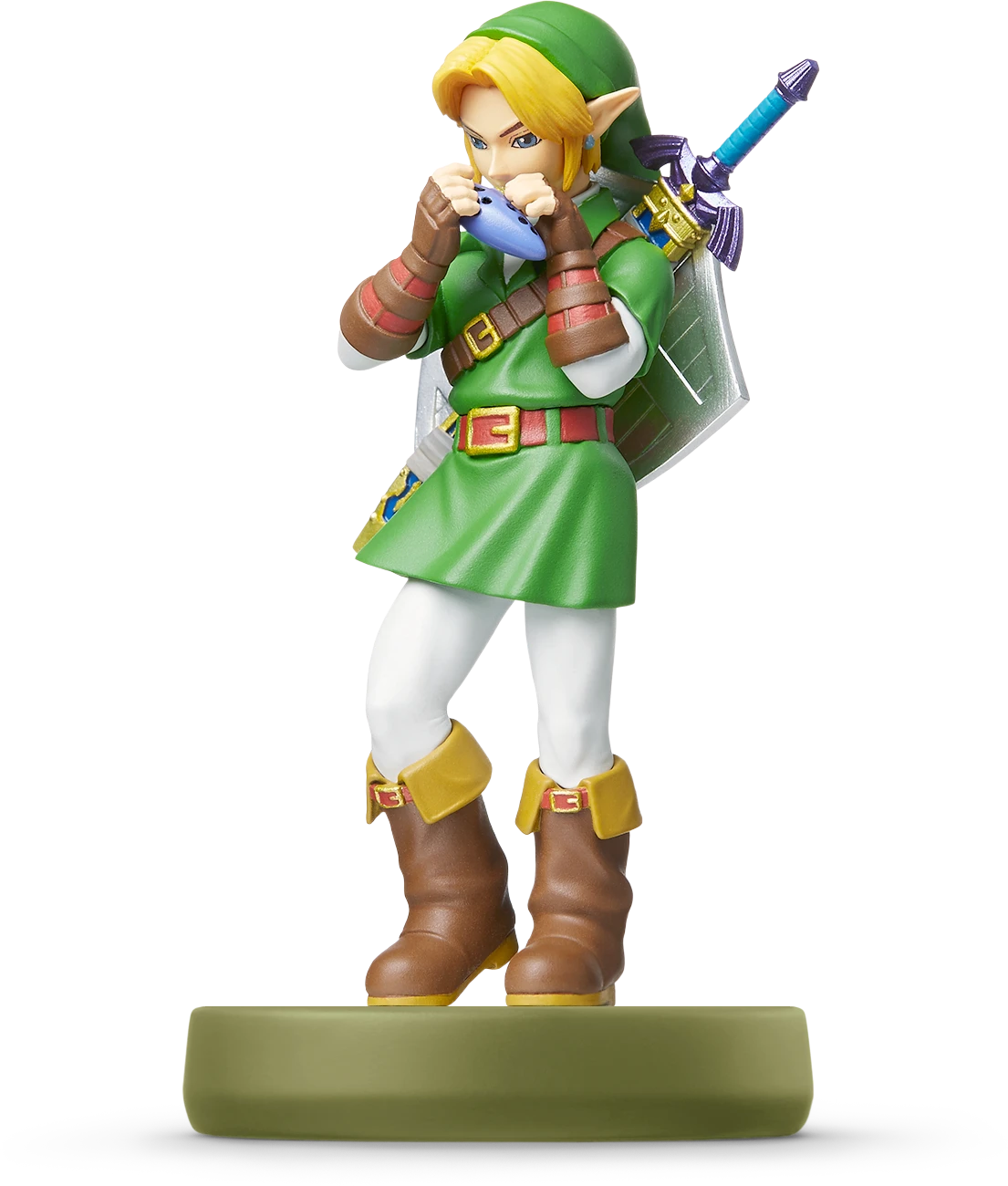 Other Zelda amiiboamiibo · supported from launchAny figure in the Legend of Zelda series can be tapped for in-game extras. Nintendo Life’s guide says they hand out everyday supplies: Bombs, Deku Sticks, Magic Jars.
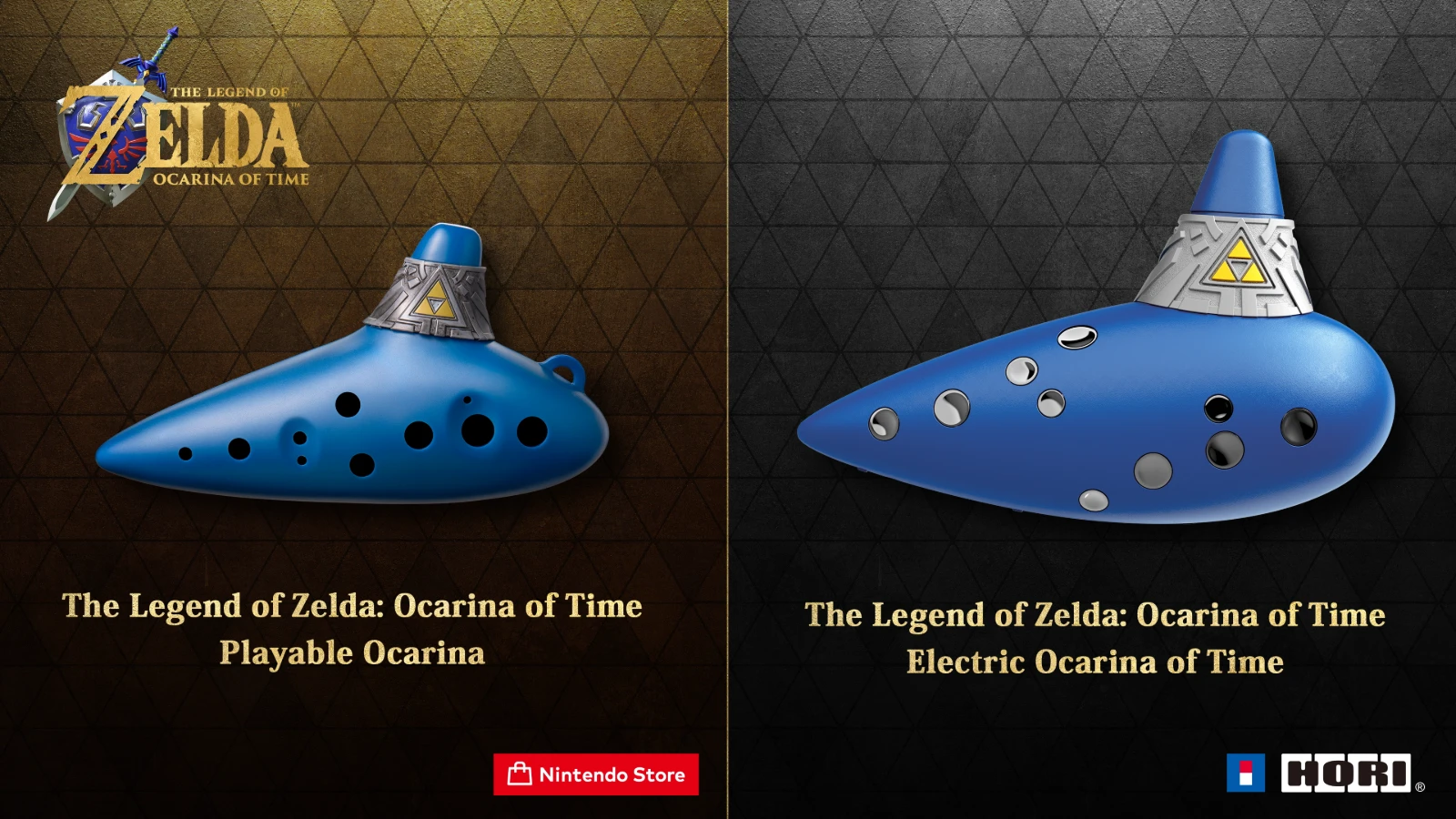 Two real ocarinasAccessories · announced 8 September 2026Nintendo announced a playable ocarina and an electric one from HORI that sounds notes or whole songs at the press of a button, both for “later this year”. The game recognises either through the microphone. We found no confirmed release date or price for them.