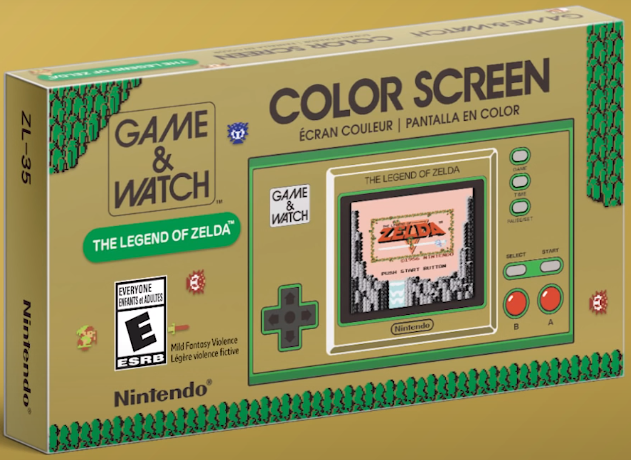
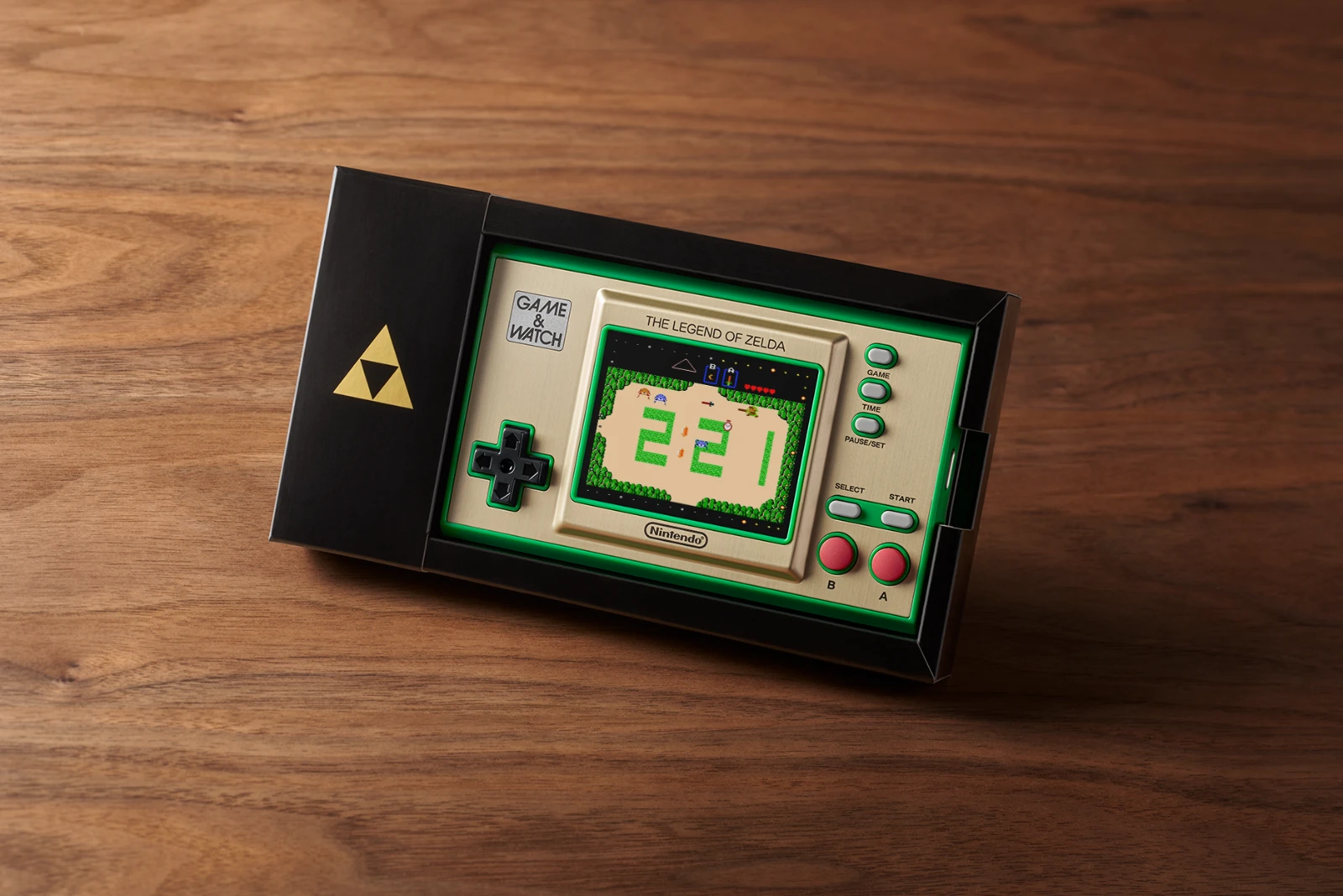
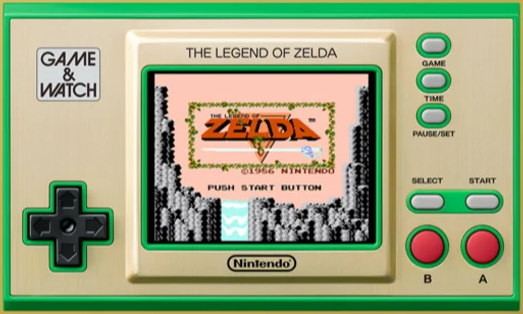
Game & Watch: The Legend of Zelda is less a game than a tiny console with Zelda sealed inside it. It is shaped like the Game & Watch handhelds that Nintendo launched in Japan in 1980, the company’s first handheld systems, each of which played one simple LCD game and told the time. This one keeps the slim metal-fronted body, in green and gold, but swaps the old segmented display for a 2.36-inch colour screen and finds room for three complete adventures.
Switch it on and you choose between The Legend of Zelda, Zelda II: The Adventure of Link and the original black-and-white Game Boy version of Link’s Awakening, each in its Japanese and Western forms. Alongside them sit a remake of the 1980 Game & Watch game Vermin with Link swinging the hammers, a clock in which Link roams the first game’s Hyrule while the hours tick by, and a timer built out of Zelda II’s sword fights.
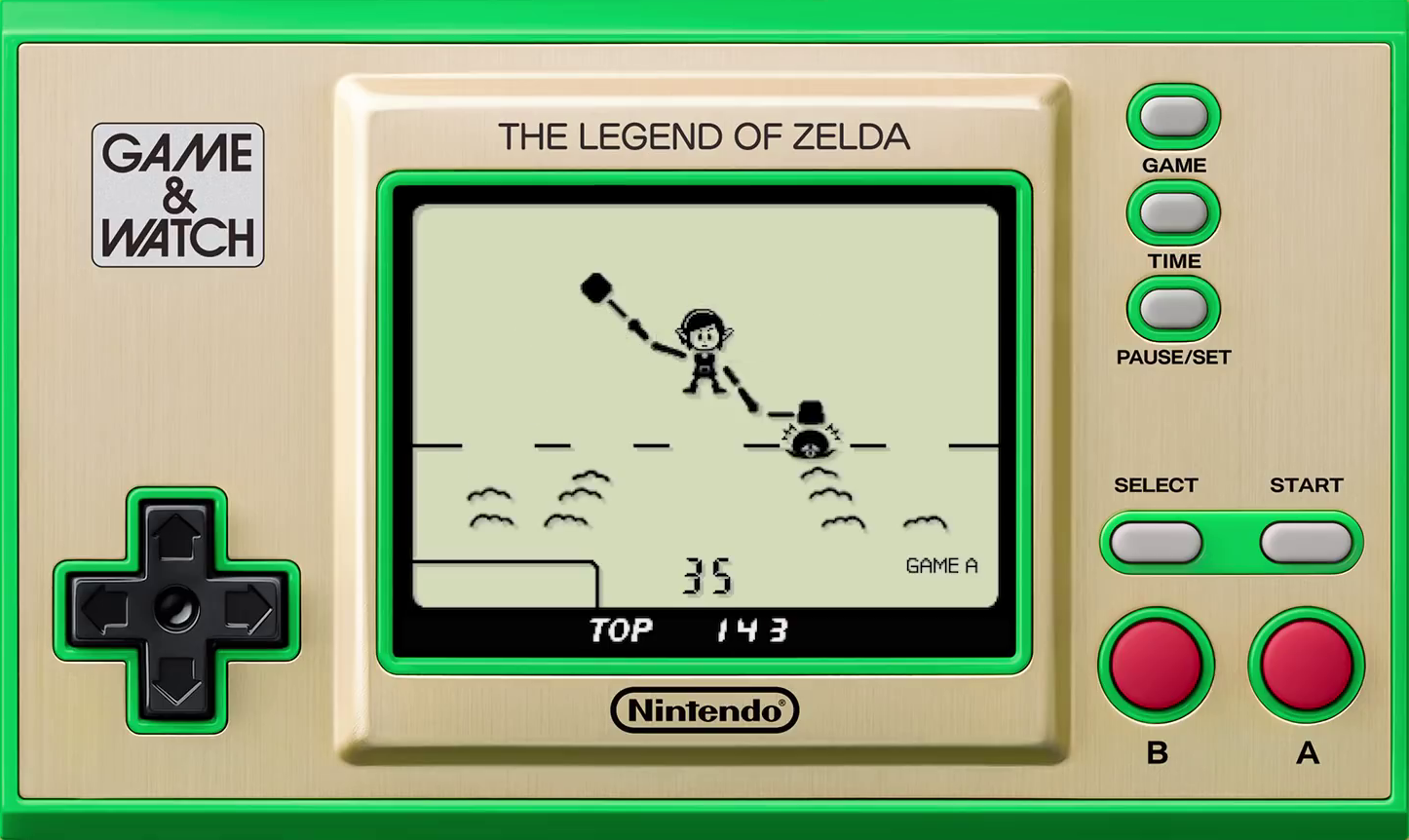
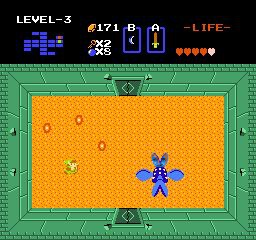
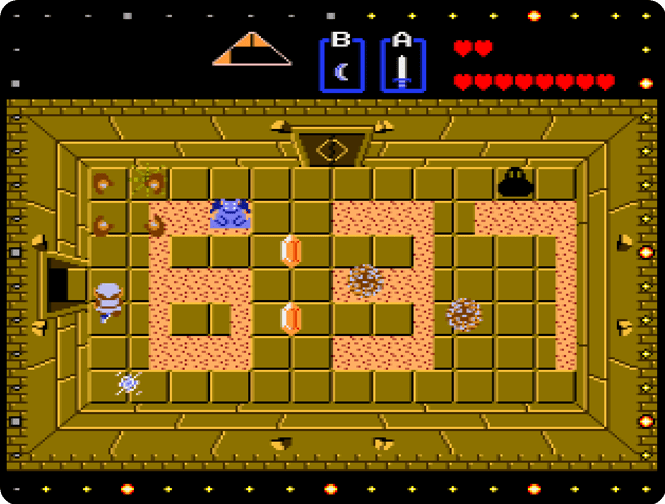
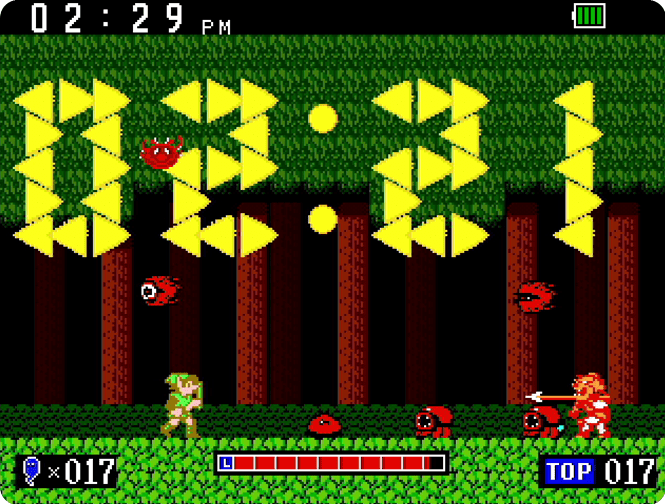
The handheld: green body, gold faceplate, colour screen.The Legend of Zelda running on the Game & Watch.The playable clock, set in the first game’s Hyrule.
Nintendo revealed it in its E3 Nintendo Direct on 15 June 2021 and released it around the world on 12 November 2021, in the year of the series’ 35th anniversary, for US$49.99 (¥5,480 in Japan).
Reviewers took it for what it is: a handsome collector’s piece that also happens to play three classics properly. The grumbles were mostly about what is not on it, above all A Link to the Past and the colour DX version of Link’s Awakening.
“Game & Watch: The Legend of Zelda is a collectible Game & Watch console packed with The Legend of Zelda classics.”
That is how Nintendo UK summed the handheld up on launch day. Nintendo’s product page sells it under headings such as “Play three series-defining games”, “Pound pests aplenty” (Vermin), “Heroics of time” (the clock and timer) and “Show it off” (the box that turns into a stand).
— Official description: Nintendo UK, “10 secrets to discover with Game & Watch: The Legend of Zelda”, 12 November 2021 (one sentence quoted). Section headings quoted from Nintendo’s official product page; the rest summarised by Zelda Temple.
Quick Answers
The questions people most often ask about the Zelda Game & Watch, answered quickly; the detail is further down the page.
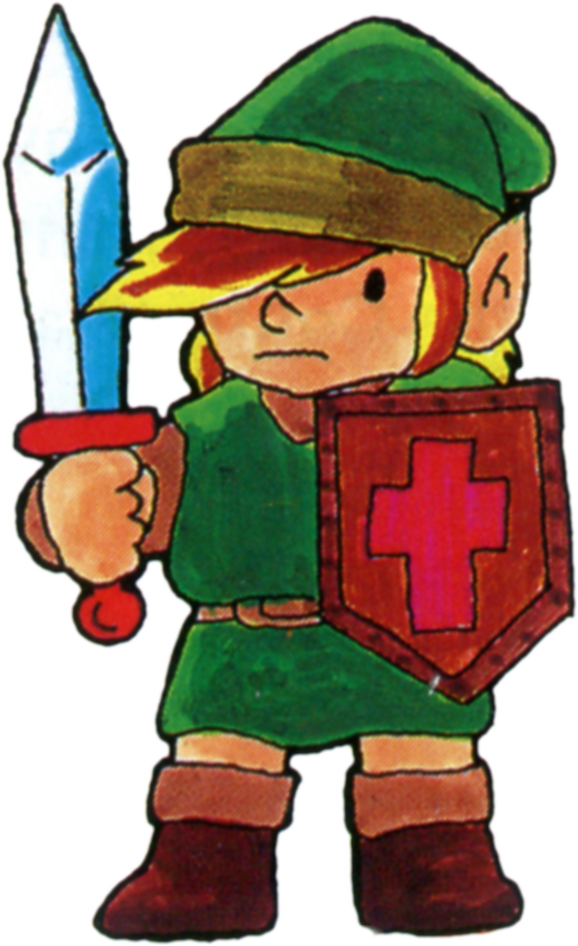
Official art of Link from The Legend of Zelda, the first game on the handheld.
What is Game & Watch: The Legend of Zelda?
A small dedicated handheld from Nintendo, styled after its 1980s Game & Watch range, with three Zelda games, a Link version of Vermin, a clock and a timer built in. It does not take cartridges or downloads. More →
Which games are on it?
The Legend of Zelda, Zelda II: The Adventure of Link and the 1993 Game Boy version of Link’s Awakening, plus Vermin with Link as the star. The first two come in Japanese and English versions; Link’s Awakening comes in Japanese, English, French and German. More →
When did it come out, and how much was it?
On 12 November 2021 worldwide. It cost US$49.99 in North America and ¥5,480 including tax in Japan, and Nintendo’s UK store listed it at £44.99. More →
Is the 1989 Zelda Game & Watch game on it?
No. Despite the name, nothing from the 1989 Multi Screen game is included. That game has its own page. More →
Is Link’s Awakening the colour DX version?
No, it is the original monochrome Game Boy game. You can show it at its original near-square size or stretched to fill the screen. More →
Can you save your game?
Yes. The games keep their own save files as they always did, and when you press the GAME button to leave, the handheld holds your place so you can carry on later. There is no rewind feature. More →
How long does the battery last?
Nintendo quotes about 8 hours of play or clock display from a charge of about 3 hours, depending on settings. It charges by USB Type-C; a cable is in the box but a mains adapter is not. More →
What is on it and how it plays
Three small buttons do the housekeeping: GAME brings up the menu of games, TIME calls up the clock, and PAUSE/SET pauses the action. Brightness and volume can both be adjusted. START and SELECT are here as well, because the Zelda games need them for the inventory and the map.
The table shows what is built in.
On the device
Where it comes from
What you get here
The Legend of Zelda
Famicom Disk System, 1986; NES, 1987
The Japanese Disk System version and the English NES version
Zelda II: The Adventure of Link
Famicom Disk System, 1987; NES, 1988
The Japanese Disk System version (Rinku no Bōken) and the English NES version
Link’s Awakening
Game Boy, 1993
The monochrome original in Japanese (Yume o Miru Shima), English, French and German
Vermin
Game & Watch, 1980
A new version starring Link, with a hidden extra-hard Game C
Clock
New for this device
Link adventures through the first game’s Hyrule around the time display; you can take over
Timer
New for this device
A countdown of 1 to 10 minutes fought out in Zelda II’s battle scenes
Three adventures, each in more than one version
The headline acts are three of the first four Zelda games, skipping only the 16-bit A Link to the Past: The Legend of Zelda, the open-ended adventure that started it all; Zelda II, the side-on sequel with experience points and towns; and Link’s Awakening, the Game Boy tale of Koholint Island and the Wind Fish. Our pages for each tell their stories in full.
What makes this collection interesting is that you can swap between regional versions from the menu. The first two games were made for Japan’s Famicom Disk System and reworked for NES cartridges abroad, and both forms are here. In The Legend of Zelda the differences are mostly in the music and sound effects, since the Disk System had richer sound, along with a thicker font and a few changed enemy placements in the Western game. Zelda II changed more on its way west: the palaces gained their own colour schemes, the monster icons on the map were redrawn, some characters and enemies look different, the sound was reworked and levelling up follows different rules.
Link’s Awakening is the 1993 original, not the colour DX edition, and it comes in four languages: Japanese, English, French and German. Because the Game Boy’s screen was almost square, the device lets you choose between the original proportions and a stretched picture that fills the display.
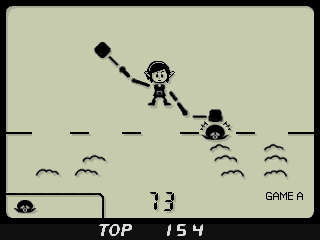
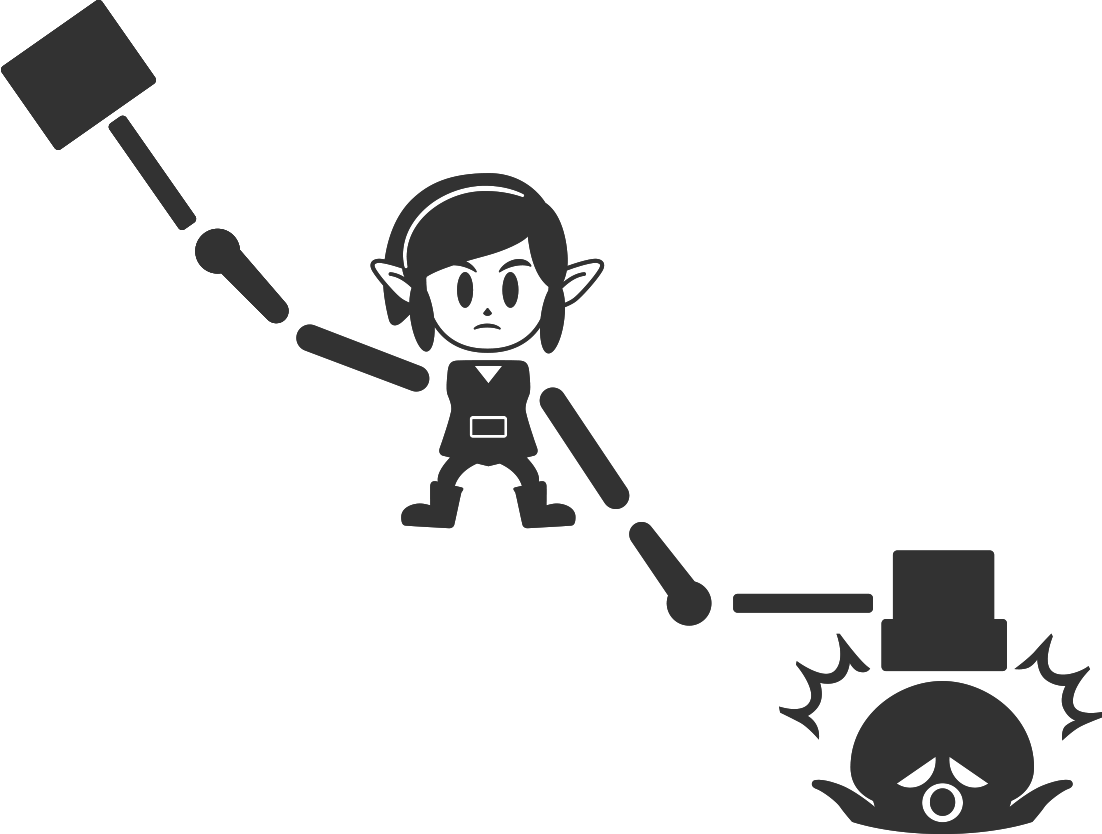
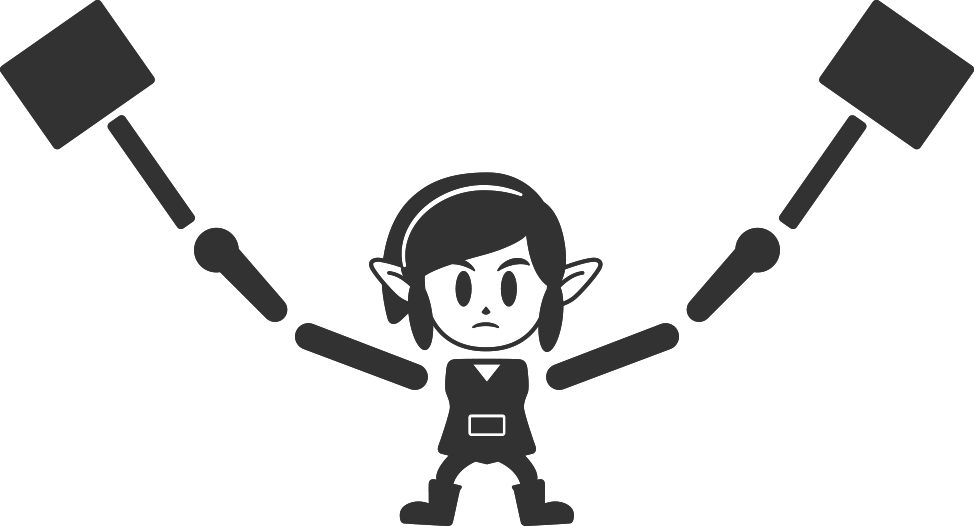
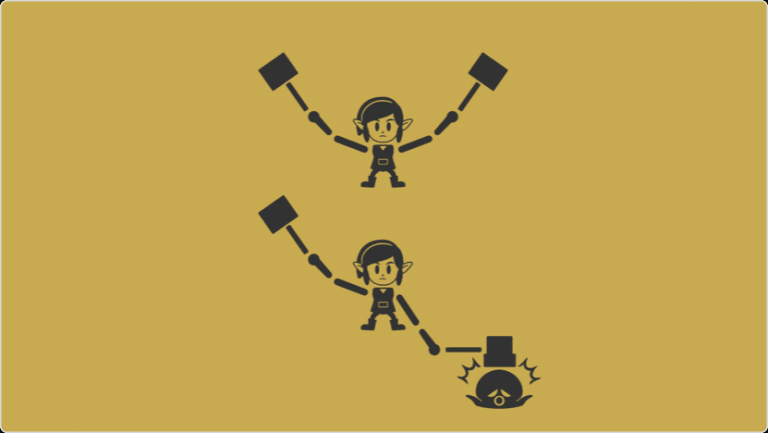
Vermin, with Link holding the hammers
Vermin, with Link’s head on the hammer-wielder.
Vermin was one of the very first Game & Watch games, released in July 1980: a whack-a-mole in which you step left and right and bring a hammer down on whatever pops out of the ground. The version here is drawn in the style of the old LCD screens, but the figure in the middle has Link’s head. The pests come faster the more of them you hit, with short breathers between waves.
There are the traditional Game A and Game B, and a third, harder Game C for those who know where to look.
A clock you can play
The “Watch” half of the name is taken seriously. Press TIME and the hours and minutes appear in the middle of a screen from the first Legend of Zelda, with Link fighting his way around them by himself, collecting hearts, weapons and Triforce pieces as the day goes on. Pick the handheld up, press a direction and you are in control; leave it alone for a few seconds and Link carries on without you.
It is a proper desk clock too. Nintendo gives its accuracy as within 30 seconds a month, it stays lit while charging, and with the Auto Sleep setting turned off it will keep showing the time on battery power.
The Zelda II timer
The timer, staged in Zelda II’s side-on battles.
The timer counts down from anything between one and ten minutes, in one-minute steps, and fills the wait with Zelda II. Link stands in one of that game’s side-view battle scenes and enemies keep coming until the time runs out; the device remembers your best tally for each length of timer. If Link falls, the clock keeps running, and if you put it down he fights on automatically.
The hardware
The handheld measures 67 by 112 millimetres, is 12.5 millimetres thick and weighs about 68 grams. The front is a gold metal plate on a green body, with a cross-shaped D-pad on the left and rubbery A and B buttons on the right. On the back there is a Triforce that glows when the power is on.
Inside is a rechargeable battery that Nintendo says gives roughly 8 hours from a charge of roughly 3 hours, through a USB Type-C socket. The box contains a short charging cable but no mains adapter, and there is no kickstand: instead, the cardboard inner tray of the packaging folds into a stand, so the handheld can sit on a desk as a clock.
The games save as they always did, and the handheld also holds your place when you press GAME to go back to the menu, so you can swap between games without losing progress. There is no rewind. The brain of the device, according to Wikipedia’s technical summary, is an STM32H7B0 microcontroller with an ARM Cortex-M7 core.
How it came about
Nintendo has said very little about who built the Zelda Game & Watch, so this is the story of how it was announced and why.
Revealed at E3 2021
The handheld was announced on 15 June 2021, at the very end of the Nintendo Direct that Nintendo broadcast for that year’s E3, with series producer Eiji Aonuma doing the honours. The announcement set out the whole package at once: three games, Vermin with Link, the clock, the timer, a price of US$49.99 and a date of 12 November. It duly arrived worldwide on that day.
A quiet 35th birthday
Official art of Link from the 1986 original, the game whose 35th anniversary the handheld marks.
The Legend of Zelda first went on sale in Japan on 21 February 1986, which made 2021 the series’ 35th year. A year earlier Nintendo had given Super Mario’s 35th a Nintendo Direct of its own and several anniversary releases, a colour-screen Game & Watch among them. Zelda’s was a quieter affair, and Aonuma said so plainly when he introduced the Game & Watch.
After noting that the original game was reaching its 35th anniversary, he told viewers: “we don’t have any campaigns or other Nintendo Switch games planned”. The handheld, he explained, was something Nintendo had been working on “as a special item”. The year’s other Zelda release, Skyward Sword HD, had been announced back in February and came out in July.
Following the Mario handheld
The Zelda unit was the second of its kind. On 13 November 2020 Nintendo had released Game & Watch: Super Mario Bros., which held Super Mario Bros., The Lost Levels, a Mario version of the Game & Watch game Ball and an animated clock, to mark 35 years of Super Mario and 40 years of the Game & Watch itself. That one was a limited edition, withdrawn from sale on 31 March 2021.
The Zelda model keeps the Mario unit’s design and adds to it: START and SELECT buttons, a third full-length game, the timer and the choice of regional versions. Reviewers who had both judged the newer one the better buy.
Secrets & hidden touches
Nintendo hid a surprising amount in the handheld. On launch day Nintendo UK published its own list of ten secrets; these are the best of them.
Start with full hearts
Official art of a Heart Container from The Legend of Zelda.
With a save file chosen, hold A for five seconds and then press START. Link begins with the maximum number of hearts. In Zelda II the trick also maxes out Attack and Magic, and in Link’s Awakening it upgrades the sword to Level 2.
Straight to the Second Quest
As on the NES, naming a new file ZELDA in The Legend of Zelda starts the harder Second Quest at once.
Vermin’s Game C
Official art of Link and an Octorok for the handheld’s Vermin.
On Vermin’s title screen, hold A for five seconds to unlock Game C, an extra-hard mode.
A clock with music
While the clock is showing, hold A for five seconds to switch its sound on: the ticking is replaced by game music and sound effects. Things also happen on screen at particular times of day; Nintendo gives the example of fairies appearing at 2:22.
Time attack in the timer
Official art of Link from Zelda II, whose battles the timer borrows.
On the timer’s settings screen, hold A for five seconds. A time attack mode opens in which you try to beat 21 enemies as fast as you can.
Sleep-mode artwork
After three minutes without a button press the handheld goes to sleep and shows a picture. There are 11 of them, and which one you see depends on the game and what you were doing.
Musical names in Link’s Awakening
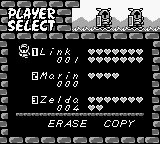
Link’s Awakening’s file select screen, where the musical names are entered.
Enter ZELDA as your name in the English version (or ぜるだ in the Japanese one) and special music plays on the file select screen. LOLO in the French version and MOYSE in the German version each play a tune of their own.
Saving by hand
Nintendo’s list also gives a way to save manually: press and hold A, B, START and SELECT together.
The Triforce on the back
Not on Nintendo’s list, but reviewers soon spotted it: a Triforce on the rear of the case lights up when the handheld is switched on.
Checked against Nintendo UK’s launch-day list and published reviews, November 2026.
Videos & media
Nintendo’s own two trailers for the handheld: the announcement from E3 2021 and the launch trailer.
Nintendo of America’s announcement trailer, first shown in the E3 Nintendo Direct of 15 June 2021.
Nintendo of America’s launch trailer, showing the three games, Vermin, the clock and the timer in action.
Trivia & facts
The inner cardboard tray of the box is the stand. With Auto Sleep switched off, Nintendo suggests leaving the handheld in it as a desk clock.
The charging cable is tucked away inside that tray, which is why at least one reviewer first reported that there was none in the box.
The Japanese logo of Link’s Awakening, Zeruda no Densetsu: Yume o Miru Shima.In Japan the three games go by their original names: Zeruda no Densetsu, Rinku no Bōken (“The Adventure of Link”) and Zeruda no Densetsu: Yume o Miru Shima (“The Dreaming Island”).
Nintendo rates the clock as accurate to within 30 seconds a month at 25°C.
Vermin was the third Game & Watch ever released, on 10 July 1980, after Ball and Flagman. The 2020 Mario handheld had revived Ball; the Zelda one revives Vermin.
Despite sharing a name with it, the device has nothing from the 1989 Zelda Game & Watch. Wikipedia notes that its body follows the old Wide Screen Game & Watch models, with a cross-shaped D-pad added.
The timer goes up to ten minutes and no further.
Japan’s ratings board gave the handheld a CERO B (ages 12 and up); in North America it is rated E.
Media & artwork
The box, the handheld from every side, and screens from each game, the clock and the timer. Select any image to view it larger.
The handheld’s Japanese logo.The handheld’s Traditional Chinese logo.A second version of the English logo.The logo of the Link version of Vermin.Official art of Link for the handheld’s Vermin.Vermin on the handheld.The packaged handheldThe Game & Watch: The Legend of Zelda handheld
Legacy
The Zelda Game & Watch was made as a one-off anniversary piece. At the time of writing it is still the newest entry on Wikipedia’s list of Game & Watch releases.
Release history
Game & Watch: Super Mario Bros.13 November 2020 – A full-colour-screen Game & Watch for Mario’s 35th anniversary, and the template for the Zelda model.
Announced15 June 2021 – In Nintendo’s E3 2021 Nintendo Direct, with its price and date.
Released12 November 2021 – Worldwide, at US$49.99 and ¥5,480.
The same games elsewhere
None of the three adventures is exclusive to the handheld. The Legend of Zelda and Zelda II are in the NES library of Nintendo Switch Online, and Link’s Awakening DX is in its Game Boy library. What the Game & Watch offers that those do not is the black-and-white 1993 version of Link’s Awakening and the Japanese Disk System versions of the first two games, switchable from the same menu.
The 1989 game that first carried the Zelda name on a Game & Watch is a different thing entirely: see Zelda (Game & Watch).
Sales & reviews
Reviews
Nintendo has not published sales figures for the handheld. These are scores from reviews we were able to read ourselves; scores not out of 100 are converted for the bars.
ShacknewsUS · 12 November 2021
9/10
Nintendo LifeUK · 12 November 2021
8/10
StuffUK
4/5
TheSixthAxisUK · 19 November 2021
7/10
The praise was for the object itself and for how much more it holds than the Super Mario Bros. Game & Watch that came before it. Nintendo Life’s Damien McFerran liked the controls and the emulation and thought it better value than the Mario unit, while wishing the buttons sat a little higher on the case and the screen were sharper. Shacknews’ Blake Morse was won over by the clock and by Link’s Awakening, which he called “the real standout”, though he found the charging cable very short and the speaker easy to smother with a finger.
The common complaint was the game list. Nintendo Life and Stuff both missed A Link to the Past, and Stuff noted the lack of a rewind feature. TheSixthAxis called the handheld “the best Game and Watch ever built” but felt the two NES games were showing their age next to Link’s Awakening. Zelda Dungeon, which did not give a score, advised against buying it only to play the games, since they are easier to enjoy elsewhere, but recommended it warmly as a collectable.
Reader reviews
No reader reviews yet. Played it? Give it a score out of 10 and tell other fans what you think.
Every fact on this page was checked against the sources below in November 2026. Zelda Wiki (zeldawiki.wiki) and IGN block automated reading, so they were not used.
To provide the best experiences, we use technologies like cookies to store and/or access device information. Consenting to these technologies will allow us to process data such as browsing behavior or unique IDs on this site. Not consenting or withdrawing consent, may adversely affect certain features and functions.
Functional
Always active
The technical storage or access is strictly necessary for the legitimate purpose of enabling the use of a specific service explicitly requested by the subscriber or user, or for the sole purpose of carrying out the transmission of a communication over an electronic communications network.
Preferences
The technical storage or access is necessary for the legitimate purpose of storing preferences that are not requested by the subscriber or user.
Statistics
The technical storage or access that is used exclusively for statistical purposes.The technical storage or access that is used exclusively for anonymous statistical purposes. Without a subpoena, voluntary compliance on the part of your Internet Service Provider, or additional records from a third party, information stored or retrieved for this purpose alone cannot usually be used to identify you.
Marketing
The technical storage or access is required to create user profiles to send advertising, or to track the user on a website or across several websites for similar marketing purposes.