Short and promotional comics Himekawa, Penny Arcade and Zelden! · 2011–2017
Five small Zelda comics from the 2010s: a Himekawa prequel tucked inside Hyrule Historia, a Chinese-language Ocarina of Time 3D manga, Penny Arcade’s Skyward Sword strip, and a lazy Link who rewinds time to keep playing his 3DS.
Works5
CreatorsAkira Himekawa; Jerry Holkins and Mike Krahulik; Saitaro Komatsu
FirstPenny Arcade’s comic, November 2011
LastZelden!, until 2017
FormatsWeb, book extra, booklet, magazine
Penny Arcade comic
Jerry Holkins and Mike Krahulik; zelda.com, November–December 2011
Skyward Sword comic
Akira Himekawa; in Hyrule Historia (Shogakukan 2011, Dark Horse 2013)
Ocarina of Time 3D manga
Akira Himekawa; Nintendo of Taiwan, 2012 (Chinese)
Link’s Hijinks
Saitaro Komatsu; Nintendo web strips, 2015 (Japanese and English)
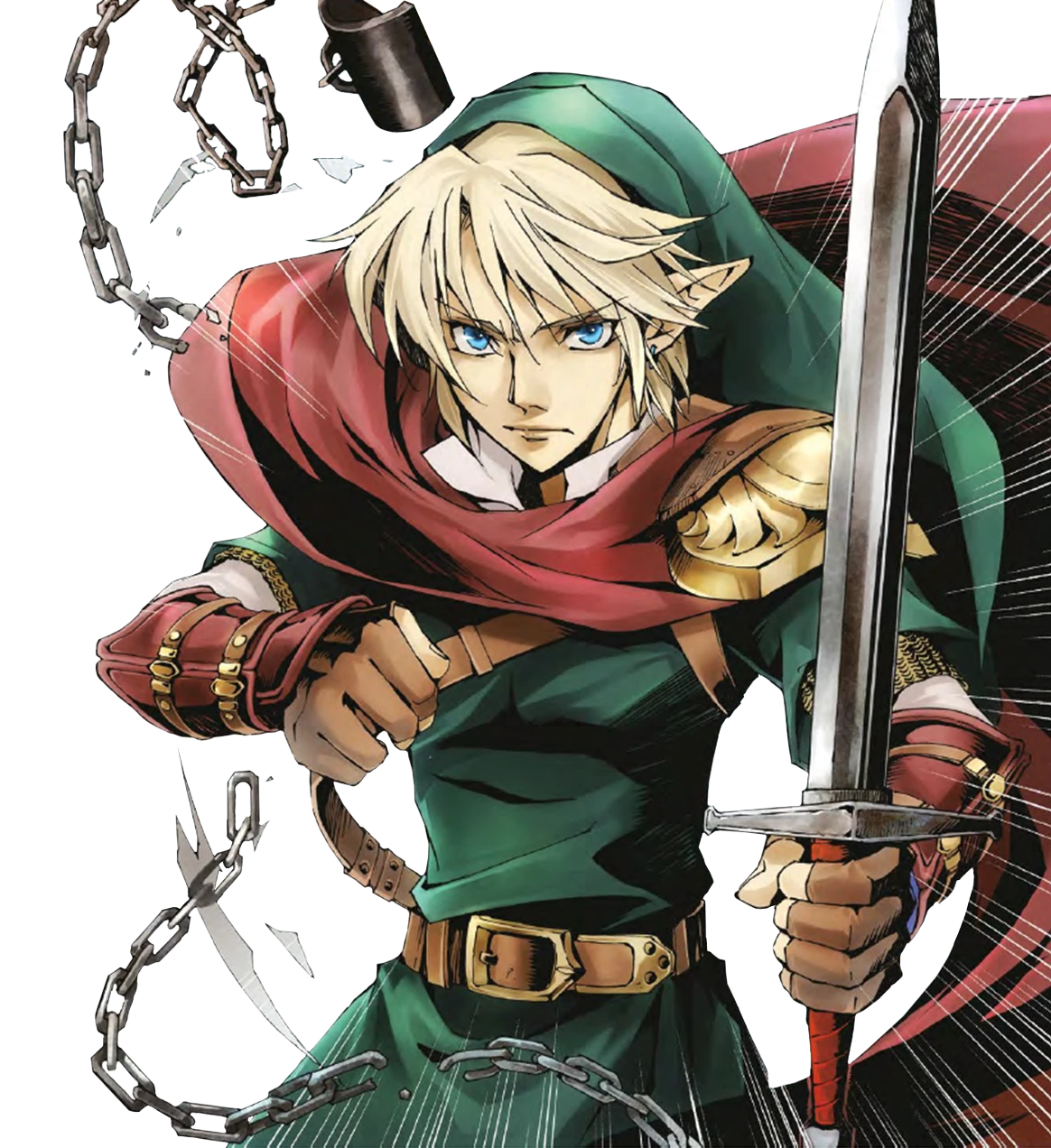
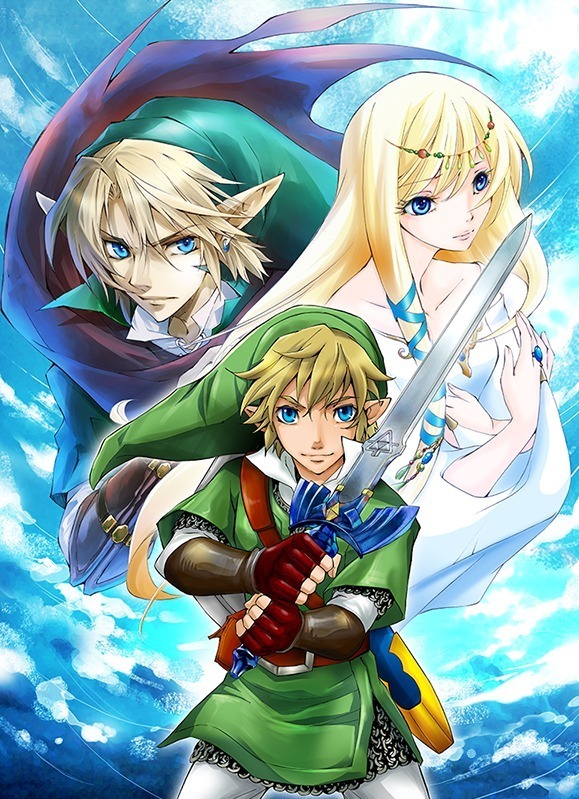
The Chosen Hero, from Himekawa’s Skyward Sword prequel.
This page gathers five short Zelda comics from the 2010s, each made to mark a game or an anniversary. Two are by Akira Himekawa, the pen name of A. Honda and S. Nagano, the duo behind most of the Zelda manga: a Skyward Sword prequel printed inside Hyrule Historia, and a 16-page Ocarina of Time 3D manga made for Chinese-speaking players. One is a five-week web comic by Penny Arcade’s Jerry Holkins and Mike Krahulik, published on Nintendo’s own site for the launch of Skyward Sword. The last two are the work of Saitaro Komatsu: Zelden!, a gag manga in Shogakukan’s Bessatsu CoroCoro Comic Special, and Link’s Hijinks, the web strips Nintendo used to promote Majora’s Mask 3D.
They range from Himekawa’s tragic myth of the first hero to Komatsu’s Link, who uses time travel to dodge his duty. Three began on the web, one is a bonus inside Hyrule Historia and one ran in a children’s magazine.
quite literally a childhood dream come true
Mike Krahulik on drawing the Skyward Sword comic, in Nintendo’s press release
doesn’t speak and Nintendo didn’t want him to even have an internal monologue
Mike Krahulik (Gabe), on Link Penny Arcade news post, November 2011
The comics
Roughly in order of first appearance. Spoilers follow, including the ending of Himekawa’s Skyward Sword comic.
Penny Arcade Presents: The Legend of Zelda: Skyward Sword
Web comic on zelda.com · 15 November – 13 December 2011 · 5 weekly pages · Jerry Holkins (writer), Mike Krahulik (artist)
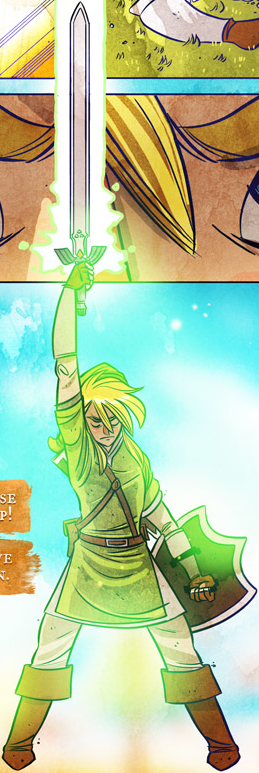
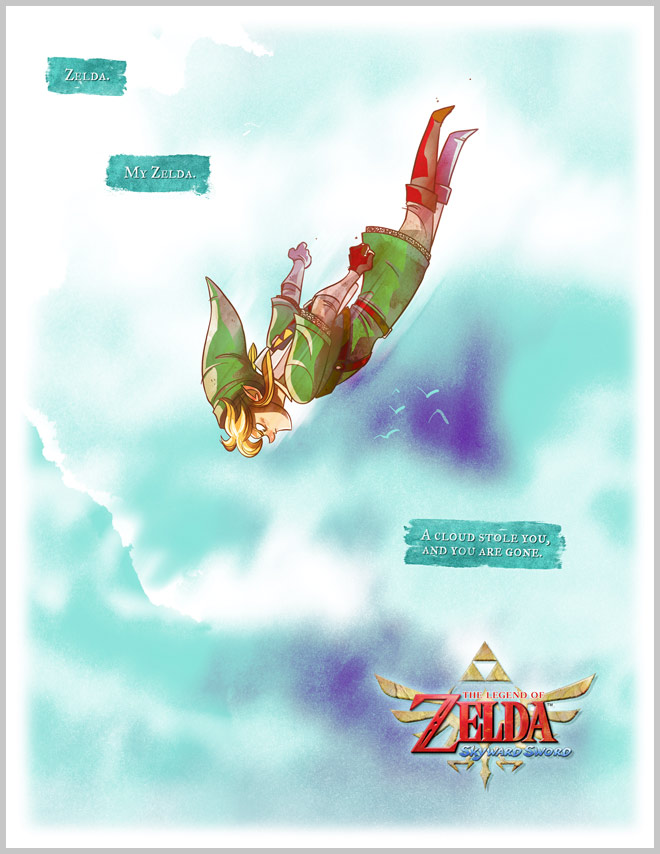
The comic began with a painting. According to Zelda Dungeon, Mike Krahulik, the artist of the Penny Arcade web comic, painted a watercolour of Link, recoloured it on a computer and sent it to Nintendo, where Eiji Aonuma liked it enough for it to lead to an official commission. For the launch of Skyward Sword on 20 November 2011, Nintendo announced the result: a comic by Krahulik and writer Jerry Holkins, one page a week for five weeks on the game’s official site from 15 November to 13 December.
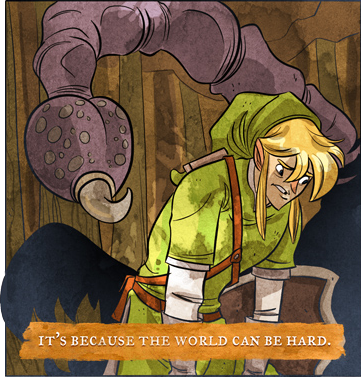
Unlike the duo’s usual strip, it is serious, and its narrator is a surprise. Link does not speak, Krahulik explained in a news post, and Nintendo did not want him to have an inner monologue either, so the voice had to come from someone else. They chose Gaepora, Zelda’s father, so the comic follows Link’s quest through a father’s thoughts after his daughter’s disappearance. It was made for the web, but a printed version was later handed out at WonderCon in 2012, according to two collectors’ catalogues.
From game to page
Gaepora becomes the storyteller: the game never takes us inside his head.
Link stays silent, at Nintendo’s request, without even an inner voice.
The Legend of Zelda: Skyward Sword special comic
Akira Himekawa · in Hyrule Historia: Shogakukan, 21 December 2011; Dark Horse (English), 29 January 2013 · about 32 pages
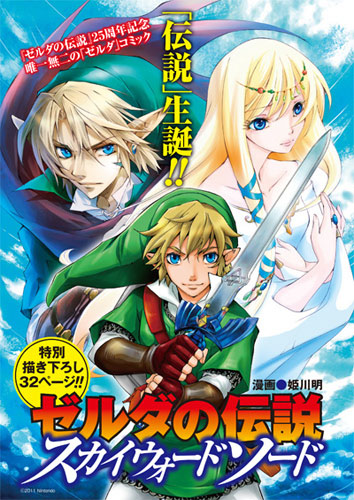
Akira Himekawa’s contribution to Hyrule Historia, Nintendo’s 25th-anniversary history of the series, is a prequel to Skyward Sword. The first pages are set in Skyloft: a boy who will grow up to be Link gazes at a red Loftwing in flight and longs to take to the air. Then the story leaps thousands of years back to the Surface, where his forebear lies chained in prison, battered and resentful, because nobody listened to his warnings and Lord Dagianis framed him. When Demise kills Dagianis, the villagers free the hero to lead them against the demon king.
The goddess Hylia arrives on a Crimson Loftwing, which accepts the hero as its rider once he argues that humans make up in courage for what they lack in divinity. Hylia tells him the gods forged the Master Sword and that he must reforge it himself. Demise still wins the battle and wounds the hero fatally, but together he and the goddess use the sword to send the survivors and the Triforce into the sky. As he dies, Hylia promises to surrender her godhood so that she can be born as a mortal and stand beside him, and the story returns to the boy in Skyloft and the Loftwing coming towards him. Zelda Universe counts 32 pages; Anime News Network said 35.
From game to page
Hylia’s war against Demise is only a legend in the game; here we see it fought, and a human hero fights it with her.
Dagianis, the jailed hero and the villagers who free him exist only in the comic.
The Master Sword is remade by the hero’s own hand.
It gives a reason for Link’s unique red Loftwing: the bond goes back to his forebear.
The Legend of Zelda: Ocarina of Time 3D promotional manga
Akira Himekawa · Nintendo of Taiwan, 2012 · 16 pages, colour · Chinese; free web comic and PDF, printed as a booklet in November 2012
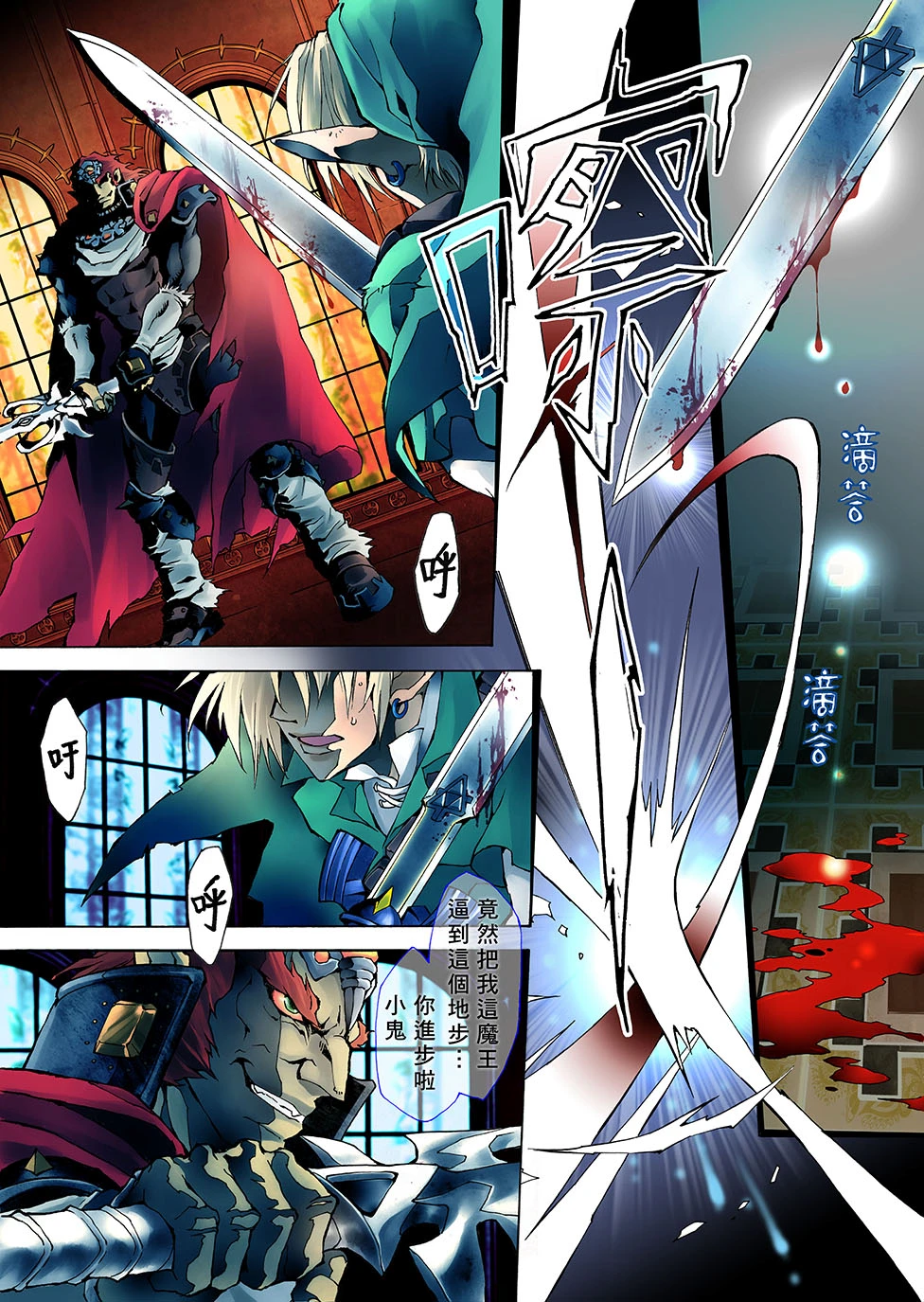
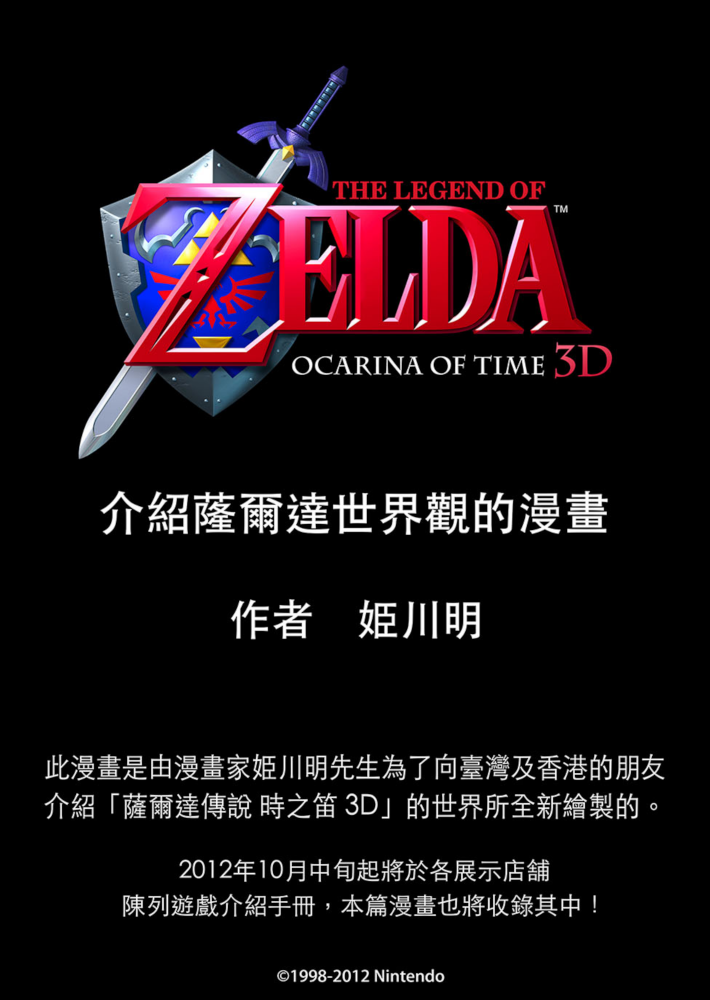
This one was made for Chinese-speaking players. Zelda Dungeon’s wiki says Nintendo commissioned it to promote Ocarina of Time 3D in Taiwan and parts of China, and that Nintendo of Taiwan published it free on its website as a downloadable PDF, entirely in Chinese, with a printed booklet following that November. It runs to 16 colour pages in a new style, quite different from the duo’s Ocarina of Time manga of 2000.
Zelda Dungeon’s report on a 2012 fan translation says that Link tells the story looking back, that the emphasis falls on his relationship with Zelda and that it ends on a cliffhanger; Zelda Universe felt the story had grown much darker. Separately, the Fandom wiki records a Himekawa comic “loosely based” on the game in the Ocarina of Time 3D instruction manuals sold in Hong Kong and Taiwan, dated 27 October 2012. It is probably the same comic, but we have not been able to compare them.
Compared with the 2000 manga
A new art style, and in colour.
Narrated by Link, looking back on events.
Built around Link and Zelda rather than the whole quest.
Web
Link’s Hijinks
Saitaro Komatsu · Nintendo’s Japanese website, 13 and 25 February 2015 · English on Play Nintendo from 7 August 2015 · web only
On 13 February 2015, to coincide with the release of Majora’s Mask 3D outside Japan, Nintendo’s Japanese news site posted the first of two short strips, with the second following on 25 February. In the first, the Moon is about to crash into Termina and Link reaches for the Ocarina of Time and turns back the clock, not to save anyone but to squeeze in more time on his Nintendo 3DS. In the second, Tatl tries to get him back to work by introducing him to masks, which backfires when he becomes so absorbed in trying them on that he forgets about the Moon.
Nintendo translated the strips as Link’s Hijinks and posted them on its Play Nintendo site from 7 August 2015, with Tingle presenting each part; we have found two parts there. The English strips were web-only; Nintendo Life says the comic originally featured in CoroCoro, but we have not found which issue, if any, printed these two strips.
From game to page
Link owns a 3DS, and the game’s three-day cycle becomes an excuse for skiving.
Tatl, the game’s reluctant guide, is reduced to trying to bribe him back to the quest with masks.
Manga
Zelden!
Saitaro Komatsu · Shogakukan, Bessatsu CoroCoro Comic Special, 2015–2017 · Japanese only
In Japan, Komatsu’s Link had a home in print. Zelden! ran in Shogakukan’s Bessatsu CoroCoro Comic Special from 2015 to 2017, and the Fandom wiki identifies it as the Japanese original of Link’s Hijinks. Sources disagree about its subtitle: the Japanese Wikipedia list of Zelda works gives Nariyuki Yūsha Link-kun, the Fandom wiki Narikiri Yūsha Link-kun.
The same magazine had printed Zelda one-shots by Toshihiro Ono (1992) and Masato Fujiaka (1993), covered on our early Japanese manga page. Beyond that, the record is thin. How many chapters it ran to, and whether it was ever collected in a book, we have not been able to find out.
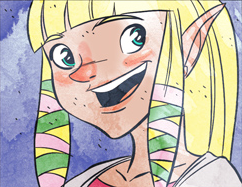
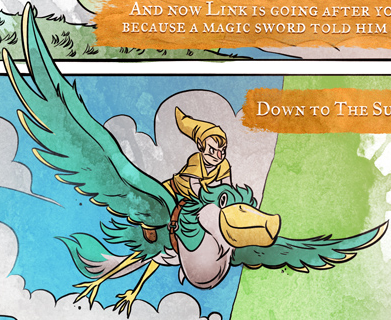
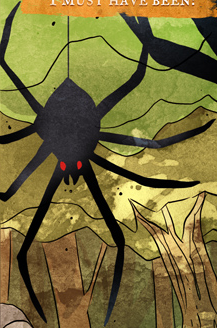
Zelda, drawn by Krahulik for the Penny Arcade comic.Pipit, by Krahulik.A Skulltula, by Krahulik.Moldarach, by Krahulik.
Where they appeared
Comic
First appeared
Format
Language
Penny Arcade Skyward Sword
zelda.com, 15 November – 13 December 2011
Web comic, five pages; printed giveaway at WonderCon 2012
English
Himekawa Skyward Sword
Hyrule Historia: Shogakukan, 21 December 2011; Dark Horse, 29 January 2013
Bonus comic, about 32 pages
Japanese, English
Himekawa Ocarina of Time 3D
Nintendo of Taiwan website, 2012; booklet, November 2012
Web comic and PDF, 16 colour pages; probably also in the HK and Taiwan manuals
Chinese
Link’s Hijinks
Nintendo’s Japanese site, 13 and 25 February 2015; Play Nintendo, from 7 August 2015
Web strips
Japanese, English
Zelden!
Bessatsu CoroCoro Comic Special, 2015–2017
Magazine serial; no book collection confirmed
Japanese
The Hyrule Historia comic is the easiest to find today, in every copy of the book. At the time of writing, both parts of Link’s Hijinks that we found are still on Play Nintendo, where Tingle introduces the first with a question: “What would you do if you could travel in time?”
Trivia
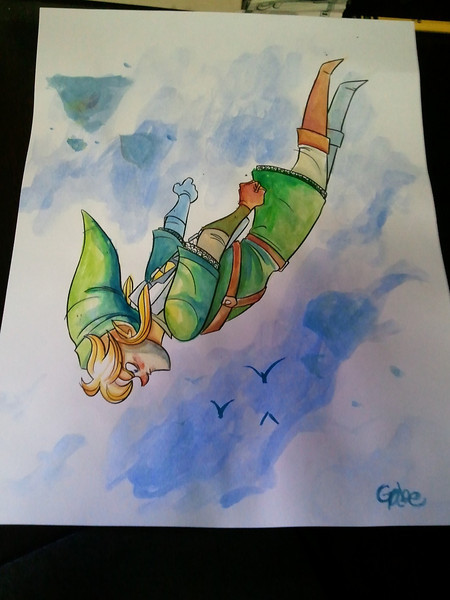
Hand-drawn artwork by Krahulik for the comic.The Penny Arcade comic’s weekly drip-feed frustrated at least one fan. ComicAttack’s reviewer likened it to working through a great novel at the rate of one sentence a day.
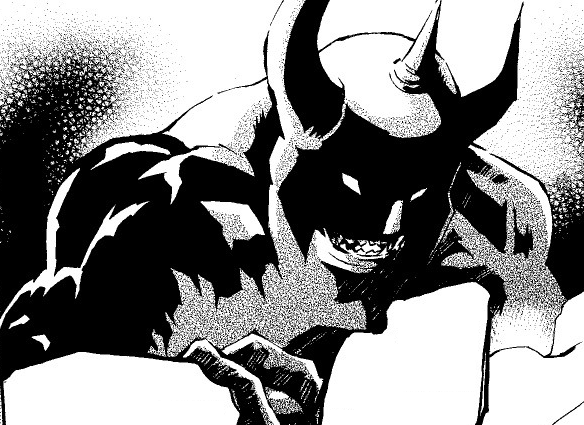
Demise, in Himekawa’s Skyward Sword comic.Zelda Universe’s Meredith Lord loved Himekawa’s art in the Skyward Sword prequel but called the story “a bit of an undercooked mess”, squeezed into too few pages, and wondered whether the experience fed into the duo’s much longer Twilight Princess manga.
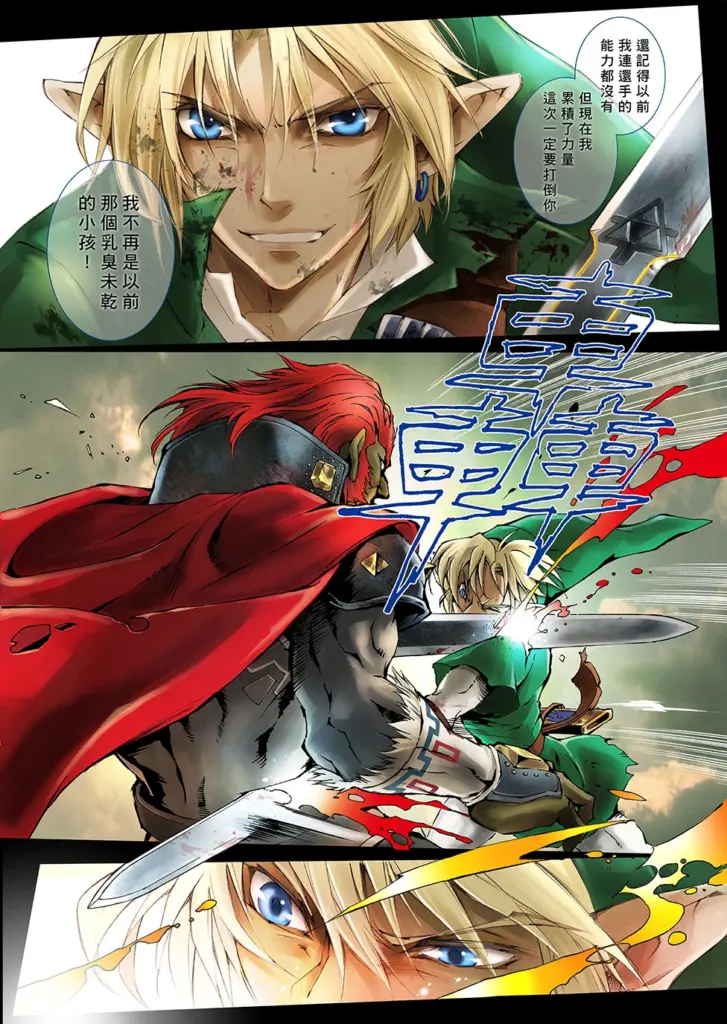
Zelda Wiki holds sixteen images of the Ocarina of Time 3D manga, a cover and fifteen pages, which matches the 16-page count Zelda Dungeon gives.
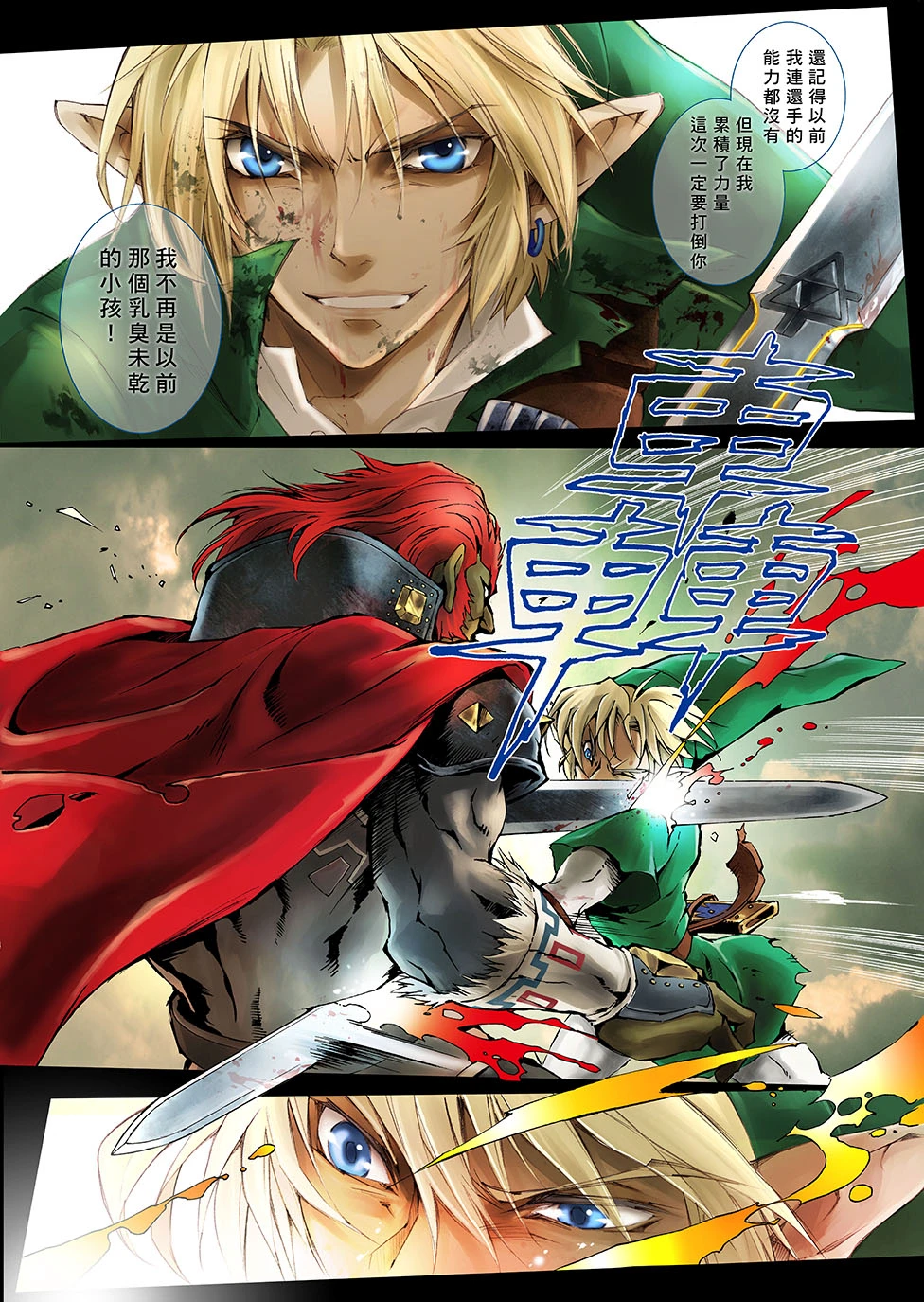
Page 2 of the Ocarina of Time 3D manga.An English fan translation of the Ocarina of Time 3D manga was circulating by the end of September 2012, before the printed booklet came out.
Tingle presents both parts of Link’s Hijinks on Play Nintendo. The second asks readers which mask they would choose to wear.
In Link’s Hijinks Link plays a Nintendo 3DS inside Termina: a Nintendo comic, advertising a Nintendo game, with a Nintendo console as the joke.
Further reading: Zelda Temple research dossier (sources listed inside)
Manage Consent
To provide the best experiences, we use technologies like cookies to store and/or access device information. Consenting to these technologies will allow us to process data such as browsing behavior or unique IDs on this site. Not consenting or withdrawing consent, may adversely affect certain features and functions.
Functional
Always active
The technical storage or access is strictly necessary for the legitimate purpose of enabling the use of a specific service explicitly requested by the subscriber or user, or for the sole purpose of carrying out the transmission of a communication over an electronic communications network.
Preferences
The technical storage or access is necessary for the legitimate purpose of storing preferences that are not requested by the subscriber or user.
Statistics
The technical storage or access that is used exclusively for statistical purposes.The technical storage or access that is used exclusively for anonymous statistical purposes. Without a subpoena, voluntary compliance on the part of your Internet Service Provider, or additional records from a third party, information stored or retrieved for this purpose alone cannot usually be used to identify you.
Marketing
The technical storage or access is required to create user profiles to send advertising, or to track the user on a website or across several websites for similar marketing purposes.