Early Japanese Zelda manga Ten books and one-shots · 1986–1993
Before Akira Himekawa, Zelda manga meant Famicom strategy comics, a talking parrot, a half-elf Link with a royal secret and a handful of magazine one-shots that were read once and never reprinted.
Works10: six books or series, two magazine one-shots, a magazine comic and one 1993 paperback
GamesThe Legend of Zelda, Zelda II, A Link to the Past, Link’s Awakening
In EnglishNone published; several fan translations
Original titles
Zelda no Densetsu (ゼルダの伝説); Link no Bōken (リンクの冒険); Zelda no Densetsu Gaiden: Kwōku to Yōsei Joō (ゼルダの伝説外伝 クォークと妖精女王); Yume o Miru Shima (夢をみる島); Kamigami no Triforce (神々のトライフォース)
Artists
Shinji Hikino (ひきの真二) and Tadashi Makimura (槙村ただし); Kobayashi Sho, also read Susumu (こばやし将); Ranmaru (乱丸); Daisuke Shigoto (しごと大介) and Yū Minazuki (みなづき由宇); Yuu Mishouzaki; Toshihiro Ono; Masato Fujiaka; Junko Taguchi
Publishers
Tokuma Shoten (わんぱっくコミックス, Wanpaku Comics); Shogakukan (Shōgaku Ninensei 小学二年生, Bessatsu CoroCoro Comic Special 別冊コロコロコミックSpecial); JICC Shuppankyoku (JICC出版局), later Takarajimasha (宝島社)
None known; the two CoroCoro one-shots and the last part of Ranmaru’s Link no Bōken were never collected
Overview
Link, as drawn for The Legend of Zelda (official artwork).
The first Zelda manga appeared within months of the first game. The Legend of Zelda went on sale for the Famicom Disk System in February 1986, and by the summer Japanese children could read about Link in one of Shogakukan’s learning magazines and in the game-comic books of Tokuma Shoten’s Wanpaku Comics label. Over the next seven years at least ten Zelda manga followed, and none of them has ever been published in English.
They are a mixed bunch. Some are strategy comics, part story and part walkthrough, made to help young players through a game that gave away almost nothing. Some are proper adventures: Ranmaru’s 1986 book gives Link a greedy talking parrot and a village boy for company and lets both Link and Zelda die before the end, and its Zelda II sequel ran to a third part that was never collected. Yuu Mishouzaki’s 1989 book throws the game’s story away entirely and makes Link a half-elf gardener with a royal secret. And two artists, one of whom would later draw Pokémon, made one-shots for Shogakukan’s Bessatsu CoroCoro Comic Special that appeared once and were never seen again.
Facts about these books are thin on the ground. Most are long out of print and hard to find, the publishers’ own records are not online, and fans are still finding and scanning them; the History of Hyrule blog in particular has dug up a great deal since 2021. Where the sources disagree (and they often do) we say so.
Ataru Cagiva’s Link’s Awakening and A Link to the Past series (1994–96) and Oath of Riruto (1994–97) have their own pages, and the choose-your-path gamebooks of the same years are covered with the gamebooks and novels.
The manga, one by one
In date order. The covers are Zelda Wiki’s files; two works have no picture at all, and the cover of Ranmaru’s first book is shown at the top of the page.
Famicom manga Zelda no Densetsu (Shōgaku Ninensei)
Shogakukan, Shōgaku Ninensei (“Second Grade”), 1 July 1986 · 16 pages · art by Shinji Hikino, composition by Tadashi Makimura
The oldest Zelda comic we know of was a 16-page comic in Shogakukan’s learning magazine for seven- and eight-year-olds, published about four months after the game. It is a very simple choose-your-path story: now and then the reader picks A or B and turns to a different page. Its real job is to teach the game. Link takes a feeble sword from the old man in the cave and learns that he will need more heart containers before he can carry a better one; he is told to pick up a candle, arrows, bait and a blue ring, and buys a magical shield; he visits fairy fountains and learns where to buy potions, while the captions explain Rupees and bombs. Then he works through all nine labyrinths, past Aquamentus, Dodongo, Manhandla, Gleeok, Digdogger and Gohma, beats Ganon on Death Mountain and rescues Zelda.
The History of Hyrule blog, which published scans and a translation in 2022, calls it incredibly rare and praises how closely the art matches the game, Ganon included, at a time when official pictures of his face were scarce. The last panel trails the next issue’s Famicom manga, Star Soldier.
From game to page
A straight walkthrough of the first quest in story form, with the reader choosing some of Link’s moves.
No new characters; the old man, the merchants and the fairies are all from the game.
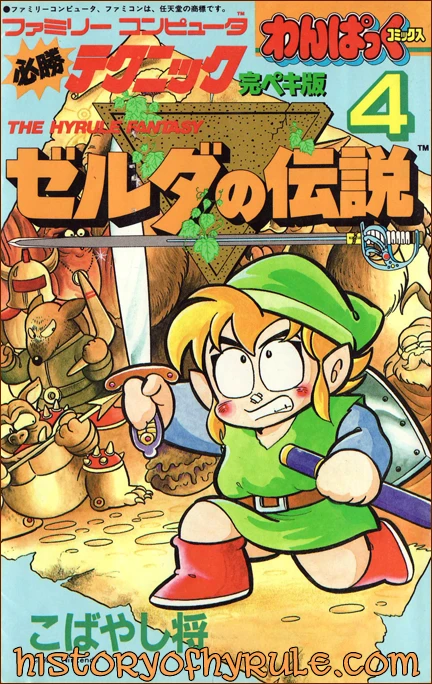
The Hyrule Fantasy: Zelda no Densetsu (Kobayashi Sho)
Tokuma Shoten, Wanpaku Comics · 15 July 1986 · 1 volume · Japan only
Tokuma Shoten’s Wanpaku Comics label specialised in manga built around Famicom games, and its first Zelda book is the work of Kobayashi Sho, whose name is also read Susumu (Zelda Wiki files it as “Susumu”). According to the History of Hyrule blog it came out on 15 July 1986 as a single volume that mixes a story with a strategy guide, in the Wanpaku manner. It has never been translated, and we have found no plot summary, so we cannot say how its story runs.
Kobayashi was a Wanpaku regular. He had been the last assistant of Mitsuteru Yokoyama, the creator of Tetsujin 28, drew game adaptations such as Valis and Dead Zone for Wanpaku, and contributed art to Tokuma’s 1986 Zelda guide Hisshō Hintbon. Japanese Wikipedia lists a 1986 Tokuma title, Hisshō Technique Kanpeki-ban 4: Zelda no Densetsu, in the Wanpaku strategy series; it may be this book, but we have not been able to confirm that.
Sep 1986
The Hyrule Fantasy: Zelda no Densetsu (Ranmaru)
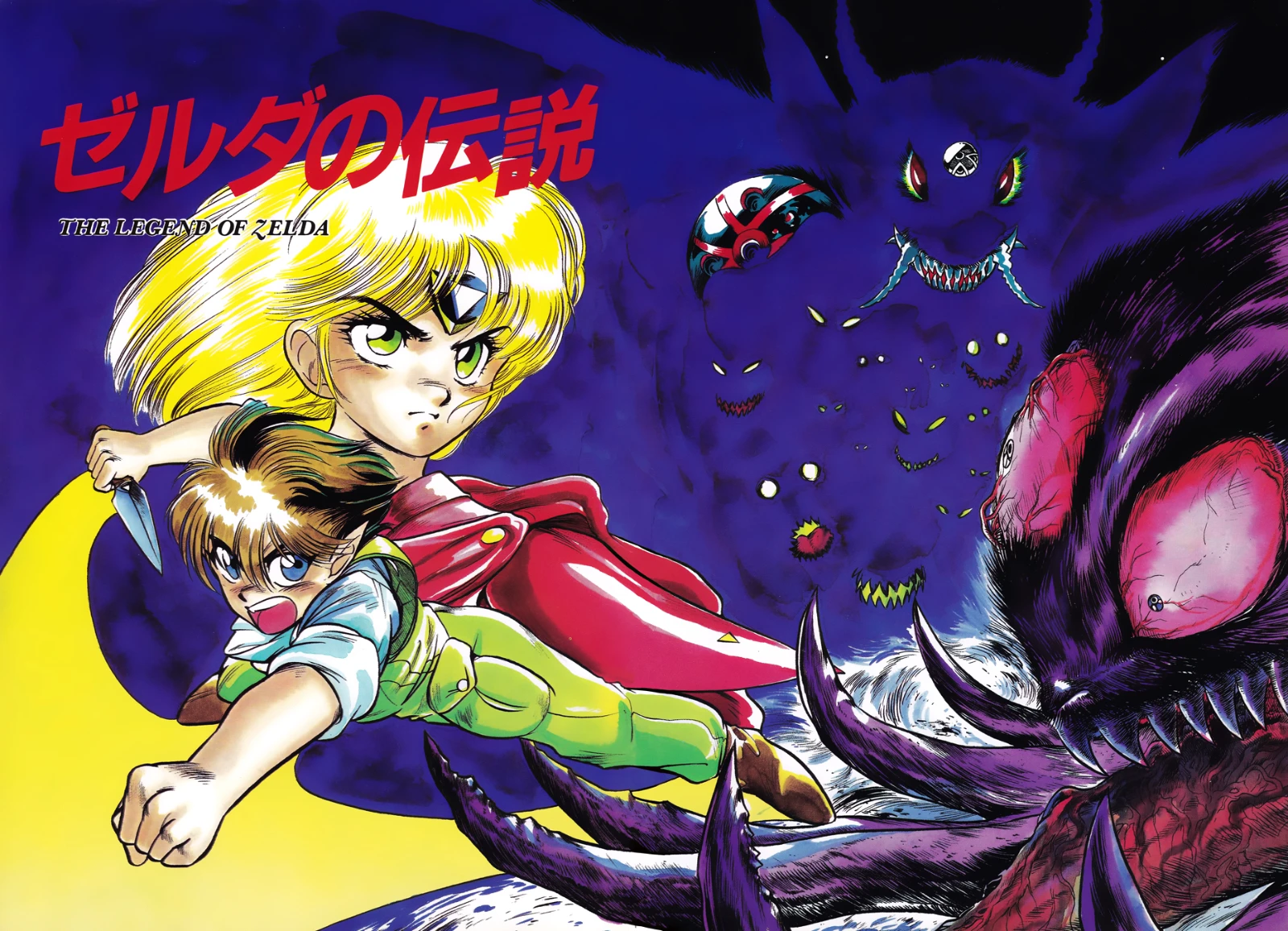
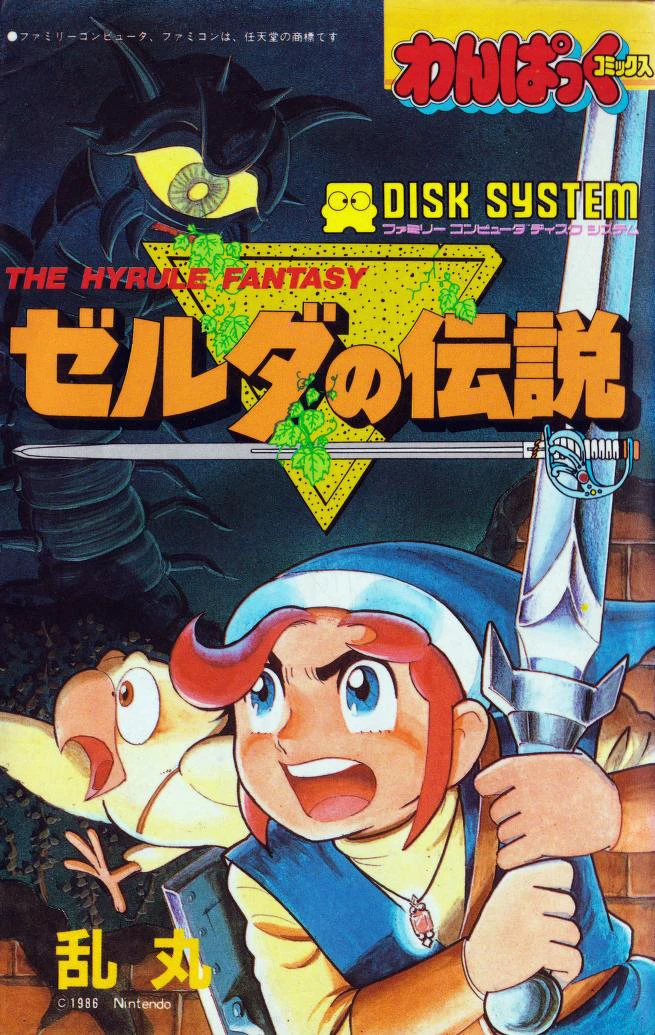
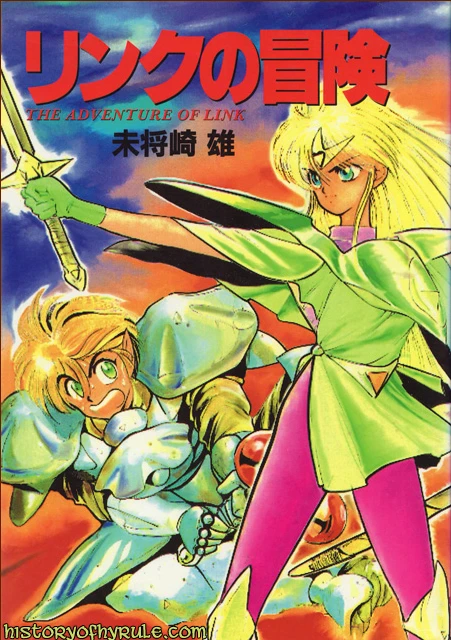
Tokuma Shoten, Wanpaku Comics · September 1986 · 194 pages · 1 volume · cover shown at the top of this page
The best known of the early books, and the first of a four-volume saga, is by the artist known as Ranmaru (also written Ran Maru, and Maru Ran in some English sources). It follows the game’s quest but fills the empty map with villages and people. Ganon has captured Zelda, who will not give up the Triforce of Wisdom, and his monsters mortally wound Impa; before she dies she gives Link a magic pendant and sends him to find the Old Man. With his companion Watto, a greedy talking parrot, Link learns that Zelda split the Triforce into eight pieces, and sets off with sword and shield to find them.
The quest is far rougher than the game’s. Hekuraresu, a giant who had helped a village, is killed in the first labyrinth. The leader of a band of Lynels kills Link, and Watto and the Old Woman carry his body to a fairy fountain, where Zelda gives him one last chance and the fairies bring him back to life. Watto, sipping the water for his sore throat, grows to ten times his size, and the Old Woman gives Link the Water of Life. A village boy, Birī, guides him to the remaining pieces and later rallies the villagers to storm Ganon’s castle while Link faces Ganon alone and finishes him with the Silver Arrow. Ganon has already killed Zelda, though, and it takes the pendant and both Triforces to bring her back.
From game to page
Watto, Birī, Hekuraresu and a boar-like general Link calls “the Pig” are all inventions of the manga.
Impa dies in the first pages, and both Link and Zelda die and are revived: nothing of the sort happens in the game.
Zelda speaks to Link through visions from her prison, and the Old Man and Old Woman have far more to say than in the game.
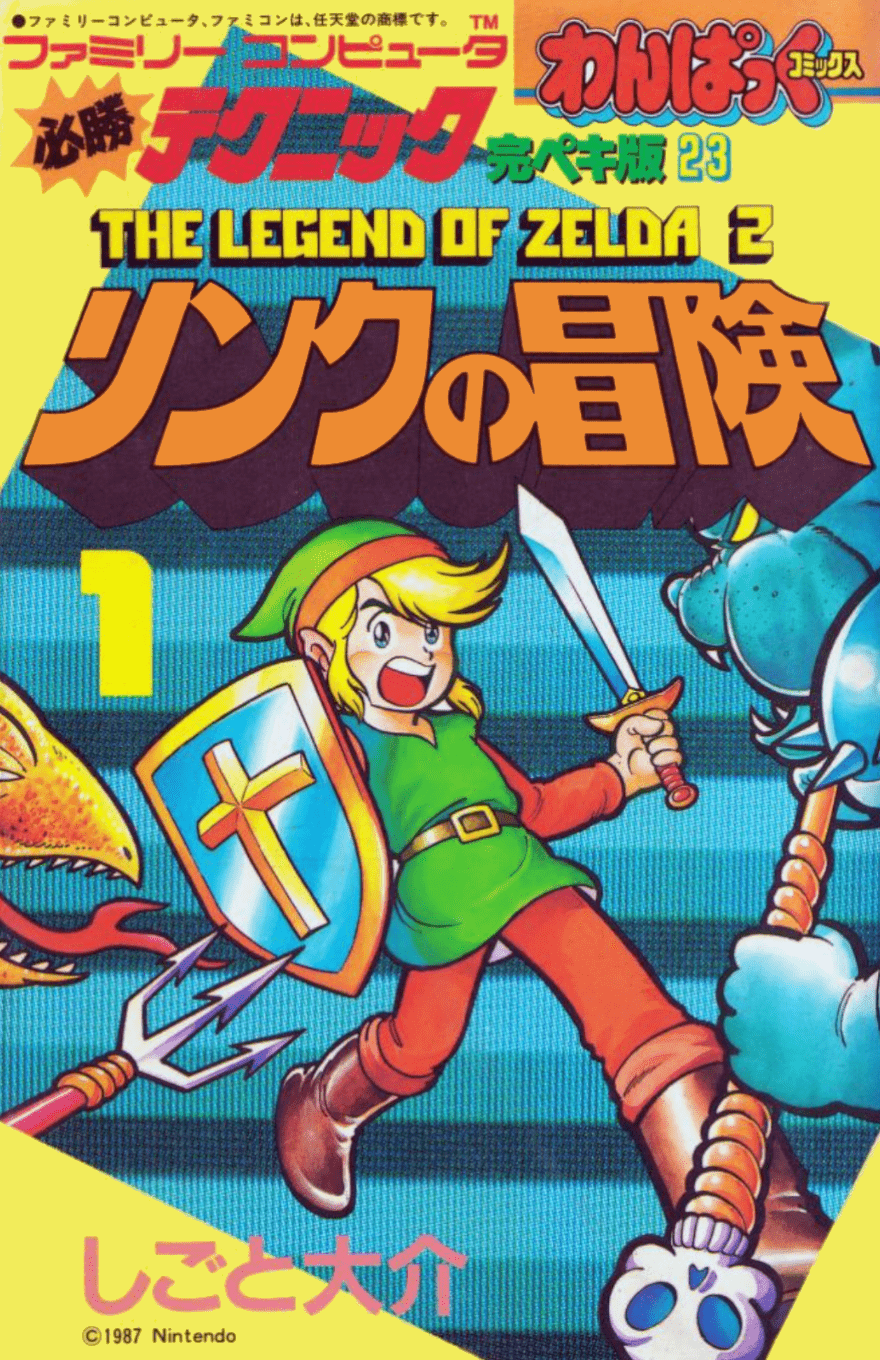
Link no Bōken, the Wanpaku strategy manga (Shigoto and Minazuki)
Tokuma Shoten, Wanpaku Comics · 1987 (TheVideoGameLibrary) or 1988 (Zelda Dungeon) · 3 volumes of about 190 pages each
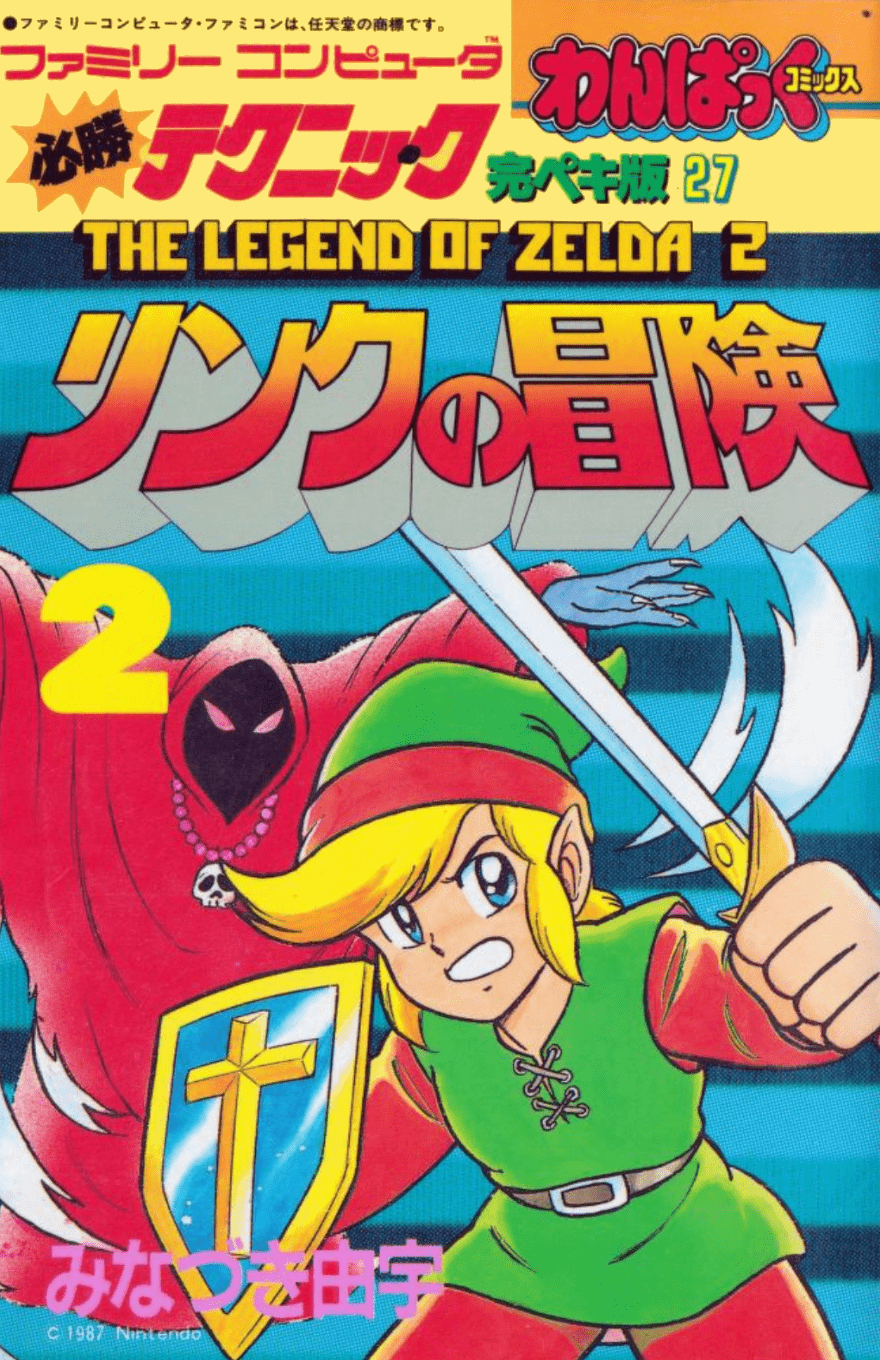
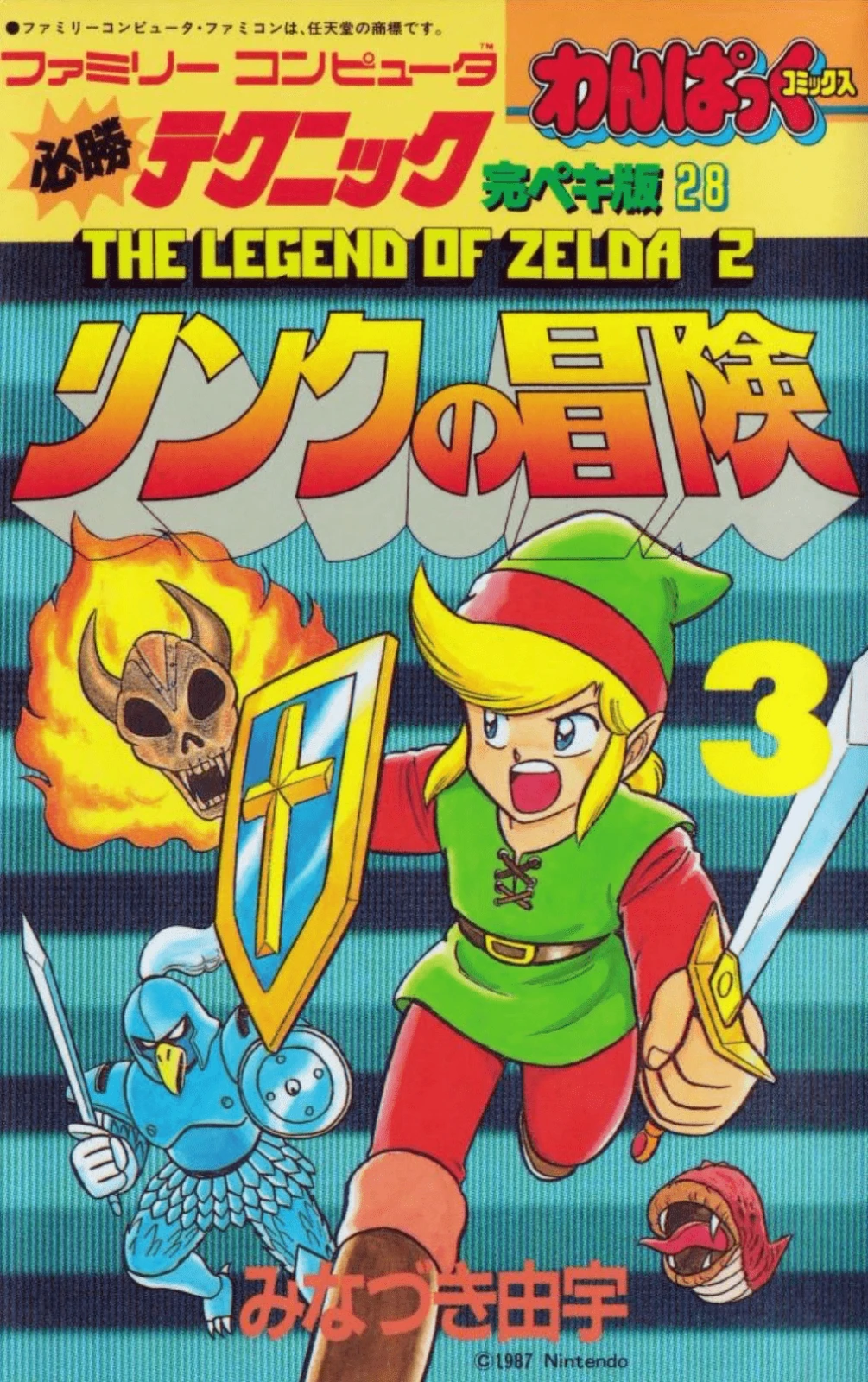
Zelda II came out in Japan in January 1987, and Wanpaku Comics gave it a three-volume strategy manga. Who drew which volume depends on the source. Zelda Dungeon and Zelda Wiki credit all three to Daisuke Shigoto; the History of Hyrule blog credits Shigoto with volume 1 and Yū Minazuki, another Wanpaku artist, with volumes 2 and 3; and TheVideoGameLibrary names both on volume 3. Zelda Dungeon gives the label as “One Pack Comic”, which looks like a reading of the same Wanpaku imprint name.
Japanese Wikipedia lists a three-volume Hisshō Technique Kanpeki-ban: Link no Bōken from Tokuma, part of the strategy series to which both artists contributed, and this is very likely the same set; Wikipedia dates it to 1986, which cannot be right for a Zelda II book. We have found no account of the story, so we leave it there.
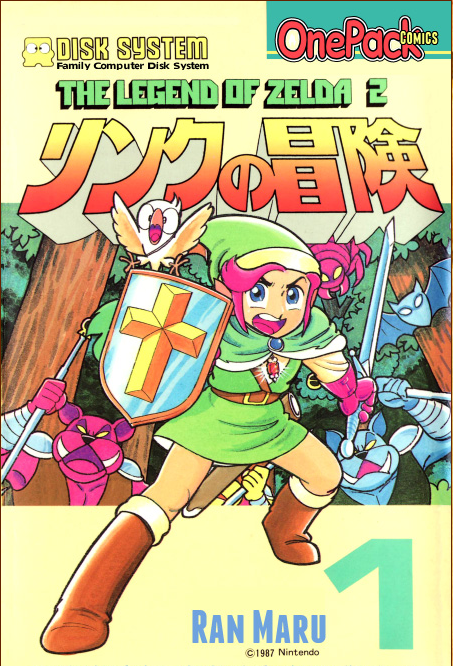
The Legend of Zelda 2: Link no Bōken (Ranmaru)
Tokuma Shoten, Wanpaku Comics · 1987–1988 · 2 volumes in book form (vol. 1: 194 pages), final part serialised February–August 1988 and never collected
Ranmaru continued the story with Zelda II, and this time there was room to spread out. Some time after the first book, Link returns to Hyrule when a mysterious mark appears on his hand, and sets out to wake the sleeping Zelda of legend with the complete Triforce. Familiar faces have moved on: Birī now serves in Zelda’s guard, Watto has become Sir Watt, with a wife and three children (one of whom, Pott, joins Link for a while), and Impa’s place is taken by Zelda’s head attendant, Wampa. The quest through the palaces brings a crowd of new characters, among them Gump, a wolf-like swordsman who teaches Link the downward thrust.
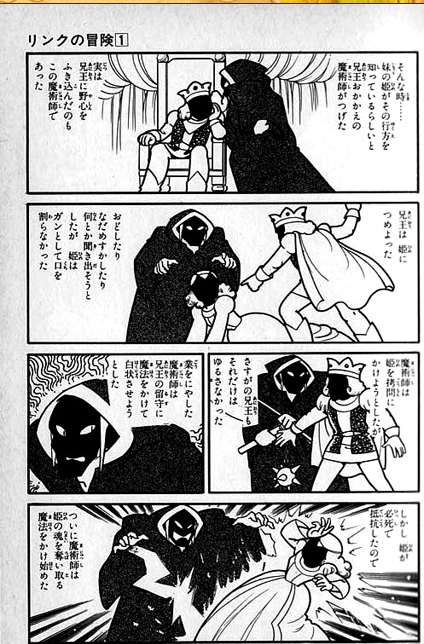
Behind it all, monsters led by a masked man on Death Mountain are working to bring Ganon back. The masked man turns out to be Ganon’s original human self; centuries earlier he was the magician who cursed the first Zelda. Ganon is partly revived with Zelda’s blood, Zelda herself dies, and in the final part Link fuses the Triforce with his sword, cuts off Ganon’s wings and buries him under a boulder. That last part ran in Wanpaku’s magazine from February to August 1988 but never became a book, because the magazine closed first; fans have been tracking down the issues ever since.
From game to page
The game’s backstory (the sleeping Zelda, the prince, the magician) becomes the plot, and the magician is revealed as Ganon in human form.
Ganon is brought back with Zelda’s blood; in the game the threat is that his followers will use Link’s.
Town sages, palace guardians and Bagu all appear, often with names and personalities of their own.
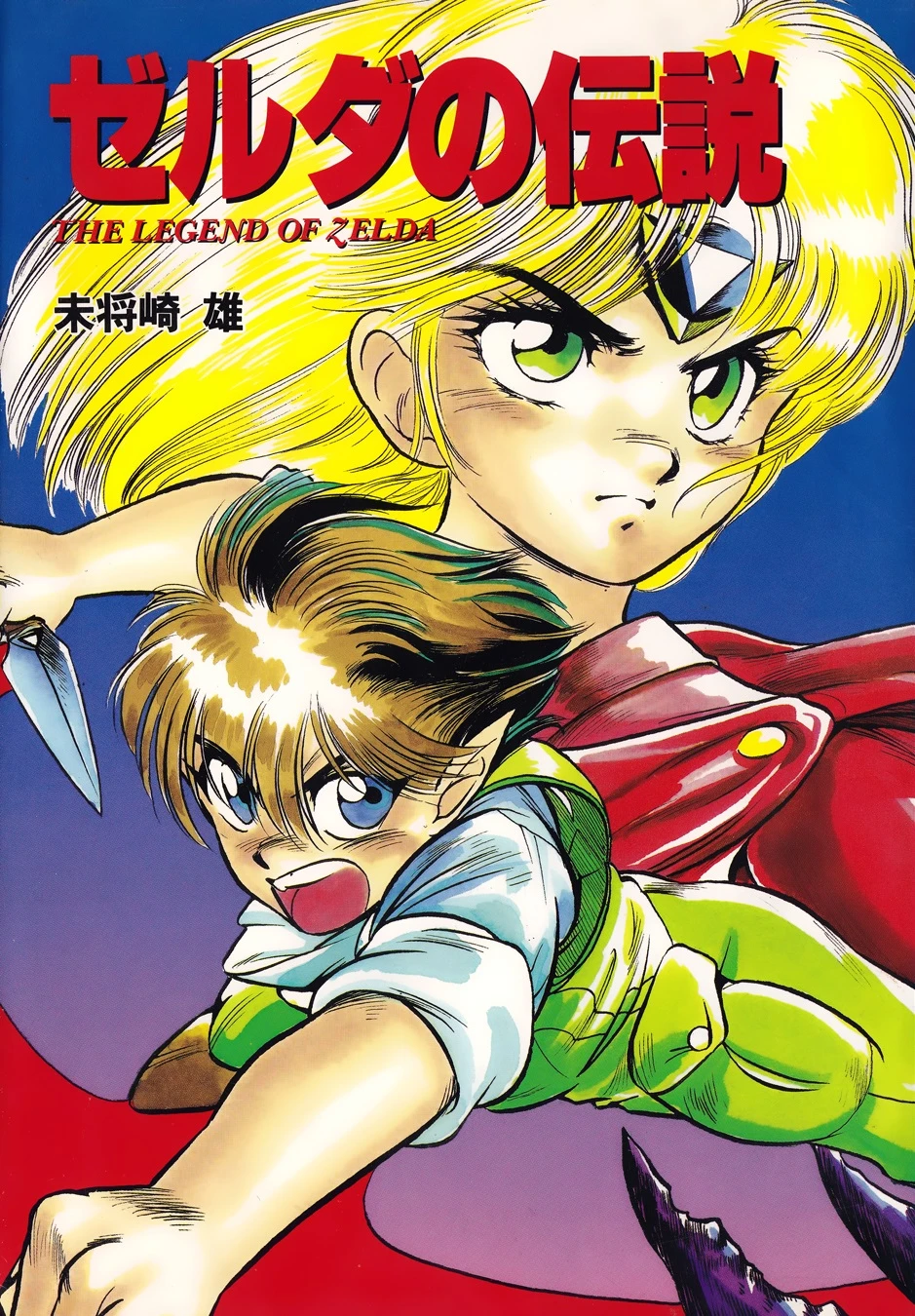
Zelda no Densetsu (Yuu Mishouzaki)
JICC Shuppankyoku · September 1989 · 200 pages (210 per TheVideoGameLibrary) · ISBN 4-88063-627-4
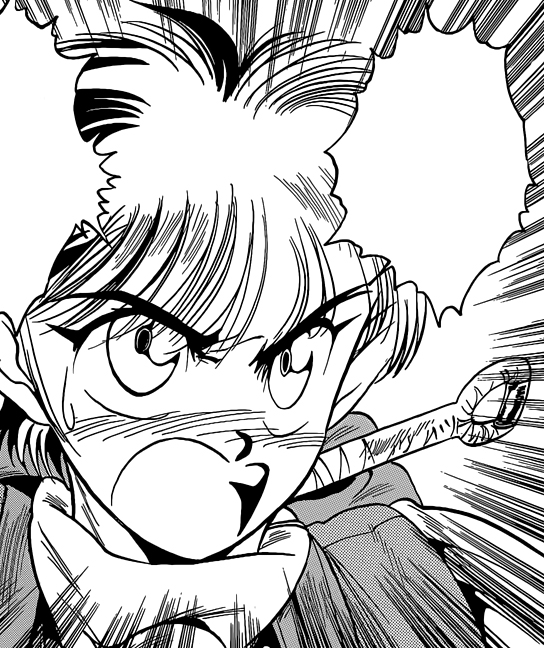
Three years after the game, JICC Shuppankyoku (renamed Takarajimasha in 1993) published a Legend of Zelda manga that keeps the names and the quest and changes almost everything else. Yuu Mishouzaki’s Link is an apprentice gardener at Hyrule Castle, a half-elf with pointed ears who is older than he looks. His secret is bigger than his ears: he is the son of Princess Zelda XVI and Rune, an elf warrior, raised as an orphan by Impa (here a much younger woman) because the king hates elves. That makes the current princess, Zelda XVII, his half-sister, and Link, who has a crush on her, never finds out.
When Ganon carries Zelda XVII off, the king sends his army after her, against Impa’s advice, and more than half of it is destroyed by demons and life-draining magic. Link has to gather the pieces of the Triforce of Wisdom on his own, helped, Impa suspects, by his royal blood. Zelda is no passive prisoner: she turns the Triforce’s power on Ganon and blinds him. Zelda Universe, reporting GlitterBerri’s fan translation in 2010, warned readers not to expect a faithful adaptation, and it is not one.
From game to page
Link is half-elf, half-human, the secret son of the previous Zelda: the games give him no parents at all.
Zeldas are numbered (XVI and XVII), and a hostile King of Hyrule appears; the first game shows neither.
The Goriyas become a pair of humanoid demon brothers rather than the game’s boomerang-throwing dog-men.
Zelda no Densetsu: Link no Bōken (Yuu Mishouzaki)
JICC Shuppankyoku · August 1991 · 208 pages · ISBN 4-7966-0191-0
Mishouzaki’s sequel arrived more than four years after Zelda II itself and, like his first book, tells an original story rather than retelling the game; it is set several years after the 1989 volume. The villain is Link’s own Shadow, which in the end turns into Ganon in the depths of the Great Palace. According to TV Tropes, the Shadow also tries to devour Kana, Rune’s sister and so Link’s aunt, impersonates Link at her door, and corrupts his sword.
We have not found a fuller synopsis, so we have kept to that outline. Like its predecessor, the book was never published in English, though a fan translation circulates.
From game to page
Link’s Shadow, the final opponent of Zelda II, becomes the story’s main villain and Ganon’s vessel.
The elf family from the first book carries on, so the manga keeps its own continuity rather than the game’s.
Feb 1992
Zelda no Densetsu Gaiden: Kwōku to Yōsei Joō (Toshihiro Ono)
Shogakukan, Bessatsu CoroCoro Comic Special, February 1992 issue (on sale around late December 1991) · one-shot · never reprinted
“Kwōku and the Fairy Queen” is a gaiden, a side story, written and drawn by Toshihiro Ono as a promotion for A Link to the Past, released in Japan in November 1991. It is an original story set alongside the game’s plot rather than a retelling of it, and it was Ono’s first professionally published manga. Five years later he began Pokémon: The Electric Tale of Pikachu in the same magazine.
That is almost all that is known. The one-shot was never reprinted in a book, Zelda Wiki has no picture of it, and no description of the story has turned up, so we cannot tell you who Kwōku is.
Zelda no Densetsu: Yume o Miru Shima (Masato Fujiaka)
Shogakukan, Bessatsu CoroCoro Comic Special, August 1993 issue (on sale around late June 1993) · one-shot · never reprinted
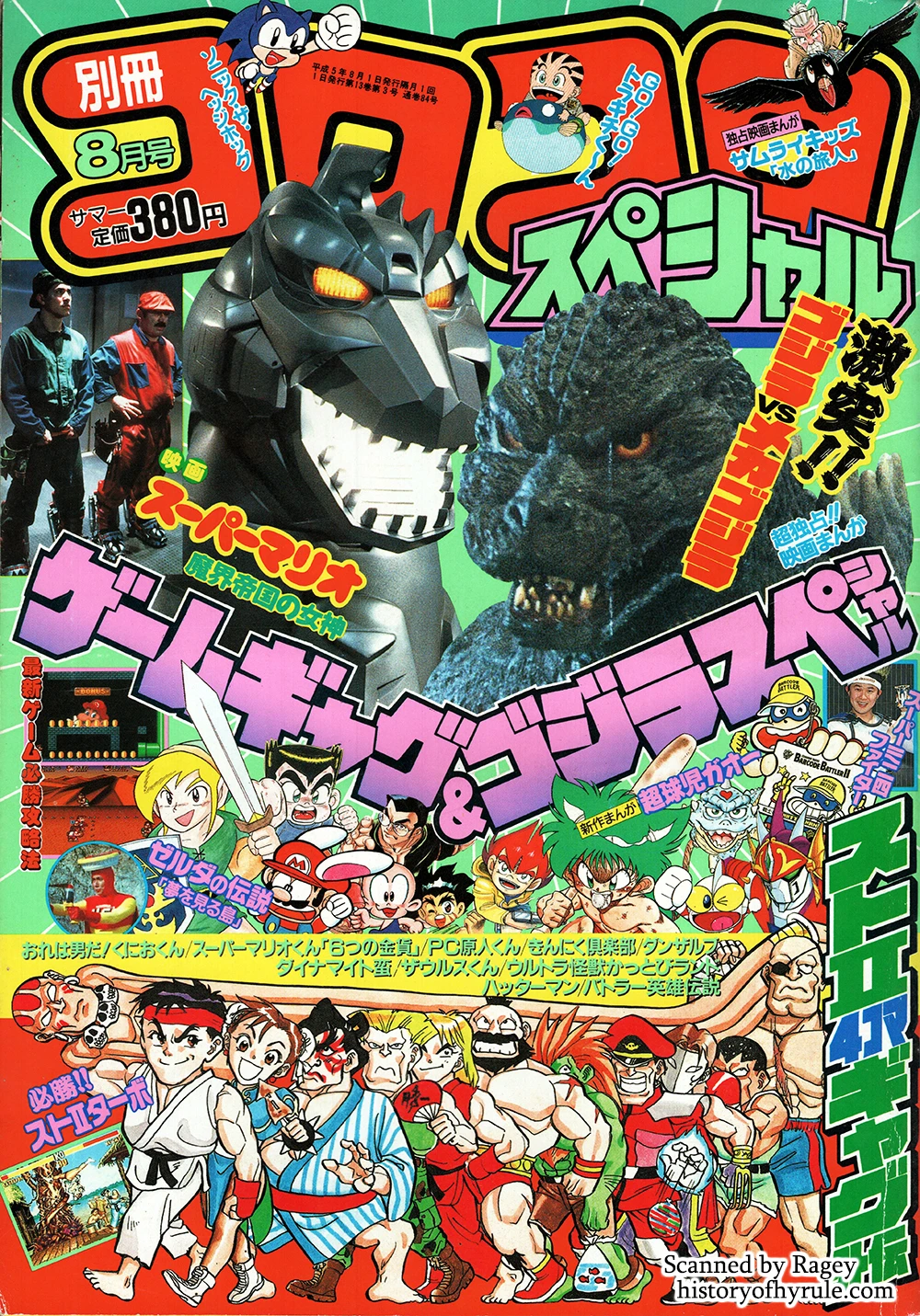
Link’s Awakening (Yume o Miru Shima, “The Island That Dreams”) came out in Japan in June 1993, and Bessatsu CoroCoro, then a bimonthly, ran a promotional one-shot in its August 1993 issue, on sale around the end of June. Masato Fujiaka’s single chapter covers only the opening of the game, taking Link from his shipwreck as far as meeting Marin and her father Tarin on Koholint Island.
Like Ono’s story, it was never reprinted. Zelda Wiki keeps a picture filed under the name of the August 1993 issue, which is shown here.
From game to page
A faithful retelling of the opening scenes, cut short where a longer adaptation would carry on.
Zelda no Densetsu: Kamigami no Triforce (Junko Taguchi)
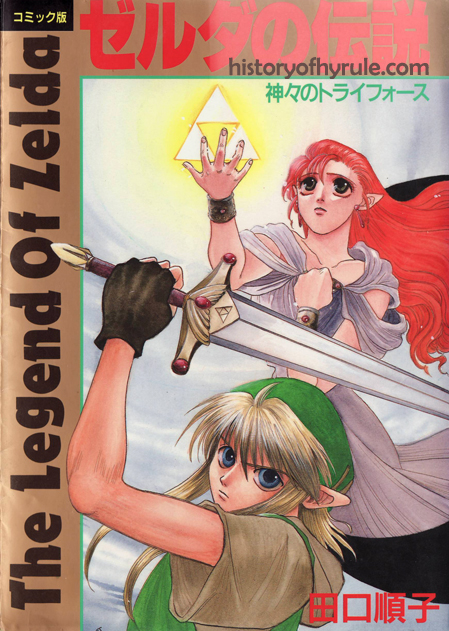
Takarajimasha · 20 November 1993 · about 192 pages · ISBN 4-7966-0741-2
The last book of the period is a one-volume A Link to the Past manga written and drawn by Junko Taguchi. Japanese Wikipedia lists it as a Takarajimasha book from 1993, and the fan who scanned it in 2022 gave the date as 20 November 1993 and credited it to Hippon Super!; its ISBN carries the same publisher prefix as Mishouzaki’s 1991 book.
TV Tropes describes an adaptation that races through the game: Link’s journey through the Dark World is heavily compressed, Agahnim is a dark-skinned, muscular man, and Ganon appears as a powerful swordsman in black armour, a look the games themselves would adopt from Ocarina of Time onwards. It was overtaken within two years by Ataru Cagiva’s longer A Link to the Past series for Enix.
From game to page
The Dark World half of the quest is cut down drastically.
Agahnim and Ganon get new, more human designs.
Characters the manga invented
With so little story in the games, the early manga had to supply their own casts. These are the ones the sources describe; the last column says which book they belong to and how they relate to the games.
Character
Who they are
In the cartoon
Voice
WattoRanmaru, 1986 and 1987–88
Link’s greedy talking parrot.
Travels with Link, helps carry his body to a fairy fountain after the Lynels kill him, and grows to ten times his size when he drinks its water. Returns in the sequel as Sir Watt, married with three children.
Invented for the manga: a talking companion more than a decade before Navi.
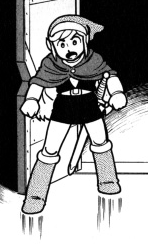
BirīRanmaru, 1986 and 1987–88
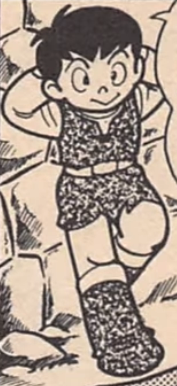
A village boy (Billy in some fan translations).
Guides Link to the last Triforce pieces and leads the villagers against Ganon’s castle; in the sequel he is one of Zelda’s guards.
Invented for the manga.
Hekuraresu and the PigRanmaru, 1986
A friendly giant, and a boar-like general of Ganon’s who can turn into a giant boar.
Hekuraresu dies in the first labyrinth; “the Pig” is only Link’s name for the general, whose real name is never given.
Both invented for the manga.
Wampa and GumpRanmaru, 1987–88
Zelda’s head attendant, and a wolf-like swordsman who wants to be the greatest in the world.
Wampa fills Impa’s role; Gump teaches Link the downward thrust.
Invented. In Zelda II the downward thrust is taught by a townsman in Mido.
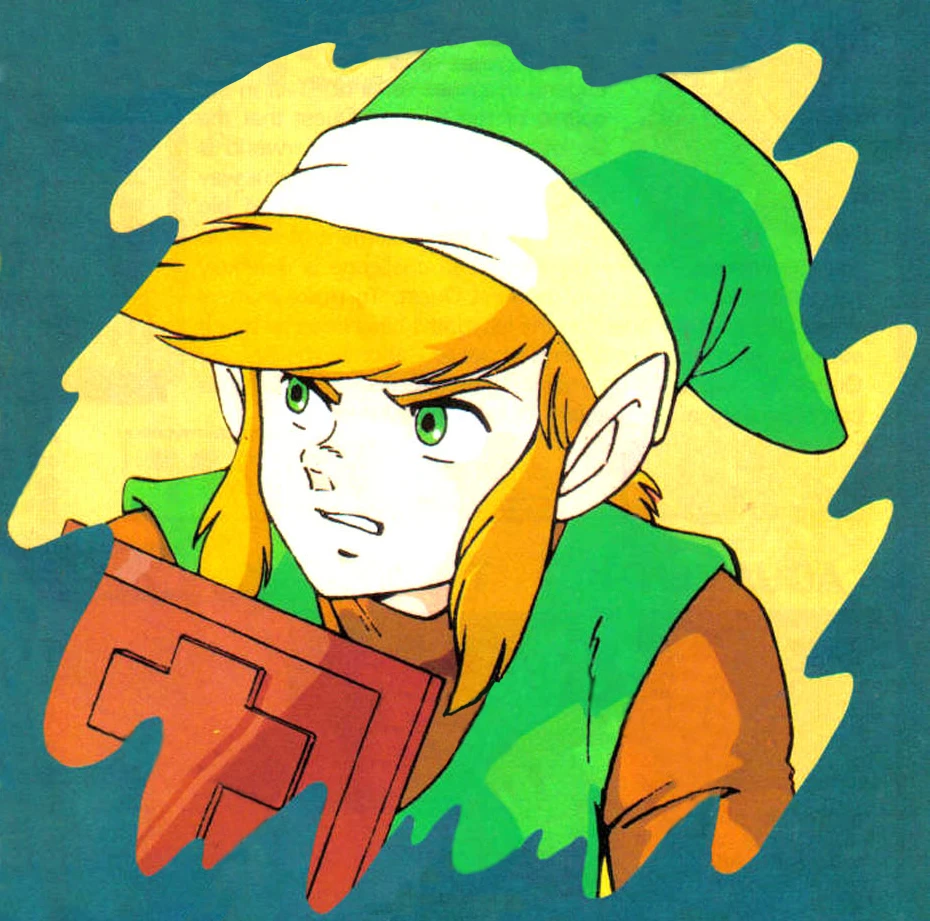
LinkMishouzaki, 1989
A half-elf apprentice gardener at Hyrule Castle, raised as an orphan.
Secretly the son of Zelda XVI and the elf Rune, and so half-brother to Zelda XVII, on whom he has a crush.
The games’ Link has no known parents; this one has a royal mother and an elf father.
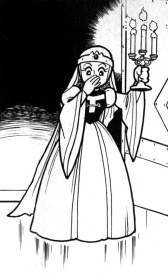
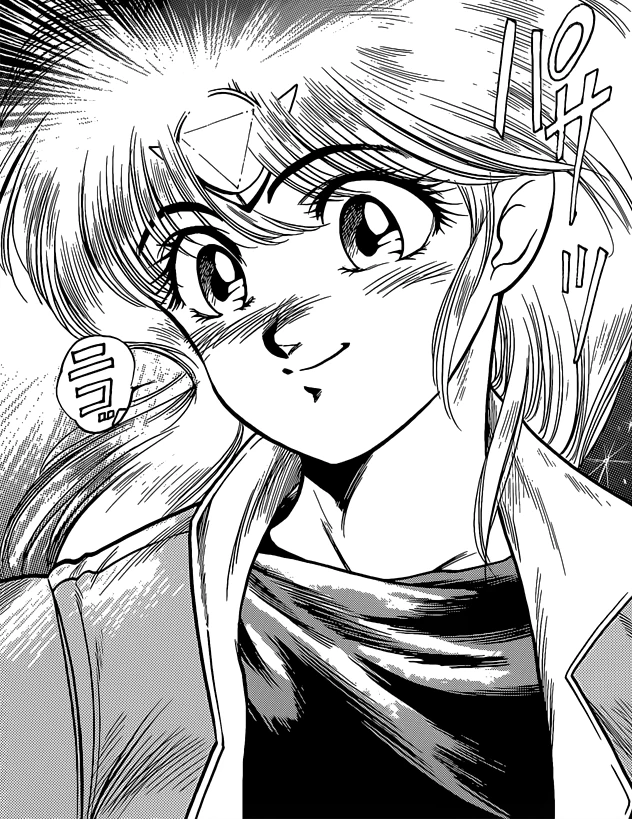
Zelda XVIIMishouzaki, 1989
The teenage princess of Hyrule, a tomboy who can fight.
Captured by Ganon, she blinds him with the Triforce’s power before Link arrives.
The numbering of Zeldas is the manga’s own.
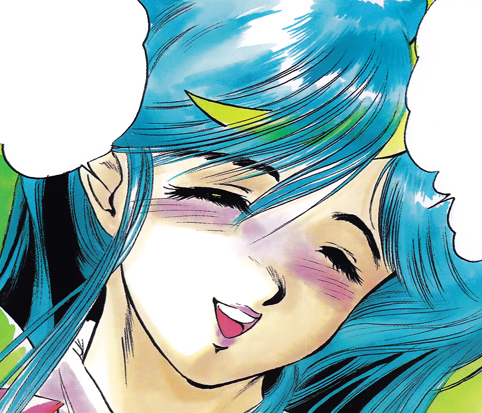
Zelda XVIMishouzaki, 1989
Zelda XVII’s mother, later queen.
Link’s mother, who hid her son because her father and her husband hated elves.
Invented for the manga.
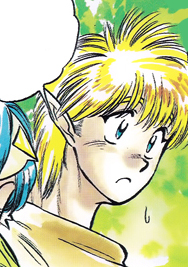
RuneMishouzaki, 1989
An elf warrior.
Link’s father: maimed by a demon, he fights demons for years before his wounds kill him, leaving his sword for his son.
Invented for the manga.
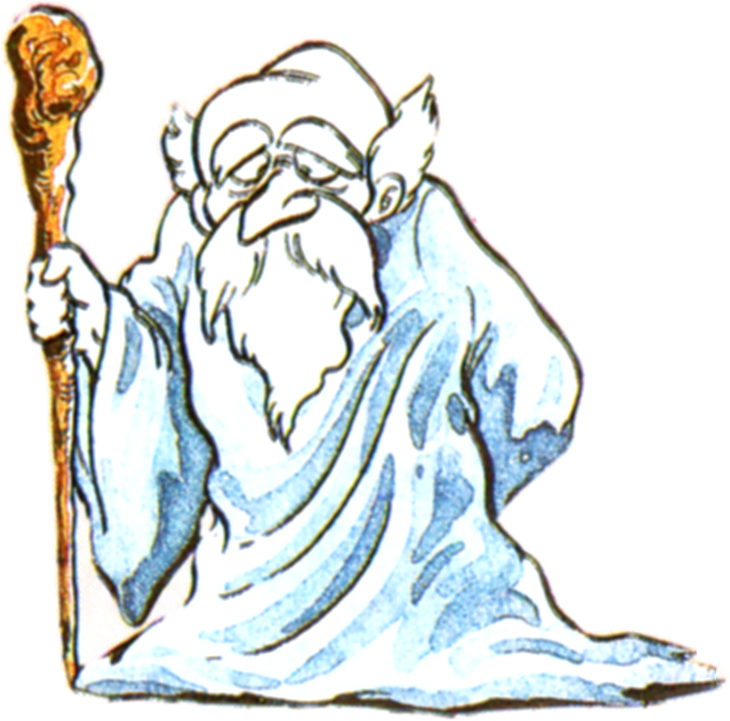
King of HyruleMishouzaki, 1989
Zelda XVII’s father.
Hates elves, and sends his army to rescue his daughter at once, with disastrous results.
The first game never shows a king.
ImpaMishouzaki, 1989
Link’s guardian.
Keeps the secret of his birth and steers him towards the Triforce.
A much younger woman than the old nursemaid of the game.
Pell and GreyMishouzaki, 1989
Two characters invented for the manga, whose parents die in one of its grimmest scenes.
Zelda Wiki also has art of Pell’s grandfather; we have not found a reliable account of their parts in the story.
Invented for the manga.
GanonMishouzaki, 1989 and 1991
The demon who kidnaps Zelda XVII.
An eldritch monster; when Link kills the Goriya brothers, Ganon’s rage reopens one of his scarred eyes; in the sequel Link’s Shadow becomes him.
Far stranger than the boar-like demon of the game.
From game to page
The full cover artwork of Yuu Mishouzaki’s 1989 book.
The NES games told their stories in the manual and a few lines of text, so anyone making a Zelda manga in the 1980s had to choose between two jobs. One was to explain the game. The Shōgaku Ninensei comic, Kobayashi’s book and the three-volume Wanpaku Link no Bōken are, to varying degrees, playing guides in comic form, written for children who needed to know where the next heart container was hidden.
The other was to invent. Ranmaru keeps the game’s quest and route but surrounds them with villages, companions and deaths; his Zelda II sequel goes further, turning the game’s backstory of the sleeping Zelda and the magician into its plot and deciding that the magician was Ganon in human form, an idea the games would make their own when Ganondorf arrived in 1998. Mishouzaki simply starts again, with elves, numbered princesses and a family secret. The CoroCoro one-shots sit in between: Fujiaka retells the first few minutes of Link’s Awakening, while Ono writes a side story of his own.
Recurring changes
Companions for Link: a parrot (Ranmaru), a village boy (Ranmaru), a younger, active Impa (Mishouzaki).
Families: Mishouzaki gives Link parents and a half-sister; Ranmaru gives Watto a wife and children.
Death is not the end: in Ranmaru’s books Impa, Link and Zelda all die, and two of them come back.
Ganon as a person: a masked man (Ranmaru), a black-armoured swordsman (Taguchi), Link’s own Shadow (Mishouzaki).
The artists
Ranmaru spent years as an assistant to two well-known manga artists, Mitsuteru Yokoyama and Shinji Wada, and worked in a small studio with Kobayashi Sho and Suzuo Taiki before drawing for Wanpaku. The Ranmaru Zelda saga runs to four volumes, one for the first game and three for Zelda II, and the same pen drew Zelda posters and a playing card for the Wanpaku magazine.
Kobayashi Sho (also read Susumu or Masaru) was Mitsuteru Yokoyama’s last assistant, his Wanpaku work includes the Valis and Dead Zone adaptations, and his other credits include Super Mario Bros. comics. Daisuke Shigoto and Yū Minazuki were Wanpaku regulars too: both drew cards for the magazine’s February 1987 playing-card insert, Minazuki contributing the Metroid card.
Shinji Hikino drew the 1986 Shōgaku Ninensei comic from a composition by Tadashi Makimura. Toshihiro Ono made his professional debut with his Zelda one-shot and went on to create Pokémon: The Electric Tale of Pikachu (1997–99). Of Yuu Mishouzaki, Masato Fujiaka and Junko Taguchi we know little beyond their Zelda books; the spellings of their names are those used by Zelda Wiki and the scanners, and we have not been able to check them against Japanese sources.
Editions and finding them
None of these manga has been reprinted, as far as we can find. The CoroCoro one-shots were never collected, and the last part of Ranmaru’s Link no Bōken exists only in the magazine issues of 1988. Small details vary between sources: Ranmaru’s first book is 194 pages according to Nintendo Life and TheVideoGameLibrary and 192 according to Zelda Dungeon, and Mishouzaki’s first is 200 or 210 pages.
English readers depend on fans. GlitterBerri translated Mishouzaki’s 1989 book in 2010; the History of Hyrule blog and its contributors have scanned and translated Ranmaru’s books and the Shōgaku Ninensei comic and are still hunting for the missing magazine issues; and in 2017 Nintendo Life featured a video that narrates Ranmaru’s first book in English.
Cover art of the Wanpaku Link no Bōken, volume 2 (filed by Zelda Wiki under Shigoto)Cover art of volume 3 of the same set
Reception and legacy
We have found no reviews from the time. The books’ afterlife is the work of collectors. Nintendo Life’s 2017 look at Ranmaru’s book found a faithful companion to the game that brings Hyrule to life with towns and villagers; Zelda Universe, in 2010, warned readers that Mishouzaki’s Link and Zelda were barely recognisable; and the History of Hyrule blog treats every scrap as a historical find, down to asking readers for leads on the magazine issues it still needs.
They matter for more than curiosity value. They show how Japanese readers met Zelda in the 1980s, through school magazines and strategy comics, and they tried out ideas the series would later adopt: a talking companion for Link, a human Ganon, a princess who fights back. When Shogakukan began Akira Himekawa’s Ocarina of Time manga at the end of the 1990s, it was building on a tradition that had started in its own learning magazines.
Trivia
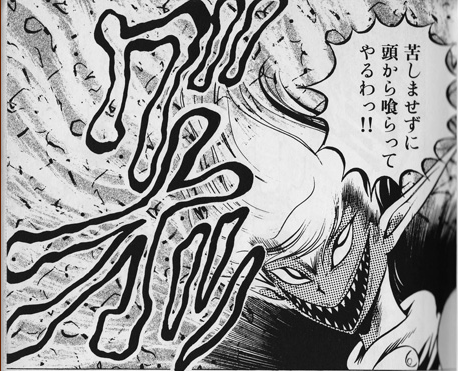
The Magician in Ranmaru’s Link no Bōken.Ranmaru’s Zelda II sequel reveals that the magician who cursed the first Zelda was Ganon in human form, a decade before Ocarina of Time gave the series Ganondorf.
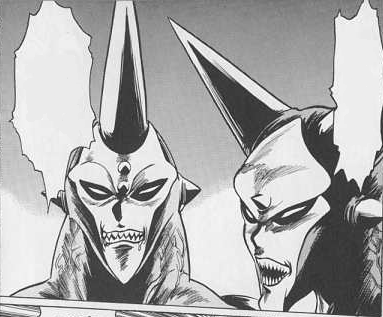
The Brother Goriyas in Mishouzaki’s 1989 manga.Mishouzaki’s Goriyas are not the game’s dog-like boomerang throwers but a pair of humanoid demon brothers, and killing them sends Ganon into a rage.
Link’s Shadow as Mishouzaki drew it.In Mishouzaki’s sequel the final villain is Link’s own Shadow, which becomes Ganon; the shadow had been the last thing players fought in Zelda II.
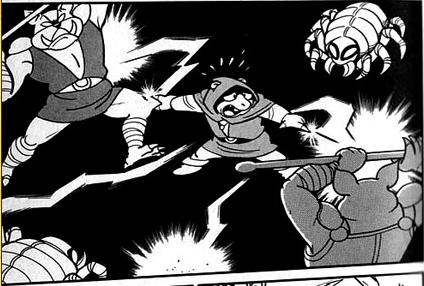
Moblins and Deelers in Ranmaru’s Link no Bōken.TV Tropes notes that Ranmaru’s art owes a lot to Osamu Tezuka, and that his story is nonetheless surprisingly bloody.
Watto the parrot gets a promotion between books: in the Zelda II story he is Sir Watt, a family man with three children called Patt, Pico and Pott.
Zelda’s head attendant in Ranmaru’s sequel is called Wampa, which the History of Hyrule translators suspect is a nod to Wanpaku Comics itself.
Before the book, Ranmaru drew a mini-comic celebrating the Disk System release of Zelda for Tokuma’s Family Computer Special in 1986; according to Kobayashi, as relayed by History of Hyrule, it was what got the manga approved.
Kobayashi Sho also drew for Tokuma’s 1986 Zelda guide Hisshō Hintbon, the Japanese book behind Nintendo of America’s Tips and Tactics guide.
The Shōgaku Ninensei comic closes by announcing the next issue’s Famicom manga: Star Soldier.
Toshihiro Ono’s first professional manga was a Zelda side story in Bessatsu CoroCoro Comic Special; his best-known work, Pokémon: The Electric Tale of Pikachu, started in the same magazine in 1997.
To provide the best experiences, we use technologies like cookies to store and/or access device information. Consenting to these technologies will allow us to process data such as browsing behavior or unique IDs on this site. Not consenting or withdrawing consent, may adversely affect certain features and functions.
Functional
Always active
The technical storage or access is strictly necessary for the legitimate purpose of enabling the use of a specific service explicitly requested by the subscriber or user, or for the sole purpose of carrying out the transmission of a communication over an electronic communications network.
Preferences
The technical storage or access is necessary for the legitimate purpose of storing preferences that are not requested by the subscriber or user.
Statistics
The technical storage or access that is used exclusively for statistical purposes.The technical storage or access that is used exclusively for anonymous statistical purposes. Without a subpoena, voluntary compliance on the part of your Internet Service Provider, or additional records from a third party, information stored or retrieved for this purpose alone cannot usually be used to identify you.
Marketing
The technical storage or access is required to create user profiles to send advertising, or to track the user on a website or across several websites for similar marketing purposes.

 BirīRanmaru, 1986 and 1987–88
 LinkMishouzaki, 1989
 Zelda XVIIMishouzaki, 1989
 Zelda XVIMishouzaki, 1989
 RuneMishouzaki, 1989
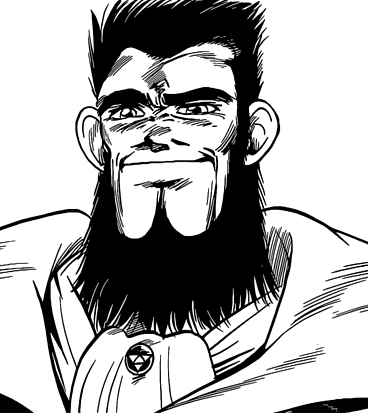 King of HyruleMishouzaki, 1989
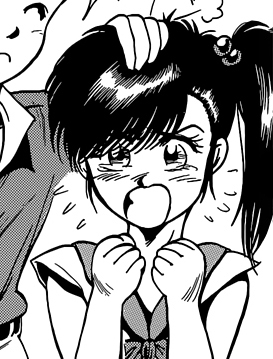 Pell and GreyMishouzaki, 1989
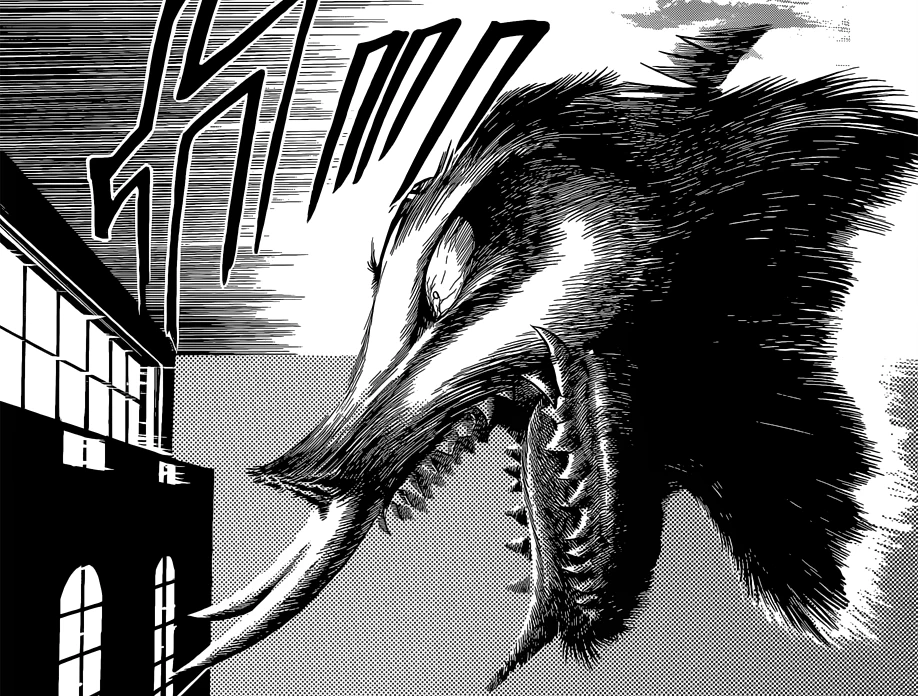 GanonMishouzaki, 1989 and 1991