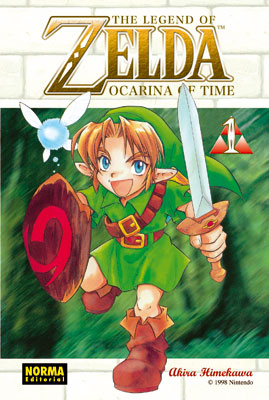
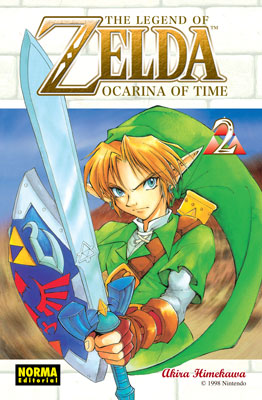
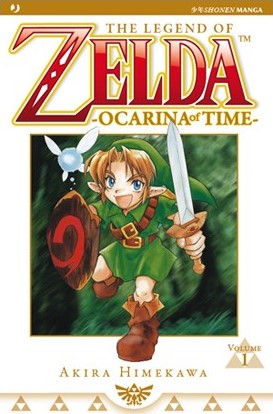
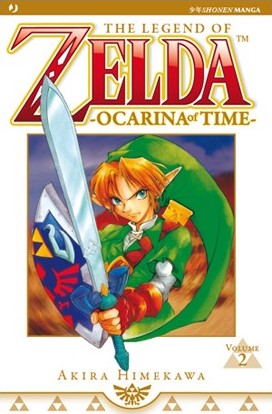
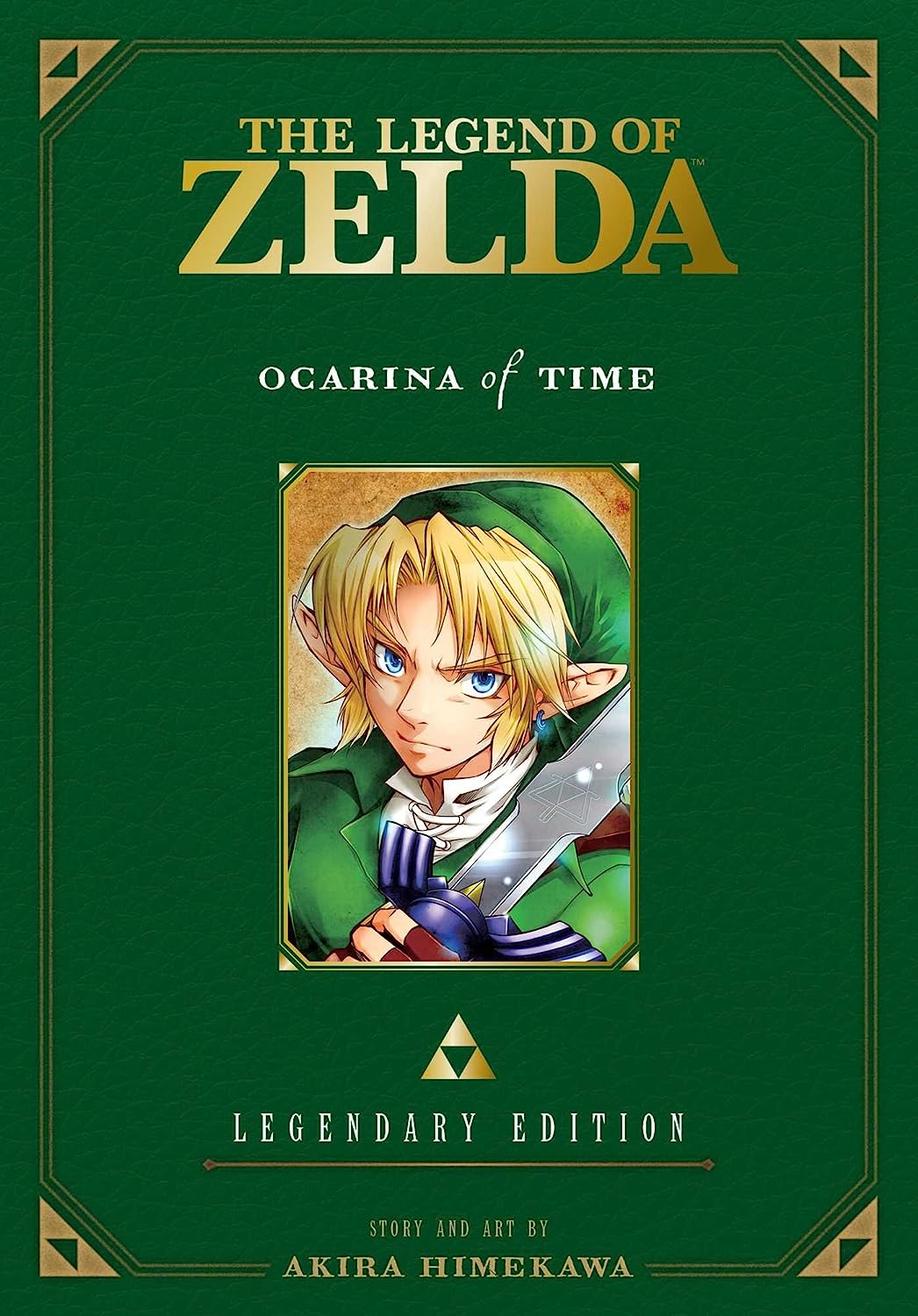
Ocarina of Time Akira Himekawa’s manga · 2 volumes
The book that started Akira Himekawa’s long run of Zelda manga: the whole of Link’s first 3D quest squeezed into two fast, sunny volumes, with a talkative hero, a dragon he once raised and a Princess Zelda who is far more involved than the game ever lets her be.
Story & artAkira Himekawa
Volumes2, later combined in one omnibus
JapanShogakukan, January and April 2000
EnglishVIZ Media, October and December 2008
OmnibusLegendary Edition, 1 November 2016
AdaptsOcarina of Time (1998)
Original title
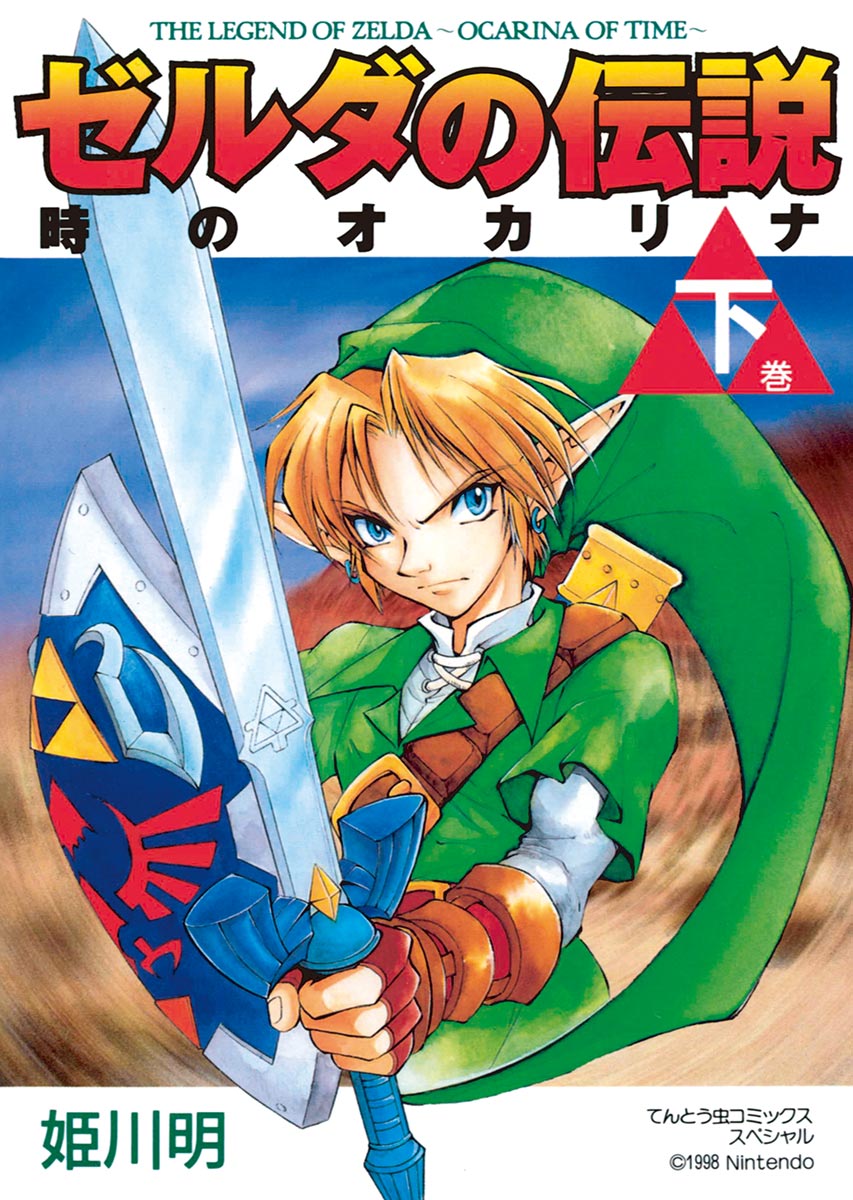
ゼルダの伝説 時のオカリナ (Zelda no Densetsu: Toki no Ocarina), 上・下
Story and art
Akira Himekawa (the duo A. Honda and S. Nagano)
Supervision
Nintendo
First published in
Shogakukan’s learning magazines for fifth- and sixth-year pupils
Publisher (Japan)
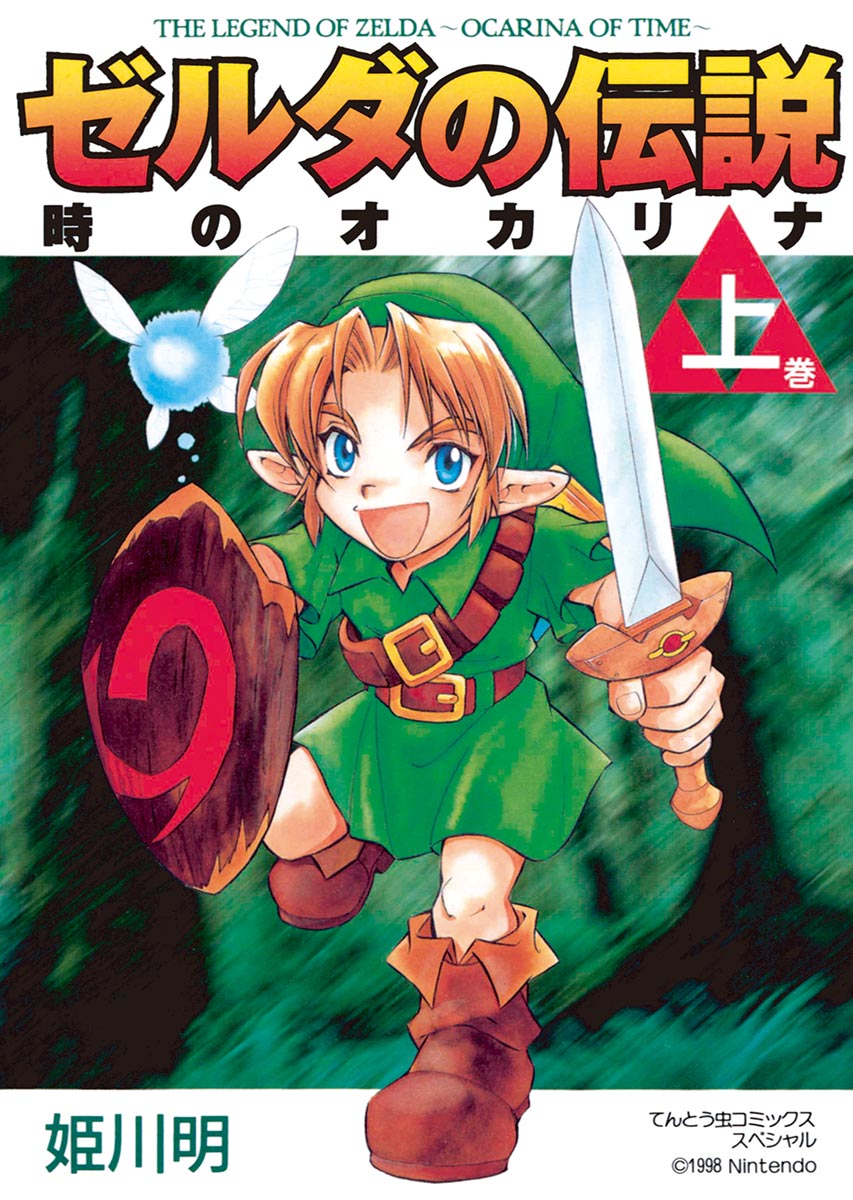
Shogakukan, Tentōmushi Comics Special: 28 January and 26 April 2000
Publisher (English)
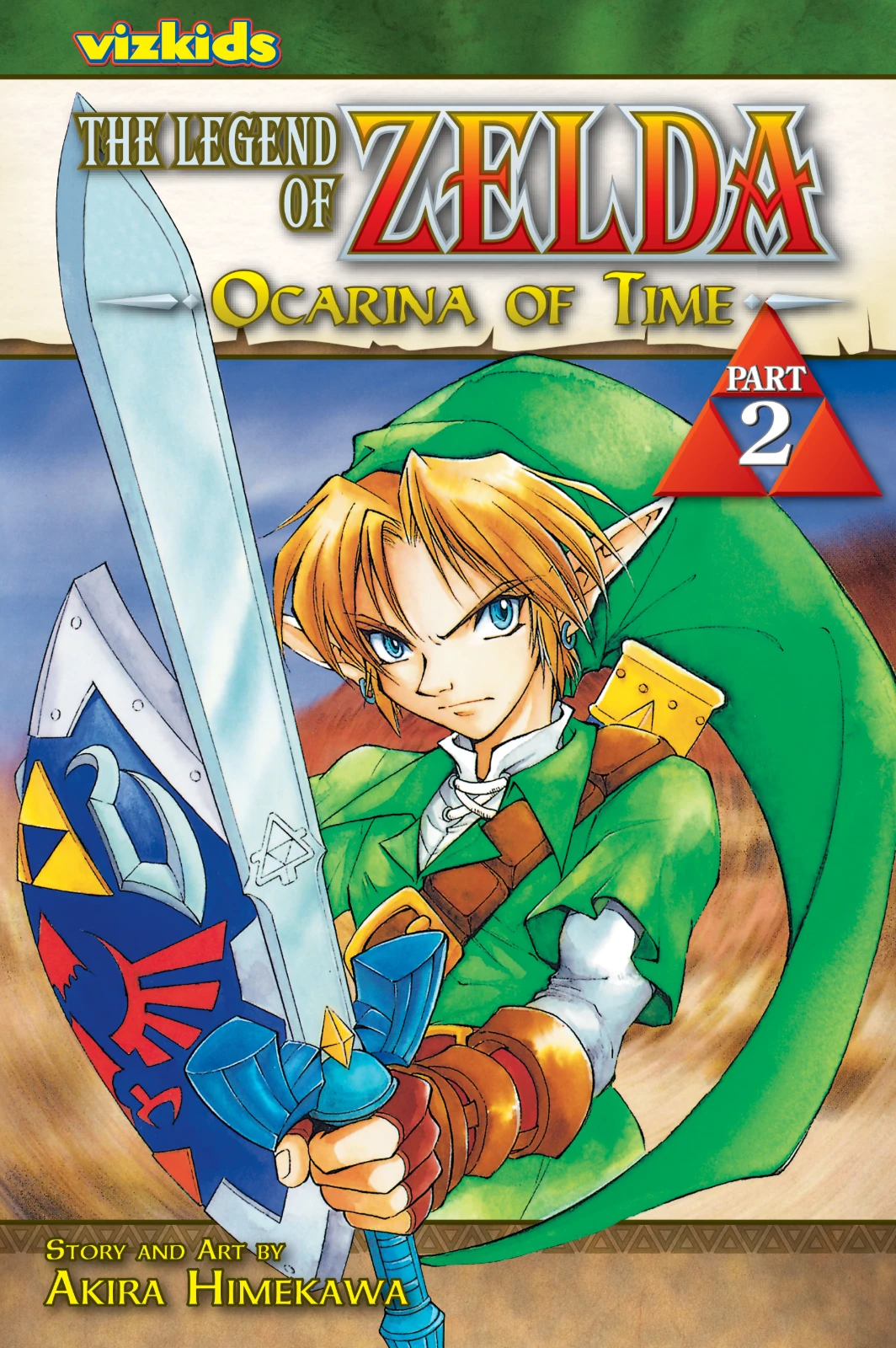
VIZ Media, as The Legend of Zelda vols. 1 and 2: 7 October and 2 December 2008
Volumes
2 (15 chapters in two arcs, plus three bonus chapters)
Pages (English)
200 per volume
ISBNs
Japan 4-09-149601-6, 4-09-149602-4; English 978-1-4215-2327-9, 978-1-4215-2328-6
Omnibus
Japan: Kanzenban, 10 March 2016; English: Legendary Edition, 1 November 2016
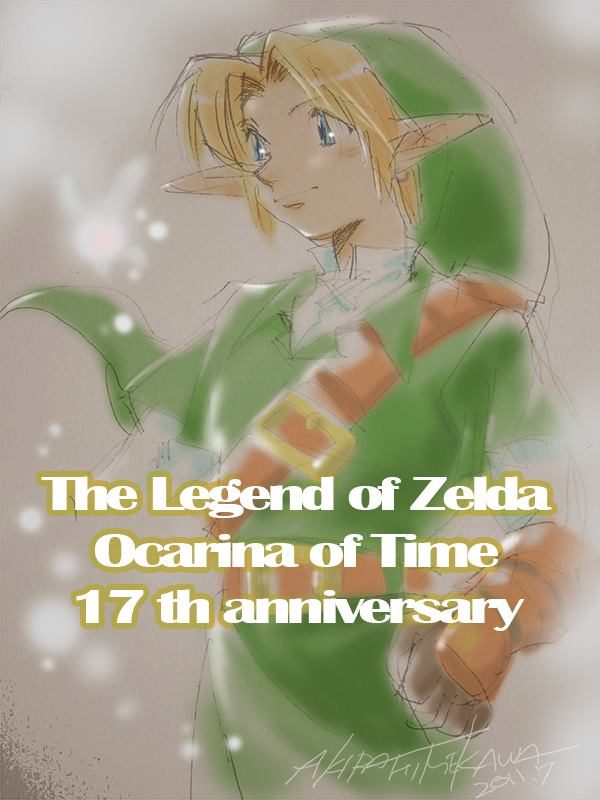
Akira Himekawa’s artwork for the 17th anniversary of Ocarina of Time.
Two years after Ocarina of Time changed what a Zelda game could be, Shogakukan gave its young readers the story in comic form. The artists were Akira Himekawa, the pen name of two women who would go on to adapt eight more Zelda games over the next two decades, and this was where it all began: a story first run in Shogakukan’s grade-school learning magazines and then collected in two books in January and April 2000, under Nintendo’s supervision.
Everything in the game is here in miniature. The first book follows young Link from the Kokiri Forest to the Master Sword and on into the ruined Hyrule of seven years later; the second takes the grown-up hero through the desert, the Spirit Temple and the fall of Ganondorf, then signs off with two bonus stories. A long game becomes about 400 pages of manga, so a great deal is cut, merged or rearranged, and Himekawa fills the gaps with things the game never had: a hero who chats, a baby dragon, a Zelda who spends her seven years working undercover.
English readers waited eight years. VIZ Media published the two books in October and December 2008 as volumes 1 and 2 of a single series, The Legend of Zelda, which ran to ten volumes and every Himekawa adaptation from Ocarina to Phantom Hourglass (see the Comics & Books hub for the full list and the box sets). In 2016 both countries reissued it as a single fat omnibus, and the English Legendary Edition went to number one on the New York Times manga chart.
Young Link embarks on a perilous quest to find three spiritual stones that hold the key to the Triforce…
— VIZ Media’s description of the Legendary Edition (opening words)
The blurb for VIZ’s second volume picks up the thread: “After completing his training Link begins his journey to find the remaining Sages.”
Volume guide
The story falls into two arcs, the Child arc (Kodomo-hen, six chapters) and the Adult arc (Otona-hen, nine chapters). The books do not split neatly along that line: according to Zelda Dungeon’s chapter list, the first volume holds the whole Child arc and the first four Adult chapters, and the second volume has the last five chapters plus three bonus chapters. That matches VIZ’s own blurb for volume 2, which starts after Link’s training. The Japanese books may have divided at the arc break instead: English Wikipedia counts six chapters in the first book and nine in the second, and Zelda Universe’s 2006 reviews of the Japanese chapters put the Skull Kid story with the Child arc. Dates are Shogakukan’s Japanese on-sale dates and VIZ’s English release dates.
Volume 1
Japan: Shogakukan, 28 Jan 2000 · English: VIZ Media, 7 Oct 2008 · 200 pages · ISBN 978-1-4215-2327-9
Link is the odd one out among the Kokiri, the only child in the forest without a fairy of his own, picked on by Mido and looked after by Saria. When Queen Gohma is set loose inside the Great Deku Tree, Link and Mido go in together and beat her, but the guardian dies anyway, after warning Link that the man responsible must not get his hands on the Triforce. In Hyrule Castle Town Link gets into trouble for eating food he had not paid for and is rescued by a mysterious girl who wants a day of his company; only later, at the castle, does he discover she was Princess Zelda, and learn the name Ganondorf.
The hunt for the spiritual stones follows the game’s order: Darunia’s ruby on Death Mountain, after Link defeats the Dodongo King, and the Zora sapphire from Princess Ruto, who has ended up inside Jabu-Jabu while avoiding a marriage her father arranged. Link returns with all three to find the castle under attack, catches the Ocarina of Time from the fleeing Zelda, draws the Master Sword and is sealed away for seven years. The last four chapters jump forward: adult Link finds Kokiri Forest in ruins, confronts Phantom Ganon, who has trapped Saria in a painting, is forced to kill a dragon he once befriended, and trains with Impa in Kakariko until a double of himself appears.
Chapters (10)
Child arc 1: The Great Deku Tree Incident
Child arc 2: Link’s Journey Begins
Child arc 3: The Mystery of the Triforce
Child arc 4: Search for the Spiritual Stone of Fire!
Child arc 5: Inside Jabu-Jabu’s Belly
Child arc 6: The Hero of Time Is Born
Adult arc 1: Sword of Legend: The Master Sword
Adult arc 2: The Sage of the Forest: Saria
Adult arc 3: An Old and Beloved Friend
Adult arc 4: Link vs. Link
From game to page
Mido goes into the Great Deku Tree with Link and hands him the Kokiri Sword; Link makes his own slingshot.
Zelda meets Link in disguise in Castle Town, where the game puts Malon, and Link meets Impa in the market rather than the castle courtyard.
Volvagia is a baby dragon Link freed as a child, corrupted by Ganondorf; Link brings it down with arrows from the Fairy Bow, not the Megaton Hammer.
Dark Link climbs out of Kakariko’s well instead of waiting in the Water Temple, and the Shadow Temple and Bongo Bongo are left out.
Volume 2
Japan: Shogakukan, 26 Apr 2000 · English: VIZ Media, 2 Dec 2008 · 200 pages · ISBN 978-1-4215-2328-6
Ganondorf has sentenced Ingo to death for failing to win Epona, and the witches Twinrova use the ranch hand as bait: Malon is held hostage at Lon Lon Ranch, Link fights off Ingo and a band of Gerudo, and a masked stranger called Sheik tells him that Zelda can be found in the Haunted Wasteland. After a quick stop to help Ruto in the Water Temple, Link heads into the desert, is rescued from a sandstorm by Sheik, beats the Gerudo commander Nabooru and glimpses the Triforce mark on Sheik’s hand.
In the Spirit Temple Sheik is unmasked as Zelda, who explains that Impa made her a Sheikah so that she could win Ganondorf’s trust. Link turns Twinrova’s magic back on them with the Mirror Shield, but Ganondorf carries Zelda off. Nabooru, awakened as a Sage, opens a way into his tower, and Link defeats first Ganondorf and then the monster Ganon before the Sages seal him away. Zelda sends Link back to his childhood, and the story ends on the image the game ends on, with Zelda at the garden window. Three bonus chapters follow: a two-part tale of child Link, a stolen festival mask and the Skull Kid in the Lost Woods, and a comic interlude with Rouru, a bird-boy of the Watarara who has not learned to fly properly.
Chapters (8)
Adult arc 5: Shadow Guide: Sheik
Adult arc 6: The Haunted Wasteland
Adult arc 7: The Fated Reunion
Adult arc 8: Ganondorf Defeated!
Adult arc 9: A New Journey Begins
Bonus: The Skull Kid and the Mask (Part 1)
Bonus: The Skull Kid and the Mask (Part 2)
Bonus: Rouru of the Watarara
From game to page
Sheik reveals that she is Zelda in the Spirit Temple, well before all the Sages are awake; in the game the unmasking comes at the Temple of Time.
The Water Temple gets about four pages, by Zelda Dungeon’s count, and Morpha is on the page for fewer than six panels, by Zelda Universe’s estimate; the Fire and Shadow Temples are never entered.
Twinrova control Ingo, and Nabooru gives Link the Mirror Shield and opens the way into Ganon’s Tower; the six trials in Ganon’s Castle are gone.
Zelda tells Link she loves him as she sends him home, and Navi explains why she is leaving.
The story and the bonus chapters
Himekawa tells the game’s story at a gallop. The child quest takes six chapters and the seven-years-later quest only nine, with the Forest Temple, Death Mountain and Kakariko a chapter apiece and the Ganondorf finale two. What the manga gains in return is a cast that talks. Saria and Mido get proper scenes, Ruto has a reason to be inside a fish, and Zelda, who in the game spends the adult half silent behind Sheik’s mask, becomes the heart of the second book: her decision to turn Sheikah and deceive Link is the volume’s big reveal, and her farewell is played as a love story.
The tone is lighter than the game’s. Zelda Universe’s reviewer noticed in 2006 that the manga’s ruined Hyrule feels far less bleak, with places that still seem alive, and Anime News Network found the villains too mild to frighten anyone. That suits the readers it was drawn for: children in the last years of primary school.
The bonus chapters
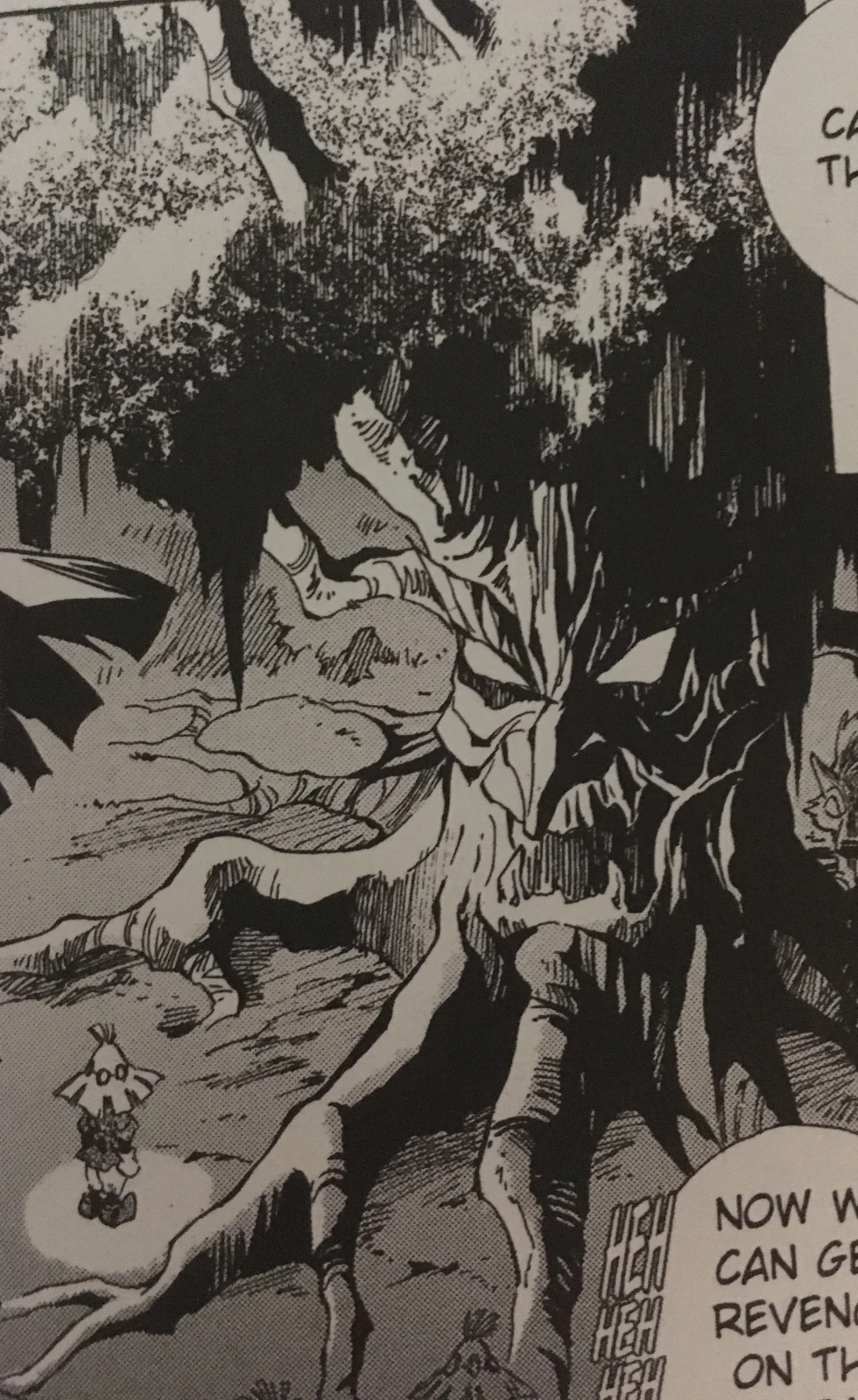
Volume 2 ends with stories the game does not have. The Skull Kid and the Mask, in two parts, is set before the main story: Link makes a mask for a Kokiri festival at which he is to play a prince, the mask is stolen, and he and Saria follow the thief into the Lost Woods, where a Skull Kid turns out to be serving the Baga Tree, an evil tree out to take over the forest. A mask, a mischievous Skull Kid and the woods make it a neat warm-up for the Majora’s Mask book that followed.
Rouru of the Watarara is set in the adult arc, after the Water Temple. Link fishes a strange child out of Lake Hylia: Rouru, heir to the bird-like Watarara, who visit Hyrule once a year. Link tries to teach the stubborn youngster to fly, Rouru teases Navi, and when monsters attack, Navi is not there to help. Zelda Universe’s reviewer found it weaker than the Skull Kid story but funny. Himekawa’s own website still shows a drawing of Rouru.
Characters
The cast is the game’s, with several supporting players promoted and a handful of characters made up for the manga. The last column notes where each first appears and how they differ from the game.
Character
Who they are
In the cartoon
Voice
LinkThe Hero of Time
A boy raised among the Kokiri, the only one without a fairy, who learns from the Sage Rauru that he is a Hylian.
Chatty, impulsive and good-hearted. He makes his own slingshot, takes the Kokiri Sword from Mido, and as an adult trains with Impa before facing his shadow. Zelda Dungeon’s 2009 analysis noted that he fights Ganondorf with a sword while the villain wields a long, thin blade.
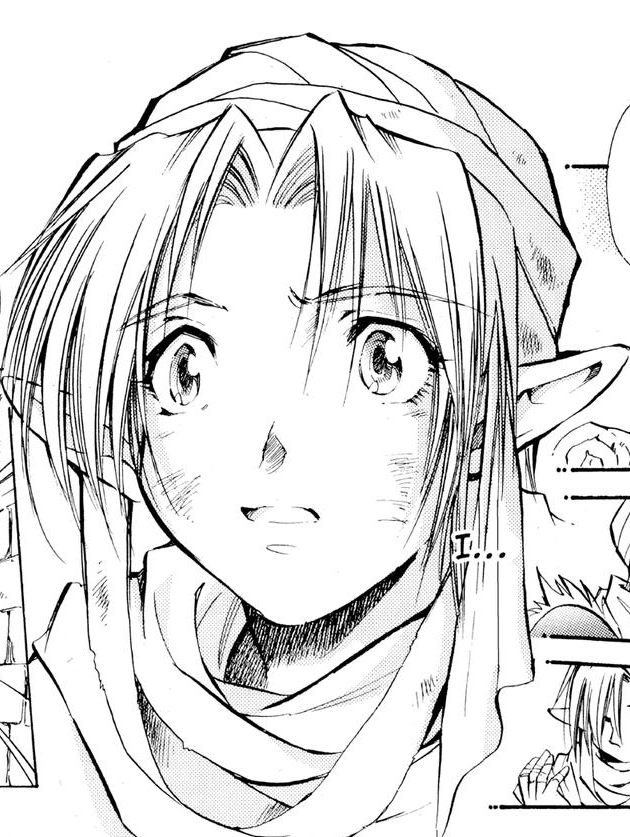
Volume 1. He talks constantly, which the game’s silent hero never does; the UK Anime Network called it a “cardinal sin”.
Princess Zelda / SheikPrincess of Hyrule
The princess, first met in disguise in Castle Town; for seven years she hides as Sheik.
Impa makes her a Sheikah so that she can get close to Ganondorf, even if it means deceiving Link. As Sheik she rescues him in the desert, fights at his side and is unmasked in the Spirit Temple. At the end she admits her part in Ganondorf’s rise and, as a Sage, sends Link home.
Volume 1. Unmasked far earlier than in the game, and her bond with Link is openly romantic.
GanondorfThe villain
The Gerudo king who sets Queen Gohma on the Deku Tree and seizes the Triforce while Link sleeps.
Holds only a third of the Triforce’s power, sends Link’s shadow after him, and after his defeat rises again as the monster Ganon, which the Sages banish.
Volume 1. Zelda Dungeon found him oddly passive in the second half compared with the game.
MidoKokiri bully turned ally
The self-appointed boss of the Kokiri.
Fights Gohma alongside Link, gives him the Kokiri Sword, and seven years on is still guarding the ruined forest and blaming Link for Saria’s disappearance. He is waiting for Link at the end.
Volume 1. A far bigger part than in the game.
SariaLink’s friend
The Kokiri girl who befriends the fairy-less Link.
Gives Link an ocarina, is trapped by Phantom Ganon in a painting in the Forest Temple, and becomes the Sage of the Forest. She also joins the bonus Skull Kid story.
Volume 1. The Outer Haven found her more openly fond of Link than in the game.
VolvagiaLink’s lost pet
A baby dragon that young Link freed and befriended.
Ganondorf’s power turns it into the monster terrorising the Gorons, and Link has to kill his old friend.
Volume 1. The whole friendship is the manga’s invention; in the game Volvagia is simply the Fire Temple’s boss.
ImpaZelda’s guardian
The Sheikah who protects Zelda and, later, Kakariko Village.
Meets Link in the market as a child and trains his swordsmanship as an adult.
Volume 1. Never awakens as a Sage on the page, as Zelda Universe pointed out.
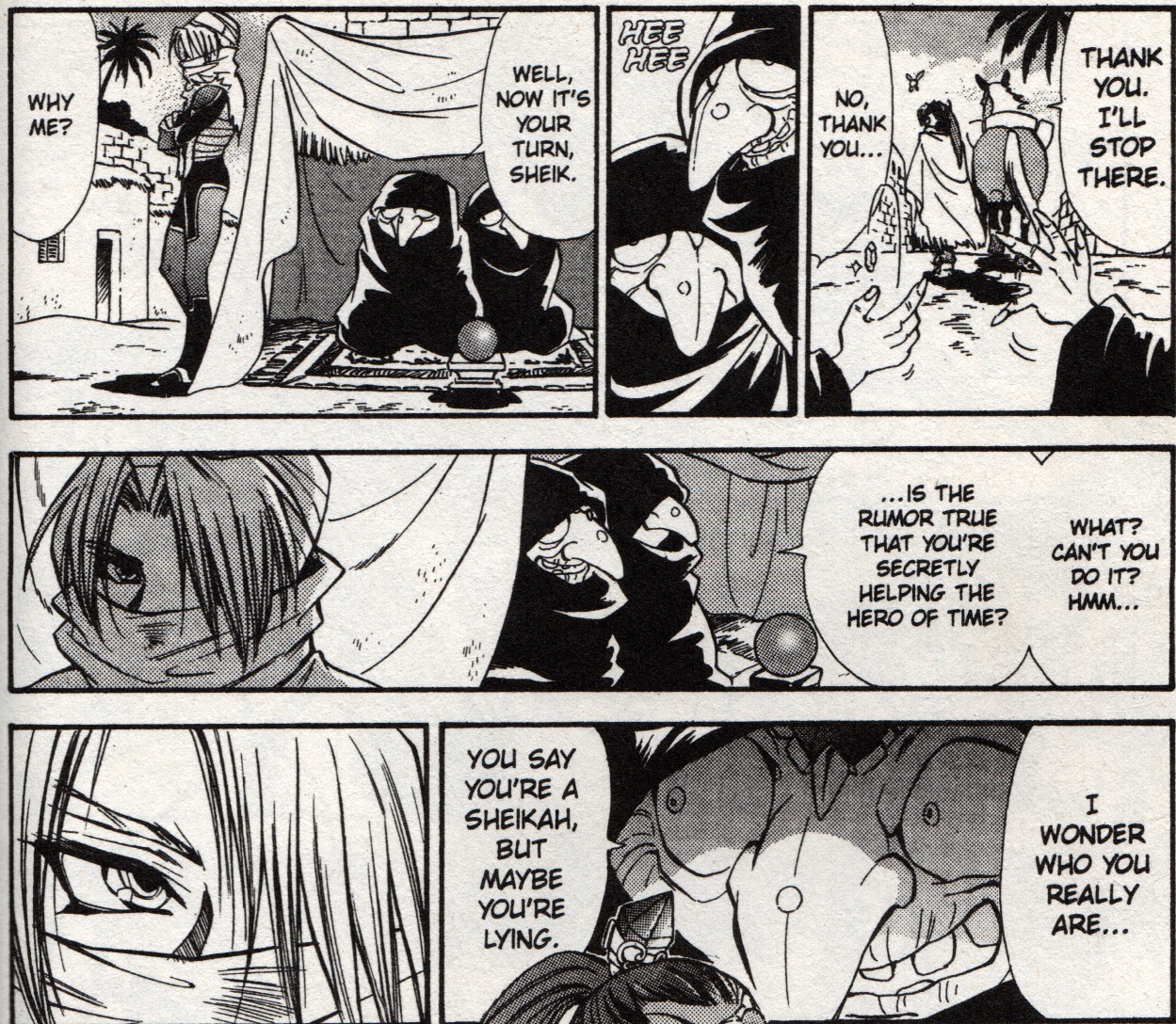
TwinrovaKoume and Kotake
Ganondorf’s twin witches.
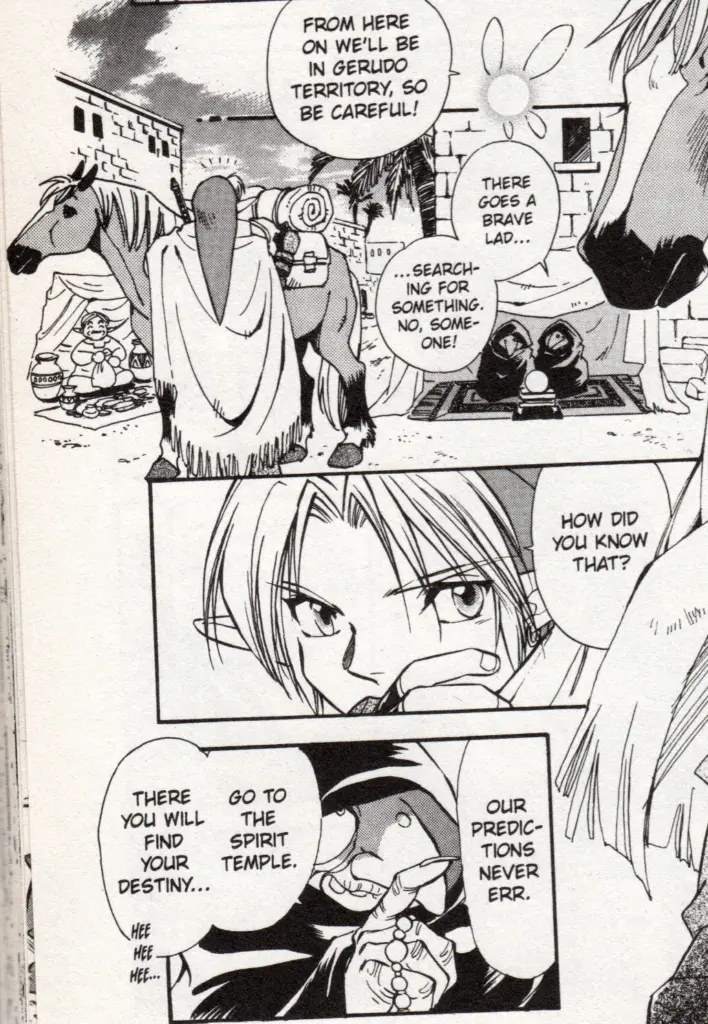
Turn Ingo into a weapon, attack Sheik for betraying them, and get their magic bounced back by Link’s Mirror Shield.
Volume 2. Much more active behind the scenes than in the game.
Ingo and MalonLon Lon Ranch
The ranch hand and the farmer’s daughter.
Ganondorf sentences Ingo to death for failing to win Epona; Twinrova then control him and Malon is held captive, until Link comes to the ranch to rescue her.
Malon meets Link at the ranch in volume 1 but not in town, where Zelda takes her place.
NabooruGerudo commander
The leader of the Gerudo at the desert fortress.
Beaten by Link, she helps him rescue Sheik, gives him the Mirror Shield she stole from the Spirit Temple and, as the sixth Sage, builds the bridge into Ganon’s Tower.
Volume 2. Zelda Dungeon’s 2009 article notes that she is brainwashed in human form rather than as an Iron Knuckle.
RouruManga original
Heir to the leadership of the Watarara, a race of bird people, with his mother Elrora (the tribe’s leader) and his attendant Guufo.
Lost and unable to fly well, he lands in Lake Hylia and in Link’s care for one bonus chapter.
Volume 2 bonus chapter. The Watarara exist only in the manga.
Skull Kid and the Baga TreeBonus-story villains
A Skull Kid of the Lost Woods and the wicked tree he serves.
The Skull Kid steals Link’s festival mask; the Baga Tree wants to rule the forest.
Volume 2 bonus chapters. The Baga Tree is invented for the manga.
From game to comic
A big 3D adventure will not fit into 400 pages, and Himekawa did not try. Dungeons are compressed to a chapter or a few pages, items arrive by the quickest route, and whole stretches of the adult quest are skipped. The UK Anime Network counted boss fights wrapped up in about three pages, and Anime News Network felt the plot was ticking items off a list. The Outer Haven, reviewing the 2016 omnibus, took the opposite view: the compression suits the material and the whole adventure still gets told.
What Himekawa adds is drama. In a 2017 interview with Anime News Network the artists explained that a manga cannot simply reproduce a game, so they write extra dialogue and side stories for readers who have never played it, and they told Bleeding Cool that they fill the story’s gaps without expanding Hyrule beyond what the games show. The table below sets out the main changes.
In the game
In the manga
Kokiri Sword
Found in a chest in Kokiri Forest
Handed over by Mido
Slingshot
Found inside the Great Deku Tree
Made by Link himself
Boomerang
Found inside Jabu-Jabu’s belly
A gift from King Zora
Mirror Shield
Found in the Spirit Temple
Given by Nabooru, who stole it from the temple
Volvagia
The Fire Temple’s boss, beaten with the Megaton Hammer
Link’s former pet, beaten with the Fairy Bow
Dark Link
A mini-boss in the Water Temple
Rises from the well in Kakariko; the Shadow Temple is skipped
Sheik
Unmasked at the Temple of Time after the sixth Sage awakens
Unmasked in the Spirit Temple, with a full explanation
Ganon’s Castle
Six barrier trials before the tower
Nabooru’s bridge, and three bats on the stairs
Bosses
Only Twinrova and Ganondorf have lines
Several bosses talk
The ending
Link returns to childhood and meets Zelda again
The same final image, with a declaration of love and Navi explaining why she leaves
New lore
Some additions go beyond plot. The manga makes pierced ears a Sheikah rite of passage, which the game never mentions, and it gives Volvagia a past, Ruto a motive and Zelda a reason for her years behind Sheik’s mask. Critics also spotted holes. Zelda Dungeon’s writer noted in 2009 that Ganondorf’s interest in the ocarina in the first book is never followed up, and Zelda Universe’s reviewer wondered why adult Link heads for Ganondorf’s fortress having met only three Sages.
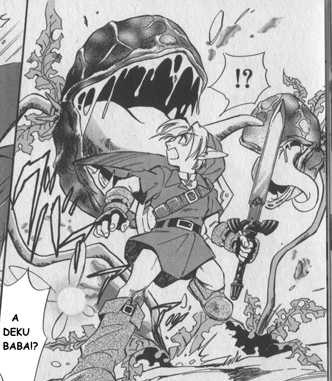
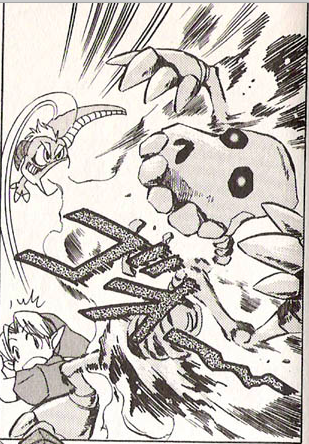
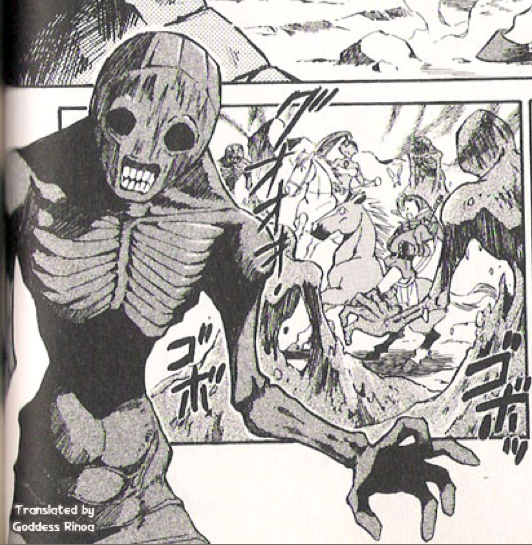
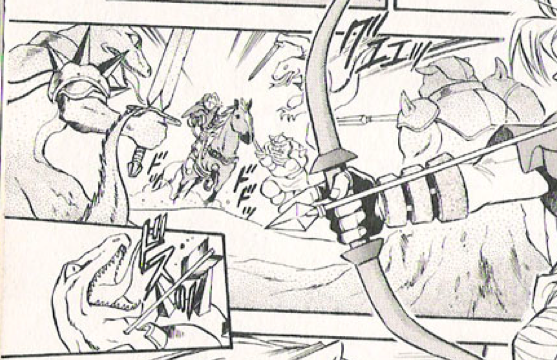
Deku BabasA StalchildReDeadsLizalfos and Moblins
The game’s regular enemies, Himekawa style: panels from the Ocarina of Time manga kept by Zelda Wiki.
Creators
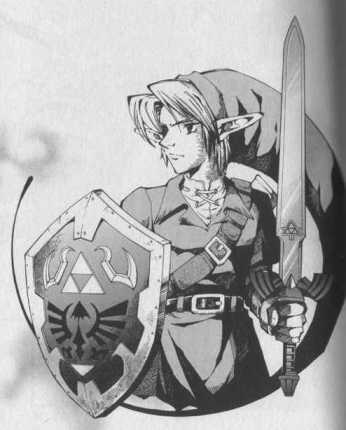
Akira Himekawa’s Link.
Akira Himekawa is not one person but two: a pair of women who have drawn together since 1991 and who have never published their real names, signing individual work as A. Honda and S. Nagano. In the 2017 Anime News Network interview they explained the split: Honda supplies the overall concept and images, Nagano the script and the details.
The Zelda job reached them around the time of Ocarina of Time, they told Bleeding Cool in 2017, and they never imagined it would last 20 years. The start was bumpy. Their first 16-page draft came back from Nintendo covered in red marks, and they admit the company kept a tight grip at first; after that they were given far more freedom. They also recall Shigeru Miyamoto thanking them, after the first book, for fleshing out what the story needed. Both name Ocarina of Time as their favourite Zelda game, and for Nagano it was her first.
The comic was written for Shogakukan’s learning magazines for fifth- and sixth-year primary pupils, which is why it is bright, quick and gentle with its villains. Himekawa’s website dates the partnership with Nintendo to 1998 and counts ten volumes up to 2008. In 2021 the Kyoto International Manga Museum published an official catalogue for an exhibition of Himekawa’s original Zelda artwork, looking back over the whole series.
Editions
In Japan the story came out as two paperbacks in Shogakukan’s Tentōmushi Comics Special line, labelled jō and ge (first and second). English Wikipedia gives 1998 or 1999 for them, but the Japanese Wikipedia list and the National Diet Library both place the books in 2000, and the earlier years probably belong to the magazine run. VIZ Media’s English edition followed in 2008 and was later gathered, with the other eight books, into a ten-volume box set.
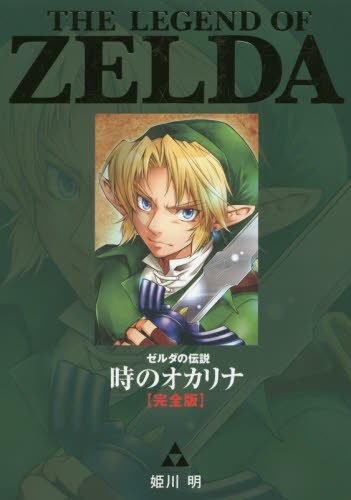
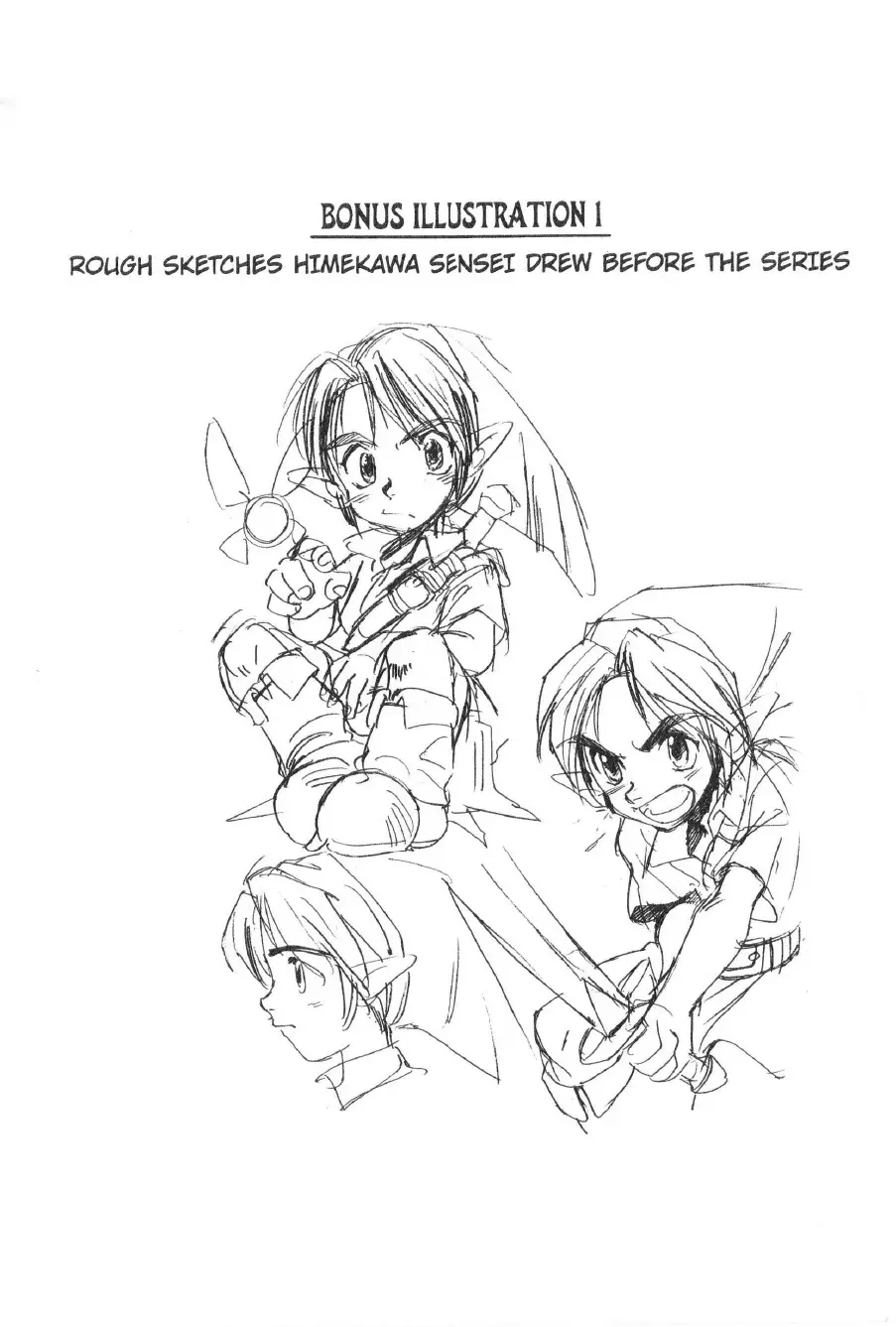
For Zelda’s 30th anniversary Shogakukan began a five-book Kanzenban (complete edition) series that pairs up the ten original volumes, and Ocarina of Time came first, in March 2016: a larger 378-page book with a new cover, a new title illustration and 16 colour pages, according to Kinokuniya. VIZ’s equivalent, the Legendary Edition, arrived in November 2016 with the same page count, a gold-foil cover, colour pages and sketches by Himekawa. All five Legendary Editions were boxed as hardcovers in 2020.
Edition
Released
Details
Japan, first volume
28 Jan 2000
Shogakukan, Tentōmushi Comics Special; ISBN 4-09-149601-6
Japan, second volume
26 Apr 2000
ISBN 4-09-149602-4
VIZ Media, Vol. 1
7 Oct 2008
200 pp; ISBN 978-1-4215-2327-9
VIZ Media, Vol. 2
2 Dec 2008
200 pp; ISBN 978-1-4215-2328-6
VIZ Complete Box Set
Oct 2011
All ten VIZ volumes and a colour poster; 1,968 pp; ISBN 978-1-4215-4242-3
Japan, Kanzenban
10 Mar 2016
378 pp; ISBN 978-4-09-142146-3; new cover and colour pages
VIZ Legendary Edition
1 Nov 2016
378 pp; ISBN 978-1-4215-8959-6; US$19.99
VIZ Legendary Edition Box Set
20 Oct 2020
All five Legendary Editions as hardcovers, with a poster; ISBN 978-1-9747-1819-1
Other languages
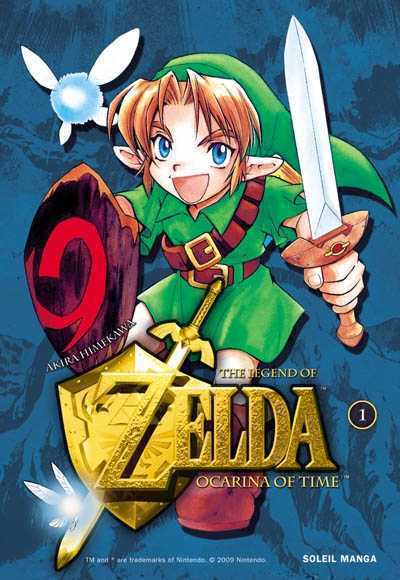
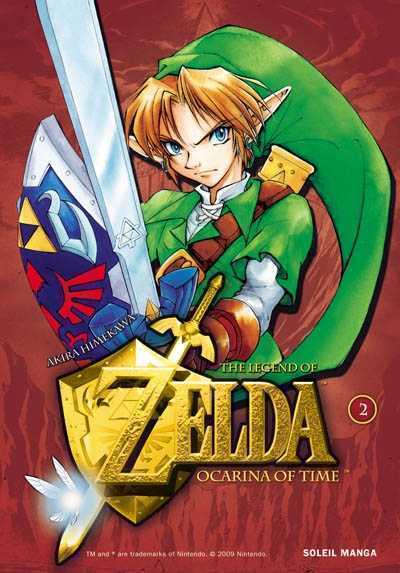
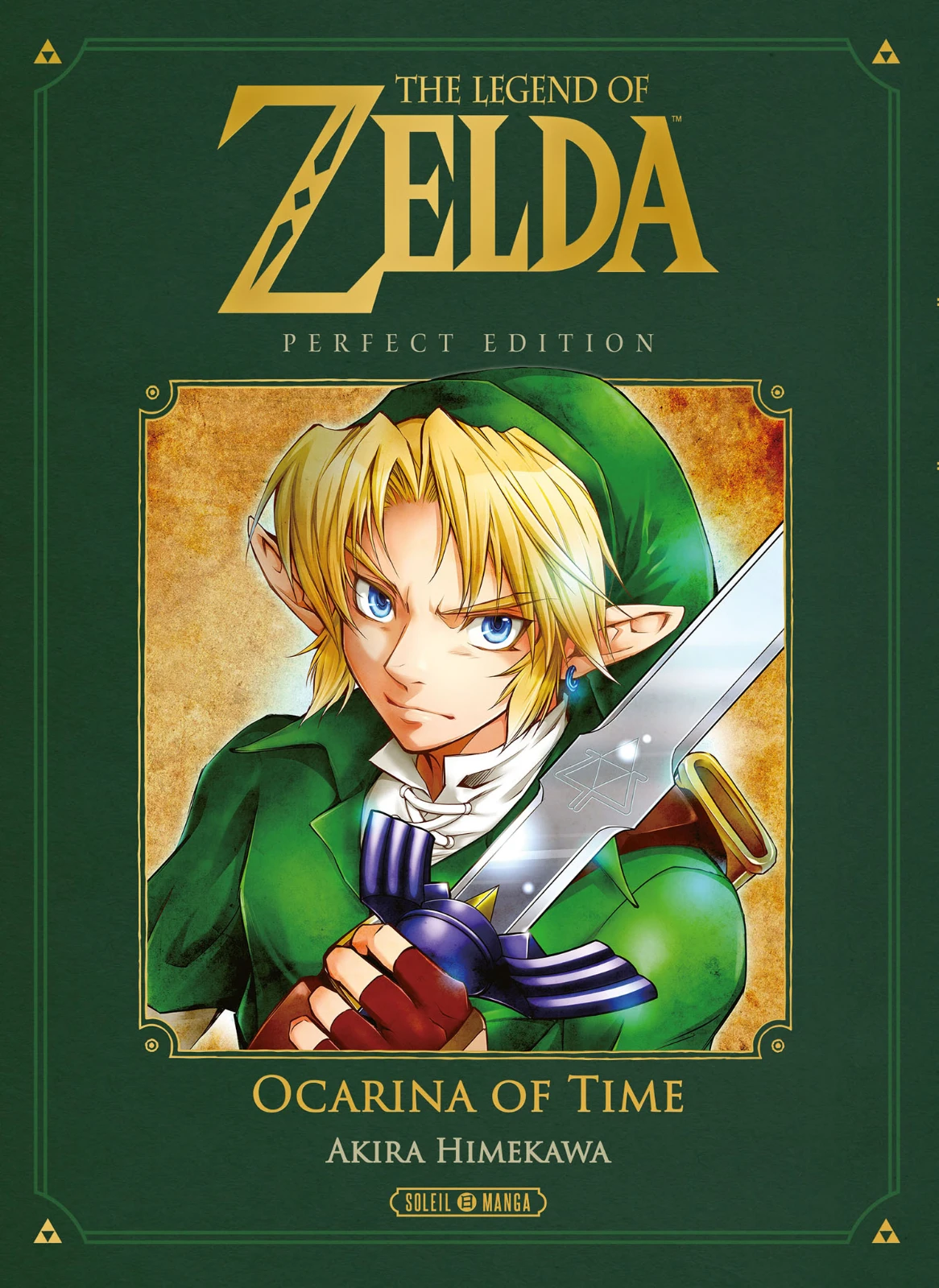
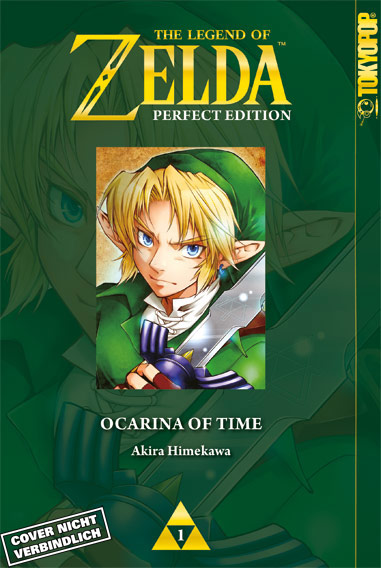
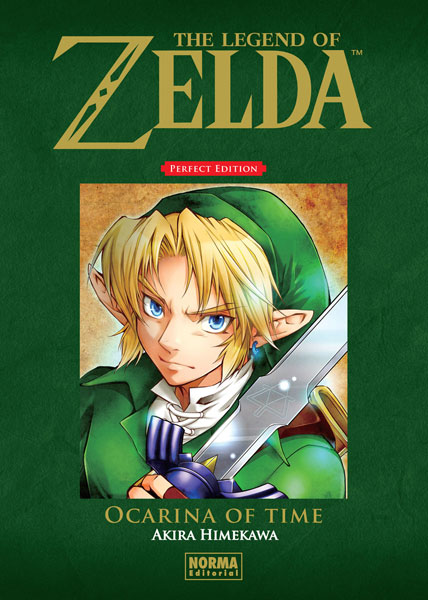
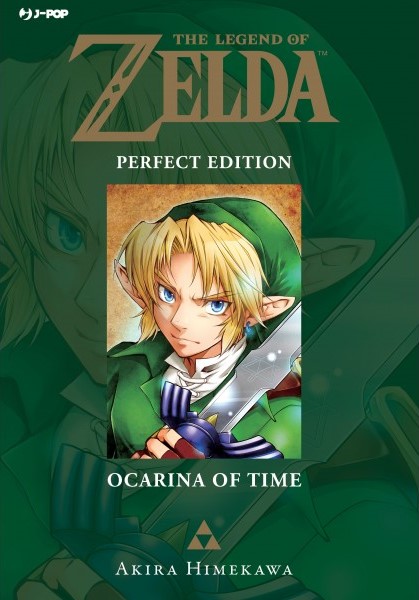
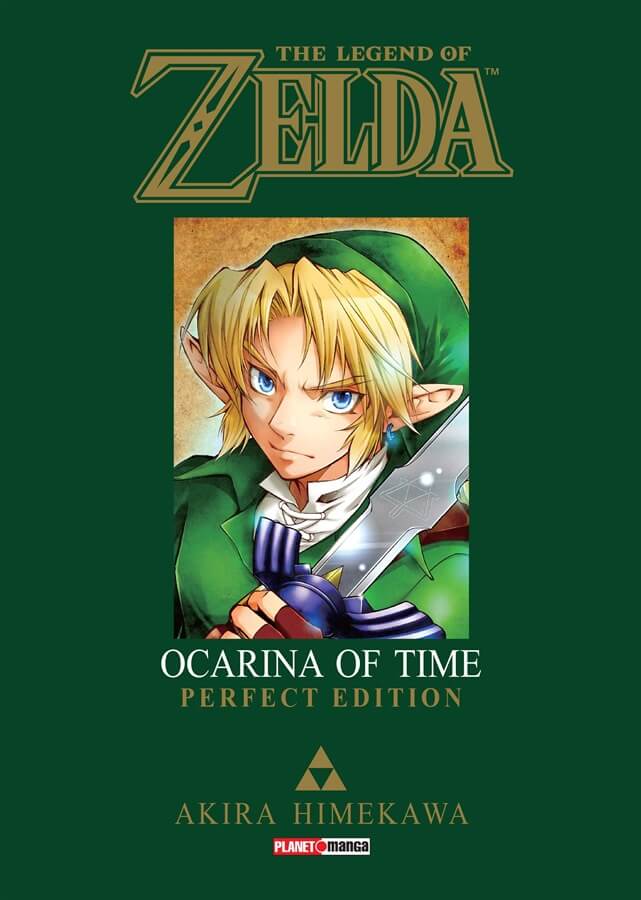
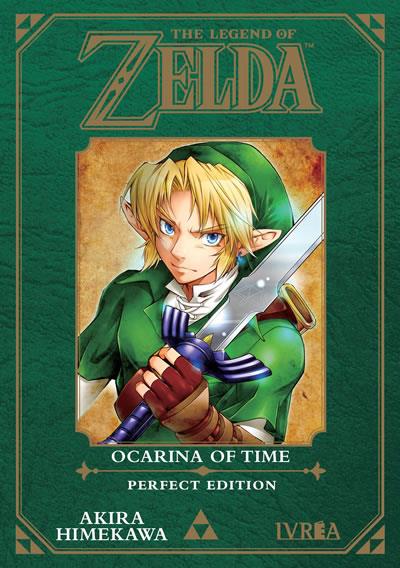
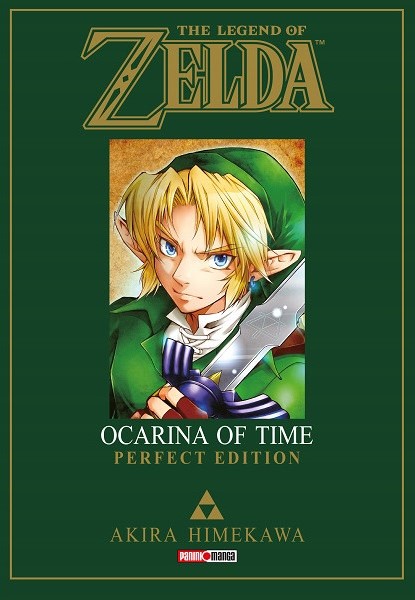
Soleil Manga began the French edition in July 2009 with A Link to the Past, followed by the two Ocarina books, and Tokyopop published the series in German between 2009 and 2011. In Spain, Norma Editorial numbered its ten single volumes in an order of its own (A Link to the Past is its number 4) and also published a five-book Perfect Edition. Anime News Network lists J-Pop for the Italian books, Planet Mangá in Brazil and Ching Win in Taiwan. The omnibus has also appeared as a Perfect Edition from Ivrea in Argentina (five double volumes of about 400 pages, with dust jackets) and from Panini in Brazil, which launched it in December 2017. Covers survive for Mexican and German Perfect Editions too; we have not confirmed who published those.
Critics in 2008 and 2009 were cool. Casey Brienza of Anime News Network, reviewing volume 1 in January 2009, gave the art an A but the story a C (C+ overall): she loved the bold lines, lively layouts and cute Link, but found the plot rushed, the deaths weightless and the supporting cast thin, and noted that the first printing let a lot of text disappear into the binding. Kevin Leathers of the UK Anime Network was harsher, finding Link’s constant chatter forced and the pace far too quick.
Fans were kinder. Zelda Universe had already reviewed both arcs in 2006, before there was any official English edition, and gave the Adult chapters four hearts out of five for their beautiful art and their sword fights, while grumbling about rushed bosses and thin Sages. Zelda Dungeon ran a series of articles in 2009 that picked over the changes.
The 2016 reissue turned the book into a best-seller. The Legendary Edition entered the New York Times manga list at number 2 in its first week (30 October to 5 November 2016) and was number 1 in the week of 4 to 10 December, its sixth week on the chart. It was still number 9 on BookScan’s top 20 adult graphic novels in March 2017, four months after release. Himekawa have said they feel more pressure now to live up to the series than when they started.
“Forgettable. An overhurried plot and one-dimensional characters.”
Casey Brienza, Anime News Network Review of Volume 1, January 2009
“A complete waste of time for Zelda fans or manga readers.”
Kevin Leathers, UK Anime Network Review of Volumes 1 and 2, January 2009
“nice trip down memory lane”
Josh Piedra, The Outer Haven Review of the Legendary Edition, December 2016
Trivia
Himekawa’s artwork of Sheik.The manga invents a piece of Sheikah culture: pierced ears are the tribe’s rite of passage. Nothing in the game says so.
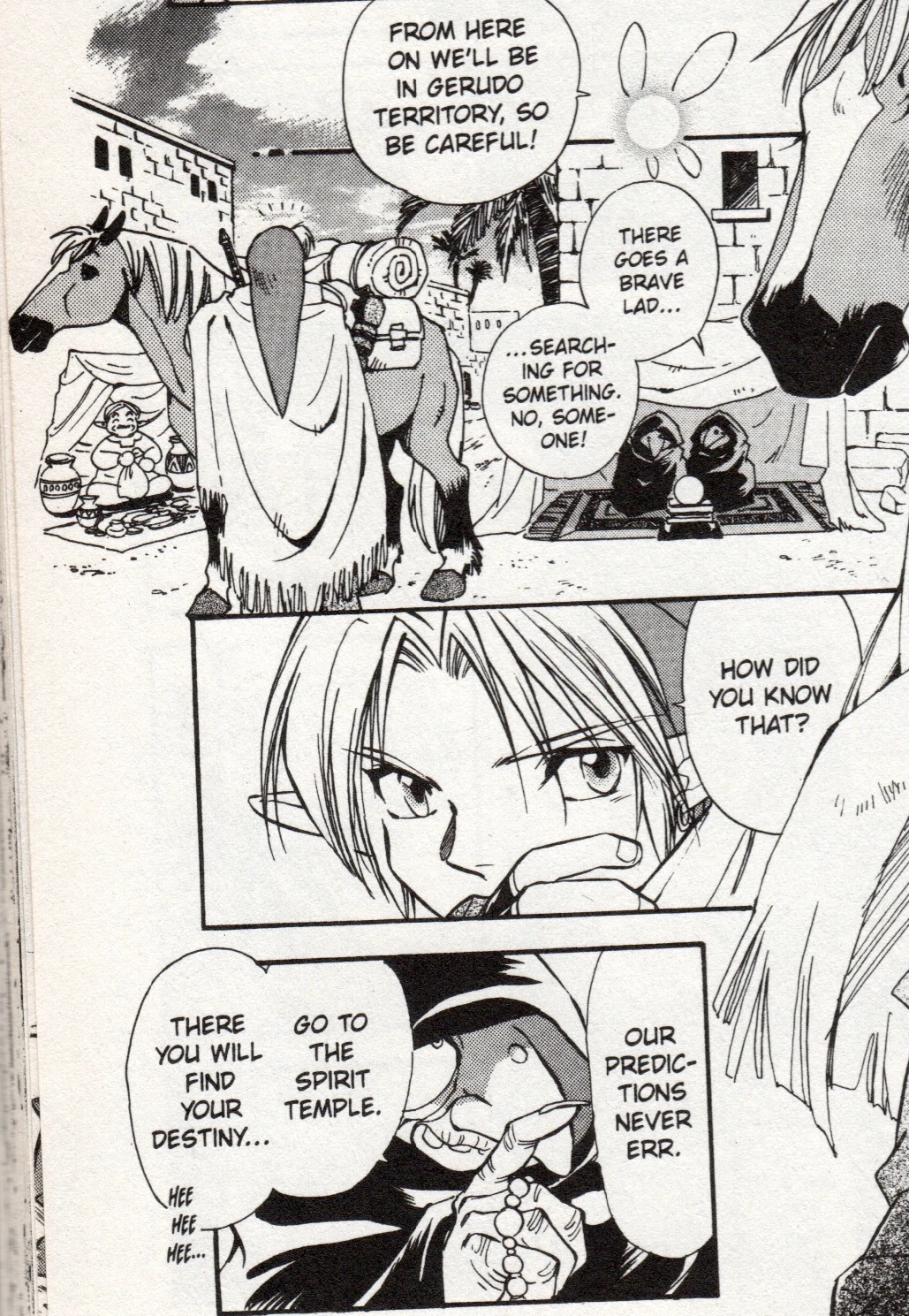
Koume and Kotake in their fortune-teller disguises.Twinrova get far more to do than in the game, from turning Ingo against Link to hunting down Sheik.
The Watarara, Rouru’s bird people, struck readers as strange in the late 1990s, Himekawa recalled in 2017, but later games full of bird folk such as the Rito have made them look perfectly at home in Hyrule. In a 2004 interview that Zelda Dungeon hosts in rough English (it could not confirm which magazine ran it), Eiji Aonuma went further and is quoted as saying the Watarara inspired the Rito of The Wind Waker.
The last panel of the main story copies the game’s final still: Zelda at her garden window, looking at Link.
Link never sets foot in the Shadow Temple, and he never meets Bongo Bongo.
The bonus Skull Kid story, with its stolen mask and Lost Woods setting, appeared about a year before Himekawa’s Majora’s Mask, whose villain is a Skull Kid with a stolen mask.
Both halves of Akira Himekawa name Ocarina of Time as their favourite Zelda game.
Sixteen years after the Japanese books, the Legendary Edition topped the New York Times manga chart in December 2016.
A Chinese-language edition was published in Taiwan by Ching Win.
Further reading: Zelda Temple Comics & Books research dossier (VIZ box sets, from VIZ and press releases)
Manage Consent
To provide the best experiences, we use technologies like cookies to store and/or access device information. Consenting to these technologies will allow us to process data such as browsing behavior or unique IDs on this site. Not consenting or withdrawing consent, may adversely affect certain features and functions.
Functional
Always active
The technical storage or access is strictly necessary for the legitimate purpose of enabling the use of a specific service explicitly requested by the subscriber or user, or for the sole purpose of carrying out the transmission of a communication over an electronic communications network.
Preferences
The technical storage or access is necessary for the legitimate purpose of storing preferences that are not requested by the subscriber or user.
Statistics
The technical storage or access that is used exclusively for statistical purposes.The technical storage or access that is used exclusively for anonymous statistical purposes. Without a subpoena, voluntary compliance on the part of your Internet Service Provider, or additional records from a third party, information stored or retrieved for this purpose alone cannot usually be used to identify you.
Marketing
The technical storage or access is required to create user profiles to send advertising, or to track the user on a website or across several websites for similar marketing purposes.

 LinkThe Hero of Time
 TwinrovaKoume and Kotake
 Skull Kid and the Baga TreeBonus-story villains