Official book2016Dark Horse 2017Goddess Collection
Art & Artifacts The 30th-anniversary illustration book · 2016
Thirty years of Hyrule in more than 2,000 pictures: box art, manual drawings, character sheets and sprites from 1986 to Tri Force Heroes, a first taste of Breath of the Wild and a roundtable with the artists, in a red hardback that went straight to No. 1 in America.
JapanTokuma Shoten, 26 Aug 2016 (Hyrule Graphics)
EnglishDark Horse Books, 21 Feb 2017
Pages424 (English); 416 (Japanese)
PicturesMore than 2,000
EditionsStandard and Master Sword Limited Edition
ChartsNo. 1 in US adult nonfiction, launch week
Original title
ゼルダの伝説 30周年記念書籍 第1集 THE LEGEND OF ZELDA HYRULE GRAPHICS: ゼルダの伝説 ハイラルグラフィックス (Hyrule Graphics)
Publisher (Japan)
Tokuma Shoten, 26 August 2016; produced by Ambit, supervised by Nintendo
Publisher (English)
Dark Horse Books with Nintendo; 21 February 2017 (Europe 23 February)
English edition
Editor Patrick Thorpe; designer Cary Grazzini; translators Aria Tanner, Hisashi Kotobuki, Heidi Plechl, Michael Gombos
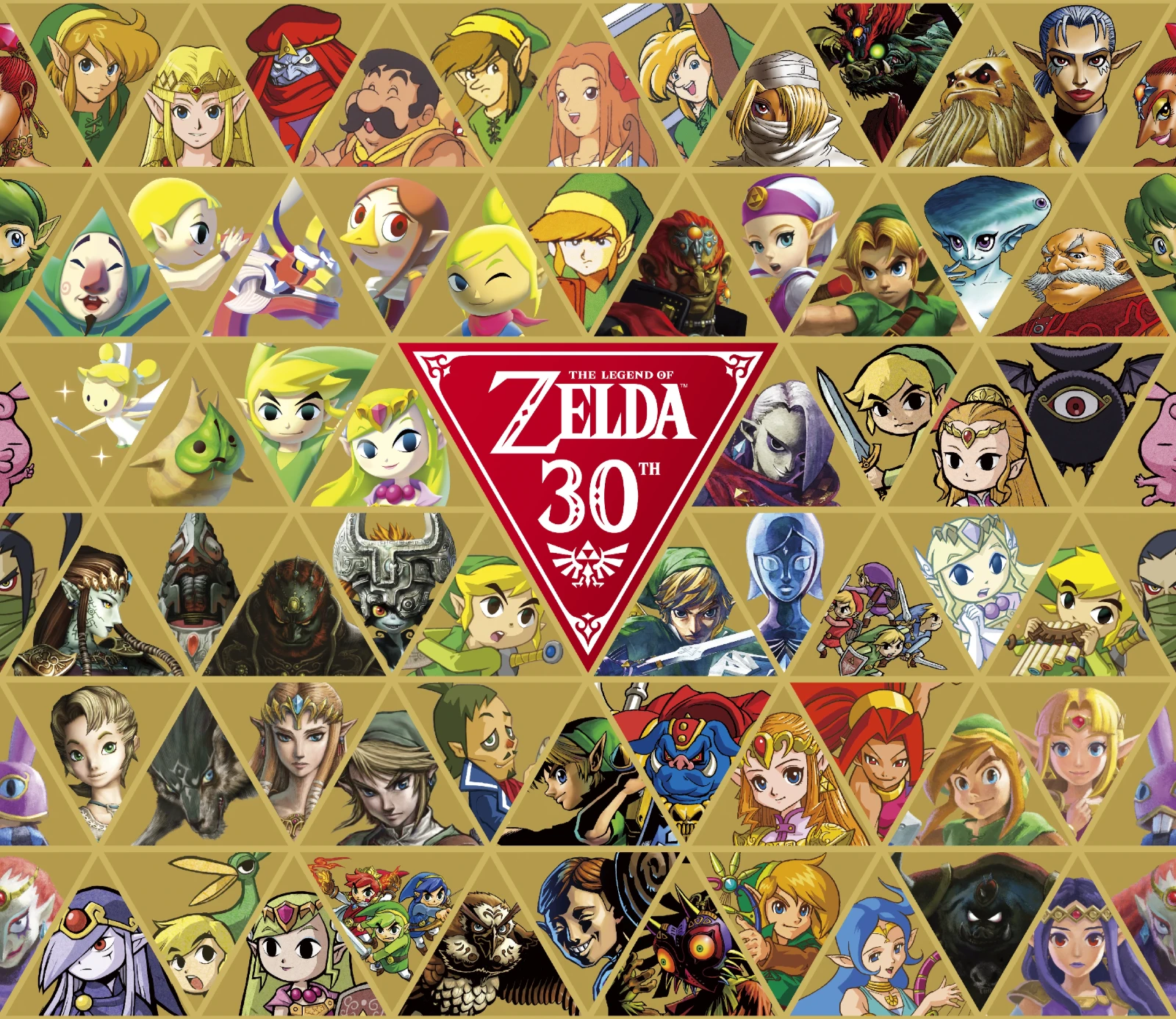
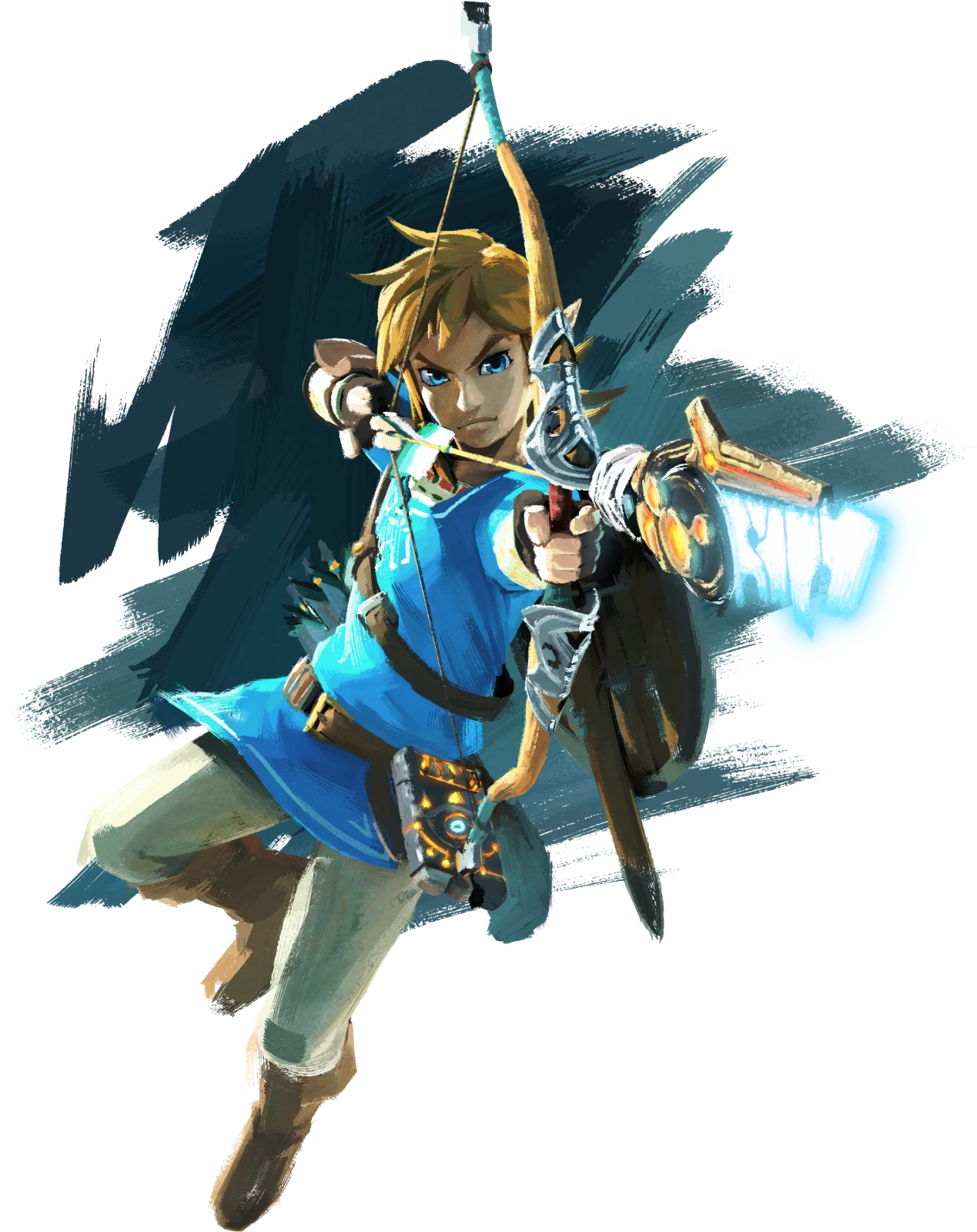
Official artwork for the series’ 30th anniversary in 2016, the occasion for the book.
If Hyrule Historia was the book that explained Hyrule, Art & Artifacts is the one that shows it. Nintendo marked the series’ 30th anniversary with three books in Japan, all published by Tokuma Shoten, and this was the first: Hyrule Graphics, on sale on 26 August 2016. Dark Horse’s English edition followed on 21 February 2017, 31 years to the day after the original Legend of Zelda came out on the Famicom Disk System and less than a fortnight before Breath of the Wild launched.
It is almost entirely pictures, more than 2,000 of them across 424 pages: box art and promotional paintings, the drawings that filled the old instruction manuals, character and enemy sheets, item art, logos, packaging and sprite sheets, from 1986 to Tri Force Heroes. A handful of pages preview Breath of the Wild, and just before them comes a roundtable in which four of Nintendo’s designers talk about the art.
Fans bought it in huge numbers. In its first week it was the best-selling adult nonfiction book in the United States, and Dark Horse added a Limited Edition with a life-size Master Sword hilt embossed on the cover. In English it is book two of Dark Horse’s Goddess Collection, between Hyrule Historia and The Legend of Zelda Encyclopedia.
The Legend of Zelda: Art & Artifacts contains over four-hundred pages of fully-realized illustrations from the entire thirty-year history of The Legend of Zelda including artwork from the upcoming The Legend of Zelda: Breath of the Wild! This book includes rare promotional pieces, game box art, instruction booklet illustrations, official character illustrations, sprite art, interviews with the artists, and much, much more!
— Dark Horse’s description of the English edition
What’s inside
Art & Artifacts has three chapters, with the roundtable and the Breath of the Wild pages at the back. The page numbers below come from Source Gaming’s review of the Japanese edition; the English book is eight pages longer, at 424. Unlike Hyrule Historia, there is no story to tell here, so the guide below is about what you will find rather than what happens.
Main illustrations
Opening chapter · pages 4–111 of the Japanese edition
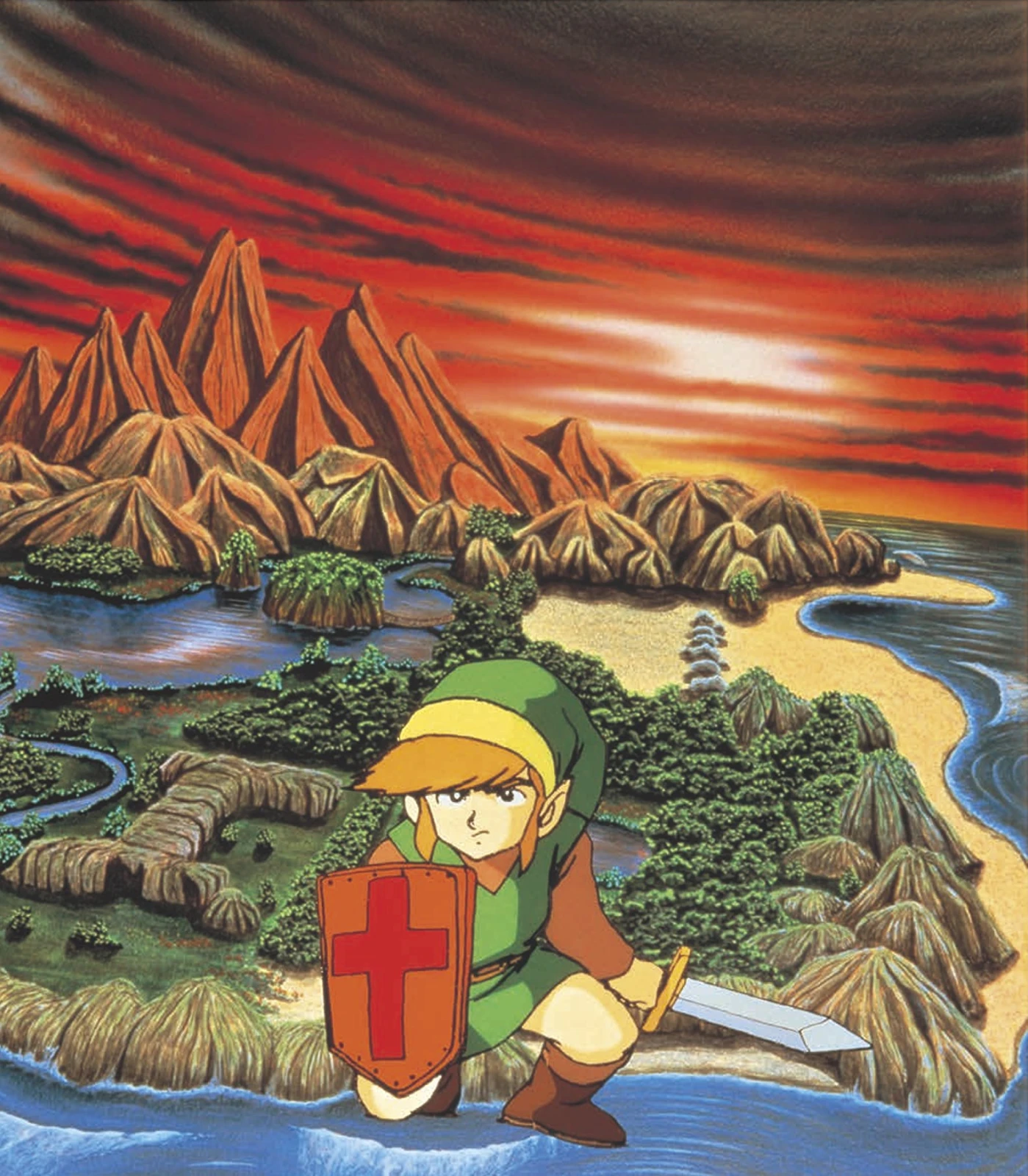
The book opens with the big pictures: the key art, box art and promotional paintings that defined each game, arranged game by game from the 1986 original to Tri Force Heroes. Plenty of these were printed small in instruction manuals or magazines at the time, and Zelda Dungeon notes that many are shown here at high resolution for the first time.
Where a game was remade, the chapter sets old and new side by side, so the art of The Wind Waker and Twilight Princess can be compared with their HD versions. There are working drawings too: Source Gaming spotted an early draft of the main Twilight Princess illustration with the picture split straight down the middle. Seen in one sweep, the chapter traces Link from the chunky hero of the NES era to the elegant figure of the 2010s.
Look out for
Old-and-new pairings for the HD remakes
Manual art at full size
Draft versions of familiar key art
Character illustrations
The longest chapter · pages 112–371 of the Japanese edition
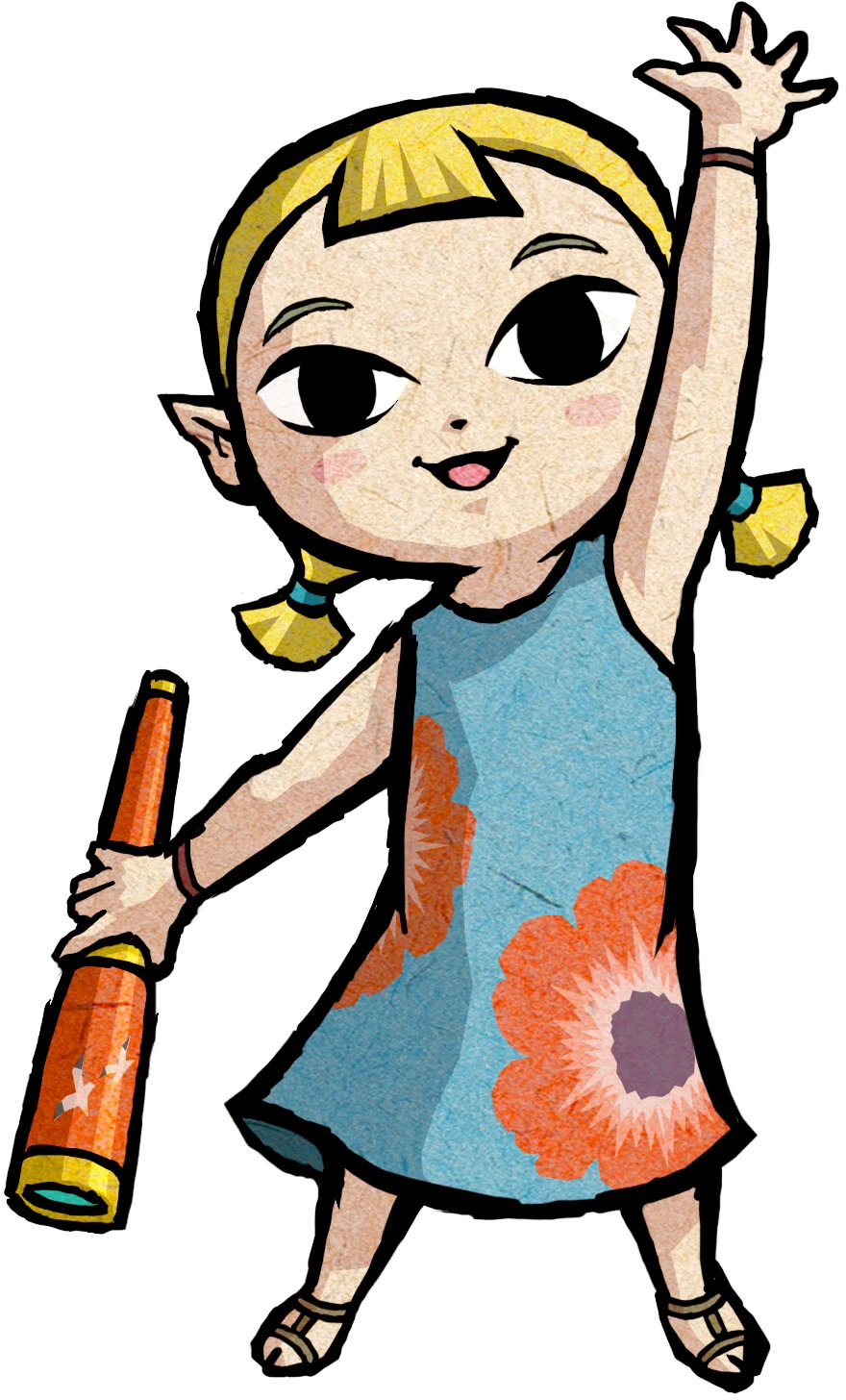
More than half the book. Again working game by game, it gathers the official drawings of heroes, villains, townsfolk, enemies and items, from finished colour pieces back to pencil sketches. Bleeding Cool picked out the monster drawings from the original guidebooks, and Source Gaming noted that even Link’s Crossbow Training gets its turn.
As in the first chapter there is some concept art that had never been released, and some old-and-new comparisons, but most of the art had been seen somewhere before. The point is having it all in one place, in order, at a size where you can see the brushwork. Text is kept to a minimum, which was the most common complaint: several reviewers wished for more context or more from the artists.
Logos, packaging and pixel art
Extras · from page 372 of the Japanese edition
The final chapter collects everything else. There are galleries of game logos and packaging, including the American versions, and an extra gallery of special pieces such as anniversary illustrations. Bleeding Cool also spotted stained-glass designs, manga pages and frames from the cartoon in the book.
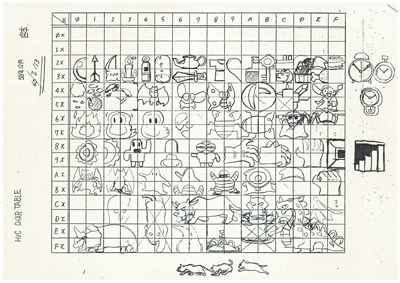
For many fans the highlight is the pixel art. The sprites of the first three games are laid out in detail, from Ganon’s final forms to Link’s crouch in Zelda II, a reminder of how much character the artists squeezed into a few coloured squares. The chapter also holds the Breath of the Wild preview and the artists’ roundtable, described below, and ends with the credits.
Talking with the illustration artists
Roundtable interview · page 398 of the Japanese edition
The book’s one interview, in its closing pages, is a roundtable with four Nintendo designers. Among them are Satoru Takizawa, Yusuke Nakano and Takumi Wada, and the talk covers their inspirations and favourite work.
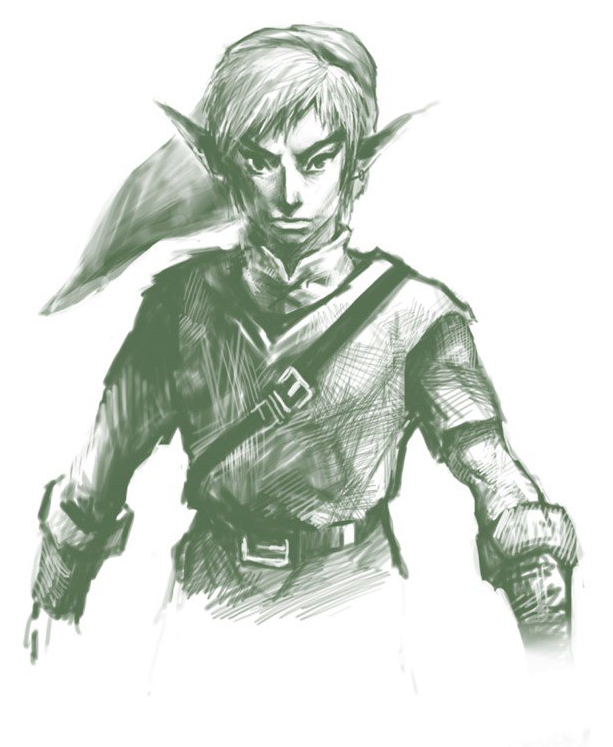
The best-known story concerns Twilight Princess. Takizawa explains that it began as a sequel to The Wind Waker set on land rather than sea, but the cartoon Link was too short to ride a horse and a grown-up version of him did not look right. With fans asking for something closer to Ocarina of Time, the team switched to a realistic style. Takizawa became art director and brought Nakano in to design Link while the game’s look was still being settled. Wada, meanwhile, talks through his first Breath of the Wild illustrations (see below). Source Gaming, reviewing the Japanese edition, simply wished there had been more of this.
Breath of the Wild preview
A few pages · the book went on sale before the game
Dark Horse’s description makes a point of the Breath of the Wild art, but the game was still unreleased when the book was put together, and the section is short. Bleeding Cool counted a couple of pages, and Source Gaming noted that all of it had been seen before.
The interview gives the pictures some context. Wada explains that he drew Link from behind so that fans could see all the equipment on his back, and that the pictures show a bow rather than a sword. Takizawa calls the bow a very important item in the new game, one that Aonuma had wanted to showcase from early in development. Leaving out the green tunic and pointed cap was a deliberate, bold choice: in this game Link’s outfit changes all the time. For the full story of the game’s art, Dark Horse followed up with Creating a Champion in 2018.
At a glance
Chapter
Japanese edition pages
What it holds
Main illustrations
4–111
Key art, box art and promotional paintings, game by game
Character illustrations
112–371
Characters, enemies and items, from sketches to finished pieces
Extras
372–416
Logos and packaging, extra gallery, pixel art, the artists’ roundtable (p. 398), Breath of the Wild, credits
Page ranges from Source Gaming’s review of the Japanese edition.
Editions
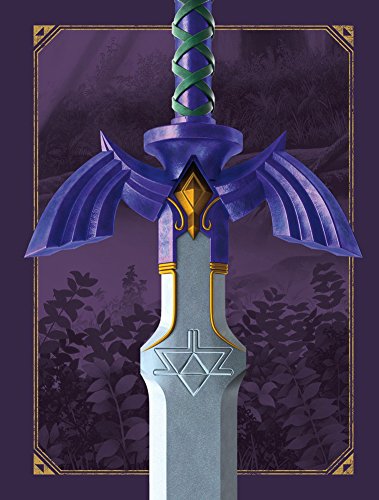
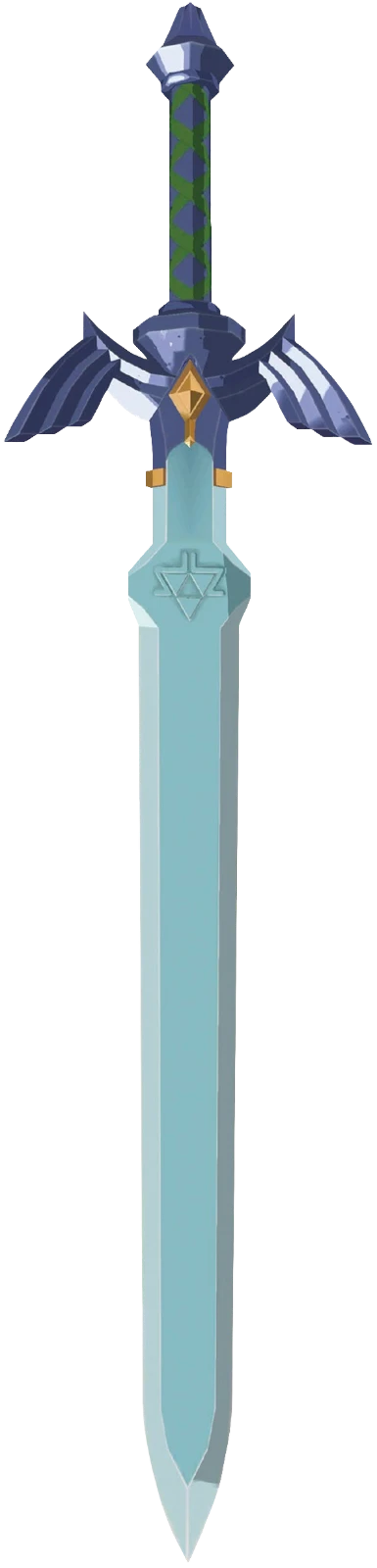
The Master Sword, official Breath of the Wild artwork. The Limited Edition’s embossed sword is printed at the size of a real hilt.
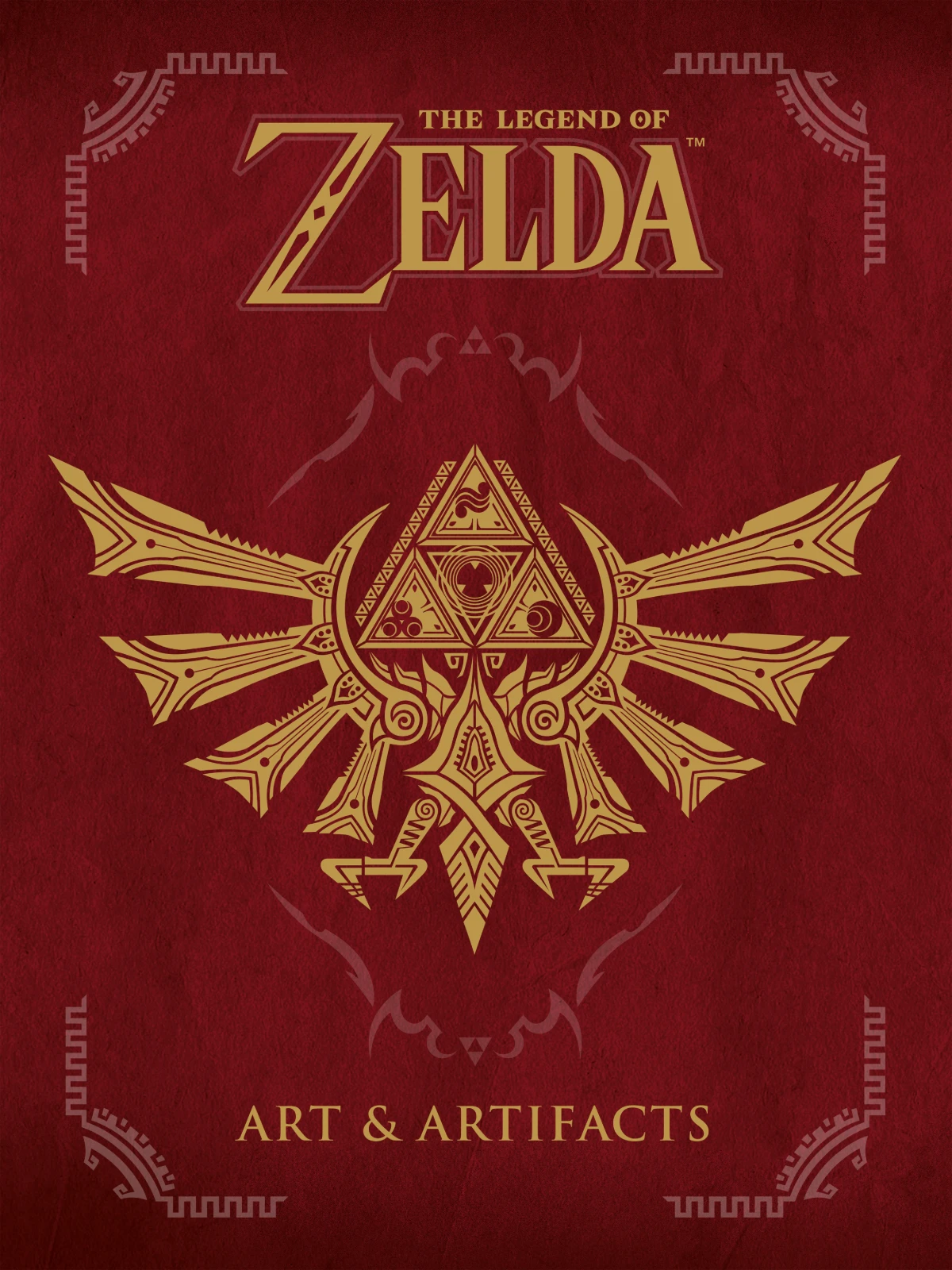
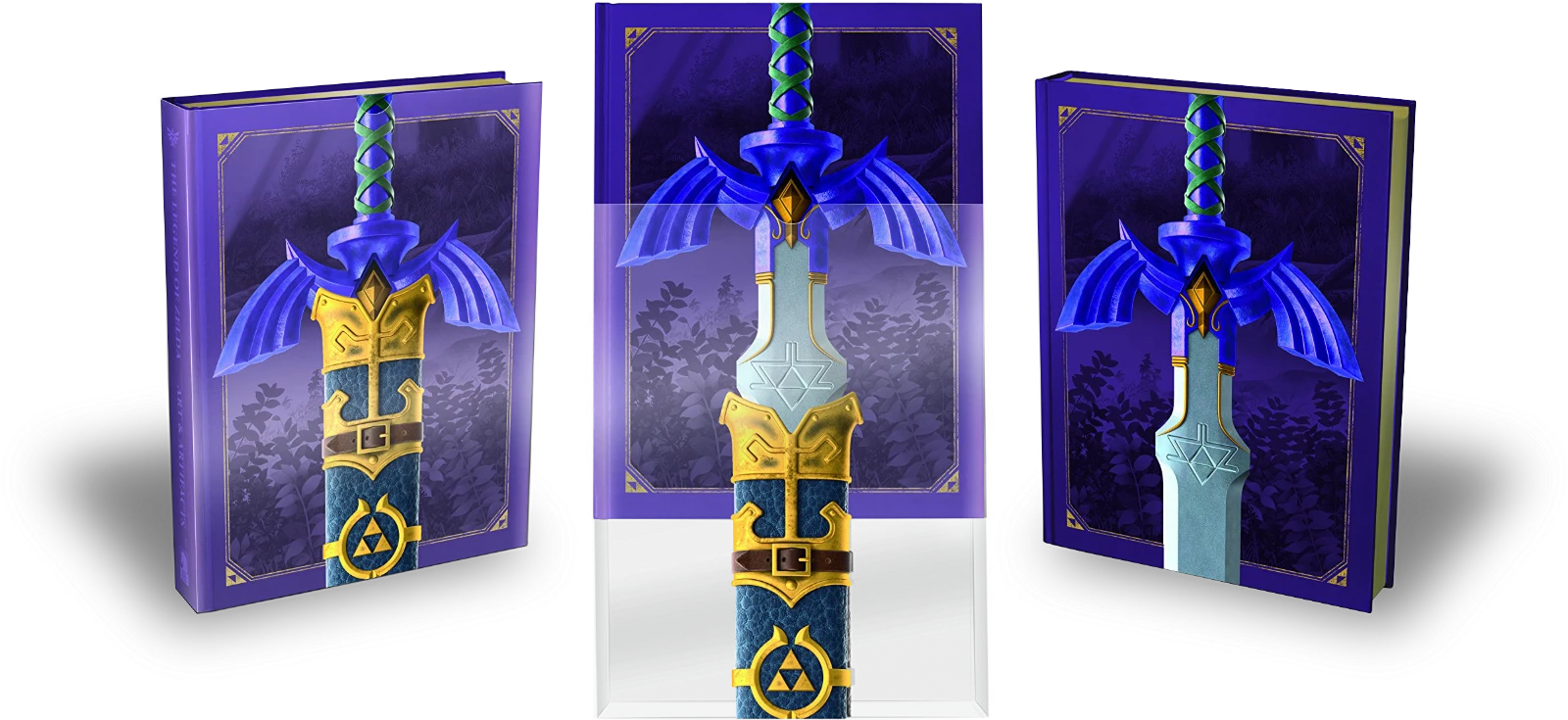
The standard English edition is a deep red hardback with a gold Hyrule crest, about 2 inches thick and around 6 pounds in weight. The Limited Edition is the one collectors chase. Its cover shows the Lost Woods in a custom-mixed deep purple ink, framed with metallic foil, and in the middle is a 3D-embossed Master Sword hilt, also foiled. The book slides into a clear acetate sleeve printed as the sword’s sheath, so taking it out feels like drawing the blade. The page edges are gilded, and the contents are the same as the standard edition’s.
Edition
Released
Details
Japanese: Hyrule Graphics (Tokuma Shoten)
26 Aug 2016
A4 hardcover, 416 pages; ¥5,400 before tax; ISBN 978-4-19-864243-3
English standard (Dark Horse)
21 Feb 2017 (Europe 23 Feb)
424 full-colour pages, 9 × 12 in; red cover; US$39.99; ISBN 978-1-5067-0335-0
English Limited Edition (Dark Horse)
21 Feb 2017
Lost Woods cover, embossed Master Sword, acetate sheath, gilded pages; US$79.99; ISBN 978-1-5067-0378-7
Digital
by 2020
Already available when Hyrule Historia went digital in April 2020
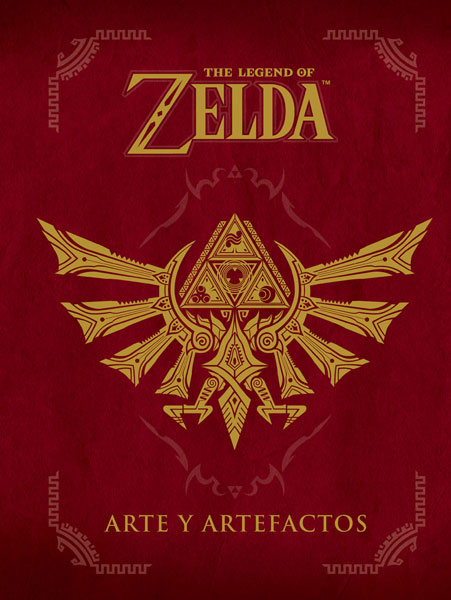
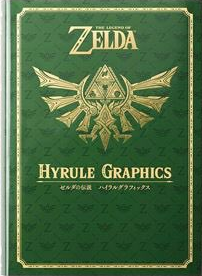
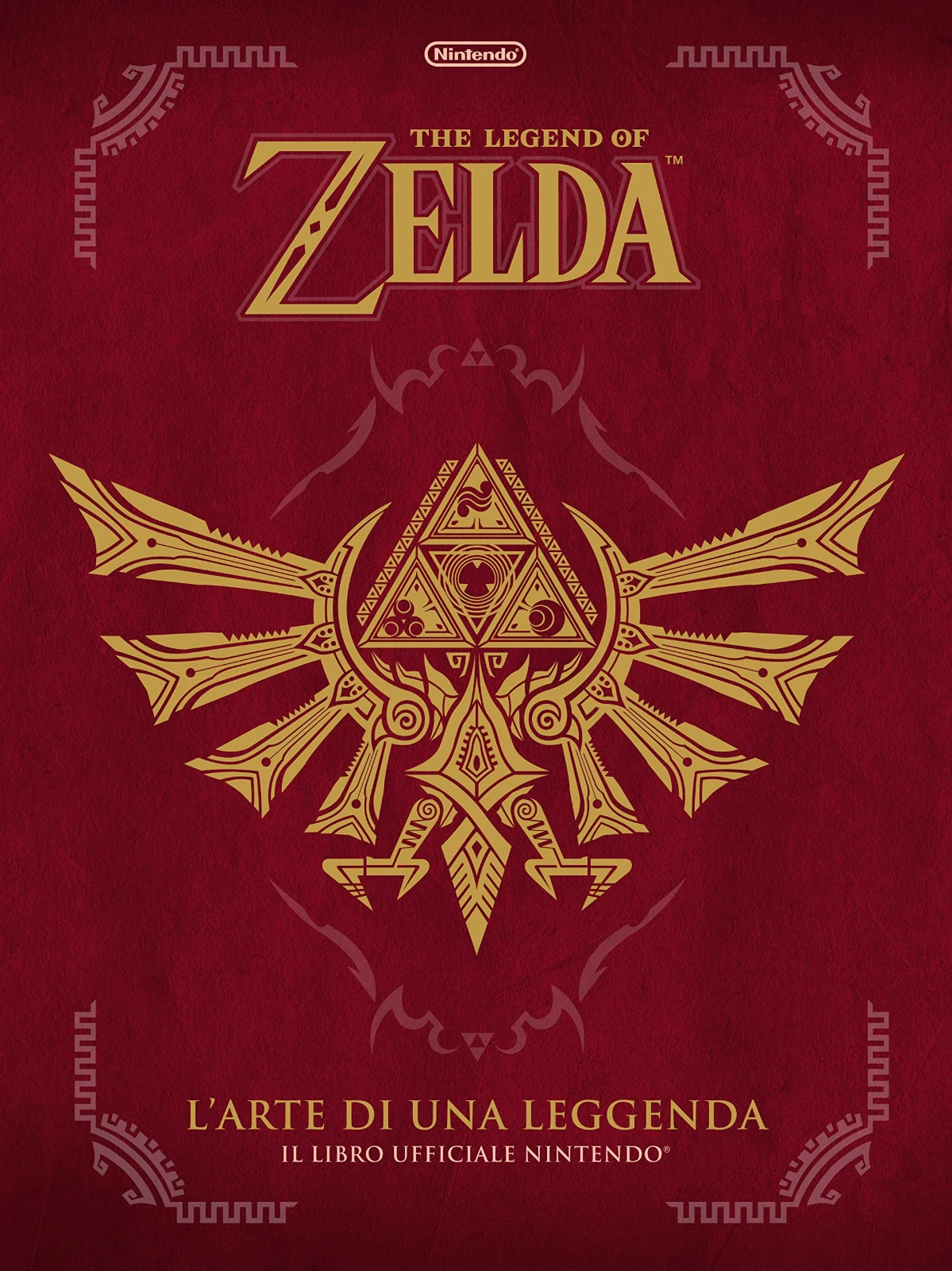
Translations have also appeared in Spanish, French and Italian; the covers below are from Zelda Wiki, but we have not been able to confirm the publishers or dates.
Cover of the Spanish editionCover of the French editionCover of the Italian edition
How it was made
In Japan
Hyrule Graphics was produced by Ambit, a Tokyo publisher of books about games, published by Tokuma Shoten and supervised by Nintendo, with special thanks to Eiji Aonuma. Zelda Dungeon credits Kazuya Sakai as editor and Shion Saitou as art director. It was planned as the first of a trilogy, and the back cover said so: Source Gaming noted that it trailed a second anniversary book for that winter and a third for 2017. They became the Hyrule Encyclopedia (March 2017) and Breath of the Wild Master Works (December 2017).
Coming to English
After the success of Hyrule Historia, Dark Horse announced the English edition in August 2016 as a follow-up, before the Japanese book was even in shops. Thorpe has described it as a collection of nearly all the fully realised art the series has produced, from advertisements to instruction booklets. Ambit sorted the assets with heavy help from Nintendo, and the translation of the notes and interview fell to Aria Tanner, who had worked on Hyrule Historia, with Hisashi Kotobuki, Heidi Plechl and Michael Gombos.
One of three
In Japan the three 30th-anniversary books came out within 16 months of each other, all produced by Ambit and published by Tokuma Shoten. Dark Horse translated all three in the same order: the art book first, then the encyclopedia, which completed the Goddess Collection, and finally the Breath of the Wild book, renamed for its English release.
Japanese prices before tax, from Ambit; English dates from Dark Horse.
The Master Sword edition
The Limited Edition was designer Cary Grazzini’s idea: the Master Sword, he argued, is the most important artefact in the series. Print director Vanessa Todd-Holmes suggested embossing it in 3D, the sword was drawn to scale, and an acetate sleeve became the sheath. Dark Horse unveiled it in January 2017 and promised buyers “the thrill of finding and unsheathing the Master Sword”.
Release timeline
201622 Aug – Dark Horse announces the English edition for February 2017
201626 Aug – Hyrule Graphics goes on sale in Japan
201710 Jan – The Master Sword Limited Edition is unveiled
201721 Feb – English release in North America, both editions
201723 Feb – European release
201726 Feb – Ends its first week as the No. 1 adult nonfiction book in the US
20173 Mar – Breath of the Wild launches
Sales and reviews
Sales
In the week ending 26 February 2017 Art & Artifacts sold nearly 29,000 copies in the US and went straight in at No. 1 on the adult nonfiction chart; Dark Horse announced it as the best-selling book in the country that week. It topped Publishers Weekly’s bestseller list of 6 March, with the Limited Edition 20th on the hardcover nonfiction list.
Reviews
Reviewers agreed on the printing and argued about the words. Polygon’s Susana Polo called it “a truly beautiful thing”, USgamer’s Jeremy Parish judged its spreads worth the price for serious fans of the series’ history, and IGN’s Seth G. Macy later counted it among his favourite books about video games. BrutalGamer’s Jason Micciche gave it 97 per cent, his only reservation being how little Breath of the Wild there is.
The doubts were about text. Bleeding Cool’s Gavin Sheehan loved it but warned that “There’s very little text written on any of the pages”, making it a coffee-table book rather than a guide; Boing Boing’s reviewer praised the colour reproduction and uncluttered layouts but joked that it is mostly pictures of Link, and missed the illustrator Katsuya Terada. Reviewing the Japanese edition, Source Gaming gave it 3 out of 5: superb art, but mostly familiar, and less of a revelation than Hyrule Historia.
Dark Horse knows art books. They just do.
Jason Micciche, BrutalGamer March 2017
an amazing book that all Legend of Zelda fans need to own
Gavin Sheehan, Bleeding Cool June 2018
Seriously, it’s mostly pictures of Link.
Boing Boing March 2017
Trivia
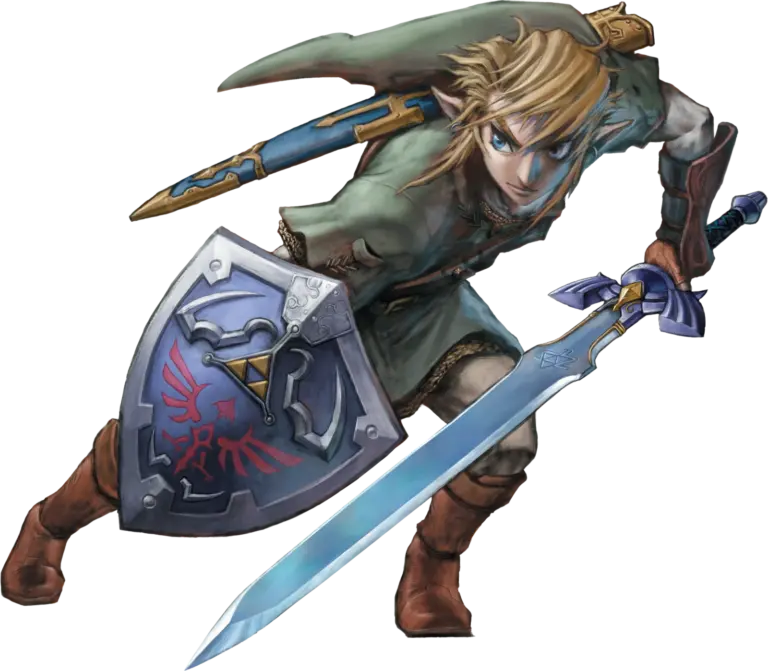
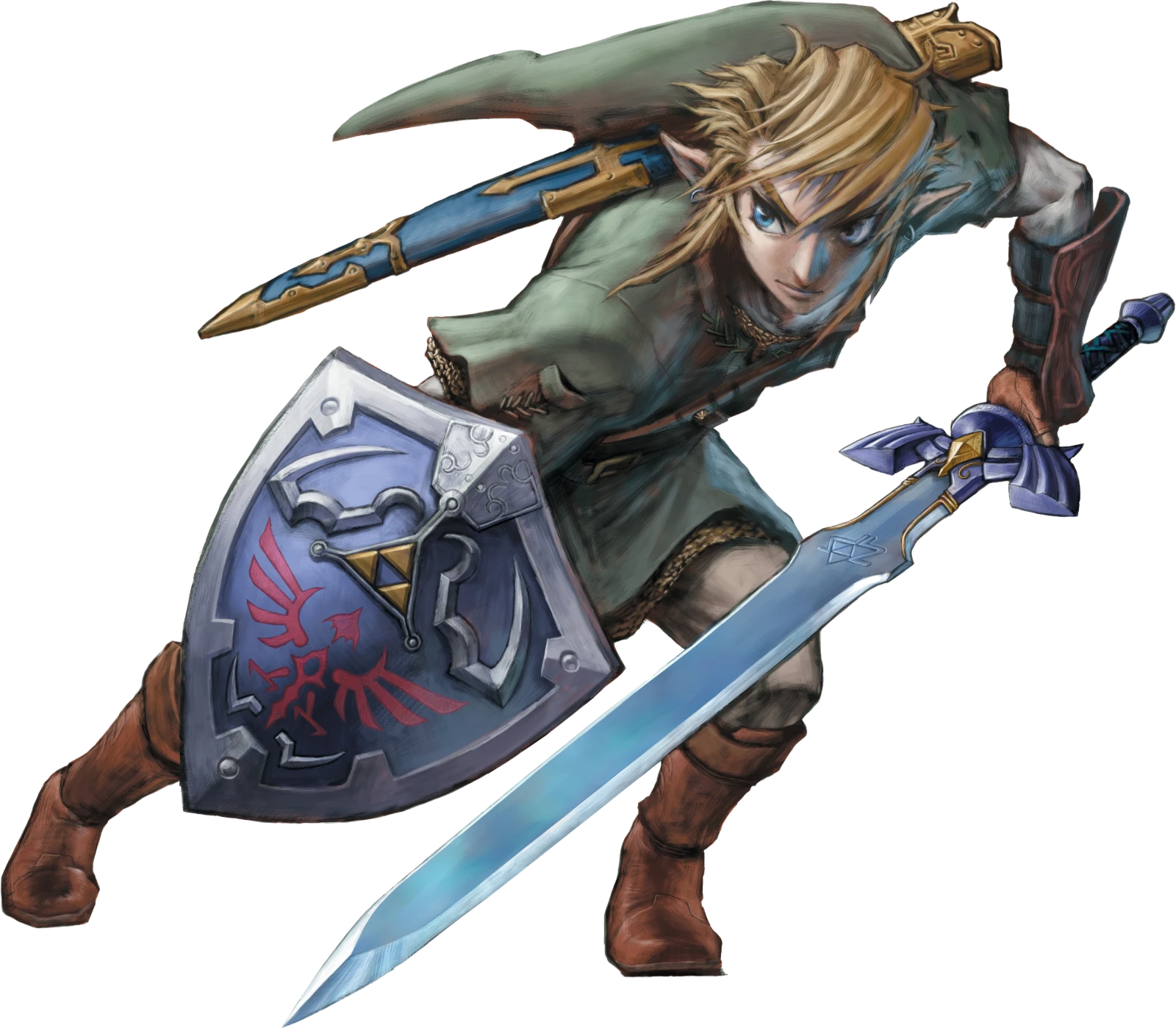
The realistic Link who replaced him, in official Twilight Princess artwork.Twilight Princess started life as a land-based sequel to The Wind Waker. According to Takizawa in the roundtable, one problem was that the cartoon Link was too short to ride a horse.
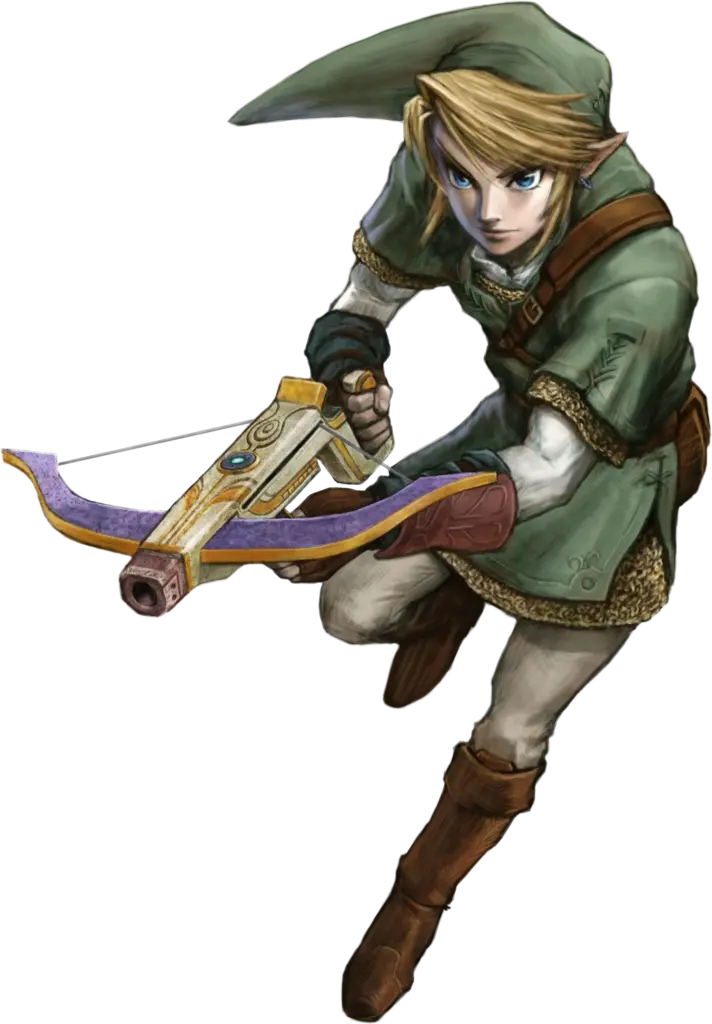
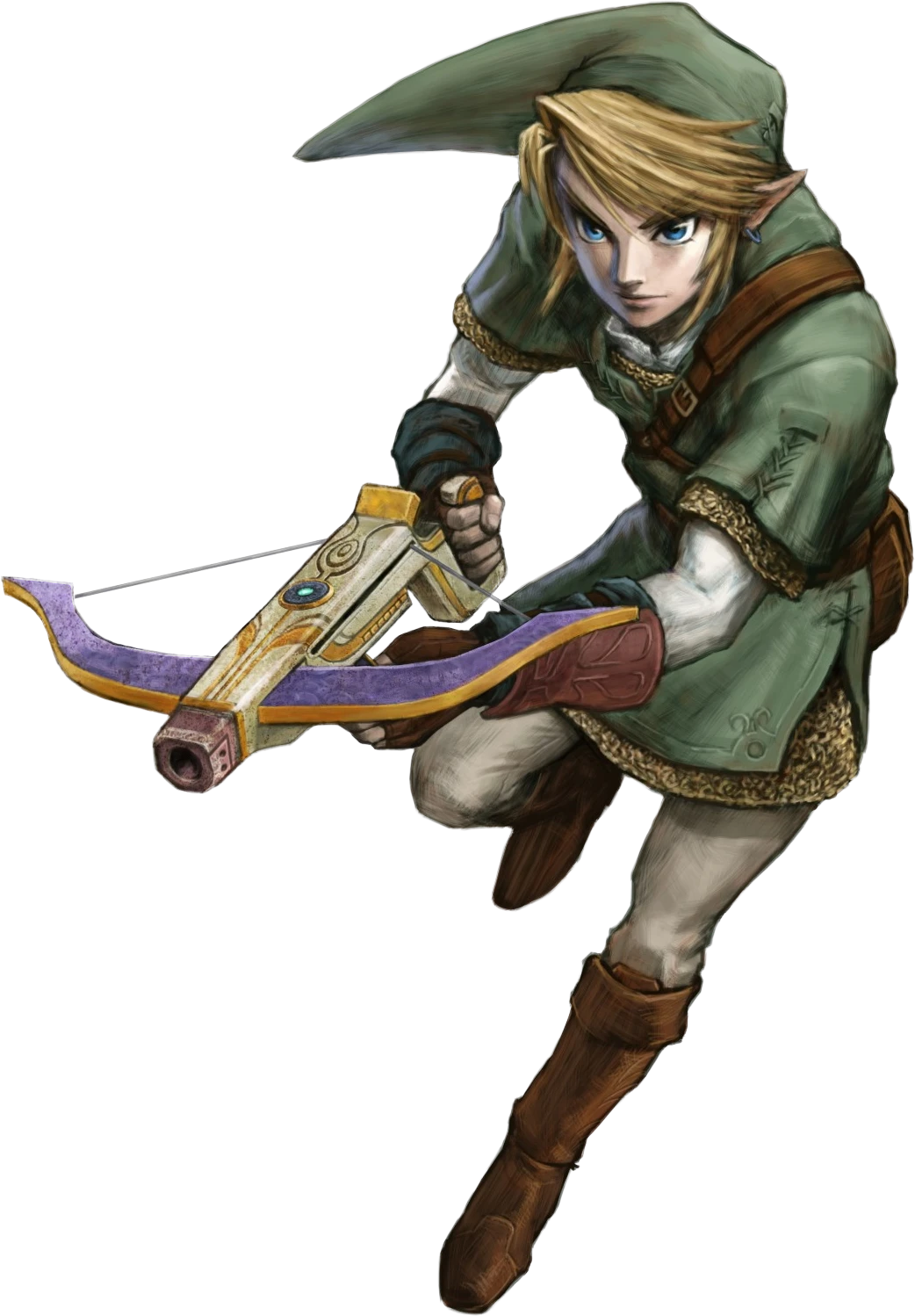
Link in official Link’s Crossbow Training artwork.The character chapter finds room for the Wii Zapper shooter Link’s Crossbow Training.
Dark Horse released the book on 21 February 2017, the 31st anniversary of the original game’s Japanese release.
The Limited Edition’s embossed sword is printed at the size of a real sword hilt, so that pulling the book from its sleeve feels like unsheathing it.
At about 6 pounds and 2 inches thick, it is no bedtime read: Boing Boing weighed it.
There are more than 2,000 images in the book, by the count of its Japanese producer, Ambit.
Wada drew his first Breath of the Wild pictures of Link from behind, a rare angle in Zelda art, because he expected fans would want to study the kit on his back.
One of the four translators is a familiar name: Aria Tanner had helped bring Hyrule Historia into English four years earlier.
Further reading: Zelda Temple Comics & Books research dossier (sources listed inside)
Manage Consent
To provide the best experiences, we use technologies like cookies to store and/or access device information. Consenting to these technologies will allow us to process data such as browsing behavior or unique IDs on this site. Not consenting or withdrawing consent, may adversely affect certain features and functions.
Functional
Always active
The technical storage or access is strictly necessary for the legitimate purpose of enabling the use of a specific service explicitly requested by the subscriber or user, or for the sole purpose of carrying out the transmission of a communication over an electronic communications network.
Preferences
The technical storage or access is necessary for the legitimate purpose of storing preferences that are not requested by the subscriber or user.
Statistics
The technical storage or access that is used exclusively for statistical purposes.The technical storage or access that is used exclusively for anonymous statistical purposes. Without a subpoena, voluntary compliance on the part of your Internet Service Provider, or additional records from a third party, information stored or retrieved for this purpose alone cannot usually be used to identify you.
Marketing
The technical storage or access is required to create user profiles to send advertising, or to track the user on a website or across several websites for similar marketing purposes.