Zelda 4-koma anthologies Japanese gag-strip books · 1992–2003
Four panels, one joke: for a decade, Japanese publishers filled paperback after paperback with fan-style gag strips that poked fun at Link, Zelda, Ganon and every monster in Hyrule.
Format4-koma: four-panel gag strips by many artists
BooksAbout 26, in five series
PublishersEnix, Futabasha, Kōbunsha, Keibunsha
GamesFrom A Link to the Past (1991) to The Wind Waker (2002)
In EnglishNone
Format
4-koma manga (四コマ漫画): anthologies of four-panel gag strips
Series
Zelda no Densetsu 4-koma Manga Gekijō (ゼルダの伝説 4コママンガ劇場); 4-koma Manga Ōkoku (4コマまんが王国); 4-koma Gag Battle (4コマギャグバトル); Kaze no Takuto: Link no 4-koma Kōkaiki (風のタクト リンクの4コマ航海記)
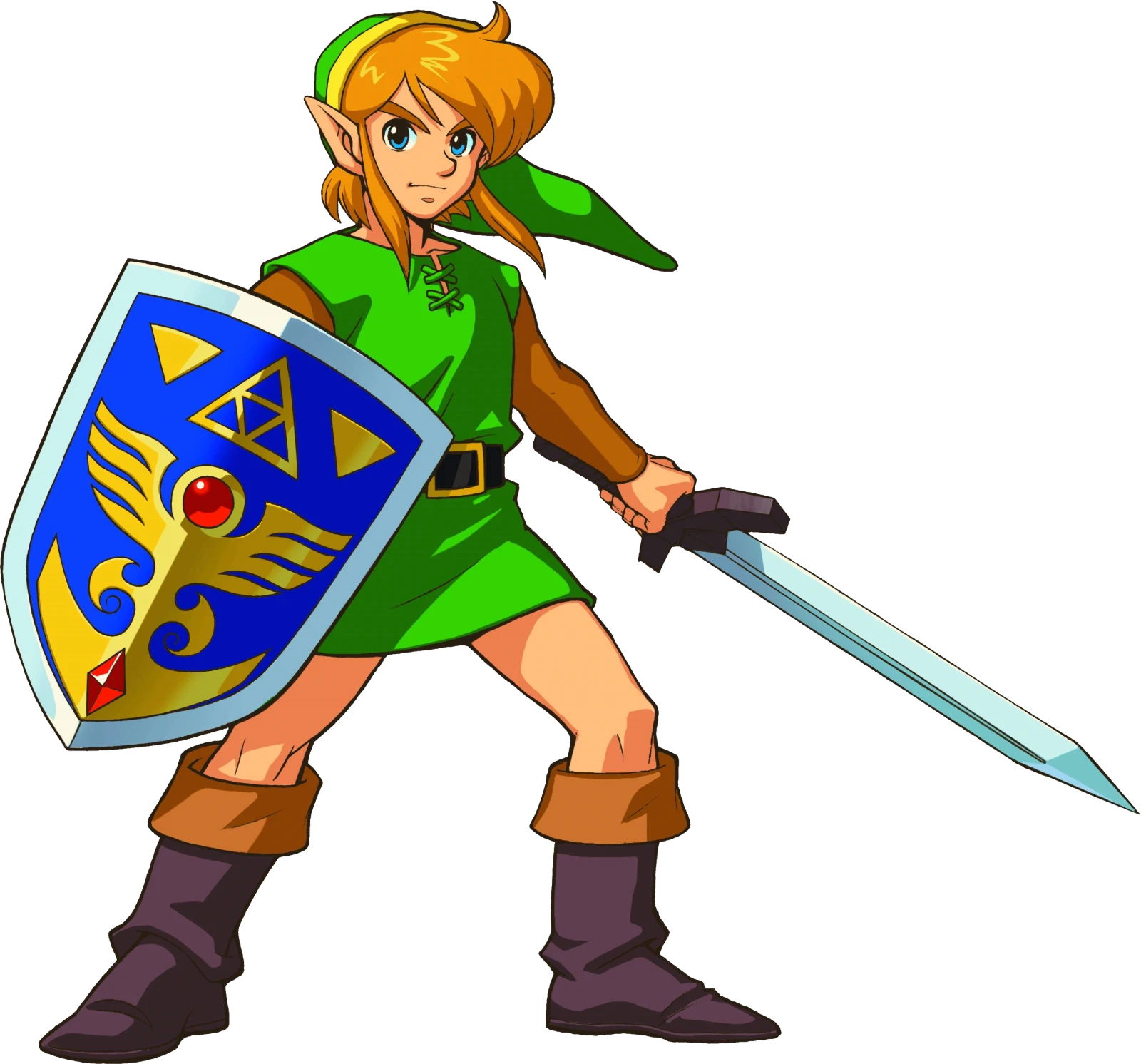
Ganon, as drawn for A Link to the Past (official artwork).
A 4-koma is the Japanese newspaper strip: four panels, read top to bottom, building to a punchline in the last. In the early 1990s game publishers discovered that players would happily buy whole books of them about their favourite games, drawn by a rotating cast of artists, and Zelda got its share. From 1992, when A Link to the Past was the big Super Famicom adventure, until The Wind Waker in 2003, at least four publishers put out roughly 26 Zelda gag-strip books between them.
These are not adaptations. They assume you have played the game and spend their pages making fun of it. TheVideoGameLibrary calls Kōbunsha’s Ocarina of Time book a parody anthology, and its targets are those of the whole genre: the heroes and the villain, the monsters, and the business of playing the game itself.
None was ever translated, and the details are patchy. Enix’s eight-volume 4-koma Manga Theater is well documented; for the rest we rely mostly on the list in Japanese Wikipedia and on wiki stubs, and dates and ISBNs are often missing. This page therefore goes series by series rather than book by book.
The series
In order of each series’ first book. Where a source gives a date, page count or ISBN we include it; where none does, we have left the gap rather than guess.
Zelda no Densetsu 4-koma Manga Gekijō (Enix)
4-koma Manga Theater · 8 volumes, 1992–1995 · then Ocarina of Time (2 volumes, 1999) and Majora’s Mask (1 volume, 2000)
Enix, the Dragon Quest publisher, ran the biggest and best-documented Zelda 4-koma series. Its eight volumes followed Nintendo’s two big Zelda games of the time: volumes 1 to 3 are all A Link to the Past, volumes 4 and 5 turn to the Game Boy’s Link’s Awakening, and volumes 6 to 8 mix the two. Each is a slim paperback of strips by various artists; volume 1 (1992) runs to 134 pages and volume 7 (1995) to 130.
When Zelda went 3D the name came back. Japanese Wikipedia lists a two-volume Toki no Ocarina 4-koma Manga Gekijō (Ocarina of Time) from 1999 and a single Mujura no Kamen 4-koma Manga Gekijō (Majora’s Mask) from 2000. The Fandom Zelda wiki confirms that the Ocarina of Time books were Enix’s; we have found no source that names the publisher of the Majora’s Mask volume, though the title suggests the same series.
The books
Vols. 1–3 (A Link to the Past): vol. 1, 1992, 134 pages, ISBN 978-4-900527-94-2
Toki no Ocarina 4-koma Manga Gekijō, 2 vols., 1999
Mujura no Kamen 4-koma Manga Gekijō, 1 vol., 2000 (publisher unconfirmed)
Zelda no Densetsu 4-koma Manga Ōkoku (Futabasha)
4-koma Manga Kingdom · Action Comics · 2 volumes, 1992–1994 · then single volumes in 1999, 2001 and 2003
Futabasha’s 4-koma Manga Ōkoku (“4-koma Manga Kingdom”) series, published under its Action Comics label, gave Zelda two volumes in the Super Famicom and Game Boy years. The second, published on 28 April 1994, is a 128-page book priced at ¥580 that covers both A Link to the Past and Link’s Awakening.
The Kingdom returned for each new wave of games: one volume for Ocarina of Time (1999), one covering both Oracle games (Fushigi no Kinomi, 2001), and one for the Game Boy Advance A Link to the Past (Kamigami no Triforce, 2003). These attributions come from Japanese Wikipedia’s list; we have not found dates or ISBNs for the later books.
The books
4-koma Manga Ōkoku vol. 1, 1992
4-koma Manga Ōkoku vol. 2, 28 April 1994, 128 pages, ¥580, ISBN 4-575-93359-7
Toki no Ocarina 4-koma Manga Ōkoku, 1999
Fushigi no Kinomi: Daichi no Shō / Jikū no Shō 4-koma Manga Ōkoku, 2001
Kamigami no Triforce 4-koma Manga Ōkoku, 2003
4-koma Gag Battle (Kōbunsha)
Hinotama (“Fireball”) Game Comic series · 8 books, 1998 or 1999 to 2003
Kōbunsha’s Gag Battle books came thick and fast in the Nintendo 64 and Game Boy Color years. Ocarina of Time alone got three: a first 4-koma Gag Battle and two companions subtitled Bōken-hen (“Adventure”) and Tanken-hen (“Expedition”). Link’s Awakening DX followed in 1999, Majora’s Mask in 2000, a book each for Oracle of Seasons and Oracle of Ages in 2001, and finally A Link to the Past for the Game Boy Advance in 2003.
The Fandom Zelda wiki files the books under Kōbunsha’s Shōnen Ō Comics imprint, while Japanese Wikipedia and booksellers give the series name as the Hinotama Game Comic series. The only pictures from any Zelda 4-koma book on Zelda Wiki come from the Oracle of Seasons volume (see below). TheVideoGameLibrary dates the first Ocarina of Time book to 1998, the year the game came out in Japan, where Japanese Wikipedia has 1999.
The books
Toki no Ocarina 4-koma Gag Battle, 1998 or 1999
Toki no Ocarina 4-koma Gag Battle: Bōken-hen, 1999
Toki no Ocarina 4-koma Gag Battle: Tanken-hen, 1999
Yume o Miru Shima DX 4-koma Gag Battle, 1999
Mujura no Kamen 4-koma Gag Battle, 2000
Fushigi no Kinomi: Daichi no Shō 4-koma Gag Battle (Oracle of Seasons), 2001, ISBN 978-4-334-80533-3
Fushigi no Kinomi: Jikū no Shō 4-koma Gag Battle (Oracle of Ages), 2001
Kamigami no Triforce 4-koma Gag Battle, 2003, ISBN 978-4-334-80590-6
Zelda no Densetsu 4-koma (Link’s Awakening, Keibunsha)
10 June 1999 · 128 pages · ¥680
A one-off from Keibunsha, the publisher of the pocket-sized Daihyakka (“big encyclopedia”) guidebooks. According to Zelda Dungeon it is a 128-page book of strips about Link’s Awakening, published on 10 June 1999 at ¥680, half a year after Link’s Awakening DX brought the game back in colour. It is the only Zelda 4-koma book we know of from Keibunsha.
Kaze no Takuto: Link no 4-koma Kōkaiki (Futabasha)
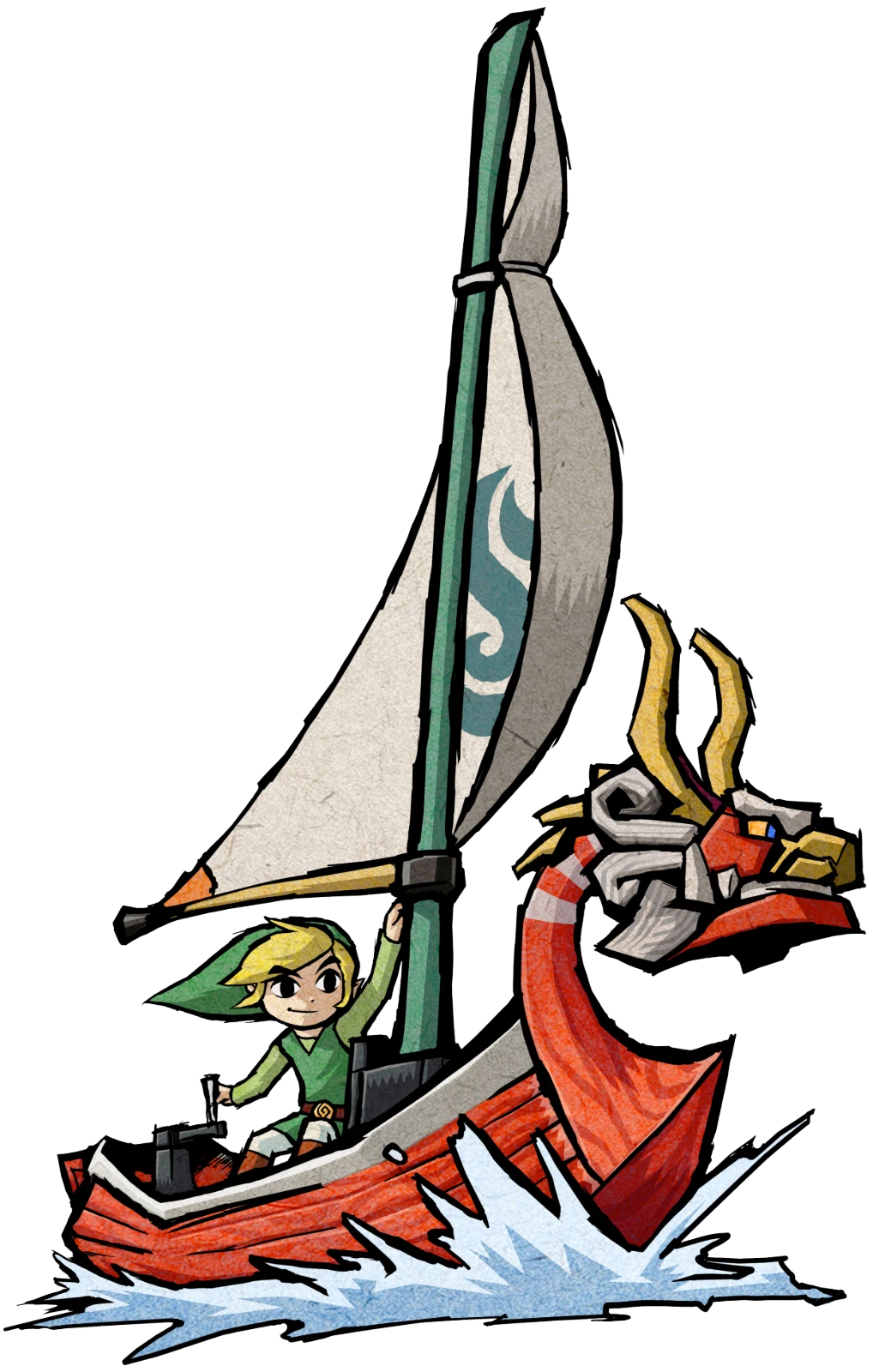
The Wind Waker: Link’s 4-koma Logbook · 28 October 2003 · 124 pages · ISBN 4-575-93858-0 · 1 volume by Öyster
The last book of the boom, and the only one for The Wind Waker, took the form of Link’s own ship’s log (kōkaiki means a voyage diary). According to the Fandom Zelda wiki it keeps to the order of the game without retelling the plot: most of the dungeons are passed over, as are big moments such as Link’s first encounter with Tetra, in favour of gags set in between.
What’s inside
The books we have figures for are slim paperbacks of about 130 pages (134 and 130 for the two Enix volumes, 128 for Futabasha’s second volume and for the Keibunsha book), each shared between several artists. Descriptions of what is in them are general rather than strip by strip. TheVideoGameLibrary sums up Kōbunsha’s Ocarina of Time book as jokes about dungeons, item collecting and the game’s bosses and allies, and the Fandom wiki describes the Wind Waker logbook as funny scenes that might have happened on Link’s voyage. Because the books came out while each game was still new, they are a snapshot of what players were laughing at that year.
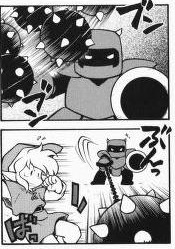
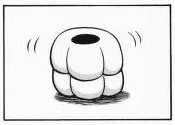
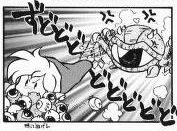
Zelda Wiki holds a handful of panels from Kōbunsha’s Oracle of Seasons book, the only pictures of any of these books we can show. They give a flavour of the cast: the game’s small fry (Octoroks, Buzz Blobs, Like Likes), its bosses (Gohma) and its odder residents, such as the Strange Brothers.
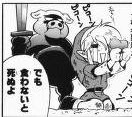
Gohma, from Kōbunsha’s Oracle of Seasons 4-koma bookA sword-wielding Boarblin, from the same bookAn Octorok, from the same book
Finding them today
None of these books has been reprinted or translated, and they were never sold outside Japan. Copies still turn up with Japanese second-hand booksellers, which is where the ISBNs of two Kōbunsha books on this page come from. Fan archivists have also been at work: the History of Hyrule blog’s scanning checklist includes an eight-volume run that matches Enix’s series, both Link’s Awakening books (Keibunsha and Kōbunsha) and three Futabasha Action Comics volumes, and TheVideoGameLibrary catalogues several of them.
Trivia
Pols Voices, from Kōbunsha’s Oracle of Seasons book.Ocarina of Time is the most-joked-about game in the genre: at least three Kōbunsha books, two from Enix and one from Futabasha, six in all.
Buzz Blobs, from the same book.The two Enix volumes we have ISBNs for carry different publisher prefixes: volume 1 (1992) uses 4-900527, volume 7 (1995) the 4-87025 that Enix also used for Ataru Cagiva’s Zelda manga.
Futabasha was no stranger to Zelda: in the NES and Super Famicom years it had published Zelda gamebooks such as Link no Bōken: Makai kara no Gyakushū (1987) and Kamigami no Triforce (1992).
The Oracle games were treated differently by each publisher: Kōbunsha gave Seasons and Ages a book each, while Futabasha squeezed both into one volume.
English Wikipedia credits Zelda 4-koma books to Shiseisha, a publisher that does not appear in any of the other sources we checked.
The last books appeared in 2003. By then Akira Himekawa’s adaptations, which had begun with Ocarina of Time in 2000, were Shogakukan’s established Zelda manga.
To provide the best experiences, we use technologies like cookies to store and/or access device information. Consenting to these technologies will allow us to process data such as browsing behavior or unique IDs on this site. Not consenting or withdrawing consent, may adversely affect certain features and functions.
Functional
Always active
The technical storage or access is strictly necessary for the legitimate purpose of enabling the use of a specific service explicitly requested by the subscriber or user, or for the sole purpose of carrying out the transmission of a communication over an electronic communications network.
Preferences
The technical storage or access is necessary for the legitimate purpose of storing preferences that are not requested by the subscriber or user.
Statistics
The technical storage or access that is used exclusively for statistical purposes.The technical storage or access that is used exclusively for anonymous statistical purposes. Without a subpoena, voluntary compliance on the part of your Internet Service Provider, or additional records from a third party, information stored or retrieved for this purpose alone cannot usually be used to identify you.
Marketing
The technical storage or access is required to create user profiles to send advertising, or to track the user on a website or across several websites for similar marketing purposes.