A Famicom classic rebuilt across two screens with Tingle at the controls, posted free to Nintendo’s keenest Japanese customers and never sold in a shop.
ReleasedApril 2007 (Japan only)
How you got itClub Nintendo Platinum reward, not for sale
PublisherNintendo
Based onBalloon Fight (Famicom, 1985)
Players1–4
Title
Tingle’s Balloon Fight DS チンクルのバルーンファイトDS (Chinkuru no Barūn Faito DS)
Platform
Nintendo DS
Publisher
Nintendo
Developer
Not credited; Nintendo is the only name on the game
Released
April 2007, Japan only
Distribution
Posted to Club Nintendo Platinum members of the 2006 membership year. Never sold
Players
1, or 2–4 by DS Download Play from one card
Modes
1 Player Game · 2–4 Players Game · Balloon Trip · Gallery
Tingle is the 35-year-old man in the green bodysuit who believes he is a fairy and floats about the Zelda series under a red balloon, selling maps in Majora’s Mask and decoding charts in The Wind Waker. In Japan he was popular enough to be given games of his own, and after his first, Freshly-Picked Tingle’s Rosy Rupeeland, a man who travels by balloon turned out to be a natural fit for one of Nintendo’s oldest games.
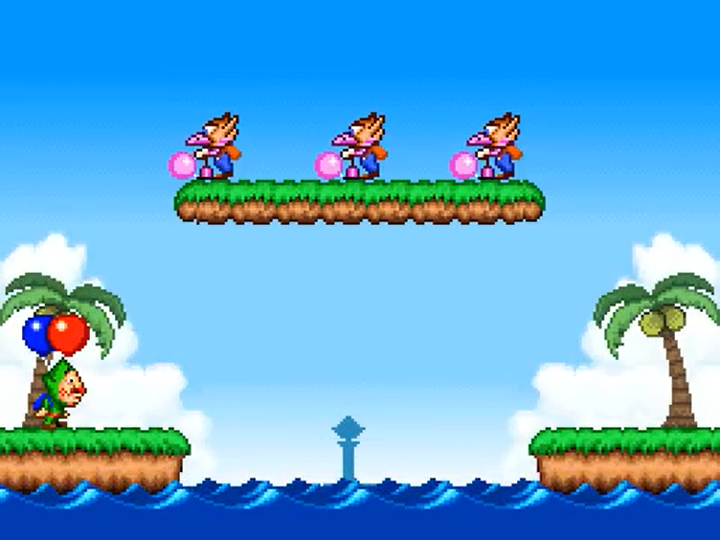
Tingle’s Balloon Fight DS is exactly what the name says: Nintendo’s 1985 Famicom game Balloon Fight, remade for the Nintendo DS with Tingle in place of the original balloon man. You flap around a small arena, burst the balloons of the bird-like enemies before they burst yours, and try not to be swallowed by the giant fish lurking in the water. The remake stretches the action over both DS screens, lets four people play from a single card, adds new music and hides twenty pieces of Tingle artwork behind in-game achievements.
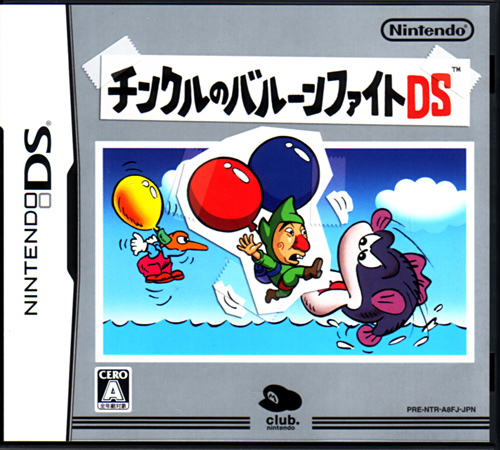
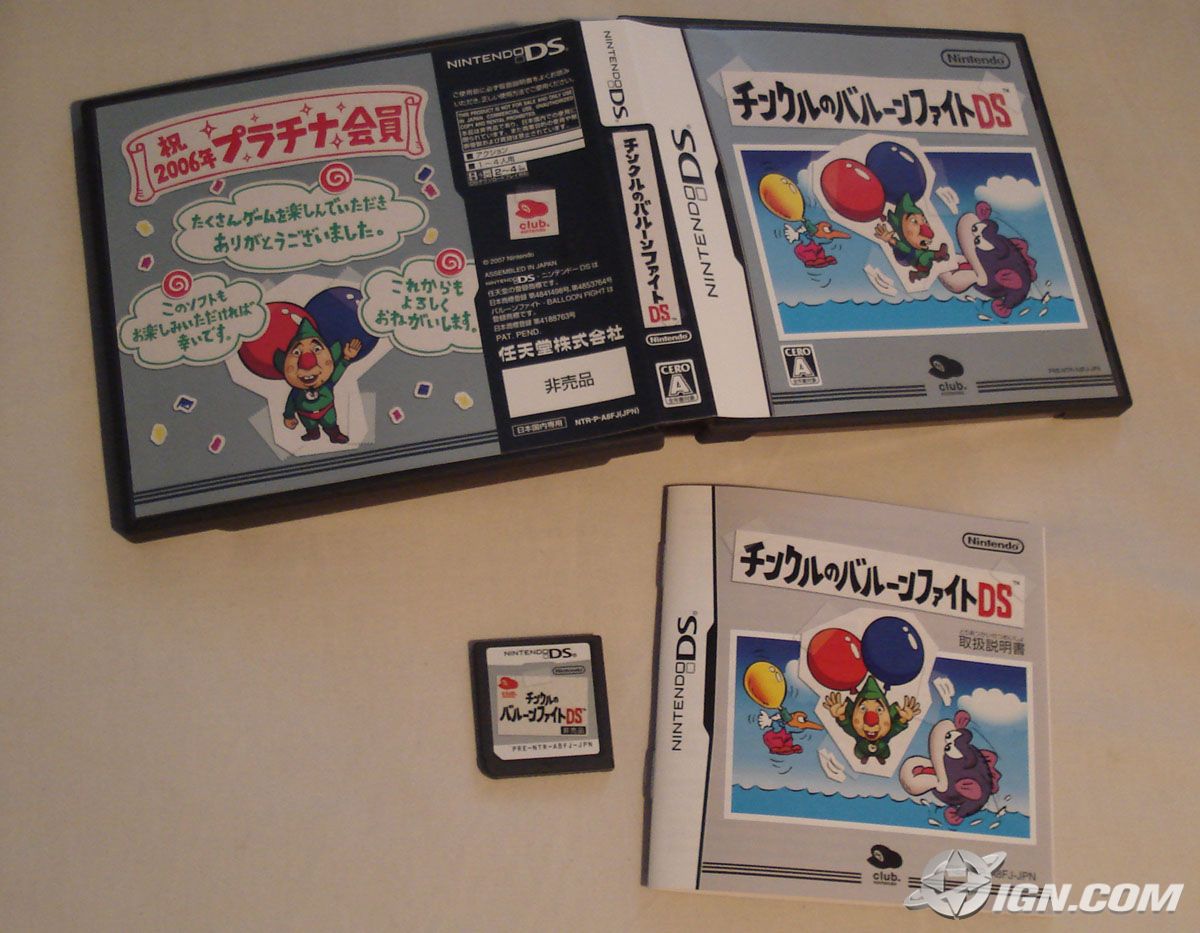
What makes it a curiosity is how you got one. The game was never on sale. It was a thank-you present posted in April 2007 to Platinum members of Club Nintendo, the company’s loyalty scheme in Japan, and it has never been reissued or released anywhere else.
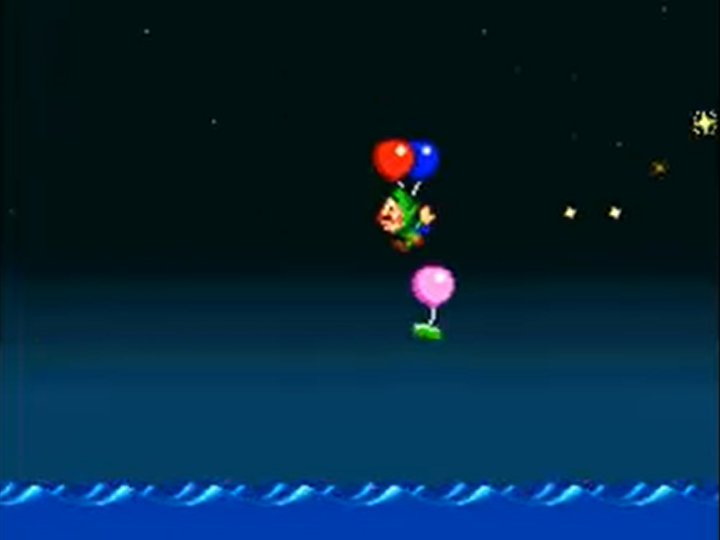
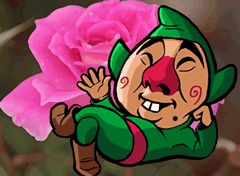
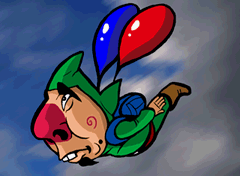
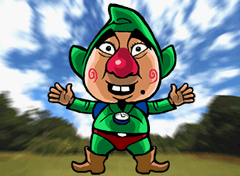
Tingle takes to the air in the 1 Player Game.Balloon Trip: dodge the sparks and grab the Rupees.One of the twenty gallery pictures.
Quick Answers
Short answers to the usual questions about Tingle’s rarest game.
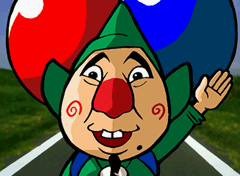
A Gallery picture from Tingle’s Balloon Fight DS.
What is Tingle’s Balloon Fight DS?
A Nintendo DS remake of the 1985 Famicom game Balloon Fight, with Tingle as the hero. It keeps the original modes and adds four-player games, new music and an art gallery. More →
How did people get it?
It was a free gift for Platinum members of Club Nintendo in Japan for the 2006 membership year, sent out by post in April 2007. It was never sold in shops. More →
Was it released outside Japan?
No. There has been no release in any other region and no official English version. More →
Can more than one person play?
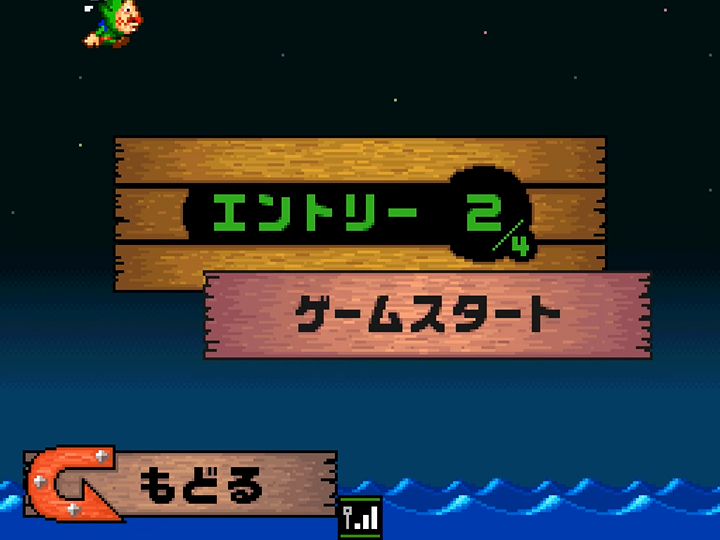
Yes. Up to four can play from a single card using DS Download Play, as Tingle, his brothers Ankle and Knuckle, and David Jr. More →
If you have played Balloon Fight you already know how this works. Tingle hangs from two balloons, and tapping or holding a button makes him flap upwards. Pop an enemy’s balloon and it drifts down on a parachute; hit the parachute, or knock the grounded bird off its platform, to finish it. Lose both of your own balloons, touch the water, get struck by lightning or drift too close to the fish and a life is gone. The table shows what the DS version changes.
Feature
Balloon Fight (Famicom, 1985)
Tingle’s Balloon Fight DS (2007)
Hero
A nameless balloon man
Tingle
Playing field
One television screen
Both DS screens joined into a single tall arena, with bigger characters
Players
1 or 2
1 to 4, by DS Download Play
Balloon Trip
One long run on a single life
Divided into phases, with rest islands that save your progress
Stray balloons
Plain balloons to burst for points
Each one carries a Rupee
Music
The original tunes
A new arrangement, or the Famicom originals if you prefer
Starting lives
Set by the game
Adjustable from one to six
Extras
None
A gallery of twenty Tingle pictures
1 Player Game
The main mode is a string of single-screen bouts called phases. Clear out every enemy and the next begins, with a bonus round after every third phase in which balloons float up for Tingle to burst. According to the Balloon Fight Wiki, all twelve layouts from the Famicom game return, made taller to fit the two screens, and they are now themed by time of day, running from daylight through sunset to night. Scoring is as it was in 1985, and the game offers its congratulations if you reach Phase 100.
Unlike the original, you do not have to start from scratch every time. Progress is recorded when a game ends, so you can pick up again from the phase you had reached.
2–4 Players Game
The 2–4 Players Game.
The Famicom game let two players share the screen, helping or sabotaging each other as they saw fit. The DS version doubles that to four, and only one person needs to own the card: the others join by Download Play. Player one is Tingle, and the rest take the parts of his brothers Ankle and Knuckle and their workmate David Jr., the Tingle look-alikes in differently coloured suits from The Wind Waker.
Balloon Trip
Balloon Trip is the endurance test. The screen scrolls steadily sideways over the sea, there is nowhere to land, and Tingle has to weave through fields of electric sparks while collecting the Rupees that dangle from drifting balloons. In the original a single mistake sent you back to the start. Here the course is split into phases, and the little islands between them act as save points, so a failed run resumes from the last island reached.
The options screen is where the DS version shows its hand: a choice between the freshly arranged soundtrack and the 1985 original, the number of lives to start with, and the Gallery.
History
Where the game came from, and why so few people outside Japan have ever held a copy.
Balloon Fight, 1984–85
Balloon Fight began as a Nintendo arcade machine, Vs. Balloon Fight, in 1984, and came to the Famicom on 22 January 1985. Often compared with the Williams arcade game Joust, it was produced by Gunpei Yokoi and designed by Yoshio Sakamoto, with music by Hirokazu Tanaka, and its programmer was Satoru Iwata of HAL Laboratory, who would be Nintendo’s president by the time Tingle borrowed the balloons. The Balloon Trip mode was added for the home version.
A present from Club Nintendo
The game as it arrived: a DS card that was never sold in shops.
Club Nintendo was Nintendo’s free loyalty scheme in Japan. Buyers registered the serial codes packed with consoles and games to earn points, and anyone who collected 400 points between one October and the following September was made a Platinum member and sent a gift. For the 2006 membership year the choice was between Tingle’s Balloon Fight DS and a Wii Remote battery cover engraved with the member’s Mii.
The cards went out in April 2007. Japanese news site Inside Games reported that its copy had arrived on 17 April, and listed the features with obvious pleasure: both screens in use, four players by Download Play, a choice of soundtracks, one to six lives and a twenty-picture gallery. Japanese Wikipedia notes that earlier Club Nintendo exclusives, among them The Legend of Zelda: Collector’s Edition and Game & Watch Collection, could all be had by spending points, which made this the first game given out purely as a membership reward.
Who made it?
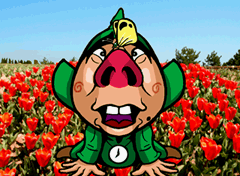
Another of the twenty Gallery pictures.
Nobody outside Nintendo seems to know for certain. The game credits no developer beyond Nintendo’s copyright line. Fan databases have suggested outside studios, but we have found nothing official to confirm it, so Nintendo is the only name we list.
Secrets & extras
The only thing to unlock is the Gallery, but it will keep completists busy.
The Gallery
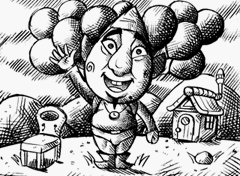
A third picture from the Gallery.
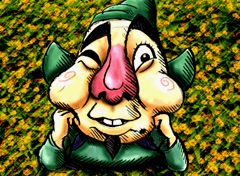
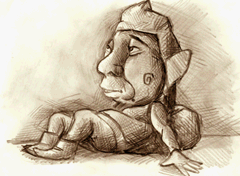
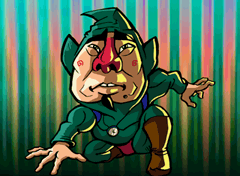
Twenty illustrations of Tingle are tucked away in the options menu, each released by a particular feat. The Balloon Fight Wiki has worked out most of the conditions. The first picture appears as soon as you start a game; others ask you to clear the early phases of the 1 Player Game, to finish phases of Balloon Trip or burst every balloon in one, to keep coming back to Balloon Trip, or to reach the bonus stages in a multiplayer match. Each new picture is announced on the title screen with a jingle and a cry of “Kooloo-Limpah!” The subjects range from Tingle admiring a rose to Tingle in a spacesuit in front of the moon.
Wiping the save
Hold L, R, A, B, X and Y together while the game starts and it offers to delete the save data. Yes is the option on the left.
Gallery conditions and the save-erase command are from the Balloon Fight Wiki; the number of pictures is confirmed by Inside Games.
Trivia & facts
The Tingle Tower, Tingle’s home in The Wind Waker, can be seen in the background of every phase.
The original Balloon Fight was programmed by Satoru Iwata, who was president of Nintendo when this remake was sent out.
The famous fish has had a makeover: it is purple, with spikes along its back and pink lips.
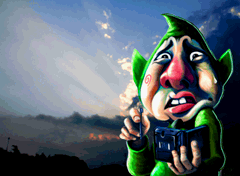
One more of the Gallery pictures.One gallery picture shows a sweating Tingle holding a Nintendo DS sideways.
The alternative Platinum gift that year was a Wii Remote battery cover engraved with your Mii.
Inside Games pointed out that the hero of the original game has never had a proper name: a Super Smash Bros. trophy calls him only the protagonist of Balloon Fight.
Official art of the Rosy Balloon, one of Tingle’s balloon weapons in Hyrule Warriors.Tingle kept the act up. In Hyrule Warriors his weapon is a balloon, which he uses to bounce, float and launch himself at the enemy.
The Japanese packaging, screenshots and gallery artwork. Select any image to view it larger.
One of the twenty pictures from the Gallery.One of the twenty pictures from the Gallery.One of the twenty pictures from the Gallery.One of the twenty pictures from the Gallery.One of the twenty pictures from the Gallery.One of the twenty pictures from the Gallery.One of the twenty pictures from the Gallery.One of the twenty pictures from the Gallery.
Legacy
A game that was never sold has no sales chart and no reviews to speak of, but it has a firm place in Tingle’s short career as a leading man.
Timeline
Vs. Balloon Fight1984 – Nintendo’s arcade original.
Balloon Fight22 January 1985 – The Famicom version, which adds Balloon Trip.
Rosy Rupeeland2 September 2006 – Tingle’s first starring role, on DS in Japan.
Tingle’s Balloon Fight DSApril 2007 – Posted to Club Nintendo Platinum members in Japan.
More Tingle2009 – Dekisugi Tingle Pack on DSiWare in June, then Irozuki Tingle no Koi no Balloon Trip on DS in August.
Club Nintendo closes2015 – Nintendo announces the end of the scheme in January 2015.
Playing it today
Gallery art from the game.
The Balloon Fight Wiki records that the game has never been released in any other form or region, so the only way to play it is on an original card. Importers have little to fear from the language: Inside Games’ report shows the mode names in English, and beyond them there is only an options screen and the gallery.
Every fact on this page was checked against the sources below in November 2026. Nintendo’s own Club Nintendo pages are no longer online, The Cutting Room Floor’s page for this game does not allow automated reading and Zelda Wiki (zeldawiki.wiki) blocks it, so none of those was used.
To provide the best experiences, we use technologies like cookies to store and/or access device information. Consenting to these technologies will allow us to process data such as browsing behavior or unique IDs on this site. Not consenting or withdrawing consent, may adversely affect certain features and functions.
Functional
Always active
The technical storage or access is strictly necessary for the legitimate purpose of enabling the use of a specific service explicitly requested by the subscriber or user, or for the sole purpose of carrying out the transmission of a communication over an electronic communications network.
Preferences
The technical storage or access is necessary for the legitimate purpose of storing preferences that are not requested by the subscriber or user.
Statistics
The technical storage or access that is used exclusively for statistical purposes.The technical storage or access that is used exclusively for anonymous statistical purposes. Without a subpoena, voluntary compliance on the part of your Internet Service Provider, or additional records from a third party, information stored or retrieved for this purpose alone cannot usually be used to identify you.
Marketing
The technical storage or access is required to create user profiles to send advertising, or to track the user on a website or across several websites for similar marketing purposes.