Nintendo DS2009Nintendo / VanpoolPoint-and-click adventure
Irozuki Tingle no Koi no Balloon Trip
A lonely man of 35 buys a book that promises to make him popular, falls into it, and has to charm his way down a yellow road to dance with a princess. Tingle’s second adventure swaps greed for love.
Released6 August 2009 (Japan only)
DeveloperVanpool
DirectorJun Tsuda
ProducerKensuke Tanabe
Players1
Sales70,544 in Japan in August 2009
Title
Irozuki Tingle no Koi no Balloon Trip いろづきチンクルの恋のバルーントリップ (Irozuki Chinkuru no Koi no Barūn Torippu)
Unofficial English names
Ripened Tingle’s Balloon Trip of Love · Color Changing Tingle’s Balloon Trip of Love
Platform
Nintendo DS
Developer
Vanpool
Publisher
Nintendo
Director
Jun Tsuda
Producer
Kensuke Tanabe
Music
Masanori Adachi, Tomoko Sano, Kiyoshi Hazemoto
Players
1 (three save files)
Released
6 August 2009, Japan only
Price
¥4,571 before tax (¥4,800 with tax)
Age rating
CERO A (all ages)
In English
Unofficial fan translation patch, released at the turn of 2018
Tingle is the 35-year-old in the green bodysuit who sells maps from a balloon in Majora’s Mask and bleeds Link dry in The Wind Waker. Much of the West could not stand him, but Japan had a soft spot for the man, and in 2006 Nintendo and the studio Vanpool gave him a money-mad adventure of his own, Freshly-Picked Tingle’s Rosy Rupeeland. Three years later the same team brought him back for a sequel that only Japan ever saw.
Irozuki Tingle no Koi no Balloon Trip (roughly “Ripening Tingle’s Balloon Trip of Love”) keeps the first game’s hand-drawn look and black humour and throws out nearly everything else. This time the theme is women, not money. An ordinary bachelor is sucked into a picture book, becomes Tingle, and learns that the only way home is to dance with a princess at a ball in a far-off City. To get there he follows a yellow road in the company of a scarecrow, a tin robot and a cowardly lion, in a cheerfully shameless riff on The Wizard of Oz.
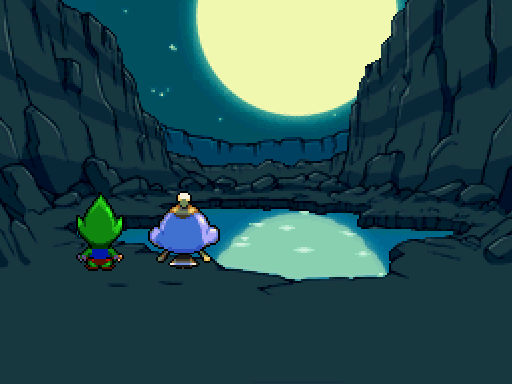
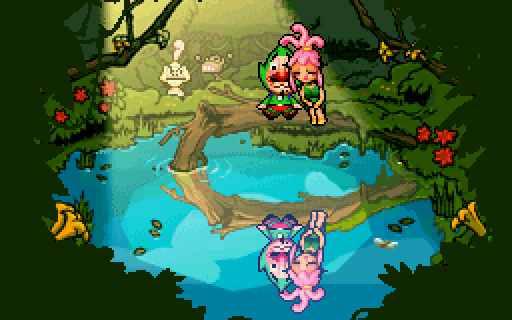
Tingle and friends on the road to the City.Love Push: the right gift fills a heart.The picture book, coloured in page by page.
It plays as a point-and-click adventure driven entirely by the stylus. Puzzles are solved by picking the right companion for the job, the women Tingle meets are won over with carefully chosen presents, and a balloon on his back lets him slip into pages of the book he has already finished to change what happened there.
The game came out in Japan on 6 August 2009 and has never been released anywhere else. English speakers had to wait until the start of 2018, when a team of fans finished a translation patch after about five years of work.
タッチだけの冒険 (“An adventure by touch alone”)
That is one of the chapter headings on Nintendo’s Japanese site, which is laid out like the storybook itself. Its opening chapter, “Setting out at 35”, introduces a hero who is 35, single and without a girlfriend, who buys a book that promises to make him popular and is pulled inside the moment he opens it. There he becomes Tingle and learns that he can escape if he dances with the princess everyone adores at a ball held in the City.
— Official description: Nintendo Co., Ltd., Japanese official site for Irozuki Chinkuru no Koi no Barūn Torippu (nintendo.co.jp). Heading quoted and translated by Zelda Temple; the rest summarised.
Quick Answers
The questions that come up most about Tingle’s Japan-only sequel.
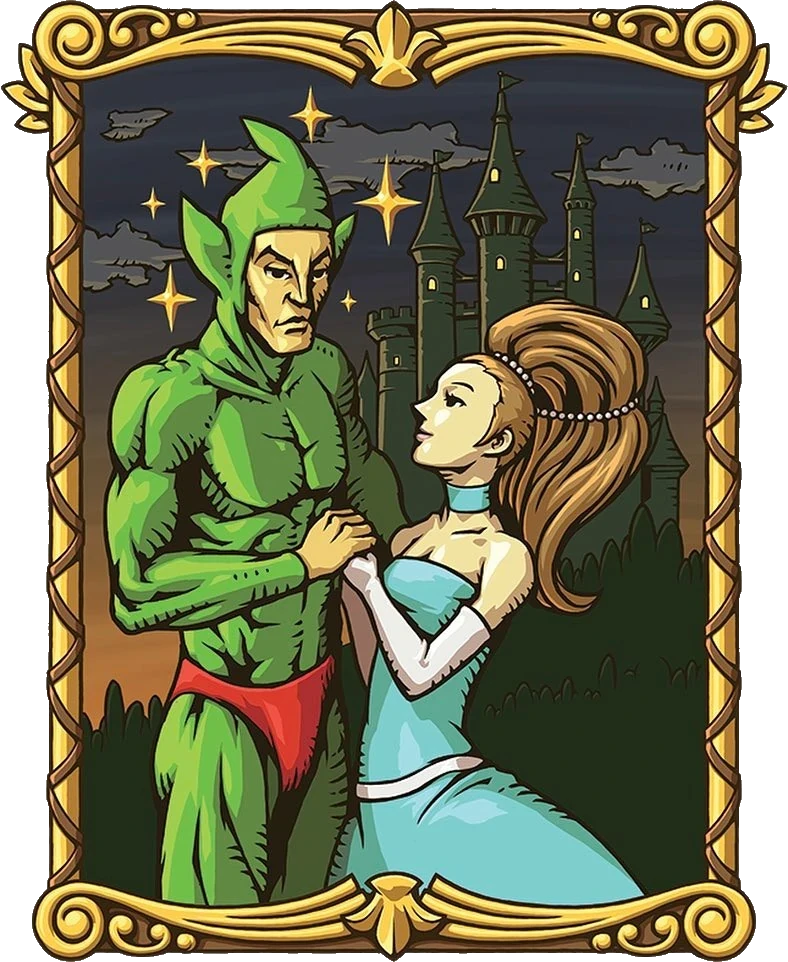
Official art of Tingle and Princess Emera.
What is Irozuki Tingle no Koi no Balloon Trip?
A single-player Nintendo DS adventure starring Tingle, made by Vanpool and published by Nintendo in 2009. It is the sequel to Freshly-Picked Tingle’s Rosy Rupeeland, played as a stylus-only point-and-click adventure. More →
Was it released outside Japan?
No. It came out in Japan on 6 August 2009 and was never localised by Nintendo. More →
Can it be played in English?
Only unofficially. A fan-made translation patch was finished at the turn of 2018. It has to be applied to a copy of the Japanese game. More →
What does the title mean?
Irozuki describes something taking on colour, like ripening fruit or a blush, and koi is romantic love. Fans render it as “Ripened” or “Color Changing Tingle’s Balloon Trip of Love”. More →
What has it got to do with The Wizard of Oz?
A great deal. Tingle follows a yellow road to a City with a scarecrow who wants brains, a tin robot with no heart and a lion with no courage. More →
Do I need to have played Rosy Rupeeland first?
No. According to Japanese Wikipedia the two share a world and a few faces but have no direct story link, and the hero starts again as an ordinary man. More →
Plot / Story
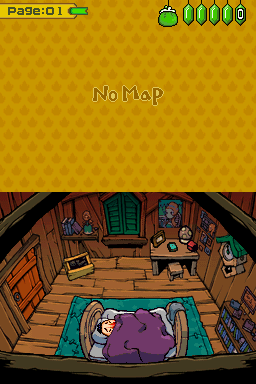
Tingle asleep on the book’s first page.
Like the first game, this one starts with a nobody. He is 35, single and has no girlfriend, and he shares a lonely life with a single pet. One day a television shopping channel offers him a picture book that is guaranteed to make its reader a hit with women. He orders it, opens it with high hopes, and is promptly dragged inside.
Into the book
In the world of the book he is Tingle, green suit and all. Japanese Wikipedia fills in how: an old farming couple are the first to take him in, and they dress him in the outfit and fire him out of a cannon in the direction of a dance. He soon learns the rules of the place. A ball is to be held in the City, and if he can dance there with the princess every man admires, he will be free to go home.
There is one snag. Tingle is no more popular inside the book than he was outside it. The women he meets take one look at him in his tights and call him a pervert, and some will not even hear him out.
Inside the book, an ordinary man becomes Tingle.
Down the yellow road
The way to the City is a yellow road, and Tingle does not walk it alone. He falls in with three fellow travellers, each of whom is missing something. Kakashi the scarecrow wants some brains. Buriki, a glamorous tin robot, has no kind heart. Lion has no courage. Nintendo’s site describes the four of them as only half up to the job, which is being generous.
The journey is told as the pages of the book, which begin blank and fill with colour as each chapter is completed. Along the way the party is put up in a pink house by a kindly woman who lives with some very odd ladybirds, battles black devils, hunts for Rupees in labyrinths and, Japanese Wikipedia adds, rebuilds a derelict steam engine called the Chinliner that runs on vegetable oil.
The yellow road that leads to the City.
Five hearts to win
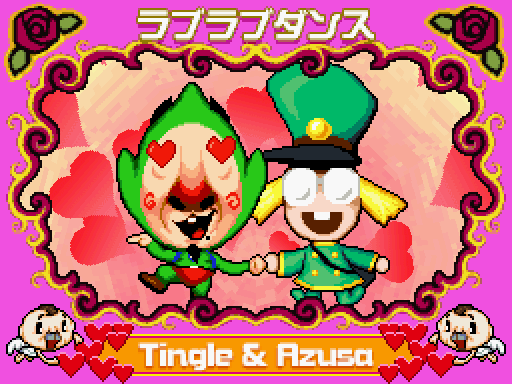
What really moves the story on is romance. Five women stand between Tingle and the ball, and he needs to be on good terms with every one of them to finish the game. Japanese Wikipedia names them: Iona, a sharp-tongued 19-year-old who runs her family’s seed shop; Florence, a demure, freckled woman devoted to work at a convent; Azusa, a train-spotter in thick glasses; Lia, the shrine maiden of a village where everyone says the opposite of what they mean; and finally Princess Emera of the City herself.
None of them is impressed at first. Winning them round means saying the right thing, turning up with the right present and, quite often, floating back to an earlier page on Tingle’s balloon to put right something that went wrong.
The five women Tingle has to win over.
The ball in the City
We will keep the ending vague, but the outline given by Japanese Wikipedia is this. Tingle has a rival in Segare, the vain prince of the kingdom next door, who believes the princess is his by right and keeps trying to sabotage the green interloper. Behind Segare stands his mother, Queen Majiyo, and behind the whole adventure stands a plot: the cheerful saleswoman who sold Tingle the book in the first place was not what she seemed. It all comes to a head at the palace, where the last battle is fought with a slingshot.
The ball: dance with the princess to escape the book.
How it plays
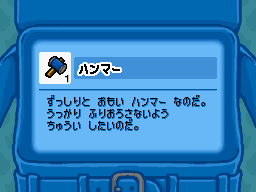
Examining an item: the Hammer’s description.
If Rosy Rupeeland was a Zelda game bent out of shape, its sequel is a different kind of game altogether: a point-and-click adventure in the tradition of the old PC classics, with puzzles in place of fights. Everything is done on the touch screen. Nintendo’s site lists it out with some pride: moving, talking, examining, using items, making choices and asking your companions for help all take a tap of the stylus and nothing more.
Companion
What they lack
What they are good for
Kakashi the scarecrow (カカシ)
Brains
Small enough to get into tight spaces and poke about in holes
Buriki the tin robot (ブリキ)
A kind heart
The clever one: analyses things and cracks puzzles the others cannot
Lion (ライオン)
Courage
The strong one: fights and lifts what nobody else can
Three half-heroes
Most puzzles come down to asking the right friend. Kakashi is none too bright but he is tiny, so he is the one to send into narrow gaps. Buriki is brilliant and cold, and handles anything that needs thinking through. Lion is by far the strongest of the three and the most frightened. Tingle himself does not speak, so according to Japanese Wikipedia it is the level-headed Lion who does most of the talking on his behalf.
Love Push
The courtship system has a name, Love Push, and it works like a guessing game with a memory. Every woman has her own tastes. Tingle watches how she reacts, works out what she likes and brings her a present to match; a good choice warms her up, a bad one sets him back. Presents come from the Love Shop, and Japanese Wikipedia lists the fine detail: five kinds of gift (food, fashion, interiors, tools and hobbies), five styles from cute to gorgeous and three grades of luxury, feeding an affection gauge that fills hearts. Most women have a single heart to fill. The princess has five.
A woman who has been won over changes her tune and may lend a hand with the journey, which is how romance and puzzle-solving lock together. Conversation counts too: Tingle has to pick the right lines as well as the right gifts. Fill enough hearts and his standing as a ladies’ man rises through a series of ranks, with his reflection in the mirror changing to match.
The Balloon Trip
The balloon in the title is a time machine. Early on, a strange older woman gives Tingle a balloon and explains its use: with it he can return to moments he has already lived through, and while he is using it nobody can see him. In game terms he can float back into any page of the book he has completed, do things differently and come back to the present, and what he changes there carries forward.
Nintendo introduces the idea with a small sad story. A ladybird has fallen out with its big brother, who left for a far-off place the day before, still angry. If only it could go back to yesterday and say sorry. Tingle remembers the balloon on his back. Later problems are bigger: 4Gamer’s preview shows the heroes locked up, with the way out depending on a prison guard they need to have befriended on a previous page.
Devils, dungeons and odd jobs
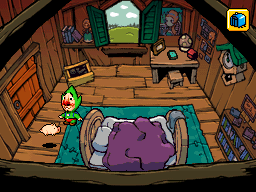
A save pig in the attic.
It is not all talk. Nintendo’s site promises fights with black devils and labyrinths to comb for Rupees, which are still the currency for presents. The labyrinths are a game within the game, and the one place where buttons are allowed: Wikipedia notes that a control pad for the dungeon mini-game can be bought for 1,000 Rupees. Saving is done by touching one of the pigs that turn up everywhere.
Characters
The cast of the picture book. Names are romanised from the Japanese; character details beyond Nintendo’s own site come from Japanese Wikipedia.
Character
Who they are
In this game
Stats & abilities
Tingleチンクル · age 35
Outside the book, a single, girlfriendless man of 35 living a lonely life. Inside it, the familiar figure in green tights.
Must reach the City and dance with the princess to get home, winning five hearts on the way. He never speaks.
Carries the time-travelling balloon
Uses a slingshot
Kakashiカカシ · the scarecrow
A small, childlike scarecrow with a head full of straw who cannot even frighten crows. His name is simply the Japanese word for scarecrow.
Wants brains. Squeezes into small spaces and feels around in holes with his straw.
Small and nimble.
Burikiブリキ · the tin robot
A glamorous battery-powered robot woman, proud of her looks and cool to the point of heartlessness. Buriki means tinplate.
Lacks a kind heart. The brains of the party, with a powerful kick.
Analysis and puzzles.
Lionライオン · the coward
A big lion with a mane of dreadlocks who is scared of the dark, of heights and of ghost stories.
Lacks courage. The muscle of the group and its most sensible member, he speaks for Tingle and can even interpret for animals.
Strength and heavy lifting.
Princess Emeraプリンセス・エメラ · princess of the City
The princess admired the world over, whose City is named Emerarera in a nod to Oz’s Emerald City.
Tingle’s goal. Dancing with her at the ball is the way out of the book, and she has five hearts to win where others have one.
Slaps suitors who get ahead of themselves.
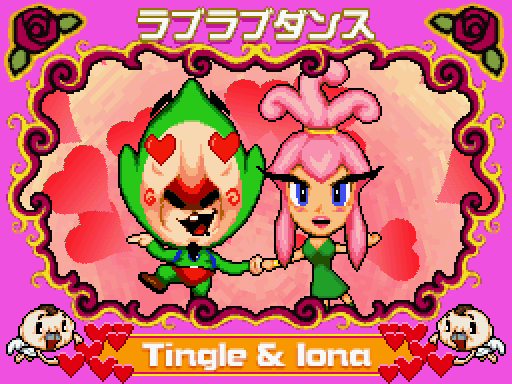
Iona, Florence, Azusa and LiaThe other four heroines
Iona runs a seed shop and is trying to bring back a legendary fruit; Florence devotes herself to a convent whose bell has been stolen; Azusa is mad about railways; Lia is the shrine maiden of the village of liars.
Each is met on the road, each starts out wary or downright hostile, and each has to be won over by Love Push before the story can go on.
One or more hearts each.
Segareセガーレ · rival prince
The preening prince of the neighbouring kingdom, about 25, who rides a long-suffering white horse.
Thinks the princess should marry him and tries every dirty trick to stop Tingle.
Rival.
Majiyoマジヨ · queen next door
Segare’s mother, the queen of the neighbouring kingdom, obsessed with staying young.
The schemer behind the story and, in the end, the final boss.
Final boss.
The people who made it
The sequel came from the same studio and the same Nintendo producer as the first game, with a new director.
VanpoolDeveloperThe Tokyo studio, founded in 1999 and employing veterans of the cult developer Love-de-Lic, that made Rosy Rupeeland. It went on to Dillon’s Rolling Western and Kirby work and closed on 31 May 2023.
Jun TsudaDirectorCredited director, taking over from Taro Kudo, who directed the first game.
Kensuke TanabeProducerNintendo’s producer on both Tingle adventures. In 2013 he said he would like to make another.
Masanori Adachi, Tomoko Sano, Kiyoshi HazemotoMusicThe three credited composers. Adachi also scored the first game.
Kazuyuki KurashimaVoice of TingleThe Vanpool artist, another Love-de-Lic veteran, is named by Japanese Wikipedia as Tingle’s voice in the Tingle games.
How it was made
A sequel announced with a one-word tease, promoted with a calculator and then kept at home.
“Fairy?”
The first sign came in an issue of Famitsu in June 2009: a tiny picture of Tingle and the question “Yōsei?”, “Fairy?”. On 12 June Nintendo opened a teaser site, and later that month Famitsu revealed not one Tingle title but two, this DS adventure and the DSiWare download Dekisugi Tingle Pack, which went on sale on 24 June as a warm-up act.
The teaser site grew into Irozuki TV, a promotional channel that Nintendo was still updating in October 2009, two months after the game reached the shops on 6 August at ¥4,571 before tax. Nintendo Online Magazine ran a multi-part interview with the development staff that August, though the pages have since vanished from Nintendo’s site.
From money to love
Vanpool made the game with a new director, Jun Tsuda, and with Kensuke Tanabe again producing for Nintendo. As Japanese Wikipedia puts it, the first game’s theme was money and the second’s is women. The genre changed to match. Out went the dust-cloud battles and haggling; in came a stylus-only adventure with puzzles and the occasional burst of action, though the taste for the surreal and the blackly comic carried straight over.
So did a few familiar faces. The Look-What-I-Found Kid is back selling maps, the fruit-juice-loving Journalist now writes for a free newspaper, and a ninja and an agent in the new game look suspiciously like bodyguards from the old one. The hero, though, starts from scratch as another ordinary man, and the two stories do not connect.
Why it stayed in Japan
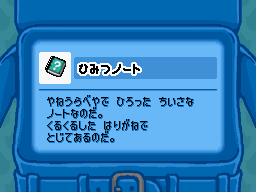
The description screen for the Secret Notebook.
Nintendo has never said publicly why the sequel was not translated, but the background is not hard to read. The first game had skipped North America altogether, and Japanese Wikipedia’s article on it records that an interview about the sequel described its sales in Europe as a disappointment. A text-heavy comedy about a middle-aged man pestering women for affection, starring a character many Western players already disliked, was never going to be an easy sell abroad.
Trivia & facts
The title’s “Balloon Trip” is borrowed from Nintendo’s Balloon Fight, whose Balloon Trip mode Tingle had already starred in two years earlier in Tingle’s Balloon Fight DS.
In Japan the game is nicknamed “Iro-Chin” (いろチン), just as the first game was “Mogi-Chin”.
The picture book begins with blank pages, and each one is coloured in as its chapter is completed, which gives the “taking on colour” of the title a second meaning.
According to MobyGames, the miracle book is advertised at 4,800 Rupees and Tingle gets it for just 2. The real game cost 4,800 yen including tax.
Buriki’s spaceship.Buriki has a model number, BRK-001, and a manufacturer that denies she exists.
The dungeon mini-games are played on a machine modelled on the Famicom, with cartridges to swap.
The Chinliner.The old steam engine the party restores is called the “Bachelor Super Express Chinliner”, and its design plays up Tingle’s pointed ears and red nose.
Princess Emera has a mole on the left side of her face, just like Tingle.
Famitsu’s four reviewers gave the game 34 out of 40.
Media & artwork
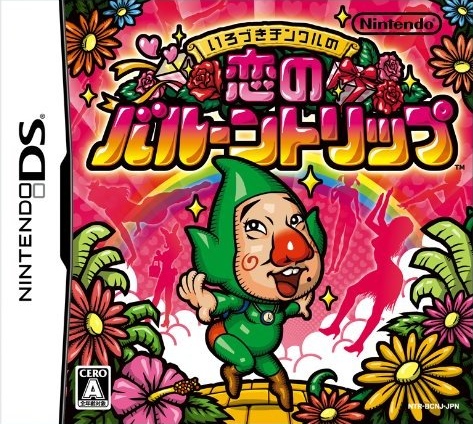
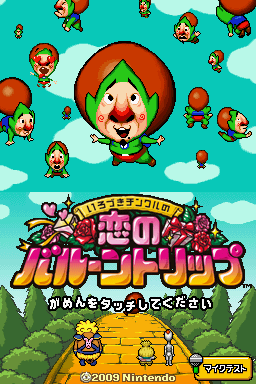
The Japanese box, official artwork of Tingle and his companions, and screenshots. Select any image to view it larger.
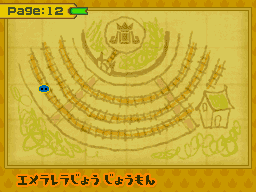
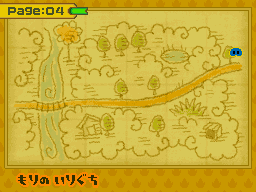
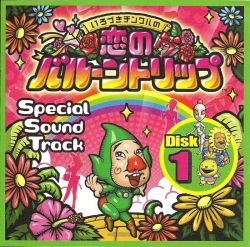
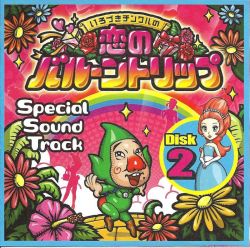
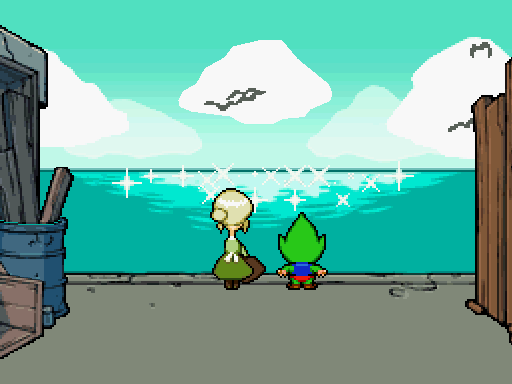
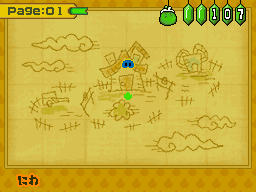
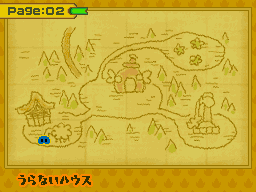
A concept version of the Japanese logo.Map of the City.Map of the book’s fourth page.Disc 1 of the special soundtrack.Disc 2 of the special soundtrack.Tingle on a date with Lia.Tingle on a date with Florence.The entrance to Usotami, the village where everyone says the opposite.Model of a save pig.The train.
Legacy
The last Tingle game to date, and for nearly nine years one that could only be played in Japanese.
Release history
TeasedJune 2009 – A Famitsu teaser asks “Fairy?”; Nintendo opens a teaser site on 12 June.
Dekisugi Tingle Pack24 June 2009 – The promotional DSiWare download is released as Famitsu unveils the DS game.
Nintendo DS, Japan6 August 2009 – Released at ¥4,571 before tax. No other region follows.
Fan translationJanuary 2018 – An English patch is completed after about five years of work.
Vanpool closes31 May 2023 – The studio behind both Tingle adventures shuts down.
The fan translation
With no official version coming, fans took the job on themselves. The project ran for about five years, and its English patch was announced as finished at the very end of December 2017; Wikipedia dates the release to 1 January 2018 and credits it to Team Tingle. Kotaku’s Ethan Gach called it a landmark for American Tingle fans, who had never been given so much as the first game, and Nintendo Life reminded readers that the patch has to be applied to a copy of the original Japanese release.
The translation is where the English name most people now use, Ripened Tingle’s Balloon Trip of Love, took hold.
After the Balloon Trip
No Tingle game has followed. Producer Kensuke Tanabe said in June 2013 that he would like to make another and to win over Western players, and in 2018 Game Informer reported that a Tingle horror game had been in development at one point before being cancelled. Tingle himself went back to cameos and guest spots, and Vanpool, after years of work on Dillon’s Rolling Western and Kirby, closed in 2023. Game Informer’s writer, looking back at the sequel in 2018, noted that more than one person had described it to him as “genuinely chilling”. Fans of the first game would expect nothing less.
Sales & reviews
Sales figures
The game entered the Japanese chart at number nine with 33,498 copies sold in its first week, and held ninth place the following week with a further 17,956, according to GameSpot’s weekly reports of 14 and 21 August 2009. Famitsu’s monthly ranking, published on 7 September 2009, put it tenth for August with 70,544 copies. That is a slower start than Rosy Rupeeland, which passed 45,000 in its first week in 2006.
33,498first week in Japan (GameSpot, 14 August 2009)
70,544sold in Japan in August 2009 (Famitsu, 7 September 2009)
Reception and review scores
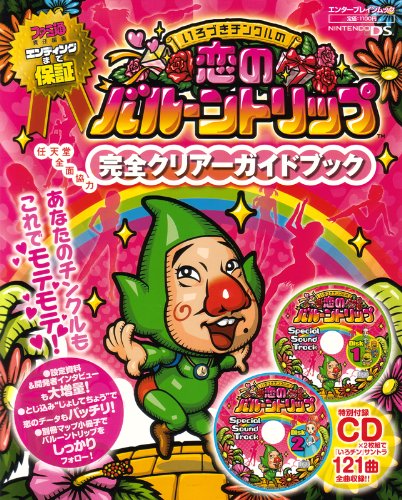
Famitsu’s guidebook to the game.
With no release outside Japan, the game was barely reviewed in the West. The one score on record is Famitsu’s.
FamitsuJapan · 2009
34/40
Thirty-four out of forty is a strong score from Japan’s best-known games magazine. English-language writers mostly met the game through news stories and, from 2018, the fan translation, and tended to treat it as a curiosity: the fourth and strangest of the Tingle releases, and proof of how far Nintendo was once prepared to let the character go.
Reader reviews
No reader reviews yet. Played it? Give it a score out of 10 and tell other fans what you think.
Every fact on this page was checked against the sources below in November 2026. The game was never released in English, so the page leans on Nintendo’s Japanese site and Japanese-language sources, translated by Zelda Temple. IGN and archived pages could not be read, so IGN’s 2009 news reports, GameSpot’s chart stories and Famitsu’s figures are used as cited by Wikipedia. Zelda Wiki (zeldawiki.wiki) blocks automated reading and was not used.
To provide the best experiences, we use technologies like cookies to store and/or access device information. Consenting to these technologies will allow us to process data such as browsing behavior or unique IDs on this site. Not consenting or withdrawing consent, may adversely affect certain features and functions.
Functional
Always active
The technical storage or access is strictly necessary for the legitimate purpose of enabling the use of a specific service explicitly requested by the subscriber or user, or for the sole purpose of carrying out the transmission of a communication over an electronic communications network.
Preferences
The technical storage or access is necessary for the legitimate purpose of storing preferences that are not requested by the subscriber or user.
Statistics
The technical storage or access that is used exclusively for statistical purposes.The technical storage or access that is used exclusively for anonymous statistical purposes. Without a subpoena, voluntary compliance on the part of your Internet Service Provider, or additional records from a third party, information stored or retrieved for this purpose alone cannot usually be used to identify you.
Marketing
The technical storage or access is required to create user profiles to send advertising, or to track the user on a website or across several websites for similar marketing purposes.




 Kakashiカカシ · the scarecrow
 Burikiブリキ · the tin robot
 Iona, Florence, Azusa and LiaThe other four heroines
 Segareセガーレ · rival prince