Nintendo Switch2019Brace Yourself Games / NintendoRhythm action-adventure
Cadence of Hyrule: Crypt of the NecroDancer Featuring The Legend of Zelda
Hyrule has been put to sleep by a lute, and the only way to wake it is to dance. The indie-made Zelda spin-off where every step, sword swing and Bokoblin keeps time with the music.
Released13 June 2019 (NA, EU) · 14 June 2019 (JP, AU)
DeveloperBrace Yourself Games
DirectorsRyan Clark, Toshihisa Nikaido
ProducerMakoto Isobe
MusicDanny Baranowsky
Players1–2
Title
Cadence of Hyrule: Crypt of the NecroDancer Featuring The Legend of Zelda ケイデンス・オブ・ハイラル: クリプト・オブ・ネクロダンサー feat. ゼルダの伝説 (Keidensu obu Hairaru: Kuriputo obu Nekurodansā feat. Zeruda no Densetsu)
Platform
Nintendo Switch (download; boxed edition from October 2020). Nintendo’s North American store also lists it as supported on Nintendo Switch 2
Developer
Brace Yourself Games (Vancouver, Canada)
Publisher
Nintendo; Spike Chunsoft in Japan
Directors
Ryan Clark, Toshihisa Nikaido
Producer
Makoto Isobe
Design
Oliver Trujillo (lead designer), Ryan Clark
Programming
Stephen Kiazyk, Alain Carter, Oliver Trujillo
Art
Paul Veer (lead artist), Lucas Carvalho, Ted Martens, Tyriq Plummer
Writing
Ryan Clark, Oliver Trujillo, Kramer Solinsky, Toshihisa Nikaido
Music
Danny Baranowsky
Players
1–2 (co-operative, on one console)
Released (North America, Europe)
13 June 2019 (US$24.99, £22.49)
Released (Japan, Australia)
14 June 2019 (¥2,980 in Japan)
Free update
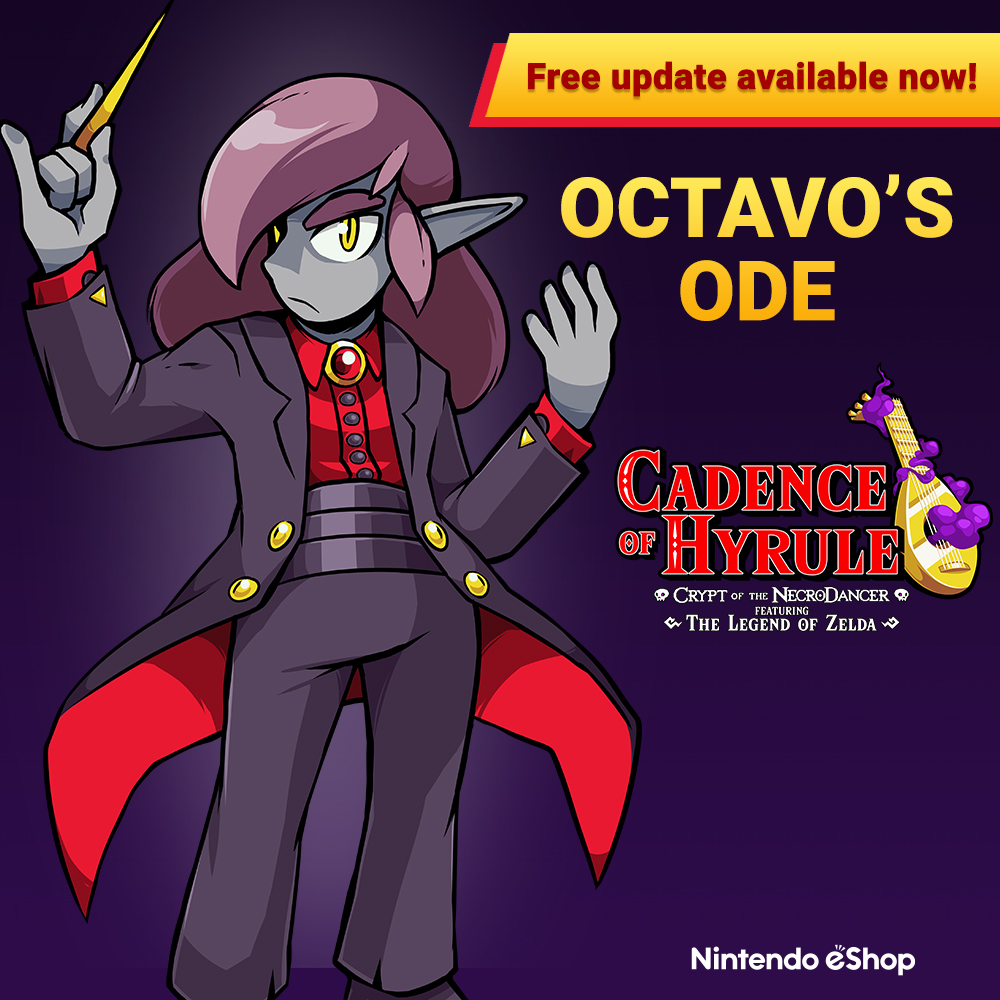
Octavo’s Ode and Dungeon Mode, version 1.1.0, 18 December 2019
Paid add-ons
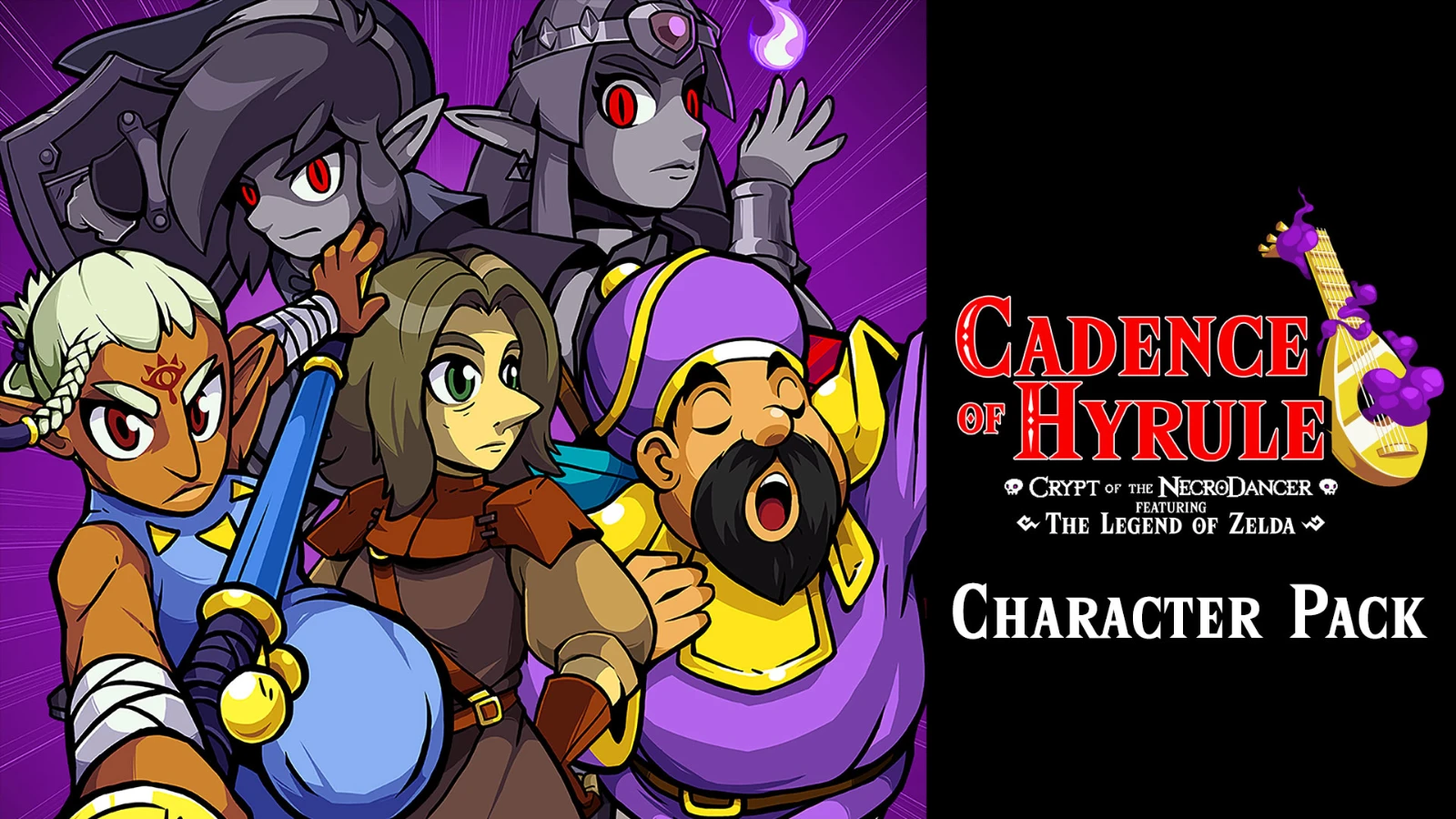
Character Pack (20 July 2020), Melody Pack (26 August 2020), Symphony of the Mask (23 September 2020), together as a Season Pass
Boxed edition
23 October 2020, with all three packs included (¥4,780 in Japan)
Download size
1.7 GB
Age ratings
PEGI 7 · ESRB Everyone
Related series
Crypt of the NecroDancer (Brace Yourself Games, 2015)
Review average
85 on Metacritic, from 71 reviews
Honours
NAVGTR Award for Game, Music or Performance-Based; G.A.N.G. / MAGFest People’s Choice Award
Overview
Cadence of Hyrule is what happens when Hyrule is handed to somebody else’s game. Take Crypt of the NecroDancer, the 2015 indie hit in which you can only move and attack on the beat of the soundtrack, pour in Link, Princess Zelda, Bokoblins, Bombchus and thirty-odd years of Zelda tunes, and you get a top-down Zelda adventure that plays like a dance routine. Step in time and your sword does the rest. Lose the rhythm and a Lizalfos will happily keep it for you.
The story brings the two series together quite literally. Cadence, the shovel-carrying heroine of Crypt of the NecroDancer, drops out of the sky into a Hyrule where a lute-playing sorcerer called Octavo has sent the king, Link and Zelda into an enchanted sleep. She wakes one of them, you choose which, and the hunt begins for four magical instruments, each one guarded by a classic Zelda boss that Octavo has fused with it. Gohma with maracas. A Wizzrobe with an oboe for a mouth. It is that sort of game.
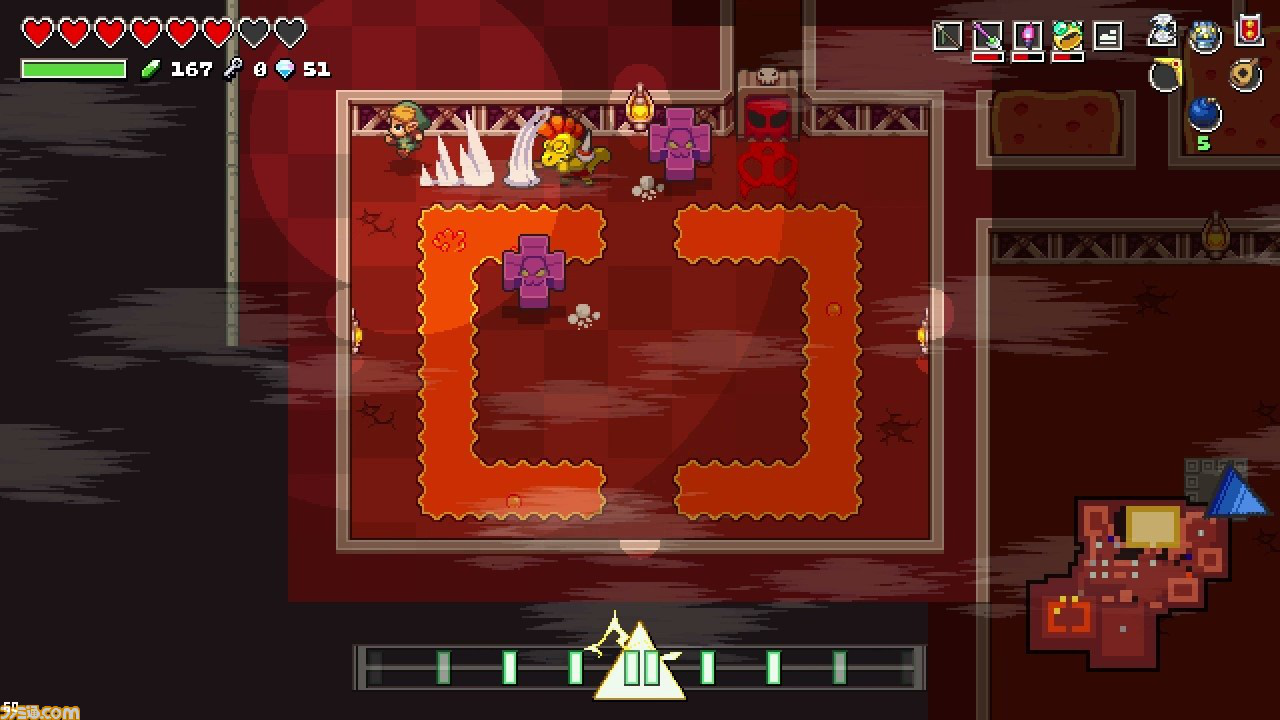
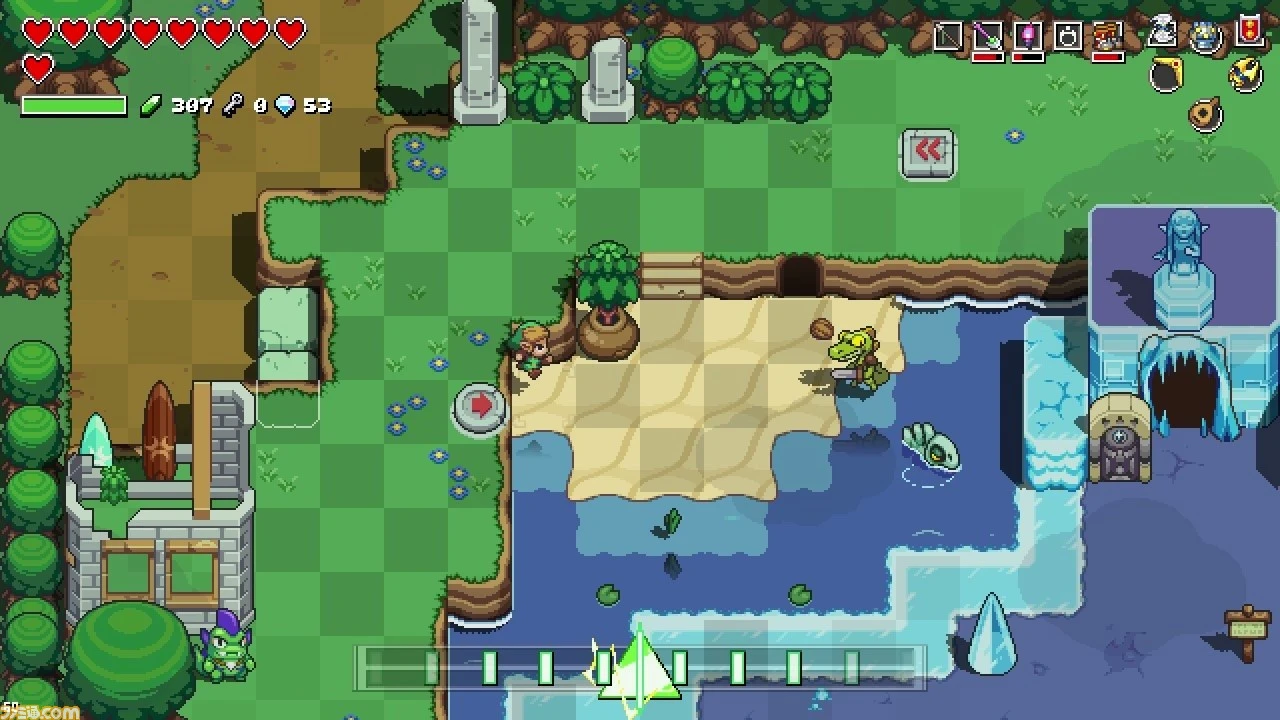
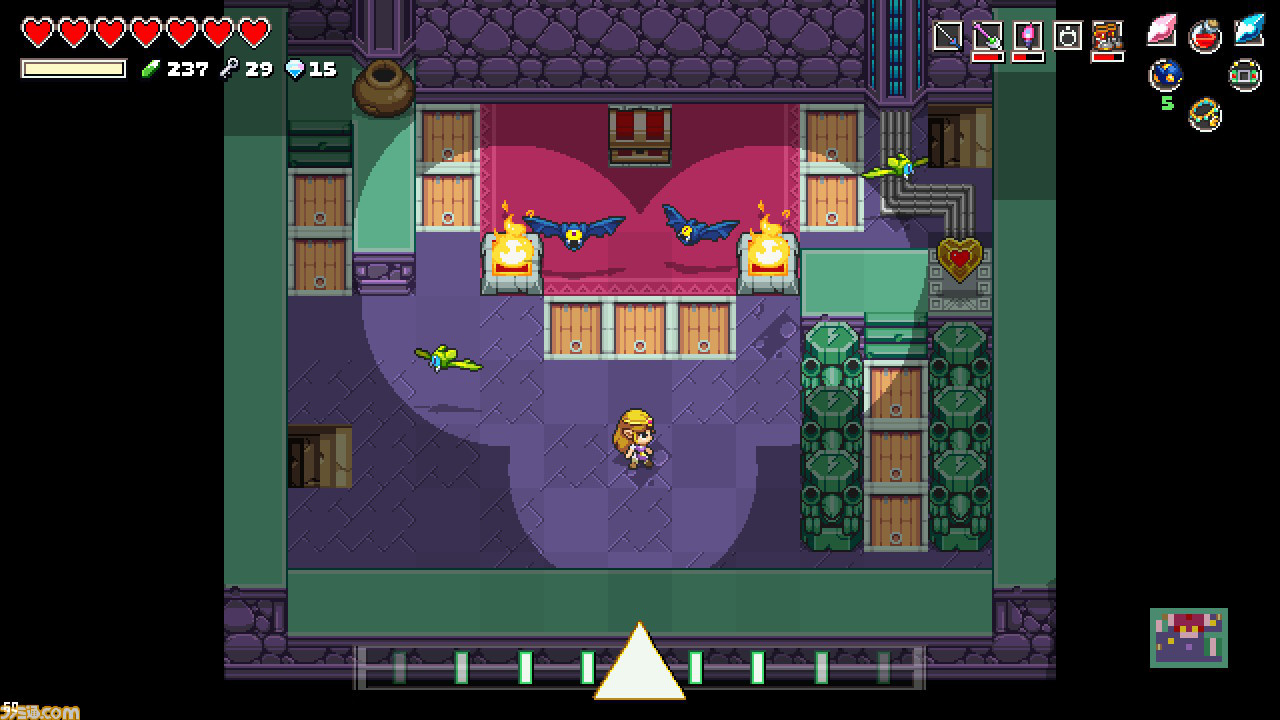
Link on the overworld, with the beat bar along the bottom of the screen.Zelda can be the hero from the very start.Two players can share the adventure on one console.
It is also a small piece of Nintendo history. Cadence of Hyrule was built not in Kyoto but in Vancouver, by Brace Yourself Games, an independent studio that had only ever released one game. The plan was only to put a few Zelda characters into its own game as downloadable extras; when the idea reached Nintendo it was liked so much that it became a whole new title, announced as the surprise finale of an indie showcase on 20 March 2019 and released less than three months later, on 13 June.
Critics took to it at once, and it averages 85 on Metacritic. They loved the pixel art, Danny Baranowsky’s remixed soundtrack and the way a famously tough roguelike had been turned into something far more welcoming, helped by a Fixed-Beat Mode that switches the rhythm off altogether. Brace Yourself Games kept adding to it for a year and a half: a free second campaign starring the villain, three paid packs that brought in Impa, Skull Kid and 39 more remixes, and finally a boxed edition with everything on the cartridge.
Keep the beat to keep Hyrule from meeting certain doom
That is how Nintendo UK’s page opens its description of the game. The rest of its page sets the scene: a villain bent on spreading enchanted music has forced the king of Hyrule into a deep sleep, and you begin as Cadence before carrying on as Link or Princess Zelda through a randomly generated overworld and dungeons. Defeat costs you your rupees, keys and consumable items, the page warns, but the gems you have earned stay with you: “Thankfully, diamonds are forever.”
— Official description: Nintendo UK, game page for Cadence of Hyrule – Crypt of the NecroDancer Featuring The Legend of Zelda (nintendo.com/en-gb). Two lines quoted; the rest summarised by Zelda Temple.
Quick Answers
The questions people most often ask about Cadence of Hyrule, answered quickly and explained further down the page.
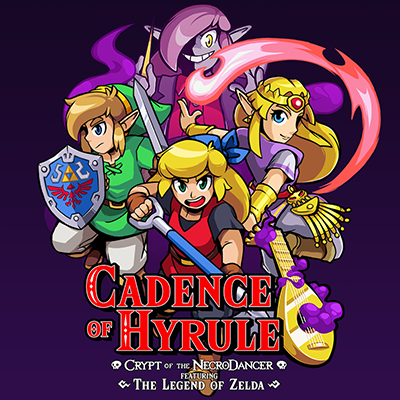
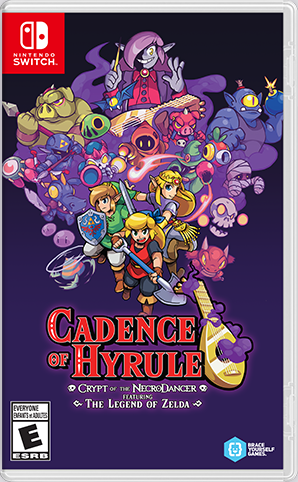
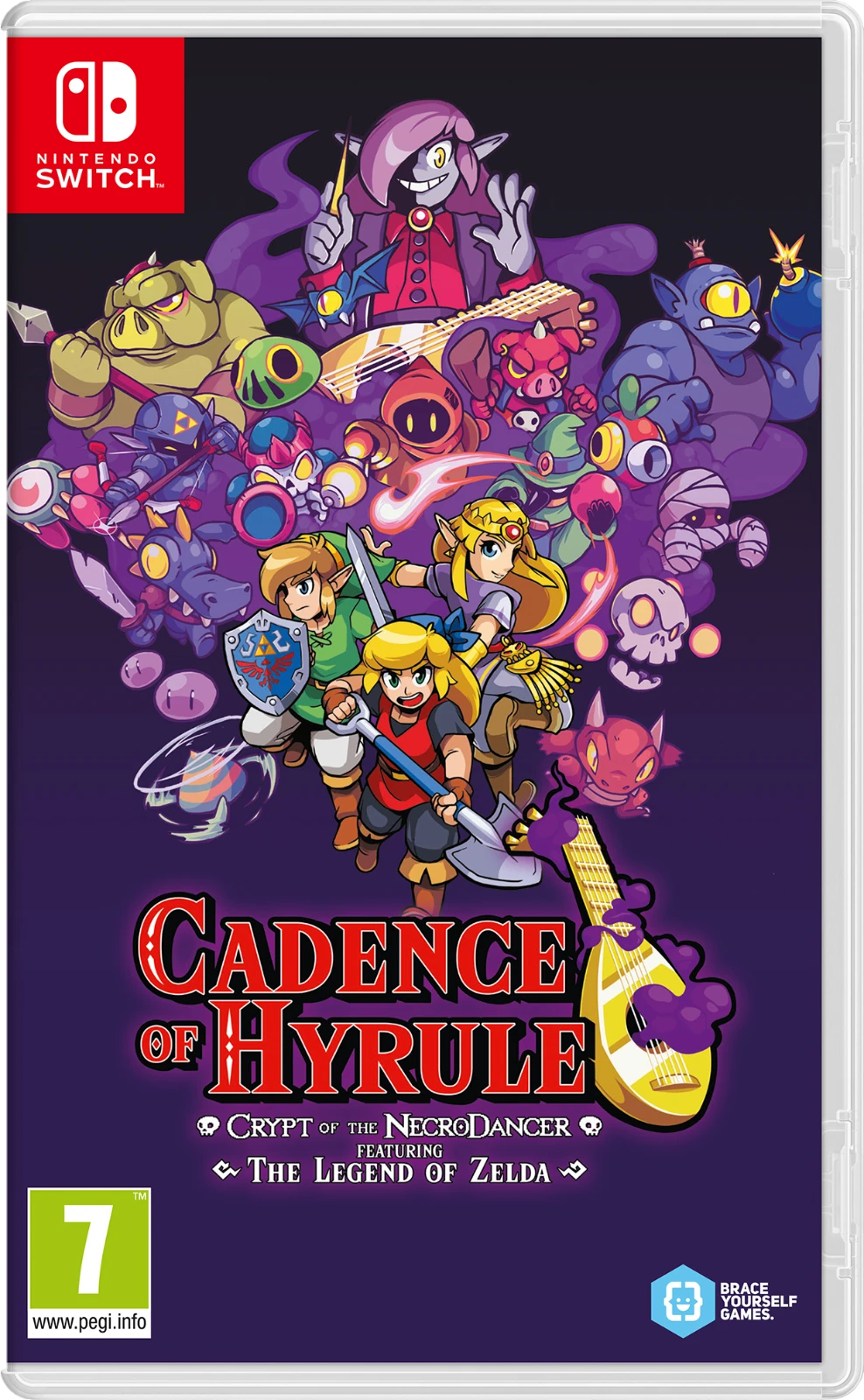
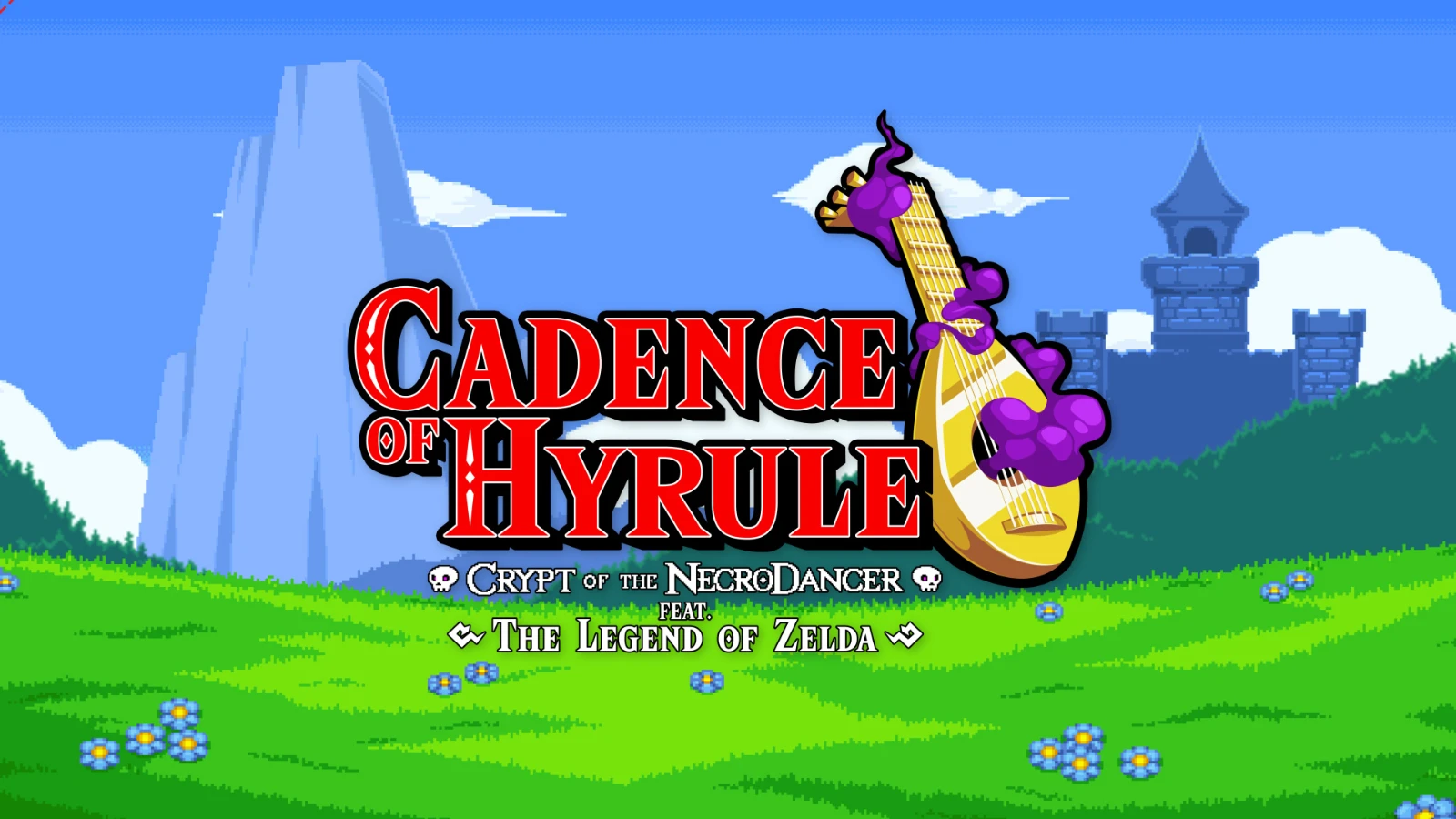
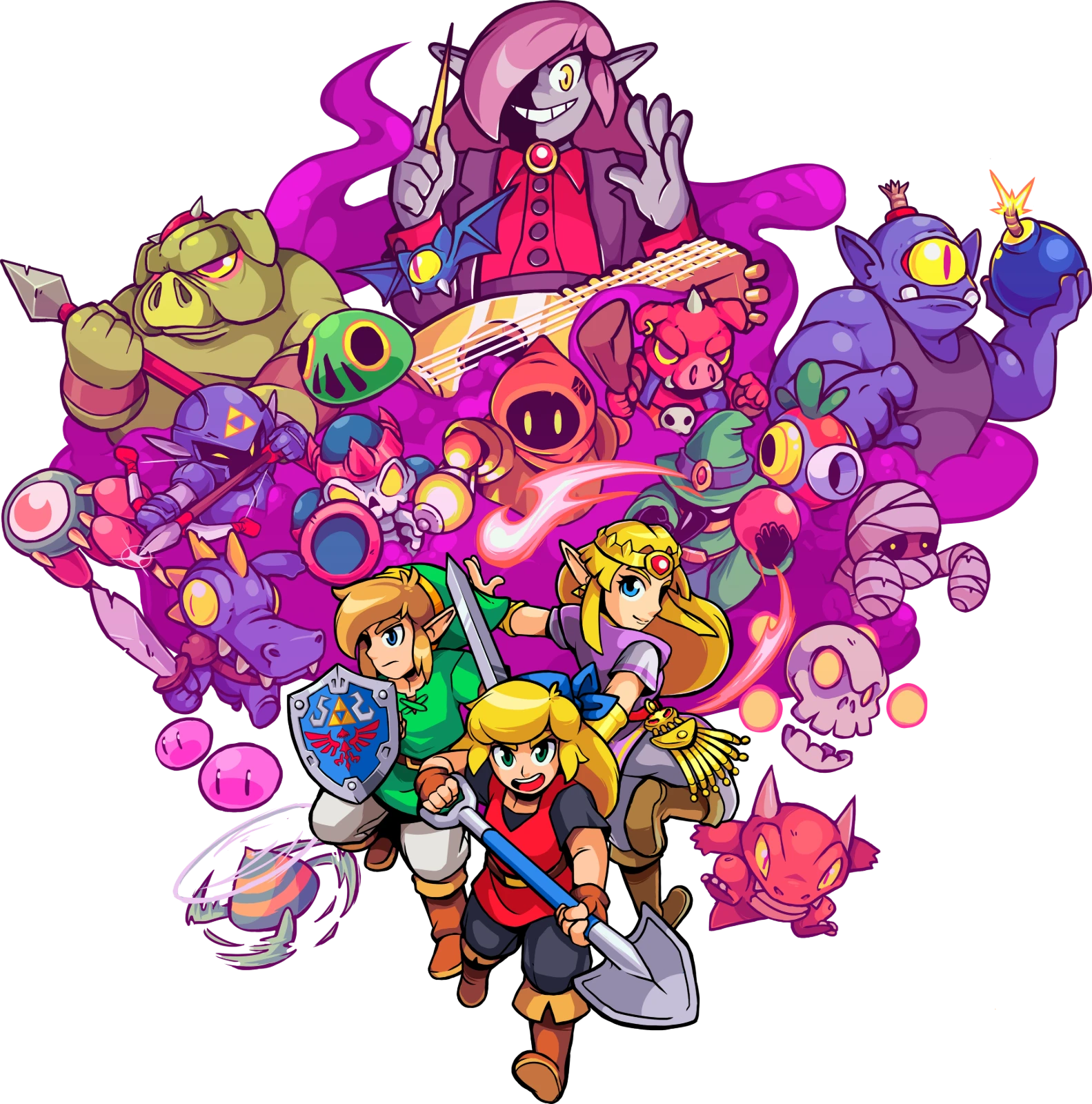
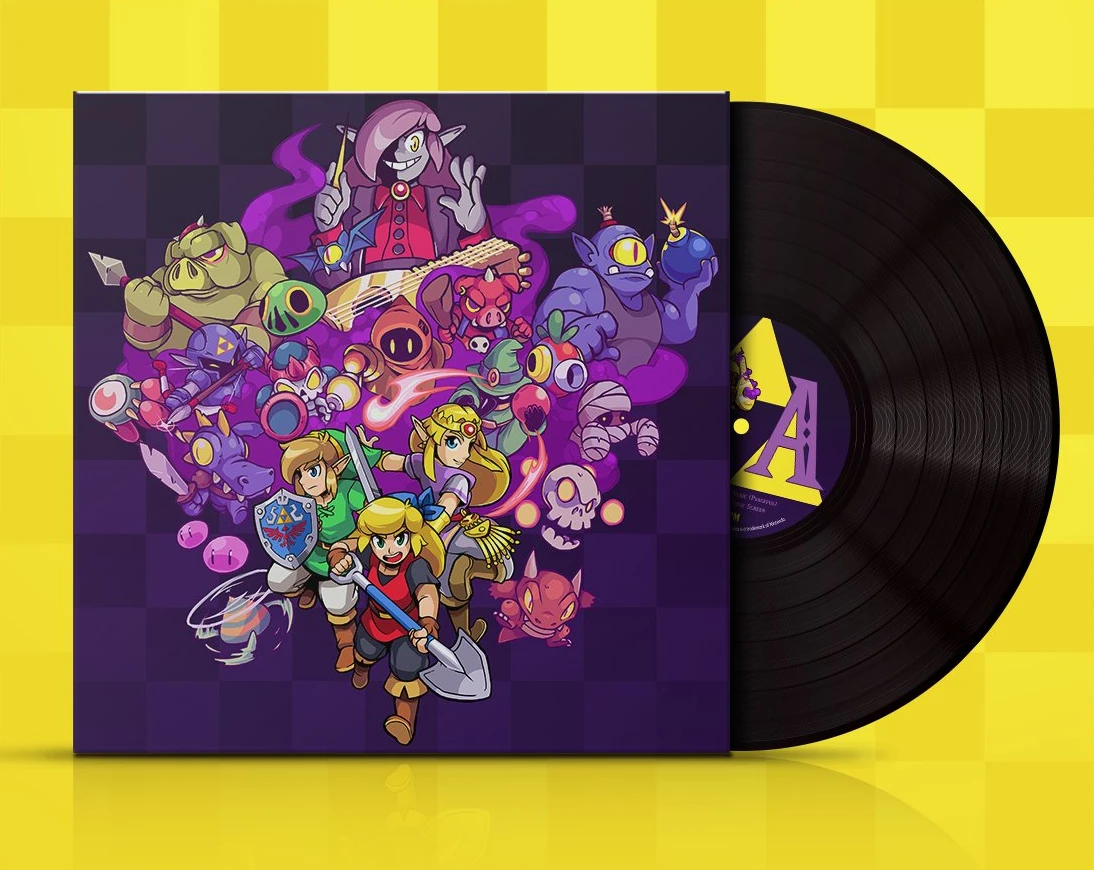
The main key art for Cadence of Hyrule.
When did Cadence of Hyrule come out?
On 13 June 2019 in North America and Europe and 14 June 2019 in Japan and Australia, as a download for Nintendo Switch. A boxed edition with all the add-on packs followed on 23 October 2020. More →
Who made Cadence of Hyrule?
Brace Yourself Games, the independent Vancouver studio behind Crypt of the NecroDancer, working directly with Nintendo’s teams in Japan. Nintendo published it, except in Japan, where Spike Chunsoft did. More →
Is Cadence of Hyrule an official Zelda game?
Yes: it is licensed and published by Nintendo. It is a spin-off, though. Director Ryan Clark called it “first and foremost a new entry in the NecroDancer universe”, and Nintendo of America’s Kirk Scott said it “doesn’t really fall in line with a Zelda-type title”. More →
Do you have to play to the beat?
No. Fixed-Beat Mode turns the rhythm off, so enemies only move when you do. With the beat on, a missed step costs you your multiplier and leaves you open, but it does not hurt you directly. More →
Do I need to have played Crypt of the NecroDancer first?
No. Reviewers found this game far more forgiving than the original, with checkpoints, fast travel and upgrades that survive a defeat. Destructoid said it takes the best parts of Crypt of the NecroDancer and makes them more accessible. More →
Who can you play as?
Cadence in the opening, then Link or Zelda, and all three by the end. A Deku Scrub called Yves can be unlocked, a free update made Octavo playable, and the paid packs add Impa, Aria, Frederick, Shadow Link, Shadow Zelda and Skull Kid. More →
Is Hyrule really different every time?
Partly. The regions themselves are hand-made, but where they sit on the map is shuffled for each save file and then stays fixed. The dungeons are generated afresh every time you enter. More →
Can two people play together?
Yes. A second player can drop in and out on the same console, each using a single Joy-Con. Co-op is local only. More →
How long is Cadence of Hyrule?
It is short for a Zelda. Destructoid’s reviewer finished a first run in about five hours, Nintendo Life’s took just over eight, and GameSpot’s spent around 13 hours with it. The extra campaigns and modes add a good deal more. More →
What DLC is there, and is it in the boxed version?
One free update (Octavo’s Ode, December 2019) and three paid packs from 2020: the Character Pack, the Melody Pack and Symphony of the Mask, sold separately or as a Season Pass. The boxed edition includes all three. More →
Can I still buy it?
Yes. In November 2026 it was still on sale on the Nintendo eShop, Nintendo UK’s page still offered the free demo, and Nintendo’s North American store lists the game as supported on Nintendo Switch 2. More →
Plot / Story
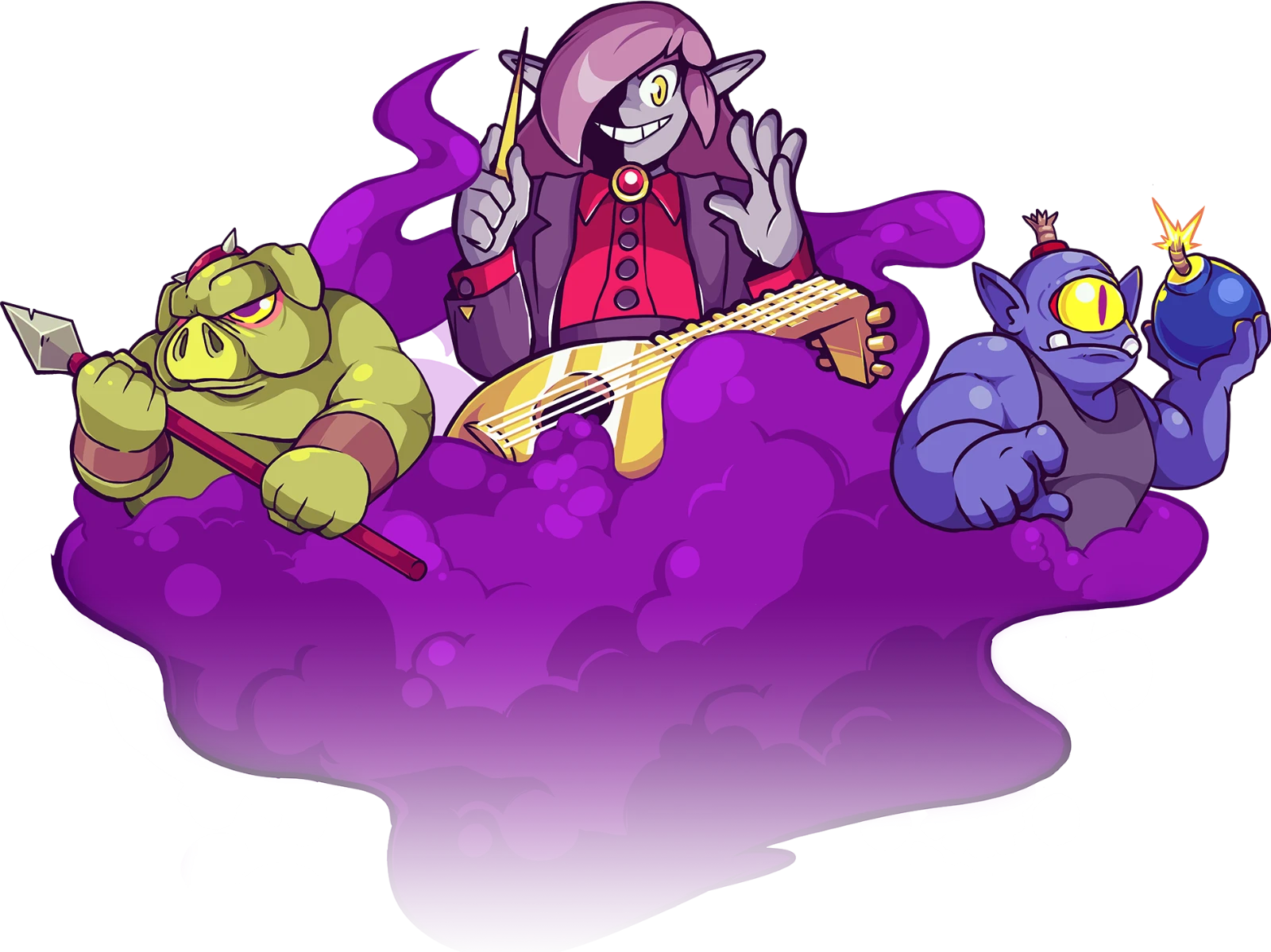
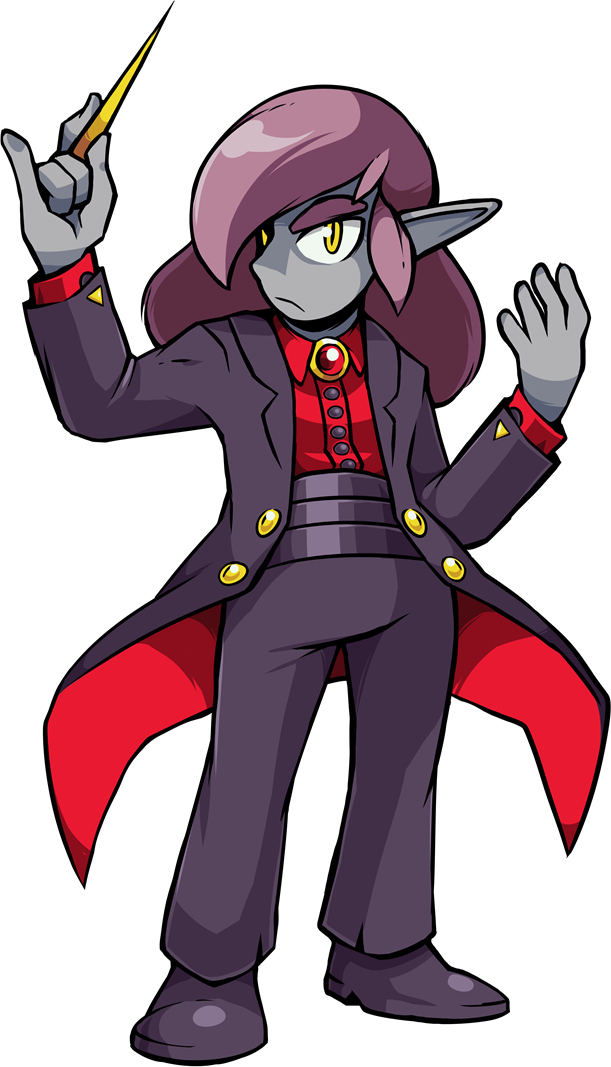
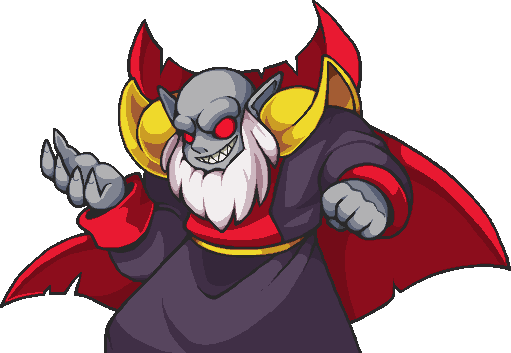
Official art of Octavo.
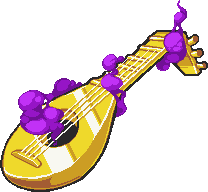
Hyrule falls to a lullaby. Octavo, a musician and magician who plays for the king, turns his enchanted lute on his own master and sends him into a deep sleep. Link and Princess Zelda go the same way. Then Octavo takes the Triforce of Power and uses it to transform his instrument into the Golden Lute, a far more dangerous thing.
With the Golden Lute he seals Hyrule Castle behind a barrier, floods the kingdom with monsters and lays a curse on the land that keeps everyone and everything moving in time to music. He also hides four enchanted instruments in dungeons at the far corners of Hyrule. It looks like a simple coup. It is not: Octavo is terrified that Ganon is coming back, and has decided that he is the only person who can do anything about it.
A stranger falls from the sky
The Triforce answers by reaching into another world. Cadence, the heroine of Crypt of the NecroDancer, comes tumbling out of the sky and lands in a heap in the Hyrulean countryside. A fairy called Trill is the first to reach her, notes that this newcomer is clearly no Hylian, and warns her that “something strange” is happening to the kingdom.
Trill accompanies Cadence through a nearby crypt, teaching her how Hyrule works as they go, starting with what a Sheikah Stone is for. At the far end stand two portals. One leads to the sleeping Link, the other to the sleeping Zelda, and the choice between them is yours. Cadence loses her gear on the way through, wakes the hero on the other side and then, in a single-player game, politely excuses herself: she has a way home to find. In co-op she stays, and the second player takes her over.
Four instruments, four champions
The hero you woke soon learns the rules. The barrier around Hyrule Castle will only open to Octavo’s four magical instruments, and each of those is guarded by one of his champions: the Maracas in the Lost Swamp, the Bass Guitar in the Gerudo Ruins, the Oboe in the Frozen Grotto and the Glockenspiel in the Temple of Storms, at the top of Death Mountain. You can take them in any order. The second sleeper can be woken along the way, and the cure is waiting in Kakariko Village, in a crypt that Octavo has filled with monsters.
Octavo himself is there at the end of every dungeon, bewitching the instrument into a boss before vanishing again. His tune changes each time. At the first meeting he simply dares the hero to take on his champion. At the second he swears not to make the same mistake again. At the third he insists these heroes could never beat Ganon, and at the fourth the truth comes out: the champions were never meant to conquer Hyrule. They are the beginnings of an army to fight Ganon, and everything Octavo has done, he tells Link, has been “for your own good”.
Cadence, meanwhile, keeps turning up in caves around the map, still hunting for a way home and handing over advice and the odd item. Eventually she accepts that she may be stuck here and joins Link and Zelda properly. Octavo, she says, reminds her of somebody she could not stand back in her own world.
Octavo turns up at the end of each dungeon to create a champion.Cadence, found in a cave and still looking for a way home.
The concert at Hyrule Castle
With all four instruments in hand the barrier comes down. Octavo is waiting at the top of the castle, on a stage ringed with monsters and bewitched castle guards, and his first move is to take his instruments back. Then he makes the heroes an offer of sorts: prove that you are fit to be my champions instead.
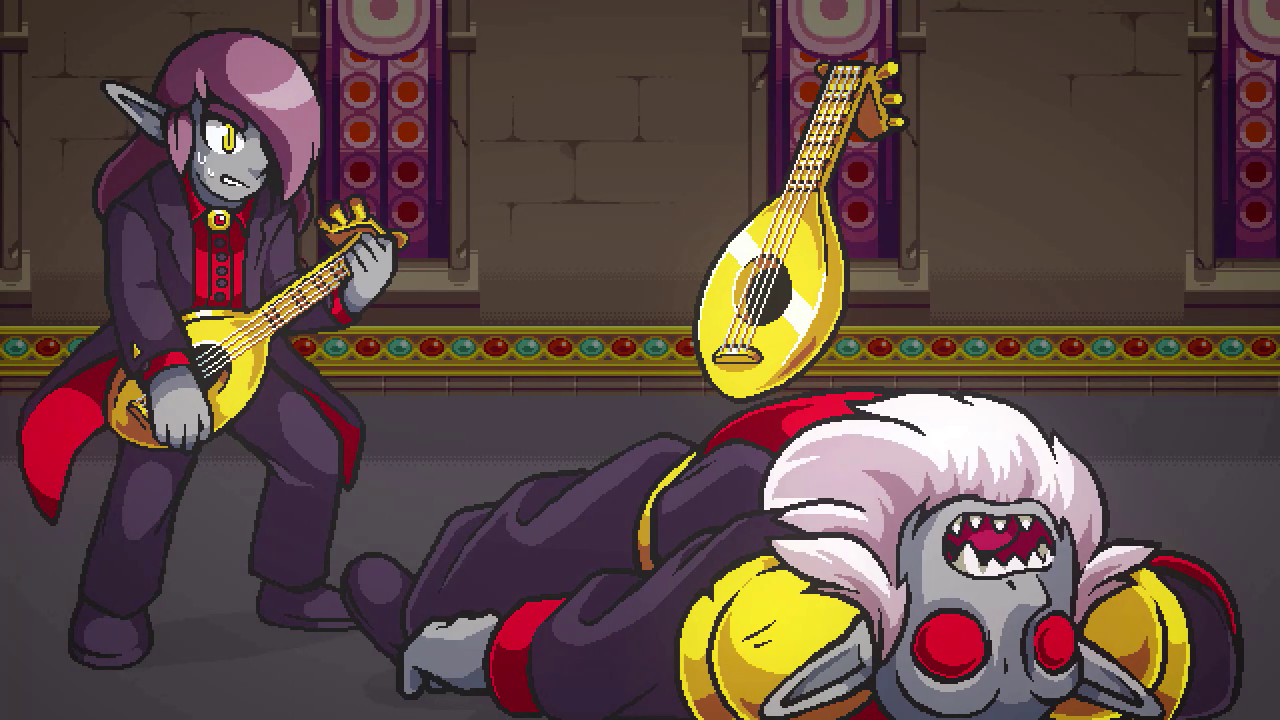
He plays each instrument in turn to summon waves of monsters, and when all four are spent he falls back on the Golden Lute itself, hurling rows of purple and green swords and hammers across the stage between tunes. Every blow he takes now damages the Lute. When it has had enough, a portal tears open and swallows it. Octavo is furious. Without the Lute, he says, Ganon cannot be beaten, and he plunges on ahead to try anyway.
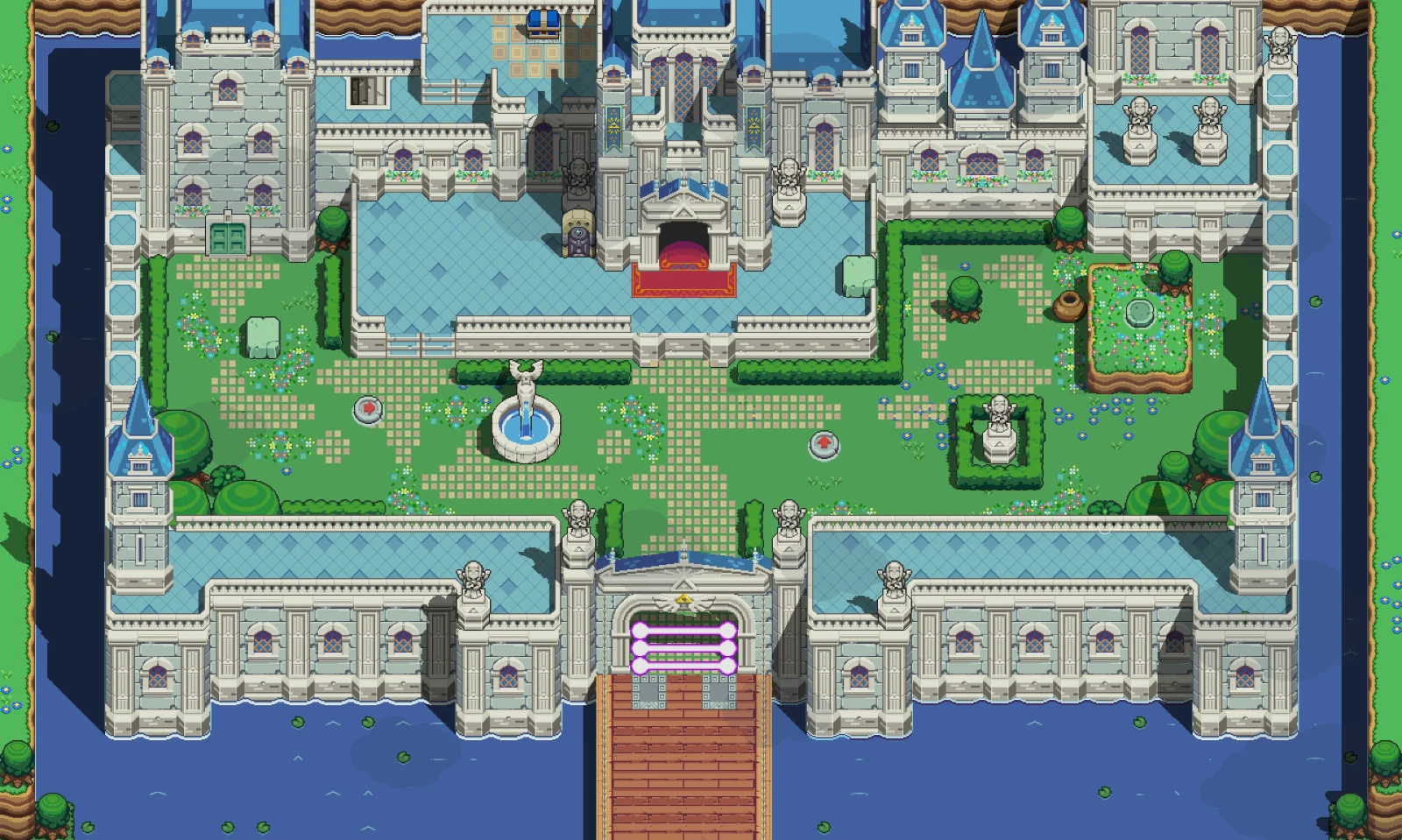
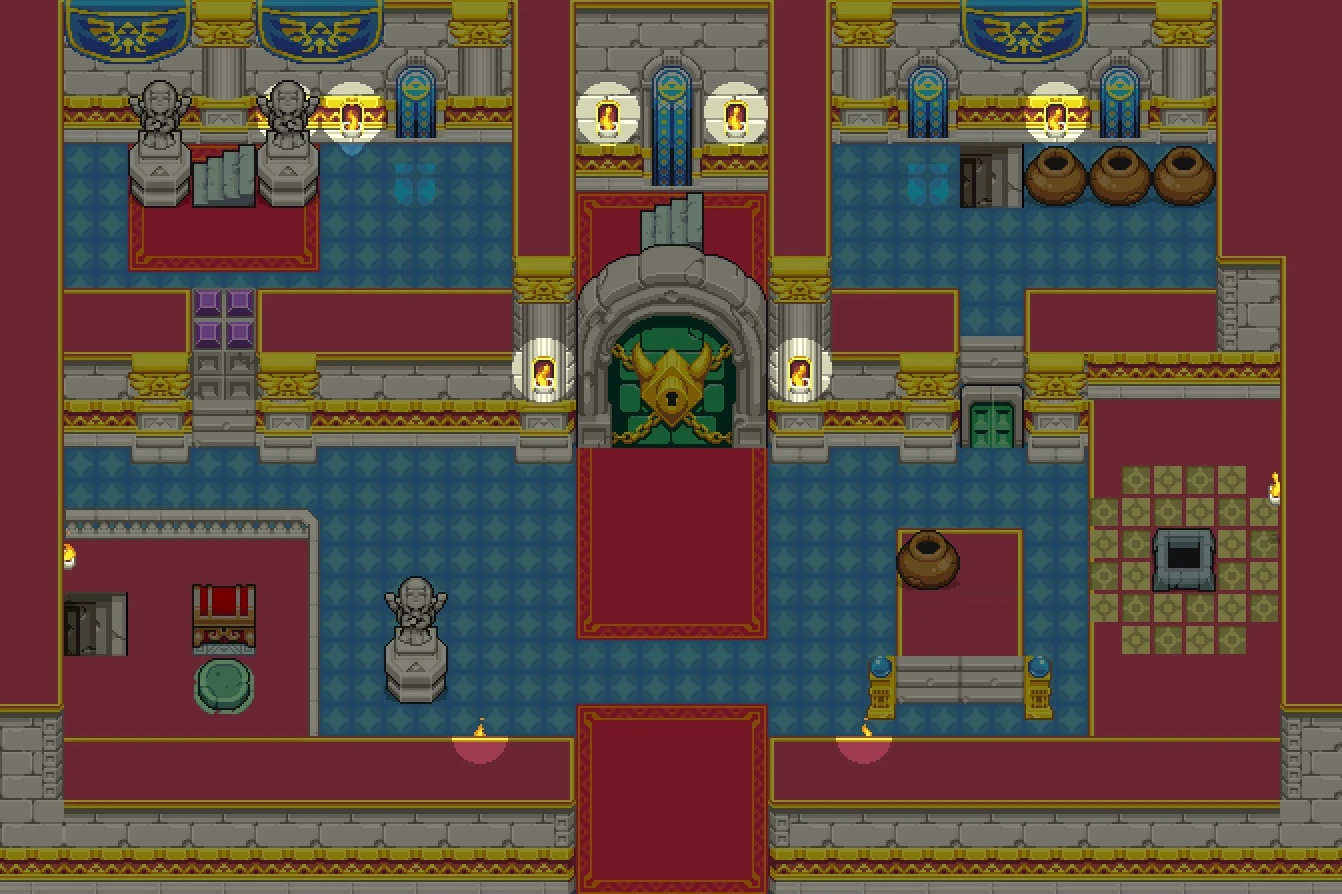
Hyrule Castle, once the barrier is down.
Twenty-five years too late
The heroes follow him through a portal and come out 25 years in the future, in a Hyrule that Ganon already rules. A last five-floor dungeon, the Future World, leads to the ruins of Hyrule Castle, and there on the floor lies Octavo, beaten, admitting that he could not defeat Ganon alone.
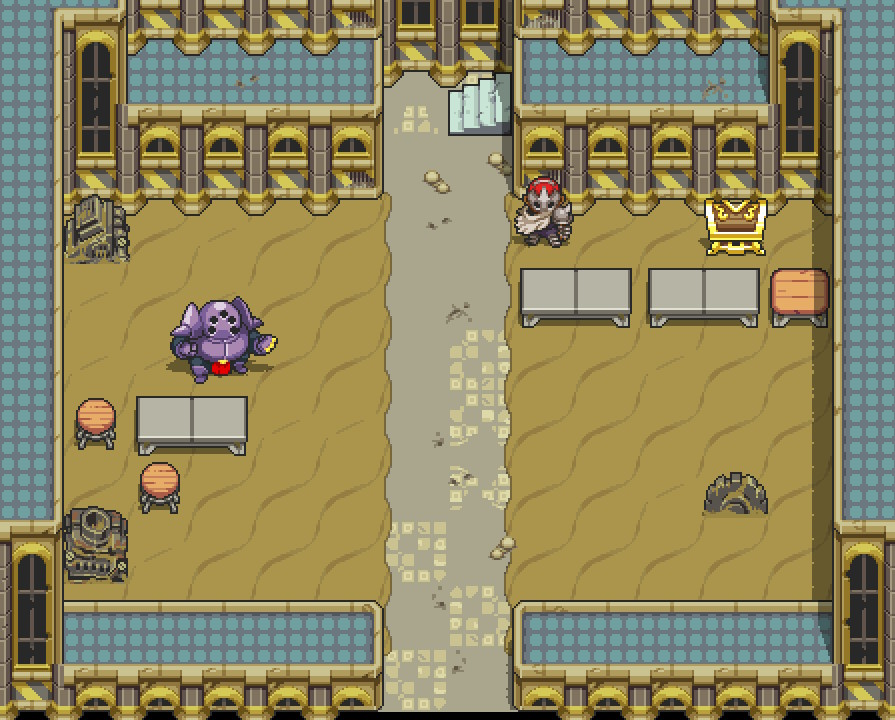
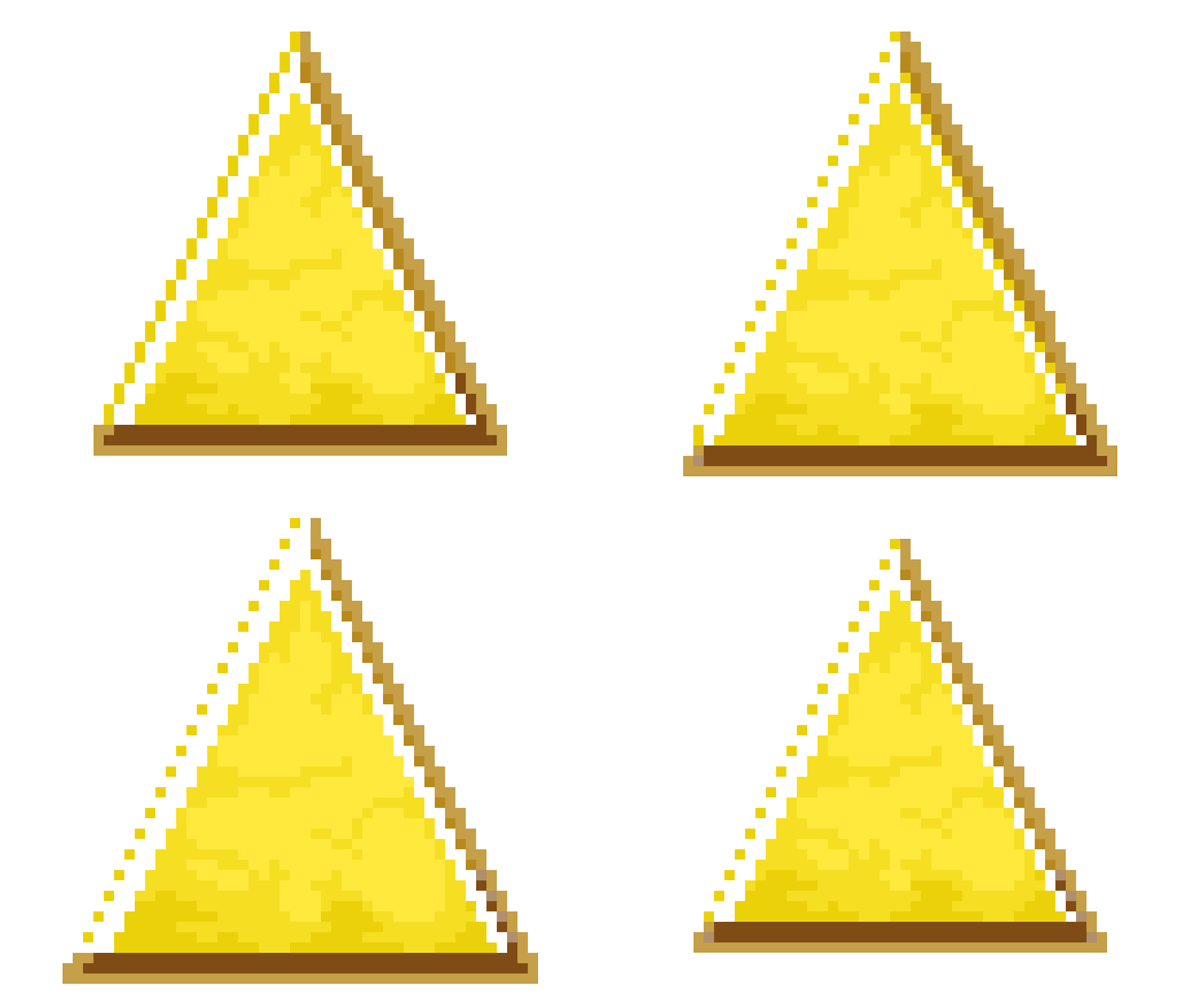
Ganon is waiting in the throne room. He freezes two of the three heroes where they stand, so whoever is left has to fight off his monsters and smash the others free, and he does it again each time he has taken a few hits. When he finally retreats to his organ, three golden triangles light up on the floor. Cadence, Link and Zelda each step on to one, and a beam of golden light destroys the King of Evil.
With the Triforce whole again, Link and Zelda tell Cadence that it can grant her wish to go home. She makes it and vanishes. Whether home is where she actually lands is something the ending leaves open.
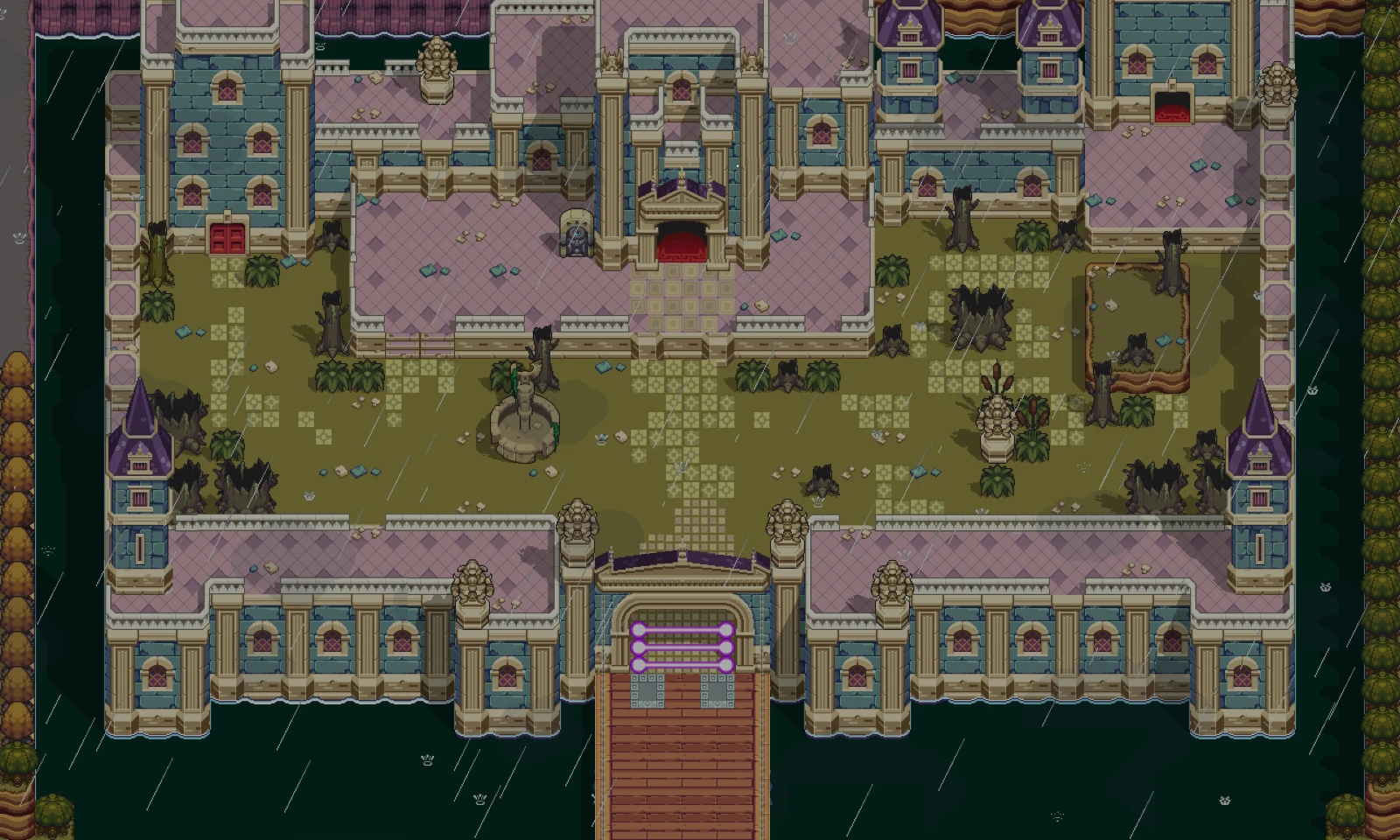
The Future World, where Ganon has already won.Three heroes, three Triforce marks: the end of Ganon.
Octavo’s Ode: the villain’s version
The free update of December 2019 lets you play the whole thing from the other side. Nintendo’s own pitch was that you would “discover Octavo’s true intentions for taking over Hyrule”. This time Octavo is the one on the road, fighting with the Golden Lute and a Haste spell.
The twist comes at the end of the Future World. It is not Ganon who is waiting for him there but a figure calling himself the NecroDancer, the name of the villain in Cadence’s own game, and he is Octavo’s future self. He has already beaten Ganon, he explains, and taken his place. Octavo decides to destroy him anyway.
Octavo’s Ode: the same Hyrule, seen from the villain’s side.
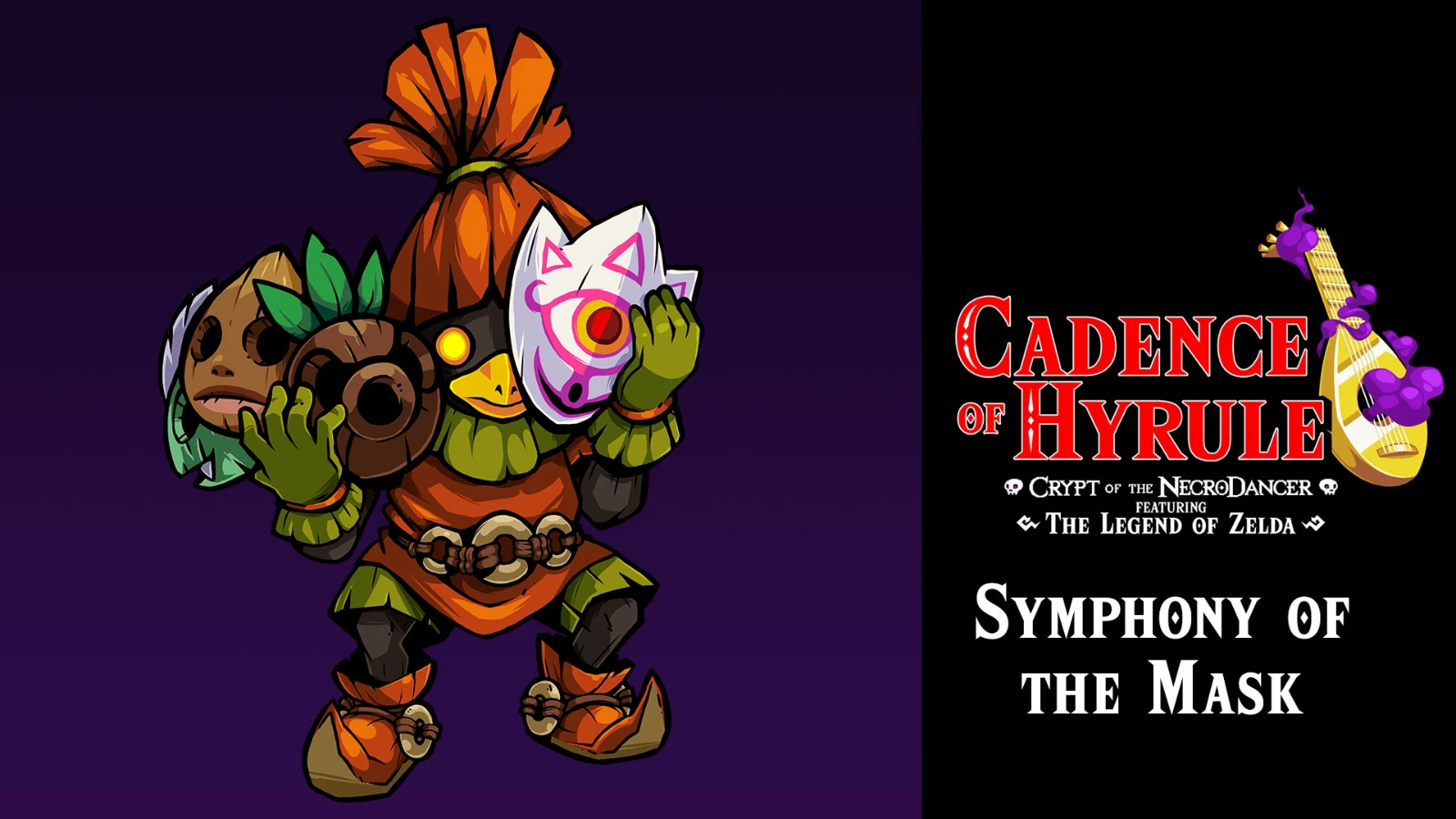
Symphony of the Mask: Skull Kid’s story
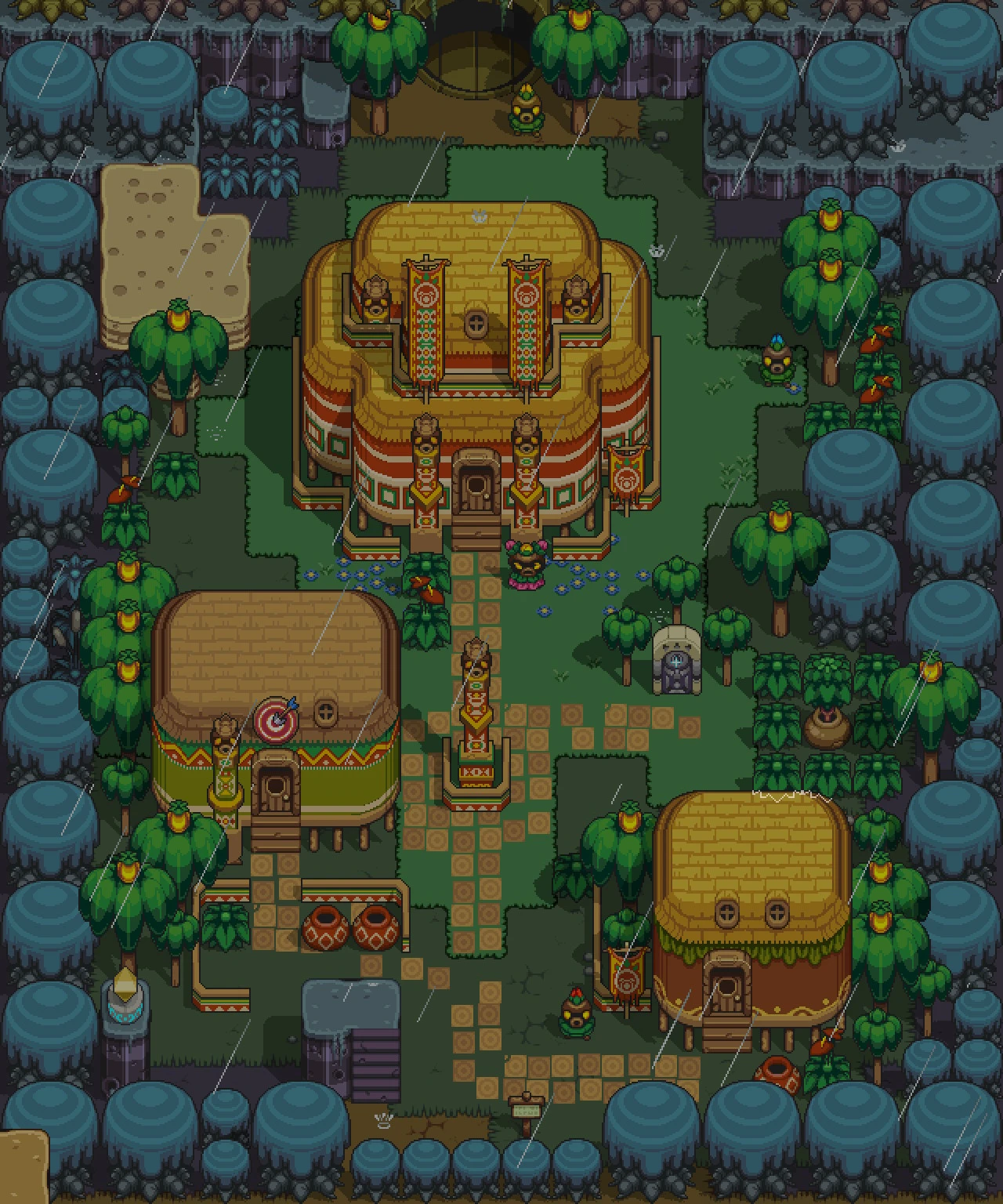
The last paid pack, from September 2020, is a second new story on a new map. It is set in the ruined future, outside the castle walls, where the kingdom’s borders have shrunk, only the Deku and the Gerudo still have settlements of their own, and the old dungeons have crumbled into single-floor ruins.
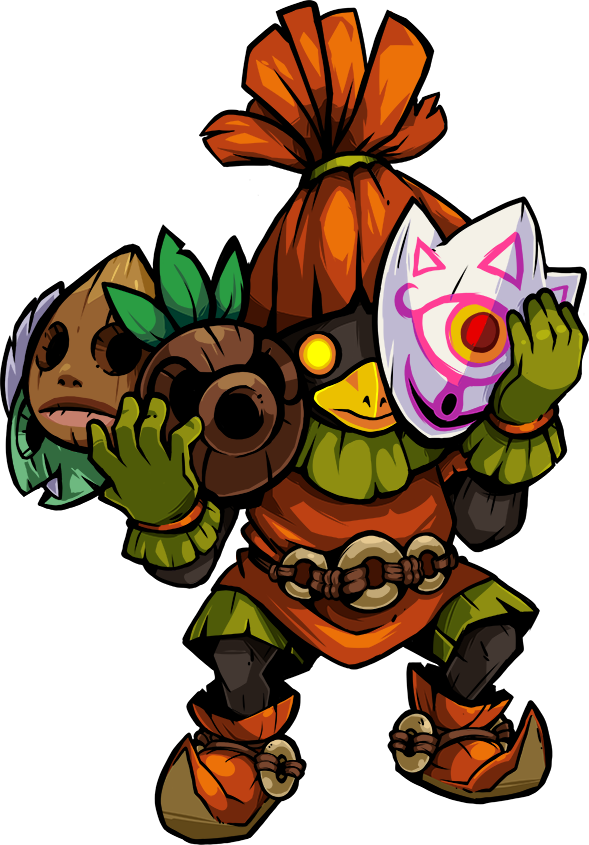
Its hero is Skull Kid, who starts out in a Deku Mask with nothing but a head-butt to his name. The Deku King gives him the Skull Mask and Mask Magic, and from then on he changes his powers by changing his face; there are more masks waiting in those ruined dungeons. He also starts to hear a voice. He takes it for the Great Deku Tree. It is the Skull Mask.
Two new instruments are needed this time: the Bongos, won from King Dobongo in the Gerudo Arena, and the Synth, guarded by Synthrova in the puzzle-filled Temple of Brainstorms. Together they bring down the barrier in front of Hyrule Castle. Inside, Ganon steals the Skull Mask, puts it on and fights as Skull Ganon, and Skull Kid has to knock it loose again and again to hurt him. When it is over he goes home to Deku Village and celebrates with a pair of Deku Scrubs.
Symphony of the Mask, the third add-on pack.Skull Kid in Deku Village.
Dungeons in Cadence of Hyrule
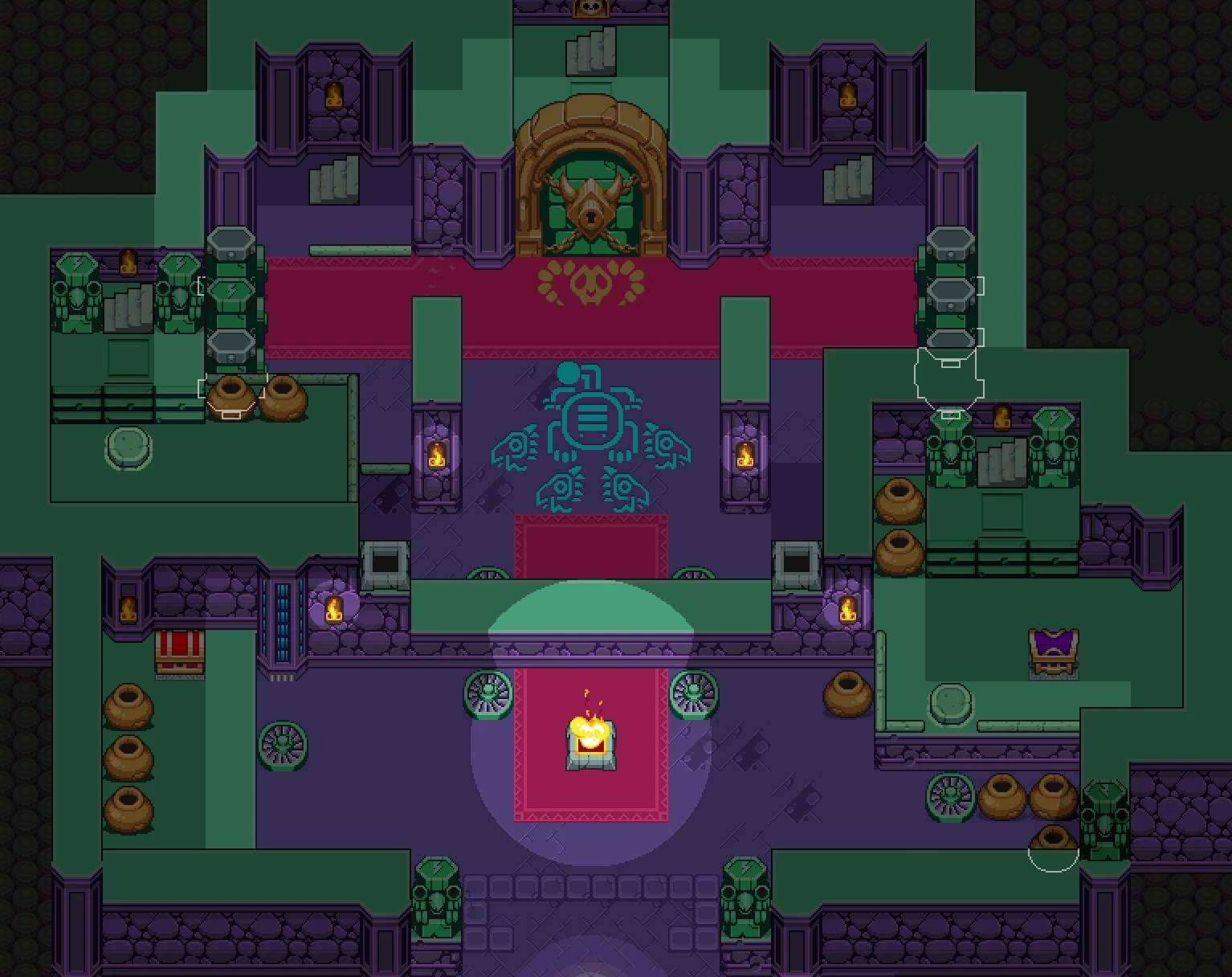
The main story has four instrument dungeons, Hyrule Castle and a final dungeon in the future. The four instrument dungeons can be tackled in any order, and their bosses get tougher the more instruments you are already carrying. Every dungeon’s floors are generated afresh each time you walk in.
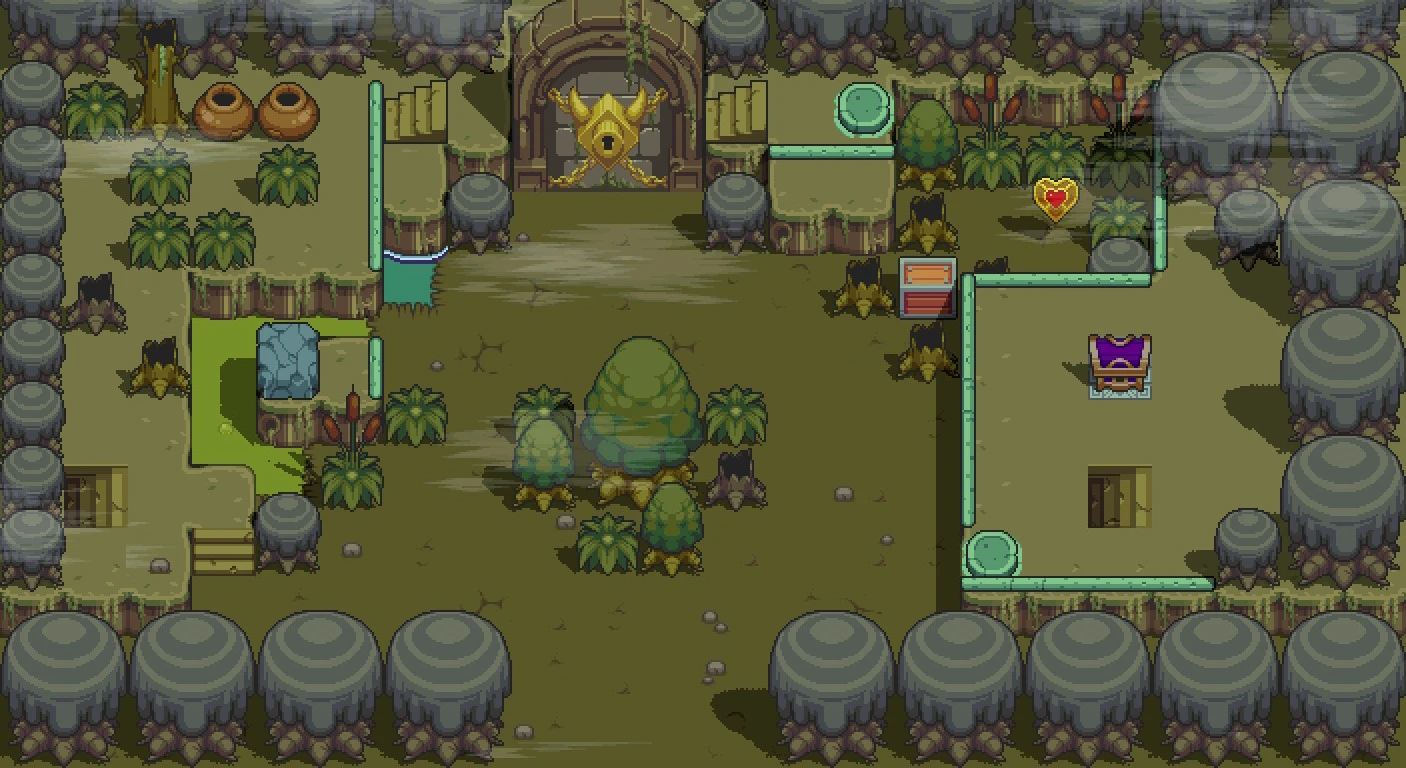
Lost SwampThrough the Lost Woods · Instrument: MaracasBoss: Gohmaracas. To find the entrance you first have to get through the looping Lost Woods, which means waking Tingle and borrowing his dowser.
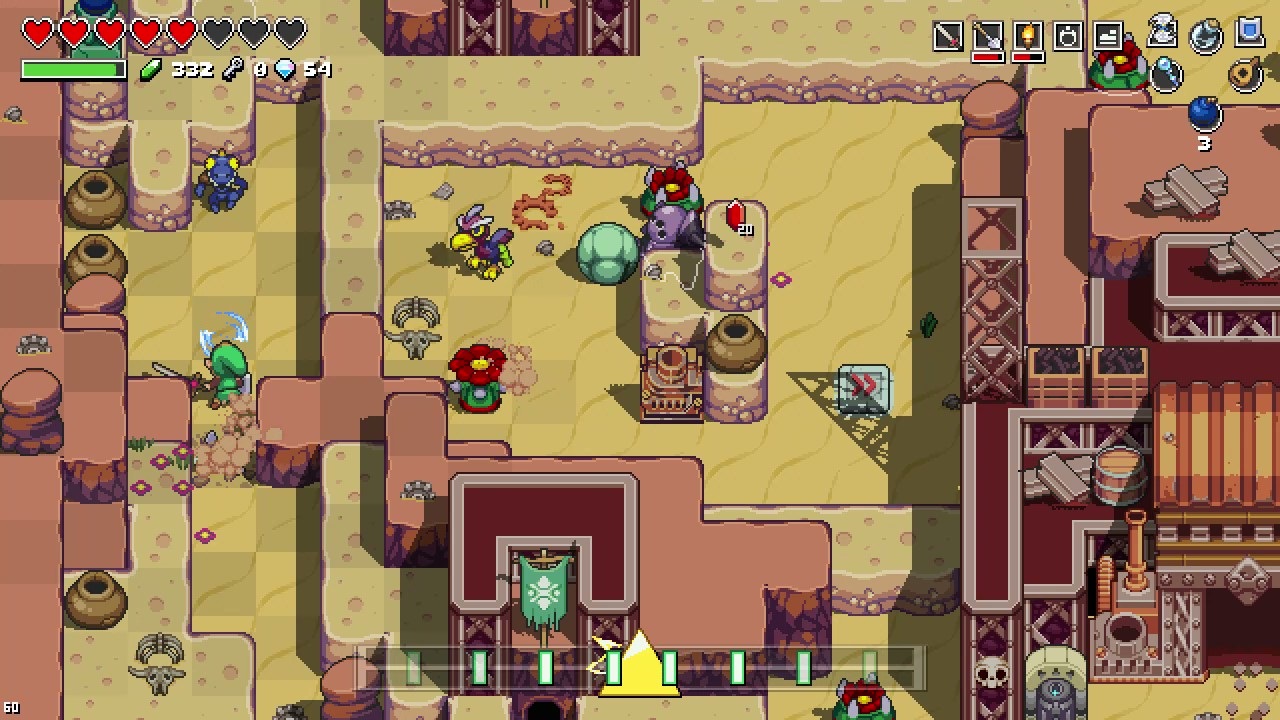
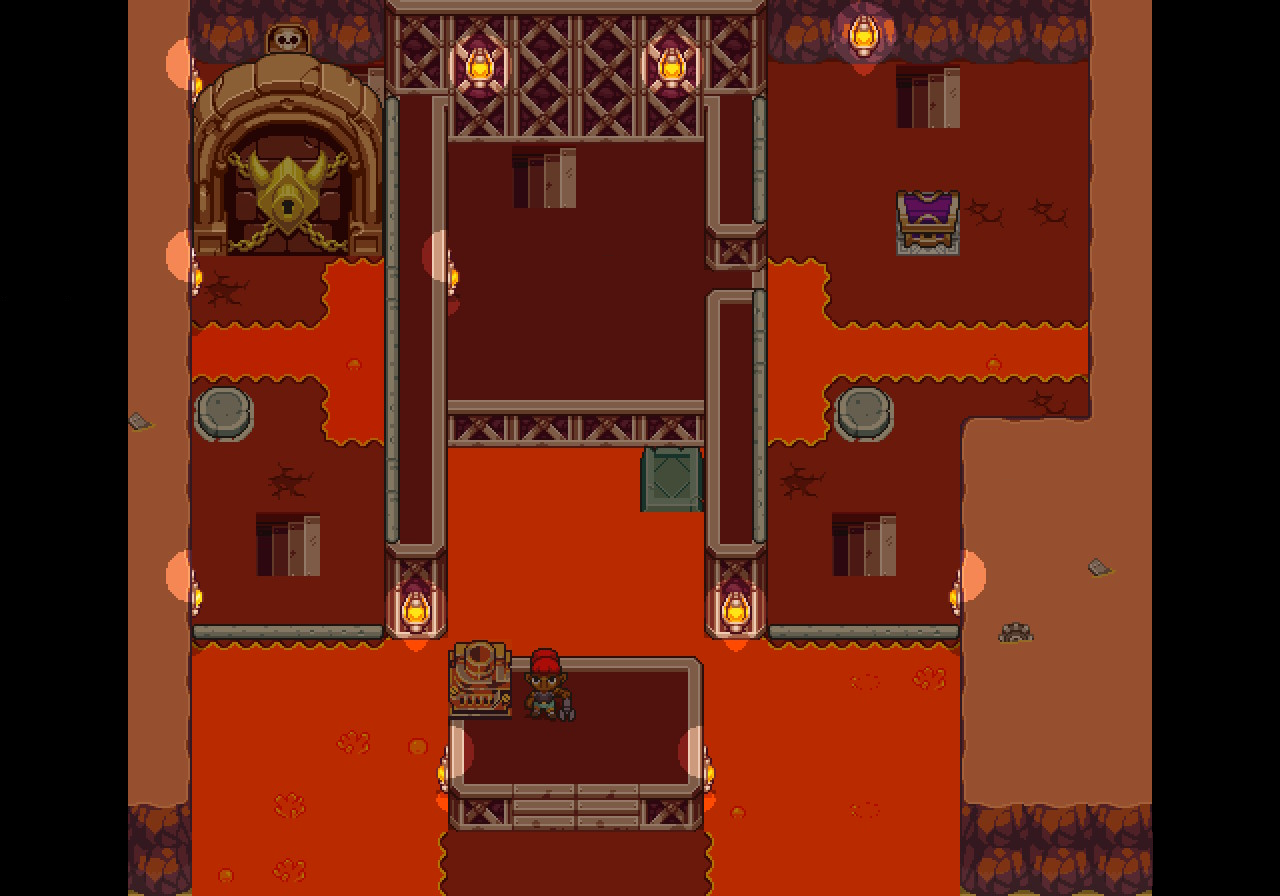
Gerudo RuinsNear Gerudo Village · Instrument: Bass GuitarBoss: the Bass Guitarmos Knights. You can walk in at any time, but the Gerudo researcher at the entrance will not let you explore until three Gears have been handed over.
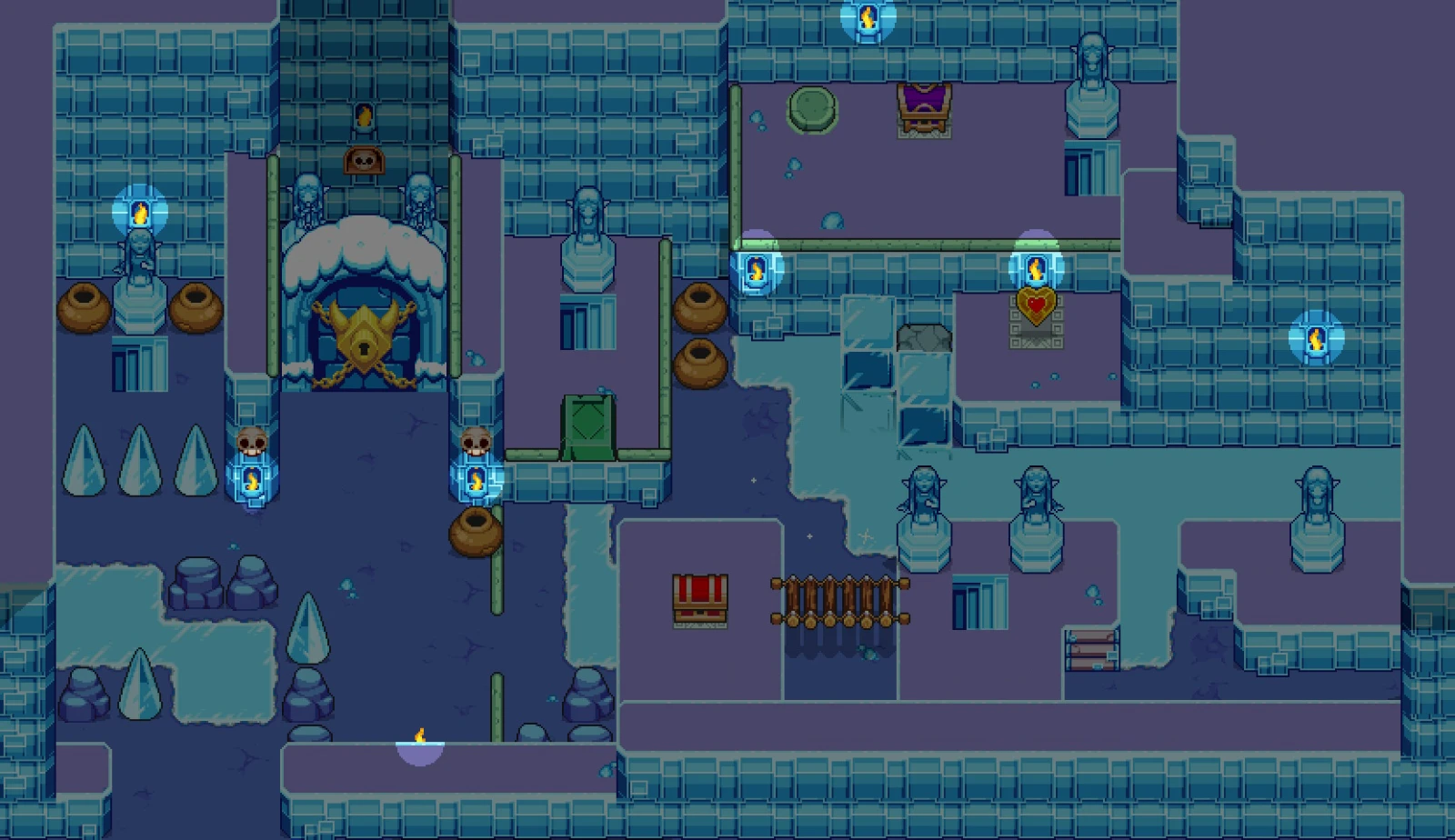
Frozen GrottoInstrument: OboeBoss: Wizzroboe. The ice dungeon. Its boss fight alone has falling icicles, ice-flinging Wizzrobes and a floor that freezes over.
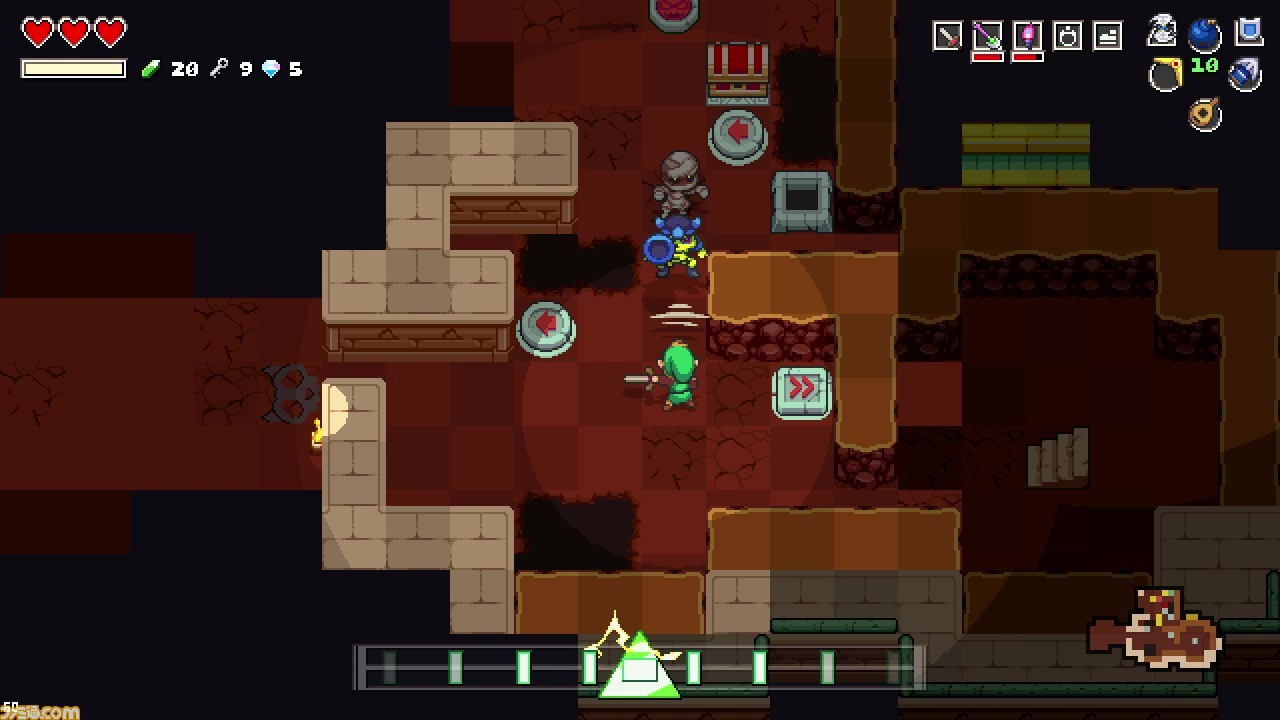
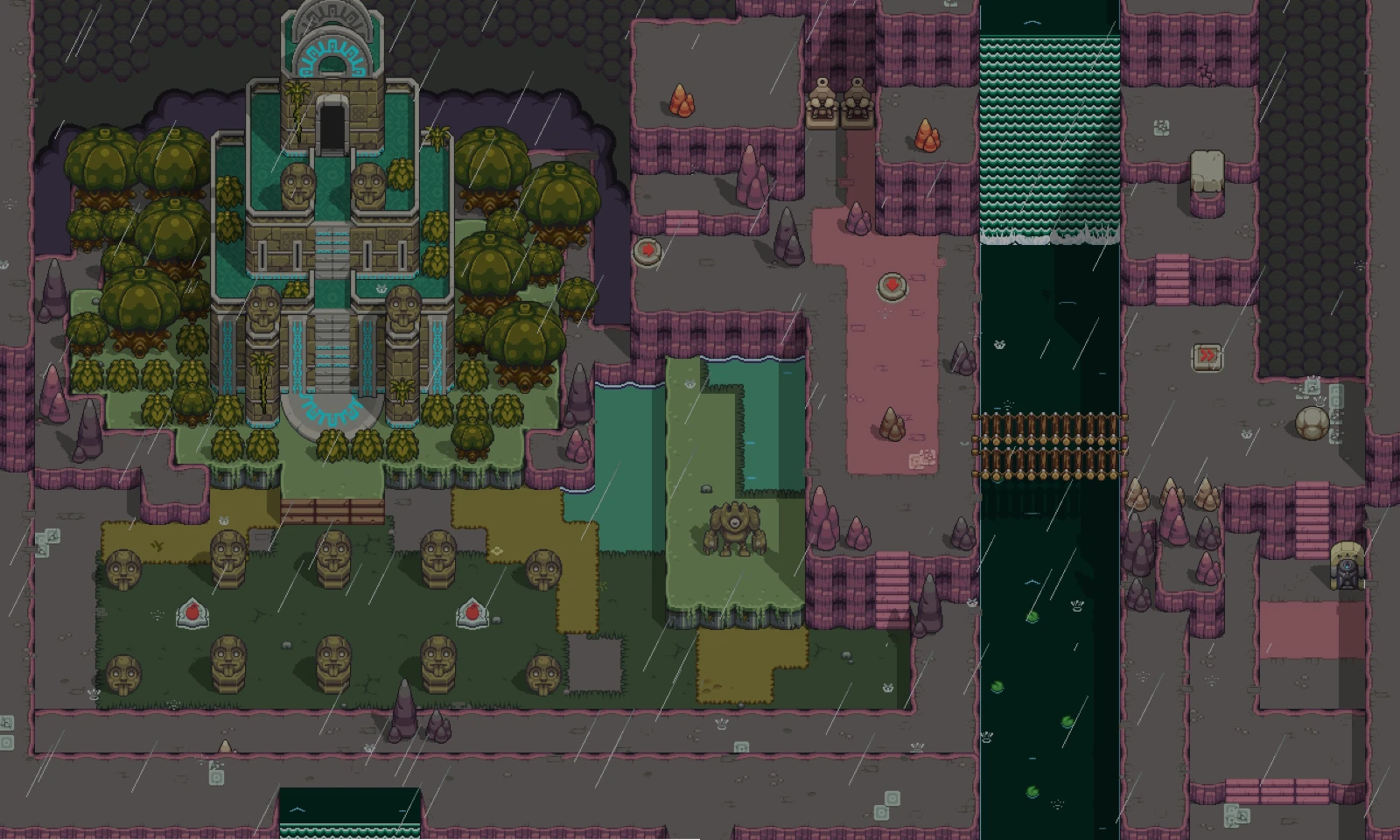
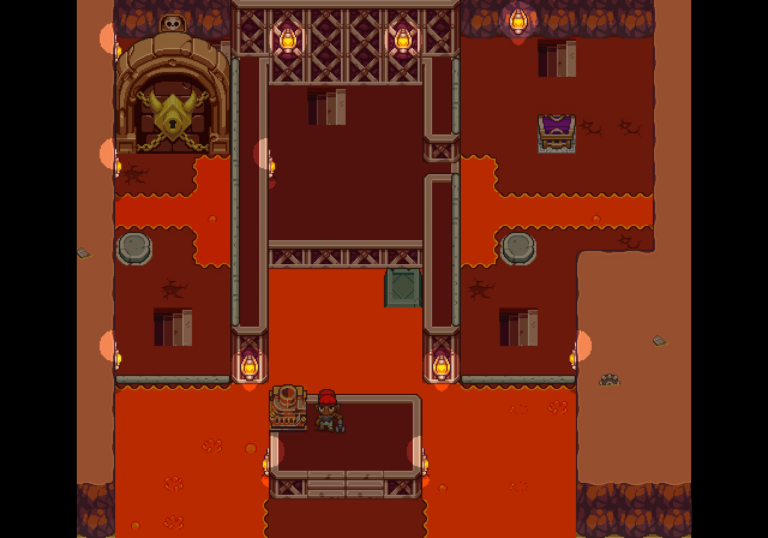
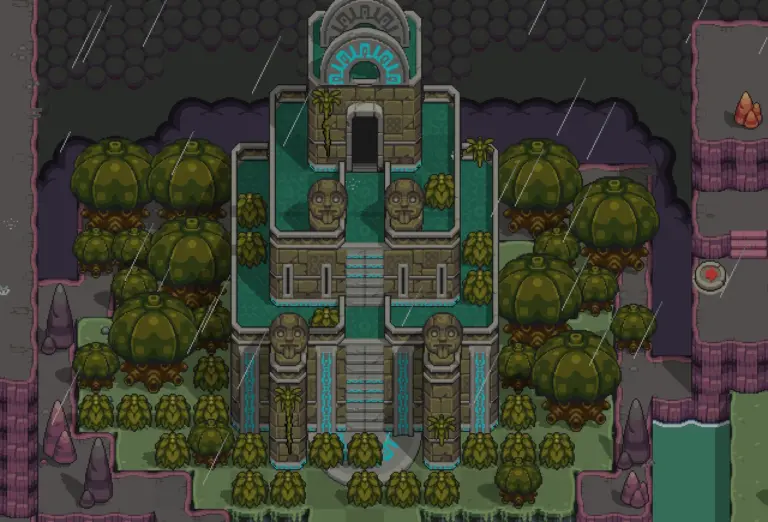
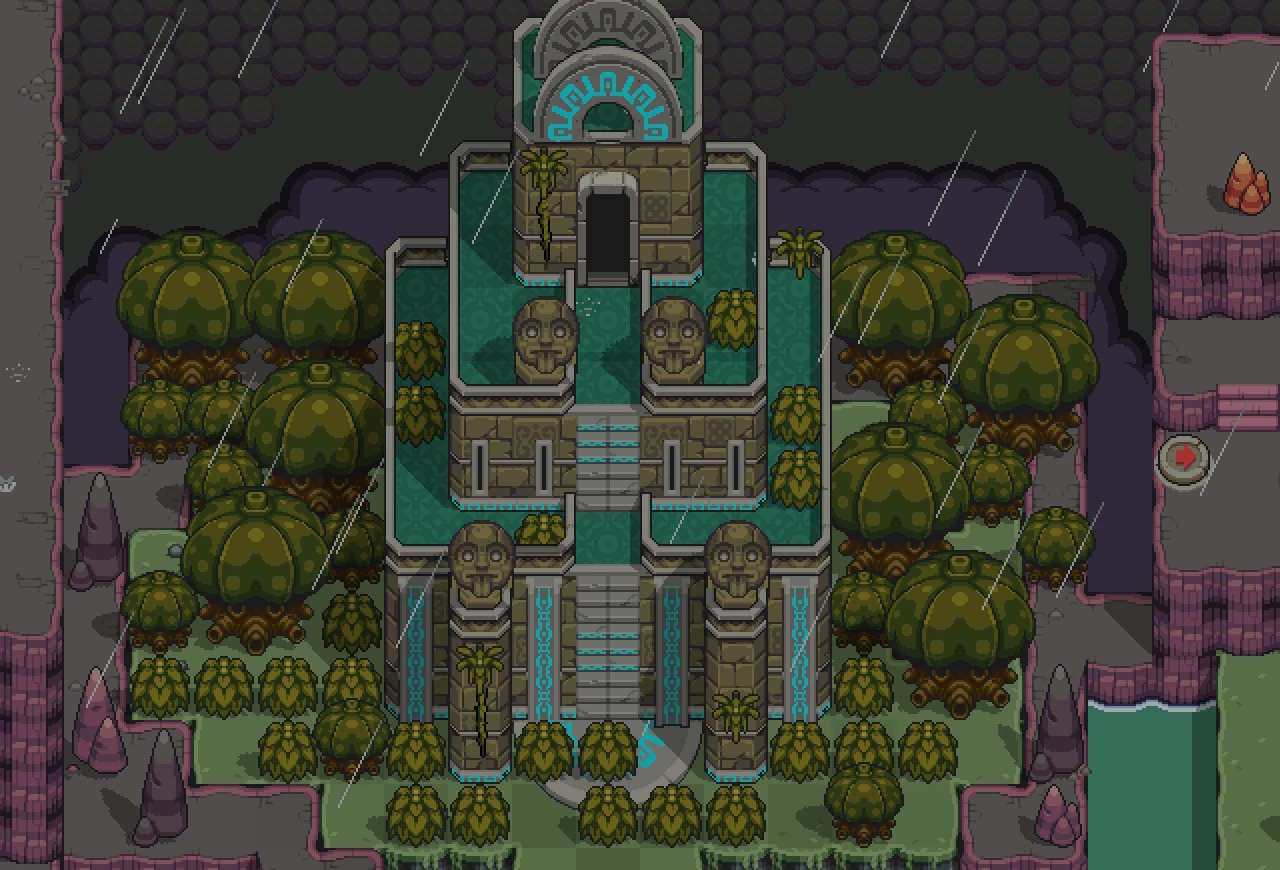
Temple of StormsTop of Death Mountain · Instrument: GlockenspielBoss: Gleeokenspiel. It can only be reached by finding a way up the mountain, and in the boss room the pools of water turn deadly once the lightning starts.
Hyrule CastleOpens with all four instrumentsBoss: Octavo. GameSpot’s reviewer found the game’s real challenge in the final trek through the castle.
Future WorldFinal dungeon · 25 years onBoss: Ganon (or, in Octavo’s Ode, the NecroDancer). Five floors, each with a randomly chosen miniboss and a golden chest holding a legendary weapon, then the ruins of Hyrule Castle.
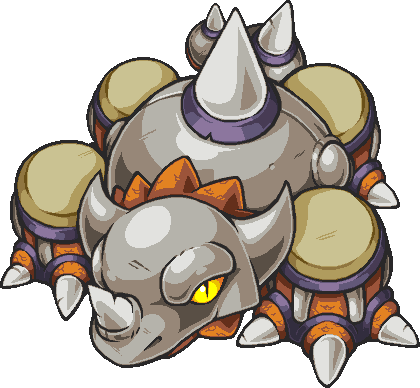
Gerudo ArenaSymphony of the Mask · Instrument: BongosBoss: King Dobongo. Six floors of arena fights, two of them in the dark, with an Iron Knuckle Knight as miniboss on the fourth and the king on the sixth.
Temple of BrainstormsSymphony of the Mask · Instrument: SynthBoss: Synthrova. A puzzle-focused dungeon; the stand-alone Puzzle Mode is a larger version of it.
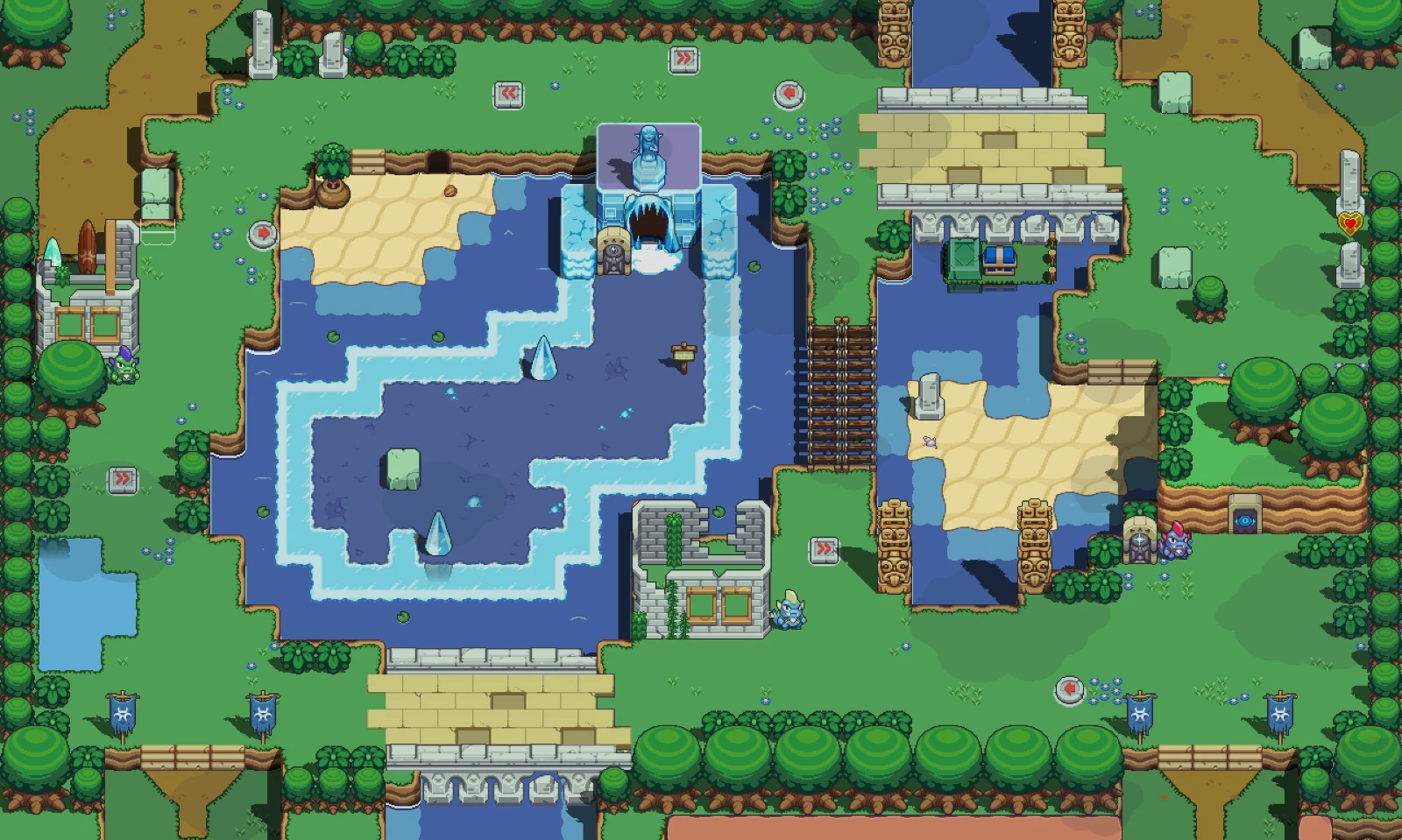
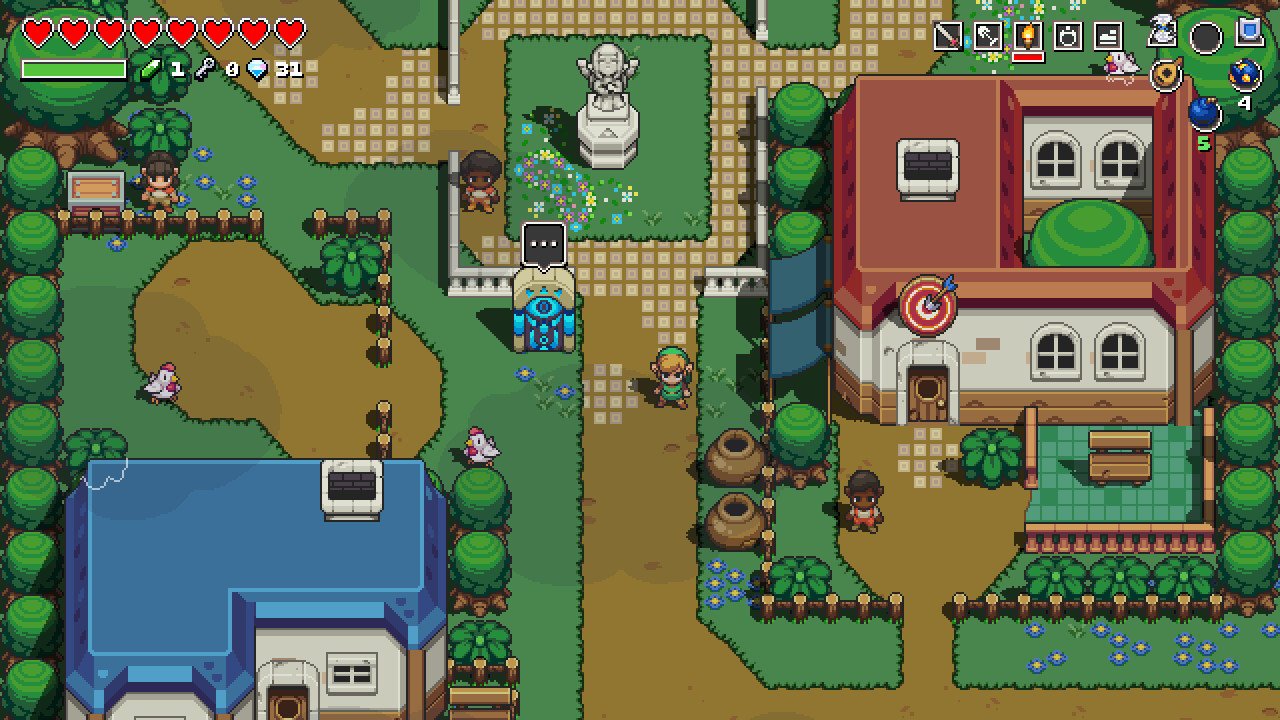
Away from the dungeons, the overworld takes in Hyrule Castle, Kakariko Village, the Lost Woods, Gerudo Village, Lake Hylia (which Octavo has frozen over) and Death Mountain, and Symphony of the Mask adds Deku Village. Caves and hidden staircases are scattered between them.
How it plays
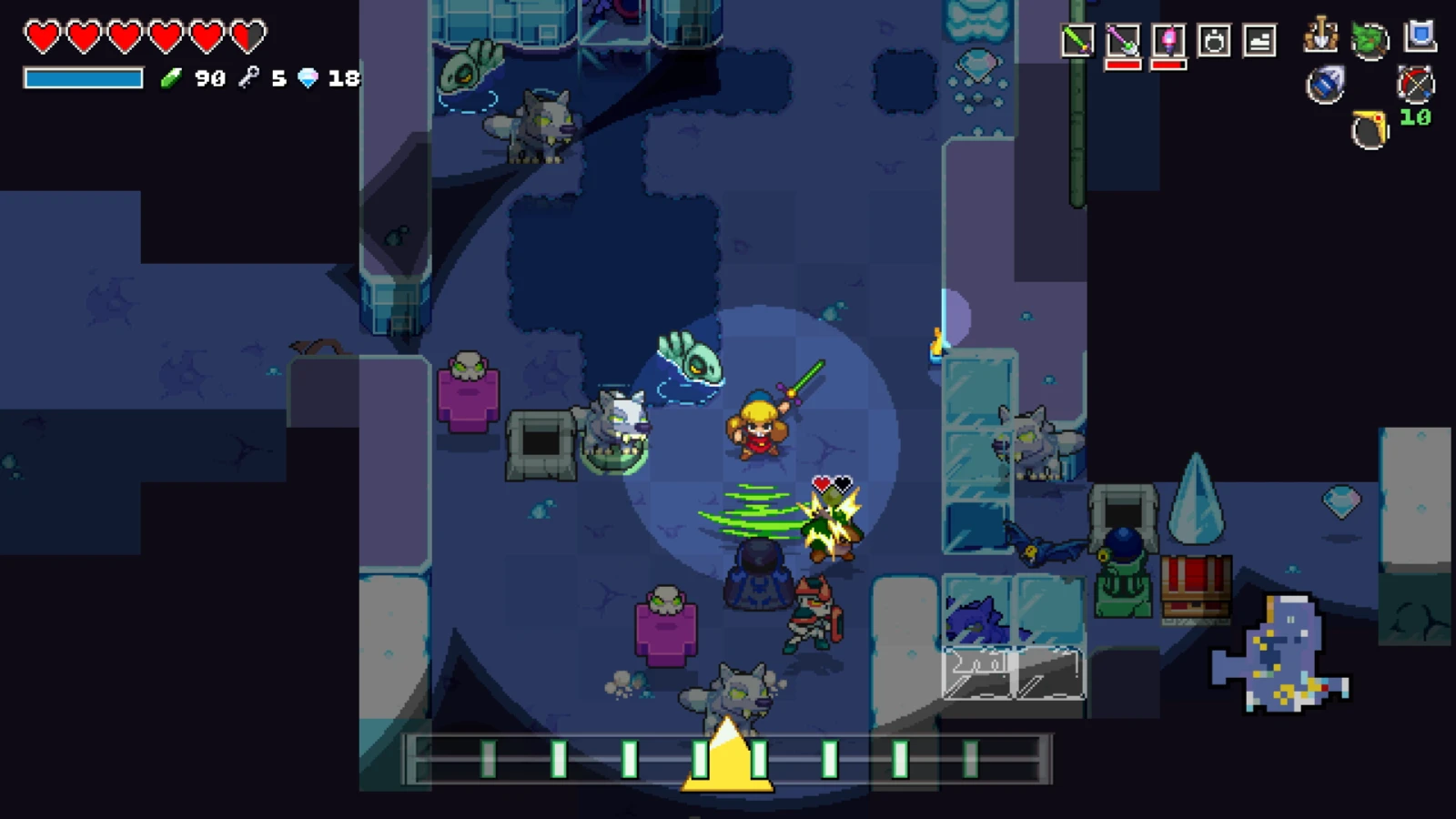
The Temple of Storms, in a promotional screenshot.
Cadence of Hyrule looks like a 16-bit Zelda and is played like one for about three seconds, which is how long it takes to notice the bar pulsing along the bottom of the screen. Everything in this Hyrule moves on that pulse: you, the monsters and whatever the monsters happen to be throwing at you. It is Crypt of the NecroDancer’s big idea, lifted out of its crypt and set loose on a Zelda overworld, and the differences between the two games explain most of what makes this one tick.
Crypt of the NecroDancer (2015)
Cadence of Hyrule (2019)
The world
One crypt: four zones of four levels each, all procedurally generated
A Zelda-style overworld of single screens, with dungeons entered from it. The regions are shuffled once per save file; dungeon floors are generated on every visit
The beat
You can only move or attack on the beat, and a level lasts only as long as its song
The beat rules while enemies are on screen. Clear the screen and the music relaxes and you can walk about freely
Missing a beat
Resets the coin multiplier and can leave you exposed
Much the same: you stumble and lose your multiplier, but the slip itself does no damage
Dying
Back to the lobby with items, gold and equipment gone; only diamonds are kept
Back to a Sheikah Stone. Rupees, keys and breakable gear are gone; weapons, key items, diamonds and your progress across the map all stay
Heroes
Cadence (the Amplified expansion later added Nocturna)
Cadence, Link and Zelda, swapped between as you go, plus Yves and the later additions
Artists
One graphic artist; characters drawn facing the front only
Four artists; characters drawn from four directions
Music
An original soundtrack by Danny Baranowsky
25 Baranowsky remixes of Zelda themes, drawn above all from A Link to the Past
Moving on the beat
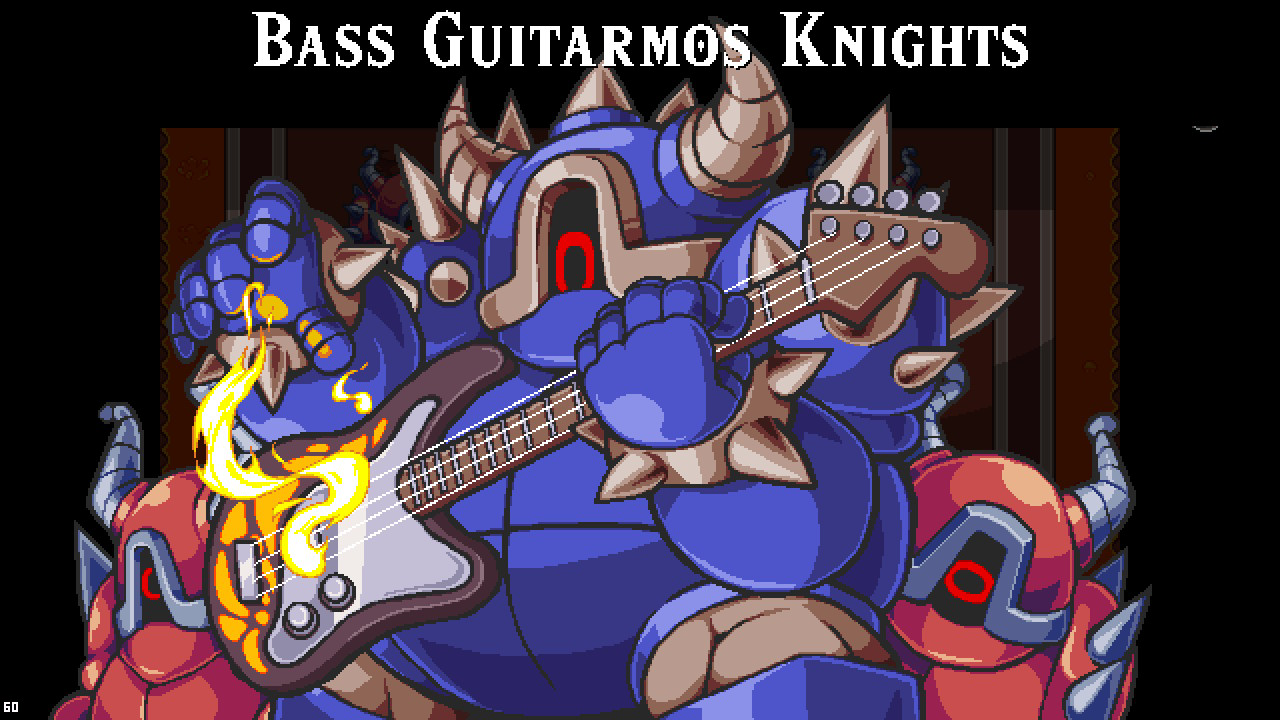
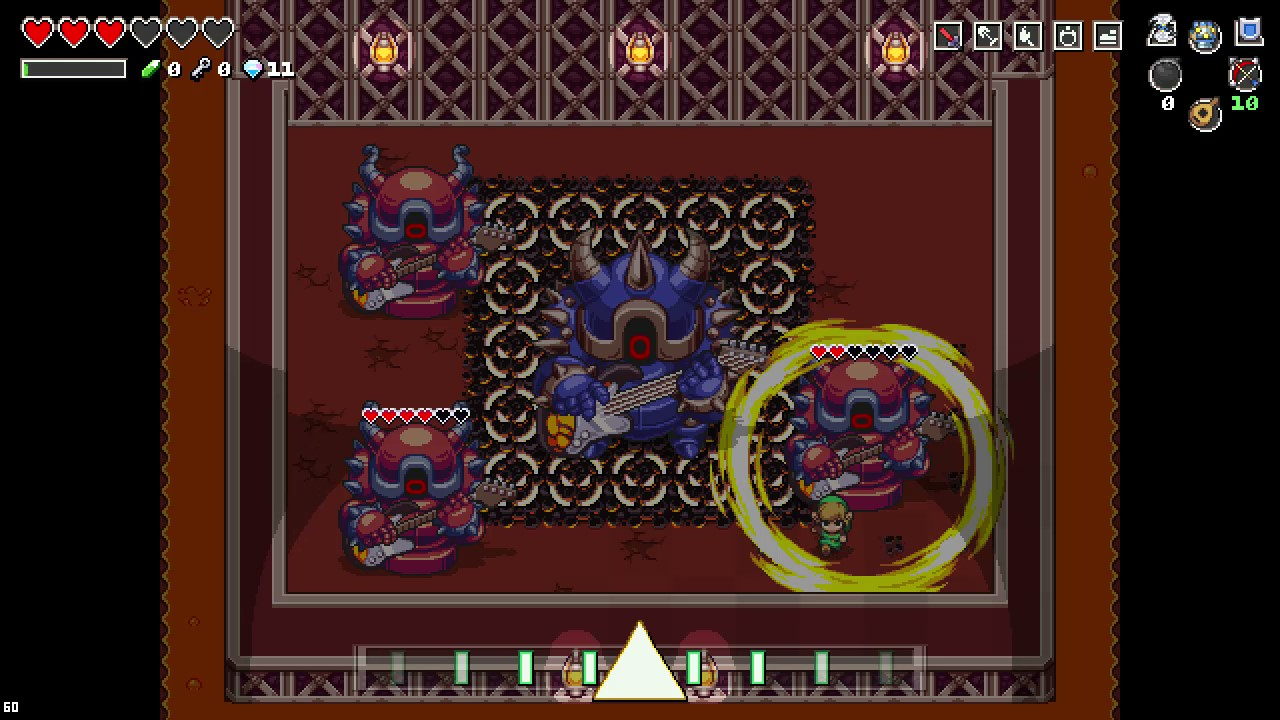
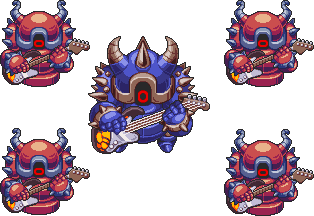
The Bass Guitarmos Knights, whose every move follows the music.
Each pulse of the bar is one move: a single step up, down, left or right. There is no button for your main weapon. Step into a monster and you hit it, and what you hit, and how far away, depends on what you are holding. What turns that into a game is that every enemy is dancing too, each to its own routine. A Moblin raises its arms on one beat and leaps on the next. A Tektite hops diagonally on alternate beats. Small enemies signal an attack one beat early; big ones light up the squares they are about to flatten. Fighting a screenful of them is less like a brawl and more like finding the one safe path through a clockwork toy.
Stay in time, keep landing hits and avoid being hit, and a multiplier builds that makes your blows stronger and the rewards richer. Miss a beat and you stumble and lose it. Nearly the whole soundtrack runs at one tempo, with a few hazards that speed the beat up or slow it down. When the last enemy on a screen falls, the music slips into a gentler arrangement, the screen pays out its prize and you are free to wander at your own pace.
Not everyone can hear a beat, and the game does not insist. Fixed-Beat Mode freezes the world until you move, turning the whole thing into a turn-based puzzle with its own leaderboard. Version 1.0.2, in August 2019, added Beat Rumble, which pulses the controller in time with the music, along with a display option for colour-blind players. The beat bar itself can be hidden; Nintendo Life’s reviewer found it “kind of useless” and switched it off.
A Hyrule that reshuffles
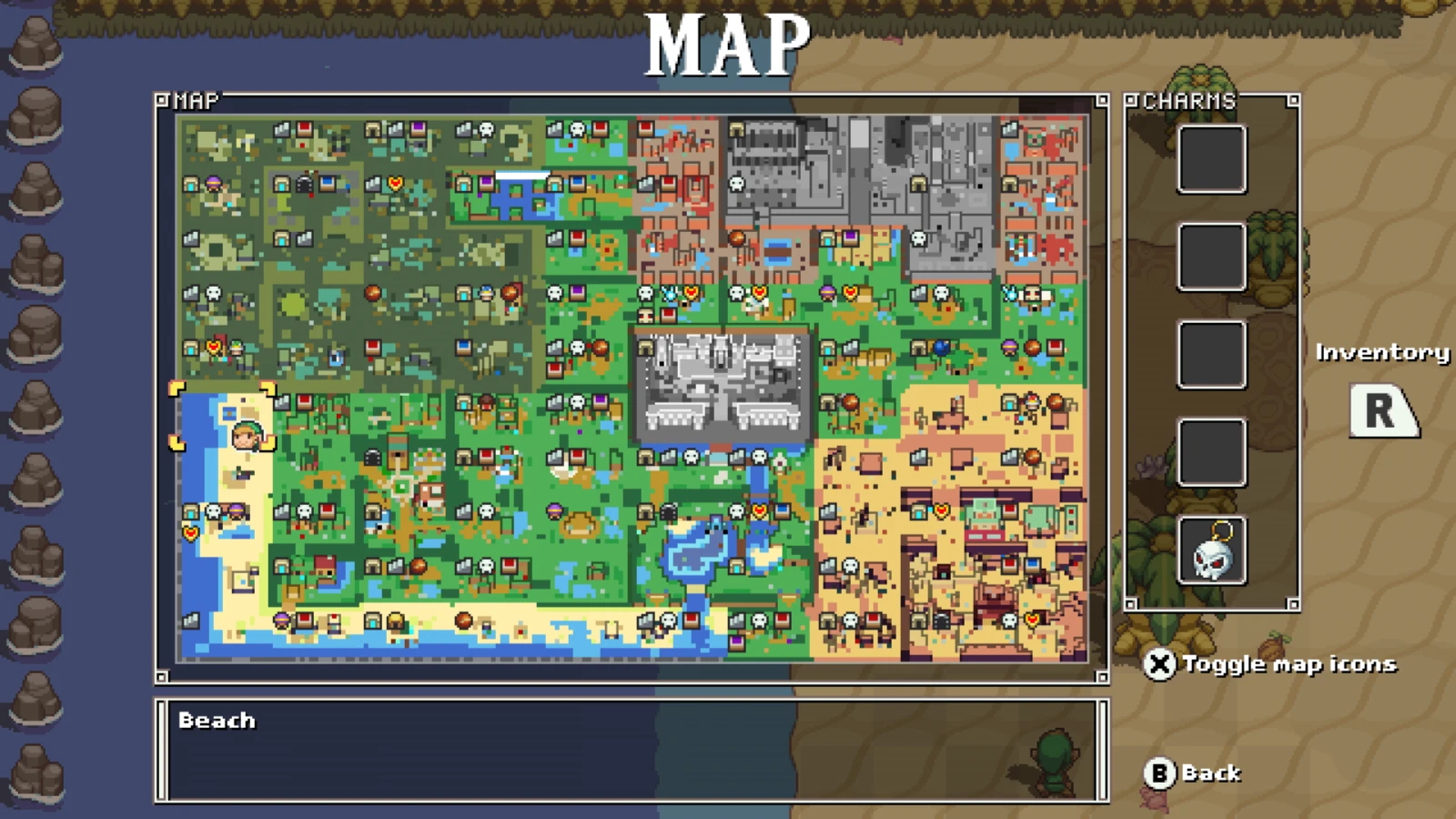
The map screen.
Unlike its parent game, Cadence of Hyrule has a proper overworld: a grid of single screens with a map to fill in, fields, desert, water and mountains, loosely in the shape of A Link to the Past’s Hyrule, as Nintendo World Report noticed. The regions were built by hand. Where each one sits is decided when you start a save file and then never changes, so a second playthrough means learning the map all over again. Since version 1.1.0 the pause menu shows the seed behind your map, so a particular Hyrule can be recreated or raced.
Sheikah Stones hold it together. They are the checkpoints you return to after a defeat, the fast-travel network, and the place to swap characters and outfits. Flags tell you that you are in the right area for a dungeon, a fortune teller will mark your next destination on the map for 20 rupees, and a blue butterfly hovering over a bush, a pot or a pile of bones means a hidden staircase underneath.
There are puzzles too, though lightly sprinkled. Changes of height in the terrain were new to this game, and lead designer Oliver Trujillo wanted players to look at a ledge and ask themselves, “What do I need to do to get to that spot?” Reviewers who came for Zelda-sized brainteasers were underwhelmed: Nintendo World Report called the puzzles “a little pedestrian for a Zelda game”.
Rupees, diamonds and dying
There are two currencies, and the difference between them is the whole design. Rupees buy things from shops out in the world and vanish when you die. Diamonds, earned mostly by clearing a screen of enemies, do not. Fall in battle and you lose your rupees, your keys and the fragile NecroDancer-style kit (shovel, torch, anything that boosted your stats), then you are shown to a shop where diamonds buy a head start for the next attempt, and you wake at a Sheikah Stone.
Everything that matters stays: weapons, the big Zelda items, the map you have uncovered. Dungeons even have shortcuts so that rooms you have already beaten can be skipped. That is a long way from Crypt of the NecroDancer, where death sends you back to the lobby with almost nothing. Players who miss the cruelty can switch on Permadeath Mode and have it back.
Zelda’s toolbox, NecroDancer’s armoury
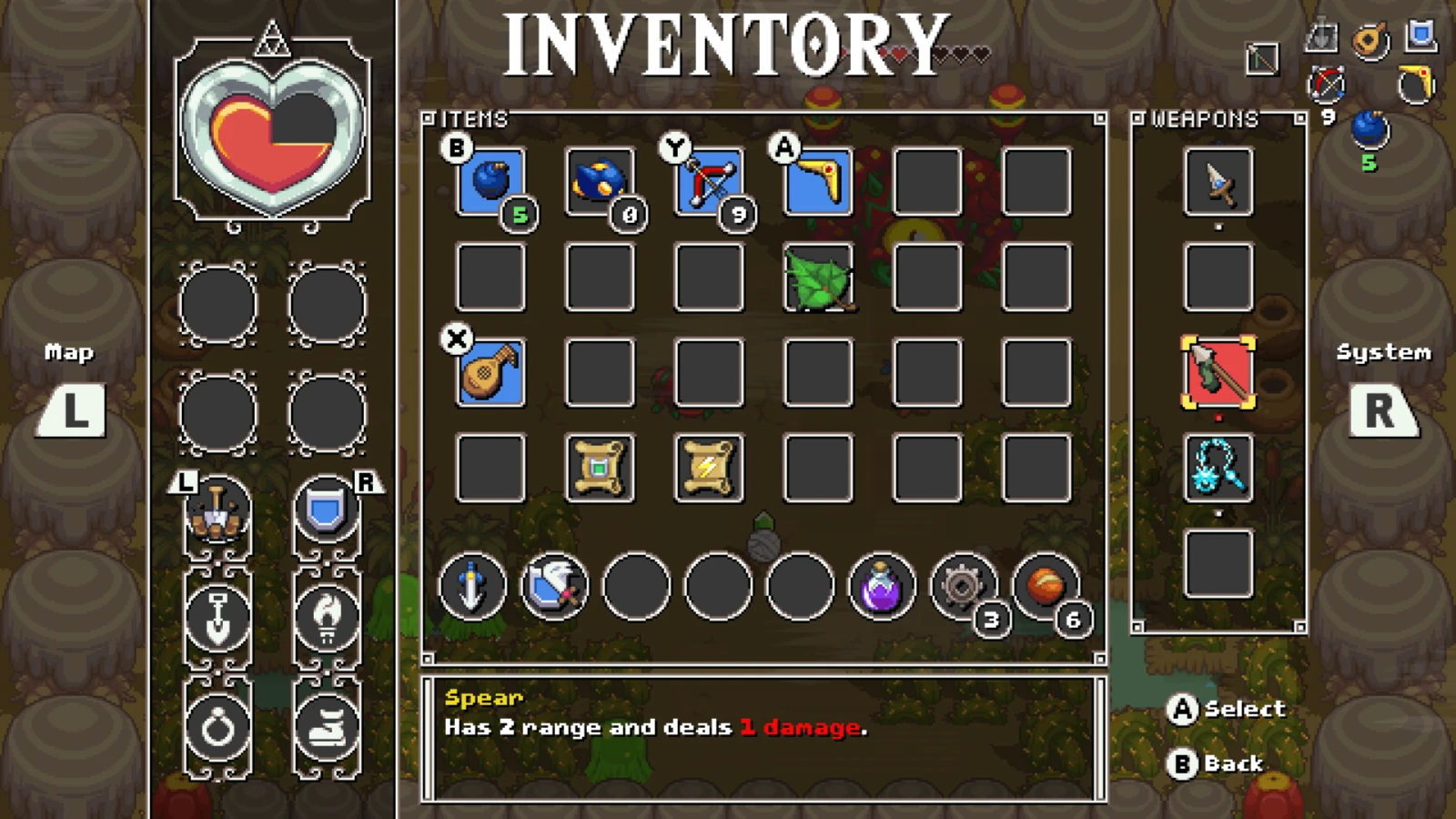
The inventory screen.
The inventory is a merger of two games. From Zelda come the bow, bombs and Bombchus, the boomerang, the hookshot, the Fire Rod and Ice Rod, the Power Glove, bottles, Heart Containers and Pieces of Heart. From NecroDancer come shovels for digging through soft walls, torches, rings, scrolls and special boots, and above all a rack of weapon types in the NecroDancer mould: daggers, short swords, broadswords, spears and longswords, each with a different reach. Some gear wears out with use, and a stamina meter limits the fancier moves.
The surprise is how optional the Zelda half is. None of the classic items is needed to finish the story, as GameSpot’s reviewer pointed out (he never did find a use for the boomerang). Some weapons belong to one character only, and the best are worth hunting: one achievement asks you to find all eight unique weapons in a single playthrough. Cadence has a legendary weapon all to herself, Eli’s Greatshovel, hidden in a tower of the ruined castle at the very end of the game.
Later versions kept adding toys. Version 1.1.0 scattered shrines through the dungeons, mysterious objects whose effects the patch notes pointedly declined to explain. Symphony of the Mask brought the Megaton Hammer, which spends stamina to flatten enemies and diggable walls alike, and the Magic Cape, which makes its wearer invisible.
Co-op and other ways to play
Two players can share one console, a Joy-Con each, dropping in and out as they like. It takes some coordination: if one hero falls, both do, and when one walks off the edge of a screen the other is pulled along. Beyond that, the story can be bent into several shapes. Permadeath Mode ends the run at the first defeat. Double-Time Mode is exactly what it sounds like. A single-character option locks you to one hero, a Daily Challenge comes with its own online leaderboard, and there are separate leaderboards for speed, for co-op and for Fixed-Beat runs.
The updates added whole new modes. Dungeon Mode (free, December 2019) is a run of dungeon zones with a boss at the end of each, much closer in spirit to Crypt of the NecroDancer. All-Characters Mode and Mystery Mode arrived with the Character Pack in July 2020: the first is a 21-floor dungeon in which Ganon has to be beaten with each character, the second replaces every item and enemy with a question mark. Symphony of the Mask added Puzzle Mode, a larger version of the Temple of Brainstorms, and Arena Mode, an endless gauntlet based on the Gerudo Arena.
Characters
Three heroes, one misunderstood villain and a supporting cast borrowed from two different series. The table starts with everyone you can play as: Cadence, Link, Zelda and Yves in the original game, Octavo from the free update, and Frederick, Impa, Aria, the two Shadows and Skull Kid from the paid packs. The rest of the cast follows.
Character
Who they are
In this game
Stats & abilities
CadenceHeroine of Crypt of the NecroDancer
The star of Brace Yourself Games’ 2015 game, in which she followed her missing father, a treasure hunter, into the NecroDancer’s crypt and had her heart stolen for her trouble. She is from another world entirely, and what she wants most in Hyrule is a way back to it.
Pulled into Hyrule by the Triforce, she plays through the opening, wakes Link or Zelda and goes off to look for a way home. She turns up in caves with advice and gifts, joins the party later in the story and stands on a Triforce mark of her own against Ganon.
Playable in the opening and again once she joins; the second player’s hero in co-op
Eli’s Greatshovel, a legendary weapon that hits three enemies at once, is hers alone
LinkHero of Hyrule
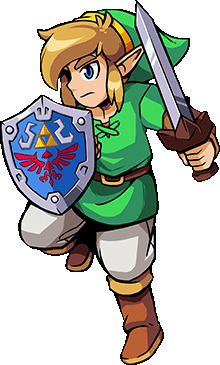
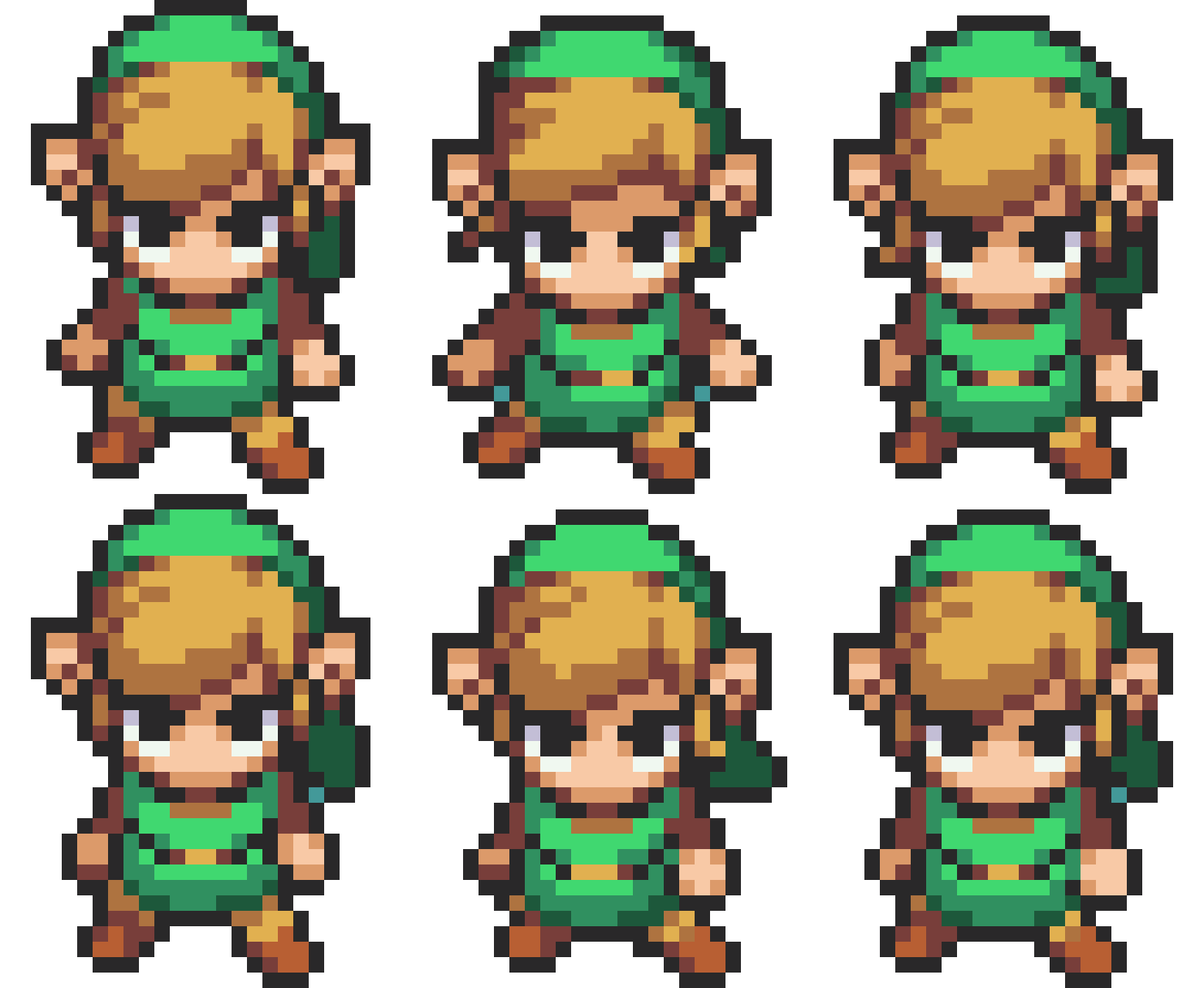
Hyrule’s sword-and-shield hero, redrawn as a chunky pixel sprite seen from four directions. His moves were picked from across the series for how well they sat on a beat.
One of the two sleepers. Pick his portal and he is the hero Cadence wakes; pick Zelda’s and he can be woken later with the cure from the Kakariko crypt.
Playable from the start if you choose his portal
Starts with a shield
Spin Attack, which since version 1.4.0 fires a projectile when his hearts are full
Red and blue costumes with the Season Pass
Princess ZeldaPrincess of Hyrule
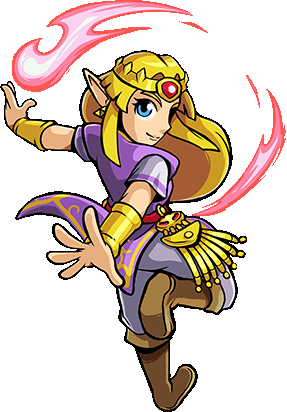
Hyrule’s princess, and a full playable hero from the first minute. Because she is so rarely playable in her own series, the designers modelled her mainly on her Super Smash Bros. appearances.
The other sleeper. Whichever of the pair you do not wake first can be roused later, after which you can switch between them.
Playable from the start if you choose her portal
Her signature moves are two spells, Nayru’s Love and Din’s Fire
Red and blue costumes with the Season Pass
YvesDeku Scrub · secret character
A Deku Scrub who dreams of being an adventurer but cannot hold a sword. He lives in a hollow tree trunk in the Lost Woods, next to Tingle.
Collect 20 Deku Seeds and feed them to Tingle, who then invites Yves to join the party. After that you can switch to him at any Sheikah Stone.
Unlocked with 20 Deku Seeds
A single heart
Attacks by bumping into enemies or spitting Deku Seeds
Can burrow underground, where nothing can hurt him
Cannot use weapons, and only a few items
OctavoCourt musician and magician
The man who played for the king of Hyrule and then played him to sleep. He can attack with music as well as enchant with it, and he is convinced that only he can stop Ganon’s return. His name comes from “octave”.
The villain for most of the story: he seals the castle, creates the four champions and fights the heroes with the Golden Lute, then loses to Ganon in the future. Octavo’s Ode retells events with him as the hero.
Boss of Hyrule Castle
Playable in Octavo’s Ode once the story has been finished
Attacks with the Golden Lute and can cast Haste
FrederickShopkeeper · Character Pack
The wandering shopkeeper of Crypt of the NecroDancer, in full Frederick “Freddie” Merchantry, a nod to Freddie Mercury of Queen.
Sets up shop in caves and dungeons, selling torches, shovels and a Piece of Heart in every one of the four instrument dungeons. He usually wants rupees and occasionally wants hearts. Attack him and he fights back.
Playable with the Character Pack
Starts with 100 rupees, which drain away over time
Out of health or rupees, he becomes a ghost until he collects more
ImpaCharacter Pack
A familiar name from the Zelda series, here as a fighter in her own right.
Playable in every mode once the Character Pack is installed.
Playable with the Character Pack
Strikes from a distance with a naginata
Can vanish and reappear behind an enemy
An achievement, Spearmaster, dares you to finish the game without a single ordinary weapon attack
AriaCadence’s grandmother · Character Pack
Another visitor from Crypt of the NecroDancer, where she ends the story by destroying the cursed Golden Lute.
The hard-mode character, playable in every mode.
Playable with the Character Pack
One hit finishes her
Version 1.5.0 made her slightly kinder to play, with a protected beat after a fairy or potion rescues her
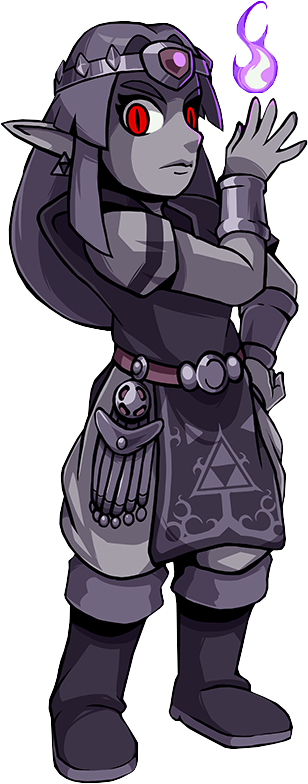
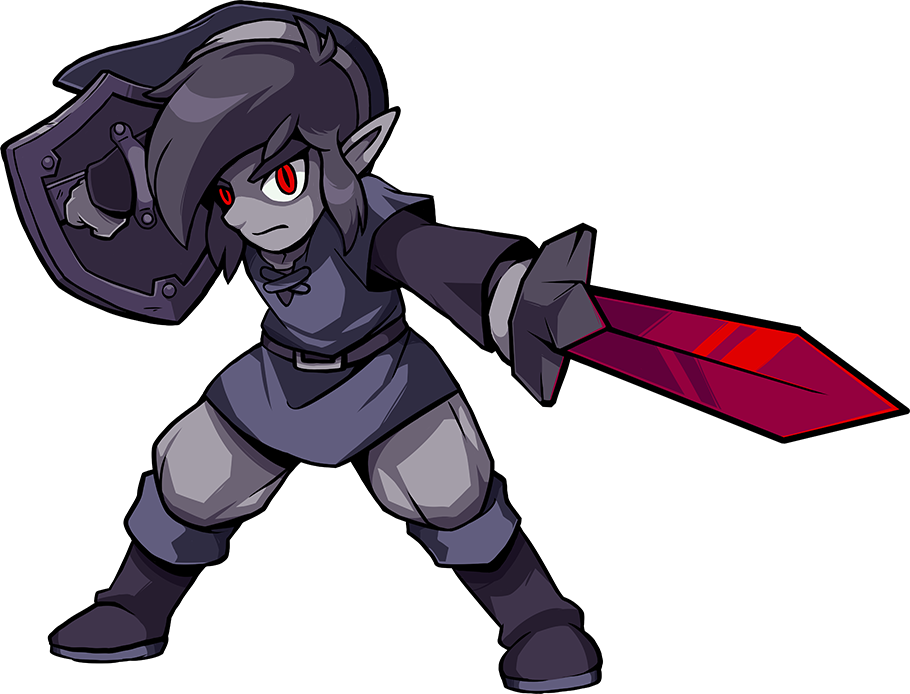
Shadow Link & Shadow ZeldaCharacter Pack
Dark doubles of the two heroes.
Playable in every mode with the Character Pack. Like the other three newcomers, each has one alternate outfit, changed at a Sheikah Stone.
The hero of the third pack’s story, kitted out by the Deku King with a Skull Mask that turns out to have a mind of its own.
Playable with Symphony of the Mask
Changes abilities by changing masks
Six masks: Deku, Skull, Darknut, Zora, Goron and the Mask of Truth
Starts with only the Deku Mask’s head-butt
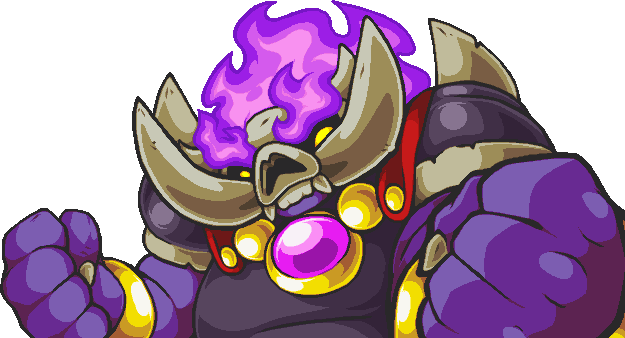
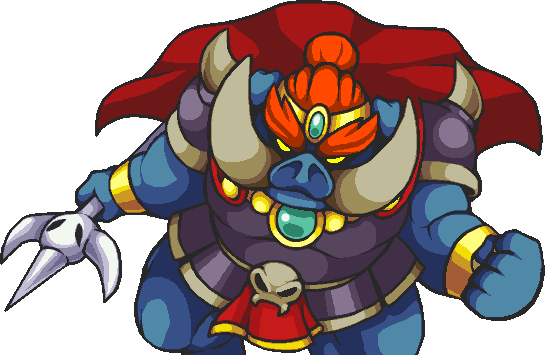
GanonThe King of Evil
The series’ great villain, here as a threat that has not arrived yet. The Ganon you meet is the one who rules Hyrule 25 years in the future.
The reason for everything Octavo does, and the final boss. In Symphony of the Mask he steals Skull Kid’s mask and returns as Skull Ganon.
Final boss.
TrillFairy guide
A fairy who is first on the scene when Cadence falls out of the sky.
Checks that Cadence is in one piece, explains that Hyrule is in trouble and walks her through the basics, Sheikah Stones included.
Not playable.
TingleAsleep in the Lost Woods
The series’ would-be fairy, found snoring in a tree stump in the Lost Woods.
Wake him by rolling a stone ball through a row of musical notes in time with the beat, and he hands over a dowser that buzzes when you face the right way out of the woods. He also has an appetite for Deku Seeds, which is how Yves is unlocked.
Not playable.
The FatesSeers of Hyrule
Hyrule’s seers, who can tell you where the trouble started.
They say Octavo stole their threads of Wisdom, Courage and Power, and used them to make his lute.
Not playable.
Bosses
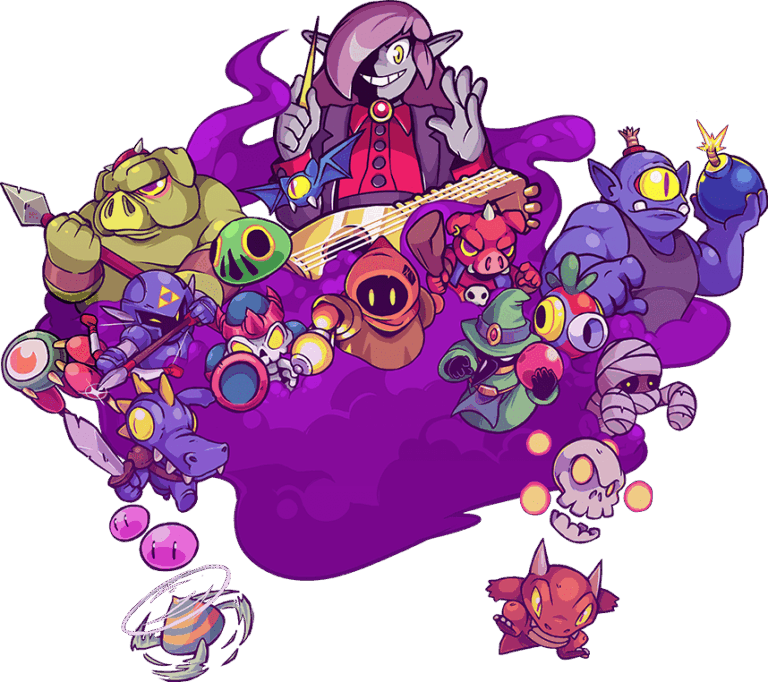
Octavo’s four champions are classic Zelda monsters fused with musical instruments, and their attacks are choreographed to the music. The rank and file are familiar too: Bokoblins, Moblins, Octoroks, Tektites, Lizalfos, Stalfos, Wizzrobes, Zora and Lynels, joined in Symphony of the Mask by Ropes, Vires, Goriyas and Taroses.
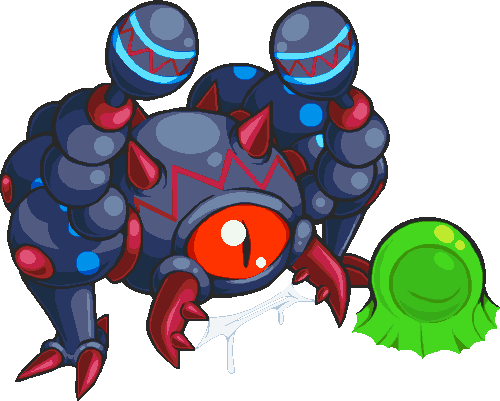
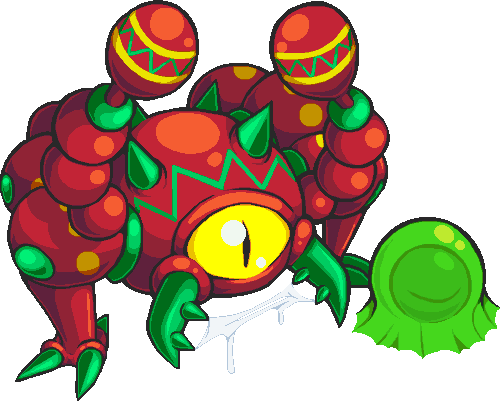
GohmaracasLost Swamp · MaracasGohma with maracas for antennae. Only the eye can be hurt, and standing in front of it means standing in the path of its laser. It also spits webs and hatches larvae. When its health runs out it shakes its maracas, heals itself and comes back faster.
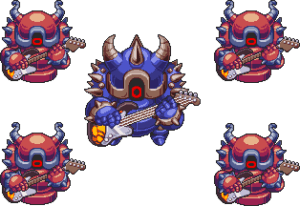
Bass Guitarmos KnightsGerudo Ruins · Bass GuitarThe Armos Knights of A Link to the Past, with bass guitars where their swords and shields used to be. Five of them, one large and four small, stomp around in patterns set by the music, and the big one turns nasty once the others are gone.
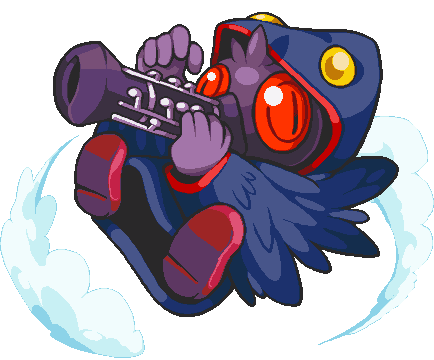
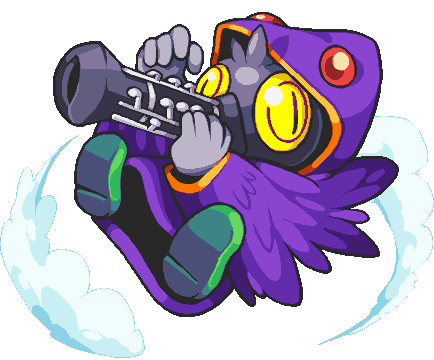
WizzroboeFrozen Grotto · OboeA Wizzrobe in the style of A Link to the Past with an oboe for a mouth. It teleports after every attack, drops icicles and summons lesser Wizzrobes to pelt you with ice.
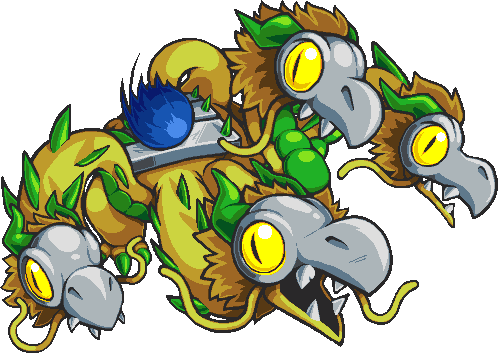
GleeokenspielTemple of Storms · GlockenspielA four-headed dragon with a glockenspiel on its back, which it plays with its tail to charge a lightning attack. The heads spit fireballs, then detach and hop about the arena when beaten, leaving the body to finish.
OctavoHyrule CastleSummons monsters with each of the four instruments in turn, then fights on with the Golden Lute, which can take six hearts of damage before a portal carries it off.
GanonFuture World · Hyrule Castle ruinsFreezes two of the three heroes and calls in monsters while the third frees them. The fight ends with all three standing on Triforce marks.
The NecroDancerFuture World · Octavo’s OdeOctavo’s future self, who says he has already beaten Ganon and taken his throne. A fight in several phases.
King DobongoGerudo Arena · Bongos · Symphony of the MaskThe champion waiting on the arena’s sixth floor. Smaller Dobongos turn up as ordinary enemies.
SynthrovaTemple of Brainstorms · Synth · Symphony of the MaskA send-up of Twinrova, the witches who raised Ganon, attacking with fire and ice. You win by luring its minions on to a live wire and shocking them.
Skull GanonHyrule Castle · Symphony of the MaskGanon wearing Skull Kid’s stolen Skull Mask. The mask has to be knocked off before he can be hurt, and at the end Skull Kid must stand on each Triforce emblem until it lights up.
The people who made it
Cadence of Hyrule was made by Brace Yourself Games in Vancouver, with Spike Chunsoft and Nintendo’s teams in Japan looking on. These are the key credited names.
Ryan ClarkDirector, designer, writerFounder and chief executive of Brace Yourself Games and the creator of Crypt of the NecroDancer. His favourite Zeldas are Zelda II and Breath of the Wild.
Toshihisa NikaidoDirector, writerOf Spike Chunsoft, the game’s publisher in Japan. He told 4Gamer how the original plan, once it was put to Nintendo, snowballed into a full game.
Makoto IsobeProducerThe credited producer.
Oliver TrujilloLead designer, programmer, writerA NecroDancer veteran and lifelong Zelda player whose favourite in the series is A Link to the Past.
Paul VeerLead artistOne of two pixel artists on the team who had worked on Sonic Mania; the other goes by the name Midio.
Lucas Carvalho, Ted Martens, Tyriq PlummerArtistsThe rest of the four-strong art team. Crypt of the NecroDancer had managed with one artist.
Stephen Kiazyk, Alain CarterProgrammersCredited programmers alongside Trujillo.
Kramer SolinskyWriterCredited for the script with Clark, Trujillo and Nikaido.
Danny BaranowskyComposerThe composer of Crypt of the NecroDancer, Super Meat Boy and The Binding of Isaac, who turned Zelda’s music into a 25-track soundtrack you can fight to.
Jules Conroy (FamilyJules)Guitars; Melody Pack remixesPlayed every guitar part on the soundtrack, as he had on Crypt of the NecroDancer, and returned with a metal soundtrack for the Melody Pack.
Power Up AudioAudio teamThe sound studio that also worked on Celeste. Its creative director, Kevin Regamey, whistled on one of the Gerudo tracks.
How it was made
Nintendo does not often hand Zelda to anyone, let alone to a small independent studio on the other side of the Pacific. This is how a request for a few guest characters turned into a full game in the series.
A DLC pitch that got out of hand
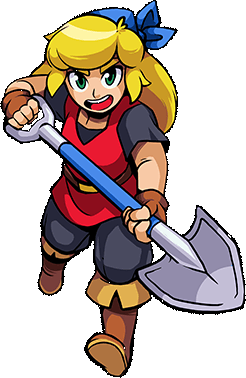
Cadence, the heroine Crypt of the NecroDancer introduced in 2015.
Brace Yourself Games is a Vancouver studio founded by Ryan Clark, and until 2019 it had released exactly one game. That game was Crypt of the NecroDancer, a dungeon crawler in which the player may only move on the beat of Danny Baranowsky’s soundtrack. It went on sale in early access in July 2014, was finished in April 2015, won awards for its audio and reached Nintendo Switch in February 2018. In Japan it was published by Spike Chunsoft.
The Zelda idea began small. Clark told IGN that his team was thinking about a new Switch project and imagined how good it would be to have Zelda characters turn up in NecroDancer as downloadable content. So the question was put to Nintendo. “To our surprise, Nintendo was extremely interested in the prospect,” he said, and “before we knew it we were working on a completely new title”.
Toshihisa Nikaido of Spike Chunsoft, who is credited as co-director, told the same story to the Japanese site 4Gamer: the plan started life as a Zelda collaboration pack for NecroDancer, and once it reached Nintendo the talks kept growing until somebody said, as he recalled it, “At this rate, why not just make it an independent game?”
Working with Nintendo
The Triforce: the part of the story Nintendo watched most closely.
Kirk Scott, Nintendo of America’s manager of publisher-developer relations, described the arrangement to IGN as “a two-way street, really”: developers are forever asking to use Nintendo characters, and now and then Nintendo’s teams in Japan see something they want to work with. Brace Yourself Games dealt with those teams directly. Was this the first indie Zelda? “I wouldn’t go that far,” Scott said, “but it is one of the first independent developers to use Zelda content.” Press coverage at the time noted how rare that was: Nintendo’s earlier collaborations of this kind had mostly been with large companies such as Ubisoft, Atlus and Capcom.
Clark was careful about what the game was. It is, he said, “first and foremost a new entry in the NecroDancer universe”, but his team had taken great care that it could be counted as both a Zelda game and a NecroDancer game. Lead designer Oliver Trujillo admitted to 4Gamer that he felt both excitement and nerves at touching a series he had played since childhood, one with more than thirty years of fans behind it.
Nintendo’s supervision was firmest where the lore was oldest. “They gave us very careful oversight regarding the representation and setting of the Triforce,” Trujillo said, in the fan translation of the interview carried by Zelda Dungeon, and the studio was told in clear terms to preserve the series’ settings and its mystical elements. The NecroDancer side of the fiction was left to Brace Yourself Games.
Teaching Link and Zelda to dance
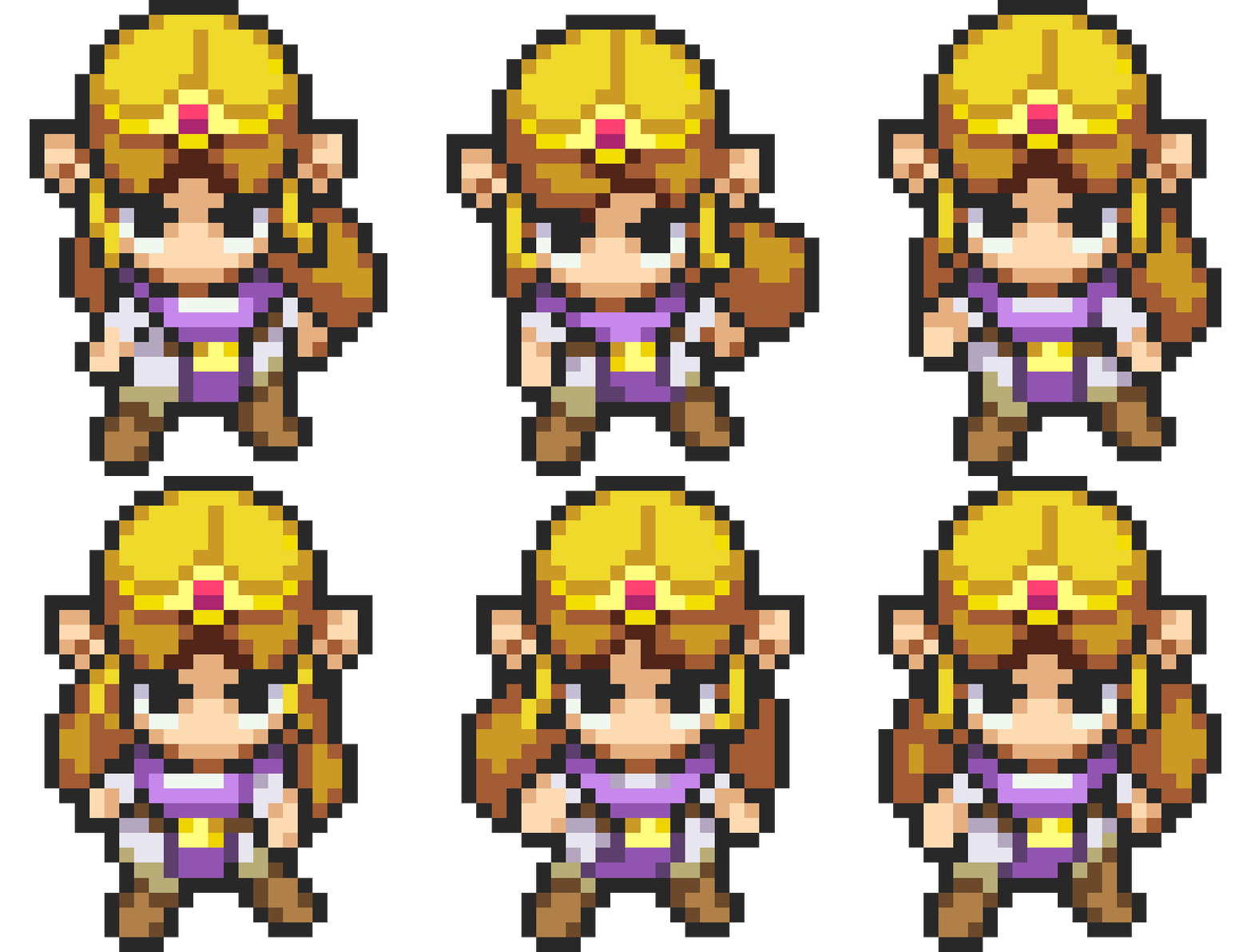
Zelda’s sprite. Her spells were borrowed from her Smash Bros. move set.
The rule at the heart of NecroDancer was not up for discussion. “The core mechanic of having to move according to the rhythm has not changed from the previous game,” Clark told 4Gamer, though he felt the game around it now played very differently. The new ingredients were Zelda ones: an overworld, ground at different heights that can be used in a fight, and puzzles.
For the heroes’ moves the team went through the whole series and the crossovers too. Link got his Spin Attack. Zelda was harder, because she has so seldom been playable. “It’s rare that Zelda is a playable character in games,” Trujillo explained, “so we mainly focused on her abilities in Smash Bros.”, which is where Nayru’s Love and Din’s Fire come from. Clark added that actions were chosen for how good they looked when matched to the beat.
Asked for their favourite Zeldas, the two gave answers you can see in the finished game. Trujillo chose A Link to the Past, remembering how huge its world felt after the NES original. Clark picked two: Zelda II: The Adventure of Link, for its action, “starting with the downward thrust”, and Breath of the Wild, for the sheer scope of its exploring.
Four artists and a Sonic Mania connection
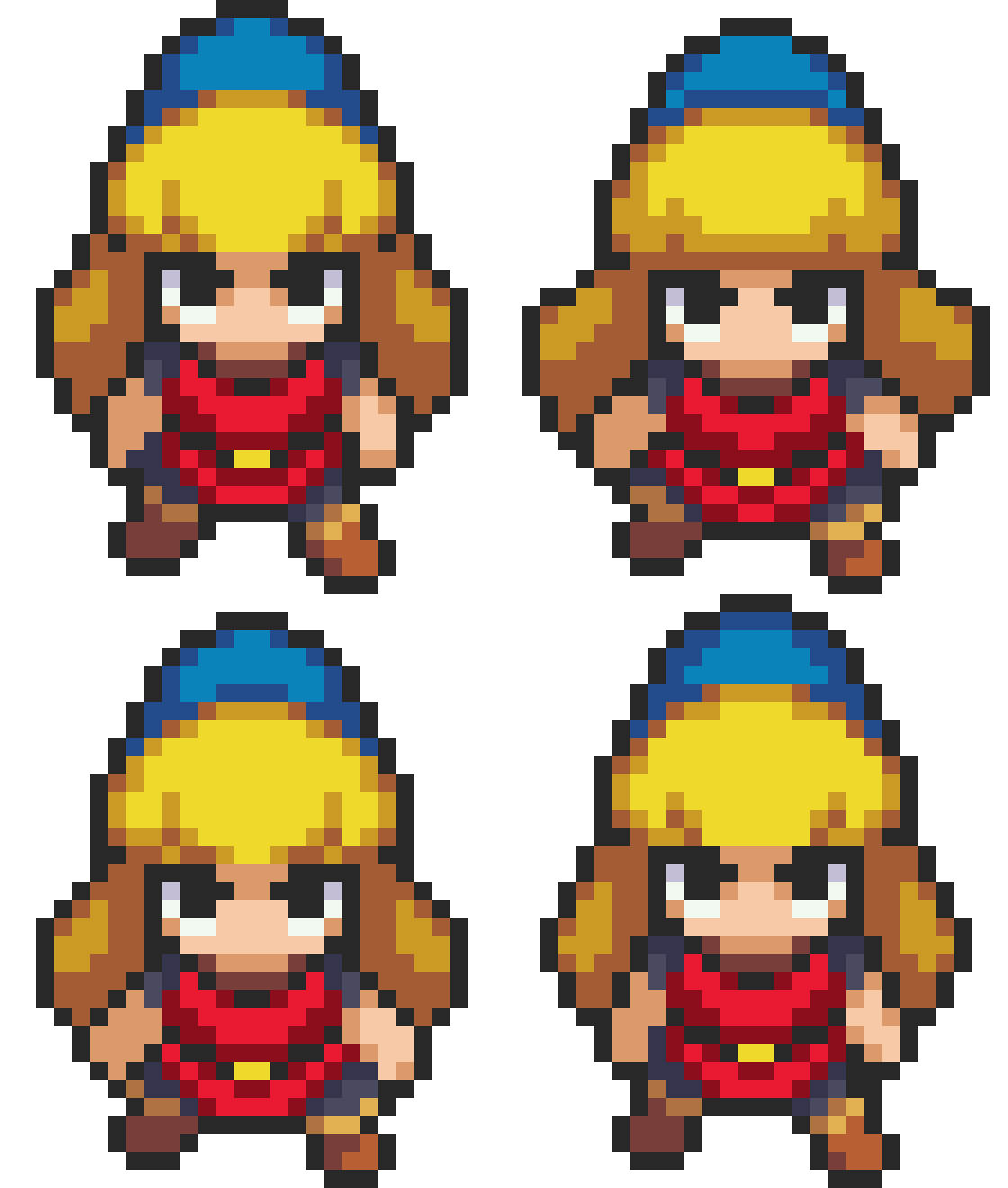
Cadence’s pixel sprite.
Crypt of the NecroDancer had been drawn by a single graphic artist, and its characters only ever faced the front. For Cadence of Hyrule the studio had four artists, enough to give every character sprites for four directions. Trujillo said the pixel art was designed so that characters stand out clearly against the ground they walk on, which matters in a game that gives you one beat to read the screen.
Two of the team, lead artist Paul Veer and the artist known as Midio, had worked on Sonic Mania. When the first trailer appeared, that game’s art director, Tom Fry, tweeted his approval: “Superb work @pietepiet and @midio. Nailed. It.”
Danny Baranowsky remixes Hyrule
The Cadence of Hyrule soundtrack.
In a game where the soundtrack is the control scheme, the composer is half the design team. Danny Baranowsky had come up through the OverClocked ReMix community in 2001 and made his name with Canabalt, Super Meat Boy, The Binding of Isaac and Crypt of the NecroDancer itself. For Cadence of Hyrule he produced 25 tracks that combine remixes of Koji Kondo’s Zelda melodies with new music of his own. Trujillo told 4Gamer that the selection ranged across the series but centred on A Link to the Past; the main theme, Gerudo Valley and the Ocarina of Time title music are all in there. The tracks also come in calmer versions that take over when a screen has been cleared.
It was not a one-man job. Jules Conroy, the guitarist known as FamilyJules, played every guitar part, as he had on NecroDancer; his invitation from Baranowsky, he recalled, was “Wanna be in a Zelda game?”, and by his own recollection he recorded his last parts in April 2019. Kate Letourneau recorded the oboe for the ice dungeon and for Wizzroboe. Riley Koenig played keyboards and helped with the compositions, Michaela Nachtigall played violin and otamatone, Adriana Figueroa sang (“Hearing myself sing in an actual Fairy Fountain is surreal!”) and Kevin Regamey of the audio team, Power Up Audio, whistled on a Gerudo track. On launch day Baranowsky wrote that he had “worked harder on this than anything in my life”.
The Melody Pack of August 2020 added 39 more tracks by three guest arrangers: FamilyJules (metal), A_Rival (Alex Esquivel, electronic dance music) and Chipzel (Niamh Houston, chiptune). All three had already made alternative soundtracks for Crypt of the NecroDancer. Conroy finished his set around Halloween 2019, working from a simple brief from Baranowsky: “Here’s the track, make a remix of it.” The swing-time Lost Swamp theme, he said, was the hardest to turn into metal. With the pack installed you can choose which soundtrack plays for which character and area.
From Nindies surprise to E3 launch
A screenshot released for E3 2019, two days before launch.
Nintendo revealed the game on 20 March 2019 as the final surprise of its Nindies Showcase, with a release promised for the spring. Spring came and went. In May, a dataminer spotted a 30 May date in the code of Nintendo of America’s game page, which then quietly changed to 20 June, and a Japanese Indie World broadcast would commit only to “June”. Clark, Trujillo and Nikaido were still fielding questions about it at the BitSummit 7 Spirits festival in Kyoto at the start of June.
The answer came in Nintendo’s E3 presentation on 11 June: Cadence of Hyrule would be out in two days. It launched on 13 June 2019 in North America and Europe at US$24.99 and £22.49, and on 14 June in Japan and Australia; in Japan, where Spike Chunsoft was the publisher, the download cost ¥2,980. A free demo followed in August, first on the Japanese eShop and a day later, on 8 August, in Europe. It runs as far as the first boss, about an hour of play.
Updates, add-on packs and the boxed edition
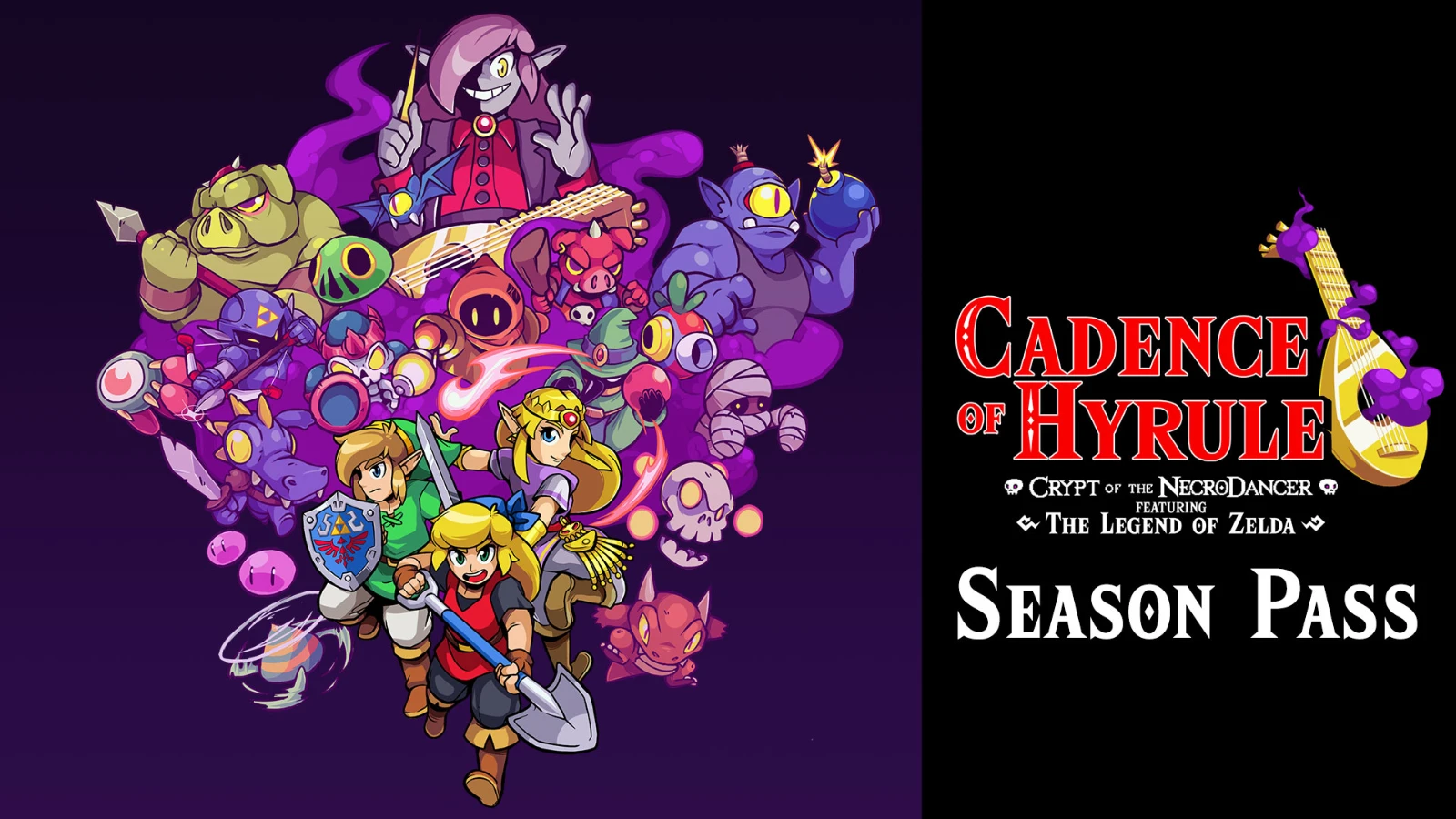
The Season Pass: three packs and bonus costumes.
Brace Yourself Games patched the game twice in its first seven weeks. Version 1.0.1 (27 June 2019) fixed a crash and a crate that could block dungeon doors; version 1.0.2 (1 August) added achievements, co-op leaderboards, Beat Rumble and a colour-blind option, and closed several ways of escaping the map and skipping parts of dungeons. Then, on 18 December 2019, version 1.1.0 arrived free of charge with Octavo’s Ode, Dungeon Mode, the dungeon shrines and four more achievements.
Paid content was announced and launched on the same day, in the Nintendo Direct Mini: Partner Showcase of 20 July 2020. The Character Pack (US$5.99) was available at once with version 1.2.0, adding Impa, Aria, Frederick, Shadow Link and Shadow Zelda. The Melody Pack (US$5.99) followed on 26 August and Symphony of the Mask (US$9.99) on 23 September in North America, 24 September in Europe and Japan, with version 1.4.0, which brought Skull Kid’s story, two dungeons, five new music tracks and the Puzzle and Arena modes. A Season Pass (US$14.99) covered all three and threw in red and blue costumes for Link and Zelda.
A boxed edition with all three packs on the cartridge was released on 23 October 2020; in Japan it cost ¥4,780. The last update, version 1.5.0 on 28 January 2021, raised the number of save files to six, added a random option to the soundtrack menu, rebalanced Aria and wiped the leaderboards clean.
What sets it apart
Nobody has checked every corner of Zelda history for “firsts” here, so these are simply the things that set Cadence of Hyrule apart.
1An indie studio at the controlsWhen Nintendo lends out its characters it is usually to large companies; Ubisoft, Atlus and Capcom are the examples usually given. Brace Yourself Games was an independent studio with one previous release. Nintendo’s Kirk Scott would not call it the first indie Zelda, only “one of the first independent developers to use Zelda content”.
2Zelda as the guest starRead the full title again: Crypt of the NecroDancer Featuring The Legend of Zelda. Its director called it a NecroDancer game first, Cadence gets her name above the door, and the Golden Lute at the centre of the plot is an idea carried over from her game.
3Combat you can dance toMusic has always mattered in Zelda, usually as a magical instrument to be played at the right moment. Here it is the clock that every sword stroke and every enemy runs on.
4A Hyrule that will not sit stillThe overworld is rearranged for every new save file and the dungeons rebuild themselves each time you step inside, so no two players’ maps agree.
5Zelda the hero, from the first screenYou can wake Zelda instead of Link and play the entire story as her. GameSpot called it “wonderful” to be able to play as Zelda from the outset. Five years later, Echoes of Wisdom gave her a main-series adventure of her own.
Secrets & unlockables
There are no cheat codes, but there is a good deal tucked away: a secret character, a hidden weapon, a shopkeeper you really should not rob, and a long list of achievements with terrible musical puns for names.
Unlock Yves the Deku Scrub
Deku Seeds are hidden around Hyrule. Take them to Tingle in his tree stump in the Lost Woods; once he has eaten 20 in all, he invites his neighbour Yves to join you. Yves has a single heart and cannot use weapons at all, which is why finishing the game in Permadeath Mode with him alone earns an achievement called Unarmed and Dangerous.
Octavo’s Ode and Dungeon Mode
Octavo’s Ode, the free update of December 2019.
Both were added free in version 1.1.0 and both unlock when you finish the main story for the first time.
The way through the Lost Woods
The Lost Woods repeat the same screen until you leave by the correct exits, and because the map is generated, no guide can tell you the route. Find the tree stump where Tingle is sleeping, set the statue’s stone ball rolling and step in time so that it passes through the row of musical notes. Tingle wakes and gives you his dowser. Assign it to a button and try it at each exit: four strong buzzes mean the right way, two weak ones the wrong way.
Eli’s Greatshovel
Cadence’s legendary weapon is in the ruined Hyrule Castle of the future. Go to the far left of the courtyard and into the tower, freeze the water, push a block across the ice and climb up it to reach the chest. The shovel strikes three enemies at once and hits harder straight after digging. In a single-character run as anybody else, the chest holds a Purple Rupee instead.
Robbing the shopkeeper
Hit Frederick with an item and he stops being a shopkeeper and starts being an enemy. Beat him and you get a Coupon and an achievement named THIEF, in capital letters, a nod to the name Link’s Awakening gives to shoplifters.
Butterflies, fortune tellers and Cuccos
A blue butterfly over a bush, pot or bone pile marks a hidden staircase: cut the object down to find it. A fortune teller will put your next goal on the map for 20 rupees. And the Cuccos are as vengeful as ever. Kill one and a flock arrives to peck you from every side.
Costumes
Buying the Season Pass unlocks red and blue outfits for Link and Zelda straight away. Each of the five Character Pack heroes also has one alternate outfit. Costumes are changed at Sheikah Stones.
Achievements
Official art of Gohmaracas, which one achievement asks you to beat with nothing but the bow.
Achievements arrived in version 1.0.2, with more in later updates; the Zelda Wiki list on Fandom runs to 48. The four champion challenges are a good place to start: beat Gohmaracas with nothing but the bow (The Eye of Gohma), Gleeokenspiel with only bombs and Bombchus (’Splodenspiel), the Bass Guitarmos Knights with only the Ice Rod (Cool Riffs) and Wizzroboe with only the Fire Rod (Hot Beats). The cruellest include Turn It Down (finish the game with the music volume at zero, without Fixed-Beat Mode), Shortcutter (finish without fighting any of the four champions) and Allegro (finish in Permadeath Mode in under an hour, again without Fixed-Beat Mode).
Checked against Zelda Dungeon, the Zelda Wiki pages on Fandom, GamesRadar’s launch guides and Brace Yourself Games’ patch notes, November 2026.
Glitches, exploits and oddities
A generated world with dozens of items and a rule that everything happens on the beat was always going to spring leaks, and players found them quickly. Brace Yourself Games’ patch notes are a tidy record of what broke.
The bomb you could use twice
At launch a bomb could be picked up again after it had already gone off, with unpredictable results. Version 1.0.2 fixed it, in the same update that added collision in several places to stop players escaping the map and skipping parts of dungeons.
Ganon forgets to heal
Ganon is meant to refill his health between the phases of the final battle. In the launch version, skipping the cutscene between them could stop that happening (fixed in 1.0.2). A later fix, in 1.1.0, dealt with something bolder still: he could be finished off with a bomb while that cutscene was playing.
Sniping bosses from outside
Official art of Gleeokenspiel.
Until version 1.1.0 some bosses could be defeated by firing projectiles in from outside their arena. The same patch stopped items being duplicated by collecting them at the exact moment the screen changed.
Bounce-cancelling
Version 1.2.0 removed a trick the patch notes call “bounce-cancelling”, which left your character hovering at a fixed height. It also fixed a way of copying the contents of crates and bushes with the Power Glove, and a Shrine of Death exploit that skipped the third phase of the NecroDancer fight.
Impa leaves the building
Art for the Character Pack, which brought Impa into the game in July 2020.
Impa’s vanishing move could carry her clean out of the map. The exploits were patched in version 1.4.0, two months after she was added, and 1.5.0 made the camera follow her properly when she teleports.
The clock that never slept
In the launch version the game timer kept running while the console was asleep or you had gone back to the HOME Menu, which was bad news for anyone chasing a leaderboard time. Fixed in 1.0.2. When the final update arrived in January 2021, all the leaderboards were wiped and started again.
Synthrova’s shy Heart Container
Official art of Synthrova.
According to the Zelda Wiki on Fandom, the Heart Container that should appear when Synthrova is beaten sometimes fails to show up. Leaving the room and coming back makes it appear.
Videos & media
Two official trailers: the one Nintendo showed at E3 2019, two days before the game came out, and Nintendo’s overview of how it all works.
“Cadence of Hyrule: Crypt of the NecroDancer featuring The Legend of Zelda – E3 2019 Trailer”, from Nintendo UK’s YouTube channel, June 2019.
“Cadence of Hyrule – Overview Trailer (Nintendo Switch)”, from Nintendo Australia’s YouTube channel (NintendoAU).
Trivia & facts
The Japanese logo.The full title makes Zelda the guest: this is Crypt of the NecroDancer Featuring The Legend of Zelda. The Japanese title shortens it to “feat.”, like a single with a guest vocalist.
Cadence of Hyrule was only the second game Brace Yourself Games had ever released.
Official art of Gohmaracas, one of Octavo’s four champions.Every boss name is a pun on a monster and an instrument: Gohma and maracas, Wizzrobe and oboe, Gleeok and glockenspiel, Armos Knights and bass guitar. Symphony of the Mask adds King Dobongo (bongos) and Synthrova, a synthesiser-age Twinrova.
Official art of Wizzroboe.Wizzroboe plays its oboe every time it attacks or teleports. The oboe you hear was recorded for the game by Kate Letourneau.
The Golden Lute.Octavo’s name comes from “octave”, and the Zelda Wiki on Fandom points out that it also echoes Octavian, the original name of the NecroDancer himself. In Latin American Spanish he is Octavio.
The Golden Lute is not new. In Crypt of the NecroDancer it is the NecroDancer’s cursed instrument, and at the end of that game’s story Cadence’s grandmother Aria destroys it.
Frederick the shopkeeper’s full name is Frederick “Freddie” Merchantry, after Freddie Mercury.
Official art of Link.Ryan Clark’s favourite classic Zelda is Zelda II, which he loves for its action, “starting with the downward thrust”. Cadence of Hyrule duly has a Down Thrust, and an achievement, Downbeat, for landing it on three enemies in a row.
Link’s sprite.When the reveal trailer appeared, Sonic Mania’s art director Tom Fry congratulated two of his Sonic Mania pixel artists on Twitter: “Nailed. It.”
Before Nintendo announced the release date, the code of Nintendo of America’s own web page gave away two that did not happen: 30 May and then 20 June 2019.
The game’s key art.In its first month it was the most-downloaded game on the European Switch eShop, and it took its parent with it: Crypt of the NecroDancer was third in the same chart.
Nintendo Life’s review, the day after launch, complained that the pulse of the music could not be felt through the controller. Seven weeks later version 1.0.2 added Beat Rumble.
The achievement names are a musician’s joke book: 7/4 Time (defeat seven enemies within four beats), Hasters Gonna Haste, Freeform Jazz, and What Doesn’t Kill You Makes You Conga.
Version 1.4.0 changed the Zora enemies so that they breathe ice instead of fire, and gave Link’s Spin Attack a projectile when his hearts are full.
In Japan the add-ons have their own names. Japanese Wikipedia lists the free update as オクターヴォオデッセイ (“Octavo Odyssey”) and Symphony of the Mask as 仮面交響曲 (“Mask Symphony”).
Art for the Melody Pack, the soundtrack add-on of August 2020.The soundtrack’s session players include a violinist who doubles on the otamatone, a singer who performed the Fairy Fountain theme, and a sound designer who whistled a Gerudo tune.
Media & artwork
Box art, logos, character artwork and screenshots from the game and its add-on packs. Select any image to view it larger.
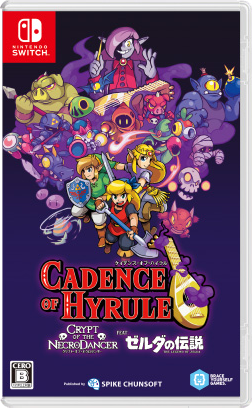
Japanese box art (Spike Chunsoft).Key art.The game’s icon artwork.Official art of Shadow Zelda (Character Pack).Official art of Skull Ganon (Symphony of the Mask).Official art of King Dobongo (Symphony of the Mask).The Gerudo Ruins, in a promotional screenshot.Lake Hylia, one of the overworld regions.
Legacy
For a download-only spin-off, Cadence of Hyrule was looked after remarkably well: a free campaign, three paid packs, a boxed edition and a final balance patch more than a year and a half after launch.
Release history
Revealed20 March 2019 – The closing surprise of Nintendo’s Nindies Showcase, with a spring release promised.
Release date announced11 June 2019 – In Nintendo’s E3 presentation, two days before launch.
Nintendo Switch (download)13–14 June 2019 – North America and Europe on 13 June; Japan (published by Spike Chunsoft) and Australia on 14 June.
Version 1.0.21 August 2019 – Achievements, co-op leaderboards, Beat Rumble and a colour-blind option.
Free demo7–8 August 2019 – On the Japanese eShop first, then in Europe. It runs up to the first boss.
Octavo’s Ode18 December 2019 – Version 1.1.0, free: Octavo’s own story, Dungeon Mode and shrines. It reached Japan on 19 December.
Character Pack20 July 2020 – Version 1.2.0. Impa, Aria, Frederick, Shadow Link and Shadow Zelda, with All-Characters Mode and Mystery Mode. Announced the same day alongside the Season Pass.
Melody Pack26 August 2020 – 39 remixes by FamilyJules, A_Rival and Chipzel.
Symphony of the Mask23 September 2020 – Version 1.4.0: Skull Kid’s story, Puzzle Mode and Arena Mode. Europe and Japan got it on 24 September.
Boxed edition23 October 2020 – The game and all three packs on a cartridge.
Version 1.5.028 January 2021 – The final update: six save files, a random soundtrack option, balance changes and fresh leaderboards.
Where to play it today
The boxed edition of October 2020 has the game and all three packs on the cartridge.
Cadence of Hyrule has never left the Switch. In November 2026 it was still on sale on the Nintendo eShop at its launch price of US$24.99, with the three packs and the Season Pass sold alongside it, and Nintendo’s North American store lists it as supported on Nintendo Switch 2, behaving just as it does on the original console. Nintendo UK’s page still offers the free demo. The simplest way to get everything is the boxed edition, which has all three packs on the cartridge. Co-op has always been for two players on one console, so playing together does not depend on an online service.
What came next
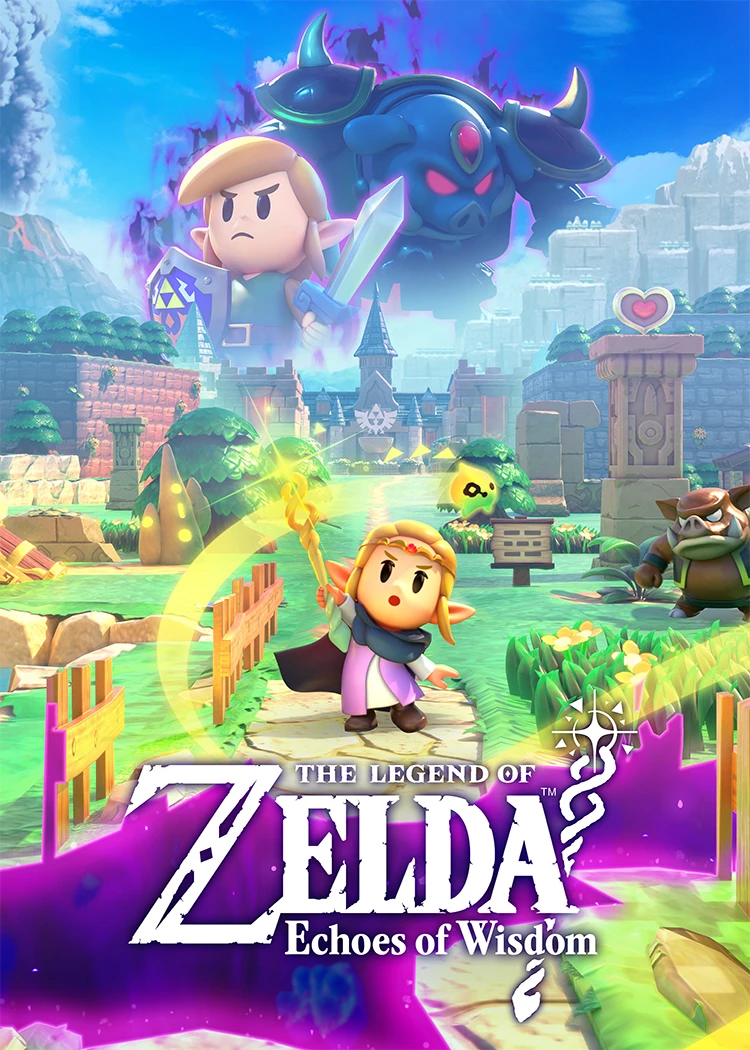
Key art for Echoes of Wisdom (2024).
Brace Yourself Games went back to its own series. Crypt of the NecroDancer received a new expansion, Synchrony, which entered early access in August 2022 and was finished in March 2024, adding three characters and multiplayer for up to eight. Cadence herself returned in Rift of the NecroDancer, a more conventional rhythm game released for PC in February 2025.
On the Zelda side, the idea of Princess Zelda as the lead did not go away. Echoes of Wisdom gave her a main-series adventure of her own in 2024, five years after Cadence of Hyrule had let players choose her at the very first fork in the road.
Its place in the series
Key art for Cadence of Hyrule.
Nobody involved claimed it for the main series. Ryan Clark called it a NecroDancer game first, Nintendo’s Kirk Scott said it did not really fall in line with a Zelda-type title, and Zelda Dungeon’s wiki files it among the games that may sit outside the core canon. Its story, with a visitor from another world and a jump 25 years into a doomed future, is best enjoyed as a tale of its own.
Its reputation is another matter. Polygon’s review ran under the headline “Cadence of Hyrule is the best Zelda spinoff ever made”, and VGC’s called it the best Zelda spin-off yet. It showed that Hyrule could be lent to a small outside team with strong ideas of its own and come back the richer for it.
Sales & reviews
Sales and charts
No sales total for Cadence of Hyrule appears in any of the sources used for this page. What exists is chart placings, and they are good ones. In Japan it went straight to number one in Nintendo’s chart of Switch eShop downloads for 13 to 19 June 2019, ahead of Doraemon: Story of Seasons and Cuphead. In Europe it was the most-downloaded Switch eShop game of June 2019, above Super Mario Maker 2, with Crypt of the NecroDancer itself in third place.
The boxed edition was a much smaller affair. Famitsu’s chart for 19 to 25 October 2020 has it entering at number 24 in Japan with 1,539 copies sold, in a week when Animal Crossing: New Horizons led with 23,069.
No. 1Switch eShop downloads in Japan, 13–19 June 2019
No. 1Switch eShop downloads in Europe, June 2019
1,539boxed copies in its first week in Japan (Famitsu)
Reception and review scores
Reviews were very good. These are the main scores, as collected by Wikipedia and Metacritic from each outlet and checked against the reviews themselves where they could be read; scores not out of 100 are converted.
The GuardianUK · June 2019
5/5
DestructoidUS · 13 June 2019
9.5/10
Nintendo World ReportUS · 14 June 2019
9.5/10
Nintendo LifeUK · 14 June 2019
9/10
ShacknewsUS · 18 June 2019
9/10
GameRevolutionUS · 19 June 2019
4.5/5
USgamerUS · 19 June 2019
4.5/5
IGNUS · 18 June 2019
8.8/10
Jeuxvideo.comFrance · 21 June 2019
17/20
GameSpotUS · 17 June 2019
8/10
VGCUK · 14 June 2019
4/5
RPGamerUS · 9 July 2019
4/5
Game InformerUS · 19 June 2019
7.75/10
It averages 85 on Metacritic from 71 reviews. The music came first in almost every review, closely followed by the pixel art and by how neatly two very different games had been stitched together. Nintendo Life called it “a brilliant Zelda game” and Nintendo World Report a “triumph”; GameSpot thought it “a fantastic Zelda game in its own right”; Destructoid said it “takes the best parts of Crypt of the NecroDancer and makes them more accessible”.
The complaints were about size and depth. VGC found the dungeons “underwhelming, lacking in sophisticated puzzles or memorable bosses” and disliked a late spike in difficulty; Destructoid felt most bosses “can be brute forced”; Nintendo World Report wanted cleverer puzzles; GameSpot found some of the Zelda items surplus to requirements and thought co-op the weaker way to play. Nintendo Life’s one real grumble, that the beat could not be felt through the controller, was answered by an update within weeks. Game Informer, the least convinced of the outlets listed here, still gave it 7.75.
Honours
NAVGTR Awards · announced 24 February 2020Game, Music or Performance-BasedWinner, from the National Academy of Video Game Trade Reviewers.
18th G.A.N.G. Awards · May 2020G.A.N.G. / MAGFest People’s Choice AwardWinner, from the Game Audio Network Guild.
The Game Awards 2019Best Score/MusicNominated.
Golden Joystick Awards 2019Best Audio · Nintendo Game of the YearNominated in both categories.
Reader reviews
No reader reviews yet. Played it? Give it a score out of 10 and tell other fans what you think.
Every fact on this page was checked against the sources below in November 2026. IGN, Polygon, Eurogamer, The Verge and The Guardian could not be read directly, so their interviews and reviews are used only as reported by other outlets, Wikipedia and Metacritic. Zelda Wiki (zeldawiki.wiki) blocks automated reading, so the copy of its pages on Fandom was used instead.
To provide the best experiences, we use technologies like cookies to store and/or access device information. Consenting to these technologies will allow us to process data such as browsing behavior or unique IDs on this site. Not consenting or withdrawing consent, may adversely affect certain features and functions.
Functional
Always active
The technical storage or access is strictly necessary for the legitimate purpose of enabling the use of a specific service explicitly requested by the subscriber or user, or for the sole purpose of carrying out the transmission of a communication over an electronic communications network.
Preferences
The technical storage or access is necessary for the legitimate purpose of storing preferences that are not requested by the subscriber or user.
Statistics
The technical storage or access that is used exclusively for statistical purposes.The technical storage or access that is used exclusively for anonymous statistical purposes. Without a subpoena, voluntary compliance on the part of your Internet Service Provider, or additional records from a third party, information stored or retrieved for this purpose alone cannot usually be used to identify you.
Marketing
The technical storage or access is required to create user profiles to send advertising, or to track the user on a website or across several websites for similar marketing purposes.

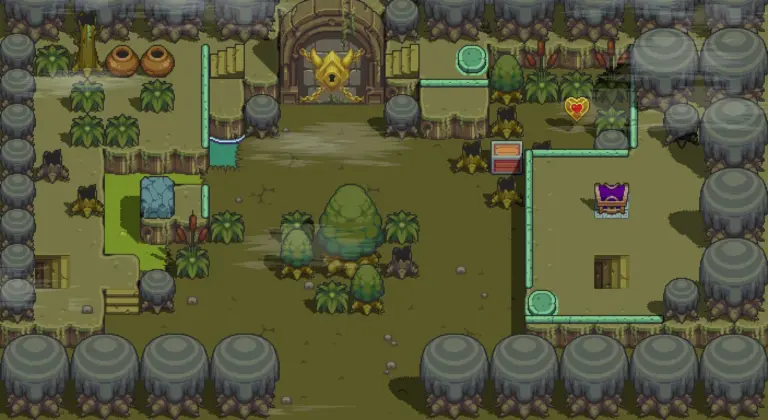 Lost SwampThrough the Lost Woods · Instrument: MaracasBoss: Gohmaracas. To find the entrance you first have to get through the looping Lost Woods, which means waking Tingle and borrowing his dowser.
 Gerudo RuinsNear Gerudo Village · Instrument: Bass GuitarBoss: the Bass Guitarmos Knights. You can walk in at any time, but the Gerudo researcher at the entrance will not let you explore until three Gears have been handed over.
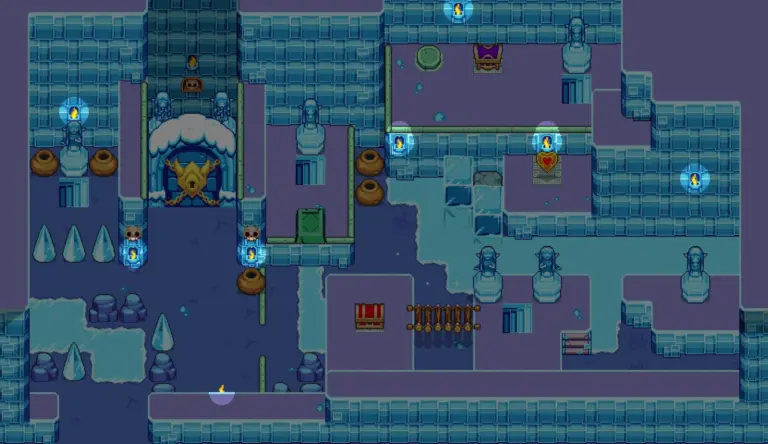 Frozen GrottoInstrument: OboeBoss: Wizzroboe. The ice dungeon. Its boss fight alone has falling icicles, ice-flinging Wizzrobes and a floor that freezes over.
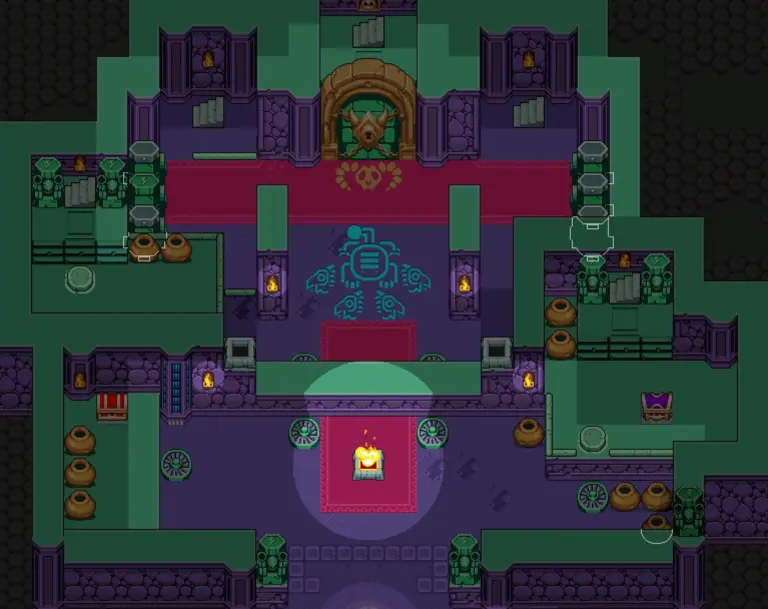 Temple of StormsTop of Death Mountain · Instrument: GlockenspielBoss: Gleeokenspiel. It can only be reached by finding a way up the mountain, and in the boss room the pools of water turn deadly once the lightning starts.
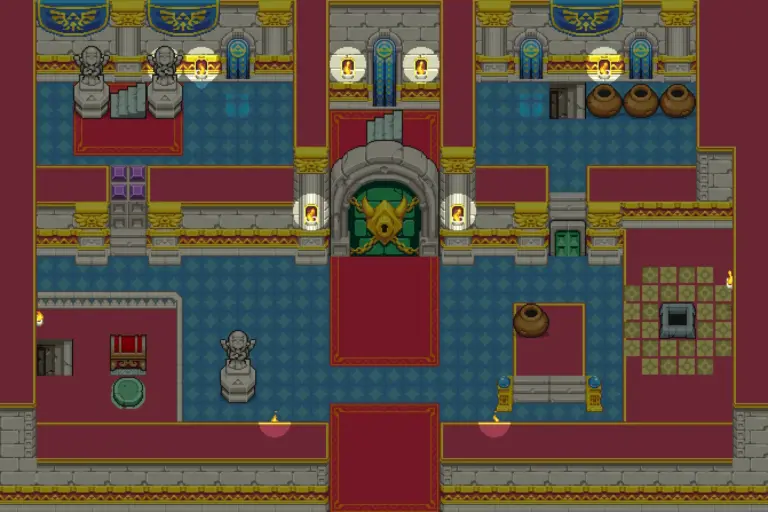 Hyrule CastleOpens with all four instrumentsBoss: Octavo. GameSpot’s reviewer found the game’s real challenge in the final trek through the castle.
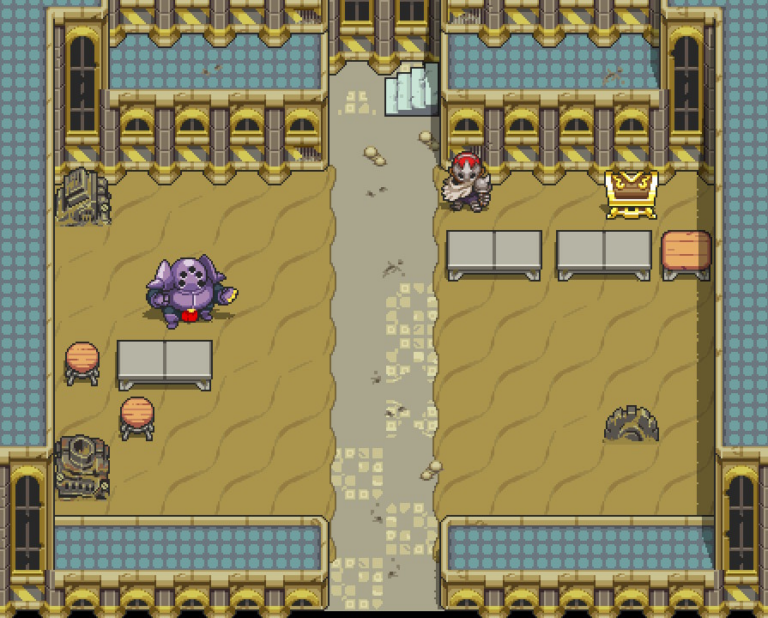 Gerudo ArenaSymphony of the Mask · Instrument: BongosBoss: King Dobongo. Six floors of arena fights, two of them in the dark, with an Iron Knuckle Knight as miniboss on the fourth and the king on the sixth.
 Temple of BrainstormsSymphony of the Mask · Instrument: SynthBoss: Synthrova. A puzzle-focused dungeon; the stand-alone Puzzle Mode is a larger version of it.
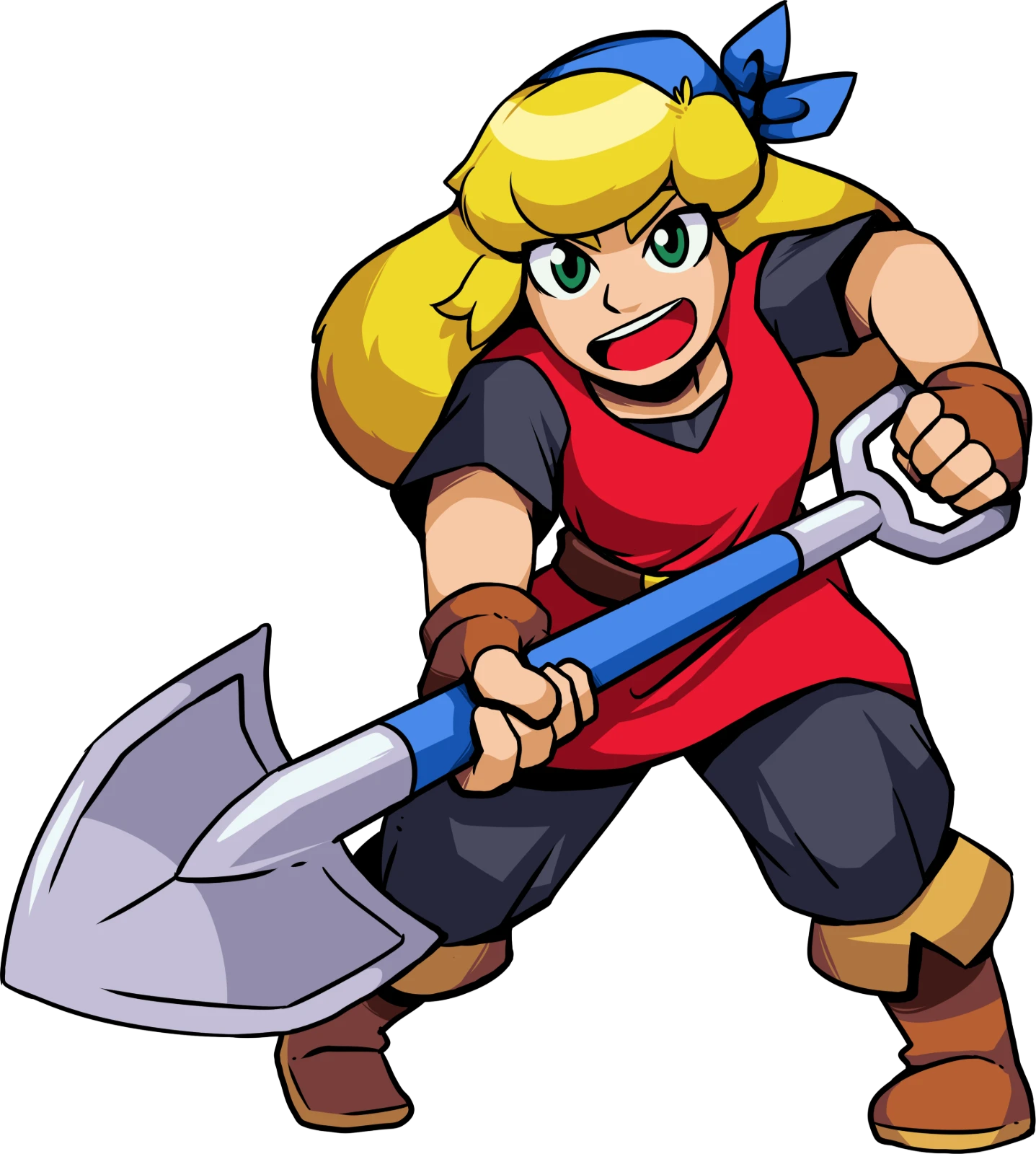 CadenceHeroine of Crypt of the NecroDancer
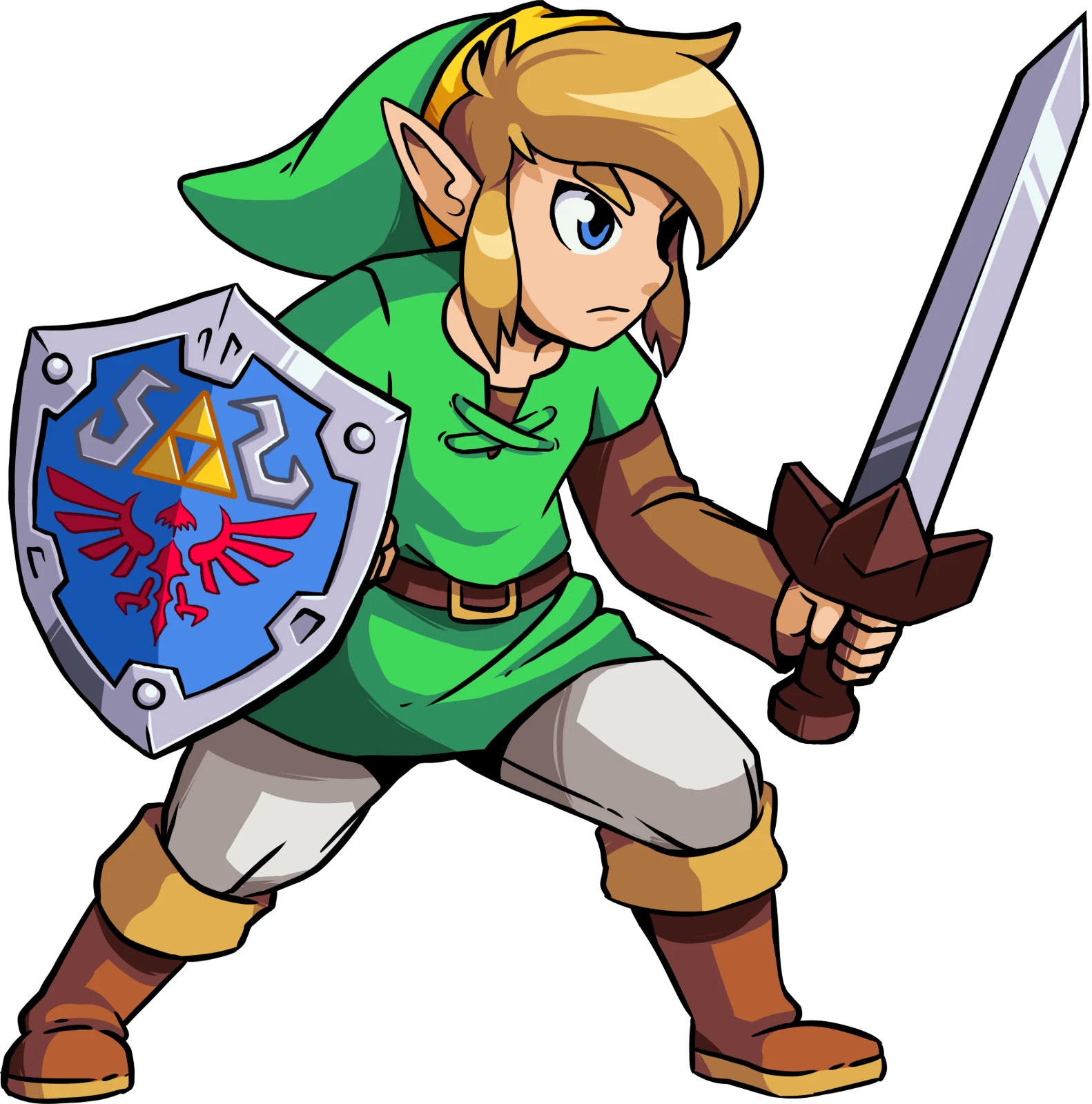 LinkHero of Hyrule
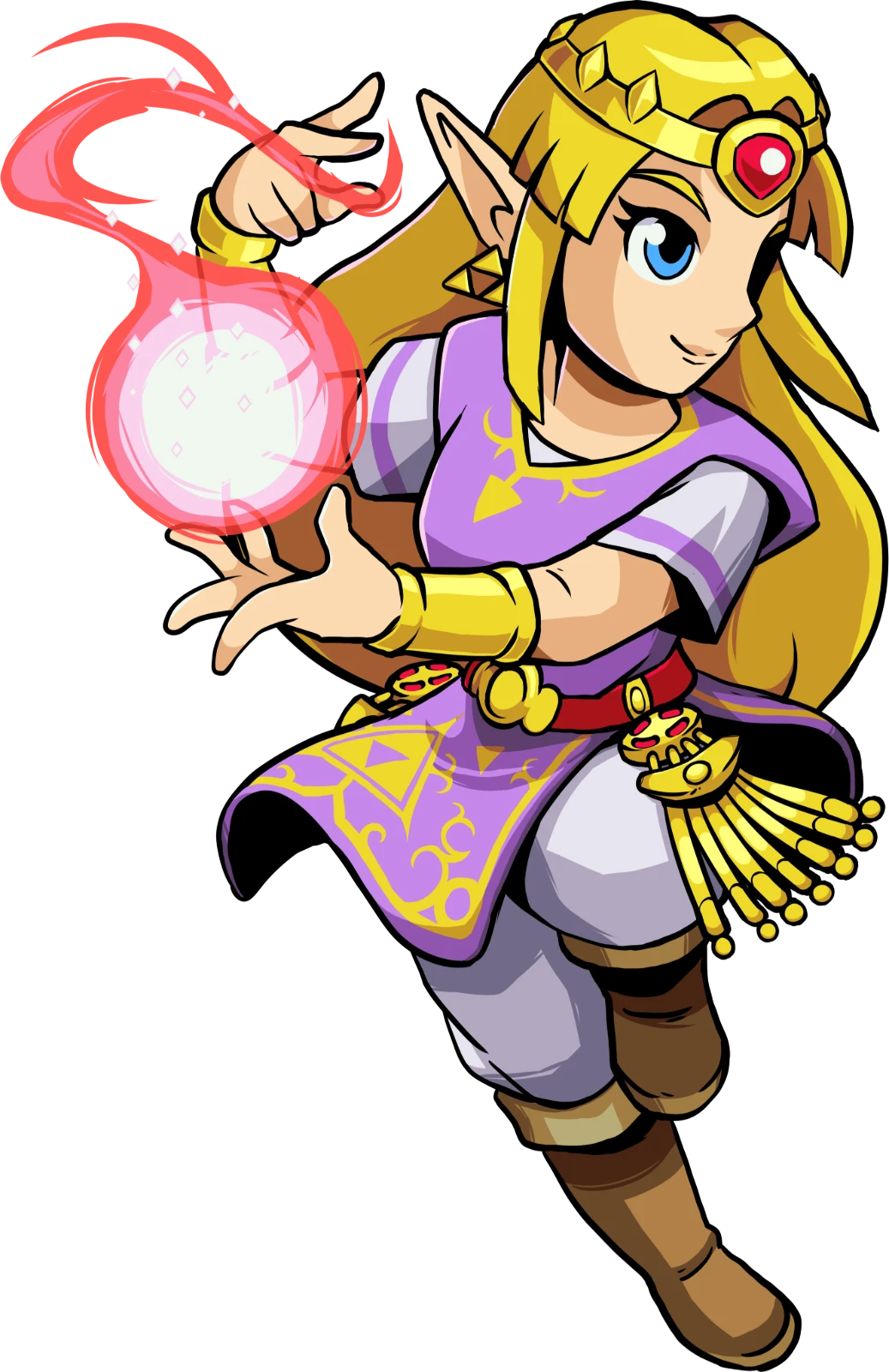 Princess ZeldaPrincess of Hyrule
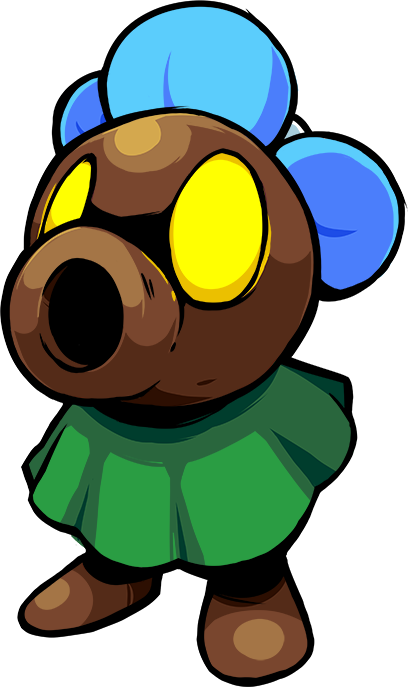 YvesDeku Scrub · secret character
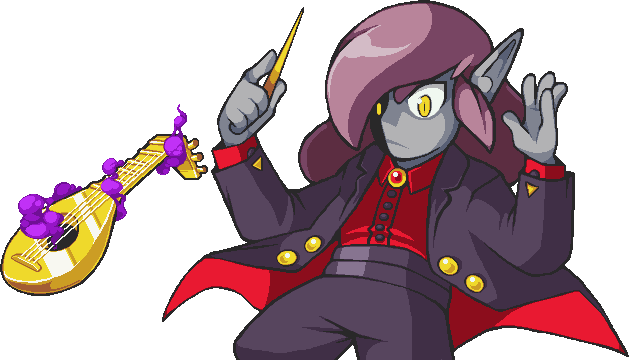 OctavoCourt musician and magician
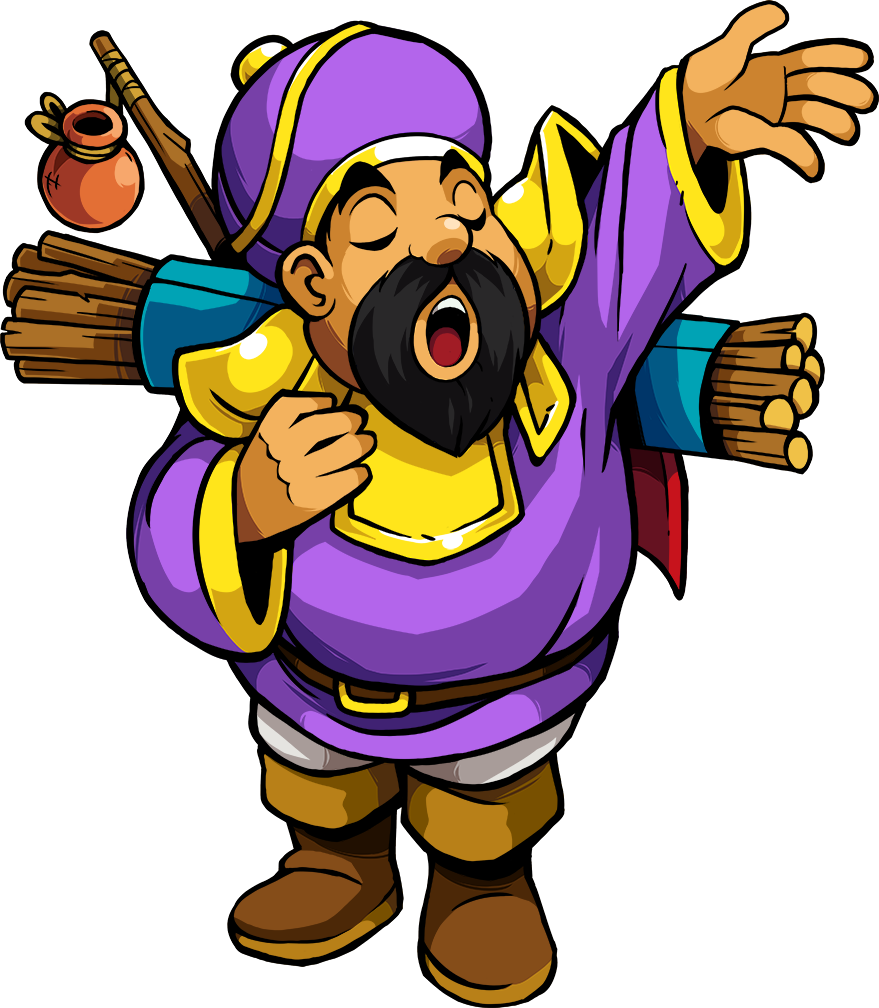 FrederickShopkeeper · Character Pack
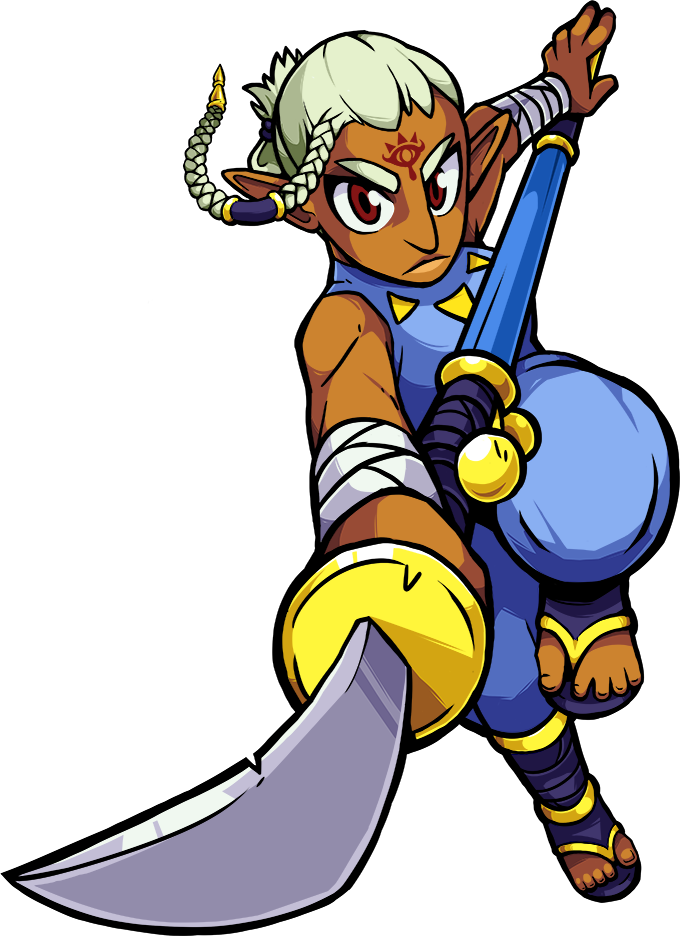 ImpaCharacter Pack
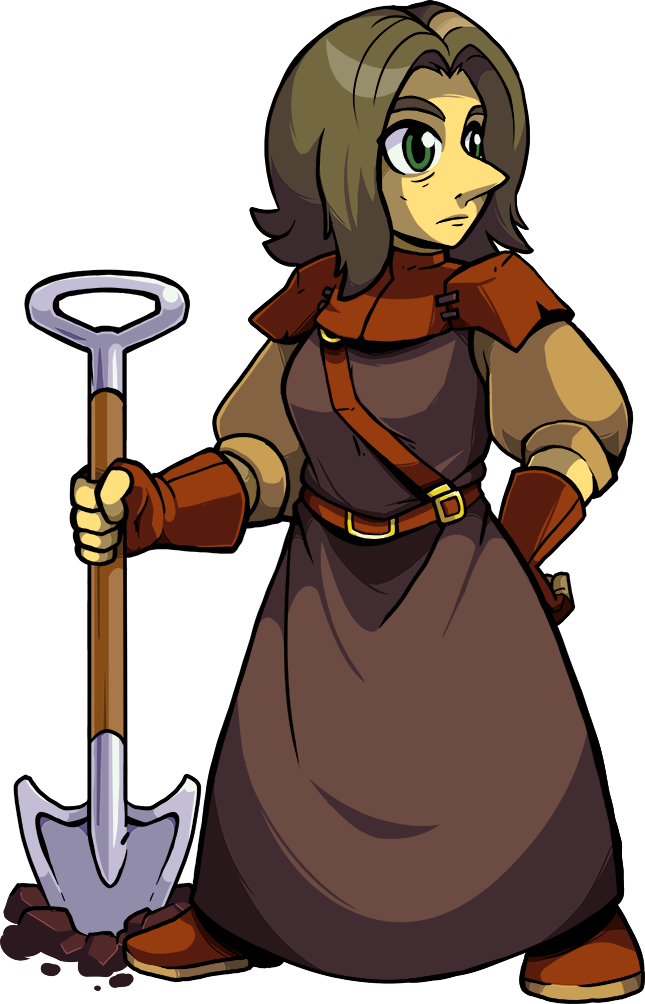 AriaCadence’s grandmother · Character Pack
 Shadow Link & Shadow ZeldaCharacter Pack
 Skull KidSymphony of the Mask
 GanonThe King of Evil
 GohmaracasLost Swamp · MaracasGohma with maracas for antennae. Only the eye can be hurt, and standing in front of it means standing in the path of its laser. It also spits webs and hatches larvae. When its health runs out it shakes its maracas, heals itself and comes back faster.
 Bass Guitarmos KnightsGerudo Ruins · Bass GuitarThe Armos Knights of A Link to the Past, with bass guitars where their swords and shields used to be. Five of them, one large and four small, stomp around in patterns set by the music, and the big one turns nasty once the others are gone.
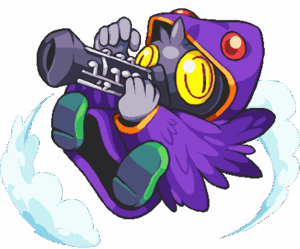 WizzroboeFrozen Grotto · OboeA Wizzrobe in the style of A Link to the Past with an oboe for a mouth. It teleports after every attack, drops icicles and summons lesser Wizzrobes to pelt you with ice.
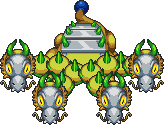 GleeokenspielTemple of Storms · GlockenspielA four-headed dragon with a glockenspiel on its back, which it plays with its tail to charge a lightning attack. The heads spit fireballs, then detach and hop about the arena when beaten, leaving the body to finish.
 GanonFuture World · Hyrule Castle ruinsFreezes two of the three heroes and calls in monsters while the third frees them. The fight ends with all three standing on Triforce marks.
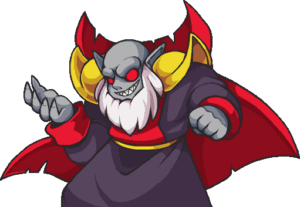 The NecroDancerFuture World · Octavo’s OdeOctavo’s future self, who says he has already beaten Ganon and taken his throne. A fight in several phases.
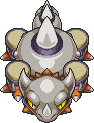 King DobongoGerudo Arena · Bongos · Symphony of the MaskThe champion waiting on the arena’s sixth floor. Smaller Dobongos turn up as ordinary enemies.
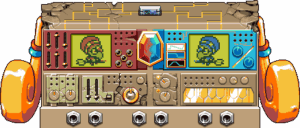 SynthrovaTemple of Brainstorms · Synth · Symphony of the MaskA send-up of Twinrova, the witches who raised Ganon, attacking with fire and ice. You win by luring its minions on to a live wire and shocking them.
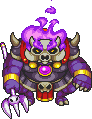 Skull GanonHyrule Castle · Symphony of the MaskGanon wearing Skull Kid’s stolen Skull Mask. The mask has to be knocked off before he can be hurt, and at the end Skull Kid must stand on each Triforce emblem until it lights up.
 Zelda as the guest starRead the full title again: Crypt of the NecroDancer Featuring The Legend of Zelda. Its director called it a NecroDancer game first, Cadence gets her name above the door, and the Golden Lute at the centre of the plot is an idea carried over from her game.
 Zelda the hero, from the first screenYou can wake Zelda instead of Link and play the entire story as her. GameSpot called it “wonderful” to be able to play as Zelda from the outset. Five years later, Echoes of Wisdom gave her a main-series adventure of her own.