A 35-year-old layabout, an old man with a Rupee for a head and a tower that eats money. This is the Zelda spin-off where cash is your health bar and everybody wants paying.
Released2 September 2006 (JP) · 14 September 2007 (EU)
DeveloperVanpool
DirectorTaro Kudo
ProducerKensuke Tanabe
Players1
Sales234,862 in Japan by the end of 2007
Title
Freshly-Picked Tingle’s Rosy Rupeeland もぎたてチンクルのばら色ルッピーランド (Mogitate Chinkuru no Barairo Ruppīrando)
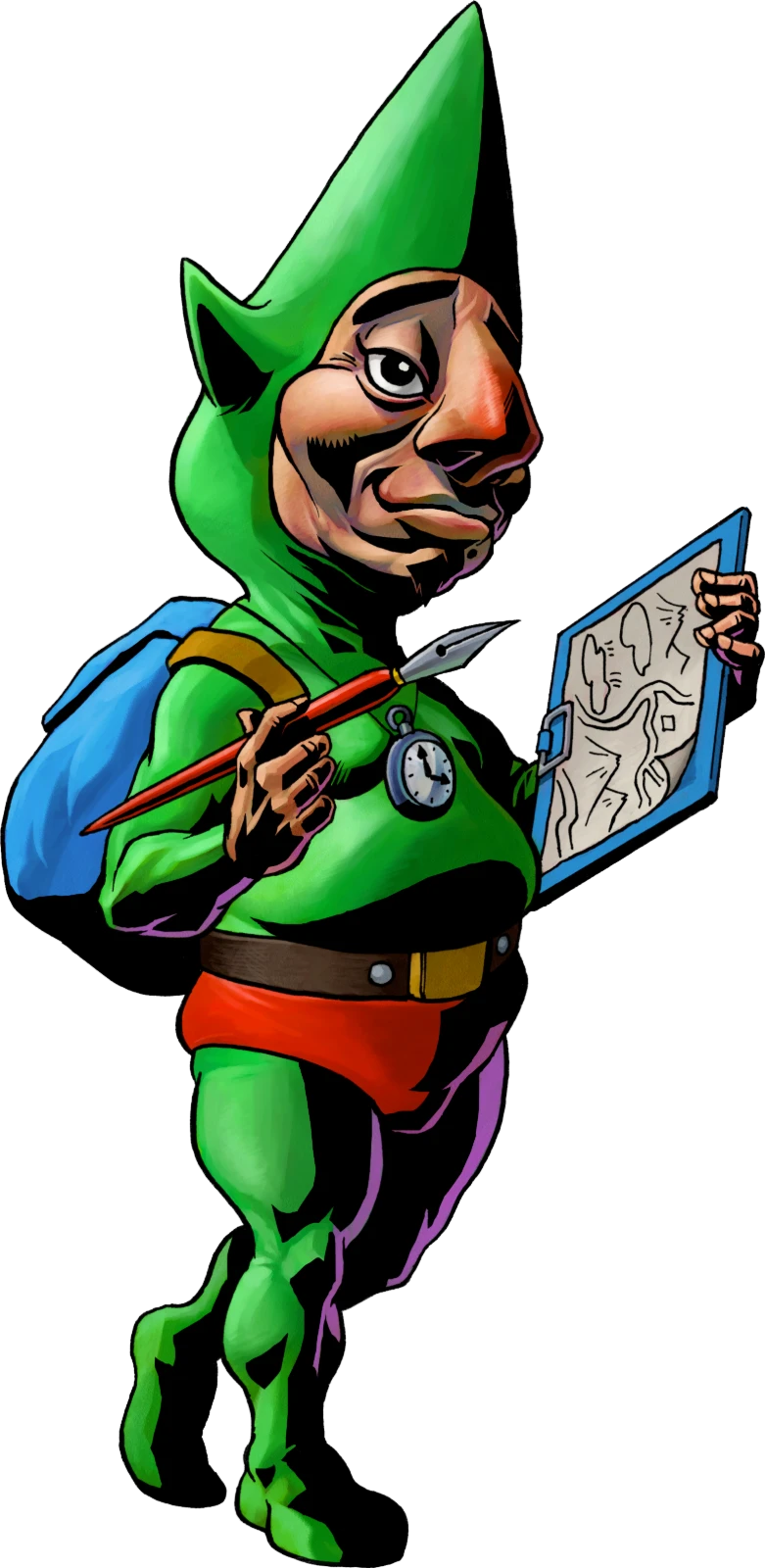
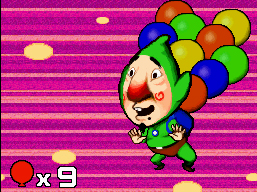
You may know Tingle as the odd little man in the green bodysuit who floats over Termina on a balloon selling maps in Majora’s Mask, or as the chart-reader who charges Link a small fortune in The Wind Waker. He is 35, he is convinced he is a fairy, and in 2006 Nintendo handed him a whole Nintendo DS adventure of his own. Freshly-Picked Tingle’s Rosy Rupeeland tells the story of how an ordinary, idle bachelor became Tingle in the first place.
It is a Zelda game turned inside out. There is a world of islands to explore, five dungeons and a boss in each, but Tingle is no hero and money is everything. Rupees are his life as well as his wallet: every fight drains them, nearly everyone he meets wants paying before they will so much as talk, and if the purse ever empties he drops dead. The aim is to earn far more than he spends and throw the profit into a pool beside his house, where a tower grows towards a promised paradise called Rupeeland.
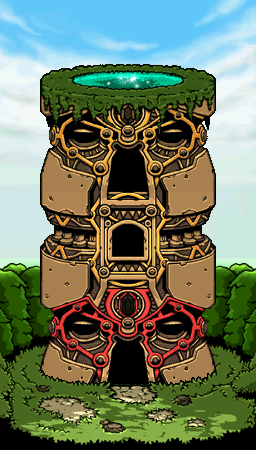
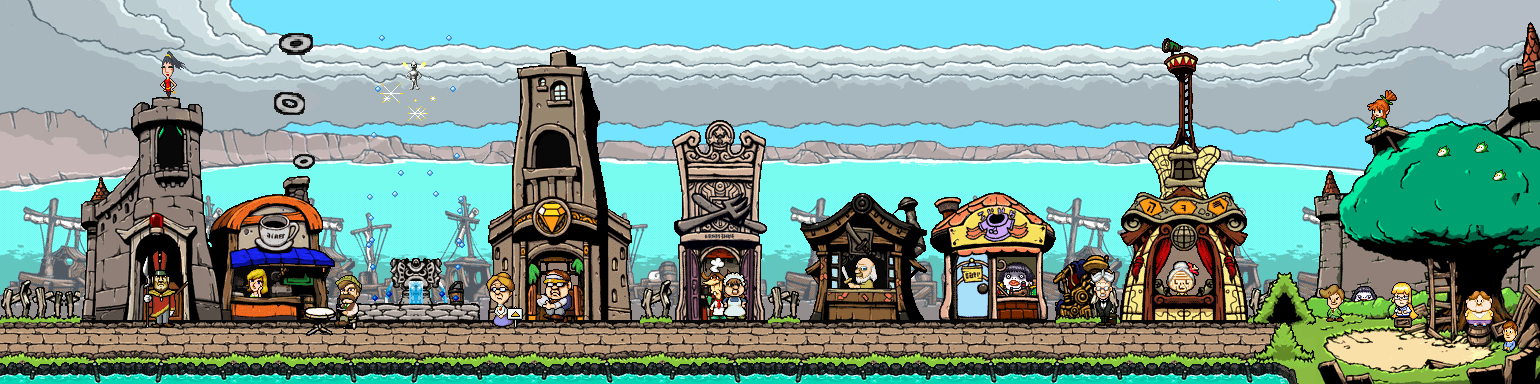
Tingle out in the field, with the map on the top screen.The tower at the Western Pool grows as Tingle feeds it.Port Town, where everything has a price.
The game was made for Nintendo by Vanpool, a small Tokyo studio whose staff included veterans of the cult developer Love-de-Lic, and directed by Taro Kudo. It came out in Japan in September 2006 and, fully translated, in Europe a year later. North America never got it, which says a lot about how differently Tingle is seen around the world: a cult favourite in Japan, widely disliked in the United States.
Reviews landed in the middle. Critics loved the hand-drawn look, the bizarre humour and the inventive bosses, and grumbled about guesswork haggling and repetitive money-grinding. It has since settled into a comfortable life as one of the strangest branches of the Zelda family.
“Take a trip into the weird and wonderful world of Tingle as he becomes the hero of his very own adventure!”
That is how Nintendo’s UK game page sells it. The page goes on to promise money-making through battles, dungeons, odd jobs and the sale of home-made maps, with help from the fairy Pinkle, Tingle’s dog Barkle and a cast of bodyguards for hire. Nintendo’s Japanese site was blunter, calling it an RPG whose theme is money (お金がテーマのRPG).
— Official description: Nintendo UK game page for Freshly-Picked Tingle’s Rosy Rupeeland (nintendo.com/en-gb). One sentence quoted; the rest summarised by Zelda Temple.
Quick Answers
Quick answers to the things people most often ask about Tingle’s first solo outing.
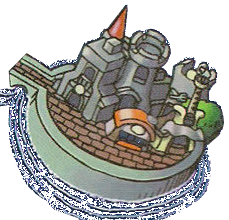
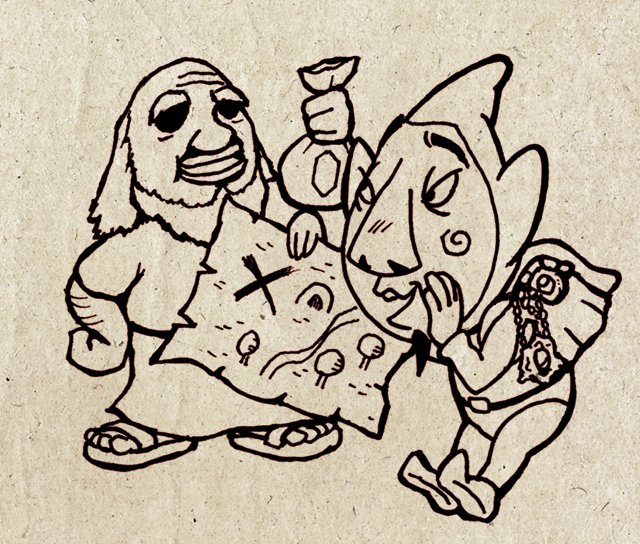
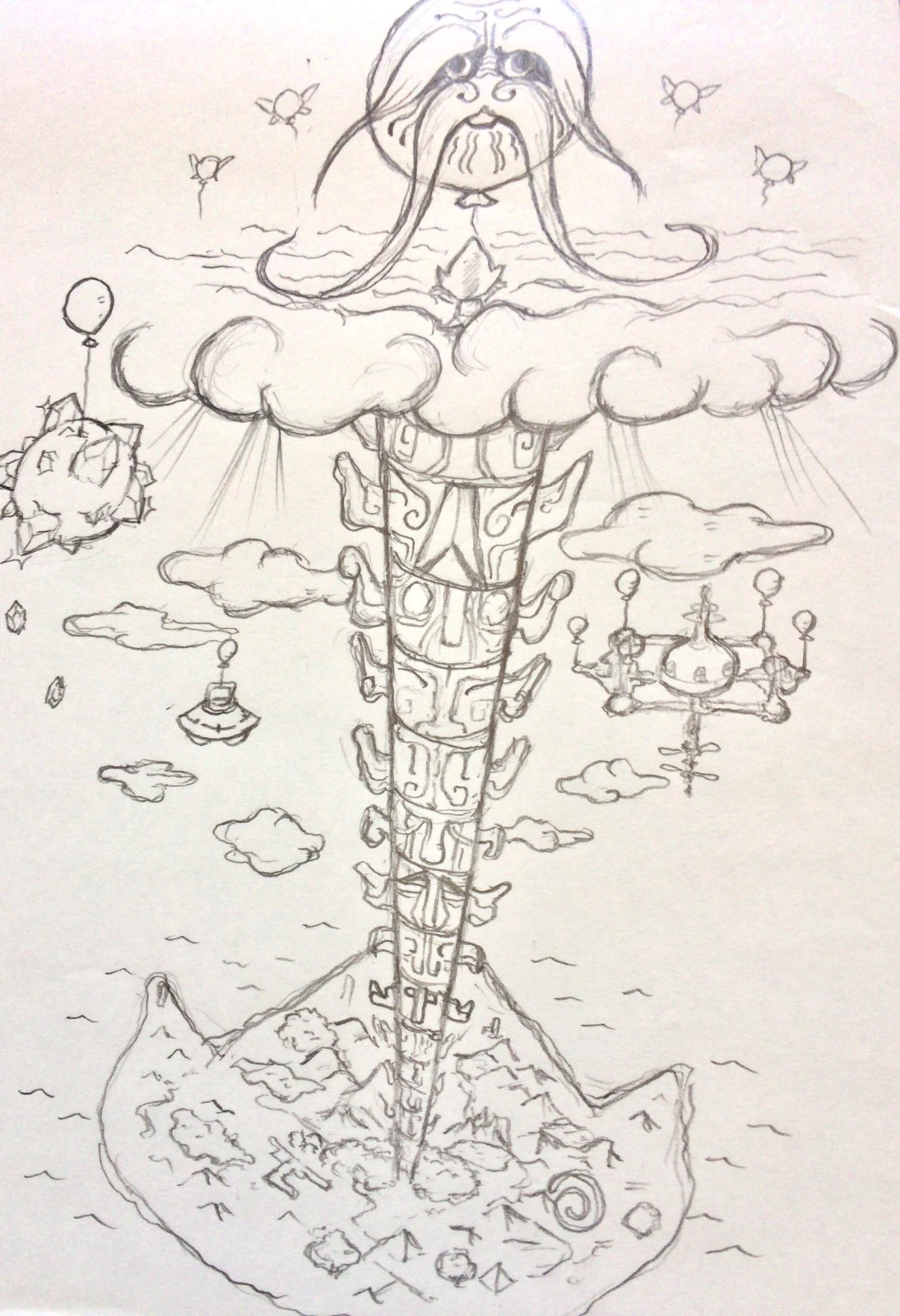
Concept art of the Rupee Tower.
What is Freshly-Picked Tingle’s Rosy Rupeeland?
A single-player Nintendo DS adventure starring Tingle, the map-seller from the Legend of Zelda series. It mixes Zelda-style islands and dungeons with haggling, cooking and map-making, all built around earning Rupees. More →
When did it come out?
On 2 September 2006 in Japan and 14 September 2007 in Europe. It was never released in North America. More →
Is it in English?
Yes. The European release is fully translated, so that is the version to look for. More →
Who made it?
Vanpool, a Tokyo studio founded in 1999, for Nintendo. Taro Kudo directed, Kensuke Tanabe produced and Masanori Adachi wrote the music. More →
Why are Rupees so important?
They are Tingle’s health as well as his money. Battles, bad deals and traps all drain them, and if he runs out the game is over. More →
Is it part of the Zelda story?
It is a spin-off with its own world rather than a chapter of the main series, though it is full of nods to it, from a Deku Tree to a mountain named after Death Mountain. More →
Rosy Rupeeland is an origin story. Its hero starts out as nobody in particular: a single, idle man of 35 with no job to speak of, and a name the player chooses. Nintendo’s Japanese site introduced him with the line 35歳独身「チンクル」、しあわせ探しの旅に出る, roughly “Tingle, 35 and single, sets off in search of happiness”, and cheerfully described him as an ordinary middle-aged man with no sense of mission, no sense of justice and no heroic bloodline: a protagonist who never grows.
The deal at the Western Pool
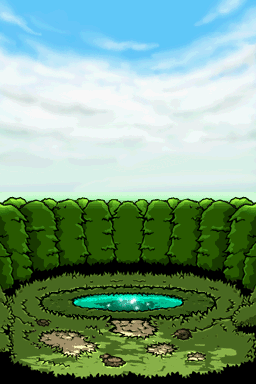
One day a voice calls the man out of his house to the pool that lies to the west. There he meets Uncle Rupee, an old fellow with a Rupee where his head should be, who styles himself a Rupee Master. He has an offer. Somewhere above the clouds is Rupeeland, a paradise where nobody works and there is fine food and female company for all. Keep throwing Rupees into this pool, he says, and a tower will rise high enough to take you there.
The man agrees, and the deal changes him on the spot. He is squeezed into the green suit, he is given the name Tingle and loses his old one, and Rupees become his life force: run out, and he dies. From then on he is guided by Pinkle, a fairy who speaks to him through a computer in his house that looks suspiciously like a Nintendo DS, and before long he is joined by a small dog, Barkle.
Feeding the tower
Each time the pool has swallowed enough money the ground shoots upwards, and from the top of the taller tower Tingle can float on his balloon to islands that were out of reach. There are eleven of them on three continents. Five hide dungeons, and the boss of each guards a Super Rupee that Tingle will need at the very end.
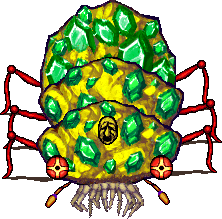
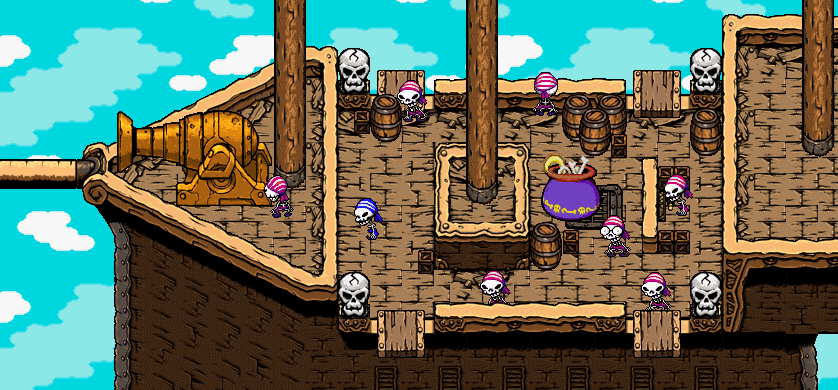
The first continent sets the tone. Tingle clears the Hero’s Shrine near his home, signs on as a Trainee Pirate with a crew of skeletons and does their chores before being allowed to duel Captain Stalfos, tracks down a jeweller’s missing daughter in Lon Lon Meadow, and escorts Junglo, the forest’s elderly hero, who is terrified of insects, home through the Deku Forest. In the temple beneath the dying Deku Tree he beats the plant monster Bana Bana and carries purified Life Dew to the tree’s heir.
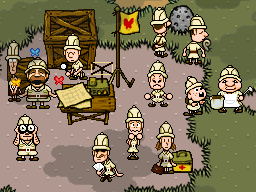
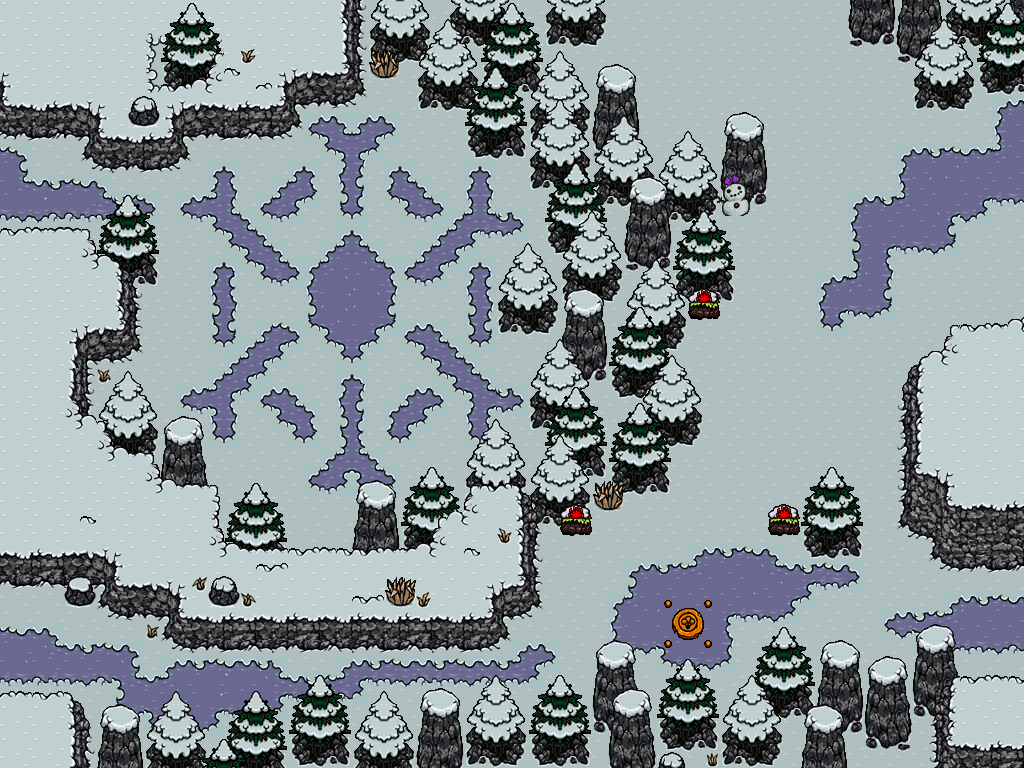
The second continent is nastier: a marsh choked with gas, a swamp where an expedition is hunting butterflies above a cavern full of giant bugs, and the Icy Plain, where a rich boy’s airship has crashed and a ghost in the graveyard has taken hold of the Port Town guard’s wife. On the third, Tingle rescues his pirate friends from a parasite that has possessed their captain, pays his respects (in cash) to the king of the Salona people on Mount Desma, and escapes a fire dragon by scrambling up the inside of the volcano.
The skeleton pirates of Cape Treasure.
The truth about Rupeeland
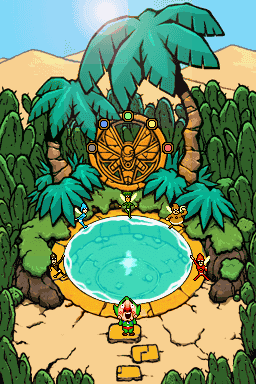
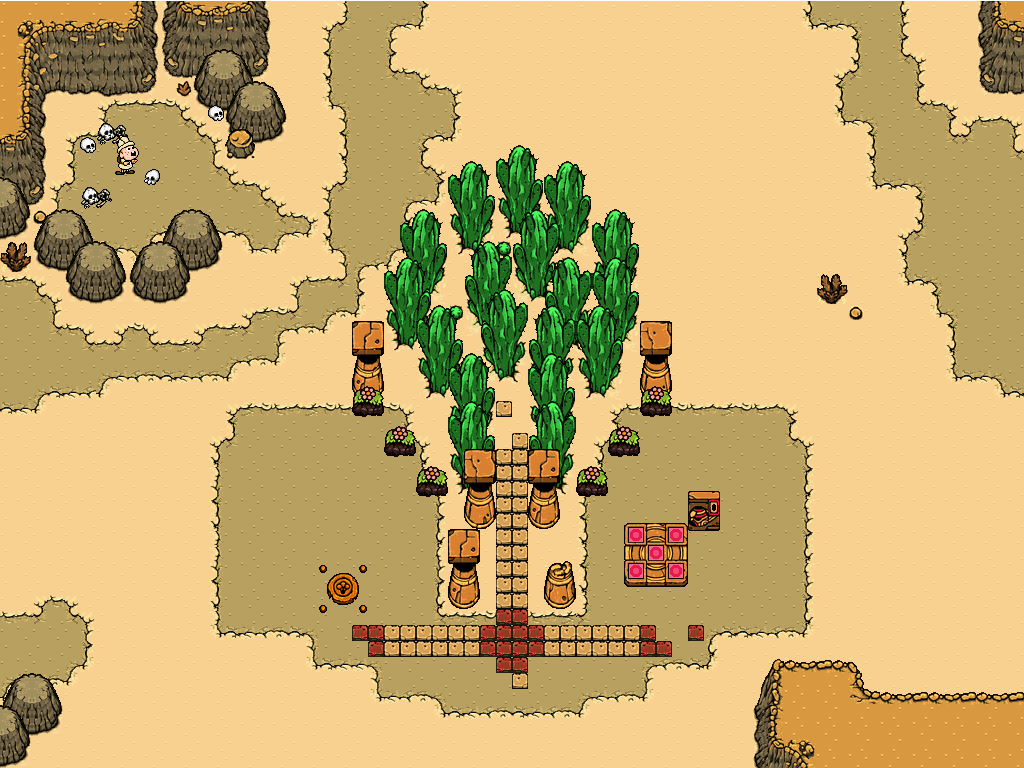
Uncle Rupee drops by every time the tower grows, and every time he looks a little richer and a little gaudier. The game keeps hinting that he is not to be trusted, and in the Fairy Garden, a desert whose springs have run dry, the hints become plain fact. Tingle refills its five fountains for the Grand Fairy, and she tells him what Rupeeland really is: a miserable place ruled by Uncle Rupee, where everyone is turned into a Tingle and made to gather Rupees for him. Tingle is not the first. Others before him filled the pool and were carried off as slaves, and once Uncle Rupee has enough money he means to turn the whole world into Rupeeland.
Tingle even has a vision of it: a twisted game called Bad Uncle Rupee’s Ashen Rupeeland, in which crowds of Tingles slave away in a barren wasteland. The Grand Fairy gives him the Rupee Key, which opens a door in the Rupee Shrine in the Auros Ruins. There the five Super Rupees are slotted into place and a chest gives up the Master Rupee.
The Grand Fairy of the Fairy Garden.
Uncle Rupee’s last demand
With the Master Rupee in hand, Tingle climbs to the pool at the top of the tower. Uncle Rupee returns the money that has been thrown in over the whole adventure, then demands the lot. Refuse, and he attacks. The last battle abandons the rest of the game’s rules for a three-round shoot-’em-up in which Tingle fires streams of Rupees at his old mentor.
There are two endings. Which one you see depends on the thirty Rupee Goods hidden around the world: collect them all and a sealed door in the Rupee Shrine opens, Tingle meets Pinkle face to face, breaks Uncle Rupee’s hold over her and has her at his side for the final fight. We will not spoil either ending here.
The eleven islands of Rosy Rupeeland
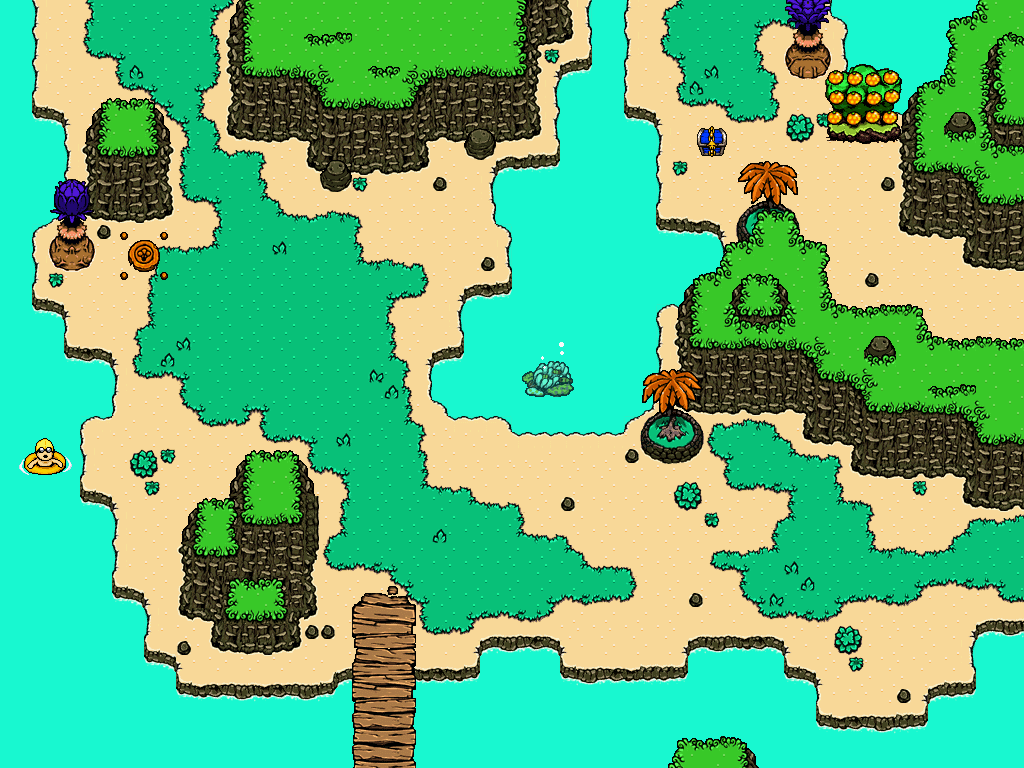
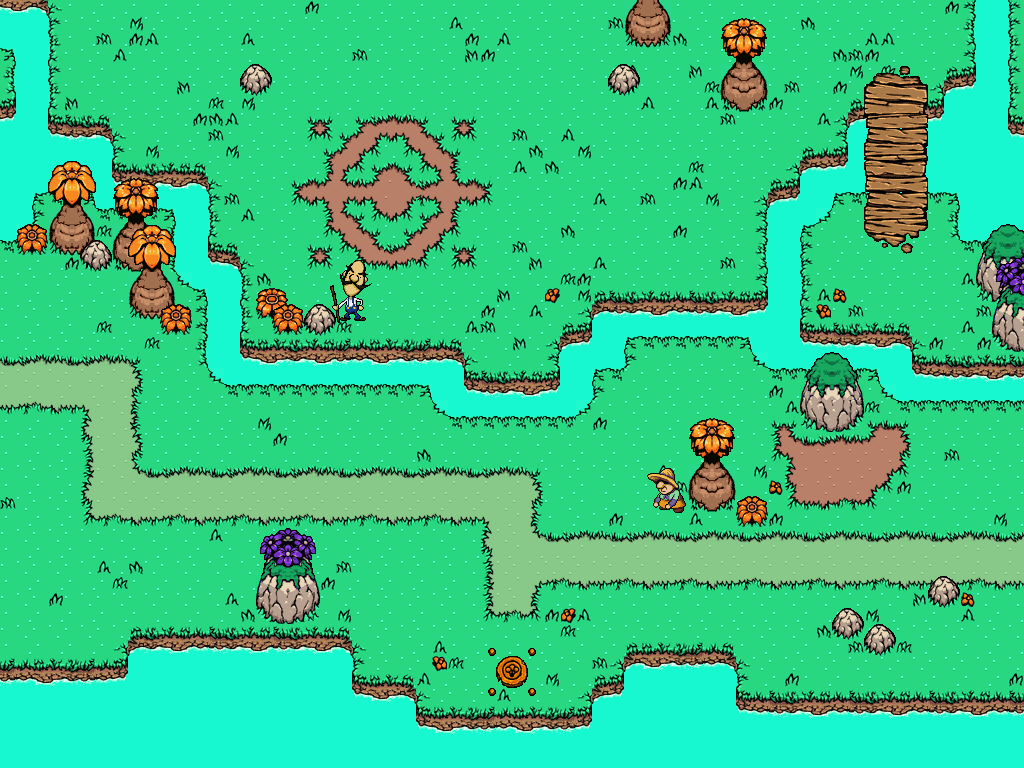
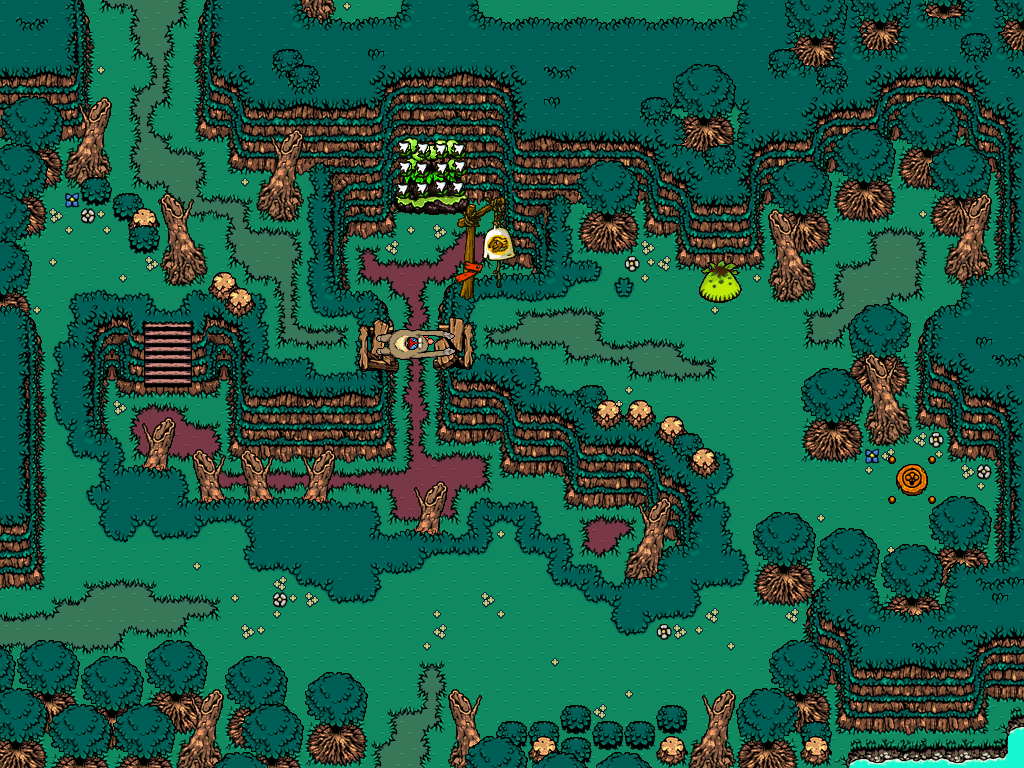
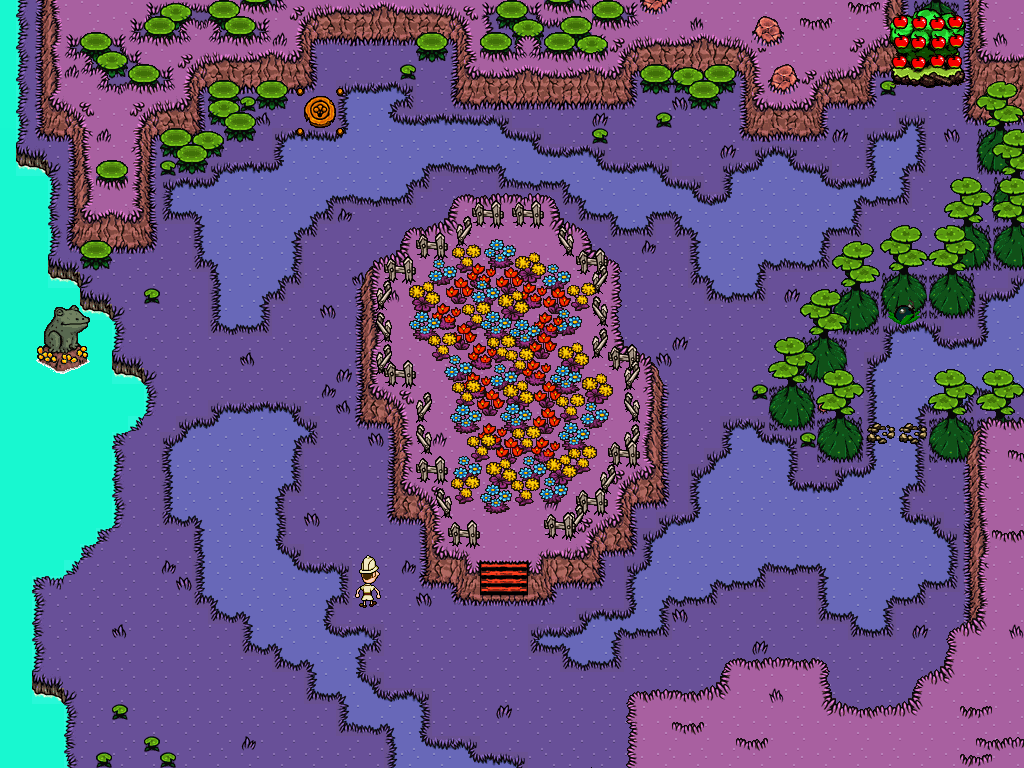
Three continents, eleven islands and five dungeons, in the order the tower opens them up. Each continent has its own bridge-builder (the siblings Duke, Judge and Duko) who will link neighbouring islands for a fee.
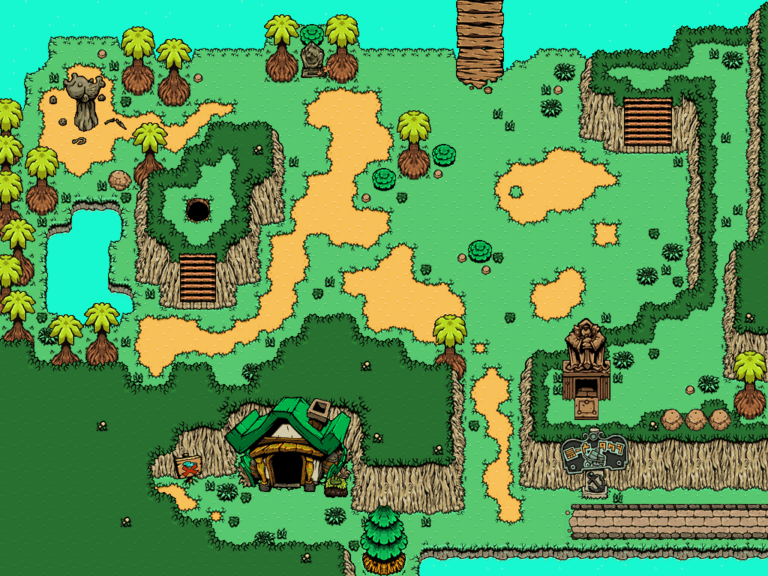
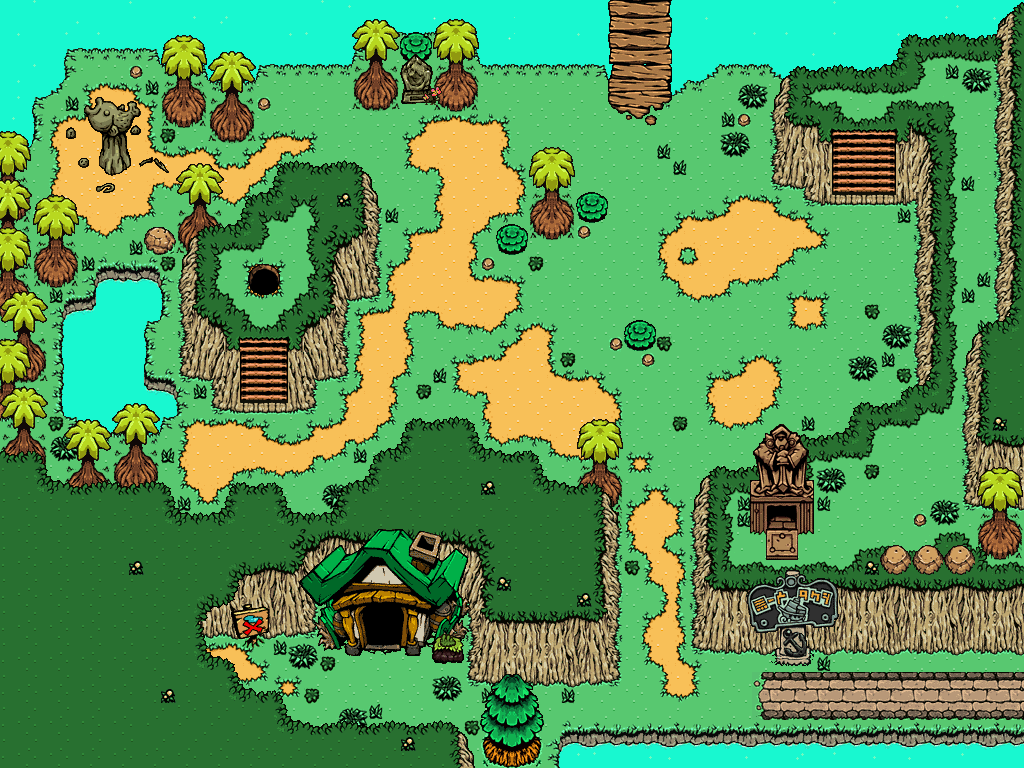
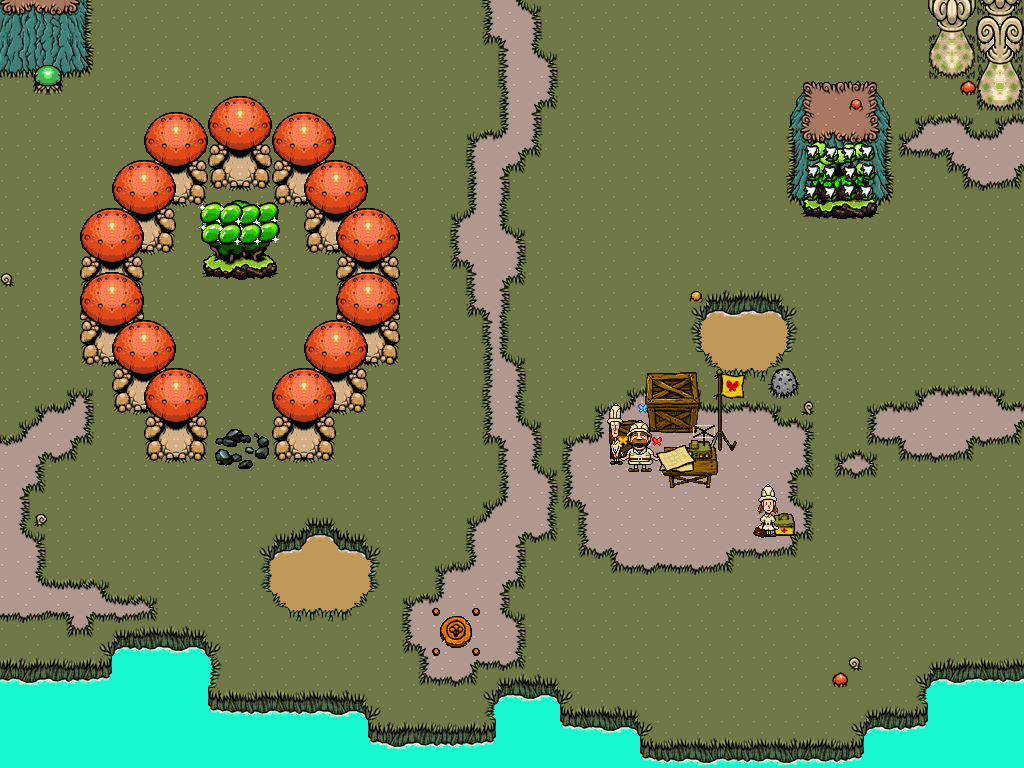
Hometown PrairieFirst continent · Dungeon: Hero’s ShrineTingle’s house, the Western Pool and Port Town with its shops. Boss: Beetle Lord: Death Bug.
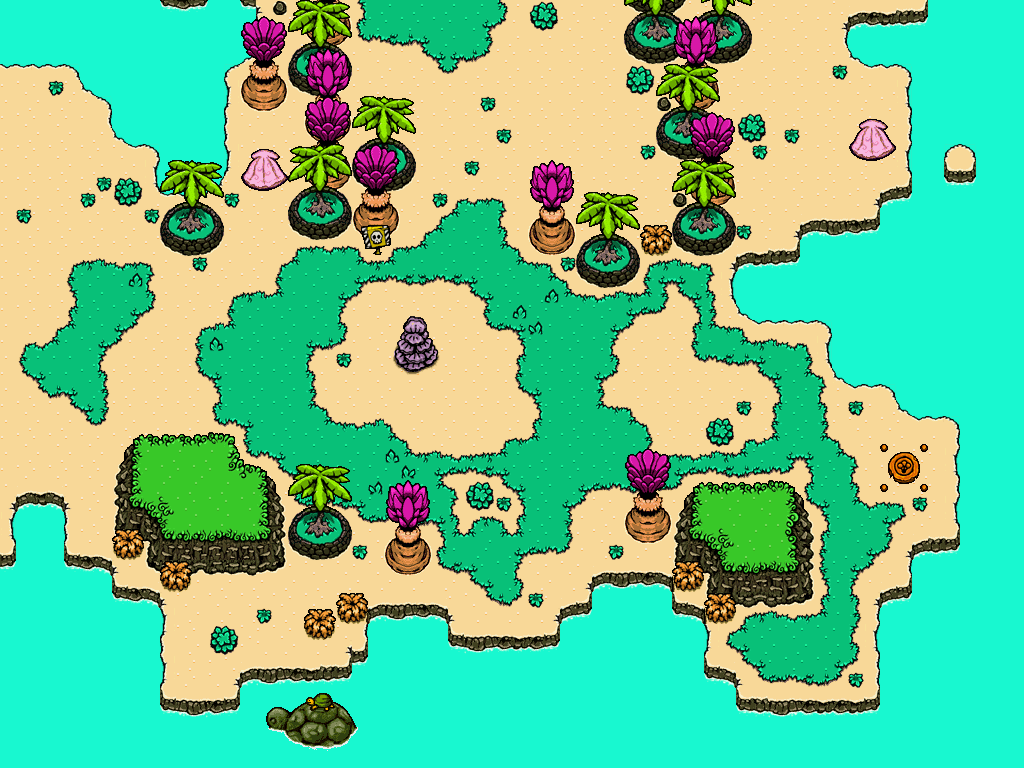
Sunshine SeashoreFirst continentBeaches, crabs and oysters with pearls worth stealing, plus the first Bodyguard Salon.
Cape TreasureFirst continent · Dungeon: Pirate HideawayWhere Barkle turns up, and where Tingle joins the skeleton pirates. Boss: Captain Stalfos.
Lon Lon MeadowFirst continentFarmland with cows, a missing girl called Missy and a camp of pig-like Oinkers.
Deku ForestFirst continent · Dungeon: Deku TempleFog, a forest maze and the dying Deku Tree. Boss: Fierce Tricolour Flower: Bana Bana.
Steamy MarshSecond continentGas vents to clear with bombs, a giant beehive and Dr. Bean in his burrow.
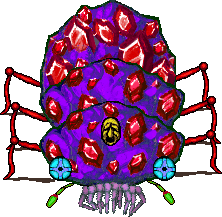
Gooey SwampSecond continent · Dungeon: Insect CavernAn explorers’ camp and four obelisks that open the cavern. Bosses: Beetle King: Ultra Death Bug, then Gargantu-Bug.
Icy PlainSecond continentBlizzards, penguins, polar bears, a family of snowmen and a haunted graveyard.
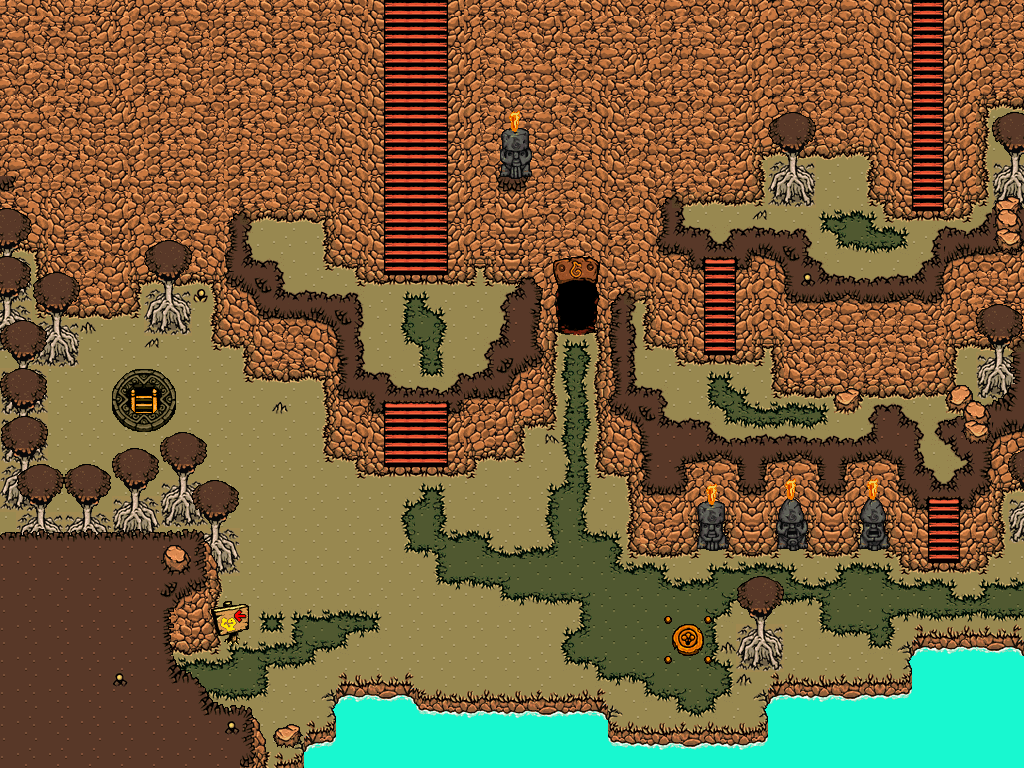
Mount DesmaThird continent · Dungeon: Desma’s LabyrinthA volcano with a Salona village near the top. Boss: Fire Monster: Dora Dora.
Fairy GardenThird continentA dried-up desert crossed in a rented vehicle, with five fountains to refill for the Grand Fairy.
Auros RuinsThird continent · Rupee ShrineThe Oinkers’ headquarters, statues of the bosses beaten so far and the shrine that holds the Master Rupee.
How it plays
On the surface this is a top-down adventure with a Zelda shape: an overworld of islands, a town, dungeons with switches and spike traps, and a boss at the bottom of each. Underneath, every rule has been rewritten around money. Tingle is moved with the Control Pad or the face buttons, and the stylus does everything else, from talking and picking things up to drawing on the map.
Bodyguard size
What you get
Only they can…
Small
The cheapest and the weakest
Crawl into small holes to fetch treasure
Medium
Middling price, middling strength
Open locked doors in dungeons
Large
The dearest and the toughest
Shift the big boulders that block the way
Rupees are your life
The Western Pool, where Tingle throws his Rupees.
There are no hearts. The number in the corner is Tingle’s bank balance and his health at once, and it goes down whenever he is hit, trapped or swindled. If it reaches zero the game is over, so the last Rupee can never be spent. At the same time the story only moves when Rupees are thrown into the Western Pool, and each new island costs far more than the last: StrategyWiki’s walkthrough has the price climbing from a few hundred Rupees for the first hop to 182,250 for the last. The whole game is a balancing act between saving for the tower and keeping enough back to survive.
Naming your price
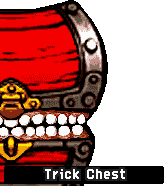
A Trick Chest, ready to haggle.
Almost nobody in this world does anything for free, and almost nobody will tell you what they charge. Want to enter Port Town, chat to a shopkeeper, buy a recipe or hear a hint? You are asked to make an offer. Too low, and the other party takes the money and gives you nothing. Too high, and you have thrown Rupees away. Rewards work the same way in reverse: Tingle names his fee, and greed can leave him with nothing at all.
It was the most argued-over part of the game. Reviewers pointed out that with no clues to the right figure it comes down to trial and error, and more than one advised saving first and reloading after a bad guess.
Dust-ups and bodyguards
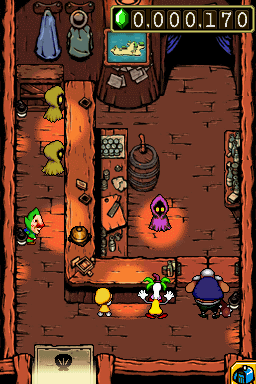
A Bodyguard Salon, where muscle is hired by negotiation.
Tingle carries no sword. Walk into an enemy and the two vanish into a cartoon dust cloud, Rupees leaking away for as long as the scrap lasts. Tapping the cloud with the stylus helps Tingle finish it sooner, and the cloud can be steered over other monsters to drag them in. More enemies in one brawl means better loot at the end, but a faster drain while it lasts.
Since Tingle is a weakling, the sensible thing is to pay someone else to do the fighting. Bodyguard Salons stand on every island except the first, and there are thirty bodyguards to hire in all: nine on each continent, among them guard dogs, clowns, a swordswoman and a baseball player, plus three powerful drifters who have to be tracked down in the wild. Each one is small, medium or large and has a temperament, from those who charge at anything in sight to those who wait for Tingle to start the fight. A bodyguard has health of his own, serves only on the continent where he was hired, and has to be paid again if he collapses. Size matters in dungeons, too, as the table above shows.
Bosses throw the dust cloud away altogether. One is fought by dropping bombs from Tingle’s balloon, one is a toe-to-toe boxing match, one is a frantic climb out of a volcano, and no two play alike.
Maps, cooking and odd jobs
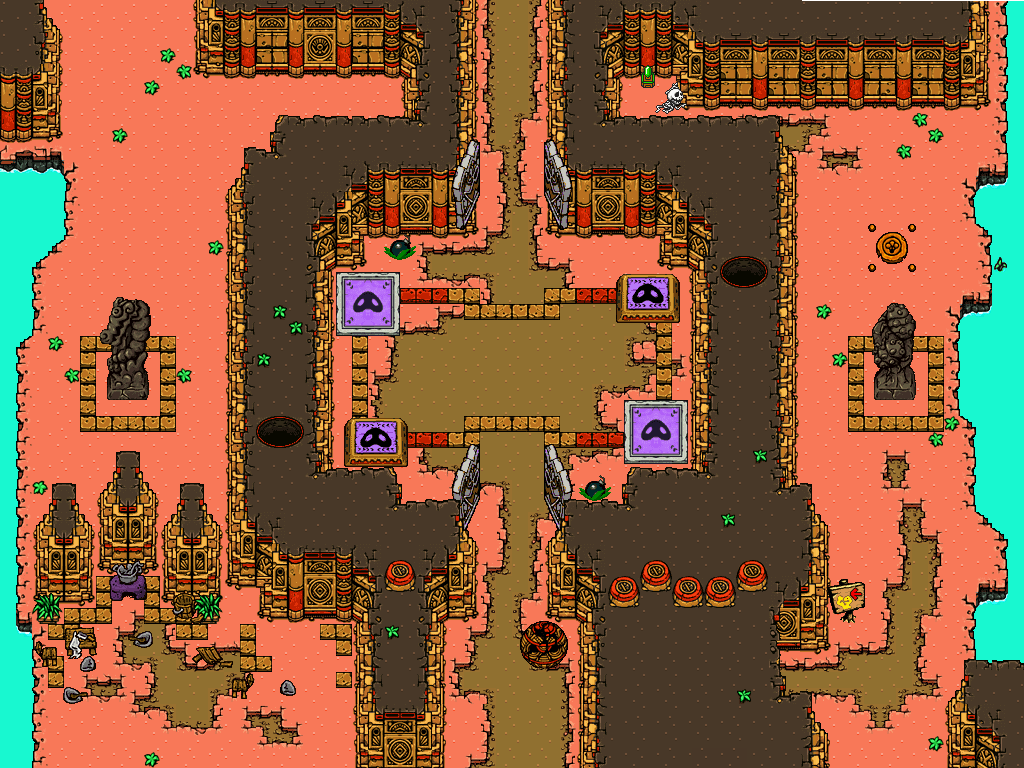
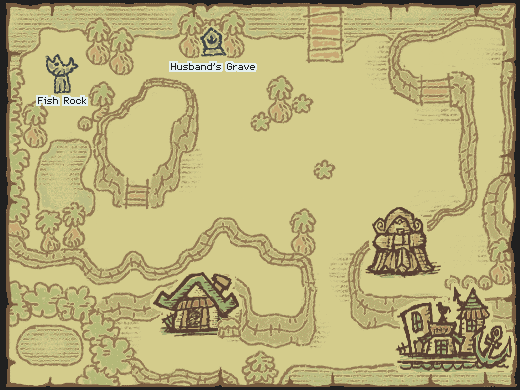
The in-game map of Hometown Prairie.
Tingle the map-maker is very much at work. On each new island a strange boy, the Look-What-I-Found Kid, sells a blank chart. Whenever Tingle spots a landmark he circles it on the touch screen, and the old Map-Seller in Port Town pays for every one, with a bonus for a finished map. She will also buy the completed map outright, but then Tingle has to buy it back if he wants to use it again.
The other big earner is the cooking pot at home. Monsters drop ingredients, recipes are bought or earned, and the mixture is stirred with the stylus and bottled in Empty Jars to sell to the townsfolk, give to quest characters or feed to a flagging bodyguard. On top of that come the odd jobs: finding lost children, reviving a journalist who keeps passing out for want of fruit juice, paying builders to mend bridges.
Everything comes back to Tingle’s house. It holds the pot, a stash for spare items, an attic for the Rupee Goods and Pinkle’s computer, which is the only place to save. Critics found that last point harsh in a game where one bad fight can wipe you out.
Characters
A small cast of grasping, eccentric people, nearly all of whom want Tingle’s money. Names are those of the European version, with the Japanese originals where we could confirm them.
Character
Who they are
In this game
Stats & abilities
Tingleチンクル · age 35
The map-making, fairy-obsessed oddball introduced in Majora’s Mask in 2000. Here we meet him before all that, as an aimless bachelor.
Takes Uncle Rupee’s deal, gains the green suit and the name, and spends the game scraping together Rupees for the tower. Nintendo’s own site calls him a hero who never grows.
Rupees are his health
Cannot fight well alone
Travels home and between islands by balloon
Uncle Rupeeルピじい · Rupee Master
An old man with a Rupee-shaped head who appears at the Western Pool and looks more lavish each time the tower rises.
Mentor at the start, villain by the end. He is a Rupee demon who feeds on wealth, turns people into Tingles and enslaves them to collect it.
Final boss.
Pinkleピンクル · fairy
A fairy dressed in pink who has been forced to work for Uncle Rupee.
Tingle’s guide. She briefs him at each new island, nags when the tower is neglected and saves the game from the computer in his house. Collecting every Rupee Good frees her.
Hints and saving.
Barkleワンクル · dog
A little dog in a green outfit to match his master’s. His Japanese name, Wankuru, starts with wan, the Japanese for “woof”.
Won over with a Bone at Cape Treasure, after which he follows Tingle home. He leads the way to a clue in the Pirate Hideaway.
Loves bones.
Abaアバ · battle trainer
A hot-tempered girl raised by Junglo, who found her as a baby.
Pops up from Hometown Prairie onwards to teach Tingle how to fight. Unusually for this game, her lessons are free.
Battle tutorials.
Teddy Todoテデトド · drifter bodyguard
A huge green treasure hunter with a club and a shield, who seems friendly but is not quite what he appears.
Tingle’s first bodyguard, hired for a pittance in the Hero’s Shrine. He turns up again in the Insect Cavern and afterwards roams the world as one of the three drifters.
Large · aggressive.
The Grand FairyQueen of the Fairy Garden
An enormous fairy stranded since the springs of her garden dried up.
Once her fountains are refilled she exposes Uncle Rupee, hands over the Rupee Key and asks Tingle to stop him. She also explains the controls for the final battle.
Gives the Rupee Key.
The people of Port TownShopkeepers and neighbours
The Guard who charges a toll at the gate, the Chef, the Armourer, the Jeweller and his clever daughter Missy, café owner Bella, little Chiko and her mother, and the old Map-Seller.
They buy what Tingle cooks, finds and maps, sell him recipes, and hand out most of the game’s odd jobs. The Guard even fights at Tingle’s side on the Icy Plain to save his sick wife.
Most charge a fee just to talk.
Bosses
The five dungeon bosses each guard a Super Rupee, and each is beaten in a different way.
Beetle Lord: Death BugHero’s Shrine · Metal Super RupeeA giant bug bombed from above while Tingle hangs from his balloons.
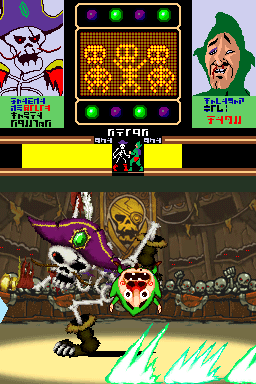
Captain StalfosPirate Hideaway · Aqua Super RupeeThe pirates’ skeleton captain, met in a one-on-one bout that pays homage to Punch-Out!!
Fierce Tricolour Flower: Bana BanaDeku Temple · Leaf Super RupeeA three-headed plant. Each head has to be fed mushrooms of the right colour.
Ultra Death Bug and Gargantu-BugInsect Cavern · Earth Super RupeeA tougher Death Bug that turns into a laser-spitting parasite halfway through.
Fire Monster: Dora DoraDesma’s Labyrinth · Magma Super RupeeA dragon of fire. Tingle does not fight it; he flees up the volcano.
Uncle RupeeTop of the towerThe final boss, fought in three rounds with Rupees as ammunition.
The people who made it
Nintendo published the game and supplied the producer; the development itself was Vanpool’s.
VanpoolDeveloperA Tokyo studio founded in 1999, which had earlier made the mini-games for Mario & Luigi: Superstar Saga. It later created Dillon’s Rolling Western and worked on several Kirby games before closing on 31 May 2023.
Taro KudoDirectorA veteran of Love-de-Lic, the short-lived studio behind the cult PlayStation game Moon: Remix RPG Adventure.
Kensuke TanabeProducerNintendo’s producer on both of Vanpool’s Tingle adventures. In 2013 he said he would still like to make another.
Masanori AdachiMusicCredited composer. The score slips in arrangements of familiar Zelda tunes.
How it was made
How a character half the world could not stand ended up with a game of his own, and why only half the world got to play it.
Who is Tingle, and why did Japan want this?
Tingle as he first appeared in Majora’s Mask (2000).
Tingle was created for Majora’s Mask by Nintendo designer Takaya Imamura. Eiji Aonuma has explained the thinking: the team wanted players to buy their maps, so the game needed a map-seller; the seller might as well be the person who draws them; and to draw them he would have to see the land from the air. “Anybody that would fly through the air making a map has got to be a really weird person,” Aonuma told Kotaku in 2015. So Tingle became a man in his mid-thirties in a green fairy suit who, like Peter Pan, refuses to grow up.
He went on to turn up in Oracle of Ages, The Wind Waker, Four Swords Adventures and The Minish Cap, and opinion split along geographical lines. In Japan he gathered a cult following. In North America he was widely disliked, to the point that IGN ran a “Die, Tingle, Die!” campaign in 2004. A Tingle game was always going to be a Japanese idea first.
Vanpool and the Love-de-Lic touch
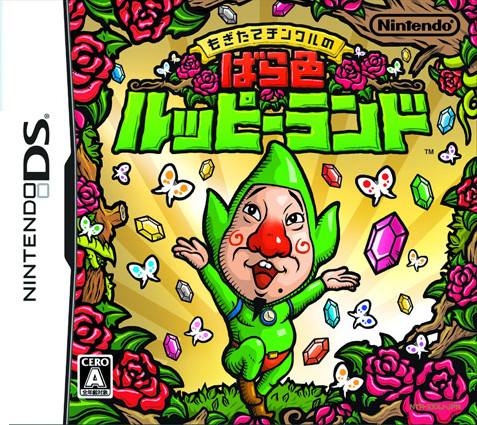
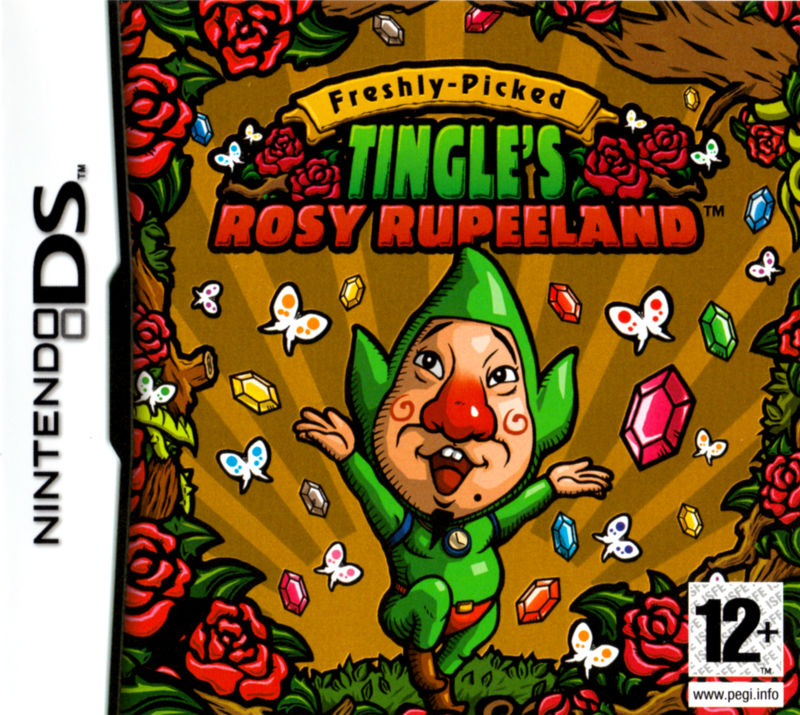
The Japanese box.
Nintendo gave the job to Vanpool, with Kensuke Tanabe producing. The studio had been set up in Tokyo in 1999 and counted Taro Kudo and Kazuyuki Kurashima among its staff, both of whom had come from Love-de-Lic. That company, founded by Kenichi Nishi in 1995 and made up largely of former Square employees, is best known for Moon: Remix RPG Adventure (1997).
Something of its sideways humour runs through Rosy Rupeeland. Japanese Wikipedia’s article describes the game as surreal and darker than Nintendo’s usual output, and credits that to the Love-de-Lic lineage as much as to Tingle himself. A hero who is weak, greedy and only ever helps people for cash is about as far from Link as it is possible to get, and that was the point.
From “Tingle RPG” to Rosy Rupeeland
The project was announced in October 2005 under the working title Tingle RPG. By release it had become Mogitate Chinkuru no Barairo Ruppīrando, shortened by Nintendo itself to “MogiChin”, and it reached Japanese shops on Saturday 2 September 2006 at ¥4,571 before tax.
Nintendo’s Japanese site played up the joke. One section is laid out as a magazine put together by the game’s juice-loving Journalist, with features on surviving the lawless lands outside town and on what really goes on in the Bodyguard Salons. According to Japanese Wikipedia the game was also trailed by a “Tingle Blog” on Nintendo’s home page before the official site opened.
Europe, but not America
Nintendo of Europe translated the game and released it on 14 September 2007, a little over a year after Japan, with a PEGI 12 rating. That localisation gave the cast the English names used on this page, turning ルピじい into Uncle Rupee and the dog ワンクル into Barkle.
North America was another matter. In the summer of 2007 a survey asked players there whether they would be interested, and IGN reported it under the hopeful headline “Tingle: One Step Closer to America”. Nothing came of it, and American fans who wanted to play in English were left to import the European card.
Secrets & extras
There are no button codes, but the game hides plenty away for players who poke into every corner.
The thirty Rupee Goods
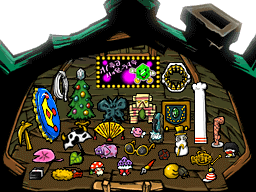
The Rupee Goods.
Thirty keepsakes, from the Rupee Poster that Uncle Rupee hands over early on to the Oink Flowers earned at an Oinker wedding. Some sit in chests in the dungeons, where a bodyguard is often needed to reach them; others reward long jobs such as paying for every bridge or buying back every finished map. They cannot be sold and are ballooned home to the attic. Find all thirty and the sealed door in the Rupee Shrine opens, leading to Pinkle and to the second ending.
Tingle Chance
Now and then a bodyguard sets off a slot machine in the middle of a fight. Stop the third reel on the matching symbol and every enemy on screen is wiped out, with a better payout than usual.
The drifters
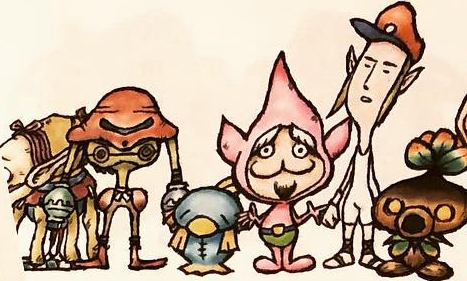
Concept art of the drifters Ronny and Teddy Todo.
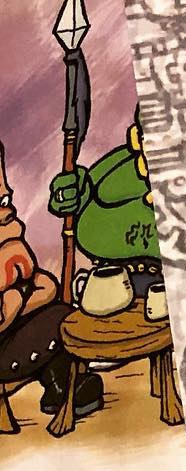
Teddy Todo, Yamori and Ronny are not for hire at any salon. Each must be earned and then found out in the world, each costs thousands of Rupees, and unlike salon bodyguards they will follow Tingle from one continent to another.
A new wardrobe
Finish the game and Tingle can change his clothes.
Checked against Zelda Dungeon, StrategyWiki and Wikipedia, November 2026.
Trivia & facts
The duel with Captain Stalfos.The duel with Captain Stalfos is a homage to Nintendo’s boxing game Punch-Out!!
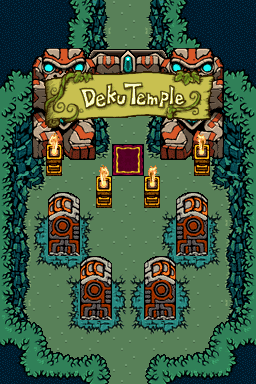
The entrance to the Deku Temple.Zelda references are everywhere. Lon Lon Meadow borrows its name from Lon Lon Ranch, Mount Desma is Death Mountain in a thin disguise, the Deku Temple plays a dramatic take on Saria’s Song, and Pinkle’s field calls arrive on a Tingle Tuner, the gadget from The Wind Waker.
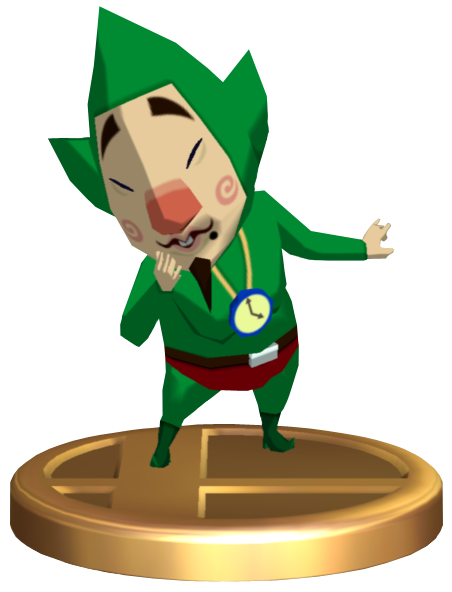
Tingle’s trophy in Super Smash Bros. Brawl.Super Smash Bros. Brawl (2008) includes stickers made from the game’s artwork, Pinkle among them, and Tingle’s trophy mentions the game under the shortened name “Tingle’s Rupeeland”.
Cano, the guard dog.The skeleton pirates are scared of dogs. Turn up at their jetty with the guard dog Cano as your bodyguard and they will refuse to take you across.
In Hyrule Warriors Legends, one of Tingle’s alternative outfits recolours him to look like Pinkle.
In May 2009 IGN named the box the scariest cover art in gaming.
The treasure chest holding the Deku Tree’s life savings contains exactly one Rupee.
The Spender Emblem.The Spender Emblem, one of the Rupee Goods, is called the “Buyer Emblem” in Japanese, a pun on Fire Emblem.
The European box carries a PEGI 12 rating with content descriptors for violence and sex.
A debug menu is still in the code. According to The Cutting Room Floor, an Action Replay code makes it open with L and R together, and leads to a map select full of unfinished test rooms.
Media & artwork
Box art from Japan and Europe, official character artwork and screenshots. Select any image to view it larger.
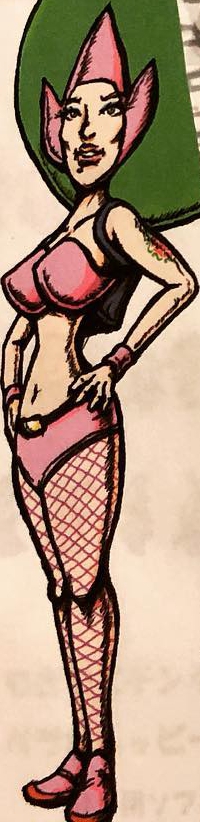
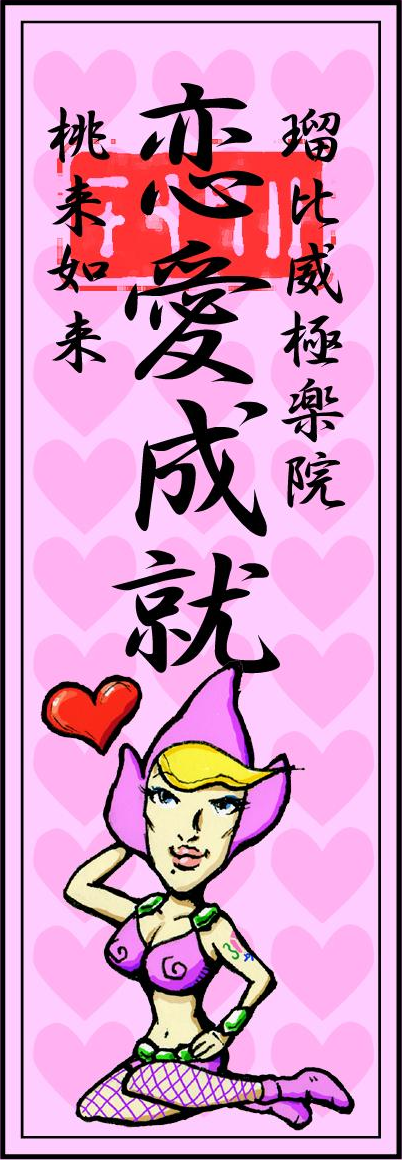
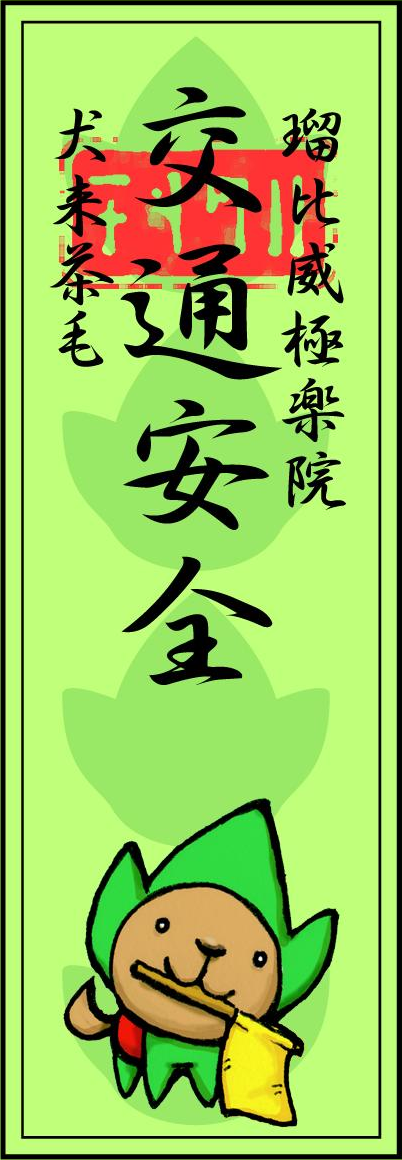
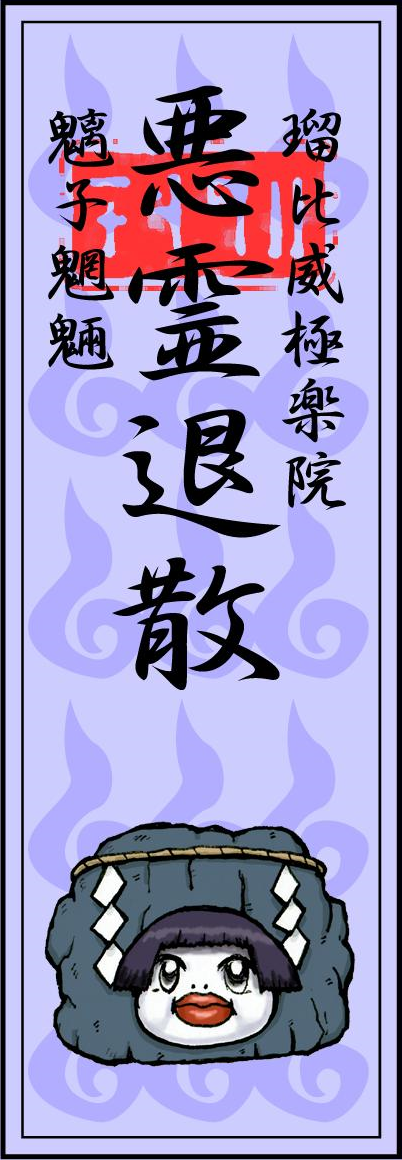
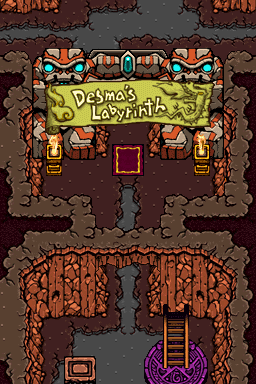
The Japanese logo.Official art of Pinkle.Concept art of Pinkle.A printable ofuda charm of Pinkle.A printable ofuda charm of Barkle.A printable ofuda charm of Chiko.Official art of Port Town.Desma’s Labyrinth, the volcano dungeon.The explorers.
Legacy
Rosy Rupeeland did well enough in Japan to make Tingle a regular on the DS for three years, and its reputation has grown since.
Release history
AnnouncedOctober 2005 – Revealed for Nintendo DS under the working title Tingle RPG.
Japan2 September 2006 – Released as Mogitate Chinkuru no Barairo Ruppīrando.
Tingle’s Balloon Fight DSApril 2007 – A Tingle version of Balloon Fight, given to Club Nintendo members in Japan.
Europe14 September 2007 – The translated version, and the only release in English.
Super Smash Bros. Brawl2008 – Stickers and a trophy reference carry the game into Nintendo’s crossover.
Dekisugi Tingle PackJune 2009 – A set of Tingle-themed DSiWare applications, Japan only.
The sequel6 August 2009 – Irozuki Tingle no Koi no Balloon Trip arrives on DS in Japan only.
What came next
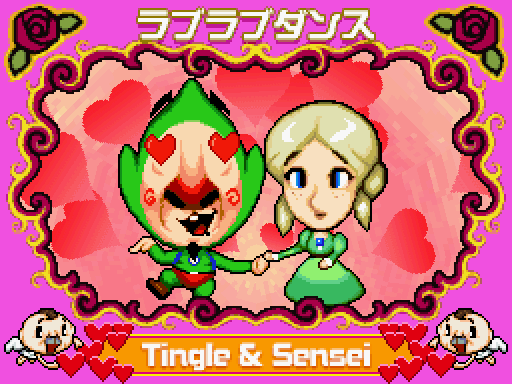
Tingle dances with Florence in the 2009 sequel, which never left Japan.
Vanpool followed up with Dekisugi Tingle Pack and then a full sequel, Irozuki Tingle no Koi no Balloon Trip, which swapped money-grubbing for a storybook romance played as a point-and-click adventure. Neither left Japan; according to Japanese Wikipedia, an interview about the sequel described the first game’s European sales as a disappointment. In between came Tingle’s Balloon Fight DS, a Club Nintendo reward.
That was the end of the line. Tanabe told an interviewer in June 2013 that he would like to make another Tingle game and win Western players round, and in 2018 it emerged that a Tingle horror game had been in the works before being cancelled. Vanpool itself moved on to Dillon’s Rolling Western and Kirby, and shut down in 2023.
A cult favourite
Artwork posted by Kazuyuki Kurashima for the game’s twelfth anniversary.
Time has been kind to Rosy Rupeeland. What reviewers in 2007 called shallow or repetitive now looks like a rare thing, a Nintendo-published game happy to send up its own flagship series, starring a hero with no redeeming features and a moral about greed. GamesRadar’s reviewer called it “the most Warioesque game ever”, which is about right. The DS card was the only release, so a second-hand European copy is the way to play it in English.
Sales & reviews
Sales figures
The game sold more than 45,000 copies in its first week in Japan, Gamasutra reported on 8 September 2006. It finished 2006 as Japan’s 57th best-selling game with 207,525 copies (Media Create), and added a further 21,295 in 2007 (Famitsu). Wikipedia gives a running total of 234,862 by the end of 2007. We found no published figures for Europe.
45,000+first week in Japan (Gamasutra, 8 September 2006)
234,862sold in Japan by the end of 2007
Reception and review scores
Scores from outlets that reviewed the Japanese import or the European release; scores not out of 100 are converted.
Official Nintendo MagazineUK · issue 14, March 2007
The aggregator GameRankings had it at 66.25% from 16 reviews. Praise went to the hand-drawn 2D art, the oddball cast and above all the bosses: Nintendo Life’s Marcel van Duyn suggested the last battle might be the finest fight in the whole Zelda series. The haggling drew the most complaints, along with the simple fights, the slow walking pace and the single save point. Nintendo World Report’s Karlie Yeung summed it up as “essentially an entire game of side quests”, and Nintendo Life found that “most of it is definitely fun” but that parts grow repetitive. Official Nintendo Magazine admired its humour and its “fantastically stylised graphics” while finding the dungeons dull.
Reader reviews
No reader reviews yet. Played it? Give it a score out of 10 and tell other fans what you think.
Every fact on this page was checked against the sources below in November 2026. IGN could not be read directly, so its 2005 announcement report, its 2007 survey story and its box-art list are used only as cited by Wikipedia. Zelda Wiki (zeldawiki.wiki) blocks automated reading, so it was not used.
To provide the best experiences, we use technologies like cookies to store and/or access device information. Consenting to these technologies will allow us to process data such as browsing behavior or unique IDs on this site. Not consenting or withdrawing consent, may adversely affect certain features and functions.
Functional
Always active
The technical storage or access is strictly necessary for the legitimate purpose of enabling the use of a specific service explicitly requested by the subscriber or user, or for the sole purpose of carrying out the transmission of a communication over an electronic communications network.
Preferences
The technical storage or access is necessary for the legitimate purpose of storing preferences that are not requested by the subscriber or user.
Statistics
The technical storage or access that is used exclusively for statistical purposes.The technical storage or access that is used exclusively for anonymous statistical purposes. Without a subpoena, voluntary compliance on the part of your Internet Service Provider, or additional records from a third party, information stored or retrieved for this purpose alone cannot usually be used to identify you.
Marketing
The technical storage or access is required to create user profiles to send advertising, or to track the user on a website or across several websites for similar marketing purposes.


 Hometown PrairieFirst continent · Dungeon: Hero’s ShrineTingle’s house, the Western Pool and Port Town with its shops. Boss: Beetle Lord: Death Bug.
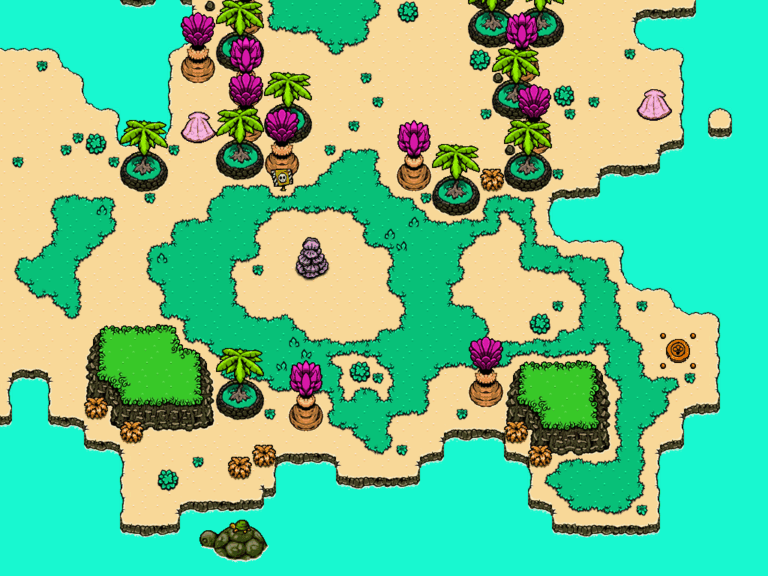 Sunshine SeashoreFirst continentBeaches, crabs and oysters with pearls worth stealing, plus the first Bodyguard Salon.
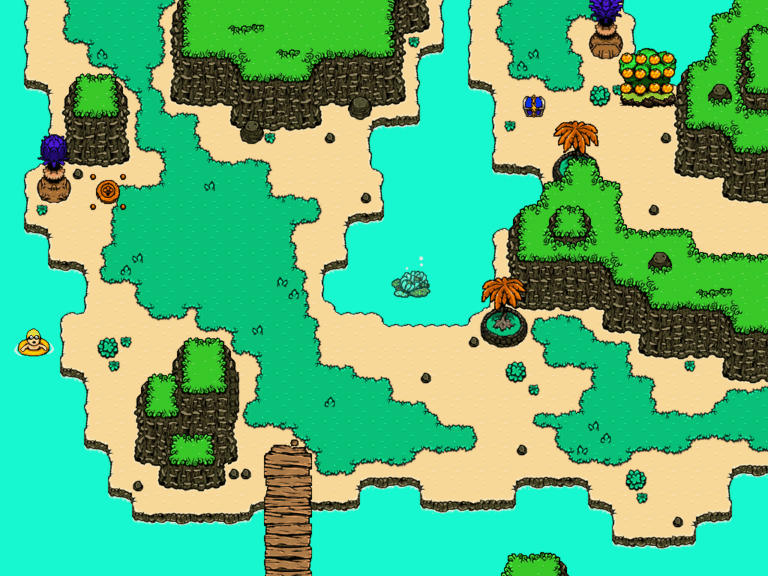 Cape TreasureFirst continent · Dungeon: Pirate HideawayWhere Barkle turns up, and where Tingle joins the skeleton pirates. Boss: Captain Stalfos.
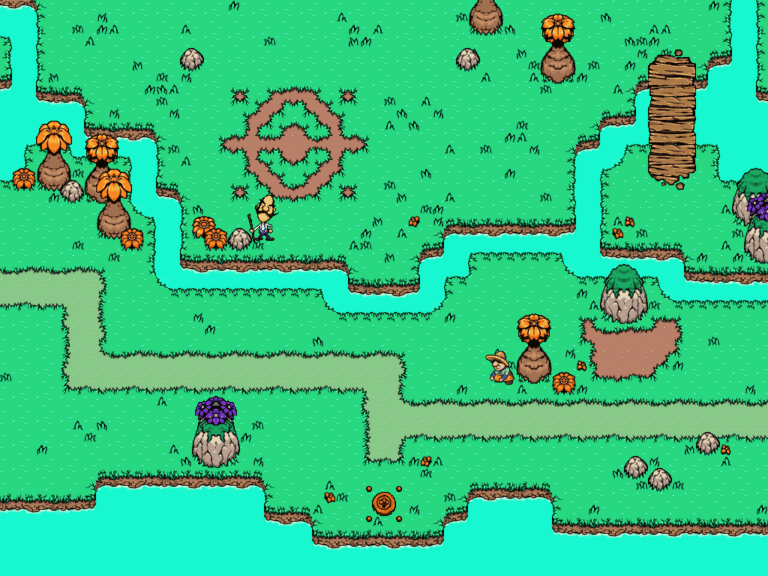 Lon Lon MeadowFirst continentFarmland with cows, a missing girl called Missy and a camp of pig-like Oinkers.
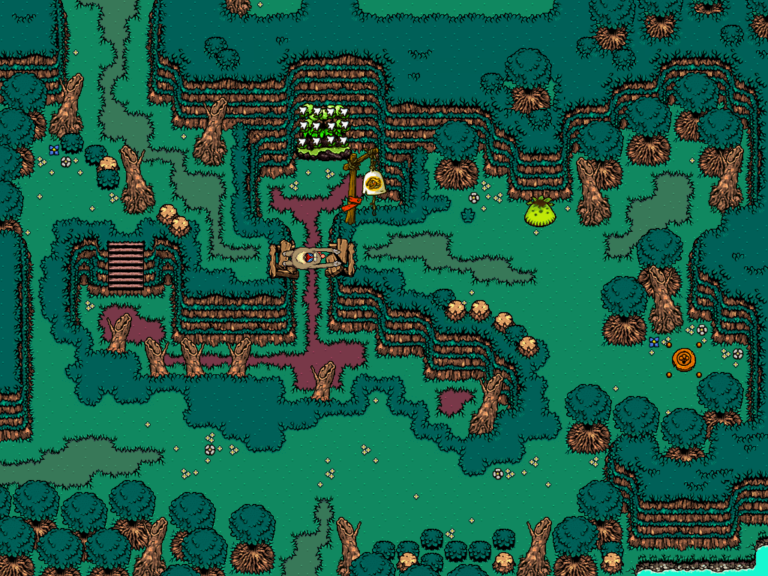 Deku ForestFirst continent · Dungeon: Deku TempleFog, a forest maze and the dying Deku Tree. Boss: Fierce Tricolour Flower: Bana Bana.
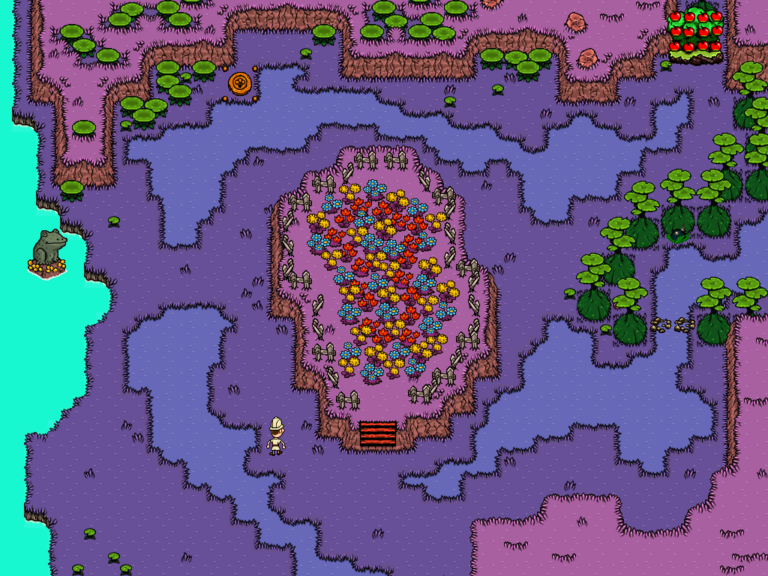 Steamy MarshSecond continentGas vents to clear with bombs, a giant beehive and Dr. Bean in his burrow.
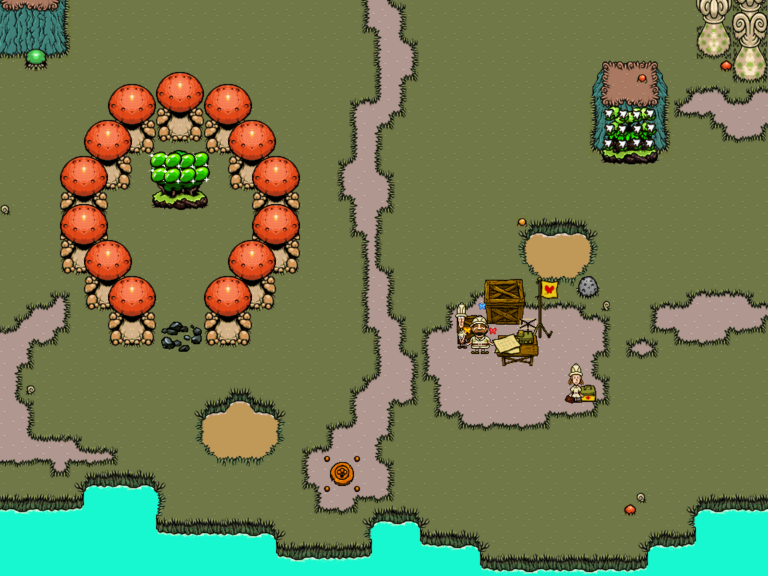 Gooey SwampSecond continent · Dungeon: Insect CavernAn explorers’ camp and four obelisks that open the cavern. Bosses: Beetle King: Ultra Death Bug, then Gargantu-Bug.
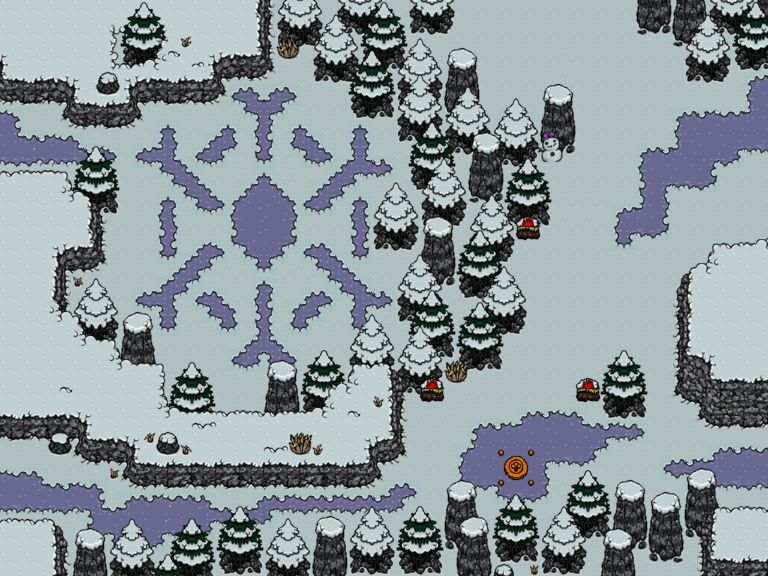 Icy PlainSecond continentBlizzards, penguins, polar bears, a family of snowmen and a haunted graveyard.
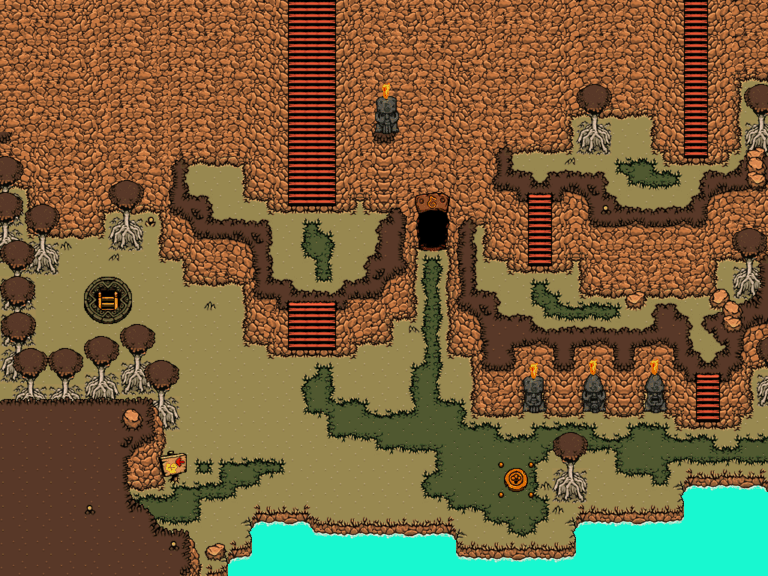 Mount DesmaThird continent · Dungeon: Desma’s LabyrinthA volcano with a Salona village near the top. Boss: Fire Monster: Dora Dora.
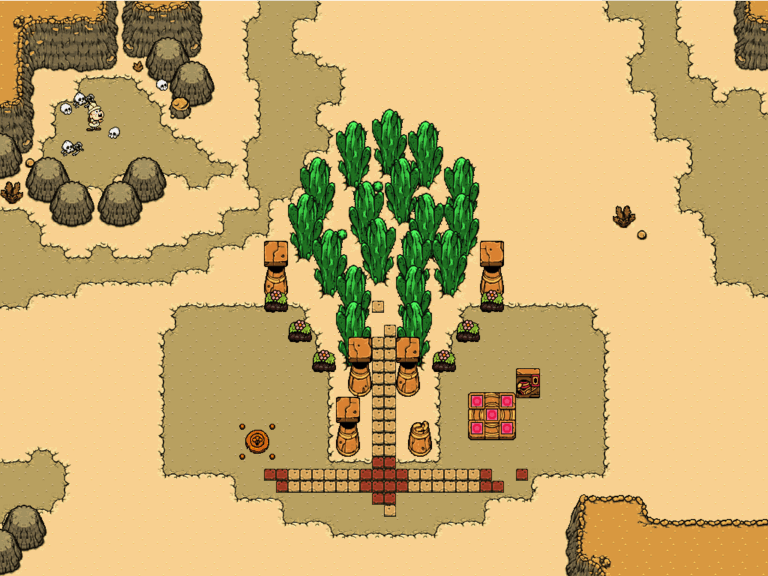 Fairy GardenThird continentA dried-up desert crossed in a rented vehicle, with five fountains to refill for the Grand Fairy.
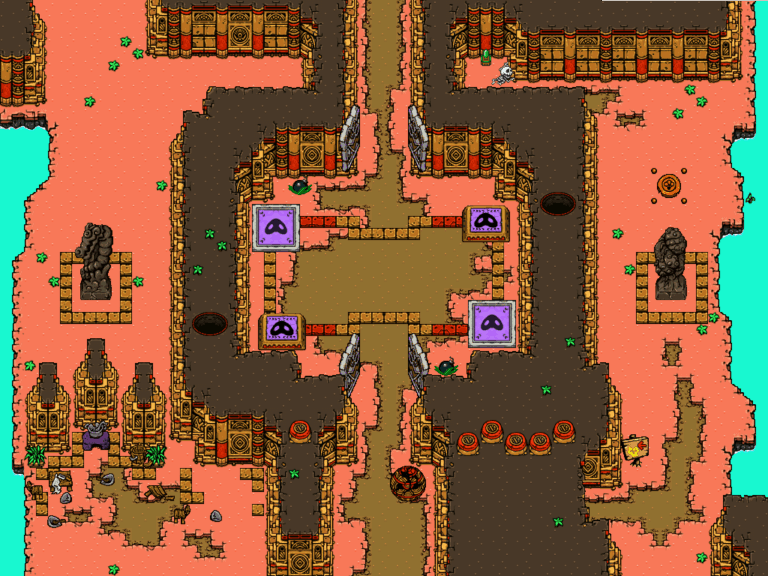 Auros RuinsThird continent · Rupee ShrineThe Oinkers’ headquarters, statues of the bosses beaten so far and the shrine that holds the Master Rupee.
 Tingleチンクル · age 35
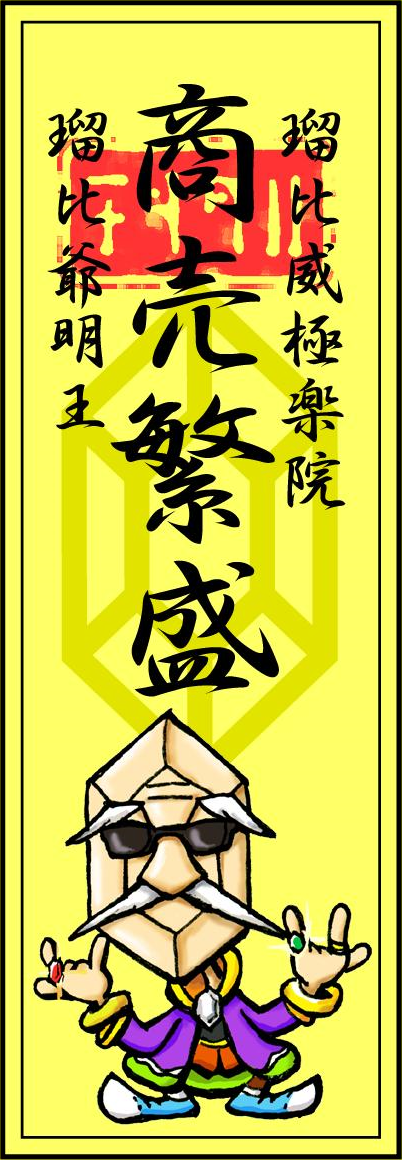 Uncle Rupeeルピじい · Rupee Master
 Pinkleピンクル · fairy
 Barkleワンクル · dog
 Teddy Todoテデトド · drifter bodyguard
 The people of Port TownShopkeepers and neighbours
 Beetle Lord: Death BugHero’s Shrine · Metal Super RupeeA giant bug bombed from above while Tingle hangs from his balloons.
 Captain StalfosPirate Hideaway · Aqua Super RupeeThe pirates’ skeleton captain, met in a one-on-one bout that pays homage to Punch-Out!!
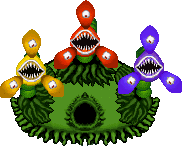 Fierce Tricolour Flower: Bana BanaDeku Temple · Leaf Super RupeeA three-headed plant. Each head has to be fed mushrooms of the right colour.
 Ultra Death Bug and Gargantu-BugInsect Cavern · Earth Super RupeeA tougher Death Bug that turns into a laser-spitting parasite halfway through.
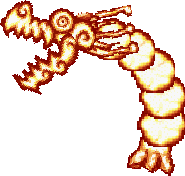 Fire Monster: Dora DoraDesma’s Labyrinth · Magma Super RupeeA dragon of fire. Tingle does not fight it; he flees up the volcano.
 Uncle RupeeTop of the towerThe final boss, fought in three rounds with Rupees as ammunition.