The Legend of Zelda: Four Swords Anniversary Edition
Zelda’s first multiplayer adventure, rebuilt for the series’ 25th birthday with a way to play alone, two new sets of stages and the best price tag in gaming: nothing at all.
28 September 2011 in Japan, North America, Europe and Australia
Price
Free
First download period
28 September 2011 to 20 February 2012
Second download period
30 January to 2 February 2014, North America only, Nintendo eShop on 3DS only
Available now
No
New in this version
Single-player mode, the Realm of Memories, the Hero’s Trial, a whistle, choice of tunic colour
Review average
85 on Metacritic (13 reviews)
Overview
Four Swords began life in 2002 as the other half of a Game Boy Advance cartridge: a short, sharp multiplayer Zelda that came with A Link to the Past and could not be played at all unless you had friends with Game Boy Advances, link cables and copies of their own. The Anniversary Edition was Nintendo’s way of opening it up.
It arrived on 28 September 2011 as a present for the series’ 25th anniversary, a free download for anyone with a Nintendo DSi or 3DS. Grezzo, the studio that had just remade Ocarina of Time for 3DS, worked on it with Nintendo, and it is more than a straight port. The cables are replaced by local wireless, there is at last a single-player mode in which you lead two Links, and two new sets of stages have been added: the Realm of Memories, which sends the Links through loving copies of older Zelda games, and the punishing Hero’s Trial.
The catch was the clock. The download was withdrawn on 20 February 2012, came back for four days in North America in 2014, and has not been offered since. If it is not already on your console, there is no official way to get it.
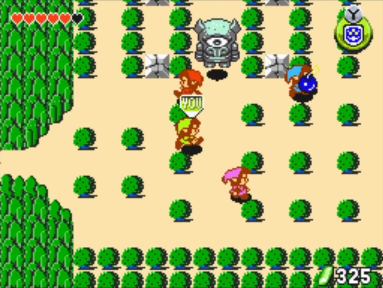
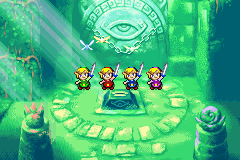
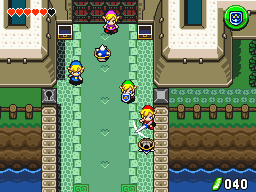
Two Links, one player: the new solo mode.The Realm of Memories revisits the first Legend of Zelda.Four Links together, now without cables.
“Fans of the original game and newcomers alike can expect classic 2D multiplayer adventure.”
That is from Nintendo’s announcement of 13 September 2011, which set the date, confirmed the game would be free for a limited time and described what was new: a helper Link for solo players, a whistle on the X Button, and two new areas of three levels each, with the Master Sword and the Hurricane Spin as prizes. “Fans of the franchise will be familiar with the Master Sword and Hurricane Spin,” it added.
— Official description: Nintendo UK news, “The Legend of Zelda: Four Swords Anniversary Edition arrives as an exclusive Nintendo DSiWare download”, 13 September 2011. Two sentences quoted; the rest summarised by Zelda Temple.
Quick Answers
The questions people most often ask about the Anniversary Edition, answered quickly and explained further down the page.
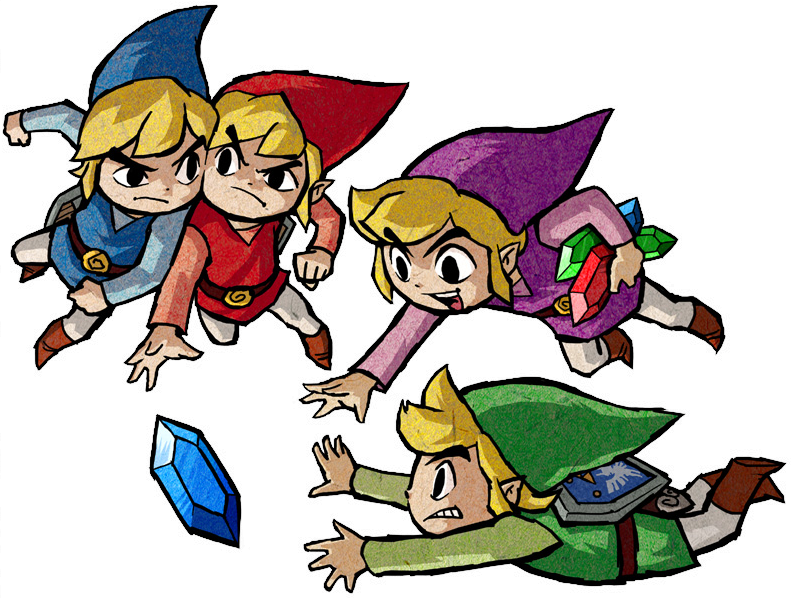
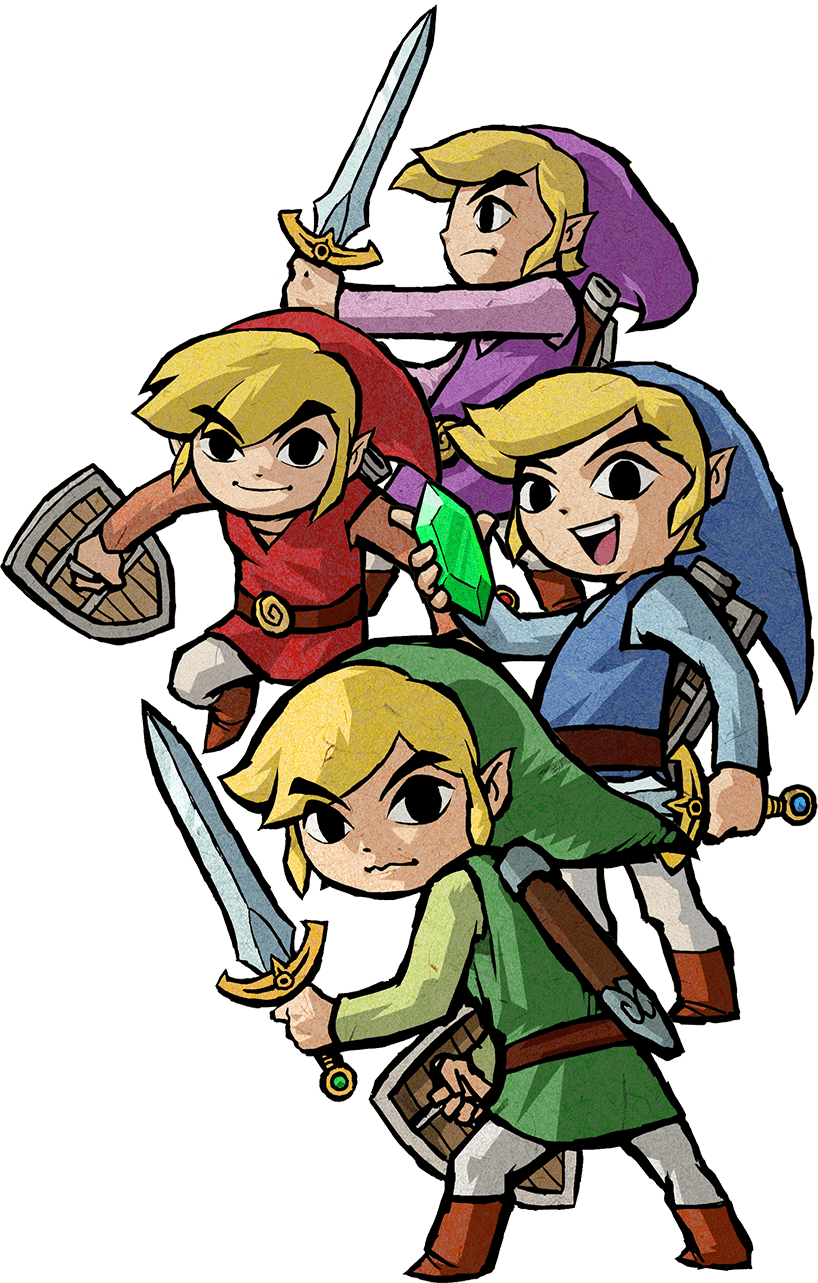
The four Links of Four Swords.
Is it the same game as Four Swords on Game Boy Advance?
Yes at heart: the same story, stages and bosses. It adds a single-player mode, wireless multiplayer and two new sets of stages, and it does not include A Link to the Past. More →
Can you play it on your own?
Yes, and that is the biggest change. You control one Link while a second follows, and you swap between them with the L or R Button. More →
What are the Realm of Memories and the Hero’s Trial?
Two new areas with three doors each. The Realm of Memories recreates the look of A Link to the Past, Link’s Awakening and the original Legend of Zelda and rewards you with the Master Sword. The Hero’s Trial is a set of much harder stages that ends with the Hurricane Spin. More →
Was it really free?
Yes. It cost nothing from 28 September 2011 to 20 February 2012, and again in North America from 30 January to 2 February 2014. More →
Can I still download it?
No. Nintendo has not offered it since February 2014, and it has never been sold. It only survives on consoles that downloaded it at the time. More →
Does it have online multiplayer?
No. Two to four players connect by local wireless, each on a DSi or 3DS of their own. More →
Who made it?
Nintendo and Grezzo, the studio behind Ocarina of Time 3D. The original Four Swords was made by Nintendo with Capcom’s Flagship studio. More →
What’s different from the original
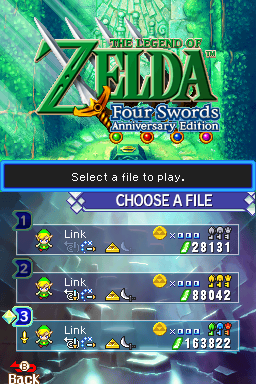
The Anniversary Edition has a file select screen of its own.
Everything that was in the Game Boy Advance game is here: the Chambers of Insight for training, the Sea of Trees, Death Mountain and Talus Cave, and Vaati’s Palace at the end, with the same race for Rupees. What Grezzo and Nintendo changed is how you get into the game, and how much there is to do once you have beaten it.
Feature
Four Swords (Game Boy Advance, 2002–03)
Anniversary Edition (DSiWare, 2011)
How it came
On one cartridge with A Link to the Past
A free download by itself, without A Link to the Past
Players
2 to 4
1 to 4
Playing alone
Impossible
A single-player mode with two Links
Connection
Link cables, a Game Boy Advance and a cartridge each
Local wireless between DSi, DSi XL and 3DS systems; no online play
Tunic colours
Fixed by player number: green, red, blue, purple
Player one is green; everyone else picks
Stages
Chambers of Insight, Sea of Trees, Death Mountain, Talus Cave, Vaati’s Palace
The same, plus the Realm of Memories and the Hero’s Trial
Master Sword and Hurricane Spin
Tied to A Link to the Past on the same cartridge
Won by clearing the Realm of Memories and the Hero’s Trial
Second screen
None
The lower screen shows the map and your inventory
Whistle
None
The X Button calls your partner or signals to other players
Save files
A file select shared with A Link to the Past
Its own file select, and you can name Link
Sound
Game Boy Advance audio
Some sound effects enhanced and the music lightly touched up
Price
A full-price cartridge
Free, for a limited time
Going solo with two Links
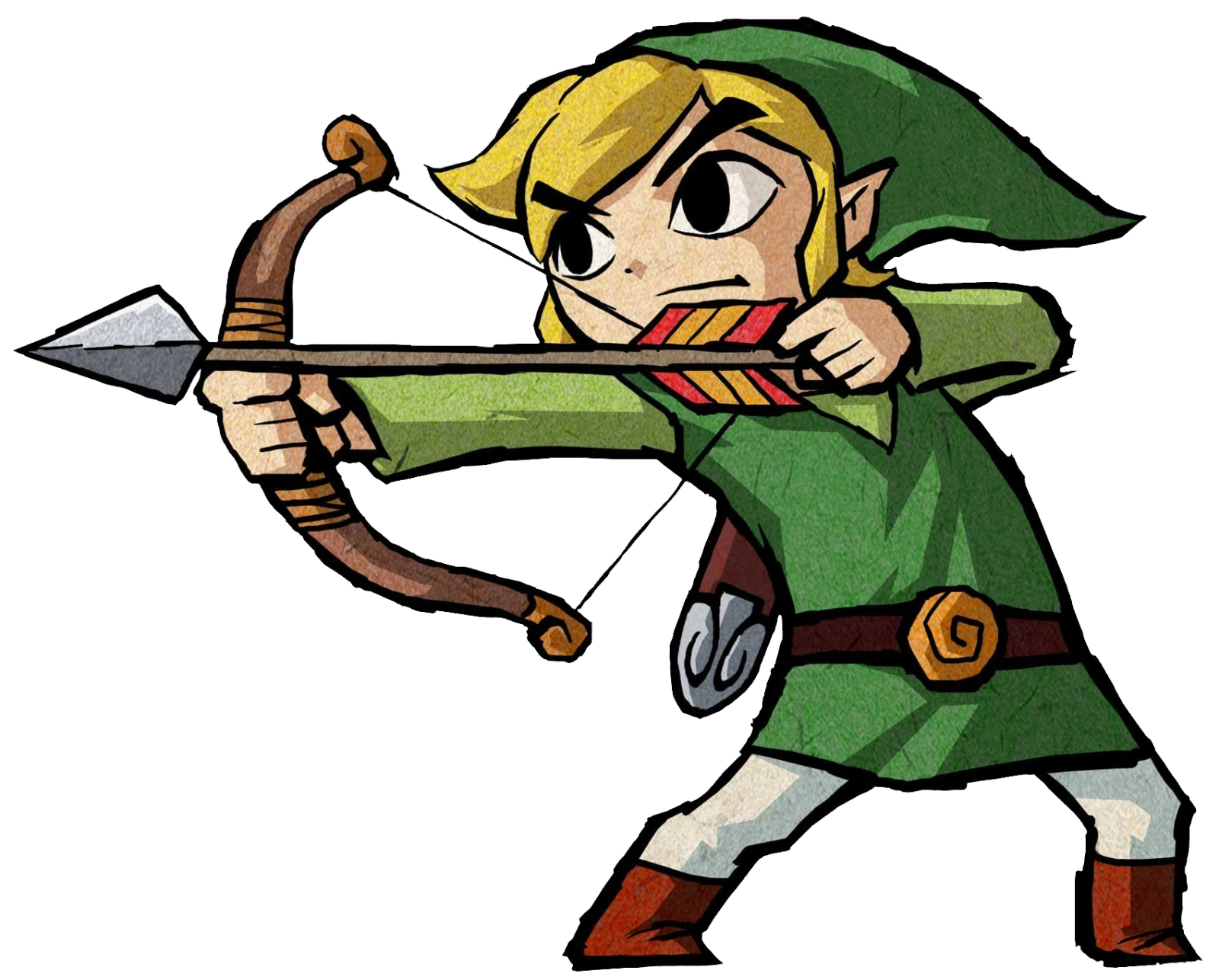
Official art of the green Link, who always leads.
The original would not start with fewer than two players. Here a lone player gets a partner: a second Link who trots along behind, much as the spare Links do in Four Swords Adventures. The leader is always green, and you choose the colour of the other. Press L or R to swap control or to split the pair up, and press X to blow a whistle that brings the other Link straight back to your side, however far away he is.
The stages are adjusted to suit. When a block is too heavy for one, the partner helps push without being asked. When a room has four switches, two statues stand in for the missing players. Each Link still carries only one item, so who holds the bow and who holds the bombs is a decision. Bosses remain a two-man job in which you have to work the Links separately, and Nintendo Life’s reviewer found those fights the clumsiest part of playing alone.
One thing solo players cannot earn is the Medal of Courage, the prize for the best-performing Link in a stage. Those are for multiplayer only.
Four players, no cables
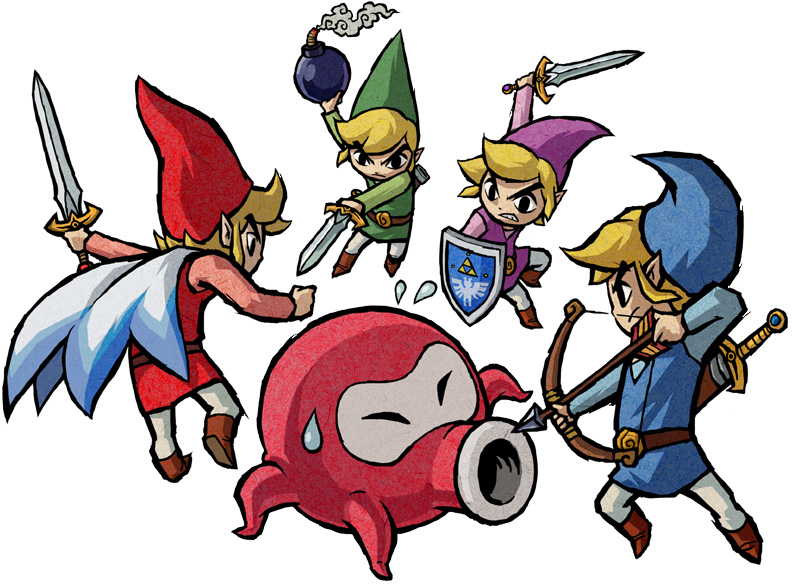
Official art of the Links fighting an Octorok.
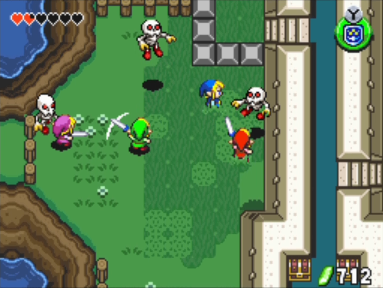
Multiplayer is the game as it always was: two to four Links solving rooms together while quietly trying to finish with more Rupees than each other. The difference is the set-up. Each player needs a DSi, DSi XL or 3DS with the download on it, one player hosts and the rest join over local wireless. With the game free, that was a far easier thing to arrange in 2011 than four cartridges and three cables had been in 2002.
There is no online play, which was the main complaint of Cubed3’s review. Nintendo Life argued that online play would not have worked well for this game anyway.
The Realm of Memories
The Link’s Awakening stage of the Realm of Memories.
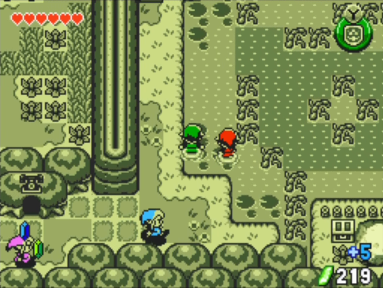
Beat Vaati once and the Realm of Memories opens: three stages built as tributes to earlier games, behind three doors. Zelda Dungeon lists them in the order they unlock: A Link to the Past first, then Link’s Awakening, then the original Legend of Zelda.
They are not just themed levels. Cubed3’s reviewer described the NES stage as drawn in 8-bit graphics with brown-haired Links, and the Link’s Awakening stage as shaded in the green and black of an original Game Boy screen. Each plays the main theme of its game, runs a little longer than a normal stage and has no boss. Unlike the main stages, their layouts are fixed and not shuffled each time.
Clear all three and the Links receive the Master Sword, which fires beams when the life meter is full.
A stage in the style of A Link to the Past.Brown-haired Links in the 8-bit stage.
The Hero’s Trial
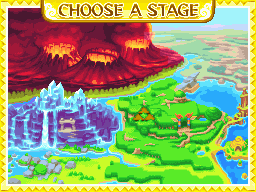
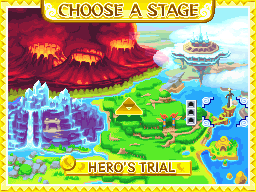
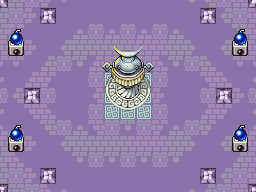
The map of the Hero’s Trial.
The second new area is for experts. The Hero’s Trial opens once you have banked 30,000 Rupees in total or, according to the Zelda Wiki on Fandom, won five Medals of Courage. It also has three doors, each a harder take on the main stages, and the third area of each is modelled on Vaati’s Palace. Nintendo’s announcement promised “elements from other levels as well as 3 new maps”. Cubed3 counted nine levels in all and called them some of the hardest 2D Zelda there is.
The reward is the Hurricane Spin: tap B during a spin attack and Link keeps on spinning.
Smaller changes
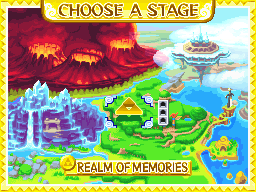
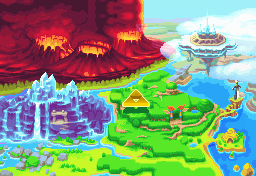
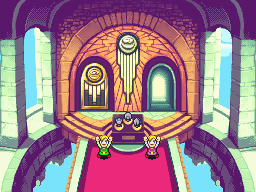
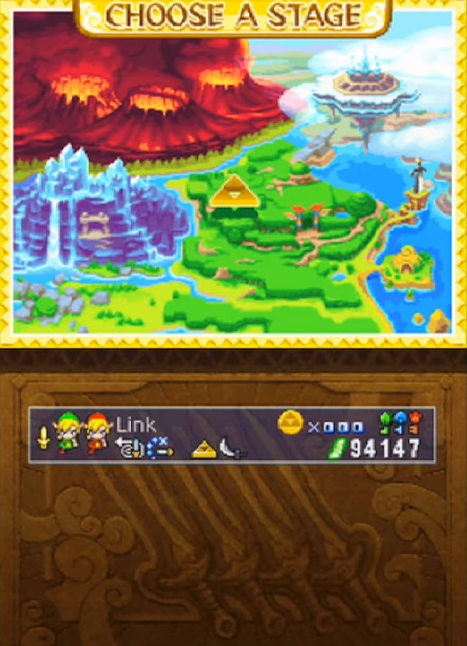
The Anniversary Edition’s overworld screen.
Because A Link to the Past is not included, everything that used to depend on it has been moved or dropped. The game has its own file select screen, where you can give Link a name, and the map screen has been slightly updated. Some sound effects were improved and the music given small instrumental touches. The lower screen shows the map and your inventory.
The Zelda Wiki on Fandom adds that three downloadable Flipnotes were released alongside the game, each pairing the 25th anniversary emblem with a song.
Plot / Story
Vaati, the Wind Sorcerer.
The story is the one told in 2002, and it is brief. Long ago the Wind Sorcerer Vaati carried off the girls of Hyrule, until a boy with a magic blade that split him into four sealed the sorcerer inside it. The blade is the Four Sword, and it has rested in its shrine ever since.
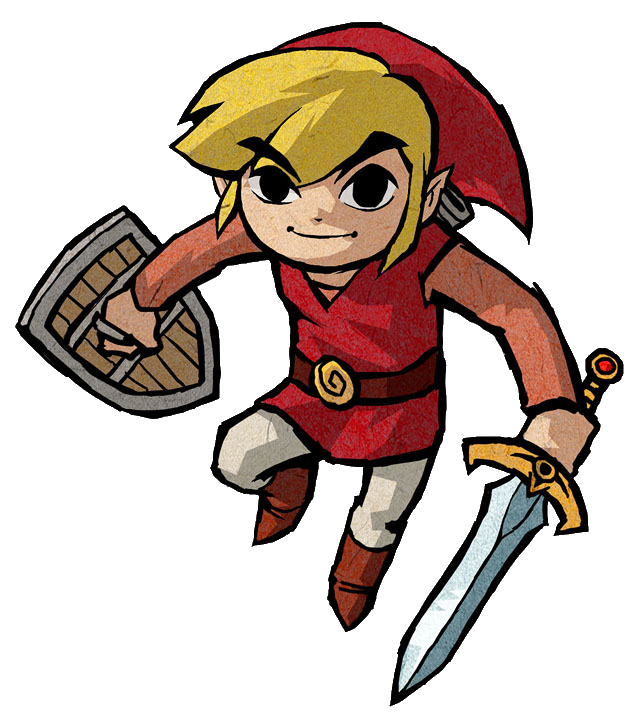
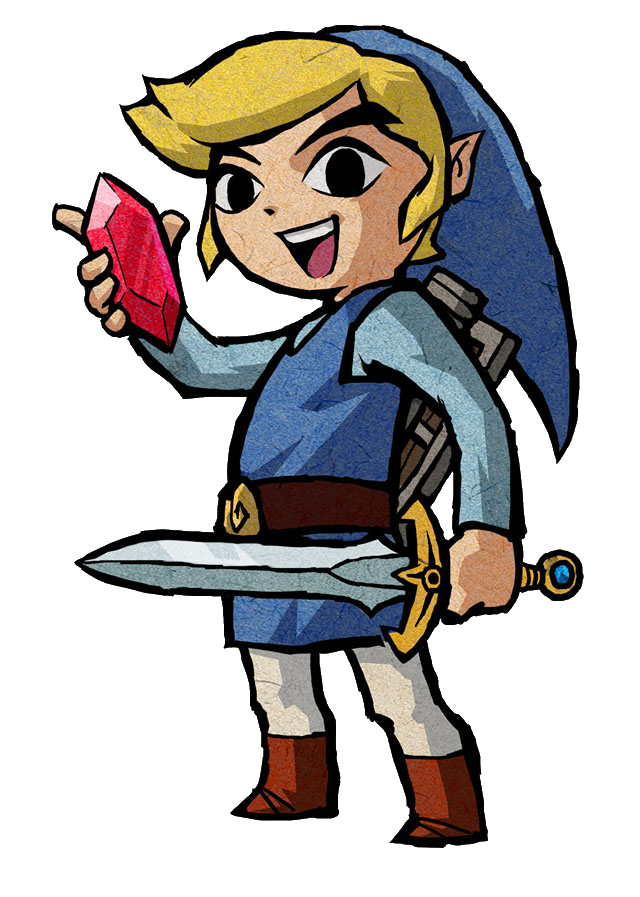
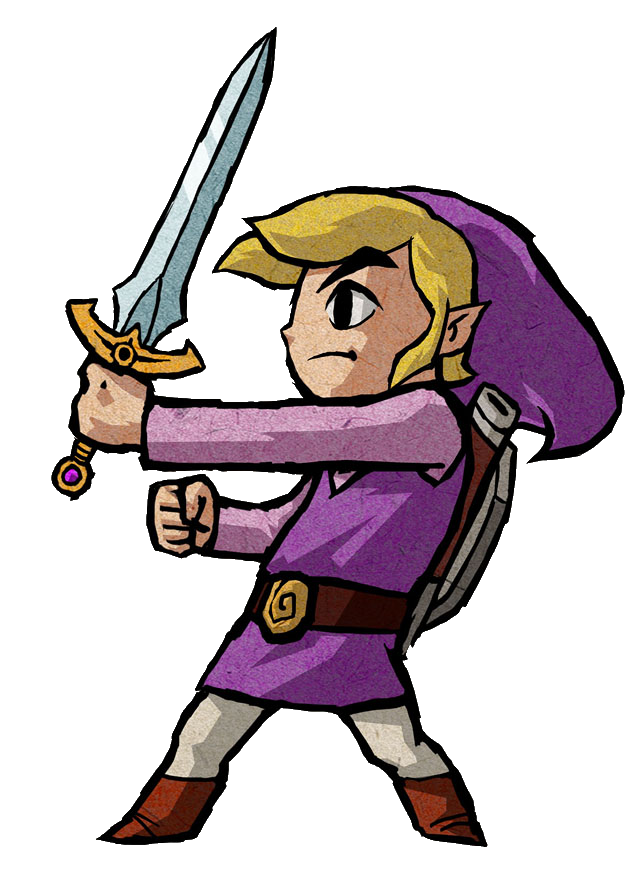
When Princess Zelda takes Link to check on the seal, Vaati breaks out and seizes her. Link draws the Four Sword, becomes four Links in green, red, blue and purple, and sets off across the Sea of Trees, Death Mountain and Talus Cave to earn the keys to Vaati’s Palace.
The Anniversary Edition adds no new plot. For the full telling, and the stages one by one, see our page on A Link to the Past & Four Swords.
How it was made
The Anniversary Edition was one piece of a year-long birthday party, and it went from a line in an interview to a finished download in a few months.
Who made it
No staff list for this version could be checked, so these are the companies involved.
GrezzoDevelopmentThe studio that made Ocarina of Time 3D earlier in 2011. It went on to co-develop Tri Force Heroes.
NintendoDevelopment and publishingCredited alongside Grezzo, and the publisher in every region.
Nintendo and Capcom’s FlagshipThe 2002 originalThe Game Boy Advance game that this version is built on. Its makers are covered on the Four Swords page.
A 25th birthday present
The Legend of Zelda 25th Anniversary emblem.
2011 was 25 years since the first Legend of Zelda, and Nintendo marked it with a run of releases. Shigeru Miyamoto listed them in an Iwata Asks interview that year: Ocarina of Time 3D, Link’s Awakening DX on the 3DS Virtual Console, Skyward Sword later in the year, and Four Swords, “scheduled for free download as the Nintendo DSiWare software starting in September”. Satoru Iwata called it “the year of The Legend of Zelda”.
Miyamoto did not say why Four Swords was chosen, but the format suited a giveaway: DSiWare could be downloaded on the DSi, the DSi XL and the 3DS alike.
Grezzo’s second Zelda of the year
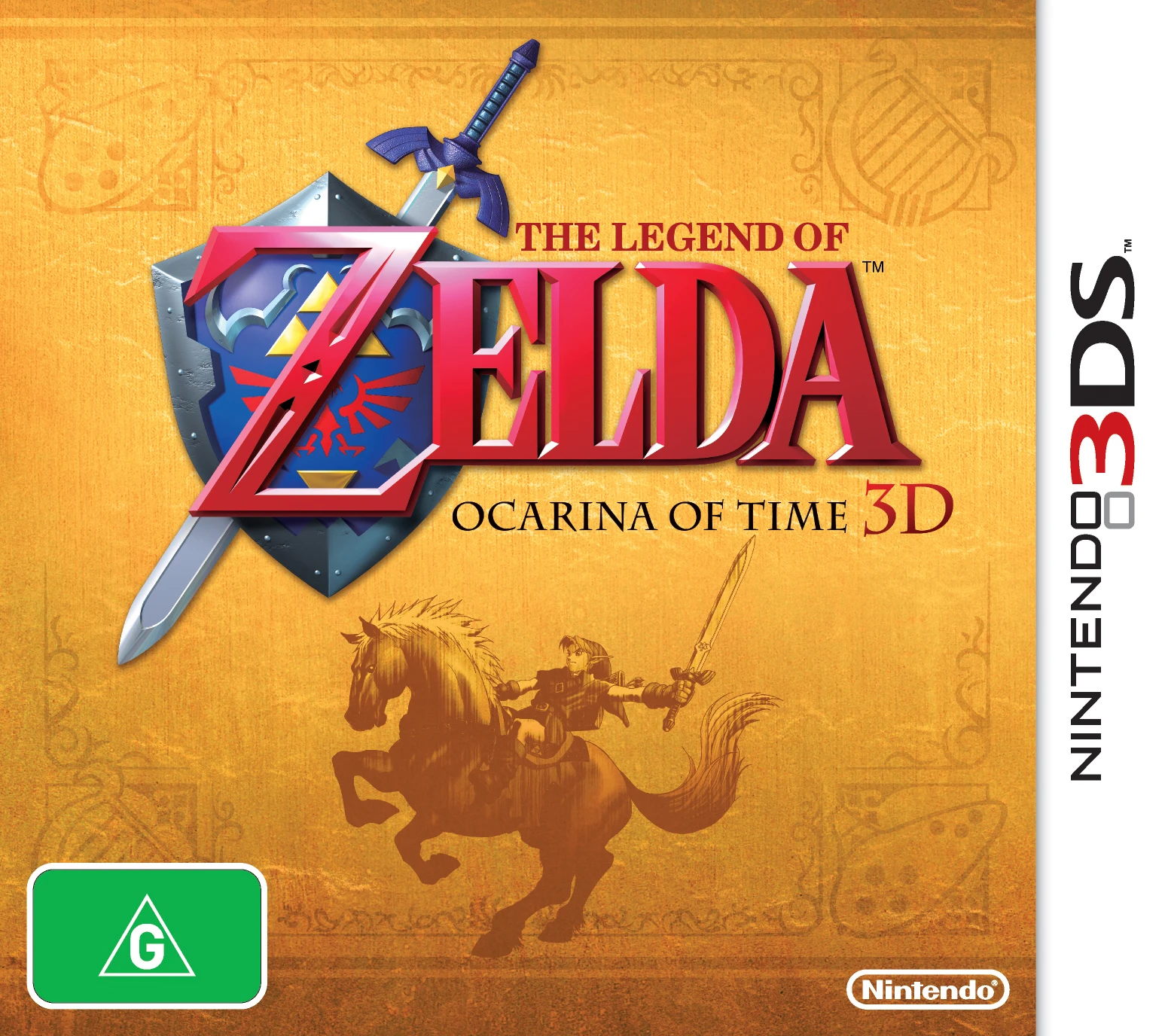
The Australian box of Ocarina of Time 3D, Grezzo’s first Zelda, released three months earlier.
The work went to Grezzo, whose remake of Ocarina of Time had come out in June. A Destructoid report from E3 2011, cited by Wikipedia, described the project as a port of the Game Boy Advance game, with online play still in question. What appeared in September was more ambitious: the solo mode, the wireless set-up and two new areas. Critics noticed. Nintendo Life called it “lovingly crafted”, and one of the reviews collected by Metacritic admitted surprise that Nintendo had put so much effort into something it was giving away.
Dated, detailed and advertised
Nintendo announced the details on 13 September 2011: a worldwide release on 28 September, free of charge, with the download to be withdrawn on 20 February 2012. The launch was backed by adverts starring Robin Williams and his daughter Zelda, who had already fronted the campaign for Ocarina of Time 3D.
Secrets & extras
There are no cheat codes, but the Anniversary Edition is built around things to unlock.
Three sets of keys
Vaati’s Palace and the Silver Keys.
As in the original, the game is meant to be played through three times. Finish each land with at least 1,000 Rupees for a Silver Key, then 3,000 for a Gold Key, then 5,000 for a Hero’s Key. Each set opens another door in Vaati’s Palace, and the Hero’s Keys lead to its longest and hardest version, a twelve-floor climb.
The Master Sword
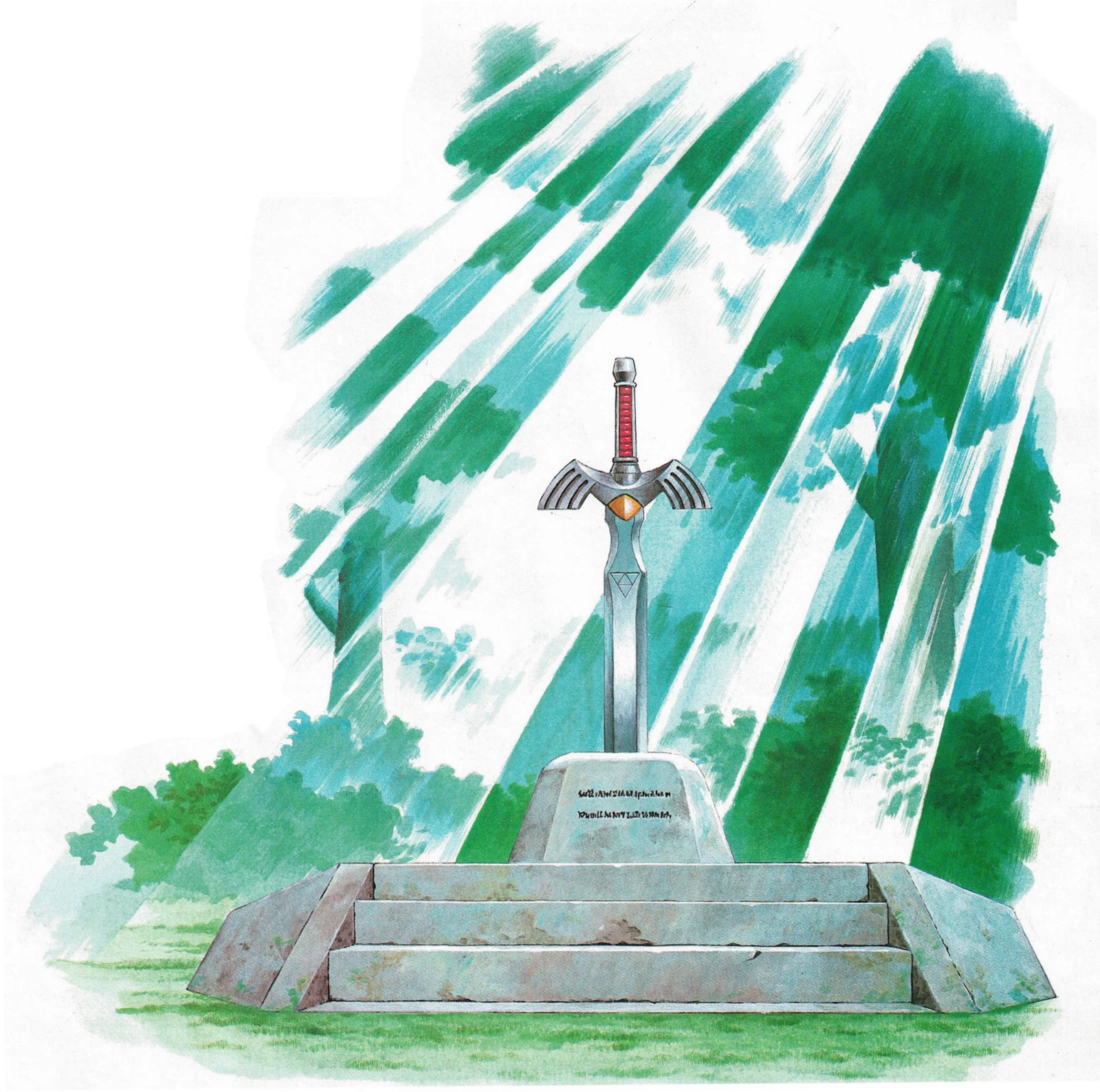
Official art of the Master Sword from A Link to the Past.
Clear all three doors of the Realm of Memories. With the Master Sword, Link fires sword beams whenever his hearts are full.
The Hurricane Spin
Clear all three doors of the Hero’s Trial. Press B repeatedly during a spin attack and Link goes on spinning. In the Game Boy Advance version this move was learned in A Link to the Past.
Beat the clock
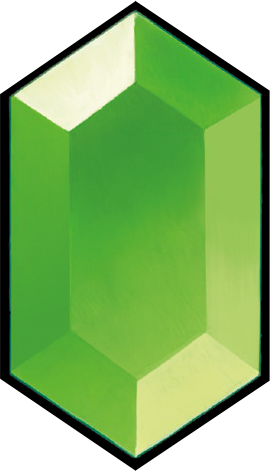
Official art of a big green Rupee.
Finishing a stage quickly pays a Rupee bonus, according to the Zelda Wiki on Fandom: 1,000 Rupees for getting through in under a minute, falling in steps to 50 for anything over five minutes.
Medals of Courage
Official art of a Medal of Courage.
In multiplayer, the Link who finishes a stage with the most Rupees wins a Medal of Courage. Solo players cannot earn them.
Checked against Zelda Dungeon, the Zelda Wiki on Fandom and Nintendo’s own announcement, November 2026.
Videos & media
Nintendo’s trailer for the Anniversary Edition, as uploaded by IGN, and the first of the two adverts with Robin Williams and his daughter Zelda, from Nintendo Life’s channel.
The 2011 trailer for Four Swords Anniversary Edition, from IGN’s YouTube channel.
Robin Williams and Zelda Williams in Nintendo’s advert for the game, from Nintendo Life’s YouTube channel.
Trivia & facts
The Japanese title spells the occasion out: Yottsu no Tsurugi 25 Shūnen Kinen Edishon, “Four Swords 25th Anniversary Commemorative Edition”.
The game’s second free period in 2014 lasted four days and was advertised on Nintendo’s Facebook page as “4 Swords, 4 Days, 4 Free!”
In the stage based on the original Legend of Zelda, the Links are redrawn in 8-bit style, with brown hair.
Another view of the Realm of Memories stage based on A Link to the Past.The Realm of Memories stages have no boss at the end. Their prize is the Master Sword itself.
The Cutting Room Floor found that the game can display up to 20 hearts, in two rows, but in normal play you never get beyond the first row.
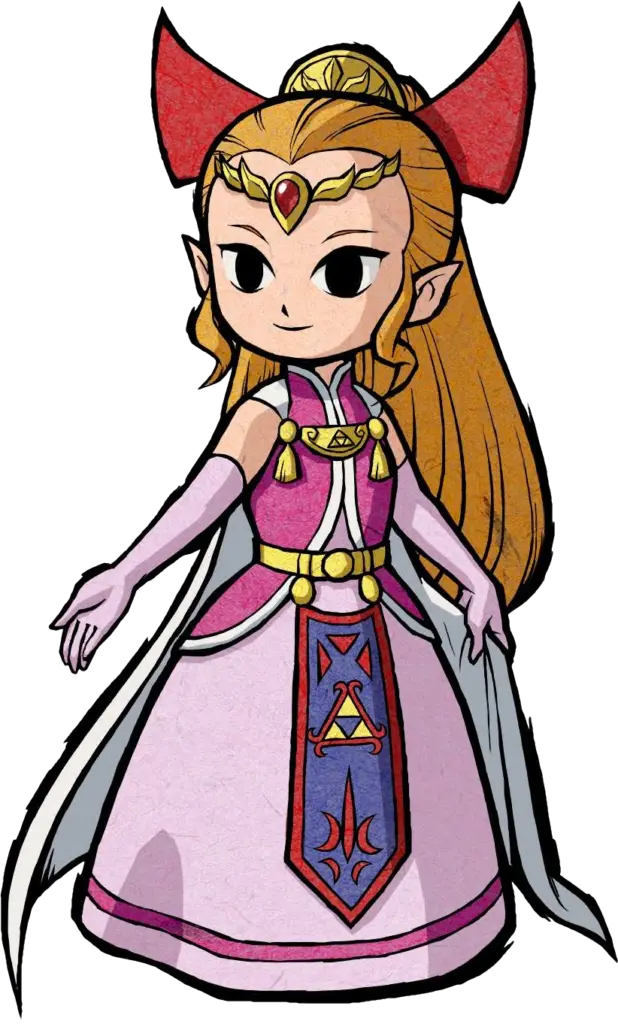
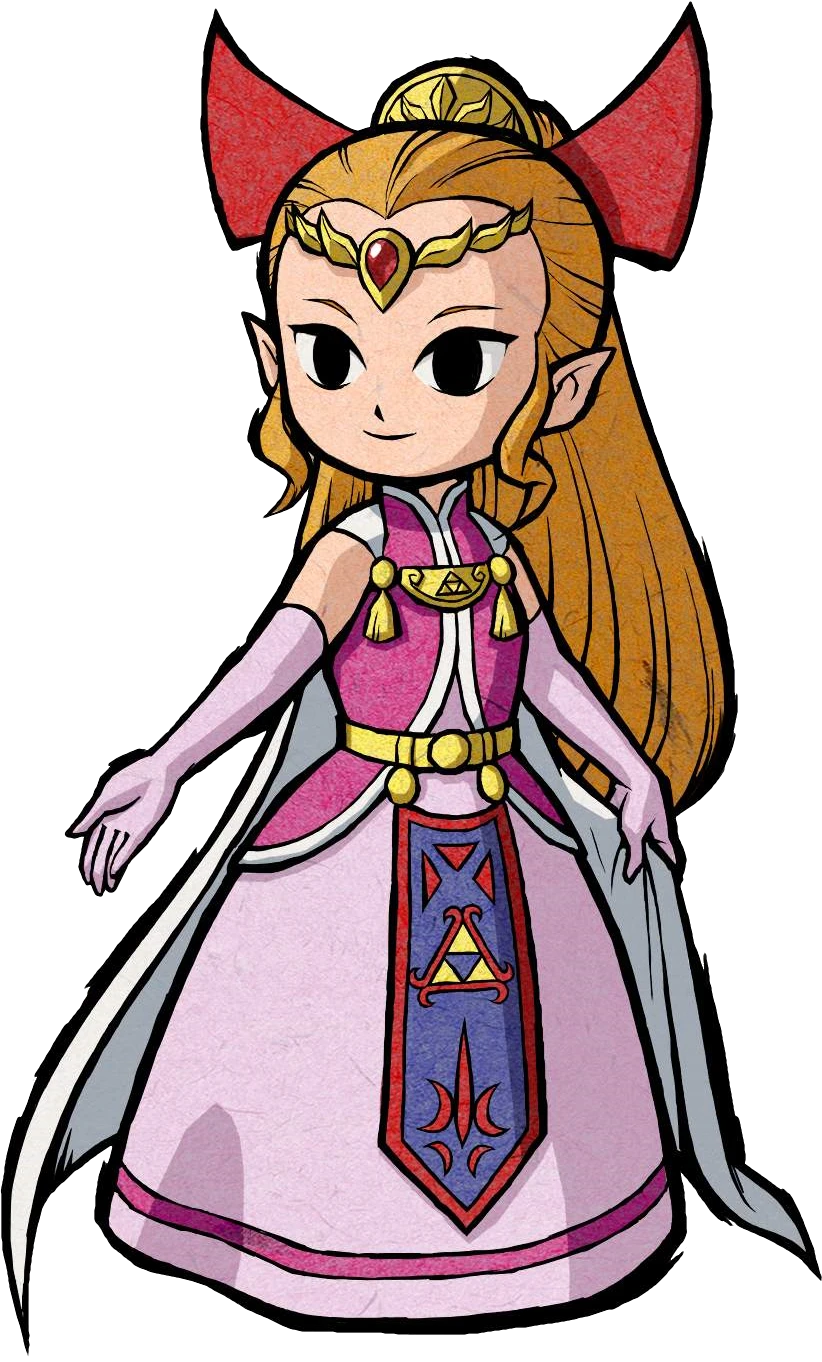
Princess Zelda in Four Swords.Robin Williams and his daughter Zelda Williams made two adverts for the game, a few months after appearing together for Ocarina of Time 3D.
GamesMaster magazine’s verdict, as excerpted by Metacritic, was one word: “Essential.”
A GameTrailers report of June 2011, cited by Wikipedia, expected the download in November. Miyamoto said September, and it arrived on the 28th.
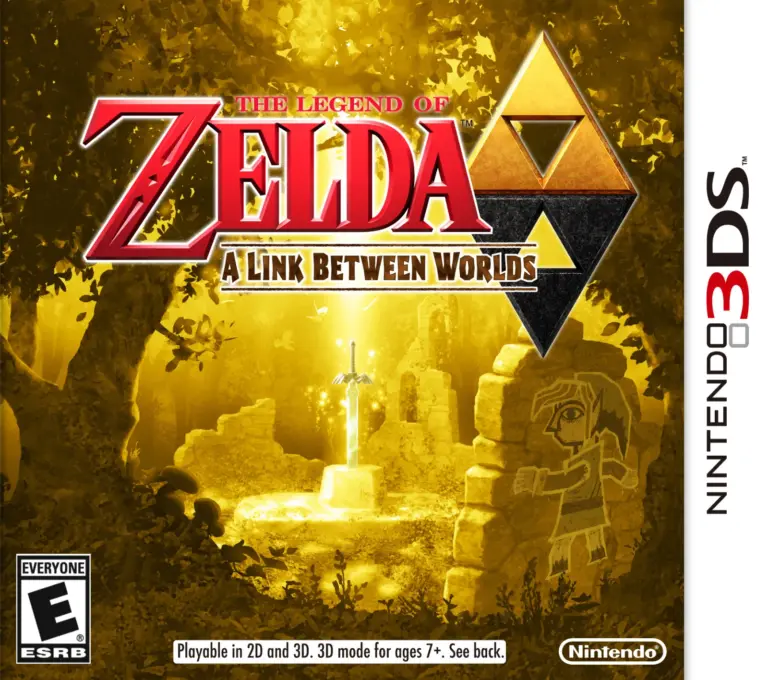
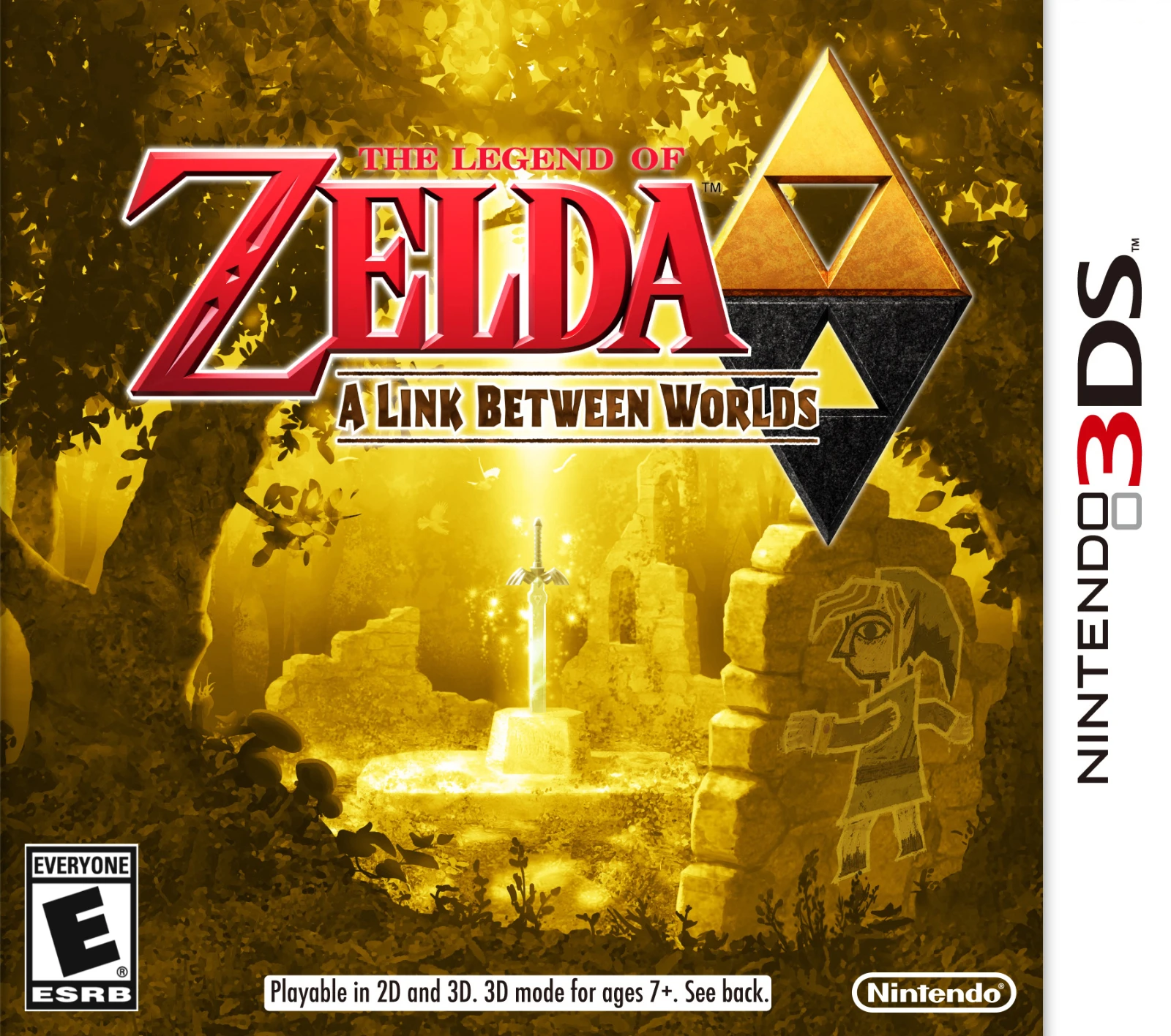
The North American box of A Link Between Worlds.The 2014 giveaway was Nintendo’s way of celebrating the reviews for A Link Between Worlds, which had come out late in 2013.
Media & artwork
Logos, official artwork and screenshots of the solo mode, the Realm of Memories and the Hero’s Trial. Select any image to view it larger.
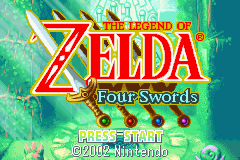
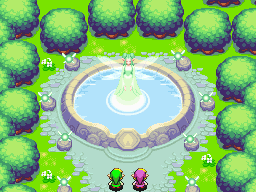
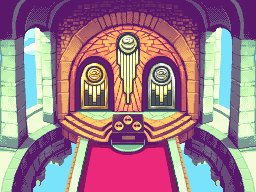
The original Four Swords logo (2002)Title screen of the 2002 Game Boy Advance originalThe Great Fairy’s fountain in the Sea of TreesThe entrance to Vaati’s PalaceThe boss room of Vaati’s PalaceThe 100% completion screenOfficial art of the red LinkOfficial art of the blue LinkOfficial art of the purple Link
Legacy
The Anniversary Edition was on offer for less than five months in all, which has made it one of the harder Zelda games to play today.
Release history
First mentionedJune 2011 – Nintendo includes a free DSiWare Four Swords in its 25th anniversary plans.
Details announced13 September 2011 – The date, the price (free) and the new modes are confirmed.
Released28 September 2011 – Available worldwide from the Nintendo DSi Shop and the Nintendo eShop.
Withdrawn20 February 2012 – The free download ends in every region.
Free again30 January–2 February 2014 – Four more days, in North America only and on the 3DS eShop only.
Original on Switch18 June 2024 – The Game Boy Advance cartridge, not this version, joins Nintendo Switch Online + Expansion Pack.
Can you still play it?
Only if you, or the previous owner of your console, downloaded it during one of the two free periods. Nintendo has not put it back on sale or on offer since February 2014, and Delisted Games now lists it as available nowhere.
What you can play is the original. A Link to the Past & Four Swords joined the Game Boy Advance library of Nintendo Switch Online + Expansion Pack on 18 June 2024, with Four Swords playable online. That is the 2002 game, though: it still needs at least two players, and the Realm of Memories and the Hero’s Trial are not in it. Those remain exclusive to a download that no longer exists.
What followed
The North American box of Tri Force Heroes (2015).
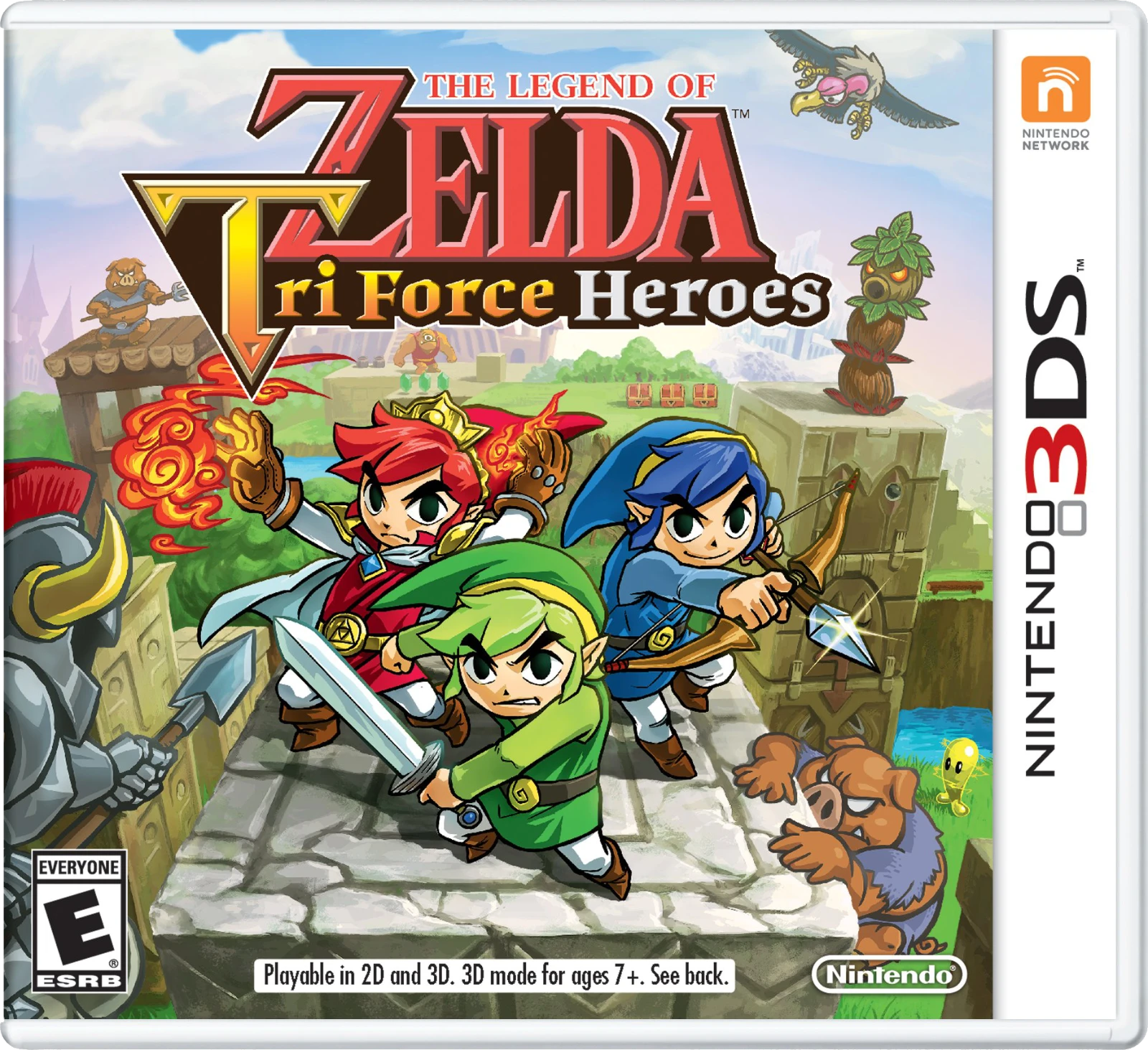
The solo mode’s idea of one player steering extra Links echoes Four Swords Adventures and turned up again in Tri Force Heroes (2015), which Grezzo co-developed and which gives a lone player two stand-in Links to switch between.
Sales & reviews
Reception and review scores
The Anniversary Edition averages 85 on Metacritic from 13 reviews. These are scores we could check against the reviews themselves or against Metacritic’s list.
Nintendo LifeUK · 2 October 2011
9/10
GamesMasterUK · 20 November 2011 (via Metacritic)
90%
Cubed3UK · 2 December 2011
8/10
Reviews were warm, and the price had a lot to do with it. Nintendo Life’s Thomas Whitehead called it “a terrific new version of the Four Swords adventure, lovingly crafted and full of content”, while noting that the campaign takes only two or three hours and that playing alone is easy until the boss fights. Cubed3’s Az Elias wished for online play and more Realm of Memories stages, and concluded that “there is absolutely no reason for you not to own this”.
There are no sales figures, because it was never sold, and we could find no published download count.
Reader reviews
No reader reviews yet. Played it? Give it a score out of 10 and tell other fans what you think.
Every fact on this page was checked against the sources below in November 2026. IGN, Polygon and Destructoid could not be read directly, so their 2011 and 2014 reports are used only as cited by Wikipedia and the Zelda Wiki on Fandom.
To provide the best experiences, we use technologies like cookies to store and/or access device information. Consenting to these technologies will allow us to process data such as browsing behavior or unique IDs on this site. Not consenting or withdrawing consent, may adversely affect certain features and functions.
Functional
Always active
The technical storage or access is strictly necessary for the legitimate purpose of enabling the use of a specific service explicitly requested by the subscriber or user, or for the sole purpose of carrying out the transmission of a communication over an electronic communications network.
Preferences
The technical storage or access is necessary for the legitimate purpose of storing preferences that are not requested by the subscriber or user.
Statistics
The technical storage or access that is used exclusively for statistical purposes.The technical storage or access that is used exclusively for anonymous statistical purposes. Without a subpoena, voluntary compliance on the part of your Internet Service Provider, or additional records from a third party, information stored or retrieved for this purpose alone cannot usually be used to identify you.
Marketing
The technical storage or access is required to create user profiles to send advertising, or to track the user on a website or across several websites for similar marketing purposes.