A 20-minute playable demo of The Wind Waker, the film The Legend of Zelda: A Retrospective and a Wind Waker highlight reel
Players
1
Europe
From 14 November 2003, in the Mario Kart: Double Dash!! Limited Edition Pak; later through UK offers
North America
From 17 November 2003, in a $99.99 GameCube bundle, by registering games or with a Nintendo Power subscription
Japan
From 18 March 2004, as a Club Nintendo gift for 500 points
Australia
From 19 March 2004, for buying two selected games
Picture
The Nintendo 64 games run at 640×480 instead of 320×240; in PAL regions the disc is 60Hz only
Known problem
Majora’s Mask can freeze and has sound glitches
Typical price now
About $56 loose, $82 complete (PriceCharting, November 2026)
Overview
Collector’s Edition is the nearest thing the GameCube had to a Zelda greatest-hits album. One disc holds four complete games: the two NES adventures, The Legend of Zelda and Zelda II: The Adventure of Link, and the two Nintendo 64 epics, Ocarina of Time and Majora’s Mask. Alongside them are a 20-minute demo of The Wind Waker and two short films, one of them a history of the series.
You could not buy it. Nintendo used the disc to sell GameCubes in the run-up to Christmas 2003, and to reward the people who already had one. In North America it came inside a $99.99 console bundle, or in the post if you registered your games or subscribed to Nintendo Power. Europe packed it with a Mario Kart console set, the UK ran three different offers in three months, Australia asked for two receipts and Japan made it a Club Nintendo prize.
For many players it was the first chance to own Majora’s Mask without a Nintendo 64 and an Expansion Pak, which makes it a pity that Majora’s Mask is the one game on the disc that does not behave. All four games are emulated, and the emulator is not quite up to the job there. It was wanted all the same: within weeks Nintendo UK was describing it as “highly sought after”.
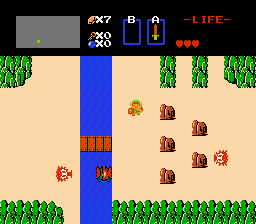
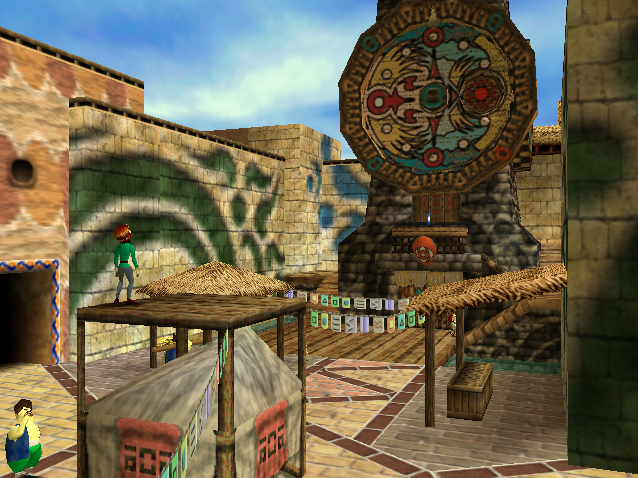
The Legend of Zelda, running on a GameCube.Majora’s Mask, the game that gave the emulator trouble.
“Highly sought after by gamers throughout the world, the bonus disc contains four classic Zelda games.”
That is Nintendo UK in January 2004, announcing yet another way to get hold of a disc that its Stars Catalogue offer had run out of in minutes. The same announcement had a blunter headline: “Get 4 free games when you buy selected Nintendo GameCube software in January!”
— Official description: Nintendo UK press release, “UK GC Owners get chance of free Zelda!”, 5 January 2004 (as carried by Nintendo World Report).
Quick Answers
The questions people most often ask about Collector’s Edition, answered quickly and explained further down the page.
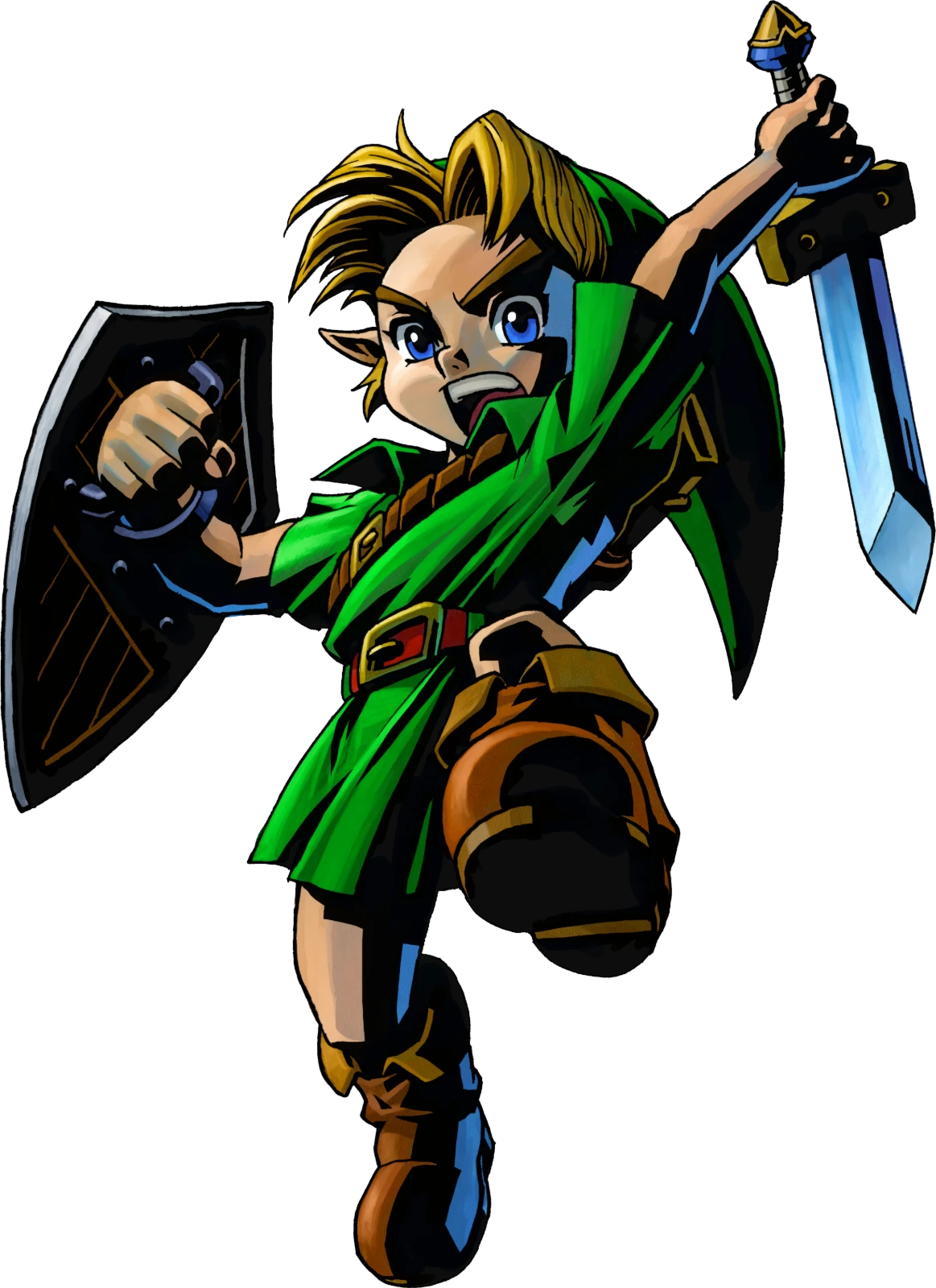
Official art of Link from Majora’s Mask, the disc’s biggest draw.
What is on the Collector’s Edition disc?
Four complete games (The Legend of Zelda, Zelda II: The Adventure of Link, Ocarina of Time and Majora’s Mask), a 20-minute playable demo of The Wind Waker, a retrospective film about the series and a Wind Waker highlight reel. More →
Was it ever sold in shops?
No. It was only ever a free gift: packed with GameCube consoles, sent to people who registered or bought certain games, given with Nintendo Power subscriptions, or exchanged for Club Nintendo points. More →
Does it include A Link to the Past or Master Quest?
No. The only games are the two NES titles and the two Nintendo 64 titles. Master Quest was on a different GameCube disc, the one given away with The Wind Waker. More →
Is Majora’s Mask broken on it?
Not broken, but unreliable. The game starts with a warning about its sound, the frame rate is rougher than on Nintendo 64, and it can freeze, which costs you everything since your last save. More →
Is the whole of The Wind Waker on the disc?
No, only a demo that ends after 20 minutes. More →
How much is it worth?
When we checked PriceCharting in November 2026, the North American disc on its own averaged about $56, a complete copy about $82 and a sealed one about $200. Prices move, so treat that as a snapshot. More →
What is on the disc
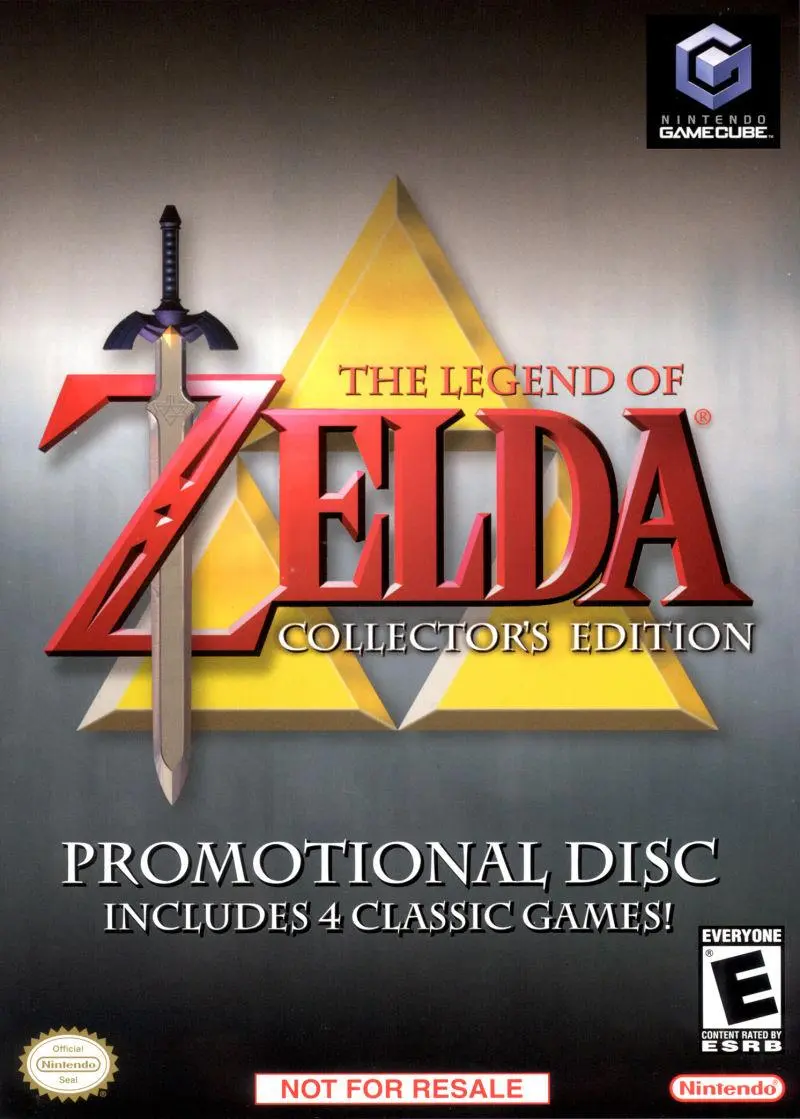
The North American disc.
Start the disc and a menu offers the four games, the demo and the films. Every game is the complete original, running through an emulator, not a new GameCube version. One emulator handles the NES pair and another the Nintendo 64 pair, and progress is saved to the Memory Card.
A short film history of the series, from the first game to The Wind Waker
Wind Waker highlight reel
New for this disc
Footage of the best moments of the GameCube game
The two NES adventures
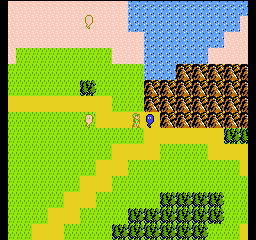
The overworld of Zelda II: The Adventure of Link.
The Legend of Zelda and Zelda II: The Adventure of Link are here from first screen to last, and the Zelda Wiki on Fandom notes that their text was revised to put right mistranslations in the NES originals. In Japan the pair are the Famicom Disk System versions of 1986 and 1987.
The NES emulator leaves a signature behind. The Cutting Room Floor found a build stamp inside both games that reads “QFC v030807 [hayakawa@srd]”, which dates it to 7 August 2003 and points to SRD, the company whose programmers also worked on Ocarina of Time itself.
The two Nintendo 64 epics
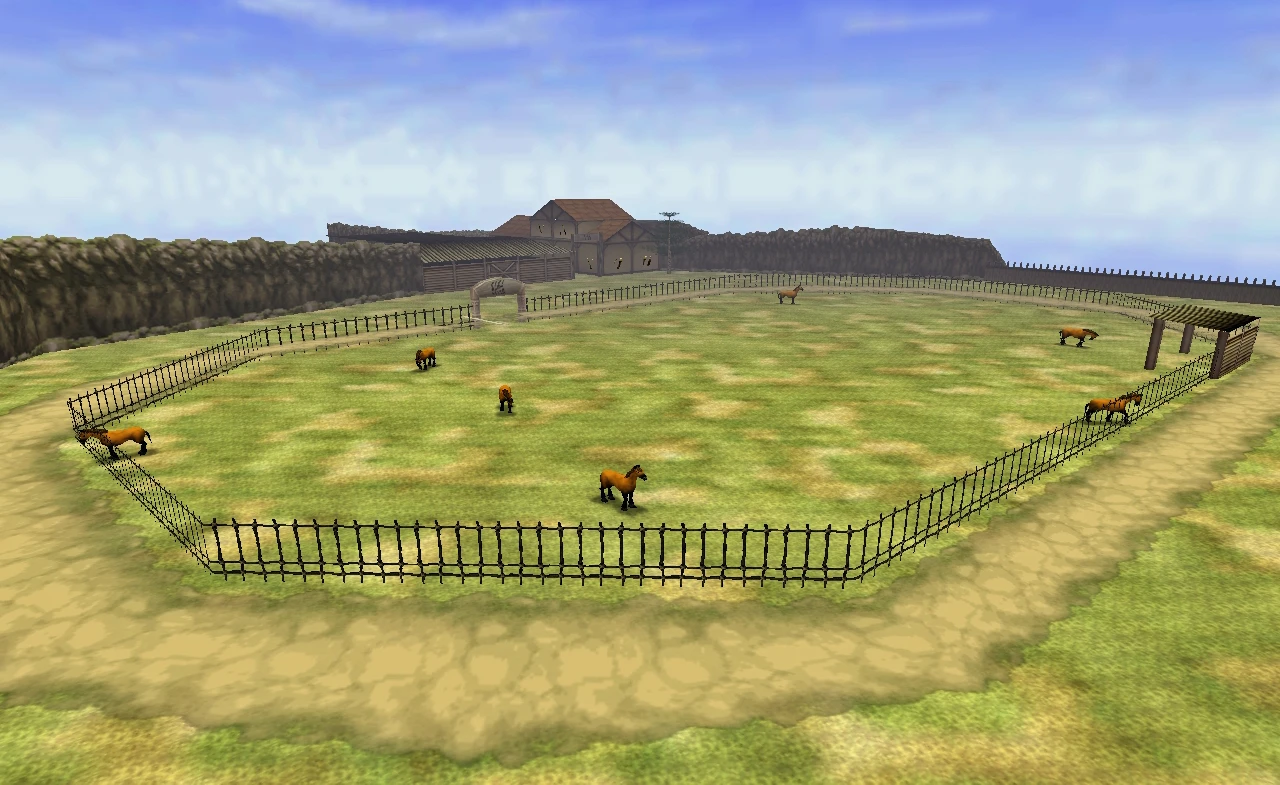
Lon Lon Ranch in Ocarina of Time.
Ocarina of Time had already appeared on GameCube, on the Master Quest bonus disc given away with The Wind Waker. This is that version again, without Master Quest: the picture is drawn at 640×480 where the Nintendo 64 managed 320×240, and the button icons match the GameCube pad. As on the earlier disc, its closing credits are a recorded video, a 450 MB file, because the emulator could not keep the music in time with the live scenes.
Majora’s Mask is the real prize, since this was its first release on anything but a Nintendo 64. It gets the same sharper picture and the same recoloured icons. It also gets most of the disc’s problems, which are covered under Emulation problems below.
Twenty minutes of The Wind Waker
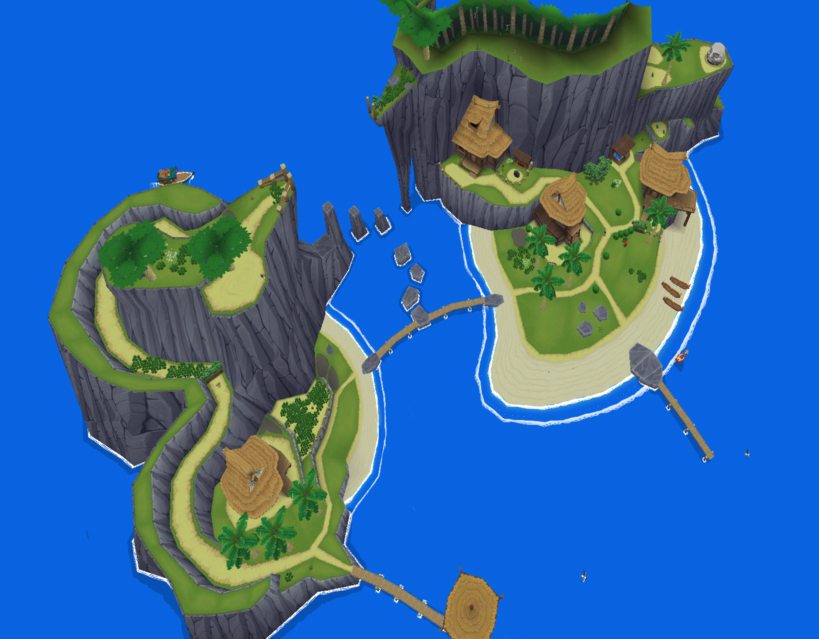
Outset Island in The Wind Waker.
The newest Zelda of the day is represented by a demo. You pick one of several parts of The Wind Waker and play until a 20-minute limit runs out. The full game had been in the shops since the spring in the West, so the demo made most sense for people who got the disc with a brand-new console.
The retrospective and the highlight reel
Two videos round the disc off. The Legend of Zelda: A Retrospective is a short history of the series, running from the 1986 original up to The Wind Waker. The second is a reel of Wind Waker highlights. Japan’s Dengeki Online listed them as a “special movie” and a collection of famous scenes.
Differences between regions
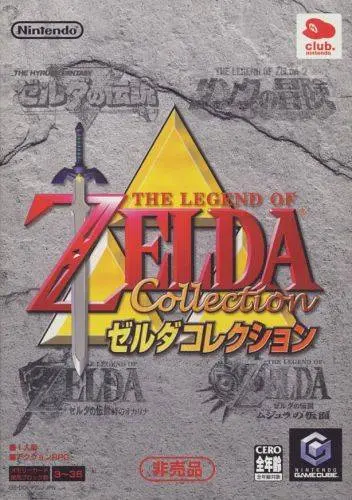
Japan’s Zelda Collection.
The Japanese disc is called Zelda Collection and does not sound the same. According to The Cutting Room Floor, its menu plays a new arrangement of the overworld theme from the first Zelda, while the Western discs reuse the Hyrule Field music from the Ocarina of Time bonus disc. Japan’s copy of Ocarina of Time was also rebuilt for the collection, on 8 October 2003.
European players got the oddest version. The PAL disc runs only in 60Hz mode, with no 50Hz option at all. The Cutting Room Floor counts it as the first PAL game to do that and one of only three on GameCube, with Metroid Prime 2: Echoes and Geist. On an older television that could not show a 60Hz picture, it simply would not play.
How it was given away
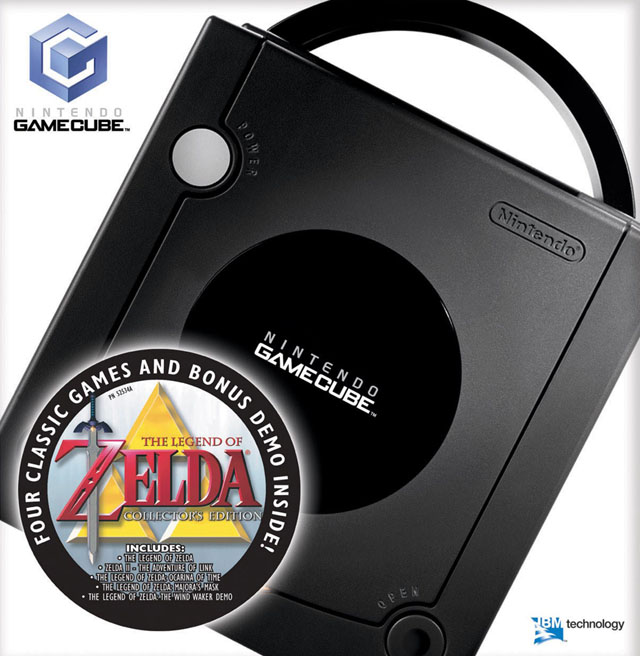
The North American GameCube bundle.
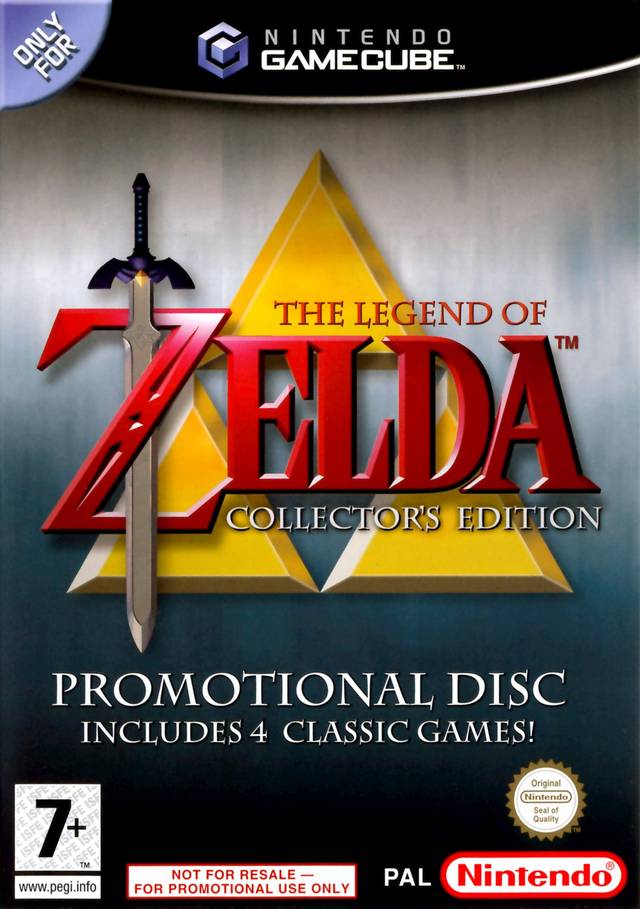
Collector’s Edition has “Not for Resale” printed on its cover, and Nintendo meant it. Every copy left the company as a gift, but the rules for earning one were different in every territory, and in the UK they changed twice.
Where
How you got it
When
North America
Inside a $99.99 GameCube console bundle
From 17 November 2003
North America
By registering a GameCube and two of four new games, or by taking out or renewing a Nintendo Power subscription
Late 2003, while supplies lasted
Europe
Inside the Mario Kart: Double Dash!! Limited Edition Pak (console, game and disc; about £99 in the UK)
From 14 November 2003
United Kingdom
Free with a new GameCube at about £79
From 1 December 2003
UK and Ireland
From the Stars Catalogue for 4,500 stars; 1,000 copies
Late 2003; gone within minutes
United Kingdom
By sending proof of purchase for one of six games, or two Player’s Choice games
January 2004; claims by 27 February
Japan
From Club Nintendo for 500 points, or 150 points with a copy of Four Swords+
From 18 March 2004; the 150-point offer ended 30 April
Australia
By buying two of six selected games and posting the receipts and barcodes
19 March to 14 June 2004
North America: a bundle and two back doors
The back of the case lists the four games.
Word of a Zelda console bundle reached RPGFan on 19 October 2003, and Nintendo of America confirmed it early in November. From 17 November a GameCube with the disc in the box cost $99.99, and the disc was not sold separately.
Existing owners had two routes, both run through Nintendo’s website. One was to register a GameCube and any two of four new releases: Mario Kart: Double Dash!!, Mario Party 5, 1080° Avalanche and the Game Boy Advance game Mario & Luigi: Superstar Saga. The other was to subscribe to Nintendo Power, or renew. Both lasted only as long as the discs did.
Europe and the UK: three offers in three months
Europe saw the disc first, on 14 November 2003, in the Mario Kart: Double Dash!! Limited Edition Pak: a GameCube, the new Mario Kart and Collector’s Edition for around £99. From 1 December UK shops also gave it away with any new GameCube, by then down to about £79. Nintendo UK’s general manager David Yarnton called these “the strongest offers available on the market this Christmas”.
People who already owned a GameCube were less impressed. Their only route was Nintendo’s Stars Catalogue, where the disc cost 4,500 stars, which GameSpot reckoned was what you would earn by registering a GameCube, a Game Boy Advance SP and about fourteen games. Nintendo put up 1,000 copies for the whole of the UK and Ireland, and they went in minutes.
After the complaints came a second chance. Throughout January 2004, anyone in the UK aged 16 or over who bought The Wind Waker, F-Zero GX, Mario Kart: Double Dash!!, 1080° Avalanche, Mario Party 5 or Eternal Darkness, or any two Player’s Choice games, could post the proof of purchase to Nintendo and get a disc back, provided the claim arrived before 27 February.
Japan and Australia: points and receipts
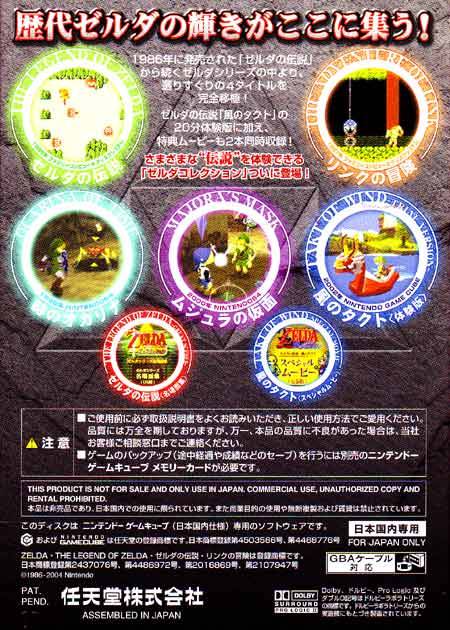
The back of the Japanese Zelda Collection case.
Japan waited until 2004. Nintendo announced Zelda Collection on 9 February as a new Club Nintendo gift, available from 18 March for 500 points. That was also the day Four Swords Adventures (Four Swords+ in Japan) went on sale, and anyone who bought it and registered it by 30 April could have the disc for 150 points instead.
Australia’s offer began a day later, on 19 March 2004. According to the Zelda Wiki on Fandom, it asked for two of six qualifying games, among them Mario Golf: Toadstool Tour, Kirby Air Ride and Final Fantasy Crystal Chronicles, with a form, the original receipts and both barcodes. It was due to end on 31 May and was extended to 14 June.
Secrets & extras
A compilation has no cheats of its own, but the people who built this one hid a few things in it. These were found by The Cutting Room Floor.
The emulator team’s hidden credits
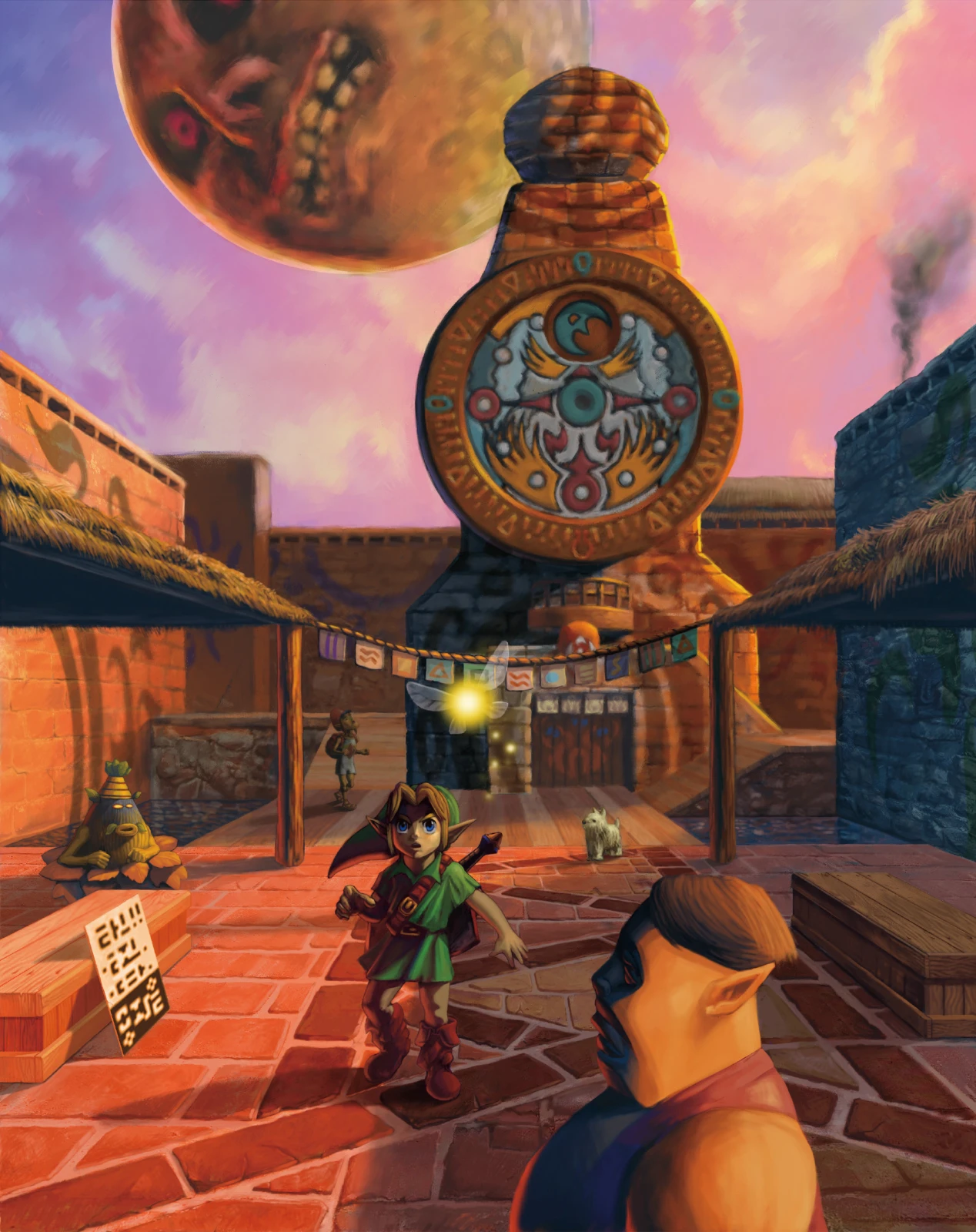
Official art of Clock Town in Majora’s Mask, the game that hides the emulator credits.
While playing Majora’s Mask, hold L, R and Z and enter Up, Up, Down, Down, Left, Right, Left, Right, X, Y, B, A, Up, Left, Down, Right, A, Start. A credits screen for the people who wrote the emulator appears. Press B to go back to the game.
An emulator that knew other games
The Nintendo 64 logo. The emulator was ready for far more of the console’s library.
The Nintendo 64 emulator carries a list of games it was prepared to run, with controller layouts and save names for each, among them Super Mario 64, Pilotwings 64, Mario Kart 64, the three Mario Party games, Paper Mario, Pokémon Stadium, Yoshi’s Story, Animal Forest and even a Panel de Pon that was never released. None of them is on the disc.
Banners nobody sees
Each NES game is stored with its own GameCube menu banner and description, as if it had been meant to start by itself. The text is rough, and Zelda II’s is too long and gets cut off, so it was probably never meant to be seen, but the banners do turn up on the save files.
Checked against The Cutting Room Floor, November 2026.
Emulation problems
The two NES games run without complaint. The Nintendo 64 pair show the strain, and Majora’s Mask, which needed the Expansion Pak on its home console, shows it most.
Majora’s Mask freezes
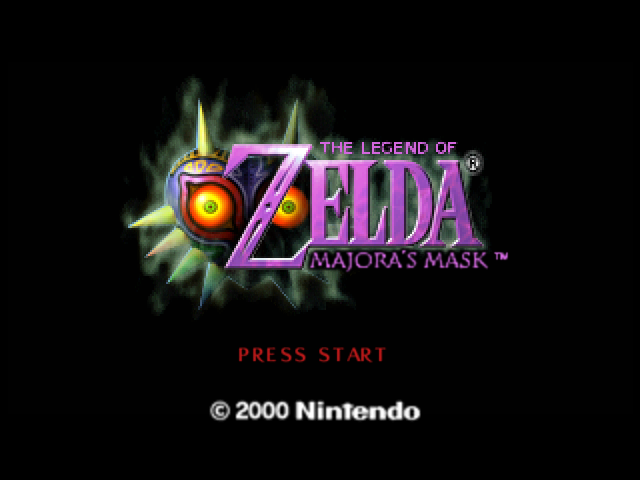
The Majora’s Mask title screen.
The best-known fault is that Majora’s Mask can lock up without warning, which never happened on Nintendo 64. All you can do is restart from your last save, and because Majora’s Mask lets you save so rarely, that can mean replaying a whole dungeon. Zelda Dungeon adds that a freeze could wipe out an Owl Statue save as well. Players found that turning the rumble off made freezes less common. Both wikis suspect the way the emulator handles the Expansion Pak’s extra memory.
A warning about the sound
Nintendo knew the emulation was not perfect. Majora’s Mask boots with a disclaimer saying that some of the original sounds may cause problems because they are being emulated.
Rougher pictures
A Heart Container, one of the shiny objects whose highlights the emulator warps.
GameSpot’s Ricardo Torres found that the frame rate “appears choppier” than on Nintendo 64 and that the audio was inconsistent. The Zelda Wiki on Fandom lists the smaller faults: blur effects in cutscenes that do not clear properly, shiny objects such as Heart Containers with warped highlights, lens flares missing from Ocarina of Time, and a pause of a few seconds whenever you open the inventory in either game.
No 50Hz in Europe
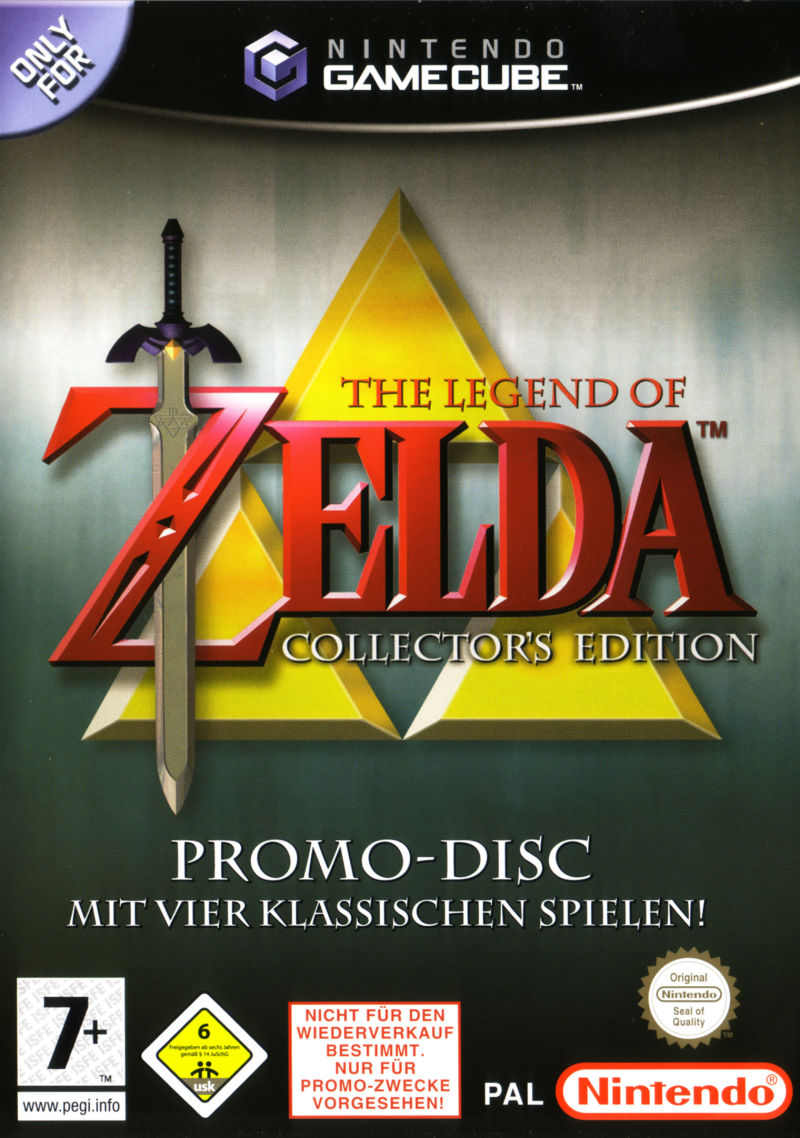
The German case. Every PAL copy runs only at 60Hz.
The PAL disc supports only 60Hz output, so it cannot be played on a television limited to 50Hz.
Trivia & facts
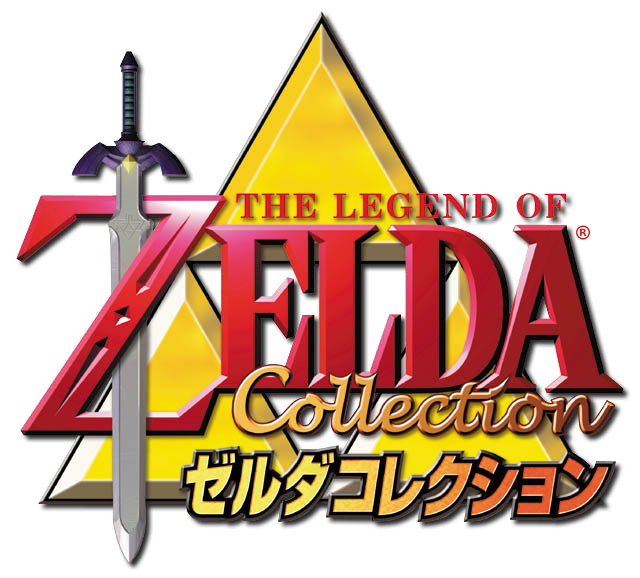
The Japanese Zelda Collection logo.In Japan the disc is plain ゼルダコレクション, Zelda Collection, and Dengeki Online described it as a valuable item that could be had only through Club Nintendo.
The UK case front.The UK’s 1,000 Stars Catalogue copies had to cover Ireland as well, and each one cost 4,500 stars: by GameSpot’s sums, a GameCube, a Game Boy Advance SP and about fourteen registered games.
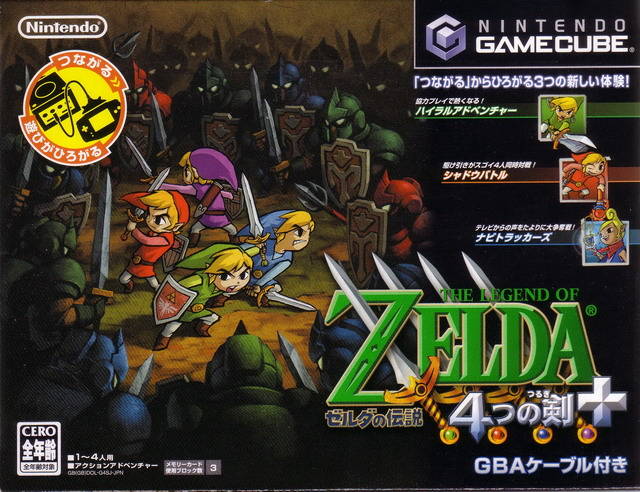
Four Swords+, the game that cut the price to 150 points.Japanese players who bought Four Swords+ in its first six weeks could have the collection for 150 Club Nintendo points instead of 500.
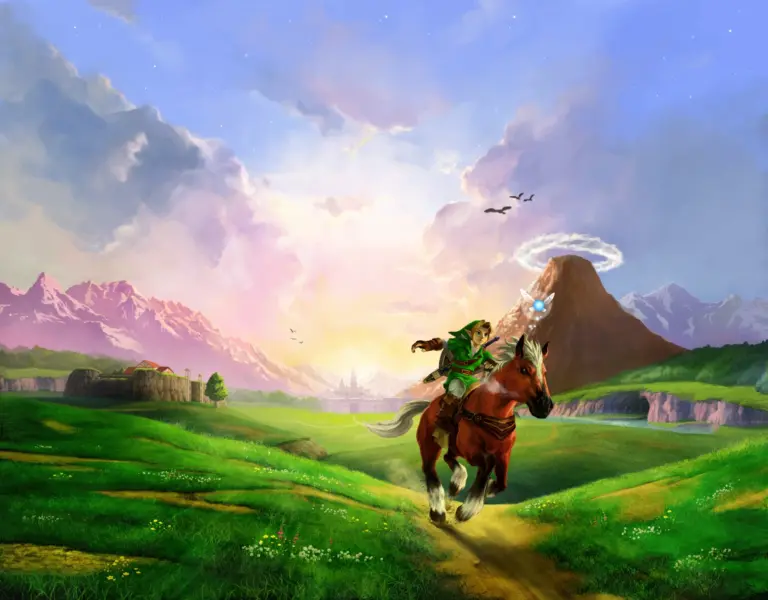
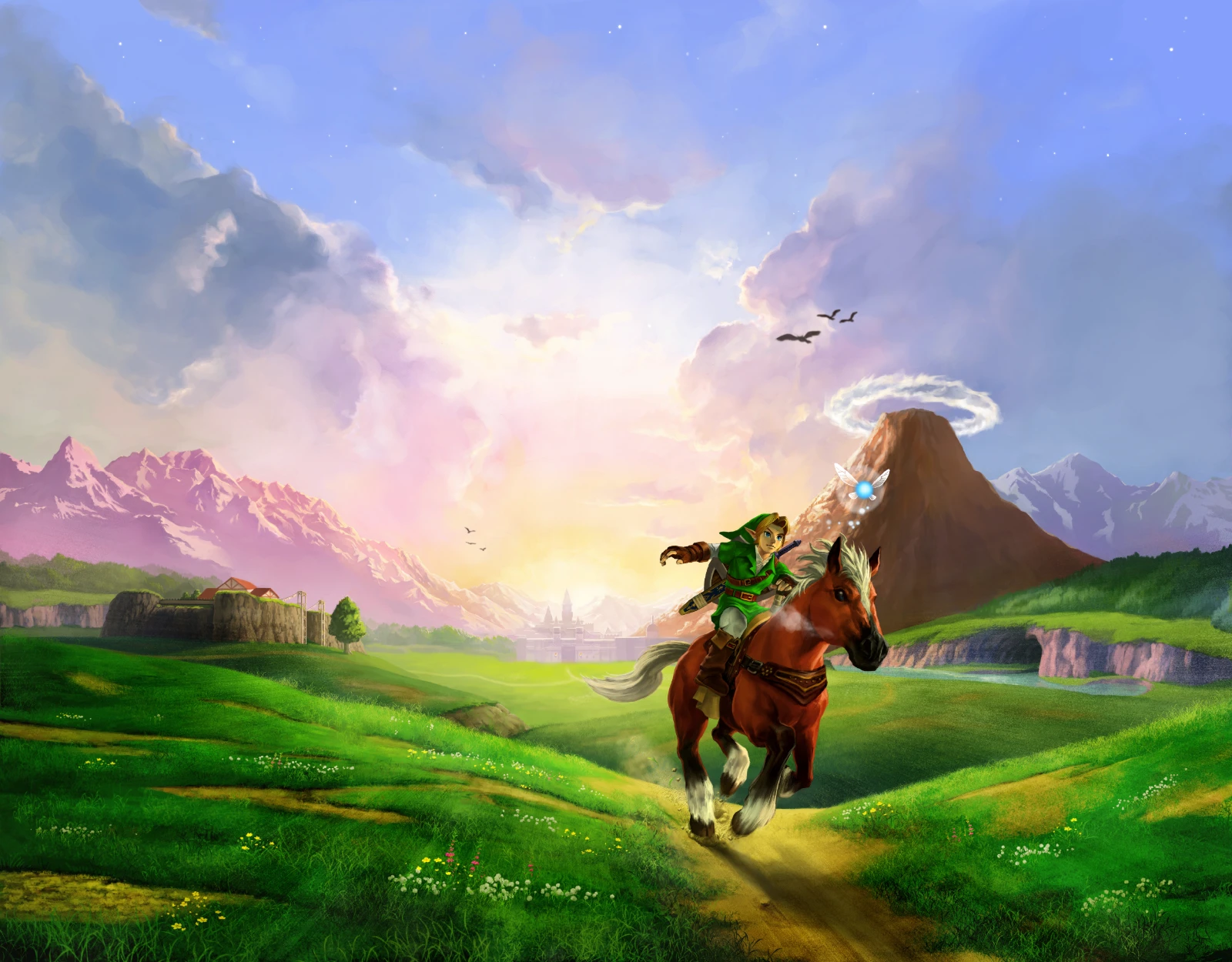
Official art of Hyrule Field, made for Ocarina of Time 3D.The Western menu plays the Hyrule Field theme, carried over from the Ocarina of Time / Master Quest bonus disc; Japan got a new arrangement of the first game’s overworld music instead.
The collection was the first PAL game with no 50Hz mode, according to The Cutting Room Floor.
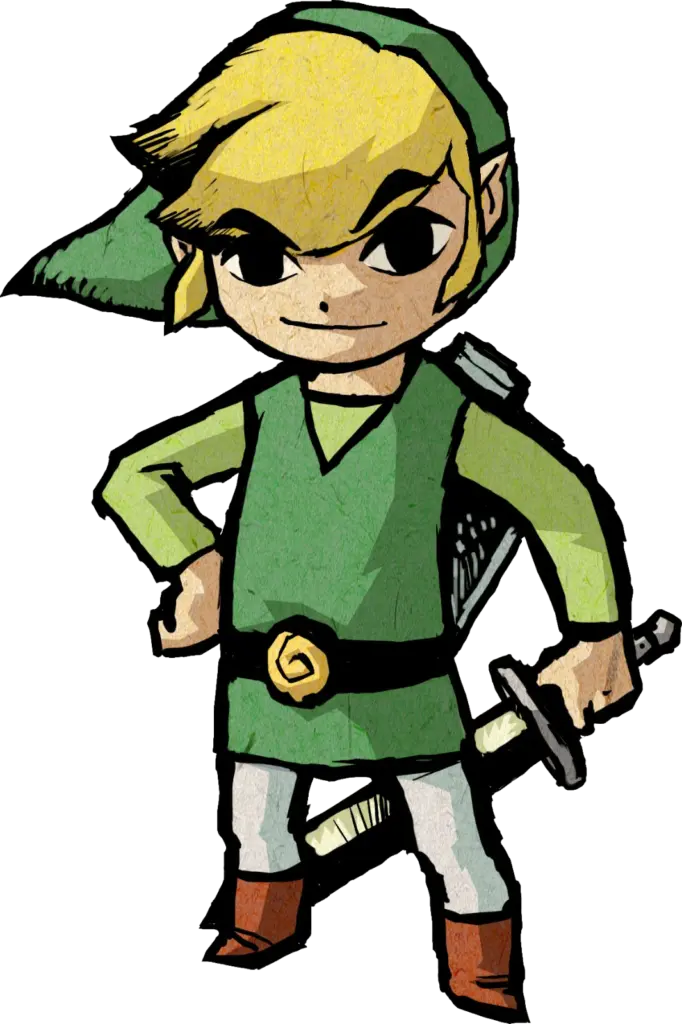
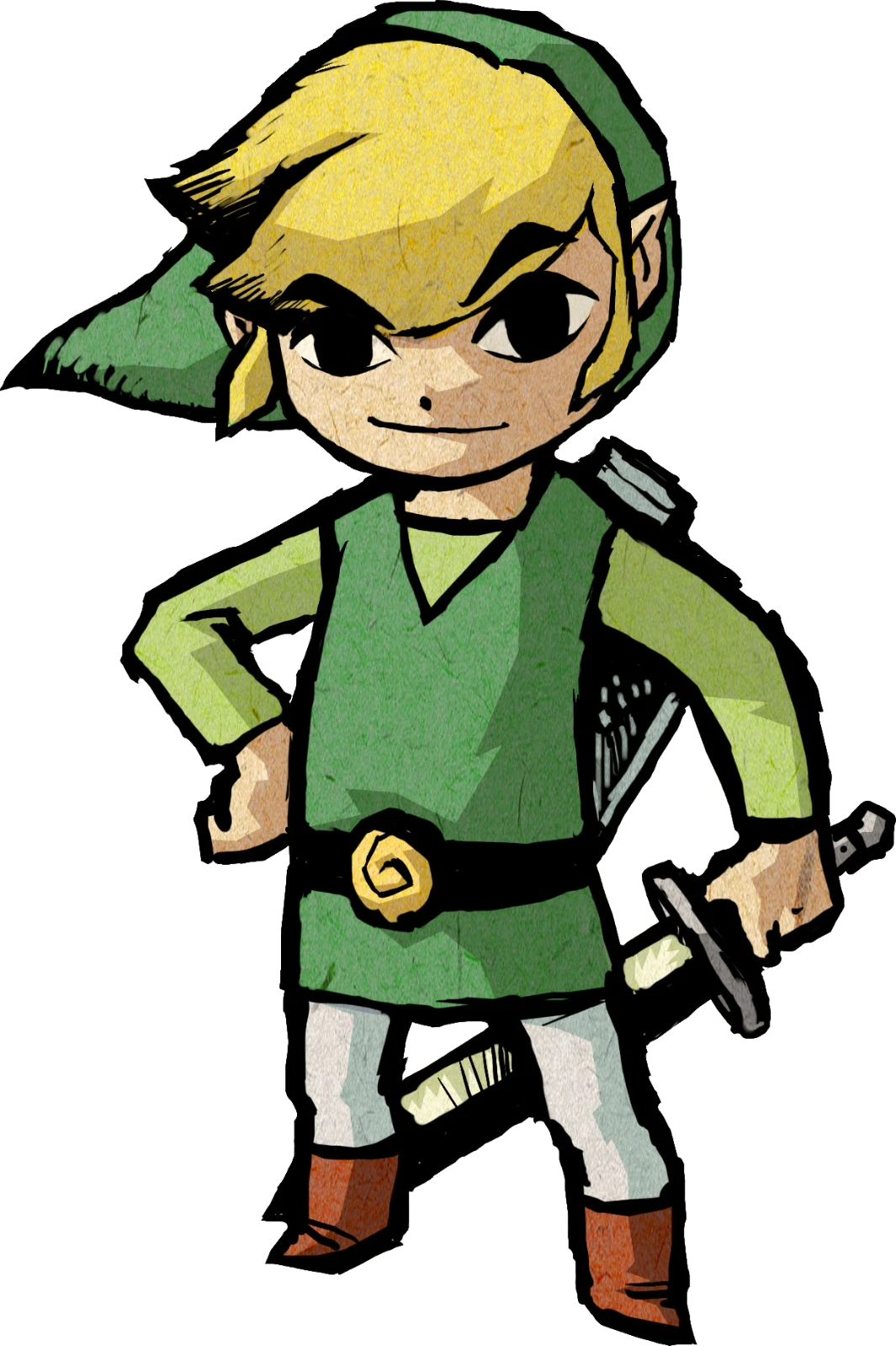
Official art of Link from The Wind Waker.The 20-minute Wind Waker demo arrived in North America about eight months after the full game.
Nintendo of America let a Game Boy Advance game count towards the offer: Mario & Luigi: Superstar Saga was one of the four titles you could register.
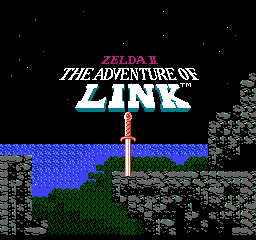
The title screen of Zelda II, one of the two NES games on the disc.The NES emulator on the disc is stamped with the date 7 August 2003, just over three months before the first copies went out.
Media & artwork
Case and disc scans from each region, the console bundles, and screenshots of the menu and the games. Select any image to view it larger.
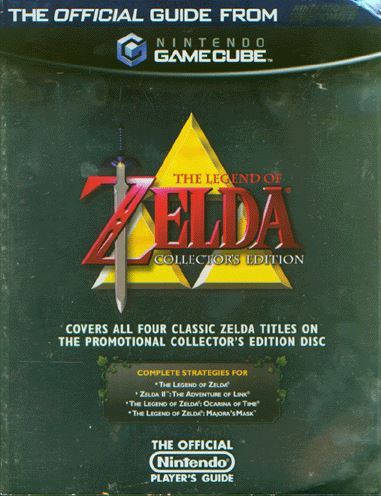
Canadian case frontCanadian case backThe Canadian discBenelux case frontBenelux case backGerman case backUK case backThe UK discNintendo Power’s guide to the Collector’s Edition
Collector’s Edition was a marketing tool, but it also gathered Zelda’s history in one place, and it has never been repeated in the same form.
Release history
AnnouncedNovember 2003 – Nintendo of America confirms the GameCube bundle and the two offers for existing owners.
Europe14 November 2003 – The Mario Kart: Double Dash!! Limited Edition Pak goes on sale with the disc inside.
North America17 November 2003 – The $99.99 GameCube bundle arrives.
United Kingdom1 December 2003 – The disc is given with every new GameCube.
UK game offerJanuary 2004 – A proof-of-purchase offer replaces the 1,000 Stars Catalogue copies that vanished in minutes.
Japan18 March 2004 – Zelda Collection joins the Club Nintendo catalogue.
Australia19 March 2004 – The two-game offer opens; it closes on 14 June.
What it sells for now
The European case.
Collector’s Edition turns up for sale all the time, but demand keeps the price well above what Nintendo charged for it, which was nothing. When we checked PriceCharting in November 2026, which averages recent sales of the North American version, a loose disc stood at about $56, a complete boxed copy at about $82 and a factory-sealed one at about $200, with a copy or two changing hands every day.
Those are averages of second-hand sales in US dollars, they do not cover the European or Japanese discs, and they change from week to week.
Where to play the games today
Promotional screenshot of the GameCube menu on Nintendo Switch Online.
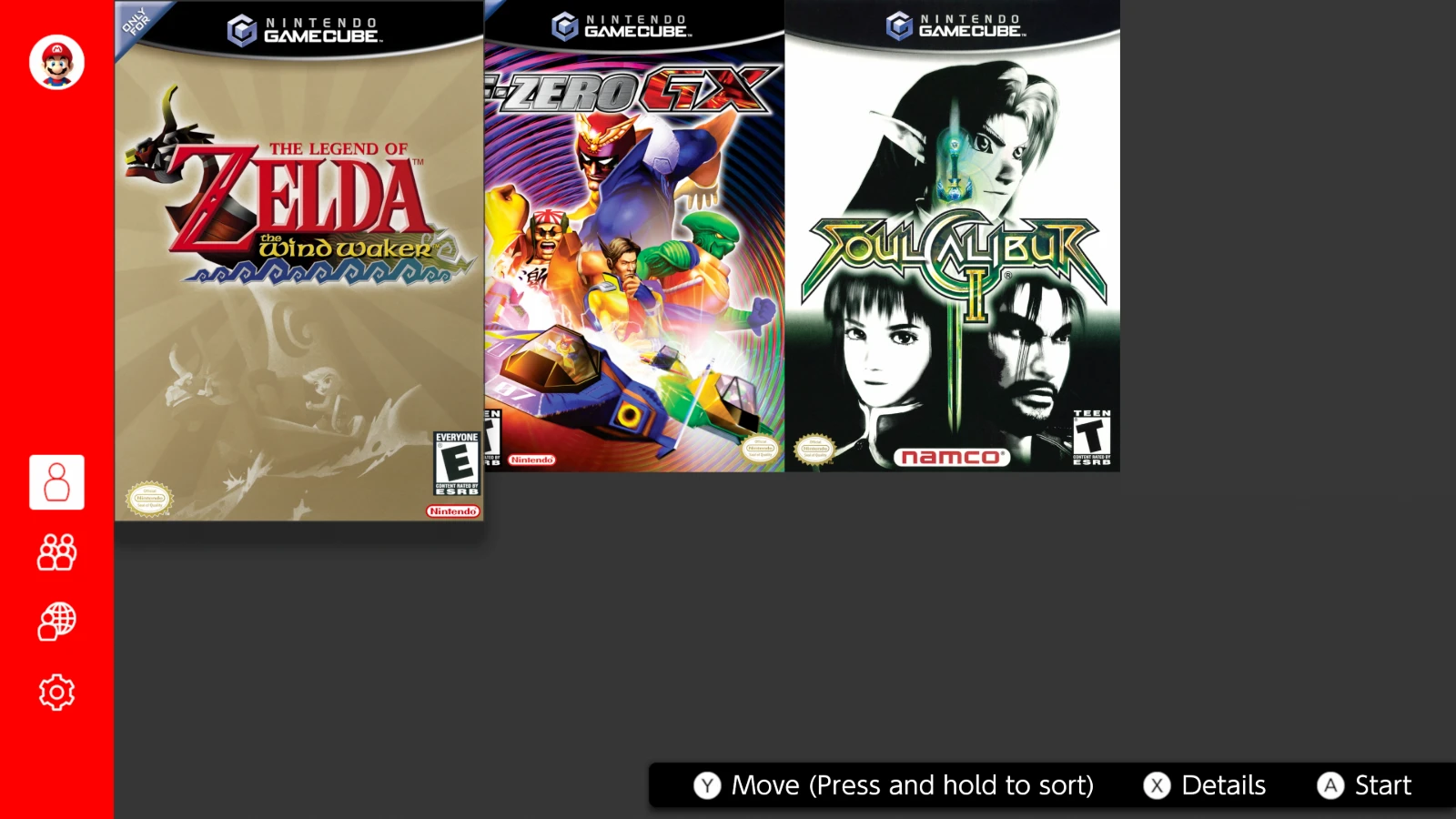
Nobody needs this disc to play its contents any more. The Legend of Zelda and Zelda II are in the NES library of Nintendo Switch Online, Ocarina of Time and Majora’s Mask are in its Nintendo 64 library, and the GameCube version of The Wind Waker has been playable on Nintendo Switch 2 since June 2025. What the disc still offers is all of them in one case, along with the retrospective film.
Further reading
More from Zelda Temple on the games collected on this disc:
Every fact on this page was checked against the sources below in November 2026. IGN could not be read, and Wikipedia no longer has a separate article on the disc, so an archived 2008 copy of its old article was used with care.
To provide the best experiences, we use technologies like cookies to store and/or access device information. Consenting to these technologies will allow us to process data such as browsing behavior or unique IDs on this site. Not consenting or withdrawing consent, may adversely affect certain features and functions.
Functional
Always active
The technical storage or access is strictly necessary for the legitimate purpose of enabling the use of a specific service explicitly requested by the subscriber or user, or for the sole purpose of carrying out the transmission of a communication over an electronic communications network.
Preferences
The technical storage or access is necessary for the legitimate purpose of storing preferences that are not requested by the subscriber or user.
Statistics
The technical storage or access that is used exclusively for statistical purposes.The technical storage or access that is used exclusively for anonymous statistical purposes. Without a subpoena, voluntary compliance on the part of your Internet Service Provider, or additional records from a third party, information stored or retrieved for this purpose alone cannot usually be used to identify you.
Marketing
The technical storage or access is required to create user profiles to send advertising, or to track the user on a website or across several websites for similar marketing purposes.