250,000 in North America by April 2006; 127,000 in Japan
Overview
Four Swords Adventures is the Zelda that asked you to bring three friends and a Game Boy Advance for each of you, and it is one of the most joyful, chaotic things the series has done. It grew out of Four Swords, the multiplayer game bundled with A Link to the Past on the Game Boy Advance, and turned it into a full adventure on the GameCube.
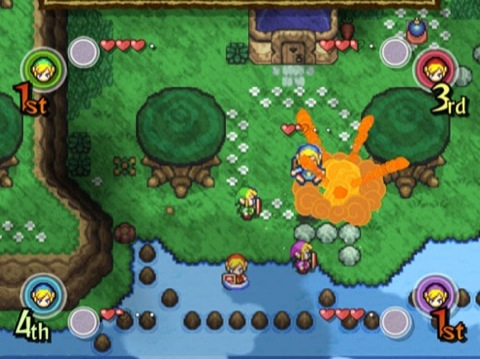
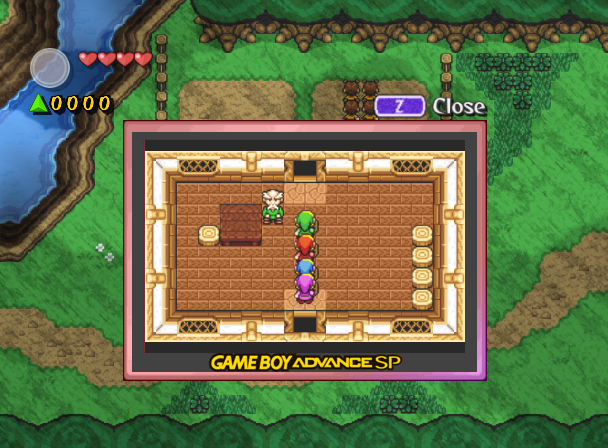
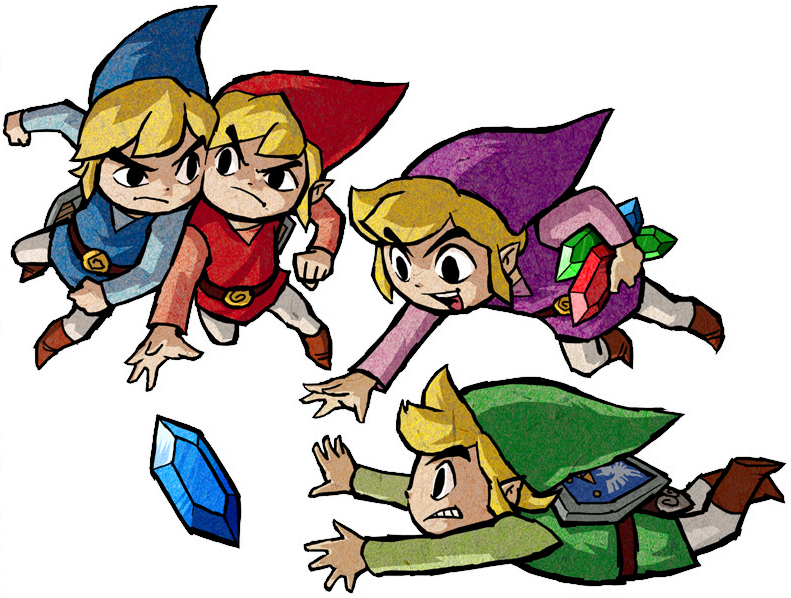
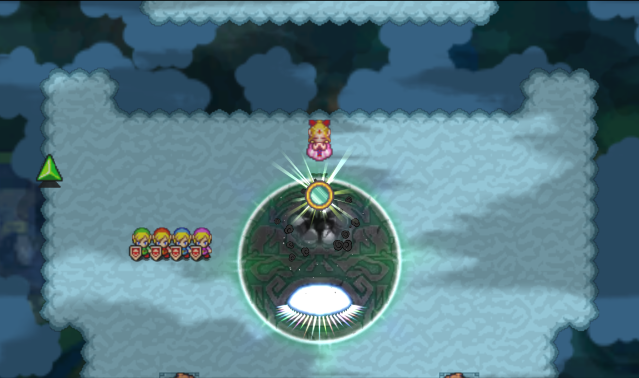
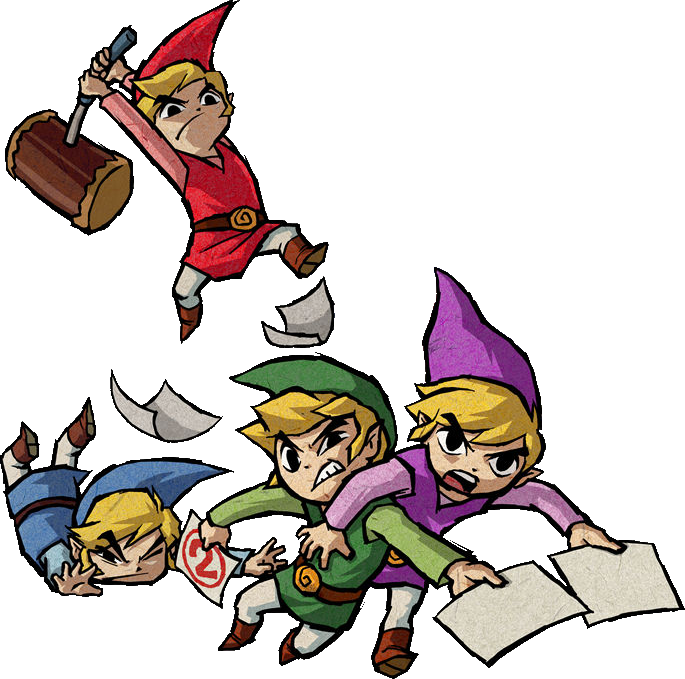
There are always four Links on screen, in green, red, blue and purple. Play alone and you drag the others along behind you, snapping them into formations to push blocks, surround enemies or cross gaps. Play with friends and each of you has your own Link and a Game Boy Advance plugged into the GameCube: when your Link walks into a cave or a house, the action moves from the television to the screen in your hands, while everyone else carries on above.
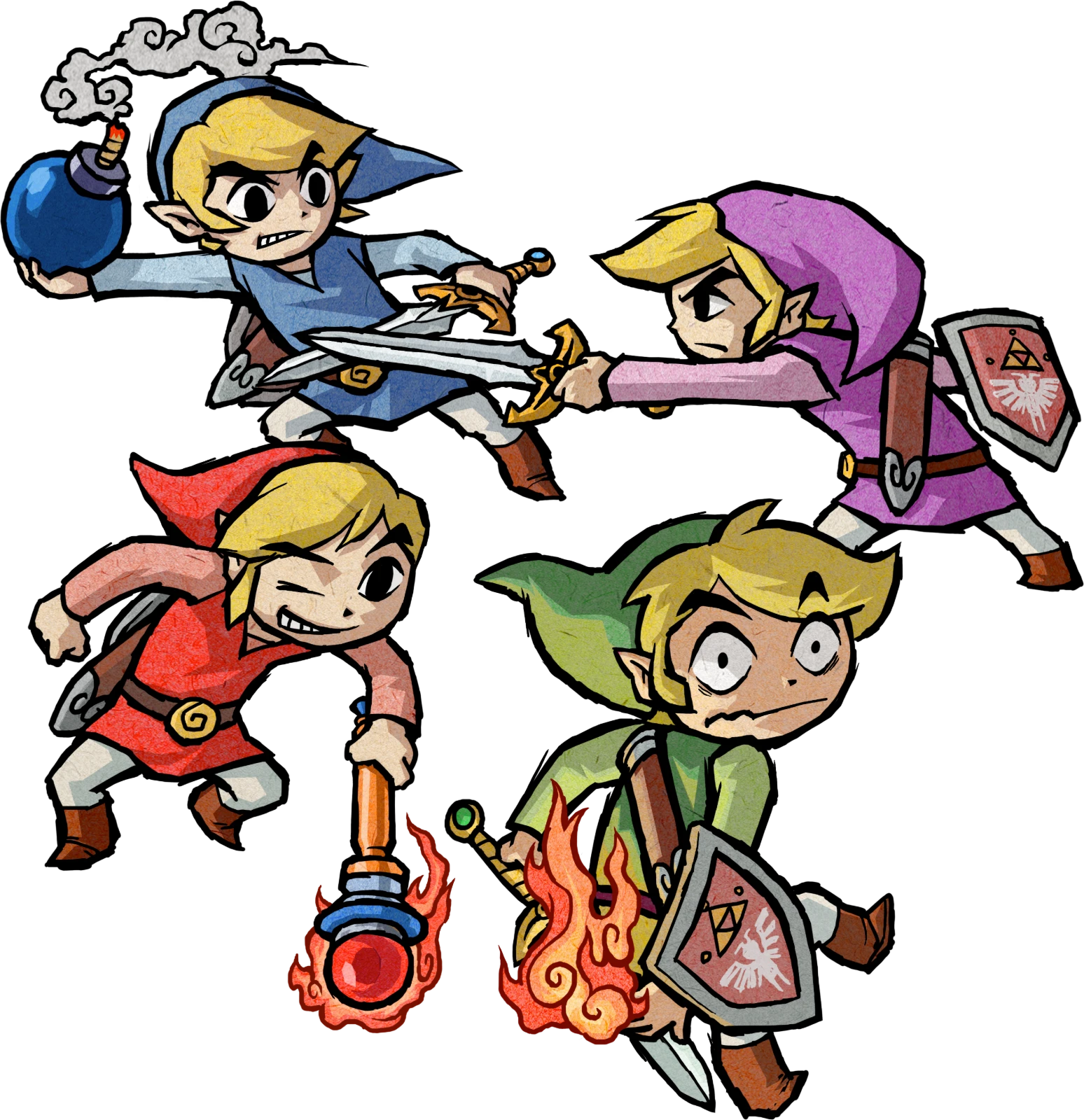
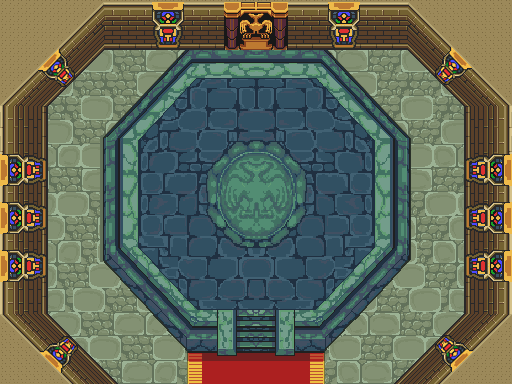
Four Links in formation.Step inside a house and the action moves to that player’s Game Boy Advance.The Dark World, mirror image of Hyrule.
It looks like A Link to the Past wearing The Wind Waker’s lighting and effects. The quest is split into eight levels of three stages each, with Force Gems to collect to power the Four Sword. Its story is surprisingly big: the return of Vaati, a horde of Shadow Links, and a new incarnation of Ganondorf.
Japan got the most generous version. Its disc, Four Swords+, carried three games: the adventure, the battle game Shadow Battle and Navi Trackers, a treasure hunt hosted by Tetra and her pirates. The West got the first two. In Japan, North America and Europe alike, the game came packed with a GameCube–Game Boy Advance cable.
4つの剣の力を使い、ハイラルに平和を取り戻せ!
Use the power of the Four Swords and bring peace back to Hyrule! That is the rallying cry on Nintendo’s own 2004 Japanese website for the Hyrulean Adventure mode, which pitches it as classic 2D Zelda action made more exciting by playing together, against each other or with a crowd. The site’s front page sells the whole package as three new experiences that grow out of connecting your Game Boy Advance to the GameCube.
— Official description: Nintendo, Zelda no Densetsu: Yottsu no Tsurugi+ official website (nintendo.co.jp, 2004), Hyrule Adventure page. One line quoted and translated; the rest summarised.
Quick Answers
Quick answers about Four Swords Adventures, with more detail further down.
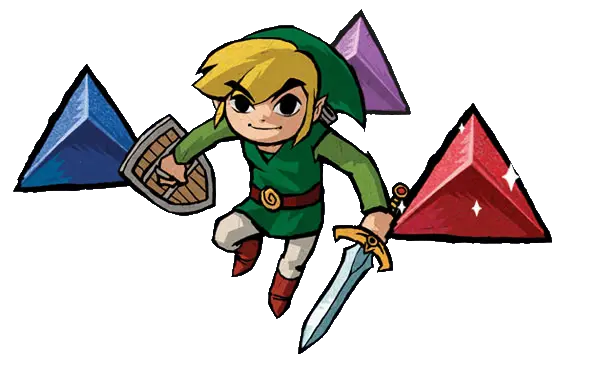
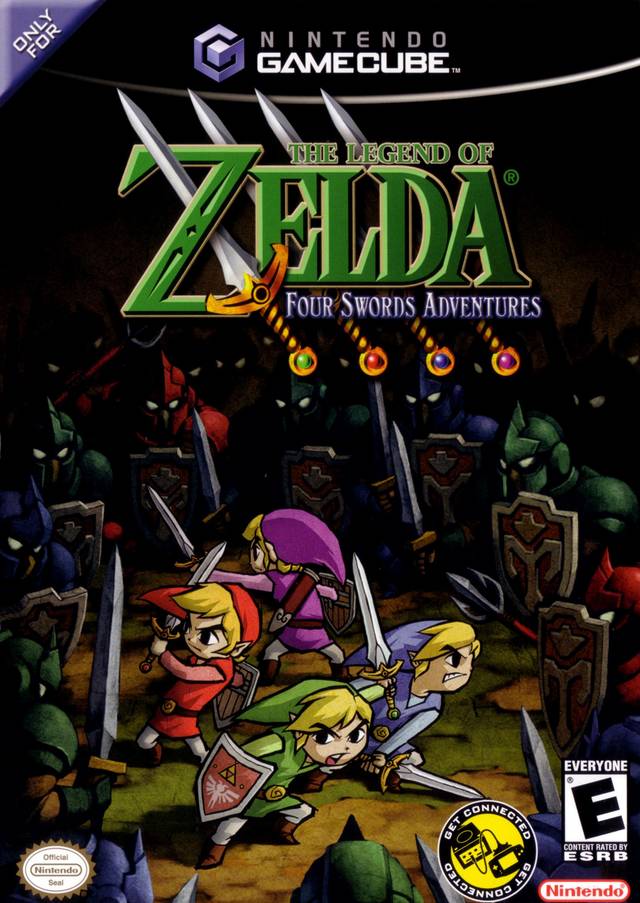
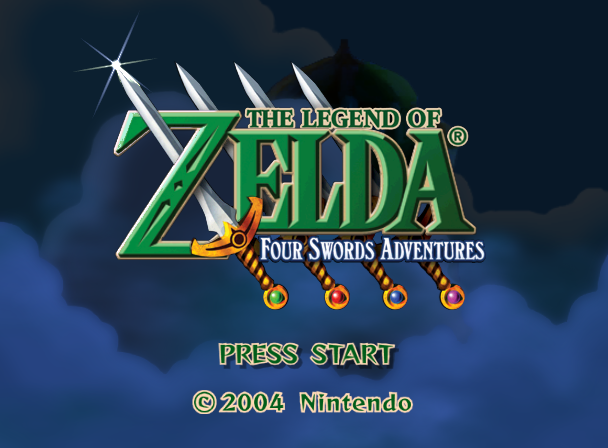
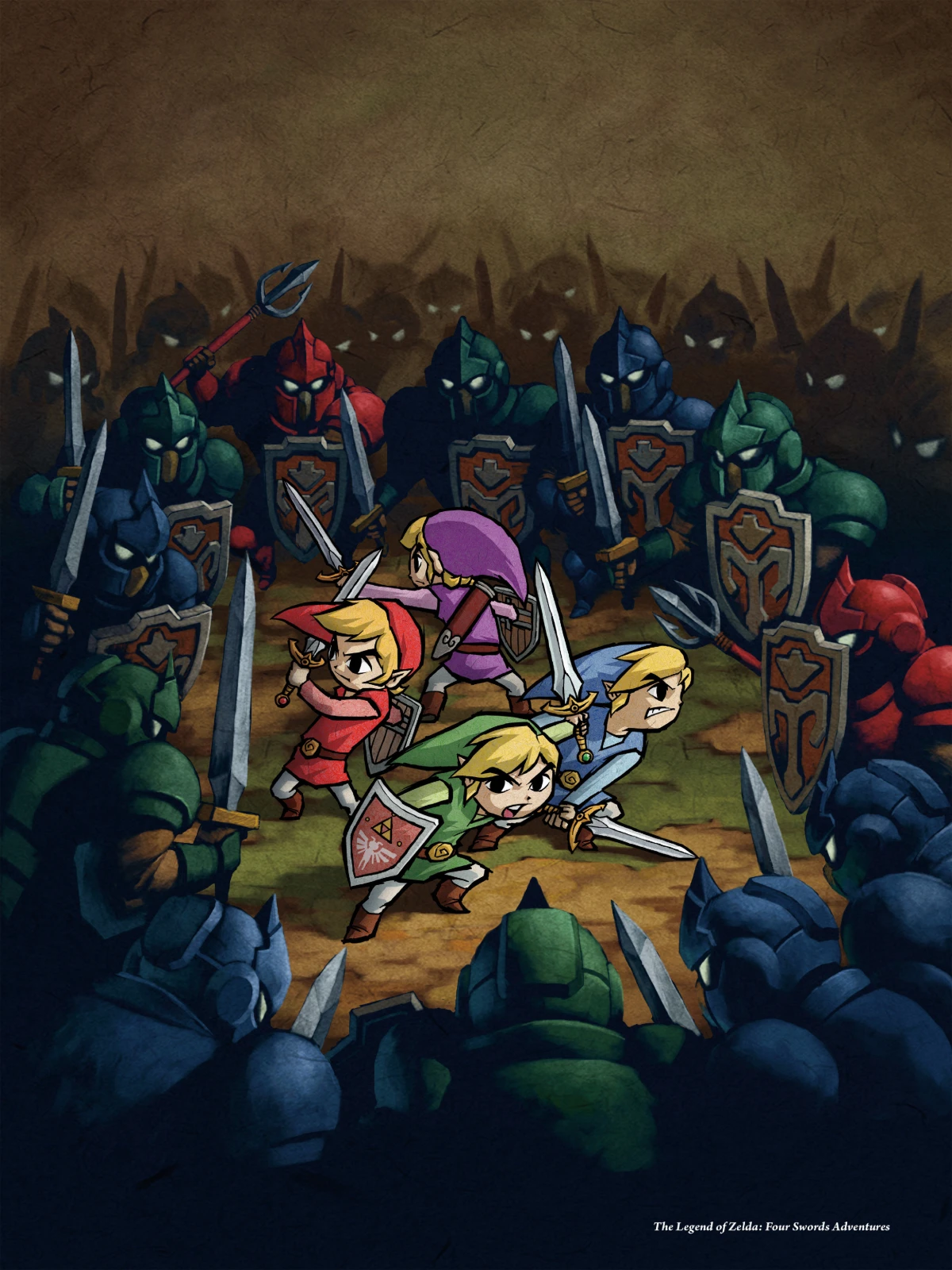
Nintendo’s main artwork for Four Swords Adventures.
When did Four Swords Adventures come out?
18 March 2004 in Japan, 7 June 2004 in North America, 7 January 2005 in Europe and 7 April 2005 in Australia. More →
Do you need a Game Boy Advance to play it?
Not to play alone: a single player can use a GameCube controller. For multiplayer, every player needs a Game Boy Advance and a GameCube–Game Boy Advance cable. More →
Can you play Four Swords Adventures alone?
Yes. You control all four Links at once, moving them as a group, splitting them up or snapping them into formations. More →
How many levels are there?
Eight levels in Hyrulean Adventure, each with three stages and a boss. More →
What is Navi Trackers?
A multiplayer treasure hunt found only on the Japanese disc and its Korean repackaging, first shown as Tetra’s Trackers. Players search on their Game Boy Advance for Tetra’s pirate crew while she gives hints on the television. It was left out of the Western releases. More →
Who is the villain?
It starts with Vaati, the wind sorcerer from Four Swords, and Shadow Link, but the real villain is a new incarnation of Ganondorf, who has stolen a trident of dark power and the Dark Mirror. More →
Where does it fit on the Zelda timeline?
Nintendo’s Hyrule Historia places it centuries after Twilight Princess, as the last game in the timeline branch that follows the child Link of Ocarina of Time. More →
Has it been re-released?
No. It has never been ported or added to Nintendo Switch Online, although North America got a cheaper Player’s Choice edition in 2006. More →
Plot / Story
The four Links in Nintendo’s artwork for the game.
Long ago, a hero split himself into four with the magic Four Sword and sealed away Vaati, a sorcerer who commanded the wind. That legend, told in the Game Boy Advance Four Swords, is the backdrop here. Now Princess Zelda fears the seal on Vaati is failing.
Nintendo’s Hyrule Historia places the game centuries after Twilight Princess, the last adventure in the timeline that follows the child Link of Ocarina of Time. Its Ganondorf is not that game’s villain but a new one, born among the Gerudo.
The seal breaks
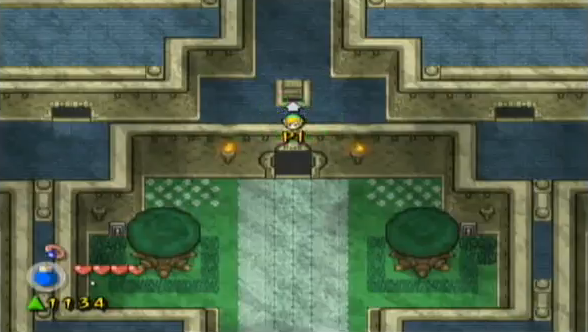
Zelda summons Link to stand guard while she and the six Shrine Maidens open a portal to the Four Sword Sanctuary to check the seal. The moment it opens, a dark double of Link bursts out. Shadow Link snatches the maidens and Zelda, and lures Link into the sanctuary.
Link pulls the Four Sword from its pedestal. He splits into four, just like the hero of legend, but drawing the blade also breaks Vaati’s seal. The sorcerer is free, and his darkness spreads over Hyrule.
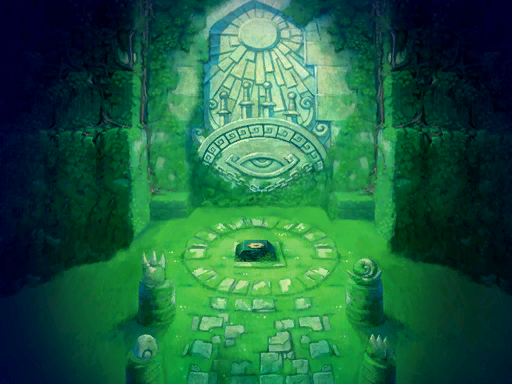
The Four Sword Sanctuary.Shadow Link appears.
Four heroes, one kingdom
The four Links set out to put things right, freeing the maidens one at a time. The first level ends at Hyrule Castle, where Phantom Ganon is waiting, a hint that something worse than Vaati is behind it all. Kaepora Gaebora the owl guides the heroes and gives their dark pursuer his name.
Things keep getting worse. A Dark World starts bleeding into Hyrule, swallowing people, the four Knights of Hyrule among them, while the castle itself falls to the darkness. Shadow Link is no longer alone either: there are more of him every time the Links turn around.
Hyrule Castle, at the end of the first level.
The truth in the desert
After beating Phantom Ganon again in the Temple of Darkness, the Links find that the Dark Mirror, the artefact at the heart of the trouble, has gone. The Red Maiden sends them to the Desert of Doubt.
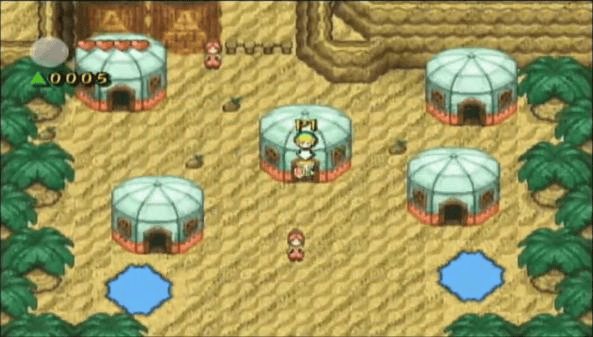
In Gerudo Village the desert people admit that the man behind it all, Ganondorf, came from their own tribe, and that he fled towards the Pyramid. When the Links rescue the Red Knight, he tells them who is really to blame. Ganondorf stole a trident filled with dark power, became Ganon, and used the Dark Mirror to create Shadow Link and to snatch people away as his servants. It was Ganon, not Vaati, who tricked Link into drawing the Four Sword. Vaati was only the distraction.
Gerudo Village in the Desert of Doubt.
The Palace of Winds
The Links rescue the last of the maidens and then, at the Tower of Winds, Zelda herself. In the Realm of the Heavens they recover the Dark Mirror from the Dark Cloud, and Zelda and Link seal Shadow Link and all his copies inside it. Zelda then opens the way to Vaati’s Palace of Winds.
There the four Links defeat Vaati, and then Ganon himself. With the combined power of Zelda and the maidens, Ganon is sealed away. Peace returns, Link restores the Four Sword to its pedestal, the four Links become one again, and the maidens raise a barrier around the blade.
Vaati, the wind sorcerer.Ganon, the final boss.
Navi Trackers: the Japanese bonus game
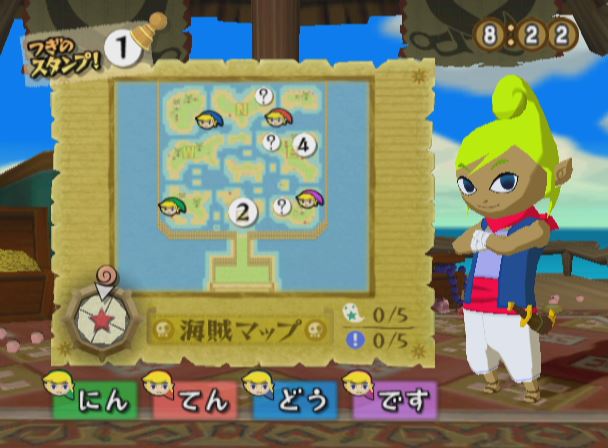
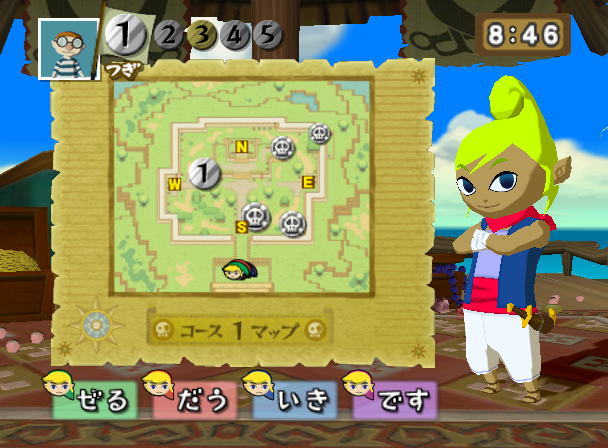
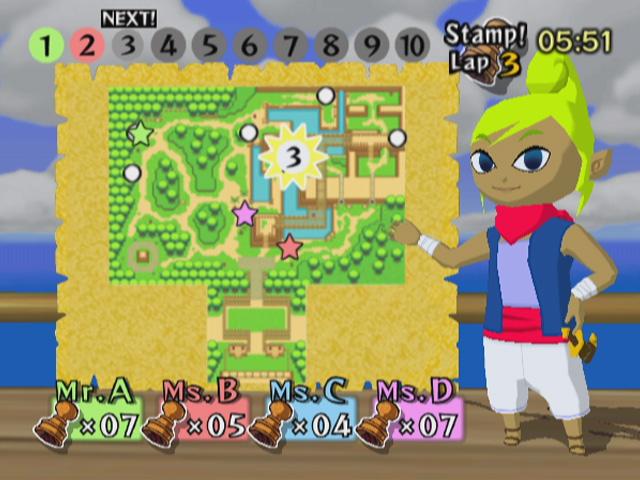
The Japanese disc has a third game that the West never got. Navi Trackers began life as Tetra’s Trackers, shown at E3 2003, and follows on from The Wind Waker. Nintendo’s Japanese site pitches it as a pirate exam: Link must hunt down members of Tetra’s crew to collect their stamps before time runs out.
Each player runs around on their Game Boy Advance, while the television shows a map and Tetra, voiced in Japanese, narrates and gives hints. It supports up to four players and can be played alone. It was built with a speech system that called players by the names they had typed in, and The Cutting Room Floor suggests that all that spoken dialogue, and the problem of pronouncing players’ names in English, is probably why it was dropped from the Western versions. The Japanese and Korean versions include it.
Navi Trackers, hosted by Tetra.
The eight levels of Hyrulean Adventure
Each level has three stages, and rescuing the maiden at the end of the third unlocks the next. Finished stages can be replayed. Collect enough Force Gems in a stage and the Four Sword can break through the dark barrier at its end.
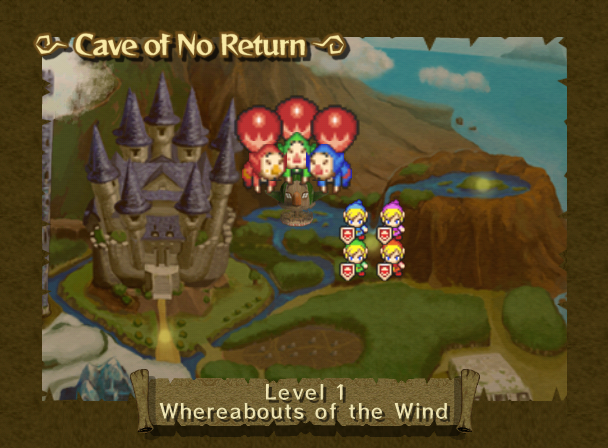
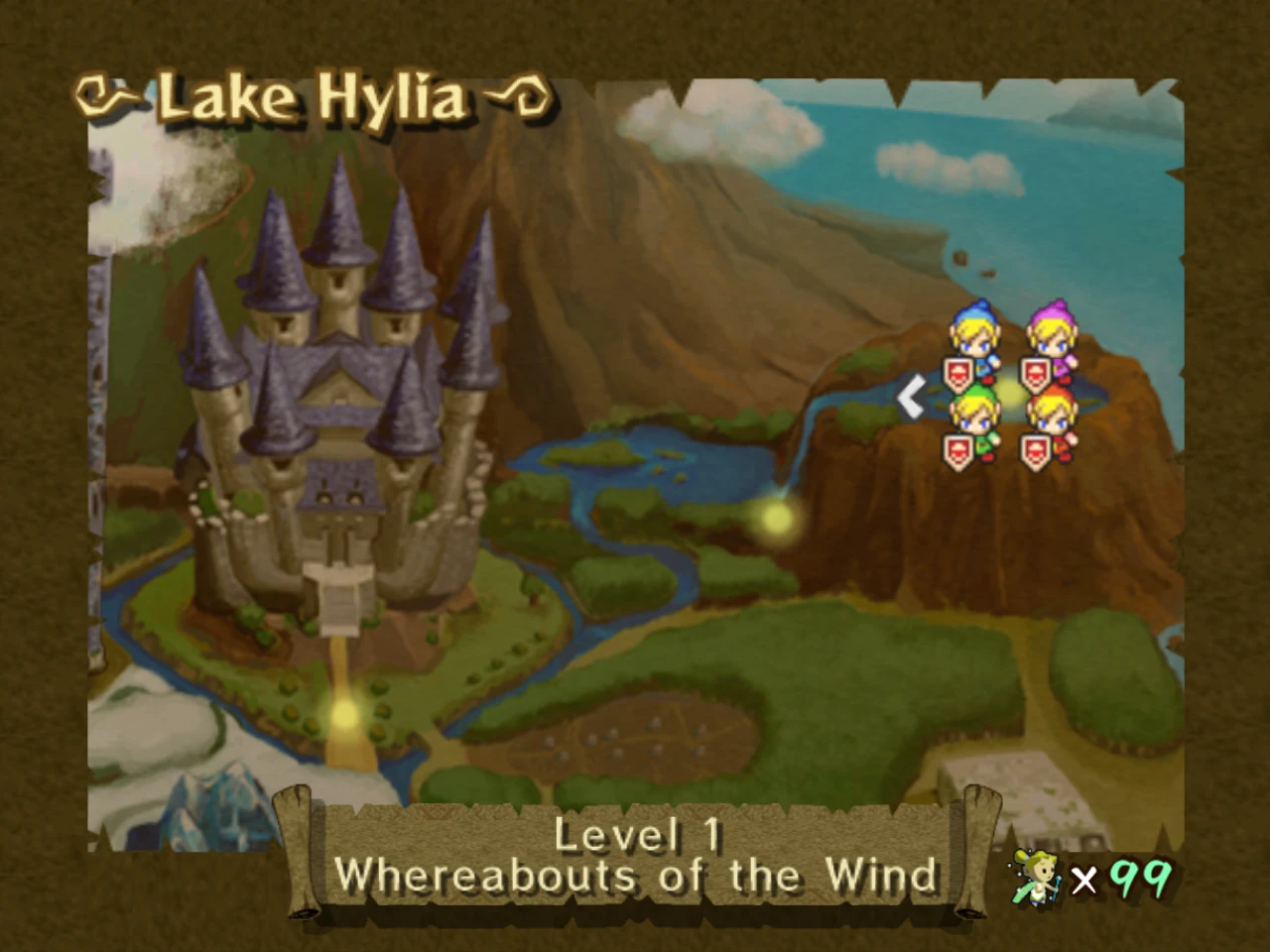
Whereabouts of the WindLevel 1Lake Hylia, the Cave of No Return and Hyrule Castle. Boss: Phantom Ganon.
Eastern HyruleLevel 2The Coast (Manhandla), the Village of the Blue Maiden and the Eastern Temple. Boss: Stone Arrghus.
Death MountainLevel 3Death Mountain Foothills, the Mountain Path and the Tower of Flames. The Helmaroc King is the boss of the Mountain Path.
Near the FieldsLevel 4The Field, The Swamp and the Infiltration of Hyrule Castle. Boss: Big Poe.
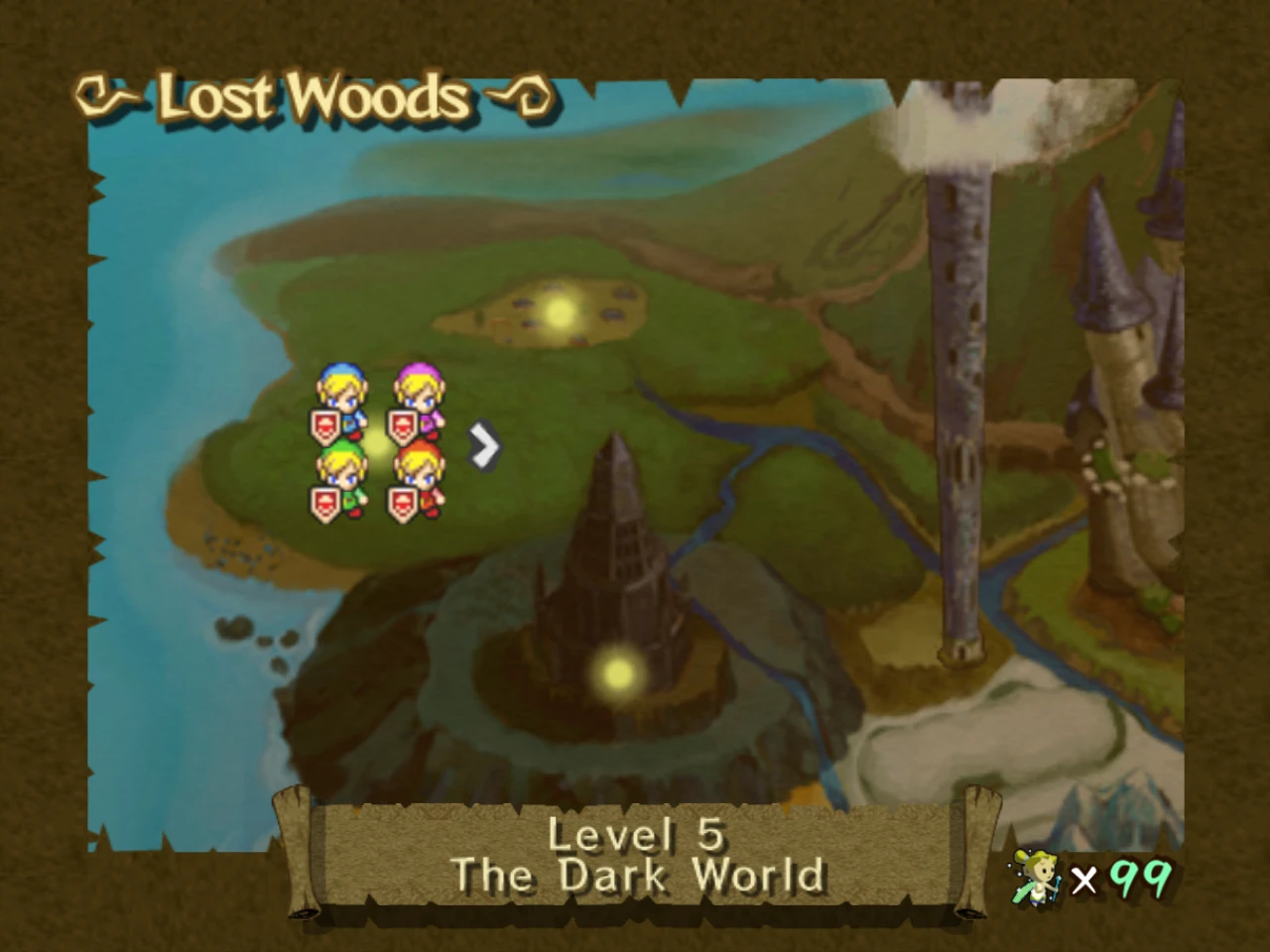
The Dark WorldLevel 5The Lost Woods, Kakariko Village and the Temple of Darkness. Boss: Phantom Ganon, again.
The Desert of DoubtLevel 6The Desert of Doubt (Gerudo Village, a windswept desert and Zuna Village, with a Big Dark Stalfos to beat in both the normal and Dark Worlds), the Desert Temple and the Pyramid, where Big Moldorm is the boss.
Frozen HyruleLevel 7Frozen Hyrule, the Ice Temple and the Tower of Winds.
Realm of the HeavensLevel 8The Realm of the Heavens, the Dark Cloud and the Palace of Winds. Bosses: Vaati and Ganon.
Other bosses and minibosses along the way include the Helmaroc King from The Wind Waker, Big Moldorm, Frostare, Gohma, Dodongos and Shadow Link himself.
In comics, TV & other media
Four Swords Adventures was retold as a manga, and its villains have turned up elsewhere.
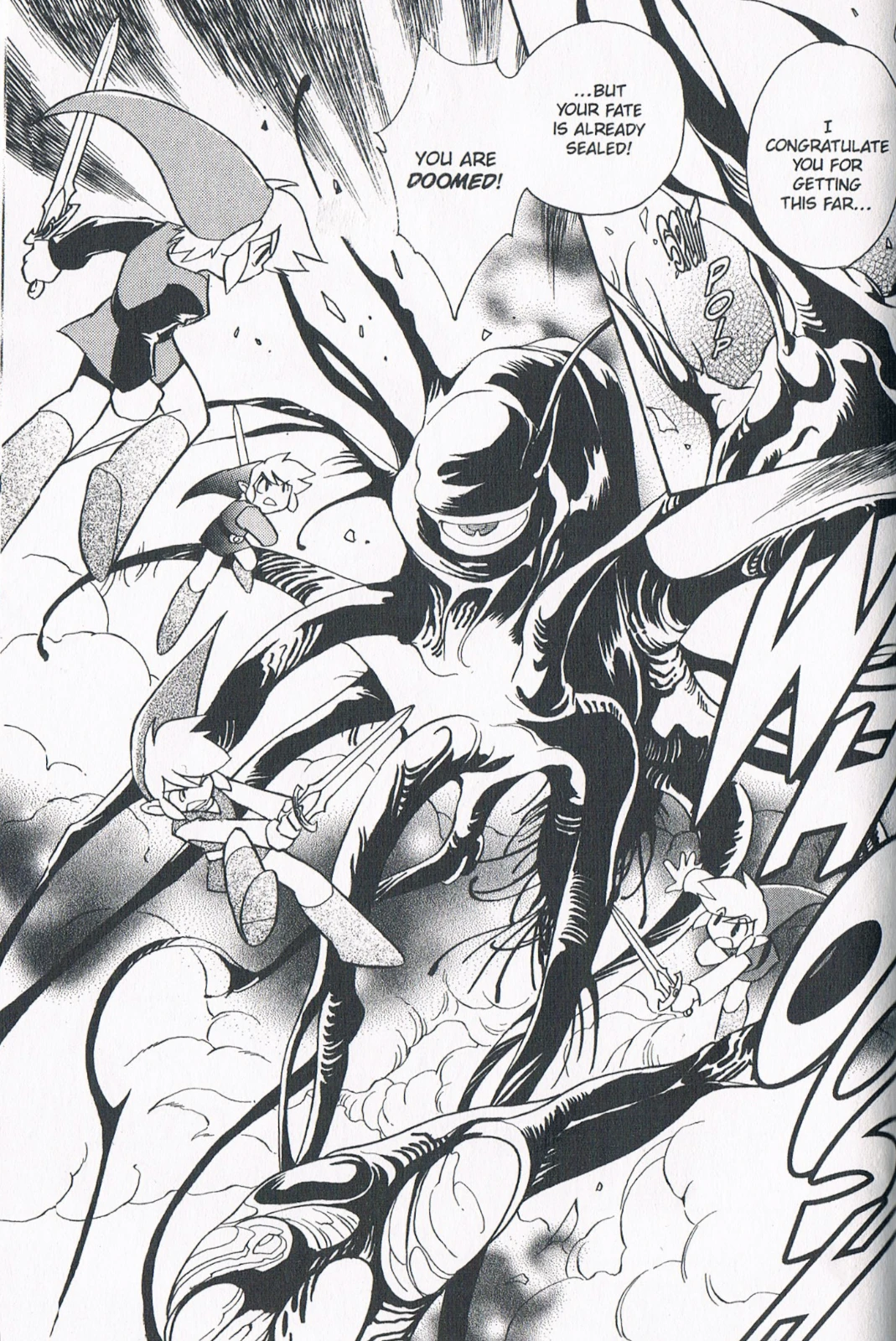
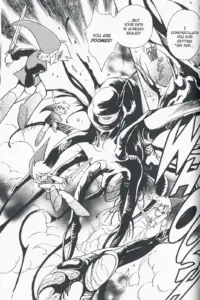
The Legend of Zelda: Four Swords (manga)Manga · Akira Himekawa · two volumes; Viz Media volumes 6 and 7 in EnglishAkira Himekawa’s adaptation is based on Four Swords Adventures and gives each of the four Links a personality of his own. It expands Shadow Link’s story a great deal, ending with him reconciling with the Links and becoming their shadow.
Super Smash Bros. UltimateGame · Switch · 2018Vaati appears as a collectable Spirit.
A Link Between WorldsGame · 3DS · 2013Shadow Links return as StreetPass opponents based on other players’ profiles.
Characters
A small cast with a lot of history behind it. Here is who they are across the series and what they do in this game.
Character
Who they are
In this game
Stats & abilities
Link (all four of him)The hero
The series’ silent hero, reborn in many eras. This one is a Hylian youth summoned by Princess Zelda as a guard. As in the original Four Swords, players cannot give him a name.
Draws the Four Sword and splits into four Links in green, red, blue and purple. Together they cross eight levels to rescue the maidens and defeat Vaati and Ganon, then become one again.
Formations for puzzles and fights
Collects Force Gems to power the Four Sword
Items are found within each stage and do not carry over
Princess ZeldaPrincess of Hyrule
The princess of the title, who across the series has been a captive, a disguised warrior and the mortal form of a goddess. Here she is a guardian of the seal on Vaati.
Summons Link, opens the portal with the maidens, and is captured, twice. In the end she and Link seal Shadow Link in the Dark Mirror, and her power helps seal Ganon.
One of the seven sealing the Four Sword Sanctuary
The Shrine MaidensGuardians of the Four Sword
Six maidens of Hyrule who, with Zelda, keep the Four Sword’s seal. Each has her own colour, among them the Blue, Red, Green and White Maidens.
Kidnapped by Shadow Link at the start; rescuing one ends each of the first six levels. The Red Maiden sends the Links to the desert, and their combined power seals Ganon at the end.
One is rescued at the end of each of the first six levels
VaatiThe wind sorcerer
Vaati began as a Minish, the apprentice of the sage Ezlo, before stealing a magic cap and becoming a sorcerer (The Minish Cap). In Four Swords he kidnapped maidens and Zelda and was sealed in the Four Sword. His Japanese name, Gufū, means “tornado”.
Freed when Link draws the sword, he spreads darkness over Hyrule, but he turns out to be a pawn in Ganon’s plan. He is fought in his Palace of Winds.
Boss of the Palace of Winds
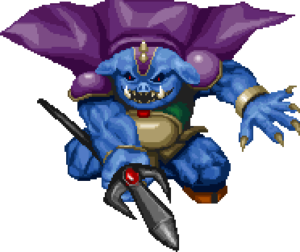
GanonGanondorf reborn
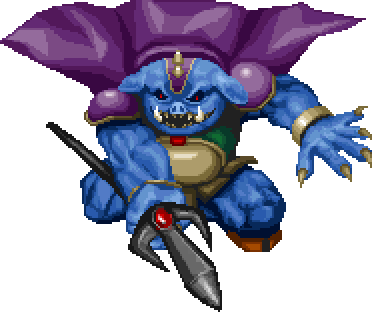
Ganon has been the series’ arch-villain since 1986. This is a new incarnation, separate from the Ganondorf of Ocarina of Time and Twilight Princess: a man of the Gerudo tribe who stole a trident full of dark power and transformed.
The true mastermind. He used the Dark Mirror to create Shadow Link, tricked Link into freeing Vaati, and turned the people of Hyrule into his minions. Fought last, then sealed by the maidens.
Weapon: the trident
Phantom Ganon is fought twice along the way
Shadow LinkLink’s dark double
Dark reflections of the hero have haunted the series, from Dark Link in Zelda II onwards. According to Hyrule Historia, Shadow Links are demons the Dark Mirror made from the evil thoughts of an earlier Ganondorf.
Kidnaps the maidens, tricks Link into drawing the Four Sword and harries the heroes all game, multiplying as he goes. Destroying the original destroys the copies, and at the end Zelda and Link seal them all in the mirror.
Miniboss more than once
Named by Kaepora Gaebora
The Knights of HyruleThe royal guard
Four knights who serve the royal family and hold the kingdom’s Royal Jewels.
Swallowed up when the Dark World spreads. Rescuing the Red Knight in the Desert of Doubt reveals that Ganon is behind everything.
Hold the Royal Jewels
Kaepora GaeboraThe wise owl
The talkative owl who guided young Link through Ocarina of Time.
Turns up to guide the four Links, and is the one who names their dark pursuer Shadow Link.
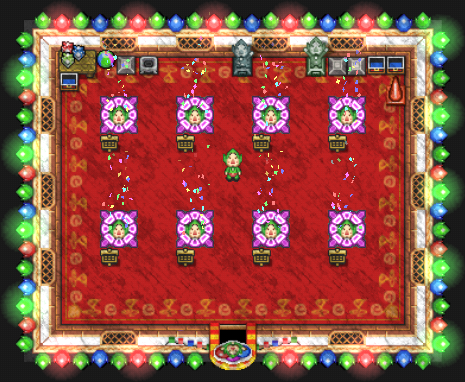
Every world has a Tingle’s Tower, where groups can play eight multiplayer mini-games, unlocked by clearing stages, to earn extra lives. In Navi Trackers a solo player can compete against him.
Tingle’s Tower mini-games, including horse racing, hammer tag and monster hunting
Tetra and her piratesNavi Trackers hosts (Japan)
The pirate captain of The Wind Waker, who is revealed to be Princess Zelda, heir of Hyrule’s last king, with her loyal crew.
They star in Navi Trackers, which the West never got. Tetra narrates and gives hints on the television while players hunt for her crew; the voice acting for Tetra and her pirates exists only in Japanese.
Navi Trackers only
The GerudoPeople of the desert
The desert tribe of thieves and warriors from which Ganondorf comes, a people of women into which a man is born only rarely.
In Gerudo Village they confirm that Ganondorf was one of their own and point the Links towards the Pyramid. Four Swords Adventures is one of the very few 2D Zeldas with Gerudo in it.
Gerudo Village: Level 6
Bosses and minibosses
The bosses of Hyrulean Adventure, from Zelda Dungeon’s list.
Phantom GanonHyrule Castle · Temple of DarknessGanon’s phantom, fought twice.
Stone ArrghusEastern TempleA stone take on the floating eye from A Link to the Past.
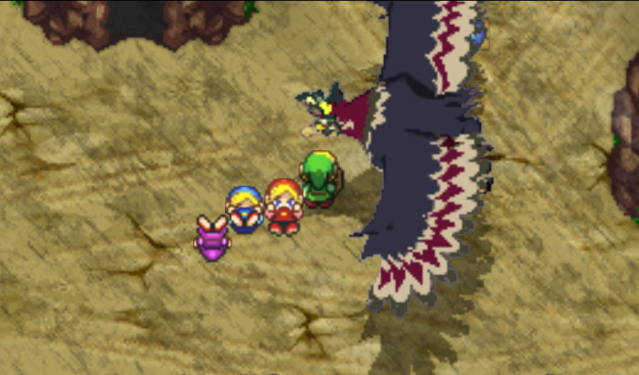
Helmaroc KingThe Mountain PathThe giant masked bird from The Wind Waker.
Big PoeThe Swamp · Infiltration of Hyrule CastleA huge ghost in two forms reminiscent of Jalhalla from The Wind Waker.
Big MoldormPyramidA giant segmented worm.
FrostareTower of WindsA creature of ice.
VaatiPalace of WindsThe wind sorcerer.
GanonPalace of WindsThe final battle.
Shadow LinkSeveral stagesMiniboss, and a nuisance throughout.
Other minibossesVariousChief Soldier, Ball and Chain Soldier, Manhandla, Gohma, Dodongos, Big Dodongo and a Big Dark Stalfos.
The people who made it
Key staff from the credits.
Toshiaki SuzukiDirectorLed the game at Nintendo EAD.
Shigeru MiyamotoProducerZelda’s creator, as producer.
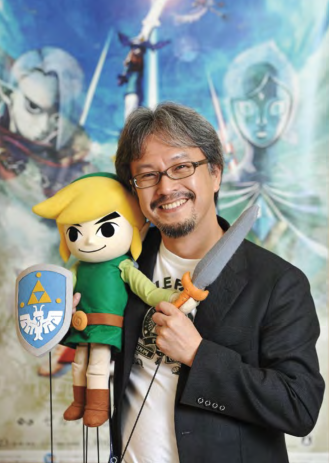
Eiji AonumaProducerLater called its sales disappointing, because every player needed a Game Boy Advance and a cable.
Yasunari SoejimaProgrammingCredited programmer.
Masanao ArimotoArtCredited artist.
Aya Kyogoku & Daiji ImaiWritersWrote the story.
Koji Kondo & Asuka OhtaMusicKondo, the composer of the original Zelda theme, with Asuka Ohta.
How it was made
Four Swords Adventures came together from two connectivity experiments shown in 2003, and its packaging changed more than once before release.
From the Game Boy Advance to the GameCube
Official art of the Links from Four Swords, the 2002 Game Boy Advance game.
Nintendo had already tried a four-player Zelda in Four Swords, made with Capcom’s Flagship and bundled with the Game Boy Advance A Link to the Past in 2002. Four Swords Adventures, made by Nintendo EAD under director Toshiaki Suzuki, kept that game’s presentation and moved it to the GameCube, with the television as the shared world and each player’s Game Boy Advance as a private window into caves and houses.
Two games, then one disc
Tetra in an English-language version of Navi Trackers.
At E3 2003 Nintendo showed two separate Zelda games that used the Game Boy Advance link: Four Swords and Tetra’s Trackers. By December 2003 the plan had become a single disc, Four Swords+, also carrying a battle game, Shadow Battle. That is what Japan received in March 2004.
North America’s plans shifted. For a time the adventure and Navi Trackers were scheduled as separate titles; in the end the adventure shipped with Shadow Battle, and Navi Trackers was not released. Its heavy use of speech, including a system that called players by the names they had typed in, is the likely reason, according to The Cutting Room Floor.
A late arrival in Europe
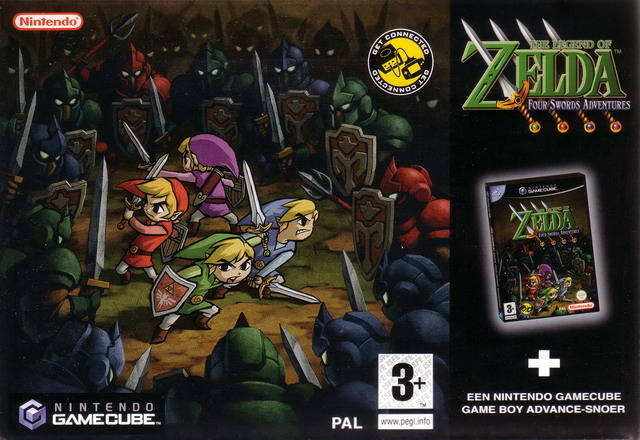
The European box, bundled with the link cable.
In Europe the game did not reach the shops until 7 January 2005, after The Minish Cap had launched in Europe in November 2004. Australia waited until April 2005. As in Japan, North American and European copies came with a GameCube–Game Boy Advance cable in the box.
The cost of connectivity
Eiji Aonuma, as pictured in Hyrule Historia.
In his “Reflections of Zelda” talk at the 2007 Game Developers Conference, Eiji Aonuma described the game’s sales as disappointing, and put it down to the hardware it asked for: every player needed their own Game Boy Advance and link cable.
Firsts: what this game introduced
New ideas and new faces Four Swords Adventures brought to the series.
1Shadow Link and the Dark MirrorThe multiplying Shadow Links and the Dark Mirror that makes them debut here.
2FormationsOne player commanding four Links at once, snapping them into lines, boxes and other shapes.
3Tingle’s TowerA mini-game hall in every world, with eight multiplayer games to unlock.
4Navi TrackersA party game set in The Wind Waker’s world, hosted by Tetra and with spoken narration, never released in the West.
5A new GanondorfThe only game to feature this separate incarnation of Ganondorf, according to the official The Legend of Zelda Encyclopedia, as cited by Wikipedia.
Cheats & secrets
Four Swords Adventures has no cheat codes, but it rewards replaying.
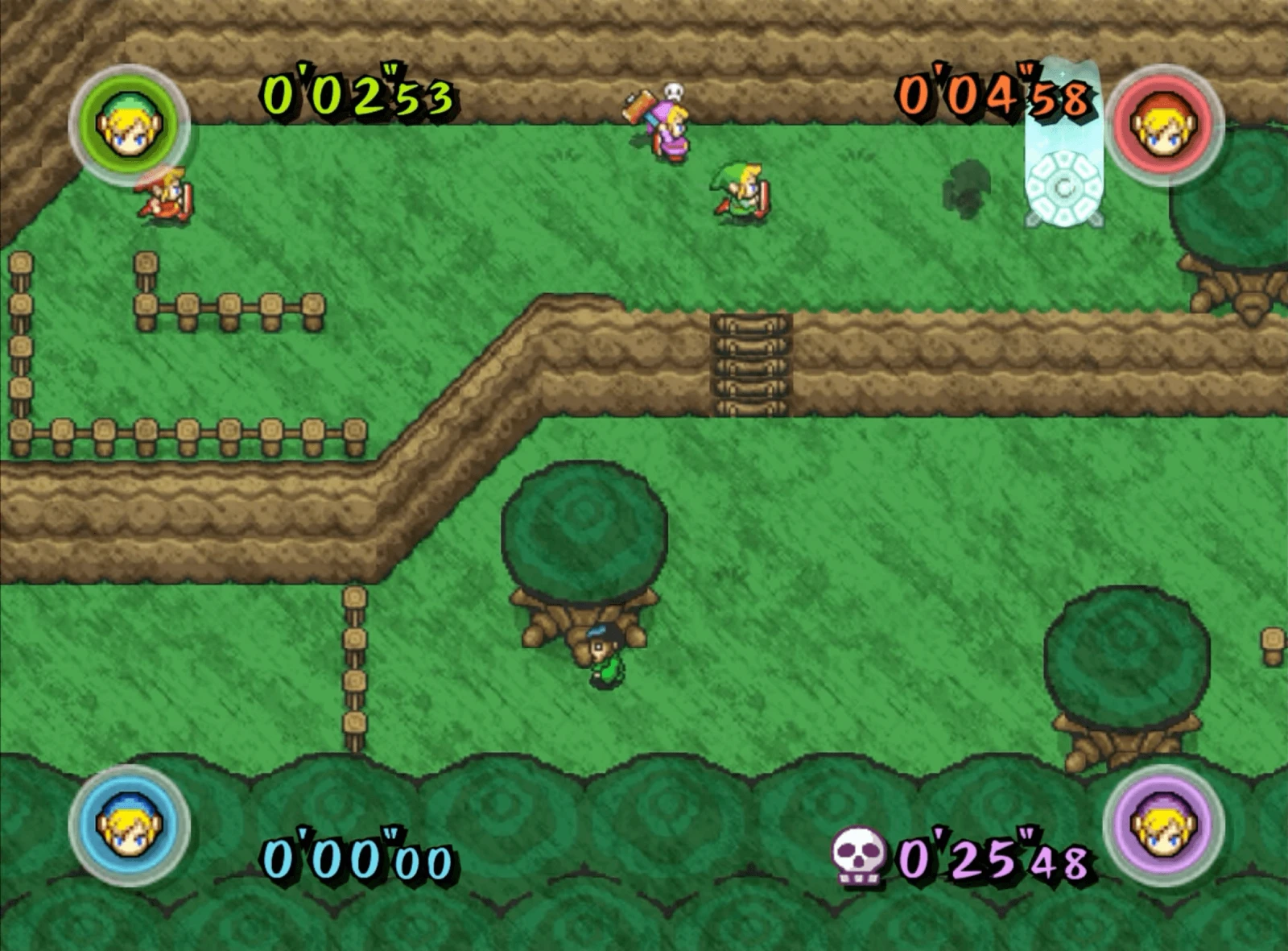
Dark stages in Shadow Battle
Shadow Battle.
Finish Hyrulean Adventure to unlock five extra Shadow Battle arenas: darker versions of the originals with portals to the Dark World and limited visibility.
Tingle’s Tower mini-games
Hammer Tag, one of the Tingle’s Tower mini-games.
Clearing particular stages unlocks the eight multiplayer games in Tingle’s Tower, which earn extra lives in multiplayer.
Replay stages
Official art of Force Gems.
Any finished level or stage can be replayed. If you reach the end of a stage without enough Force Gems, you are sent back to its start, so it pays to be thorough.
Hidden test menu
Tingle’s Tower on the map screen.
A stage select left in the game, reachable with cheat devices, reveals test stages named “Test-1”, “ECTS” and “E3”, plus a cut fourth stage in each of the eight levels, all still named Tingle’s Tower.
Checked against Wikipedia, Zelda Dungeon and The Cutting Room Floor.
Glitches, exploits and oddities
The disc holds a few curiosities from development.
A Super Mario World tune on a Zelda disc
The disc’s streamed-audio folder holds a file named smw.ast: Super Mario World’s Special World theme, itself a remix of the classic Super Mario Bros. tune. The game never plays it, since its music is sequenced rather than streamed.
A monster for two
An enemy from the original Four Swords that needed two players pulling from either side is still in the data, probably dropped because a lone player could not deal with it.
Leftovers
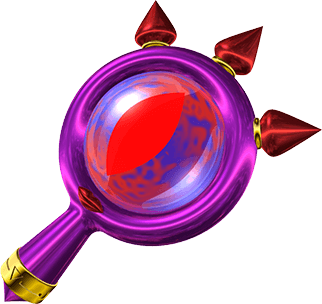
The Lens of Truth, as it appears in Ocarina of Time.
Unused items left over from Ocarina of Time and The Wind Waker, among them the Lens of Truth and a hookshot, remain in the files, along with a test Link model carrying a shield marked “T”.
Tetra’s Trackers in Europe
Tetra in Navi Trackers.
The European disc still has English lines from Tetra’s Trackers. The French, German and Spanish files leave them untranslated, and the Italian file has them blanked. An unused French line even reads “What? The Master Sword?”.
Videos & media
A GameCube trailer and the E3 2003 trailer that first showed four Links on one screen.
A GameCube trailer, uploaded by IGN.
The E3 2003 trailer (fan upload from a promotional disc).
Trivia & facts
The Japanese logo.The Japanese title, Yottsu no Tsurugi+, means “Four Swords Plus”.
Navi Trackers was originally called Tetra’s Trackers.
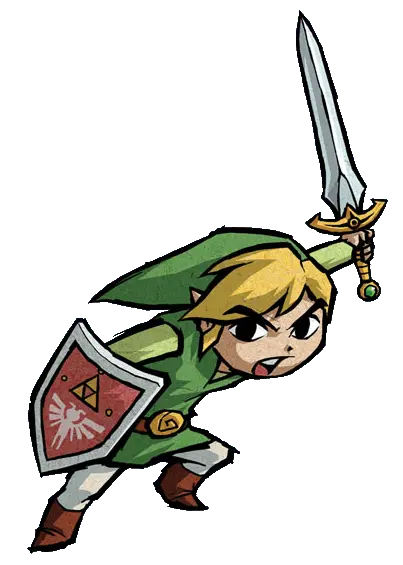
Official art of the green Link.Players cannot name Link, just as in the original Four Swords.
Items do not carry over between stages, unlike in a traditional Zelda.
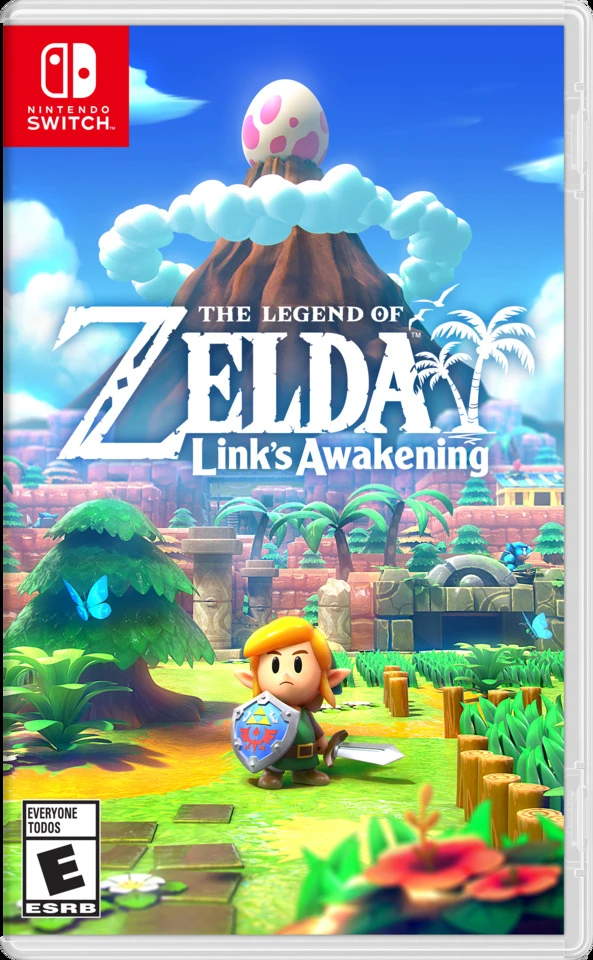
Link’s Awakening (2019) on Nintendo Switch.It was Nintendo’s last top-down Zelda on a home console for fifteen years, until the 2019 remake of Link’s Awakening on Switch.
It is one of the very few 2D Zelda games with Gerudo characters other than Ganondorf and Twinrova.
Its Ganondorf is a separate incarnation from the one in Ocarina of Time and Twilight Princess.
The disc includes an unused Super Mario World music file.
The test stages hidden in the game include ones named after the ECTS and E3 trade shows.
Sales of 155,000 copies made it North America’s third best-selling game of June 2004.
Nintendo Power ranked it the 48th best game on a Nintendo system in 2006.
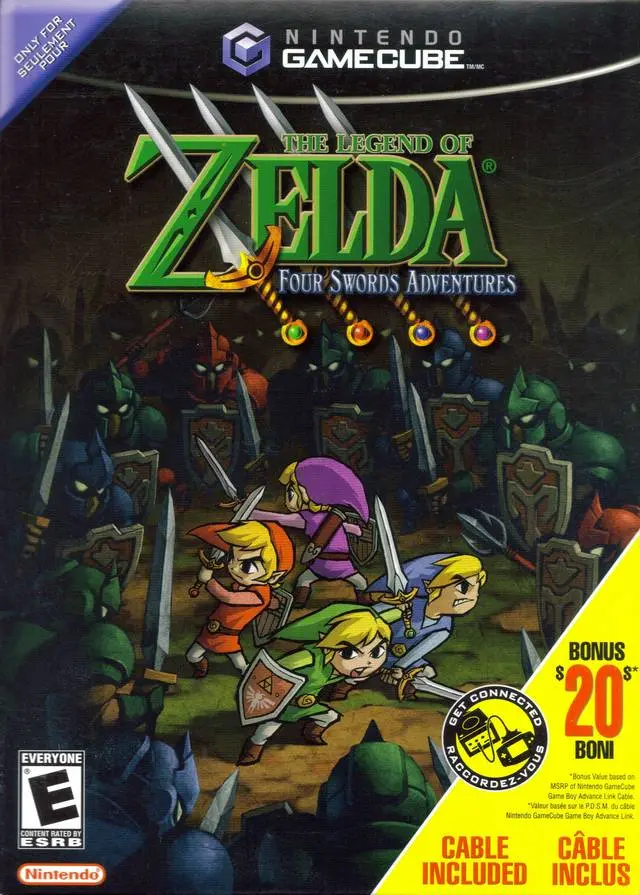
The front of the cable bundle box.Copies in Japan, North America and Europe came with the GameCube–Game Boy Advance cable needed to use a Game Boy Advance as a controller.
Media & artwork
Box art, artwork and screenshots from Four Swords Adventures. Select any image to view it larger.
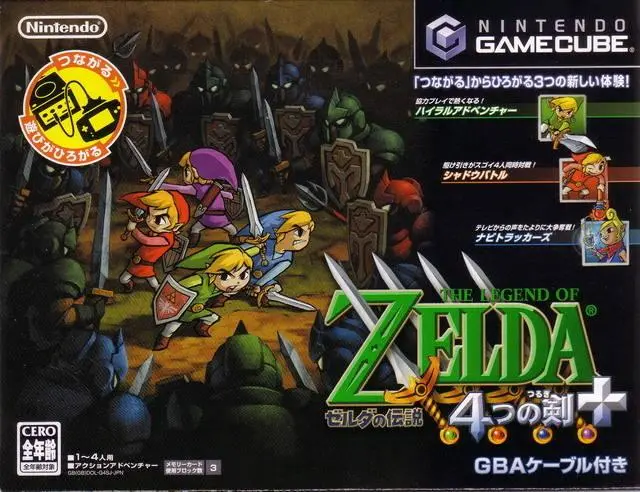
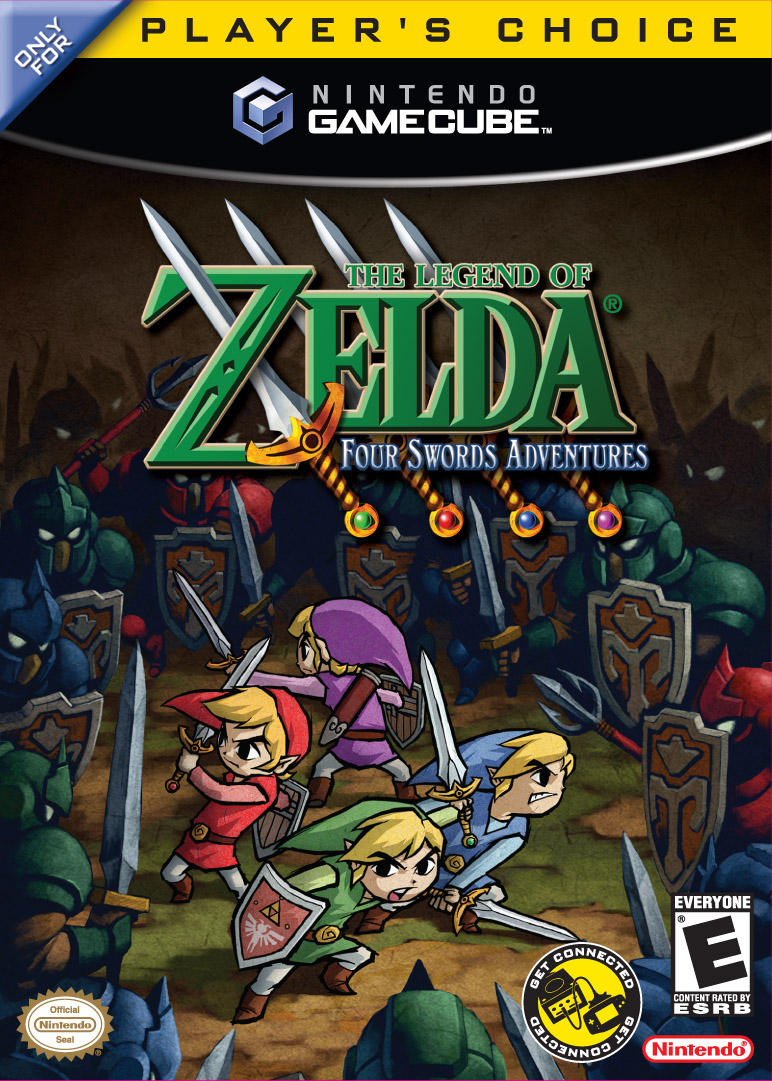
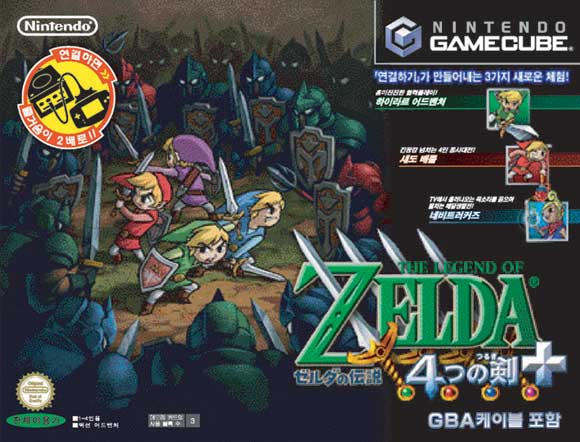
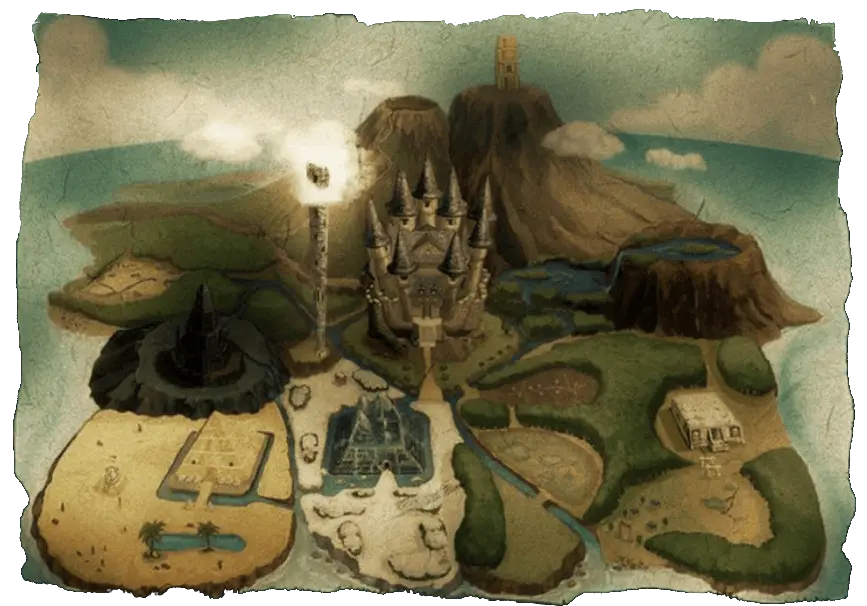
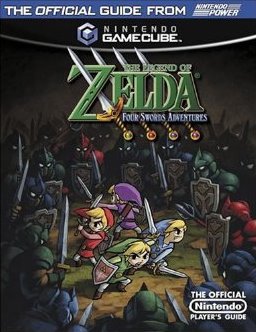
Japanese box, front (2004)UK box, front (2005)German box, front (2005)Canadian box, front (2004)North American Player’s Choice box (2006)Korean boxGame disc (Canadian release)Pre-release logoMap of HyruleNintendo Power’s guide to the game
Four Swords Adventures has never been re-released, but its ideas and villains have lived on.
Releases
GameCube (Japan)18 March 2004 – Four Swords+, with Hyrule Adventure, Shadow Battle and Navi Trackers.
GameCube (North America)7 June 2004 – Hyrulean Adventure and Shadow Battle, with a link cable.
GameCube (Europe)7 January 2005 – Released after The Minish Cap.
GameCube (Australia)7 April 2005 – Three months after Europe.
Player’s Choice (North America)April 2006 – A cheaper reissue, after 250,000 copies sold.
Later appearances
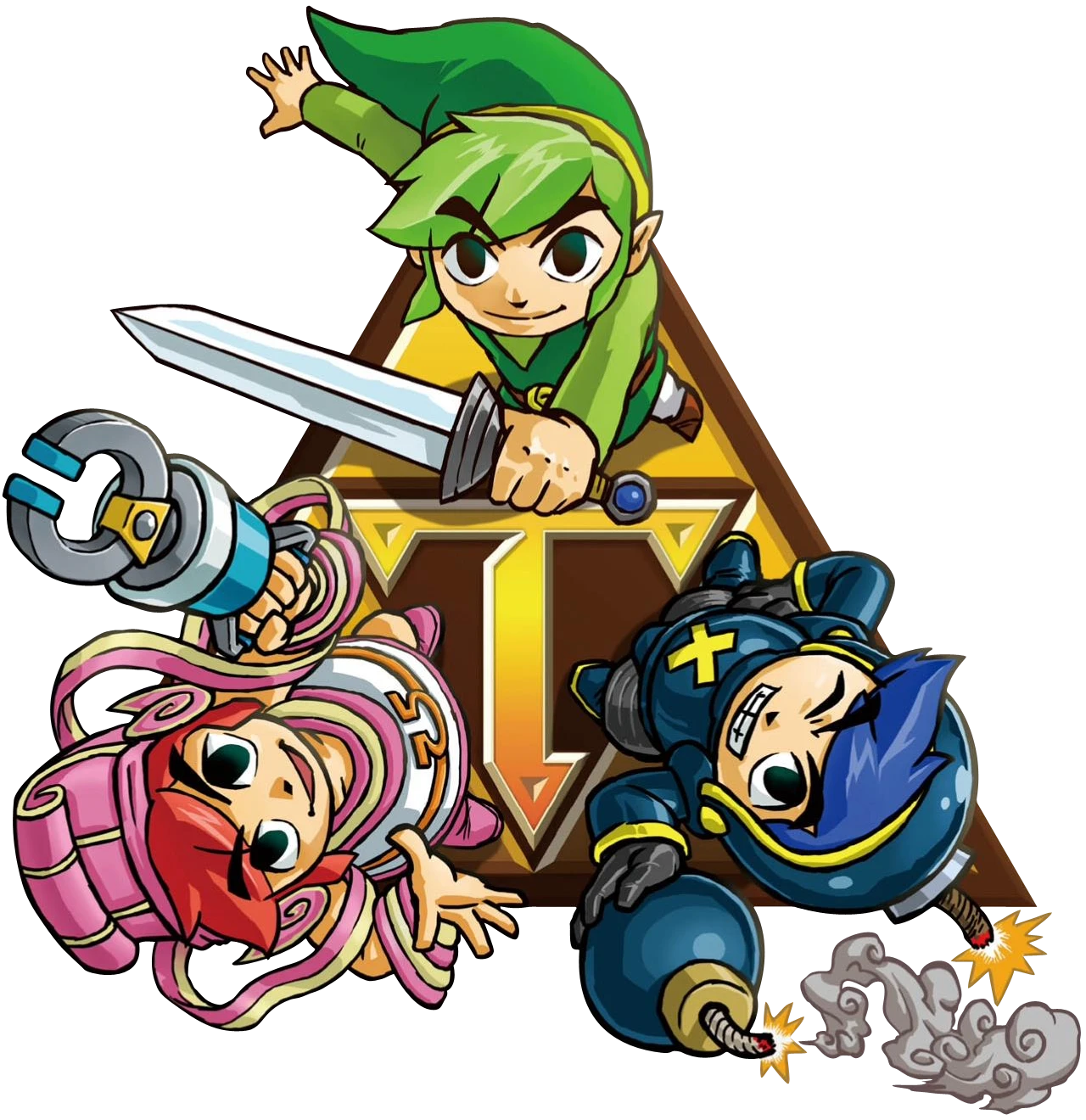
Official art of the Links from Tri Force Heroes (2015).
The multiplayer idea came back in a new form in Tri Force Heroes (2015), and the original Game Boy Advance Four Swords was remastered as Four Swords Anniversary Edition in 2011. Shadow Links returned as StreetPass rivals in A Link Between Worlds, and Vaati is a Spirit in Super Smash Bros. Ultimate.
Where to play it today
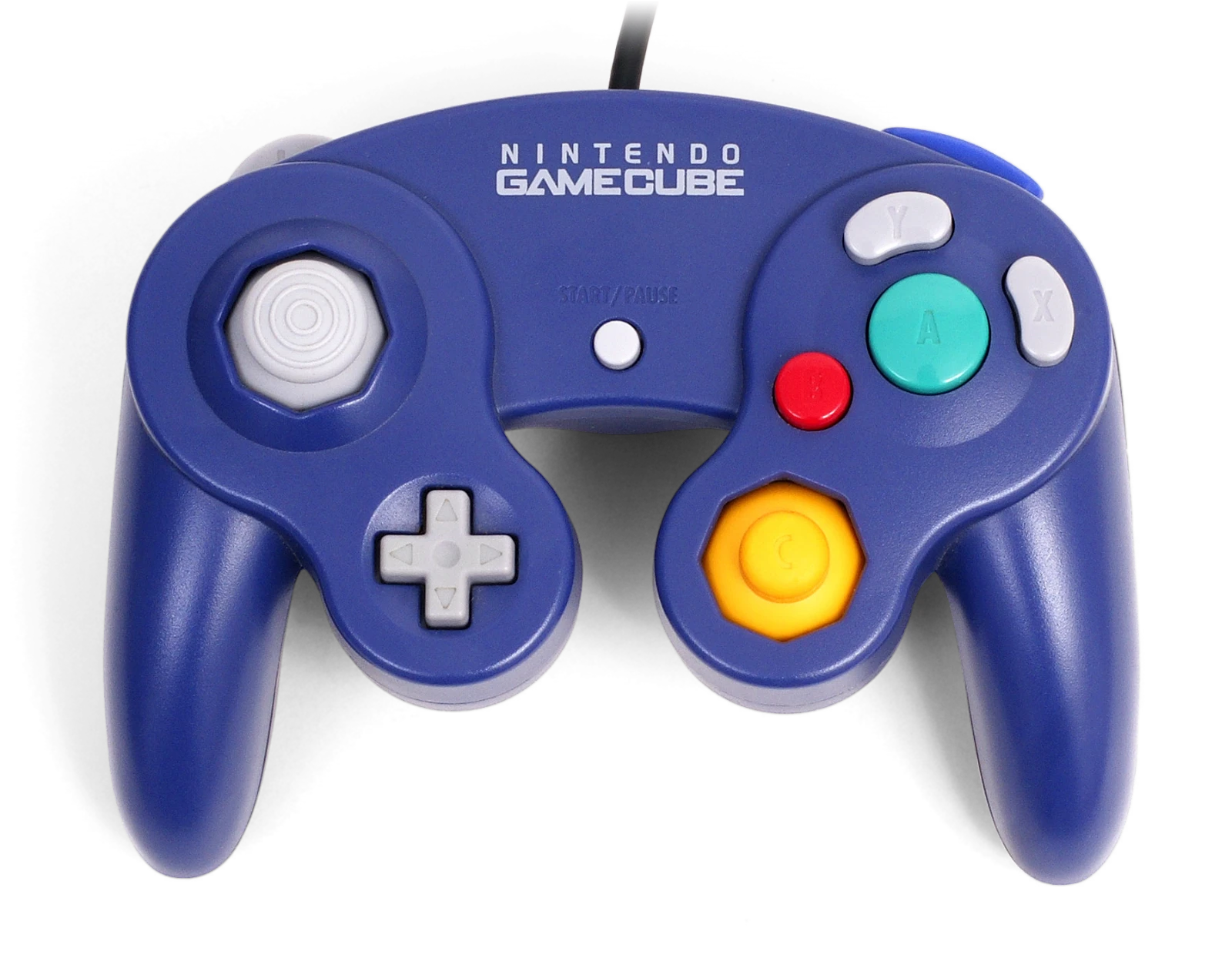
A Nintendo GameCube controller.
Only on the original GameCube disc (or a Wii that plays GameCube discs). It has not been added to the GameCube library of Nintendo Switch Online, and multiplayer still needs a Game Boy Advance and cable for each player.
Sales & reviews
Sales figures
Four Swords Adventures was North America’s third best-selling game of June 2004, with 155,000 copies, and had sold 250,000 there by April 2006, when Nintendo moved it into the Player’s Choice range. In Japan it sold 127,000. Eiji Aonuma later called the sales disappointing.
155,000North America, June 2004
250,000North America by April 2006
127,000Japan
Reception and review scores
Critics liked it a lot, especially with friends. Metacritic gives it 86 from 55 reviews, and GameRankings averaged 85% from 67. A selection of reviews:
Nintendo PowerUS · 2004
4.8/5
GameSpyUS · 2004
4.5/5
IGNUS · 2004
8.7/10
Electronic Gaming MonthlyUS · 2004
8.5/10
FamitsuJapan · 2004
33/40
GameSpotUS · 2004
8.1/10
EurogamerUK
8/10
Game InformerUS · 2004
8/10
GameProUS · 2004
4/5
GameSpot called the Game Boy Advance link “a truly compelling reason to invest in a GameCube-to-GBA link cable” and liked the story and the upgraded Wind Waker-style visuals. GameRevolution was less keen on the mix of SNES-style sprites and GameCube effects, and argued that needing a Game Boy Advance per player held the multiplayer back.
Honours
GameSpot · June 2004GameCube Game of the MonthNamed the best GameCube game of the month.
Nintendo Power · January 2006No. 48 in the Top 200Ranked among the best games made for a Nintendo system.
Reader reviews
No reader reviews yet. Played it? Give it a score out of 10 and tell other fans what you think.
To provide the best experiences, we use technologies like cookies to store and/or access device information. Consenting to these technologies will allow us to process data such as browsing behavior or unique IDs on this site. Not consenting or withdrawing consent, may adversely affect certain features and functions.
Functional
Always active
The technical storage or access is strictly necessary for the legitimate purpose of enabling the use of a specific service explicitly requested by the subscriber or user, or for the sole purpose of carrying out the transmission of a communication over an electronic communications network.
Preferences
The technical storage or access is necessary for the legitimate purpose of storing preferences that are not requested by the subscriber or user.
Statistics
The technical storage or access that is used exclusively for statistical purposes.The technical storage or access that is used exclusively for anonymous statistical purposes. Without a subpoena, voluntary compliance on the part of your Internet Service Provider, or additional records from a third party, information stored or retrieved for this purpose alone cannot usually be used to identify you.
Marketing
The technical storage or access is required to create user profiles to send advertising, or to track the user on a website or across several websites for similar marketing purposes.

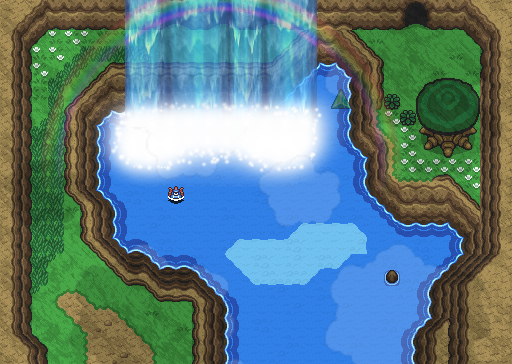
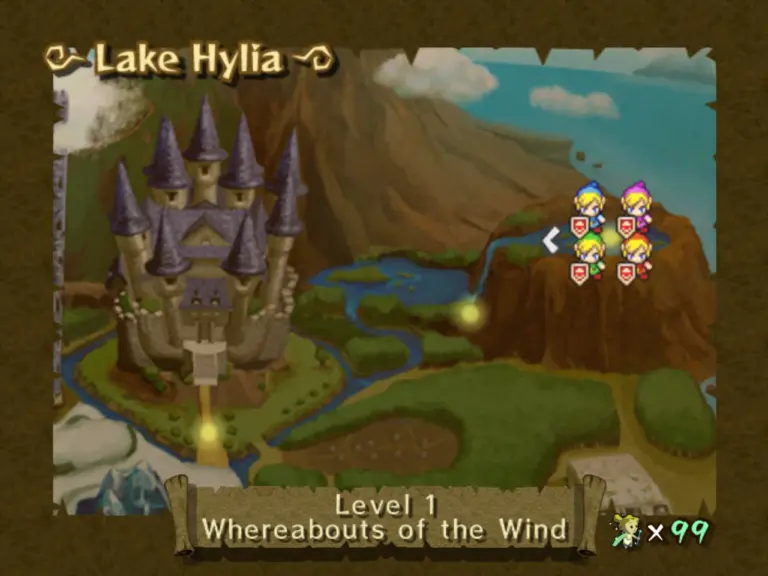 Whereabouts of the WindLevel 1Lake Hylia, the Cave of No Return and Hyrule Castle. Boss: Phantom Ganon.
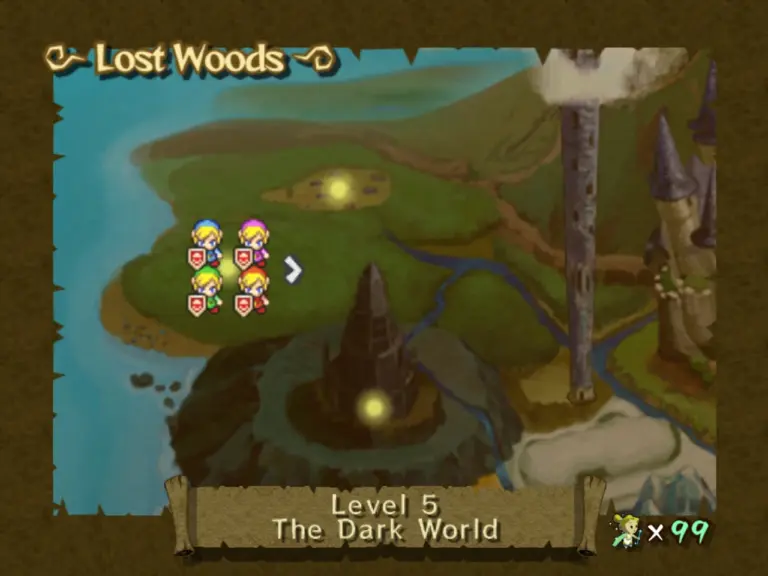 The Dark WorldLevel 5The Lost Woods, Kakariko Village and the Temple of Darkness. Boss: Phantom Ganon, again.
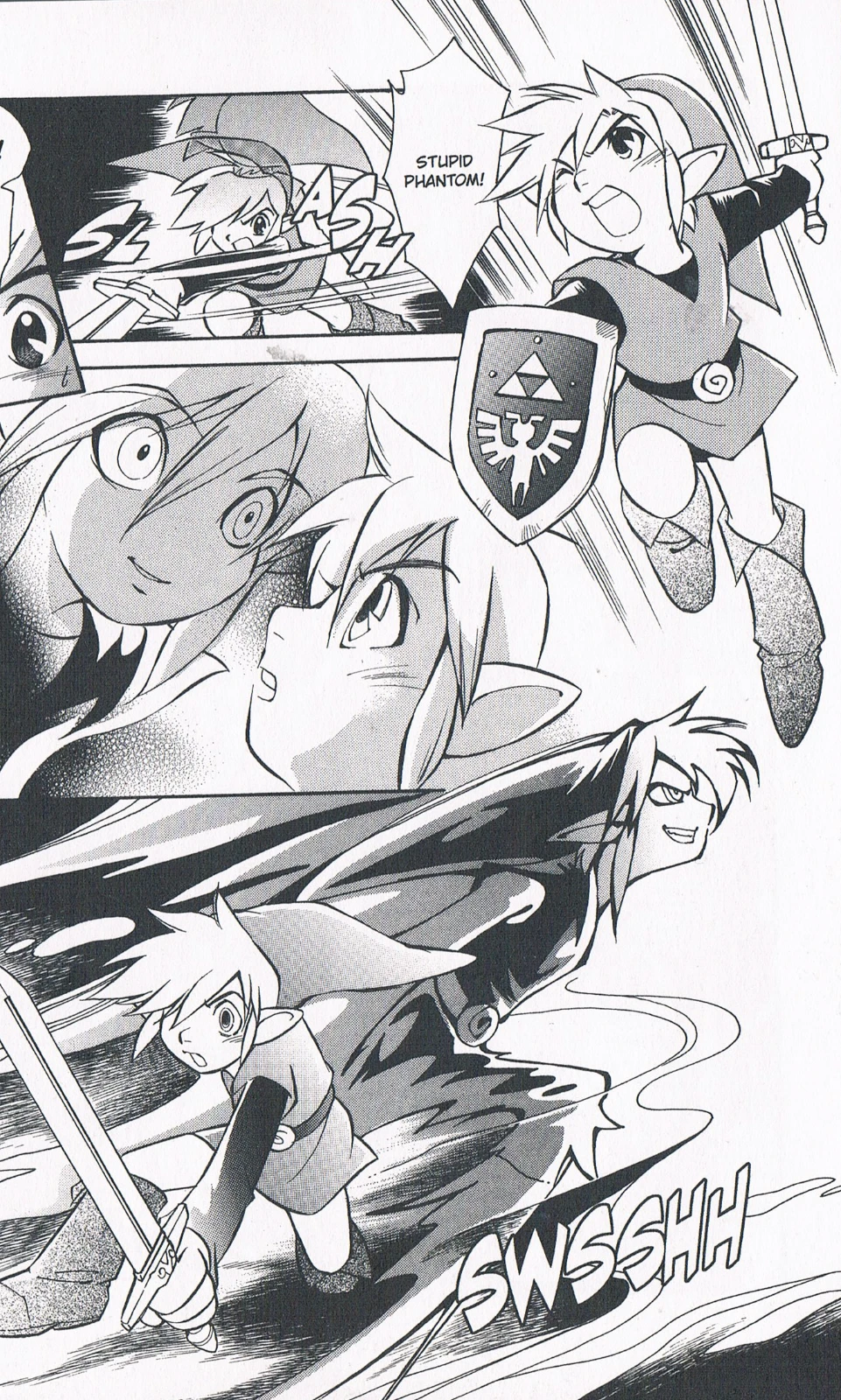 The Legend of Zelda: Four Swords (manga)Manga · Akira Himekawa · two volumes; Viz Media volumes 6 and 7 in EnglishAkira Himekawa’s adaptation is based on Four Swords Adventures and gives each of the four Links a personality of his own. It expands Shadow Link’s story a great deal, ending with him reconciling with the Links and becoming their shadow.
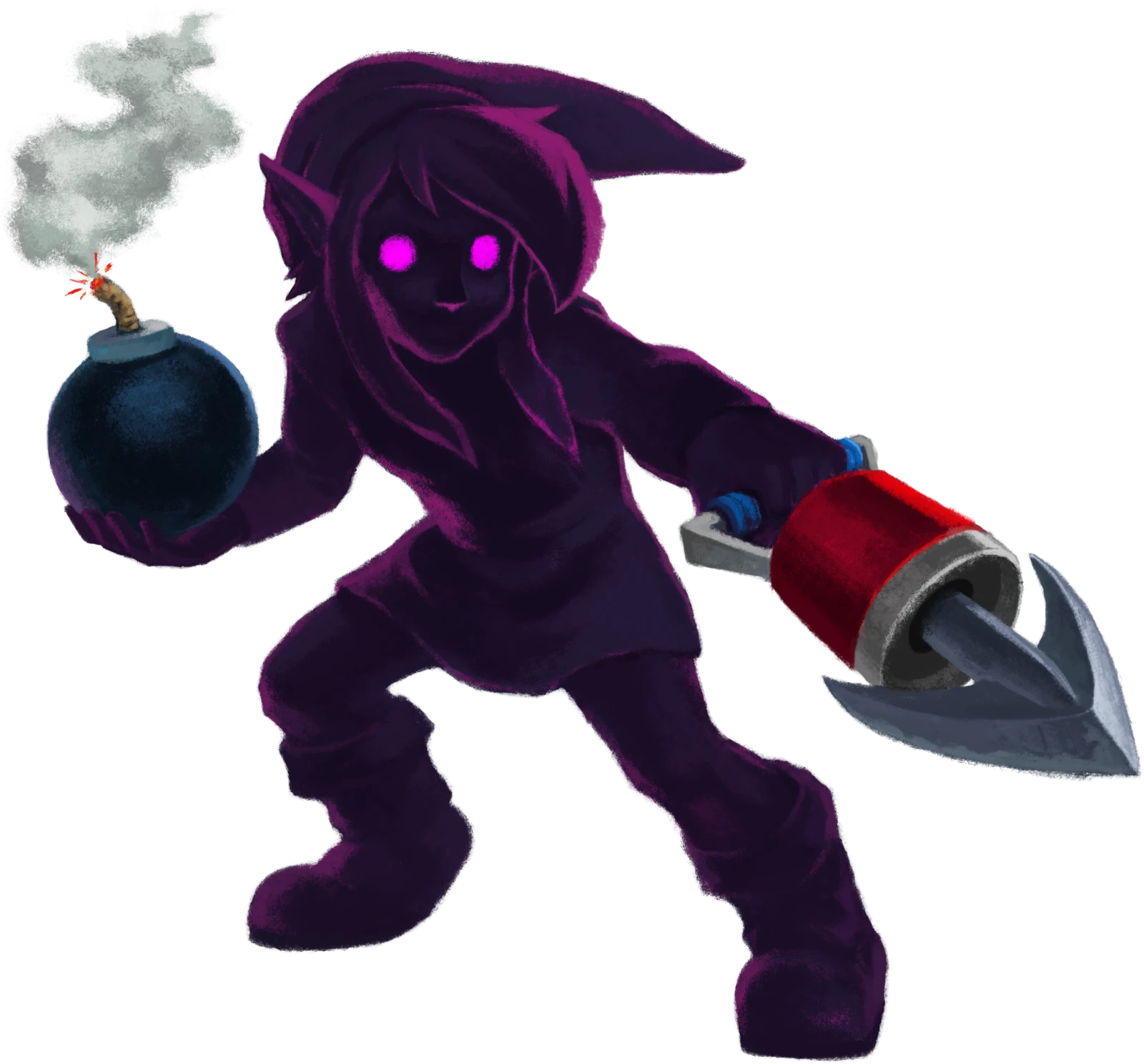 A Link Between WorldsGame · 3DS · 2013Shadow Links return as StreetPass opponents based on other players’ profiles.
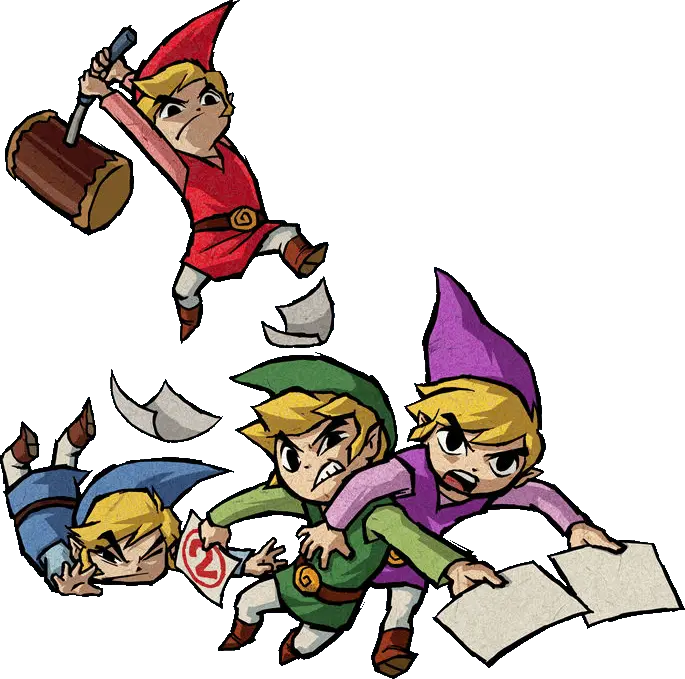 Link (all four of him)The hero
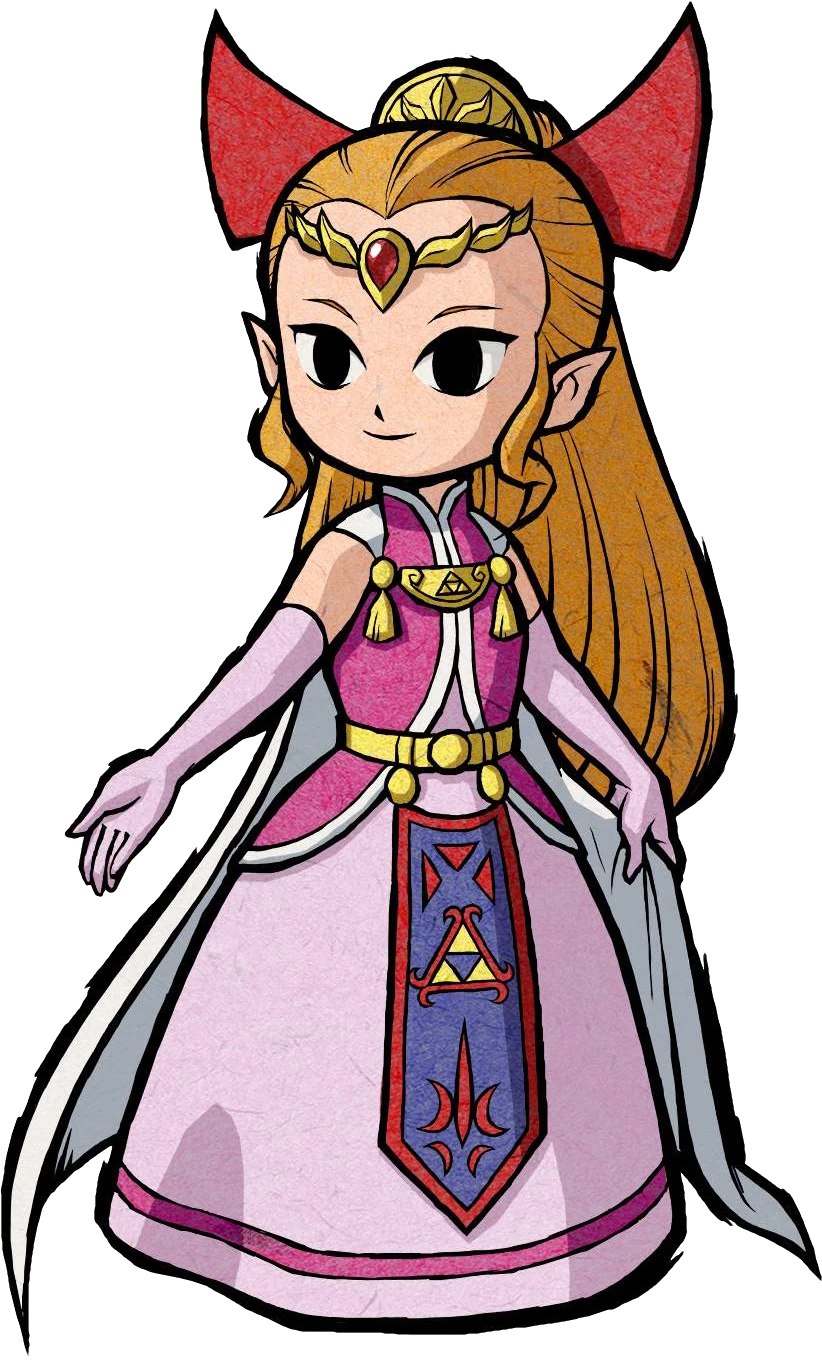 Princess ZeldaPrincess of Hyrule
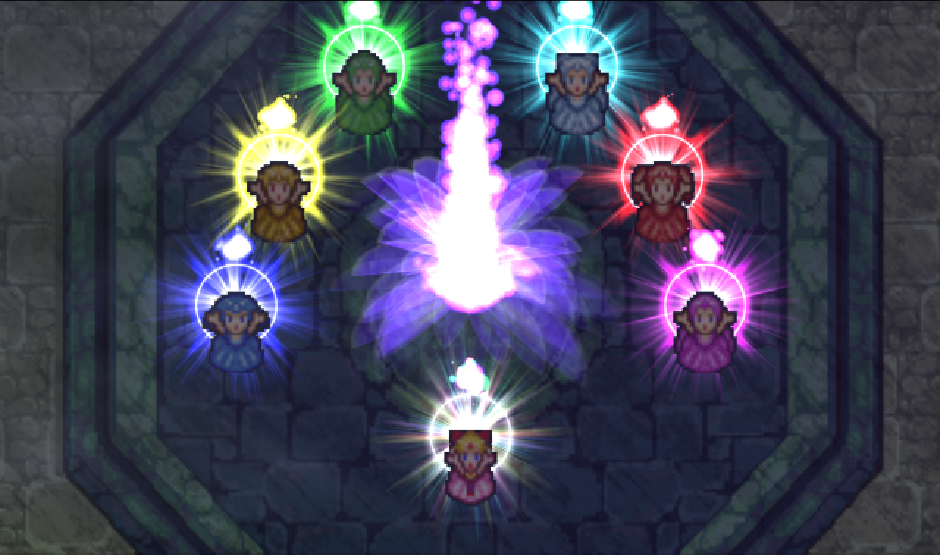 The Shrine MaidensGuardians of the Four Sword
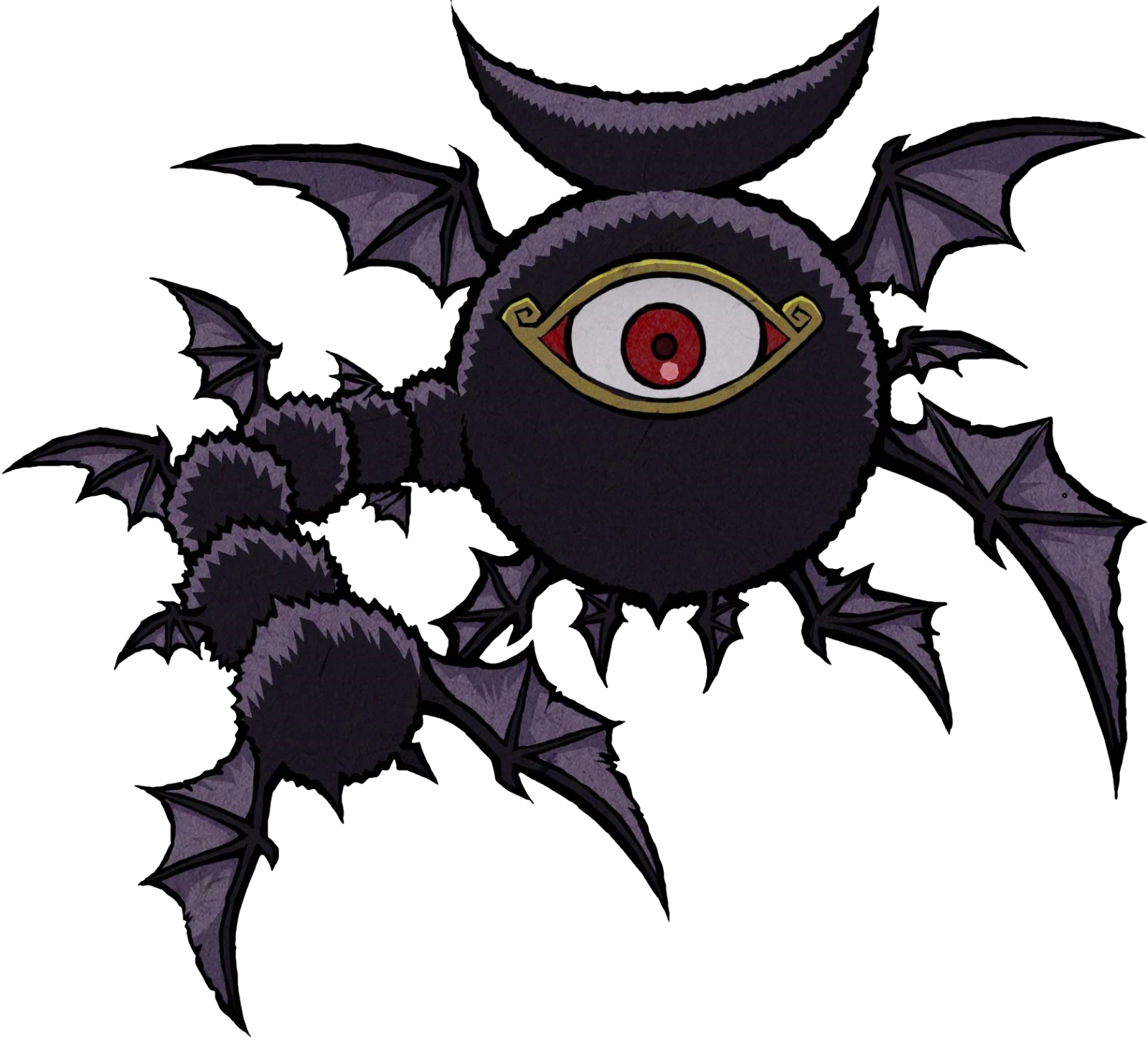 VaatiThe wind sorcerer
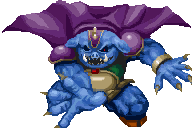 GanonGanondorf reborn
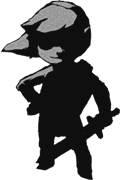 Shadow LinkLink’s dark double
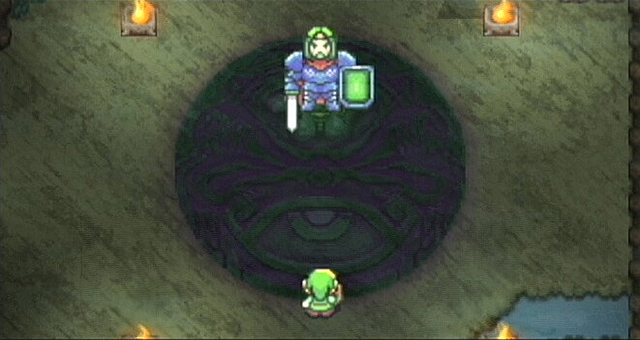 The Knights of HyruleThe royal guard
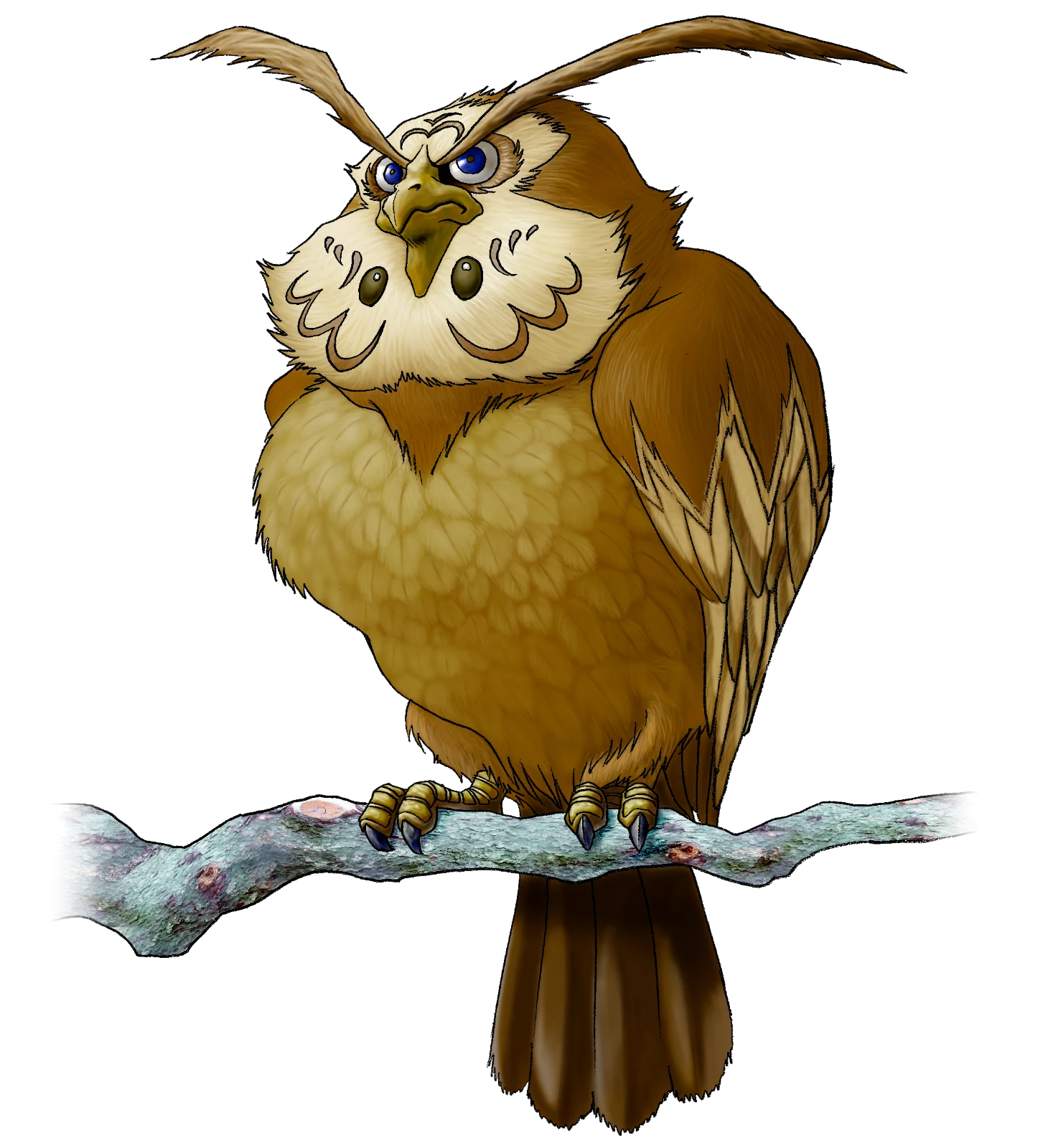 Kaepora GaeboraThe wise owl
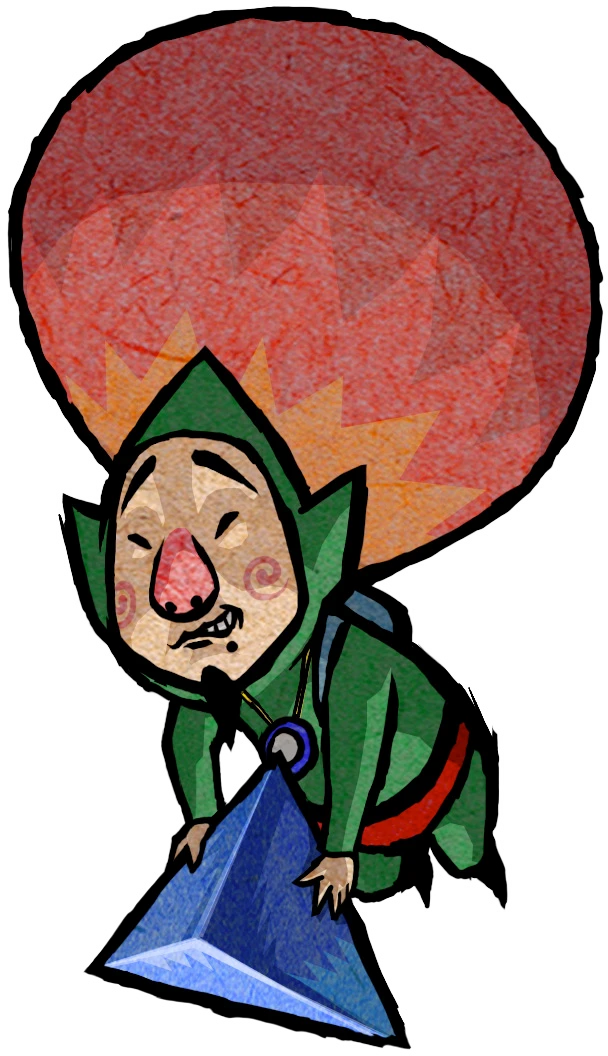 TingleHyrule’s strangest fairy fan
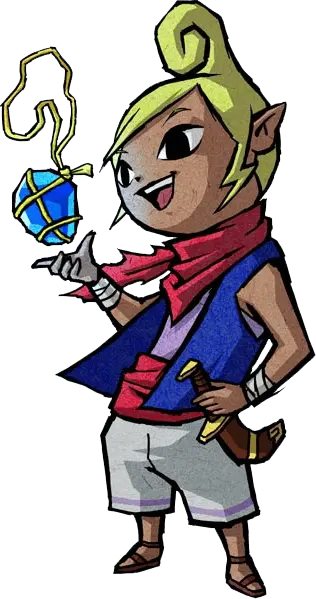 Tetra and her piratesNavi Trackers hosts (Japan)
 The GerudoPeople of the desert
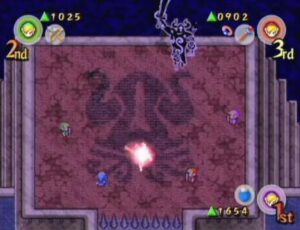 Phantom GanonHyrule Castle · Temple of DarknessGanon’s phantom, fought twice.
 Stone ArrghusEastern TempleA stone take on the floating eye from A Link to the Past.
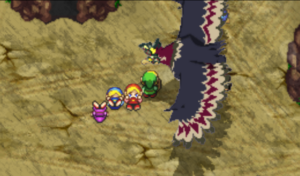 Helmaroc KingThe Mountain PathThe giant masked bird from The Wind Waker.
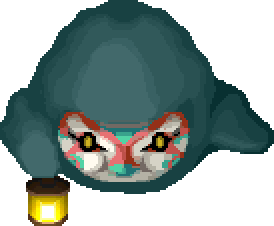 Big PoeThe Swamp · Infiltration of Hyrule CastleA huge ghost in two forms reminiscent of Jalhalla from The Wind Waker.
 Big MoldormPyramidA giant segmented worm.
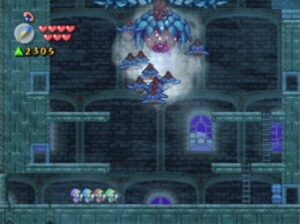 FrostareTower of WindsA creature of ice.
 VaatiPalace of WindsThe wind sorcerer.
 GanonPalace of WindsThe final battle.
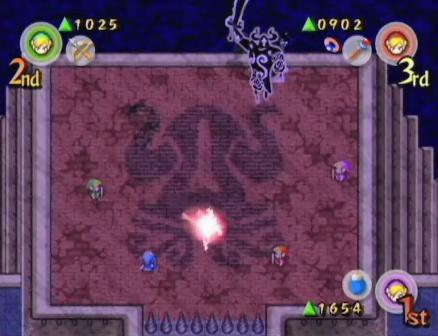
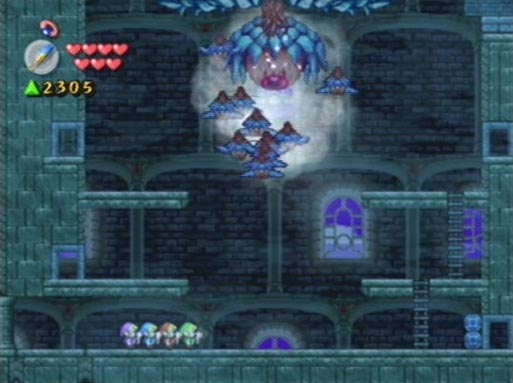
 Shadow Link and the Dark MirrorThe multiplying Shadow Links and the Dark Mirror that makes them debut here.
 Tingle’s TowerA mini-game hall in every world, with eight multiplayer games to unlock.
 Navi TrackersA party game set in The Wind Waker’s world, hosted by Tetra and with spoken narration, never released in the West.