The Legend of Zelda Encyclopedia Hyrule Hyakka · the 30th-anniversary compendium
Nintendo’s 30th-anniversary reference book: three decades of Hyrule, from the 1986 original to Twilight Princess HD, sorted into lore, a database of places, items and monsters, and an archive of every game.
Made byNintendo; edited in Japan by Ambit
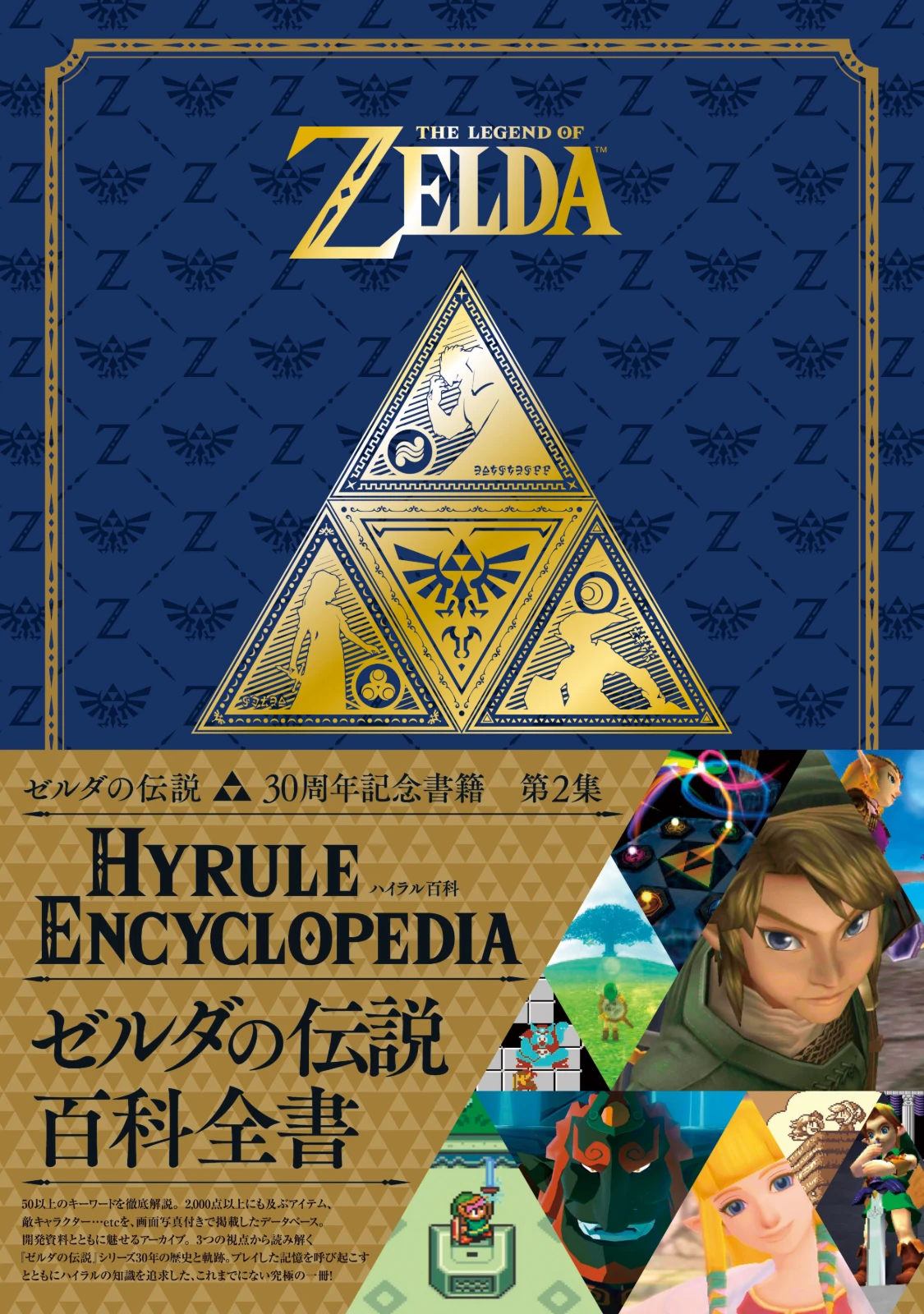
JapanTokuma Shoten, 1 March 2017
EnglishDark Horse, 19 June 2018
Pages328 (English edition)
CoversThe Legend of Zelda (1986) to Twilight Princess HD (2016)
PriceUS$39.99; Deluxe Edition US$89.99
Original title
ゼルダの伝説 ハイラル百科 (Zelda no Densetsu: Hyrule Hyakka, “The Legend of Zelda: Hyrule Encyclopedia”)
Series
The Legend of Zelda 30th-anniversary books, vol. 2 (Japan); the Goddess Collection, book 3 (Dark Horse)
Publisher (Japan)
Tokuma Shoten, 1 March 2017, ISBN 978-4-19-864378-2
Publisher (English)
Dark Horse, 19 June 2018; standard ISBN 978-1-5067-0638-2, Deluxe Edition ISBN 978-1-5067-0740-2; also an e-book
Format
Full-colour hardback, 9 × 12 in, 328 pages
English team
Editor Patrick Thorpe; translator Keaton C. White; English-language writer Ben Gelinas; design by Cary Grazzini
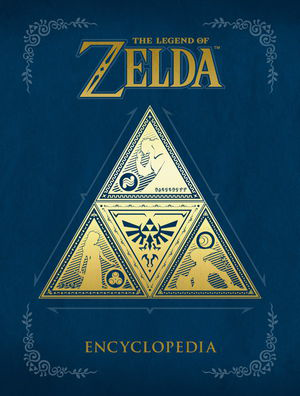
Dark Horse artwork for The Legend of Zelda Encyclopedia.
Every Zelda fan has wanted, at some point, one book to settle the arguments: what is that monster called, which game first had that item, and how on earth does the timeline fit together? The Legend of Zelda Encyclopedia is Nintendo’s answer. It was put together in Japan for the series’ 30th anniversary and published there by Tokuma Shoten as Hyrule Hyakka on 1 March 2017. Dark Horse translated it, and the English edition reached shops on 19 June 2018, about eight weeks later than first announced.
In Japan it is the second of three anniversary books, between Hyrule Graphics (which became Art & Artifacts) and the Breath of the Wild book. In English it closes the trilogy Dark Horse calls the Goddess Collection, which opened with Hyrule Historia. Its siblings lean on artwork and the making of the games; this one is about Hyrule as a place. The first chapter covers its history, peoples, geography, food and writing. The second is a database of towns, items, dungeons and enemies, and the third is an archive that walks through the games one at a time. Dark Horse’s editor, Patrick Thorpe, called it a compendium more than an art book, and that is exactly how it reads.
The one big gap is a matter of timing. The Japanese edition went on sale two days before Breath of the Wild, so coverage stops at Twilight Princess HD, and nearly every review mentions the missing game. The English edition did not add it: Breath of the Wild got a book of its own, Creating a Champion, five months later.
This 328-page book is an exhaustive guide to The Legend of Zelda from the original The Legend of Zelda to Twilight Princess HD…
— Dark Horse, product description (opening, abridged)
When it first announced the book in September 2017, Dark Horse also promised “a treasure trove of explanations and information” about the series’ world, along with the enemies, items, maps, languages and an exclusive interview with series producer Eiji Aonuma.
The Goddess Collection
Dark Horse gave its three Japanese-sourced Zelda books matching hardback covers in the colours of Hyrule’s goddesses: green for Farore on Hyrule Historia, red for Din on Art & Artifacts, and blue for Nayru, the goddess of wisdom, on the Encyclopedia. Fittingly, the wisdom book is the one full of facts.
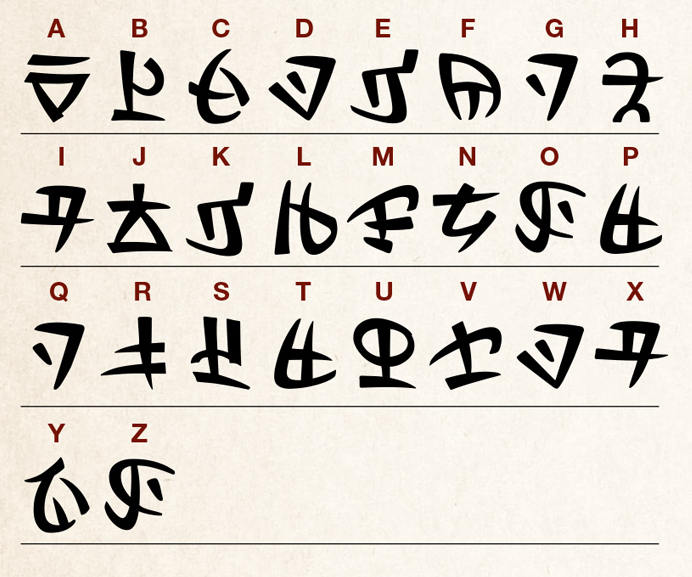
The Hylian alphabet of Skyward Sword. The Encyclopedia gives space to the series’ written languages.
The book has three chapters, each between about 60 and 130 pages long according to Source Gaming’s look at the Japanese edition. They run from the general to the particular: first the lore, then the lists, then the games one by one. Dark Horse also promised rare development sketches of favourite characters and an exclusive interview with Eiji Aonuma. We have not found a reliable account of what Aonuma talks about, so we leave it there.
Chapter 1: Historical Records
The lore of Hyrule · timeline, worlds, races, maps, culture, items and more
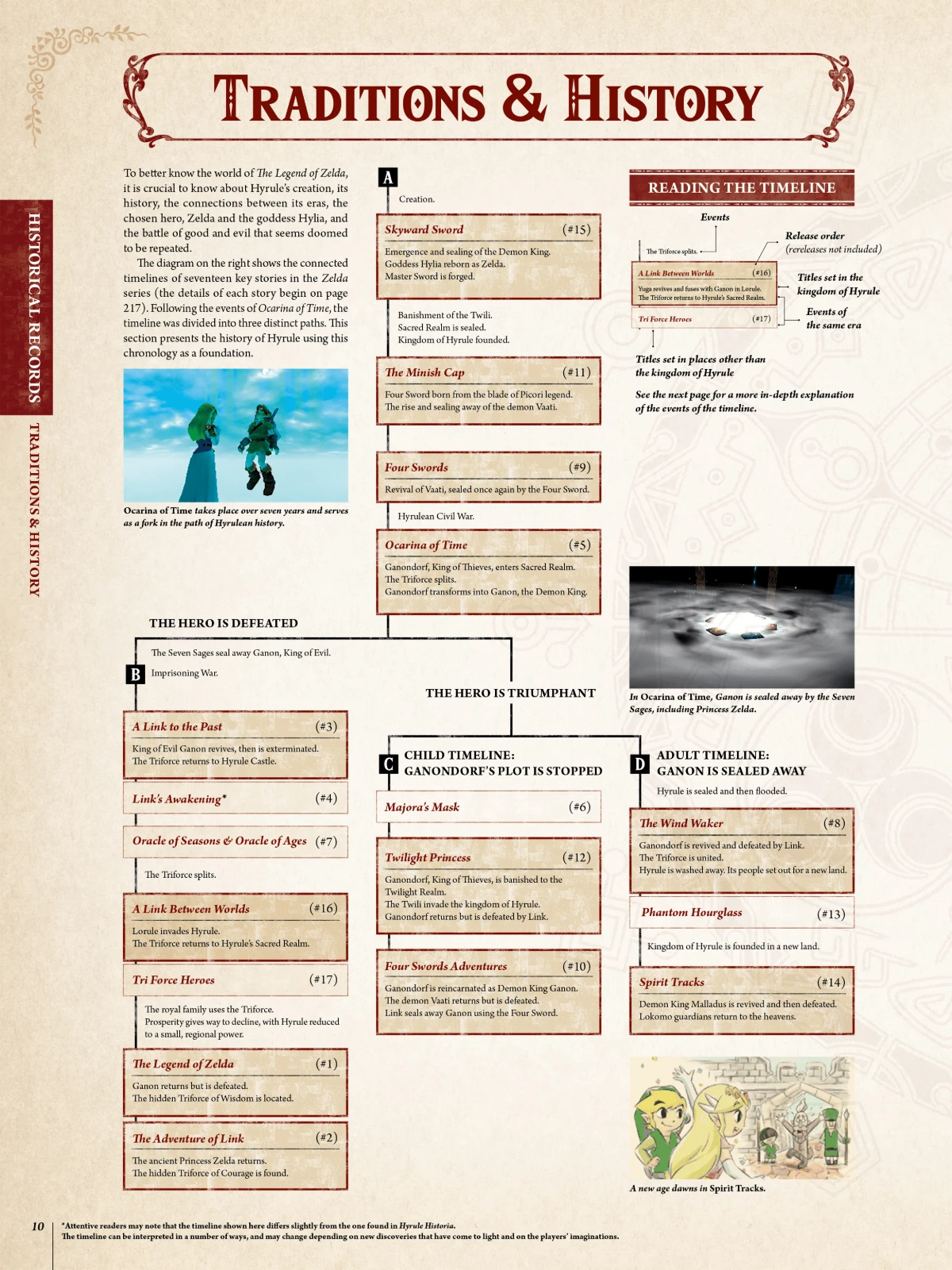
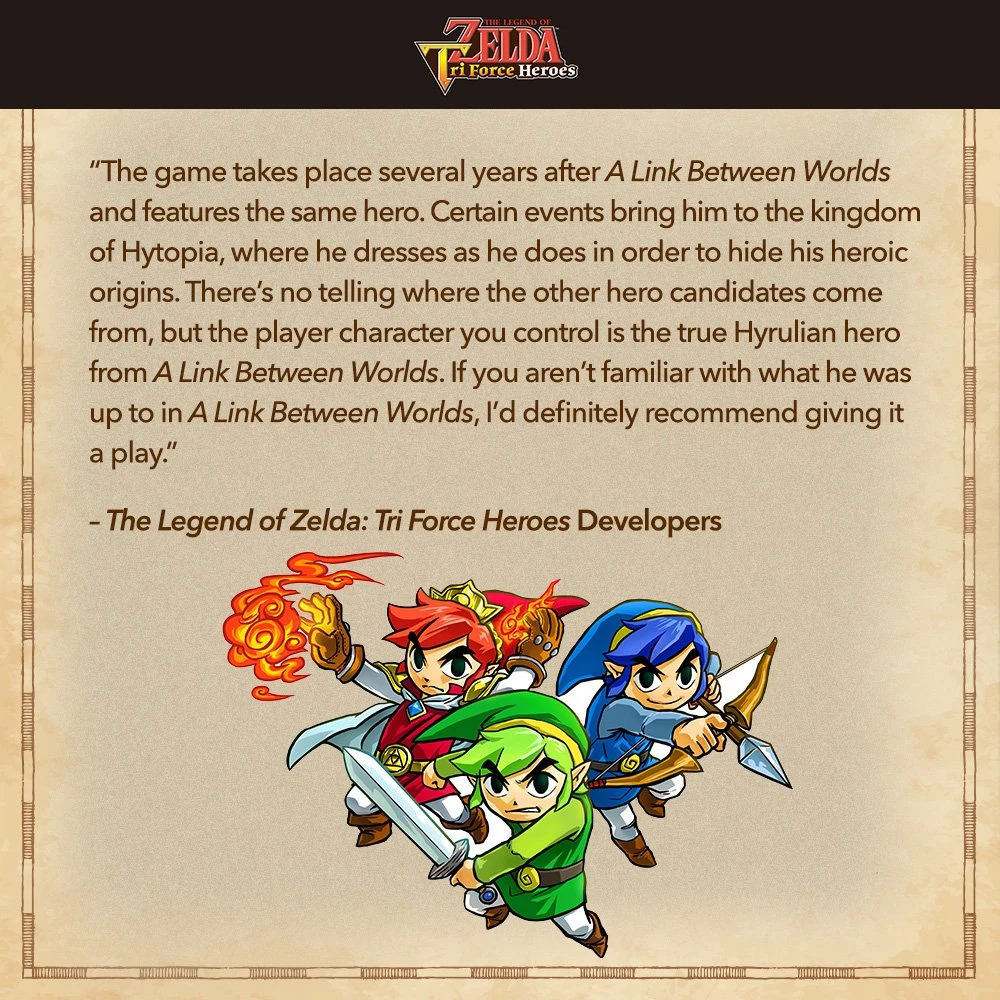
The first chapter is where the book earns its name. It opens with the official history of Hyrule, an expanded version of the chronology first printed in Hyrule Historia. This one is updated to take in A Link Between Worlds and Tri Force Heroes.
After that the chapter works by subject rather than by game. It covers the other worlds and foreign lands Link has visited and the many races who live in and around Hyrule. A part on geography and nature sets the kingdom of one era beside another, such as the Hyrule of Ocarina of Time against the one that lies under the sea in The Wind Waker. Then come culture and daily life, down to food and writing, and the weapons, equipment and tools of every game, before the chapter closes with the series’ monsters and magic. The pages on written Hylian, which set out the scripts used across the games, were singled out by the Japanese review site Gamepedia.
Worth knowing
The timeline is not quite the one in Hyrule Historia. In the branch where the Hero of Time falls, Link’s Awakening now comes straight after A Link to the Past, with the two Oracle games next and then A Link Between Worlds and Tri Force Heroes (see Reception).
The book hedges its own bets: it says the chronology can be read in more than one way and may shift as new things are discovered.
There is nothing on Breath of the Wild, whose history was saved for Creating a Champion.
Vol. 2
Chapter 2: Database
Towns and villages, items, dungeons and enemies, game by game
Chapter 2 is the part most readers will actually look things up in. It is a straight database, split into towns and villages, items, dungeons and enemies. Each entry notes the games the thing appears in and shows how it looked in them, so a Stalfos, for example, appears in its different versions rather than once. The Japanese listing counts pictures of more than 2,000 items and enemies, and even very obscure places are included.
Putting it into English was the hardest part of the job. Many enemies had never been named in any English game, some had been named only in Japan, and older games sometimes called things one name in Japan and another in America. Thorpe’s team had to find a source for every name, checking contradictions with Nintendo before deciding. This is also where most of the slips found by fans are: pictures swapped between look-alike monsters such as the Bari and the Biri, and wrong lists of the games a character appears in.
Worth knowing
Fan errata pages list mistakes by page number. Examples are the Bari entry illustrated with a Biri, and the entry for Amy credited to a Majora’s Mask HD that does not exist and to the wrong Oracle game.
With roughly 2,000 pictured entries, it is an unusually broad official list of Zelda items and enemies up to 2016.
Chapter 3: Archives
Every main game from 1986 to 2016, then spin-offs and guest appearances
The last chapter turns the book back into a history of the games. Each title gets a summary of its story and setting and a chart of how its characters are connected; one Japanese reviewer was struck that even minor characters are on them. Each also has notes from development, with concept art and sketches.
The run goes up to Tri Force Heroes and the 2016 Twilight Princess HD, then widens to the spin-offs and to games where Zelda characters make guest appearances. Old magazine adverts and flyers are scattered through it. This is the chapter that overlaps most with Hyrule Historia, but readers who owned both still found plenty that was new. Fanbase Press’s reviewer admitted he had expected a refresh of the earlier book and was pleasantly surprised. It is also the place to go if you only want a quick refresher on a game you played decades ago, which is how the Japanese site Gamepedia recommended using it.
Worth knowing
Coverage ends before Breath of the Wild (3 March 2017), which the Japanese edition missed by two days.
Spin-offs and crossovers get a place alongside the main series.
Editions
Japan
Tokuma Shoten published Zelda no Densetsu: Hyrule Hyakka on 1 March 2017 (ISBN 978-4-19-864378-2), the second volume of its Zelda 30th-anniversary set after Hyrule Graphics (August 2016) and before Breath of the Wild Master Works (December 2017). Its listing sums it up as the series’ key words from the first game to Twilight Princess HD, with pictures of more than 2,000 items and enemies.
English: the standard edition
Dark Horse announced the book on 28 September 2017 as a 320-page hardback for 24 April 2018 at US$39.99, the last of its Goddess Collection. It slipped to the summer, and the finished book came out on 19 June 2018 with 328 full-colour pages in a 9 × 12 inch blue hardback (ISBN 978-1-5067-0638-2). It was also sold as an e-book.
English: the Deluxe Edition
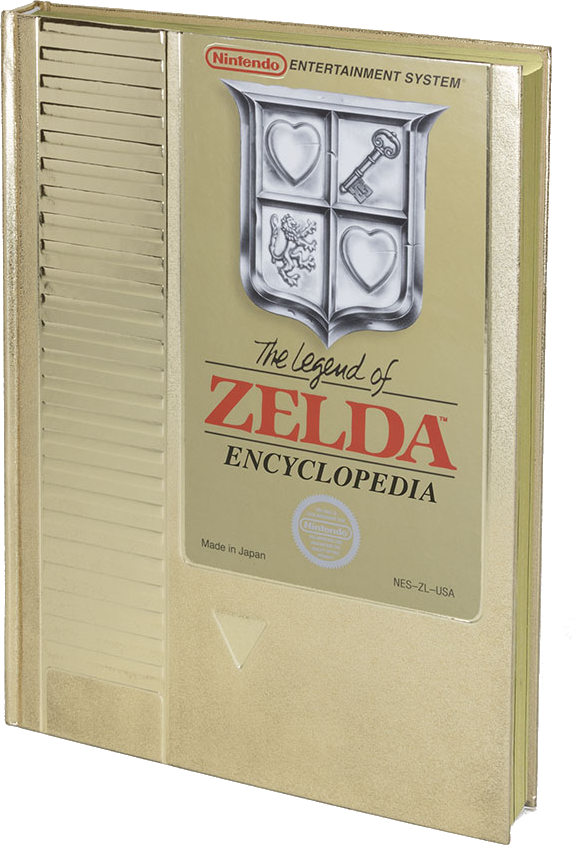
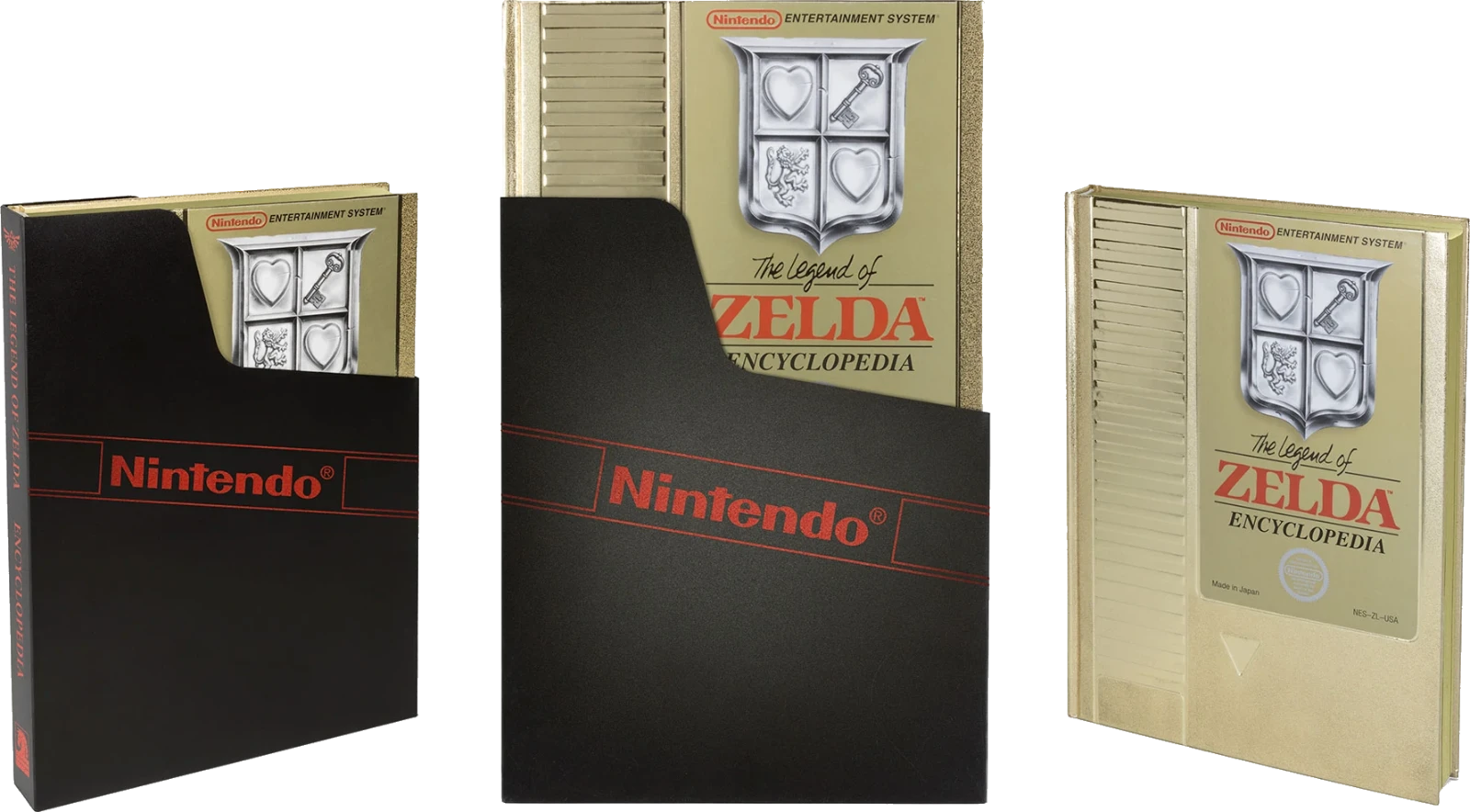
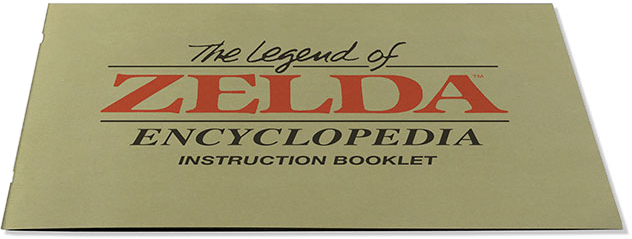
Revealed in October 2017 and released on the same day as the standard book, the Deluxe Edition (US$89.99, ISBN 978-1-5067-0740-2) dresses the Encyclopedia up as the gold cartridge of the original Legend of Zelda. Dark Horse says it recreated the cartridge as faithfully as it could. The cover is gold foil with gloss lamination and spot varnish, with embossed and debossed detail, and the page edges are gilded in gold and black. The book slides into a black plastic sleeve with a velvet-flocked lining, like the dust sleeves NES games came in, and comes with a scale copy of an instruction booklet. How it came about is under Making of.
Other languages
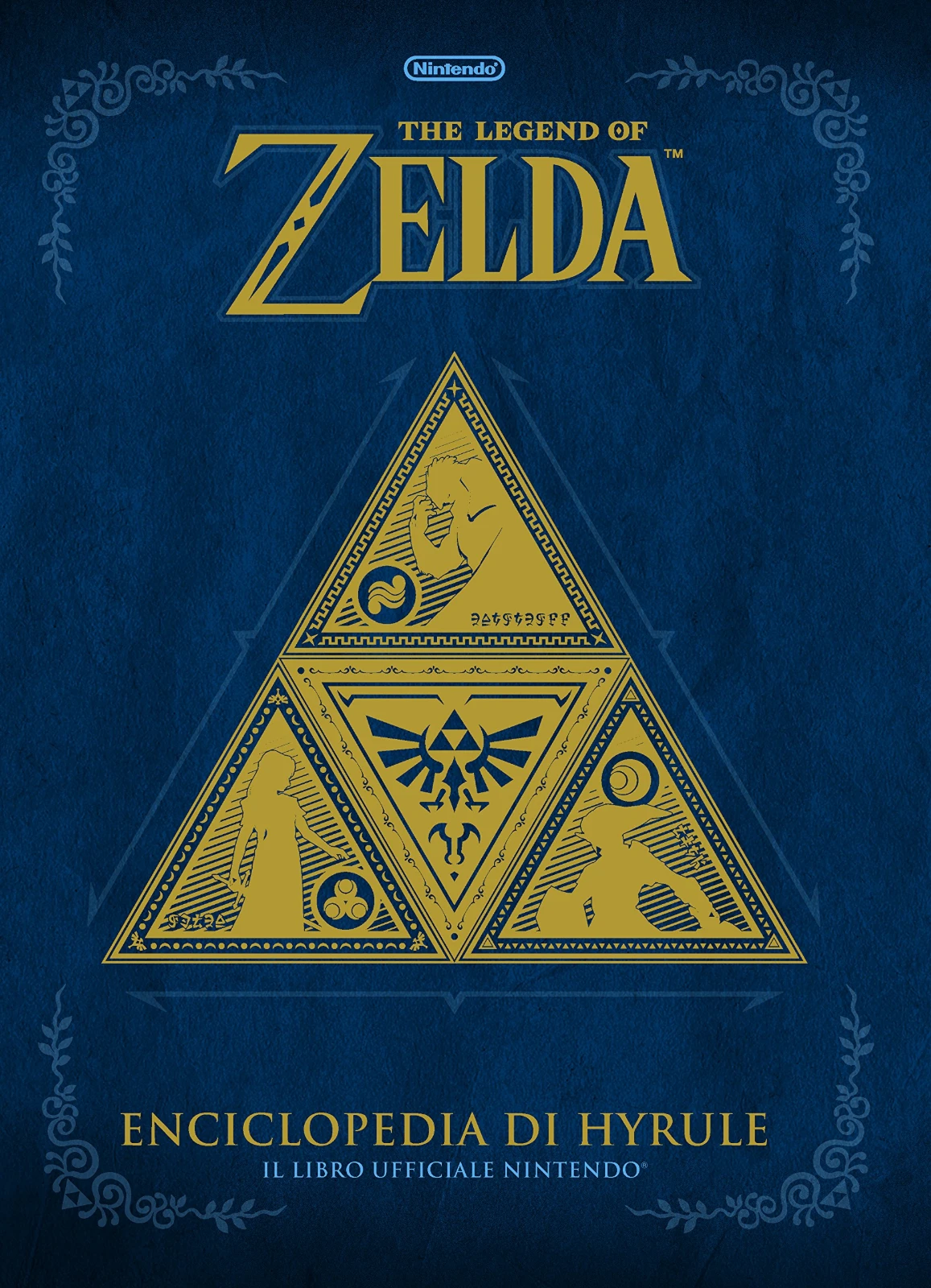
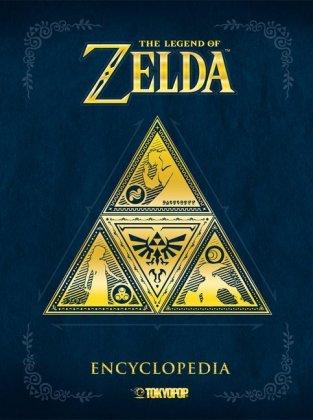
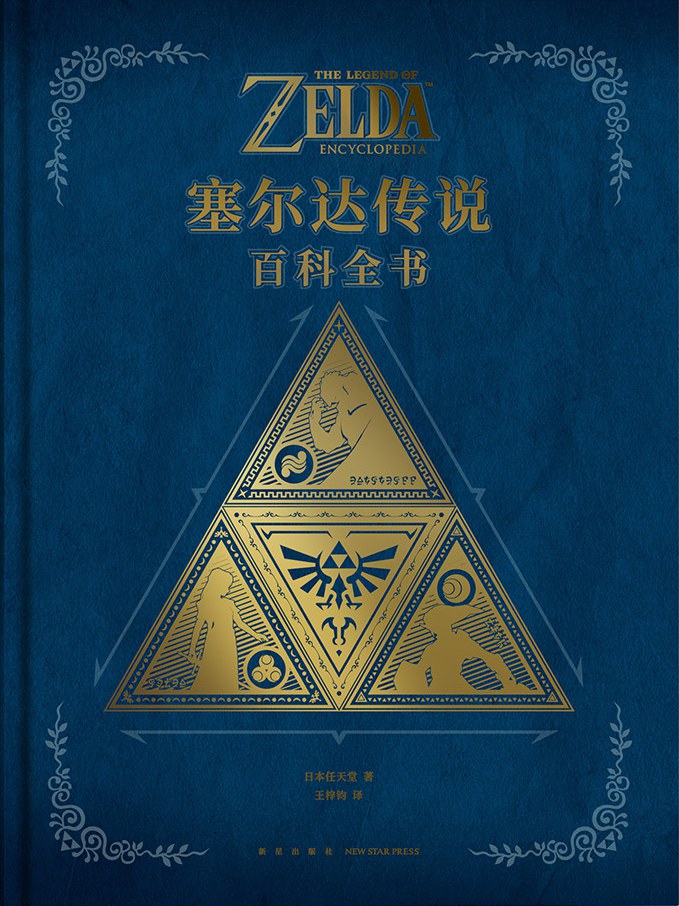
An Italian edition from Magazzini Salani, The Legend of Zelda. Enciclopedia di Hyrule. Il libro ufficiale Nintendo, came out on 6 September 2018. Norma Editorial published a Spanish edition and a German edition followed, both in 2019. A Chinese-language edition also exists; its cover is below, but we have not confirmed its publisher or date.
The Encyclopedia Deluxe Edition.Cover of the Italian edition (Magazzini Salani, 2018).Cover of the German edition.Cover of the Chinese edition.
Making the book
In Japan
The three Japanese anniversary books were compiled by the Nintendo Dream editors at Ambit and published by Tokuma Shoten. Each had a different job. Hyrule Graphics collected the art, Hyrule Hyakka catalogued the world, and Breath of the Wild Master Works documented the new game. Coming out in 2017 meant Hyrule Hyakka missed Breath of the Wild by days, a gap the third book was there to fill.
The English edition
The scale instruction booklet that comes with the Deluxe Edition.
Dark Horse’s Zelda line goes back to 2011, when Patrick Thorpe, a lifelong Nintendo fan, pitched a 25th-anniversary book to Nintendo staff at San Diego Comic-Con; that led to the English Hyrule Historia. By the Encyclopedia the team was settled: Thorpe as editor, Keaton C. White translating, Ben Gelinas as English-language writer and Cary Grazzini, the designer of every Dark Horse Zelda book since Hyrule Historia.
Thorpe told Variety that the work went round in a loop. The translators supplied the text and fact-checked his rewrites, a designer laid it out, and a proofreader and a fact-checker went through it side by side before it came back to him. Where sources disagreed, or a name was appearing in English for the first time, he asked Nintendo and they settled it together. He reckoned tens of thousands of names and details, perhaps as many as 100,000, had to be sourced. To hit the June date he worked 60 days in a row, often in 84-hour weeks.
This is less of an ‘art book’ as it is a straight ahead compendium.
Patrick Thorpe, Dark Horse Nintendo Life, June 2018
Every page has hundreds of pieces of information.
Patrick Thorpe Nintendo Life, June 2018
Fans obsess about the details in a way that creators don’t
Patrick Thorpe Variety, June 2018
The gold cartridge
The Deluxe Edition began as an idea for Hyrule Historia. Thorpe was wondering what colour a new edition of that book might be when a friend, Jim Gibbons, suggested gold. A metallic mock-up with a red Gate of Time symbol did not look right to him, so he went all the way and made it a gold cartridge. A dummy was made for Hyrule Historia, but that edition never happened. The idea came back for the Encyclopedia, now with a dust sleeve and an instruction booklet.
Reception and controversy
Sales
Demand outran the first print run before the book was even out: Variety reported that pre-orders had passed the whole first printing, so it had already gone back to press. In its first week the Washington Post put it at number one on its national non-fiction bestseller list (week of 24 June 2018). Publishers Weekly had the standard edition fourth and the Deluxe Edition tenth on its hardcover non-fiction list, with about 34,000 copies of the two sold between them.
Reviews
Reviews of both editions were warm, and nearly all of them shared one reservation. Source Gaming, writing about the Japanese book in March 2017, called it massive, praised its eye for detail and its binding and paper, and said it was already out of date because Breath of the Wild was missing. The Japanese site Gamepedia rated it essential and liked the Hylian script pages and the character charts best.
In English, Fanbase Press’s Drew Siragusa (27 June 2018) had expected an updated Hyrule Historia and found a book that made the split timeline easier to follow, with plenty that was new; his only complaint was the missing game. At Biff Bam Pop! (20 June 2018), E. A. Henson read it as an expanded instruction manual and saved the highest praise for the Deluxe Edition’s cartridge design.
a must own for any hardcore Zelda fan.
PushDustIn, Source Gaming on the Japanese edition, 4 March 2017
Even if you already own the Hyrule Historia, this is a must for every Zelda fan.
Drew Siragusa, Fanbase Press 27 June 2018
one of the most comprehensive video game tomes ever assembled
E. A. Henson, Biff Bam Pop! 20 June 2018
The timeline, revised
Where Tri Force Heroes sits in the timeline. The Encyclopedia updated the official chronology to include it.
The chronology in Hyrule Historia had become one of the most argued-over pages in Zelda fandom, so fans read the new one closely. In the branch where the Hero of Time is defeated, Hyrule Historia ran A Link to the Past, the two Oracle games, Link’s Awakening, then the two NES games. The Encyclopedia moves Link’s Awakening back to follow A Link to the Past directly, puts the Oracle games after it, and slots A Link Between Worlds and Tri Force Heroes in after the Oracles. Zelda Dungeon reported the change from the Japanese edition in April 2017, a year before the English one. Fans also noticed that the Japanese text describes the Oracle hero only as a boy travelling on horseback, which does not tie him to the Link of A Link to the Past.
The book itself is relaxed about all this. It says the timeline is open to more than one reading, that it differs a little from the Hyrule Historia version, and that it may change as new things come to light.
Errors
For a book meant to be the last word, the Encyclopedia has a fair number of slips, and fans have catalogued them. The errata pages of Zelda Dungeon and the Fandom Zelda wiki list them by page. Among them: Ganon credited with an appearance in Four Swords (page 11); a Skyward Sword arrow limit of 65 where the game allows 130 (page 89); Lightning Rods, a Breath of the Wild item, turning up although that game is not covered (page 93); “Prismantis” for the Prismantus (page 161); and swapped Bari and Biri pictures (pages 164 and 167). None of this spoils the book, but it is worth checking anything surprising against the games.
Trivia
The Japanese and English trilogies are not the same three books. In Japan the 30th-anniversary set is Hyrule Graphics, Hyrule Hyakka and Breath of the Wild Master Works; Dark Horse’s Goddess Collection is Hyrule Historia, Art & Artifacts and the Encyclopedia.
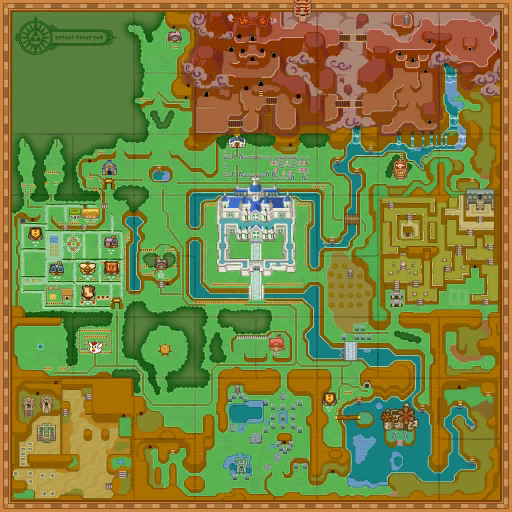
The map of Hyrule in A Link Between Worlds.A map comparison in the book, picked up by fans in June 2018, lines up the overworld of the 1986 game with the Hyrule of A Link Between Worlds. The graveyard, lakes and river match, which puts almost all of the first adventure in the Death Mountain region, with Hyrule Castle and Kakariko Village just off the map to the south-west.
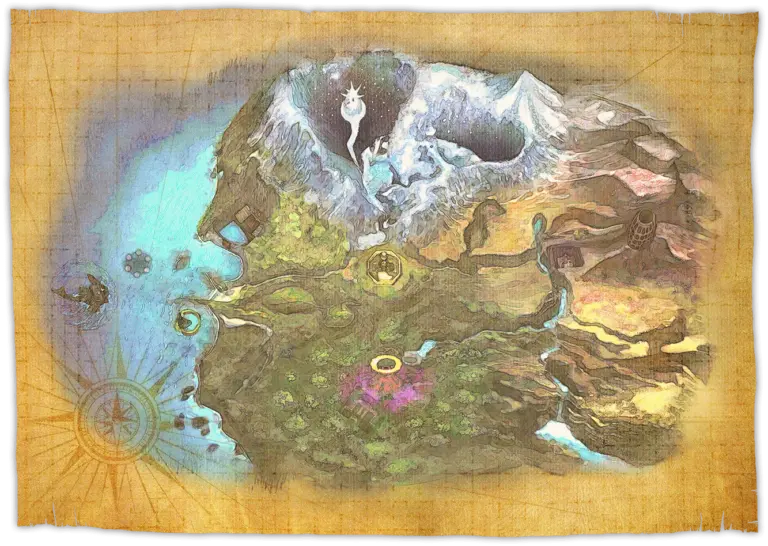
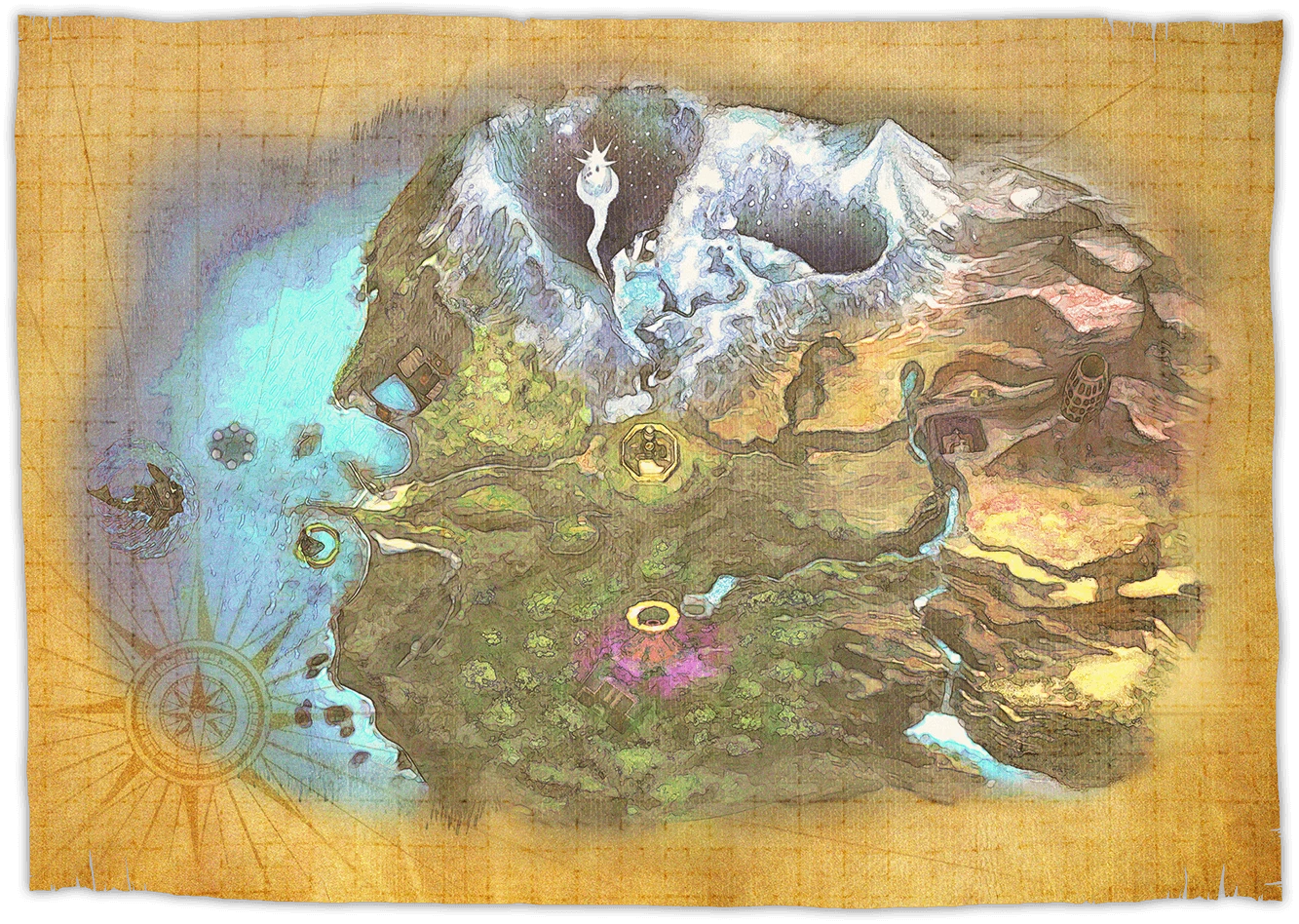
Map artwork of Termina from Majora’s Mask 3D.One entry upset Majora’s Mask fans. It says Termina was never a lasting world: the mask’s power built it out of Skull Kid’s memories and loneliness, and it fades once Majora is beaten, much as Koholint does at the end of Link’s Awakening. Writing in August 2018, Zelda Informer’s Taylor Wells argued that it robs the people Link helps of their meaning.
The English edition was announced at 320 pages and grew to 328 by the time it was printed.
Dark Horse credits the book’s writer and artist simply as “Nintendo”.
By the time the Encyclopedia came out, Thorpe believed Hyrule Historia had sold around 900,000 copies.
Thorpe on how Nintendo left the history of Breath of the Wild open: “They gave themselves the maximum amount of freedom by giving the minimum amount of information.”
The Deluxe Edition’s black, velvet-lined sleeve copies the dust sleeves that NES cartridges were sold in, which is why the gold book inside looks so much like a game.
To provide the best experiences, we use technologies like cookies to store and/or access device information. Consenting to these technologies will allow us to process data such as browsing behavior or unique IDs on this site. Not consenting or withdrawing consent, may adversely affect certain features and functions.
Functional
Always active
The technical storage or access is strictly necessary for the legitimate purpose of enabling the use of a specific service explicitly requested by the subscriber or user, or for the sole purpose of carrying out the transmission of a communication over an electronic communications network.
Preferences
The technical storage or access is necessary for the legitimate purpose of storing preferences that are not requested by the subscriber or user.
Statistics
The technical storage or access that is used exclusively for statistical purposes.The technical storage or access that is used exclusively for anonymous statistical purposes. Without a subpoena, voluntary compliance on the part of your Internet Service Provider, or additional records from a third party, information stored or retrieved for this purpose alone cannot usually be used to identify you.
Marketing
The technical storage or access is required to create user profiles to send advertising, or to track the user on a website or across several websites for similar marketing purposes.