DiC cartoon198913 episodesSuper Mario Bros. Super Show!
The Legend of Zelda (1989 cartoon)
Thirteen Friday adventures in which a cocky, kiss-hungry Link guards the Triforce of Wisdom, a sharp-tongued Zelda rescues him as often as he rescues her, and Ganon keeps climbing back out of his Evil Jar.
Episodes13 (one season)
Aired8 Sep – 1 Dec 1989, on Fridays
Shown inThe Super Mario Bros. Super Show! (US syndication)
Made byDiC and Nintendo of America; animated by Sei Young
VoicesJonathan Potts, Cynthia Preston, Len Carlson
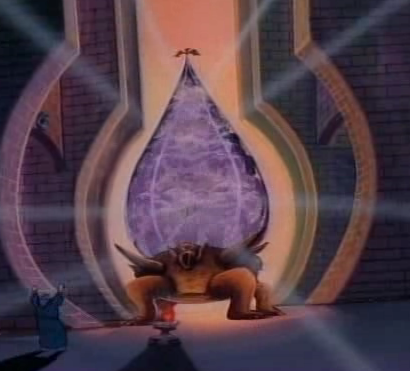
The Evil Jar, the show’s own invention: every beaten monster, Ganon included, is sucked back inside, ready for next week.
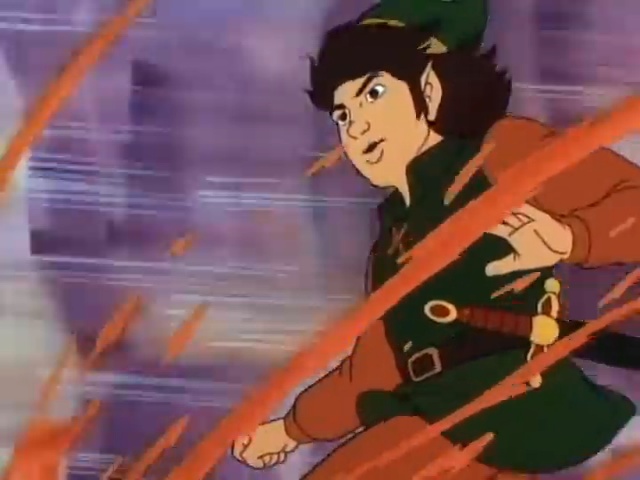
In the autumn of 1989 Link got a voice, a princess he could never quite kiss and a catchphrase that has outlived nearly everything else about his first cartoon. The Legend of Zelda was DiC’s 13-episode take on the first two NES games, and it went out every Friday from 8 September to 1 December 1989 as part of The Super Mario Bros. Super Show! Mario had Monday to Thursday; Fridays belonged to Hyrule.
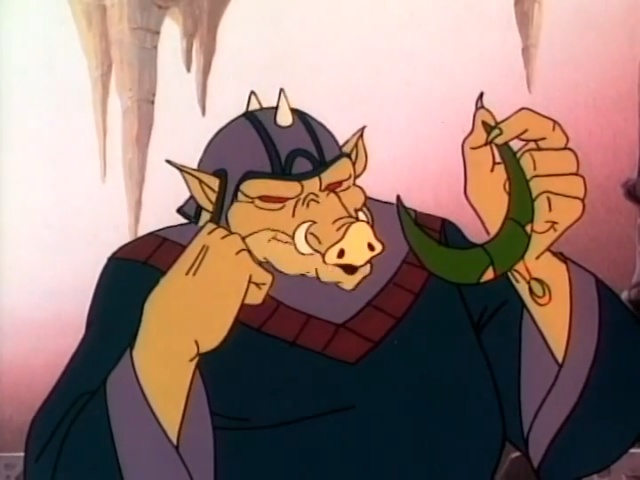
The set-up never changes. Link lives at North Castle as keeper of Princess Zelda’s Triforce of Wisdom. Ganon, a boar-faced wizard who rules the Underworld, has the other piece, the Triforce of Power, and the title sequence spells out why he wants hers: whoever holds both rules Hyrule forever. Each week he tries something new (a magic contest, a cursed mirror, a mind-controlling jewel, a magnet that drags a whole castle underground), and each week Link and Zelda send him back to his Evil Jar.
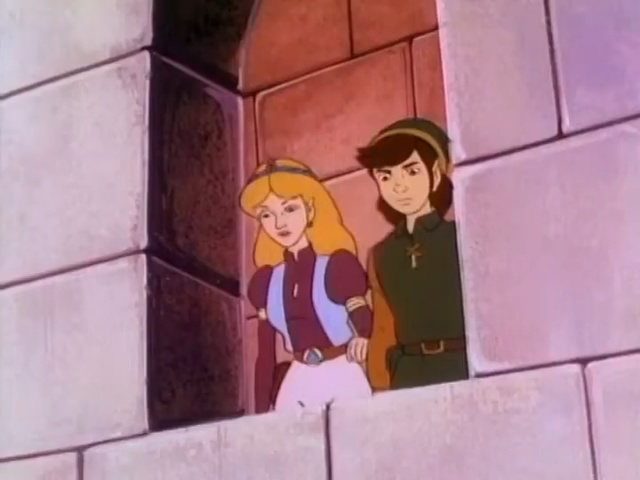
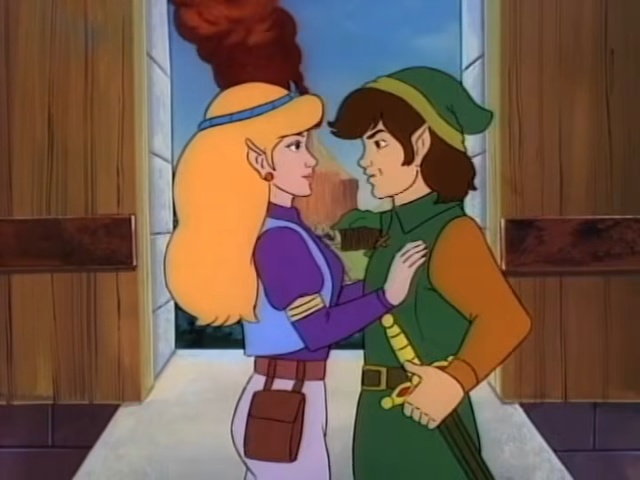
What people remember is the double act. Link is cocky, work-shy and forever angling for a kiss; Zelda is bossy, brave and every bit as good in a fight; and they bicker like a sitcom couple, which is exactly what the writers wanted. Whenever she puts him down he answers “Excuse me, Princess!”, 28 times in the episodes proper by our count. It ran for one season, the animation is rough and the jokes are corny, and it is still quoted, laughed at and loved nearly four decades later.
Based on the hugely successful action-adventure video game the animated TV series features the adventures of hero, Link and Princess Zelda as they defend the kingdom of Hyrule from an evil wizard named Ganon.
— WildBrain’s description of the series on its official uploads
WildBrain, which holds the rights today, puts that paragraph under every episode it has uploaded to YouTube; those uploads are also the easiest legal way to watch (see Where to watch).
Where it fits with the games
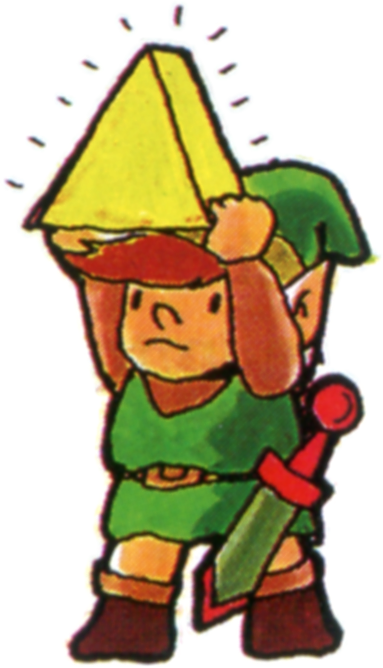
The NES game’s Link with the Triforce of Wisdom. The cartoon kept the first game’s two-piece Triforce, even though Zelda II had already added a third.
The cartoon arrived while Zelda was still new to the West. The first game had been on American shelves for two years and the sequel for less than one, and A Link to the Past was still more than two years off, so the writers had exactly two games to work from, plus a series “bible” from Nintendo.
198621 Feb – The Legend of Zelda launches with the Famicom Disk System in Japan.
198714 Jan – Zelda II: The Adventure of Link follows in Japan. Its goal is a third piece of the Triforce, the Triforce of Courage.
198722 Aug – The Legend of Zelda reaches North America on the NES (Europe gets it on 15 November).
19881 Dec – Zelda II arrives in North America, two months after Europe.
19898 Sep – “The Ringer” opens the cartoon on the first Friday of the Super Show.
19899 Sep – DiC’s Captain N: The Game Master starts on NBC the next day, at first without any Zelda characters.
19891 Dec – “The Moblins Are Revolting” is the last episode to air; the Super Show ends the same day.
1990In print – Valiant’s Nintendo Comics System publishes five Legend of Zelda issues, loosely based on the cartoon (see Comics).
1990Autumn – Link, Zelda and Ganon, with the same voices, appear in Captain N’s second season: Link and Zelda in four episodes, Ganon in one.
199121 Nov – A Link to the Past comes out in Japan (North America 13 April 1992). Neither cartoon borrows anything from it.
1992Into 1993 – Captain N & The Video Game Masters, a package for local stations, re-runs the Zelda episodes, cut down to fit two per half-hour.
Link, Zelda and Ganon; a Triforce of Wisdom and a Triforce of Power; the sword beam; bombs, boomerangs, the bow, the Magic Shield, the recorder, the Power Bracelet and the compass; rupees; Fairy Fountains; most of the monsters; the Overworld and Underworld music and many sound effects.
Link talks, a lot. Zelda fights instead of waiting to be rescued. Rupees become “rubies”, the recorder becomes a Magic Flute that can warp you anywhere, the bracelet gives a minute of super-strength, and beaten monsters go back into an Evil Jar.
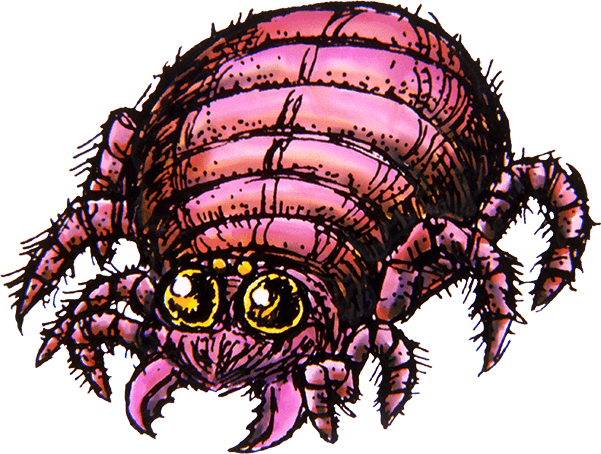
The Moby, Ganon’s beetle-like Lowder, the Deelers and the Ache. The writers worked from a Japanese copy of the game, and Link’s home, North Castle, shares its name with Zelda II’s castle.
No Triforce of Courage and no sleeping Zelda: the show’s Triforce has the first game’s two pieces only.
The show itself
Spryte, King Harkinian, talking Triforce pieces, the Evil Jar, Link’s shrink-to-fit pouch, Ganon’s Overworld Magnet and Jewel of Control, and one-offs like Prince Facade and Sing.
King Harkinian later turned up in the Valiant comics and the Philips CD-i games, with a different personality.
Captain N filled in the gap a year later: its Hyrule has all three pieces and leans on Zelda II. See Link and Zelda in Captain N.
Episode guide
All 13 episodes, in the order they were first shown, one per Friday in the autumn of 1989. Each title leads to a full page with the story, the best lines, the monsters and the trivia.
Be warned that more than one order is in circulation. The 1989 broadcast order below is the one every episode guide agrees on. WildBrain numbers its uploads 101 to 113 in a slightly different order (its 107 is “Underworld Connections” and 108 “Doppelganger”; “The Missing Link” comes last as 113), and Tubi lists the episodes the same way WildBrain does.
Bored stiff at North Castle, Link fights off a Moblin raid on his bedroom and earns a slap instead of a kiss. While Zelda judges a contest of amateur magicians, Ganon slips in disguised as a conjurer, turns a little lizard into a dragon to lure Link away and steals the Triforce of Wisdom. A fast-growing tree, a belt that ties the heroes back to back and a well-aimed bomb win it back, and then Spryte ruins the kiss.
Zelda declares a day of spring cleaning and Link instantly develops a cold. Tipped off by a spying Moby, Ganon secretly supercharges Spryte’s magic, so her tidying spell unleashes rampaging mops and flying buckets that flood the castle, and in the chaos he makes off with the Triforce of Wisdom. One of Link’s shortcuts drops the heroes into Ganon’s holding jar with Gohma closing in, until a guilty Spryte comes to the rescue. Then it is back to the chores.
Halfway through a fight with a giant Octorok, Link is upstaged by Prince Facade, a dashing adventurer who finishes off the monster, pockets Link’s ruby and rides away with Zelda. Laughed at for dressing up like a prince, Link quits and leaves the castle. Ganon, who knows Facade will never get his clothes dirty, has Zelda dragged into a swamp, and the prince refuses to wade in. Link grumbles that he is a sucker and comes back to save her, ruby and all.
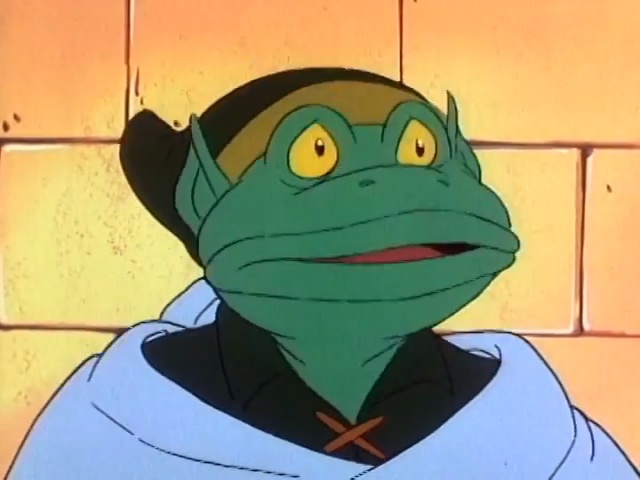
Zelda rides out alone and finds a maiden menaced by a three-headed Gleeok, but the maiden will only be saved by a handsome hero. When Link obliges, her thank-you kiss turns him into a frog: she is a Gibdo, and the whole rescue was Ganon’s trap. With Zelda kidnapped, frog-Link and Spryte follow the Triforce’s riddle to the Witch of Walls, who names the cure, a kiss from a princess freely given. Help comes from an unexpected royal.
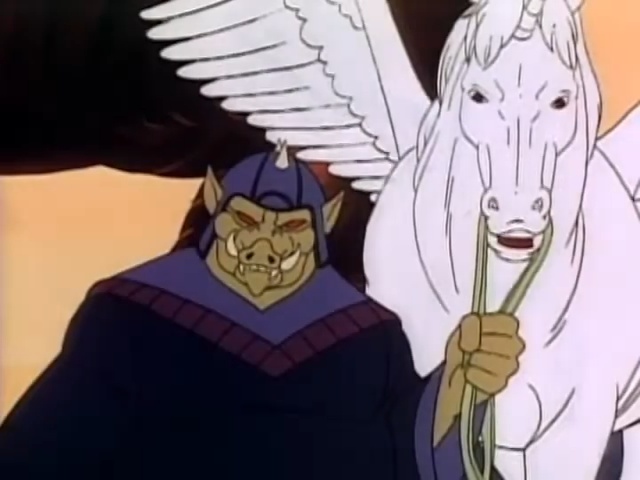
Link’s flower-powered bid for a kiss is cut short when Ganon swoops on the castle riding a flying unicorn and carries off King Harkinian. Hand over the kingdom and the Triforce within the hour, Ganon demands, or the King drops into a bottomless pit. In the Underworld, Link and Zelda wake the Armos, are cornered by Stalfos and meet Sing, a masked warrior from a faraway land whose unicorn Ganon stole. It all comes down to a vanishing floor and a magic whistle.
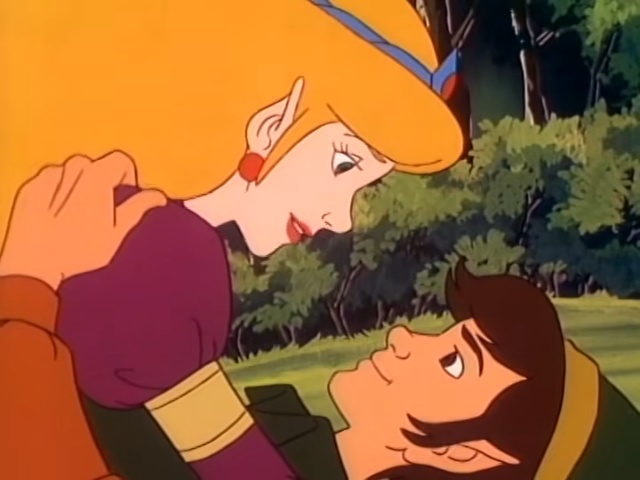
A romantic picnic ends in a Tektite ambush and a sinking statue, and Zelda has had enough: she takes the Triforce of Wisdom and heads off for a showdown with Ganon. But Ganon has a new toy, the Overworld Magnet, a relic of the ancient wizards that hauls whatever it is aimed at down below, and he uses it to sink North Castle with the King and Spryte inside. A Darknut, a magic bracelet and a flying lesson for Ganon put things right.
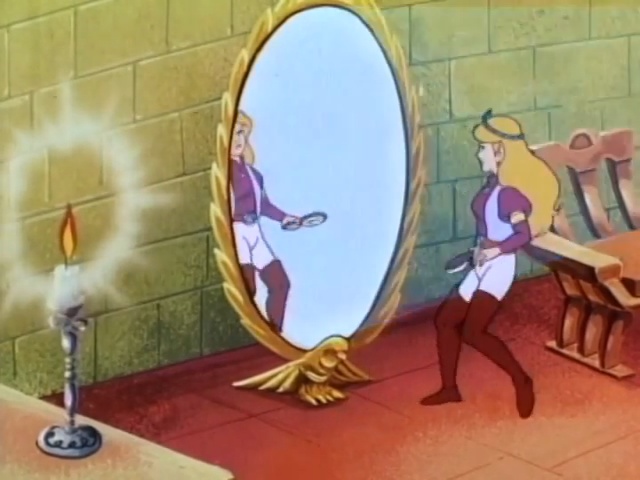
Ganon plants a magic mirror in Zelda’s bedroom, and her reflection steps out as an evil double while the real princess is dragged off to the Underworld. The impostor showers Link with the kisses he has always wanted and talks him into carrying the Triforce of Wisdom to Ganon, but a missing reflection gives her away. Zelda frees herself, and a chase through the Underworld ends in a mud bath and the show’s most self-serving test yet: a kissing contest.
Vires interrupt Link’s late-night attempt to kiss Zelda by blowing the Triforce of Wisdom into three pieces. Link saves one, a zap fired through it brings down the thieves, and the edges of the recovered piece reveal that the others fell somewhere wet and somewhere hot. With Ganon waiting for them to do the hard work, Link and Zelda follow the Magic Compass to Black Falls and a cavern of fire, battling Ropes and Aquamentus on the way.
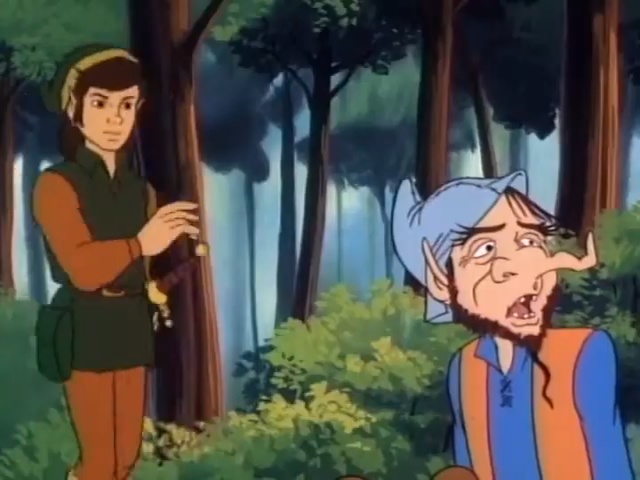
Link rescues an old peddler from robbers and, flattered into it, swaps his trusty sword for a magnificent-looking blade that shatters the moment a pack of Patra attacks. Ganon captures Link and Zelda, the peddler Sleezenose turns up to sell him Link’s real sword, and all three end up thrown to Gohma. Once free, the heroes take the Triforce of Wisdom’s advice to fight with nature instead of magic: bees for Ganon, and a box of ants for the con man.
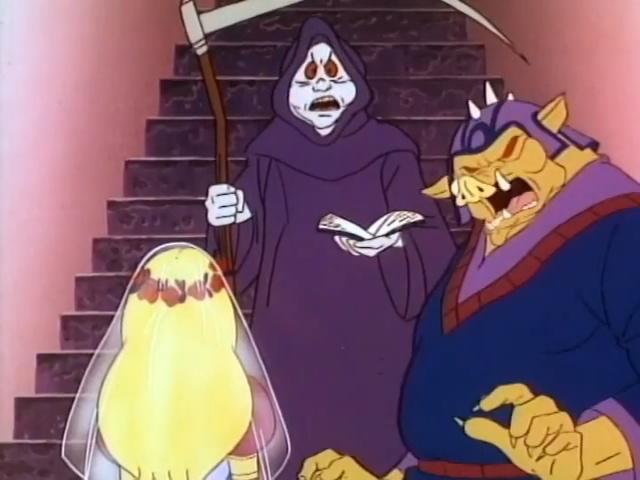
With Ganon quiet, Zelda puts Link to work around North Castle. Flattened by Doof the handyman’s runaway robot in the middle of a Moblin raid, then told off for napping, Link asks Doof for some fake Moblins to ‘rescue’ Zelda from. She overhears, so when Ganon’s real Moblins come back for her she refuses to take them seriously until it is too late. In the Underworld the Jewel of Control turns her into a willing bride, and only Link’s objection and a Gleeok whose heads crash into Ganon stop the wedding.
During a heatwave, King Harkinian’s new Royal Water Park is overrun by monsters made of water. Link and Zelda investigate, fight off an electric eel and giant crabs, and cannot stop the king, who insists he can swim like a fish, being dragged under by a tentacle. On the Triforce of Wisdom’s advice they dive through the park’s drain to a fairy spring, where they learn the park has been draining the fairies’ water. Ganon never appears.
Ganon storms North Castle with a new wand that should banish Zelda to his Evil Jar, but the blast ricochets off her magic and hits Link, whose body is carried off while his spirit stays behind. Only Zelda can see the ghost, so she takes up his sword and heads for the Underworld with Link coaching her every swing. Ganon works out that Zelda can only see Link because she loves him, while Link finds his body and bombs his way out of the jar.
Blamed and zapped for yet another defeat, Ganon’s monsters turn his new Capture Staff on him, sealing him in an unbreakable bubble and dropping him down the Bottomless Pit. Their new Brotherhood of Underworld Monsters then lays siege to North Castle and mostly defeats itself. With Ganon out of the way, Link and Zelda slip into the Underworld for the Triforce of Power, but Link would rather play ball with the bubbled Ganon, who gets free. The heroes go home empty-handed.
Where to watch
The easiest way is free and official. WildBrain has put all 13 episodes on YouTube in its “Legend of Zelda – Full Series” playlist. Each upload runs a little over 15 minutes and starts straight on the Zelda title sequence, without the Super Show’s live-action plumbers and Mario rap, so these are the episodes on their own, complete.
In the US, Tubi streams the series free (rated TV-Y7), in WildBrain’s order rather than the broadcast one, and Amazon Prime Video lists the season too, with availability that varies by country. On disc, the 2005 Shout! Factory box is out of print but NCircle’s 2012 single-disc set also holds all 13 (details under Home media). Here is the first episode:
“The Ringer”, the first episode, from WildBrain’s official upload.
A small regular cast (Link, Zelda, Ganon, Spryte, the king and two talking Triforce pieces) plus a guest of the week. Ages come from a UK VHS sleeve and Hulu’s 2009 blurb, which both make Link and Zelda 15.
Character
Who they are
In the cartoon
Voice
LinkThe hero
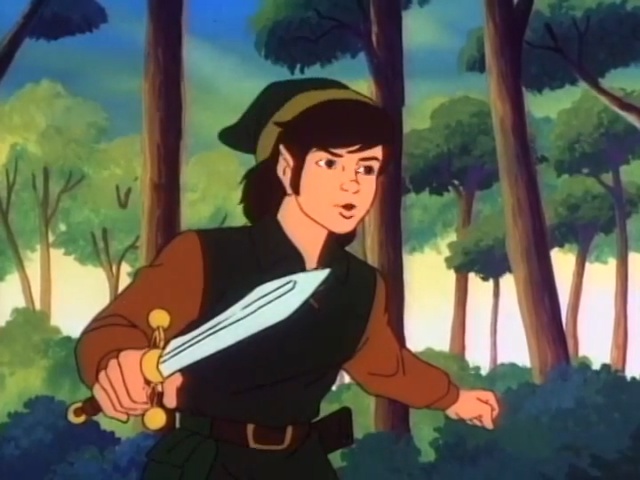
A teenage adventurer turned live-in bodyguard for the Triforce of Wisdom at North Castle. His sword fires magic “zaps” far more often than it touches anything.
Bored by palace life (“Another beautiful day in the magical kingdom of Hyrule. Boring place.”), allergic to chores and always after a kiss, but he comes through every time it matters. Potts saw him as a puppyish teenage boy; Eve Forward wrote him as more rogue than warrior.
Jonathan Potts
Princess ZeldaPrincess of Hyrule
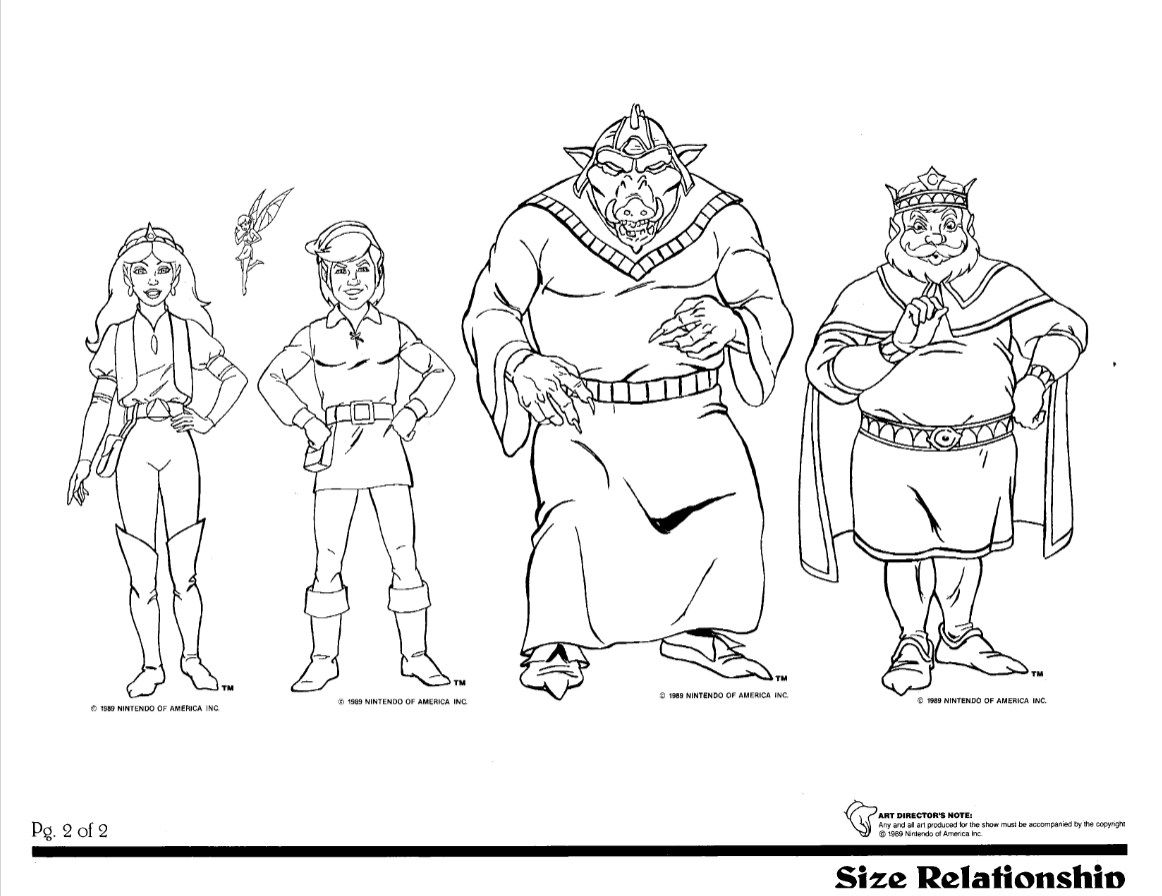
King Harkinian’s daughter and keeper of the Triforce of Wisdom, which she can use for magic. Nintendo was happy for the artists to put her in trousers.
Fights with bow and boomerang, gives the orders and keeps turning Link’s kisses down while plainly caring about him. Preston called her a partner and “no damsel in distress”, and in “The Missing Link” she is the only one who can see Link’s ghost.
Cynthia Preston (credited as Cyndy Preston)
GanonThe villain
A boar-like wizard, lord of the Underworld and owner of the Triforce of Power. The show never says how he got it.
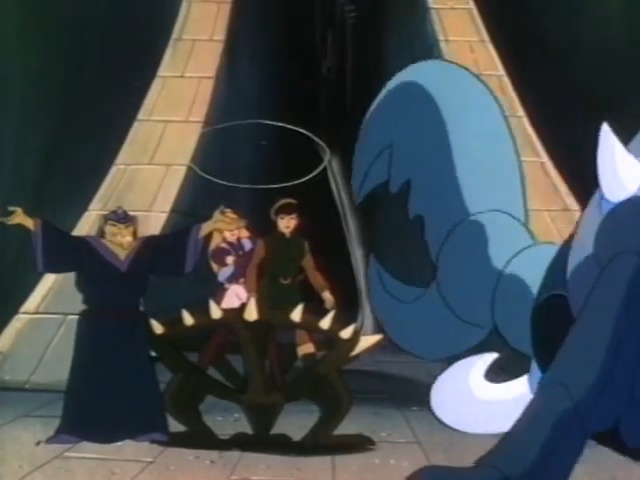
A short-fused showman who loves a disguise (a stage magician in “The Ringer”) and bullies his minions until they revolt. Beaten, he is pulled back into the Evil Jar, so he can try again next Friday.
Len Carlson
SpryteFairy sidekick
A tiny fairy made up for the show (some sources spell her Sprite). “Kiss ’N Tell” reveals that her father is king of the fairies.
Adores Link, thinks Zelda is a snob and has a gift for barging in on kisses. By our count of the captions she is named or heard in 9 of the 13 episodes.
Paulina Gillis (now Tabitha St. Germain)
King HarkinianZelda’s father
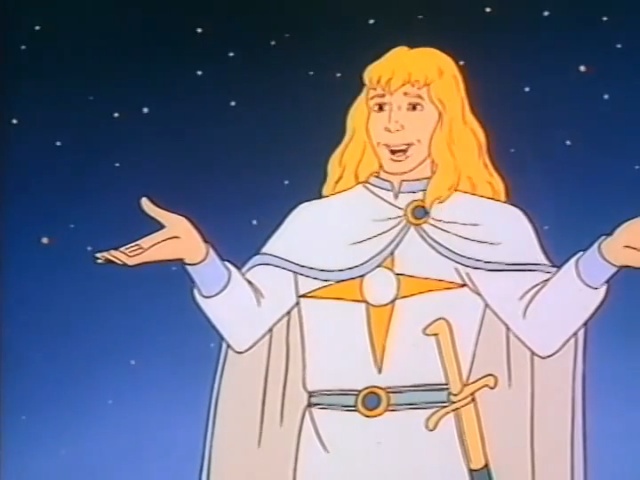
The genial, rather oblivious King of Hyrule, first seen in “The White Knight”.
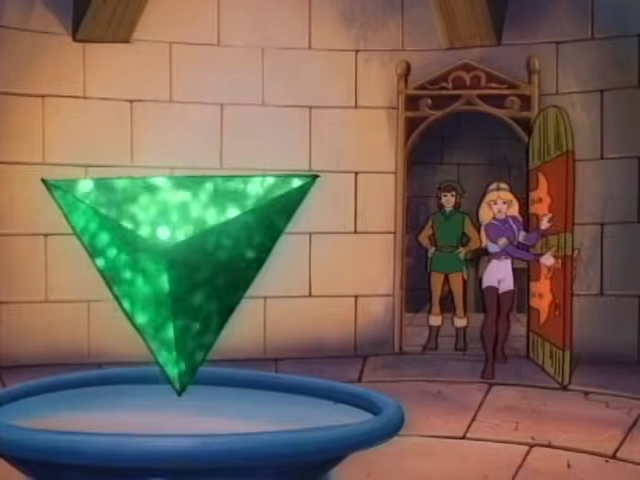
Zelda’s piece of the Triforce: a glowing triangle with opinions.
Answers every crisis with a rhyming riddle (“Evil is the path you choose, but evil-doers always lose”). It is blown into three pieces and put back together in “Underworld Connections”.
Elizabeth Hanna
Triforce of PowerGanon’s piece
Ganon’s red half of the two-piece Triforce.
Speaks just once in the series, in “The Ringer”, to point out that Ganon is no amateur magician.
Builds a robot helper that will not behave and, at Link’s request, a squad of fake Moblins.
Not confirmed
“You swing that sword like a girl.” “I am a girl.”
Ghost-Link and Zelda The Missing Link, 6:54
“I’M VERY UPSET!”
Ganon That Sinking Feeling, 9:56
“What is this, Ugly People Day?”
Spryte Kiss ’N Tell, 10:02
“That wasn’t one of Ganon’s creatures.”
Zelda Fairies in the Spring, 4:21
Times are from the start of WildBrain’s uploads.
Monsters and minions
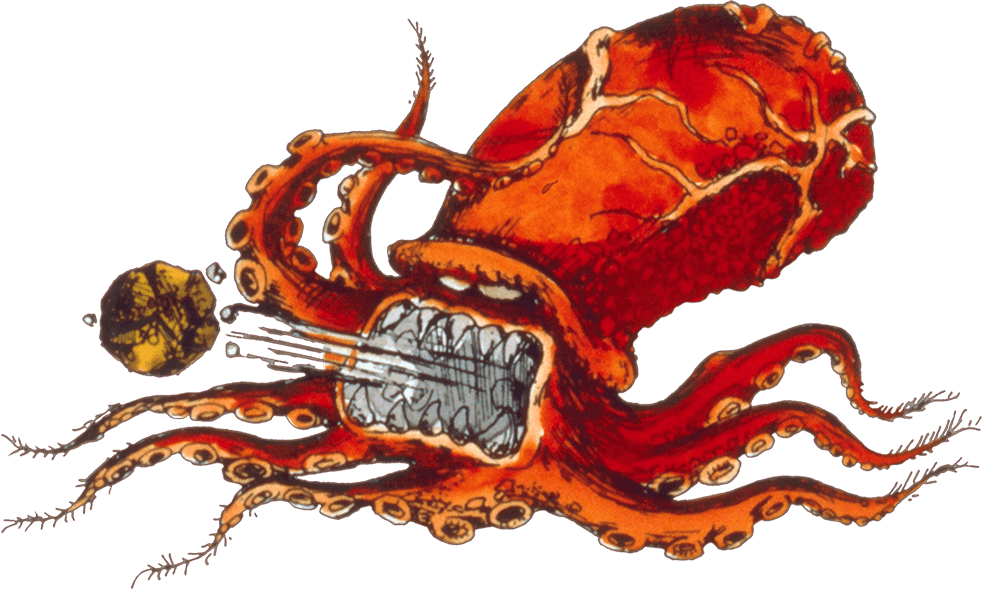
Ganon’s army comes almost entirely from the two NES games, and the show often remembers their game habits. These are the game enemies we could confirm, from the dialogue or from the episode retrospectives, with the episodes they appear in. The show also invents creatures of its own, from the dragon Ganon conjures in “The Ringer” to the fairies’ water monsters in “Fairies in the Spring”, and those are left out here.
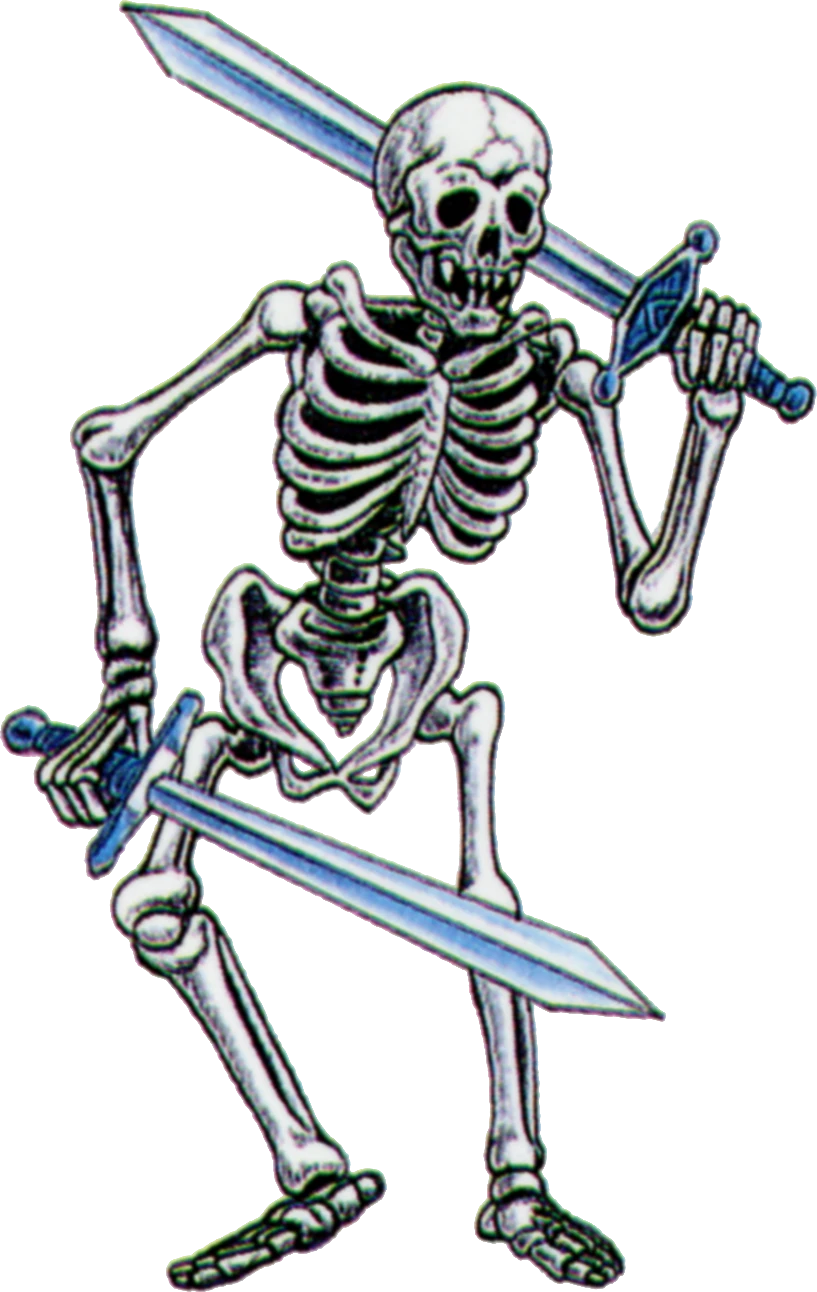
StalfosThe Legend of ZeldaSkeleton warriors. Link and Zelda fight three back to back in The Ringer; they finally get lines in The Missing Link.
OctorokThe Legend of ZeldaLink battles a giant one at the start of The White Knight; more turn up in Doppelganger.
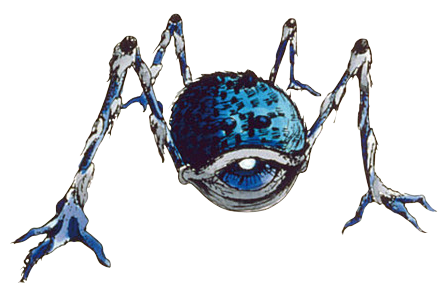
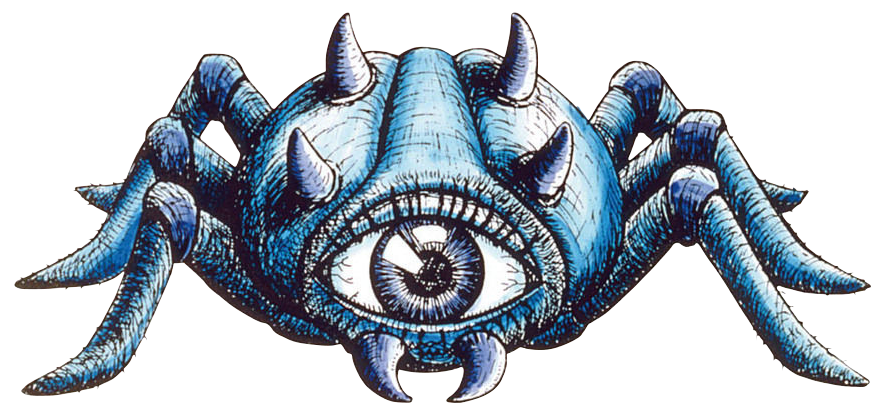
TektiteThe Legend of ZeldaSpider-like hoppers that spoil the picnic in That Sinking Feeling and wrap Zelda in webbing.
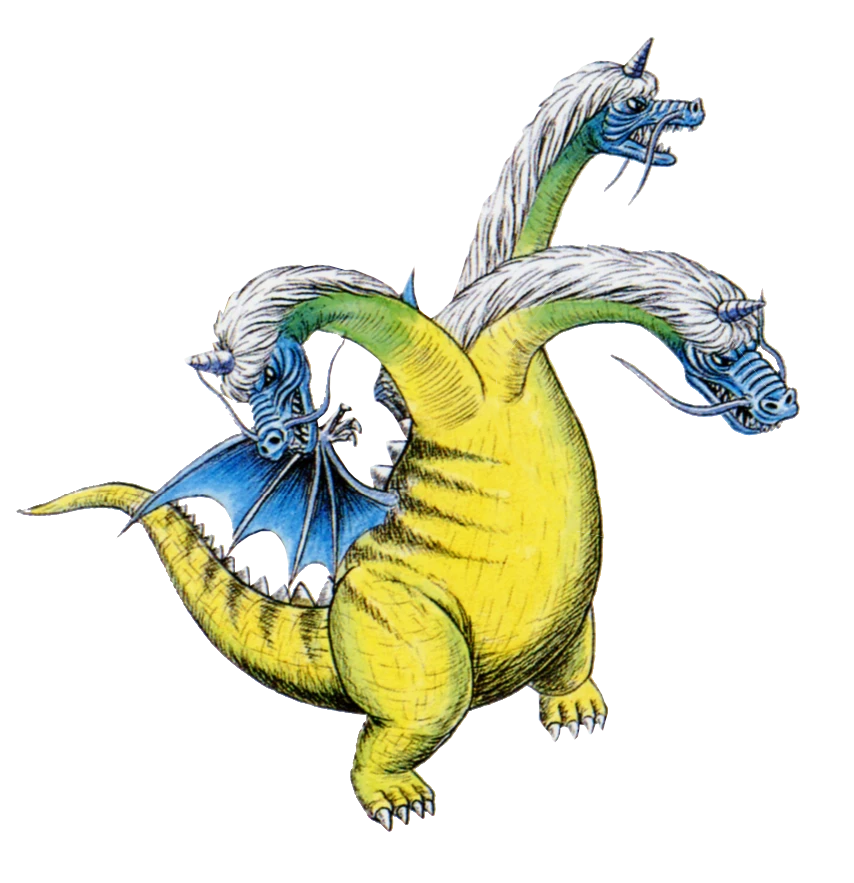
GleeokThe Legend of ZeldaThree-headed dragon in Kiss ’N Tell (Zelda fights it with fruit) and Hitch in the Works, where its heads keep coming after the body is gone, just as in the game.
MobyZelda IISpies on the spring cleaning for Ganon in Cold Spells.
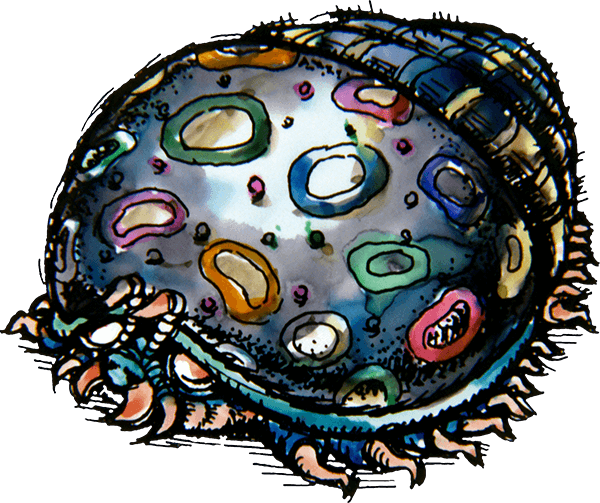
LowderZelda IIGanon’s beetle-like steed in Cold Spells.
DeelerZelda IISpiders that frog-Link eats, to his own disgust, in Kiss ’N Tell.
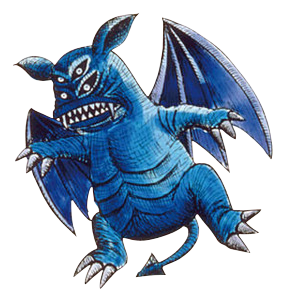
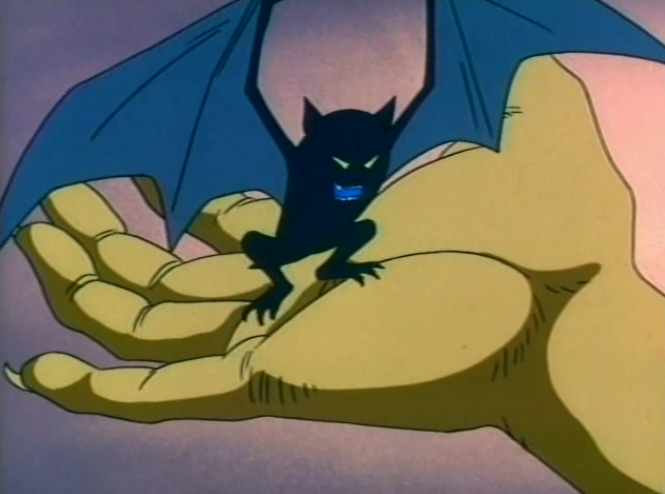
AcheZelda IIThe bat Ganon sends to find out who is guarding the Triforce in The Ringer.
Voice cast
Cynthia Preston voiced both Zeldas in “Doppelganger”, kissing contest included.
A small, busy cast. Len Carlson doubled as Ganon and his Moblins, Jonathan Potts seems to have held his nose to play frog-Link in “Kiss ’N Tell”, and Cynthia Preston played the real Zelda and her mirror twin in “Doppelganger”. Preston remembers the recordings being run by more than one director, and one of them, Greg Morton, pranking her in the middle of a laughing scene.
Potts, Preston and Carlson all came back in 1990 to play the same characters in Captain N.
Character
Voice actor
Notes
Link
Jonathan Potts
Also frog-Link; back for Captain N
Princess Zelda
Cynthia Preston
Credited as Cyndy Preston; both Zeldas in “Doppelganger”; back for Captain N
Ganon
Len Carlson
Back for Captain N
Moblins
Len Carlson
Spryte
Paulina Gillis
Now works as Tabitha St. Germain
King Harkinian
Colin Fox
Triforce of Wisdom
Elizabeth Hanna
Triforce of Power
Allan Stewart-Coates
Also credited as Allen Stewart Coates
Additional voices
Don Francks, Marvin Goldhar, Christopher Ward
Preston recalls Francks playing several characters
We have found no reliable record of who voiced the one-off characters (Prince Facade, Sing, Sleezenose, Doof, the Witch of Walls).
“Well, excuuuse me, Princess!”
Even the opening titles end on it: “Nice job, hero.” “Hey, excuse me, Princess.”
Whenever Zelda snaps at him, Link has the same sarcastic comeback. It was not the writers’ idea. Robby London, DiC’s vice-president of creative affairs, wanted the characters to have catchphrases, and this was the one he championed, borrowing from a famous Steve Martin bit. Story editor Bob Forward was unconvinced, and says he worked it into every episode partly to wind London up.
He very nearly managed it. Going through the captions of WildBrain’s uploads, we count the line (or a plain “Well, excuse me”) 28 times outside the title sequence, spread over 11 of the 13 episodes: only “Cold Spells” and “Kiss ’N Tell” do without it, apart from the titles. Add the one that closes the opening titles of every episode and you hear it 41 times watching the whole series. The figure usually quoted is 29, which Wikipedia credits to IGN’s 2005 review of the DVD and Destructoid repeated in 2021. Zelda Universe names “Underworld Connections” as Link’s busiest episode for it, and our count agrees: five times.
“Excuse me, Princess” per episode, outside the title sequence
Counted by Zelda Temple from the captions of WildBrain’s official uploads (official subtitles for “The Ringer”, YouTube’s automatic captions for the rest), checking every line in context. We counted Link’s “Excuse me” retorts with or without “Princess”, including one “Well, excuse me” in “That Sinking Feeling” whose speaker the automatic captions do not name; the title sequence’s line is left out. Automatic captions can drop words under music, so treat these as minimums.
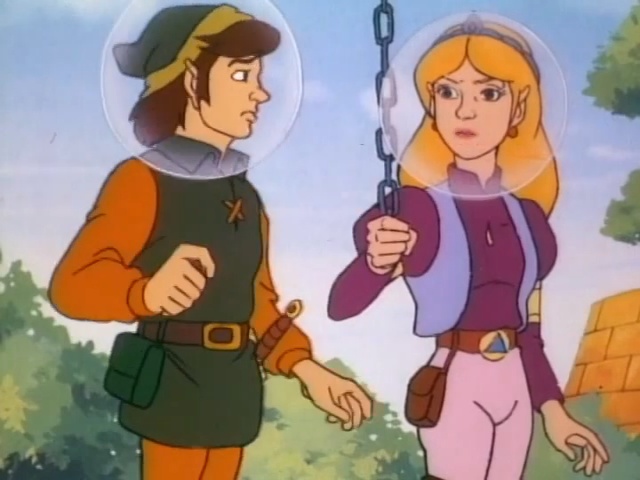
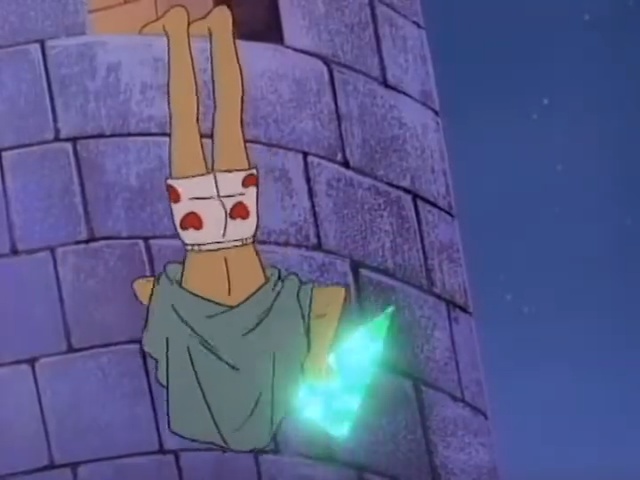
Hung up in “Underworld Connections”, Link’s record five-excuse episodeEven as a ghost (“The Missing Link”)Link’s apology at the end of the last episode to air (“The Moblins Are Revolting”)
“Hey, excuse me, Princess, I’m kind of hung up here.”
Link Underworld Connections, 4:10
“Well, excuse me, Princess. Just trying to keep my spirits up.”
Ghost-Link The Missing Link, 7:05
“There’s only one thing I can say, I guess, and that is… excuse me, Princess.”
Link, apologising for once The Moblins Are Revolting, 14:51
The meme, and the kiss
The line became the most quoted thing about the show and, much later, an internet meme, the one bit of the cartoon plenty of people know without ever having watched it. Its partner is the kiss gag: Link asks, Zelda says no, or says yes and something interrupts. The word “kiss” is spoken in 12 of the 13 episodes, by our count of the captions, and in the thirteenth, “Cold Spells”, Link calls it “smooching time” instead. The writers modelled the bickering on David and Maddie, the sparring detectives of Moonlighting.
Theme, music and sound
“Time to whistle up a wind”: the Magic Flute, the game’s recorder with a longer range, warps everyone home in “Sing for the Unicorn”.
Most of what you hear is Zelda music you already know. For the score, the first game’s Overworld and Underworld tunes (IMDb credits Koji Kondo, though his name is not on screen) were rearranged for orchestra, and many of the sound effects come straight from the NES cartridge. We have found no credit for whoever arranged the underscore. Even reviewers who disliked the show tend to make an exception for the way it sounds, and in “Doppelganger” Link even whistles the Super Mario Bros. theme.
The title sequence is a tiny episode of its own. In under a minute Zelda explains the stakes (“Whoever gets both Triforces will rule this land forever”), Link signs up (“Hey, for you, Zelda. Anything.”), there is a scrap, and it finishes on the catchphrase.
The Super Show wrapper
In 1989 nobody saw a Zelda episode on its own. Each one went out inside The Super Mario Bros. Super Show!, which opened with the “Mario Brothers Rap” (written by Haim Saban, Andrew Dimitroff and Shuki Levy), closed with “Do the Mario” and had live-action Mario Bros. Plumbing sketches at either end, with Lou Albano as Mario and Danny Wells as Luigi.
The 2005 DVD keeps that animated opening and closing round every episode, NCircle’s 2012 disc cuts them out, and WildBrain’s uploads leave them out altogether. One trace survives: the official English subtitle track on WildBrain’s upload of “The Ringer” still begins with the words of the rap and ends with “Do the Mario”.
How it was made
DiC and Nintendo
A model sheet lining the cast up by size, one of several kept by Zelda Wiki.
The cartoon began as part of something bigger. DiC’s Andy Heyward planned a Super Mario Bros. Power Hour of cartoons based on NES games, and concept art was drawn for Castlevania, Metroid, California Games and Double Dragon; in the end only Mario and Zelda were made, and Zelda got the Friday slot. Nintendo of America was a partner but kept a light hand on the wheel, and Bob Forward has said DiC was so busy with the Mario half that the Zelda team was mostly left to get on with it.
The writers
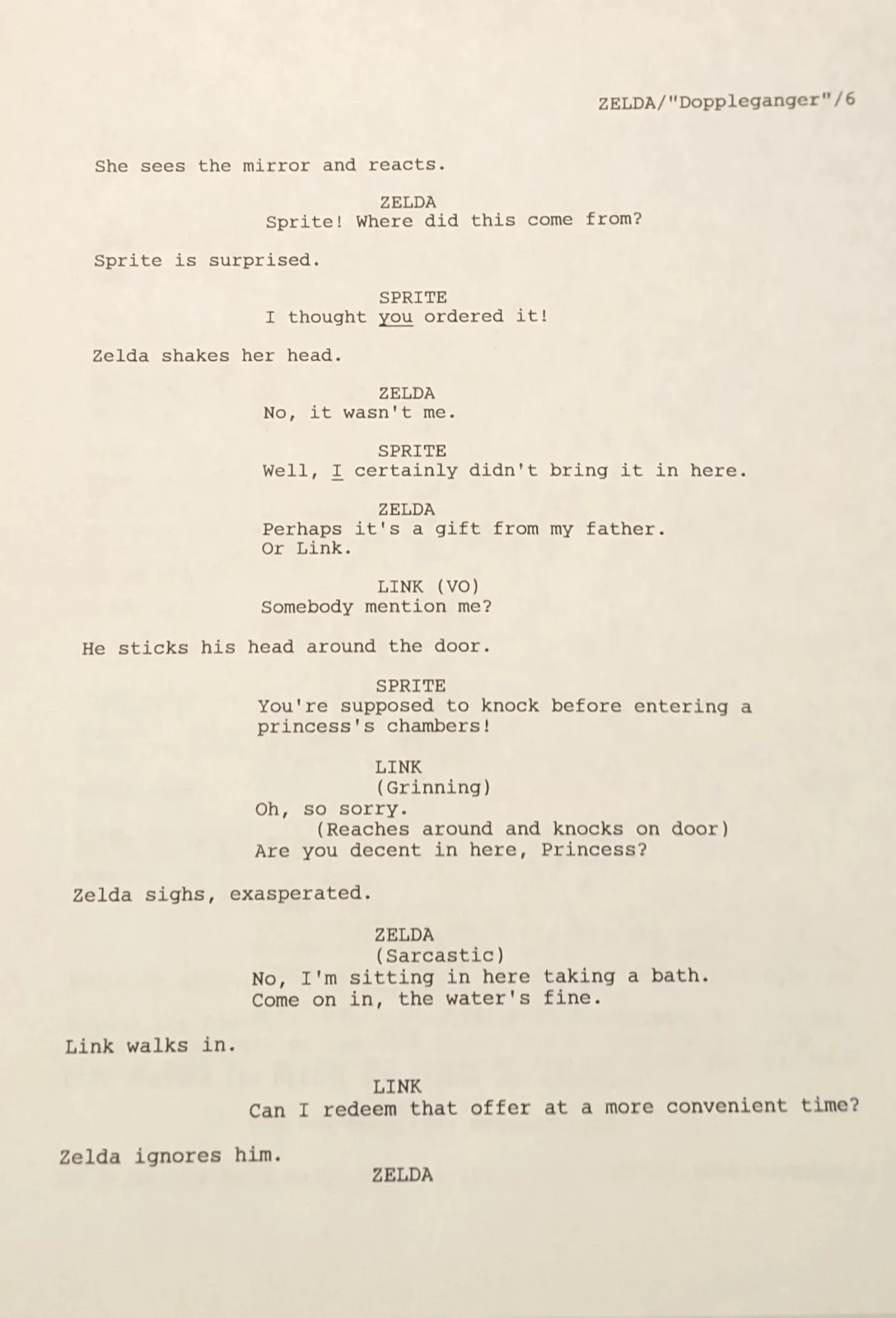
Forward was the story editor and wrote episodes himself. Polygon’s 2023 oral history also names his sister Eve Forward, Phil Harnage and Reed Shelly, and IMDb adds Bruce Shelly to the adaptation credits. Eve was only about 16 or 17 when she began writing scripts for her brother to edit, and she says “Doppelganger” grew out of a Dungeons & Dragons cursed mirror. Their mother, Marsha, supplied the idea that grew into “Fairies in the Spring”. Who is credited on screen for each episode is something we have not been able to confirm.
Research material was thin: Nintendo’s series bible, Zelda II in its Japanese version, and a videotape of one of Charlie’s Angels playing the first game (Tanya Roberts, Bob Forward thinks). The bible called Zelda a “tough girl” and Link a “charming scamp”, and the writers ran with both. Phil Harnage made the Triforce pieces talk because he felt the games never explained what the Triforce actually does, and he has said he wishes the show had got a second season.
Animation and the censors
John Grusd directed, and the animation was done in South Korea by Sei Young Animation under animation director Dae-jung Kim. Reviewers have not been kind to the animation, but one design choice went down well with Nintendo: Zelda in trousers rather than a gown.
Children’s television rules shaped the fights. Broadcast standards limited the violence, so Link’s sword usually shoots beams rather than cutting anything, and beaten monsters reappear in the Evil Jar instead of dying.
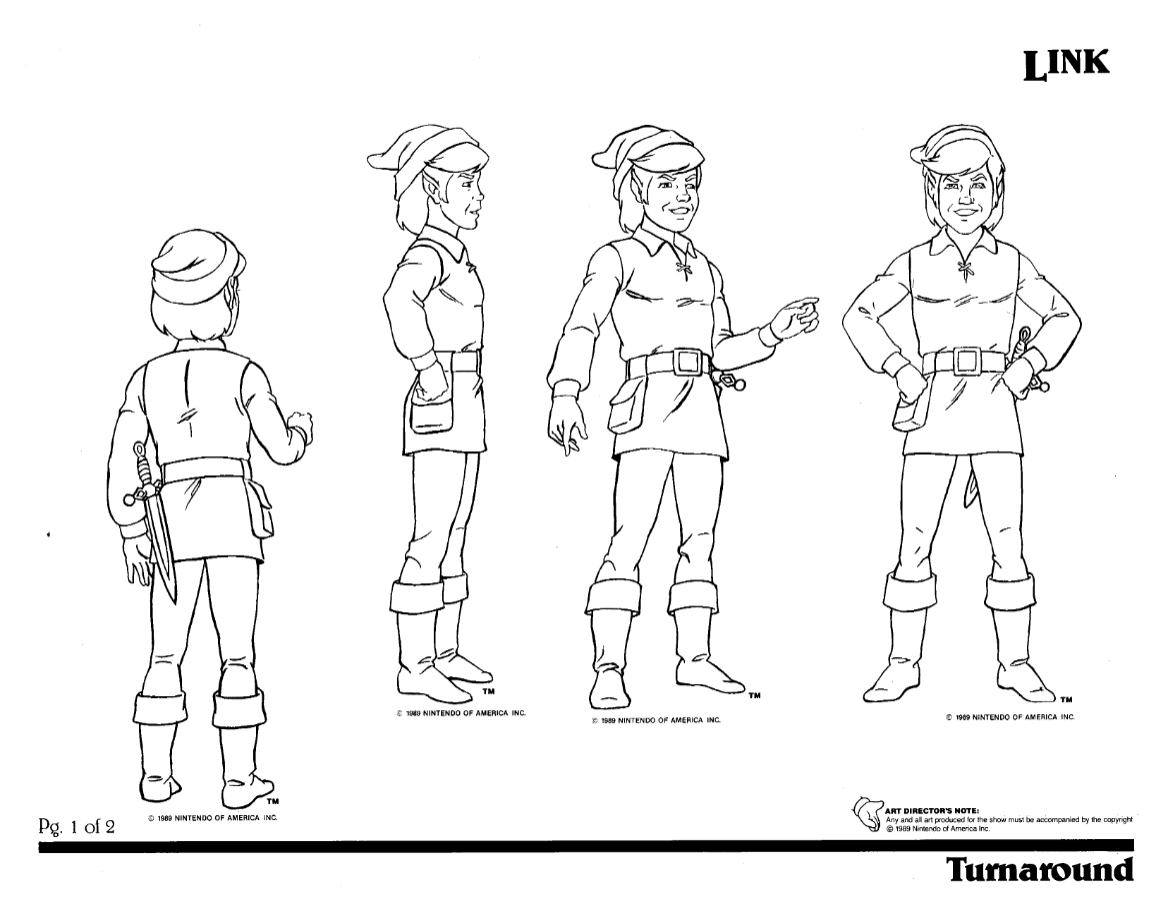
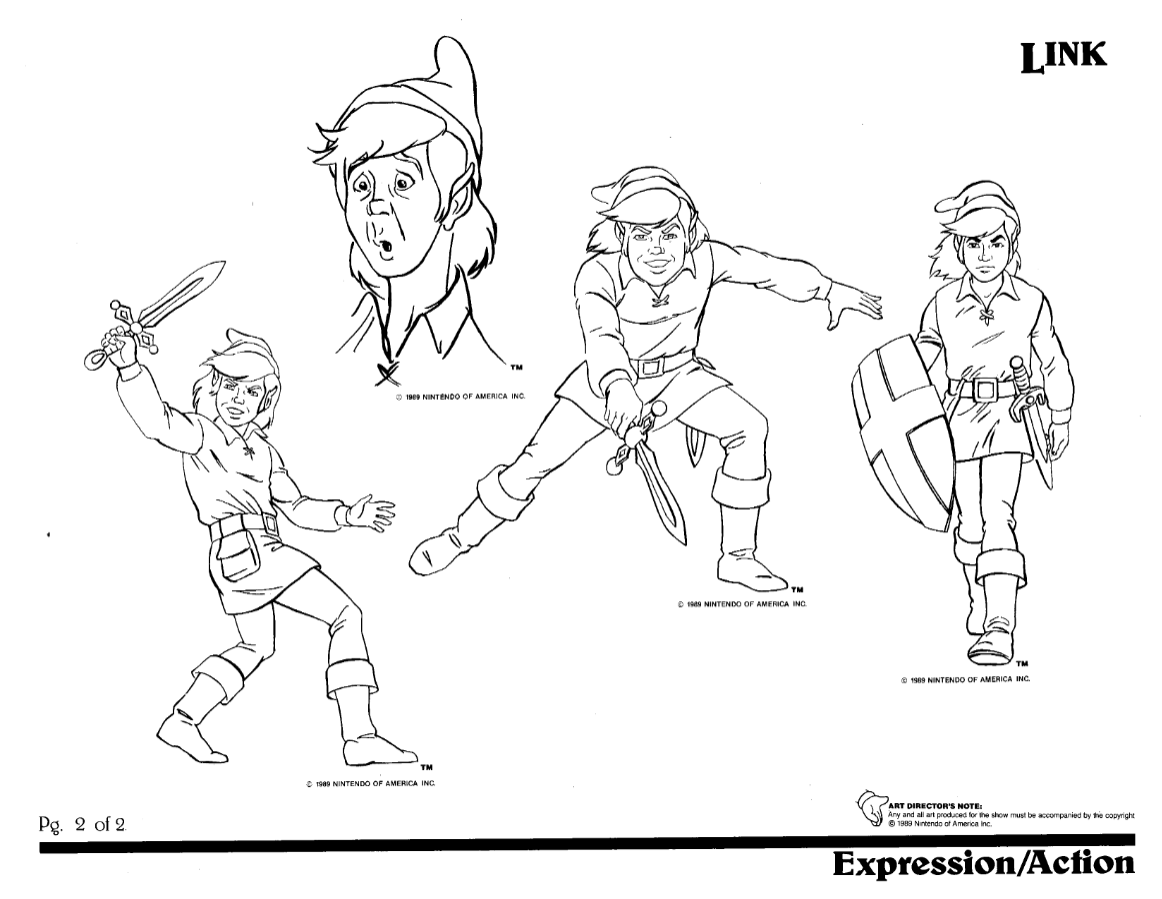
Link turnaround sheetLink expressions and action posesA page of the “Doppelganger” script
Home media and streaming
VHS
In the US the series came out on video in the early 1990s, as four volumes of two episodes each. In the UK it was released by Tempo Video, Abbey Home Entertainment’s label; the back of one of those sleeves is where the often-quoted ages of Link and Zelda (both 15) come from.
DVD
A three-episode DVD, Ganon’s Evil Tower, appeared on 22 July 2003. The whole series followed on 18 October 2005, when Shout! Factory released The Legend of Zelda: The Complete Animated Series: three single-layer discs, all 13 episodes and 250 minutes in 4:3 with Dolby Digital 2.0 sound, for US$29.98. Each episode keeps the Super Show’s animated opening and closing, and the extras include a selection of the live-action Super Show segments (with guests such as Moon Unit Zappa, Norman Fell, Eve Plumb and Maurice LaMarche as Inspector Gadget), a Zelda match game, a trivia quiz and 16 character sketches that can also be opened as a PDF. Reviewers grumbled about specks, grain and a washed-out picture, and the set is now out of print.
NCircle Entertainment reissued all 13 episodes on one bare-bones disc on 22 May 2012, priced at US$8.99, with the Super Show openings and credits cut out. In Germany, Pidax has paired the Zelda cartoon with the Super Show on DVD, English soundtrack included.
Streaming
Hulu began streaming the cartoon in the US in December 2009. Today WildBrain’s own YouTube uploads are the simplest option, Tubi carries all 13 episodes free in the US, and Prime Video lists the season in some regions. Behind the scenes the distribution rights have passed from Viacom, the original distributor, to Cookie Jar and then to DHX Media, now WildBrain.
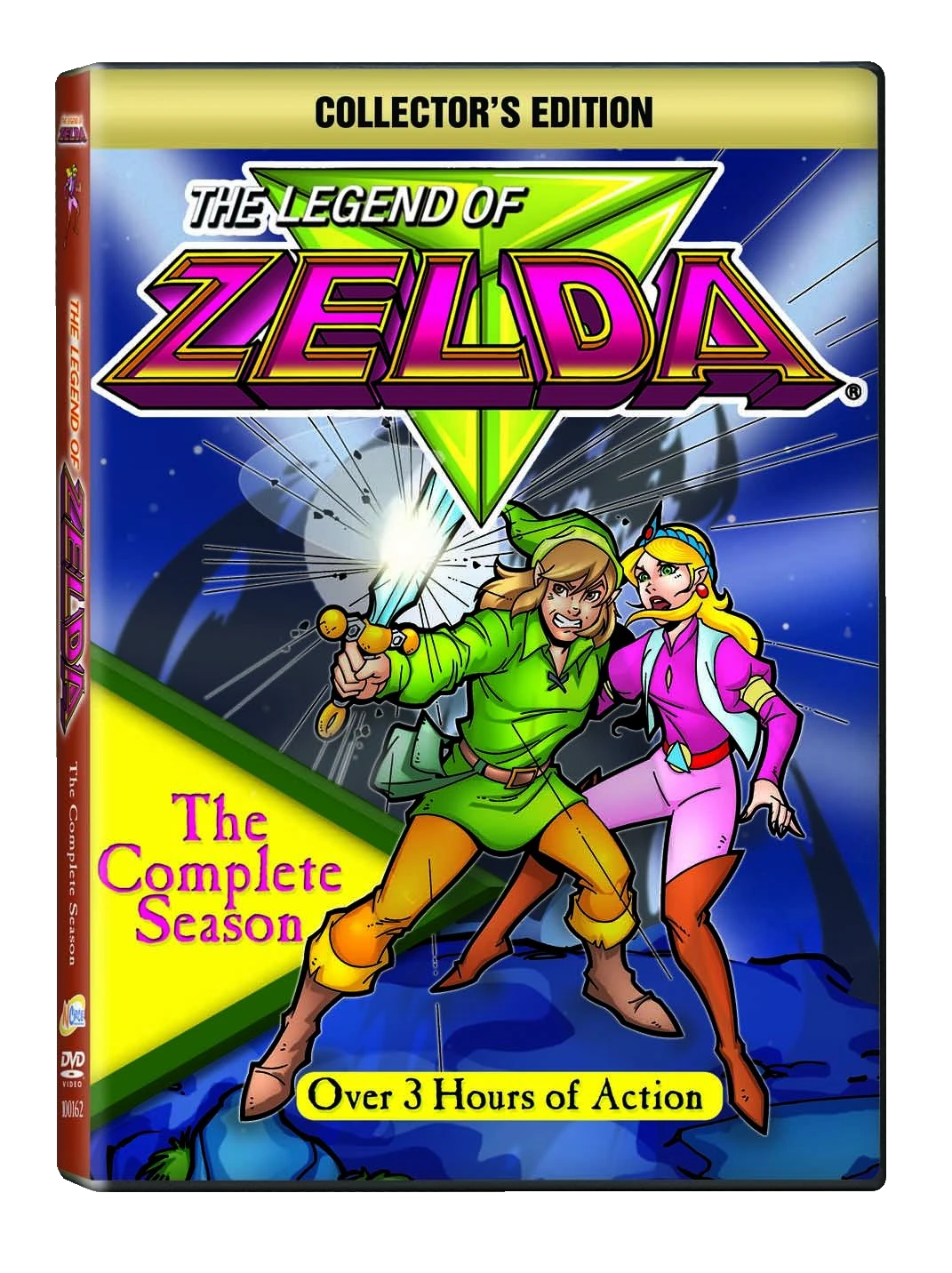
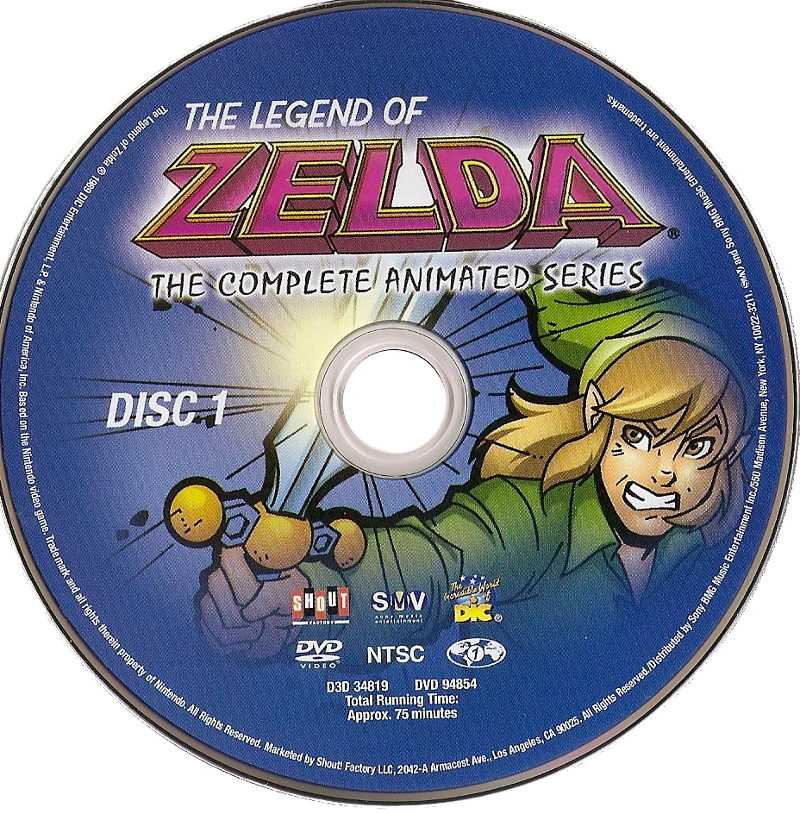
NCircle’s 2012 single-disc DVDDisc 1 of Shout! Factory’s 2005 complete set
Comics and other tie-ins
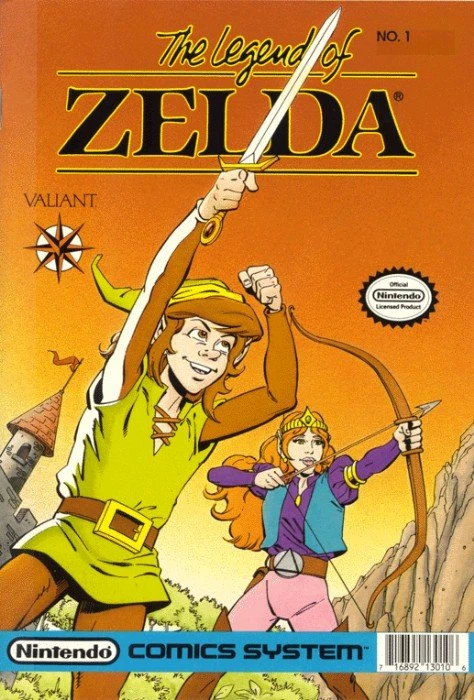
One of Valiant’s 1990 Legend of Zelda covers (Zelda Wiki’s “Volume 1”).
In 1990 Valiant, publishing under its Nintendo Comics System banner, brought out five issues of The Legend of Zelda (the small print called it Link: The Legend of Zelda). The stories drew on the two NES games and, loosely, on the cartoon: the cartoon’s King Harkinian is there too, though with a rather different personality. The issues were reprinted, with changes, in 1991.
Whether the comics also borrowed Spryte, the catchphrase or the cartoon’s look is something we have not been able to confirm, and we have found no toys or books made specifically for the cartoon. The nearest thing to merchandise is the 2005 DVD’s bonus material: a match game, a trivia quiz and a gallery of character sketches you can print.
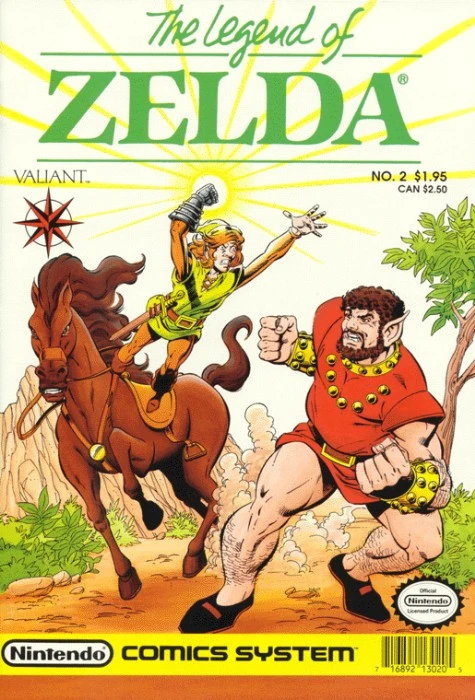
Another Valiant cover (Zelda Wiki’s “Volume 2”)A Moblin, Valiant-style
Link and Zelda in Captain N
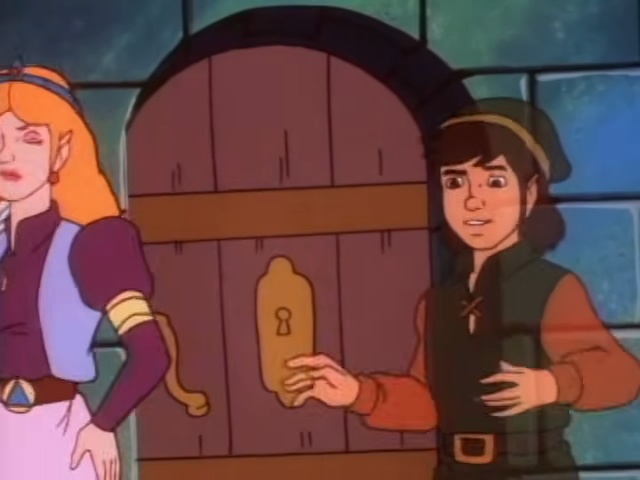
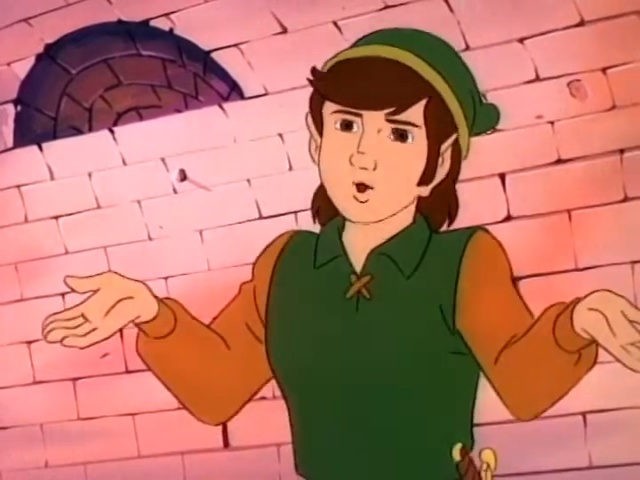
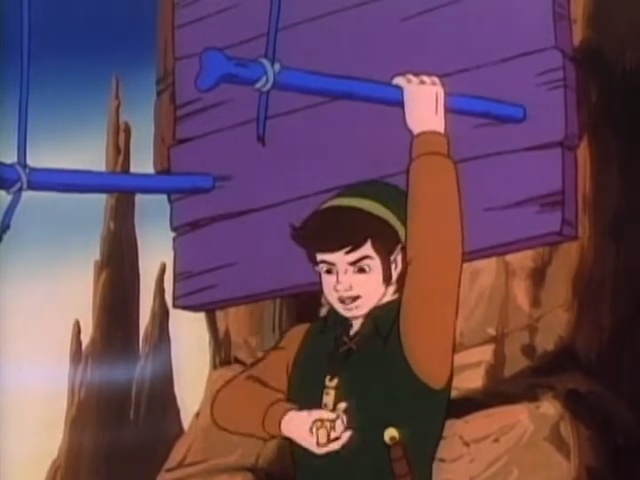
Less than a year after the Friday cartoon ended, Link, Zelda and Ganon crossed into DiC’s other Nintendo series, NBC’s Captain N: The Game Master, with Jonathan Potts, Cynthia Preston and Len Carlson back in their roles. The second season (1990) gives Link and Zelda four episodes (Ganon is in only the first), and they have changed: older, calmer and living in a Hyrule with all three Triforce pieces. Going by the captions, Link never once asks for a kiss or says “Excuse me, Princess” in those four episodes.
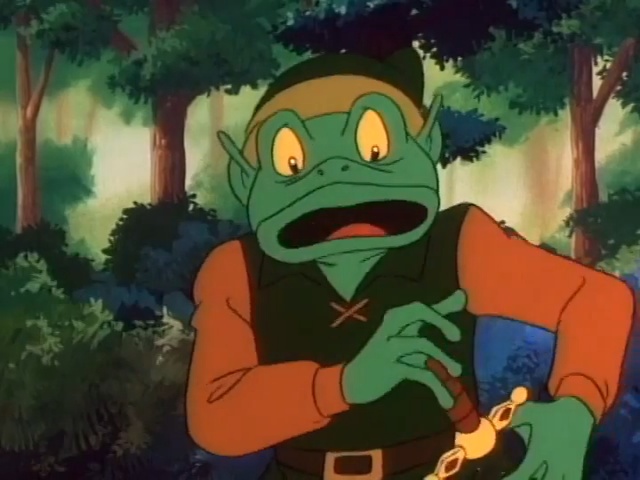
Frog-Link inspects the damage.Link spends most of “Kiss ’N Tell” as a frog, and Jonathan Potts sounds as if he is holding his nose to play frog-Link. The cure is a princess’s kiss, and in the end it is Spryte’s that works: her father, she explains, was king of the fairies.
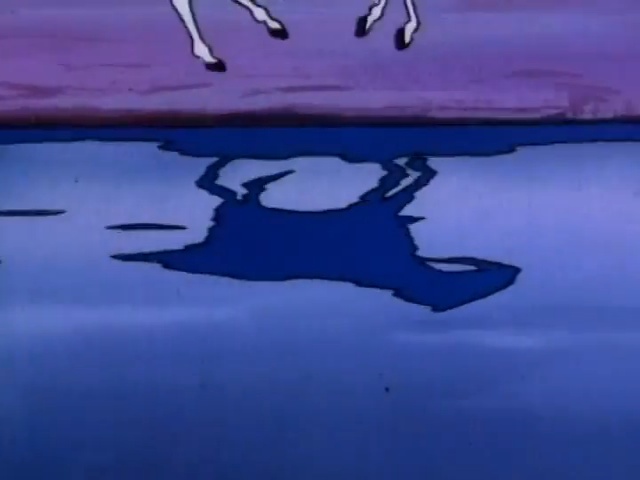
No reflection, no Zelda.In “Doppelganger” Link rumbles the fake Zelda because “she doesn’t have a reflection”. (Some guides say it is her shadow; the episode says reflection.) Eve Forward says the cursed-mirror plot came from Dungeons & Dragons.
The fairy spring: no Ganon required.Ganon sits out “Fairies in the Spring” entirely; his name comes up once, when Zelda realises the attacker “wasn’t one of Ganon’s creatures”. The episode also brings in Spryte’s sister and her father, the fairy king, and its story was pitched by Marsha Forward, the mother of two of the show’s writers.
Zelda takes aim with Link’s sword as the ghostly Link coaches her from behind.In “The Missing Link” Zelda does the sword-fighting while ghost-Link coaches, and Ganon is revolted to work out that she can only see Link’s ghost because she loves him (“How disgusting”). For this show, that is about as romantic as it gets.
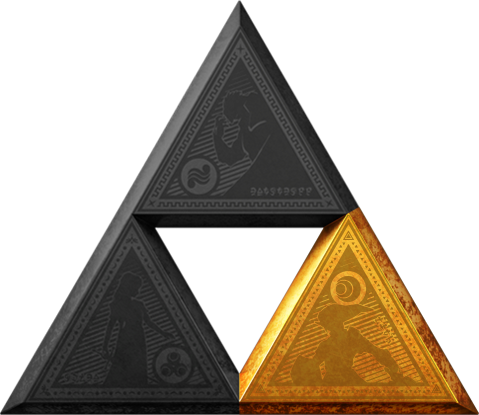
The piece the cartoon left out.There is no Triforce of Courage, even though Zelda II had introduced it before the cartoon was made: the show sticks to the first game’s two pieces. Captain N put all three together in 1990.
“Yahoo! Flame surfing!”“Underworld Connections” has Link “flame surfing” across a sea of fire on his shield, and the most “Excuse me, Princess” lines of any episode (five, by our count).
The Triforce of Power speaks only once in the whole series. In “The Ringer”, when Ganon decides to enter Hyrule’s amateur magicians’ contest, it reminds him that he is a pro.
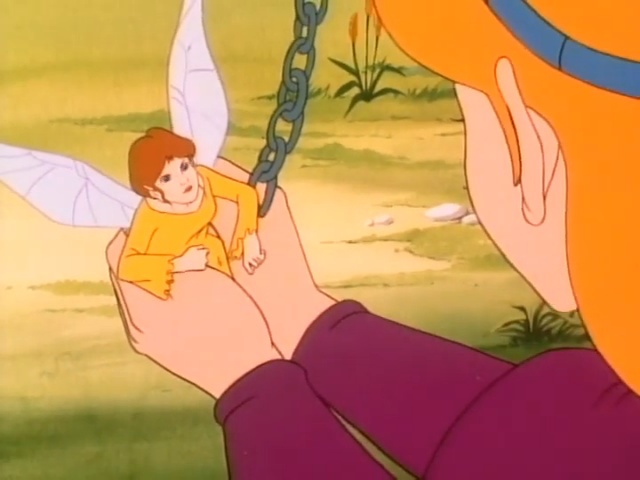
Spryte was Bob Forward’s homage to Tinker Bell in Disney’s Peter Pan, and she gave Link a fairy companion nearly ten years before Navi. By our count of the captions she is named or heard in 9 of the 13 episodes, and her name never comes up in “Sing for the Unicorn”, “Underworld Connections”, “Hitch in the Works” or “The Moblins Are Revolting”.
Link and Zelda are both 15, according to the back of a UK Tempo Video tape and Hulu’s 2009 description.
The writers’ homework included a VHS of one of Charlie’s Angels playing the first game; Bob Forward thinks it was Tanya Roberts.
In “Doppelganger” Link whistles a familiar tune, the Super Mario Bros. theme: a nod to the Mario cartoons that filled the rest of the week.
The Underworld has exactly one named location in the whole show: Black Falls, the waterfall Link has to dive into in “Underworld Connections”.
Captain N: The Game Master began on NBC on Saturday 9 September 1989, the day after the Zelda cartoon’s first episode.
Link fakes a cold to get out of spring cleaning in “Cold Spells” and sneaks off fishing to dodge chores in “Hitch in the Works”: the show never tires of making its hero allergic to housework.
Errors and oddities
The Jewel of Control, as Ganon calls it in “Hitch in the Works”. WildBrain’s description calls it a crystal.
The Evil Jar is blown apart at the end of “The Missing Link”, yet it is working as normal in “The Moblins Are Revolting”, which aired the following week. Zelda Universe argues “The Missing Link” was written as the finale, and WildBrain’s numbering, which puts it last at 113, fits that idea.
In “Hitch in the Works” Ganon calls his mind-control gem the “Jewel of Control”, but WildBrain’s description of the upload calls it the Crystal of Control.
WildBrain’s descriptions are shaky on names in general: the one for “Fairies in the Spring” spells the king Harkinnian, with a double n.
The official English subtitles on WildBrain’s upload of “The Ringer” were made for a version with the Super Show around it. They open with the Mario rap and close with “Do the Mario”, neither of which is in the video, and run about a minute out of step with the picture.
Episode order is a muddle: the 1989 broadcast order, WildBrain’s upload numbers and Tubi’s listing do not all agree, and TVmaze’s summaries for the last two episodes are swapped (its text for “The Moblins Are Revolting” tells the ghost-Link story).
Reviews and reception
In 1989
Puns come as standard: “And that, Link, is how you sting a stinger.”
Reviewing the Super Show for USA Today in September 1989, Mike Hughes called the package a “surprising disappointment”, but he made an exception for Fridays: the Zelda episodes, he wrote, were “quite a bit better” than the Mario ones from Monday to Thursday. Ratings were good to begin with: in its opening week the Super Show drew a 4.1 rating and a 12 share, and no other first-run syndicated series did better at the time; we have found no figures for the Zelda episodes alone. Even so, the cartoon was not regarded as a success, and it ended with the Super Show.
Since then
The 2005 DVD set reopened the debate. IGN gave it 3 out of 10, and PopMatters’ John G. Nettles thought it was meant to be Moonlighting for kids and decided “It’s not.” Mac McEntire at DVD Verdict was far kinder.
Later write-ups split the same way. Den of Geek’s Michael S. Mammano called it a “guilty pleasure”: “pretty bad” animation, “excellent” audio, and “eminently enjoyable” all the same. Kotaku’s Luke Plunkett ranked it among the decade’s worst cartoons but still found it charming, while Destructoid’s Chris Moyse, in 2021, found Link “weirdly unlikable”.
The common thread: thin, repetitive plots and corny dialogue on one side; the sound, the game references and a genuinely capable Zelda on the other. Plenty of fans would put the catchphrase in the plus column too.
Legacy
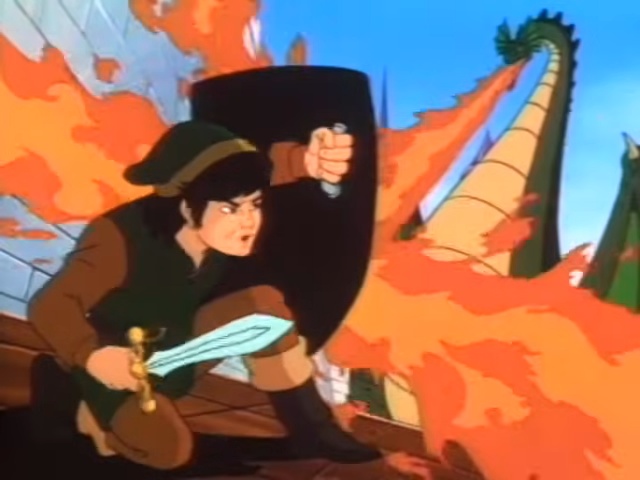
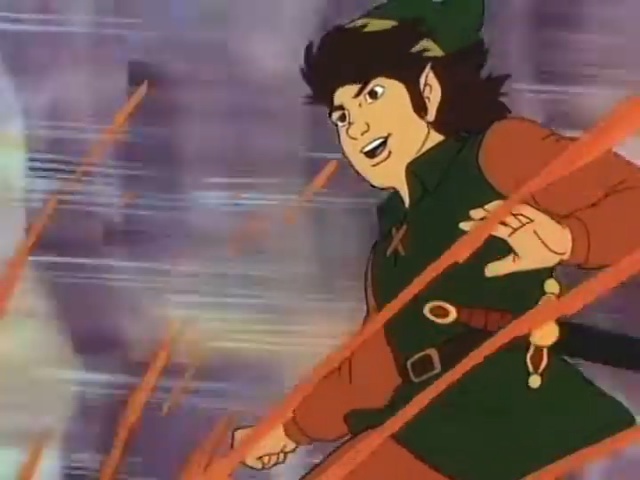
Link, sword in hand, introduces himself as a professional zapper of dragons.
For one season of Friday filler, the cartoon cast a long shadow. It gave Link his first voice, something the games still deliberately avoid: Eiji Aonuma has explained that players have their own idea of how Link should sound. Spryte gave him a fairy companion almost a decade before Navi, and King Harkinian went on to the Valiant comics and the Philips CD-i games.
The same Link, Zelda and Ganon, with the same voices, carried on into Captain N in 1990, and the 13 episodes were cut down and rerun in the 1992–93 package Captain N & The Video Game Masters. And then there is the line. “Excuse me, Princess!” became an internet meme, and it is still the line people reach for first when the show comes up.
Nearly four decades on, the show is easier to see than ever, free and official on WildBrain’s YouTube channel, which is more than many cartoons of its era can say.
Further reading: Zelda Temple research dossier (sources listed inside)
Manage Consent
To provide the best experiences, we use technologies like cookies to store and/or access device information. Consenting to these technologies will allow us to process data such as browsing behavior or unique IDs on this site. Not consenting or withdrawing consent, may adversely affect certain features and functions.
Functional
Always active
The technical storage or access is strictly necessary for the legitimate purpose of enabling the use of a specific service explicitly requested by the subscriber or user, or for the sole purpose of carrying out the transmission of a communication over an electronic communications network.
Preferences
The technical storage or access is necessary for the legitimate purpose of storing preferences that are not requested by the subscriber or user.
Statistics
The technical storage or access that is used exclusively for statistical purposes.The technical storage or access that is used exclusively for anonymous statistical purposes. Without a subpoena, voluntary compliance on the part of your Internet Service Provider, or additional records from a third party, information stored or retrieved for this purpose alone cannot usually be used to identify you.
Marketing
The technical storage or access is required to create user profiles to send advertising, or to track the user on a website or across several websites for similar marketing purposes.

 Ep. 1
 Ep. 2
 Ep. 3
 Ep. 4
 Ep. 5
 Ep. 6
 Ep. 7
 Ep. 8
 Ep. 9
 Ep. 10
 Ep. 11
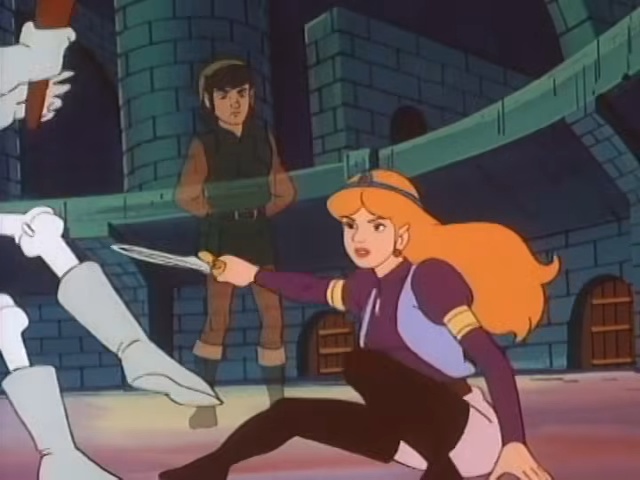 Ep. 12
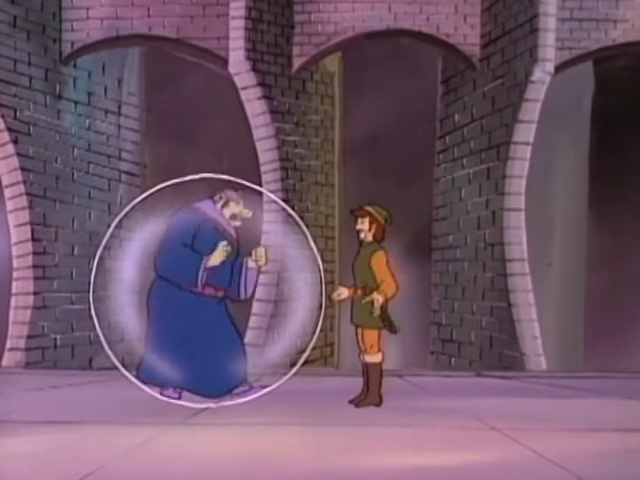 Ep. 13
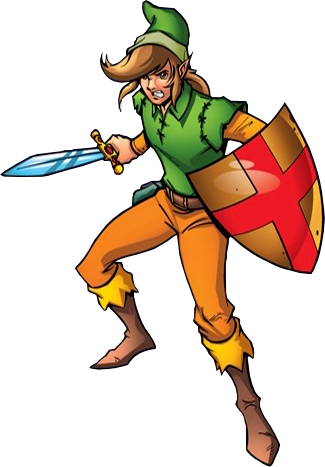 LinkThe hero
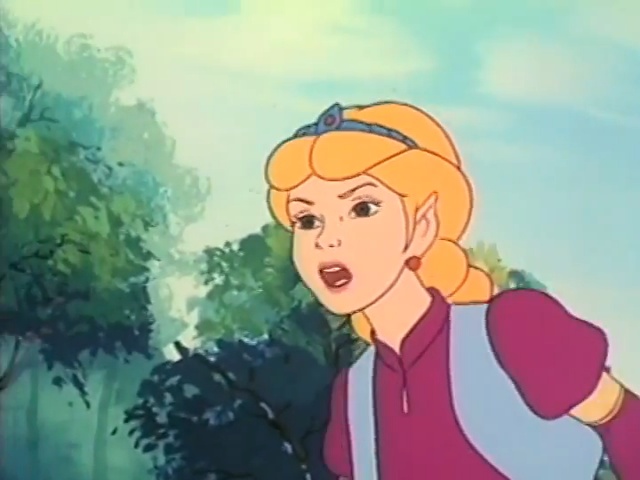 Princess ZeldaPrincess of Hyrule
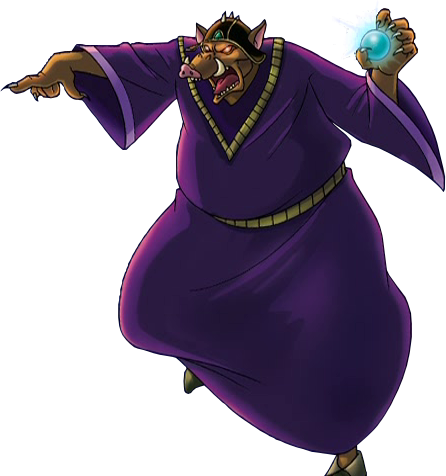 GanonThe villain
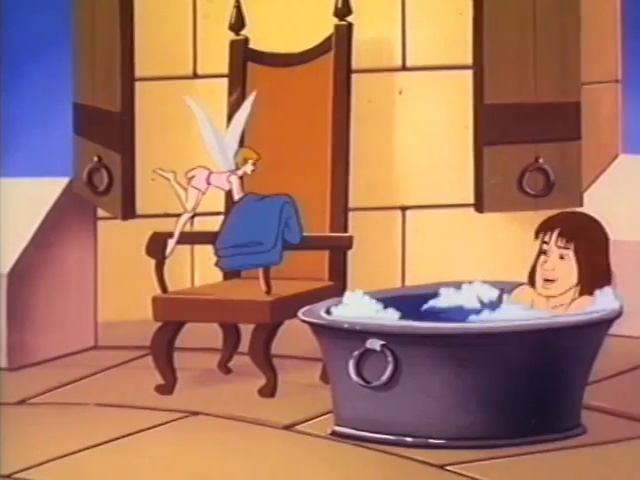 SpryteFairy sidekick
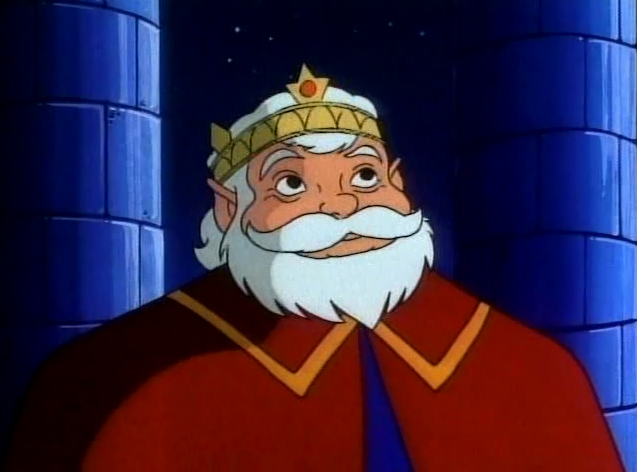 King HarkinianZelda’s father
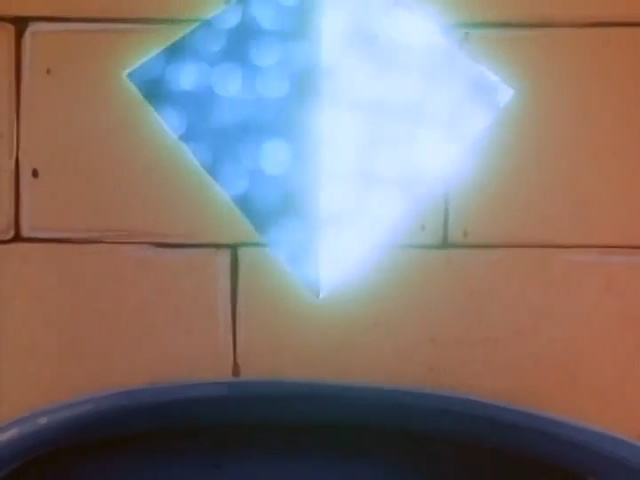 Triforce of WisdomTalking relic
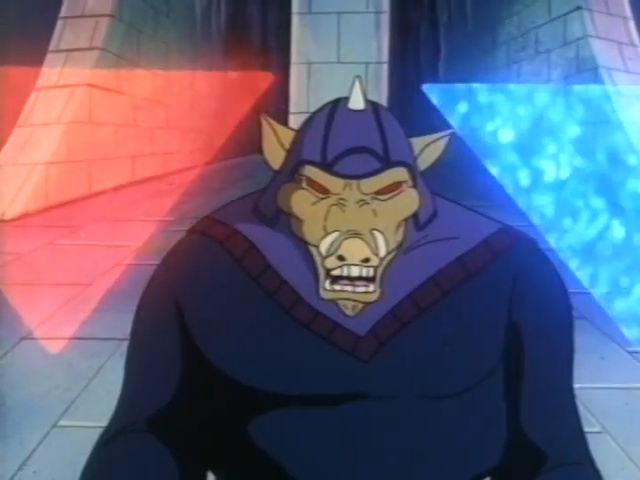 Triforce of PowerGanon’s piece
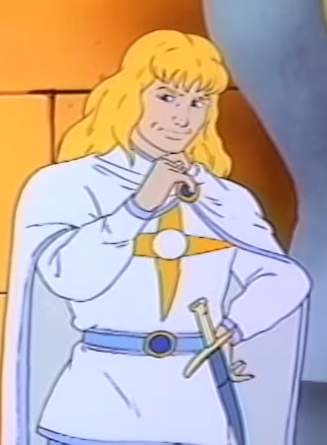 Prince Facade“The White Knight”
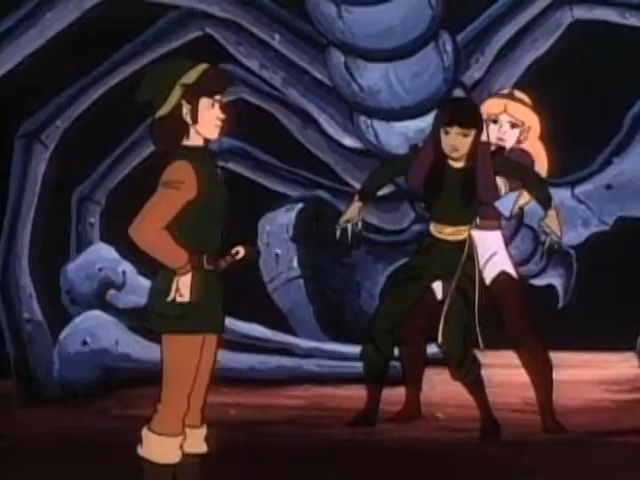 Sing“Sing for the Unicorn”
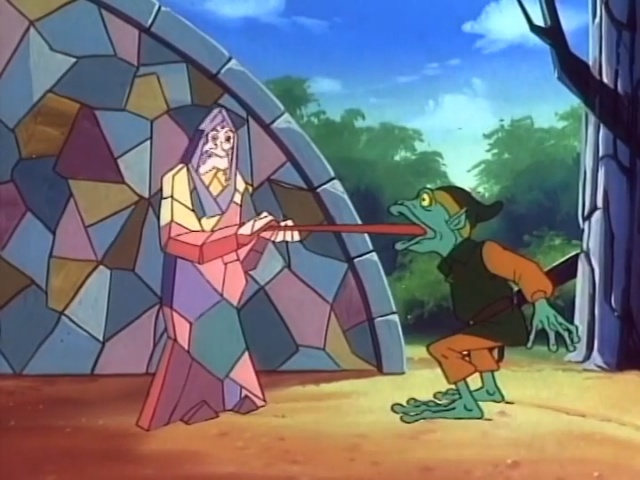 The Witch of Walls“Kiss ’N Tell”
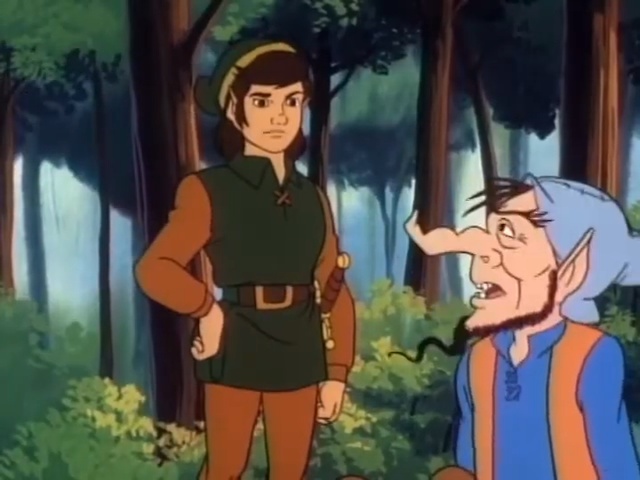 Sleezenose“Stinging a Stinger”
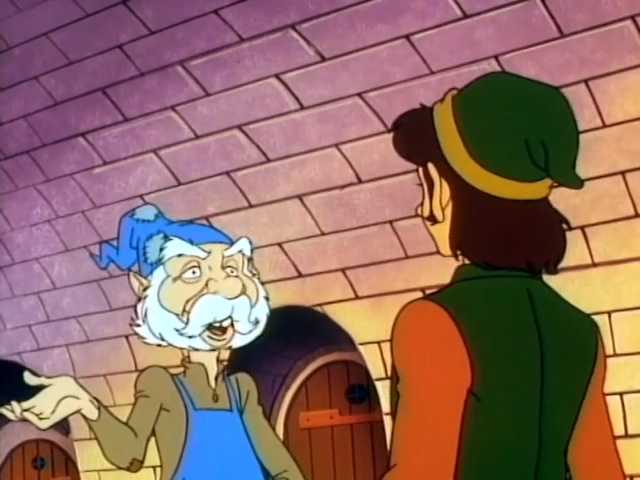 Doof“Hitch in the Works”
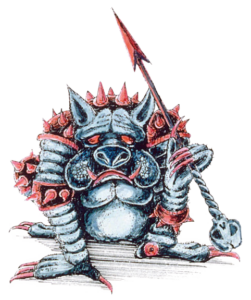 MoblinThe Legend of ZeldaGanon’s dim foot soldiers, voiced by Len Carlson. Named in The Ringer, Doppelganger and Hitch in the Works; they overthrow their boss in The Moblins Are Revolting.
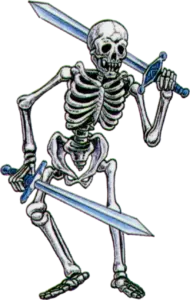 StalfosThe Legend of ZeldaSkeleton warriors. Link and Zelda fight three back to back in The Ringer; they finally get lines in The Missing Link.
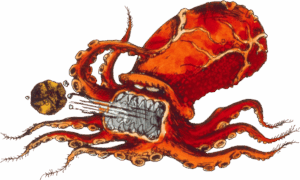 OctorokThe Legend of ZeldaLink battles a giant one at the start of The White Knight; more turn up in Doppelganger.
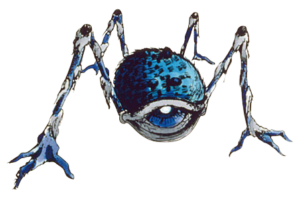 TektiteThe Legend of ZeldaSpider-like hoppers that spoil the picnic in That Sinking Feeling and wrap Zelda in webbing.
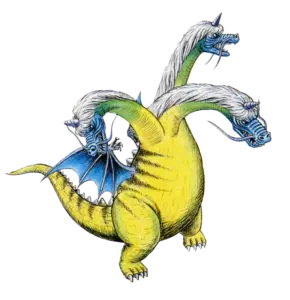 GleeokThe Legend of ZeldaThree-headed dragon in Kiss ’N Tell (Zelda fights it with fruit) and Hitch in the Works, where its heads keep coming after the body is gone, just as in the game.
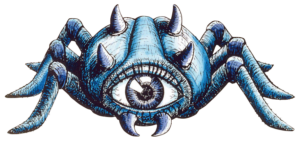 GohmaThe Legend of ZeldaGanon’s crab-like pet, fed prisoners in Cold Spells and Stinging a Stinger.
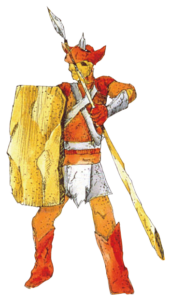 ArmosThe Legend of ZeldaStatues that come to life when touched, in Sing for the Unicorn.
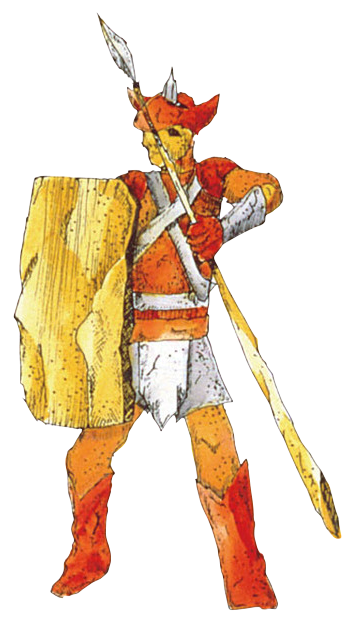
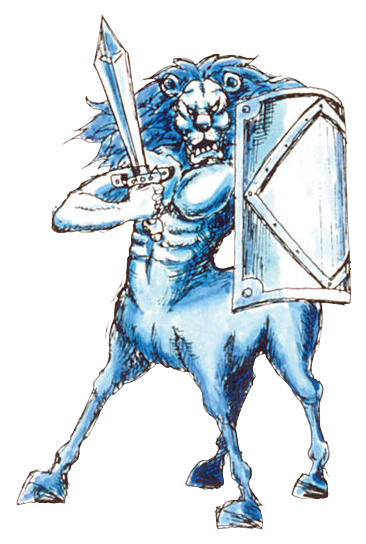
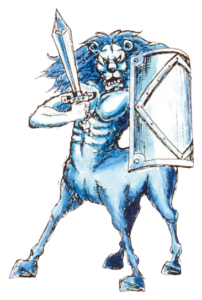 LynelThe Legend of ZeldaCentaur-like brutes in Sing for the Unicorn, in both the red and blue of the game.
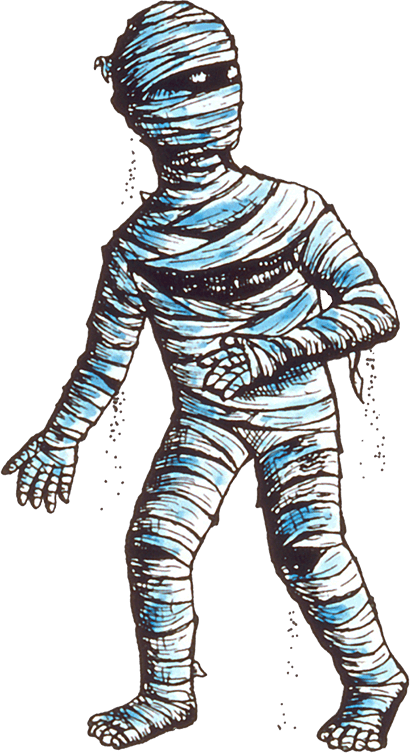
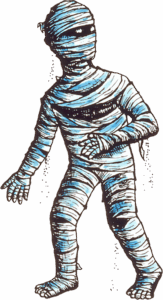 GibdoThe Legend of ZeldaThe mummy behind the “maiden” whose kiss turns Link into a frog in Kiss ’N Tell.
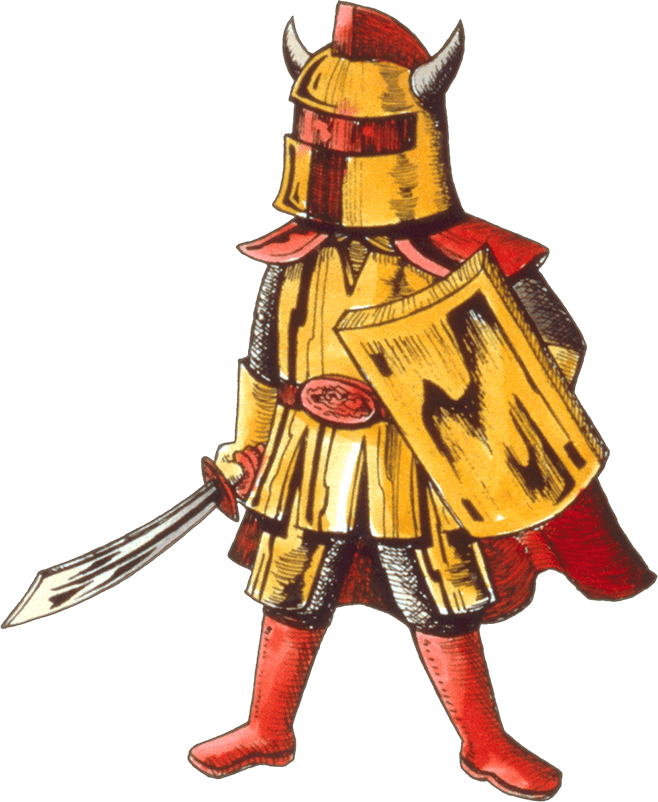
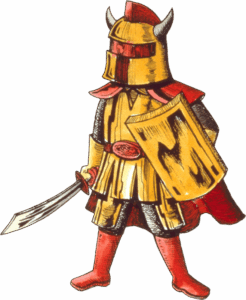 DarknutThe Legend of ZeldaArmoured knight in That Sinking Feeling, its only appearance; it drops the Magic Bracelet.
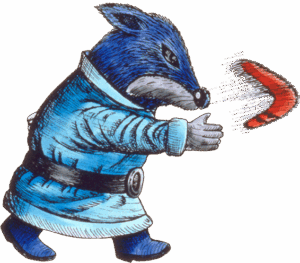 GoriyaThe Legend of ZeldaDigs up the Overworld Magnet for Ganon in That Sinking Feeling, in broken English.
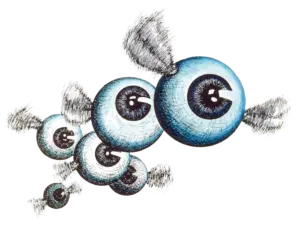 PatraThe Legend of ZeldaThe swarm that shows up Link’s fake sword in Stinging a Stinger; Zelda Universe calls them the only TV enemies to beat Link.
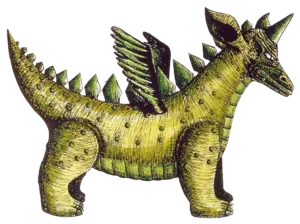 AquamentusThe Legend of ZeldaThe dragon waiting for Link after he dives into Black Falls in Underworld Connections, its only appearance.
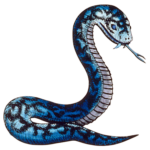 RopeThe Legend of ZeldaSnakes that ambush the heroes in Underworld Connections, their only appearance.
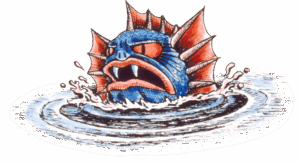 ZolaThe Legend of ZeldaThe swamp creature that grabs Zelda in The White Knight, while Prince Facade refuses to get his boots muddy.
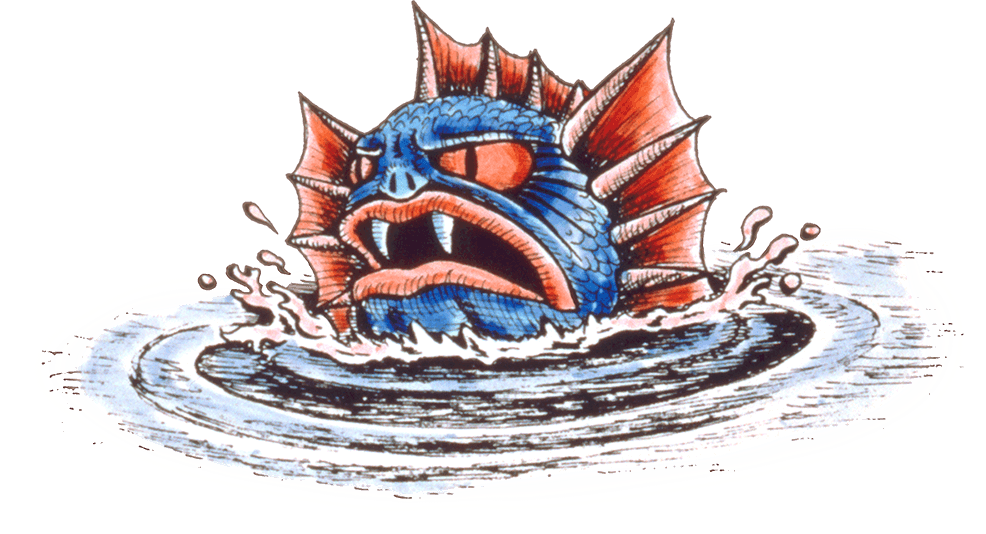
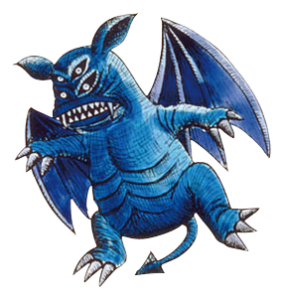 VireThe Legend of ZeldaWinged devils. They first turn up in Sing for the Unicorn, and in Underworld Connections they blow the Triforce of Wisdom into three pieces.
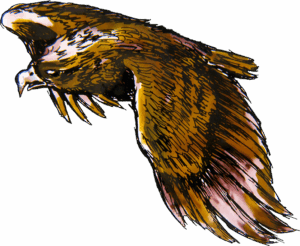 MobyZelda IISpies on the spring cleaning for Ganon in Cold Spells.
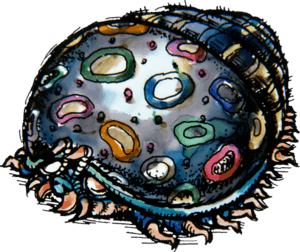 LowderZelda IIGanon’s beetle-like steed in Cold Spells.
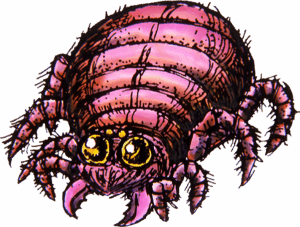 DeelerZelda IISpiders that frog-Link eats, to his own disgust, in Kiss ’N Tell.
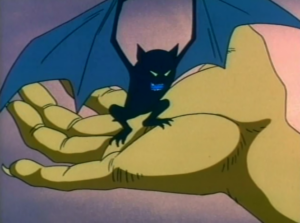 AcheZelda IIThe bat Ganon sends to find out who is guarding the Triforce in The Ringer.
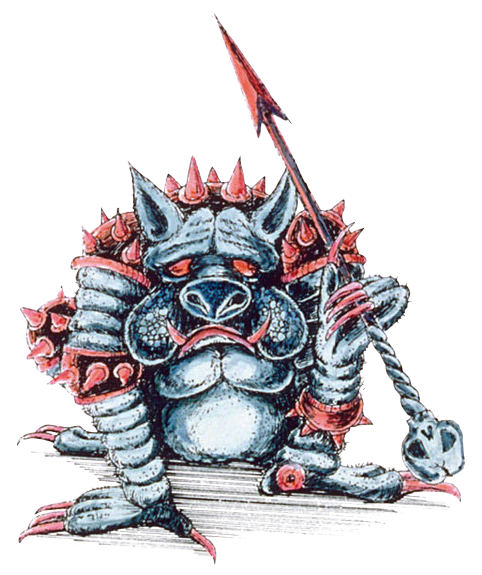
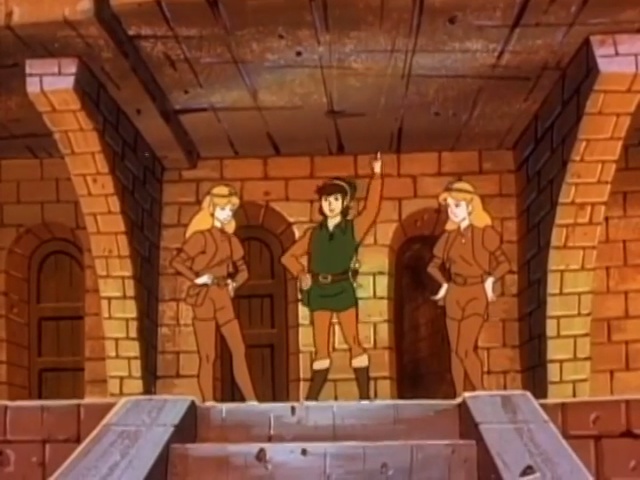
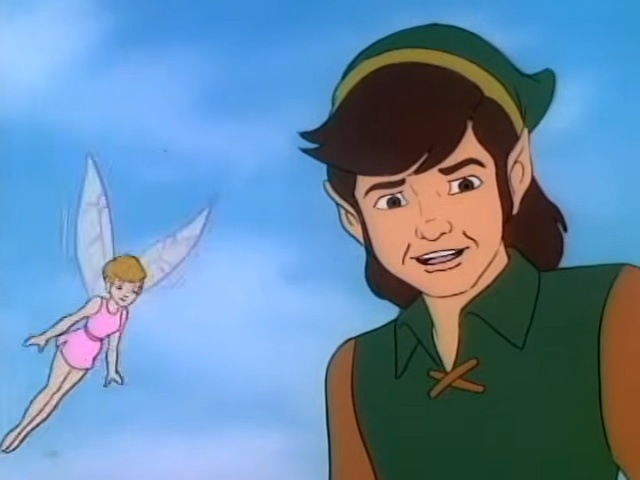
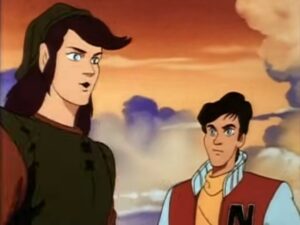 Link and Zelda in Captain NOur guideThe four episodes, how this Link and Zelda differ, the Hyrule of Captain N and the 1992 package.
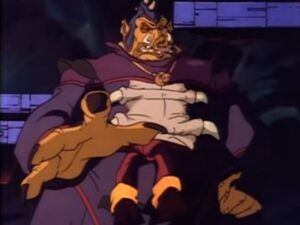 Quest for the Potion of PowerSeason 2, episode 3Kevin meets his hero Link, and the two rivals stop Ganon’s comeback.
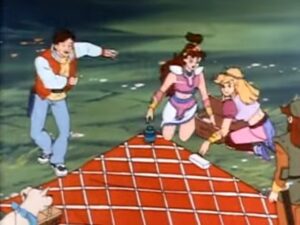 Once Upon a Time MachineSeason 2, episode 7A Hyrule picnic goes wrong, and Kevin and Link chase a thief through time.
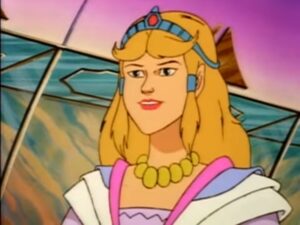 Having a BallSeason 2, episode 9The Triforce is stolen while Link and Zelda are dancing at Lana’s ball.
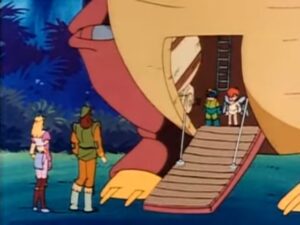 The Trojan DragonSeason 2, episode 10The N Team needs a wooden dragon, and Link and Zelda know where to find the timber.