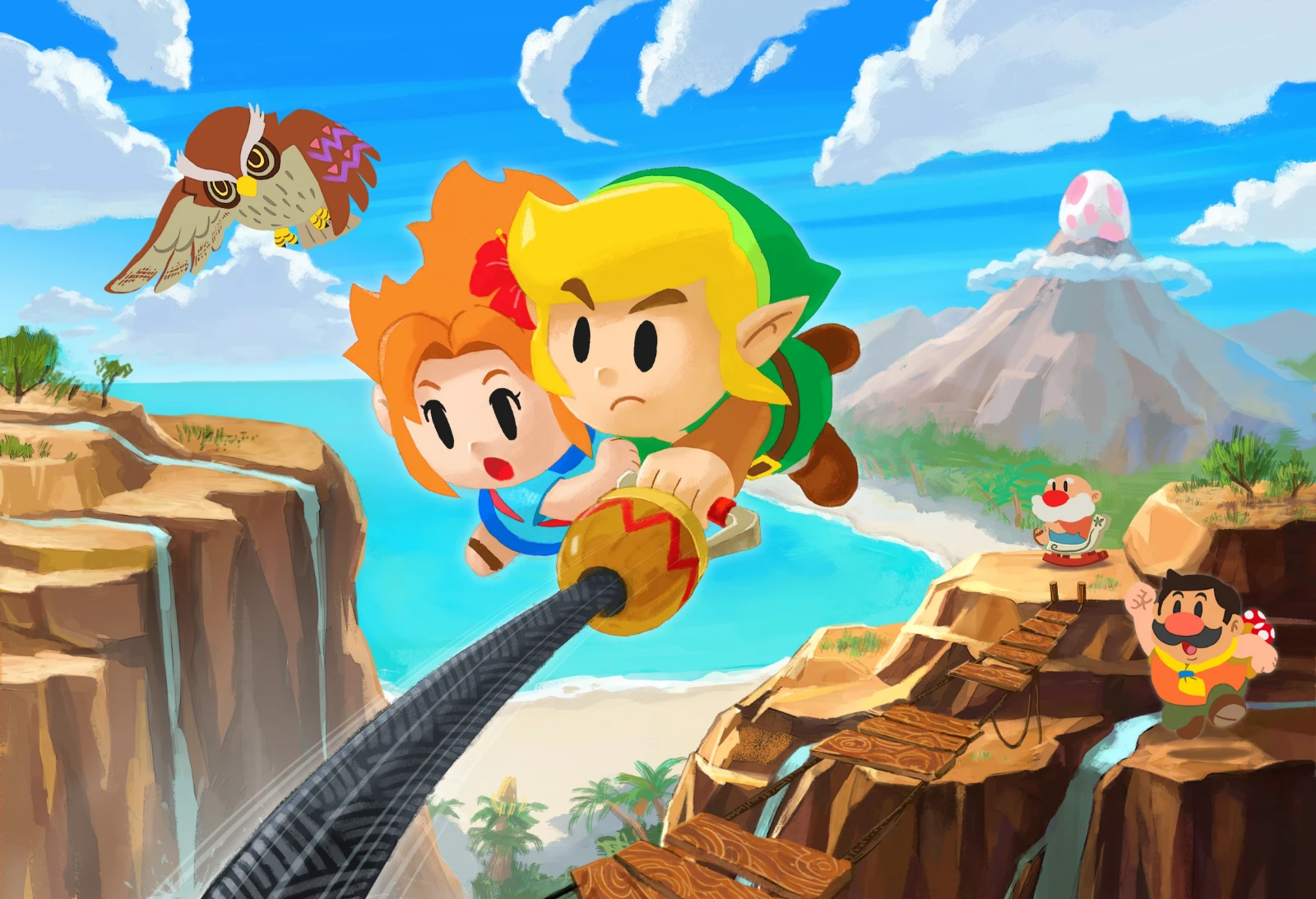
Koholint Island rebuilt as a toy box you can peer into: the same shipwreck, the same eight dungeons and the same bittersweet ending, with a new soundtrack, a pocketful of conveniences and a gravedigger who lets you build dungeons of your own.
The Legend of Zelda: Link’s Awakening ゼルダの伝説 夢をみる島 (Zeruda no Densetsu: Yume o Miru Shima, “The Dreaming Island”), the same title as the 1993 game in both languages
Platform
Nintendo Switch (also plays on Nintendo Switch 2, with a free update)
Developer
Grezzo
Publisher
Nintendo
Director
Mikiharu Oiwa
Producer
Eiji Aonuma
Art
Masaki Yasuda (credited artist); Satoshi Terada (art style, 3D backgrounds and lighting)
Music
Ryō Nagamatsu
Animated opening and ending
Junichi Yamamoto (direction and storyboards), Oswald Katou (concept art, colour design and backgrounds)
Players
1
Released
20 September 2019 in Japan, North America, Europe and Australia
Price at launch
US$59.99; Dreamer Edition US$69.99
amiibo
Link (Link’s Awakening), released the same day; other Zelda amiibo are supported too
Updates
Version 1.0.1 (24 October 2019); version 1.1.0 (3 June 2025, for Nintendo Switch 2)
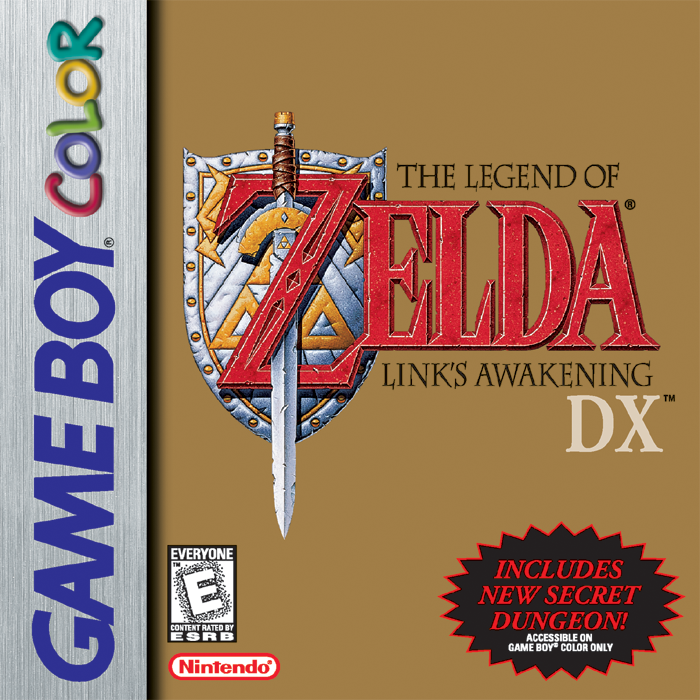
Link’s Awakening DX (Game Boy Color, 1998), whose Color Dungeon is carried over
Followed by
Echoes of Wisdom (2024), Grezzo’s new game in the same visual style
Sales
3.13 million by 30 September 2019; 5.49 million by 31 March 2021 (Nintendo); 6.46 million by December 2022 (CESA)
Metacritic
87/100
Honours
Best Nintendo Switch Game, Gamescom 2019; Excellence in Art, SXSW Gaming Awards 2020; two NAVGTR Awards
Overview
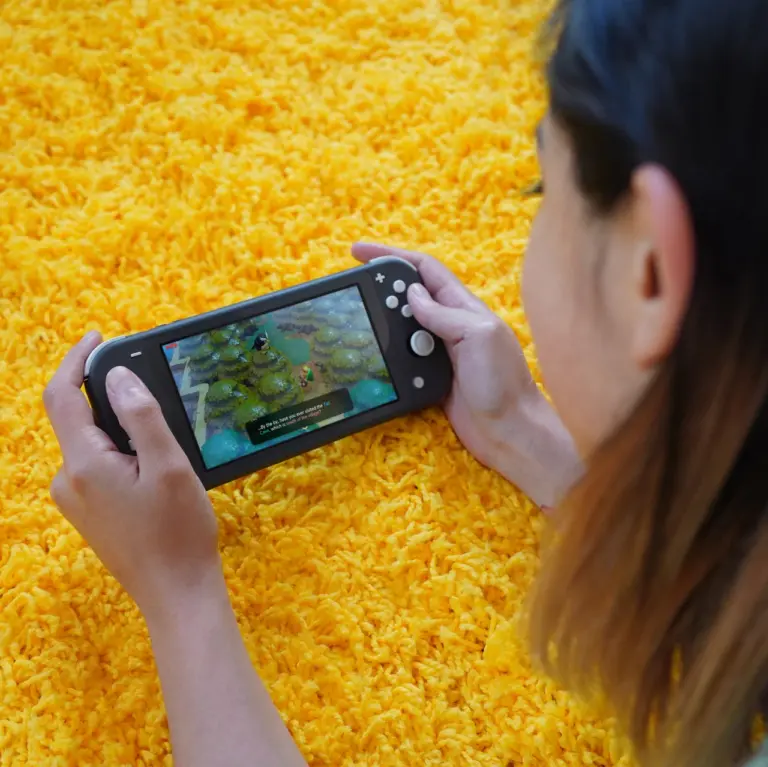
Twenty-six years after Link first washed up on Koholint Island, Nintendo sent him back. The Legend of Zelda: Link’s Awakening for Nintendo Switch is a ground-up remake of the 1993 Game Boy adventure, built by the Tokyo studio Grezzo under series producer Eiji Aonuma and released around the world on 20 September 2019, the very day the Nintendo Switch Lite went on sale.
It is the same game underneath. The island has the same shape, the eight dungeons keep their puzzles and their Nightmares, and the odd cast of talking animals, telephone-shy old men and guest stars from Mario are all where you left them; Kotaku’s first report from E3 2019 said it looked like a one-to-one recreation. What has changed is everything around that skeleton. Koholint is now a glossy 3D diorama seen through a tilt-shift lens, its people look like vinyl toys, the opening and ending are hand-drawn animation, and Ryō Nagamatsu has rearranged the whole soundtrack.
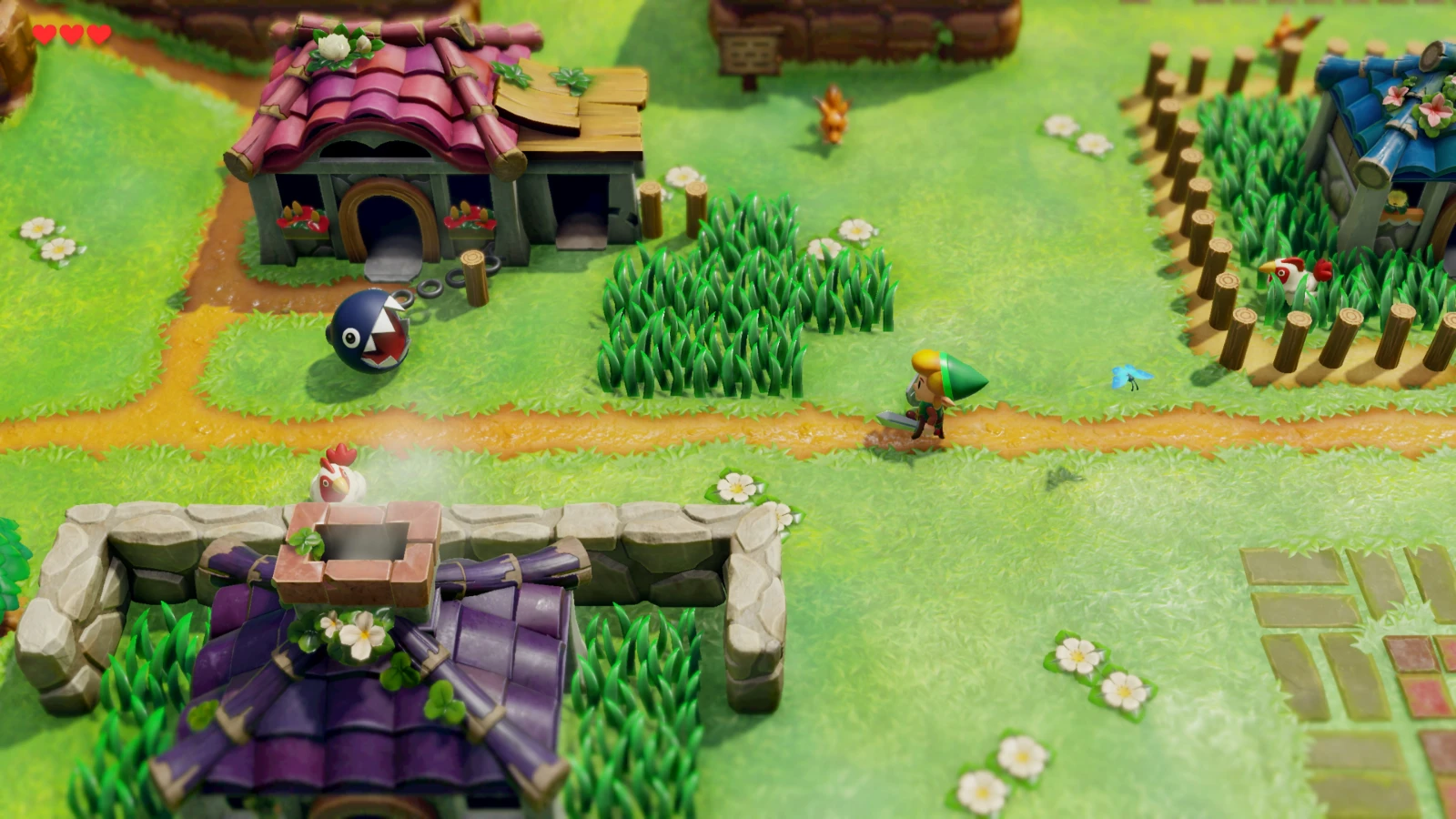
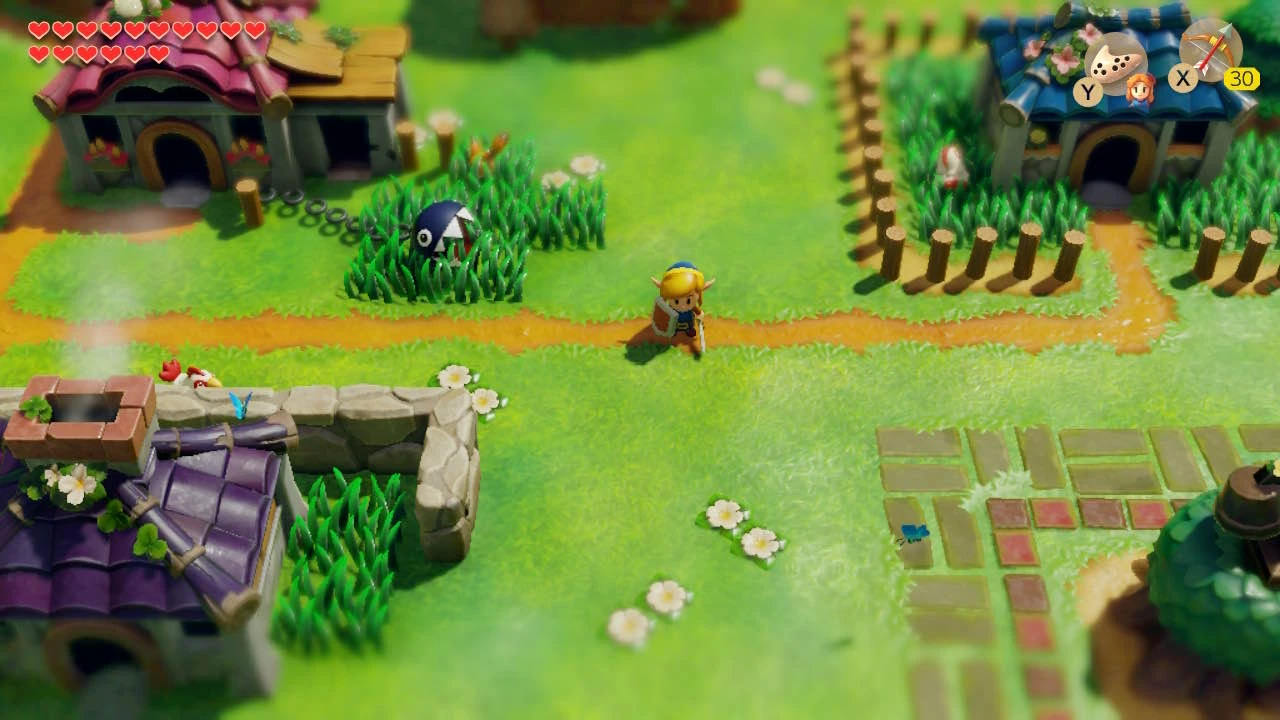
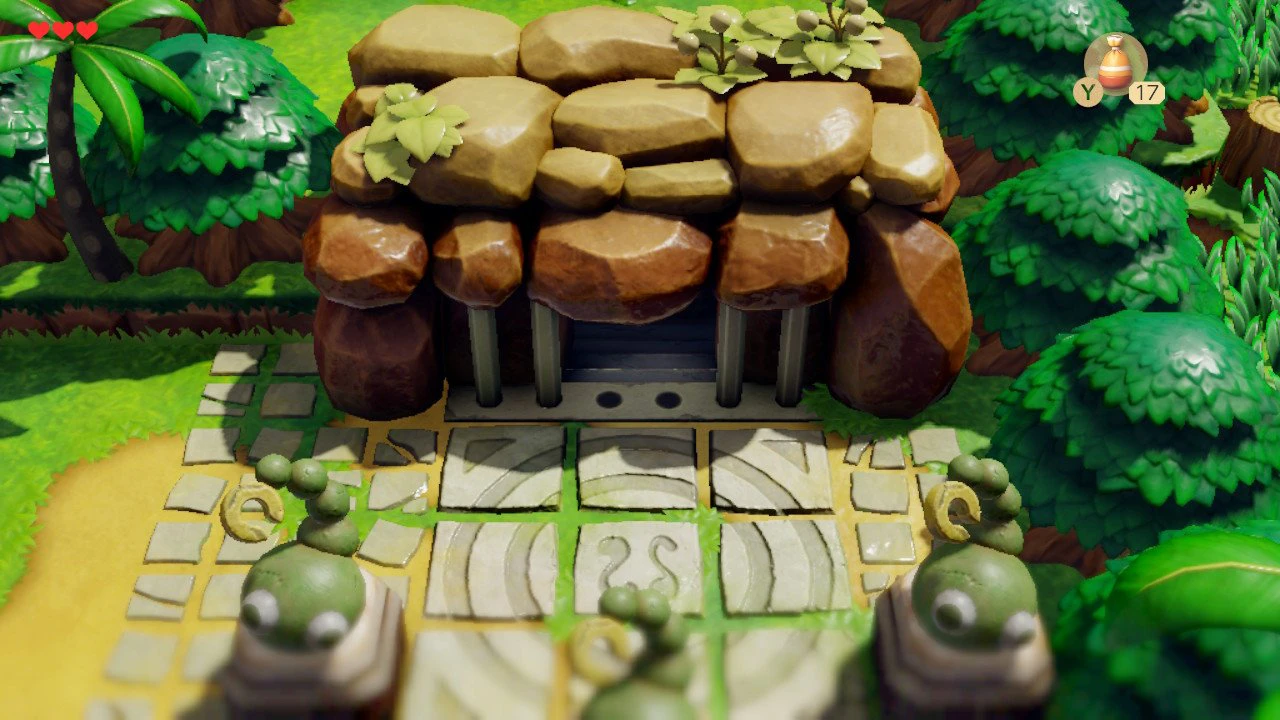
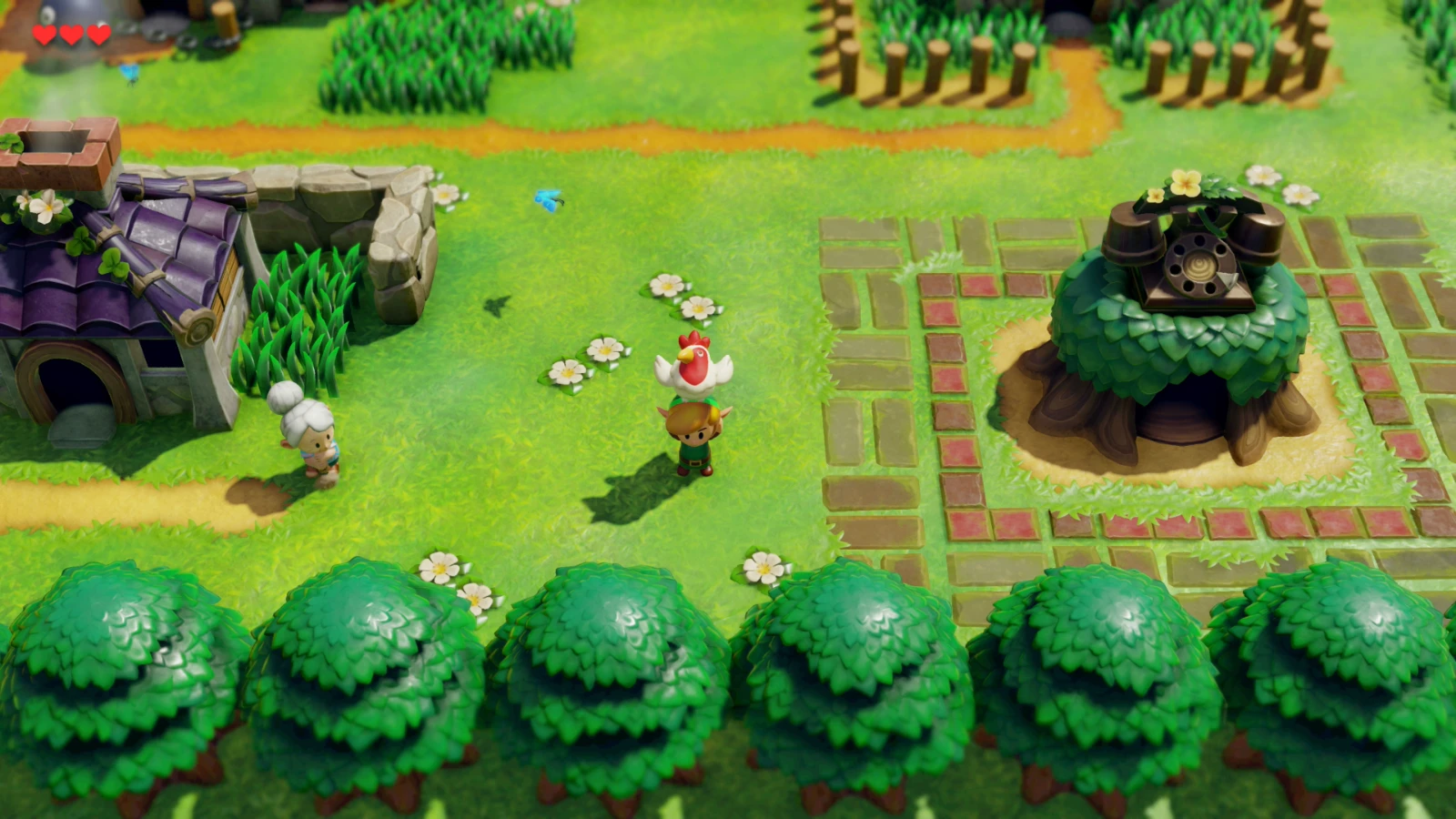
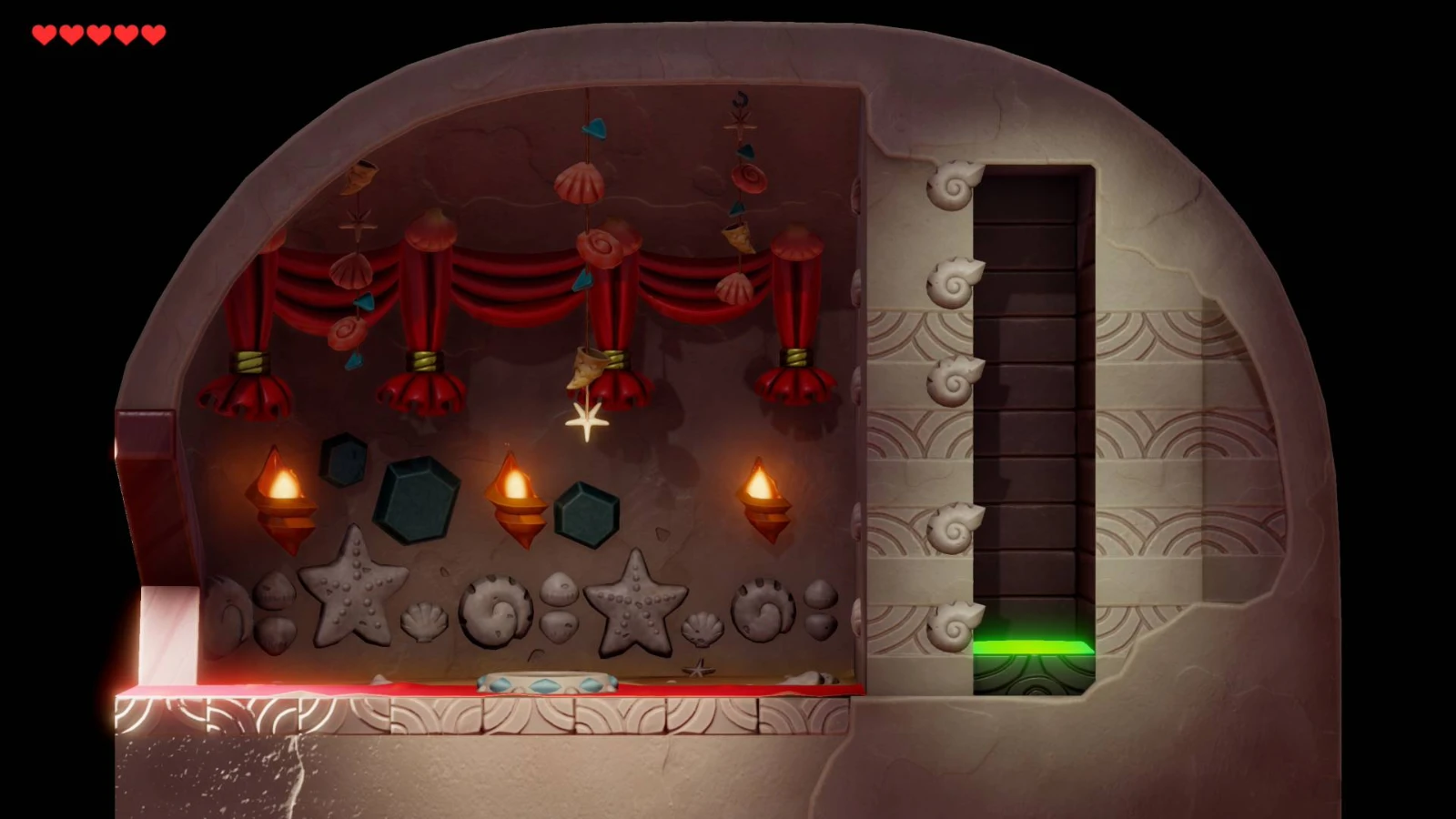
Mabe Village, rebuilt as a toy-like diorama.Tail Cave, the first dungeon, in the remake.Arranging rooms in a Chamber Dungeon.
The fiddliest parts of the original have been quietly fixed. Sword and shield have buttons of their own, so you no longer pause every few seconds to swap items; the map takes pins; important conversations are filed away to reread; and there are more warp points, more Secret Seashells and more Pieces of Heart to hunt for. The Color Dungeon from Link’s Awakening DX is here, but DX’s photographer is not. In his place stands Dampé the gravedigger, who runs the remake’s one big new idea: Chamber Dungeons, in which you lay out rooms from dungeons you have beaten to build new ones.
Critics loved it (87 on Metacritic) and so did the public: Nintendo counted 3.13 million copies sold in the first eleven days and Japan’s CESA white paper put the total at 6.46 million by the end of 2022. The one sour note was a frame rate that kept slipping from 60 to 30 frames per second out on the island, which no patch for the original Switch ever cured. This page covers what the Switch version changed and how it was made; for the full story, the characters and the history of the 1993 game, see our Link’s Awakening page.
Explore a reimagined Koholint Island in one of the most beloved games in the Legend of Zelda series.
That is the opening line of Nintendo’s overview for the Switch version. Its store page, under the headline “Castaway, you should know the truth!”, goes on to promise newly arranged music, the ability to equip more items at once, a way to review key conversations, new ways of getting around the map, revamped mini-games and Chamber Dungeons to arrange on a grid, with exclusive chambers for anyone who taps a Zelda amiibo.
— Official description: Nintendo.com overview for The Legend of Zelda: Link’s Awakening (Nintendo Switch), as reproduced by Gematsu on 11 September 2019. One line quoted; the rest summarised from Nintendo’s product pages.
Quick Answers
The questions people most often ask about the Switch version of Link’s Awakening, answered briefly and explained further down the page.
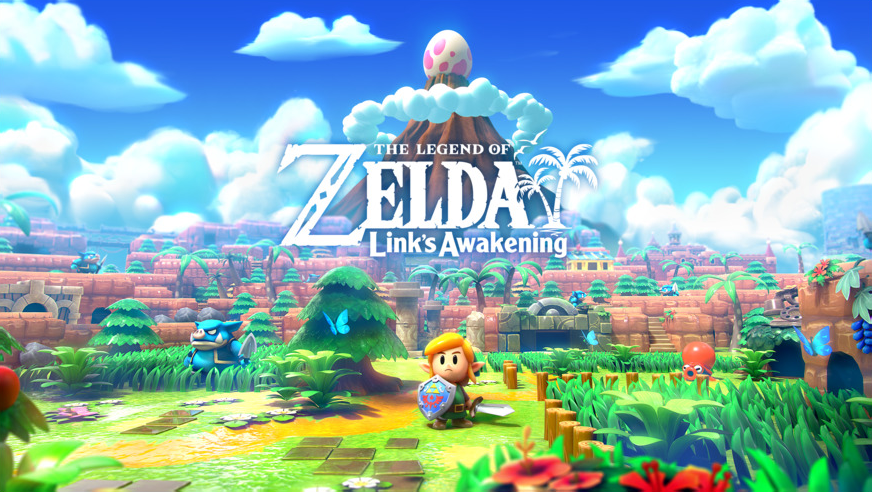
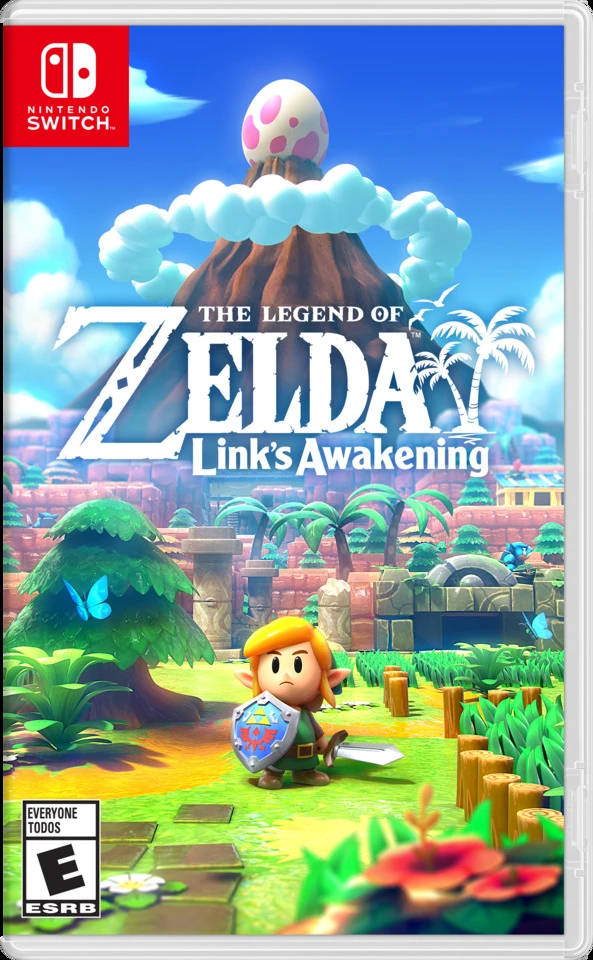
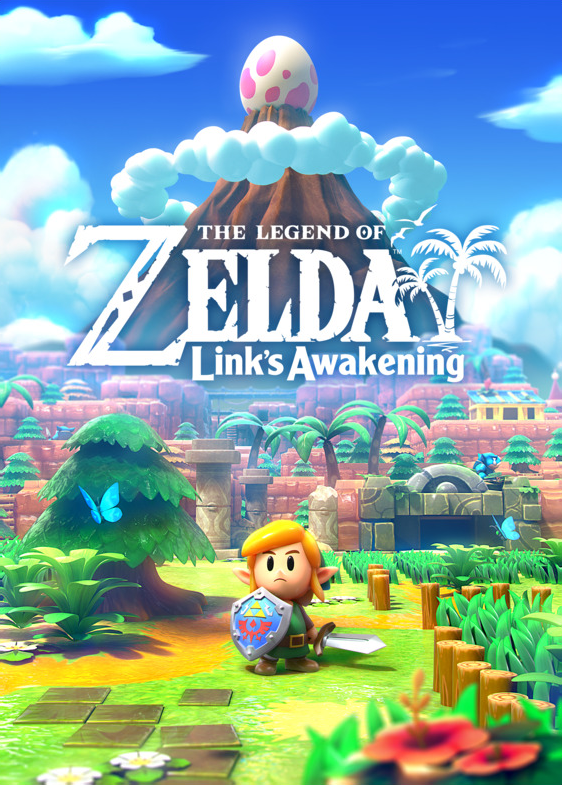
Key art for the 2019 Nintendo Switch remake.
Is Link’s Awakening on Switch the same game as the Game Boy original?
Yes, at heart. It is a full remake of the 1993 game with the same story, the same island and the same eight dungeons, rebuilt in 3D with new music, modern controls and some extra content. More →
What is new in the Switch version?
A toy-diorama art style, a rearranged soundtrack, dedicated buttons for the sword and shield, map pins, more warp points, 50 Secret Seashells instead of 26, 32 Pieces of Heart instead of 12, three Fairy Bottles, Hero Mode from the start and the Chamber Dungeon builder. More →
Does it include the Color Dungeon from Link’s Awakening DX?
Yes. The optional Color Dungeon and its choice of tunic are included. DX’s photographer and his twelve snapshots are not: Dampé’s shack stands where the Camera Shop used to be. More →
What are Chamber Dungeons?
A new mode run by Dampé. Rooms from dungeons you have cleared become tiles that you arrange on a grid to make a new dungeon, then play through for rewards. Dampé sets 24 challenges, and amiibo add extra rooms and effects. More →
Who made the remake?
Grezzo, the Tokyo studio behind Ocarina of Time 3D and Majora’s Mask 3D, for Nintendo. Mikiharu Oiwa directed and Eiji Aonuma produced. More →
Does it have frame-rate problems?
On the original Switch, yes. It aims for 60 frames per second but often drops to 30 for a moment as you cross the island, and the only patch in 2019 did not address it. On Nintendo Switch 2, Digital Foundry found that it holds 60. More →
Which version of Link’s Awakening should I play?
The Switch remake is the easiest to buy and the kindest to play. If you want the original pixels, Link’s Awakening DX is in the Nintendo Switch Online Game Boy library, with the photographer the remake leaves out, and the black-and-white 1993 version is built into the Game & Watch: The Legend of Zelda. More →
How many copies did the remake sell?
3.13 million by 30 September 2019 and 5.49 million by 31 March 2021, according to Nintendo; 6.46 million by December 2022, according to Japan’s CESA Games White Paper. More →
What’s different from the original
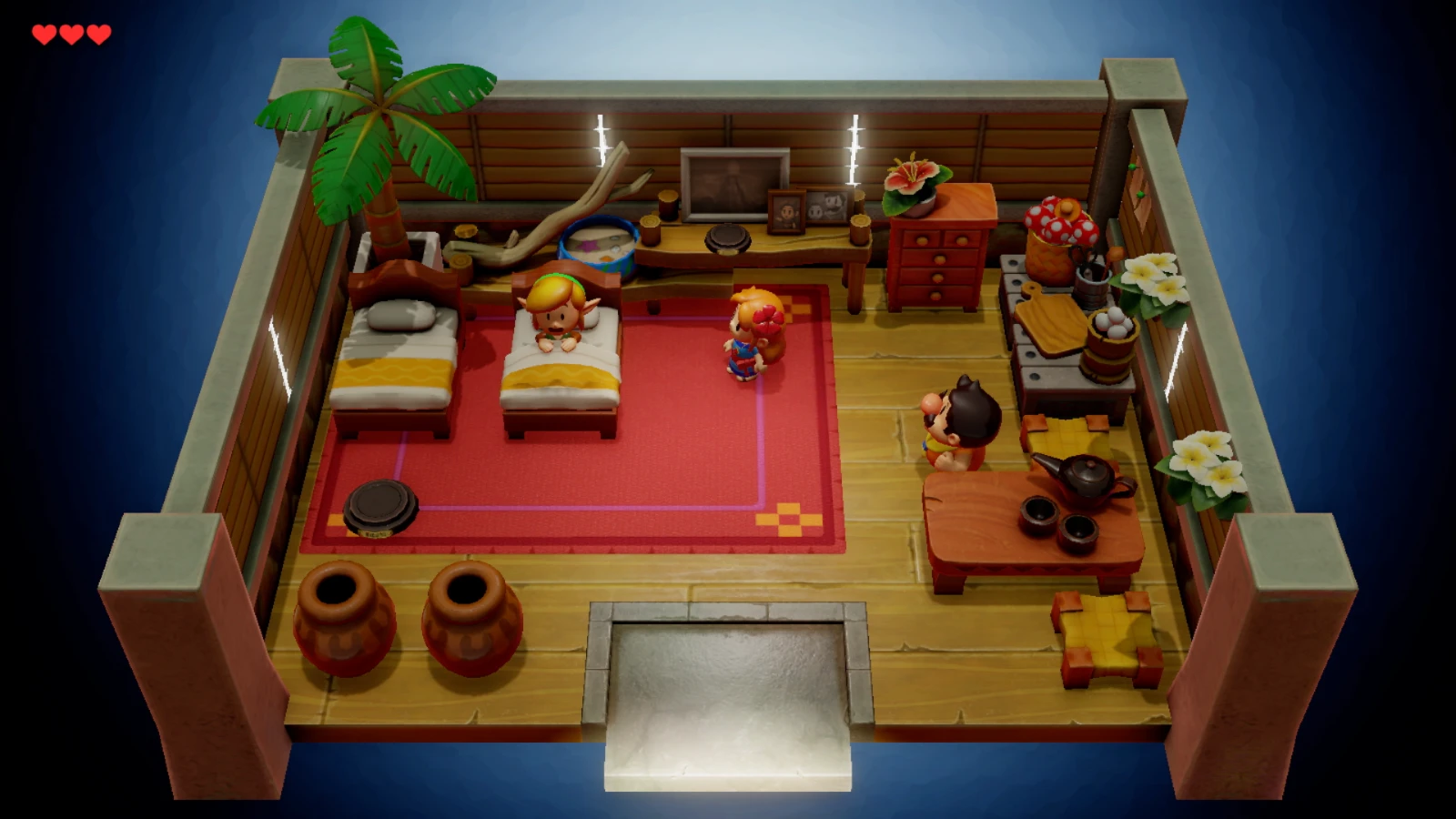
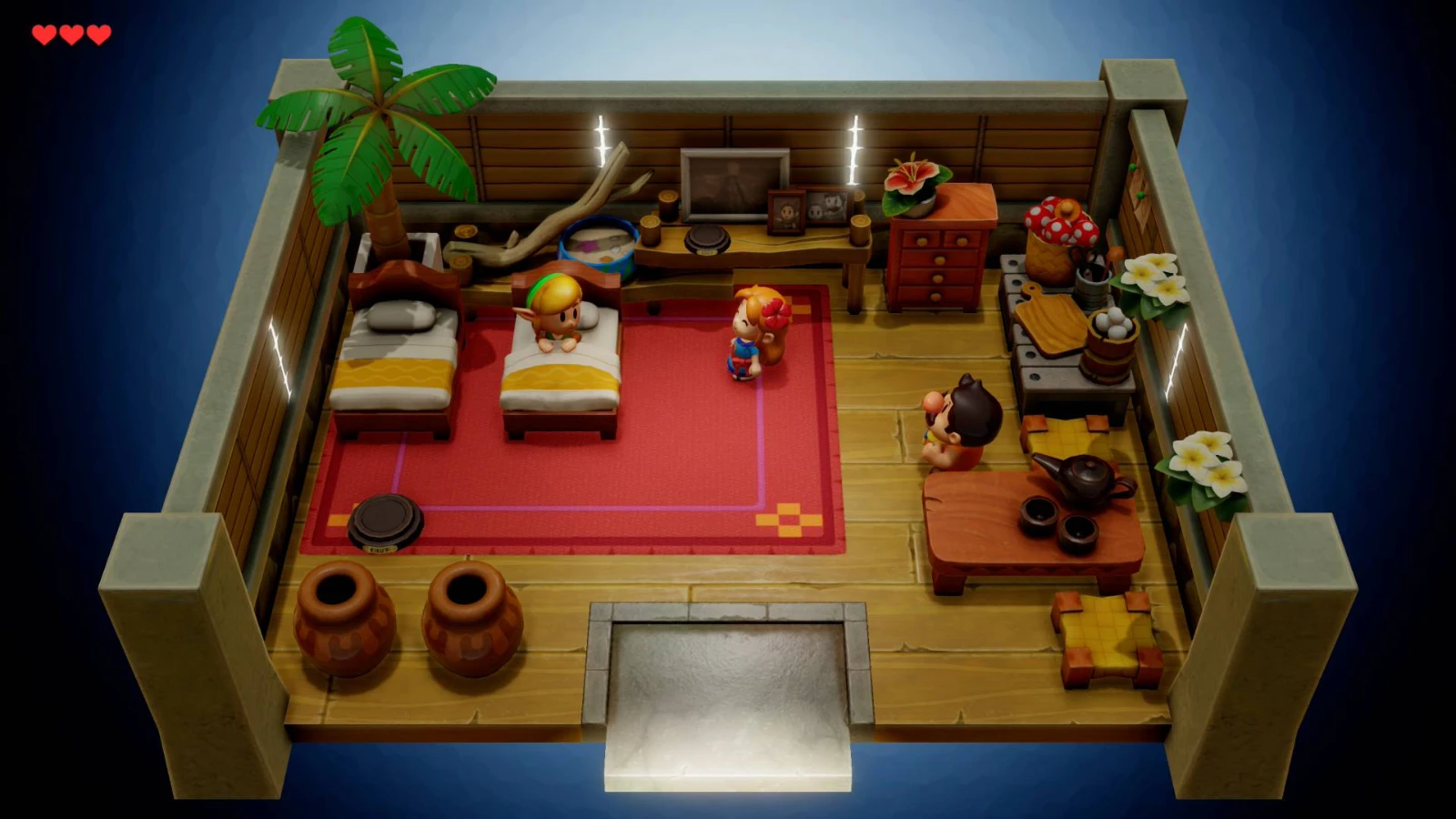
Link wakes up in Tarin’s house, just as he did in 1993.
Play the remake with the 1993 game fresh in your mind and the first surprise is how little has moved. Every screen of the Game Boy map has its counterpart, enemies wait in the same spots and the dungeons are solved the same way. Grezzo’s changes are nearly all about how the game looks, sounds and handles, plus a layer of new things to collect and one new mode.
The table sets the Switch version beside the Game Boy original and its 1998 colour edition, Link’s Awakening DX. The sections after it go through the big differences one at a time.
Feature
Game Boy (1993) and DX (1998)
Nintendo Switch (2019)
Graphics
2D sprites on a nearly square screen: black and white in 1993, colour in DX
3D models in widescreen, styled as a toy diorama with a tilt-shift blur; hand-drawn animated opening and ending
Getting about
The island is shown one screen at a time
The overworld scrolls as one continuous map; one-screen dungeon rooms keep their shape, with black bars at the sides
Sword and shield
Assigned to A or B like any other item
Always equipped on their own buttons, as are the Pegasus Boots and Power Bracelet once found; X and Y are free for two more items
Sword swings
Four directions
Eight directions
Secret Seashells
26; a stronger sword for 20
50; a Seashell Sensor for 15 and the Koholint Sword for 40
Pieces of Heart
12, for a maximum of 14 hearts
32, for a maximum of 20 hearts
Fairy Bottles
None
Three
Map
A simple map screen
A detailed map that takes pins, plus a Memories screen for rereading key conversations
Warping
Warp holes linked in a fixed order
More warp points with a choice of destination; Manbo’s Mambo reaches any of them
Difficulty
One setting
Normal or Hero Mode, chosen when you start a file
Color Dungeon
Added in DX
Included, with shapes added to the colour puzzles
Photographer
Added in DX: twelve photos to print on the Game Boy Printer
Removed; Dampé’s shack replaces the Camera Shop
Chamber Dungeons
Not present
24 dungeon-arranging challenges set by Dampé, with amiibo extras
Music
Game Boy chip music by Kazumi Totaka, Minako Hamano and Kozue Ishikawa
New arrangements of the same score by Ryō Nagamatsu, plus new pieces for Dampé
A toy box to peer into
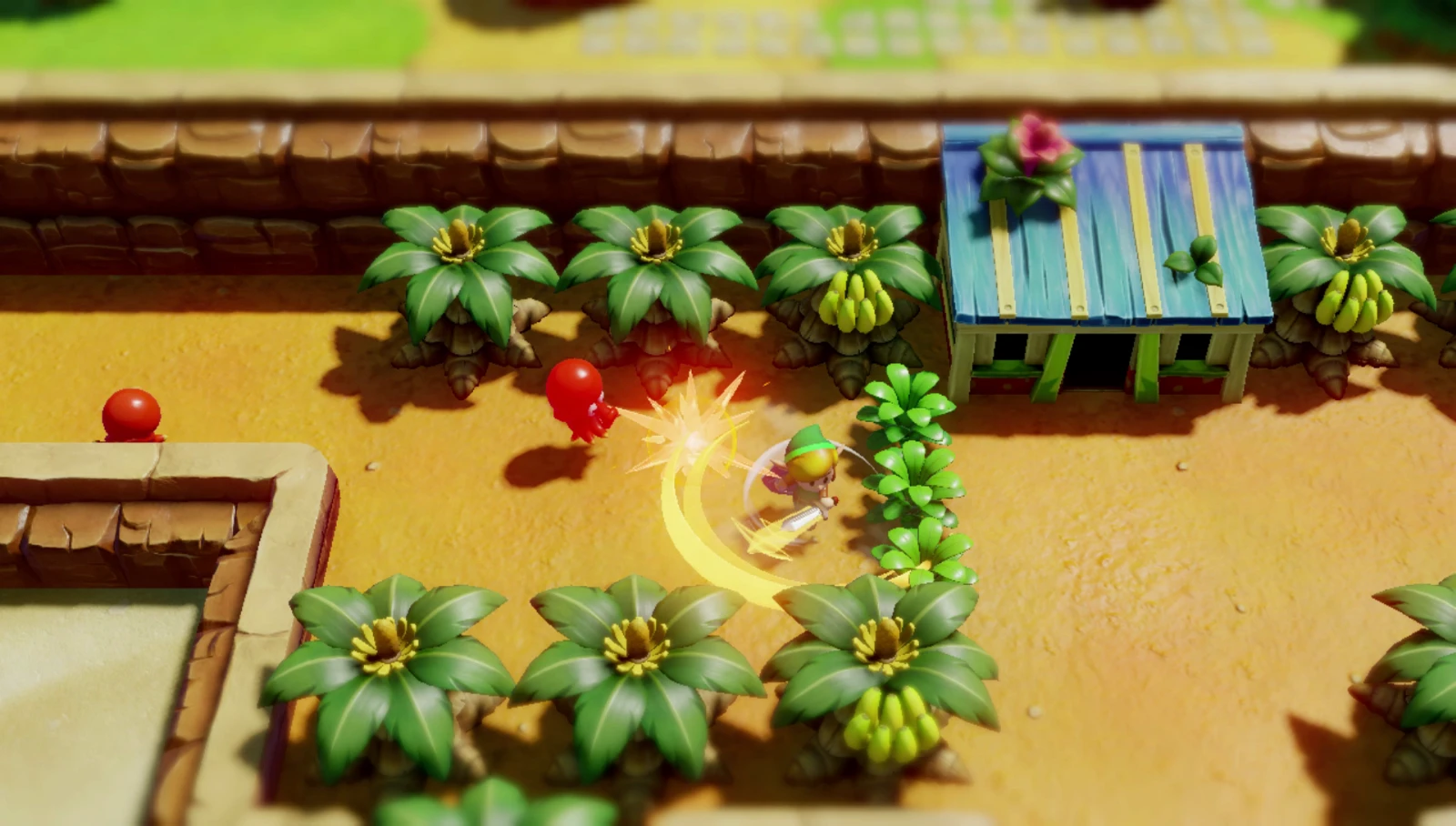
Toronbo Shores. Outdoors, the tilt-shift blur softens the edges of the picture.
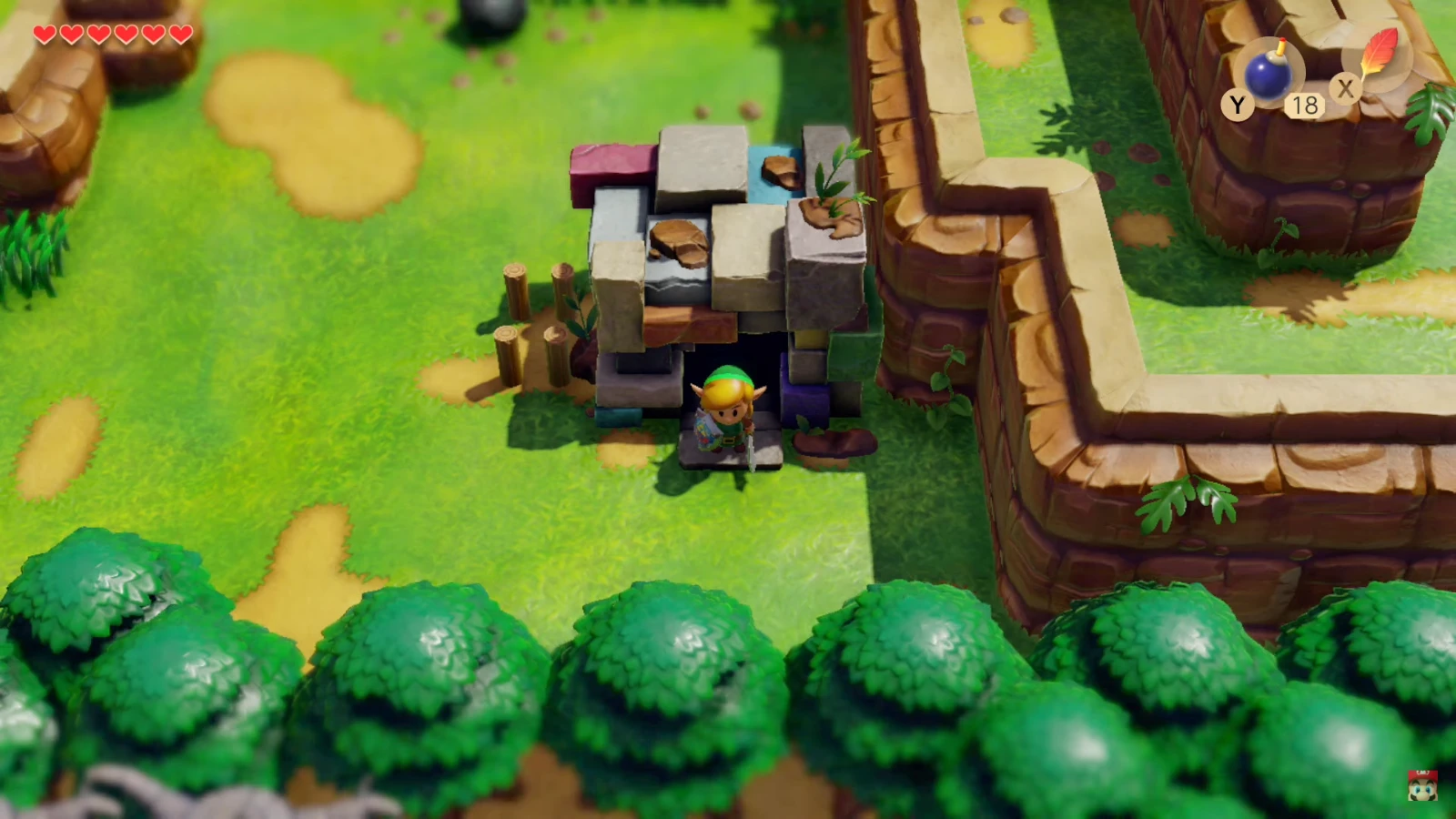
The remake keeps the overhead view but swaps sprites for chunky, shiny 3D models that look as if they were moulded in plastic. Link and the islanders have the stubby proportions of the original pixel characters, and outdoors the edges of the picture are blurred, the tilt-shift trick photographers use to make real places look like miniatures. The blur is used only on the overworld, not inside dungeons.
Koholint is no longer cut into single screens. The overworld scrolls smoothly from Toronbo Shores to Tal Tal Heights, and larger caves and dungeon halls scroll too. Rooms that were exactly one Game Boy screen wide keep those dimensions, so on a widescreen television they sit between black bars: the puzzles and boss fights were designed around that number of tiles. The side-scrolling passages, Goombas and all, are intact.
The pixel-art scenes that opened and closed the Game Boy game have become short films of hand-drawn animation, and the soundtrack has been rearranged from start to finish by Ryō Nagamatsu. Nintendo World Report’s reviewer admired the way it mixes sounds from the Game Boy with new instruments, and Dampé and his Chamber Dungeons have music written for the remake. The score earned a BAFTA nomination.
Two hands free
Lifting with the Power Bracelet, which now has a button of its own.
The Game Boy had two action buttons, so the original made you assign everything to A or B, the sword and shield included. With a bracelet for lifting, boots for running and a feather for jumping all competing for those two slots, the inventory screen was never closed for long. On Switch the sword, the shield, the Pegasus Boots and the Power Bracelet each have a button of their own once you have found them, which leaves X and Y for two other items of your choice.
Link can also swing his sword in eight directions instead of four, and enemies that carry shields can be knocked off balance by blocking their attack first. Nintendo World Report’s review credited the extra buttons with ending the constant item-swapping of the Game Boy version.
More seashells, more hearts, more to do
The Seashell Mansion, where shells are traded for prizes.
The treasure hunt has nearly doubled. There are 50 Secret Seashells instead of 26, and none can be missed for good. The Seashell Mansion now pays out as your tally rises: a Piece of Heart for five, the Seashell Sensor (which chimes when a shell is nearby) for 15, a Chamber Stone for 30, the Koholint Sword for 40 and another Chamber Stone for all 50.
Pieces of Heart rise from 12 to 32, which lifts the longest possible life meter from 14 hearts to 20. Three Fairy Bottles are new: one lies at the bottom of the fishing pond, one is the prize for finishing the ghost’s errand, and Dampé hands over the third. Apples now drop from trees if you run into them and work like recovery hearts.
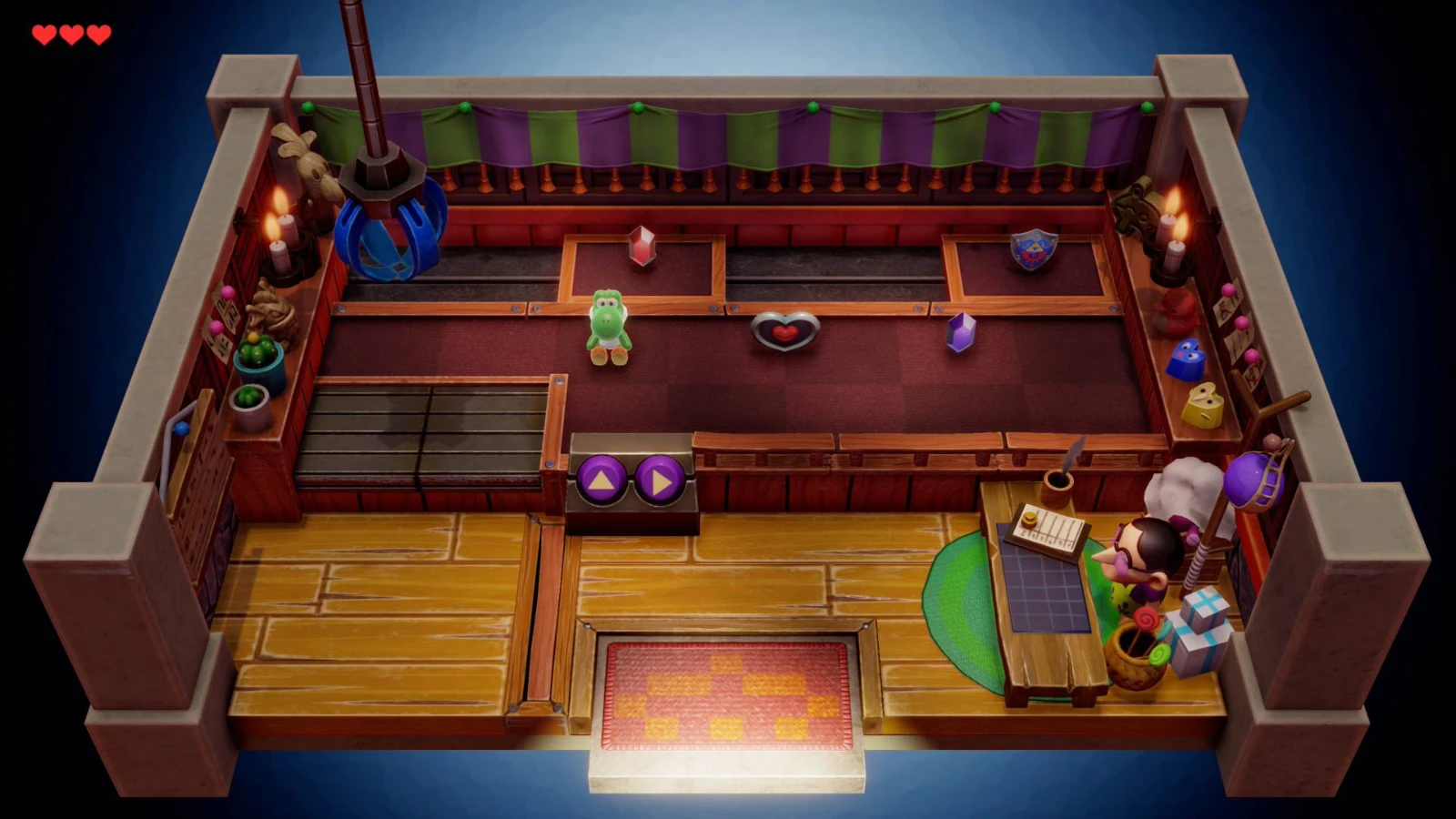
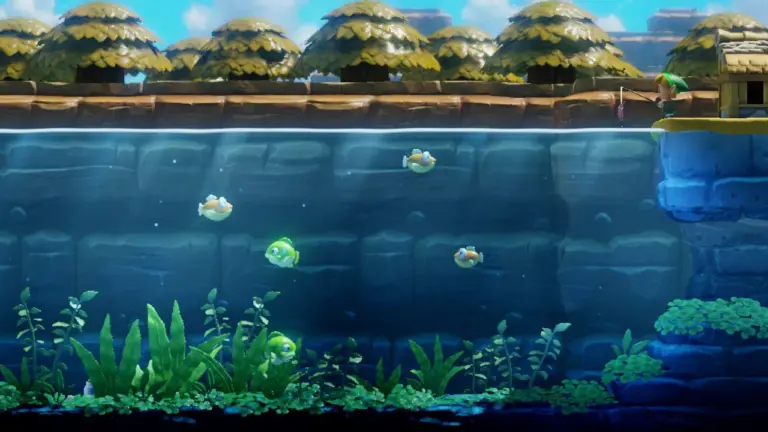
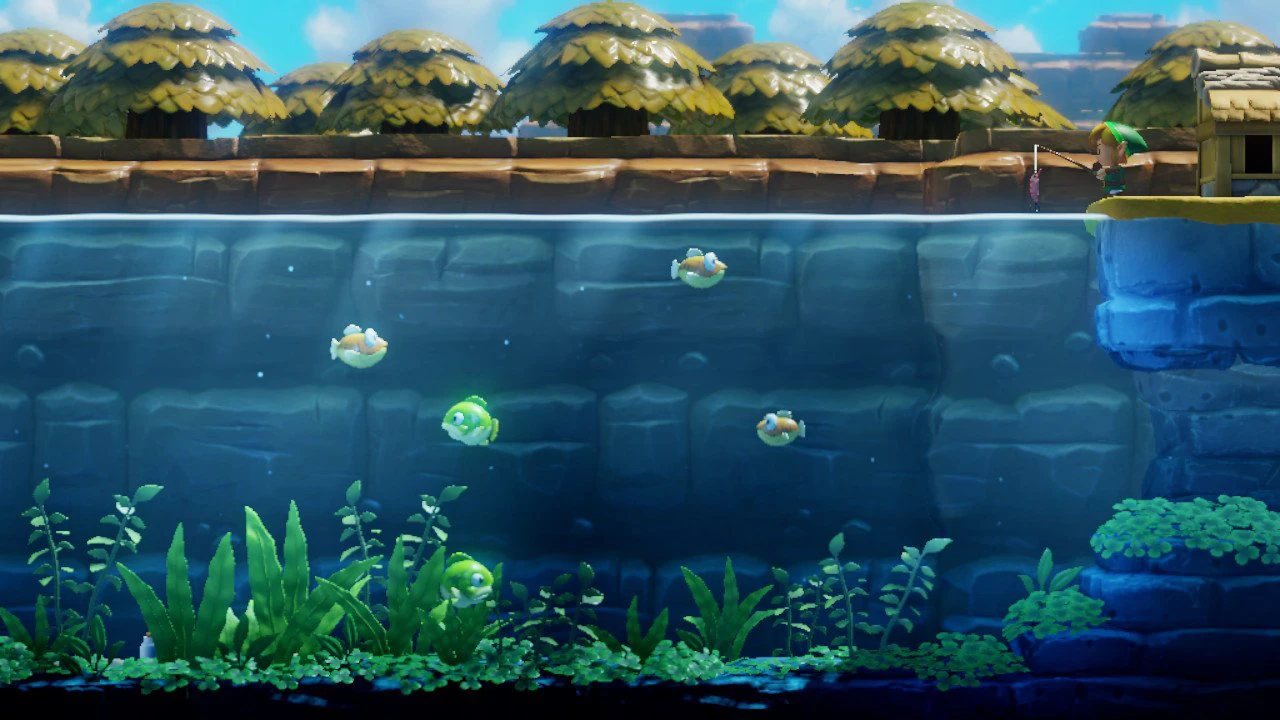
The mini-games have been rebuilt to hold some of these prizes. The Trendy Game crane obeys proper physics and stocks figures of Mario enemies that can be put on display in the houses of Mabe Village; the fishing pond has more kinds of fish, Bloopers and Cheep Cheeps among them, and new lures; and the Rapids Ride has gained a race mode.
Pins, warps and Hero Mode
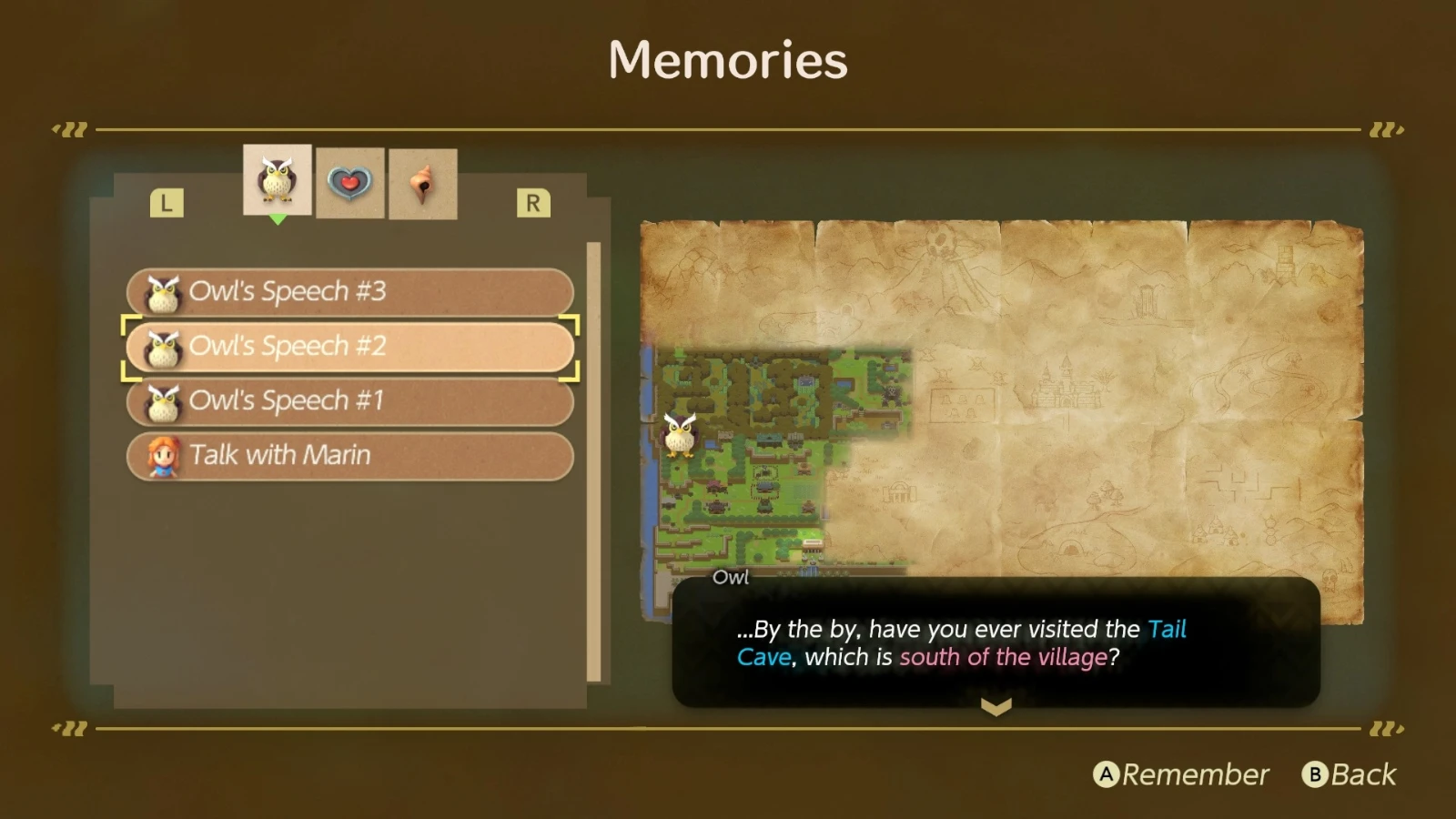
The Memories screen, for rereading key conversations.
The old grid map has given way to a proper picture of the island that you can mark with pins, handy for the cracked wall or out-of-reach chest you mean to come back to. Beside it is a Memories screen that keeps the owl’s instructions and other key conversations for rereading.
The warp holes of the original have become warp points, there are more of them, and you choose where to come out instead of cycling through in order. Manbo’s Mambo will carry Link to any of them from anywhere outdoors. A few small snags have been sanded off as well: a flower at the door of Bottle Grotto is now a liftable rock, so the dungeon can be re-entered once BowWow has gone home, and Kanalet Castle has a ledge to hop down from when you are done there.
For players who want the opposite of convenience, Hero Mode is offered when you create a save file. Nintendo World Report’s review describes it as a mode with no hearts to pick up and very few fairies.
What became of the DX extras
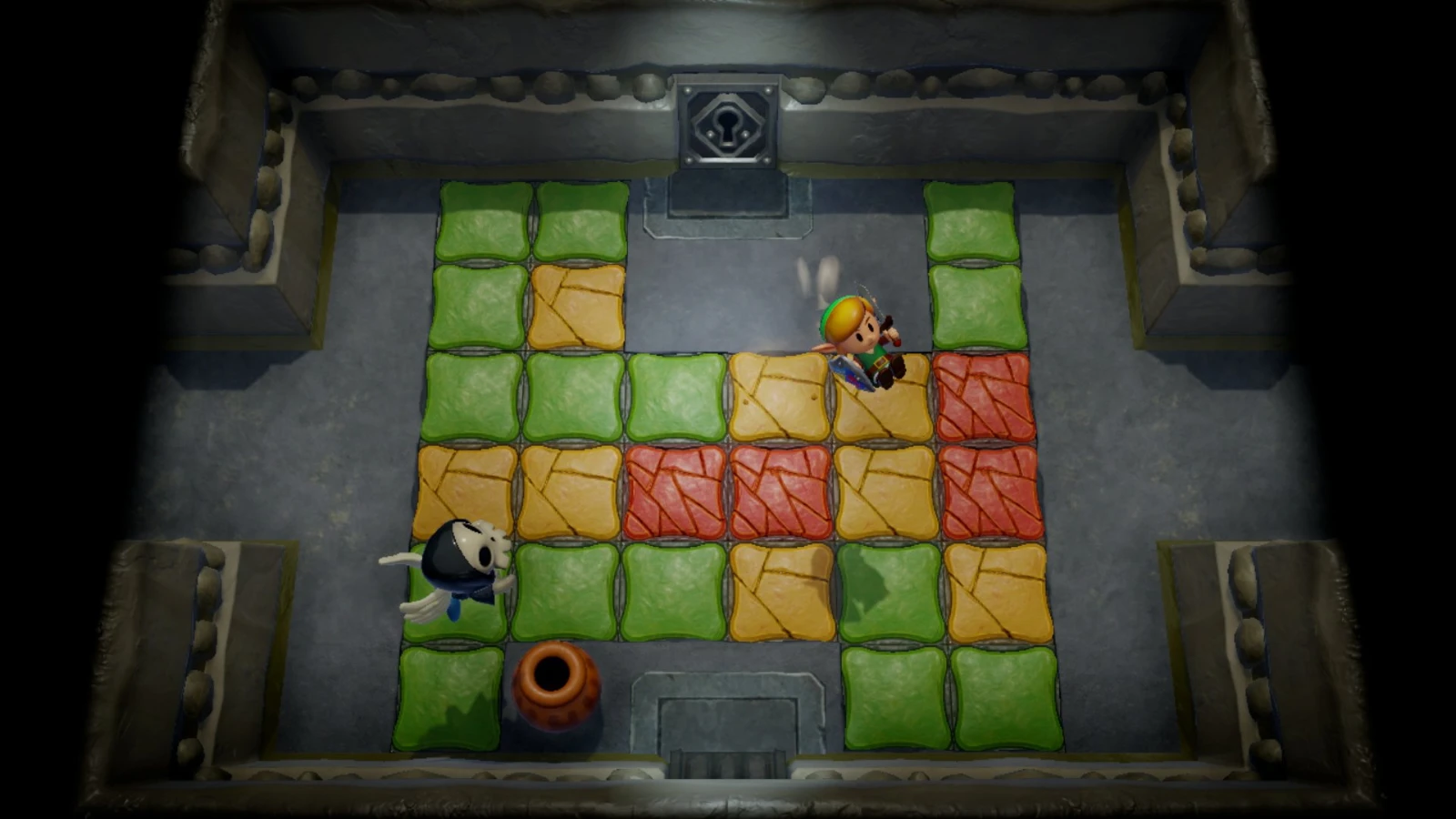
The Color Dungeon, first seen in Link’s Awakening DX.
Link’s Awakening DX added colour and two notable extras to the 1993 game, and the remake keeps one of them. The Color Dungeon is back, still hidden in the cemetery and still ending with the Fairy Queen’s offer of a red tunic for attack or a blue one for defence. Its puzzles depend on telling colours apart, so the remake marks the coloured parts with shapes as well: circles for red and squares for blue, for example. According to the Zelda Wiki on Fandom, the Fairy Queen will now also change Link back to green.
The other DX extra was the photographer, who popped up at twelve moments to take a snapshot for the Game Boy Printer. He has been written out. His Camera Shop in the west of Tal Tal Heights is now Dampé’s shack, and the album has gone with him.
Chamber Dungeons
An official render of a Chamber Dungeon.
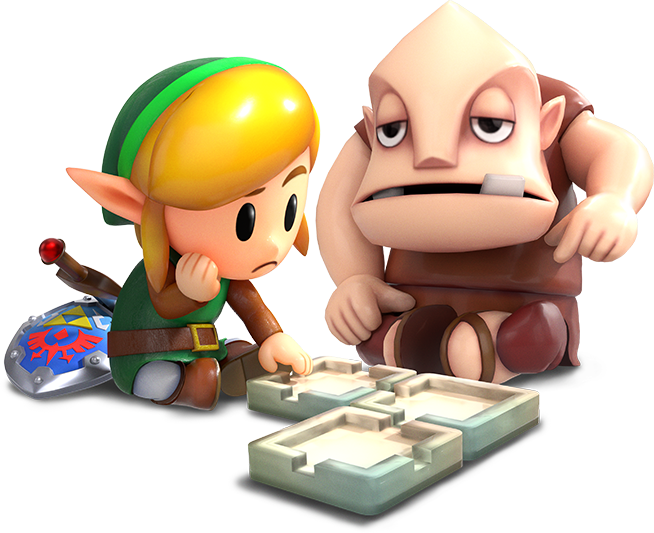
The remake’s one wholly new feature lives in Dampé’s shack. As Link clears the main dungeons, their rooms are added to a collection of square tiles called chambers. Dampé sets a challenge, a grid of a certain shape, and you fill it: every layout needs an entrance and a Nightmare’s lair, every doorway has to meet another, staircases are linked in pairs of your choosing, and there must be enough chests holding keys for the locked doors. Then you walk in and play what you have made.
There are 24 challenges in four levels, unlocked as the main quest goes on. Some add rules, such as a three-heart limit, no sword or a clock counting down from five minutes. The rewards include extra chambers, a Secret Seashell, a Piece of Heart, a Fairy Bottle and, for finishing the twelfth, a Heart Container; each of the last twelve pays 300 Rupees. More chambers come from Chamber Stones won in the mini-games and at the Seashell Mansion, and panels with plus-effects can be laid over rooms to rain bombs, add hearts or set a Wallmaster loose.
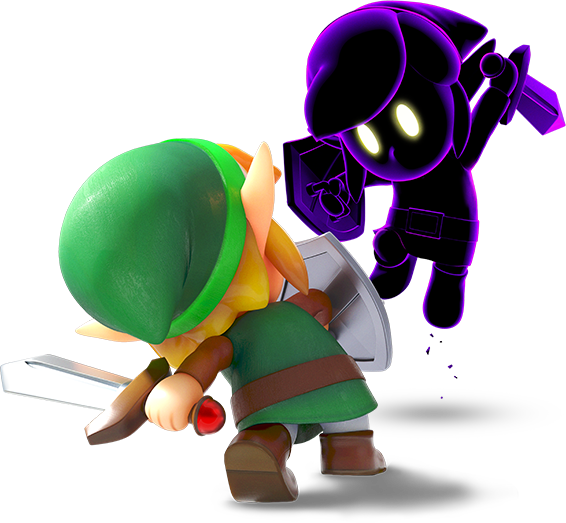
amiibo come into it too. The Link figure released with the game sends Shadow Link chasing you from room to room, with bonus Rupees for beating him, and other Zelda amiibo each unlock one of five special chambers that cannot be had any other way. A finished dungeon can be saved to an amiibo and handed to a friend. That is the only way to share one: there is no online exchange, which Shacknews called a missed opportunity. The reviewers at Nintendo World Report and Shacknews both found the mode thin beside Super Mario Maker, and Shacknews pointed out that it is built mostly from rooms you have already played through.
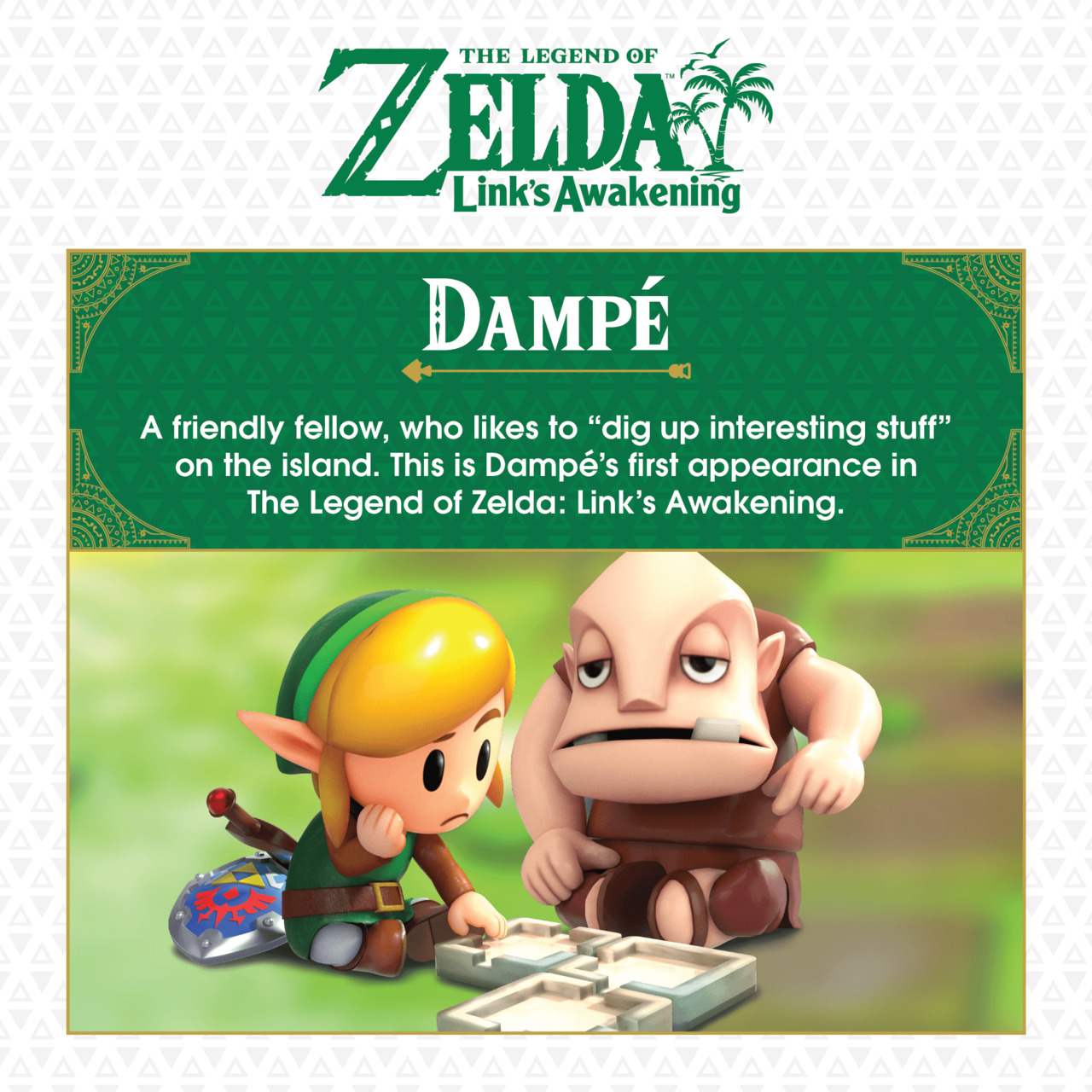
Dampé, keeper of the Chamber Dungeons.Shadow Link, summoned by the Link amiibo.
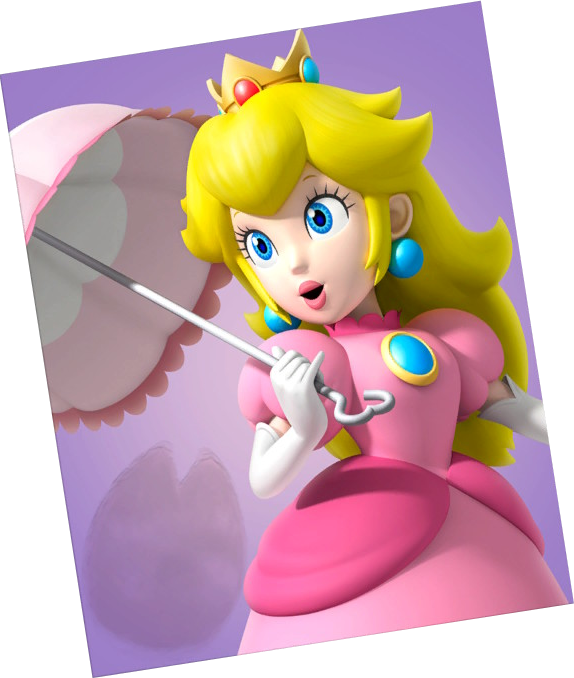
Smaller changes are scattered everywhere. Characters’ names appear when they speak, Moblins have been redrawn as pigs, cracks now show how close a couple of the bosses are to defeat, and the picture of Princess Peach that Christine the goat sends to Mr. Write uses different artwork. None of it alters the adventure itself.
Plot / Story
Nintendo’s key art for the remake.
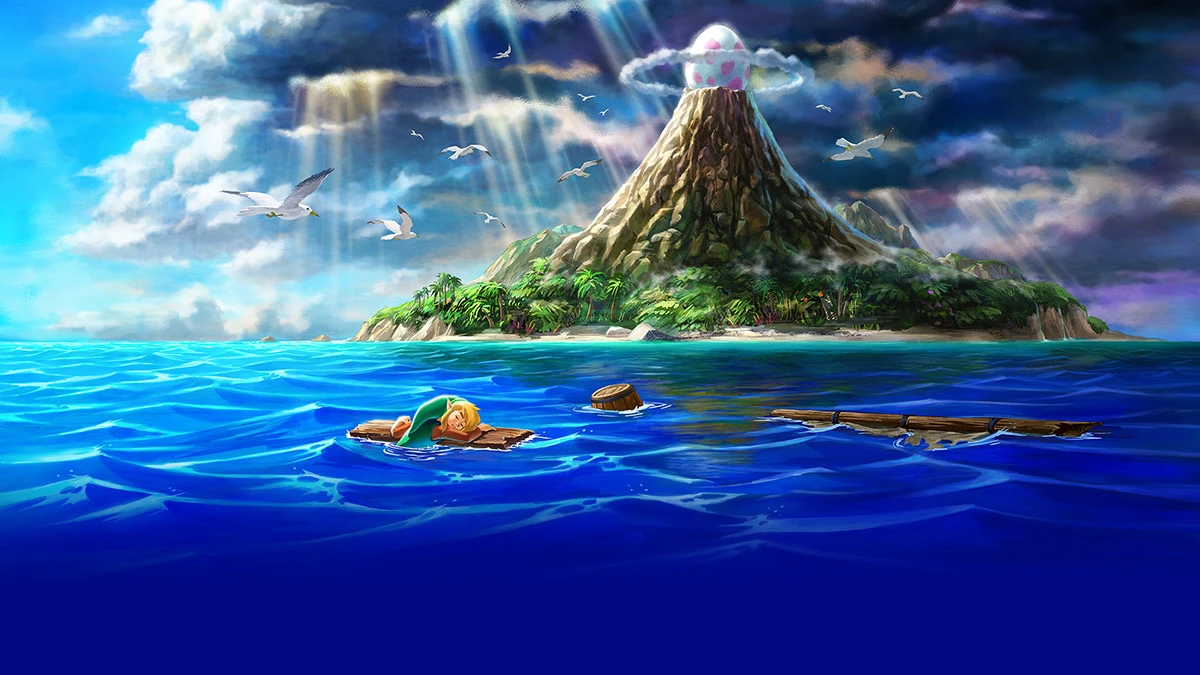
The remake tells the story of the 1993 game without changing a beat. The hero of A Link to the Past is sailing home when a storm smashes his boat. He wakes in a house in Mabe Village on Koholint Island, found on the beach by a girl called Marin, and a talkative owl soon explains the rules: nobody leaves Koholint until the Wind Fish, asleep in a giant egg on top of Mt. Tamaranch, has been woken, and only the eight Instruments of the Sirens can do it.
Each instrument is kept in a dungeon by a monster the islanders call a Nightmare. As Link gathers them he walks BowWow the Chain Chomp, trades bananas with a monkey for a bridge, gets to know Marin and her dream of flying away across the sea, and then reads a carving in an old shrine that says the island and everyone on it exist only in the Wind Fish’s dream. Waking the dreamer will end the dream. He climbs the mountain anyway, defeats the last of the Nightmares inside the egg and plays the Ballad of the Wind Fish, and Koholint fades away around him.
What the Switch version changes is the telling. The opening storm and the ending are now animated films, and the Memories screen lets you look back over the owl’s speeches. The order of events is that of the Game Boy game. For the whole tale, the cast and every dungeon, read the story on our Link’s Awakening page.
Special editions, amiibo & soundtrack
Nintendo sold the remake in a different special edition in each territory, launched a new amiibo beside it and followed up in Japan with a four-disc soundtrack.
Dreamer EditionNorth America · 20 September 2019 · US$69.99The game with the Dreamer Art Book, a 120-page hardback of colour concept art for the remake’s characters, places, enemies and items, including designs that were not used.
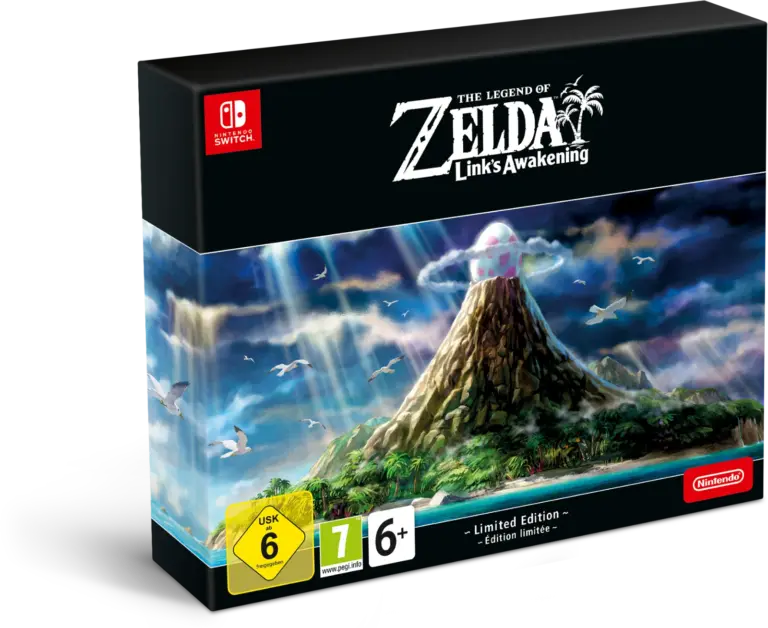
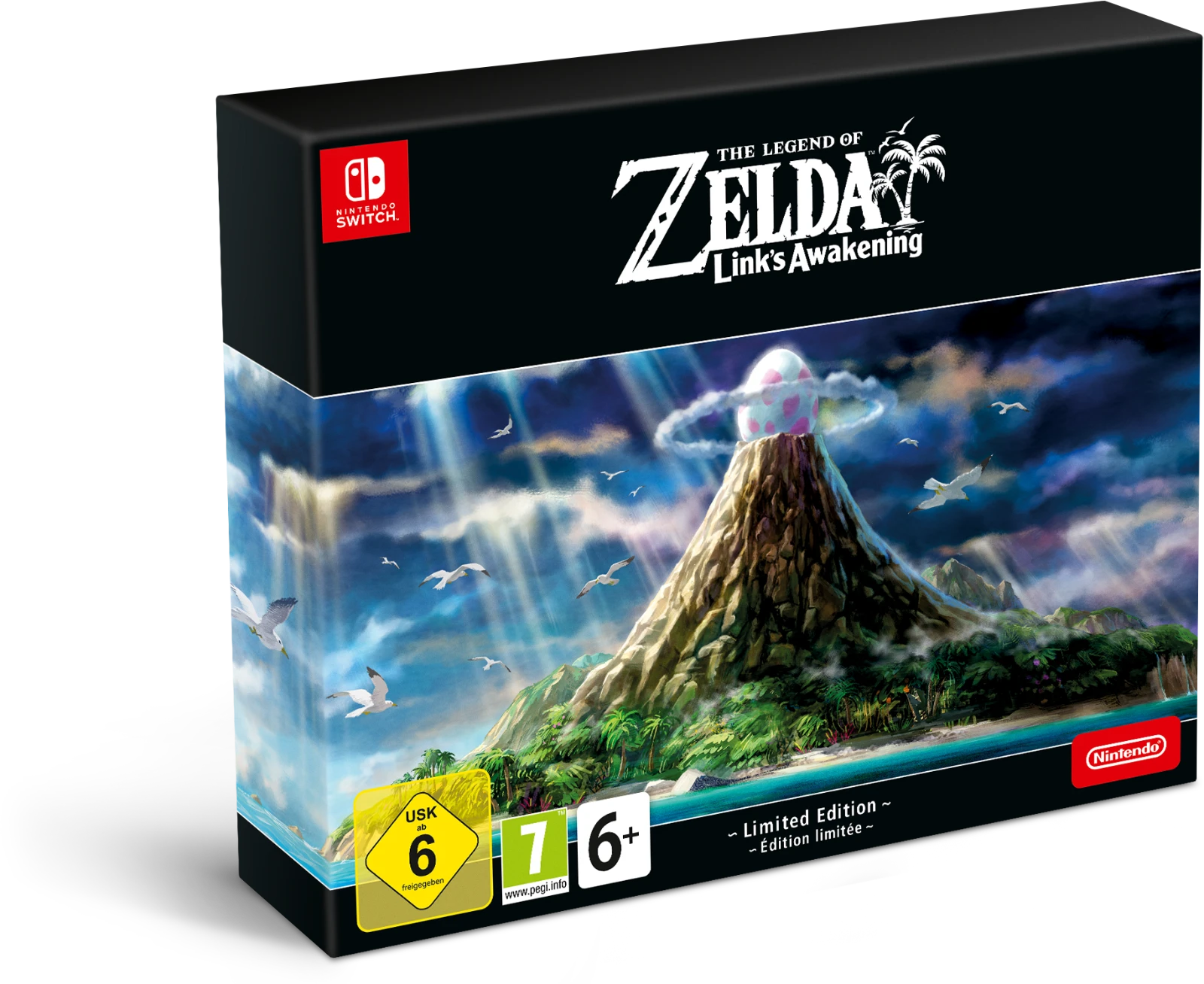
Limited EditionEurope · 20 September 2019Europe’s set added a SteelBook case styled after the original Game Boy and a 120-page hardback art book with a cover of its own.
Artbook SetJapan · 20 September 2019The Japanese bundle, ゼルダの伝説 夢をみる島 ARTBOOK SET, paired the game with a paperback edition of the same art book.
Link (Link’s Awakening) amiiboWorldwide · 20 September 2019A figure of the remake’s toy-like Link, shown off by Eiji Aonuma at E3 2019: “This might be the first Amiibo where Link looks exactly like he’s taken out of the game.” In Chamber Dungeons it summons Shadow Link.
Other Zelda amiiboChamber Dungeon extrasZelda-series amiibo, including the Zelda characters from the Super Smash Bros. range, each unlock one of five special chambers. Finished dungeons can also be saved to an amiibo to pass to another player.
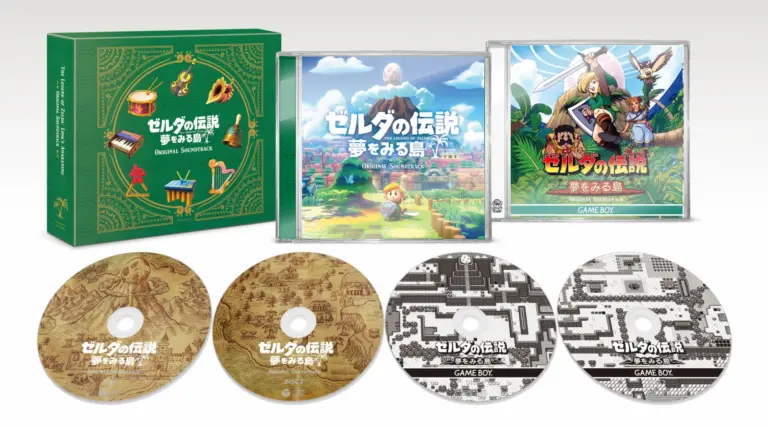
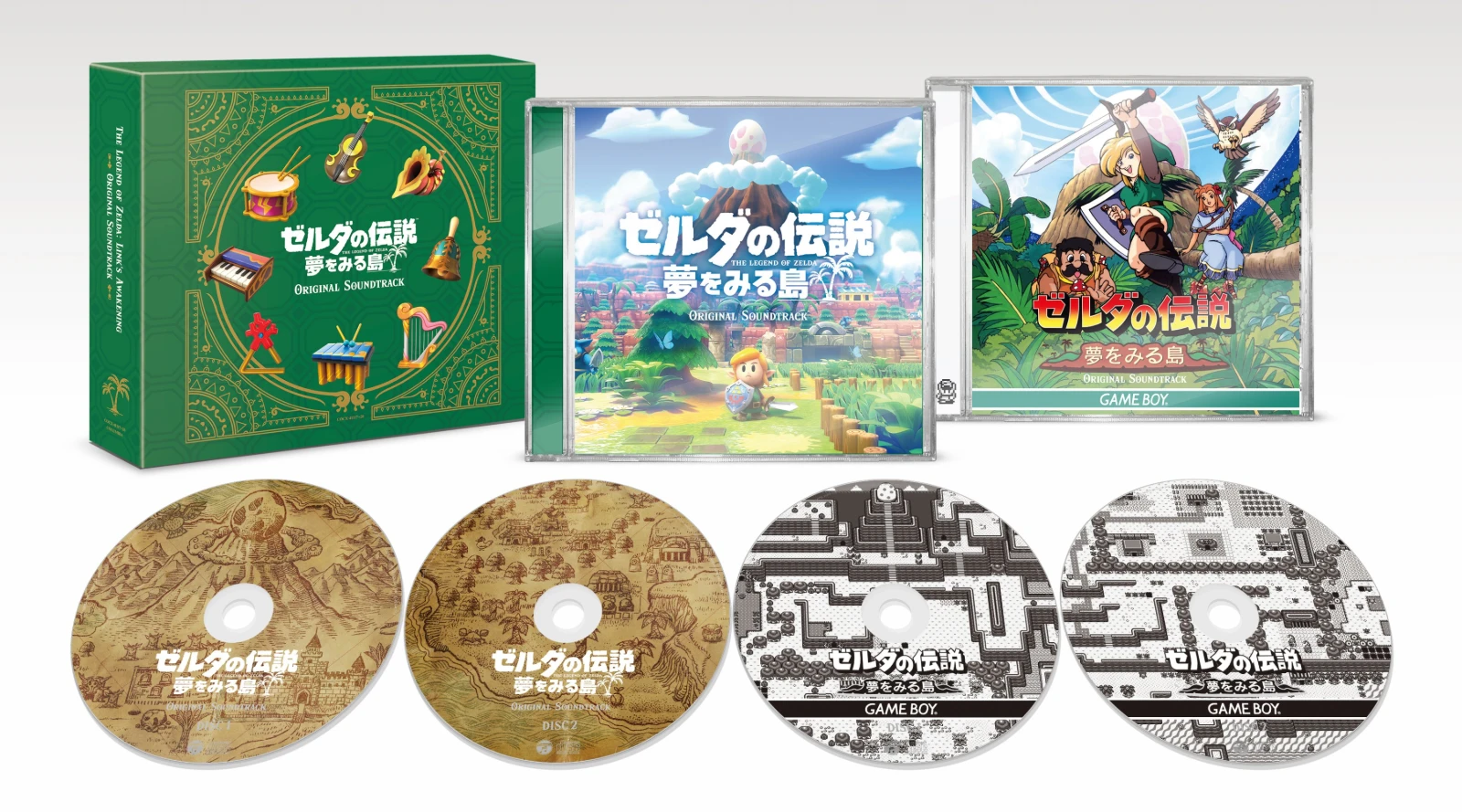
Original SoundtrackNippon Columbia · Japan · 18 March 2020 · ¥4,500A four-disc box of 205 tracks that sets Ryō Nagamatsu’s Switch arrangements beside the music of the Game Boy original.
How it was made
The remake arrived after Nintendo’s Iwata Asks interviews had ended, so its story has to be pieced together from the interviews Eiji Aonuma gave around E3 2019 and the game’s launch, and from what Nintendo and Grezzo said later while promoting Echoes of Wisdom.
The people who made it
Grezzo built the game for Nintendo. These are the names that the credits, Nintendo’s interviews and the staff themselves have confirmed.
Eiji AonumaProducer · NintendoThe Zelda series producer. He did not work on the 1993 game, which he played as a fan, and had wanted to remake it for some time. The Chamber Dungeons were his addition.
Mikiharu OiwaDirector · GrezzoDirected the remake. His name is also romanised Ooiwa.
Satoshi TeradaArt style, 3D backgrounds and lighting · GrezzoA terrain and level designer who joined the series on Ocarina of Time 3D. He went on to co-direct Echoes of Wisdom.
Masaki YasudaArtistThe credited artist for the remake.
Ryō NagamatsuMusicThe remake’s credited composer, responsible for its new arrangements of the Game Boy score. He had composed the music for Tri Force Heroes.
Tomomi SanoNintendoTook part in the remake for Nintendo. Her work before Echoes of Wisdom, which she directed, was mainly in support of other directors.
Junichi YamamotoAnimated sequencesDirected and storyboarded the hand-drawn opening and ending, as he announced himself on launch day.
Oswald KatouAnimated sequencesConcept art, colour design and backgrounds for the animation.
Shigeru MiyamotoNintendoAsked Aonuma for a Zelda in the manner of Super Mario Maker, the question that led to Chamber Dungeons.
GrezzoDeveloperA Tokyo studio founded in December 2006 by Koichi Ishii. Before this it had remade Ocarina of Time and Majora’s Mask for 3DS, brought Four Swords to DSiWare and co-developed Tri Force Heroes.
Why remake Link’s Awakening?
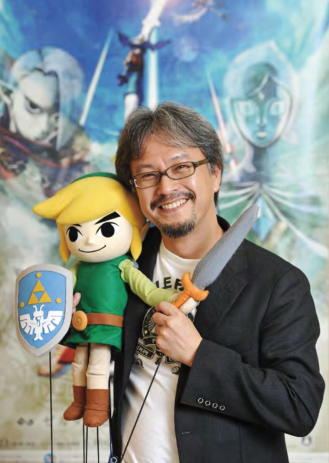
Series producer Eiji Aonuma.
Aonuma’s first answer was a practical one. “Getting that Game Boy version is a little hard to do these days,” he told Kotaku’s Jason Schreier at E3 2019, and he had wanted to bring the game back for a while. In an interview published by Nintendo itself he added that he had not worked on the original, and knew Link’s Awakening as a fan who played it when it was new.
He was just as clear that a remake should not be a tracing. He told Game Informer that the Zelda series lends itself to revivals because no two entries look or play alike, and that whenever he oversees one he makes sure something new goes in. He also admitted to Kotaku that a faithful remake ties the team’s hands: the job is deciding what to keep, what to improve and what only needs a polish, with both old hands and first-timers in mind.
Whether a project becomes a remake or a sequel, as A Link to the Past’s world had become A Link Between Worlds, is decided case by case, he said. Here the answer came from the new feature he wanted to add.
Enter Grezzo
Nintendo handed the work to Grezzo, the studio Koichi Ishii founded in 2006. It had been Nintendo’s Zelda remake specialist since Ocarina of Time 3D in 2011 and had co-developed Tri Force Heroes. Its earlier remakes had started from Nintendo 64 games that were already in 3D; Link’s Awakening meant turning a 2D Game Boy game into a 3D one for an HD console.
Mikiharu Oiwa directed. Satoshi Terada, who had started out designing terrain and levels, took charge of the art style, the 3D backgrounds and the lighting. Looking back in 2024, Aonuma gave the studio the credit for the result: “Grezzo had established an excellent way of reviving the top-down Legend of Zelda experience for a modern era.”
Why it looks like a diorama
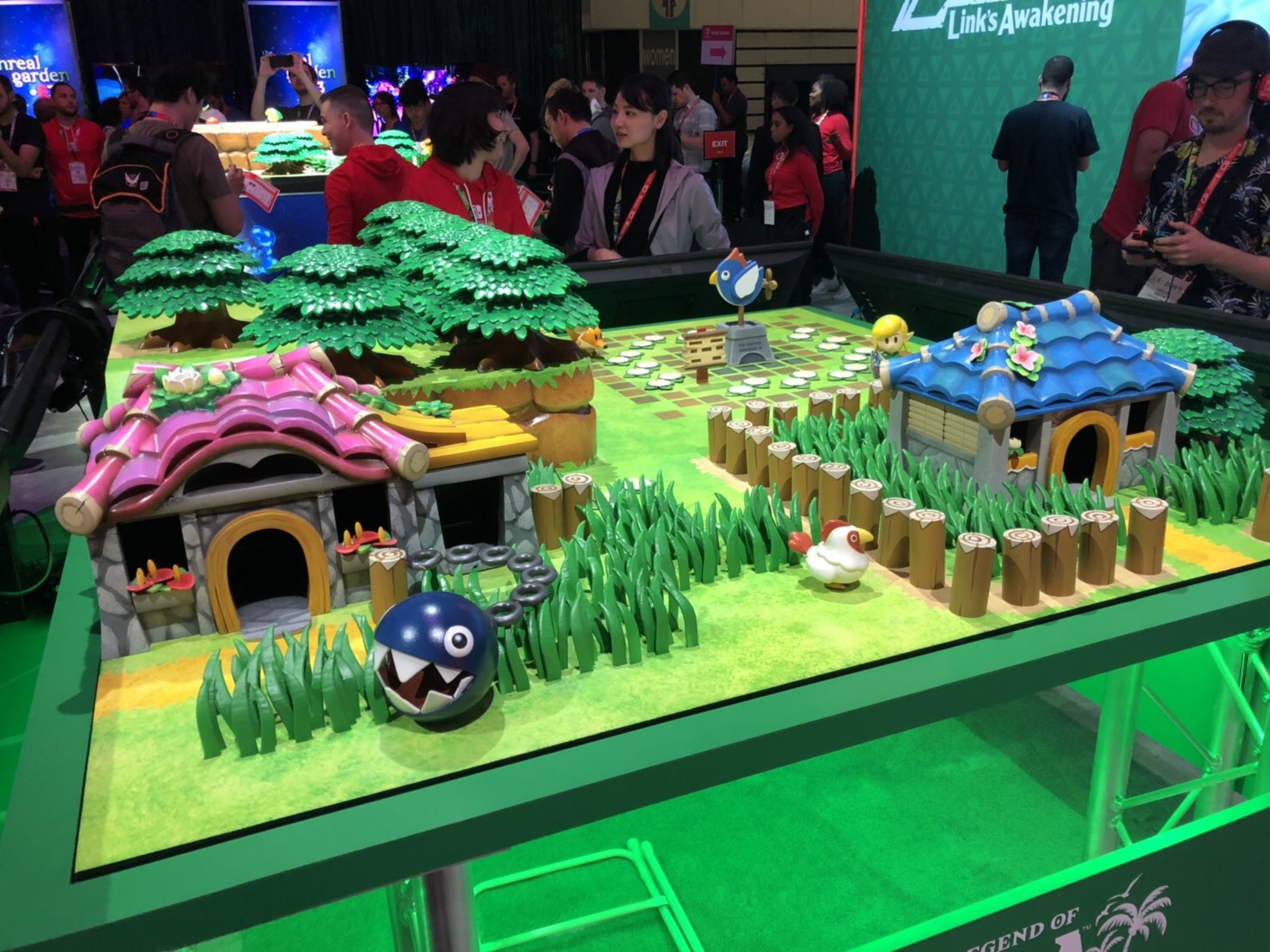
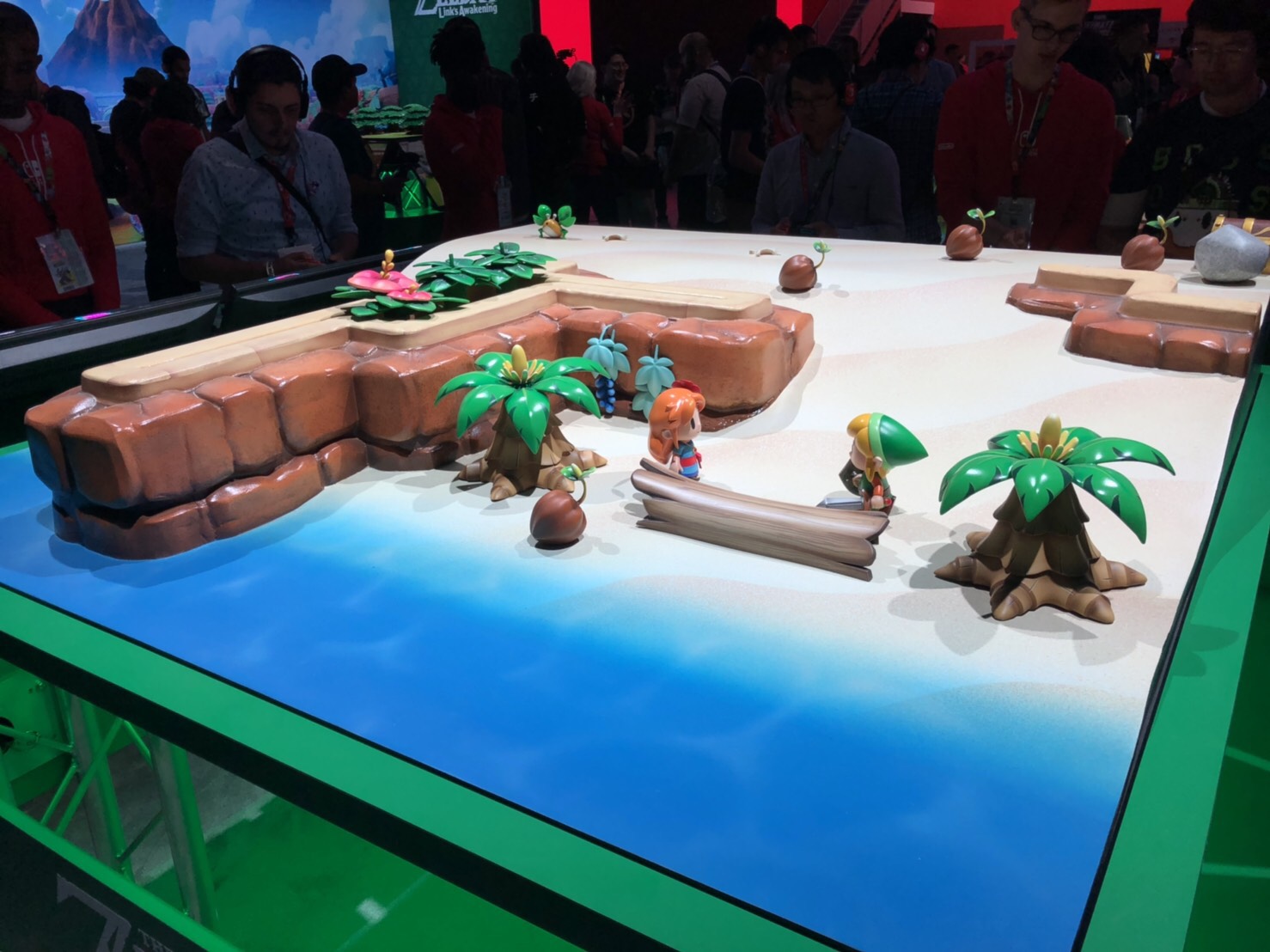
A diorama of Mabe Village, shown at E3 2019.
The look began with a simple exercise. As Aonuma explained to The Hollywood Reporter, the team rebuilt the Game Boy’s characters and buildings in 3D while keeping their exaggerated proportions as close to the sprites as they could. From there the target became a miniature model (“we were aiming for the feel of a ‘diorama’”), which he felt suited a setting that is small but deep, its comical characters and its brisk action, and the tilt-shift blur was added to push the effect further.
He gave the emotional reason on Nintendo’s Treehouse Live stage at E3: “When I played the original Game Boy version, it was a small screen, and it felt like a small world, but very vast.” In Nintendo’s own interview he stressed that being cute had not been the aim. The Game Boy had shown its little world a glimpse at a time, and a diorama that the player looks into from an angle was, in his words, “a perfect fit for the remake”.
A Zelda Maker, up to a point
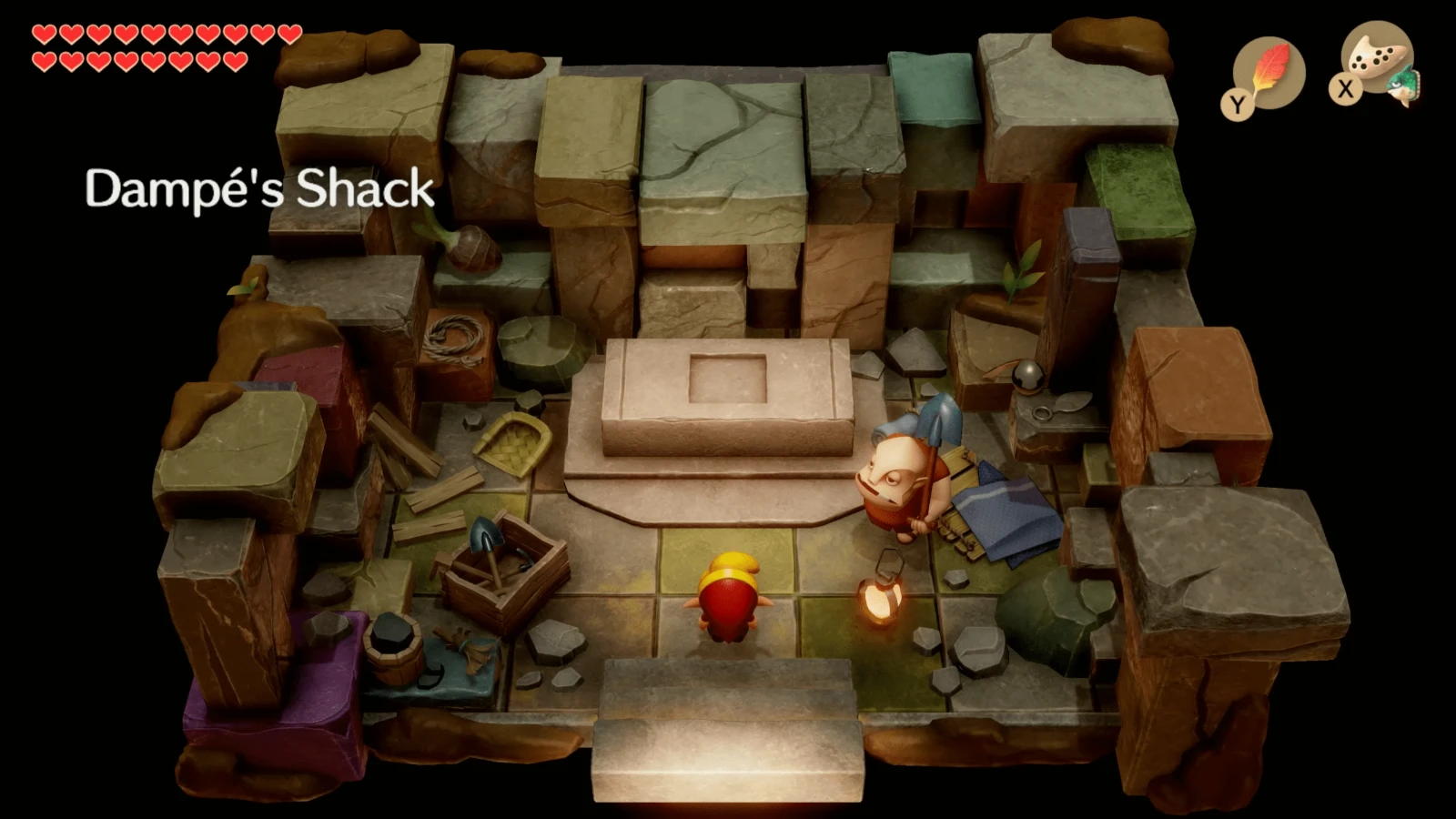
Dampé’s shack in Tal Tal Heights.
Chamber Dungeons started with a question from Shigeru Miyamoto. Aonuma told IGN that the two of them regularly talk over what the next Zelda should be, and that Miyamoto once asked him for a Zelda that played like Super Mario Maker. The catch, Aonuma replied, is that such a game needs dungeons, and “it’s generally quite difficult to devise the logic needed to solve them.”
His way round it was to let players arrange rooms whose solutions already exist. That pointed straight at Link’s Awakening, where almost every dungeon room is one screen of the same size seen from above. “I’ve always wanted to create a way for players to create their own dungeon,” he said at E3, and he told IGN that arranging parts that already have a solution makes for a more approachable kind of play, which is why understanding the original dungeons matters before you start shuffling them.
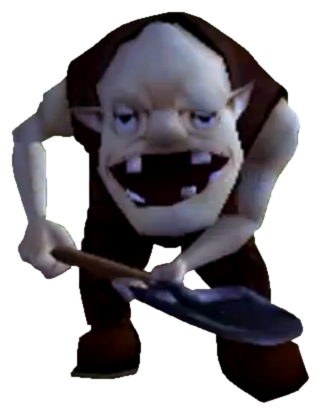
Because building a dungeon from a blank sheet is hard, the mode needed a guide who sets tasks. The team picked Dampé, who is not in the Game Boy game at all. He had always seemed a mysterious figure, Aonuma told Game Informer, and in Ocarina of Time the gravekeeper had a dungeon under one of his graves, so he became the “keeper of the dungeons”. Asked by Kotaku whether a full Zelda Maker might follow, Aonuma would only say that the team would bear it in mind if players took to arranging dungeons.
New music, new animation
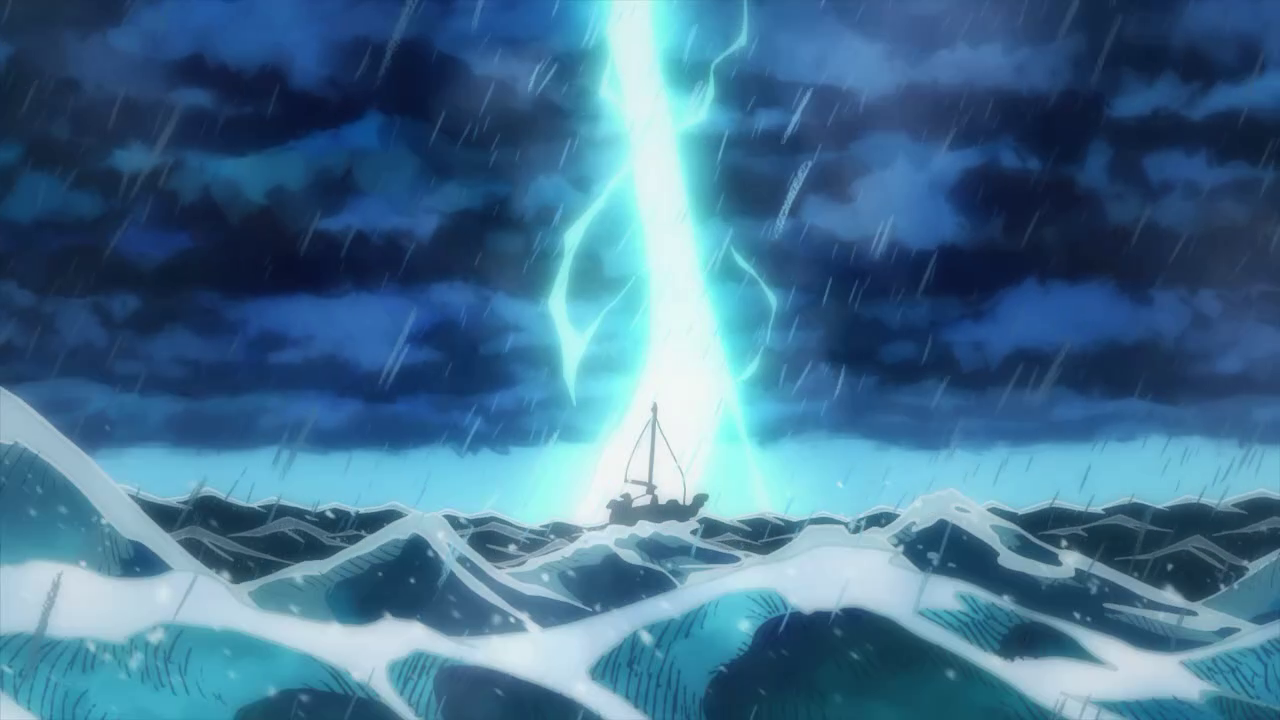
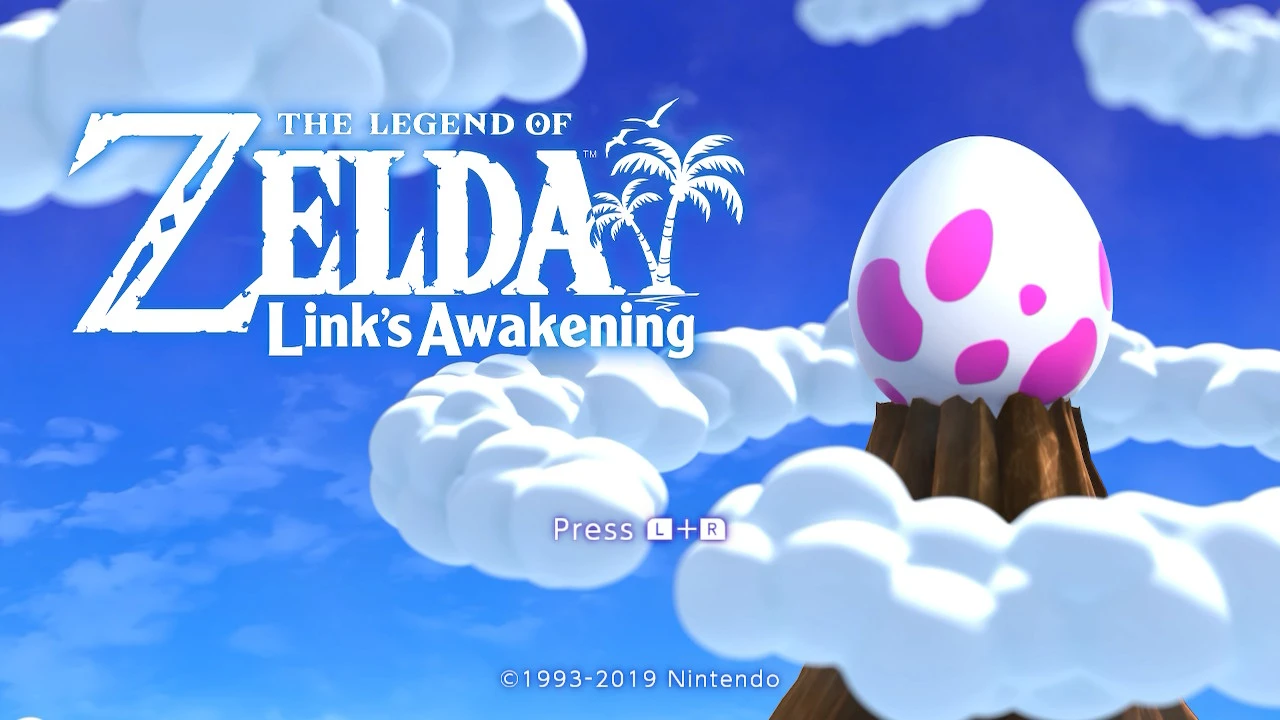
A still from the hand-drawn animated opening.
Ryō Nagamatsu, the composer of Tri Force Heroes, reworked the music of Kazumi Totaka, Minako Hamano and Kozue Ishikawa for the new version. Nintendo’s publicity called the results new arrangements of the classic soundtrack, and Nippon Columbia later issued them on CD together with the 1993 originals.
The opening and ending were handed to animators. On launch day Junichi Yamamoto announced that he had directed and storyboarded the sequences, and Oswald Katou that he had supplied their concept art, colour design and backgrounds.
From Nintendo Direct to launch day
The remake as shown at E3 2019.
Nintendo revealed the remake with a trailer in its Nintendo Direct broadcast of 13 February 2019, promising it for that year. At E3 on 11 June it announced the date, 20 September, along with Chamber Dungeons, the Link amiibo and the Dreamer Edition; visitors could play a demo on the show floor and Aonuma talked viewers through the game on Treehouse Live. It was nominated for Best Console Game at the Game Critics Awards and was named Best Nintendo Switch Game at Gamescom in August. An overview trailer followed on 11 September.
Retailers listed the game at full price, US$59.99, within a week of the announcement. It arrived worldwide on 20 September 2019, the same day as the Nintendo Switch Lite, the handheld-only Switch that Nintendo promoted alongside it.
Secrets & extras
Most of the 1993 game’s secrets are still here, such as stealing from the shop (now harder to get away with) and the long trading sequence, and they are described on our Link’s Awakening page. These are the extras that are new to the Switch version.
Seashell Mansion prizes
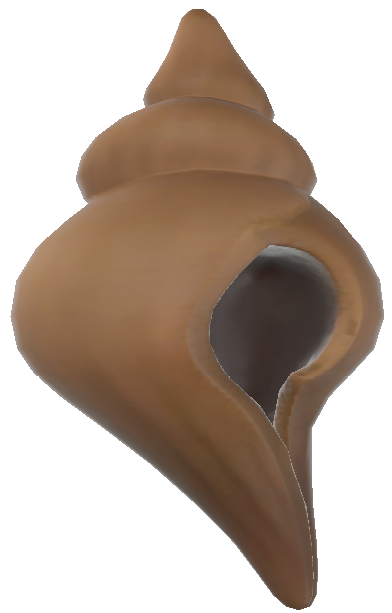
A Secret Seashell.
The mansion now rewards five totals. Five shells earn a Piece of Heart, 15 the Seashell Sensor, 30 a Chamber Stone, 40 the Koholint Sword and all 50 a second Chamber Stone. In the Game Boy game the two bonus prizes could be lost by turning up with the wrong number of shells; here nothing can be missed.
The Koholint Sword
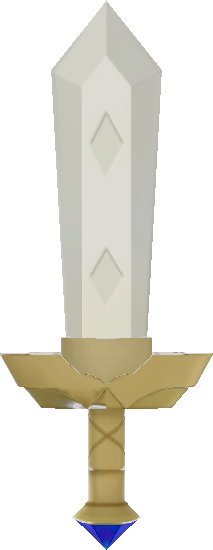
The Koholint Sword.
The stronger sword that cost 20 shells on Game Boy is now called the Koholint Sword and costs 40. With 50 shells on the island instead of 26, there is still room to spare.
Three Fairy Bottles
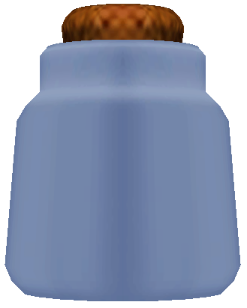
A Fairy Bottle.
Bottles are new to this version, and each can hold a fairy to refill Link’s hearts. One is lying on the bottom of the fishing pond in Mabe Village. One is the thanks you get for helping the lonely ghost. The third comes from Dampé, as the prize for his three-heart challenge, Heart Shortage.
Figures for the mantelpiece
The Trendy Game, now with physics and figures.
The Trendy Game hands out ten figures over the course of the adventure, which can be stood on plinths in the houses of Mabe Village: CiaoCiao, Goomba, Spiny, Boo, Cheep Cheep, Blooper, Shy Guy, Piranha Plant, Pokey and BowWow. The crane also holds a Piece of Heart and a Secret Seashell.
Hero Mode
A Heart Container.
Hero Mode does not need unlocking: pick it when you start a new file. Hearts no longer turn up as you play and fairies become scarce. Because the door to each instrument now opens before the Heart Container is collected, according to the Zelda Wiki on Fandom, the stubborn can finish the whole game on three hearts.
A tune for Marin
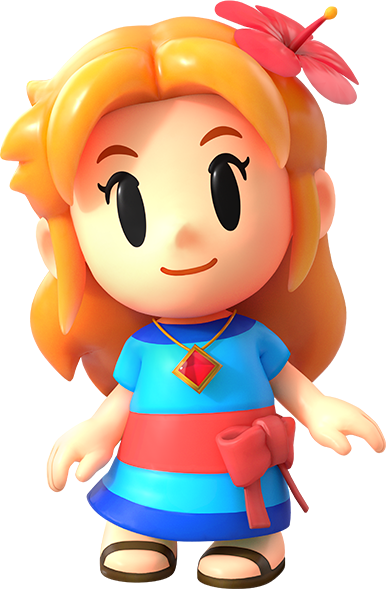
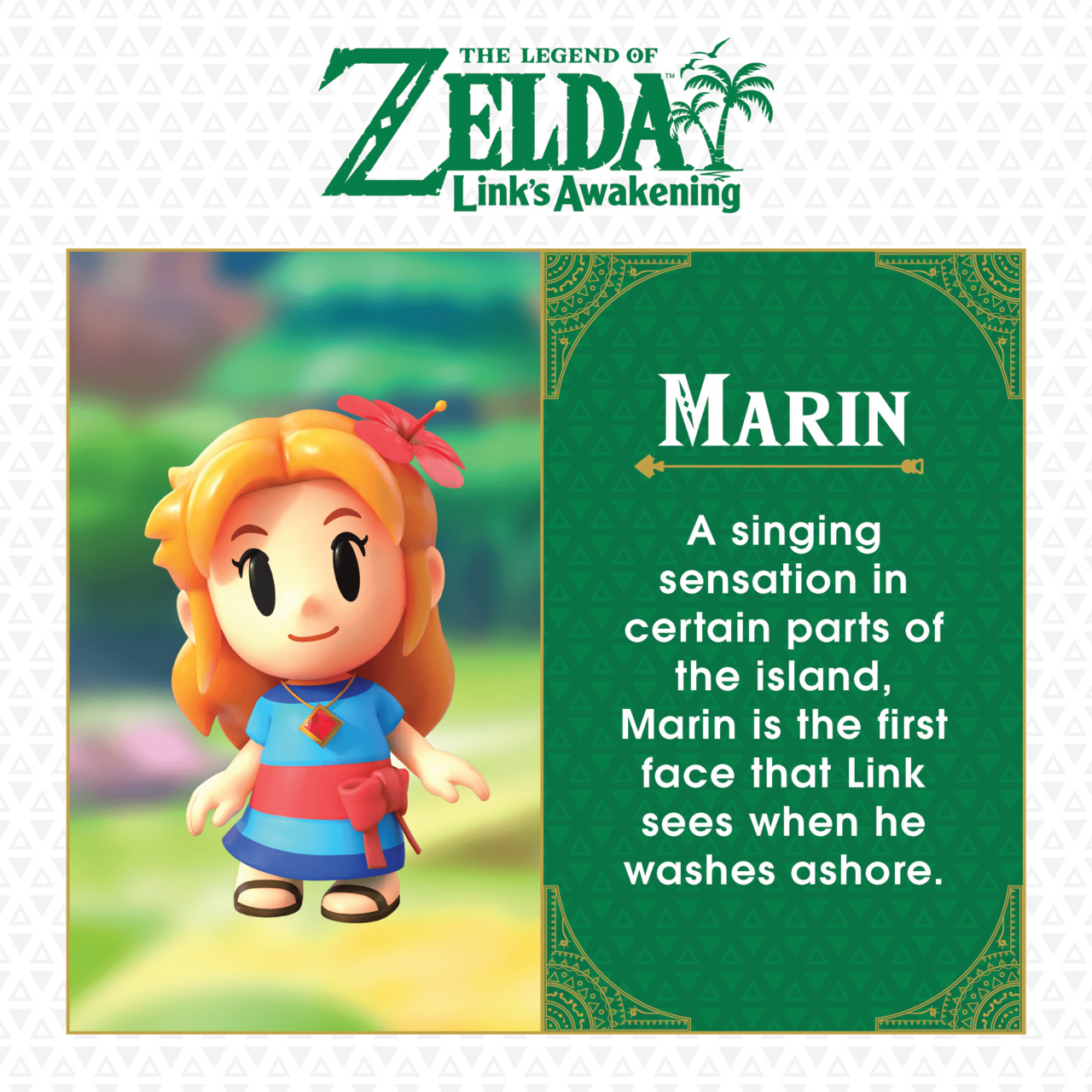
Marin.
According to the Zelda Wiki on Fandom, the remake keeps the old trick of special music for a hero named ZELDA and adds one of its own: enter MARIN as your name and a new tune plays.
Checked against the Zelda Dungeon wiki, the Zelda Wiki on Fandom, The Mushroom Kingdom and Nintendo World Report, November 2026.
Frame rate, patches & fixes
The remake has one well-known flaw, and it took a new console to cure it.
The 60-to-30 stutter
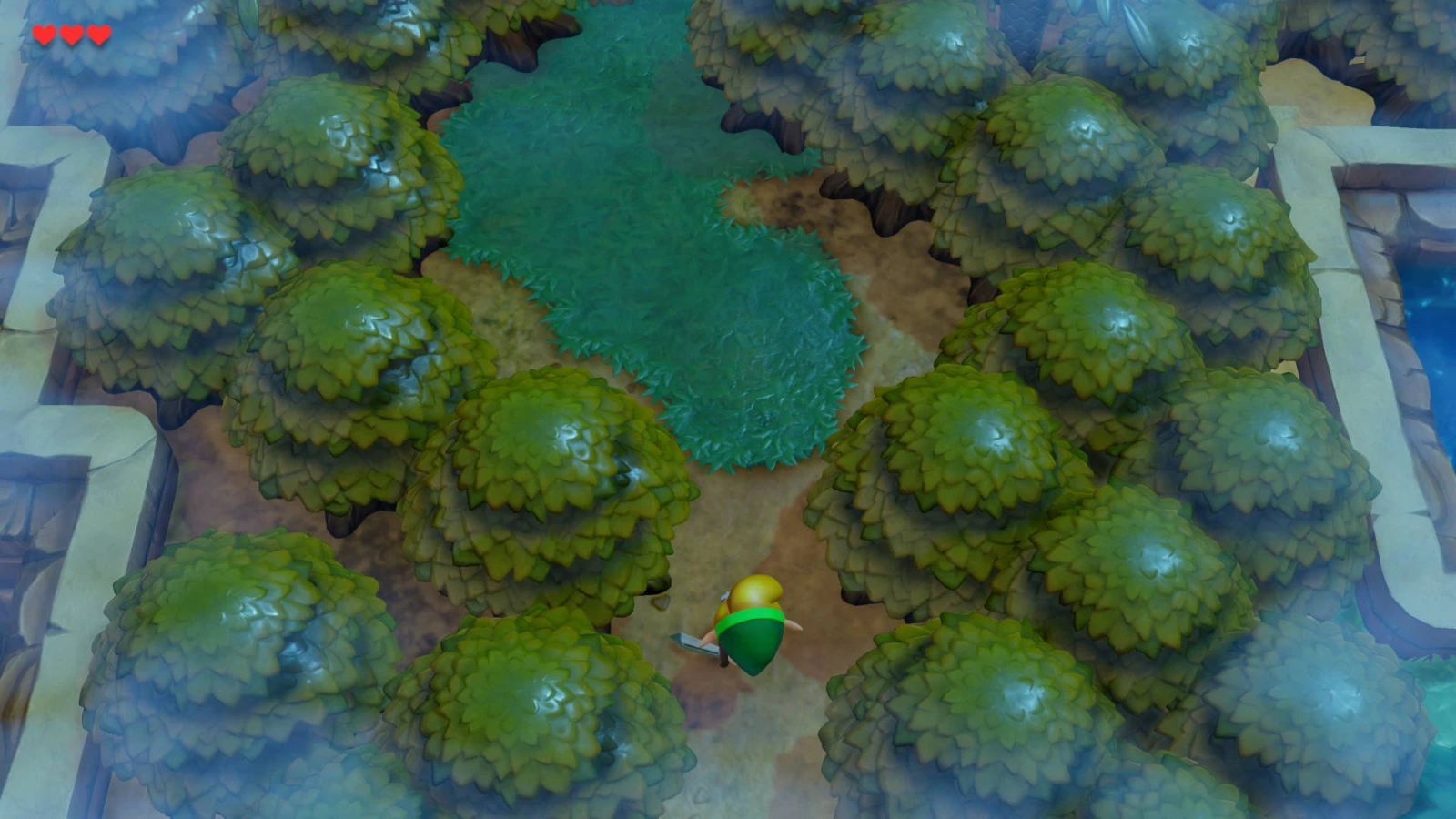
The Mysterious Forest, one of the places where the frame rate dips.
Link’s Awakening aims for 60 frames per second and mostly gets there, but on the original Switch it keeps dropping to 30 for a second or two. Digital Foundry’s Richard Leadbetter, whose analysis Nintendo Life reported on 30 September 2019, found nearly all the trouble on the overworld: a lurch on stepping out of the first house, small stutters on the beach and bigger ones on crossing from one region to the next, such as going into or out of the Mysterious Forest. He suspected the processor at first, but overclocking it by 75 per cent made no difference; his tests pointed to the graphics chip. Reviewers noticed too. USgamer mentioned slowdown that crops up now and then, and Shacknews said that in 2019 lag on that scale should not have been part of the remake, though neither thought they spoiled the game.
Version 1.0.1: Marin on the beach
Marin, who could get stuck on Toronbo Shores before version 1.0.1.
The only update of 2019 arrived on 24 October. It fixed a bug in which, under certain conditions, Marin would stop moving at Toronbo Shores and leave the game stuck, and it repaired save files that had already been caught. It did nothing for the frame rate, as Nintendo Life’s headline grumbled: this was “probably not the fix you were hoping for”.
Version 1.1.0: fixed by Switch 2
The remake running on Nintendo Switch 2.
Nearly six years later, on 3 June 2025, version 1.1.0 prepared the game for Nintendo Switch 2, which launched two days afterwards. Nintendo’s notes list a sharper picture, optimised for the new console’s screen and for high-resolution televisions, and HDR support. They do not mention the frame rate, but Digital Foundry’s tests, as reported by My Nintendo News, found the game locked at 60 frames per second throughout on the new hardware, with docked resolution climbing from roughly 720p outdoors to as much as 1620p and handheld play at a native 1080p. Its one complaint was that the depth-of-field blur now looks shallower than it should.
Videos & media
Two official trailers: the one that revealed the remake, and Nintendo’s four-minute tour of everything in it.
Nintendo of America’s announcement trailer, first shown in the Nintendo Direct of 13 February 2019. It opens with the hand-drawn storm sequence before revealing the new look.
Nintendo UK’s overview trailer of 11 September 2019, covering the island, the dungeons, the mini-games, Chamber Dungeons and amiibo.
Trivia & facts
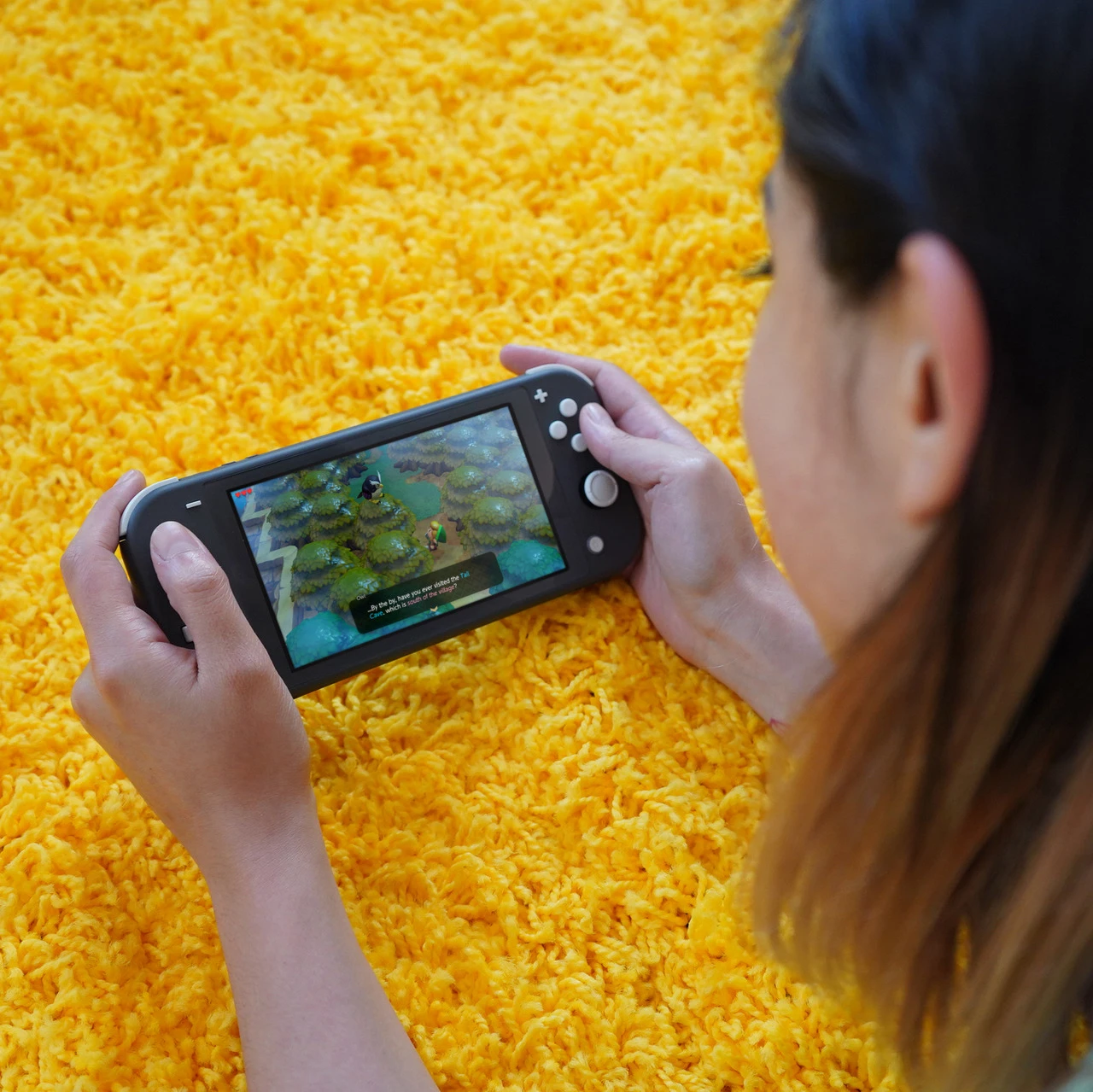
The Nintendo Switch Lite, launched the same day.The remake and the Nintendo Switch Lite launched on the same day, 20 September 2019. In Japan that week Famitsu counted 141,375 boxed copies of the game and 177,936 Switch Lite consoles.
Eiji Aonuma did not work on the original Link’s Awakening. He played it as a fan when it came out, 26 years before the remake.
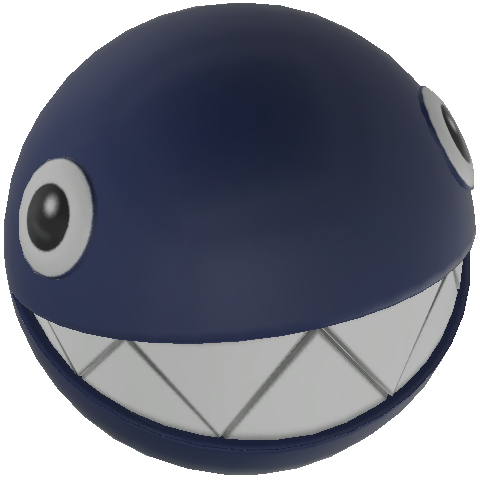
BowWow in the remake.Asked by Nintendo for his favourite of the game’s Mario cameos, Aonuma chose the Chain Chomp: “Ah, I really like Bow Wow. He is so useful!”
Dampé in Ocarina of Time 3D.Dampé is not in the Game Boy game. He first appeared as the gravekeeper of Kakariko Village in Ocarina of Time, and was chosen for the remake because that game hid a dungeon beneath one of his graves.
One of Dampé’s advanced challenges, Skull Arrangement, takes its design from Level 9 of the very first Legend of Zelda, according to the Zelda Wiki on Fandom.
Dungeon rooms that filled exactly one Game Boy screen are shown with black bars at the sides on Switch, because their puzzles and bosses were designed for that many tiles.
Christine’s “photograph” in the remake.The picture of Princess Peach that Christine sends to Mr. Write is still in the game, but it uses different artwork and no longer has the name Christine written on it.
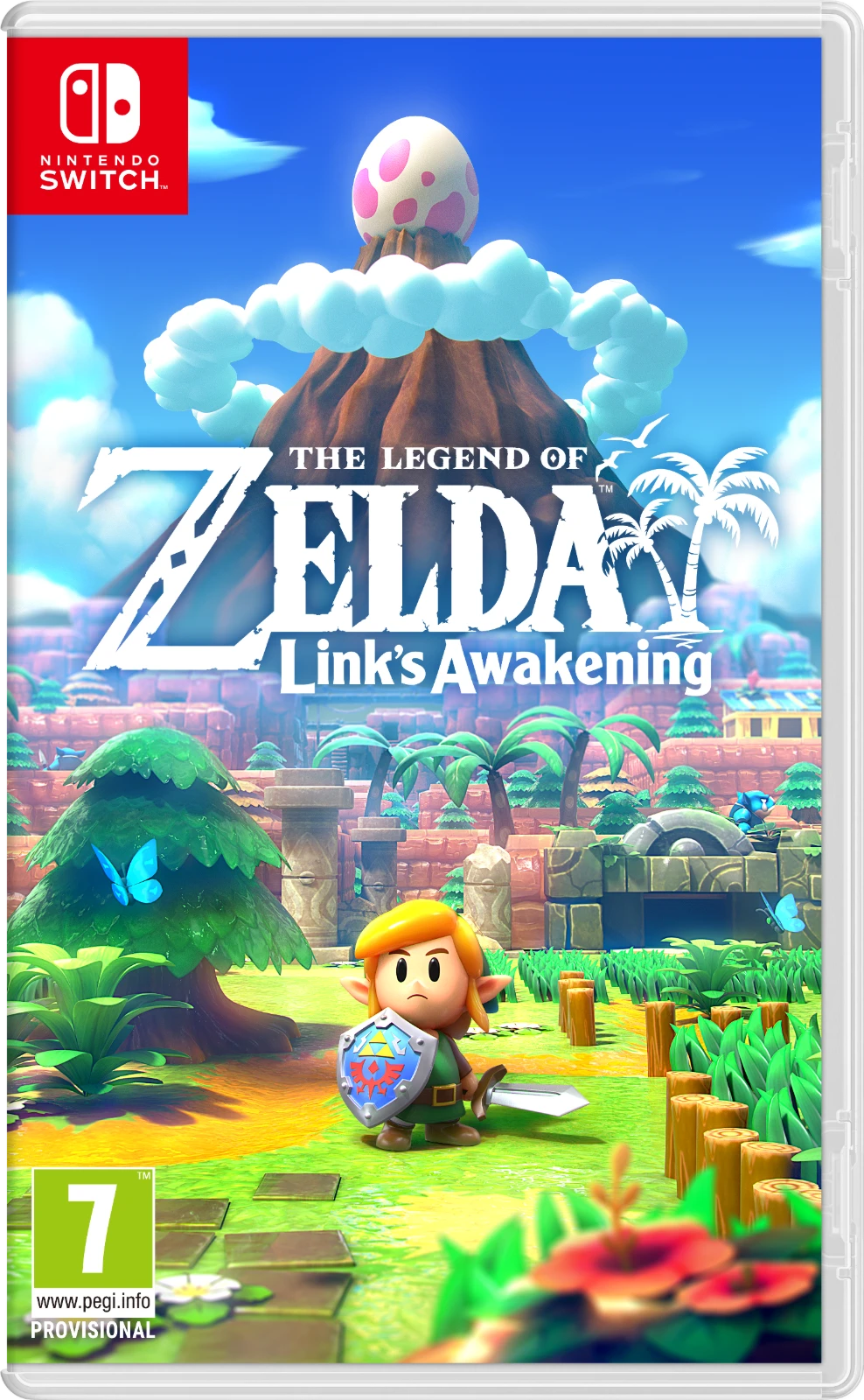
The box of Europe’s Limited Edition.Europe’s Limited Edition came in a SteelBook made to look like an original Game Boy.
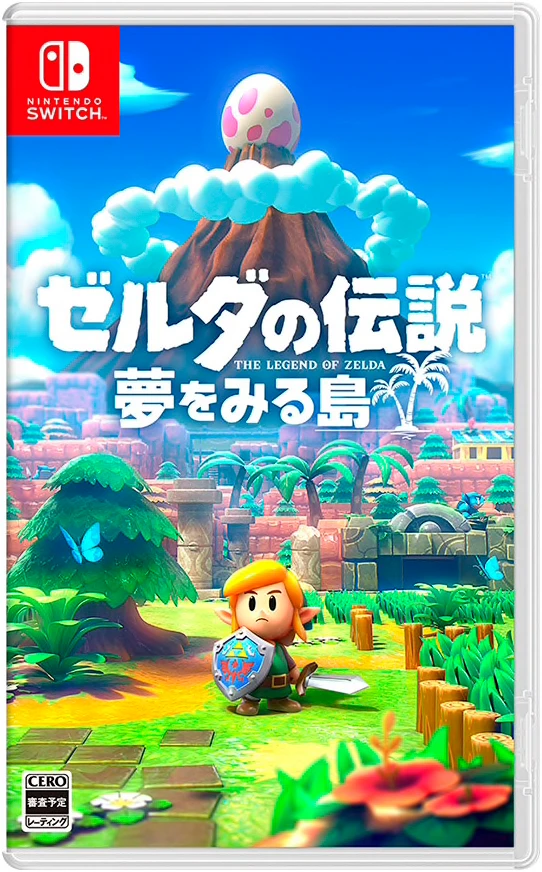
The Japanese box.The catchphrase on Nintendo’s Japanese site reads そこは、一度入ると出られない不思議な島。, roughly “A mysterious island that, once entered, cannot be left.”
Nintendo’s store page lists fourteen supported languages and regional variants, among them Korean, Russian, Dutch and both Simplified and Traditional Chinese. Its Traditional Chinese title is 薩爾達傳說 織夢島.
The contents of the four-CD Original Soundtrack (2020).The Japanese soundtrack box packs 205 tracks onto four CDs, with the Game Boy and Switch versions of the score side by side.
According to GamesIndustry.biz’s chart report, as relayed by GoNintendo, it was only the third Zelda game to reach number one in the UK, after Ocarina of Time in 1998 and The Wind Waker in 2003.
The fishing pond in Mabe Village.The Bloopers and Cheep Cheeps that now turn up in the fishing pond add two more Mario species to a game already full of them.
After finishing the remake, Grezzo spent about a year on a prototype it called an “edit dungeon”, a cousin of Chamber Dungeons, before Aonuma steered it towards the echoes of Echoes of Wisdom.
The Thwomp appears only in the side-on rooms of Link’s Awakening. Echoes of Wisdom’s director Tomomi Sano used it as her example of the fun of mixing views: copy one into the top-down world and it becomes a weight to drop or a lift to ride.
Media & artwork
Box art from each region, Nintendo’s character artwork, the amiibo and screenshots of the remake. Select any image to view it larger.
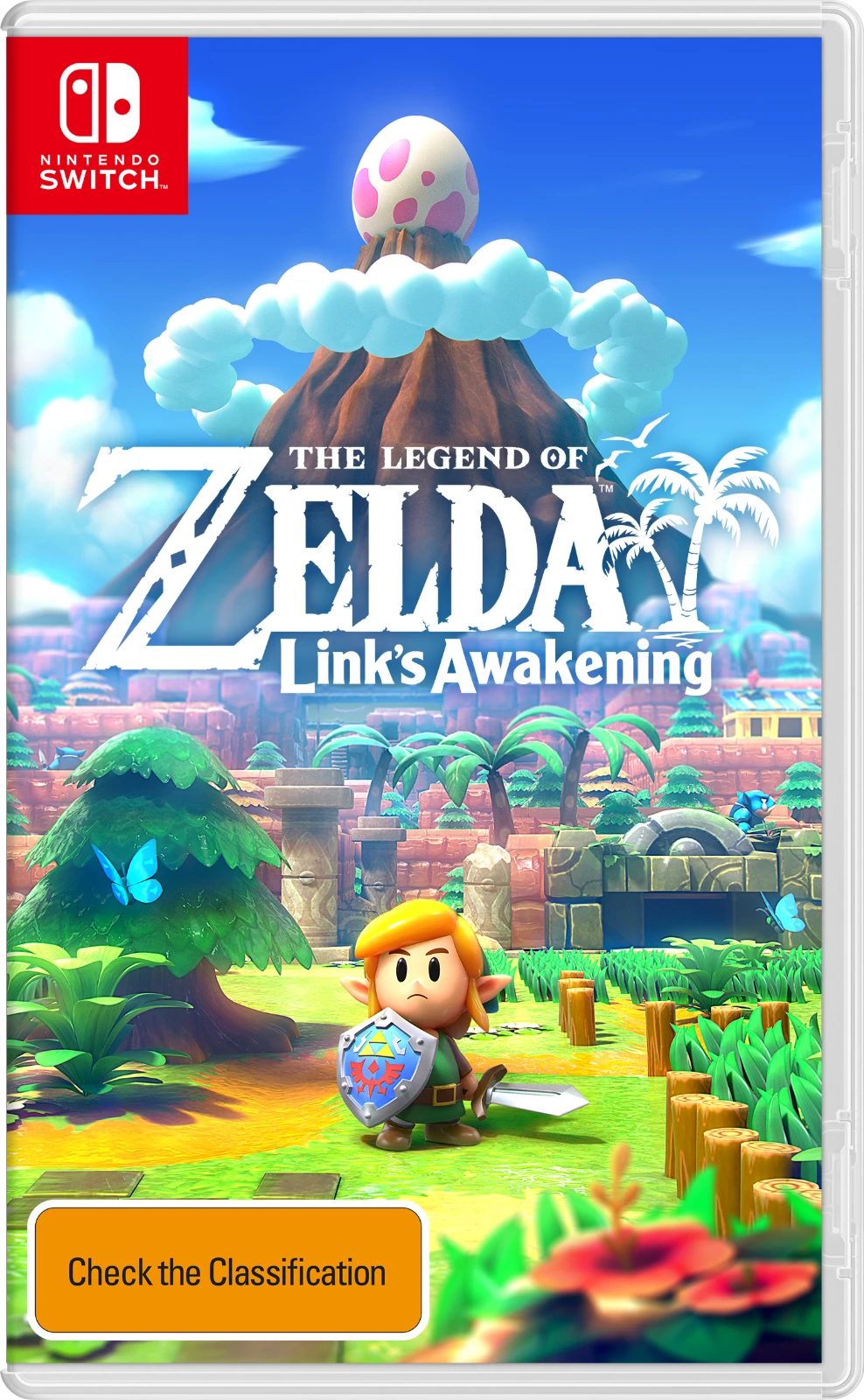
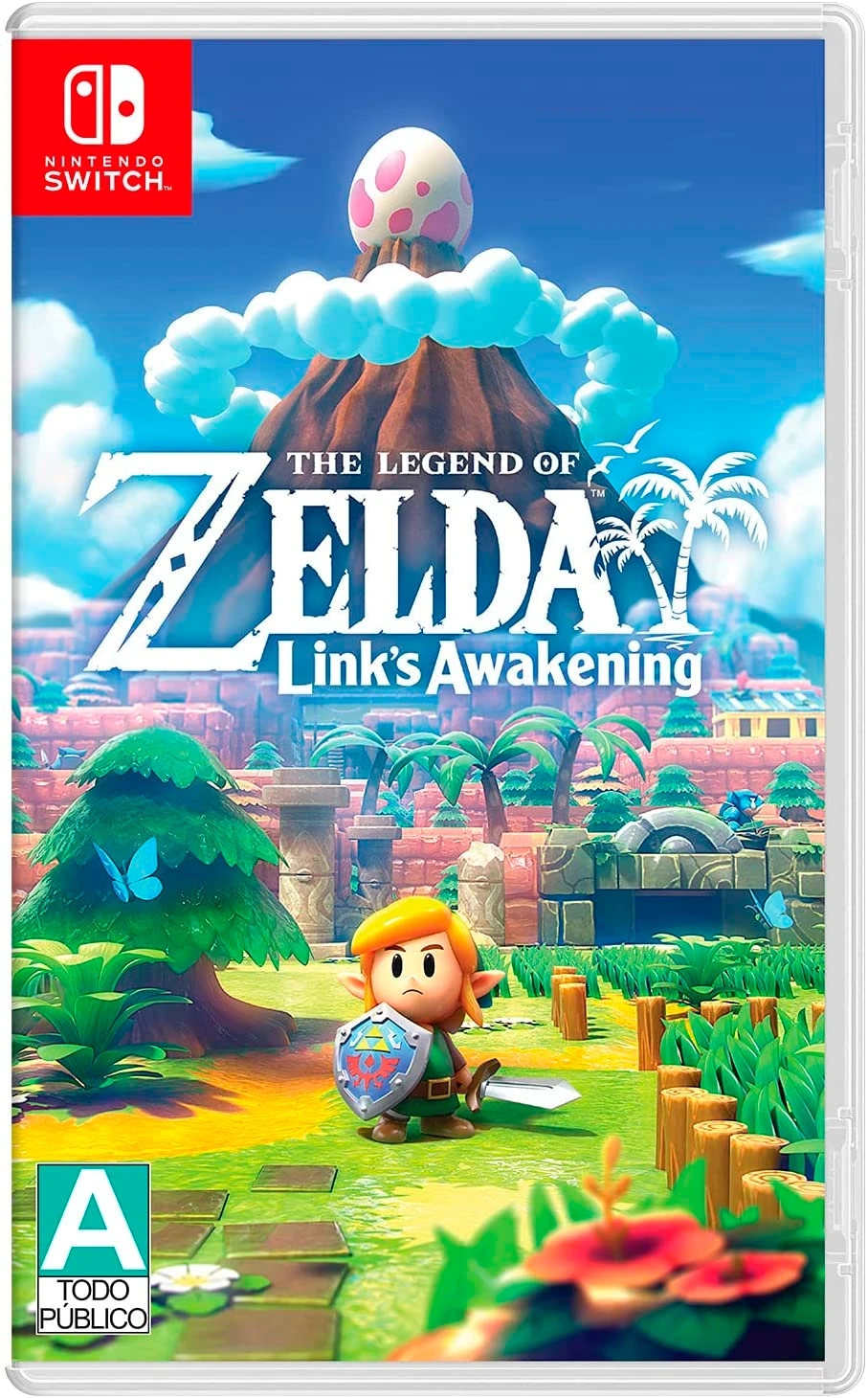
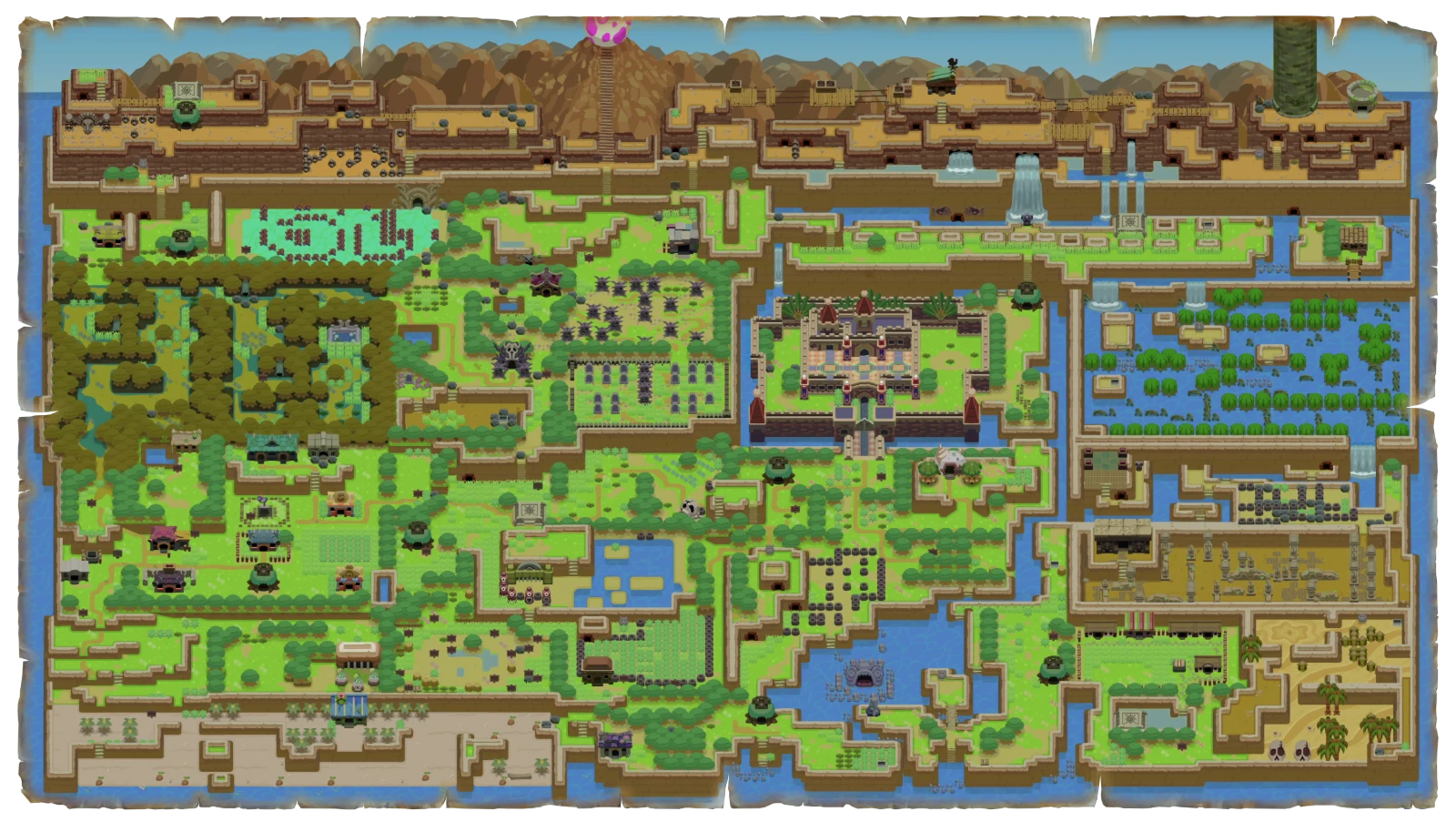
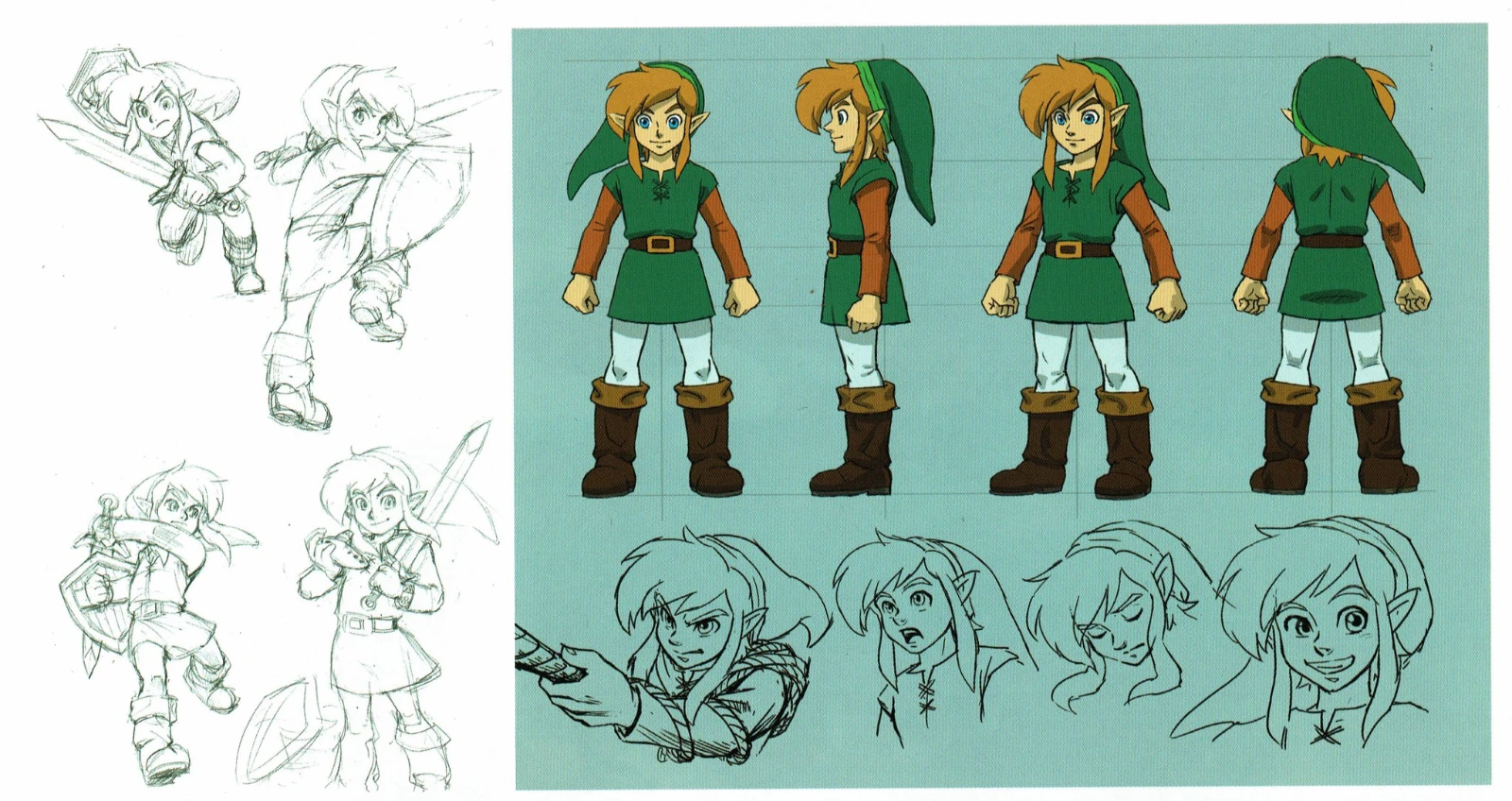
European Nintendo Switch box (2019).Australian Nintendo Switch box (2019).Mexican Nintendo Switch box (2019).The remake’s Japanese logo.Map of Koholint Island from the remake.Concept art of Link for the remake.Key art for the remake.A diorama of Toronbo Shores, shown at E3 2019.Artwork for the remake’s release day.North American box of Link’s Awakening DX (1998), the version before the remake.
Legacy
The remake did more than put an old favourite back on sale. It gave Nintendo a house style for top-down Zelda on modern consoles, and Grezzo the chance to make a Zelda of its own.
Release history
Announced13 February 2019 – Revealed with a trailer in a Nintendo Direct, for release in 2019.
E3 201911 June 2019 – Release date, Chamber Dungeons, the Link amiibo and the Dreamer Edition announced; playable at the show.
Gamescom 2019August 2019 – Named Best Nintendo Switch Game.
Nintendo Switch20 September 2019 – Released worldwide, with the Dreamer Edition in North America, the Limited Edition in Europe and the Artbook Set in Japan.
Version 1.0.124 October 2019 – Fixes the bug that could freeze the game at Toronbo Shores.
Original Soundtrack18 March 2020 – Four-CD set from Nippon Columbia, Japan only.
Echoes of Wisdom26 September 2024 – Grezzo and Nintendo’s new Zelda in the same visual style.
Version 1.1.03 June 2025 – Free update for play on Nintendo Switch 2: improved image quality and HDR.
From Koholint to Echoes of Wisdom
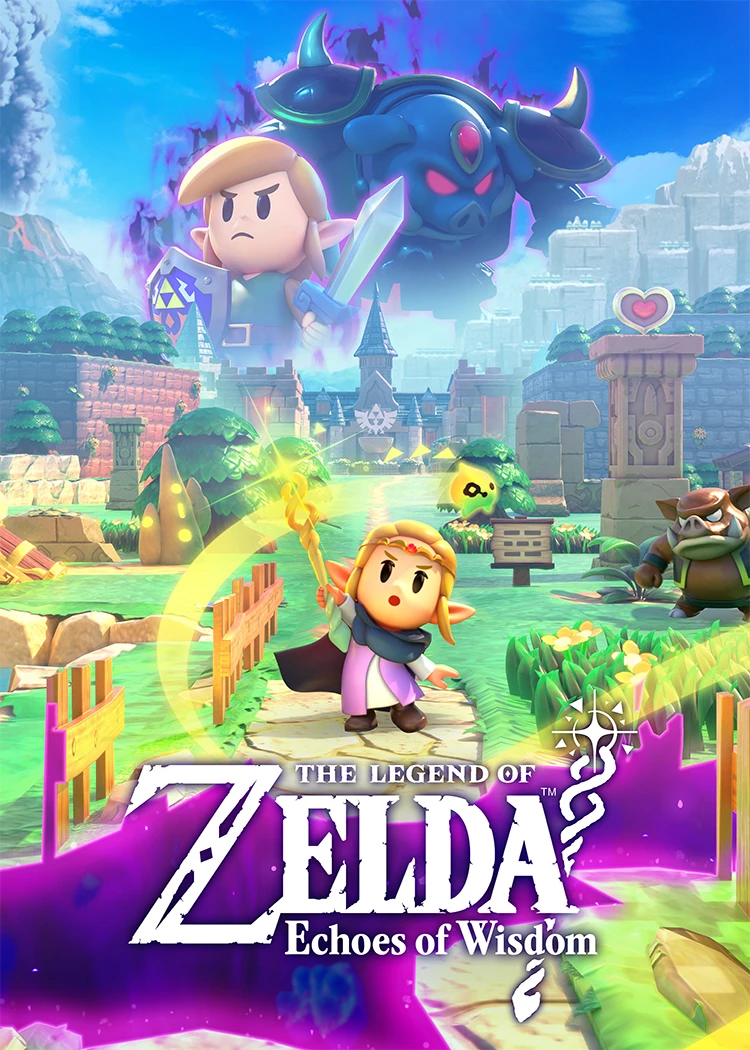
Key art for Echoes of Wisdom (2024).
Aonuma had long wanted a line of top-down Zeldas to run beside the big 3D games, and the remake showed him it could be done. In Nintendo’s Ask the Developer interview of September 2024 he said it had given the team a fresh approach to the look and feel of an overhead Zelda in the Switch era. Nintendo asked Grezzo for a brand-new game, the studio’s first original Zelda, and Grezzo, fond of the world it had just built, began with a dungeon-editing idea in the spirit of Chamber Dungeons.
That prototype ran for about a year before it turned into something else, but Echoes of Wisdom still wears the remake’s clothes: the same toy-like figures and tilt-shift blur, the same mix of overhead and side-on rooms, and Dampé back in a supporting role. Satoshi Terada, who had been in charge of the remake’s art style, was one of its directors.
How it is remembered
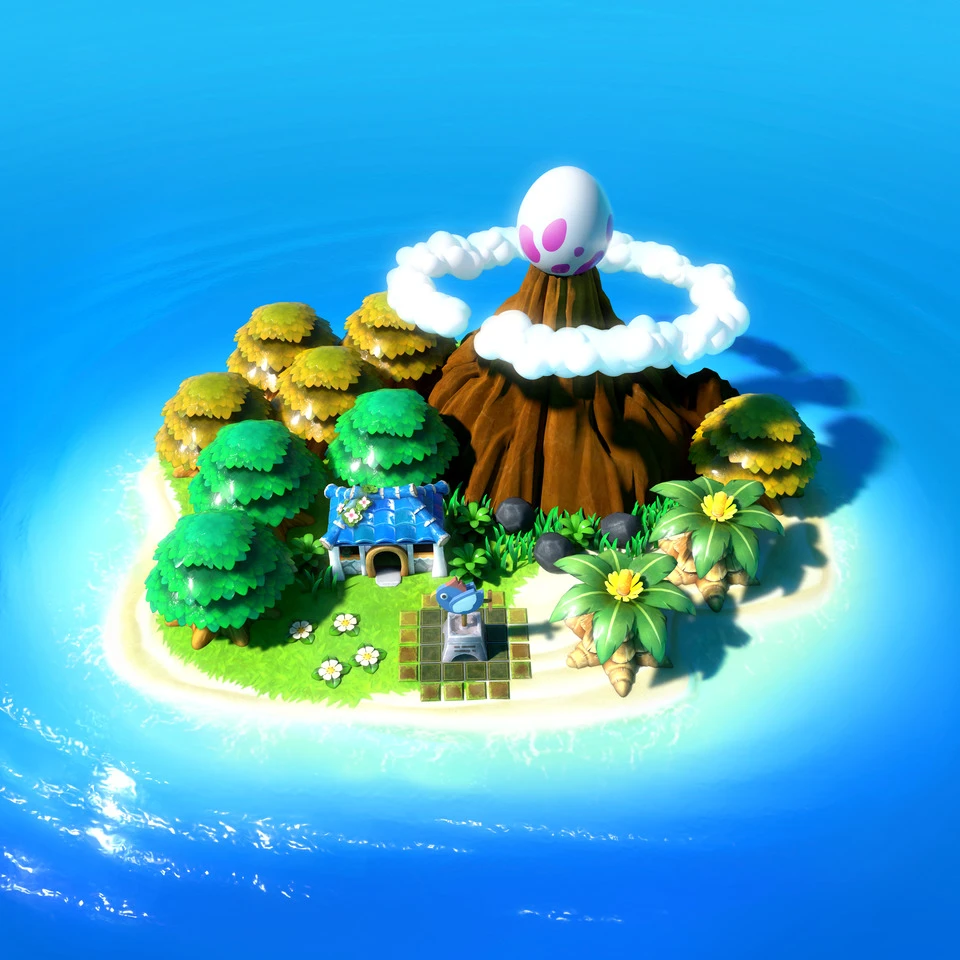
Koholint Island, in a render for the remake.
This is not a sharper copy of an old game but a new build of one, faithful almost to the tile. It sold more than the Game Boy original and DX put together, and it introduced the story of Marin and the Wind Fish to players who had never owned a Game Boy. The Chamber Dungeons are remembered less fondly, as a good idea that stopped short. The stutter was not forgotten either: when Echoes of Wisdom arrived in 2024 with the same habit, Digital Foundry judged its frame rate “even worse” than the remake’s, as Nintendo Life reported.
Where to play it today
The remake is still on sale for Nintendo Switch through Nintendo’s eShop, at the same US$59.99 it cost in 2019. It also runs on Nintendo Switch 2, where the free version 1.1.0 update sharpens the picture and adds HDR, and where the frame rate holds steady.
If you would like to compare it with its ancestors, Link’s Awakening DX is in the Nintendo Switch Online Game Boy library and the 1993 original is one of the three games built into the Game & Watch: The Legend of Zelda.
Sales & reviews
Sales figures
Nintendo’s investor reports chart a fast start. The remake had sold 3.13 million copies by 30 September 2019, eleven days after launch, of which 0.35 million were in Japan and 2.78 million overseas. The total stood at 4.19 million on 31 December 2019, 4.38 million on 31 March 2020 and 5.49 million on 31 March 2021, after a further 1.11 million in that financial year. Japan’s CESA Games White Paper gives 6.46 million by December 2022. That is more than the Game Boy original (3.83 million) and DX (2.22 million) managed between them.
In Japan it entered the Famitsu chart at number one with 141,375 boxed copies in its first three days, and had passed 250,000 at retail by the end of 2019. It was number one in the UK as well, knocking Borderlands 3 off the top; GamesIndustry.biz reported that it was Grezzo’s biggest Zelda launch there, 27 per cent up on Ocarina of Time 3D, and the fastest-selling Switch game of the year to that point, ahead of Super Mario Maker 2. Across Europe it sold more than 430,000 copies in its first 72 hours, according to Nintendo’s German office.
3.13mby 30 September 2019 (Nintendo)
4.38mby 31 March 2020 (Nintendo)
5.49mby 31 March 2021 (Nintendo)
6.46mby December 2022 (CESA)
Reception and review scores
Reviews were warm almost everywhere. These are the main scores as collected by Wikipedia, with dates where we could confirm them; scores not out of 100 are converted.
USgamerUS · Nadia Oxford, 19 September 2019
5/5
VentureBeatUS · 19 September 2019
95/100
IGNUS · 19 September 2019
9.4/10
Game InformerUS · 19 September 2019
9/10
Nintendo LifeUK · 19 September 2019
9/10
DestructoidUS · 19 September 2019
9/10
ShacknewsUS · Ozzie Mejia, 26 September 2019
9/10
Pocket GamerUK · 19 September 2019
4.5/5
FamitsuJapan · 9, 9, 9, 8
35/40
Nintendo World ReportUS · Daan Koopman, 19 September 2019
8.5/10
GameSpotUS · 19 September 2019
8/10
Electronic Gaming MonthlyUS · 19 September 2019
8/10
The GuardianUK · 20 September 2019
4/5
Game RevolutionUS · 8 October 2019
3/5
The remake averages 87 on Metacritic, and 95 per cent of the critics tracked by OpenCritic recommended it. Eurogamer, which does not give numbers, rated it Essential. Most reviewers felt the 1993 design had needed very little help and were glad of the help it got: Forbes’s Ollie Barder called it “an excellent remake of an already faultless Zelda game”, and USgamer’s Nadia Oxford judged that it fixes most of what was wrong with the Game Boy version without losing its character.
The art style, the music and the freed-up buttons were all praised. Complaints clustered around two things. One was the frame rate; the other was the Chamber Dungeons, which Nintendo World Report found shallow and Shacknews a disappointment, chiefly because they recycle rooms the player has already beaten and cannot be shared online. Nintendo World Report’s Daan Koopman, who took about 16 hours over the game, also disliked the blur along the bottom of the screen. Even so he ranked it among the best in the series.
Awards and nominations
Gamescom · August 2019Best Nintendo Switch GameWon. It was also nominated for Best Action-Adventure Game.
SXSW Gaming Awards · 2020Excellence in ArtWon.
NAVGTR Awards · 2020Gameplay Design, Franchise; Original Light Mix Score, FranchiseWon both, and was nominated for Game, Classic Revival.
The Game Awards · 2019Best Art Direction; Best Action/Adventure GameNominated in both categories.
British Academy Games Awards · 2020MusicNominated.
D.I.C.E. Awards · 2020Adventure Game of the YearNominated.
Game Critics Awards · E3 2019Best Console Game; Best Action/Adventure GameNominated in both categories.
Golden Joystick Awards · 2019Nintendo Game of the YearNominated.
New York Game Awards · 2020Freedom Tower Award for Best RemakeNominated.
Famitsu Dengeki Game Awards 2019Best Action Adventure GameNominated.
Reader reviews
No reader reviews yet. Played it? Give it a score out of 10 and tell other fans what you think.
Every fact on this page was checked against the sources below in November 2026. IGN, Polygon, Eurogamer, GamesIndustry.biz, 4Players, Game Informer’s and The Hollywood Reporter’s original articles could not be read directly, so their interviews and reports are used as relayed by Wikipedia, GoNintendo, Siliconera and Zelda Dungeon. Zelda Wiki (zeldawiki.wiki) and The Cutting Room Floor block automated reading and were not used.
To provide the best experiences, we use technologies like cookies to store and/or access device information. Consenting to these technologies will allow us to process data such as browsing behavior or unique IDs on this site. Not consenting or withdrawing consent, may adversely affect certain features and functions.
Functional
Always active
The technical storage or access is strictly necessary for the legitimate purpose of enabling the use of a specific service explicitly requested by the subscriber or user, or for the sole purpose of carrying out the transmission of a communication over an electronic communications network.
Preferences
The technical storage or access is necessary for the legitimate purpose of storing preferences that are not requested by the subscriber or user.
Statistics
The technical storage or access that is used exclusively for statistical purposes.The technical storage or access that is used exclusively for anonymous statistical purposes. Without a subpoena, voluntary compliance on the part of your Internet Service Provider, or additional records from a third party, information stored or retrieved for this purpose alone cannot usually be used to identify you.
Marketing
The technical storage or access is required to create user profiles to send advertising, or to track the user on a website or across several websites for similar marketing purposes.


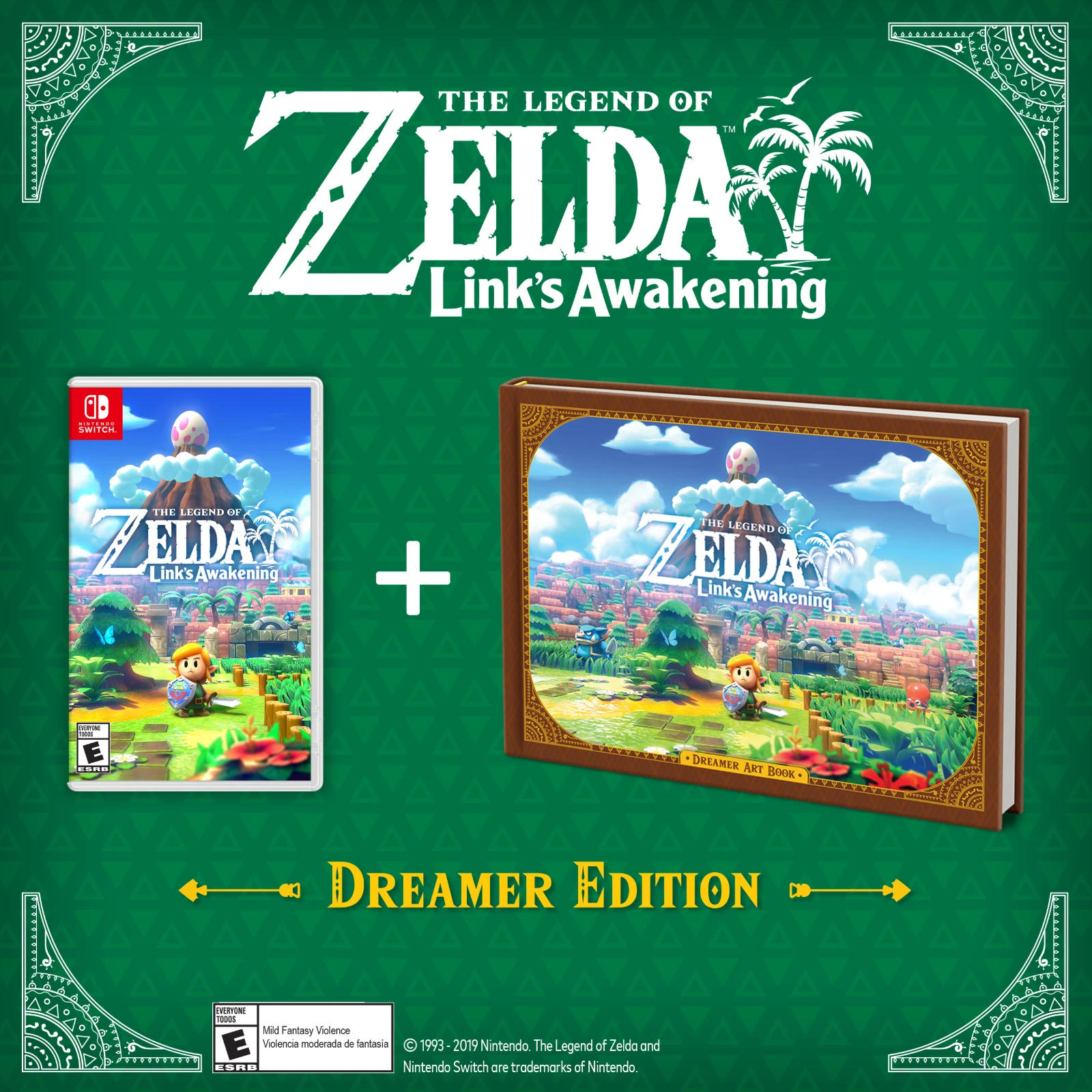 Dreamer EditionNorth America · 20 September 2019 · US$69.99The game with the Dreamer Art Book, a 120-page hardback of colour concept art for the remake’s characters, places, enemies and items, including designs that were not used.
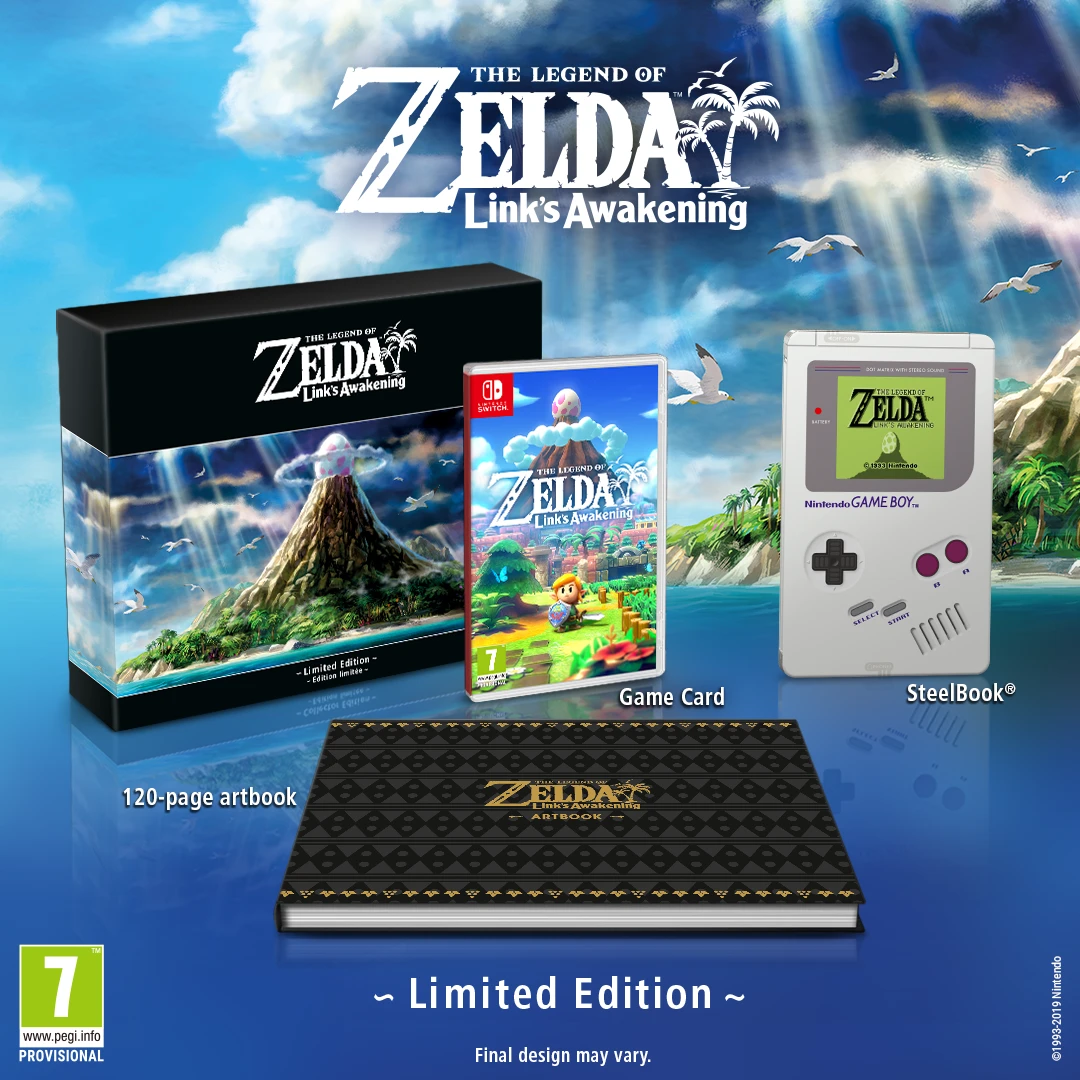 Limited EditionEurope · 20 September 2019Europe’s set added a SteelBook case styled after the original Game Boy and a 120-page hardback art book with a cover of its own.
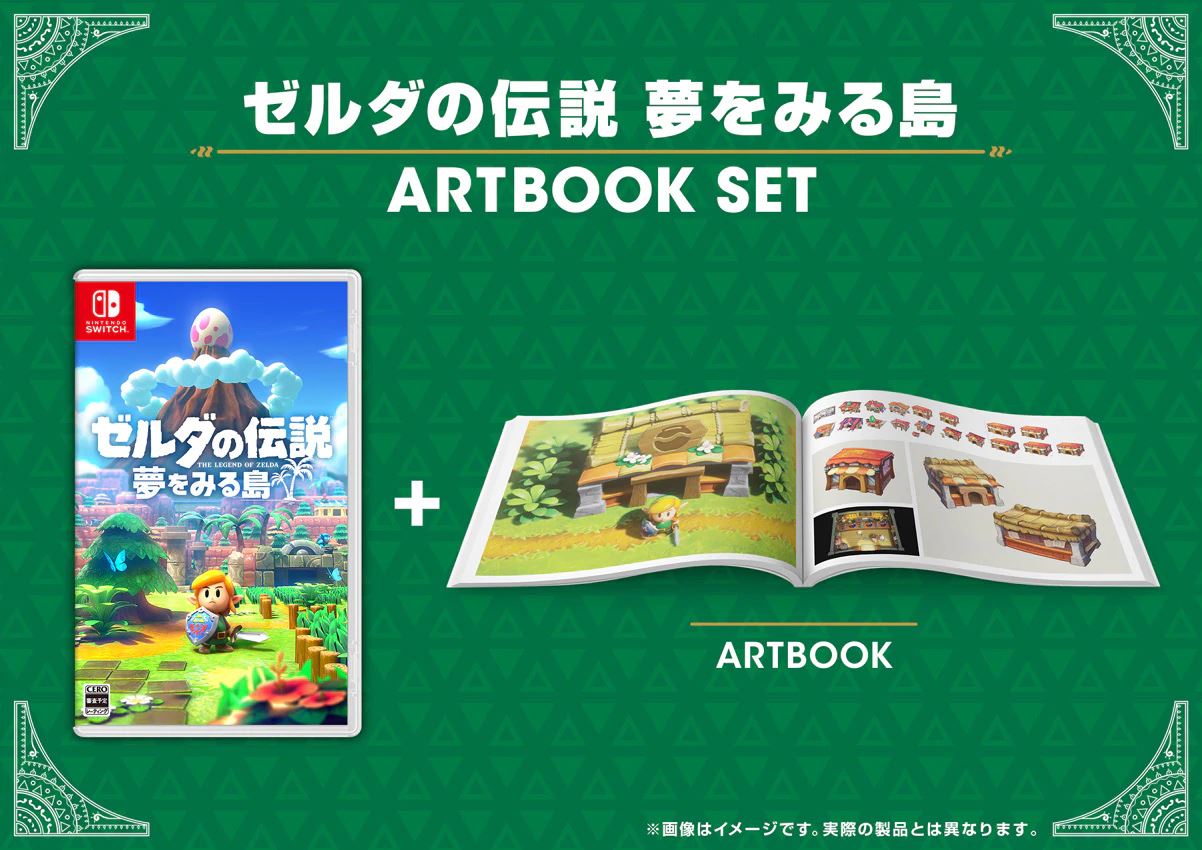 Artbook SetJapan · 20 September 2019The Japanese bundle, ゼルダの伝説 夢をみる島 ARTBOOK SET, paired the game with a paperback edition of the same art book.
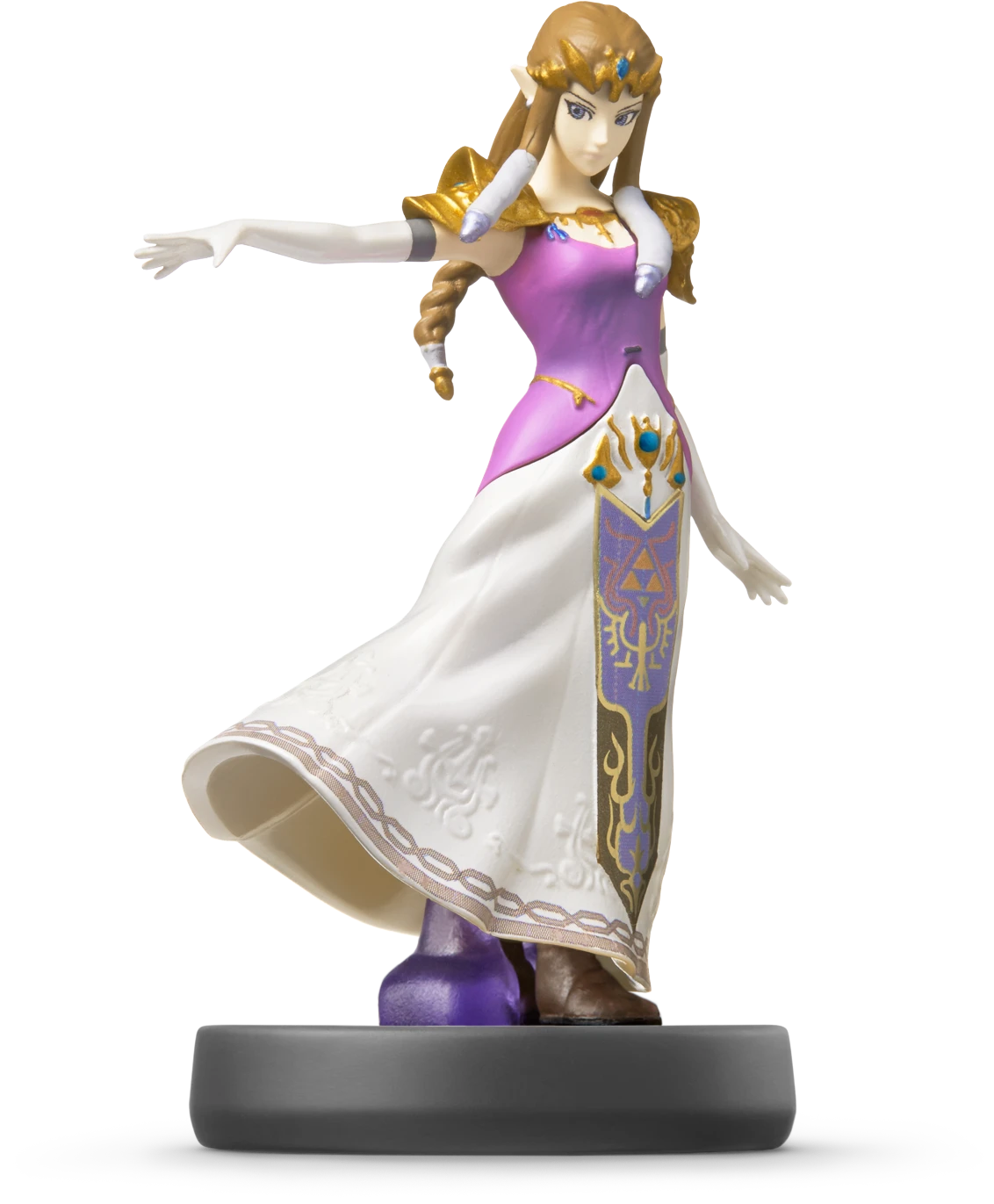 Other Zelda amiiboChamber Dungeon extrasZelda-series amiibo, including the Zelda characters from the Super Smash Bros. range, each unlock one of five special chambers. Finished dungeons can also be saved to an amiibo to pass to another player.
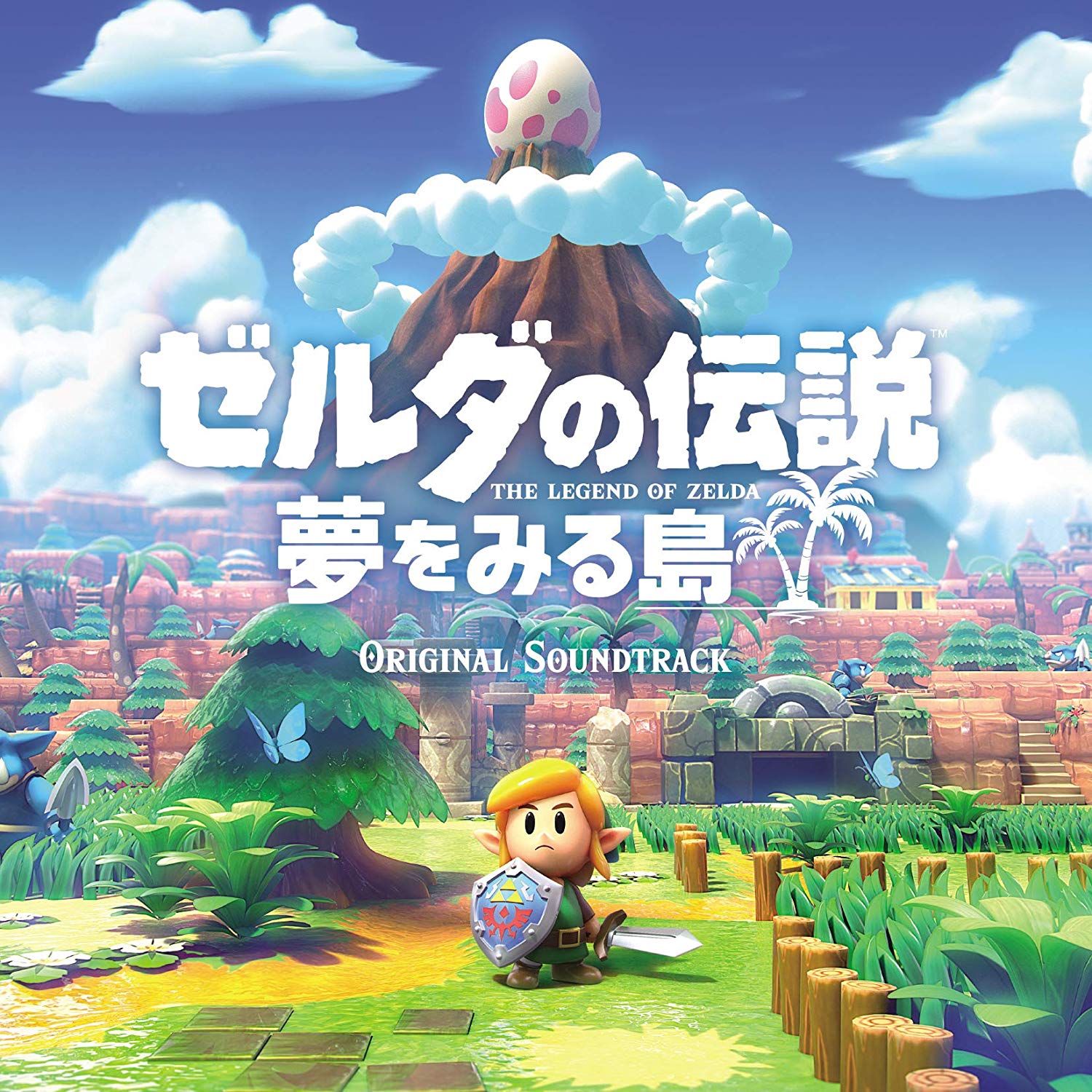 Original SoundtrackNippon Columbia · Japan · 18 March 2020 · ¥4,500A four-disc box of 205 tracks that sets Ryō Nagamatsu’s Switch arrangements beside the music of the Game Boy original.