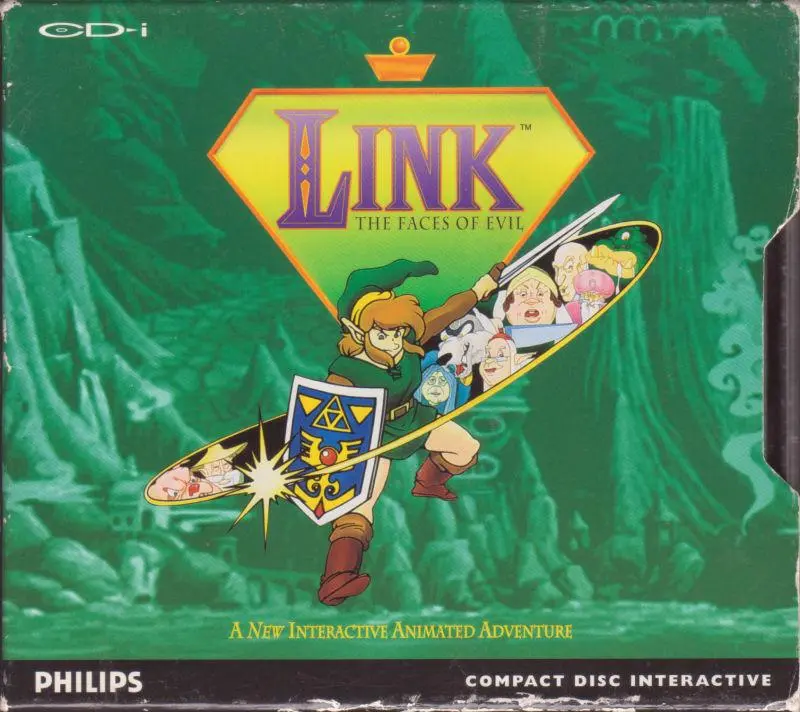
Link is bored, a wizard on a flying carpet has a prophecy, and an island of giant stone heads needs a hero. One of the two Zelda games Philips released for its CD-i in 1993, and the one that gave the internet Morshu.
ReleasedOctober 1993 (North America and UK; 10 October is the date usually given)
DeveloperAnimation Magic
PublisherPhilips Interactive Media
ProducerDale DeSharone
Players1
Made by Nintendo?No. Philips licensed the characters
Title
Link: The Faces of Evil
Platform
Philips CD-i
Developer
Animation Magic (Cambridge, Massachusetts, with animators from St Petersburg, Russia)
Publisher
Philips Interactive Media of America
Licence
Link, Zelda and Ganon used under Philips’s agreement with Nintendo; Nintendo did not develop or publish the game
Producer
Dale DeSharone, who also led the design
Script
Jonathan Merritt
Programming
Linde Dynneson, John O’Brien, John Wheeler
Graphic design
Rob Dunlavey (level sketches and painted backgrounds)
Music
Tony Trippi and William Havlicek
Voices
Jeffrey Rath (Link), Bonnie Jean Wilbur (Zelda), Paul Wann (Gwonam), Mark Berry (King Harkinian, Ganon)
Players
1
Released (North America)
October 1993. 10 October 1993 is the date given by most references, though no period source for the exact day has been found
Released (Europe)
1993. On sale in the UK by October 1993; French, German and Dutch-language versions followed, and French and Dutch magazines were covering them by November and December
Languages
English, with dubbed French, German and Dutch editions
Not part of Nintendo’s official Zelda series or timeline
Spiritual successor
Arzette: The Jewel of Faramore (Seedy Eye Software / Limited Run Games, 14 February 2024)
Overview
Link: The Faces of Evil is the Zelda game Nintendo did not make. It appeared in 1993 on the Philips CD-i, a CD-based multimedia player, together with its twin, Zelda: The Wand of Gamelon. Both were built side by side by Animation Magic, a small American studio whose cartoon cutscenes were drawn by a team of animators brought over from St Petersburg. Philips was allowed to use Link, Zelda and Ganon because of an agreement left over from Nintendo’s abandoned CD-ROM add-on for the Super NES.
The game itself is a side-scrolling action-adventure, closer to Zelda II than to anything else in the series. A wizard called Gwonam flies Link to the island of Koridai, where Ganon’s lieutenants have carved their own likenesses into the mountains. You choose stages from a map, stab monsters for Rubies, buy lamp oil, rope and bombs from a shopkeeper named Morshu, and run errands for the islanders in return for the tools that open up the next stage. Everyone you meet talks, in fully voiced animated scenes.
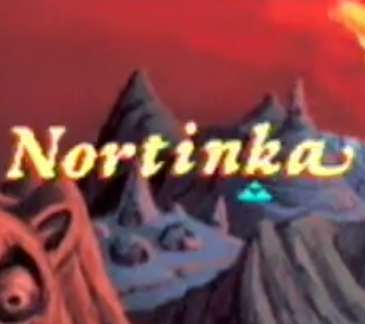
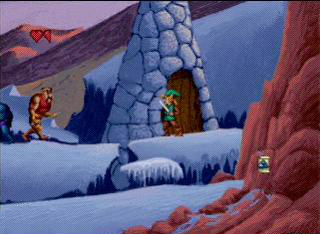
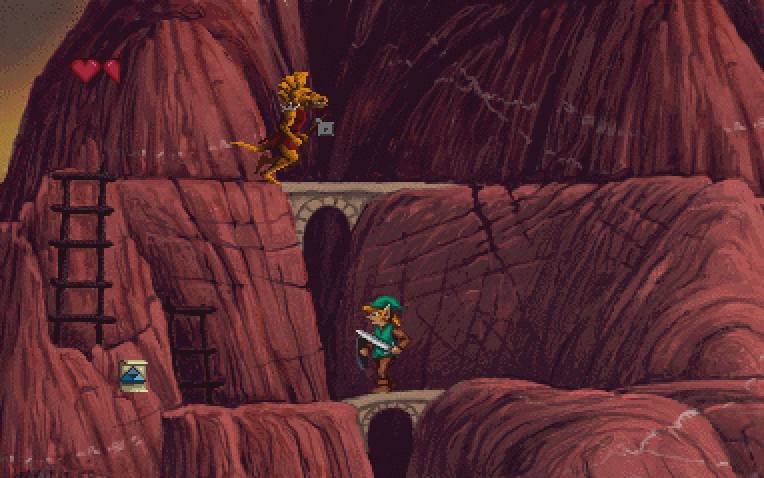
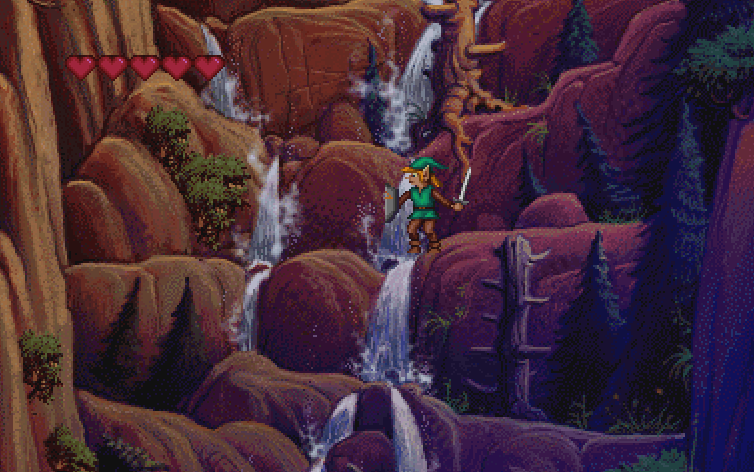
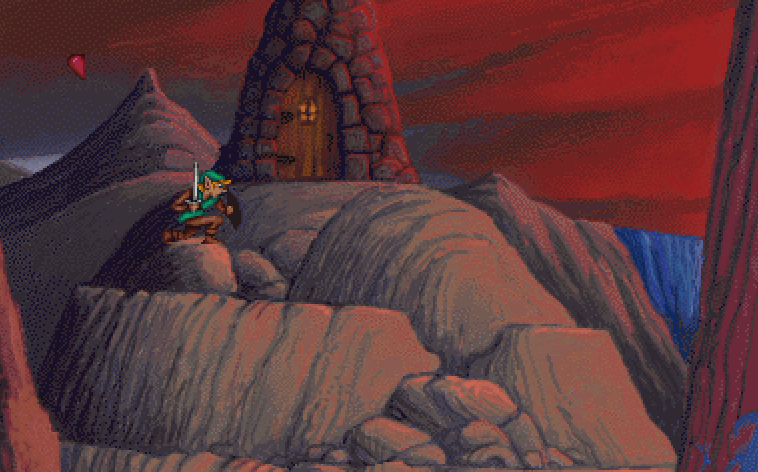
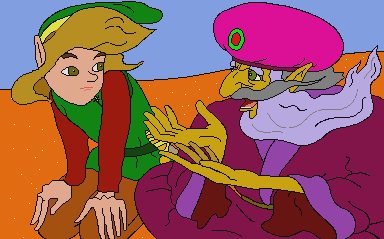
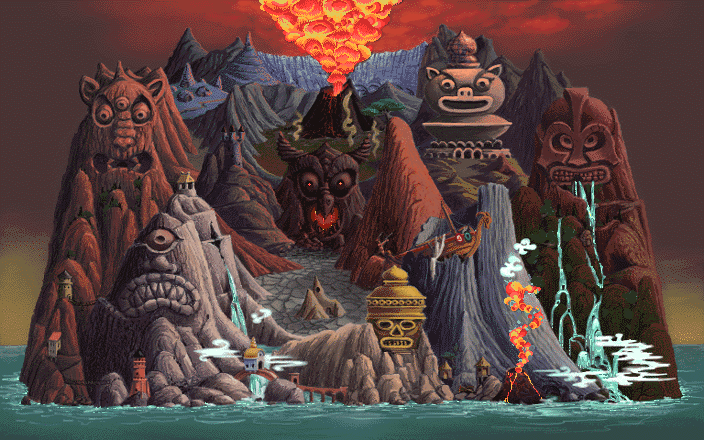
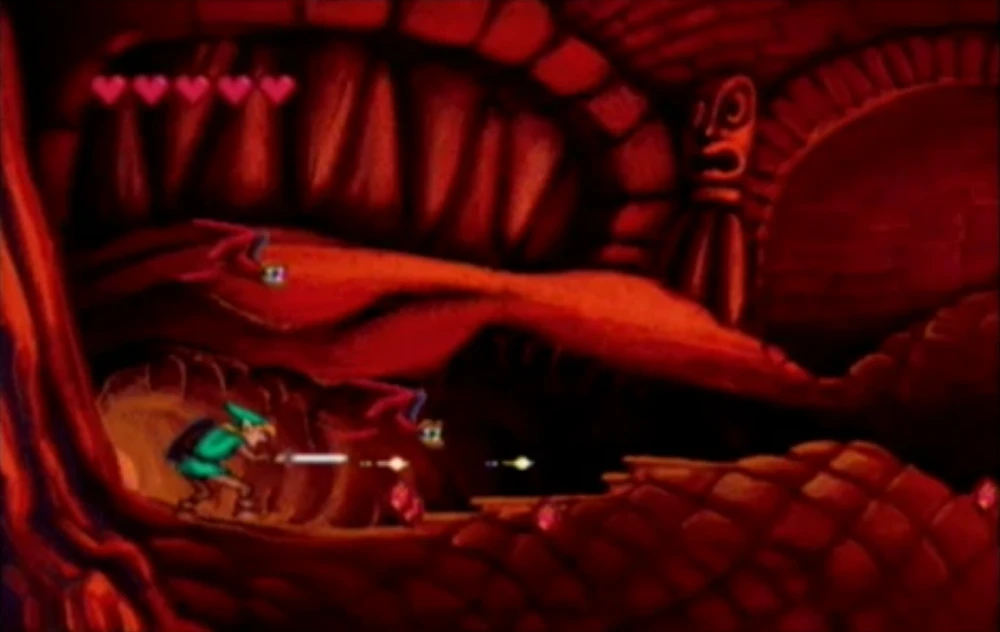
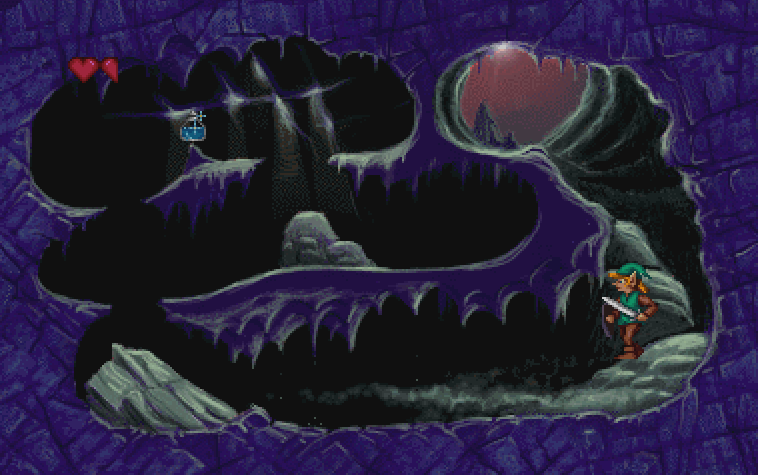
Goronu, one of the three stages open from the start.Gwonam and Link arrive over Koridai.The map of Koridai, where every stage is chosen.
Those scenes are the reason the game is famous. Reviews at the time ranged from enthusiastic to lukewarm, and the CD-i itself never took off. A decade later the rubbery animation, theatrical voices and awkward controls had made The Faces of Evil a fixture of worst-game lists, and from the mid-2000s its cutscenes became favourite material for YouTube remixers. Nintendo leaves the game out of its official histories.
It has its defenders, though. Retro Gamer’s John Szczepaniak has long argued that it is one of the better games on its console, a fan rebuilt it from scratch in 2020, and in 2024 that same fan released a spiritual successor, Arzette: The Jewel of Faramore, with the original Link and Zelda actors and one of the original background artists on board. This page covers all of it: the story, every stage, the cast, how the game was made, and what happened next.
“It is written: only Link can defeat Ganon.”
Gwonam’s line in the opening scene is the whole premise in eight words. Ganon and his minions have seized the island of Koridai, a prophecy names Link as the only one who can stop him, and there is no time to pack: the wizard tells Link his sword is enough, and the carpet takes off.
— Gwonam, opening cutscene of Link: The Faces of Evil (Philips Interactive Media, 1993; script by Jonathan Merritt), as transcribed on Wikiquote.
Quick Answers
The questions people most often ask about The Faces of Evil, answered briefly. Each one is explained in more detail further down.
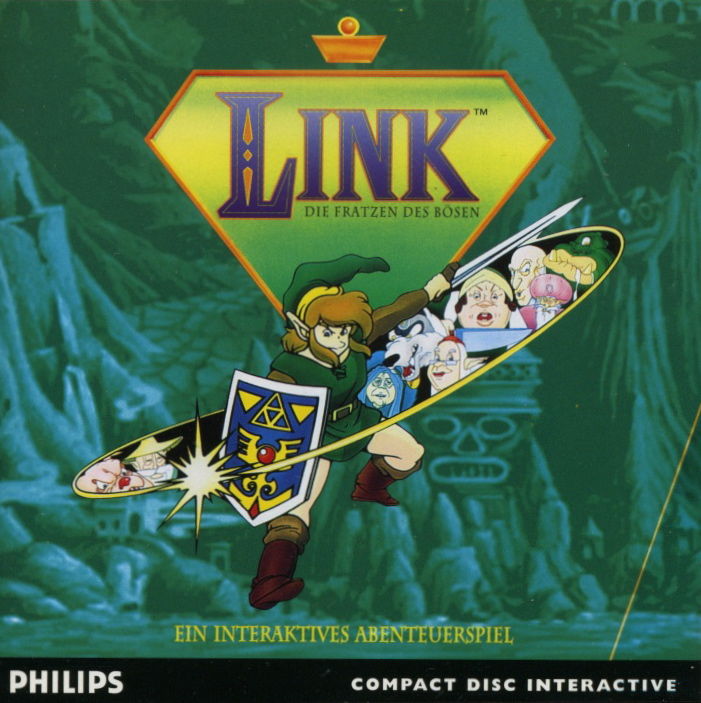
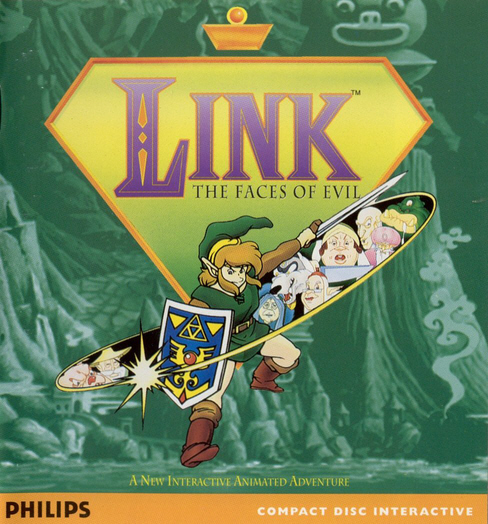
European box art for The Faces of Evil.
When did Link: The Faces of Evil come out?
In October 1993 for the Philips CD-i. Most references give 10 October 1993 for North America; nobody has found a period source for the exact day, but a British magazine and a Dixons advert show it on sale that month, and an American newspaper advert of mid-October already features it. Dubbed French, German and Dutch versions followed; French and Dutch magazines were covering them by the end of 1993. More →
Did Nintendo make it?
No. It was developed by Animation Magic and published by Philips. Nintendo’s only part, according to producer Dale DeSharone, was to approve the design document and the character sketches. More →
Why is there a Zelda game on a Philips console?
Because of the Super NES CD-ROM drive that never was. Nintendo dropped Sony as its CD partner in 1991 and signed with Philips; the add-on was never released, but the agreement gave Philips the right to use Nintendo characters in a few CD-i games. More →
Is it part of the Zelda timeline?
No. Nintendo does not count the CD-i games as part of the series, and they are missing from its Hyrule Historia book. Asked about them in 2013, series producer Eiji Aonuma said he did not think they really fit in the Zelda franchise. More →
What are the Faces of Evil?
Giant faces of Ganon’s minions carved into the mountains of Koridai. Each is the stronghold of the creature it shows: Goronu, Harlequin, Militron, Glutko and Lupay, with Ganon’s own lair as the last. More →
How do you beat Ganon?
With a book, not a sword. Link wins the Book of Koridai from Glutko at the Shrine of Koridai and throws it at Ganon, who is pulled into its pages. More →
Who is Morshu?
The shopkeeper of Koridai, who sells lamp oil, rope and bombs from a store by the waterfall at Goronu. His sales pitch became one of the best-known internet memes to come out of any Zelda game. More →
How is it different from The Wand of Gamelon?
The two share an engine, the same rules and the same shop prices, but each has its own island, story, stages, characters and bosses. Here you play as Link on Koridai; in the other game Zelda searches Gamelon for her father and Link. More →
Is it really one of the worst games ever made?
It is regularly listed that way, mostly for its cutscenes and controls. Not everyone agrees: Retro Gamer and Hardcore Gaming 101 writer John Szczepaniak and 1UP’s Danny Cowan have both called it among the best games on the CD-i. More →
Can you still play it?
Only on a CD-i player with an original disc: none of our sources records an official re-release. A free fan remaster for Windows and Linux appeared in November 2020 and was withdrawn by its author within days. The nearest thing on sale today is Arzette: The Jewel of Faramore. More →
Plot / Story
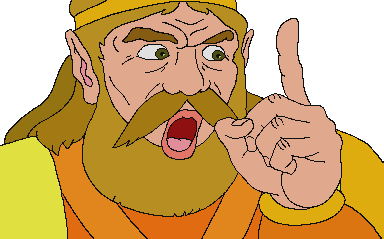
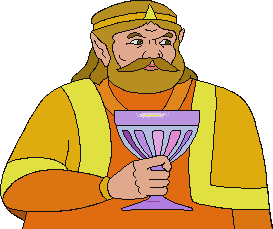
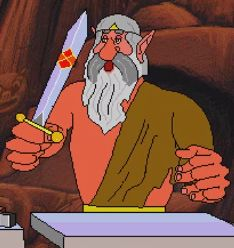
King Harkinian in the opening cutscene.
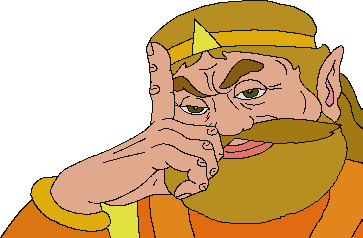
Hyrule is at peace, and Link cannot stand it. “Gee, it sure is boring around here,” he tells the King in the opening scene, and King Harkinian replies that peace is exactly what true warriors strive for. Link is not convinced. He wonders aloud what Ganon might be up to.
He does not have to wonder for long. The story of The Faces of Evil is told in short animated scenes, about ten minutes of them in all, and a few seconds into the first one a stranger lands a flying carpet on the castle balcony.
“Squadala! We’re off!”
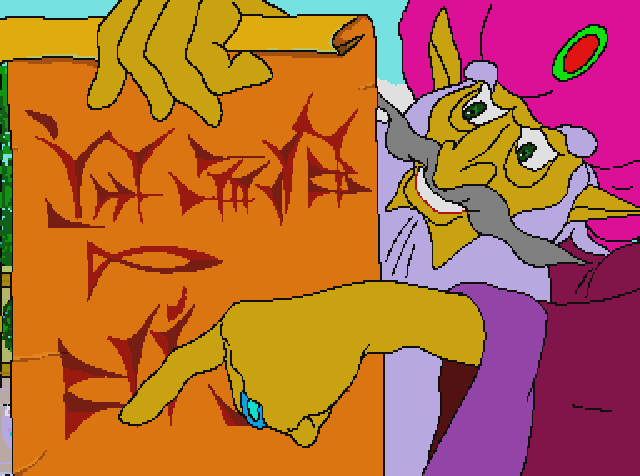
The stranger is Gwonam, a wizard and prophet from the island of Koridai, and he brings bad news: Ganon and his minions have seized the island. When the King asks how Hyrule can help, Gwonam unrolls a scroll. “It is written: only Link can defeat Ganon.”
Link is delighted and offers to grab his stuff. There is no time, says Gwonam; his sword is enough. Link tries his luck with Princess Zelda (“How about a kiss, for luck?”) and gets the reply “You’ve got to be kidding.” Then Gwonam cries “Squadala! We’re off!” and the carpet lifts away.
Over Koridai, Link sees enormous heads staring out of the mountainsides. These, Gwonam explains, are the Faces of Evil, and Link must conquer each of them. He hands over a map and asks where Link would like to go.
Gwonam reads the prophecy.The Faces of Evil, seen from the carpet.
The islanders of Koridai
Ganon’s takeover has left Koridai half empty. His lieutenants are turning the islanders into monsters, and the few who remain are hiding in huts, igloos, caves and a lighthouse. Nearly all of them will help Link, usually in return for a favour, and that web of favours is the real plot of the game’s first half.
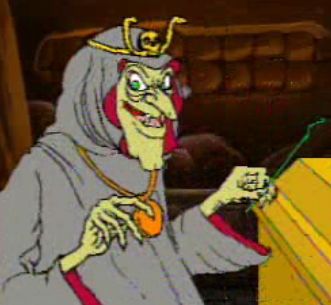
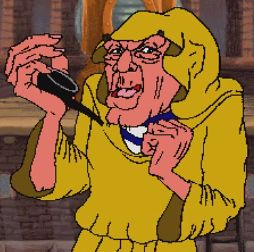
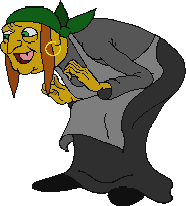
In the fishing village of Crater Cove, the fisherman Anutu hands over the Power Sword after showing off what he thinks is the biggest crab he has ever caught (it is a Gohma). In snowy Nortinka a woman named Hamsha sits frozen solid in her house until Link thaws her with a Firestone, and the scholar Aypo, in a house full of books at the top of the mountain, asks him to find the sacred Book of Koridai. Horgum, the keeper of Toyku Lighthouse, gives him a Lantern. Alora, who lives in the ransacked trailhouse nearby, wants the necklace a Gleeok stole from her, and trades it for a Canteen. The old witch Zorga stirs Grapple Berries into a Power Glove.
The bad news arrives at Firestone Lake. Gwonam appears and shows Link a vision: Ganon has captured Princess Zelda, and is holding her in his lair under a sleeping spell.
Anutu the fisherman and his ‘crab’.
Five faces, five masters
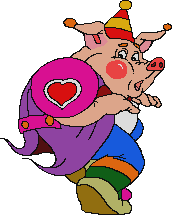
Each Face of Evil belongs to one of Ganon’s lieutenants, and before each fight Gwonam turns up to show Link what its master does to the people of Koridai. Goronu, a snake-like necromancer, raises Stalfos from the skeletons in the crypts. Harlequin, a grinning pig-man, runs a casino: islanders who gamble away their last Ruby are told “Now you work for me” and become his Goriya servants.
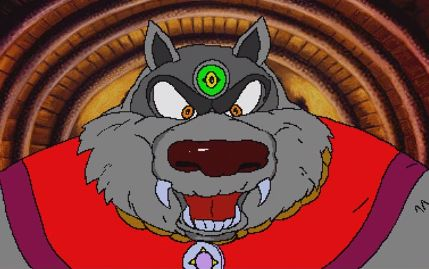
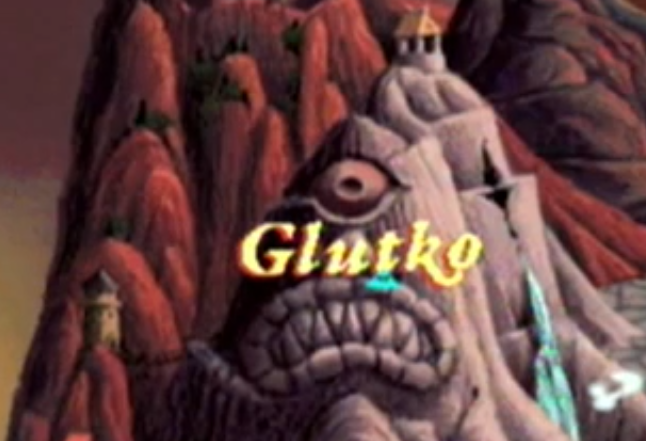
Militron, a giant in armour, crushes islanders in his fist and bakes them in fire until they are stone soldiers. Glutko, a one-eyed glutton, simply eats them. Lupay, a three-eyed wolf whom Gwonam calls the most dangerous of the lot, uses cursed Rubies to replace their souls and turn them into Moblins.
Link deals with them one at a time, and each needs a different trick. Goronu falls to a volley of Firestones. Harlequin is whacked with the sword until he deflates like a balloon. Militron’s armour bursts apart to reveal a mortified old man in his underwear, who flees crying “Oh my goodness, this is awful!” Glutko, on the advice of a local called Droolik that he should be fed something spicy, gets a bomb down his throat. Lupay’s eye-beams have to be bounced back with a mirrored shield.
Harlequin, master of the Bazaar.Militron makes a stone soldier.Glutko at dinner.
The Book of Koridai
Not everything on Koridai is what it seems. At the top of Fortress Centrum Link finds Princess Zelda asleep, strikes her to wake her, and watches her turn into Goronu, back for a second round. The reward for beating him again is the Crystal of Reflection, which the ice sorceress Suprena turns into the Reflecting Shield that Link will need against Lupay.
The prize that matters is at the summit of Glutko’s mountain. “Through the Eye of Glutko lies the Shrine of Koridai,” Gwonam tells Link, and inside the shrine Glutko is waiting to be bombed a second time. He drops the Book of Koridai. Back in Nortinka, Aypo reads its secret verse and confirms that the book is the one thing that can defeat Ganon.
One more errand remains. Lupay leaves behind the Crystal of Vision, and in a cave on the tar pits of Hermit Flat Gwonam, who has been waiting for Link to find his house, builds it into the Lantern of Vision. Its light shows the invisible creatures that swarm through Ganon’s Lair.
‘Zelda’ in Fortress Centrum is Goronu in disguise.Aypo and the Book of Koridai.
Ganon’s Lair and the gong
The lair is the sixth and last Face, a fortress of giant skulls and lava, with Militron back in his armour halfway through. At the top Ganon makes Link an offer: join him and share his power, or die. Link refuses, dodges the skull-shaped fireballs and throws the Book of Koridai. Ganon is dragged into its pages and imprisoned, leaving behind a key.
The key opens the chamber where the real Zelda lies asleep, and Link wakes her by striking the gong above her head. She is not grateful. “I just saved you from Ganon!” says Link. “You did not!” says Zelda.
Gwonam flies the pair home, pointing out an island already returning to harmony below them, and declares that Link is, as it was written, the hero of Koridai. Link suggests that this must be worth a kiss. It is not.
Where it fits
Link in the Valiant comics of 1990, one of the game’s likely influences.
Nowhere, officially. Nintendo has never counted The Faces of Evil as part of the Zelda series, it has no place on the official timeline, and it is absent from Hyrule Historia. When MTV asked Eiji Aonuma about the CD-i games in 2013 he laughed and said he did not know that they “really fit in the ‘Zelda’ franchise”.
What the game does resemble is the Zelda of American television and comics. Dale DeSharone recalled working from the two NES games and their box and manual art, but fan researchers have pointed out how much seems to come from the 1989 cartoon and the Valiant comics as well: a talking Link who keeps asking Zelda for a kiss, a king called Harkinian, a sword that cannot harm friendly people, and a magic pouch for carrying items.
Stages of Koridai
Koridai has 15 stages, all chosen from the island map. Three are open at the start (Goronu, Nortinka and Crater Cove) and each leads to its own chain of further stages. Several have to be visited two or three times, once the right item is in the pouch. The order below roughly follows the route of the official Philips hotline guide.
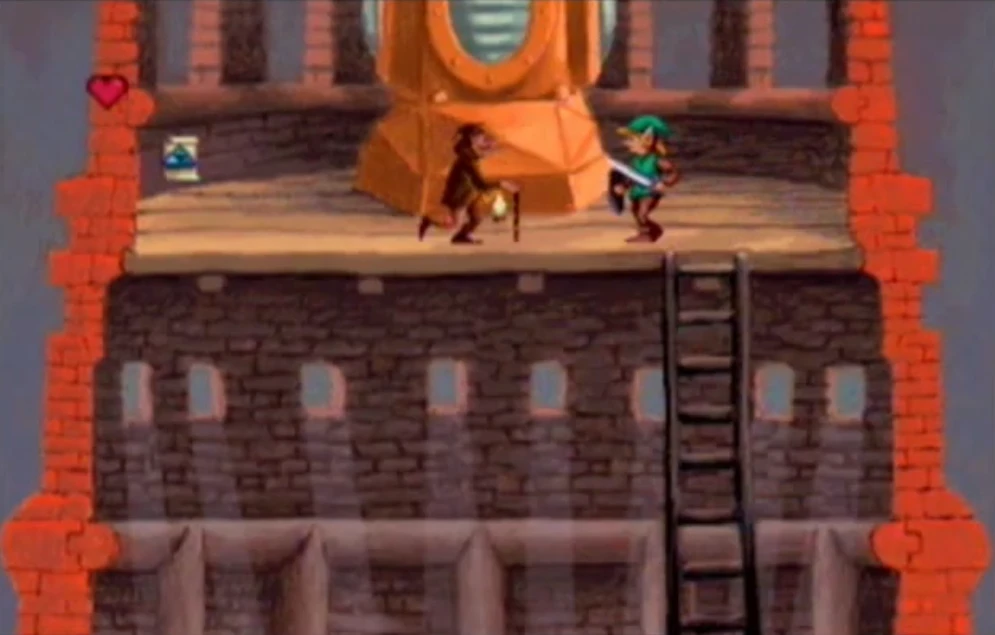
GoronuOpen from the start · Face of EvilA mountain pass patrolled by axe-throwing Dairas and flapping Arpagos, with Morshu’s shop on a little bridge beside the waterfall. Come back with bombs, rope and a Lantern to blast the boulder between the Face’s teeth and climb through dark rooms of Ghini and Stalfos to Goronu himself. He drops the Bell and a Life Heart, and his defeat opens Harlequin Bazaar.
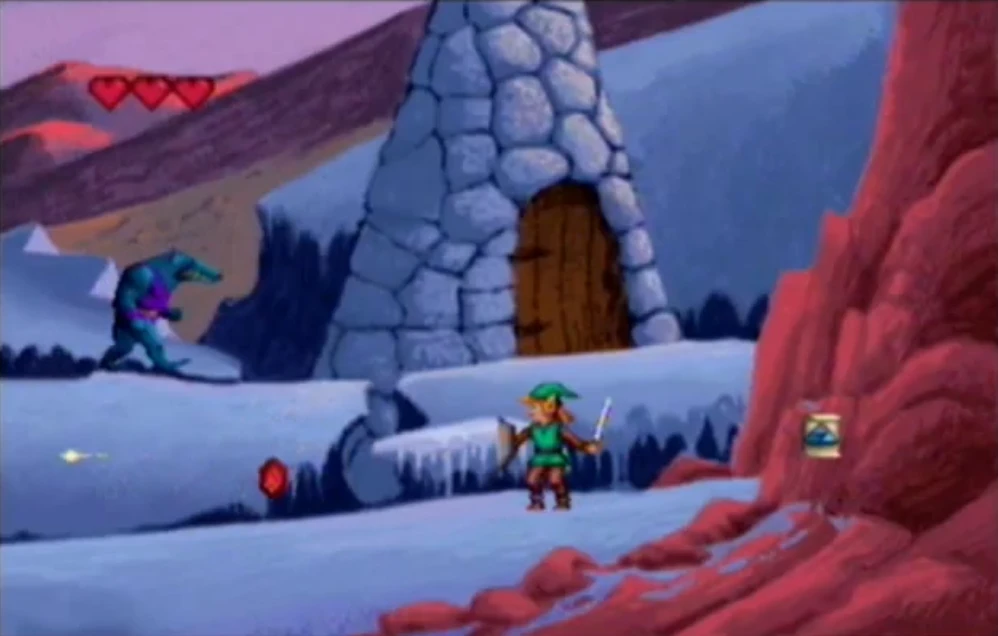
NortinkaOpen from the startA snowbound village of igloos. Its spear-throwing Moblins drop Snowballs, the only thing that hurts fire creatures. Hamsha sits frozen in her house until a Firestone thaws her, and Abominoms guard the way up to Aypo’s library. Finishing it opens Toyku Lighthouse; the Book of Koridai is brought back here at the end.
Crater CoveOpen from the startFishing huts under a smoking crater. Anutu gives Link the Power Sword, and a woman in the beach hut hints that the key to the boarded-up crater is hidden under a skull. Inside, fire creatures put out with Snowballs leave Firestones behind. Opens Spearfish Falls.
Toyku LighthouseOpened by NortinkaA rock slide, a key on a ledge, Alora’s ransacked trailhouse and, at the top of the lighthouse, Horgum the keeper with the Lantern. Bring Alora her stolen necklace later and she hands over the Canteen. Opens Firestone Lake.
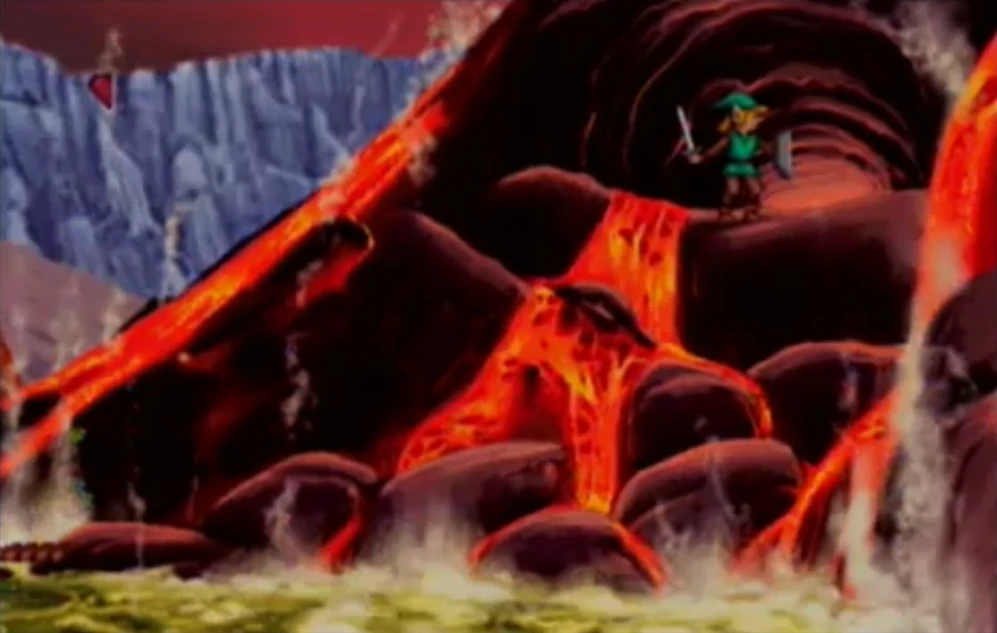
Firestone LakeOpened by Toyku LighthouseA raft ride to a volcano. Gwonam appears with the news that Zelda has been captured; inside the volcano are the Grapple Berries and, at the bottom, a fire wheel that gives up the Fire Diamond when pelted with Snowballs. Opens Shipwreck Cliff.
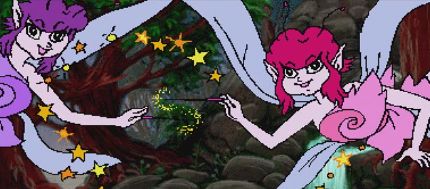
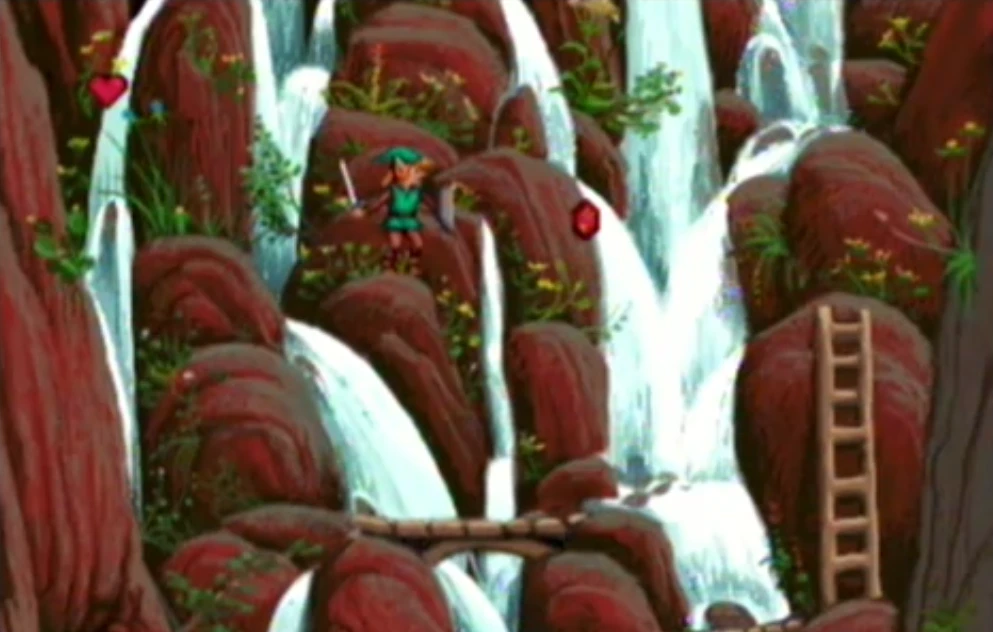
Spearfish FallsOpened by Crater CoveA climb up a waterfall full of leaping Spearfish. Two fairies in a pond give a Life Heart and Water of Life, a Gleeok in a cave guards Alora’s necklace (light the room, then bomb it), and Zorga’s hut at the top is where Grapple Berries become the Power Glove. Opens Serigon Caves.
Serigon CavesOpened by Spearfish FallsThree ice caves. The right-hand one hides the Ice Crystal behind Abominoms and falling icicles, the middle one has a spring of Water of Life, and the left-hand one, sealed by a boulder that needs ten bombs or the Power Glove, is home to Suprena. Opens Fortress Centrum.
Fortress CentrumOpened by Serigon CavesA fortress of Gohma, Darknuts, Armos and a dark room of Wallmasters. The sleeping Zelda at the top is Goronu in disguise; beat him with Firestones for the Crystal of Reflection. Opens Ganon’s Lair, long before Link is ready for it.
Harlequin BazaarOpened by Goronu · Face of EvilThe largest Face on the map and Harlequin’s crooked casino, entered past a ticket booth and through the mouth. Beat Harlequin for the key to the observatory at the top, where the astronomer Odranoel is locked up. He wants the Ice Crystal from Serigon, and uses it to turn the Lantern into the Magic Lantern.
MilitronFace of EvilMilitron’s Face, up above Spearfish Falls, with a boulder in its mouth and skull barriers inside. Militron is beaten with sword blasts to the head and leaves the Winged Helmet, which lets Link make much longer jumps at five Rubies a go. Opens Glutko.
Shipwreck CliffOpened by Firestone LakeA Viking-style ship stranded in a mountain crater and used by Ganon’s forces as a prison. Clora, locked in the cabin, gives Link a kiss and a Life Heart and asks him to save her father. Across a chasm only the Winged Helmet can clear, the blacksmith Kulvan is chained in a cave; freed, he forges the Fire Diamond and the Power Sword into the Magic Sword. Opens Lupay.
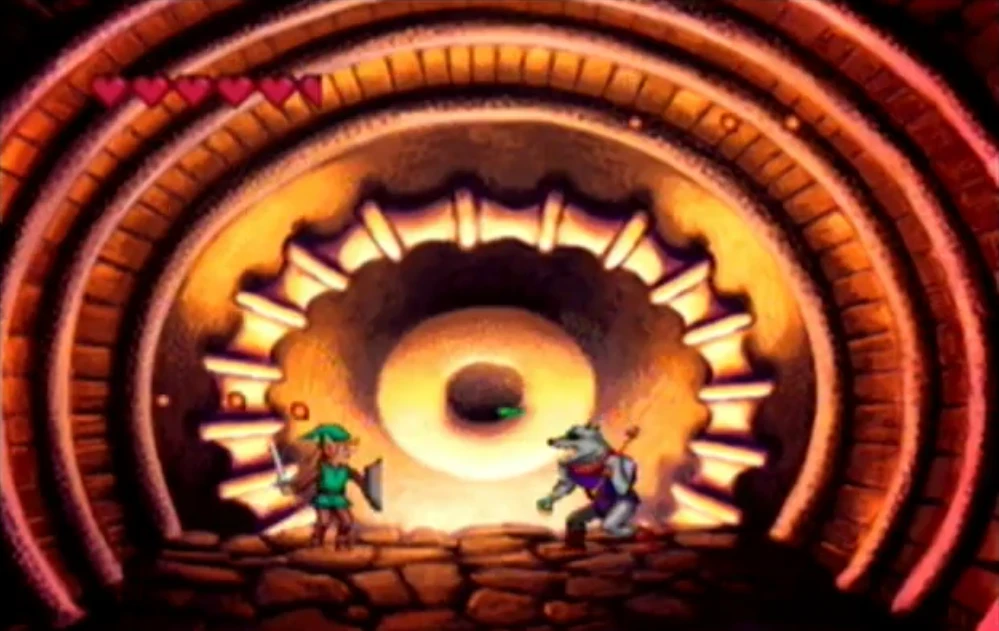
GlutkoOpened by Militron · Face of EvilA dormant volcano in the south-west with one carved eye. Droolik, in a cave beside the mountain’s teeth, explains how to beat the glutton; a bomb in the mouth does it. Beyond the boulder in the Eye of Glutko and another Spearfish waterfall is the summit, the Shrine of Koridai, a second fight with Glutko and the Book of Koridai.
LupayOpened by Shipwreck Cliff · Face of EvilThe wolf’s Face in the north-west. A Tektite carries the key, Harlequin turns up for a rematch, and Lupay can only be beaten by reflecting the beams from that third eye with the Reflecting Shield. The prize is the Crystal of Vision. Opens Hermit Flat.
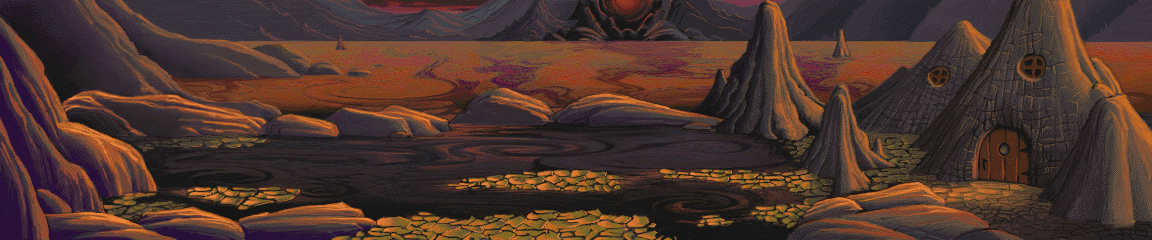
Hermit FlatOpened by LupayA murky wasteland of tar pits in the middle of the island, with Zolas in the tar and swirling mud to be jumped with the Winged Helmet. At the far end is the cave where Gwonam lives, and where he makes the Lantern of Vision.
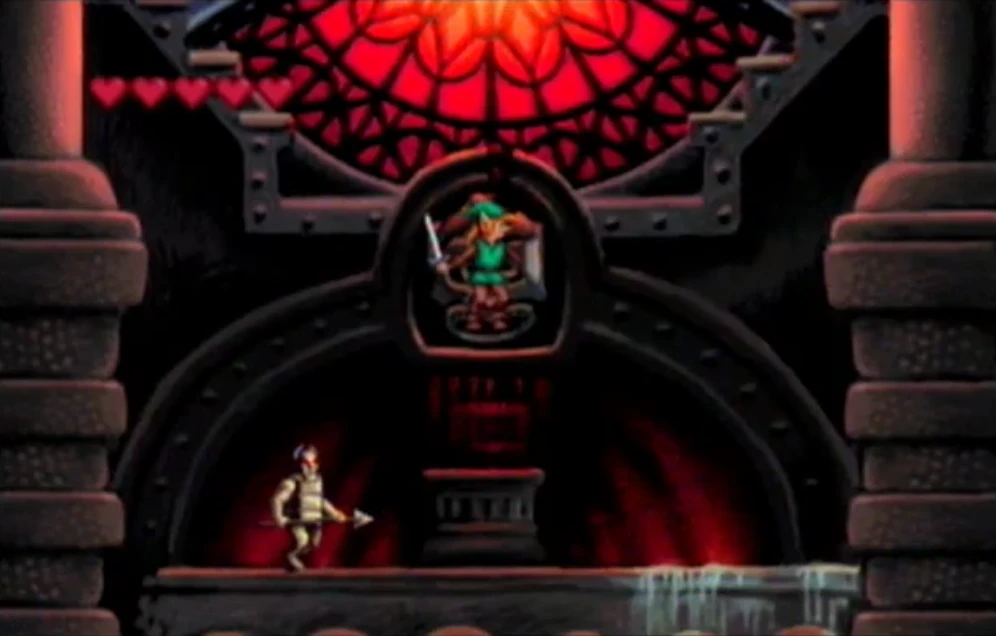
Ganon’s LairOpened by Fortress Centrum · Final stageA raft, a moving platform over lava, a rematch with Militron and tunnels full of creatures that only the Lantern of Vision reveals. Choose the Book of Koridai before stepping through the last doorway, throw it at Ganon, take his key and strike the gong to wake Zelda.
The three starting stages each head a branch. Goronu leads to Harlequin Bazaar, Militron and Glutko; Crater Cove to Spearfish Falls, Serigon Caves, Fortress Centrum and Ganon’s Lair; and Nortinka to Toyku Lighthouse, Firestone Lake, Shipwreck Cliff, Lupay and Hermit Flat. Players have worked out that the whole Nortinka branch can be skipped, at a price. See Cheats & secrets.
How it plays
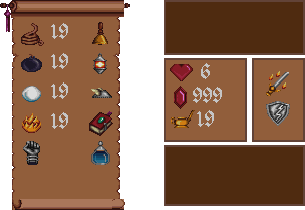
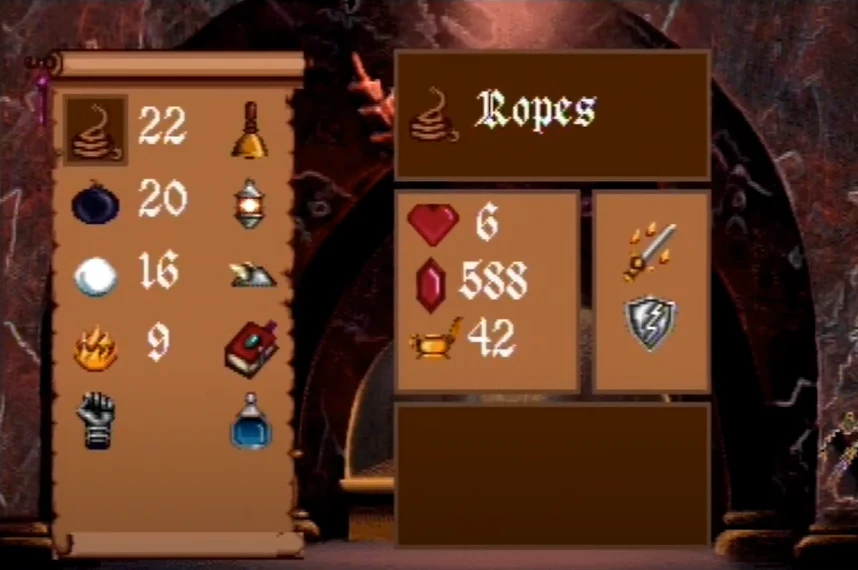
The magic pouch, Link’s inventory.
Forget the top-down Hyrule of the first Zelda. The Faces of Evil is viewed from the side, and it plays like an adventure game folded into a platformer: short stages full of ladders, ropes and locked doors, a pouch of items, and a cast of characters who each want something from somewhere else.
Almost nothing is explained in text. Characters speak their hints aloud in the cutscenes, so working out who needs what, and where it might be, is most of the game.
Item
Where it comes from
What it does
Lamp oil, rope, bombs
Morshu’s shop at Goronu, three at a time for 5, 10 and 20 Rubies
Oil feeds the Lantern, ropes reach high ledges and doors, bombs clear boulders and settle a few bosses
Snowballs
Dropped by the Moblins of Nortinka
The only weapon that works on fire creatures
Firestones
Dropped by the fire creatures in the Crater
Thaw Hamsha, see off Abominoms and are the only way to beat Goronu
Power Sword
Anutu, Crater Cove
Fires Power Blasts while Link’s hearts are full
Magic Sword
Kulvan, Shipwreck Cliff, from the Power Sword and the Fire Diamond
Fires Power Blasts whatever Link’s health
Lantern
Horgum, Toyku Lighthouse
Lights dark rooms, burning lamp oil. Odranoel upgrades it to the Magic Lantern and Gwonam to the Lantern of Vision, which shows invisible enemies
Bell
Left by Goronu
Freezes flying enemies, for a fee in Rubies
Power Glove
Zorga, Spearfish Falls, in exchange for Grapple Berries
Smashes boulders and skull barriers and deals with tougher enemies
Canteen
Alora, Toyku Lighthouse, in exchange for her necklace
Carries Water of Life, a portable refill of hearts
Winged Helmet
Left by Militron
Higher, longer jumps at 5 Rubies each
Reflecting Shield
Suprena, Serigon Caves, in exchange for the Crystal of Reflection
Bounces Lupay’s beams back
Book of Koridai
Left by Glutko in the Shrine of Koridai
Thrown at Ganon to imprison him
Life Hearts
Goronu, the fairies of Spearfish Falls, Clora
Raise Link’s three starting hearts to six
A map instead of an overworld
Glutko on the map of Koridai.
There is no Hyrule Field to cross. Gwonam’s map of Koridai is the hub, and stages are picked from it with a cursor. Each stage is a handful of linked screens, and each has two Triforce Maps: one at the entrance and one at the far end. Striking the far one finishes the stage, returns Link to the map and usually adds a new destination to it.
The CD-i could only scroll about two to two and a half screens across, Dale DeSharone recalled, which helps to explain why the island is cut into so many small pieces.
A sword for everything
Link, the hero of Koridai.
Link starts with a sword and a shield and nothing else. The shield raises itself whenever he stands still or crouches, and turns aside thrown axes, spears and boomerangs; shuffling forward while crouched is the ‘duck walk’. The sword is used for everything: stabbing monsters, picking up the Rubies they drop, collecting items, and talking. It is called the Smart Sword because it cannot hurt a friendly character. Strike one and a cutscene plays instead.
Later the sword learns to shoot. Anutu’s Power Sword fires Power Blasts, this game’s sword beam, as long as Link’s hearts are full, and Kulvan’s Magic Sword removes the condition.
Rubies and Morshu’s shop
Lamp oil, one of the three things Morshu sells.
The currency is the Ruby, not the Rupee: red ones are worth 1, green 5 and blue 10. Morshu’s store at Goronu is the only shop on the island and sells three things, each in threes: lamp oil for 5 Rubies, rope for 10 and bombs for 20. Some of the best items also charge by the use. The Winged Helmet costs 5 Rubies a jump, and the Bell takes its fee each time it rings.
Enemies return when Link leaves a screen and comes back, so the usual way to fill the pouch is to walk in and out of Goronu. The hotline guide suggests starting the game with more than 200 Rubies in hand and spending them on a dozen ropes, a dozen bombs and 18 flasks of oil.
Hearts, continues and saving
Link has three Life Hearts to begin with, and every hit costs at least half of one. Lose them all and he restarts near where he fell; do it a third time and Gwonam carries him back to the map to begin the stage again, though he keeps his items and Rubies. Three more hearts are hidden around the island. Water of Life, found in springs and bottles in a few stages, refills the meter on the spot and can be carried away in the Canteen. The game is saved from the map screen.
Two buttons and a remote control
The whole game runs on two buttons. Button One swings the sword. Button Two goes through doors, and pressed while Link is crouching it opens the magic pouch, where the same button picks an item to use. Because so much hangs on that second button, simply choosing a bomb in the middle of a fight takes practice.
It did not help that the CD-i’s standard controller was an infrared remote. DeSharone remembered it as analogue rather than digital, which made it slow and unresponsive. John Szczepaniak, the game’s most persistent defender, says it plays best on a hardwired three-button pad and not on what he calls the “crappy infra-red remote”.
Characters
Koridai has a large speaking cast. Only a few characters are named on screen; most of the islanders’ names come from the game’s manual and from the guide Philips wrote for its telephone hotline.
Character
Who they are
In this game
Stats & abilities
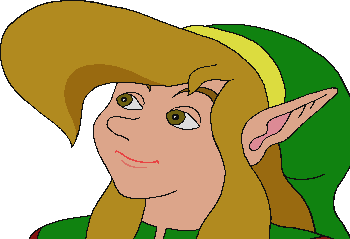
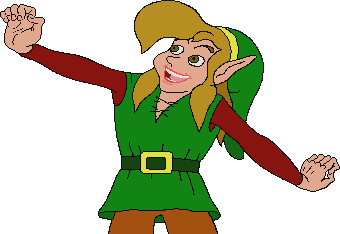
LinkHero of Koridai
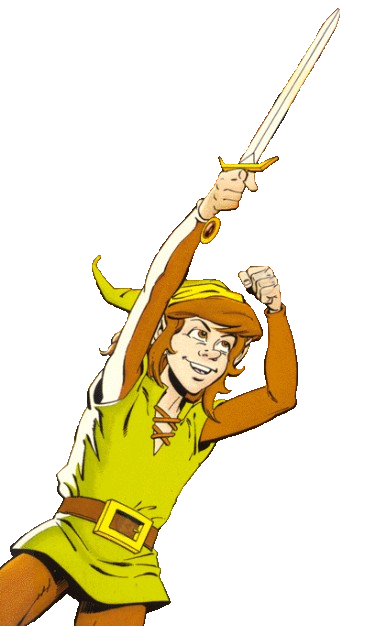
Hyrule’s champion, here a cheerful, talkative hero who is bored by peace and forever angling for a kiss from Zelda. He is voiced by Jeffrey Rath.
Flown to Koridai by Gwonam because a prophecy says only he can defeat Ganon. He works his way through the Faces of Evil, wins the Book of Koridai and rescues Zelda.
Smart Sword and shield from the start
3 Life Hearts, rising to 6
Power Blasts with the Power Sword
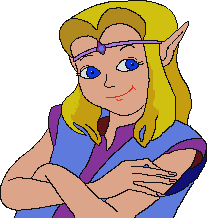
Princess ZeldaPrincess of Hyrule
The King’s daughter, sharp-tongued and unimpressed by Link. Voiced by Bonnie Jean Wilbur.
Turns Link down in the opening scene, is captured by Ganon and put under a sleeping spell, and is woken with a gong at the end. The ‘Zelda’ in Fortress Centrum is an impostor.
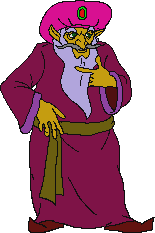
A turbaned wizard of Koridai who travels by flying carpet and lives in a cave on Hermit Flat. Voiced by Paul Wann.
Brings the prophecy to Hyrule, carries Link around the island, appears before each boss to show what it does to the islanders, and builds the Lantern of Vision. He also picks Link up when the continues run out.
Gives the map of Koridai
Lantern of Vision (for the Crystal of Vision)
“Squadala!”
King HarkinianKing of Hyrule
Zelda’s father. The name Harkinian comes from the American Zelda cartoon of 1989; in this game he is simply the King, and the name appears in the manual of the sister game. Voiced by Mark Berry.
Seen only in the opening scene, lecturing a restless Link on the value of peace and asking Gwonam how Hyrule can help.
Appears in the introduction only. He has a far bigger part in The Wand of Gamelon.
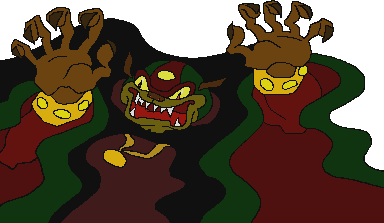
GanonLord of the Faces of Evil
The series villain as a hooded, boar-faced sorcerer. Mark Berry voices him too.
Has seized Koridai, handed its regions to five lieutenants and kidnapped Zelda. He offers Link a share of his power, is refused, and ends the game trapped inside the Book of Koridai.
Throws skull-shaped fireballs
Harmed only by the Book of Koridai
Drops the key to Zelda’s chamber
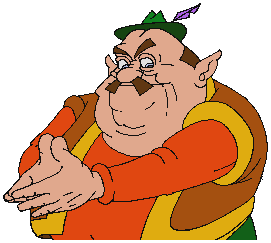
MorshuShopkeeper
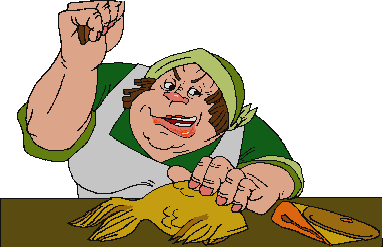
The owner of the general store at Goronu, named in the manual. His voice actor has never been confirmed.
Sells the three supplies the whole game runs on, and will not give credit: Link is told to come back when he is a little richer.
Lamp oil ×3: 5 Rubies
Rope ×3: 10 Rubies
Bombs ×3: 20 Rubies
AypoThe reader of Nortinka
A scholar with a house full of books on the mountain above Nortinka. Koridai is said to be guided by its scholars.
Asks Link to bring the Book of Koridai and reads its secret verse, confirming that the book is what will defeat Ganon. Aypos Library, the fan research site used for this page, is named after the character.
Reads the Book of Koridai. The visit is not actually needed to finish the game.
AnutuFisherman of Crater Cove
A fisherman in a hut at Crater Cove, proud of a catch he takes for a giant crab.
Rewards Link with the Power Sword and refills his hearts.
Gives the Power Sword.
HamshaFrozen woman of Nortinka
A villager found frozen in her own house.
Thawed with a Firestone, she gives Water of Life, then freezes again, so she can be thawed whenever Link needs a refill.
Gives Water of Life.
AloraTrailhouse keeper
Lives in the ransacked trailhouse near Toyku Lighthouse. Her husband is among the islanders who have been turned into Abominoms.
Asks Link to recover the necklace a Gleeok carried off to Spearfish Falls, and thanks him with a kiss and the Canteen.
Wants: necklace. Gives: Canteen.
HorgumLighthouse keeper
The old keeper at the top of Toyku Lighthouse.
Gives Link the Lantern, and tells him that few islanders are left and that Droolik can be found round the Side of Glutko.
Gives the Lantern.
ZorgaWitch of Spearfish Falls
An old witch in a hut at the top of the falls.
Stirs the Grapple Berries from Firestone Lake together with a glove to make the Power Glove.
Wants: Grapple Berries. Gives: Power Glove.
OdranoelAstronomer
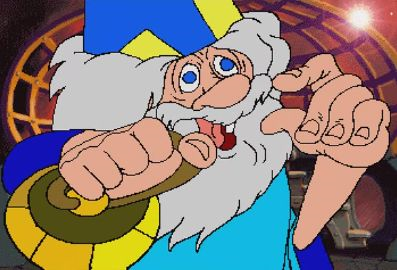
A stargazer locked in his observatory at the top of Harlequin Bazaar, convinced that the stars are made of ice. His name is Leonardo backwards.
Asks for the Ice Crystal from Serigon to prove that the light of ice carries further than fire, and spins it inside Link’s Lantern to make the Magic Lantern.
Wants: Ice Crystal. Gives: Magic Lantern.
SuprenaSorceress of Serigon
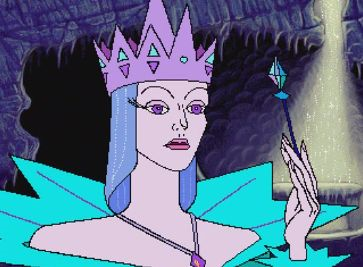
An icy sorceress in the leftmost of the Serigon Caves.
Sends Link to Fortress Centrum for its treasure and turns his shield into the Reflecting Shield.
Wants: Crystal of Reflection. Gives: Reflecting Shield.
Clora and KulvanPrisoners of Shipwreck Cliff
A blacksmith and his daughter, held on and under the stranded ship. Kulvan is being driven to distraction by the Arpagos that circle his cave.
Clora gives Link a kiss and a Life Heart and begs him to free her father. Kulvan, once his chains are cut, tempers the Power Sword with the Fire Diamond.
Give: Life Heart (Clora), Magic Sword (Kulvan).
DroolikGlutko’s neighbour
One of the last islanders left around Glutko’s mountain, living behind a locked door beside its teeth.
Gives the hint that beats Glutko: feed him something spicy.
Gives advice only.
Bosses and enemies
Ganon’s five lieutenants each rule a Face of Evil, and four of them come back for a second fight. The foot soldiers are borrowed from the NES games and their manuals.
GoronuGoronu · Fortress CentrumA snake-like necromancer who raises Stalfos from old bones. Only Firestones hurt him. He reappears in Fortress Centrum disguised as Zelda.
HarlequinHarlequin Bazaar · LupayA pig in a jester’s outfit who runs a casino and enslaves the losers. He paces the room throwing projectiles the shield can block, and deflates after enough sword hits.
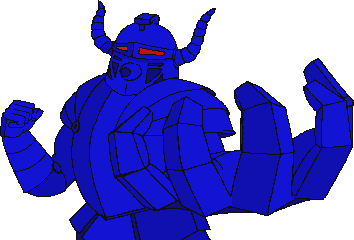
MilitronMilitron · Ganon’s LairA towering knight who turns islanders into stone soldiers. Aim sword blasts at his head and the armour bursts, revealing a fat old man.
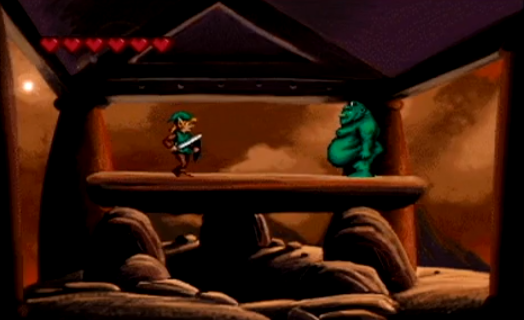
GlutkoGlutko · Shrine of KoridaiA one-eyed glutton who eats the islanders alive. He is fought twice in the same stage, and both times the answer is a bomb in the mouth.
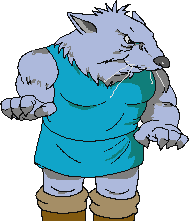
LupayLupayA wolf with a third eye that shoots energy beams. The beams have to be reflected with the Reflecting Shield. The only lieutenant never fought twice.
GanonGanon’s LairDodge the flaming skulls and throw the Book of Koridai. He leaves the key to Zelda’s chamber.
GleeokSpearfish FallsThe dragon from the first Zelda, lurking in a dark cave with Alora’s necklace. Deal with the heads, then bomb it while its mouth is open.
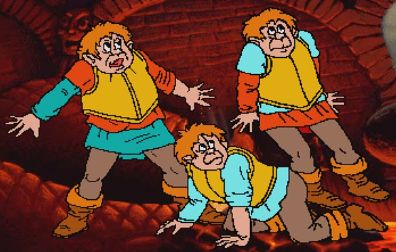
Moblins, Goriyas and ArmosAcross KoridaiAccording to the cutscenes these are former islanders: Lupay makes the Moblins, Harlequin the Goriyas and Militron the stone Armos.
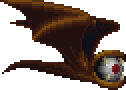
Dairas and ArpagosGoronu and most outdoor stagesAxe-throwing reptile-men from Zelda II and red flying creatures, the first enemies Link meets and an easy source of Rubies.
AbominomsNortinka · Serigon CavesApe-like snow creatures that throw snowballs and are beaten with Firestones.
The people who made it
The Faces of Evil and The Wand of Gamelon were made by one small team, most of whom had built CD-i launch titles together at Spinnaker Software. These are the names on the disc, plus the cast.
Dale DeSharoneProducer and lead designerA former primary school teacher who had written Below the Root and Alice in Wonderland for home computers, then ran Spinnaker’s CD-i group. He pitched the two games, programmed alongside his team and ran the project. He died of leukaemia in 2008.
Jonathan MerrittScript and designA freelance writer who wrote both scripts and helped design both games. Both islands were inspired by the Pacific, and he had once lived on Kaua’i in Hawaii.
Rob DunlaveyGraphic designDrew the level layouts for both games and painted the backgrounds of this one. Three decades later he was among the original staff recruited for Arzette.
Linde Dynneson, John O’Brien and John WheelerProgrammersThe three credited programmers, who came over from Spinnaker Software.
Tony Trippi and William HavlicekMusic and audioTrippi had worked with DeSharone at Spinnaker and, by DeSharone’s account, composed the music for both games. Havlicek is credited with audio production and music.
Igor Razboff and the St Petersburg animatorsAnimationRazboff, a mathematician who had worked at Bell Labs, co-founded Animation Magic with DeSharone and recruited its Russian animators, the first six of whom drew these cutscenes.
Jeffrey Rath and Bonnie Jean WilburVoices of Link and ZeldaLocal New England actors. Rath has recalled two-hour recording sessions after about a quarter of an hour’s rehearsal. Both came back for Arzette in 2024.
Paul Wann and Mark BerryVoices of Gwonam, and of the King and GanonWann also played Aypo. Berry has confirmed his roles himself, adding that he was not the voice of Morshu.
How it was made
The Faces of Evil exists because of a broken business deal, and looks the way it does because of a tight budget, a machine that was never meant for games and a handful of animators from Russia.
The deal that fell apart
In the late 1980s Nintendo and Sony began work on a CD-ROM drive for the Super NES. Nintendo’s president, Hiroshi Yamauchi, came to dislike the terms, and sent Minoru Arakawa and Howard Lincoln of Nintendo of America to the Netherlands to talk to Philips instead. At the Consumer Electronics Show in June 1991 Sony unveiled its Nintendo-compatible ‘PlayStation’, and the very next day Nintendo announced that it was working with Philips.
Sony went on to build a console of its own. The Philips drive for the Super NES never appeared, and was quietly cancelled without a prototype being made. What survived was a clause in the contract that let Philips feature Nintendo’s characters in a few games for its own machine, the CD-i. Dale DeSharone remembered it as a licence for five characters, not five games, and said that Philips’s American publishing arm, American Interactive Media, simply picked the biggest names. Link and Zelda were top of the list.
Dale DeSharone and Animation Magic
DeSharone had come to games by accident. He was a primary school teacher who wrote teaching programs for his class on an early Atari computer, won prizes for them, and never went back to the classroom. After a run of Commodore 64 adventures that included Below the Root, he moved from California to Boston in 1987 to build a CD-i team at Spinnaker Software, which had a contract to make seven launch titles for the new machine. The job was meant to last a year. Delays to the hardware stretched it to four.
When those seven discs shipped, Spinnaker lost interest in the CD-i. DeSharone left, took most of his team with him and set up a new studio in Cambridge, Massachusetts, funded by American Interactive Media. With Igor Razboff he founded Animation Magic in 1991. Philips had told him plainly that it did not think its machine was for games, and he sensed a quiet hostility to them among its executives. That changed, he said, when games turned out to be the only discs that sold.
Two games, one engine
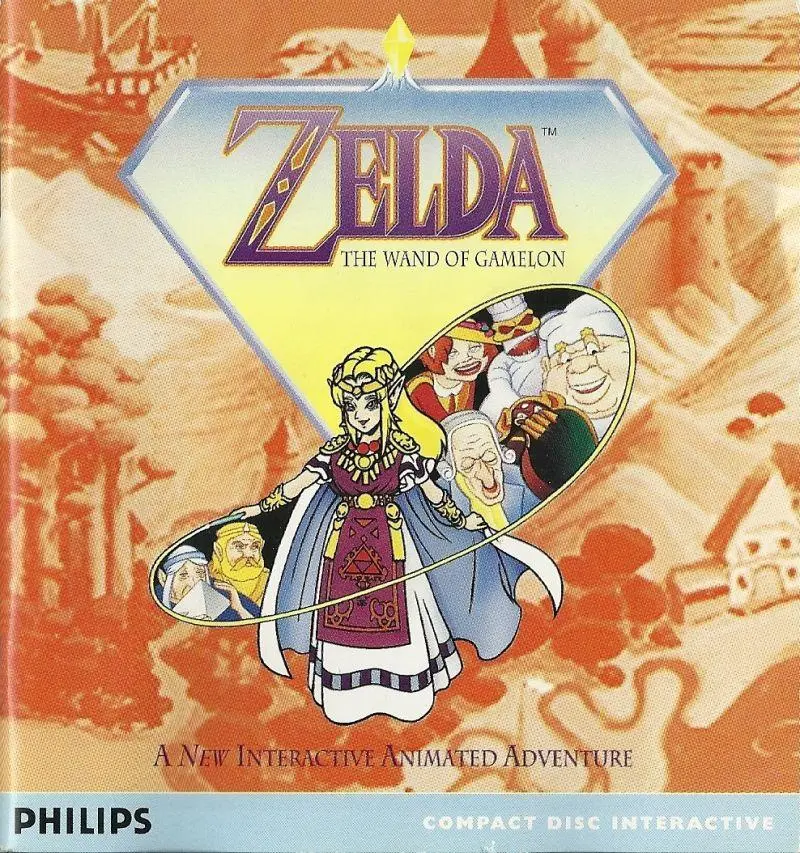
The box of The Wand of Gamelon, the sister game made alongside this one.
Several developers pitched for the Nintendo characters. DeSharone’s team proposed two games, one starring Link and one starring Zelda, built on a single engine so that the money would go further. As he remembered it the budget was about $600,000 for each game (Wikipedia gives that figure for the pair), at a time when one technical employee cost a studio around $100,000 a year and a one-gigabyte hard drive cost $3,000. The team had, in his words, “maybe just a little over a year”.
The team was tiny: DeSharone and three other programmers, one audio engineer and composer, four artists, a producer and Jonathan Merritt, the freelance writer who scripted and helped design both games. Script, design, art and animation for the two were all worked on at once. The earliest date Aypos Library has found on any surviving material is April 1992, on the finished sketches of the island maps.
Merritt had written a 350-page script for Spinnaker’s Laser Lords. For each Zelda game he had about 15 pages, and some scenes were cut even from those. He has said that the transformations running through the story, with islanders becoming soldiers, servants and monsters, were deliberate, and that Harlequin Bazaar was first planned as a kind of pinball table before hardware, money and time ruled it out.
Why it scrolls sideways
Serigon Caves, one of the side-scrolling stages.
The side-on view was partly a nod to Zelda II and partly salesmanship. Philips wanted discs that showed off what the CD-i could do: animation, detailed pictures and CD sound. DeSharone knew the games would be judged on looks before anything else, did not believe a top-down view would have been approved, and said the team “definitely pushed for the side view”, where large painted backgrounds could fill the screen.
The machine fought back. The CD-i had a slow processor and no hardware sprites, so every moving figure had to be drawn by the processor. It could not stream music and load graphics at once without strain, its single-speed drive was slow to seek, and saves had to fit in a sliver of built-in memory. An idea for music that changed with the action was dropped because the soundtrack streamed straight off the disc.
The animators from St Petersburg
A Goriya, as drawn for the cutscenes.
Philips expected animation, and the budget could not pay American animators. A mutual friend introduced DeSharone to Igor Razboff, a mathematician from St Petersburg who had spent twelve years in the United States, at Bell Labs among other places, and wanted to start a company back home. Razboff found about six people in St Petersburg with some experience of 2D animation.
They were flown to Massachusetts for six months and housed in a couple of apartments, where they drew on animation paper, scanned the drawings and cleaned up the lines and colours on computers before the art was moved across to the CD-i. Their skills, DeSharone admitted, varied. Wikipedia, citing Retro Gamer, calls it the first time an American games company had outsourced to Russia, something made possible by the thaw at the end of the Cold War. The studio’s St Petersburg branch opened in 1992, and the credits of the finished games list 25 animators.
Voices and music
The woman in the beach hut at Crater Cove, one of the many voiced islanders.
The actors were found locally. Animation Magic auditioned members of the American broadcasting union AFTRA from around Boston, many of them from community theatre, and recorded roughly ten minutes of scenes for each game. Jeffrey Rath, the voice of Link, later remembered sessions of two hours after about fifteen minutes of rehearsal. Bonnie Jean Wilbur played Zelda, Paul Wann the wizard Gwonam and the scholar Aypo, and Mark Berry both the King and Ganon.
The music is by Tony Trippi, a colleague from Spinnaker, with William Havlicek credited alongside him on the disc. The soundtrack is one of the things the game’s defenders single out for praise.
What Nintendo did
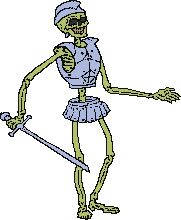
A Stalfos, one of the enemies borrowed from the NES games.
Very little. According to DeSharone, Nintendo signed off the design document and the character sketches, cared mostly about how Link and Zelda looked, and left everything else alone. Philips offered hardly any design direction either. For reference the artists had the two NES Zelda games, their box art and their instruction booklets, which is why the island’s monsters look like drawings from the old manuals.
“We weren’t Nintendo,” DeSharone said years afterwards, when asked about the criticism. He understood why people were disappointed, thought the way Nintendo tuned its games was exceptional, and still felt that his team had done well with the time and money it had.
Previews, launch and that release date
Kulvan the blacksmith, the ‘gentle giant’ of an early Philips catalogue blurb.
A Philips catalogue packed with Laser Lords at the end of 1992 already carried a blurb for the game, one that left out Koridai altogether and called Kulvan a ‘gentle giant’. By the spring of 1993 magazines were being shown them: the French monthly Joystick previewed both in May, and in July the first issue of Britain’s SNES Force called the animated sequences “breathtaking”.
Both games came out together in the autumn. Almost every reference gives 10 October 1993 for North America, and Wikipedia adds 25 December 1993 for Europe, but neither date has a period source behind it. The fan site Aypos Library has gone through the magazines and newspapers of the time and found the games reviewed in issue 2 of the British CD-i magazine (October 1993) with their availability given as ‘Now’, and advertised by Dixons in the same issue. An American newspaper advert of 15 October 1993 promotes the CD-i with ‘Zelda & Link’, and another of 11 November lists both in stock. So October 1993 fits on both sides of the Atlantic, and Christmas Day does not.
The French, German and Dutch-language editions arrived a little later. Joystick ran a full-page advert in its November 1993 issue and reviewed The Faces of Evil in December, and the Dutch magazine Power Unlimited covered both games in November.
Firsts: what this game introduced
Nintendo would not thank anyone for saying so, but The Faces of Evil and its twin did a few things before the main series got round to them.
1Zelda on a compact discEvery Zelda game before 1993 came on a cartridge, a Famicom disk or its own little LCD unit. With The Wand of Gamelon, this was the first to be published on a compact disc.
2A cast that talksTogether with The Wand of Gamelon, it was one of the first two Zelda games in which the characters speak. Link, Zelda, the King, Ganon and every islander speak their lines aloud; there is hardly any written dialogue at all.
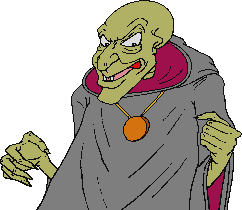
3Animated cutscenesAbout ten minutes of hand-drawn animation tell the story, with a scene for every character and every boss, where the earlier games had made do with a few lines of text.
Cheats & secrets
No cheat codes are known for the original CD-i disc. What players have found instead are shortcuts through the island, and the fan remaster of 2020 added codes of its own.
Skip a third of the island
Nortinka on the map of Koridai; the branch it heads is optional.
Ganon’s Lair and the Book of Koridai both sit on the Goronu and Crater Cove branches of the map, so the entire Nortinka branch (Toyku Lighthouse, Firestone Lake, Shipwreck Cliff, Lupay and Hermit Flat) can be left locked. That means no Lantern, Canteen, Magic Sword or Lantern of Vision, and a far harder game, but it also means never fighting Lupay or facing Harlequin a second time. Nortinka itself is still worth a visit for Snowballs, which are needed to collect the Firestones that beat Goronu.
Run past Militron
The second fight with Militron, in Ganon’s Lair, is optional too. He does not block the way: run past him to the door at the far right, hopping over the insect on the floor. Ringing the Bell first freezes the flying enemies in the room.
Hamsha’s endless Water of Life
Nortinka, where Hamsha lives.
Hamsha freezes over again as soon as she has handed over the water, so each fresh Firestone thrown at her earns another helping of Water of Life. The Water of Life on Glutko’s summit can also be used again and again, and will top up the Canteen.
The fairies are flying enemies
The fairies of Spearfish Falls.
The two fairies of Spearfish Falls are built on the same code as the game’s flying monsters, so the Bell freezes them in mid-air, which makes them much easier to hit.
Codes in the 2020 fan remaster
These work only in Dopply’s remaster, on the main menu or the map, and a clip of King Harkinian plays when one is accepted. God Mode (no damage from enemies, though water and lava still kill): Down, Attack, Up, Attack, Use. Unlock every stage: Left, Right, Left, Right, Attack, Use. Full pouch (99 of each supply, 999 Rubies, all three extra Life Hearts and every sword, shield and lantern upgrade): Right, Down, Right, Left, Up, Down, Attack, Use.
Tricks and remaster codes as documented by Aypos Library; stage details checked against the Philips hotline guide, November 2026.
Glitches, exploits and oddities
The Cutting Room Floor and fan researchers have been through the disc and the cutscenes frame by frame. These are the leftovers and slips they found.
The last frame nobody sees
The ending cutscene fades to black one frame early, so its final drawing, an ‘I won!’ picture, is never shown.
A politer dirty-disc warning
Among the sound files is a second, more formal version of the spoken message that tells the player the disc is dirty. Only the casual one is used. The dubbed editions carry a copy of the used message in its place.
Scenery above the screen
Toyku Lighthouse, one of the stages with scenery out of view.
Some backgrounds are taller than Link can ever see. The roof of the top room of Toyku Lighthouse is painted but out of view, as are the upper parts of one room each in Goronu, the lighthouse and Lupay.
The pouch grows in Dutch
The inventory box in the English version.
The inventory box is the same size in the English and French versions, a little wider in German, and nearly fills the screen in Dutch, with the icons and numbers shuffled to fit.
Different sounds in the dubs
Lupay, given a more masculine voice in the dubs.
Four cutscenes lost or changed sound effects in translation. In English, the ‘You lose!’ in Harlequin’s introduction and an islander’s sniffles are stock library effects; the dubs replace them with newly acted lines. The dubbed versions also give Lupay a deeper, more masculine voice. The Cutting Room Floor says the cause is unknown, but one possibility is that the translators were given an earlier, unfinished set of tracks to dub.
The travelling necklace
In the scene where Alora swaps her necklace for the Canteen, the necklace vanishes and reappears in Link’s other hand. Elsewhere Link’s boots go missing for a frame of the introduction, and his hair changes colour from scene to scene. Aypos Library lists well over a hundred slips like these across the game’s cutscenes.
A crab that takes a hit
The ordinary Gohma sprite.
Anutu’s ‘crab’ is a Gohma with a sprite of its own, one pixel shorter than the real enemy and with its claws shut. Hit it and the usual enemy hit effect plays, even though it is not an enemy.
Videos & media
Philips never put a trailer online, so here are the game itself, played from start to finish, and the trailer for the game it inspired three decades later.
A complete playthrough of the original CD-i game, cutscenes included. Video: LaTanaDiMrX on YouTube.
The July 2023 reveal trailer for Arzette, the spiritual successor made by the author of the 2020 remaster. Video: GameTrailers on YouTube.
Trivia & facts
Odranoel the astronomer is Leonardo spelled backwards.
Koridai and Gamelon were both inspired by Pacific islands, and writer Jonathan Merritt had lived on one of them, Kaua’i in Hawaii. The Faces of Evil themselves were inspired by Kalalea Mountain near Anahola, whose outline resembles the head of King Kong.
Rob Dunlavey’s original map of Koridai, which surfaced online in May 2010, uses earlier names: Crater Cove was Soutuna Village, Firestone Lake was Spurgam Volcano, Harlequin Bazaar was Clowon Casino, Militron was Martiron, Shipwreck Cliff was Splitia Crater, Spearfish Falls was Slamon Falls and Ganon’s Lair was Sancrumi.
A Sancrumi, one of the invisible creatures of Ganon’s Lair.That last name seems to have survived in another form: the invisible creatures of Ganon’s Lair are called Sancrumies.
Harlequin Bazaar was first designed to play like a pinball table. The big mural of Harlequin inside is a leftover from that plan.
The gong that wakes Zelda was a late addition. It is missing from the original painting of the final room.
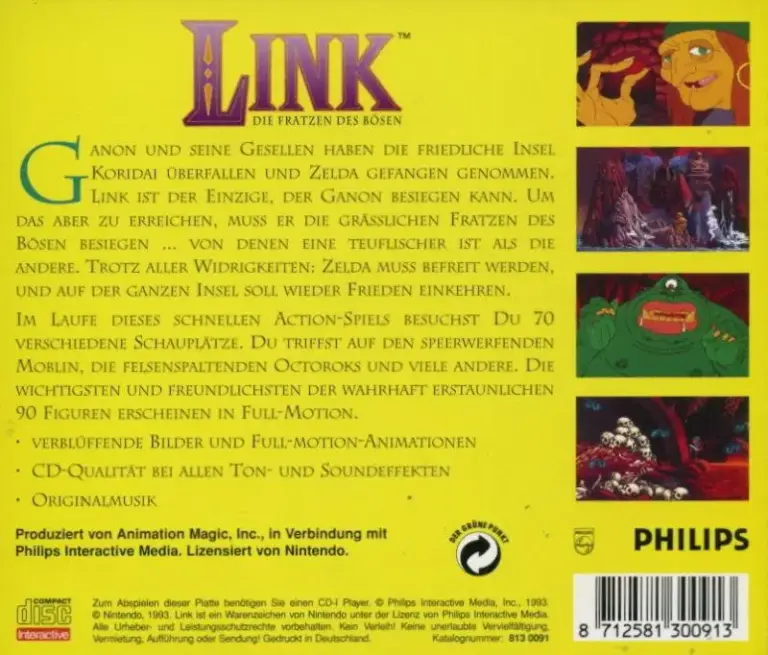
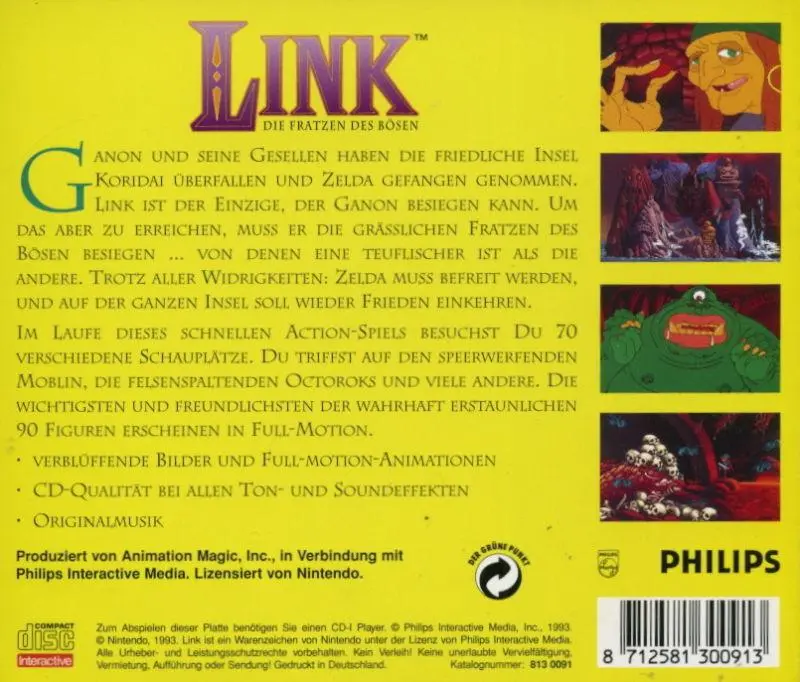
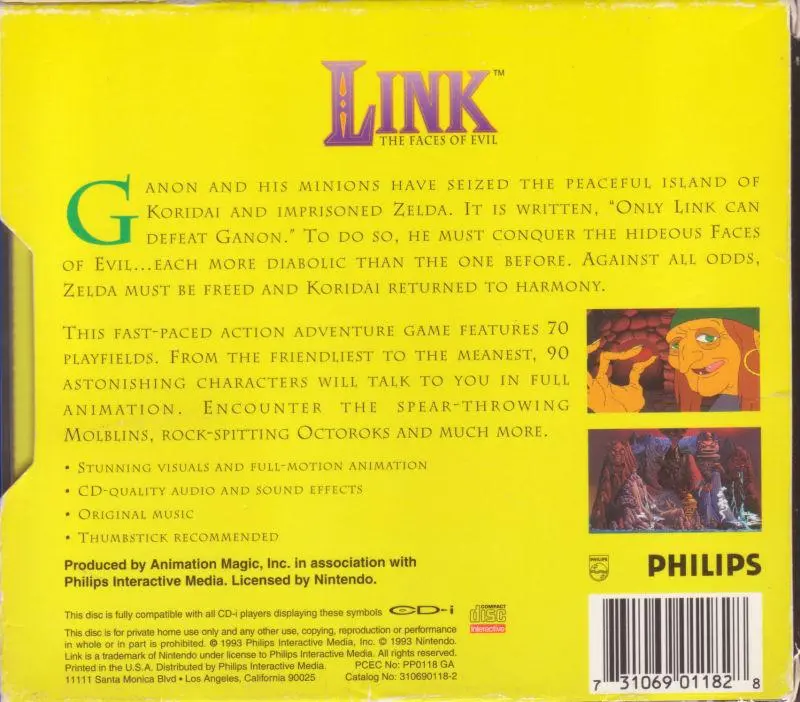
The back of the box.Every character on the box matches a single frame of a cutscene. The back of the box shows the scene in which Gwonam introduces Glutko, but with a different part of the room behind him, which suggests the scene was moved late in development.
Gwonam’s prophecy scroll is covered in signs that look like Assyrian cuneiform, plus one shaped like a fish.
Aypo’s reading of the secret verse is the reason given for collecting the Book of Koridai, but the game can be finished without ever carrying the book back to Nortinka.
Spearfish Falls on the map of Koridai.The map of Koridai was painted at 768 by 480 pixels and shrunk to 704 by 440 for the game.
Koridai counts in Rubies, and the colours are not Hyrule’s: red is worth 1, green 5 and blue 10.
Toyku Lighthouse on the map; the English guide called it ‘Tokyo’.Philips wrote a full solution to the game for the staff of its telephone helpline. The English version was printed in the October 1996 issue of CD-i magazine, where Toyku Lighthouse became ‘Tokyo’ Lighthouse.
Philips printed promotional posters for both games. A pair turned up on eBay in 2019 from a family whose printing firms in Tennessee had worked for Philips and Magnavox.
The speedrun table on the Fandom Zelda wiki lists the fastest run on a real CD-i as 24 minutes and 28 seconds, by Usui in April 2018.
It is one of only two Zelda games with Link’s name in the title and Zelda’s nowhere to be seen. The other is Link’s Crossbow Training.
Media & artwork
Box art, screenshots of every stage, stills from the cutscenes and magazine scans. Select any image to view it larger.
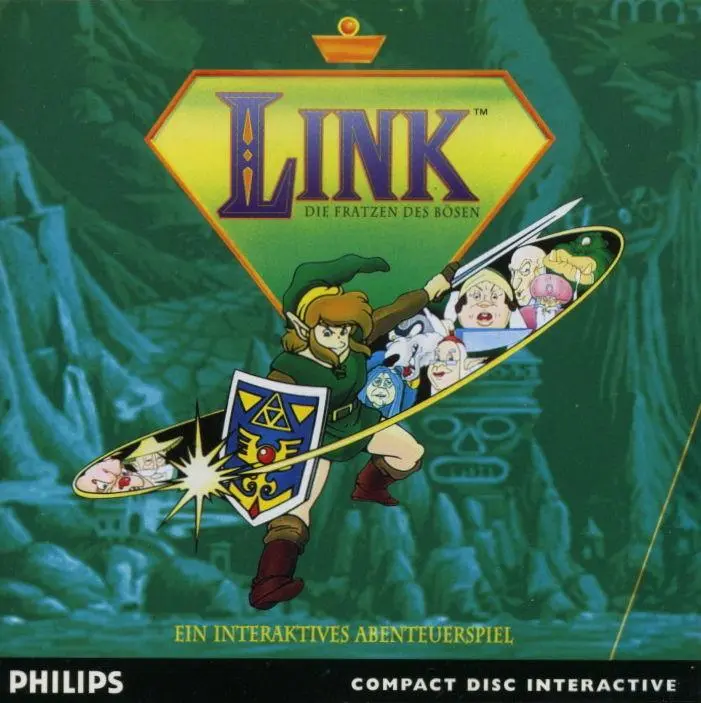
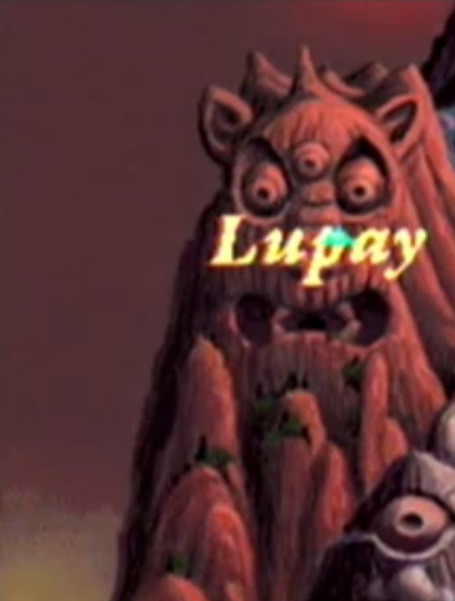
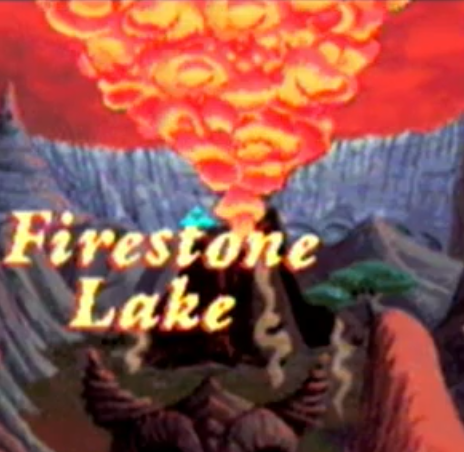
German box art.Front cover of the CD-i box.Back cover of the CD-i box.Lupay on the map of Koridai.Firestone Lake on the map of Koridai.The Militron stage.Nortinka, the snowbound village.
For a game that sold modestly on a machine few people owned, The Faces of Evil has had a remarkably long life, almost all of it online.
Timeline
The Philips dealJune 1991 – Nintendo announces its CD-ROM partnership with Philips, the source of the character licence.
Philips CD-iOctober 1993 – Released in North America and the UK with The Wand of Gamelon. 10 October is the date usually given.
Dubbed editionsLate 1993 – French and Dutch magazines cover the dubbed versions; the German release is undated.
Zelda’s Adventure1994 – The third CD-i Zelda, made separately by Viridis.
Hotline guide printedOctober 1996 – Philips’s own walkthrough appears in English in CD-i magazine.
YouTube PoopFrom about 2006 – The cutscenes become staple material for video remixers.
Original art resurfacesMay 2010 – Rob Dunlavey’s paintings and early maps are published online.
ReanimatedSeptember 2020 – More than 200 animators redraw the cutscenes of both games.
Fan remasterNovember 2020 – Dopply’s free remakes for Windows and Linux are released, and withdrawn days later.
Arzette14 February 2024 – The spiritual successor arrives on Switch, PlayStation, Xbox and PC.
Nintendo’s silence
Hyrule Historia, which leaves the CD-i games out.
Nintendo does not talk about this game. It is not in Hyrule Historia, and it is not on the timeline. About the only comment on record is Eiji Aonuma’s in September 2013, when MTV’s interviewer brought the CD-i games up and he answered, laughing, that he was not sure the CD-i games “really fit in the ‘Zelda’ franchise”.
The third CD-i game, Zelda’s Adventure, came out in 1994 from a different studio and plays quite differently. Dale DeSharone tried it and gave up; it did not, he said, really draw him in.
Morshu, Gwonam and the internet
King Harkinian, another favourite of the remixers.
Few people saw the cutscenes in 1993. Far more have seen them since. From around 2006 the scenes from the CD-i Zelda games, together with those of Hotel Mario and Animation Magic’s own I.M. Meen, became favourite raw material for YouTube Poop, the craft of cutting existing footage into absurd new videos. Wikipedia’s article on the form, citing a 2012 piece from Yale, names this game among the most notable of the CD-i games whose cutscenes are often used.
Three characters did best out of it: the King, Gwonam and above all Morshu, whose patter (“Lamp oil, rope, bombs? You want it? It’s yours, my friend, as long as you have enough Rubies”) has been remixed endlessly. In January 2021 a fan-made 3D animation of Morshu was reported by Kotaku and Nintendo Life alike. The mystery of who actually voiced him has had a YouTube documentary of its own: Mark Berry has said it was not him, and the name most often suggested, Jeffrey Nelson, remains a guess.
The affection is real as well as ironic. In September 2020, after 18 months of work, more than 200 animators released a collaboration in which the cutscenes of both games were redrawn shot by shot in every style from stop motion to CGI.
The 2020 fan remaster
In late November 2020 an amateur developer called Seth Fulkerson, known online as Dopply, released free remakes of both games for Windows and Linux. He had rebuilt them from nothing in GameMaker over four years of spare time, using the original artwork, sound and cutscenes, partly to teach himself how to make games and partly, as he put it, to satisfy an in-joke between friends. He also described the project as a tribute to Dale DeSharone.
The remakes added a widescreen mode, subtitles for the cutscenes, touched-up sprites, unlockable extras and a ‘Remastered Mode’ designed to take the frustration out of the controls. Fulkerson felt that the new controls and smoother frame rate had improved on the originals.
They did not stay up for long. About two days after release he took the downloads offline and made his videos private, saying that it was a free, not-for-profit project and mostly a learning exercise. No legal notice had arrived; the press of the day assumed he wanted to keep it that way.
Arzette: The Jewel of Faramore
Fulkerson’s next move was to make the sequel that nobody at Philips ever commissioned. Arzette: The Jewel of Faramore, developed by his studio Seedy Eye Software (say it aloud) and published by Limited Run Games, was announced on 12 July 2023 and released on 14 February 2024 for Windows, Nintendo Switch, Xbox Series X/S, PlayStation 4 and PlayStation 5. It is a new side-scrolling adventure in the same style, with hand-painted stages, a princess with a sword, favours to run for eccentric locals and animated cutscenes drawn to the old limits of colour, resolution and frame rate.
He recruited some of the people who had been there the first time. Rob Dunlavey, the original background artist, was one of them; Jeffrey Rath, the voice of Link, is the voice of the tutorial; and Bonnie Jean Wilbur, the voice of Zelda, narrates. Fulkerson told Game Developer that he approached each of them with an earnest pitch and made clear that he was “not making a joke game”. Limited Run even produced a controller modelled on the CD-i’s, and hosted a panel with Rath and Dunlavey at PAX East 2024. Reviews were kind: Arzette holds 77 on Metacritic, and Nintendo Life gave it 7 out of 10.
Playing it today
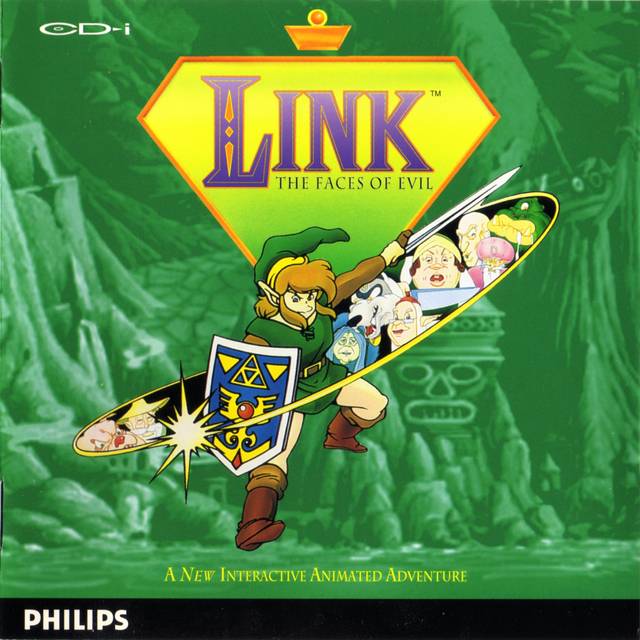
Front cover of the CD-i release, the only format the game was sold in.
The Faces of Evil has only ever been sold as a CD-i disc, and none of the sources used for this page records an official reissue on any other format, so the real thing needs a working CD-i player and a copy of the game. Dopply’s remaster is no longer distributed by its author. For most people, Arzette on a modern console is the closest legitimate way to find out what Animation Magic was aiming for.
Sales & reviews
Sales
No sales figures were ever published. In August 1994 Edge reported that both CD-i Zelda games had sold a “respectable number of units”, while describing them as cheap, low-risk projects that had done nothing to stir up interest in the machine. Looking back in 2001, IGN’s Peer Schneider put it less kindly: CD-i software sold poorly, these games included, which is why copies were still easy to find years later.
Reviews, then and now
Few period reviews of the CD-i Zeldas are on record. Wikipedia gives three scores for The Faces of Evil from the original issues; two are charted here, and the third is discussed below.
JoystickFrance · December 1993
79%
CDi MagazineUK · October 1993
65%
Before release the press was excited. SNES Force praised the high-resolution graphics and the use of sound and speech, and Joystick’s preview promised an arcade-quality game with stunning graphics. Joystick’s review kept the faith, with high marks for music, sound effects and length. Britain’s CDi Magazine was cooler: its reviewer, Mat Toor, thought the game a poor relation of the Nintendo originals, with a perfunctory story, no parallax scrolling and slow, repetitive play. Wikipedia also records a 90% in the Dutch magazine Power Unlimited next to the verdict that the game looked and sounded beautiful but was unplayable, a pairing odd enough that we have left it off the chart.
The reputation collapsed later. IGN’s Peer Schneider counted the CD-i Zeldas among the biggest failures to carry Nintendo’s characters; Wired’s Chris Kohler called the animation simple and stilted; the Star Tribune called the voice acting laughable; and in 2010 IGN’s Travis Fahs, comparing the style to Zelda II, described the controls as “insufferable” while allowing that the backgrounds looked decent for the hardware.
The defence has been led by John Szczepaniak, who interviewed DeSharone for Retro Gamer. Judged as CD-i games and not against Nintendo’s own, he argued, they are well paced and well designed, and he accused some magazines of joining a hate campaign without ever having played them. 1UP’s Danny Cowan agreed that both were among the best the CD-i had to offer. Their painted backgrounds have been compared to both H. R. Giger and Monet in the pages of Retro Gamer, which is some range.
On the lists
Retro Gamer · issue 32, December 2006No. 10 in the CD-i ‘Perfect Ten’Listed jointly with The Wand of Gamelon and called “astoundingly good”.
Reader reviews
No reader reviews yet. Played it? Give it a score out of 10 and tell other fans what you think.
Every fact on this page was checked against the sources below in November 2026. The magazine reviews of 1993 and 1994 are quoted as recorded by Wikipedia, not from the issues themselves. Zelda Wiki (zeldawiki.wiki), IGN and Eurogamer could not be read directly and were not used.
To provide the best experiences, we use technologies like cookies to store and/or access device information. Consenting to these technologies will allow us to process data such as browsing behavior or unique IDs on this site. Not consenting or withdrawing consent, may adversely affect certain features and functions.
Functional
Always active
The technical storage or access is strictly necessary for the legitimate purpose of enabling the use of a specific service explicitly requested by the subscriber or user, or for the sole purpose of carrying out the transmission of a communication over an electronic communications network.
Preferences
The technical storage or access is necessary for the legitimate purpose of storing preferences that are not requested by the subscriber or user.
Statistics
The technical storage or access that is used exclusively for statistical purposes.The technical storage or access that is used exclusively for anonymous statistical purposes. Without a subpoena, voluntary compliance on the part of your Internet Service Provider, or additional records from a third party, information stored or retrieved for this purpose alone cannot usually be used to identify you.
Marketing
The technical storage or access is required to create user profiles to send advertising, or to track the user on a website or across several websites for similar marketing purposes.

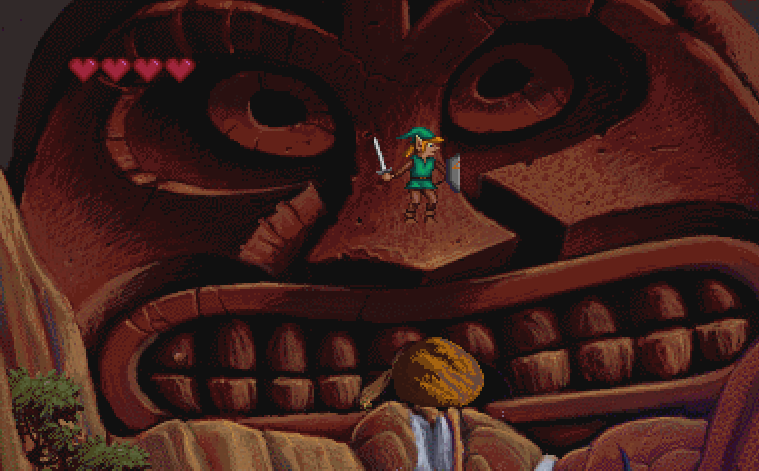

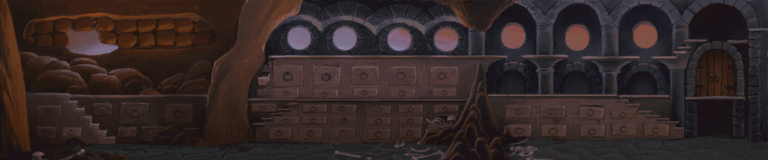 GoronuOpen from the start · Face of EvilA mountain pass patrolled by axe-throwing Dairas and flapping Arpagos, with Morshu’s shop on a little bridge beside the waterfall. Come back with bombs, rope and a Lantern to blast the boulder between the Face’s teeth and climb through dark rooms of Ghini and Stalfos to Goronu himself. He drops the Bell and a Life Heart, and his defeat opens Harlequin Bazaar.
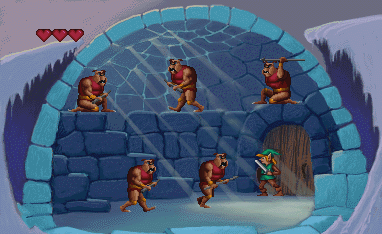 NortinkaOpen from the startA snowbound village of igloos. Its spear-throwing Moblins drop Snowballs, the only thing that hurts fire creatures. Hamsha sits frozen in her house until a Firestone thaws her, and Abominoms guard the way up to Aypo’s library. Finishing it opens Toyku Lighthouse; the Book of Koridai is brought back here at the end.
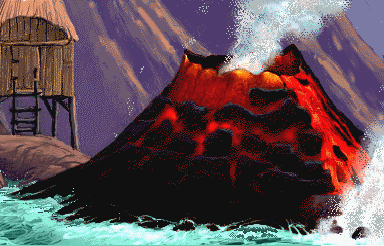 Crater CoveOpen from the startFishing huts under a smoking crater. Anutu gives Link the Power Sword, and a woman in the beach hut hints that the key to the boarded-up crater is hidden under a skull. Inside, fire creatures put out with Snowballs leave Firestones behind. Opens Spearfish Falls.
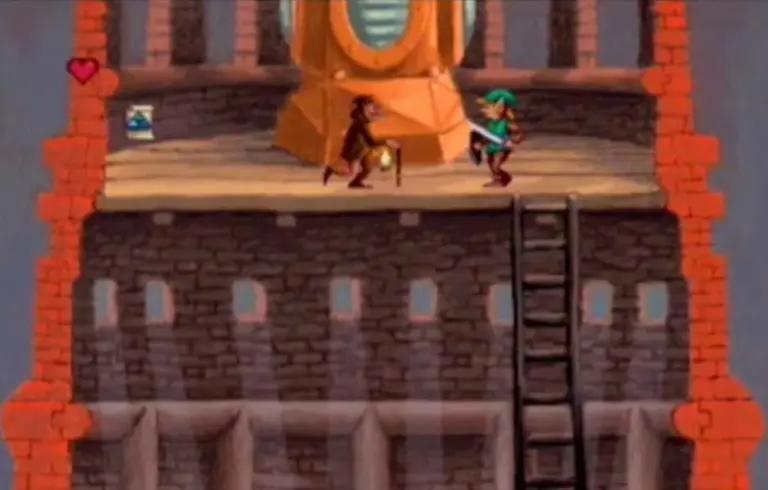 Toyku LighthouseOpened by NortinkaA rock slide, a key on a ledge, Alora’s ransacked trailhouse and, at the top of the lighthouse, Horgum the keeper with the Lantern. Bring Alora her stolen necklace later and she hands over the Canteen. Opens Firestone Lake.
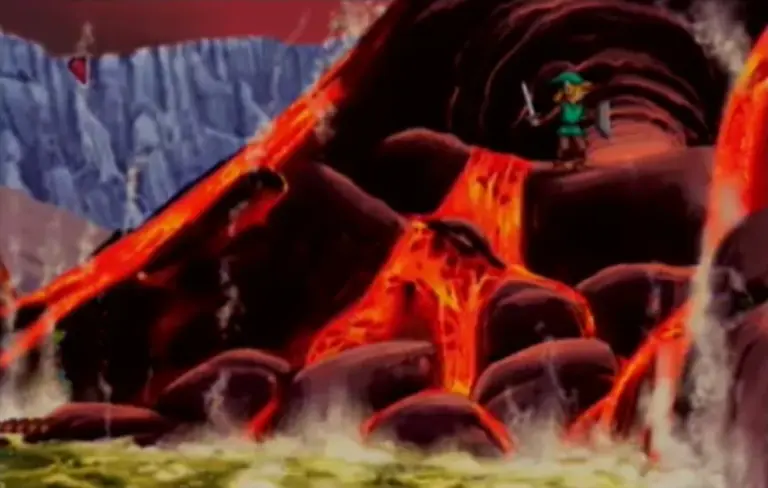 Firestone LakeOpened by Toyku LighthouseA raft ride to a volcano. Gwonam appears with the news that Zelda has been captured; inside the volcano are the Grapple Berries and, at the bottom, a fire wheel that gives up the Fire Diamond when pelted with Snowballs. Opens Shipwreck Cliff.
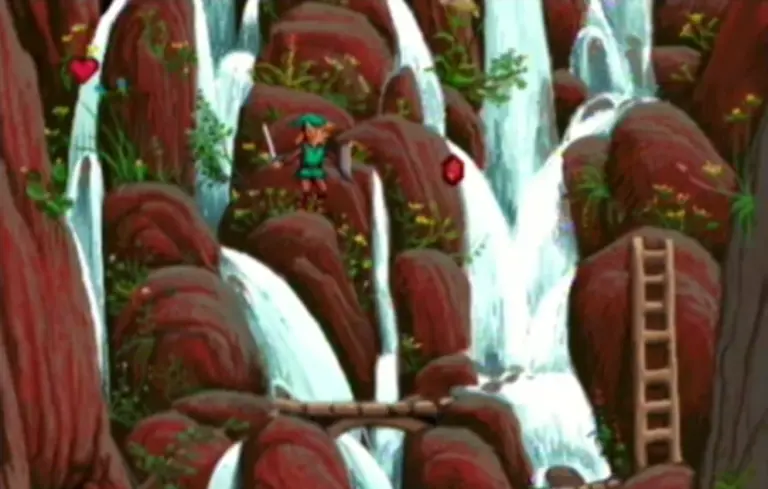 Spearfish FallsOpened by Crater CoveA climb up a waterfall full of leaping Spearfish. Two fairies in a pond give a Life Heart and Water of Life, a Gleeok in a cave guards Alora’s necklace (light the room, then bomb it), and Zorga’s hut at the top is where Grapple Berries become the Power Glove. Opens Serigon Caves.
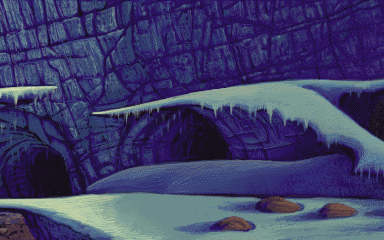 Serigon CavesOpened by Spearfish FallsThree ice caves. The right-hand one hides the Ice Crystal behind Abominoms and falling icicles, the middle one has a spring of Water of Life, and the left-hand one, sealed by a boulder that needs ten bombs or the Power Glove, is home to Suprena. Opens Fortress Centrum.
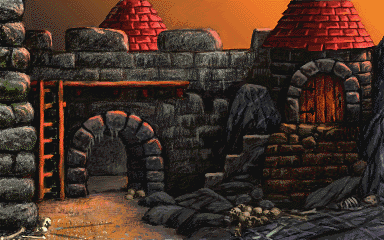 Fortress CentrumOpened by Serigon CavesA fortress of Gohma, Darknuts, Armos and a dark room of Wallmasters. The sleeping Zelda at the top is Goronu in disguise; beat him with Firestones for the Crystal of Reflection. Opens Ganon’s Lair, long before Link is ready for it.
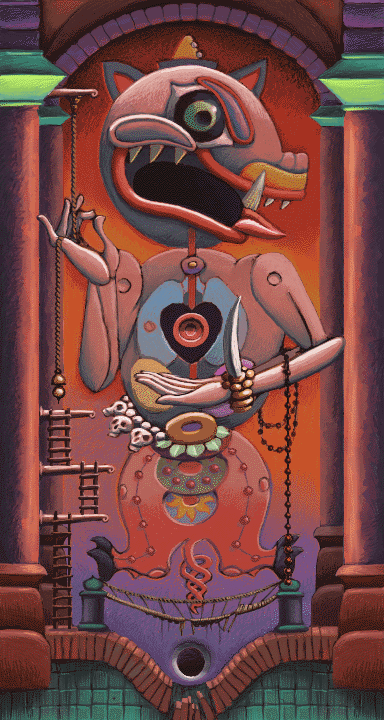 Harlequin BazaarOpened by Goronu · Face of EvilThe largest Face on the map and Harlequin’s crooked casino, entered past a ticket booth and through the mouth. Beat Harlequin for the key to the observatory at the top, where the astronomer Odranoel is locked up. He wants the Ice Crystal from Serigon, and uses it to turn the Lantern into the Magic Lantern.
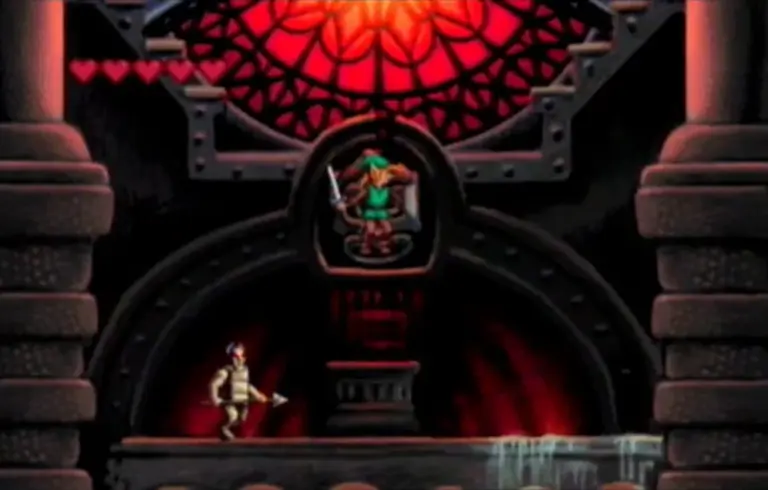 MilitronFace of EvilMilitron’s Face, up above Spearfish Falls, with a boulder in its mouth and skull barriers inside. Militron is beaten with sword blasts to the head and leaves the Winged Helmet, which lets Link make much longer jumps at five Rubies a go. Opens Glutko.
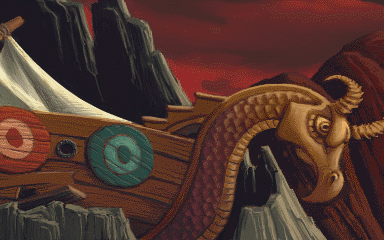 Shipwreck CliffOpened by Firestone LakeA Viking-style ship stranded in a mountain crater and used by Ganon’s forces as a prison. Clora, locked in the cabin, gives Link a kiss and a Life Heart and asks him to save her father. Across a chasm only the Winged Helmet can clear, the blacksmith Kulvan is chained in a cave; freed, he forges the Fire Diamond and the Power Sword into the Magic Sword. Opens Lupay.
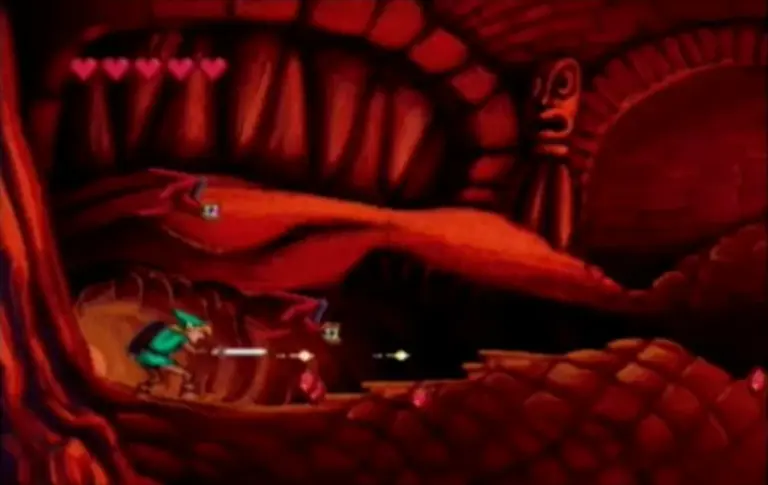 GlutkoOpened by Militron · Face of EvilA dormant volcano in the south-west with one carved eye. Droolik, in a cave beside the mountain’s teeth, explains how to beat the glutton; a bomb in the mouth does it. Beyond the boulder in the Eye of Glutko and another Spearfish waterfall is the summit, the Shrine of Koridai, a second fight with Glutko and the Book of Koridai.
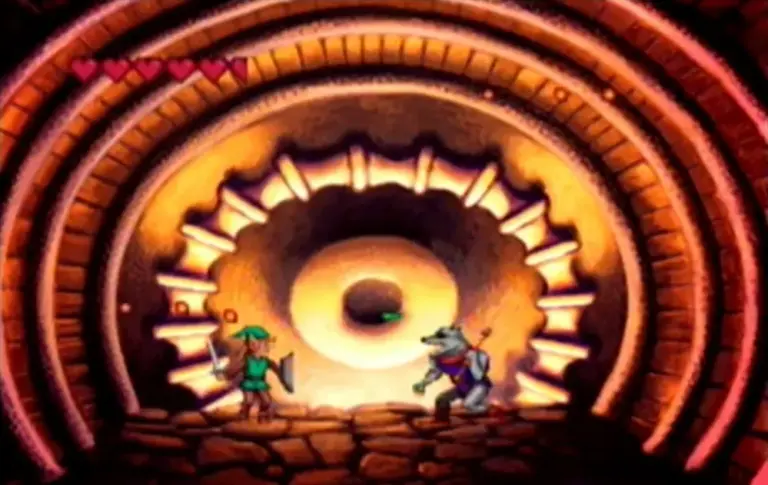 LupayOpened by Shipwreck Cliff · Face of EvilThe wolf’s Face in the north-west. A Tektite carries the key, Harlequin turns up for a rematch, and Lupay can only be beaten by reflecting the beams from that third eye with the Reflecting Shield. The prize is the Crystal of Vision. Opens Hermit Flat.
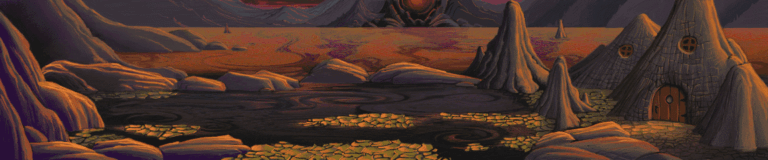 Hermit FlatOpened by LupayA murky wasteland of tar pits in the middle of the island, with Zolas in the tar and swirling mud to be jumped with the Winged Helmet. At the far end is the cave where Gwonam lives, and where he makes the Lantern of Vision.
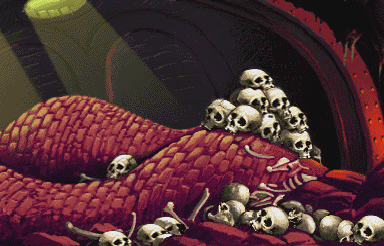 Ganon’s LairOpened by Fortress Centrum · Final stageA raft, a moving platform over lava, a rematch with Militron and tunnels full of creatures that only the Lantern of Vision reveals. Choose the Book of Koridai before stepping through the last doorway, throw it at Ganon, take his key and strike the gong to wake Zelda.
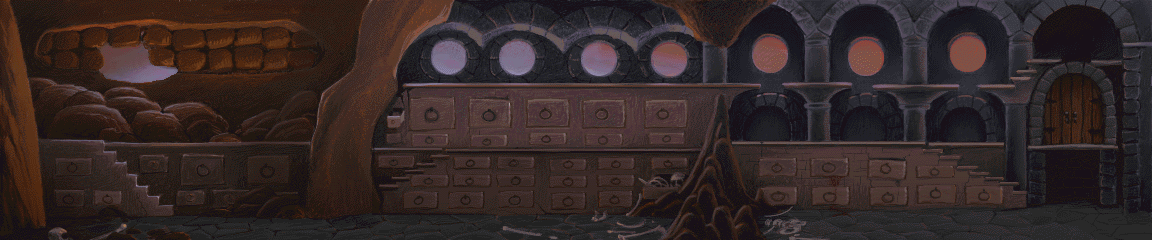

 LinkHero of Koridai
 Princess ZeldaPrincess of Hyrule
 GwonamWizard and prophet
 King HarkinianKing of Hyrule
 GanonLord of the Faces of Evil
 MorshuShopkeeper
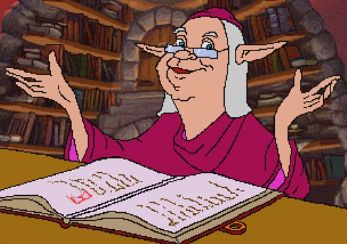 AypoThe reader of Nortinka
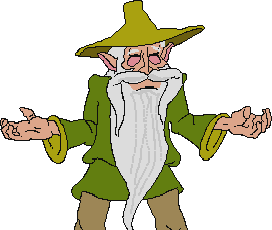 AnutuFisherman of Crater Cove
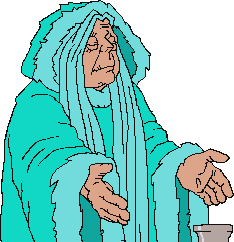 HamshaFrozen woman of Nortinka
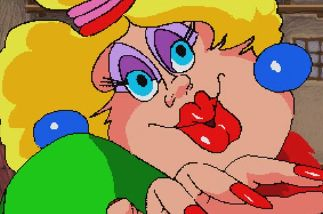 AloraTrailhouse keeper
 HorgumLighthouse keeper
 ZorgaWitch of Spearfish Falls
 OdranoelAstronomer
 SuprenaSorceress of Serigon
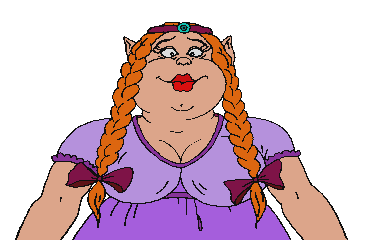 Clora and KulvanPrisoners of Shipwreck Cliff
 DroolikGlutko’s neighbour
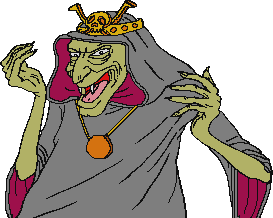 GoronuGoronu · Fortress CentrumA snake-like necromancer who raises Stalfos from old bones. Only Firestones hurt him. He reappears in Fortress Centrum disguised as Zelda.
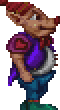 HarlequinHarlequin Bazaar · LupayA pig in a jester’s outfit who runs a casino and enslaves the losers. He paces the room throwing projectiles the shield can block, and deflates after enough sword hits.
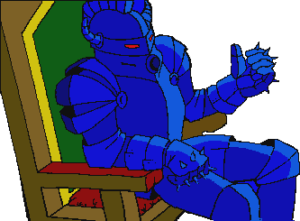 MilitronMilitron · Ganon’s LairA towering knight who turns islanders into stone soldiers. Aim sword blasts at his head and the armour bursts, revealing a fat old man.
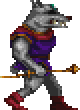 LupayLupayA wolf with a third eye that shoots energy beams. The beams have to be reflected with the Reflecting Shield. The only lieutenant never fought twice.
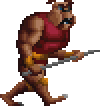 Moblins, Goriyas and ArmosAcross KoridaiAccording to the cutscenes these are former islanders: Lupay makes the Moblins, Harlequin the Goriyas and Militron the stone Armos.
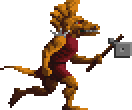 Dairas and ArpagosGoronu and most outdoor stagesAxe-throwing reptile-men from Zelda II and red flying creatures, the first enemies Link meets and an easy source of Rubies.
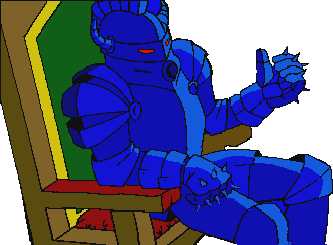
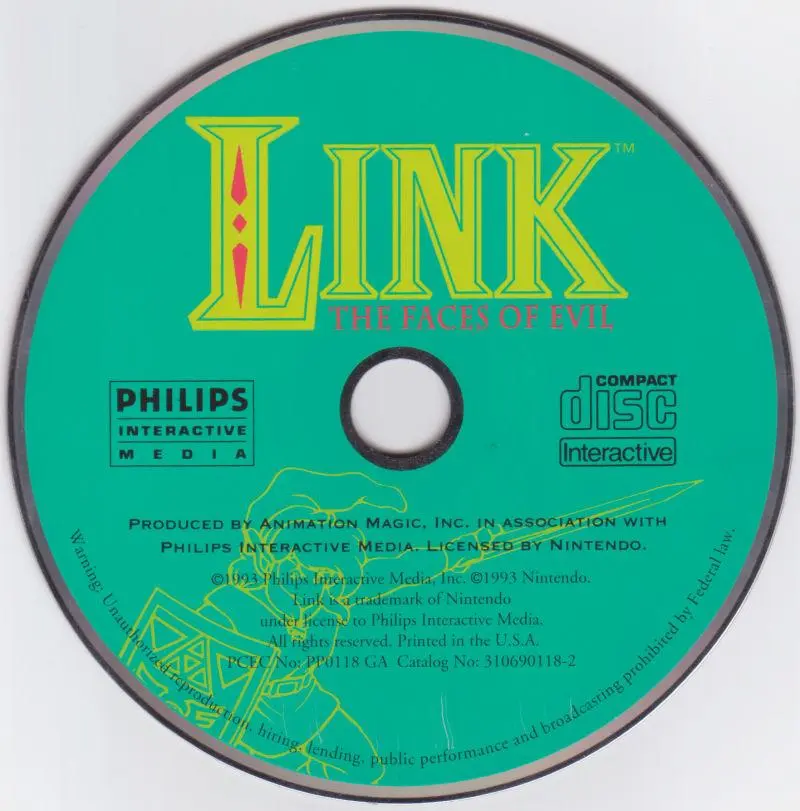 Zelda on a compact discEvery Zelda game before 1993 came on a cartridge, a Famicom disk or its own little LCD unit. With The Wand of Gamelon, this was the first to be published on a compact disc.
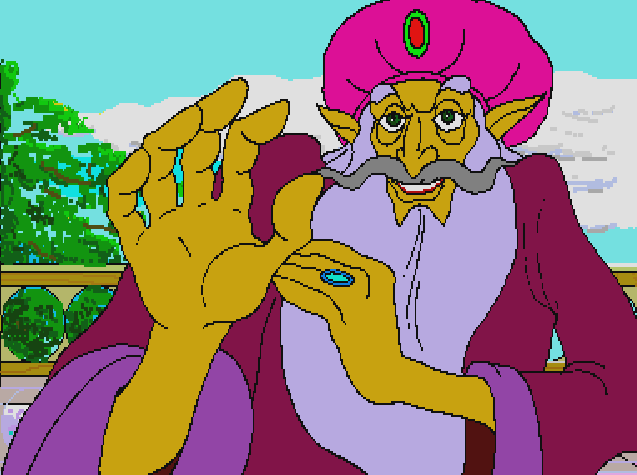 A cast that talksTogether with The Wand of Gamelon, it was one of the first two Zelda games in which the characters speak. Link, Zelda, the King, Ganon and every islander speak their lines aloud; there is hardly any written dialogue at all.
 Animated cutscenesAbout ten minutes of hand-drawn animation tell the story, with a scene for every character and every boss, where the earlier games had made do with a few lines of text.