The first Legend of Zelda, redrawn in 16 bits and beamed down from a satellite one Sunday evening at a time, with an old man talking in your ear and the clock always running.
First broadcast6 August 1995 (Japan only)
Made byNintendo, broadcast by St.GIGA
Game directorTakao Shimizu
FormatFour weekly episodes of one hour
Second mapMAP2, from 30 December 1995
Players1
Title
BS Zelda no Densetsu BSゼルダの伝説 (Bī Esu Zeruda no Densetsu, “BS The Legend of Zelda”); BS stands for broadcast satellite
Platform
Satellaview, the satellite add-on for the Super Famicom
Made by
Nintendo
Broadcaster
St.GIGA, in the Super Famicom Hour
Game director
Takao Shimizu
Producers
Satoshi Yamato (Nintendo) and St.GIGA’s producer Yakushiji (薬師寺文佳)
Script and audio
Tatsuya Hishida
Original game design
Shigeru Miyamoto and Takashi Tezuka
Voices
Kiyoshi Kobayashi, Seizō Katō and Naomi Fujisawa
Players
1
First broadcast
Sundays at 6pm, 6, 13, 20 and 27 August 1995
Repeats
3–29 September, 1–24 October and 5–28 November 1995; 1–4 January 1997
MAP2
30 December 1995 to 6 January 1996; repeated 3–27 March 1996
For four Sundays in August 1995, at six in the evening, Super Famicom owners all over Japan tuned in to Hyrule. BS Zelda no Densetsu was not sold in any shop. It came down from a broadcasting satellite into the Satellaview, a modem that sat under the Super Famicom, and it could only be played while it was on the air.
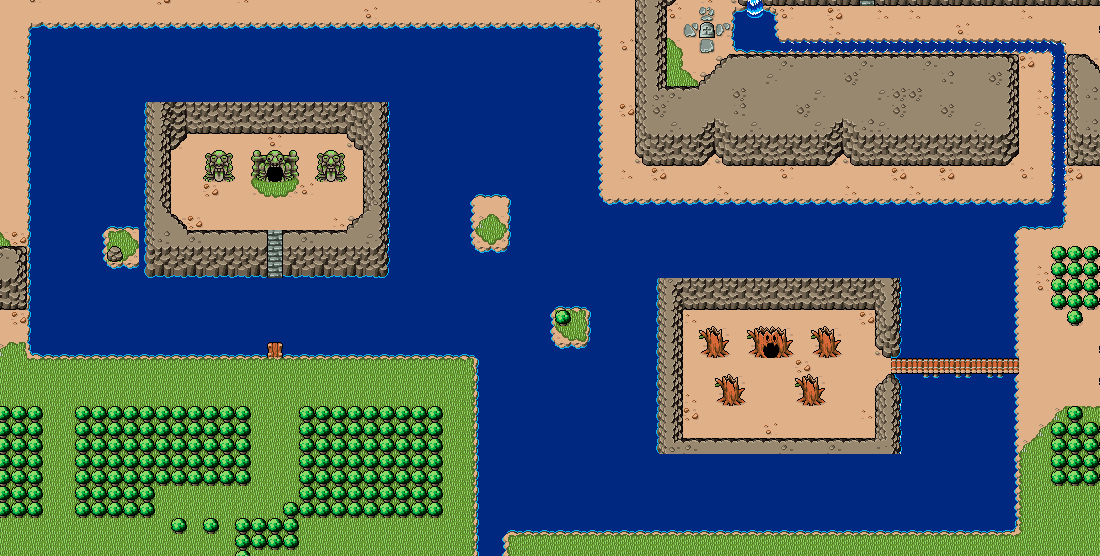
The game itself is the 1986 Legend of Zelda rebuilt for 16-bit hardware: the same top-down sword-and-shield adventure, the same hunt for eight pieces of the Triforce, but with a smaller overworld, eight brand-new dungeons and no Link. In his place stands the boy or girl you created in the Satellaview’s menu, summoned to a Hyrule that only exists for an hour.
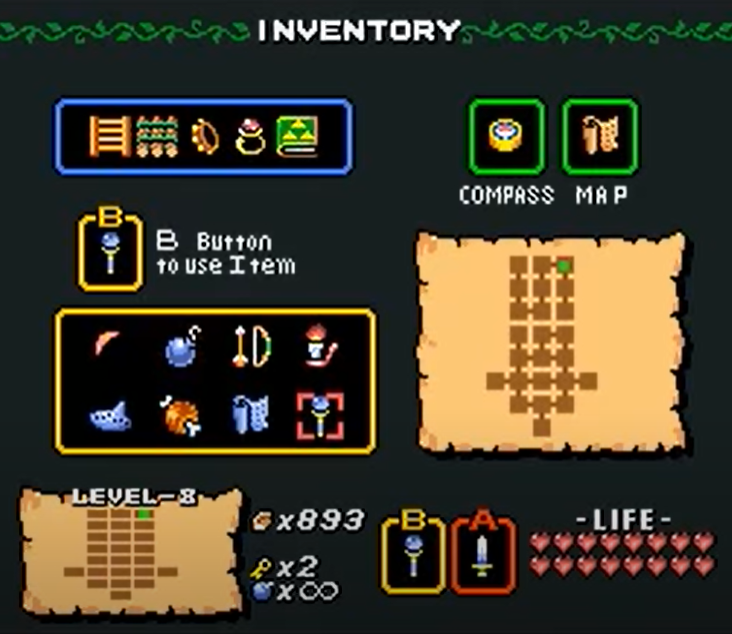
Hyrule in 16 bits, with the clock under the hearts.
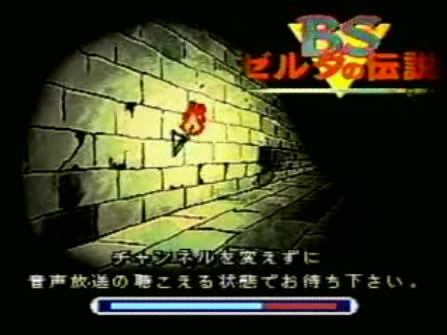
What made it an event was the sound. While you played, St.GIGA’s satellite radio channel carried a narrator, an old man who acts as your guide and a running soundtrack, all in step with a clock at the top of the screen. At set minutes the old man would stop the game, tell you to listen, and hand you a power, a warning or a secret. Miss the hour and you missed the episode.
It was a hit. Nintendo and St.GIGA repeated it three times that autumn, followed it with a remixed MAP2 at New Year, and built a sequel on the same idea in 1997. Then the satellites fell silent. No version has ever been sold, and the spoken half of the game was never recorded by Nintendo’s hardware, which is why the story of BS Zelda is also the story of the fans who pieced it back together.
“This program is the first game program in the world to be broadcast through a satellite connection…”
That is how the announcer opened the first episode. There was no box and no manual to carry a sales pitch, so the broadcast made its own: a game that players all over Japan would share at the same moment, in a world that existed only in “Zelda Time” and could not be kept on a Memory Pack afterwards.
— Opening announcement of BS Zelda no Densetsu, episode 1 (Nintendo and St.GIGA, 6 August 1995), from a recording of the broadcast, transcribed by Gekkahiro and translated by GlitterBerri, Hiei and Beno for The BS Zelda Homepage. The rest is summarised by Zelda Temple.
Quick Answers
The questions people most often ask about BS Zelda, answered quickly and explained further down the page.
What is BS Zelda no Densetsu?
A 16-bit reworking of the first Legend of Zelda, broadcast by satellite to Japanese Super Famicom owners who had the Satellaview add-on. BS simply means broadcast satellite. More →
When was it broadcast?
The four episodes first went out on Sunday evenings from 6 to 27 August 1995. Repeats followed in September, October and November 1995, and a last four-day run on 1–4 January 1997. More →
Is it the same game as the NES Legend of Zelda?
No. The rules are the same, but the overworld is half the size and rearranged, all eight dungeons are new, and the adventure is cut into four timed episodes. More →
Do you play as Link?
No. You play as your Satellaview avatar: a boy in a backwards baseball cap or a girl with long red hair. Fan patches made years later can swap Link in. More →
What was SoundLink?
Nintendo and St.GIGA’s name for games that ran in step with a radio broadcast. The game data was downloaded, and voices and music were streamed over it while you played. More →
What is MAP2?
A second version shown from 30 December 1995, with the dungeons redesigned again and things moved around the overworld. It does the job the Second Quest did on the NES. More →
Was it ever released outside Japan?
No, and Nintendo has never re-released it anywhere, not on Virtual Console and not on Nintendo Switch Online. More →
Can you still play it?
Not as it was broadcast. The voices and music were streamed and never stored, and the service closed in 2000. What survives is game data rescued from old Memory Packs, which fans have patched into playable form. More →
How it differs from the 1986 original
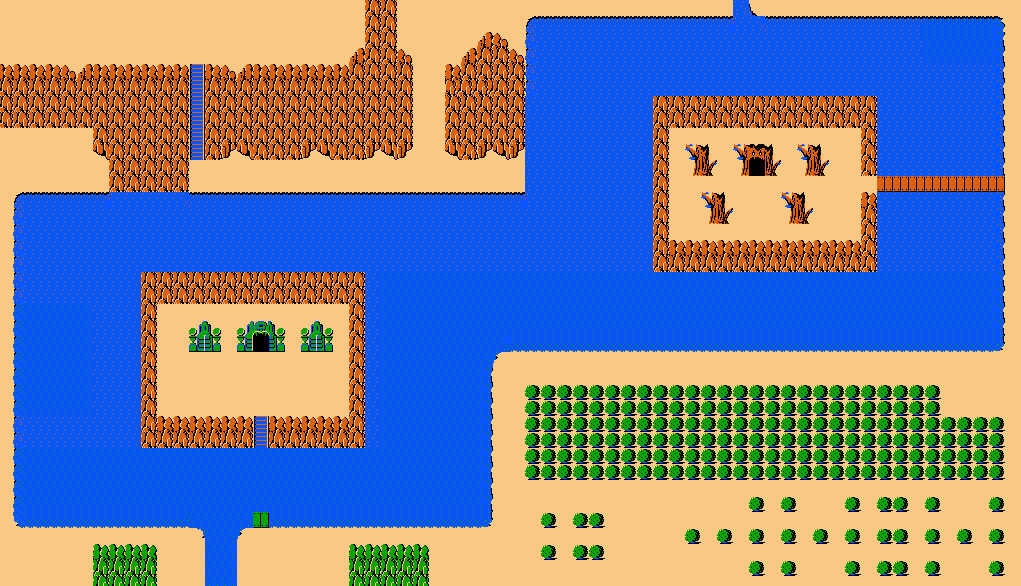
Lake Hylia on the 1986 NES overworld, for comparison with the 16-bit version above.
Underneath, this is still the first Zelda. You stab, you bomb walls, you burn bushes, and you gather eight golden triangles before facing Ganon. Almost everything around that skeleton was rebuilt, partly to show off the Super Famicom and mostly to make a huge, slow-burning game fit into four hours of air time.
Feature
The Legend of Zelda (1986)
BS Zelda no Densetsu (1995)
Hardware
Famicom Disk System and NES, 8-bit
Super Famicom with the Satellaview, redrawn in 16-bit colour
The hero
Link
Your Satellaview avatar, a boy or a girl
Overworld
16 screens wide by 8 high: 128 screens
8 by 8: 64 screens, with familiar landmarks in new places
Dungeons
Nine levels, the last inside Death Mountain
Eight all-new levels, two per week; no ninth level
The final battle
At the end of Level 9
In a short lair behind the old man’s cave, open only in the closing minutes of week four
When you can play
Whenever you like, saving as you go
During the broadcast only: four episodes of one hour, about 50 minutes of play in each
Guidance
A few cryptic lines of on-screen text
A narrator and the old man speaking over the game, with on-screen pauses for the big announcements
Rupees
No more than 255
More than 1,000, and they count towards your score
Choosing items
On the sub-screen
On the sub-screen, or switched with L and R as you go
Game over
Continue, save or retry
Straight back into the action, while the clock keeps running
Surprises
None: Hyrule never changes
Timed events every few minutes: borrowed powers, shop sales, vanishing fairies, nightfall
After the ending
A harder Second Quest
A results screen, a password for the rankings, and later the remixed MAP2
A smaller Hyrule and eight new dungeons
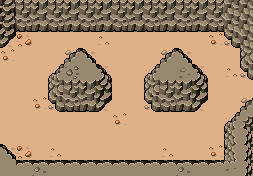
Spectacle Rock, one of the familiar landmarks on the new 8-by-8 map.
The NES overworld is 16 screens across and 8 down. The Satellaview one is a square of 8 by 8, half the size, so that a player with under an hour could cross it and still have time for two dungeons. The terrain is recognisable (a graveyard, Spectacle Rock, a beach, the Lost Woods) but the layout is new, and so is every dungeon.
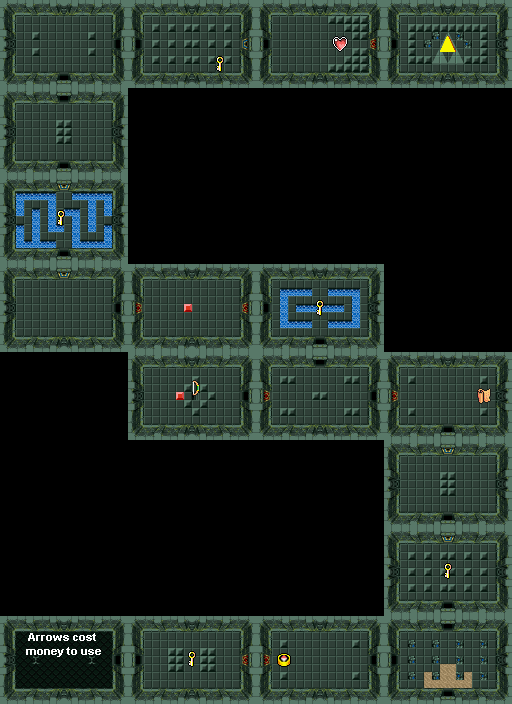
There are eight levels instead of nine, and none of them copies a First or Second Quest map, which is why fans christened the game the Third Quest. Seen on the map screen, the first six levels of the original broadcast form letters that spell out the broadcaster’s name, St.GIGA, and the last two are shaped like a skull and a downward arrow. The roster of monsters is trimmed as well. Fan researchers later found graphics for Gleeok and Lanmola, drawn but never used.
A hero in a baseball cap
Every Satellaview owner made a character in the system’s menu cartridge, with a name and a choice of boy or girl. BS Zelda reads that choice and puts the same character into Hyrule: the boy with his white cap turned backwards, the girl with long red hair, both dressed in a green tunic. Nobody in the game uses a name. The old man simply calls you “Hero”.
Link is nowhere to be seen, although Nintendo had drawn him. In August 2020 the fan community turned up an official 16-bit Link sprite sheet among early assets, and it is now offered as a patch for anyone who wants the traditional hero back.
Faster, kinder rules
The designers shaved away the things that eat time. Japanese Wikipedia’s summary notes that the original’s slow, one-way traps were largely removed and the difficulty eased; items can be swapped with the shoulder buttons without opening the sub-screen; and when you die you are simply put back on your feet, with the clock still ticking and the death noted against your score.
Rupees matter more than they ever did on the NES. The purse now holds more than 1,000 instead of 255, and every Rupee in your pocket at the end of the hour is a point on the results screen. The text also gained hiragana and a handful of kanji, and Hyrule now has a sunset, which the final episode puts to dramatic use.
No Death Mountain labyrinth
The biggest cut is Level 9. On the NES, Ganon lurks at the bottom of the longest dungeon in the game. Here there is no time for that, so the showdown is staged as a twist. In the last quarter of an hour of the final episode, Ganon overpowers the old man and takes over his cave, the very one where you were given your sword in week one. Walk in with all eight Triforce pieces and a short final area opens up, with Ganon and the captive Zelda at the end of it.
The Silver Arrows, which the NES hides inside Death Mountain, have therefore moved to Level 8, and the Red Ring and Magical Sword are no longer permanent fixtures of the map at all. They appear for about ten minutes in the middle of week four, and then, in the story, Ganon snatches them away.
MAP2, the Fourth Quest
The first run was popular enough that Nintendo made a second version, BS Zelda no Densetsu MAP2, as a New Year special. It was shown over eight days from 30 December 1995 to 6 January 1996, each of the four episodes running for two days, and repeated from 3 to 27 March 1996.
MAP2 is to BS Zelda what the Second Quest is to the NES game. The dungeon entrances stay where they were, but the overworld is rearranged, items sit in different places and the dungeon interiors are all new; this time their shapes spell NiNtENDO. Fans call it the Fourth Quest. According to The BS Zelda Homepage, it went out with the same audio stream as the first map.
Plot / Story
BS Zelda tells its story aloud. Each episode opened with a narrator setting the scene over the loading screen, and what he described was not the plain legend of the NES manual but the grander history from A Link to the Past: the gods who made the world and left the Triforce in a sacred realm; Ganondorf, the leader of a band of thieves, who found his way in and became Ganon, the Evil King; and the sages and Knights of Hyrule who sealed him away in a terrible war.
Then a new voice breaks in. Princess Zelda, held in a dungeon by an evil power, calls out to a hero and warns that Hyrule is in danger. The person who answers is you.
Guided by the stars
You arrive not from a cottage in Hyrule but from the Satellaview’s own town, the Town Whose Name Was Stolen, and you walk straight into a cave. An old man is waiting. He is not surprised to see you (“I knew that you would come to this land”, he says, “guided by the stars”) and he gets to the point: gather the stolen pieces of the Triforce and bring down Ganon. He hands over a sword, promises to send power from his cave, and adds a warning that gives the whole game its odd, dreamlike mood. This world exists only for a set time.
From then on he is your companion, a voice with no body. A second voice, the narrator, handles the practical side: which buttons do what, which two levels are this week’s targets, how many minutes are left.
Four Sundays, eight pieces
Each week asks for two pieces of the Triforce. In the first, the hero learns the land, finds a bow and a boomerang in Levels 1 and 2 and hears the old man conjure lightning to clear the screen. In the second, a raft opens the water and the fourth level gives up the flute. In the third, the Lost Woods and a whirlpool that barred the way give out as the hour begins, a pedlar sets up a stall, and the entrance to Level 6 has to be coaxed into the open by playing the flute on the beach.
Whatever you have done, the hour ends the same way. The narrator counts down, the old man tells you that you fought well, and you are sent home until the gate opens again the next Sunday. A piece you missed can still be collected the following week.
Ganon makes his move
The fourth episode is where the radio play takes over. The hour opens under a dark mist that the old man has to blow away. He wakes the stone Armos, exposes a Power Bracelet, announces a sale in the bewitched merchants’ shops and, sounding more tired each time, turns the worst monsters harmless for a while. The narrator reads out where every dungeon lies for anyone who has fallen behind, then announces the Red Ring and the Magical Sword, with a warning that the Evil King wants them too.
At about twenty-five to seven an evil snigger comes over the speakers. Ganon speaks once (“Your efforts are for naught”, in the fan translation) and at a quarter to seven, as the sun goes down, he seals the old man’s power and seizes his cave. The old man’s last useful words are a cry for the Silver Arrows.
The last ten minutes
With eight pieces and the arrows from Level 8, the hero goes back to where it all started. The Triforce opens the way into Ganon’s lair. The fight follows the NES pattern: Ganon is invisible, his fireballs give his position away, and a Silver Arrow finishes him once enough sword blows have brought him into view. The hero takes the Triforce of Power from his ashes and puts out the flames around Princess Zelda.
And then, win or lose, time runs out. The narrator announces that Hyrule is disappearing, the old man says goodbye and tells you that a password will appear with your results, to be sent in on a postcard. The portal closes, and the Hero is back in a town with no name.
The four weeks and their dungeons
Two levels a week, eight in all. Treasures and bosses are those of the first map as recorded in The BS Zelda Homepage’s guide; MAP2 keeps the entrances and changes what is inside.
Level 1Week 1 · boss: AquamentusAcross a bridge. The bow is inside.
Level 2Week 1 · boss: DodongoHidden behind a rock that has to be bombed. Holds the wooden boomerang.
Level 3Week 2 · boss: ManhandlaReached through the woods. The raft and the magical boomerang are here.
Level 4Week 2 · boss: DigdoggerReached by raft. Its prize is the flute, the NES recorder under another name, and there is a bigger bomb bag to buy.
Level 5Week 3 · boss: PatraTucked away behind a hidden passage. The stepladder is inside.
Level 6Week 3 · boss: GohmaAppears when the flute is played on the beach, and only from 35 minutes past the hour. Holds the magic rod.
Level 7Week 4 · a tougher old bossThe one level you can simply walk into. The red candle is the treasure.
Level 8Week 4 · boss: blue GohmasUnder a bombed rock at Spectacle Rock. Holds the Book of Magic and, in a cellar, the Silver Arrows.
Ganon’s lairWeek 4 · final boss: GanonNot a numbered level: a short final area behind the starting cave, open from a quarter to the hour to anyone holding all eight Triforce pieces.
The first six level maps of this version spell St.GIGA; the seventh and eighth are a skull and an arrow. In MAP2 the eight maps spell NiNtENDO.
How the broadcast worked
BS Zelda makes little sense without the machine it was built for. This is what a player needed in 1995, and what happened when six o’clock came round.
Clock
Week one, as it happened
Effect in the game
18:06
The old man welcomes the Hero and hands over a sword
Play begins, after the download and the spoken prologue
18:10
“Listen closely”: the old man lends his power
The sword fires beams whatever your health, until 18:15
18:17
The old man casts a lightning spell
Enemies on screen are struck down
18:20
A Heart Container has washed ashore, somewhere the old man can hear waves
It lies on the beach for about eight minutes, then goes
18:30
The fairies have vanished from their springs
No healing at the fairy ponds for a while
18:35
The fairies are found and lend a hand
Beaten enemies drop fairies and blue Rupees until 18:40
18:45
A vision of walls and monsters blown apart
Unlimited bombs until 18:53
18:56
The narrator calls time; the old man signs off
Results screen. See you next Sunday
The Satellaview and St.GIGA
The Satellaview was a satellite modem for the Super Famicom, released in Japan by mail order on 23 April 1995 and never sold anywhere else. It plugged into the expansion port under the console and took its signal from a broadcast-satellite tuner and dish, which the owner had to buy or rent separately. Nintendo had announced it the previous December at ¥14,000.
On top went a special cartridge, BS-X: Sore wa Namae o Nusumareta Machi no Monogatari, “The Story of the Town Whose Name Was Stolen”. It was a menu disguised as a little role-playing town: you made an avatar, walked between buildings, read news and joined contests, and each building led to something being broadcast. Downloads were written to an 8M Memory Pack that slotted into the cartridge.
The signal came from St.GIGA, a satellite radio station founded in 1990 and best known for broadcasting ambient sound. Nintendo had bought a 19.5 per cent stake in it in May 1994. St.GIGA supplied the airwaves; Nintendo and other publishers supplied the programmes.
A game with a radio show attached
Most Satellaview downloads were ordinary games. BS Zelda was the first of a different kind, at the time called a voice-linked game and later renamed a SoundLink game. The game data arrived first. Then, for the rest of the hour, the Satellaview mixed St.GIGA’s audio channel over it: narration, drama and music, timed so that what you heard matched what the game was doing. Very little of the music came from the Super Famicom’s own sound chip.
That is why the game is tied to the clock. The script, the powers and the audio were all on one timetable, so everybody in the country reached the same moments together. When something important was about to be said, play froze and the words 耳をすませ, “listen closely”, appeared on screen.
Zelda Time
The broadcast called its hour “Zelda Time”. The first few minutes went on the download and the prologue, and the last few on the results, which left about 50 minutes of actual play. The clock could not be stopped. Opening the sub-screen did not hold it up and neither did dying. If you tuned in late, or joined from the second episode, you simply had less.
The table above follows the first episode as it went out. Later weeks were busier: half-price sales in the shops, a red candle lent for eight minutes, falling rocks that stopped and started, a stronger boomerang on loan, spells that froze every monster on screen. The third week alone has around twenty scheduled events.
Scores, passwords and prizes
Each hour ended with a tally: dungeons and events cleared, lives lost, Rupees banked. After the fourth episode the game produced a password, which players sent to St.GIGA by post or fax, and the rankings were later announced over the data broadcast. During the first run the top players won 8M Memory Packs. On the January 1997 repeat, anyone who gathered all eight Triforce pieces was promised a “secret membership card” and original stickers.
It was the nearest thing the Super Famicom had to an online event. Nobody could see another player, but everyone was in the same Hyrule at the same minute, chasing the same leaderboard.
Was it really live?
BS Zelda is often described as having live voice acting, and Nintendo Life’s history of the Satellaview says SoundLink audio was live-streamed. Live in the sense of broadcast in real time it certainly was: nothing was stored, and a player who was not listening at 18:20 never heard about the Heart Container on the beach. Whether the actors were at the microphone every single evening is less clear. The BS Zelda Homepage states that MAP2 used the same audio stream as the first map, and the game was repeated many times with the same script. Zelda Temple has found no first-hand account either way.
Characters
A very small cast, most of it heard and not seen. Three voice actors are credited for the broadcast.
Character
Who they are
In this game
Stats & abilities
The Hero (boy)Satellaview avatar
The male avatar from the BS-X cartridge: a boy in a white baseball cap worn backwards. In Hyrule he wears a green tunic.
Summoned from the Town Whose Name Was Stolen to gather the Triforce and rescue Zelda. He has no name in the game; the voices call him “Hero”.
Fights and uses items exactly as Link does on the NES
Items switched with L and R
Chosen by the sex registered in BS-X
The Hero (girl)Satellaview avatar
The female avatar: a girl with long red hair, tied back, in the same green tunic.
Plays identically to the boy. Like him she is never named: the voices say only “Hero”.
Same abilities as the boy
Returns in the 1997 follow-up, where the avatar is called the Hero of Light
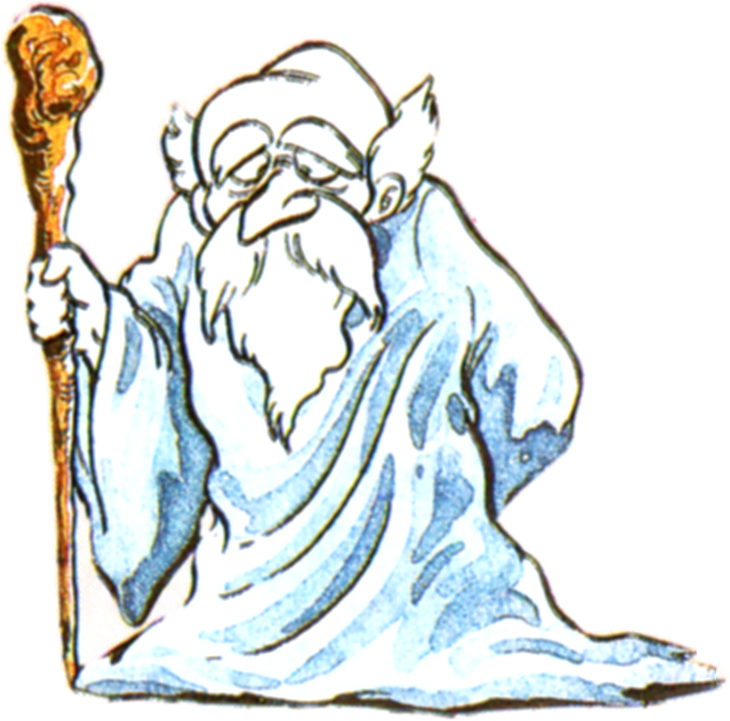
The old manThe voice in the cave
The old man of the starting cave, promoted from one famous line on the NES to the main speaking part.
Gives the Hero a sword, then follows the adventure from his cave, lending powers, casting spells and passing on what he senses. In week four Ganon seals his magic and takes the cave from him.
Spells: lightning, a monster-freezing clock, a “Spell of Whispering” that gives away secrets
Lends sword beams, unlimited bombs and a stronger boomerang
The narratorVoice only
A calm second voice who never appears on screen.
Tells the legend at the top of each episode, explains the controls, names the week’s two levels and counts down the final minutes.
Not a character in the game world.
Princess ZeldaVoiced by Naomi Fujisawa
The princess of Hyrule, a prisoner of the Evil King.
Her call for help opens every broadcast. She is found at the end of Ganon’s lair, behind a wall of flames, once he is beaten.
Heard in the prologue; seen only at the very end.
GanonThe Evil King
The pig-like demon of the first game, here given the back-story of A Link to the Past: once Ganondorf, a thief who seized the Triforce.
Stays out of sight for three weeks. In the fourth he spreads a dark mist, snatches the best sword and ring, taunts the Hero once and finally takes over the old man’s cave.
Invisible in battle
Can only be finished with a Silver Arrow
Appears from 18:45 in week four
Bosses
The dungeon guardians are old friends from 1986, redrawn. These are the first map’s, in order.
AquamentusLevel 1The fireball-spitting dragon, first boss here as on the NES.
DodongoLevel 2Still dislikes smoke: feed it bombs.
ManhandlaLevel 3The four-headed plant. A recoloured, tougher one turns up in week four.
DigdoggerLevel 4The giant urchin that shrinks at the sound of the flute.
PatraLevel 5An eye ringed by smaller eyes; a late-game pest on the NES, a boss here.
GohmaLevel 6The one-eyed crab, vulnerable only to an arrow in the eye. Blue Gohmas guard Level 8.
GanonGanon’s lairInvisible until hurt; a Silver Arrow ends it.
The people who made it
These names are from the broadcast’s credits as listed on Japanese Wikipedia. The voice actors’ parts are given differently by different sources: the Japanese article has Katō as the old man and Kobayashi as narrator, while English Wikipedia and the Satellaview wiki give Kobayashi the old man and Katō Ganon.
Takao ShimizuGame directorLed the game side of the project at Nintendo.
Satoshi YamatoProducerNintendo’s producer, who returned for the 1997 follow-up. His co-producer, Yakushiji, worked for St.GIGA.
Tatsuya HishidaScenario and audio co-ordinatorWrote the script and tied the radio drama to the game. He supervised the follow-up alongside Takashi Tezuka.
Shigeru Miyamoto and Takashi TezukaOriginal game designCredited as the designers of the 1986 game on which this one is built.
Akito Nakatsuka and Yuichi OzakiSuper Famicom soundHandled the music and effects that came from the console itself.
Yoichi Kotabe and Hisashi NogamiDesignersTwo of the five credited designers. Nogami had joined Nintendo only the year before; he is now best known for Animal Crossing and Splatoon.
Kiyoshi KobayashiVoiceCredited with the old man or the narration, depending on the source.
Seizō KatōVoiceCredited as Ganon in English-language sources and as the old man in the Japanese article.
Naomi FujisawaVoice of Princess ZeldaHeard in the prologue. The drama was made with the Tokyo Actors’ Consumers’ Co-operative Society.
How it was made
Nintendo has said very little about how BS Zelda was made. What follows comes from the broadcast credits, magazine coverage recorded by Wikipedia, and what fans have found inside the surviving data.
A showpiece for a new service
The Satellaview’s broadcasts began in April 1995, and by summer the service needed a reason for people to send off for one. Nintendo’s answer was to take its most famous adventure and turn it into appointment viewing. The game was announced in July 1995 and went out in August as a special for the school holidays, in a strand of programmes called Natsuyasumi no Ōsama, “King of the Summer Holidays”. Wikipedia records a launch special on 3 August hosted by Hikari Ōta of the comedy duo Bakushō Mondai.
The division of labour shows in the credits: a game director, programmers and map designers on Nintendo’s side, and a broadcast director and producer at St.GIGA. Miyamoto and Tezuka are credited for the design of the original game, and Toshihiko Nakago, its programmer, is among those thanked.
Finished week by week
The surviving data suggests a team working right up to the wire. For years the only copy of the game was a dump of the third episode. The Cutting Room Floor notes that it already contains the fourth episode’s material, but in a rough, glitchy state, with the recoloured Manhandla and Gohma bosses not yet working, which implies that the finale was still being built when episode three aired a week before it.
The same data hides music the broadcast never used. Because the soundtrack came from the radio, the cartridge-style versions of the title, overworld and dungeon themes sat silent, along with pieces for Ganon’s lair, Zelda’s rescue and the ending. Prototype graphics have turned up too, among them the official Link sprites and two monsters, Gleeok and Lanmola, that were cut.
“The biggest buzz of the summer”
Nintendo called the game the biggest buzz of the summer, and by Wikipedia’s account St.GIGA was swamped with postcards and faxes. A repeat was arranged at once for September, promoted in magazine advertisements with the Satellaview’s mascots rendered in 3D, and two more followed in October and November. The repeats gave the game its own voice-linked slot on more days of the week.
MAP2 arrived for New Year, and the idea spread. Over the next four years the service carried more than fifty SoundLink programmes, according to Nintendo Life, and in late 1996 players voted BS Zelda back for a repeat over the first four days of January 1997.
The end of the service
The audience was never large. St.GIGA counted 116,378 active Satellaview users at the peak, in March 1997. The partnership soured the following year, Nintendo stopped supplying new programmes in the spring of 1999, and St.GIGA carried on alone with repeats until the service closed on 30 June 2000. BS Zelda itself had not been shown since January 1997.
Firsts: what this game introduced
As a one-off experiment, BS Zelda tried several things years before the main series did.
1Spoken dialogueAccording to Wikipedia, this was the first Zelda game from Nintendo itself to use voice actors, long before the main series gave its characters spoken lines.
2A clock that changes the worldHyrule ran to a timetable: shops, monsters, fairies and whole dungeon entrances changed by the minute. Majora’s Mask would later build a full game on a ticking clock.
3You are the heroLink sits this one out. The player’s own character, boy or girl, is the hero, which no Zelda made by Nintendo had tried before.
4A national leaderboardScores, passwords and published rankings turned a single-player adventure into a competition that the whole audience played at once.
Secrets & timed extras
There were no cheat codes for a game you could not own, but the timetable was full of things you could only get if you knew where to be and when. Times are minutes past six in the first map, from the guide on The BS Zelda Homepage.
The Heart Container on the beach
A Heart Container. The one on the beach was there for eight minutes only.
In week one a spare Heart Container appears on the beach at about 18:20 and is gone eight minutes later. The old man’s only clue is that he can hear waves.
The Red Ring and the Magical Sword
The two best pieces of equipment can only be picked up between roughly 18:25 and 18:35 in week four. The ring is hidden under one of the Armos statues that the old man wakes at the start of the hour.
The Power Bracelet
An Armos. The statues wake at the start of week four.
Also in week four: once the Armos have woken, the bracelet lies under one of the statues, and it opens the warp passages hidden under certain rocks.
The White Sword
Waiting in the graveyard for anyone with at least five Heart Containers. It is easiest to reach in week three, but a trip through the Lost Woods gets you there in week two.
Half-price shopping
The shops halve their prices from about 18:20 to 18:28 in week two and again early in week four, a good moment to buy the blue ring.
The pedlar’s bargain
In week three a street vendor sells blue medicine for 10 Rupees, from about ten past the hour until just after half past.
The Spell of Whispering
At 18:35 in week four the old man casts a spell that makes a whistling sound on any screen with a secret in it.
Power of the stars
At 18:40 in week four every borrowed power comes back at once: sword beams, unlimited bombs and the strongest boomerang, just in time for Ganon.
Checked against The BS Zelda Homepage’s guide and its translations of the broadcast audio, November 2026. The times describe the first map; MAP2 used the same broadcast audio.
Oddities in the surviving data
With no finished cartridge to study, most of what is known about the game’s quirks comes from the downloads that survived on Memory Packs.
Week four inside week three
The blue Manhandla, one of the recoloured bosses in the week-four data.
The dump of the third episode carries an unfinished copy of the fourth, with half-working bosses. The Cutting Room Floor takes it as a sign that the last episode was still being programmed a week before it aired.
The 57-minute wall
Run without the broadcast, the original data sits through a seven-minute wait at the start and stops dead 57 minutes in. Removing both was the first job of the early fan patches.
Silent music
Versions of the NES title, overworld and dungeon themes, and pieces for Ganon’s lair, Zelda’s rescue and the ending, are in the data but were barely used on air, because the radio supplied the soundtrack. Modern patches switch them back on.
Missing monsters
Graphics for Gleeok and Lanmola were found among early assets in 2020, drawn but never placed in a dungeon. Fan patches now add both to Level 8.
A later broadcast is not the same game
A dump of week four from a later repeat, released at Christmas 2020, behaves slightly differently from the older data, with touches previously seen only in MAP2, such as a sound effect at the door to the final battle.
Videos & media
No official footage of BS Zelda is on sale anywhere. These two show the machine it ran on and the game as fans have restored it.
A 1995 introduction to the Satellaview and its satellite broadcasts. Re-uploaded by First Fallen Angel on YouTube.
The fan-restored MAP2 (“Fourth Quest”) running with MSU-1 audio, as featured by Nintendo Life in October 2017. Video by ShiryuGL on YouTube.
Trivia & facts
The first six dungeon maps of the original broadcast spell out St.GIGA, the name of the radio station that carried it. MAP2’s eight spell NiNtENDO.
Official art of the old man from the 1986 original.The old man who says “It’s dangerous to go alone” in 1986 becomes the co-star here, with a speaking part in every episode.
Each episode began with a short wait while the data downloaded. Fans who first ran the dump in an emulator had to sit through seven minutes of nothing before play started.
The announcer told players that the game existed only in “Zelda Time” and could not be saved to a Memory Pack. The temporary data that some packs kept anyway is the only reason it can be played today.
A half-hour radio programme, BS Zelda no Asobikata (“How to play BS Zelda”), went out before the game, according to the Satellaview wiki.
Britain noticed: Super Play reported the broadcast in its September 1995 issue under the headline “New Zelda Hits Japan”.
A Darknut. After sunset they take the Octoroks’ place.Late in the game the Evil King cheats. After sunset the Octoroks in the field are swapped for Darknuts, and in week four the Magical Sword and the Red Ring are whisked away if you have not collected them in time.
Hisashi Nogami, later the producer of Animal Crossing and Splatoon, is credited as one of the designers.
In December 2020 a fan called Vel used the game’s early prototype graphics to recreate the NES first quest in the fan-made PC game Zelda Classic.
The MSU-1 restorations come with an English dub: fans re-voiced the broadcast from their own translation of it.
The fastest recorded run of the restored Third Quest stood at 29 minutes 29 seconds, set by Iceblue in July 2022, according to the Zelda Wiki on Fandom. That is less time than one broadcast episode.
Nintendo Power ran a piece headed “Zelda from Space?” in its March 1997 issue.
Media & artwork
Screenshots of the broadcast and the restored versions, the Satellaview hardware, and the avatars. Select any image to view it larger.
BS Zelda has two histories: seventeen months on the air, and more than twenty-five years of being rebuilt by the people who refused to let it vanish.
Broadcasts and rediscovery
First broadcast6–27 August 1995 – Four episodes on four Sunday evenings, in St.GIGA’s Super Famicom Hour.
RepeatsSeptember–November 1995 – Three further runs: 3–29 September, 1–24 October and 5–28 November.
MAP230 December 1995 – The remixed second map, shown over eight days to 6 January 1996 and repeated on 3–27 March 1996.
Players’ choice1–4 January 1997 – A final repeat voted for by viewers, one episode a day. The game was never shown again.
The BS Zelda Homepage2 November 1999 – A fan site opens around a single dump of episode three. Roto’s patch unlocking all four weeks follows on 30 November.
English translation26 May 2000 – The first complete translation patch.
MAP2 found28 January 2007 – A dump long thought not to exist is passed to the site. The restored Third and Fourth Quests are finished that spring.
Recordings surfaceLate 2007 – Videos of complete play sessions, with the broadcast audio, are found on a Japanese video site.
Restoration complete2 November 2009 – On the site’s tenth birthday, both maps play as they did on air, clock and all.
MSU-1 audio21 June 2016 – All four weeks get a full spoken soundtrack, dubbed into English.
New dumps2020–2021 – Data for weeks one, two and four, some of it from later repeats, is recovered and published.
Why it cannot be played as broadcast
Three things had to be present for BS Zelda to work: the game data, the audio, and the clock that tied them together. Only the first was ever written to a Memory Pack, and only as a temporary file meant to be overwritten by the next download. The voices and music were streamed through the Satellaview’s memory and were gone when the hour ended. When the service shut in 2000, the audio half of the game ceased to exist anywhere outside a few viewers’ video tapes.
Nintendo has never re-released it. As Nintendo Life has observed, releasing the original audio would need the permission of the actors, musicians and radio presenters involved. So the Hyrule of August 1995 survives only in pieces: data dumps, home recordings and memories. Jonathon Greenall, writing for that site in 2023, put it bluntly: “a core part of the experience is still missing.”
How fans put it back together
For years everything rested on one file: a dump of episode three that had turned up on the internet. Left alone it ran for 57 minutes and crashed. The BS Zelda Homepage, founded on 2 November 1999, became the workshop where that file was taken apart. A programmer called Roto opened up all four weeks, added saving, a title screen and the choice of boy or girl; Dreamer_Nom fixed the crashes and the bosses; Duke Serkol and others translated the text. The result could be played like a normal Zelda game. Fans took to calling the game the Third Quest, the name later given to a 2007 patch that turns it into an old-fashioned Legend of Zelda.
The second wave was about accuracy. MAP2, which nobody had expected to see again, reached the site in January 2007, passed on by the owner of a Japanese website. At the end of that year complete recordings of people playing the broadcasts were found online, with the narrator and the old man intact. They let Con, Euclid and the other patch-makers rebuild the timetable, put parts of the script on screen as text and, in 2009, declare the restoration finished.
Since then the missing half has been put back by other means. MSU-1, an audio add-on supported by accurate emulators and flash cartridges, allows a patched game to play a continuous soundtrack, and in 2016 the site released one for each week with the script re-voiced in English. In 2017 a patch by Conn added orchestral MSU-1 music to the Third and Fourth Quest versions. And the hunt for original data goes on: preservationists including sanmaiwashi, LuigiBlood, Kiddo Cabusses and Matthew Callis recovered and published three more episodes in 2020 and 2021.
Its place in the series
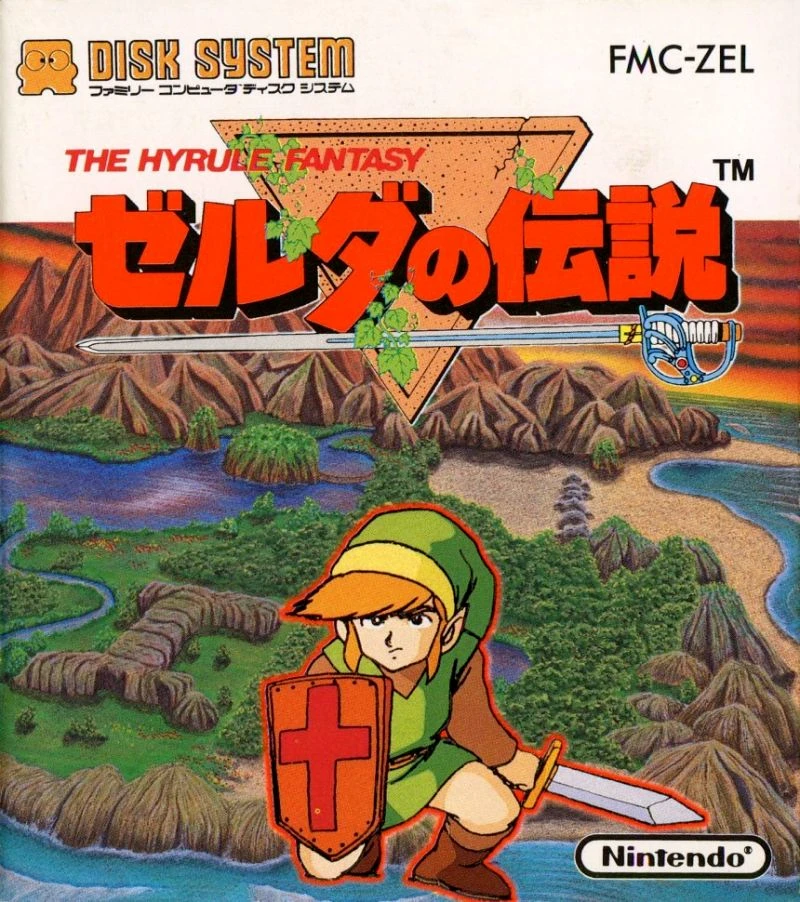
The Famicom Disk System box of the 1986 original, whose world BS Zelda reworked.
Nobody has quite settled what BS Zelda is. Wikipedia notes that fans still argue over whether it is a remake or a spin-off, whether its plot counts, and where it would sit in the timeline. Its prologue borrows the legend of A Link to the Past, its map borrows the first game, and its hero belongs to neither.
Its direct descendant is BS Zelda no Densetsu: Inishie no Sekiban, broadcast in 1997, which took the same avatars and the same clock into the Hyrule of A Link to the Past and let the voices tell a much longer story.
Audience & reaction
How it went down
BS Zelda was never sold, so there are no sales figures, and no magazine could review a game its readers could not buy. What there is instead is the reaction of the audience. Wikipedia, drawing on St.GIGA’s and Nintendo’s own announcements of the time, records a flood of postcards and faxes, a record number of people playing at once, three repeats inside three months by popular demand and a fourth won in a viewers’ vote at the end of 1996.
The possible audience was small. The Satellaview’s active user base peaked at 116,378 in March 1997, by St.GIGA’s own count, and in 1995 the service was only months old.
5runs between August 1995 and January 1997
116,378active Satellaview users at the peak (St.GIGA, March 1997)
What has been said since
There are no period review scores. Later writers have mostly treated it as a lost curiosity worth saving.
Nintendo Life has called the Satellaview one of the “Holy Grails” for Super Nintendo fans and regretted that Nintendo shows no interest in preserving its games. The Lost Media Wiki files BS Zelda as partially lost. What players outside Japan know of it they know through the fan versions: a 16-bit take on the first Zelda with a third and fourth set of dungeons, and, since 2016, a radio play laid back over the top.
Reader reviews
No reader reviews yet. Played it? Give it a score out of 10 and tell other fans what you think.
Every fact on this page was checked against the sources below in November 2026. Nintendo’s own 1990s web pages about the broadcasts now exist only in web archives that could not be read, so they are cited through Wikipedia. Zelda Wiki (zeldawiki.wiki) blocks automated reading and was not used.
To provide the best experiences, we use technologies like cookies to store and/or access device information. Consenting to these technologies will allow us to process data such as browsing behavior or unique IDs on this site. Not consenting or withdrawing consent, may adversely affect certain features and functions.
Functional
Always active
The technical storage or access is strictly necessary for the legitimate purpose of enabling the use of a specific service explicitly requested by the subscriber or user, or for the sole purpose of carrying out the transmission of a communication over an electronic communications network.
Preferences
The technical storage or access is necessary for the legitimate purpose of storing preferences that are not requested by the subscriber or user.
Statistics
The technical storage or access that is used exclusively for statistical purposes.The technical storage or access that is used exclusively for anonymous statistical purposes. Without a subpoena, voluntary compliance on the part of your Internet Service Provider, or additional records from a third party, information stored or retrieved for this purpose alone cannot usually be used to identify you.
Marketing
The technical storage or access is required to create user profiles to send advertising, or to track the user on a website or across several websites for similar marketing purposes.

 Level 1Week 1 · boss: AquamentusAcross a bridge. The bow is inside.
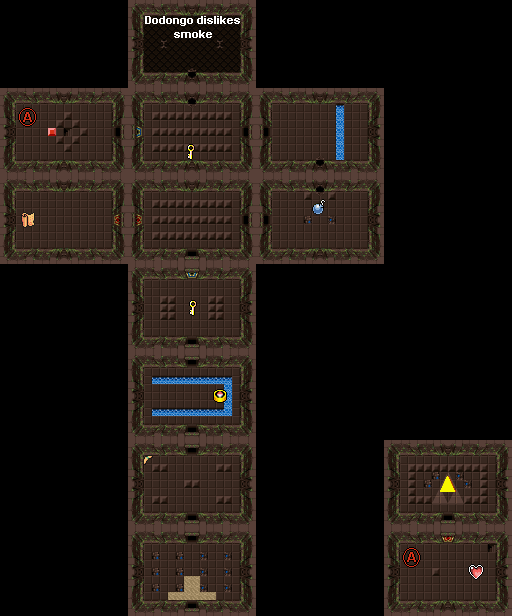 Level 2Week 1 · boss: DodongoHidden behind a rock that has to be bombed. Holds the wooden boomerang.
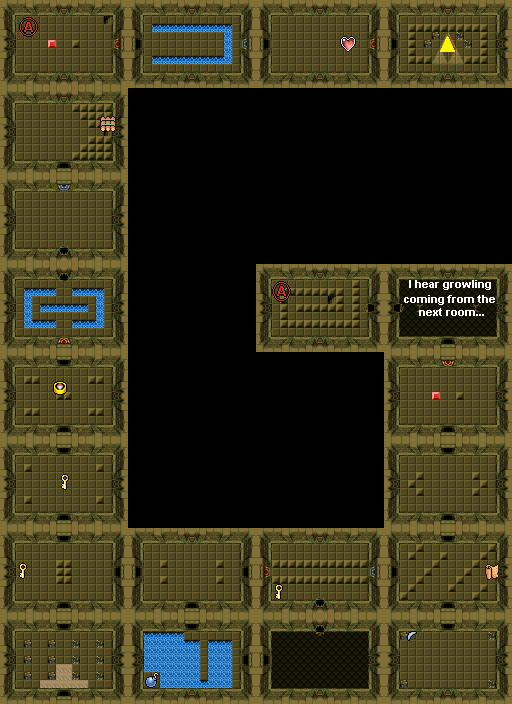 Level 3Week 2 · boss: ManhandlaReached through the woods. The raft and the magical boomerang are here.
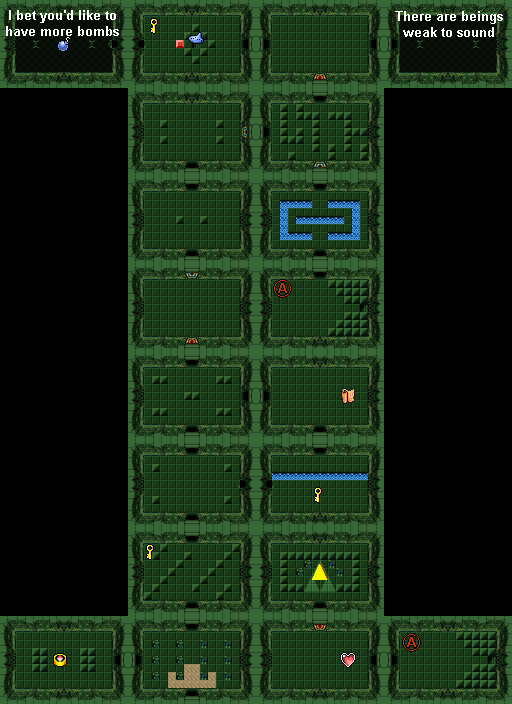 Level 4Week 2 · boss: DigdoggerReached by raft. Its prize is the flute, the NES recorder under another name, and there is a bigger bomb bag to buy.
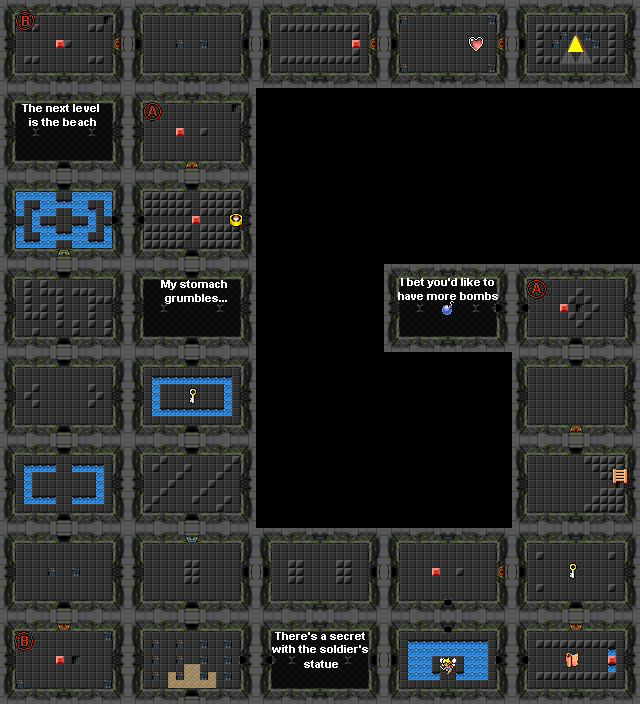 Level 5Week 3 · boss: PatraTucked away behind a hidden passage. The stepladder is inside.
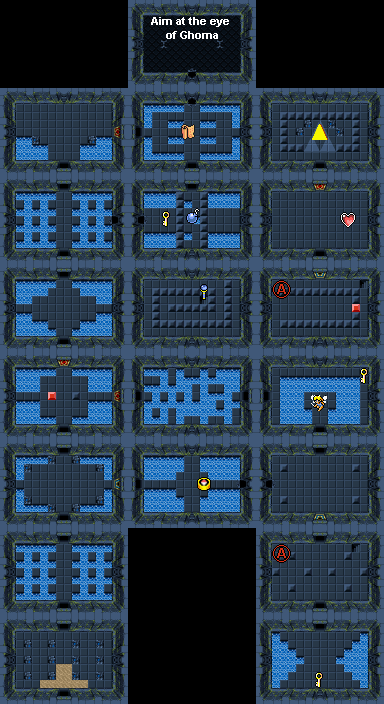 Level 6Week 3 · boss: GohmaAppears when the flute is played on the beach, and only from 35 minutes past the hour. Holds the magic rod.
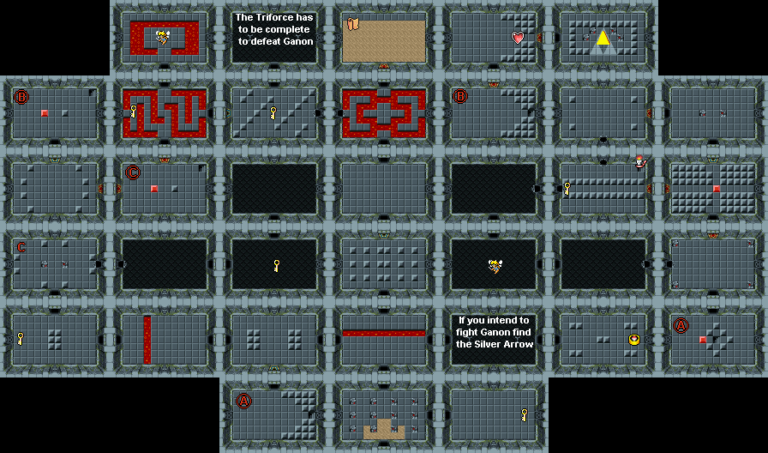 Level 7Week 4 · a tougher old bossThe one level you can simply walk into. The red candle is the treasure.
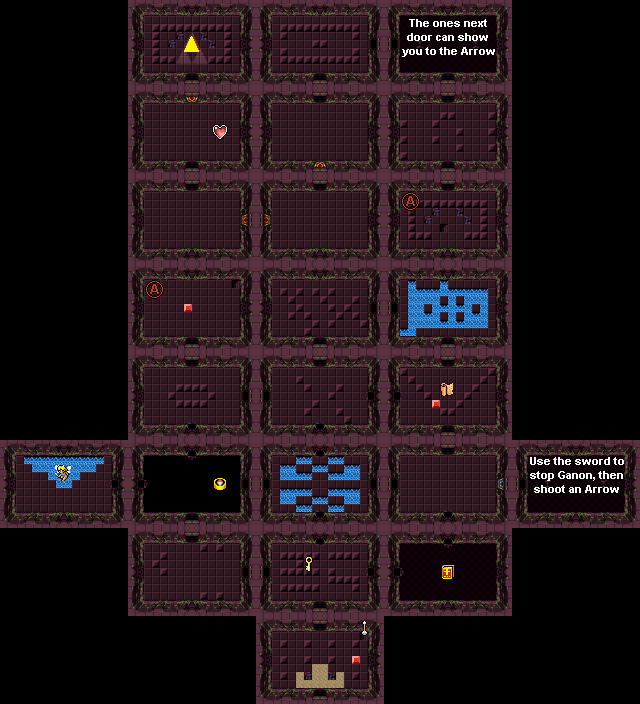 Level 8Week 4 · boss: blue GohmasUnder a bombed rock at Spectacle Rock. Holds the Book of Magic and, in a cellar, the Silver Arrows.
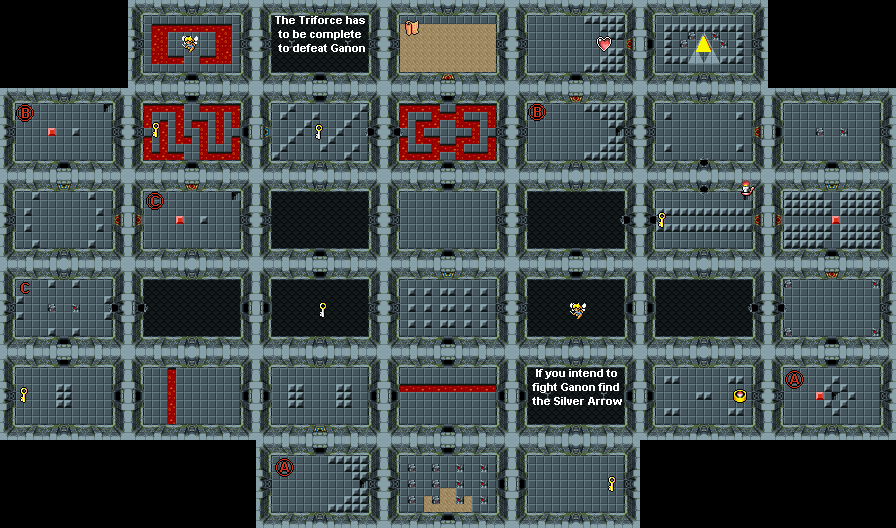
 The old manThe voice in the cave
 GanonThe Evil King
 AquamentusLevel 1The fireball-spitting dragon, first boss here as on the NES.
 DodongoLevel 2Still dislikes smoke: feed it bombs.
 ManhandlaLevel 3The four-headed plant. A recoloured, tougher one turns up in week four.
 DigdoggerLevel 4The giant urchin that shrinks at the sound of the flute.
 PatraLevel 5An eye ringed by smaller eyes; a late-game pest on the NES, a boss here.
 GohmaLevel 6The one-eyed crab, vulnerable only to an arrow in the eye. Blue Gohmas guard Level 8.