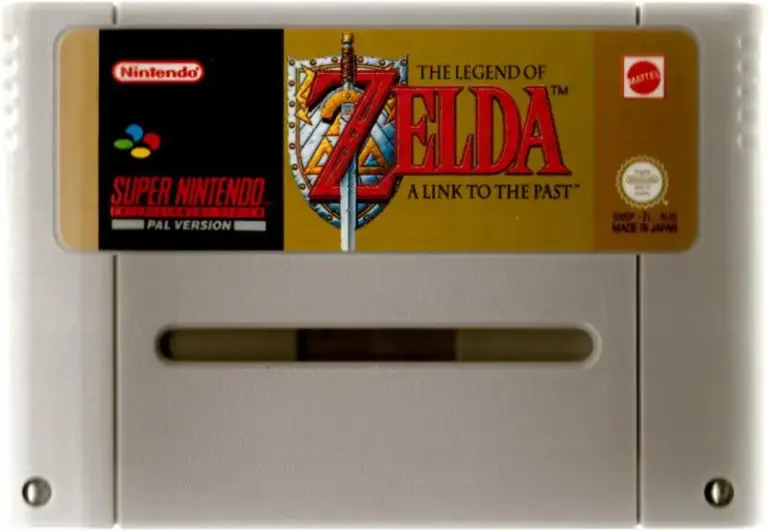
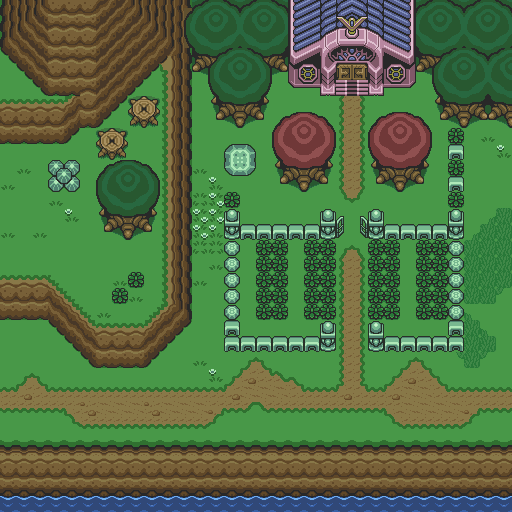
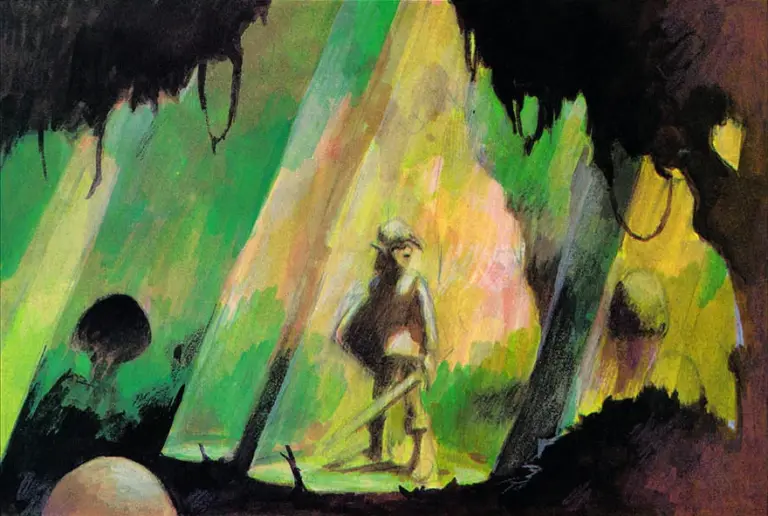
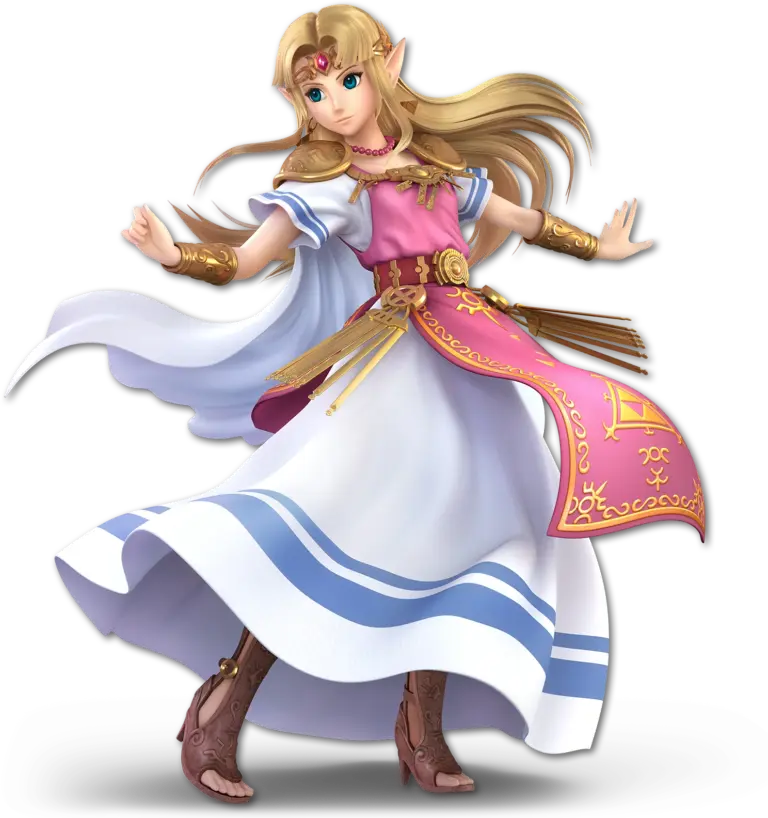
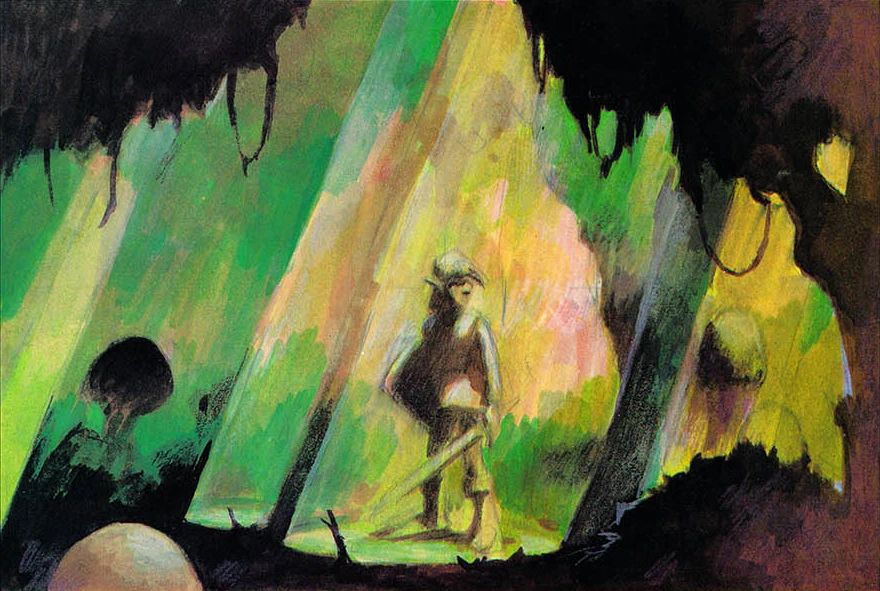
Super NES / Super Famicom1991Nintendo EADAction-adventure
The Legend of Zelda: A Link to the Past
A telepathic cry for help in the night and an uncle who never comes home: the 16-bit Zelda that gave us the Master Sword, a Dark World mirror of Hyrule, and the template almost every Zelda since has followed.
Released21 November 1991 (JP) · 13 April 1992 (NA) · 24 September 1992 (EU)
DirectorTakashi Tezuka
ProducerShigeru Miyamoto
MusicKoji Kondo
Players1
Sales4.61 million on SNES (2004)
Title
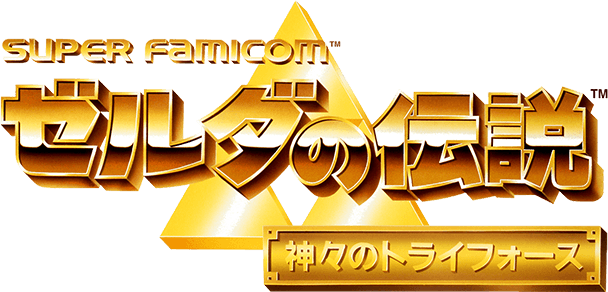
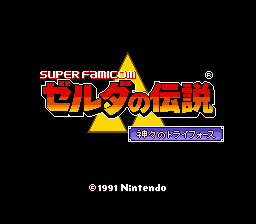
The Legend of Zelda: A Link to the Past ゼルダの伝説 神々のトライフォース (Zeruda no Densetsu: Kamigami no Toraifōsu, “Triforce of the Gods”)
Platform
Super Famicom / Super NES (8-megabit cartridge)
Developer
Nintendo EAD
Publisher
Nintendo
Director
Takashi Tezuka
Producer
Shigeru Miyamoto
Script
Kensuke Tanabe
Manual story and art
Yoshiaki Koizumi
Programming
Toshihiko Nakago, Yasunari Soejima
Art
Masanao Arimoto, Tsuyoshi Watanabe
Music
Koji Kondo
Players
1
Released (Japan)
21 November 1991
Released (North America)
13 April 1992
Released (Europe)
24 September 1992
Game Boy Advance
A Link to the Past & Four Swords: North America December 2002, Japan 14 March 2003, Europe 28 March 2003
Timeline
The “hero is defeated” branch, long before the original Legend of Zelda
4.61 million on SNES and 1.89 million on GBA (both by 2004)
Overview
If the first Zelda drew the map, A Link to the Past built the house. Released for the Super Famicom in Japan in November 1991, a year after the console itself, and in the West in 1992, it went back to the overhead view of the original after Zelda II’s side-scrolling detour and filled it with everything the 16-bit machine could do: a bigger, denser Hyrule, multi-floor dungeons, a cast of characters who actually talk to you, and a story with a real sense of loss.
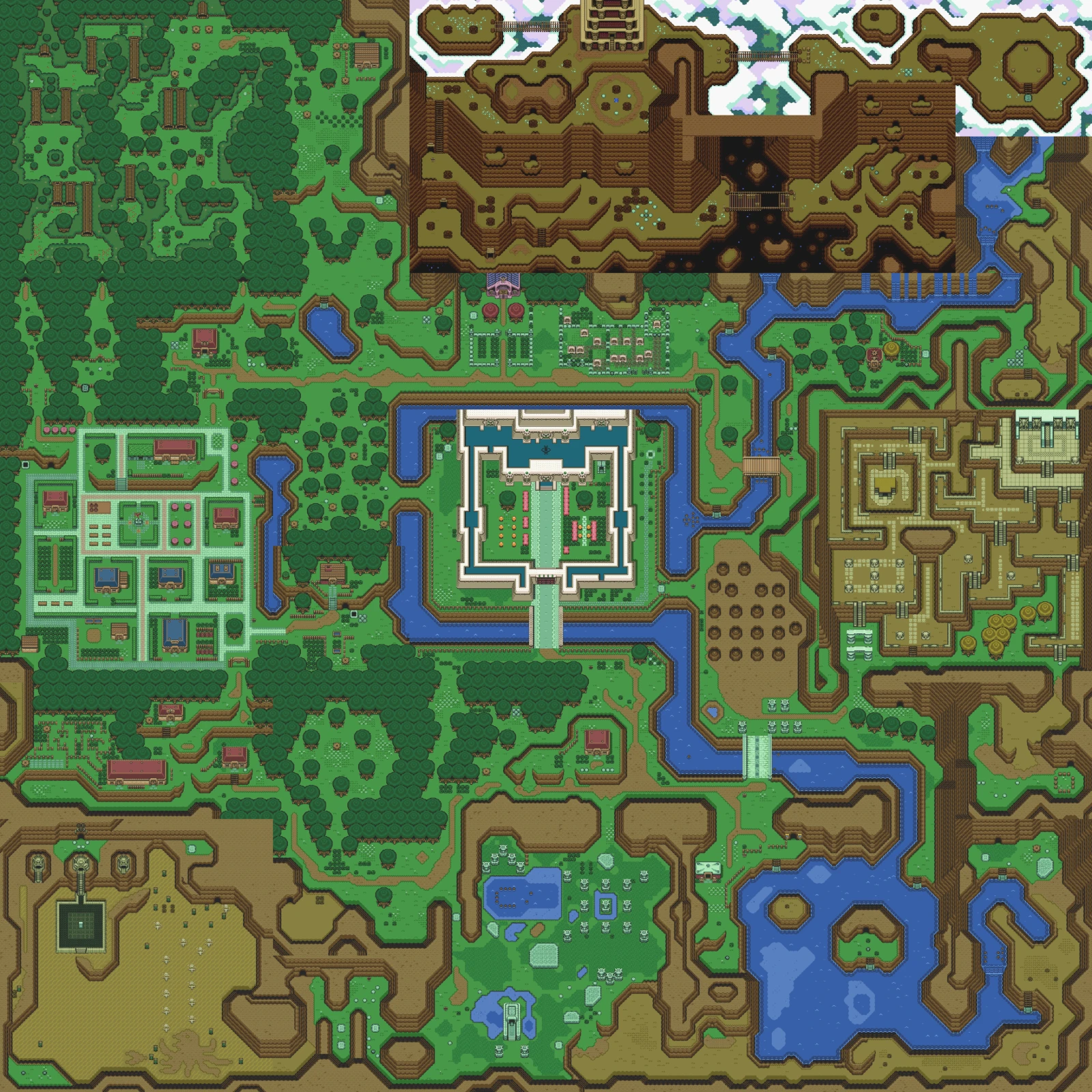
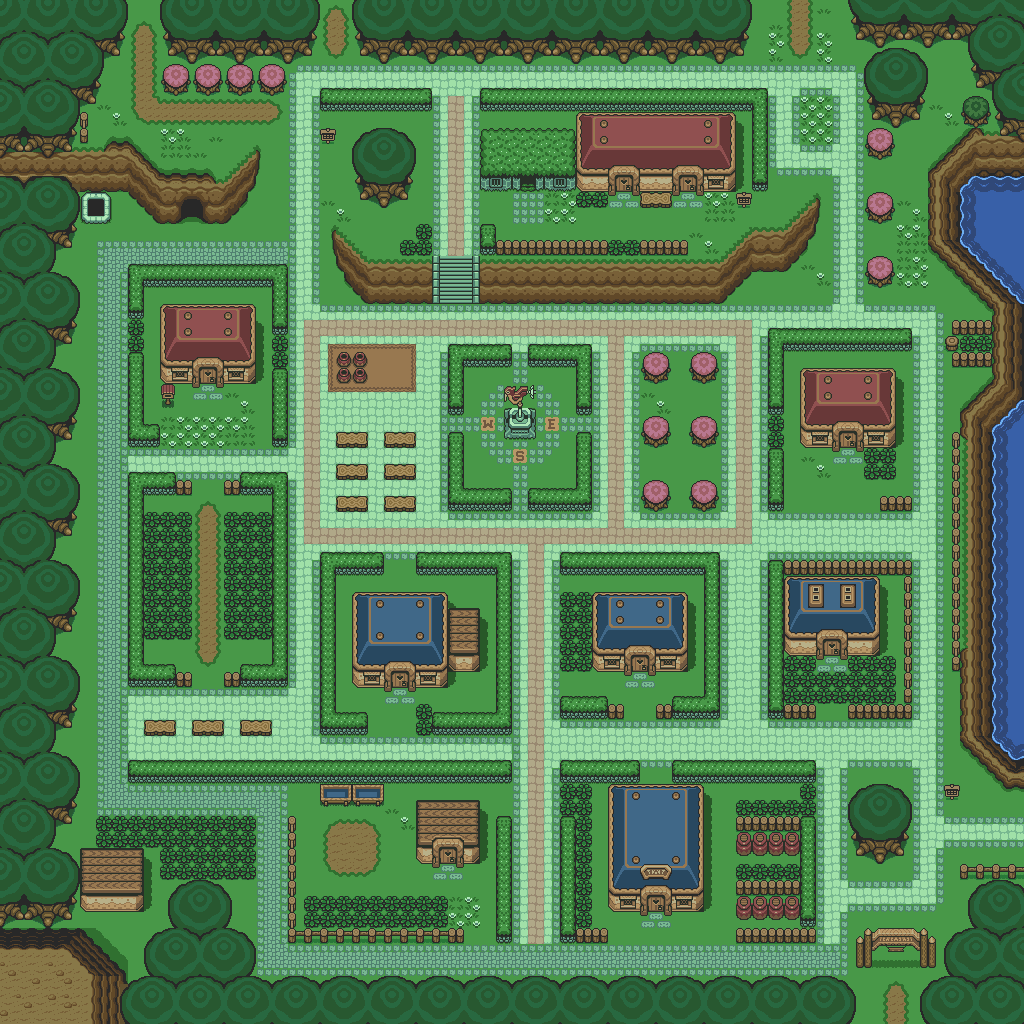
Its big idea was two worlds in one. Hyrule, the Light World, has a dark twin: the Golden Land, twisted into the Dark World by Ganon’s wish. The two maps line up closely, and moving between them with the Magic Mirror is how you solve many of the game’s best puzzles. Along the way it introduced the Master Sword and the hookshot, settled the structure of three trials before a twist and then a larger second quest, and gave Ganon a human past as the thief Ganondorf.
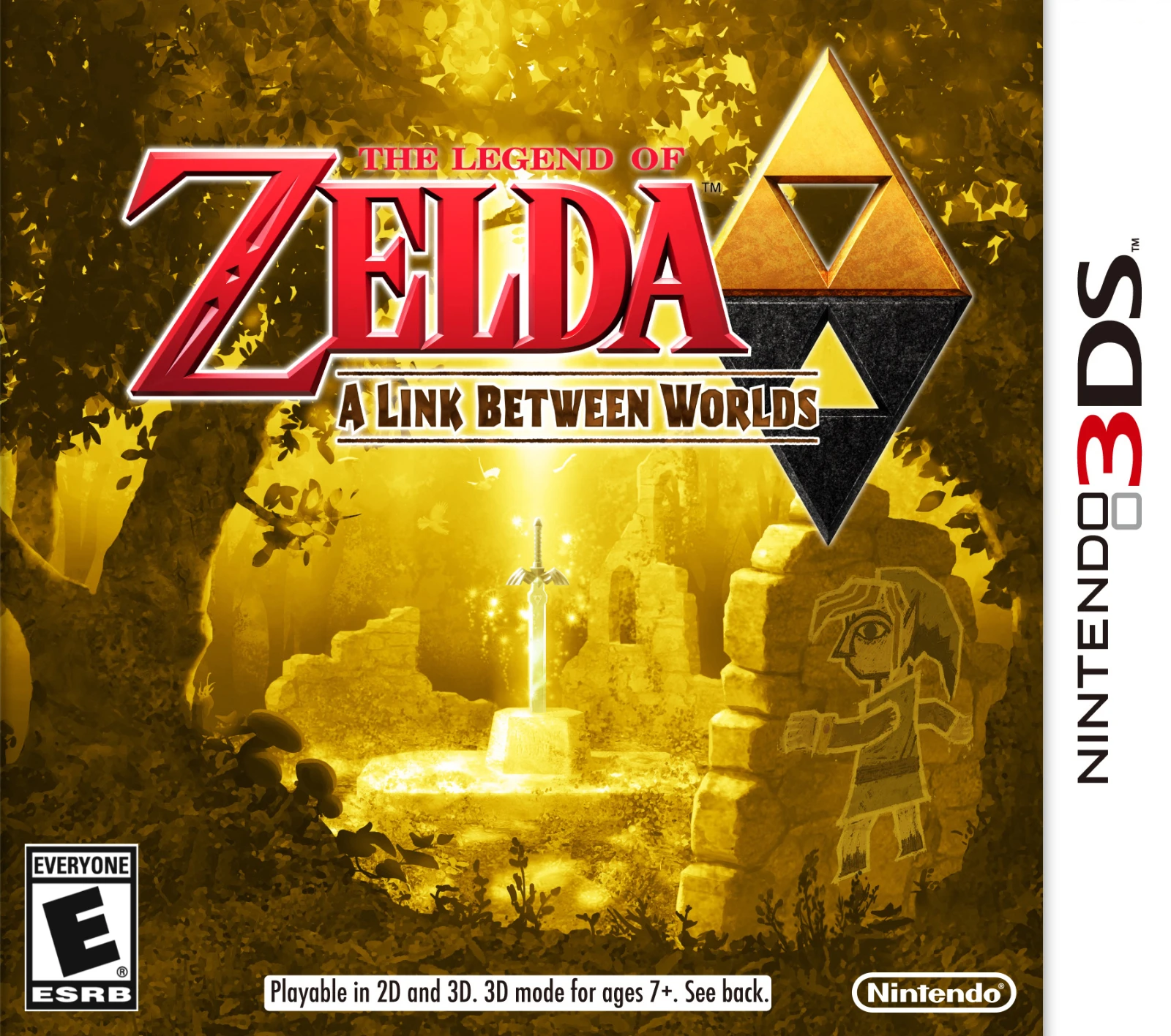
Takashi Tezuka directed, Shigeru Miyamoto produced and Koji Kondo wrote the score. Critics adored it then and still rank it among the greatest games ever made; in 2002 it was reborn on Game Boy Advance alongside the multiplayer Four Swords, and in 2013 it got a direct sequel, A Link Between Worlds, set in the same Hyrule.
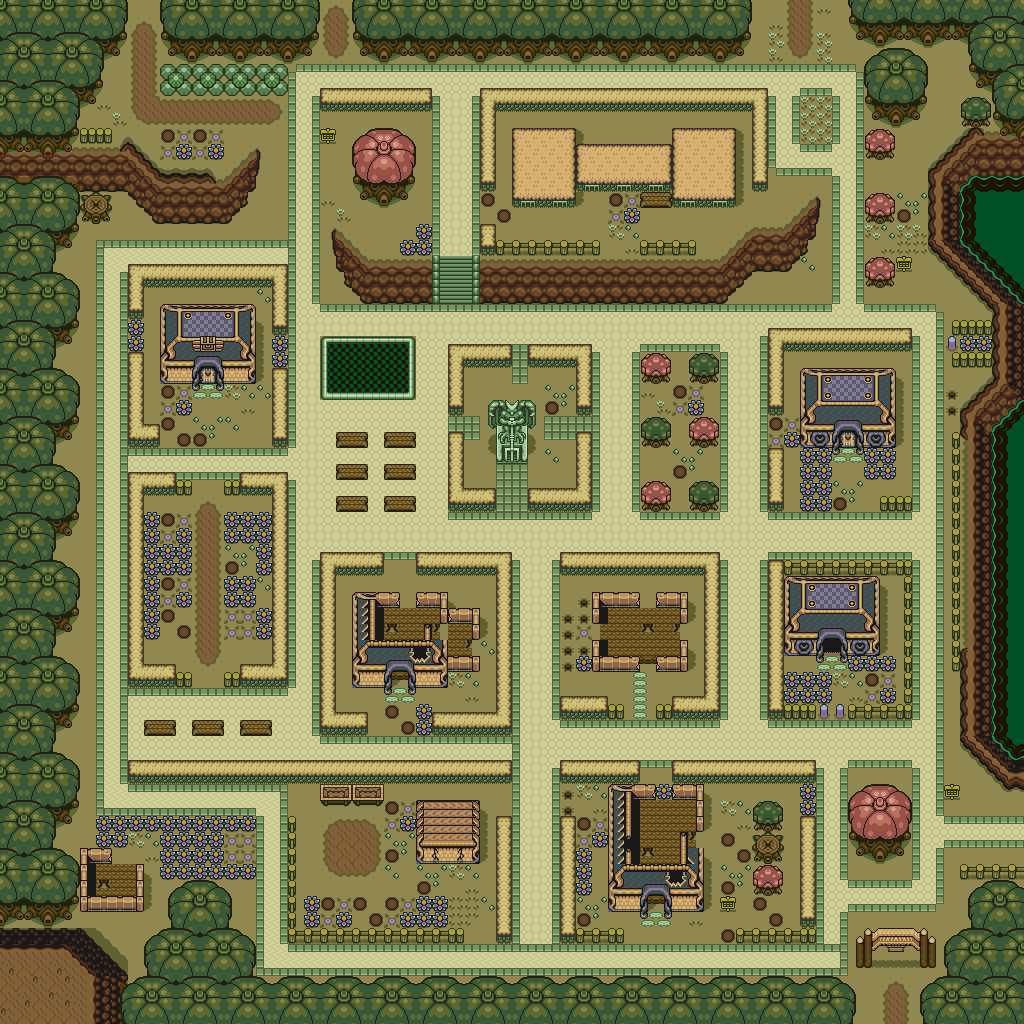
The opening: Link sets out after his uncle.The Light World of Hyrule.The same spot in the Dark World.
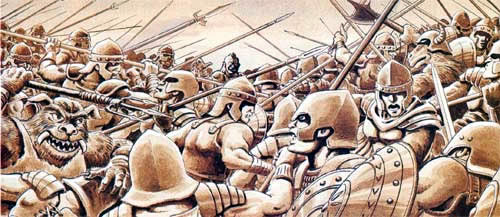
In a long running battle, the leader of the thieves fought his way past his followers in a lust for the Golden Power.
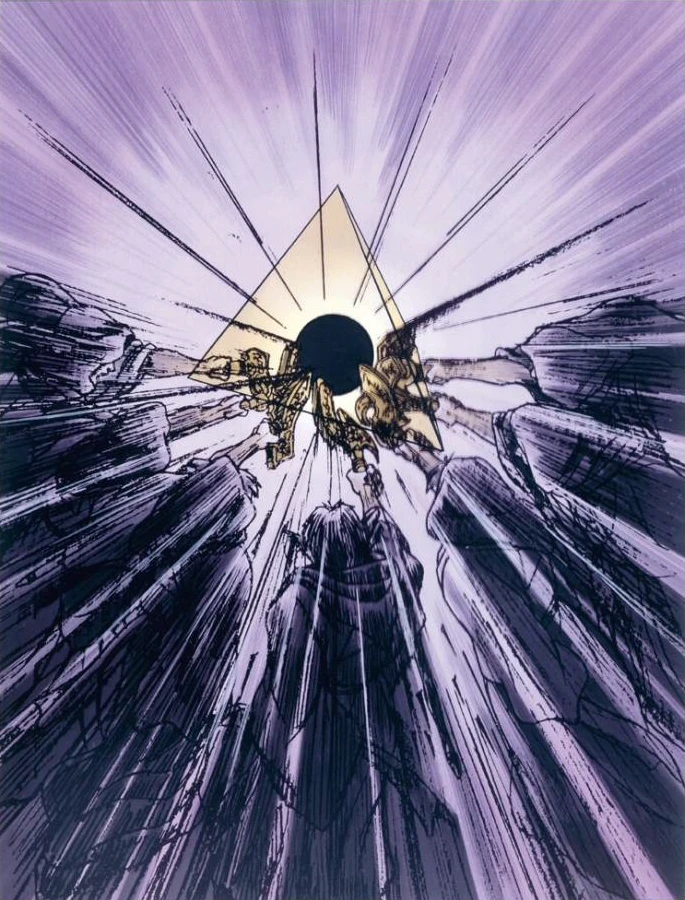
That line from the instruction manual’s history of Hyrule introduces the man who would become Ganon. The manual tells how a band of thieves found its way into the Golden Land where the Triforce lay, how their leader cut down his own followers to claim it, and how the darkness that poured out afterwards led the king to order seven wise men to seal the land away, while the Knights of Hyrule gave their lives protecting them.
— Official description: Nintendo, The Legend of Zelda: A Link to the Past instruction manual, page 5 (quoted via Zeldapedia). One line quoted; the rest summarised.
Quick Answers
The questions people ask most about A Link to the Past, answered here and in more depth below.
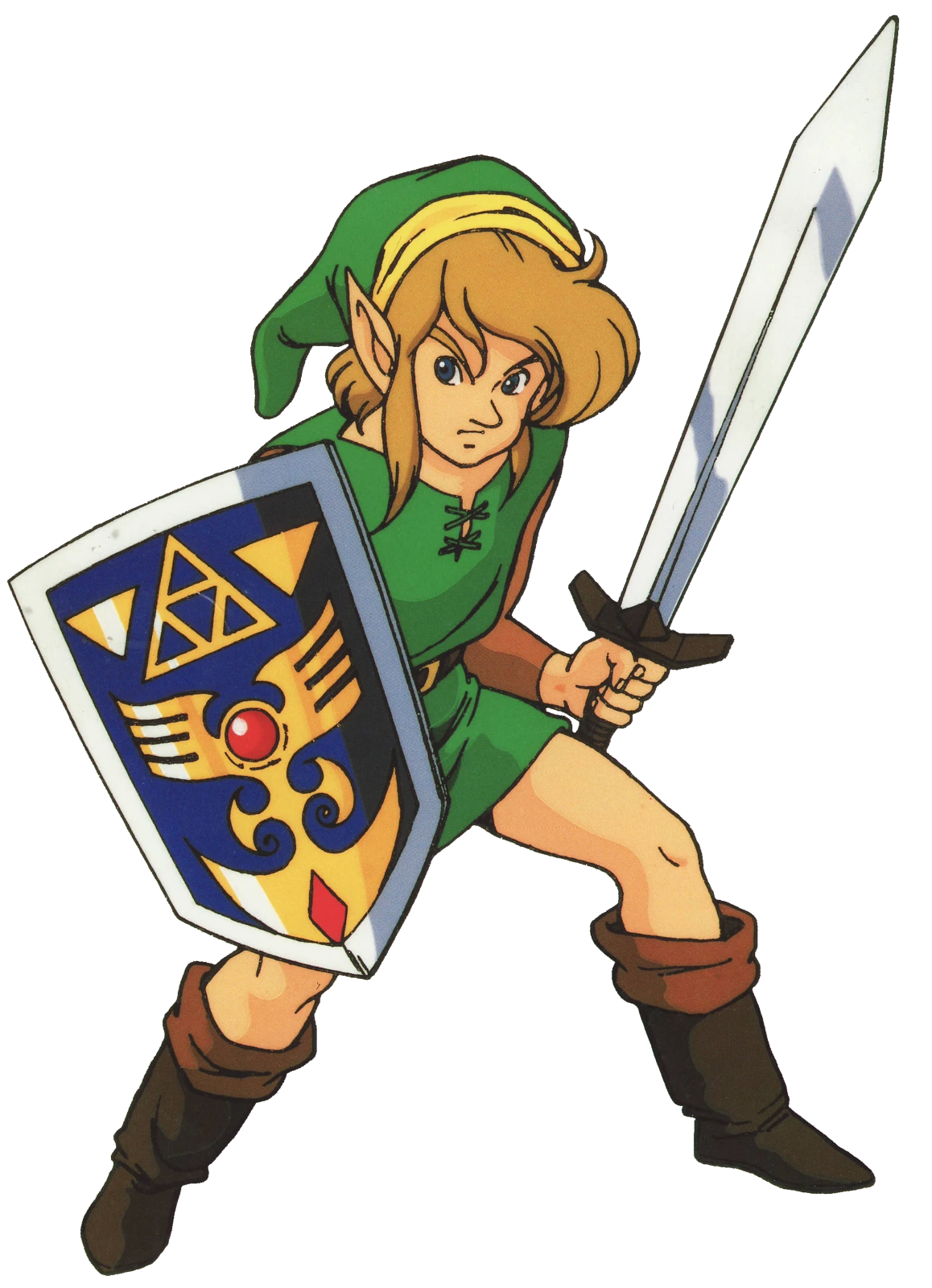
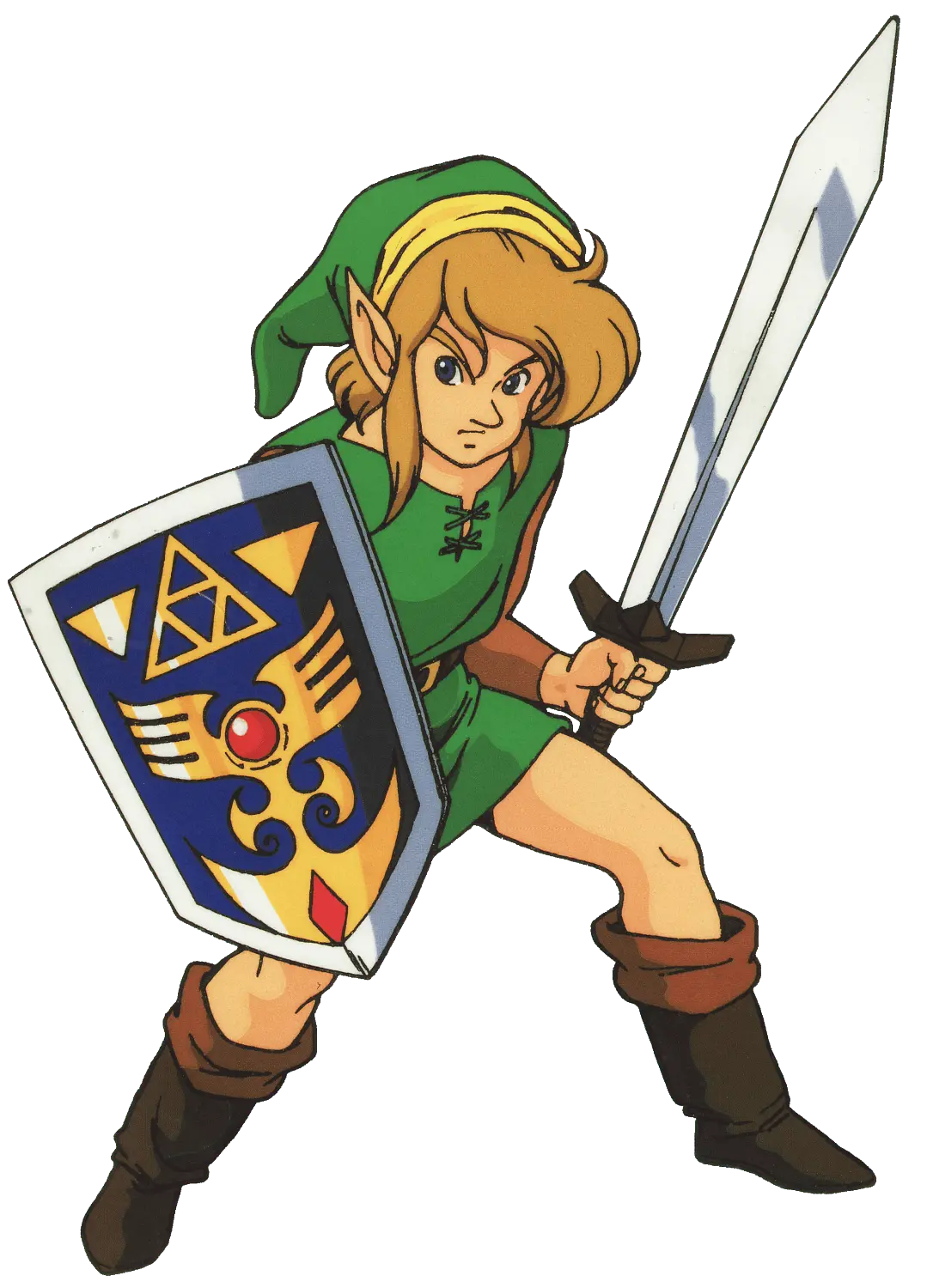
Official art of Link.
When did A Link to the Past come out?
On 21 November 1991 in Japan, 13 April 1992 in North America and 24 September 1992 in Europe, for the Super Famicom / Super NES. More →
How many dungeons are there?
Thirteen: Hyrule Castle, three pendant dungeons, Agahnim’s tower, seven crystal dungeons in the Dark World and Ganon’s Tower, before the final showdown at the Pyramid of Power. More →
Who are the seven maidens?
The descendants of the seven wise men who sealed Ganon away in the Imprisoning War. Agahnim kidnaps them to break the seal; Princess Zelda is one of them. Each is held in a crystal in a Dark World dungeon. More →
Who is Agahnim?
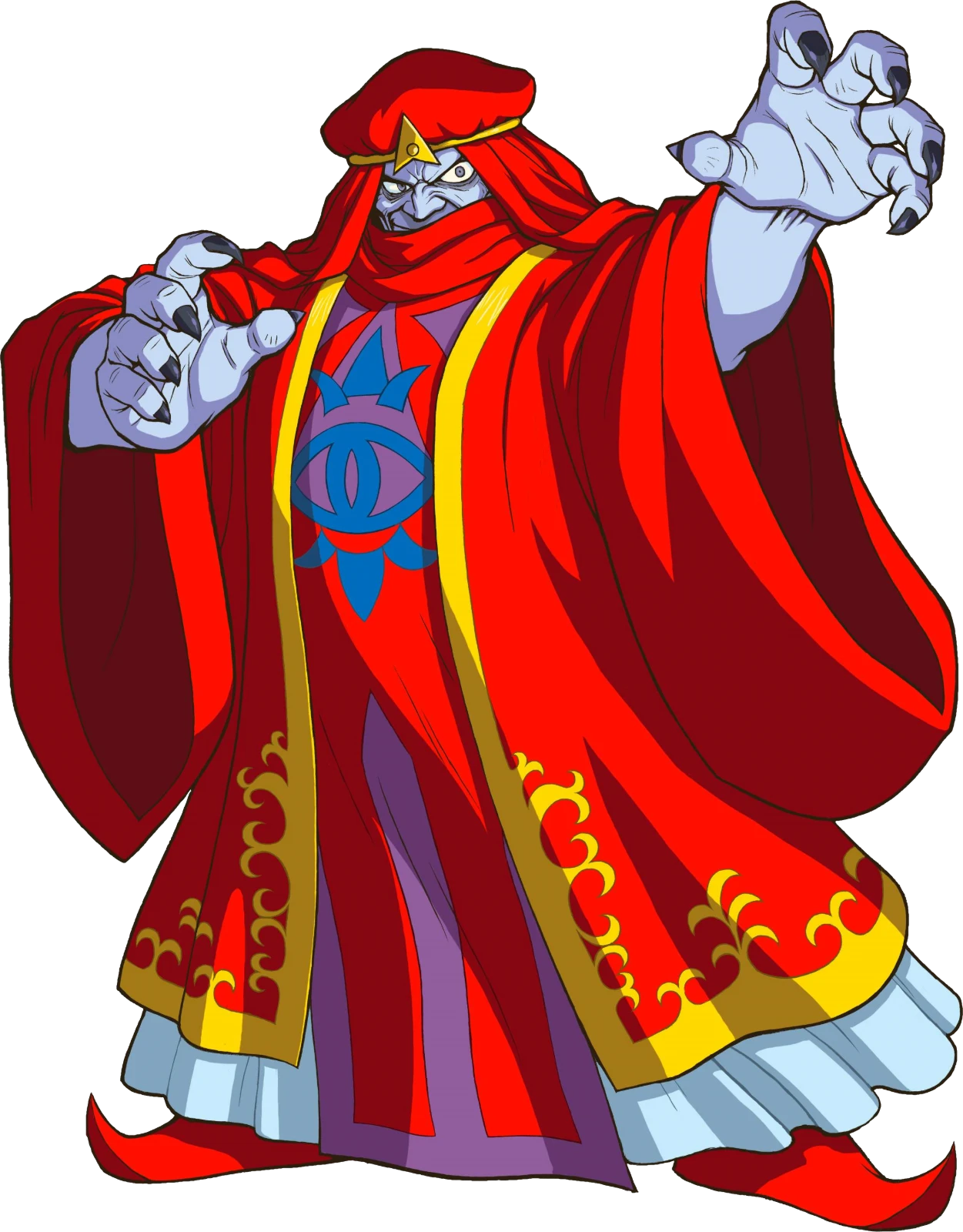
A wizard (a priest, in the Japanese version) who arrives as a saviour, becomes the king’s adviser, murders him and seizes the kingdom. He turns out to be an avatar of Ganon. More →
Is A Link to the Past a prequel?
Yes. It is set long before the first two NES games, on the timeline branch where the Hero of Time fell to Ganondorf. More →
How do you get the Master Sword?
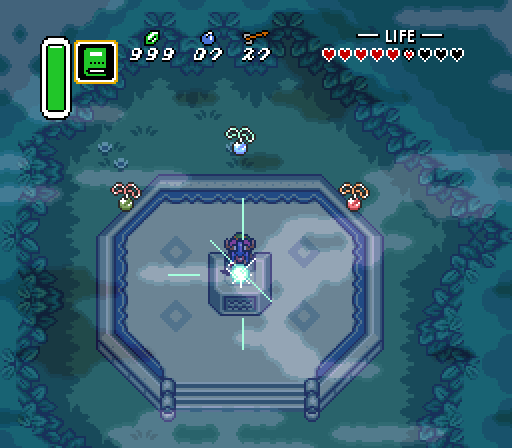
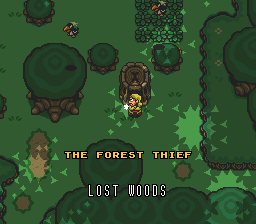
Collect the three Pendants of Virtue (Courage, Power and Wisdom) from the Eastern Palace, Desert Palace and Tower of Hera, then draw the sword from its pedestal in the Lost Woods. More →
Why does Link turn into a rabbit?
The Dark World transforms anyone who enters it to match their nature. Without the Moon Pearl from the Tower of Hera, Link becomes a helpless rabbit. More →
What is the Chris Houlihan room?
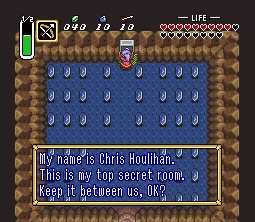
A secret room holding 45 blue Rupees and a message from Chris Houlihan, the winner of a 1990 Nintendo Power contest. It doubles as the room the game sends you to when it does not know where you should be. More →
What changed in the Game Boy Advance version?
It added voice samples from Ocarina of Time, retuned the controls for fewer buttons, cropped the screen slightly and added a new dungeon, the Palace of the Four Sword, unlocked by finishing both A Link to the Past and the bundled Four Swords. More →
Where can I play it today?
The SNES game is in the Super Nintendo library for Nintendo Switch Online (since September 2019), and the GBA version joined the Game Boy Advance library on 18 June 2024. More →
Plot / Story
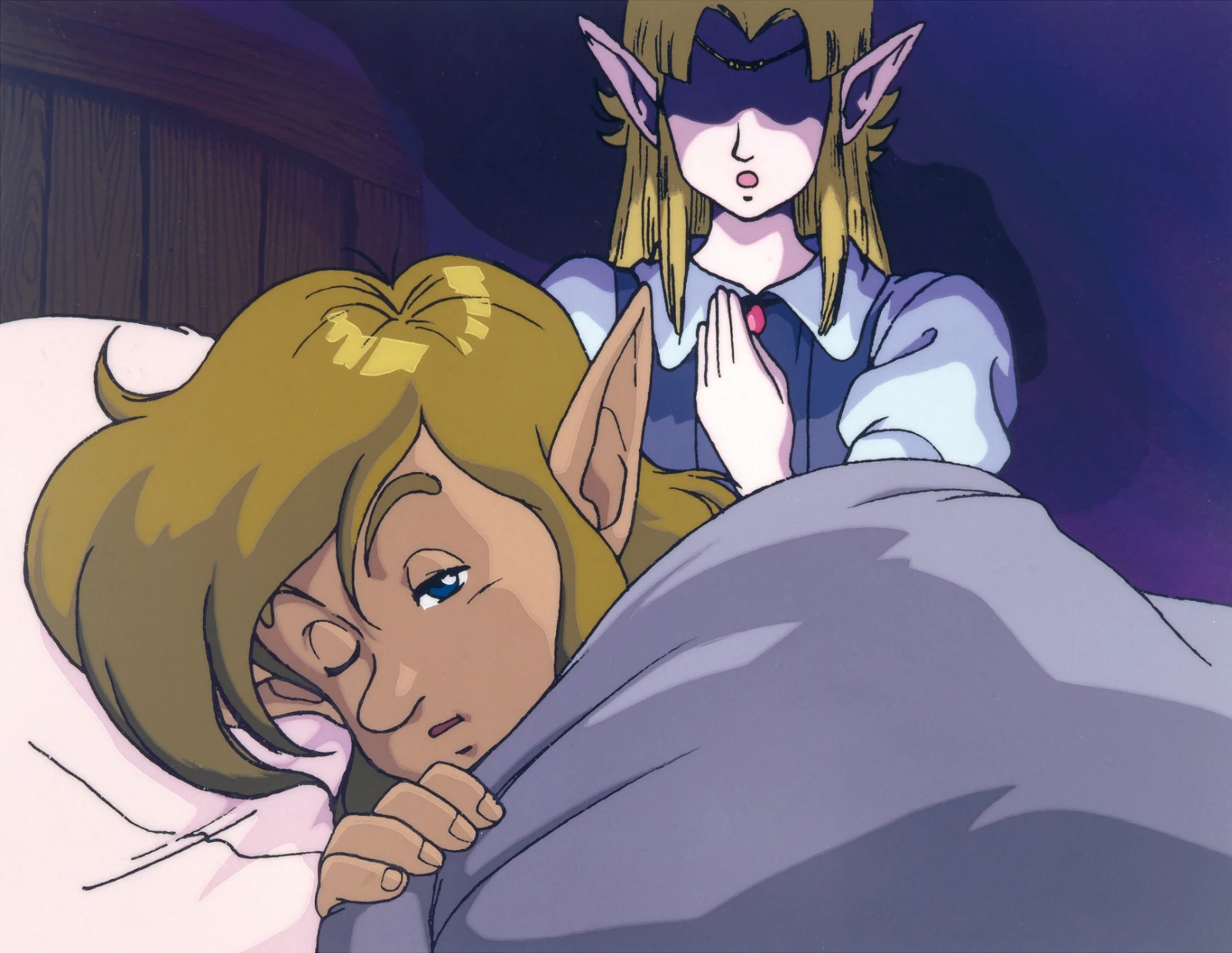
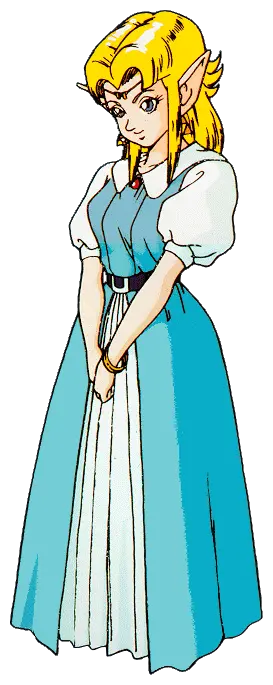
Official art of Princess Zelda calling to Link by telepathy.
Nintendo’s own summary of the game starts where the game does, with Zelda’s voice reaching Link in his sleep from a cell deep beneath Hyrule Castle, where the wizard Agahnim has locked her away. To understand how she got there, you have to go back a very long way.
The Imprisoning War
Hyrule’s legends speak of a Golden Land, a sacred realm where the gods left the Triforce, a relic that grants the wish of whoever touches it. For ages it lay hidden. Then a gang of thieves found the way in. Their leader, a man called Ganondorf (“Ganondorf Dragmire”, as the English manual gives his full name), turned on his own followers to reach the Triforce first, and his wish twisted the Golden Land into a mirror of his heart. Darkness began to seep out, and people who wandered near it vanished.
The King of Hyrule called on seven wise men to seal the entrance, and the Knights of Hyrule fought to protect them while monsters poured out. Most of the knights died, but the seal held, with Ganon, now a beast, trapped behind it. The war became known as the Imprisoning War. Japanese sources make Link a descendant of those knights, whose secret technique was the spin attack.
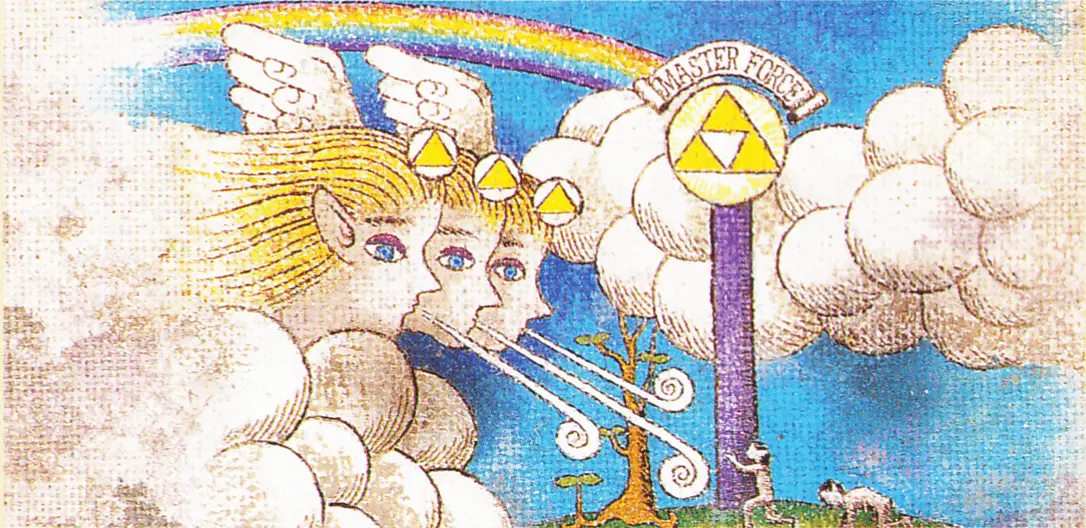
The manual’s illustrated history of Hyrule.The seven wise men seal the Golden Land.
A wizard comes to Hyrule
Centuries passed in peace, until plague and drought struck the kingdom. The seal was still intact, so the king offered a reward to whoever could end the disasters. A stranger named Agahnim did it with his magic, became the king’s closest adviser, and then took the throne for himself, murdering the king. He bewitched the castle soldiers and began kidnapping the descendants of the seven wise men, seven young women, and sending them one by one into the sealed world. Break the line of the sages, and the seal would break with it. Only one maiden is left when the game begins: Princess Zelda.
Agahnim, the wizard who seized Hyrule.
Woken by a voice
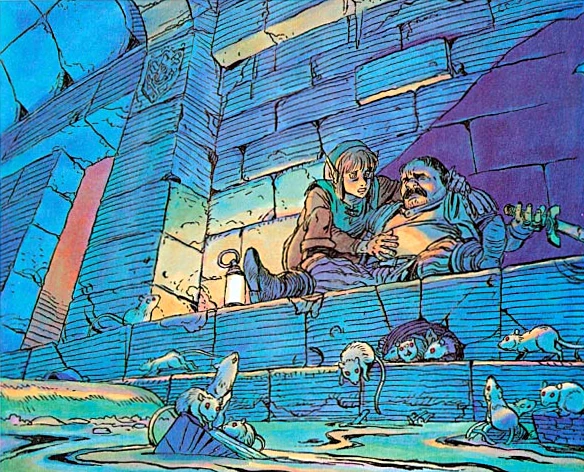
Link and his uncle are woken by Zelda’s voice in their heads, begging for help from the castle dungeon. His uncle takes his sword and shield and tells Link to stay at home. Link follows him anyway, and inside the castle’s secret passage he finds his uncle mortally wounded. With his last words the old man hands over his sword and shield.
Link fights through the castle, frees Zelda from her cell and leads her out through the sewers to the Sanctuary, where the priest, the Loyal Sage, takes her in. He tells Link what Agahnim is planning and that only the legendary Master Sword can stand against him; to claim it, Link must first prove himself by finding three pendants. The elder Sahasrahla, himself a descendant of the sages, sets him on the trail.
Link finds his uncle in the castle’s secret passage.Princess Zelda in her cell.The Sanctuary and its priest.
Three pendants and a sword
The Pendant of Courage waits in the Eastern Palace, guarded by the Armos Knights; the Pendant of Power lies in the Desert Palace, home of the burrowing Lanmolas and the Power Glove; and the Pendant of Wisdom sits atop the Tower of Hera on Death Mountain, where Moldorm guards it and the Moon Pearl lies hidden. On Death Mountain Link meets a lost old man, who gives him the Magic Mirror; the Power Glove from the Desert Palace gets him up the slopes.
With all three pendants, Link draws the Master Sword from its pedestal deep in the Lost Woods. But when he returns to the Sanctuary, the priest is dying and Zelda is gone. Link storms Agahnim’s tower in the castle, but he is too late to stop Agahnim sending Zelda into the other world. He beats Agahnim, but the wizard has one last trick and drags Link into the Dark World after her.
Drawing the Master Sword in the Lost Woods.The Armos Knights of the Eastern Palace.The Tower of Hera on Death Mountain.
The Dark World
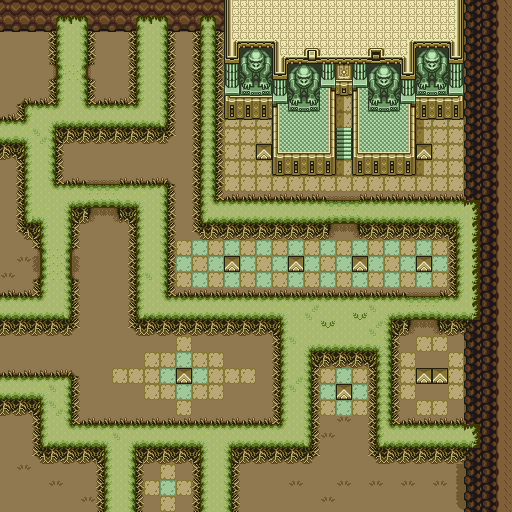
The Dark World is Hyrule turned inside out: the same layout, but with withered brown grass, jade-green water and decaying buildings, and its people changed into monsters, animals and stranger things to match their hearts. Sahasrahla explains that this was once the Golden Land. Without the Moon Pearl, Link himself would be a helpless rabbit. Portals carry him into the Dark World, and the Magic Mirror carries him back, which becomes the key to puzzles across both maps.
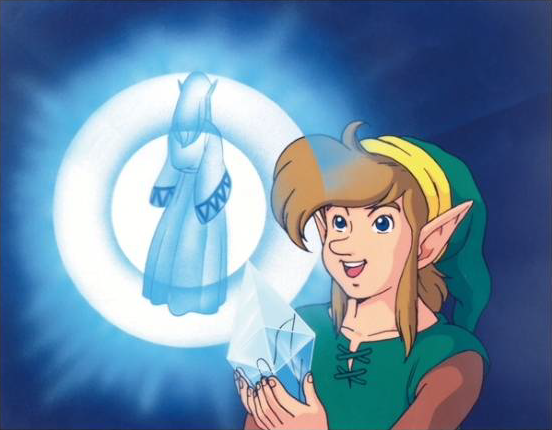
Seven maidens are sealed in crystals in seven dungeons: the Palace of Darkness (opened with the help of a monkey called Kiki), the Swamp Palace, Skull Woods, Thieves’ Town, where the boss Blind the Thief poses as the captive maiden, the Ice Palace, Misery Mire and Turtle Rock, where Link finally frees Zelda herself. Once all seven are free, their combined power breaks the barrier around Ganon’s Tower.
Bunny Link: what happens without the Moon Pearl.A rescued maiden appears from her crystal.Blind the Thief reveals his true form.
Ganon’s Tower and the Pyramid
At the top of Ganon’s Tower, Link defeats Agahnim for good, and the truth emerges with him: the wizard was only an avatar for Ganon’s spirit. Ganon bursts out in the shape of a bat and flies to the Pyramid of Power. In the final battle the Master Sword alone is not enough; Link needs the Silver Arrows to finish him.
With Ganon gone, Link reaches the Triforce and makes his wish. Hyrule is restored: the people trapped in the Dark World come home, and Link’s uncle, the priest and even the murdered king are brought back to life. In the closing scenes, Link returns the Master Sword to its pedestal in the Lost Woods.
The final battle with Ganon at the Pyramid of Power.The Master Sword back on its pedestal.
How it plays
Link can now move diagonally, unleash a spin attack and pick things up, dashes with the Pegasus Boots and gathers a big arsenal: the hookshot, the Fire and Ice Rods, the Cane of Somaria, the Magic Hammer, medallions such as Bombos and Ether, and more. Some items, like the Lantern, drain a magic meter. Four Pieces of Heart, hidden all over both worlds, make a new Heart Container, and dungeons now span several floors, with a big chest in each holding the item you will need to finish it.
Dungeons in A Link to the Past
Thirteen dungeons in all. The first three give pendants, the castle tower is the turning point, and the seven Dark World dungeons each hold a maiden in a crystal.
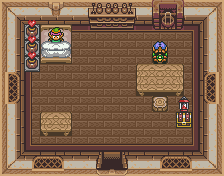
Hyrule CastleLight World · the escapeThe night-time rescue of Zelda, out through the sewers to the Sanctuary.
Eastern PalacePendant of Courage · boss: Armos KnightsThe first proper dungeon.
Desert PalacePendant of Power · boss: LanmolasHome of the Power Glove; the boss is a trio of sand-burrowing worms.
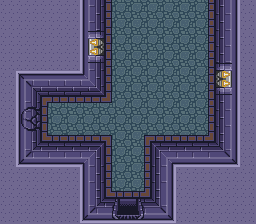
Tower of HeraPendant of Wisdom · boss: MoldormOn Death Mountain, with the Moon Pearl inside; fall off Moldorm’s platform and you drop to the floor below.
Agahnim’s TowerHyrule Castle · boss: AgahnimThe turning point: Zelda is taken and Link is pulled into the Dark World.
Palace of DarknessCrystal 1 · boss: Helmasaur KingKiki the monkey opens the door, for a price. The Magic Hammer is inside.
Swamp PalaceCrystal 2 · boss: ArrghusThe boss is surrounded by puffs that you pull away with the hookshot.
Skull WoodsCrystal 3 · boss: MothulaThe third Dark World dungeon.
Thieves’ TownCrystal 4 · boss: Blind the ThiefHideout of a former Kakariko thief, who poses as the captive maiden.
Ice PalaceCrystal 5 · boss: KholdstareMelt the boss’s icy shell with the Fire Rod or the Bombos medallion.
Misery MireCrystal 6 · boss: VitreousRaised from the swamp with the Ether medallion; the Cane of Somaria is inside.
Turtle RockCrystal 7 · boss: TrinexxWhere Zelda is held. Freeze the fiery head and burn the icy one.
Ganon’s TowerFinal dungeon · Agahnim againOpened by the seven maidens; old bosses return before the final duel with Agahnim.
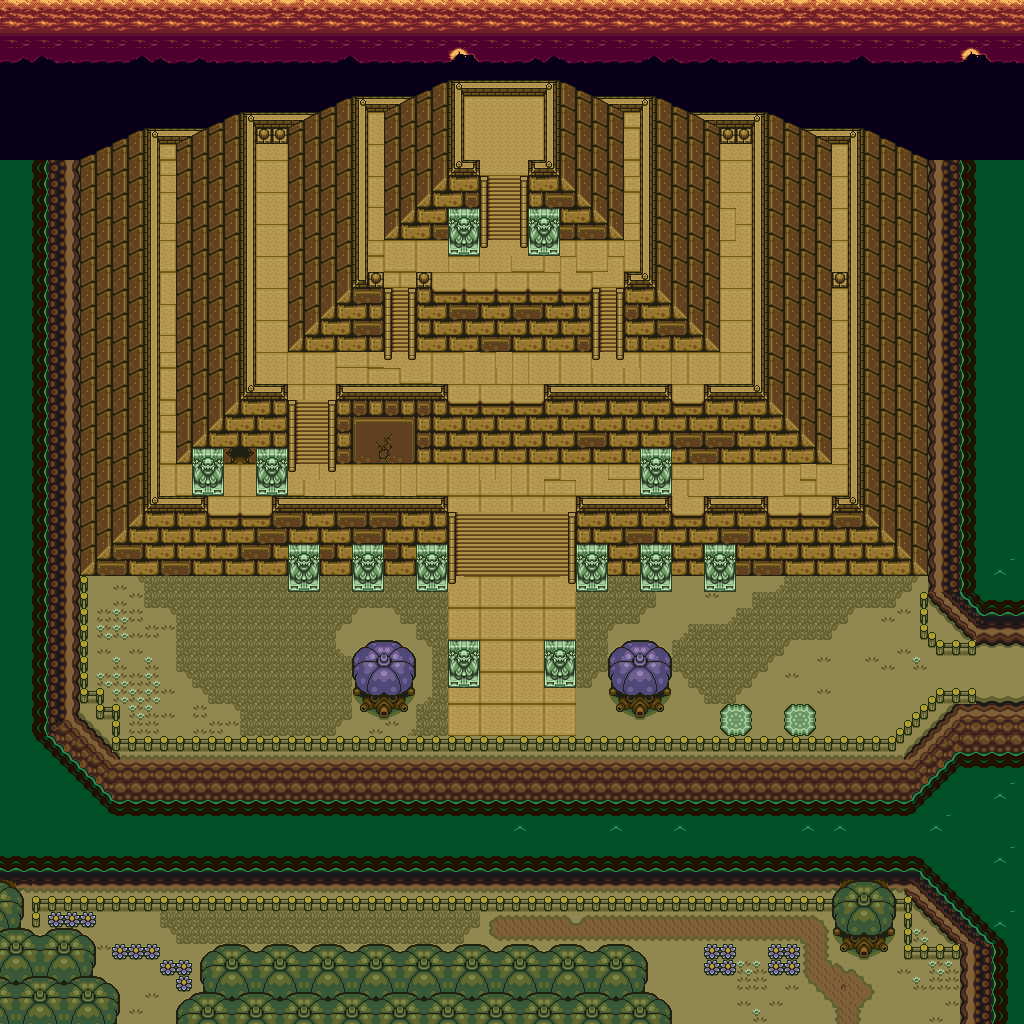
Pyramid of PowerFinal battle · GanonSilver Arrows required.
The Game Boy Advance version adds a fourteenth, the Palace of the Four Sword, for players who also finish Four Swords.
In comics, TV & other media
A Link to the Past was adapted again and again, on both sides of the Pacific.
The Legend of Zelda: A Link to the Past (comic)Shotaro Ishinomori · Nintendo Power · 1992The great manga artist retold the game across twelve issues of Nintendo Power, January to December 1992, changing the plot and adding new characters. It was collected as a trade paperback in 1993, and Shogakukan published a Japanese edition the same year.
Zelda no Densetsu: Kamigami no Triforce (manga)Ataru Cagiva · Monthly GFantasy (Enix) · mid-1990sA manga adaptation serialised in Enix’s Monthly GFantasy and collected in three volumes.
A Link to the Past (manga)Akira Himekawa · 2005A single-volume adaptation published by Shogakukan in July 2005, following the Game Boy Advance release.
Sound & DramaSony Records · 22 June 1994A two-disc Japanese soundtrack album of rearranged and original music, plus a bonus audio drama.
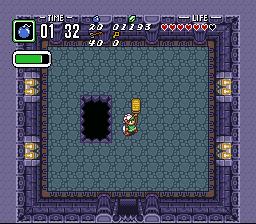
Japanese TV commercialJapan · 1991Actors dressed as Link, Zelda, Gibdos and Stalfos dance through a dungeon to a Zelda version of a song by the rap trio Scha Dara Parr.
BS Zelda: Ancient Stone TabletsSatellaview · 1997A broadcast-only follow-up set six years after this game, with a new hero collecting eight tablets, with voice acting streamed over the airwaves as you played.
Characters
A Link to the Past was the first Zelda with a real supporting cast. Here is who is who, where they sit in Zelda lore and what they do.
Character
Who they are
In this game
Stats & abilities
LinkThe hero
This Link is a boy who lives with his uncle; Japanese sources describe him as a descendant of the Knights of Hyrule. He is left-handed, and the Master Sword makes its debut in his hands.
Answers Zelda’s call, wins the three pendants and the Master Sword, crosses into the Dark World, frees the seven maidens and defeats Agahnim and Ganon, then wishes on the Triforce to restore Hyrule.
Spin attack and diagonal movement
Swords: his uncle’s, then the Master, Tempered and Golden Swords
Pegasus Boots, hookshot, Magic Mirror, Moon Pearl and much more
Pieces of Heart: four make a container
Princess ZeldaThe last maiden
A new Zelda for a new era, and one of the seven maidens descended from the sages who sealed Ganon. She reaches out to Link through telepathy.
Calls Link to the castle, is rescued and hidden at the Sanctuary, then taken by Agahnim into the Dark World, where she is sealed in a crystal in Turtle Rock. With the other maidens she breaks the barrier around Ganon’s Tower.
Follows Link during the castle escape; otherwise not playable.
AgahnimThe dark wizard
A new villain for this game, a priest in the Japanese original and a wizard in English. He is fought twice and turns out to be an alter ego for Ganon.
Ends Hyrule’s plague and drought, becomes the king’s adviser, murders him, controls the soldiers and sends the maidens to the Dark World. He drags Link there too, and is finally beaten in Ganon’s Tower.
Weak to the Master Sword
Brings copies of himself to the rematch
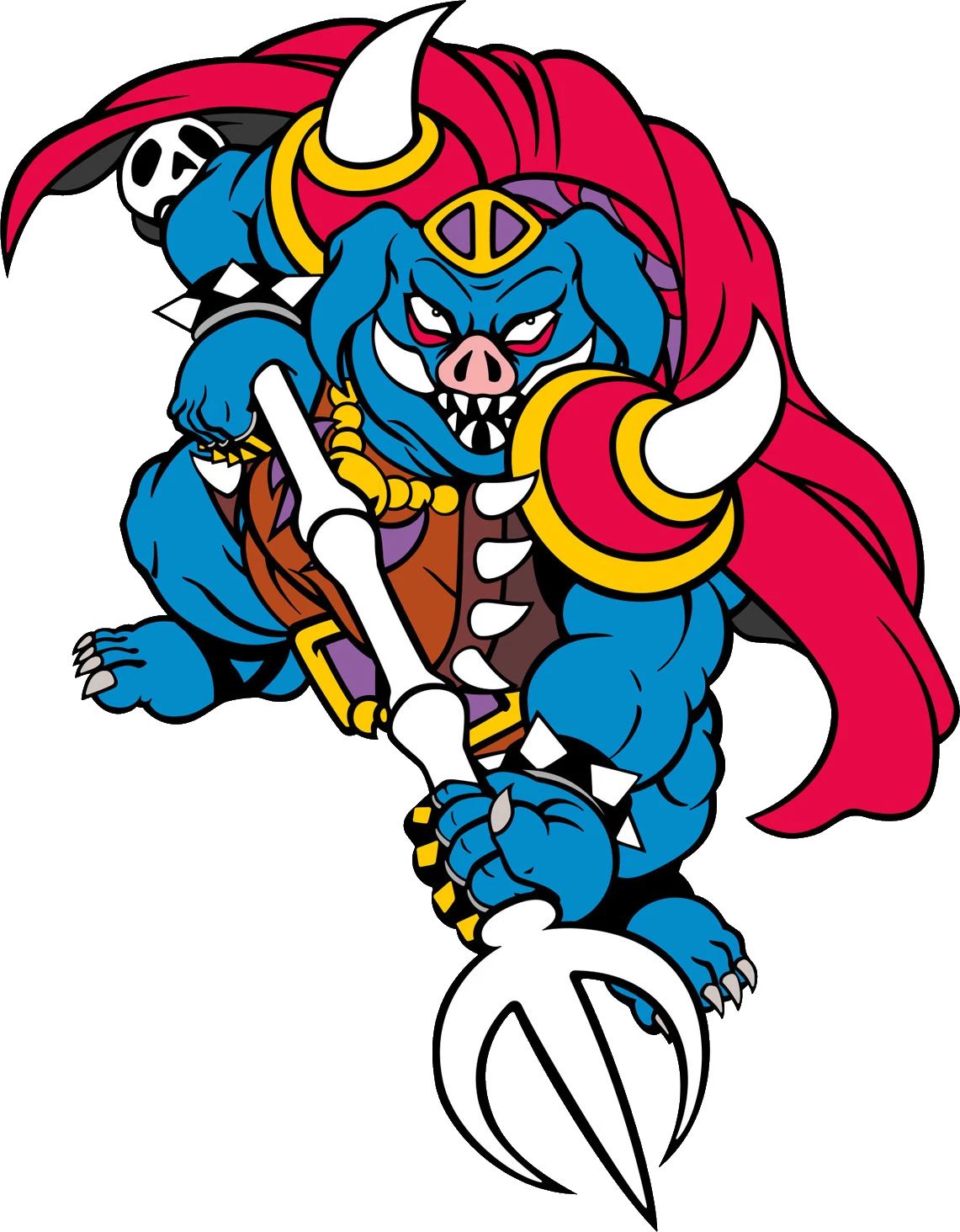
GanonThe King of Evil
The pig-like Demon King of the first game. This is where we learn he was once a man: Ganondorf, leader of a band of thieves. His full appearance as Ganondorf would wait for Ocarina of Time (1998).
Sealed in the Dark World since the Imprisoning War, he works through Agahnim, emerges as a bat when the wizard dies and makes his last stand at the Pyramid of Power.
Only the Silver Arrows can finish him
He stole the Triforce long ago, but Link claims it only after the fight
Link’s uncleLink’s guardian
The man who raised Link, and the first to answer Zelda’s call.
Sets out in the night to help Zelda and tells Link to stay at home. Link finds him dying in the castle’s secret passage, where he hands over his sword and shield. The Triforce’s wish brings him back.
Gives Link his first sword and shield.
SahasrahlaElder of Kakariko
The wise elder of Kakariko Village and a descendant of the seven wise men.
Guides Link to the pendants and the Master Sword, gives him the Pegasus Boots, and explains the truth about the Golden Land once Link reaches the Dark World.
Not playable.
The Loyal SagePriest of the Sanctuary
The old priest who keeps the Sanctuary, a church in the Japanese version.
Shelters Zelda and tells Link about Agahnim’s plan and the Master Sword. He is found dying after Agahnim’s soldiers take the princess, and is revived by the Triforce’s wish.
Not playable.
The King of HyruleZelda’s father
The ruler of Hyrule when Agahnim arrives.
Trusted Agahnim and paid for it with his life. Restored in the ending.
Seen only in the story and ending.
The seven maidensDescendants of the wise men
The seven young women descended from the wise men who sealed the Golden Land. Their bloodline is the key to Ganon’s prison.
Kidnapped by Agahnim and sealed in crystals in the seven Dark World dungeons. Together, once freed, they open Ganon’s Tower.
One is impersonated by Blind the Thief.
Blind the ThiefBoss of Thieves’ Town
Once the light-shy leader of a gang of thieves based in Kakariko, his greed for the Triforce led him into the Dark World, where he became a demon in Ganon’s service.
Guards the fourth maiden by posing as her, until Link leads “her” into a beam of light and Blind shows his true face.
His head fights on after his body falls; the Cane of Somaria helps.
KikiThe Dark World monkey
A Dark World monkey with an eye for Rupees.
Follows Link through the maze to the Palace of Darkness for 10 Rupees, then asks 100 more before hopping onto the switch that opens the door.
Not playable.
The lost old manDeath Mountain
An old man lost in the caves of Death Mountain.
Gives Link the Magic Mirror, the item that links the two worlds.
Not playable.
The dwarven swordsmithsKakariko’s smithy
A dwarven swordsmith near Kakariko Village who has lost his partner.
Reunite the smith with his partner and they will temper the Master Sword into a stronger blade.
The Golden Sword comes later, from a fairy in the pond inside the Pyramid of Power.
The seven wise men and the Knights of HyruleHeroes of the past
The sages who sealed the Golden Land, and the knights who died defending them, in the Imprisoning War. Their descendants include the maidens, Sahasrahla and, in Japanese sources, Link.
Seen only in the manual and in the story; their seal is what Agahnim is trying to break.
Not playable.
Bosses
The guardians of each dungeon, in the order you meet them.
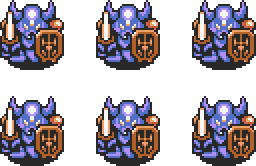
Armos KnightsEastern PalaceBeat the last knight for the Pendant of Courage.
LanmolasDesert PalaceThree worms that burst out of the sand.
MoldormTower of HeraA giant worm fought on a ledge-ringed platform.
AgahnimAgahnim’s Tower · Ganon’s TowerThe Master Sword is his weakness.
Helmasaur KingPalace of DarknessCrack its mask with bombs or the hammer (the team reprogrammed the hammer so it worked).
ArrghusSwamp PalaceHookshot away its puffs, then strike.
MothulaSkull WoodsGuardian of the third crystal.
Blind the ThiefThieves’ TownThe impostor maiden.
KholdstareIce PalaceHidden in a shell of ice; Bombos breaks it in one go.
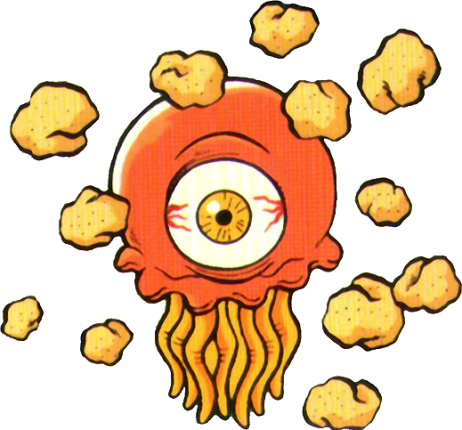
VitreousMisery MireA giant eyeball that sends smaller eyes at you.
TrinexxTurtle RockThree heads, fire and ice; then a giant snake.
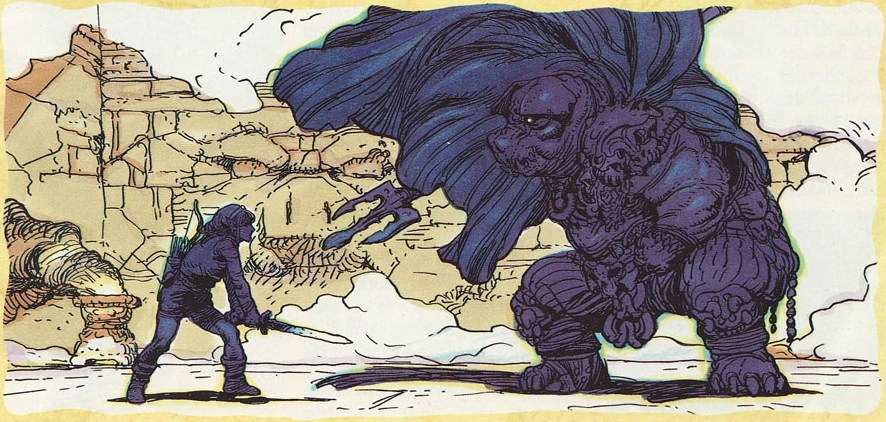
GanonPyramid of PowerThe final battle.
The people who made it
Key staff, as credited.
Takashi TezukaDirectorCo-director of the first Zelda. He has said the plan was for players to choose and combine items freely; Miyamoto insisted Link keep his sword equipped at all times.
Shigeru MiyamotoProducerPlanned a return to the style of the first game even before Zelda II was made, and steered the team through an extra eight months of work.
Koji KondoMusicComposed the score, bringing back the first game’s overworld theme.
Kensuke TanabeScriptA newcomer to the series who wrote the game’s script.
Yoshiaki KoizumiManualIn his first job at Nintendo, wrote the manual’s backstory and drew its art, including designs for the goddesses; he later directed Super Mario Galaxy.
Toshihiko Nakago and Yasunari SoejimaProgrammingNakago, of SRD, had also programmed the first Zelda.
Masanao Arimoto and Tsuyoshi WatanabeArtCredited as the background designers, alongside screen graphics designers Soichiro Tomita and Takaya Imamura.
How it was made
Two contemporary Miyamoto interviews, translated by GlitterBerri, and later retrospectives tell the story of the 16-bit Zelda.
From the NES to the Super Famicom
Official art of the fairy from Zelda II.
A third Zelda was already in Miyamoto’s head in 1989. Talking to Dragon Quest creator Yuji Horii that year, he said he meant to return to the style of the first game, an idea he had held since before Zelda II, and that he had long planned for the third game to have a party: a hero who was part elf and part fighter, a magic user and a girl. The fairy in Zelda II, he revealed, had begun as that party’s scout. The party never happened, but the return to the overhead view did.
Work began on the NES in 1988 and moved to the Super Famicom about a year later; by the time the new console was unveiled inside Nintendo in July 1989, the plan was already to make it alongside Super Mario World. It shipped on an 8-megabit cartridge, double the 4 megabits most Super NES games used.
Fixing Zelda 1
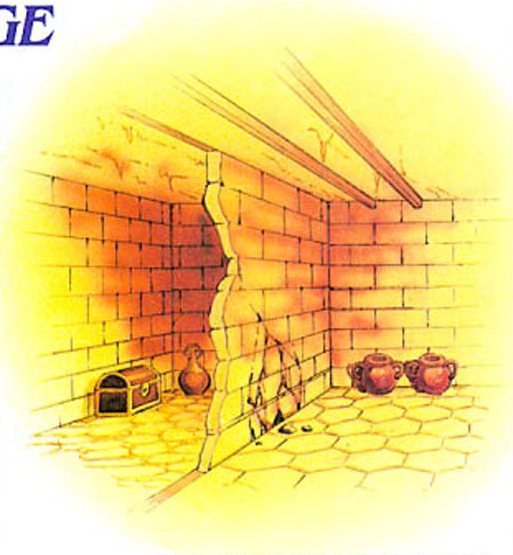
Official art of a fragile wall.
Speaking in 1991, Miyamoto was blunt: the first game’s system had been inadequate, and he wanted to do the things it could not, such as making the water at a dungeon entrance really drain away or setting big trees alight. Diagonal movement went in, but a diagonal stab made the controls worse, so the team gave Link a spin attack instead. Deciding which of the Super NES’s extra buttons should pick things up and which should read signs took trial and error.
Secret walls got a rethink too. The team considered making hollow walls sound different when struck, but chose visible cracks so players would not waste hours tapping every wall. The Magic Hammer originally did nothing to the Helmasaur King, so it was reprogrammed to work. Several ideas did not make it: grass fires that spread endlessly from the Lantern (they finally appeared in Four Swords Adventures), digging ditches with the shovel and bombing a breakwater to flood a hole. Miyamoto reckoned another six months might have made them possible.
Eight extra months
A concept screenshot of the Sanctuary.
The game was first aimed at a March 1991 release. A small team spent about a year testing what the hardware could do; then, from November 1990, extra staff came on board to fill the world with enemies and story, a finishing stage Miyamoto said usually takes about eight months. Miyamoto said he made sure he got eight hours’ sleep a night himself, and that the programmers took time off to sleep too. It finally launched in Japan on 21 November 1991, a year to the day after the Super Famicom.
Story, script and the manual
Official art of the goddesses.
Kensuke Tanabe, new to the series, wrote the script, while a young Yoshiaki Koizumi, in his first assignment at Nintendo, did the art and layout of the manual and wrote its history of Hyrule, including designs for the goddesses. Tezuka has said the plan was to let players choose and combine items freely, such as using bombs and arrows together, but Miyamoto insisted Link always keep his sword equipped.
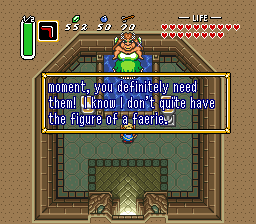
For the West, Nintendo of America toned down religious references: the subtitle Kamigami no Triforce (“Triforce of the Gods”) became A Link to the Past, the priest Agahnim became a wizard, the Sanctuary lost its church framing, and the Hylian alphabet, based on Egyptian hieroglyphs, was altered.
Selling it
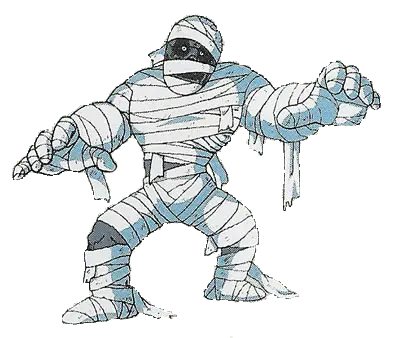
Official art of a Gibdo, one of the monsters in Japan’s TV advert.
Japan’s television advert put actors in costume as Link, Zelda, Gibdos and Stalfos and had them dance through a dungeon to a Zelda rework of a song by the rap trio Scha Dara Parr. In America, Nintendo Power had promised a 1990 contest winner a place in a game; that is how Chris Houlihan ended up with his own secret room (see Cheats).
Koji Kondo’s score brought back the first game’s overworld theme in 16-bit form. In 1994 Sony Records released Sound & Drama in Japan, a two-disc album of rearranged and original music with a bonus audio drama.
Firsts: what this game introduced
What A Link to the Past brought to the series. Only firsts we could confirm are listed.
1The Master SwordThe blade of evil’s bane makes its debut, drawn from a pedestal in the Lost Woods.
2The hookshotAnother item that became a series fixture, starting here.
3Two worldsThe series’ first parallel world: the Dark World mirrors Hyrule, and the Magic Mirror moves you between them.
4GanondorfThe first time we learn that Ganon was once a man, the thief Ganondorf.
5The Imprisoning War and the sagesThe Golden Land, the seven wise men and the Knights of Hyrule enter Zelda lore.
6Spin attack and diagonal movementLink’s signature spin, and eight-way movement in a top-down Zelda.
7Agahnim and SahasrahlaA new villain and a new mentor for Link.
Cheats & secrets
A Link to the Past has no cheat codes, but its secrets are legendary.
The Chris Houlihan room
The Chris Houlihan room.
In its September/October 1990 issue, Nintendo Power ran a contest asking readers to photograph the WarMECH, a rare enemy in Final Fantasy, promising the winner a place in a game. The winner, Chris Houlihan, got a hidden room in this one, holding 45 blue Rupees and the message: “My name is Chris Houlihan. This is my top secret room. Keep it between us, OK?” The room is also where the game sends Link when it cannot work out where he should be, so it can be reached by several unusual routes. Few people knew about it until the 2000s.
Stronger swords
The Mysterious Pond inside the Pyramid of Power.
Find the missing partner of the dwarven swordsmith near Kakariko and reunite the pair, and they will temper the Master Sword. Later, throw the Tempered Sword into the pond of the cursed fairy inside the Pyramid of Power to receive the Golden Sword.
Boss tricks
Official art of Arrghus.
Helmasaur King: bombs or the Magic Hammer crack its mask.
Arrghus: pull away its puffs with the hookshot.
Blind the Thief: lead the “maiden” into the light; the Cane of Somaria works well on his heads.
Kholdstare: Bombos melts its shell in one hit; the Fire Rod takes longer.
Trinexx: Fire Rod on the blue head, Ice Rod on the red head.
Ganon: you will need the Silver Arrows.
Paying the monkey
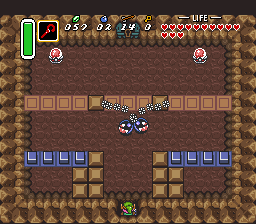
The Palace of Darkness.
Kiki charges 10 Rupees to follow you and 100 more to open the Palace of Darkness, so bring at least 110.
Mario cameos
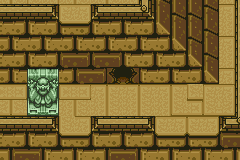
Chain Chomps, borrowed from the Mario series.
Look out for portraits of Mario characters in Kakariko Village houses and Chain Chomps in Turtle Rock.
Game Boy Advance bonus
The Palace of the Four Sword in the Game Boy Advance version.
In the GBA version, finish both A Link to the Past and Four Swords to open the Palace of the Four Sword, a new dungeon whose boss is a set of four dark Links.
Compiled from Zeldapedia, Wikipedia, Tedium and the Japanese Wikipedia article.
Glitches, exploits and oddities
A Link to the Past is one of the most picked-apart games ever made; it had the fourth-highest number of players of any game on Speedrun.com in 2019. A few documented quirks:
A secret room that is really a safety net
The Chris Houlihan room is the game’s fallback destination when it loses track of where Link should be, which is why glitches and odd tricks can drop you into it. The GBA version removed the ways in, though the room is still in the code; the Virtual Console and Switch Online releases of the SNES game keep it.
Ganon without the Triforce
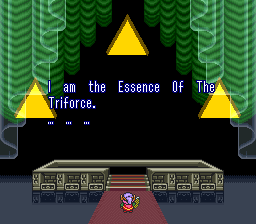
The Essence of the Triforce.
A common belief is that Ganon wields the Triforce in the final fight. He stole it long ago, but Zeldapedia notes that he does not have it on him in the battle; Link claims the Triforce only afterwards.
Toned-down flashing
The Virtual Console releases reduced some flashing effects for the safety of players with photosensitive epilepsy.
Taken apart and put back together
Official art of a treasure chest.
In 2023 fans reverse-engineered the game’s code, making unofficial ports to other systems possible. The Randomizer, which shuffles where most of the items are found, keeps its speedrunning scene busy.
Videos & media
A long-form history of the series in which A Link to the Past plays a starring part, and a short documentary about the game’s most famous secret. (We could not find a suitable official Nintendo upload for this game.)
A fan-made, long-form history of the Zelda series, cited by Wikipedia’s article on the first game.
Astronomer and YouTuber Kevin Hainline’s 2025 video about the boy behind the secret room, reported by Time Extension.
Trivia & facts
The Japanese title, Kamigami no Triforce, means “Triforce of the Gods”; Nintendo of America changed it to avoid a religious reference.
The Super NES cartridge.It shipped on an 8-megabit cartridge, twice the size of most Super NES games of the time.
Miyamoto’s original plan was for a three-member party; the fairy in Zelda II started life as that party’s scout.
It was developed alongside Super Mario World and launched in Japan exactly a year after the Super Famicom.
Burning grass was cut for lack of time and turned up years later in Four Swords Adventures.
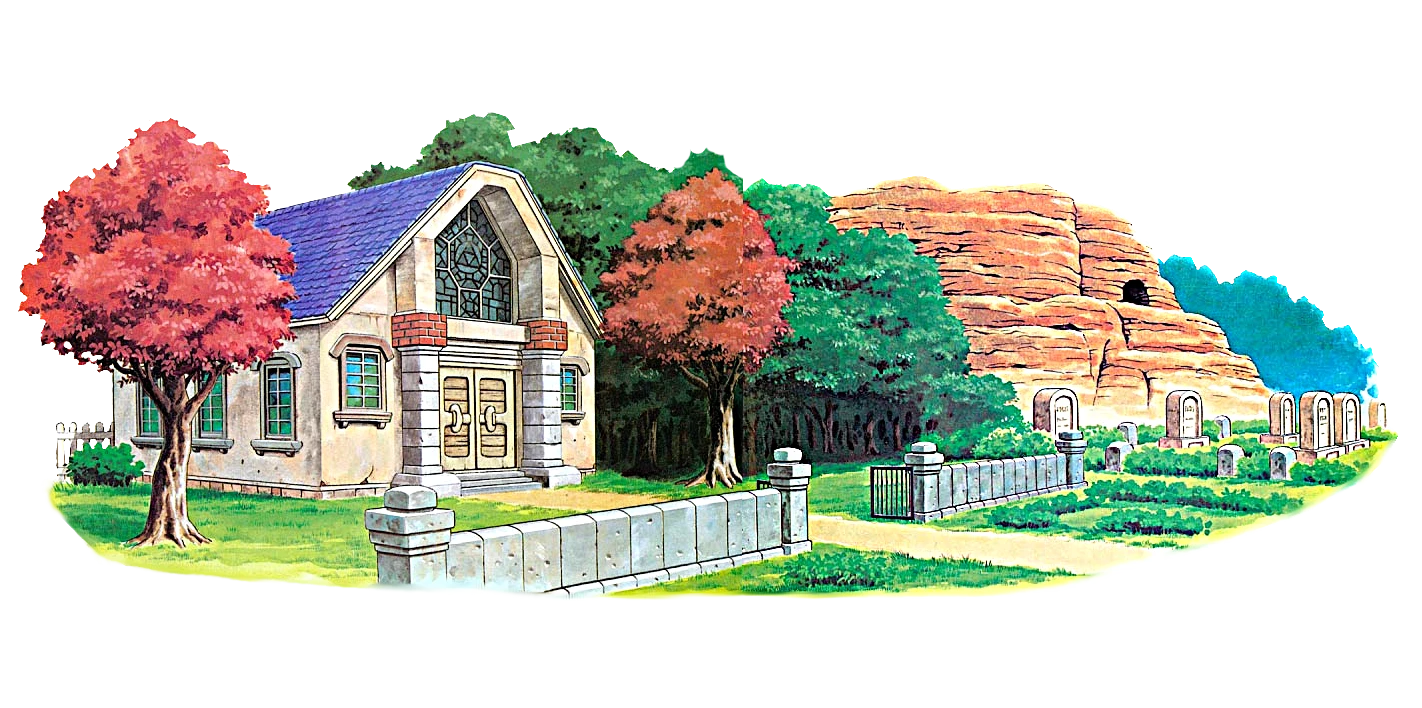
The Sanctuary.Agahnim is a priest in the Japanese version and the Sanctuary is a church.
The Hylian script in the Japanese version is made of Egyptian hieroglyphs, which were redrawn for the West; a symbol in an Eastern Palace room that resembled the Star of David was changed too.
Yoshiaki Koizumi’s first job at Nintendo was the manual, including drawing the goddesses; he went on to direct Super Mario Galaxy.
Japan’s TV ad featured costumed Gibdos and Stalfos dancing to a rap by Scha Dara Parr.
Chris Houlihan won his secret room through a 1990 Nintendo Power contest about Final Fantasy’s WarMECH. In 2025 a YouTuber said he had tracked down the real Chris; Time Extension reported the claim while awaiting confirmation.
There are Mario cameos: portraits in Kakariko and Chain Chomps in Turtle Rock.
Ganon emerges from Agahnim’s body as a bat before the final battle.
Official art of the Lost Woods.The Master Sword debuts here, and Link puts it back on its pedestal at the end.
The Satellaview broadcast an unaltered version of the game in Japan from 2 March 1997, more often than any other Zelda on the service.
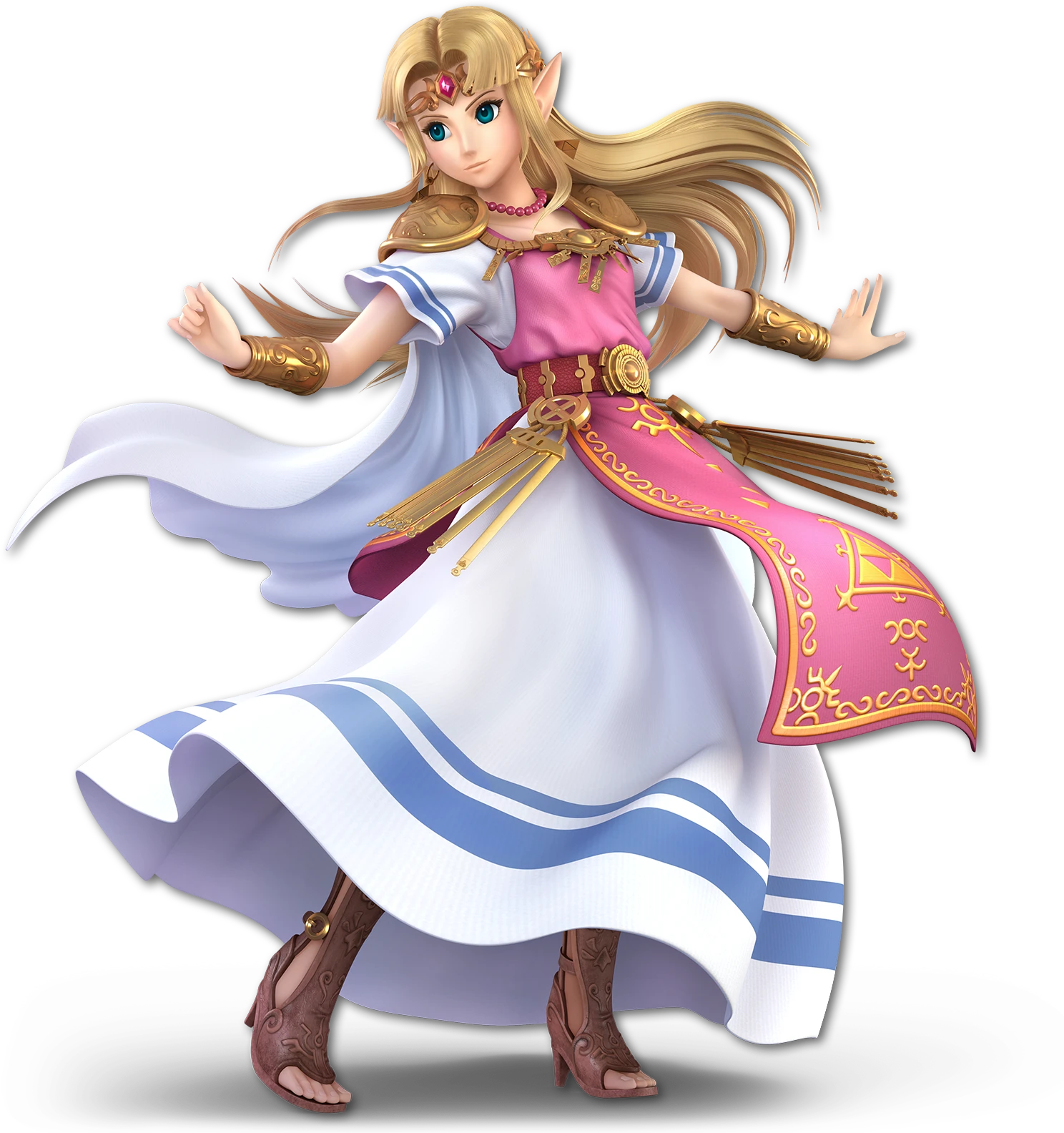
Zelda in Super Smash Bros. Ultimate.Its music turns up on Zelda stages in Super Smash Bros., and Zelda’s look in Smash Ultimate draws partly on this game and A Link Between Worlds.
A Link Between Worlds (2013) returns to the same Hyrule, with a new story.
Famitsu’s four reviewers gave it 9, 10, 10 and 10.
Media & artwork
Box art, manual pages, artwork and screenshots from A Link to the Past. Select any image to view it larger.
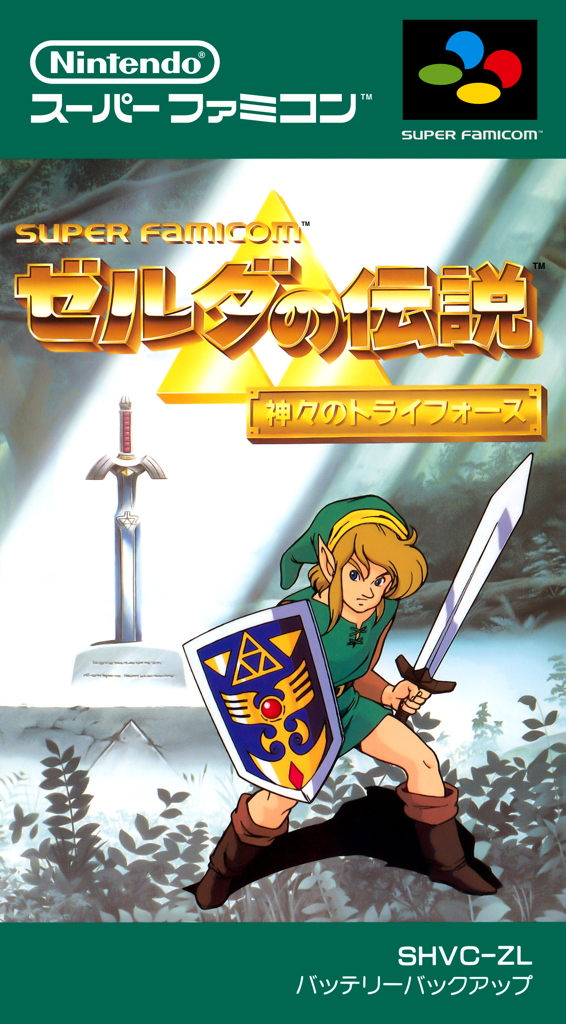
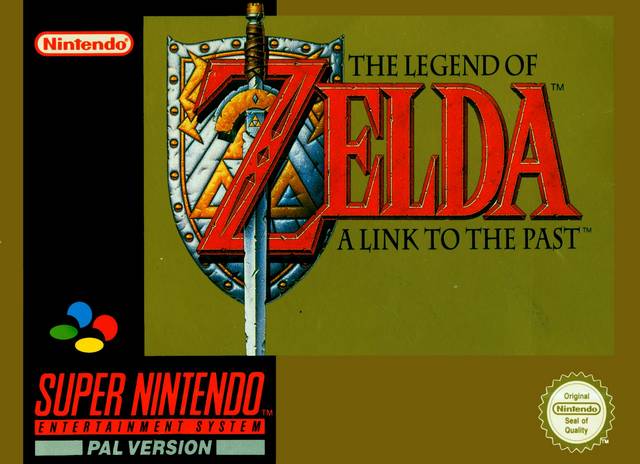
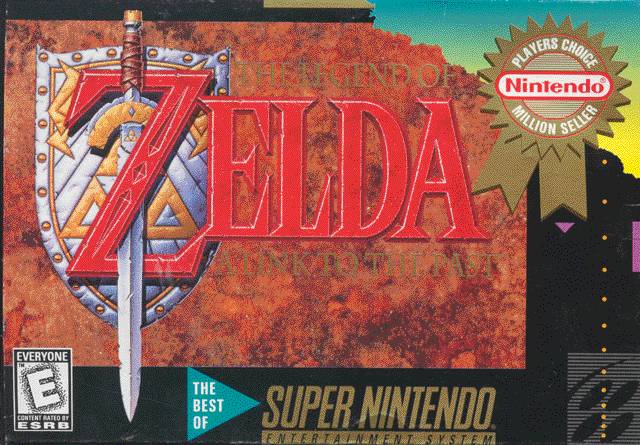
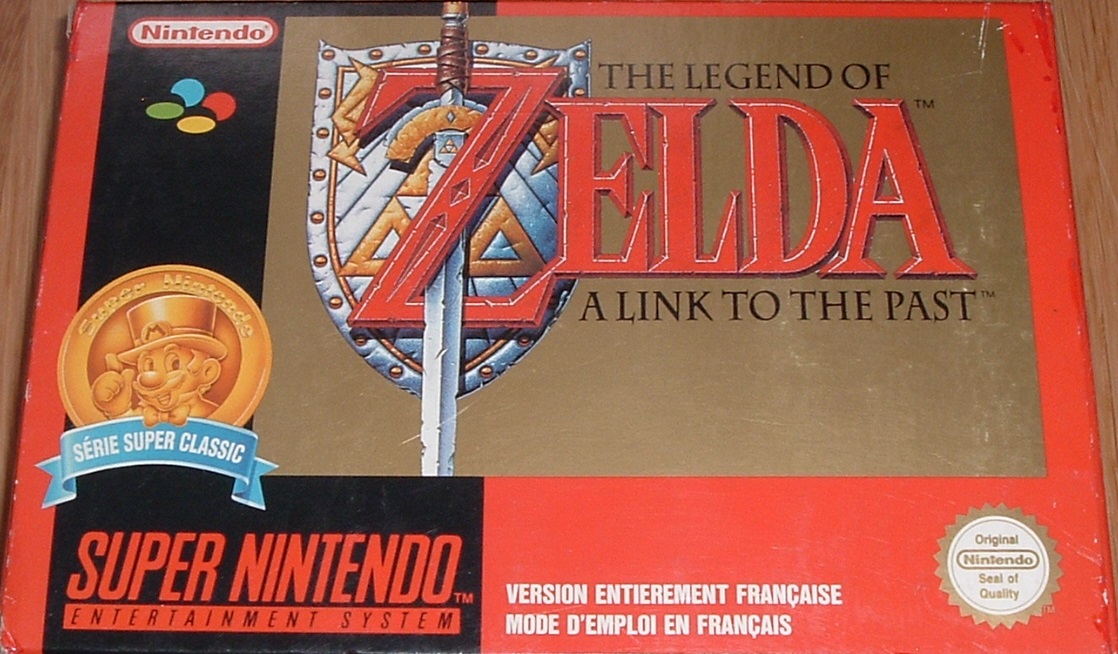
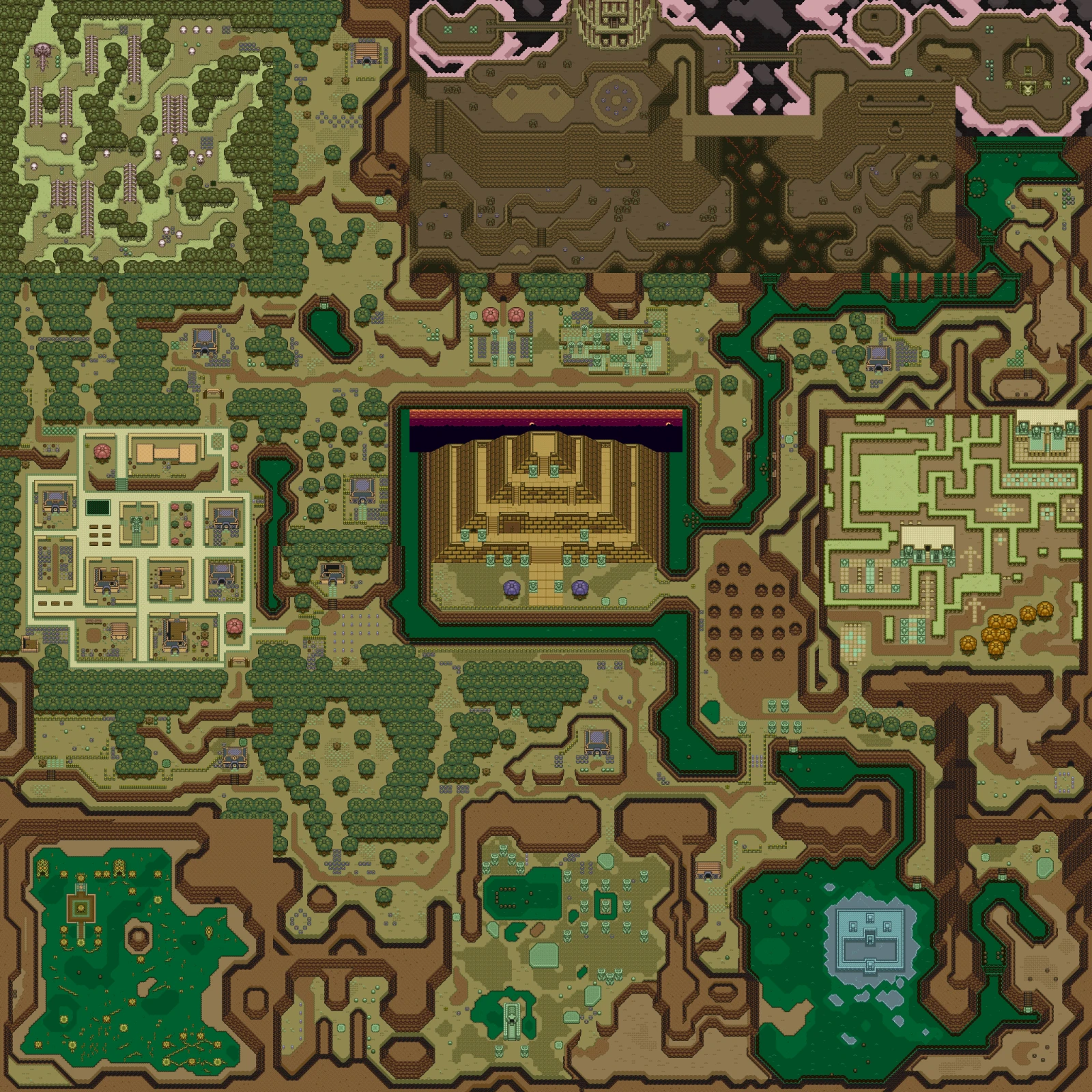
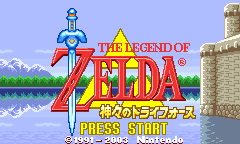
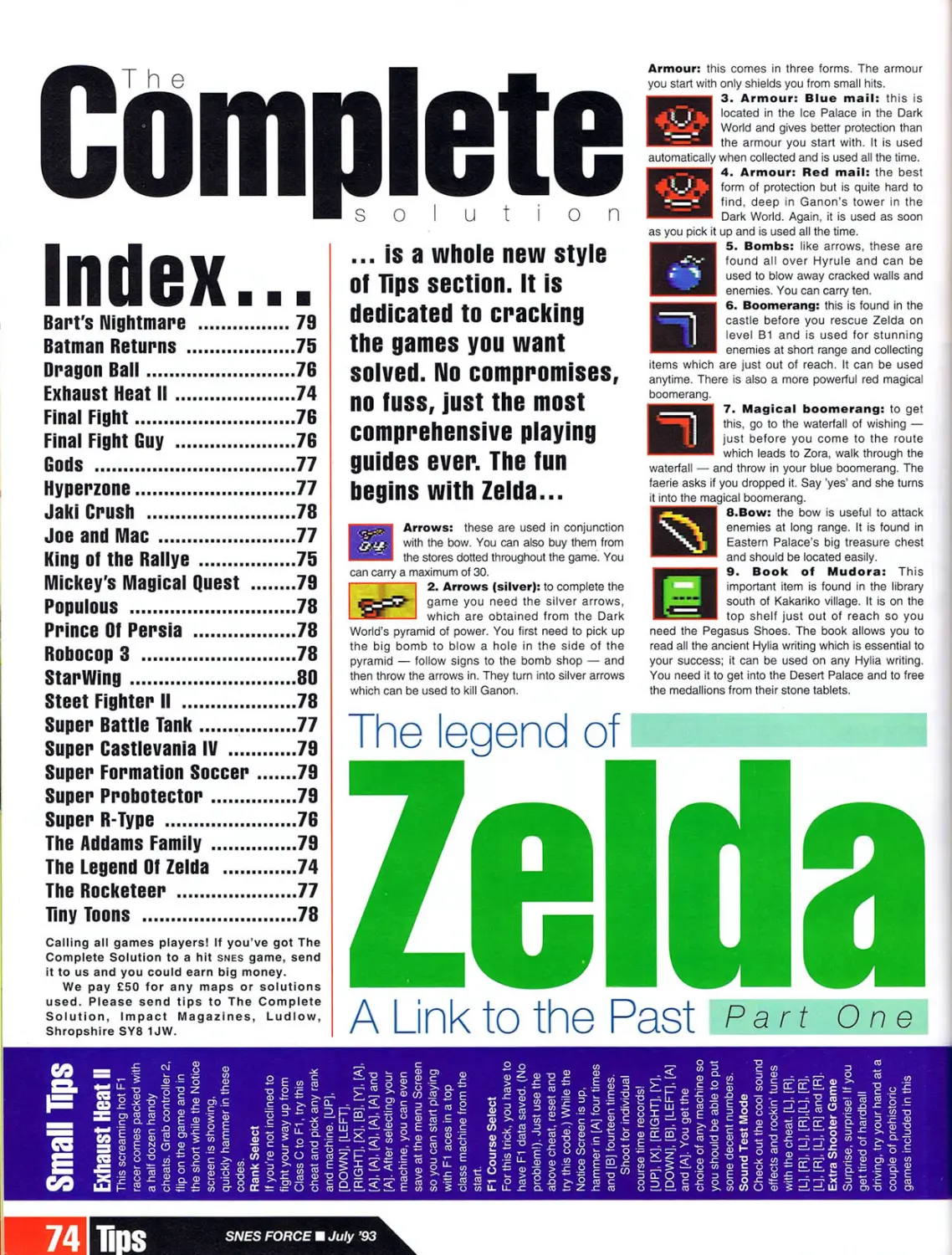
Back of the Super NES box.Japanese Super Famicom box (1991).European Super NES box (1992).North American Player’s Choice box.French-language Super NES box.The Japanese logo.Map of the Light World.Map of the Dark World.Japanese title screen of the Game Boy Advance version.SNES Force’s guide to the game, issue 1 (July 1993).
A Link to the Past has been re-released on almost every Nintendo platform since, and its structure and its Hyrule have shaped the series ever since.
From Super Famicom to Switch
Super Famicom / Super NES1991–1992 – Japan 21 November 1991, North America 13 April 1992, Europe 24 September 1992. Later a Player’s Choice title in North America.
SatellaviewMarch 1997 – An unaltered rebroadcast from 2 March, followed from 30 March by BS Zelda no Densetsu: Inishie no Sekiban (“Ancient Stone Tablets”), set six years later.
A Link to the Past & Four Swords2002–2003 – Game Boy Advance, developed with Capcom’s Flagship: North America December 2002, Japan 14 March 2003, Europe 28 March 2003.
Wii Virtual Console2006–2007 – Japan 2 December 2006, North America 22 January 2007, Europe 23 March 2007.
Wii U Virtual Console2013–2014 – Europe 12 December 2013, North America 30 January 2014, Japan 12 February 2014.
New Nintendo 3DS2016 – Europe 10 March, North America 14 April.
Super NES Classic / Super Famicom Mini2017 – One of the built-in games (Japan 5 October 2017).
Nintendo Switch OnlineSeptember 2019 – In the SNES library from launch (5 September; 6 September in Japan).
Nintendo Switch Online (GBA)18 June 2024 – The Game Boy Advance version joins the GBA library for Expansion Pack members.
A Link to the Past & Four Swords
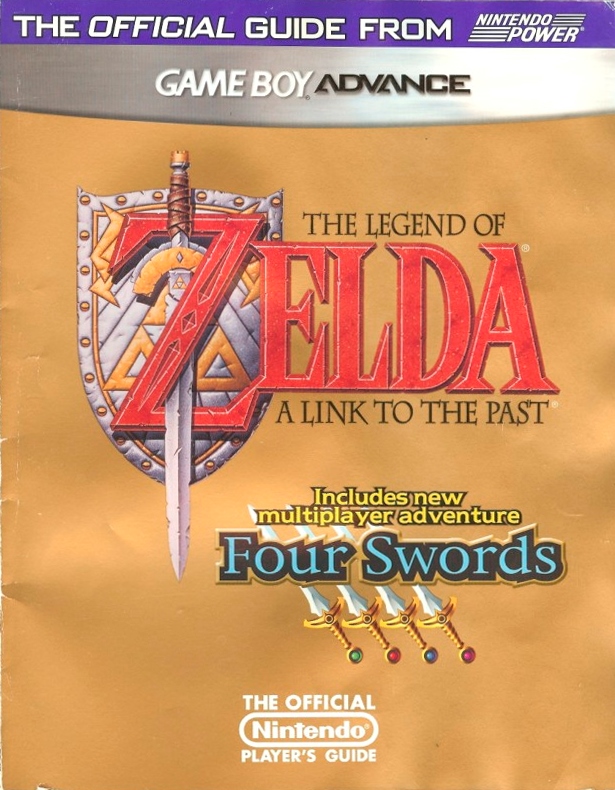
Nintendo Power’s guide to A Link to the Past & Four Swords.
The 2002 Game Boy Advance version paired the SNES classic with Four Swords, a new multiplayer adventure developed with Capcom’s Flagship. The port reused the original art, added voice samples from Ocarina of Time, tweaked some item locations to stop exploits, cropped the play area to fit the smaller screen and remapped the controls for fewer buttons. Finishing both games unlocks the Palace of the Four Sword. It sold 1.89 million copies worldwide by 2004, and critics loved it: Metacritic’s average is 95.
Its long shadow
North American box of A Link Between Worlds (2013).
Link’s Awakening (1993) kept its mechanics and its overhead view; A Link Between Worlds (2013) returned to its Hyrule; and later Zeldas kept its shape of a few early trials, a twist, and a larger second half. Fans have made unofficial sequels such as Parallel Worlds (2007), the game is a Games Done Quick favourite, and its Randomizer has kept it fresh for speedrunners decades on.
Sales & reviews
Sales figures
In Japan it topped Famitsu’s charts in November and December 1991 and January 1992 and was the best-selling game released that year. In the United States it was the third best-selling game of 1992, behind Sonic the Hedgehog 2 and Street Fighter II, with about a million sold. By 2004 it had sold 4.61 million copies on the SNES, and the GBA version another 1.89 million, about 6.5 million in all.
4.61mSNES, by 2004
1.89mGBA, by 2004
1mUS, 1992
95Metacritic (GBA)
Reception and review scores
Period reviews were ecstatic. These scores are as reported by Wikipedia’s reception table from the original magazines.
GameProUS · SNES
5/5
DragonUS · Sandy Petersen, October 1993
5/5
Nintendo LifeDamien McFerran · 16 Dec 2013
10/10
FamitsuJapan · SNES (9, 10, 10, 10)
39/40
IGNGBA
9.7/10
Mean MachinesUK · SNES
95%
SNES ForceUK · SNES
93%
GameSpotGBA
9.2/10
Electronic Gaming MonthlyUS · SNES (8, 9, 9, 9)
35/40
Its reputation has only grown: IGN ranked it the second-best game of all time in 2015 and 2019, Entertainment Weekly called it the best game ever in 2006, and GamesRadar placed it third among SNES games behind Chrono Trigger and Super Metroid. Revisiting it in 2013, Nintendo Life’s Damien McFerran found it still fresh and tightly built, the blueprint later Zeldas followed.
Honours
Chicago Tribune · 1992Best Game of the YearShared with Street Fighter II.
Electronic Gaming Monthly · 1992Best Video Game SequelFrom the magazine’s 1992 awards.
Nintendo PowerSeveral awardsGraphics and Sound, Challenge and Best Hero (Link), and runner-up for SNES Game of the Year.
IGN · 2015 and 2019Second-best game of all timeIn IGN’s top 100 lists.
Reader reviews
No reader reviews yet. Played it? Give it a score out of 10 and tell other fans what you think.
Every fact on this page was checked against the sources below. Contemporary Miyamoto interviews (translated by GlitterBerri) were preferred for the development story; dungeon and boss details were cross-checked between Zeldapedia, StrategyWiki and the Japanese Wikipedia article. zeldawiki.wiki blocks automated reading and was not used.
To provide the best experiences, we use technologies like cookies to store and/or access device information. Consenting to these technologies will allow us to process data such as browsing behavior or unique IDs on this site. Not consenting or withdrawing consent, may adversely affect certain features and functions.
Functional
Always active
The technical storage or access is strictly necessary for the legitimate purpose of enabling the use of a specific service explicitly requested by the subscriber or user, or for the sole purpose of carrying out the transmission of a communication over an electronic communications network.
Preferences
The technical storage or access is necessary for the legitimate purpose of storing preferences that are not requested by the subscriber or user.
Statistics
The technical storage or access that is used exclusively for statistical purposes.The technical storage or access that is used exclusively for anonymous statistical purposes. Without a subpoena, voluntary compliance on the part of your Internet Service Provider, or additional records from a third party, information stored or retrieved for this purpose alone cannot usually be used to identify you.
Marketing
The technical storage or access is required to create user profiles to send advertising, or to track the user on a website or across several websites for similar marketing purposes.


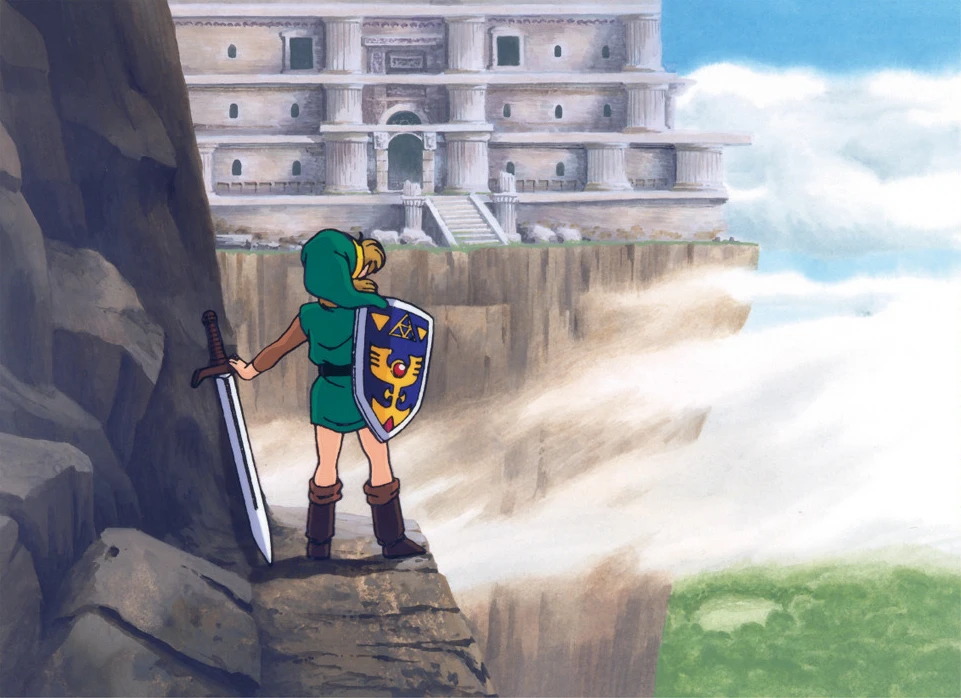

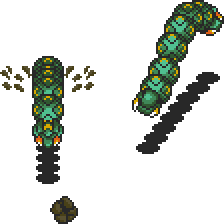 Desert PalacePendant of Power · boss: LanmolasHome of the Power Glove; the boss is a trio of sand-burrowing worms.
 Tower of HeraPendant of Wisdom · boss: MoldormOn Death Mountain, with the Moon Pearl inside; fall off Moldorm’s platform and you drop to the floor below.
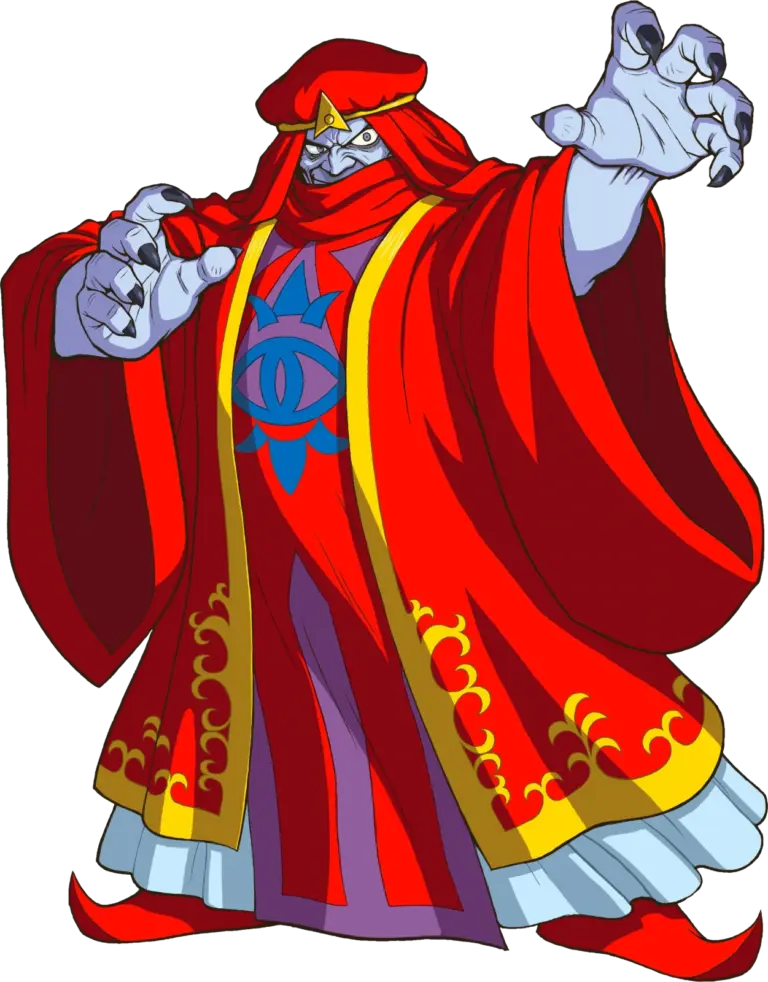 Agahnim’s TowerHyrule Castle · boss: AgahnimThe turning point: Zelda is taken and Link is pulled into the Dark World.
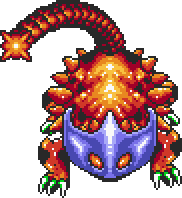 Palace of DarknessCrystal 1 · boss: Helmasaur KingKiki the monkey opens the door, for a price. The Magic Hammer is inside.
 Swamp PalaceCrystal 2 · boss: ArrghusThe boss is surrounded by puffs that you pull away with the hookshot.
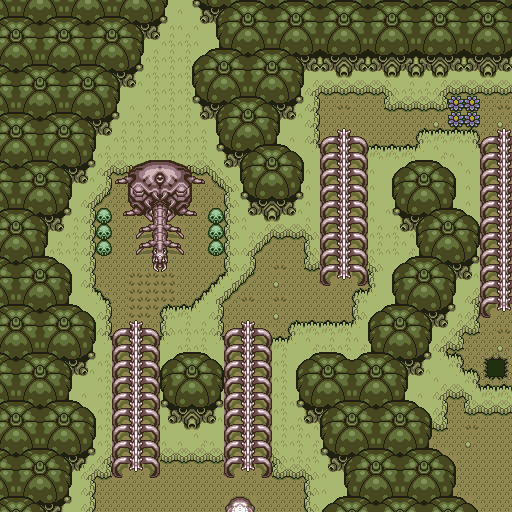 Skull WoodsCrystal 3 · boss: MothulaThe third Dark World dungeon.
 Thieves’ TownCrystal 4 · boss: Blind the ThiefHideout of a former Kakariko thief, who poses as the captive maiden.
 Ice PalaceCrystal 5 · boss: KholdstareMelt the boss’s icy shell with the Fire Rod or the Bombos medallion.
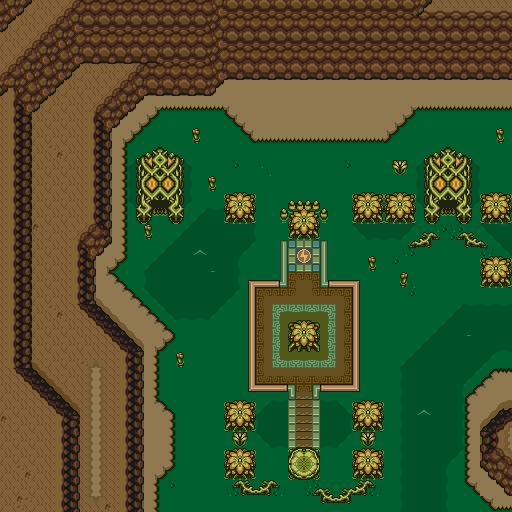 Misery MireCrystal 6 · boss: VitreousRaised from the swamp with the Ether medallion; the Cane of Somaria is inside.
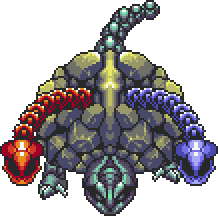 Turtle RockCrystal 7 · boss: TrinexxWhere Zelda is held. Freeze the fiery head and burn the icy one.
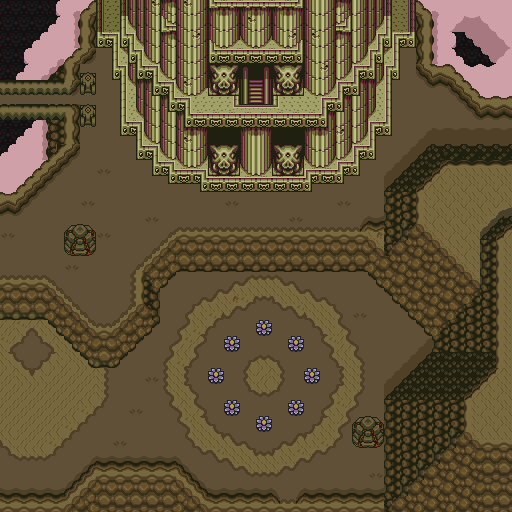 Ganon’s TowerFinal dungeon · Agahnim againOpened by the seven maidens; old bosses return before the final duel with Agahnim.
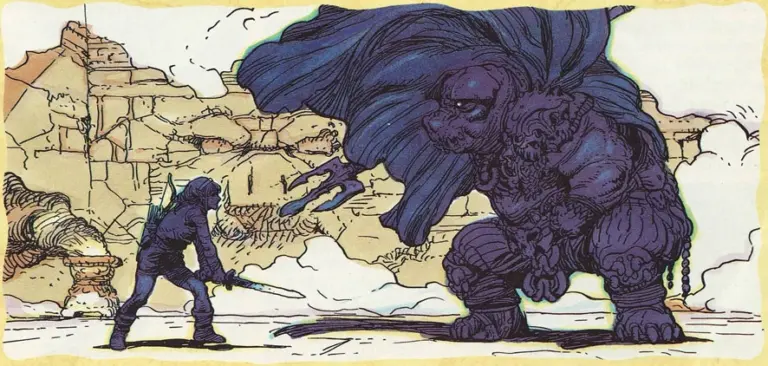 Pyramid of PowerFinal battle · GanonSilver Arrows required.
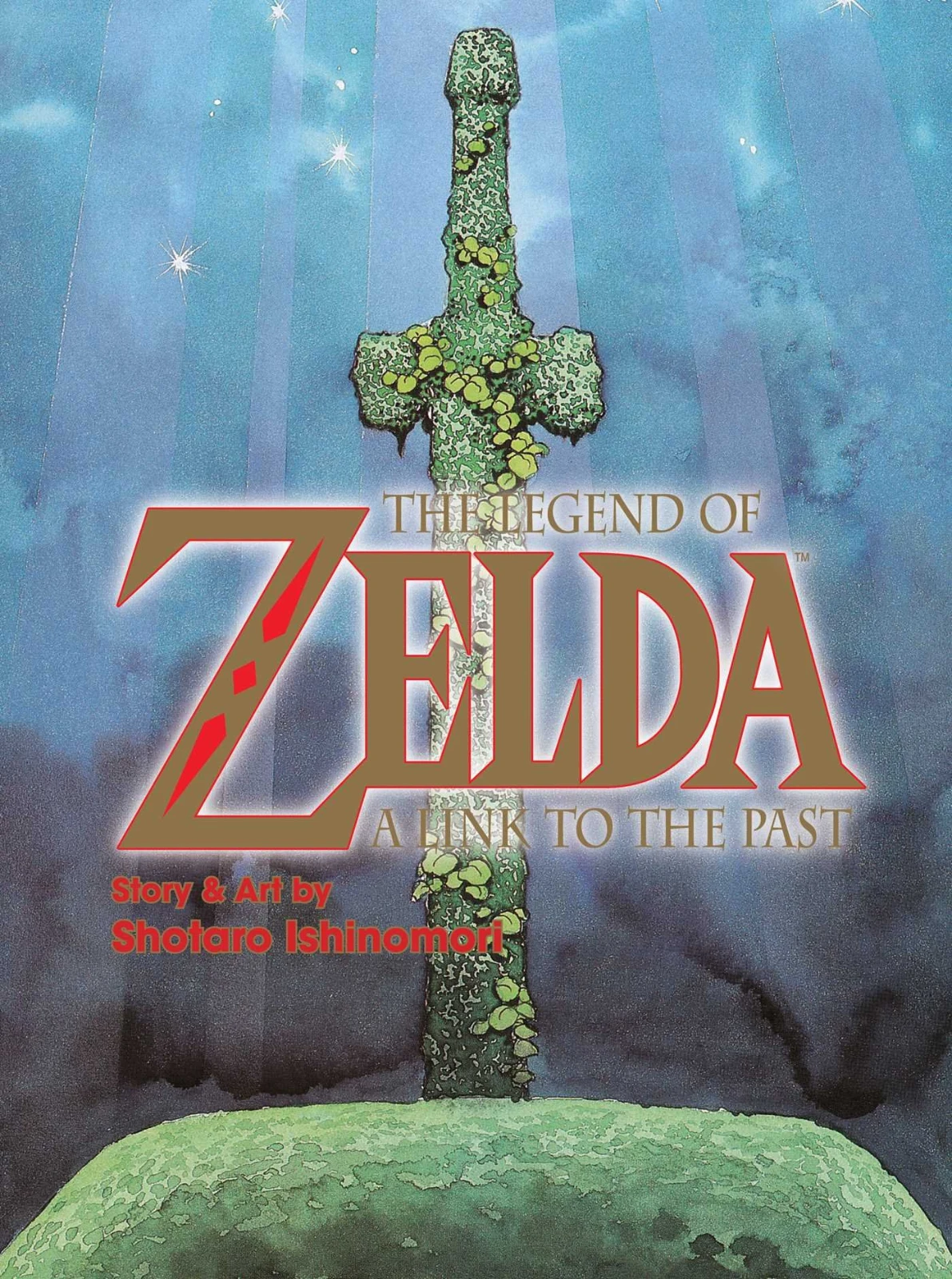 The Legend of Zelda: A Link to the Past (comic)Shotaro Ishinomori · Nintendo Power · 1992The great manga artist retold the game across twelve issues of Nintendo Power, January to December 1992, changing the plot and adding new characters. It was collected as a trade paperback in 1993, and Shogakukan published a Japanese edition the same year.
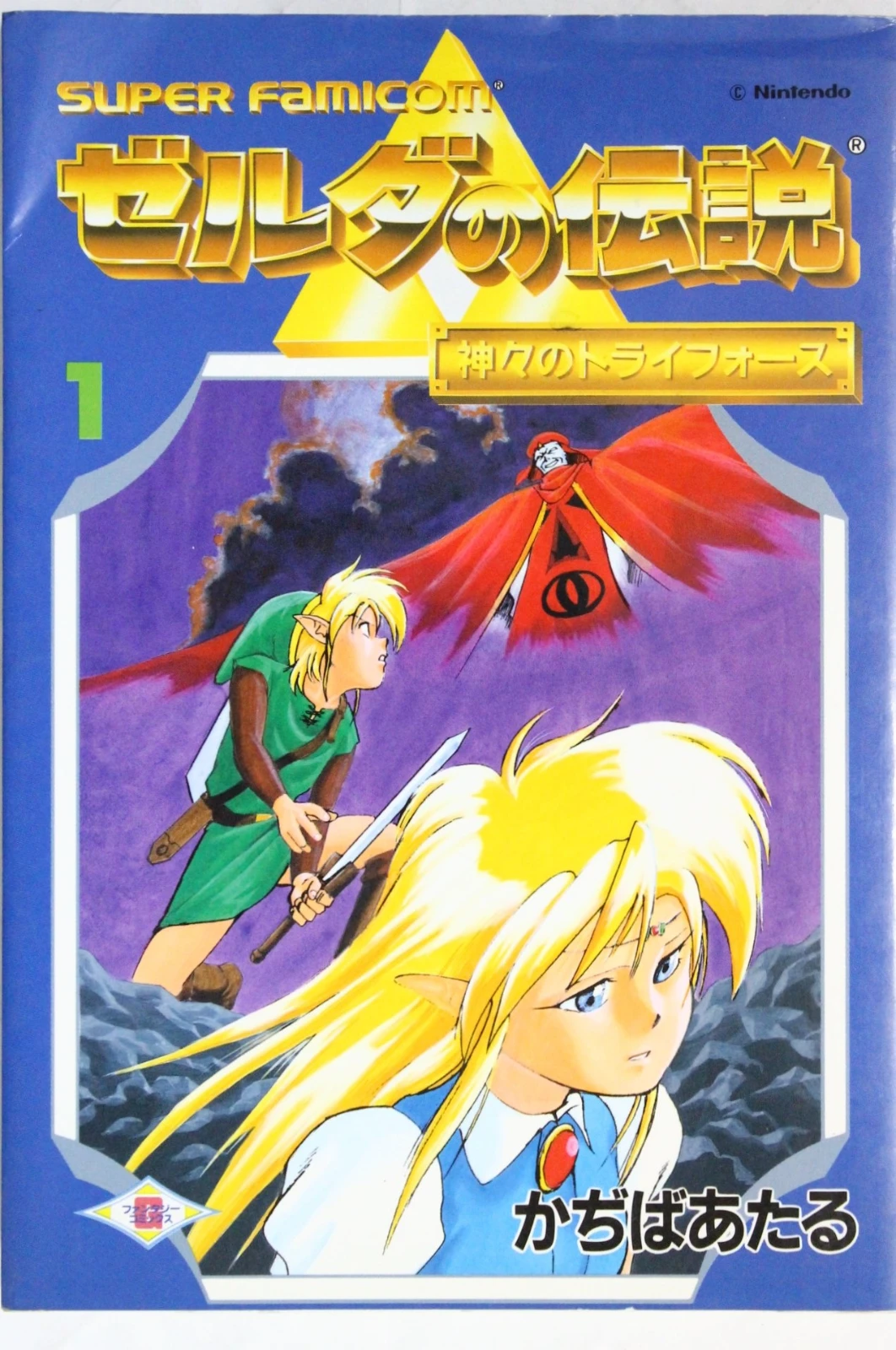 Zelda no Densetsu: Kamigami no Triforce (manga)Ataru Cagiva · Monthly GFantasy (Enix) · mid-1990sA manga adaptation serialised in Enix’s Monthly GFantasy and collected in three volumes.
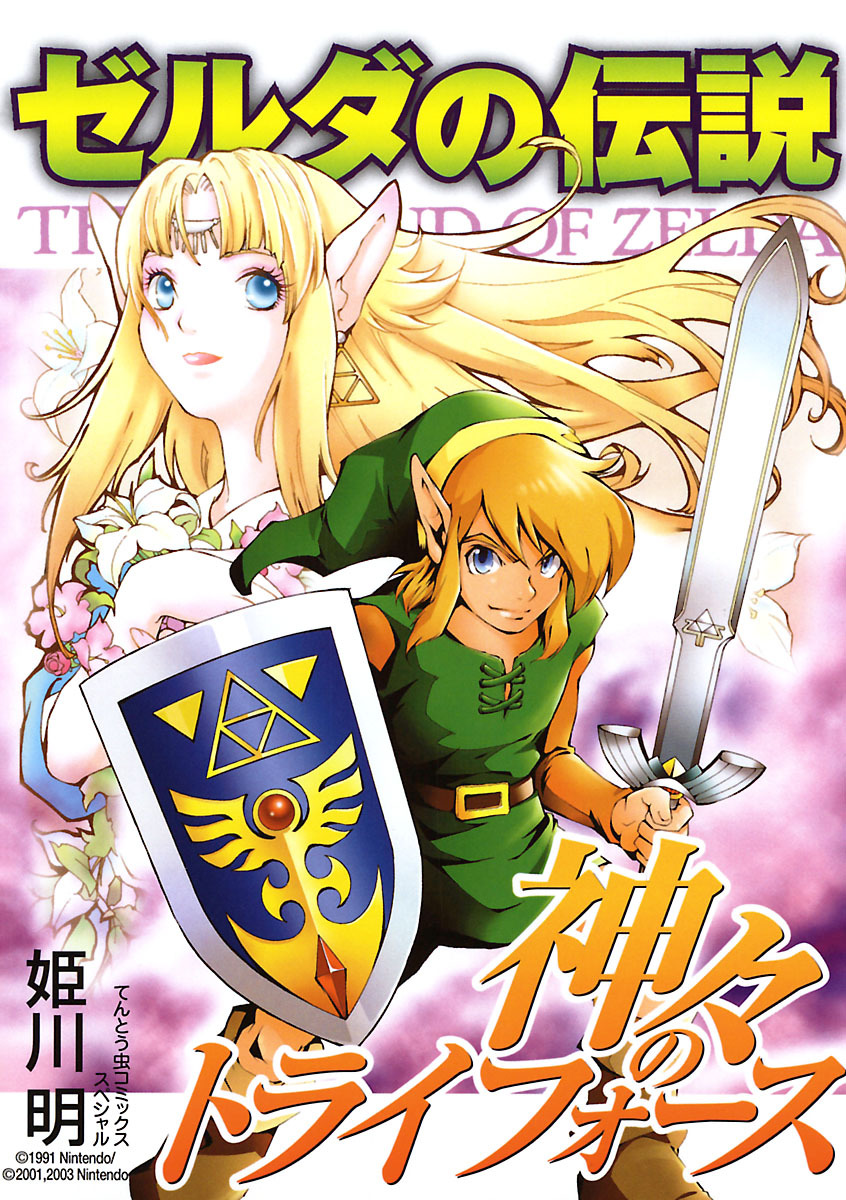 A Link to the Past (manga)Akira Himekawa · 2005A single-volume adaptation published by Shogakukan in July 2005, following the Game Boy Advance release.
 BS Zelda: Ancient Stone TabletsSatellaview · 1997A broadcast-only follow-up set six years after this game, with a new hero collecting eight tablets, with voice acting streamed over the airwaves as you played.
 LinkThe hero
 Princess ZeldaThe last maiden
 GanonThe King of Evil
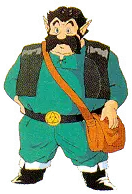 Link’s uncleLink’s guardian
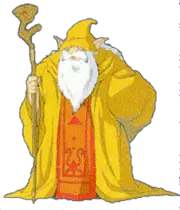 SahasrahlaElder of Kakariko
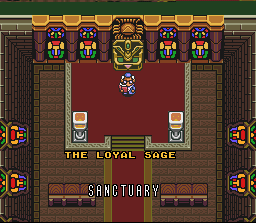 The Loyal SagePriest of the Sanctuary
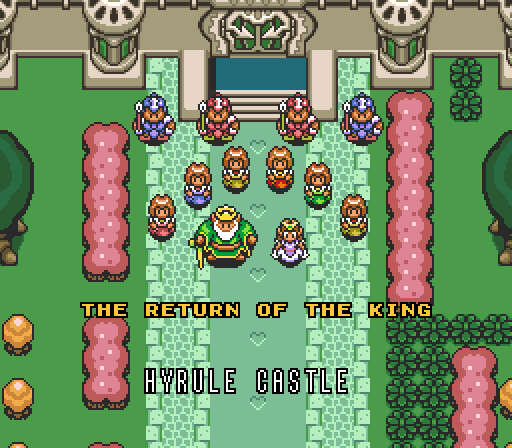 The King of HyruleZelda’s father
 KikiThe Dark World monkey
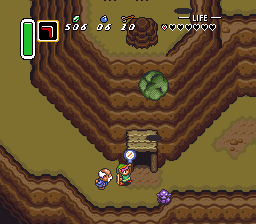 The lost old manDeath Mountain
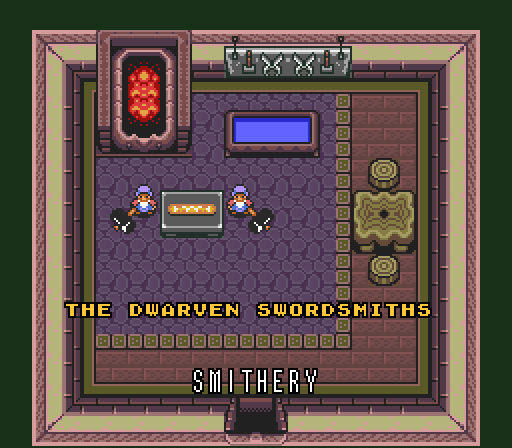 The dwarven swordsmithsKakariko’s smithy
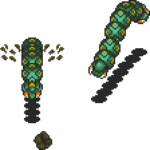 LanmolasDesert PalaceThree worms that burst out of the sand.
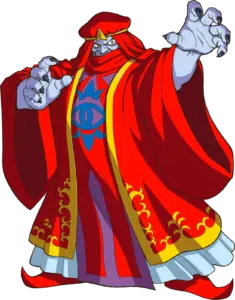 AgahnimAgahnim’s Tower · Ganon’s TowerThe Master Sword is his weakness.
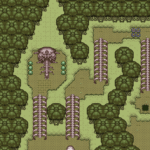 MothulaSkull WoodsGuardian of the third crystal.
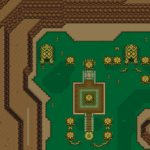 VitreousMisery MireA giant eyeball that sends smaller eyes at you.
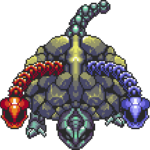 TrinexxTurtle RockThree heads, fire and ice; then a giant snake.
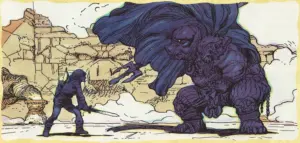 GanonPyramid of PowerThe final battle.

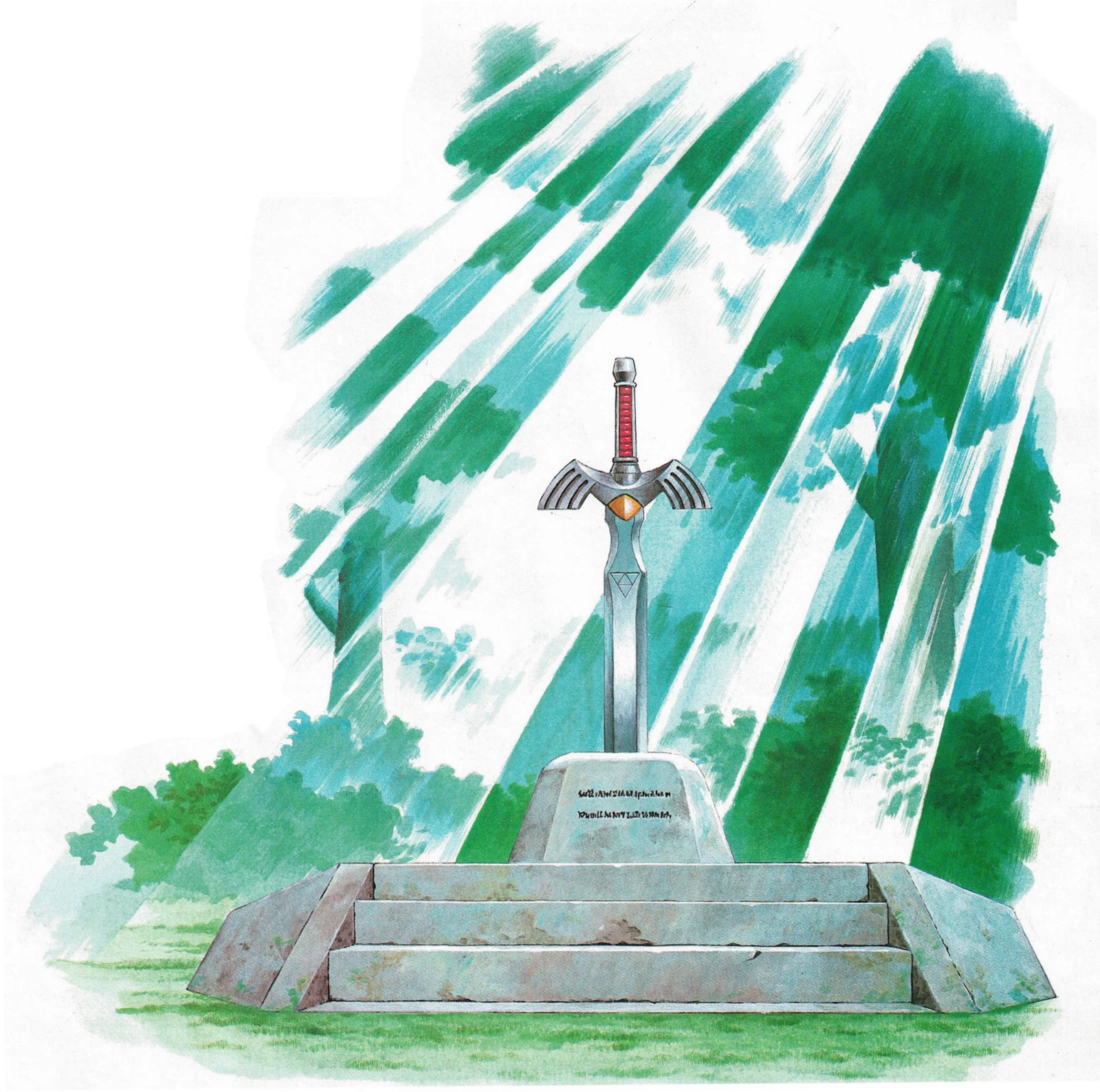 The Master SwordThe blade of evil’s bane makes its debut, drawn from a pedestal in the Lost Woods.
 The hookshotAnother item that became a series fixture, starting here.
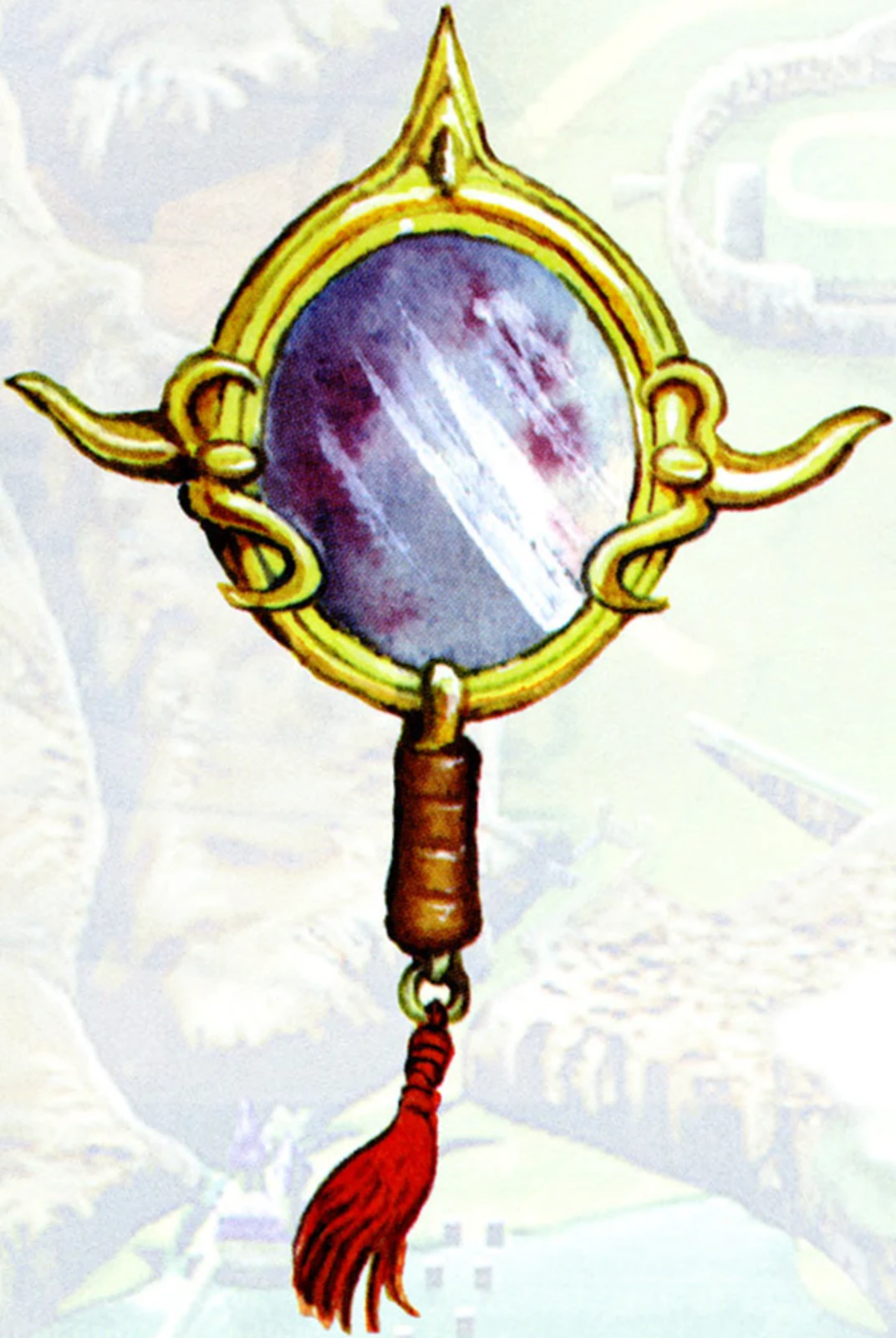 Two worldsThe series’ first parallel world: the Dark World mirrors Hyrule, and the Magic Mirror moves you between them.
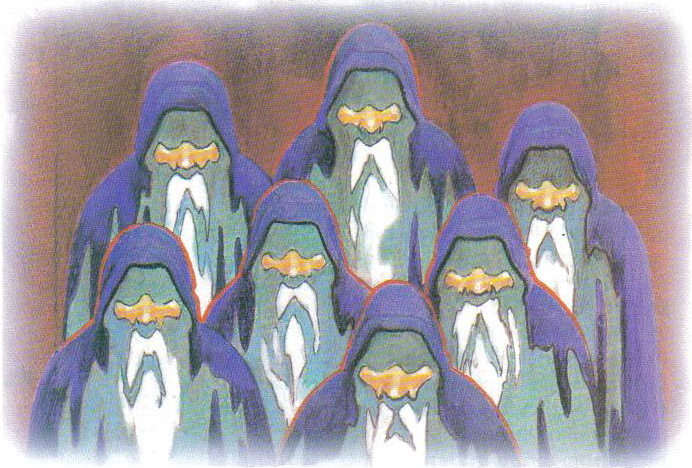 The Imprisoning War and the sagesThe Golden Land, the seven wise men and the Knights of Hyrule enter Zelda lore.
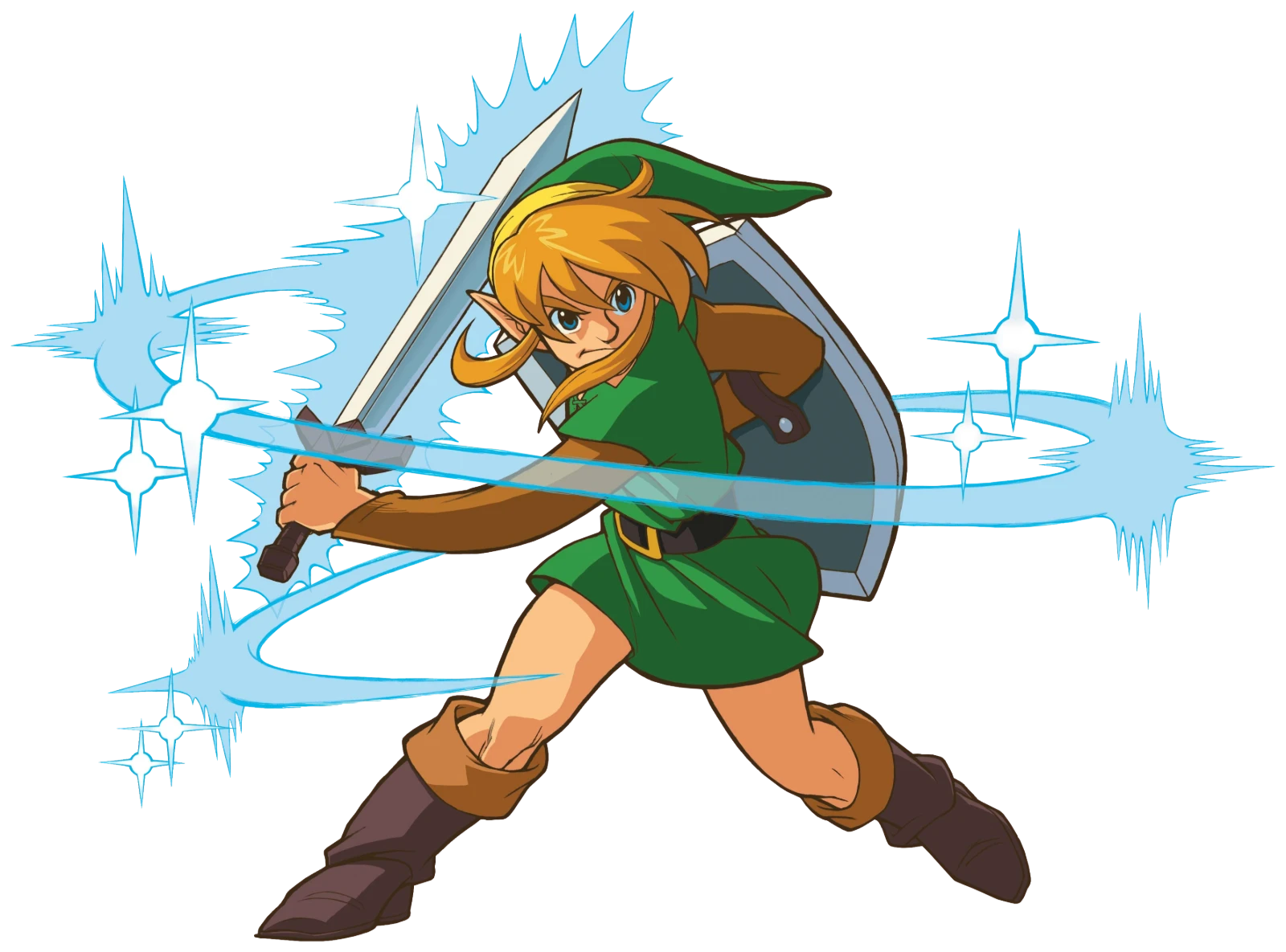 Spin attack and diagonal movementLink’s signature spin, and eight-way movement in a top-down Zelda.
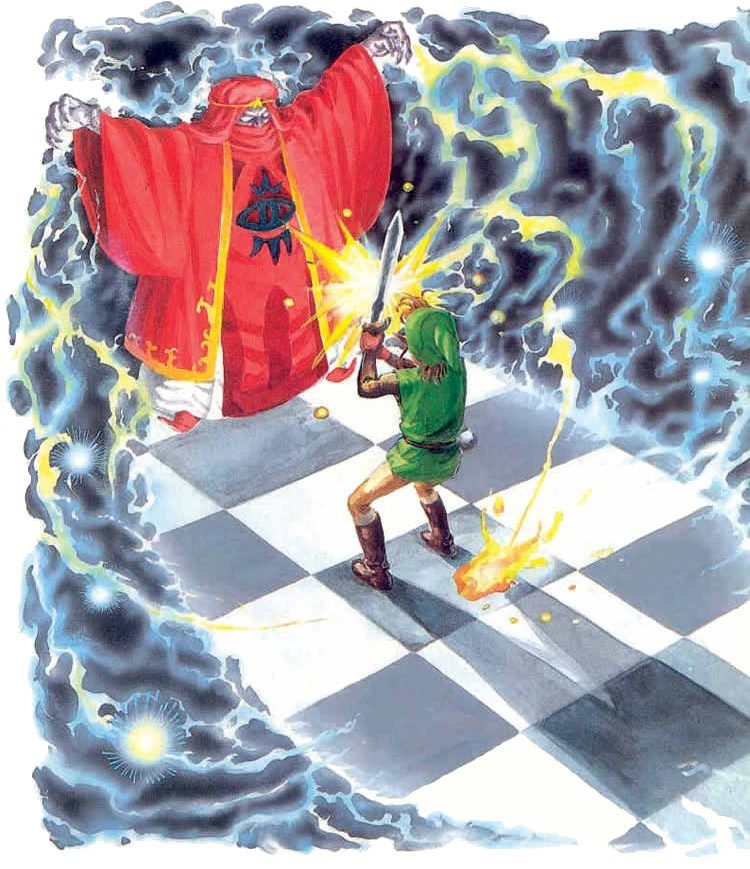 Agahnim and SahasrahlaA new villain and a new mentor for Link.