Oath of Riruto Jin Munesue and Junya Furusawa’s manga · 4 volumes
Link’s pupil takes up the Master Sword in this little-known Japanese serial, an original story in which young Riruto swears to rescue his friend Kalin from the henchmen plotting to bring Ganon back.
StoryJin Munesue
ArtJunya Furusawa
MagazineShōnen Ō (Kobunsha), December 1994 – April 1997
Volumes4, June 1995 – June 1997
EnglishNone
Japanese title
ゼルダの伝説 リルトの誓い (Zelda no Densetsu: Riruto no Chikai, “Riruto’s Oath”)
Also known as
Oath of Lilto
Story
Jin Munesue (棟居仁; History of Hyrule reads the name as Hitoshi Munei)
Art
Junya Furusawa (古澤純也)
Magazine
Shōnen Ō (少年王), bimonthly, Kobunsha: December 1994 to April 1997 issues
Publisher
Kobunsha, Shōnen Ō Comics
Volumes
4 (30 June 1995 – 5 June 1997)
Story type
Original story, not an adaptation; Link, Zelda and Ganon appear
English edition
None
Overview
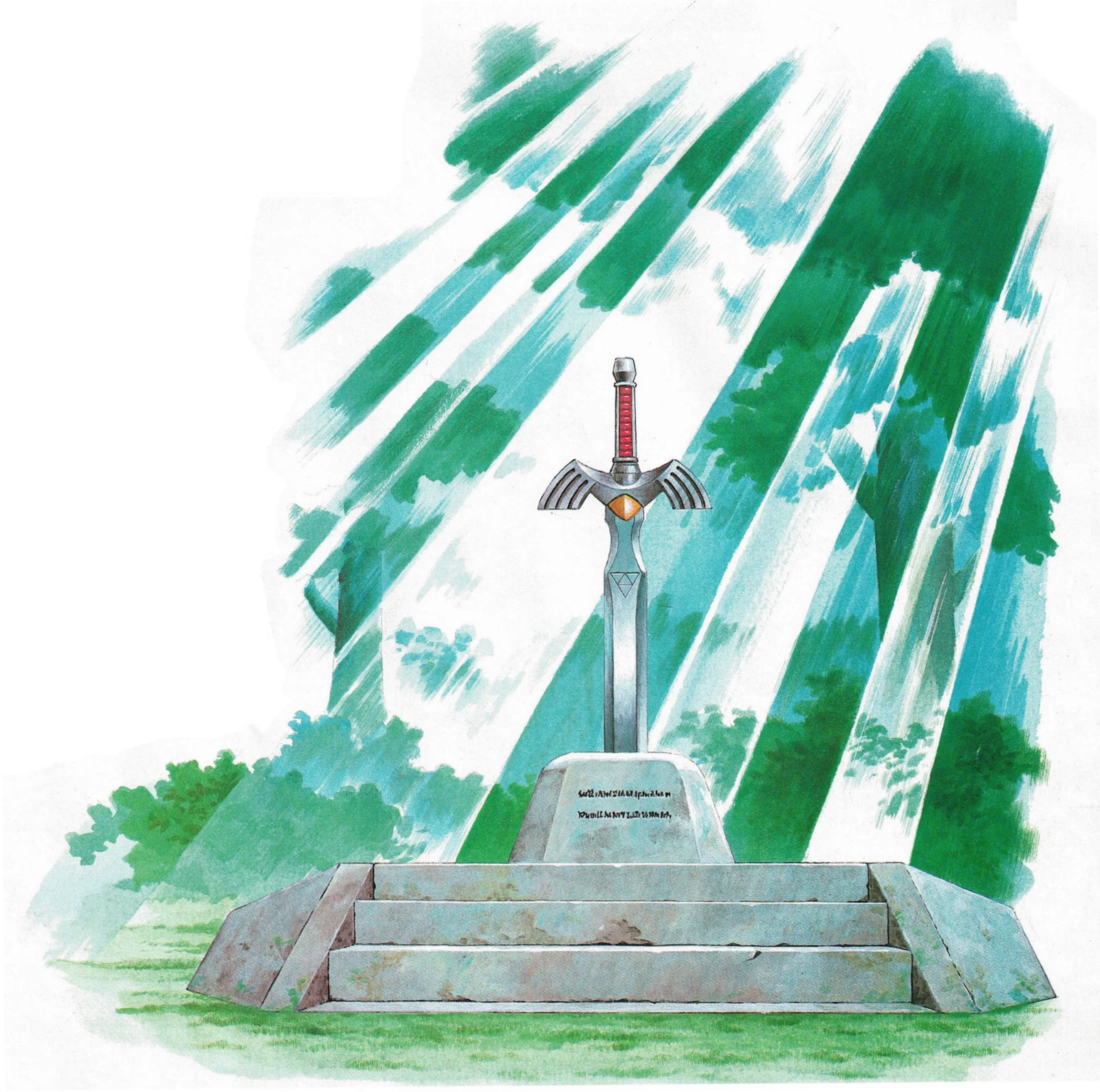
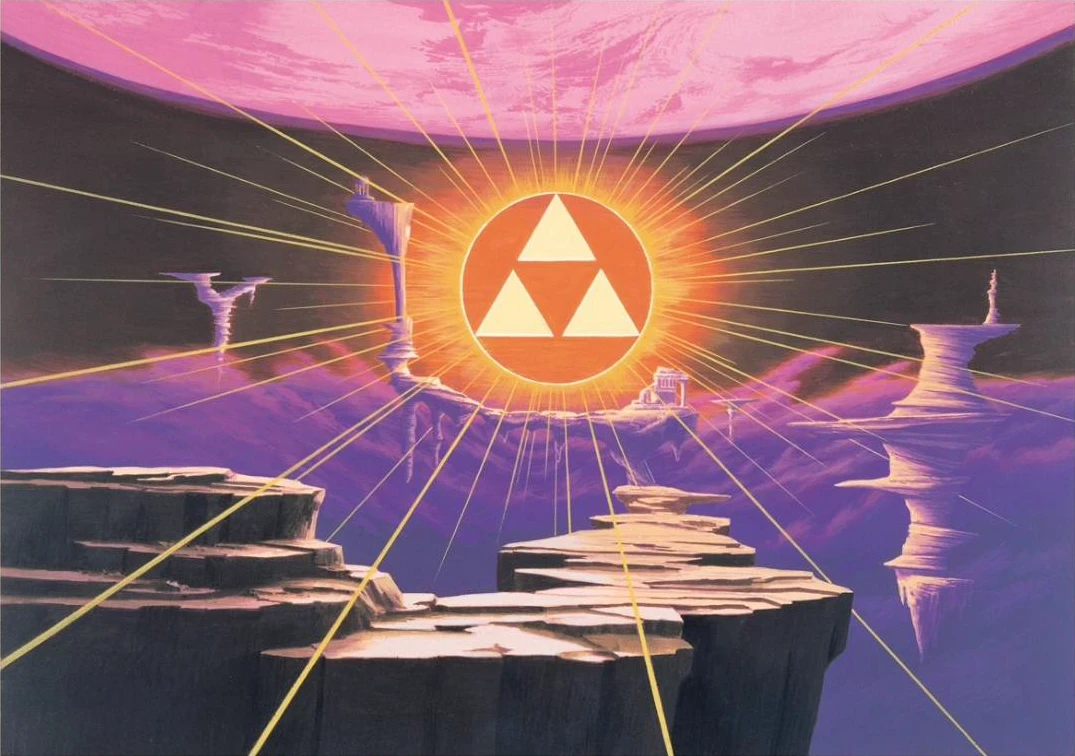
The Master Sword’s pedestal in A Link to the Past. In Oath of Riruto Link’s pupil finds the sword, and Link teaches him to use it. (No artwork from the manga is available to us.)
Most Zelda manga retell a game. Oath of Riruto (Zelda no Densetsu: Riruto no Chikai) tells a story of its own. It ran in Kobunsha’s bimonthly anthology Shōnen Ō from the December 1994 issue until the magazine’s final issue in April 1997, and was collected in four slim volumes between June 1995 and June 1997. It has never been published outside Japan.
The hero is not Link but his pupil. When Riruto’s childhood friend Kalin is carried off by monsters, and then by four henchmen who mean to use her powers to bring Ganon back to life, the boy swears to save her: the oath of the title. He finds the Master Sword, Link teaches him how to use it, and he picks up a band of young companions on the way to a showdown with the deadliest of the henchmen. Link is the mentor, Zelda makes brief but important appearances, and Ganon is seen only as a beast.
The story is credited to Jin Munesue and the art to Junya Furusawa. The series is thinly documented, and nearly everything known about it in English comes from fan research: the Zelda Wiki on Fandom, TheVideoGameLibrary’s catalogue and the History of Hyrule blog, whose team scanned all four books and commissioned an English translation. No publisher’s blurb has surfaced. What follows is what those sources can support: the four volumes, the characters, and a puzzle over who made it.
Volume guide
Release dates and ISBN-10s are from History of Hyrule; the ISBN-13s and page counts are TheVideoGameLibrary’s, and the two agree. (TheVideoGameLibrary’s ISBN-13 for volume 2 is misprinted, so only the ISBN-10 is given.) The story outline comes from the Zelda Wiki on Fandom, which places some events by volume but not all. No covers are available to show here.
Volume 1
Japan: Kobunsha (Shōnen Ō Comics), 30 June 1995 · ISBN 4-334-80270-2 (978-4-334-80270-7) · 94 pages · not published in English
The first book sets up the quest. Kalin, Riruto’s childhood friend, is carried off, first by Ganon’s monsters and then by his henchmen, who want to use her powers to bring their master back to life. Riruto, a pupil of Link, swears to rescue her, and that vow is the oath of the title. He finds the Master Sword, and Link teaches him how to use it, then introduces him to Mōtone, a knowledgeable old man who helps with the training. Princess Zelda appears in the introduction.
TheVideoGameLibrary’s catalogue sums up the whole series in a line (Riruto crosses Hyrule to rescue his friend, finds the Master Sword, trains under Link and works to stop Ganon’s resurrection), and this volume probably covers the first half of that sentence, though no source says where it ends. The Fandom wiki says each book holds three or four chapters. This one reached the shops in June 1995, some months after the serial began in Shōnen Ō.
Links to the games
Link appears as an older mentor who teaches Riruto the Master Sword, not as the hero.
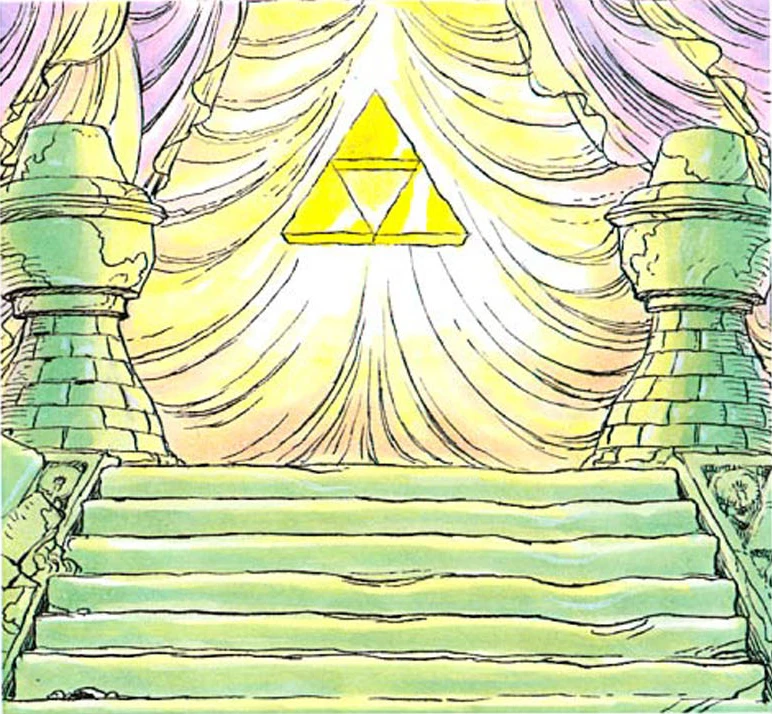
The Master Sword, the Triforce and Ganon tie the story to the games, but no single game is retold.
Volume 2
Japan: Kobunsha (Shōnen Ō Comics), 10 May 1996 · ISBN 4-334-80317-2 · 94 pages · not published in English
In the second volume Riruto stops travelling alone. First he meets Gonza, a boy who becomes his helper and, according to the Fandom wiki, is the only character in the whole series who fights with bombs. Later in the book come Kāla, a girl who carries a ferret-like animal that can turn into a giant, worm-like creature, and her friend Cho, a specialist in traps, who gives Riruto his Power Bracelet so that he can lift heavy objects.
With them the story becomes an adventure for a small band of young heroes rather than a lone quest, and Gonza and Kāla stay at Riruto’s side for the rest of it. Nearly a year passed between this volume and the first, which fits a serial appearing only every other month: Shōnen Ō was a bimonthly magazine.
Links to the games
Bombs and the Power Bracelet, familiar items from the games, belong here to new characters.
Gonza, Kāla, Cho and Kāla’s shape-changing pet are all inventions of the manga.
Volume 3
Japan: Kobunsha (Shōnen Ō Comics), 10 February 1997 · ISBN 4-334-80362-8 (978-4-334-80362-9) · 94 pages · not published in English
English-language summaries do not divide the second half of the story volume by volume, so this entry and the next describe what happens across the last two books. Ganon’s henchmen take centre stage. Nabat, their leader, is a blue-skinned sorcerer with red eyes, yellow pupils and a scar under his right eye. Haggis, his second in command, is the strongest and most bloodthirsty of the four and deadly with both sword and bow. Below them are Glasgow, known by his eyepatch, and Hoody, known by his bandana.
Glasgow and Hoody help to bring the Triforce together, but Haggis, hungry for power, betrays and kills them both. Volume 3 came out in February 1997, and the last issue of Shōnen Ō carried an April 1997 cover date.
Links to the games
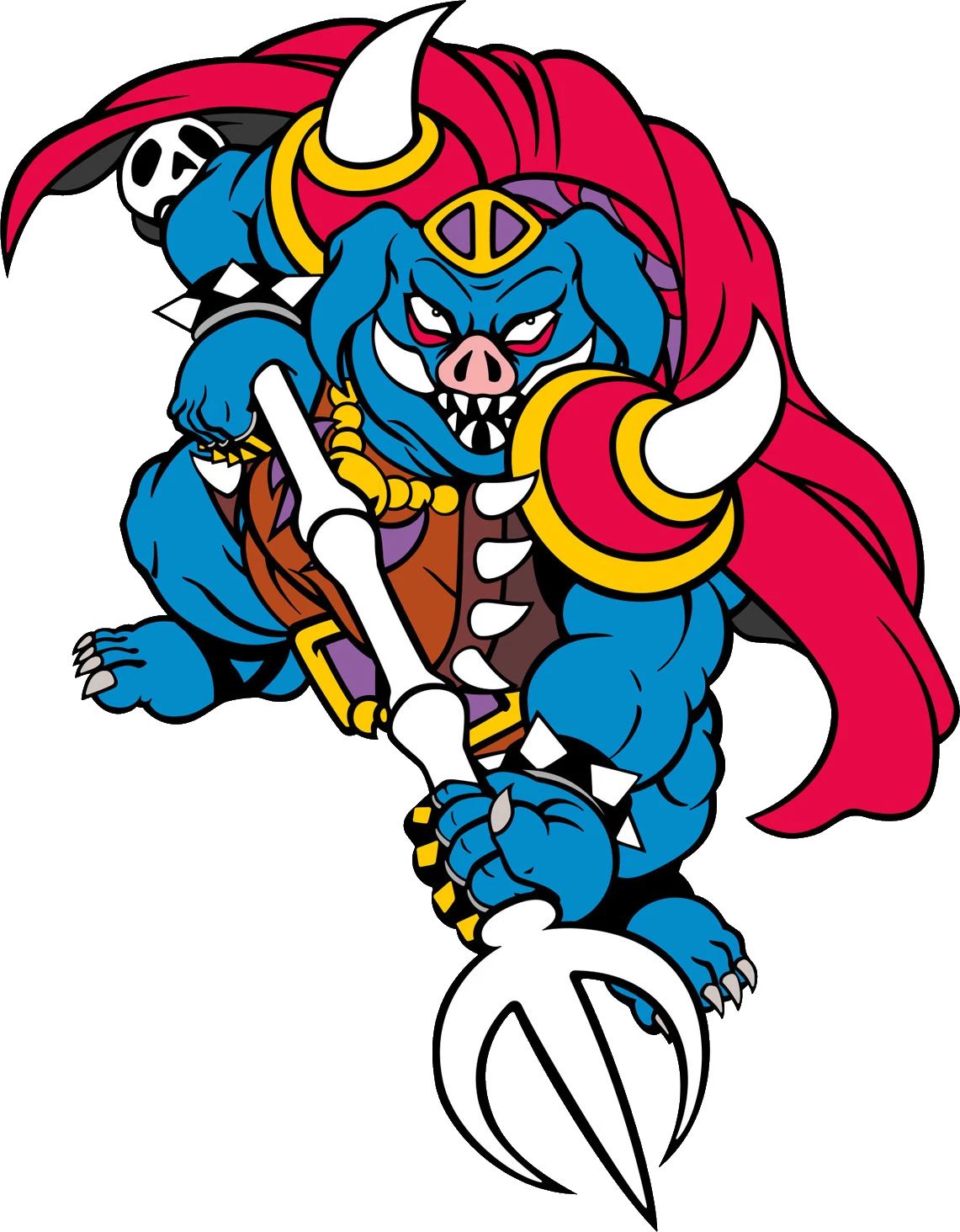
Ganon never appears as Ganondorf or as a man: the Fandom wiki notes that he is seen only in his beast form.
The four henchmen, with their Scottish-sounding names (Haggis, Glasgow), are the manga’s own villains.
Volume 4
Japan: Kobunsha (Shōnen Ō Comics), 5 June 1997 · ISBN 4-334-80379-2 (978-4-334-80379-7) · 98 pages · not published in English
The serial finished in the April 1997 issue of Shōnen Ō, the magazine’s last, and the closing chapters were collected that June in the slightly longer final book. Near the end of it Riruto faces Haggis in the final battle, and Princess Zelda returns to help Kalin, who has been brought close to death. TheVideoGameLibrary’s summary says that Riruto works to stop Ganon’s resurrection.
That is as far as reliable English-language accounts go. The Fandom wiki, the fullest of them, does not describe the ending itself, and we have not found a trustworthy summary of how the story wraps up or of what becomes of Nabat, so we have left it there rather than guess.
Links to the games
Zelda has a small part, helping Kalin in the last battle rather than waiting to be rescued herself.
The villains’ goal, reviving Ganon, echoes the games, but the hero who stops them is a new one.
Characters
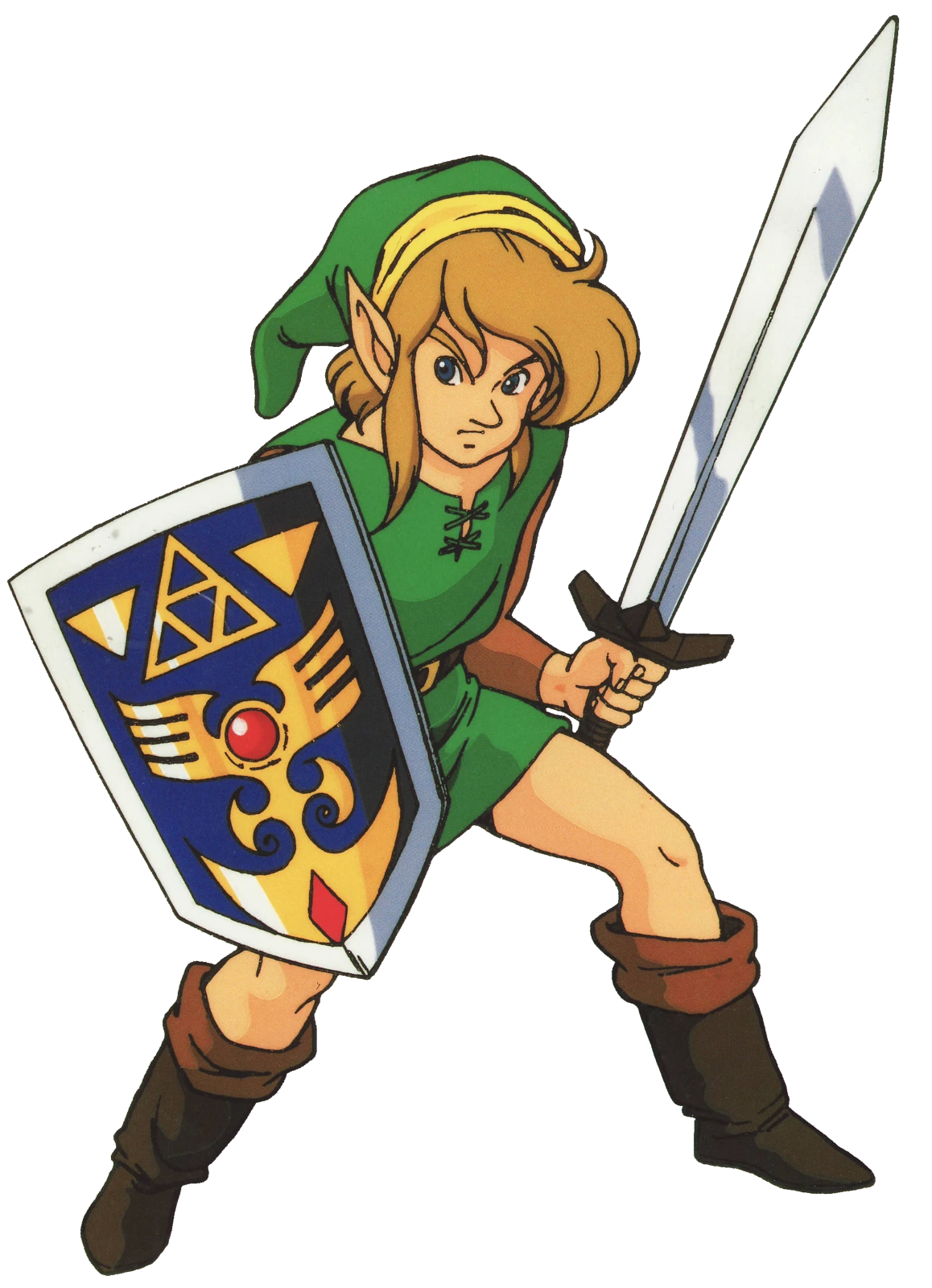
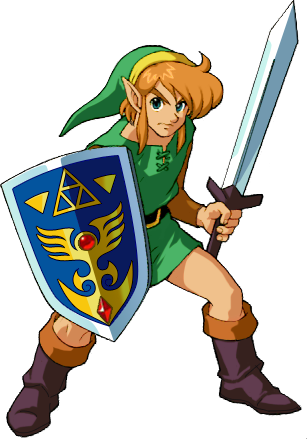
Link in A Link to the Past artwork. In Oath of Riruto he is the teacher, not the hero.
Apart from Link, Zelda and Ganon, the whole cast is new. The descriptions below follow the Zelda Wiki on Fandom, which is the only detailed English source for the characters.
Character
Who they are
In the cartoon
Voice
RirutoThe hero
A boy who is Link’s pupil. He looks like Link but dresses differently.
Swears to rescue Kalin, finds the Master Sword, learns to use it from Link and Mōtone, and leads a band of friends against Ganon’s henchmen.
New to the manga. Also spelled Lilto.
KalinThe kidnapped friend
Riruto’s childhood friend, whose powers the henchmen need to revive Ganon.
Her kidnapping starts the story; in the final battle she is brought near to death, and Zelda helps her.
New to the manga. TheVideoGameLibrary spells her name Kalen.
LinkThe teacher
Riruto’s mentor, who teaches him the Master Sword.
Encourages Riruto, teaches him the Master Sword and introduces him to Mōtone.
From the games, now in a supporting role.
MōtoneThe old sage
A knowledgeable old man.
Introduced by Link; helps teach Riruto the sword.
New to the manga.
Princess ZeldaPrincess of Hyrule
A minor character.
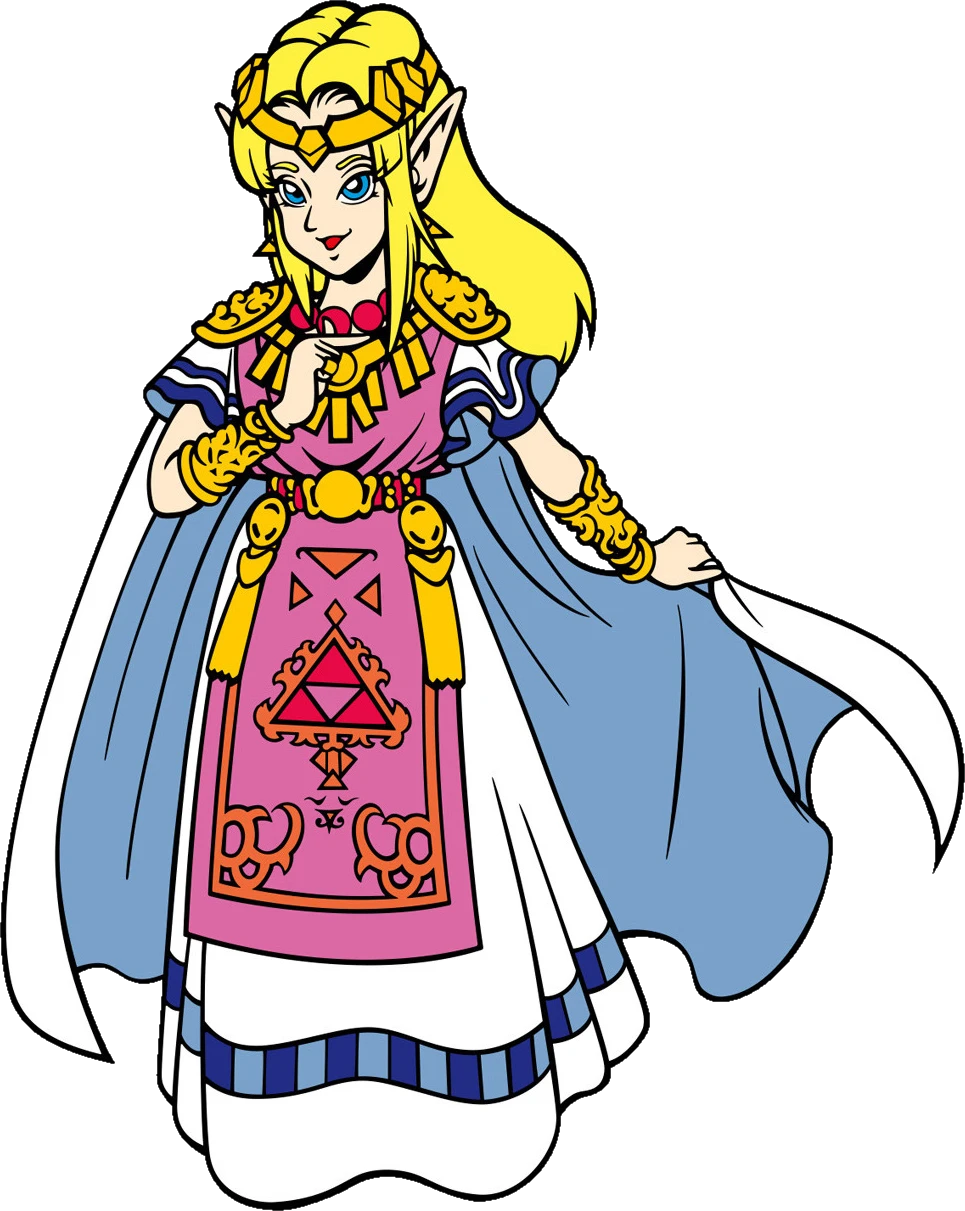
Appears in the introduction and returns in the final battle to help Kalin.
From the games.
GonzaCompanion
A boy Riruto meets in volume 2.
Helps Riruto throughout; the only character in the series who uses bombs.
New to the manga.
KālaCompanion
A girl Riruto meets later in volume 2.
Helps Riruto throughout, with a ferret-like pet that can become a giant, worm-like creature.
New to the manga.
ChoCompanion
Kāla’s friend, an expert in traps.
Gives Riruto his Power Bracelet, so that he can lift heavy objects.
New to the manga.
GanonThe threat
The series’ overarching villain.
Seen only in his beast form; his followers want to revive him using Kalin’s powers.
From the games.
NabatHenchman
Leader of Ganon’s henchmen, blue-skinned and red-eyed, with a scar beneath one eye.
A master of spells.
New to the manga.
HaggisHenchman
Second in command, and the strongest and most bloodthirsty of the four.
Skilled with sword and bow; kills Glasgow and Hoody in his hunger for power, and is Riruto’s opponent in the final battle.
New to the manga.
GlasgowHenchman
A lower-ranking henchman with an eyepatch.
Helps unite the Triforce, then is betrayed and killed by Haggis.
New to the manga.
HoodyHenchman
A lower-ranking henchman with a bandana.
Helps unite the Triforce, then is betrayed and killed by Haggis.
New to the manga.
Who made it
Munesue and Furusawa
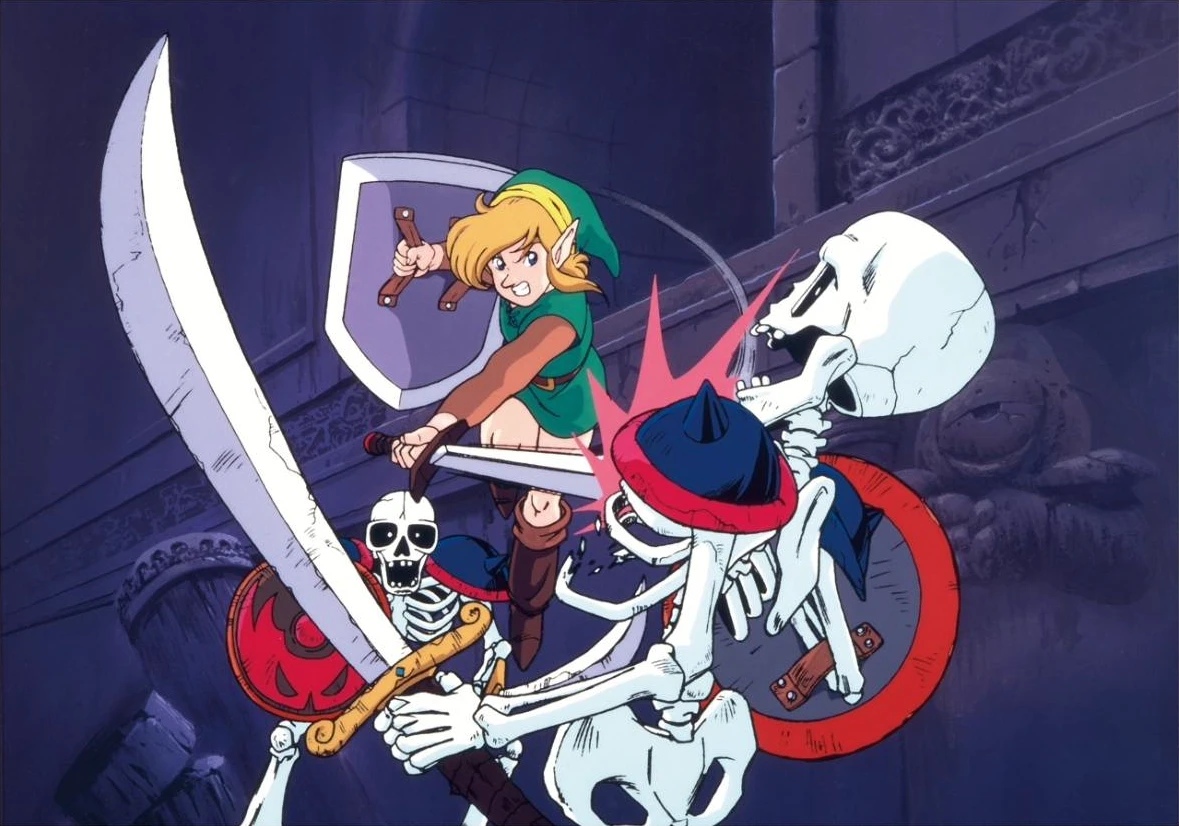
Link fighting Stalfos Knights, as drawn for A Link to the Past (official artwork).
TheVideoGameLibrary lists Jin Munesue as the author and Junya Furusawa as the illustrator, and the Fandom wiki credits the series to the two of them. History of Hyrule, which gives both names in Japanese, reads the writer’s name as Hitoshi Munei and describes Furusawa, who also signs himself Furujun, as a big Dragon Ball fan who went from fan artist to staff artist on the Dragon Ball anime. We have not been able to confirm that from a second source. TV Tropes thinks the art looks like Dragon Quest; History of Hyrule calls the series a “Dragon Ball Z style” take on A Link to the Past.
A credit puzzle
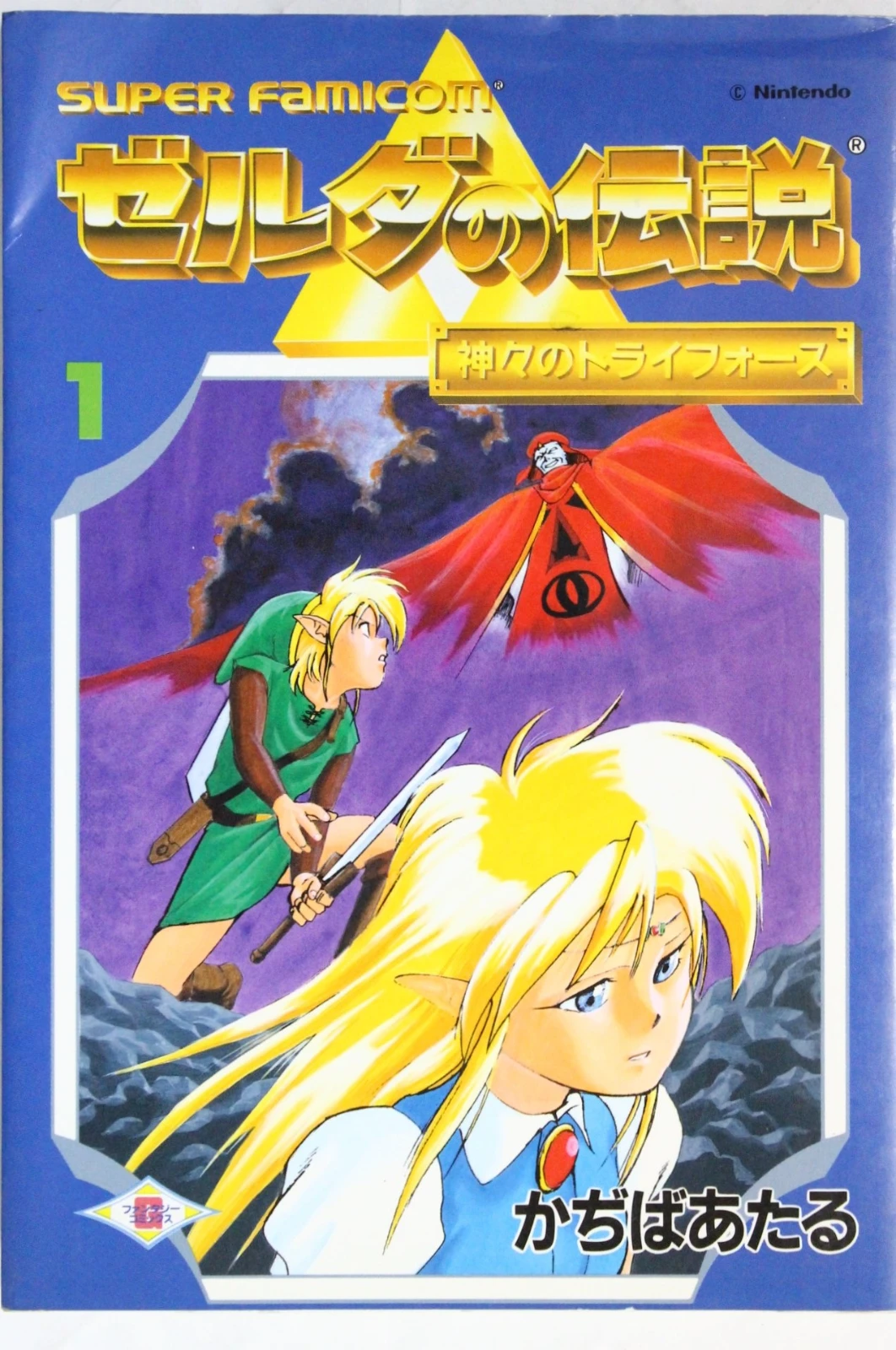
Cover of the first volume of Ataru Cagiva’s A Link to the Past manga.
The Japanese Wikipedia list of Zelda works files Oath of Riruto under かぢばあたる, that is, Ataru Cagiva, who was drawing Enix’s Zelda manga at the same time. Nothing else supports that. Cagiva’s own Japanese Wikipedia article does not mention the series, and the Fandom wiki, TheVideoGameLibrary and History of Hyrule, whose team scanned all four books, all credit Munesue and Furusawa. We follow them.
The magazine
Shōnen Ō was a bimonthly manga anthology from Kobunsha. Oath of Riruto ran in it for the last two and a half years of its life, from the December 1994 issue to the final issue in April 1997, and the books carried the magazine’s own Shōnen Ō Comics label.
Editions
Volume
Japanese release
ISBN
Pages
1
30 June 1995
4-334-80270-2 (978-4-334-80270-7)
94
2
10 May 1996
4-334-80317-2
94
3
10 February 1997
4-334-80362-8 (978-4-334-80362-9)
94
4
5 June 1997
4-334-80379-2 (978-4-334-80379-7)
98
All four books are paperbacks from Kobunsha. We have found no reprint and no official translation in any language. The only English version is an unofficial fan translation commissioned by History of Hyrule and finished on 1 January 2024, which was released as text documents rather than as a lettered edition.
Trivia
The title is romanised two ways. The Fandom wiki and TheVideoGameLibrary use Oath of Riruto; History of Hyrule’s volume list and TV Tropes use Oath of Lilto, since Japanese has no separate L and R sounds.
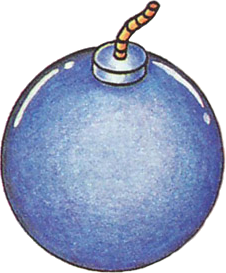
A bomb, in A Link to the Past artwork.Gonza is the only character in the series who uses bombs, a staple item of the games.
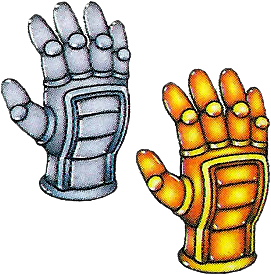
The Power Glove and Titan’s Mitt, A Link to the Past’s lifting gloves.Cho’s gift to Riruto is a Power Bracelet, the name the lifting item has in Link’s Awakening; in A Link to the Past its equivalent is the Power Glove.
When Oath of Riruto began in late 1994, Ataru Cagiva’s Link’s Awakening manga for Enix had just finished and the same artist’s A Link to the Past serial was under way. Akira Himekawa’s Zelda manga were still several years off.
Two of Ganon’s henchmen are called Haggis and Glasgow, names that would sound more at home in Scotland than in Hyrule.
The books are slim: TheVideoGameLibrary lists 94 to 98 pages a volume, about half the length of Ataru Cagiva’s Zelda volumes of the same years.
Further reading: Zelda Temple research dossier for the Comics & Books section (sources listed inside)
Manage Consent
To provide the best experiences, we use technologies like cookies to store and/or access device information. Consenting to these technologies will allow us to process data such as browsing behavior or unique IDs on this site. Not consenting or withdrawing consent, may adversely affect certain features and functions.
Functional
Always active
The technical storage or access is strictly necessary for the legitimate purpose of enabling the use of a specific service explicitly requested by the subscriber or user, or for the sole purpose of carrying out the transmission of a communication over an electronic communications network.
Preferences
The technical storage or access is necessary for the legitimate purpose of storing preferences that are not requested by the subscriber or user.
Statistics
The technical storage or access that is used exclusively for statistical purposes.The technical storage or access that is used exclusively for anonymous statistical purposes. Without a subpoena, voluntary compliance on the part of your Internet Service Provider, or additional records from a third party, information stored or retrieved for this purpose alone cannot usually be used to identify you.
Marketing
The technical storage or access is required to create user profiles to send advertising, or to track the user on a website or across several websites for similar marketing purposes.