Nintendo EPD and Tantalus Media (Melbourne, Australia)
Publisher
Nintendo
Original game
Directed by Hidemaro Fujibayashi, produced by Eiji Aonuma
Announced
17 February 2021, in a Nintendo Direct
Released
16 July 2021 in Japan, North America, Europe and Australia
Launch price
US$59.99
Players
1
Age rating
PEGI 12; ESRB Everyone 10+
Picture
1080p docked, 720p handheld, 60 frames per second
Controls
Two Joy-Con with motion controls, or button-only controls (handheld mode, Nintendo Switch Lite, Pro Controller)
amiibo
Zelda & Loftwing only
Download size
7.1 GB
Languages
Japanese, English, Spanish, French, German, Italian, Dutch, Russian, Korean and Chinese
Latest version
1.0.1 (10 August 2021 in North America, 11 August in Europe and Japan)
Sold alongside
Skyward Sword HD Edition Joy-Con and the Zelda & Loftwing amiibo, both 16 July 2021
Sales
3.60 million by 30 September 2021; 3.85 million by 31 December 2021; 3.91 million by 31 March 2022 (Nintendo)
Metacritic
81 out of 100, from 106 reviews
Overview
Skyward Sword HD is Nintendo’s second go at its most argued-over Zelda. The 2011 Wii original asked you to swing a Wii Remote like a sword from the first Bokoblin to the last boss, and players have been split over it ever since. This remaster came out worldwide on Nintendo Switch on 16 July 2021, in the original’s tenth anniversary year and the series’ 35th. It keeps every dungeon, cutscene and side quest exactly where it was, and changes almost everything about how the game feels in your hands.
The picture is sharper (1080p on a television and 720p in handheld mode, up from the Wii’s 480p) and the frame rate doubles from 30 to 60 frames per second. You can still fight with motion controls, holding the right Joy-Con as Link’s sword and the left as his shield, but you no longer have to: a new button-only scheme puts the blade on the right stick, which is what lets the game run in handheld mode, on a Switch Lite or with a Pro Controller. Either way you get something the Wii game never had, a camera you can turn freely.
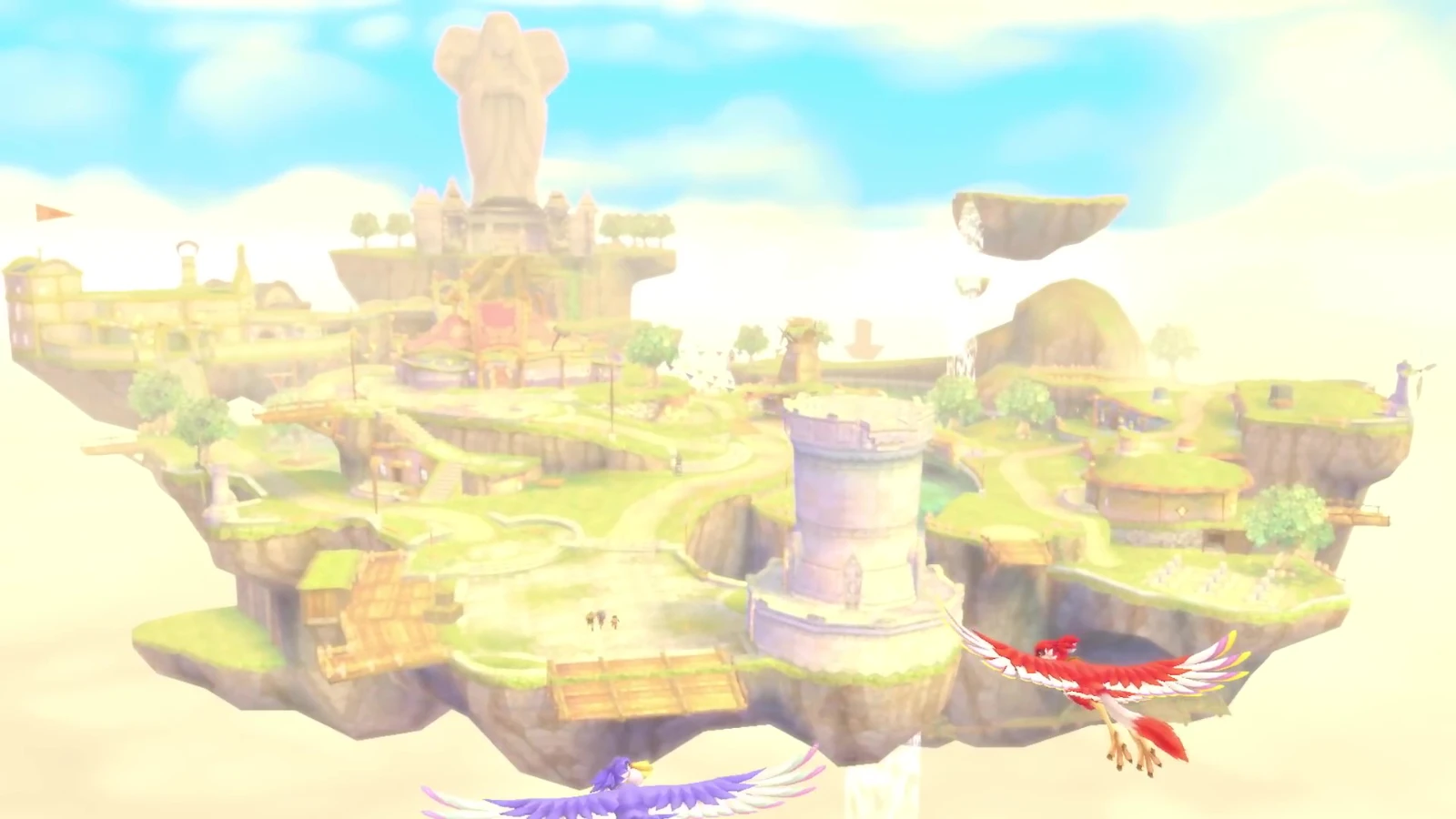
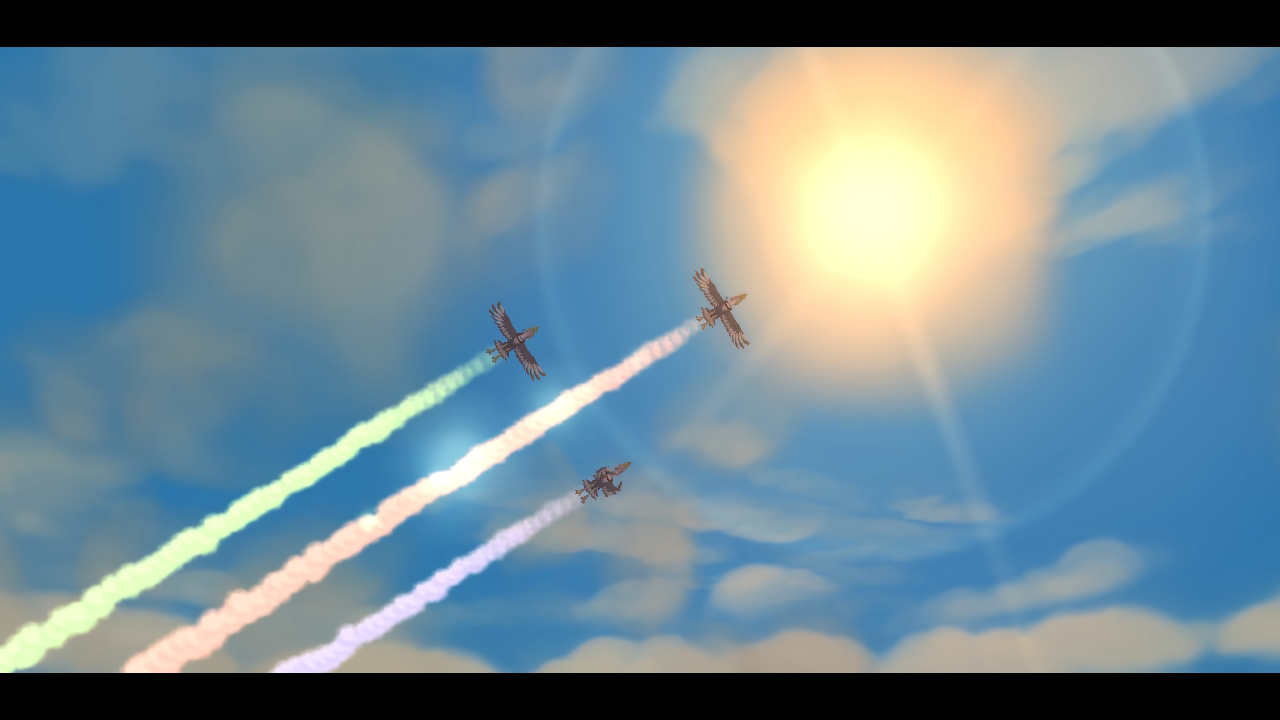
Skyloft in high definition.Directional swordplay, now possible on a stick.Link and his Crimson Loftwing above the clouds.
Then come the small mercies. Fi, the sword spirit whose constant interruptions became a running joke, now mostly waits to be asked. Text can be hurried along, cutscenes and some tutorials skipped, the game saves by itself, and item descriptions stop repeating. The one addition that caused a row is the Zelda & Loftwing amiibo, a US$24.99 figure that lets Link return to the sky from anywhere on the surface, something the game otherwise allows only at bird statues.
The remaster was built with Tantalus Media, the Melbourne studio behind Twilight Princess HD, whose chief executive at the time called the button controls the hardest part of a year-and-a-half process. Critics were kinder than the game’s reputation might have suggested (it averages 81 on Metacritic), and players turned up: Nintendo counted 3.60 million sales by 30 September 2021, about what the Wii version is thought to have managed in its whole life.
Soar through the clouds and witness the origins of the Master Sword in The Legend of Zelda: Skyward Sword HD.
That is how Nintendo UK’s page for the Switch version opens. It goes on to describe the story as the earliest tale in the Zelda timeline, and sells the new version on four things: better performance, improved motion controls, button controls for the first time, and quality-of-life changes such as reworked tutorials and guidance. Its section on controls is headed “Play your way”.
— Official description: Nintendo, The Legend of Zelda: Skyward Sword HD product page, Nintendo UK. Opening line quoted; the rest summarised.
Quick Answers
The questions people ask most about Skyward Sword HD, answered quickly and explained further down the page.
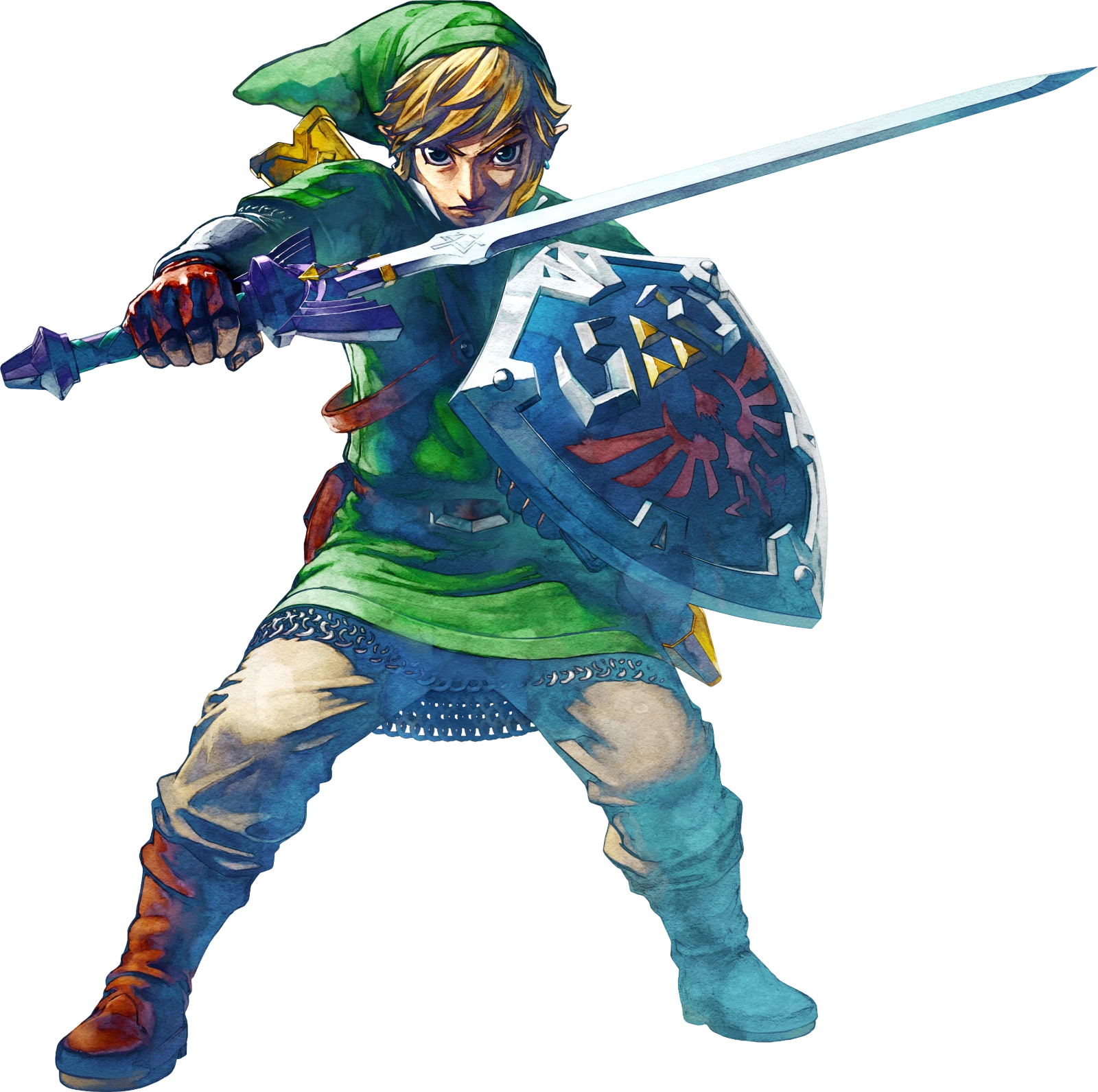
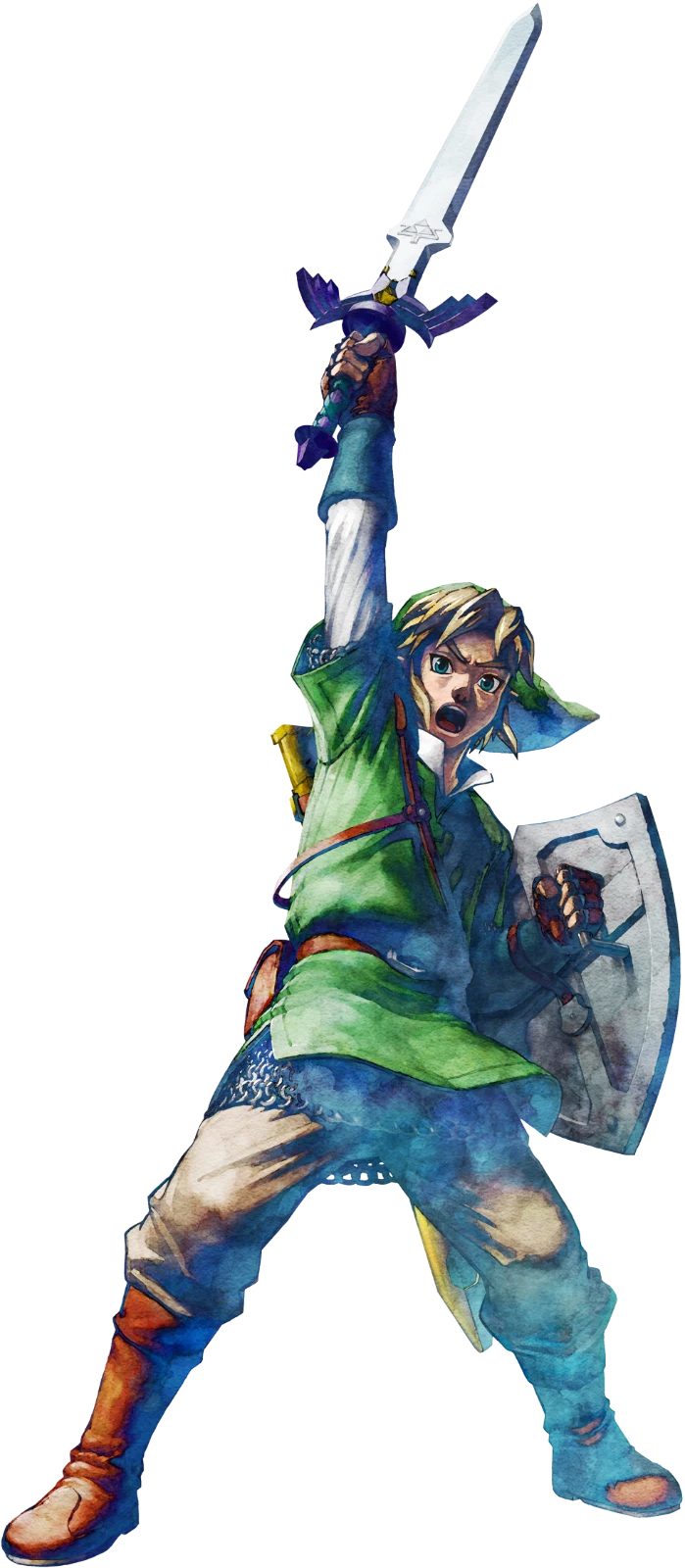
Official art of Link from Skyward Sword.
Is Skyward Sword HD the same game as the Wii original?
Yes. The story, the world, the seven dungeons and the side quests are the same, and nothing new has been added to them. What changed is the picture, the controls and a long list of conveniences. More →
What is new in Skyward Sword HD?
HD visuals at 60 frames per second, button-only controls alongside motion controls, a free camera, autosave, skippable cutscenes and faster text, a much quieter Fi, item descriptions that appear only once, and support for one amiibo. More →
Can you play Skyward Sword HD without motion controls?
Yes. With button controls the sword is on the right stick: tilt or flick it to slash in that direction and click it to stab. This is the only way to play in handheld mode or on a Switch Lite, and it works with a Pro Controller too. More →
Which version should I play, Wii or Switch?
The Switch version, for almost everyone. It looks and runs better, gives you a choice of controls and removes most of the original’s interruptions; VGC’s review said it made the Wii version obsolete. The original needs a Wii or Wii U and a MotionPlus controller. More →
Do you need the Zelda & Loftwing amiibo?
No. It lets you fly back to the sky from anywhere on the surface and drop back to the same spot afterwards. Without it you use bird statues, exactly as on Wii, and the game can be finished perfectly well. More →
Who made Skyward Sword HD?
Nintendo with Tantalus Media, an Australian studio in Melbourne that also made Twilight Princess HD for Wii U. Tantalus’s role was confirmed by the game’s credits. More →
How many copies has it sold?
Nintendo reported 3.60 million by 30 September 2021, 3.85 million by 31 December 2021 and 3.91 million by 31 March 2022. That is more than the 3.52 million Nintendo reported for the Wii game by March 2012. More →
Can you play Skyward Sword HD on Nintendo Switch 2?
Yes. Nintendo lists it as supported on Switch 2, where it behaves as it does on the original Switch. As of November 2026 it has had no Switch 2 update or upgrade. More →
What’s different from the Wii original
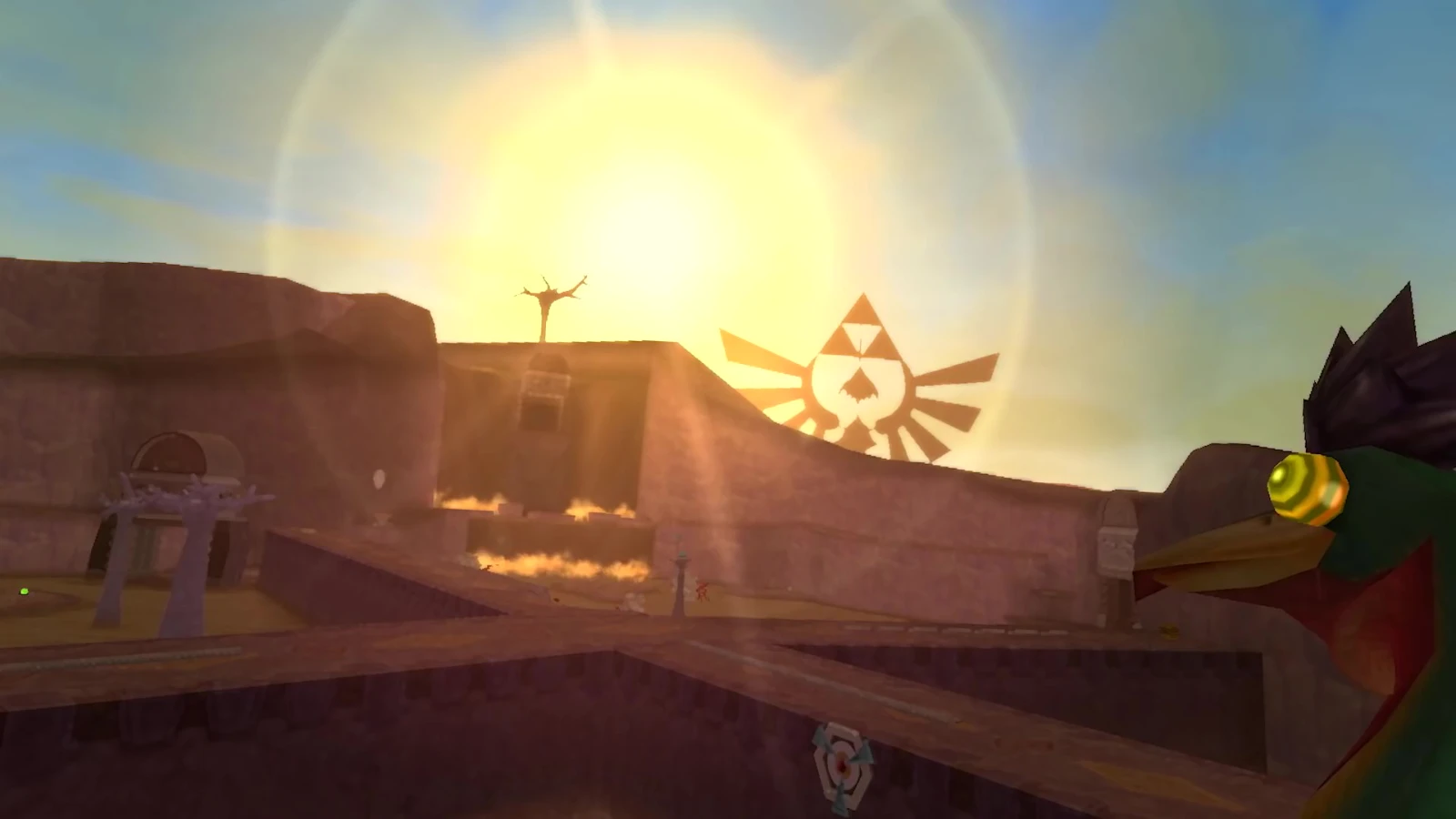
Lanayru Desert in the Switch version, at up to 1080p.
Think of Skyward Sword HD as the same game with the friction sanded off. Nothing has been added to the story, the map or the item list, and hardly anything has been taken away. What Nintendo and Tantalus changed is the hardware underneath, the way you control Link, and the dozens of little interruptions that used to slow everything down.
The table sets the Wii original beside the Switch version. The sections after it go through the big differences one at a time.
Feature
Skyward Sword (Wii, 2011)
Skyward Sword HD (Switch, 2021)
Release
18–24 November 2011, region by region
16 July 2021, worldwide
Resolution
480p
1080p docked, 720p handheld
Frame rate
30 frames per second
60 frames per second, docked and handheld
Sword controls
Motion only: a Wii Remote Plus (or the MotionPlus add-on) and Nunchuk
Motion controls with two Joy-Con, or button-only controls with the sword on the right stick
Where you can play
On a television
TV, tabletop or handheld; Switch Lite and Pro Controller through the button controls
Camera
No free camera
Free camera on the right stick (hold L first when using button controls)
Fi
Interrupts often with advice and reminders
Appears in cutscenes and at key moments; the rest of her advice waits until you call her
Saving
Manual saves at bird statues, to that game’s own file
Autosave in a slot of its own, plus manual saves at bird statues to any of three files
Text, cutscenes and tutorials
Slower text; cutscenes can be skipped only in Hero Mode
Text can be fast-forwarded, cutscenes skipped from the start, tutorials shortened
Item pick-ups
Explanations of bugs and treasures come back each time you load your save
Shown the first time only (Gratitude Crystals excepted)
Sheikah Stone
A stone beside the Sparring Hall plays hint visions
Removed
amiibo
None
Zelda & Loftwing: return to the sky from anywhere, then drop back to the same spot
Hero Mode
Unlocked by finishing the game
Unlocked the same way, and can be saved to a slot of its own
Launch price (US)
US$49.99
US$59.99
Sharper, and twice as smooth
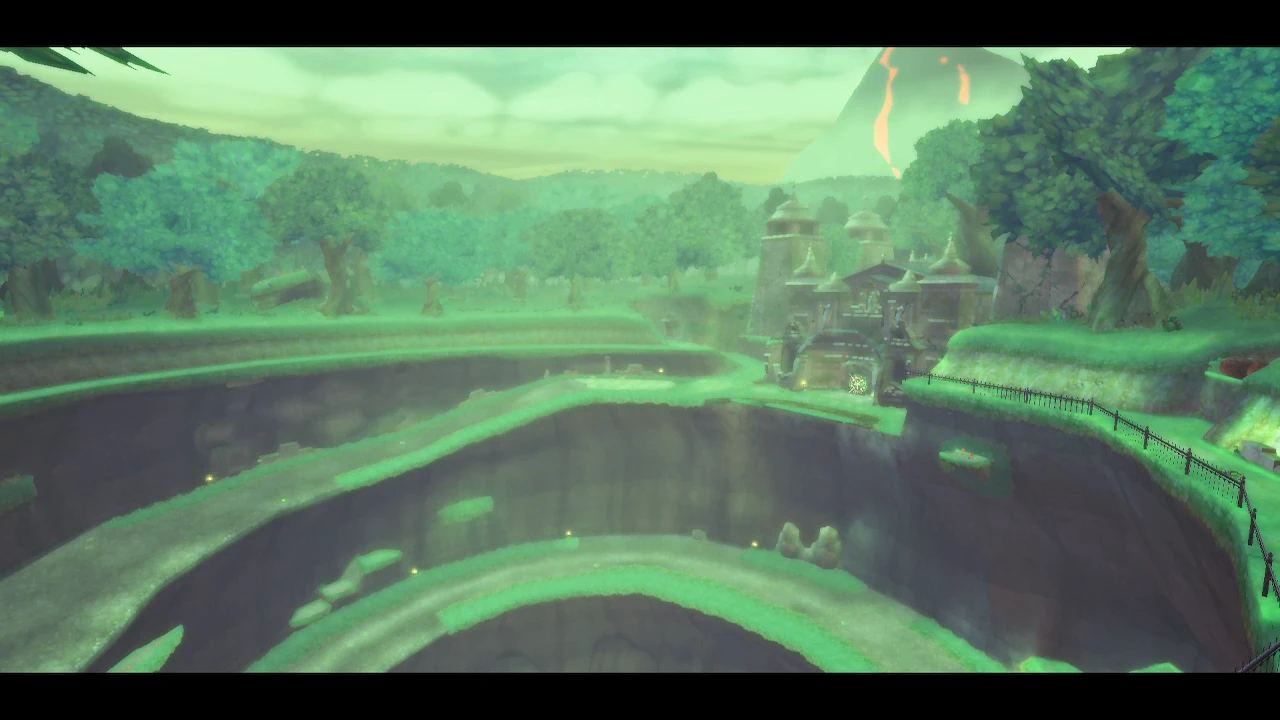
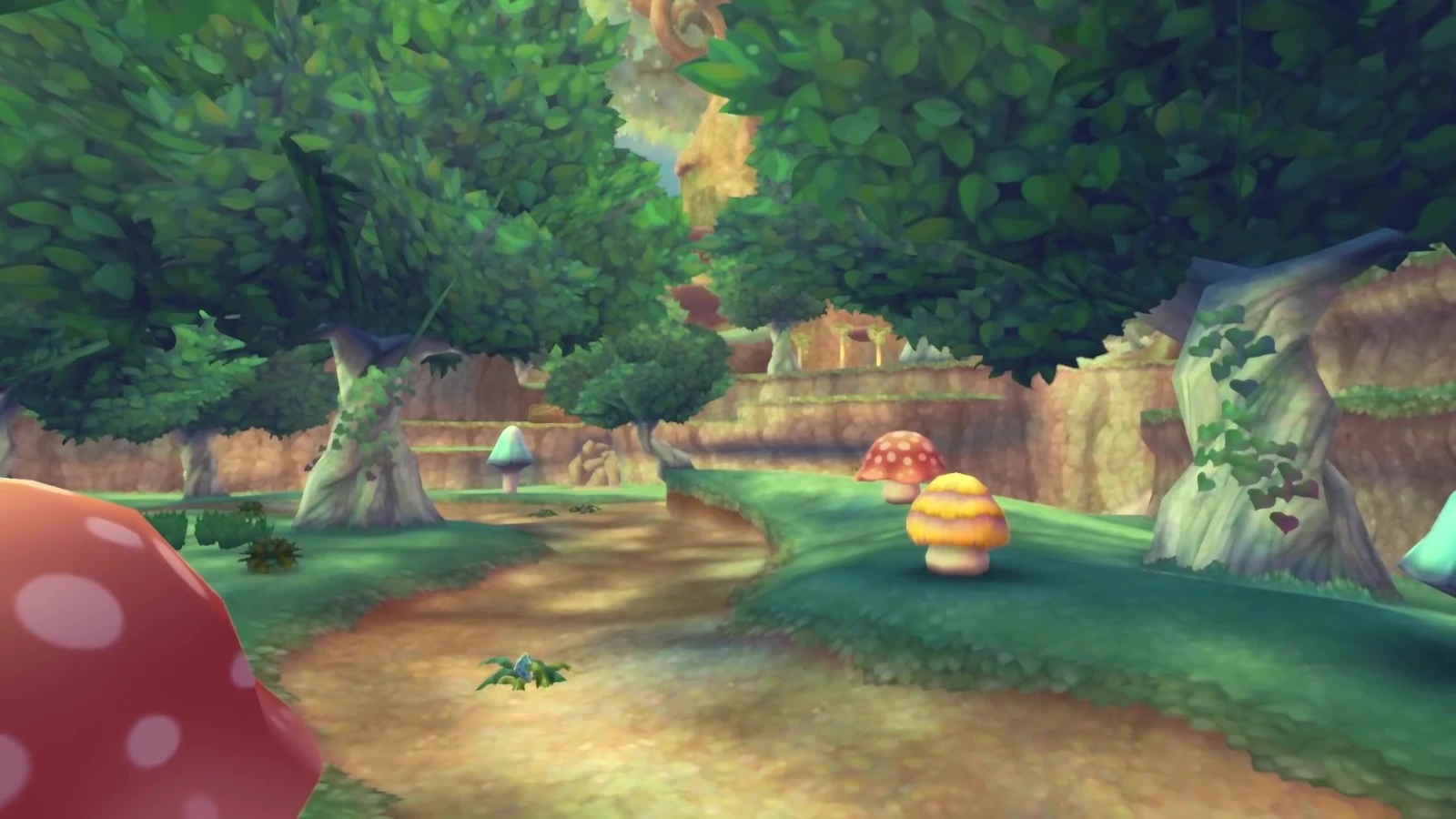
Faron Woods on Switch: the 2011 artwork, seen clearly.
The Wii drew Skyward Sword at 480p. On Switch it runs at 1080p docked and 720p in handheld mode, and the painterly art style comes through cleaner, not different: this is the 2011 game’s artwork at a higher resolution, not a remake. That still meant a lot of redrawing. Tantalus boss Tom Crago has said that raising the resolution meant reworking the great majority of the game’s textures as well.
The bigger change is one you feel. The frame rate goes from 30 to 60 frames per second in both docked and handheld play, which matters in a game built on reading an enemy’s guard and reacting to it. VGC’s reviewer called 3D Zelda at 60 frames per second “stunning”, and reckoned this was the first of the 3D Zeldas to run that fast. Game Informer was struck by how well a ten-year-old game’s look had lasted, and credited the art design as much as the upgrade.
Motion controls, Joy-Con style
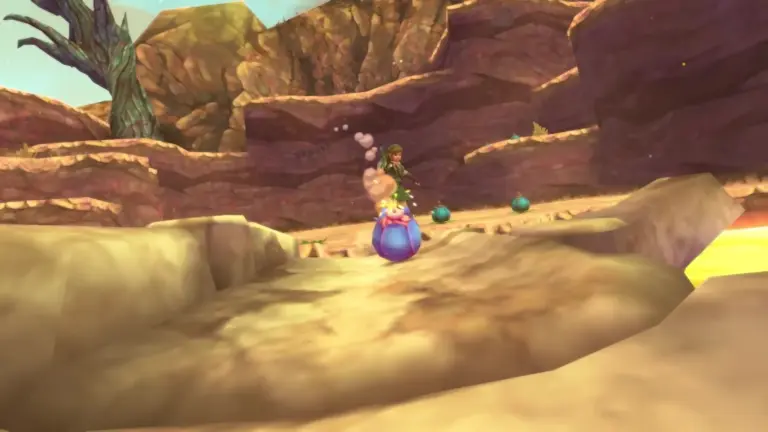
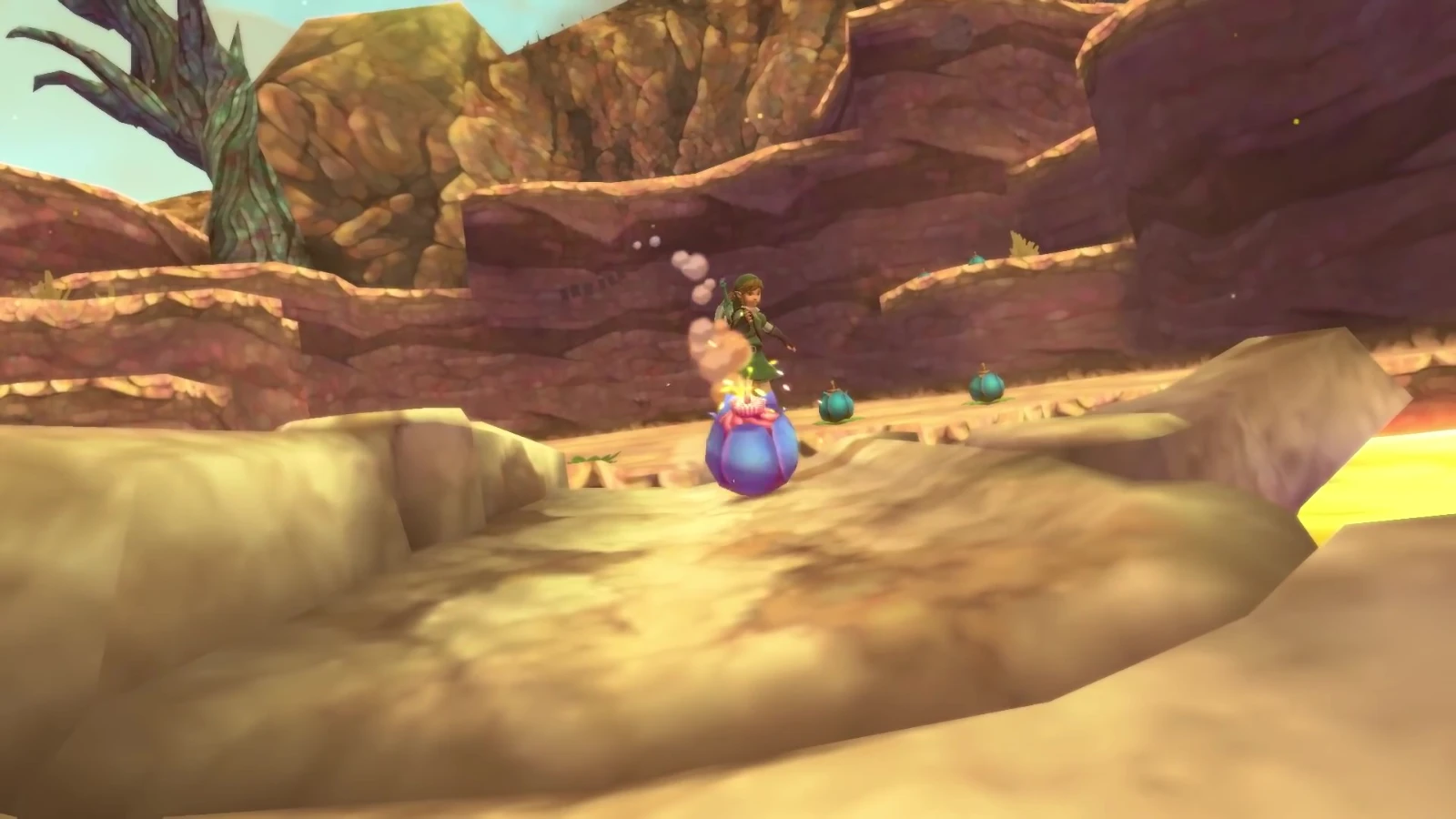
Rolling a bomb, still done with a real arm movement under motion controls.
Played with a Joy-Con in each hand, the game works much as it did in 2011. The right one is Link’s sword arm and the left raises his shield, and the bow, bombs and other gear still respond to real movements. Nintendo promised “smoother and more intuitive controls”, and one improvement is obvious at once: when the aim drifts, you point the right Joy-Con at the screen and press Y to re-centre it, which Nintendo World Report found easier than the Wii Remote’s method.
Opinions on how well it all works differ. Crago believes the Joy-Con give an experience that is “in some senses superior” to the Wii Remote. Game Informer found the motion controls did what was asked about 85 per cent of the time, sometimes slashing when Link should stab. Nintendo World Report thought them fine but a little harder to use than on Wii, with bomb-rolling the worst affected, and Zelda Dungeon’s reviewer found the aiming cursor still wandered to the edge of the screen.
The button-only option
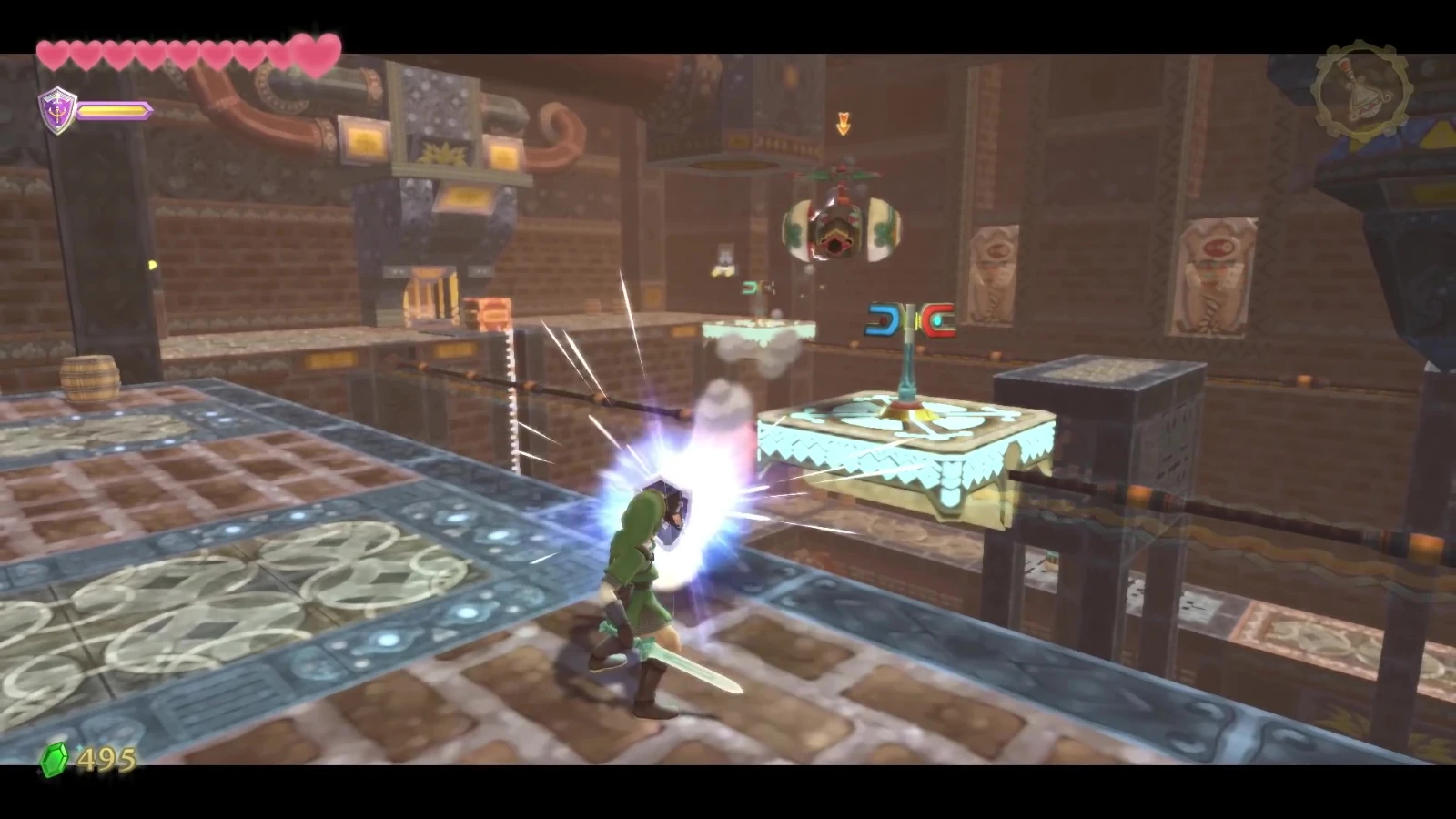
Link shield-bashing a Sentrobe; with button controls the shield goes up on a click of the left stick.
The headline addition is a way to play with no motion at all. The sword moves to the right stick. Move it and the blade follows; flick it and Link slashes along that line; click it in and he stabs. A spin attack is three quick flicks back and forth, and a finishing blow is down, up, down. The shield goes up with a click of the left stick, and you can swap between the two control schemes whenever you like.
This is what makes handheld play possible, along with the Switch Lite and the Pro Controller. Nintendo UK’s page pitches it as the more traditional way to play Zelda. Reviewers mostly liked it: VGC called the button controls “a joy to use” and arguably better than motion, and Nintendo World Report called them great. Nintendo World Report still struggled to pull off the three-flick spin attacks and finishing blows consistently, though, and Game Informer thought the stick more consistent than motion but less precise than the simple button attacks of other Zeldas.
A camera you can finally move
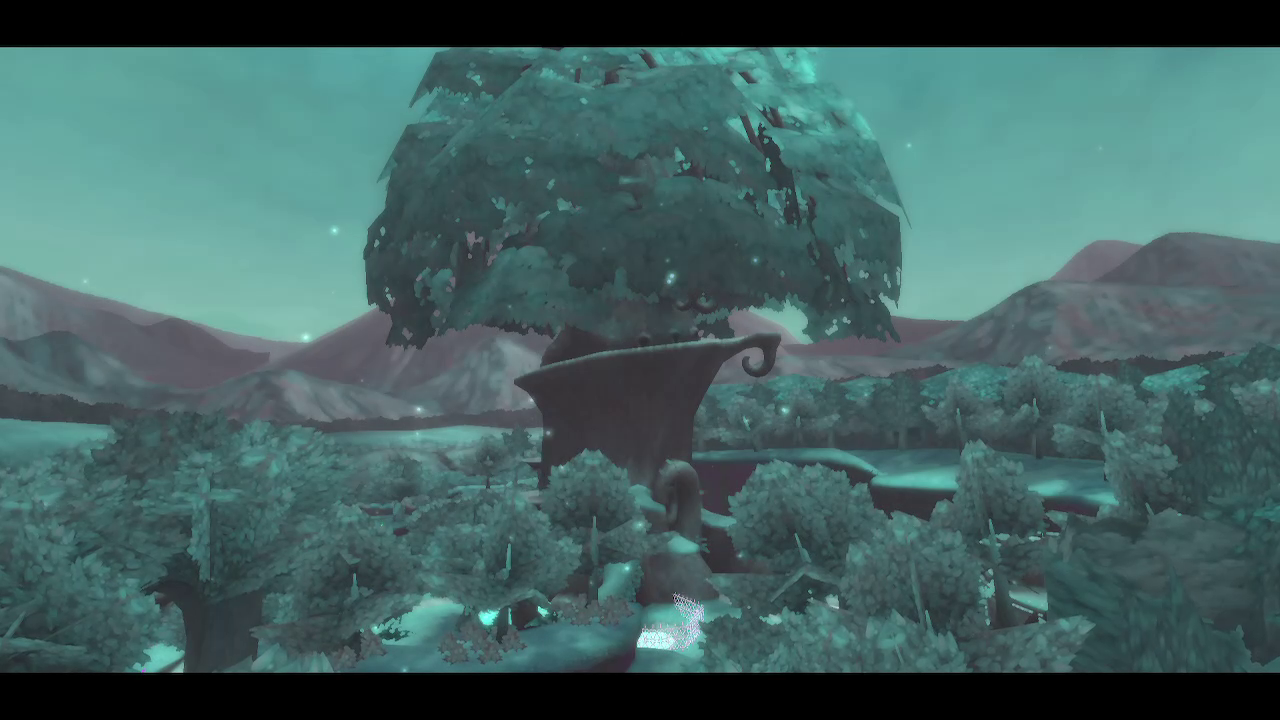
Farore’s Silent Realm in the Switch version.
The original had no free camera. With motion controls on Switch, the right Joy-Con’s stick now turns the view wherever you want it. With button controls that stick is busy being the sword, so you hold L to turn it into the camera, a compromise that GamesRadar+ found cumbersome in a fight and Nintendo World Report listed as one of its two nagging complaints.
Even so, VGC’s review made a big claim for it, estimating that the free camera removes nine-tenths of the original’s frustrating moments, and noted that it makes the Silent Realm trials easier because you can see what is coming.
A quieter Fi and a faster game
On 2 July 2021 Nintendo released a trailer listing what it called quality-of-life changes: “optional help from Fi”, an “enhanced framerate”, “fast-forward dialogue”, “streamlined item information”, “skippable cutscenes”, autosave and skippable tutorial dialogue.
Fi is the one everybody noticed. In 2011 she popped out of the sword again and again with advice nobody had asked for. Now she appears in cutscenes and at important moments, and the rest of her advice sits behind a button press for anyone who wants it. Nintendo World Report’s verdict: “Fi is 95% less annoying”.
The rest adds up. The B button hurries text along and the Minus button skips a cutscene, something the Wii game allowed only in Hero Mode. The opening tutorials are shorter and some lessons can be skipped. Explanations for bugs and treasures appear the first time you pick one up, not again every time you load your save (Gratitude Crystals are the exception). The game autosaves into a slot of its own, and a bird statue lets you save to any of three files. The fan-run Zelda Wiki lists smaller touches too: speakers’ names in the dialogue boxes, characters who show a speech bubble instead of stopping Link in his tracks, and a redesigned file-select screen with a picture of where you last saved.
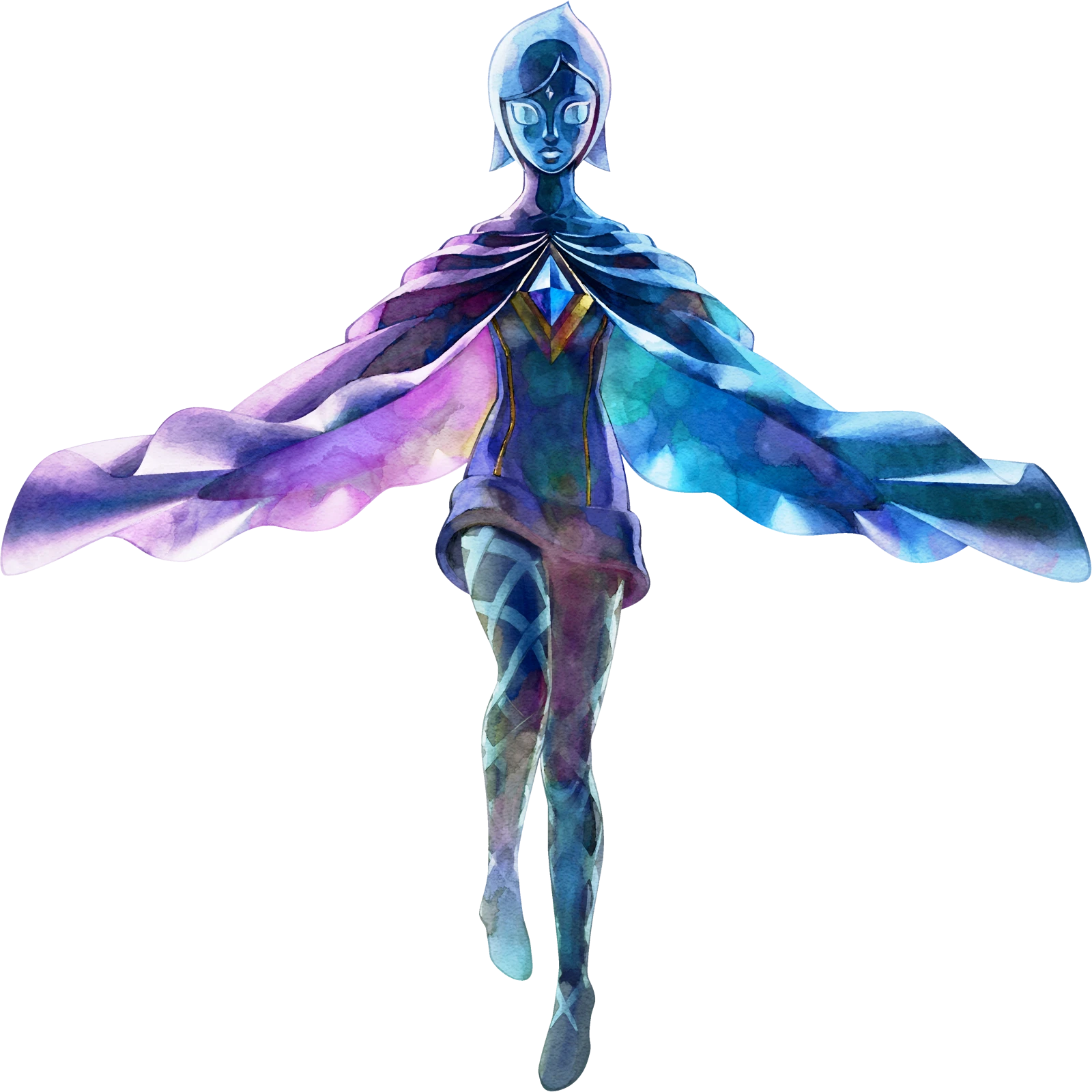
Fi now waits to be called.
What was removed, and what was left alone
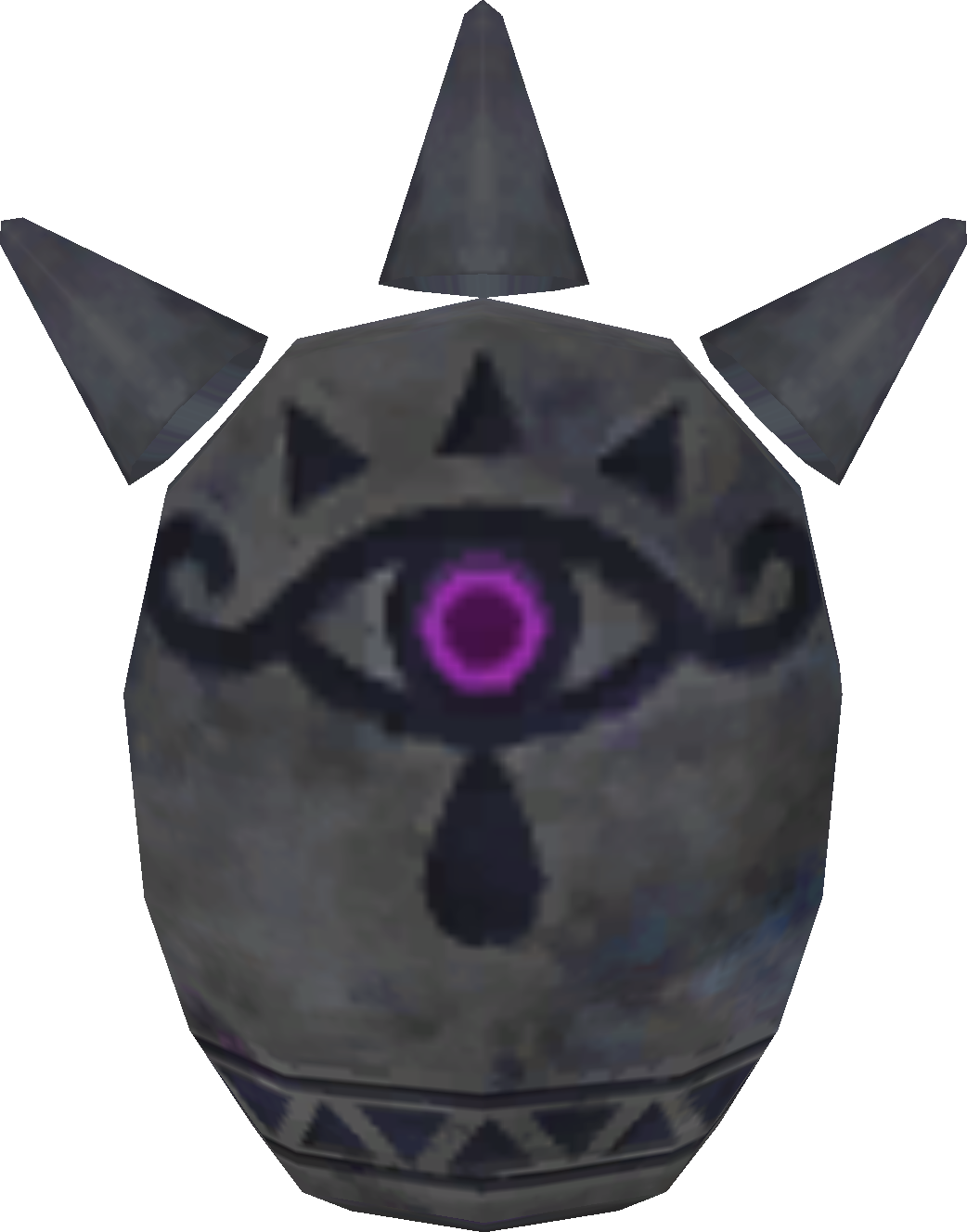
The Wii version’s Sheikah Stone, which is not in the remaster.
One notable feature went. The Sheikah Stone, which sat beside the Sparring Hall in Skyloft on Wii and showed hint visions to players who were stuck, is not in the HD version. Hints now come from Fi, when you ask.
Everything else is as it was, for better and worse. There are no new dungeons, items, side quests or story scenes; Zelda Dungeon’s reviewer went looking for extras and found none. Getting back to the sky still means finding a bird statue unless you own the amiibo. And reviewers pointed out that the old complaints about the game’s structure survive untouched: the repeated fights with the Imprisoned, the fetch quests between dungeons, and a sky with not much in it. No other amiibo does anything here, not even the Link figure from Skyward Sword itself.
For the adventure itself (every character, dungeon and boss) and the story of how the 2011 game was made, see our Skyward Sword page.
Plot / Story
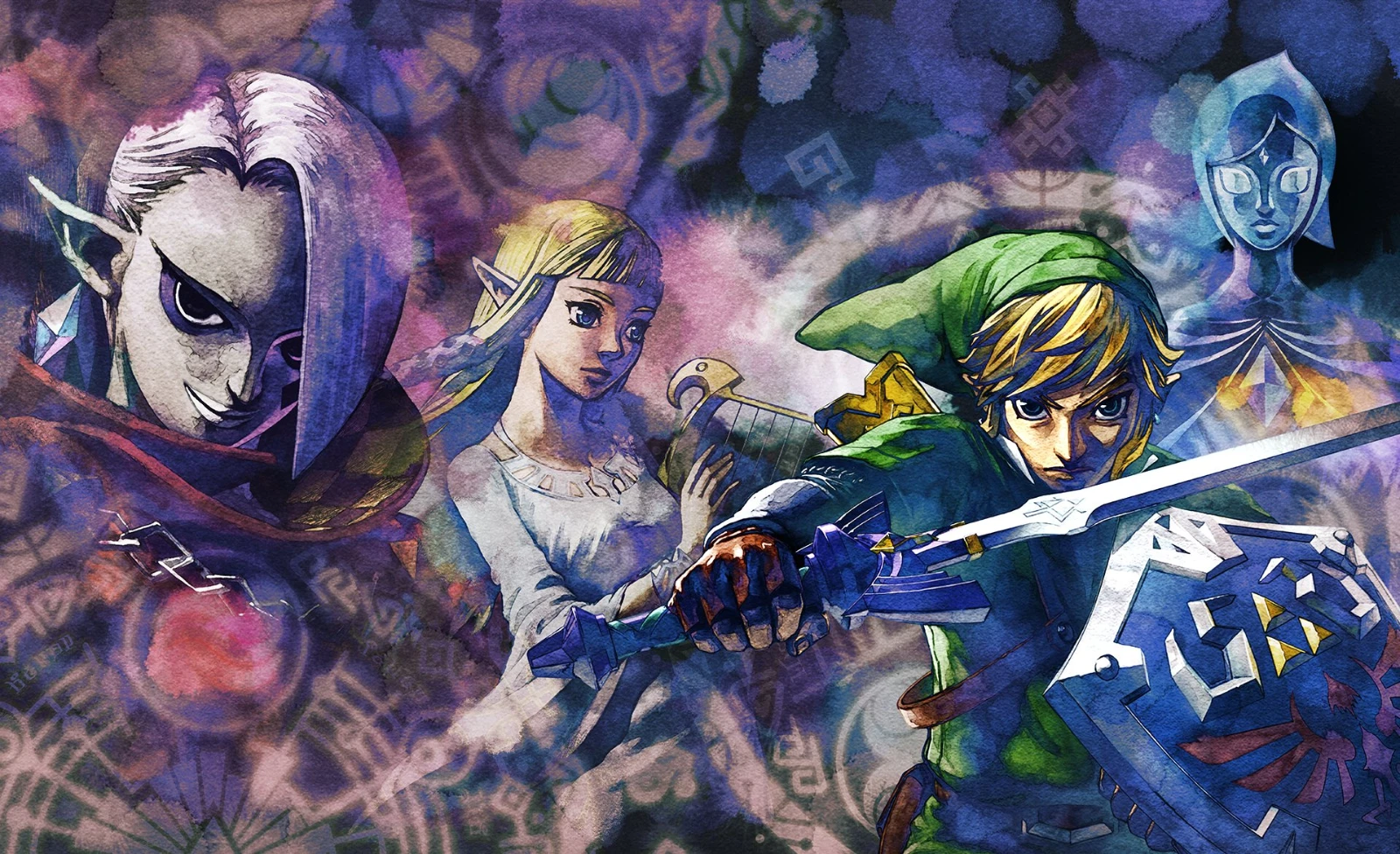
Key art for the Switch version.
Not a line of the plot has changed. Long before there was a Hyrule, the goddess Hylia saved the survivors of a war against the Demon King, Demise, by raising a piece of the land above the clouds. Ages later that island is Skyloft, where Link is a student at the Knight Academy and his childhood friend Zelda is the headmaster’s daughter. On the day of the Wing Ceremony a black tornado snatches her out of the sky, and soon afterwards a spirit called Fi leads Link to the Goddess Sword hidden inside the town’s great statue.
Link dives through the clouds to a surface nobody in Skyloft believes in and chases Zelda through Faron Woods, Eldin Volcano and Lanayru Desert, always a step behind, with the flamboyant Demon Lord Ghirahim hunting her too and the Sheikah warrior Impa guarding her. Tempering the blade in three sacred flames turns it into the Master Sword. Beyond a Gate of Time, Zelda tells him the truth: she is Hylia reborn as a mortal, and she seals herself in a crystal to hold Demise back until Link can finish the job.
He finds the Triforce in Sky Keep and wishes Demise’s monstrous sealed form, the Imprisoned, out of existence, only for Ghirahim to drag Zelda into the past and revive his master there. Link wins the duel, Demise curses the descendants of hero and goddess with his dying breath, Fi goes to sleep for ever inside the Master Sword, and Zelda decides to stay on the surface, in the land that will one day be Hyrule. The only differences on Switch are in the telling: cutscenes can be skipped and text hurried along. The full story, with every character and dungeon, is on our Skyward Sword page.
Joy-Con, amiibo & editions
There was no collector’s edition of Skyward Sword HD: it was sold as a standard cartridge or download at US$59.99. Nintendo made its extras separately, and both went on sale the same day as the game.
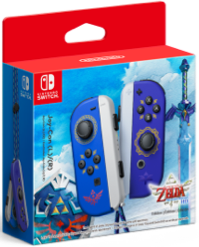
Joy-Con (L)/(R) The Legend of Zelda: Skyward Sword HD EditionNintendo · 16 July 2021 · US$79.99 / £69.99Announced with the game on 17 February 2021 and sold separately from it. The right Joy-Con takes its design from the Master Sword and the left from the Hylian Shield, both in blue with the left a shade lighter, so each matches the hand that swings the sword or raises the shield under motion controls. Pre-orders sold out within minutes, though more stock reached shops on release day.
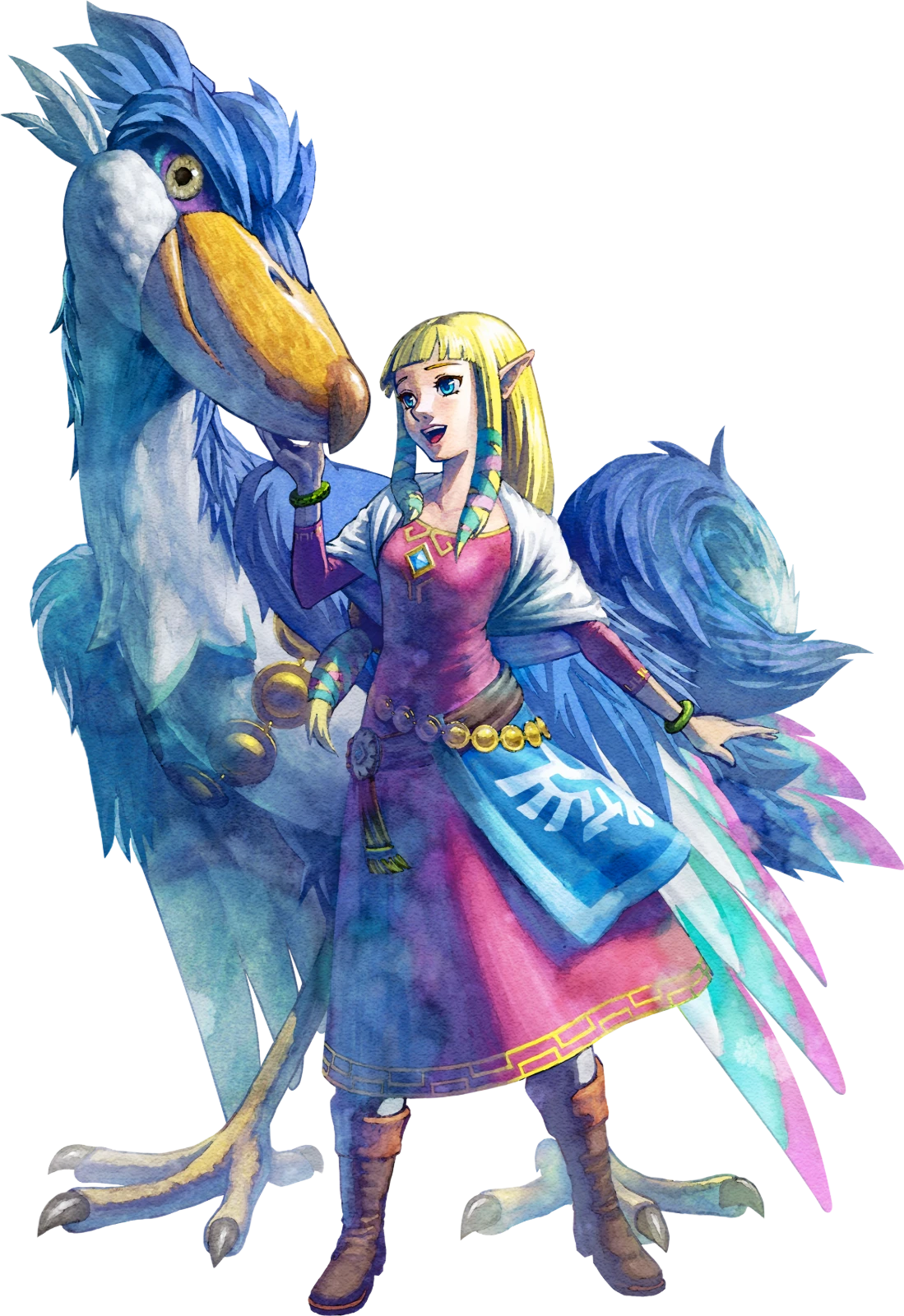
Zelda & Loftwing amiiboNintendo · 16 July 2021 · US$24.99Zelda standing with her blue Loftwing, the pair sharing one base. It was shown off in May 2021 and is the only amiibo the game supports. It carries Link to the sky from anywhere on the surface and back again, and it cost US$24.99 when a standard amiibo was US$15.99. The row it caused is described below.
Link (Skyward Sword) amiiboNot supportedNintendo already sold a Link figure in his Skyward Sword outfit, but it does nothing in Skyward Sword HD, a point Nintendo Life made within days of the Zelda & Loftwing figure being announced.
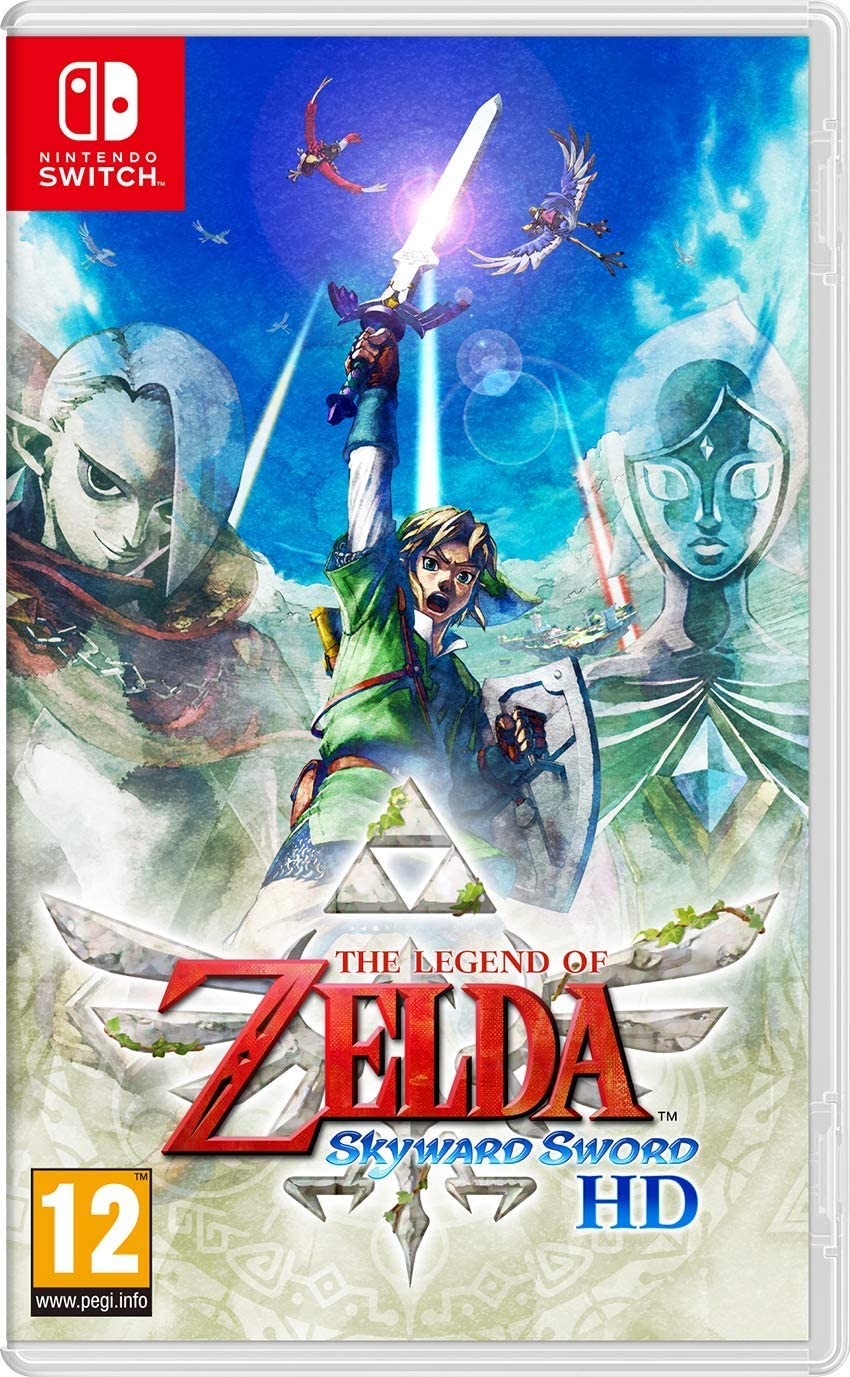
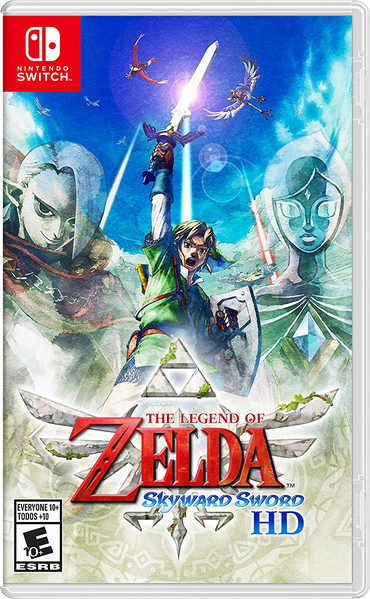
Standard editionNintendo · 16 July 2021 · US$59.99One edition only, as a cartridge or a 7.1 GB download, with pre-orders opening on the eShop straight after the announcement. The price was a talking point: ten dollars more than the Wii game had cost in 2011.
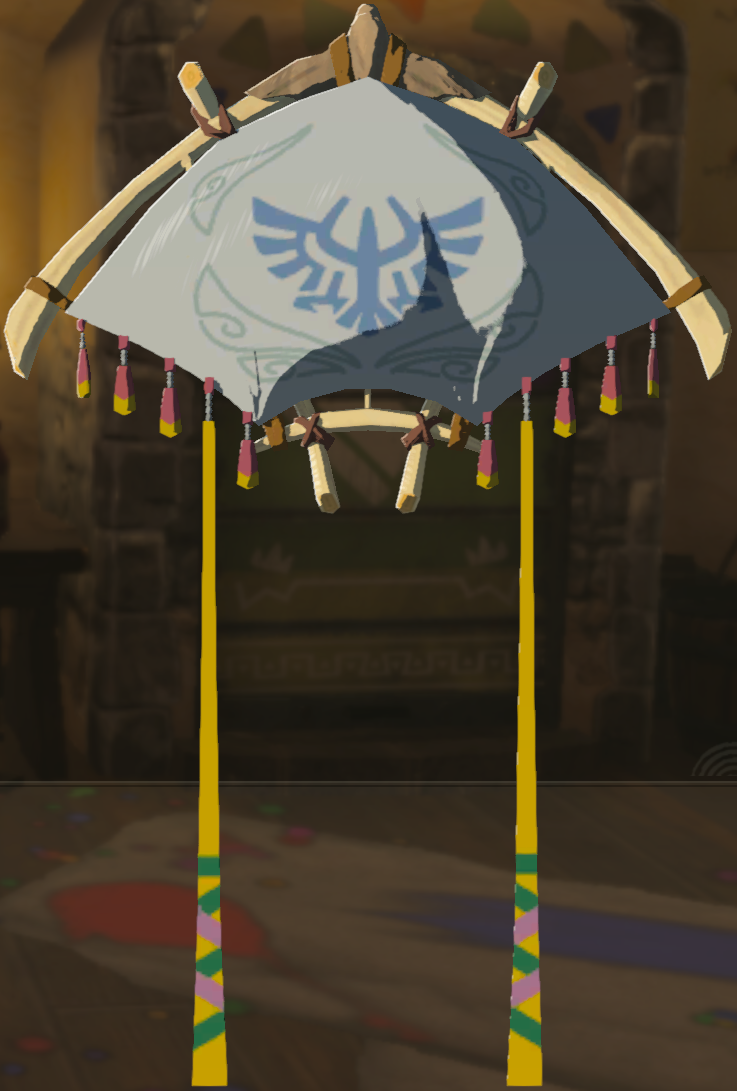
In Tears of the KingdomNintendo · 2023The Zelda & Loftwing amiibo has a second use. Scanned in Tears of the Kingdom, it unlocks the Goddess Fabric for Link’s paraglider.
How it was made
Skyward Sword HD was the remaster its own producer once doubted could be done. It took an Australian studio, a second control scheme and a process that the studio’s boss says lasted a year and a half.
The people who made it
Nintendo never announced who was building the Switch version; the game’s credits settled it. These are the key names.
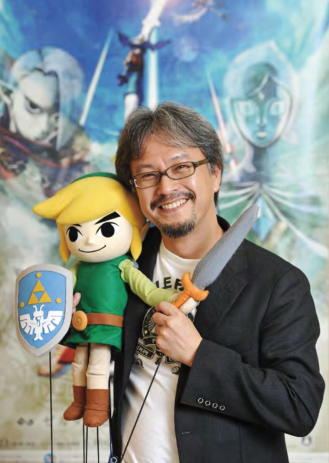
Eiji AonumaZelda series producerProduced the 2011 original, teased a Switch version on stage in 2018 and presented the remaster in the Nintendo Direct of 17 February 2021. Tantalus pictured him testing every version of the new controls.
Tom CragoChief executive, Tantalus MediaLed the studio through both of its Zelda remasters and described the making of this one on the Fragments of Silicon podcast in May 2022. He stepped down at the end of 2024.
Tantalus MediaCo-developerFounded in Melbourne in 1994. Made Twilight Princess HD for Wii U (2016) and, after this, Luigi’s Mansion 2 HD for Switch (2024).
Nintendo EPDDeveloper and supervisorNintendo’s in-house development division, credited alongside Tantalus. Its team in Kyoto reviewed the control prototypes Tantalus sent over.
Hidemaro FujibayashiDirector of the originalDirected the Wii game whose design the remaster leaves intact, and went on to direct Breath of the Wild.
“Close to impossible”
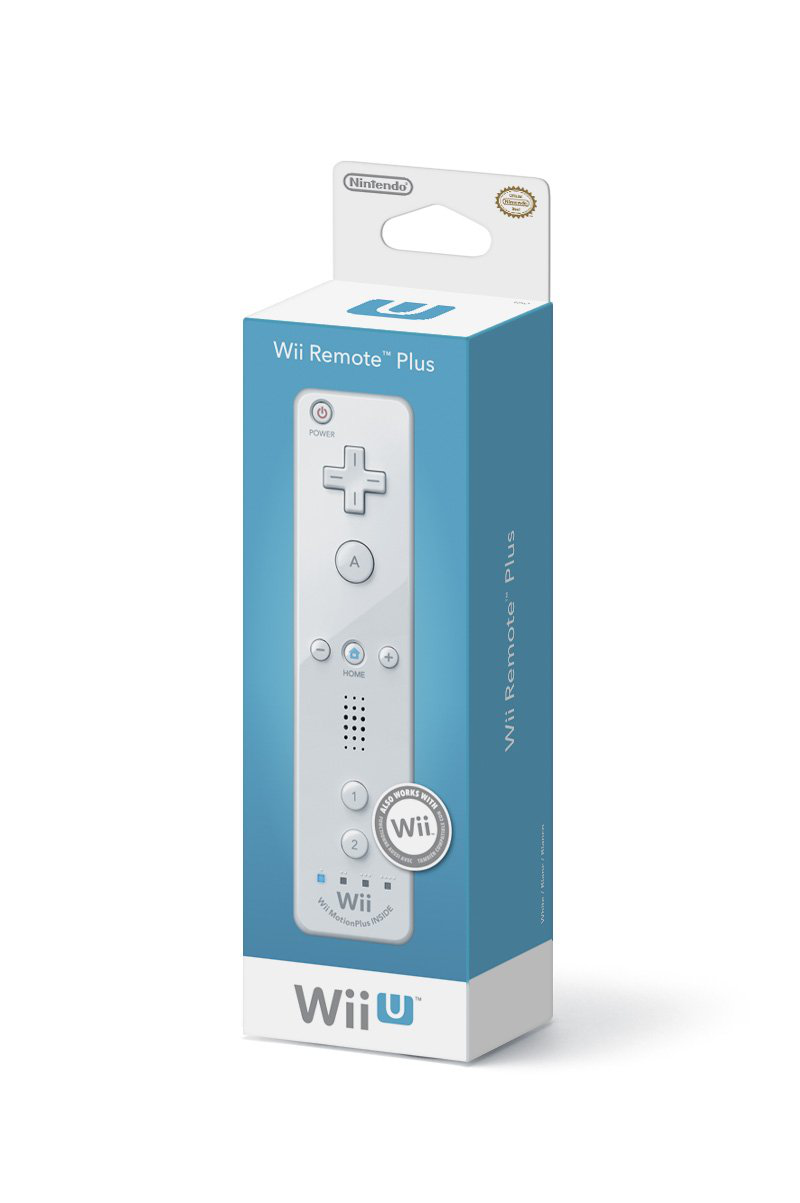
A Wii Remote Plus, the controller the 2011 game was designed around.
For years a Switch version of Skyward Sword was something Eiji Aonuma joked about more than promised. At E3 in June 2016 he said an HD version would be possible, and Nintendo had in fact already seen the game in high definition: according to Wikipedia’s account, it experimented with Skyward Sword on Wii U development kits while settling on a look for what became Breath of the Wild. Then, at a Zelda concert in Osaka in November 2018, Aonuma walked on stage and asked the audience whether they were thinking about Skyward Sword on Switch. They applauded. Within days Nintendo told Eurogamer it had no plans for one.
The sticking point was the controls. The whole game was designed around a sword that follows your arm, and when Game Informer asked Aonuma in 2019 about a version played with buttons, he said it might be “close to impossible”. There was history here. During the original’s development he had proposed giving up on Wii MotionPlus altogether, and the team had started on a version for the ordinary Wii Remote and Nunchuk before other producers talked him round.
The secret nearly got out early. On 16 August 2020 fans spotted a pre-order page for Skyward Sword on Switch at Amazon UK, carrying a placeholder date of 1 January 2030. It was taken down soon afterwards.
Tantalus returns to Hyrule
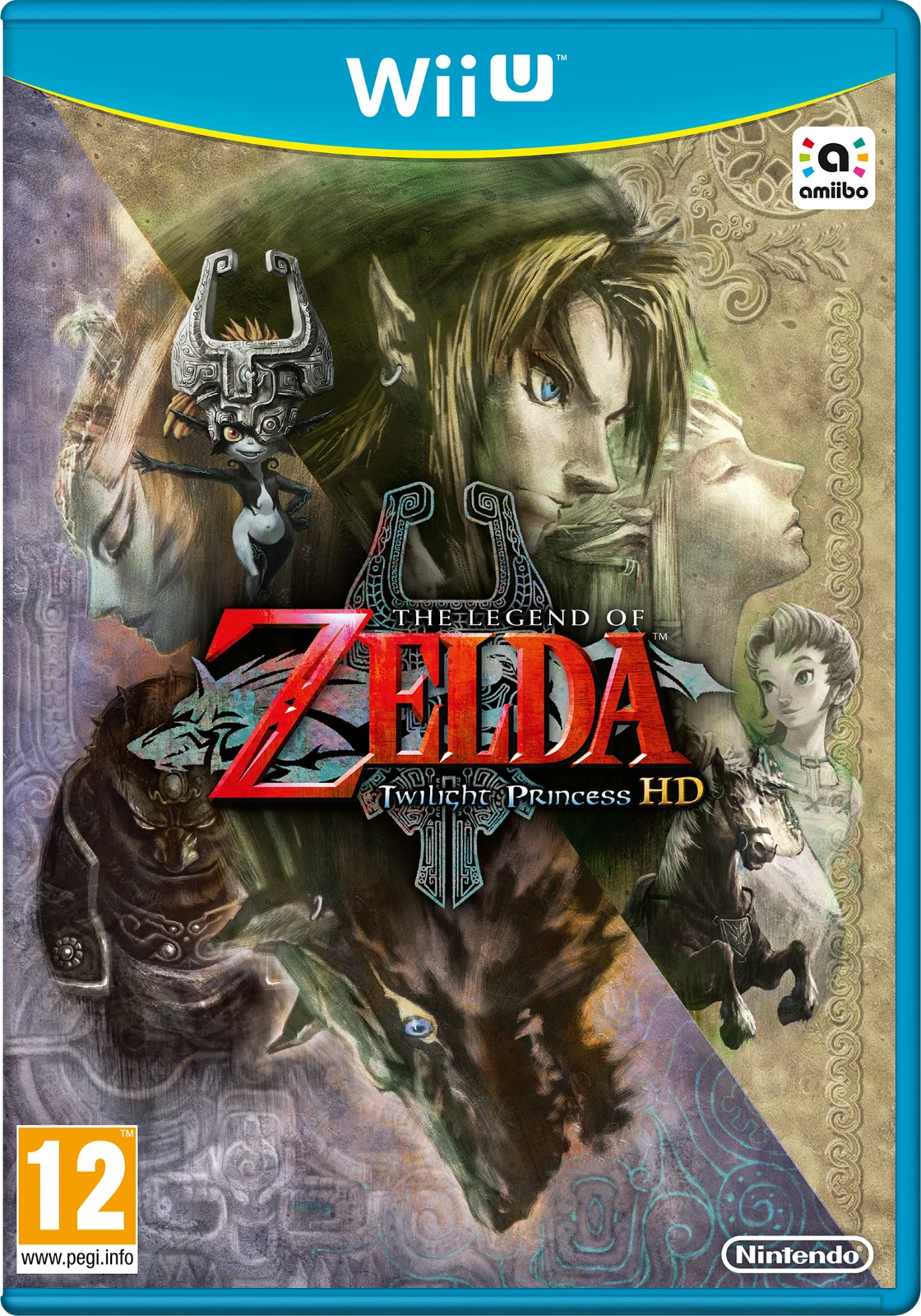
Twilight Princess HD (Wii U, 2016), Tantalus’s first Zelda remaster.
The job went to Tantalus Media, a studio founded in Melbourne in 1994 that had already remastered one Zelda: Twilight Princess HD, released for Wii U in 2016. Its link with Nintendo went back to the Game Boy Advance, when Nintendo liked its version of Top Gear Rally enough to publish the game itself, and its Wii U ports of Mass Effect 3 and Deus Ex: Human Revolution caught Nintendo’s eye when it went looking for outside help with Zelda. Even so, Crago says it took several months of trips to Kyoto and test work before Tantalus was trusted with Twilight Princess.
That project went well. Aonuma said of it that he felt the team had “strong developing skills” and that the result went “beyond my expectations”, and Crago remembered Nintendo as “very, very involved”, with Aonuma signing off on everything. Nintendo did not say who was making Skyward Sword HD, though. Tantalus’s involvement was assumed, and confirmed only when the credits rolled in July 2021.
Between the announcement and the launch, Tantalus itself changed hands: in March 2021 Keywords Studios bought 85 per cent of the studio, in a deal worth up to US$46.8 million.
A year and a half, and one stick
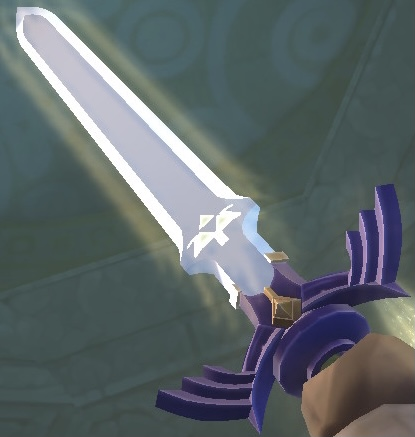
The Master Sword, in-game model from the Switch version.
Crago has said the Wii game’s motion controls more or less were the game, so making it work on a stick was “probably the biggest challenge for us”. It had to be done, because Switch Lite owners needed a way to play. Putting the sword on the right stick kept the directional feel of the original. Getting it to feel right was less a matter of clever code, he explained, than of stepping back again and again to ask what the swordplay should feel like, then building options and sending them to Nintendo in Kyoto for review.
“It took a year and a half,” he said of the process, adding that the team worked while imagining “Aonuma-san with the Joy-Con in his hands”, judging whether each version felt right. The stakes were plain. Had they not cracked it, Crago said, “Nintendo just wouldn’t have published it”. Tantalus expected criticism of any stick-based sword, but saw a chance to open the game up to people who had found waving a Wii Remote about tiring.
Sixty frames, new textures, old code
Most of the game’s textures were redone at higher resolution.
Crago described the technical side as hard in its own right. Lifting the frame rate and the resolution were “significant technical challenges”, most of the textures had to be redone, and bringing a very old game to a new machine threw up problems almost line by line. According to the dataminer OatmealDome, quoted by VGC, the Wii game was converted to run natively on Switch, with some elements emulated.
Traces of the old game are still in the files, as the Cutting Room Floor has shown: see Glitches below.
The Direct, and the road to launch
Key artwork for the Switch version.
By the time anyone outside saw it, the game was finished or close to it, and Crago has said that keeping it from leaking was a worry of its own. Aonuma revealed it in the Nintendo Direct of 17 February 2021, which Zelda Dungeon noted was Nintendo’s first in more than 500 days. He had nothing new to show of the Breath of the Wild sequel, said more would follow later in the year, and offered Skyward Sword HD in the meantime, explaining that two Joy-Con would stand in for the Wii Remote and Nunchuk and suggesting that people who knew Breath of the Wild should try Link’s earliest adventure. Pre-orders opened straight after the broadcast, and the themed Joy-Con were announced in the same breath.
The details followed in stages. The Zelda & Loftwing amiibo was shown in May, to immediate argument. On 2 July Nintendo published its quality-of-life trailer. The game, the Joy-Con and the amiibo all went on sale on 16 July 2021, and version 1.0.1, the only update so far, followed on 10 August in North America and 11 August in Europe and Japan.
The amiibo argument
Official art of Zelda and her Loftwing, the pair the amiibo depicts.
Nintendo showed the Zelda & Loftwing amiibo in a trailer in May 2021. Tap it on the surface and Link is carried up to the sky from wherever he stands, even inside a dungeon; tap it again in the sky and he drops back to the same spot. Without it the only way up is a bird statue, as on Wii. The figure cost US$24.99, against US$15.99 for an ordinary amiibo, and it was the only one the game recognised.
To many fans that looked like a convenience carved out of a full-price remaster and sold back in plastic, with stock likely to be scarce and scalpers likely to pounce. One complaint quoted by NME pointed out that the game already cost ten dollars more than the Wii original had. When Vice’s Patrick Klepek asked Nintendo whether the feature could be had any other way, its PR simply pointed him to the amiibo’s web page.
Others shrugged. VGC’s Chris Scullion argued that the original had limited trips to the sky on purpose, which made the figure closer to a cheat code than a missing feature, and compared it to the Bowser amiibo in Bowser’s Fury. He later reviewed the game without the amiibo and found bird statues plentiful enough that he never missed it.
Secrets & extras
Skyward Sword HD adds no quests, collectables or unlockables of its own, so everything on the original’s secrets list still applies, from the Lightning Round to the Gratitude Crystals. These are the extras that are new, or that work differently, on Switch.
Hero Mode in a slot of its own
Finish the game and Hero Mode, the harder second run, unlocks as it did on Wii. On Switch it can be saved to a slot of its own, so it sits alongside your other files.
The amiibo as a pocket bird statue
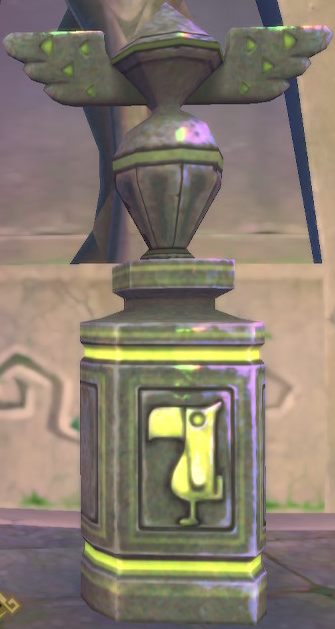
A bird statue, the only way up to the sky without the amiibo.
Tapping the Zelda & Loftwing amiibo anywhere on the surface or in a dungeon sets a checkpoint and whisks Link up to the sky. Tap it again in the sky or on a floating island and he returns to the checkpoint. That makes a quick trip to Skyloft’s Bazaar possible in the middle of a dungeon without losing your place.
Controls and hints on demand
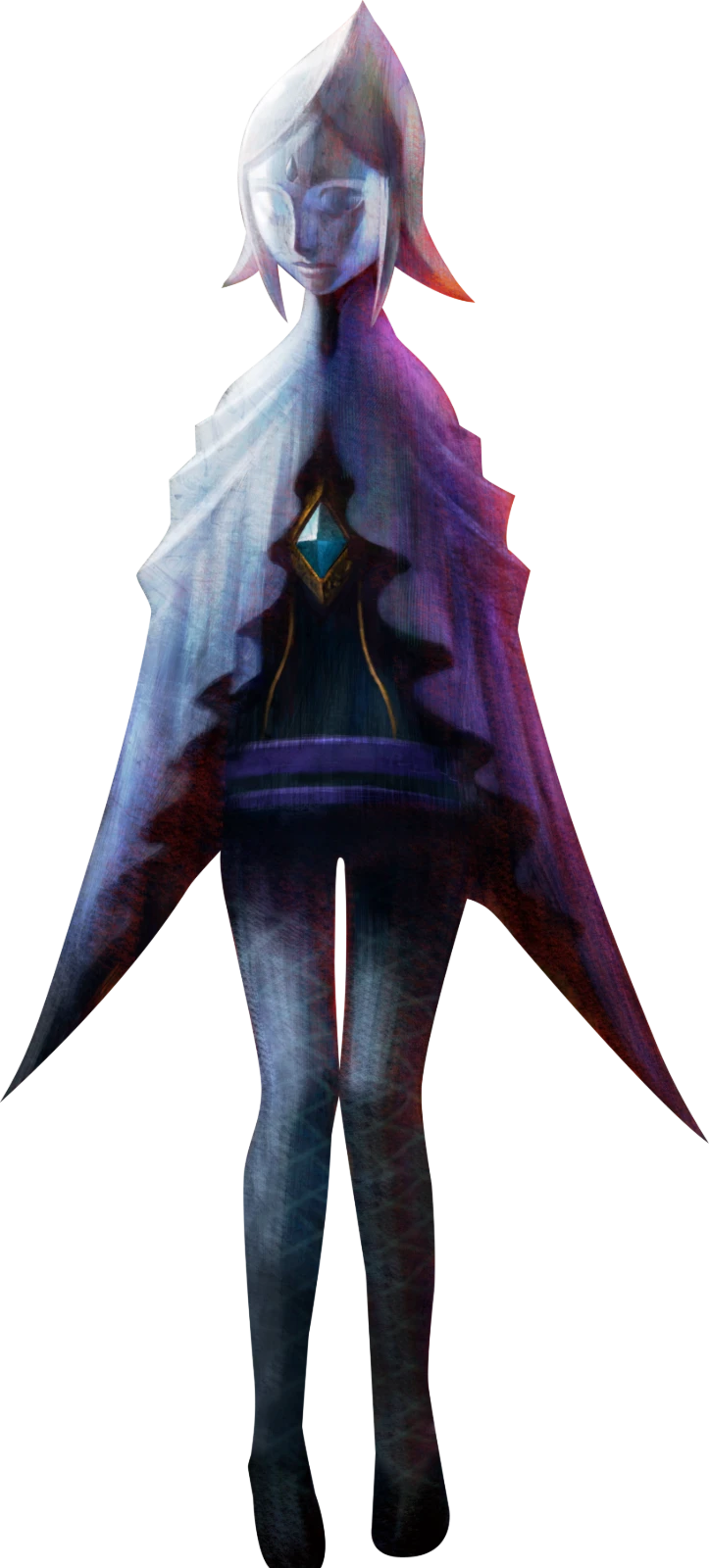
Official art of Fi, who gives hints when you ask.
You can change between motion and button controls at any time. With motion controls, point the right Joy-Con at the screen and press Y to re-centre your aim; with button controls, hold L to use the right stick as a camera. GamesRadar+ notes that aiming the bow and other projectiles can still use the gyroscope, and that this can be turned off. Fi no longer volunteers most of her advice, but call her up and she will still tell you where to go next or how to tackle the area you are in.
Three files and a safety net
The autosave has its own slot above the three ordinary files, and a bird statue lets you save to any of the three. Keeping a second manual save is a sensible precaution: one launch-window bug could trap players in a dungeon (see below).
Checked against Nintendo UK’s product page, Zelda Dungeon, the Zelda Wiki on Fandom, Wikipedia and reviews by VGC, Game Informer and GamesRadar+, November 2026.
Glitches, exploits and oddities
The remaster shipped with a couple of bugs of its own, and Nintendo patched it once without saying what had been fixed.
The Lanayru Mining Facility soft-lock
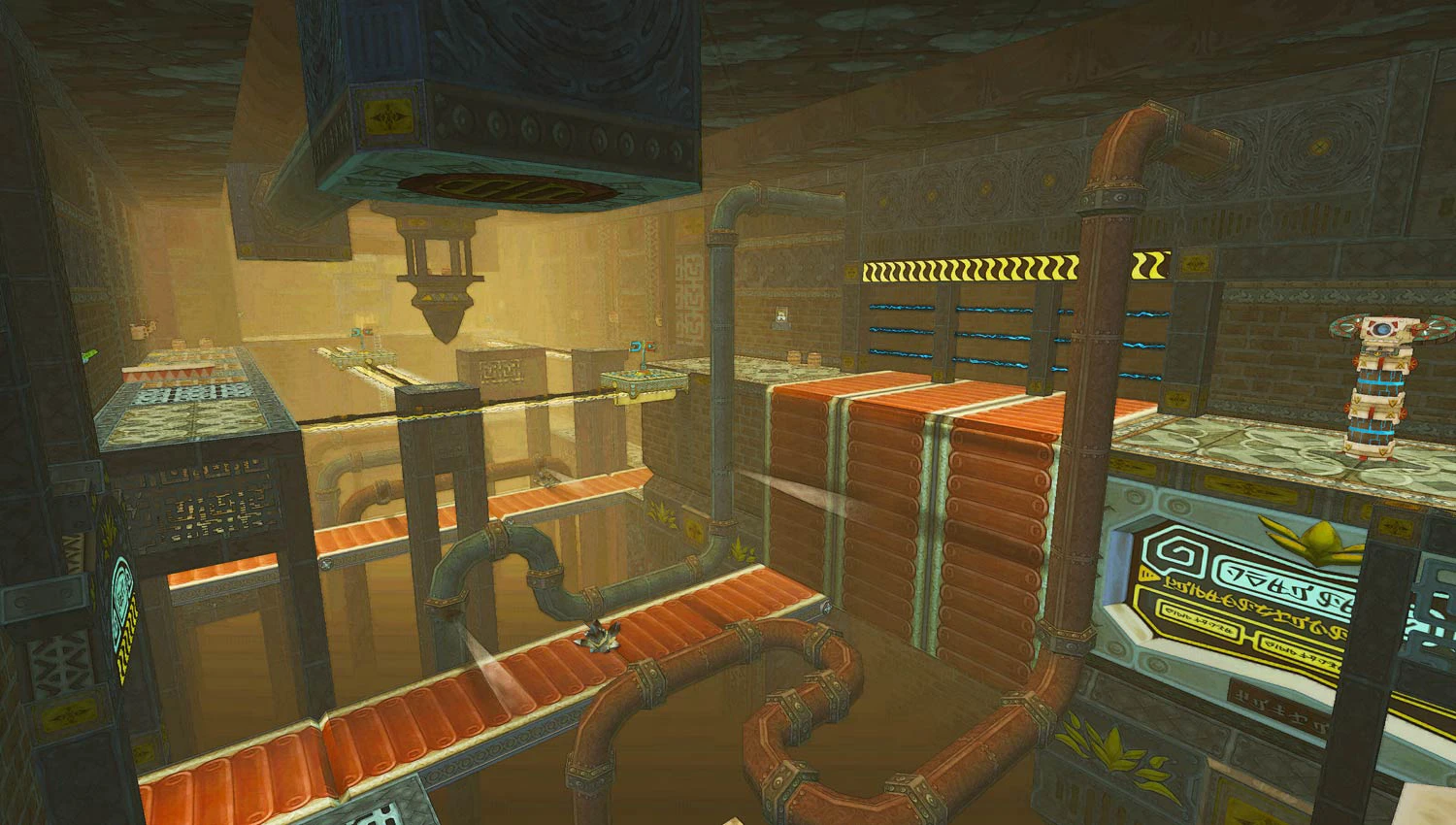
The Lanayru Mining Facility (Wii version shown), scene of a soft-lock in the Switch launch version.
In early August 2021 a player reported on Reddit that in one room of the Lanayru Mining Facility, the block Link pushes to reach a higher ledge would not fit through its gap, leaving the dungeon impossible to finish. Reloading a save fixed it for some players and not for others. Zelda Universe’s advice at the time was to save often in the dungeon and, if stuck, to close the game completely and walk back into the room.
The missing Dutch ending
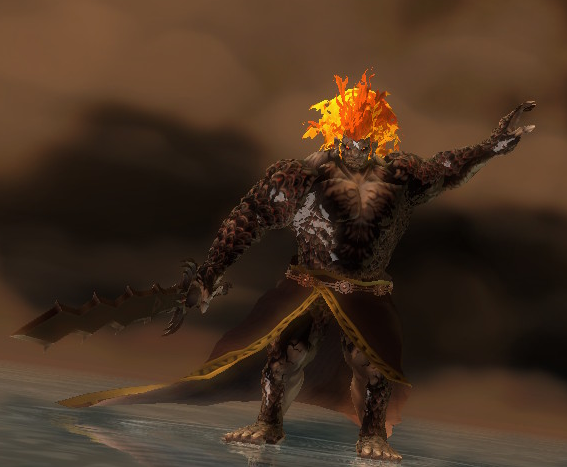
Demise, the final boss, in the Switch version.
Players with the game set to Dutch found that after the final boss, the ending and credits were replaced by a frozen white screen. The workaround was to switch the language to English before the last battle.
Version 1.0.1
The version number is shown on the title screen.
Nintendo’s only update arrived on 10 August 2021 in North America and 11 August in Europe and Japan. The patch notes said only that it “fixed several issues”, so nobody outside Nintendo can say for certain whether either bug above was among them. It was still the latest version when we checked Nintendo’s support page in November 2026.
Leftovers in the files
The Cutting Room Floor has turned up several things the Switch game does not use: textures left over from the GameCube development kit, a Wii Home Button icon, build details from a Wii revision dated 2 December 2011, and a text file of developer tests: font and text-size checks, plus dozens of empty entries with names such as TEST_FAY and TEST_KANBAN.
Videos & media
Nintendo UK’s launch trailer, and its short run-through of the quality-of-life changes.
Nintendo UK’s official launch trailer for Skyward Sword HD (2021), the video at the top of Nintendo UK’s page for the game.
Nintendo UK’s “Quality of Life” trailer of 2 July 2021, showing Fi’s optional help, faster text, skippable cutscenes and the rest.
Trivia & facts
In 2019 Eiji Aonuma told Game Informer that a Skyward Sword without motion controls might be “close to impossible”. Two years later he was presenting one.
Eiji Aonuma, who teased the remaster in 2018.Aonuma teased the remaster more than two years early, asking the audience at a Zelda concert in Osaka in November 2018 whether they were thinking about Skyward Sword on Switch. Nintendo then said it had no plans for one.
The Amazon UK listing that leaked the game in August 2020 gave its release date as 1 January 2030.
Rolling a bomb, still done with a real arm movement under motion controls.Tantalus tuned the button controls while imagining, in Tom Crago’s words, “Aonuma-san with the Joy-Con in his hands”.
With button controls a spin attack is three flicks of the stick (right, left, right in VGC’s description) and a finishing blow is down, up, down.
Master Sword on the right, Hylian Shield on the left.The Skyward Sword HD Joy-Con are handed like Link’s gear: the Master Sword design is on the right, the hand that swings, and the Hylian Shield is on the left.
Only one amiibo works with the game. Even the Link figure dressed for Skyward Sword does nothing.
The Zelda & Loftwing amiibo cost US$24.99 at a time when a standard amiibo was US$15.99. In Tears of the Kingdom it unlocks the Goddess Fabric for the paraglider.
Nintendo World Report’s review put a number on the improvement: “Fi is 95% less annoying”.
Gone from the Switch version: the Sheikah Stone.The Sheikah Stone that offered hint visions beside Skyloft’s Sparring Hall on Wii was cut from the remaster.
Tantalus’s first link with Nintendo was a Game Boy Advance version of Top Gear Rally, which Nintendo liked enough to publish.
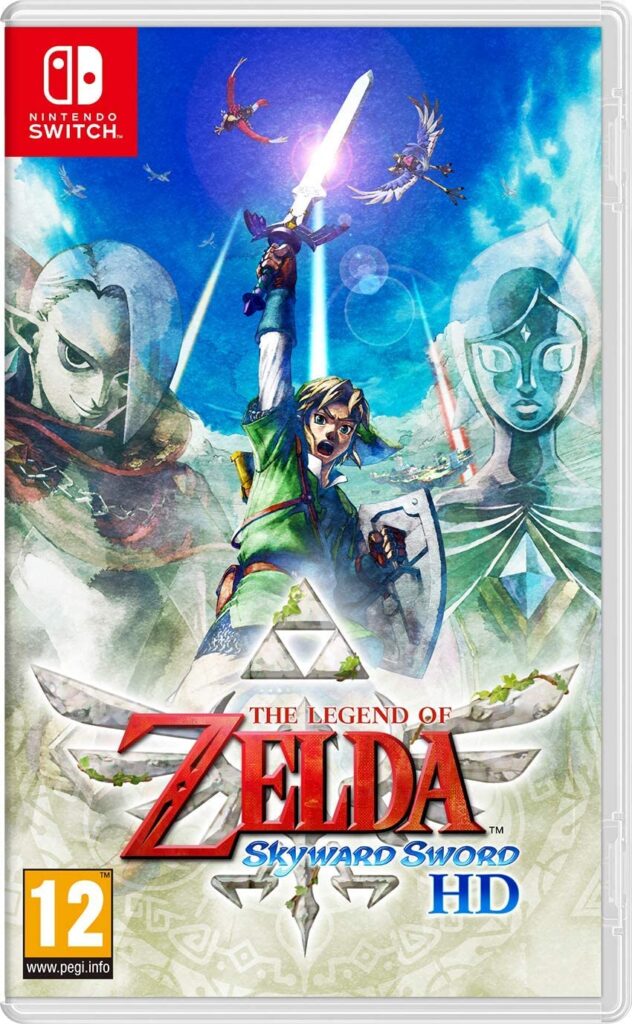
The European release, a UK chart-topper in its first week.According to the UK chart report quoted by TheGamer, Skyward Sword HD was only the fourth Zelda to enter the UK boxed chart at number one, after Ocarina of Time, The Wind Waker and the 2019 Link’s Awakening.
Nintendo Life worked out that the Switch version took 77 days to match the Wii game’s estimated lifetime sales.
A Wii Home Button icon and textures from the GameCube development kit are still sitting in the Switch game’s files, along with a developer test entry called TEST_FAY.
Media & artwork
Box art, official artwork, the Joy-Con and amiibo, and screenshots from Skyward Sword HD. Select any image to view it larger.
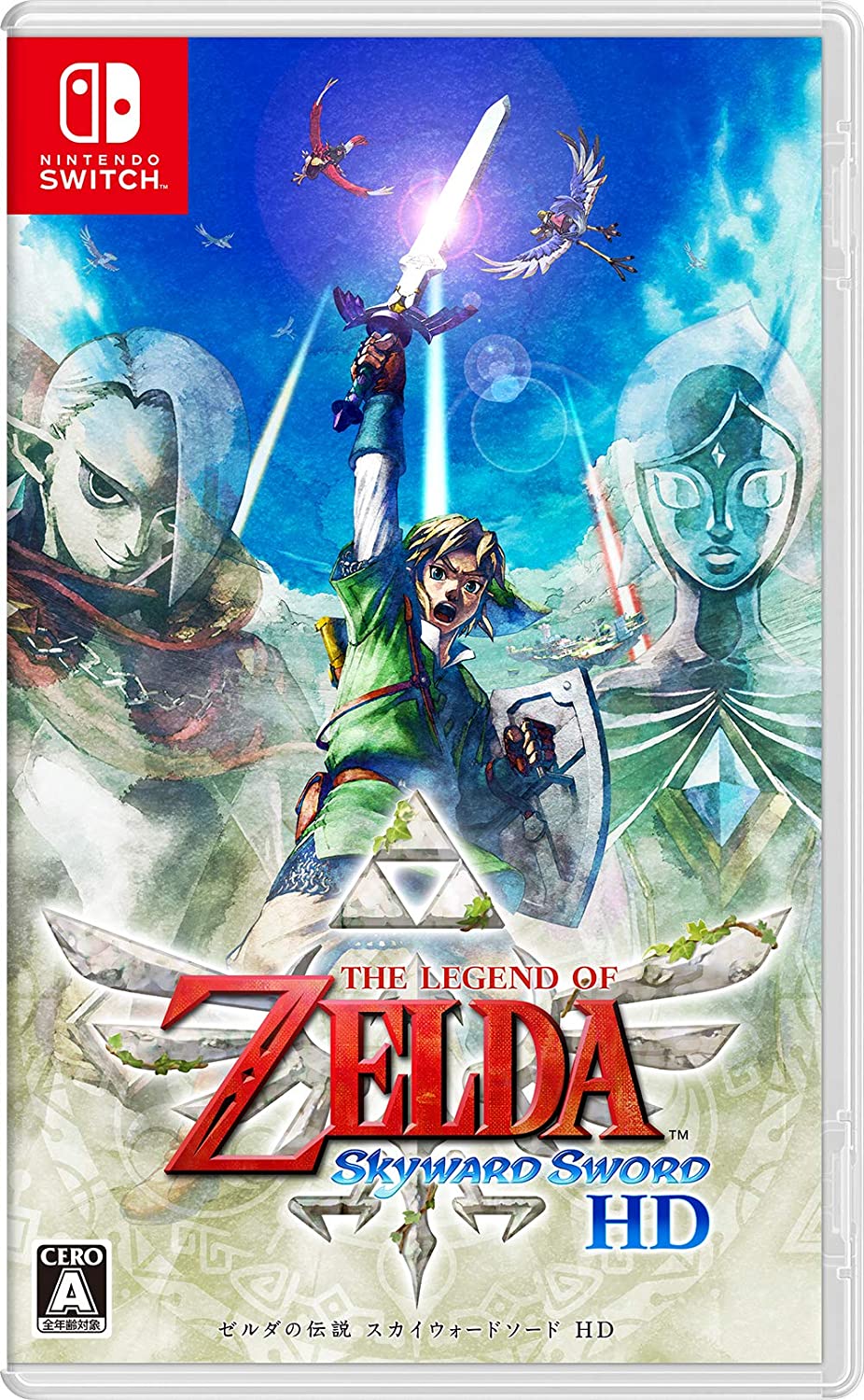
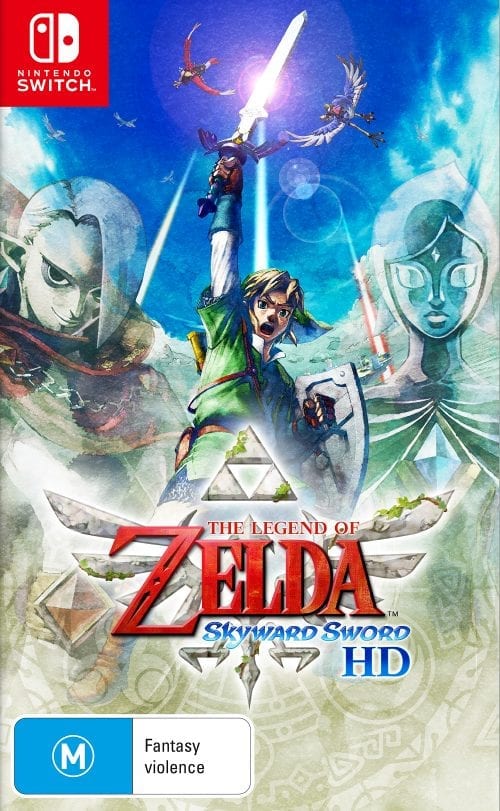
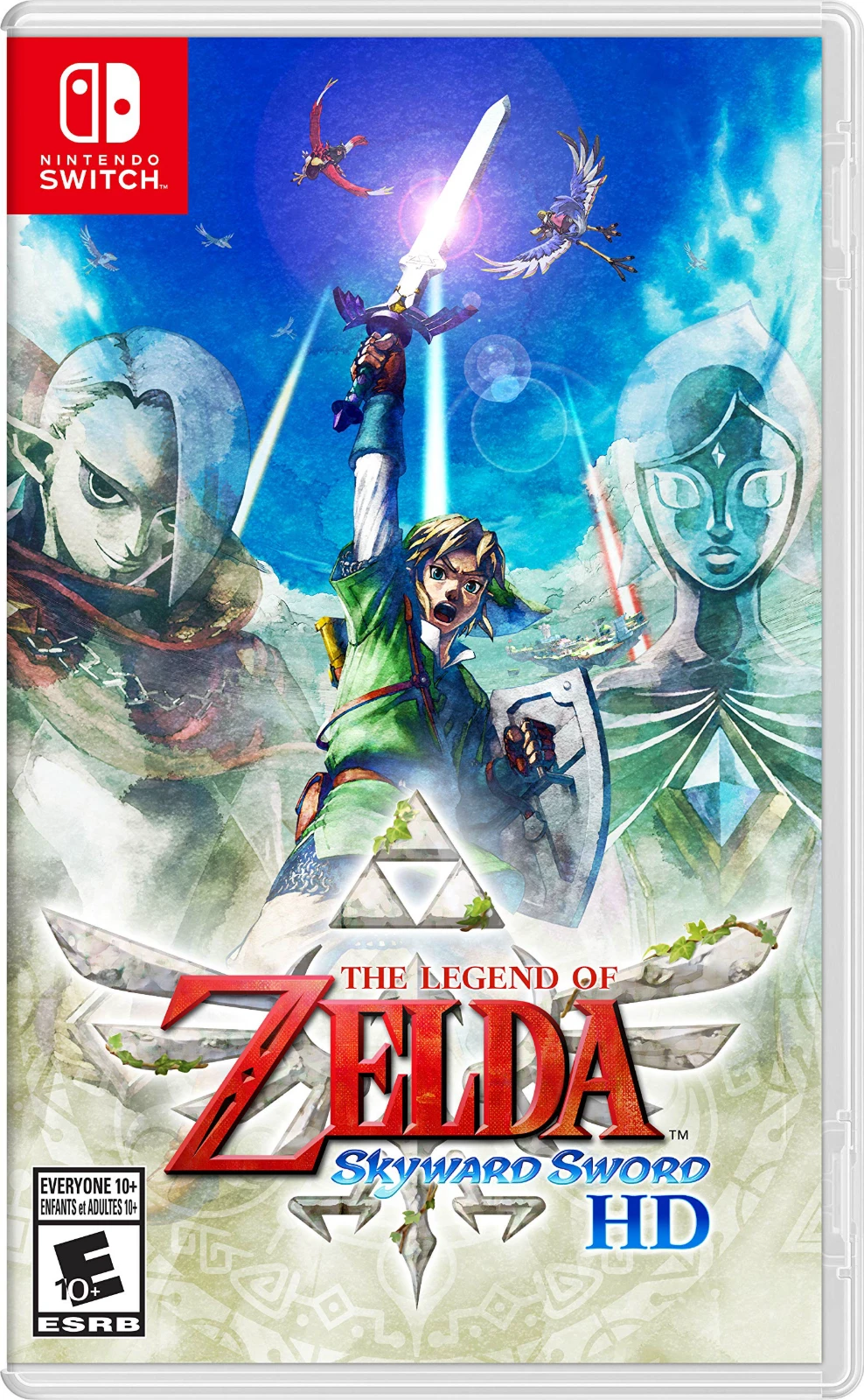
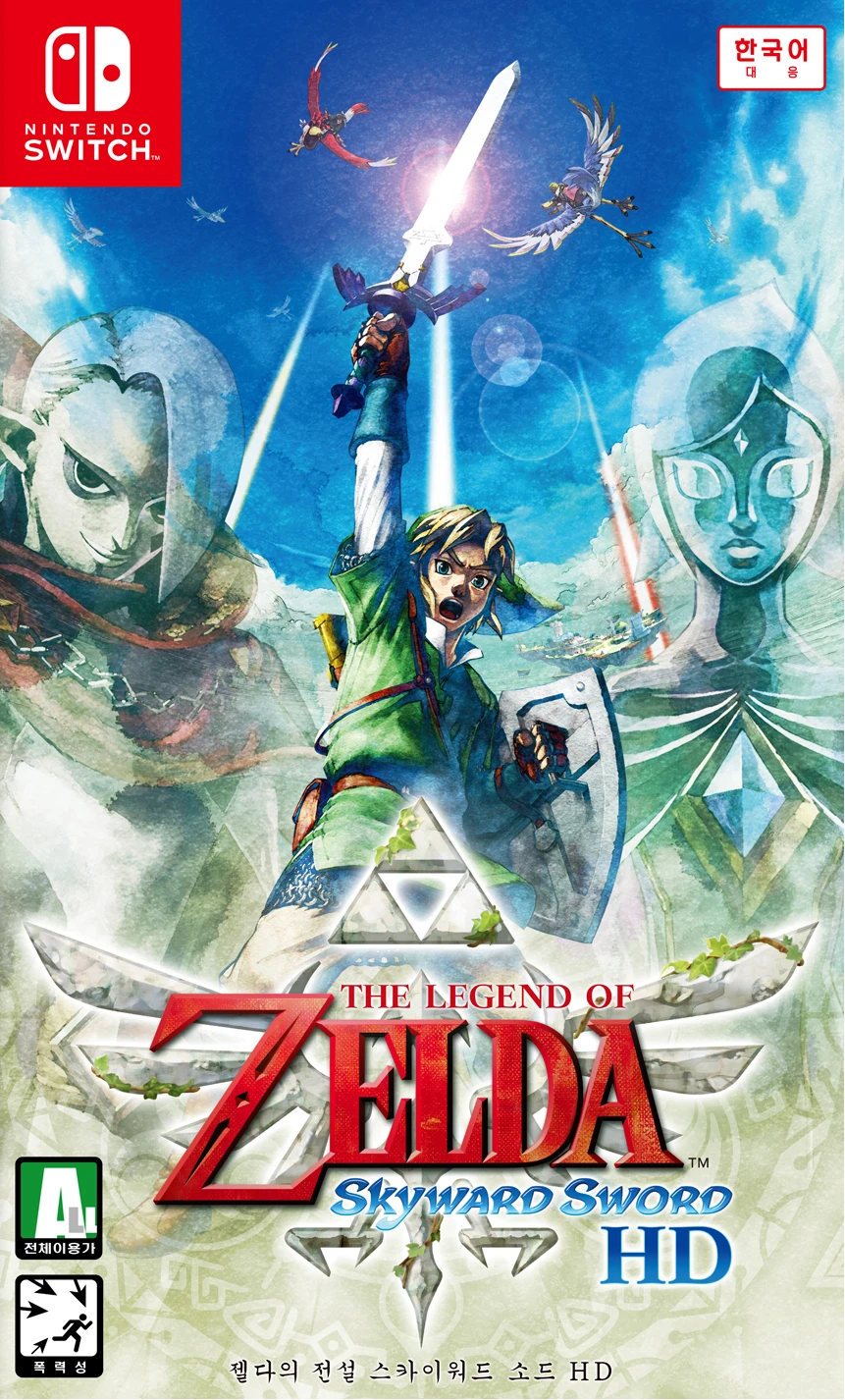
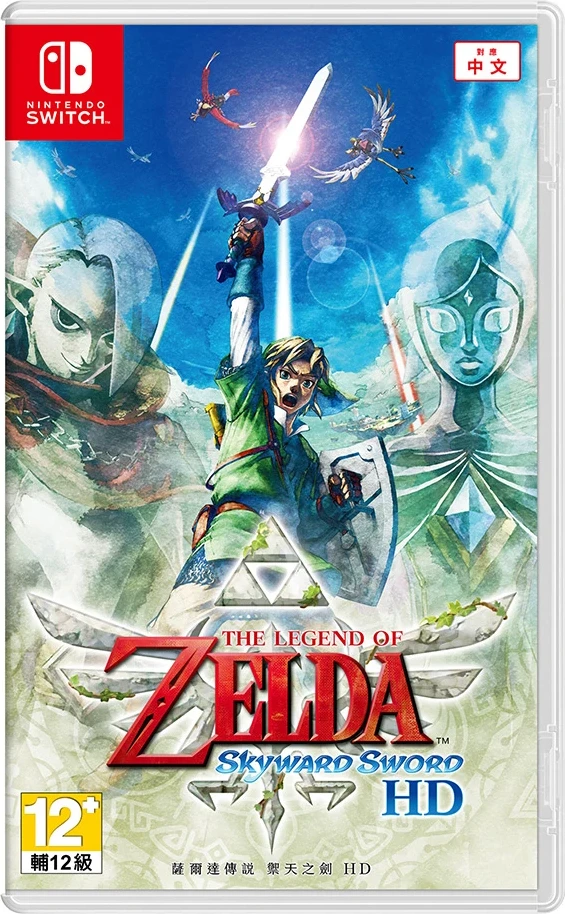
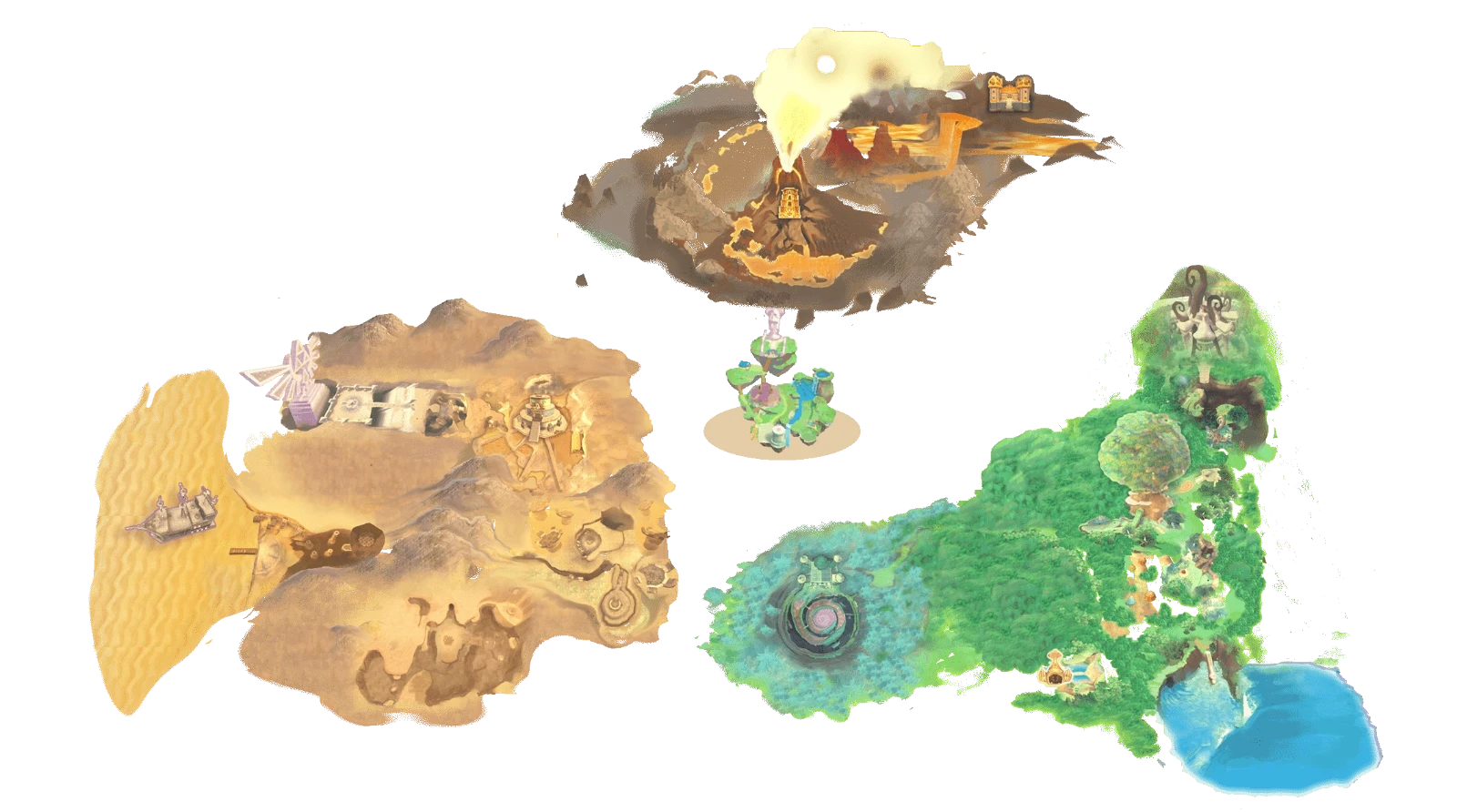
Japanese Nintendo Switch box (2021)Australian Nintendo Switch box (2021)Canadian Nintendo Switch box (2021)Korean Nintendo Switch box (2021)Taiwanese Nintendo Switch box (2021)Japanese logo of Skyward Sword HDThe world map in the Switch versionThe creation of Skyloft, in the Switch version
Legacy
The remaster did what a decade of argument could not: it got people to give Skyward Sword another go. It has had one small patch and no sequel or further update since, and it remains the easiest way to play the first story in the Zelda timeline.
Release timeline
Aonuma says it is possibleJune 2016 – At E3, the series producer says an HD version of Skyward Sword could be done.
The Osaka teaseNovember 2018 – Aonuma raises Skyward Sword on Switch at a Zelda concert; Nintendo then says it has no plans.
Amazon UK listing16 August 2020 – A pre-order page for a Switch version is spotted and removed.
Announced17 February 2021 – Revealed in a Nintendo Direct with the Skyward Sword HD Edition Joy-Con.
amiibo revealedMay 2021 – The Zelda & Loftwing figure and its return-to-the-sky feature.
Nintendo Switch16 July 2021 – Released worldwide, with the Joy-Con and amiibo the same day.
Version 1.0.110–11 August 2021 – The only update: unspecified fixes.
3.60 million4 November 2021 – Nintendo’s first sales figure, for the period to 30 September.
Tears of the Kingdom2023 – The amiibo unlocks the Goddess Fabric in the new game.
Nintendo Switch 2June 2025 – Playable through backward compatibility; not among the games given free Switch 2 updates.
A second chance
Official art of Link from Skyward Sword.
Skyward Sword’s standing had slipped a long way by 2021. The reviews in 2011 were rapturous, and the Wii game still averages 93 on Metacritic. But as Pocket Gamer observed in 2018, it had since become one of the most contested games in the series, chiefly because of its linear structure and the motion controls it forced on everyone, and the team behind Breath of the Wild set out to build a non-linear world partly in answer to complaints about its linearity.
The remaster could not change the structure, and reviewers said so. What it changed was the list of reasons not to play: no motion controls if you did not want them, a camera you could move, a Fi who kept quiet. GamesRadar+ headed its review with the claim that one of the most misunderstood Zeldas was getting a second chance, Pure Nintendo called it “a misunderstood title”, and VGC said the new version made the original obsolete. The sales pointed the same way, with the Switch version matching the Wii game’s estimated lifetime total in 77 days.
Not everyone was won round. GamingBolt still thought it probably “the most flawed mainline Zelda”, and Game Informer’s reviewer said it remained far from a favourite. But the argument has moved on: by 2025 Screen Rant was headlining it as the most underrated Zelda game. What the remaster did was give players the choice, so that the motion controls stopped being the whole argument.
What followed
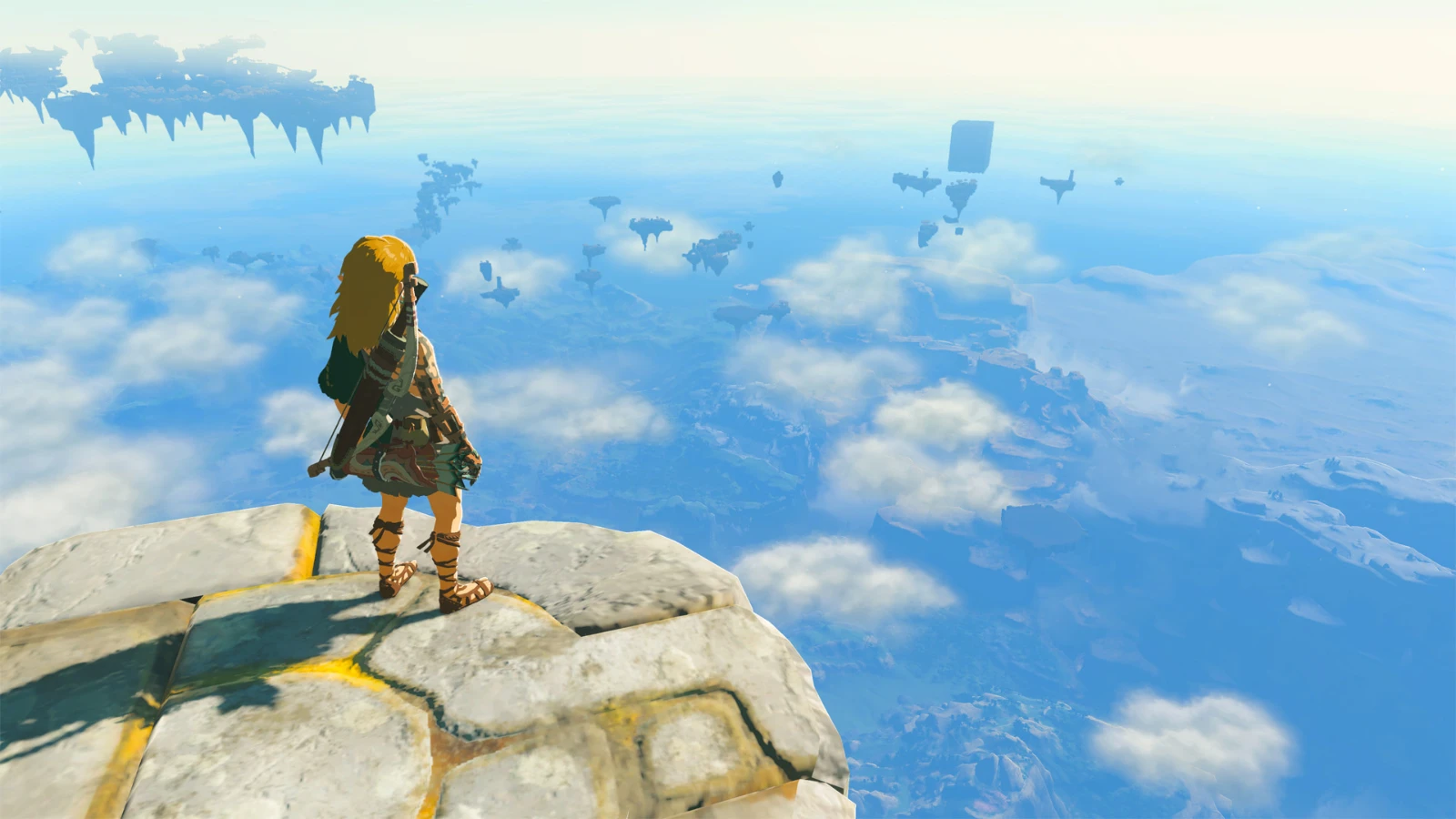
Link and the sky islands of Tears of the Kingdom (2023).
Tantalus stayed in Nintendo’s orbit, going on to make Luigi’s Mansion 2 HD for Switch in 2024. Crago said in 2022 that the studio would love to bring Twilight Princess HD to Switch as well, but had not been asked.
The game’s own ideas came back quickly. Tears of the Kingdom (2023) put islands back in the sky above Hyrule, to instant comparisons with Skyloft, and gave the Zelda & Loftwing amiibo a second job unlocking a paraglider fabric. Skyward Sword HD itself has had nothing more than its one patch.
Where to play it today
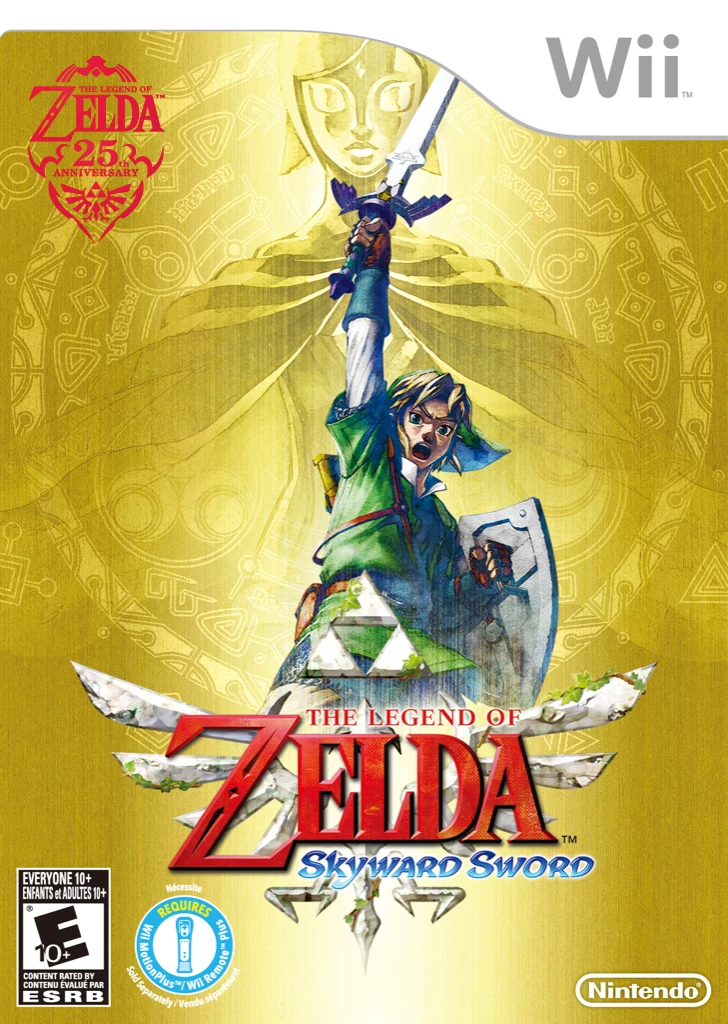
North American box of the 2011 Wii original.
Skyward Sword HD is still on sale for Nintendo Switch, on a cartridge or from the eShop, where Nintendo’s US store listed it at US$59.99 when we checked in November 2026. It also runs on Nintendo Switch 2: Nintendo lists it as supported there, behaving as it does on the original Switch.
It has not been improved for the newer console. It was not among the twelve Nintendo games given free Switch 2 updates when the console launched in June 2025, and when a Switch 2 system update in March 2026 added a Handheld Mode Boost for older games, Engadget and Screen Rant both reported Skyward Sword HD among the titles left out. For now, then, the Switch 2 plays the 2021 game as it is.
The 2011 original, by contrast, needs a Wii or Wii U and a MotionPlus controller. For almost everyone, the Switch version is the one to play.
Sales & reviews
Sales figures
Skyward Sword HD started at number one in three countries. In Japan it sold 159,089 copies at retail in its first week (12 to 18 July 2021), topping Famitsu’s chart; the Wii original’s first week had been 194,978 on Media Create’s count. In the UK it entered the boxed chart at number one for the week ending 17 July, ahead of F1 2021, although TheGamer reported that its boxed launch was smaller than the Wii game’s. In the United States it was the best-selling game of July 2021 on NPD’s chart, on physical copies alone, because Nintendo does not share its download sales.
Nintendo’s own worldwide figures were 3.60 million by 30 September 2021 (reported on 4 November 2021), 3.85 million by 31 December 2021 (3 February 2022) and 3.91 million by 31 March 2022 (10 May 2022). Nintendo’s last figure for the Wii game was 3.52 million by March 2012, and its lifetime total is put at about 3.67 million by analyst Daniel Ahmad, so the remaster matched a decade of Wii sales in 77 days and passed them by the end of 2021. Wikipedia gives a later figure of 4.15 million as of December 2022, but we could not trace it to a Nintendo source.
3.60mby 30 September 2021
3.85mby 31 December 2021
3.91mby 31 March 2022
159,089first week in Japan
Reception and review scores
Reviews were good, if a long way short of the original’s. Metacritic averages 106 reviews at 81 out of 100 (the Wii game has 93), and OpenCritic rates it “Strong” at 82, with 81% of critics recommending it. These are scores we found with the outlet and date named; those marked “via OpenCritic” are shown as OpenCritic lists them:
Electronic Gaming MonthlyUS · 14 July 2021 · via OpenCritic
10/10
Video Games ChronicleUK · 14 July 2021
5/5
Pure NintendoUS · 28 July 2021 · via OpenCritic
9.5/10
Nintendo LifeUK · July 2021
9/10
Zelda DungeonUS · 21 July 2021
9/10
Nintendo World ReportUS · 14 July 2021
8.5/10
Game InformerUS · 14 July 2021
8/10
The GuardianUK · July 2021
4/5
GamesRadar+UK/US · 14 July 2021
4/5
Press StartAustralia · 14 July 2021 · via OpenCritic
8/10
GameSpotUS · July 2021
7/10
GamingBoltOnline · 20 July 2021 · via OpenCritic
7/10
GBAtempOnline · 24 July 2021 · via OpenCritic
5/10
The praise went to the changes. VGC gave it full marks, called the button controls “a joy to use” and said the remaster made the original obsolete; Electronic Gaming Monthly, with top marks, said it improved on the original in every way it could think of. The Guardian found it still “a wildly imaginative and magical experience”, GamesRadar+ called it an “under-appreciated gem”, and the dungeons were praised again and again.
The criticism went to what could not be changed. Game Informer, calling this the best way to play a “blemished gem”, still found the stretches between dungeons a slog. GameSpot, at seven, said many of the original’s faults were intact but that the tweaks made it “easier to appreciate now”. Nintendo World Report grumbled about the Imprisoned fights and an empty sky. At the bottom of the range, GBAtemp could not recommend paying US$60 for it. Even Zelda Dungeon’s glowing review grumbled that the new fast travel sat behind a hard-to-find amiibo, and wished for a little extra content.
Reader reviews
No reader reviews yet. Played it? Give it a score out of 10 and tell other fans what you think.
Every fact on this page was checked against the sources below in November 2026. Sales figures come from Nintendo’s own investor documents. IGN, Eurogamer and Polygon could not be read directly, so their material is used only as reported by other outlets, and Tom Crago’s remarks are quoted from Zelda Universe’s and Nintendo Life’s reports of the Fragments of Silicon podcast.
To provide the best experiences, we use technologies like cookies to store and/or access device information. Consenting to these technologies will allow us to process data such as browsing behavior or unique IDs on this site. Not consenting or withdrawing consent, may adversely affect certain features and functions.
Functional
Always active
The technical storage or access is strictly necessary for the legitimate purpose of enabling the use of a specific service explicitly requested by the subscriber or user, or for the sole purpose of carrying out the transmission of a communication over an electronic communications network.
Preferences
The technical storage or access is necessary for the legitimate purpose of storing preferences that are not requested by the subscriber or user.
Statistics
The technical storage or access that is used exclusively for statistical purposes.The technical storage or access that is used exclusively for anonymous statistical purposes. Without a subpoena, voluntary compliance on the part of your Internet Service Provider, or additional records from a third party, information stored or retrieved for this purpose alone cannot usually be used to identify you.
Marketing
The technical storage or access is required to create user profiles to send advertising, or to track the user on a website or across several websites for similar marketing purposes.

 Joy-Con (L)/(R) The Legend of Zelda: Skyward Sword HD EditionNintendo · 16 July 2021 · US$79.99 / £69.99Announced with the game on 17 February 2021 and sold separately from it. The right Joy-Con takes its design from the Master Sword and the left from the Hylian Shield, both in blue with the left a shade lighter, so each matches the hand that swings the sword or raises the shield under motion controls. Pre-orders sold out within minutes, though more stock reached shops on release day.
 Standard editionNintendo · 16 July 2021 · US$59.99One edition only, as a cartridge or a 7.1 GB download, with pre-orders opening on the eShop straight after the announcement. The price was a talking point: ten dollars more than the Wii game had cost in 2011.
 In Tears of the KingdomNintendo · 2023The Zelda & Loftwing amiibo has a second use. Scanned in Tears of the Kingdom, it unlocks the Goddess Fabric for Link’s paraglider.