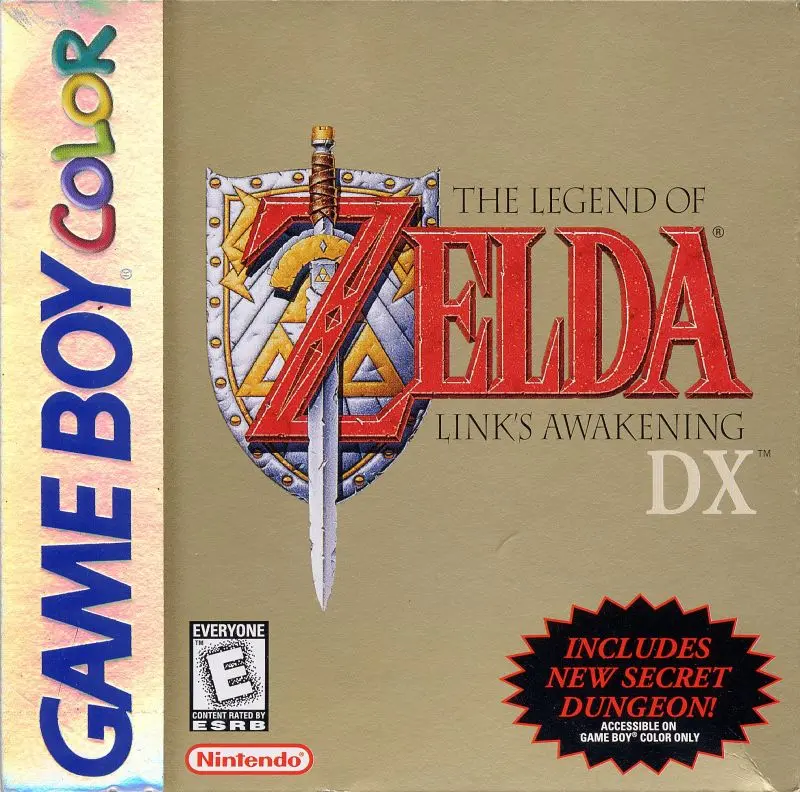
Koholint Island in colour at last. The Game Boy’s great adventure, repainted for the Game Boy Color with a secret dungeon, a choice of two new tunics and a mouse who follows Link around with a camera.
Released12 December 1998 (JP) · late 1998 (NA) · January 1999 (EU) · 22 January 1999 (AU)
2.22 million (Game Boy Color); an estimated 338,700 downloads on Nintendo 3DS in 2011
Overview
Link’s Awakening DX is Link’s Awakening, the 1993 Game Boy classic, with the lights switched on. It arrived in Japan on 12 December 1998, seven weeks after the Game Boy Color itself and three weeks after Ocarina of Time, and it does exactly what the “DX” promises: the same island, the same eight dungeons and the same bittersweet ending, now in full colour and with a handful of extras bolted on.
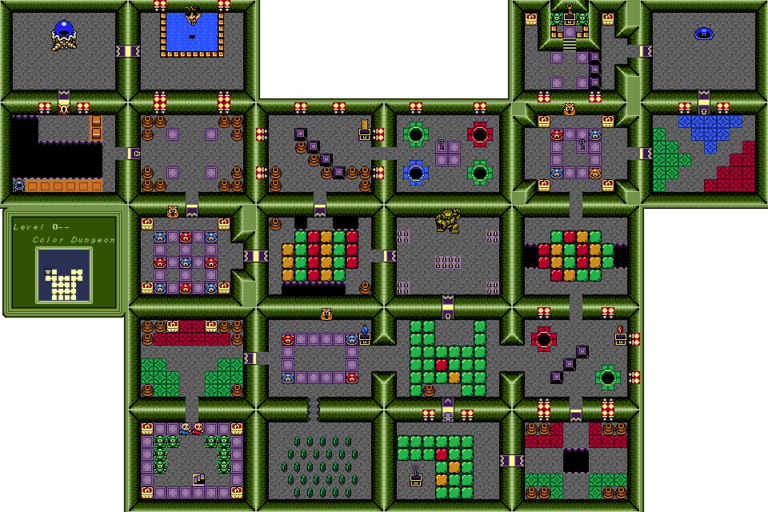
Those extras are small but memorable. A hidden Color Dungeon in the cemetery is built entirely around puzzles that only work on a colour screen, and it ends with a choice between a red tunic that doubles Link’s attack and a blue one that halves the damage he takes. A mouse with a camera opens a shop and turns up at twelve moments in the adventure to snap Link, usually at his least dignified, and every picture could be printed as a sticker on the Game Boy Printer. The dungeon hint stones became owl statues, the script picked up extra clues, and a pile of bugs was quietly fixed.
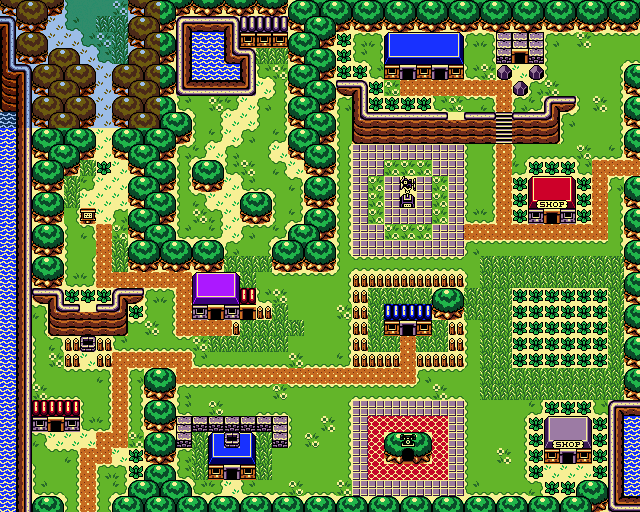
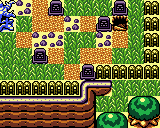
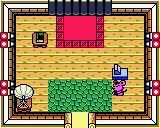
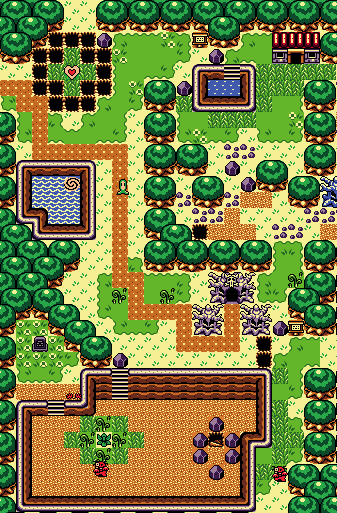
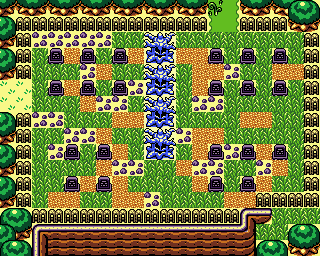
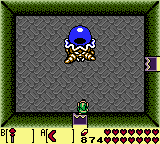
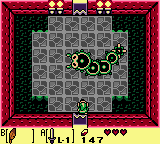
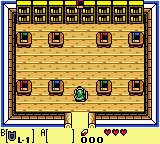
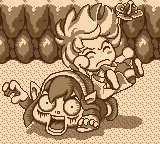
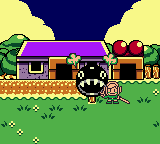
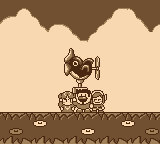
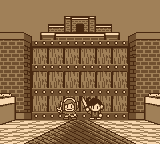
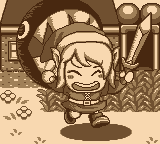
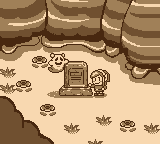
Mabe Village in colour on the Game Boy Color.The Color Dungeon, new to DX.The Camera Shop and its mouse photographer.
It was not made by the original team. Nintendo handed the job to its small Research & Development 2 division, which was also remaking Super Mario Bros. for the new handheld, with Yoshinori Tsuchiyama directing and the original’s director Takashi Tezuka looking in as supervisor between duties on Ocarina of Time. They built it as a dual-mode cartridge, so it still runs in black and white on an original Game Boy, with the Color Dungeon locked.
Critics loved it mostly because the game underneath was still wonderful, and several said the new dungeon was the weakest thing in it. It sold 2.22 million copies, became the version Nintendo chose when it re-released the game on Nintendo 3DS in 2011 and Nintendo Switch Online in 2023, and supplied the Color Dungeon to the 2019 Switch remake. This page is about what DX changed; the story, the characters and the island itself are told in full on our Link’s Awakening page.
In the Legend of Zelda series’ first Game Boy adventure, Link is shipwrecked on the mysterious Koholint Island.
That line comes from Nintendo’s own description on its UK page for the game, which goes on to sell this Game Boy Color edition on its new dungeon and its colour graphics. Nintendo’s Japanese site made the same pitch in 1998: Link’s strange adventure begins again on Koholint, with graphics remade for colour, and it has not just been colourised, because new puzzles and new systems have been added too.
— Official description: Nintendo UK, game page for The Legend of Zelda: Link’s Awakening DX (nintendo.com/en-gb). One sentence quoted; the rest, and Nintendo Co., Ltd.’s Japanese page for Yume o Miru Shima DX, summarised by Zelda Temple.
Quick Answers
The questions people most often ask about Link’s Awakening DX, answered quickly and explained further down the page.
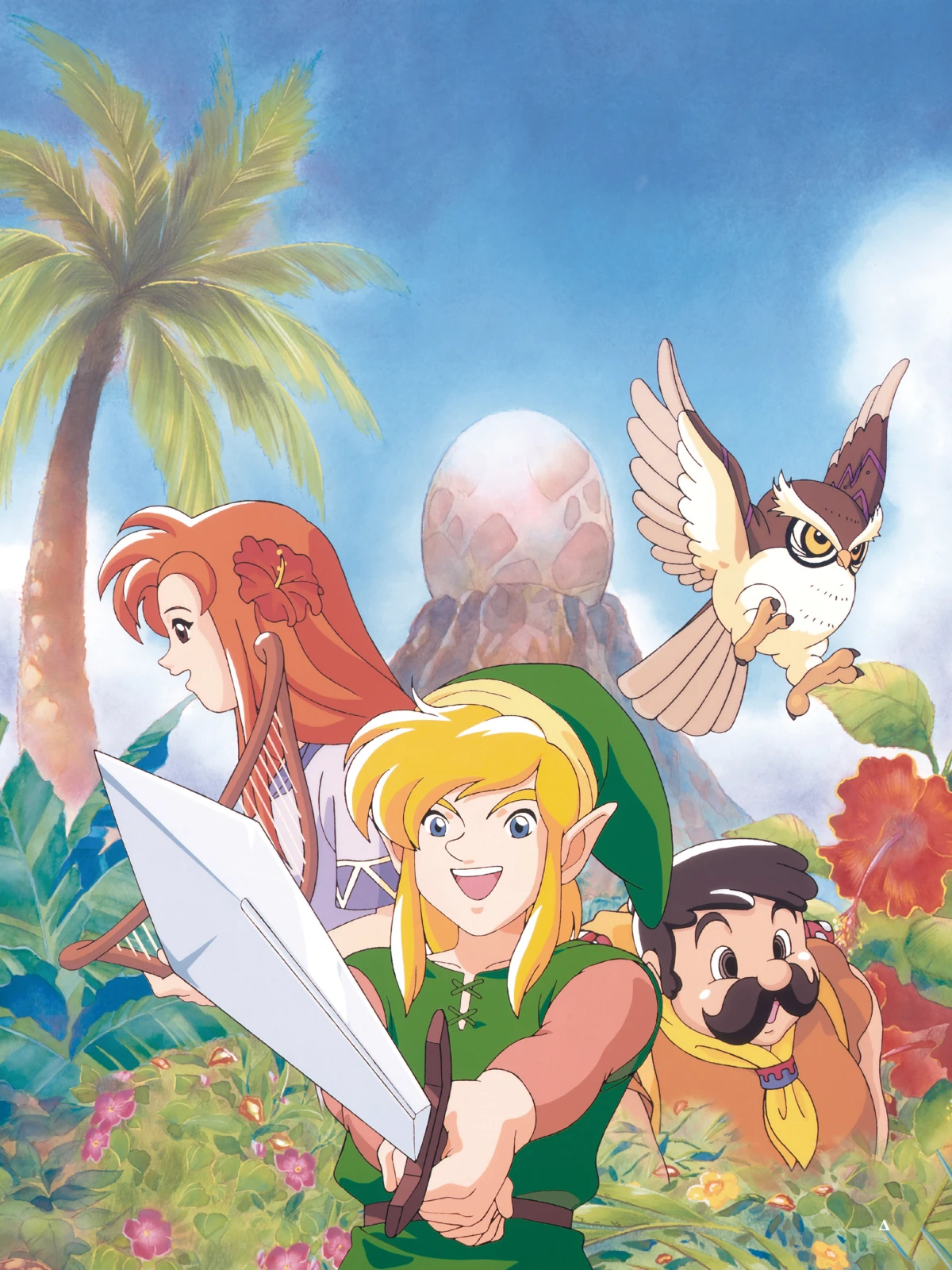
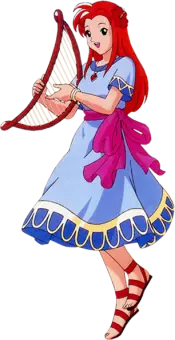
Official art of the cast of Link’s Awakening DX.
Is Link’s Awakening DX the same game as Link’s Awakening?
Yes. It is the 1993 Game Boy game with the same story, island and dungeons, recoloured for the Game Boy Color and given a few additions. The adventure itself is unchanged. More →
What does DX add?
Full colour, the optional Color Dungeon with its red and blue tunics, a Camera Shop whose owner takes twelve photographs of Link, Game Boy Printer support, owl statues and Stone Beaks in place of the old hint slabs, extra hints in the script and a batch of bug fixes. More →
When did it come out, and who made it?
12 December 1998 in Japan, late 1998 in North America, and January 1999 in Europe and Australia. Nintendo’s R&D2 division made it, directed by Yoshinori Tsuchiyama, with Takashi Tezuka supervising. More →
Does it work on an original Game Boy?
Yes. The cartridge is dual-mode, so on a monochrome Game Boy it plays in black and white like the 1993 game. The Color Dungeon cannot be entered there: its guards turn Link away. On a Super Game Boy it gets its own border. More →
How do you find the Color Dungeon?
Dash into the bookcases in the Mabe Village library with the Pegasus Boots to knock down a book, then push five gravestones in the south-east corner of the cemetery in the order it gives. The entrance opens under the last one. More →
Should I choose the red tunic or the blue tunic?
Red doubles the damage Link deals; blue halves the damage he takes. You can change your mind by clearing the dungeon again, but in DX you can never go back to green. More →
Can you still print the photographs?
Only with an original cartridge, a Game Boy and a Game Boy Printer. The Printer features were left out of the Nintendo 3DS Virtual Console release. More →
Where can I play Link’s Awakening DX today?
It is in the Game Boy library that comes with a Nintendo Switch Online membership, on Nintendo Switch and Nintendo Switch 2. The Nintendo 3DS version can no longer be bought, because the 3DS eShop closed to purchases on 27 March 2023. More →
What’s different from the original
Toronbo Shores in DX.
DX is a careful repaint, not a rebuild. The island, the story and the eight dungeons with their bosses are those of 1993, give or take one tweaked room. What changed is what a colour screen made possible, plus a few things the R&D2 team clearly thought the first version needed: clearer hints, fewer bugs and a bit of fun with a camera.
The table sets the two versions side by side, and the sections below it take the big differences one at a time.
Feature
Link’s Awakening (1993)
Link’s Awakening DX (1998)
Screen
Monochrome, as on every original Game Boy game
Full colour on a Game Boy Color; still monochrome on an original Game Boy
Cartridge
A standard Game Boy Game Pak
A black dual-mode Game Pak that runs on both the Game Boy and the Game Boy Color
Dungeons
Eight, then the Wind Fish’s Egg
The same, plus the optional Color Dungeon (Game Boy Color only)
Link’s clothes
Green from start to finish
Green, until the Color Dungeon offers red (double attack) or blue (half damage)
Dungeon hints
Stone slabs, readable once you find the dungeon’s Stone Slab Fragment
Owl statues, understood once you find the dungeon’s Stone Beak, with more hints added
Photographs
None
A Camera Shop and an album of twelve snapshots, “The Travels of Link”
Printing
None
Game Boy Printer support: each photograph prints as a sticker
Super Game Boy
An all-green palette and no border
Its own border and a standard colour palette
Script
The 1993 text
Revised by Nobuo Matsumiya, with hint messages in boss battles and extra lines elsewhere
Treasure chests
The original contents
Several dungeon chests swapped around; some small Rupee prizes became Medicine
Secret ending
Marin floats across the screen with wings
Marin’s face appears in the sky, then gives way to a seagull
Music
The original score
The original score plus Yuichi Ozaki’s Color Dungeon theme
Glitches
Screen Warp works in versions 1.0 and 1.2
Screen Warp removed; versions 1.1 and 1.2 of DX patch several more
The mermaid’s lost item
A bikini top in Japan and Germany, a necklace in North America
A necklace in every version outside Japan
Koholint in colour
Koholint Prairie in DX.
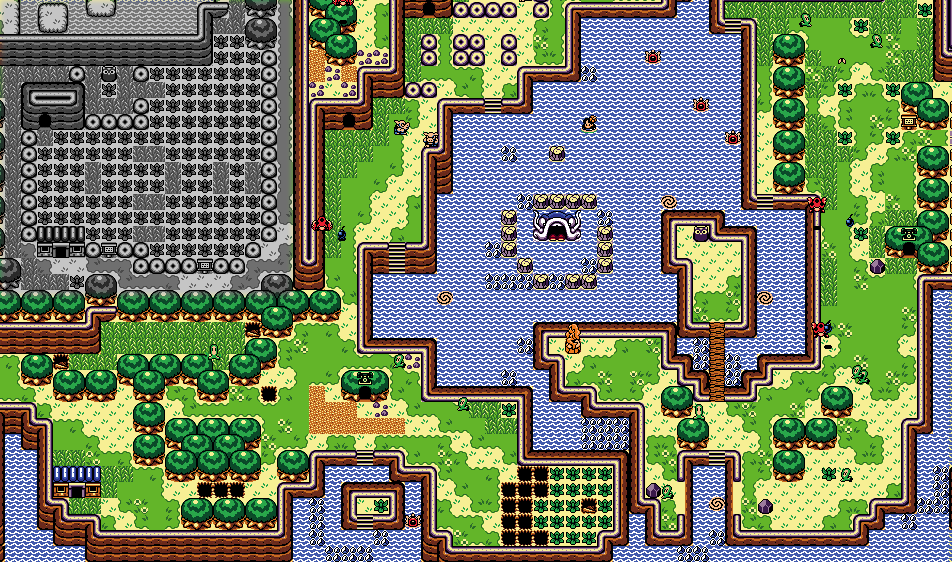
The headline change is the obvious one. Every area, character and menu has been given a palette, and the sprites are the 1993 originals with colour added, so Mabe Village looks exactly as you remember it, only in colour. Nintendo’s Japanese site made a point of saying the graphics had been remade for colour.
There are smaller touches that fan wikis have catalogued: the Instruments of the Sirens shimmer through seven colours, the fade effects used for bombs and dungeon warps were toned down, and the title screen gained clouds around the Wind Fish’s egg.
Reviewers noticed that colour did more than prettify. Electronic Gaming Monthly called the graphics “sharp”, Total Game Boy said objects now “stand out tremendously”, and Samantha Amjadali, writing in the Daily Telegraph, found the game easier because fewer deaths were caused by not being able to tell what was on screen. Planet Game Boy was cooler: the visuals were “primitive” by 1999’s standards, it said, though better defined than before.
The Color Dungeon and the two tunics
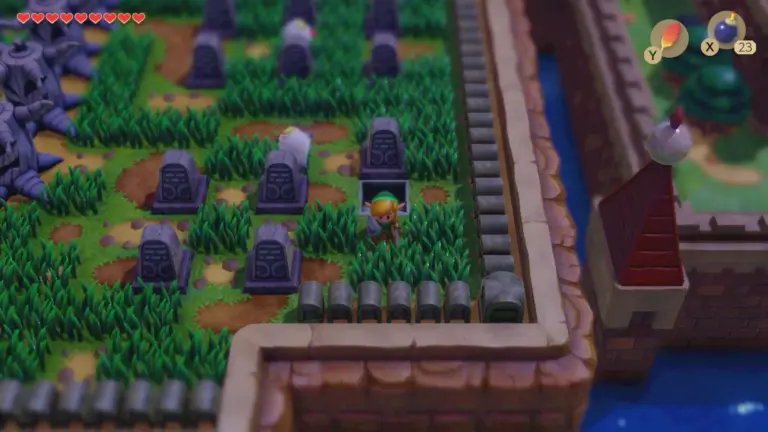
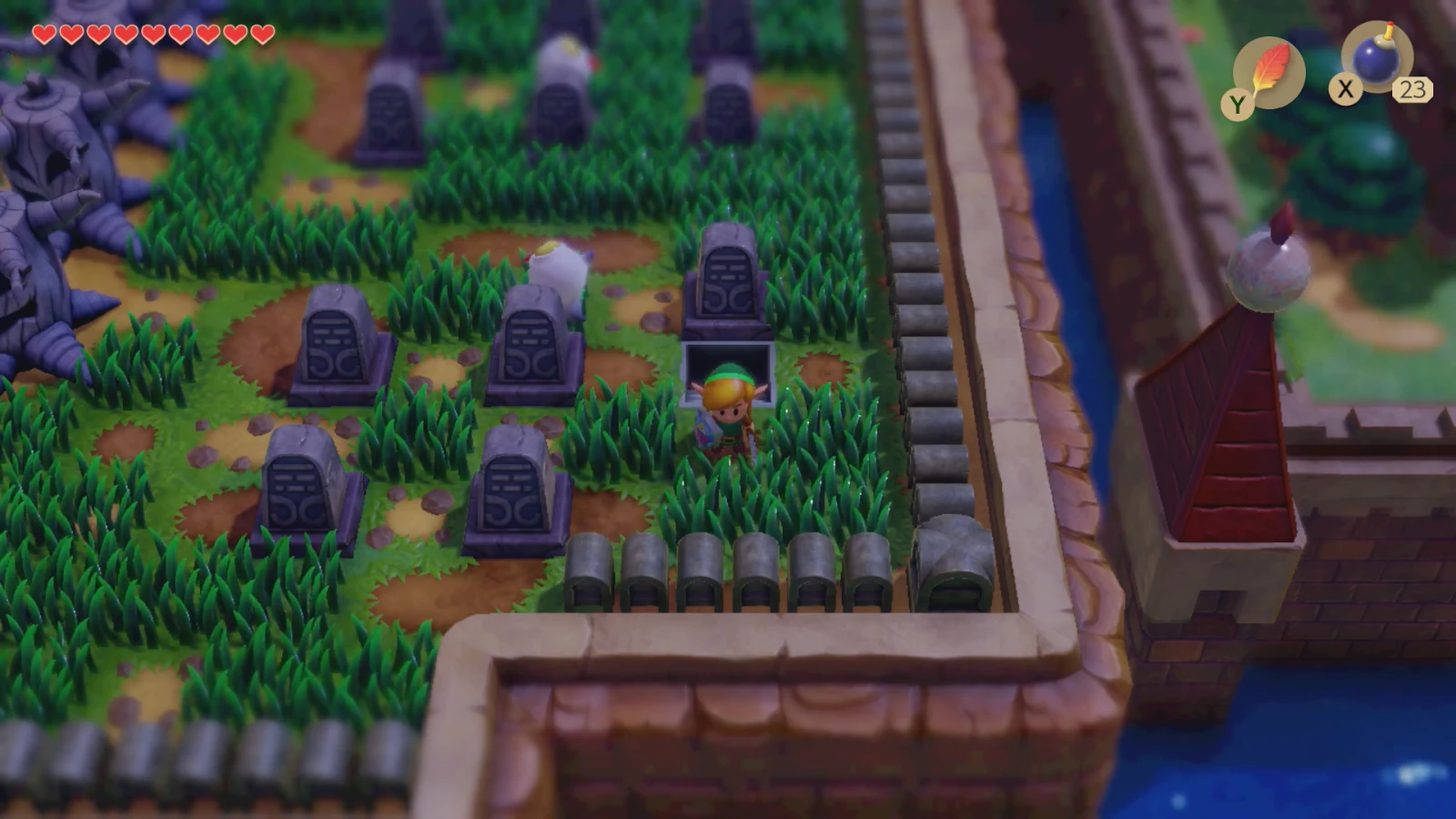
The cemetery, where the Color Dungeon’s entrance is hidden.
The one genuinely new place in DX is hidden under a gravestone. Nintendo’s Japanese site calls it 服のダンジョン, the “Clothes Dungeon”, and describes it as a dungeon made for Game Boy Color owners, full of monsters found nowhere else. It is entirely optional, it holds no instrument, and it can be tackled from early in the adventure, once BowWow has been taken home after Bottle Grotto.
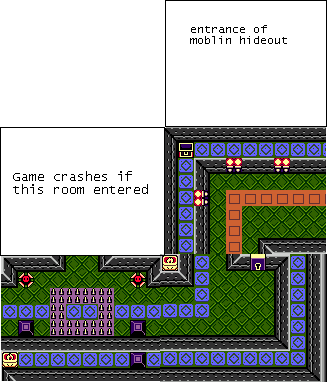
Two guards in red and blue stop Link at the door and quiz him about the colour of their clothes, which is the whole point: on a monochrome screen there is no telling them apart. Inside, every puzzle is about colour. Switches have to be struck until they match, floor tiles bounce Link like a trampoline while cycling from blue to yellow to red, and rooms with round holes in the floor are patrolled by creatures the Japanese site calls Karakoro, which cannot be killed. The fan wikis explain the trick: the dungeon’s orb-like monsters have to be thrown into the hole of their own colour.
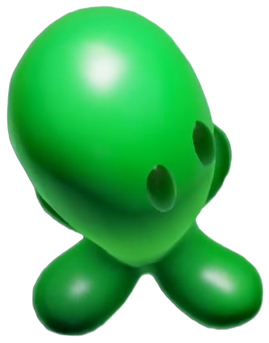
Along the way come a Giant Buzz Blob, which only Magic Powder can soften up, and Avalaunch, a mechanical-looking cousin of the Hinox that shakes boulders loose from the ceiling. The boss is the Hardhit Beetle, an outsized Hardhat Beetle that drifts from blue towards red as you strike it and slides back to blue if you let up, all while telling Link to take his time.
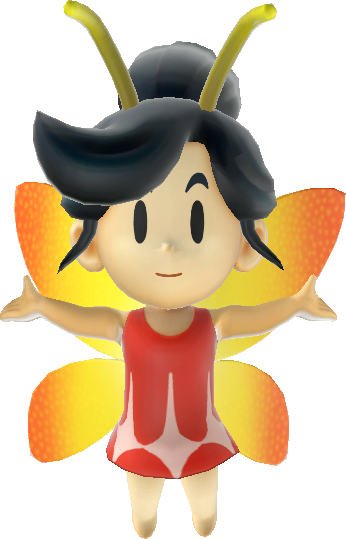
The reward is a visit to the Fairy Queen, who offers “the power of color”. Choose red and Link deals double damage; choose blue and the damage he takes is halved. Nintendo’s site simply calls them the red and blue clothes; the 2019 remake renamed them the Red Mail and Blue Mail, which is how many guides now refer to them. You may come back and swap as often as you like by clearing the dungeon again, but in DX the green tunic is gone for good once you have chosen.
Not everyone was impressed. EGM’s reviewers called the dungeon “lame” and a “total disappointment”, too short and too easy, and Paul Davies of Computer and Video Games thought it “not so amazing”. Twenty years later Retro Gamer was kinder, praising it for stretching what the original could do.
The Hardhit Beetle, boss of the Color Dungeon.The Fairy Queen offers the power of colour.
The Camera Shop and the twelve photographs
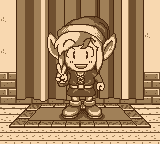
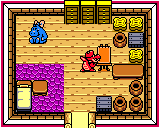
Just north of Tabahl Wasteland, at the foot of Tal Tal Heights, DX adds a building with CAMERA on its roof and a giant model camera beside the sign. Inside lives a mouse who is mad about photography. Visit him alone (with a companion in tow he sends you away to come back later) and he asks to take your picture. Say yes and Link poses with a peace sign for “Here Stands A Brave Man”. Keep saying no and he snaps Link anyway, looking dazed, and titles it “Game Over”.
Either way the picture goes into an album called “The Travels of Link”, and from then on the mouse pops up around the island with eleven shots left on his film. Nintendo’s Japanese site counted twelve “shutter points” and stressed that the photos were free. These are the twelve, with the titles listed by Zelda Dungeon:
Here Stands A Brave Man (or Game Over): the portrait in the Camera Shop.
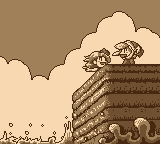
Link and Marin on the cliff: walk to the small cliff at Toronbo Shores while Marin is following you. Only possible before she sings to the Walrus.
Heads Up!: jump down the well in Mabe Village with Marin behind you, and she lands on Link.
Say “Mushroom!”: stand with Marin by the weathercock in Mabe Village, and Tarin squeezes into the shot.
Link Discovers Ulrira’s Secret!: peer through the window of Old Man Ulrira’s house.
Link Plays With BowWow!: edge closer to BowWow outside Madam MeowMeow’s house until he lunges.
Are you proud of yourself?: the mouse catches Link stealing from the Town Tool Shop.
Be more careful next time!: the fisherman under the bridge in Martha’s Bay hooks the photographer instead of a fish, and Link knocks him back in.
I Found Zora!: use the Magnifying Lens in a house in Animal Village to reveal a hidden Zora.
I’ve Just Decided to Wait at Home: with Richard at the gate of Kanalet Castle, before the gate has been opened.
I Was Very Afraid: at the ghost’s grave, once you have led the ghost back to it.
Close Call: on the bridge in the Tal Tal Mountain Range, where the mouse backs off the edge and photographs his own fall.
Thirteen pictures exist, but an album can only ever hold twelve, because the two Camera Shop portraits cancel each other out. The mouse will not appear while BowWow or the Flying Rooster is following Link, and while Marin is with you only her three scenes are on offer. In the 2019 Switch remake he is gone altogether: Dampé’s shack and its Chamber Dungeons stand where the Camera Shop was.
“Here Stands A Brave Man”“Heads Up!”
Stickers from the Game Boy Printer
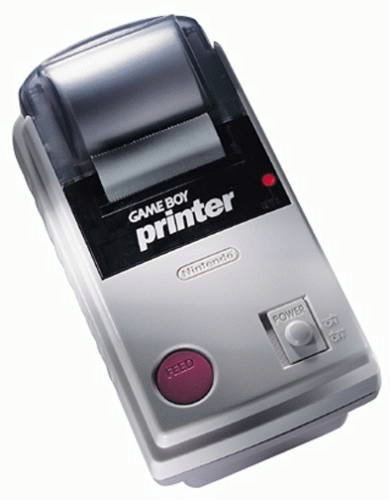
The Game Boy Printer, sold in Japan as the Pocket Printer.
The photographs had a second purpose. Nintendo had launched the Game Boy Printer in 1998 (21 February in Japan, where it was called the Pocket Printer, and June in North America and Europe) mainly as a partner for the Game Boy Camera. It is a little thermal printer that runs on six AA batteries, plugs into the Game Boy’s link port and prints on 38mm rolls of paper with a sticky back.
DX was one of the games that supported it. Each of the twelve snapshots in the album can be sent to the Printer and comes out as a sticker, in black and white, since the Printer cannot do colour. The feature caught reviewers’ eyes at the time: GameSpot’s Cameron Davis singled it out for praise, and the Courier Mail liked that players could show off their trophies.
It is also the one part of DX that has not survived. The Nintendo 3DS Virtual Console release left the Printer features out, something IGN’s review of that version regretted.
Owl statues, Stone Beaks and a revised script
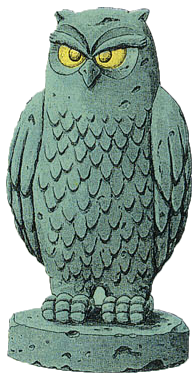
Official art of an owl statue.
In 1993 each dungeon hid a Stone Slab Fragment, which completed a broken slab and let Link read its hint. DX swaps the slabs for statues shaped like the owl who guides Link, and the fragments for Stone Beaks. Until you find the beak, the game explains, the statue is trying to speak but cannot be understood; once you have it, every statue in that dungeon talks. The hints were rewritten, and more were added.
The wider script was revised by Nobuo Matsumiya. Hint messages were added to boss battles, there is extra dialogue at moments such as collecting the Level 2 sword, and a voice at the Seashell Mansion now explains what the building is for.
Because the Stone Beaks arrived, several treasure chests were shuffled. ZeldaSpeedRuns has the full list: in Bottle Grotto, Key Cavern and Catfish’s Maw the map, the beak and some Rupee prizes changed places, and in Face Shrine, Eagle’s Tower and Turtle Rock a few small Rupee chests now hold Medicine or a bomb. One room in Bottle Grotto gained two extra pots. Fan wikis add that the Genie boss throws his fireballs more slowly.
The reward for finishing without dying changed as well. In the original Marin drifts across the screen with wings. In DX her face appears in the sky and fades to leave a seagull, which fits the wish she confides to Link.
On a Game Boy, a Super Game Boy and a Game Boy Color
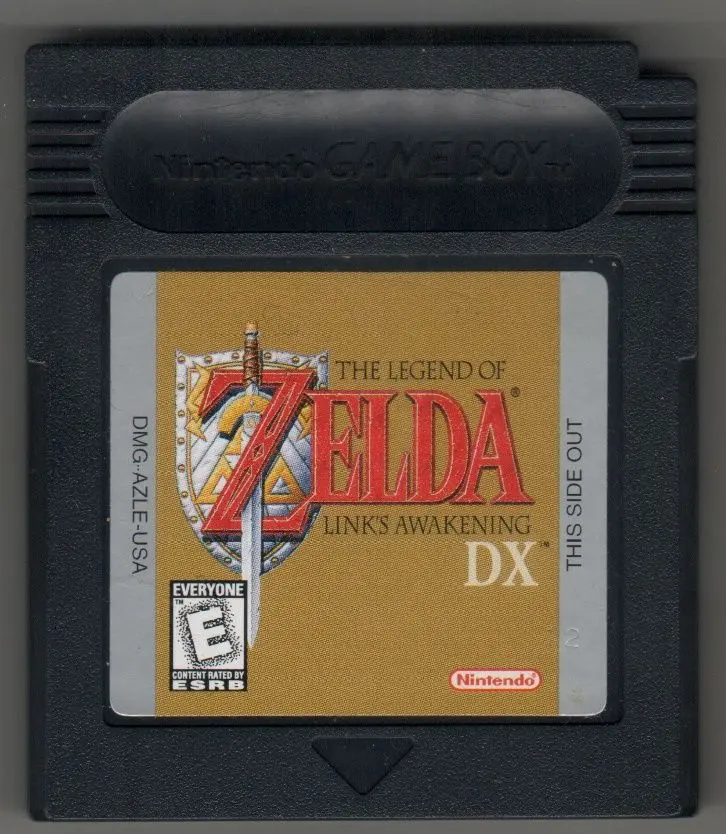
The North American cartridge.
DX came on one of the Game Boy Color’s black “dual-mode” Game Paks, which hold a game that works on the old hardware as well as the new. Put it in a monochrome Game Boy and you get Link’s Awakening in greyscale, looking just as it did in 1993.
What you do not get is the Color Dungeon. Nintendo’s Japanese site says plainly that it can only be entered on a Game Boy Color, and notes that the guards’ red and blue clothes can only be told apart there. On a monochrome machine they send Link away.
On a Super Game Boy, the Super NES adaptor, the difference from the original is easier to see. According to the fan-run Zelda Wiki, the 1993 game used a plain green palette and had no border of its own, whereas DX comes with a border of its own and a standard colour palette.
Plot / Story
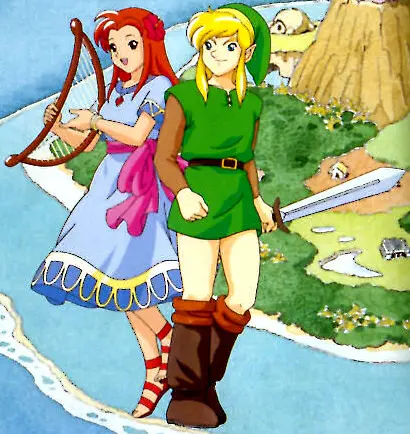
Official art of Link and Marin for DX.
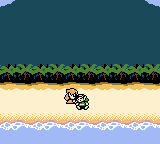
The story is the one told in 1993. With Ganon beaten and Hyrule at peace, Link sails abroad to train, and on the voyage home a storm splits his ship in two. He wakes in a bed on Koholint Island, looking up at a girl whose voice reminds him of Princess Zelda. She is Marin, and she found him washed up on the shore.
An owl tells Link that all his questions will be answered when the Wind Fish wakes. The Wind Fish sleeps in a giant egg on the island’s highest mountain, and waking it means gathering the eight Instruments of the Sirens from eight dungeons. The further Link goes, the clearer the price becomes: Koholint may be nothing more than the Wind Fish’s dream.
DX does not alter a scene of that. Its additions sit around the edges: the photographer’s comic snapshots of Link with Marin, Tarin, BowWow and the rest, the Fairy Queen in the Color Dungeon, and the reworked picture of Marin after a deathless run. For the whole tale, dungeon by dungeon, see the story on our Link’s Awakening page.
Guidebooks, add-ons & giveaways
DX had no special edition or bundle that we could confirm, but it did have an official guidebook, a printer to plug in and, years later, a second life as a loyalty reward.
Nintendo Official Guidebook: Yume o Miru Shima DXShogakukan · 20 February 1999 · ¥838A 112-page, full-colour Japanese guide with maps, the Color Dungeon, all twelve photographs, the Secret Seashells and the trading sequence. Its last pages carry a questionnaire answered by the DX development staff, the source Wikipedia cites for much of what is known about how DX was made.
Nintendo Power, volume 116Nintendo of America · January 1999The magazine covered the game across pages 100 to 104 and scored it 8.8 out of 10 in its Now Playing column.
Game Boy PrinterNintendo · 1998The accessory that turned the album into stickers. It came with a link cable and printed on rolls of adhesive thermal paper, sold in several colours.
Club Nintendo rewardNorth America · July 2013The Nintendo 3DS Virtual Console version was one of the free games offered to Club Nintendo members in North America who had reached elite status that year.
How it was made
DX was made five years after the original, by different people, for a different machine. Here is who they were and what they were asked to do.
The DX team
The 1998 staff as credited in the game, from MobyGames’ transcription of the credits. The original 1993 team is listed on the Link’s Awakening page.
Yoshinori TsuchiyamaDirectorLed the conversion at Nintendo R&D2.
Takashi TezukaSupervisorDirector of the 1993 original. He kept only a light hand on DX because he was busy supervising Ocarina of Time.
Nobuo MatsumiyaScript writerRevised the script, including the hint messages added to the boss battles.
Eiji Noto, Kiyoshi Koda and Shigehiro KasamatsuProgrammersCredited with the programming of the colour version.
Mikio Mishima and Kyoko KimuraCharacter designCredited for the character design of the 1998 version.
Yuichi OzakiSound compositionWrote the Color Dungeon’s music, built on Koji Kondo’s dungeon theme from the first Legend of Zelda.
Keiko IzawaArtworkCredited for artwork.
Jim Wornell, Keiko Tamura and Tamayo ItoEnglish scriptHandled the English text of DX. The 1993 English script was credited to Daniel Owsen.
A classic for the new Game Boy
The Game Boy Color went on sale in Japan on 21 October 1998, in North America on 18 November and in Europe on 23 November. One strand of its early line-up was the “DX” or “Deluxe” line: earlier hits brought back in colour. According to Wikipedia’s history of the system, these were expected to offer real improvements and not just a palette, while staying instantly recognisable to anyone who had played the monochrome versions.
Link’s Awakening was an obvious candidate. It had been the Game Boy’s big adventure, it had sold 3.83 million copies, and a colour screen suited an island of beaches, forests and swamps. DX reached Japanese shops on 12 December 1998 at ¥3,500 before tax, and the rest of the world over the following weeks.
R&D2, the deluxe department
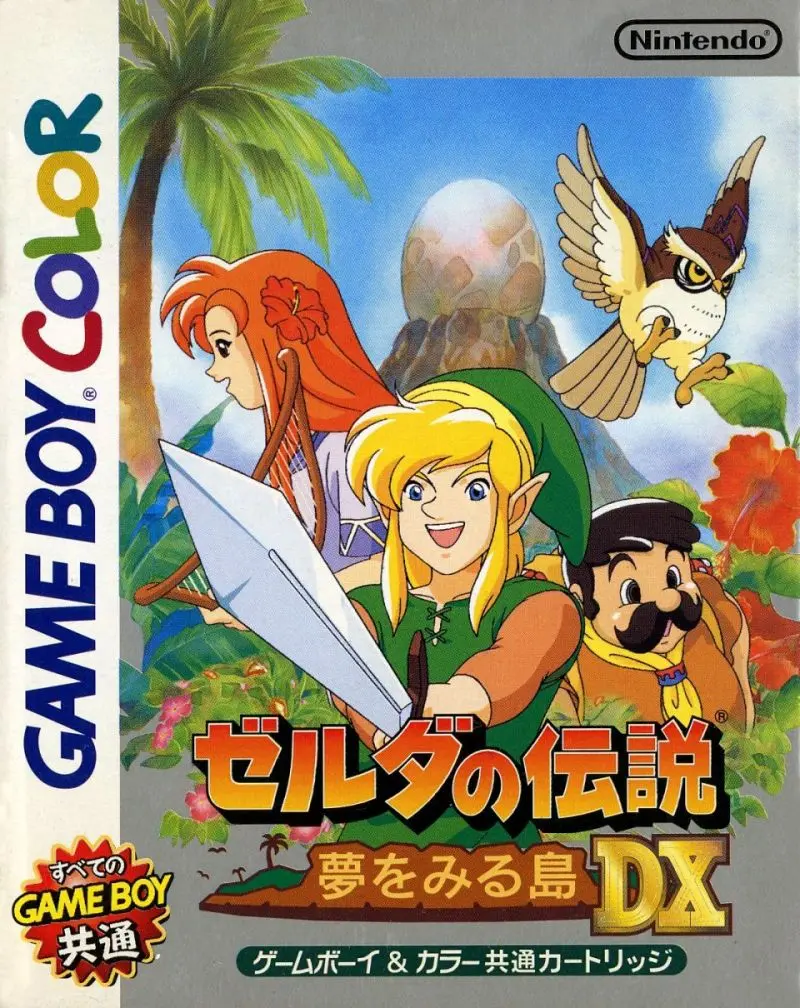
The Japanese box for Yume o Miru Shima DX.
The original had been made at Nintendo EAD by much of the A Link to the Past team. DX went to Research & Development 2, a division set up to work on hardware peripherals as well as software. N-Sider’s 2005 survey of Nintendo’s studios describes it as a very small group that perhaps spent more time experimenting than releasing games.
The best first-hand account comes from an interview Nintendo published on Shigesato Itoi’s website about a later R&D2 game, Kirby Tilt ’n’ Tumble. Toshiaki Suzuki, who had just directed Super Mario Bros. Deluxe, explained that the division had been “handling the deluxe remakes of Super Mario Bros. and The Legend of Zelda: Link’s Awakening”, and that because Shigeru Miyamoto’s own team was not making Game Boy Color games, R&D2 worked closely with Miyamoto and Nakago of EAD on both. His colleague Hiroaki Sakagami added: “We learned a lot from them.”
Tezuka looks in
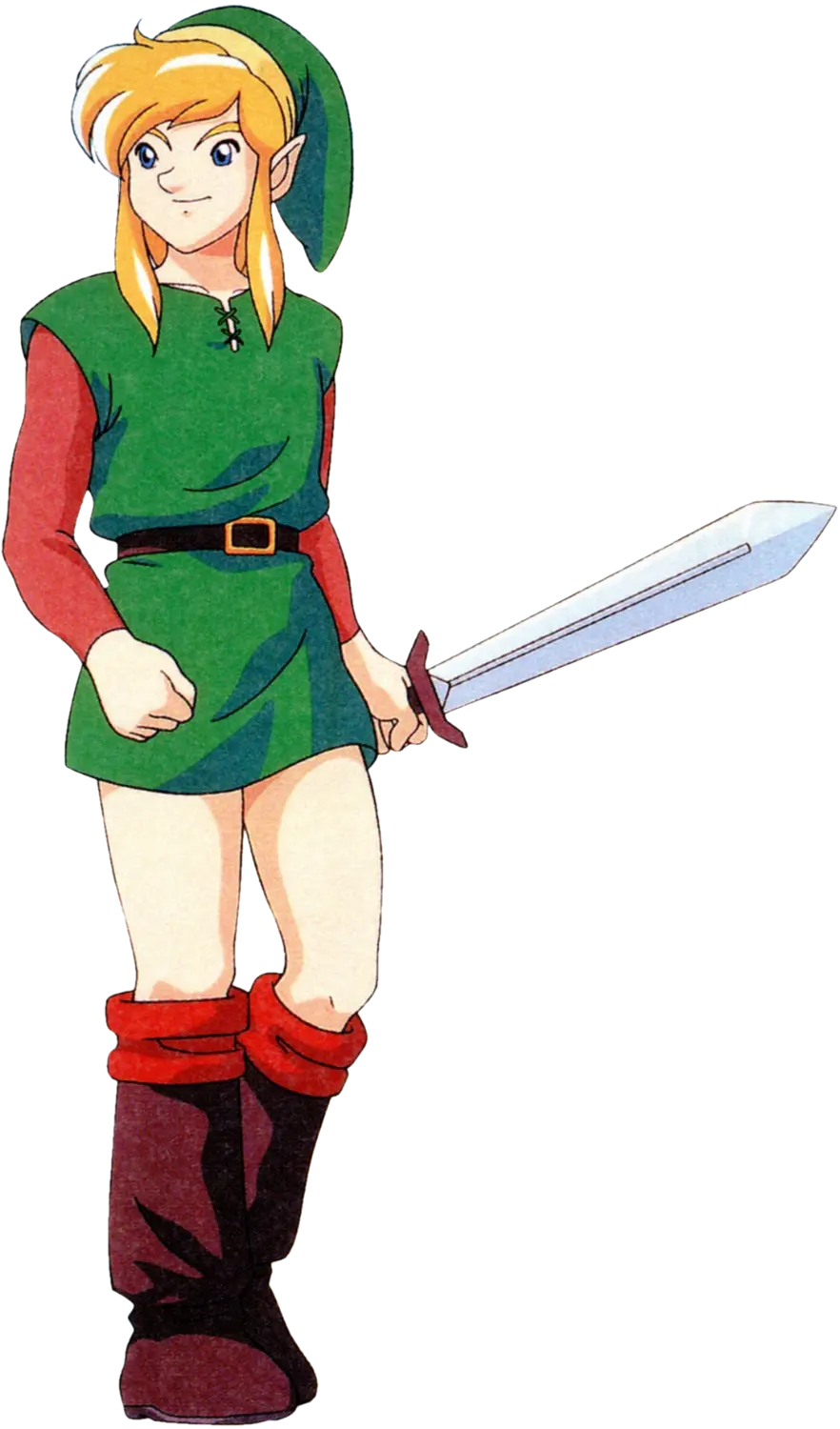
Official artwork of Link used for the DX release.
Yoshinori Tsuchiyama directed. Takashi Tezuka, who had directed the 1993 game, returned as supervisor, but by the staff’s own account in the official guidebook his involvement was slight, because he was supervising Ocarina of Time at the same moment. The two games reached Japan three weeks apart.
The finished game suggests a simple rule: leave the adventure as it was, and put everything new where anyone who wanted the game they remembered could walk straight past it. One hidden dungeon, one shop, one album.
New words and one new tune
The battle with Moldorm in DX.
Nobuo Matsumiya went through the script. The dungeon hints were rewritten for the new owl statues, hint messages were dropped into the boss battles, and odd lines were added around the island. For the English version the text was handled by Jim Wornell, Keiko Tamura and Tamayo Ito.
The soundtrack was left alone except in the Color Dungeon, which needed music of its own. Yuichi Ozaki wrote it as a variation on Koji Kondo’s dungeon theme from the very first Legend of Zelda, a neat nod backwards from a dungeon designed to show off new hardware. Ozaki also wrote music for Super Mario Bros. Deluxe.
A reason to own a Printer
The Camera Shop gave players a reason to plug in another Nintendo product. The Game Boy Printer had come out earlier in 1998, designed mainly as a companion to the Game Boy Camera, but other games could use it too: Wikipedia counts 110 compatible titles in all, 35 of them released outside Japan. DX was among them.
Nintendo’s Japanese site sold the idea as a commemorative photo service: a new photo shop has opened on Koholint, the pictures are free, there are twelve places where the shutter will click, and each one can be printed as a sticker. As a special favour, it even marked all twelve on a map.
Secrets & extras
Everything new in DX is optional, and most of it is easy to miss. This is how to find it all. For the secrets the two versions share (the thief’s nickname, the trading sequence, the Secret Seashells) see the original’s page.
Opening the Color Dungeon
The library in Mabe Village.
Go to the library in Mabe Village and dash into the bookcases with the Pegasus Boots. A book falls from the top shelf with instructions for five gravestones in the south-east corner of the cemetery. According to the Zelda Wiki on Fandom the pushes are down, left, up, right, up, and the stairs appear under the last stone. The same wiki notes two wrinkles: once you have the Power Bracelet you can push the stones without ever reading the book, and the last stone refuses to move if a companion is following Link.
Getting past the guards
The two guards inside the entrance ask Link what colour their clothes are. Answer correctly and they stand aside, telling you the Fairy Queen is waiting. This only works on a Game Boy Color; on a monochrome Game Boy they turn Link away.
Beating the Hardhit Beetle
The Hardhit Beetle, as modelled for the 2019 remake.
The boss heals. Each hit pushes its colour from blue towards red, and a pause lets it slide back, so the fight is about speed. Fandom’s wiki suggests arrows or the Magic Rod if you have them, or jumping over its attacks with Roc’s Feather and laying in with the sword. It is the only boss in the game that leaves no Heart Container behind, apart from the final Nightmare.
Changing tunics
Chosen red and wish you had blue? Clear the Color Dungeon again and the Fairy Queen will let you switch, as many times as you like. What she will not do in DX is give you the green tunic back. The 2019 remake lets Link move freely between all three.
Filling the album
“Say ‘Mushroom!’”, with Tarin squeezing in.
Visit the Camera Shop before anything else, because until you own the album the mouse ignores every other photo opportunity. Four pictures can be lost for good. The three with Marin (the cliff at Toronbo Shores, the well and the weathercock in Mabe Village) are only possible while she is following Link, and the cliff shot closes once the Walrus has been woken. The one with Richard at Kanalet Castle must be taken before the castle gate is opened from inside. The mouse stays away while BowWow or the Flying Rooster is with you.
Two versions of the first photograph
Agree to pose in the Camera Shop and you get the smiling “Here Stands A Brave Man”. Refuse, and keep refusing, and the mouse photographs a stunned Link and calls it “Game Over”. One save file can only ever hold one of the two.
The thief’s portrait
Caught in the act at the Town Tool Shop.
Stealing from the Town Tool Shop already earned Link the name THIEF. In DX it also earns him a photograph, taken by the mouse as he makes off with the goods. If you stole before you ever visited the Camera Shop, the picture is slipped into the album automatically when you get it. The wiki’s sharp-eyed editors point out that the signs in the background are Japanese warnings against shoplifting.
The secret ending, DX style
Marin and the seagull after the credits.
As in the original, finishing the game without dying once adds a scene after the credits. In DX it shows Marin’s face in the sky, which fades to reveal a seagull.
Checked against Nintendo’s Japanese site for the game, Zelda Dungeon and the Zelda Wiki on Fandom, November 2026.
Versions, fixes & regional differences
DX was revised twice after launch, fixed many of the original’s bugs and tidied up some of its cheekier foreign scripts. Most of what follows comes from ZeldaSpeedRuns, whose runners have taken every version apart.
Three revisions
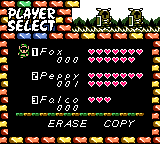
The file select screen in DX.
There are three versions of the DX program: 1.0, 1.1 and 1.2. Version 1.0 still allows several of the original’s movement tricks, known to runners as Bomb Trigger, Extended Ledge Jump, Freeze Blocks and Super Jump. In 1.1 and 1.2 only a limited form of the Super Jump is left.
Screen Warp is gone
The original’s most famous glitch, Screen Warp, which worked in versions 1.0 and 1.2 of the 1993 game, does not work in any version of DX. Neither does the trick runners call No Fishing.
Bomb arrows have different timing
Official art of the Bow.
Firing an arrow into a freshly dropped bomb still makes an exploding arrow, but the timing changed between revisions. In DX 1.0 the arrow can be loosed up to five frames before the bomb is set down; in 1.1 and 1.2 it has to come after.
Tricks only DX has
A glitch in Link’s Awakening DX.
It was not all fixes. A technique called item menu buffering exists only in DX, because the menu animation was changed, and the tricks that rely on it are impossible or far harder in the 1993 game. The pause-menu way of clipping into a pit, likewise, works only in DX. DX is also the version in which runners have managed to jump straight to the credits through the doghouse, using specially chosen file names that only the Japanese version lets you type.
Martha’s necklace
A map of Martha’s Bay in DX.
In the Japanese original the mermaid Martha has lost her bikini top, and the German version of the 1993 game kept that joke, with Martha scolding Link if he dives nearby. The North American script changed the missing item to a necklace. In DX the necklace was used in every version outside Japan, and MobyGames records that the German DX also lost the cheeky remarks made when Link dives next to her.
The German script, cleaned up
A Buzz Blob, as modelled for the 2019 remake.
The 1993 German translation by Claude M. Moyse is notorious for its jokes. Sprinkle Magic Powder on a Buzz Blob and the creature it becomes would say things that translate as “Never without a condom!” and “Give me your juice, I’ll give you mine…”. DX replaced those lines with harmless ones. It also removed Moyse’s musical signature: entering MOYSE as the file name in the German original played a techno version of the opening theme.
The painter’s model
Schule Donavitch’s studio in DX.
In the Japanese game the hippo posing for the painter Schule Donavitch is a nude model who pulls up a towel when Link walks in; most translations of the original removed that, with the German version again the exception. MobyGames’ notes on DX say references to the model posing nude were taken out there too.
Videos & media
We could not find an official trailer for DX on its own, so here is the moment it came back, in Nintendo’s announcement of Game Boy games for Nintendo Switch Online, followed by GameXplain’s graphics comparison of the Game Boy game and the 2019 Switch remake.
Nintendo of America’s announcement from the Nintendo Direct of 8 February 2023. Link’s Awakening DX was one of the nine Game Boy games available that day.
GameXplain’s graphics comparison between the Nintendo Switch remake and the Game Boy game.
Trivia & facts
The Japanese title, Yume o Miru Shima DX, means “The Dreaming Island DX”.
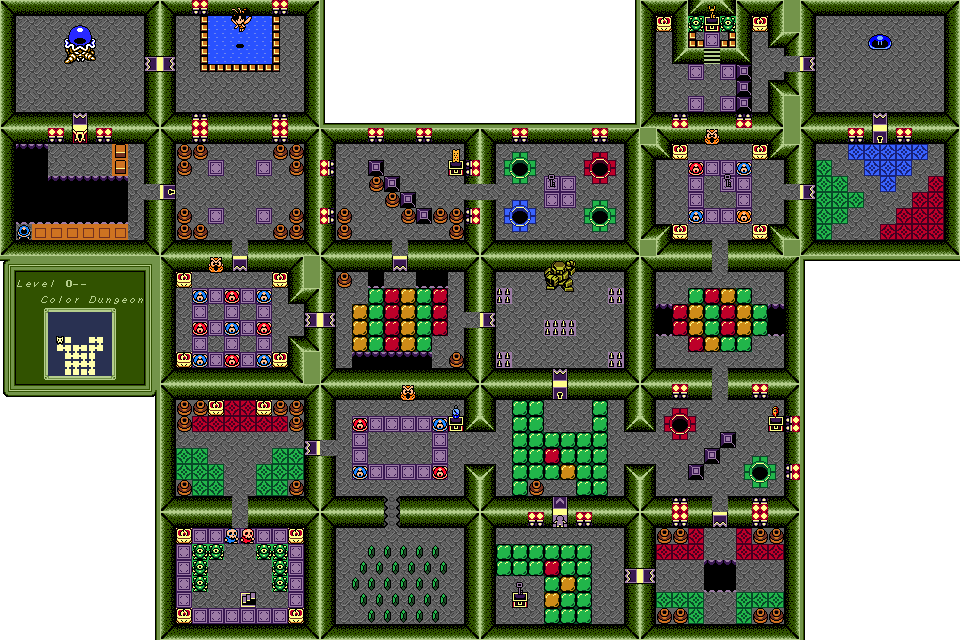
A map of the Color Dungeon.The Color Dungeon has a different name almost everywhere. In Japan it is the Clothes Dungeon, in France the Palais des Couleurs, in French Canada the Temple des Couleurs and in Germany the Labyrinth der Farbe.
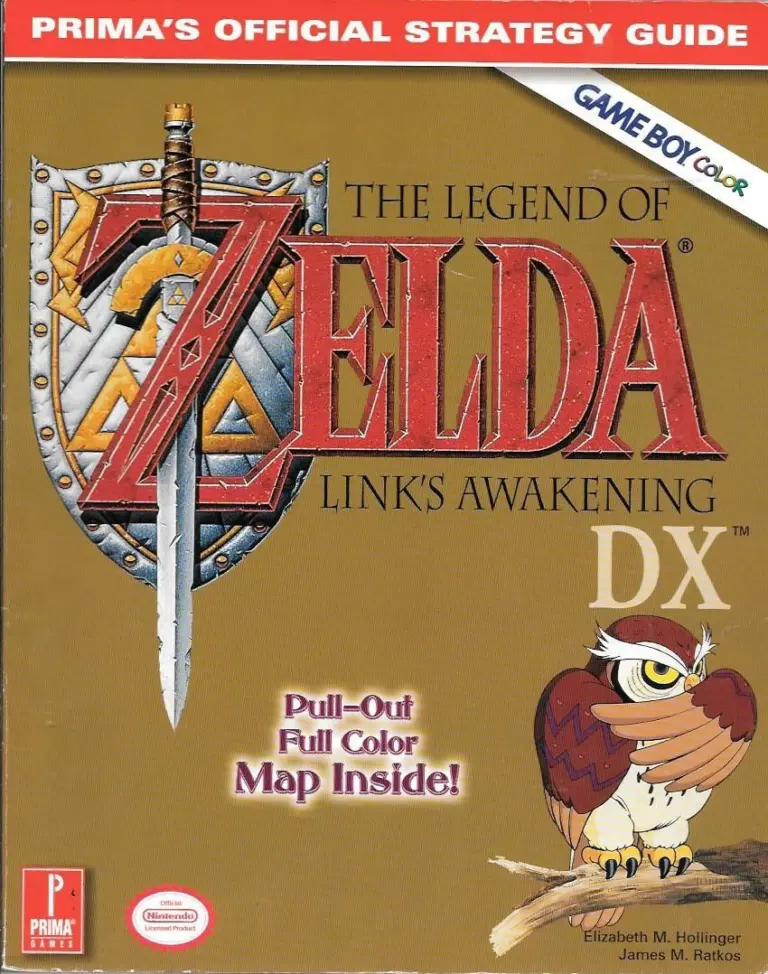
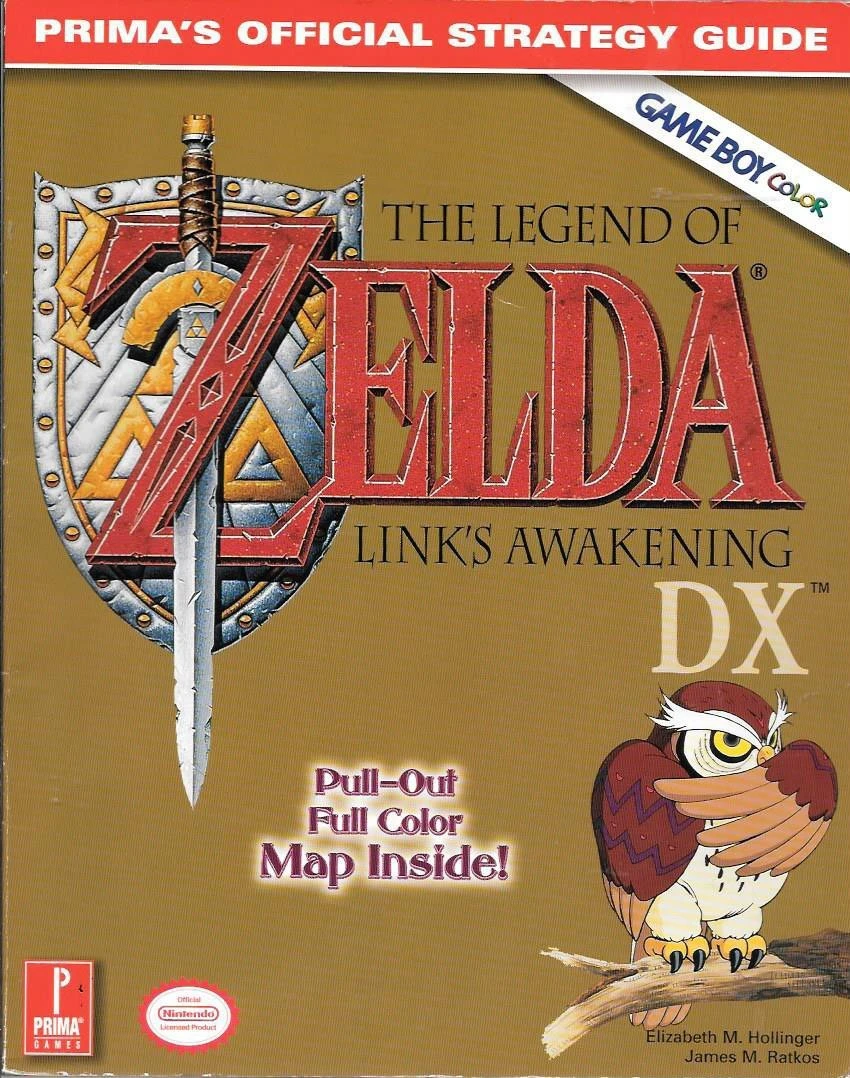
Prima’s official strategy guide for DX.Its boss has collected names too. The 2019 remake calls it the Hardhit Beetle, Nintendo’s Encyclopedia calls it the Evil Orb and Prima’s strategy guide called it D. Poon, close to the Japanese ド・ポーン.
The Giant Buzz Blob, as modelled for the 2019 remake.The Color Dungeon’s music is a reworking of the dungeon theme from the original Legend of Zelda of 1986.
The scene before the photograph “Link Plays With BowWow!”.Before several of the photographs there is a short scene shown through the camera’s viewfinder, and according to the Zelda Wiki on Fandom the colours in those scenes change if Link is wearing the red or blue clothes.
“Link Discovers Ulrira’s Secret!”Nearly half of the photographs are taken in Mabe Village: the well, the weathercock, Ulrira’s window, Madam MeowMeow’s front garden and the Town Tool Shop.
“I Found Zora!”The hidden Zora in the “I Found Zora!” photograph has a tip of his own: he mentions a secret Goriya living in a cave on Toronbo Shores.
North American Nintendo eShop cover of the 3DS release.DX was the first Game Boy Color game on the Nintendo 3DS Virtual Console. Nintendo announced it at its E3 press conference on 7 June 2011 and put it on sale the same day.
It was part of the series’ 25th birthday. In an Iwata Asks interview that summer, Shigeru Miyamoto listed the Virtual Console release alongside Ocarina of Time 3D, Skyward Sword and the free Four Swords download as the Zelda games to play in 2011, and Satoru Iwata called it “the year of The Legend of Zelda”.
The Japanese Nintendo eShop icon of the 3DS release.By one analyst’s estimate, the 3DS download earned more than any other downloadable game on the system in 2011, with about 338,700 copies sold.
When Game Boy games came to Nintendo Switch Online in February 2023, DX was one of nine launch titles, next to Tetris, Super Mario Land 2, Metroid II, Kirby’s Dream Land, Wario Land 3, Gargoyle’s Quest, Game & Watch Gallery 3 and Alone in the Dark: The New Nightmare.
The Color Dungeon in the 2019 remake.The Color Dungeon outlived the photographer. Grezzo kept it for the 2019 Switch remake, adding shapes to the puzzle pieces and cracks to the Hardhit Beetle’s shell so that colour-blind players could follow along, while the Camera Shop made way for Dampé’s shack.
Nintendo’s UK page lists the Game Boy Color cartridge as available in English, German and French.
Wikipedia’s list of games that worked with the Game Boy Printer runs to 110 titles. Only 35 of them, DX included, were released outside Japan.
Media & artwork
Box art, official artwork, the photographs from Link’s album and screenshots of the Game Boy Color version. Select any image to view it larger.
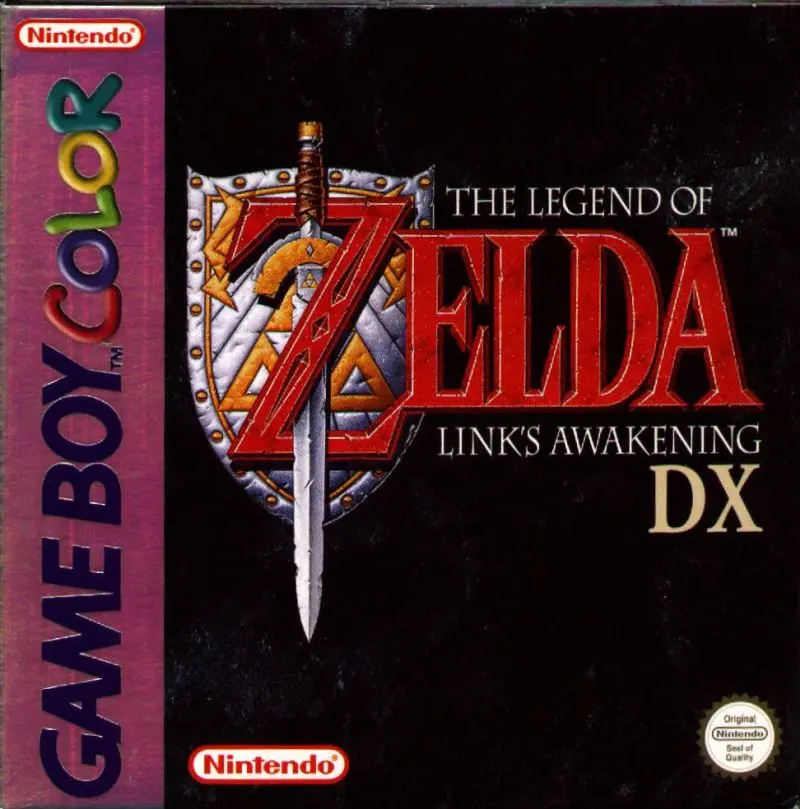
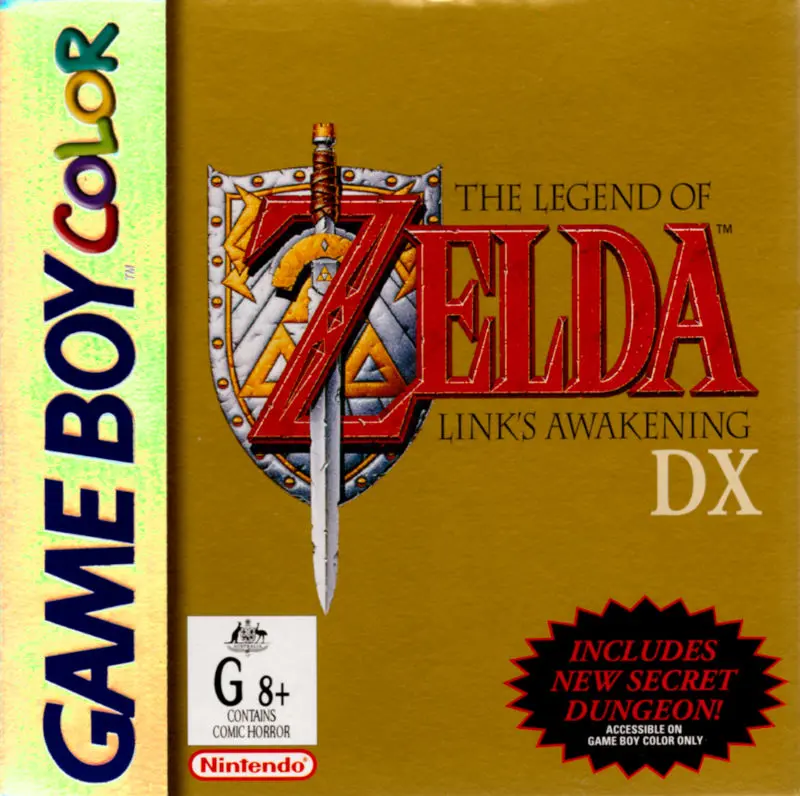
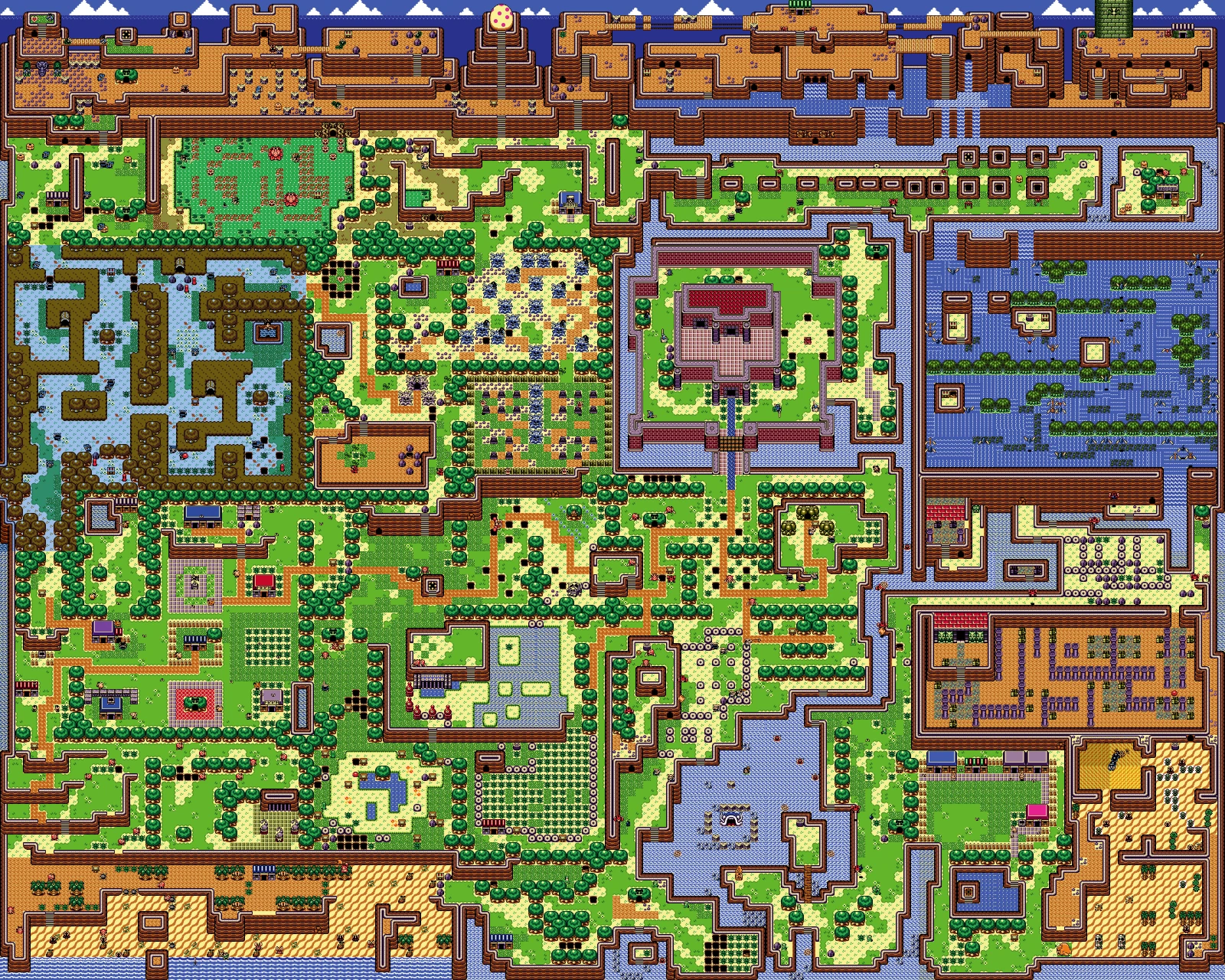
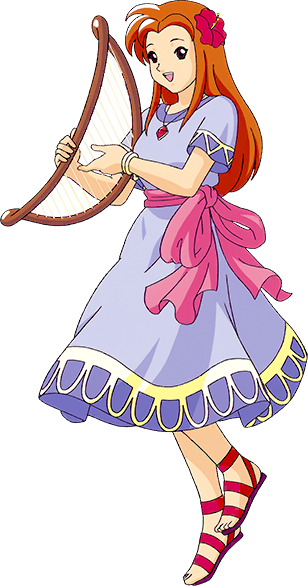
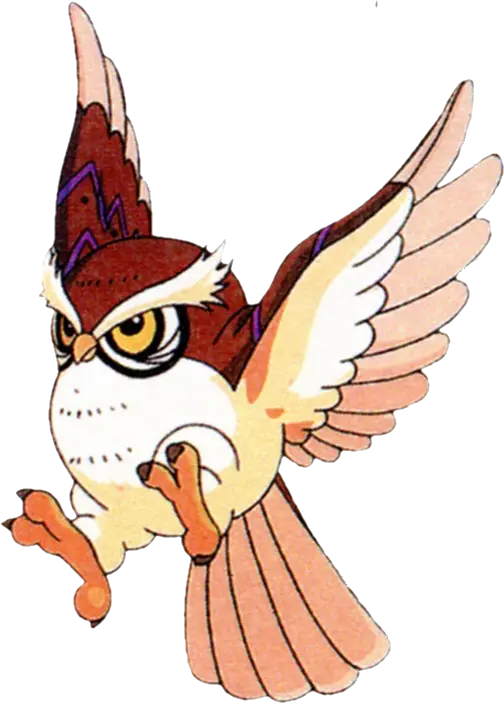
European Game Boy Color box (1999)Australian Game Boy Color box (1999)Japanese logoMap of Koholint Island in DXOfficial art of Marin for DXThe owl, from the DX manualMarin, from Futabasha’s guide to DX“Link Plays With BowWow!”, from the album“I’ve Just Decided to Wait at Home”, from the albumNorth American box of the 2019 Nintendo Switch remake
DX did not just replace the original on shop shelves. It became the standard edition of Link’s Awakening, the one Nintendo has brought back twice.
Release history
Game Boy Color (Japan)12 December 1998 – Released as Zeruda no Densetsu: Yume o Miru Shima DX at ¥3,500 before tax.
Game Boy Color (North America)Late 1998 – Sources disagree on the day; 1 December and 15 December are the dates most often given.
Game Boy Color (Europe and Australia)January 1999 – Europe in January 1999; Australia on 22 January 1999.
Official guidebook20 February 1999 – Shogakukan’s Nintendo Official Guidebook, with the development staff questionnaire.
Nintendo 3DS Virtual Console7–8 June 2011 – North America on 7 June, the day it was announced at E3; Europe and Japan on 8 June. No Game Boy Printer features.
Club NintendoJuly 2013 – A free reward for North American members with elite status.
Link’s Awakening (Nintendo Switch)20 September 2019 – Grezzo’s remake keeps the Color Dungeon and drops the photographer.
Nintendo Switch Online8 February 2023 – One of nine launch games in the Game Boy library. Nintendo’s UK page gives the same date for Europe; Super Mario Wiki lists 9 February for Japan and Australia.
Nintendo 3DS eShop closes27 March 2023 – The Virtual Console version can no longer be bought.
Back on Nintendo 3DS
North American Nintendo eShop cover of the 3DS release.
The Nintendo eShop opened on the 3DS on the evening of 6 June 2011 in North America, with a handful of original Game Boy games. The next day, during its E3 press conference, Nintendo announced that Link’s Awakening DX was joining them at once, as the service’s first Game Boy Color game and part of the series’ 25th anniversary. It cost $5.99 in the United States. Europe got it on 8 June. It was one of several Zelda releases that anniversary year, alongside Ocarina of Time 3D and the free Four Swords Anniversary Edition, which followed that September.
The Virtual Console version is the 1998 game with conveniences: the Circle Pad can be used to steer Link, and a restore point lets you stop anywhere and pick up where you left off. Jacob Crites of Nintendo Life thought it “ends up playing even better on the 3DS” and gave it full marks. The only loss was the Game Boy Printer link.
Game Boy – Nintendo Switch Online
On 8 February 2023 a Nintendo Direct announced Game Boy and Game Boy Color games for Nintendo Switch Online, available later the same day, and DX was in the first nine. Unlike the Game Boy Advance library, which needs the Expansion Pack, the Game Boy games come with the standard membership.
This is the easiest way to play DX now. The app, since renamed Game Boy – Nintendo Classics, adds a rewind held on ZL and ZR, saving at any moment, and a choice of Game Boy, Game Boy Pocket or Game Boy Color screen filters, and it runs on both Nintendo Switch and Nintendo Switch 2.
What the 2019 remake kept
The Color Dungeon rebuilt by Grezzo.
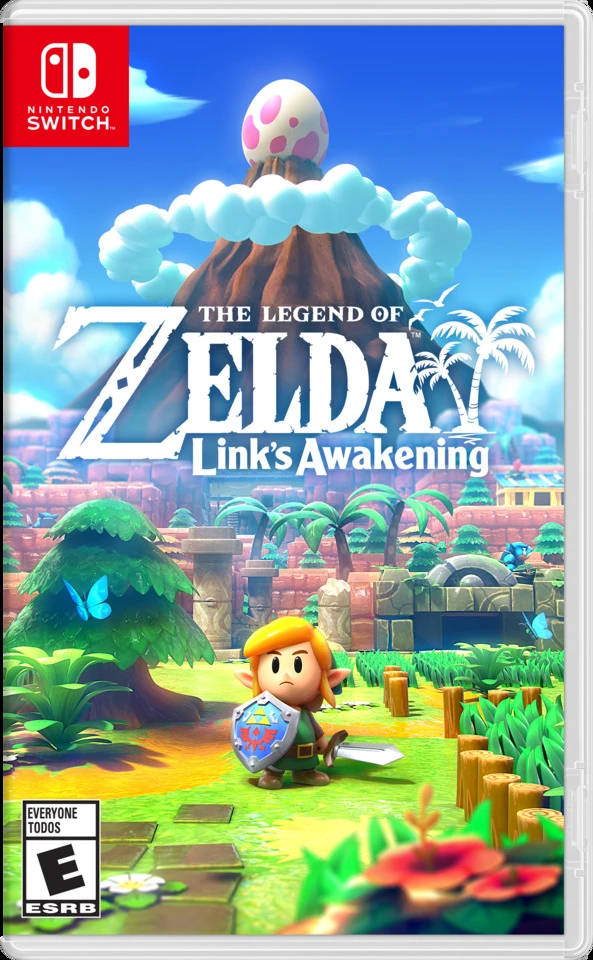
Grezzo’s 2019 rebuild for Nintendo Switch draws on DX as well as the 1993 original. The remake includes the Color Dungeon and its two tunics, now called the Red Mail and Blue Mail and freely swappable with the green one. The photographer did not make the trip: his shop became Dampé’s shack, home of the Chamber Dungeons.
The fan port Nintendo shut down
In December 2023 a fan calling themselves linksawakeningdxhd released Link’s Awakening DX HD, an unofficial PC version of the Game Boy Color game with widescreen support, sharper visuals and scrolling at up to 120 frames per second. It was hosted on itch.io. Within days Nintendo’s lawyers sent a takedown notice claiming it infringed the company’s copyright in the original game, and the download was removed; Nintendo Life reported the removal on 15 December 2023.
Where to play it today
Link’s Awakening DX is part of the Game Boy library included with a Nintendo Switch Online membership, playable on Nintendo Switch and Nintendo Switch 2. The Nintendo 3DS version can no longer be bought, because the 3DS eShop stopped taking purchases on 27 March 2023. An original cartridge in a Game Boy or Game Boy Color remains the only way to print the photographs. If you want the black-and-white 1993 game instead, it is built into the 2021 Game & Watch: The Legend of Zelda, and the full remake is on Nintendo Switch.
Sales & reviews
Sales figures
Link’s Awakening DX sold 2.22 million copies on Game Boy Color, the figure given in Zelda Universe’s 2008 round-up of officially reported Zelda sales and repeated by Wikipedia. Added to the original’s 3.83 million, that makes 6.05 million for the two Game Boy versions together.
Its second life was lucrative too. According to estimates published in February 2012 by the analysts FADE (Forecasting & Analyzing Digital Entertainment), the Nintendo 3DS Virtual Console release earned more than any other downloadable 3DS game in 2011, with about 338,700 copies sold and $2.3 million in revenue. The figures are not official, and 3D Classics: Excitebike, free for part of the year, was downloaded more often. Nintendo does not publish figures for individual Nintendo Switch Online games.
2.22mGame Boy Color copies
6.05moriginal and DX combined
338,700estimated 3DS downloads in 2011
Reception and review scores
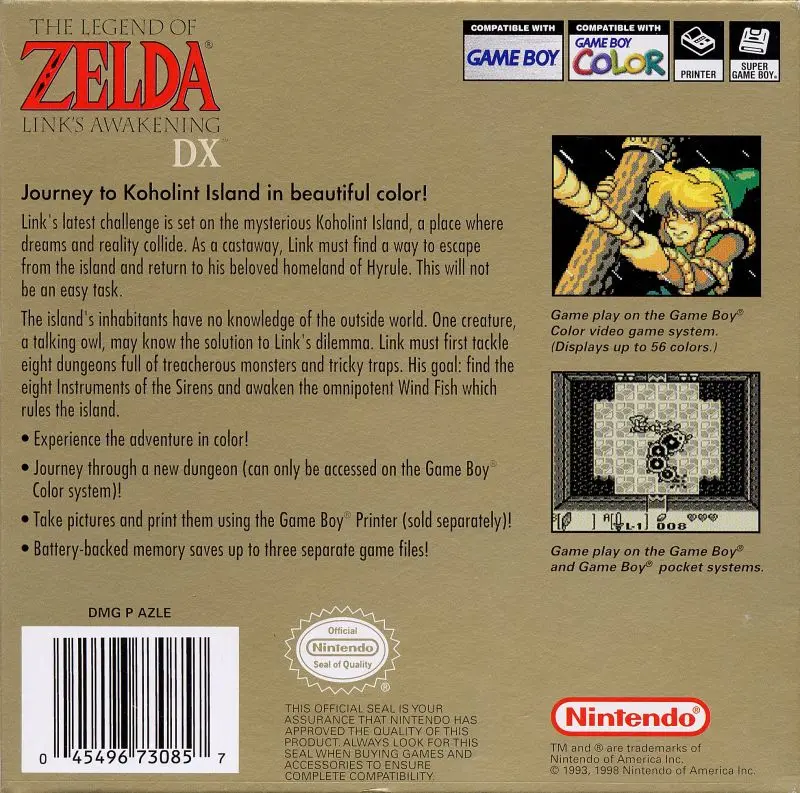
The back of the North American box.
DX was reviewed twice over: on Game Boy Color between 1998 and 2001, and on Nintendo 3DS in 2011 and 2012. These are the scores recorded by Wikipedia from each outlet, plus Nintendo Life’s own page; scores not out of 100 are converted.
Computer and Video GamesUK · Paul Davies, issue 208, March 1999
5/5
Planet Game BoyUK · Jes Bickham, issue 1, June 1999
5/5
Nintendo Life3DS Virtual Console · Jacob Crites, 14 June 2011
10/10
Total Game BoyUK · issue 2, 1999
95%
IGN3DS Virtual Console · Lucas M. Thomas, June 2011
The pattern in 1999 was consistent: a brilliant game, lightly improved. AllGame’s Colin Williamson called DX a “paint job” on what was “essentially the same game”, and EGM found it not very different from the original, while still handing out four scores of 9 or above. The colour was welcomed, the photographs and the Printer link were enjoyed, and the Color Dungeon was the part reviewers liked least. RPGFan, which reviewed the game twice and scored it 83% and 85%, wished the colour-coded puzzles had not been confined to one dungeon. GameRankings put the average of ten reviews at 91%. Wikipedia’s article on the original adds that IGN’s Adam Cleveland gave the Game Boy Color release a perfect score in September 1999.
The reviews of the 3DS release were, if anything, warmer. Nintendo Life gave it 10 out of 10. IGN’s Lucas M. Thomas praised it while noting that the image was a little softer when stretched to the 3DS screen and that the Printer features had gone. RPGFan’s Abraham Ashton Liu preferred the 3DS save states to the cartridge’s “unwieldy and archaic” way of saving, and Nintendo Power twice picked it out as one of the best things on the eShop.
Opinion on DX itself has become more divided with time. In a Nintendo Life round-table for the game’s 30th anniversary in 2023, one writer said it was “bursting with colour” and instantly more appealing than the original, while Gavin Lane felt it “just didn’t add anything unmissable”. His colleague Stuart Gipp had gone further in 2021, calling DX a step down because of its extra dungeon and its “garish lick of paint”. Retro Gamer, in 2019, took the opposite view: the palette and the new features, it said, “breathe new life” into the game.
Honours and rankings
Electronic Gaming Monthly · 1999Editor’s ChoiceListed among DX’s honours in Wikipedia’s table of reviews.
Nintendo Power · December 1999Game Boy Top 10One of several best-of-Game-Boy lists to include it, with GamePro (1999), Game Boy Official Magazine (2001) and Pocket Games (2001).
Nintendo Power · August 20082nd best Game Boy or Game Boy Color gameFrom the magazine’s 20th anniversary issue.
Official Nintendo Magazine · February 200925th of the 100 Best Nintendo GamesThe UK magazine’s all-time list.
Digital Trends, GameSpot, TheGamer · 2021–2023Best Game Boy Color gamesNamed in each site’s list of the system’s best.
Reader reviews
No reader reviews yet. Played it? Give it a score out of 10 and tell other fans what you think.
Every fact on this page was checked against the sources below in November 2026. Zelda Wiki (zeldawiki.wiki), The Cutting Room Floor, IGN, RPGFan and the Internet Archive could not be read automatically, so magazine and IGN scores are given as Wikipedia records them, and the 1999 staff questionnaire is used only as Wikipedia reports it.
To provide the best experiences, we use technologies like cookies to store and/or access device information. Consenting to these technologies will allow us to process data such as browsing behavior or unique IDs on this site. Not consenting or withdrawing consent, may adversely affect certain features and functions.
Functional
Always active
The technical storage or access is strictly necessary for the legitimate purpose of enabling the use of a specific service explicitly requested by the subscriber or user, or for the sole purpose of carrying out the transmission of a communication over an electronic communications network.
Preferences
The technical storage or access is necessary for the legitimate purpose of storing preferences that are not requested by the subscriber or user.
Statistics
The technical storage or access that is used exclusively for statistical purposes.The technical storage or access that is used exclusively for anonymous statistical purposes. Without a subpoena, voluntary compliance on the part of your Internet Service Provider, or additional records from a third party, information stored or retrieved for this purpose alone cannot usually be used to identify you.
Marketing
The technical storage or access is required to create user profiles to send advertising, or to track the user on a website or across several websites for similar marketing purposes.