A Link to the Past Shotaro Ishinomori’s comic · 12 chapters
The creator of Cyborg 009 and Kamen Rider retells the Super NES classic in twelve full-colour monthly chapters, and gives Link a family history, a fairy guide and a doomed rival the game never had.
Story & artShotaro Ishinomori
Chapters12, one per issue
First runNintendo Power, January–December 1992
BookCollected in 1993
JapanShogakukan, 1993
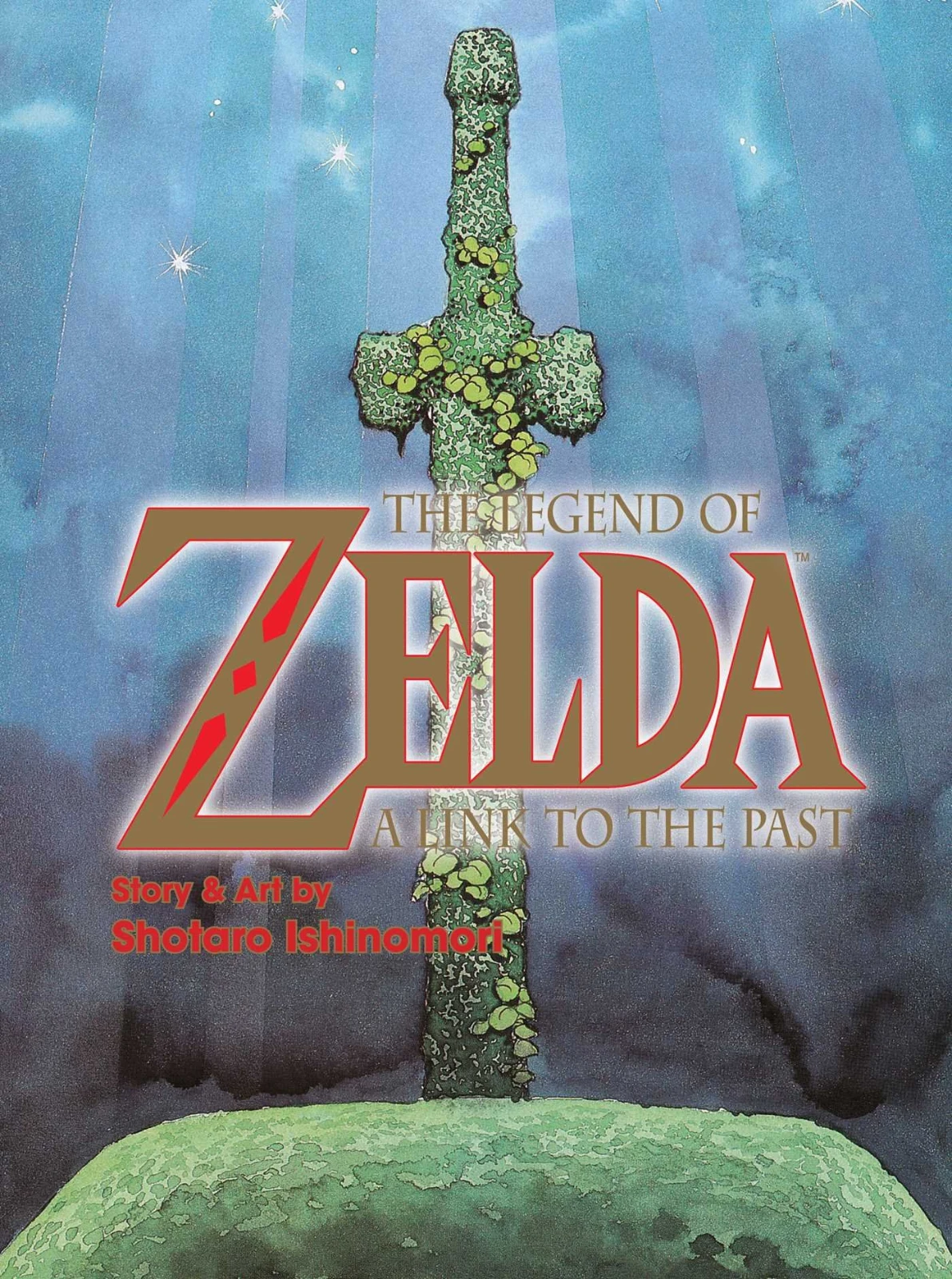
ReissueVIZ Media, 5 May 2015
Title
The Legend of Zelda: A Link to the Past
Japanese title
ゼルダの伝説 (Zelda no Densetsu)
Story & art
Shotaro Ishinomori
English text
Dan Owsen (listed as co-writer by one review, as translator by another)
Serialised in
Nintendo Power vols. 32–43 (January–December 1992), USA
Chapters
12
Format
Full colour, read left to right
Collected
1993 (publisher not confirmed)
Japanese edition
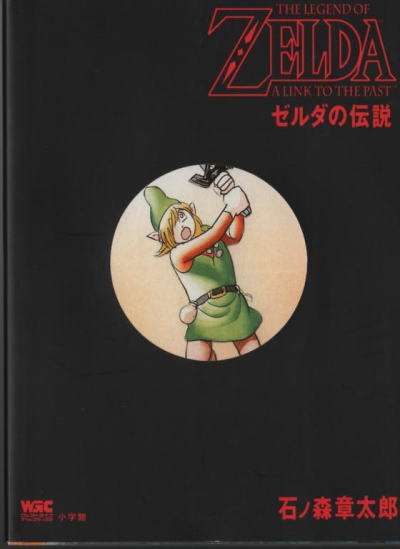
Shogakukan, Wonder Life Game Comics, 1 April 1993 (per Mangapedia)
Reissue
VIZ Media (Perfect Square imprint), 5 May 2015, 196 pages, ISBN 978-1-4215-7541-4
Other languages
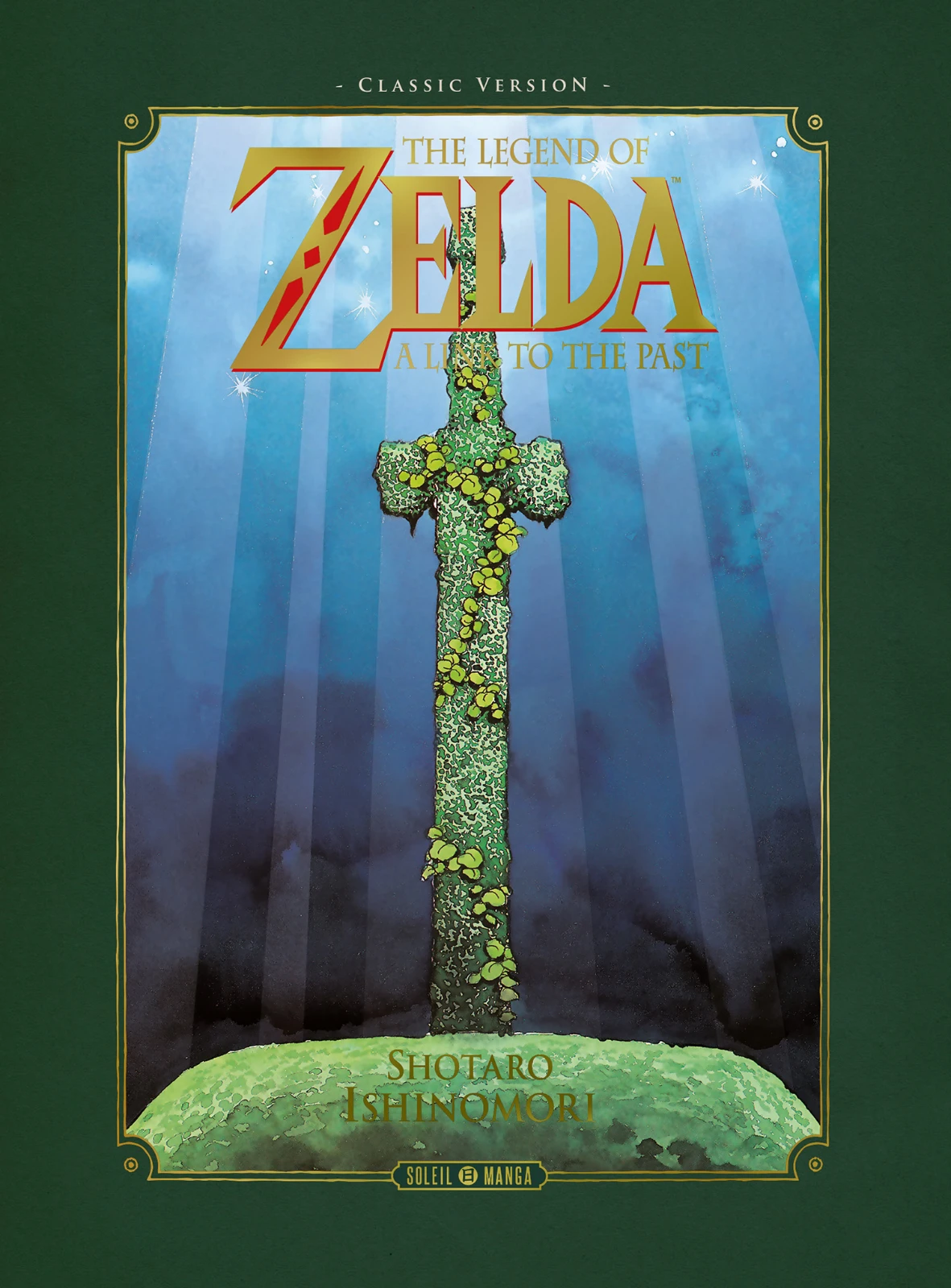
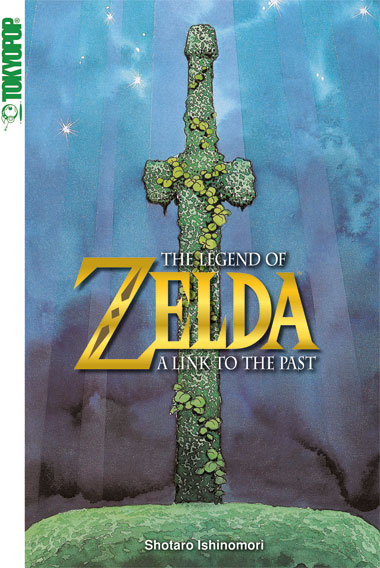
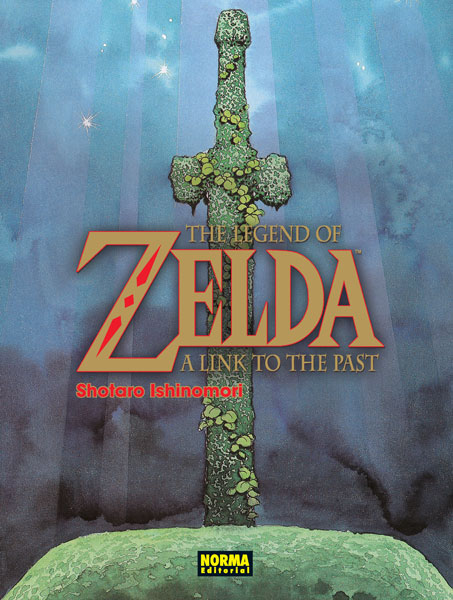
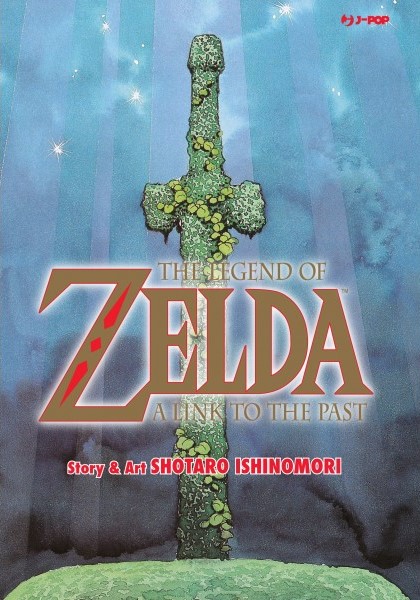
French (Soleil), Spanish (Norma Editorial), Italian (J-Pop), German (Tokyopop), Brazilian Portuguese (Panini)
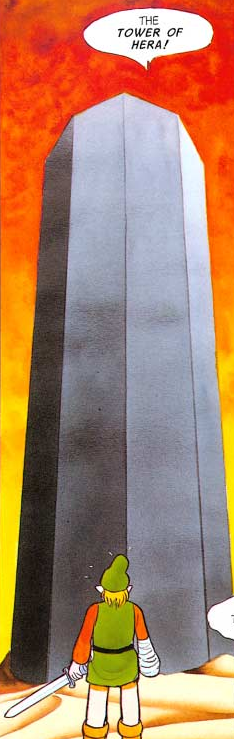
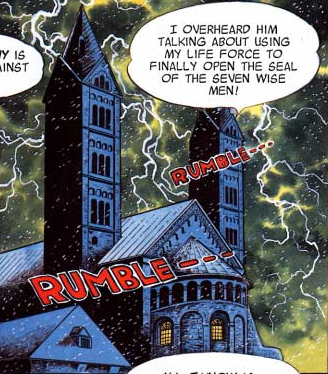
The Tower of Hera, one of Ishinomori’s drawings for the comic.
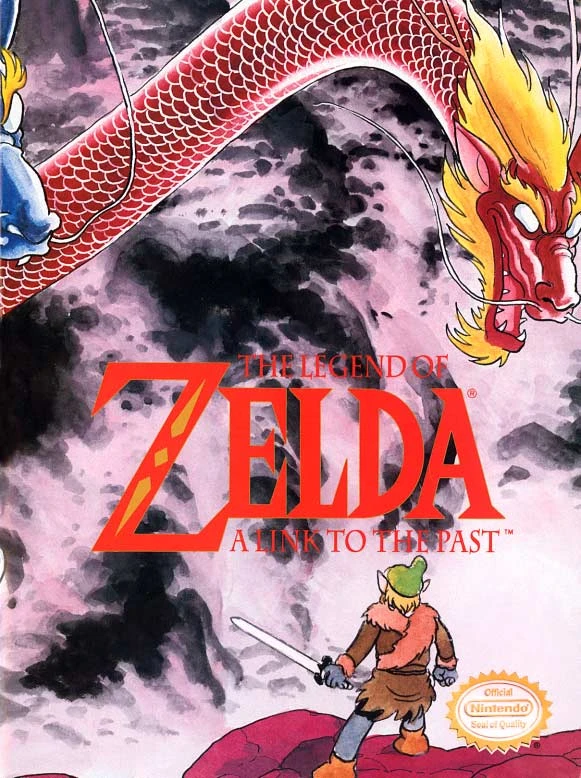
For twelve months in 1992, every issue of Nintendo Power came with a new instalment of Hyrule’s latest adventure. From volume 32 (January) to volume 43 (December) the magazine ran a full-colour serial of The Legend of Zelda: A Link to the Past, written and drawn by Shotaro Ishinomori, one of the giants of Japanese comics and the man behind Cyborg 009 and Kamen Rider. A collected edition followed in 1993. Then the book quietly vanished for more than twenty years, until VIZ Media brought it back in May 2015 and it shot straight to the top of the New York Times manga chart.
The skeleton is the game’s: a telepathic plea from Zelda, an uncle dying in the castle, three pendants, the Master Sword, then a fall into the Dark World to free the maidens and face Ganon. What Ishinomori hangs on it is all his own. Link starts out a clumsy, uncertain boy and grows into a hero. His parents, it turns out, were Knights of Hyrule swallowed by the Dark World. A fairy called Epheremelda guides him and squabbles with him, and a proud knight named Roam, who turns into an eagle when he fights, competes with him for the right to be the legendary hero, with tragic results.
It is not quite a manga in the usual sense. It was made for an American magazine, published in English first and read left to right, which is why Zelda Dungeon calls it, strictly speaking, an original English-language manga. The Japanese edition came afterwards, from Shogakukan in 1993. Below you will find a guide to all twelve chapters, the characters the comic adds, how it reshapes the game, and the story of its editions and comeback.
This comic book version by Shotaro Ishinomori (Cyborg 009, Kamen Rider) was first serialized in Nintendo Power magazine…
— VIZ Media’s description of the 2015 edition (an excerpt)
VIZ’s description goes on to say that the book had long been out of print and was available again in full colour. The April 2015 press release went further: the comic was back “for the first time in more than two decades”.
Chapter guide
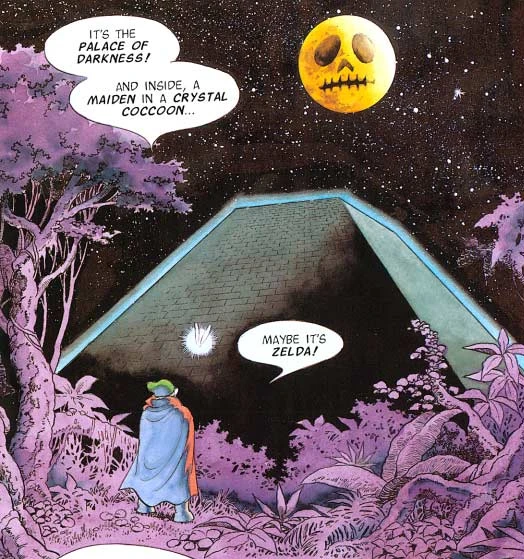
The Palace of Darkness, which goes up in smoke in chapter 7.
The comic ran as twelve chapters in twelve consecutive monthly issues of Nintendo Power, so chapter 1 appeared in volume 32 (January 1992) and chapter 12 in volume 43 (December 1992). The titles below are as Zelda Dungeon lists them. Our summaries are built on the chapter-by-chapter synopsis kept by the Zelda Wiki on Fandom, checked against reviews of the 2015 edition; under each one you will find what the chapter changes from the game. Spoilers follow, including the ending.
Chapter 1: Hero’s Awakening
Nintendo Power vol. 32 · January 1992
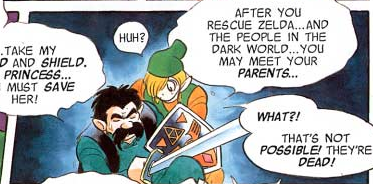
A voice wakes Link in the night: Princess Zelda, a prisoner in Hyrule Castle, is calling for help. His uncle has already gone, and when Link follows the call he arrives just in time to see the wizard Agahnim strike his uncle down in a duel. Dying, the old man gives Link his sword and shield and tells him that if he can save Zelda and the people trapped in the Dark World, he may yet meet his parents. Link slips past two guards, frees the princess and leads her by lantern through a hidden passage to the Sanctuary. There Zelda and the old man who keeps the Sanctuary explain the danger: Agahnim plans to drain the life force of the Seven Wise Men’s descendants, break open the gateway to the Golden Land and free the evil locked within. Zelda is sure that Link is the hero said to appear once in a hundred years. Then Agahnim arrives, brushes Link aside and carries her off, but not before she tells him the one thing that matters: only the Master Sword can hurt the wizard.
From game to page
In the game Link finds his uncle already wounded in the castle’s secret passage; here he watches Agahnim kill him.
Agahnim takes Zelda back from the Sanctuary at once, in person. In the game she is seized later, while Link is away on his quest.
The uncle’s last words open a mystery about Link’s parents that the game never raises.
Chapter 2: Wise Man’s Warning
Nintendo Power vol. 33 · February 1992
Agahnim, now ruling in the king’s name, has Link declared a wanted man for kidnapping the princess. The old man of the Sanctuary sends him to look for Sahasrahla, who is descended from the Wise Men, but at the elder’s house in Kakariko Village there is only his wife: Sahasrahla left once he learned that Agahnim was behind the missing maidens. She tells Link about old scrolls that describe a vanished, prosperous people, their weapons and the Master Sword, a blade that evil cannot withstand, resting in the Lost Woods. A villager secretly working for Agahnim calls the soldiers, and Link escapes with the help of a boy whom Sahasrahla had asked to watch over his wife. The boy sends him to the Eastern Palace, where Sahasrahla doubts that anyone so young could seek the sword. Even so, he explains the three Pendants of Virtue and gives Link the first of them, the Pendant of Courage. When the soldiers catch up, its power lets Link beat their leader and scatter the rest, and he sets out after the other two.
From game to page
Sahasrahla simply hands over the Pendant of Courage. In the game Link has to fight through the Eastern Palace and beat the Armos Knights to win it.
The comic adds a family for Sahasrahla in Kakariko (his wife) and a village boy who becomes one of Link’s helpers.
Chapter 3: Book of Mudora
Nintendo Power vol. 34 · March 1992
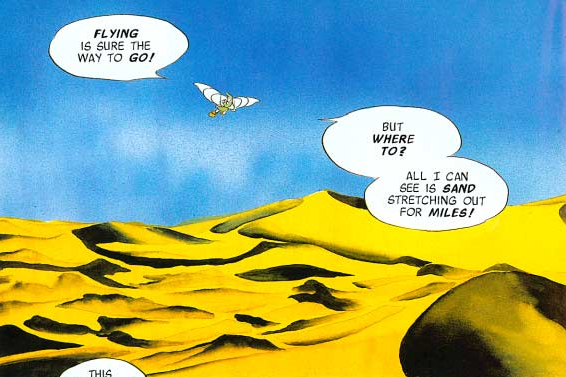
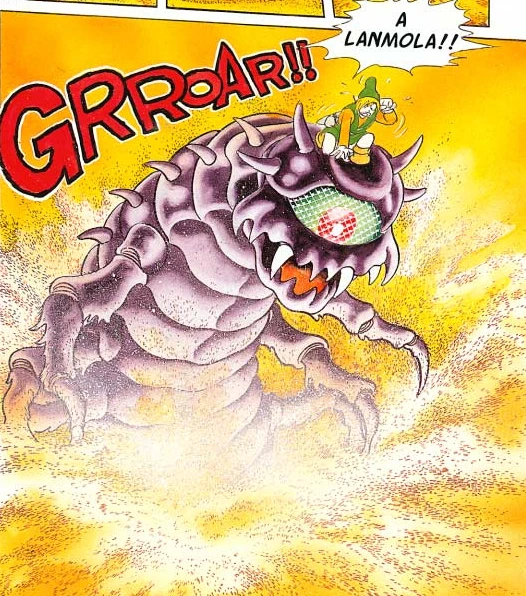
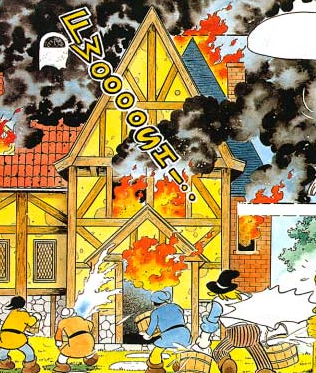
Told that the boy has a pendant, Agahnim orders the Knight’s Line wiped out: he had believed Link’s uncle was the last of that bloodline. He also fixes the full moon as the night of his final spell on Zelda. Back in Kakariko, soldiers have set the House of Books on fire. Link soaks the trapped librarian with water and drags him clear, and the grateful scholar, sure the raiders were after the Book of Mudora, which unlocks the old Hylian script, decides that this is the hero of the prophecy and hands the book over. The Pendant of Power lies in desert ruins that have beaten tougher adventurers, so the boy remembers a glider Sahasrahla once showed him, wings woven by the Hylian sages that, the librarian explains, belonged to the great bird the old knights rode into battle. Link sails across the Desert of Mystery, reads the runes of the Desert Palace and watches the ruins sink to reveal a scorpion statue holding the pendant. Then the sand swallows him and he lands on a Lanmola that his sword cannot even scratch; only the pendant’s energy saves him.
From game to page
The game’s Book of Mudora sits on a shelf in Kakariko’s library and is knocked down with the Pegasus Boots. Here the library burns and the book is rescued and given to Link.
Link flies to the desert on a glider instead of walking in.
There is no dungeon to explore: the palace sinks, and a single Lanmola stands in for the game’s trio of Lanmolas.
Chapter 4: The Master Sword
Nintendo Power vol. 35 · April 1992
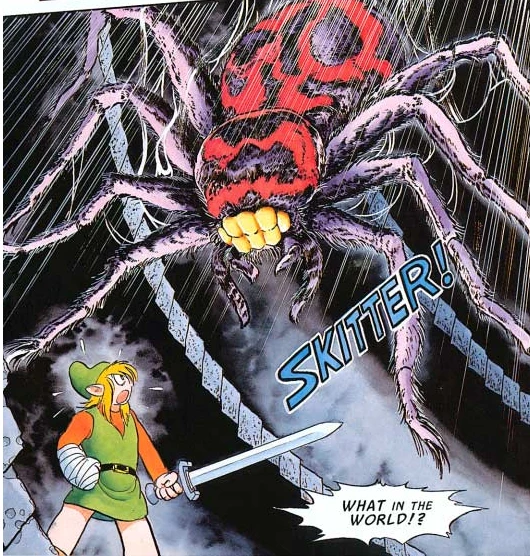
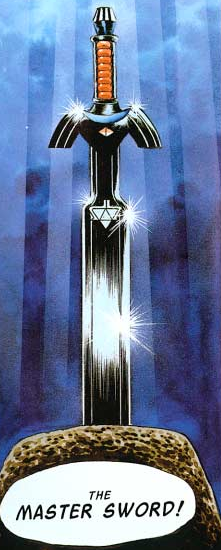
A sandstorm wrecks the glider, and Link walks to Death Mountain with Sahasrahla’s voice guiding him from afar. There he finds a portal into the Dark World, and through it his uncle standing beside a man and a woman whom he takes to be his parents. He reaches for his mother’s hand, and the moment his arm crosses into the portal it turns into a claw. The Dark World, Sahasrahla warns, shapes each person to match their heart, and Link’s hatred of Agahnim would make a beast of him. That night Zelda finds him in a shared dream (when two people dream the same dream, she explains, they meet), and the worn-out boy falls asleep in her lap, still grumbling about his arm. He wakes, bandaged, outside the Tower of Hera. At the top a giant spider guards the Pendant of Wisdom, set in one of its eyes; Link takes it, his arm heals and he rides the spider down. In the Lost Woods Sahasrahla tells him the truth: his parents were Knights of Hyrule who strayed into the Dark World, and his uncle adopted him to keep him clear of royal intrigue. Still doubting himself, Link draws the Master Sword.
From game to page
The Tower of Hera’s guardian is a giant spider, not the game’s Moldorm.
Link gets a taste of the Dark World early. The claw arm plays the part of the game’s rule that anyone entering without the Moon Pearl changes into an animal.
The backstory of Link’s parents, Knights of Hyrule lost in the Dark World, is the comic’s own invention.
Chapter 5: An Old Enemy
Nintendo Power vol. 36 · May 1992
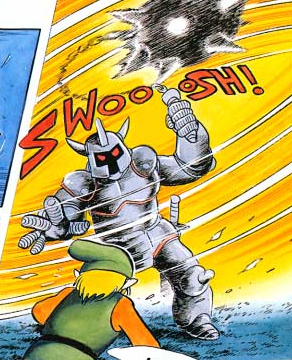
Sword in hand, Link flattens three Ball and Chain Troopers in one spin attack and falls asleep, until Zelda wakes him by telepathy. Only one night is left before Agahnim’s last incantation opens the way to the Dark World, she warns, and she reminds him that his parents were lost to it for the same reason. Every approach to the castle is guarded, so the librarian proposes a hot-air balloon. In the castle Ganon makes contact with Agahnim and warns him that someone full of fierce emotion is on the way, and the wizard decides to wait, so that Link can watch Zelda vanish. The balloon sets Link down on the highest tower; he cuts through the guards and reaches Agahnim in the middle of the spell. Sahasrahla warns him that the Master Sword cannot harm the wizard’s body, and so it proves: the blade passes straight through. A look from Agahnim freezes Link where he stands, and he can only watch as Zelda is sent into the Dark World. While the wizard gloats, the Master Sword begins to shine.
From game to page
Link reaches the castle tower by balloon. In the game he cuts through the magic barrier at the castle with the Master Sword and climbs the tower on foot.
Ganon is an active presence from the middle of the story; the game keeps him out of sight until Agahnim has fallen for good.
Chapter 6: A Fool in the Shape of a Tree
Nintendo Power vol. 37 · June 1992
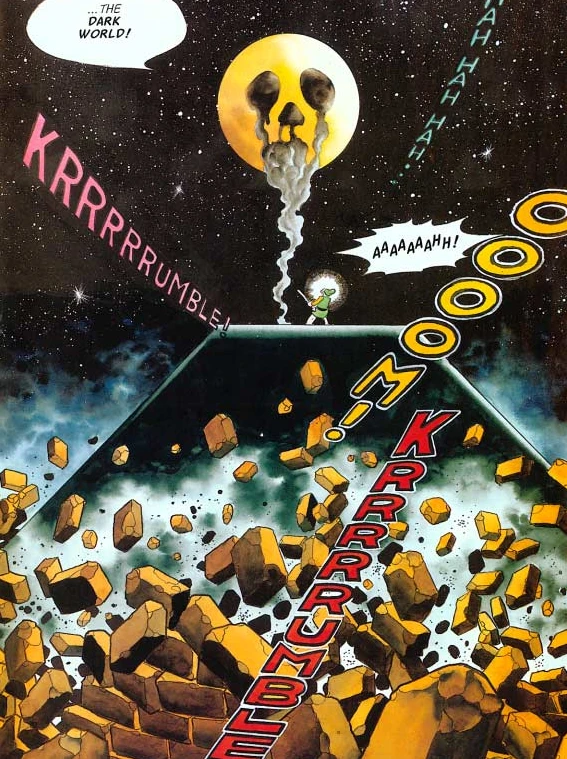
Link’s fury flows into the shining blade and the castle starts to crack. Sahasrahla tells him the blade was made to repel evil magic too, so Link sends Agahnim’s own spells back at him and wins. Dying, the wizard warns that killing him does nothing to mend the Wise Men’s seal, and his final act is to fling Link into the Dark World while the castle falls apart and the Pyramid of Power appears in its place. For a moment Link’s anger begins to change him into a beast, but he masters it and keeps his human shape. Resting in a shrine, he hears the history of the Triforce from a small talking tree: a thief named Ganondorf once found his way into the Golden Land and laid hands on the Triforce, and his touch twisted that land into the Dark World; men from Hyrule who carried evil thoughts were changed into monsters, the tree among them. Link must defeat Ganondorf and win back the Triforce. He wakes unsure whether it was a dream, just as three thieves and a Hinox arrive demanding a fairy called Epheremelda. Link beats them, partly by throwing the Hinox’s own bombs back at it, and when the smoke clears the fairy is beside him.
From game to page
There is no Moon Pearl. Link keeps his human form in the Dark World by controlling his emotions.
The history of the Golden Land comes from one of the people it ruined, a man turned into a tree.
Epheremelda, a fairy companion, is the comic’s addition; the game gives Link no partner.
Chapter 7: Zora’s Mask
Nintendo Power vol. 38 · July 1992
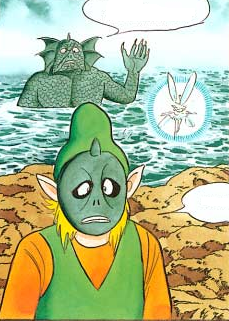
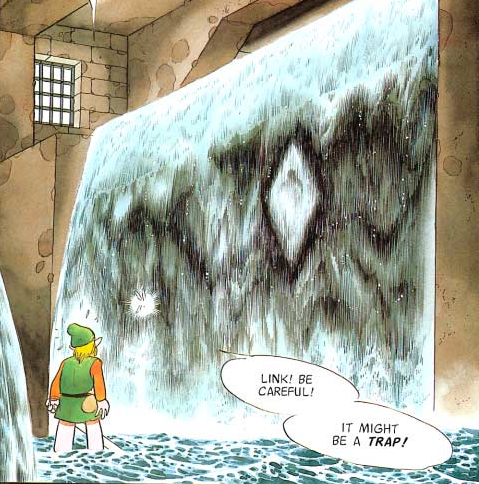
Epheremelda leads Link to Zora’s Waterfall, where he lashes out at what looks like a monster. It is Zora, who had taken Link for Roam, a knight who once scarred him, and who thanks him for saving the fairy. Epheremelda heals Link’s wounds; that healing gift is why the Dark World’s thieves want her. Between them, Zora and the fairy fill in the picture. Ganon rules the Dark World with the stolen Triforce but cannot leave it, which is why he sent Agahnim to Hyrule, and the maidens were brought over so that he could take their power. That means Zelda is still alive. One maiden is locked in a crystal in the nearby Palace of Darkness, a store of explosive firecorn. Zora lends Link the fairy as a guide and gives him the Zora’s Mask as a disguise. Inside, a Rocklops spots him; Link grabs a Hinox’s bomb belt and beats a Gleeok, and when more Hinoxes arrive riding Gleeoks, Epheremelda lights a bomb. The firecorn goes up and the palace with it. The freed maiden leaves Link a Comm-Fork, a way of talking across worlds, and vanishes. In the rubble a knight is waiting for him. His name is Roam, and he wants the Master Sword.
From game to page
The title item, a Zora’s Mask used as a disguise, is invented for the comic. In the game King Zora sells Link the Zora’s Flippers.
The Palace of Darkness is blown up rather than explored, and the game’s boss fight gives way to the explosion.
Gleeoks are lizard-like mounts ridden by Hinoxes, not the many-headed dragons of the first game.
Chapter 8: Roam, the Mystery Knight
Nintendo Power vol. 39 · August 1992
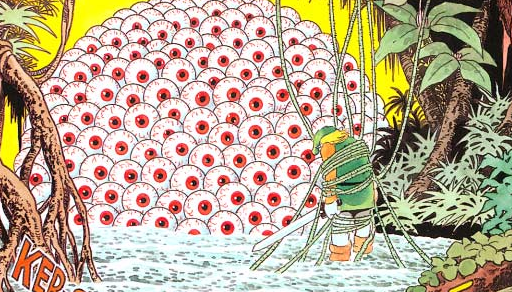
Roam attacks, changes into a monstrous eagle and loses. He apologises and explains: according to the Book of Mudora, a Silver Arrow will destroy whoever defiled the Golden Land, and he is searching for it. He comes from the line of a Knight of Hyrule who was a master archer, he slipped into the Dark World after the maidens by way of the Death Mountain portal, and there he turns into an eagle whenever he fights. Link suggests they join forces to find Zelda. Roam calls him a weakling, is unimpressed by his three pendants and leaves, though he predicts that the two of them will have to fight Ganon together. Then the Comm-Fork rings. Sahasrahla and Link’s friends in Kakariko can talk to him across the two worlds, and by comparing maps they work out that the Dark World is a warped reflection of Hyrule: the pyramid stands where the castle stood, and the Palace of Darkness is tied to the Eastern Palace, which an earthquake has just shaken. Epheremelda’s fairy friends hear of a girl in a crystal near the Swamp Palace. When a Hinox and a Taros shut Link inside, the boy in Hyrule sets off some statues around a fountain, and the flood that follows sweeps through the palace, taking the monsters and Link with it.
From game to page
Roam is the comic’s creation: a rival who shares Link’s knightly blood and wants to be the chosen hero.
The two worlds mirror each other as they do in the game, but here Link’s friends work it out by laying their maps side by side.
In the game Link works the floodgates himself; here his friends in the Light World flood the palace by accident.
Chapter 9: Wizzrobe’s Trap
Nintendo Power vol. 40 · September 1992
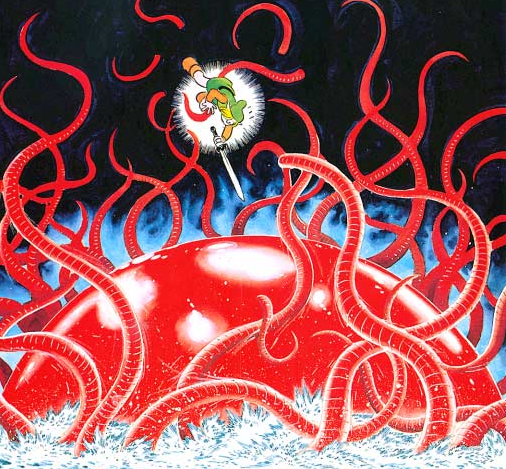
The Hinox and the Taros sink while fighting each other, and the weight of the Master Sword drags Link down with them. Epheremelda guides him to an opening near the surface that leads to a chamber holding the second maiden in her crystal. A huge tentacled monster attacks and swallows Link, who fights it until it spits him out, and then shatters the floating crystal. Before she vanishes, the maiden reveals that Zelda is a prisoner inside a rock shaped like a turtle, out at the world’s edge. Epheremelda knows of a map of the Dark World in the Ice Tower and wants to fetch it first, but Zelda’s voice is calling from beyond the Swamp of Evil and Link will not wait. They quarrel, and the fairy walks out on him. Alone in the wasteland, Link comes to an oasis where Zelda seems to be calling him. It is a Wizzrobe’s illusion, and at Misery Mire the trap closes: the Wizzrobe captures Link and summons Vitreous from the swamp. A whirlpool swallows both monsters. It is Zora, who can travel anywhere there is water, and he has come because Epheremelda asked him to.
From game to page
The Swamp Palace’s boss becomes a tentacled monster that swallows Link whole.
Misery Mire is a trap rather than a dungeon, and Vitreous is summoned by a Wizzrobe instead of waiting at the bottom of it.
Skull Woods and Thieves’ Town, two of the game’s Dark World dungeons, are cut or cut short in the comic.
Chapter 10: To Turtle Rock and Zelda!
Nintendo Power vol. 41 · October 1992
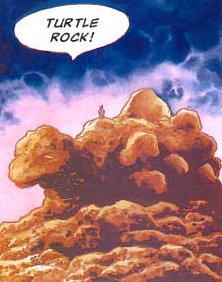
Back together, Link and Epheremelda reach the Ice Tower. Its icy master refuses to let them see the map, his greatest treasure, and calls up two Stalfos that keep putting themselves back together however often they fall. Link pours his power into the Master Sword and the tower begins to collapse, at which point its keeper warns him that the map is etched into the floor and will be lost with it. That is all Link needs: now he knows where Turtle Rock lies. At the rock he strikes the summit with the Master Sword, and lightning reveals the way in. Inside, among rivers of lava, he finds Zelda sealed in a crystal, and a three-headed dragon rises to stop him. One of its heads is about to strike him when Roam, who has been following him all along, swoops in to save him and declares that he will prove himself the true legendary hero.
From game to page
The Ice Palace becomes the Ice Tower, home to a map rather than a maiden.
Turtle Rock still holds Zelda, as it does in the game, where she is the last maiden Link frees.
The game’s Trinexx becomes an unnamed three-headed dragon, and Link opens Turtle Rock with lightning from his sword instead of a medallion.
Chapter 11: Ganon’s Tower
Nintendo Power vol. 42 · November 1992
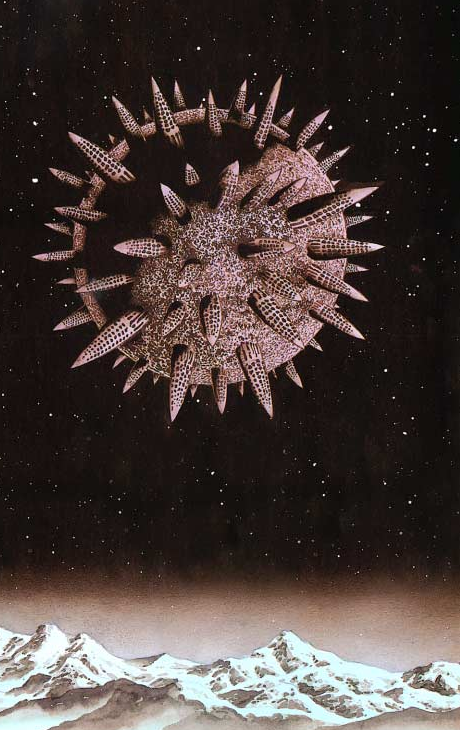
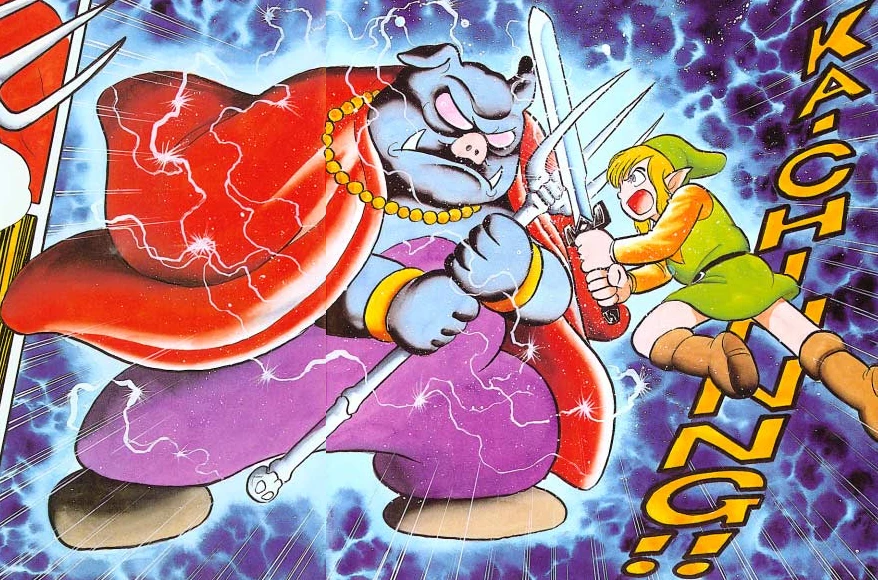
Link and Roam cut off the dragon’s ice head; its fire and ice meet and explode, the blast shatters Zelda’s crystal, and Link rushes to her side, to Epheremelda’s obvious annoyance, before they all escape the collapsing Turtle Rock. Roam, sure that the Book of Mudora is on his side, flies off again after the Silver Arrow. Link remembers Sahasrahla’s lesson that only someone who has conquered their own dark feelings can be the true hero, and he fears Roam’s pride will be his downfall; if he has to, Link will face Ganon himself. Ganon’s Tower has no door they can find. Roam comes back beaten, without the arrow, and, overwhelmed, turns into an eagle and flies into the tower with his emotions out of control. Zelda calls on the maidens, who open a way into the pitch-black interior, where illusions of Link’s old foes, Agahnim, a Lanmola and a Moldorm among them, close in on the group. When the phantom Agahnim goes for Zelda, Roam attacks it and is killed. Out of the illusion rises Ganon.
From game to page
The tower sends phantoms of earlier enemies against Link, much as the game’s Ganon’s Tower stages rematches with earlier bosses.
Zelda goes into Ganon’s Tower at Link’s side rather than waiting to be rescued.
A member of the hero’s party dies: Roam’s death has no equivalent in the game.
Chapter 12: The Final Battle
Nintendo Power vol. 43 · December 1992
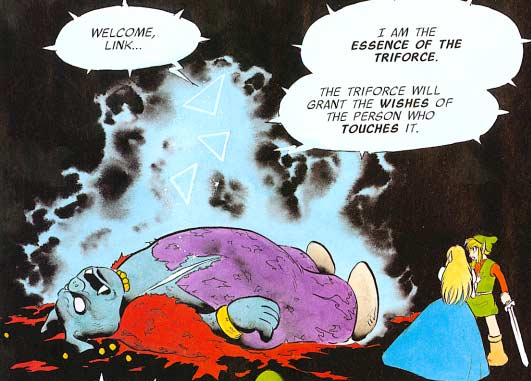
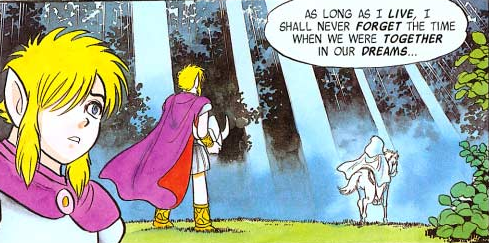
Ganon’s trident throws Link back and pins him, and Zelda picks up Roam’s crossbow. Link breaks free, cuts the trident in two and slashes Ganon across the chest, leaving him unable to move. Zelda fires an ordinary arrow, but carried by the power of the maidens, of Link and Zelda, and of Roam, it becomes the Silver Arrow, and Ganon is destroyed. The Triforce rises from his body, and its Essence invites Link to lay a hand on it and make a wish. He does. Epheremelda says goodbye, Link and Zelda are carried back to Hyrule, and at the castle Link sees his father, his mother and his uncle, who are proud of him and ask him always to remember the long line of knights and sages who came first. The Dark World fades, its prisoners go free, Zelda takes the throne as queen and makes Link Master of the Knights of Hyrule. The ending is quieter than you might expect. In the Lost Woods Zelda tells Link that their duties have pulled them apart and she feels alone, then rides away saying she will never forget their shared dreams. The last picture is the Master Sword, overgrown, waiting for the next hero.
From game to page
Zelda, not Link, fires the arrow that finishes Ganon.
Link’s reward is a title, Master of the Knights of Hyrule, and a bittersweet parting from the new queen.
The game’s ending has the Master Sword sleep “forever”; the comic leaves it waiting for a hero to be needed again.
Characters
Ishinomori kept the game’s cast and filled the gaps around it. Zelda Dungeon names three characters invented for the comic, Roam, Epheremelda and the Librarian of Kakariko, and the story also gives Link a pair of lost parents, gives Sahasrahla a wife and a young helper, and turns Zora into a friend. The Contemporary Japanese Literature review singled out Roam as the most striking of them, a classic Ishinomori type in looks and in temperament.
Character
Who they are
In the cartoon
Voice
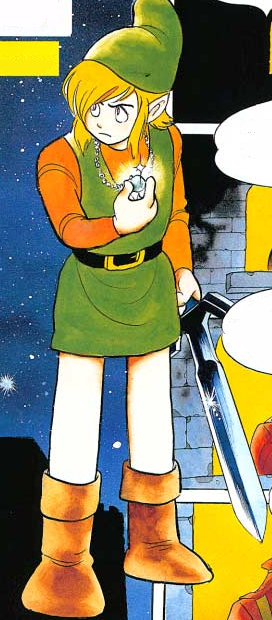
LinkThe hero
An orphan raised by his uncle, and, it emerges, the son of two Knights of Hyrule.
Begins as a bumbling, unsure boy and grows into a determined hero. He has doubts, moods and a temper, and learning to master that anger is what lets him survive the Dark World.
From the game, with a family history added. Chapter 1.
Princess ZeldaPrincess of Hyrule
The princess Agahnim needs for his final spell.
Calls Link by telepathy, meets him in shared dreams, joins him in Ganon’s Tower and fires the Silver Arrow that ends Ganon. She is crowned queen at the end.
Much more active than in the game. Chapter 1.
Link’s uncleGuardian
The man who raised Link, and one of the Knight’s Line that Agahnim wants wiped out.
Killed by Agahnim in chapter 1 after handing Link his sword and shield; he reappears in the final vision beside Link’s parents.
In the game Link finds him already wounded in the castle passage.
Link’s parentsKnights of Hyrule
Two knights who stumbled into the Dark World, leaving their son to be raised by his uncle.
Seen through a portal on Death Mountain in chapter 4, and again in the closing vision, where they praise their son.
New to the comic.
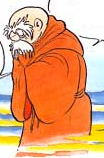
SahasrahlaElder of Kakariko
A descendant of the Seven Wise Men, with a wife and a house in Kakariko.
Link’s mentor. He hands over the Pendant of Courage, guides Link by telepathy and later by Comm-Fork, explains the Master Sword and works out how the two worlds mirror each other.
In the game he points the way but makes Link earn the pendants.
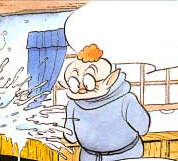
The LibrarianScholar of Kakariko
Keeper of the House of Books and an expert on the Book of Mudora.
Saved by Link from his burning library, he decides Link is the hero of the prophecy, gives him the book and suggests the balloon that carries him to the castle.
New to the comic. Chapter 3.
EpheremeldaFairy guide
A fairy whose healing powers make her a prize for the Dark World’s thieves.
Link’s companion in the Dark World. She heals him, bickers with him, walks out on him in chapter 9, sends Zora to save him and says goodbye after the final battle.
New to the comic. Chapter 6.
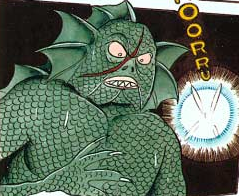
ZoraAlly
A water creature of Zora’s Waterfall who bears a scar from an earlier meeting with Roam.
Gives Link the Zora’s Mask and Epheremelda’s guidance, and later rescues him from Misery Mire in a whirlpool; he can travel anywhere there is water.
The game’s King Zora is a merchant who sells Link flippers. Chapter 7.
RoamThe mystery knight
A descendant of a Knight of Hyrule famed as a master archer. In the Dark World he becomes an eagle whenever he fights.
Link’s rival for the role of legendary hero. He hunts the Silver Arrow, saves Link at Turtle Rock and dies shielding Zelda in Ganon’s Tower; his crossbow fires the final shot.
New to the comic. Chapters 7–12.
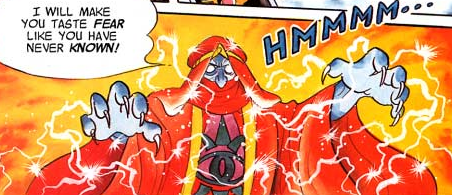
AgahnimThe wizard
Ganon’s agent in Hyrule, ruling in the king’s name.
Kills Link’s uncle, hunts down the Knight’s Line and sends Zelda into the Dark World. Link beats him by turning his own magic back on him, and he returns only as an illusion.
In the game Ganon’s spirit bursts out of Agahnim at their last meeting; the comic keeps them separate.
GanonLord of the Dark World
Once Ganondorf the Thief, who seized the Triforce and turned the Golden Land into the Dark World.
Unable to leave the Dark World, he works through Agahnim. He fights with a trident and is destroyed by the Silver Arrow.
From the game.
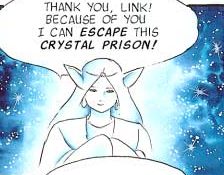
The maidensDescendants of the Wise Men
Girls taken into the Dark World so that Ganon can use their power.
Link frees two of them before reaching Zelda. Together they open the way into Ganon’s Tower and lend their power to the Silver Arrow.
From the game, where Link frees all seven.
From game to comic
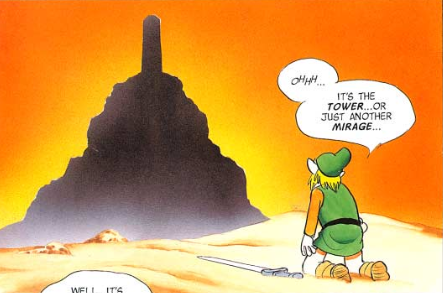
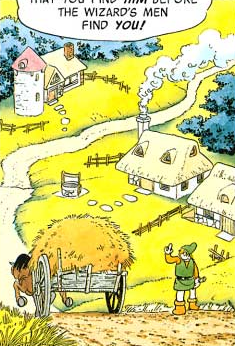
The Desert of Mystery, which Link crosses by glider in chapter 3.
Zelda Dungeon’s verdict is that the comic roughly mirrors the game, with new story added to surprise readers who already knew it, and that is about right. The order of events is the game’s: castle, Sanctuary, the three pendants, the Master Sword, Agahnim, the Dark World, the maidens, Ganon. What changes is how Link gets from one to the next. Most of the item-gathering is gone, and so is most of the dungeon-crawling. Pendants are handed over or plucked from statues and monsters, palaces sink, flood or explode, and a magic communicator and a talking tree do the job the game leaves to Sahasrahla’s hints and the player’s own exploring.
The biggest change is emotional. In the comic the Dark World reflects whatever is in a person’s heart: hatred would turn Link into a beast, so instead of the game’s Moon Pearl he survives by keeping his anger under control, and the lesson that a true hero must conquer his own darker feelings runs all the way to the end, where it is Roam’s pride, not his courage, that fails him. The Contemporary Japanese Literature review put it neatly: the game moves you from objective to objective, while the comic adds layers of depth through back-stories such as the talking tree’s.
What it changes
The soldiers are monsters made from evil energy, not brainwashed Hylian guards.
Link’s family: his parents are Knights of Hyrule lost in the Dark World, and his uncle is one of the last of the Knight’s Line.
Getting about: a glider across the desert, a hot-air balloon to the castle tower, a whirlpool rescue from Zora.
Geography: Death Mountain borders the Desert of Mystery, and the Ice Palace becomes the Ice Tower, a place to find a map.
Bosses: a giant spider in the Tower of Hera, a tentacled monster in the Swamp Palace, an unnamed three-headed dragon at Turtle Rock.
Cut or cut short: Skull Woods, Thieves’ Town, Misery Mire and the Ice Palace are dropped or reduced to a scene or two. The Outer Haven called the Dark World chapters a “rush job”.
The ending: Zelda fires the Silver Arrow, becomes queen and makes Link Master of the Knights of Hyrule, and the Master Sword waits for a future hero instead of sleeping forever.
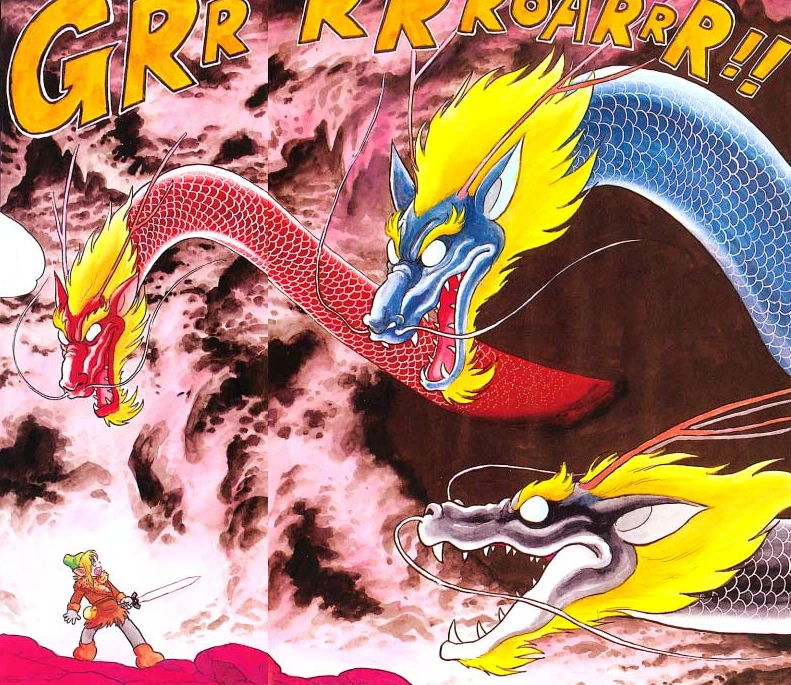
Lanmola, the Desert Palace monster (chapter 3).Moldorm, one of the phantoms in Ganon’s Tower (chapter 11).Arrghus, as Zelda Wiki names this Swamp Palace creature.The three-headed dragon of Turtle Rock, the game’s Trinexx.
Did it work?
Opinions split along predictable lines. School Library Journal felt the climax lacked the game’s crescendo and that fans might miss the weapons, such as the arrows, that matter so much in play, but thought Link had more personality on the page than he has as the player’s stand-in. Adventures in Poor Taste found the story more fleshed out and coherent in comic form, and judged that the liberties never went against the spirit of the game.
Who made it
Shotaro Ishinomori
Death Mountain, from the comic.
Shotaro Ishinomori (1938–1998) was born Shotaro Onodera in Miyagi Prefecture and started out in 1956 as an assistant to Osamu Tezuka, working on Astro Boy. He went on to create Cyborg 009 (1964) and Kamen Rider (1971), which helped found the transforming-superhero genre on Japanese television, as well as Himitsu Sentai Gorenger, the first Super Sentai series, and the long-running Hotel. Until 1986 he signed his work Ishimori; that year he added the extra syllable that makes it Ishinomori.
By the time VIZ reissued the comic, its press materials could boast that Guinness World Records had named him the author of the most comics published by one person: more than 770 titles in 500 volumes. A museum dedicated to his work, the Ishinomori Manga Museum (Ishinomaki Mangattan Museum), opened in Ishinomaki in 2001. He died in January 1998, a little over five years after the last chapter of A Link to the Past appeared.
The English script
The English text is credited to Dan Owsen. Reviewers of the 2015 edition describe his role differently: the Comic Book Bin lists him as co-writer with Ishinomori, while the Contemporary Japanese Literature review calls him the translator. How the commission came about, and how Ishinomori and the magazine worked together, is not documented in any source we could check, so we have left it there.
Editions
The comic has appeared three times in English (as a magazine serial, as a 1993 book and as VIZ’s 2015 reissue) and in at least six other editions around the world.
Edition
Publisher
Date
Notes
Nintendo Power serial
Nintendo of America
Vols. 32–43, January–December 1992
Twelve chapters, one per monthly issue, in full colour
Collected edition
Not confirmed
1993
Full colour. One review names Nintendo of America as publisher; we have not been able to confirm it
Zelda no Densetsu (Japan)
Shogakukan
1993 (1 April, per Mangapedia)
Wonder Life Game Comics label. The Fandom wiki notes that it kept the left-to-right layout with horizontal text, and left the sound effects in English
VIZ Media reissue
VIZ Media (Perfect Square)
5 May 2015
196 pages, 8⅛ × 10⅞ in, full colour, US$19.99 / C$22.99, ISBN 978-1-4215-7541-4
French
Soleil
2 December 2015
“Classic version”, per Soleil’s own listing as cited by the Fandom wiki
Spanish, Italian, German, Brazilian
Norma Editorial, J-Pop, Tokyopop, Panini
Not checked
Publishers as listed by Anime News Network; we have not checked the dates
The VIZ edition is the one most readers will find today. Announced in January 2015 and published under Perfect Square, VIZ’s all-ages imprint, it kept the full colour of the magazine run and was printed on glossy paper, with what the Outer Haven described as an embossed gold-foil logo on the cover. Perfect Square’s Beth Kawasaki called it “such a rare book” in the announcement. For the earlier history, Zelda Dungeon’s news report notes that the book had not been reprinted since the 1993 trade paperback.
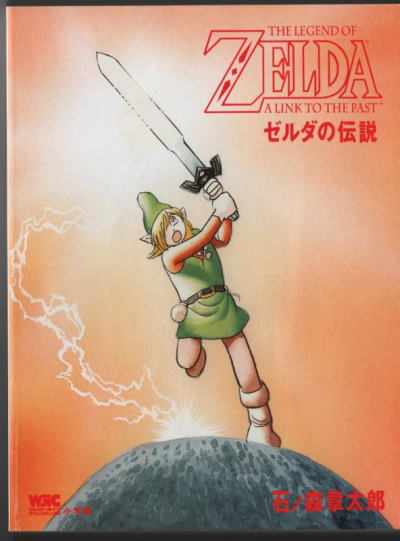
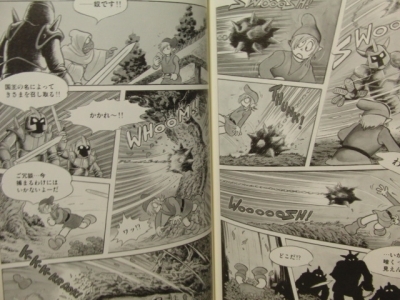
Inner cover of the Japanese editionFrom the Japanese editionCover of the French editionCover of the German editionCover of the Spanish editionCover of the Italian edition
Reception
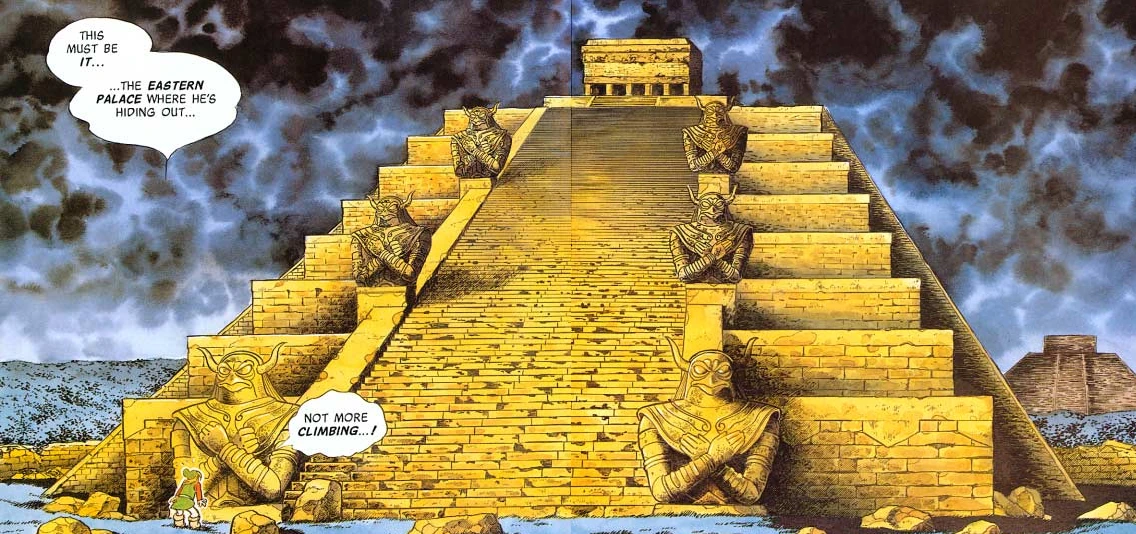
The Eastern Palace, where Sahasrahla gives Link his first pendant.
Sales
The reissue was a hit. In its first week on sale VIZ’s edition went straight in at number one on the New York Times manga best-seller list for 3–9 May 2015, ahead of JoJo’s Bizarre Adventure, and it held the top spot the following week. It was still in the top ten in the week of 14–20 June, at number eight; Anime News Network’s database links it to seven consecutive weekly lists from early May to late June.
Reviews
Reviewers of the 2015 edition were warm, if not uncritical. ICv2’s Steve Bennett gave it four stars out of five, praised “absolutely beautiful art” and said you did not need to know the game to enjoy it. Josh Piedra of the Outer Haven scored it 8/10; he found the art dated in places and the Dark World section hurried, but loved the glossy full-colour printing and the new characters. Leroy Douresseaux at the Comic Book Bin called it “a simple quest story that jumps around a lot”, while recommending it to young readers and calling the reissue “a good comics reclamation project”.
The most thoughtful notice came from the Contemporary Japanese Literature blog, which admired Ishinomori’s choreography of the action and his splash panels, where Link is a tiny figure in a huge landscape, and valued the book as an early experiment in mixing games and comics. It also criticised the Orientalist styling of Agahnim’s design. School Library Journal recommended it for readers of grade 5 and up.
Trivia
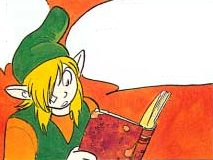
The Book of Mudora, which the Librarian hands to Link after the fire.Epheremelda was guiding Link through Hyrule six years before Navi did the same job in Ocarina of Time (1998). Unlike Navi, she storms off when he ignores her advice.
Zelda firing the decisive arrow at Ganon looks ahead to The Wind Waker and Twilight Princess, where she shoots Light Arrows in the final battle.
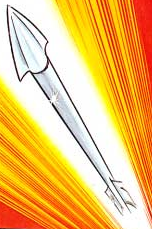
The Silver Arrow, the object of Roam’s quest.The giant birds that the old Knights of Hyrule rode into battle, whose wings Link borrows as a glider, look forward to the Loftwings of Skyward Sword, nearly twenty years later.
The glowing wound Link cuts across Ganon’s chest has a later echo in the wound in Ganondorf’s chest in Twilight Princess.
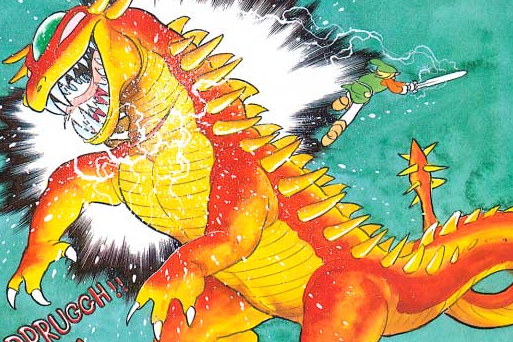
A Gleeok, Ishinomori-style.In the first game a Gleeok is a many-headed dragon; here the name goes to orange, lizard-like beasts that Hinoxes ride into battle in the Palace of Darkness.
Because it was drawn for Nintendo Power and published in English first, the comic is, strictly, an original English-language manga, a category that did not yet have a name when it was published.
The comic keeps Agahnim and Ganon as two separate beings, where the game lets Ganon’s spirit emerge from Agahnim’s body.
Kakariko’s library, the House of Books, burns down in chapter 3. In the game it is where Link finds the Book of Mudora on a high shelf.
Further reading: Zelda Temple research dossier for the Comics & Books section (sources listed inside)
Manage Consent
To provide the best experiences, we use technologies like cookies to store and/or access device information. Consenting to these technologies will allow us to process data such as browsing behavior or unique IDs on this site. Not consenting or withdrawing consent, may adversely affect certain features and functions.
Functional
Always active
The technical storage or access is strictly necessary for the legitimate purpose of enabling the use of a specific service explicitly requested by the subscriber or user, or for the sole purpose of carrying out the transmission of a communication over an electronic communications network.
Preferences
The technical storage or access is necessary for the legitimate purpose of storing preferences that are not requested by the subscriber or user.
Statistics
The technical storage or access that is used exclusively for statistical purposes.The technical storage or access that is used exclusively for anonymous statistical purposes. Without a subpoena, voluntary compliance on the part of your Internet Service Provider, or additional records from a third party, information stored or retrieved for this purpose alone cannot usually be used to identify you.
Marketing
The technical storage or access is required to create user profiles to send advertising, or to track the user on a website or across several websites for similar marketing purposes.

 LinkThe hero
 Princess ZeldaPrincess of Hyrule
 Link’s uncleGuardian
 SahasrahlaElder of Kakariko
 The LibrarianScholar of Kakariko
 ZoraAlly
 AgahnimThe wizard
 GanonLord of the Dark World
 The maidensDescendants of the Wise Men