
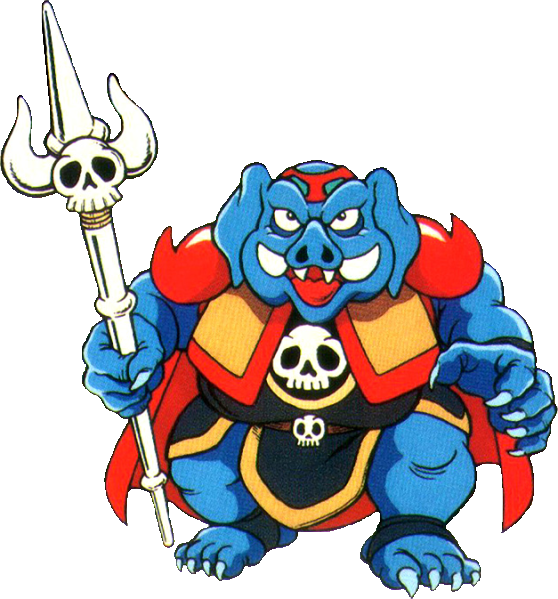
Zelda no Densetsu: Kamigami no Triforce (Barcode Battler II)
A Link to the Past retold as thirty barcoded cards: swipe Link into a handheld card reader, then swipe in his enemies one at a time until only Ganon is left.
| Title | バーコードバトラーII ゼルダの伝説 神々のトライフォース (Bākōdo Batorā II: Zeruda no Densetsu: Kamigami no Toraifōsu, “Barcode Battler II: The Legend of Zelda: Triforce of the Gods”) |
| What it is | Card software: a boxed set of barcode cards with its own rules, played on the Barcode Battler II |
| Maker | Epoch Co. |
| Licensed by | Nintendo |
| Released | 1992, Japan only (the exact date is not recorded in any source we could read) |
| Cards | 30 |
| Hero cards | Link and Link (Magic) |
| Item cards | 10 |
| Final boss | Ganon |
| Based on | The Legend of Zelda: A Link to the Past, whose Japanese title it shares |
| Sister set | Super Mario World, also from Epoch for the Barcode Battler II |
Overview
This is one of the strangest things ever to carry the Zelda name: not a cartridge or a disc but a box of thirty cards, each printed with a barcode. They were made in 1992 by the Japanese company Epoch for its Barcode Battler II, and they were never sold outside Japan.
The Barcode Battler was a handheld built around a slot. Swipe a barcode through it and the machine turns the number into a fighter, an enemy or an item, each with its own strength; two of them then do battle, and the result is shown as nothing more than figures on a small LCD. It was very popular in Japan, where players hunted through everyday groceries for barcodes that made strong fighters.
In 1992 Epoch obtained a licence from Nintendo to print official card sets, and produced one for Super Mario World and one for A Link to the Past, known in Japan as Zeruda no Densetsu: Kamigami no Toraifōsu. The Zelda set turns that game into a gauntlet: you scan in Link, fight your way through a deck of his enemies with help from ten item cards, and finish by facing Ganon.
Very little has been written about it in English, and this page sticks to what can be checked.
Quick Answers
Quick answers about the Zelda Barcode Battler set.
What is Zelda no Densetsu: Kamigami no Triforce for the Barcode Battler II?
A set of 30 barcode cards made by Epoch in 1992, based on A Link to the Past. You play it by swiping the cards through a Barcode Battler II handheld. More →
What was the Barcode Battler?
A handheld LCD game from the Japanese company Epoch, first released in March 1991. It reads barcodes and turns them into characters, enemies and power-ups that fight using numbers alone. The Barcode Battler II followed in 1992. More →
Is it a video game?
Only just. There are no graphics: the artwork is on the cards, and the machine shows the fighters’ statistics on its LCD as each battle is worked out. More →
Was it released outside Japan?
No. The Barcode Battler II itself was sold abroad, but the Nintendo-licensed card sets stayed in Japan. More →
How do you win?
Defeat every enemy card in turn, then scan the Ganon card and beat him. More →
Plot / Story
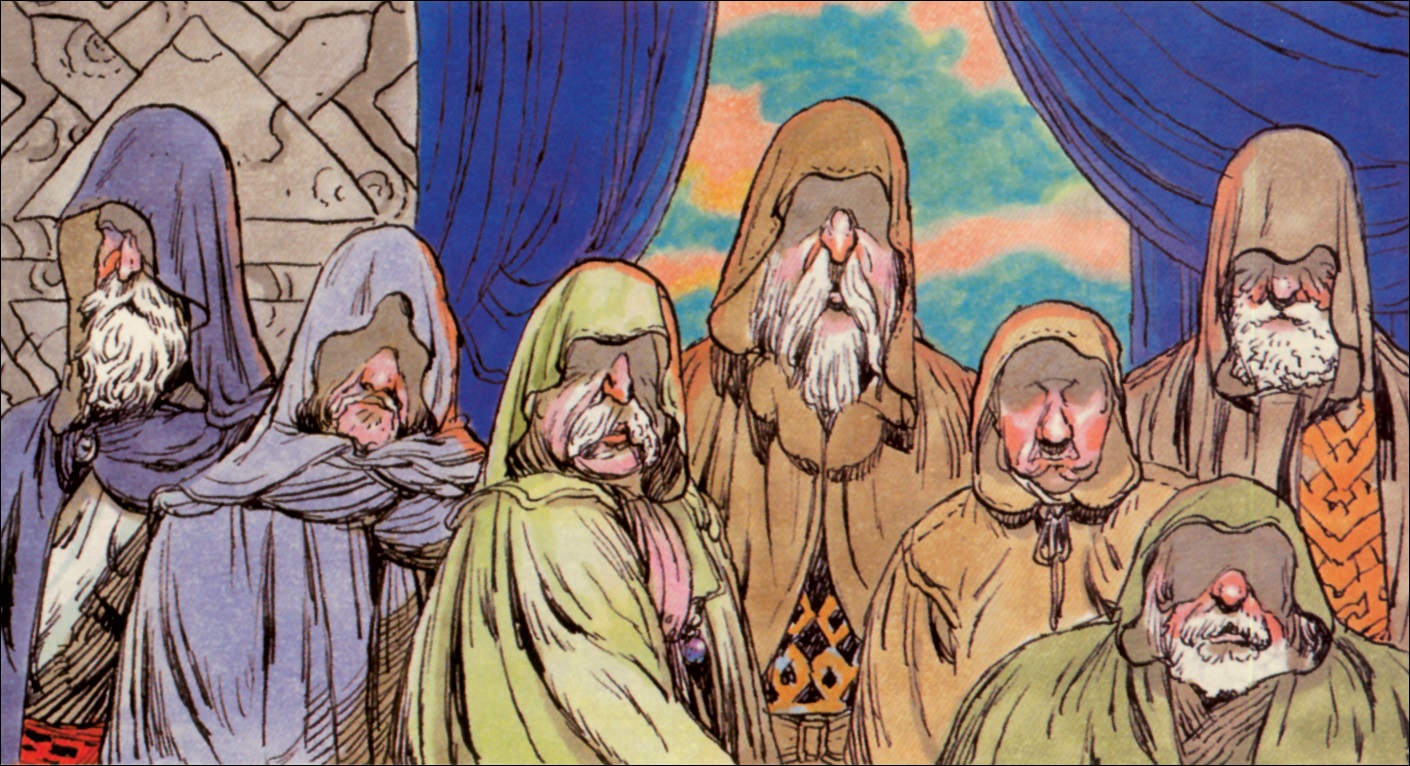
The set’s leaflet opens with a story, and it is that of A Link to the Past in miniature. Ganon has turned the sacred land into the World of Darkness and now means to conquer the World of Light, Hyrule, as well. To break the seal that holds Ganon back, the evil priest Agahnim plans to sacrifice the daughters of the seven sages.
Link must travel through both worlds, past their puzzles and monsters, to defeat Ganon. For the full tale, see our A Link to the Past page.
How it plays
Every Barcode Battler card boils down to a few numbers. The machine reads the barcode and works out the character’s life (HP), attack strength (ST) and defence (DF), and the Barcode Battler II added magic to the mix, with wizards as well as warriors. Fights are settled by the machine’s own sums, with an element of chance.
| Cards in the set | How many | What they do |
|---|---|---|
| Hero cards | 2 | “Link” and “Link (Magic)”. You choose one to play as |
| Enemy cards | The rest of the set | Scanned in one at a time for Link to fight; some are wizards |
| Item cards | 10 | Strengthen Link’s weapon, restore his life or raise his defence |
| Ganon | 1 | The final boss, scanned only when every other enemy is beaten |
Playing the Zelda set
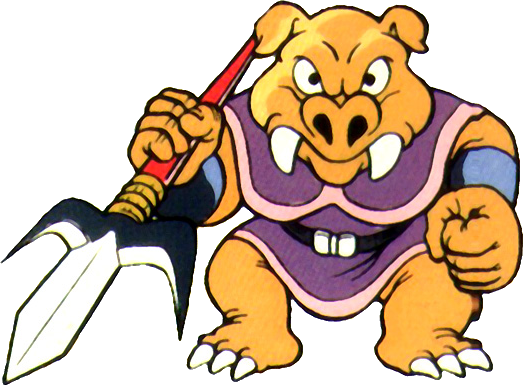
The set is played in the Barcode Battler II’s C2 mode, the one in which a single hero takes on a run of enemy cards. You first decide whether to play as a warrior or a wizard, and scan the matching hero card: “Link” or “Link (Magic)”. The machine stores his statistics and shows them on the LCD.
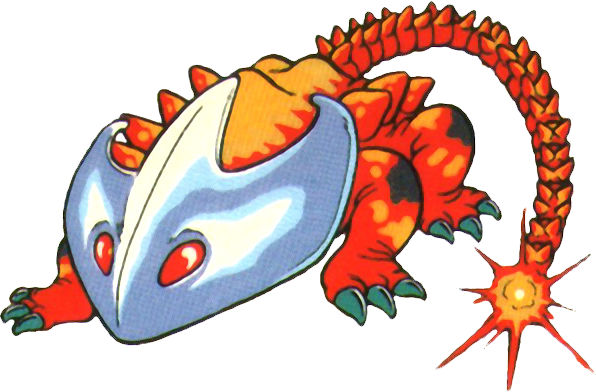
Then the gauntlet begins. You pick an enemy card and swipe it; the machine fights the battle and shows Link’s figures as they stand afterwards. A beaten enemy’s card goes on the discard pile and the next one is swiped in. Between fights you may swipe one of the ten item cards, which is then discarded too. Beating an enemy wizard has a bonus: it lets you take item cards back from the discard pile.
When every other enemy has fallen, the Ganon card is scanned for the last battle. Win that and the game is won.
A second way to play
According to the Japanese-language Wikipedia, Epoch’s card versions of Super Famicom games, of which this is one, could also be used for a separate dice mode (サイコロモード), a card game with rules that differed from title to title. We could not find a description of the Zelda rules.
The Barcode Battler and its Nintendo cards
To make sense of the Zelda set you need to know the machine it was made for.
The Barcode Battler
Epoch released the first Barcode Battler in Japan in March 1991, at ¥6,800. It came with its own cards, but the real hook was that any barcode would do: players were encouraged to try the codes on food and cleaning products to find fighters and power-ups of their own. It was very popular in Japan, and a manga made to promote it, Barcode Fighter, ran to five volumes between April 1992 and June 1994.
The Barcode Battler II
The Barcode Battler II arrived in Japan in 1992, in a black case, at ¥7,800. It introduced magic and a wizard class alongside the warriors, a longer single-player game, and three modes called C0, C1 and C2: a free battle between any characters, a role-playing-style adventure for a warrior and a wizard, and the run of enemy cards that the Zelda set uses. It also gained a port for connecting to other hardware.
This was the model Epoch sold around the world in 1992 and 1993, simply as the Barcode Battler, with its screen text in English. It did not catch on. Sold next to the Game Boy and Game Gear, a machine with no graphics was, in Wikipedia’s words, a “massive flop”.
In Japan the port was put to use by the Barcode Battler II Interface, a Nintendo-licensed unit that linked the handheld to a Famicom or, through an adaptor, a Super Famicom, where it served as a barcode reader for a number of games. No game outside Japan used the port.
Nintendo on cards
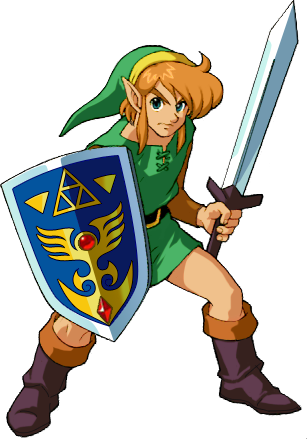
In 1992 Epoch was licensed by Nintendo to print Nintendo-themed cards for the new machine, and made sets with Mario and Zelda themes, among them card versions of two Super Famicom games: Super Mario World, and A Link to the Past, which had come out in Japan on 21 November 1991.
Nintendo was not the only company to lend its characters. The games company Falcom commissioned cards for its Lord Monarch and Dragon Slayer games, and the television network NTV did the same for Doraemon.
Trivia & facts
- The set uses the Japanese name of A Link to the Past unchanged. Kamigami no Toraifōsu means “Triforce of the Gods”.
- Link gets two cards, “Link” and “Link (Magic)”, to match the Barcode Battler II’s two kinds of hero, the warrior and the wizard.
- Wikipedia likens the Barcode Battler II to an LCD version of Nintendo’s later e-Reader, the card-swiping add-on for the Game Boy Advance.
- A Barcode Battler II card set based on Super Mario Kart is also listed on the Japanese-language Wikipedia, along with one for Falcom’s Dragon Slayer: The Legend of Heroes.
- In 1993 two Irish supermarket chains, Quinnsworth and Crazy Prices, gave away 10,000 Barcode Battlers in a promotion.
Media & artwork
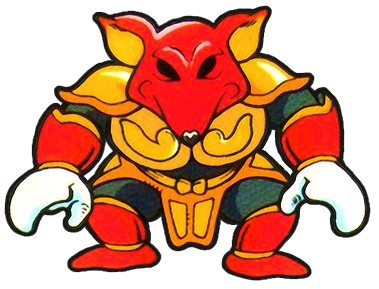
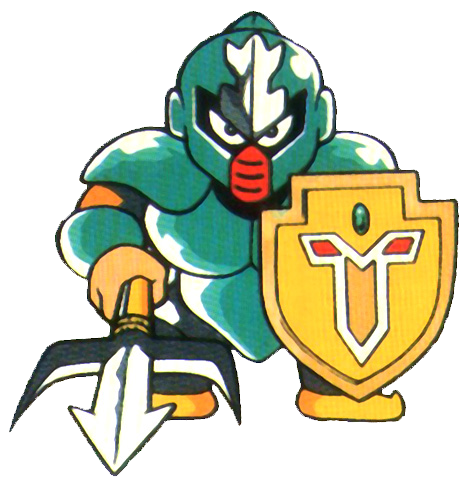
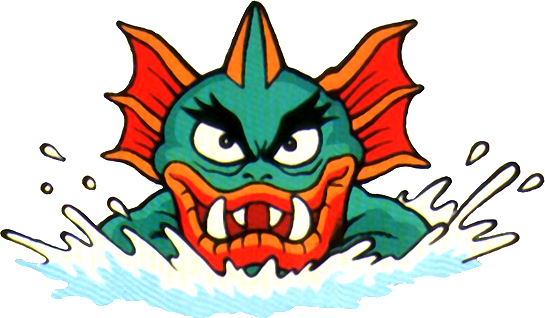
The box, the cards and the Barcode Battler II itself. Select any image to view it larger.
Legacy
The Zelda card set stayed in Japan, and very little has been written about it in English.
Timeline
- Barcode Battler March 1991 – Epoch’s original barcode-reading handheld goes on sale in Japan.
- A Link to the Past 21 November 1991 – The Super Famicom game the set is based on is released in Japan.
- Barcode Battler II 1992 – The improved machine, with wizards, new modes and an expansion port.
- Zelda and Mario card sets 1992 – Epoch’s Nintendo-licensed card software, Japan only.
Its place in Zelda history

Along with the Zelda Game & Watch and the Nelsonic Game Watch, this is one of the three early LCD curiosities that Wikipedia groups together as the Legend of Zelda LCD games, and the only one of the three that was sold only in Japan. It tells no new story; its interest is as a snapshot of 1992, when A Link to the Past was the newest Zelda and the Barcode Battler was at the height of its popularity in Japan.
Further reading
More from Zelda Temple on the game behind the cards and on Zelda’s other LCD oddities:
Reader reviews
No reader reviews yet. Played it? Give it a score out of 10 and tell other fans what you think.
Sources
Sources for this set are thin. Everything on this page was checked in November 2026 against the three Wikipedia articles below, which in turn cite Epoch’s own packaging and a Barcode Battler fan archive that could not be read directly. Zelda Wiki blocks automated reading and the Fandom and Zelda Dungeon pages could not be opened, so none of them was used.
Show sources (7 sections)
- Overview: Wikipedia, “The Legend of Zelda LCD games”, section on the Barcode Battler II (1992 licence, 30 cards, C2 mode, hero, enemy and item cards, Ganon, the set’s story, Japan-only release). Its citations are Epoch’s 1992 inlay and story sheet and the BarcodeBattler.co.uk rules page; Wikipedia, “Barcode Battler” (March 1991 release, how the machine works, reception in Japan and abroad, Barcode Battler II and its Interface, licensed card sets, the Barcode Fighter manga, the Irish promotion); Japanese Wikipedia, バーコードバトラー (prices, statistics, the wizard class, C0, C1 and C2 modes, the card software versions of Super Famicom games and their dice mode)
- Quick Answers: Wikipedia, “The Legend of Zelda LCD games”, section on the Barcode Battler II (1992 licence, 30 cards, C2 mode, hero, enemy and item cards, Ganon, the set’s story, Japan-only release). Its citations are Epoch’s 1992 inlay and story sheet and the BarcodeBattler.co.uk rules page; Wikipedia, “Barcode Battler” (March 1991 release, how the machine works, reception in Japan and abroad, Barcode Battler II and its Interface, licensed card sets, the Barcode Fighter manga, the Irish promotion); Japanese Wikipedia, バーコードバトラー (prices, statistics, the wizard class, C0, C1 and C2 modes, the card software versions of Super Famicom games and their dice mode)
- Plot / Story: Wikipedia, “The Legend of Zelda LCD games”, section on the Barcode Battler II (1992 licence, 30 cards, C2 mode, hero, enemy and item cards, Ganon, the set’s story, Japan-only release). Its citations are Epoch’s 1992 inlay and story sheet and the BarcodeBattler.co.uk rules page
- How it plays: Wikipedia, “The Legend of Zelda LCD games”, section on the Barcode Battler II (1992 licence, 30 cards, C2 mode, hero, enemy and item cards, Ganon, the set’s story, Japan-only release). Its citations are Epoch’s 1992 inlay and story sheet and the BarcodeBattler.co.uk rules page; Wikipedia, “Barcode Battler” (March 1991 release, how the machine works, reception in Japan and abroad, Barcode Battler II and its Interface, licensed card sets, the Barcode Fighter manga, the Irish promotion); Japanese Wikipedia, バーコードバトラー (prices, statistics, the wizard class, C0, C1 and C2 modes, the card software versions of Super Famicom games and their dice mode)
- The Barcode Battler and its Nintendo cards: Wikipedia, “Barcode Battler” (March 1991 release, how the machine works, reception in Japan and abroad, Barcode Battler II and its Interface, licensed card sets, the Barcode Fighter manga, the Irish promotion); Japanese Wikipedia, バーコードバトラー (prices, statistics, the wizard class, C0, C1 and C2 modes, the card software versions of Super Famicom games and their dice mode); Wikipedia, “The Legend of Zelda LCD games”, section on the Barcode Battler II (1992 licence, 30 cards, C2 mode, hero, enemy and item cards, Ganon, the set’s story, Japan-only release). Its citations are Epoch’s 1992 inlay and story sheet and the BarcodeBattler.co.uk rules page
- Trivia & facts: Wikipedia, “The Legend of Zelda LCD games”, section on the Barcode Battler II (1992 licence, 30 cards, C2 mode, hero, enemy and item cards, Ganon, the set’s story, Japan-only release). Its citations are Epoch’s 1992 inlay and story sheet and the BarcodeBattler.co.uk rules page; Wikipedia, “Barcode Battler” (March 1991 release, how the machine works, reception in Japan and abroad, Barcode Battler II and its Interface, licensed card sets, the Barcode Fighter manga, the Irish promotion); Japanese Wikipedia, バーコードバトラー (prices, statistics, the wizard class, C0, C1 and C2 modes, the card software versions of Super Famicom games and their dice mode)
- Legacy: Wikipedia, “The Legend of Zelda LCD games”, section on the Barcode Battler II (1992 licence, 30 cards, C2 mode, hero, enemy and item cards, Ganon, the set’s story, Japan-only release). Its citations are Epoch’s 1992 inlay and story sheet and the BarcodeBattler.co.uk rules page; Wikipedia, “Barcode Battler” (March 1991 release, how the machine works, reception in Japan and abroad, Barcode Battler II and its Interface, licensed card sets, the Barcode Fighter manga, the Irish promotion); Japanese Wikipedia, バーコードバトラー (prices, statistics, the wizard class, C0, C1 and C2 modes, the card software versions of Super Famicom games and their dice mode)